
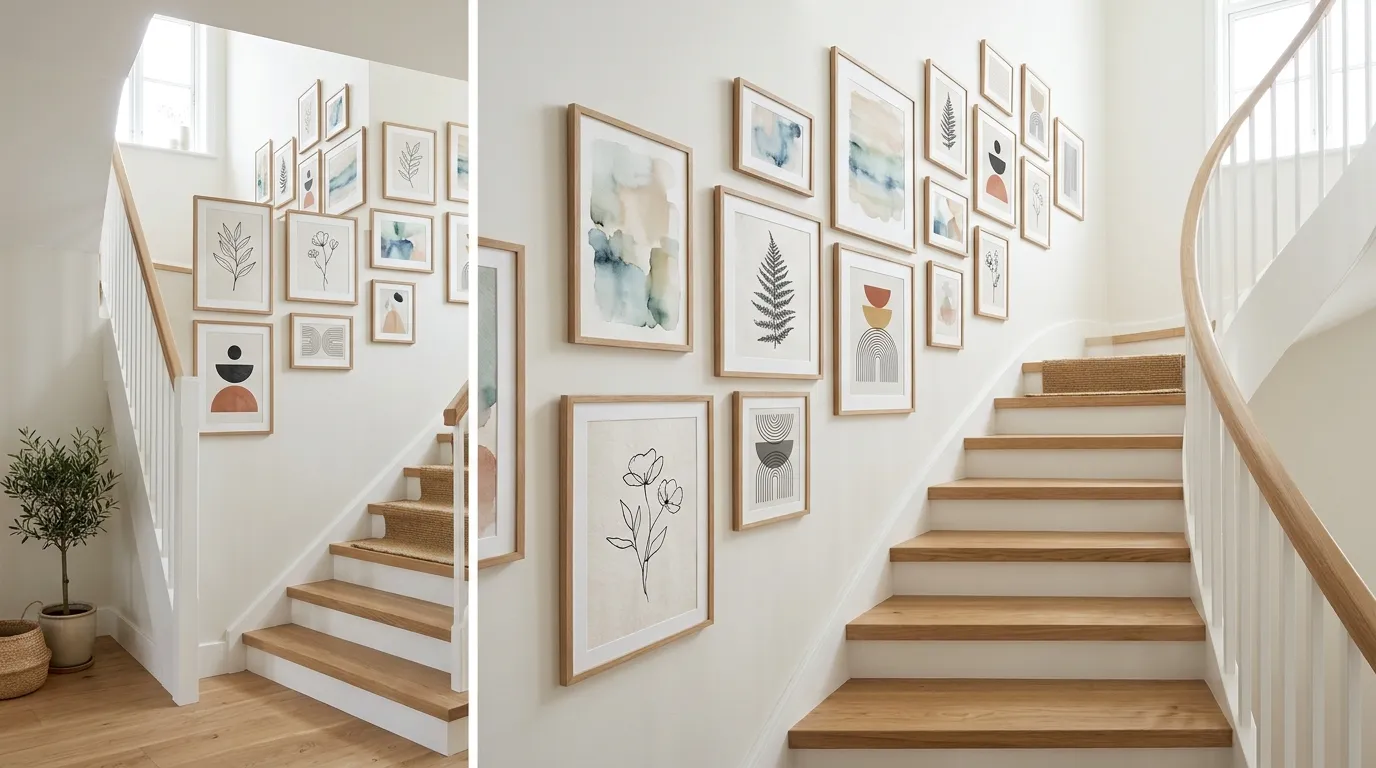
A staircase wall can be one of the hardest spots in a home to decorate. It’s tall, awkwardly angled, easy to overcrowd, and often viewed from several directions. A few random frames may make it feel cluttered, while an empty wall can make the whole stairway look unfinished.
The trick is not filling every inch. It’s choosing decor that follows the shape of the staircase and feels connected from the bottom step to the upper landing.
Learning how to decorate the wall going up your stairs is really about scale, spacing, and visual flow. The best ideas work with the architecture instead of fighting it.
Ways to Decorate the Wall Going Up Your Stairs
Frame the View with Vertical Wood Slat Paneling
When your stairway features a striking architectural window, the surrounding wall can easily feel lost without the right framing. Vertical wood slat paneling draws the eye upward, accentuating the dramatic height of a multi-story stairwell while turning an ordinary window into a breathtaking focal point.
Warm wood tones bring an organic, grounded feeling to the space, balancing clean modern lines with natural texture. Continuing the paneling vertically reinforces the soaring height of the stairs, making the entire architectural envelope feel more intentional and cohesive.
Layer in subtle accent lighting to cast a soft glow across the wooden slats during the evening hours. Wall sconces placed strategically against the textured background add another layer of warmth, ensuring the stairwell feels welcoming and beautifully illuminated from every angle.
Create a Staircase Gallery Wall That Follows the Steps
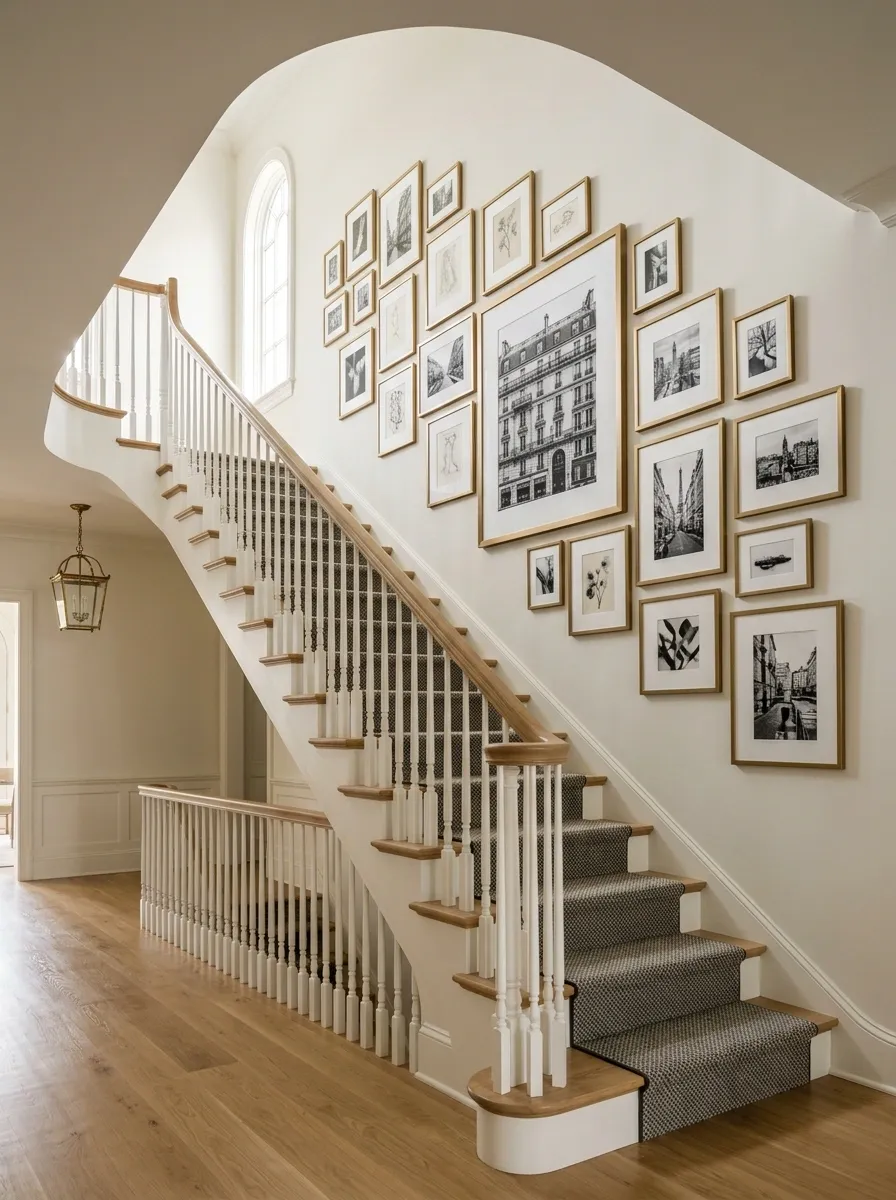
A gallery wall is one of the most useful ways to handle a long staircase wall because the individual pieces can move with the architecture. Instead of placing all the frames in a rigid rectangle, build the arrangement so the overall shape gradually rises with the steps.
Keep the collection connected by repeating something, such as the frame finish, mat color, photography style, or artwork palette. The individual pictures can vary, but the arrangement should still feel like one composition.
For a cleaner result, begin with the largest piece near the visual center and build outward from there. That keeps the wall from looking like a pile of randomly hung frames.
Incorporate a Dramatic Sculptural Relief Wall
Blank staircase walls offer the ultimate canvas for grand artistic gestures, and a large-scale sculptural relief takes visual interest far beyond standard framed art. A continuous, flowing design that mimics natural forms can effortlessly anchor a long rise of steps.
Choose an installation that interacts directly with the architecture of the staircase itself. When a three-dimensional art piece visually merges with the base of the railing or follows the incline of the steps, the entire transition feels custom-designed and deeply integrated.
Keep the color palette restrained so the focus remains on the incredible texture and shadow play of the sculpture. Neutral tones allow the intricate details of the artwork to stand out without overwhelming the surrounding space.
Use One Oversized Artwork Instead of Lots of Small Frames
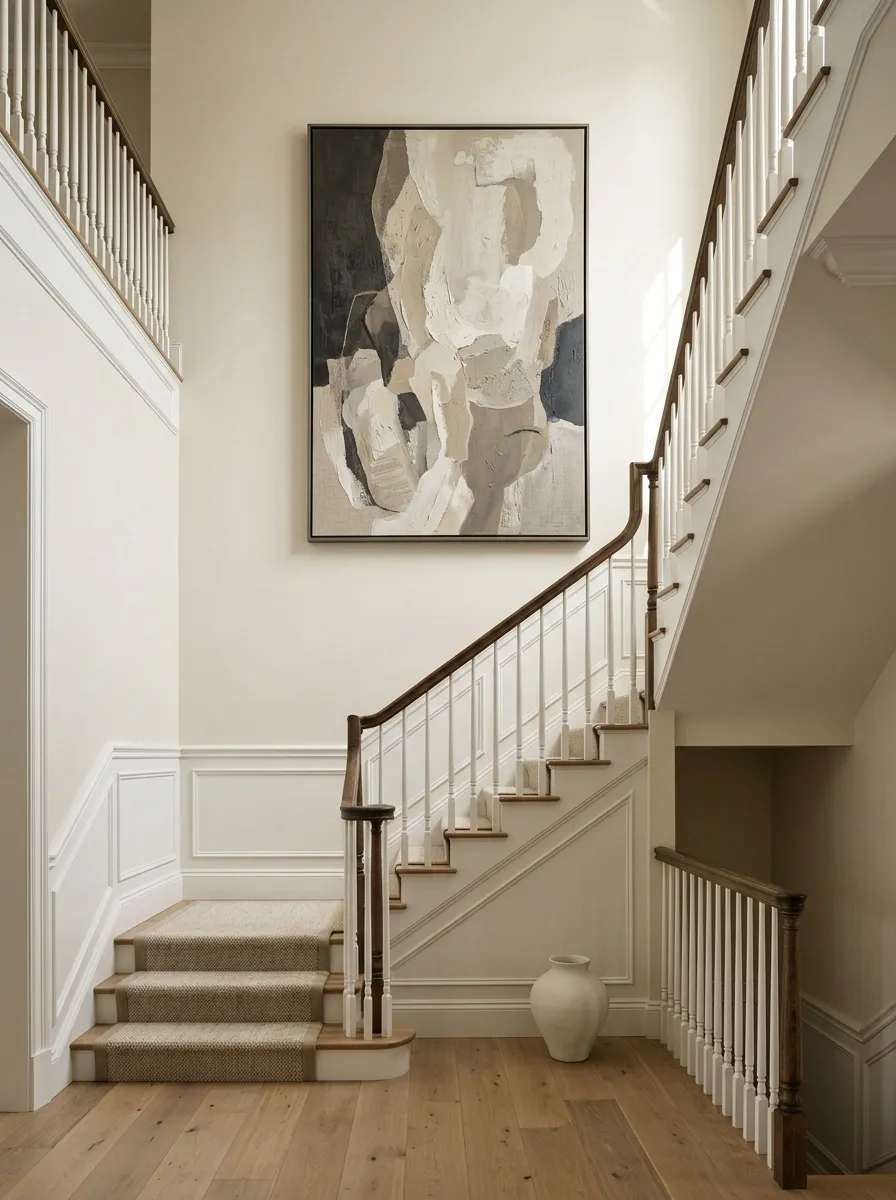
Not every staircase needs a gallery wall. A single oversized artwork can make the space feel calmer and more architectural, especially when the wall is already visually busy with molding, a strong handrail, or patterned flooring.
Choose a piece with enough scale to hold its own against the height of the wall. Tiny artwork usually disappears in a tall stairwell, while one substantial piece gives the eye somewhere to land.
This approach also works well when you want a more minimal home. A large abstract canvas, oversized photograph, or simple botanical print can add personality without turning the staircase into a collection wall.
Embrace Timeless Rustic Charm with Exposed Stone
A rugged stone feature wall instantly injects character and historical warmth into a modern stairwell. The natural variation in texture and color provides an enduring backdrop that feels both grounded and deeply architectural.
Pair the rustic quality of stone with clean iron railings and soft white risers to create a striking balance between old-world charm and contemporary design. This thoughtful contrast keeps the heavy stone material from feeling too dark or enclosed in a smaller hallway.
Highlight the rich texture of the masonry by mounting classic brass or bronze lanterns along the ascent. Warm directional lighting casts gentle shadows across the uneven surface, bringing the stone wall to life as day turns into evening.
Add Picture Lighting to Highlight the Stairway Wall
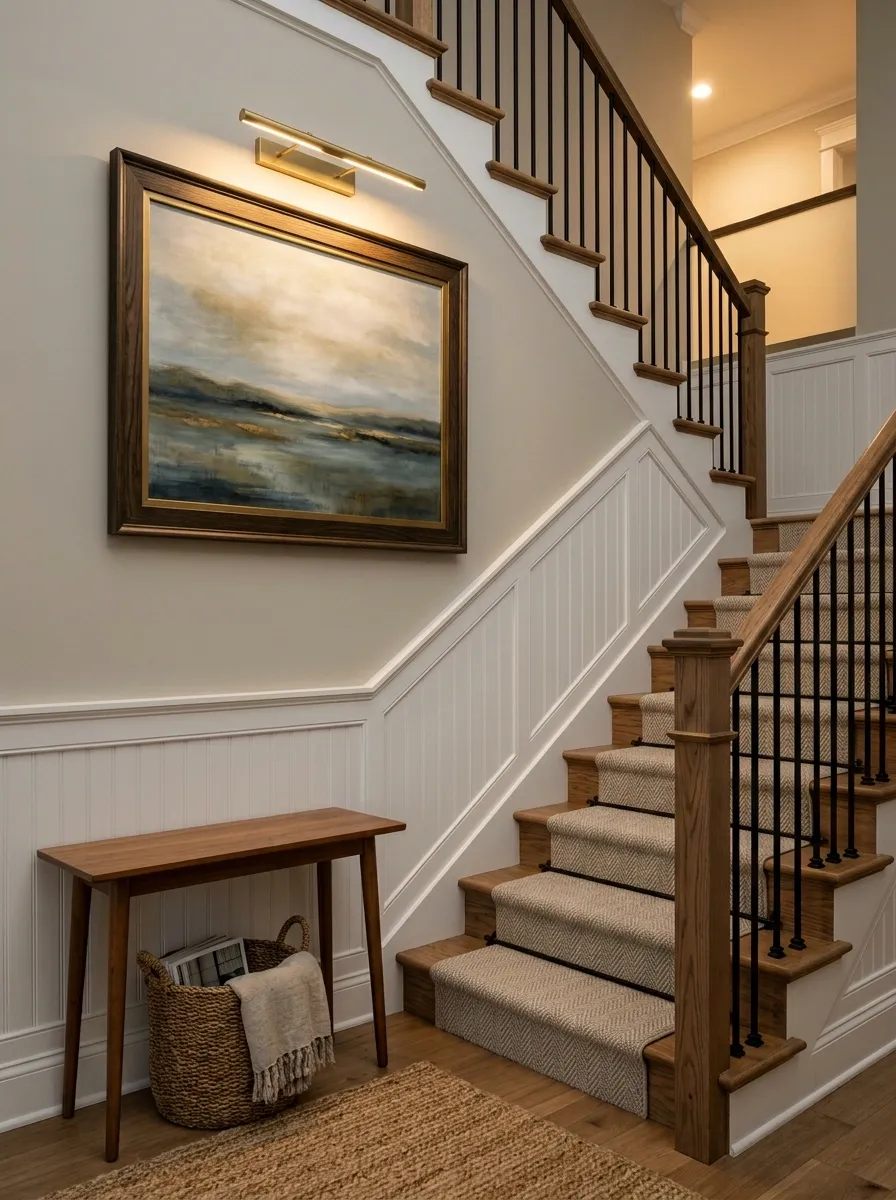
Sometimes the wall itself isn’t the problem. The lighting is. A beautiful arrangement can disappear at night if the staircase is left in shadow.
Picture lights can give artwork more presence while adding a deliberate layer of illumination to the stairway. A slim fixture above one large frame works especially well, but multiple lights can also be used when you have a longer gallery wall.
Choose lighting that works with the rest of the house rather than treating the staircase as a separate room. Warm-toned light generally creates a softer evening atmosphere, while simple metal finishes can reinforce a more modern or traditional look depending on the fixture.
Tell a Story with an Artistic Mural Wall
Transforming a sweeping staircase wall into a painted landscape creates an immersive experience every time you head upstairs. A scenic mural adds depth and whimsical charm, effectively pushing back the boundaries of a narrow stairwell.
Select a hand-painted or wallpaper mural with subtle, muted tones that complement the surrounding millwork and flooring. Soft watercolor skies or delicate botanical scenes allow the artwork to feel like a natural extension of the architecture rather than a distraction.
Incorporate delicate hanging lighting, such as a playful mobile or clustered pendants, to echo the movement within the mural. This creates a cohesive narrative where art and illumination work together to elevate the entire vertical space.
Use a Vertical Mirror to Reflect Light Into the Stairwell
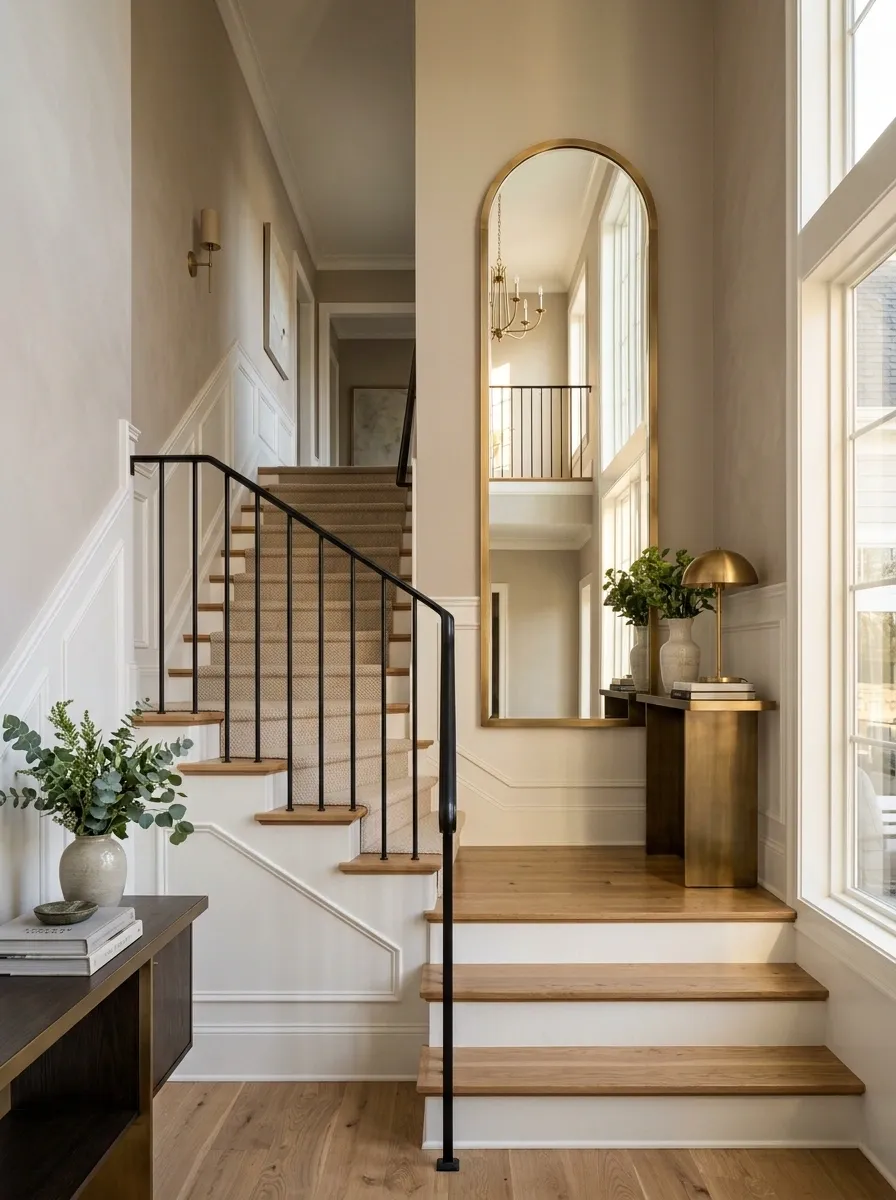
A staircase can feel darker than the rooms around it because the wall blocks natural light and the stairwell often sits away from windows. A tall mirror can help break up that visual heaviness while giving the wall a useful purpose.
Choose a mirror that is narrow enough to leave breathing room around it but tall enough to relate to the height of the staircase. An arched shape softens a traditional or transitional space, while a simple rectangular mirror tends to look more architectural.
Place it where it can reflect a window, light fixture, or brighter part of the room. The reflection matters more than simply filling an empty section of wall.
Define Grandeur with Classic Mural Wallpaper
For a truly majestic stairwell, expansive scenic wallpaper brings sophisticated storytelling to otherwise forgotten vertical architecture. Large-scale historical or botanical panoramas make the transition between floors feel like an intentional journey through an art gallery.
Anchor the grandeur of the walls with traditional wainscoting or clean molding below the wallpaper line to establish a polished foundation. This architectural layering prevents the bold mural pattern from overwhelming the eye while adding a tailored, timeless finish.
Complement the opulent atmosphere with a sparkling crystal chandelier suspended from the upper ceiling. The overhead brilliance reflects beautifully against the soft, painted tones of the mural, casting a warm and inviting glow across the entire staircase.
Stack Slim Frames Along the Staircase Angle
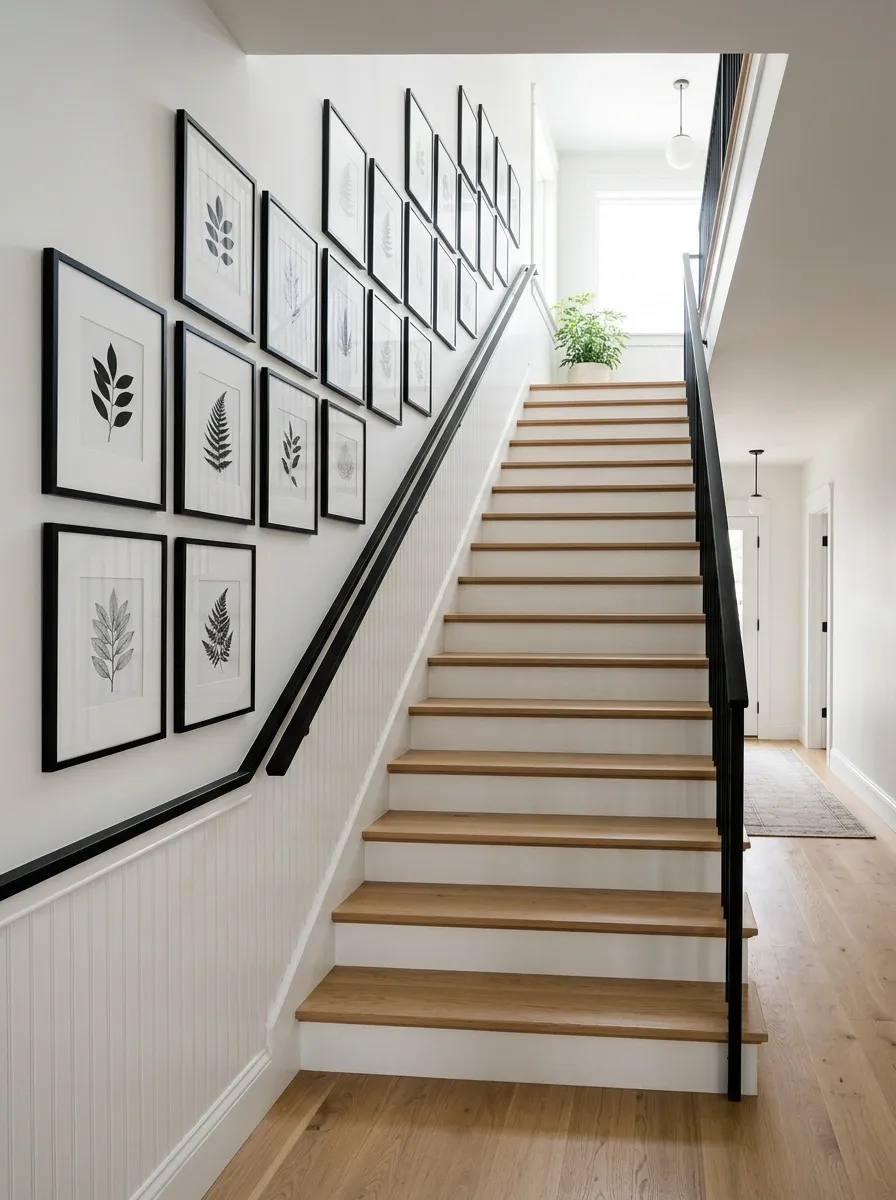
A long stair wall does not always need a large collection. A series of slim frames can create rhythm while keeping the composition light.
The trick is to think about the group as one diagonal line rather than several unrelated pictures. Keep the frames similar in width or finish and let their positions gradually rise with the stairs.
This works particularly well for line drawings, botanical prints, black-and-white photography, or small pieces with generous white space. The repeated shape creates order, while the changing height makes the arrangement feel connected to the staircase.
Avoid making the gaps completely random. Some variation is fine, but a clear visual rhythm will make the entire wall look more intentional.
Make a Statement with 3D Architectural Tree Art
A stairwell wall that spans multiple levels provides a brilliant opportunity to showcase oversized, nature-inspired dimensional art. A graceful, branching tree motif that reaches upward naturally guides the eye along the ascent of the steps.
Choose a neutral, monochromatic palette for the sculptural installation so the focus stays entirely on the intricate shapes and shadows. This approach delivers high-impact visual artistry while keeping the overall aesthetic clean, sophisticated, and calming.
Ground the magnificent wall art by keeping the surrounding staircase sleek and uncluttered. Minimalist glass or dark metal railings allow the sweeping organic forms of the tree sculpture to remain the undisputed star of the entryway.
Bring Warmth to the Stairway With Wood Framed Art
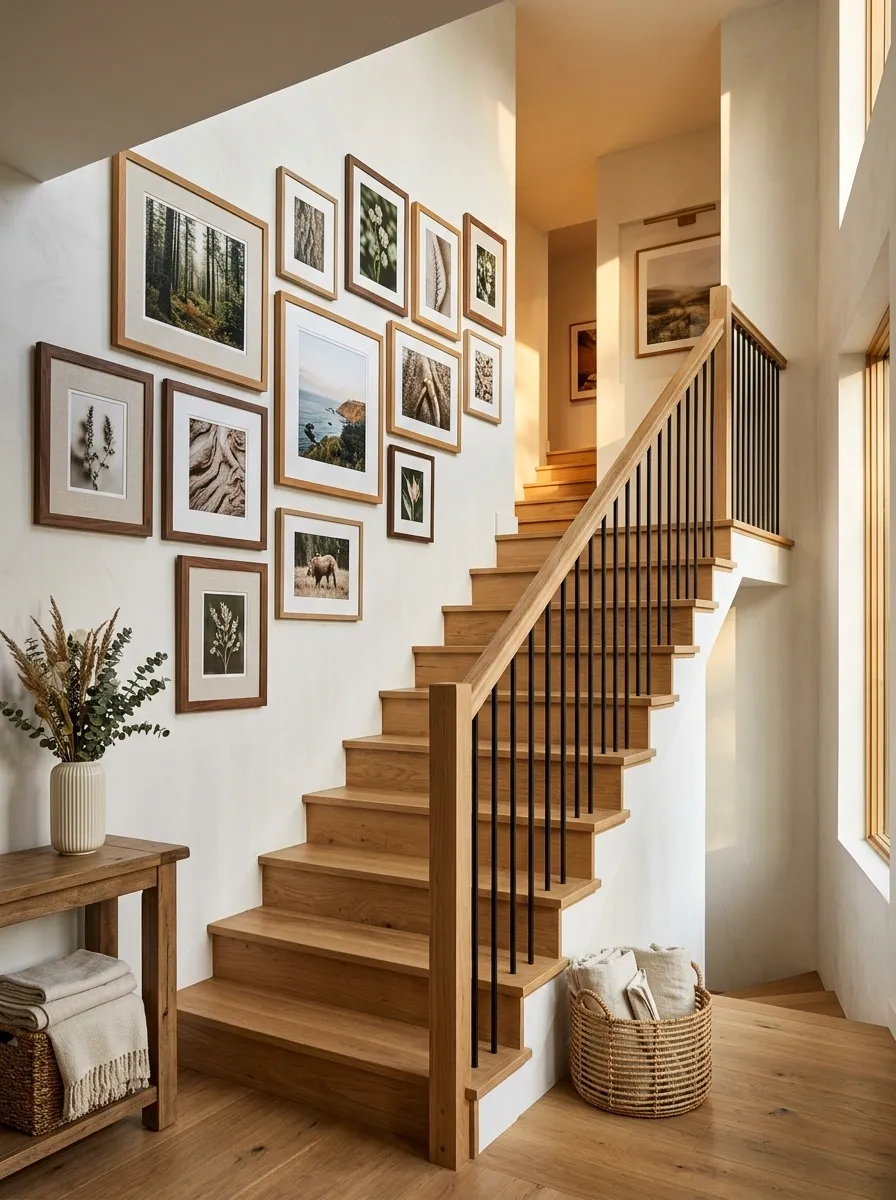
A staircase full of white walls and black metal can sometimes feel visually cold. Wood framed artwork introduces warmth without requiring a major renovation.
Oak, walnut, or other natural wood finishes work particularly well when they repeat a material already found nearby. Look at the staircase treads, flooring, doors, console furniture, or handrail. Repeating one of those tones makes the wall feel connected to the rest of the home.
The key is consistency without making everything match perfectly. Slight variation in wood tone can feel collected and natural, while too many unrelated finishes can make the arrangement look accidental.
Paint the Staircase Wall a Different Color
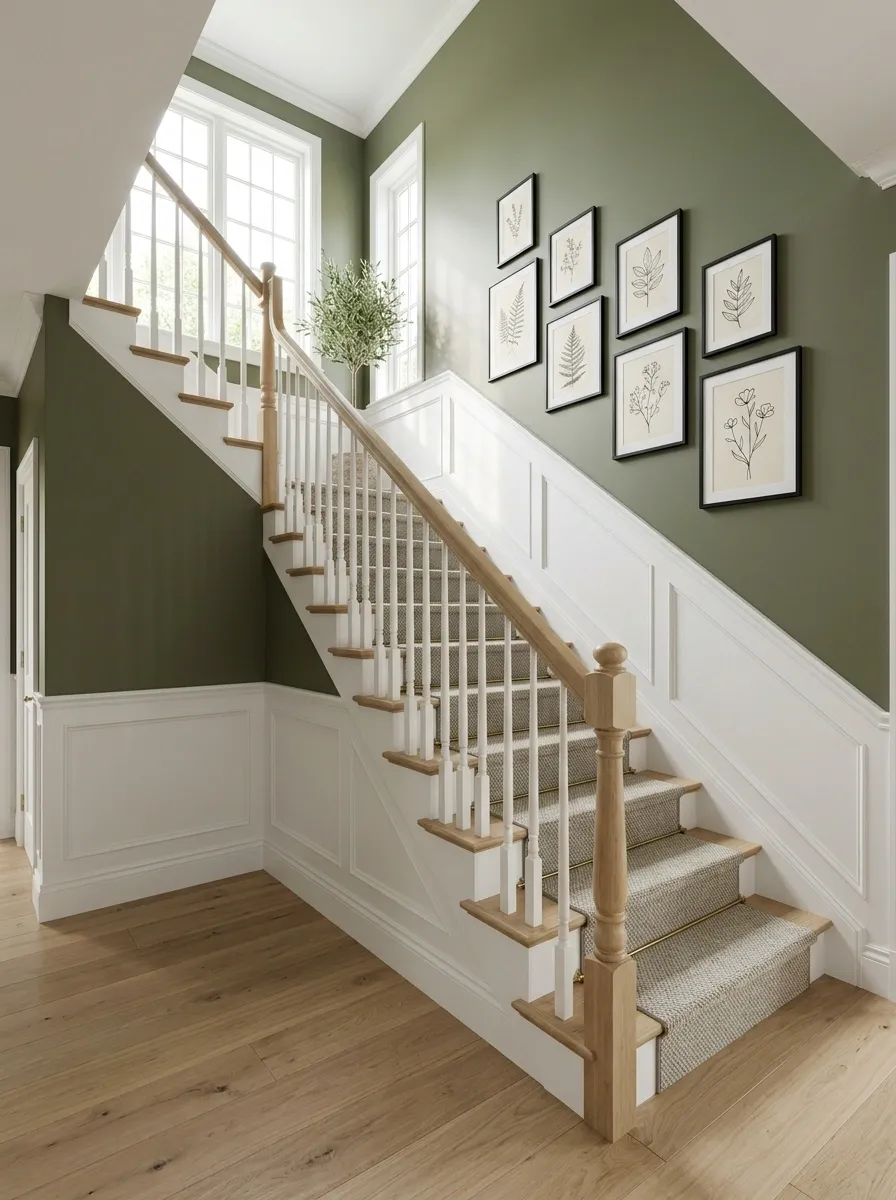
Sometimes the best way to decorate the wall going up the stairs is to change the wall itself.
A deeper or warmer wall color can turn the staircase into a defined architectural feature. This is particularly effective when the surrounding rooms are very neutral and the stairway feels visually disconnected.
You do not need a dramatic color. A muted olive, warm taupe, dusty blue, earthy clay, or deeper cream can create enough contrast to make artwork and trim stand out.
Before choosing paint, consider how much natural light the stairwell gets. A color that looks soft in a sunny room can appear much heavier in a dark stairwell.
Use Wallpaper to Make a Plain Stairway Wall More Interesting
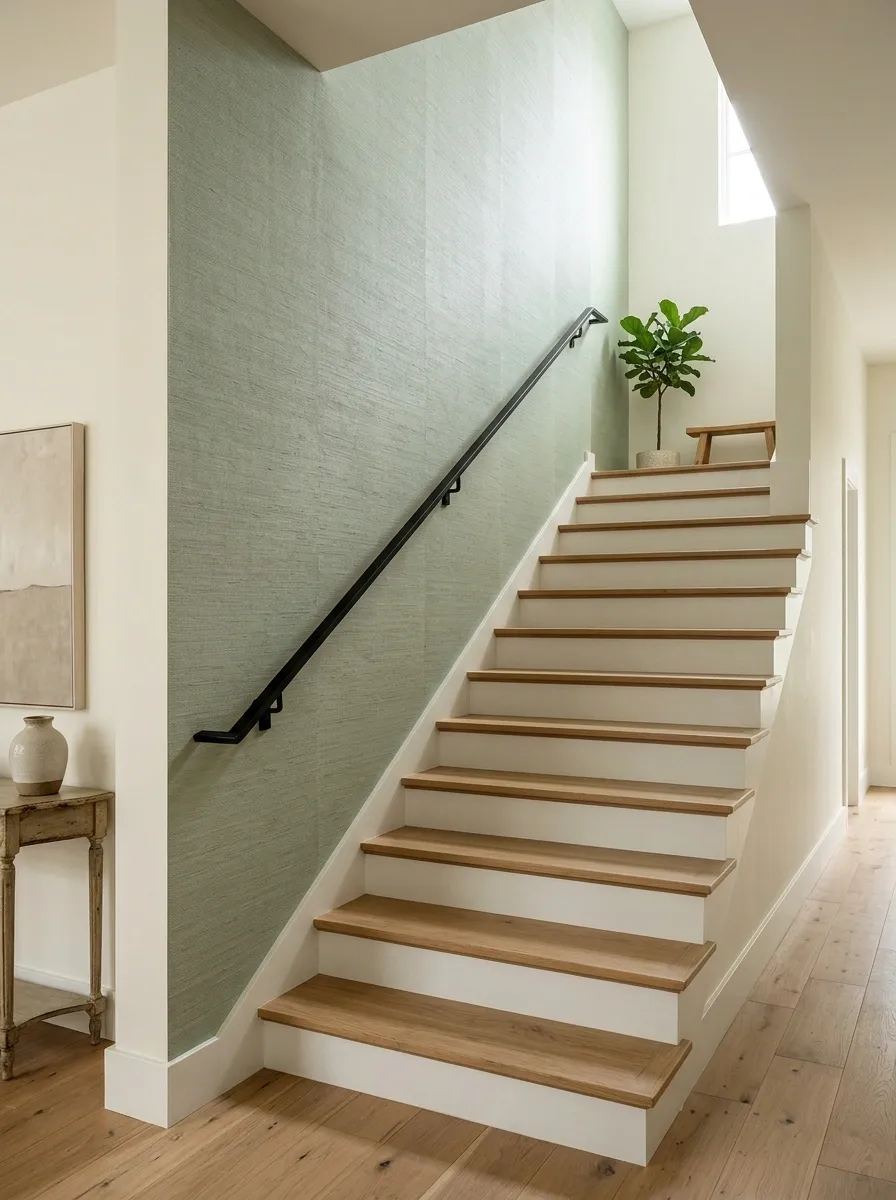
Wallpaper can give a tall staircase wall much more personality than a collection of small decorations. Because the wall is already a strong vertical surface, a subtle pattern can make the entire staircase feel designed rather than merely decorated.
For a narrow staircase, look for patterns that don’t visually chop the wall into heavy blocks. Small botanicals, fine geometric patterns, textured grasscloth-style finishes, and softly scaled prints can work well.
You also don’t need to wallpaper every visible surface. Using it only on the stair wall can create a clear focal point while allowing the rest of the house to remain restrained.
Create a Clean Look With One Repeating Art Style
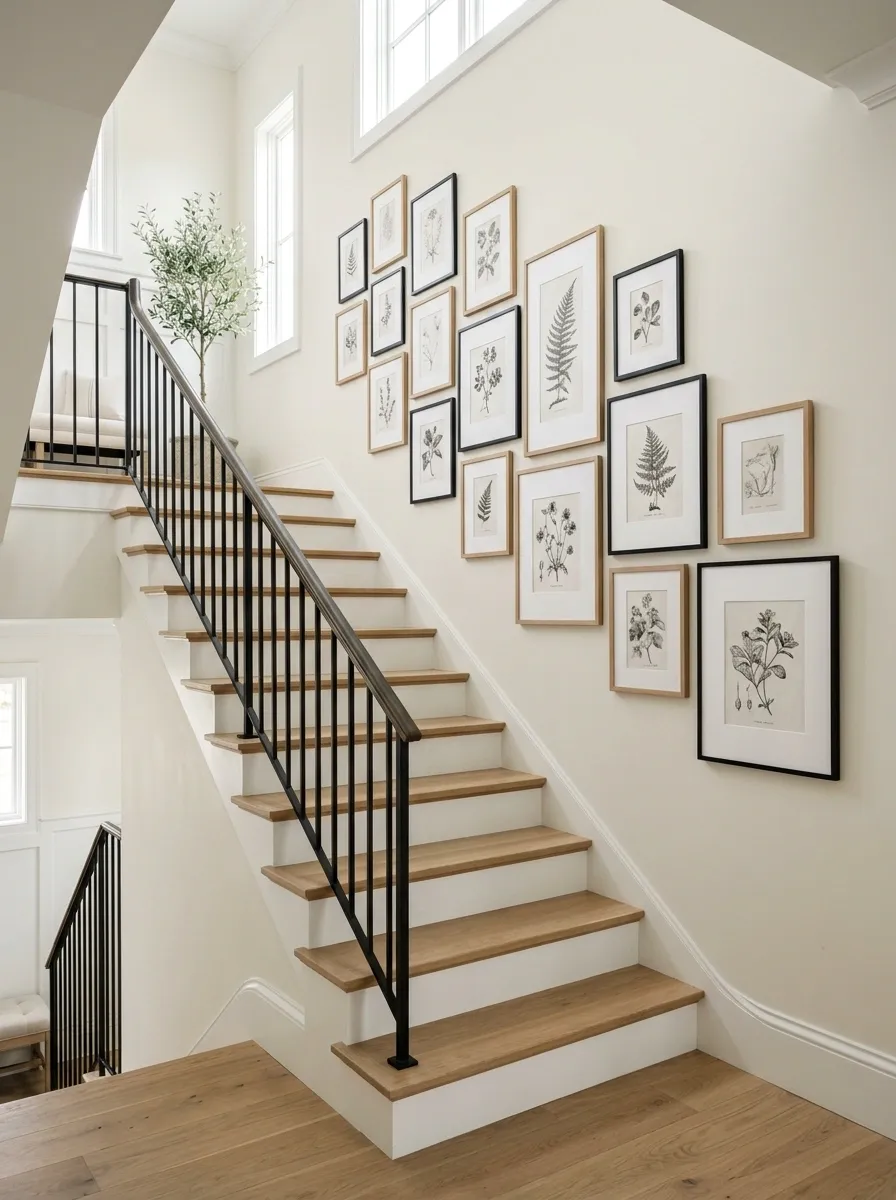
When a staircase wall feels messy, the problem may not be the number of frames. It may be the lack of a visual rule.
Choose one art category and repeat it. Botanical drawings, black-and-white photography, architectural sketches, abstract shapes, or vintage maps can all work when the collection shares a common language.
This makes it easier to mix different frame sizes without the wall becoming chaotic. It also gives the staircase a stronger identity because the artwork feels like a collection rather than a group of unrelated purchases.
Don’t add random filler pieces just because a gap is available. Empty space is better than an artwork that doesn’t belong.
Add a Narrow Console or Shelf Where the Layout Allows It
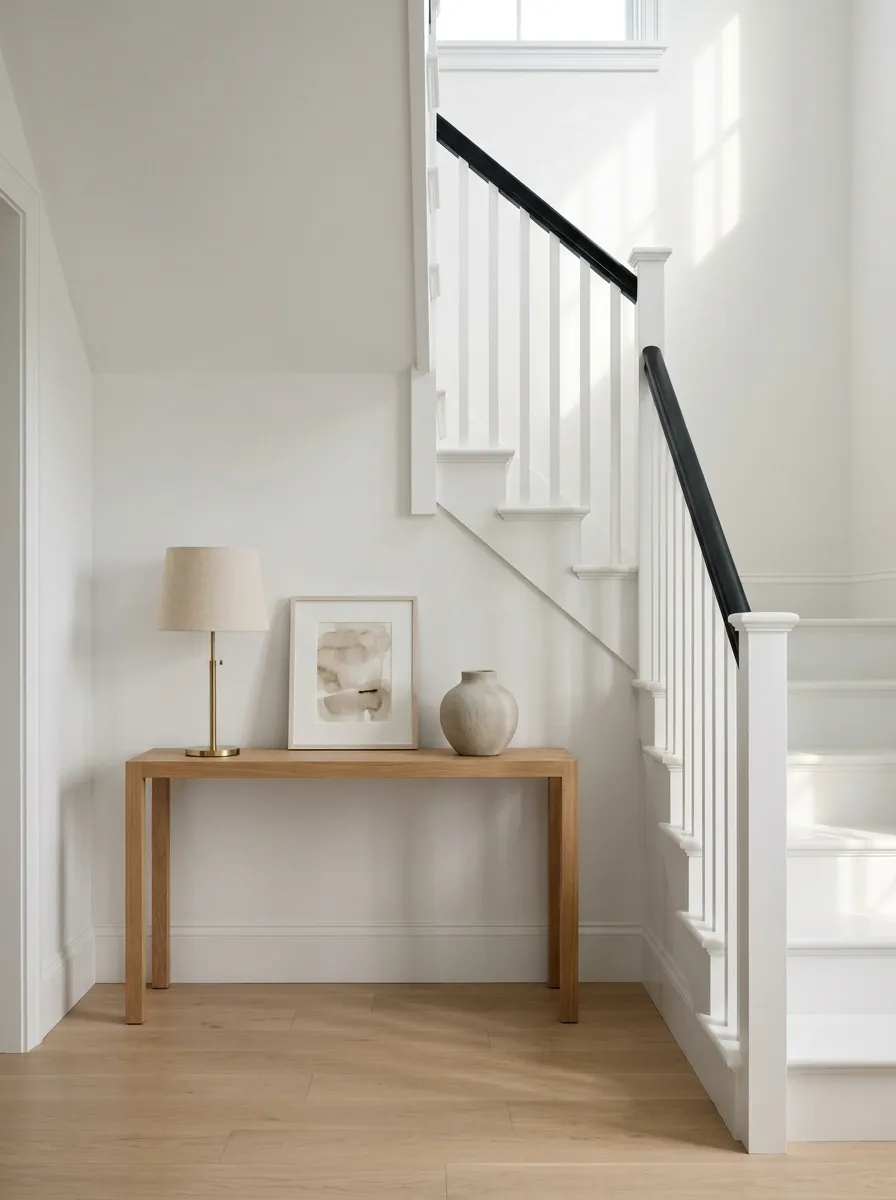
An empty wall beside a staircase doesn’t always need artwork. In a wider landing or staircase area, a slim console can add useful surface space while giving the wall more architectural structure.
This only works when there is enough floor clearance. Never force furniture into a stair route simply because the wall is empty.
Choose a shallow piece that relates to the staircase materials. A narrow oak console can warm a painted stairwell, while a simple black metal piece can work in a more modern setting.
Keep the styling restrained. One lamp, a small piece of artwork, and a single decorative object can be enough.
Use Baskets or Woven Pieces for Texture Without Heavy Artwork
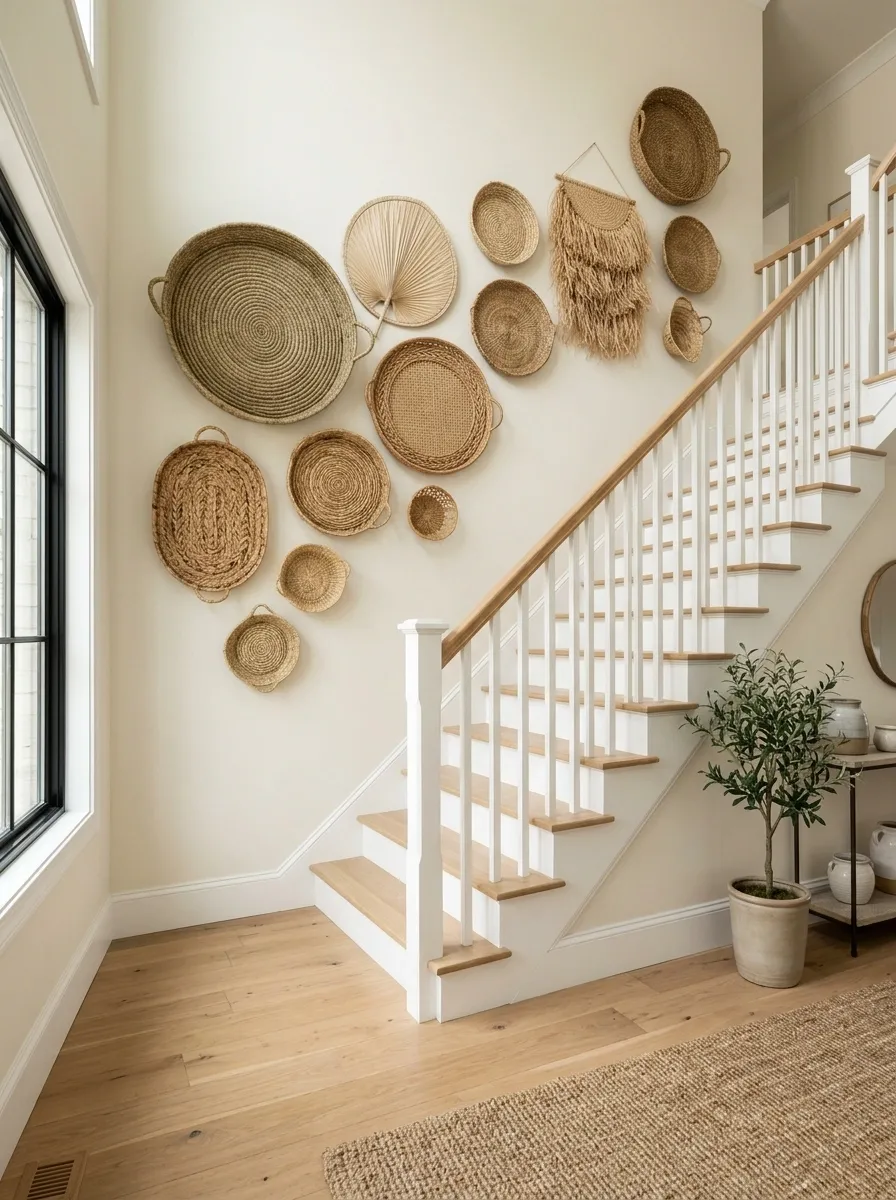
Not every staircase wall needs framed art. Woven baskets, shallow wall baskets, and textile pieces can bring texture to a neutral space while making the wall feel softer.
This works particularly well in organic modern, farmhouse, rustic, or relaxed transitional interiors. Use pieces with enough scale to read from the bottom of the stairs rather than lots of tiny baskets that become visual dots.
Arrange them in an intentionally loose composition. A mix of round and slightly irregular woven shapes can feel more natural than a perfectly matched set.
Keep the projection from the wall modest, especially near the handrail.
Install Vertical Slat or Panel Moulding for Architectural Interest
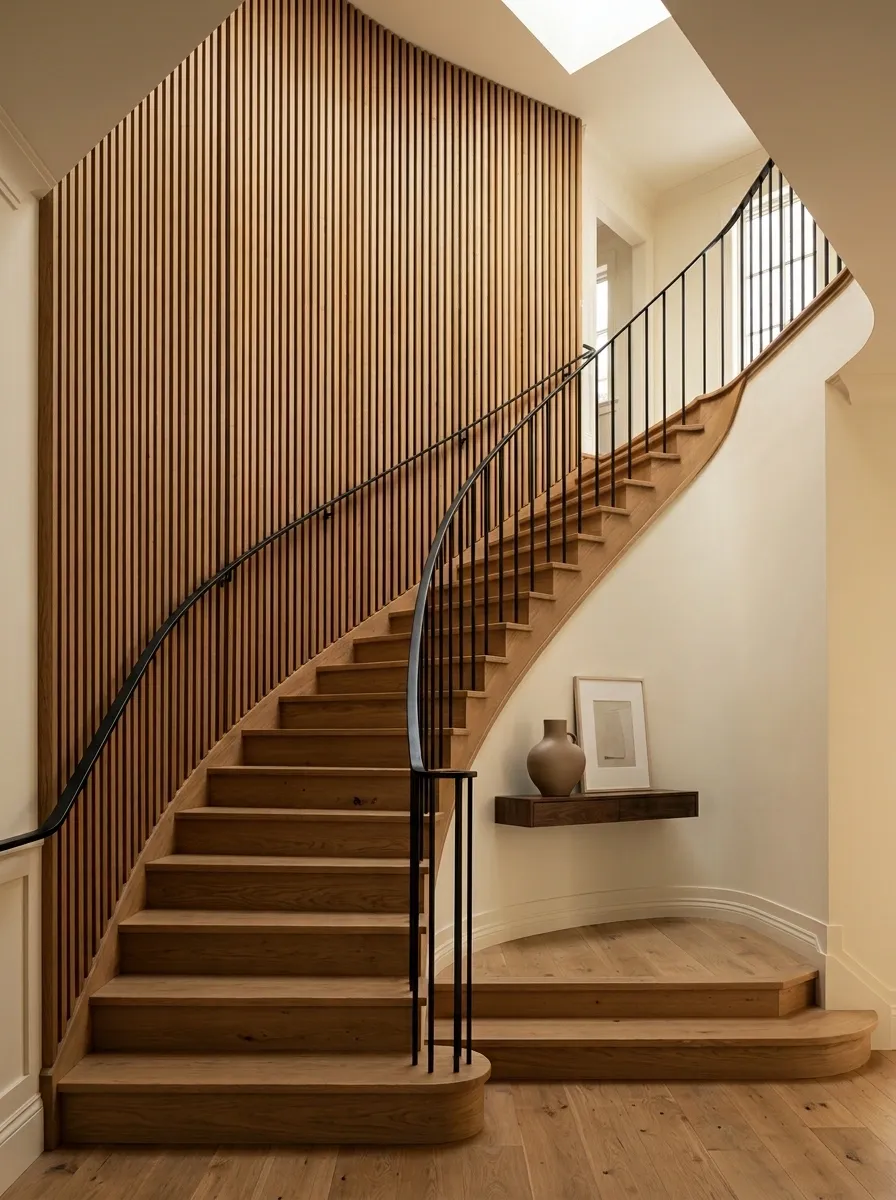
When you want the wall to feel more finished without adding lots of removable decor, architectural treatment can do the work.
Vertical slats, simple panel moulding, or narrow wood battens can give a long staircase wall rhythm and make the architecture feel more deliberate. The treatment can run along the wall while artwork is kept to a minimum.
This is particularly effective when the staircase currently feels flat or builder-basic. A painted panel treatment can look traditional, while natural wood slats create a warmer contemporary effect.
Keep the spacing and proportions consistent with the scale of the wall. Overly tiny panels can make a large stairway feel busy.
Create a Minimal Stairway With Just Three Well-Placed Pieces
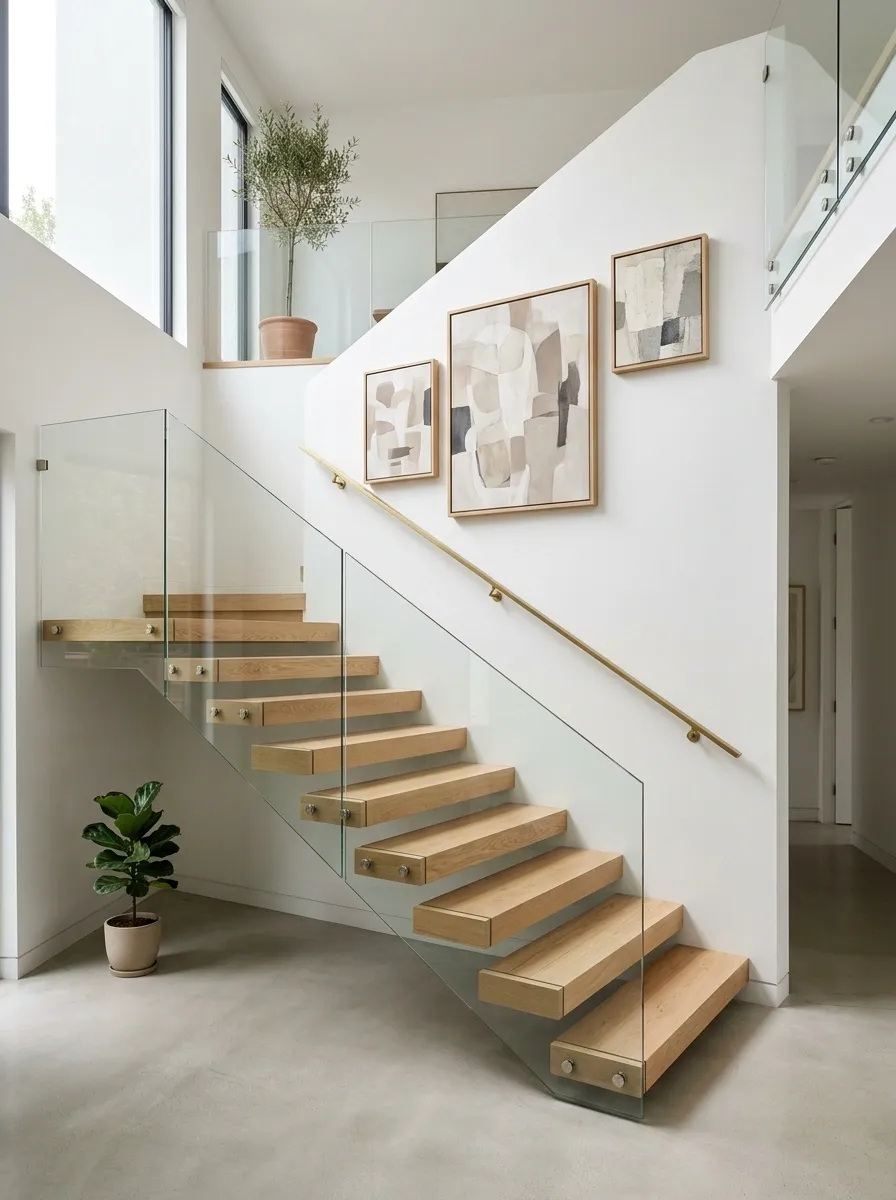
A staircase doesn’t need a full gallery wall to look finished. In some homes, three carefully selected pieces will have more impact than twenty.
Choose one larger piece and two smaller supporting pieces, then arrange them along the stair’s movement. Keep the artwork related by color, subject, or frame finish.
This approach is especially useful for people who dislike visual clutter. It gives the wall personality while preserving plenty of open space.
The secret is choosing pieces that are large enough to be seen. Minimal does not mean tiny.
Use Warm Neutrals to Keep a Narrow Stairway From Feeling Busy
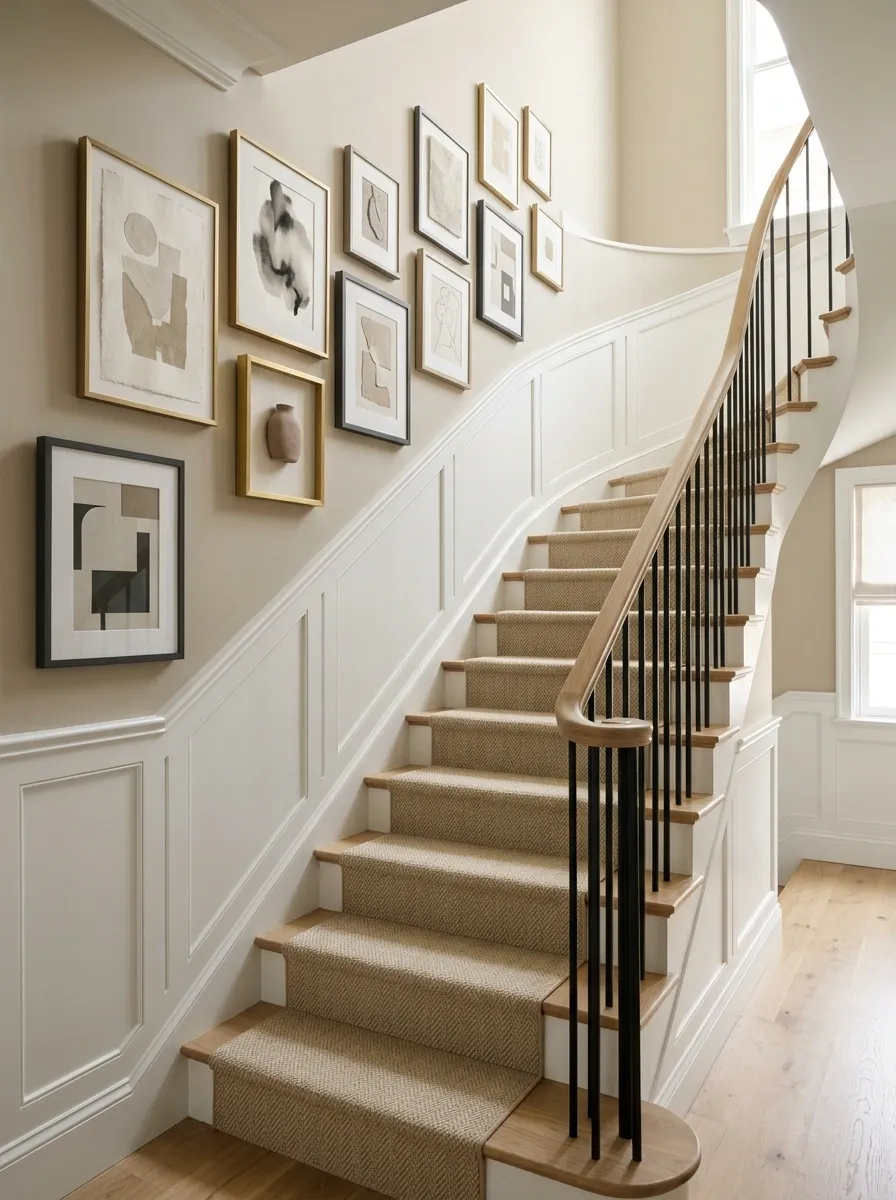
A narrow staircase already has a lot going on. Strong contrast, dark frames, and multiple patterns can make the space feel even tighter.
Warm neutrals provide a calmer foundation. Cream, sand, taupe, soft beige, light warm gray, and muted clay tones can create variation without overwhelming the narrow wall.
That doesn’t mean everything needs to be beige. Introduce contrast through texture, frame finish, artwork shape, or one darker accent rather than using several competing colors.
This approach is particularly useful when the stairway connects directly to a neutral living room or entry.
Decorate an Awkward Stairway Corner With a Tall Accent Piece
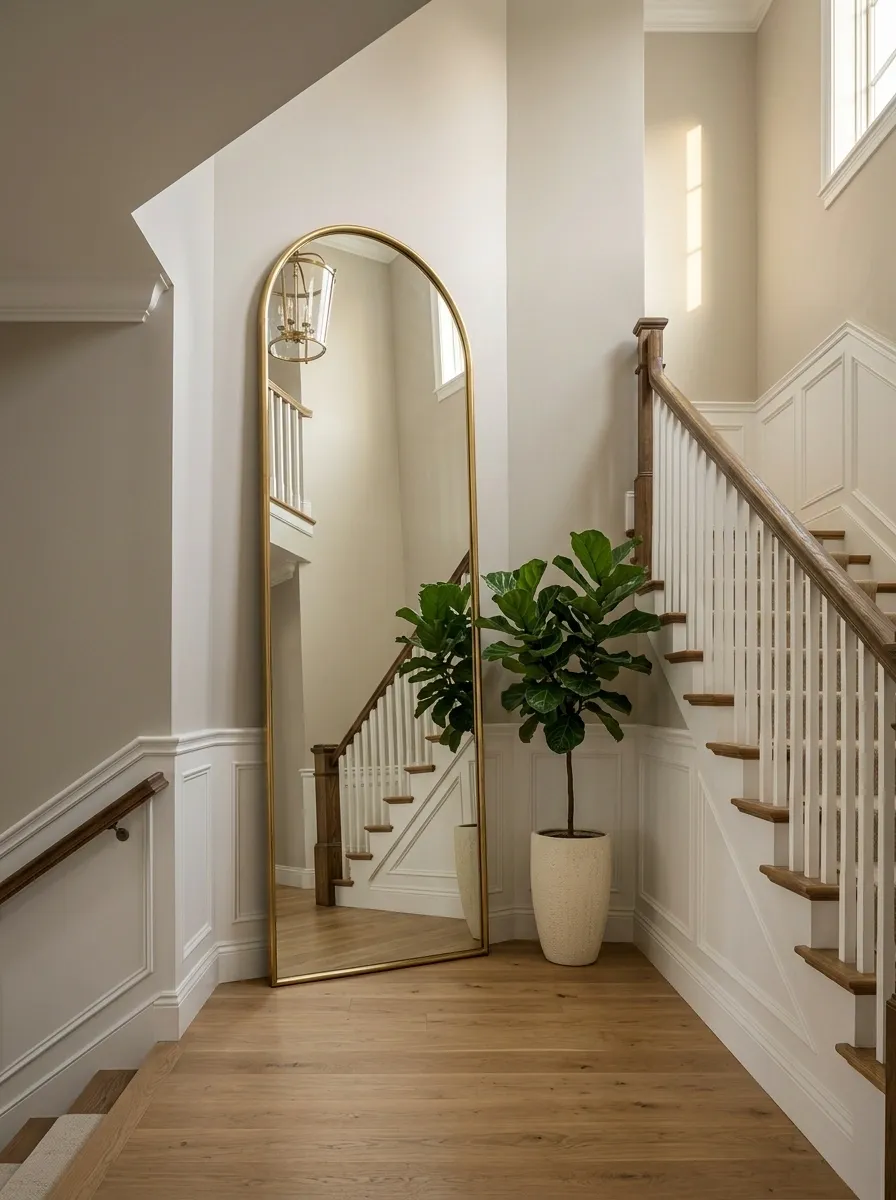
Some staircases have an awkward corner where the wall changes direction, the landing begins, or the ceiling height shifts. Filling that area with several small decorations often makes the problem more noticeable.
A single tall accent can work better. Depending on the space, that could be a large framed piece, a vertical mirror, a tall plant placed safely away from the stair route, or a slim sculptural element.
The goal is to emphasize the height rather than clutter the corner. Use something with a strong vertical silhouette that visually connects the lower and upper portions of the wall.
Make a Modern Stairway Feel Warmer With Natural Materials
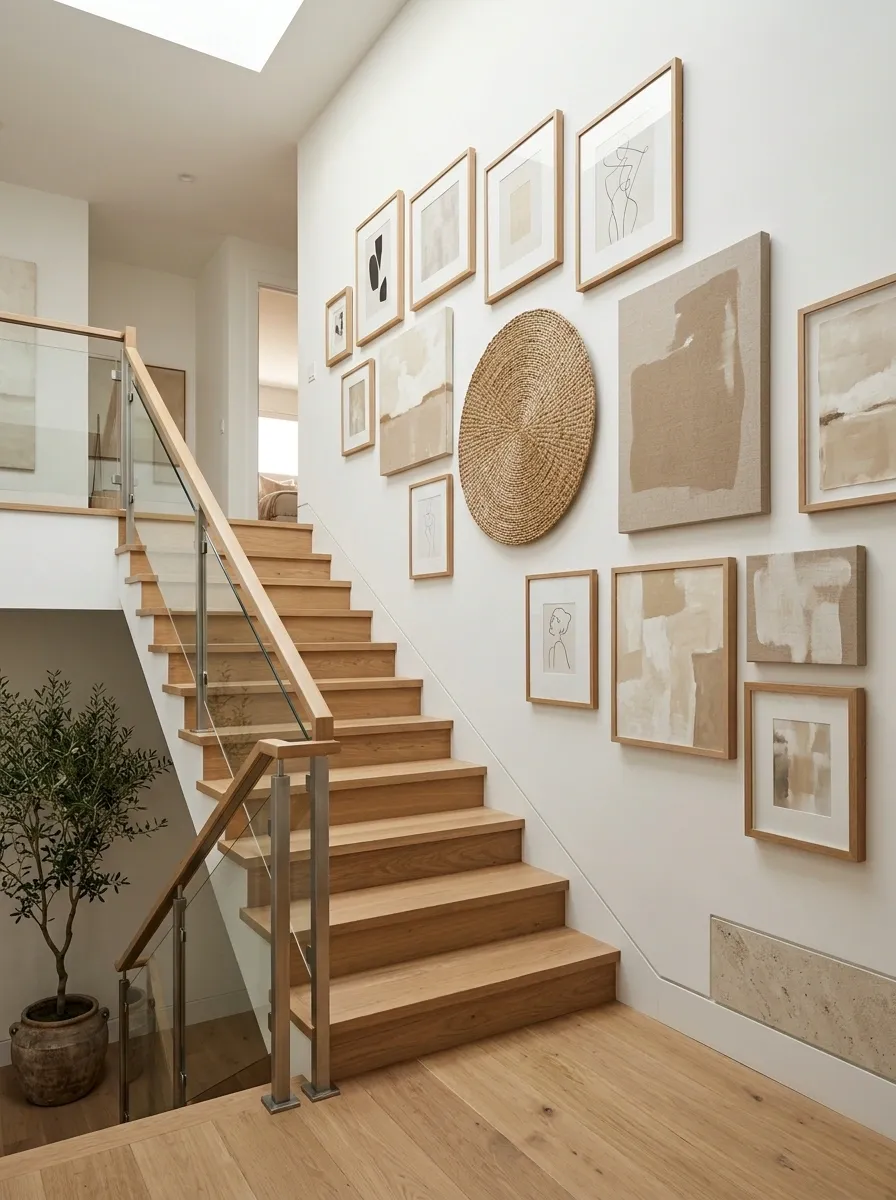
Modern staircases can sometimes look overly hard because they combine white walls, metal railings, glass, and smooth flooring. Natural materials can soften that effect without making the space feel rustic.
Consider wood frames, woven wall pieces, linen-textured artwork, natural stone accents, or a warm timber feature. The goal is to introduce tactile variation rather than adding more decoration for its own sake.
Keep the materials related. A wood frame paired with a woven piece and warm neutral artwork creates a much calmer result than mixing five unrelated textures.
Finish the Whole Staircase With One Cohesive Decor Strategy
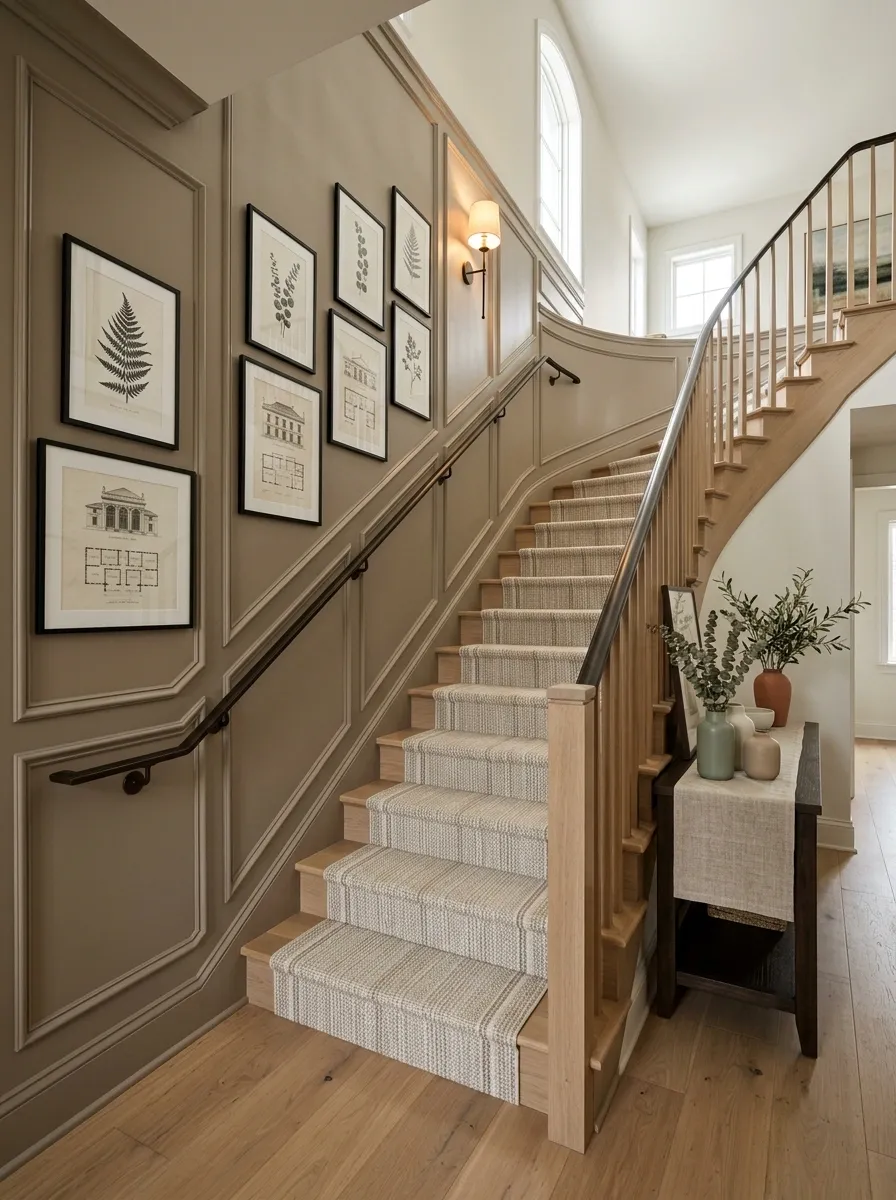
The strongest staircase walls usually don’t rely on one clever piece. They work because all the choices belong together.
You might choose a gallery wall with black frames, warm natural materials, botanical artwork, a painted accent wall, or simple architectural moulding. Any of these can work. The mistake is combining every idea at once.
Choose your main strategy first, then let the smaller details support it. If the architecture is the focal point, keep the artwork quieter. If the gallery wall is the star, simplify the surrounding materials. If the staircase is narrow, prioritize openness over decoration.
That final decision is what makes the wall look designed instead of merely filled.
Decorate the Landing and Stair Wall as One Composition
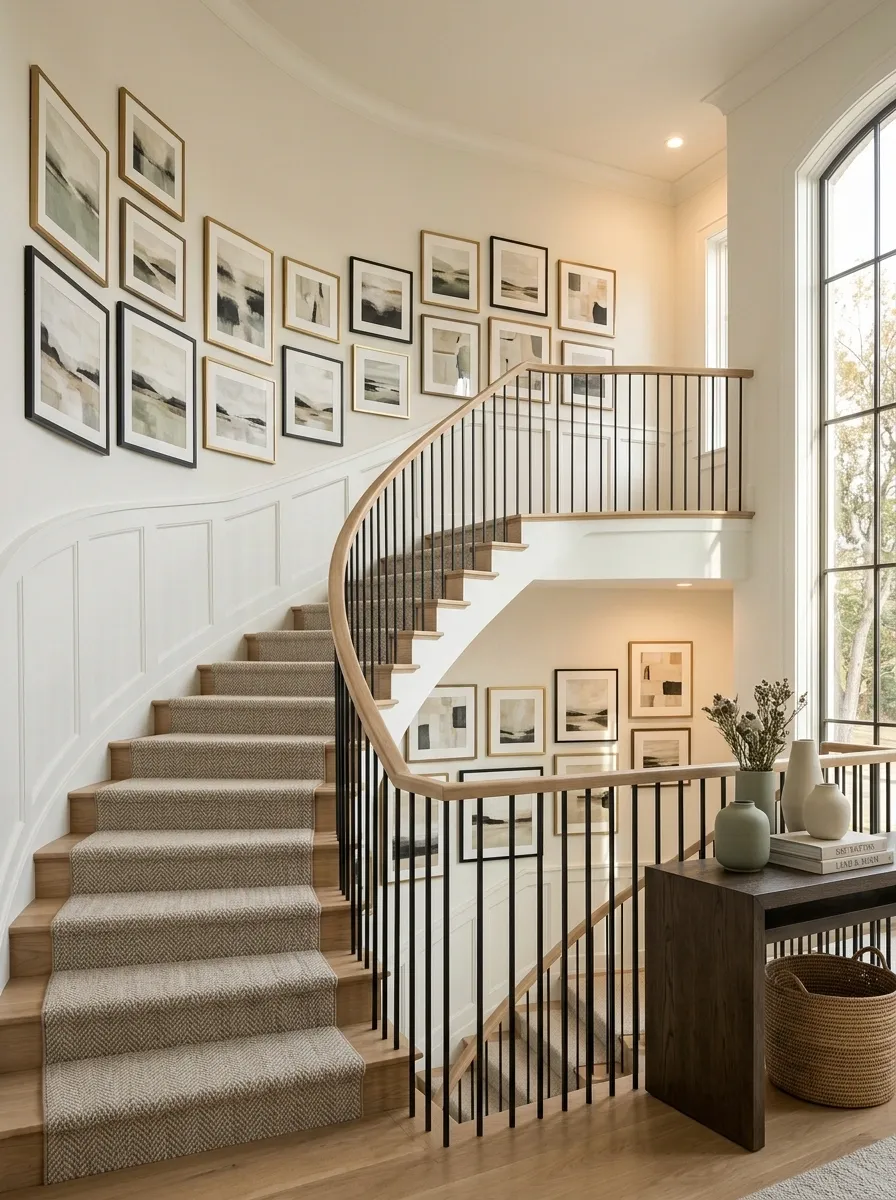
The stair wall should not always be treated as a separate decorating project from the landing. When the staircase turns into an upper hallway or landing, a disconnected arrangement can make the transition feel awkward.
Instead, repeat one or two visual elements across both areas. The same frame finish, artwork palette, wall color, or material can visually connect the two spaces.
This is especially effective when the landing is visible from below. The composition will then read as one continuous story instead of two unrelated walls.
Look at the whole sightline before choosing the decor. Sometimes the landing needs less decoration because the staircase wall already carries the visual weight.
Add a Series of Botanical Prints for a Softer Look
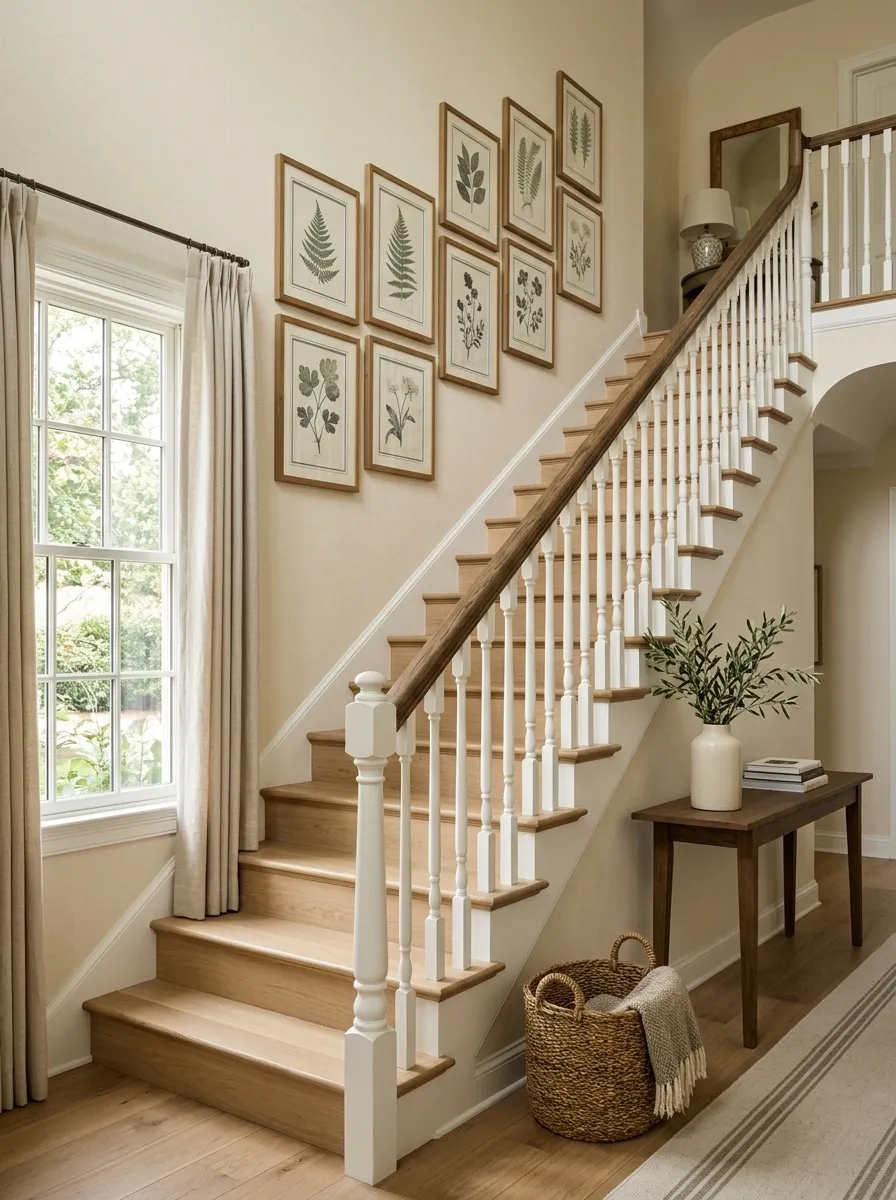
Botanical prints work especially well on staircase walls because their repeated shapes create structure without the visual heaviness of bold artwork. They also introduce an organic element when the staircase is dominated by hard surfaces such as wood, tile, metal, or painted trim.
Use several related prints rather than completely unrelated plants. Similar line quality or a shared color palette will make the series feel intentional.
For a warmer look, choose natural wood frames. For a sharper modern arrangement, black or dark bronze frames can make the greenery-inspired artwork feel more graphic.
Use Black Frames for a More Architectural Stairway
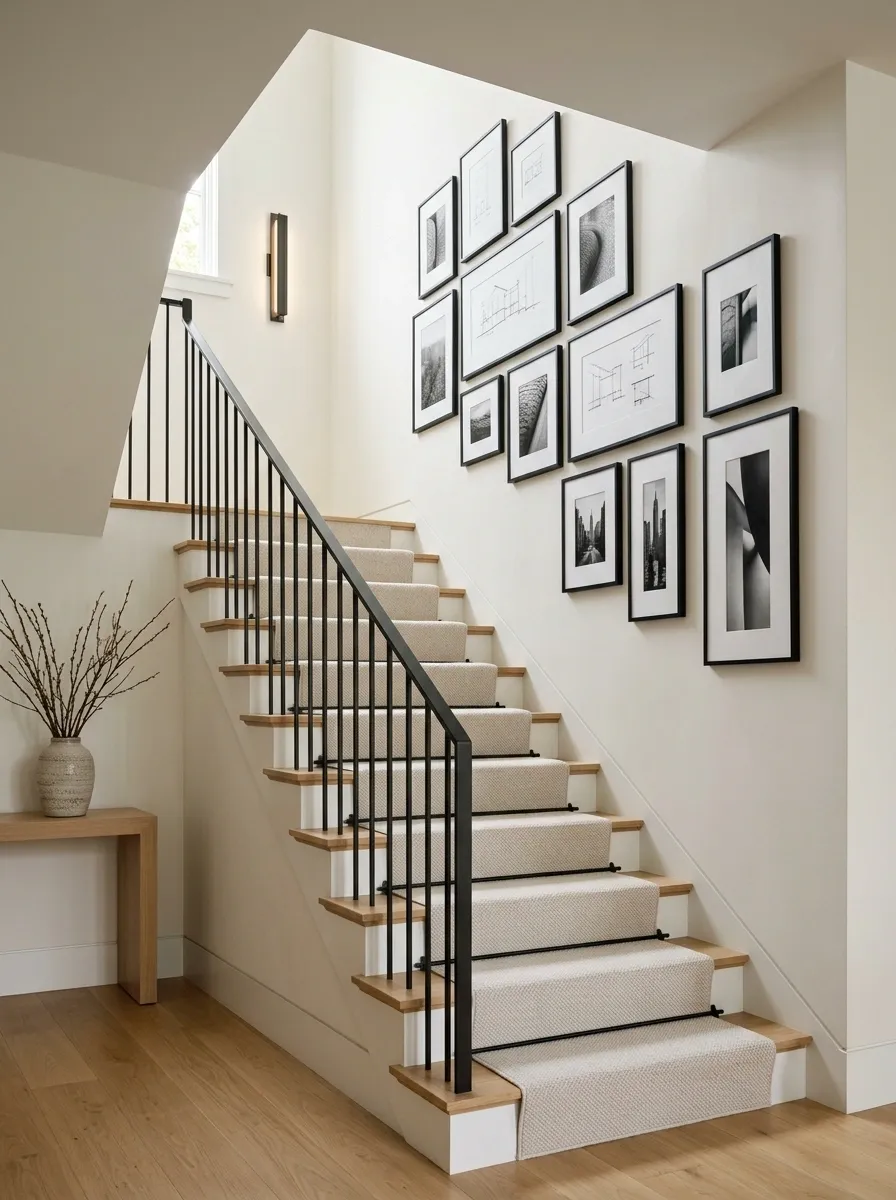
Black frames can give a staircase a stronger, more defined look, especially when the surrounding architecture is simple. They work particularly well with white or warm neutral walls because the contrast immediately creates structure.
Keep the rest of the arrangement relatively disciplined. When every frame is dark and the artwork is also highly detailed, the wall can quickly become visually heavy.
Pair black frames with simple photography, line drawings, architectural prints, or artwork with plenty of negative space. Repeating black elsewhere in the stairway, such as in lighting or hardware, can make the choice feel intentional.
Fill a Tall Staircase Wall With One Large Statement Piece
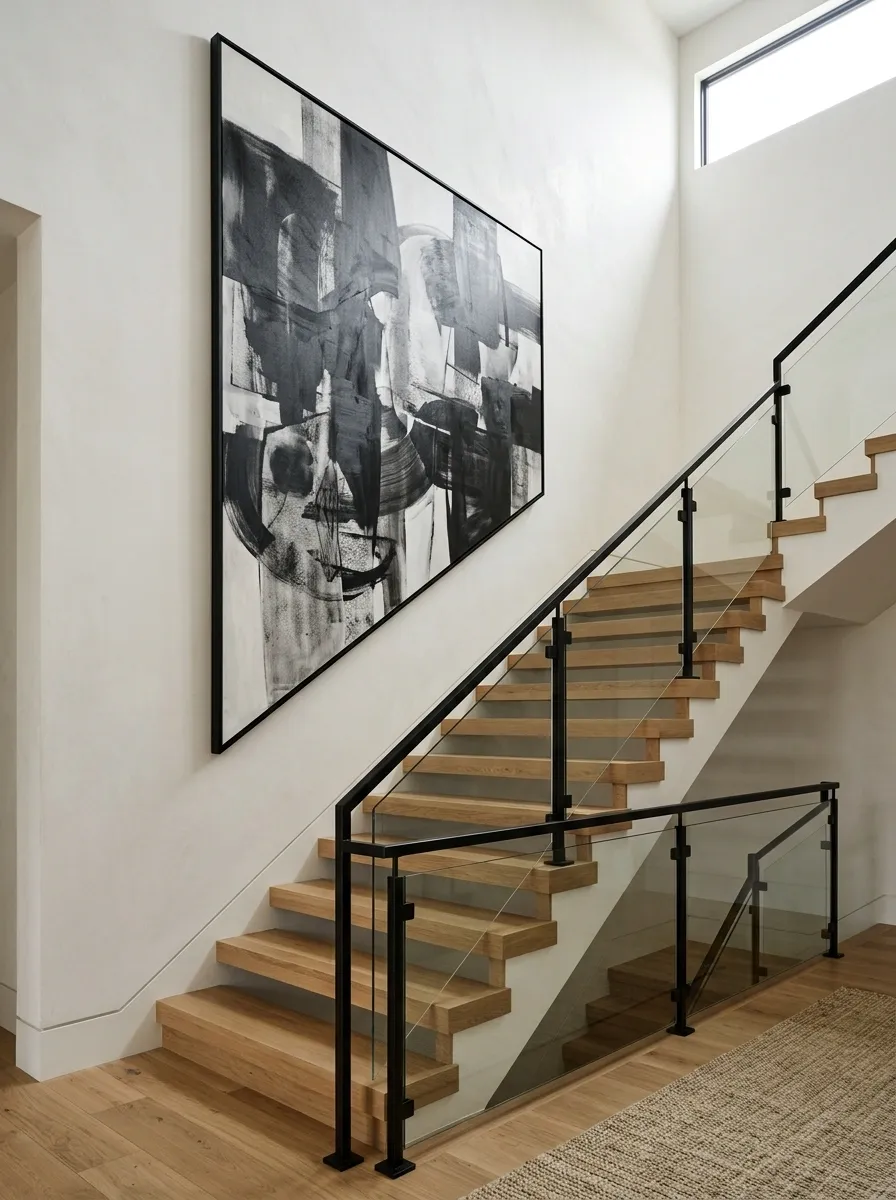
Some staircases have such a large uninterrupted wall that small artwork simply looks lost. When that happens, scale up.
A large statement piece can anchor the entire stairway and create a focal point without requiring dozens of frames. Look for artwork with a strong silhouette, oversized abstract composition, dramatic botanical image, textile panel, or large photographic print.
The bigger the piece, the more important placement becomes. Don’t automatically center it on the wall as though it were in a living room. Its relationship to the stairs and handrail matters more than mathematical centering.
How to Make the Staircase Wall Feel Finished
The best answer to how to decorate the wall going up your stairs isn’t to cover every empty section. Start with the architecture, decide what you want the eye to notice first, and build the decor around that decision.
A staircase gallery wall can feel personal. One oversized artwork can feel calm. Wallpaper or moulding can make the architecture itself the feature. Warm wood, woven textures, and thoughtful lighting can soften a space that feels too cold.
Before hanging anything, check the wall from the bottom and top of the stairs, consider the handrail and walking path, and edit anything that feels unnecessary. A little restraint usually makes the final result look more intentional.
Save these staircase wall ideas now so you have them ready when you’re planning your next home update.