
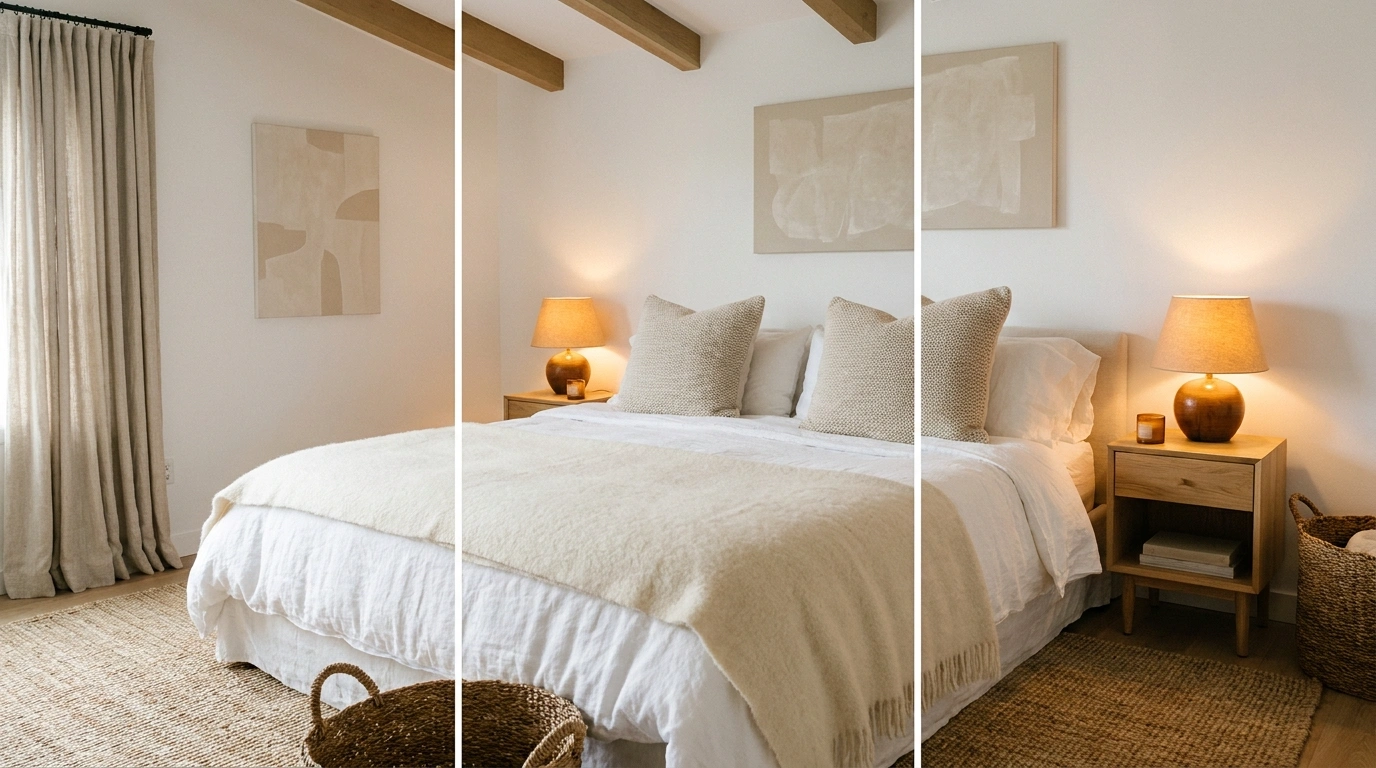
White bedrooms can look bright, polished, and strangely uncomfortable at the same time. When every surface is crisp and pale, the room can lose the depth that makes a bedroom feel inviting, especially once daylight fades and cool artificial light takes over.
Warmth doesn’t have to come from filling the room with beige, adding piles of accessories, or abandoning white altogether. The strongest rooms use contrast more quietly.
Wood introduces weight. Linen softens hard surfaces. Rugs change the feeling underfoot. A warm lamp can make the same white wall look completely different at night.
That is why complete room compositions are more useful than isolated decorating tips. A warm white bedroom works because the bed, floor, curtains, lighting, furniture, and smaller details all support the same visual direction.
White Bedroom Designs
Ambient Glow White Bedroom With Mountain Art
Concealed LED strip lighting transforms a simple white bedroom into an inviting evening sanctuary. By tracing the perimeter of the ceiling, bed frame, and floating shelving with warm backlighting, the space achieves a soft, enveloping glow without relying on harsh overhead fixtures.
Contrasting the crisp white architecture, a trio of moody mountain landscape prints brings grounded definition to the upper wall. Below, a plush white shag rug and layered neutral bedding absorb the illumination, preventing any glare while maximizing the cozy factor.
Keep surrounding accessories minimal to let the lighting design take center stage. The built-in warmth creates a luxurious, hotel-like atmosphere that makes an all-white palette feel remarkably intimate after dark.
Warm Oak White Bedroom With Soft Linen Bedding
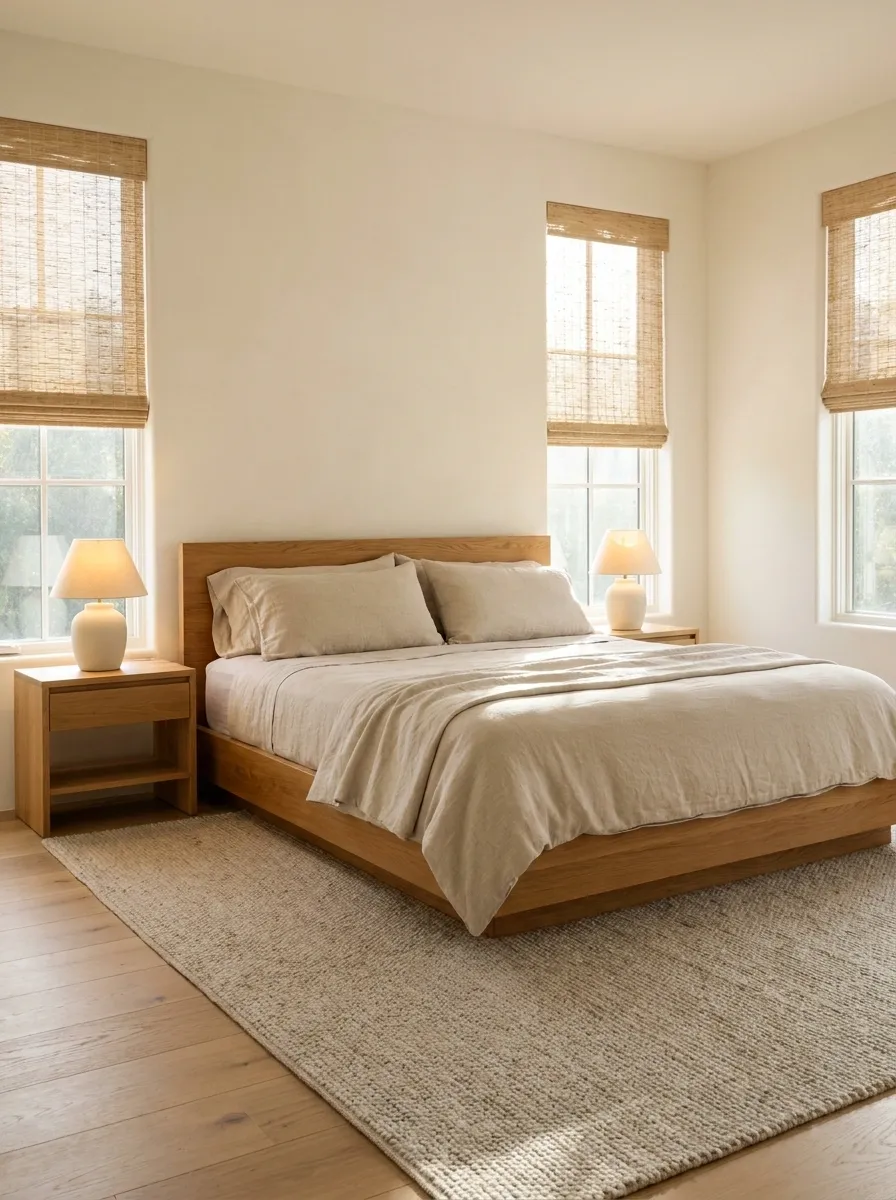
Warm oak gives a white bedroom an immediate sense of weight without making it feel dark. This design pairs warm white walls with wide-plank oak flooring, a substantial oak bed, oatmeal linen bedding, woven window shades, and simple ceramic bedside lamps.
The key is repetition. Oak appears in several places, while the linen and woven shades soften the harder surfaces around it. A low-pile neutral rug can sit partly beneath the bed to connect the floor with the textile layers above.
Keep the surrounding furniture simple. The warmth comes from the material relationship rather than from filling the room with accessories.
Sunlit White Bedroom With Brass Pendants
Pendant lighting hanging low over the nightstands introduces an unexpected architectural element to a white bedroom. Paired with sheer white curtains that catch the afternoon sun, the space feels bright, airy, and effortlessly serene.
A large textured canvas above the bed adds subtle depth to the neutral walls without disrupting the calm color scheme. Meanwhile, a mature potted olive tree in the corner introduces organic shape and a gentle hint of muted green.
Keep the bedding straightforward with crisp white sheets and a textured throw blanket to maintain the airy aesthetic. The combination of diffused natural light and warm brass fixtures ensures the room remains inviting throughout the day.
Creamy White Bedroom With Walnut Furniture and Amber Lighting
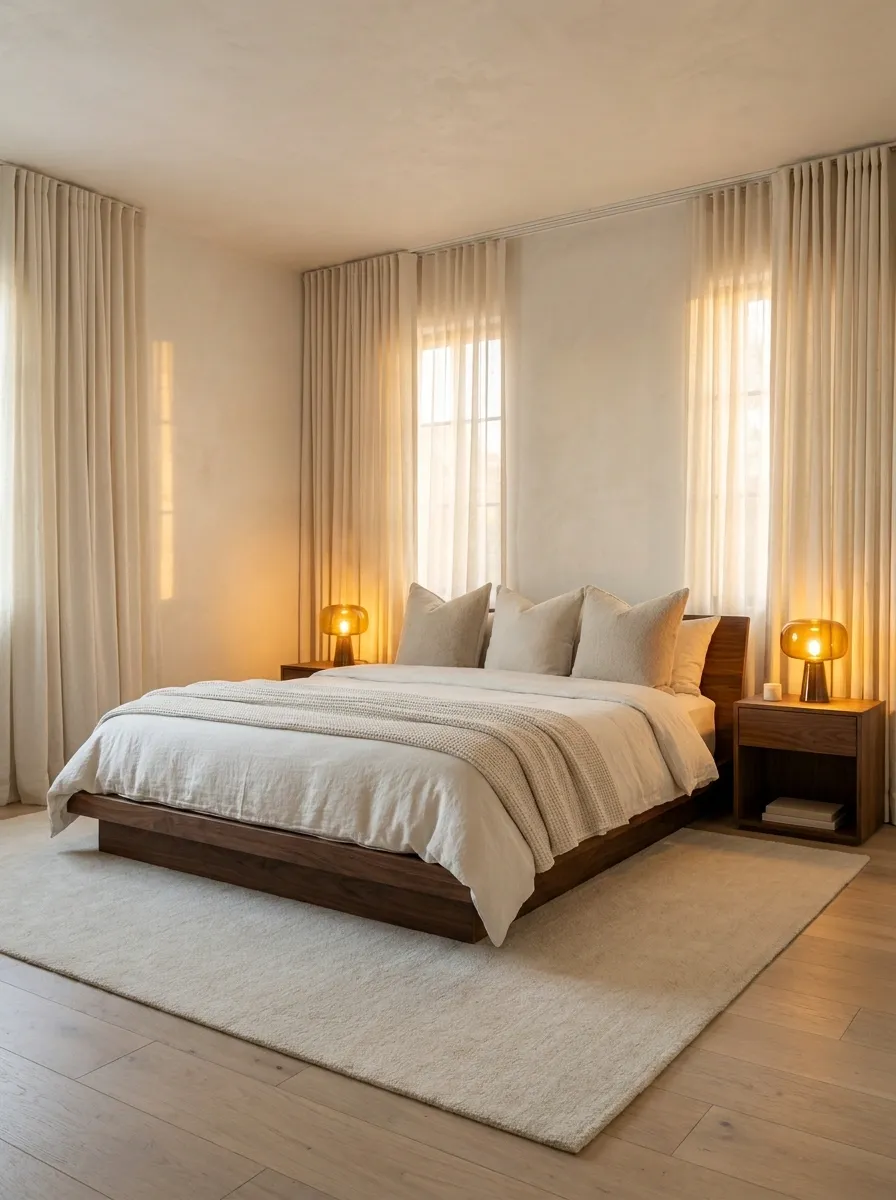
A creamy white backdrop creates a softer starting point for darker furniture. Here, a low walnut bed and matching nightstands anchor the room while ivory bedding, a muted wool rug, and amber-toned bedside lighting keep the composition comfortable.
The darker wood gives the bedroom definition that an all-white furniture scheme can sometimes lack. Because the furniture carries visual weight, the remaining finishes stay quiet. Cream curtains, soft bedding, and a simple rug keep the contrast from becoming severe.
This approach works especially well when the room has enough natural light to balance the richer timber. The result feels mature and layered rather than stark.
Minimalist White Bedroom With Hanging Pendants
Focusing purely on tactile comfort, this white bedroom relies on ultra-soft fabrics to generate warmth. A quilted white comforter, layered waffle-weave blankets, and an abundance of plush pillows create a bed that looks impossibly inviting.
Sleek white pendant lights drop down to illuminate the headboard area, casting a gentle glow across the monochromatic landscape. A small ceramic vase with delicate branches on the bedside table adds a touch of nature without cluttering the surface.
Stick to a strictly white and ivory palette, letting the variations in fabric weave create visual interest. This streamlined approach proves that you don’t need color to make a bedroom feel exceptionally cozy and restorative.
White Bedroom With Plaster-Like Walls and Layered Natural Textures
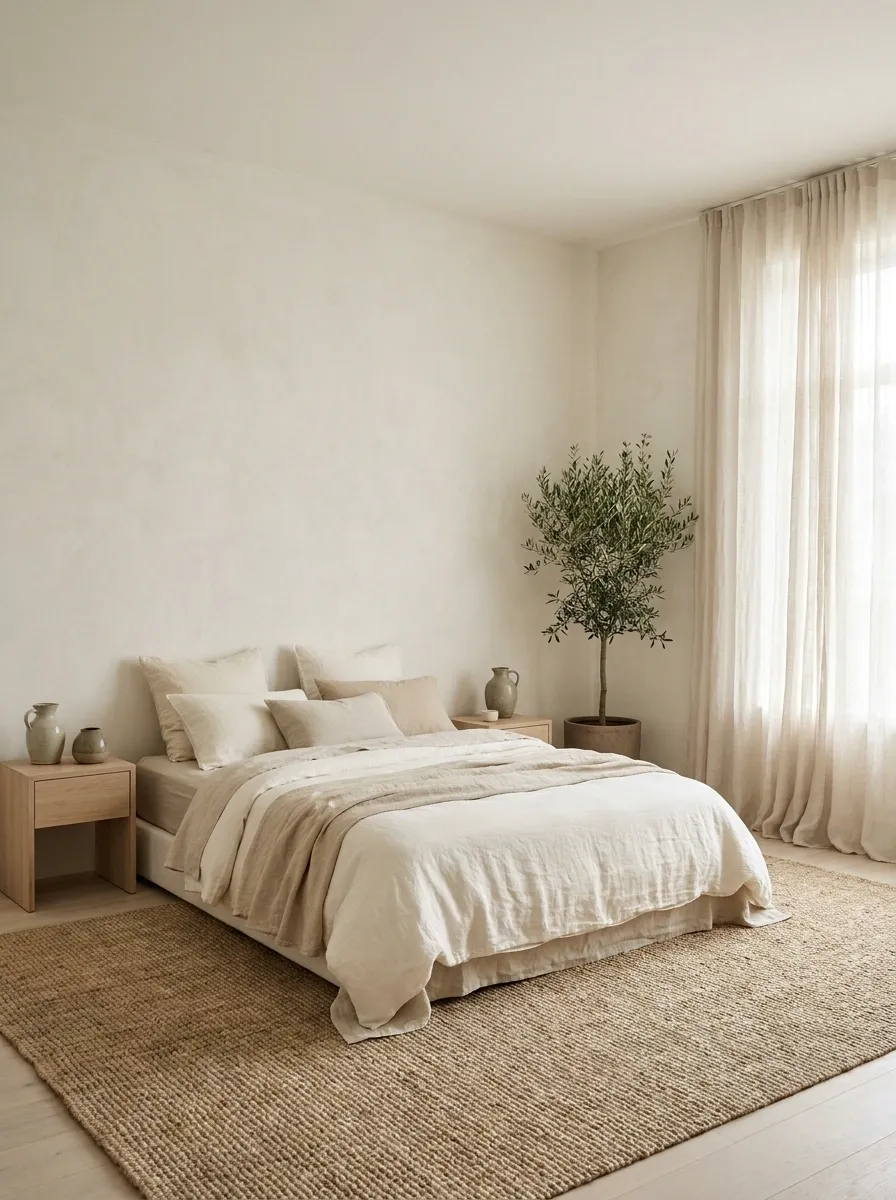
Instead of relying on color, this bedroom gets its character from surface variation. Soft white walls with a plaster-like finish meet a low upholstered bed, pale oak nightstands, linen curtains, a natural-fiber rug, and a small collection of handmade-looking ceramics.
The room stays almost entirely neutral, but every surface behaves differently. The walls have subtle movement, the linen looks relaxed, the rug adds roughness, and the wood introduces warmth.
That contrast prevents white from becoming visually flat. Keep the furniture restrained and let texture carry the composition. Too many decorative objects would work against the quiet quality that makes this version appealing.
Enchanted Canopy White Bedroom With Fairy Lights
A draped white fabric canopy interwoven with delicate fairy lights instantly elevates a white bedroom into a magical retreat. The sheer fabric softens the corners of the room while the warm twinkle lights cast a romantic, dreamlike ambiance across the space.
An upholstered white headboard anchors the bed beneath the glowing canopy, surrounded by flowing white curtains and plush neutral bedding. Soft candlelight flicker from the floor adds an extra layer of warmth to the lower half of the room.
Keep the rest of the decor restrained so the luminous canopy remains the undeniable focal point. The result is a whimsical yet sophisticated take on cozy white styling that feels entirely bespoke.
Soft Traditional White Bedroom With Antique Wood
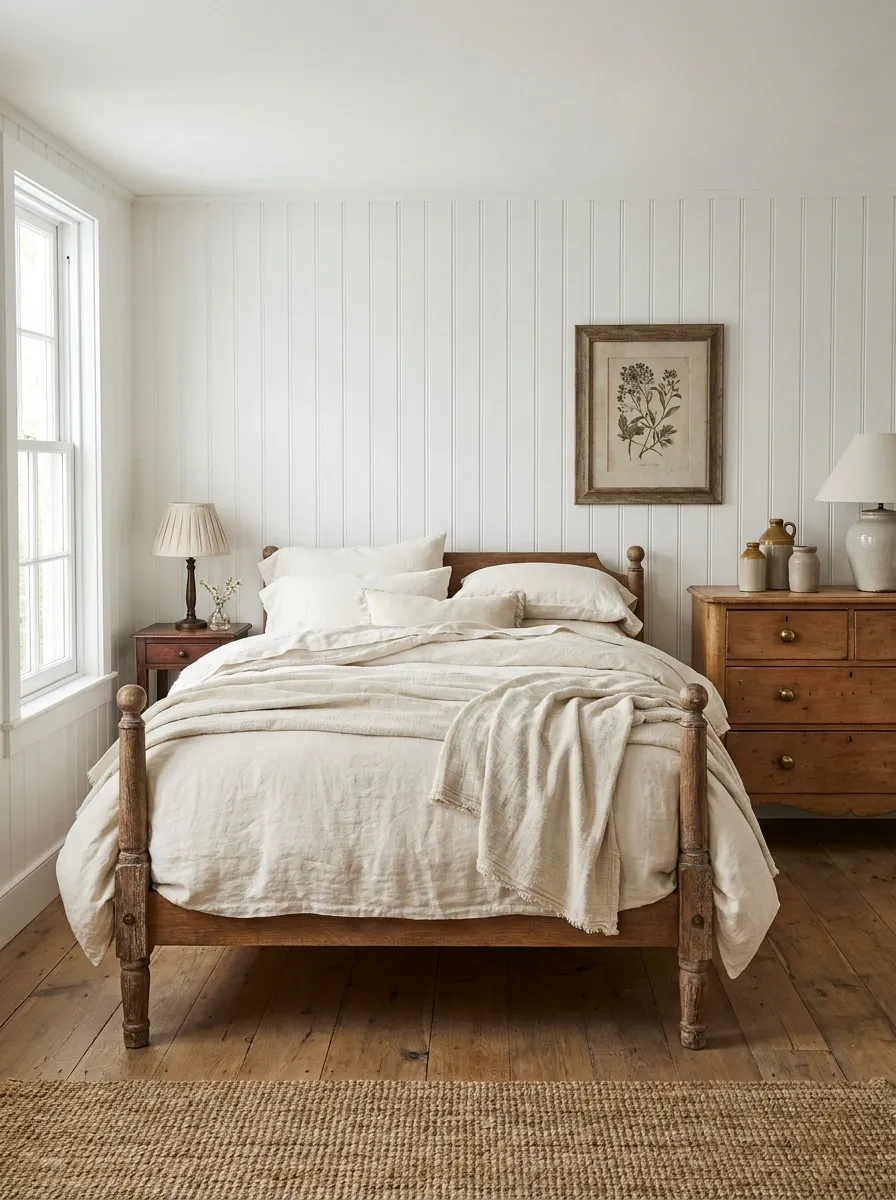
White paneling provides the architectural backdrop while aged wood brings the room its personality. A traditional wooden bed, an antique-style dresser, ivory bedding, fabric-shaded lamps, and restrained botanical artwork create a bedroom that feels collected rather than newly matched.
The contrast between crisp white walls and imperfect timber is important. The furniture doesn’t need to be perfectly coordinated. Small differences in wood tone actually help the room feel more established.
Keep the textiles simple so the older pieces remain visible. A complicated patterned rug or too many decorative finishes could pull the composition toward visual clutter.
Cozy White Bedroom With Ambient Candles
Grouping pillar candles on a low bedside stool introduces a charming, flickering warmth to a serene white bedroom. Combined with a string of subtle fairy lights draped along the headboard, the room achieves a relaxed, lived-in intimacy.
Textured waffle-weave bedding and a chunky knit throw cascade over the mattress, offering plenty of tactile appeal against the smooth white walls. Two framed black-and-white prints provide a grounded, modern touch above the bed.
Keep the surrounding decor effortless and allow friendly feline companions to complete the homey vibe. The focus on low-level ambient lighting keeps the white palette feeling soft, comfortable, and endlessly relaxing.
White Bedroom With Caramel Upholstery and Cream Textiles
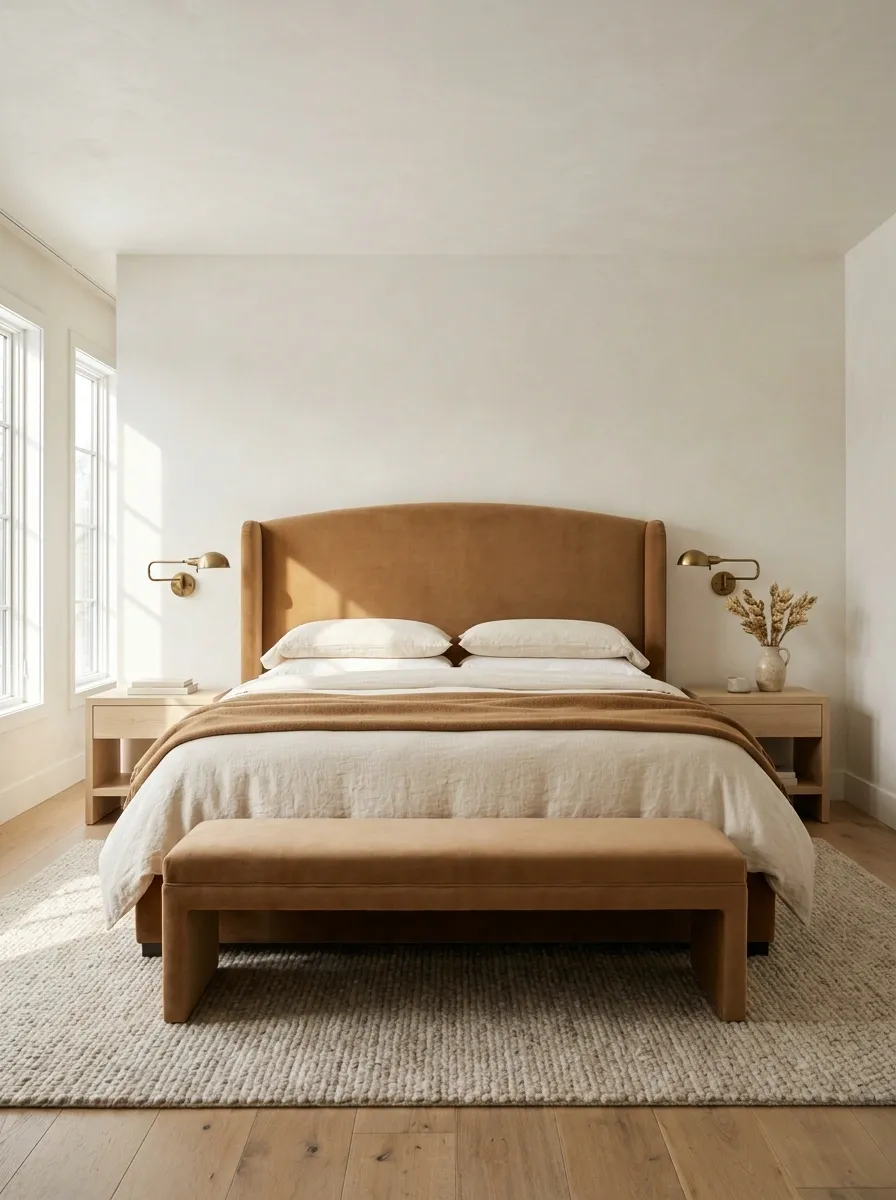
A caramel upholstered bed gives a white bedroom a clear focal point without introducing a strong or saturated color. The bed sits against warm white walls, surrounded by cream bedding, pale wood nightstands, a soft neutral rug, and understated brass or aged-metal lighting.
Caramel works particularly well here because it occupies the middle ground between pale textiles and darker furniture. It adds warmth while remaining soft enough to keep the bedroom light.
Repeat the warm tan family in only a few places. A throw, small cushion, or upholstered bench can connect the bed to the rest of the room without turning the palette into a tan bedroom.
Room foundation
Primary focal layer
Small repeats
Minimal White Bedroom With Pale Oak and Low Furniture
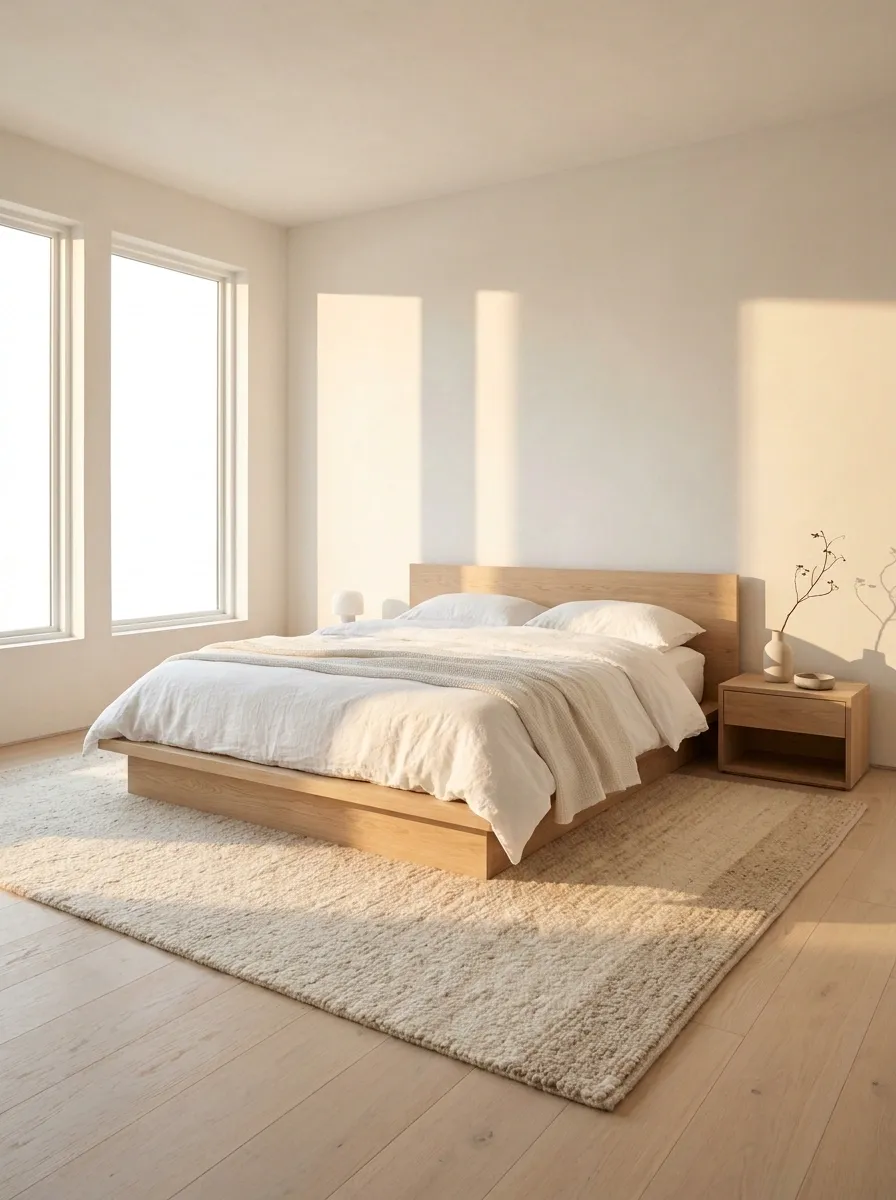
A low-profile layout keeps this bedroom calm without making it feel empty. Warm white walls meet pale oak flooring, a simple platform bed, low nightstands, lightweight linen bedding, and one generously sized rug that visually grounds the sleeping area.
The furniture stays close to the floor, leaving more open wall and floor space around it. That openness is what makes the room feel restful. Pale oak prevents the white surfaces from becoming too cool, while the natural linen gives the bed a relaxed finish.
Keep the styling restrained. A few carefully placed objects are more effective here than a crowded bedside table.
White Bedroom With Warm Greige Built-In Storage
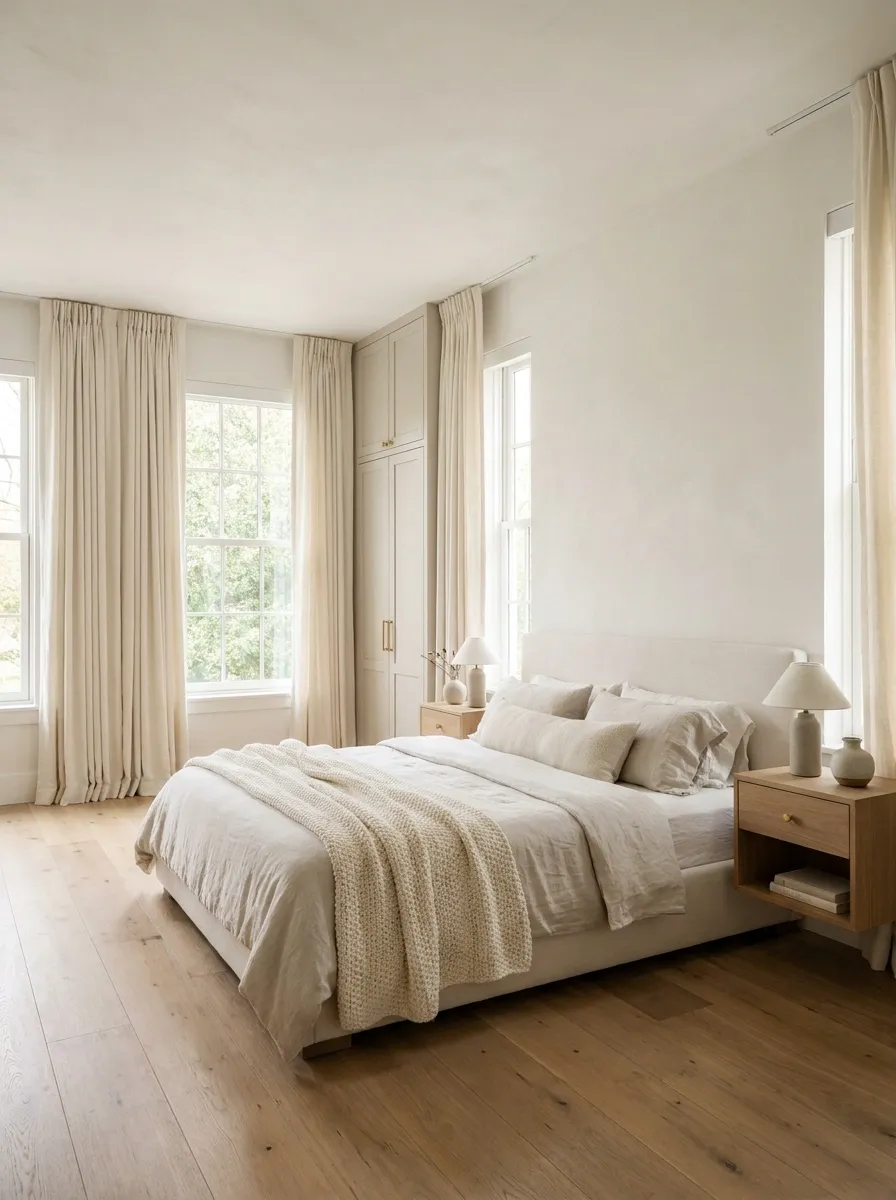
Built-in storage can become part of the architecture rather than looking like a separate piece of furniture. This bedroom pairs warm white walls with floor-to-ceiling cabinetry in a soft greige, a pale upholstered bed, warm timber accents, and creamy curtains.
The greige cabinetry creates just enough contrast to give the walls and storage definition. Because the color sits close to white, the room still feels bright while gaining more depth than an all-white built-in would provide.
Use consistent cabinetry lines and keep the bedside furniture visually light. The strongest part of this design is the uninterrupted architectural rhythm.
Walls and textiles Greige
Built-in storage Wood
Small grounding notes
Cozy White Bedroom With Deep Pile Rug and Textured Bedding
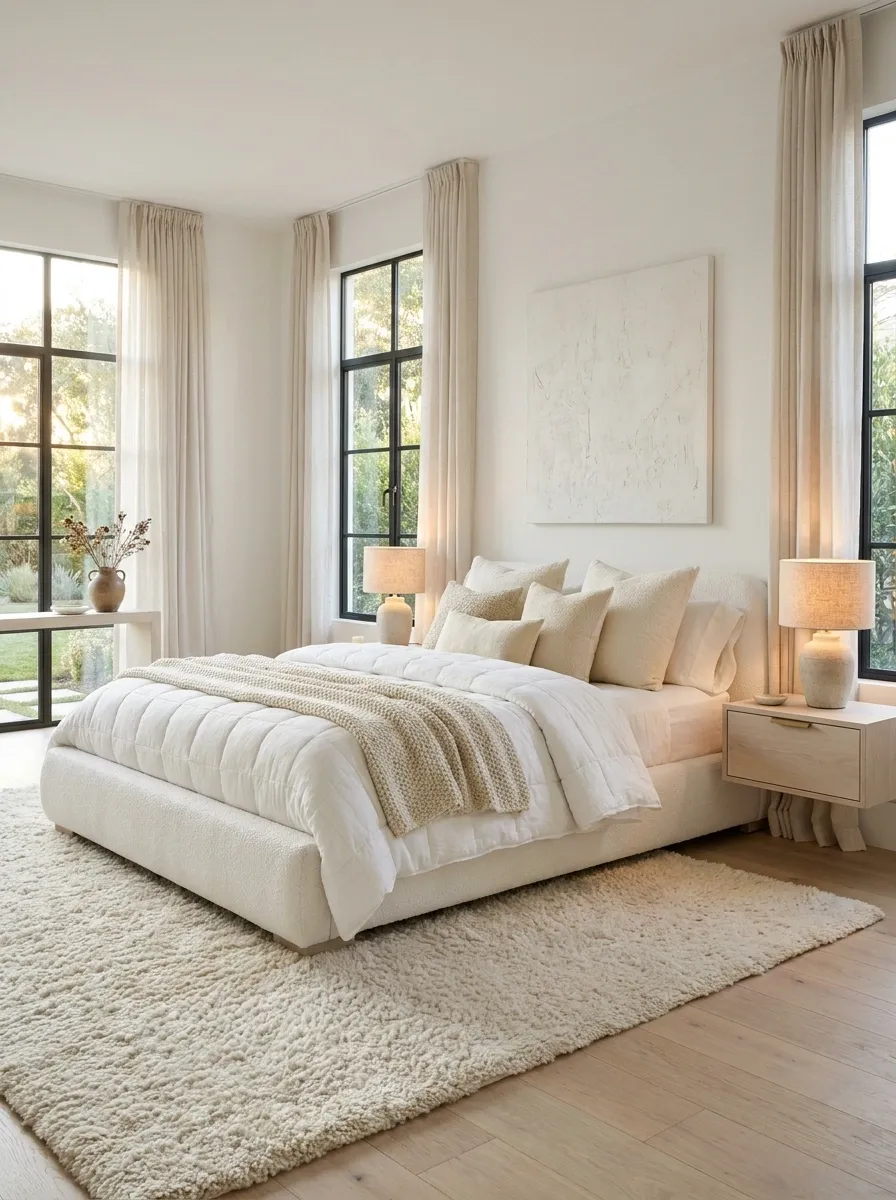
This bedroom creates warmth from the floor upward. A substantial cream rug sits beneath a white upholstered bed, while layered quilts, a chunky throw, textured pillows, and softly rounded furniture give the room a tactile quality.
The walls remain simple and bright, allowing the textile layers to carry the visual interest. A fabric-shaded lamp on each side of the bed adds another soft surface, while pale wood keeps the furniture from disappearing into the white surroundings.
The trick is to vary texture rather than color. A room filled with cream and white surfaces can still feel rich when the rug, bedding, upholstery, and curtains all have different tactile qualities.
White Bedroom With Terracotta Accents and Natural Wood
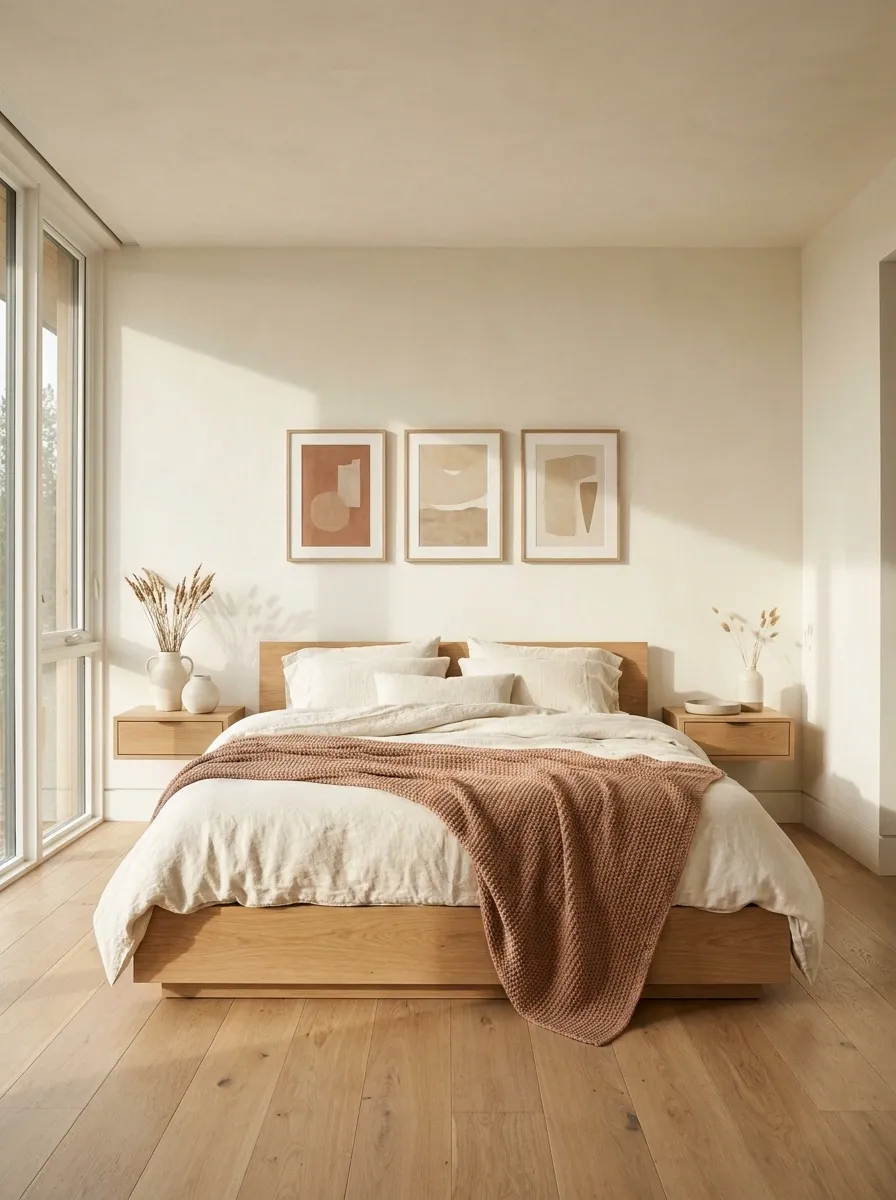
Muted terracotta brings a little earthiness to an otherwise pale bedroom. The finished composition combines warm white walls, an oak bed, ivory bedding, a terracotta throw, handmade-looking ceramics, and understated artwork in related clay tones.
The important part is restraint. Terracotta appears in a few connected locations rather than across every accessory. That gives the color enough presence to warm the room without changing its overall identity.
Natural wood bridges the white and terracotta, creating a smoother transition between the cool-looking backdrop and the warmer accent color. Keep the artwork and accessories simple so the palette remains easy to read.
White Bedroom With Full-Length Linen Curtains
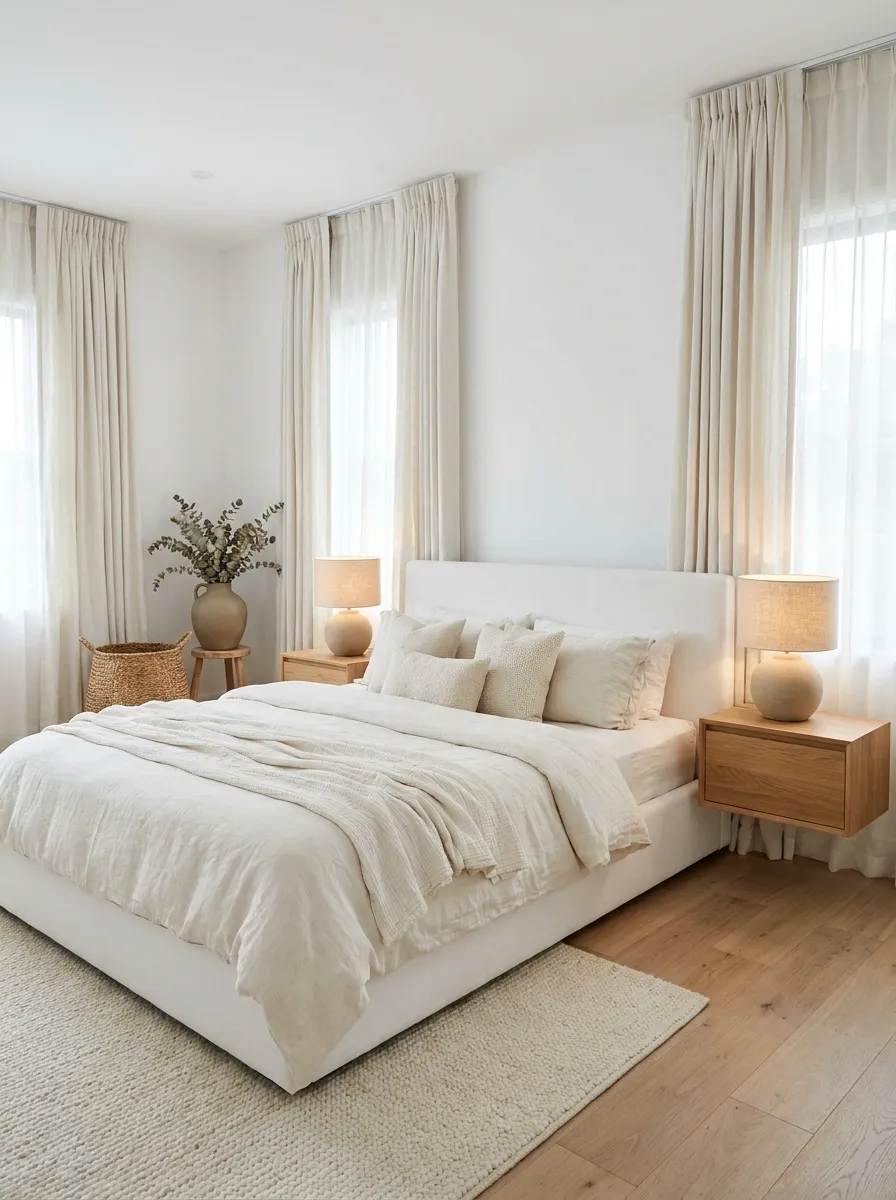
The windows become part of the design rather than an afterthought in this composition. Full-length linen curtains frame the room from ceiling to floor, softening the daylight while a white upholstered bed, warm oak furniture, ivory bedding, and low-glow lamps complete the scene.
The curtains are especially effective because they add vertical softness without introducing a strong color. Their relaxed texture breaks up the hard edges of the walls and windows.
Let the fabric fall generously rather than stopping at the sill. The surrounding furniture should remain relatively simple so the long curtain panels can create the main sense of softness.
White Bedroom With Exposed Wood Ceiling Details
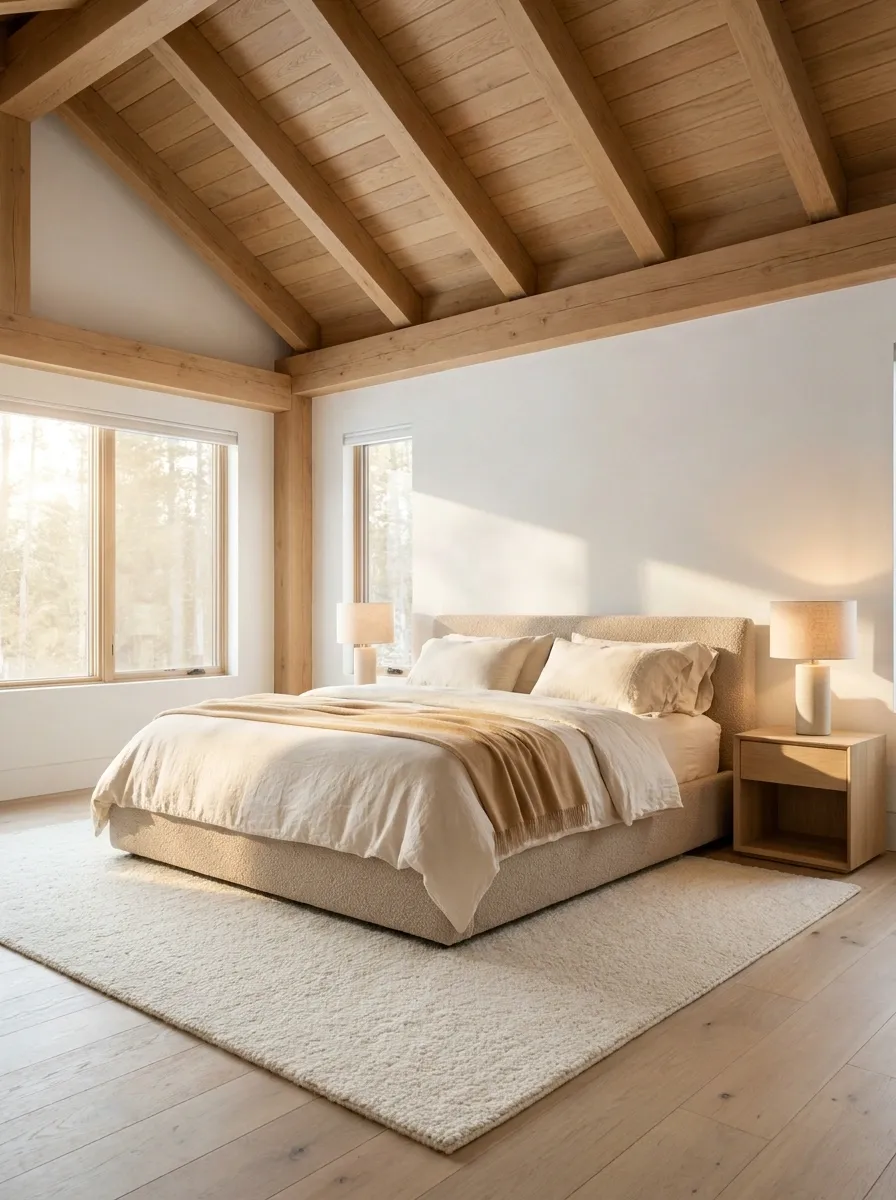
An exposed timber ceiling can make an otherwise white bedroom feel architectural and warm. This version combines crisp white walls with natural wood beams or timber ceiling boards, a simple upholstered bed, pale bedding, and understated oak furniture.
The ceiling provides the strongest visual contrast, so the rest of the room benefits from restraint. Keep the flooring and furniture within a natural wood family rather than introducing several competing tones.
Soft fabric lampshades and relaxed linen bedding prevent the timber from making the room feel overly rustic. The finished look works especially well when the ceiling structure is already part of the room instead of being treated as a decorative afterthought.
Soft White Bedroom With Boucle Bed and Rounded Furniture
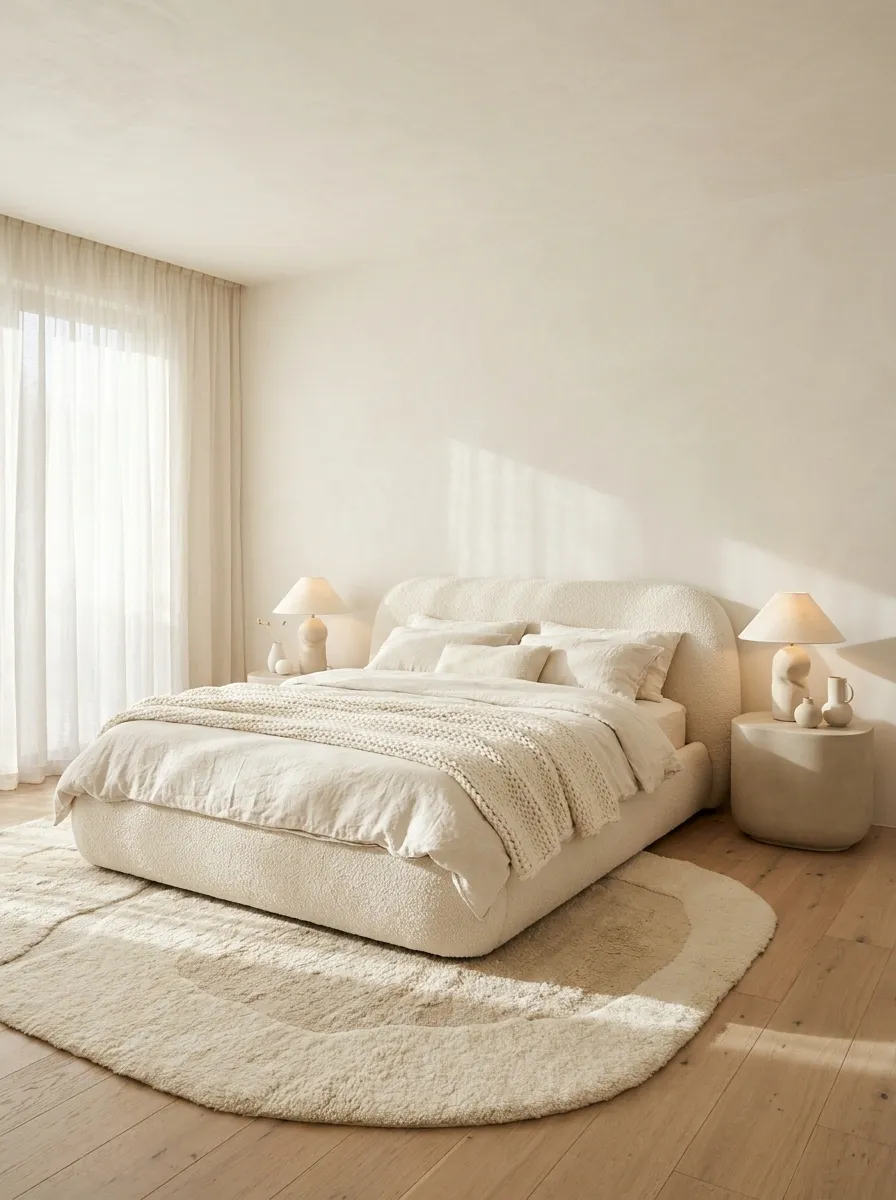
Rounded furniture changes the character of a white bedroom immediately. A curved boucle bed, softly shaped nightstands, rounded lamps, creamy bedding, and a circular or irregularly shaped rug create a composition with very few hard edges.
The palette stays pale, but the repeated curves keep the room from feeling rigid. Boucle adds another layer through its visible surface texture, while the warm white walls provide a simple architectural backdrop.
Choose a few substantial curved pieces rather than filling the room with small rounded accessories. The shape language should feel intentional from the bed to the lighting rather than scattered across the room.
White Bedroom With Dark Wood Contrast and Soft Bedding
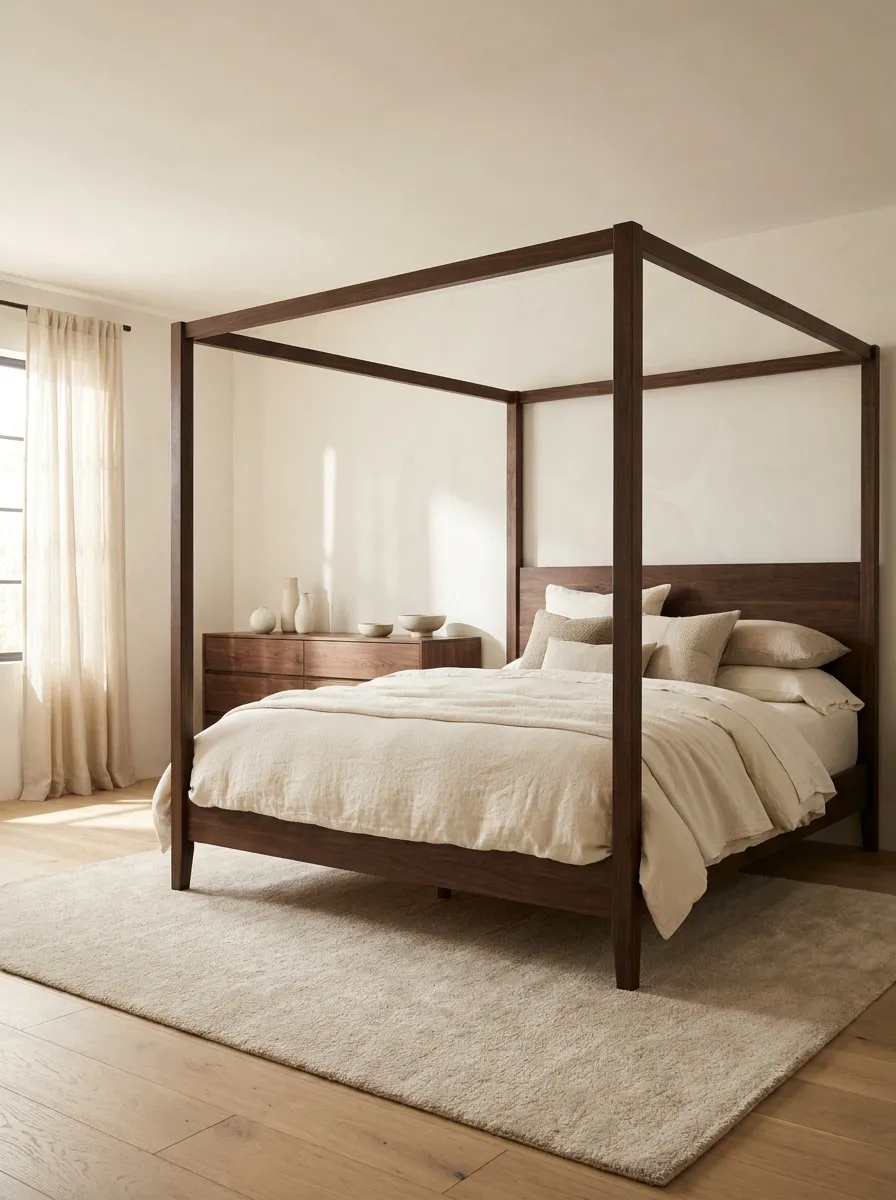
Dark wood gives a white bedroom a stronger architectural backbone. A deep walnut or espresso-toned bed and dresser sit against warm white walls, while ivory bedding, a plush neutral rug, and soft window treatments keep the room from becoming too severe.
The contrast works because the dark wood is concentrated in substantial furniture rather than scattered across small accessories. That makes the room feel designed around a clear visual hierarchy.
Keep the bedding relaxed and the wall color warm. Bright blue-white walls combined with very dark timber can feel sharper than intended, while creamy whites help the two ends of the palette meet more naturally.
Airy White Bedroom With Woven Cane and Rattan Details
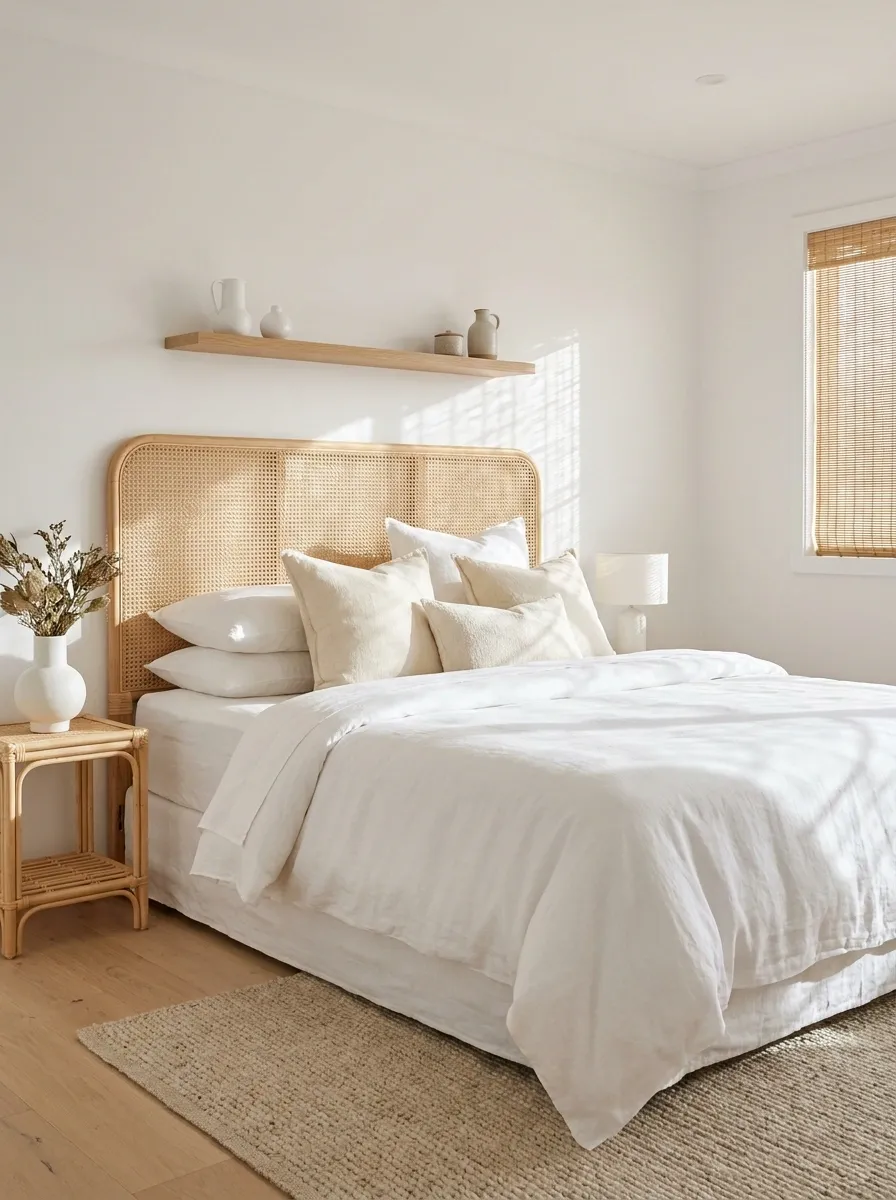
Woven materials give this white bedroom a relaxed, natural character without relying on strong color. A cane headboard, rattan bedside table, white linen bedding, pale timber flooring, and lightweight woven shades form the main composition.
The woven surfaces are important because they introduce small variations in texture and shadow across an otherwise pale room. Natural fibers also keep the furniture from looking overly polished or matched.
Use woven materials on a few major pieces rather than every object. One strong headboard combined with one or two supporting details creates a cohesive look without turning the bedroom into a themed space.
White Bedroom With Warm Stone-Inspired Flooring
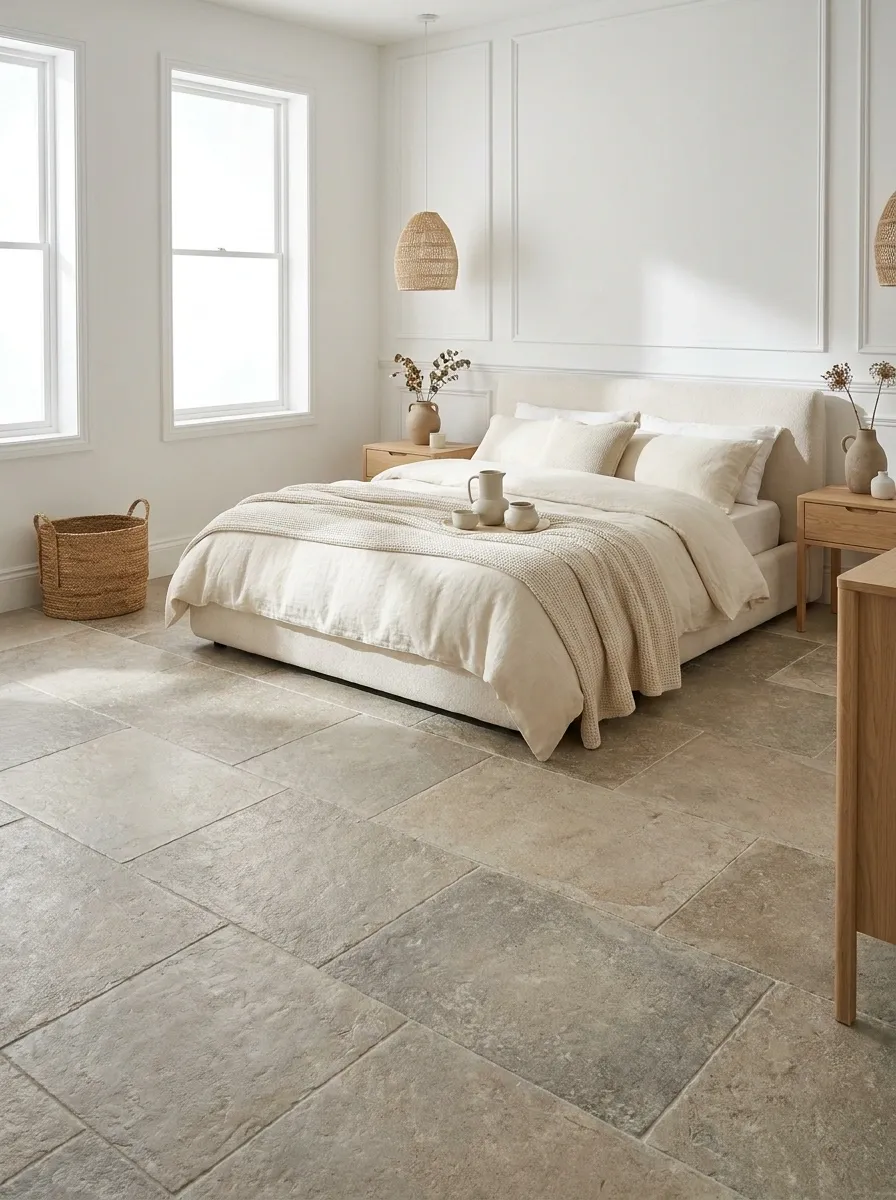
A warm stone floor can completely change the feeling of a white bedroom. This design pairs limestone-inspired or softly textured stone flooring with white walls, an upholstered bed, pale wood furniture, creamy bedding, and restrained natural textiles.
The floor becomes the grounding layer, giving the room more visual weight while the upper half remains light. This is especially effective in rooms where wood flooring would feel too expected or where an architectural material already connects the bedroom to the rest of the home.
Keep the furniture slightly softer in appearance so the stone doesn’t make the room feel overly hard. Upholstery and linen provide the necessary counterbalance.
White Bedroom With Vintage-Inspired Floral Textiles
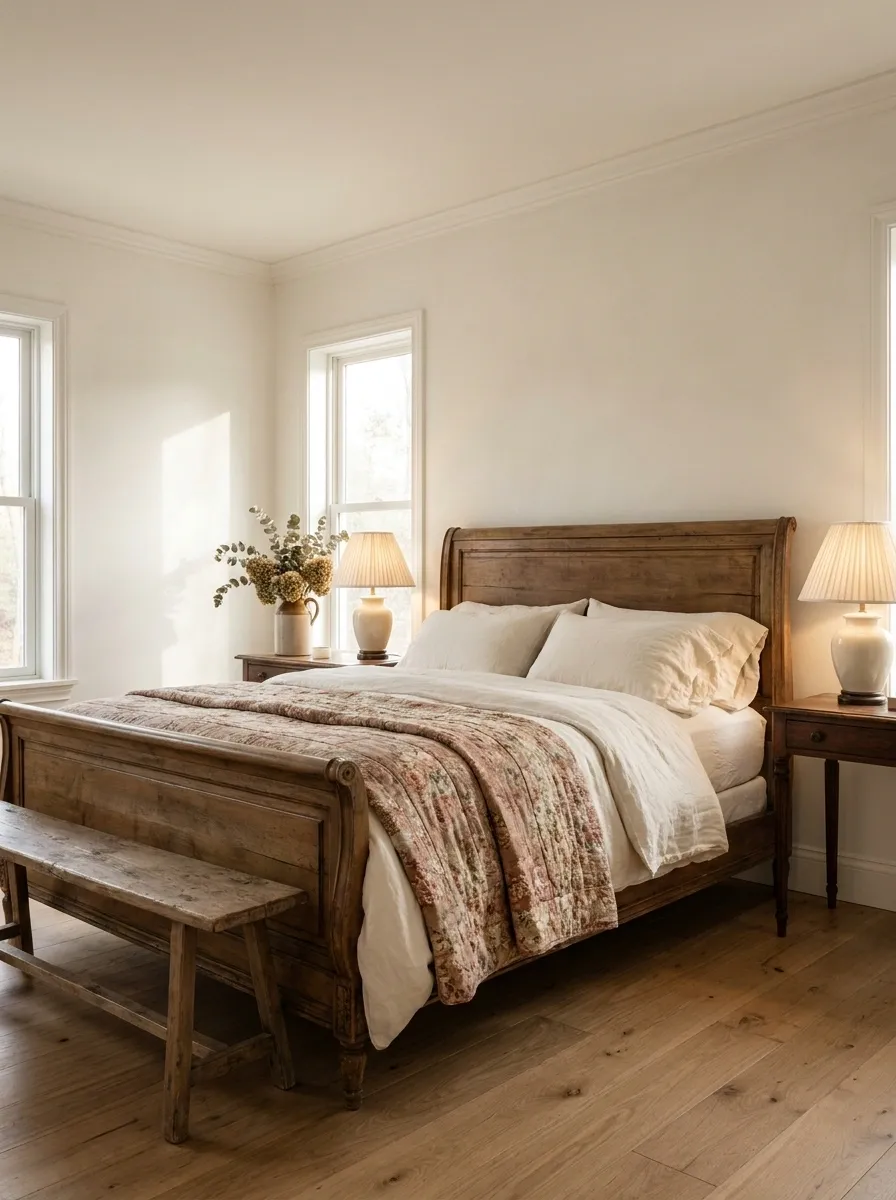
A muted floral quilt can give a white bedroom far more personality without covering the room in color. This design pairs warm white walls with a traditional wooden bed, ivory bedding, a faded floral quilt, antique-style bedside furniture, and soft fabric lampshades.
The floral pattern acts as the visual thread connecting the room’s older, softer character. Because the background remains mostly white and cream, the pattern feels intentional rather than busy.
Choose flowers in dusty tones such as faded rose, muted rust, sage, or warm beige. Keep the surrounding accessories quiet so the textile remains the element that gives the bedroom its distinctive character.
White Bedroom With Soft Taupe Wall Treatment
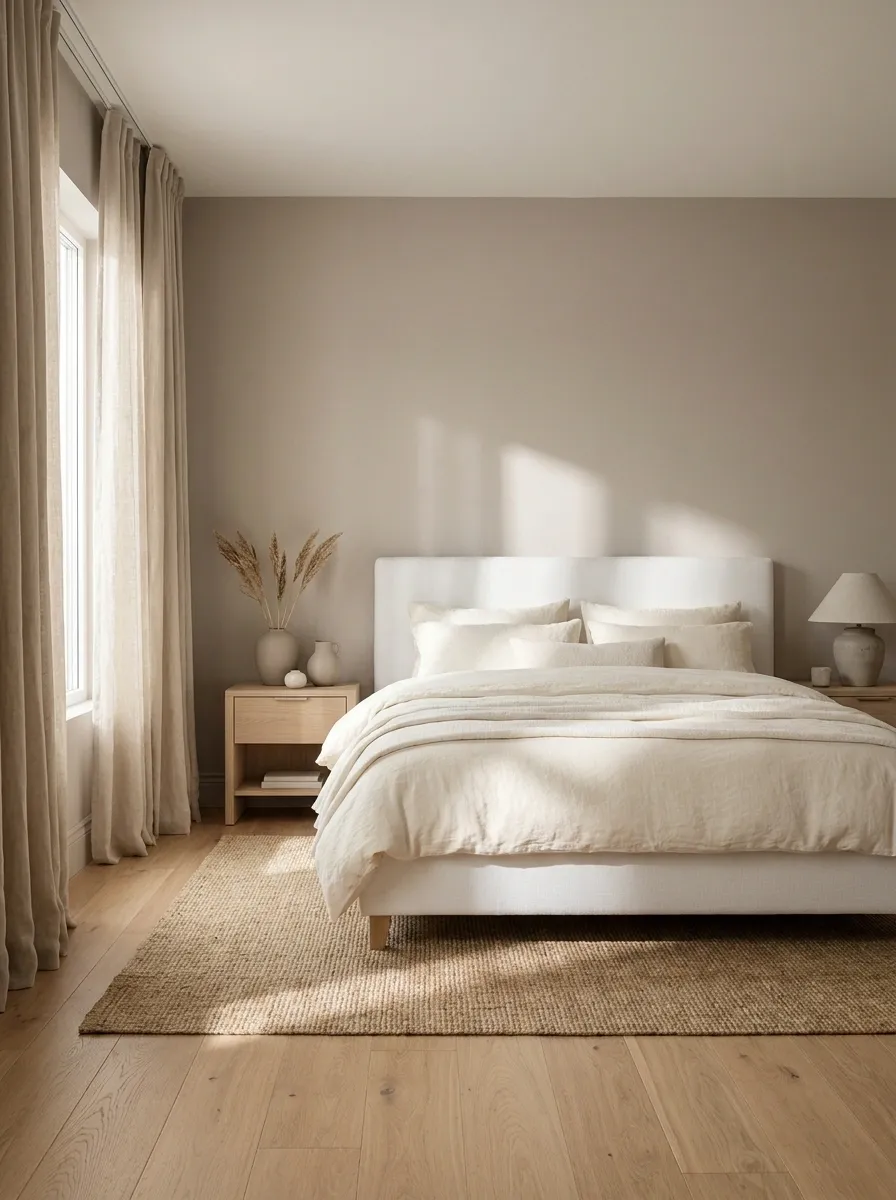
A subtle shift from white to taupe can make an entire bedroom feel warmer without abandoning the light palette. This composition uses soft taupe walls behind a white upholstered bed, creamy bedding, pale oak furniture, and linen curtains in a related neutral tone.
The key is keeping the transition gentle. Taupe becomes the background rather than an accent wall competing for attention, while white remains prominent through the bed, bedding, trim, and selected furniture.
A warm rug can bridge the floor and walls. Avoid adding too many additional beige shades, or the subtle relationship between white and taupe starts to lose its clarity.
Wall foundation Warm neutrals
Furniture + textiles White
Bed + architectural details
White Bedroom With Fireplace and Layered Seating
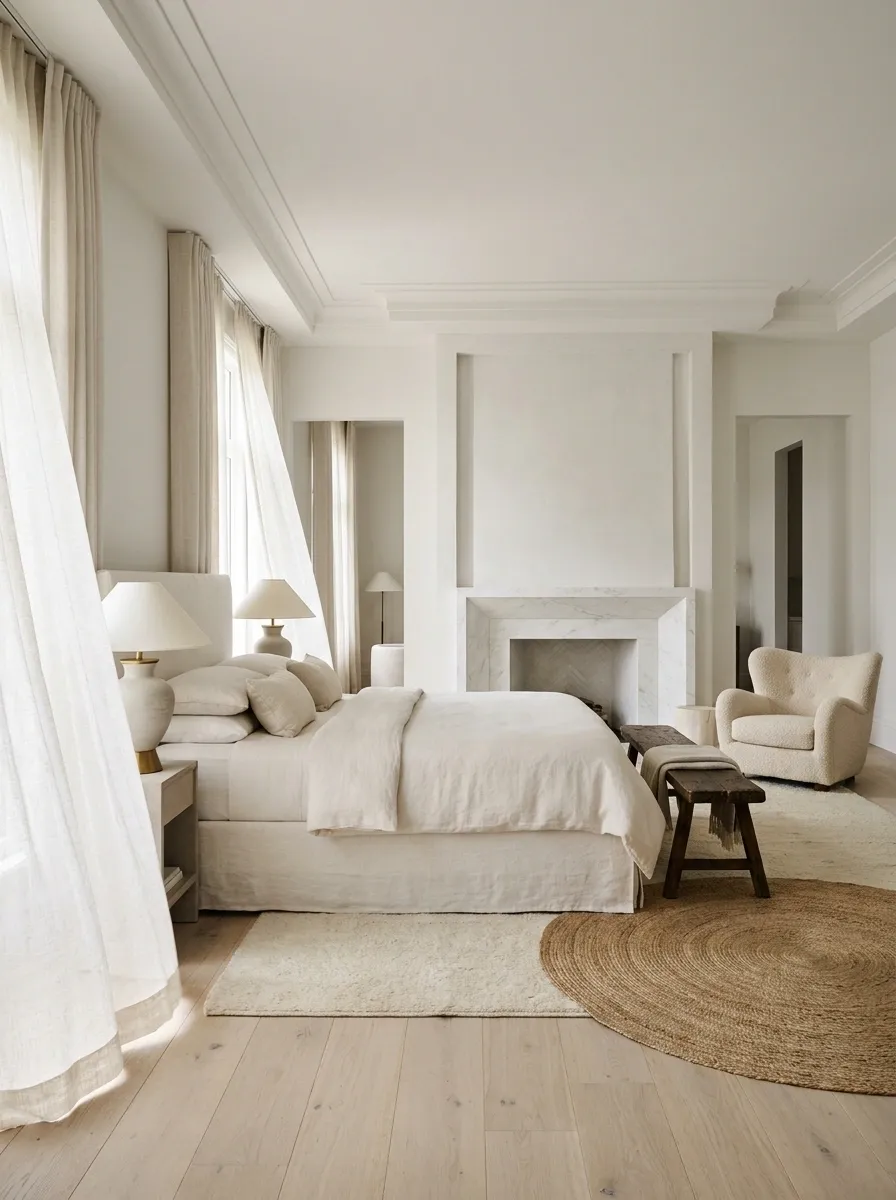
A fireplace gives a larger white bedroom a natural architectural center. This version places a substantial upholstered bed opposite or beside the fireplace, then adds a timber bench, lounge chair, layered rugs, soft curtains, and warm bedside lighting.
The room feels more like a complete retreat because there is a second destination beyond the bed. The fireplace provides structure, while the seating creates a quieter area for reading or getting ready.
Keep the furniture arrangement open enough for comfortable movement around the bed and seating. The composition works because each major zone has a clear purpose rather than because the room contains more furniture.
Small White Bedroom With Warm Built-In Joinery
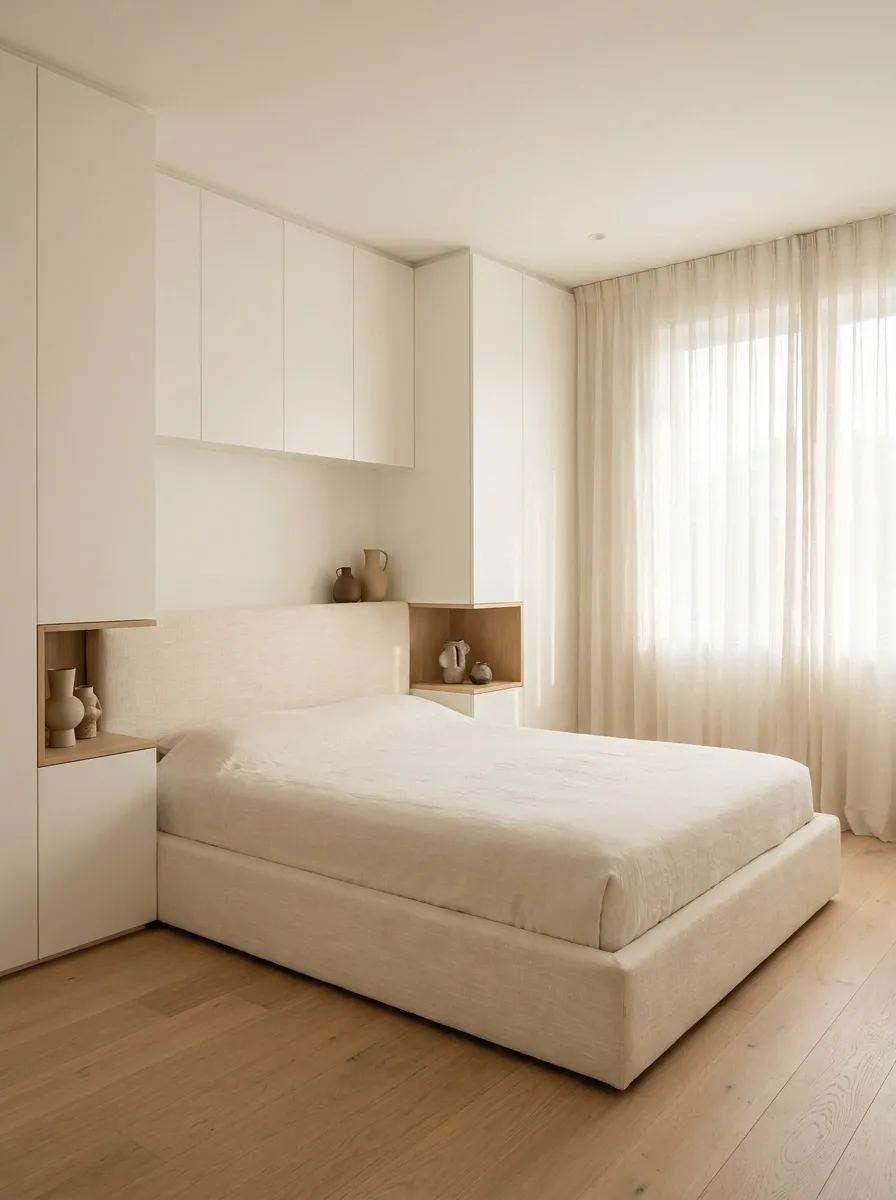
A small bedroom can feel warmer when the storage is designed as part of the room rather than added piece by piece. This compact composition uses warm white built-ins, pale oak shelves, a simple upholstered bed, integrated bedside storage, and soft linen curtains.
The built-ins reduce visual noise while keeping the floor area open. Small bedside surfaces can be integrated into the joinery, which helps maintain clear circulation around the bed.
Introduce warmth through a few timber sections rather than changing the entire cabinetry color. That keeps the compact room visually continuous while preventing an all-white storage wall from feeling flat.
White Bedroom With Moody Evening Lighting
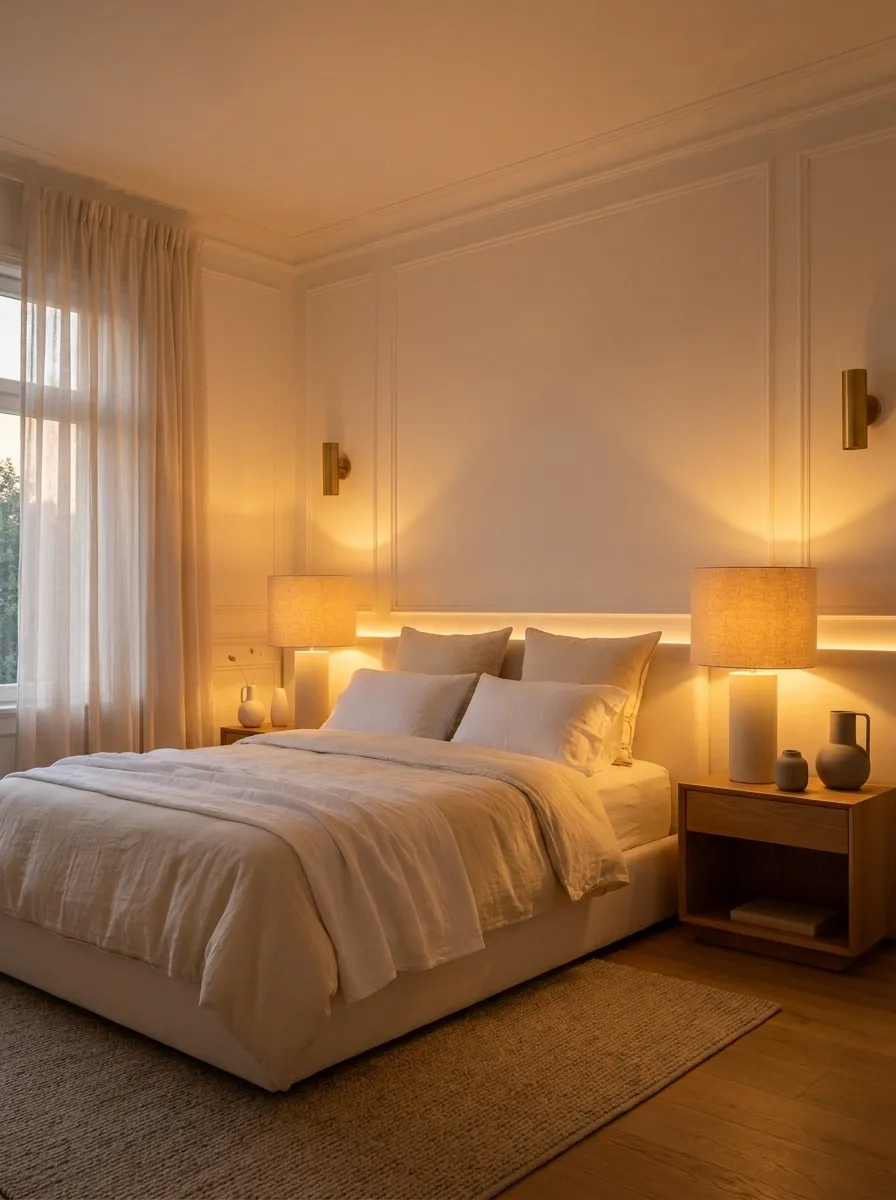
White walls can look completely different after sunset when the lighting is designed as part of the room. This bedroom combines warm white architecture with creamy bedding, natural wood, fabric-shaded bedside lamps, low ambient lighting, and soft curtains that catch a small amount of evening glow.
The important shift comes from using several gentle light sources instead of depending on one bright ceiling fixture. Bedside lamps establish the warmest points, while secondary lighting gives the rest of the room enough visibility to retain its softness.
Keep the bulbs and shades visually warm and avoid overly bright cool light. The white surfaces should reflect the illumination rather than appear blue or stark.
White Bedroom With Handmade Ceramic and Wood Styling
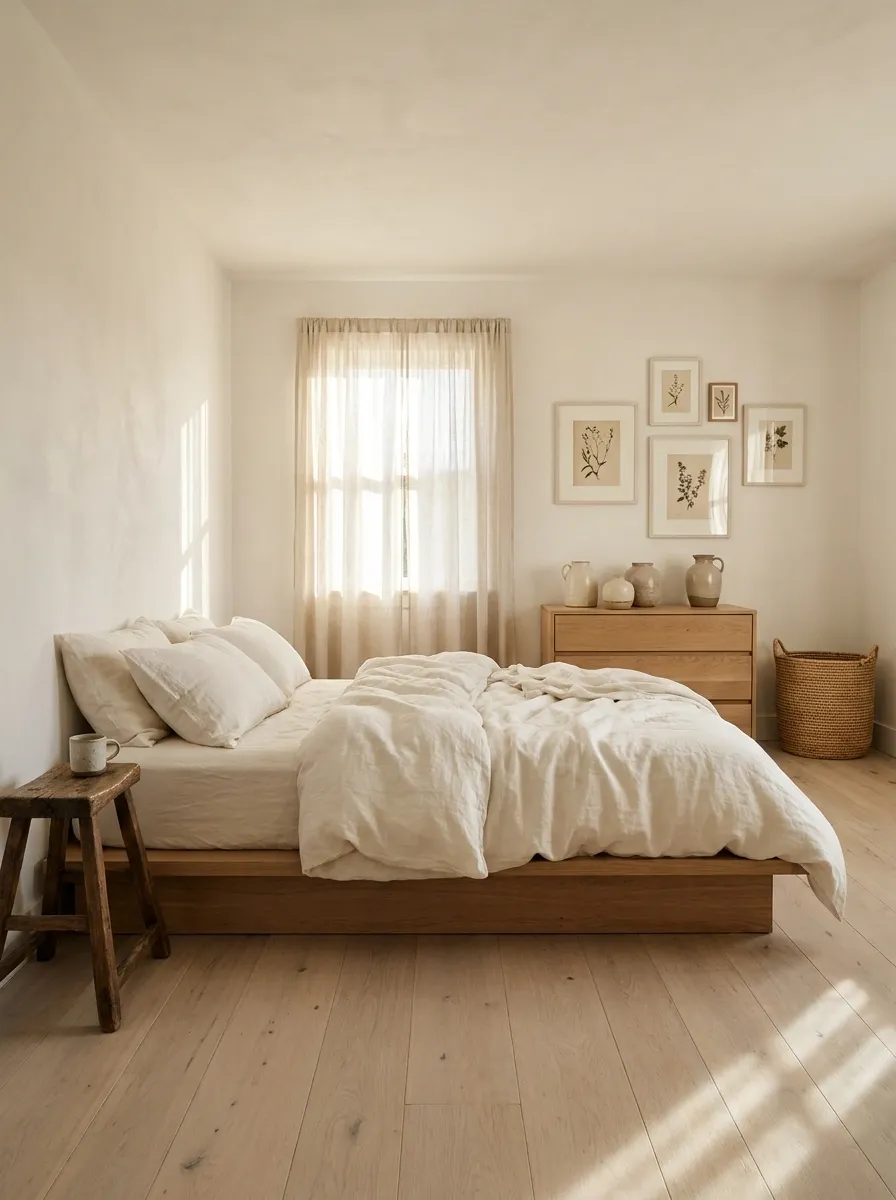
A white bedroom can feel personal without becoming visually crowded. This composition uses warm white walls, simple timber furniture, washed linen bedding, handmade-looking ceramics, woven baskets, and a small collection of framed artwork.
The charm comes from slight irregularity. The wood doesn’t need to match perfectly, and the ceramics can have subtly different shapes or finishes. Those small differences keep the room from looking like it was purchased as a complete furniture set.
Keep the larger forms simple. A plain upholstered or timber bed provides enough structure for the smaller handmade pieces to stand out without making the room feel busy.
White Bedroom With Soft Green and Oak
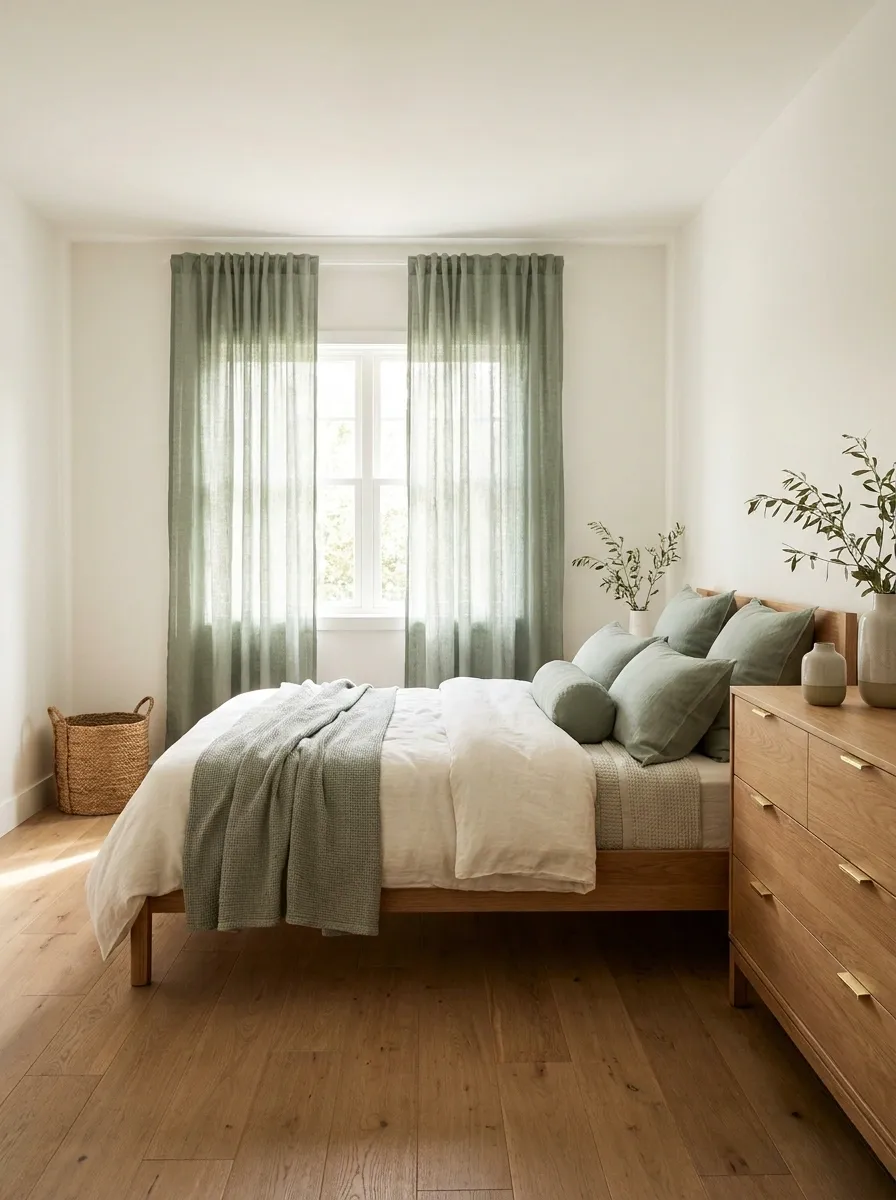
Muted green gives a white bedroom a natural direction without making the room feel colorful. This design combines warm white walls, an oak bed or dresser, ivory bedding, sage curtains or cushions, and a few restrained leafy elements.
The green should remain dusty and subdued. Soft sage, olive, or eucalyptus tones blend naturally with warm white and timber, creating a room that feels connected to the outdoors without looking themed.
Use the green in several small but related areas rather than making one oversized accent wall the entire focus. Oak acts as the bridge between the pale architecture and the botanical tones.
Walls + bedding
Furniture
Soft accents
Small details
White Bedroom With Layered Cream-on-Cream Textiles
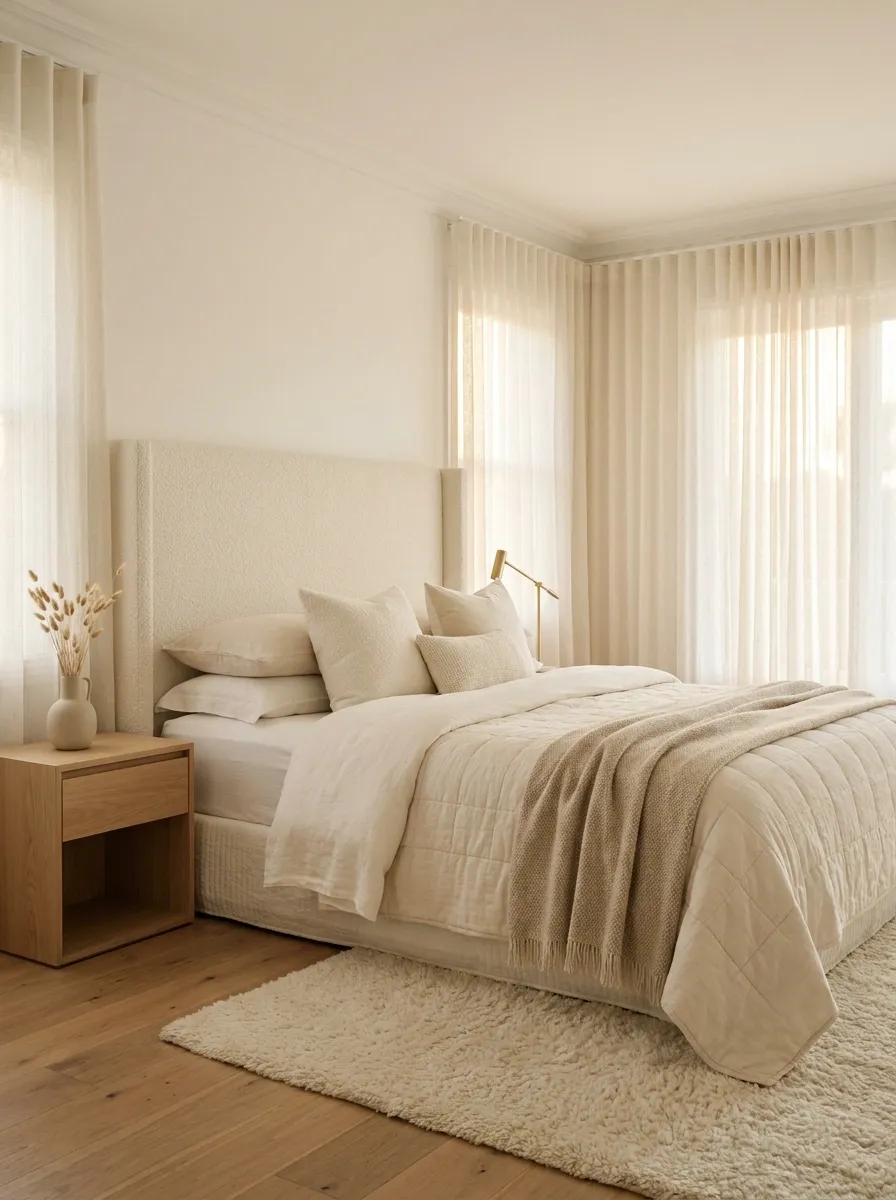
A nearly monochromatic bedroom doesn’t have to feel flat. This version keeps the walls, bed, curtains, rug, and bedding within the white and cream family, then creates depth by changing the surface of each material.
Washed linen sheets sit beneath a quilted coverlet, a soft wool or wool-blend throw, and textured pillows. A plush rug softens the floor while an upholstered headboard adds another layer without introducing a new color.
The room succeeds because the creams are close but not identical. Subtle differences in texture and tone give the eye something to discover without breaking the calm palette.
White Bedroom With Warm Brass and Statement Lighting
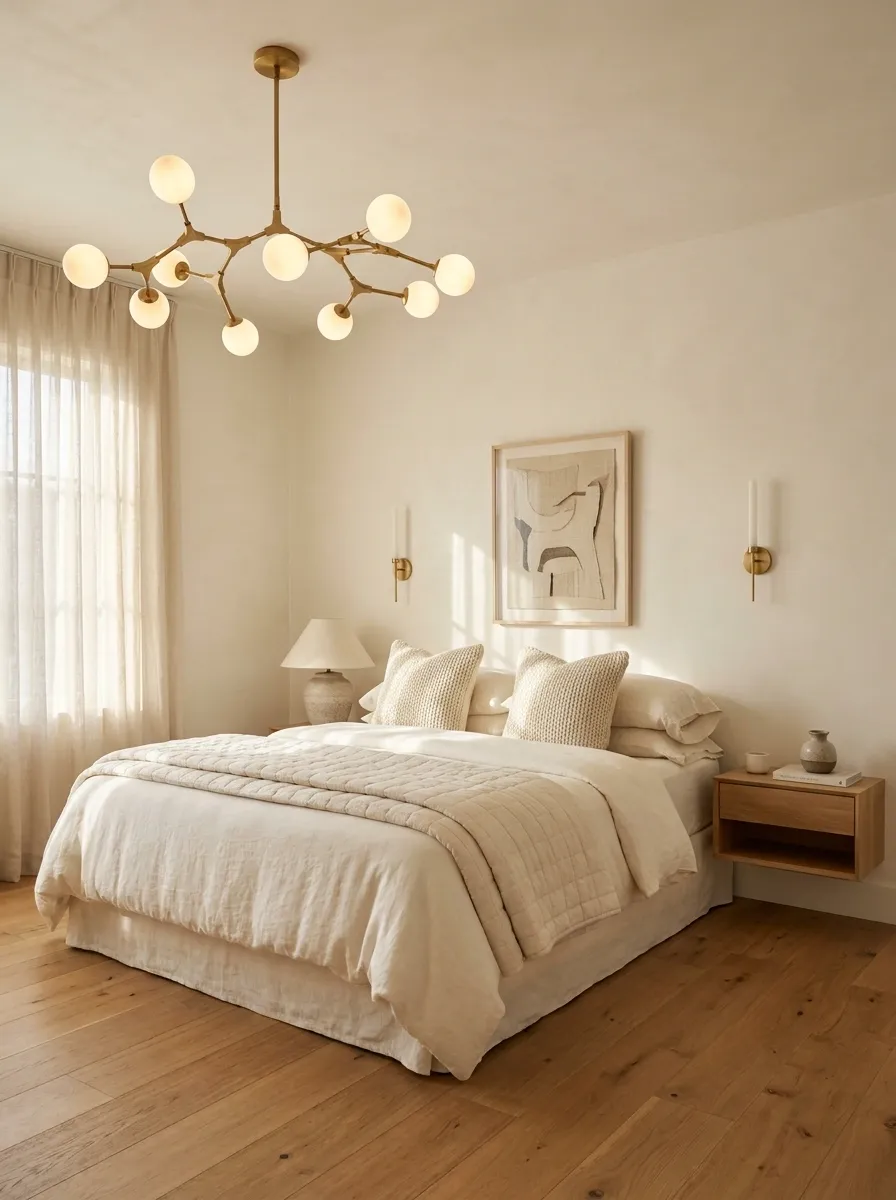
Warm brass works best when it has a clear role in the composition. This bedroom keeps the walls and bedding soft white, adds medium-toned wood furniture, then introduces one substantial brass pendant or chandelier as the main lighting feature.
Matching brass details can appear quietly at the bedside or on hardware, but they shouldn’t compete with the central fixture. Repetition creates connection, while restraint prevents the room from becoming overly decorative.
The rest of the finishes should stay calm. Natural wood and ivory textiles give the brass enough warmth to feel integrated rather than shiny or formal.
Let one substantial brass light carry the visual weight.
Echo the finish subtly at the bedside.
Keep wood, white, and textiles understated.
Collected White Bedroom With Layered Wood, Linen, and Personal Details
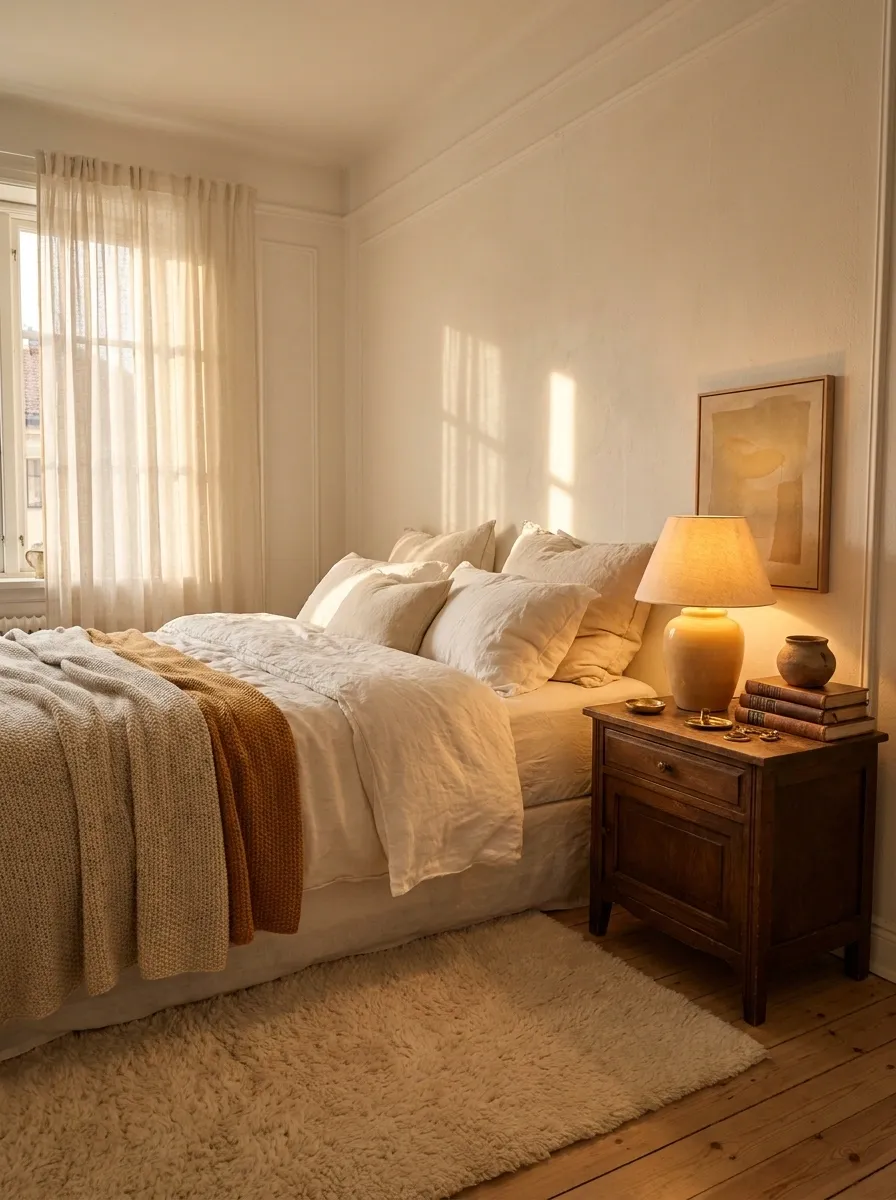
The most convincing warm white bedrooms rarely look assembled from one matching collection. This finished design combines white walls, mixed warm woods, relaxed linen bedding, a vintage furniture piece, a soft rug, warm bedside lamps, framed artwork, books, and a handful of personal objects.
The different materials give the room depth, while the limited palette keeps everything connected. A slightly imperfect arrangement works in its favor. Books can sit beside a ceramic vessel, artwork can lean rather than hang perfectly centered, and the bedding can remain relaxed.
The strongest thread is consistency rather than matching. White architecture provides the backdrop, warm materials supply comfort, and personal details make the room feel like it belongs to someone.