
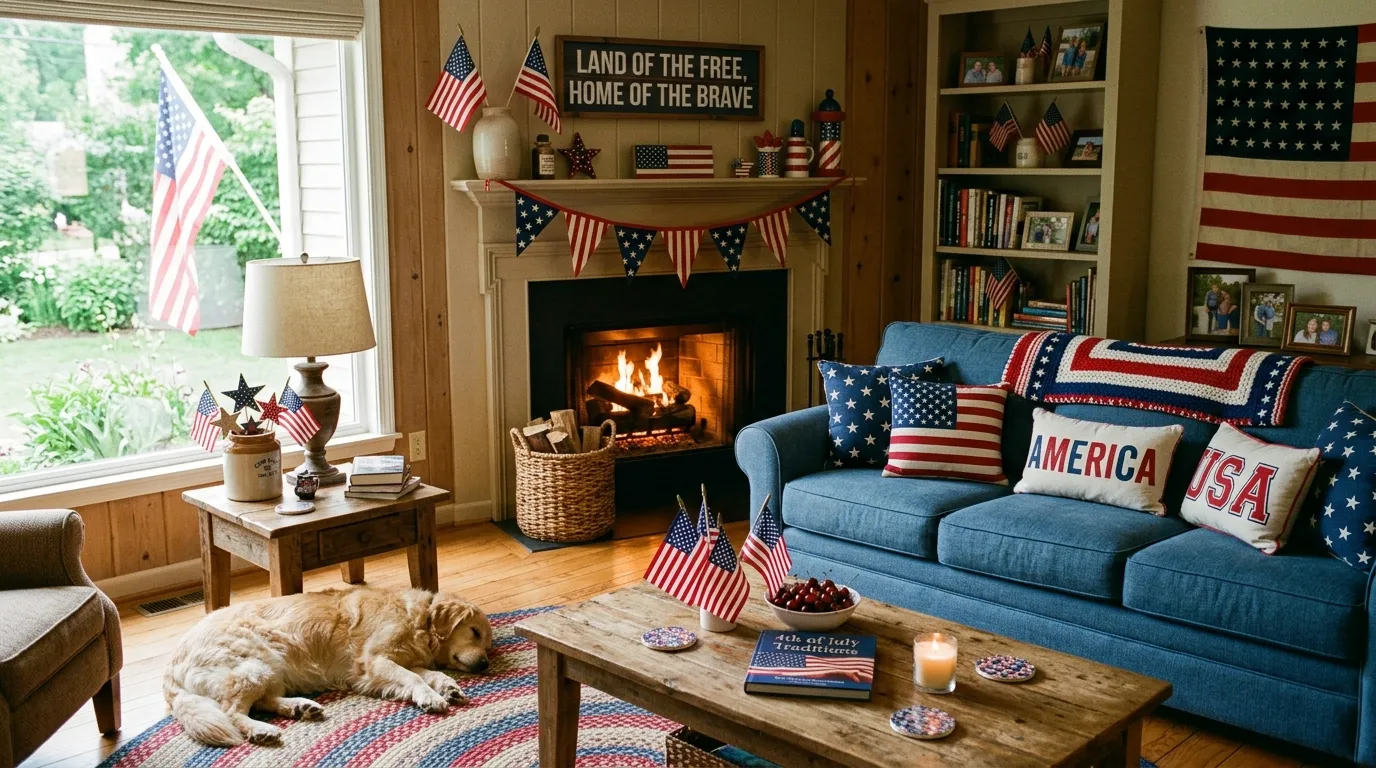
You bought the flag pillows from the big-box store. You hung the bunting. You even found a star-shaped bowl for the coffee table. And now your living room looks like a patriotic pop-up shop that closes on July fifth.
The problem isn’t the flag. It isn’t the color scheme. The problem is that you treated patriotism like a costume instead of a design layer. Red, white, and blue are classic American colors because they actually work together when you stop treating them like a novelty.
Most patriotic decor fails because people buy the holiday version of everything. Flag-printed everything. Disposable everything. Then they wonder why the room feels like a temporary display. This blog won’t show you how to buy more patriotic stuff. It will show you how to build a living room that celebrates the Fourth without embarrassing itself on the fifth.
The Principles That Actually Matter
Patriotic design works when it borrows from the same rules as any good room. Proportion. Layering. Intention. The flag is just another design element.
Treat Red, White, and Blue as a Neutral Palette
Navy blue is essentially a dark neutral. It pairs with wood, brass, leather, and linen exactly like charcoal or espresso. Red functions like terracotta or rust. White is white.
When you stop thinking of these colors as “holiday colors” and start treating them as your base palette, the room changes. A navy sofa is just a navy sofa. A red throw is just a red throw. They work in March because they are good colors, not because a holiday demands them.
The shift is mental. You are not decorating for the Fourth of July. You are decorating with American colors. That distinction changes every decision.
Let Architecture Do the Heavy Lifting
Shiplap walls. Exposed beams. Wide plank floors. Brick fireplaces. These architectural elements are the real stars of patriotic design. They provide the historical weight that makes red, white, and blue feel grounded rather than pasted on.
If your room has good bones, highlight them. Paint the shiplap white. Strip a brick fireplace. Refinish original floors. The more authentic your architecture feels, the less decoration you need. A flag hanging above a real mantel looks correct. A flag hanging above a drywall hole looks desperate.
Work with what you have. Fake architecture is worse than no architecture.
Mix Vintage Patriotism with Modern Restraint
The most interesting patriotic rooms combine old and new. A vintage map next to a clean-lined sofa. A brass eagle on a modern floating shelf. A leather chair beneath a contemporary flag print.
This tension keeps the room from feeling like a museum or a dorm. Pure vintage reads as costume. Pure modern reads as cold. The combination reads as collected. As lived-in. As someone who understands that patriotism has a history and a future.
Source one vintage piece per room. A map. A compass. An old flag. Let everything else be contemporary and simple.
Getting the Foundation Right Before Anything Else
Before you buy a single star-patterned pillow, you need to make three decisions. These determine whether your patriotic living room looks designed or deranged.
Choose Your Anchor Color First
Decide which color will cover the most surface area. Usually this is your wall color, your sofa color, or your rug color. If you choose navy as your anchor, everything else falls into place. Red becomes accent. White becomes trim.
Do not try to split the difference with a multicolored anchor piece. A red, white, and blue patterned sofa is a mistake. A navy sofa with red and white accessories is a strategy. The anchor must be singular. It must be calm. It must give the eye somewhere to rest.
If you already own a beige sofa, work with it. Add navy walls. Add red textiles. But choose one color to dominate and stick to it like a contract.
Decide If You’re Building Permanent or Seasonal
Be honest about your commitment level. Are you creating a patriotic living room that works year-round? Or are you adding temporary layers to your existing room for July?
If you’re going permanent, invest in the big pieces. The sofa. The rug. The art. These should be patriotic in color but not in literal symbol. A navy rug with a subtle star pattern works in November. A flag-printed rug does not.
If you’re going seasonal, change the small stuff. Pillows. Throws. Coffee table objects. Flowers. Do not buy a patriotic sofa for two weeks of use. That is not design. That is waste.
Map Your Sight Lines Before You Hang Anything
Stand in every doorway. Sit in every seat. Look at what you see. The first thing your eye hits when you enter the room should be intentional. Not accidental. Not the back of a cord cluster.
If you hang a flag, hang it where the sight line demands it. Above a fireplace. At the end of a hallway. Centered on the main wall. Asymmetric flag placement looks like you ran out of nails. Centered placement looks like you planned it.
Measure twice. Hang once. The biggest difference between amateur and professional patriotic decor is simply the spacing.
Fourth of July Living Room Ideas
The Coffee Table Vignette That Makes Patriotism Look Casual
Use a round woven seagrass tray as your base. The texture matters. Seagrass is organic and slightly rough. It keeps the vignette from feeling too precious.
Place two small American flags in a clear glass vase. The flags should be fabric, not plastic. Let them lean slightly against each other. The casual angle is important. Straight flags look staged. Leaning flags look like someone just set them down.
Add three vintage blue mason jars in varying heights. The blue should be that specific faded aqua that only old glass achieves. Group them tightly. Add a small galvanized bucket filled with faux lamb’s ear or dusty miller. The gray-green foliage breaks up the red, white, and blue and adds softness.
Finish with a small white ornate frame holding a black and white photograph. The photograph should be personal. A family shot. A house. Something that grounds the patriotic objects in real life. Place a stack of vintage books beneath the tray if you need height. The entire arrangement should look like you cleared the table for company and arranged what you already owned.
The Entryway Transition That Sets the Tone Before Anyone Arrives
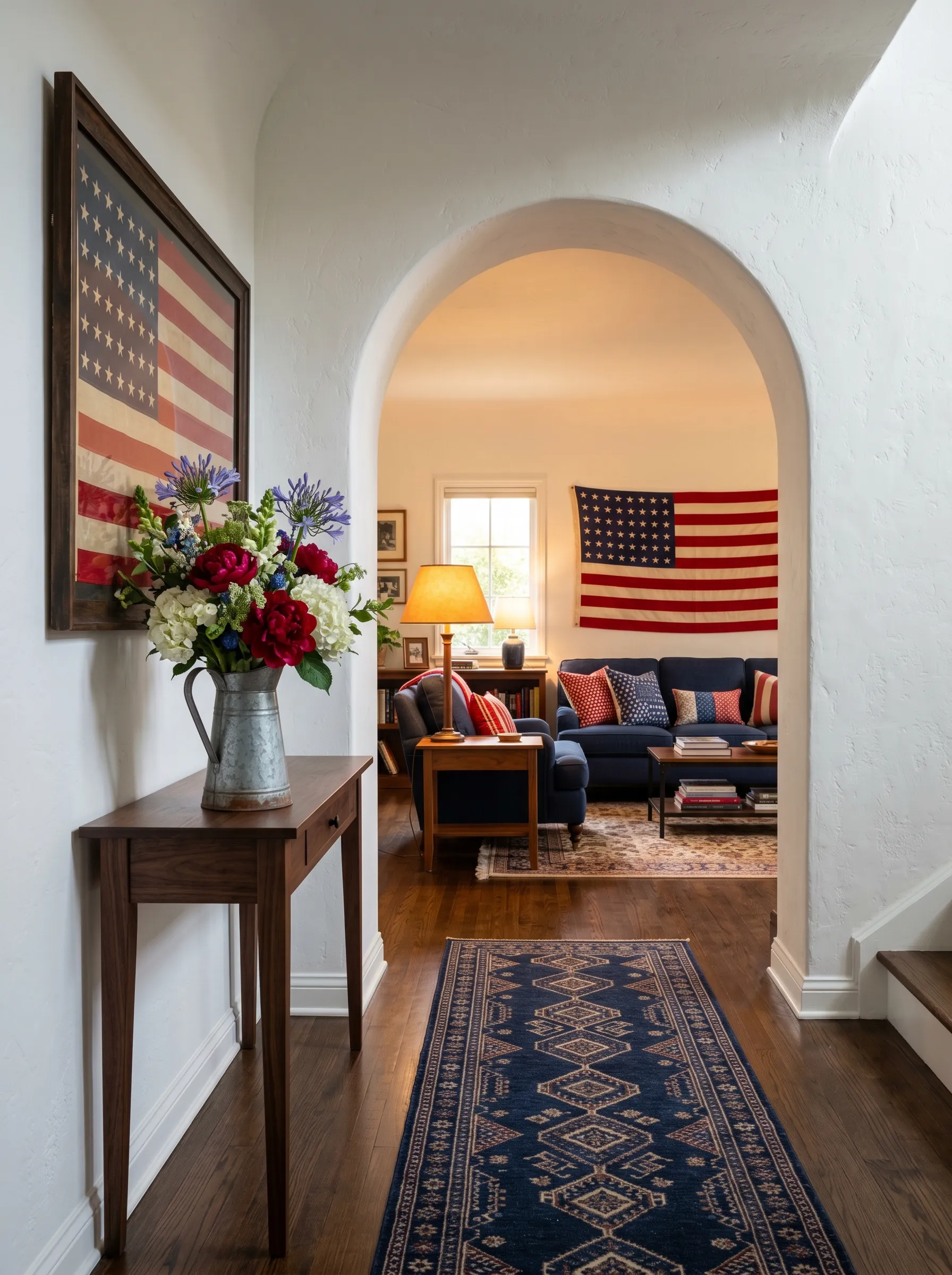
Paint your hallway walls white and keep them bare except for one framed vintage flag. The frame should be substantial. Dark wood or distressed metal. The flag itself should look aged. Not faded by the sun. Actually old. The texture of vintage fabric beats new printing every time.
Place a narrow walnut console table beneath the flag. The wood should be dark and matte. On top, arrange a galvanized pitcher filled with fresh flowers. Use red peonies, white hydrangeas, and blue agapanthus. The flowers should be loose and slightly wild. Tight arrangements look funereal.
Lay a long runner rug in navy with a geometric or tribal pattern down the center of the hallway. It should lead the eye toward the living room. The runner creates a visual path. It tells guests where to go.
Through the archway, let them glimpse the main living room. A flag hanging on the far wall. A navy sofa. Warm lamplight. The transition works because it builds anticipation. It does not give everything away at once.
The Collected Americana Sitting Room That Lets Patterns Do the Work
Hang one large vintage American flag on the wall beside your window. Let it drape naturally. Do not stretch it tight. The slight sag of old fabric is what makes it feel authentic. The flag should be the first thing you notice when you enter.
Use plaid and checkered upholstery on your seating. A green sofa with red plaid pillows. Blue and white checkered armchairs. A plaid settee in soft yellow and cream. The patterns are the color story. They do the patriotic work without any literal flags on the furniture.
Add a dark wood side table with a woven basket beneath it. On top, arrange a blue and white porcelain vase filled with a large fern. The fern adds life and scale. Place a brass lamp with a pleated shade nearby. The brass warms the room and keeps the colors from feeling too primary.
Finish with a zebra-print ottoman. Yes, zebra. The black and white connects to the room’s neutrals and adds a graphic element that prevents the space from feeling too predictable. The best patriotic rooms have one unexpected thing that makes you look twice.
The Symmetrical Overhead Layout That Treats the Floor as Art
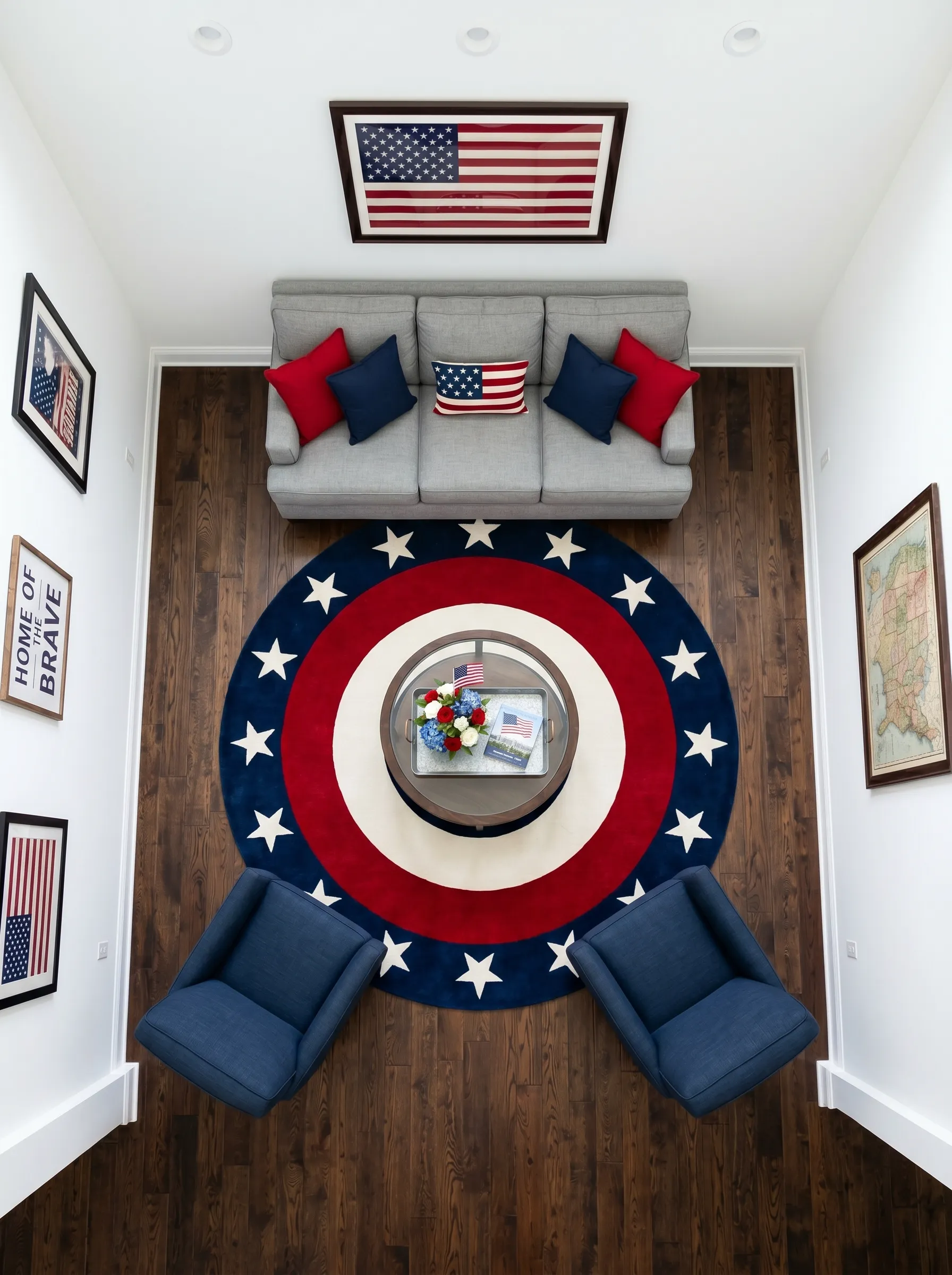
Choose a round area rug with concentric circles in navy, red, and cream, ringed with white stars. The rug is the entire design statement. Everything else exists to support it. Place it precisely centered in the room. Measure from all four walls. Asymmetry with a circular rug looks like a mistake.
Position a light gray sofa directly against the back wall, centered on the rug. Flank it with two navy armchairs angled slightly inward. The three pieces should form a U-shape that contains the round coffee table. The geometry is strict. It must be strict. Loose placement ruins the effect.
On the coffee table, arrange a galvanized tray with a small flag, a book, and a vase of red, white, and blue flowers. Keep it minimal. Above the sofa, hang one framed flag centered perfectly. On the side walls, add a “Home of the Brave” sign and a vintage map. The map adds history. The sign adds voice.
The walls should be white. The floors should be dark wood. The room works because the rug provides all the pattern. Everything else is solid and calm. When the floor is the art, the furniture must behave.
The Stone Fireplace Living Room That Anchors Patriotism in Nature
Frame one large American flag in simple natural wood and hang it above a stone fireplace. The stone should be real. Rounded river rock or rough fieldstone. The texture of the stone is crucial. It provides the organic weight that makes the flag feel grounded rather than decorative.
Place a thick wooden mantel shelf beneath the flag. Something with visible grain and a live edge if possible. On the mantel, arrange three model sailboats with cream sails and dark hulls. The boats add height and a nautical story that complements the flag without copying it.
Flank the fireplace with tall green plants in white ceramic pots. The plants should be substantial. At least three feet tall. They soften the stone and add vertical balance to the flag above.
Use white-painted wooden armchairs with blue and white striped cushions facing the fireplace. Add red and white striped and blue plaid pillows for layering. Place a round blue and white patterned ottoman in the center. The room should feel like a lakeside cottage that has been loved for generations. The patriotism is present but not performative. It simply belongs there.
The Layered Textile Sofa That Makes Patriotism Look Livable
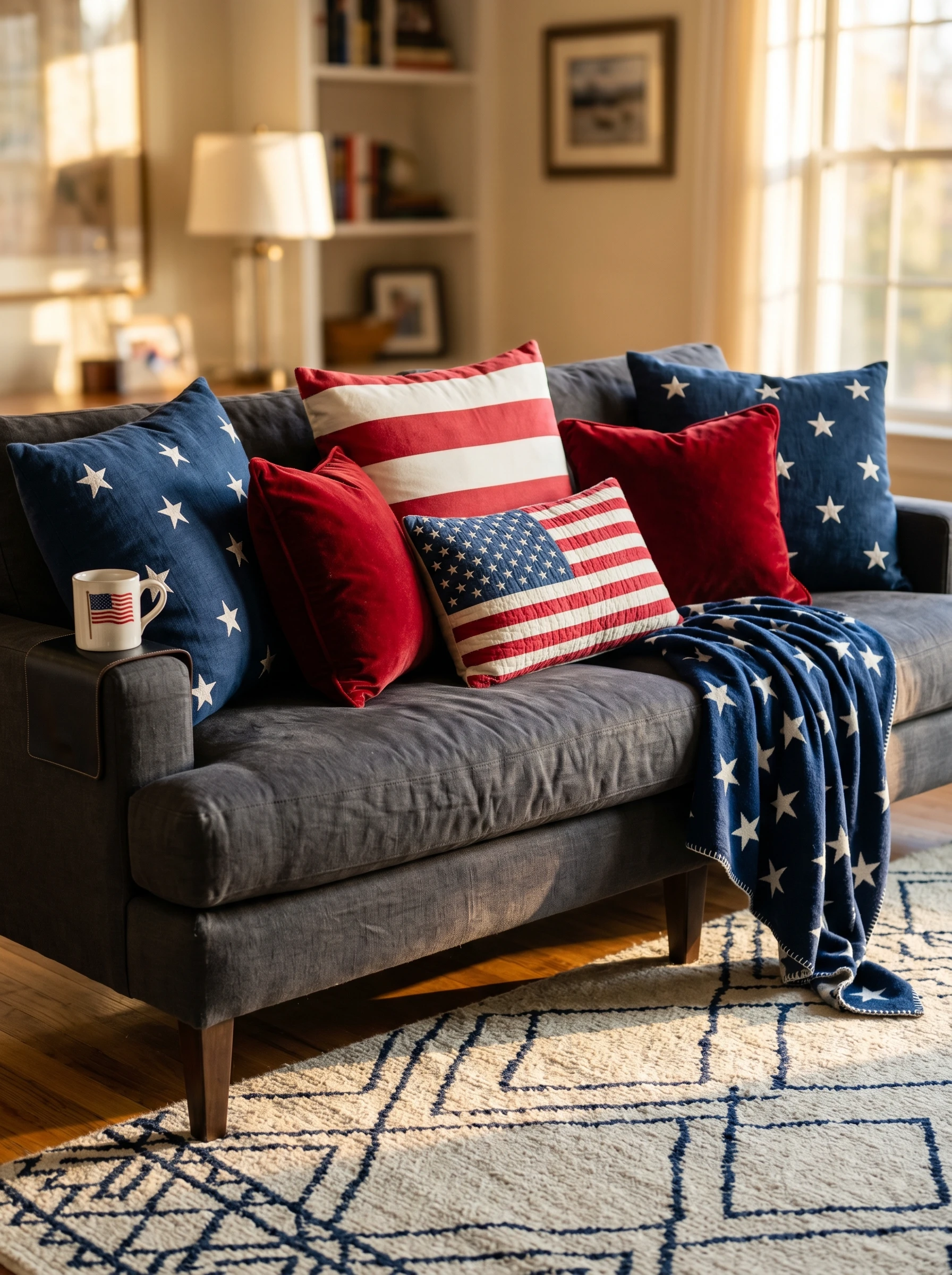
Start with a neutral sofa in charcoal or navy. Charcoal reads sophisticated. Navy reads intentional. Both handle color without looking like a temporary display. Avoid black. It kills the warmth that makes patriotic colors feel inviting.
Add pillows in odd numbers. Three or five. Mix your scales. One large flag-patterned lumbar pillow as your statement piece. Two solid velvet pillows in navy and red for weight. One star-patterned square for variation. Never let two identical patterns touch. Alternate them like you are dealing cards.
Drape a star-patterned throw blanket over one arm only. Not both arms. Not folded like a hotel towel. Let it spill onto the seat cushion slightly. The best patriotic sofas look inhabited. That casual disarray is what separates a designed room from a staged one.
Finish with a geometric rug beneath the sofa that picks up your navy and white. The rug should anchor the seating area without competing with it. If the rug shouts, the sofa cannot speak.
The Flag Gallery Wall That Treats History Like Art
Start with a large-scale framed American flag as your anchor piece. Not a poster. A real textile flag in a substantial dark wood frame with a wide mat. This is your statement. Everything else arranges itself around it.
Add smaller framed flags in varying sizes and eras. A thirteen-star nautical flag. A forty-eight-star vintage. A small modern flag in a narrow black frame. Mix the frame styles slightly. Some dark wood. Some black. Some with simple brass corners. The variation keeps the gallery from looking like a set.
Hang them in a loose grid, not a rigid pattern. The largest flag sits slightly off-center. The smaller ones fill the gaps around it. Leave two to three inches between frames. Any closer and they fight. Any farther apart and they look lost.
Beneath the gallery, place a denim slipcovered sofa. The blue of the denim connects to the flags without matching exactly. Add a single blue and white striped lumbar pillow and a natural woven basket on the coffee table. The room should feel like a coastal cottage that happens to love its country. Not like a patriotic theme park.
The Curated Coffee Table Vignette That Turns Candy Into a Centerpiece
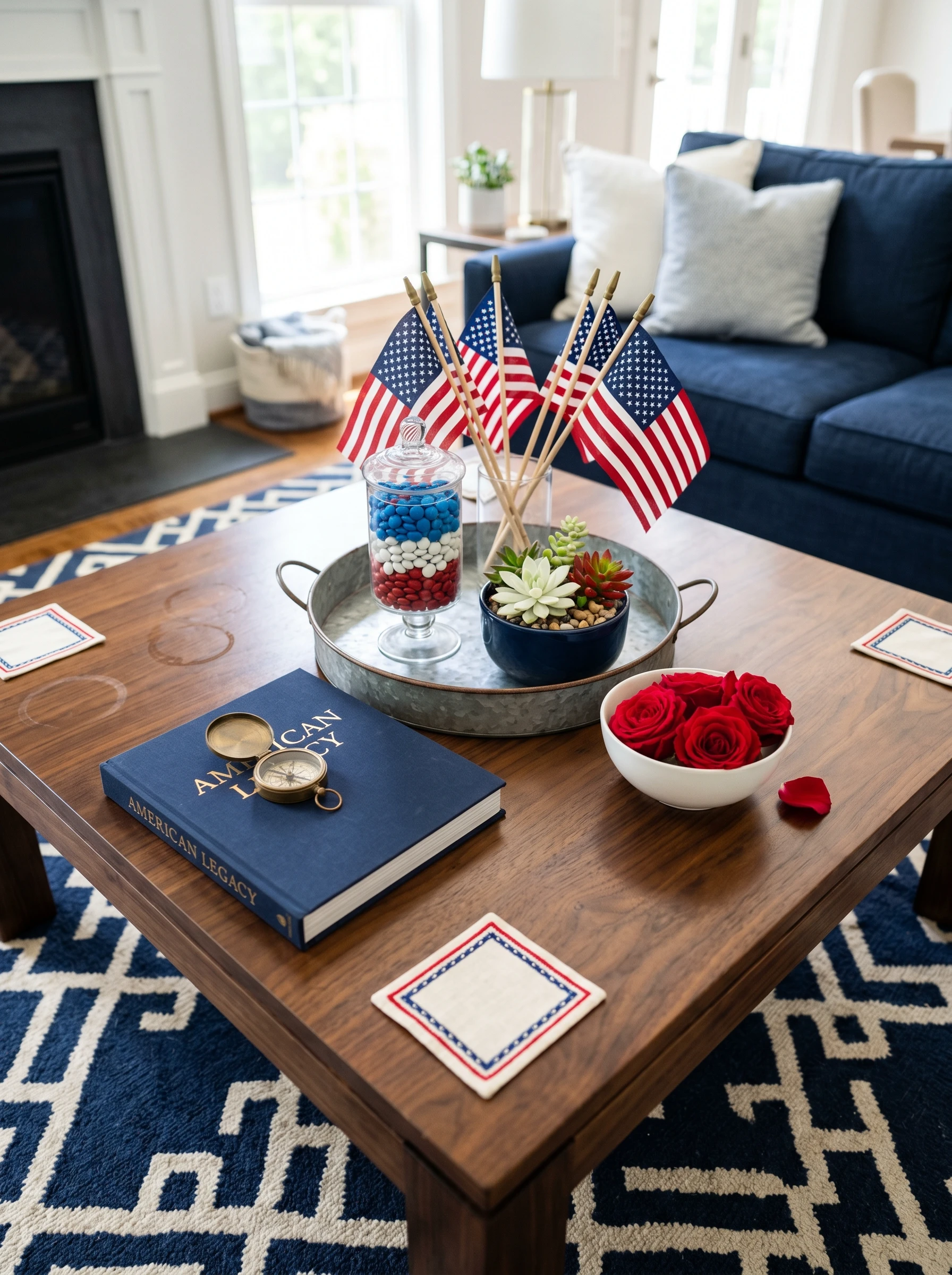
Use a galvanized metal tray as your base. Something with handles and a worn finish. It should look like it came from a barn, not a craft store. The tray corrals your objects and gives them a reason to sit together.
Fill a glass apothecary jar with layered candy in red, white, and blue. This is your vertical element. It adds height and color simultaneously. Place it toward the back of the tray. In front, add a small potted succulent in a navy ceramic pot. The green breaks up the color story and adds life.
Add a stack of hardcover books with navy and red spines. One book should be Americana-themed. The others can be anything. They just need to participate in the color palette. Top the stack with a brass compass or a small framed quote. Place a white bowl of red roses on the table outside the tray for asymmetry.
Avoid cluttering every inch. Leave at least forty percent of the table surface empty. A coffee table that is completely covered looks like a yard sale. One that breathes looks edited.
The Flag-Anchored Living Room That Commits to the Bit
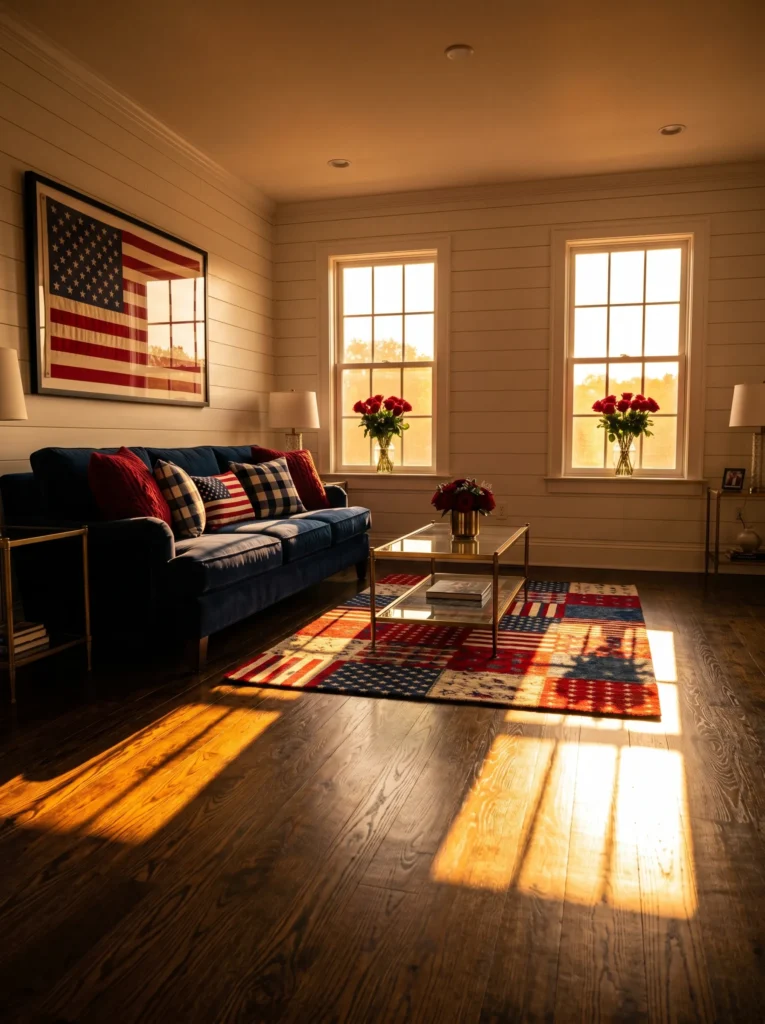
Hang one large-scale flag as your primary wall art. Not a poster. Not a printed canvas. A real textile flag, framed simply in dark wood, or stretched in a deep frame like art. It should be the biggest thing on the wall. It should command the room.
Pair it with a navy velvet sofa beneath it. Velvet reads as luxurious, which elevates the flag from dorm room to drawing room. Add pillows that mix buffalo check, stripes, and one flag pattern. The buffalo check is crucial. It adds a graphic element that is patriotic without being literal.
Lay a flatweave rug that incorporates flag motifs in a patchwork or distressed pattern. The rug should connect the sofa to the coffee table. Use a glass and brass coffee table to keep the sight lines open. Heavy wood would block the rug and make the room feel bottom-heavy.
Place red roses in simple glass vases on the windowsills. The red ties back to the flag without copying it exactly. This room works because it commits fully. Half-commitment is what makes patriotic decor look apologetic.
The Window Seat Nook That Steals the Best Light in the House
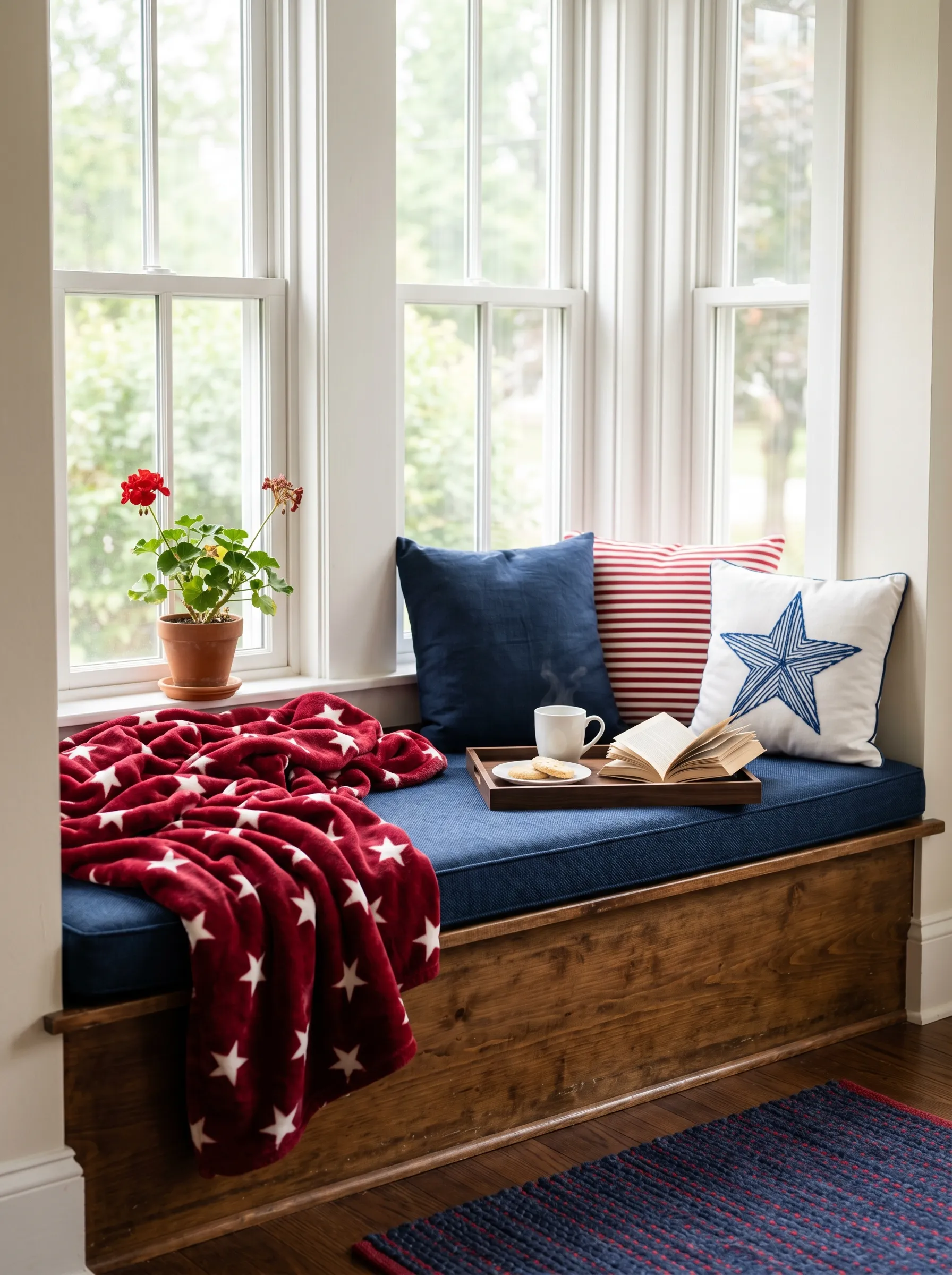
Build or buy a window seat with a stained wood base and a single navy cushion. The cushion should be thick. At least four inches. A thin cushion looks like an afterthought. The wood base should be simple, with visible grain. Paint is fine, but stain feels more grounded.
Layer pillows against the window side. Start with a solid navy velvet square for depth. Add a red and white striped lumbar for contrast. Finish with a white pillow featuring a single embroidered blue star. The progression from dark to light mirrors the natural light coming through the window.
Drape a red throw blanket with white stars casually across the seat. Let it fall onto the floor slightly. Add a wooden tray with a mug, a plate of cookies, and an open book. This is not staging. This is a functional reading nook. The patriotic elements are just the costume it wears.
Place a potted red geranium on the windowsill in a terracotta pot. The organic shape of the plant softens the geometry of the pillows. Add a small woven rug in navy and red beneath the seat to define the area as its own zone.
The Evening Living Room That Uses Light as a Design Layer
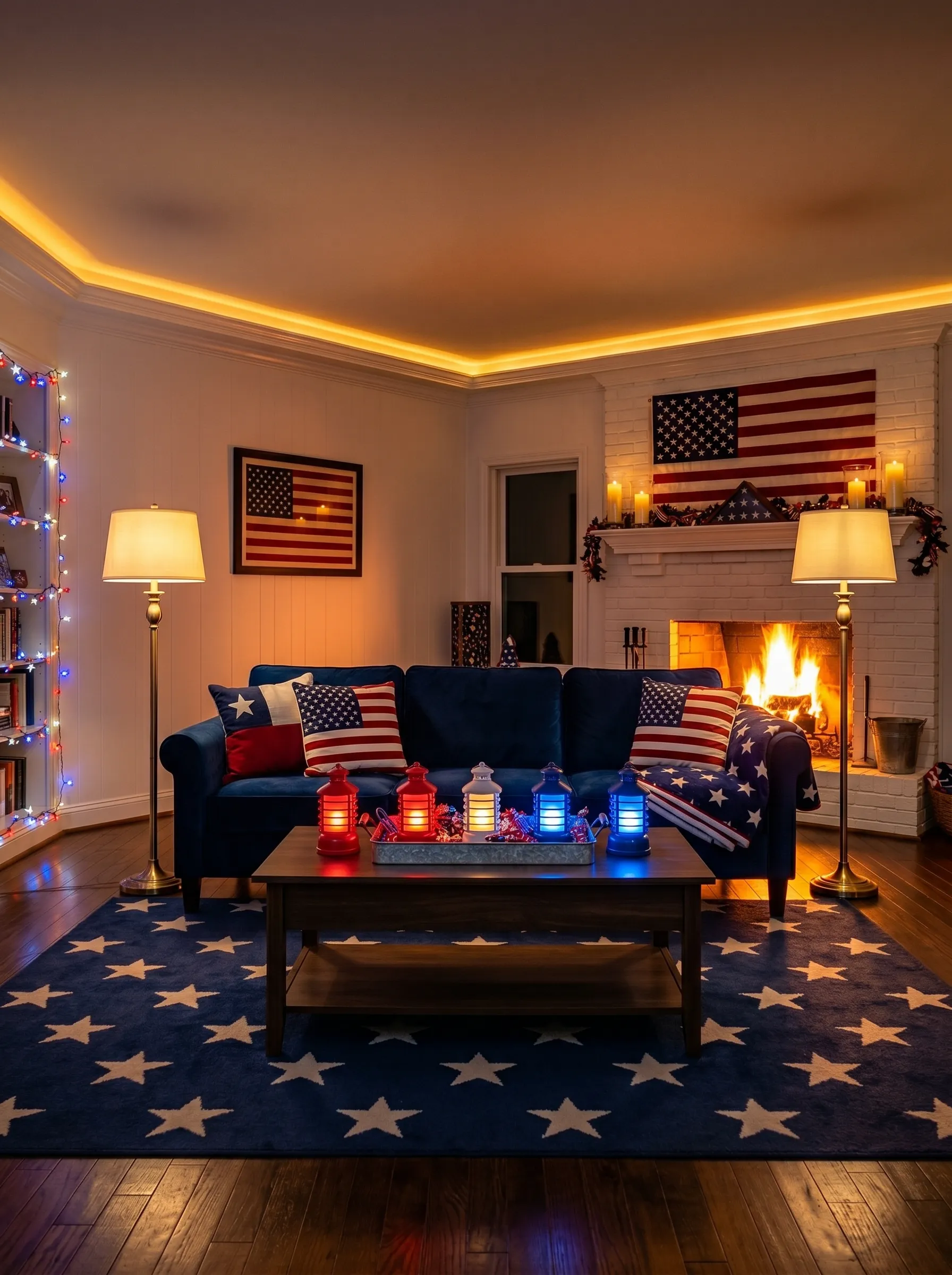
Install cove lighting along the ceiling perimeter with a warm amber glow. The light should wash the walls upward. This creates a halo effect that makes the room feel larger and more intimate simultaneously. Patriotism at night should feel warm, not fluorescent.
Place red, white, and blue metal lanterns on a dark wood coffee table. Use LED candles inside. Real candles are pretty until someone knocks one over. The lanterns should vary slightly in height. Arrange them in a loose cluster, not a rigid line.
Hang string lights with red, white, and blue bulbs along one bookshelf or mantel edge. One strand. Not twenty. The colored lights should read as festive, not chaotic. Keep the rest of the lighting warm white. The colored bulbs are an accent, not the main event.
Use a navy sofa with flag-patterned pillows and a star-field throw blanket. The room should feel like a celebration that someone actually planned. Not like a party store exploded. The lighting does the work here. Everything else just shows up.
The Full-Commitment Living Room That Makes Bunting Look Serious
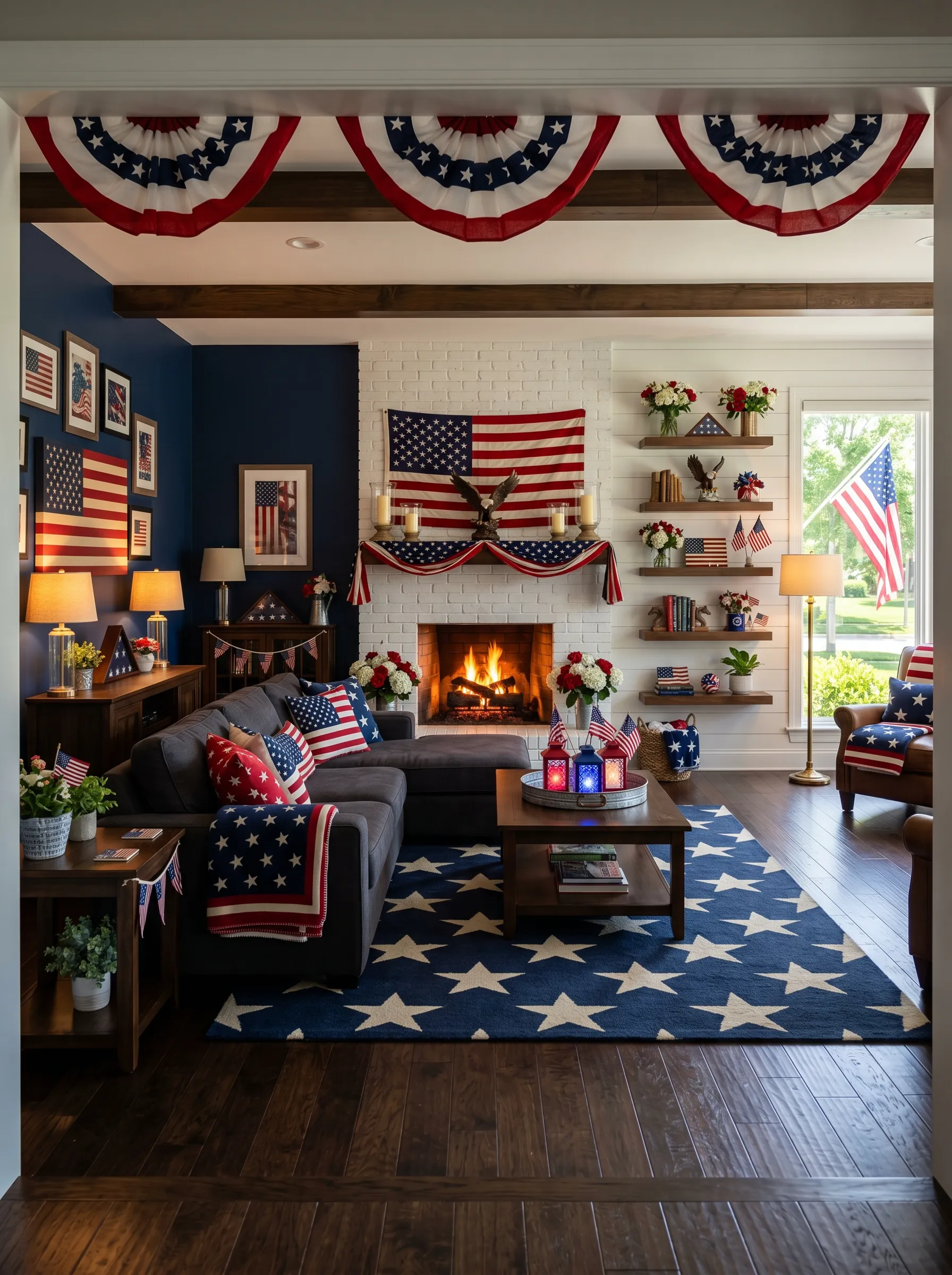
Hang pleated bunting in red, white, and blue from your ceiling beams or across the top of your main wall. Real fabric bunting. Not plastic. The pleats should be deep and full. Flat bunting looks like a paper banner. Full bunting looks like a decision.
Above a white brick fireplace, hang one large flag as your mantel anchor. Add a brass eagle statue centered on the mantel. Flank it with brass candlesticks and white candles. The brass warms the red, white, and blue and keeps it from feeling elementary.
Use a gray sectional with mixed flag pillows and a star-patterned throw. The sectional should be substantial. Small furniture in a heavily decorated room looks overwhelmed. Add floating shelves on one wall with curated objects. Books. Small flags in vases. A folded flag case.
Lay a navy rug with an oversized star pattern. The stars should be large and widely spaced. Small, dense patterns fight the bunting. Large, open patterns complement it. This room is not subtle. It does not apologize. That confidence is exactly why it works.
The Window Sill Botanical Display That Brings the Outside In
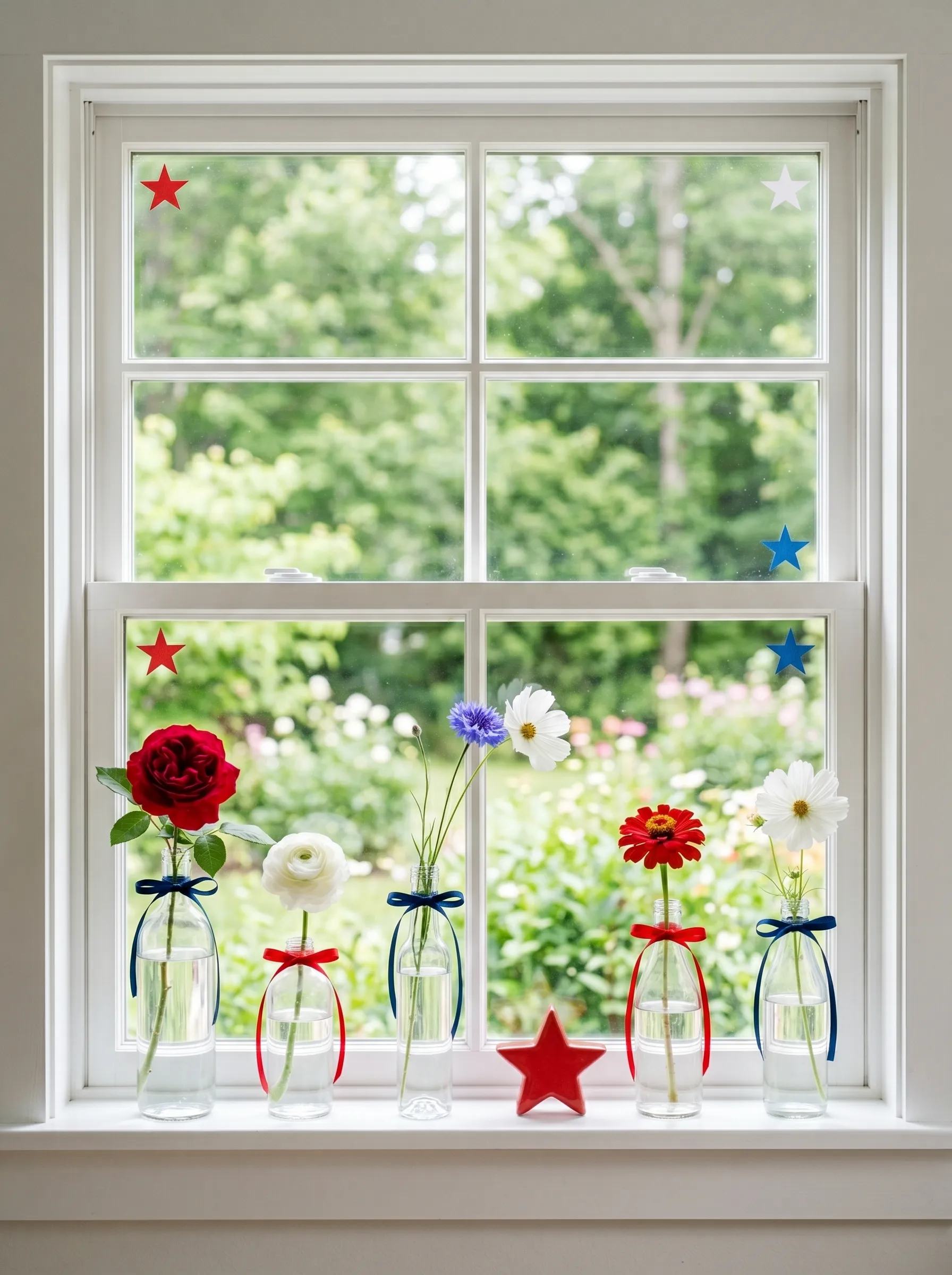
Clean your window sills thoroughly. They should be white and bare. No clutter. No stray hardware. The simplicity of the sill is what makes the display feel intentional rather than crowded.
Place five clear glass bottles in a row. Milk bottles. Bud vases. Anything narrow and uniform. Fill each with a single stem. One red rose. One white ranunculus. One blue cornflower. One red zinnia. One white cosmos. The single-stem approach is key. Bouquets in bottles look messy. Single stems look editorial.
Tie thin ribbons around the bottle necks. Alternate red and navy. The ribbons should be silk or grosgrain, not curling ribbon. Add small star decals to the window panes themselves. One red star in the upper left. One white in the upper right. One blue in the lower right. They should look like they are floating on the glass.
Place one red ceramic star on the sill between the bottles. The star is your punctuation mark. The whole arrangement takes up less than a foot of space. It reads as charming rather than obsessive. Small gestures often carry more weight than large ones.
The Vintage Americana Corner That Actually Looks Collected
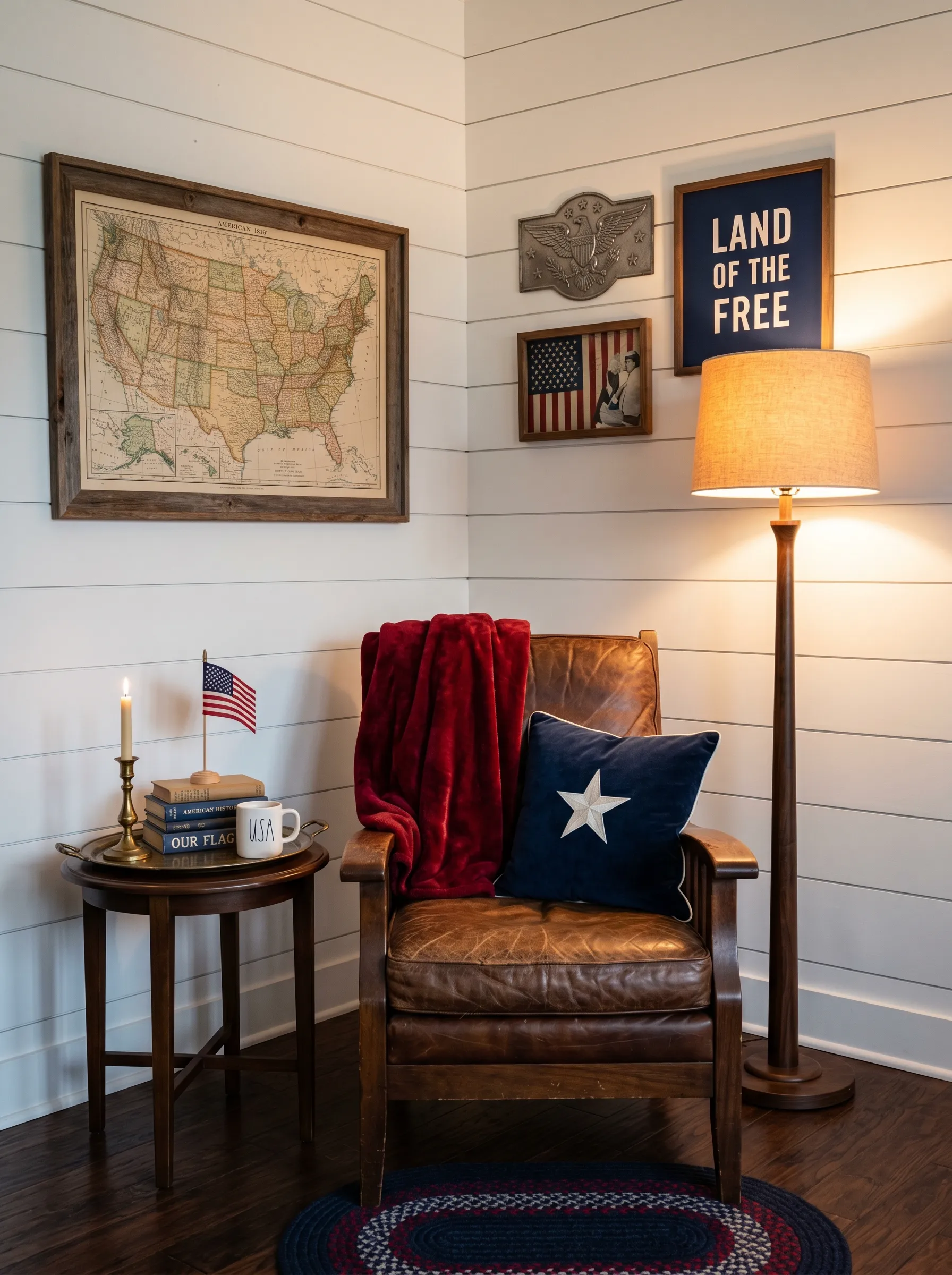
Start with one large framed vintage map of the United States. The frame should be wide and weathered wood. Hang it on a white shiplap wall. The map is your anchor. It provides color without screaming. It suggests patriotism through history rather than symbol.
Add a smaller framed flag photograph and a metal eagle plaque to the same wall. Keep them clustered tightly. Two feet apart maximum. Scattered gallery walls look accidental. Tight clusters look curated. Add a “Land of the Free” sign in navy with white lettering. The typography should be bold and simple. No script.
Place a leather armchair beneath the grouping. Brown leather. Worn. Comfortable. Drape a red throw blanket over one arm. Add one navy pillow with a single white star. The leather adds masculinity and age. It keeps the corner from feeling too precious.
Beside the chair, use a small round dark wood side table. Stack three books with patriotic spines. Add a brass candlestick with a white taper. A small flag in a wooden base. A white mug. The mug makes it personal. The candle makes it atmospheric. The books make it smart.
The Indoor-Outdoor Flow That Extends the Party to the Porch
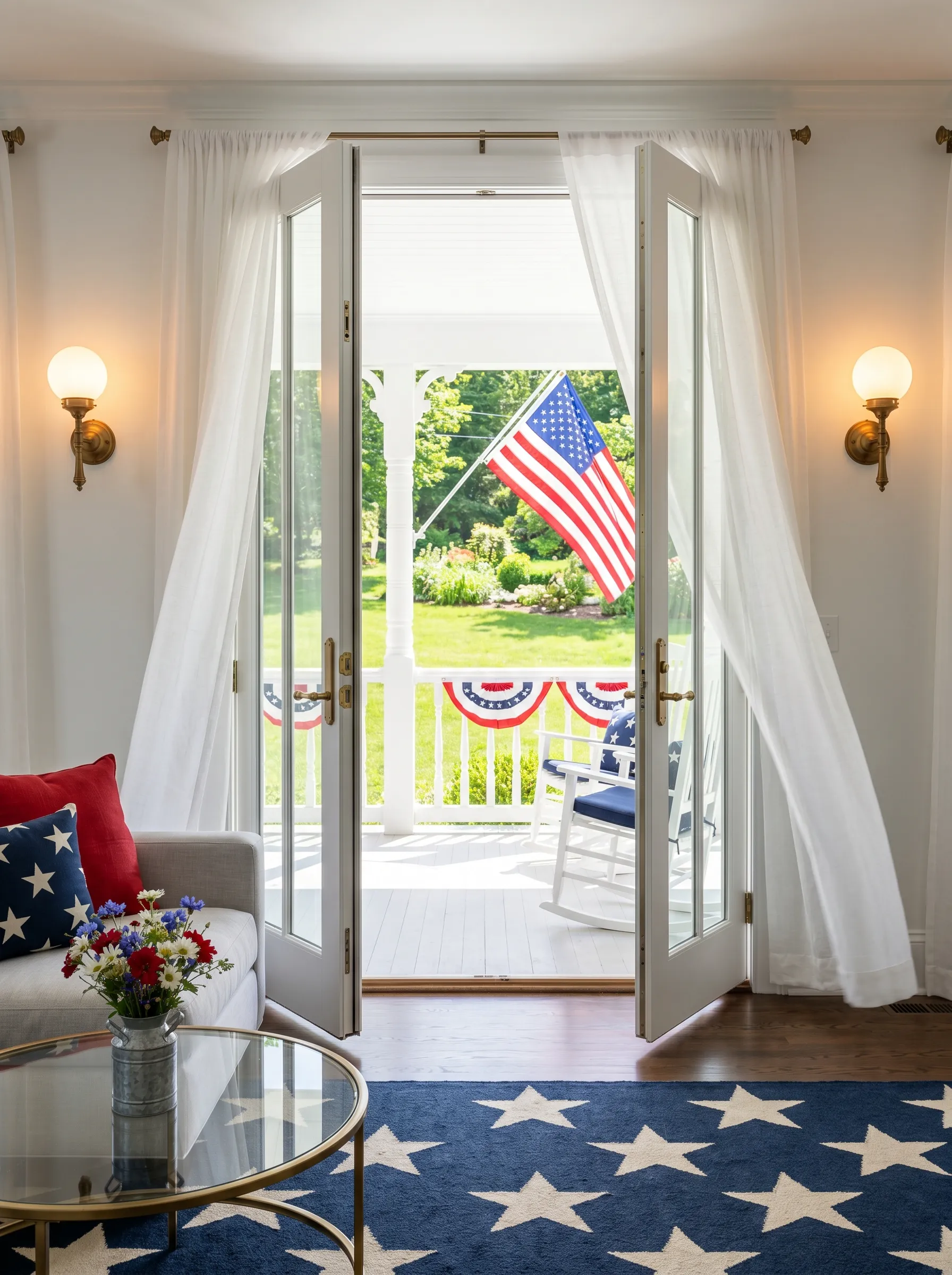
Install French doors with glass panes that open onto your porch. The doors should be painted white with brass hardware. Sheer white curtains should frame them. The curtains must be sheer. Heavy drapes block the connection. Sheer fabric makes the porch feel like part of the room.
Inside, place a light gray sofa with red and navy star pillows. Add a round glass coffee table with a brass frame. On the table, arrange a galvanized pitcher filled with red, white, and blue wildflowers. The glass table keeps the sight line open through to the porch.
Lay a navy rug with large white stars that extends from the sofa area toward the doors. The pattern should be bold and open. Outside, hang an American flag from a white porch post. Add pleated bunting along the porch railing. Place a white rocking chair with a navy cushion on the porch.
The flag outside does the patriotic work. The interior just nods to it. This indoor-outdoor connection means your living room does not have to carry the entire theme alone. It shares the load with the porch. That sharing makes both spaces feel lighter.
The Floating Shelf Styling That Makes Books Part of the Color Story
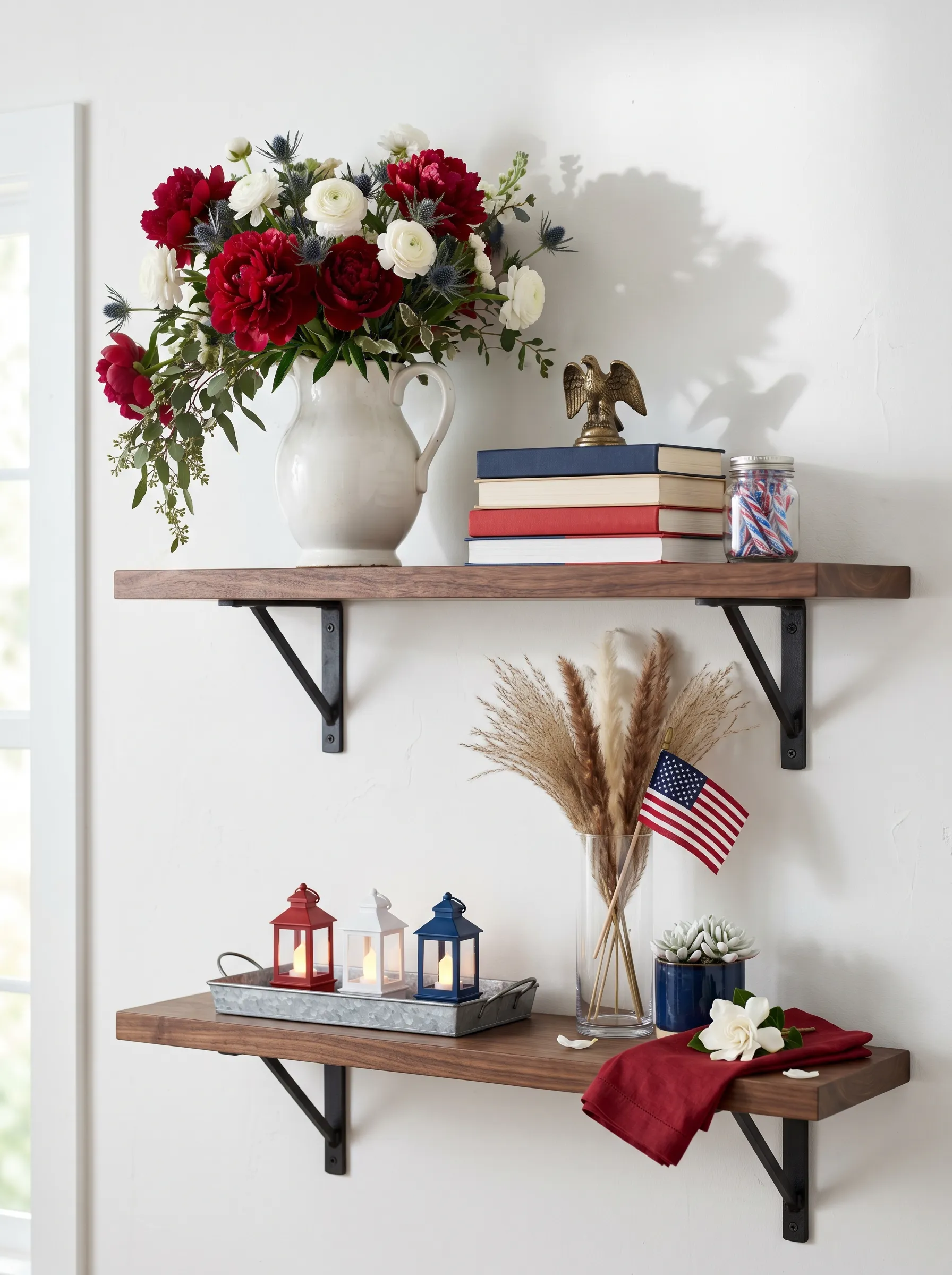
Install two floating shelves in dark walnut with black iron brackets. The wood should be thick. At least two inches. Thin floating shelves look like they are trying not to be noticed. These should be confident. Mount them with eighteen inches of space between them. Too close and they look crowded. Too far and they look unrelated.
On the top shelf, place a white ceramic pitcher filled with red peonies, white ranunculus, and blue thistle. The flowers should be loose and slightly drooping. Perfect flowers look artificial. Next to the pitcher, stack four hardcover books with spines in navy
Final Thoughts
Patriotic design is not about volume. It is about conviction. A single flag in a well-designed room says more than a room full of flag-printed objects. The Americans who built the architecture we admire did not fill their rooms with disposable symbols. They built spaces with permanence and let the colors speak.
The best Fourth of July living rooms share one quality. They look like the people who live there actually believe in something. Not just in July. Not just for Instagram. The belief is visible in the quality of the materials and the care of the placement.
So buy the real flag. Frame it. Hang it where you will see it every day. Build the rest of the room around it with the same seriousness you would bring to any other design project. Patriotism deserves that much respect. Your living room deserves that much thought.