
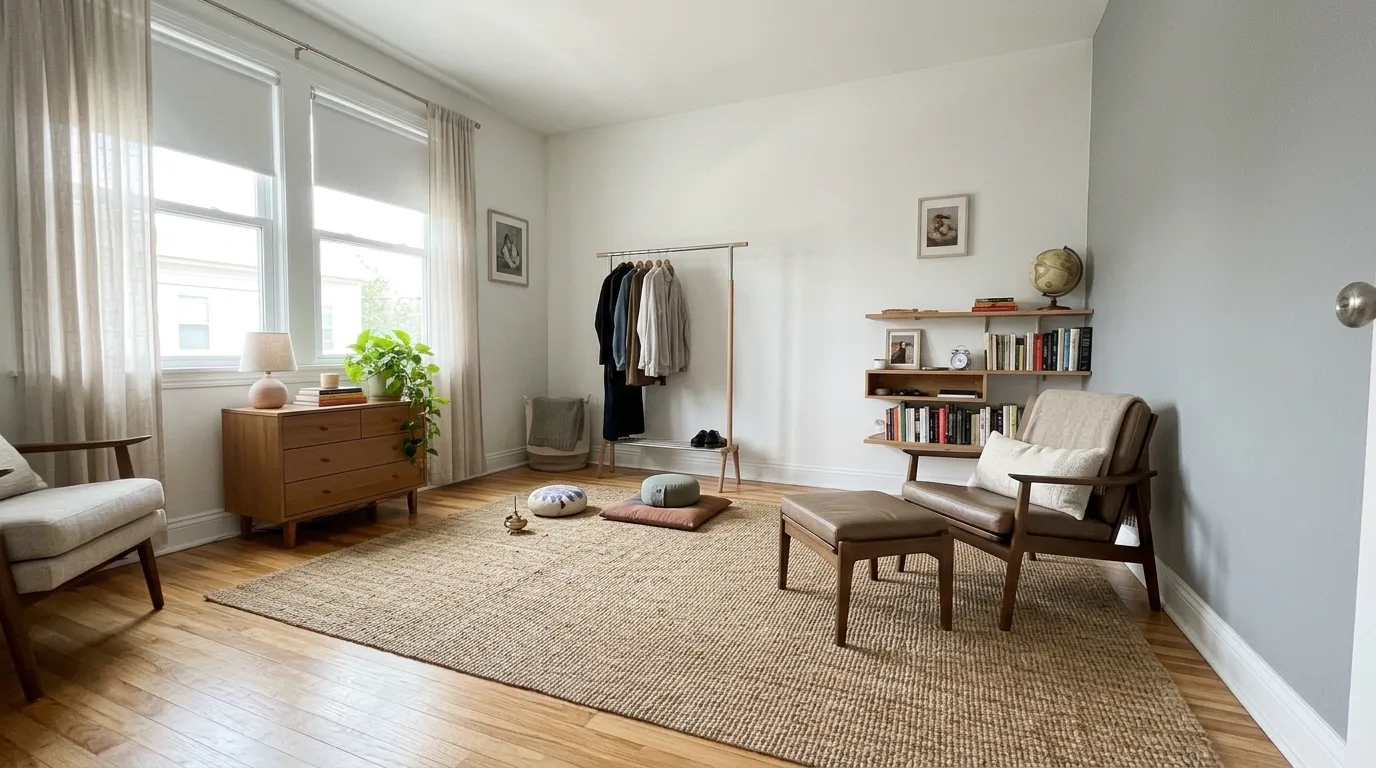
You have maybe 120 square feet, a security deposit riding on not drilling holes in anything, and roommates who think a beanbag counts as furniture.
Most college bedrooms give up right there. They settle for a bed, a desk, and a single overhead light that makes everyone look like they’re being interrogated. The room does its job and nothing else.
The rooms that actually work aren’t bigger or better funded. They just treat storage, light, and furniture as three separate problems worth solving on purpose, instead of one problem called “I’ll deal with it later.”
The Storage War You’re Actually Losing
Small rooms don’t run out of space. They run out of places to put things that aren’t the floor. That’s a solvable problem, not a square footage problem.
Every Flat Surface Should Have a Second Job
A bed frame that’s just a bed frame is wasted potential in a room this size. The best small-space setups treat the space under the mattress, behind the door, and against every wall as inventory, not dead zone.
Underbed drawers, an over-door organizer, a rolling cart tucked beside a desk — none of these take up floor space you didn’t already have claimed by something else. That’s the entire trick. You’re not adding storage. You’re finding storage that was already there.
Vertical Beats Horizontal Every Time
A dresser eats floor space a small room can’t spare. A wall of floating shelves or a stacked shelf unit does the same job going up instead of out, and it leaves the actual walkable floor untouched.
This matters more in a shared or rented space than almost anywhere else, because floor space is the one thing you can’t negotiate for more of. Wall space, on the other hand, is usually just sitting there empty.
Hide the Ugly Stuff, Not the Useful Stuff
Cords, chargers, and toiletries don’t need to be visible to be accessible. Baskets, bins, and closed cubbies keep daily-use items reachable without turning every surface into visual clutter.
The goal isn’t minimalism. It’s editing — deciding which objects earn a spot in plain view and which ones just need a lid.
College Apartment Bedroom Ideas
Pink Floral Gallery Wall
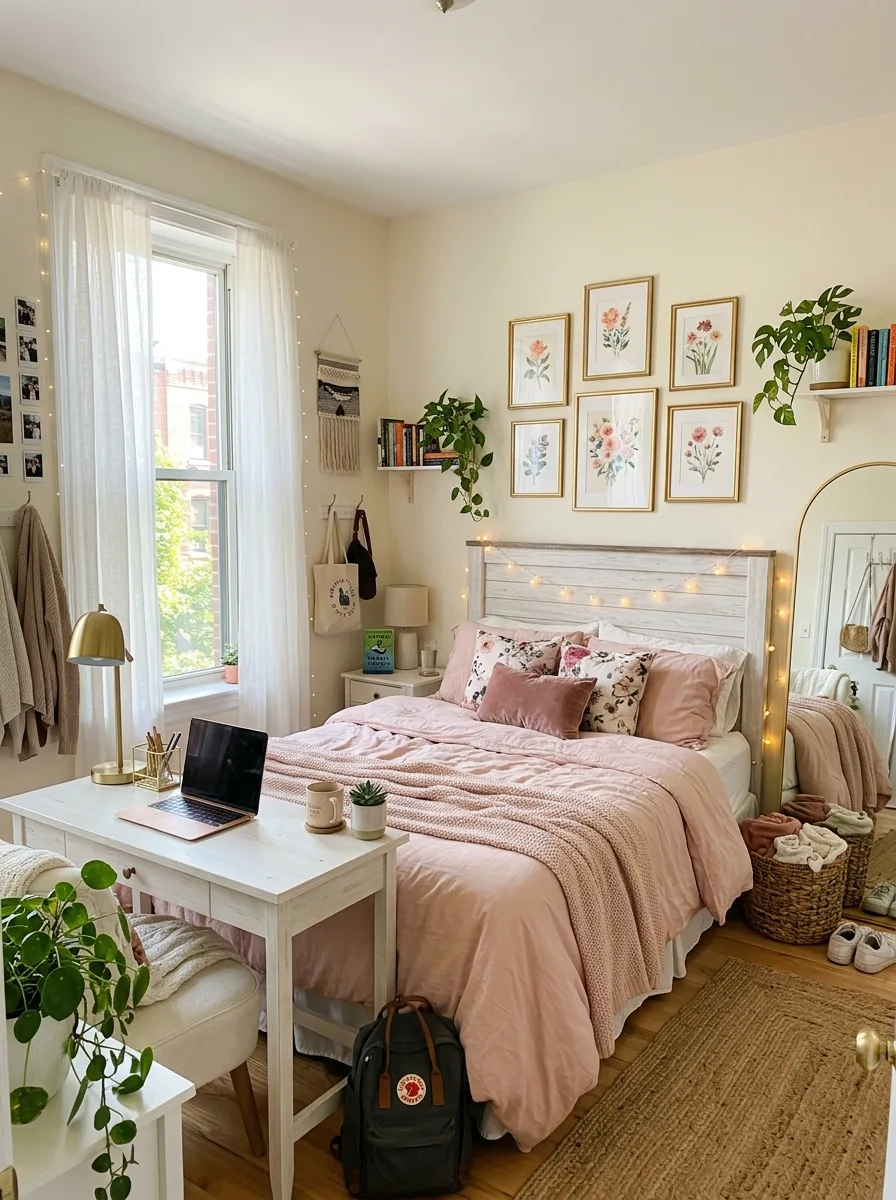
Arrange six small floral prints in matching thin gold frames in a tight two-by-three grid directly above the headboard. The uniform framing is what keeps six separate pieces from reading as clutter.
Choose bedding in a soft blush or rose tone that pulls directly from the floral prints, so the wall and the bed read as one coordinated moment instead of two separate decisions.
String fairy lights along the top edge of the headboard itself rather than the wall above it, so the glow sits close to where you’ll actually be reading or scrolling before bed.
Add a plain white desk positioned to catch window light, keeping the desk itself unstyled and neutral so the gallery wall above the bed stays the clear visual priority of the room.
Drawer-Built Storage Bed Frame
Choose a platform bed frame with built-in pull-out drawers along the base rather than a frame that requires separate under-bed bins. The drawers should run the full width of the bed, not just a narrow strip at the foot.
Fold clothing vertically, standing pieces on their edge rather than stacking flat, so an entire drawer is visible and searchable in one glance instead of requiring you to dig.
Group by category within each drawer — one for tops, one for bottoms, one for miscellaneous — so the system stays usable past week two of the semester.
String warm fairy lights loosely along the wall above the headboard in a soft zigzag rather than a straight line. The irregular shape reads as intentional in a way a taut, perfectly even string doesn’t.
Terracotta Tatami Floor Bed
Set a tufted mattress directly onto a low tatami-style base rather than a raised frame, letting the whole sleeping area sit close to the floor.
Choose a mattress cover in a warm, saturated color like rust or terracotta — it becomes the room’s main color statement since there’s no headboard or frame competing for attention.
Add a small wood nightstand with turned legs at just above mattress height, so reaching for a lamp or a glass of water doesn’t mean leaning up and over.
Layer a woven jute or seagrass rug beside the mattress rather than under it. The texture contrast between rug and low bed base is what keeps the whole setup from reading as flat.
Sunlit Striped Platform Bed
Build or buy a simple low wood platform bed with visible slats, left unfinished or lightly stained rather than painted, so the grain stays part of the room’s texture.
Dress it in striped bedding in a soft, muted palette — pink, cream, warm brown — layered loosely rather than tucked tight, so the bed looks lived-in rather than staged.
Use a clear acrylic side table instead of a solid one wherever floor space is tight. The transparency keeps a small table from visually crowding the corner it sits in.
Skip overhead lighting near the bed entirely and rely on one small table lamp with a soft, rounded shade. A gentler light source at bed height does more for the mood than a ceiling fixture ever could.
Plant-Packed Cane Chair Corner
Pack the corner near your desk with plants of varying heights — a trailing pothos on a shelf, a small upright plant on the desk itself, one more hanging if there’s a hook available.
Choose a cane or rattan-back chair for the desk seat instead of a standard office chair. The open weave keeps a small desk corner from feeling boxed in the way solid upholstery does.
Hang a loose grid of postcards, botanical prints, and small photos directly above the desk, extending slightly onto the adjacent wall so the display doesn’t feel confined to one rectangle.
Drape one soft throw over the foot of the bed in a color that echoes the plants — a deep green or forest tone ties the sleeping area back to the desk corner without matching outright.
Paper Lantern Reading Nook
Hang one oversized round paper lantern pendant directly above the bed, low enough that it becomes part of the room’s visual center instead of just ceiling decor.
Set the mattress on a simple low wood platform with visible legs, keeping the frame minimal so the lantern above stays the room’s clear focal point.
Stack books and small crates on either side of the bed instead of matching nightstands — the asymmetry between a crate on one side and a small stool on the other keeps the setup from feeling overly matched.
Scatter a few open books and a drink directly on the bedding itself for styling, rather than confining everything to the nightstands. It signals the bed as a place you actually spend daylight hours, not just sleep.
Attic Eave Sleeping Nook
Tuck a simple twin mattress into the lowest point of a sloped ceiling, using the awkward eave height as a feature instead of apologizing for it.
Choose striped or ticking-fabric bedding in a muted, vintage palette — the pattern reads as intentional in a nook this architecturally unusual, where a solid color would just look incomplete.
Leave the walls and ceiling in their natural white-painted wood rather than adding wallpaper or paneling. The plank texture is already doing the visual work a busier finish would compete with.
Skip a headboard and nightstand entirely here — the nook’s shape is the design statement, and adding standard bedroom furniture back in undoes the reason the space feels special.
Botanical Postcard Mood Wall
Cover a section of wall above your desk in a loose collage of postcards, pressed botanical prints, and small art cards, leaving uneven gaps rather than aligning everything to a grid.
Mount one narrow floating shelf partway up the collage to hold small potted plants, letting real leaves interrupt the printed ones on the wall behind them.
Hang at least one trailing plant from a hook near the top corner of the display, so greenery spills down over the edge of the postcards instead of stopping at the shelf line.
Keep the bedding in a single deep, saturated tone — olive or forest green works well — so the busy wall has one calm surface to balance against.
Curtained Clothing Rack Closet
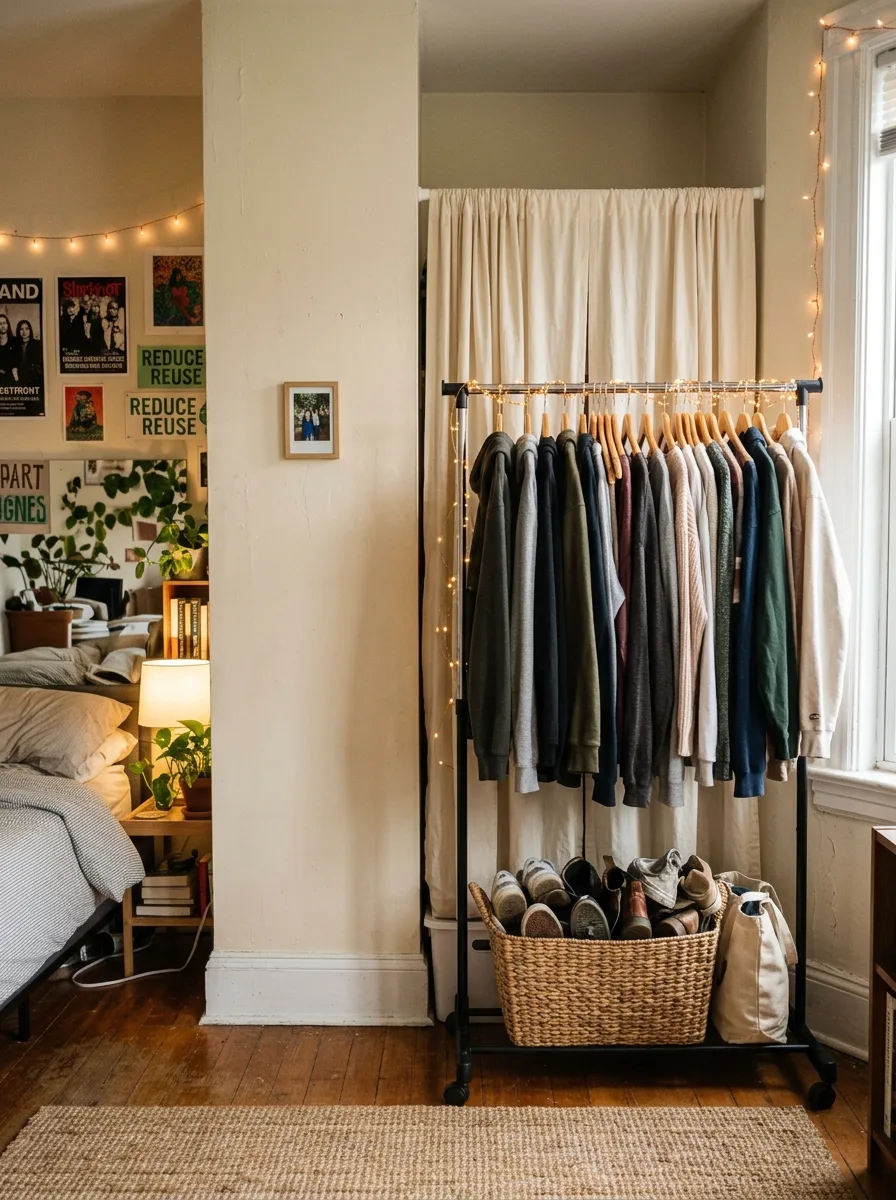
Set a rolling garment rack into an alcove or corner that doesn’t have a real closet, and hang a simple curtain on a tension rod behind it to hide the wall it’s backed against.
String warm fairy lights along the rack’s top bar so they trace the same line as the hanging clothes, turning a purely functional rack into part of the room’s lighting layer.
Place a woven basket underneath for shoes, keeping the floor beneath the rack from becoming its own kind of mess.
Layer gig posters, protest prints, or photos on the nearby wall in mismatched frames and sizes — this kind of closet substitute earns its spot in a room that leans lived-in and collected rather than polished.
Over-Door Pocket Organizer
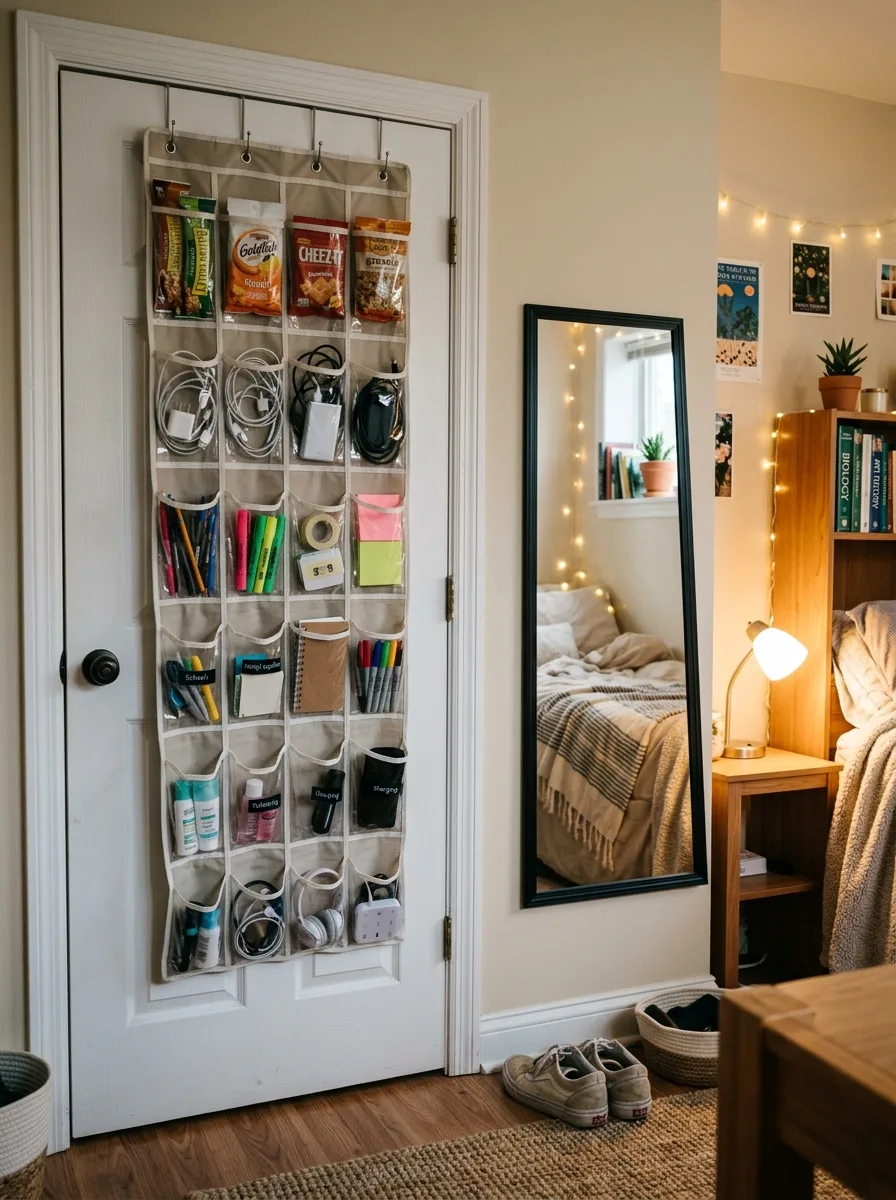
Hang a clear-pocket organizer on the back of your closet or bedroom door, sorting contents by category — snacks in one row, cords and chargers in the next, toiletries lower down.
Keep each pocket to one item type rather than mixing categories. A pocket with three different things in it stops being scannable at a glance, which defeats the entire point of the system.
Position a full-length mirror on the wall beside the door rather than on the door itself, so both the mirror and the organizer stay usable at the same time without one blocking the other.
Pair the organizer with a small shoe tray directly below it on the floor, so everything you need on your way out the door lives in one vertical strip by the exit.
Windowsill Succulent Plant Shelf
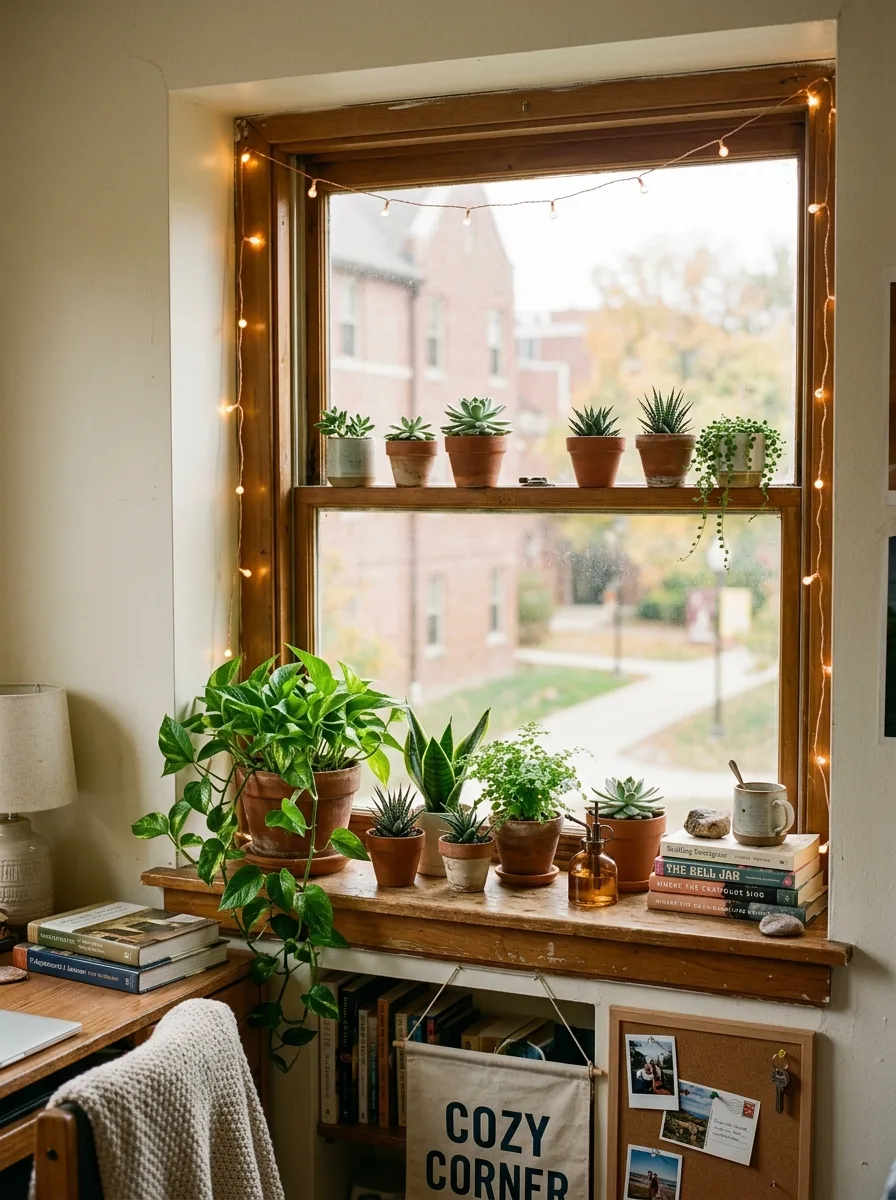
Line the windowsill with a row of small potted succulents and trailing plants in varying pot materials — terracotta, ceramic, and ceramic-glazed together read as collected, not matched.
String a single loop of fairy lights around the window frame itself, letting the wire trace the same rectangle as the window rather than draping loosely across the wall.
Stack a small pile of books directly on the sill beside the plants, using them as a low plant stand for one pot rather than leaving the surface perfectly flat.
Add a small cork board or hanging banner just below the sill for photos and ticket stubs, so the whole window becomes one continuous personal display from ceiling to desk.
Leaning Floor Mirror Corner
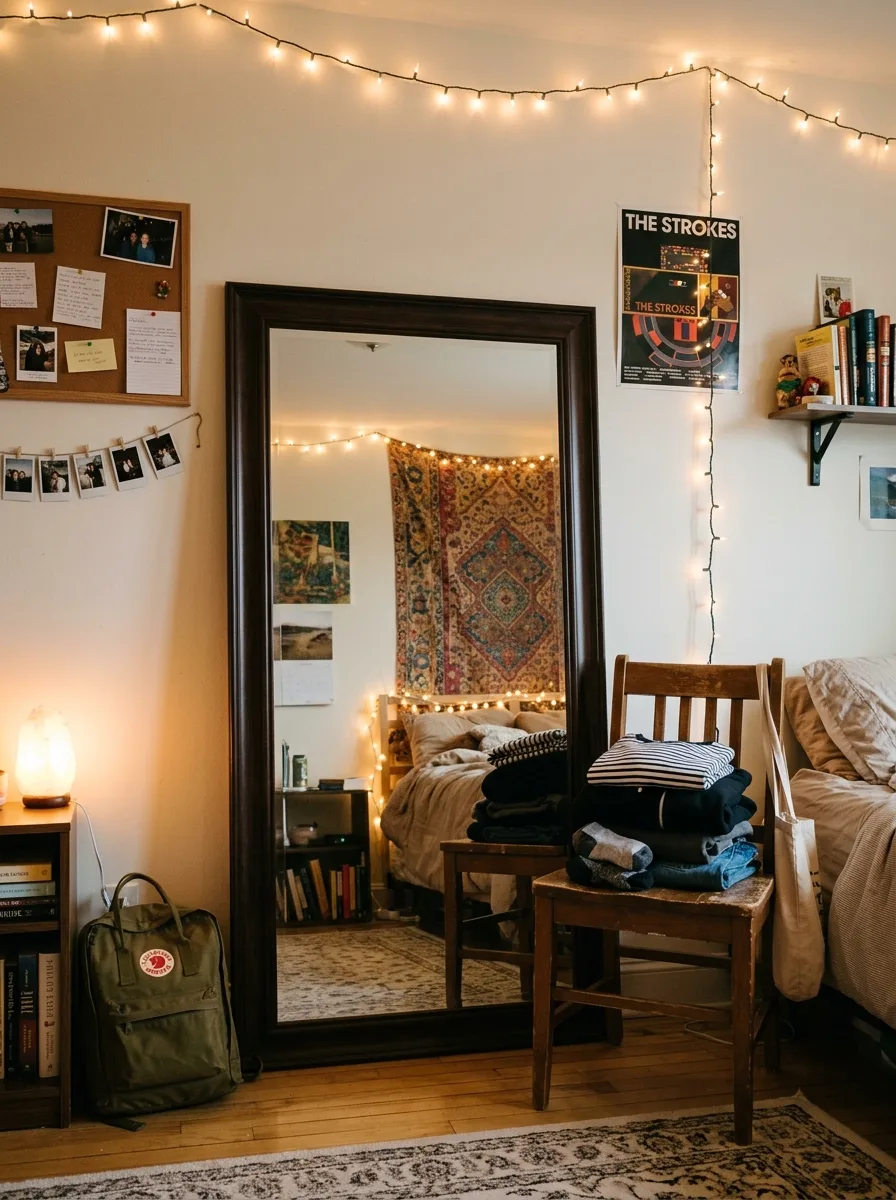
Lean a full-length mirror in a large dark frame directly against the wall rather than mounting it, angled slightly so it catches the room’s string lights in reflection.
String fairy lights along the ceiling line nearby, letting some of the glow bounce visibly in the mirror itself — this doubles the perceived light in the corner without adding a second fixture.
Use a wooden chair beside the mirror as a folded-clothes catch-all instead of a proper hamper. In a room this size, furniture doing double duty is more useful than furniture that only does one thing.
Pin a small cork board and a string of photo clips on the adjacent wall, keeping notes and mementos within arm’s reach of the mirror corner where you’re likely to be getting ready.
Color-Coded Cork Calendar
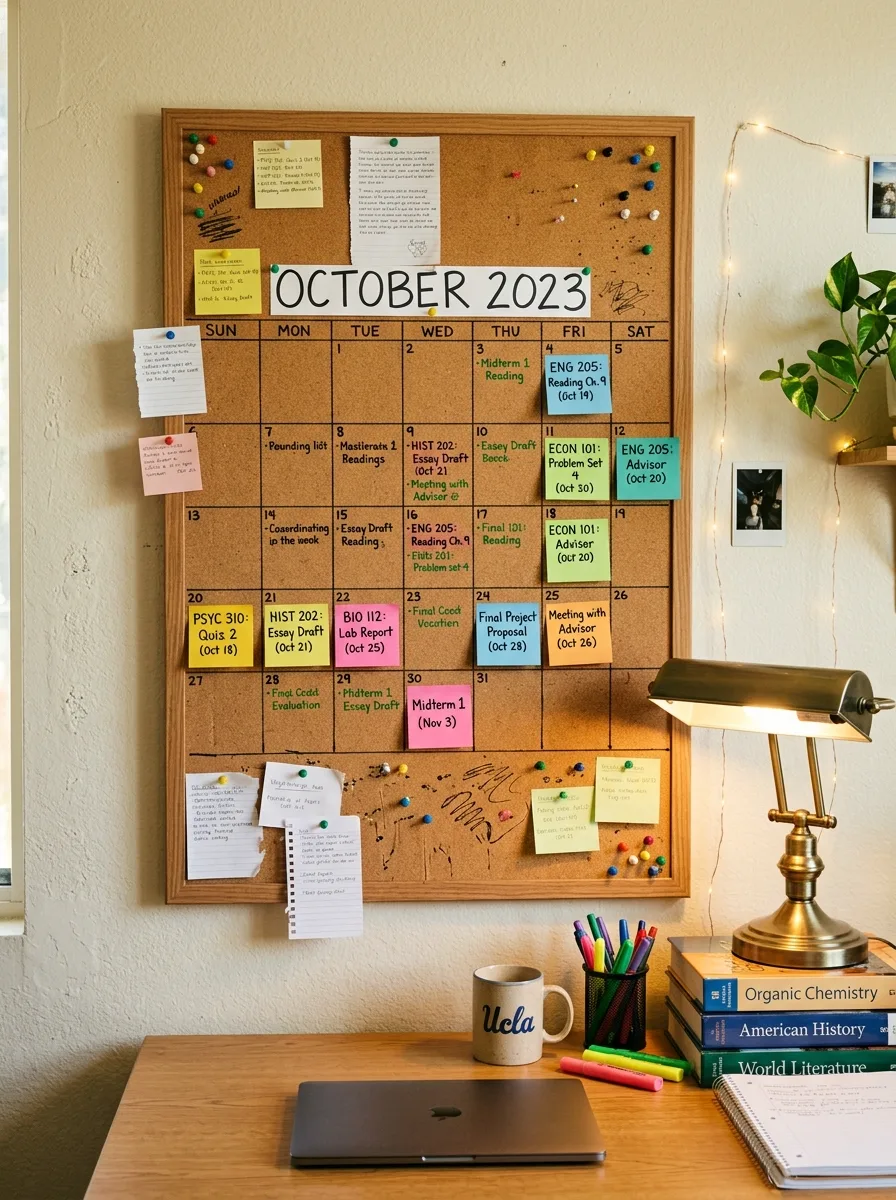
Mount an oversized cork board directly above your desk and turn it into a monthly calendar using a grid of sticky notes in different colors for different classes or categories.
Assign one color per subject or responsibility consistently — all exams in one color, all reading assignments in another — so the board is scannable from across the room, not just up close.
Position a brass or metal desk lamp beside your laptop so the board stays lit during evening work sessions, since a cork board tucked in shadow stops being useful after dark.
Keep a mug and a cup of pens on the desk directly below the board, so updating a sticky note doesn’t require getting up to find a pen first.
Pegboard Organizer Above Desk
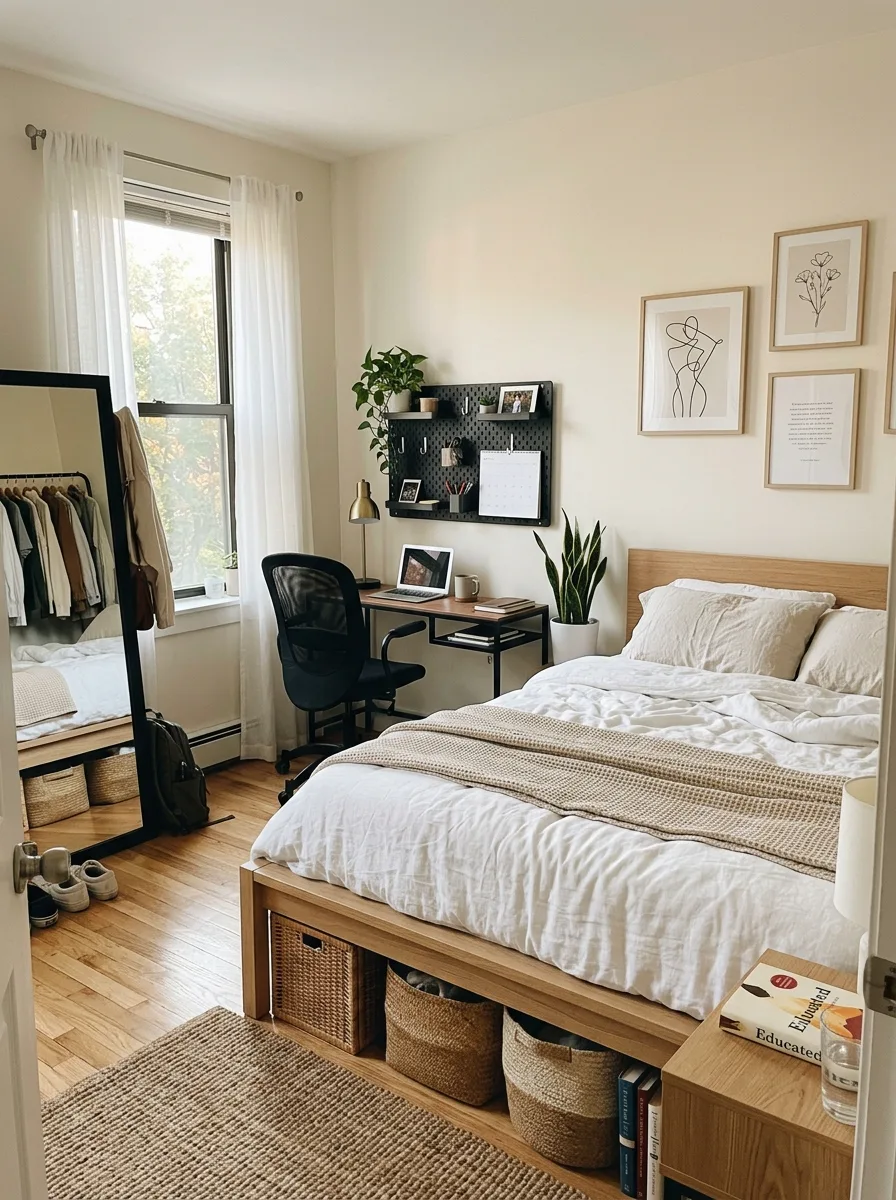
Mount a black metal pegboard directly above your desk and hang small shelves, hooks, and a calendar clip from it rather than relying on drawers alone.
Use the hooks for daily-grab items — keys, a backpack strap, headphones — so the things you need on your way out the door aren’t buried in a drawer every morning.
Add one small floating shelf within the pegboard’s grid for a plant or a framed photo, breaking up the utilitarian grid with something that isn’t purely functional.
Position a rolling storage cart beside the desk for anything that doesn’t fit the pegboard’s scale — bigger supplies, spare cables, or a stack of notebooks that would otherwise pile up on the desk itself.
Floating Shelf Reading Corner
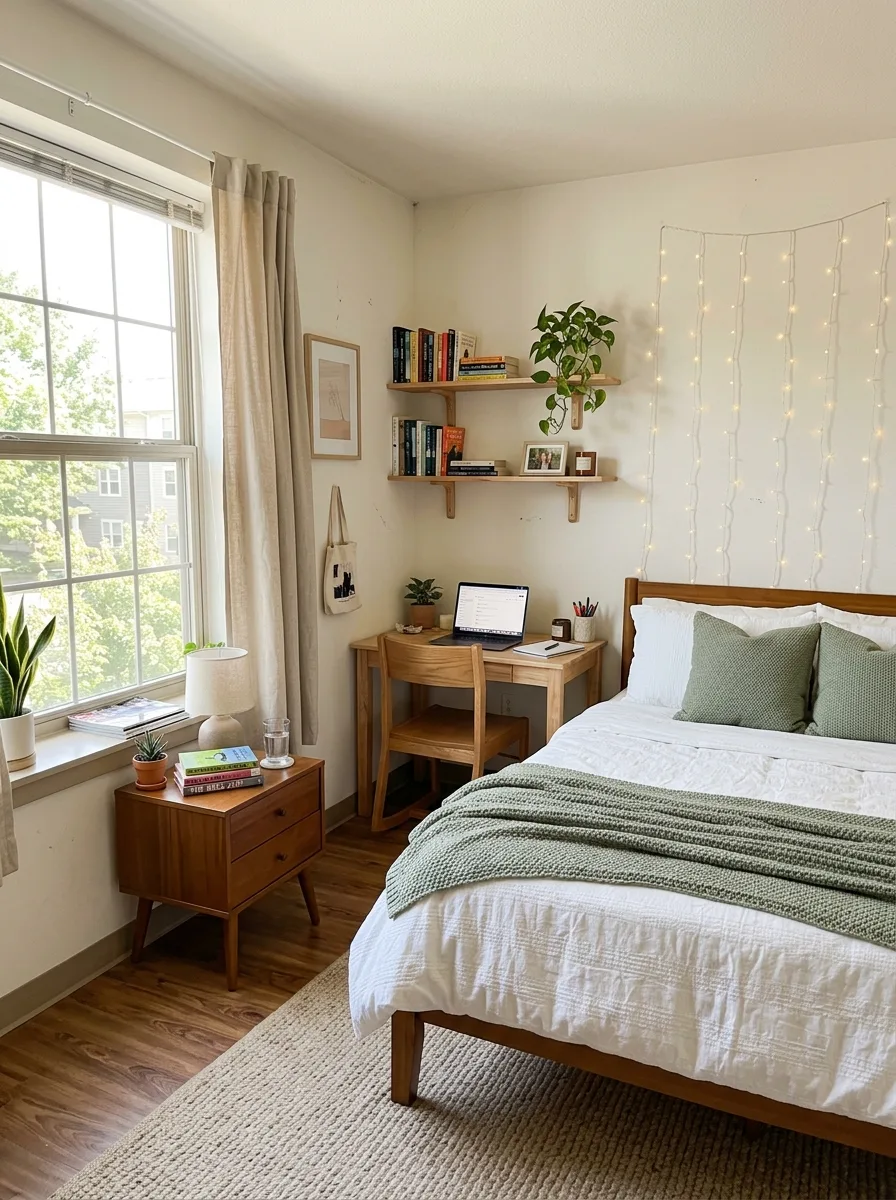
Install two narrow floating shelves in the corner beside your bed, one for books standing upright and one for a small plant and a framed photo.
Choose a mid-century-style nightstand with tapered legs rather than a boxy one, so the corner doesn’t feel visually heavy despite holding both shelves and a table.
String fairy lights vertically down the wall in loose, even strands rather than looping them horizontally — a vertical drape reads as a curtain of light instead of a border around the room.
Keep the bedding in a soft neutral with one muted color accent, like sage pillows against white linen, so the shelves and lights stay the visual focus of the corner rather than competing with a busy comforter.
Terracotta Accent Wall Nook
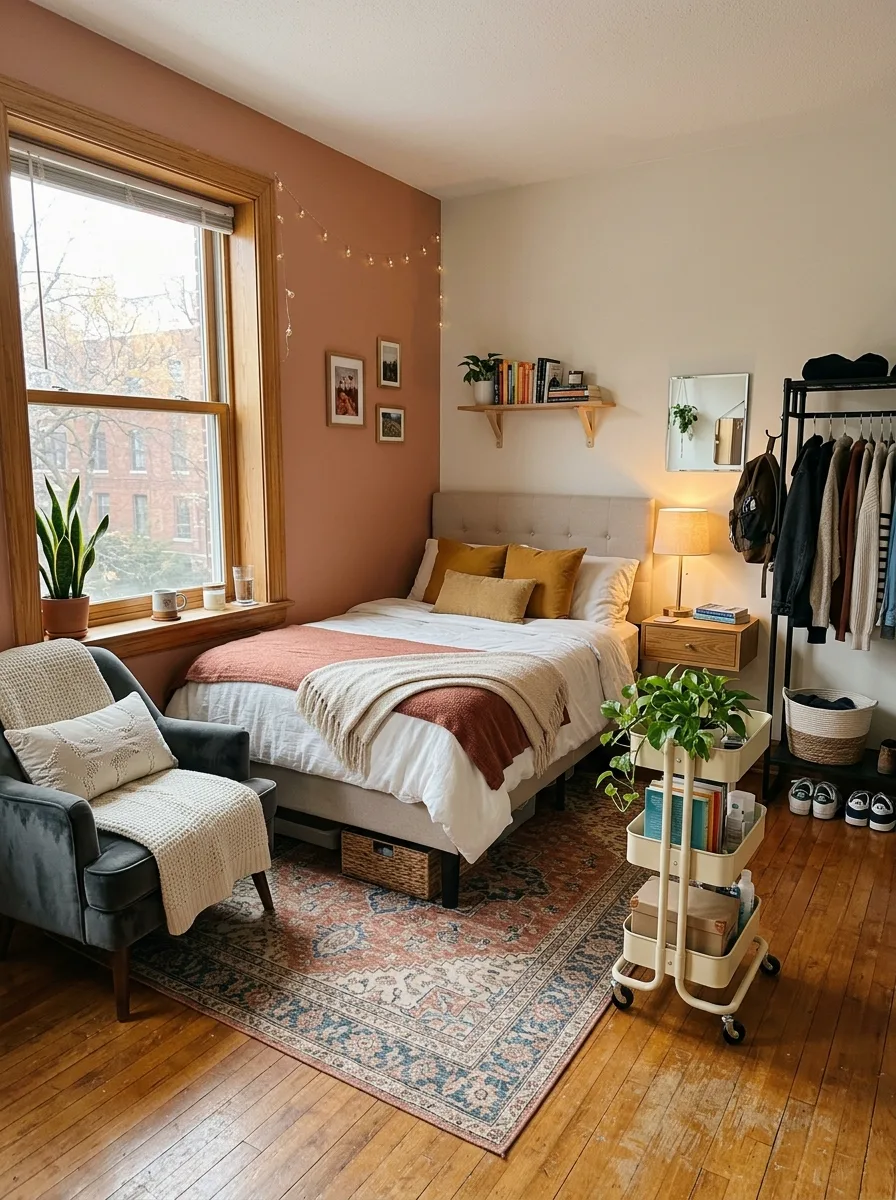
Paint just the wall behind your bed in a warm terracotta or clay tone, leaving the remaining walls in a lighter neutral so the color reads as a deliberate accent, not a full room commitment.
Choose a tufted upholstered headboard in a neutral fabric so it doesn’t fight the wall color behind it — let the paint carry the room’s boldest color decision.
Add a small rolling storage cart with open bins beside the bed for daily items, positioned close enough to reach from the mattress without getting up.
Hang a narrow floating shelf above eye level for a small stack of books and a plant, keeping it high enough that it doesn’t interrupt the accent wall’s clean block of color below it.
Wall-Mounted Floating Display Shelves
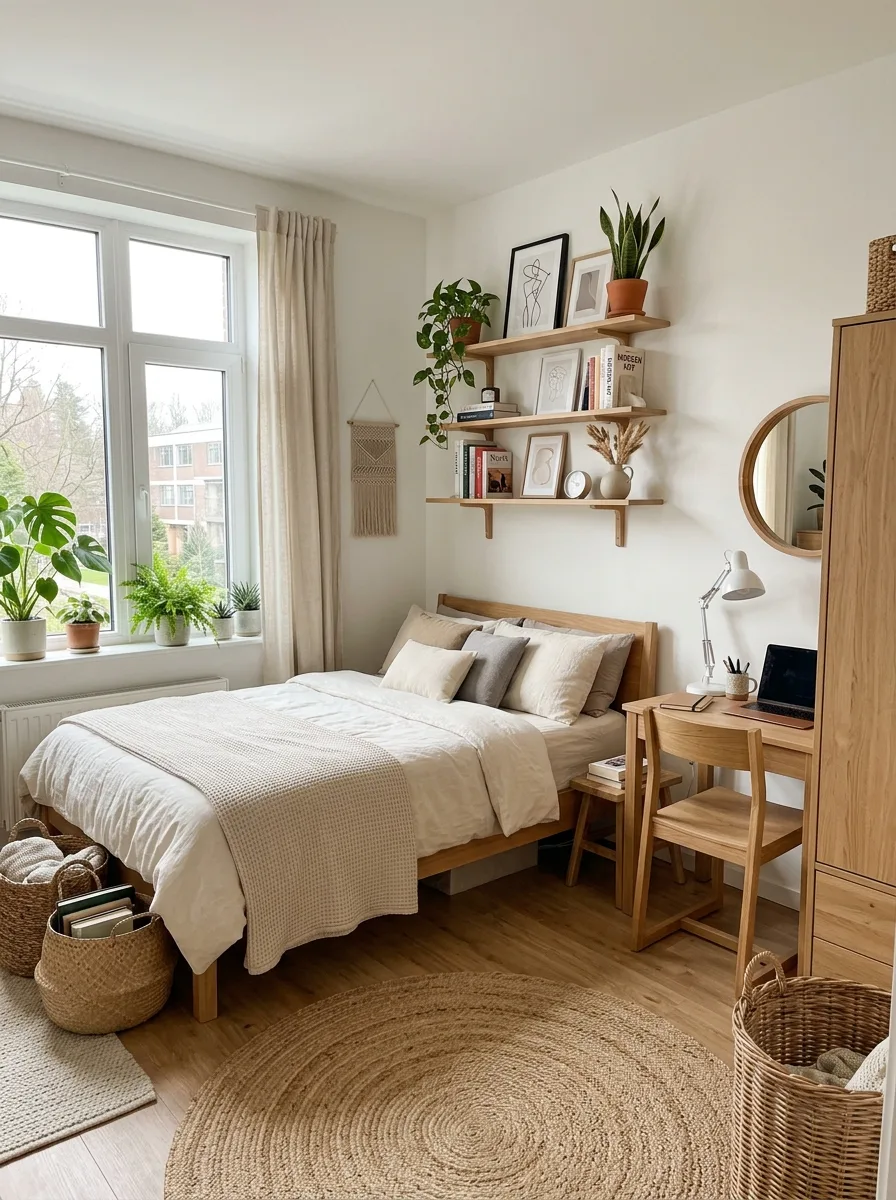
Install two or three floating shelves in a staggered, uneven arrangement above the bed rather than a single straight line — the height variation is what keeps a small display from looking like a store shelf.
Mix framed prints leaned against the wall with small plants and stacked books on each shelf, alternating tall and short objects so the eye moves across the arrangement instead of skimming past it.
Choose a round jute rug for the floor rather than a rectangular one — the shape breaks up all the straight lines coming from the shelves, the bed frame, and the window.
Fill any remaining floor gaps with woven storage baskets rather than leaving them empty. In a small room, empty floor space next to furniture usually just becomes a place for things to pile up unintentionally.
Tufted Charcoal Headboard Bed
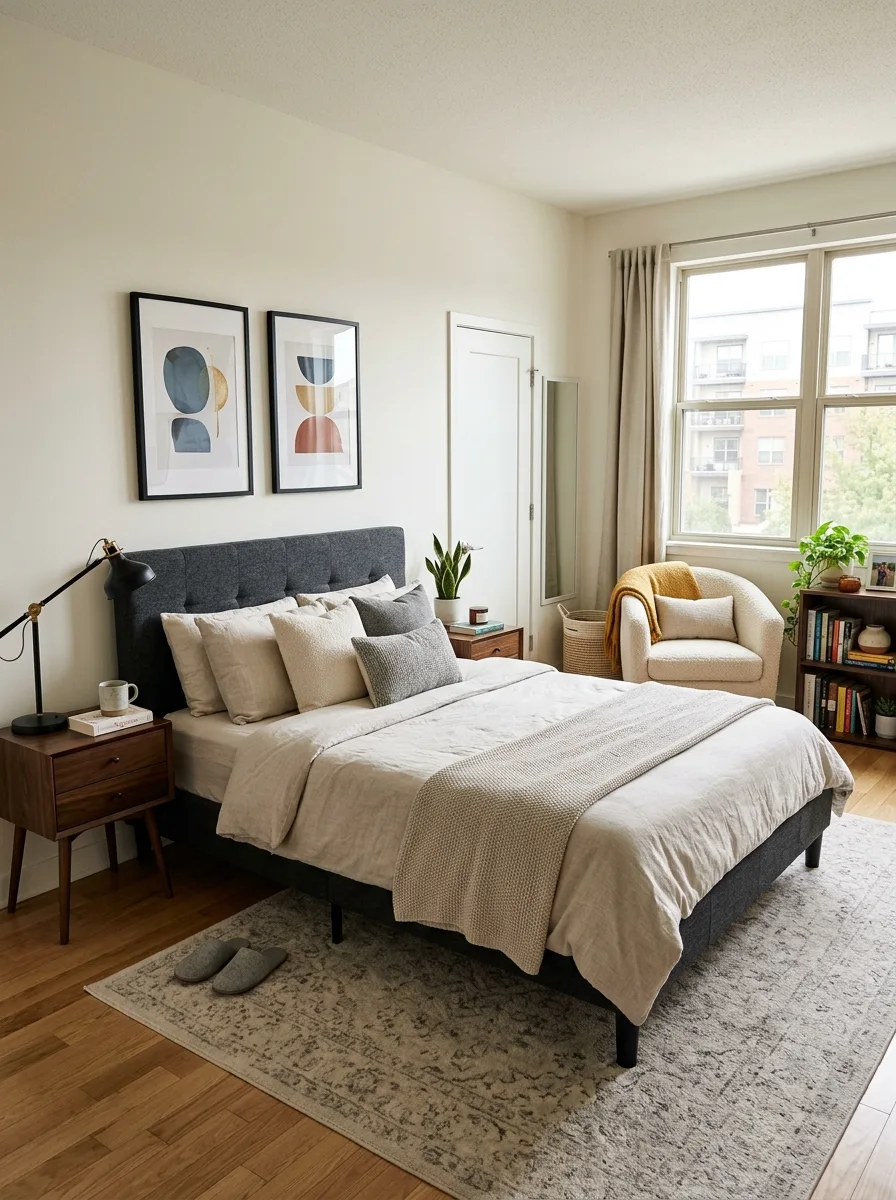
Choose a tufted headboard in a deep charcoal or navy fabric as the one dark anchor point in an otherwise light, neutral room.
Layer pillows in graduating tones from dark to light moving outward from the headboard, so the transition from the dark bed frame to the pale bedding feels intentional rather than abrupt.
Hang two matching abstract prints side by side above the headboard rather than a single piece — the pair reads as more curated than one artwork centered alone.
Add a boucle accent chair in the corner nearest the window in a color that pulls from the art above the bed, giving the room a second seating option that doesn’t compete with the bed as the main event.
Geometric Wallpaper Accent Wall
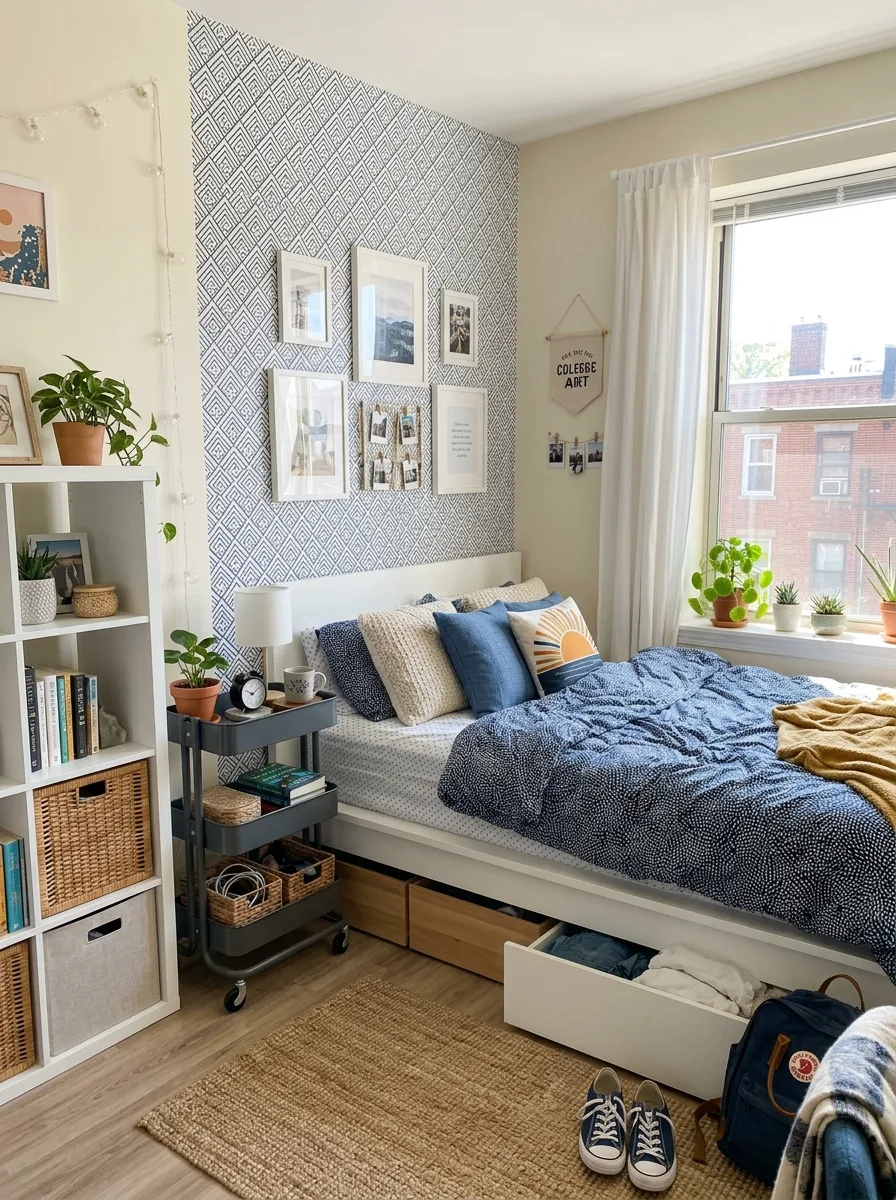
Apply a small-scale geometric peel-and-stick wallpaper to just the wall behind the bed, choosing a pattern in only two colors so it reads as texture rather than busy pattern.
Hang a mixed gallery of frames directly on top of the wallpaper — some photos, one small shelf, one framed print — trusting that the pattern underneath can hold its own against layered decor.
Choose bedding in one of the wallpaper’s two colors as a solid, letting the pattern stay confined to the wall while the bed reads as calm by comparison.
Use a rolling metal cart with woven baskets beside the bed for extra storage, keeping the room’s only patterned surface limited to that one wall.
Lofted Bed Desk Below
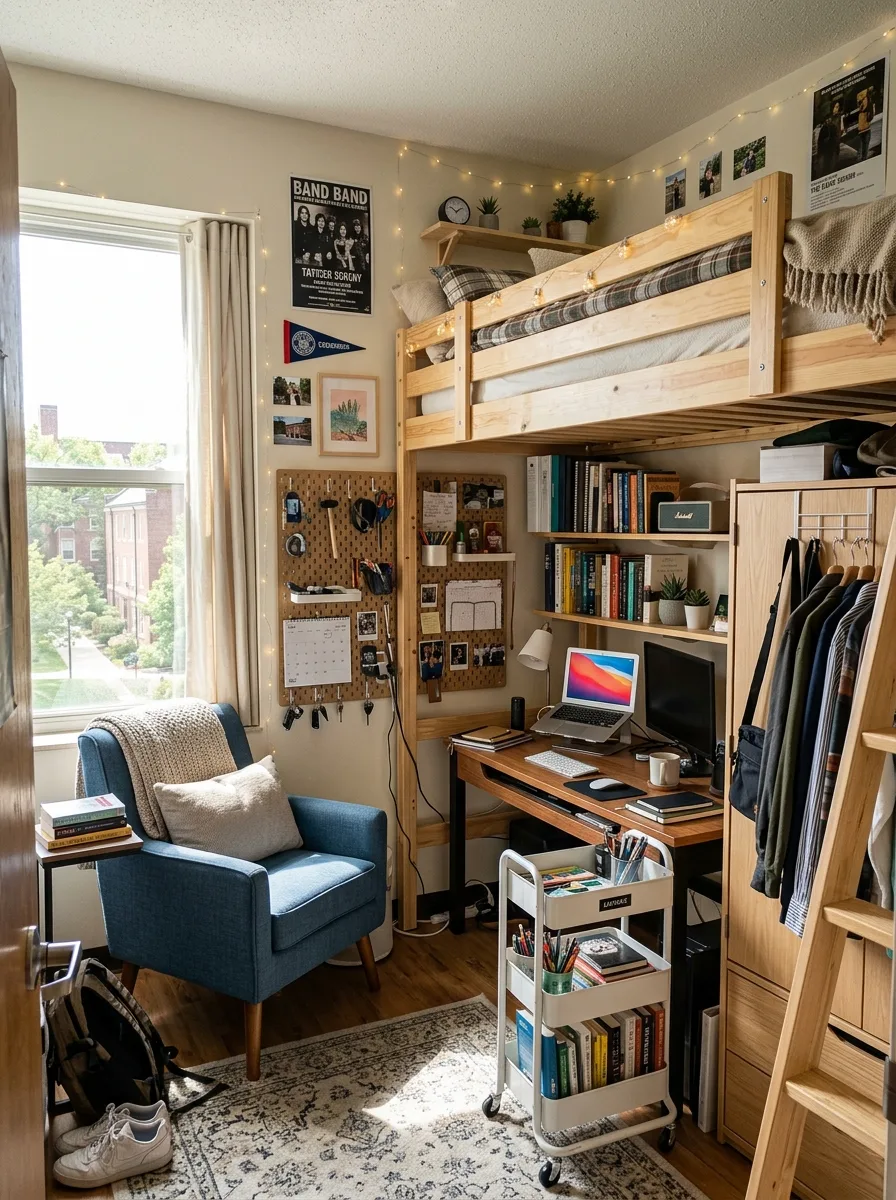
Raise the bed onto a lofted frame with enough clearance underneath to fit a full desk setup — monitor, keyboard, and a rolling storage cart — without anyone having to duck.
Mount a narrow shelf along the loft’s support beam for a clock, small plants, and a speaker, using the vertical beam as extra storage that a floor-level room wouldn’t have access to.
Add a pegboard on the wall beside the desk for tools, keys, and small supplies, keeping the desk surface itself clear enough to actually work at.
Position one accent chair in a bold color, like blue or mustard, in the small floor space the loft frees up — with the bed elevated, that one chair can finally have a corner to itself.
Final Thoughts
A room that tries to solve all three problems with the same handful of objects usually solves none of them well. The bed that’s supposed to be storage and seating and a desk surface ends up being none of those things comfortably.
Pick the constraint that’s actually costing you the most right now, and build outward from there. The rest of the room will follow along faster than you’d expect.