
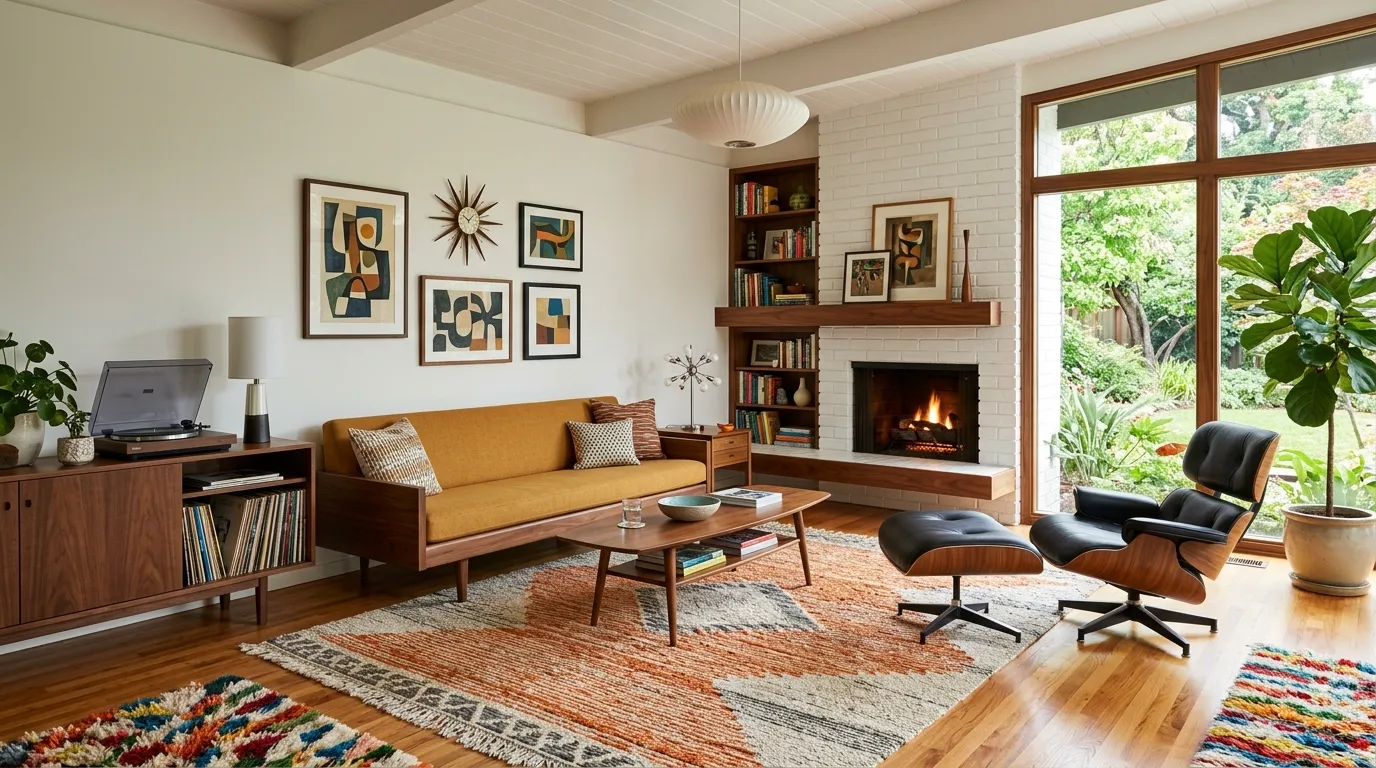
Walnut is not a neutral. It just plays one on Pinterest.
Every “simple” mid-century room you’ve ever admired is doing at least six things at once — warm wood, a jewel-tone velvet, a statement bulb, a rug with more patience than you have. Most people copy one of those things and call it a day. Then they wonder why their living room still looks like a furniture showroom with a fiddle leaf fig standing guard.
This isn’t a style you can buy your way into with one Eames chair from a clearance sale. It’s a system. Wood tone, palette, and lighting all have to agree with each other before a single throw pillow gets a say.
Mid-Century Living Room Ideas
Black Tile Fireplace Statement
Paint or tile the fireplace surround in matte black, floor to mantle, and let it swallow the wall behind it. This only works if the black is truly matte — anything glossy turns it into a mirror for every lamp in the room.
Choose a floating walnut mantle shelf rather than a stone or marble ledge. The horizontal wood line against the vertical black tile is the entire visual trick, and it only reads correctly if the two materials contrast in both color and texture.
Keep the mantle styling sparse — one abstract piece of art leaning against the wall, one plant, one or two ceramic objects. A crowded mantle competes with the black wall instead of letting it breathe.
Bring the same black in small doses elsewhere — a side table, a picture frame — so the fireplace doesn’t feel like the only place color decisions were made.
Basket-Wrapped Fiddle Leaf Fig
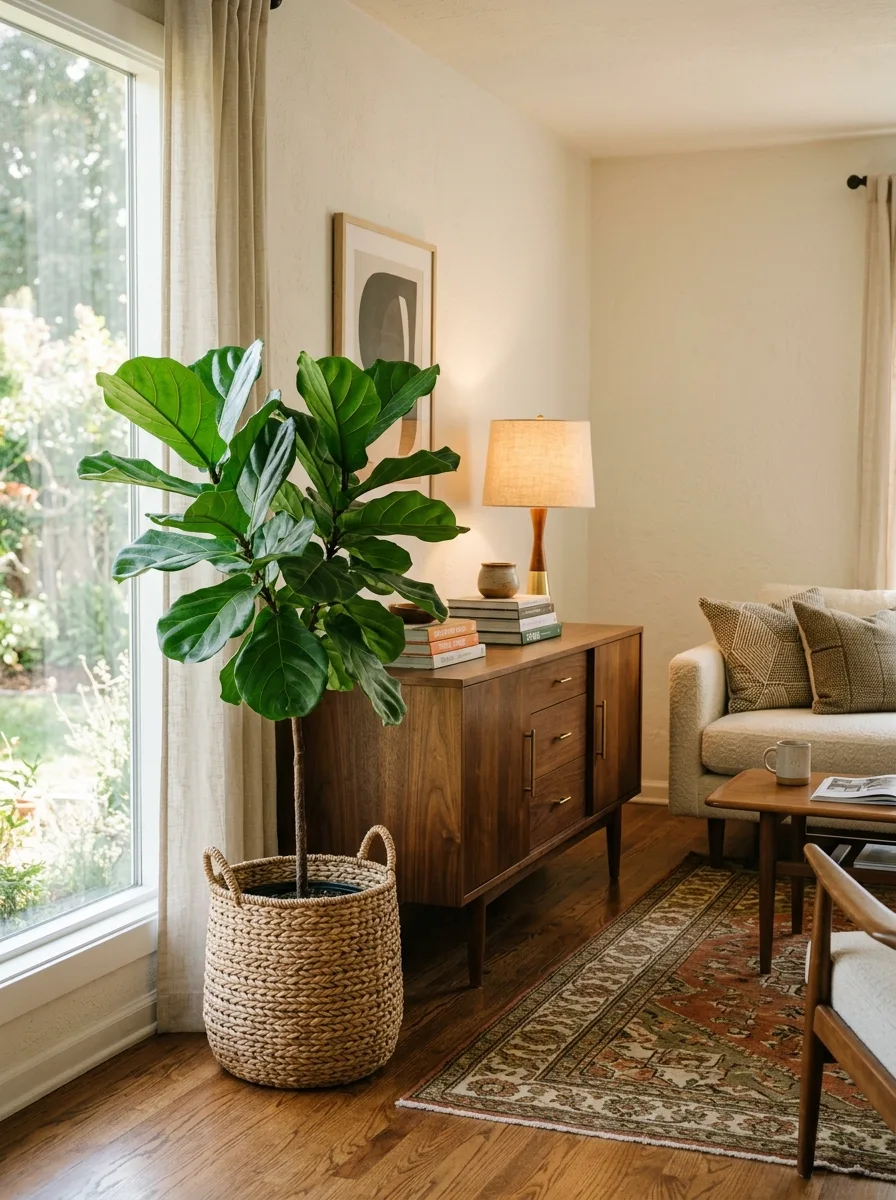
Choose a fiddle leaf fig large enough to reach at least shoulder height, positioned in the corner nearest the room’s main window so it gets consistent indirect light.
Plant it in a woven seagrass or water hyacinth basket rather than a ceramic or plastic pot. The basket’s texture softens the plant’s fairly graphic, glossy leaves.
Position a low walnut credenza just behind it, so the plant’s silhouette breaks up the credenza’s straight horizontal lines rather than sitting apart from the furniture entirely.
Layer a vintage-style rug beneath both pieces, letting its pattern extend slightly past the plant’s pot so the whole corner feels grounded rather than floating in empty floor space.
Maximalist Boucle Color Corner
Layer two rugs, not one. A smaller round or organic-shaped rug on top of a larger rectangular one gives the room a defined seating zone without a hard edge anywhere.
Mix seating silhouettes deliberately — a curved boucle sofa, a mid-century wingback with tapered legs, and a rounded boucle armchair with no arms at all. No two pieces should share the same shape twice.
Use colored glass table lamps instead of neutral ceramic ones. Amber, red, and cobalt glass throw actual colored light across the room after dark, which a white shade never will.
Fill every remaining surface with plants of different heights and leaf shapes. This look has no empty corners on purpose — the density is the point, not an oversight.
Molded Plywood Eames Duo
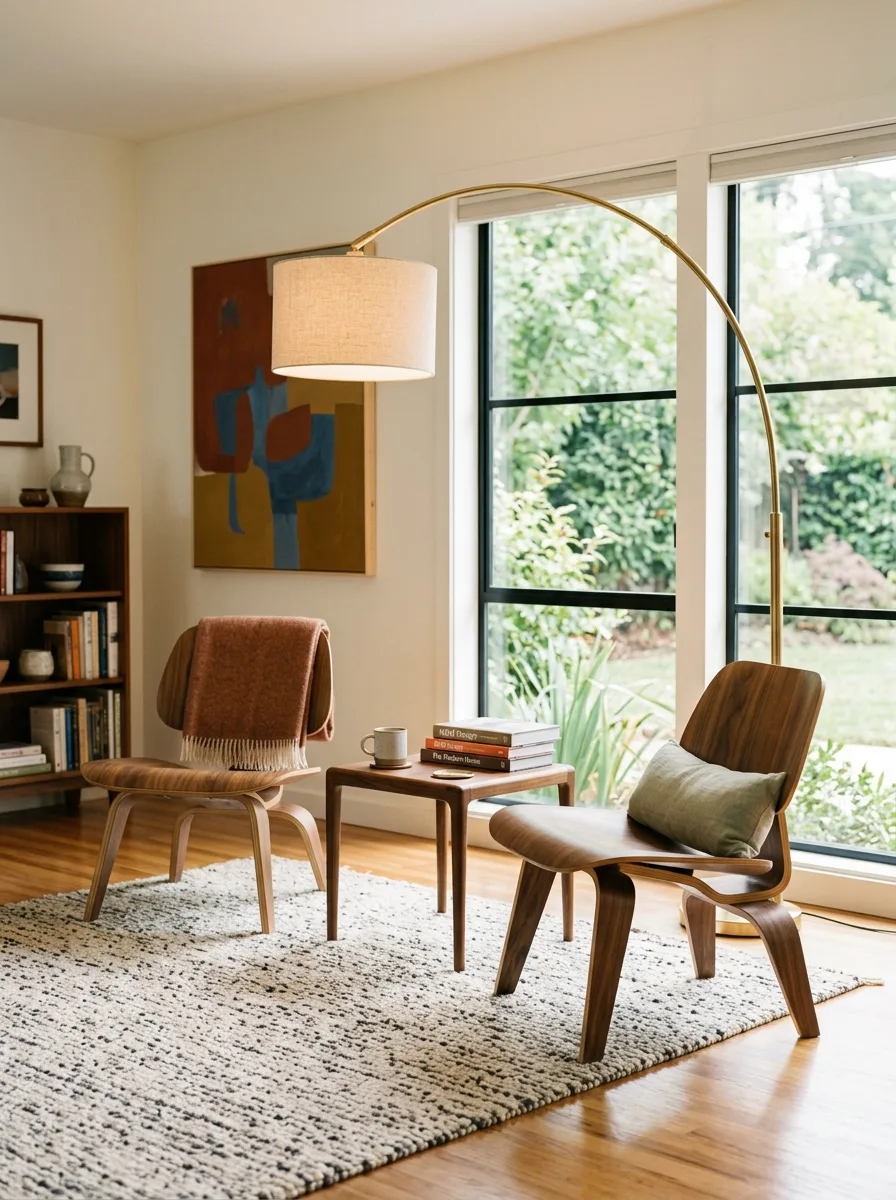
Pair two molded plywood lounge chairs facing each other rather than side by side. The conversational angle is what makes two identical chairs feel like a considered nook instead of overflow seating.
Add a small walnut side table between them, low enough that a coffee mug and a stack of books both sit within easy reach from either chair.
Hang one abstract painting in warm rust and blue tones on the wall nearest the pair, at a height that’s visible from a seated position, not from standing.
Use a single arc floor lamp positioned to light both chairs from one central point, so you don’t need two separate lamps crowding a small footprint.
Green Velvet Globe Chandelier
Choose a curved, low-arm sofa in deep olive or bottle green velvet rather than a boxy silhouette — the rounded arms are what make green velvet feel current instead of dated.
Hang a multi-globe brass chandelier directly above the coffee table, with the glass orbs at slightly different heights rather than a perfectly even row. The asymmetry is what keeps it from looking like a hotel lobby fixture.
Build the coffee table in glass and brass rather than solid wood, so the chandelier’s reflection lands on the tabletop itself. That reflection is doing more styling work than any object you could put on top of the glass.
Place a large potted olive tree in the corner nearest a window. It’s the one plant in this palette that doesn’t compete with green velvet — the grey-green leaves read as a different material entirely.
Colorful Geometric Gallery Wall
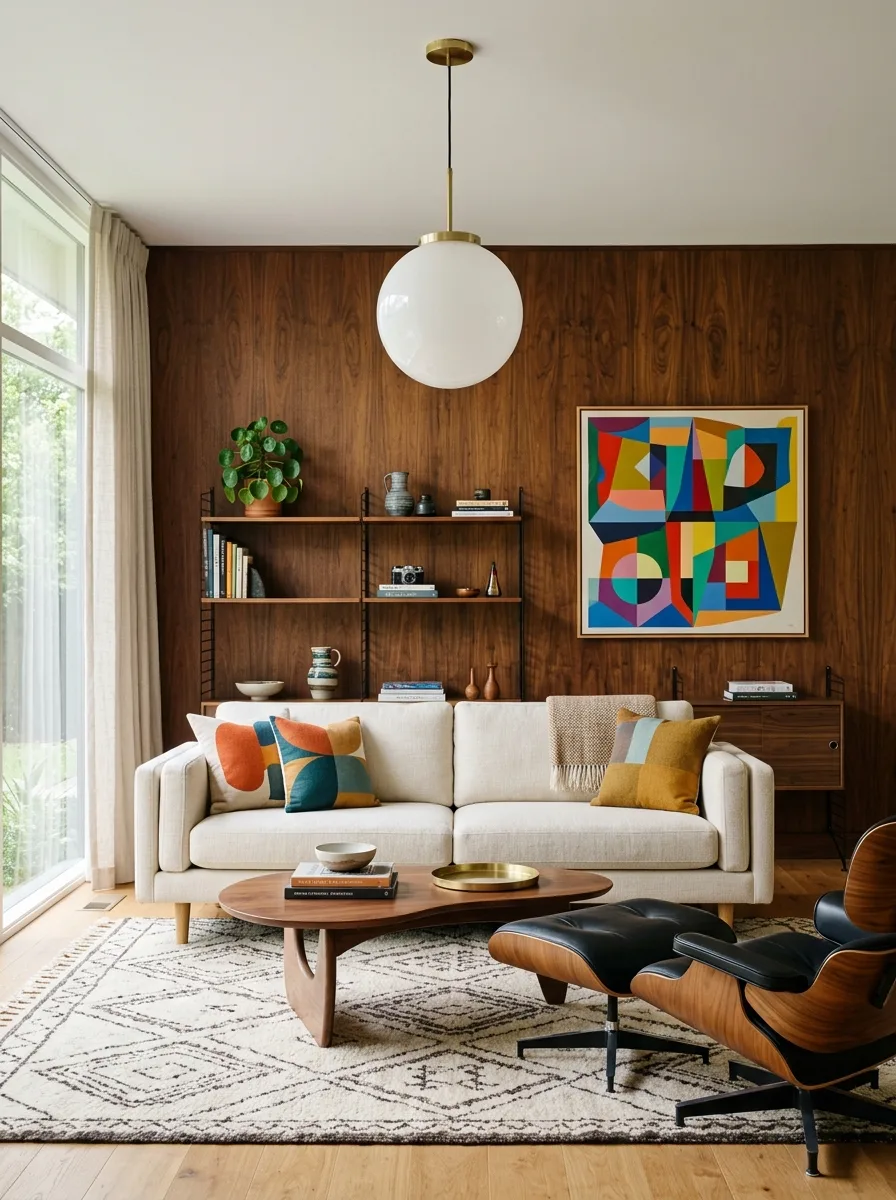
Commission or find one large abstract painting with hard-edged geometric shapes in five or six colors — not a soft watercolor, not a landscape. This is the anchor the entire room gets built around.
Pick a neutral linen sofa specifically so it doesn’t compete with the painting, then pull two or three of the painting’s exact colors into the throw pillows. This is how you tie a bold art piece to a quiet sofa without buying a second colorful piece of furniture.
Add open shelving in walnut beside the sofa rather than a solid cabinet — the visible books, ceramics, and small objects give the eye somewhere to rest between the painting and the pendant light overhead.
Hang a single oversized white globe pendant, not a cluster. One large sphere reads as calm; three small ones read as busy, and this room has already spent its busy budget on the painting.
Sputnik Chandelier Mustard Sofa
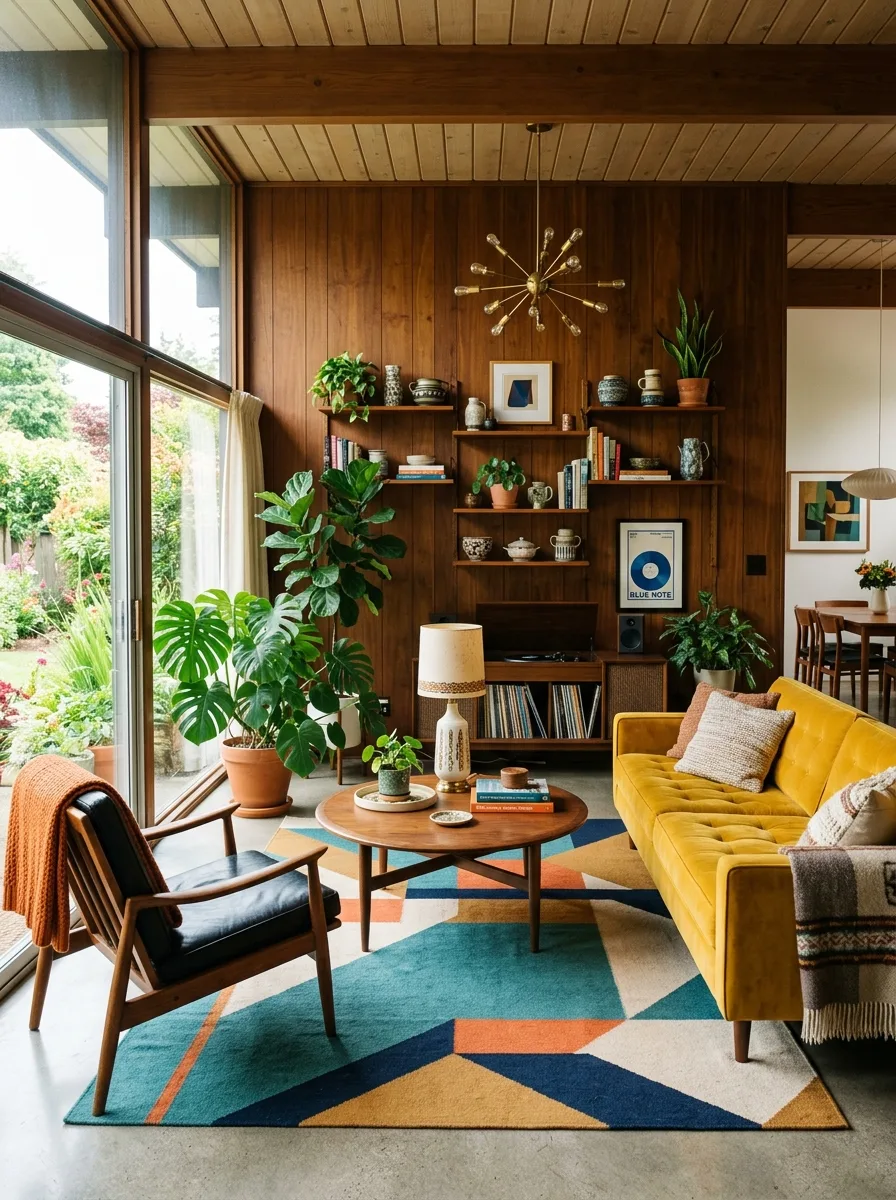
Install a brass sputnik chandelier with exposed bulbs, hung at a height where the arms are visible from the seating area, not tucked up near the ceiling. The whole point is silhouette — you should be able to see its shape from the sofa.
Choose a tufted mustard or gold velvet sofa as the room’s loudest piece, then keep every other seat in leather or wood so the sofa doesn’t have to share the spotlight.
Fill open shelving with a mix of plants, ceramics, and books rather than symmetrical styling. Uneven, slightly cluttered shelves read as collected-over-time, which is the entire spirit of this look.
Choose a rug with a bold geometric pattern in three or four colors that echo the sofa and the room’s art. A plain rug under this much pattern and color elsewhere leaves the floor looking unfinished by comparison.
Stone Fireplace Abstract Anchor
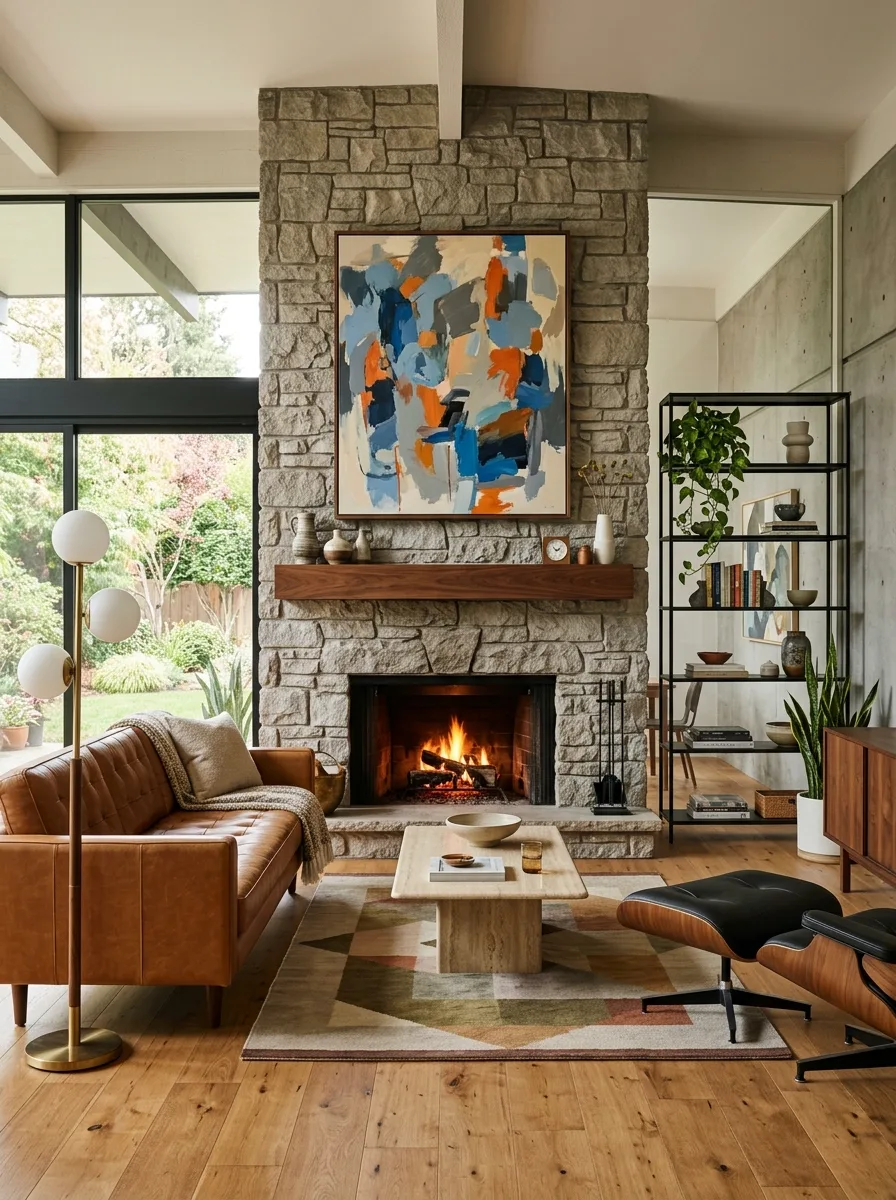
Build or source a natural stone fireplace surround with visible texture and irregular stone shapes, then float a single walnut mantle shelf across it at a height just above eye level when seated.
Hang one large abstract painting with warm and cool tones both present — orange and blue together read as intentional contrast rather than a color clash, and it keeps the stone’s grey tones from feeling cold.
Choose a cognac leather sofa rather than a fabric one for this pairing specifically. Leather’s sheen plays off stone texture in a way that flat fabric doesn’t.
Add a black metal open shelving unit nearby to break up all the warm, textured surfaces with one cool, linear material. Every room in this palette needs one hard, dark contrast point, and this is it.
Southwestern Rug Layered Neutrals
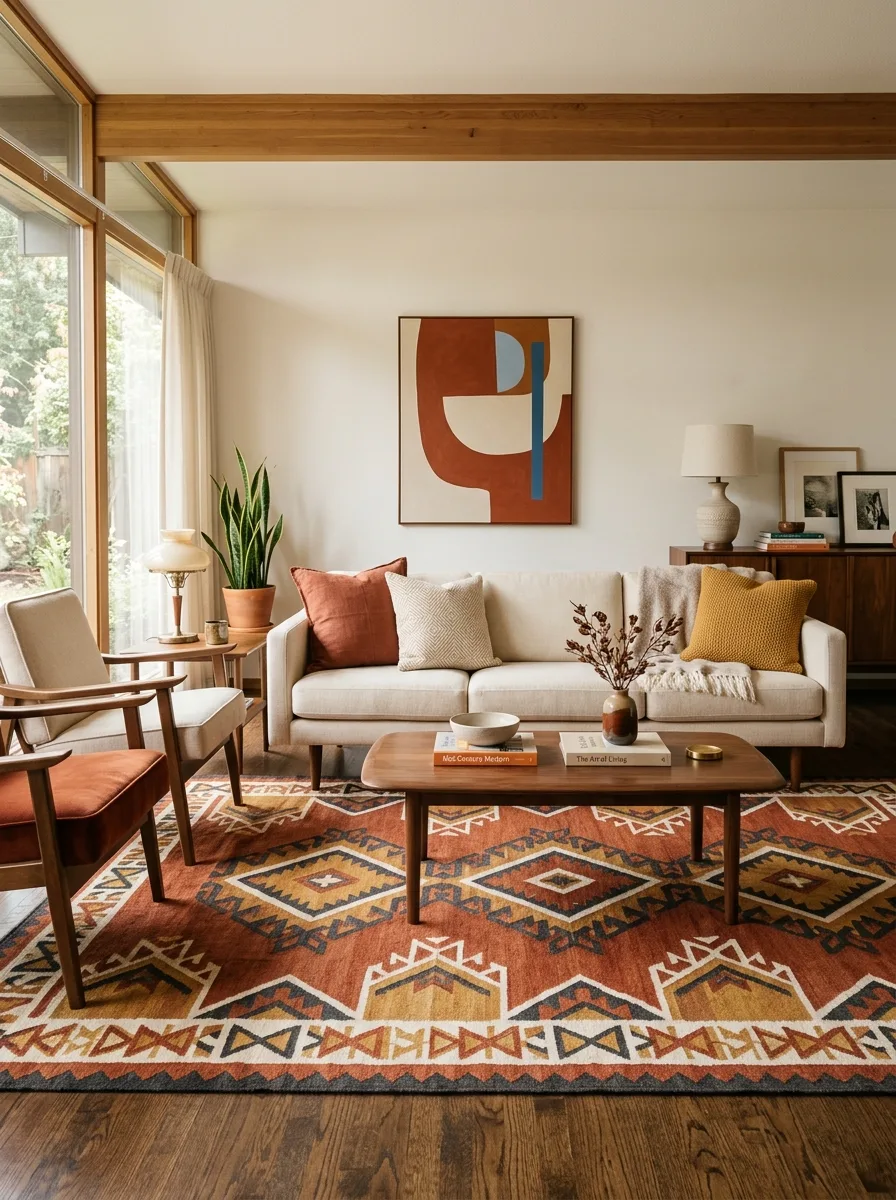
Choose an oversized southwestern or kilim-style rug in rust, mustard, and cream as the loudest pattern in the room, then keep every piece of furniture around it solid and neutral.
Pick a cream or oatmeal linen sofa specifically because a patterned sofa on a patterned rug creates visual noise neither piece deserves. Let the floor carry the pattern alone.
Add exactly one abstract art piece in a shape and palette that echoes the rug’s geometry — a rounded form in rust and cream ties the wall back to the floor without repeating the pattern outright.
Bring in one rust or terracotta velvet chair as the single accent seat. It’s the bridge between the neutral sofa and the loud rug, and the room needs that bridge or the two elements read as unrelated.
Backlit Walnut Display Wall
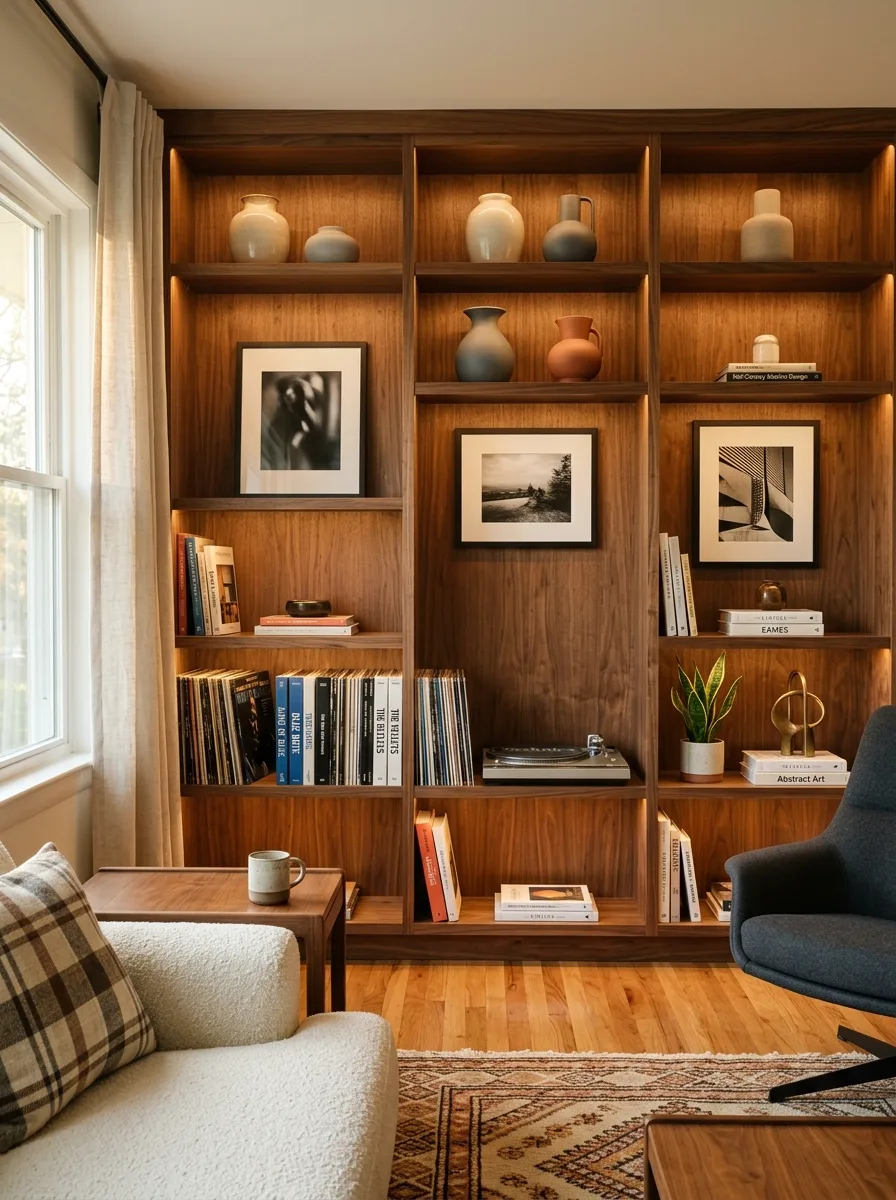
Build a full wall of open walnut shelving with integrated warm LED strip lighting hidden along the back and underside of each shelf. The backlighting is what turns a bookshelf into a display wall.
Style each cubby with restraint — one ceramic vessel, or one small stack of books, or one framed photograph, never all three crammed together. Empty space between objects is what makes the lighting actually visible.
Choose black-and-white photography over color prints for any framed pieces on the shelving. Color competes with the warm wood tone; black and white lets the wood do the color work.
Keep the seating in front simple and textural — a boucle sofa, a plaid pillow — so the shelving wall stays the obvious focal point of the room.
Emerald Sofa Glass Oval Table
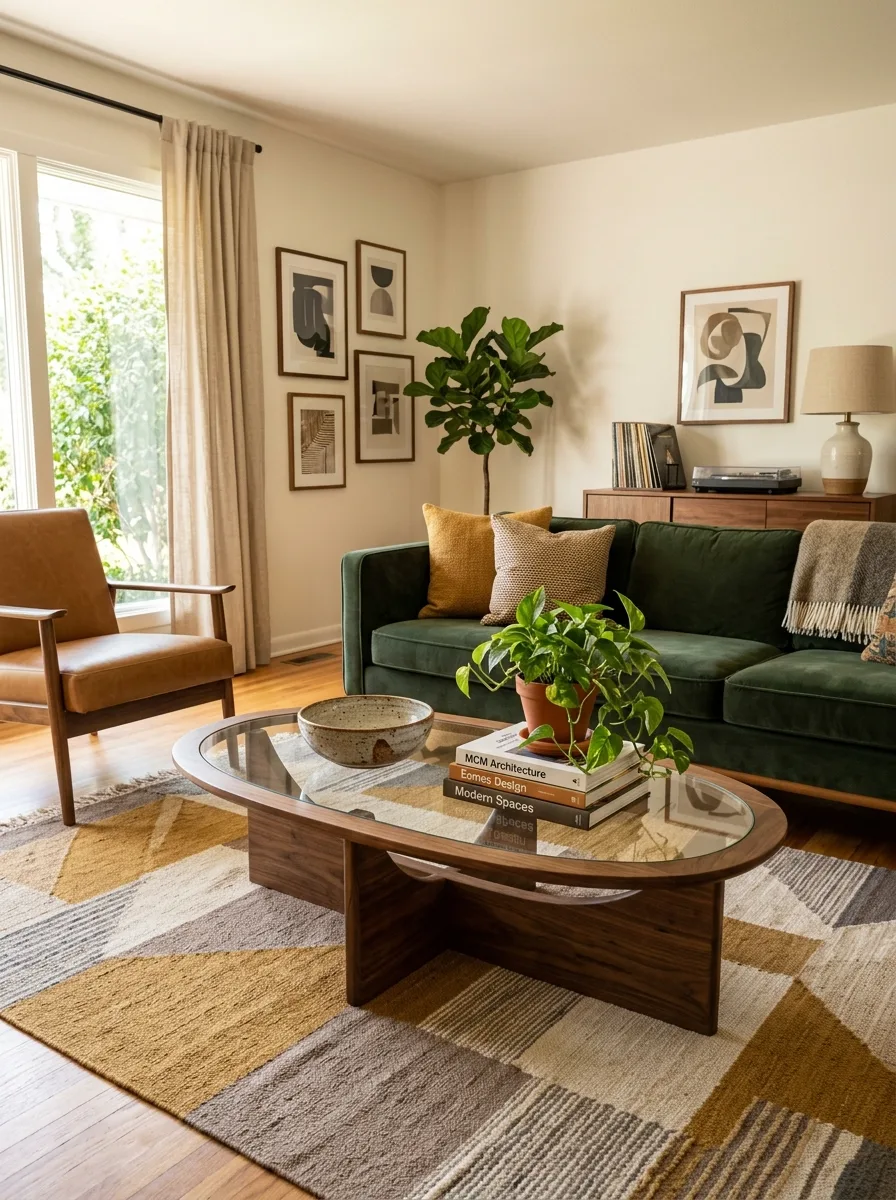
Choose a deep emerald or forest green velvet sofa with clean, low-profile lines rather than a tufted or rolled-arm style. The simpler the silhouette, the more the color itself can carry the room.
Pair it with an oval coffee table built from a glass top set into a solid wood base. The glass keeps the table from visually crowding the green sofa, while the wood base still ties it to the room’s other furniture.
Build a gallery wall of mixed-size abstract prints on the wall behind the sofa, framed in warm wood to match the table base. Uneven frame sizes, hung close together, read as curated rather than matched.
Use a geometric block-pattern rug in muted tan, grey, and gold beneath the seating area. It grounds the green sofa without introducing a competing bright color.
Oversized Abstract Statement Painting
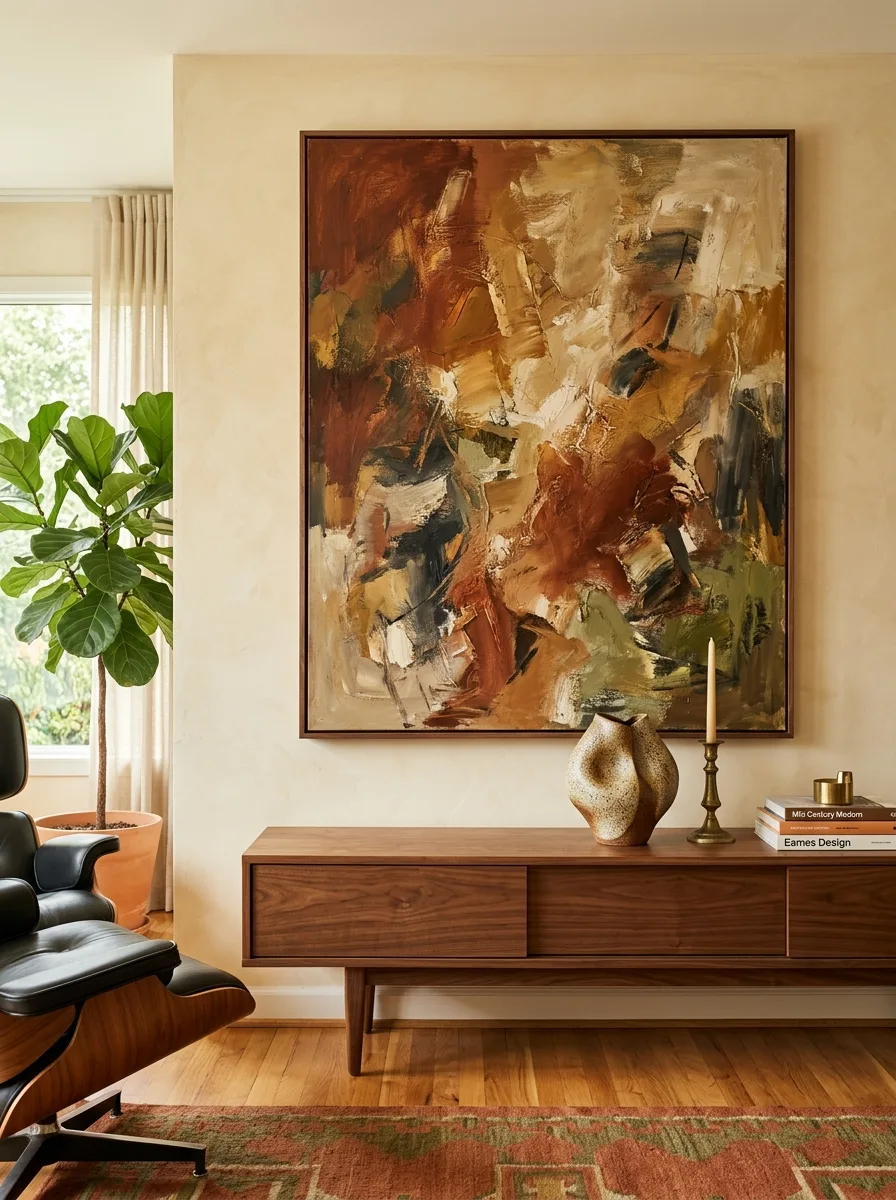
Choose one abstract painting in rust, ochre, and olive tones, sized large enough to command the entire wall on its own — this is not a piece you pair with three smaller ones.
Place a low, long walnut credenza directly beneath it with legs visible, not a boxy cabinet that touches the floor. The visible legs keep the piece from feeling heavy under such a large painting.
Style the credenza top sparingly — one sculptural ceramic vessel, one brass candlestick, one small stack of books. The painting is doing the visual work; the surface below it should stay quiet.
Add one fiddle leaf fig in a terracotta pot nearby, positioned so its leaves partially frame one corner of the painting without ever fully blocking it.
Walnut Slat Room Divider
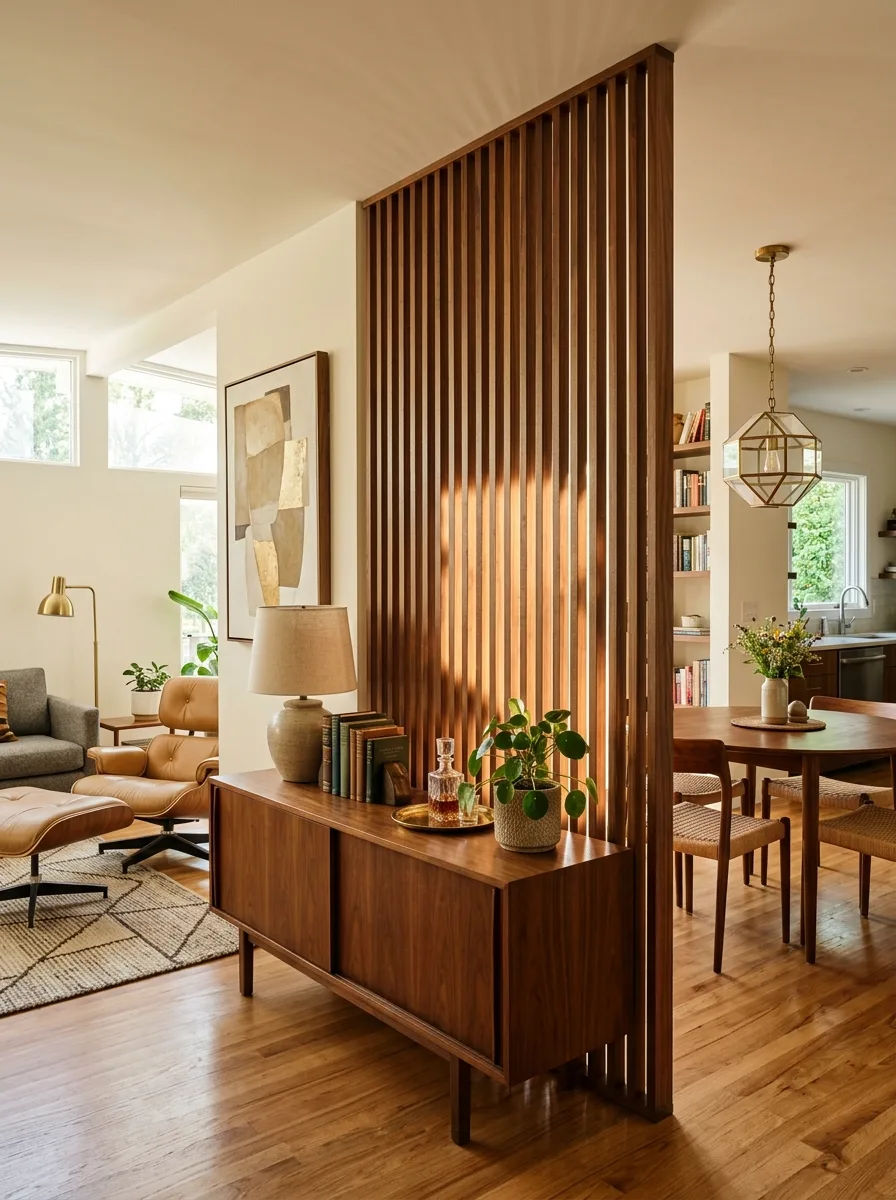
Build a vertical slat-front walnut room divider between the living and dining areas, leaving gaps wide enough for light to pass through but tight enough to still read as a wall.
Position a low walnut credenza directly against the divider on the living room side, using it to anchor the transition point between the two spaces.
Hang a pendant light on the dining side close enough to the divider that its glow catches the edges of the slats after dark, giving the wood texture even more depth.
Style the credenza with a mix of books, a small plant, and one decanter or vessel — enough to feel used, not so much that it blocks the divider’s visual rhythm.
Brick Fireplace Textured Pillow Stack
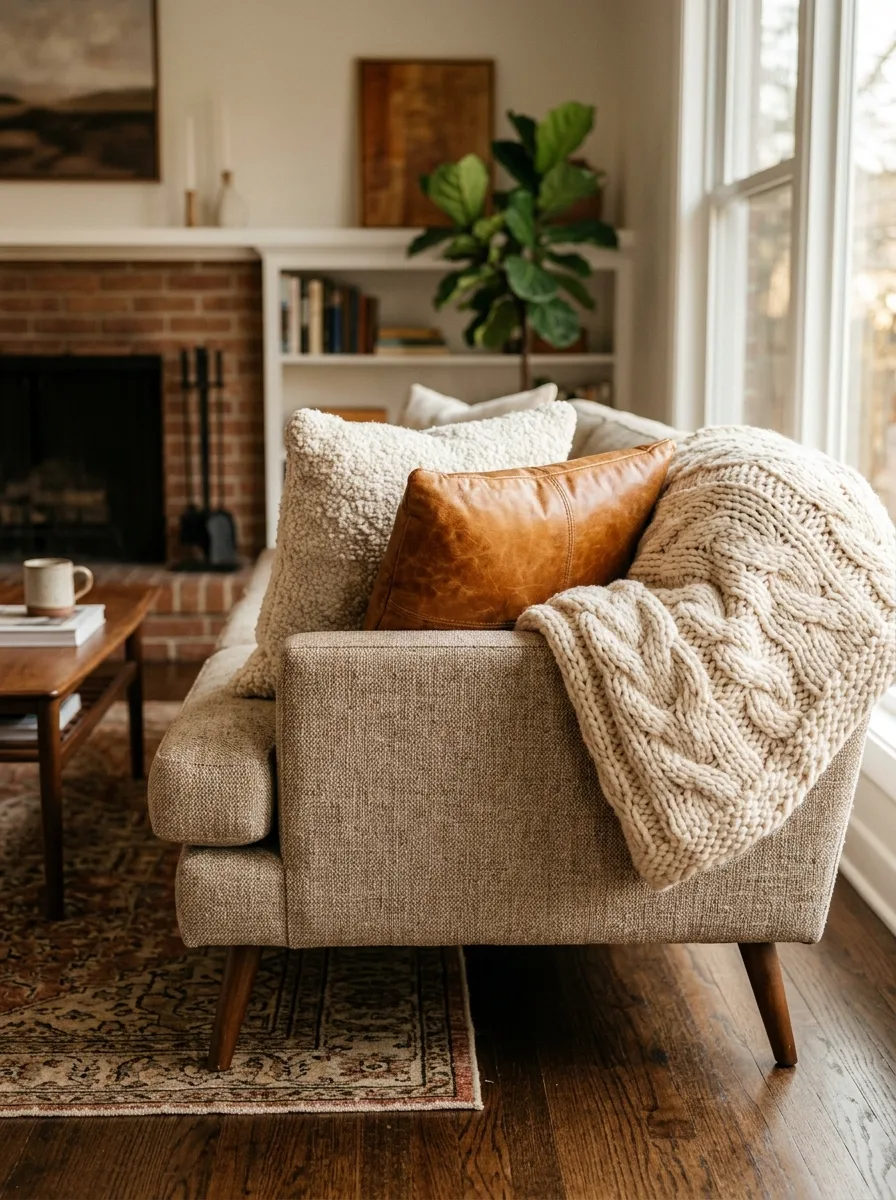
Keep an existing red brick fireplace unpainted — the brick’s warm, aged tone is already doing the color work this room needs. Resist the urge to whitewash it.
Layer a sofa in a nubby, textured neutral fabric rather than a smooth linen. The texture is what lets a stack of pillows in leather, boucle, and cable-knit sit together without looking mismatched.
Mix pillow materials deliberately — one leather, one sherpa or boucle, one chunky cable-knit throw draped rather than folded. No two textures should repeat within the same stack.
Add built-in white bookshelves flanking the fireplace to keep the room from turning entirely brown and red. The white break is what keeps all that warm texture from feeling heavy.
Tulip Table Leather Lounge Corner
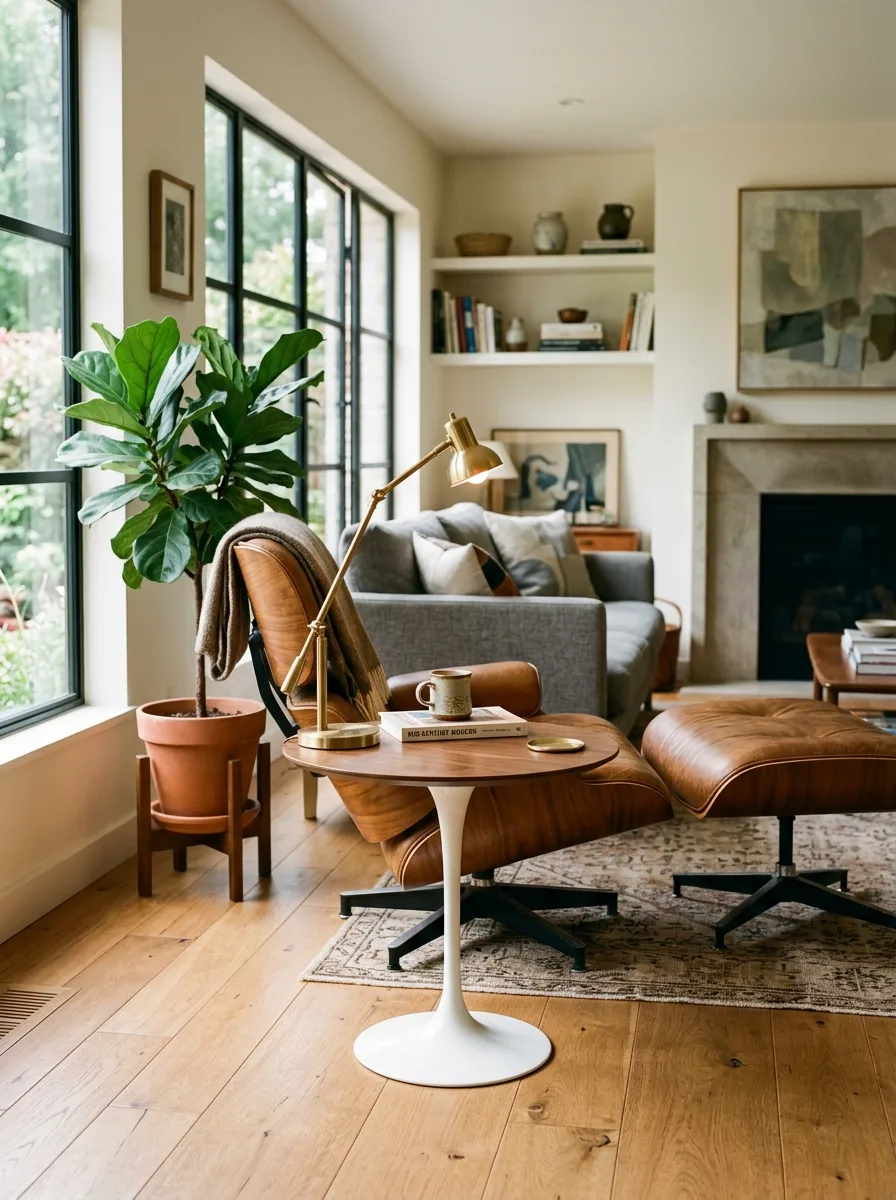
Position a cognac leather lounge chair and ottoman at an angle to the main sofa, not parallel to it, so the corner reads as its own reading nook rather than an extension of the main seating line.
Add a white tulip-base side table within arm’s reach of the chair. The single pedestal base keeps the corner from feeling crowded with legs the way a four-legged table would.
Clip a brass gooseneck task lamp to the table’s edge, angled down toward where a book or mug will actually sit, rather than pointing up at the ceiling.
Place one large fiddle leaf fig in a terracotta planter beside the window nearest the chair, close enough that the leaves catch natural light without blocking the chair’s sightline outside.
Boucle Wingback Reading Nook
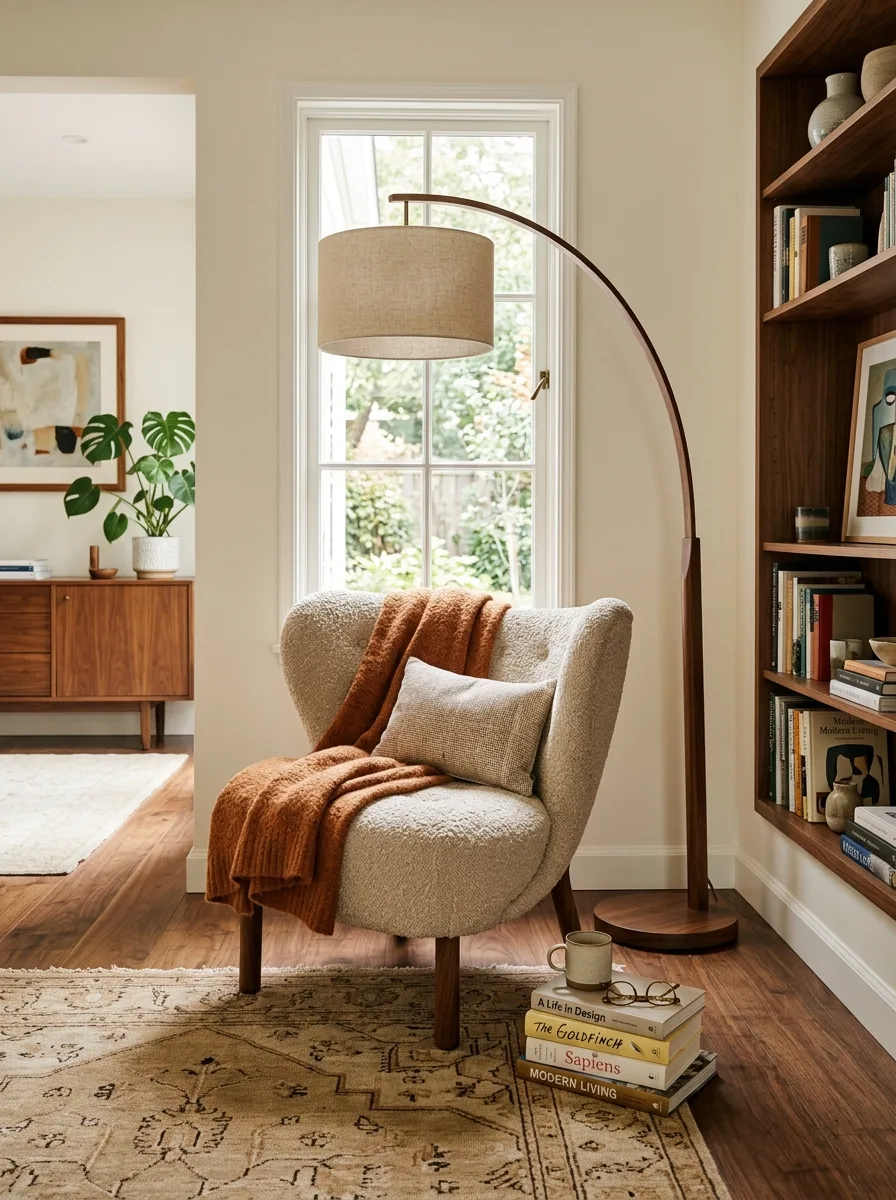
Choose a rounded boucle wingback chair with tapered wood legs as the sole seat in a small nook — this look works because it’s a single deliberate chair, not a full seating group.
Hang an oversized arc floor lamp from behind, letting the drum shade fall directly over the chair’s shoulder height. The shade should sit low enough to read by without leaning into the light.
Drape one rust or terracotta throw over the chair’s arm, folded loosely rather than perfectly stacked, plus a single textured lumbar pillow in a contrasting neutral.
Stack a small pile of hardcover books directly on the floor beside the chair instead of on a side table. It’s a small detail, but it’s what makes a styled corner look like someone actually sits there.
Slatted Walnut Media Console
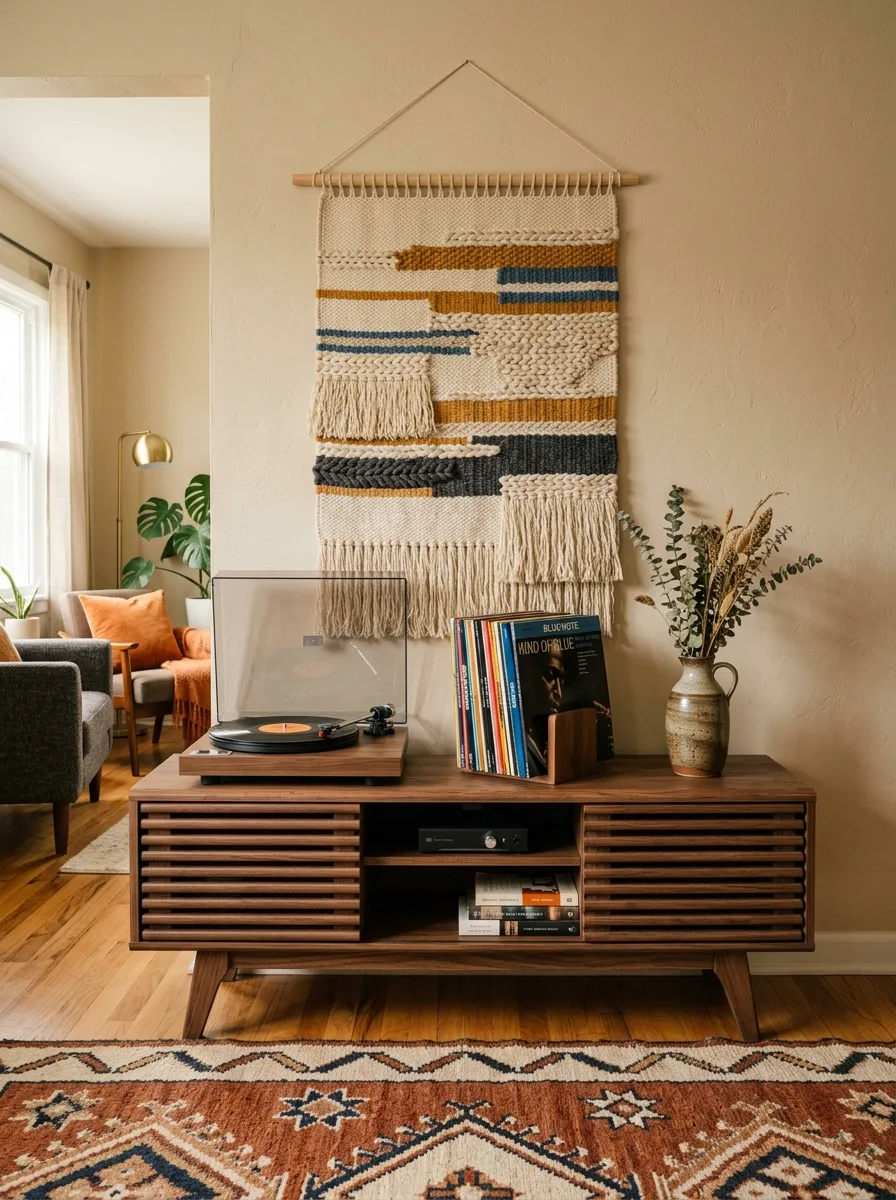
Choose a walnut console with slatted or louvered cabinet doors rather than solid panel doors — the slats let a hint of what’s stored inside show through, which reads as more intentional than fully hidden storage.
Set a turntable on top with a small stack of records displayed upright in a wood or leather record holder, angled so the album art faces the room.
Hang a woven textile wall piece above the console in a palette that echoes the room’s other warm tones — mustard, indigo, cream — sized to roughly match the console’s width so the two pieces read as a pair.
Add one ceramic vessel filled with dried grasses or pampas on the console’s opposite end, balancing the visual weight of the record stack on the other side.
Cane-Front Walnut Cabinet
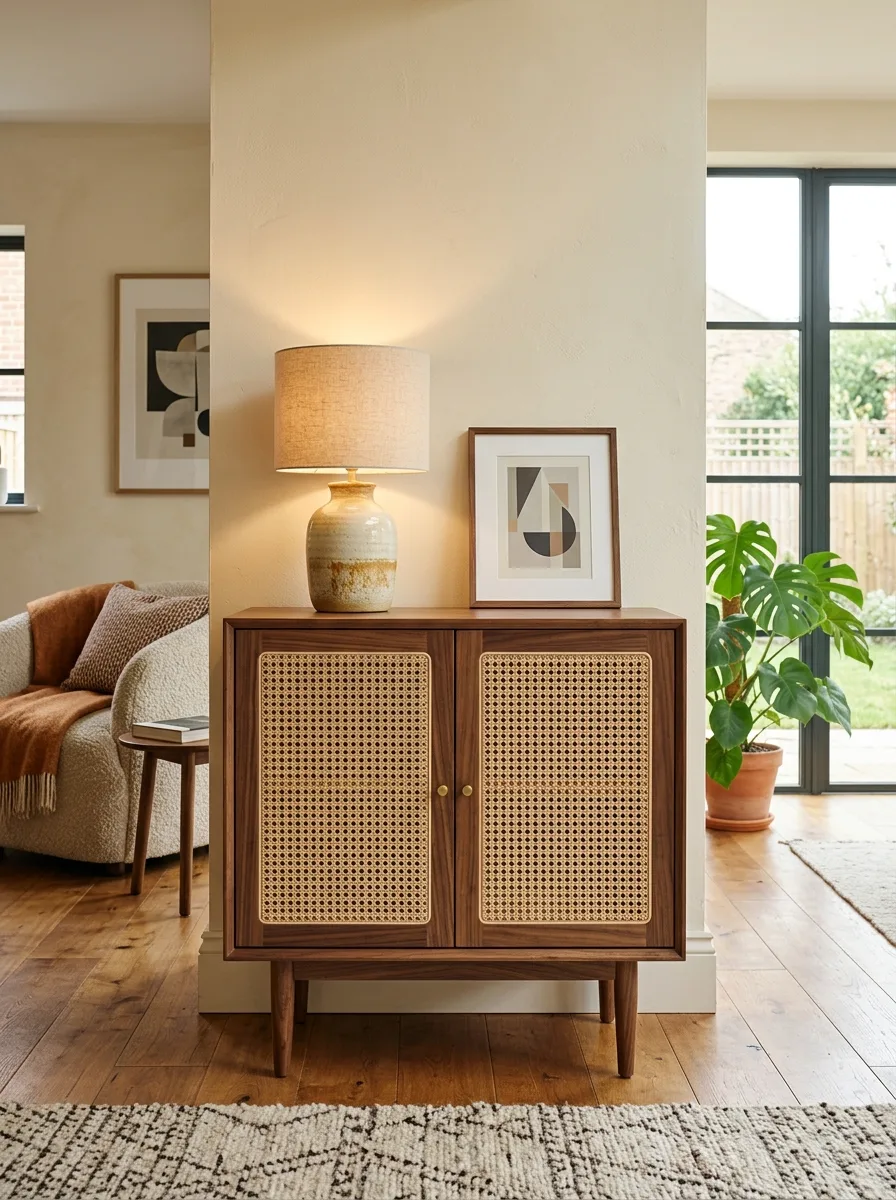
Choose a walnut cabinet with cane or rattan webbing set into the door fronts instead of solid wood panels. The woven texture is what keeps a boxy cabinet from reading as heavy furniture.
Place it in a transitional spot — a hallway threshold or the gap between two rooms — where its narrow depth works in a spot too tight for a full-size piece.
Top it with a single ceramic table lamp in a warm, textured glaze, positioned to one side rather than centered, leaving room for one framed abstract print leaning against the wall.
Keep a large potted plant just beside the cabinet, close enough that its leaves cross slightly into the cabinet’s visual space, connecting the two pieces without any matching required.
Final Thoughts
That’s the part most people skip. They buy the sputnik chandelier and the velvet sofa and the kilim rug in the same shopping trip, and the room ends up shouting from every corner instead of making one clear statement.
Every space in this list has a hierarchy. One material gets to dominate — wood, or color, or light — and the rest of the room quietly agrees to support it. Nothing here is fighting for attention, which is exactly why it all reads as calm despite being genuinely maximalist underneath.
Copy the specific moves. Skip the impulse to copy all of them into one room at once.