
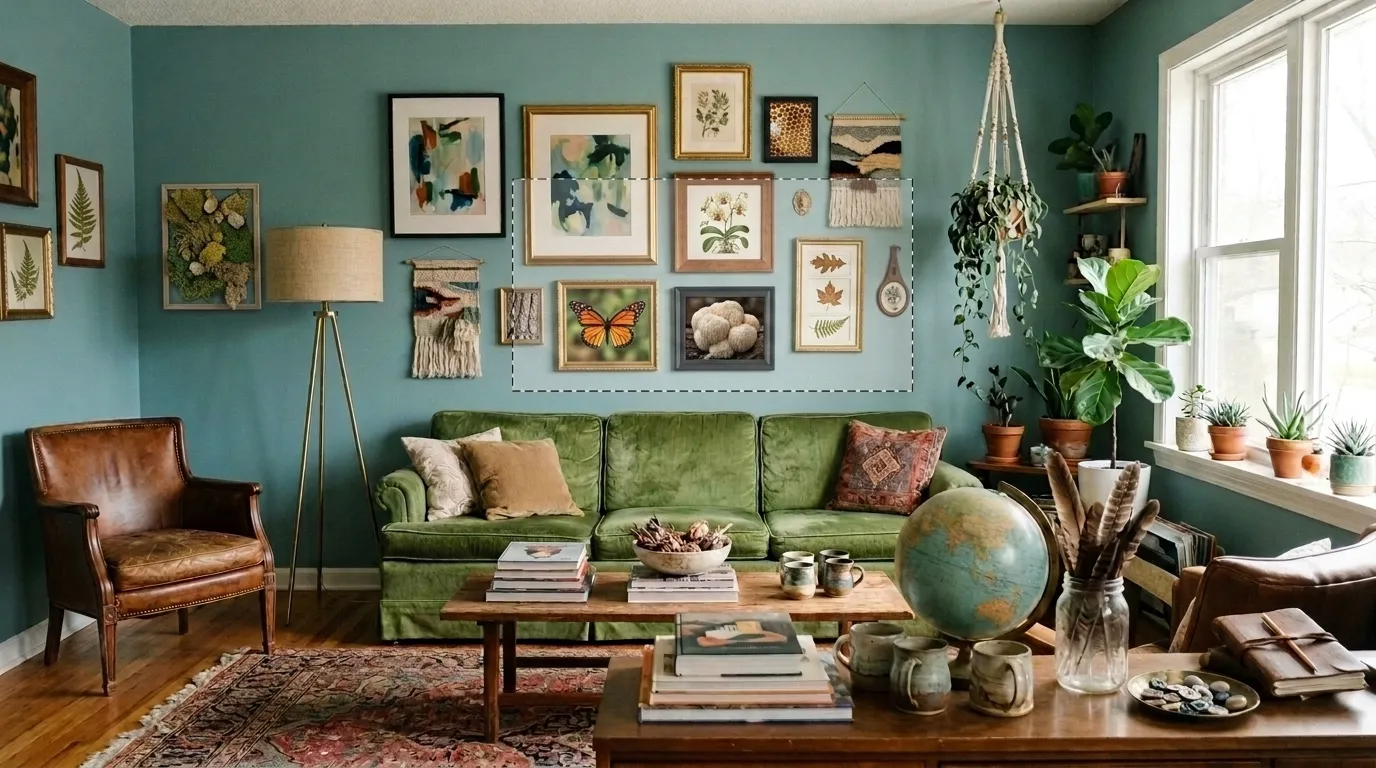
Somewhere along the way, “tasteful” started meaning “matching.” Grey sofa, grey walls, one approved metal finish, a single throw pillow allowed to have an opinion.
That’s not restraint. That’s a room apologizing for itself.
Eclectic decor doesn’t apologize. It puts a velvet sofa next to a Moroccan lantern next to a stack of paperbacks and dares you to say it doesn’t work. It usually does.
This isn’t about buying more stuff. It’s about trusting your own eye instead of a paint chip’s opinion on what goes with what.
The Walls That Do Actual Work
In a minimalist room, the wall is a backdrop. In an eclectic one, it’s load-bearing — visually, at least. Wallpaper, gallery walls, and hung textiles aren’t decoration on top of the room. They’re structural to the whole feeling of it.
Wallpaper as a whole-room decision
A busy floral, a botanical print, or a jungle scene isn’t something you ease into with a single accent wall and call it done. Full commitment reads as intentional. A single wall of pattern surrounded by plain paint reads like someone lost their nerve halfway through.
Dark, saturated wallpaper in a small room — a powder room, a stairwell — makes the space feel like a jewel box instead of a closet. Fight the instinct to lighten small rooms. Let them go dramatic instead.
Pattern-on-pattern is allowed. A floral wallpaper doesn’t need a solid rug to “calm it down.” It needs a rug with its own opinion, in colors pulled from the wallpaper itself.
The gallery wall that never stops growing
A proper gallery wall isn’t four matching frames in a neat grid. It’s frames of different sizes, materials, and eras — a gilt mirror next to a plain black frame next to a carved wooden panel — filling the wall edge to edge with almost no breathing room between pieces.
Start with the largest or most valuable piece and build outward from it, not from a template. Mix framed art with plates, mirrors, textiles, and small shelves holding objects. The wall should look like it happened over ten years, even if it happened over one weekend.
Leaving gaps kills the effect. The density is the design.
Hung textiles instead of framed art
A kilim rug, a vintage tapestry, or a macramé hanging mounted on the wall does something framed prints can’t — it adds texture you can register from across the room, not just up close.
Hang a small rug behind a bed instead of over the floor and it becomes a headboard with more history than anything you could buy new. Layer a few textiles at different heights rather than centering one perfectly, the same way you’d layer floor rugs.
This works especially well in rooms where you want warmth without adding more furniture. A textile-covered wall does the job a second sofa can’t.
Eclectic Home Decor Ideas
Moroccan Floor Cushion Nest
Skip the sofa entirely and build seating from floor cushions and low poufs instead. Mix round Moroccan poufs, kilim-covered squares, and velvet bolsters in a cluster around a low, weathered coffee table — no two cushions need to match, but they should share a warm, saturated color story.
Hang a plant in a woven basket planter from the ceiling above the seating area, low enough that it becomes part of the view rather than something overhead. String warm bulb lights along one wall instead of relying on lamps.
Layer two or three flat-weave rugs under the cushions rather than one. The floor should feel as considered as the seating.
Dense Frame Gallery Wall
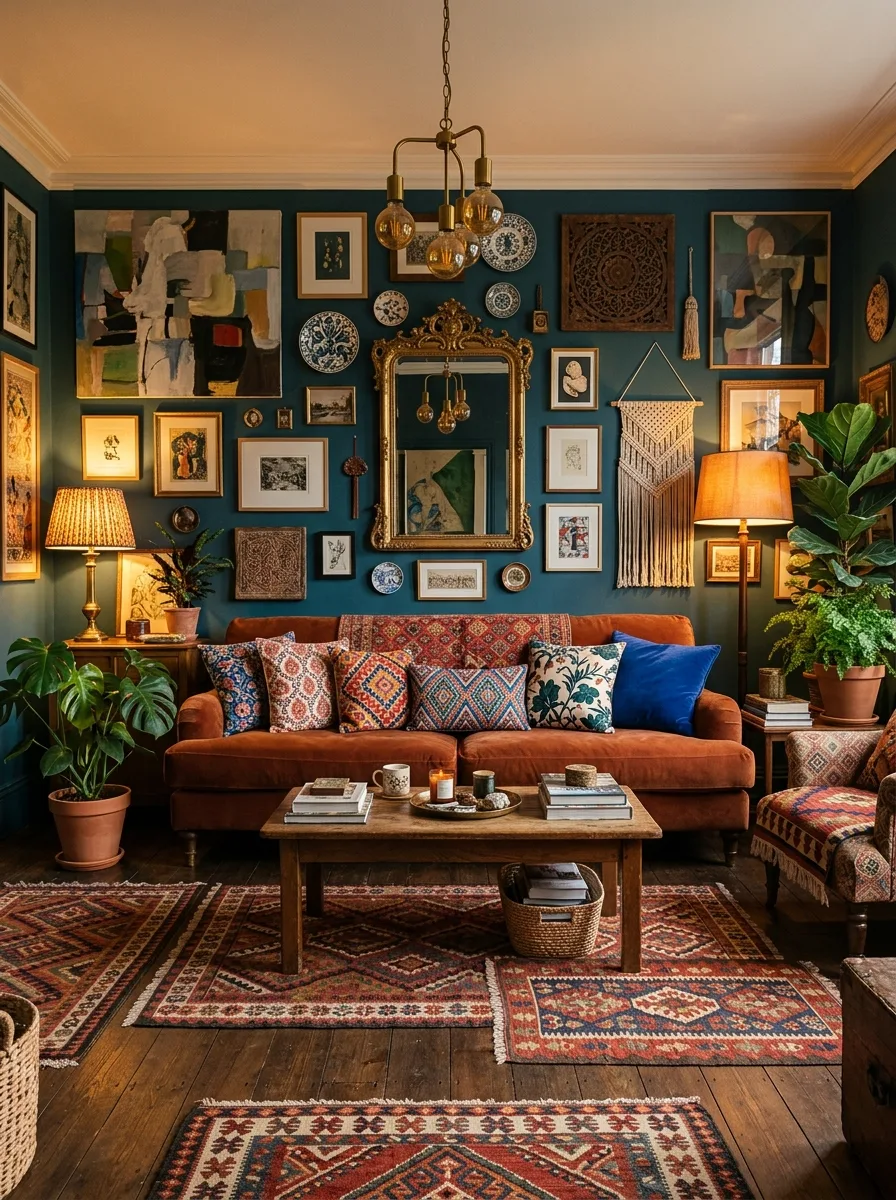
Paint the room a deep teal and cover one full wall edge-to-edge with a dense mix of framed art, mirrors, decorative plates, and carved wooden panels — leave almost no gap between pieces. Hang one large gilt mirror slightly off-center within the cluster rather than dead center, so the eye has to search a little.
Choose a rust or cognac velvet sofa to sit against the teal, with pillows pulling colors directly from the art on the wall. Layer two or three vintage rugs on the floor rather than one, letting the edges overlap slightly.
Add a macramé hanging as one element within the gallery wall itself, not as a separate feature elsewhere. Mixing textures into the frame cluster keeps it from reading as flat.
Rug-Wrapped Bathroom Walls
Cover the upper walls of a small bathroom in vintage rugs instead of tile or paint — nail or staple them flat, overlapping edges slightly so no wall shows through. Paint the lower half or the ceiling in a saturated, contrasting color like burnt orange or teal to anchor the pattern above it.
Paint a claw-foot tub and vanity in a color pulled from the rugs rather than leaving them white. Add a chandelier with crystal drops even in a small space — it reads as unexpected, not overkill.
Fill every ledge with a trailing plant. Steam-loving varieties thrive here and soften all the hard pattern.
Fern Wallpaper Breakfast Nook
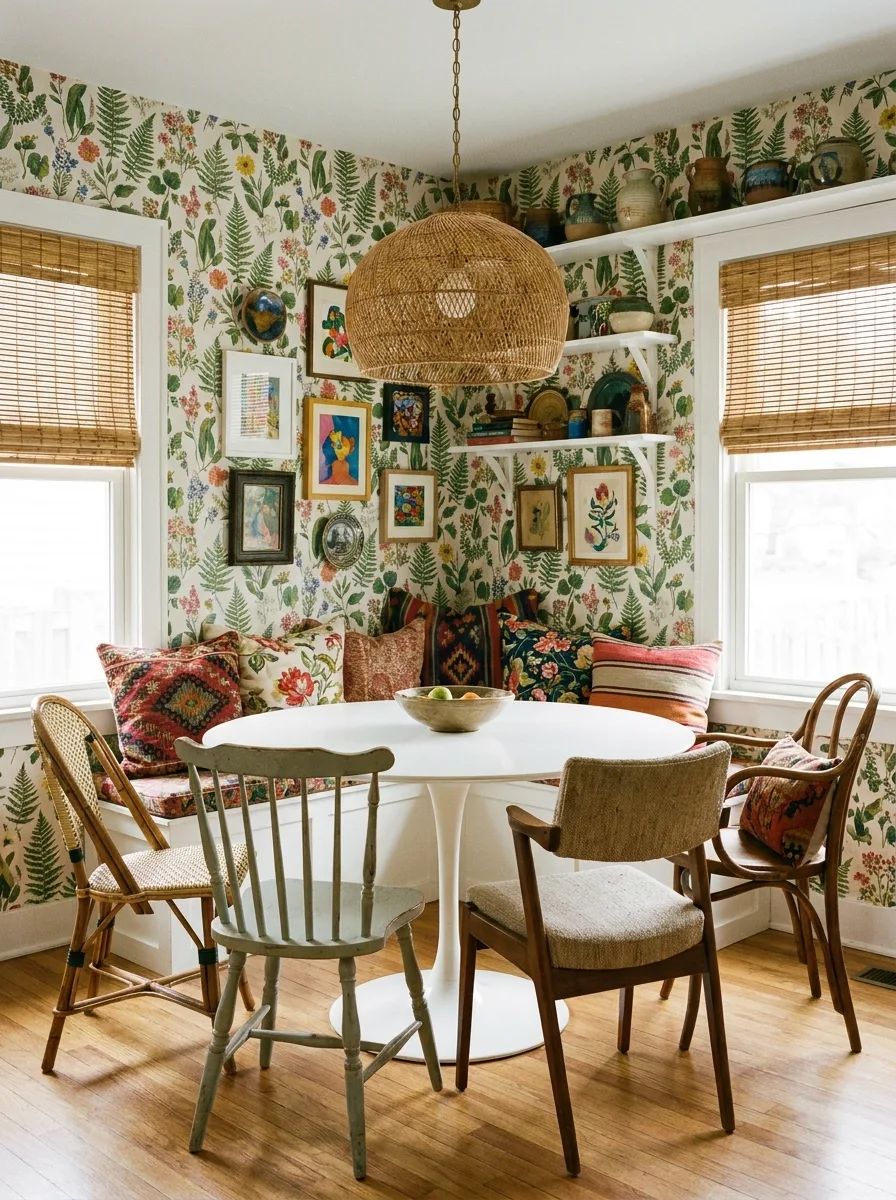
Wrap a corner breakfast nook in botanical wallpaper printed with ferns and wildflowers, carrying it up and around the built-in seating so there’s no visible seam. Fill a floating shelf above the banquette with mismatched ceramics and pottery in earthy glazes.
Build a dense gallery wall of small framed botanical prints and abstract pieces into one corner of the papered wall, treating it as part of the wallpaper rather than a separate feature. Choose a simple round white table so it doesn’t compete with everything behind it.
Mix chair styles around the table — a cane bistro chair next to a painted wooden one — rather than a matching set.
Emerald Velvet Reading Nook
Push a deep-cushioned velvet loveseat into a corner surrounded by floor-to-ceiling bookshelves, letting the books themselves become the wall treatment. Add one oversized round bolster pillow in a contrasting mustard or gold velvet, plus a smaller patterned pillow with visible age.
Let a trailing vine plant climb from a hanging planter down into the bookshelves so it looks like it’s colonizing the collection. Drape a faux-fur throw over one arm of the seat, left slightly rumpled rather than folded.
Keep the shelving itself imperfect — books stacked sideways, spines facing different directions. A too-neat shelf undercuts the coziness.
Mosaic Tile Jungle Bath
Tile the lower half of the bathroom in a mismatched patchwork of Mediterranean-style mosaic tiles, mixing patterns and colors rather than matching a single design. Paint the upper walls a saturated pink or coral to hold all that pattern together.
Choose a colored vessel sink — a deep mustard or ochre bowl — set on a small carved wooden stand instead of a built-in vanity. Hang a single ornate mirror in a distressed mint frame as the visual anchor above it.
Crowd the space with trailing plants from every available ledge and hanging pot. In a small tiled room, the greenery is what keeps it feeling alive instead of just busy.
Geometric Kilim Rug Layer
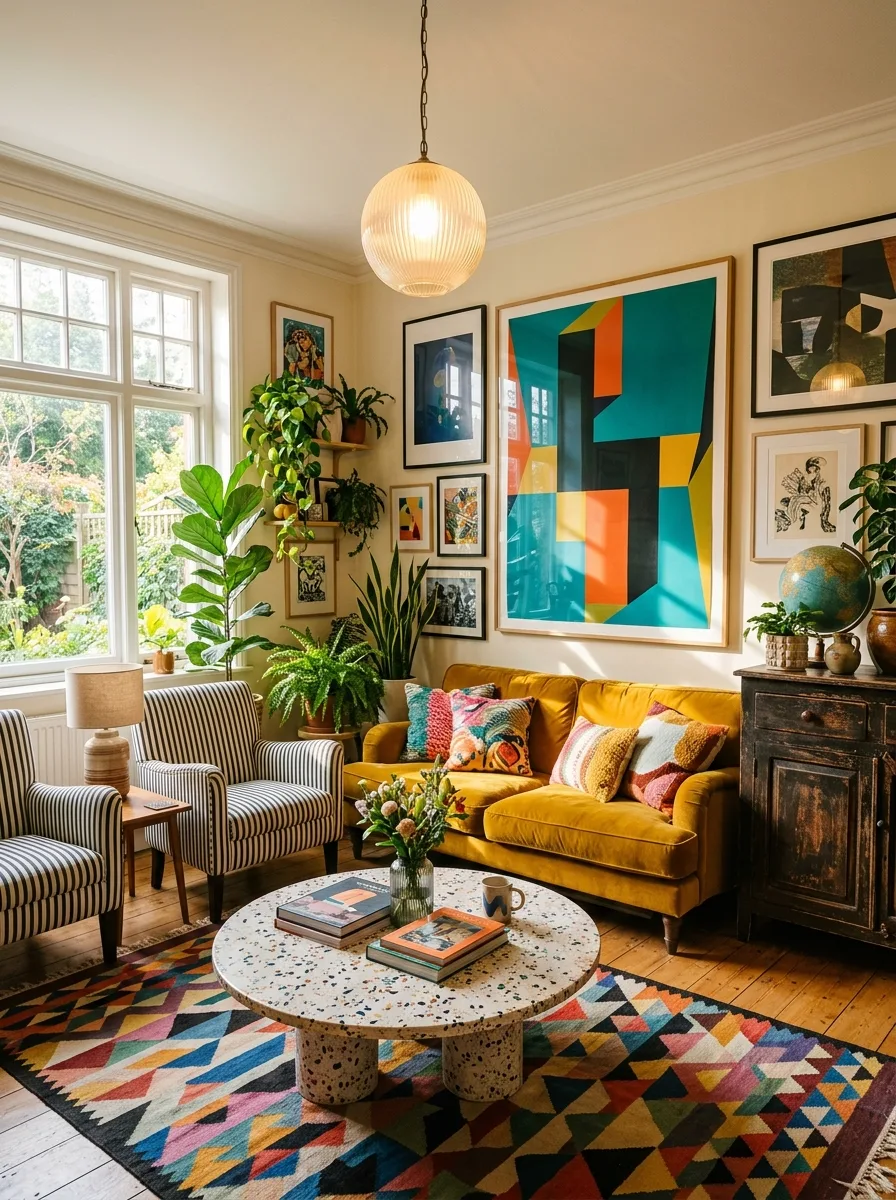
Center the room on a mustard velvet sofa and pair it with a bold geometric kilim-style rug in reds, blues, and blacks — the rug’s pattern should be the loudest thing on the floor, not a background choice. Hang a large abstract geometric painting on the main wall, echoing the rug’s shapes without matching them exactly.
Mix seating styles: a striped bouclé armchair next to the velvet sofa, neither matching the other. Build a dense cluster of smaller framed art around the main painting rather than leaving it alone on the wall.
Choose a terrazzo coffee table for its own busy pattern rather than a plain wood one. Every surface in this room is allowed to have texture.
Gallery Wall Velvet Headboard
Upholster or buy a velvet platform bed in a deep jewel tone like teal, then build a dense gallery wall of mismatched framed art directly above and around it, extending past the width of the headboard on both sides. Include at least one round mirror among the frames to break up the rectangles.
Layer the bedding in unrelated but tonally connected patterns — a tie-dye-effect duvet, a faux-fur throw, a few velvet pillows in different jewel tones — so the bed itself becomes as busy as the wall behind it. Add string lights or a sculptural pendant for ambient light instead of a single overhead fixture.
Fill the corners of the room with oversized leafy plants so the wall of frames doesn’t feel like the only thing happening.
Dark Floral Wallpaper Statement
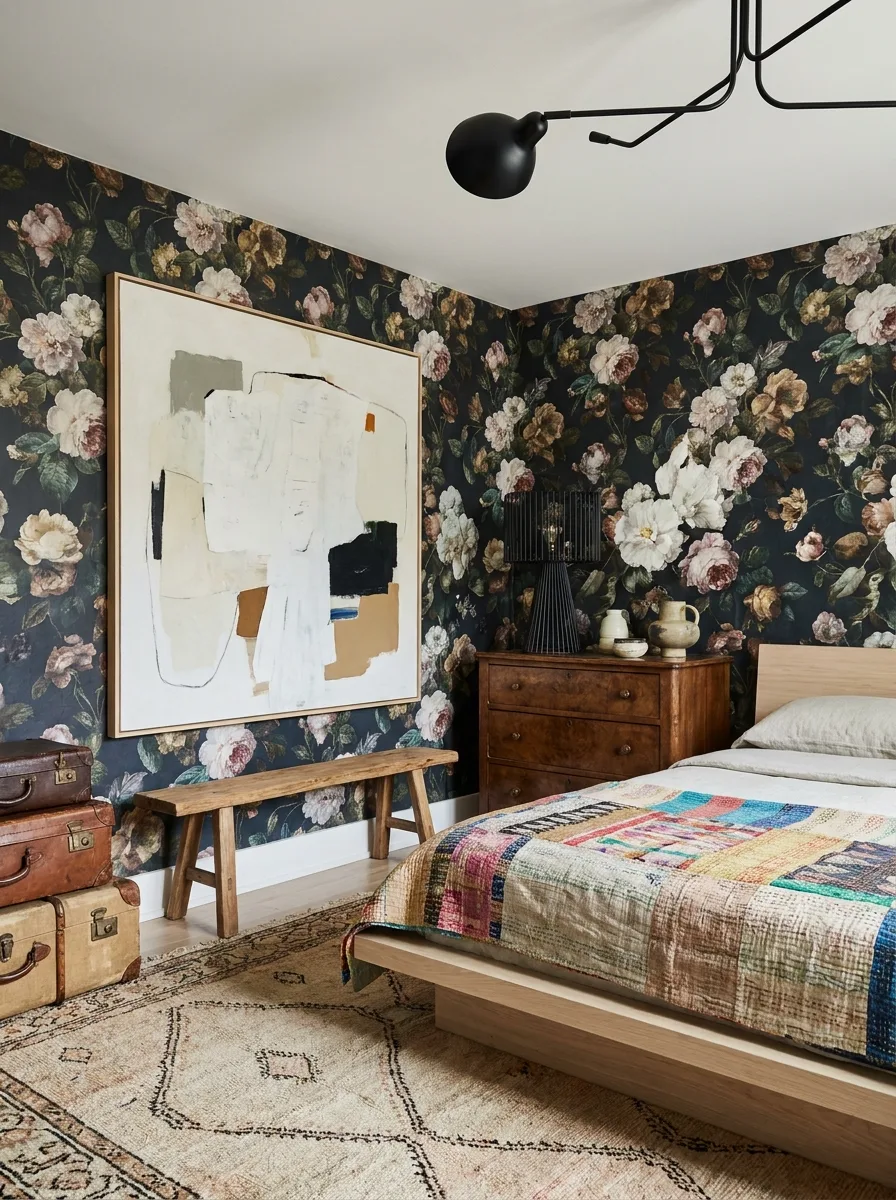
Choose a large-scale, dark-ground floral wallpaper — deep navy or black background with saturated blooms — and commit to it on every wall of the room, not just one. Hang a single oversized abstract painting against it rather than more florals, letting the contrast in scale and subject do the work.
Furnish with simple, pale wood pieces so the wallpaper stays the loudest thing in the room. A plain platform bed and a light dresser hold their own without competing.
Stack vintage suitcases in a corner instead of a nightstand. Worn leather against dark florals reads as collected, not staged.
Crane Wallpaper Accent Wall
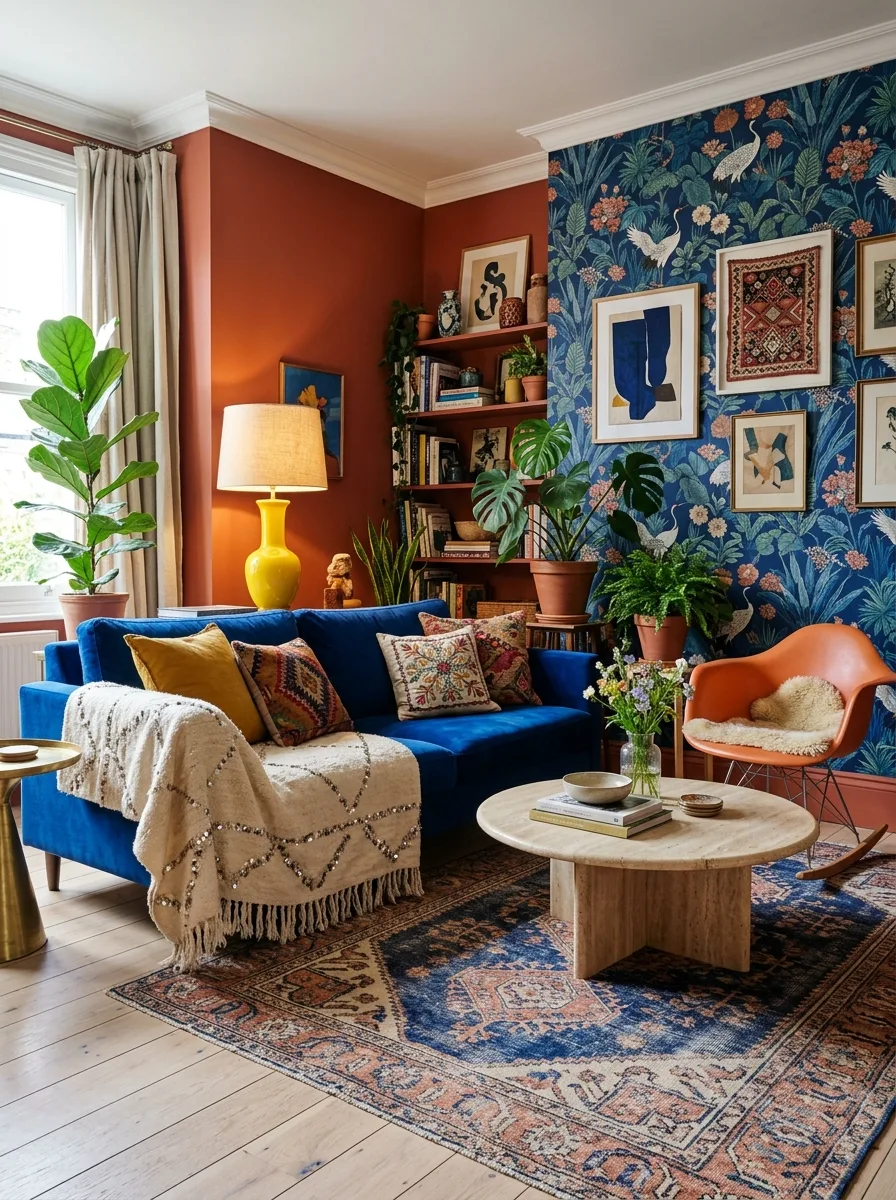
Choose one wall for a large-scale botanical or bird-print wallpaper in saturated blues, and paint the adjoining walls in a warm, contrasting solid like burnt terracotta rather than white. The color break between the two treatments should feel deliberate, not like an unfinished paint job.
Anchor the room with a jewel-toned velvet sofa in a color pulled from the wallpaper, then build a tight cluster of framed art directly onto the papered wall so the pattern doesn’t stand alone. Add a single brightly colored lamp — mustard, cobalt — as the room’s punctuation mark.
Bring in oversized leafy plants in terracotta pots rather than small tabletop greenery. At this scale of pattern, small plants disappear.
Stained Glass Headboard Wall
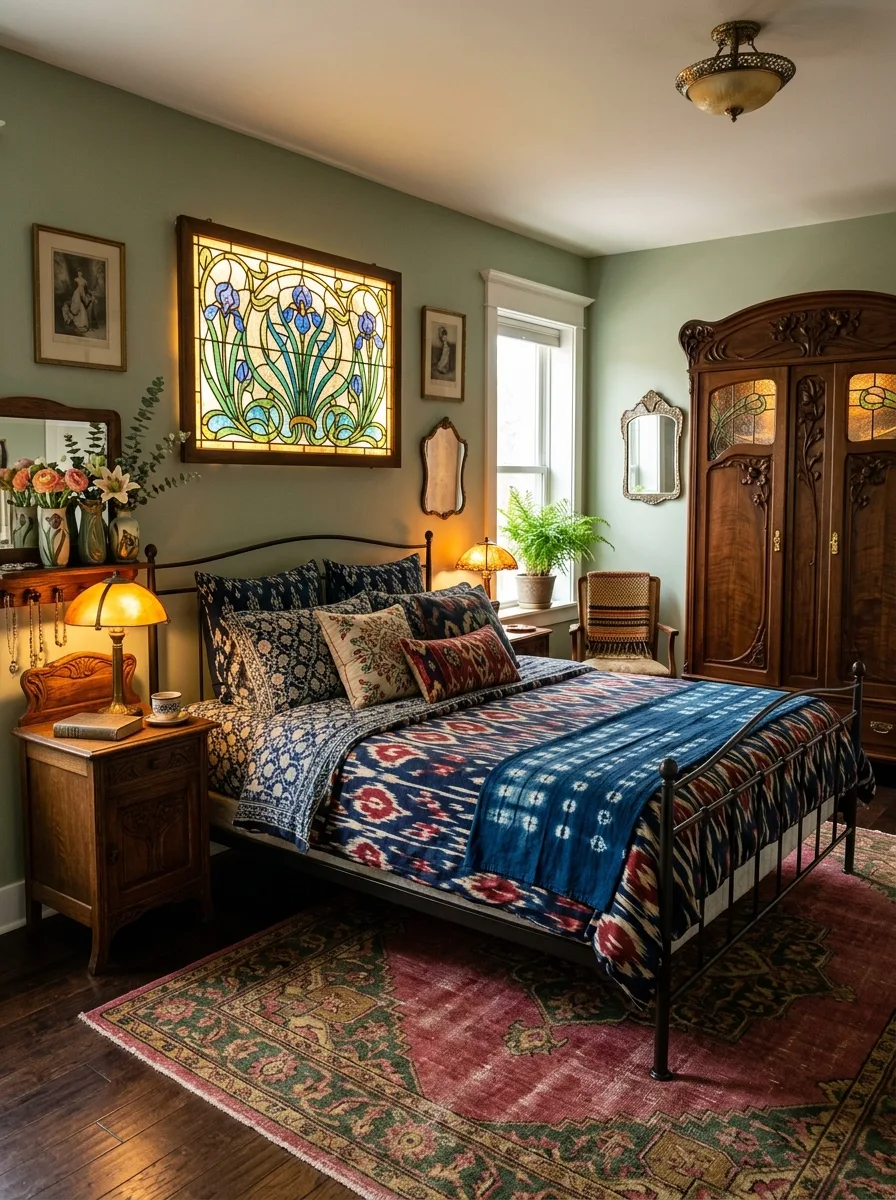
Hang a large antique or reproduction stained-glass panel on the wall directly above the bed, lit from behind or from a nearby lamp so the colors actually glow in the evening. Pair it with a wrought-iron bed frame rather than upholstered, letting the metal echo the leaded glass.
Layer the bedding in ikat or block-print patterns in deep indigo and burgundy, mixing at least three different prints across the pillows and coverlet. Flank the bed with mismatched vintage lamps rather than a matching pair.
Choose an ornately carved wardrobe in a dark wood finish for storage instead of built-ins. The carving should feel like it’s in conversation with the stained glass, not competing with it.
Layered Pendant Light Cluster
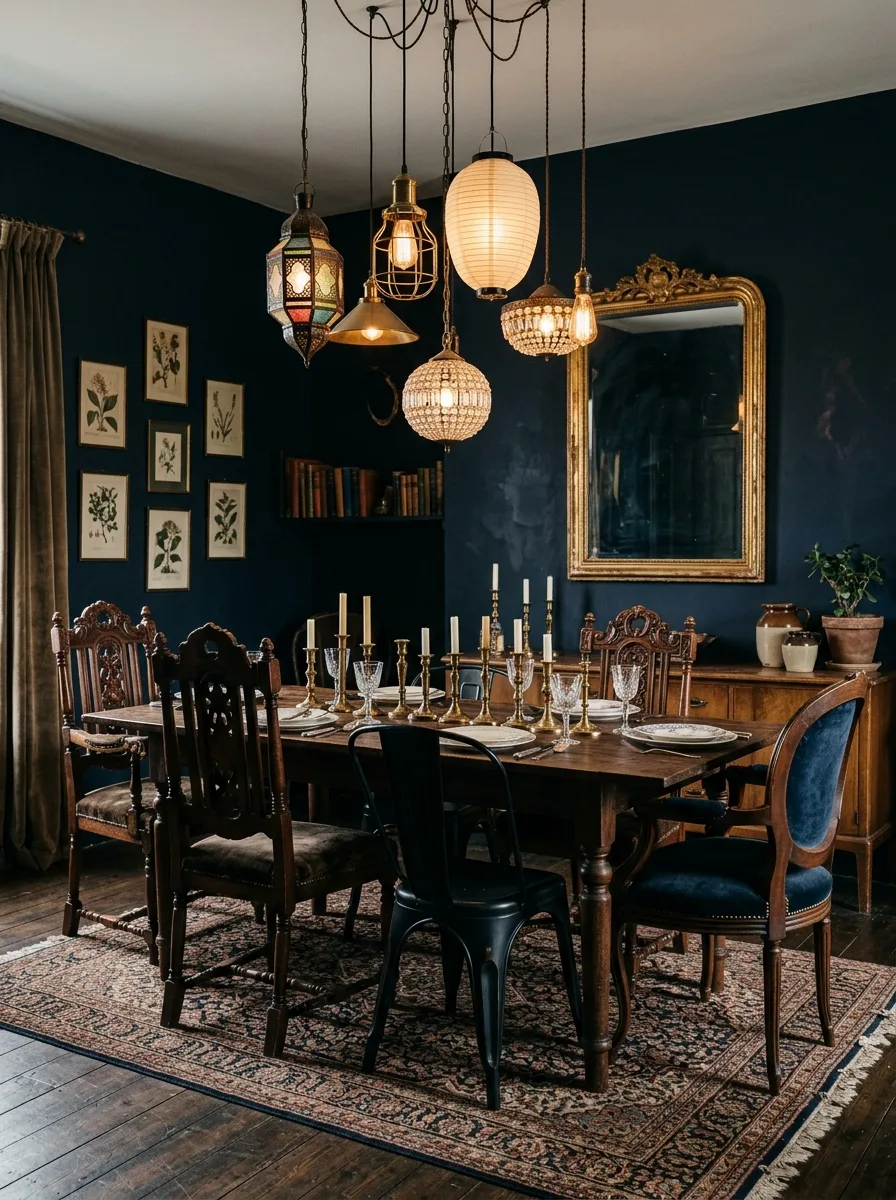
Paint the dining room in a near-black, saturated navy and hang a cluster of mismatched pendant lights over the table instead of one chandelier — mix a paper lantern, a beaded globe, and an exposed-bulb cage fixture at varying heights and wire lengths. Let a gilt-framed mirror lean or hang on the opposite wall to bounce the low light around the room.
Mix dining chairs deliberately: a few upholstered in dark velvet, one or two in painted wood, one in black metal. No two should match, but they should share a similar scale.
Set the table with mismatched candlesticks in varying heights rather than a single pair. Dark walls need this many small points of light to keep the room from feeling like a cave.
Botanical Wallpaper Marble Table
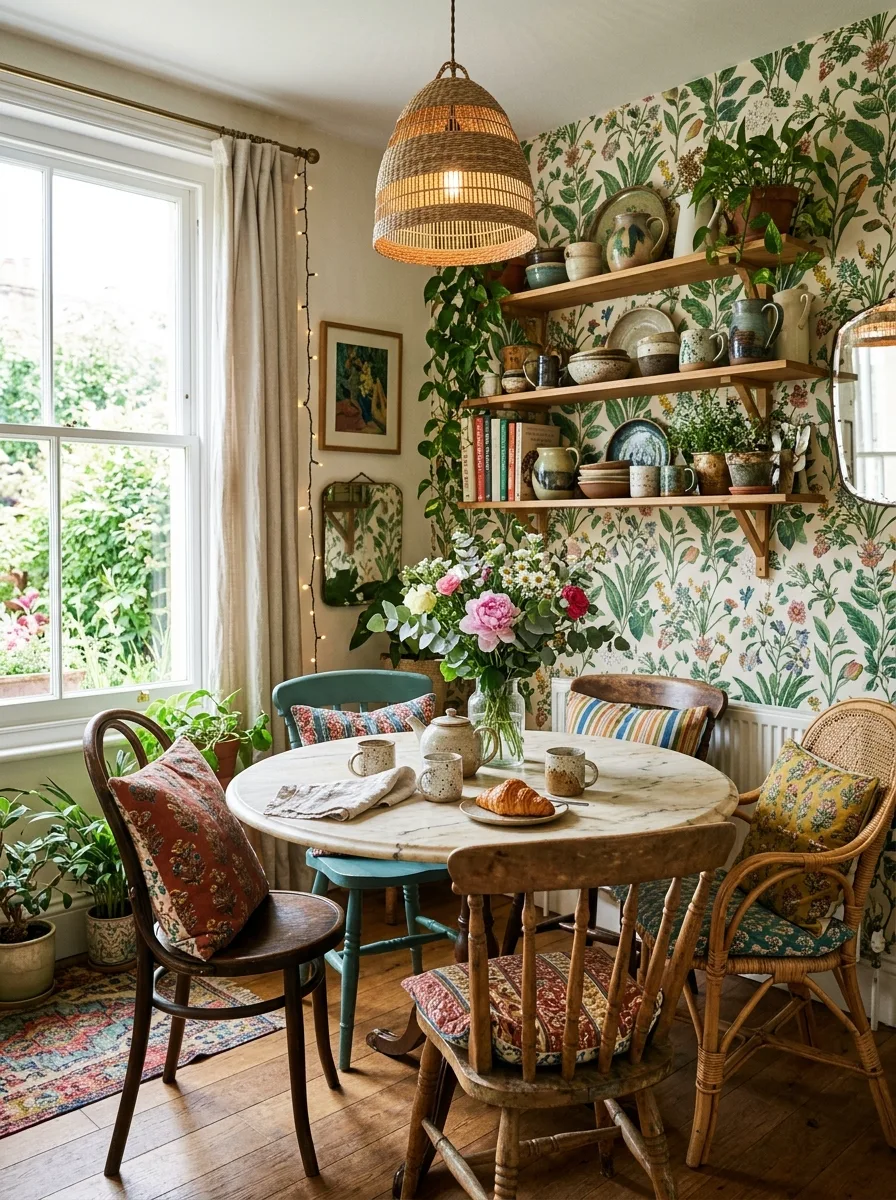
Cover the walls in a densely illustrated botanical wallpaper and install open wooden shelving in the corner to display a collection of mismatched pottery and ceramics against the pattern. Choose a marble-topped table rather than wood — the cool, veined surface is the one neutral element that keeps the papered room from tipping into too much.
Hang a rattan pendant with a woven shade for warm, diffused light, positioned low over the table rather than centered on the ceiling. String small fairy lights along one window frame as a secondary, ambient layer.
Fill the table with a loose, oversized bouquet in mixed colors rather than a tidy arrangement. The flowers should look picked, not purchased.
Jewel-Tone Abstract Gallery Wall
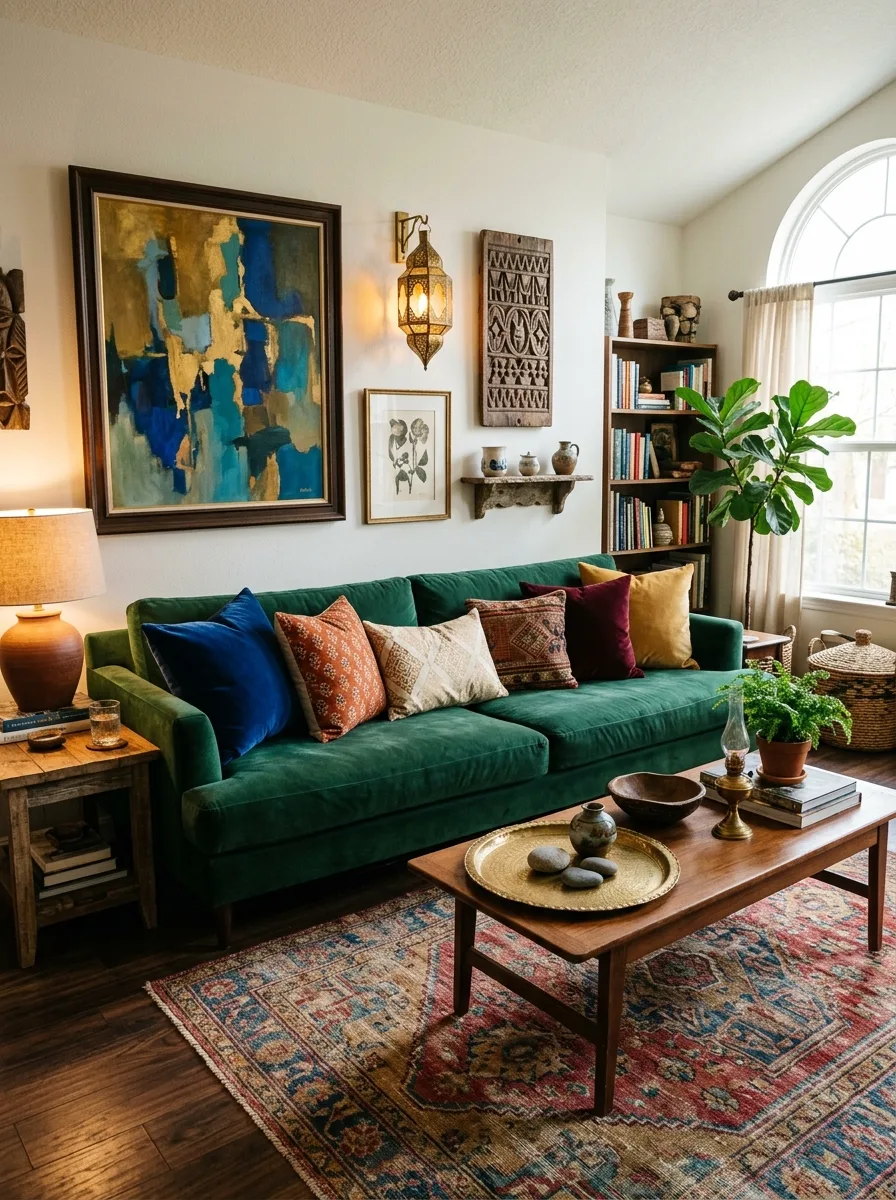
Anchor the room with an emerald velvet sofa and pile it with pillows in unrelated jewel tones — cobalt, rust, burgundy, mustard — none of them matching the sofa exactly. Hang one large abstract painting in blues and golds as the visual centerpiece, then surround it with smaller botanical prints at varying heights rather than a symmetrical arrangement.
Add a Moroccan-style metal wall sconce next to the art for a warm, low light source that doesn’t rely on lamps alone. Bring in a fiddle-leaf fig or similarly architectural plant to anchor one corner.
Keep the coffee table low, dark wood, and simple. With this much happening on the walls, the furniture below needs to stay quiet.
Personalized Nursery Gallery Wall
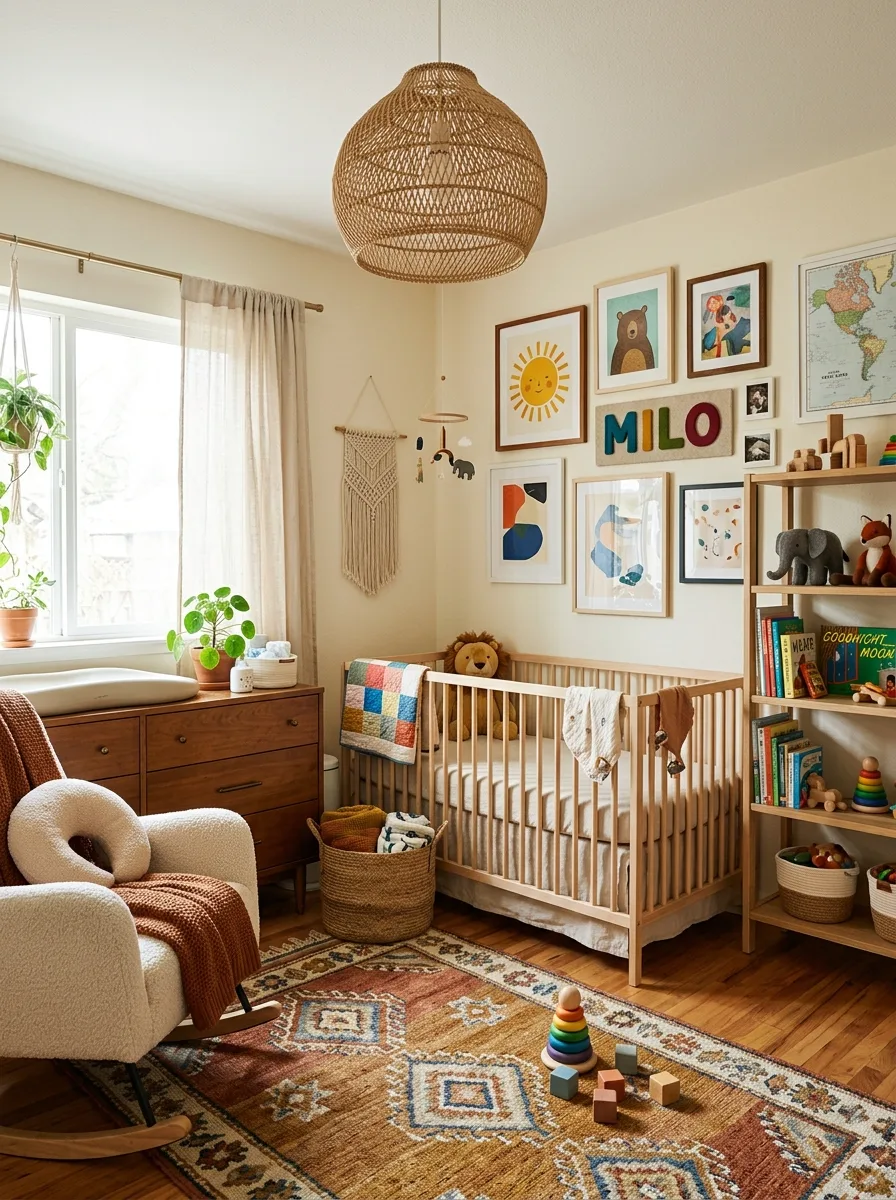
Build a gallery wall around a name sign as the centerpiece, surrounding it with a loose, asymmetrical mix of illustrated prints, a map, and small framed photos rather than a symmetrical grid. Hang a woven rattan pendant overhead instead of a standard fixture, even in a small room.
Choose a vintage-style wooden dresser for storage rather than a matching nursery set, and pair it with a boucle or sherpa rocking chair in a neutral that lets the gallery wall stay the focal point. Layer a patterned vintage-style rug under the crib rather than a plain nursery rug.
Add one or two trailing plants near the window. Even a room built around a color-blocked gallery wall benefits from something alive in it.
Botanical Print Gallery Corner
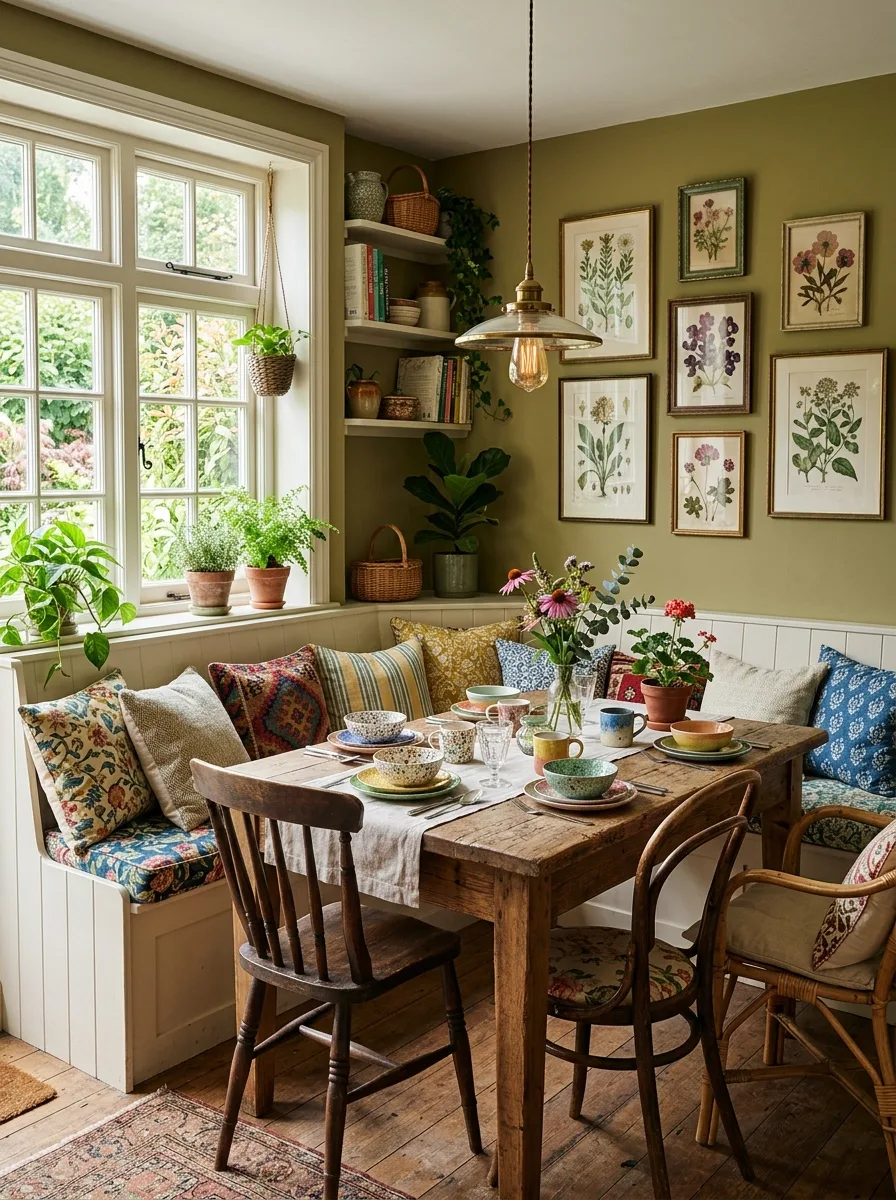
Paint the walls a warm olive green and hang a dense cluster of small framed botanical prints in one corner, mixing frame finishes rather than matching them. Build open wooden shelving into the same corner for a collection of pottery, books, and baskets, letting it read as an extension of the gallery rather than separate storage.
Set a farmhouse table with mismatched vintage chairs — a painted spindle-back, a cane-seated bistro chair, an upholstered one — and dress it with mismatched patterned dinnerware rather than a matching set. Fill a pitcher with a loose garden bouquet as the centerpiece.
Hang a single pendant with a simple glass shade to keep the lighting from competing with everything on the walls.
Hanging Macrame Plant Wall
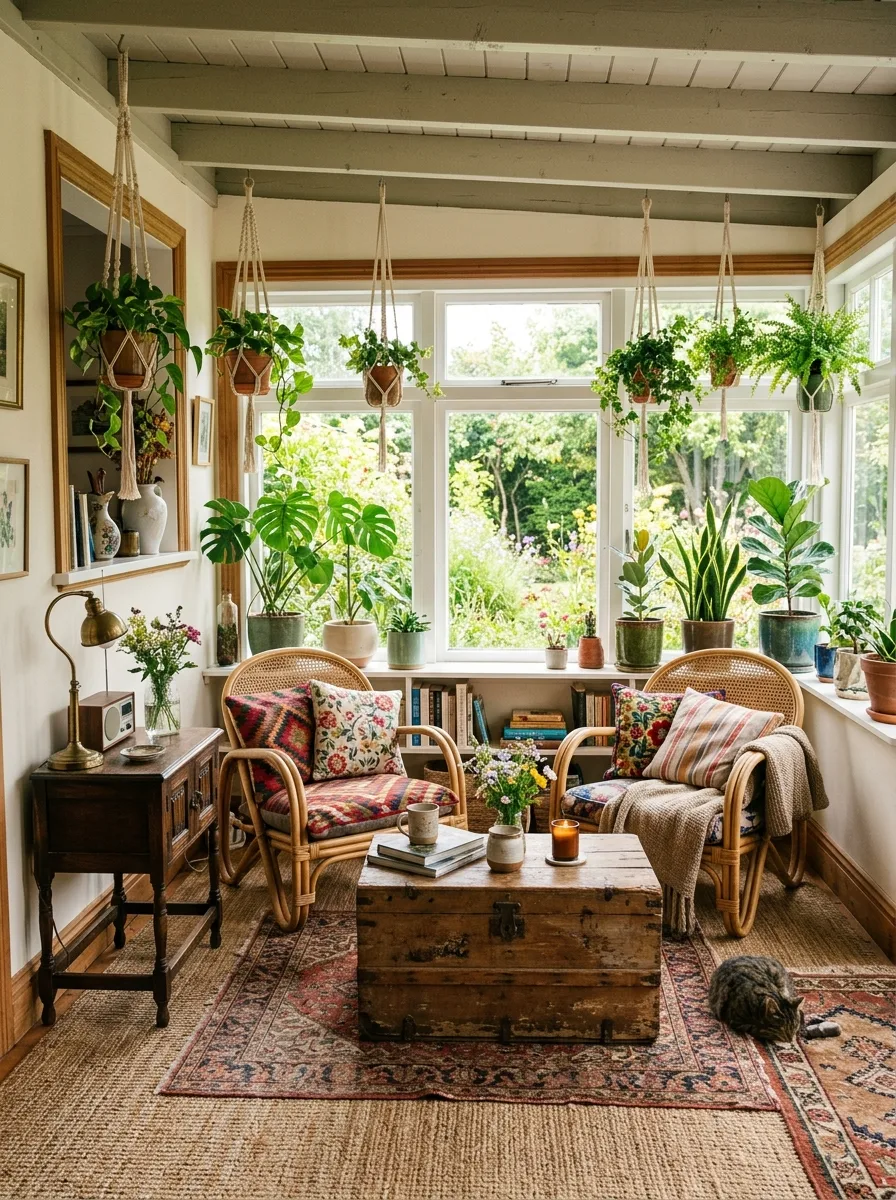
Suspend a cluster of macramé plant hangers from a beamed ceiling at varying lengths, mixing trailing pothos, ferns, and a large monstera in floor pots below the window line. Choose rattan or cane furniture with patterned cushions rather than upholstered pieces, so the room stays light enough to support the density of greenery.
Add a weathered wooden trunk as a coffee table instead of anything with a polished finish. Layer a jute rug as the base layer with a smaller patterned rug on top, echoing the natural materials in the hanging planters.
Let a cat or dog have a spot on the rug in the photos you take of this room. A sunroom this full of plants should look lived in, not staged for a listing.
Patterned Lampshade Reading Corner
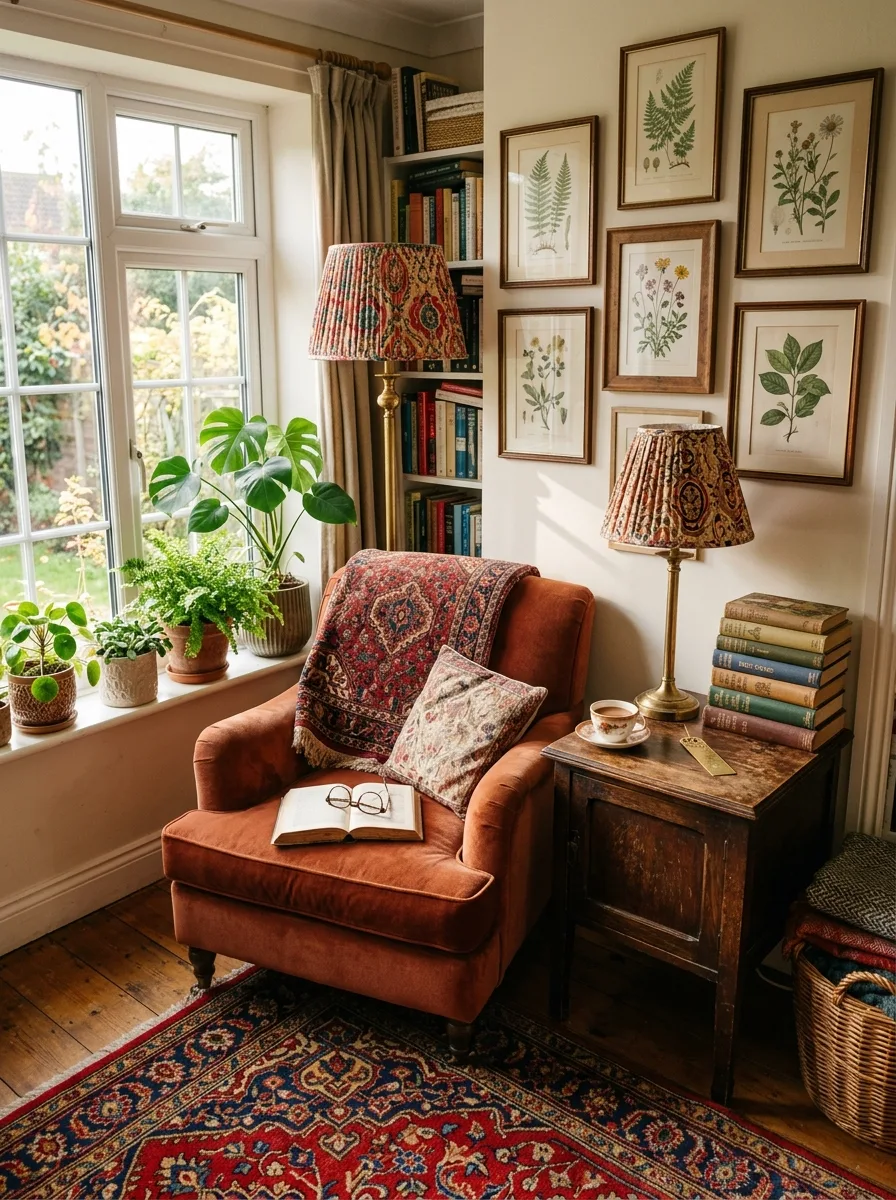
Pair two mismatched lamps — different bases, different heights — but unify them with matching patterned fabric shades in a busy paisley or ikat print. Set a rust-colored velvet armchair between them with a kilim throw draped loosely over one arm, not folded.
Hang a tight grid of small botanical prints on the adjacent wall, all in slim matching frames for once — the one place in this list where uniformity works, because it lets the patterned lampshades stay the loudest element in the room. Stack a small tower of hardcover books on the side table rather than using it purely for the lamp.
Cluster potted plants along the windowsill in mismatched pots. The greenery should feel gathered over time, not purchased as a set.
Open Shelf Gallery Kitchen
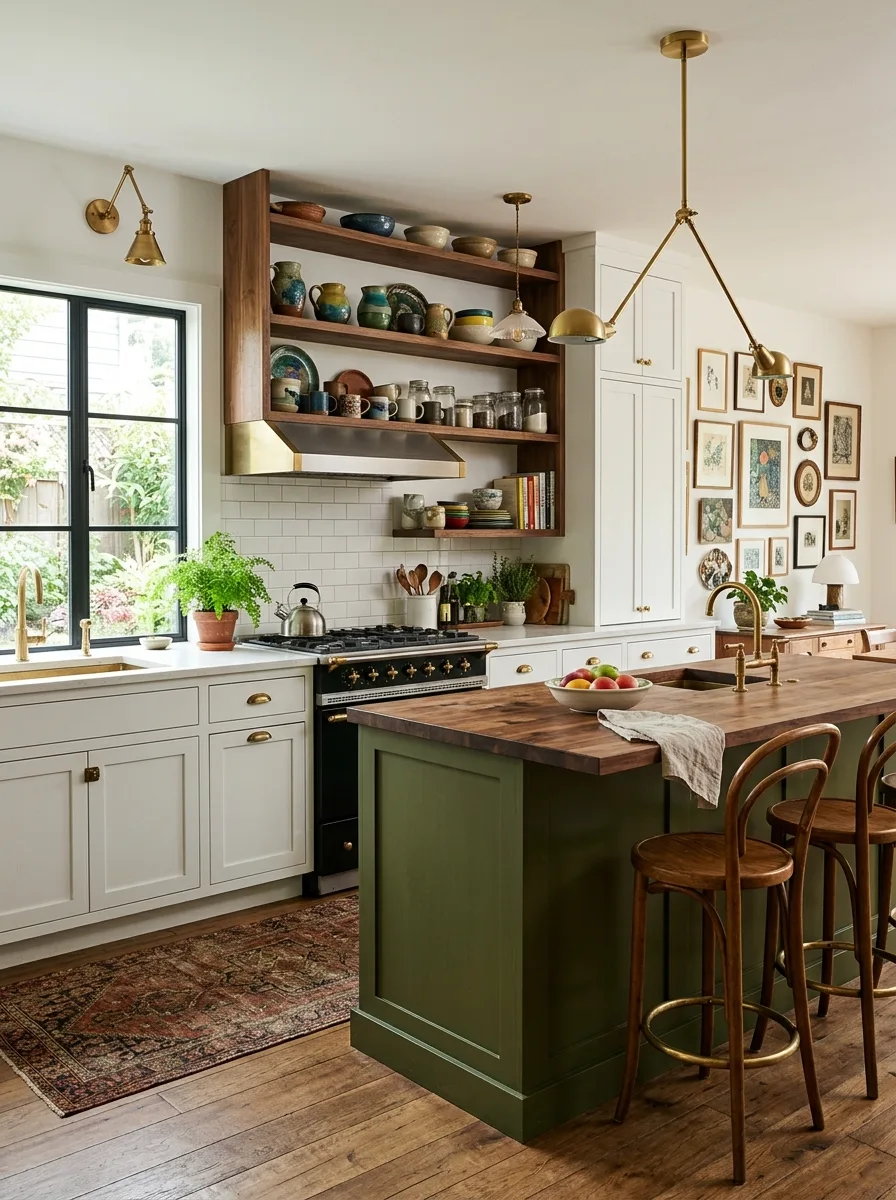
Swap upper cabinets for open wood shelving above the range and load it with mismatched pottery, stacked bowls, and glass jars instead of matching dinnerware. Paint the island a deep olive or moss green while keeping the surrounding cabinetry a soft off-white, so the two tones read as a deliberate pair rather than an unfinished repaint.
Run unlacquered brass fixtures throughout — the faucet, the sconces, the pendant arms — and let them develop a living patina instead of staying polished. Choose a butcher-block or walnut countertop for the island alone, keeping the perimeter counters a plain stone so the wood reads as a feature, not the whole kitchen.
Build a dense gallery wall on the one open wall near the eating area, mixing framed prints, small plates, and photographs edge to edge. A kitchen this considered doesn’t need a separate dining room to feel like the heart of the house.
Final Thoughts
None of these rooms are trying to be liked by everyone who walks through the door. That’s what separates them from the beige rental listing down the street.
A room this specific takes longer to build than a room from a single catalog page. It also takes longer to get tired of, because there’s no single trend for it to age out of — just a collection of choices that happened to end up in the same four walls.
The common thread isn’t a color or a pattern. It’s a willingness to keep something because you love it, not because it matches.
Match less. Keep more. Let the room argue with itself a little — that’s usually when it starts to feel like home.