
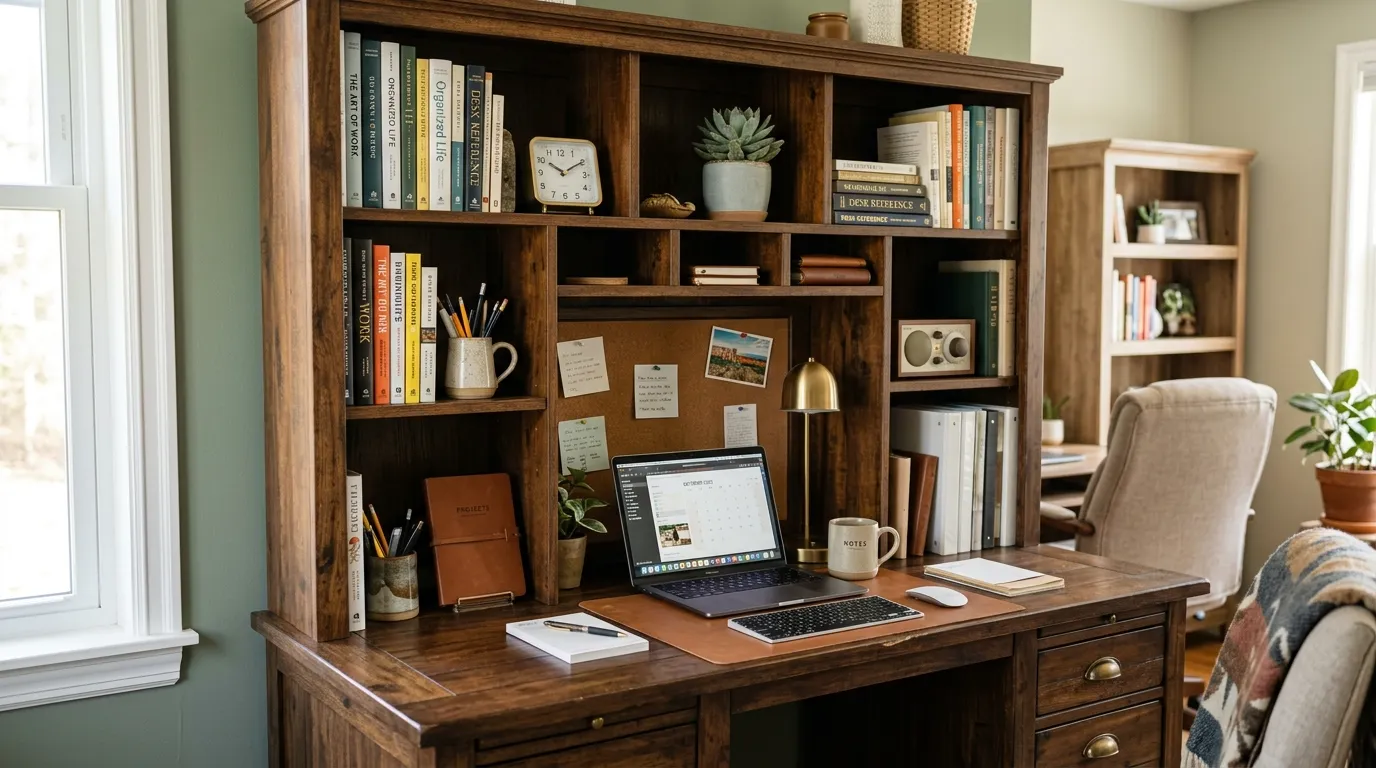
A desk without a hutch is just a table that got promoted. It holds a laptop, maybe a mug, and absolutely nothing that tells you who sits there.
Add a hutch and the whole equation changes. Now there’s a place for the globe nobody needed, the stack of books someone’s actually read, the plant that’s been trying to escape its pot for months.
Most people treat the hutch as an afterthought — buy the desk, buy the shelf unit separately, hope they match. The desks that actually stop people mid-scroll were never built that way. The hutch came first, or at least got equal billing.
Desk Hutch Ideas
Hollywood Mirror Vanity Hutch
Start with a large mirror framed in exposed bulbs as the centrepiece of the lower cubby, sized to fill nearly the entire opening. The bulbs need to run the full perimeter — a mirror lit on only two sides looks like it’s missing hardware, not like a design choice.
Fill the shelf above the mirror with a tight cluster of gold and pastel objects: a small planter, a decorative stand, a pair of sculptural figures like butterflies or birds. Keep everything on this top shelf under a foot tall so it doesn’t compete with the mirror’s light.
Use a glass top on the desk surface itself rather than a solid one. Glass lets light bounce between the mirror bulbs and the desk without adding visual weight to the lower half of the piece.
Finish with a skirted fabric panel hiding the desk’s legs and any storage below. The skirt turns exposed table legs into a clean, upholstered base without needing an actual piece of furniture underneath.
Moody Modern Black Hutch
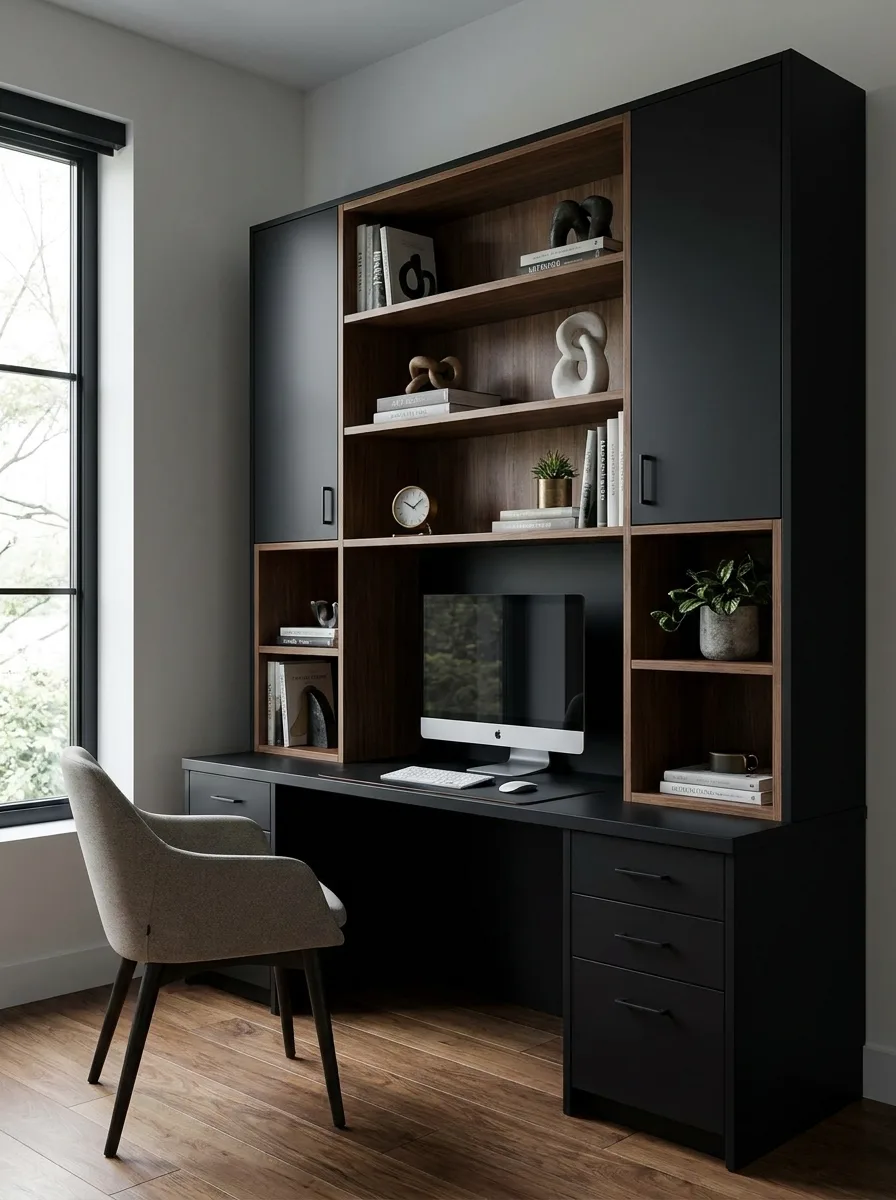
Choose a hutch in matte black cabinetry with warm wood-toned interior shelving, rather than black used throughout. The wood-lined interior is what keeps an all-black piece from reading as cold or corporate.
Style the open shelves with sculptural objects in stone, ceramic, or wood tones that echo the interior panelling. A cool-toned decor object dropped into this warm wood interior would break the palette immediately.
Add a single small brass clock or metal accent as the one reflective element in an otherwise matte, textural arrangement. One shiny object against so much matte surface reads as intentional rather than accidental.
Keep the desk below entirely monitor-and-keyboard minimal, with no additional decor competing for space. This look depends on the hutch doing all the personality work while the desk surface stays purely functional.
Double Vanity Skirted Hutch
Build two matching hutch-and-desk units side by side rather than one wide one, each with its own mirror and shelving. Twinning the units is what makes this read as a considered suite rather than two separate desks pushed together.
Style each hutch’s shelves with a near-identical rhythm — a stack of books, a framed photo, a small vessel — but don’t make them perfectly identical. Small variation between the two sides keeps it from looking like a hotel display.
Skirt both desks in the same floor-length fabric, pooling slightly at the base rather than stopping crisp at the floor. The extra fabric length is what gives this the boudoir feeling instead of a simple slipcover.
Add a chair with a contrasting metal finish — gold legs against a soft fabric seat — pulled up to each desk. The hardware becomes the one hard-edged element in an otherwise entirely soft, fabric-heavy setup.
Sage Green Glass Cabinet Hutch
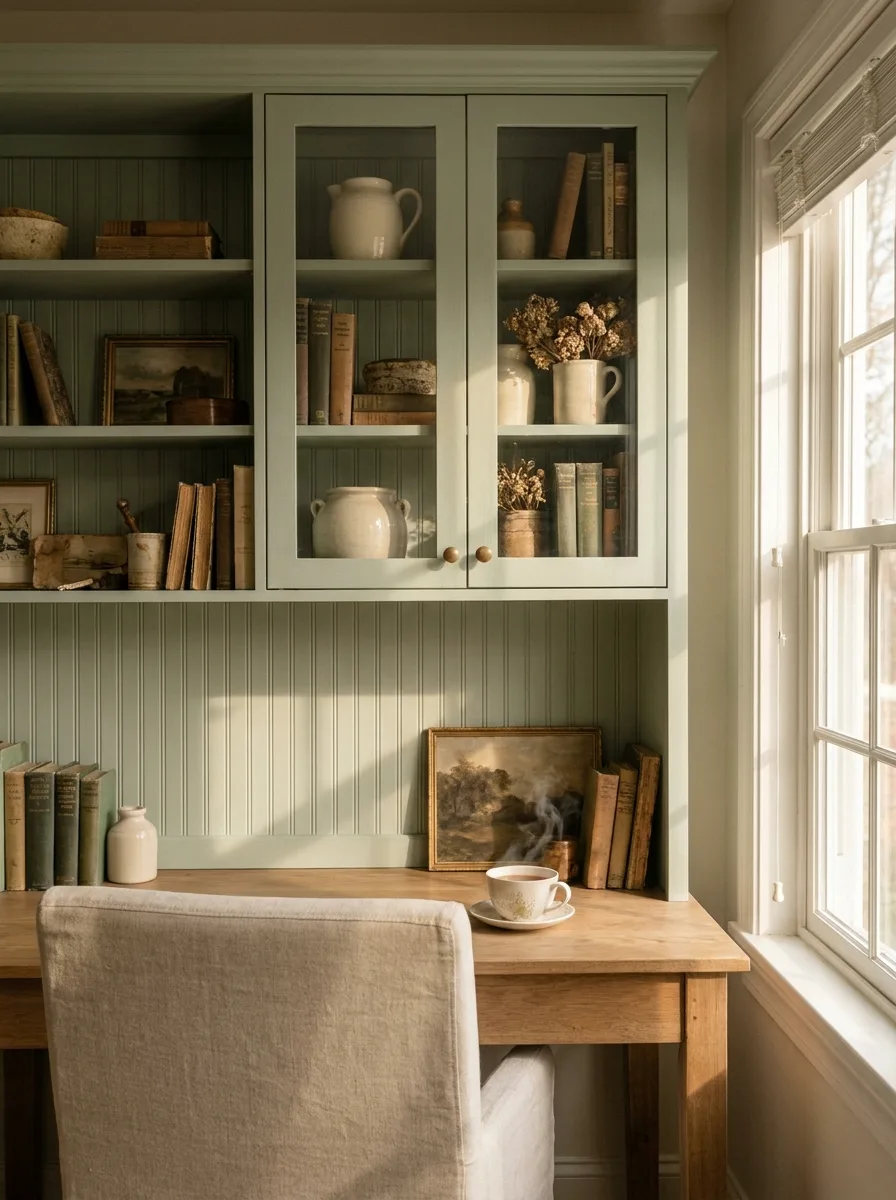
Paint the built-in cabinetry a muted sage green, paired with beadboard panelling running behind the open shelves. The beadboard texture keeps a fully painted piece from reading as flat, even in a single solid colour.
Use glass-front doors on the central cabinet section to display a tight collection of ironstone pitchers and old book spines. The glass adds a layer of protection for delicate vintage pieces while still keeping them visible.
Fill the open shelves flanking the glass cabinet with unmatched antique books and a single small oil painting propped rather than hung. Unmatched spines in varying heights and colours are what keep this from looking like a showroom display.
Finish with a steaming mug and a well-worn book on the desk surface below. A visible trace of actual use is what separates a styled cottage hutch from a museum piece pretending to be one.
Cubby Hutch With Leaning Prints
Choose a hutch with simple open cubbies rather than adjustable shelving — the fixed grid is what gives this look its clean, modular structure. Three or four evenly sized cubbies work better than one large opening.
Fill each cubby with one distinct category of object: a woven basket in one, a stack of books in another, a small round box in a third. One object type per cubby keeps a small hutch from feeling crowded.
Lean two or three framed prints against the top of the hutch rather than mounting them on the wall above. The lean lets the art travel with the desk if it ever gets rearranged, and it keeps the top surface from looking bare.
Tuck a small lamp and a pencil cup onto the desk surface itself, positioned to one side rather than centred. Off-centre desk accessories leave a clear, usable stretch of surface for actual work.
Cottage Floral Hutch
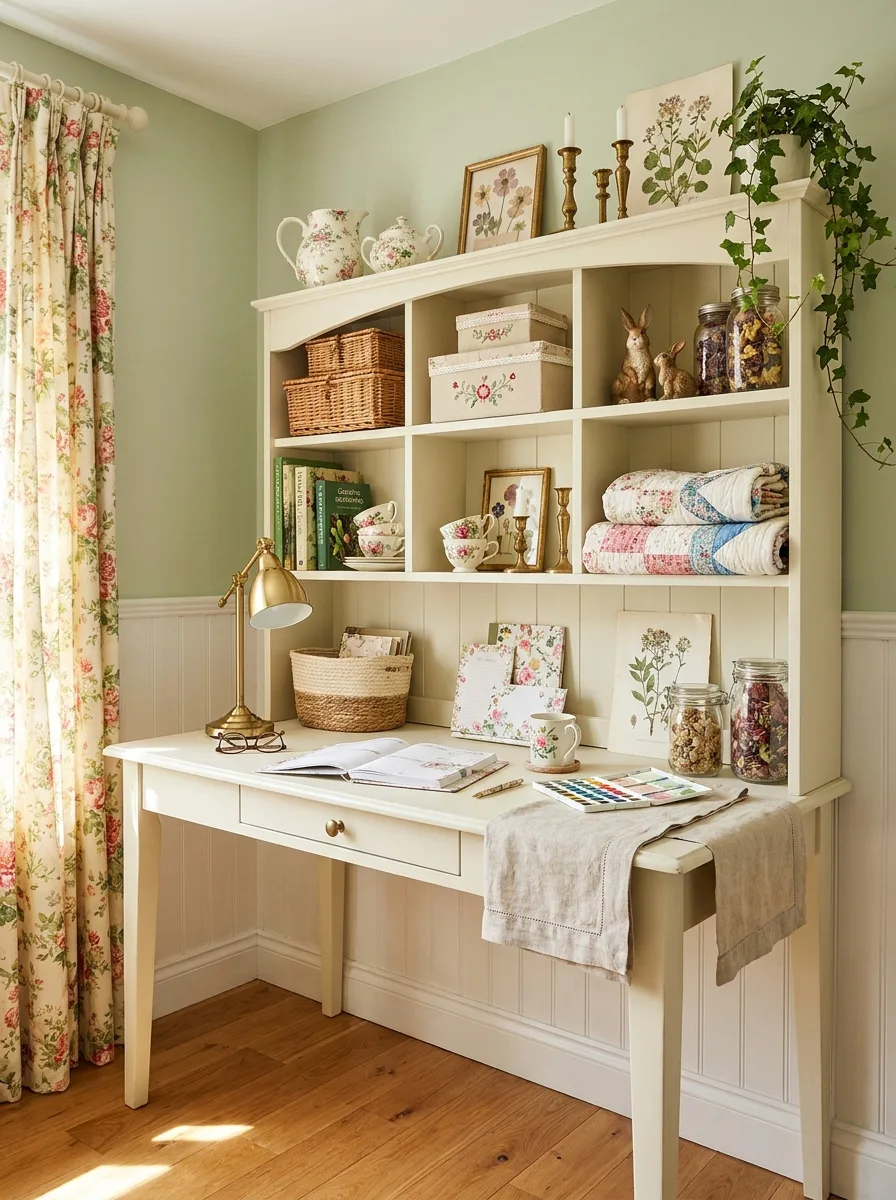
Paint the hutch in a soft cream or ivory rather than stark white, so it reads as vintage rather than new. The slightly warmer tone is what sells the cottage feeling before a single object goes on the shelves.
Fill the open cubbies with a mix of floral-patterned boxes, wicker baskets, and stacked quilted textiles. The pattern mixing is intentional here — cottage styling wants more visual texture than a minimalist hutch would tolerate.
Add one or two small figurines, like ceramic animals, tucked between the practical storage. These read as collected over time rather than purchased for the shelf, which is the whole point of the cottage aesthetic.
Finish the desk surface with a linen runner draped slightly off the edge, along with a small dish of dried botanicals or potpourri. The runner keeps the wood surface from feeling too bare against all the pattern happening above it.
Reclaimed Wood Rustic Hutch
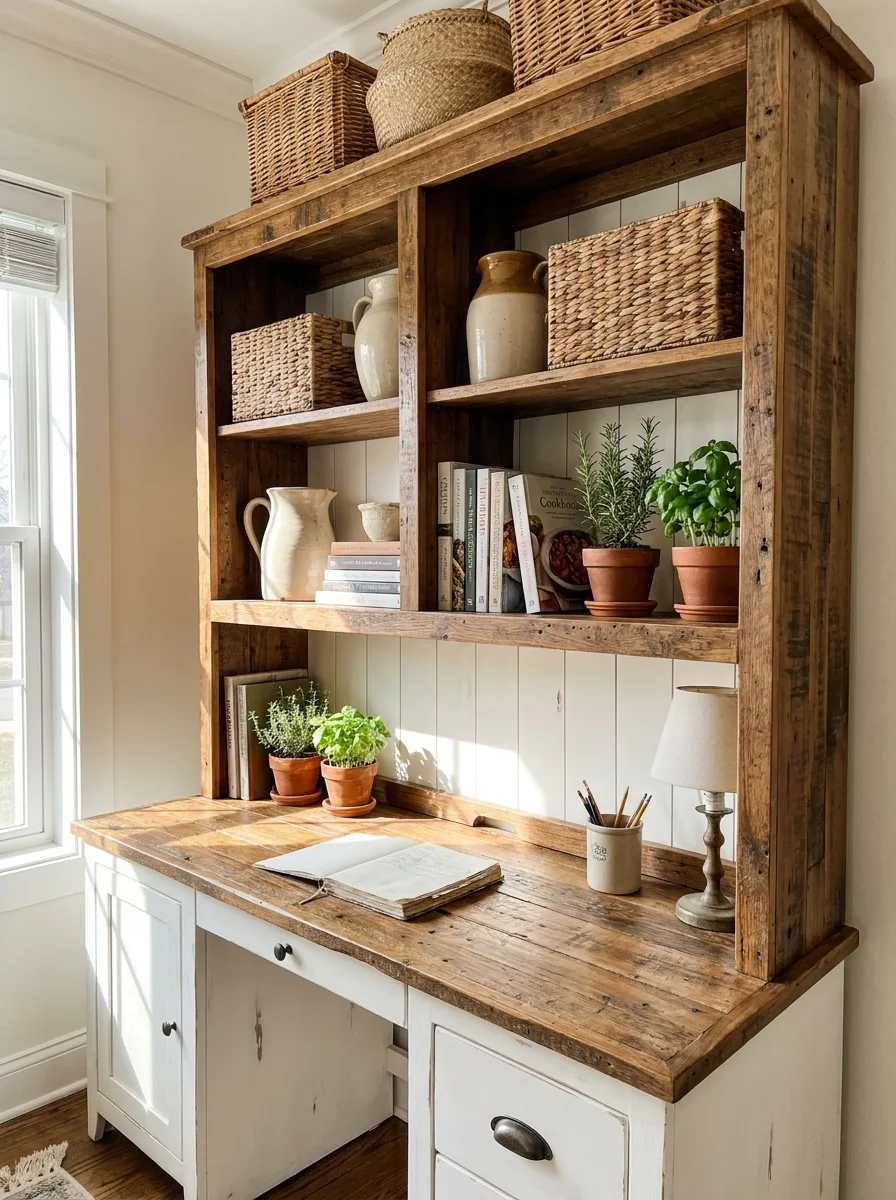
Choose a hutch built from visibly reclaimed or rough-sawn wood, with knots, grain variation, and slightly uneven boards left exposed rather than sanded smooth. The imperfections are the material’s whole value here — a too-polished version of this look defeats the purpose.
Pair the raw wood top structure with a painted white base below, creating a clear material break between storage and desk support. That contrast keeps the reclaimed wood from making the whole piece feel heavy or dark.
Fill the open shelving with stoneware jugs, woven baskets, and small potted herbs rather than anything glossy or new-looking. Every object on the shelf should look like it could have come from the same barn as the wood itself.
Add a single warm ceramic lamp at one end of the desk surface, left slightly asymmetrical rather than centred. The off-centre lamp placement matches the deliberately imperfect character of the wood above it.
Mid-Century Walnut Hutch
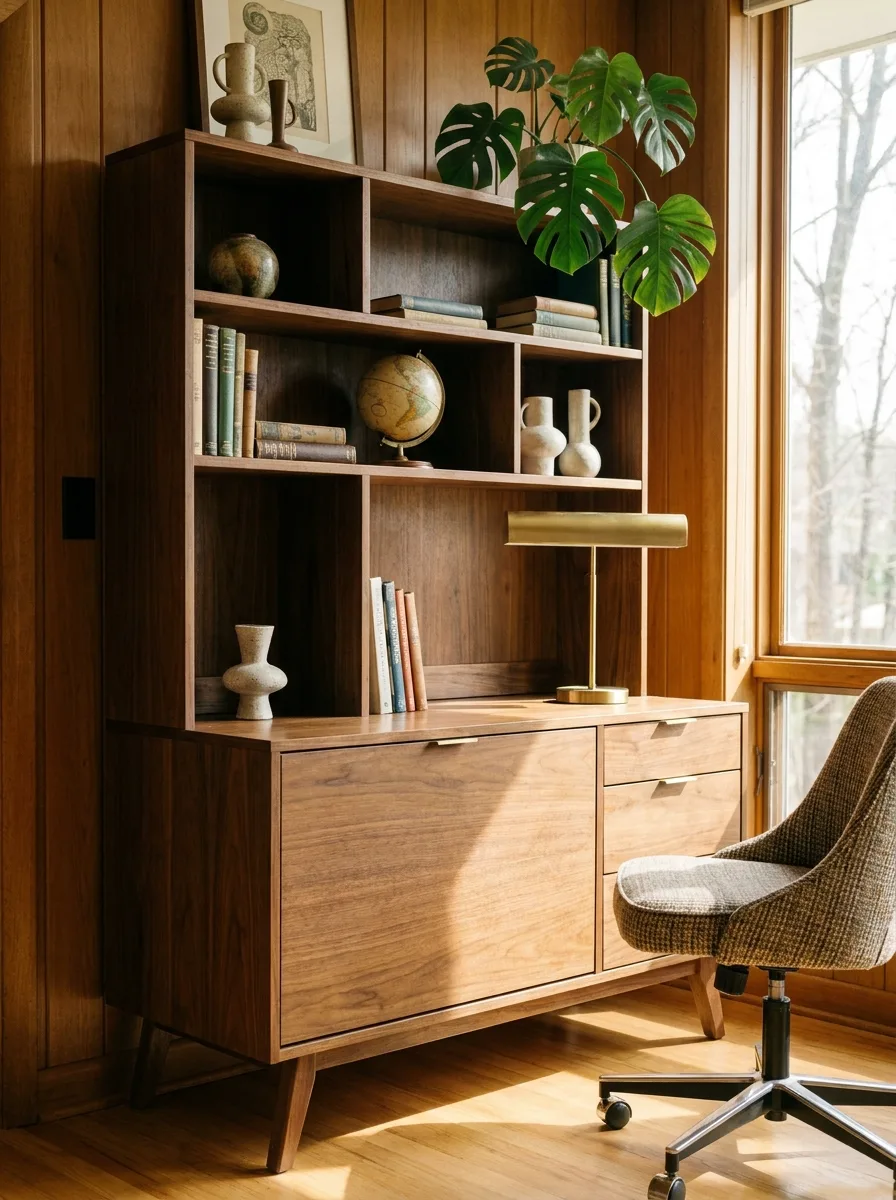
Choose a hutch in warm walnut with tapered, angled legs, matched to a desk base in the same wood tone and leg style. The consistent leg language across both pieces is what makes mid-century furniture read as a set rather than mismatched vintage finds.
Add a vintage-style globe or clock as the hutch’s single statement object, placed on its own shelf rather than crowded among books. Mid-century styling favours one clear focal object per section over even distribution.
Let one oversized plant, like a monstera, spill dramatically over the top of the hutch from a corner position. The scale contrast between the plant’s large leaves and the hutch’s clean geometric lines is a defining move of this style.
Use a brass gooseneck or articulating lamp rather than a boxy modern one. The warm metal and curved silhouette echo the era the rest of the piece is drawing from without needing to match the wood tone directly.
Vintage Painted Blue Hutch
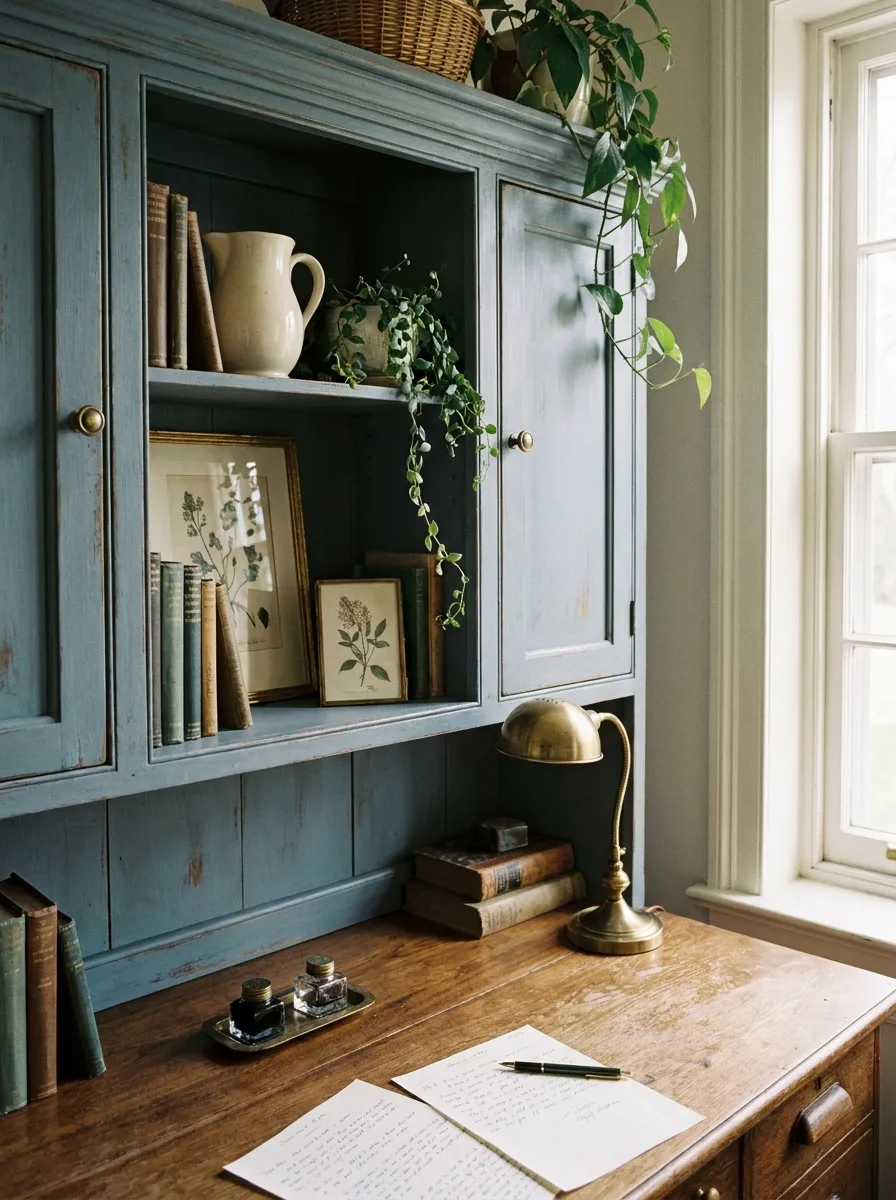
Choose a hutch with visible paint wear — chipped edges, worn corners — in a muted, dusty blue rather than a flat, uniform finish. The distressing needs to look earned, concentrated on edges and handles where real wear would actually happen.
Fill the shelves with a mix of old leather-bound books, ironstone pitchers, and small framed botanical prints leaned rather than hung. Nothing on this hutch should look like it was purchased within the last decade, even if it was.
Add one glass-fronted cabinet door left slightly ajar rather than fully shut. A door caught mid-open reads as lived-in in a way a perfectly closed cabinet never will.
Finish the desk below with handwritten correspondence, a fountain pen, and an antique brass lamp with a domed shade. These small props do more to sell the vintage narrative than the hutch itself — they suggest someone was just here, writing.
Narrow Apartment Bookcase Desk
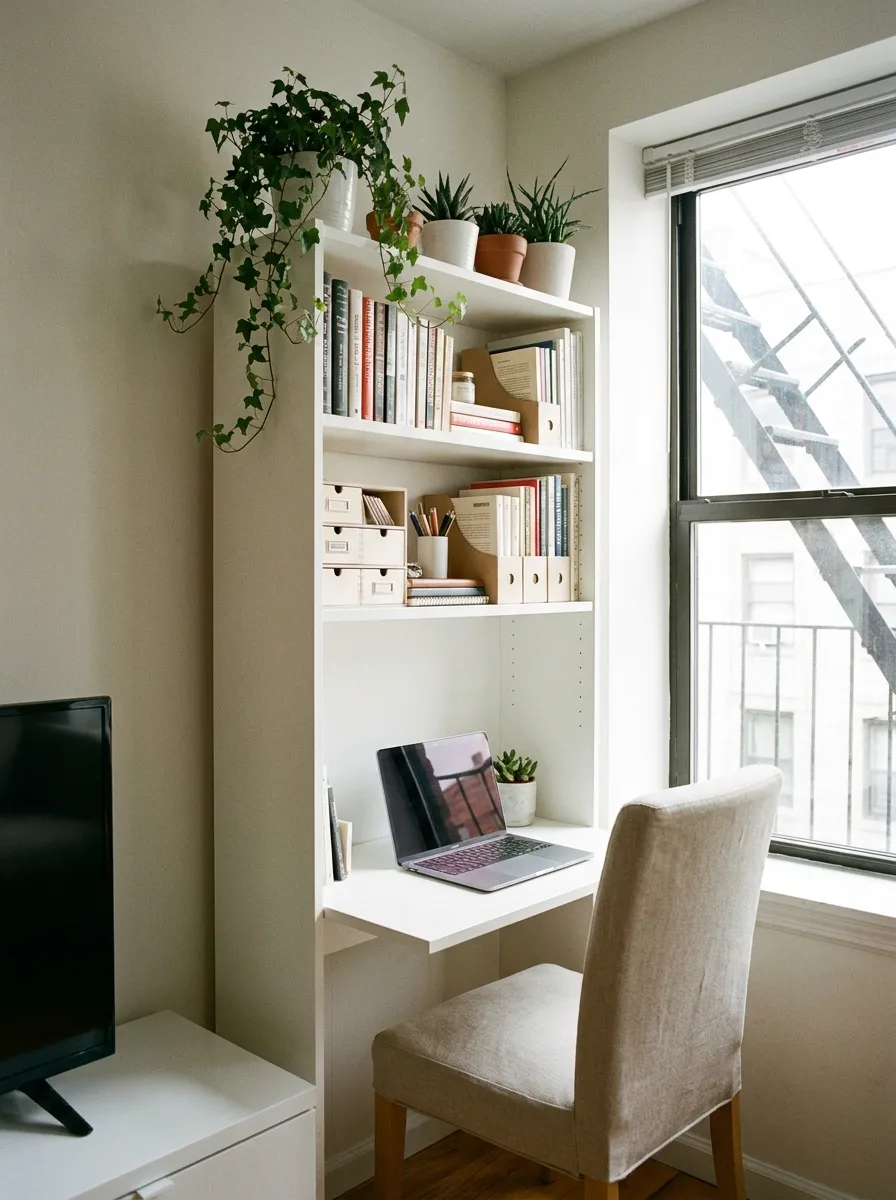
Choose a single tall, narrow unit that combines shelving and a fold-out or built-in desk surface rather than two separate pieces. In a small apartment, one vertical unit saves floor space that two furniture pieces never could.
Stack labelled storage boxes on the middle shelves to handle overflow that would otherwise clutter the desk surface. Uniform boxes in a matching material read as organised even when what’s inside them isn’t.
Let a trailing plant cascade from the very top of the unit down past several shelves. In a narrow footprint, vertical greenery does the visual softening that a wide plant arrangement would do in a bigger room.
Keep the desk surface itself limited to only what’s used daily — laptop, one small plant, nothing else. A narrow desk can’t absorb clutter the way a wide one can, so the discipline has to happen here even if it’s looser everywhere else.
Scandinavian Oak Cubby Hutch
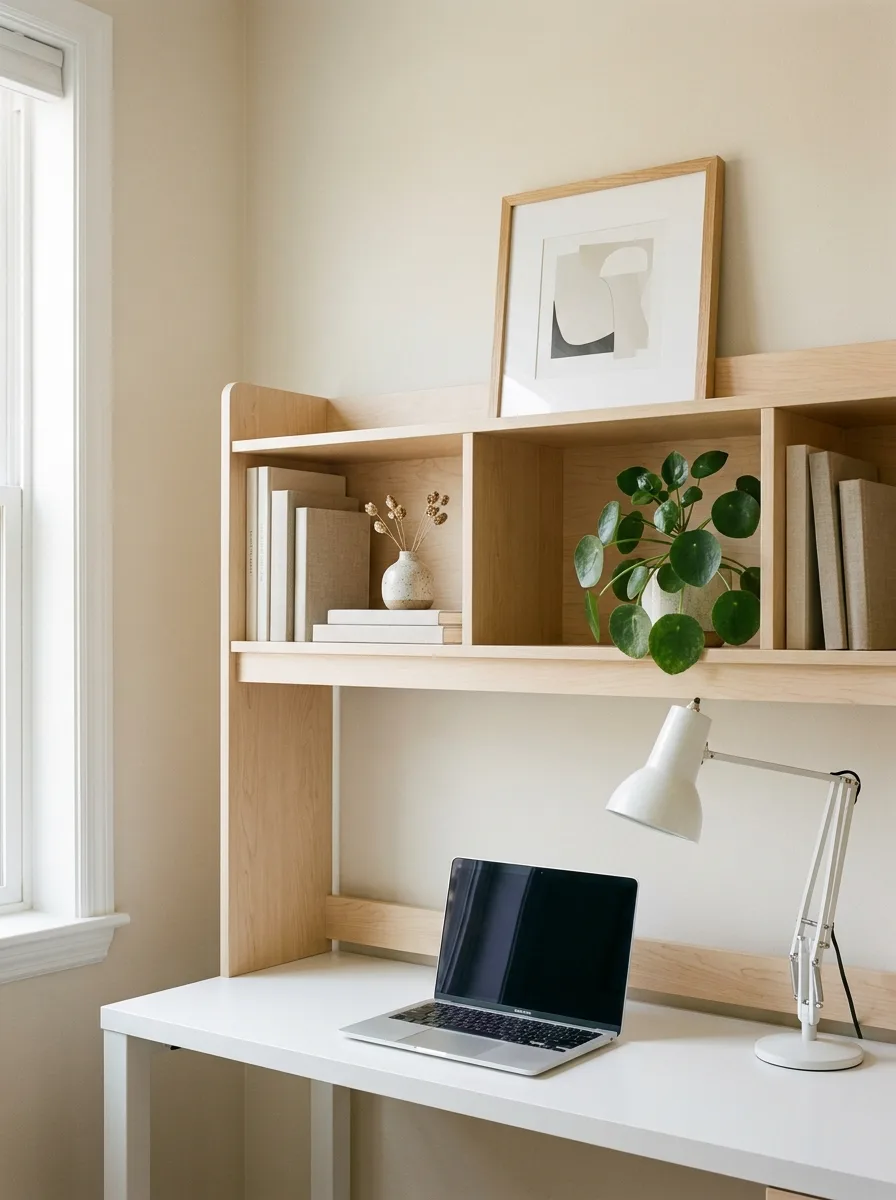
Choose a light oak hutch with simple, unadorned cubbies rather than anything ornate. The pale, consistent wood tone is the entire aesthetic — resist the urge to paint or stain it darker.
Leave at least one cubby entirely empty or holding just a single small object. Scandinavian styling depends on restraint; a hutch with every cubby filled to capacity undercuts the whole point.
Lean a single framed abstract print against the back of the top shelf rather than displaying multiple pieces. One quiet piece of art is enough when the wood tone and negative space are already doing most of the visual work.
Add one round-leafed plant, like a pilea, positioned so its leaves just clear the edge of its cubby. The organic round shape is the single curve in an otherwise entirely rectilinear piece, and it needs room to actually show.
Simple White Baskets Hutch
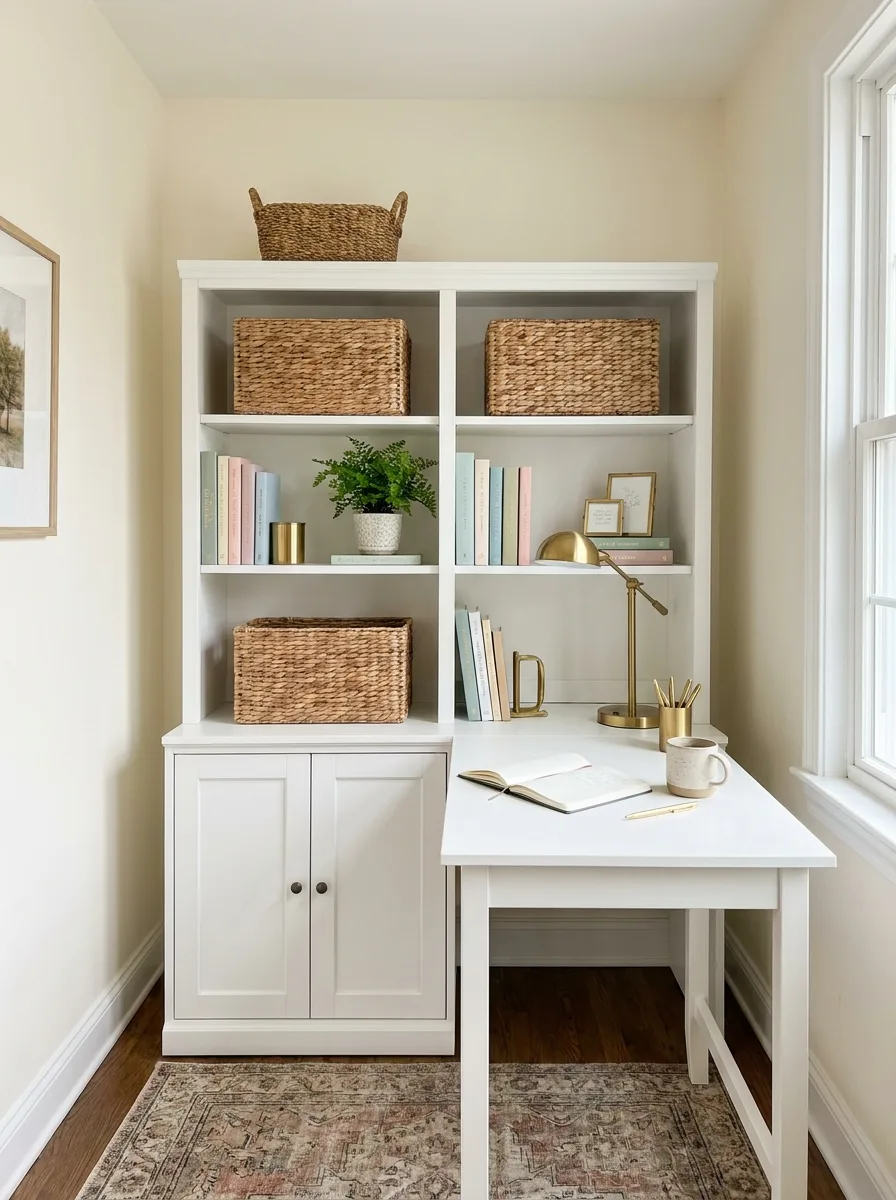
Choose a straightforward white hutch with a closed cabinet base and open cubbies above, rather than anything elaborate. The simplicity is the point — this is the version of a hutch that prioritises function without sacrificing warmth.
Fill the top cubbies with matching woven baskets in a consistent size, using the middle shelf for a small run of pastel book spines and a single plant. The baskets do the heavy storage lifting so the visible shelf can stay lightly styled.
Add one small framed print or photo tucked between the books rather than displayed prominently. A modest, personal touch here keeps the whole piece from feeling like a furniture showroom sample.
Finish the desk with a brass lamp and a small cup holding pens, positioned toward one side. Leaving the rest of the surface clear gives this simple hutch room to actually get used, which was always the goal.
Ribbed Wood Panel Hutch
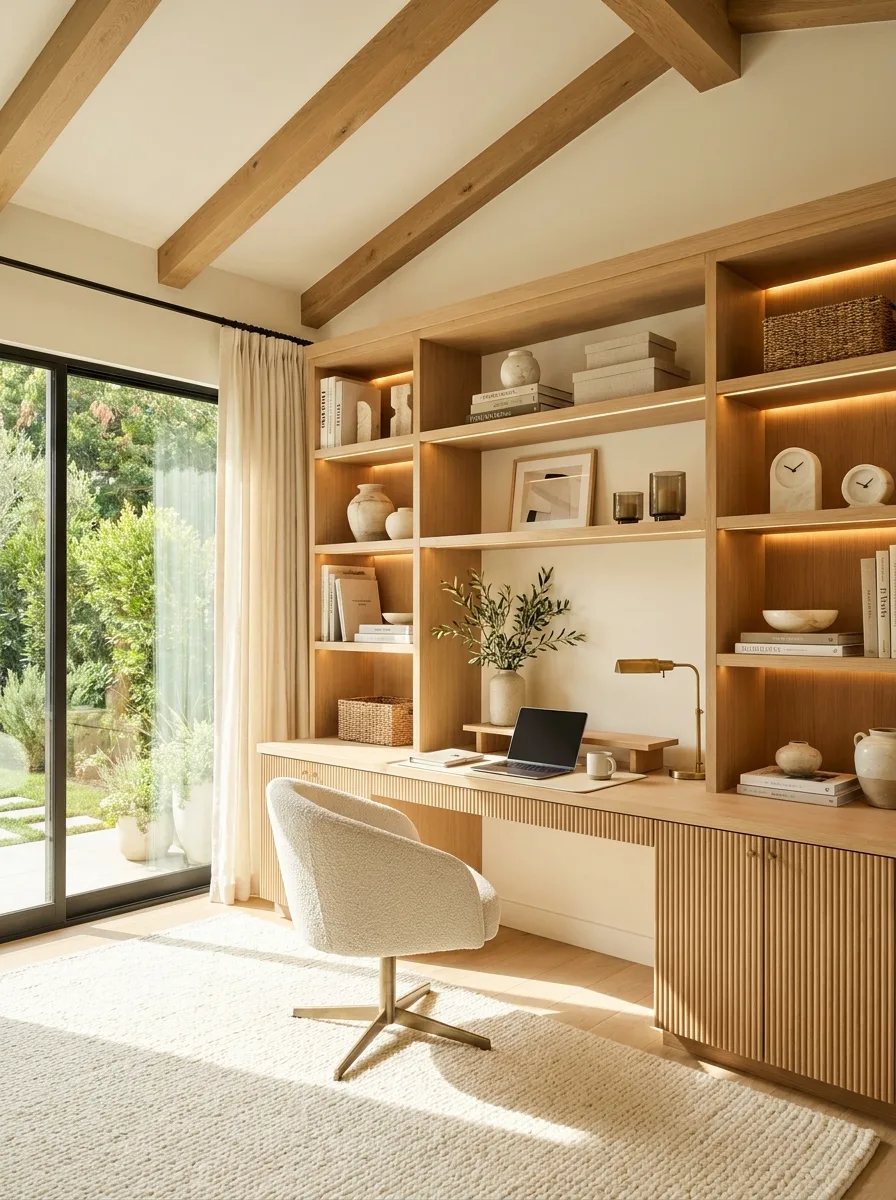
Install the hutch as part of a full built-in wall system, with ribbed or fluted wood paneling running behind the open shelving. The vertical grooves catch light differently than a flat panel would, giving the whole wall texture even before anything’s placed on the shelves.
Run a thin LED light strip along the underside of each shelf, angled to wash down across the ribbed paneling behind it. This is the single move that turns a plain built-in into one that photographs like a showroom.
Style each shelf with a mix of ceramics and books in a tight, warm neutral palette — cream, sand, soft grey. A limited palette lets the texture of the wood and the shelf lighting stay the star, rather than competing with bright colour.
Keep cabinet doors below fully closed and free of hardware clutter. The closed lower section is what lets the open, lit shelving above feel like the featured element instead of one of several competing storage types.
Parisian Glass-Front Hutch
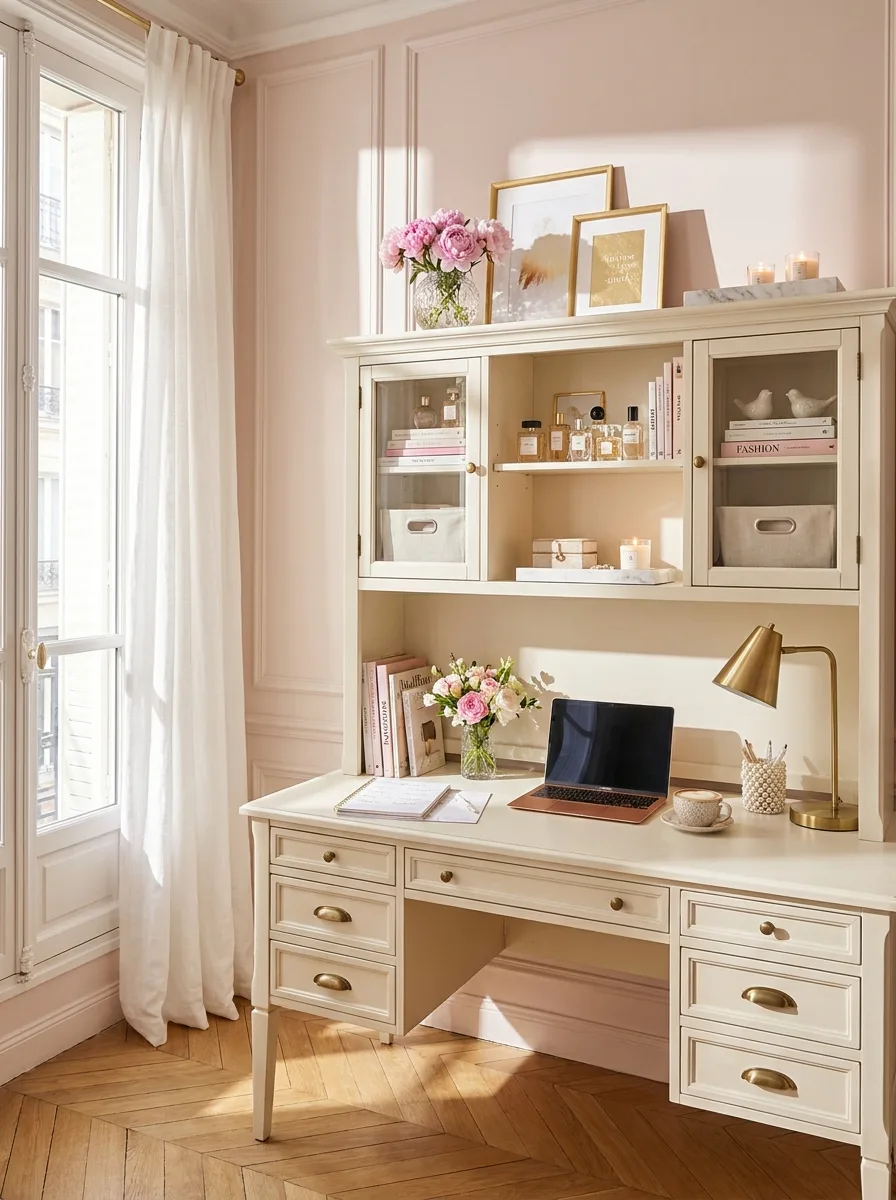
Choose a hutch with glass-front cabinet doors flanking a central open shelf, painted in a soft ivory or off-white. The glass doors let displayed objects show through without needing to keep every single shelf fully open.
Fill the glass-fronted sections with tidy, uniform groupings — matching perfume bottles, stacked books, small decorative boxes. Because the glass slightly diffuses the view, these sections can be a little more packed than fully open shelving could get away with.
Add brass or gold hardware throughout — drawer pulls, a desk lamp, cabinet knobs — to tie the whole piece together. The warm metal is what pushes this from simply French-inspired into fully Parisian.
Style the desk surface with fresh flowers in a glass vase and a small tray corralling daily-use items. Fresh flowers do more for this particular look than any styled object could; they’re the one element that can’t be faked with a static arrangement.
Warm Oak Hidden Storage
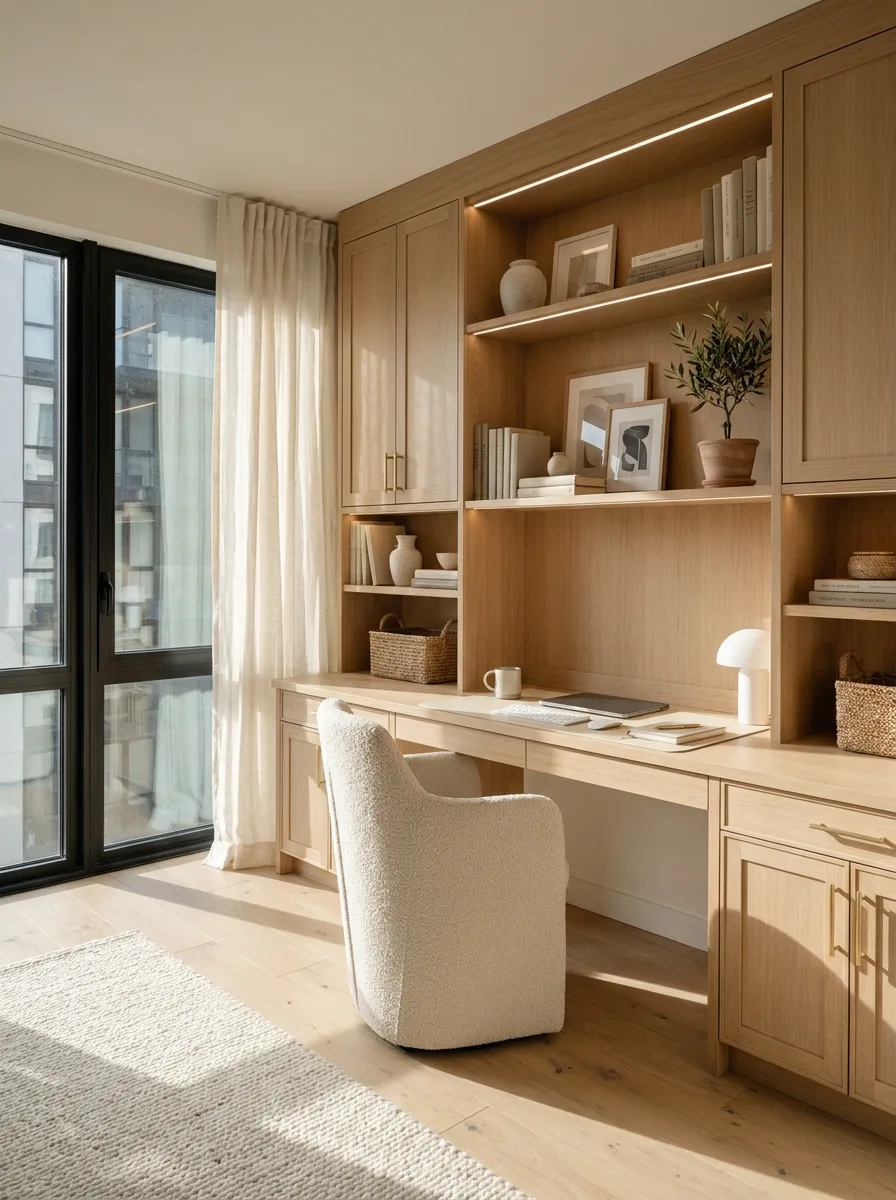
Pair open, lit shelving on one side with fully closed cabinetry on the other, both built from the same light oak so the two storage types read as one continuous unit. The material match is what keeps a mixed open-and-closed layout from looking like two different furniture pieces pushed together.
Add slim brass pulls to every cabinet door, kept identical across the run. Consistent hardware in a warm metal is a small detail, but it’s the one that makes closed storage look chosen rather than default.
Style the open shelving sparsely — one framed print, one small plant, a short stack of books per shelf — and let the LED lighting underneath carry most of the visual interest. Minimal styling paired with warm light reads as calm rather than empty.
Push the desk chair in a matching neutral boucle fabric, angled slightly toward the window rather than dead-on to the desk. The slight angle keeps the whole setup from feeling too symmetrical against a room that already has a lot of straight lines.
Rattan Cane Hutch
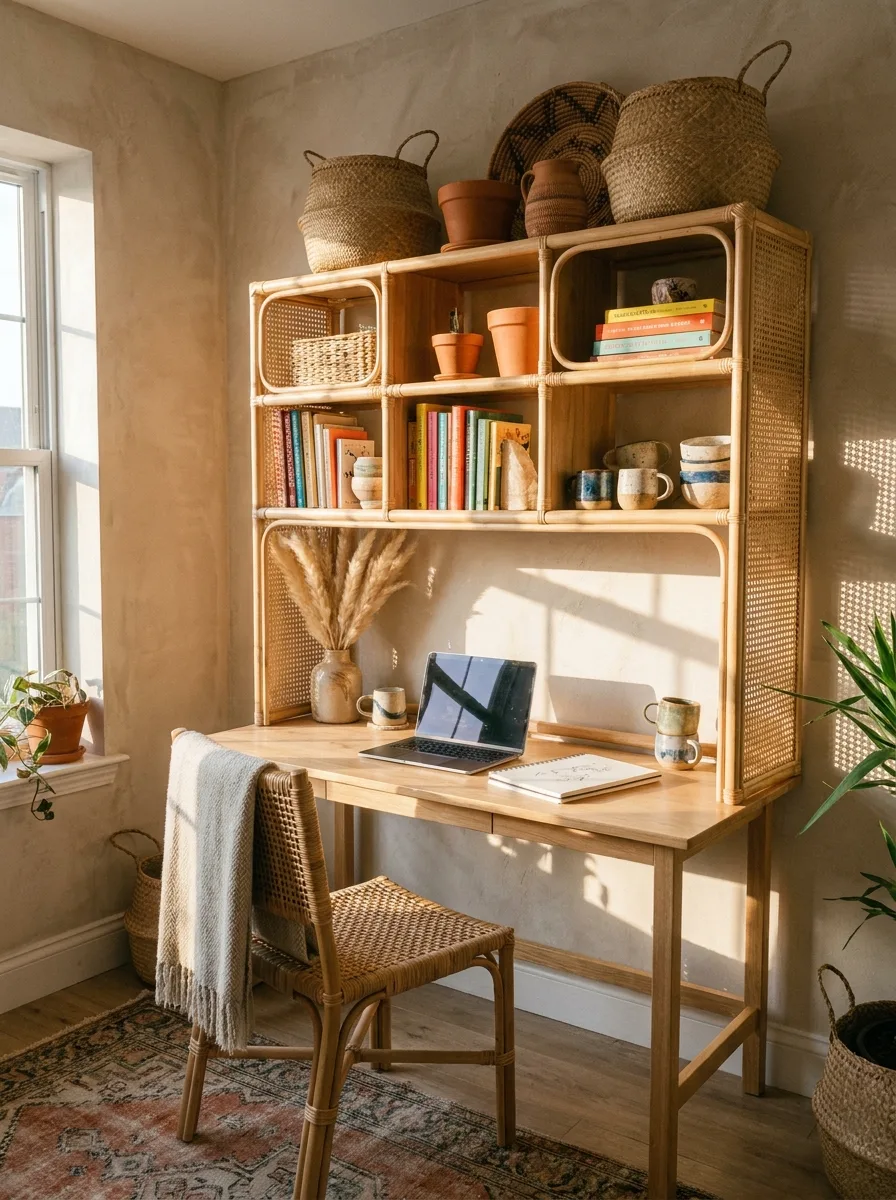
Choose an open-frame rattan or cane hutch rather than a solid-backed one, so light passes through the material instead of stopping at it. The see-through structure is what keeps a piece this textural from feeling heavy in a small room.
Stack woven baskets and terracotta pots along the very top of the hutch, letting a few edges overhang slightly. The slight overhang keeps the top from looking like a shelf that was simply filled in order.
Mix in a run of colourful book spines on one middle shelf as the single saturated element among all the natural material. One bright shelf is enough — surround it with neutral ceramics and baskets so it reads as a highlight, not a clash.
Drape a woven throw over the matching cane desk chair, letting it fall unevenly rather than folded square. The imperfect drape matches the handmade irregularity already built into the rattan itself.
Corner Built-In Bookcase Hutch
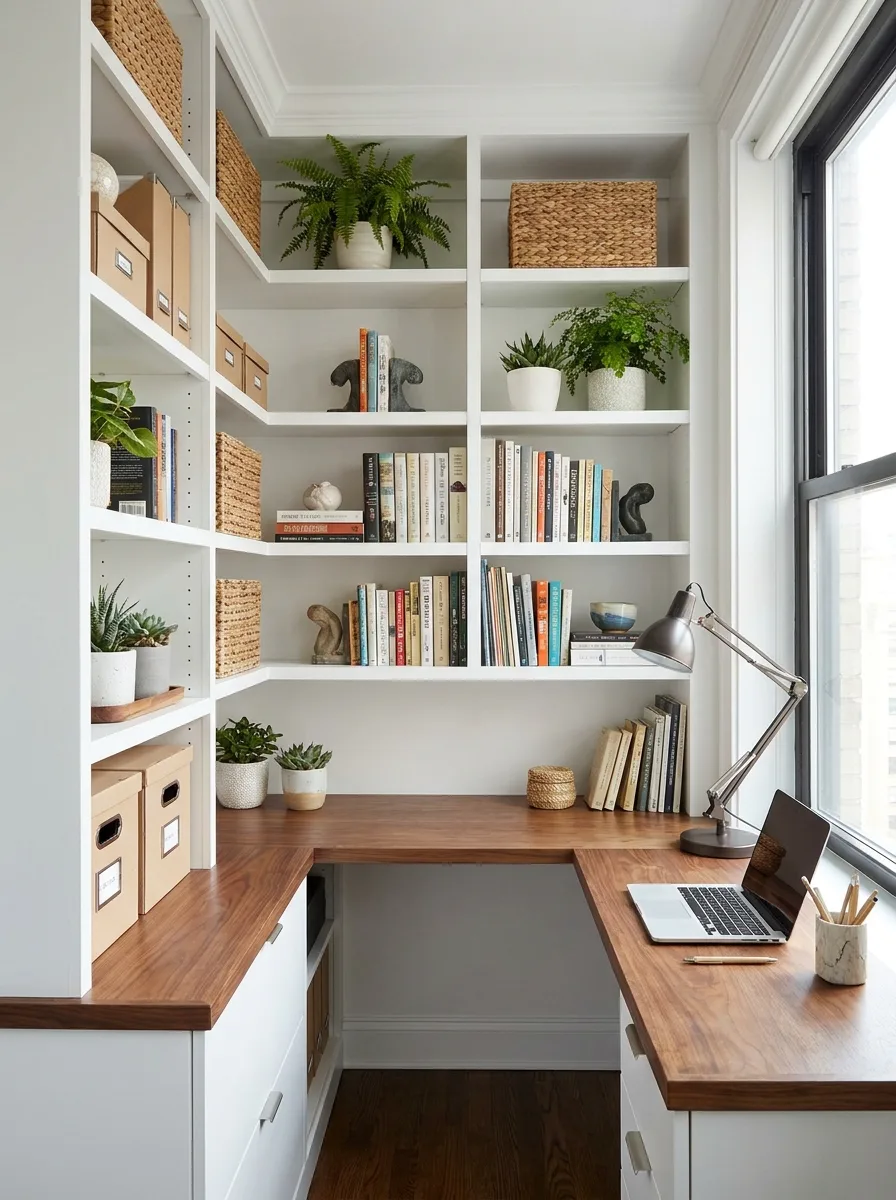
Wrap the shelving around an interior corner rather than stopping at one wall, so the desk surface below can wrap with it into an L-shape. The corner wrap turns a single wall of storage into a full workstation with double the surface area.
Alternate books with small plants and labelled storage boxes across the run, rather than filling every shelf with the same category. The rhythm of book-plant-box-book keeps a long run of shelving from reading as monotonous.
Use a contrasting wood tone for the desk surface against white or painted shelving above. The material shift signals where the “storage” zone ends and the “work” zone begins, even without a physical break between them.
Keep the corner itself — where the two runs of shelving meet — reserved for the tallest or most architectural object, like a large plant or sculptural vase. That anchor piece is what keeps the eye from losing track of the wraparound shape.
Farmhouse Terracotta Hutch
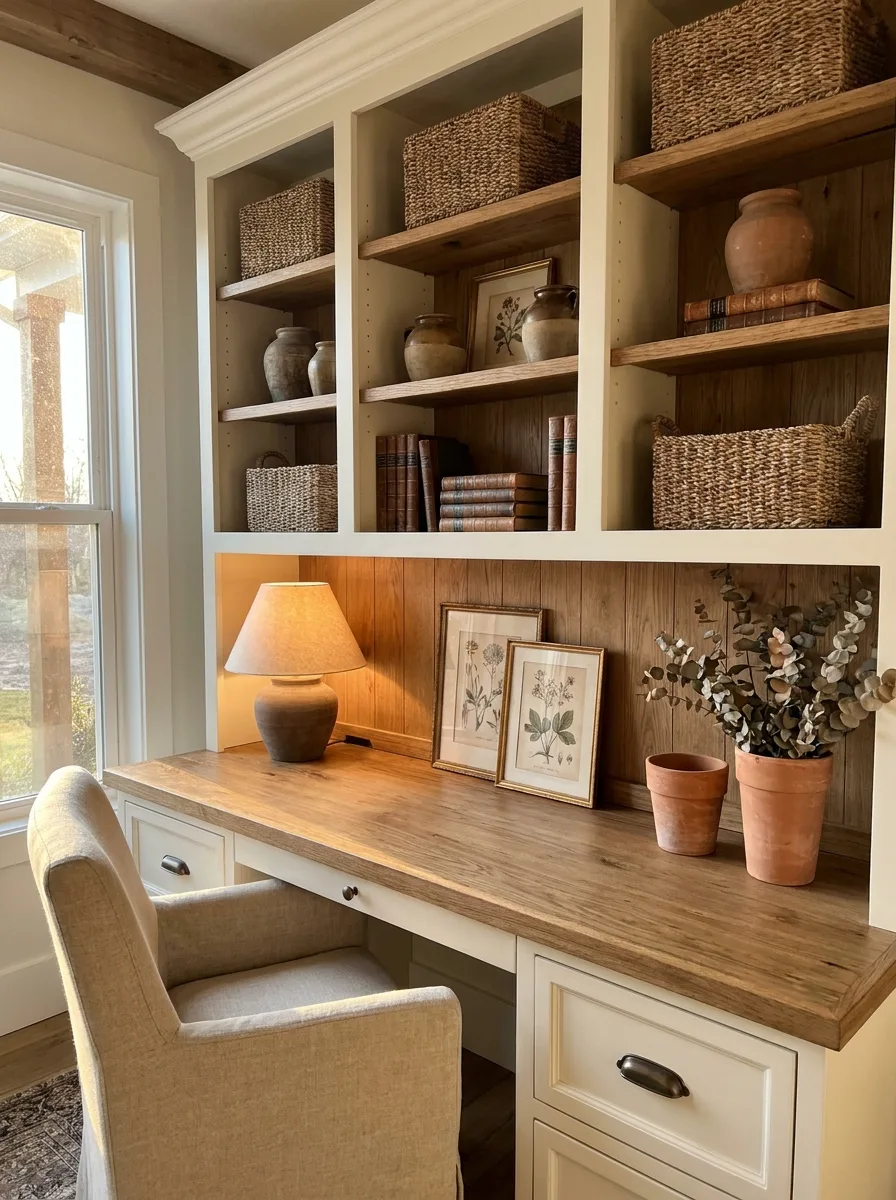
Choose a cream-painted hutch with a warm wood countertop rather than matching paint on every surface. The material contrast between the painted cabinetry and the raw wood desk is what gives this its farmhouse identity.
Fill the open cubbies with a mix of stoneware pitchers, leather-bound books, and woven baskets in varying sizes. Uneven sizing across the cubbies is intentional — a farmhouse hutch should look gathered over years, not bought as a set.
Lean two small framed botanical prints directly on the desk surface against the shelving above, rather than displaying them higher up. Keeping the art at eye level while seated is a small trick that makes the whole setup feel more considered.
Add a cluster of terracotta pots with real greenery at one end of the desk. Live plants in unglazed terracotta do more for this look than any styled object could — the raw clay finish is doing half the aesthetic work by itself.
Eclectic Rainbow Bookcase Hutch
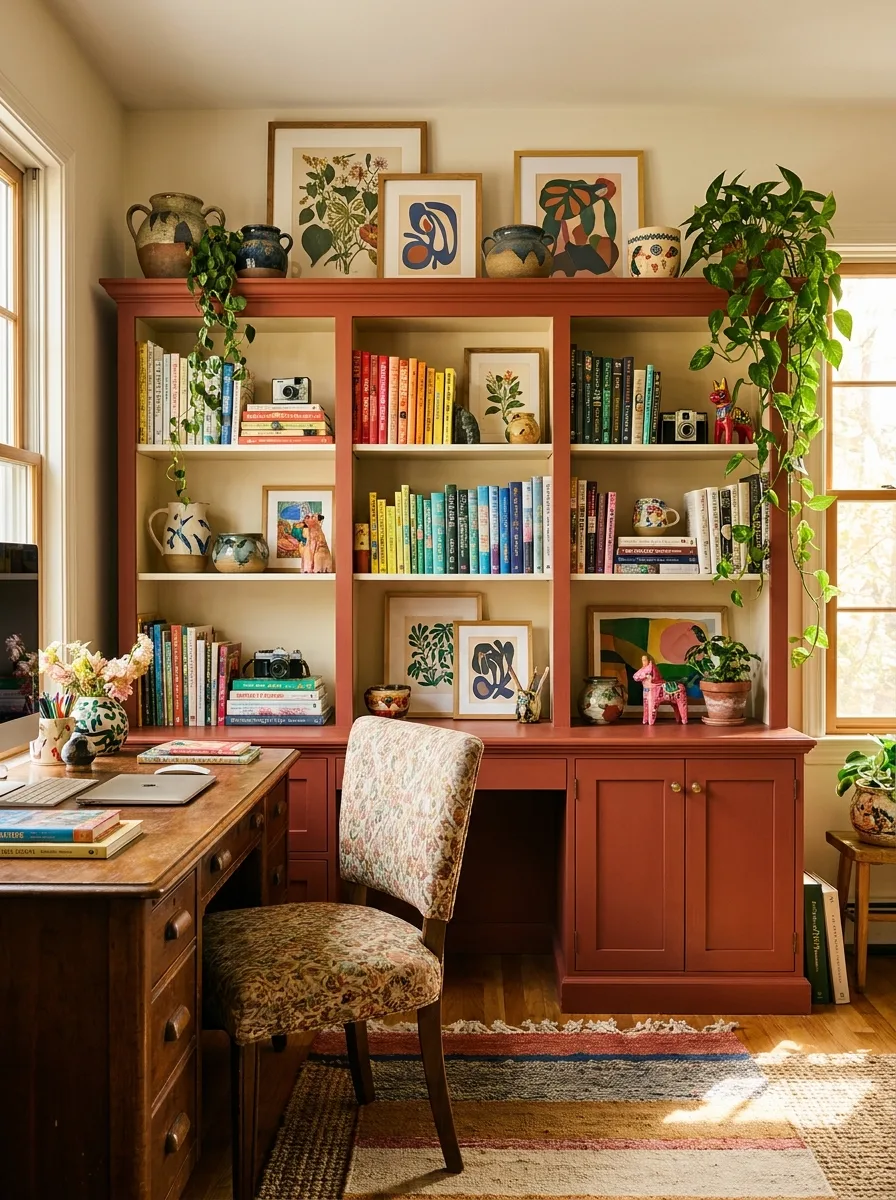
Paint the hutch frame in a saturated, warm colour — terracotta, rust, brick — rather than leaving it neutral. The bold frame is the foundation everything else gets built on top of, so commit to it fully rather than a muted version.
Organise the books by colour across the shelves rather than by subject or size. A full rainbow gradient running across several shelves is the single most effective trick for making a busy, maximalist hutch still feel organised.
Layer framed art both inside the shelving and lined up along the very top edge. Doubling the art — some tucked into cubbies, some standing along the crown — gives the eye two separate heights to travel across instead of one flat row.
Let trailing plants spill over both outer edges of the hutch rather than centring the greenery. Plants at the edges frame the whole piece and stop the eye from reading it as a hard rectangle against the wall.
Fluted Panel LED Hutch
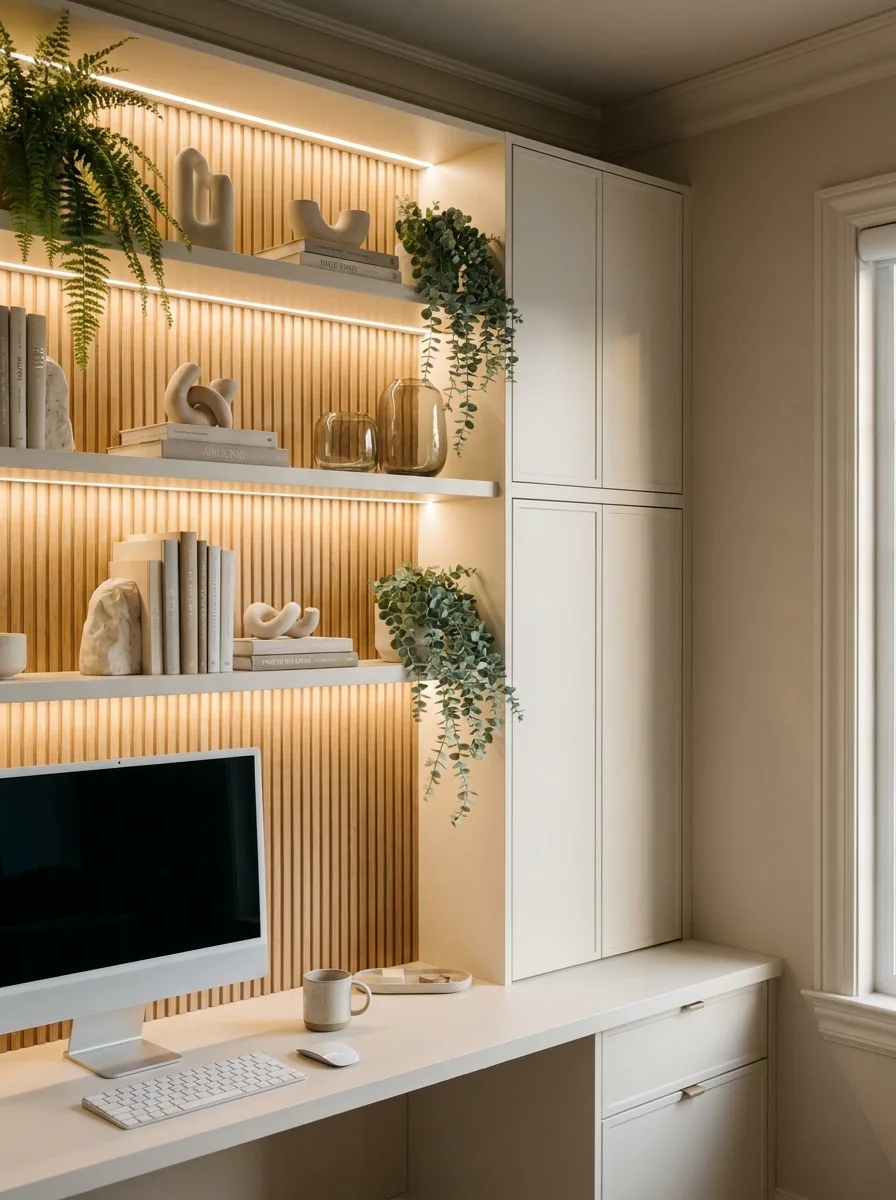
Build the shelving directly into a wall of matching fluted wood panels, so the grooves run continuously behind both the open shelves and the closed cabinet doors beside them. Continuity across open and closed sections is what makes this read as one architectural piece instead of separate furniture.
Run warm LED lighting beneath every open shelf, positioned to catch the ridges of the fluting behind it. The light needs to graze the panel at an angle, not shine flat against it, or the texture disappears.
Keep the objects on each shelf sparse and sculptural — a single ceramic form, a stack of two or three books, one small plant. This look depends on negative space between objects; crowding the shelves would compete with the panel’s own texture.
Position the desk setup — monitor, keyboard, single mug — dead centre beneath the lit shelving. Centring the workstation under the most detailed part of the wall keeps the whole thing feeling like a considered composition, not a shelf someone happened to work under.
Final Thoughts
A hutch is the rare piece of furniture that has to do two jobs at once — hold what a desk can’t, and say something about the person sitting at it. Most furniture only has to manage one.
The ones that succeed never treated storage and personality as separate problems. The basket that hides the cable mess and the vase that makes the shelf worth looking at were chosen with the same amount of care.
That’s really the whole lesson here. A shelf full of things you actually own, arranged with a little intention, will always beat a shelf full of things bought specifically to be looked at.
Stop working at a bare table. Give the wall behind it something to say.