
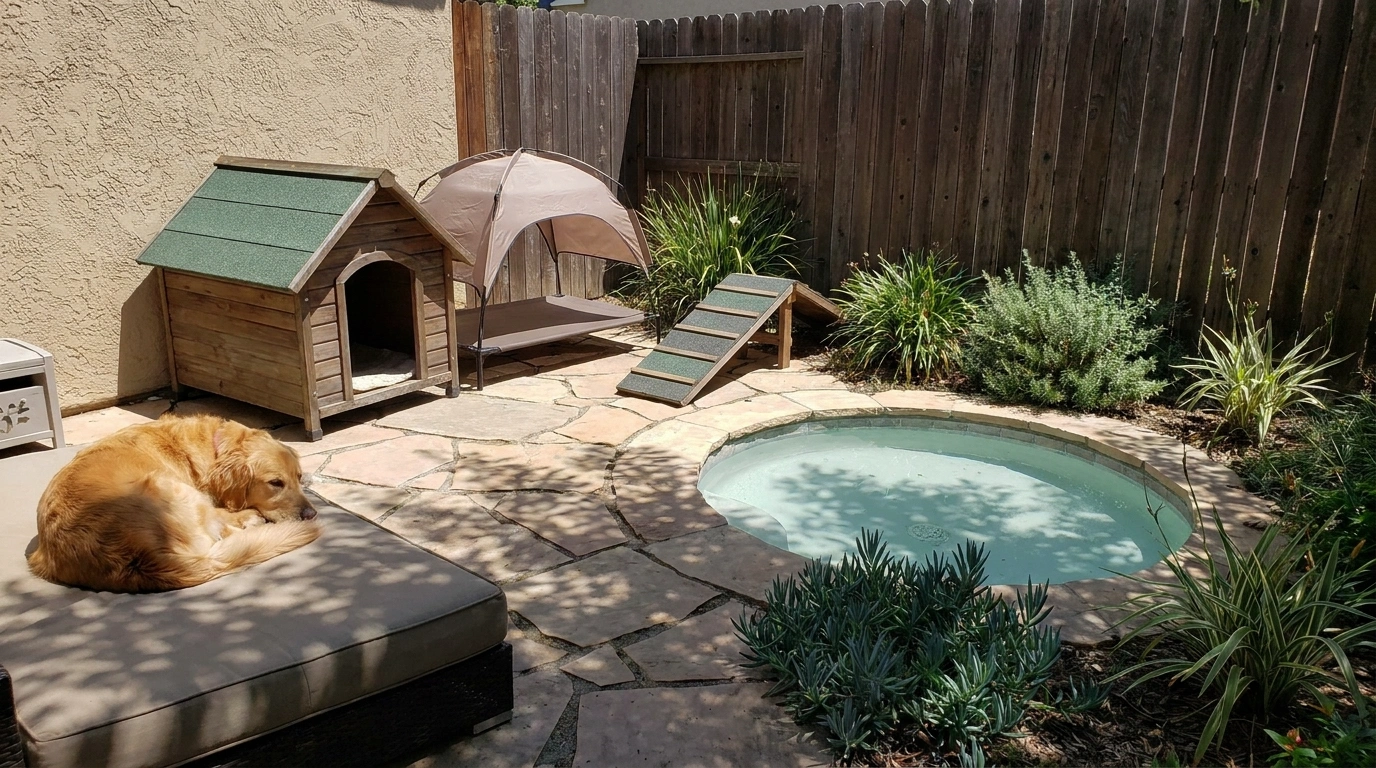
A backyard can be spacious, attractive, and still have nowhere that feels right for a dog to settle. The usual problem is that the pet area gets squeezed into whatever space remains after the patio, plants, furniture, and pathways have already been planned.
A better approach is to treat the dog corner as part of the landscape from the beginning. Shade, privacy, surfaces, drainage, planting, access, and nearby seating can all work together without making the backyard look like a dedicated pet facility.
These Backyard Dog Corner Ideas focus on complete finished compositions. Each concept takes a different design direction, so the dog area feels connected to the architecture and landscape around it. The result can be rustic, modern, compact, lush, contemporary, or highly integrated depending on the backyard.
Choose the Right Backyard Dog Corner Style
| Backyard Setting | Strongest Design Direction | Key Visual Feature | Design Priority |
|---|---|---|---|
| Small urban yard | Compact contemporary | Vertical planting and built-in shelter | Use every layer of the space |
| Large landscaped yard | Natural garden retreat | Layered planting around a resting nook | Blend the dog zone into the landscape |
| Modern patio | Architectural dog lounge | Matching wood, stone, and fencing | Keep materials visually connected |
| Rain-prone yard | Covered practical retreat | Roof cover and drainage-focused surfaces | Control water and cleanup |
| Family activity yard | Multi-zone backyard | Separate play, rest, and seating areas | Keep traffic flowing between zones |
Backyard Dog Corner Ideas
Miniature Cottage Retreat With Stepping Stones
This delightful mini cottage serves as the focal point for a dedicated canine landscape, complete with a charming red-trimmed perimeter. White gravel flanks the structure while rich brown mulch covers the rest of the zone, creating a tidy and organized surface.
A whimsical pathway made of irregular terracotta stepping stones winds through the center, bordered by short log edging and soft green foliage. A low-profile bird bath sits nearby, introducing a playful touch that encourages local wildlife to visit the shared yard.
The secret here is scale and definition. Framing the dog corner with a bold, colorful border keeps the space feeling intentional while completely separating the pet zone from the main lawn area.
Shaded Modern Dog Lounge Beside a Covered Patio
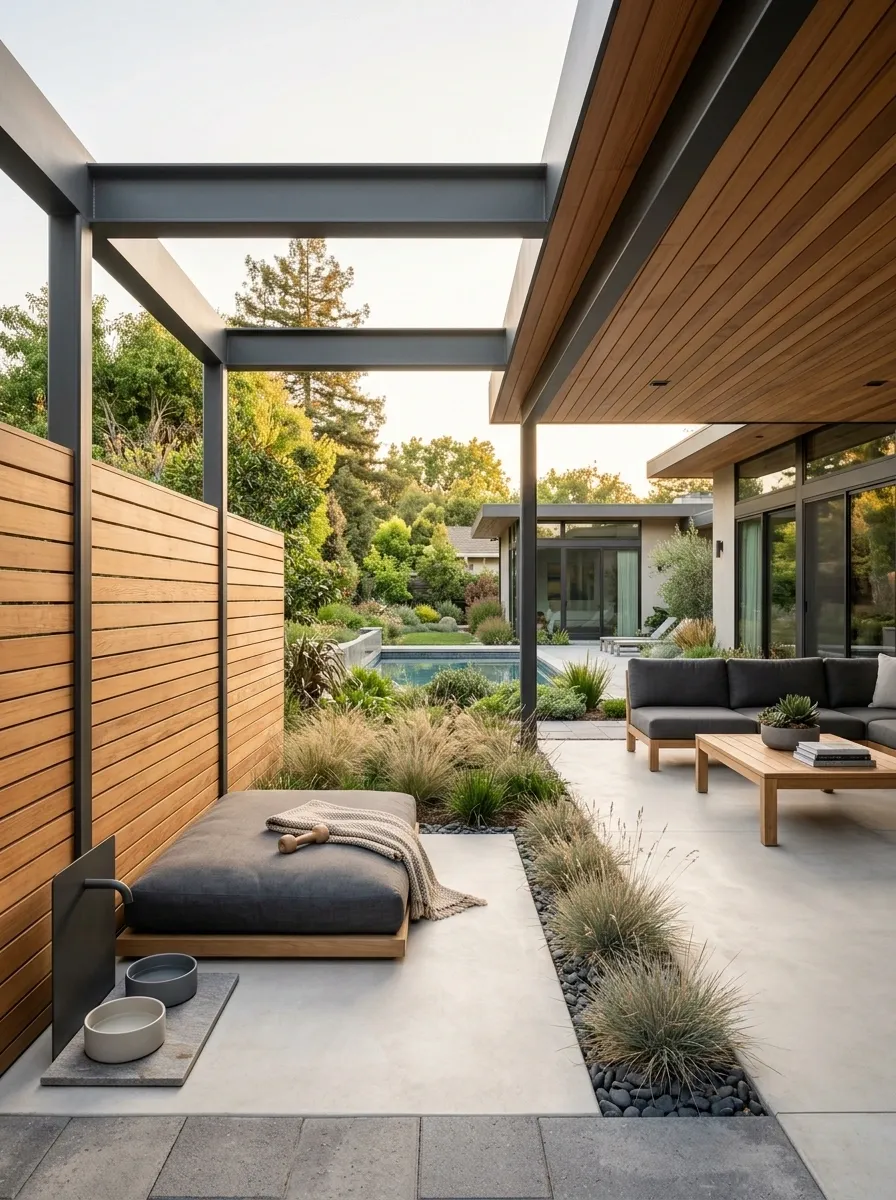
The dog area sits directly beside a clean-lined covered patio, so it feels like part of the outdoor living space rather than a separate enclosure. Warm cedar panels soften pale concrete paving, while a broad overhead roof creates a shaded resting zone.
A low-profile dog bed sits against the timber wall, with a simple water station nearby and a narrow planted strip separating the retreat from the main seating area. The palette stays restrained, with charcoal accents, warm wood, soft stone, and muted greenery.
The key is proximity. The dog stays close to the activity without sitting directly in the busiest walking path. Keep the surrounding furniture visually quiet so the built-in dog lounge retains its architectural character.
Modern Enclosed Dog Lounge With Roof Canopy
A sleek wire-mesh enclosure turns this side yard into a secure and stylish dog retreat. Set against crisp white boundary walls, the space features a corrugated overhead roof that provides essential weather protection for resting pets.
A contemporary wooden dog house sits at the back, paired with a comfortable dark gray lounge bed for ultimate relaxation. The black metal framework introduces clean architectural lines that contrast sharply with the bright green turf below.
Functionality meets high design in this layout by utilizing vertical boundaries and open-air fencing. Keeping the perimeter transparent allows the small yard to feel expansive while maintaining a safe containment zone for active dogs.
Rustic Dog Retreat Under a Mature Backyard Tree
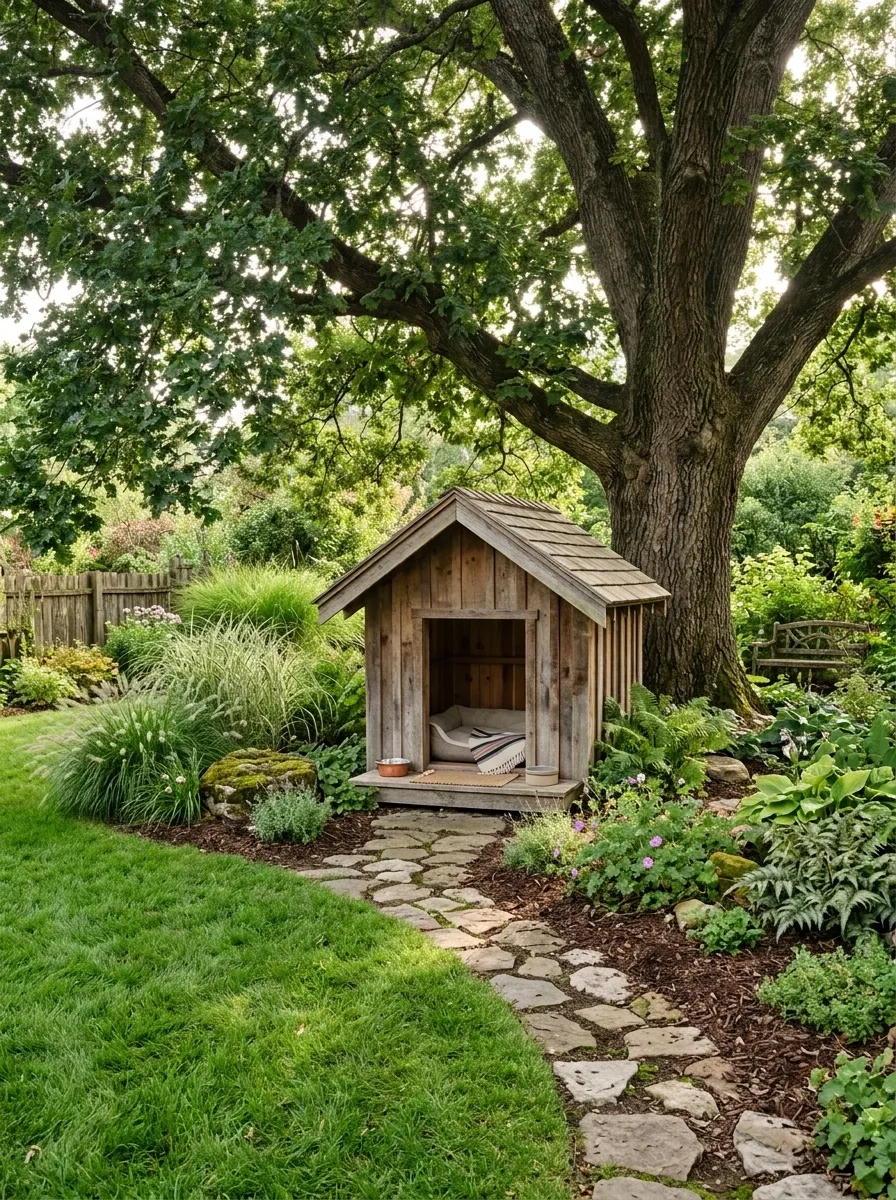
A mature tree becomes the natural roof for this relaxed dog retreat. Instead of building a highly finished structure, the composition uses weathered timber, irregular fieldstone, mulch, and soft garden planting around a simple covered shelter.
The shelter sits slightly back from the main lawn, giving the dog a calmer place to settle while keeping the yard visually open. A short stone path leads toward the nook, and the planting is layered loosely rather than clipped into rigid shapes.
The dog corner borrows its character from the existing garden. New materials don’t have to match perfectly. They just need to feel compatible with the age and texture of the landscape.
Two-Story Timber Dog Mansion With Balcony
Taking backyard pet architecture to the next level, this two-story wooden mansion features a covered ground-level den and an open upper observation deck. Sturdy timber posts support the structure, accented by dark railings and stairs.
One adventurous dog surveys the yard from the upper balcony while another greets visitors from the shaded lower porch. The entire setup rests neatly against a clean white fence, blending seamlessly with standard suburban backyard boundaries.
This vertical design maximizes entertainment value without swallowing excessive lawn space. Building upward gives large dogs multiple vantage points while keeping the footprint compact enough for everyday family routines.
Compact Urban Dog Corner on a Small Paved Yard
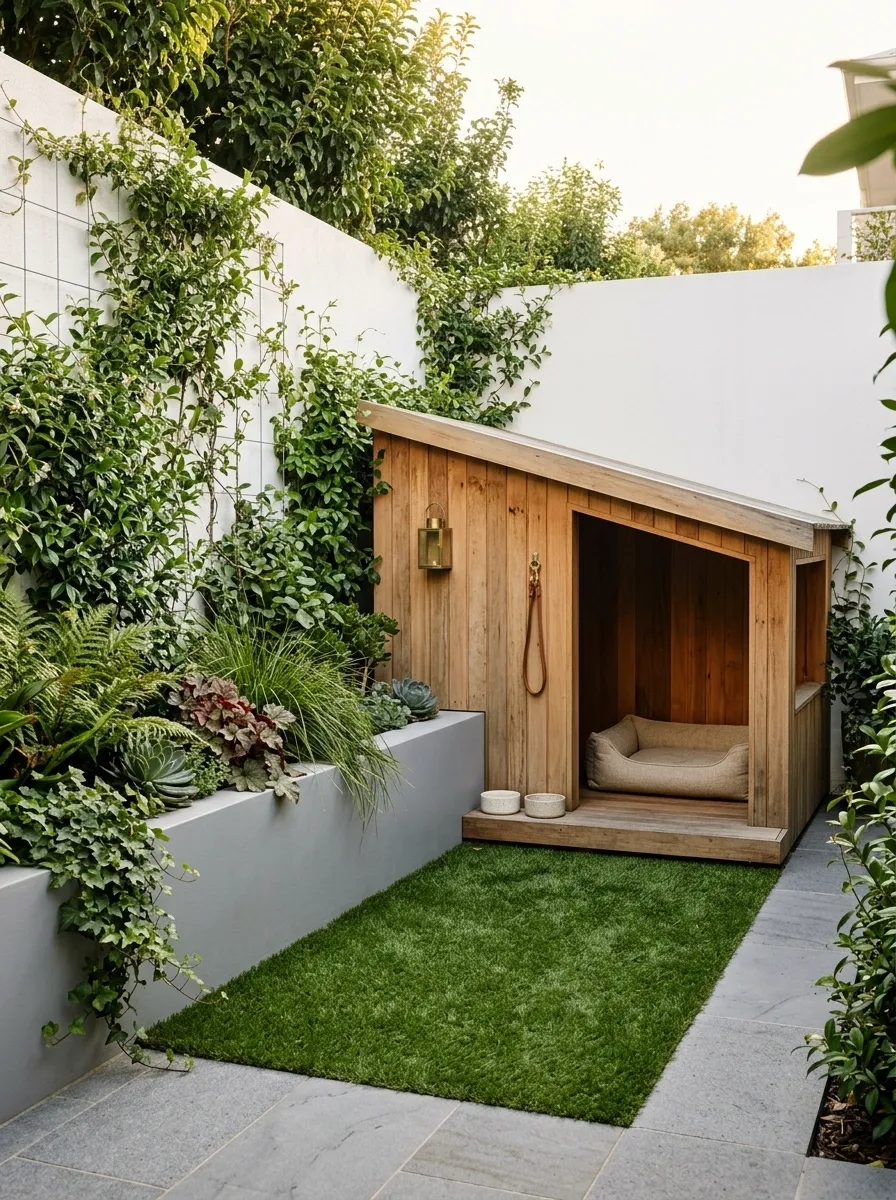
Small backyards need a different strategy. This concept turns a narrow paved space into a compact dog retreat by assigning different jobs to different layers of the yard.
A small turf section provides the open area, while a slim timber shelter occupies the back edge. Vertical planting climbs the privacy wall, and a narrow paved strip keeps the main route clear for people. A raised planter separates the dog zone from the rest of the yard without consuming much floor space.
The design feels larger because the walls and overhead space contribute to the composition. Keep bulky furniture out of the central path. In a compact yard, circulation matters as much as the resting area itself.
Luxury Climate-Controlled Dog Villa With Glass Doors
Resembling a miniature suburban home, this luxury dog house boasts dark roof tiles, white stucco walls, and elegant double glass doors. A mini split air conditioning unit mounted on the exterior ensures the interior stays comfortable year-round.
Warm carriage-style lanterns flank the entrance, casting a welcoming glow over the interior dog bed. The structure sits gracefully on a concrete foundation, positioned neatly against a neutral boundary wall with minimal landscaping.
Attention to architectural detail defines this concept, bridging the gap between human and pet living spaces. Keeping the surrounding area visually quiet allows the high-end finishes of the dog villa to truly stand out.
Lush Garden Dog Nook With Natural Stone Paths
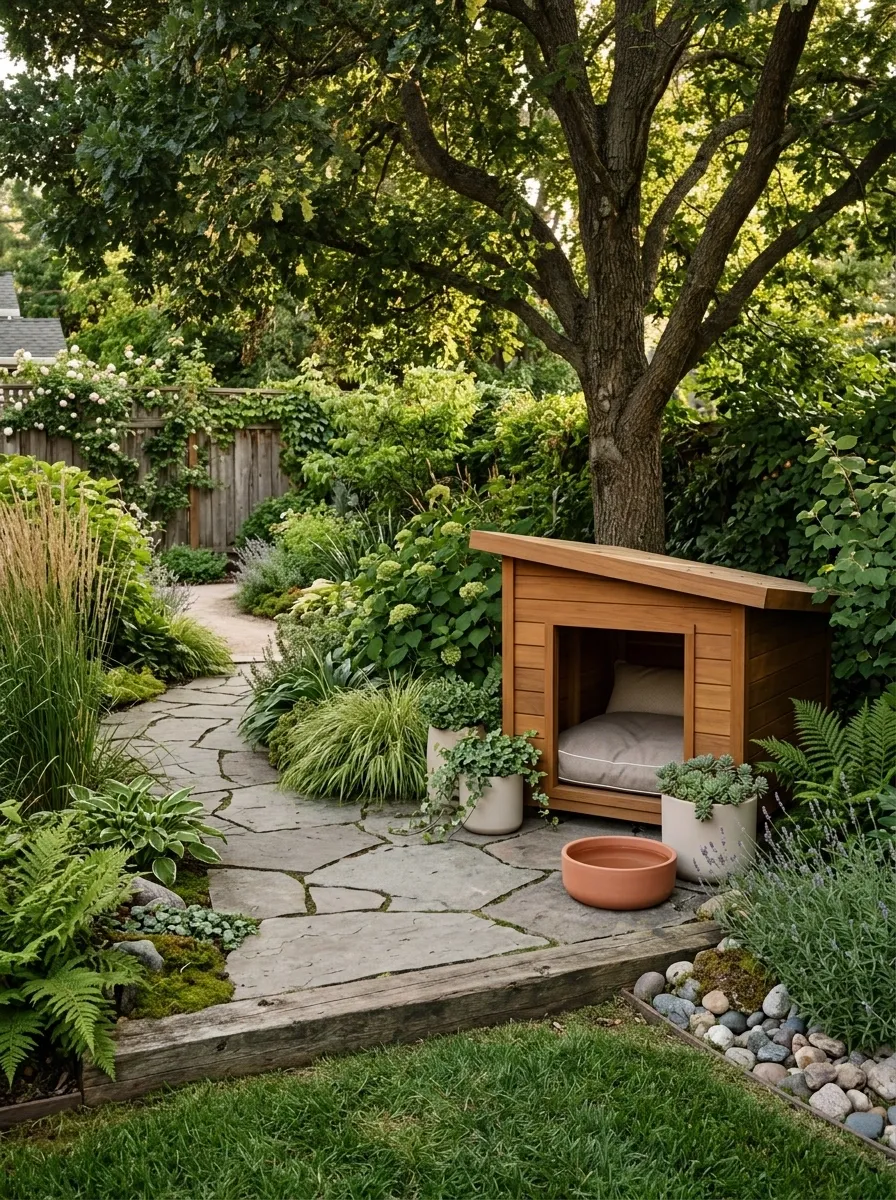
This version makes the dog corner feel almost discovered within the garden. A soft resting area sits behind layered shrubs and ornamental grasses, with irregular stepping stones leading through the planting toward the shelter.
The retreat isn’t placed in the middle of the lawn. It occupies a quieter edge, where greenery naturally creates a sense of enclosure. Pale stone provides a durable transition beneath the shelter while the surrounding planting supplies color, texture, and visual depth.
The strongest part of this concept is the gradual change from open space to enclosed space. Avoid crowding the entrance with dense plants. The path needs to remain obvious so the dog area feels tucked away without becoming awkward to reach.
Black-and-Wood Dog Corner With Contemporary Fencing
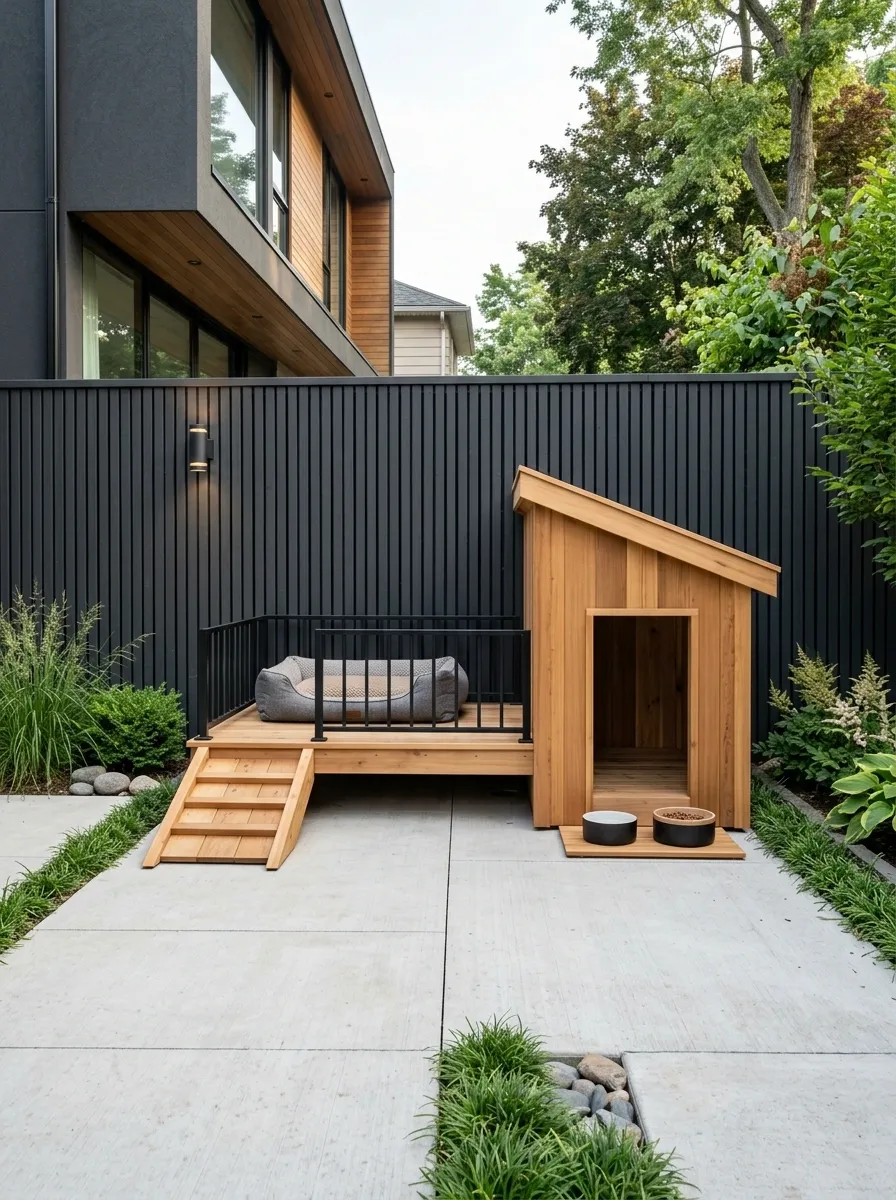
A sharper architectural direction comes through in this charcoal and cedar backyard. Dark fencing forms a strong backdrop, while warm timber introduces contrast around a compact dog shelter and resting platform.
Concrete paving keeps the floor clean and structured, while narrow bands of ornamental grass soften the edges. The dog corner is positioned against the boundary so the open central yard remains available for movement and family use.
The dark fence gives the composition visual depth, especially when paired with warm timber rather than cool gray materials throughout. Let greenery remain relatively restrained here. Too much planting would dilute the clean geometry that makes this concept distinctive.
Poolside Dog Retreat With Its Own Shaded Rest Area
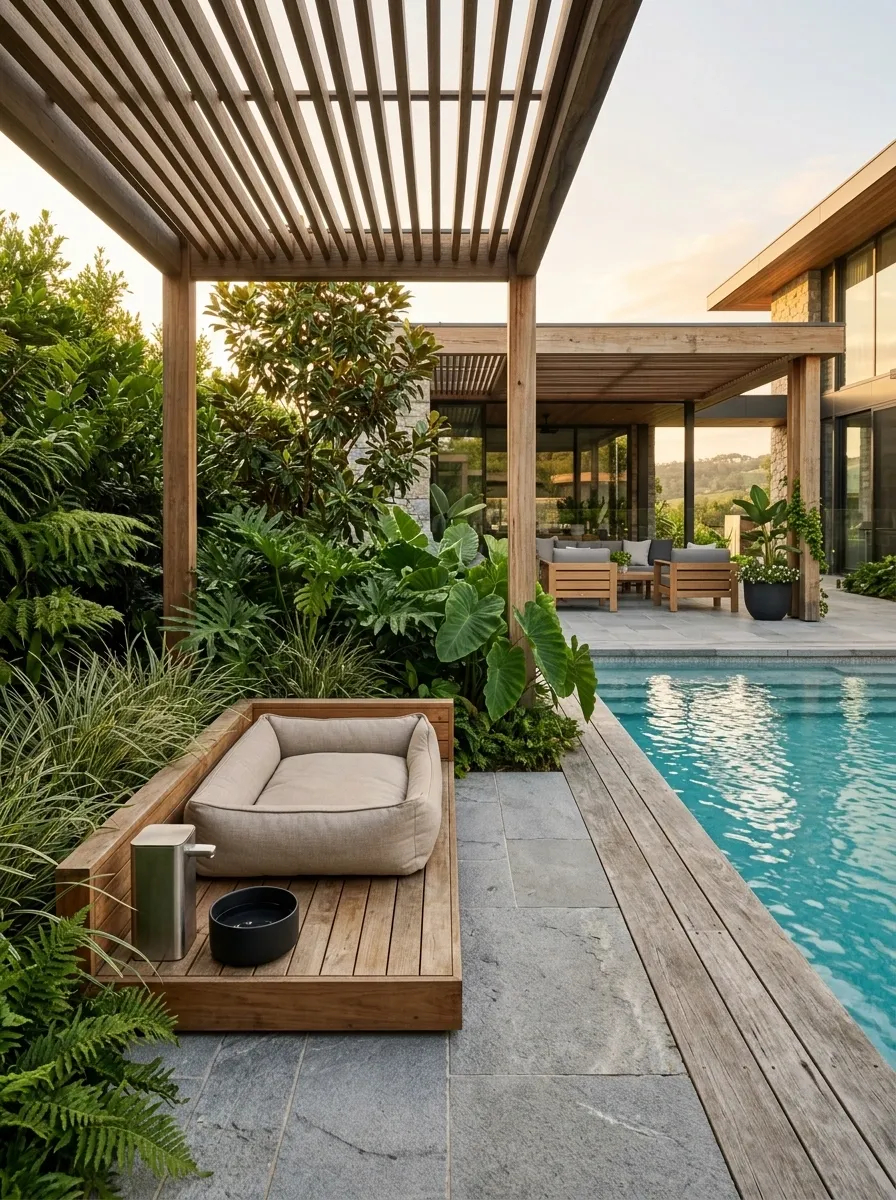
A pool backyard needs clear separation between lounging, walking, swimming, and dog resting. This concept places a compact shaded retreat near the edge of the pool area, but outside the main circulation path.
Large stone pavers connect the patio and pool deck, while a timber shade structure marks the dog zone. Dense planting creates a soft boundary without closing the space off. A low resting platform, water station, and washable surface keep the area practical.
The location matters more than decoration here. The dog remains close to the family without being positioned directly beside slippery pool traffic. Keep furniture and planters out of the route connecting the house to the pool.
Main access
Pool traffic
Quiet edge
Farmhouse Backyard Dog Yard With Fenced Garden Character
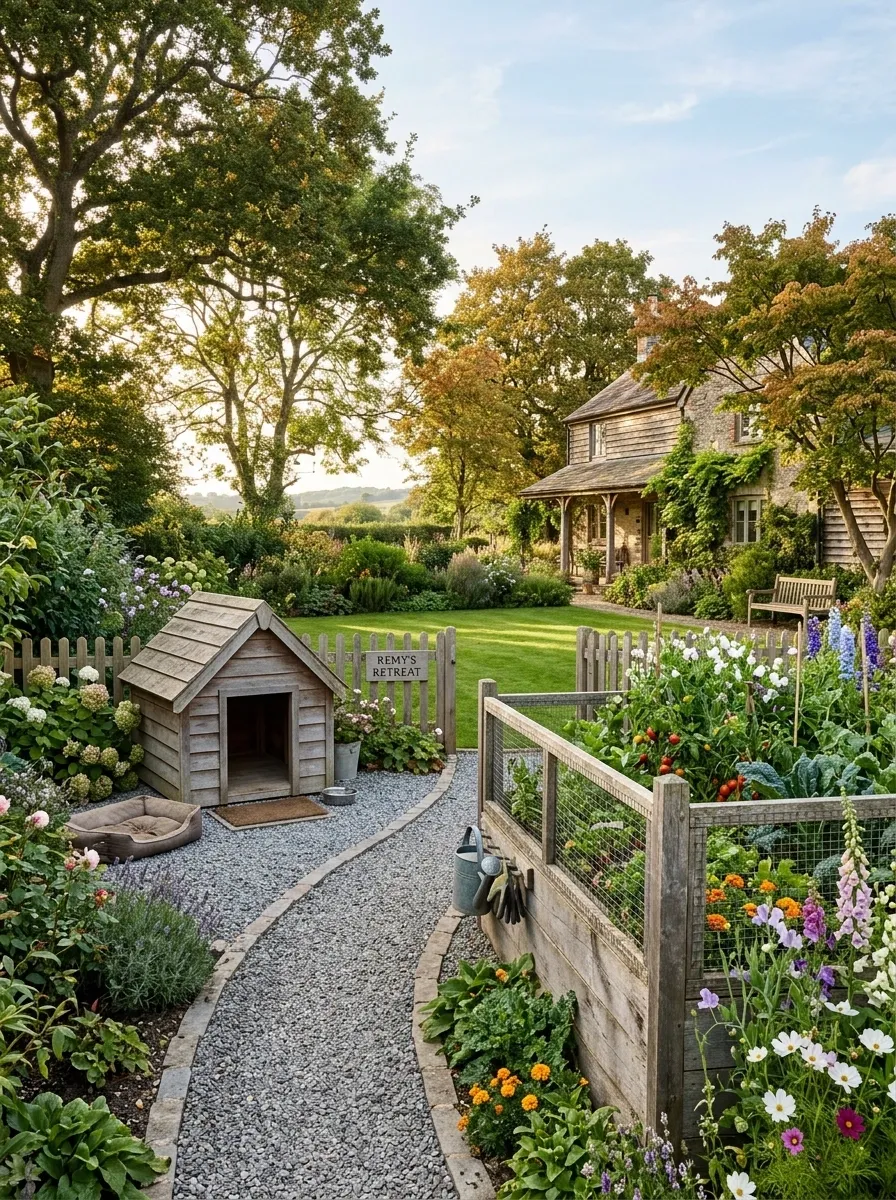
Weathered timber, gravel, lawn, and raised planting beds give this backyard a relaxed farmhouse structure. The dog retreat sits along one side of the garden, using a simple timber shelter backed by a low fence.
A gravel path connects the shelter to the main yard, while the planting beds add enough softness to keep the dog area from looking purely functional. A small patch of open lawn remains in front for movement.
The charm comes from restraint. There is no need for polished outdoor furniture or elaborate construction. Repeating the same weathered wood tone across the fence, shelter, and garden details keeps the entire yard connected.
Mediterranean Dog Corner With Gravel, Olive Trees, and Stone
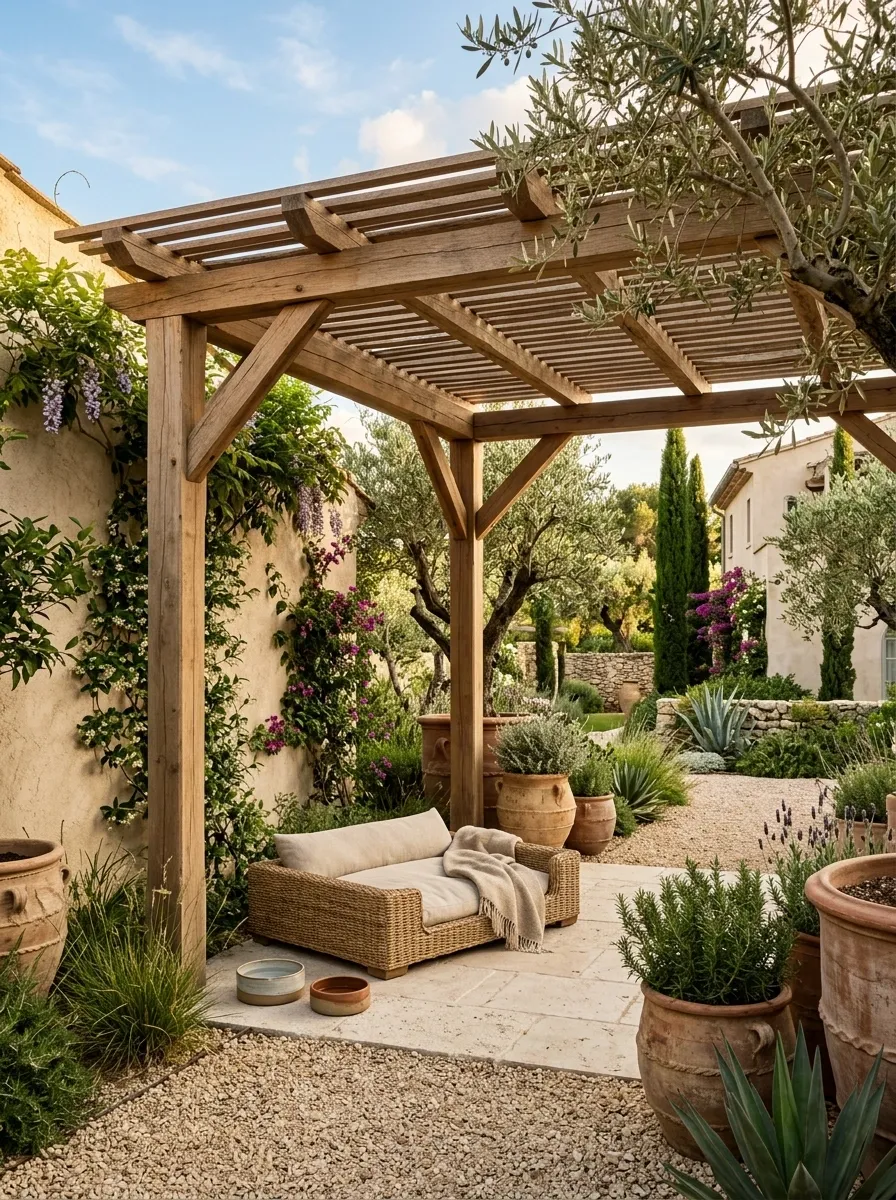
This backyard takes its visual language from sun-washed Mediterranean gardens. Pale stone paving meets loose gravel, textured walls, warm terracotta details, and sculptural trees.
The dog retreat sits beneath a simple shade structure near one edge of the garden. Its warm timber surface works naturally beside pale stone and dry-looking planting. The surrounding landscape remains open and uncluttered, allowing the hardscape and planting to carry the visual interest.
Keep the palette warm rather than introducing too many cool finishes. The strongest versions of this concept rely on subtle shifts between sand, stone, terracotta, wood, and muted greenery.
Secret Garden Dog Hideaway Behind Dense Planting
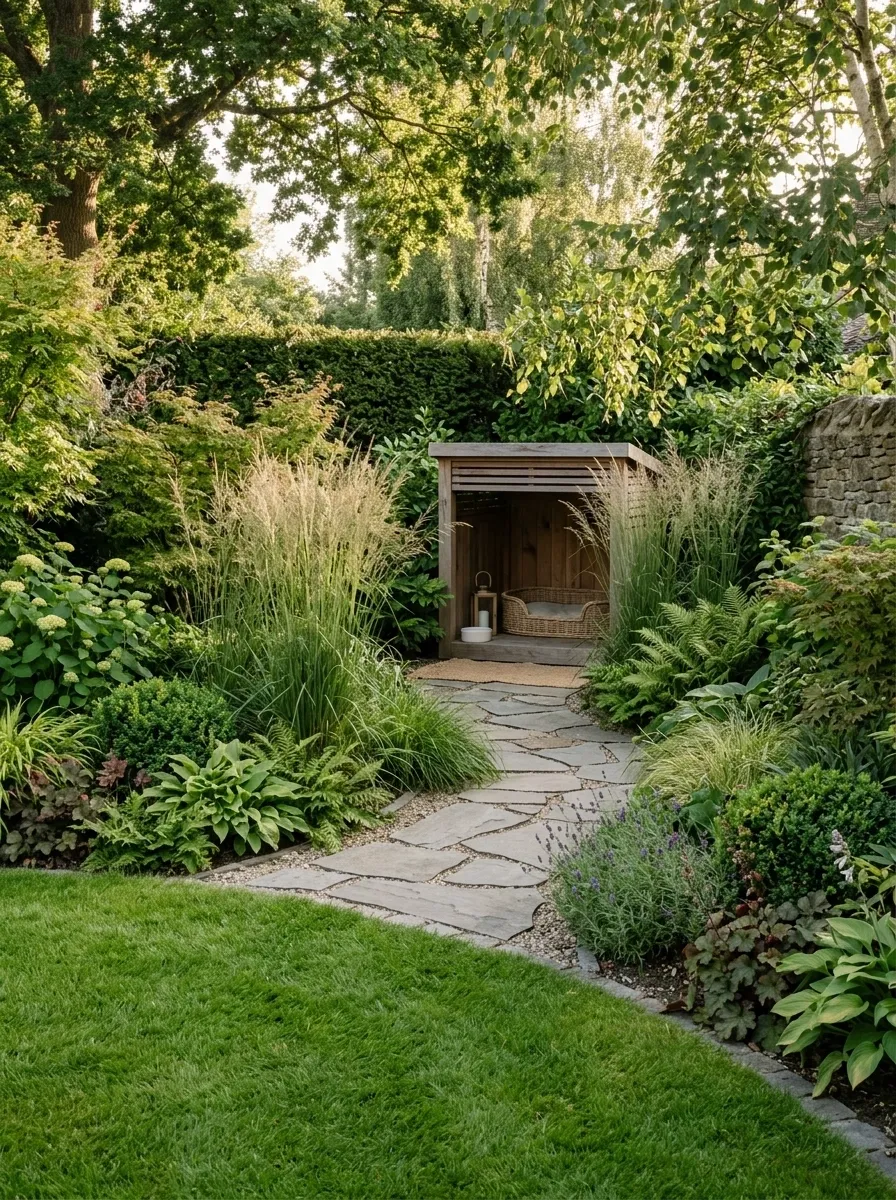
A more secluded direction tucks the dog retreat behind layers of greenery. The main lawn remains open, while a curved path leads behind shrubs and ornamental grasses toward a shaded shelter.
The enclosure feels natural because the transition happens gradually. Low planting begins near the lawn, taller greenery appears along the path, and the shelter sits at the quietest point.
This is a strong solution for dogs that prefer a calmer corner away from constant household activity. Keep the entrance wide and easy to find. Dense planting should create privacy, not a maze.
Scandinavian-Inspired Dog Corner With Pale Timber and Gravel
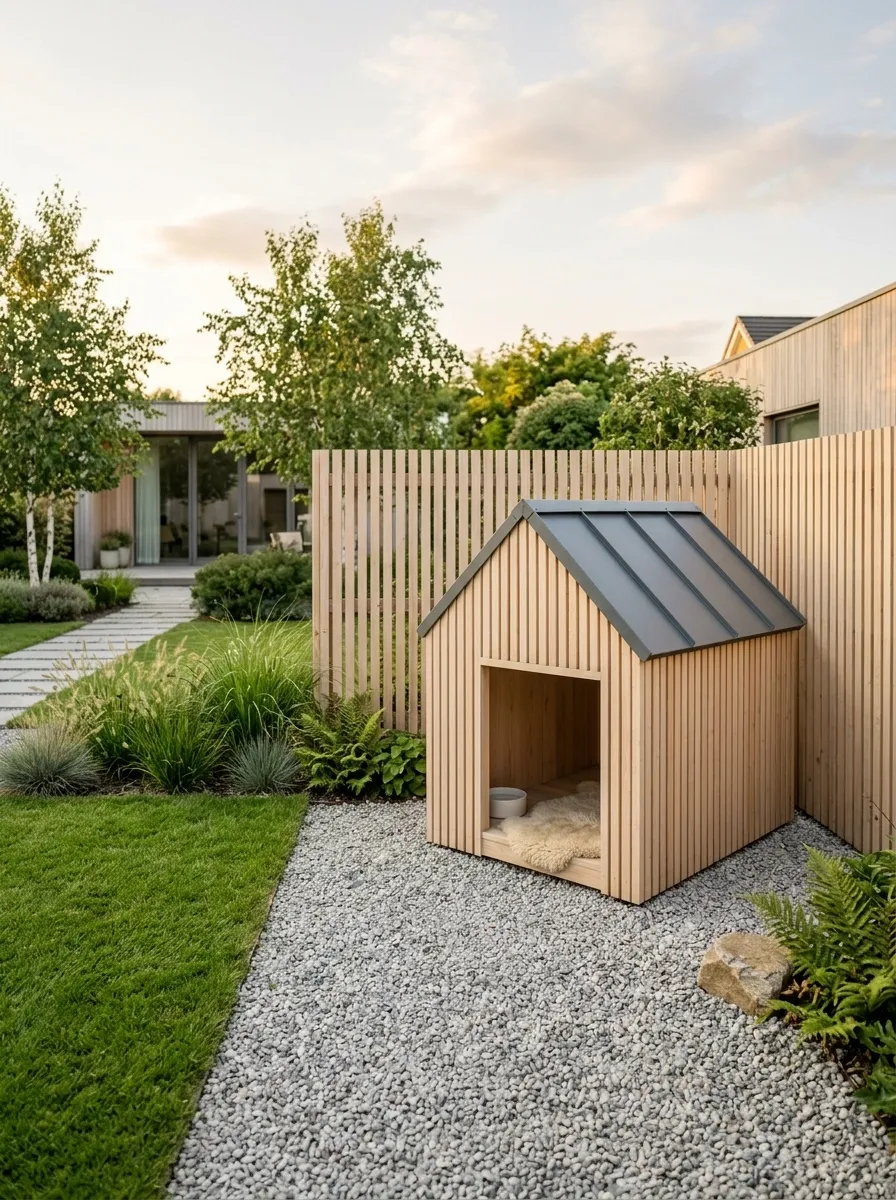
Pale timber, light gravel, simple fencing, and restrained planting give this dog corner a quiet Scandinavian character. The shelter has a clean pitched form with very little decorative detail, while the surrounding yard stays open.
A compact gravel area sits beneath the shelter, and a narrow strip of lawn creates contrast. The furniture is minimal, with only the pieces needed to make the corner comfortable.
The design works because every material has a clear job. Light wood provides warmth, gravel defines the dog area, and greenery softens the straight architectural lines. Avoid adding too many decorative objects or the simplicity starts to disappear.
Covered Dog Porch Connected to the Back Door
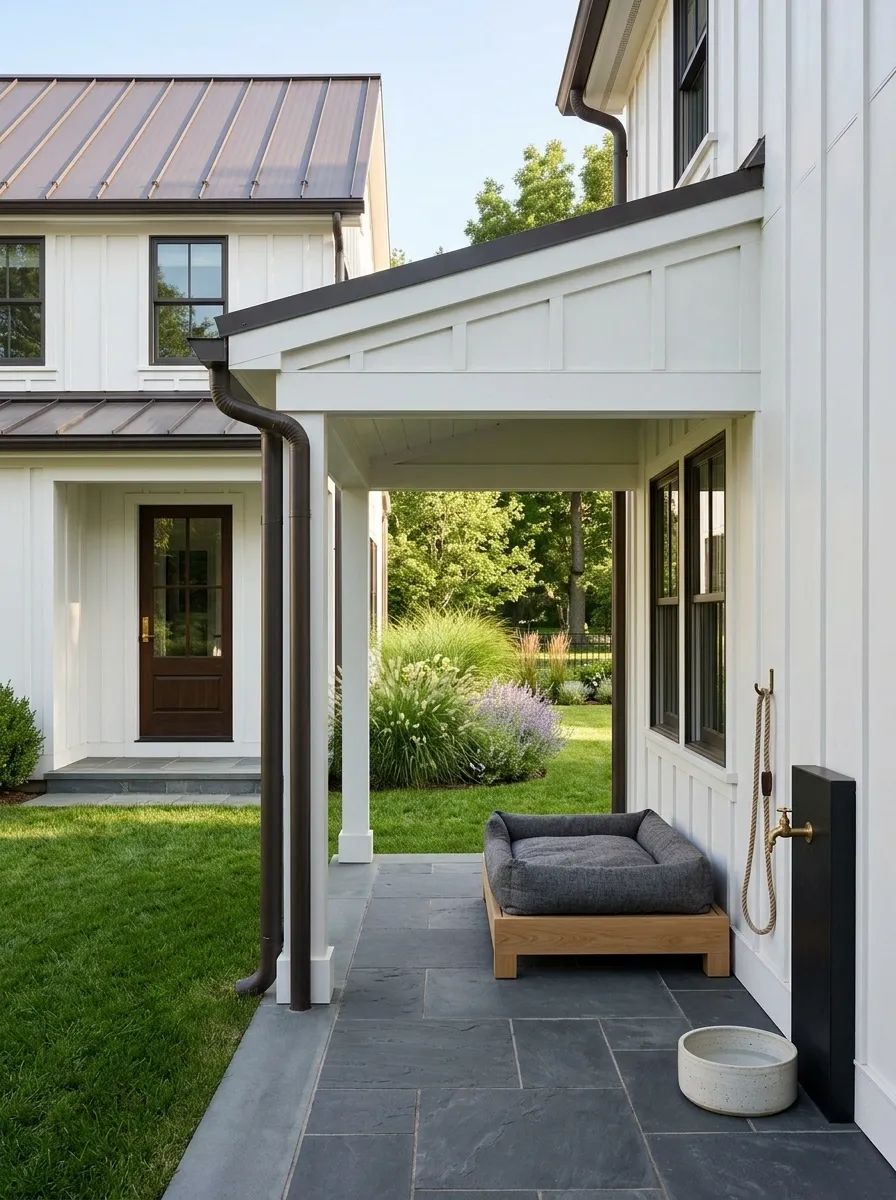
This concept places the dog corner directly beside the house, creating a protected transition between indoor and outdoor life. A small covered porch extends from the back door and includes a raised resting platform, water station, and durable flooring.
Beyond the porch, the yard opens into lawn and planting. The shelter remains close enough for easy supervision without placing the dog directly in the doorway.
The architectural connection is the key feature. Matching the porch roof, siding, trim, or flooring to the existing house makes the dog retreat look intentional. Keep the door swing and main walkway completely clear.
Natural Woodland Dog Corner With Timber Shelter
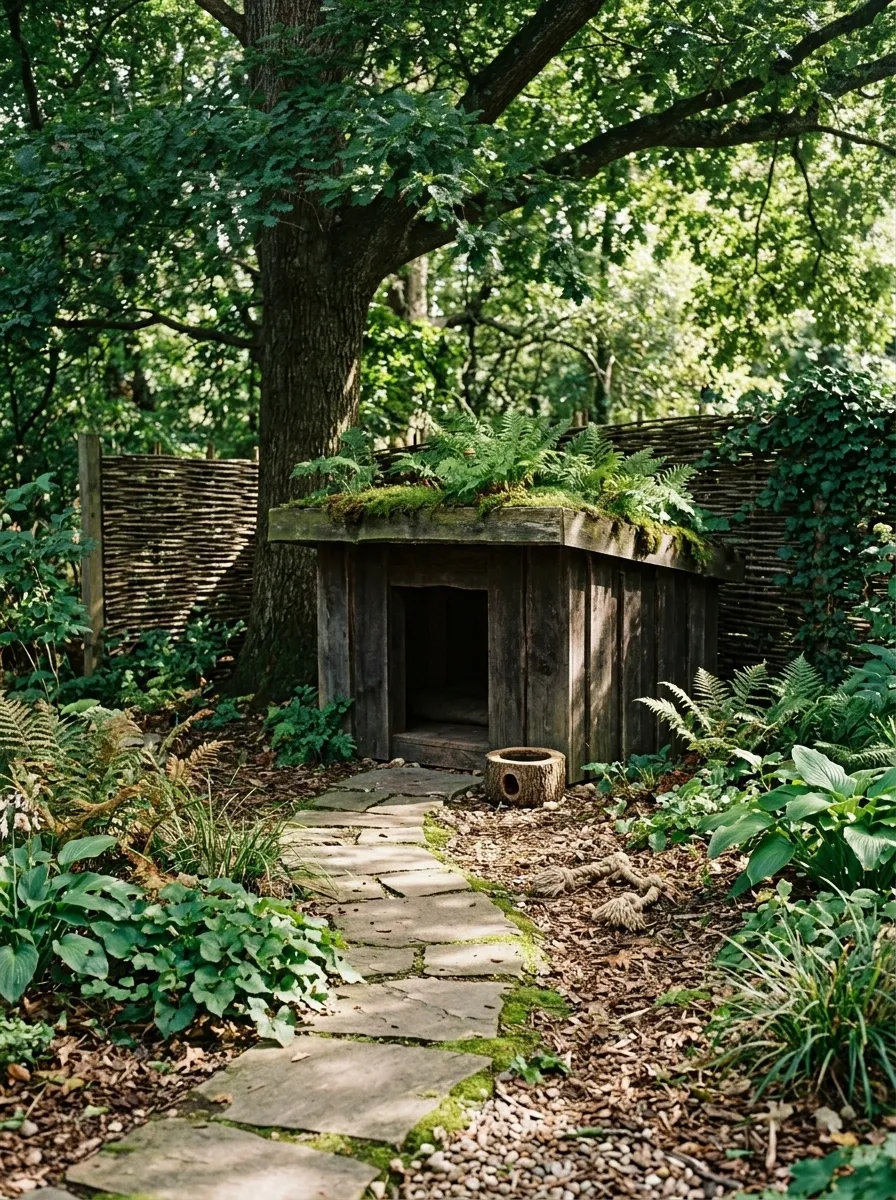
A woodland-inspired backyard can make a dog retreat almost disappear into its surroundings. Dark timber, irregular stone, low ground cover, ferns, and filtered light create a softer composition than a typical manicured yard.
The shelter sits below the existing tree canopy, with a short natural-stone path leading toward it. The floor around the retreat remains simple so leaves, bark, and planting can provide the texture.
This concept suits landscapes that already have mature trees and a less formal character. Keep the shelter simple. Too much polished construction would fight against the surrounding woodland feel.
Luxury Backyard Dog Suite With Matching Architecture
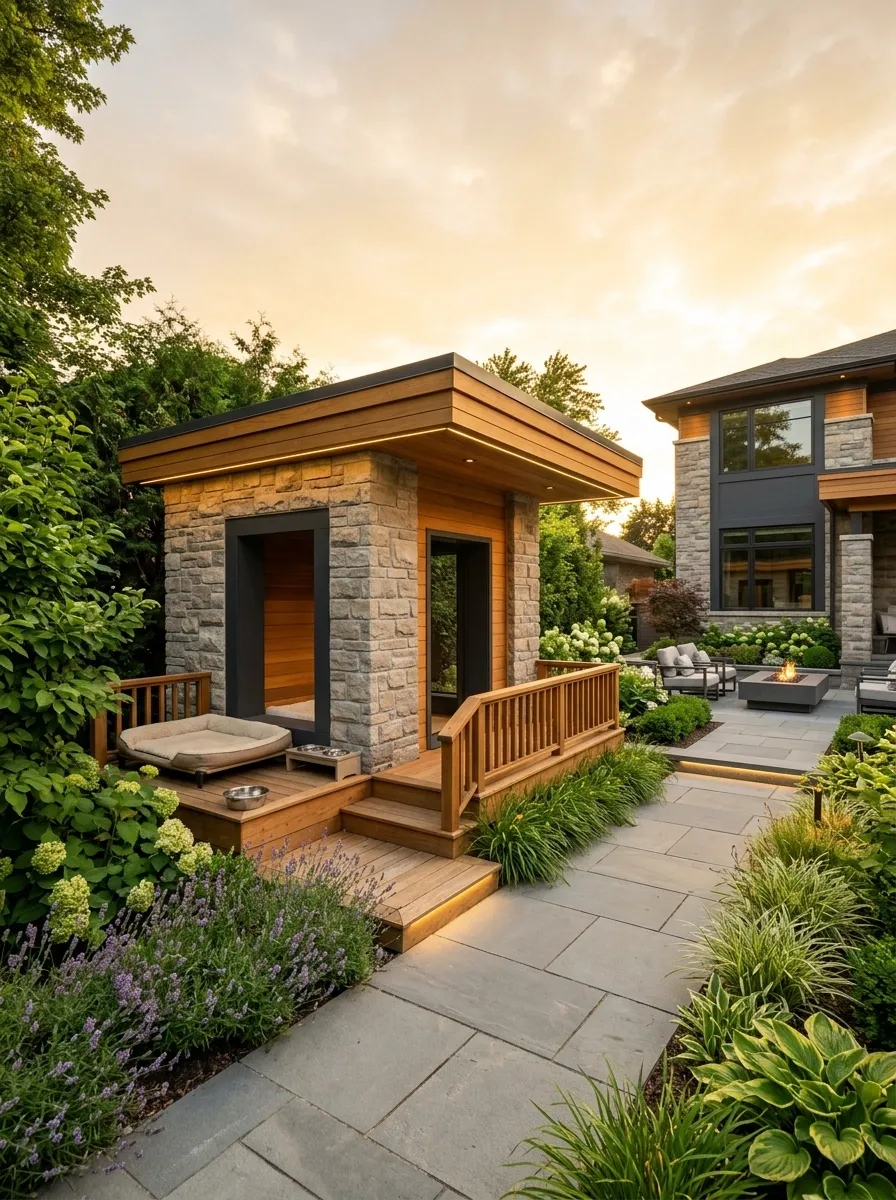
A more refined approach treats the dog area almost like a miniature extension of the house. Matching stone, dark-framed openings, warm timber, and carefully planted borders create a small outdoor suite that belongs to the larger architecture.
The structure sits near the main entertaining area but has its own sheltered entrance and resting platform. Integrated lighting adds definition after sunset without turning the space into an illuminated box.
The most important detail is consistency. The dog suite should borrow materials from the home rather than introduce an unrelated style. That connection makes the structure feel custom-built instead of added later.
Dark frames
Warm timber
Dark opening
Warm timber
Colorful Family Dog Corner Beside a Play Lawn
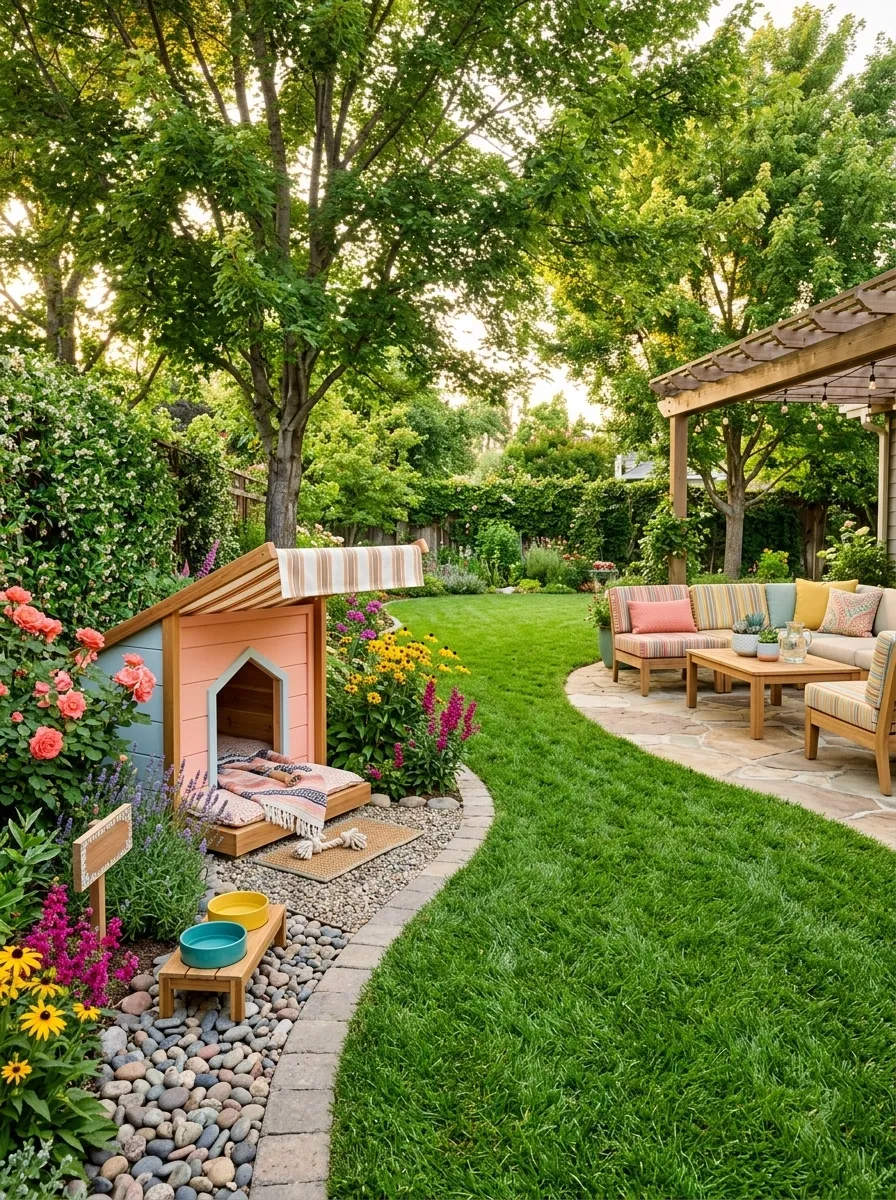
A family backyard doesn’t need to become visually serious just because it includes a dedicated dog area. This concept combines a bright open lawn with a cheerful dog retreat, colorful outdoor seating, flowering borders, and a simple shaded rest station.
The dog zone sits toward one side of the yard, while the central lawn stays open for running and family activities. Low planting creates a soft visual boundary without making the areas feel disconnected.
The strongest feature is the zoning. Active and quiet areas have clear identities, but they still belong to one backyard. Keep larger furniture away from the main dog route.
Desert-Style Dog Retreat With Gravel and Shade Structure
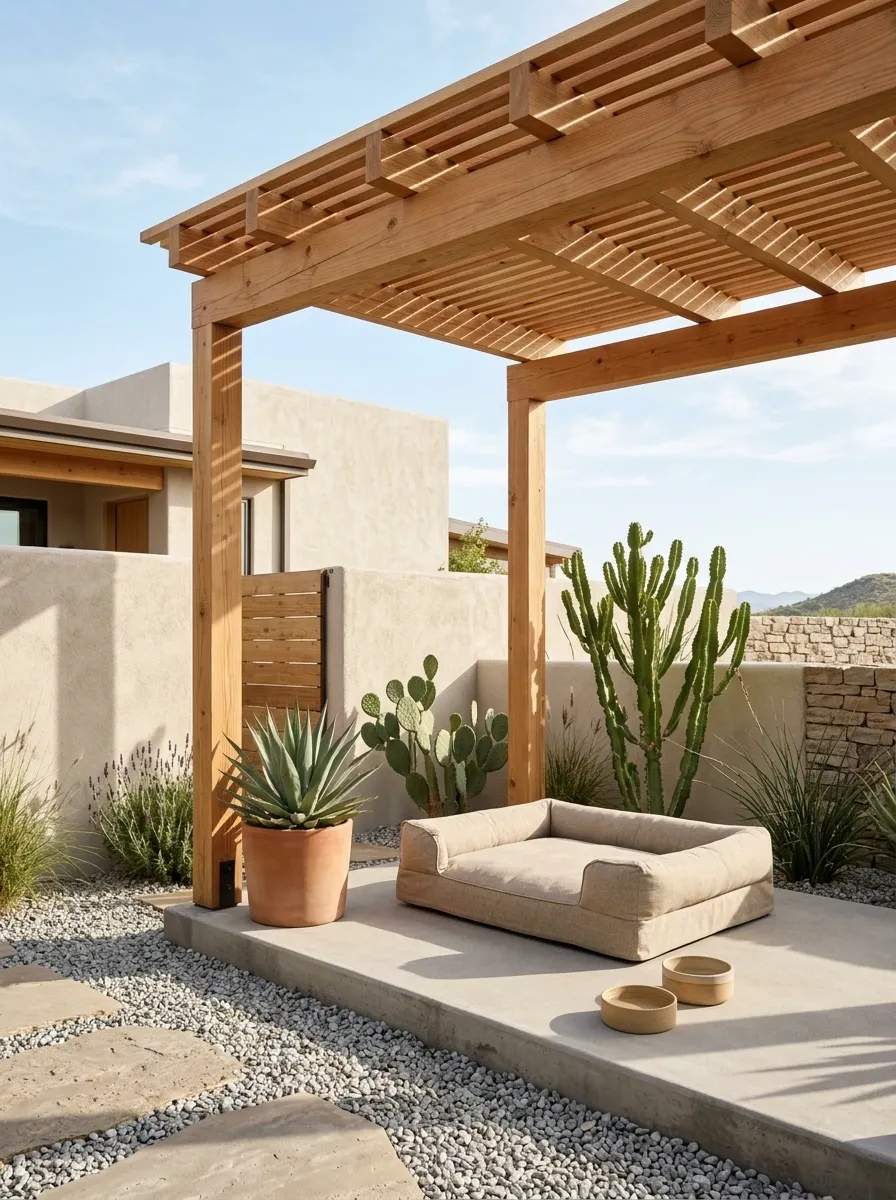
A dry-climate backyard can still have a comfortable dog corner without relying on a lawn-heavy design. Gravel, pale stucco, concrete, warm timber, and carefully placed planting create a clean desert-inspired composition.
The dog retreat sits beneath a broad shade structure with a durable floor and a small resting platform. Sculptural plants are positioned around the perimeter rather than packed into the center.
The visual strength comes from the contrast between hard surfaces and sparse greenery. Keep loose gravel away from the main resting surface where possible, creating a clear distinction between circulation and comfort zones.
Cottage Garden Dog Nook With Flowering Borders
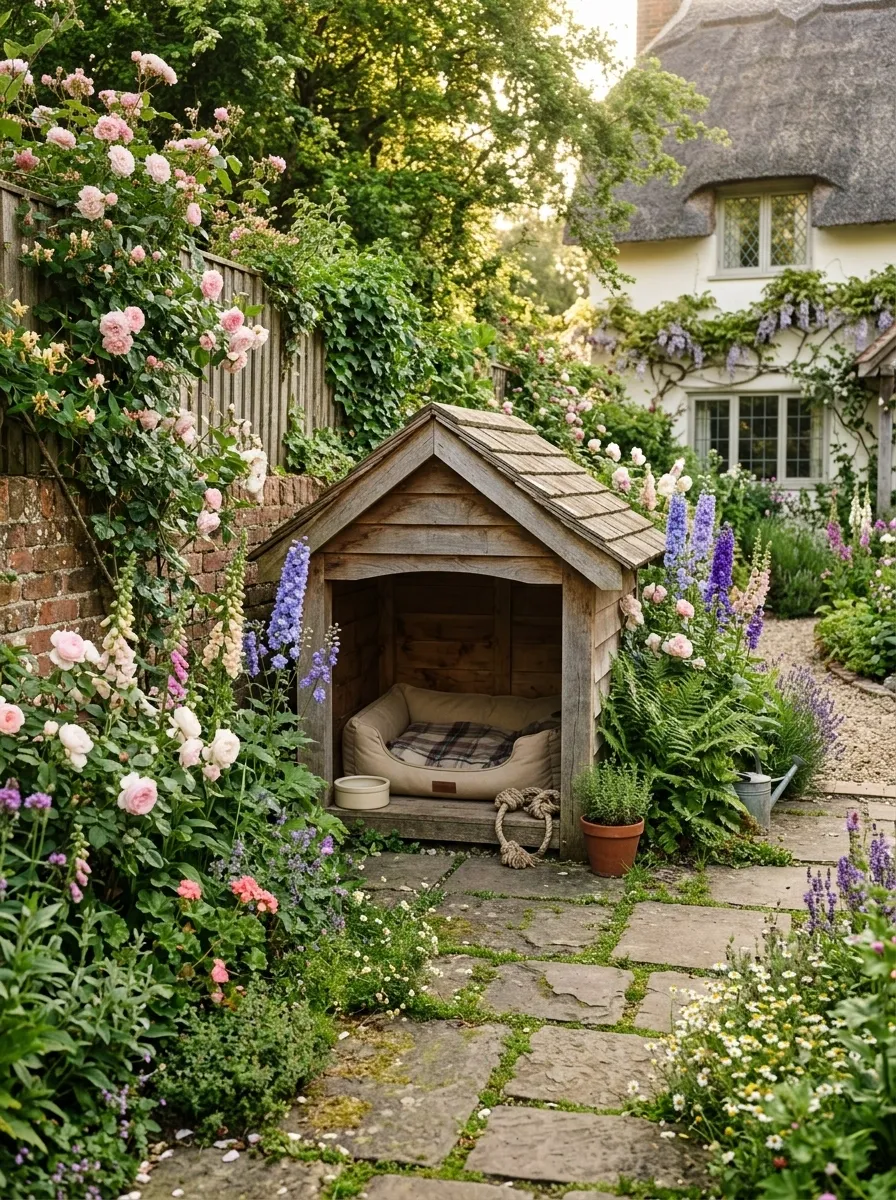
This concept makes the dog retreat part of a romantic cottage garden rather than treating it like a separate utility zone. Flowering borders frame a small timber shelter, while a weathered fence and irregular paving add age and texture.
The dog area occupies a quiet corner beside the planting rather than sitting in the center of the lawn. Soft colors and varied foliage keep the composition lively, but the shelter remains visually simple.
The balance comes from letting the garden provide most of the decoration. Keep the dog structure understated so it doesn’t compete with the flowers and planting surrounding it.
Rain-Friendly Dog Corner With Covered Drainage Area
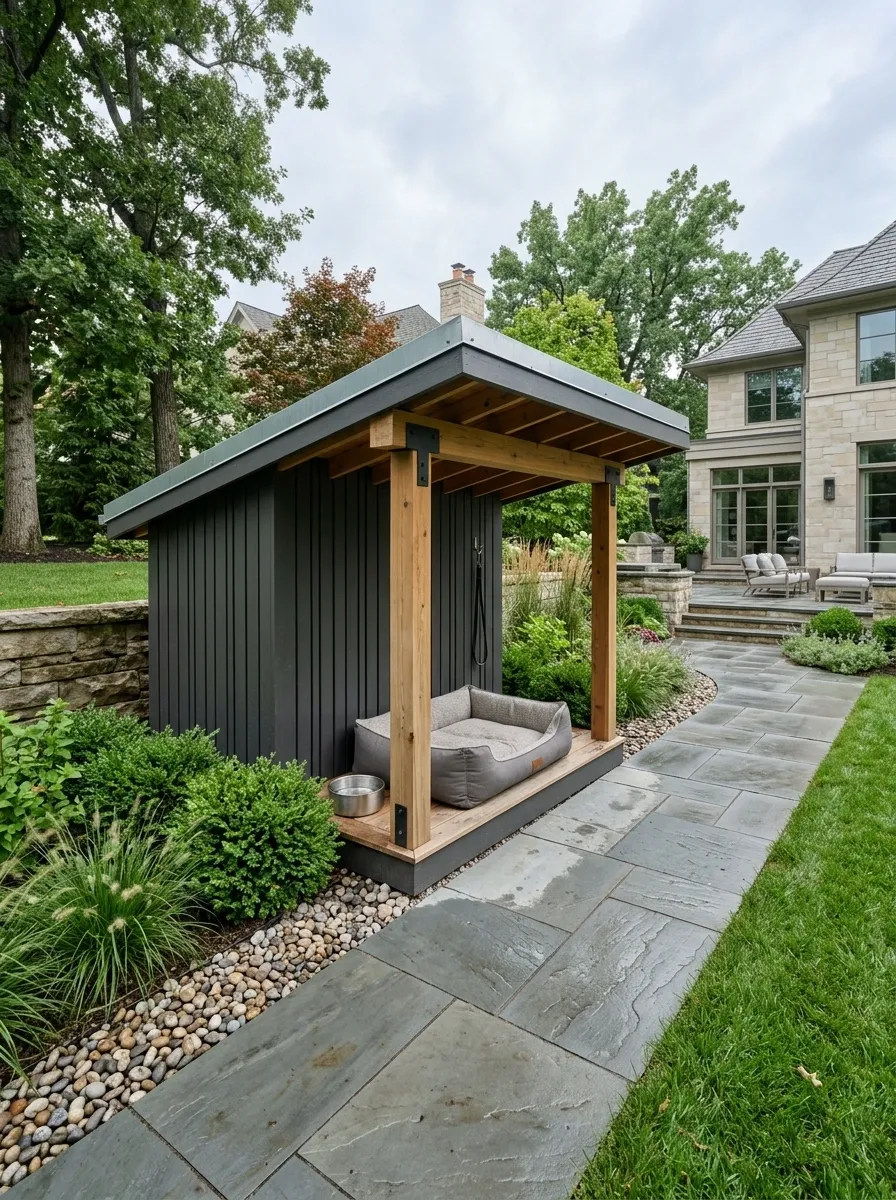
Wet weather calls for a more practical composition. This backyard places a roofed dog shelter over a durable surface, with a drainage-focused transition area surrounding it.
The dog zone sits beside the main yard rather than at its lowest point. A slightly sloped hardscape directs water away, while gravel and planting help define the outer edge.
The design still looks polished because the practical surfaces are incorporated into the visual structure. Prioritize drainage before decorative details. A beautiful shelter becomes much less useful when the surrounding ground stays wet.
Small Courtyard Dog Corner With Built-In Seating
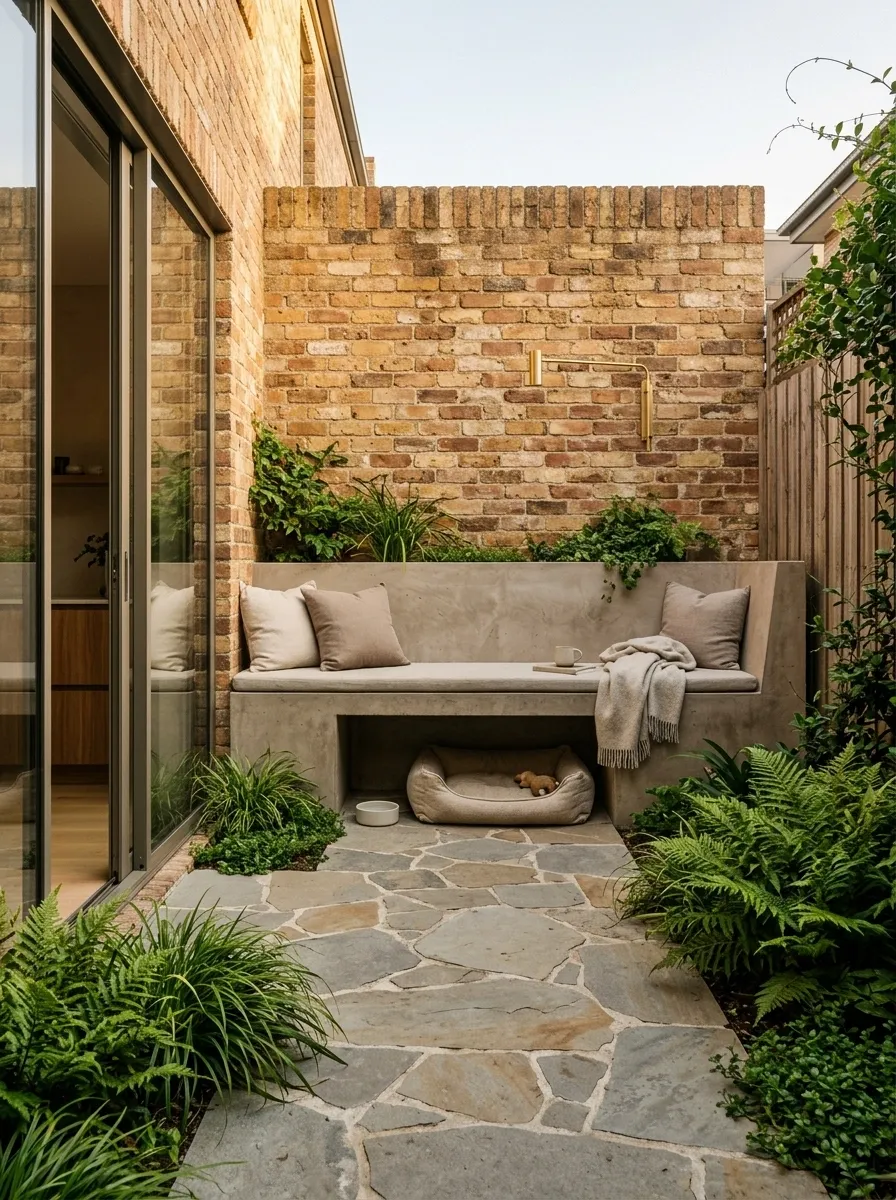
A small enclosed courtyard can combine human seating and dog comfort in one compact architectural gesture. A built-in bench runs along one wall, while the shaded lower section creates a tucked-away resting place for the dog.
Textured paving extends across the courtyard, with narrow planting pockets softening the edges. A simple wall-mounted light adds structure after dark without filling the space with decorative objects.
The dual-purpose seating makes this concept especially efficient. The dog zone doesn’t need its own bulky furniture because the architecture already provides the structure.
Contemporary Turf Run With Sculptural Landscaping
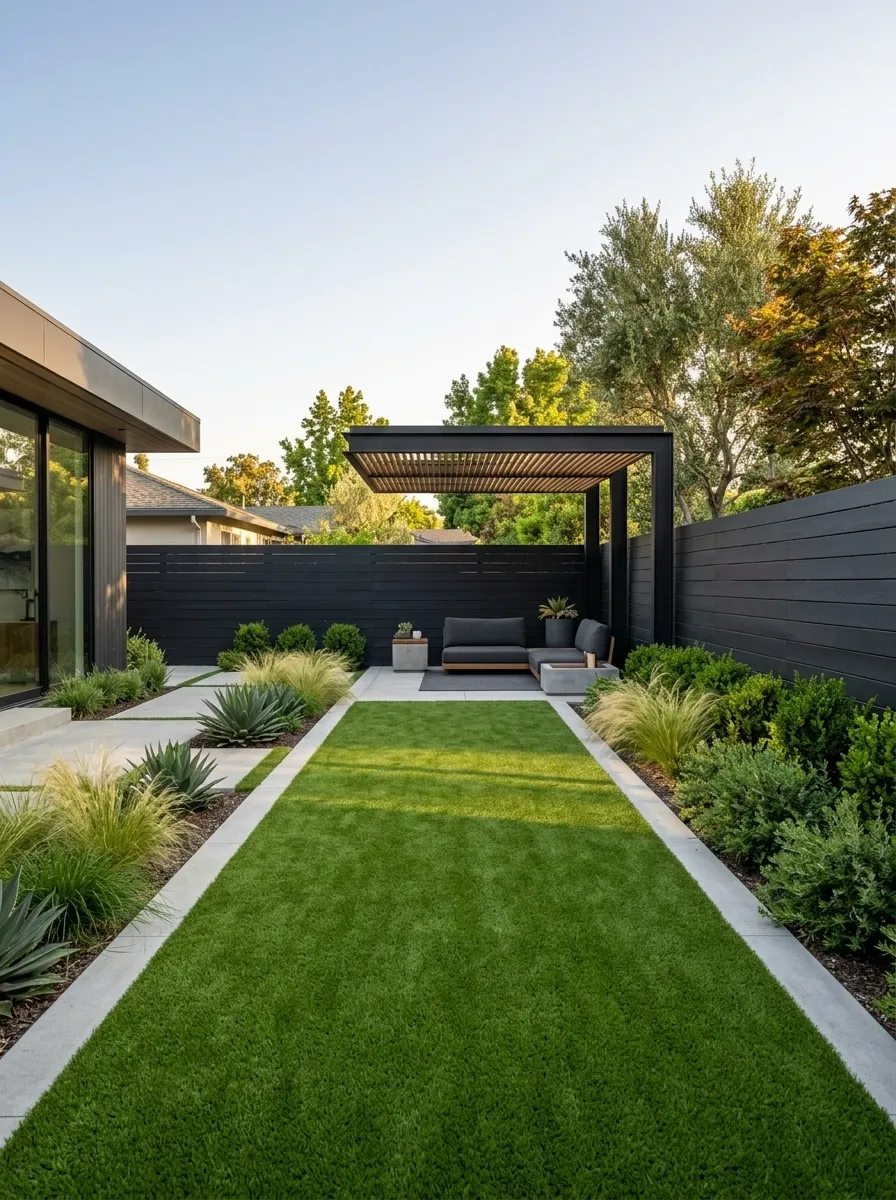
A modern backyard can center the dog zone around a clean turf run framed by geometric planting beds. Dark fencing creates a strong backdrop, while concrete edging gives the lawn a crisp architectural outline.
At one end, a compact shaded retreat provides a place to rest. The central run stays open, creating a clear visual axis through the yard.
The strongest feature is the geometry. Planting should frame the movement path rather than interrupt it. Use larger sculptural plants sparingly so the yard stays clean and open.
Hidden Dog Area Beneath an Outdoor Staircase
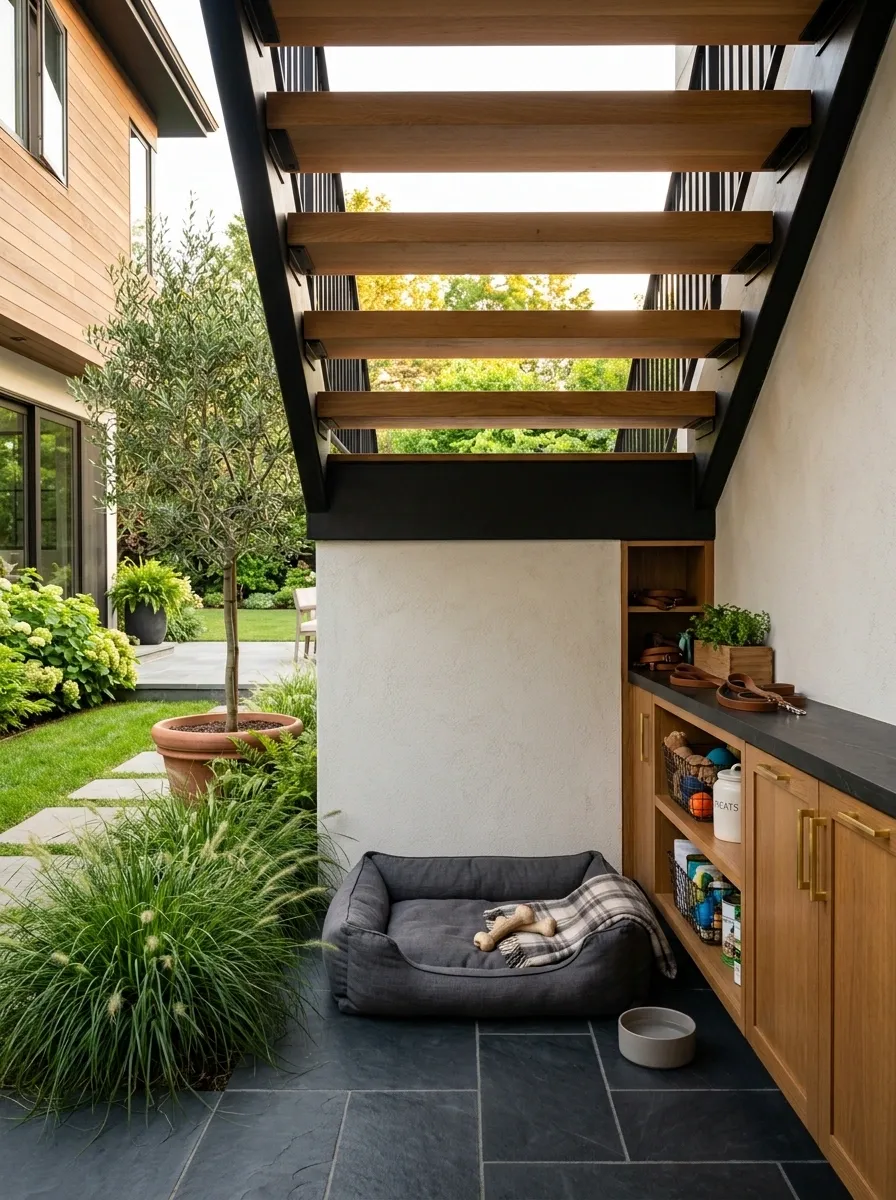
An outdoor staircase can create a useful sheltered pocket that would otherwise become dead space. This concept turns the area underneath the stairs into a compact dog retreat with durable flooring, a comfortable bed, and built-in storage nearby.
The staircase remains the architectural feature, while the dog space sits quietly beneath it. Surrounding planting softens the transition into the yard.
This approach is strongest when the space already has adequate headroom, ventilation, and comfortable access. The retreat should feel open rather than buried. Keep storage organized so the area doesn’t become a catch-all under the stairs.
Warm Evening Dog Corner With Soft Landscape Lighting
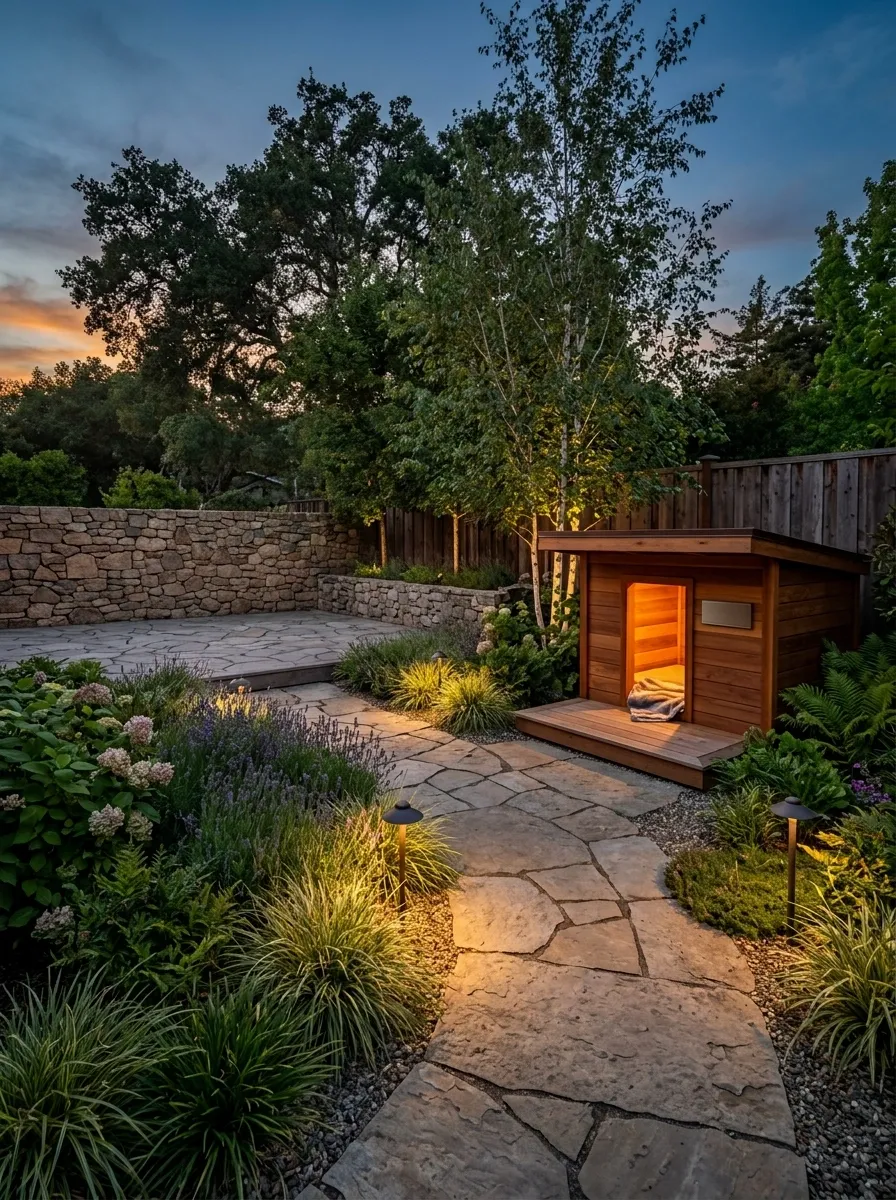
This backyard is designed to look just as intentional after sunset as it does during the day. A warm timber dog shelter sits beside the entertaining area, surrounded by low planting and stone paving.
Small landscape lights define the path and planting rather than shining directly into the dog retreat. The result is a softer evening composition where the shelter becomes visible without becoming the brightest element in the yard.
The lighting hierarchy matters. Keep the main route gently visible, allow the resting zone to remain calmer, and avoid turning every plant or architectural feature into a focal point.
Fully Integrated Backyard Dog Garden With Multiple Zones
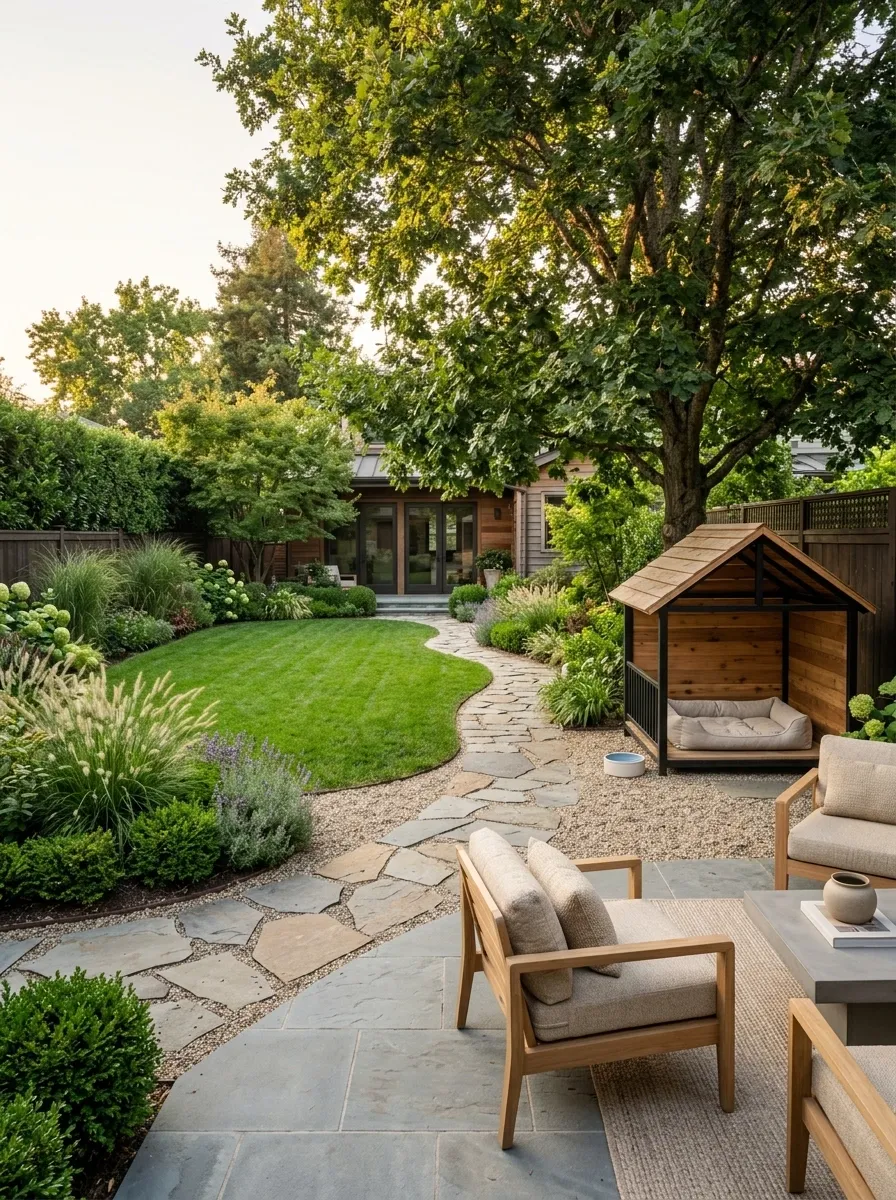
The final concept treats the entire backyard as one connected dog-friendly landscape. A central lawn provides open movement, while a shaded resting shelter occupies one edge. Planting borders create privacy, a durable path connects the major areas, and human seating remains close enough for shared outdoor time.
Nothing feels like a separate pet installation. The dog zone follows the same material and planting language as the rest of the garden.
This approach works because it solves several needs at once without visually dividing the yard. The strongest result comes from giving each area a clear role while keeping the transitions soft.
A Backyard Dog Corner Should Feel Like Part of the Garden
The strongest dog corners don’t look like pet equipment dropped into an otherwise finished yard. They belong to the backyard. The shelter relates to the house, the path works with the existing circulation, and the landscaping helps the dog area settle naturally into the larger composition.
That can mean a shaded retreat beside the patio, a quiet nook under a mature tree, a compact shelter against a privacy wall, or a clever use of an awkward architectural corner.
Start with what the backyard already gives you. Look at shade, traffic flow, existing materials, drainage, planting, and the places where the dog naturally spends time. Then choose a design direction that supports those conditions rather than fighting them.
The best result is a space that feels good for the dog and still looks intentional when viewed as part of the entire yard.
Save these ideas now so the layouts and design directions can be revisited when planning the backyard.