
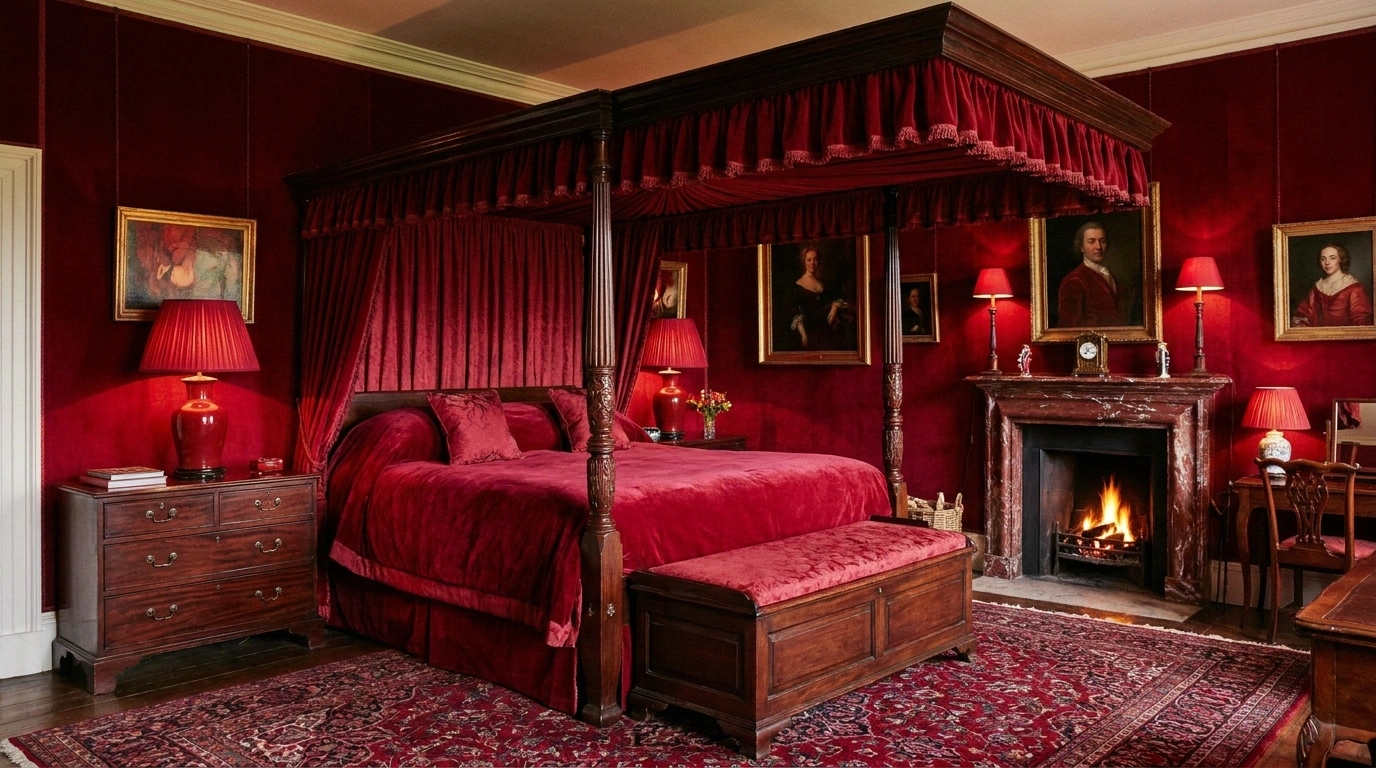
Red has a bad reputation in bedrooms because it often gets used too aggressively. A bright red wall, matching bedding, red curtains, and a pile of red accessories can make a room feel smaller, louder, and strangely unfinished at the same time.
The fix isn’t avoiding red. It’s controlling it.
Deep burgundy can make a bedroom feel intimate and layered. Brick red brings warmth and works beautifully with natural wood. Cherry red gives a cleaner, more modern room some energy. Even a small amount of red can have a strong effect when it’s placed where the eye naturally lands.
Good Red Bedroom Ideas aren’t built by matching every piece. They come from choosing one strong direction and letting the rest of the room support it.
Find the Red That Fits Your Bedroom
Tap a shade to see where it works best and what should surround it.
🍷 Deep Burgundy
Room feel: moody, layered, expensive
Use it on: a main wall, curtains, or upholstered headboard
🍒 Cherry Red
Room feel: bold, crisp, modern
Use it on: bedding, artwork, a bench, or one statement chair
🧱 BRICK RED
Room feel: earthy, warm, relaxed
Use it on: painted walls, rugs, accent furniture
🍷 Wine Red
Room feel: refined, cozy, dramatic
Use it on: wallpaper, bedding, or an accent wall
🌹 Muted Red
Room feel: soft, understated, lived-in
Use it on: walls, linens, trim, or small upholstered pieces
Red Bedroom Ideas That Actually Work
Anchor With Deep Red and Black
A high-contrast red and black palette gives the bedroom an immediate dramatic presence. Pair a statement upholstered headboard with moody dark walls to instantly draw the eye toward the bed.
Keep the balance right by layering crisp white and patterned bedding so the dark tones feel intentional rather than overwhelming. A matching patterned area rug brings the entire color scheme together from the floor up.
The final look feels intensely moody and polished, proving that deep saturated shades can create a truly sophisticated sanctuary.
Paint One Wall in a Deep Wine Red
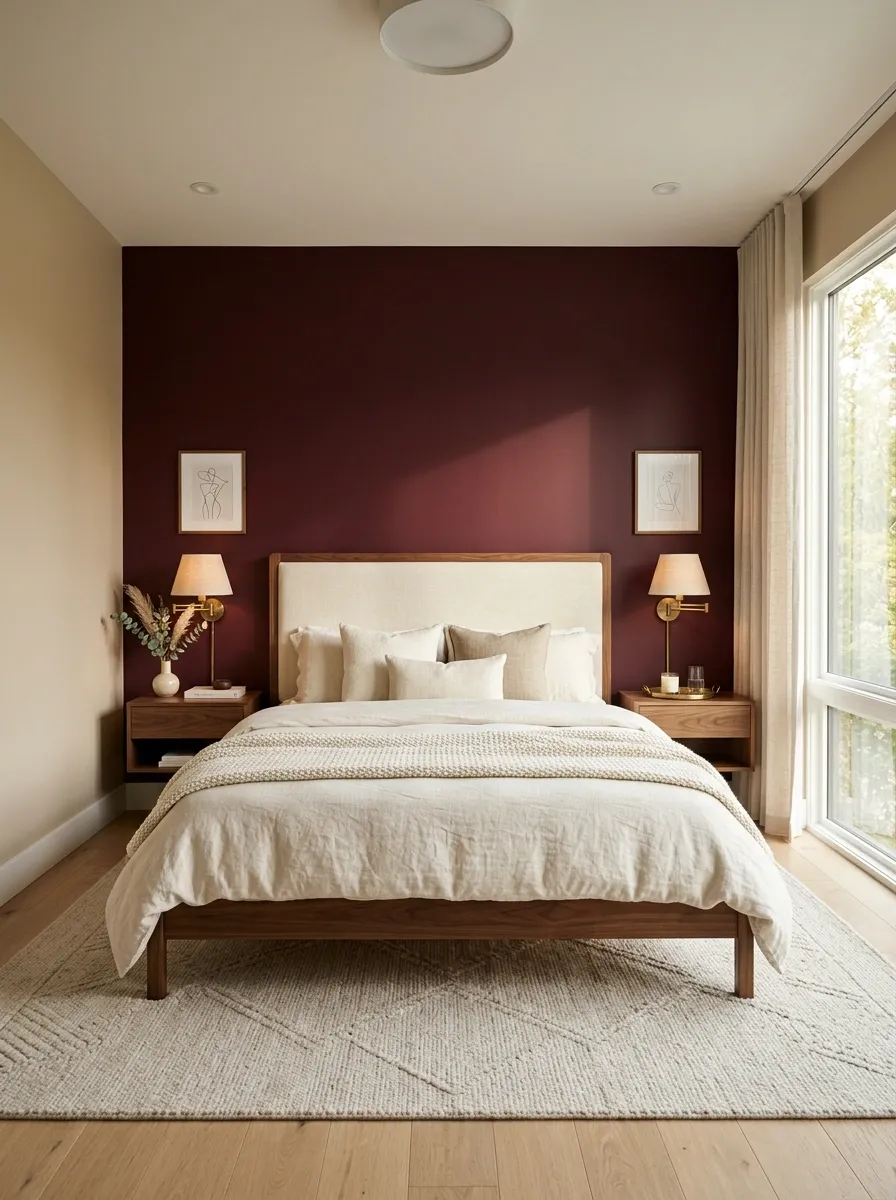
A deep wine wall gives the bed an instant visual anchor.
Paint the wall behind the headboard rather than wrapping the whole room in dark red. Keep the other walls warm white or soft beige so the room still has breathing space.
Use cream bedding, walnut furniture, and one warm metal finish around the bed.
The formula is simple:
- Deep wine behind the bed
- Cream or ivory bedding
- Dark wood bedside tables
- Warm metal lighting
The result feels layered rather than heavy, especially when the red wall catches soft morning or evening light.
Wrap the Room in Glossy Burgundy
High-gloss burgundy walls completely transform a bedroom into a jewel-box retreat. The reflective surfaces catch the natural light from the windows and bounce a rich, glowing warmth throughout the entire space.
Dress the bed in matching velvet textures and plush burgundy bedding to lean fully into the monochromatic design. Keep the accompanying metallics sleek and modern to contrast the deep red walls.
The result is an immersive, luxurious cocoon that feels endlessly cozy and expensive, especially as the evening light hits the glossy panels.
Pair a Red Headboard With Soft Cream Bedding
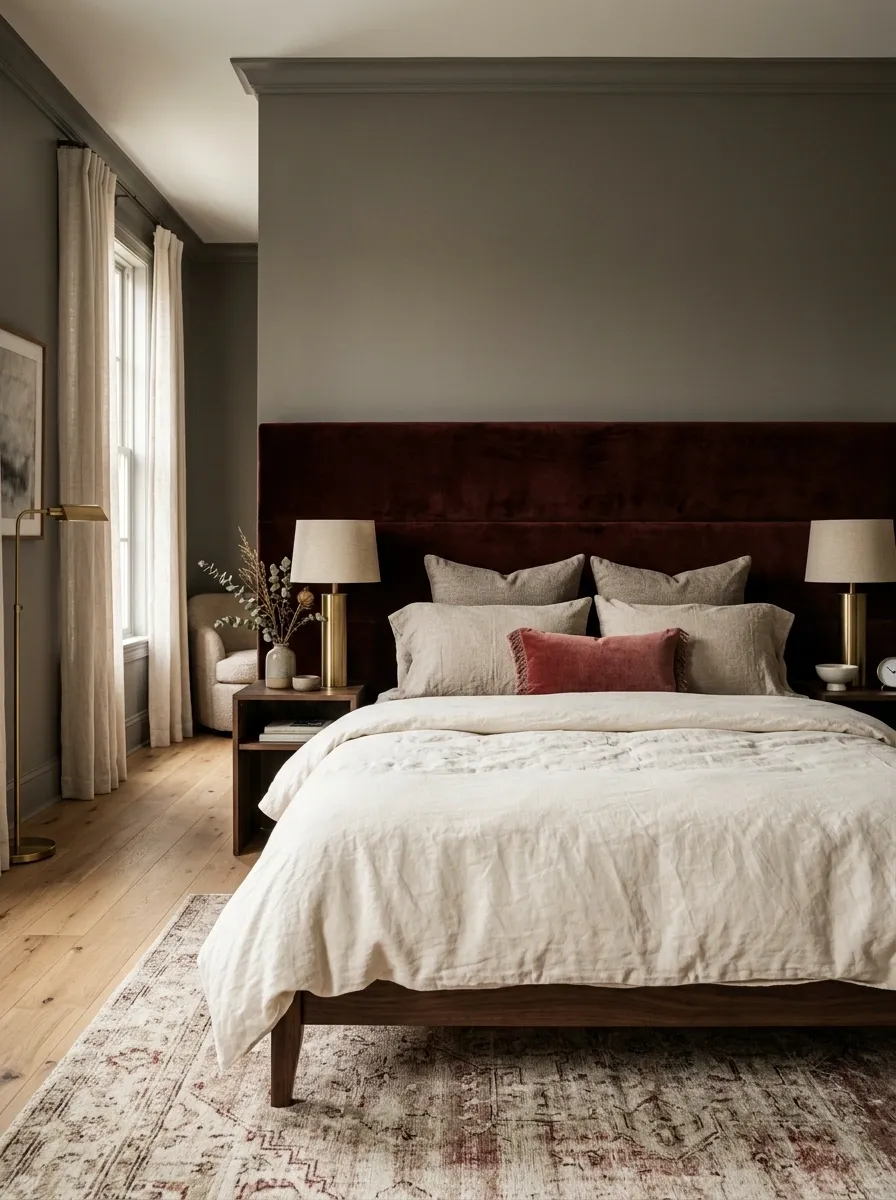
The bed should do the color work here.
Choose a substantial upholstered headboard in burgundy, oxblood, or muted red, then keep the bedding noticeably lighter. Cream duvet covers work especially well because they soften the strong headboard without making the room bland.
Skip matching red sheets, red pillows, and red blankets. That much repetition flattens the whole design.
A better bed formula:
- Red upholstered headboard
- Cream duvet
- Two warm neutral pillows
- One smaller red lumbar pillow
The smaller red detail connects the bed without turning it into a solid block of color.
Combine Wood Paneling and Red Textures
Rich wood paneling provides a stunning traditional backdrop for bold red bedroom accents. Ground the space with classic wainscoting painted in a deep berry tone, topped with textured wallpaper to add subtle pattern to the walls.
Introduce a matching armchair and velvet ottoman to create dedicated zones for relaxing within the room. A distressed patterned rug ties the warm wood flooring and rich reds together effortlessly.
The space manages to feel both timeless and cozy, striking the ideal balance between traditional architecture and rich, intentional color choices.
Use Burgundy Curtains to Frame the Bed
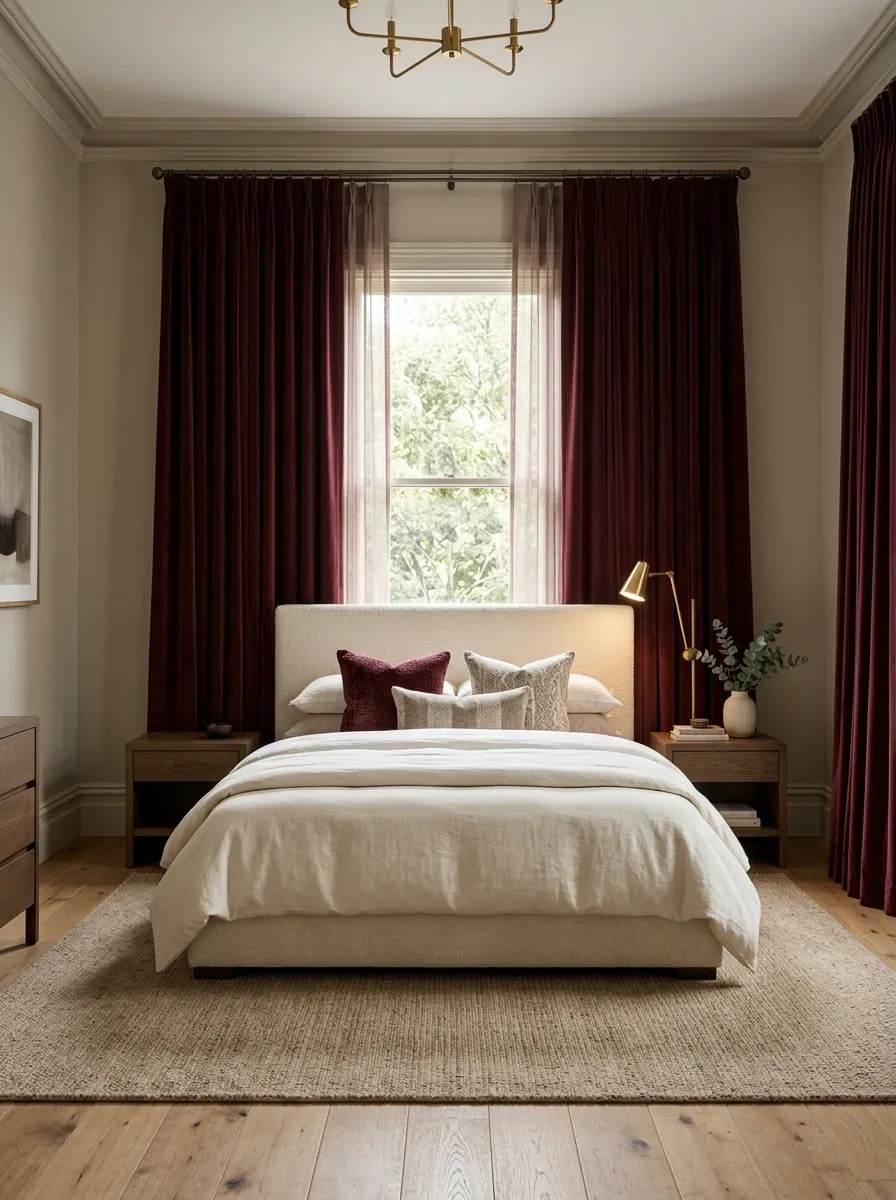
Heavy burgundy curtains can make a plain bedroom feel far more intentional.
Hang them high and wide so they frame the entire bed zone instead of stopping exactly at the window. Velvet works for a dramatic room, while linen-look panels keep the effect lighter.
Keep the walls quiet.
That’s the trick. The curtains should be the saturated feature while the bed, walls, and rug stay restrained.
Layer Crisp Crimson Linens
Simple crimson bedding can completely anchor a light-filled bedroom without needing dramatic wall colors. Dress the mattress in rich red striped linens and textured pillows to make the bed the undisputed focal point of the room.
Keep the surrounding walls and sheer curtains bright and neutral to let the saturated red fabric pop against the daylight. A simple bedside setup with natural dried botanicals finishes the look with organic texture.
The overall aesthetic feels effortless, fresh, and inviting, proving that vibrant red works beautifully when paired with plenty of breathing room.
Layer Cherry Red Through the Bedding
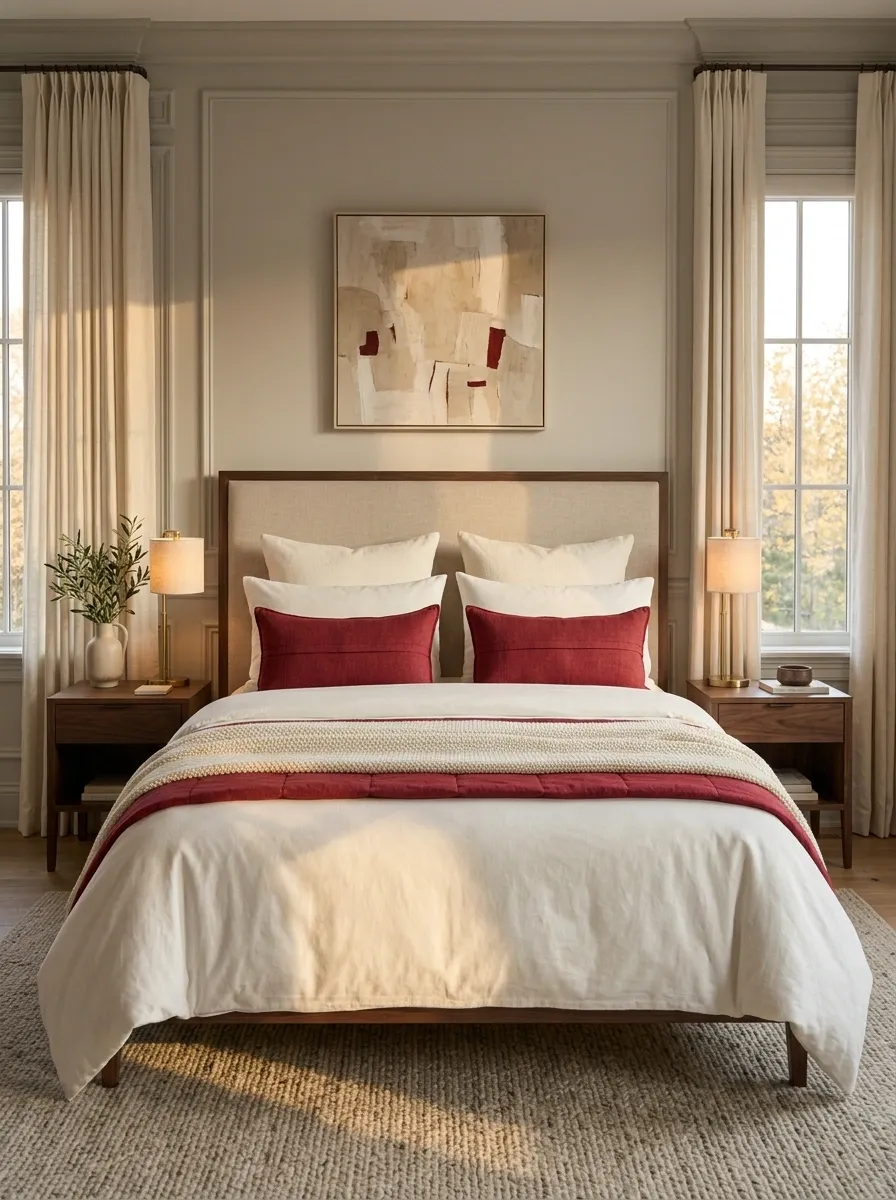
Cherry red doesn’t need a wall to make an impact.
Start with a mostly neutral bed, then introduce cherry red in a controlled sequence. A quilt, folded throw, or pair of lumbar pillows can create the stronger color note without making the whole bedroom feel loud.
Build the bed in this order:
- Warm white base
- Soft beige or ivory layer
- Cherry red folded throw
- One repeated red detail near the pillows
Keep the red pieces crisp and simple. Too many patterns make bright red look chaotic fast.
Layer Terracotta and Muted Berry
Earthy terracotta and muted berry tones create a warm, grounding atmosphere in a modern bedroom. Frame the bed with a tall upholstered accent panel that contrasts softly against textured concrete-style walls and rich wooden ceiling beams.
Layer various shades of mauve, dusty rose, and deep plum across the bedding to build a sophisticated tonal palette. A large rustic rug anchors the bed while complementing the exposed wood and warm lighting.
The resulting space feels calm yet deeply rich, offering a masterclass in mixing earthy materials with understated reds.
Mix Red With Dark Walnut Furniture
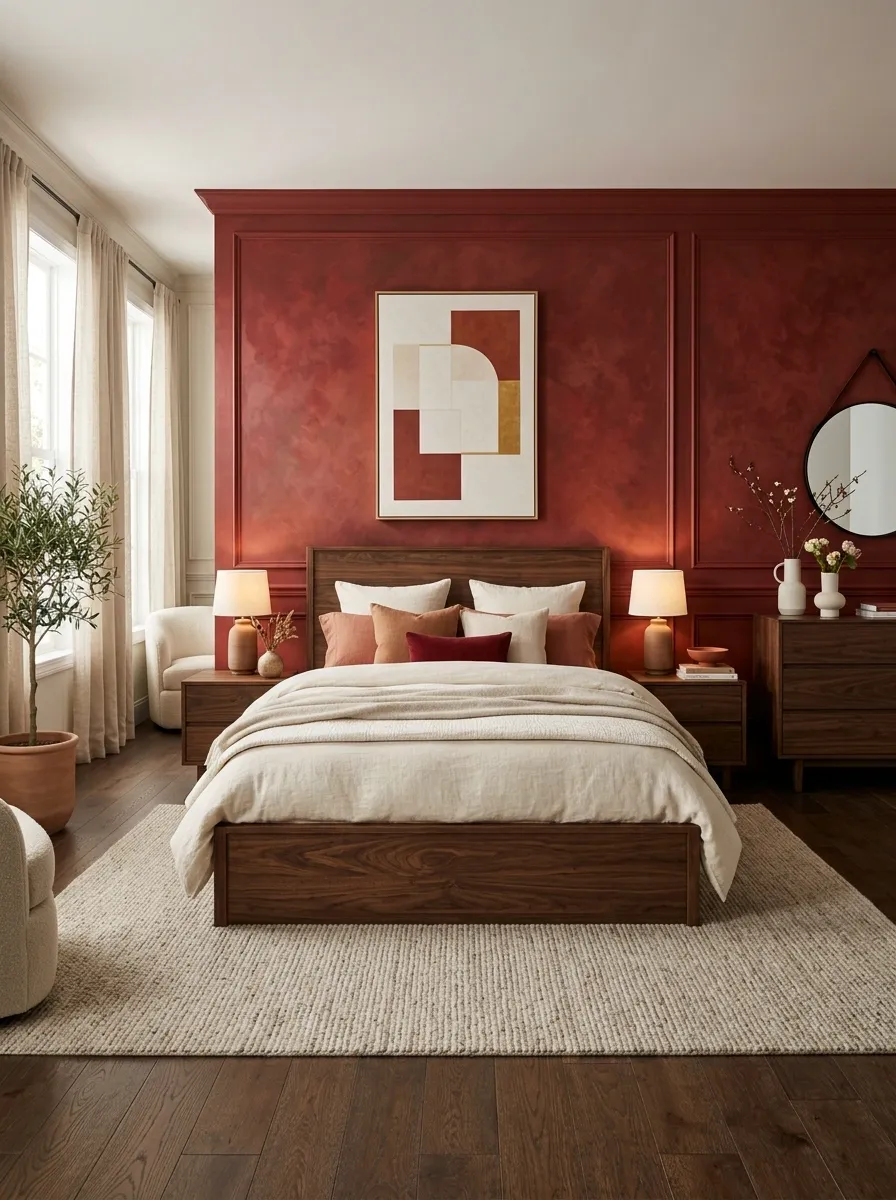
Red looks richer beside dark wood.
A walnut bed frame, dresser, or pair of nightstands gives a red bedroom enough visual weight to feel grounded. Without that darker material, strong red can sometimes feel too bright or decorative.
Keep the wood finish consistent across the room.
Then soften it with cream fabric, warm lighting, and a rug that sits between the wood and red tones. The contrast should feel deliberate, not busy.
Put Red Wallpaper Behind the Headboard
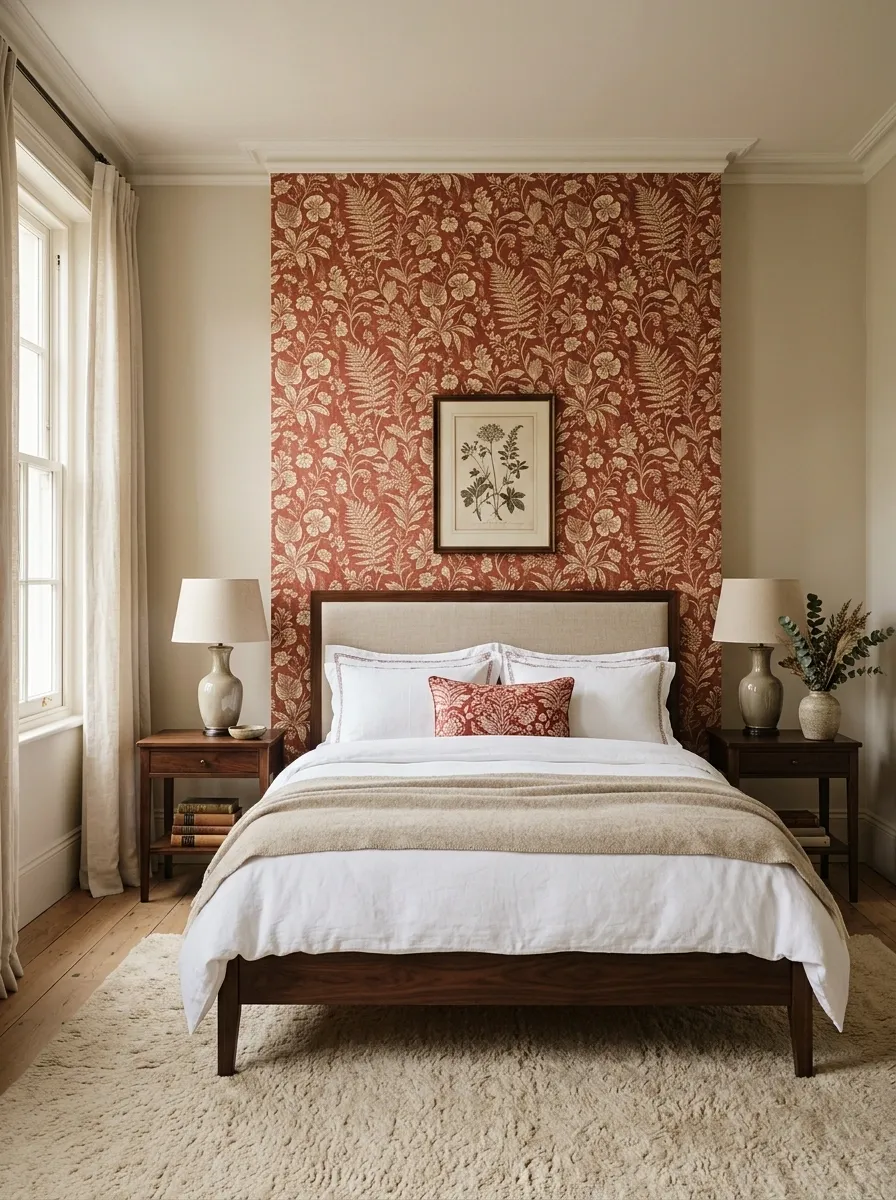
Red wallpaper works best when it has something to anchor it.
A traditional floral, small geometric, or aged botanical pattern can turn the wall behind the bed into the room’s main feature. Keep the pattern contained to that wall and let everything below it stay quiet.
Choose bedding that picks up one soft color from the wallpaper rather than matching the red exactly.
Best move: use wallpaper with some visual breathing room. Tiny, tightly packed patterns can make a bedroom feel much busier than expected.
Choose a red design with visible space between motifs.
Stop the pattern at the main bed wall.
Pull a quieter neutral from the wallpaper into the bedding.
Build the Room Around a Brick Red Accent Chair
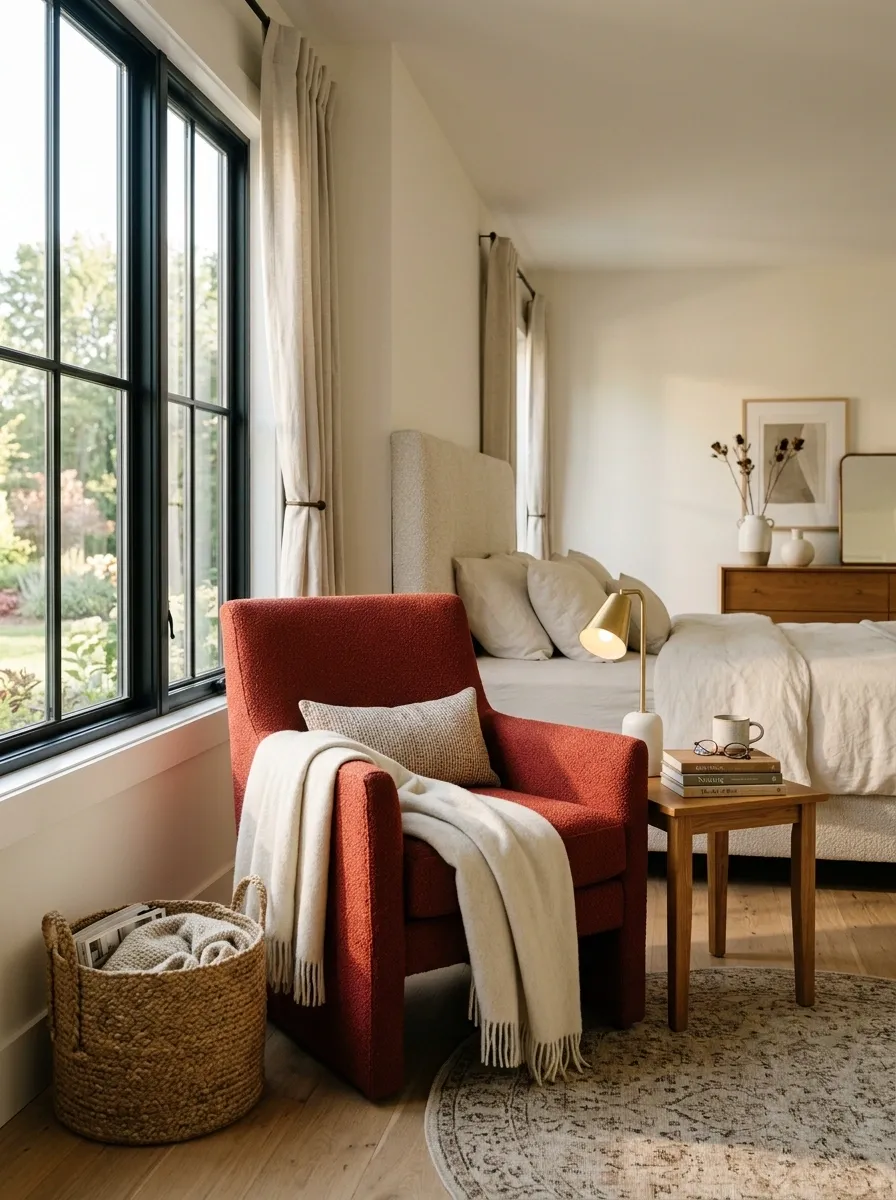
A brick red chair gives the bedroom a strong color hit without taking over the entire room.
Place it near a window, beside a dresser, or in an unused corner where it can actually serve a purpose. Add a small side table and a reading light, and the corner suddenly feels finished.
Keep the rest of the room quieter.
Natural oak, cream linen, and woven textures suit brick red especially well. The slightly dusty quality of the shade makes it easier to live with than a very bright red.
Use a Red Rug Instead of Red Walls
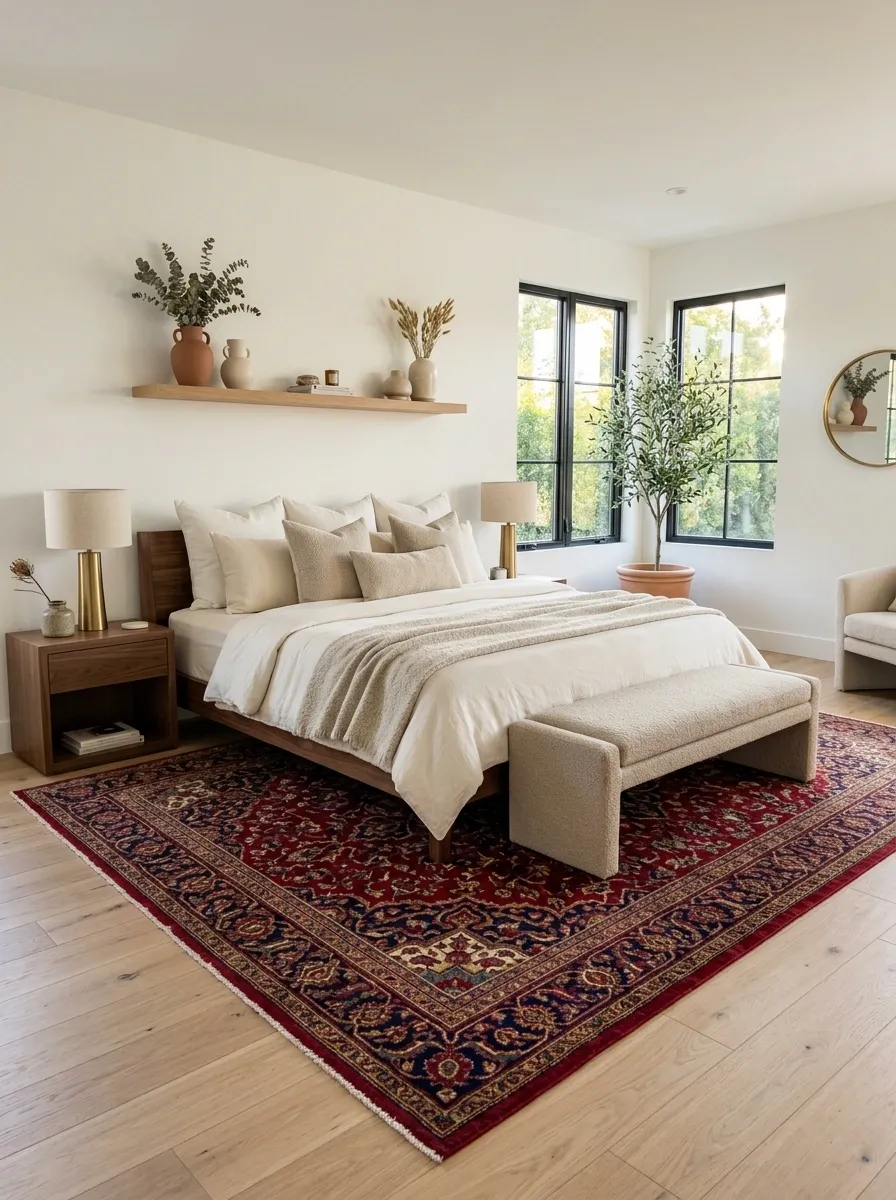
A red rug is the safer move when painted walls feel like too much commitment.
A large rug under the bed can introduce the color at floor level while leaving the walls light. This works particularly well in rentals and smaller bedrooms where dark walls could visually close in the space.
| Approach | Best Result | Watch Out For |
|---|---|---|
| Red wall | Strong architectural statement | More visually dominant |
| Red rug | Softer color introduction | Needs enough size to feel intentional |
| Red bedding | Easy to change | Can look temporary if too small |
The rug should extend beyond the sides of the bed. A tiny red mat beside the bed won’t create the same visual effect.
| Placement | Visual Strength | Best For |
|---|---|---|
| Wall | High | A dramatic focal point |
| Rug | Medium | Renters and flexible schemes |
| Bedding | Medium to high | Easy seasonal changes |
Add Red Through Oversized Artwork
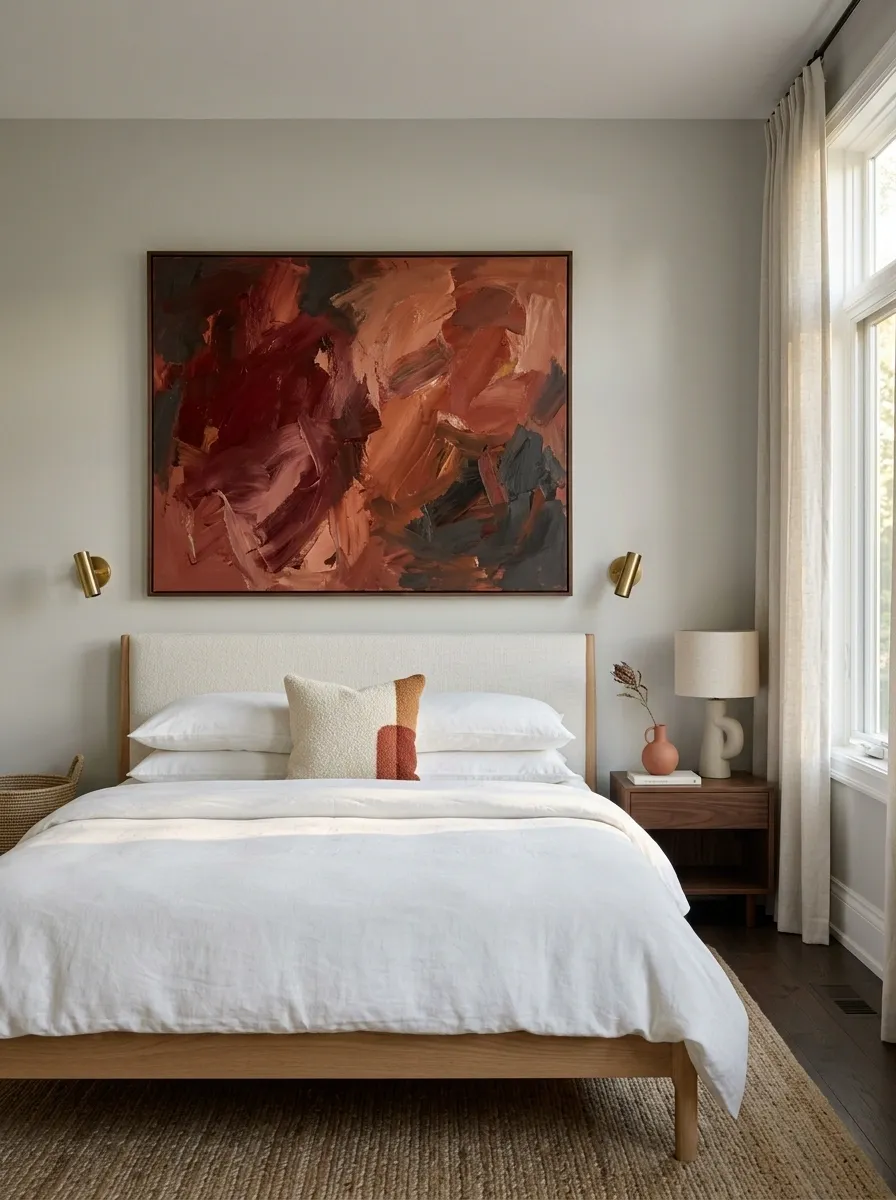
One oversized red artwork piece can do more than a collection of tiny decorative prints.
Hang a large abstract piece, vintage-style botanical, or graphic composition above the bed or on the largest empty wall. Let the art carry the strongest red in the room.
Then repeat a quieter version of that red somewhere else, such as a cushion or small ceramic object.
The key is scale.
One substantial piece feels intentional. Five little red frames scattered around the room usually don’t.
Bring back a muted version of the same red in one small bedroom detail.
Try Red-and-Cream Stripes for a Classic Bedroom
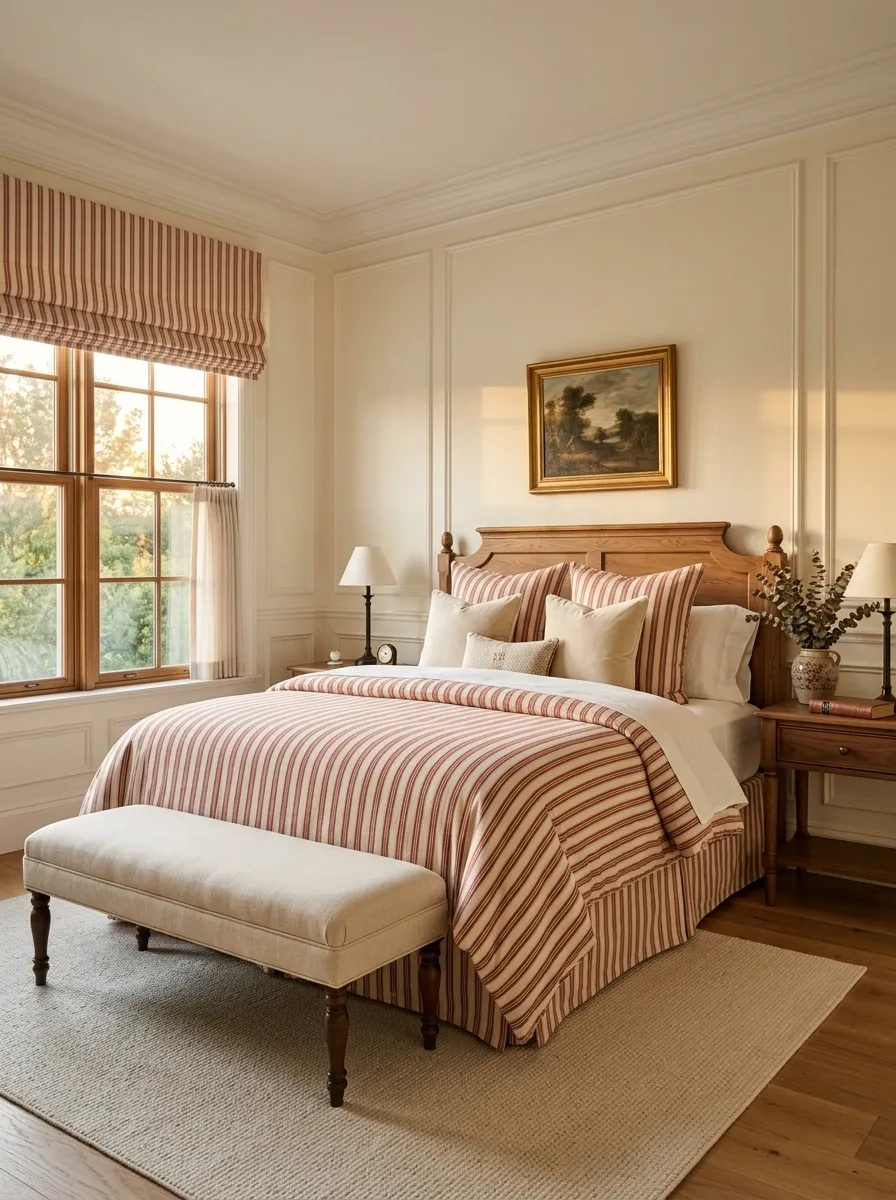
Red stripes bring pattern into the bedroom without needing a complicated mix of prints.
Use them on a duvet, upholstered bench, roman shade, or set of pillowcases. Cream should take up more visual space than red, especially if the stripes are wide.
Keep nearby patterns simple:
☐ Solid cream bedding
☐ Natural wood furniture
☐ One quiet textured rug
☐ A small brass or dark metal accent
The classic combination works because the red gets repetition while the cream keeps the room open.
Combine Burgundy With Aged Brass
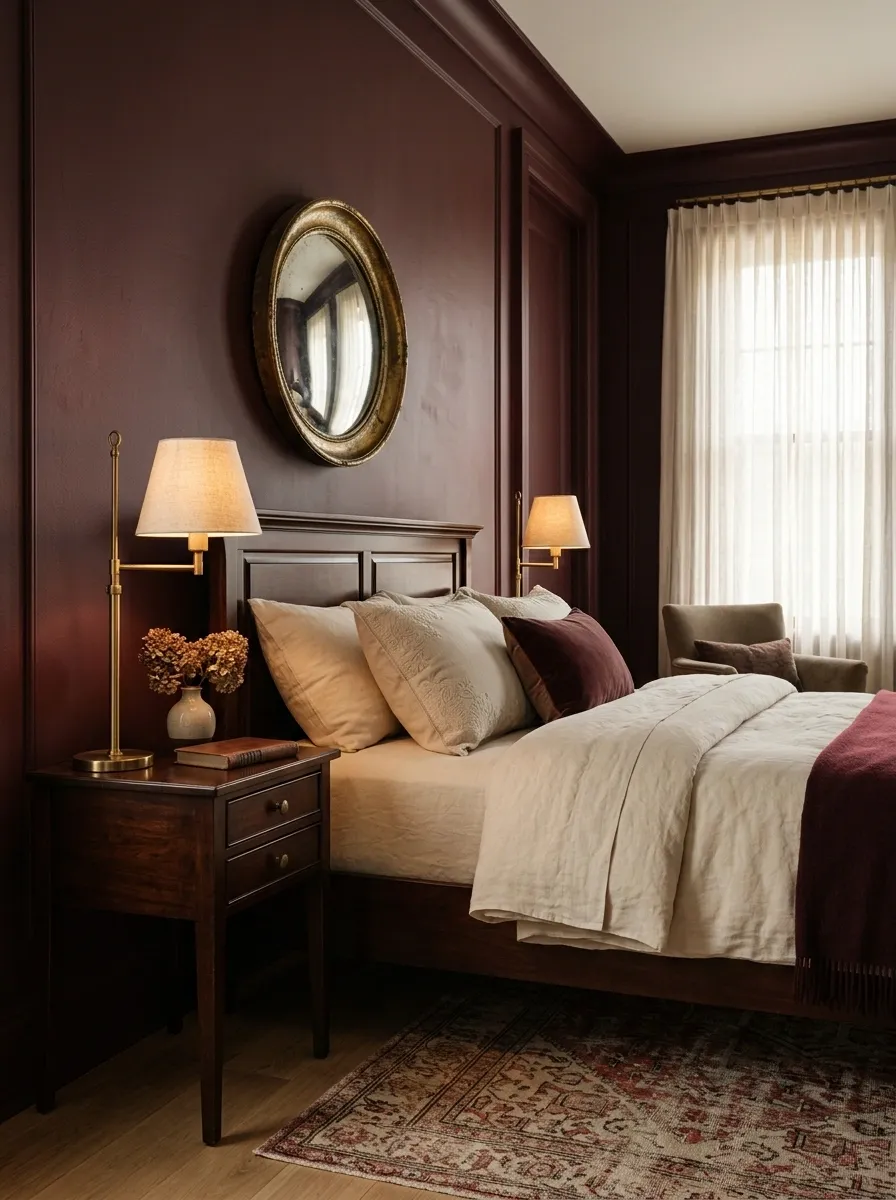
Burgundy and aged brass belong together.
The warm metal keeps a dark red bedroom from feeling flat, especially when the room already has dark furniture. Use brass on lighting, drawer pulls, mirrors, or a small bedside table rather than covering every surface with shiny metal.
The finish matters.
Aged brass works better than highly polished yellow gold here because it has a softer, older quality that suits deep red.
Use Muted Red on the Ceiling
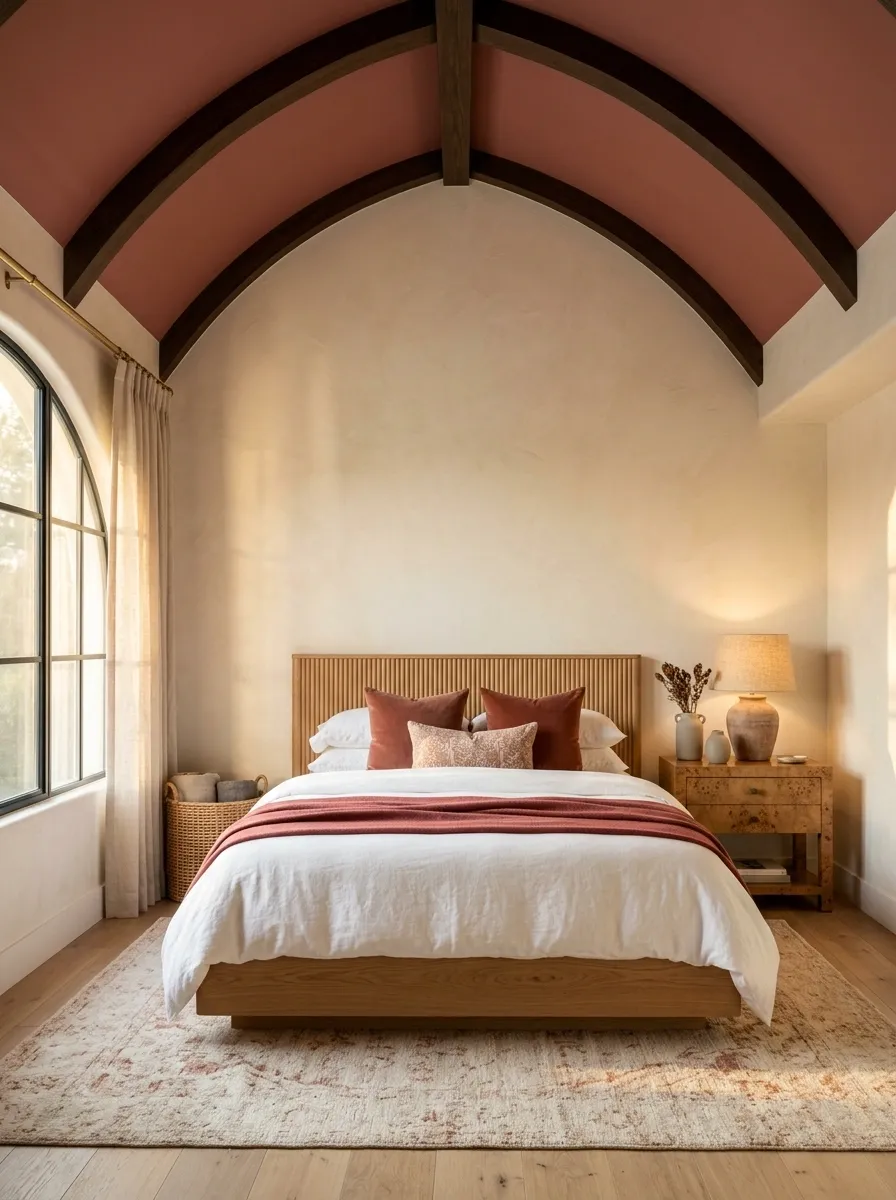
A painted ceiling doesn’t have to stay white.
A dusty red or muted terracotta shade on the ceiling can make a bedroom feel wrapped and intimate, especially when the walls stay warm cream.
The trick is to keep the rest of the room restrained.
Use this sequence:
- Choose a softened red rather than bright primary red.
- Keep the walls warm and light.
- Repeat a little of the ceiling shade in the bedding or curtains.
- Use warm bulbs at night.
This works best in rooms where the ceiling has enough architectural presence to make the unexpected color feel deliberate.
Make a Red Bed the Main Focal Point
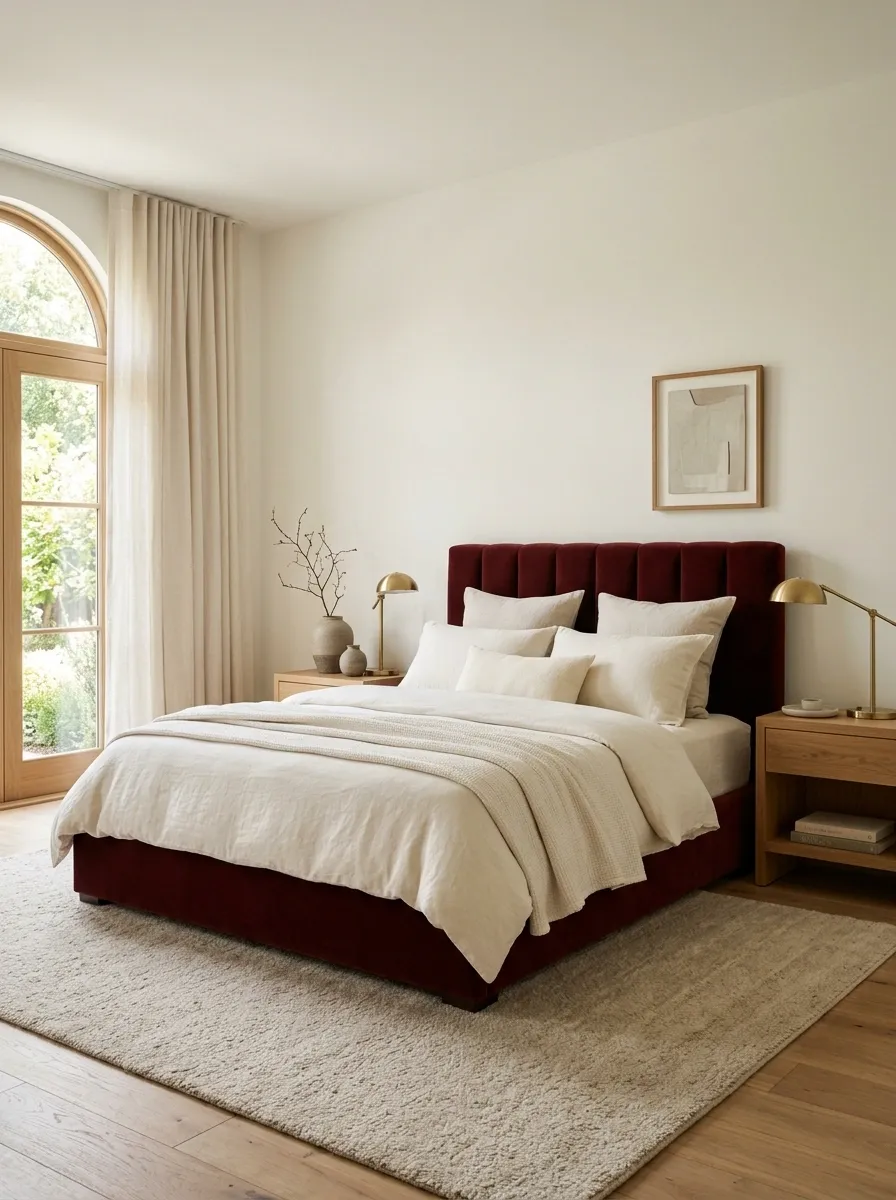
A red bed can carry the entire room without needing red walls.
Choose a frame or upholstered bed in burgundy, oxblood, or a rich brick tone, then let everything around it become quieter. This approach works especially well when the bedroom already has interesting architecture, wood floors, or large windows that deserve attention too.
Keep the bedside tables simple.
Cream bedding, a neutral rug, and warm lighting create enough contrast for the bed to stand out without making the room feel themed.
Balance Crimson With Warm Ivory
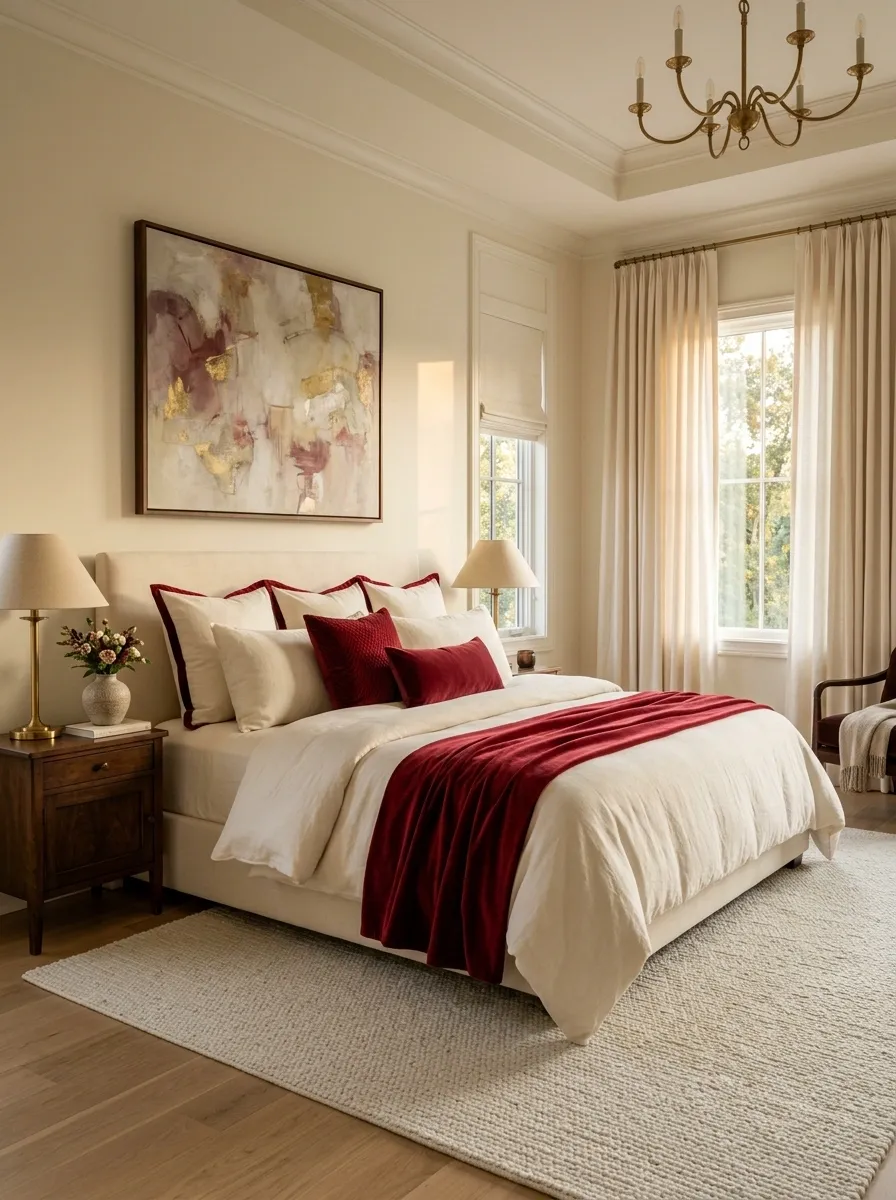
Bright crimson needs somewhere to rest.
Warm ivory is the answer. Use it on the duvet, walls, curtains, or a large rug so the red has plenty of visual space around it. Cool white tends to make vivid red feel sharper, which isn’t useful when the goal is a bedroom rather than a showroom.
Watch the ratio: don’t stack crimson on every textile.
A red bedspread beside red curtains and red artwork can make the room feel smaller and louder. Let ivory take the larger surfaces, then use crimson where attention should land.
Use it where the eye should land, such as the bed, one wall, or one statement textile.
Bedding, curtains, and rugs can create the visual breathing room the red needs.
Use Red Linen for a Relaxed Look
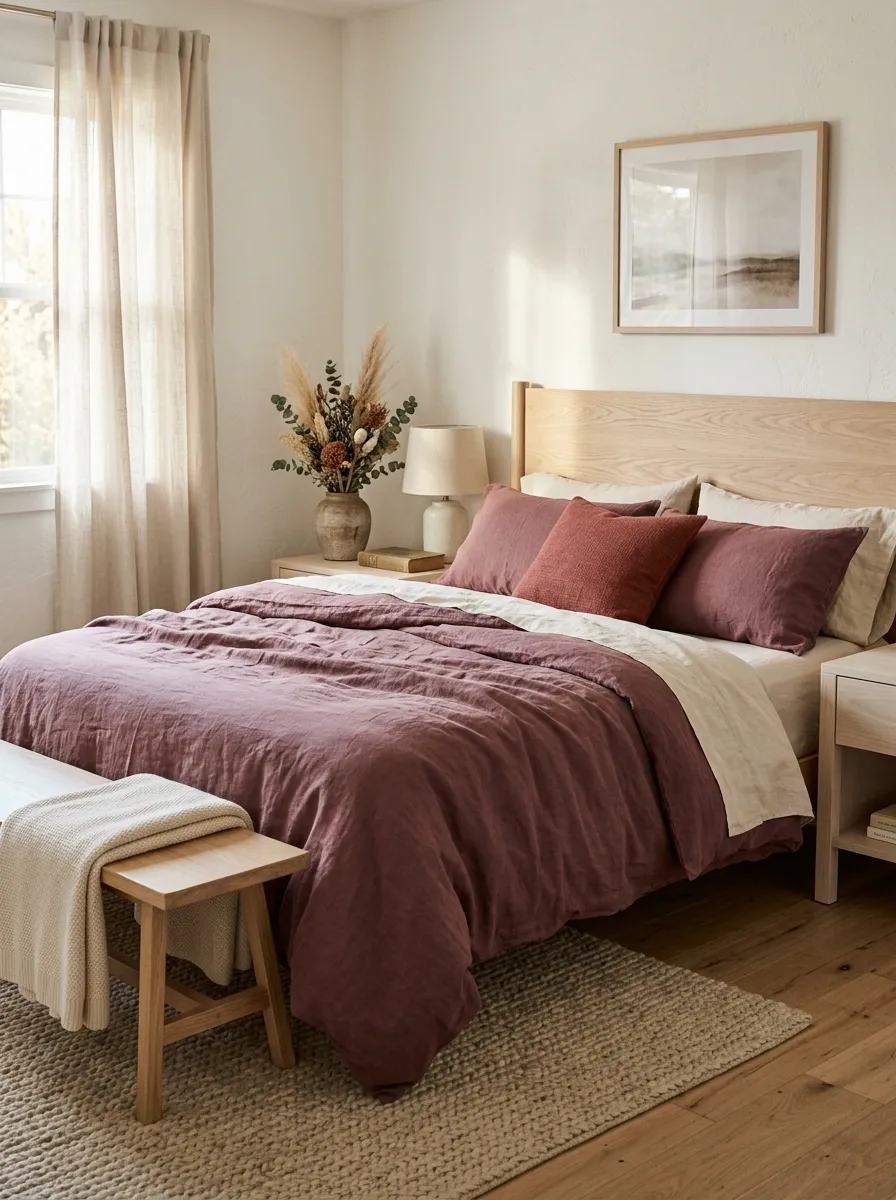
Red doesn’t always need to feel dramatic.
Washed linen in a muted red, brick tone, or dusty wine shade gives the bedroom a softer finish. The slight texture keeps the color from looking too polished, which is especially useful in casual bedrooms with simple furniture.
Choose one large linen piece first, such as the duvet cover.
Then repeat the shade in a smaller textile rather than matching everything. A rumpled linen cover beside pale wood and a woven rug feels much more relaxed than a perfectly coordinated red bedding set.
Create Contrast With Charcoal and Red
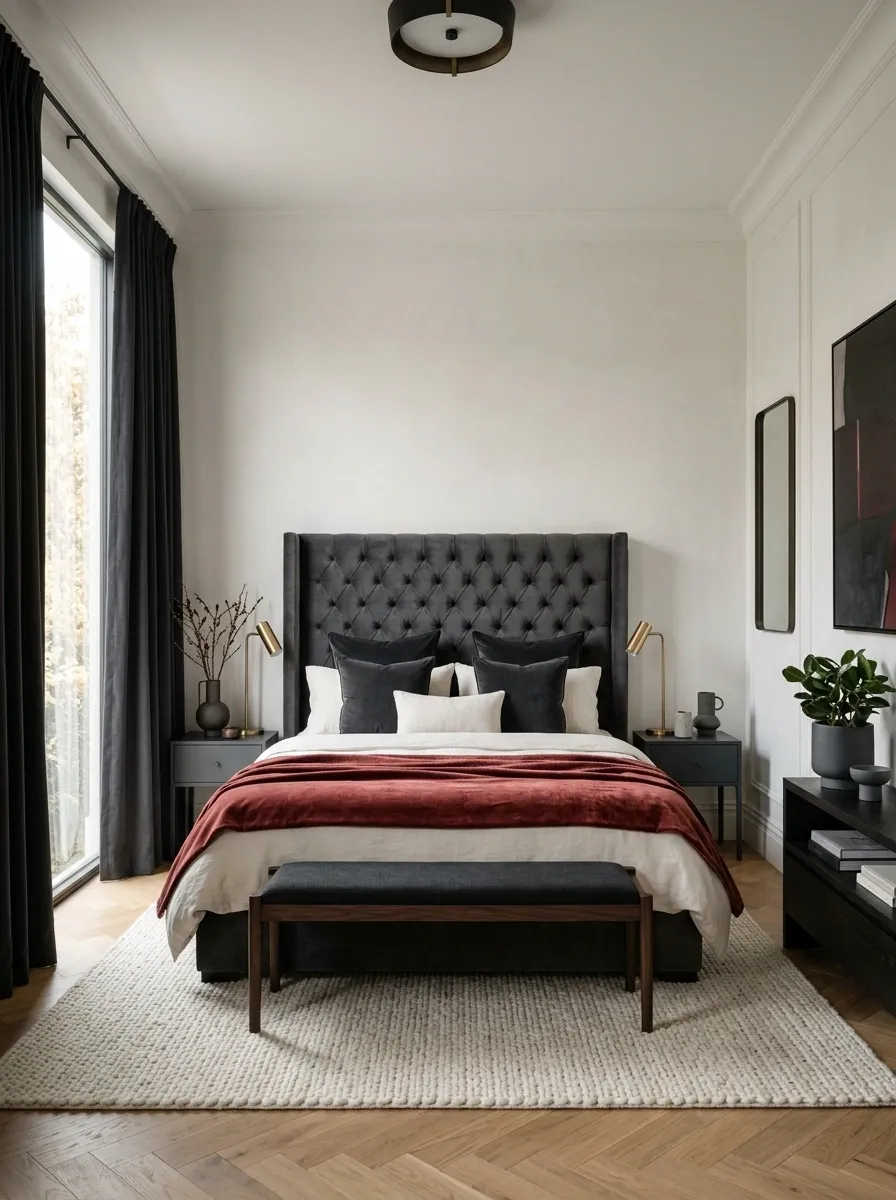
Charcoal gives red a cleaner, more modern edge.
Use charcoal on a headboard, bedside tables, curtains, or one large piece of furniture. Then let red show up in a controlled way through bedding or artwork.
The combination works because the two dark tones don’t compete for attention in the same way bright red and glossy black can.
Keep the balance simple:
- Charcoal furniture for structure
- Red bedding for focus
- Warm ivory for breathing room
- Natural wood for softness
The result feels modern without becoming cold.
Add a Vintage Look With Oxide Red
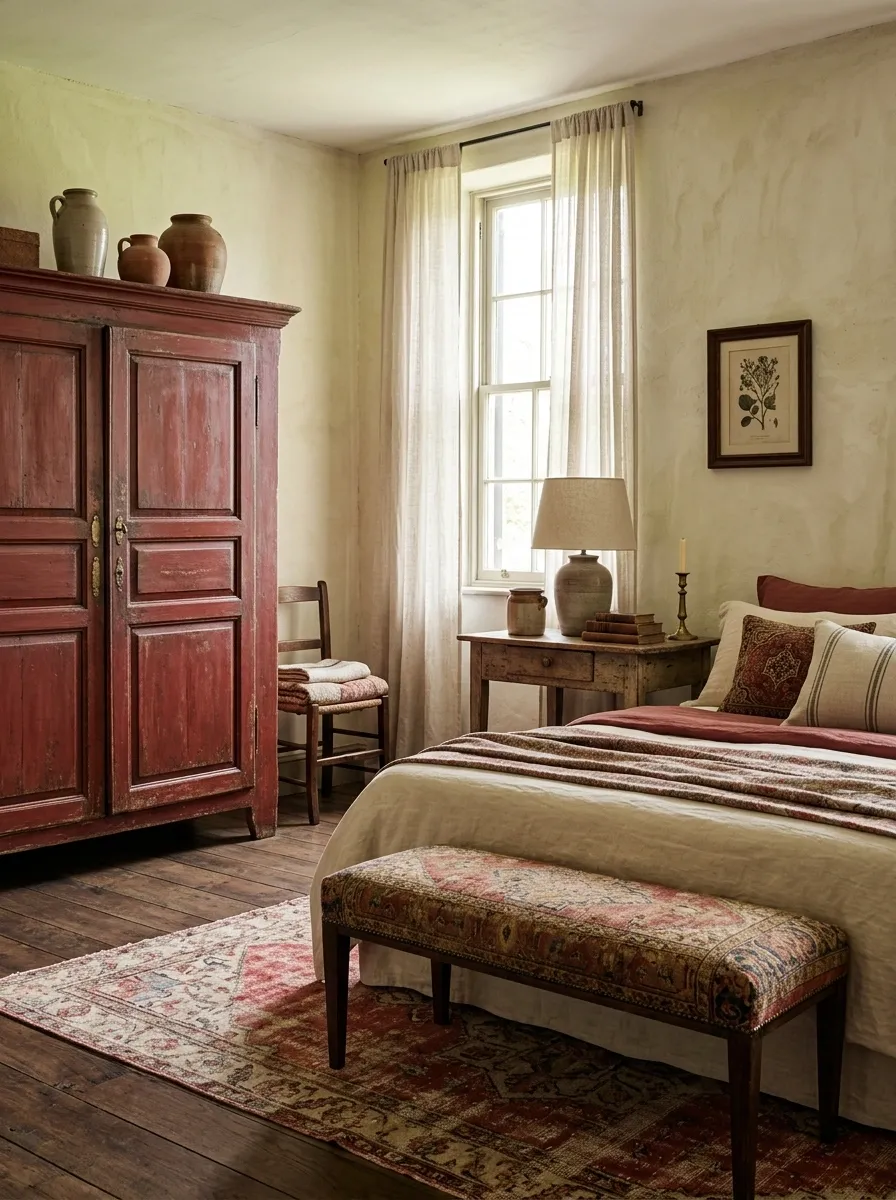
Oxide red has a slightly weathered quality that makes a bedroom feel collected instead of newly decorated.
Use it on painted furniture, a vintage-style rug, an upholstered bench, or an old-world patterned textile. Pair it with aged wood and warm cream rather than sleek white.
Best details for this look:
- A distressed red finish
- Dark wood with visible grain
- Aged metal hardware
- Soft, slightly imperfect textiles
The finish should look lived-in. That’s what keeps the red from feeling too polished.
Use Red Trim Instead of Painting the Whole Room
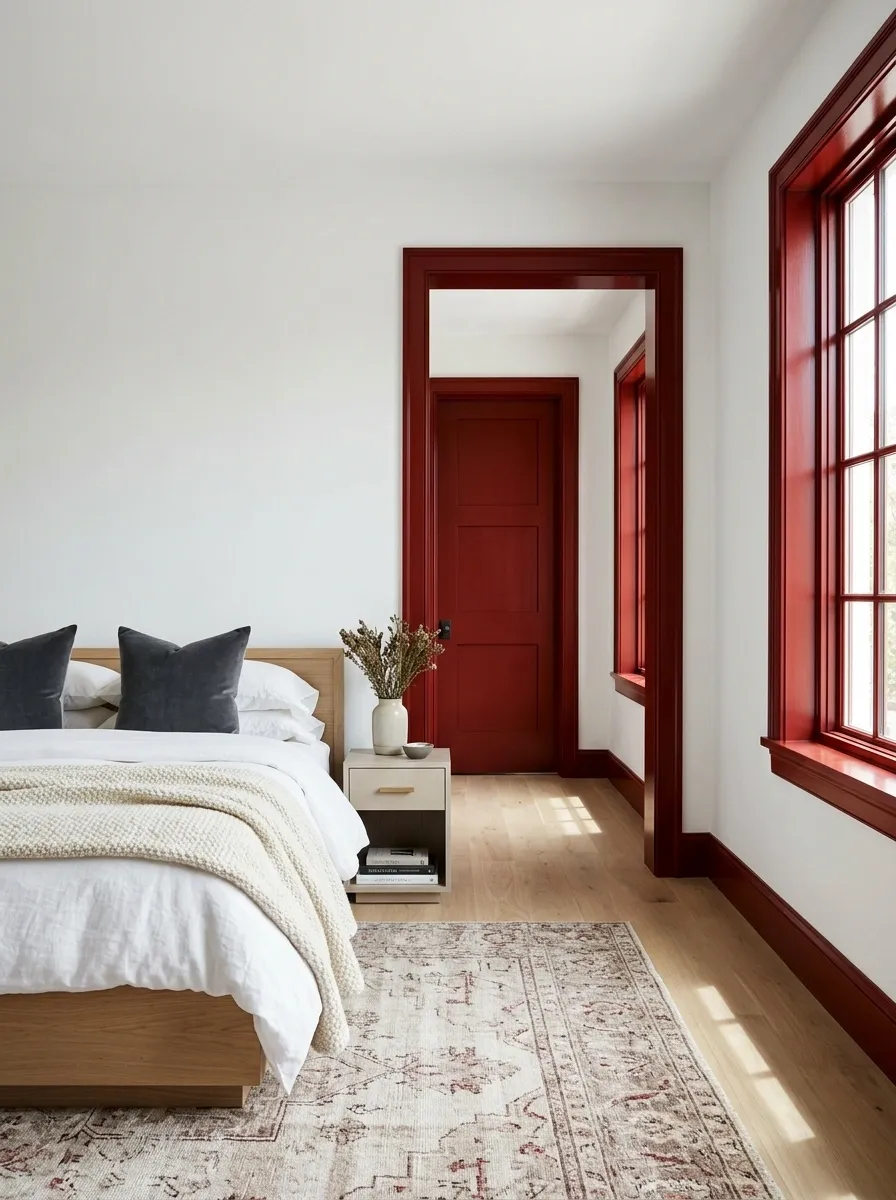
A painted red trim detail can make a simple bedroom look custom.
Try red around a doorway, along the lower portion of a wall, inside a built-in niche, or around a window. The small scale makes the color feel intentional without demanding the attention of a fully painted room.
Keep the surrounding wall color light.
The strongest placements are architectural ones.
A red line around an ordinary piece of furniture can look decorative. Red around a doorway or window makes the architecture itself part of the design.
Pair Red With Natural Wood and Woven Texture
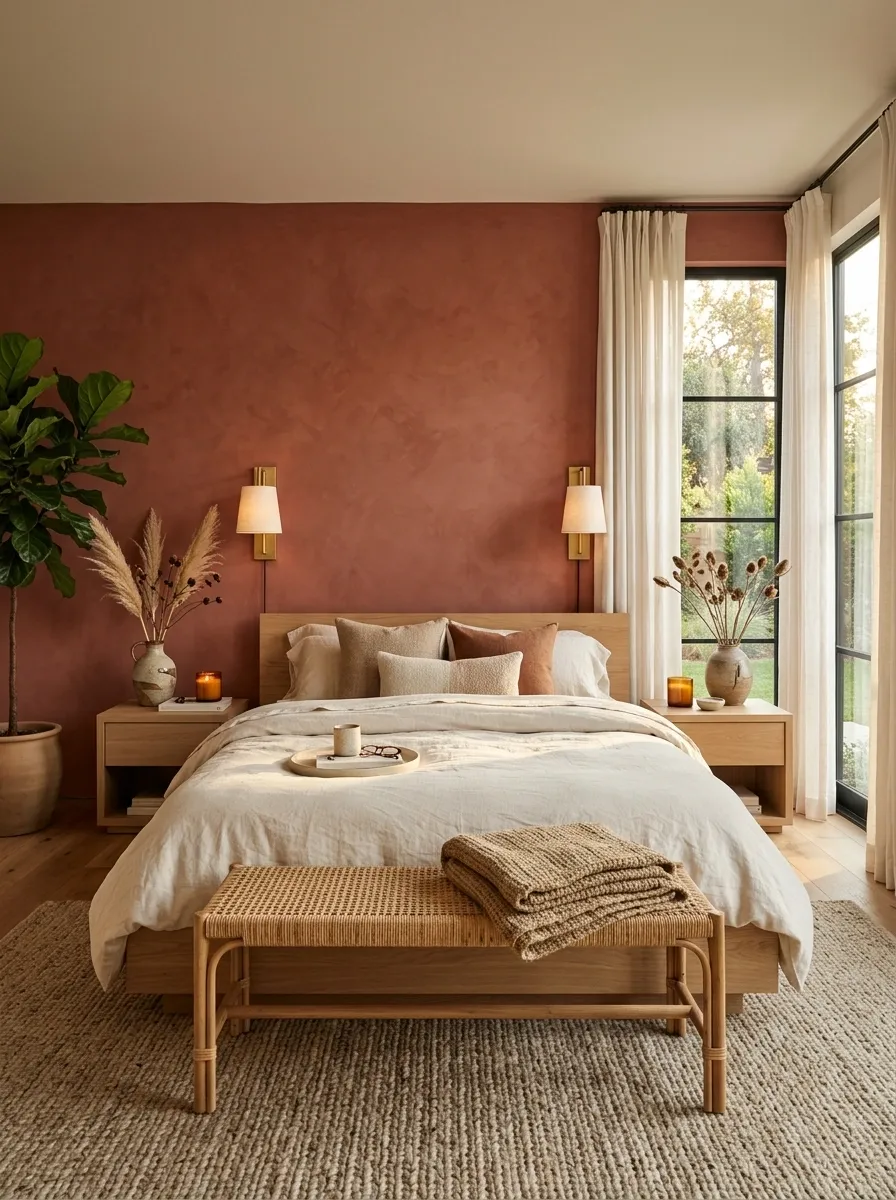
Natural materials are one of the easiest ways to make red feel warmer.
Think oak nightstands, cane furniture, a woven bench, jute-style textures, and linen bedding. These materials break up the solid color and stop the room from feeling overly polished.
Red should remain the strongest color.
Let the wood supply warmth and the woven pieces supply texture. There’s no need to add another bright accent shade when the materials are doing enough work already.
Let a Red Bench Anchor the Foot of the Bed
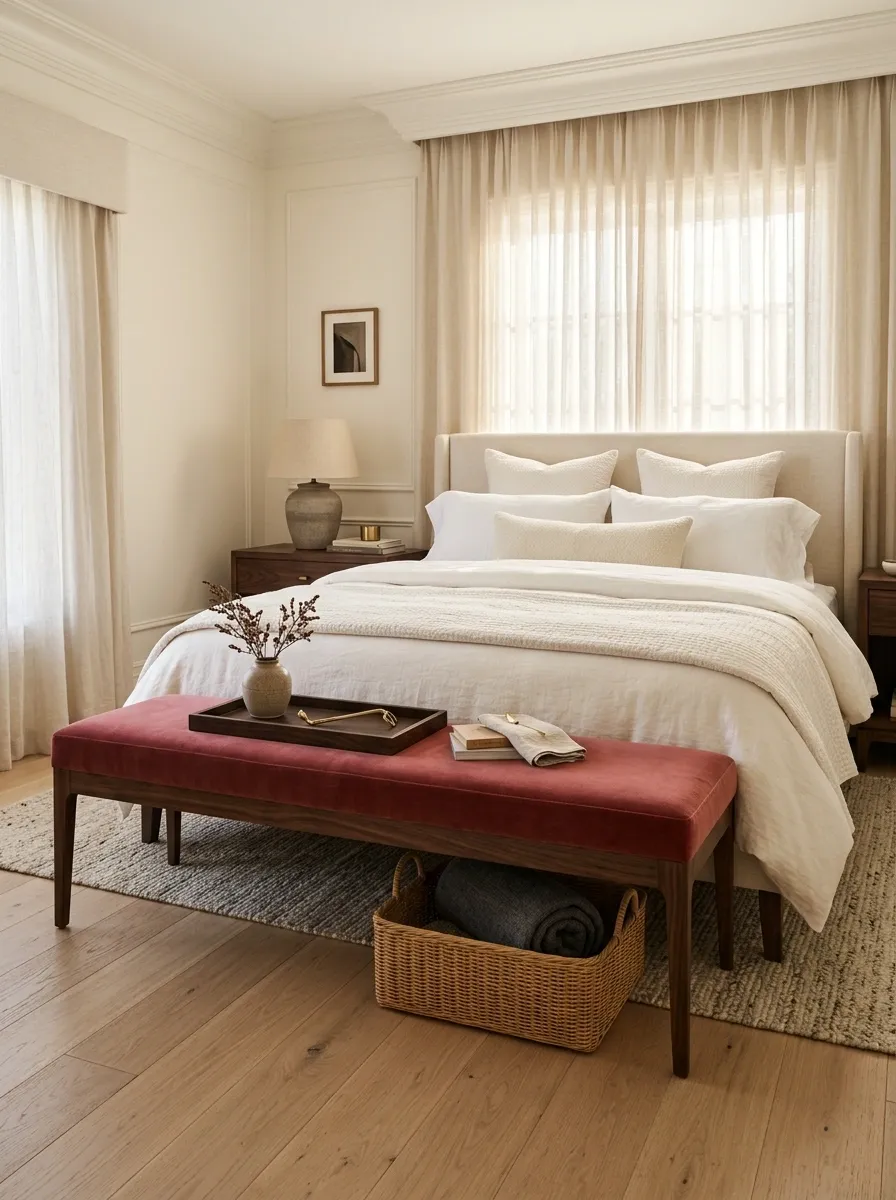
A red bench at the foot of the bed gives the color a clear job.
Choose a long upholstered bench in burgundy, brick red, or muted crimson. It should be wide enough to visually connect both sides of the bed rather than looking like a small piece dropped into an empty spot.
Keep the bedding lighter so the bench becomes the secondary focal point.
Best setup:
- Red upholstered bench
- Neutral bedding
- Simple wood nightstands
- One small red detail near the pillows
The bench also gives the room a practical landing spot for blankets, shoes, or a tray.
Try a Moody Burgundy Bedroom With Low Lighting
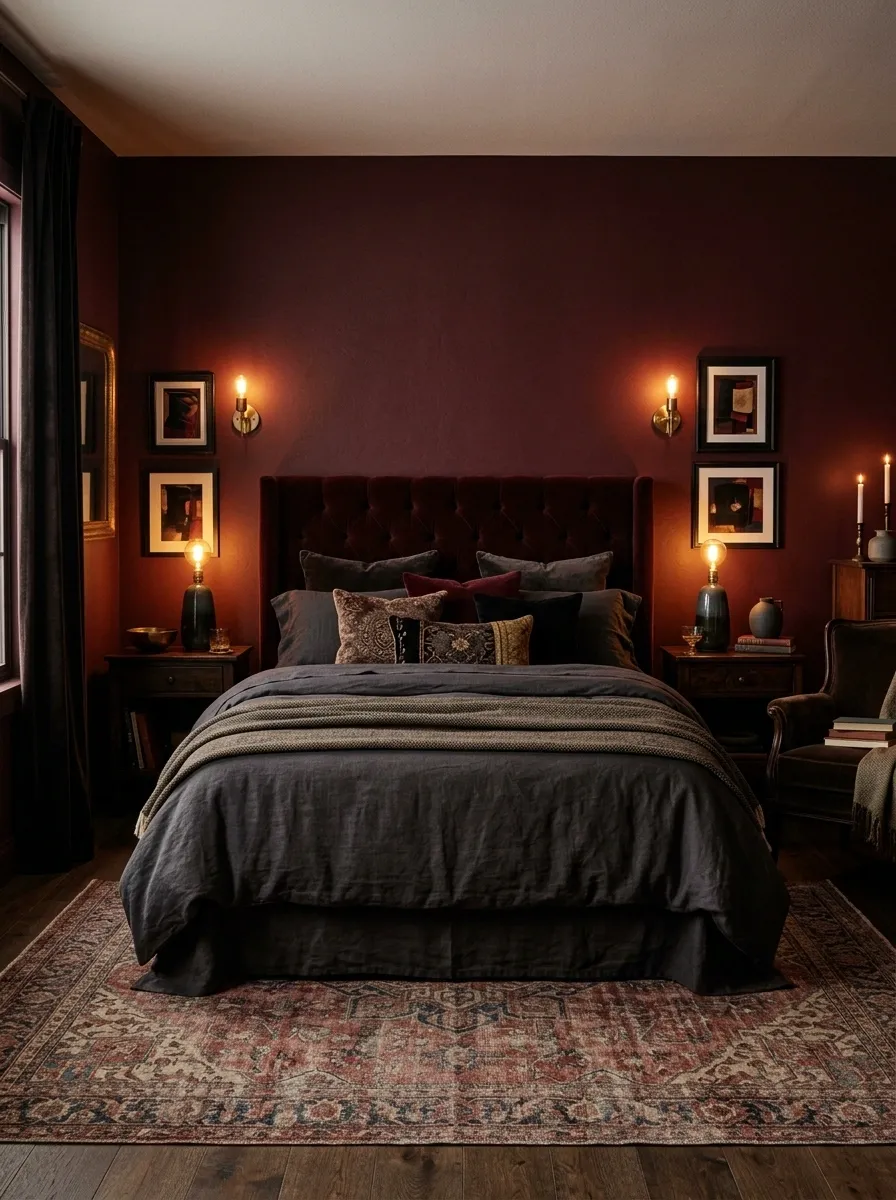
Deep burgundy looks completely different under soft evening light.
Use the darkest red on the walls or headboard, then layer table lamps, wall sconces, or pendant lights around the bed. Avoid a single bright ceiling fixture as the only source of light.
Warm pools of light make the darker red feel rich instead of flat.
Keep the light close to the surfaces that matter: bedside tables, artwork, reading chairs, and the bed itself.
Use Small Red Accents in an Otherwise Neutral Room
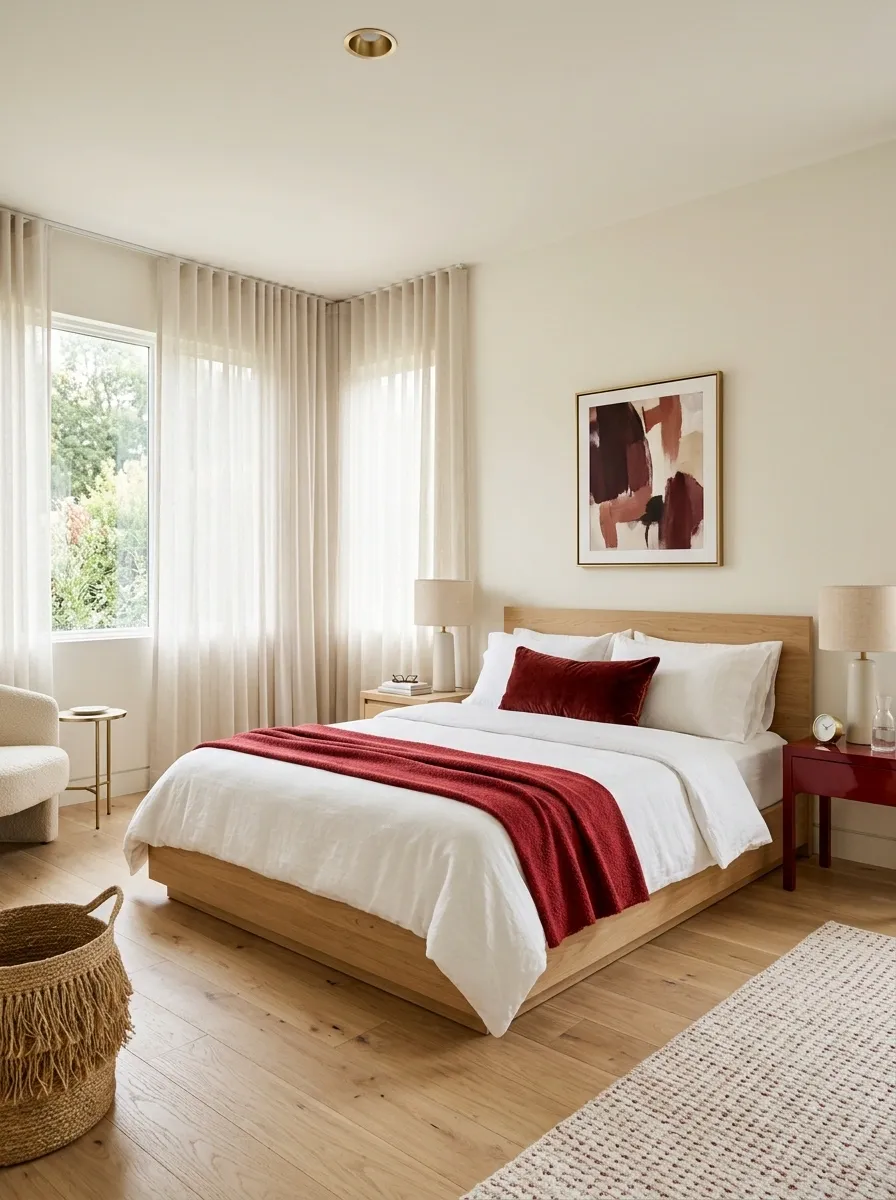
Not every red bedroom needs red walls.
Start with a neutral foundation, then use three or four small red details that repeat the same color family. A cushion, bedside lamp, artwork, and throw can be enough to make the room read as a red scheme.
The trick is repetition without clutter.
☐ One red textile
☐ One red artwork or decorative piece
☐ One small furniture accent
☐ One softer repeat near the bed
Keep the larger surfaces neutral. This approach makes the red easy to change later.
Throw, cushion, or blanket.
Repeat the red in a larger visual.
Bench, chair, or lamp.
Keep the color connected near the bed.
Mix Red Floral Patterns Without Making Them Busy
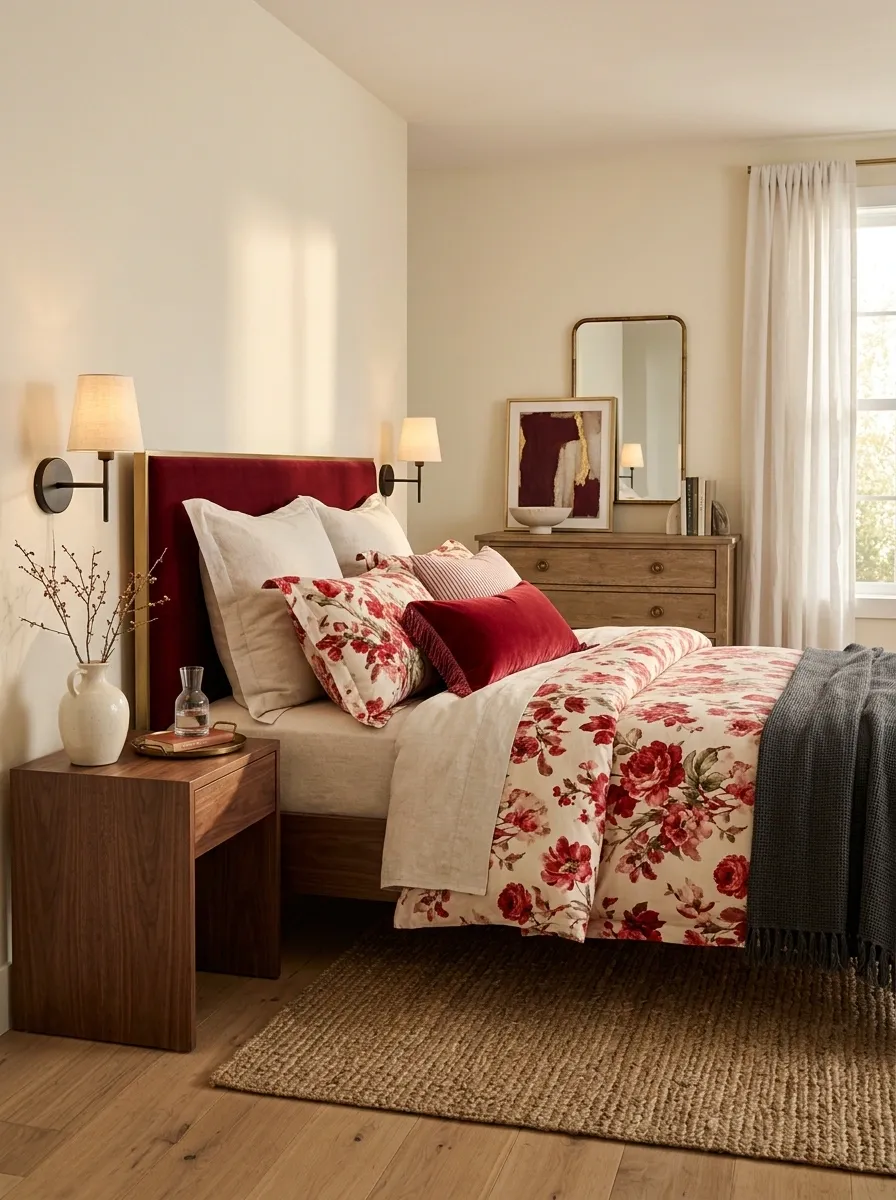
Red floral bedding can look sophisticated when the rest of the room doesn’t fight it.
Choose one dominant floral fabric, then pull one neutral background shade from the pattern into the curtains, rug, or walls. Don’t introduce several different floral prints just because they share red.
Use one pattern as the star.
Solid linen, simple wood furniture, and understated lighting give the floral print enough room to breathe. Vintage roses, botanical prints, and loose painterly flowers all work well when the background isn’t competing for attention.
Create a Modern Red Bedroom With Clean Black Details
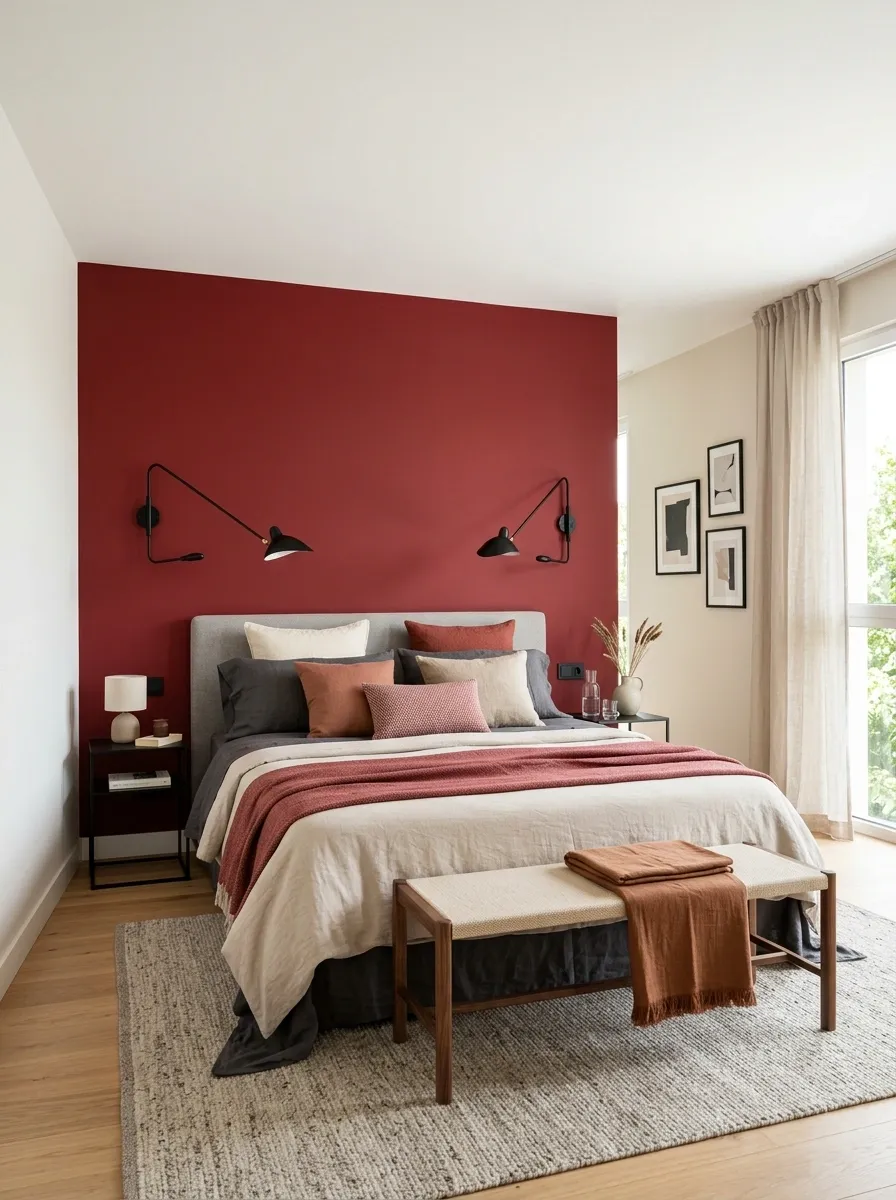
Red and black can look sharp, but the proportions matter.
Use red on one major surface, such as the bed or wall, then bring black into the room through lighting, furniture legs, mirrors, or hardware. Keep the black shapes clean and uncomplicated.
Warm white or pale beige should fill the remaining space.
| Red Placement | Black Detail | Best Effect |
|---|---|---|
| Accent wall | Black lighting | Bold and architectural |
| Upholstered bed | Black side tables | Sleek and balanced |
| Bedding | Black frames | Easy modern update |
The mistake is using black on too many large surfaces. That combination can quickly make a bedroom feel much darker than intended.
| Red Base | Black Detail | Effect |
|---|---|---|
| Accent wall | Black lighting | Strong and architectural |
| Upholstered bed | Black side tables | Sleek and grounded |
| Red bedding | Black frames | Easy to update |
Layer Several Red Tones Instead of Using One Flat Shade
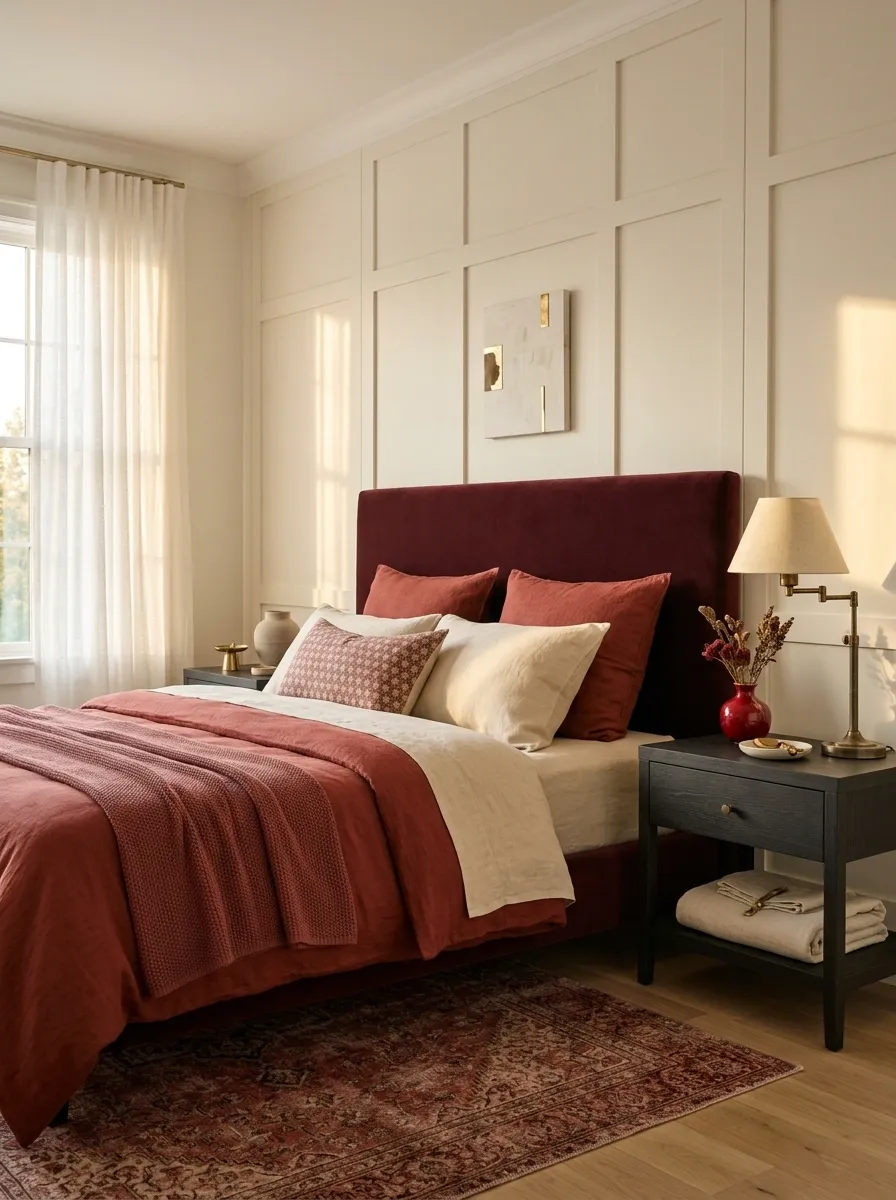
The strongest red bedrooms rarely rely on one exact shade.
Mix a deep burgundy headboard with brick red textiles, a muted red rug, or a small cherry detail. The colors feel related, but the variation gives the room depth.
The key is hierarchy.
Choose one red as the main color, one supporting red, and one tiny accent. Don’t give all three equal visual weight.
The Best Red Bedroom Is Built Around One Clear Decision
The easiest way to make a red bedroom look confused is to choose the color last.
Start with the element that needs the most attention. It could be the wall behind the bed, an upholstered headboard, a rug, a dramatic curtain, or even a single vintage chair. Once that piece is decided, the rest of the room becomes much easier to edit.
Then give the red somewhere to rest.
Cream, warm ivory, natural wood, linen, charcoal, and aged metal all help define the color instead of competing with it. That’s why a restrained room can feel much richer than one packed with matching red accessories.
The strongest Red Bedroom Ideas aren’t about adding more red. They’re about knowing exactly where red belongs, then stopping before the room starts fighting back.
Save this list for the next bedroom update, especially when choosing between a bold wall, red bedding, or a smaller accent.