
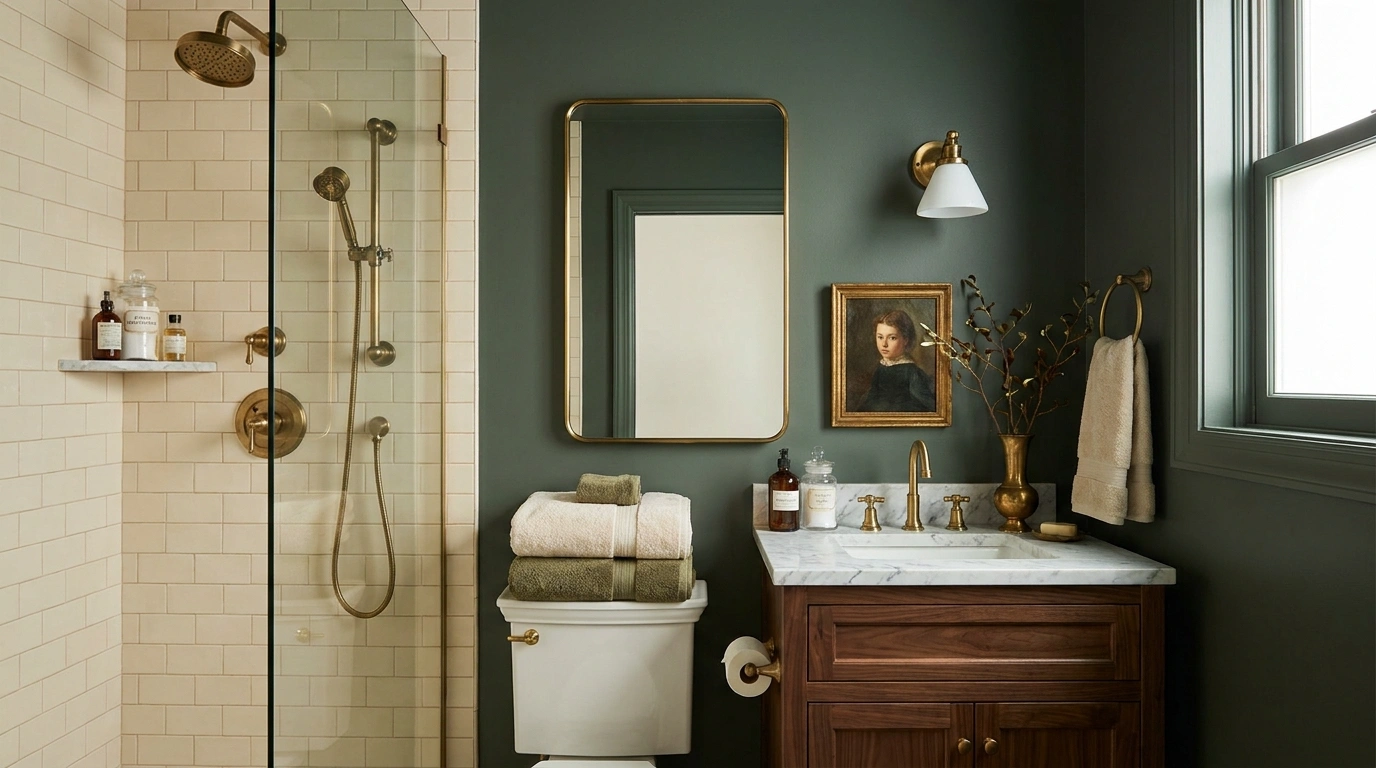
Small bathrooms are often treated as rooms that need to be made as white and bright as possible. That approach can work, but it isn’t the only way to make a compact bathroom feel spacious, finished, and visually balanced. The bigger problem is usually a lack of connection between the colors, materials, and fixtures.
A wall color can look completely different once it sits beside a vanity, floor, tile, mirror, and metal finish. Pale blue can feel crisp with white tile but much warmer beside oak. Deep green can look dramatic with marble and brass, yet heavy when surrounded by competing dark materials.
Small Bathroom Color Directions at a Glance
| Color direction | Overall effect | Pairs naturally with | Best visual role |
|---|---|---|---|
| Warm neutrals | Soft and grounded | Oak, limestone, bronze | Quiet full-room palette |
| Muted greens | Natural and layered | Wood, cream, aged brass | Distinctive wall color |
| Soft blues | Fresh and airy | White tile, pale stone, chrome | Light visual envelope |
| Deep colors | Dramatic and intimate | Pale stone, warm lighting, wood | Strong architectural backdrop |
| Warm statement colors | Earthy and expressive | Cream, oak, bronze | Memorable focal atmosphere |
Complete Small Bathroom Color Concepts Ideas
Vertical Wood-Tone Bathroom With Integrated Lighting
Rich wood flooring pairs seamlessly with vertical grey tiles and warm cabinetry in this cleverly organized layout, creating the illusion of extended height in a compact footprint. Every inch is optimized through recessed shelving and flush fixtures.
The vertical grain of the flooring naturally draws the eye forward, while the integrated strip lighting along the shower niche eliminates dark corners and adds a soft, ambient glow to the entire washroom.
Matching the basin vanity to the floor tones grounds the space, proving that cohesive materiality is the absolute key to making narrow rooms feel deliberate and expansive.
Soft Greige Bathroom With Warm Oak and Cream Stone
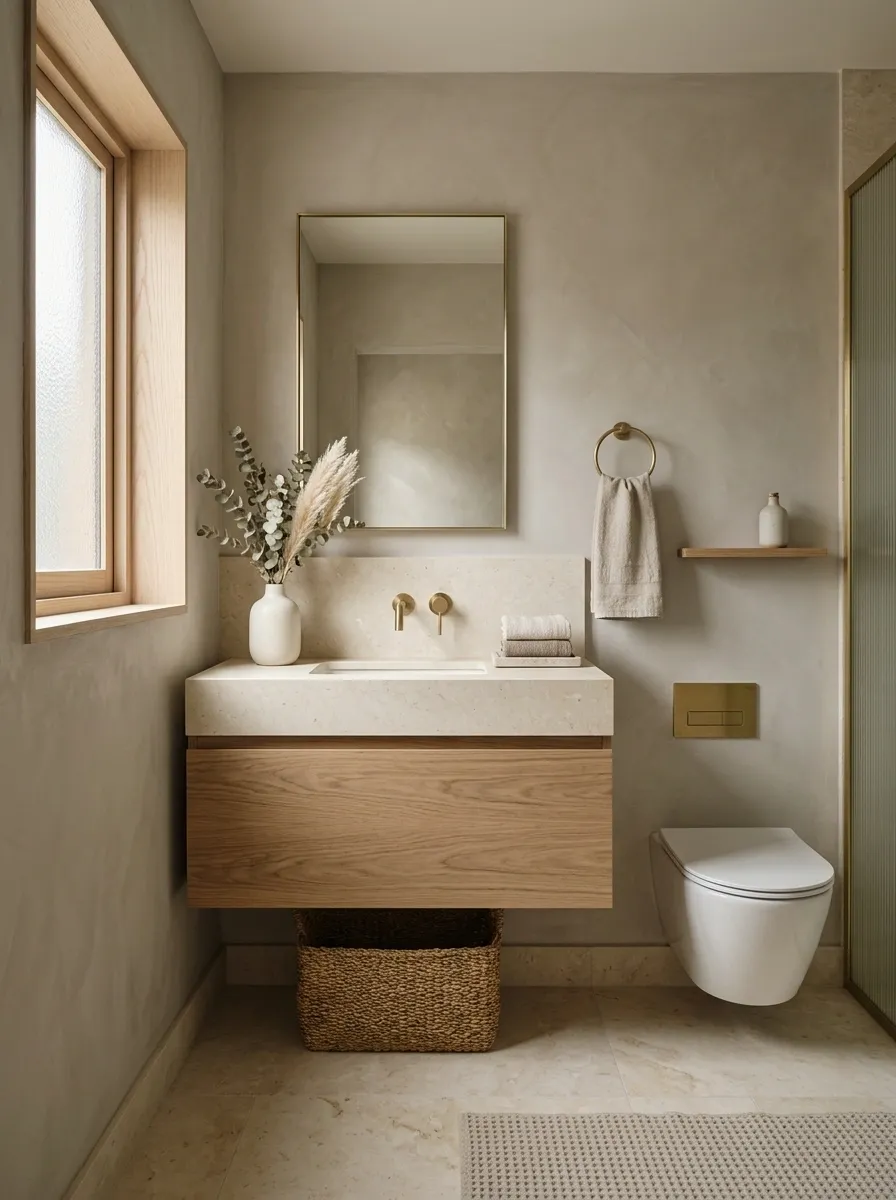
Soft greige walls create a quiet envelope around a compact bathroom finished with creamy stone, pale oak cabinetry, soft white porcelain, and restrained brushed metal.
The warm undertone matters. A cooler gray could make the same room feel flatter, while the oak and cream surfaces give the greige enough depth to remain interesting.
The visual works best when the finishes stay closely related rather than introducing another strong color. The result is calm without looking bland.
Emerald Green Sanctuary With Botanical Accents
Glossy emerald herringbone tiles wrap around this shower zone, bringing incredible depth and a luxurious jewel-toned atmosphere to a snug floor plan without feeling claustrophobic or heavy.
The dramatic botanical wallpaper on the adjacent wall introduces a lively organic texture that breaks up the saturated green fields and connects the vanity area to the bathing space effortlessly.
Brushed gold fixtures and a floating dark green vanity finish the room with timeless elegance, while warm lighting plays off the high-gloss surfaces to create a glowing jewel-box effect.
Deep Forest Green Bathroom With Walnut Vanity and Aged Brass
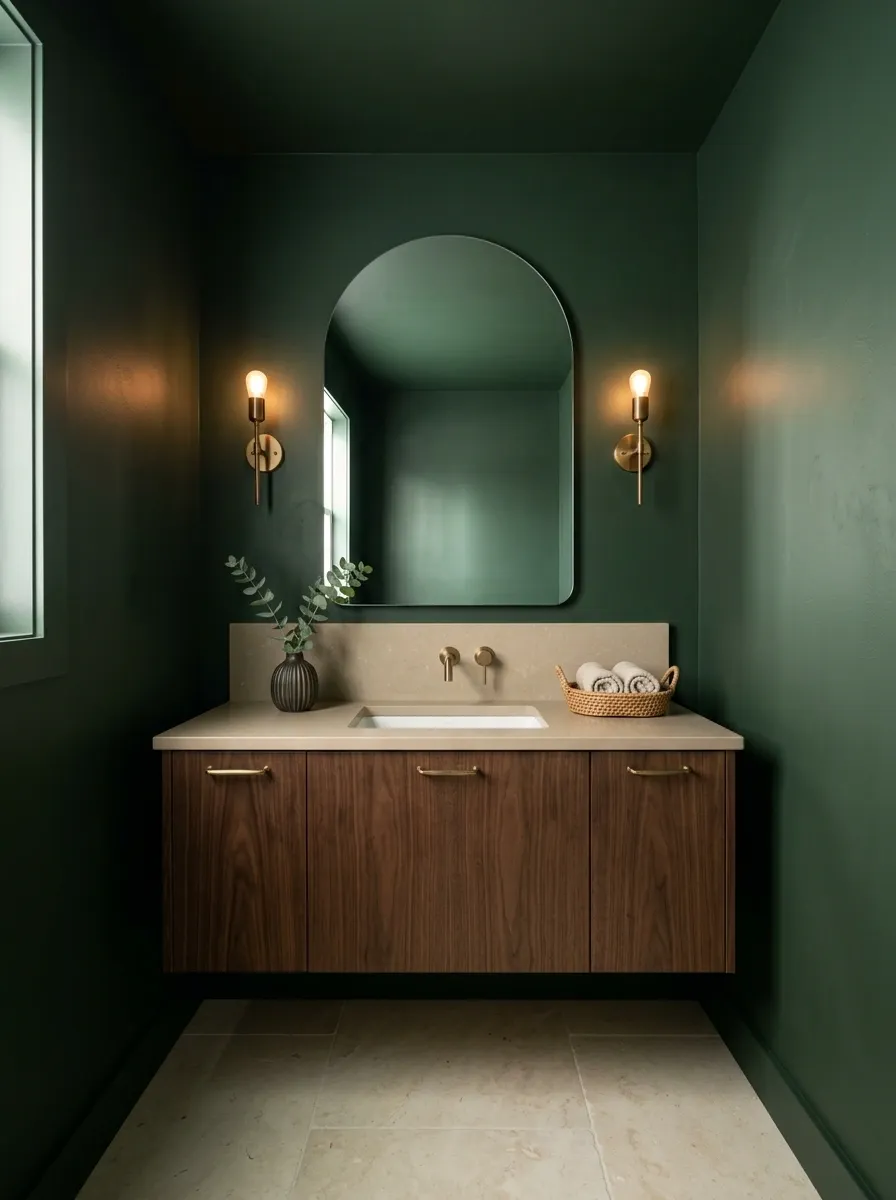
Forest green gives a compact bathroom a strong visual identity when it continues across the walls and vanity zone. A dark walnut cabinet, creamy floor, aged brass, and a rounded mirror keep the composition from becoming one heavy block of color.
The contrast between green and warm wood is what gives the room character. Brass works best as a smaller detail rather than a dominant finish.
Warm sconces are especially effective here because they bring out the richness of the green instead of making it appear flat.
largest surface
warm anchor
small accents
Teal Palm-Pattern Bathroom With Floating Vanity
A captivating palm leaf mural wallpaper anchors this compact room, creating an immersive tropical backdrop that seamlessly integrates with a sleek wall-hung toilet and teal cabinetry.
The organic shapes of the asymmetric mirrors soften the geometric lines of the dark wall units, while the continuous teal palette unifies the different zones into a single artistic statement.
Strategic recessed lighting behind the mirror and shelving illuminates the detailed patterns on the walls, ensuring the rich color palette feels airy and dynamic rather than heavy.
Pale Blue Bathroom With White Tile and Natural Stone
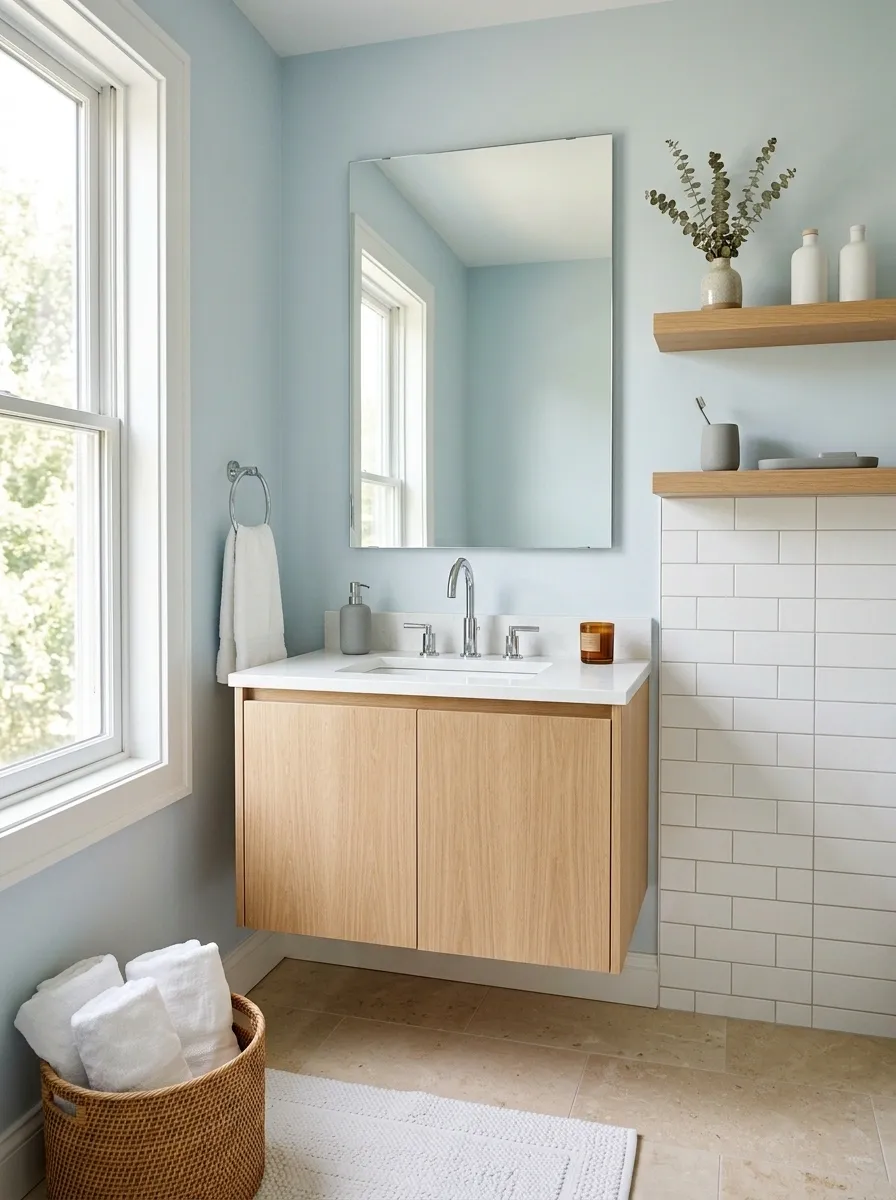
Pale blue gives the room a lighter visual envelope, especially when it is paired with white tile, pale limestone, light wood, and simple chrome fixtures.
The important detail is keeping the blue soft enough to work with the stone. A very icy blue can make the room feel disconnected from warmer materials.
Broad daylight across the walls and mirror helps this palette feel open, while natural stone prevents the overall effect from becoming overly clinical.
Plum Paneled Powder Room With Marble Counter
Deep plum wainscoting envelops this powder room in rich, dramatic color, providing a striking foundation for a stunning purple-veined marble slab vanity and classic brass wall sconces.
The intricate wood paneling adds rich architectural detail to narrow walls, while the polished marble countertop acts as a luminous anchor that breaks up the darker tones of the room.
Warm vintage lighting and a traditional patterned rug pull the rich color scheme together, creating an intimate, high-end atmosphere that makes small spaces feel exceptionally curated.
Moody Charcoal Bathroom With Dramatic Marble
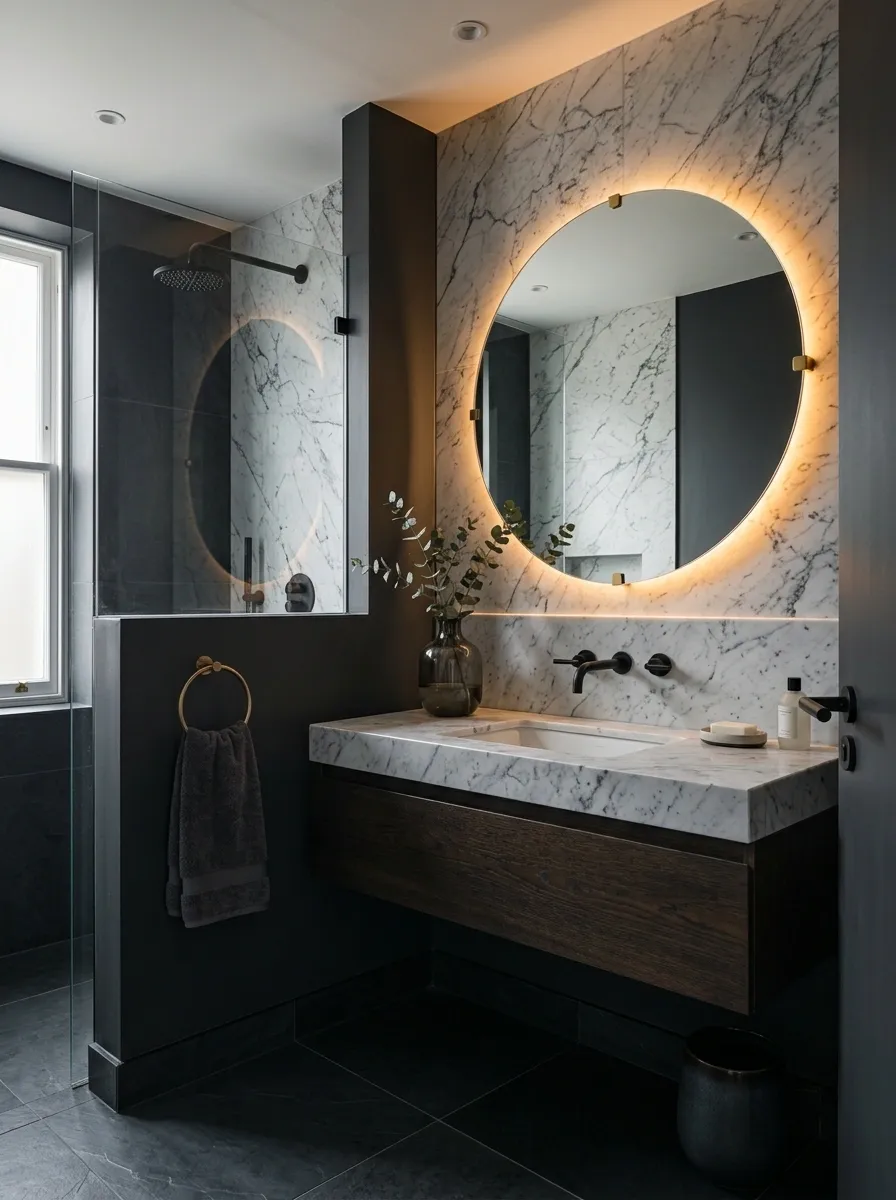
Charcoal walls create a deeper backdrop for dramatic white-veined marble, a floating vanity, matte black fixtures, and warm lighting.
The success of this design comes from contrast. The pale marble needs enough surface area to interrupt the dark walls, while warm lighting prevents the charcoal from becoming visually lifeless.
This approach is strongest in a compact bathroom where the darker color can feel intentional rather than excessive.
Soft Gray and Pink Accents With Black Hardware
Subtle gray wall paneling combines with bright white subway tiles and bold pink accents to inject vibrant energy into a streamlined, modern compact bathroom layout.
The crisp black framework of the walk-in shower adds sharp graphic contrast against the soft pastel tones, keeping the vibrant pink rug and towels from feeling overly sweet.
Perimeter pink LED cove lighting wraps the ceiling in a warm glow, maximizing the sense of space by washing the upper walls in soft, continuous illumination.
Warm Terracotta Bathroom With Cream and Natural Wood
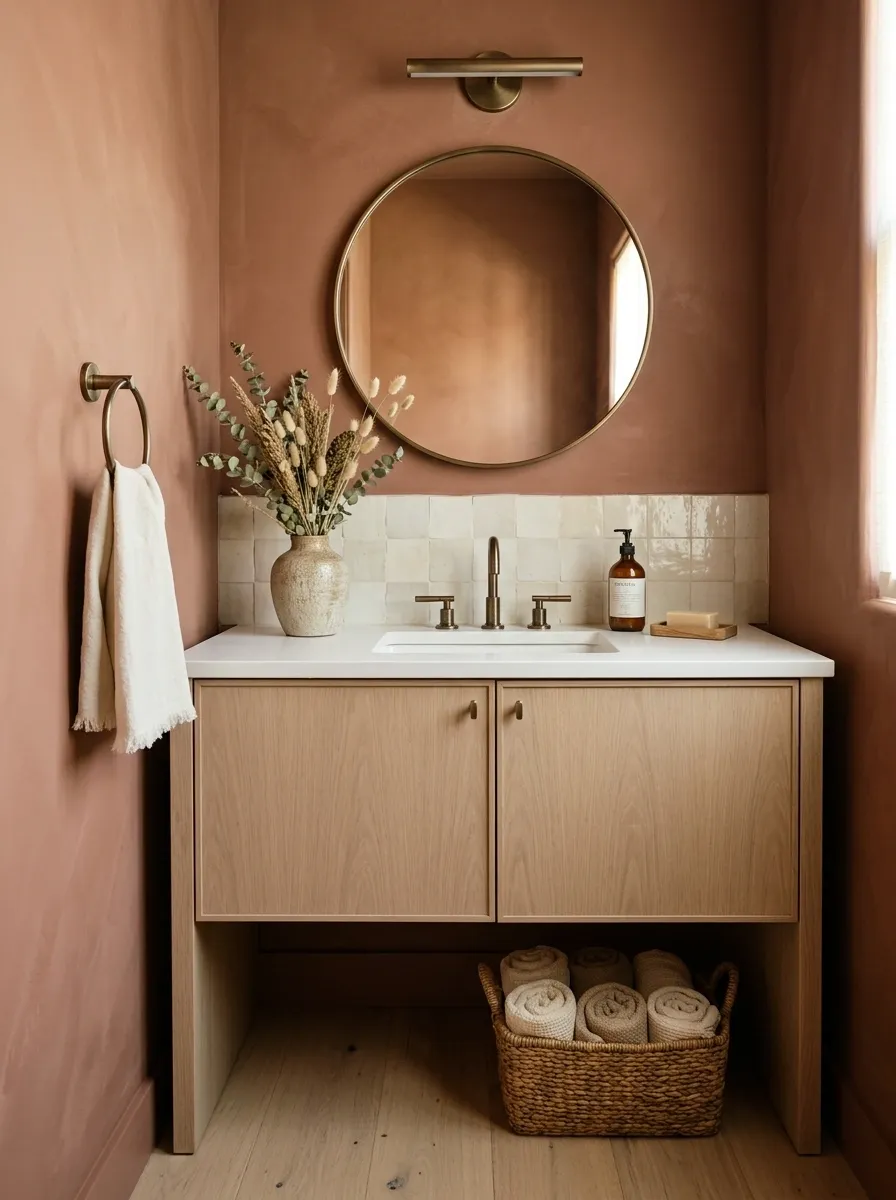
Muted terracotta gives this bathroom a warmer personality without relying on bright color. Cream tile, pale oak, aged bronze, and ivory textiles soften the stronger wall tone.
The palette feels most balanced when terracotta occupies the largest visual field and the surrounding materials remain quiet.
Natural wood also keeps the color from feeling too polished or theme-driven. The finished effect has warmth, texture, and enough contrast to remain visually interesting.
Deep Blue-Green Bathroom With Limestone and Oak
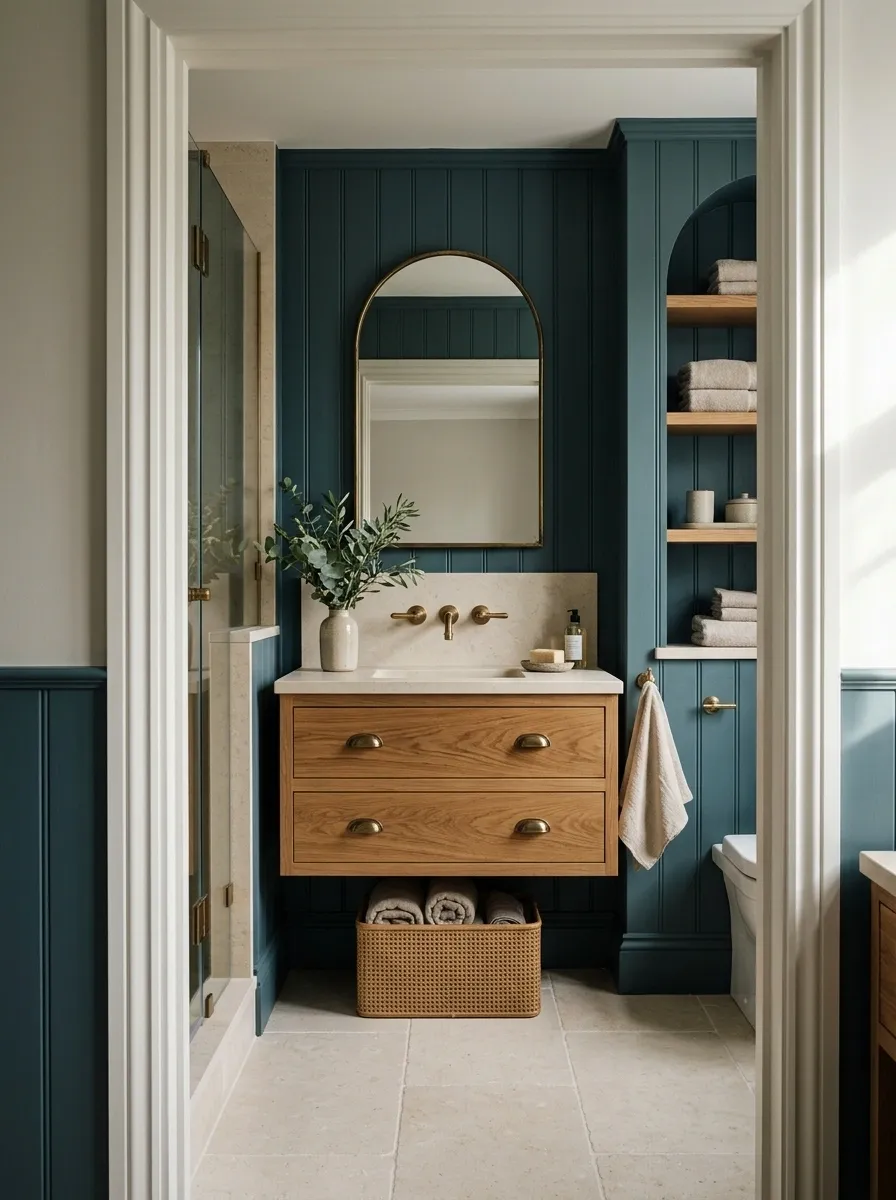
Deep blue-green creates a rich architectural backdrop for pale limestone, medium oak, and antique brass. The deeper wall tone gives the compact bathroom visual depth, while the pale stone creates a strong center of contrast.
Oak sits between those extremes, adding enough warmth to prevent the palette from feeling overly cool.
A doorway view suits this concept because it reveals the complete room and makes the transition from dark walls to lighter materials especially clear.
Light Clay Bathroom With Microcement and Walnut
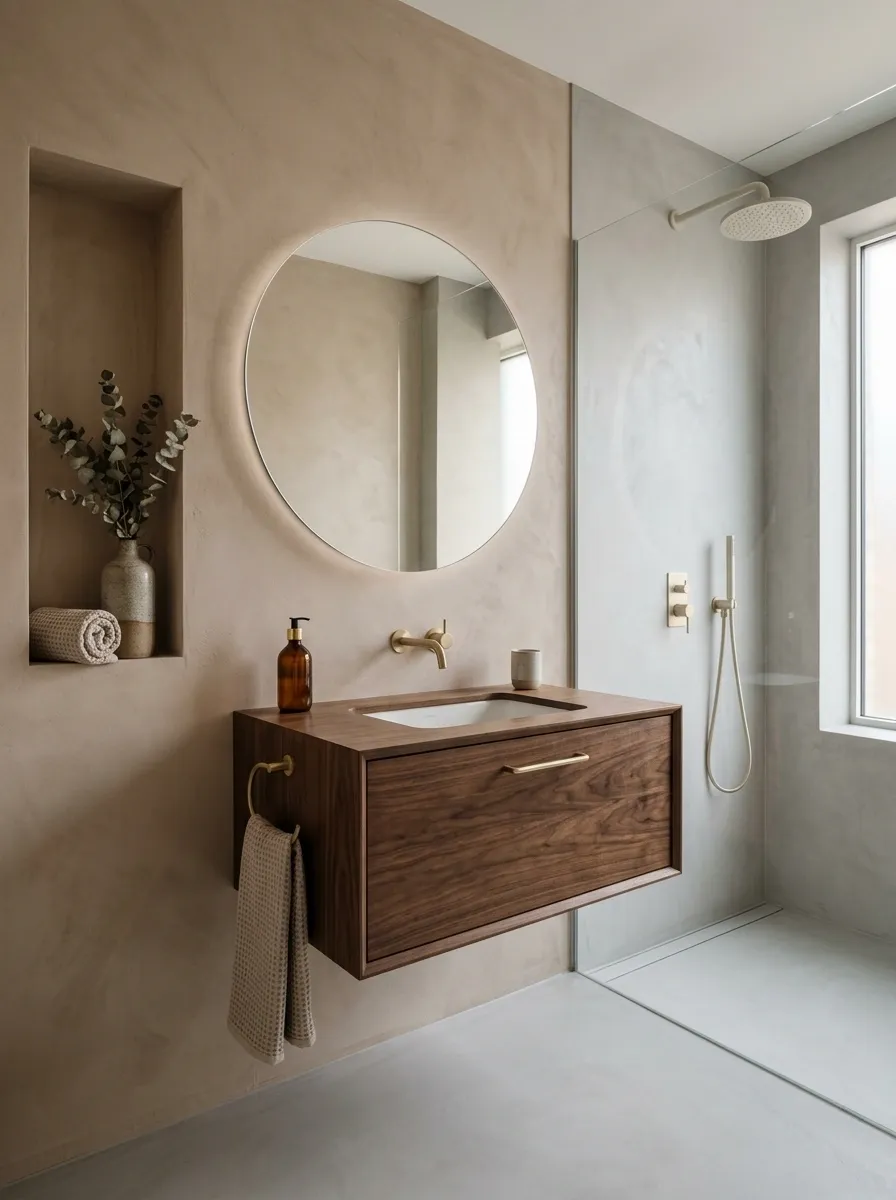
A dusty clay wall color gives this bathroom a warm architectural identity, while smooth microcement, walnut cabinetry, off-white fixtures, and aged metal keep the composition restrained.
The room depends on a limited material palette. Too many additional finishes would compete with the clay and weaken the clean architectural quality.
The walnut vanity acts as the main warm anchor, while the microcement creates a quiet, continuous backdrop around the functional areas.
Microcement surfaces
Walnut vanity
Off-white fixtures
Soft Black-Blue Bathroom With Cream Subway Tile
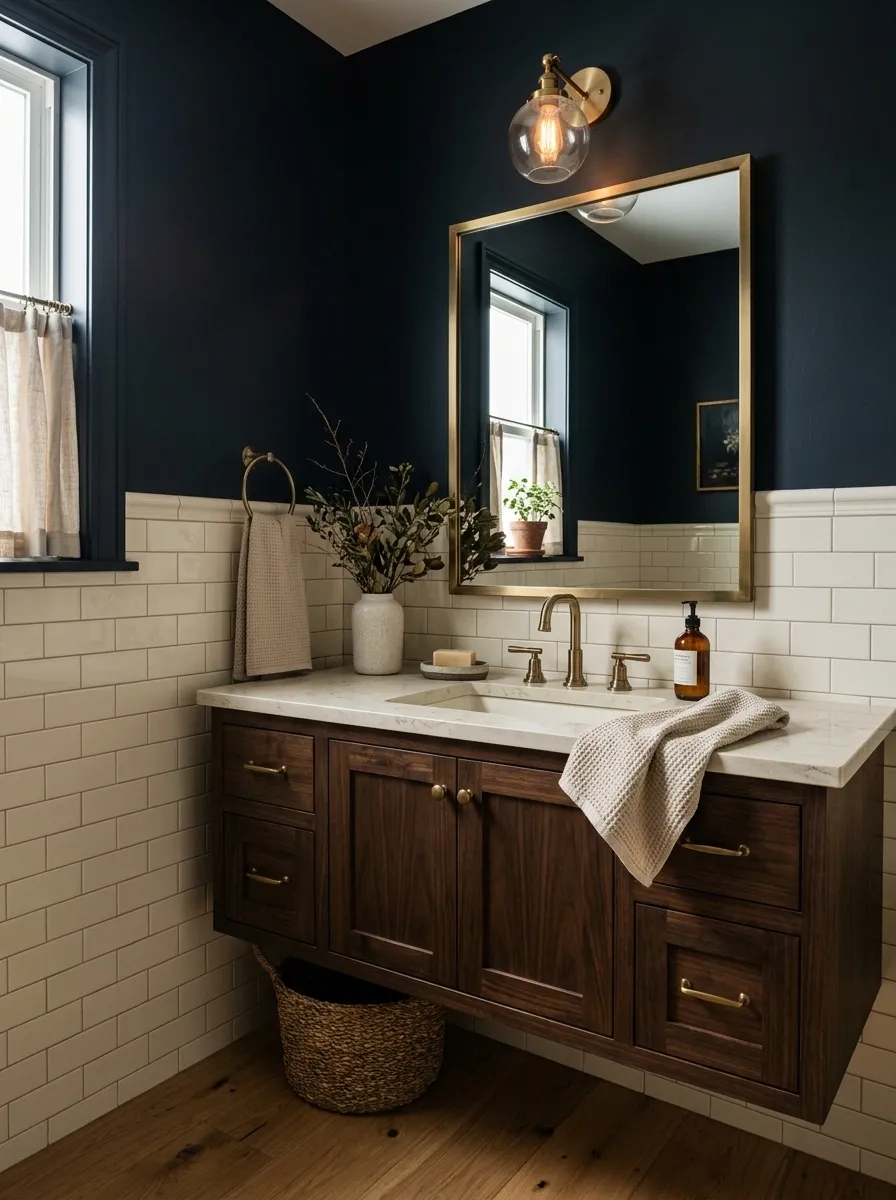
A nearly black blue creates the depth of a dramatic bathroom while carrying a softer undertone than true black. Cream subway tile, dark wood, aged brass, and warm lighting break up the darker surfaces.
The cream tile is especially important because it catches available light and establishes a clear visual counterweight.
Dark blue-black walls also pair naturally with warm wood, creating more depth than a simple black-and-white scheme.
Muted Coral Bathroom With Sandstone and Natural Oak
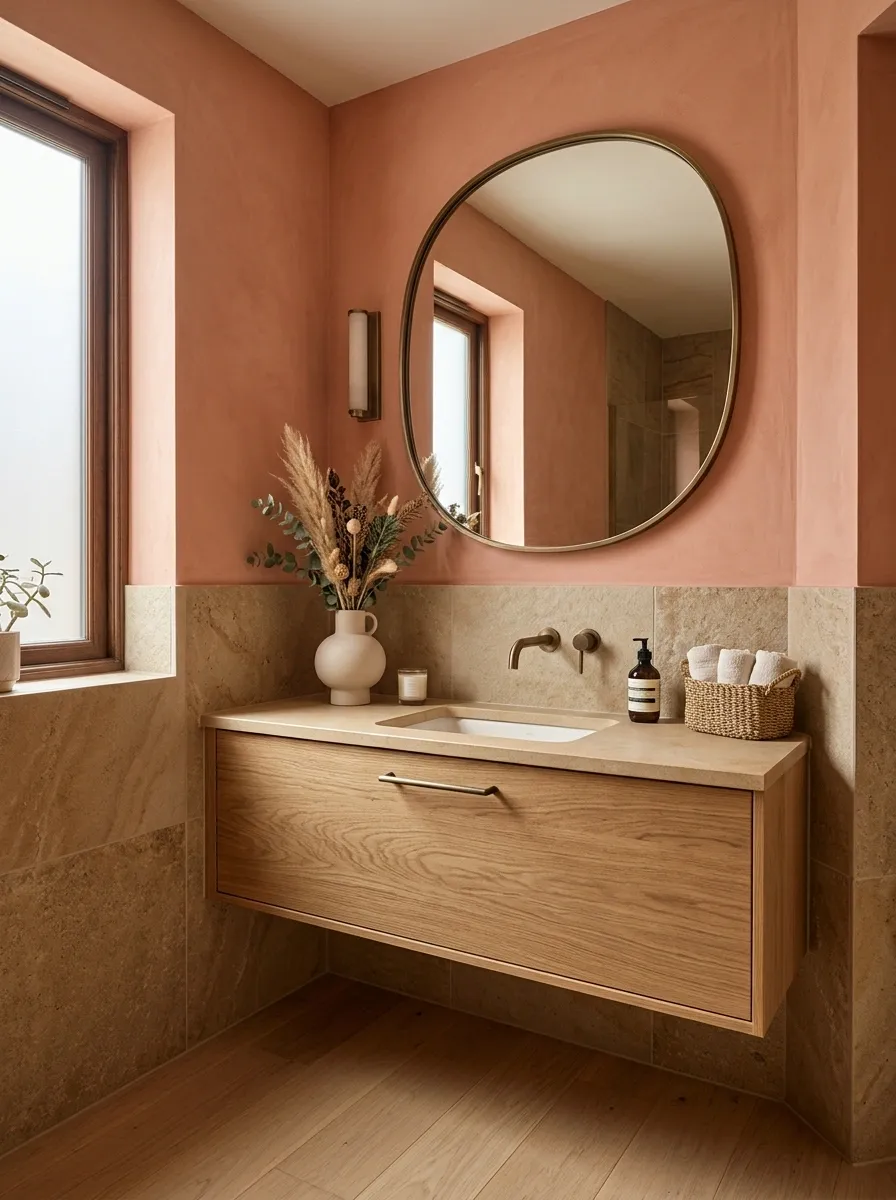
Muted coral gives this compact bathroom a warm focal color, while sandstone, pale oak, ivory fixtures, and aged bronze create a softer material story around it.
The coral should cover enough wall area to feel architectural rather than decorative. Sandstone keeps the palette earthy, while oak introduces a natural texture that stops the room from becoming overly polished.
A simple rounded mirror and warm lighting reinforce the softer character without adding another competing color.
Soft Charcoal Green Bathroom With Cream and Walnut
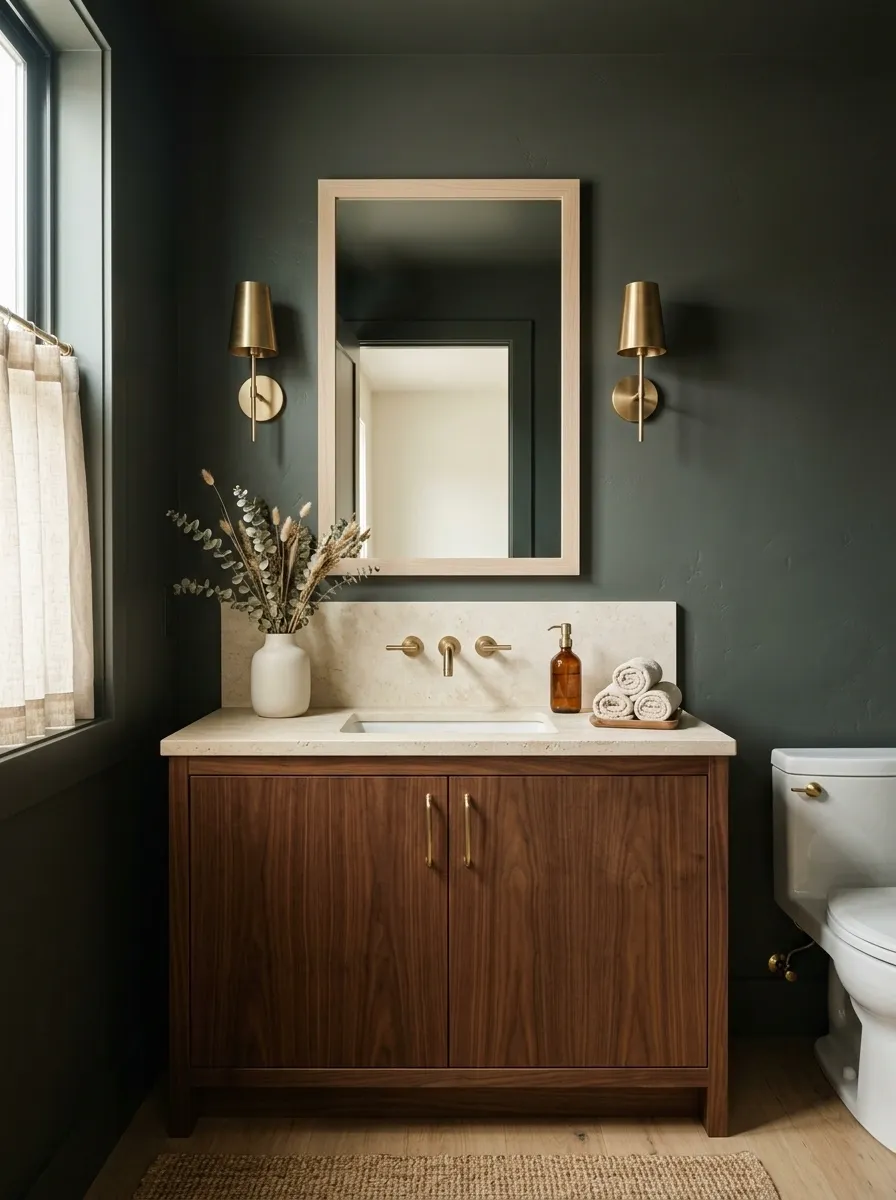
A smoky charcoal-green wall color gives this compact bathroom a rich, enveloping character. Cream stone, walnut, warm white fixtures, and restrained brass establish a lighter central zone.
The dark walls work because they aren’t asked to carry the entire composition. The pale mirror and stone surfaces create a visual center, while walnut adds warmth between the two extremes.
This is a strong direction for a bathroom where atmosphere matters more than making every surface appear bright.
Deep Berry Bathroom With Warm Cream Tile and Walnut
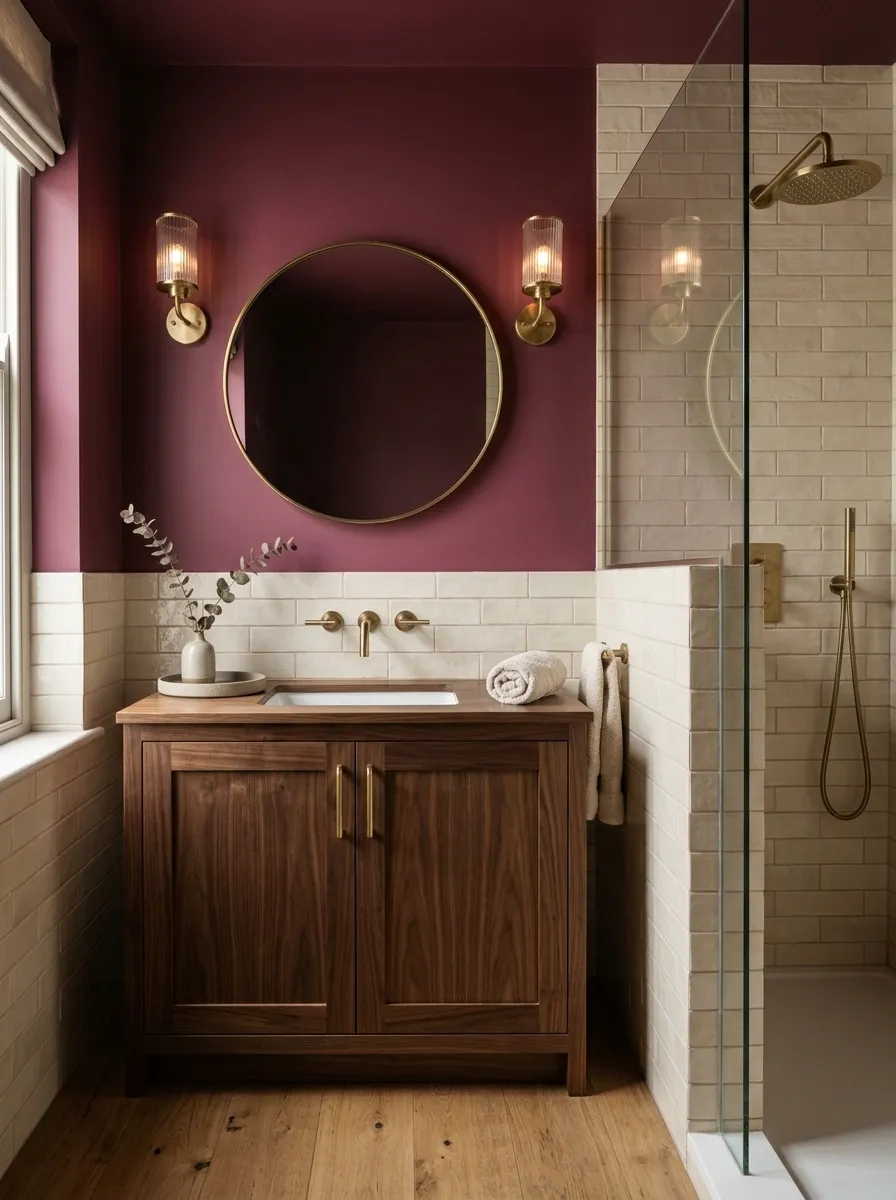
Deep berry creates a dramatic cocoon around a compact bathroom finished with warm cream tile, walnut cabinetry, brushed brass, and soft white fixtures.
The palette has more warmth than a standard burgundy bathroom because the cream tile and walnut sit firmly on the warmer side of the spectrum. The darker wall color becomes the architectural shell, while the vanity and tile keep the room readable.
Use the deepest tone across connected wall surfaces so the color feels intentional rather than broken into isolated patches.
Soft Green-Gray Bathroom With Honed Stone and Pale Oak
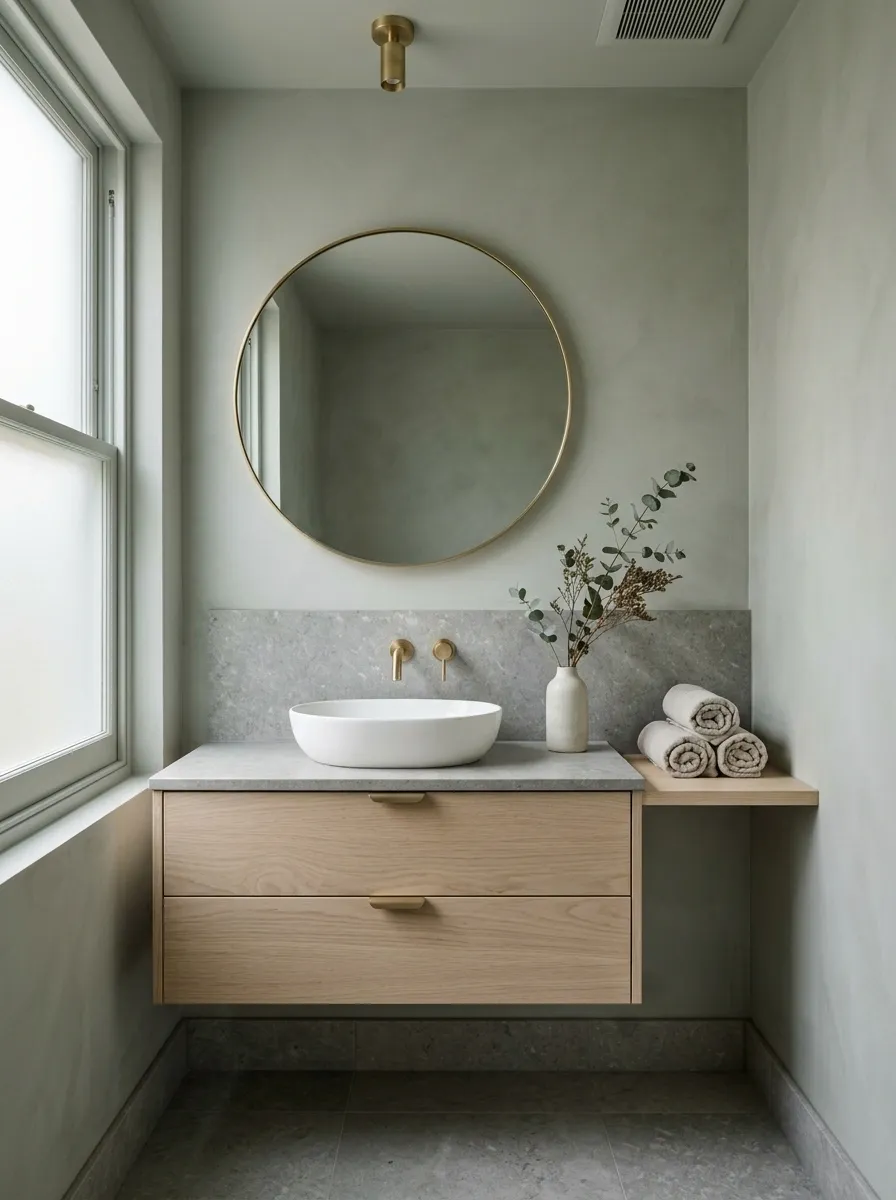
A green-gray wall color gives this bathroom a subtle natural undertone while honed stone, pale oak, and warm white fixtures create a restrained material palette.
The green component is intentionally muted, allowing the stone to become part of the color story rather than a separate visual element.
This concept works particularly well with low-sheen surfaces. Highly reflective finishes would change the quiet quality of the composition and make the room feel busier.
wall field
soft texture
warmth
Creamy Blush Bathroom With Limestone and Aged Bronze
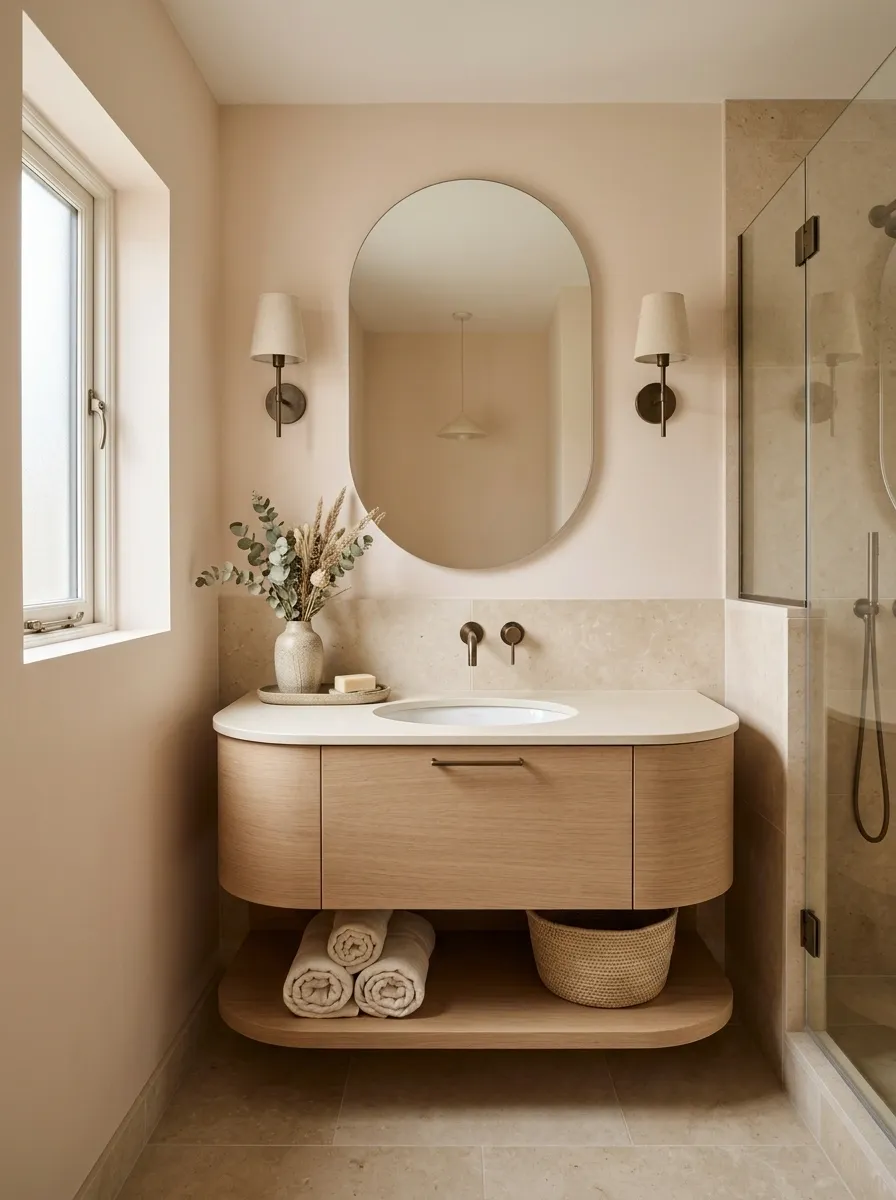
A barely warm blush tone gives the walls a soft color without reading as strongly pink. Limestone, creamy porcelain, light oak, and aged bronze complete the composition.
The subtle wall color is important because the room depends on close tonal relationships rather than dramatic contrast. Limestone picks up the warmer undertone, while bronze provides just enough visual definition around mirrors and fixtures.
A curved vanity or oval mirror reinforces the softness of the palette.
Warm Charcoal Bathroom With Pale Oak and Travertine
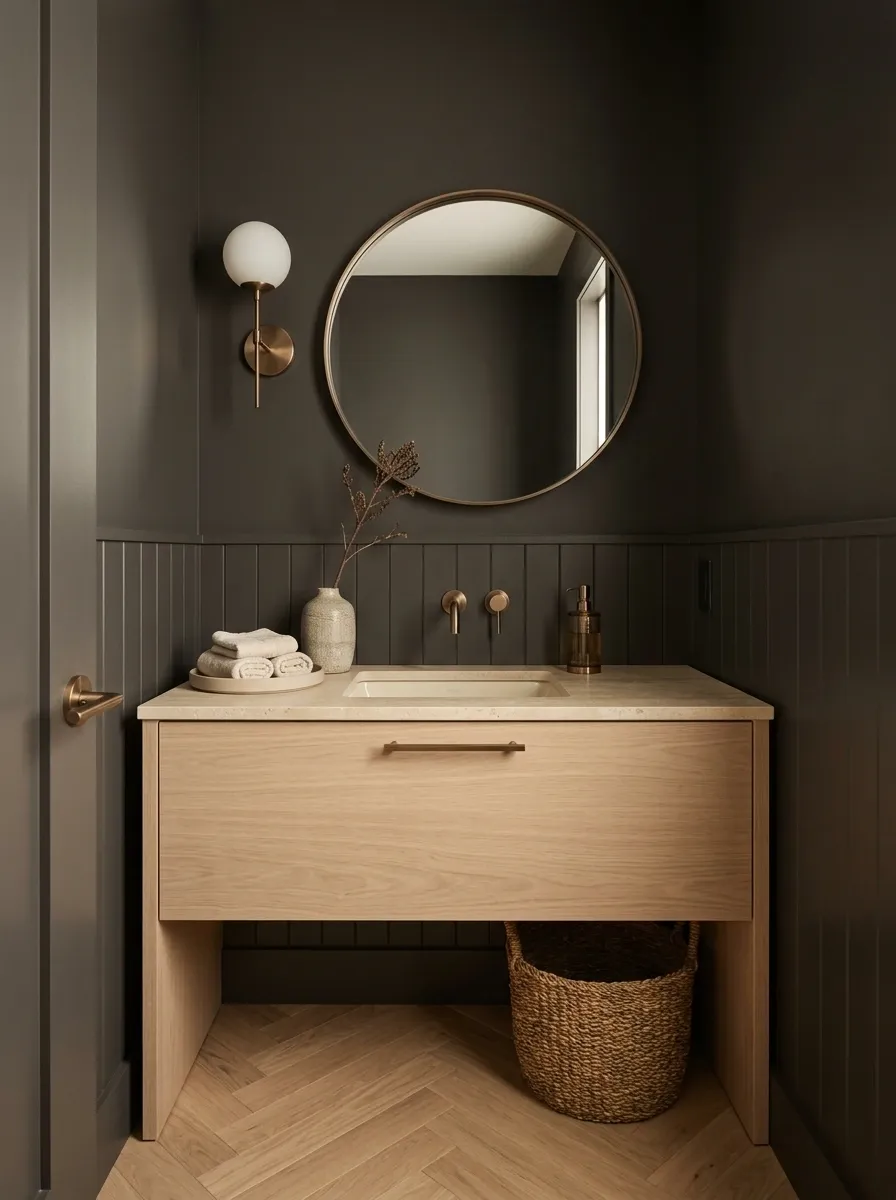
Warm charcoal creates a sophisticated backdrop for pale oak, travertine, creamy fixtures, and soft bronze details.
Unlike cooler charcoal, the warmer undertone connects naturally with the wood and stone. That makes the darker wall color feel enveloping without becoming stark.
The pale oak vanity should remain visually simple. Its job is to introduce warmth and a lighter central element, not another layer of decoration.
deep envelope
warm anchor
light relief
Soft Sage Green Bathroom With Fluted Oak Vanity
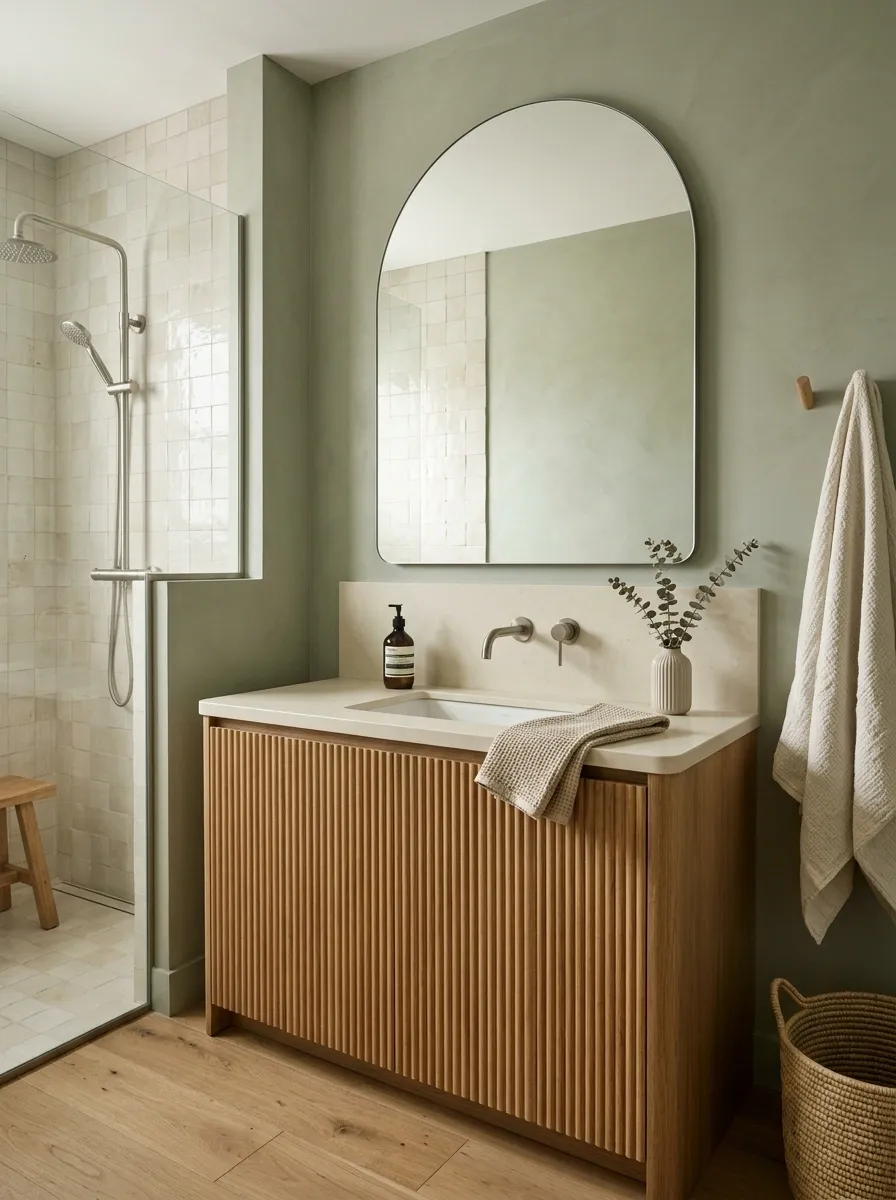
Muted sage green works beautifully when the bathroom includes natural wood and tactile surfaces. Here, the wall color surrounds a fluted oak vanity, creamy tile, soft white fixtures, and understated nickel.
The fluted vanity adds vertical rhythm without introducing another strong color. That lets the sage remain the dominant visual feature.
A restrained palette makes this concept especially effective in compact bathrooms where too many competing finishes would quickly create clutter.
Dusty Rose Bathroom With Burgundy Accents and Cream Tile
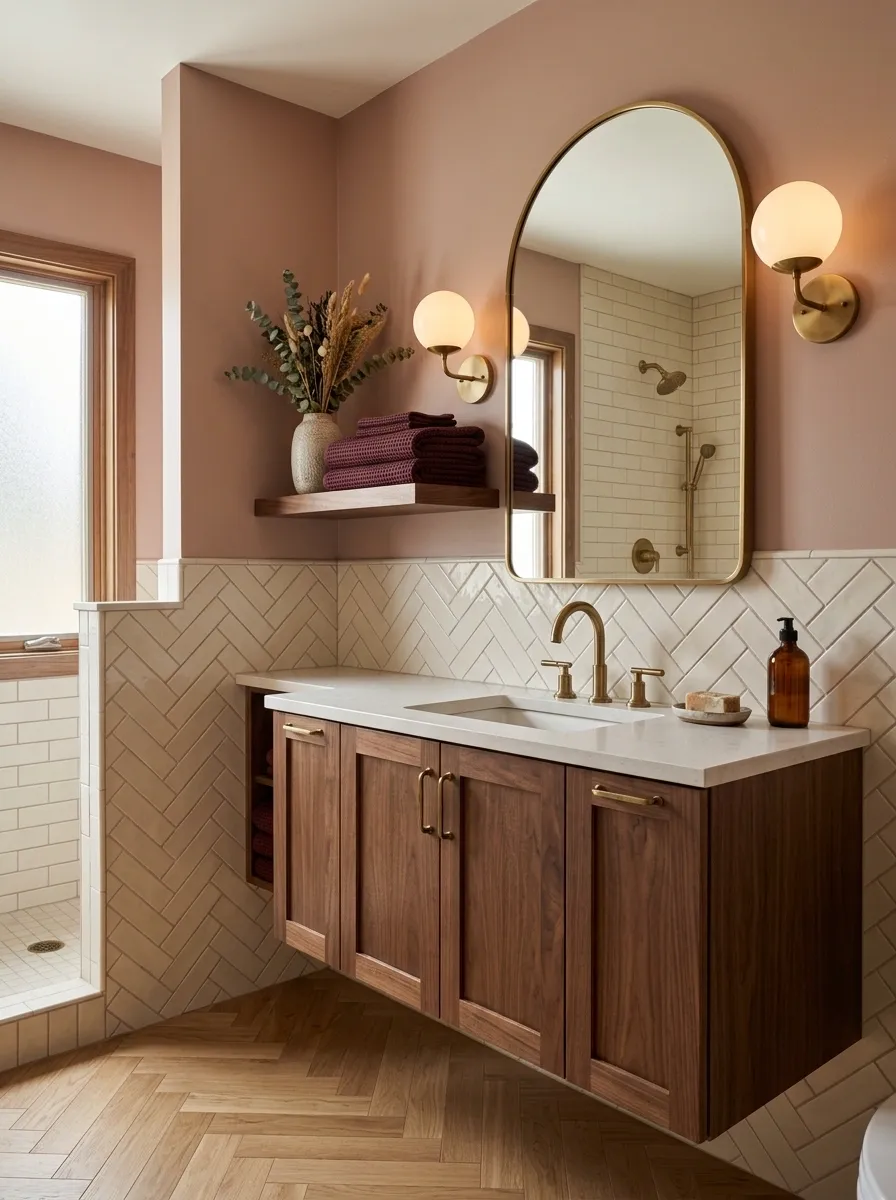
Dusty rose feels far more sophisticated when it is surrounded by cream tile, walnut, aged brass, and controlled burgundy accents. The darker details give the soft pink enough weight to avoid becoming overly sweet.
A curved mirror works naturally with the palette, particularly when paired with warm lighting and simple cabinetry.
The important balance is scale. Burgundy should remain a supporting note while dusty rose occupies the larger visual field.
dominant field
visual anchor
Warm White Bathroom With Tonal Beige Layers
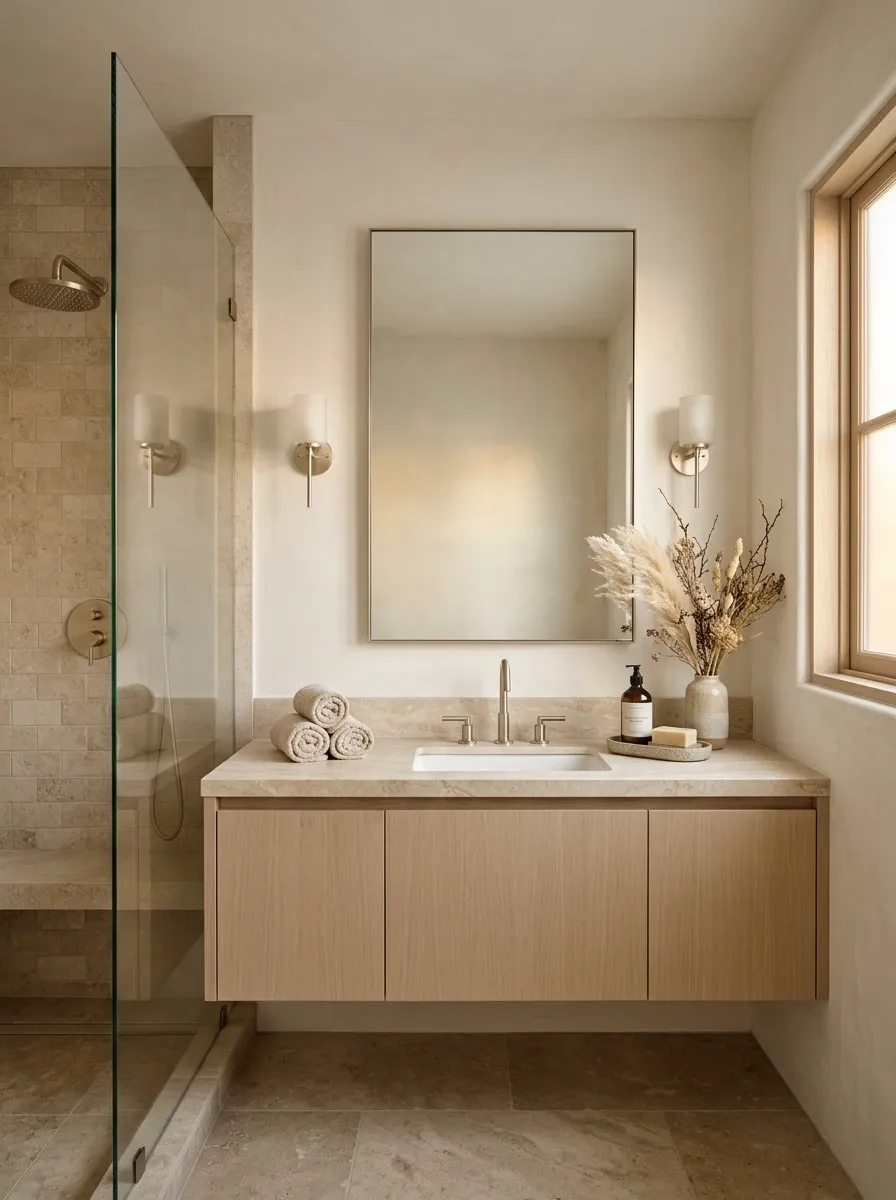
Warm white walls create the foundation for a bathroom built around beige stone, pale oak, travertine tones, and subtle champagne metal.
There is very little hard contrast here, so texture and material variation become especially important. Stone provides visual movement, oak adds warmth, and the metallic details bring a small amount of reflection.
The finished room feels bright without relying on stark white surfaces.
Navy Blue Bathroom With Crisp White Architecture
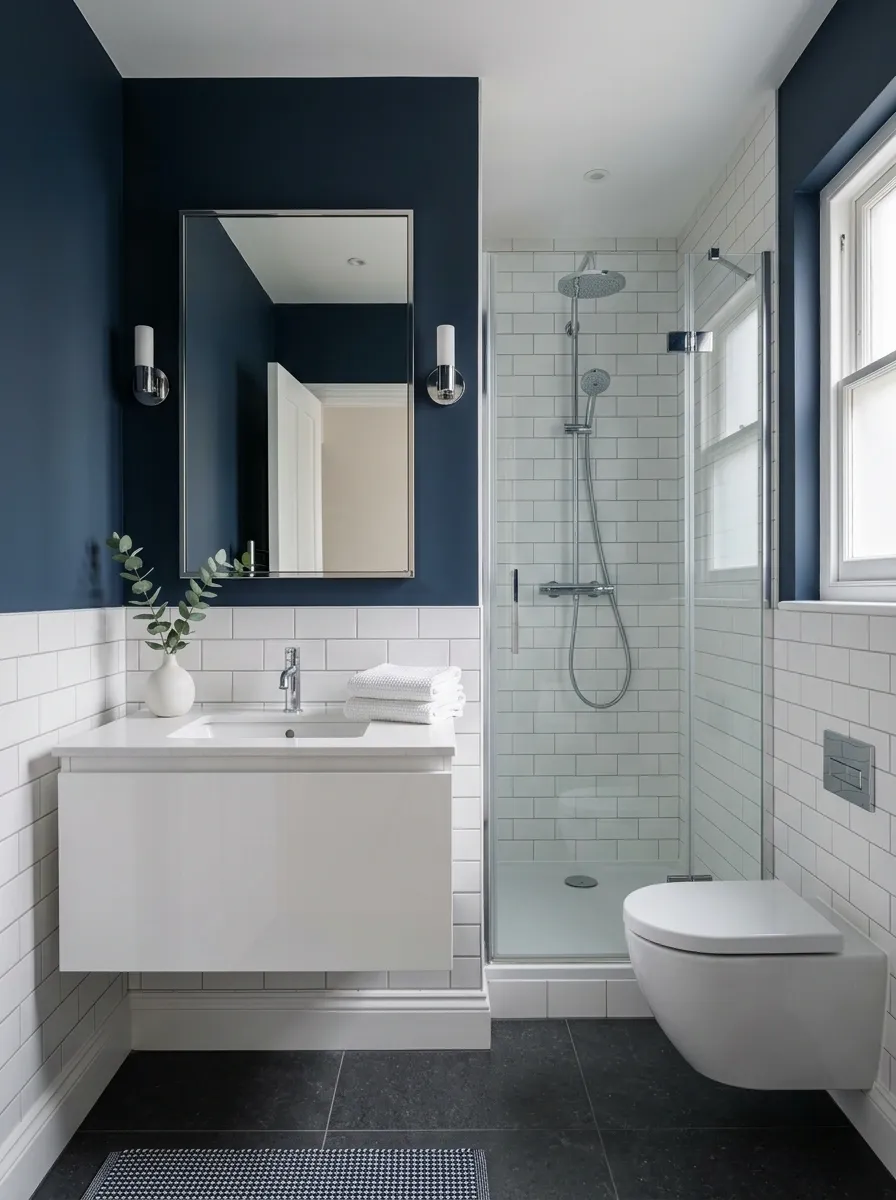
Navy walls give this small bathroom a defined, almost architectural backdrop. Crisp white tile and porcelain provide the strongest contrast, while polished chrome adds small reflective highlights.
A dark floor keeps the lower portion of the room visually grounded, while the white surfaces prevent the navy from closing in around the space.
The finished effect has a classic foundation, but a clean vanity and minimal accessories keep it contemporary.
architectural backdrop
light counterweight
reflection
Mushroom Brown Bathroom With Limestone and Bronze
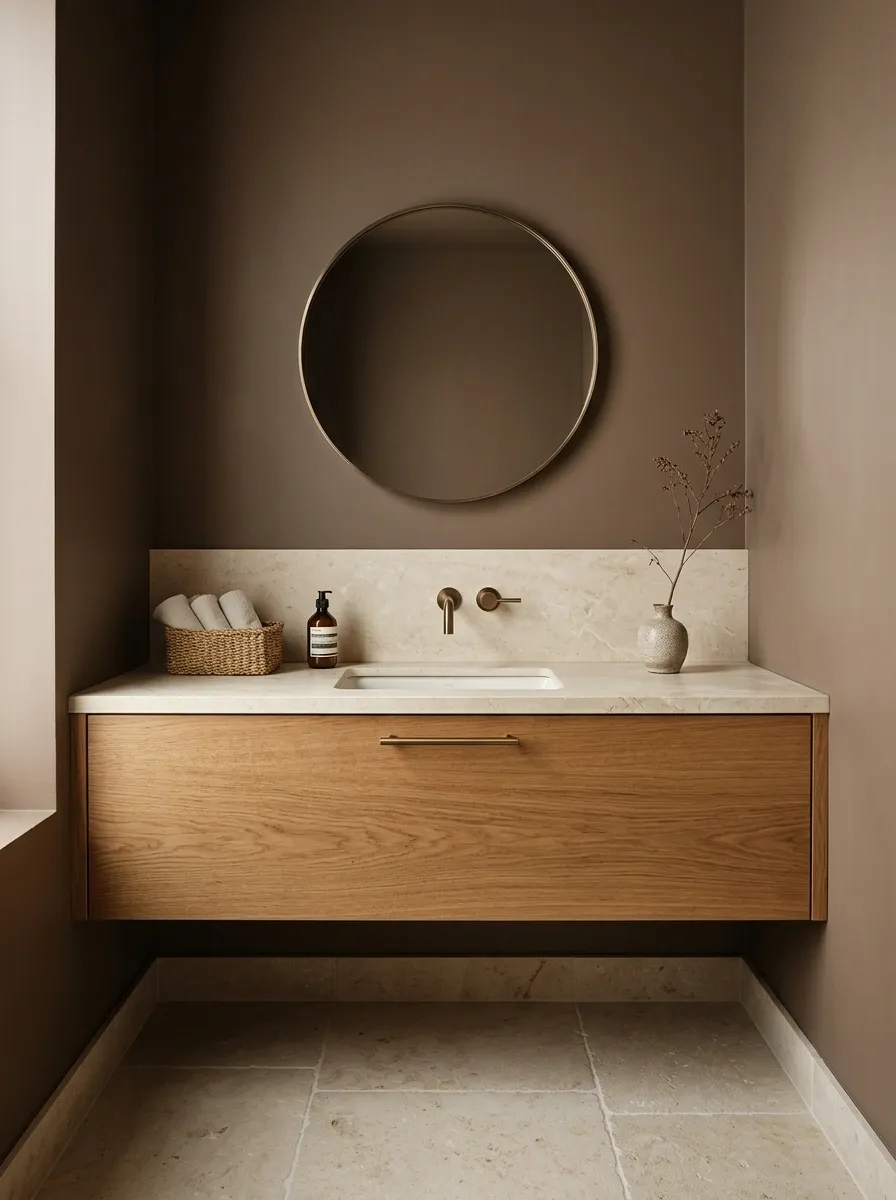
Mushroom brown creates a richer neutral backdrop than ordinary gray, especially alongside limestone, medium oak, bronze hardware, and ivory fixtures.
The palette stays visually connected because every material carries some warmth. Limestone prevents the room from becoming too dark, while oak adds a slightly stronger natural tone.
This concept is strongest under soft side lighting, which reveals subtle differences between the matte wall and more textured surfaces.
Olive Bathroom With Checkerboard Floor and Cream Vanity
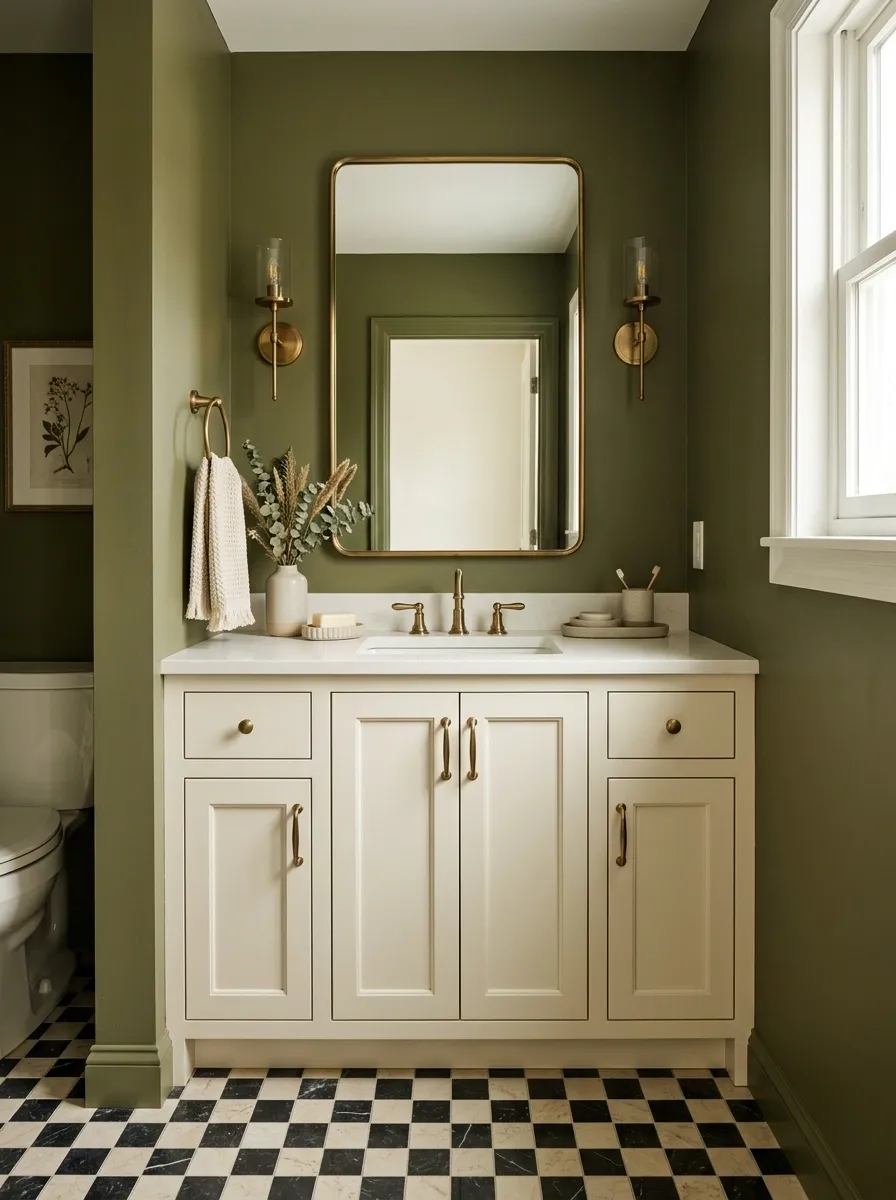
Muted olive walls give this bathroom its identity, while a small checkerboard floor adds pattern underfoot. A creamy vanity, aged brass, and warm white fixtures keep the pattern from competing with the wall color.
The palette feels collected because the strongest elements occupy different visual zones. Olive controls the vertical surfaces, the floor supplies movement, and the vanity creates a lighter central anchor.
A small-format checkerboard works better here than a large dramatic pattern because the room already has plenty of color.
largest color field
light visual anchor
Pale Lavender Bathroom With Soft Gray and Brushed Nickel
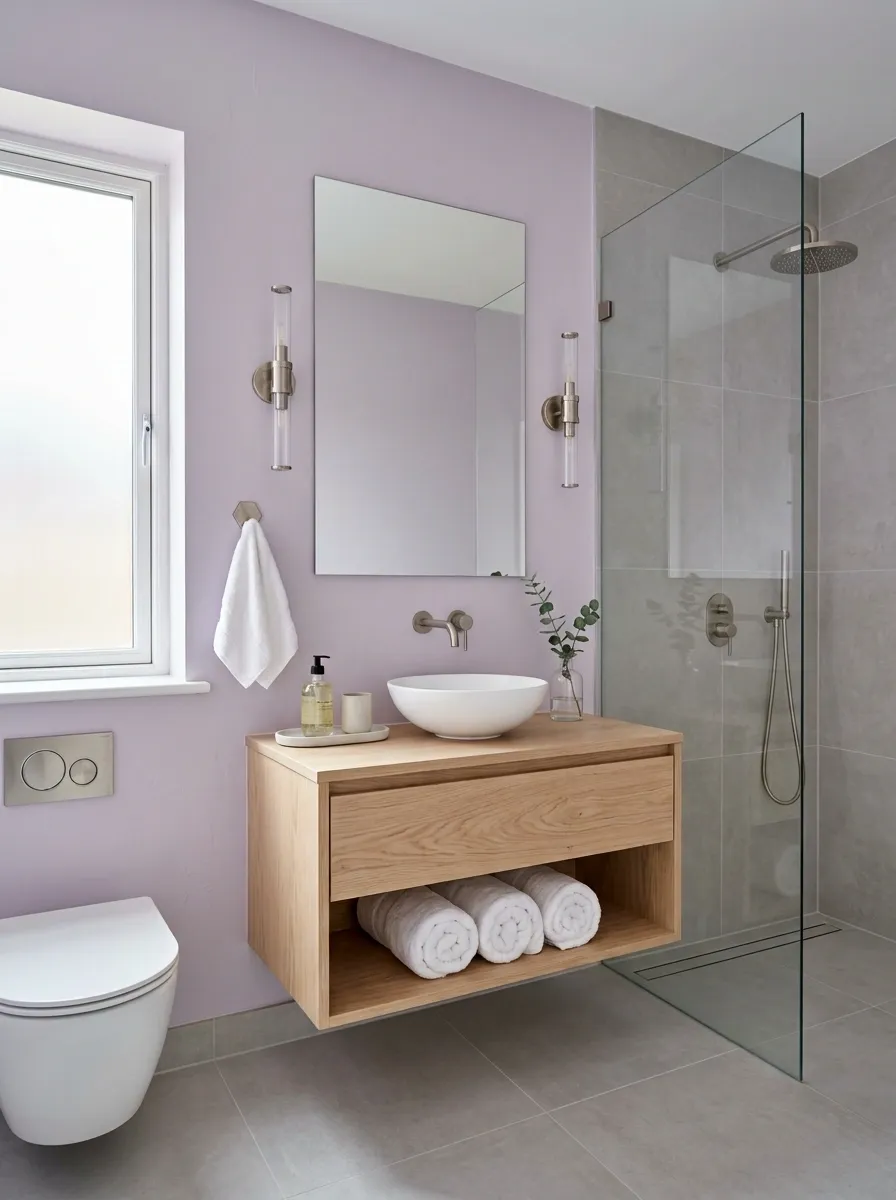
Pale lavender can give a small bathroom a distinctive softness without turning the room overly pastel. Here, the wall color sits beside soft gray tile, pale wood, brushed nickel, and warm white fixtures.
The most convincing version treats lavender as part of the architecture rather than a decorative accent. Carrying the color across a large wall area gives it enough presence to feel intentional.
Gray keeps the palette grounded, while pale wood adds warmth without competing with the lavender.
Black Bathroom With Warm Wood and Large White Mirror
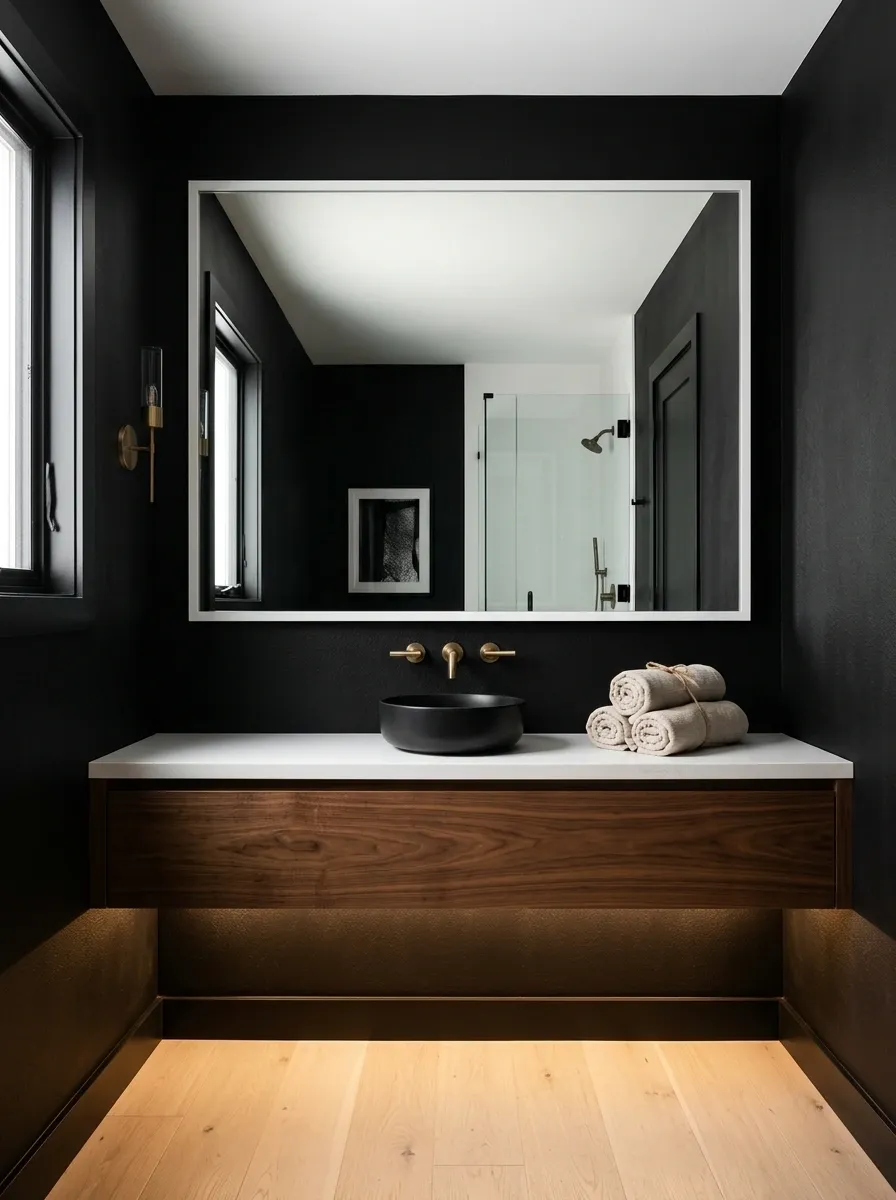
Matte black walls create a dramatic shell around a warm walnut vanity, pale flooring, and a large white-framed mirror. The mirror is intentionally oversized relative to the compact room, giving the darker palette a broad area of visual relief.
Warm integrated lighting adds another layer of contrast, especially around the vanity.
The composition works because the room isn’t divided into dozens of tiny black and white details. Instead, a dark architectural background is interrupted by a few deliberate light areas.
Powder Blue Bathroom With Vintage-Inspired White Fixtures
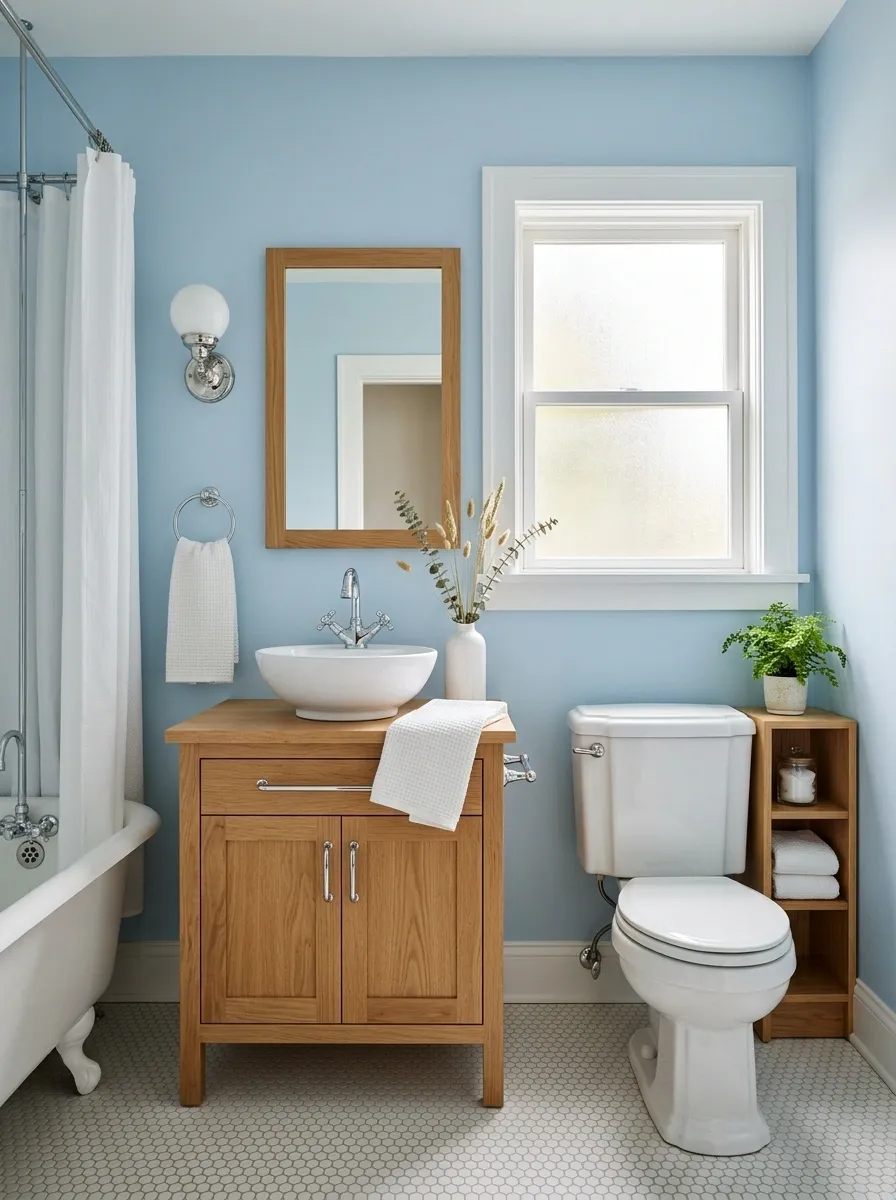
Powder blue walls establish a gentle vintage character in this compact bathroom, paired with white ceramic fixtures, small-format tile, polished chrome, and a simple wood vanity.
The design avoids becoming overly traditional by keeping the cabinetry clean and the decorative details restrained. White porcelain provides the strongest contrast against the blue, while chrome adds a crisp reflective quality.
The result feels familiar without looking like a period reproduction.
Warm Peach Bathroom With Travertine and Cream Textiles
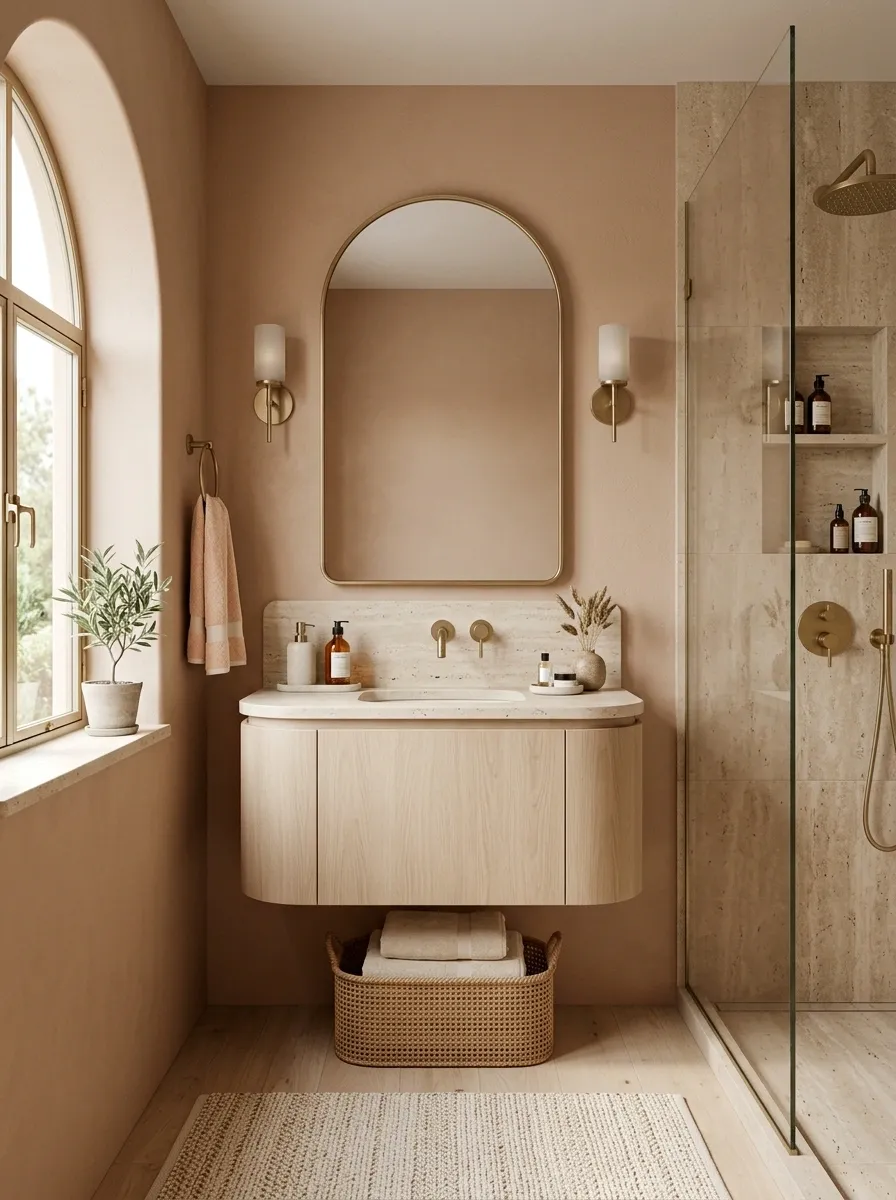
Muted peach walls give the bathroom a sun-warmed character while travertine, pale oak, ivory textiles, and brushed brass keep the composition grounded.
The color is strongest when it remains dusty and earthy rather than bright. Travertine introduces natural variation, while cream surfaces stop the peach from becoming visually overwhelming.
Rounded forms work particularly well here. A curved mirror or softly shaped vanity reinforces the warmth without adding another strong color.
Slate Blue Bathroom With Concrete, Oak, and Matte Black
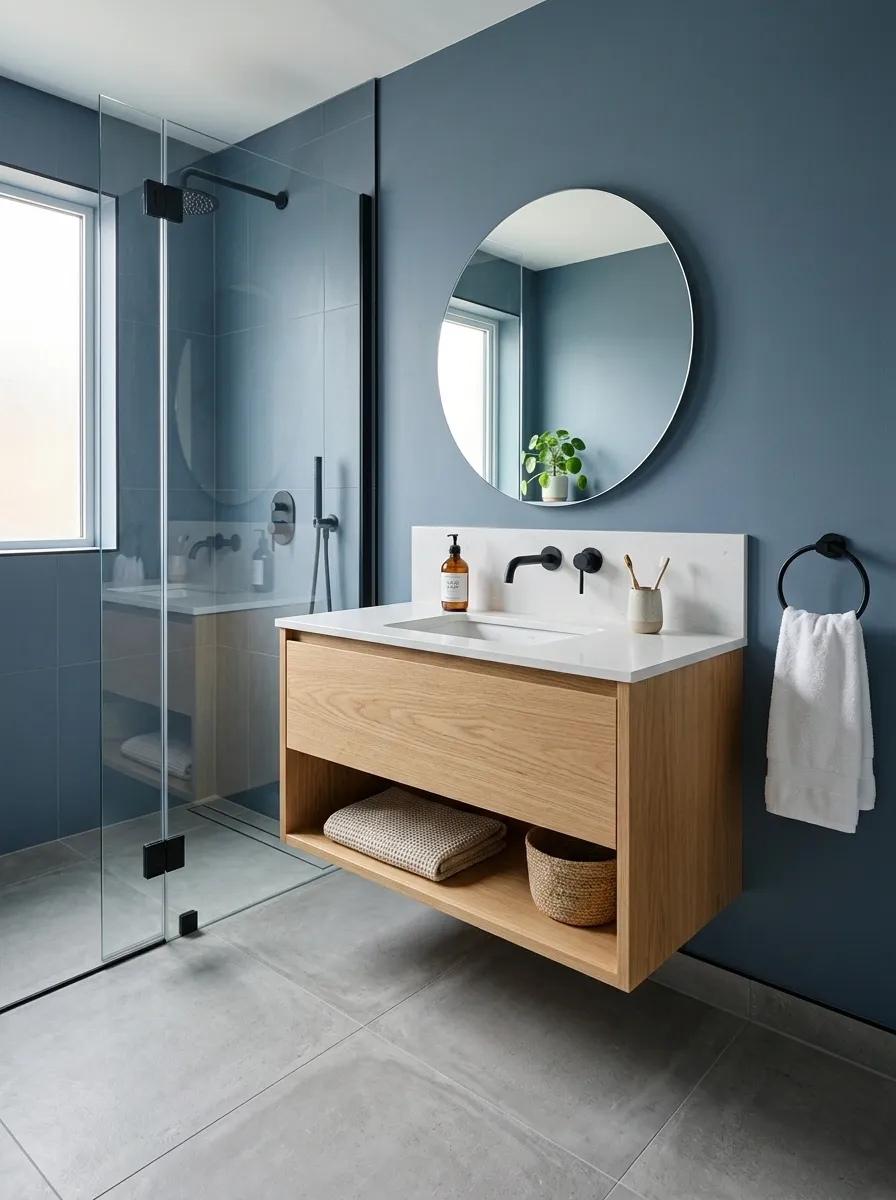
Slate blue gives the walls a cool architectural quality, while concrete-look flooring and matte black fixtures reinforce the contemporary direction. Natural oak breaks up the cooler materials and keeps the room from feeling severe.
The palette is especially effective when the oak is concentrated around the vanity instead of scattered throughout the bathroom. That creates one clear warm anchor against the blue and gray surfaces.
A simple mirror and minimal accessories keep the material relationship easy to read.
Cream Bathroom With Dark Chocolate Vanity and Brass
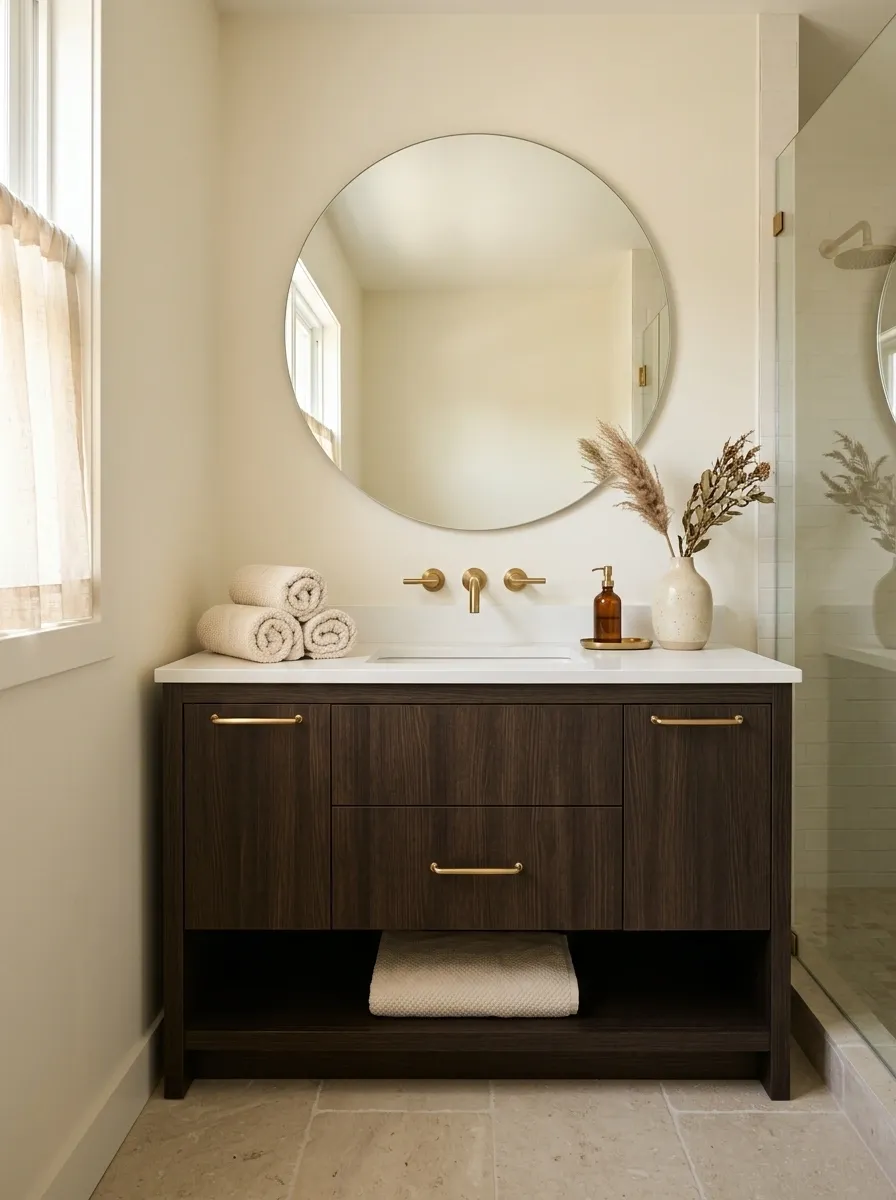
Cream walls and limestone surfaces give this bathroom a bright foundation, while a dark chocolate vanity supplies the strongest contrast in the room. Warm brass fittings add smaller points of reflection.
The vanity becomes the focal point because it is the darkest major element. Keeping the walls and floor light allows that contrast to feel deliberate rather than visually heavy.
This direction is a strong alternative to dark painted walls for bathrooms that need a defined focal point while retaining a bright overall appearance.
Dusty Teal Bathroom With White Vertical Tile
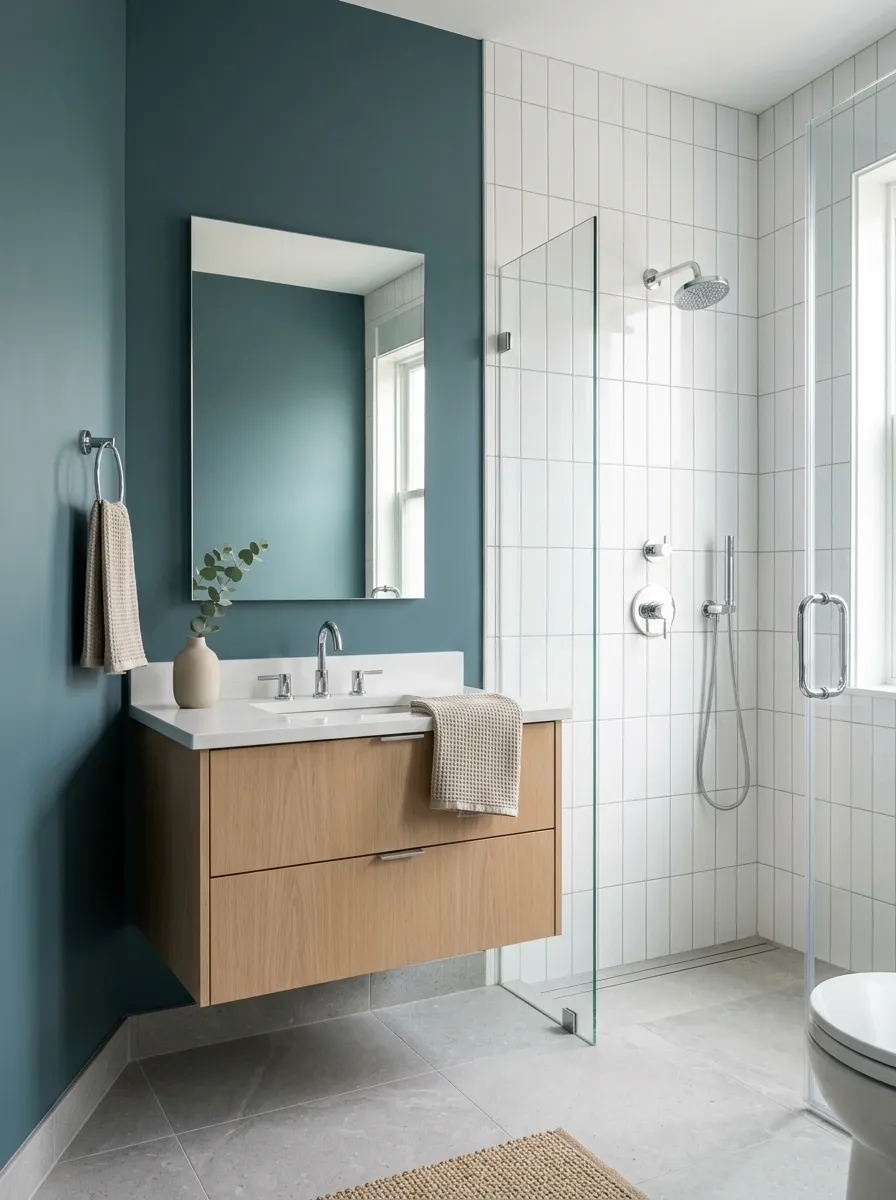
Dusty teal creates a saturated but softened wall color, while vertical white tile brightens the shower area and adds upward movement. Pale oak cabinetry and simple chrome fixtures keep the composition contemporary.
The strongest part of the design is the contrast between the broad teal wall field and the narrow vertical tile rhythm. Together they draw attention upward instead of making the room’s limited width the main visual feature.
The floor should remain quiet so the walls and shower treatment retain control of the composition.
wide color field
Soft Taupe Bathroom With Travertine and Rounded Forms
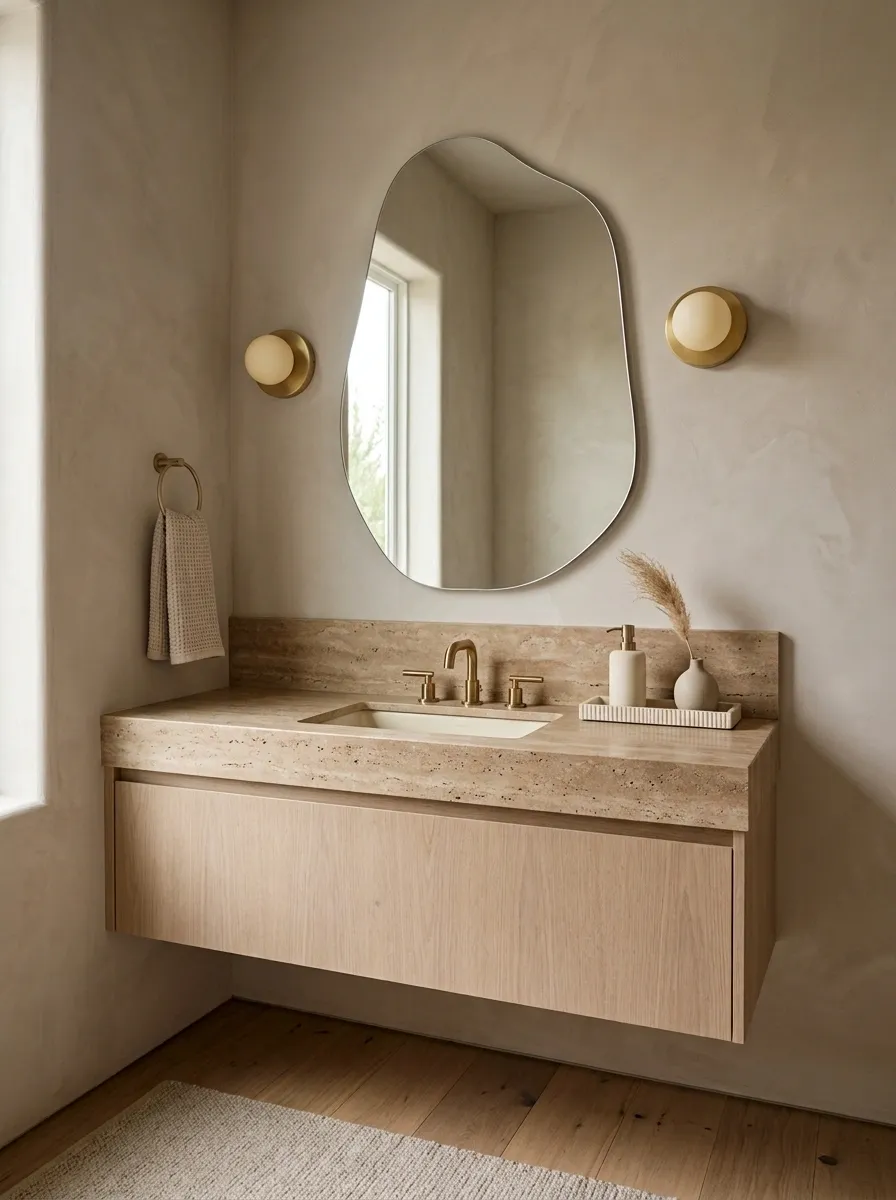
Soft taupe sets a quiet background for travertine, curved mirrors, rounded sconces, pale oak, and creamy fixtures. There is little color contrast, so shape and texture become the visual focus.
The restrained palette prevents the rounded forms from feeling decorative or excessive. Instead, the curves appear architectural because the surrounding colors stay calm.
This concept suits bathrooms where a softer atmosphere is more important than dramatic contrast.
Rich Plum Bathroom With Pale Stone and Warm Lighting
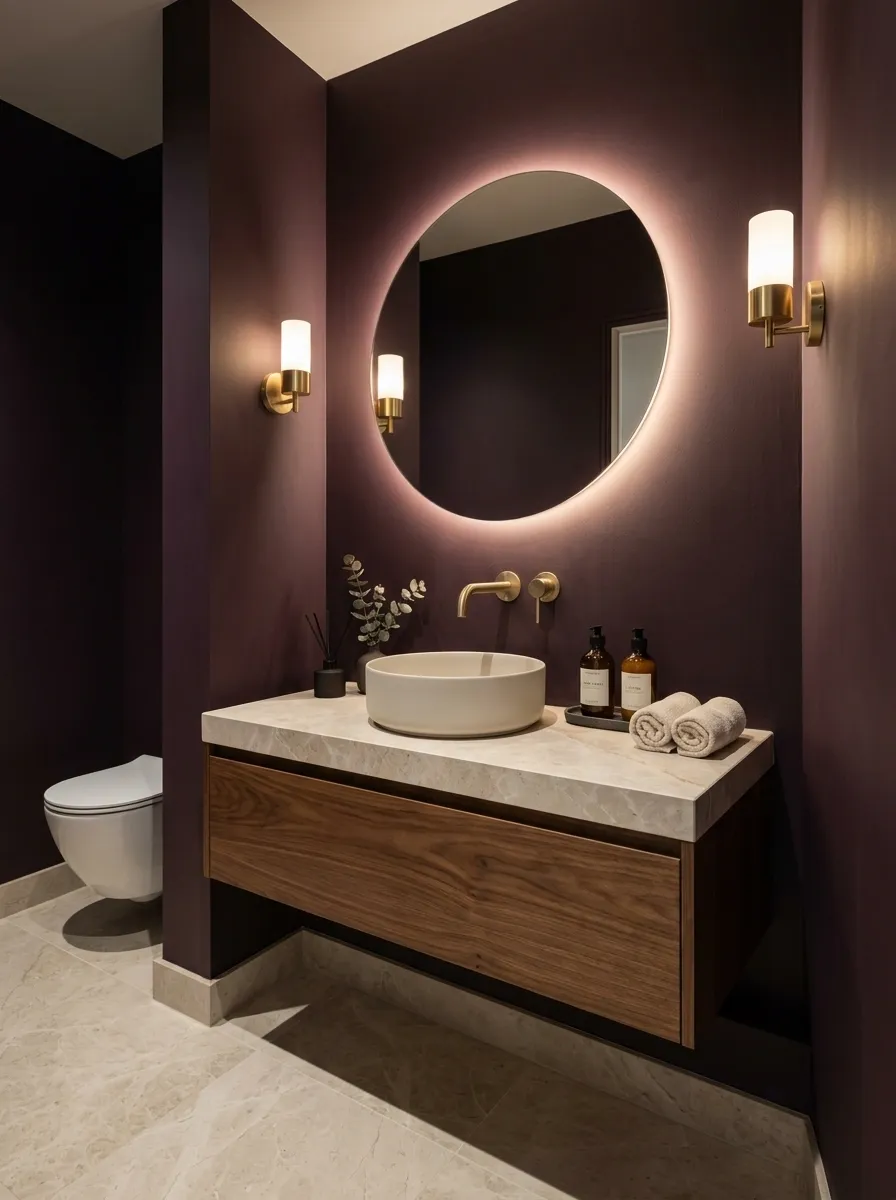
Rich plum gives a compact bathroom an enveloping backdrop without defaulting to black. Pale stone, walnut, brushed brass, and warm lighting provide enough contrast to keep the darker color readable.
The pale stone is particularly important because it creates a strong interruption against the plum. Walnut then acts as a bridge between the deep wall color and lighter surfaces.
This design benefits from layered lighting rather than one bright overhead fixture. Warm illumination brings out the red and brown qualities within the plum.
dominant surface
light interruption
Soft Yellow Bathroom With White Oak and Handmade Tile
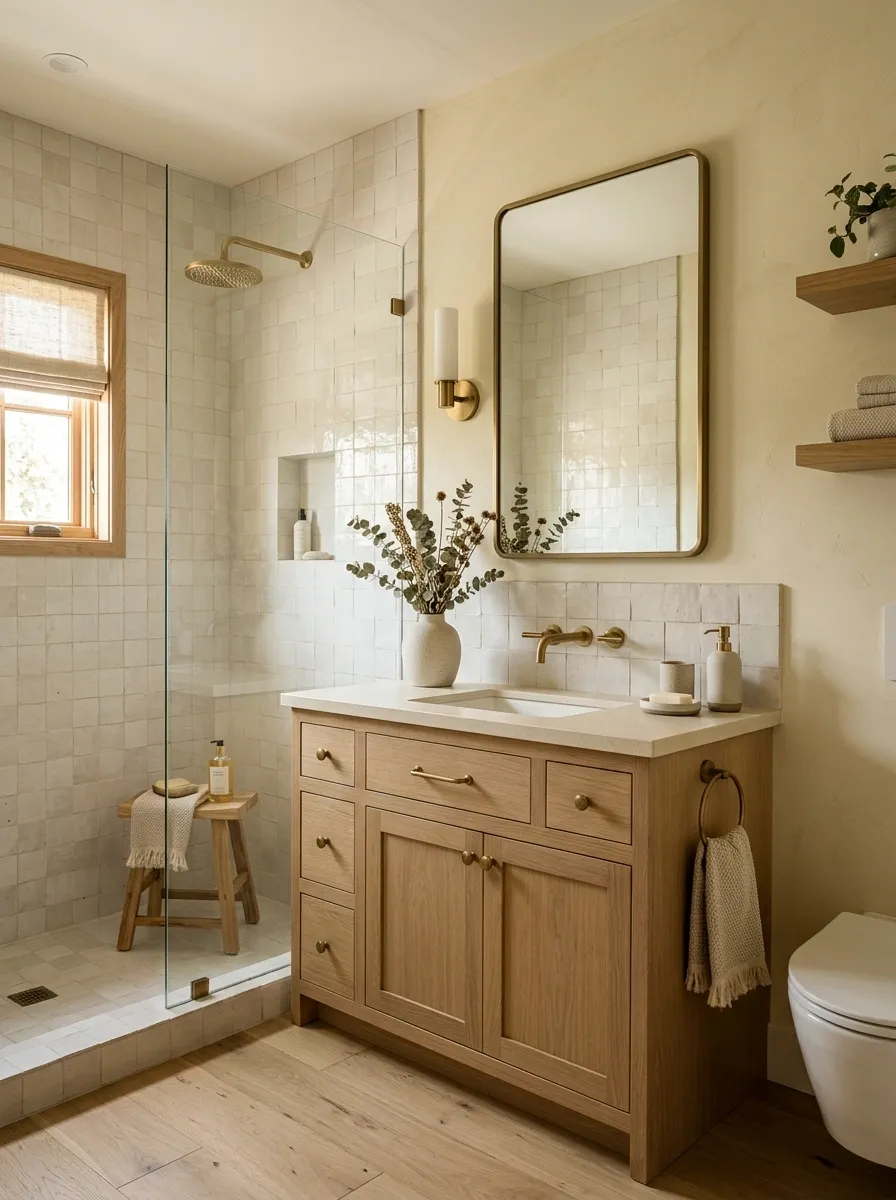
Muted creamy yellow brings gentle warmth to this compact bathroom without turning the space overly bright or playful. White oak cabinetry, warm white tile, and understated brass keep the palette grounded.
The handmade-looking tile adds small shifts in texture that make the yellow feel richer. Because the wall color already carries warmth, cooler gray surfaces would interrupt the composition.
Soft morning light works particularly well with this palette, revealing the difference between the creamy walls, white tile, and natural wood.
Making the Final Color Choice
A small bathroom doesn’t have to rely on the safest possible wall color. Some of the most convincing rooms in this collection use deep green, blue-black, plum, olive, or charcoal because the darker surfaces give the architecture a clear identity.
The important part is what surrounds the color.
A wall shade rarely looks the same once it is placed beside natural stone, wood, white porcelain, metal, patterned flooring, or warm lighting. That is why choosing a complete visual direction is more reliable than picking a paint color first and trying to build the rest of the room around it afterward.
For a brighter room, lighter stone, warm whites, pale woods, and reflective surfaces can establish the base. For a moodier bathroom, pale stone, warm lighting, and one strong wood tone can stop deeper colors from becoming overwhelming.
Start with the finished combination that feels closest to the room’s architecture and natural light, then let the largest surfaces establish the palette before smaller accents are chosen.
Save the combinations that feel most convincing so they can serve as references when the actual paint, tile, vanity, and lighting decisions begin.