
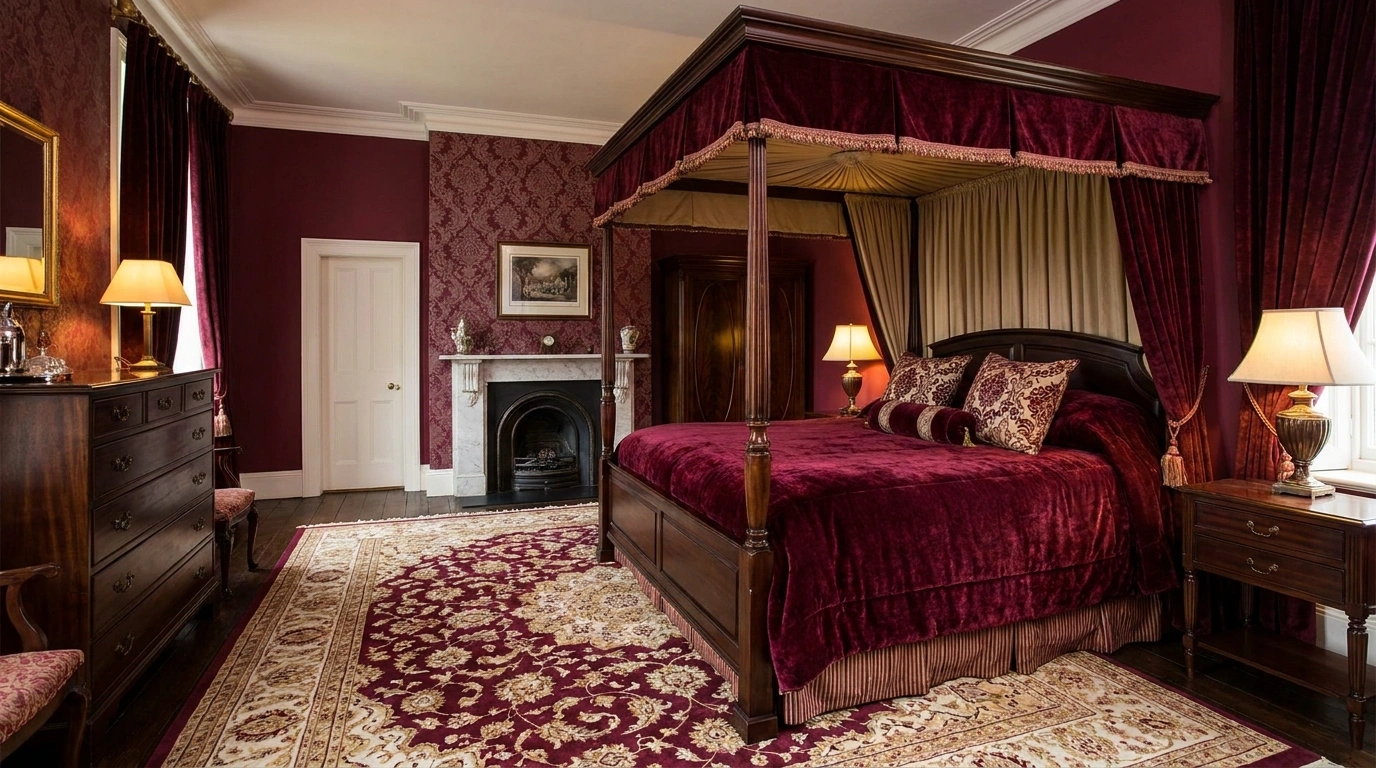
A burgundy bedroom can go wrong surprisingly fast. Put the wrong dark furniture beside it and the room starts feeling heavy. Pair it with overly bright colors and the walls can suddenly look disconnected from everything else. Even a good burgundy paint color can feel flat when the bed, flooring, lighting, and textiles weren’t considered as one composition.
Some burgundy bedrooms feel warm and enveloping because walnut, cream, and soft lighting surround the color. Others feel crisp because pale oak and ivory create a sharp contrast. Burgundy can also lean romantic, traditional, earthy, contemporary, or dramatic depending on the architecture and materials around it.
Burgundy Bedroom Ideas
Paneled Burgundy Walls
Deep burgundy walls featuring classic picture frame molding wrap this bedroom in an enveloping, tailored atmosphere. The rich wall treatment adds instant architectural depth, providing a sophisticated backdrop for the understated upholstered bed and matching dark wood nightstands.
Slender pendant lights with warm Edison bulbs hang low on either side of the bed, casting a gentle glow that enhances the saturated tones of the room. A lightly patterned rug anchors the furniture while introducing a subtle contrast against the dark timber flooring.
Layered bedding in muted burgundy and crisp ivory breaks up the heavy color palette without sacrificing coziness. Keeping the overall decor minimal ensures that the intricate wall paneling remains the undisputed focal point of the space.
Warm Burgundy Cocoon With Walnut and Cream
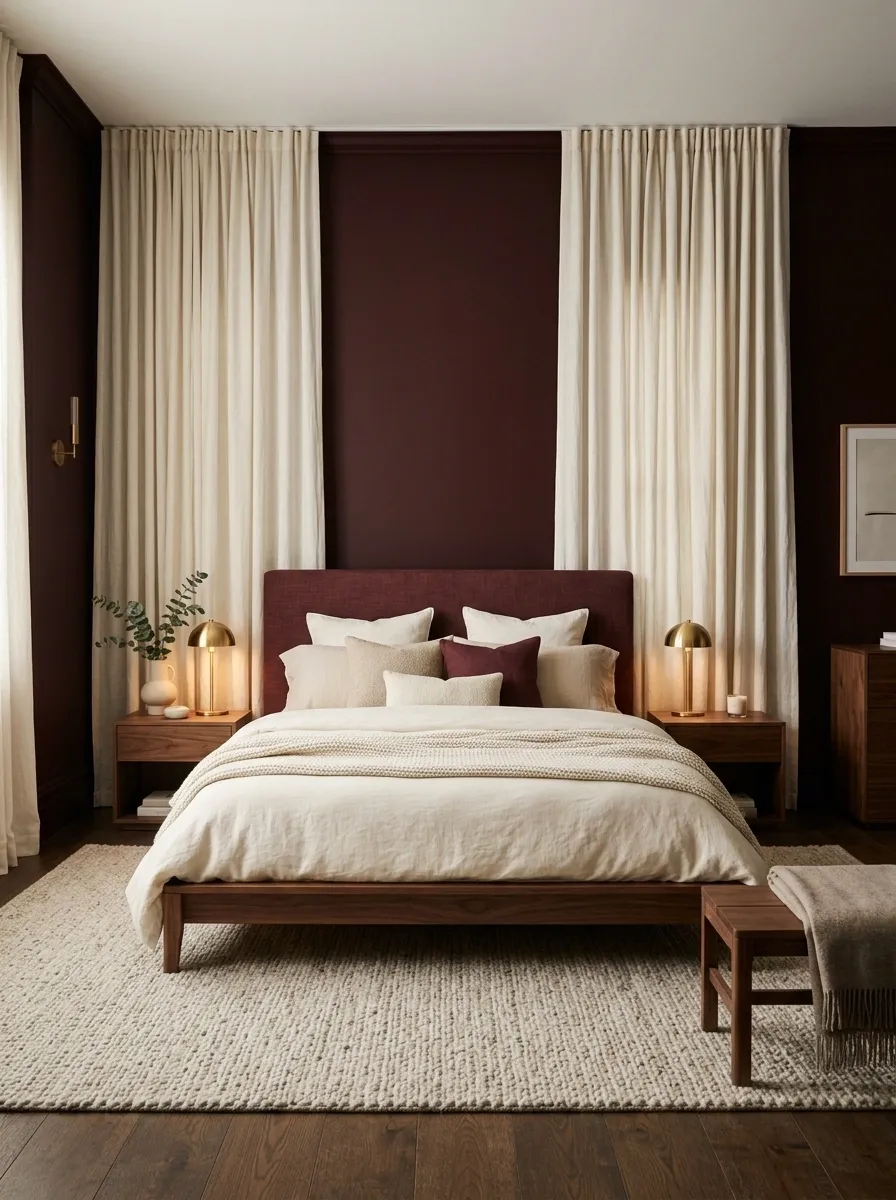
A deep burgundy wall wraps this bedroom in a warm, enclosed feeling, while walnut furniture gives the darker palette enough natural variation to stay inviting. The low-profile bed is dressed in ivory and cream bedding, with soft linen curtains extending nearly to the floor.
Warm brass lamps add small points of brightness beside the bed rather than spreading metallic details throughout the room. A textured neutral rug helps separate the dark wall from the walnut furniture, giving the room a softer visual transition.
The key is restraint. Too many dark wood pieces would make the composition feel dense. Keeping the bedding, rug, and curtains light gives the burgundy enough depth without allowing it to dominate every surface.
visual anchor
weight and warmth
visual relief
small highlights
Textured Burgundy With Floral Art
A richly textured burgundy accent wall sets a dramatic stage for a large, moody floral canvas that ties the entire color scheme together. The oversized botanical artwork softens the deep background, introducing organic shapes and lighter tones that keep the walls feeling dynamic rather than oppressive.
Flanked by vertical pendant lights, the upholstered gray bed creates a contemporary silhouette against the dark backdrop. Simple nightstands with sleek lines offer just enough surface area for essentials while keeping the bedside composition clean and uncluttered.
A neutral, textured area rug separates the bed from the dark wooden floors, adding physical and visual softness to the room. The layered throws and pillows on the bed blend dusty mauve and charcoal shades, perfectly echoing the colors found in the statement artwork above.
Moody Burgundy Bedroom With Charcoal Architectural Contrast
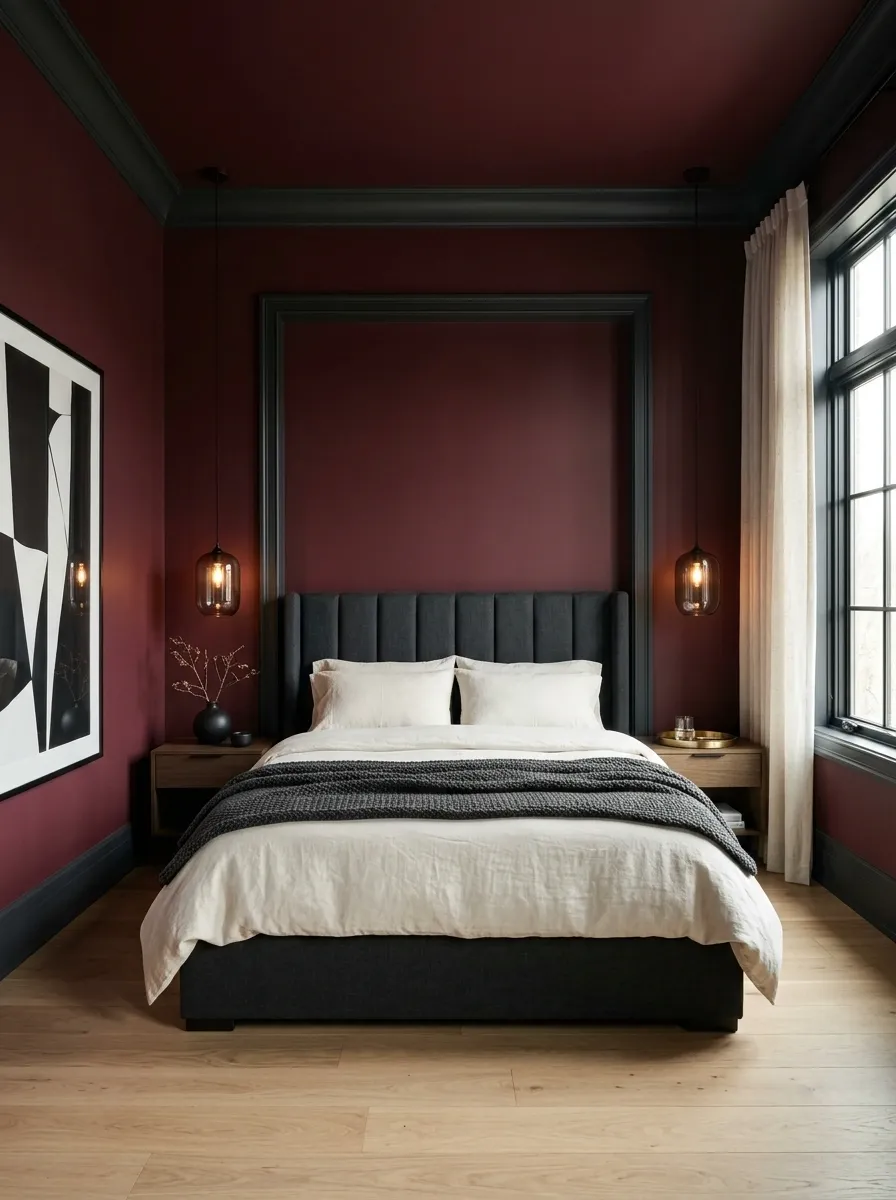
This version takes burgundy in a sharper direction. Saturated walls meet charcoal trim, a dark upholstered bed, smoked glass bedside lighting, and pale oak flooring that cuts through the deeper palette.
The contrast between the burgundy and charcoal creates a stronger architectural feeling than a room built around burgundy and brown. Pale oak then becomes an important balancing material, especially across the floor where it keeps the lower part of the room from disappearing into the darker furniture.
The bedding stays simple, mostly ivory with a charcoal throw. Artwork should remain limited and graphic so the walls retain their visual strength.
This composition suits a bedroom with good natural light because the darker surfaces can be allowed to remain rich during the day without making the room feel closed in.
Curved Headboard and Heritage Toile
This bedroom pairs a dramatic burgundy curved headboard with intricate toile-style wallpaper panels for an unmistakably classic look. The framed wallpaper sections add a layer of historical charm, while crisp white trim frames the entire composition with a clean, deliberate finish.
Warm brass table lamps sit atop dark wooden nightstands, casting a soft, inviting pool of light across the bedside tables. The pale cream bedding remains simple and tailored, allowing the ornate headboard shape and patterned wall panels to command attention without visual clutter.
A muted, neutral rug rests on the light wood flooring, balancing the heavy warmth of the burgundy headboard and creating a gentle transition between textures. The overall design achieves a balanced feel by pairing intricate wall details with restrained, solid-colored textiles.
Soft Romantic Burgundy Bedroom With Dusty Rose
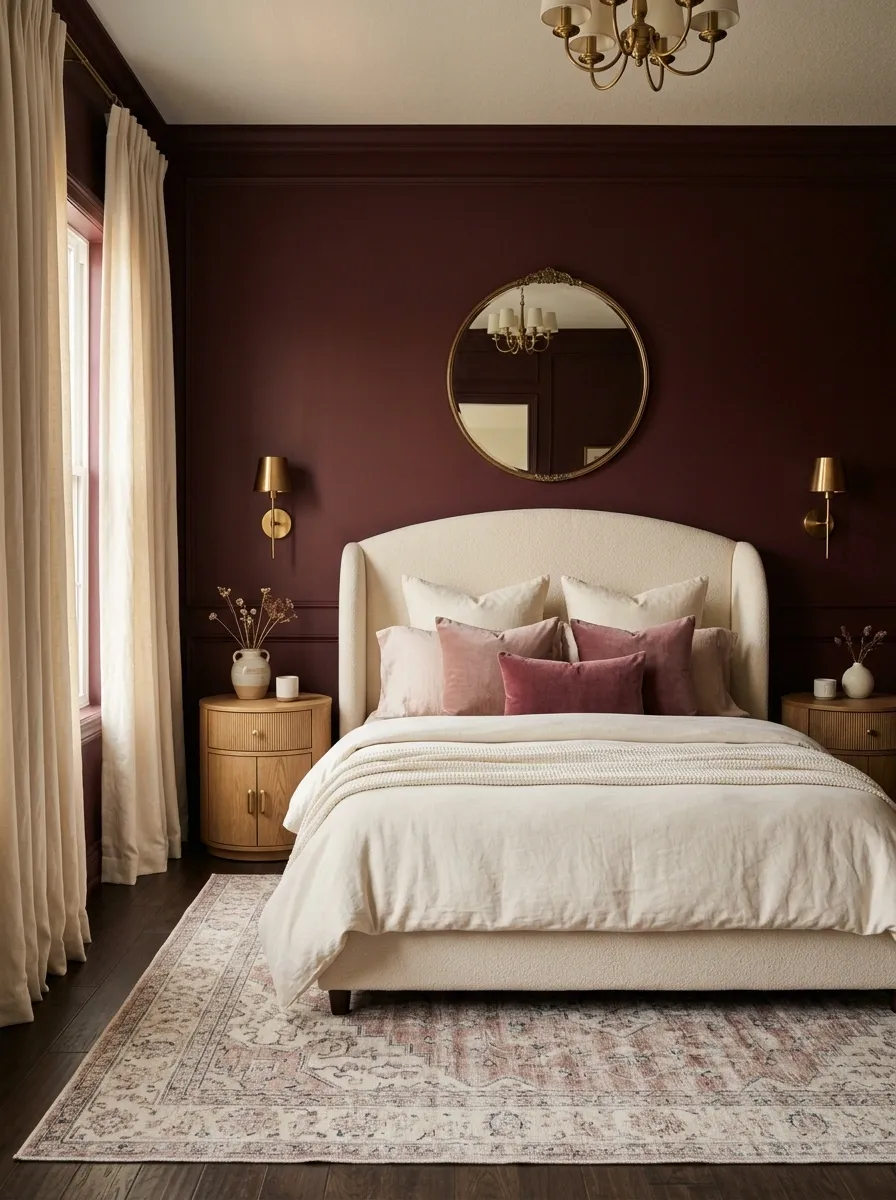
Burgundy becomes softer when paired with dusty rose, cream upholstery, rounded furniture, and warm brass. In this bedroom, the deeper wall color sits behind a curved upholstered bed, while the bedding shifts gradually from cream to muted pink.
The rounded headboard and curved bedside tables are important because they soften the visual weight of the saturated wall. Long curtains add another layer of movement without introducing a competing color.
The result feels romantic without drifting into an overly sugary palette. The dusty rose remains muted rather than bright, which keeps the burgundy looking sophisticated.
A patterned rug can work here, but it should stay low contrast. Strong black-and-white patterns would interrupt the softer tonal progression.
Arched Alcove and Patterned Statement
A striking arched alcove upholstered in a rich, patterned burgundy fabric creates a monumental focal point behind the bed. The arched frame adds architectural interest and gives the saturated color a tailored, intentional boundary within the crisp white ceiling and walls.
Fluffy matching ottomans sit at the foot of the bed on a pale circular rug, introducing tactile softness and a modern silhouette to the space. The sleek nightstands hold understated lamps that illuminate the textured bedding and subtle quilted throw draped across the mattress.
Built-in shelving on the left side of the room provides functional display space while maintaining the room’s cohesive color story. By keeping the surrounding walls in a deep, matte burgundy, the entire composition feels intimate, cohesive, and unapologetically rich.
Burgundy and Natural Linen Organic Bedroom
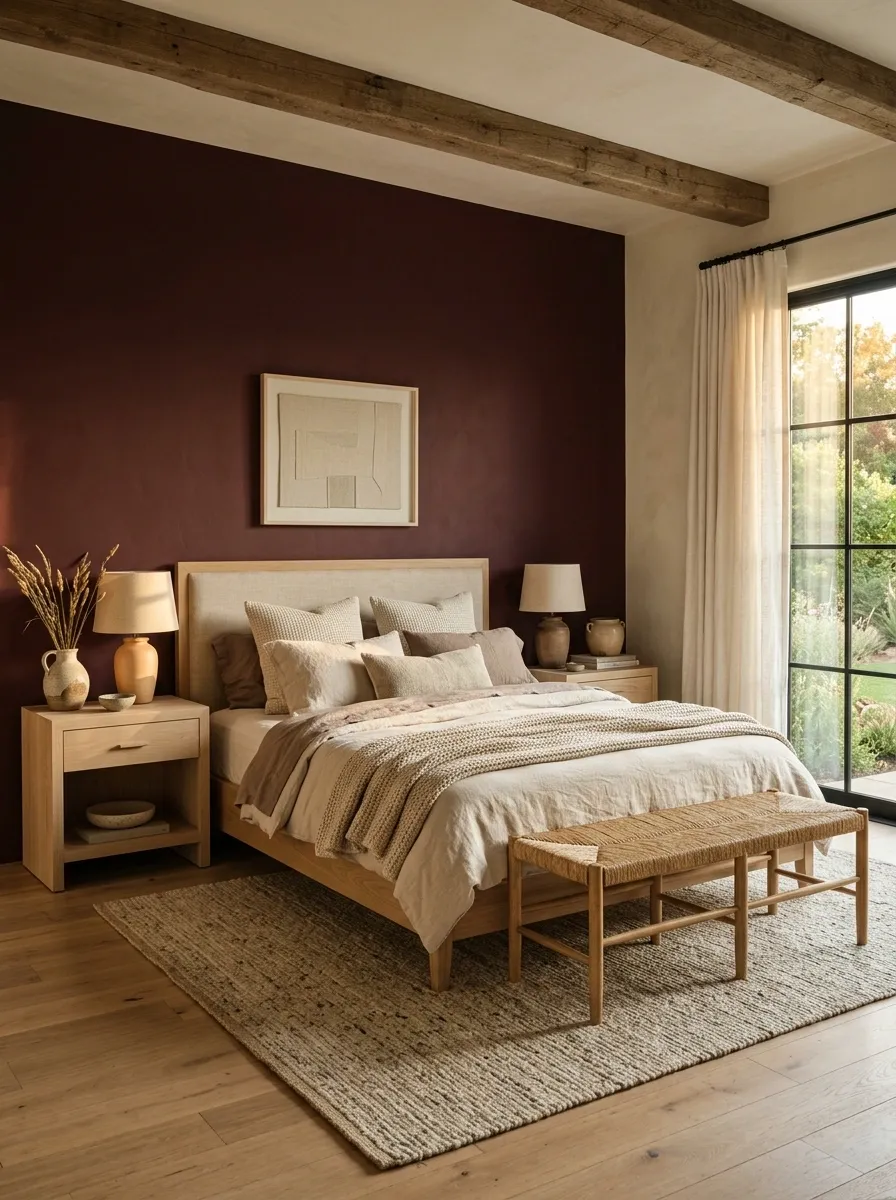
A natural-material bedroom gives burgundy a completely different personality. Here, a rich burgundy wall sits behind an upholstered bed layered with washed linen, while pale oak nightstands, woven textures, and handmade ceramic pieces keep the room tactile and relaxed.
There is very little gloss in the composition. Most surfaces are matte, softly textured, or visibly natural. That matters because highly polished furniture would push the room toward a formal luxury look instead.
The curtains remain a warm off-white, and the flooring stays light enough to reflect daylight back into the room. A woven bench at the foot of the bed connects the larger wooden pieces with the softer textiles.
The strength of this concept comes from material contrast rather than a large number of decorative objects.
Dramatic Burgundy Bedroom With Black Canopy Bed
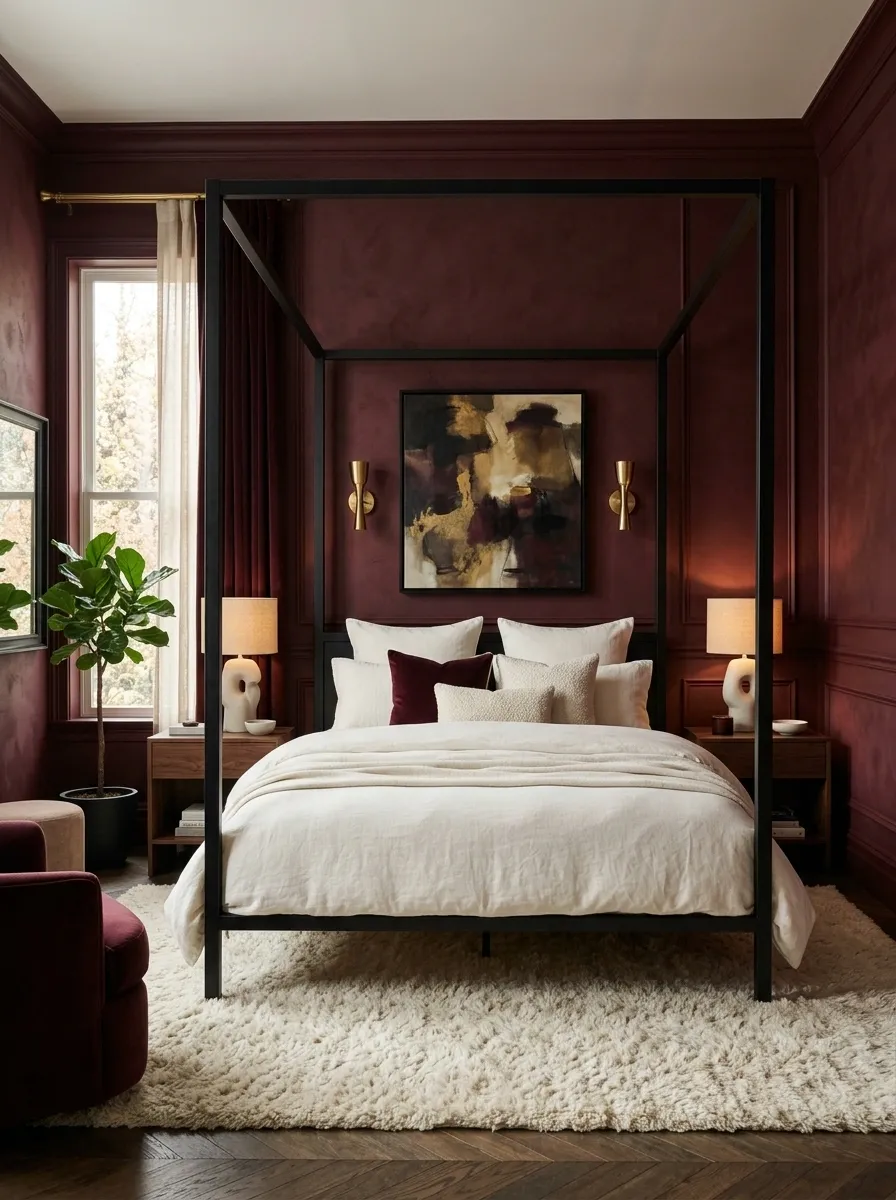
For a stronger statement, a black canopy bed can sit directly against saturated burgundy walls. The black frame gives the room a bold architectural outline, while ivory bedding creates a bright center that keeps the composition from becoming too dense.
Dark wood furniture can be used sparingly around the bed, but the room doesn’t need another major dark feature. A warm rug beneath the bed adds separation from the floor, while sculptural bedside lighting brings softer points of illumination into the heavier palette.
The canopy structure is what gives this concept its identity. It creates a strong vertical frame around the bed and makes the burgundy wall feel intentional rather than simply painted a dark color.
Keep the surrounding decor restrained. Too many large accessories would compete with the bed’s strong silhouette.
Classic Burgundy Bedroom With Cream Wall Paneling
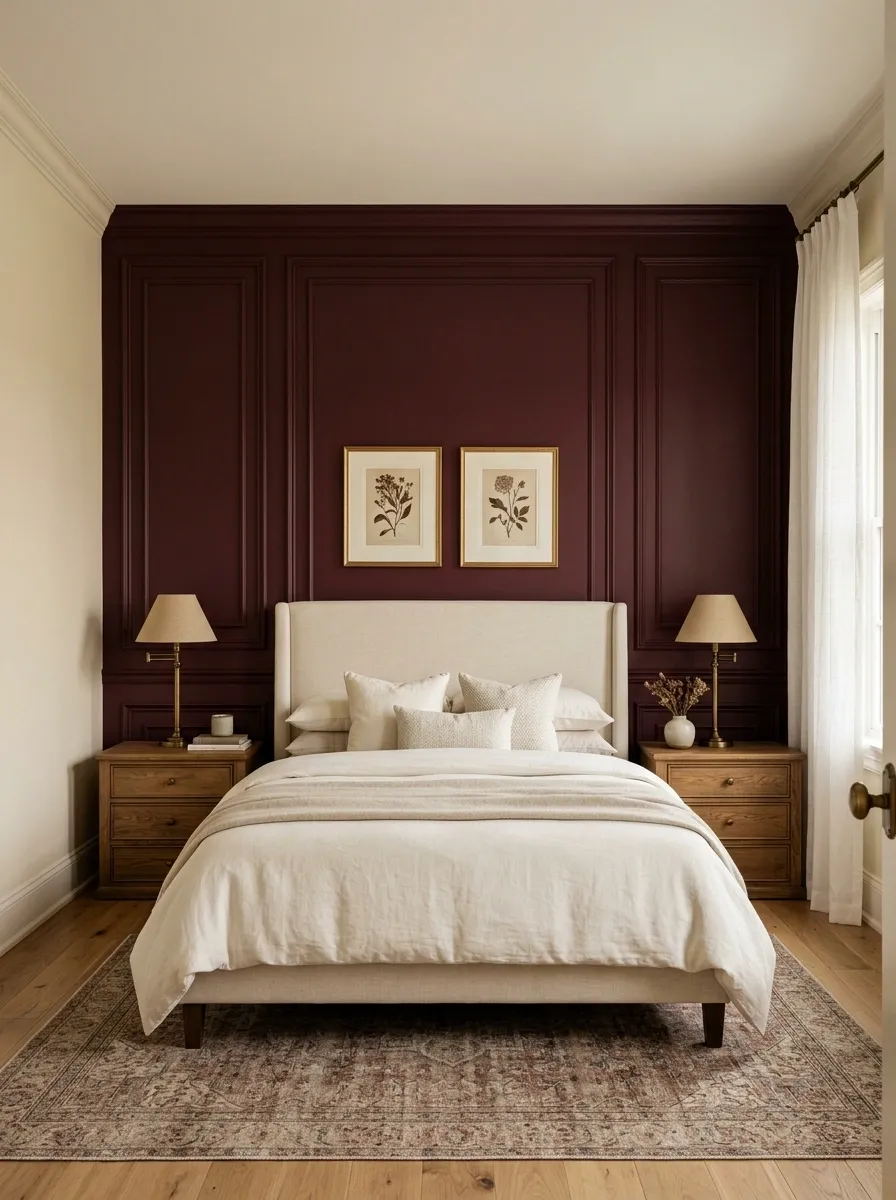
Traditional architecture gives burgundy a more established, furniture-led character. This bedroom uses deep burgundy on raised wall paneling behind a classic upholstered bed, while the remaining walls stay warm cream.
A pair of substantial nightstands anchors the bed, with aged brass lamps adding a muted glow. Cream bedding, a patterned rug, and medium-toned wood prevent the room from becoming too dark.
The paneling matters as much as the paint color. It gives the burgundy architectural structure instead of leaving it as a flat block of color.
Keep the furniture silhouettes classic but not ornate. Too many decorative details would push the room into formal hotel territory rather than a comfortable residential bedroom.
Burgundy Bedroom With Soft Taupe and Black Accents
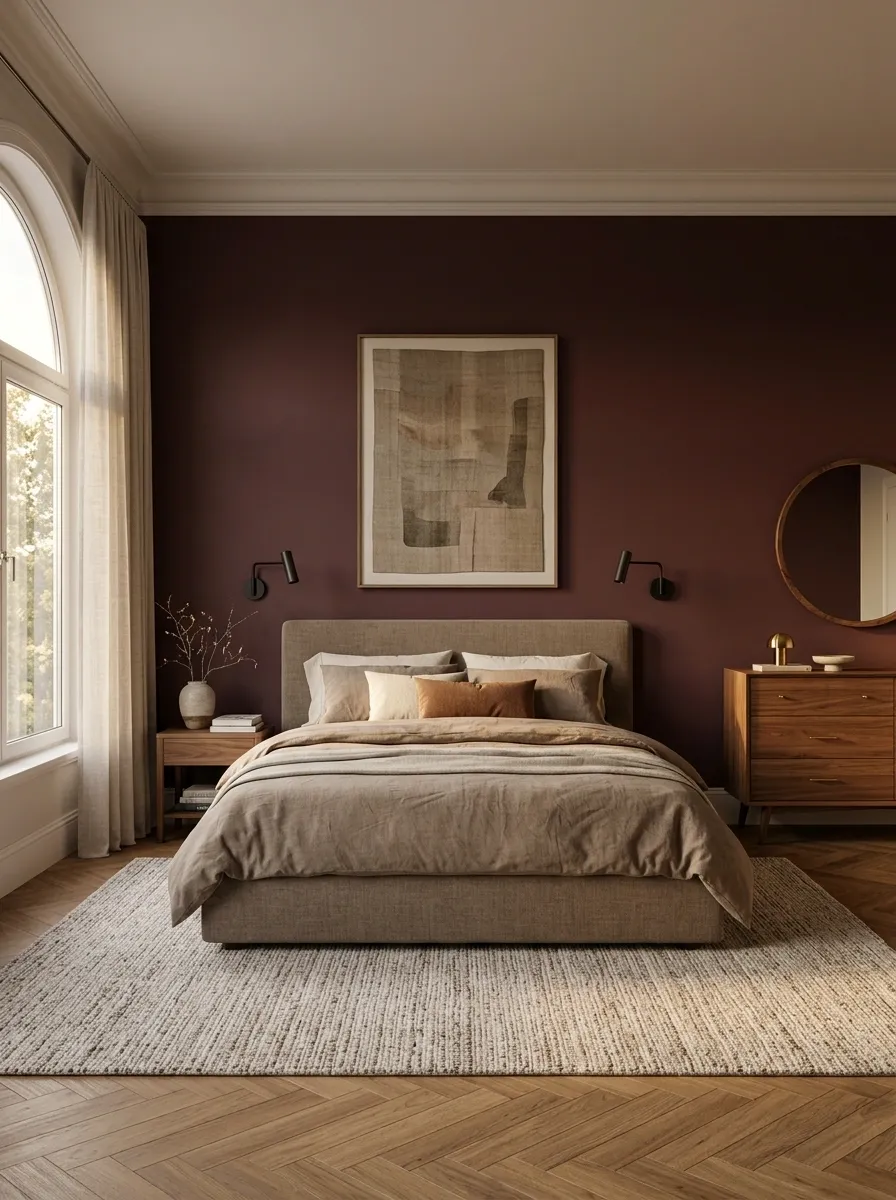
A quieter interpretation pairs a muted burgundy wall with warm taupe upholstery, walnut furniture, and carefully limited black details. The palette feels sophisticated because every color has a defined role.
The upholstered bed sits between simple black reading lights, while a walnut dresser adds warmth across the opposite wall. Taupe bedding and a softly textured rug bridge the darker furniture with the burgundy backdrop.
Black works best here as a small structural accent. Repeating it in every accessory would make the room feel harder and more graphic than intended.
The muted taupe is what changes the character of the burgundy. Instead of creating a dramatic contrast, it creates a layered tonal relationship that feels calmer and easier to live with.
The room’s dominant backdrop.
Softens the transition into the textiles.
Adds warmth and visual weight.
Defines small architectural details.
Modern Burgundy Bedroom With Concrete, Oak, and Black Lighting
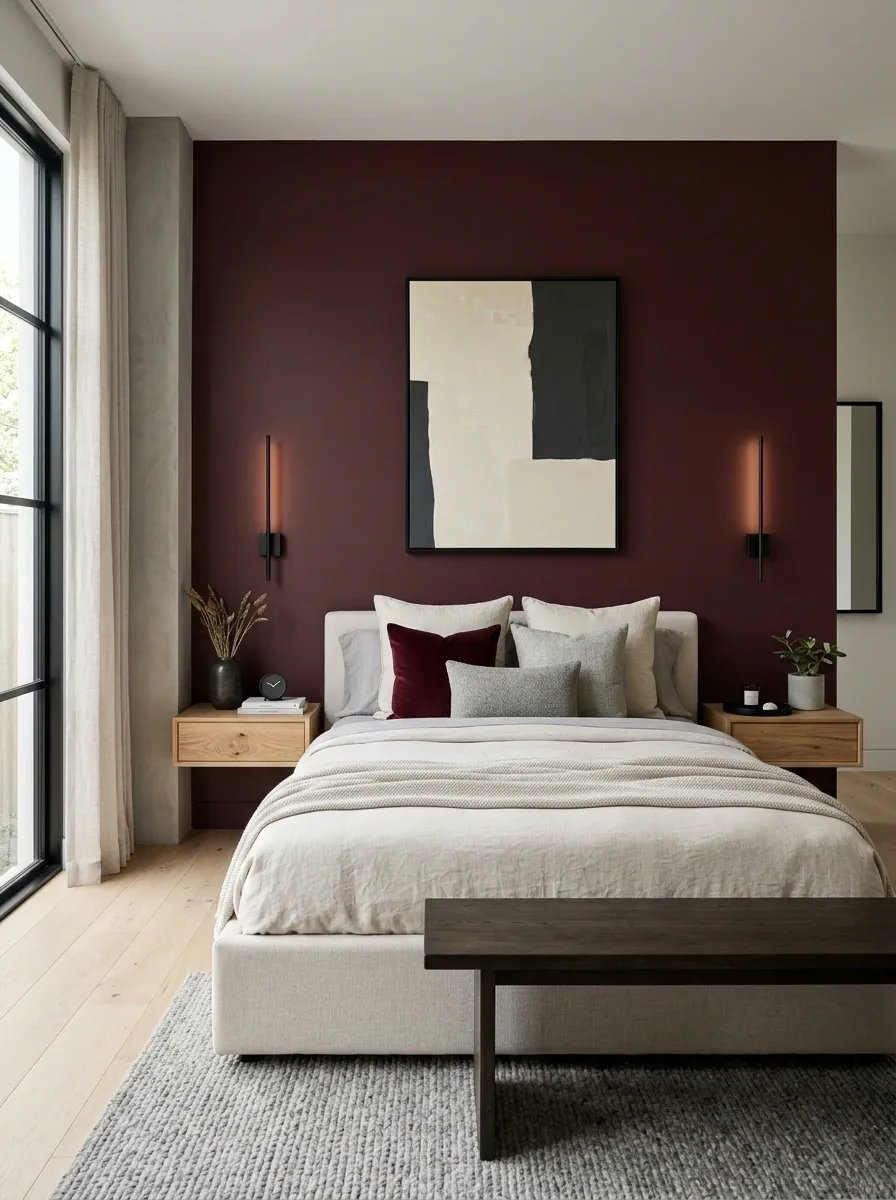
Burgundy takes on a cleaner personality when surrounded by pale oak and smooth concrete-inspired finishes. In this bedroom, the wall behind the bed is saturated burgundy, while the floor and storage remain light and simple.
A low upholstered bed keeps the profile horizontal. Floating oak bedside shelves replace bulky nightstands, and slim black wall lights provide a crisp contrast without introducing visual clutter.
The concrete finish works best as a quiet background texture rather than a dramatic industrial statement. Its slightly cool surface makes the burgundy look deeper while the oak brings warmth back into the composition.
This concept suits rooms that benefit from clean lines and built-in storage. Decorative layering stays minimal, allowing the materials themselves to create the interest.
Burgundy Bedroom With Dark Green Botanical Layering
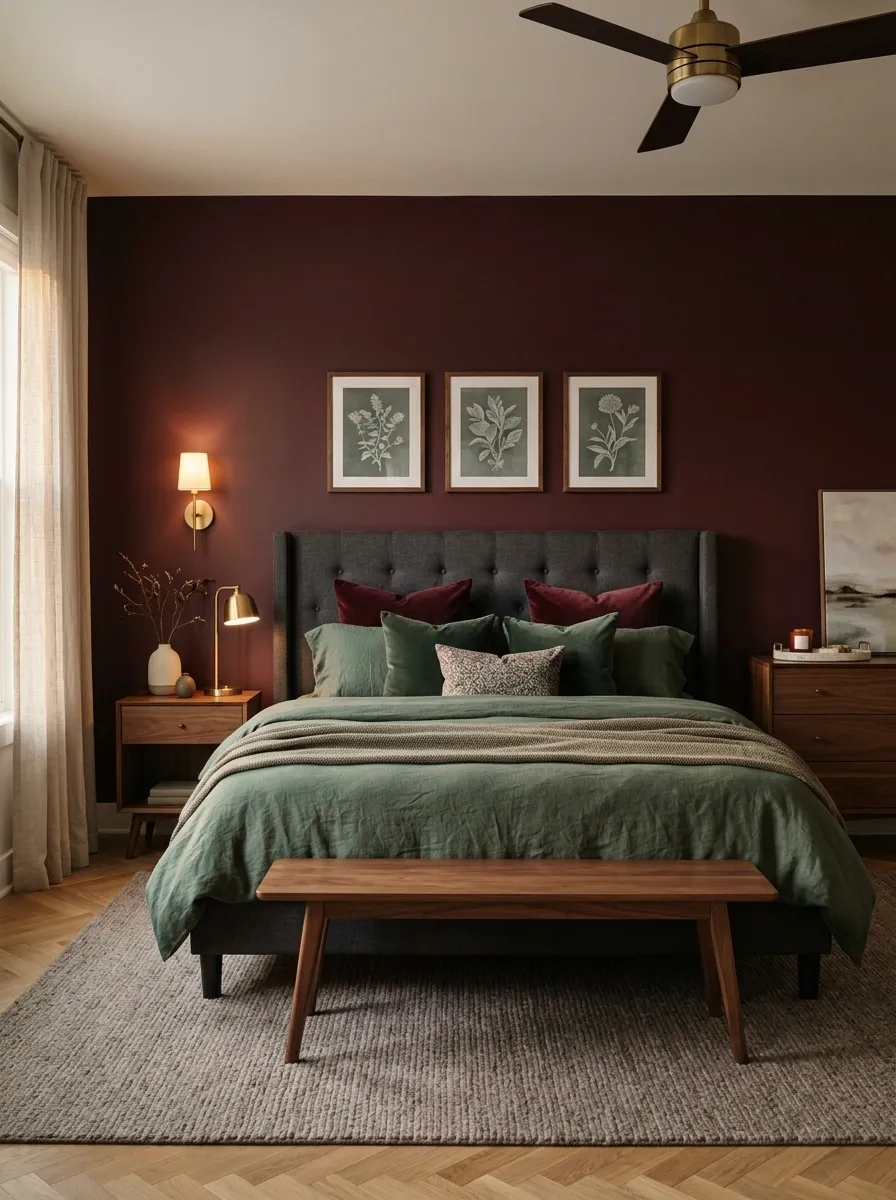
Burgundy and deep green create a richer, more unexpected bedroom palette. Here, the burgundy wall sits behind a substantial upholstered bed dressed in muted forest-green bedding, while walnut furniture and warm brass lighting keep the combination grounded.
Botanical artwork adds another layer of green without relying on bright leafy patterns. The greenery should remain muted and slightly dusty so the room keeps its sophisticated character.
Warm wood is especially important in this palette. Without it, the burgundy and green could become overly cool and enclosed. Walnut introduces a middle tone that links the deeper colors together.
This room works best with simple furniture and a restrained rug. Strong geometric patterns would compete with the already substantial color relationship.
Minimal Burgundy Bedroom With White Oak and Ivory
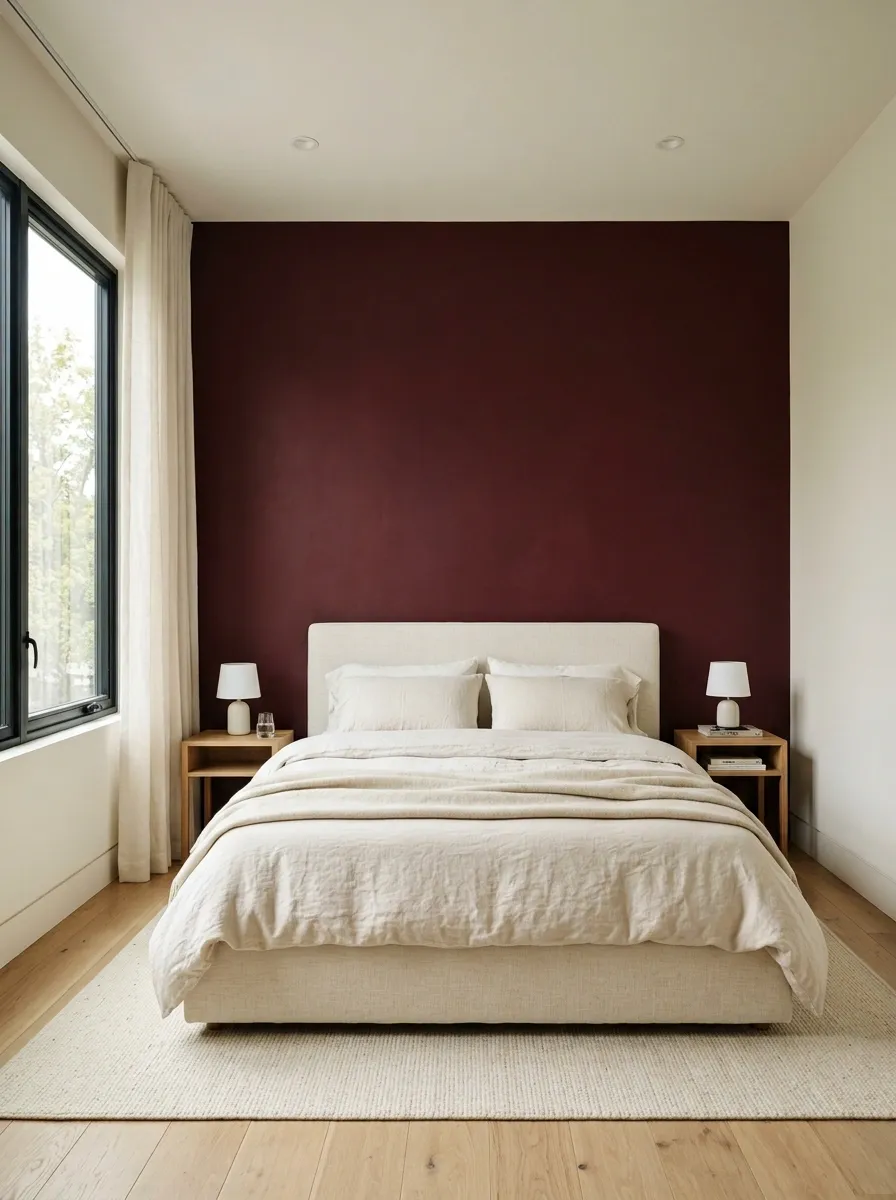
A minimalist burgundy bedroom works by concentrating the color instead of spreading it across every surface. One deep wall provides the visual anchor, while the rest of the room stays intentionally quiet.
The bed has a simple upholstered frame with ivory bedding, and slim white-oak furniture adds warmth without introducing another heavy color. Bare walls and uncluttered surfaces give the burgundy more impact.
Natural light becomes part of the design. During the day, the lighter flooring, curtains, and bedding reflect light around the darker wall, creating a strong contrast without making the room gloomy.
The most important detail is what gets left out. Excess artwork, decorative objects, and multiple competing accent colors would weaken the clean composition.
Burgundy gives the room its identity.
Ivory and pale oak preserve airiness.
Sophisticated Burgundy Bedroom With Greige
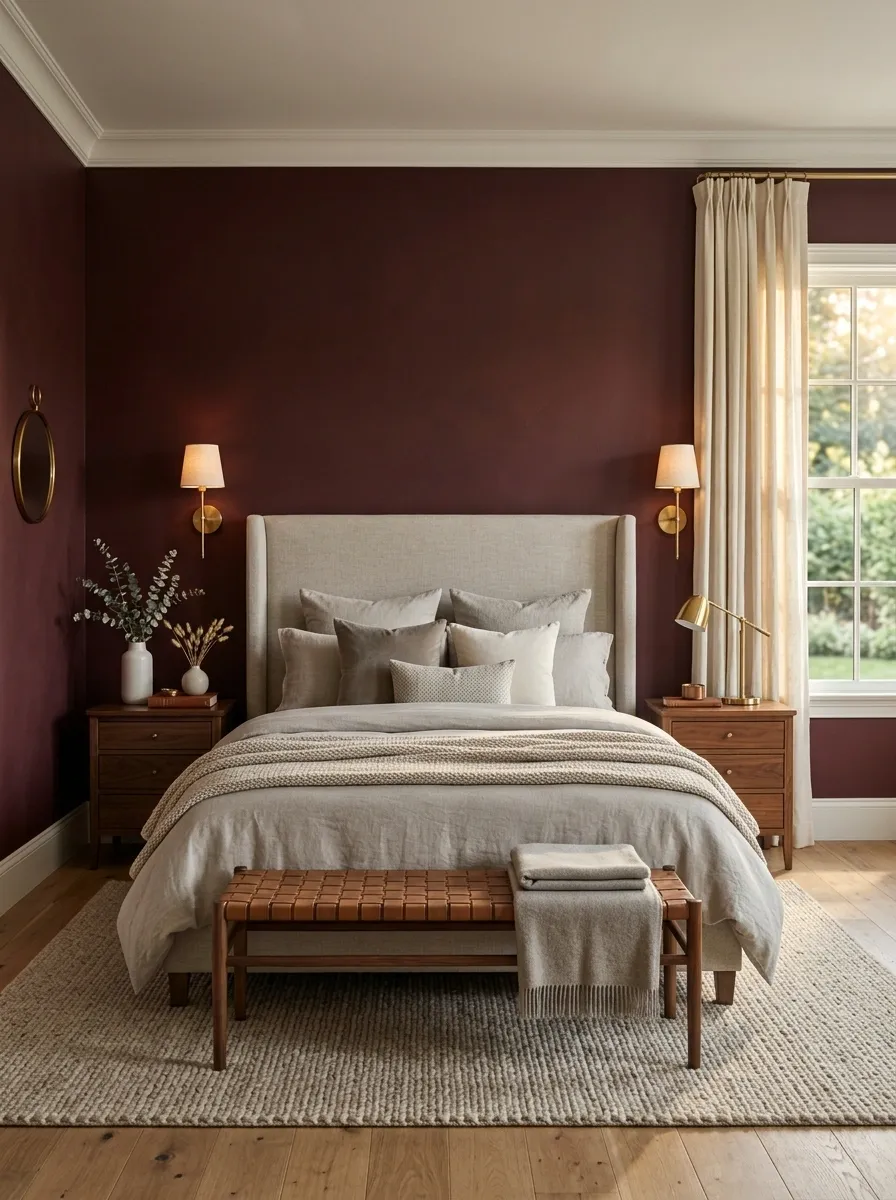
A sophisticated transitional bedroom can use burgundy without becoming overly dramatic. Here, the wall color is balanced by greige bedding, warm ivory curtains, walnut furniture, and understated brass lighting.
The bed is upholstered in a soft neutral fabric with enough height to create presence against the burgundy wall. A large rug beneath the bed introduces another layer of neutral texture while visually connecting the furniture pieces.
Greige works particularly well because it doesn’t create the hard contrast of bright white. The resulting palette is quieter, with burgundy functioning as the richest tone in an otherwise restrained room.
The furniture should remain classic in proportion but simple in detail. That balance keeps the bedroom between traditional and contemporary.
Dark Burgundy Bedroom With Evening-Focused Lighting
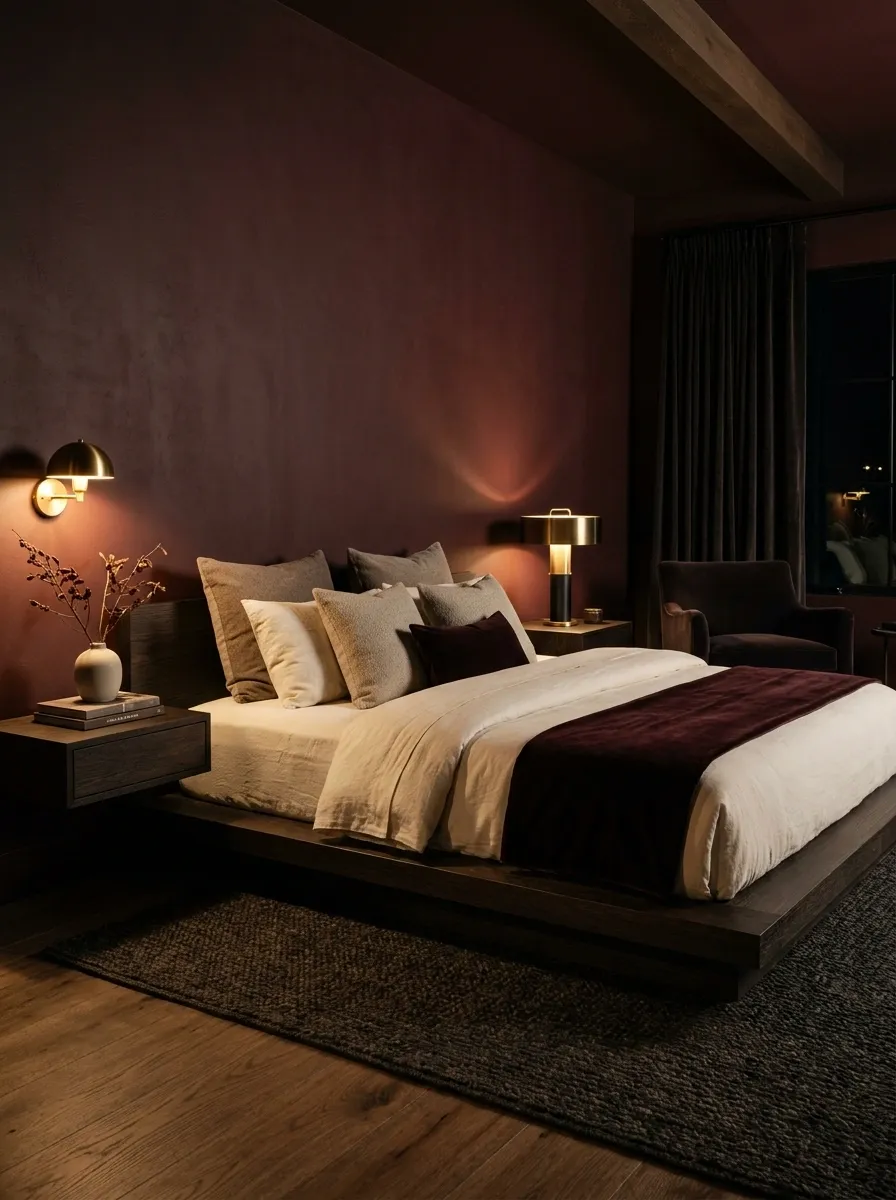
This bedroom embraces the darker side of burgundy, using the color across several major surfaces instead of treating it as a single accent. Deep walls, dark wood furniture, shadowy textiles, and warm bedside lighting create an intentionally intimate composition.
The room isn’t dependent on overhead lighting. Wall sconces and bedside lamps produce concentrated pools of warm light around the bed, leaving the outer edges of the room slightly darker.
That lighting strategy makes the burgundy feel atmospheric rather than simply dark. Cream bedding provides the brightest central point, while the floor remains just light enough to separate the furniture from the surrounding walls.
The design works best when the room has enough layered lighting to remain functional after sunset.
Burgundy Bedroom With a Painted Ceiling and Warm White Walls
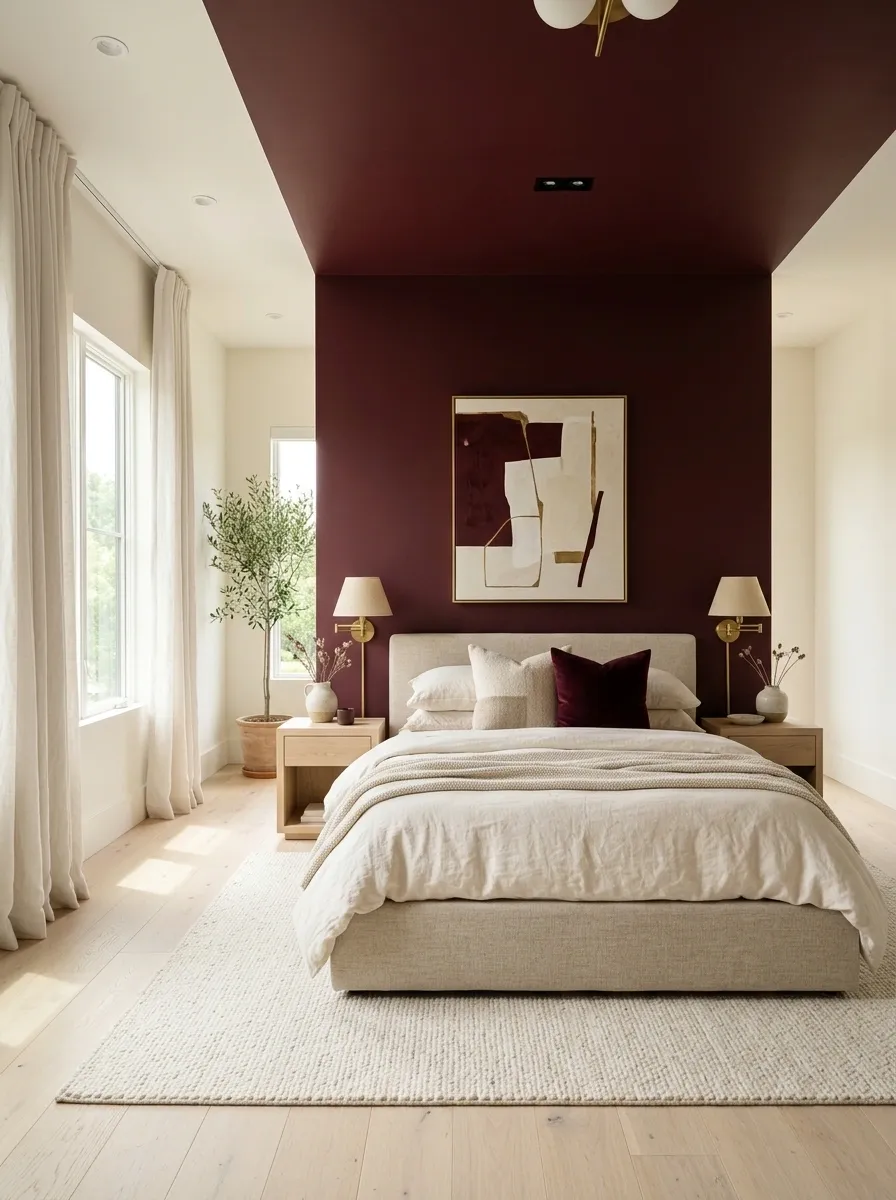
This bedroom uses burgundy in an unexpected architectural way. The deep shade covers the wall behind the bed and continues across the ceiling, while the remaining walls stay warm white.
The effect creates a defined sleeping zone without wrapping the entire bedroom in a dark color. A simple upholstered bed sits beneath the painted ceiling, with pale oak furniture, cream bedding, and soft curtains keeping the rest of the composition bright.
The ceiling extension is what makes this design memorable. It visually connects two planes and gives the bed area a stronger sense of enclosure.
Keep the furniture low and restrained. Tall, dark wardrobes would compete with the architectural color treatment and make the room feel more enclosed.
side walls
BED WALL + CEILING
side walls
Burgundy Bedroom With Pale Stone and Cream Upholstery
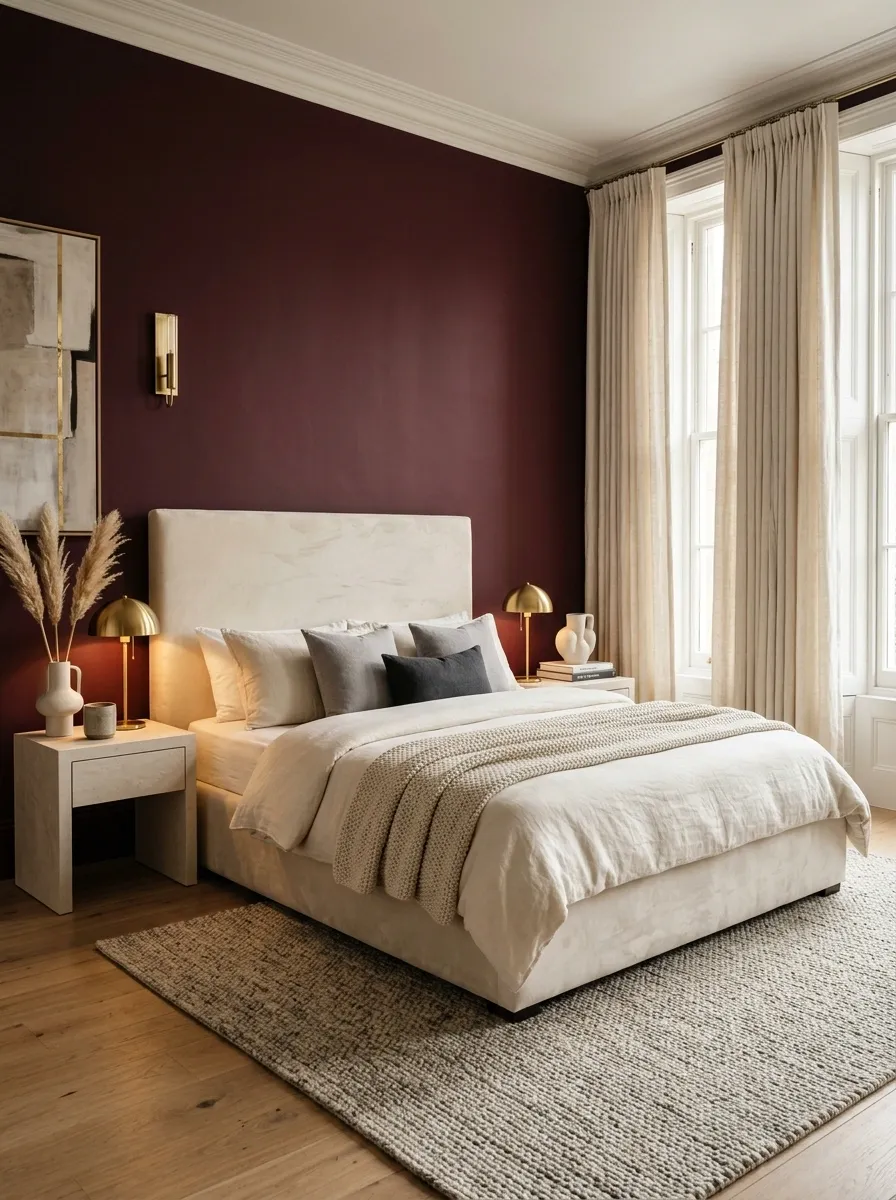
A softer luxury direction comes from placing deep burgundy beside pale stone surfaces and creamy upholstery. The bedroom features a saturated wall, a substantial upholstered bed, light stone bedside tables, and pale oak underfoot.
The contrast between the dense wall color and pale hard surfaces creates a polished finish without relying on excessive metallic decoration. Cream curtains soften the vertical edges of the room, while a textured rug prevents the stone and wood from feeling too separate.
The palette works because the light materials occupy enough visual area to counterbalance the burgundy. The room remains rich, but the overall composition doesn’t become visually heavy.
Warm lighting should reinforce the cream and stone tones rather than introducing a cooler white light.
Burgundy Bedroom With Dusty Blue and Walnut Contrast
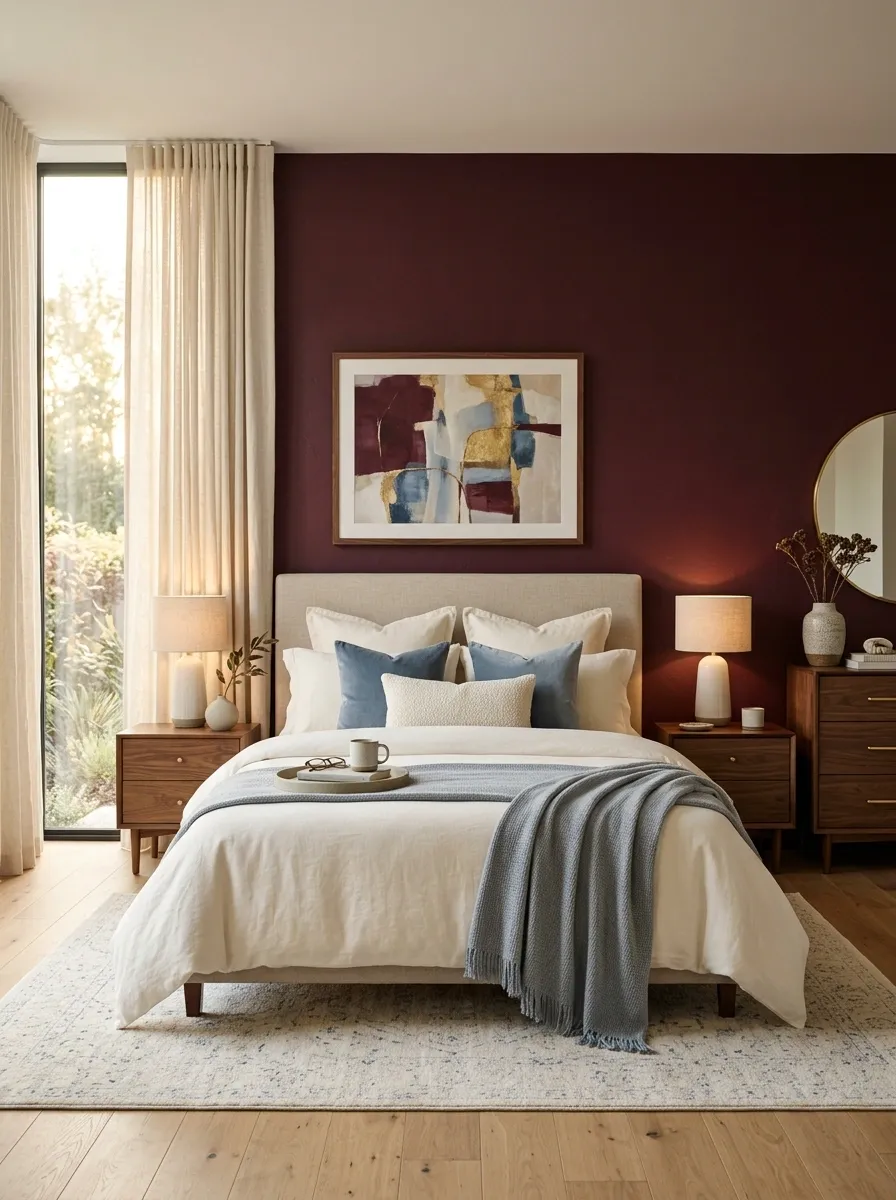
Burgundy doesn’t have to stay within a warm color family. A muted dusty blue bedding palette gives this bedroom a cooler, more unexpected direction, while walnut furniture keeps the combination grounded.
The bed is positioned against a deep burgundy wall, with dusty blue pillows and a softly faded blue-gray throw providing the main contrast. Cream curtains and ivory bedding prevent the two stronger colors from fighting for attention.
Walnut appears in the bedside tables and dresser, creating a warm bridge between the cooler blue and deeper burgundy.
The result feels sophisticated because the blue is deliberately muted. Bright cobalt or saturated royal blue would completely change the character of the room and make the palette much more energetic.
bridge
Burgundy Bedroom With Moody Library-Inspired Styling
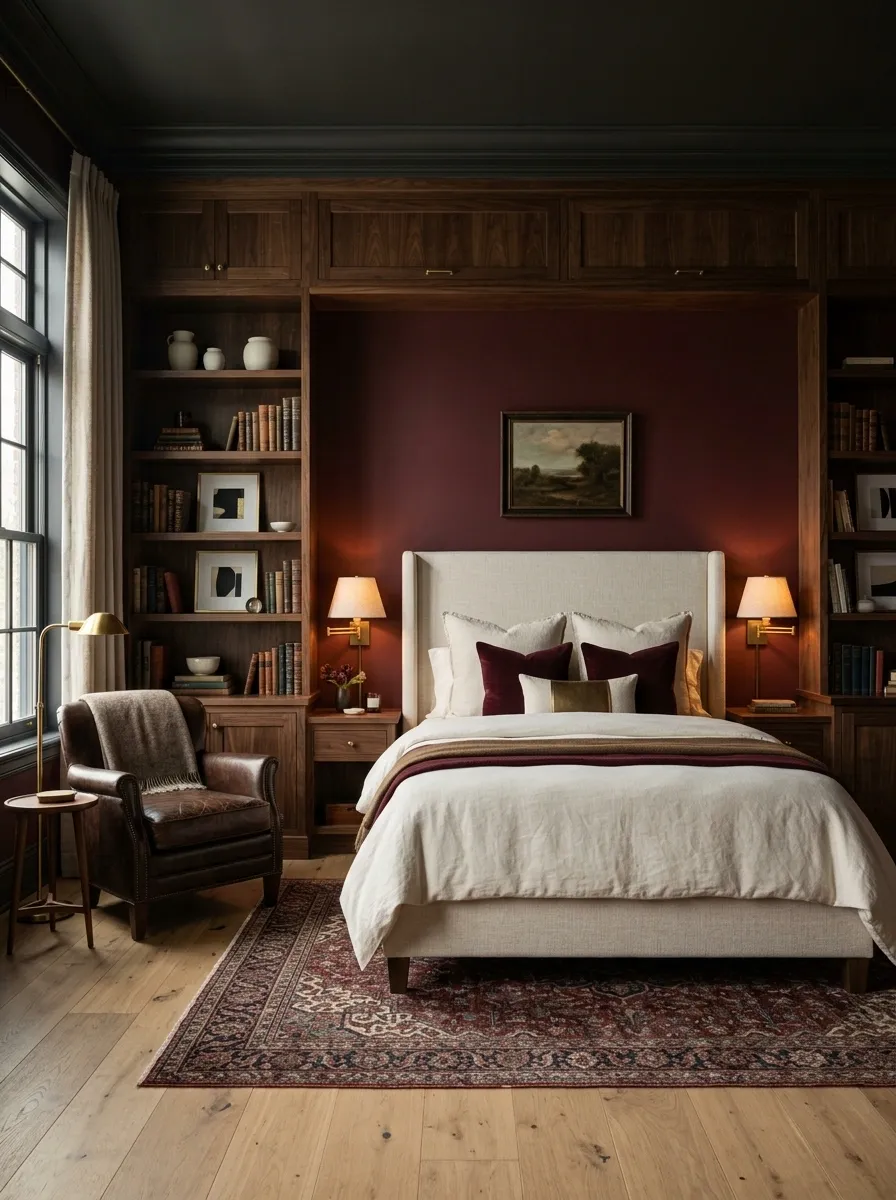
This bedroom borrows the atmosphere of a quiet library without turning the room into a study. Deep burgundy walls surround built-in shelving, a tailored upholstered bed, dark wood cabinetry, and warm reading lamps positioned near the headboard.
Books, ceramics, and a few framed pieces fill the shelving, but the arrangement remains orderly. The built-in wall provides the architectural interest, so the rest of the bedroom can stay relatively simple.
A leather bench or small reading chair adds another material without introducing a new major color. Cream bedding breaks up the darker furniture and creates a bright central zone.
The design works especially well when the shelving is planned around the bed rather than added as a separate storage feature. That makes the entire wall read as one composition.
Transitional Burgundy Bedroom With Soft Gray
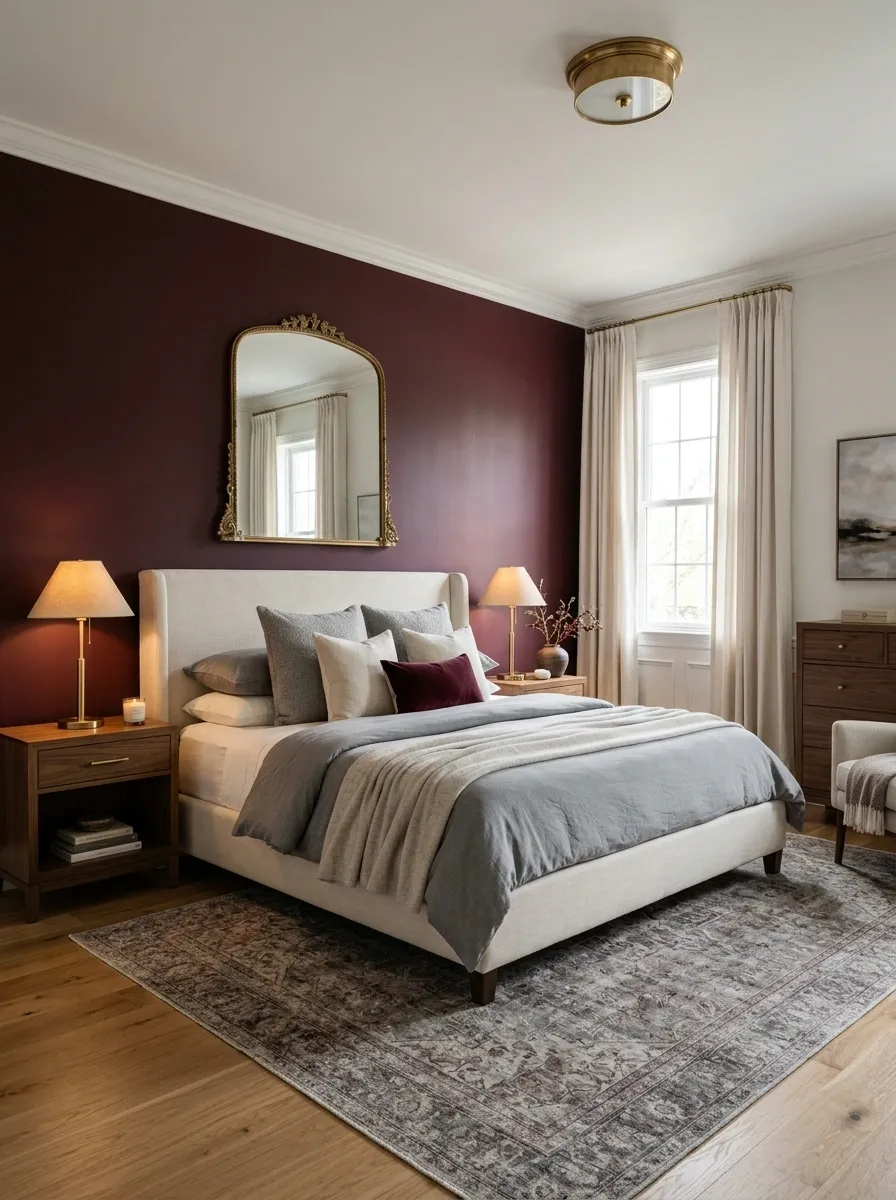
A transitional bedroom uses burgundy as a dramatic backdrop while keeping the furniture and textiles understated. The bed has a classic upholstered silhouette, paired with soft gray bedding, warm ivory curtains, and medium walnut tables.
The gray introduces a cooler neutral without competing with the burgundy. A faded patterned rug adds subtle movement across the floor, while brushed brass lamps give the darker wall a small amount of warmth.
The furniture should have recognizable traditional proportions without ornate carving or excessive decoration. That middle ground is what keeps the room feeling current.
This concept suits bedrooms where classic furniture already exists but the palette needs a stronger focal point. The burgundy wall provides that change without requiring a complete furniture overhaul.
Furniture silhouette Burgundy
Visual focal point Contemporary
Controlled finishes
Burgundy Bedroom With Natural Stone, Walnut, and Aged Brass
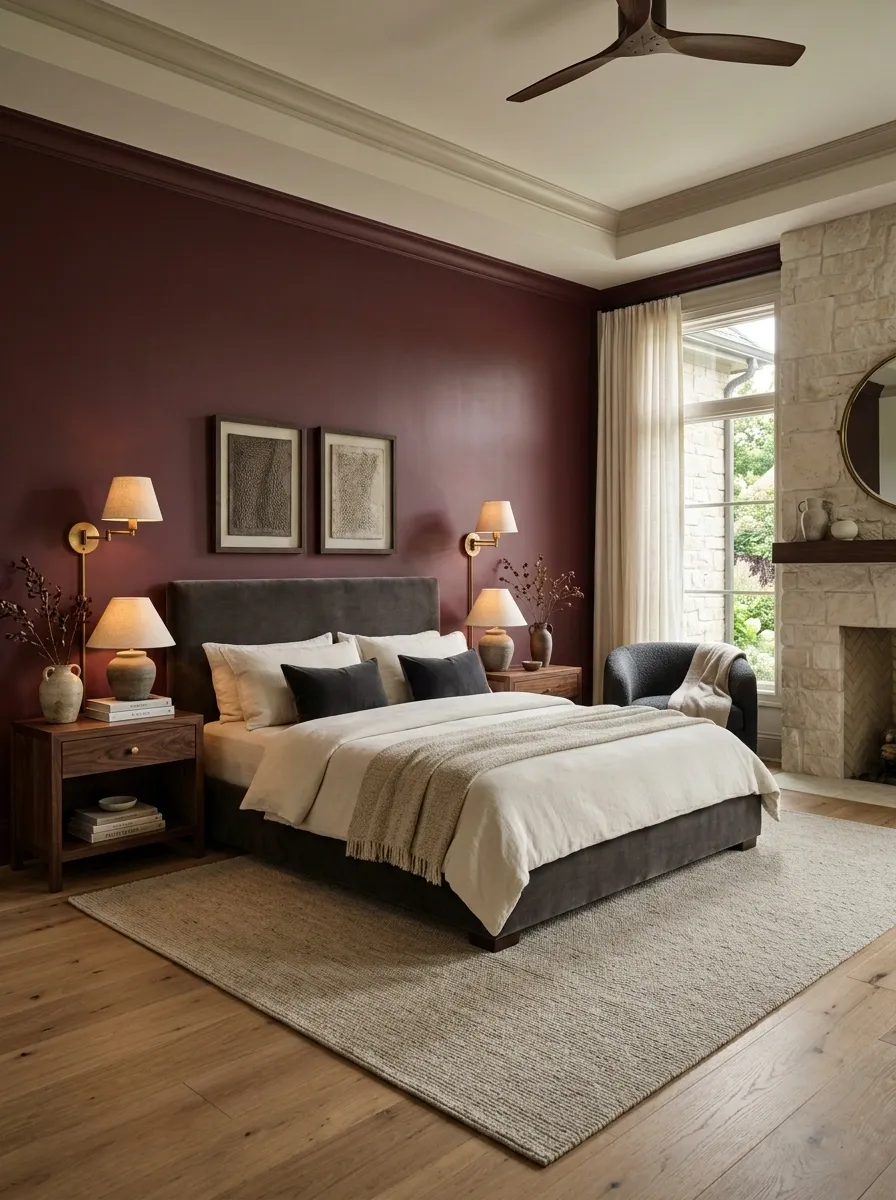
This bedroom gives burgundy a more architectural setting by surrounding it with natural materials. A deep burgundy wall frames the upholstered bed, while walnut furniture, pale stone bedside surfaces, and aged brass lighting create a layered but controlled composition.
The stone brings a slightly irregular texture that keeps the wall color from feeling too polished or predictable. Walnut fills the middle of the palette, preventing the burgundy and stone from becoming an overly sharp contrast.
A large neutral rug softens the transition between the furniture and floor, while cream bedding keeps the center of the room visually light.
The strongest detail is the restrained use of brass. Keeping it mainly around lighting allows the warm metal to support the palette without turning the room overly decorative.
Small Burgundy Bedroom With Tall Built-In Storage
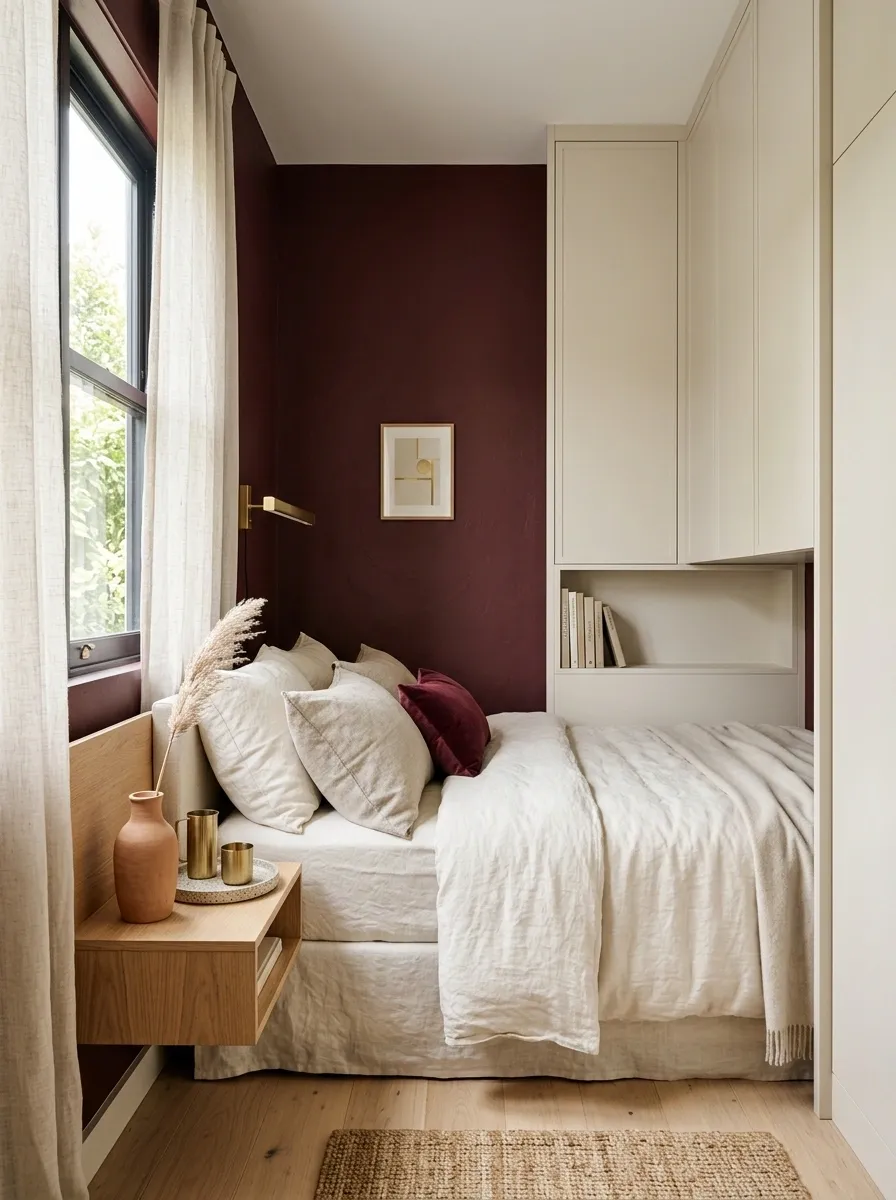
A small bedroom can handle burgundy surprisingly well when the color and storage are organized as one composition. This design places a rich burgundy finish behind the bed while tall built-in cabinetry rises toward the ceiling on one side.
The bed remains compact, with slim bedside surfaces instead of bulky tables. Pale flooring, ivory bedding, and light curtains open up the lower part of the room, while the vertical cabinetry makes practical use of the wall height.
The storage is visually quiet, using simple fronts rather than decorative hardware. That allows the burgundy wall to remain the main visual statement.
A small room benefits from concentrating the stronger color in one area rather than scattering dark pieces throughout the floor plan.
FOCAL WALL
BUILT-IN
STORAGE
bed, rug, bedside furniture
storage and vertical elements
Airy Burgundy Bedroom With Sheer Curtains and Pale Wood
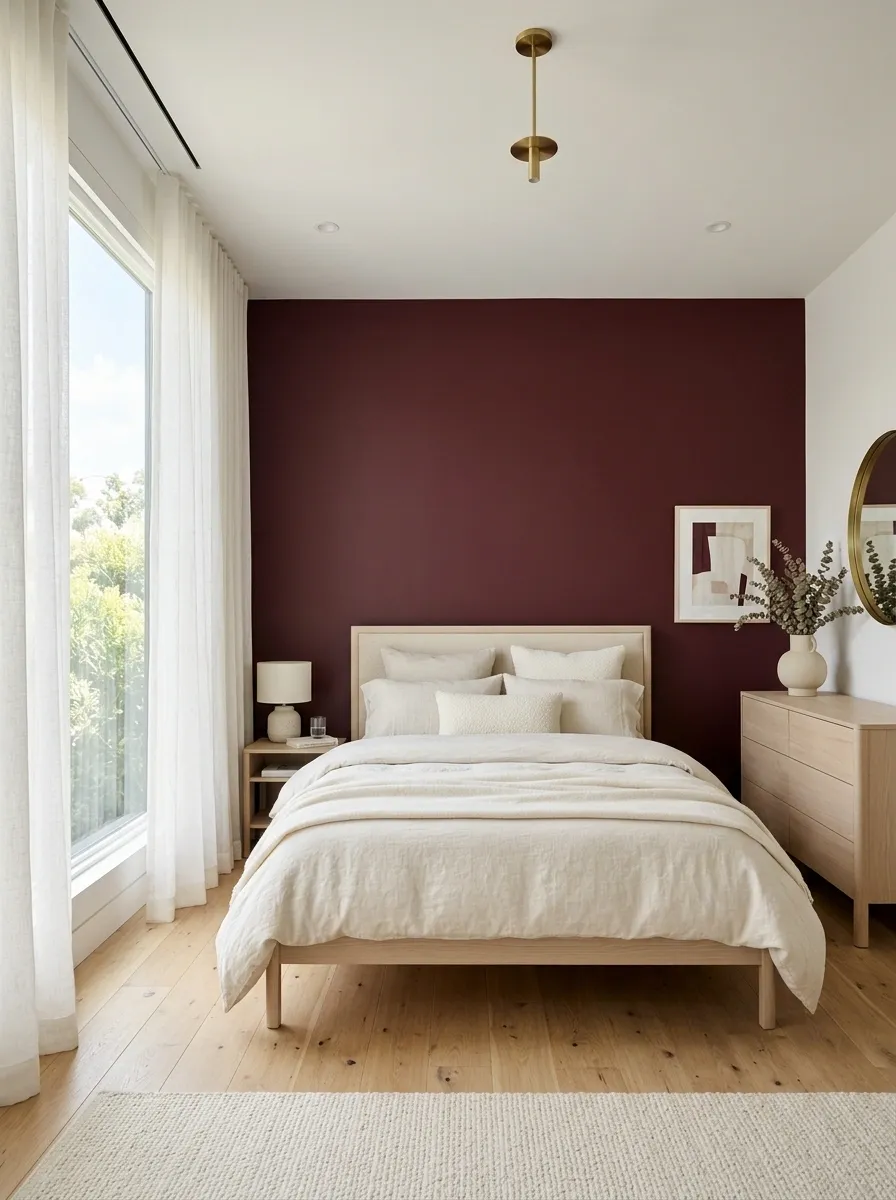
This composition keeps burgundy rich but surprisingly light. A single deep wall behind the bed provides the color anchor, while the rest of the room uses pale wood, ivory bedding, sheer curtains, and soft daylight.
The curtains are intentionally lightweight, allowing natural light to remain visible across the room. A pale oak bed frame or dresser brings warmth without adding the visual mass associated with darker woods.
The burgundy should remain limited to the main wall and perhaps a small textile or artwork detail. Repeating it heavily throughout the room would remove the contrast that makes this version feel airy.
The design works especially well in bedrooms with larger windows, because natural light becomes an active part of the palette rather than something that needs to be hidden behind heavy treatments.
Main focal wall
Warm middle tone
Reflective light layer
Luxe Burgundy Bedroom With Velvet, Marble, and Cream
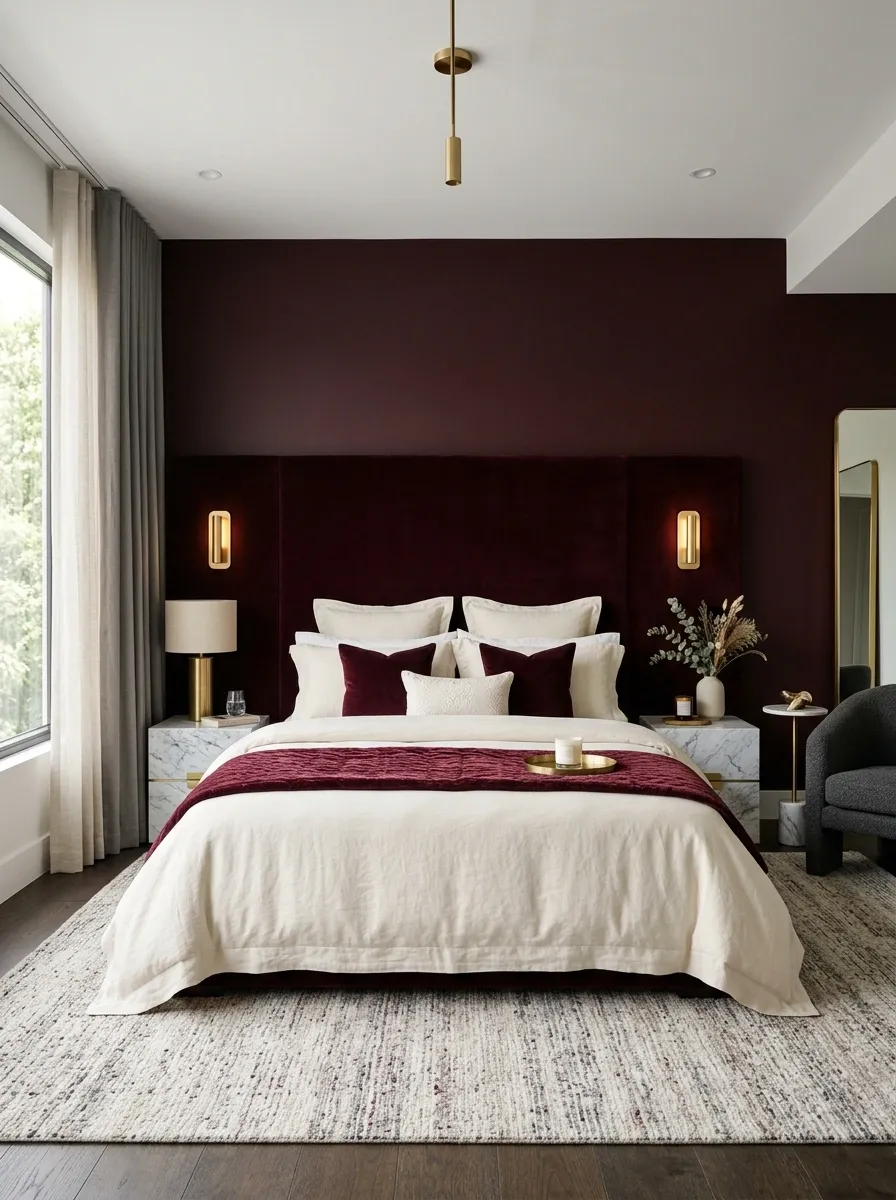
This is the most glamorous direction in the collection, but the luxury comes from a small number of strong materials rather than excessive decoration. A saturated burgundy wall frames a velvet upholstered bed, while marble bedside tables, cream bedding, and warm metal lighting create a polished contrast.
The velvet absorbs light and gives the bed a richer appearance, while marble introduces a hard reflective surface against it. That opposition creates depth without requiring multiple decorative layers.
Cream bedding occupies the center of the composition, preventing the velvet and wall from merging into one continuous dark area.
Keep the accessories disciplined. Once velvet, marble, and burgundy are all present, additional glossy decorative pieces can quickly make the room feel overworked.
Earthy Burgundy Bedroom With Terracotta and Walnut
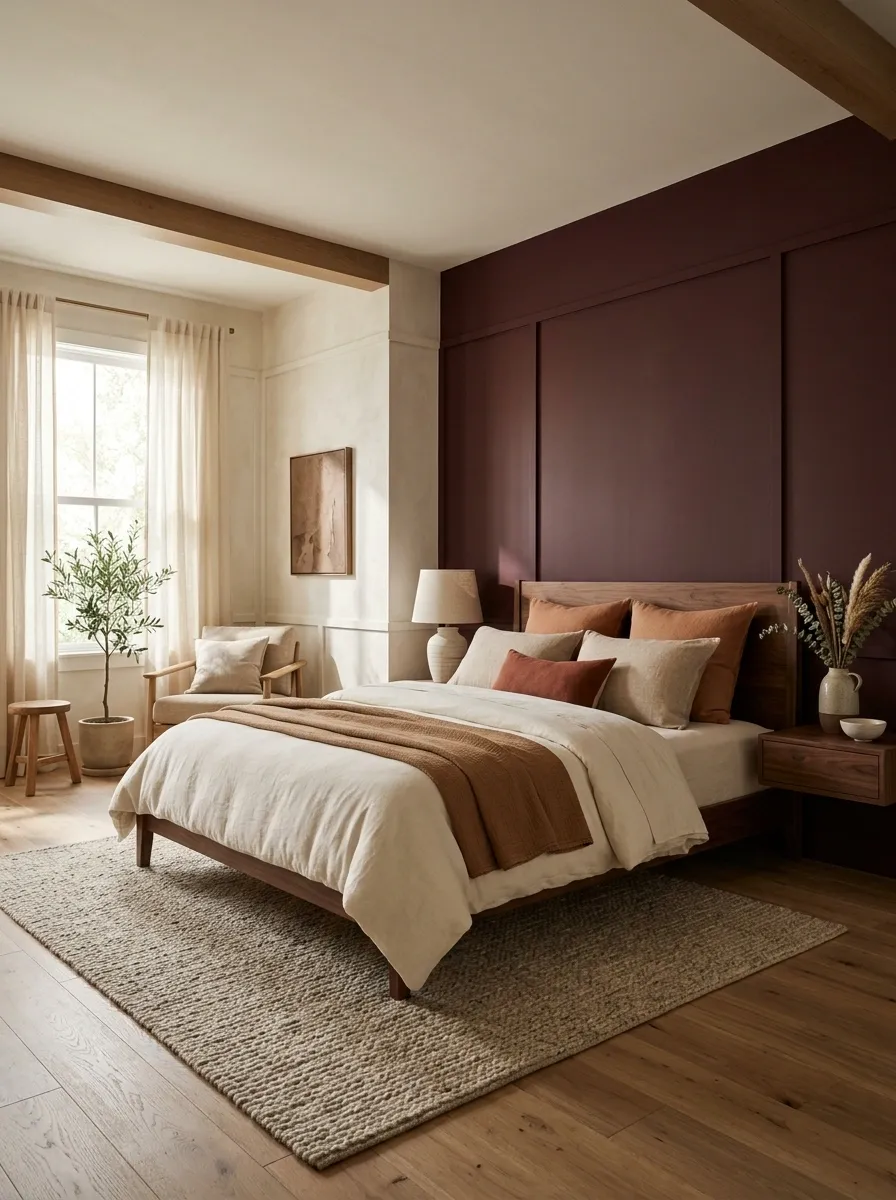
Burgundy feels especially natural when it joins a palette of terracotta, walnut, clay, and warm cream. This bedroom uses a deep burgundy wall as the anchor, with terracotta bedding accents, a walnut bed, earthy ceramics, and softly textured linen.
The colors are close enough to feel related but different enough to prevent the room from becoming monochromatic. Terracotta provides a lighter version of the warmth found in burgundy, while walnut introduces a natural dark tone.
Cream bedding keeps the center of the room from becoming too saturated. A woven rug and simple ceramic accessories reinforce the earthy character without turning the bedroom into a themed space.
This direction is strongest when the materials look natural and slightly imperfect rather than highly polished.
Clean Burgundy Bedroom With Mid-Century Walnut Furniture
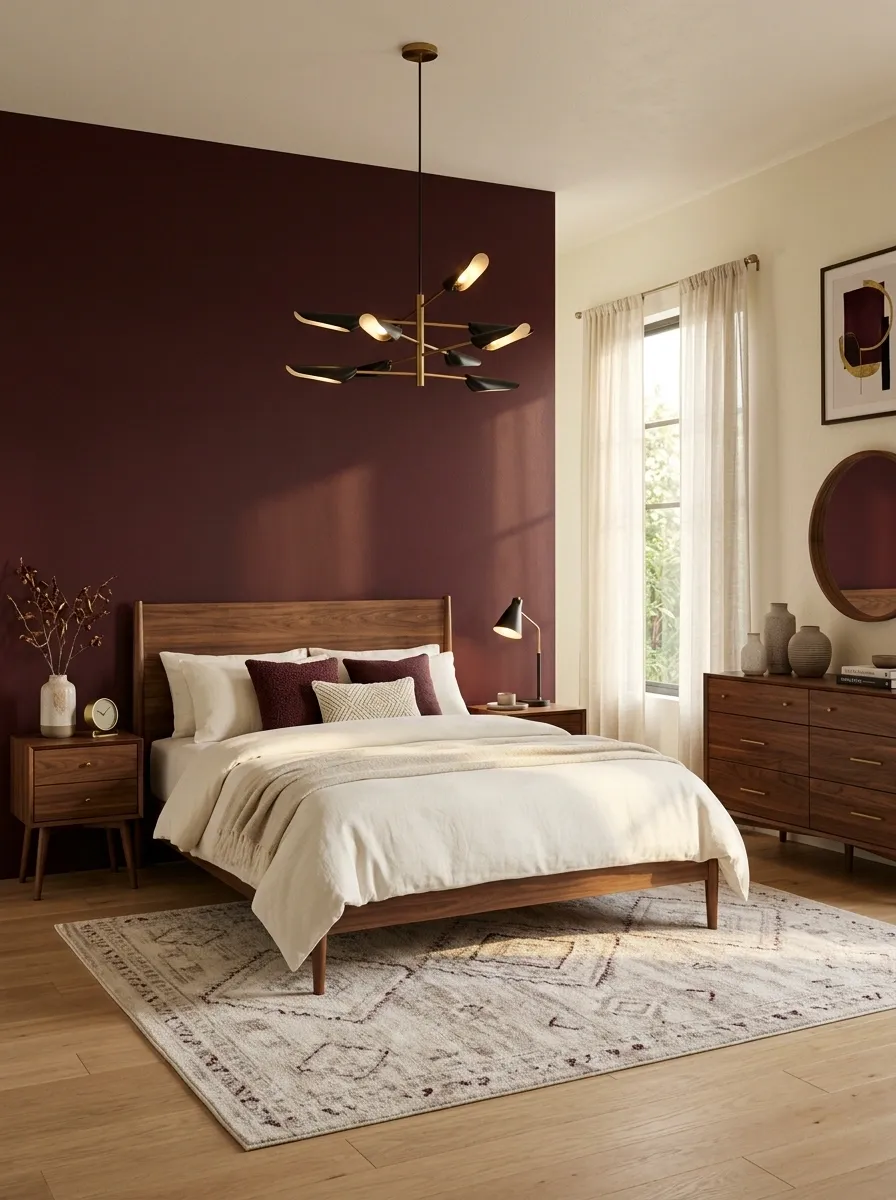
A deep burgundy wall gives this mid-century bedroom a strong backdrop while the furniture keeps the composition crisp and uncomplicated. The bed has a low upholstered profile, joined by walnut nightstands with tapered legs and a streamlined dresser.
Ivory bedding and a softly faded geometric rug introduce just enough pattern without competing with the wall. A sculptural pendant hangs slightly off center, adding shape without filling the ceiling with visual clutter.
The walnut furniture is what makes the design feel warmer than a purely contemporary burgundy room. Its visible grain breaks up the solid color while the simple silhouettes maintain a modern appearance.
Keep the furniture elevated on slim legs rather than choosing bulky pieces. The extra visual space beneath the furniture helps the saturated wall feel less heavy.
Layered Burgundy Bedroom With Mixed Warm Neutrals
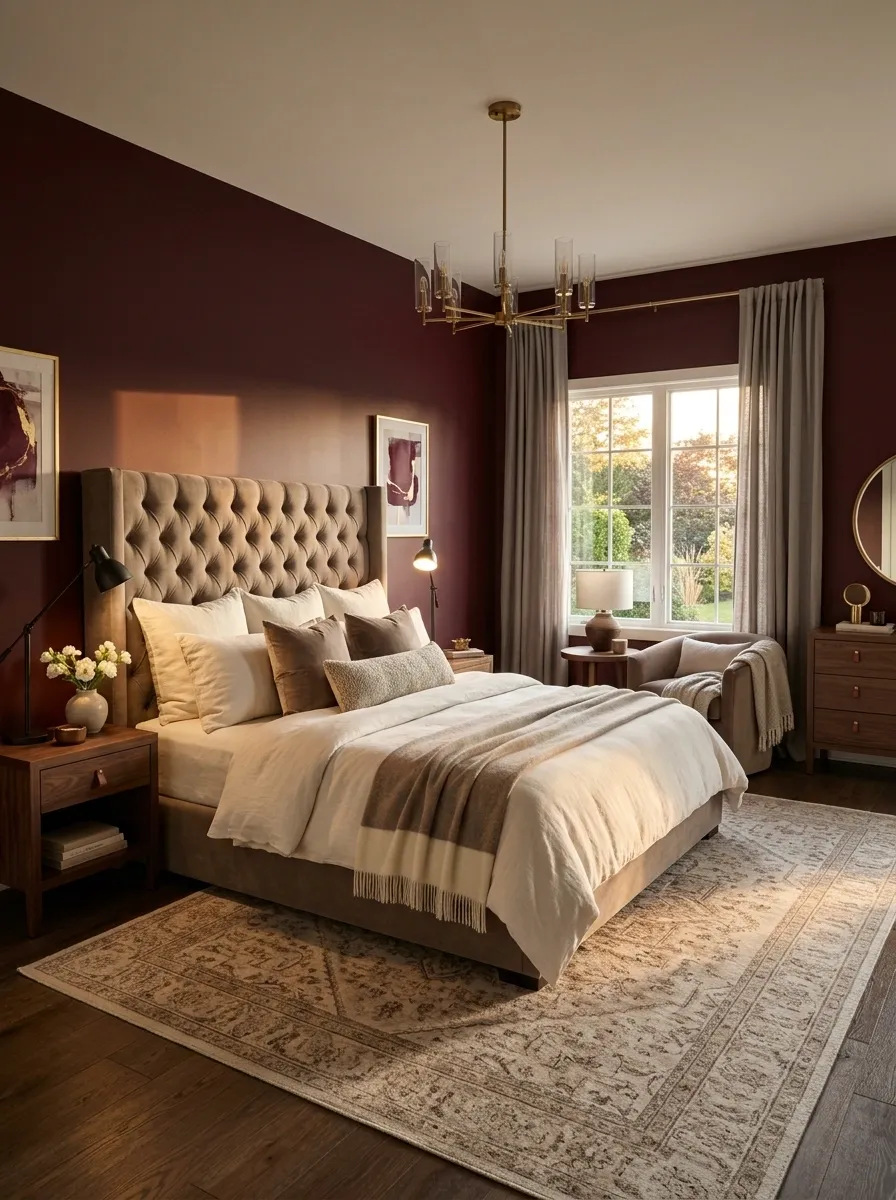
Rather than relying on one neutral, this bedroom builds several quiet shades around the burgundy. Ivory bedding, taupe upholstery, warm gray curtains, walnut furniture, and small black lighting details create a layered background for the deep wall color.
The bed remains the main focal point, but no single neutral becomes dominant enough to flatten the composition. Each surface shifts slightly in value and texture, making the room feel more dimensional.
A large upholstered headboard helps bridge the wall and bedding, while a faded neutral rug visually gathers the furniture into one zone. The curtains are deliberately warmer than standard cool gray, keeping the palette from drifting toward a cold look.
The success of this design depends on subtle differences. The neutrals should be related but not identical.
Burgundy Bedroom With an Oversized Upholstered Headboard
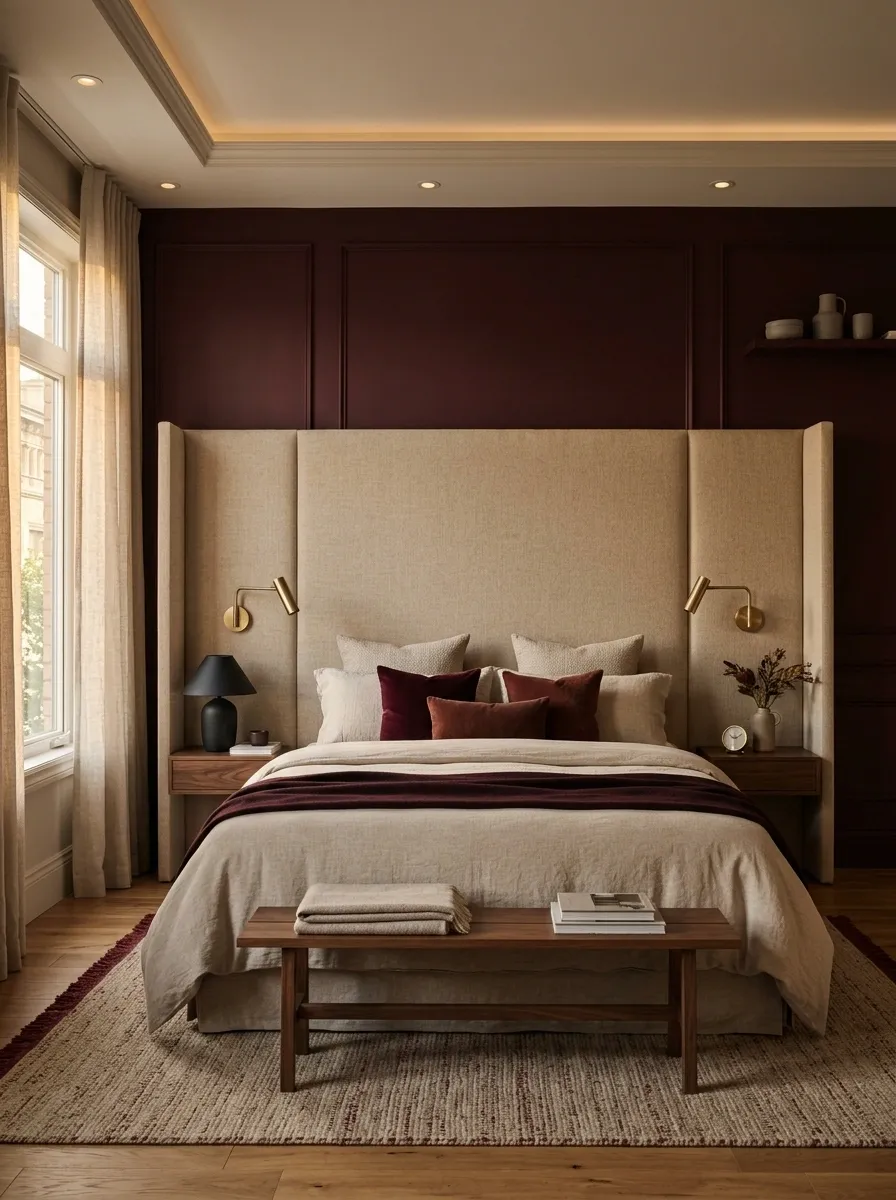
This design makes the bed itself the dominant architectural feature. A very tall upholstered headboard stretches broadly across the burgundy wall, creating a hotel-inspired focal point that feels substantial without requiring ornate furniture.
The headboard is wrapped in warm beige or oatmeal fabric, with matching bedding extending the soft central shape. Slim brass reading lights emerge directly from the wall, keeping the bedside area uncluttered.
The rest of the furniture remains low and understated. A narrow console or simple walnut bench provides function without challenging the scale of the headboard.
The large upholstered plane is what makes this design distinct. It creates a clear visual relationship between the saturated wall and the bed while also giving the room a softer, more enveloping appearance.
dominant furniture plane
Burgundy Bedroom With Arched Architecture and Warm Plaster
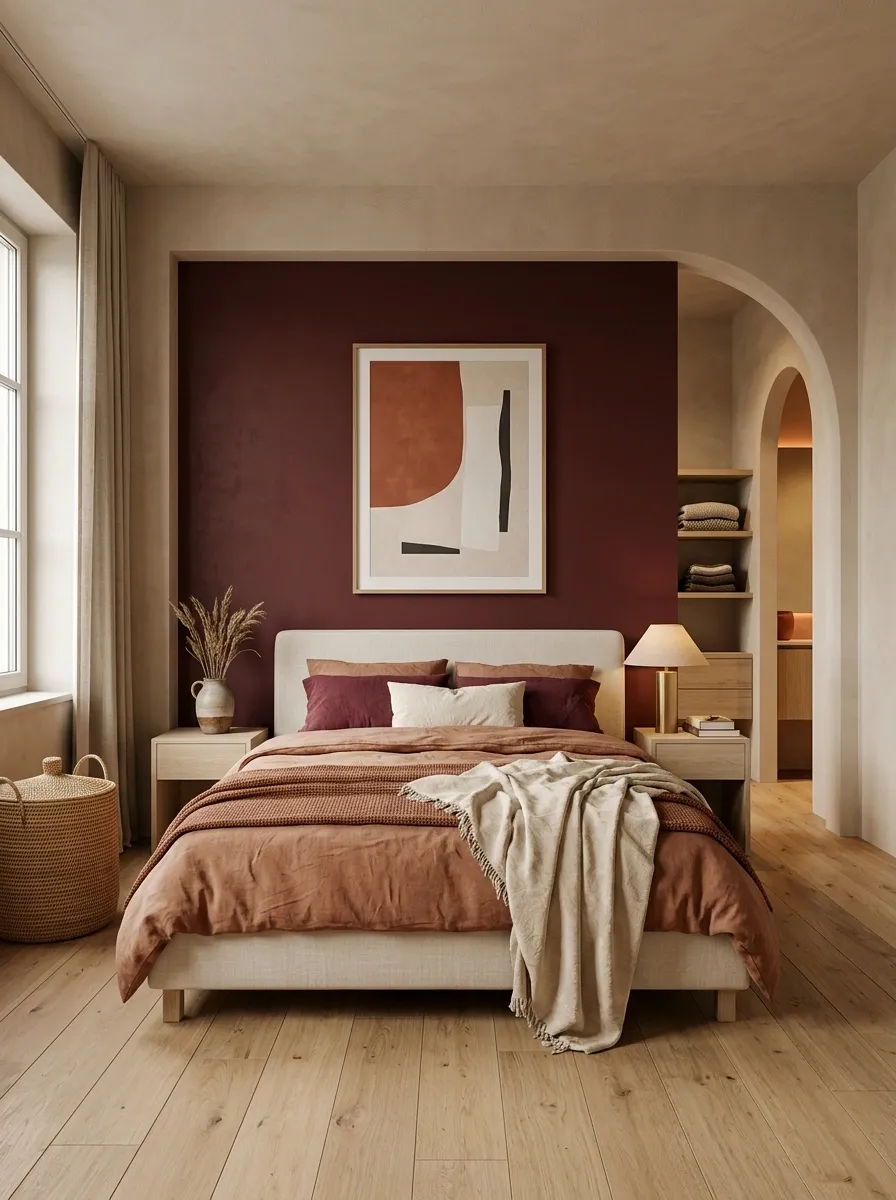
Burgundy takes on a softer architectural character in a room built around curved openings and warm plaster surfaces. The wall behind the bed is a rich burgundy, while an arched niche or doorway introduces a rounded transition into the adjacent space.
The bed has a simple upholstered frame, paired with clay-toned bedding, pale oak, and warm cream textiles. A softly textured plaster finish on the surrounding walls keeps the room from looking overly crisp.
The arches create movement without relying on decorative patterns. They also soften the strong rectangular shape of the bed and burgundy wall.
Keep the decorative elements simple. The architecture already supplies enough visual character, especially when the lighting catches the plaster texture during the evening.
BURGUNDY
FOCAL ZONE
PLASTER
TEXTILE
WARMTH
Burgundy Bedroom With Four-Poster Bed and Soft Ivory Drapery
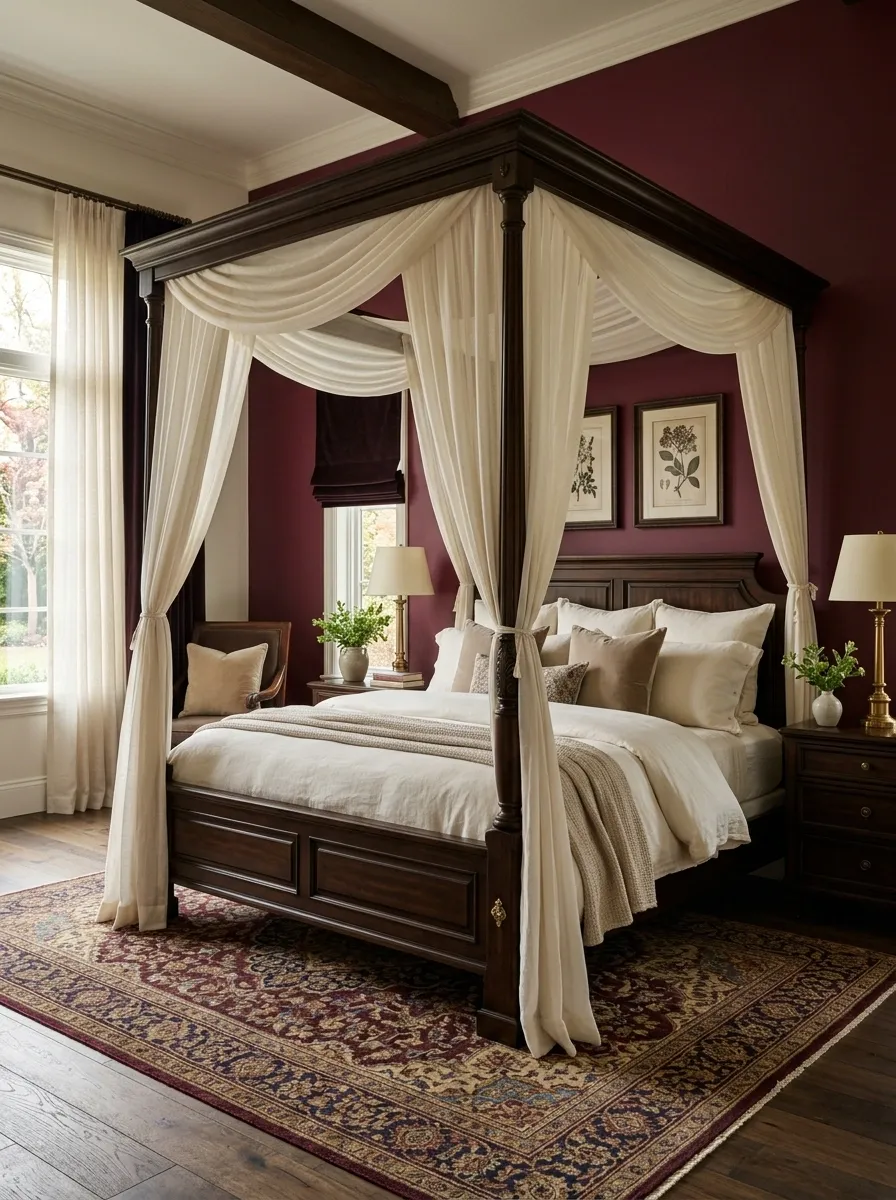
A four-poster bed creates a more traditional, layered interpretation of burgundy. The bed’s dark wood frame stands in front of a saturated burgundy wall, while ivory fabric drapes lightly around the structure.
The room combines dark wood, cream bedding, muted beige upholstery, and small brass details. A large traditional rug grounds the furniture, giving the bed enough presence without allowing the surrounding floor to feel empty.
The drapery adds height and softness to the otherwise substantial frame. It should remain lightweight rather than heavy or ornate, allowing the wood structure to stay visible.
This concept feels collected and slightly dramatic without depending on excessive decoration. The four-poster silhouette does most of the visual work.
Creates depth behind the frame.
Softens the dark structure.
Burgundy Bedroom With Fluted Wall Detail and Warm Wood
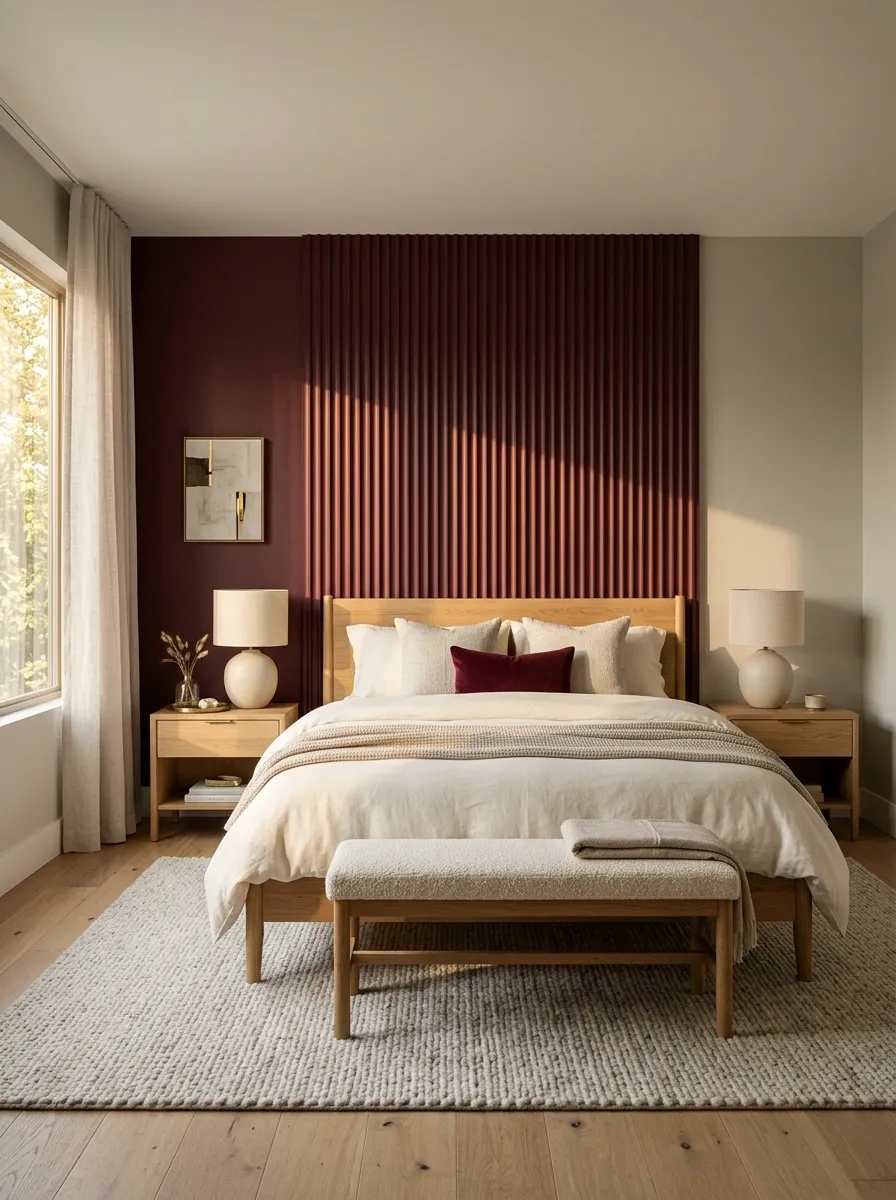
This bedroom gives the burgundy wall more dimension through vertical fluted detailing behind the bed. The deep color remains the dominant feature, but the repeating texture catches light and creates subtle movement across the wall.
A warm wood bed and matching nightstands sit in front of the textured surface, while cream bedding keeps the central sleeping area bright. Rounded bedside lamps soften the vertical rhythm, and a large neutral rug visually anchors the furniture.
The combination feels contemporary without becoming overly stark. The wall treatment does enough work that additional patterns aren’t needed.
The strongest version keeps the fluting concentrated behind the bed instead of carrying it across every wall. That makes the architectural detail feel intentional rather than repetitive.
Creates vertical shadow and highlights.
Keep the feature wall from becoming visually noisy.
Burgundy Bedroom With Vintage Floral Wallpaper
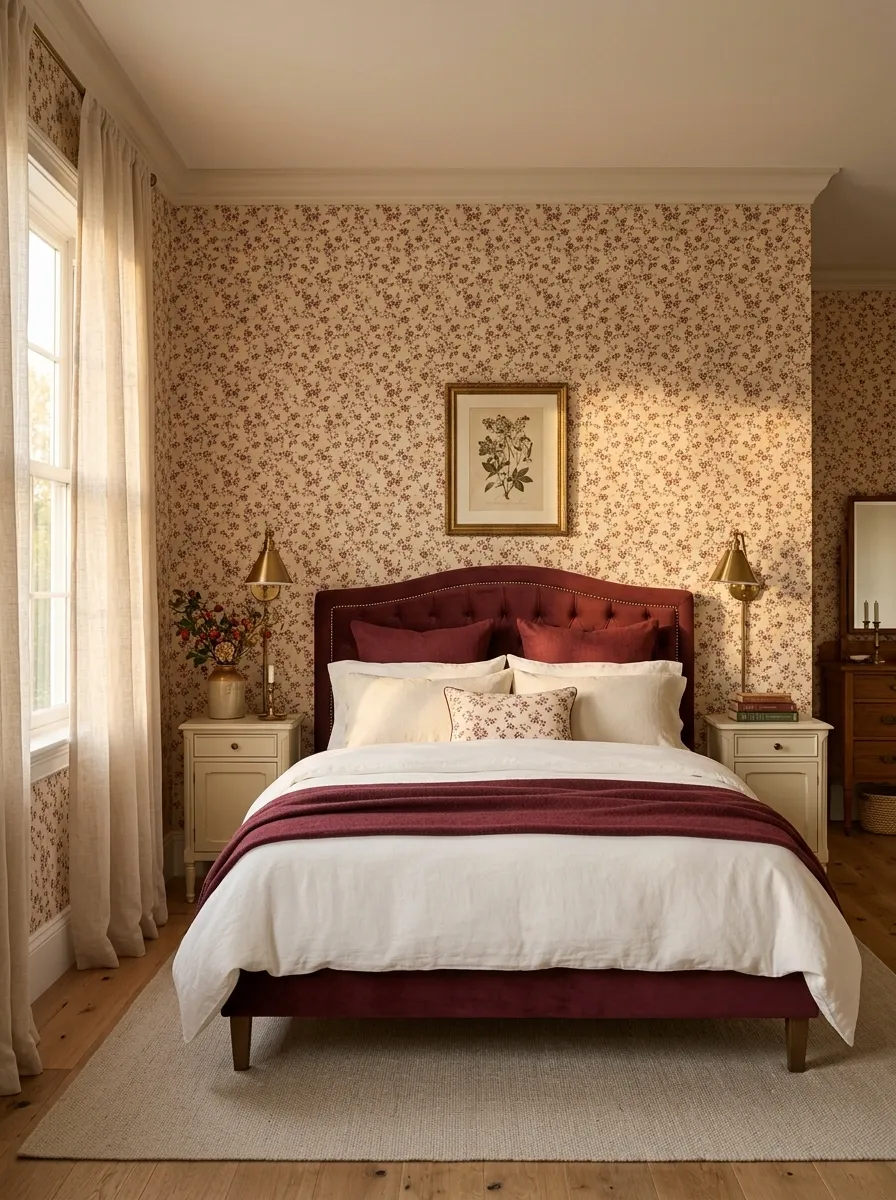
Burgundy can become softer and more romantic through a small-scale vintage floral pattern. Instead of using solid burgundy across the wall, this room combines burgundy floral wallpaper with a cream background, a traditional upholstered bed, painted furniture, and antique-inspired lighting.
The pattern adds visual movement while the cream ground prevents the wall from becoming too dark. Burgundy appears again in the bedding and small textile details, creating repetition without matching every surface.
Warm wood or painted furniture works better than glossy modern pieces here. The goal is a collected bedroom with a little age and character.
Keep the floral pattern relatively controlled. A second large pattern on the rug or curtains could make the room feel busy.
Burgundy Bedroom With Green-Gray Walls and Burgundy Bedding
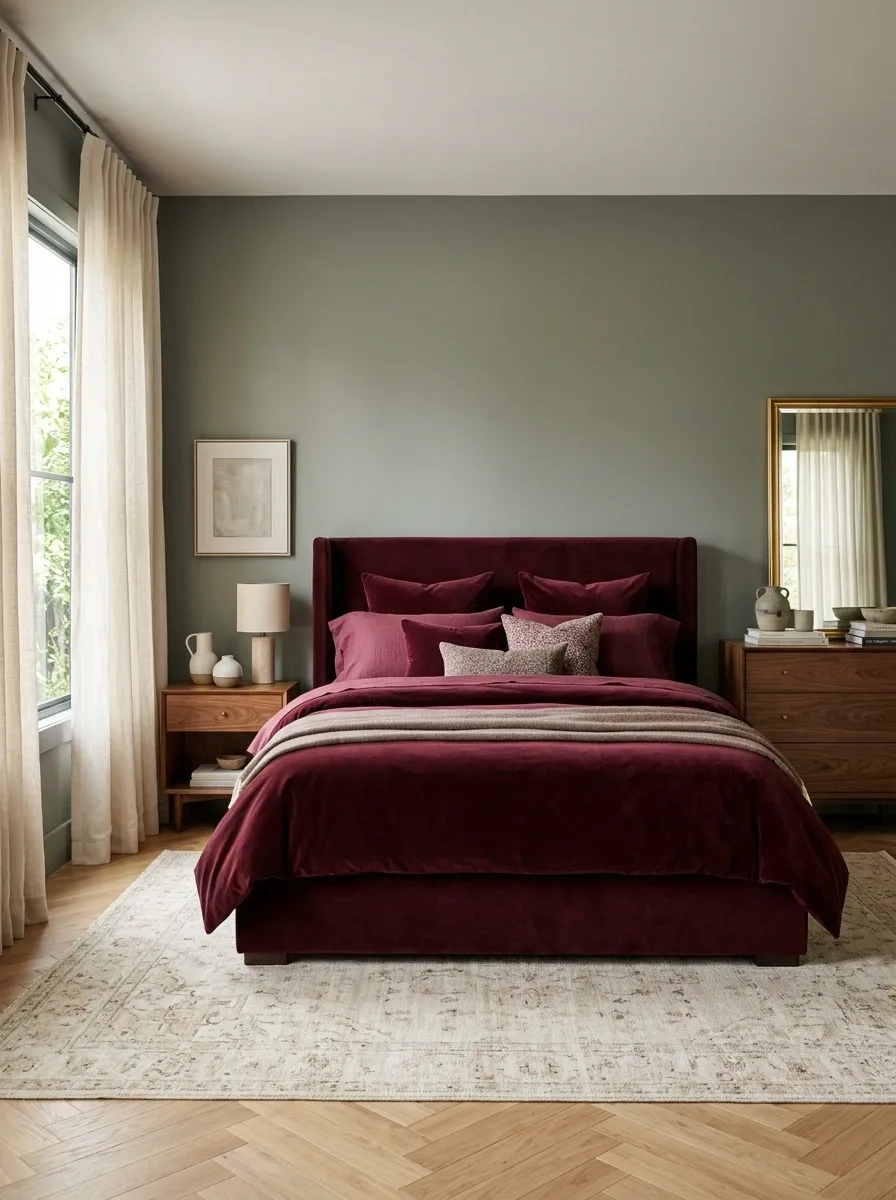
This design reverses the usual burgundy formula. Instead of placing the color on the wall, muted green-gray walls create the backdrop while burgundy appears across the upholstered bed and layered bedding.
The result feels more balanced and slightly less dramatic because the deeper color is concentrated around the sleeping zone. Walnut furniture adds warmth, while cream curtains and a pale rug create a soft frame around the darker bed.
Burgundy velvet or woven upholstery gives the bed enough weight to remain the focal point. The surrounding walls stay matte and relatively quiet.
This arrangement is useful when a fully burgundy wall feels too intense. The color still shapes the room, but it becomes a furniture-centered statement rather than an architectural one.
WALLS
BED
TEXTILES
Burgundy Bedroom With Black-and-Cream Checkerboard Flooring
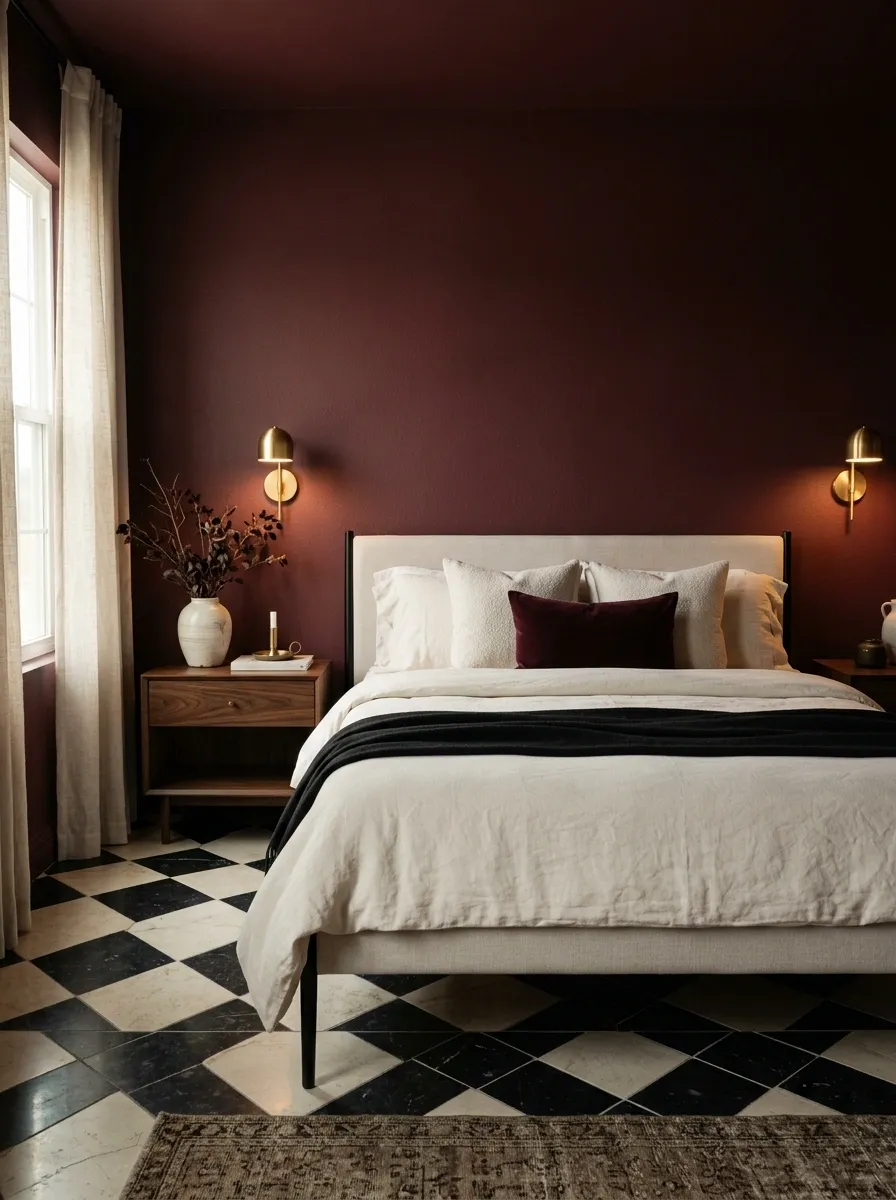
A patterned floor gives this burgundy bedroom a more graphic personality. Deep burgundy walls surround a simple upholstered bed, while a black-and-cream checkerboard floor creates a strong foundation beneath the furniture.
Because the floor already introduces a clear pattern, the rest of the room stays controlled. Cream bedding, a simple black bed frame, and warm brass lighting provide structure without adding additional competing motifs.
The burgundy wall ties the room together by providing a large field of solid color above the busy floor.
This composition works best when the checkerboard pattern is confined to the floor. Repeating the same graphic treatment on curtains, rugs, or artwork would quickly overwhelm the room.
Solid burgundy keeps the room visually calm.
Checkerboard creates the graphic statement.
Burgundy Bedroom With a Fireplace and Built-In Bench
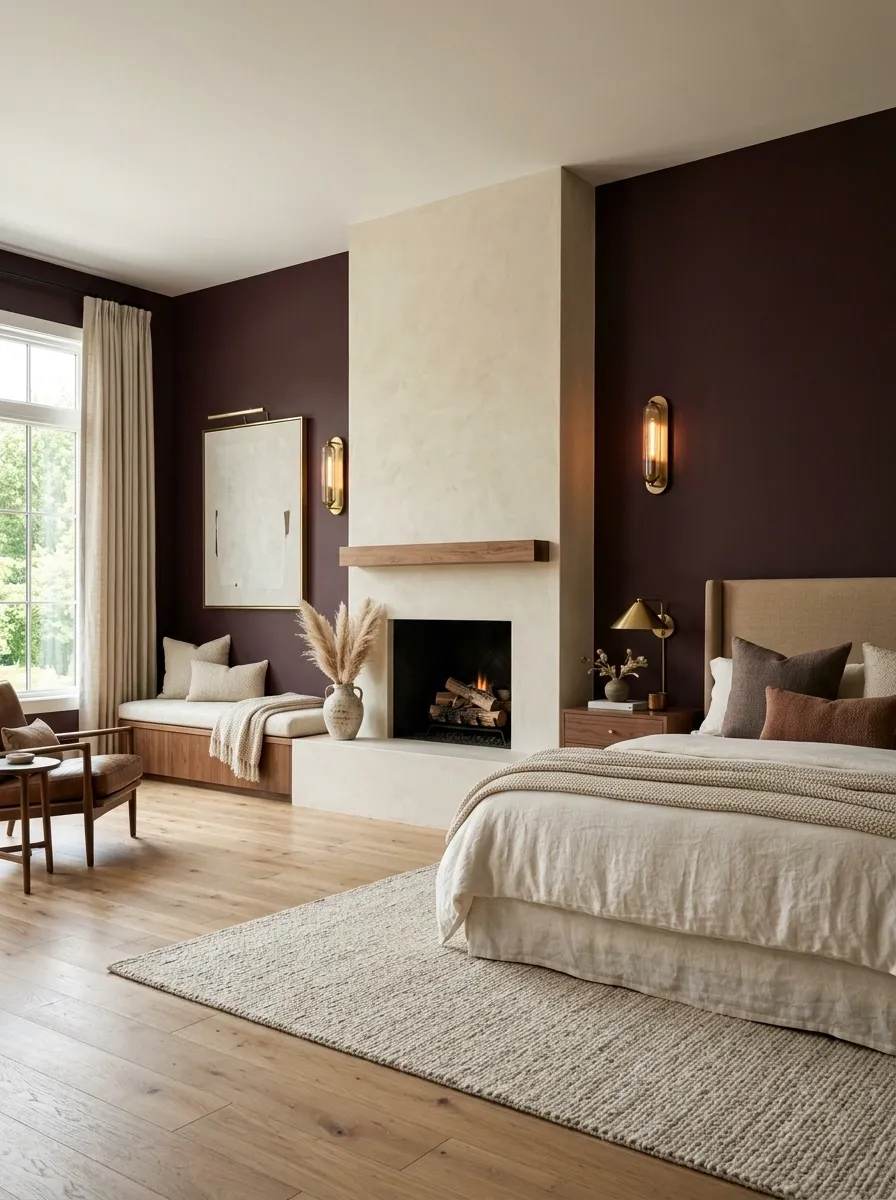
A fireplace gives this burgundy bedroom a natural architectural focal point. The fireplace wall is finished in deep burgundy, with a low built-in bench beneath a simple mantel and an upholstered bed positioned nearby.
Warm limestone or plaster around the fireplace keeps the darker wall from feeling too severe. The bed uses cream bedding and muted brown textiles, while a walnut bench and small brass sconces add warmth.
The fireplace doesn’t need elaborate decoration. Its architectural shape already creates enough interest against the burgundy surface.
The layout works best when the bed and fireplace remain visually connected but don’t compete directly. A slightly offset bed position can create a more natural, residential composition.
Burgundy Bedroom With Soft Lavender and Aged Wood
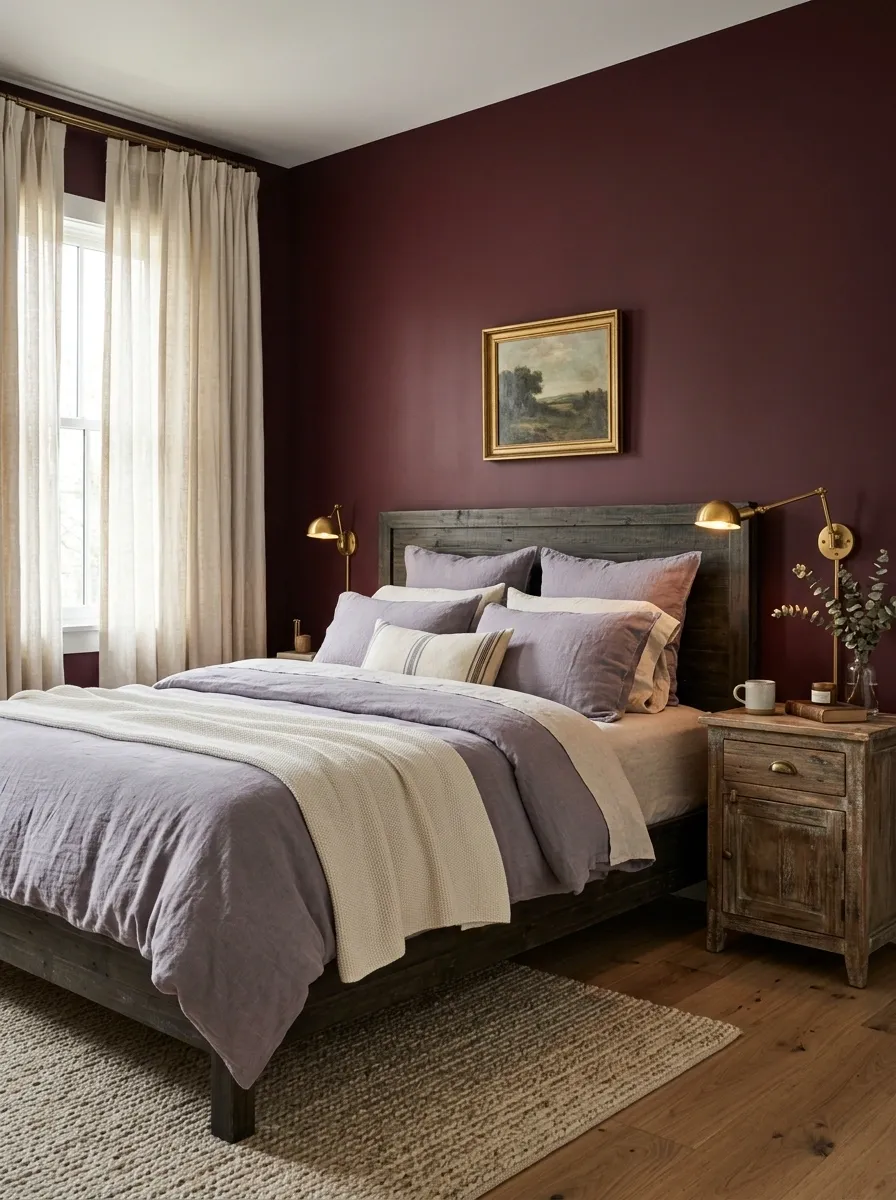
A softer, more unusual palette pairs burgundy with dusty lavender and aged wood. The room uses a deep burgundy wall, muted lavender-gray bedding, weathered wood furniture, and cream curtains.
The combination has a slightly romantic character but feels less expected than burgundy with pink or beige. The lavender is intentionally gray and muted, allowing it to sit beside the deeper wall without becoming bright or playful.
Aged wood brings visual texture and keeps the room grounded. Small brass details add warmth around the bedside area.
The key is choosing lavender with enough gray in the undertone. A bright purple would shift the entire bedroom into a more dramatic and less refined direction.
Bringing a Burgundy Bedroom Together
The strongest burgundy bedrooms don’t depend on matching every element. They rely on a clear visual hierarchy.
A deep wall can become the architectural anchor while cream bedding carries the lightest tone. Walnut can bridge dark and light finishes. Brass can stay limited to lighting. Texture can supply interest when the palette is already strong.
That approach gives the room a reason to look cohesive.
Before choosing individual finishes, decide where the burgundy should live and what role it needs to play. A full wall creates a very different room from a burgundy upholstered bed, patterned wallpaper, or a painted ceiling.
From there, the surrounding materials become much easier to choose. Pale oak pushes the room lighter. Walnut makes it warmer. Charcoal creates sharper contrast. Dusty rose softens it. Terracotta makes it earthy. Cream keeps almost any version from feeling visually overloaded.
The best result is the one where every major element appears to belong to the same finished room.
Save the burgundy bedroom look that feels closest to the room being planned, then use the full composition as the reference rather than copying individual pieces one at a time.