
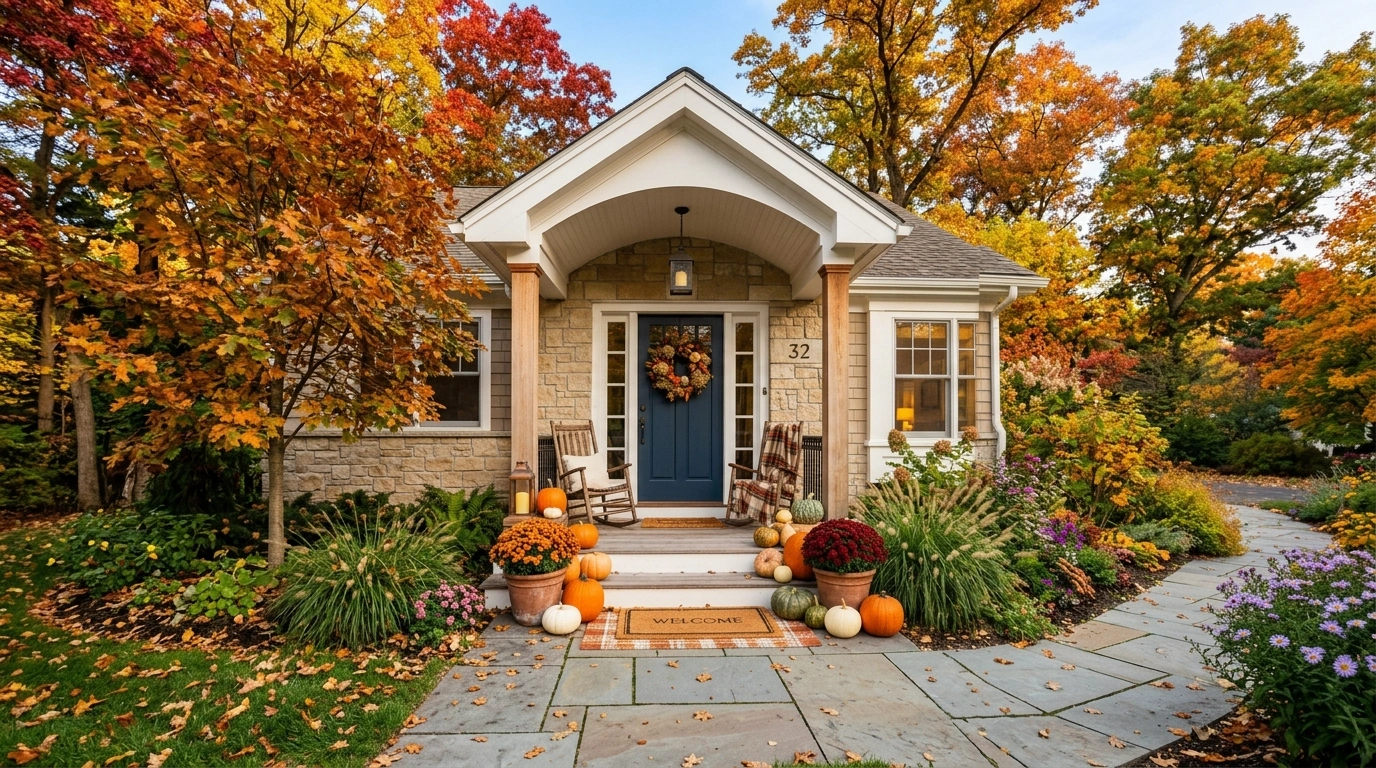
A front yard can have pumpkins, mums, wreaths, lanterns, hay bales, and all the usual fall favorites and still look completely unfinished. The problem usually isn’t a lack of decoration. It’s that nothing has been given enough visual importance.
Fall looks better outdoors when the yard still looks like a yard. The trees, shrubs, walkway, porch, and front door should remain the bones of the scene, while seasonal pieces fill in the spaces around them. That means fewer random objects, stronger shapes, and colors that actually repeat.
The goal is balance. Once those four layers are working, the seasonal pieces stop fighting each other.
Front Yard Ideas for Fall
Embrace the Natural Leaf Cover
Most people spend hours raking away autumn leaves just to make the yard look sterile. Letting the fallen foliage stay creates an instant, organic blanket that no store-bought decoration can replicate.
The deep russets and golds provide a rich foundation for simpler porch elements like baskets and rocking chairs. It anchors the house right into the changing season.
Just keep the steps and main walkway safely cleared so the look feels intentional rather than neglected. Nature does the heavy lifting if you simply let it.
Frame the Front Door With Tall Cornstalks and One Oversized Planter
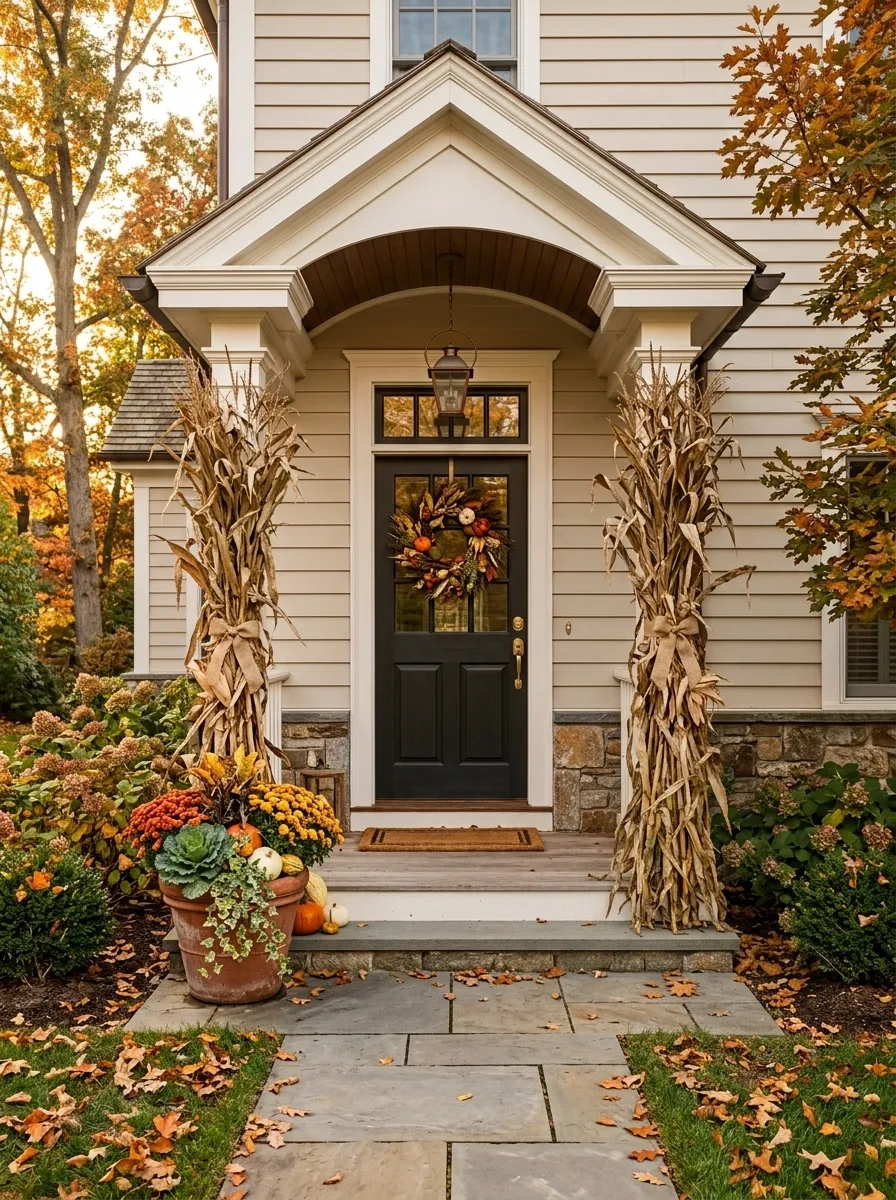
A front door often looks smaller than it really is once fall decorations start collecting around it. Tall cornstalks fix the scale problem fast.
Place one tall bundle on each side of the entry, then anchor the bottom with one substantial planter instead of several tiny pots.
Build the frame with height at the sides, weight near the floor, and enough negative space around the actual doorway to keep the entrance visible.
Weave Garland Through Porch Pillars
A bare porch can feel a bit exposed when the surrounding trees drop their canopy. Draping a leafy garland right along the front framework fills that visual gap beautifully.
Keep the garland lush and varied so it mimics the natural foliage exploding from the roofline above. It frames the entryway without blocking the light or the view from inside.
Pairing this overhead greenery with a simple matching wreath on the front door ties the entire facade together seamlessly. The entrance feels cozy and wrapped in autumn without needing extra clutter.
Light the Path With Glowing String Lights
As the days get shorter, the way your home greets the evening matters just as much as daytime curb appeal. Simple string lights tucked along the porch roofline add instant warmth.
Avoid harsh spotlights that wash out the subtle tones of the season. A soft, warm glow highlights the natural wood, pumpkins, and scattered leaves instead of creating glare.
Let the lights cascade gently across the porch framing to cast welcoming shadows. It turns the whole house into a glowing autumn retreat the moment dusk settles in.
Build a Layered Pumpkin Cluster Around an Existing Tree
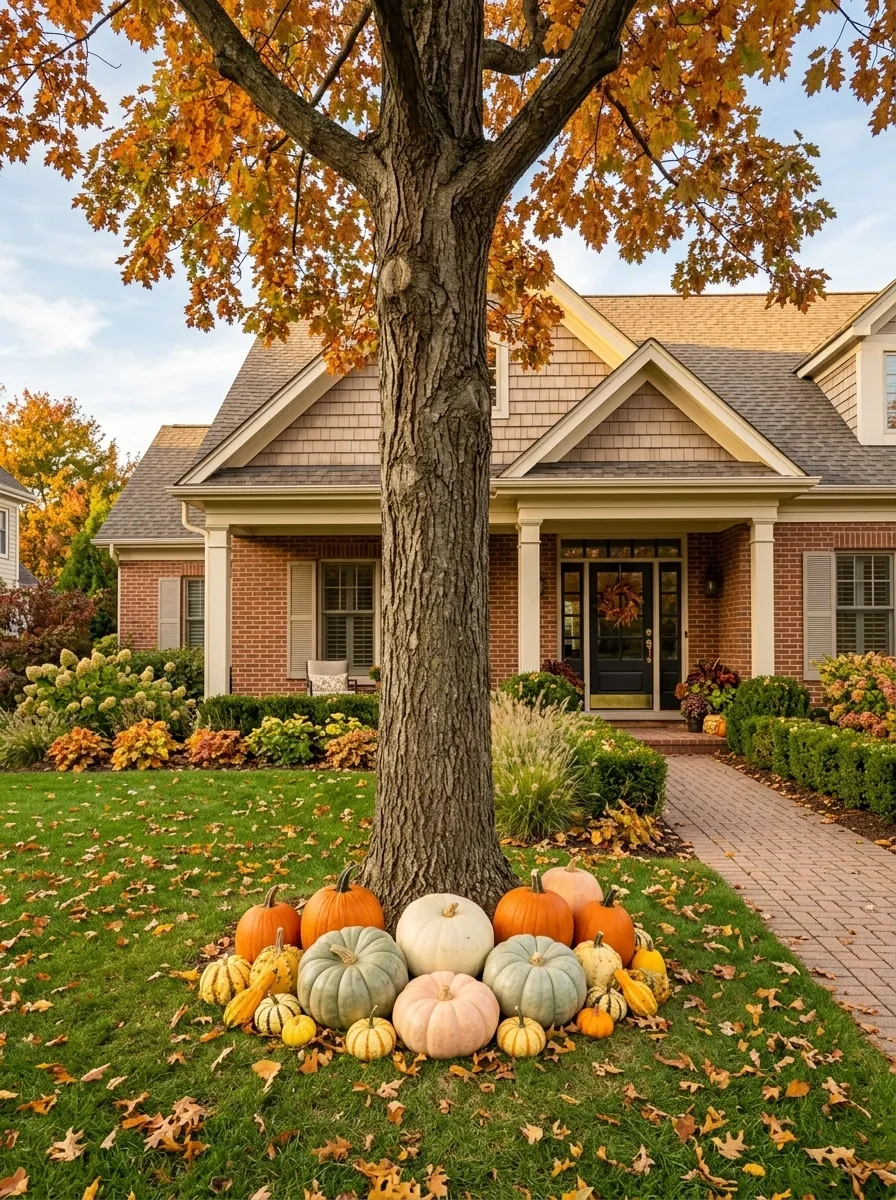
A tree already gives the yard the height it needs. There’s no reason to compete with it using tall signs or oversized props.
Instead, build a ground-level pumpkin cluster around the trunk.
Start with the largest pumpkins closest to the tree, medium ones around them, and a few small gourds toward the outer edge. That creates depth without requiring the entire lawn to become a display.
The best part is that this works even when the rest of the yard stays almost untouched.
Swap Bright Plastic Decor for Weathered Wood and Natural Materials
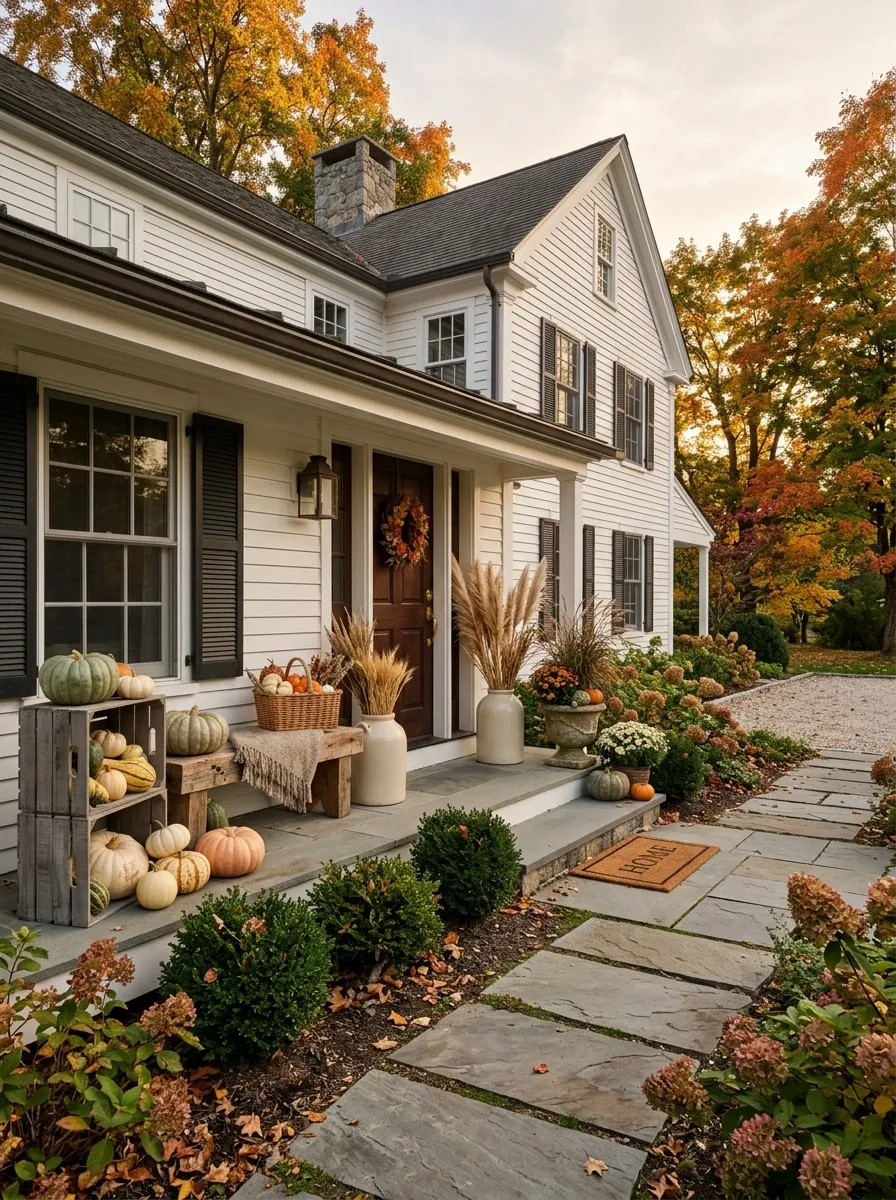
The fastest way to make a fall yard look cheap is to mix too many shiny, synthetic surfaces.
Natural materials soften the whole display. Weathered crates, rough wood, woven baskets, stone, dried stems, and matte ceramic pieces all have visual texture that changes with the light.
The goal isn’t rustic overload. Just replace the pieces that catch light too aggressively.
That single material change can make the same number of decorations feel much more expensive.
Fill Oversized Planters With Grasses, Branches, and Fall Foliage
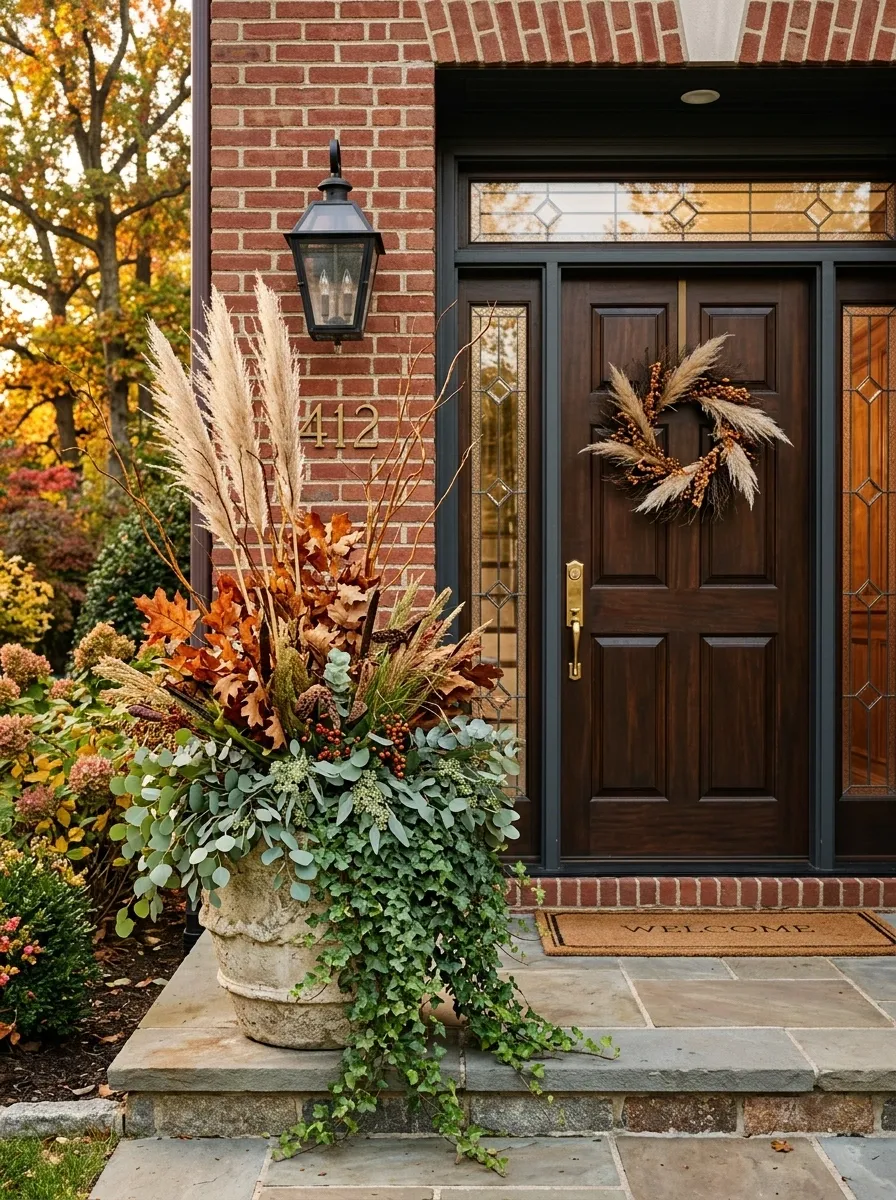
A big empty planter is an opportunity, not a problem.
Instead of stuffing it with one dense plant, build a three-part arrangement with different heights and textures. The tallest element gives the planter shape from the street. The middle layer fills the center. The lower layer hides the gaps.
Keep the tallest material slightly off-center. That small change makes the arrangement feel natural instead of mechanically symmetrical.
This formula works especially well beside a front door because the planter becomes both a seasonal accent and a structural part of the entry.
Run a Simple Garland Along the Porch Railing
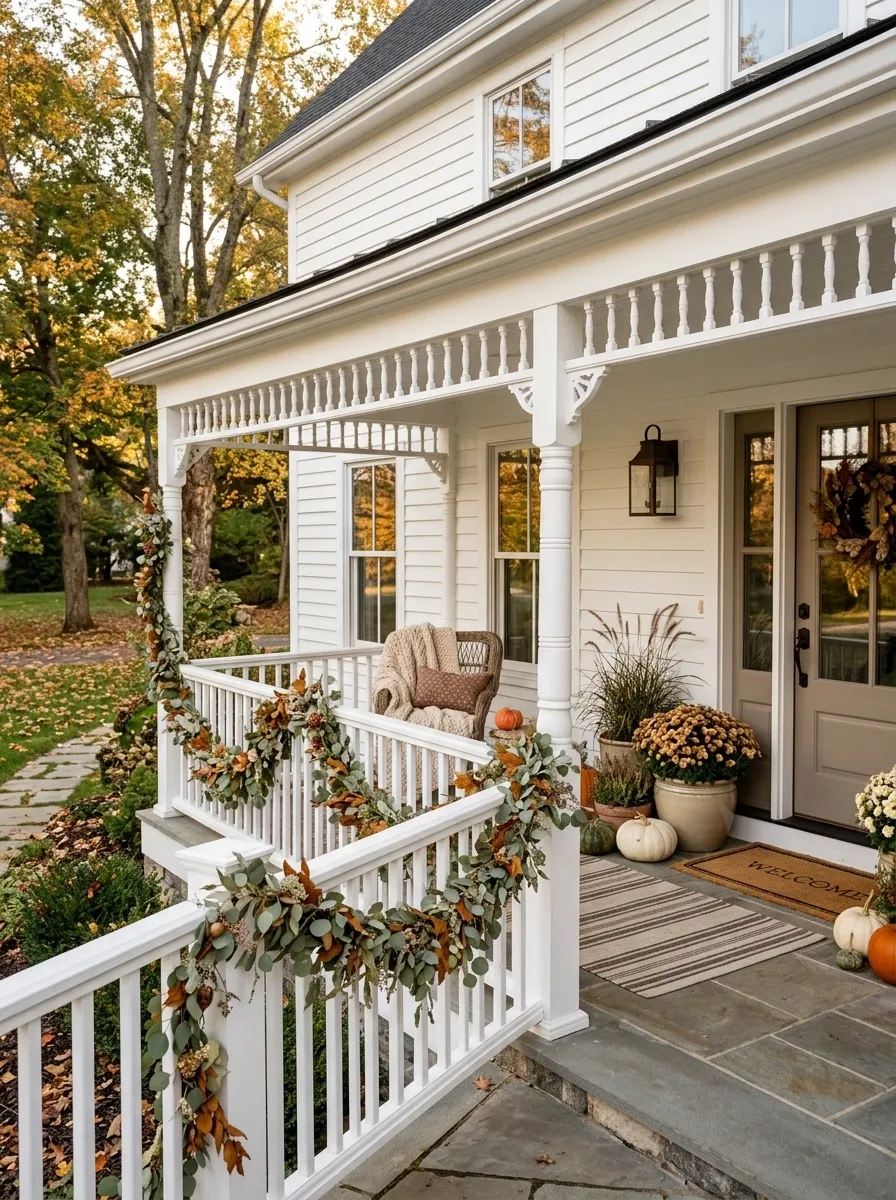
A porch railing doesn’t need to disappear under decorations to feel seasonal.
Use one loose garland and let the railing’s shape do most of the work. Drape it through the sections rather than wrapping every inch.
Add the fullest section near the entry and let the ends taper off.
Use Hay Bales as Low Architectural Forms, Not Random Seating
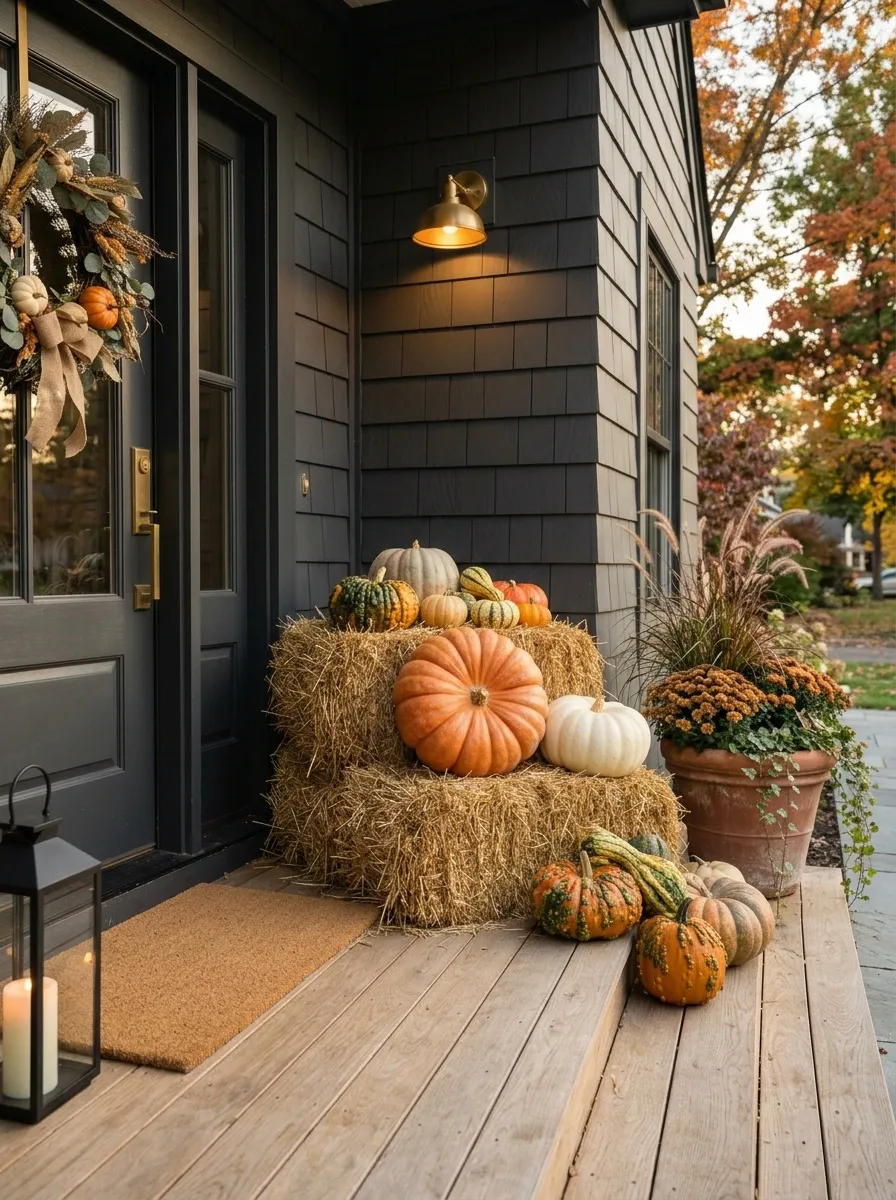
Hay bales work best when they create a low visual platform.
Place two or three together near a porch corner, tree, or large planter. Then layer pumpkins and containers across them at different heights.
Think of the bales as furniture for the seasonal display. Once the arrangement has a base, the rest becomes much easier to organize.
Create a Moody Fall Entry With Deep Burgundy and Rust Tones
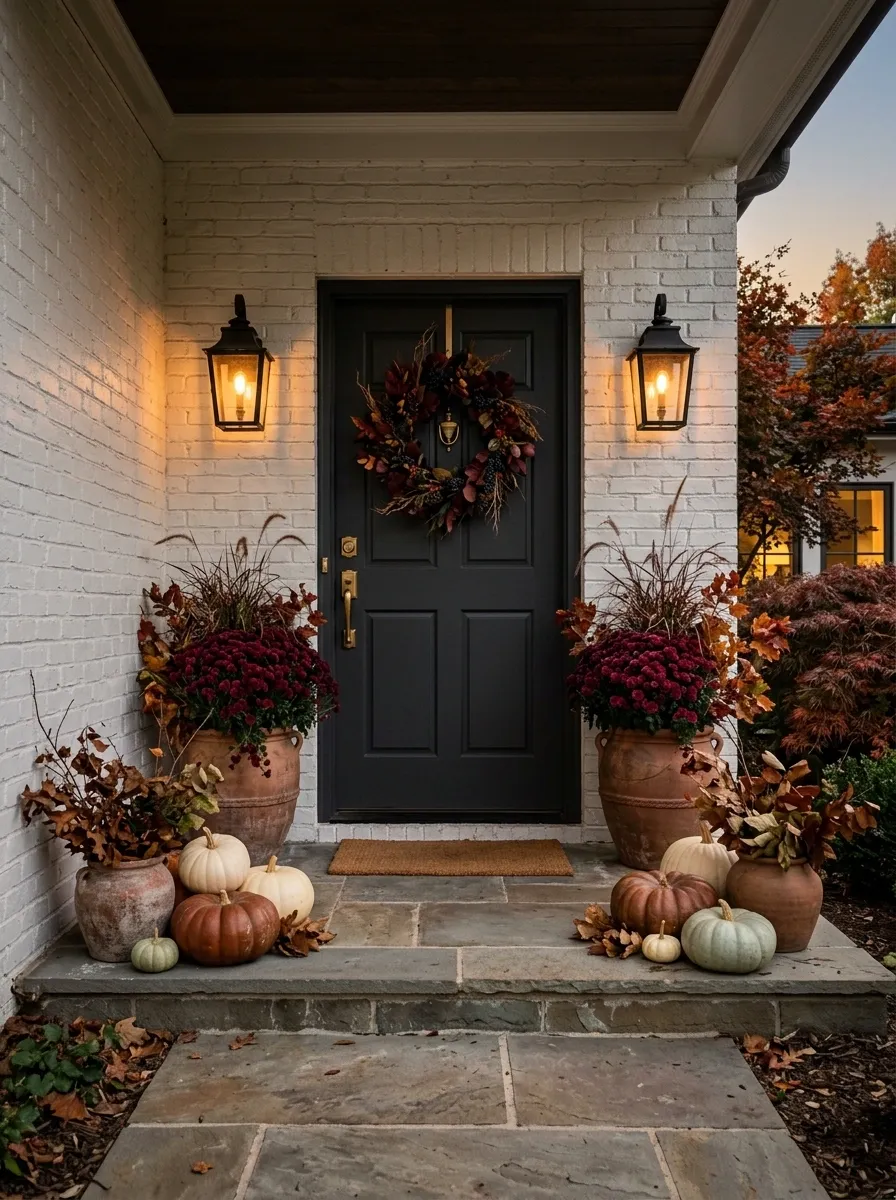
Bright orange doesn’t have to dominate a fall entry.
Deep burgundy paired with rust creates a richer look, especially against cream siding, white brick, dark doors, or natural wood.
Use burgundy for the deepest visual anchor, rust for the main seasonal note, and cream to keep the darker palette from closing in.
This palette also works beautifully once the daylight fades and porch lighting takes over.
Add a Single Oversized Wreath That Can Be Seen From the Street
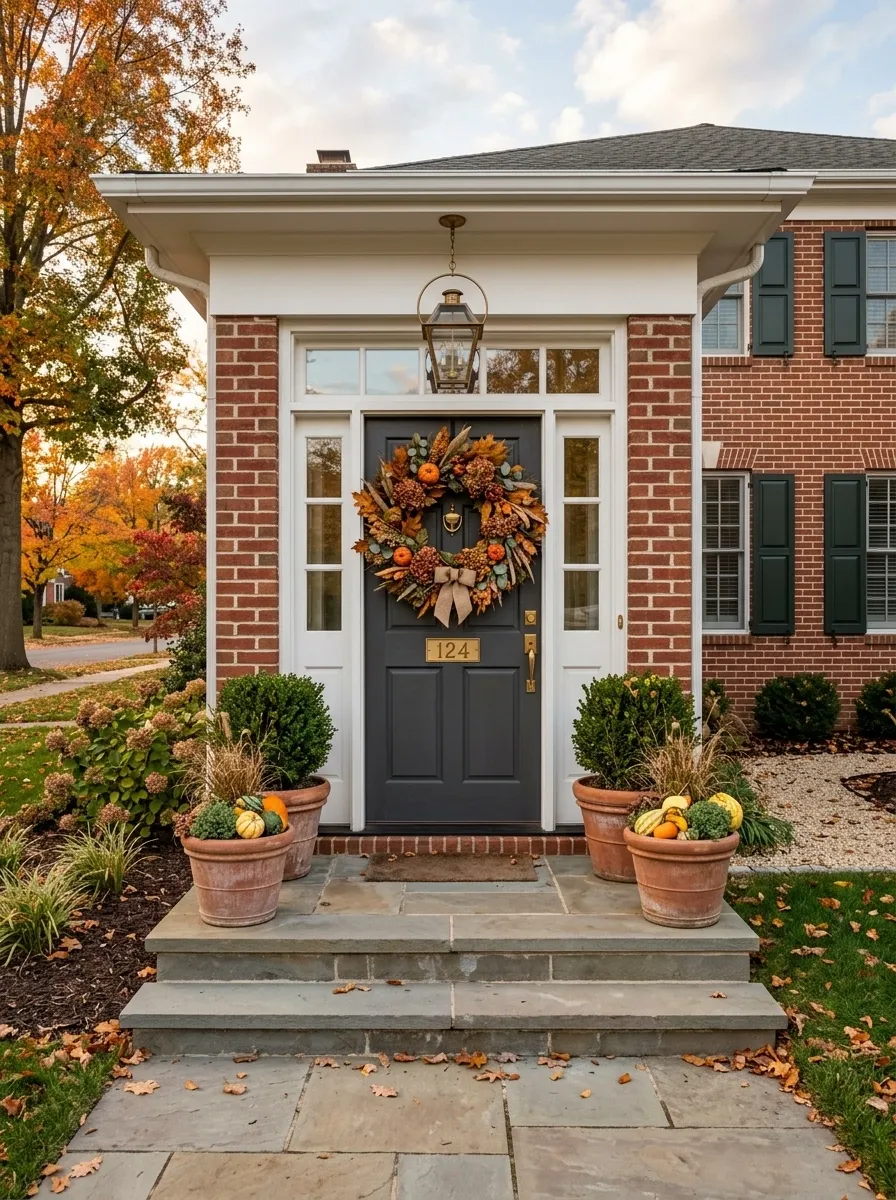
A tiny wreath on a large door looks lost.
Scale matters more than adding extra decoration. A larger wreath gives the eye one clear target and can carry the entire entry without a pile of smaller pieces underneath it.
Stand at the sidewalk before deciding you’re finished. A decoration that looks substantial up close can disappear completely from a distance.
Turn the Porch Steps Into a Repeated Fall Rhythm
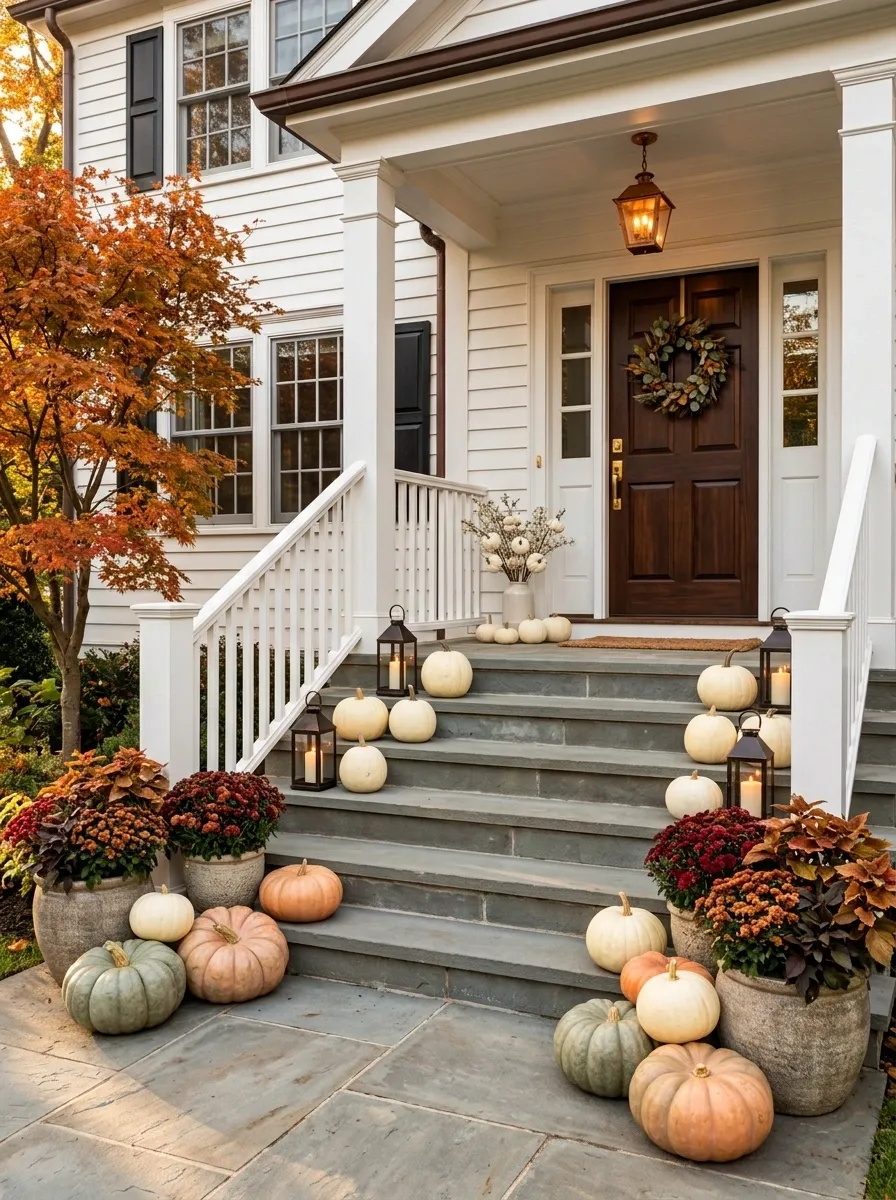
Every step is already a styling shelf.
Use that built-in rhythm instead of putting one oversized pile at the bottom. Alternate planters, pumpkins, lanterns, or mums so the eye naturally travels upward.
Keep the largest visual weight toward the lower part of the staircase and let the arrangement become lighter as it approaches the door.
Tuck Mini Pumpkins Into Existing Flower Beds
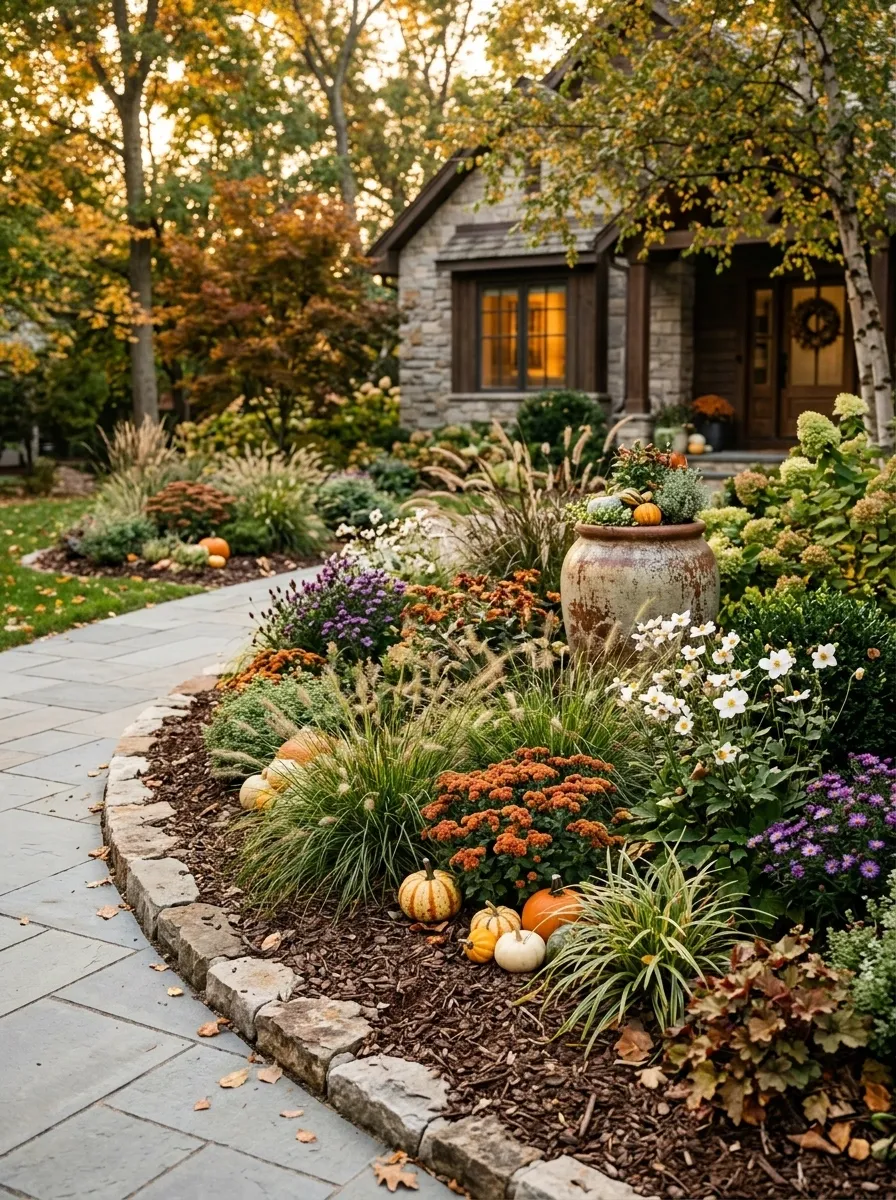
The flower bed already has the right setting. Use it.
Instead of creating a separate pumpkin display on the lawn, tuck small pumpkins between ornamental grasses, shrubs, stones, and late-season flowers. They should look like they belong there.
Keep the walkway edge mostly clear so the planting bed remains the visual boundary.
Use Lanterns to Add Warmth Without Making the Yard Look Busy
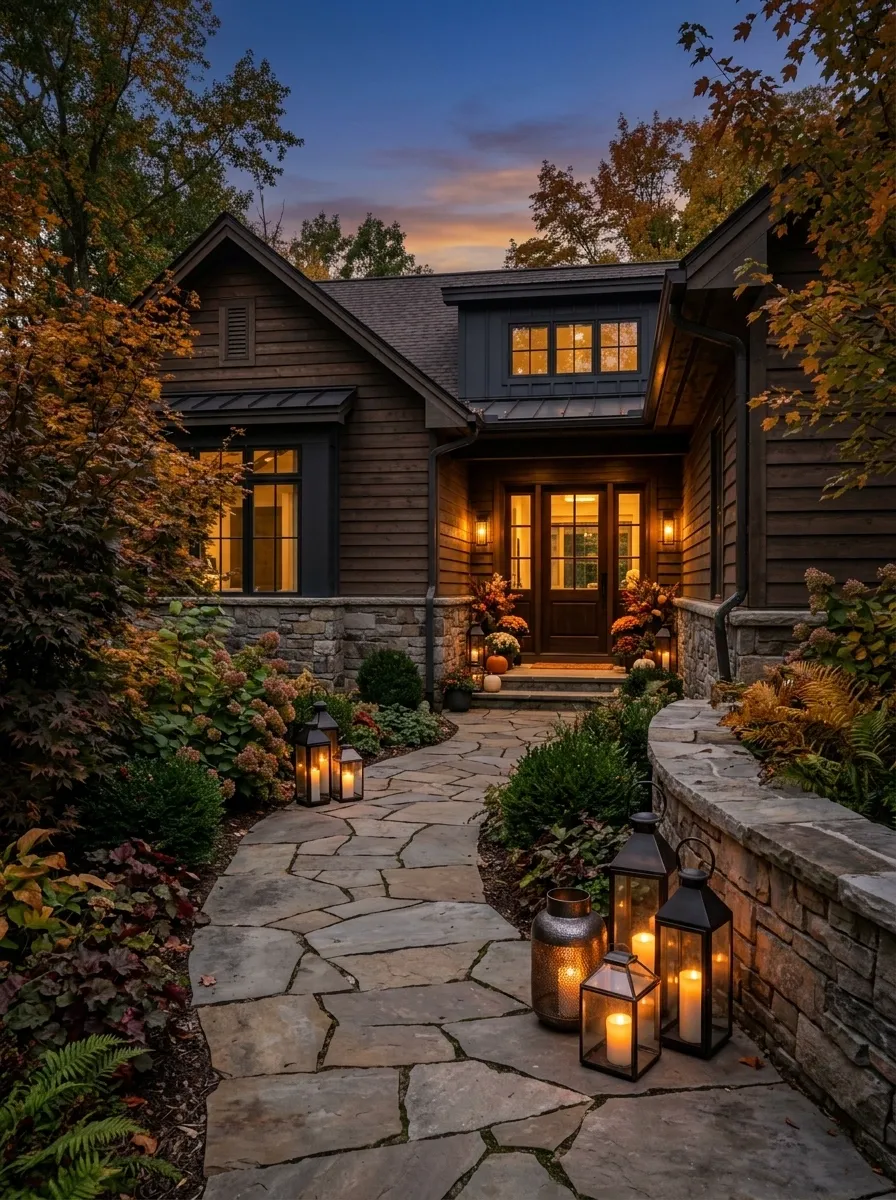
Lanterns are most effective when they mark a route or frame a feature.
Don’t scatter them everywhere. Group two or three near the front door, then repeat the idea farther down the walkway.
Warm light looks especially effective beside darker materials, stone, wood, and deep foliage.
That small gap between lighting groups matters. It keeps the path from looking like a runway.
Dress a Mailbox With Fall Foliage Instead of Covering It in Decor
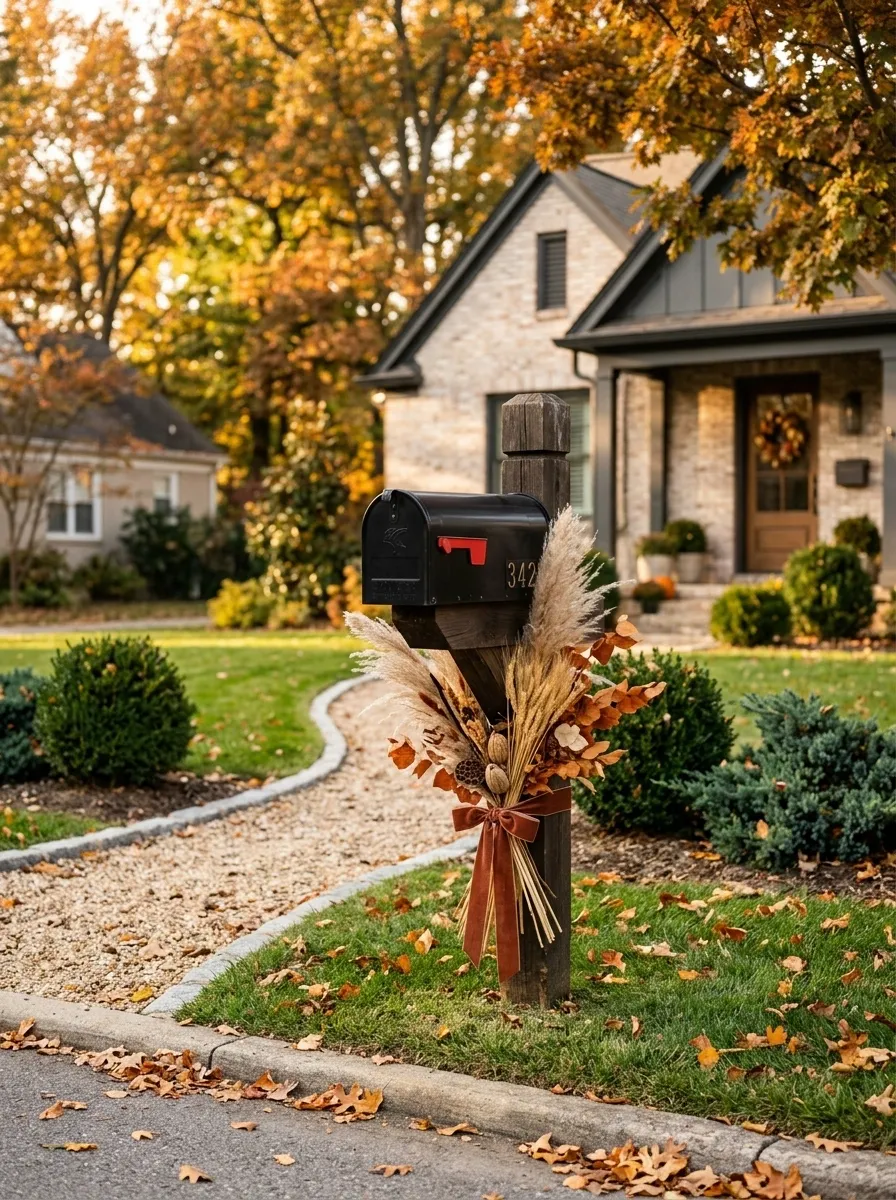
The mailbox sits right at eye level from the street, so it doesn’t need much.
A slim wrap of dried foliage, a small bundle of grasses, or a restrained ribbon is enough to make it feel seasonal. Keep the actual mailbox visible and easy to access.
A restrained mailbox detail also helps the front yard feel connected from the curb all the way to the front door.
Add a Rust-Colored Doormat as the Smallest High-Impact Update
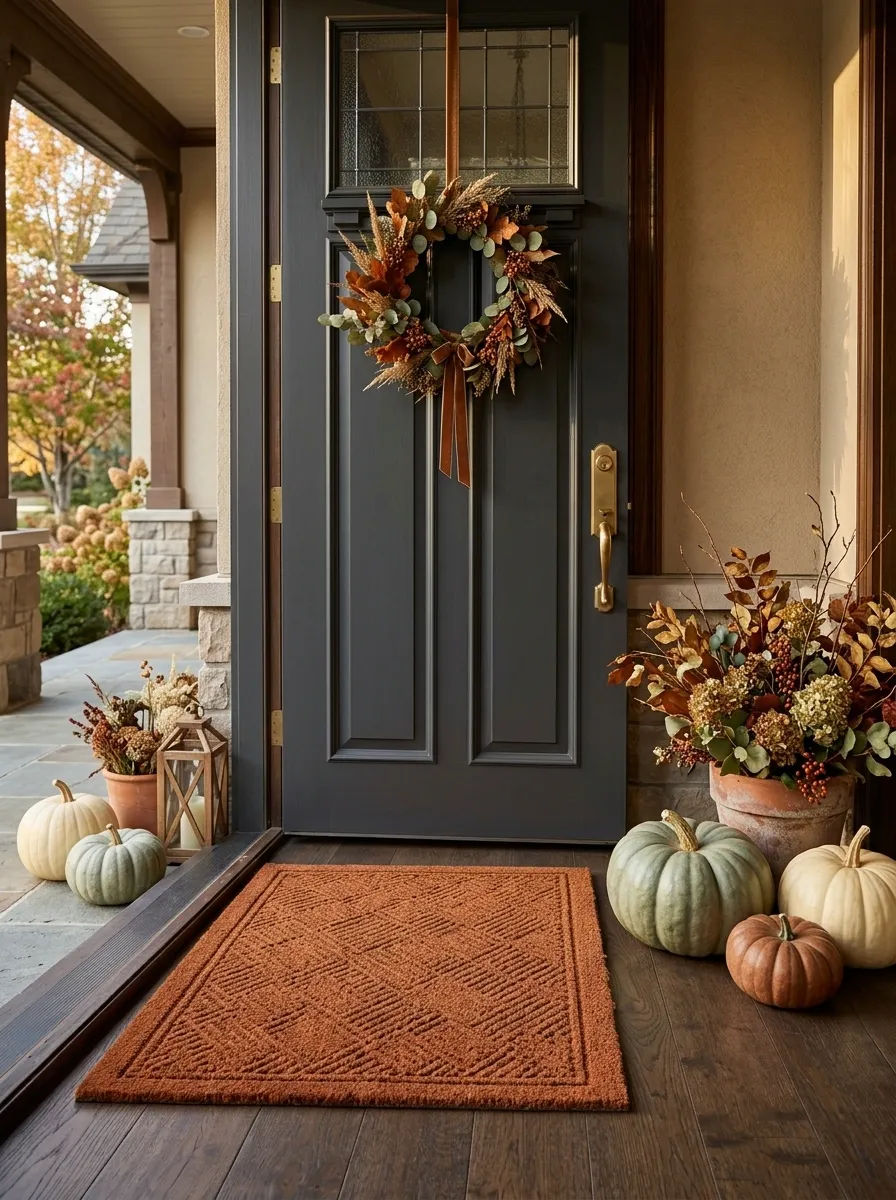
Sometimes the yard doesn’t need another object. It needs one detail that connects everything else.
A rust-colored doormat can pull together pumpkins, dried leaves, wood tones, and warm planters while staying close to the threshold.
The mat shouldn’t carry the entire seasonal look. It should finish the doorway.
It’s a small move, but a front door is exactly where small moves get noticed.
Create a Harvest Corner With Crates, Gourds, and Dried Stems
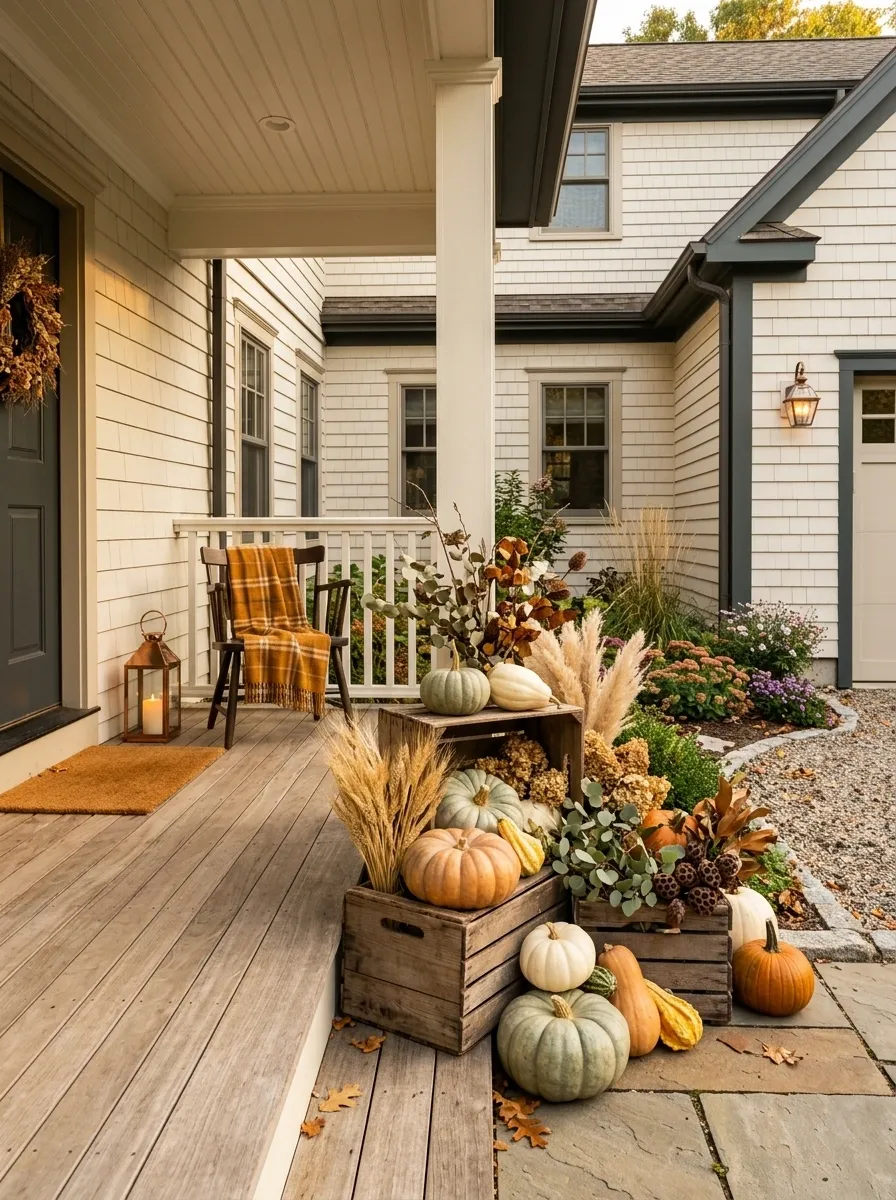
A harvest corner gives loose fall pieces somewhere to belong.
Build it beside the garage, porch, front steps, or a large planter. Stack the crates at slightly different heights, then add gourds and dried stems so the arrangement rises toward one side.
Keep the floor beneath the arrangement visible. That gap prevents the corner from becoming one giant pile.
Keep the Color Palette to Three Autumn Tones
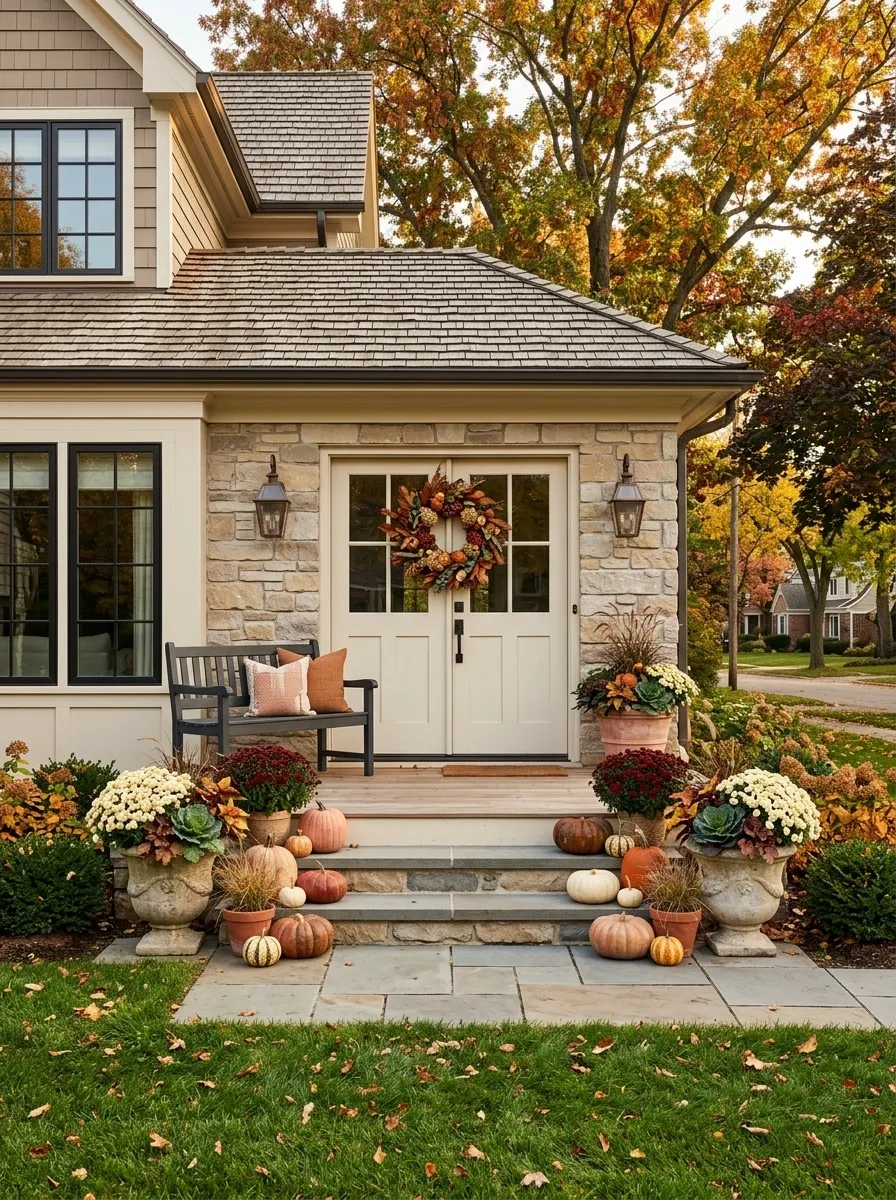
Color gets messy long before a yard gets physically crowded.
Pick three main seasonal tones and repeat them. Rust, burgundy, and cream already provide enough contrast for pumpkins, flowers, wreaths, planters, and small accessories.
Natural green and brown already belong to the landscape, so they don’t need to be treated as additional seasonal colors.
Once those three colors repeat across the yard, even mismatched pieces start looking more connected.
Use Dried Branches to Give a Bare Porch More Height
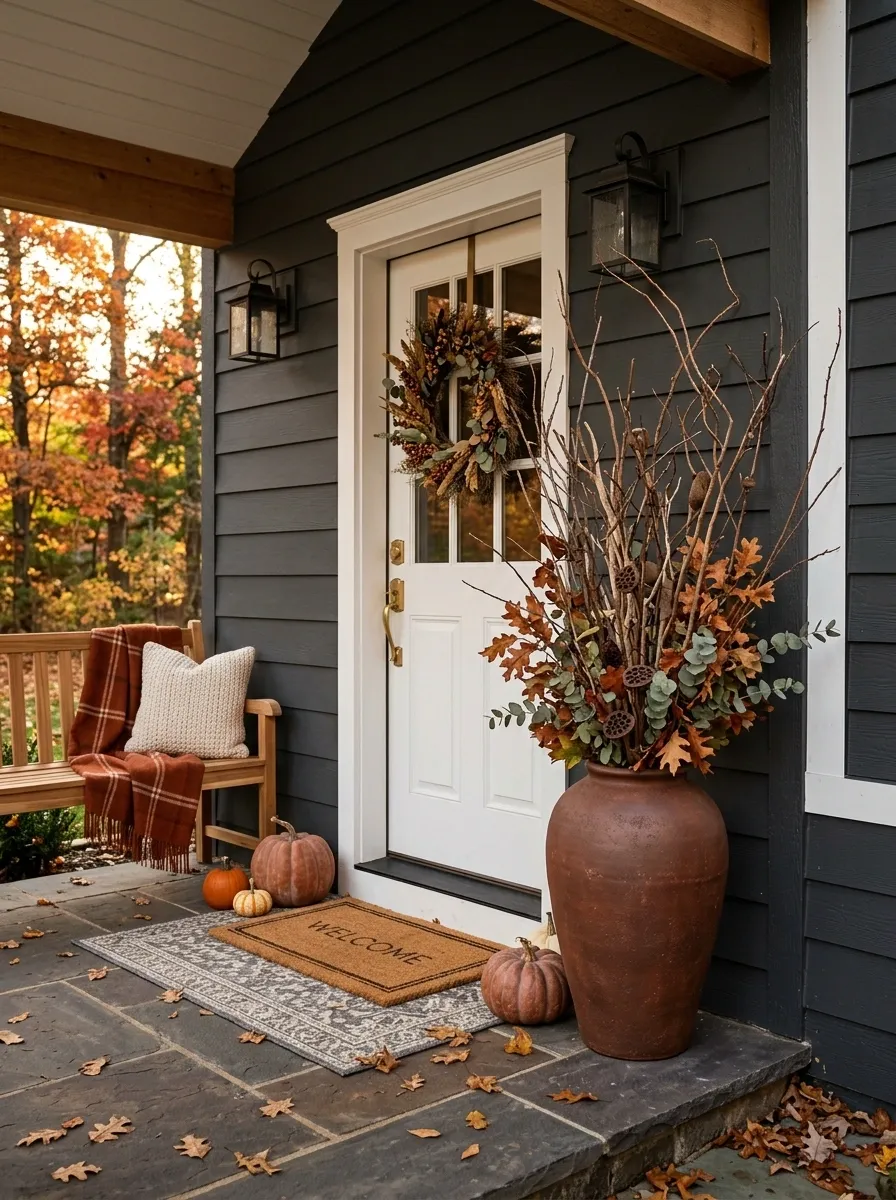
A bare porch often feels flat because everything sits at waist level.
Tall dried branches fix that without adding bulky furniture. Place several stems in a heavy floor vase beside the door, at the end of a bench, or in an unused corner.
The uneven silhouette is what makes the arrangement interesting from the sidewalk.
A single strong vertical arrangement can do more for a blank porch than five small accessories spread across it.
Scatter Pinecones Through Borders Instead of Adding More Objects
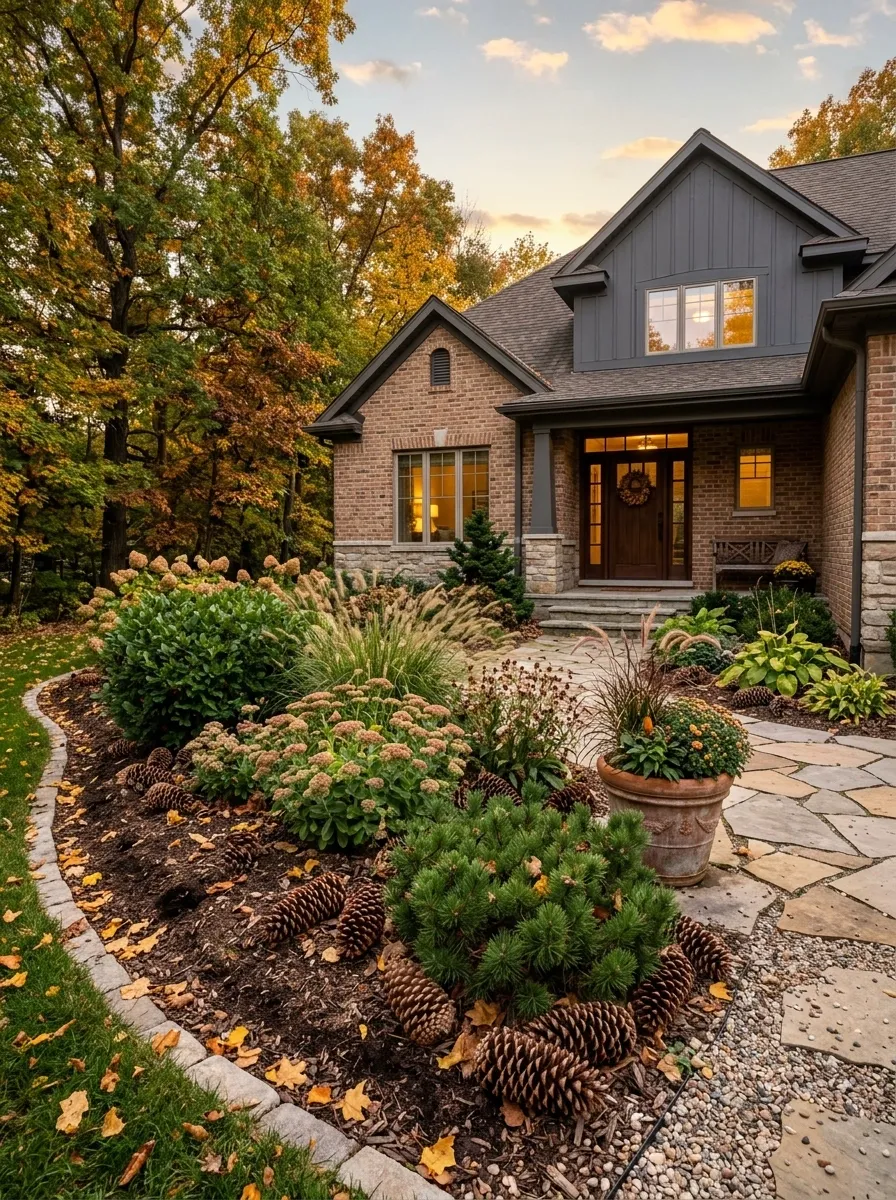
Not every empty patch needs another pumpkin.
Pinecones are useful because they add texture while staying visually quiet. Tuck them beneath shrubs, along the edge of a planter, or through a naturalistic flower bed.
They’re especially helpful when the yard already contains larger decorations and simply needs another layer of texture.
Make the Driveway Edge Part of the Fall Display
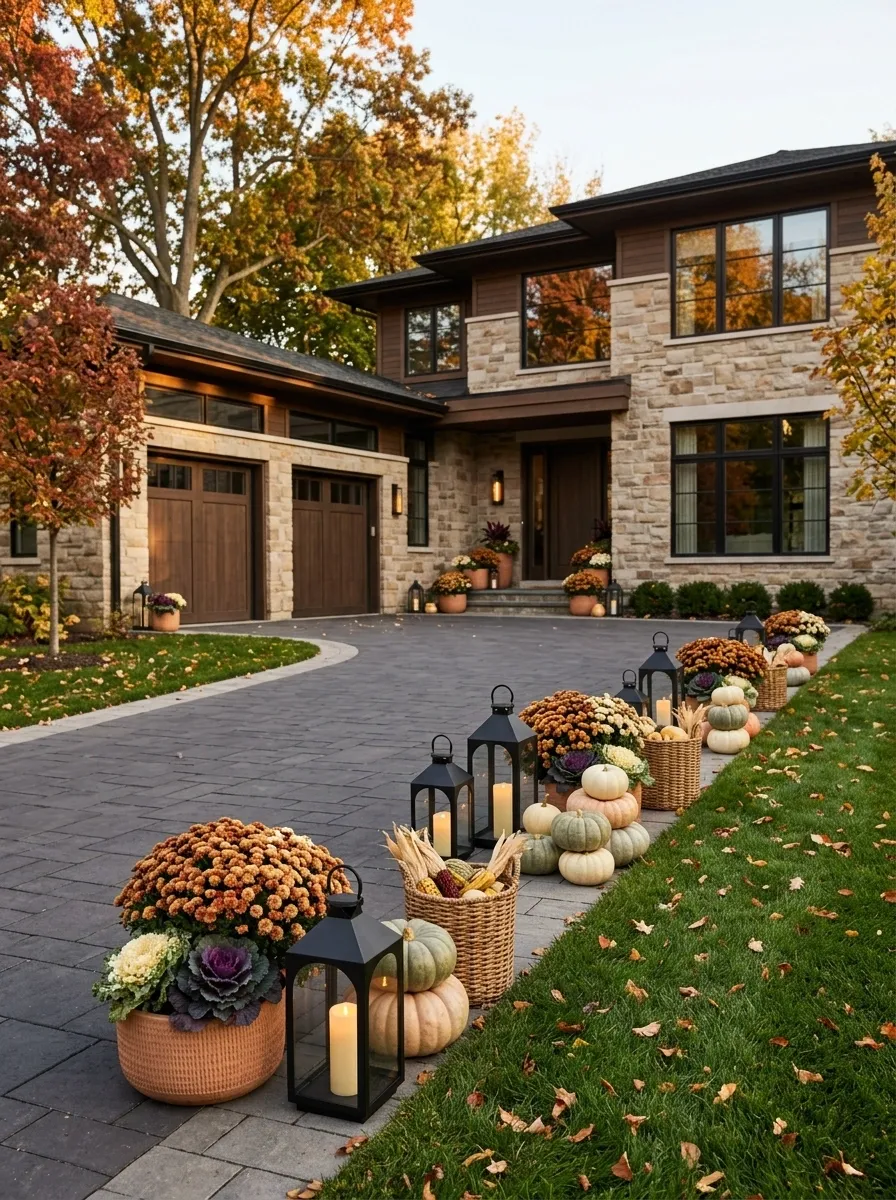
The driveway is easy to ignore because it feels like a practical surface. From the street, though, it can be one of the strongest framing lines on the property.
Use the edge as a visual transition. A few low planters, clusters of mums, or repeated lanterns can guide the eye from the street toward the house.
Decorations belong beside the driveway, never where tires, doors, or foot traffic need the space.
This move makes the entire property feel connected instead of stopping the seasonal styling at the porch.
Pair Black Lanterns With Warm Wood for a Cleaner Fall Look
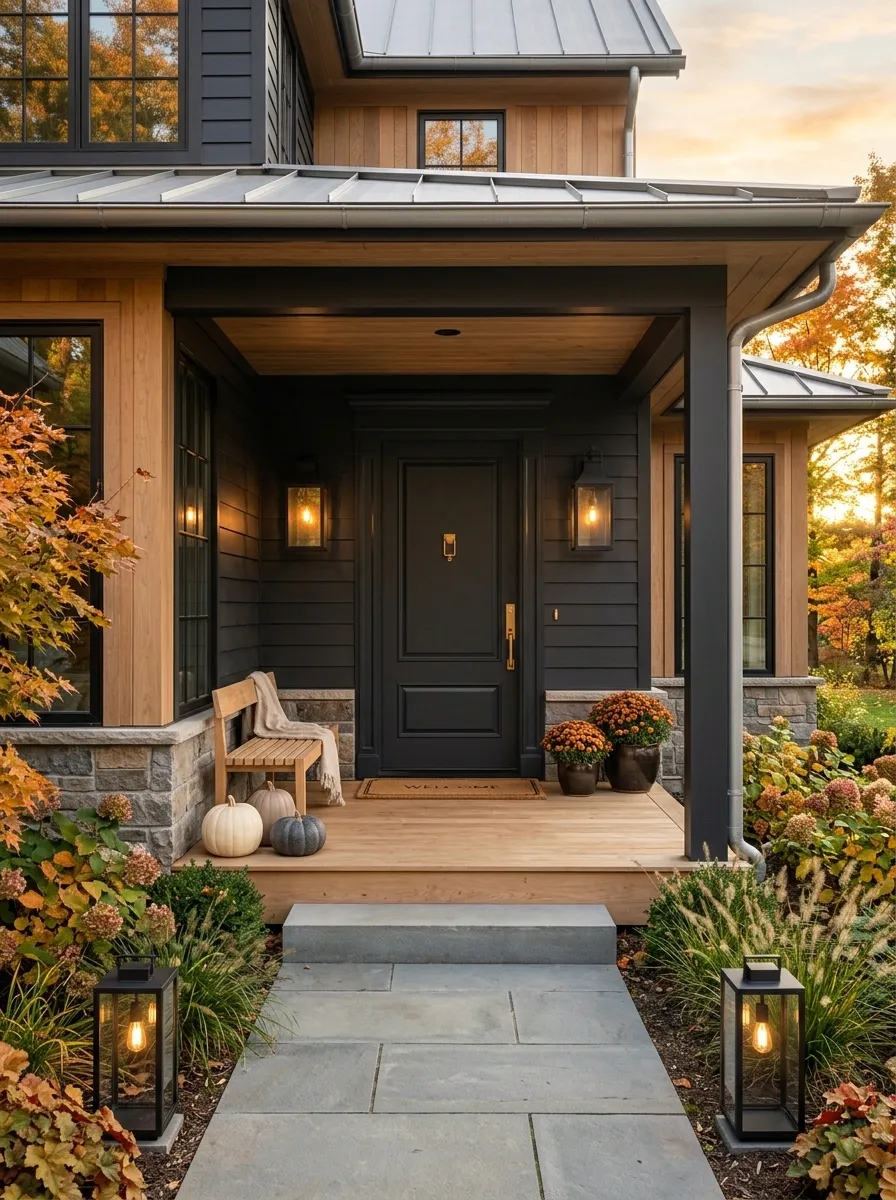
Black and wood are a strong combination because each material does something different.
Black supplies crisp structure. Warm wood supplies texture. Together, they keep fall decor from drifting into an overly sweet color scheme.
Use the combination around the doorway, along the steps, or beside a bench. Once those two materials repeat, the seasonal accessories can stay much simpler.
Add a Small Bench and Let the Decor Surround It
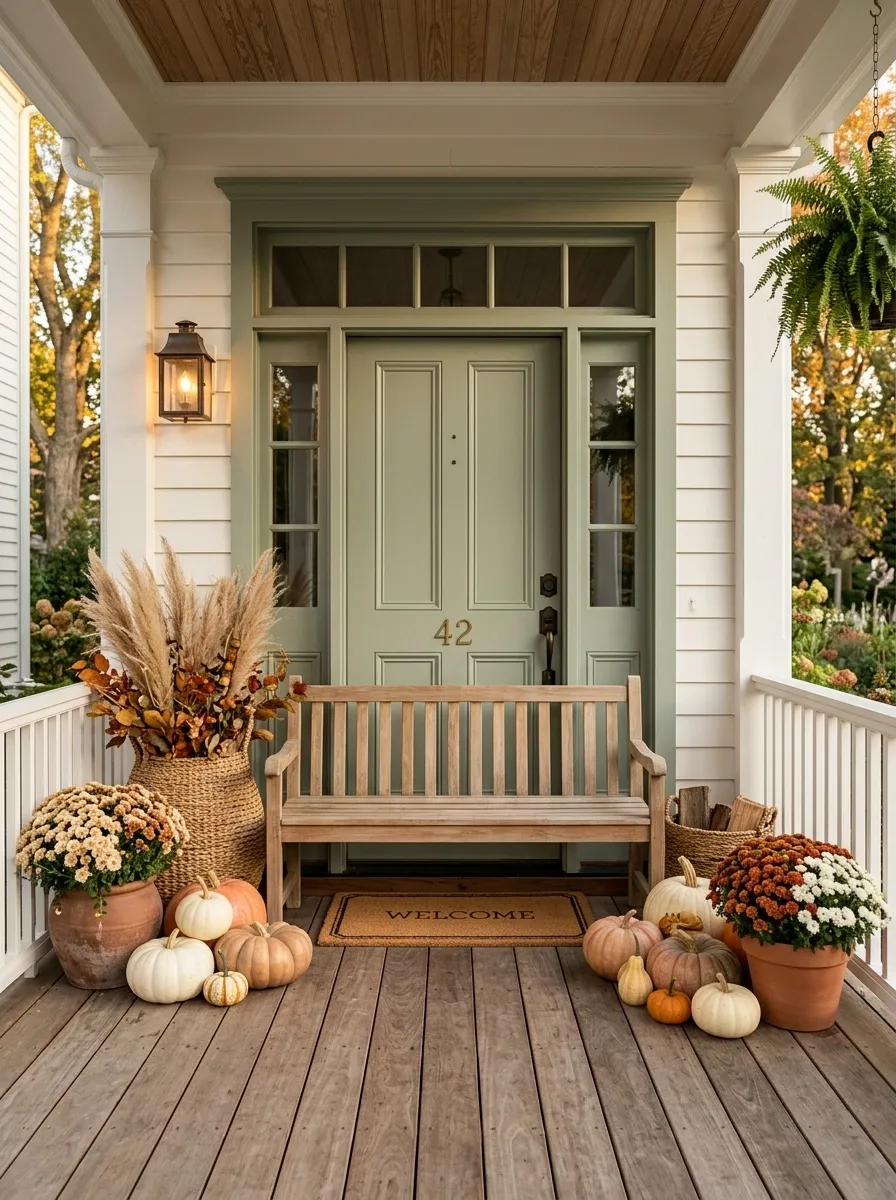
A bench gives the front porch something most fall displays are missing: a clear center.
Instead of filling the bench with pillows and signs, keep the seat mostly open. Put the seasonal weight on the floor around it with pumpkins, baskets, branches, or a planter.
The empty seat is intentional. It keeps the porch usable while the surrounding arrangement still feels full.
Use Corn Husk Bundles for a Softer, Less Expected Autumn Accent
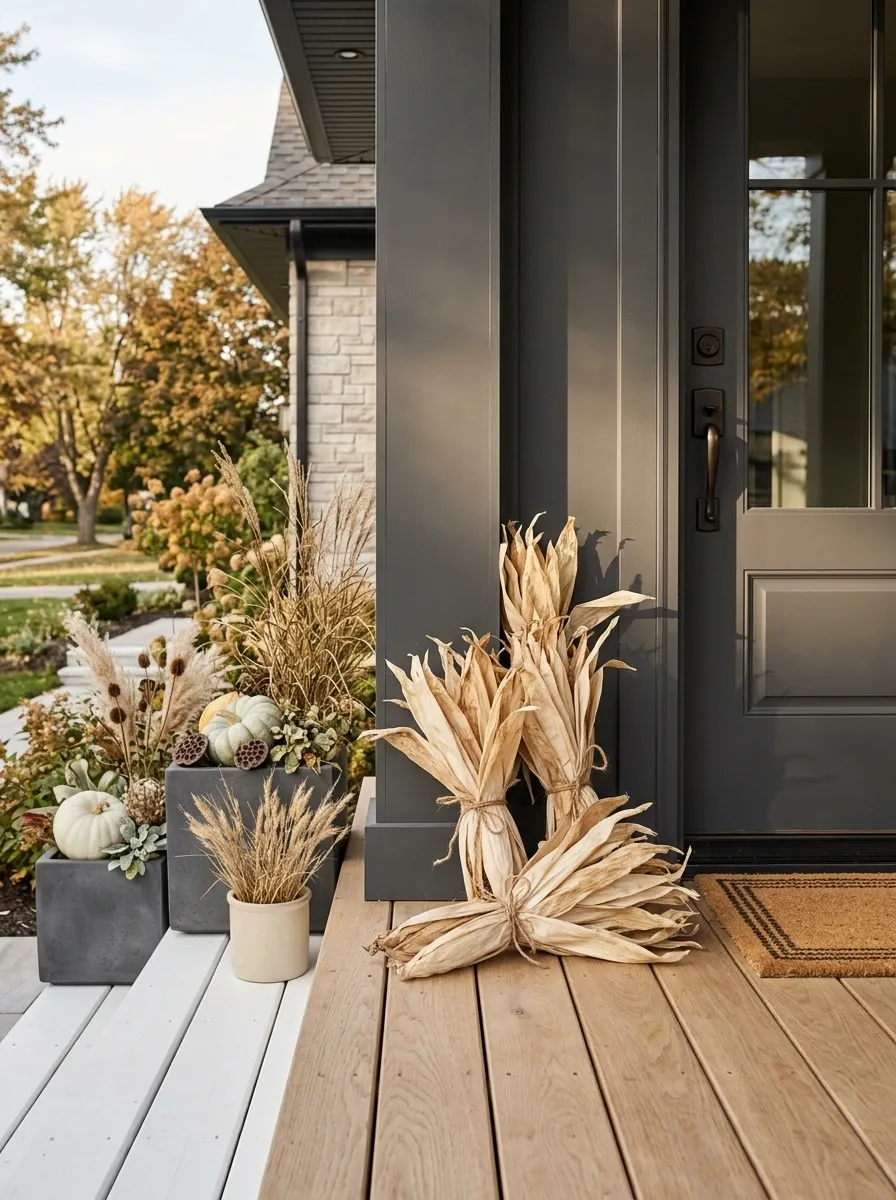
Corn husks bring in fall texture without relying on another orange object.
Tie several bundles together and lean them against a porch post, place them beside a door, or add them to a larger planter arrangement.
The rough texture pairs especially well with smooth painted doors and clean modern planters.
Build a Fall Look Around Your Existing Shrubs
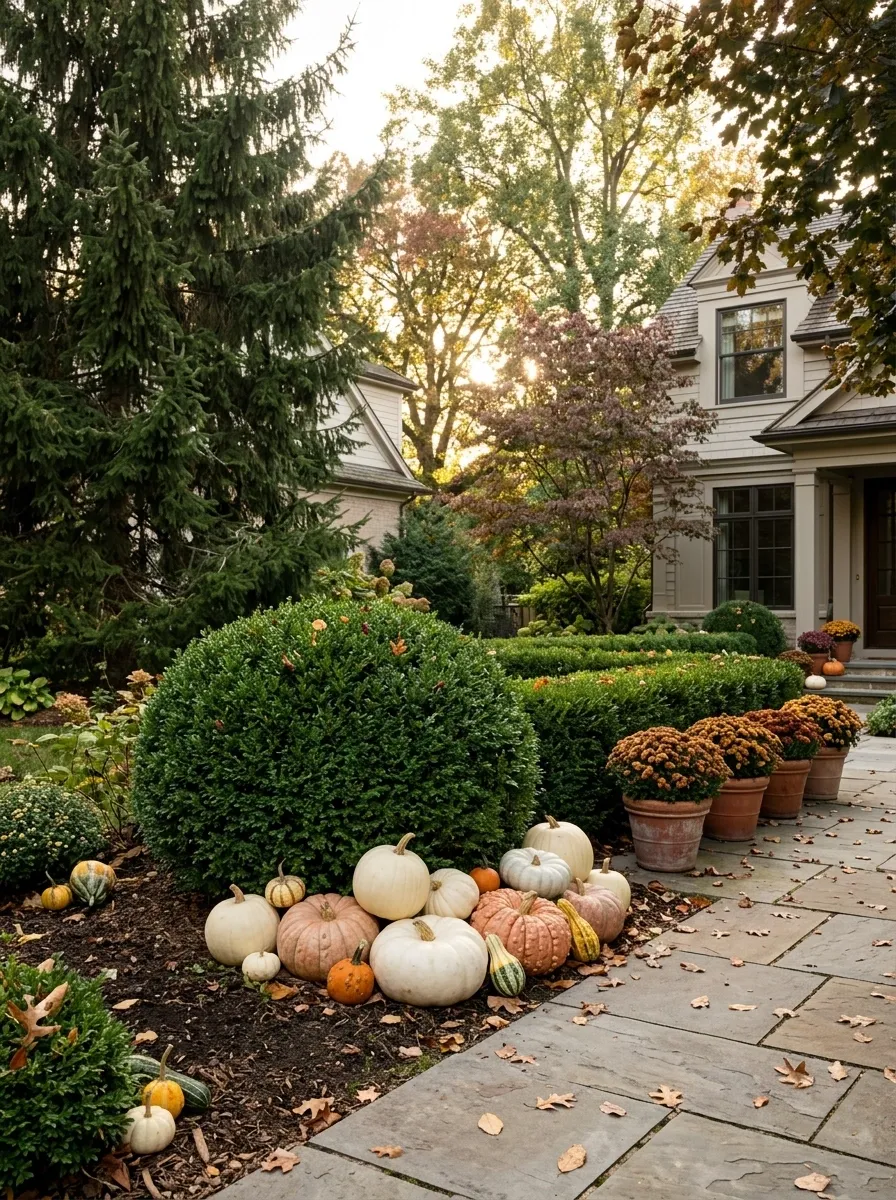
Don’t cover healthy shrubs with decorations just because there’s empty space nearby.
Use their shape as the starting point. A rounded shrub can anchor a pumpkin cluster. A tall evergreen can frame dried branches. A low hedge can become the backdrop for a row of mums.
Decor should follow the landscape, not hide it.
This approach is especially strong for mature yards because the existing greenery gives fall colors somewhere to sit.
Finish the Walkway With a Few Candle Lanterns
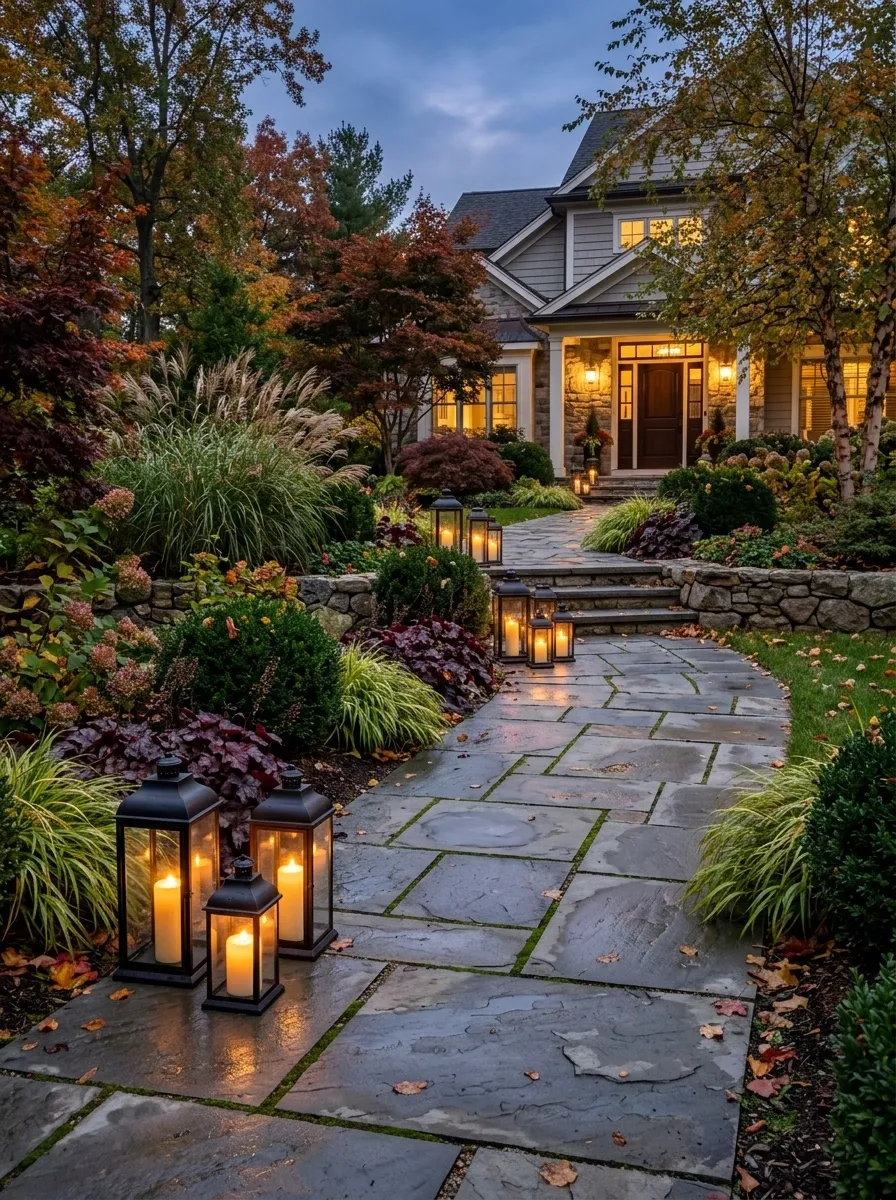
The walkway doesn’t need to glow from end to end.
A few lanterns placed near bends, steps, or planting clusters create little pockets of warmth while keeping the path visually clean. The placement can vary slightly so the arrangement feels natural rather than ruler-straight.
That small gap between lighting groups matters. It keeps the path from looking like a runway.
Strip the Yard Back to Three Strong Fall Statements
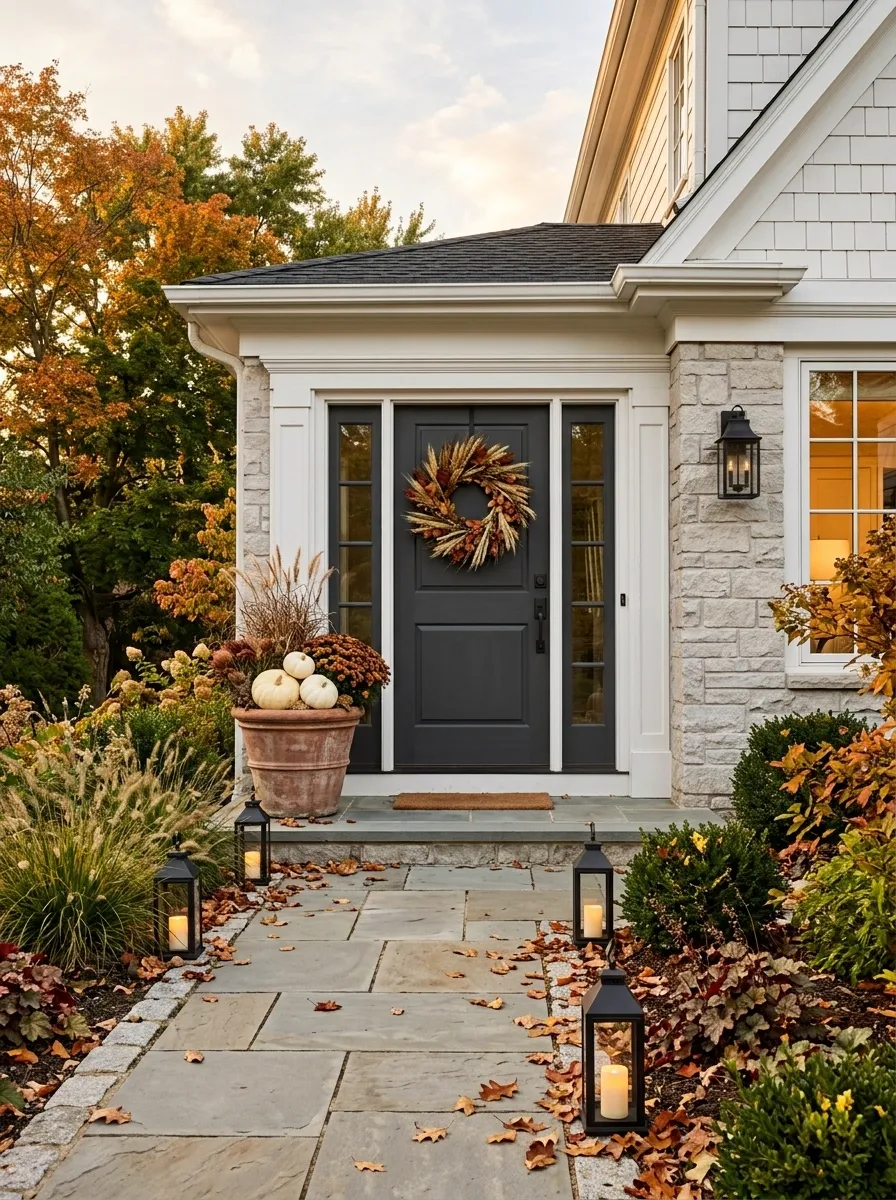
The final idea is less about adding something and more about removing what isn’t helping.
Walk to the curb and identify the three things that should catch attention first. Maybe it’s the front door, a large tree, and the walkway. Everything else should support those three points.
The Look That Makes Fall Decor Work
A front yard starts looking polished when the seasonal pieces stop acting like separate decorations.
A pumpkin cluster relates to the nearby planter. The planter repeats the rust from the wreath. The wreath echoes the deeper tones in the lanterns. The walkway carries that same palette farther toward the curb. Nothing has to match exactly, but the eye keeps finding familiar shapes, colors, and materials.
That’s the difference between a yard that simply has fall decorations and one that actually feels finished.
The strongest front yard ideas for fall aren’t necessarily the biggest ones. They’re the ones that improve the view people already have.
Start with the doorway. Then look at the path. Then look at the landscape itself. Add height where the yard feels flat, texture where it feels empty, and color where the existing landscaping can support it.
And when the composition starts looking good, stop.
That last step matters more than most decorating advice admits.
Save these ideas on Pinterest before the next seasonal decorating weekend, especially when the yard needs a refresh without turning into a full-blown display.