
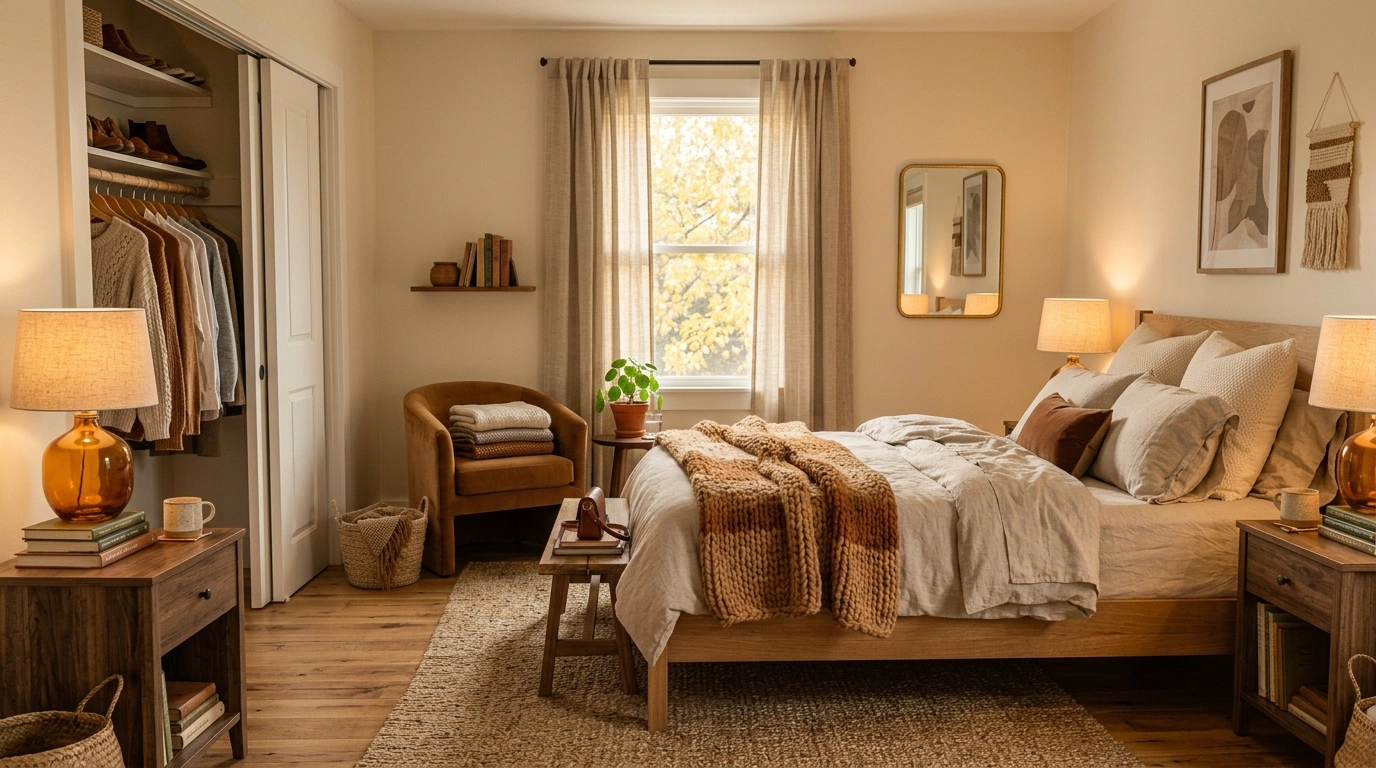
Some bedrooms have beautiful furniture and still feel cold. Not visually cold in the obvious way, either. They can be full of beige, cream, soft blankets, candles, and carefully chosen decor, yet something about the room feels flat.
Usually, the missing ingredient isn’t another pillow.
It’s depth.
A warm bedroom has places for the eye to land. There are soft surfaces beside harder ones. Natural wood breaks up painted furniture. Curtains soften the vertical lines. The bed has visible layers. The lighting doesn’t attack every corner at once. Even the empty space is doing some work.
That’s why the usual advice to “add more cozy details” often fails. More stuff doesn’t automatically create warmth. Sometimes it just creates clutter.
The Warm Bedroom Formula Is Mostly About What the Eye Notices First
Warmth isn’t created by one magical color. It comes from a sequence of visual cues that work together.
Warm Bedroom Aesthetic Ideas
Ground the Space With Deep Earth Tones
Monochromatic rooms run the risk of feeling flat if every surface matches too closely. A rich, warm brown adds instant weight and coziness to a bedroom without making the space feel closed in.
Pair deep wooden paneling or accent walls with creamy whites and soft caramel accents to keep the palette dynamic. The contrast between dark wood and light bedding creates an immediate focal point that anchors the entire room.
Layer in matching warm-toned furniture and soft textiles to pull the whole look together, ensuring the deeper shades feel intentional and inviting rather than overwhelming.
Paint the Walls a Soft, Warm Neutral
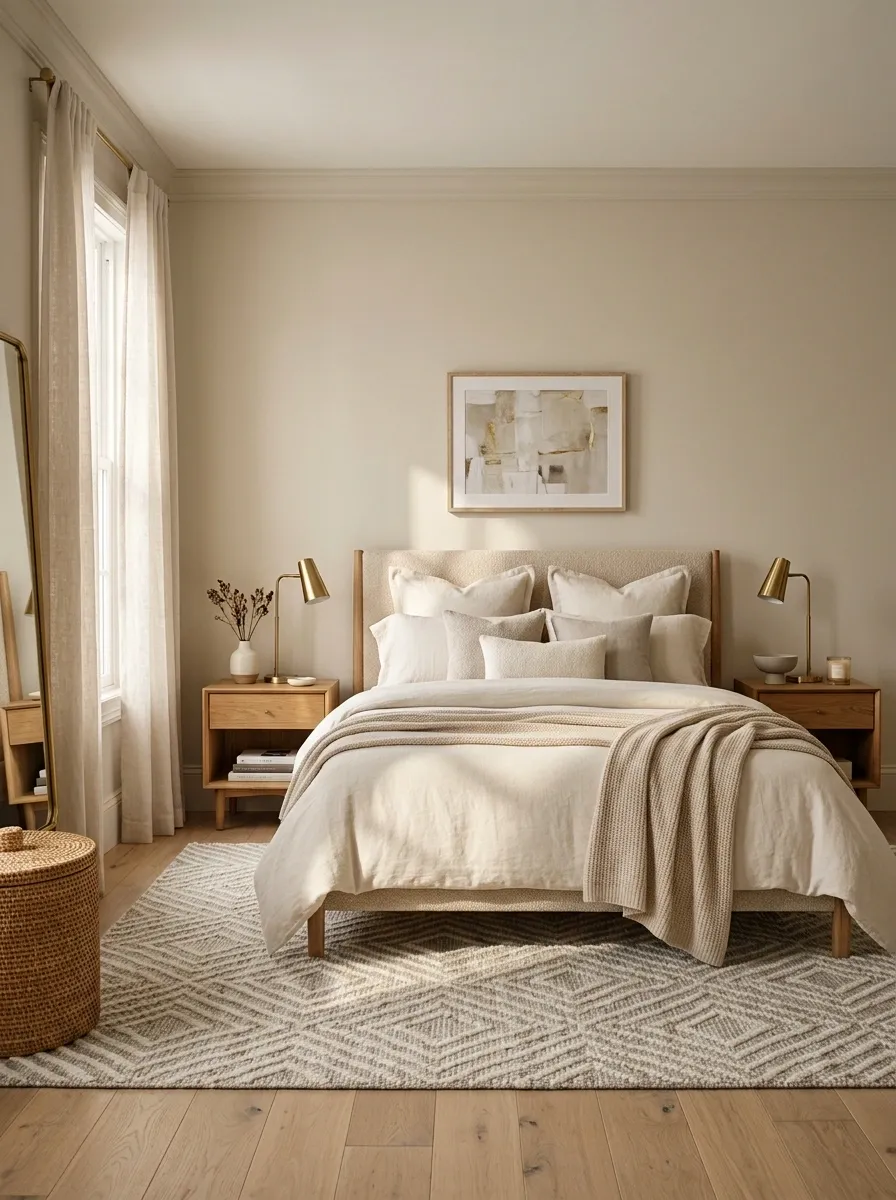
Cold gray walls are one of the fastest ways to make a bedroom feel sterile. A warm neutral gives the entire room a softer starting point.
Look for beige, oatmeal, muted taupe, warm greige, or very soft clay tones. The key is the undertone, not how light the paint looks on the swatch.
A creamy wall can make white bedding feel richer. A muted taupe wall can make medium wood furniture feel more intentional.
Embrace Rich Textures and Cozy Layers
A bedroom centered around warm, earthy hues calls for a bedding arrangement that leans heavily into tactile comfort. Swapping out standard duvets for quilted fabrics and plush throws instantly elevates the comfort level of the room.
Incorporate upholstered headboards and heavily textured accent pillows to break up flat surfaces. These elements invite you in and give the eye subtle variations in shadow and tone, especially under warm lighting.
Keep the color palette unified by sticking to rich browns, warm taupes, and soft creams, allowing the mix of fabrics to do the heavy lifting when it comes to visual interest.
Build Bedside Lighting in Three Layers
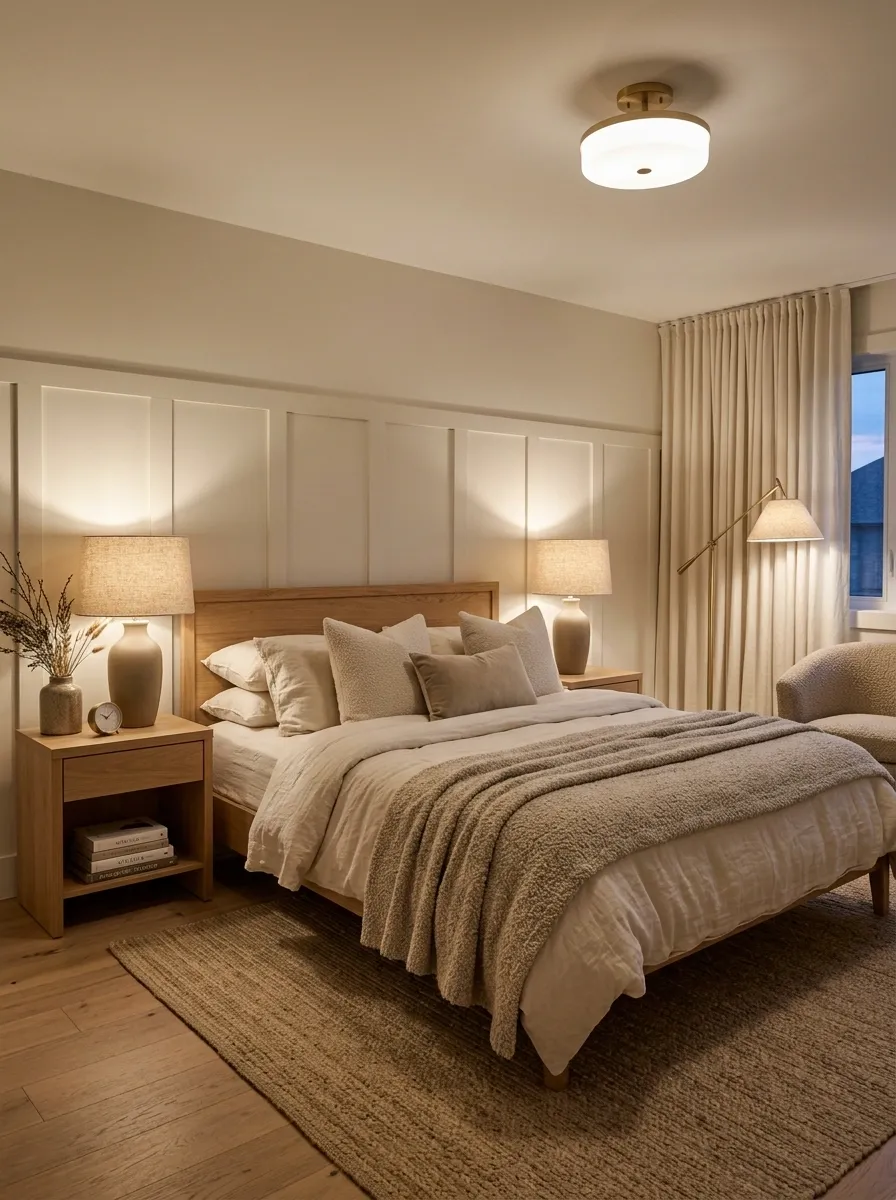
A ceiling fixture can’t do all the work. Bedrooms feel warmer when light comes from more than one height.
Start with the main ceiling light, then add a bedside lamp on each occupied side of the bed. A small floor lamp or accent light can handle the third layer when the room needs more glow.
The result is softer than switching on one bright light at night, and the room keeps its depth after sunset.
The simple setup:
- Ceiling light for getting dressed and cleaning.
- Bedside lamp for reading and winding down.
- Low accent light for a softer evening glow.
Create Contrast With Classic Wall Moldings
Flat walls can sometimes lack character, but adding simple paneling instantly introduces depth and architectural interest. Painting the woodwork in a warm, muted shade creates a sophisticated backdrop that feels both timeless and modern.
Pair your paneled walls with crisp white sheer curtains and heavier drapes to soften the edges of the room. This combination allows natural light to diffuse gently while maintaining a cozy, cocoon-like atmosphere after dark.
Accessorize with understated artwork and natural greenery to bridge the gap between the structured wall details and the soft, inviting bedding below.
Bring Medium-Toned Wood Beside the Bed
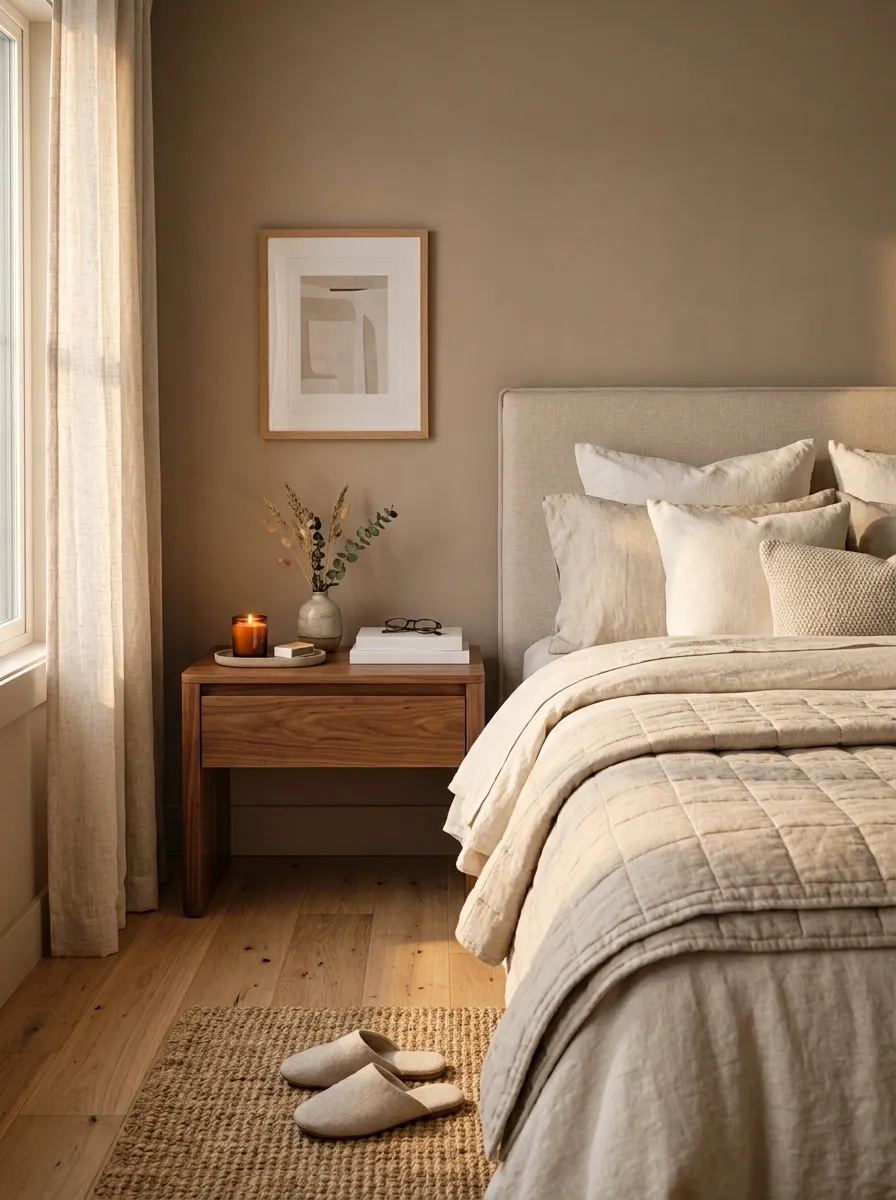
Wood brings visual warmth that painted furniture can’t quite reproduce. The grain gives the eye something natural and slightly irregular to read.
A medium oak, walnut, honey-toned ash, or similar finish works especially well beside cream bedding and muted walls. It doesn’t need to dominate the room. A pair of nightstands can be enough.
Keep the finish simple. Heavy distressing can push the room toward a rustic look when the goal is a softer, more modern bedroom.
Layer Ambient Lighting for Evening Warmth
Overhead fixtures can easily ruin the cozy mood of a bedroom when night falls. Building a warm sanctuary relies heavily on low-level glow, candles, and soft bedside lamps that highlight the room’s textures.
Position a warm reading light or accent lamp near floating shelves and book displays to create pools of light against shadowed walls. This approach adds incredible depth, making even a compact bedroom feel expansive and intimate.
Pair this thoughtful lighting strategy with a frosty view outside for the ultimate winter retreat vibe, where the contrast between the cold outdoors and the glowing interior feels utterly magical.
Build the Bed With Three Distinct Texture Layers
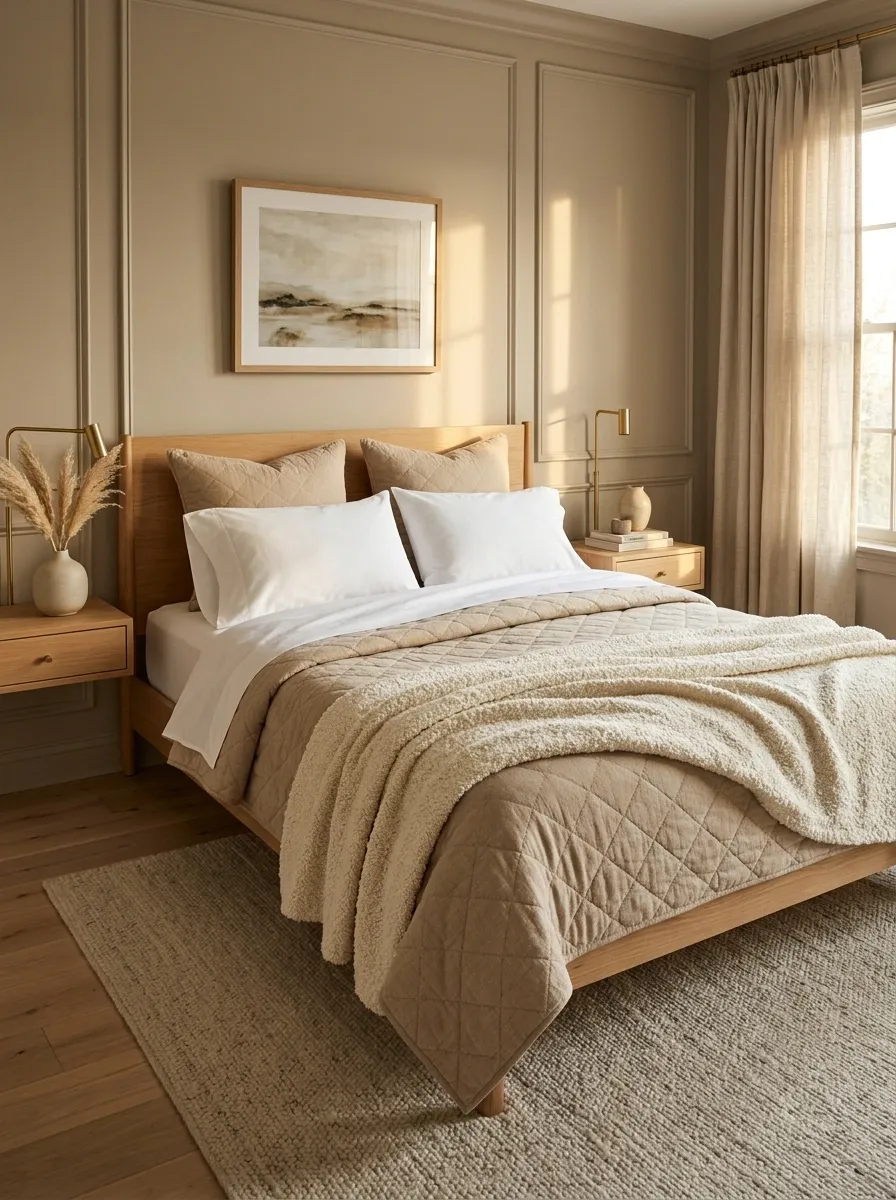
A fluffy bed isn’t automatically an inviting bed. The better trick is contrast.
Start with smooth sheets, add a slightly heavier cover, then finish with one noticeably different texture. Linen, washed cotton, quilted fabric, woven material, and boucle-style textures all create different levels of visual softness.
Don’t pile everything at the headboard. Let one throw fall across the lower third of the bed so the layers can actually be seen.
Bed-building checklist
□ Smooth base sheets
□ One substantial cover or quilt
□ One contrasting throw
□ Two pillow shapes or fabric textures
Sheets that keep the bottom layer clean.
Quilt, coverlet, or textured duvet.
A woven or nubby throw across the foot.
Weave in Delicate Fairy Lights
Soft, twinkling fairy lights aren’t just for the holidays—they are a secret weapon for adding a magical, ethereal glow to a bedroom. Draping them loosely along a wall or around framed art introduces a subtle, romantic shimmer.
Combine this delicate lighting with cascading potted plants to bring a touch of nature indoors. The trailing greenery softens hard architectural corners and plays beautifully with the warm ambient light.
Finish the space with breezy sheer curtains and an abundance of floor pillows to create an effortless, dreamy retreat that invites you to unwind the moment you walk through the door.
Hang the Curtains High and Let Them Reach the Floor
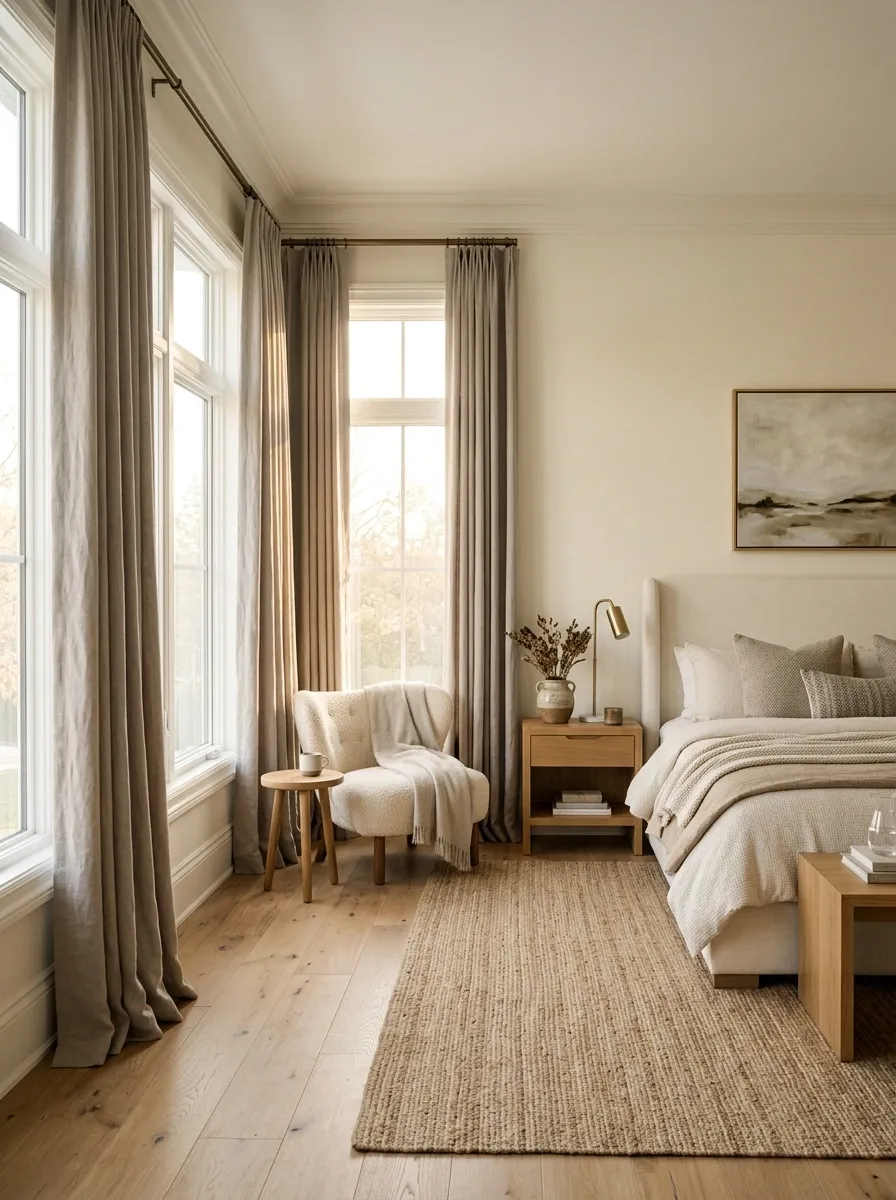
Short curtains make a bedroom feel visually chopped up. Mounting the rod higher and letting the fabric fall close to the floor creates a longer, quieter wall line.
Choose a fabric with some weight rather than a paper-thin panel. Linen-look, cotton, and softly textured fabrics work especially well because they filter light without making the room feel sealed off.
Keep the curtain color close to the wall when the room needs calm. A slightly deeper shade adds more contrast.
Warm Up the Room With Amber Bedside Light
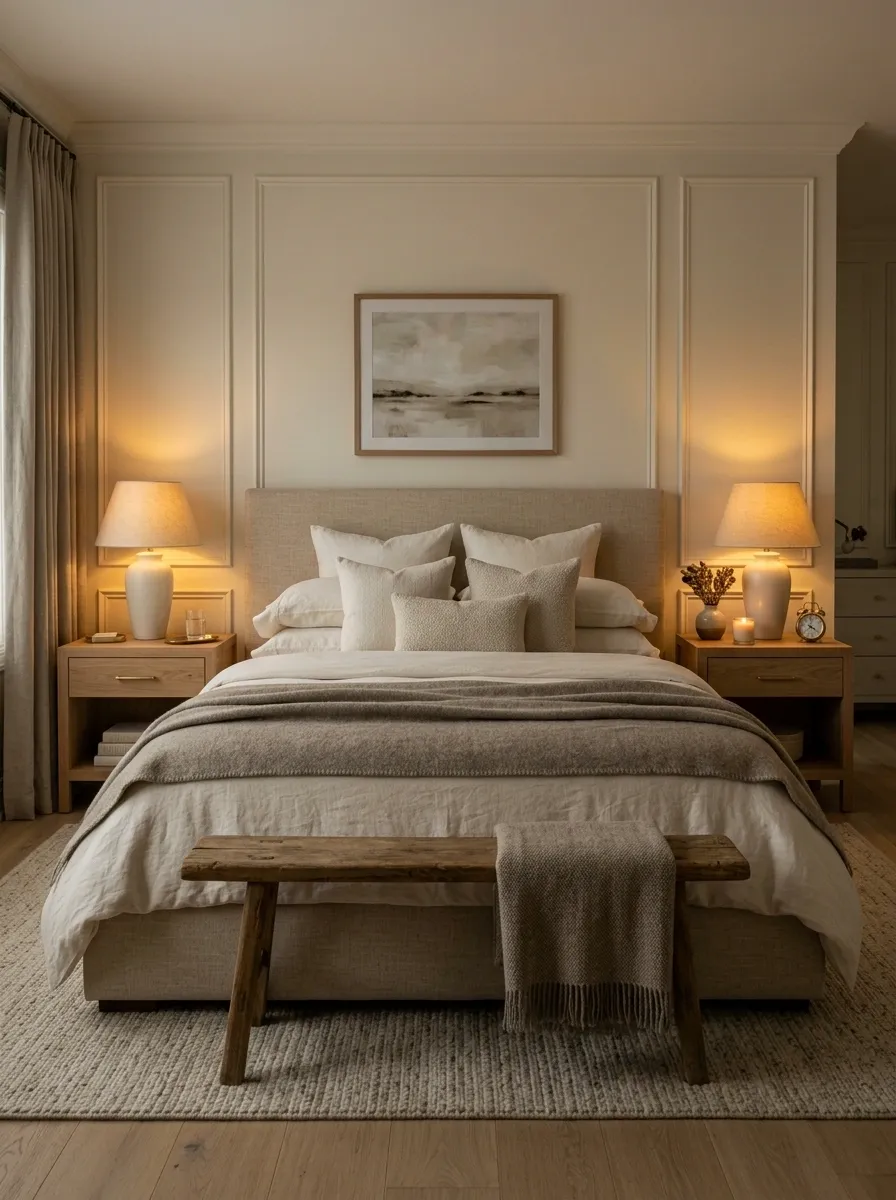
A beautiful bedroom can still look cold at night if every bulb throws a blue-white glare across the walls.
Choose bulbs that give off a warmer glow, especially in bedside lamps and smaller accent fixtures. The lamp shade matters too. Fabric, frosted glass, and parchment-style shades soften the light before it reaches the room.
Keep the strongest light near the ceiling and the gentlest light near the bed. That simple hierarchy makes the room feel calmer after sunset.
Nighttime test: Switch off the ceiling light and leave only the bedside lamps on. The room should still feel finished.
the whole room.
Use a Rug That Extends Beyond the Bed
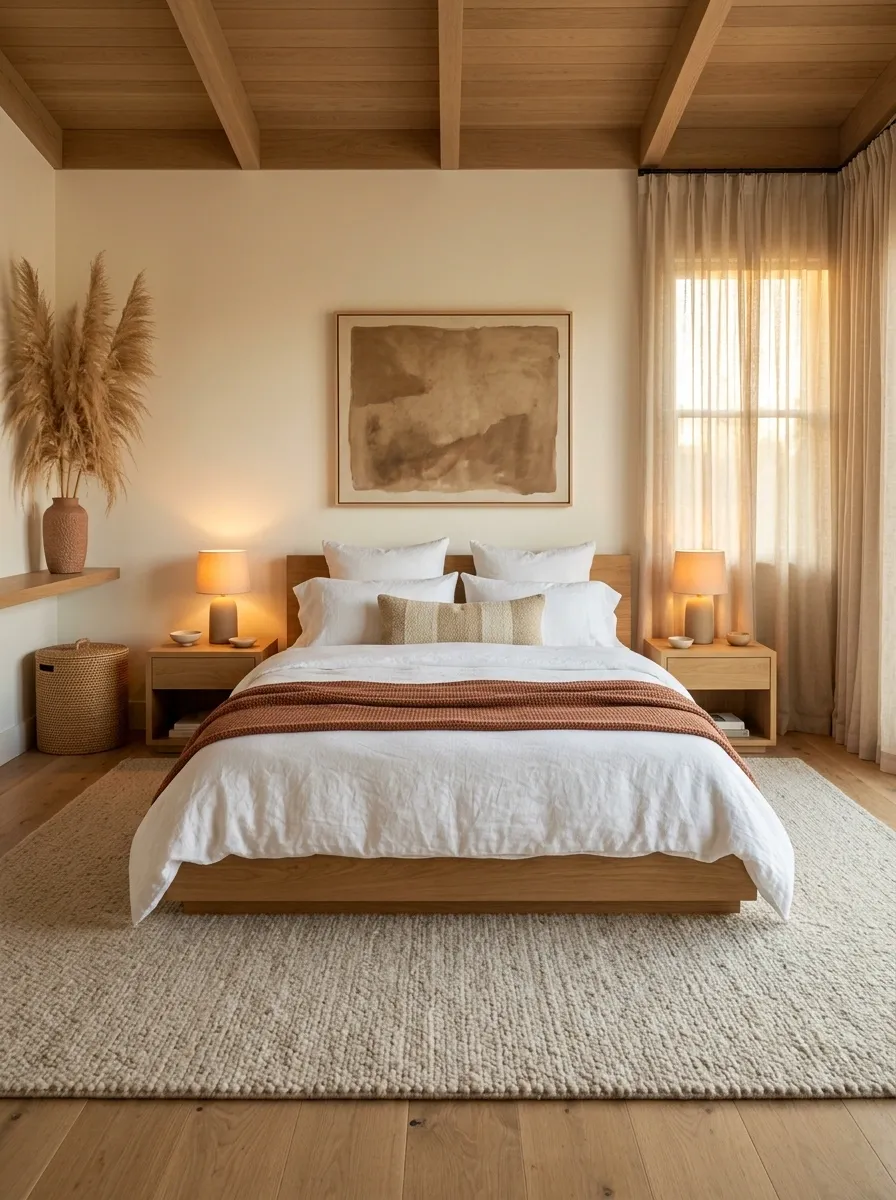
A tiny rug shoved under the lower edge of the bed rarely warms up a bedroom. It usually looks like an afterthought.
The rug needs enough visual weight to connect the bed with the surrounding floor. For a larger room, letting the rug extend well beyond both sides of the bed creates a much more grounded composition.
For a smaller room, a runner or pair of smaller rugs can still work. The important part is that the visible rug feels intentional rather than squeezed into whatever space is left.
Best placement: center the rug with the bed and let the exposed floor frame it.
Add One Oversized Soft Element
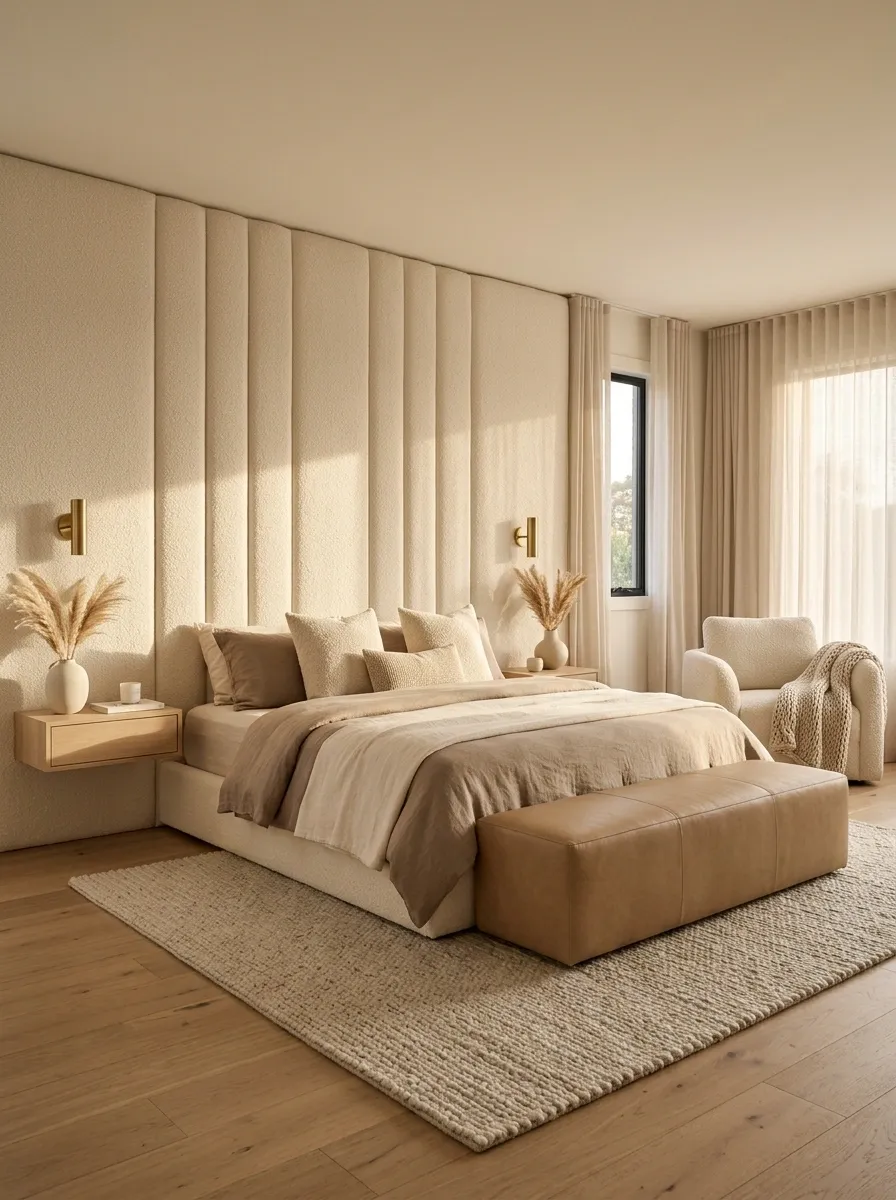
Small cushions and tiny decorative objects disappear quickly in a bedroom. One larger soft element has far more impact.
An upholstered headboard can soften a hard bed frame. A wide bench can make the lower half of the room feel finished. A substantial accent chair can fill an empty corner without turning it into a storage pile.
Pick one. That’s enough.
The best choice depends on what the room is missing. An empty foot-of-bed area needs furniture. A hard-looking bed needs upholstery. A bare reading corner needs a proper chair.
One large soft shape beats five small decorative ones.
Less visual clutter.
Mix Smooth, Nubby, and Woven Textures
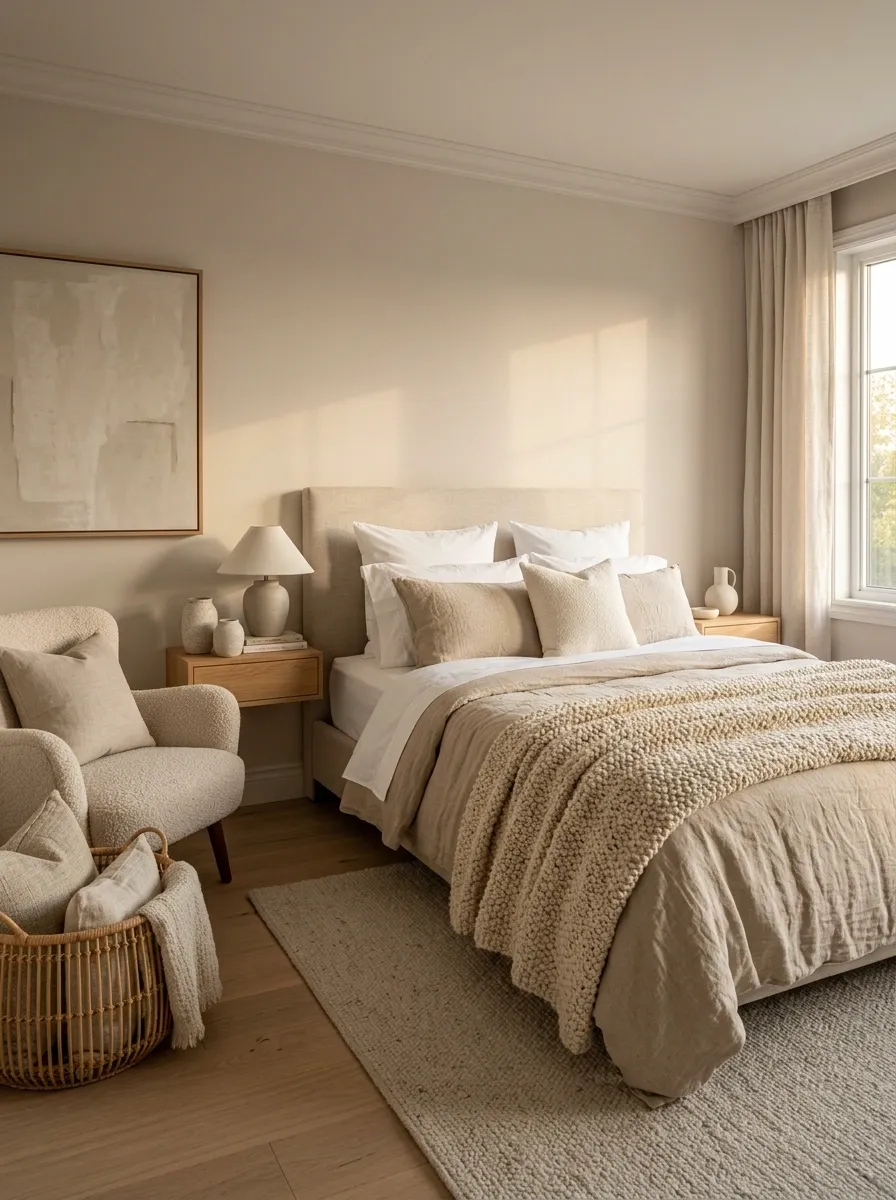
Color can stay almost identical while the room gets dramatically richer through texture.
Pair a smooth cotton sheet with a crinkled linen duvet. Put a woven basket near a soft upholstered chair. Add a nubby throw across the bed instead of another perfectly smooth blanket.
The eye reads those surfaces differently, even when they all sit inside the same neutral palette.
Keep the textures obvious. If two fabrics look nearly identical from across the room, they aren’t doing much visual work.
Give the Bed Wall One Clear Focal Point
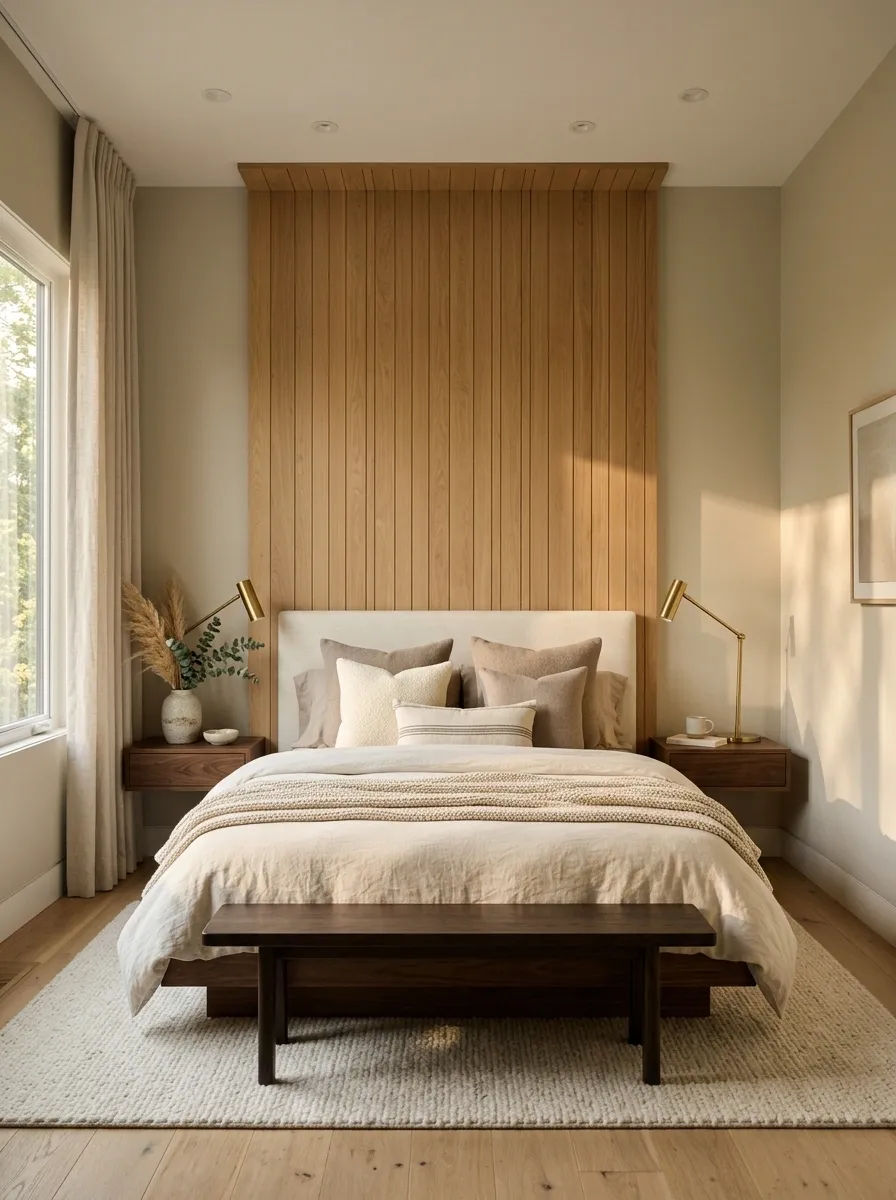
A bedroom doesn’t need something interesting on every wall. In fact, too many competing features make the room harder to read.
The bed wall should carry the strongest visual statement. That could be an oversized upholstered headboard, warm wood paneling, restrained wallpaper, a large piece of art, or simply a deeper paint color.
Everything else can quiet down around it.
The goal isn’t to fill the wall. It’s to give the eye one place to land when entering the room.
Choose one dominant treatment, then let the surrounding walls breathe.
Choose Lamps With Fabric, Wood, or Soft-Finish Details
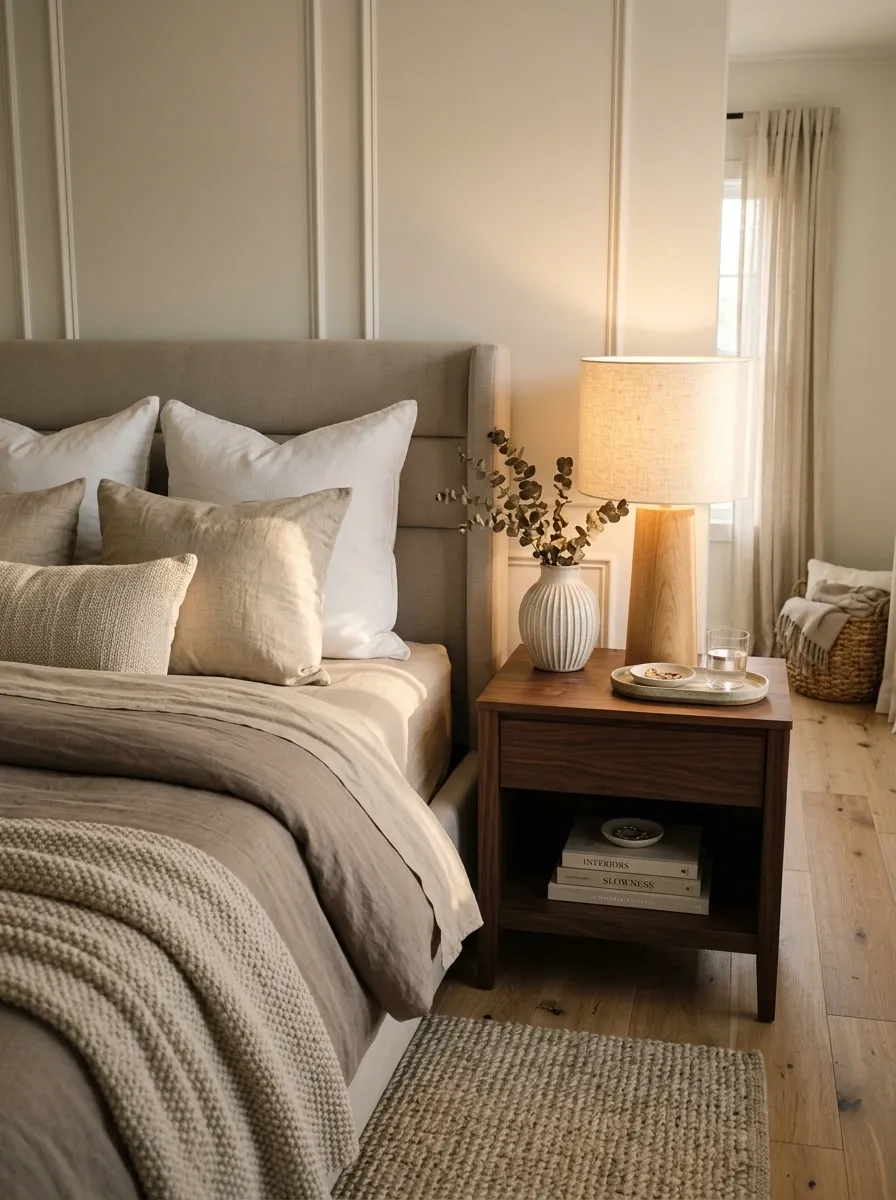
Bedrooms feel warmer when the light fixture itself looks soft.
A linen shade, warm wood base, ribbed ceramic, or aged finish gives the eye something gentler to read than a shiny chrome lamp. That matters even when the lamp is switched off for most of the day.
Bedside lamps also sit close to the face and bedding, so their scale should feel substantial without swallowing the nightstand. A shade that’s too tiny can make the entire setup look undersized.
Best move: pair a simple lamp shape with one tactile material. The finish does more work than a complicated silhouette.
Keep the Nightstand Styling Low and Quiet
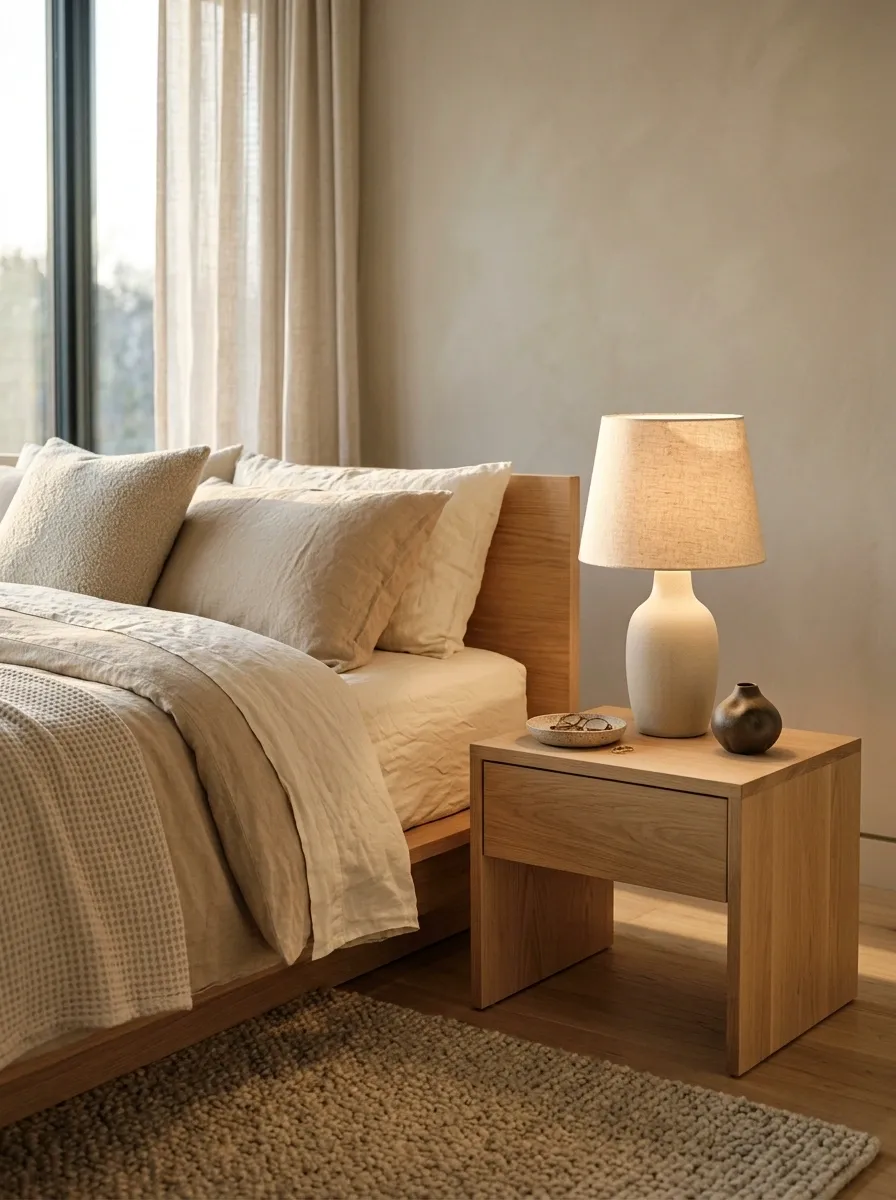
The nightstand is not a tiny display cabinet.
Too many objects around the bed create visual noise exactly where the room should feel calm. Keep the surface useful and leave plenty of the tabletop visible.
A lamp does most of the visual work. Add one practical object and one small decorative detail. Stop there.
Nightstand formula
- Lamp
- Book or small tray
- One organic or ceramic accent
The empty tabletop is part of the design. Don’t fill it just because there’s space.
Then stop.
Repeat One Warm Color in Small Places
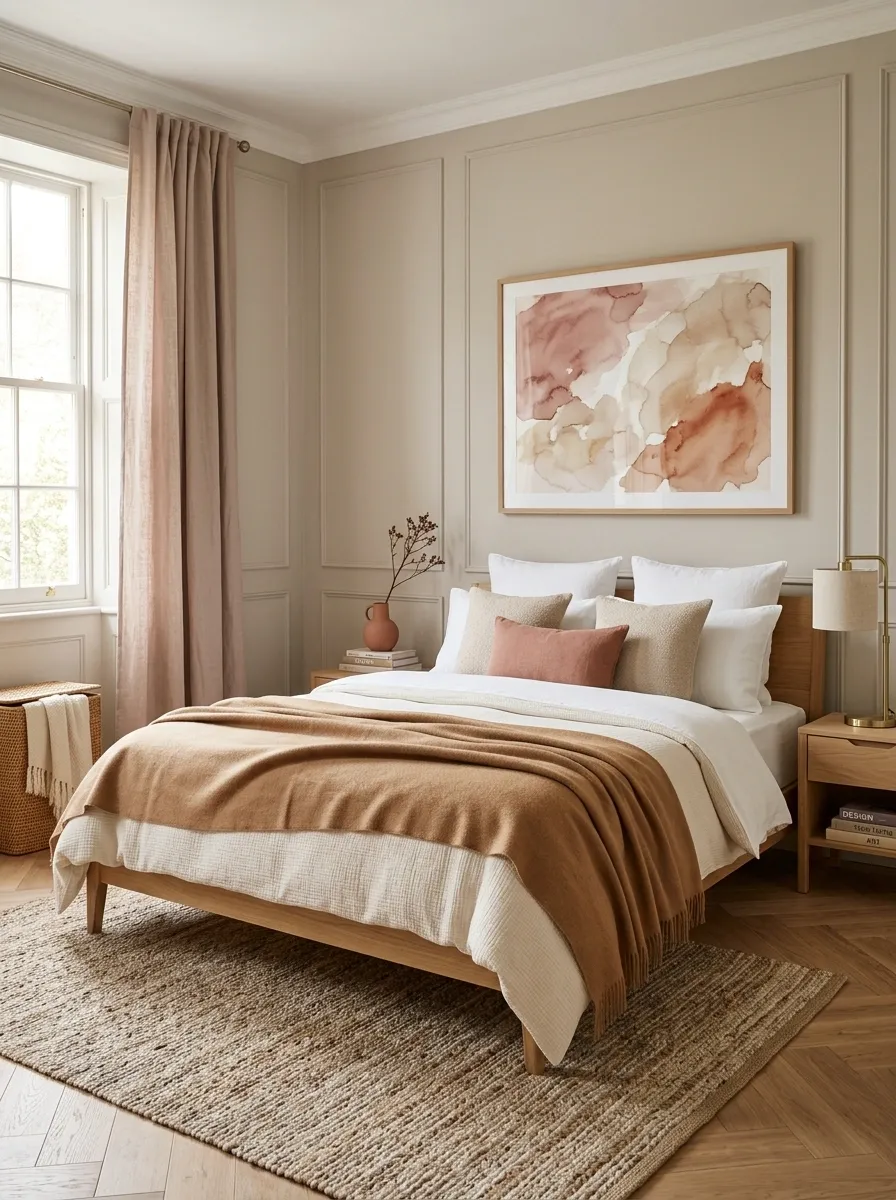
A bedroom feels more connected when one accent color quietly appears in several places.
Choose one warm shade such as muted terracotta, dusty rose, cinnamon, clay, or caramel. Then repeat it in tiny doses instead of using it on one huge feature.
A pillow edge can echo the color in a piece of artwork. A ceramic vase can repeat it again. A throw can bring the strongest dose near the foot of the bed.
The eye picks up the connection without seeing a matching set.
Think repetition, not duplication.
Swap Stark White Bedding for a Creamier Base
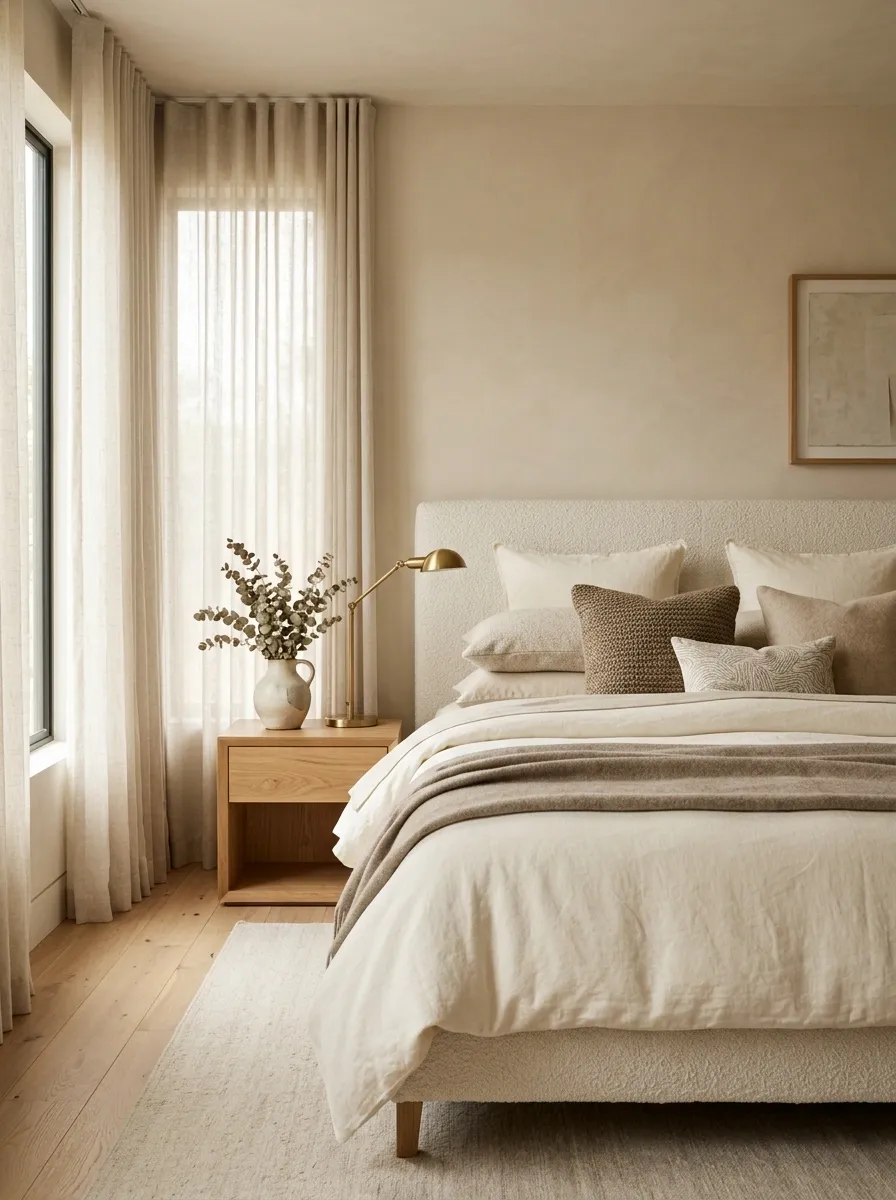
Pure white bedding can look crisp and fresh, but it can also create too much contrast in a warm room.
Cream, ivory, oatmeal, and soft warm white sit more comfortably beside wood, beige walls, and brown accents. They still keep the bed bright without making it feel disconnected from everything around it.
This doesn’t mean every layer needs to be beige. A creamy base actually gives darker throws, warm patterns, and textured pillows more room to stand out.
Start with the largest textile first. The sheets and duvet establish most of the bed’s visual temperature.
Add a Bench, Stool, or Ottoman at the Foot of the Bed
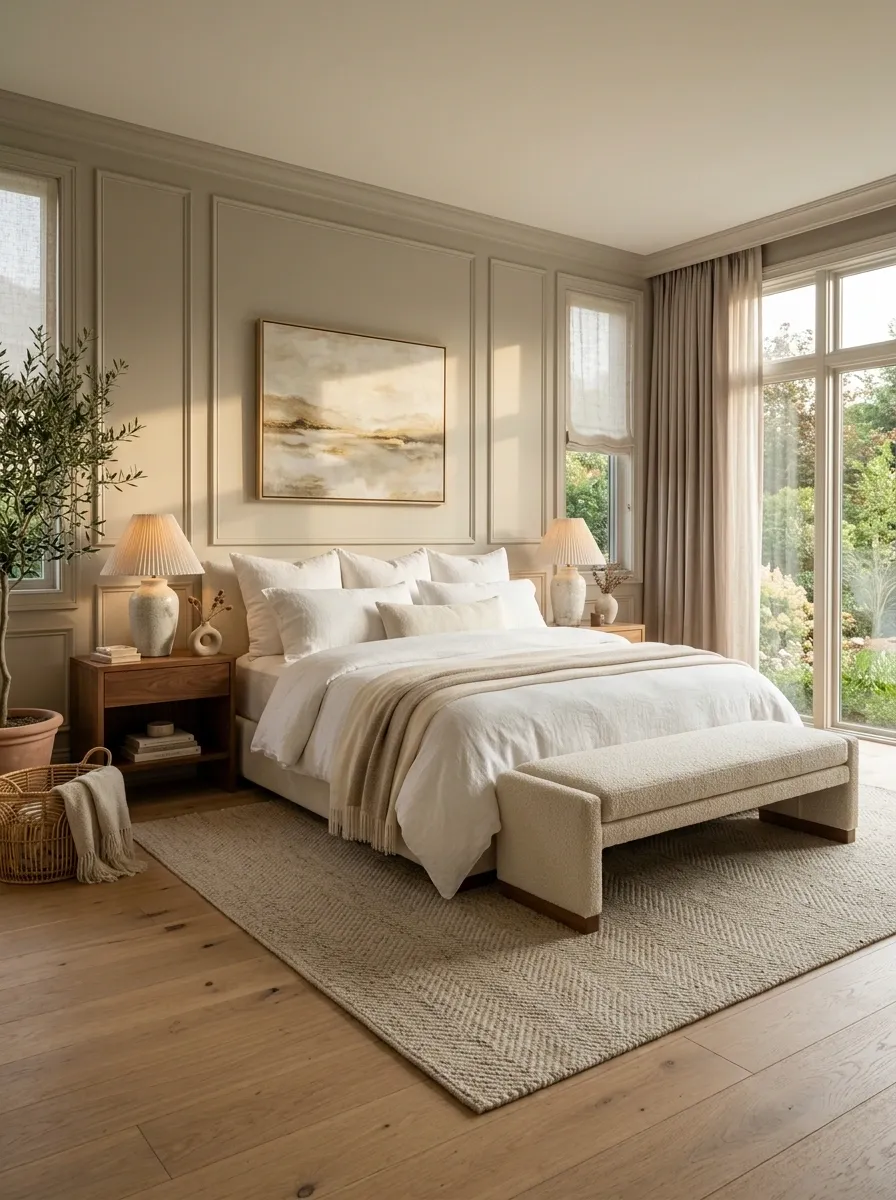
The area at the foot of the bed often feels unfinished because there’s nothing giving the lower half of the room visual weight.
A bench, compact ottoman, or simple stool fixes that without demanding another major piece of furniture. Upholstery adds softness. Wood adds natural warmth. Woven materials work when the bedroom already has plenty of smooth surfaces.
Keep the piece narrower than the bed and leave enough room to walk around it comfortably.
The goal isn’t storage. It’s visual punctuation at the end of the bed.
Choose Artwork With Warm Undertones
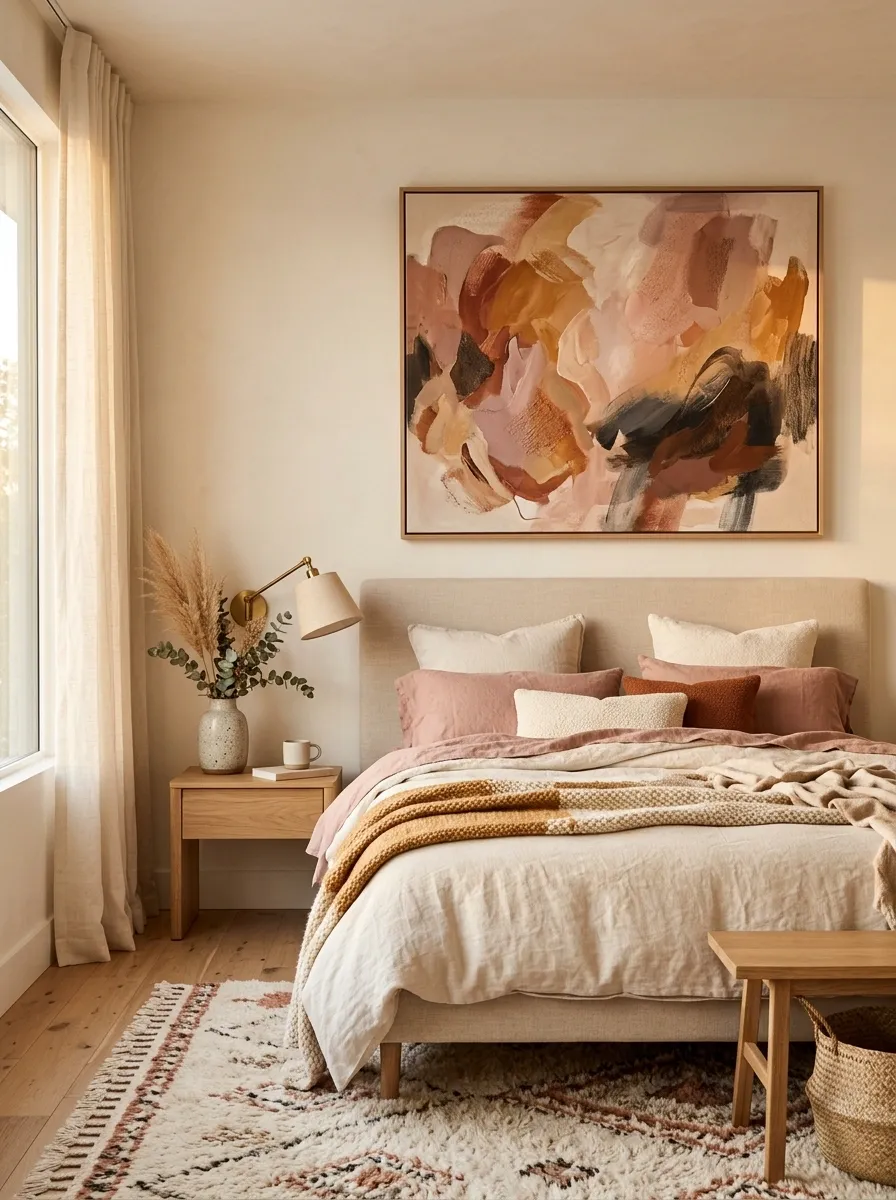
Artwork can quietly make a bedroom feel warmer without adding another major color.
Look for pieces containing brown, muted terracotta, dusty rose, ochre, cream, or warm charcoal. The colors don’t need to be obvious. Sometimes a small warm line in an abstract print is enough to connect the art to the bedding and furniture.
Avoid choosing wall art in isolation. Hold the print against the wall color and place it near the bed before committing.
A useful test: squint at the room. The artwork should belong to the same visual temperature as the furniture, textiles, and walls.
Layer Rugs Instead of Adding More Decor
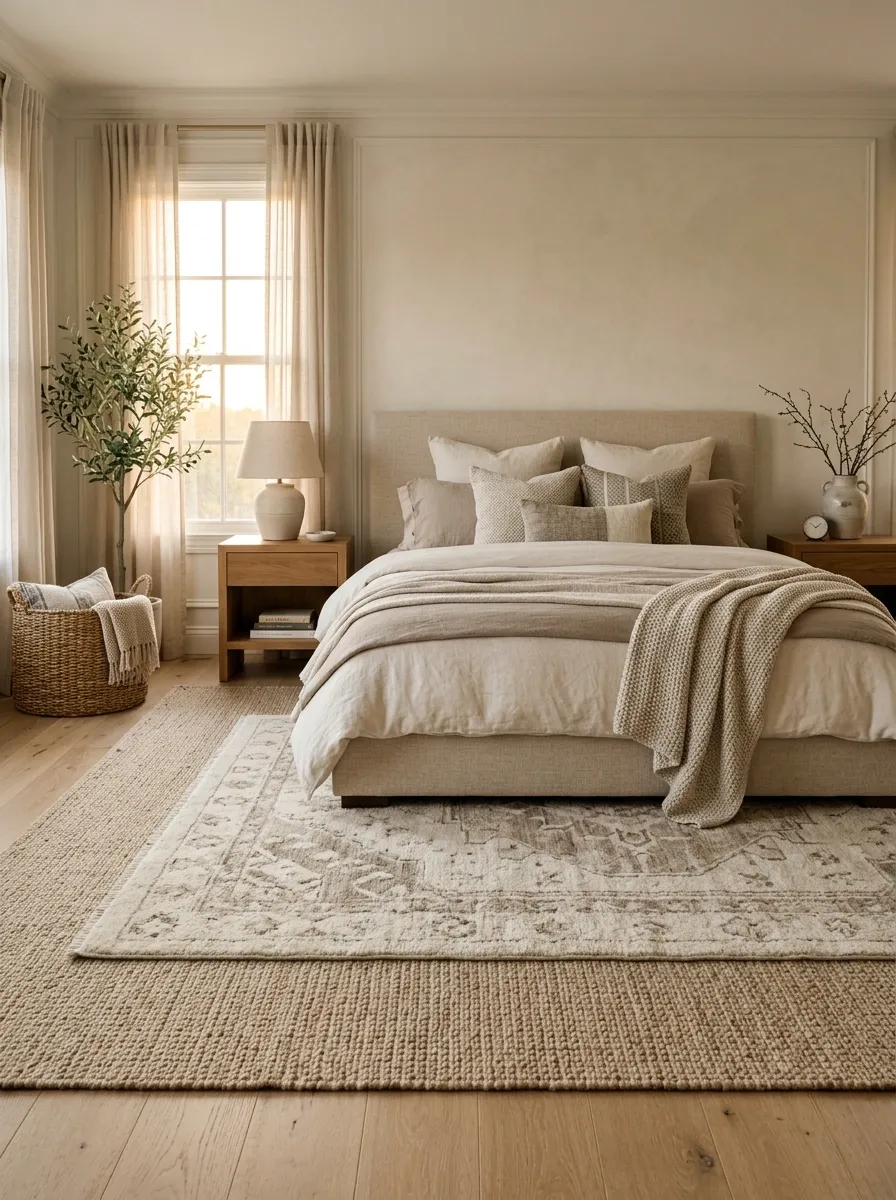
A bedroom floor can handle more warmth than another shelf full of accessories.
Layering a smaller patterned or woven rug over a larger neutral rug creates depth while keeping the floor visually soft. The trick is to make the two rugs noticeably different in scale or texture.
A flat woven base works well under a thicker, smaller accent rug. A subtle pattern on top can add interest without introducing another loud color.
Keep the upper rug slightly off-center only when the room already has strong symmetry. In a very balanced bedroom, centered placement usually looks cleaner.
Add One Wood or Ceramic Accent Near the Window
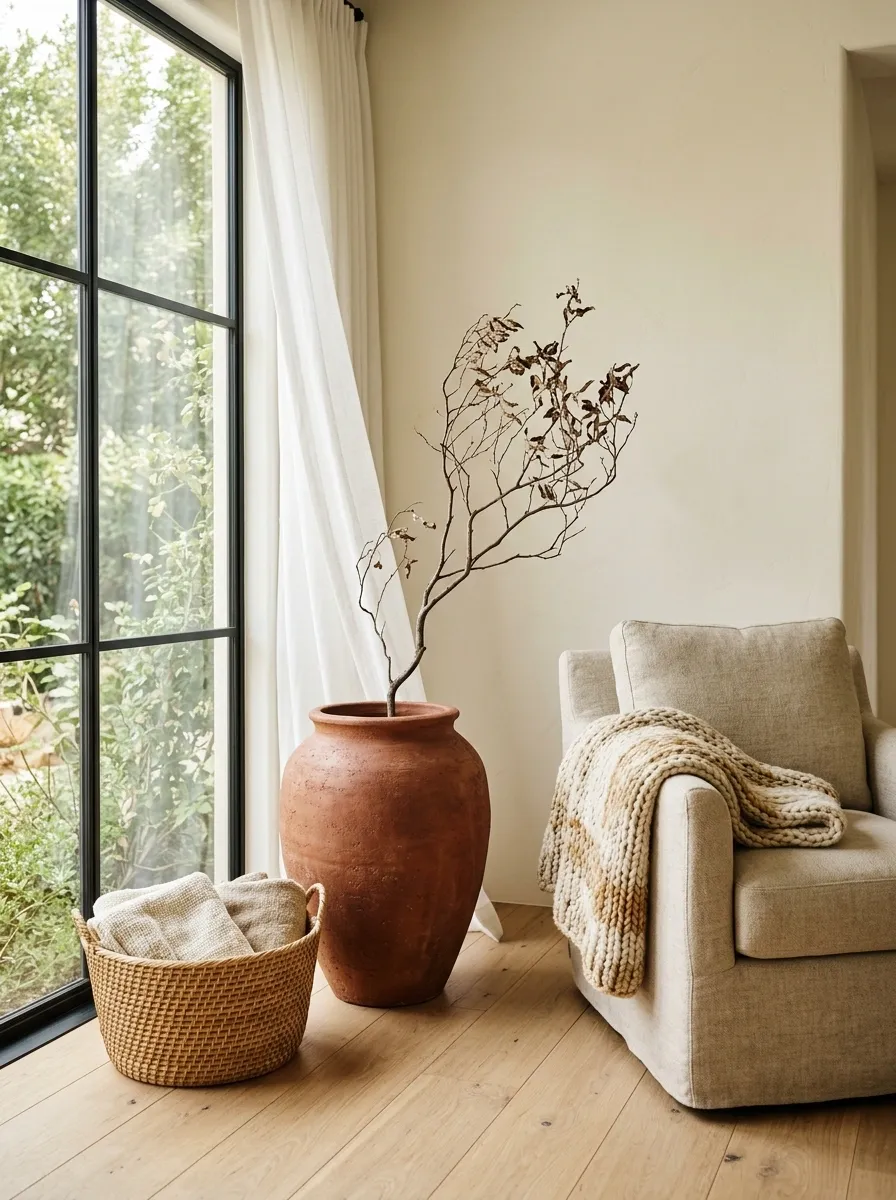
Window areas often become accidental dead zones. A small material-rich object can give that space a purpose without filling it with furniture.
A low wooden stool works beside a tall window. A large ceramic planter works where natural light reaches it. A woven basket can soften a bare corner while giving blankets or extra linens somewhere to live.
Choose based on what the room already lacks.
If there is plenty of wood near the bed, use ceramic. If the room is full of smooth finishes, choose something woven or carved.
The smartest accent is the one that introduces a missing texture.
with material.
Make the Bed Look Softly Unmade, Not Messy
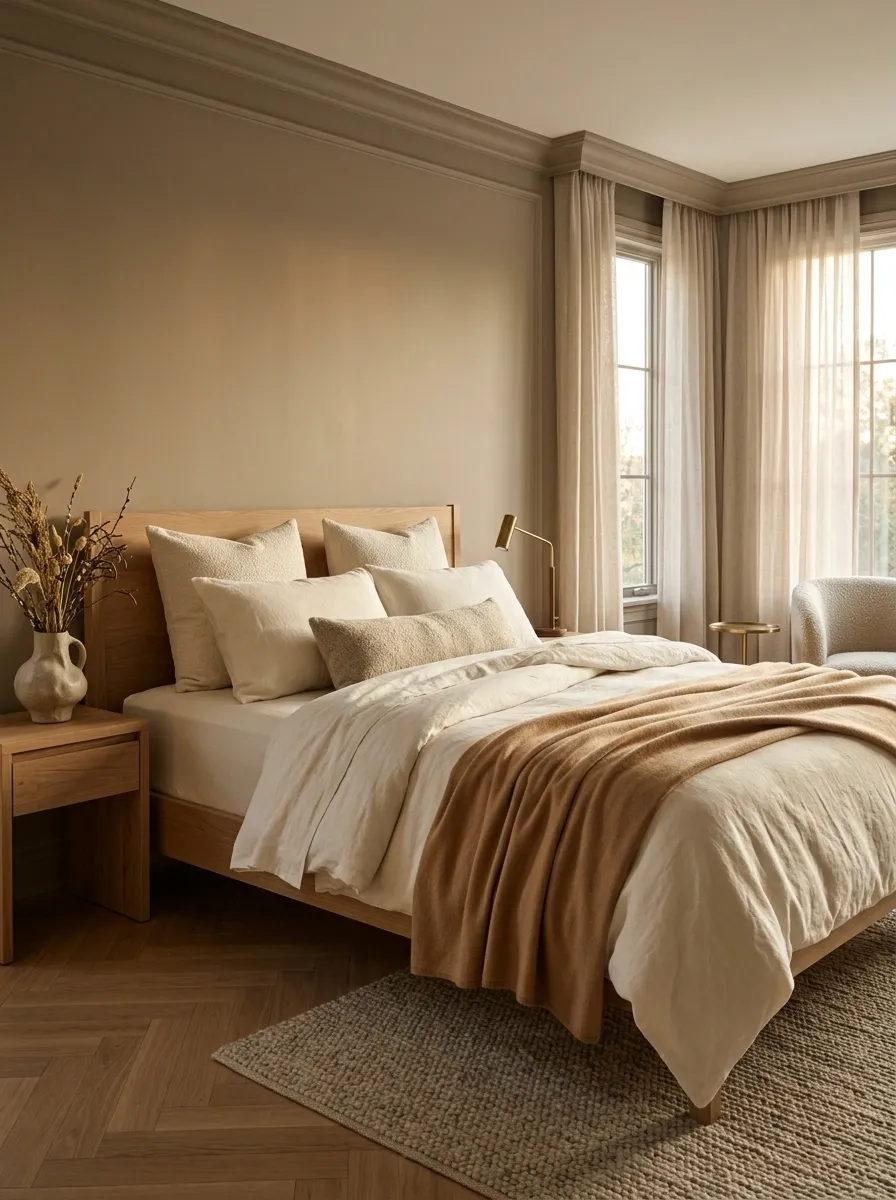
A warm bedroom needs softness, but a bed covered in randomly tossed blankets looks careless rather than relaxed.
The better approach is controlled imperfection. Keep the main bedding reasonably smooth, loosen one layer, fold one throw casually across the bottom, and let one pillow sit slightly out of line.
Those small breaks in symmetry make the bed feel used and comfortable without losing its structure.
The rule: keep the foundation neat, then introduce one or two deliberate imperfections.
Choose a Warm Metal Finish and Repeat It Lightly
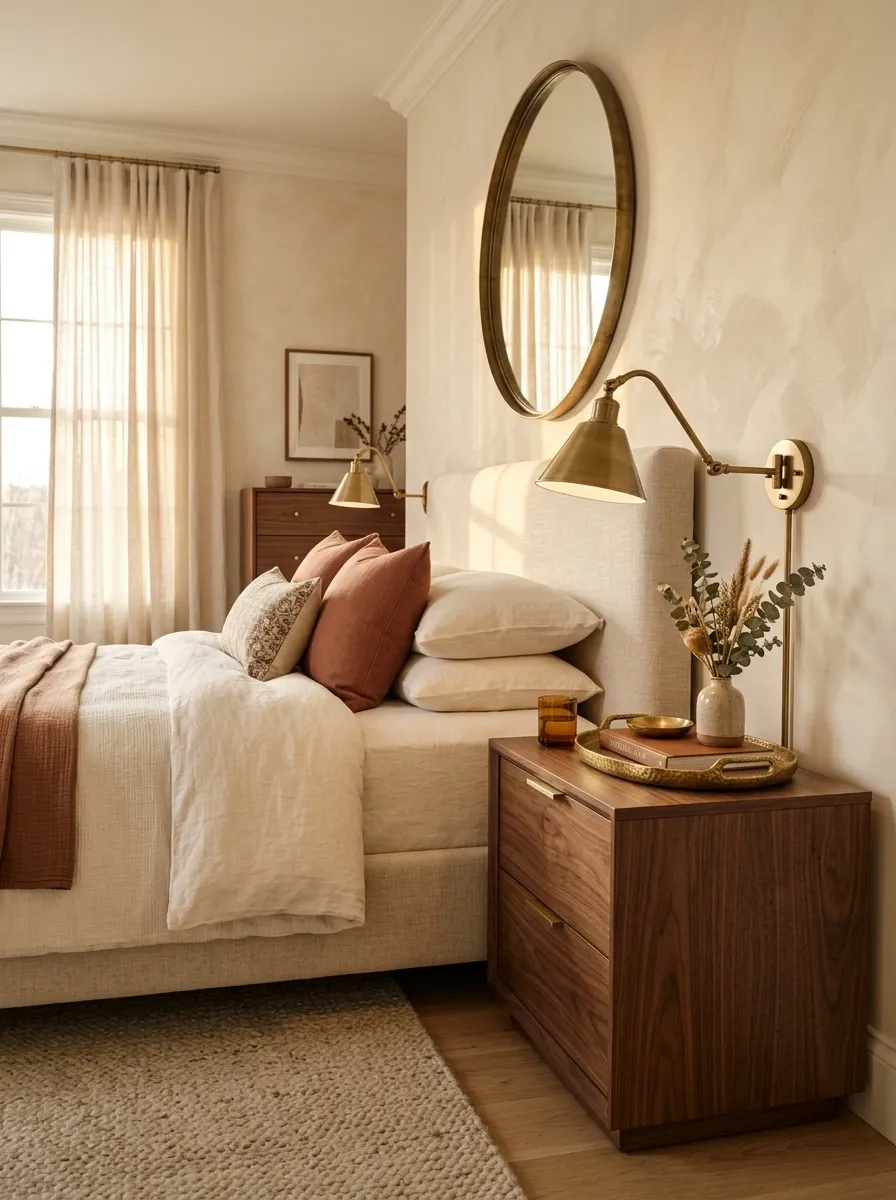
Warm metals work best as punctuation.
Brushed brass, aged bronze, and antique gold can connect a lamp, mirror frame, drawer pull, and small decorative object without making the bedroom look overly matched. The finish becomes a quiet thread running through the room.
Don’t use every warm metal available. Pick one dominant finish and repeat it lightly.
Aged brass works especially well beside walnut, cream, clay, and dusty colors. Dark bronze has more weight and works when the bedroom already contains deeper furniture.
Not the whole object.
Put Something Soft Beside the Bed
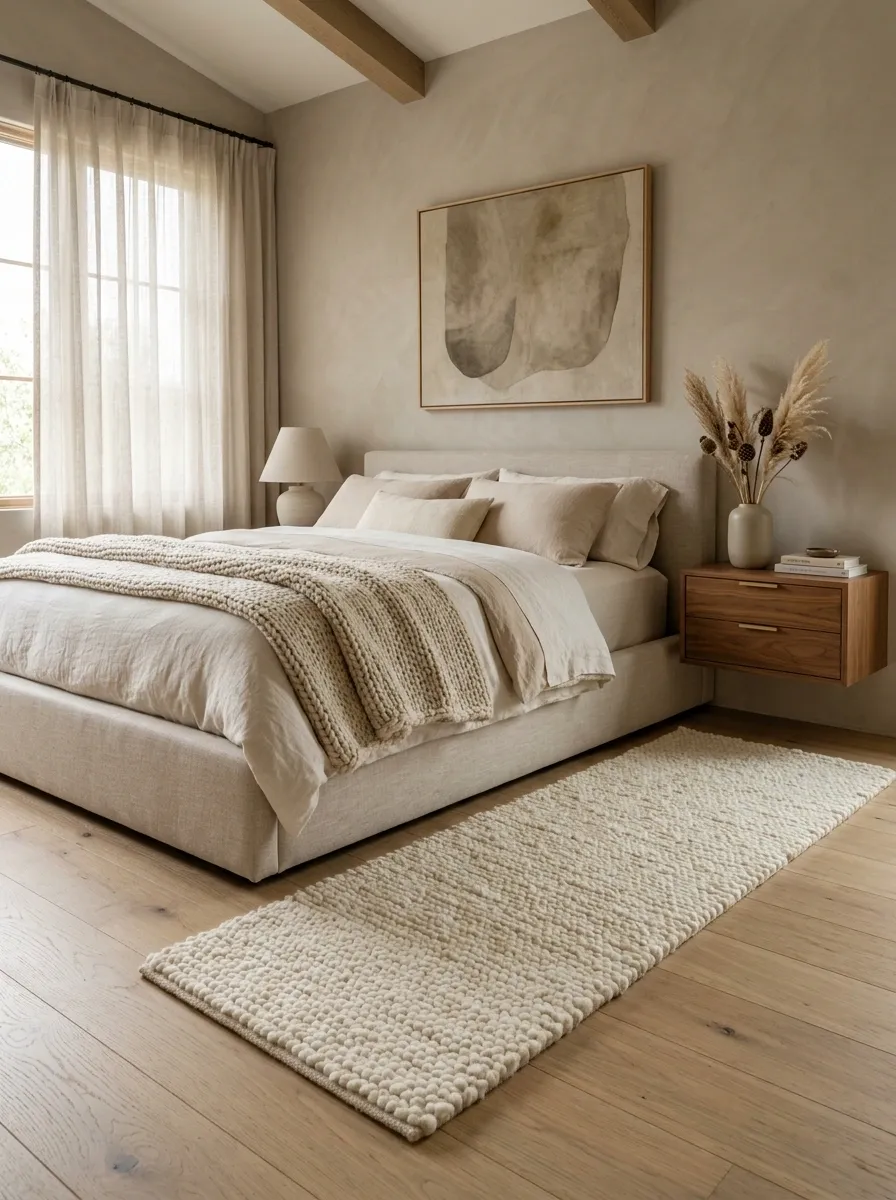
The floor beside the bed is one of the first places the eye notices in the morning. A bare, glossy floor can make an otherwise warm bedroom feel harder than it needs to.
A runner, small rug, woven mat, or soft textile layer adds another visual and physical transition around the bed. Choose a shape that follows the furniture rather than fighting it.
For symmetrical bedrooms, matching bedside rugs create a clean frame. For more relaxed rooms, one larger runner can connect both sides.
The goal isn’t more pattern. It’s softer contact between the bed and the floor.
Create One Darker Accent Zone
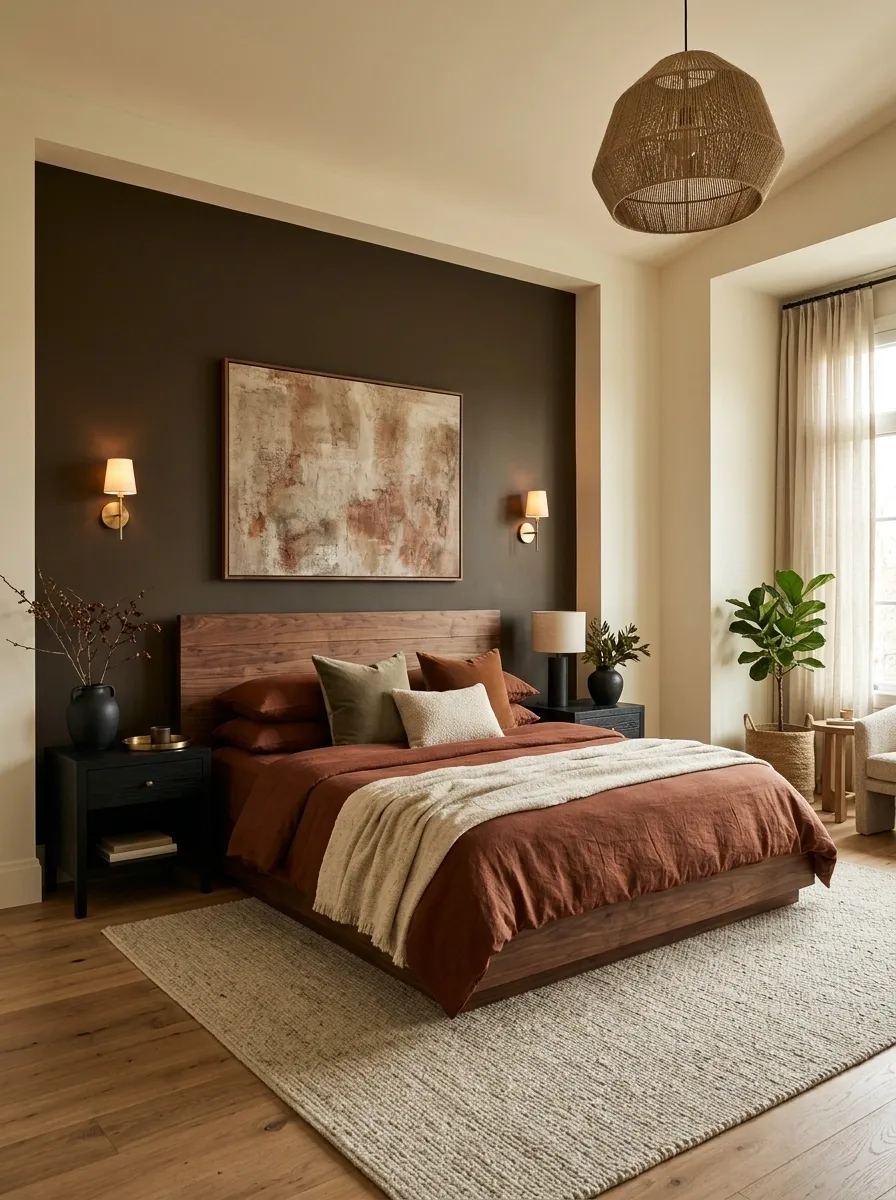
Warm bedrooms don’t need to be pale from ceiling to floor.
One deeper zone can actually make the softer parts feel warmer. A walnut headboard, brown-painted bed wall, dark nightstands, or deep rust bedding can create the visual anchor the room is missing.
The important part is containment. Keep the deeper color concentrated around one area instead of scattering dark accents across every wall and surface.
That creates depth without making the entire bedroom feel heavy.
Put the deepest tone where the eye already expects a focal point.
Leave Breathing Room Around the Furniture
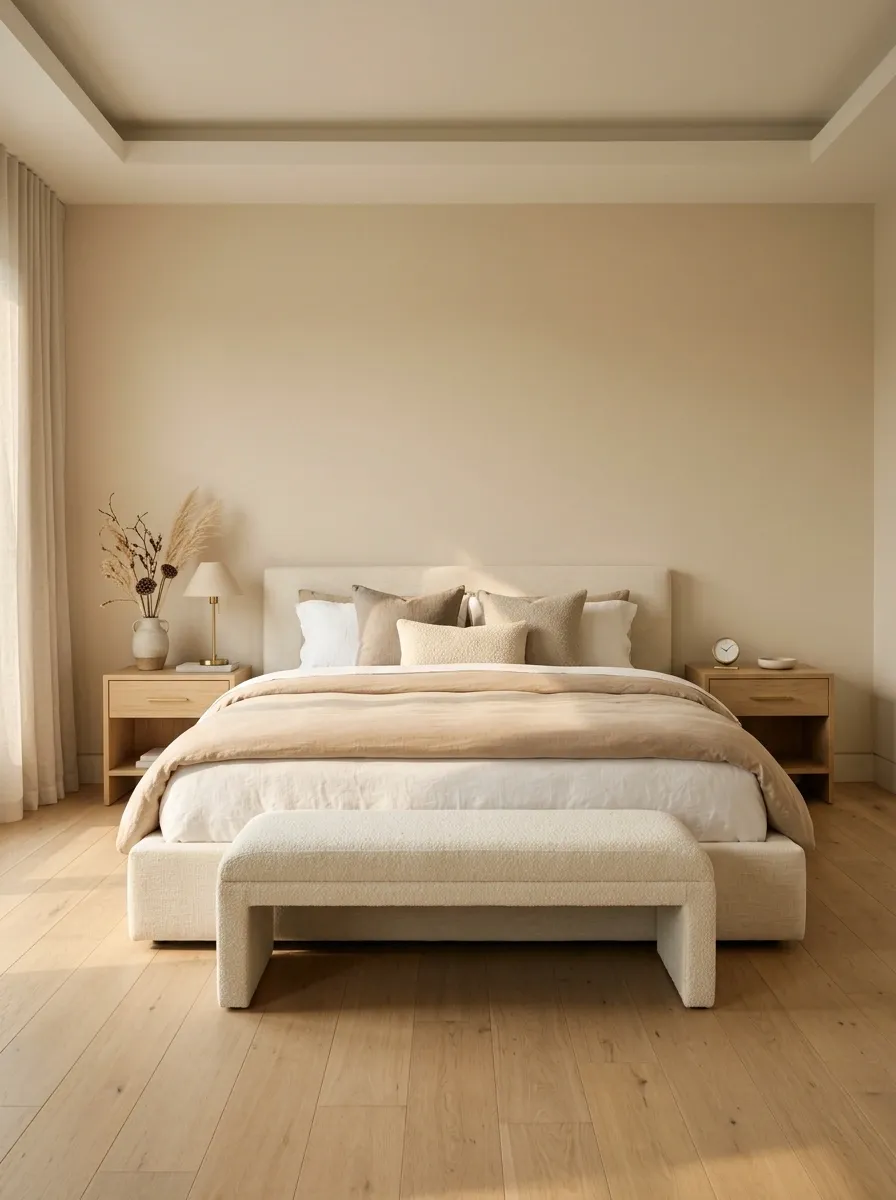
A warm bedroom shouldn’t feel packed.
Open floor around the bed, a visible strip of wall beside a nightstand, and empty space beneath a bench all give the eye a place to rest. That space makes the furniture look more deliberate and gives soft materials room to stand out.
This matters especially in smaller bedrooms. Adding another chair, basket, or side table doesn’t create warmth if the walking path becomes awkward.
Before buying anything else, remove one unnecessary object and see what changes.
Empty space isn’t unfinished space. It’s part of the composition.
Finish the Room With One Lived-In Detail
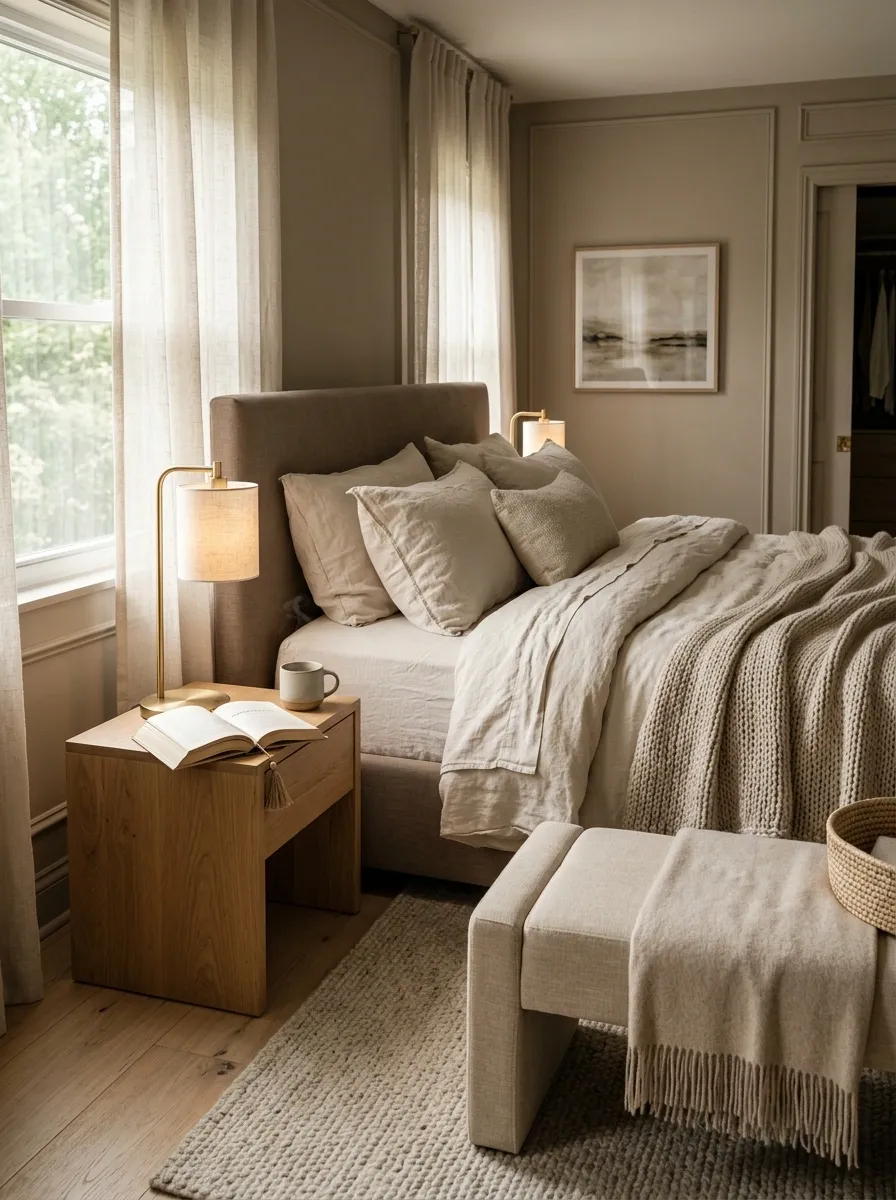
A bedroom can become so carefully styled that it stops looking like someone actually sleeps there.
One small, practical detail fixes that. A folded throw on the bench, a book left beside the bed, a pair of simple slippers, or a ceramic cup can introduce just enough casual evidence of daily life.
Choose something that makes sense for the room. Don’t scatter fake “lived-in” objects everywhere.
The best detail is functional first and decorative second.
A bedroom should look ready to use, not ready for a showroom inspection.
that someone lives here.
Finish With a Simple Five-Part Warm Bedroom Formula
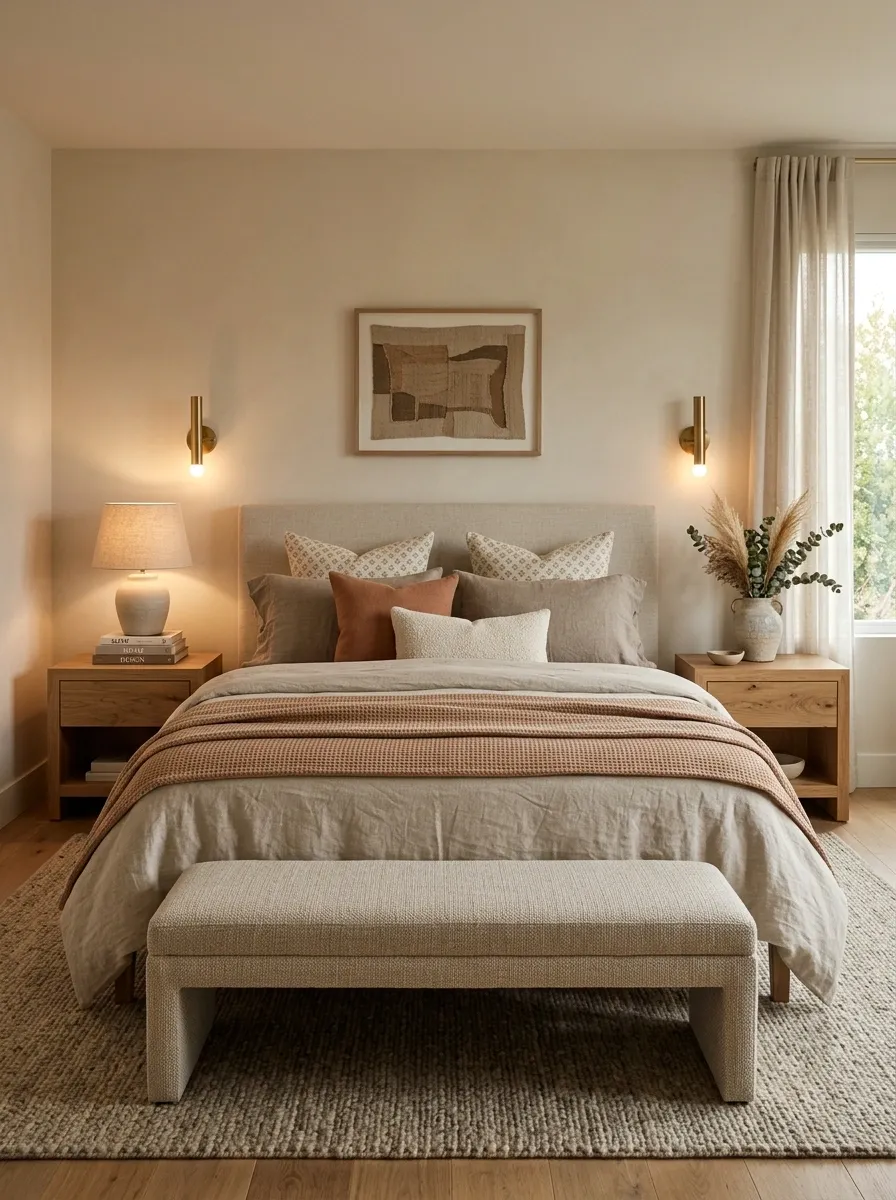
Warm bedroom design gets much easier once the room has a clear structure.
Start with a warm wall tone. Add natural wood. Build the bed with contrasting textures. Use soft, layered lighting. Then repeat one warm accent color in small places.
That’s the framework. Everything else is optional.
A room doesn’t need every decorative trick at once. These ideas work best when they support the same visual direction instead of competing for attention.
Use the formula first, then add details only where the room still feels flat.
The Warmest Bedrooms Aren’t the Most Decorated
A bedroom doesn’t become inviting because every empty surface gets filled.
It becomes inviting when the room has a clear visual rhythm.
Warm walls settle the background. Natural wood brings variation. Layered bedding gives the bed depth. Soft lighting changes the room after dark. A restrained accent color ties the details together.
Then comes the part people often skip: stopping.
Leave some wall visible. Leave some tabletop clear. Let the floor show around the rug. Don’t add another pillow just because there’s room for one.
A warm bedroom should feel comfortable before anyone starts looking closely at the decor. The big decisions should already be doing the heavy lifting.
Start there. The smaller details will make much more sense afterward.
Save this list for the next bedroom refresh when the goal is warmth, softness, and depth without turning the room into a pile of stuff.