
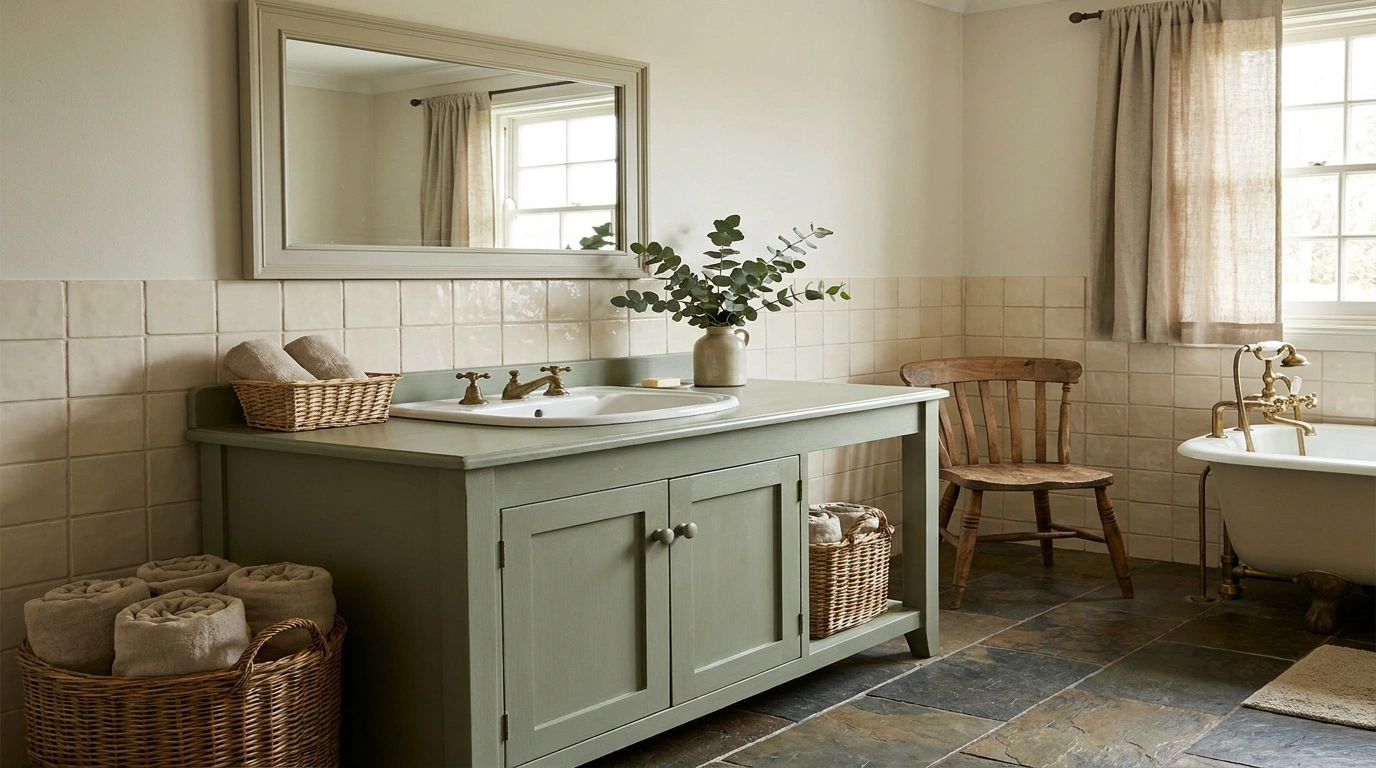
Country bathrooms have a talent for looking either wonderfully charming or suspiciously similar to a farmhouse gift shop. The difference rarely comes down to the price of the vanity or whether the towels are embroidered.
It comes down to the relationship between the materials, the architecture, and the details that make the room feel finished. Weathered oak beside creamy limestone creates an entirely different mood from dark green paneling paired with aged brass.
A clawfoot tub can look romantic, traditional, or dramatic depending on everything surrounding it.
Rustic charm is cute. A bathroom that looks like a craft store exploded? Less cute.
Country style works best when the materials have personality and the room knows when to stop. Not every wall needs a slogan. Not every surface needs a distressed finish. The toilet is already doing enough.
KEEP THE CHARACTER
Weathered wood. Aged brass. Actual charm.
Natural materials and vintage details have enough personality without a dozen accessories fighting for attention.
LEAVE THIS IN THE SHOP
The farmhouse sign collection.
If the walls, towels, soap dispenser, and toilet are all announcing the theme, the room has made its point. Loudly.
THE ACTUAL STANDARD
Pretty, practical, and easy to live with.
Good lighting, sensible storage, and finishes that tolerate moisture. Aesthetic privilege comes with responsibilities.
THE VERDICT: Let the materials bring the charm. The decor doesn’t need to issue a press release.
Country Bathroom Ideas
Warm Cottage Bathroom With Brass and Beadboard
Textured neutral tile, crisp white beadboard, and gleaming brass fixtures create a country bathroom that feels both deeply traditional and wonderfully inviting. The materials lean heavily on natural warmth, preventing the space from feeling sterile.
A freestanding tub paired with vintage-style brass hardware anchors the room, while a woven pendant light adds organic texture overhead. Framed botanical art on the shelf brings a gentle decorative touch without cluttering the walls.
The trick is balancing the cooler grey tones of the shower tile with the softer, brighter whites on the lower paneling. A simple woven basket keeps daily essentials out of sight while adding another layer of tactile charm.
English Cottage Bathroom With Floral Wallpaper and a Clawfoot Tub
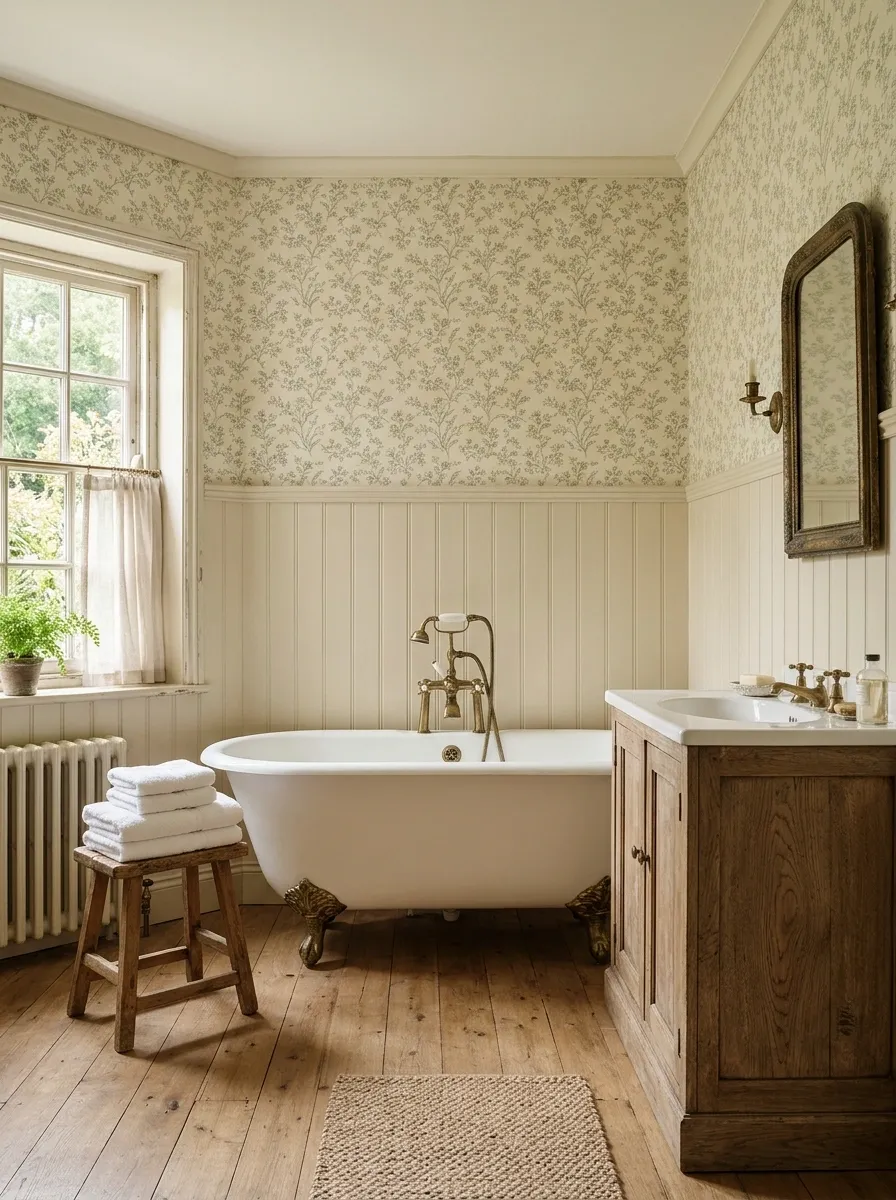
Soft botanical wallpaper, painted beadboard, and a freestanding clawfoot tub give this bathroom the kind of character that makes modern, all-white interiors look a little underdressed.
The palette stays gentle, with creamy white trim, muted green leaves, aged brass fittings, and a weathered oak vanity. An antique-style mirror adds another layer of history, while simple white towels keep the pattern from taking over every available surface.
The trick is choosing a small-scale floral print rather than wallpaper that looks like an entire garden has been pressed against the wall. The beadboard creates a visual break, making the upper walls feel decorative without overwhelming the room.
This composition works particularly well in older homes with traditional proportions, but the furniture and wallpaper can also bring cottage character to a newer bathroom.
THE COTTAGE FORMULA
Pattern above. Painted panels below.
Botanical
Fine-scale floral wallpaper
Cream
Beadboard and sanitaryware
Weathered oak
Vanity and furniture
Keep it balanced: Let the wallpaper provide the pattern. Plain towels and uncomplicated fixtures give the eye somewhere to rest.
Vintage Farmhouse Bathroom With Trough Sink
A wall-mounted trough sink with double brass faucets and an etched mirror gives this bathroom an unmistakable historic personality. It feels like a space that has evolved over decades rather than something assembled from a modern catalog.
The creamy walls and rustic wooden shelf provide a quiet backdrop for the statement sink, while a small wooden stool and vintage suitcase introduce unexpected warmth and character. Simple textiles keep the focus entirely on the architectural elements.
Spacing is everything with large wall-hung fixtures. Allowing the basin enough breathing room prevents the wall from feeling top-heavy, especially when paired with a substantial mirror above.
Keep countertop accessories to a minimum. A single ceramic vase with fresh blooms is all it takes to soften the industrial lines of the vintage plumbing and make the room feel lived-in.
Modern Farmhouse Bathroom With White Cabinetry and Black Fixtures
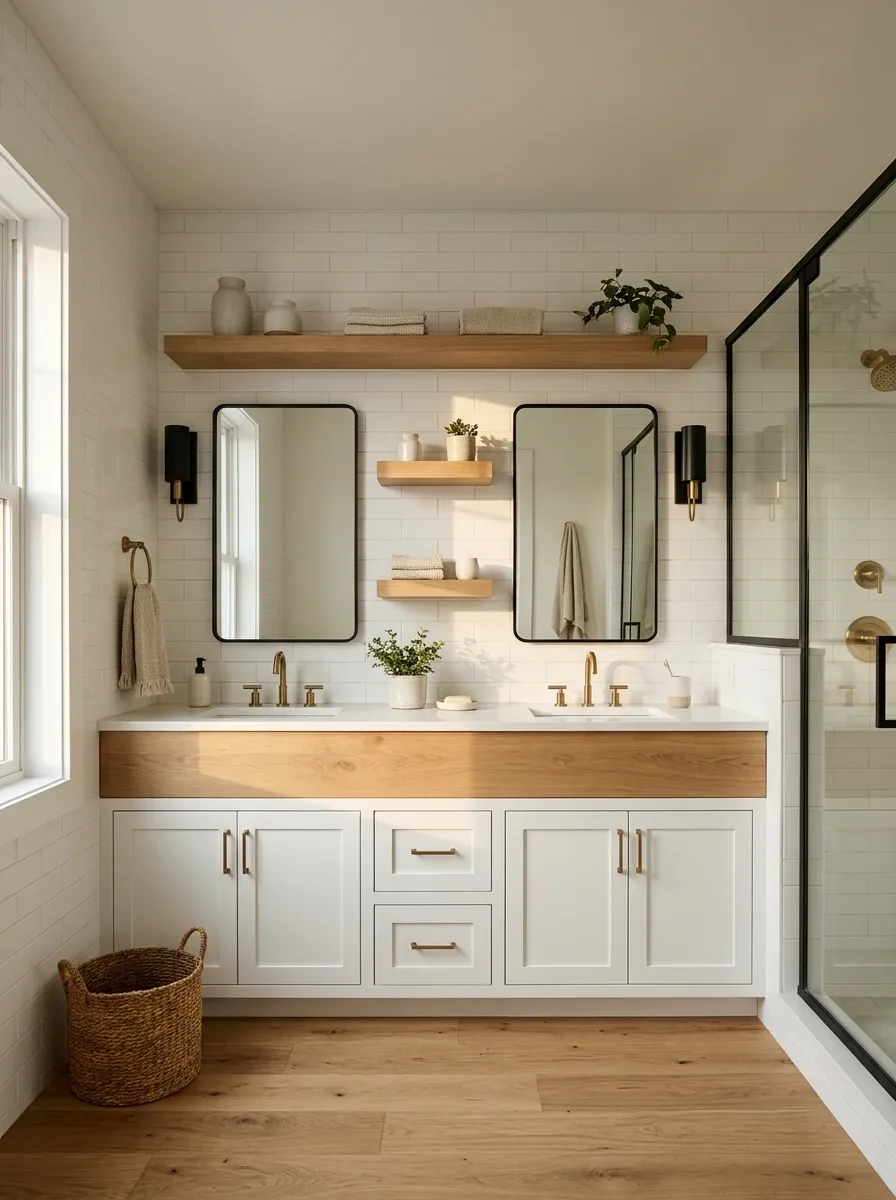
White cabinetry, black metal framing, and warm oak create a farmhouse bathroom that feels fresh without losing its traditional roots. The look is crisp, but it doesn’t have to feel cold or overly polished.
Inset cabinet doors and straightforward subway tile establish the classic farmhouse foundation. A black-framed glass shower adds sharper lines, while oak shelves or a timber vanity top bring warmth back into the composition.
Simple wall lights and uncluttered countertops keep the room from drifting into showroom territory.
The balance matters here. Too much black can make a small bathroom feel visually cramped, while an abundance of white can leave it looking sterile.
Concentrate the darker finishes around the shower frame, mirrors, and hardware, then let the wood soften the contrast. The result feels structured and practical without resembling a black-and-white photocopy.
A STUDY IN CONTRAST
Dominant finish
Clean white
Cabinetry, tile, and major fixtures establish visual openness.
Definition
Matte black
Shower framing, mirrors, and selected hardware.
The missing ingredient
Natural oak. A warm timber surface prevents the high-contrast palette from feeling hard or clinical. A little wood can save a room from looking like a corporate restroom.
Cozy Country Bathroom With Timber Beams
Exposed timber beams, vertical wood paneling, and a warm wooden vanity give this country bathroom an earthy, grounded feel. The rich grain of the wood stands out beautifully against soft neutral walls, creating a space full of rustic charm.
A contemporary rectangular basin sits comfortably atop a traditional wooden chest of drawers, blending modern convenience with antique warmth. An arched mirror reflects the natural light and ties the rustic elements together.
The key to this look is letting the raw wood take center stage while keeping the surrounding surfaces clean and understated. Vertical paneling draws the eye upward, making the room feel taller and more open.
Subtle lighting casts a soft glow over the timber, highlighting its natural texture. Simple accessories ensure the space remains functional without losing its cozy, cabin-like appeal.
French Country Bathroom With Limestone and an Antique Vanity
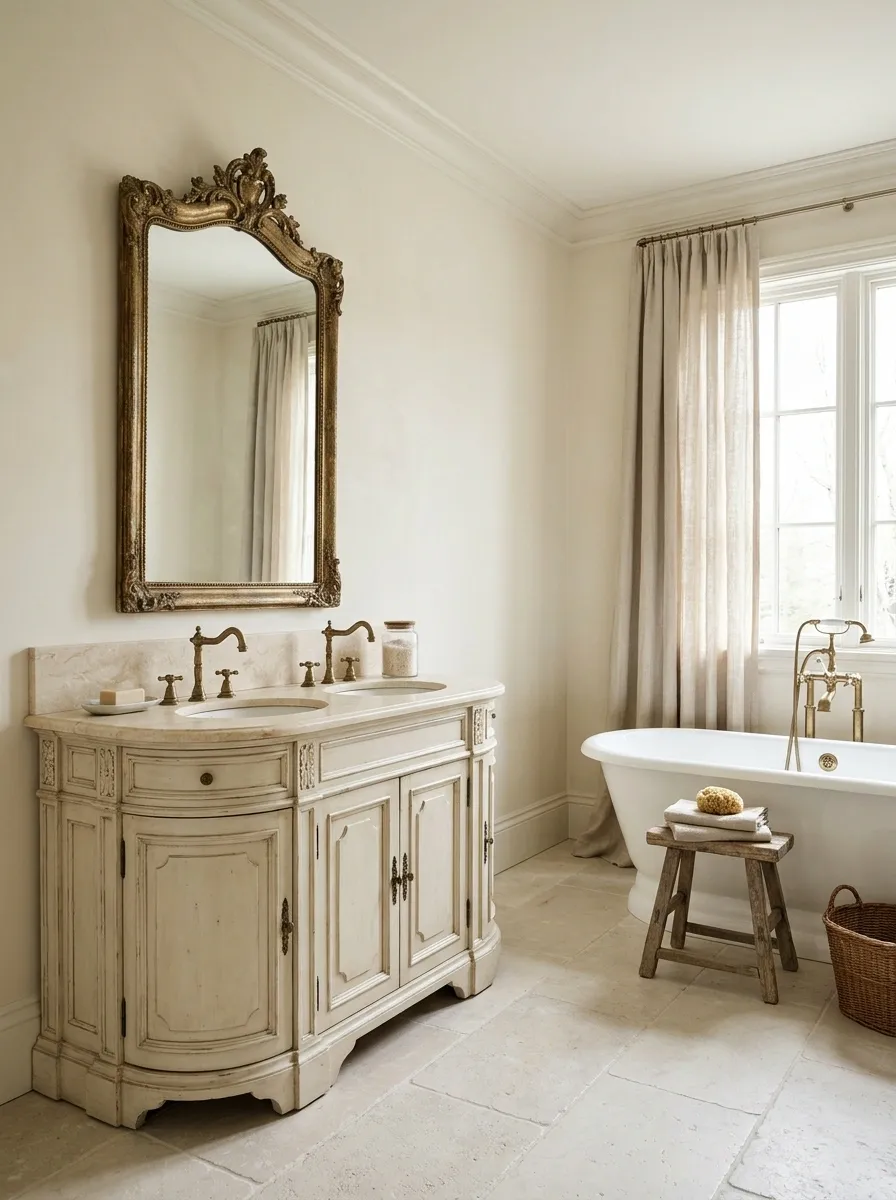
A curved vanity, creamy stone surfaces, and aged brass give this French country bathroom its relaxed elegance. Nothing needs to sparkle aggressively. The appeal comes from softened edges, natural texture, and furniture that looks as though it belongs in the house.
Pale limestone flooring works beautifully alongside warm ivory walls and a freestanding tub. An antique-style mirror introduces a little ornament, while linen curtains soften the light without adding another bold pattern.
The vanity should have enough visual weight to anchor the room, particularly if the other finishes are pale.
Avoid pairing every surface with a distressed finish. Too many artificially aged details can make the whole bathroom look like a furniture showroom staging a costume drama.
A few traditional pieces, combined with clean sanitaryware and restrained accessories, feel far more convincing.
THE FRENCH COUNTRY MATERIAL PALETTE
Limestone
The quiet foundation. Choose a softly varied finish for the floor or selected wall surfaces.
Painted furniture
A curved or gently detailed vanity adds character without demanding an elaborate surround.
Aged brass and linen
Use metal for definition and linen for softness. Let each material do one job rather than piling on decorative details.
Traditional Plaid Wallpaper Bathroom With Cast Iron Tub
Rich plaid wallpaper, a classic pedestal sink, and a deep cast iron tub give this bathroom a distinctly heritage feel. The dark, patterned walls wrap the room in warmth, making the space feel intimate and full of character.
A traditional black-and-white clawfoot tub sits ready for long soak sessions, while a simple white towel draped over a chrome ring offers a crisp contrast to the busier walls. Natural light catches the dark tones, bringing subtle depth to the pattern.
Using a bold pattern throughout works wonders when balanced with bright white sanitaryware and natural wood trim along the floor. The wooden molding grounds the dramatic wallpaper and keeps it from overwhelming the room.
Keep decorative objects sparse. When the walls already tell such a rich visual story, the rest of the space only needs a few quiet, functional pieces to feel complete.
Rustic Cabin Bathroom With Timber Beams and Stone
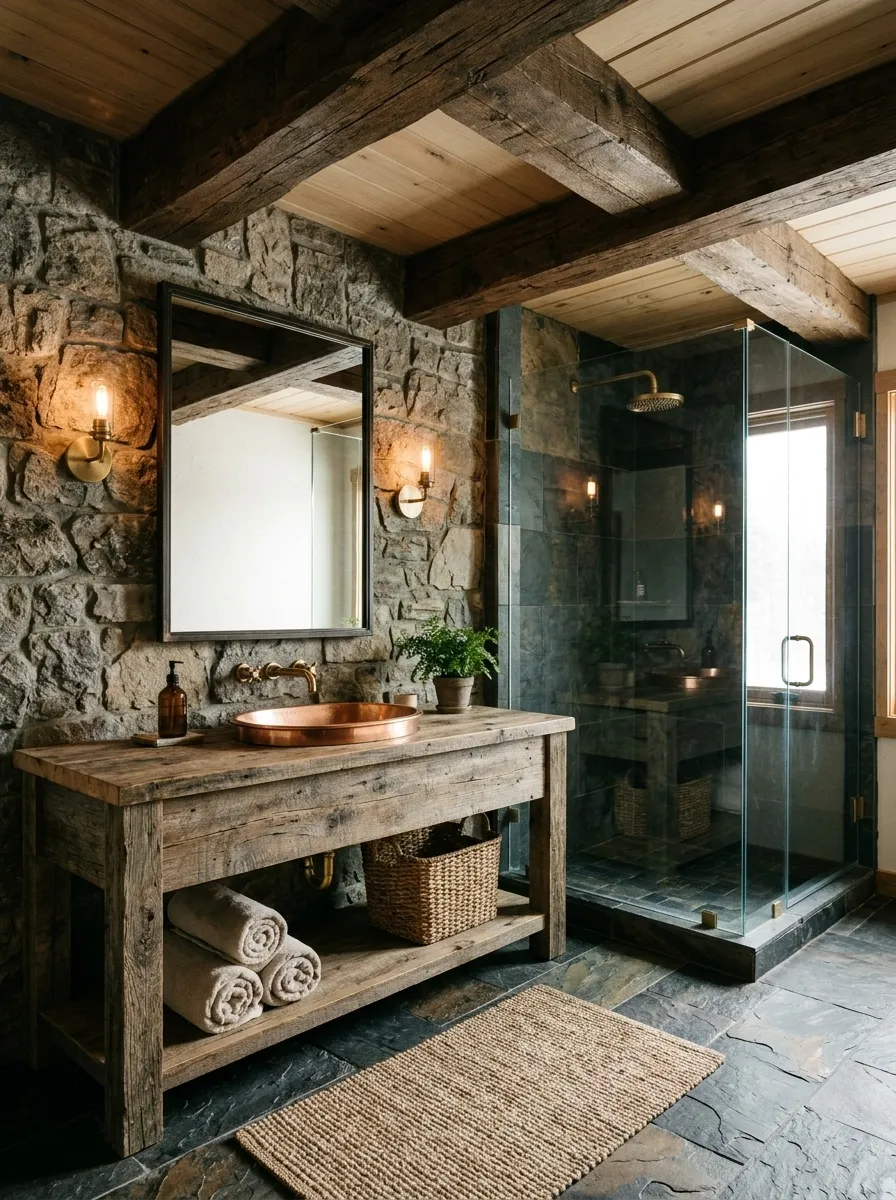
This bathroom leans into the rugged side of country design, with exposed timber beams, natural stone, a substantial reclaimed-wood vanity, and dark slate flooring. It feels rooted in its setting rather than decorated around a theme.
The strongest compositions pair rough materials with smoother surfaces. Stone gives the walls depth, while a timber vanity introduces warmth and a copper basin adds a small area of reflected color.
Clear glass around the shower prevents the heaviest finishes from closing in the space.
Lighting makes a major difference. Warm wall fixtures bring out the wood grain and stone variation, while a lighter ceiling helps balance the darker lower half of the room.
Keep the accessories simple. Between the beams, stone, and timber, the room already has more personality than most bathrooms manage with an entire basket of decorative objects.
A RUGGED ROOM NEEDS A HIERARCHY
Three materials. Three different jobs.
Keep the ceiling lighter. Dark beams and stone already provide plenty of visual weight. No need to make the whole room audition for a cave.
Scandinavian Country Bathroom With Pale Oak and White Plaster
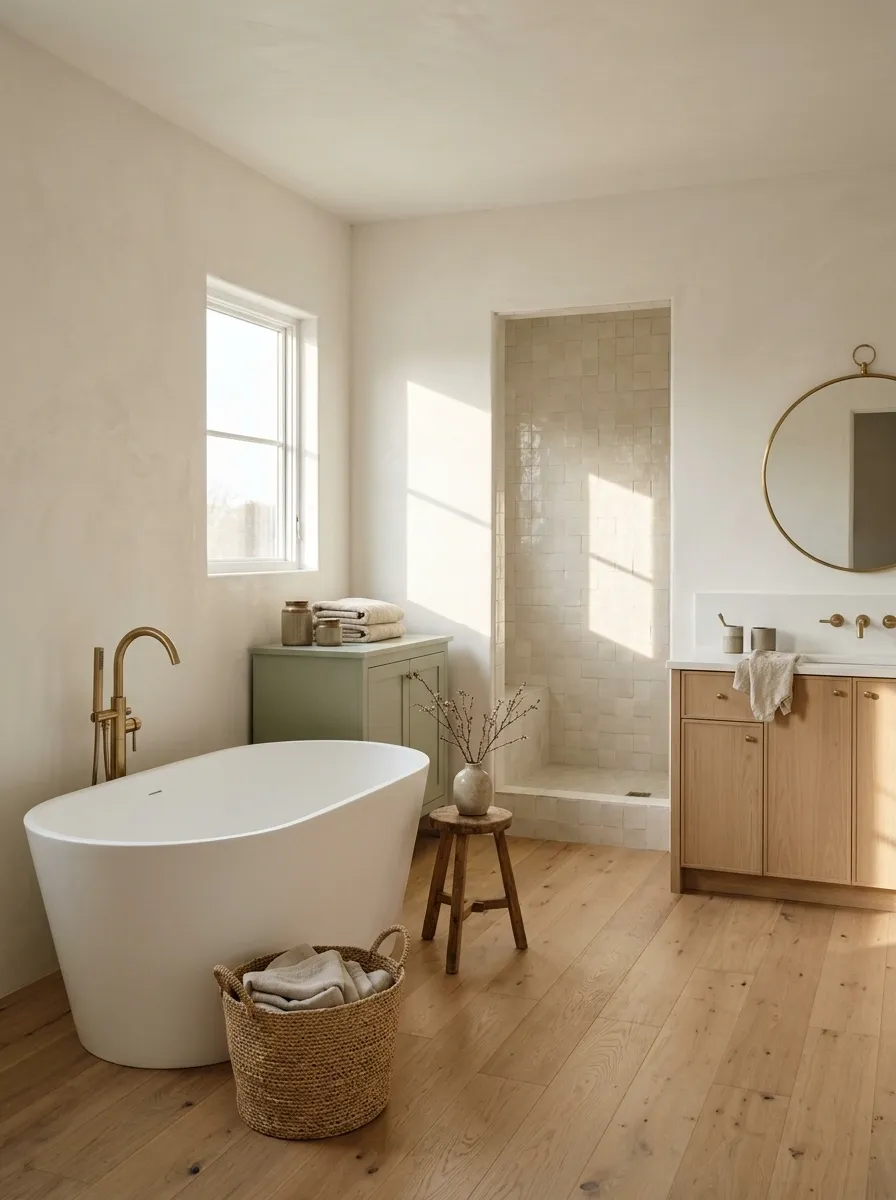
Pale oak, warm white plaster, and handmade ivory tile create a country bathroom with a quieter, more minimalist sensibility. There are no elaborate carved details or dramatic patterns competing for attention. The appeal lies in subtle changes in texture and a layout that gives the important elements room to breathe.
A simple freestanding tub or streamlined walk-in shower establishes the main composition. A pale oak vanity brings warmth, while muted sage can appear on a small cabinet, linen towel, or restrained painted detail.
The walls and floor should share compatible undertones so the whites feel related rather than accidentally mismatched.
This approach works particularly well in a smaller bathroom, where visual clutter can make the room feel cramped. Storage should be planned carefully and accessories kept useful.
Minimalism is much easier to appreciate when everyday toiletries aren’t forming a small mountain beside the sink.
THE QUIET COUNTRY PALETTE
Main surfaces Pale oak
Natural warmth Soft sage
Quiet color Deep green
Small accents
The expensive-looking trick isn’t adding more finishes. It’s making the few chosen finishes look like they belong together.
Traditional Farmhouse Bathroom With Beadboard and Checkerboard Floors
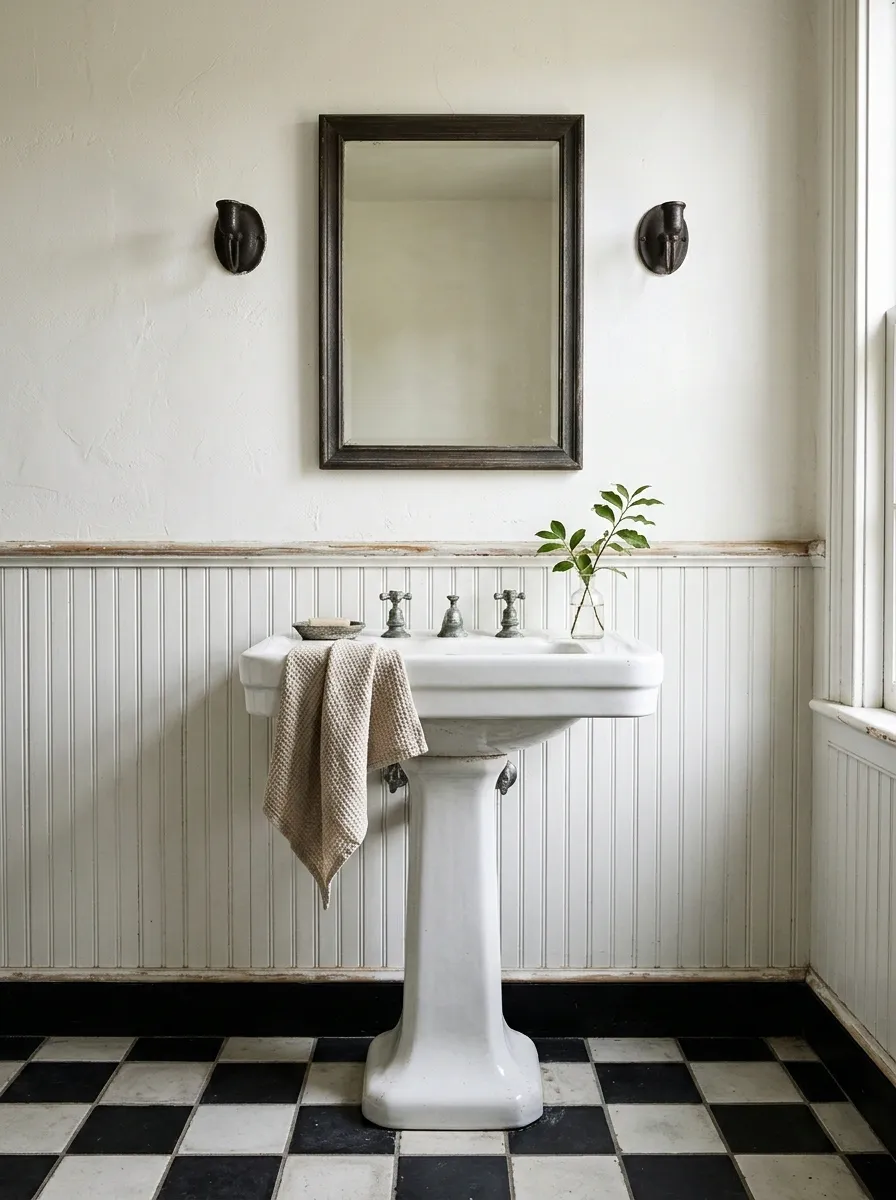
Black-and-white checkerboard flooring, white beadboard, a traditional pedestal sink, and simple schoolhouse lights create a farmhouse bathroom with a distinctly old-fashioned personality. It feels architectural rather than decorative, which is exactly why the combination works.
The floor provides the strongest pattern, while the paneled walls keep the upper half of the room relatively quiet. A dark mirror frame or a few black accents connect the two without making every fixture match.
Warm white paint softens the contrast, preventing the room from feeling too stark.
The scale of the checkerboard matters. Oversized squares can dominate a small bathroom, while tiny squares may create unnecessary visual noise.
Let the floor have its moment, then keep the accessories uncomplicated. The checkerboard is already doing the heavy lifting. It doesn’t need a motivational sign cheering it on.
THE OLD-HOUSE PROPORTION CHECK
Let the floor make the statement.
Dark and light
Classic contrast with simple surroundings.
Smaller repeats
More visual activity, especially in tight rooms.
The takeaway: Check the flooring against the room’s dimensions before choosing a pattern. A classic floor should look intentional, not like a chess tournament broke out under the sink.
Botanical Cottage Bathroom With Soft Green Cabinetry
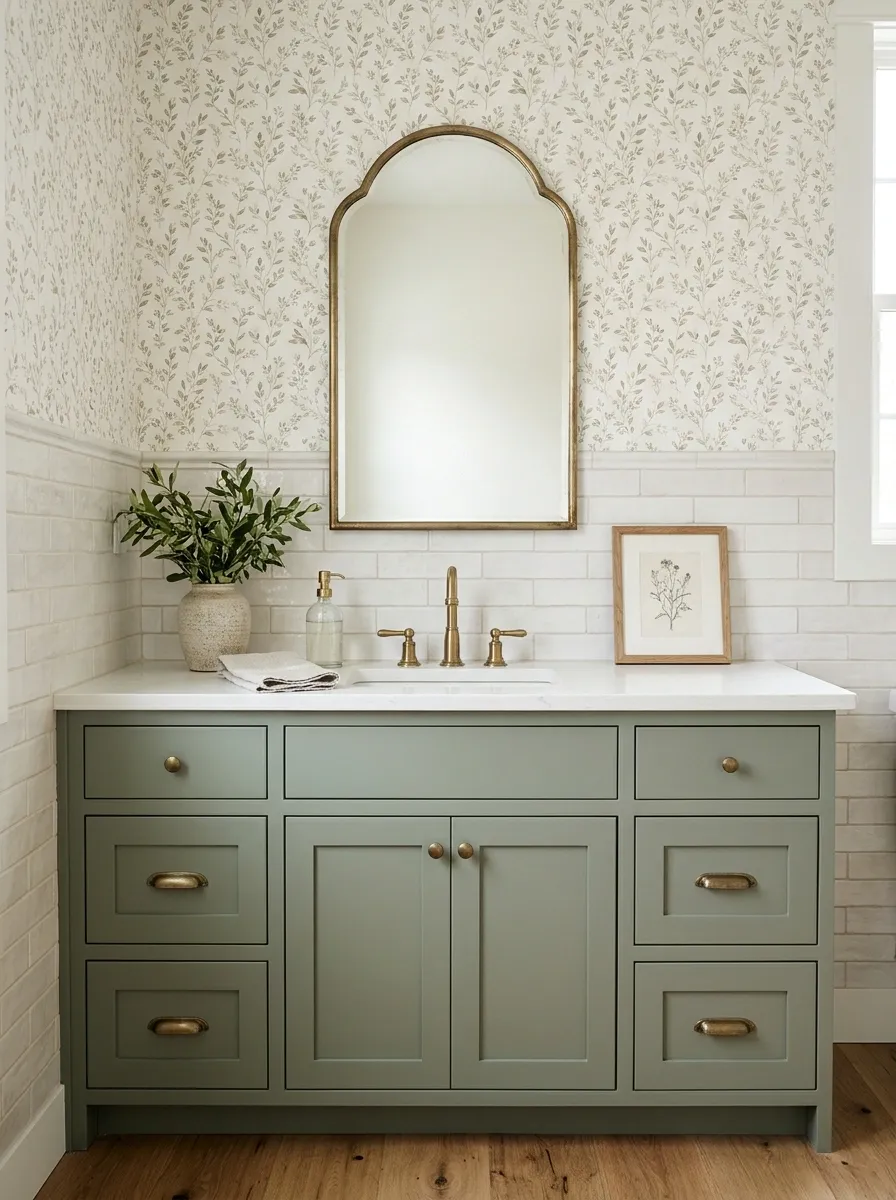
Botanical wallpaper and sage cabinetry bring garden-inspired color into a country bathroom without turning it into a greenhouse with plumbing. The combination feels especially convincing beside white sanitaryware, an antique-style mirror, and warm metal fittings.
The wallpaper should feature a recognizable, relatively small-scale pattern, such as fine leaves, trailing stems, or delicate flowers. Muted sage cabinetry gives the eye a solid color to settle on, while cream walls or white tile keep the overall composition from becoming too busy.
A simple vanity shape works best because the wallpaper already supplies plenty of detail.
Add a small arrangement of fresh greenery or a framed botanical print, but resist filling every empty corner. Empty space is not a decorating emergency.
PATTERN WITHOUT THE VISUAL CHAOS
Three layers of cottage color.
Pattern
Botanical wallpaper
The detail that gives the room its cottage identity.
Solid
Sage cabinetry
A quiet block of color that stops the pattern from taking over.
Rest
Warm white
Tile and sanitaryware provide visual breathing room.
Design rule: Pair one noticeable pattern with quieter surrounding finishes. Three competing florals aren’t a layered look. They’re a group chat with notifications permanently switched on.
Industrial Country Bathroom With Reclaimed Wood and Brick
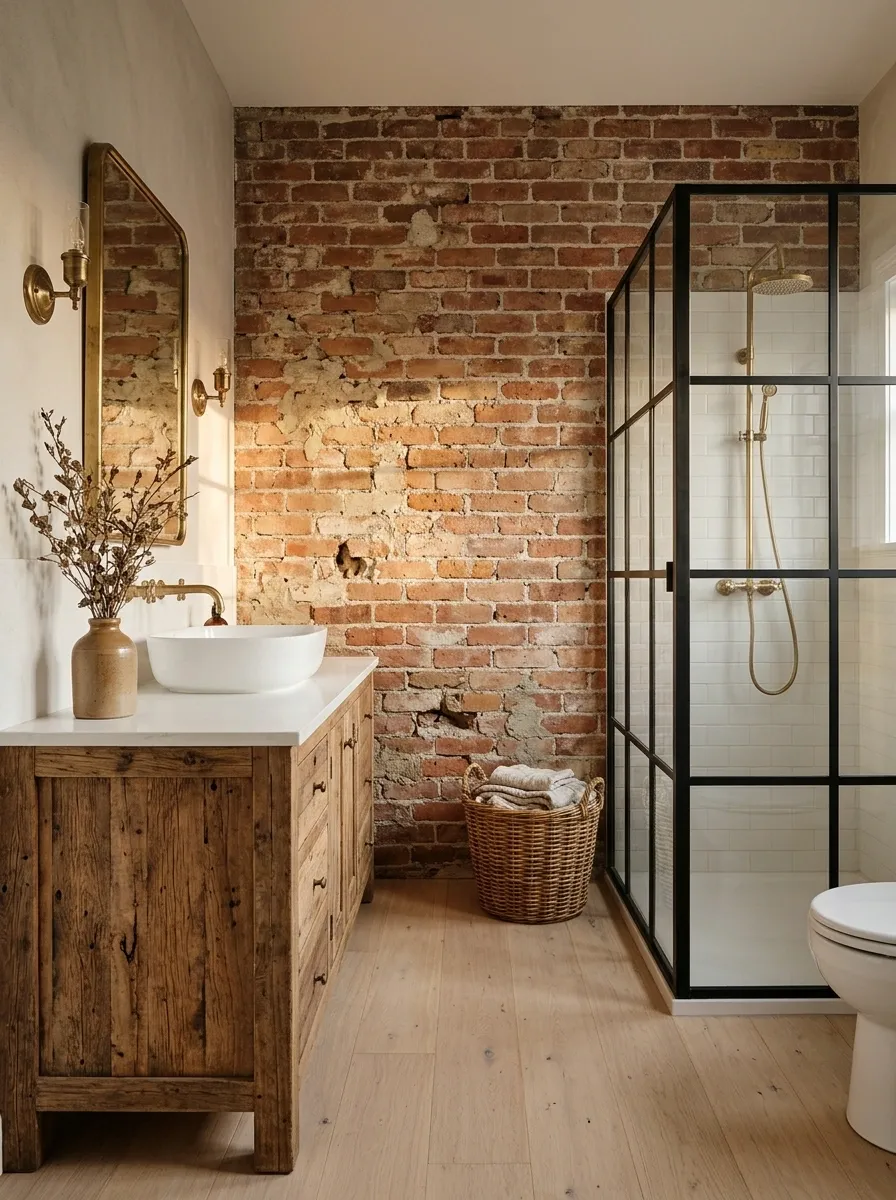
Reclaimed timber, weathered brick, black steel framing, and straightforward porcelain fixtures give this bathroom an industrial edge without losing its country character. The result feels connected to an old workshop or converted farmhouse rather than a sleek city loft trying on rustic accessories.
A substantial wood vanity anchors the room, while exposed brick provides texture across one wall or a carefully chosen section. Black metal framing around a clear-glass shower introduces structure.
Pale flooring and uncomplicated white fixtures keep the darker materials from swallowing the room.
The most convincing versions mix rough and refined surfaces. Brick and reclaimed wood supply irregular texture, while glass, ceramic, and smooth countertops bring order back into the composition.
Too many distressed finishes can make the room feel muddy, especially when the lighting is poor. Keep the layout open wherever possible so the materials have room to show off.
ROUGH MEETS REFINED
The contrast is the whole point.
Reclaimed wood
Provides warmth and a substantial focal point through the vanity or shelving.
Weathered brick
Adds irregular texture. Keep exposed brick away from unsuitable wet zones or use an appropriate protection system.
Glass and black steel
Create clean edges that stop the rougher surfaces from overwhelming the room.
The balancing act: Pair rustic surfaces with smooth, easy-clean finishes. A bathroom needs character, not a permanent dust-collection competition.
Tuscan Country Bathroom With Terracotta and Warm Plaster
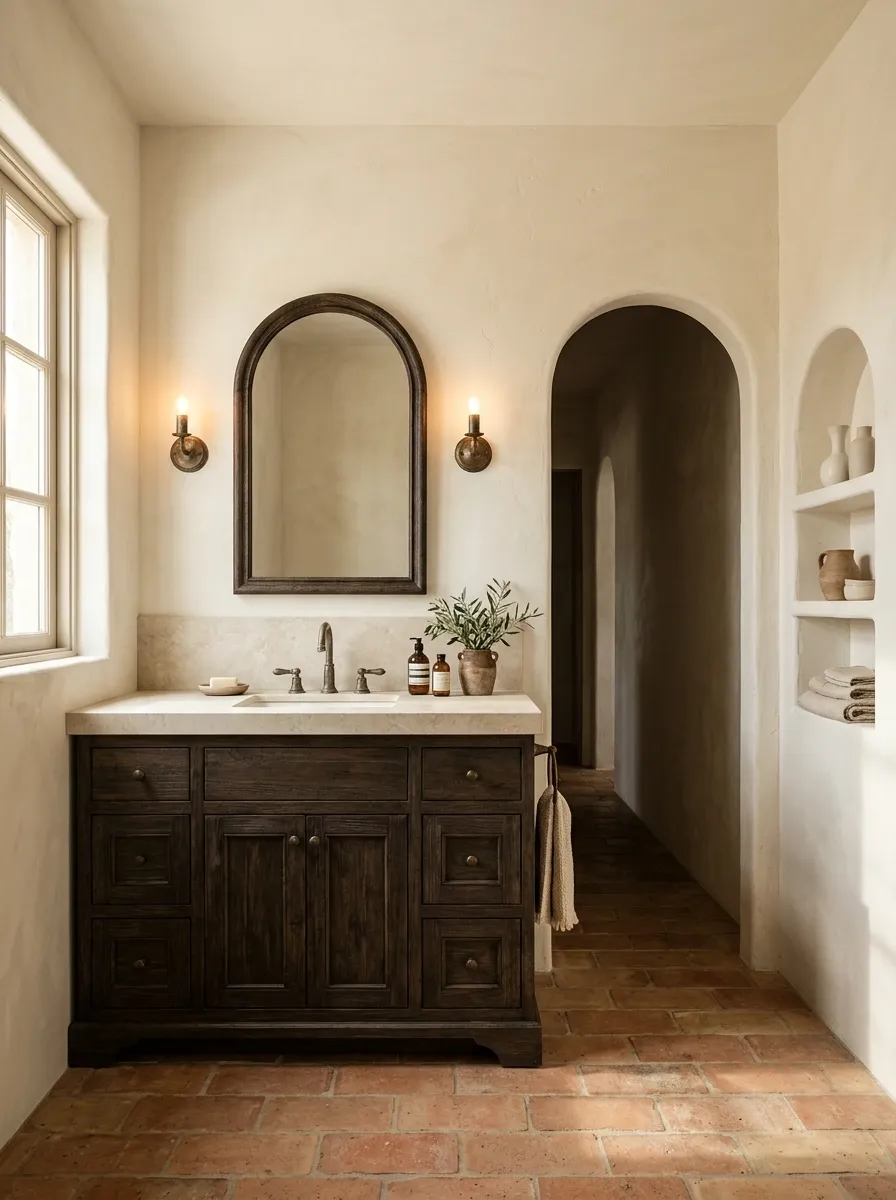
Warm terracotta flooring, creamy plaster walls, dark timber cabinetry, and bronze fixtures bring the earthy character of a Tuscan country house into the bathroom. The palette feels sun-warmed and grounded, with subtle changes in texture doing most of the decorative work.
A softly arched wall niche or doorway gives the architecture a gentle shape, while terracotta tiles provide a rich foundation. Dark wood creates contrast, and aged bronze fixtures prevent the room from feeling too polished.
A pale stone countertop can lighten the vanity without breaking the warm color story.
The important distinction is between warmth and visual heaviness. If every surface is dark, brown, or heavily textured, the bathroom can feel smaller and more enclosed.
Keep the ceiling light, allow some wall space to remain simple, and use darker timber selectively. Country style doesn’t have to mean florals, gingham, or a wooden sign explaining how blessed everyone is.
A TUSCAN WARMTH STUDY
Earthy, not excessively brown.
Terracotta
Grounds the room through the flooring.
Warm plaster
Keeps the walls light while adding subtle texture.
Dark timber
Provides definition through the vanity and furniture.
Balance check: Leave the ceiling and some larger surfaces light. The Tuscan palette should feel sunlit, not like the bathroom has been marinated in cinnamon.
Coastal Country Bathroom With Weathered Oak and Pale Blue
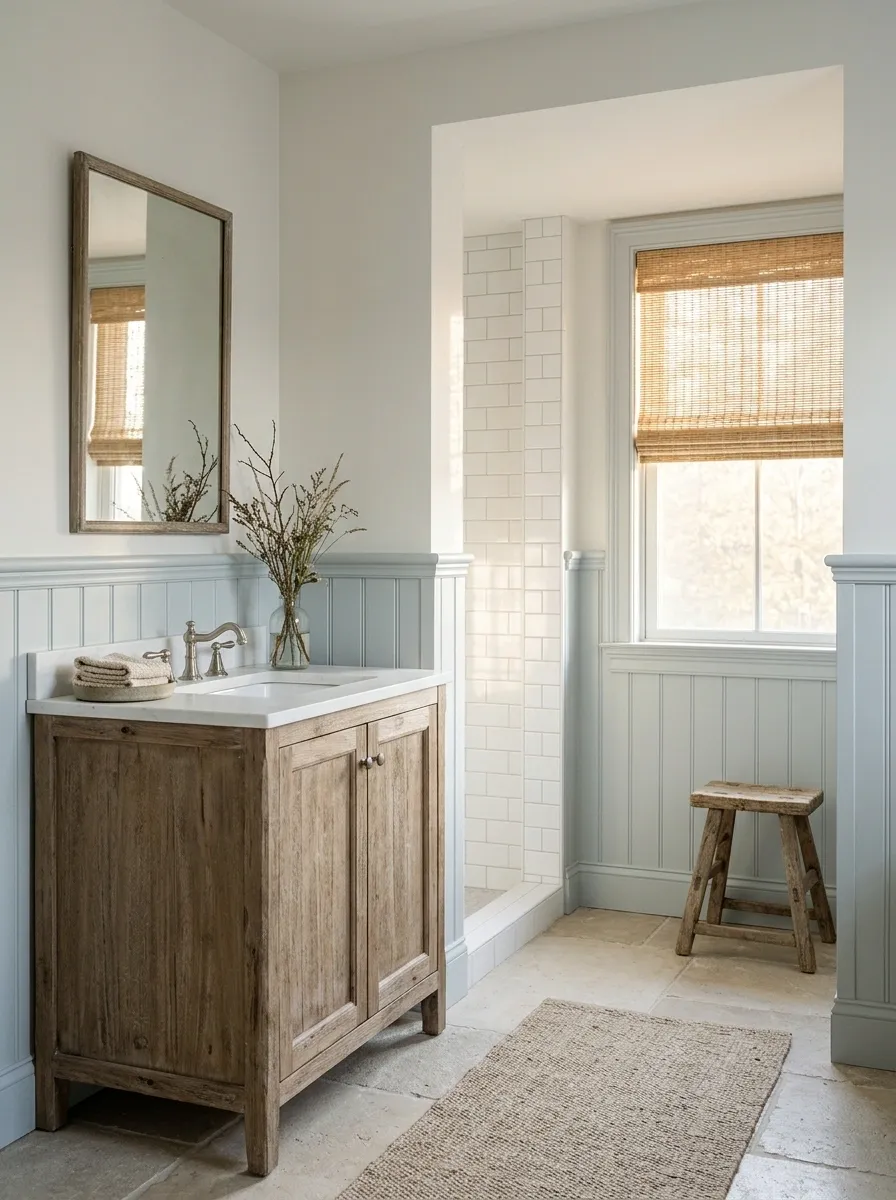
Weathered oak, pale blue paneling, crisp white tile, and woven window shades bring a coastal country feeling into the bathroom without the usual collection of anchors, seashells, and suspiciously inspirational beach signs.
The wood introduces a natural, slightly weathered texture, while pale blue gives the walls a soft wash of color. White sanitaryware keeps the room fresh, and brushed nickel or understated chrome fixtures complement the cooler palette without becoming the focal point.
A woven shade adds another material layer and helps the window area feel less stark. Where privacy matters, the window should have suitable glazing, covering, or placement.
Keep the blue muted rather than intensely saturated. Soft blue-gray tones work particularly well with weathered timber, while stronger blues can make the room feel more contemporary.
THE COASTAL COUNTRY EDIT
Sea-inspired, without the souvenir shop.
Pale blue
Gentle color across paneling or selected walls.
Weathered oak
Natural warmth that stops the palette feeling chilly.
Soft white
Keeps the main surfaces bright and uncomplicated.
The finishing move: Bring in texture through timber and woven shades instead of filling the room with nautical accessories. The ocean has enough branding already.
Moody Country Bathroom With Forest Green Paneling
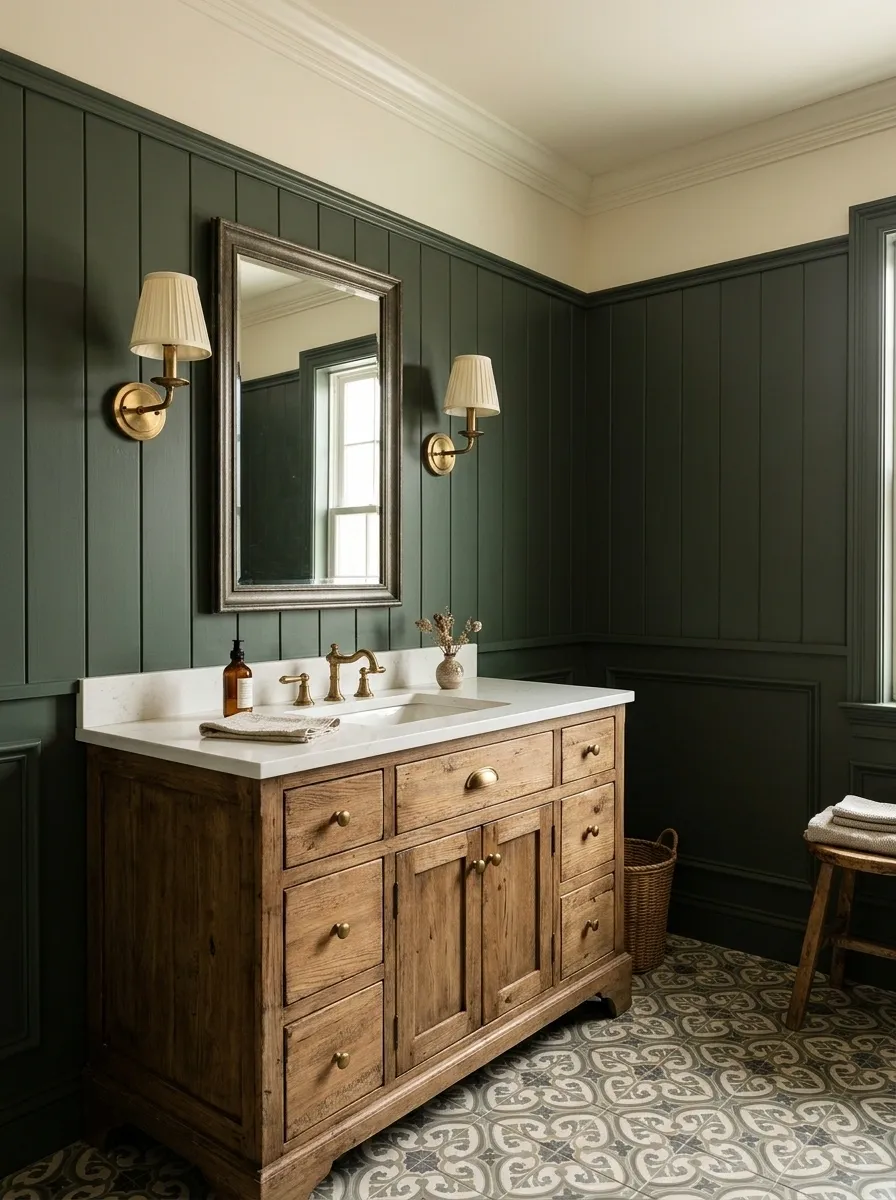
Deep forest-green paneling, an antique oak vanity, aged brass sconces, and patterned heritage flooring give this country bathroom a darker, more dramatic personality. It’s traditional without being precious, and the contrast between rich green walls and light porcelain fixtures keeps the whole room from becoming one enormous dark blob.
A framed mirror with an understated antique finish adds character above the vanity. Warm lighting brings out the wood grain and brass tones, while a patterned floor introduces enough detail to make the room feel collected rather than overly coordinated.
The trick is controlling where the darkness goes. Green paneling can dominate the room, so keep the ceiling light and allow larger fixtures to remain white or cream.
Choose a floor pattern that relates to the wall color without repeating it too literally. A bathroom can have a little drama without behaving like the villain’s dressing room.
THE DARK COUNTRY EDIT
Moody walls. Warm lighting. One clear focal point.
Keep dark
Paneling, selected cabinetry, and a few grounded accents.
Keep light
The ceiling, major porcelain fixtures, and enough open wall space to prevent visual heaviness.
The mood should come from the architecture and lighting, not from dim bulbs that make shaving a high-stakes activity.
Country Spa Bathroom With Limestone and Oak Beams
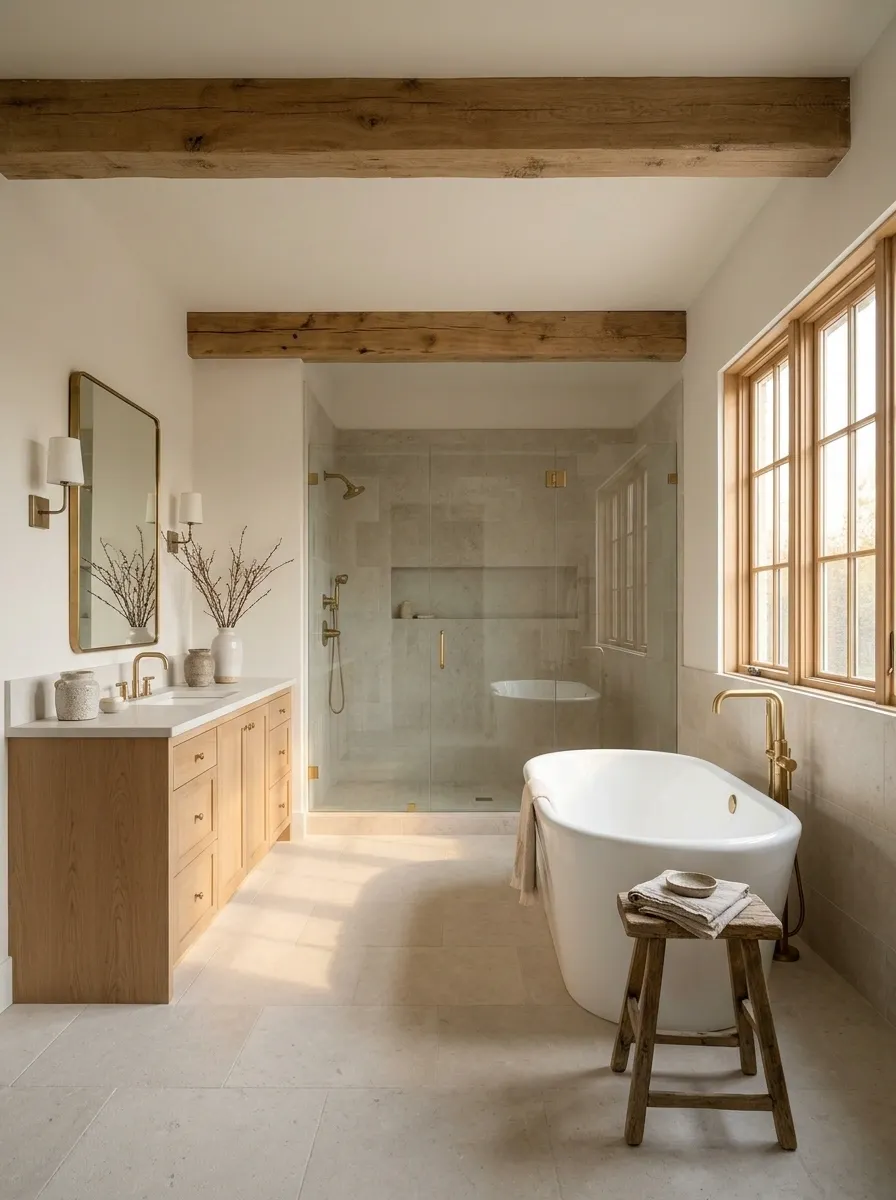
A generous soaking tub, pale limestone, substantial oak beams, and a spacious walk-in shower give this country bathroom the calm of a rural retreat. The design relies on natural textures rather than decorative clutter, so every material has enough space to make an impression.
Limestone provides a soft, grounded backdrop, while oak brings warmth overhead and through the vanity. A simple freestanding bathtub becomes the focal point, with linen towels and restrained accessories reinforcing the relaxed mood.
The shower should feel connected to the rest of the room, using compatible stone or tile instead of introducing an entirely different design language.
Practical decisions matter just as much as the finishes. Wet areas need suitable slip-resistant surfaces, and exposed wood requires appropriate detailing for the bathroom environment.
Natural materials are lovely, but constant moisture is not their personal wellness retreat.
A ROOM DESIGNED TO EXHALE
The spa feeling comes from space, not accessories.
The visual anchor
A freestanding tub with room around it
Position it where circulation remains comfortable and the surrounding architecture can be appreciated.
Limestone
Soft visual texture on suitable floors and walls.
Oak beams
Warmth overhead, balanced by lighter surfaces below.
Clear glass
A shower enclosure that keeps the room visually connected.
Worth remembering: Keep products and countertop accessories under control. The bathroom is a spa, not a branch location of the shampoo aisle.
Small Country Bathroom With a Pedestal Sink and Smart Storage
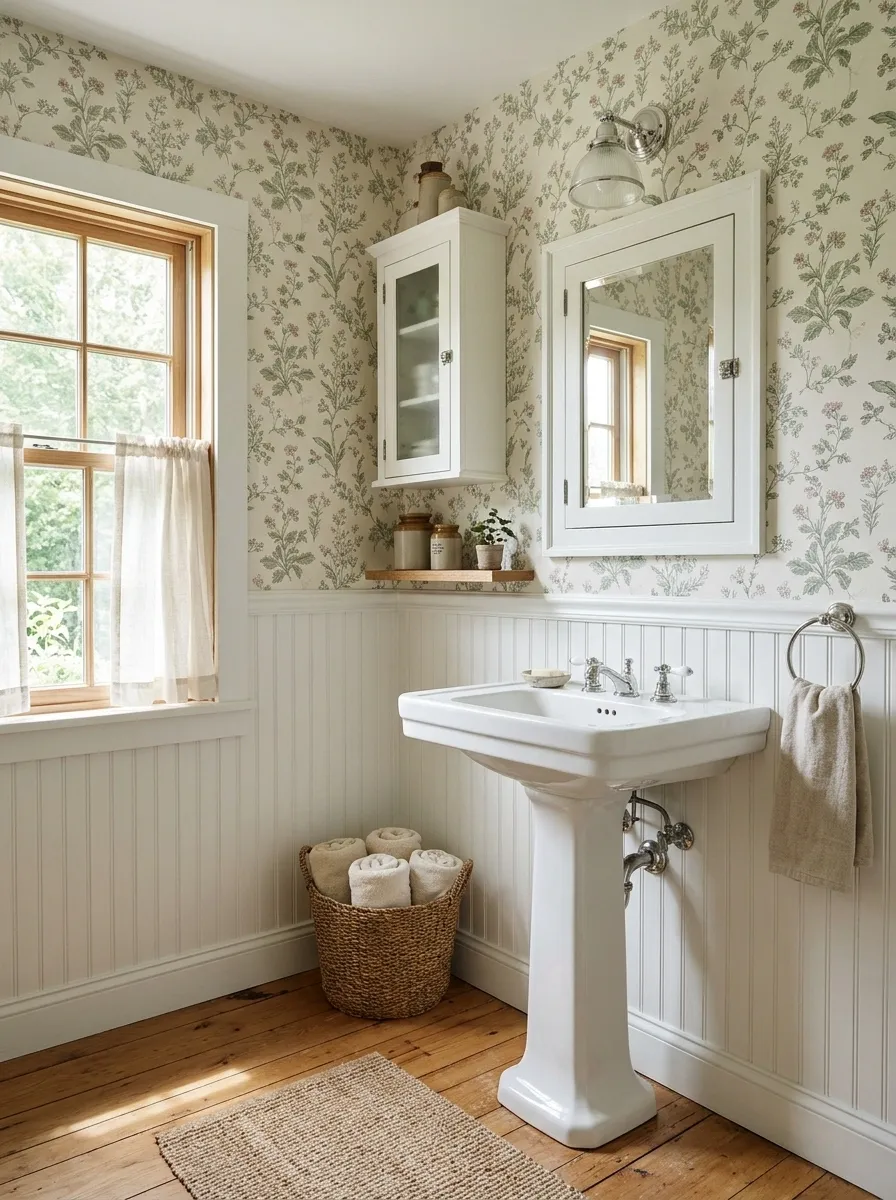
A compact country bathroom can still have plenty of personality without sacrificing its precious floor space. A traditional pedestal sink, vertical beadboard, a slim wall cabinet, and a compact shower create a layout that feels airy while retaining the charm of an older home.
The pedestal sink keeps the view through the room open, while a narrow cabinet or recessed medicine cabinet handles everyday essentials. Beadboard draws the eye upward, and a small wallpapered section brings in the floral or botanical detail associated with cottage interiors.
Pale paint and uncomplicated flooring prevent the different elements from crowding one another.
Storage deserves a realistic plan. A pedestal sink offers very little concealed space, so toiletries, spare towels, and cleaning supplies need designated homes elsewhere.
A pretty basket can help, but it cannot magically turn into a linen closet just because it has a rustic label.
SMALL ROOM, SENSIBLE PLAN
Save the floor space. Put the walls to work.
Before buying storage: Check door swings, drawer access, and the walking route. A cabinet that blocks the bathroom door is not a clever space-saving solution. It’s a furniture-based obstacle course.
Attic Country Bathroom With a Slipper Tub Beneath the Eaves
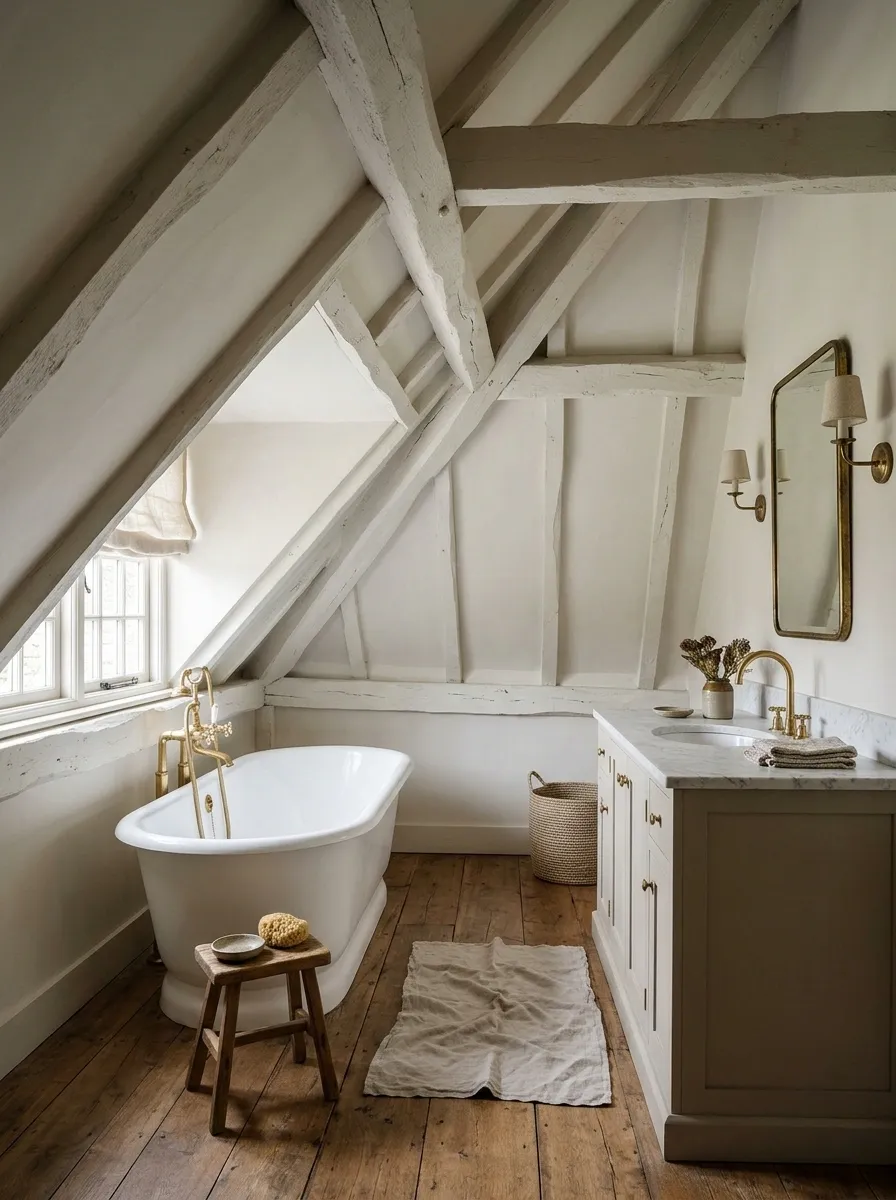
Sloping ceilings, exposed beams, and a small dormer window give an attic bathroom architectural character before a single decorative accessory enters the chat. A classic slipper tub tucked beneath the lower roofline makes use of the space, while the vanity and shower occupy areas with enough headroom for comfortable daily use.
Painted beams and pale walls help the room feel open, while warm timber flooring adds a country finish. Brass taps and simple wall lights bring a traditional note without overwhelming the unusual roofline.
The window becomes a natural focal point, especially when the bathtub is positioned to benefit from daylight while maintaining privacy.
The layout must follow the roof rather than fight it. A tub may fit comfortably beneath a slope, but standing shower space requires careful attention to height, clearances, ventilation, and plumbing.
The charm of an attic bathroom disappears very quickly when every shower becomes an impromptu crouching competition.
PLAN AROUND THE ROOFLINE
Low ceiling? Give it the right job.
LOW EAVES
Bathtub zone
TALLER
Vanity
Daily use
CHECK HEIGHT
Shower
Standing clearance
Best use for lower space
A bathtub, low storage, or a feature that doesn’t require standing room.
Best use for taller space
The shower, main circulation route, and everyday standing areas.
Measure before falling in love. Roof geometry, plumbing routes, and required clearances should determine the arrangement. Pinterest cannot negotiate with gravity or building regulations.
Classic Country Bathroom With a Slipper Tub and Painted Paneling
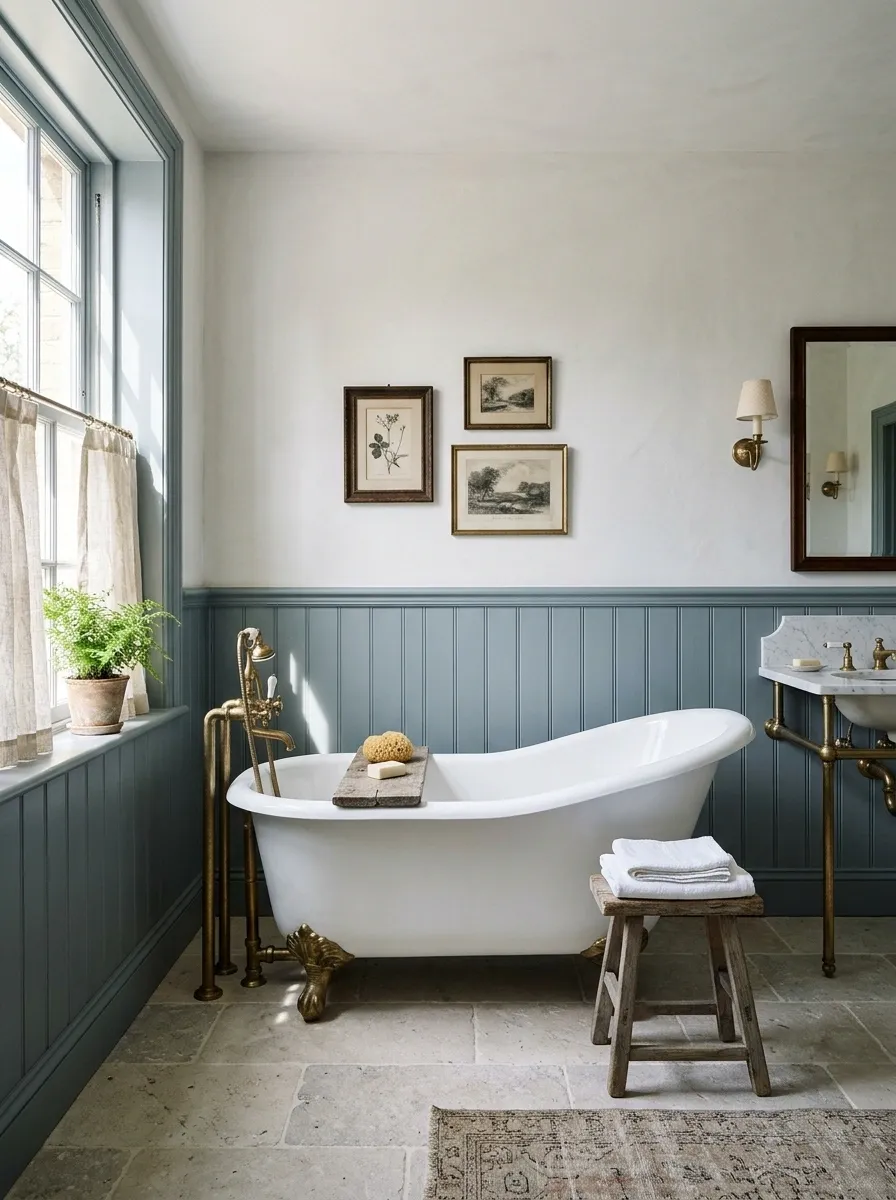
A traditional slipper tub, muted blue-gray paneling, a pale stone surround, and antique-style brass taps create a country bathroom with graceful old-house character. The silhouette of the tub gives the room a strong focal point, while the paneling adds structure without relying on elaborate wallpaper.
The rest of the room should support that traditional centerpiece. A framed mirror, understated wall lights, and a modest arrangement of artwork can add personality, while simple white towels keep the palette from becoming overly formal.
Marble or another suitable pale stone introduces a subtle change in texture across the floor or around the bath.
This is the more restrained cousin of the floral cottage bathroom. It has the same affection for traditional details, but its personality comes from proportion, paneling, and carefully chosen finishes rather than decorative patterns.
Think elegant country house, not historical reenactment with a plumbing budget.
THE CLASSIC COUNTRY ELEVATION
Traditional details, edited with restraint.
Focal point
Slipper tub
A strong traditional silhouette against simpler finishes.
Muted blue-gray
Adds traditional color without shouting.
Pale stone
Introduces texture while keeping the foundation light.
Aged brass
Connects the fixtures to the old-fashioned character.
The editing rule: Let the tub and paneling lead. A dozen extra vintage accessories won’t make the room more authentic. They’ll just give the dust more places to live.
Vintage Utility Bathroom With Porcelain Fixtures and Schoolhouse Lights
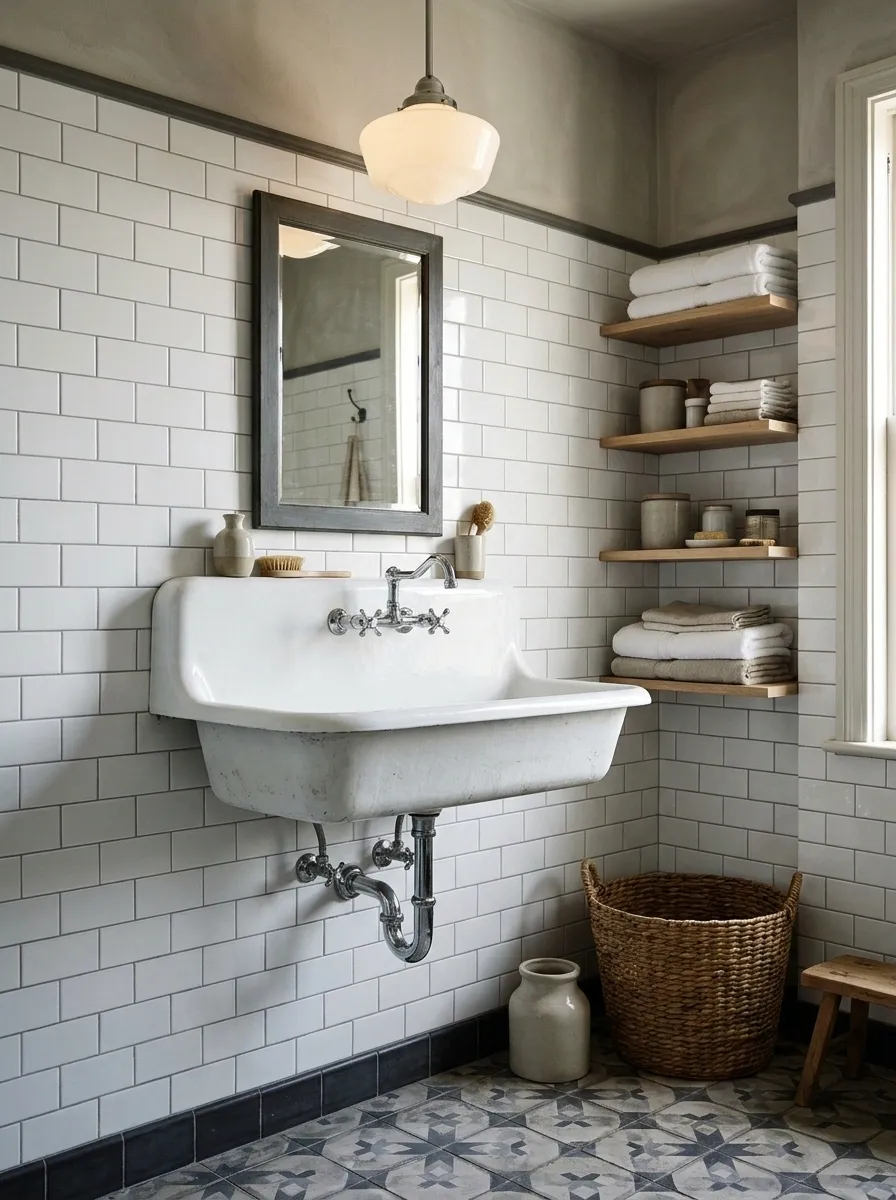
A deep porcelain basin, traditional exposed plumbing, simple white wall tile, and schoolhouse-style lights bring the practical charm of an old farmhouse washroom into this country bathroom. The look is straightforward, with little interest in decorative fuss.
Honestly, not every room needs to audition for a period drama.
White subway tile creates a clean backdrop, while a geometric floor introduces just enough pattern to keep the room from feeling clinical. Chrome or nickel plumbing suits the utility-inspired aesthetic, and a dark-framed mirror can add definition without cluttering the walls.
Open shelving works well for neatly folded towels, provided it doesn’t become a permanent parking lot for random toiletries.
The real appeal is that the design feels useful as well as nostalgic. Choose a basin with enough depth for everyday tasks, and plan the tap placement carefully to limit splashing.
Vintage character is great. Water all over the floor is a much less charming historical reference.
THE FARMHOUSE UTILITY EDIT
Old-fashioned looks. Everyday functionality.
Deep basin
Choose a usable depth and sensible tap position.
Simple tile
A calm backdrop keeps the room easy to maintain.
Schoolhouse light
Traditional shape with comfortable task lighting.
The sensible detail: Plan towel storage and countertop space before choosing decorative extras. Nostalgia is lovely, but it doesn’t hold a toothbrush.
Craftsman Country Bathroom With Built-In Oak Cabinetry
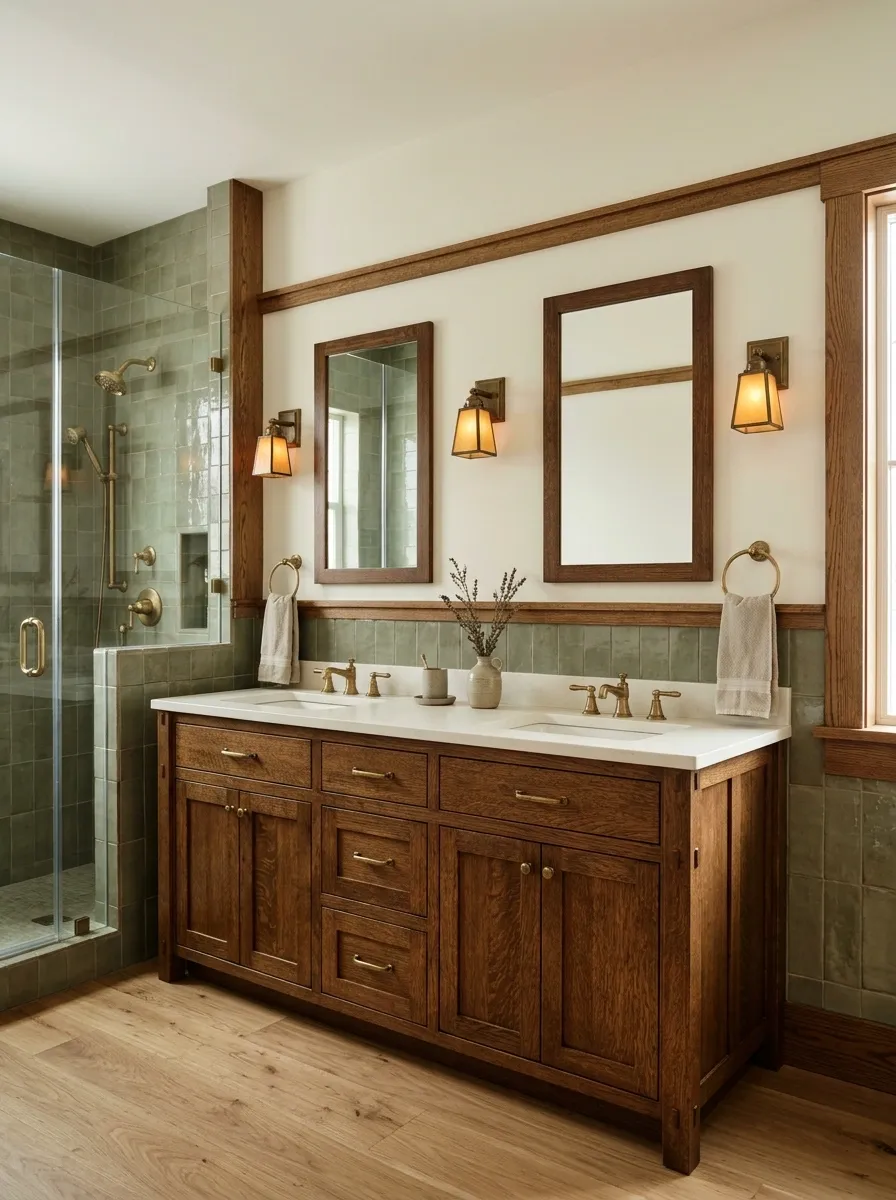
Quarter-sawn oak cabinetry, substantial wood trim, earthy green tile, and warm amber-toned lighting give this bathroom a distinctive Craftsman character. Instead of relying on floral patterns or distressed furniture, the design gets its personality from joinery, natural grain, and strong architectural lines.
A built-in vanity with framed cabinet doors anchors the room. Green tile can cover the lower walls or shower surround, while creamy paint above prevents the woodwork from feeling too heavy.
A rectangular mirror and straightforward wall lights reinforce the geometry. Everything feels connected, yet no individual feature needs to shout for attention.
This approach works particularly well in houses with original woodwork, but the same principles can guide a renovation in a newer home. Choose timber tones that relate to one another rather than matching every wooden surface exactly.
Too much identical oak can make a bathroom look as though it was assembled from one very enthusiastic furniture catalogue.
CRAFTSMAN DETAIL STUDY
The character is in the construction.
Framed oak
Defined cabinet fronts and substantial trim establish the architectural character.
Earthy green tile
Adds color and a solid visual foundation without competing with the timber.
FINISH THE COMPOSITION
Use warm, diffused lighting and a quieter wall color to separate the woodwork from the tiled surfaces. Keep the mirror and accessories simple enough that the craftsmanship remains the focal point.
Good joinery is the decor. No extra collection of wooden quote signs is required. The walls can finally enjoy some peace.
Stone Shower Country Bathroom With a Built-In Timber Bench
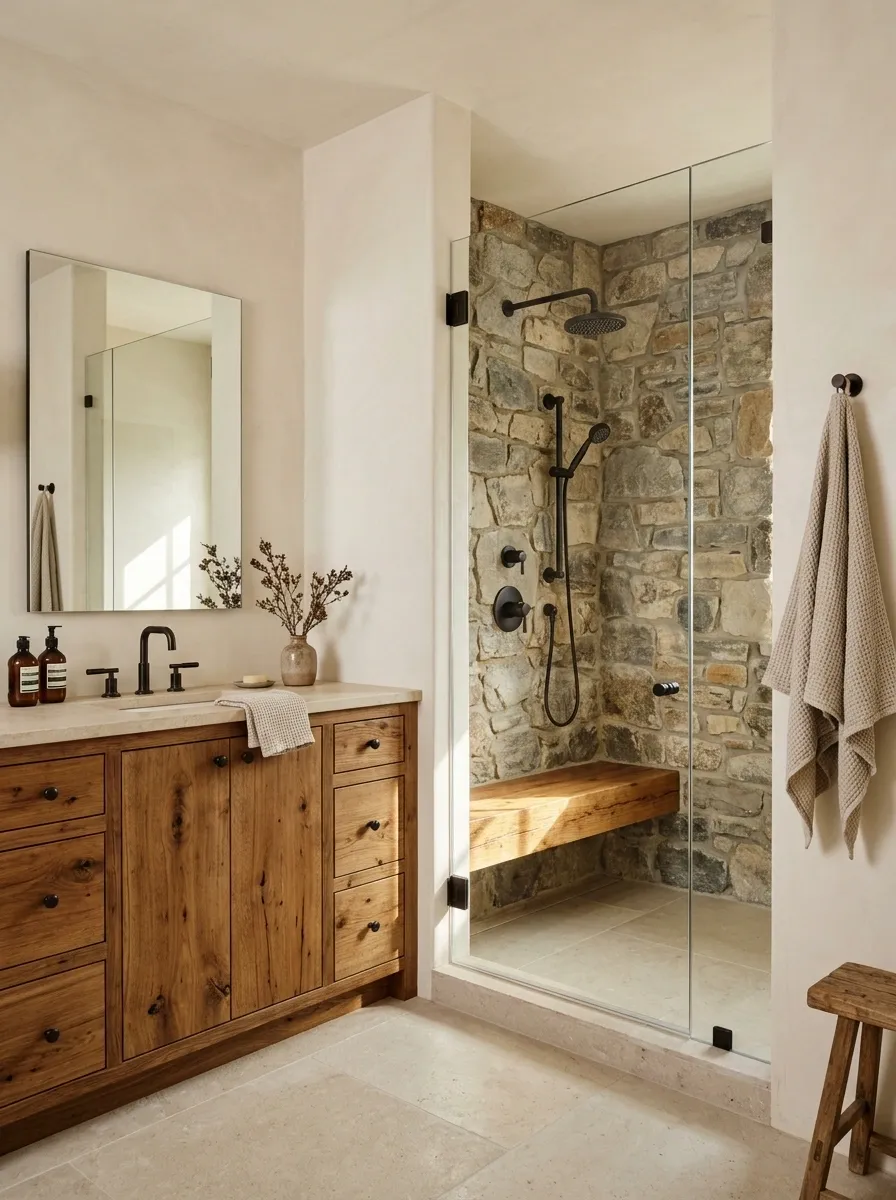
A fieldstone shower, pale plaster walls, a timber vanity, and a built-in bench create a rustic country bathroom centered around natural materials. The stone becomes the visual anchor, while the rest of the room stays relatively restrained.
It’s rugged without turning every surface into a geological exhibition.
The most convincing version uses stone selectively, perhaps on the main shower wall, and pairs it with smoother tile elsewhere. A built-in bench offers a useful place to sit or store shower essentials, provided the dimensions, slope, drainage, and waterproofing are properly planned.
Bronze or dark metal fixtures bring definition without competing with the irregular stone.
This design benefits from contrast. Pale flooring and lighter walls keep the stone from making the room feel enclosed, while the wood vanity adds warmth at eye level.
Choose finishes that can handle repeated water exposure in the shower and verify that the flooring is suitable for wet conditions. Natural texture is a selling point. A slippery floor is an entirely different plot twist.
INSIDE THE STONE SHOWER
The rugged look needs a very sensible foundation.
The visual composition
The built-in bench
Plan the height, depth, position, drainage, and waterproofing as part of the shower design, not as a last-minute masonry surprise.
The practical rule: Use wet-area-rated materials, appropriate waterproofing, and a floor finish suitable for a wet environment. Good looks are wonderful. Gravity remains undefeated.
Western Ranch Bathroom With Heavy Timber and Earthy Stone
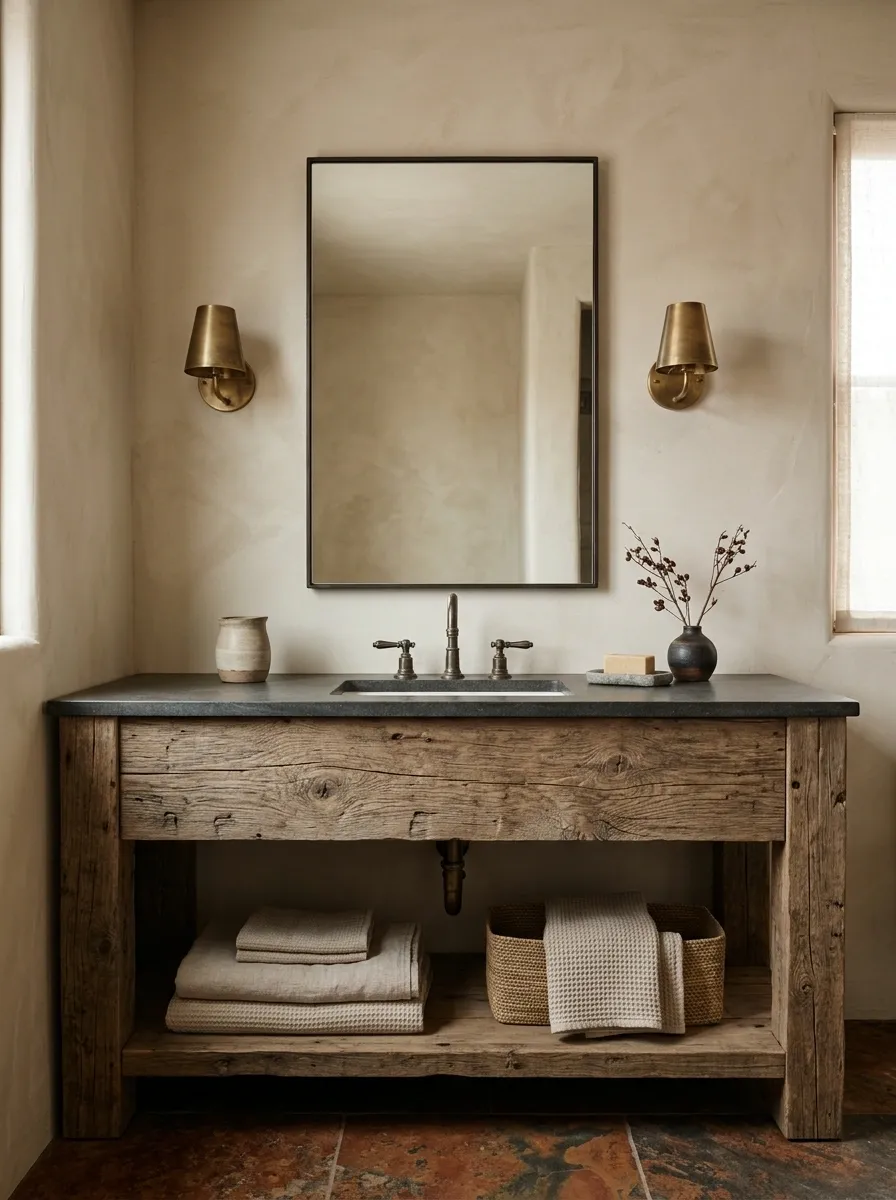
Sandy plaster, a substantial timber vanity, an iron-framed mirror, rust-toned flooring, and aged bronze fixtures give this bathroom the grounded character of a Western ranch house. The look is warm and textured, but it doesn’t depend on cowboy-themed accessories to explain itself.
A solid timber vanity creates visual weight, while the walls remain relatively simple. Stone flooring or a restrained stone shower surround introduces another natural finish, and dark iron details give the pale palette definition.
Warm mirror lighting helps bring out the variation in wood grain and plaster instead of making everything appear flat and beige.
The secret is restraint. A few strong materials provide a more convincing ranch-inspired room than an assortment of themed decorations.
Too many rough surfaces can also make a smaller bathroom feel heavy, so keep some walls light and give the eye a break. The design should suggest a rugged landscape, not attempt to recreate an entire desert inside the shower.
RANCH-HOUSE MATERIAL PALETTE
Earthy color, with enough light to breathe.
Sand and plaster
Keep larger wall surfaces light and softly textured.
Timber and rust
Create warmth through the vanity, flooring, or a restrained stone detail.
Dark iron
Use sparingly on mirrors, lights, or selected hardware.
Keep the theme off the nose. Warm stone, wood, and metal already establish the country character. The room does not need a lasso hanging beside the towel rail.
English Country Manor Bathroom With Marble and Antique Furniture
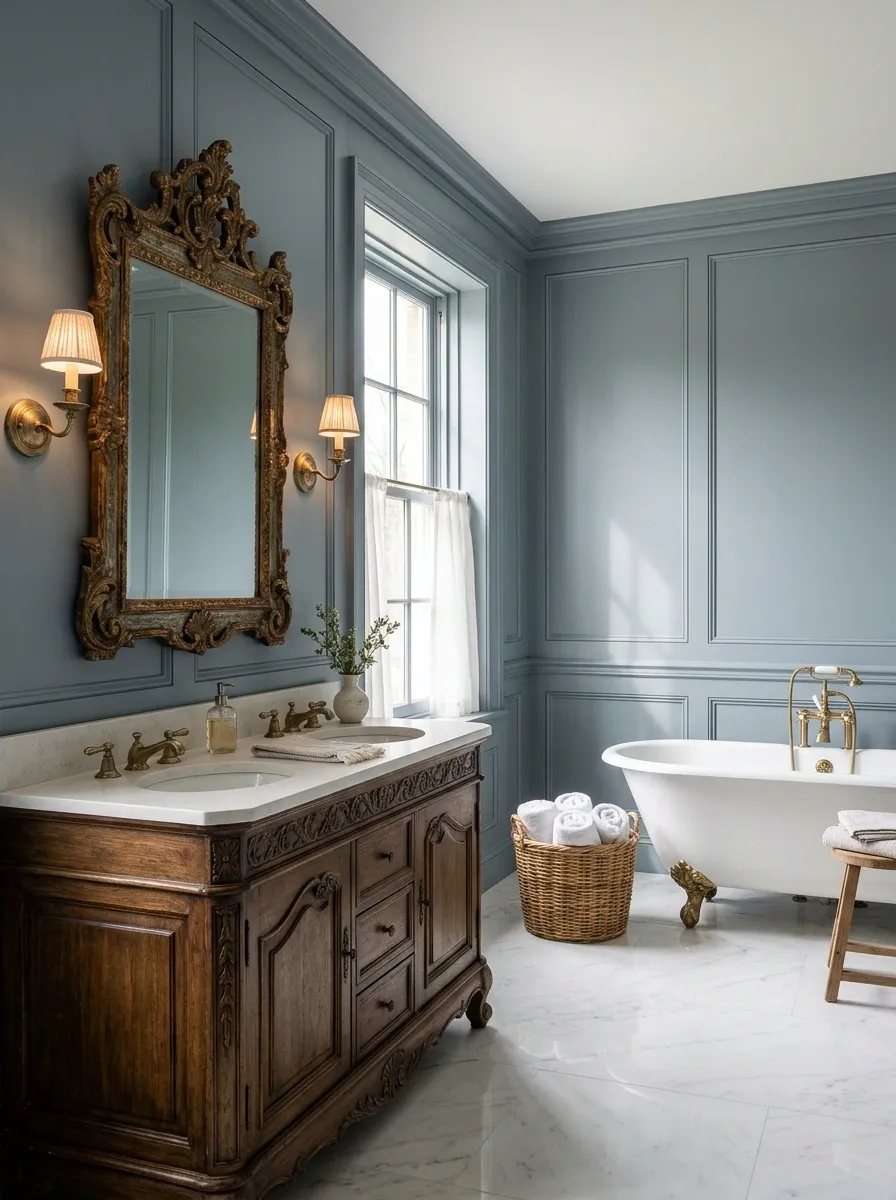
Blue-gray paneling, a carved antique-style vanity, marble flooring, an ornate mirror, and a traditional freestanding tub give this bathroom the more formal side of English country design. The result feels stately without losing the warmth that makes country interiors appealing.
The vanity acts as the anchor, particularly when its wood tone or painted finish contrasts with the pale stone around it. The paneling creates a defined architectural backdrop, while the mirror introduces ornament above the basin.
A classic tub and traditional wall lights reinforce the period-inspired look, but simpler accessories prevent the room from becoming overly ceremonial.
This style needs a clear hierarchy. If the mirror, vanity, lighting, flooring, and wallpaper are all competing to be the most elaborate feature, the design can quickly feel crowded.
Let one or two pieces carry the decorative detail, then give the remaining surfaces room to breathe. There’s a difference between an elegant manor bathroom and a room that appears to be collecting antiques as a competitive sport.
THE MANOR-HOUSE HIERARCHY
Choose the star. Give the supporting cast a day off.
Main feature
Ornate mirror
Lets the room have one recognizable decorative focal point.
Supporting finishes
Quiet surfaces
Marble, paneling, and restrained paint colors let the main feature stand out.
The editing test: Pick the most distinctive pieces, then simplify the supporting details. A bathroom can look expensive without making every square inch file for attention.
Romantic Country Bathroom With Dusty Rose and Cream
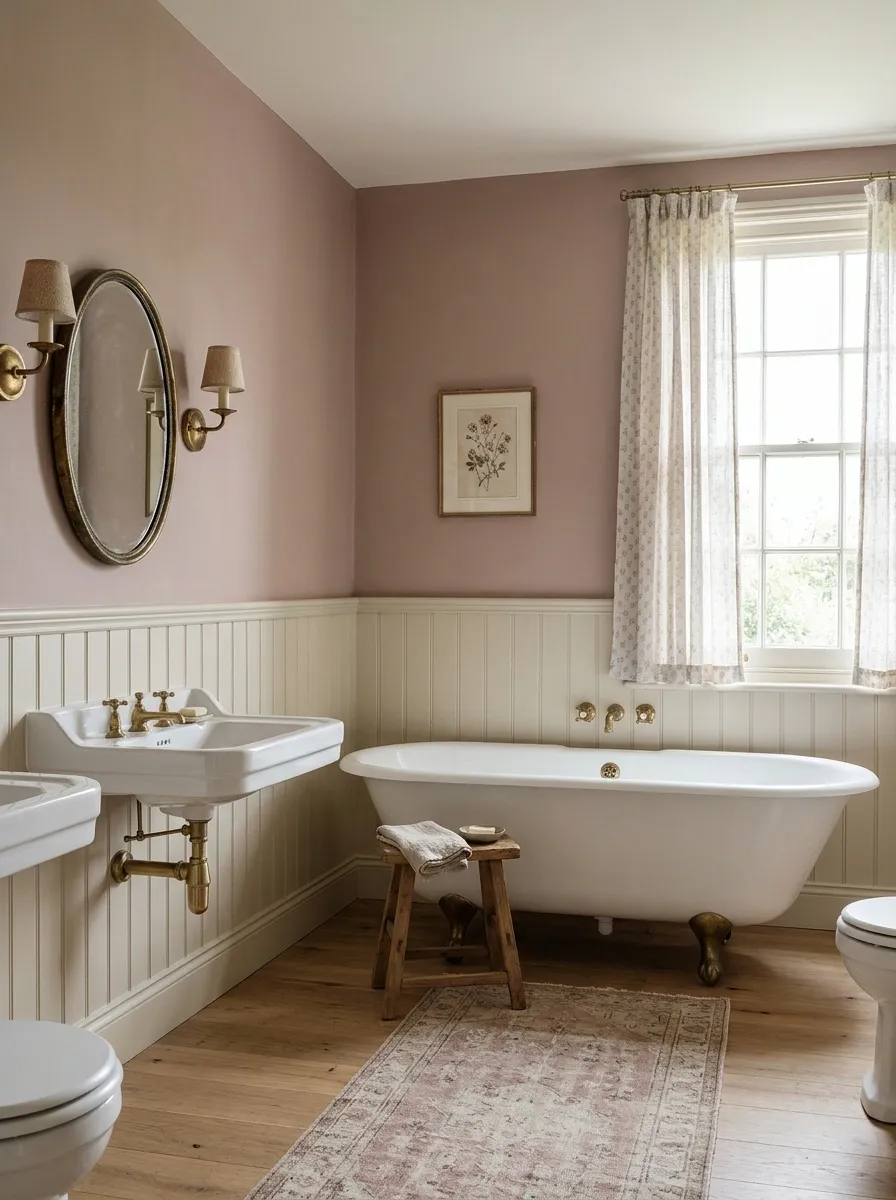
Dusty rose walls, cream beadboard, a white clawfoot tub, and aged brass fittings give this country bathroom a softer, romantic personality. Small floral prints and a traditional mirror introduce vintage character, while the limited palette keeps the room from looking like a bridal shower that accidentally acquired plumbing.
The pink should lean toward muted clay or faded rose rather than bright bubblegum. Cream paneling gives the lower walls some structure, and white sanitaryware keeps the overall effect light.
Brass taps and wall lights add warmth without introducing another strong color.
A few delicate details are enough. A small framed botanical print or softly patterned window treatment can complete the look, but covering every surface in roses will quickly push it into costume territory.
The charm comes from the relationship between the pink walls, creamy woodwork, and traditional fixtures, not from the number of floral objects squeezed onto the vanity.
A SOFTER COUNTRY PALETTE
Romantic, not aggressively pink.
Dusty rose
A muted wall color with warmth and vintage character.
Cream beadboard
A quiet architectural detail that grounds the softer palette.
Aged brass
A warm finish that connects the vintage fixtures.
The floral limit: Pick a few meaningful botanical details and leave the rest of the room alone. The bathroom should feel romantic, not like a rose garden filed a hostile takeover.
Minimal Rustic Country Bathroom With Limewash and Reclaimed Oak
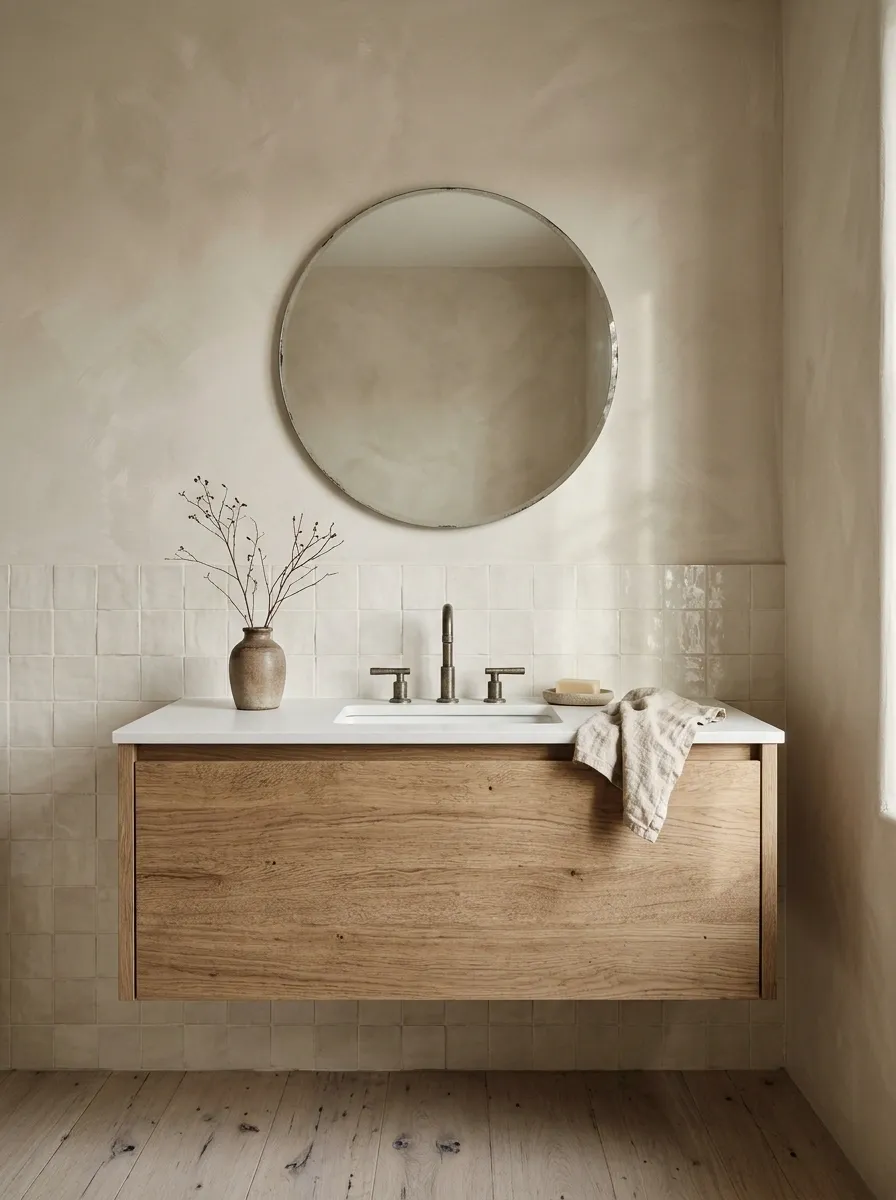
Textured limewash walls, pale reclaimed oak, handmade ivory tile, and understated bronze hardware create a country bathroom that feels rustic without being cluttered. This is the quieter side of country style, where the materials provide nearly all the visual interest.
A floating oak vanity keeps the floor visible and makes the room feel less crowded. Handmade tile adds subtle variation around the shower or backsplash, while softly textured walls provide depth without introducing another obvious pattern.
Bronze fixtures bring a small amount of contrast, and simple mirrors maintain the clean-lined composition.
The key is choosing materials with different textures but compatible undertones. If the walls, floor, vanity, and tile all look exactly the same, the room can become flat.
If every finish has a strong grain or pattern, it becomes visually exhausting. A little irregularity is charming. Five competing surfaces all demanding attention are a committee meeting.
THE TEXTURE-FIRST APPROACH
Keep the shapes simple. Let the surfaces do the talking.
Too little variation
Surfaces with nearly identical color and texture can make the composition feel flat.
Too much variation
Strong grain, loud patterns, and multiple competing textures can overwhelm a small room.
The sweet spot is subtle variation. Expensive-looking restraint is mostly knowing when to stop adding things.
Country Bathroom With Patterned Cement Floors and a Shaker Vanity
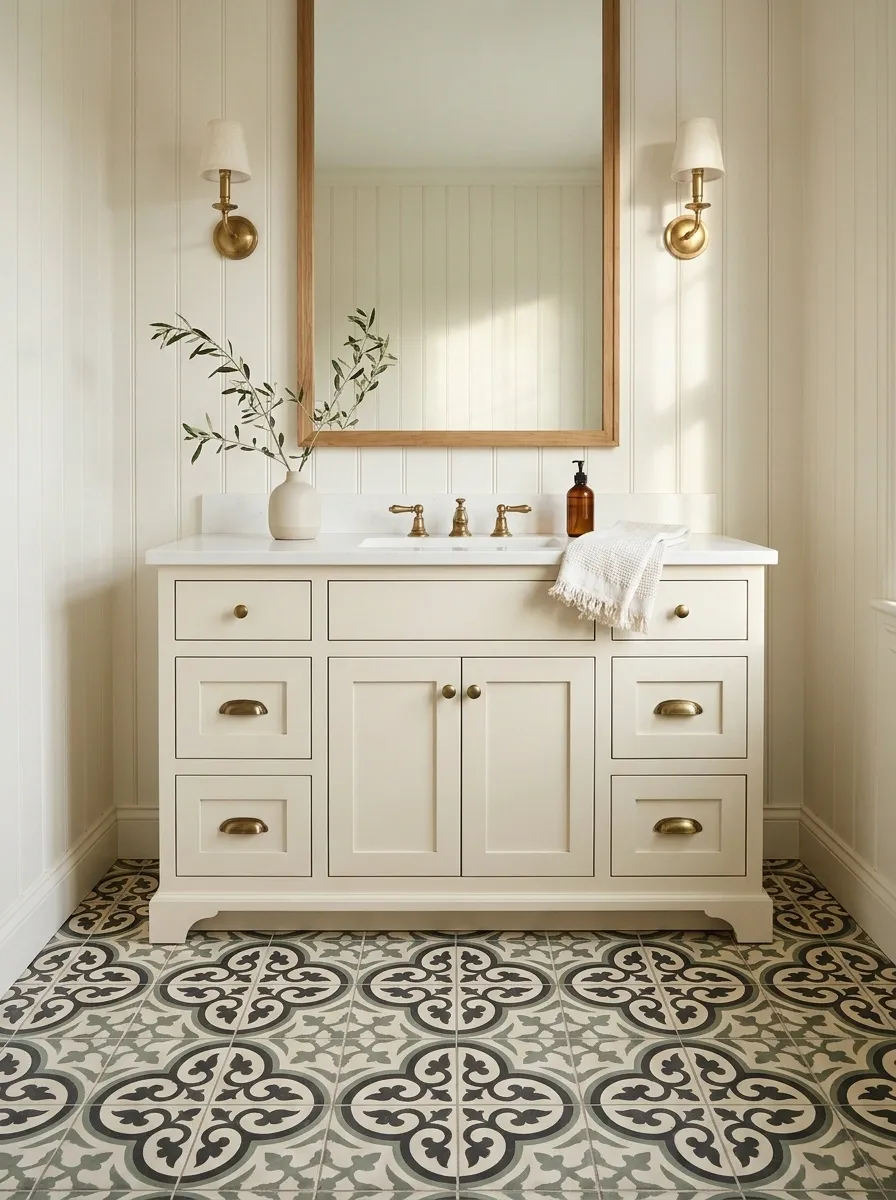
Patterned cement flooring, a cream Shaker vanity, white paneled walls, and vintage-inspired hardware give this bathroom a distinctive country look with a decorative floor at its center. The pattern adds personality without requiring elaborate wallpaper or ornate furniture.
The strongest versions choose a floor design with a limited palette, such as charcoal, warm ivory, and muted green. The vanity then provides a solid block of color, while the walls remain relatively quiet.
A simple framed mirror and aged brass taps complete the composition without competing with the floor.
Scale matters here. A large repeating pattern can dominate a compact bathroom, while a busy, high-contrast design may become tiring when viewed across a whole floor.
Decorative flooring can absolutely be the star. It just doesn’t need a supporting cast of equally loud accessories.
THE PATTERNED-FLOOR DECISION
One busy surface is usually enough.
Patterned floor
The main decorative feature, repeated across the floor plane.
Quiet surroundings
Solid-colored cabinetry and simple walls allow the floor to remain legible.
Before choosing a pattern: Check the repeat size, grout color, slip suitability, and how the design looks across the full floor. A tiny sample can be charming. A whole bathroom of it may have other opinions.
Garden-View Country Bathroom With Green Tile and Natural Light
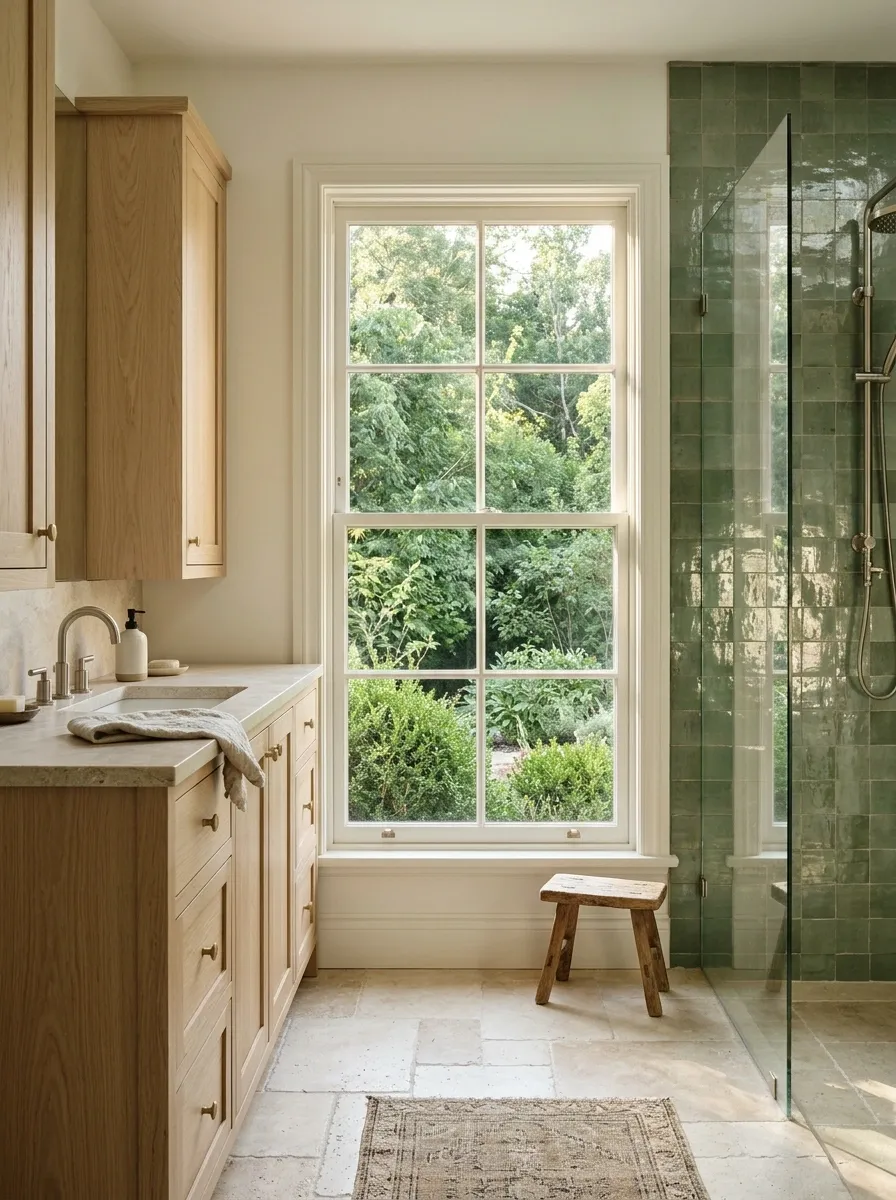
A generous garden-facing window, green handmade tile, pale oak cabinetry, and natural stone make the landscape part of this bathroom’s overall design. Instead of relying heavily on accessories, the room draws character from the changing daylight and the view beyond the glass.
Green tile around the shower or vanity connects visually with the foliage outside. Pale oak balances the cooler green tones, while a natural stone floor gives the room a grounded foundation.
Simple window trim allows the view to remain the focal point, and understated fittings prevent the materials from competing for attention.
Privacy and moisture control need to be part of the plan from the beginning. Suitable glazing, window coverings, ventilation, and placement are essential, particularly when the bathroom faces a neighboring property.
A beautiful garden view is a bonus. Providing the entire neighborhood with a front-row seat is not.
DESIGNING AROUND A GARDEN VIEW
Let the outside landscape join the palette.
Frame the view
Keep the window trim and nearby finishes simple enough for the landscape to stand out.
Protect privacy
Plan glazing or a suitable covering before finalizing the layout.
Manage moisture
Specify appropriate window materials, ventilation, and bathroom finishes.
When the garden supplies the color, the room needs less decorative backup. Nature is already carrying the content strategy.
Heirloom Farmhouse Bathroom With a Repurposed Dresser Vanity
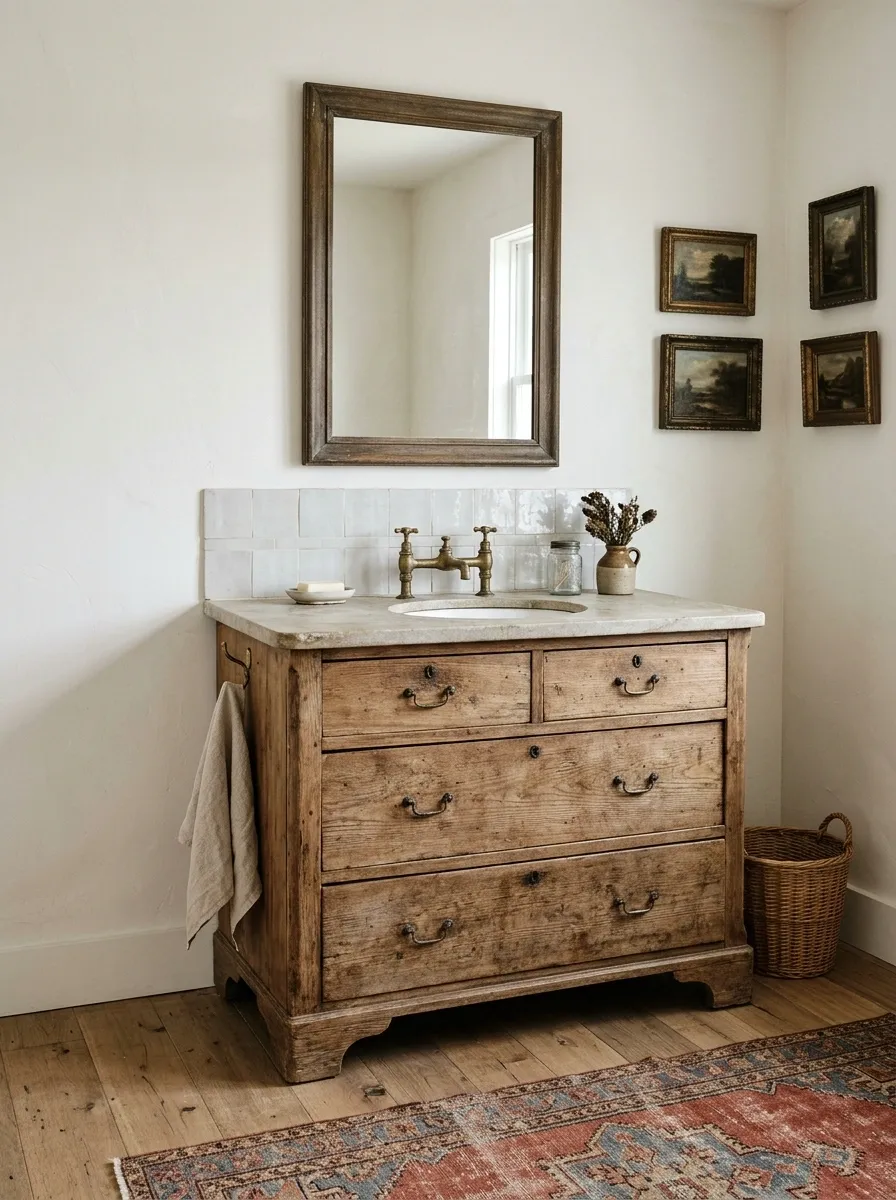
An old dresser adapted into a vanity, warm white walls, a vintage-style rug, aged brass taps, and inherited artwork create a farmhouse bathroom with a more personal kind of character. It feels collected rather than purchased as one matching set, which is usually where the most interesting country interiors begin.
A dresser with well-proportioned drawers can provide a striking focal point, especially against simple tile and pale walls. The mirror should relate to the width and height of the furniture, while the remaining finishes stay fairly restrained.
A vintage rug adds color and softness outside areas exposed to frequent splashing, and framed artwork makes the bathroom feel connected to the rest of the home.
The conversion needs careful planning. Plumbing may require drawer modifications, the countertop must accommodate the basin, and the furniture needs suitable protection against moisture.
Existing drawers may not remain fully functional after the conversion, so storage expectations should be realistic. An antique dresser can have a second life in the bathroom, but only after a few practical conversations with the plumber and whoever is responsible for the waterproofing.
THE DRESSER-TO-VANITY REALITY CHECK
A charming old dresser, with plumbing. Naturally.
The furniture can remain the focal point, but its new function needs to be engineered properly.
Before installation
Check the structure
Confirm the dresser’s stability, height, depth, basin fit, and countertop requirements.
Before everyday use
Protect the furniture
Plan plumbing access, moisture protection, suitable finishes, and realistic drawer storage.
The final check: Make sure the furniture works as a vanity before getting attached to the idea. Beautiful antiques deserve better than a life spent warping beside a leaking trap.
Making Your Country Bathroom Feel Finished
The most memorable country bathrooms aren’t necessarily the ones with the fanciest tubs or the oldest furniture. They’re the ones where the materials, proportions, and finishes feel connected, even when the room mixes traditional details with modern conveniences.
Start with the overall character of the space. Decide whether the bathroom should feel romantic and floral, rugged and rustic, clean and understated, or dark and dramatic.
Then choose a small group of finishes that support that direction. The right wood tone, wall treatment, flooring, lighting, and fixtures will do more for the room than a dozen decorative purchases made because they looked cute in a shop.
Practical decisions deserve the same attention as the visual ones. Check storage, circulation, moisture exposure, and the placement of fixtures before committing to expensive finishes.