
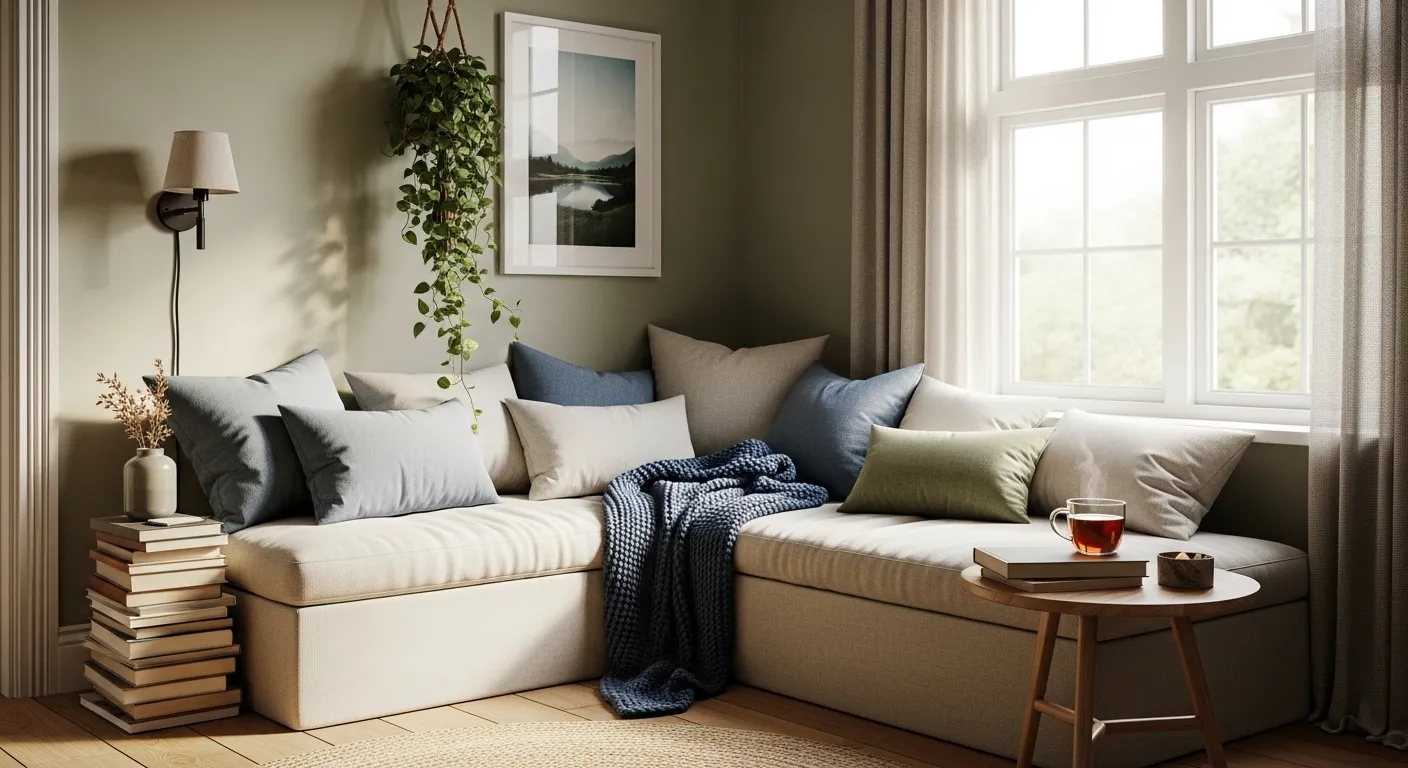
Every bedroom has at least one underused zone — a corner that collects things that don’t have anywhere else to go, a window that’s doing nothing but admitting light, an alcove that’s been painted over and ignored since the previous owners moved out. A bedroom nook takes that dead space and turns it into the most used, most loved, and most photographed part of the room. Whether you want somewhere to read, somewhere to sit with a coffee, or just somewhere that feels like yours within a shared space, these ideas will show you what you’ve been missing.
Nook Definition Studio
Turn dead space into the most inhabited zone in the room.
Why Bedroom Nooks Are the Design Move Most People Overlook Until They See One Done Properly
The bedroom nook fails to get built in most homes for one consistent reason: people look at an empty corner or an alcove and see constraints rather than opportunity. Not enough room for furniture. Awkward dimensions. Low ceiling. Structural complications. But the rooms where a nook genuinely works are almost always the rooms where someone looked at exactly that kind of difficult space and decided to design into it rather than around it. The constraint is usually the best part — it creates the sense of enclosure, the sense of being held by a space, that makes nooks so compelling to be in.
Enclosure is the quality that separates a nook from a chair in a corner
A chair placed in a bedroom corner is not a nook. A nook is a space that has some degree of enclosure — walls on two or three sides, a lowered ceiling element, a curtain that can be drawn, built-in elements that frame the zone — that creates a psychological sense of separation from the rest of the room. This enclosure is the quality that makes sitting in a nook feel fundamentally different from sitting in a chair in an open room, and it’s the quality that most attempts at bedroom nooks fail to achieve because they stop at the furniture choice rather than addressing the spatial definition.
A nook needs its own lighting to function as a distinct zone
The most common failure in bedroom nook design is lighting that was never specifically considered for the nook zone — the space relies on the room’s general lighting, which provides neither the functional task light needed for reading nor the atmospheric warmth needed for the nook to feel like a destination rather than just a corner. A dedicated light source — a wall sconce at the right height, a floor lamp positioned to throw light over the shoulder, an integrated LED strip that warms the back wall — transforms the nook from a place where you can technically sit to a place where you actually want to spend time.
Built-in elements at nook scale feel more considered than freestanding furniture
A window seat with storage drawers below, shelving built into the walls on either side of a chair, a platform with integrated niches — these built-in elements do something that freestanding furniture cannot: they make the nook feel like it was designed as part of the room rather than placed in it. The investment required isn’t always as significant as it seems. Simple floating shelves flanking a chair, a painted wooden box platform under a window cushion, timber cladding on one wall of a corner — these are achievable versions of built-in thinking that produce the same quality of spatial intention.
The nook’s palette can be distinct from the rest of the room
One of the most effective and most underused moves in bedroom nook design is treating the nook’s colour or material palette as a separate decision from the main room. A deep, saturated colour inside a window seat alcove against lighter main room walls, a contrasting timber cladding that defines the nook zone, a different wallpaper within the built-in reading area — these distinctions make the nook feel genuinely like a room within a room rather than a corner with soft furnishings. The contrast doesn’t need to be dramatic to be effective; even a slightly deeper tone of the same colour family creates enough distinction to register.
The Architecture of Cosy
Why a chair in a corner is not a nook, and how to build one that is.
Enclosure is the defining quality
A chair placed in a corner is just a chair. A nook requires walls, a lowered ceiling, or built-in elements to create the psychological sense of separation that makes it feel like a destination.
Dedicated zone lighting is mandatory
General bedroom lighting provides neither the task light for reading nor the atmospheric warmth needed. A dedicated wall sconce or integrated LED transforms the space instantly.
Built-in elements beat freestanding
A window seat with drawers or flanking floating shelves makes the nook feel designed as part of the architecture rather than merely furnished. It also solves the problem of where to put a book or a drink.
Textile density creates the draw
The nook is the bedroom’s most tactile zone. It requires a higher density of soft furnishings—multiple cushions, a thick throw, a dedicated rug—than would look right in the open room.
Bedroom Nook Ideas
Pink and Cream Bedroom With Underlit Bed Platform,
A full-room nook arrangement where every zone has been given its own cosy function: a white floating desk area with LED-lit shelves, a polaroid wall and oval neon mirror providing the vanity zone’s personality, a floor-length window with sheer curtains opening to a sunset city view, and a platform bed with warm amber LED underglow that separates it spatially from the rest of the room. A feather chandelier overhead and a fluffy cream shag rug create the cloud-soft atmosphere that ties all zones together. Pink and cream botanical art prints on the right wall anchor the headboard zone. Pro tip: LED strip lighting underneath a bed platform — running along the floor-level perimeter — is the single most cost-effective atmospheric element in bedroom design, transforming a standard bed into a floating zone that creates the enclosure and definition of a dedicated nook without any structural changes to the room.
Curved Barrel Chair, Olive Tree, and Round Art Frames
A clean white corner with a low curved barrel chair in warm oat boucle, a single cream textured cushion, a tall olive tree in a woven seagrass basket filling the vertical space beside it, and two round black-framed botanical prints stacked vertically on the wall above. A dark walnut side table with a geometric woven lamp sits to the right. A jute runner grounds the zone at the base. Nothing else is needed, nothing else is present. The three-object combination — chair, tree, lamp — creates a zone that feels complete despite its simplicity and inhabitable despite its restraint. Pro tip: A tall indoor tree beside a reading chair does zone-definition work that no piece of furniture can replicate — it fills the vertical space above and beside the chair, creates a sense of canopy, and establishes the corner as a distinct environment without any built-in construction whatsoever.
Sage Green Bedroom Corner With Terracotta Pots
A deep windowsill converted into a display shelf running the full width of the corner, holding four terracotta pots of varying sizes with a large fig tree, umbrella plant, and pothos in various states of growth and sprawl, alongside stacked books and small glass objects. Mustard yellow and natural linen cushions pile on the bed below. A sage green wall provides the backdrop for a loose arrangement of postcard prints hung at different heights. The plants spill upward and outward into the room, blurring the boundary between shelf, wall, and ceiling. Pro tip: Converting a deep windowsill into a planted shelf nook requires no construction — a row of terracotta pots at different heights, one large plant for vertical drama, and a stack of books for visual weight create a zone that feels designed when the objects are chosen to share a tonal family rather than collected from different sources over time.
Arched Black Mirror With Floor Lanterns and Dried Pampas
A full-length arched black-framed mirror leaning against a white wall, flanked by two large black wire mesh lanterns holding white pillar candles at different heights, and a tall glass vase of dried pampas grass and eucalyptus standing to the right. The mirror reflects the bedroom behind — a dark feature wall, a floating shelf with woven baskets, and a bed with terracotta and polka dot cushions — making the corner zone feel twice as large as it physically is. The entire composition occupies perhaps one square metre of floor space and yet defines a zone that pulls the eye immediately on entering. Pro tip: A large leaning mirror in a corner nook acts as both a design element and a spatial multiplier — the reflection doubles the apparent depth of the zone, and the arch shape adds the architectural sense of enclosure that makes a simple corner arrangement feel like a considered destination rather than a display area.
Sage Green Panelled Sleeping Alcove With Built-In Shelves
Sage green tongue-and-groove panelling covering the walls, ceiling, and window surround of a built-in sleeping alcove, with integrated shelving on the back wall holding books and a globe ceramic lamp, a brass wall sconce at the correct reading height, a red Roman blind managing the small window’s light, and a blue check and terracotta linen bedding combination that reads as intentionally cosy rather than accidentally mismatched. Red and cream wide-stripe curtains hang from a rod outside the alcove entrance, able to close the space off entirely when desired. A dark stool with flowers and books sits outside the alcove. Pro tip: Painting all surfaces of a sleeping alcove — walls, ceiling, and window surround — in the same colour is the single design decision that creates the most powerful sense of enclosure, because it removes the visual boundaries between surfaces and makes the alcove feel like it has been carved from a single material rather than assembled from separate elements.
Upgrade Your Window Zone: Walnut, Cashmere, and Moody Lighting
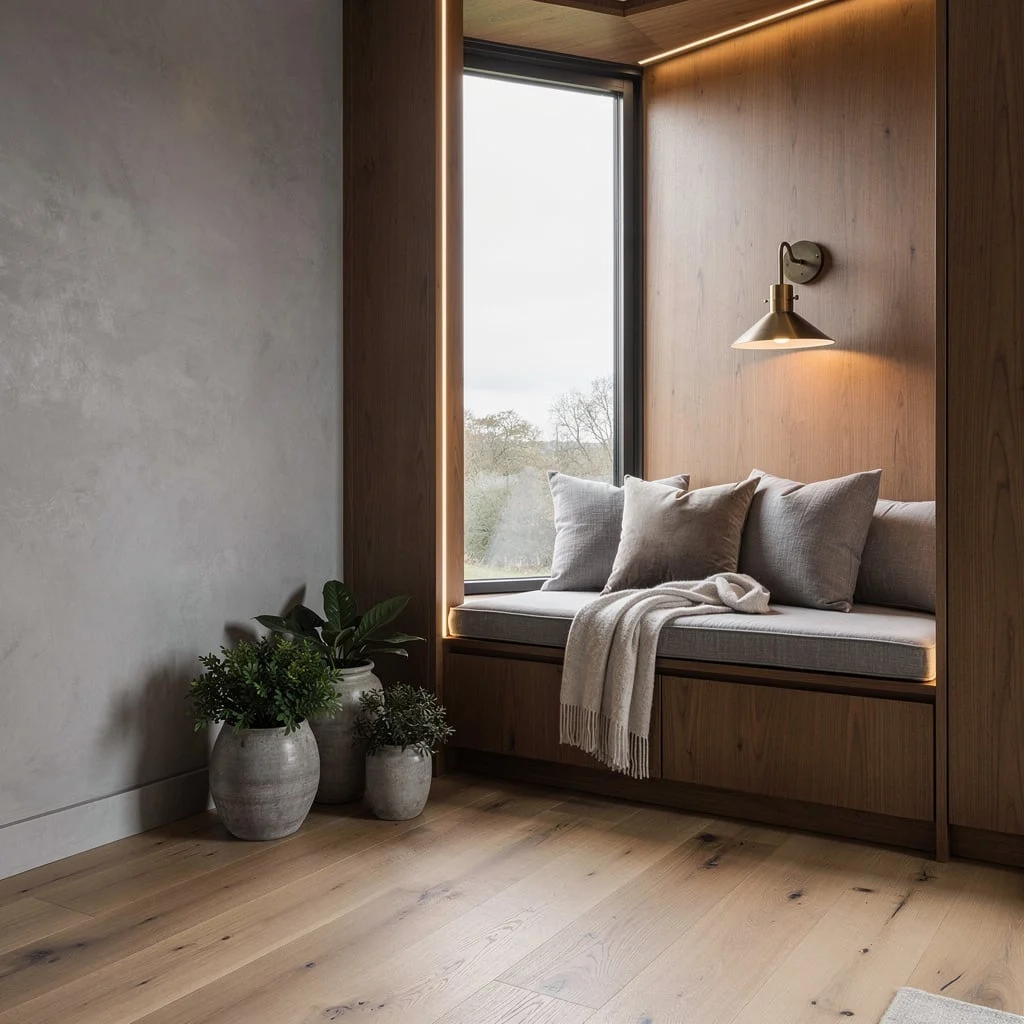
If you want to feel like you live in a high-end hotel, you need three things: custom cabinetry, plush seating, and killer lighting. Start with built-in walnut framing and stuff your reading bench with moody linen cushions. Get reckless with a cashmere throw because you deserve soft things. Integrate uplighting along your cabinetry and slap on a brass sconce for that grown-up vibe. Drop some muted ceramic planters for texture, and stick with a limewash wall in grey tones. Always program your accent lighting to compete with daylight for that layered glow.
Arched Alcove Magic: Travertine and Velvet Domination
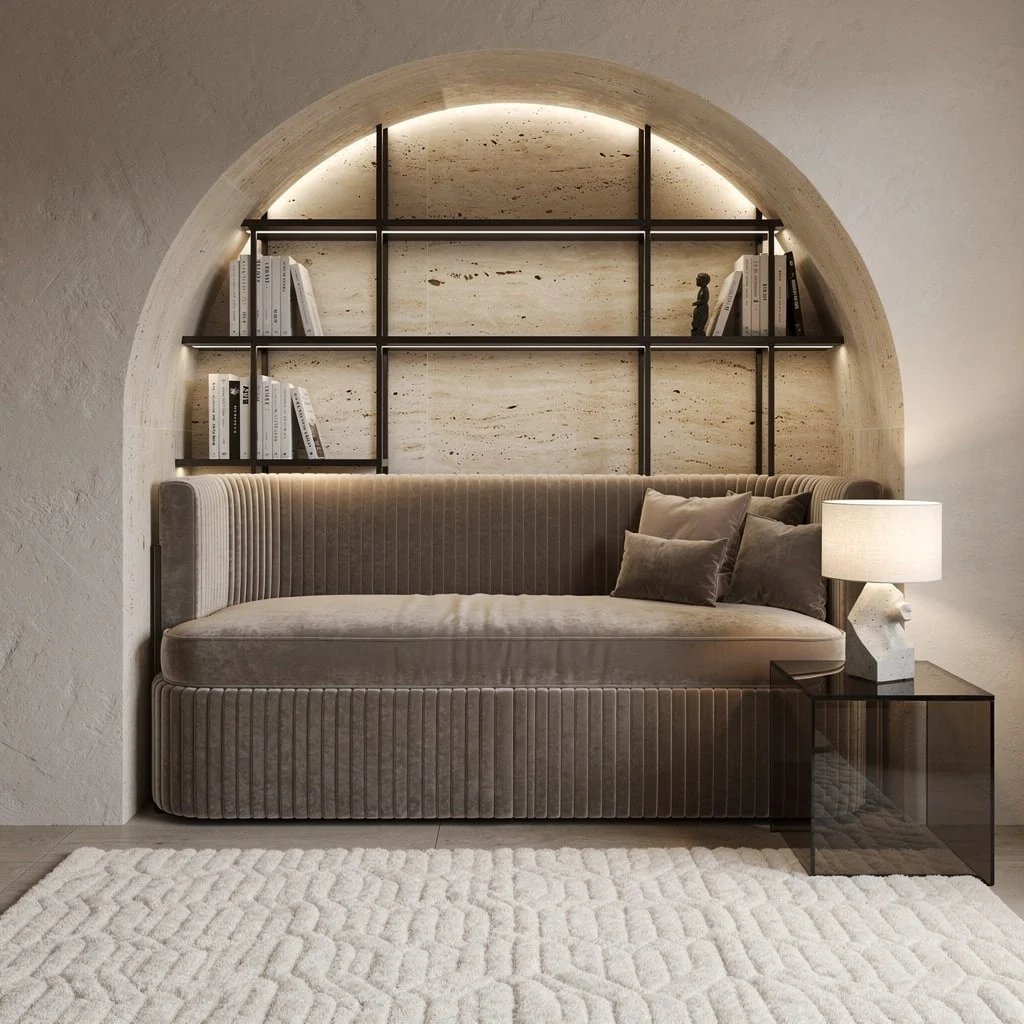
Channel your inner lounge lizard and line your alcove with honed travertine instead of boring drywall. Go custom with a fluted velvet daybed—taupe for neutral snobs—then surround it with matte black shelving so your books and plants look legit, not cluttered. Hide LED strips in that arch so everything glows like you’ve hired a lighting designer. A sculptural concrete lamp and glass table scream “I’m expensive.” Keep a hand-tufted wool rug nearby and never forget: arch that alcove for instant drama, avoid sharp corners if you value your shin bones.
The Sunken Chill Zone: Slatted Wood, Bouclé, and Designer Calm
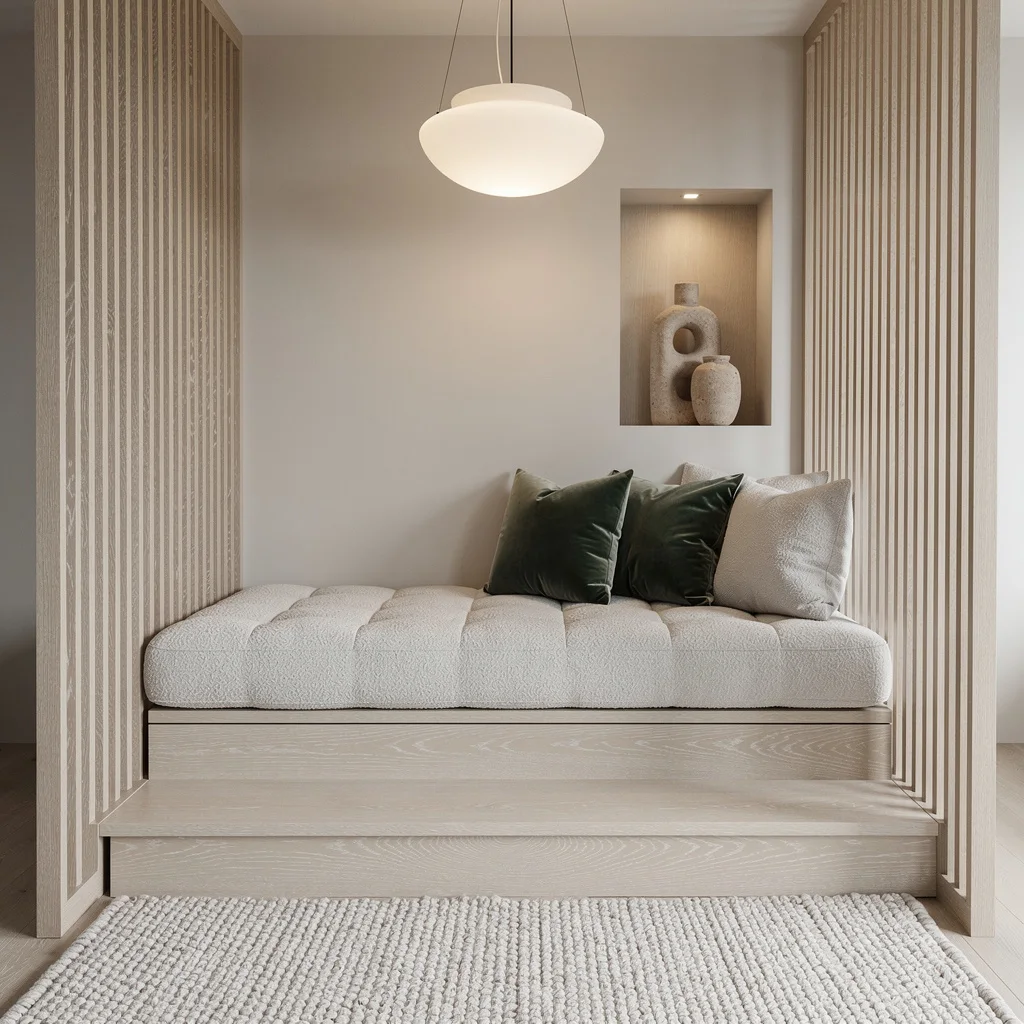
Want to feel wrapped in designer serenity? Build bleached white oak stairs down to your own slatted-wood-walled hideout. Pick a custom tufted chaise—bouclé and velvet pillows in muted greens and stones are mandatory. Drop a minimalist opal glass pendant overhead for vibes that whisper, not scream. Layer a nubby, low-pile wool rug underfoot. Place sculptural ceramics in a niche and always partition with slatted wood—open enough to not look like prison but closed enough that you can ignore people.
You Need a Glass Box Nook—Privacy, Light, and Sleekness
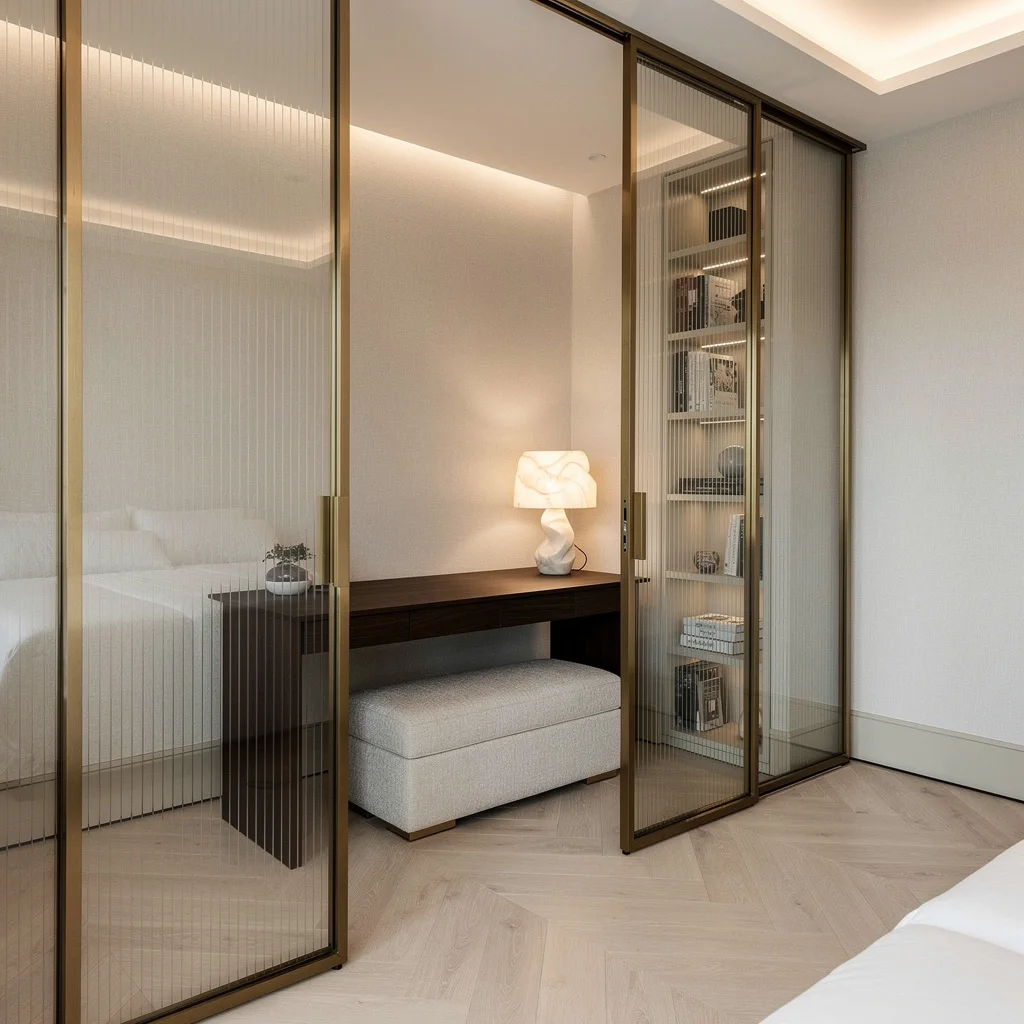
Let’s get bold: install floor-to-ceiling ribbed glass in bronze frames so your nook feels private without feeling boxed-in. Mount a dark walnut desk that floats; add a chenille bench and a built-in bookshelf because clutter is the enemy. Drop a sculptural alabaster lamp on your desk for lighting that’s not trying too hard. Stick with pale herringbone flooring and textured walls for major tactile points. Use cove lighting overhead and never skip recessed fixtures—they’ll outshine your lamp game every time.
Wood Wrapped Window Seat: Moss Velvet and Drapery Goals
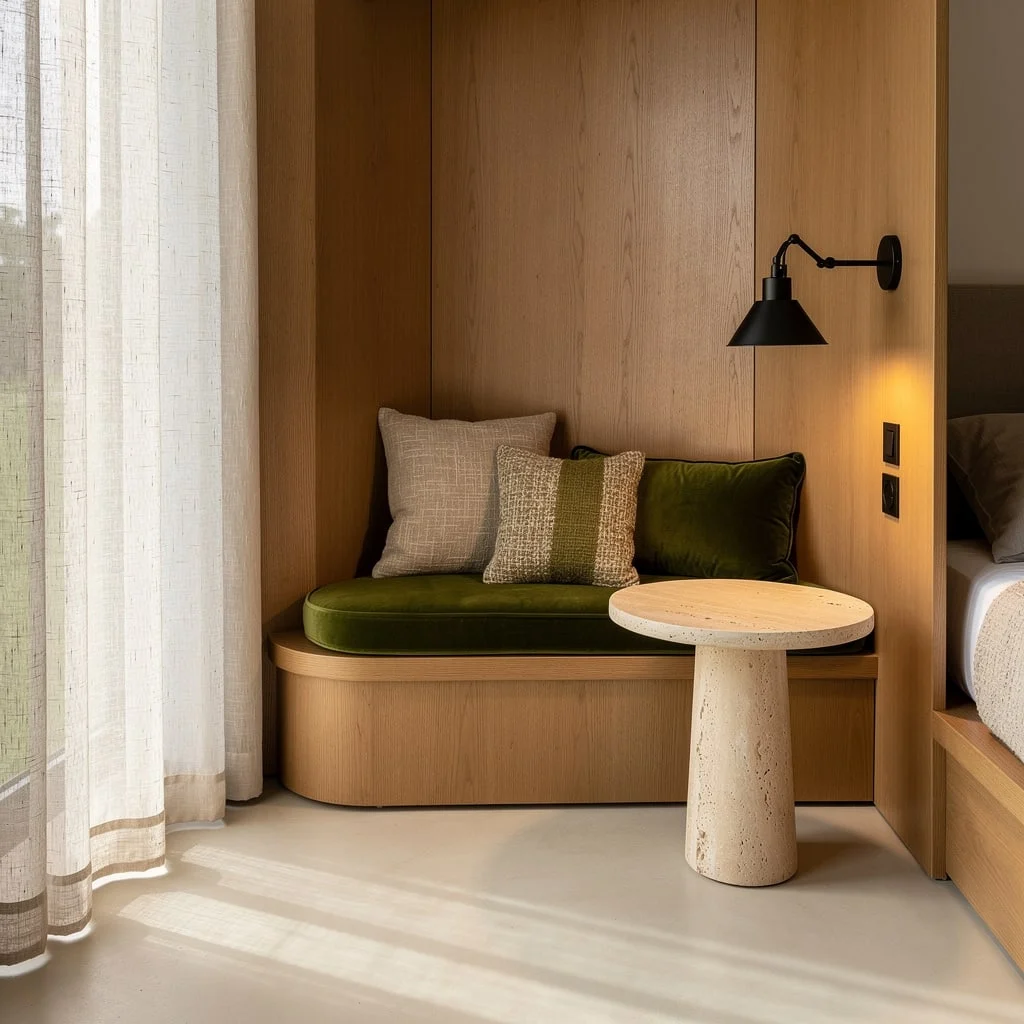
Don’t let your window seat be a random plank with a pillow. Wrap that alcove in sculpted oak panels for epic cozy vibes. Toss a moss-green velvet cushion down, then pile on sand and olive linen pillows—not just for comfort but for that effortless mix-and-match look. Put a round travertine table nearby and always pick a matte black pivoting lamp for max flexibility. Keep your drapery sheer, floor-length, and linen. Cheat with microcement flooring if you want soft, seamless vibes underfoot.
Barrel Vault Vibes: Marble, Chenille, and Ceramics
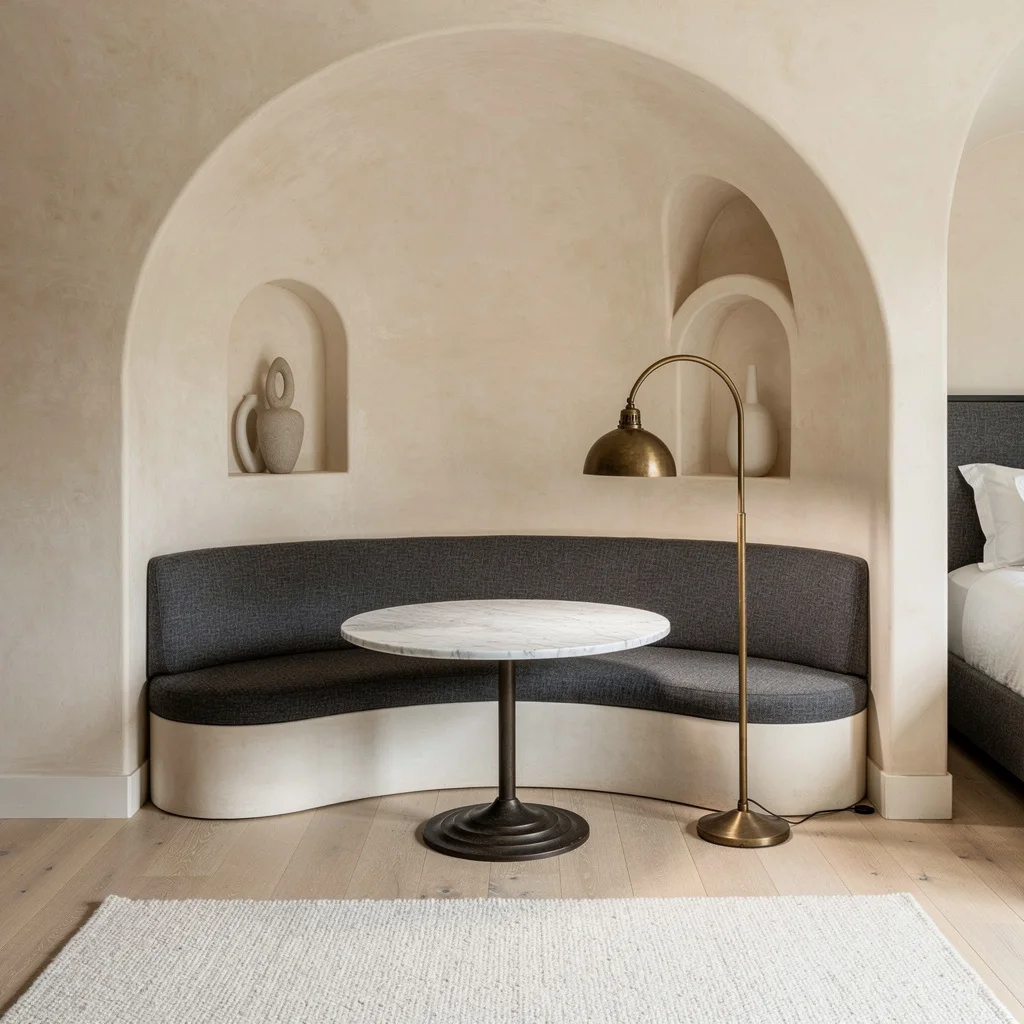
Curved ceilings are for people who want their nook to whisper ‘architectural.’ Finish yours off with Venetian plaster, then anchor the space with a built-in bench upholstered in graphite chenille. Display minimalist ceramics in uneven wall niches; nothing says collected like asymmetric curation. Add a round marble slab table at the center and throw in an arched bronze floor lamp. Blond oak wide planks go wall-to-wall, never settle for scraps. Don’t forget: subtle bouclé rugs are necessary to soften hard surfaces, not just for warmth.
Clay Plaster Nook: Modular Lounge and Floating Shelves
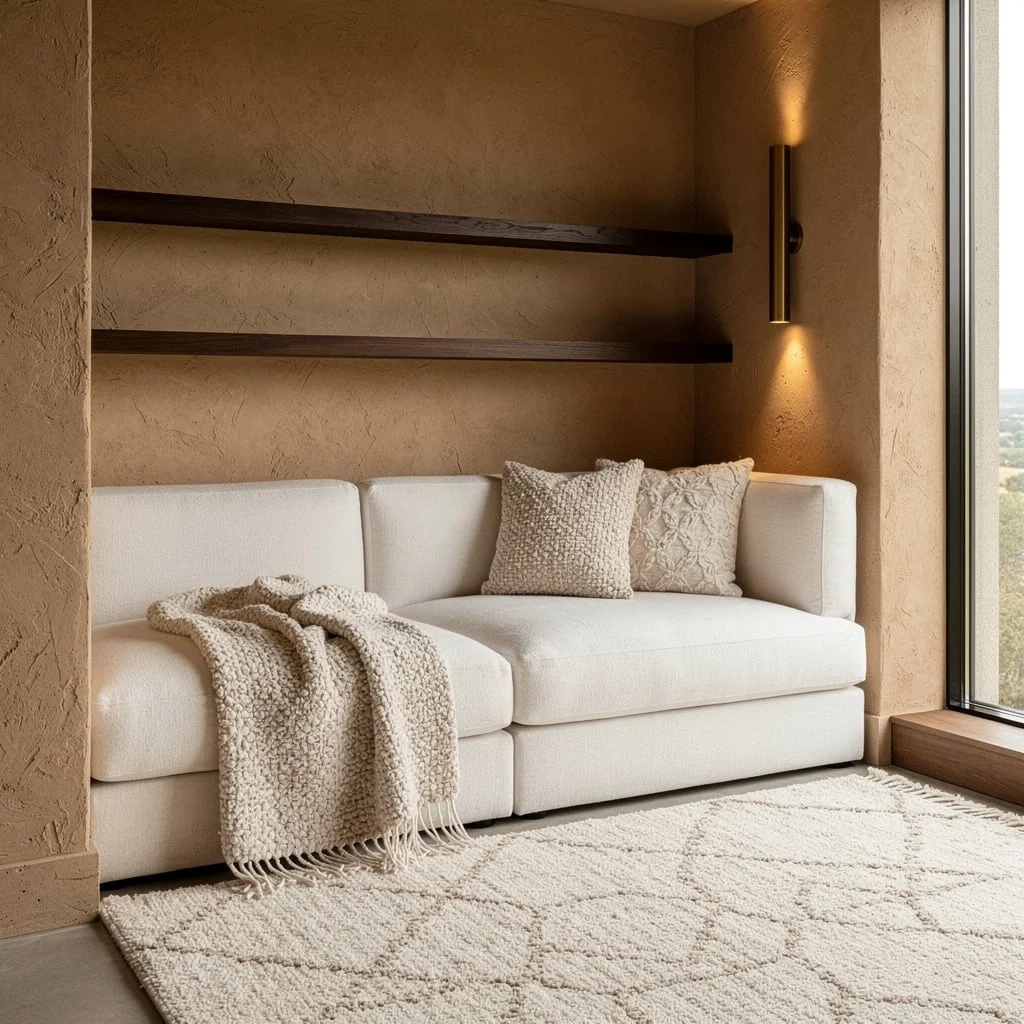
Step up the texture game—finish your feature wall with hand-troweled clay plaster in not-so-obvious sand. Install floating smoked oak shelves to display things worth looking at. Fill your nook with a modular lounge in cotton, but pile it high with boucle and cashmere throws; depth is everything. Hang a bronze sconce for focused, non-jarring lighting. Lay down a Moroccan-style wool rug for layered softness. Don’t forget: always position your lounge to face the window—natural light wins over lamps, every time.
Hidden Oasis: Concrete, Nubuck, and Mosaic Moves
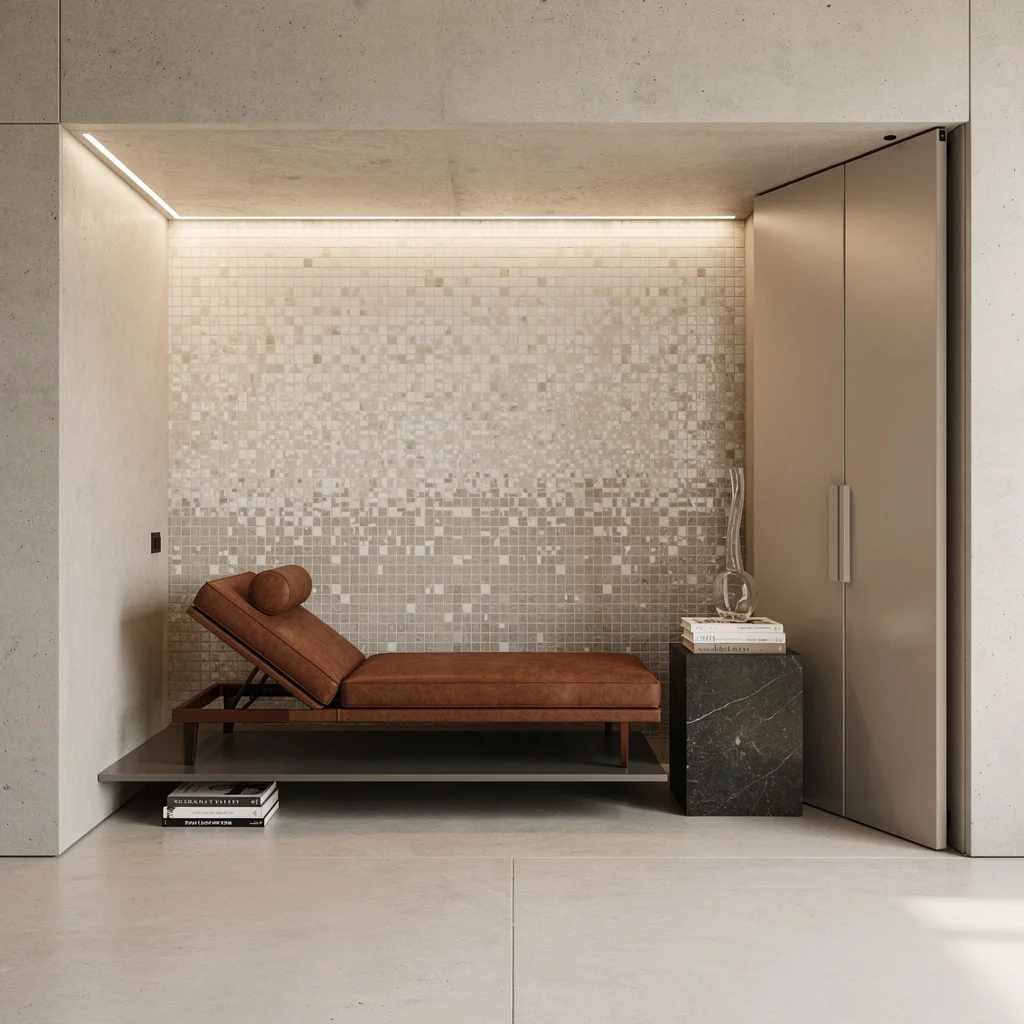
Go minimal—embed your alcove in creamy polished concrete, then float a chaise lounge in tobacco nubuck leather. Back it with a massive micro-mosaic in muted gradients, not loud colors. Line a recessed LED above to wash your walls and highlight the moody undertones. Stack your art books on a dark stone plinth because books shouldn’t be on the floor. Frame it all with seamless pivoting lacquer doors so you can hide when the world is being extra. Pro tip: mosaic always needs lighting—otherwise it’s just expensive wallpaper.
Bay Window Nook: Sage Millwork and Calm Mural Flex
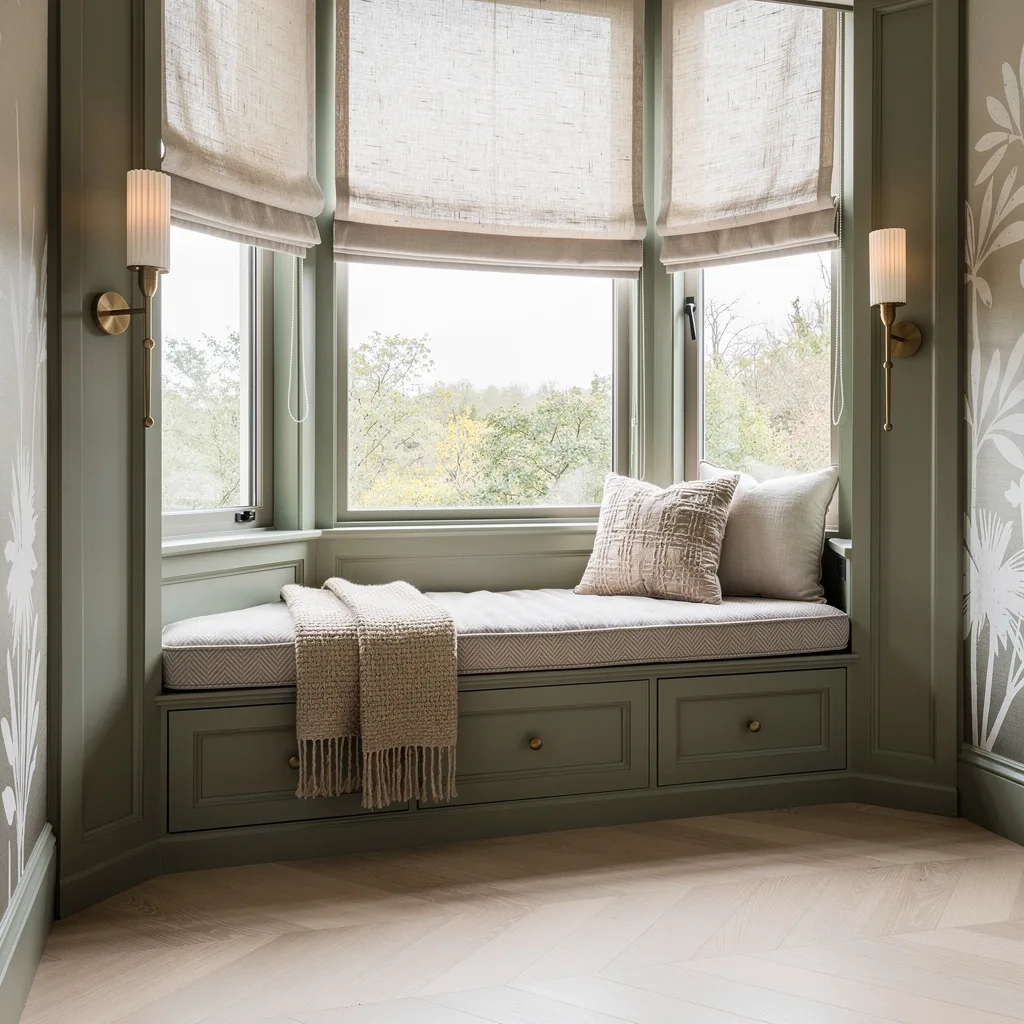
Forget boring bay windows. Head straight for custom shaker millwork painted soft sage. Add a herringbone linen cushion and throw down flax blankets—let your fights with color happen elsewhere. Flank with fluted antique brass sconces and cover the windows with Roman shades in ramie: drama with a side of function. Keep the floor in light ash chevron parquet for classic cred. Splash an abstract mural across the wall in soft whites, but keep it chill—no flamingos, please. Style rule: sconces always at eye level, never above or below your face.
Banquette Bliss: Bouclé, Terracotta, and Brass Lighting
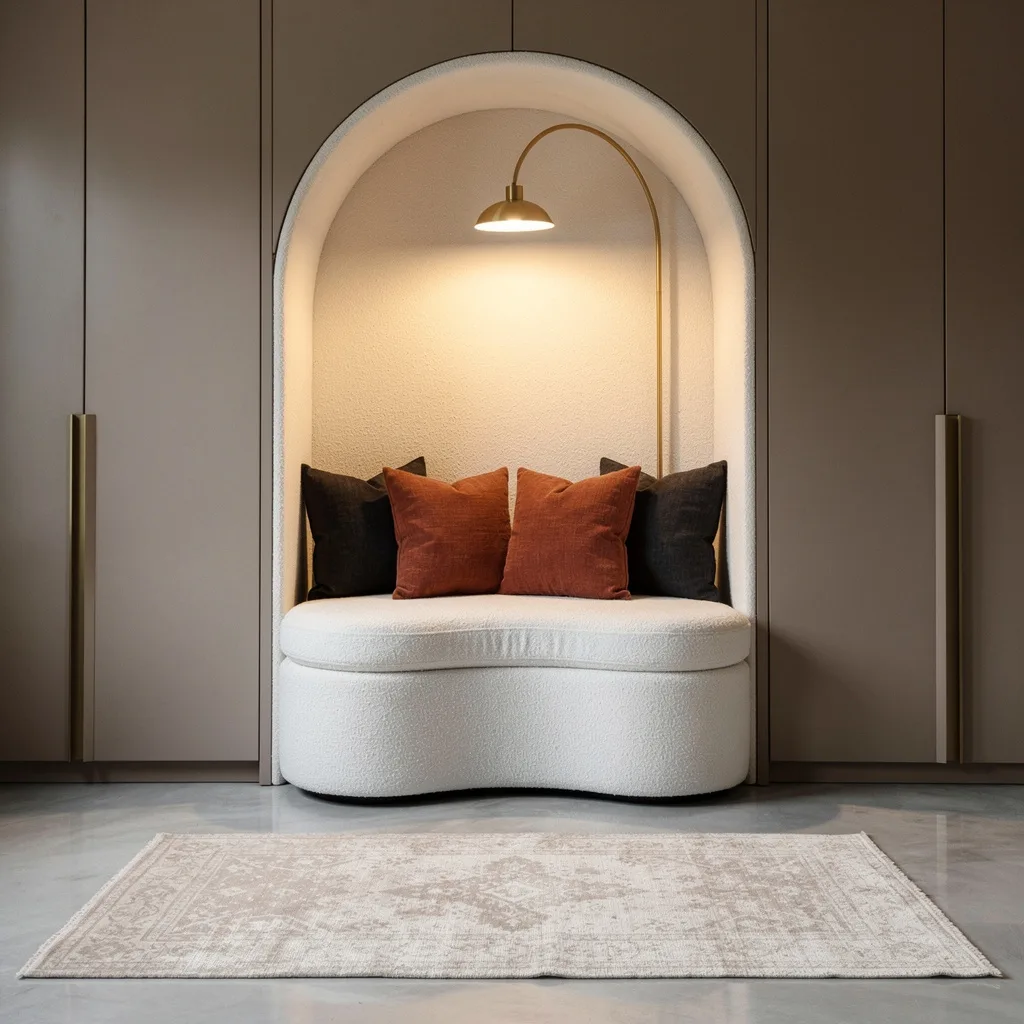
Channel that bougie café feel with a curved built-in banquette in off-white bouclé. Add huge linen pillows—terracotta and charcoal, because plain pillows are a design crime. Lay down pearl-grey poured resin and layer a Persian-inspired silk rug on top if you want to humble-brag your style. Arc a slender brass lamp overhead, aiming for warm, focused light instead of spotlight interrogation. Put full-height lacquered mushroom grey cabinets on either side for functional sophistication. Never let storage kill your vibe—conceal, don’t reveal.
Final Thoughts
A bedroom nook that has been genuinely considered — where the enclosure was designed rather than hoped for, the lighting was planned specifically for the zone, the proportions were matched to a human body rather than a room’s aesthetics, and the textiles were layered with enough generosity to make settling in feel inevitable — creates something that no other bedroom element can replicate. It creates a place within the place, a small environment inside the larger one, that makes the whole room feel more inhabited and more personal. The corner that’s been empty, the alcove that’s been overlooked, the windowsill that’s been ignored — these are not problems. They’re the nook waiting to happen.