
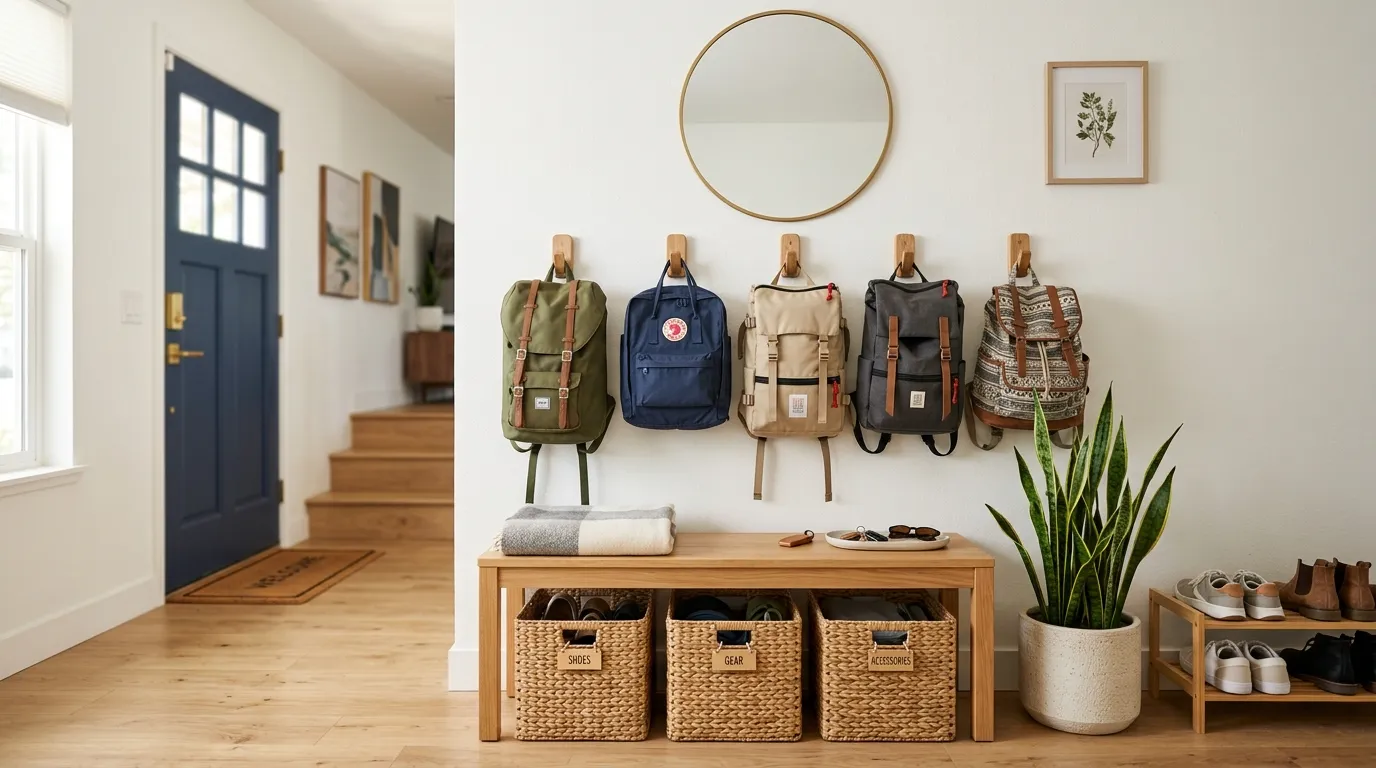
A backpack station sounds simple until backpacks start landing on the floor, dining chairs, stairs, and whatever surface happens to be closest to the door. The problem usually isn’t a lack of storage. It’s that nobody has a clear place to put their stuff.
The best Backpack Station Ideas make the right action almost automatic. Kids can reach their hooks, shoes have a defined landing spot, and school bags don’t become part of the furniture.
You also don’t need a huge mudroom. A narrow wall, an unused corner, or the space under a shelf can handle a surprisingly useful setup. The trick is giving every daily item a specific home without making the entryway look like a storage room.
These ideas focus on the foundation: easy access, clear ownership, and smart use of vertical space.
Why Most Backpack Drop Zones Become Cluttered So Fast
The Problem Isn’t the Backpacks, It’s the Missing Drop Zone
When a backpack doesn’t have an obvious home, it gets dropped wherever the day ends. That’s especially true during rushed mornings when nobody has time to open a cabinet or walk across the house.
A good drop zone removes that extra decision. The hook should be visible, reachable, and close to the door the family actually uses.
The same rule applies to shoes, lunch bags, jackets, and sports gear. If an item is used every day, its storage needs to be just as convenient.
Keep School Gear Where Kids Actually Use It
A backpack station works best when kids don’t need adult help to use it.
Hooks should sit at a comfortable height, while shelves and baskets should hold the smaller things that tend to disappear. Keep the setup simple enough that a child can put everything away in seconds.
The goal isn’t maximum storage. It’s minimum effort.
Separate the Daily Grab-and-Go Items
Backpacks don’t need to share one giant pile with every other item that enters the house.
Give the most-used pieces their own zones:
- Backpacks: hooks or cubbies
- Shoes: bench or lower shelf
- Lunch bags: dedicated shelf or basket
- Jackets: hooks beside the bags
- Small essentials: drawer or personal bin
That small separation keeps the station useful instead of turning it into another clutter trap.
Backpack Station Ideas
Personalized Hooks Stop Chaos
Slapping a name on the wall is a cute way to pretend your children actually know where their belongings go. Spoiler alert: they probably still won’t, but at least the labels provide a convenient target for your mounting frustration.
Matching colors might look adorable for your social media feed, but try to keep the actual items under control. If a neon pink backpack ends up on the green hook, it is legally the end of the world for at least three minutes.
Keep the bench clear of random debris because having a seat for shoe removal is pointless if you have to excavate a mountain of junk just to sit down.
Create a Wall-Mounted Backpack Row With Individual Hooks
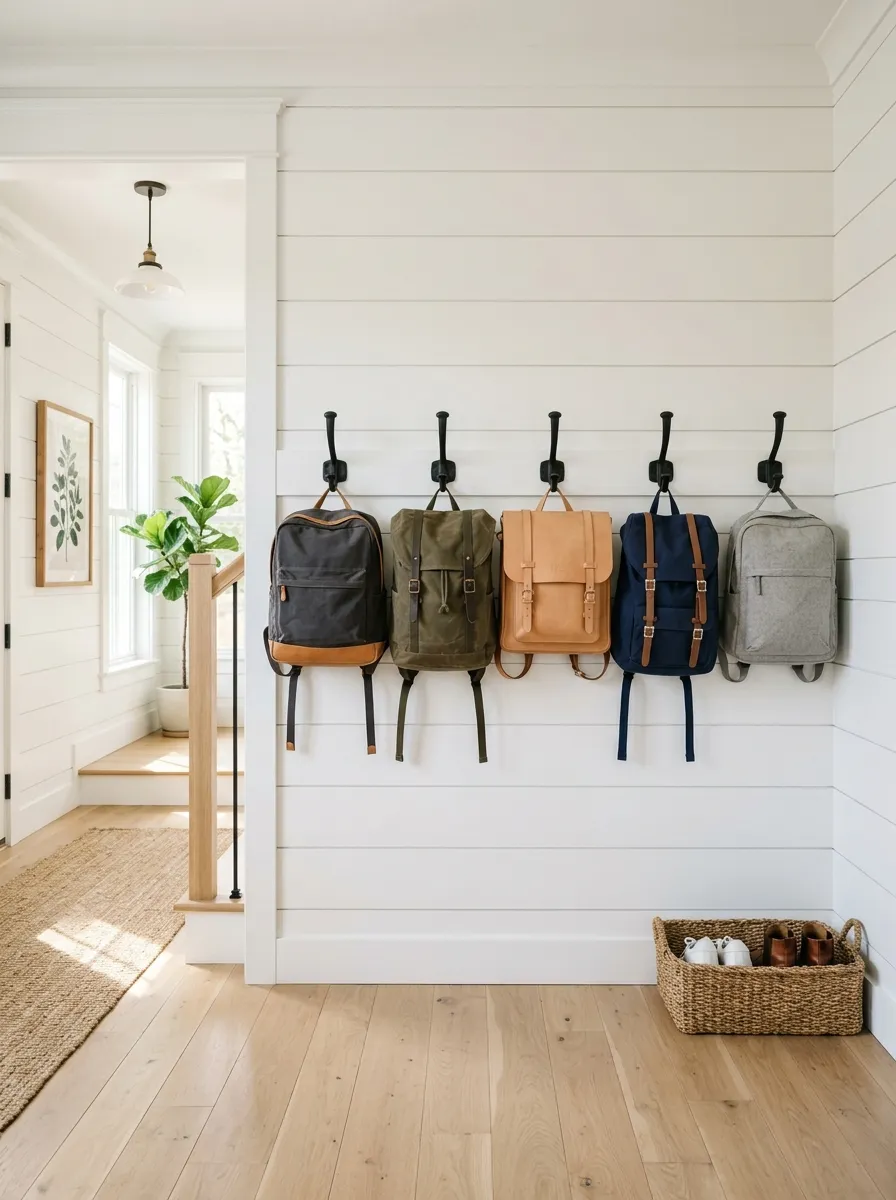
The simplest setup is often the one that survives busy mornings. Mount a row of sturdy hooks along an open wall and give each backpack its own spot.
Don’t cram the hooks together. Leave enough room for bulky straps and winter jackets to hang without overlapping.
Best rule: one hook per daily bag.
Vertical Baskets Save Sanity
Mounting bins on the wall is a desperate attempt to contain the inevitable avalanche of school papers and junk. It looks organized until the first math test gets shoved into the wrong slot and disappears forever.
Those hooks are strictly for bags that don’t weigh as much as a small boulder. If your child overstuffs their backpack with unnecessary textbooks, no amount of decorative wall hardware is going to save your drywall.
Keep the calendar updated or don’t bother having one at all. There is nothing quite as depressing as a meticulously maintained family command center that displays an event from three months ago.
Give Each Child a Clearly Labeled Backpack Cubby
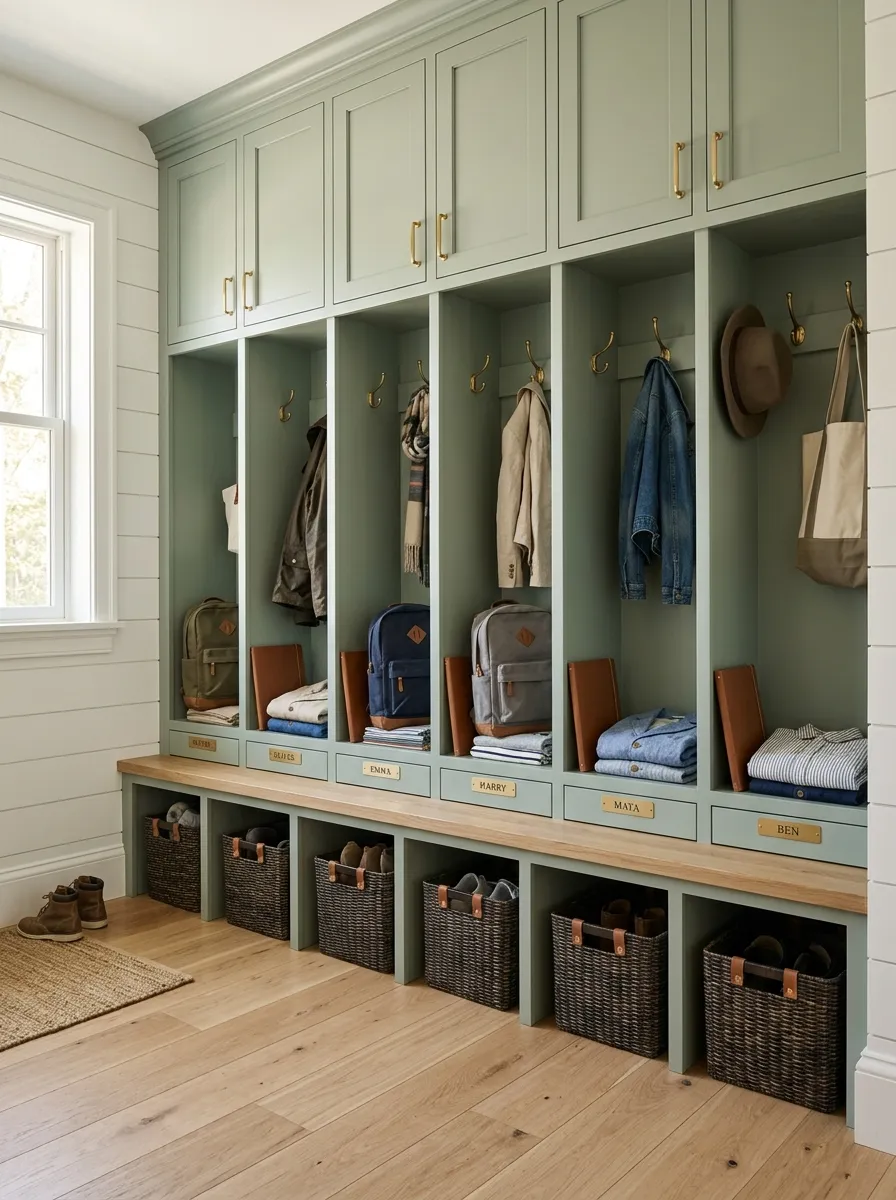
Individual cubbies make ownership obvious. That’s useful when several backpacks look nearly identical and everyone is in a hurry.
Give each child one open compartment and keep the label simple. A name, initial, or small symbol is enough.
The cubby can also hold a jacket or school folder, but don’t let it become a catch-all.
Keep inside: backpack, jacket, and one or two daily essentials.
Built-In Mudroom Perfection
If you have the space for a full built-in unit, you are already winning the game that nobody asked to play. The star-patterned cabinets look precious, right up until someone jams a damp raincoat into the cubby and leaves it to grow a new ecosystem.
Use the baskets for actual storage instead of using them as a graveyard for missing gloves and mysterious crumbs. A designated home for shoes is only effective if people actually use it instead of kicking their footwear into the center of the room.
The giant fern is a lovely touch, assuming it survives the lack of sunlight and the sheer volume of dirt your family drags through the front door daily.
Turn an Empty Entryway Corner Into a Compact School Drop Zone
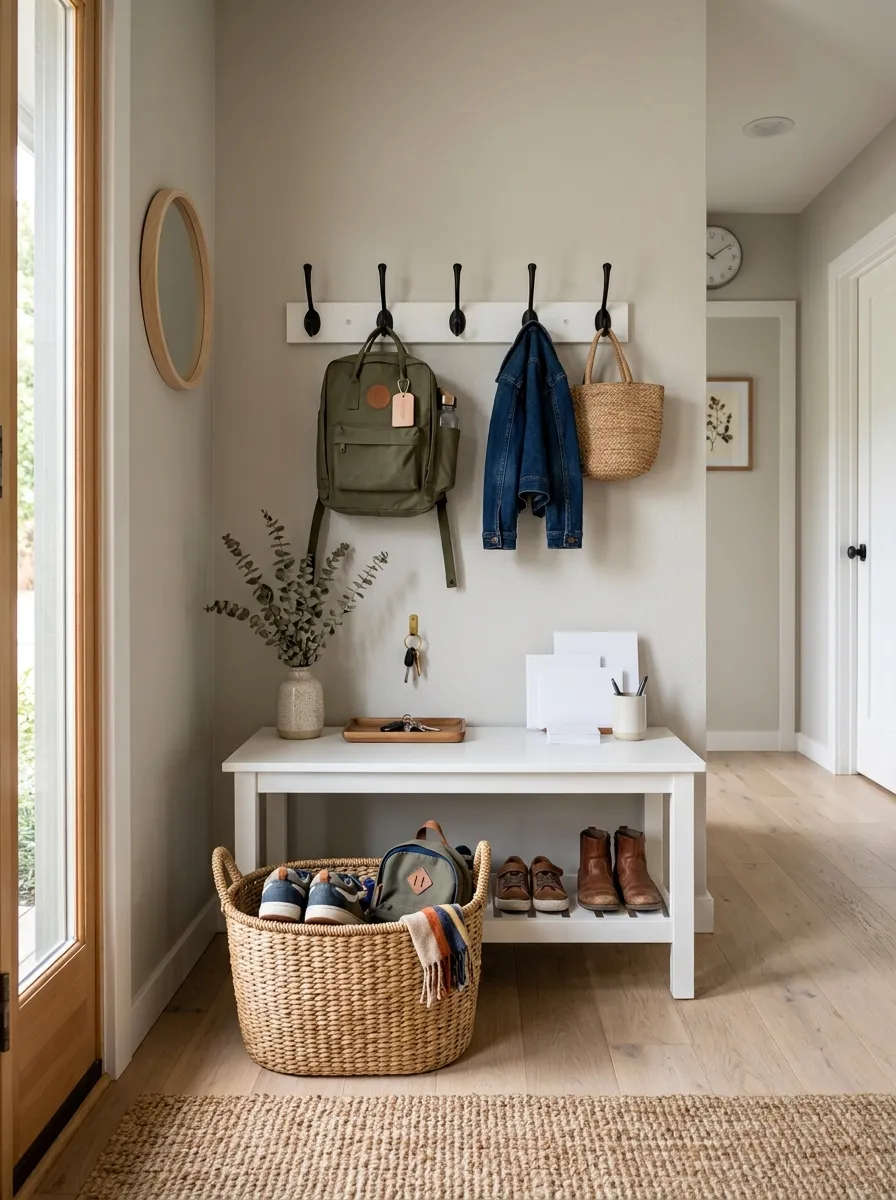
That awkward corner beside the door doesn’t need to stay empty.
Start with a narrow bench or small cabinet, then add hooks above it. Keep the footprint tight so people can still walk through comfortably.
Add one basket underneath for shoes or loose school gear. The vertical wall does most of the work, while the floor stays relatively clear.
Build it in this order:
- Measure the usable wall.
- Add the hooks first.
- Place the lower storage underneath.
- Keep the walking path completely clear.
Uniform Hooks Minimize Drama
Identical backpacks on uniform hooks might give you a fleeting sense of control, but we all know the reality is just a slightly more aesthetic version of complete disaster. At least when they all look the same, you can pretend your house isn’t descending into chaos.
Having a wall-mounted mail slot is peak optimism. We all know that spot will eventually be home to nothing but old coupons, grocery lists you’ll never use, and reminders for events you missed last week.
Keep the wall board free of clutter so you can actually read the calendar. It’s supposed to be a tool for efficiency, not a place to pin up every single piece of artwork that was clearly produced in a distracted daze.
Add a Bench So Backpacks and Shoes Have One Landing Spot
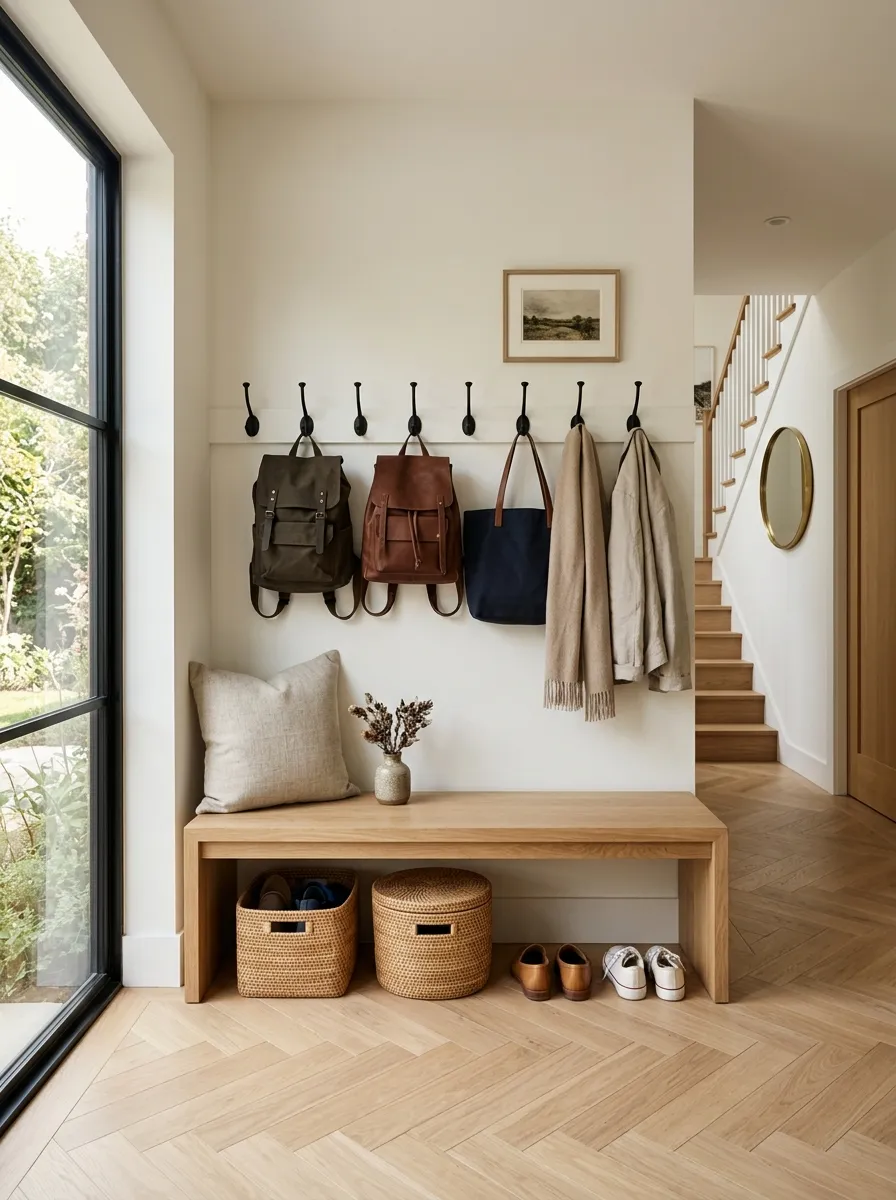
A bench earns its floor space because it solves two problems at once.
Kids can sit down to remove their shoes, while the space beneath the seat catches footwear instead of letting it spread across the entryway.
Keep backpacks on hooks above the bench rather than piling them on the seat. That small distinction matters because the bench stays usable.
Tip: Choose a bench deep enough to sit on comfortably, but narrow enough that it doesn’t interfere with the doorway or walking path.
Use Vertical Peg Rails When Floor Space Is Tight
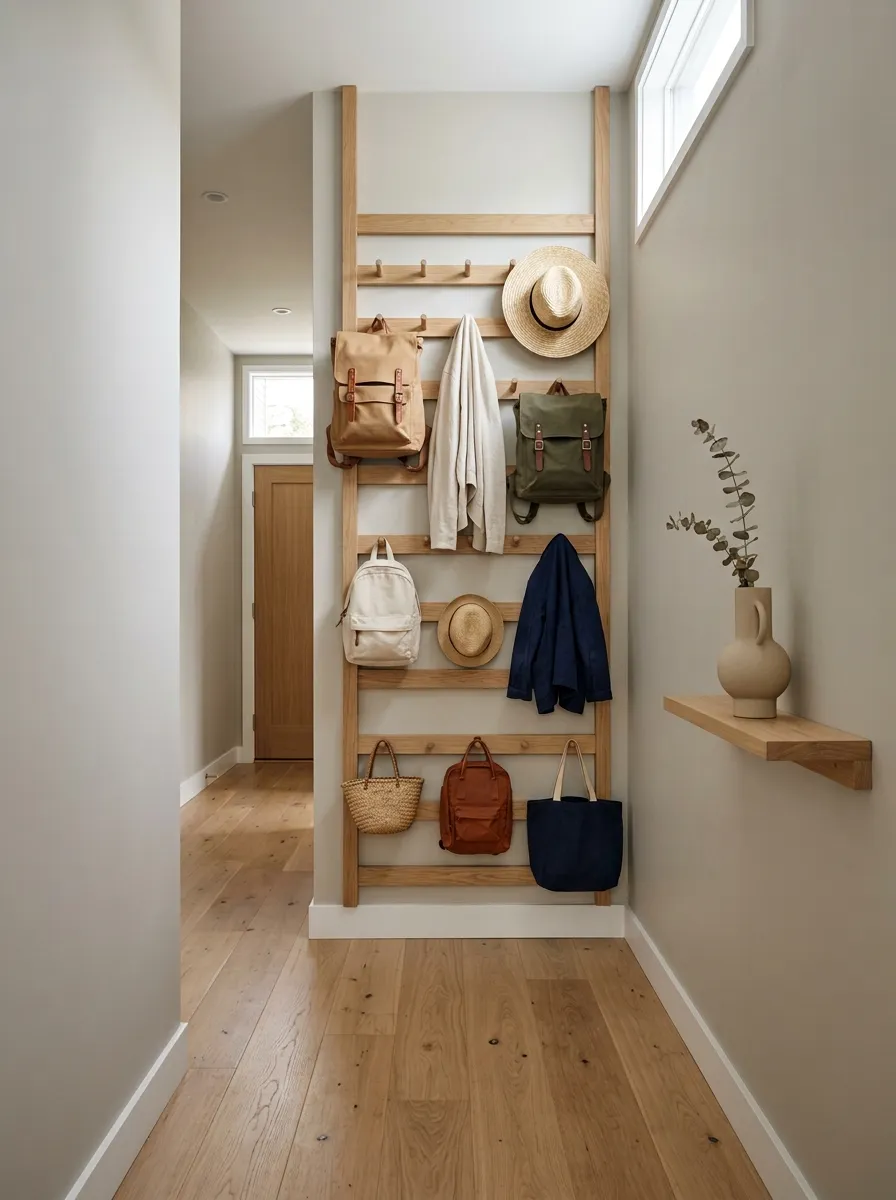
A cramped entryway doesn’t need another cabinet. Put the wall to work instead.
A long peg rail gives you several hanging points while using almost no floor space. It’s especially useful in narrow hallways where a bench or cubby would make the walkway feel squeezed.
Mount the rail at a height that works for the people using it most. If kids can’t reach their own hooks, the system has already failed.
Build a Backpack Station Under a Staircase
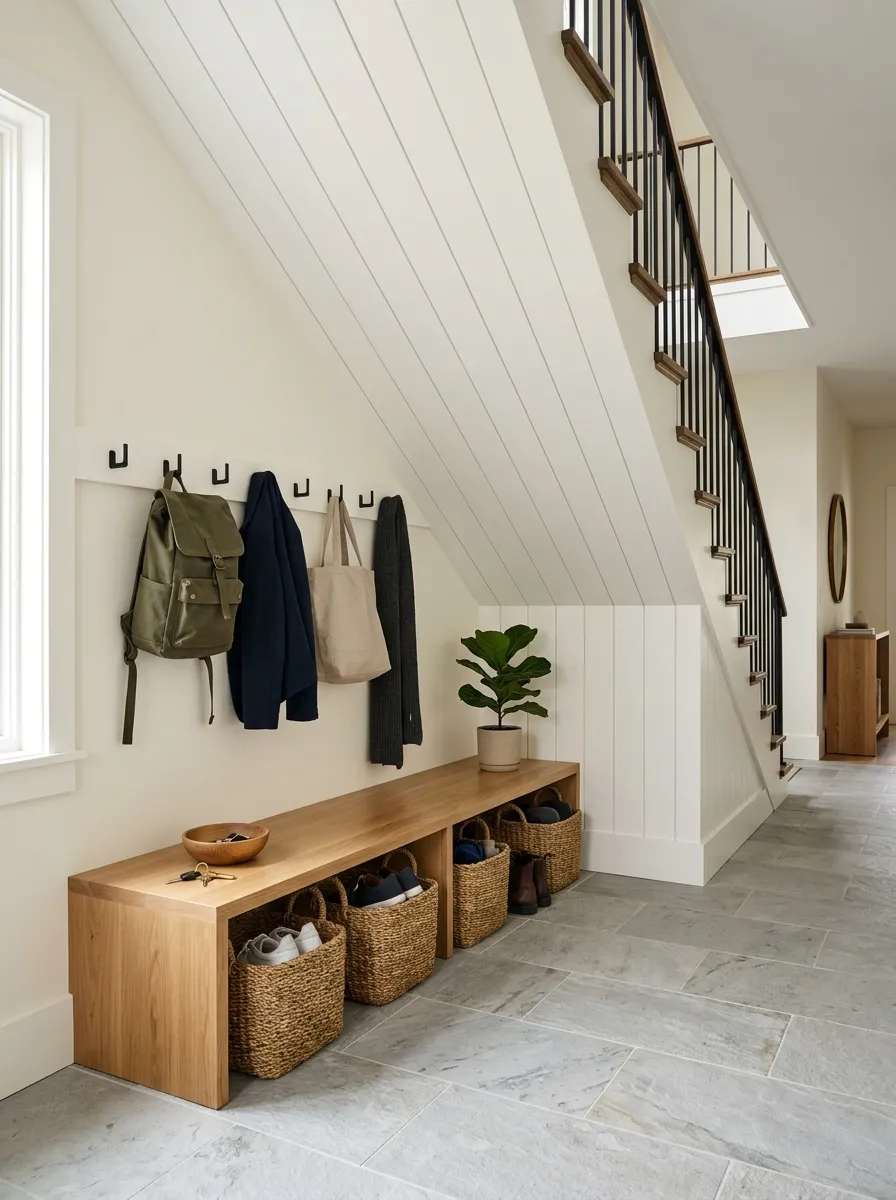
The space under the stairs is often wasted because it looks too awkward for normal furniture.
That’s exactly why it works well for a backpack station. Install a few hooks along the usable wall and add a low shelf or baskets underneath. The sloped ceiling naturally creates separate zones without taking over the room.
Keep the setup open. Closed doors make daily drop-offs slower, and slow systems become messy systems.
Use the lowest part for shoes or baskets. Save the taller section for backpacks and jackets.
Pair Each Backpack Hook With a Small Personal Basket
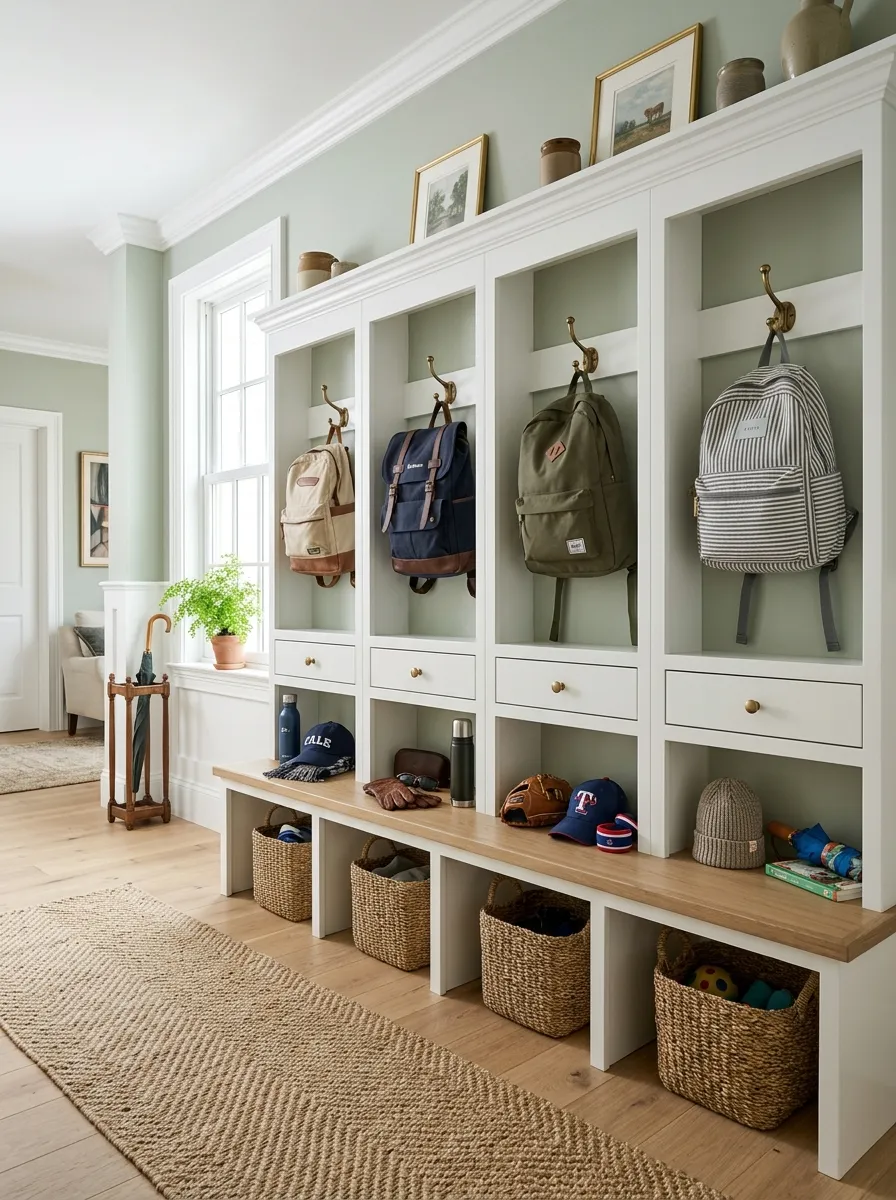
Backpacks aren’t usually the only things kids drop at the door.
A small basket under each hook catches the loose pieces that otherwise migrate around the house. Think water bottles, caps, gloves, sports accessories, or small school supplies.
The important part is keeping the basket personal. One shared basket quickly becomes a mystery bin nobody wants to empty.
Simple rule: the hook belongs to the backpack, and the basket belongs to everything that comes out of it.
Add a Narrow Shelf Above the Backpack Hooks
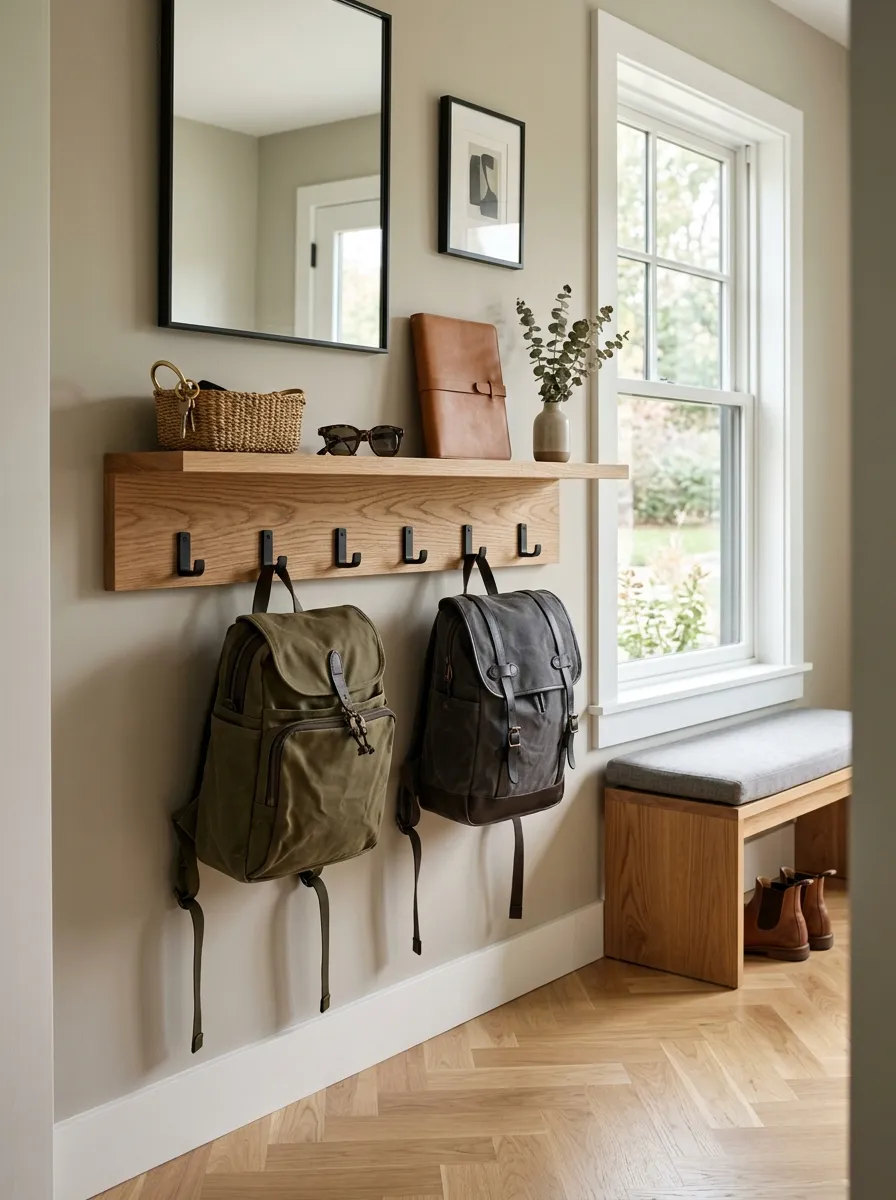
A backpack hook handles the big item, but a narrow shelf handles the small things that keep getting misplaced.
Use it for lunch containers, school folders, sunglasses, or a small basket for keys. Keep the shelf shallow so it doesn’t become another surface for random household clutter.
The best shelves aren’t the biggest ones. They’re the ones with a clear job.
Create a Dedicated Charging Spot Beside the Backpacks
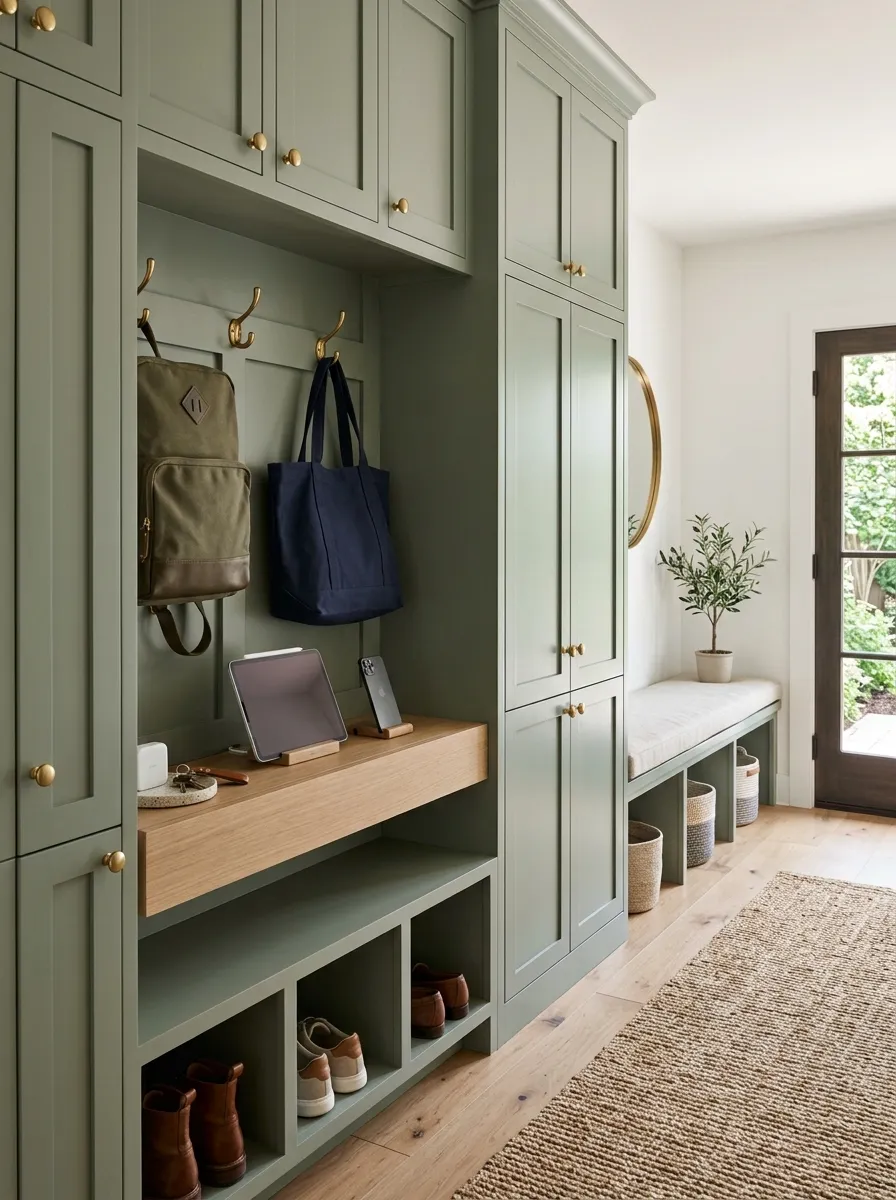
Phones, tablets, and school devices shouldn’t be charging on the kitchen counter while backpacks sit somewhere else.
Put a small charging shelf or cabinet directly beside the backpack station. That keeps the device close to the bag it needs to go into the next morning.
Keep cords short and organized. A charging station with tangled cables becomes clutter almost immediately.
Practical move: Give each device one defined charging position and keep the cords routed toward the wall outlet.
Turn a Hallway Nook Into a Family Backpack Station
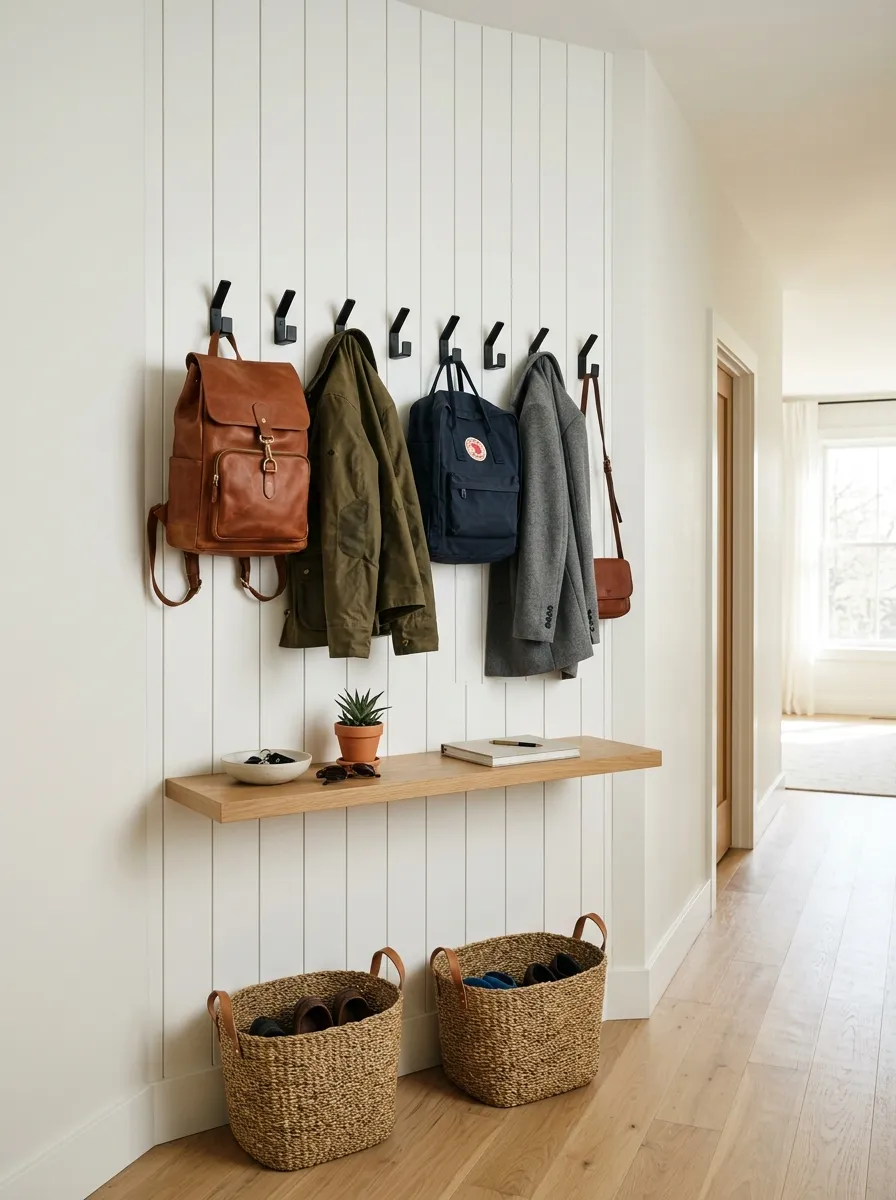
That narrow hallway recess can do far more than hold a random piece of furniture.
Use the back wall for hooks, add a slim shelf underneath, and keep the surrounding floor open. Each family member gets a defined hanging spot without turning the hallway into a full mudroom.
The key is using the wall depth instead of adding bulky furniture.
Add Shoe Storage Directly Below the Backpack Hooks
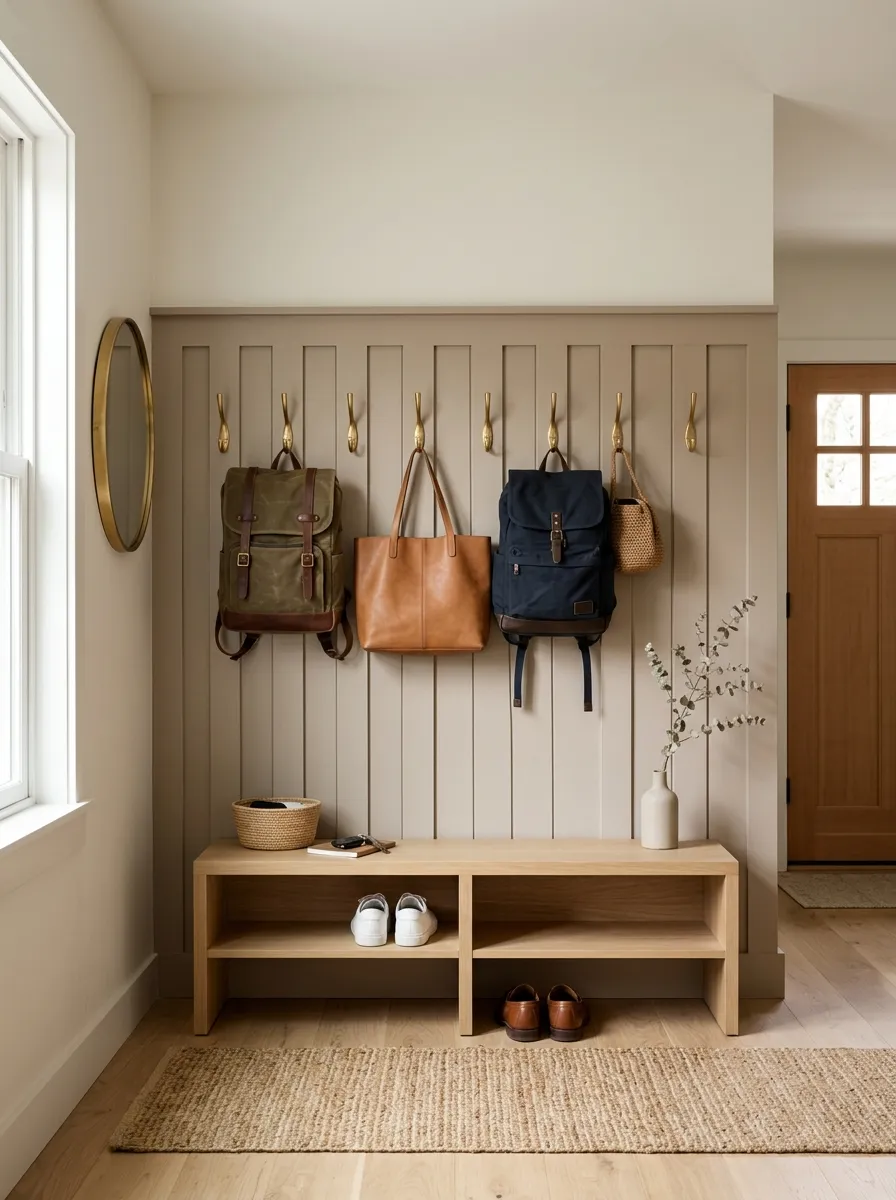
A backpack station feels incomplete when everyone still kicks their shoes into a pile underneath it.
Put a narrow shoe rack, open shelf, or low cubby directly beneath the hooks. The vertical arrangement makes the entire wall function as one drop zone.
Keep only everyday footwear there. Seasonal shoes and rarely used pairs belong somewhere else.
Set it up in this order:
- Hang the backpacks at an easy reach.
- Leave enough clearance underneath.
- Add low shoe storage.
- Keep extra footwear out of the station.
Use Color-Coded Hooks Without Making the Wall Look Childish
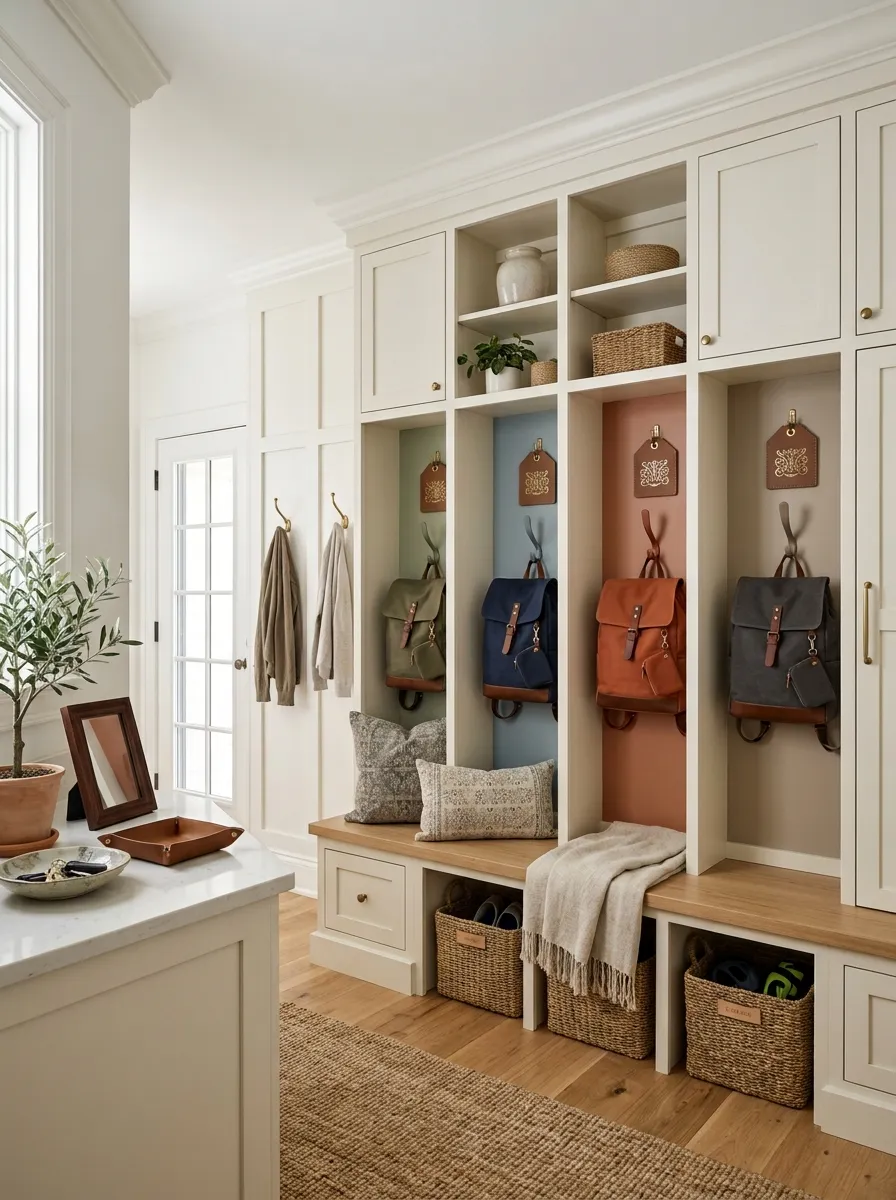
Color coding works, but a rainbow wall isn’t the only way to do it.
Give each child a subtle color through the hook, name tag, or small basket. Keep the rest of the station neutral so the system feels intentional rather than overly themed.
This is especially useful when several backpacks look alike.
Choose muted shades that still make each station instantly recognizable.
Create a Small Backpack Station Inside a Closet
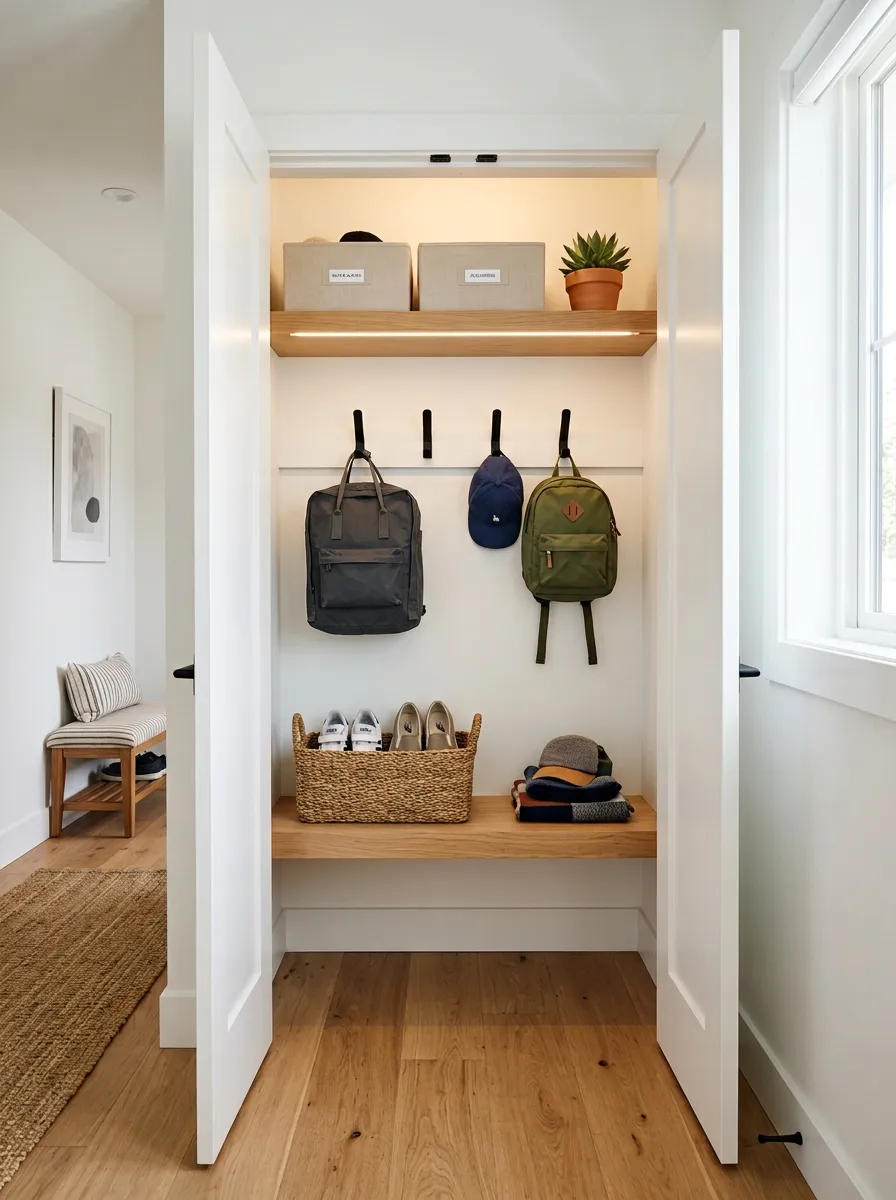
Don’t overlook the closet nearest the entrance.
If an open station makes the room look busy, dedicate one section of a coat closet to backpacks. Add low hooks inside the door or along the back wall, then place a small shelf below for shoes or lunch bags.
This approach works particularly well when the rest of your entryway needs to stay visually clean.
The trick is making the closet easy to use, not maximizing every inch.
Use Slim Lockers for a Cleaner Family Entryway
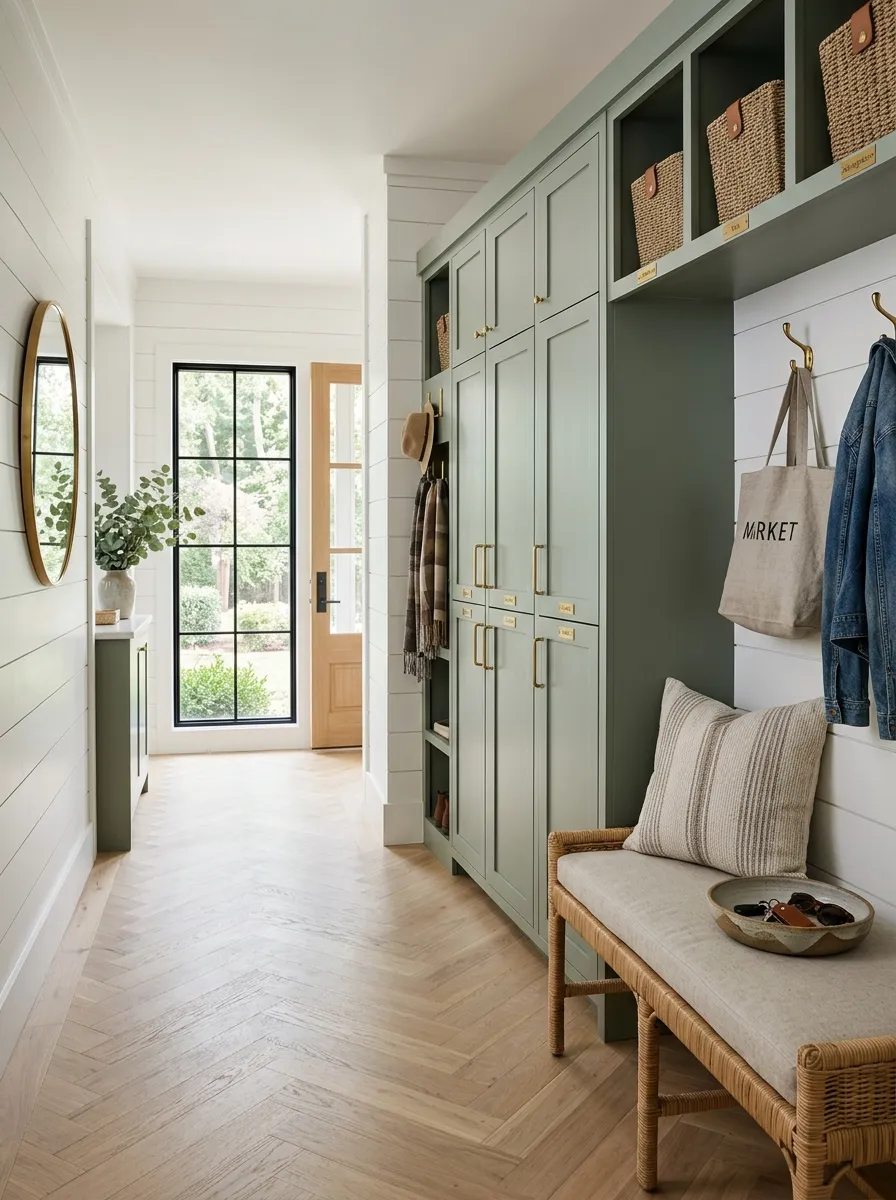
If backpacks, jackets, shoes, and random school gear all compete for the same wall, slim lockers bring order fast.
Choose narrow individual compartments instead of one giant cabinet. Each person gets a defined zone, and the doors hide the mess when the morning rush is over.
The important part is keeping the lockers shallow enough for the room. Storage shouldn’t make the entryway harder to walk through.
Give Lunch Bags Their Own Dedicated Shelf
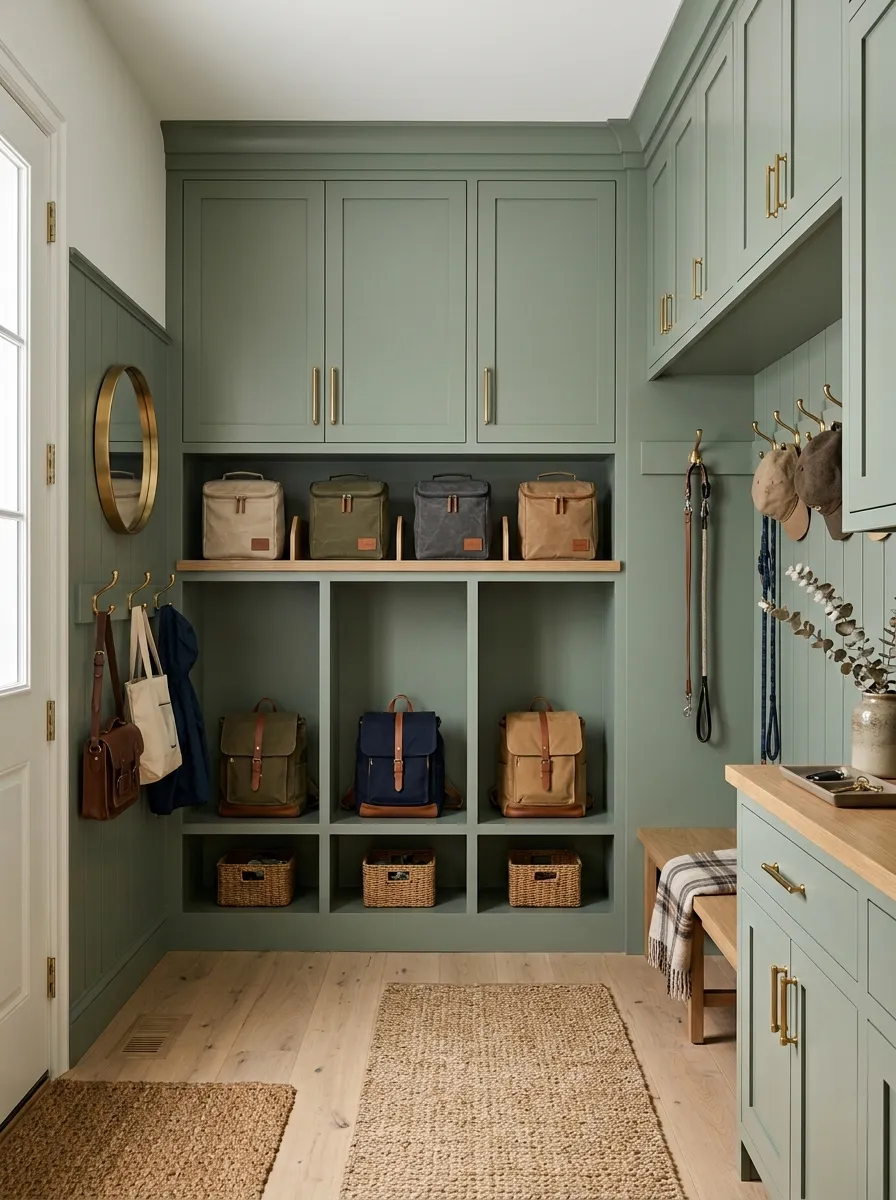
Lunch bags have a habit of taking over the backpack station.
Give them a separate shelf instead. A narrow shelf above or beside the backpacks keeps lunch containers visible without letting them pile on the floor.
This also makes the morning routine faster because the lunch bag has one obvious place to return.
Don’t let the lunch shelf become general storage. Its job is already clear.
Build a Backpack Station Into an Entryway Cabinet
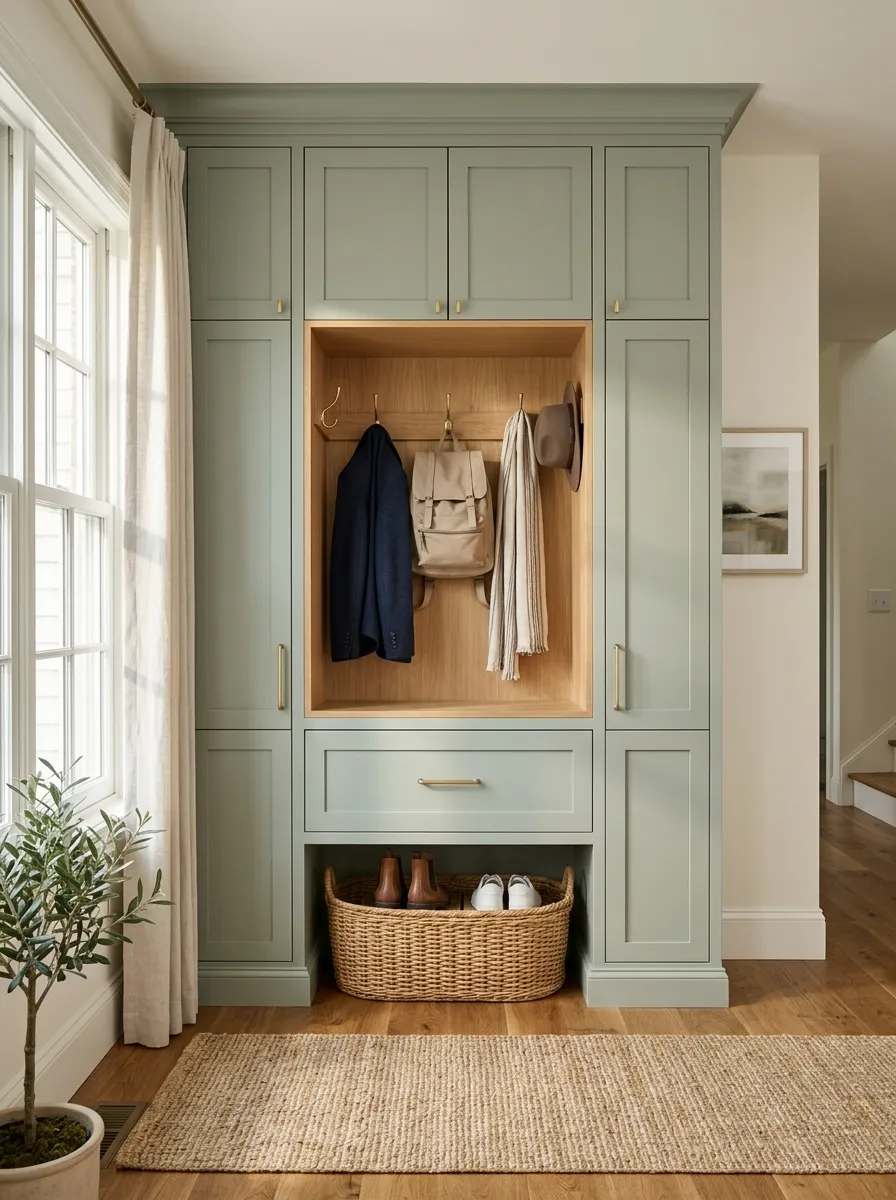
A cabinet becomes much more useful when one section is designed around the things your family actually carries.
Install hooks inside an open cabinet section or use a tall compartment for hanging backpacks. Add a drawer underneath for smaller items that don’t need to stay visible.
The result looks more like intentional furniture and less like a school storage area.
Keep the most-used compartment at hand height. Hard-to-reach storage won’t become daily storage.
Use Matching Hooks for a More Grown-Up Look
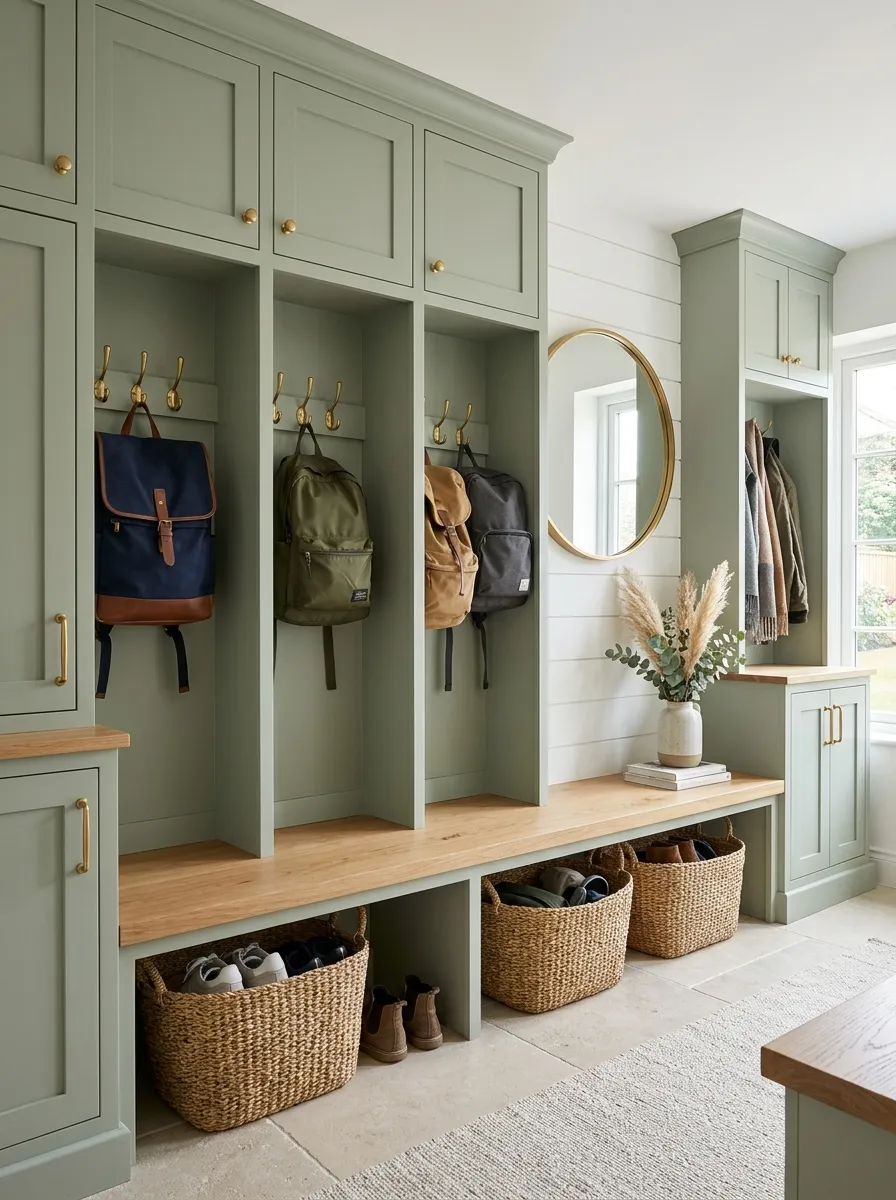
A backpack station doesn’t need to look like a children’s playroom.
Matching hooks create a cleaner visual line, especially when the rest of the entryway has a simple, grown-up style. Choose hooks that coordinate with existing hardware, lighting, or cabinet details.
The backpacks will already bring enough color and personality.
Let the storage hardware stay quiet.
Create a Grab-and-Go Station Beside the Garage Door
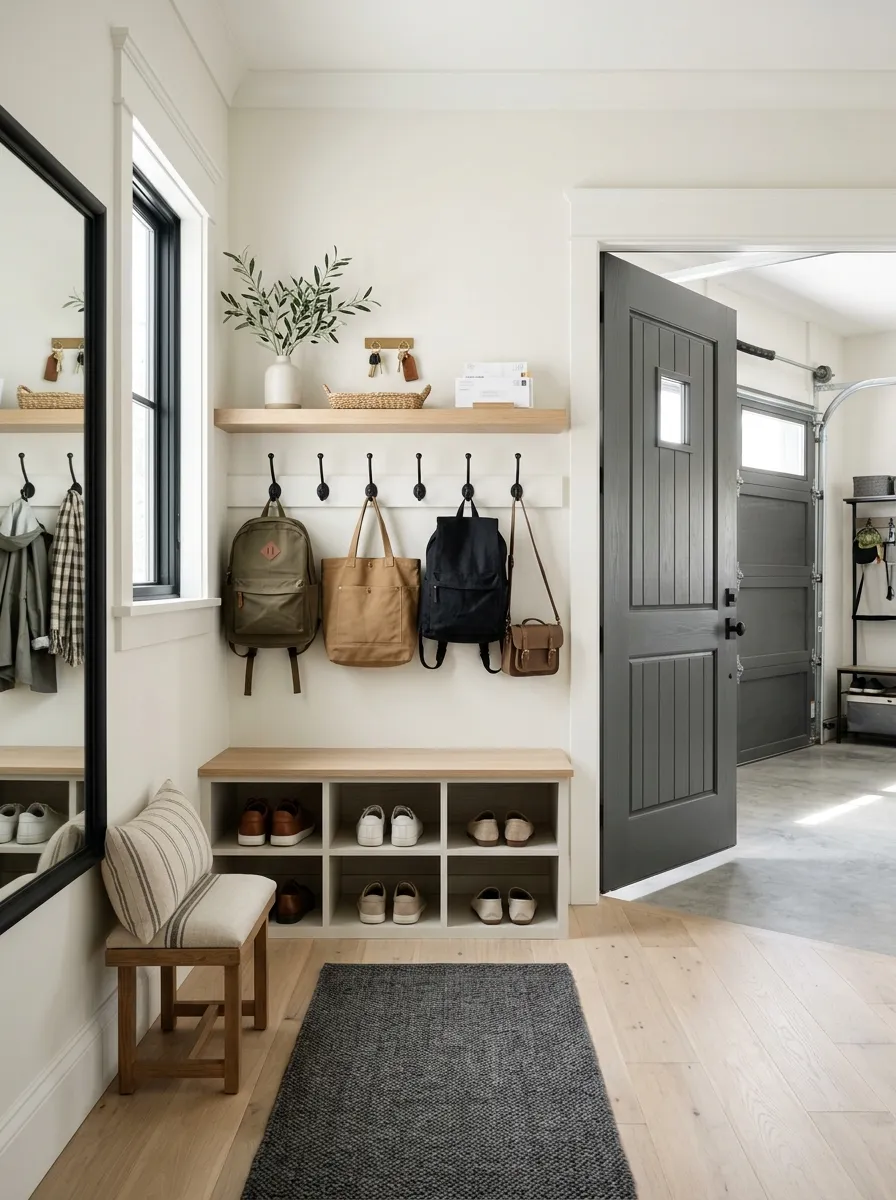
The prettiest entryway isn’t always the busiest entrance.
If your family actually leaves through the garage, put the backpack station there. A few sturdy hooks, a narrow shelf, and a shoe zone can eliminate the daily trek across the house.
This is one of those changes that feels obvious once you make it.
Storage should follow the routine, not fight it.
Add Small Drawers for Homework and School Essentials
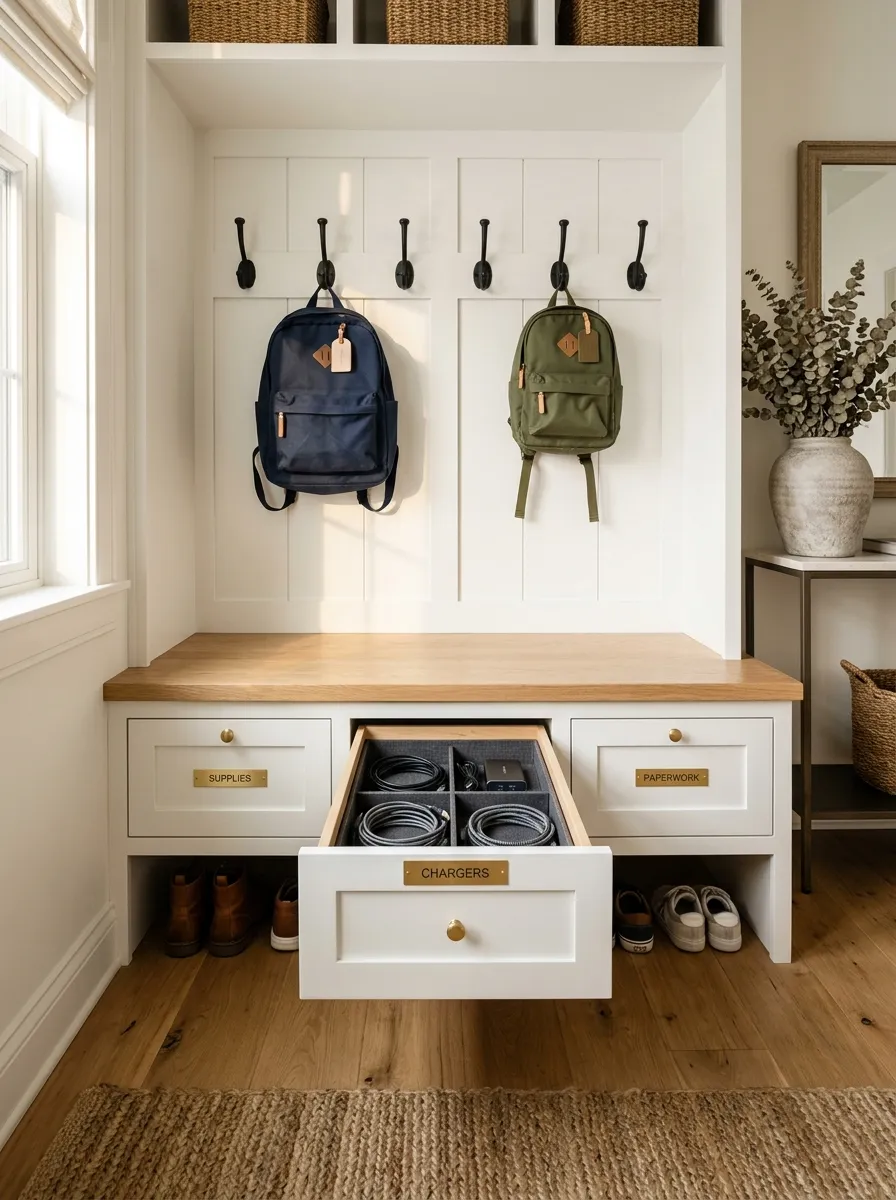
Backpacks shouldn’t have to carry every loose school item around the house.
Add a few small drawers beside or below the backpack hooks for pencils, permission slips, chargers, craft supplies, or other things that need to stay close to the school gear.
Keep the drawers narrow and specific. A drawer labeled “school stuff” becomes a junk drawer fast.
Give each drawer one clear job and the station becomes much easier to reset.
Use a Narrow Console to Build a Backpack Drop Zone
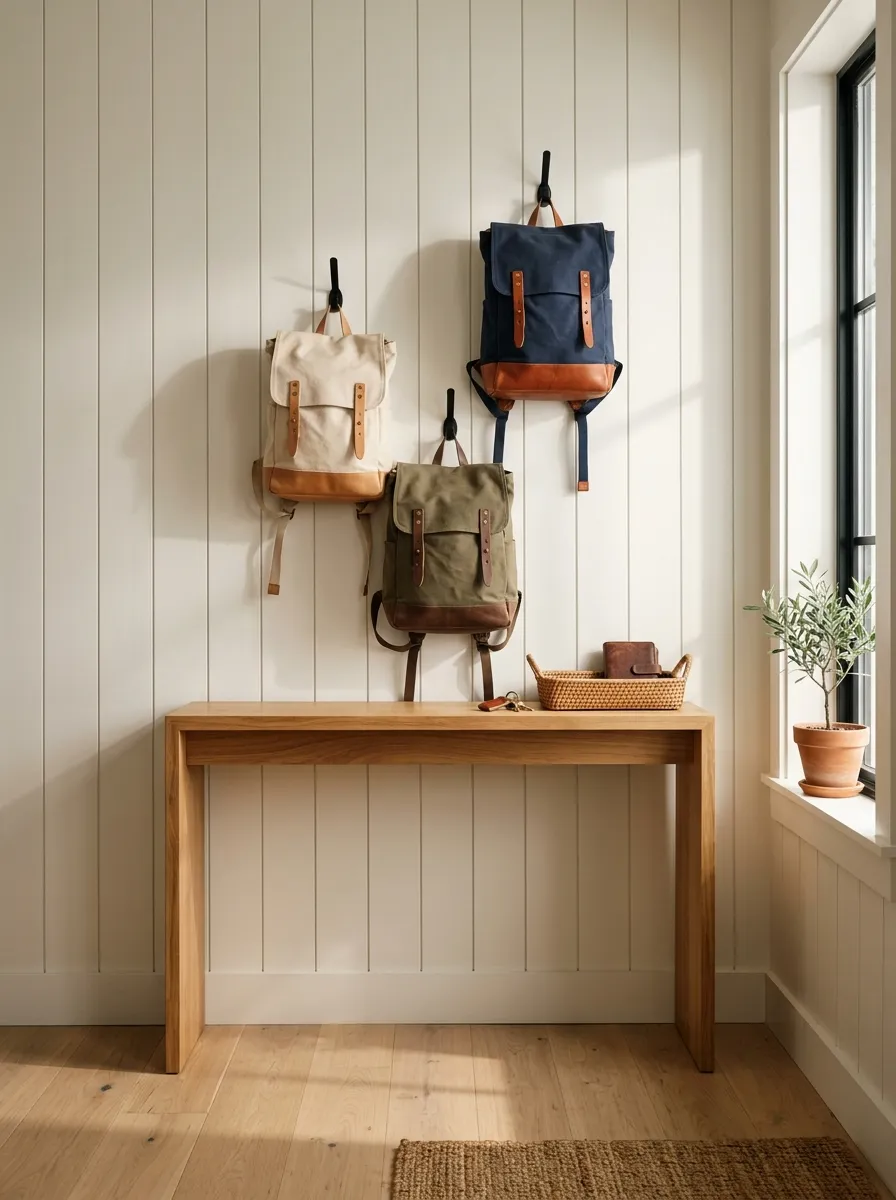
A narrow console can anchor a backpack station without making the entryway feel like a dedicated storage room.
Mount hooks above it, then use the console surface for one controlled purpose, such as a small basket for keys and daily essentials. Keep the top mostly clear.
The biggest mistake is turning the console into another dumping ground.
If the surface can’t stay mostly empty, remove the extra accessories.
Create Individual Stations for Kids Sharing One Wall
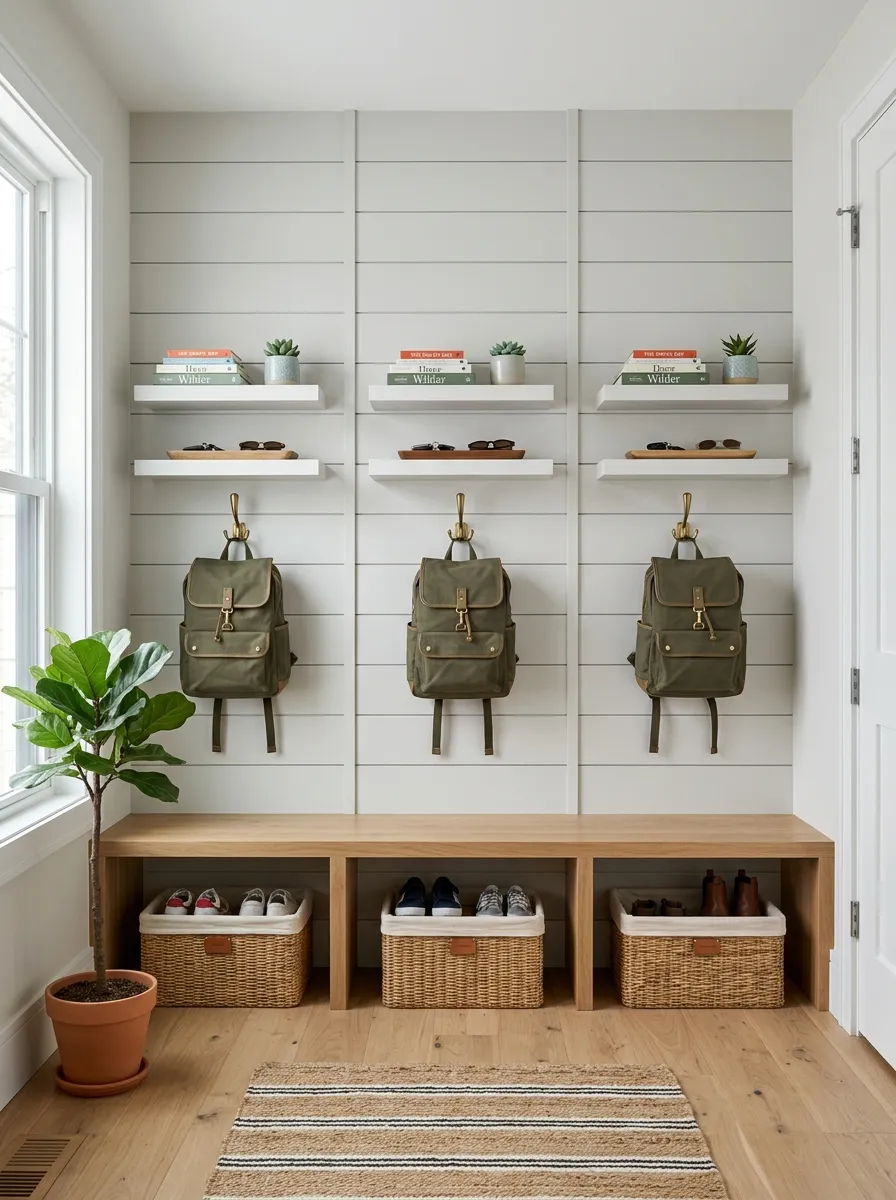
One wall can serve several kids without looking crowded.
Divide the wall into equal zones and repeat the same basic setup for each person. A hook, small shelf, and personal basket create enough separation without needing bulky furniture.
Consistency matters here. When every station follows the same layout, the wall feels designed instead of pieced together.
Give each child the same amount of space, even if their bags are different sizes.
Finish the Station With One Simple Family Reset Rule
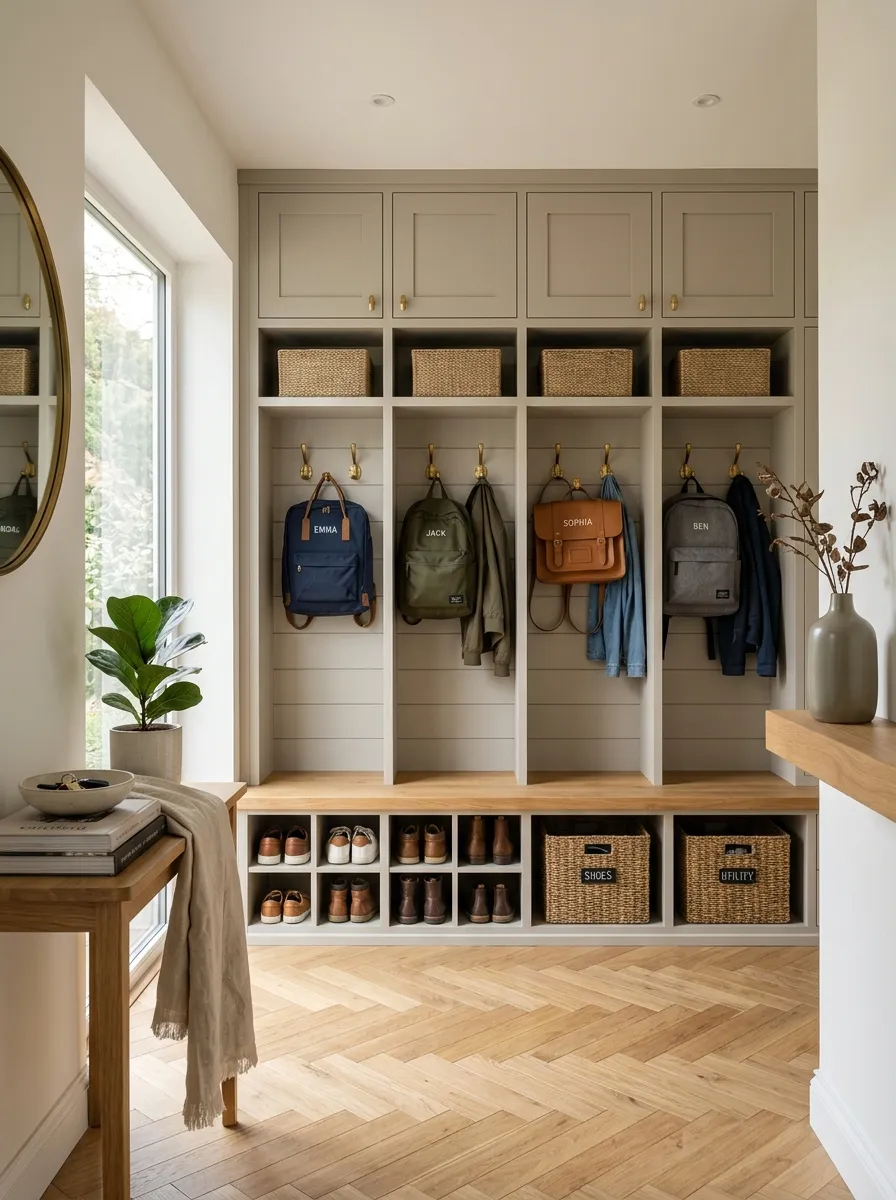
The best backpack station isn’t the one with the most shelves, hooks, or baskets. It’s the one everyone can reset without thinking about it.
Pick one rule the whole family follows. For example, backpacks return to their hooks as soon as homework is finished, or shoes go directly below the station after school.
Keep the rule simple enough to become automatic.
A storage system works when the reset takes less effort than making the mess.
Final Thoughts
Give every backpack a defined place. Keep shoes close to the bags. Put small essentials where they’re actually used. If floor space is limited, build upward. If visual clutter bothers you, hide the station behind cabinet doors.
Most importantly, don’t build a system that’s harder to use than the mess you’re trying to fix. A few well-placed hooks can beat an expensive storage unit if everyone can reach them and knows exactly what belongs there.