
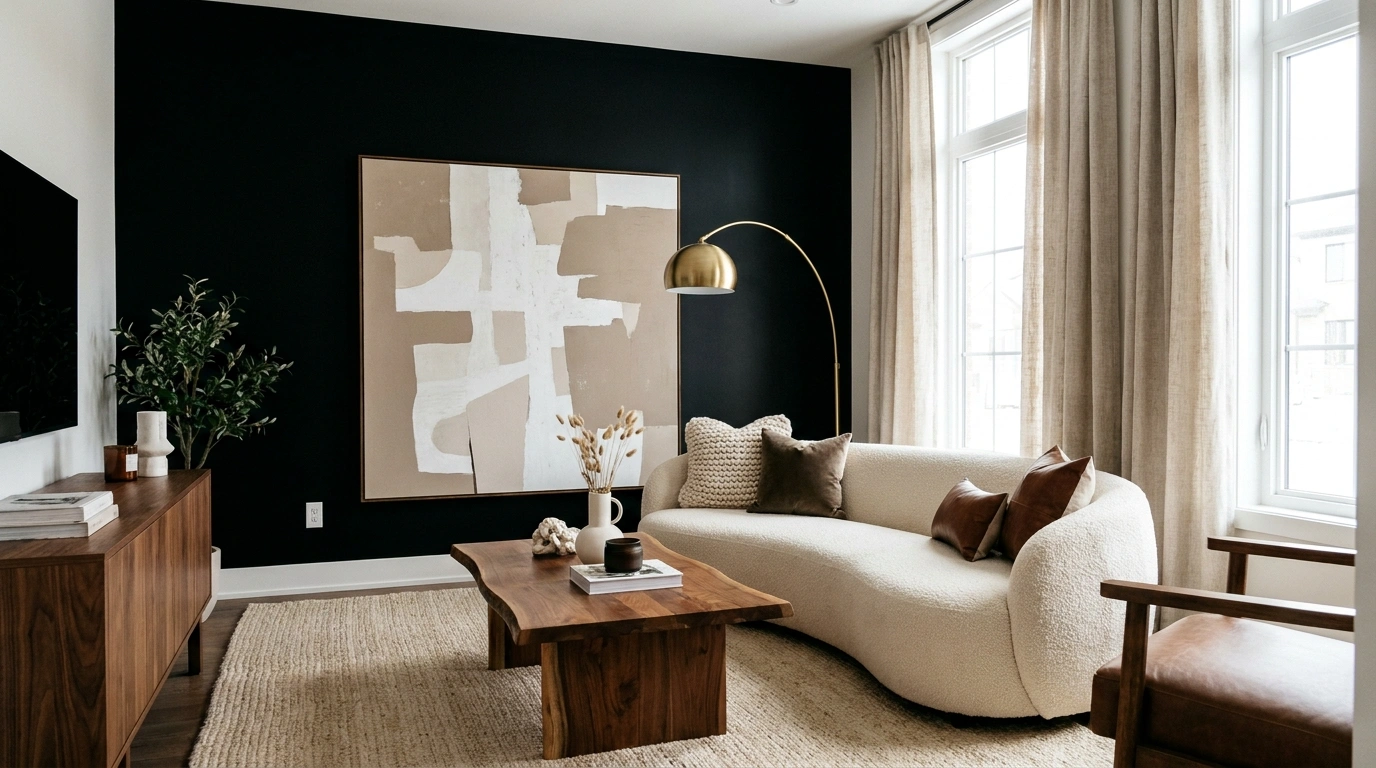
A black wall can be the most interesting surface in a room, or it can make everything around it feel suddenly disconnected. The difference usually isn’t the color itself. It’s what happens next.
A dark wall changes the visual weight of a space. Pale furniture can look brighter against it. Wood can look warmer. Artwork can become more noticeable. Architectural details can suddenly have more definition. But when the surrounding pieces aren’t working together, that same wall can feel heavy, flat, or strangely unfinished.
That is why black accent wall ideas are easier to understand as complete rooms rather than isolated decorating suggestions. A black wall behind a walnut bed creates one feeling. The same black painted surface behind antique furniture and brass lighting creates another entirely.
Find the Black That Fits the Room
Black Accent Wall Ideas
Textured Black Slats in a Modern Entryway
Vertical slatting turns a simple black accent wall into a tactile feature in this bright entryway. The rhythmic pattern adds immediate depth and shadow, while a streamlined console table with a pale wood top brings a necessary touch of warmth right against the dark surface.
Material contrast is everything here. The heavy, linear black wall is balanced by the natural textures of a woven grass pouf and an oversized olive tree tucked into a rustic basket. These organic elements keep the space feeling grounded rather than sterile.
Keep the surrounding decor minimal to let the slats shine. A single modern lamp and a neutral vase provide just enough styling without cluttering the visual field, allowing the dramatic wall to set the tone the moment you walk through the door.
Soft Black Bedroom With Walnut Furniture and Cream Bedding
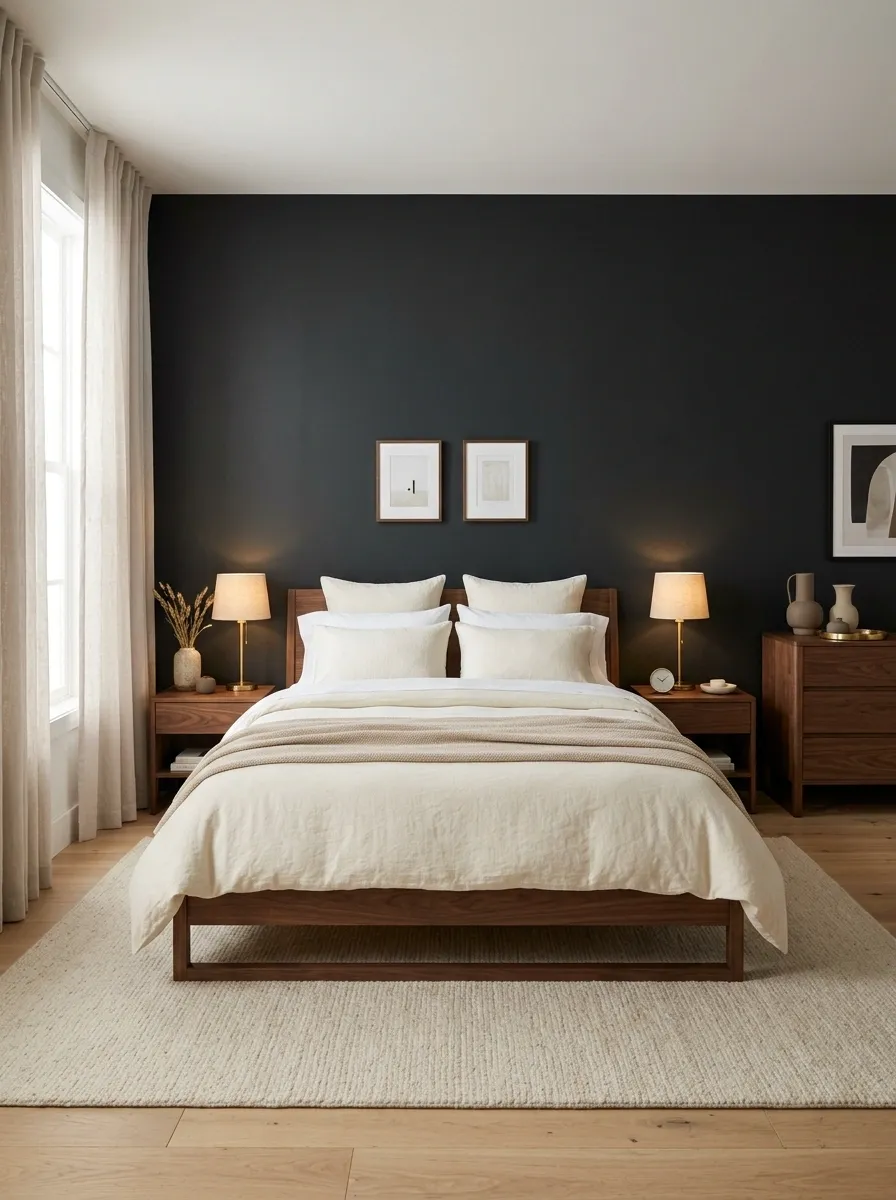
This bedroom keeps black surprisingly gentle by surrounding it with warm materials. A near-black wall anchors the bed, while low walnut nightstands, cream linen bedding, pale curtains, and a softly textured rug keep the rest of the composition light.
The key is the relationship between the dark backdrop and the warm wood. Walnut gives the wall something to connect with, while cream bedding breaks up the heavy color directly in front of it. Warm bedside lamps add another layer, keeping the black from reading as a hard, flat rectangle.
The furniture should stay fairly low and simple. Too many tall pieces would compete with the wall and make the bedroom feel visually crowded. The result works because the black is strong without becoming the only thing the eye notices.
Plush Black Channel Tufting With Warm Wood Slatting
This bedroom elevates the concept of a black accent wall by combining rich upholstered squares with vertical wood slatting on either side. The dark tufted headboard creates an undeniable focal point, while the warm timber flanks soften the dramatic color scheme completely.
Lighting plays a crucial role in bridging the gap between the dark center and the warm wood borders. Sleek black bedside lamps cast a soft glow across the panels, highlighting the rich textures and preventing the room from feeling like a cave.
The bedding and textiles lean into a moody palette of grays and blacks, yet the wooden details keep the overall composition feeling welcoming. A textured gray area rug adds softness underfoot, balancing the heavy architectural elements of the headboard wall effortlessly.
Black Fireplace Wall With Built-In Shelving in a Warm Living Room
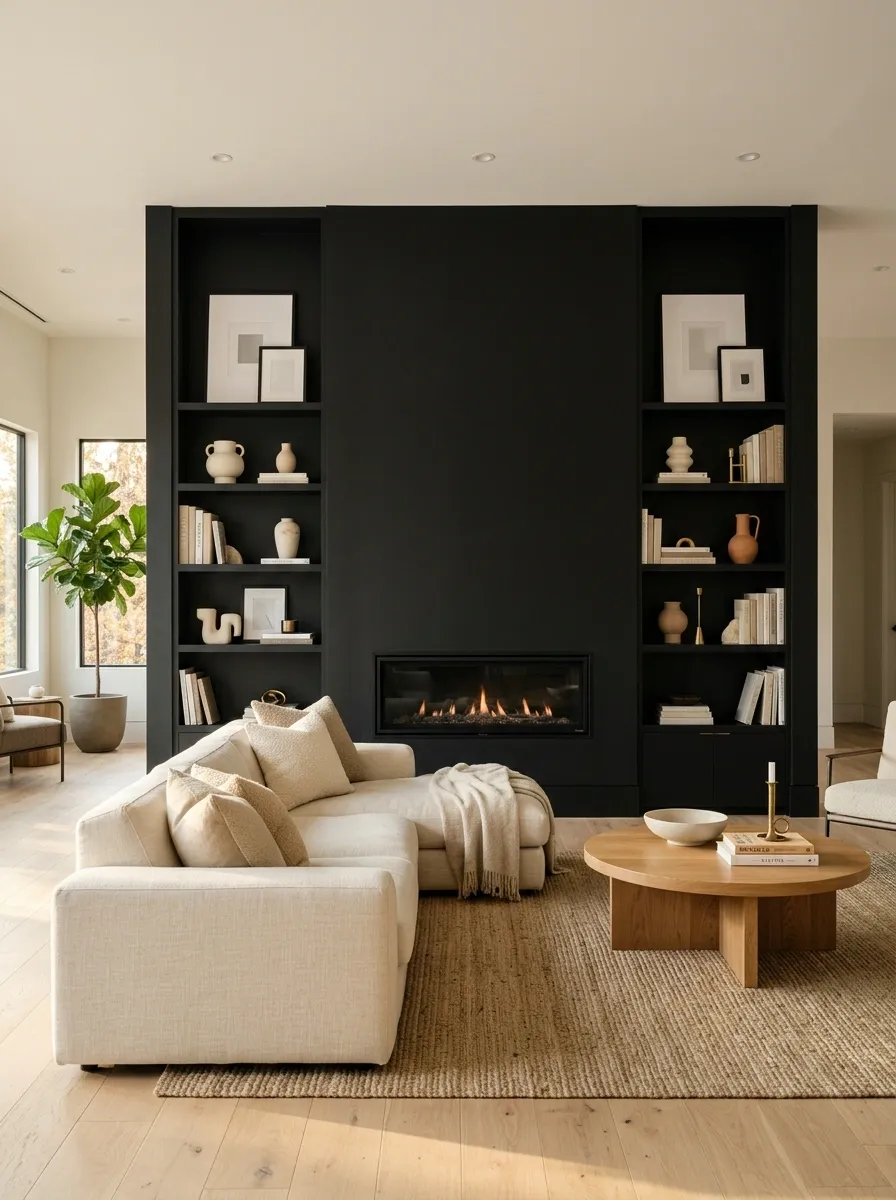
Here, the black wall becomes part of the architecture instead of functioning as a painted backdrop. A fireplace sits within the dark plane, with built-in shelving extending to either side. Pale oak flooring, a relaxed sofa, and a few substantial objects soften the geometry.
The strongest feature is the uninterrupted vertical surface. The fireplace, shelves, and wall read as one composition, which gives the living room a custom-built feeling even when the furniture itself is simple.
Keep the shelving edited. A black architectural wall already carries plenty of visual weight, so filling every shelf with small objects would weaken the effect. Larger books, ceramics, framed pieces, and a little negative space will keep the wall looking considered rather than busy.
Dramatic Black Panel Molding on a Grand Staircase
Transforming a double-height staircase with black panel molding gives this traditional entryway a striking, modern update. The grid pattern breaks up the expansive vertical wall, catching shifting daylight and casting subtle shadows that change throughout the day.
Pairing the dark walls with crisp white trim and a classic wooden staircase keeps the soaring space from feeling overwhelming. The contrast highlights the architecture, making the tall ceilings feel intentional and curated rather than empty or intimidating.
Ground the lower landing with considered styling, like a sleek console table, a vintage mirror, and warm brass fixtures. These thoughtful details add human scale to a grand wall, ensuring the dramatic transformation feels entirely finished and deeply sophisticated.
Moody Black Dining Room With Antique Wood and Brass Lighting
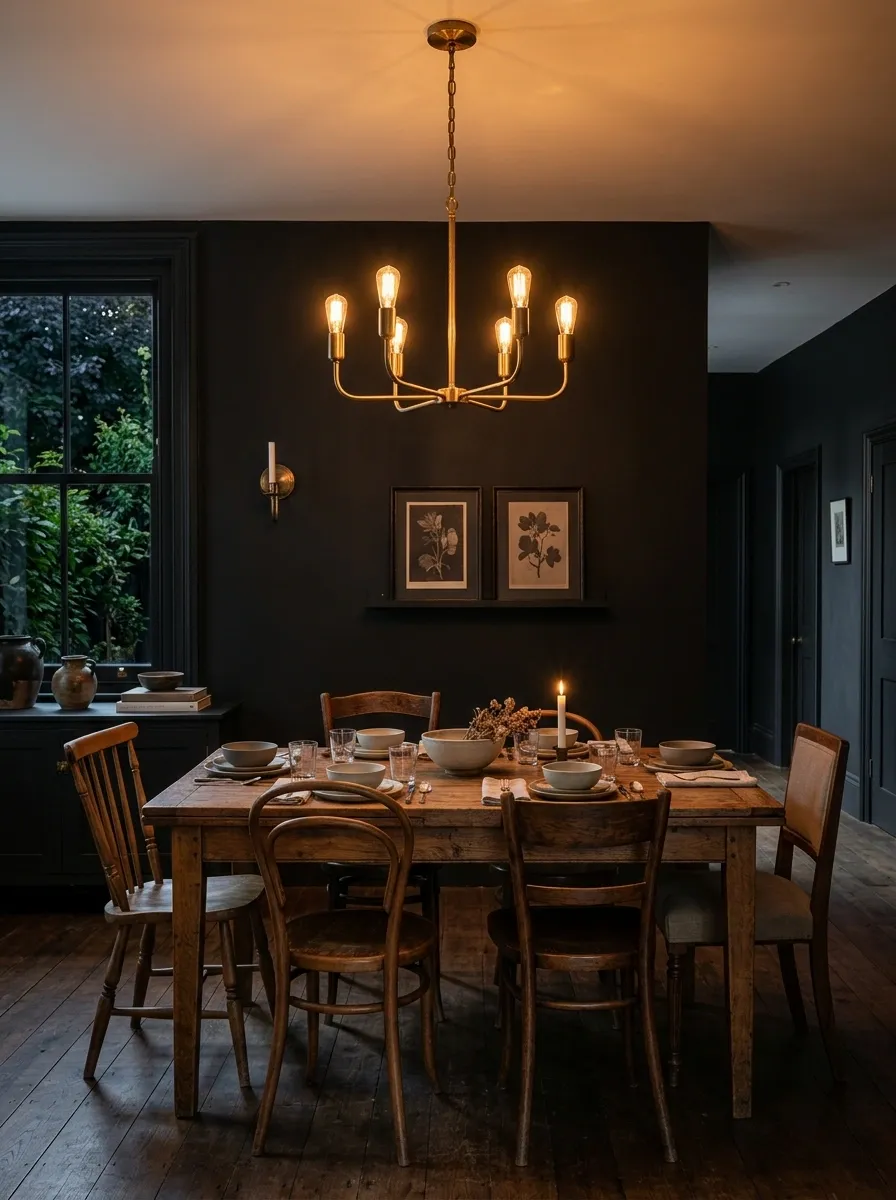
This dining room leans into the dramatic side of black without becoming overly polished. The walls are deep and matte, while a substantial antique wood table becomes the warm center of the room. A brass chandelier hangs overhead, and mismatched or vintage-inspired chairs make the space feel collected.
The contrast between black and aged wood is what gives the room its depth. Newer furniture can look overly crisp against a dark wall, while worn timber brings variation and warmth.
Lighting matters more here than it would in a bright dining room. A warm chandelier should create a defined pool of light around the table while leaving the wall itself slightly quieter. That contrast makes dinnerware, artwork, and wood grain stand out.
deep background and architectural weight
warm center and visible grain
small areas of reflective warmth
Bold Geometric Black and Gold Wall Art
A high-impact geometric mural brings artistic energy to this contemporary living space. The sharp contrast between deep matte black and warm gold lines creates a dynamic backdrop that instantly draws the eye and anchors the entire room’s layout.
Balancing such a bold wall requires a careful selection of surrounding furniture. A generous sectional in muted terracotta and pink tones softens the angular nature of the mural, while a plush white rug lightens the lower half of the composition.
Keep accessories purposeful so the wall remains the undisputed star. A simple round coffee table and abstract artwork complement the geometric theme without competing with it, resulting in a cohesive, magazine-worthy space that feels both edgy and inviting.
Modern Black Kitchen With White Stone and Light Oak
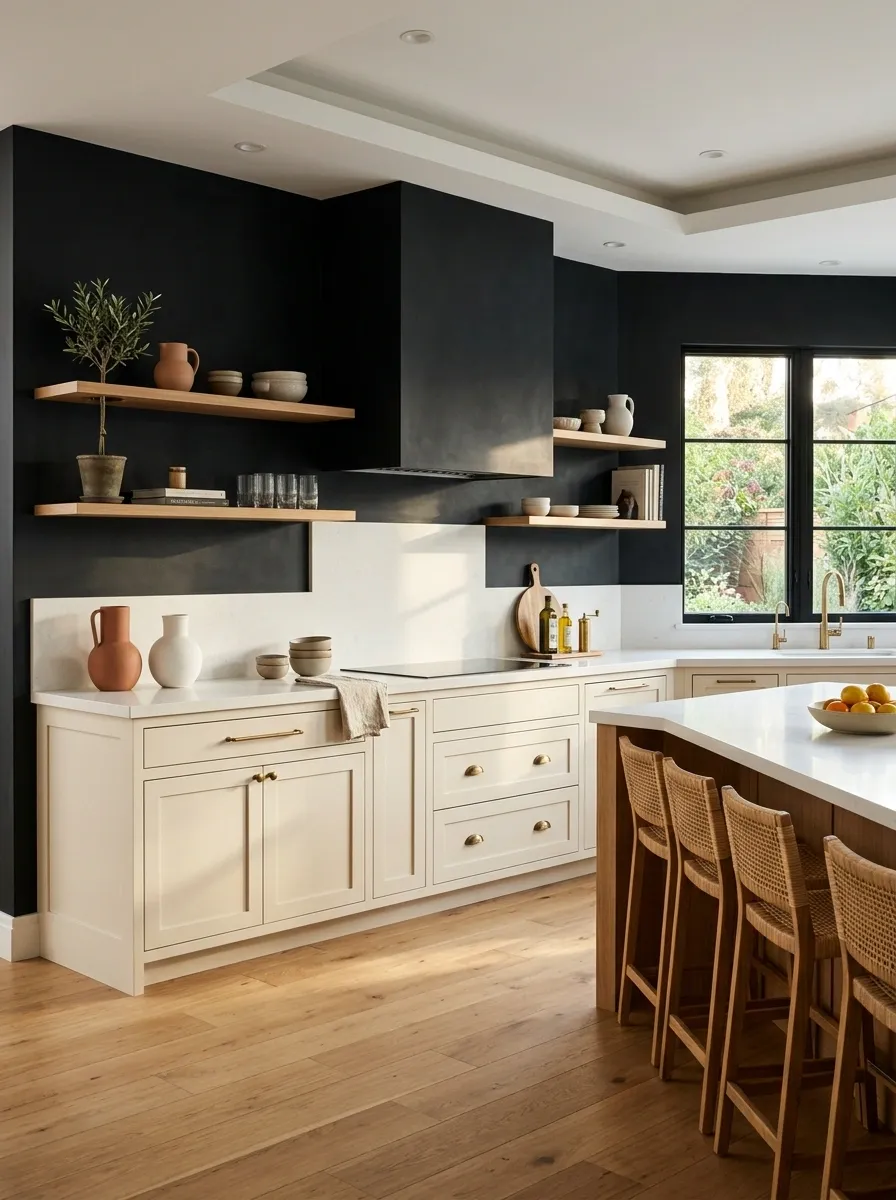
A black kitchen wall becomes much easier to live with when the surrounding finishes stay bright. This composition uses a deep black wall behind the main cabinetry, pale oak across the lower visual field, and a clean white stone surface that catches daylight.
The contrast gives the kitchen a strong architectural edge without making it feel like a dark room. White stone creates a visual break between the black and wood, while the oak prevents the overall palette from becoming too stark.
The proportions matter. Black should define a major plane, not swallow every surface in sight. Keeping the floor, countertop, and key cabinetry lighter allows the dark wall to function as a focal element rather than turning the kitchen into one continuous block of black.
Dark Gray Slatted Wall With Custom Bench Seating
A charcoal-toned slatted wood wall serves as a sophisticated backdrop for this minimalist seating nook. The vertical lines draw the eye upward, while matching brass sconces mounted directly to the wood add a layer of functional, warm illumination.
A sleek upholstered bench with contrasting leather pillows rests against the slats, offering both a place to pause and a textural element that breaks up the monochromatic wall. The warm timber tones in the bench legs tie the entire composition together.
Keep the styling restrained to maintain a clean aesthetic. A sculptural ceramic vase with delicate branches adds a touch of nature without overwhelming the structured design, proving that dark feature walls thrive on simplicity and good lighting.
Black-and-Cream Bedroom With Traditional Panel Molding
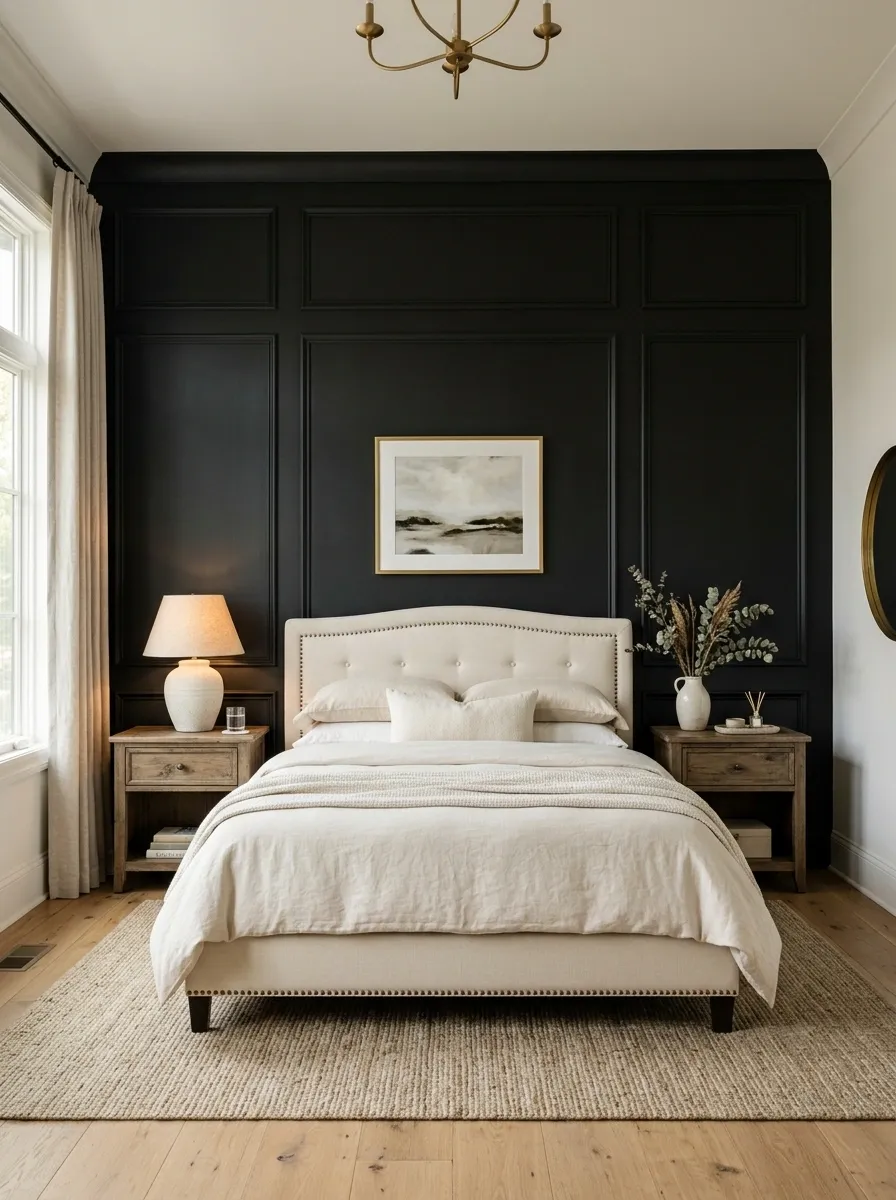
Traditional panel molding gives a black bedroom wall another layer to work with. Instead of reading as one large dark rectangle, the wall becomes a pattern of recessed and raised shapes that catch subtle changes in light.
A cream upholstered bed sits against the paneling, with aged wood nightstands, classic lamps, and soft bedding filling out the room. The contrast between black and cream feels formal enough for the architecture but still comfortable.
The molding should remain fairly restrained. Excessively small panels can make a wall feel fussy, especially in a smaller bedroom. Larger, well-spaced rectangles create the stronger composition and allow the furniture to remain visually important.
Charcoal-Black Home Office With Cognac Leather and Oak
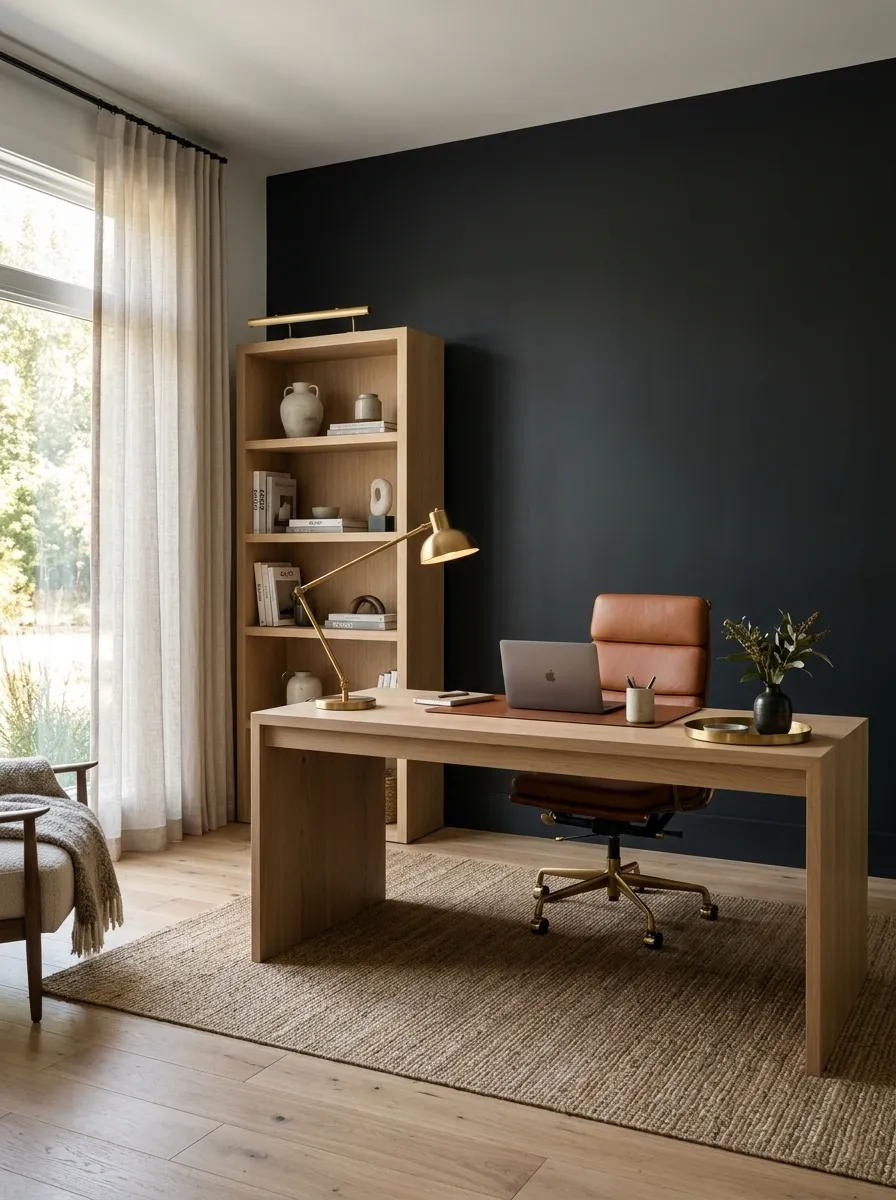
A deep charcoal-black wall gives this home office a focused architectural backdrop, while oak and cognac leather keep the room warm. A substantial oak desk sits perpendicular to the wall rather than pressed against it, leaving the dark surface visible behind the workspace. A leather desk chair, woven rug, and warm reading lamp add enough texture to stop the room from feeling severe.
The important contrast is between the cool depth of the charcoal and the orange-brown warmth of the leather. Too much black furniture would flatten that relationship. Keeping the desk and seating lighter gives the room a clear visual center and makes the wall feel intentional rather than enclosing.
Black Accent Wall Behind a Curved Sofa in an Organic Modern Living Room
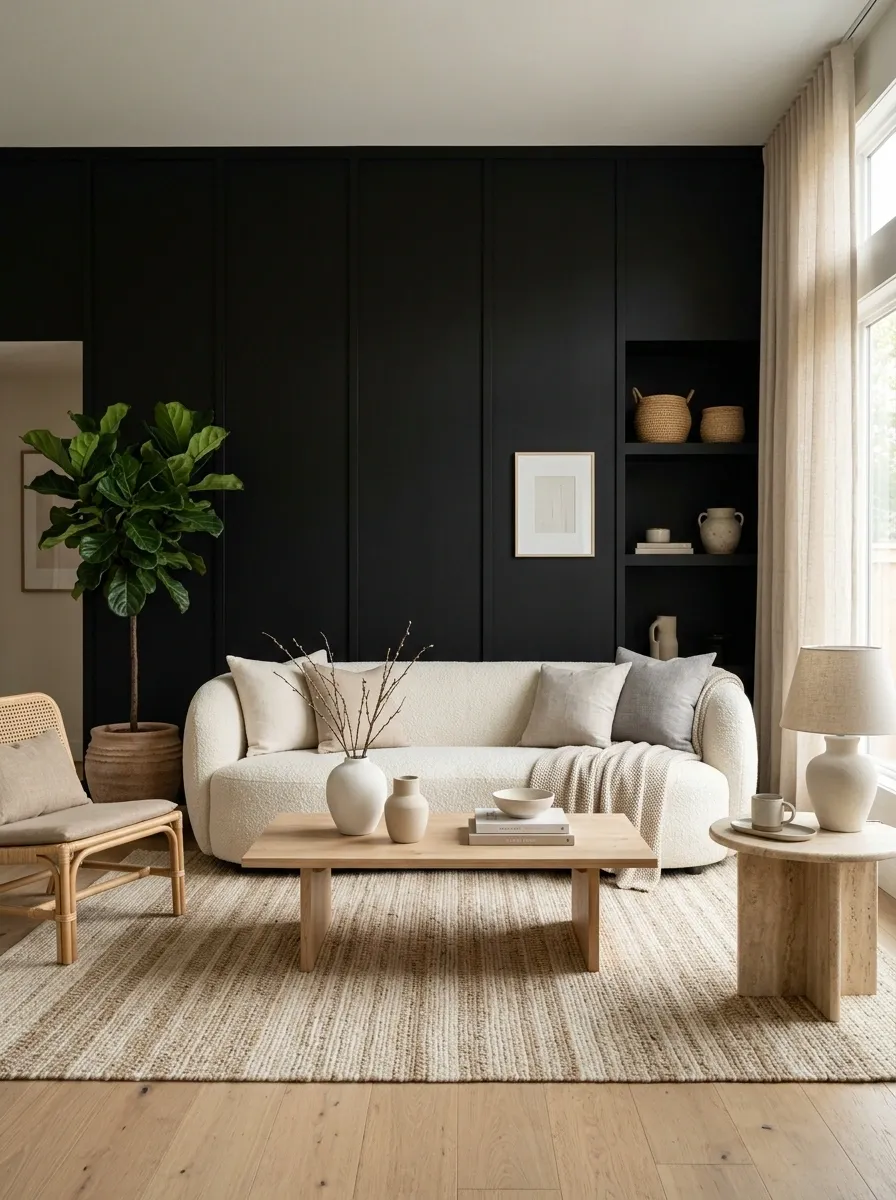
Straight architectural lines feel softer when paired with curved furniture. This living room places a rich black wall behind a rounded cream sofa, then introduces pale oak, light stone, woven textures, and a few sculptural forms. The result feels contemporary without becoming rigid.
The sofa’s curved silhouette is important because it breaks the hard edge of the wall. A low coffee table and rounded side table continue that language, while the black surface provides the necessary contrast underneath all those softer forms.
This concept works best when the rest of the room stays edited. Too many curves, ornaments, or contrasting materials would dilute the simple relationship between the dark wall and soft furniture.
Black Board-and-Batten Entryway With Checkerboard Flooring
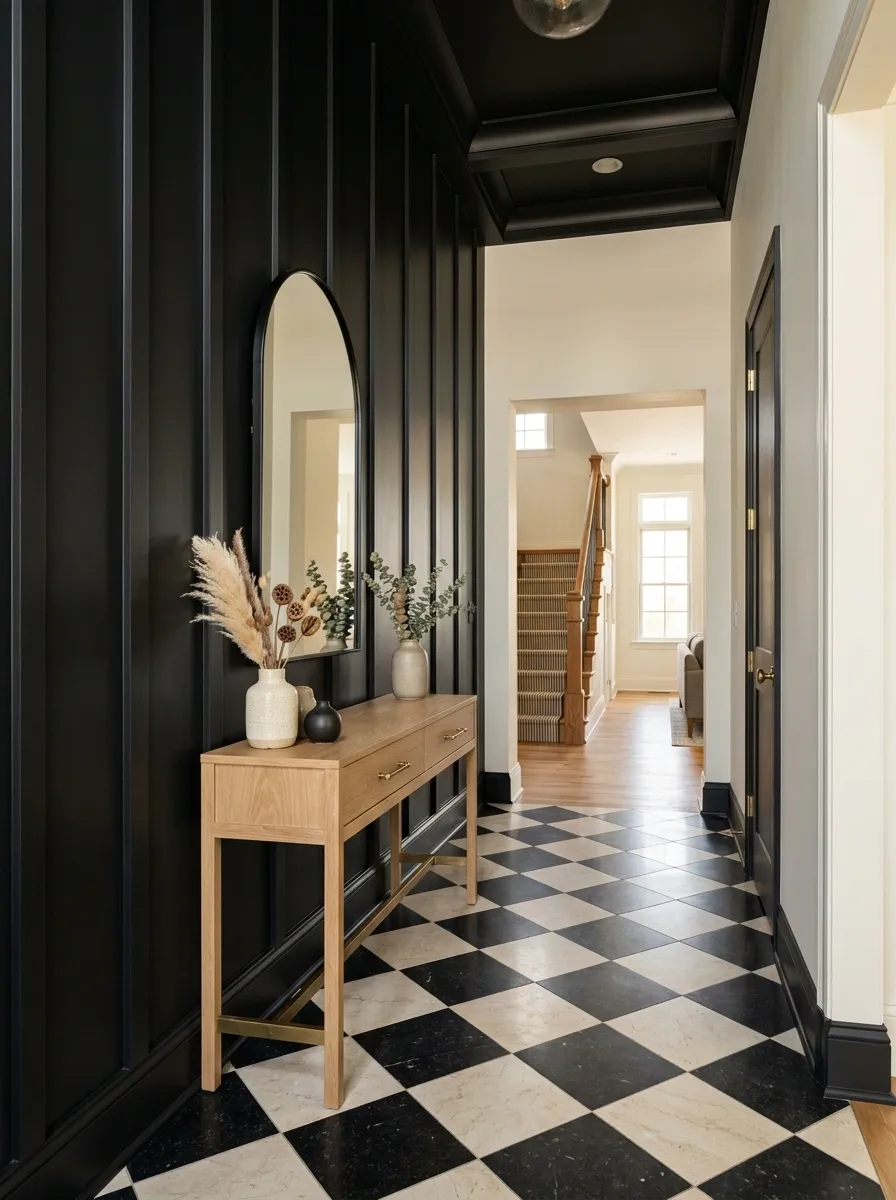
This entryway uses black from floor to ceiling in a more traditional way. A board-and-batten wall gives the dark paint a visible rhythm, while checkerboard flooring introduces another strong geometric pattern underfoot. A slim wood console and aged brass hardware bring warmth between the two.
The mirror is deliberately tall and narrow, allowing it to sit comfortably inside the vertical wall pattern instead of competing with it. Because both the wall and floor have patterns, the furnishings stay simple.
The composition is especially effective in an entryway because the dark end wall gives the relatively narrow space a strong destination. The eye moves toward the console and mirror rather than wandering across a cluttered corridor.
Black Accent Wall in a Small Apartment Living Room With Pale Furnishings
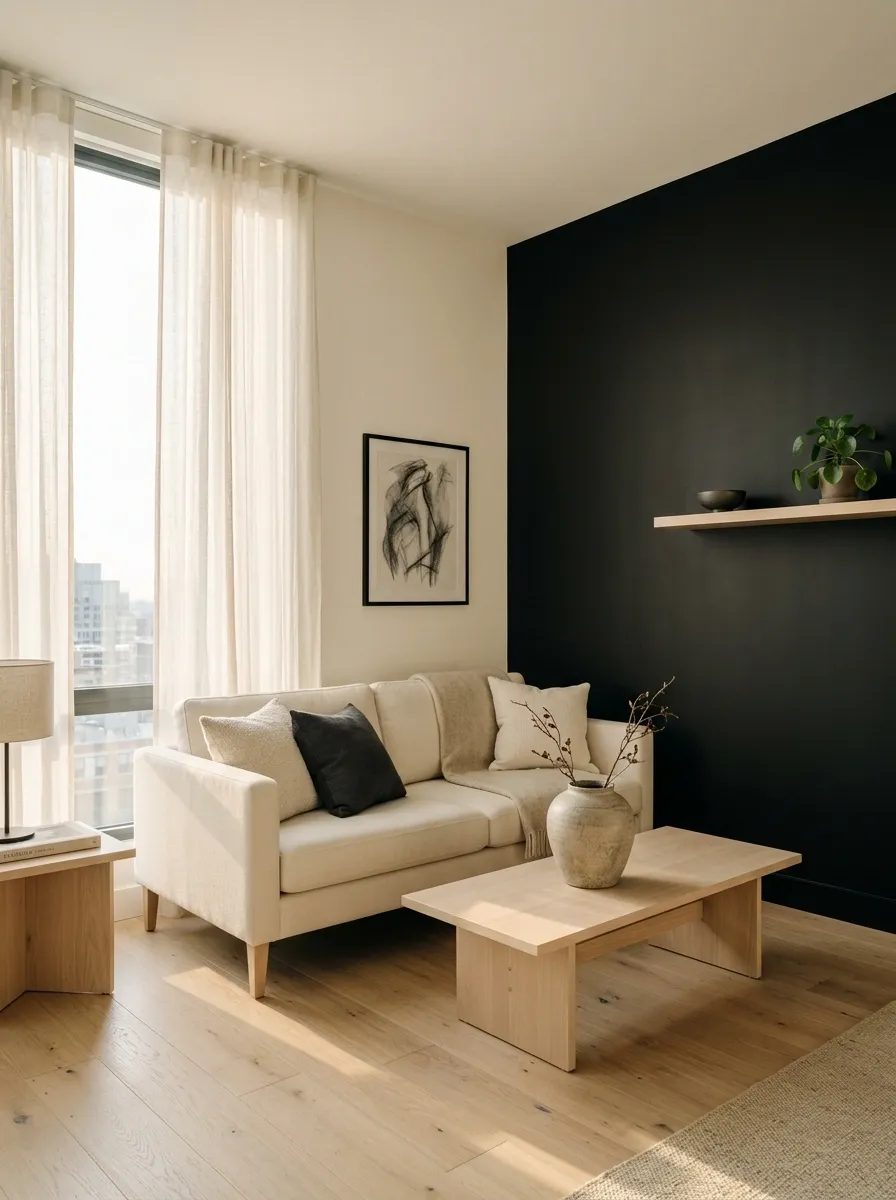
Small rooms don’t need every wall to remain light. This compact living room uses one black wall as a strong anchor while cream seating, pale timber, and light flooring preserve the sense of openness around it.
The trick is restraint. The sofa stays visually simple, the coffee table has a light footprint, and the curtains blend into the brighter surrounding walls. The result has contrast without making every object compete for attention.
A black accent wall works particularly well here when it is treated as one clean plane. Shelves, large cabinets, and too many contrasting accessories would break up that plane and make the small room look busier than it is.
Matte Black Bedroom With Olive Green Textiles
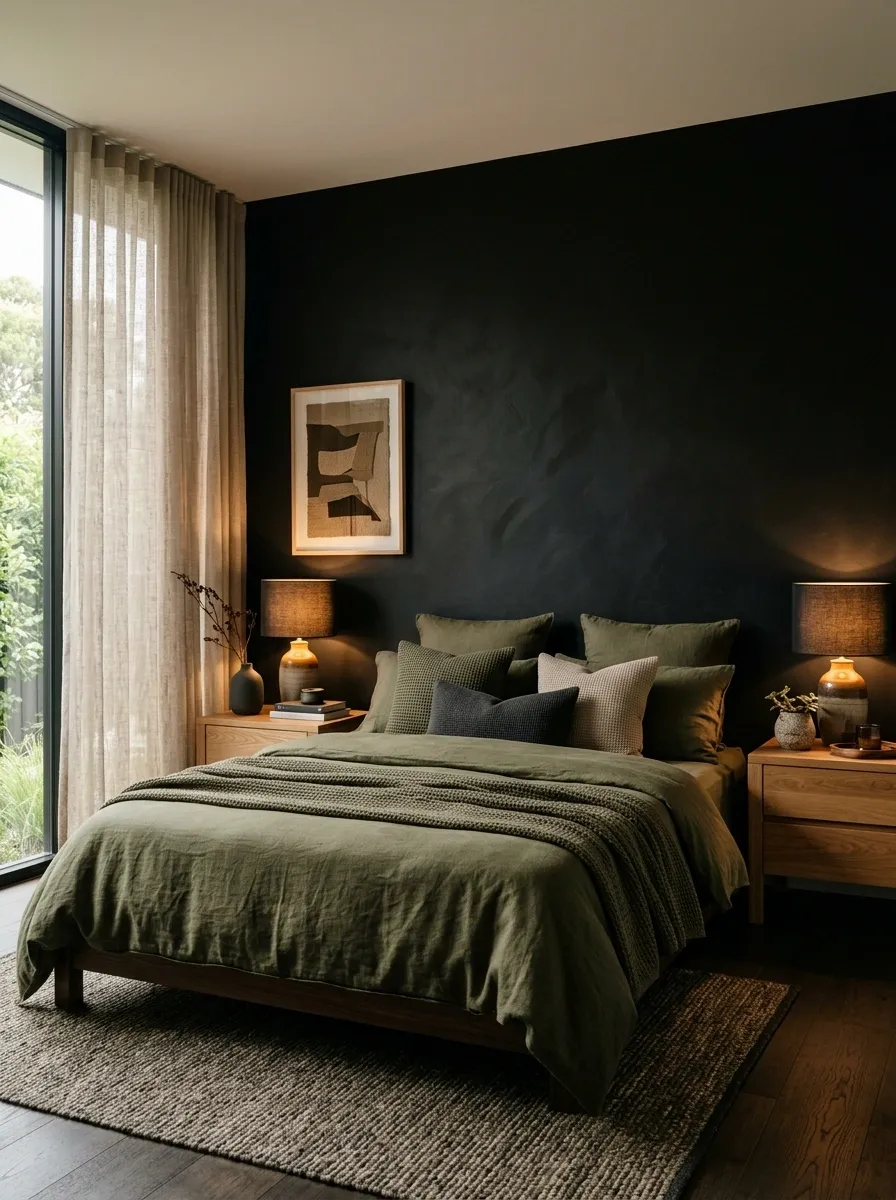
This bedroom takes black in an earthy direction. A matte black wall sits behind the bed, while olive bedding, warm timber nightstands, natural curtains, and woven textures introduce muted color without breaking the calm.
Olive works especially well here because it doesn’t compete with the depth of the wall. It sits somewhere between neutral and color, giving the room personality while keeping the palette grounded.
The lighting should remain warm and low. Bright cool-white light would flatten the olive and make the black feel harder. Soft lamps, filtered daylight, and natural materials create much more depth.
Black Accent Wall With White Fireplace in a Cottage-Style Living Room
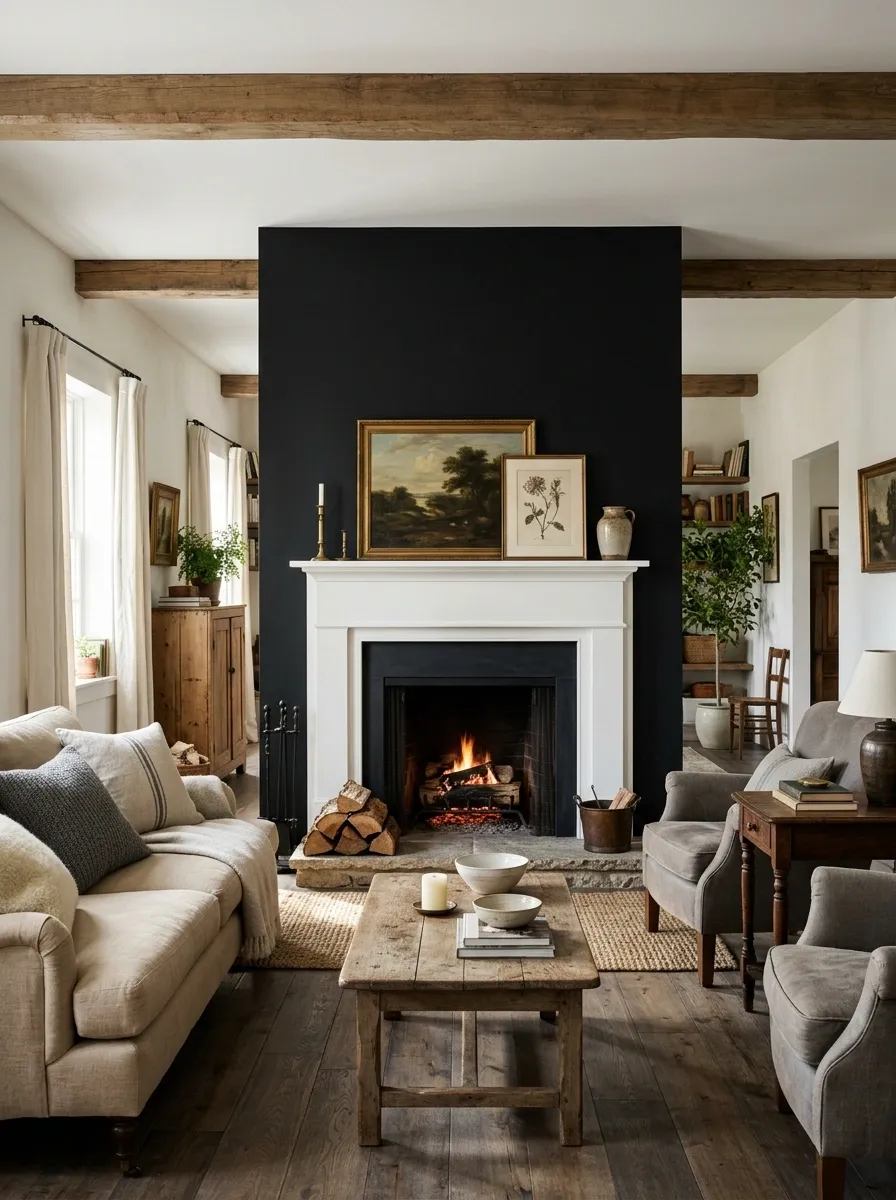
A traditional white fireplace becomes far more graphic when surrounded by a black wall. The contrast frames the mantel, making the architectural details easier to notice. Weathered wood, soft seating, classic artwork, and simple curtains then keep the room from becoming overly formal.
The fireplace should remain the brightest structural feature. That’s why the surrounding decor benefits from quieter tones rather than a second dramatic focal point.
Weathered wood is especially useful in this composition because its irregular grain adds age and texture to an otherwise sharp black-and-white arrangement. The room feels traditional, but the dark wall gives it a cleaner edge.
Floor-to-Ceiling Black Wall With Dramatic Oversized Artwork
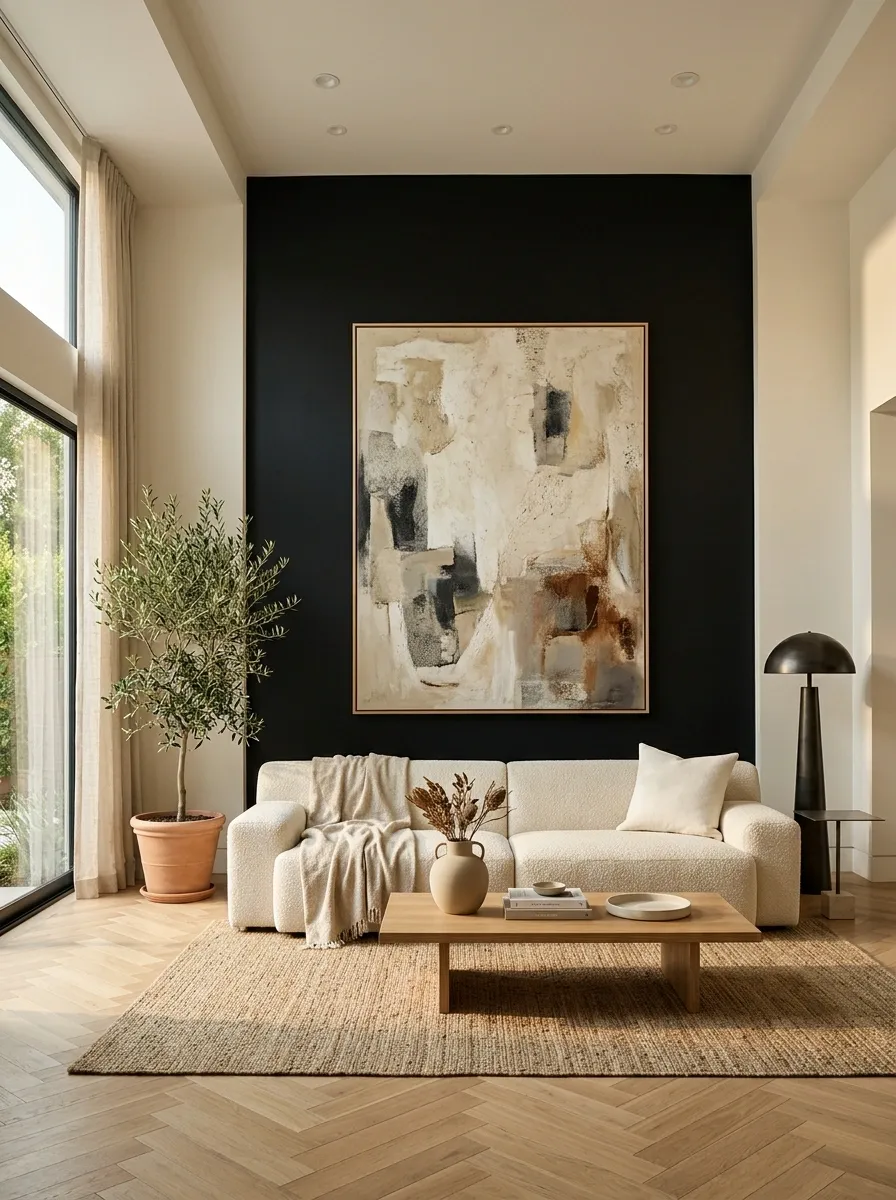
For a more gallery-like approach, the black wall becomes a quiet backdrop for one large artwork rather than a busy arrangement of smaller pieces. The room below stays relatively pale, with light furniture, understated flooring, and enough empty wall to let the artwork breathe.
The size of the artwork is what makes this concept work. A small frame would disappear against such a large dark surface. One substantial piece creates a clear visual relationship between the wall and the room.
The artwork doesn’t need to match the black exactly. Cream, muted earth tones, or warm browns introduce enough contrast to make the piece readable without breaking the depth of the wall.
FOCAL
PIECE
below
Black Bedroom Wall With White Linen and Rattan
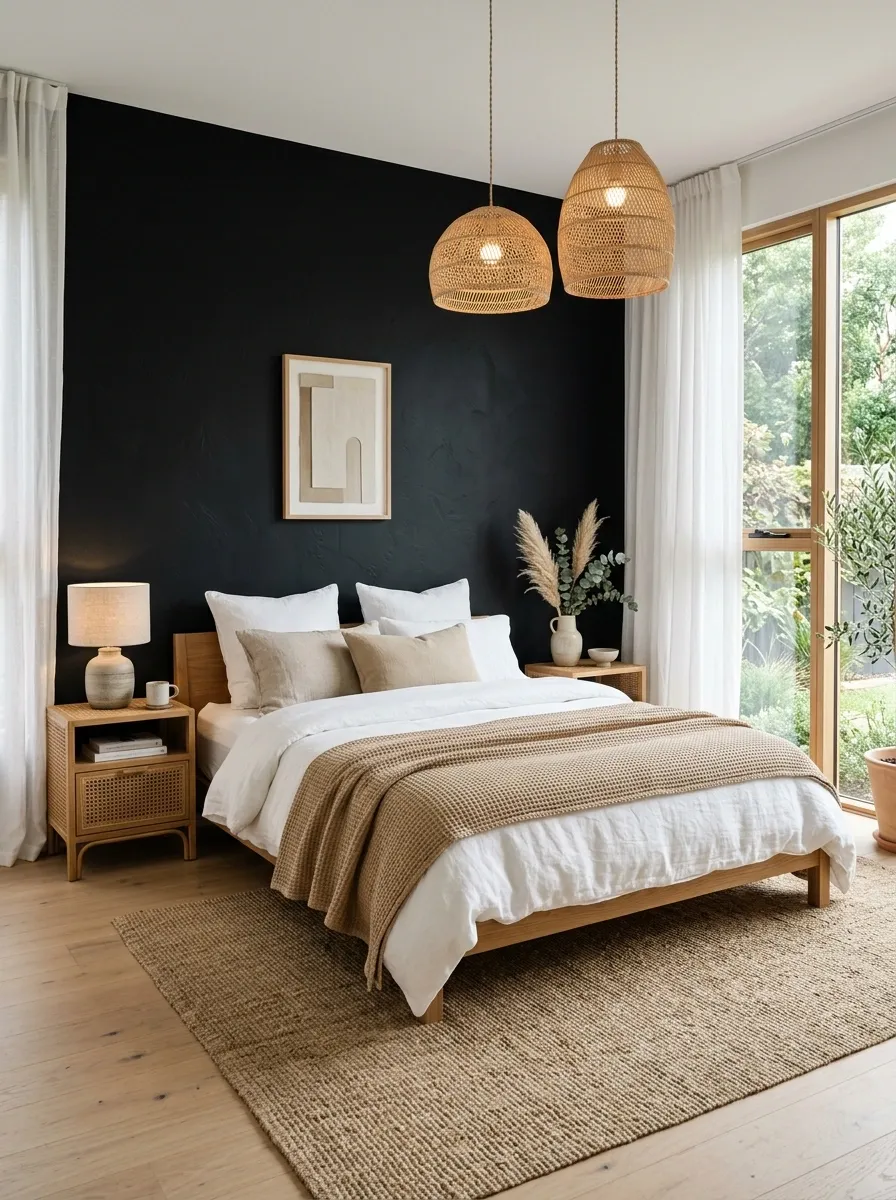
The contrast here is less formal and more relaxed. A black accent wall sits behind a simple bed covered in loose white linen, while rattan nightstands, woven pendants, pale flooring, and natural curtains introduce texture.
The composition works because the materials are tactile rather than glossy. Linen softens the visual impact of the dark wall, and rattan creates tiny variations in tone that keep the room from looking like a strict black-and-white scheme.
This is a strong direction for a bedroom where the goal is contrast without drama. The dark wall does the architectural work, while the natural materials make the room feel relaxed.
Black Accent Wall Behind a Long Floating Media Cabinet
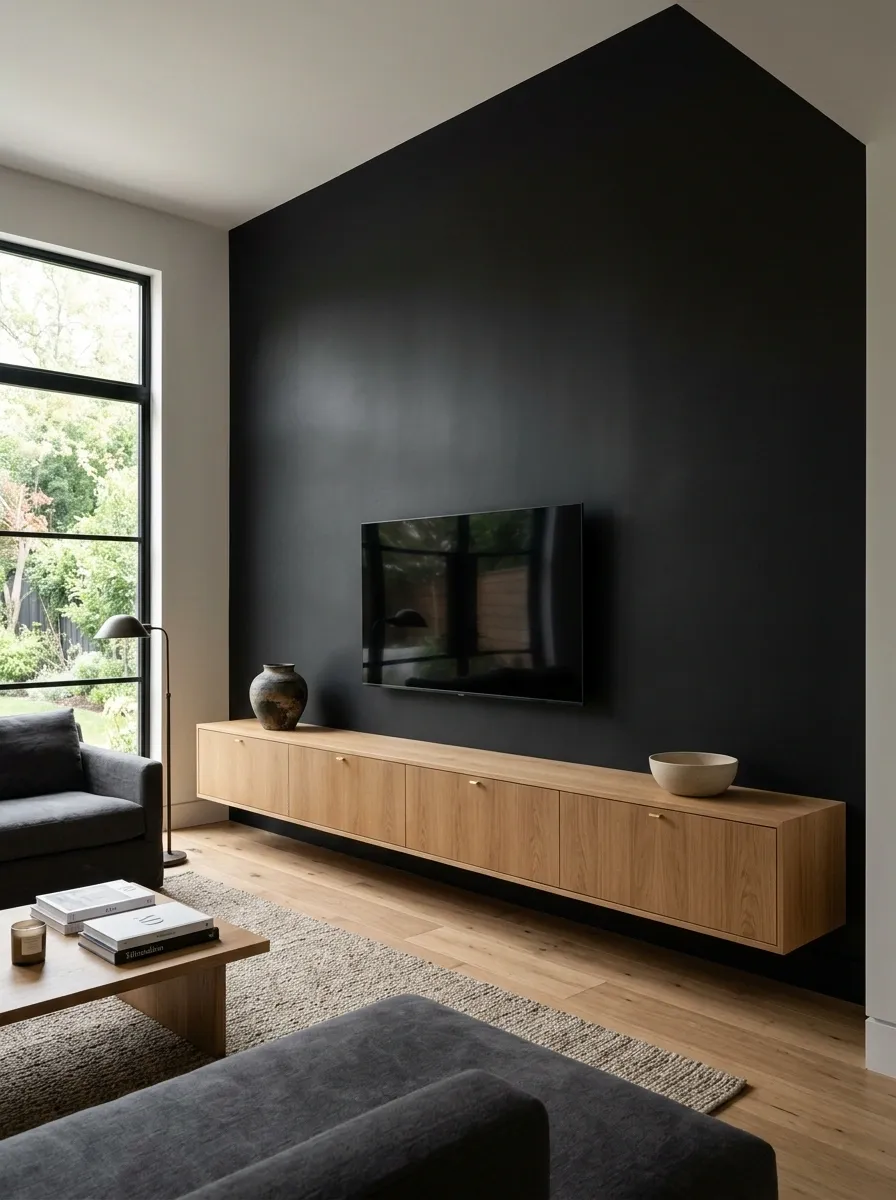
A long floating cabinet gives this living room a completely different relationship with its black wall. Instead of breaking the wall into shelves and objects, the furniture creates one strong horizontal line across the lower portion.
Pale oak keeps the cabinet warm, while the low profile leaves plenty of black visible above it. A television or artwork can sit within that dark field without requiring a busy media unit underneath.
The success of this arrangement comes from restraint. The furniture should be long and visually light rather than deep and bulky. That lets the wall retain its architectural presence.
Black Dining Nook With Built-In Banquette and Warm Pendant
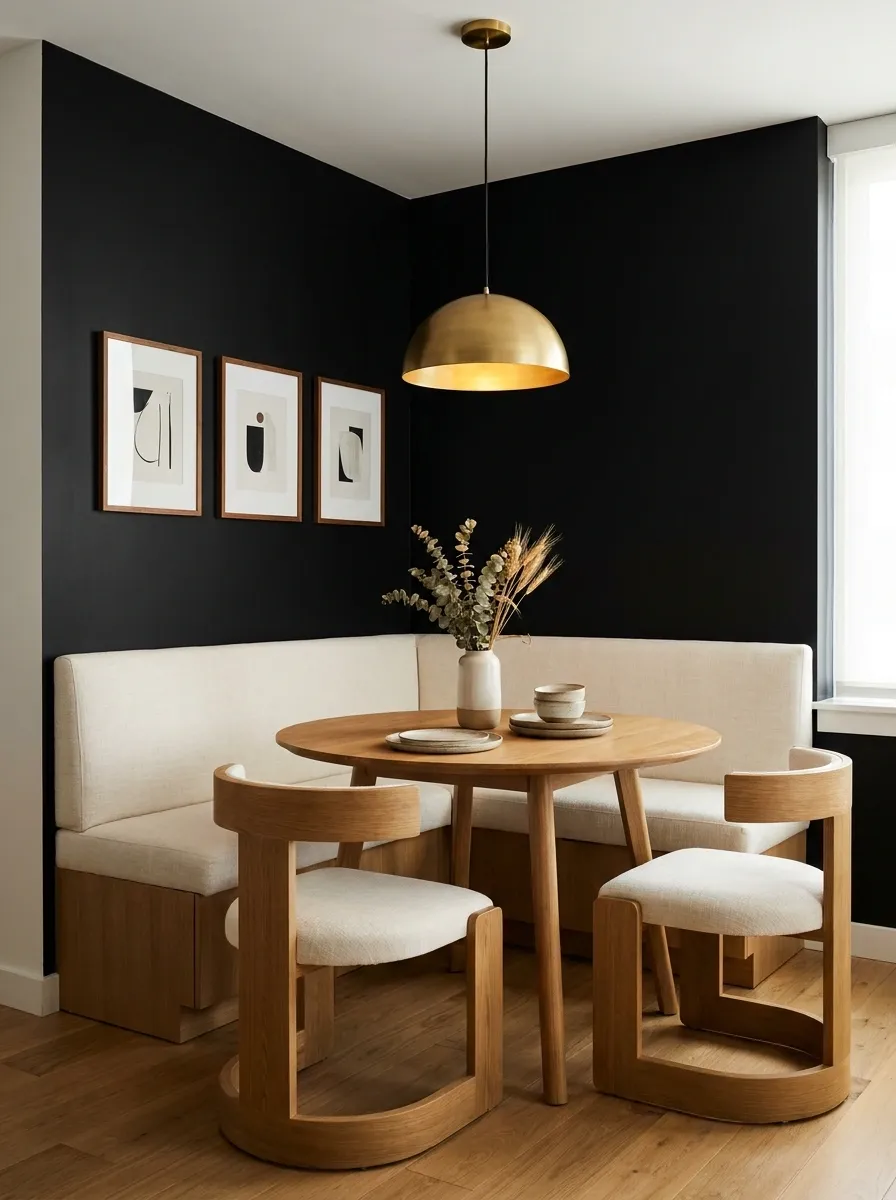
A compact dining corner feels more intentional when the black wall clearly defines it as its own zone. This version places a built-in upholstered banquette against the dark wall, with a small round table, warm pendant light, and a narrow artwork arrangement above.
The round table creates breathing room around the bench and makes movement easier than a large rectangular table would. The pendant marks the center of the nook, while the black wall visually contains the whole setting.
The furniture stays compact because the wall already gives the space a strong identity. Adding a bulky cabinet or oversized chairs would make the nook feel cramped.
Black-and-Terracotta Bedroom With Vintage Furniture
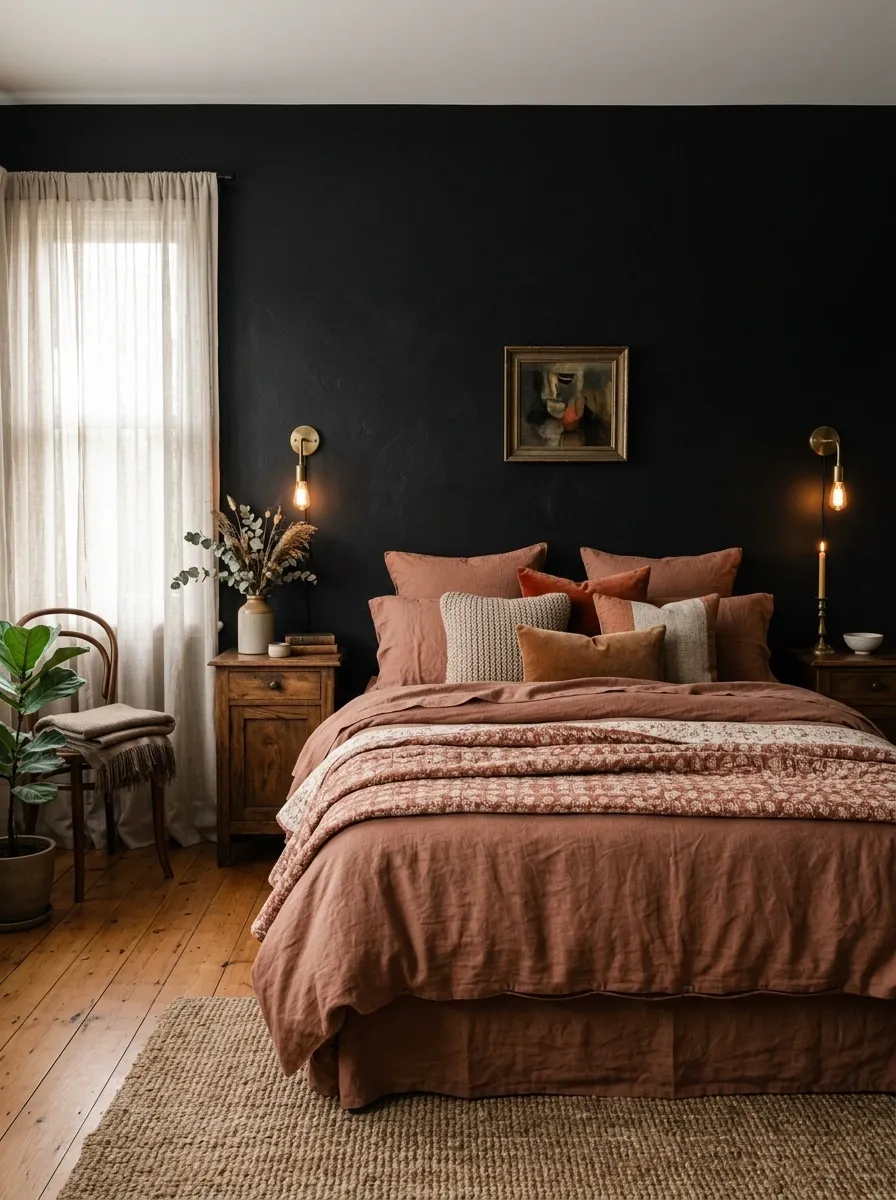
Black and terracotta create a warmer, more historic interpretation of the accent wall. The dark wall provides the depth, while terracotta bedding, antique oak furniture, faded patterns, and aged metal lighting introduce the character.
The trick is choosing terracotta with a muted, earthy quality rather than a bright orange. That keeps the color sophisticated against black and allows the wood tones to remain part of the same warm family.
Vintage furniture also breaks up the clean geometry of the wall. A slightly imperfect timber surface or curved antique chair gives the room a sense of age that a collection of matching contemporary pieces would miss.
Black Accent Wall Framing a Home Bar and Lounge
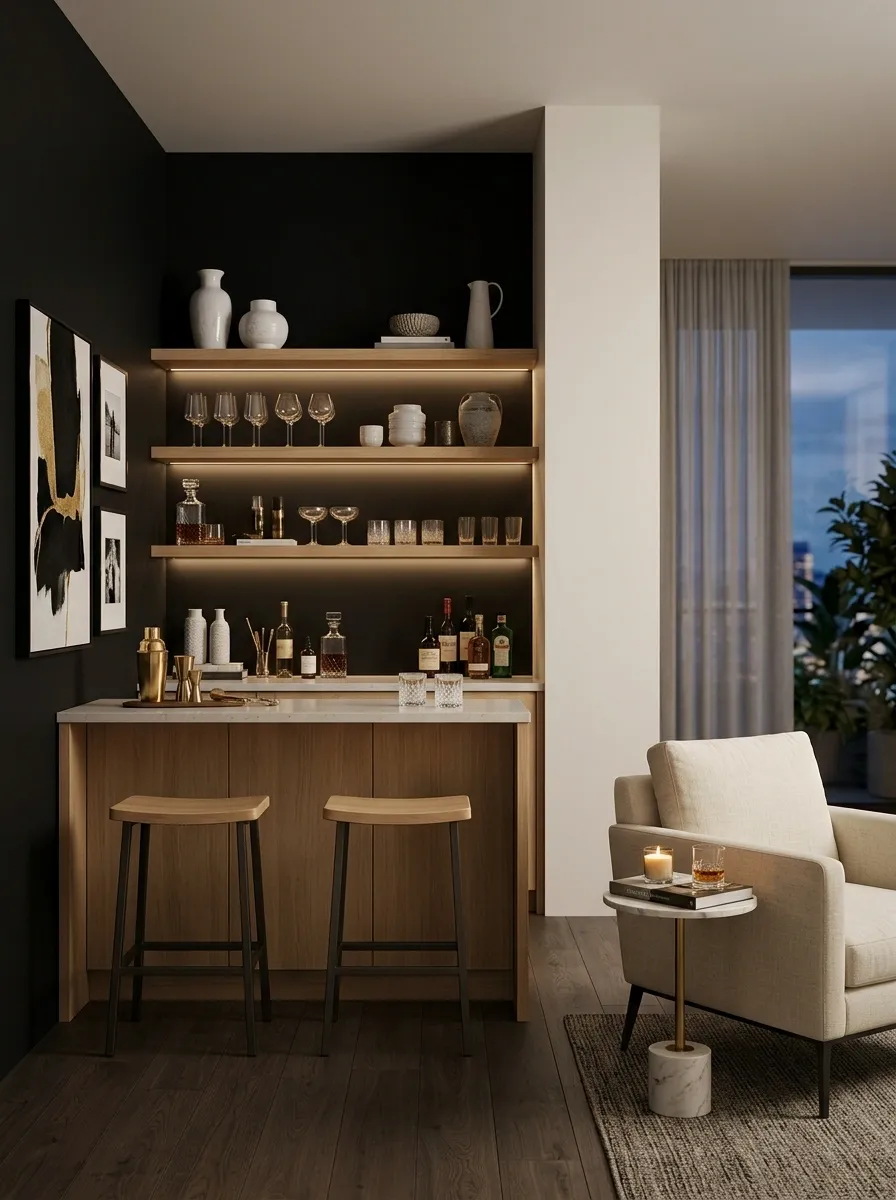
A black wall can turn a compact entertaining corner into a defined destination. This version places a low bar cabinet and open shelving against the dark background, with wood stools, a nearby lounge chair, and warm lighting creating a small evening-focused zone.
The black surface works especially well behind glassware and light-colored ceramics because the objects become more visible against the dark background. Warm lighting gives the shelving a soft glow rather than making it look like a display case.
Keep the lounge furniture visually separate from the bar. A little negative space between the two zones makes the entire composition feel larger.
Black Accent Wall With Vertical Wood Slats in a Modern Bedroom
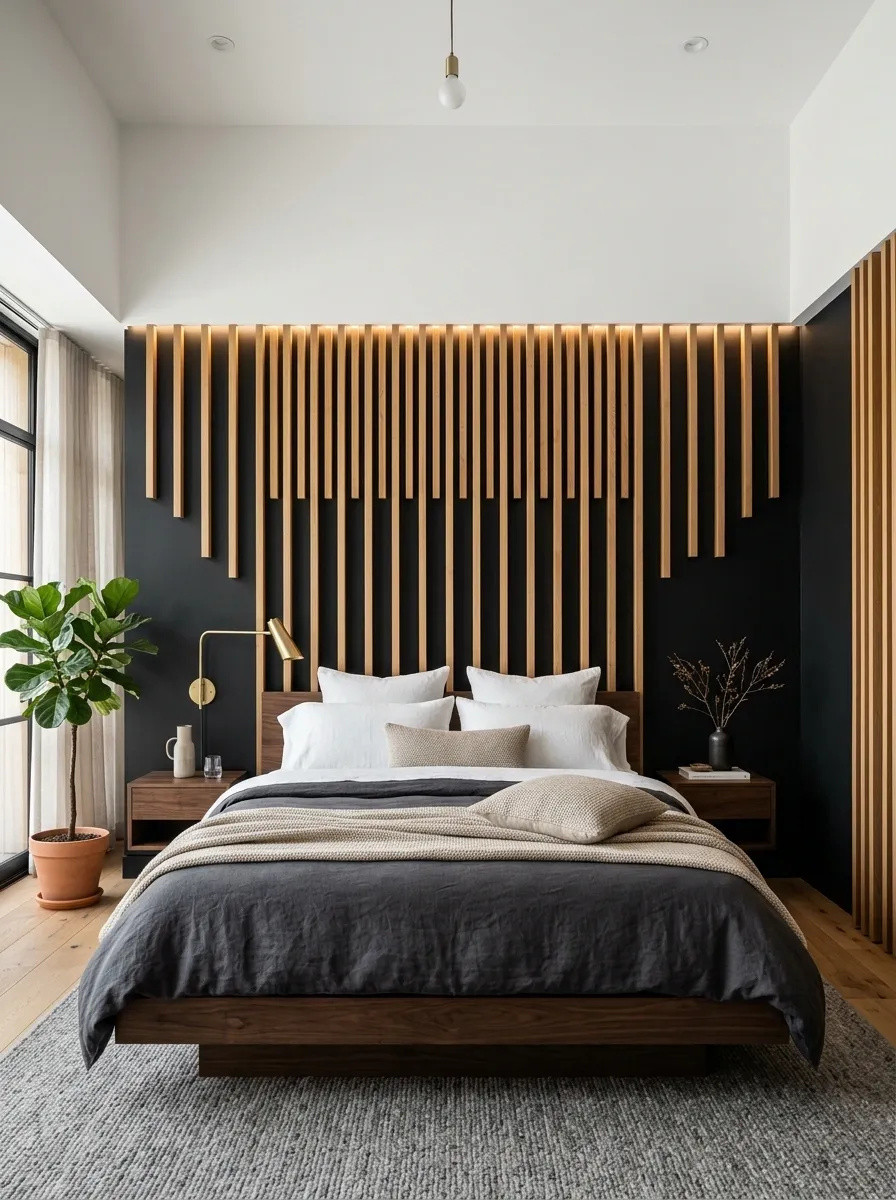
This bedroom creates a sharper contemporary composition by combining a matte black wall with warm vertical timber slats behind the bed. The wood doesn’t cover the entire surface. Instead, it acts as a rhythmic layer within the dark field.
Soft bedding and indirect lighting prevent the slats from becoming too architectural. The repeated vertical lines also draw the eye upward, which helps the bedroom feel taller.
Spacing should remain consistent. Uneven gaps would make the installation look accidental rather than intentional, while covering too much of the wall would weaken the contrast between black and timber.
Black Accent Wall in a Scandinavian-Inspired Living Room
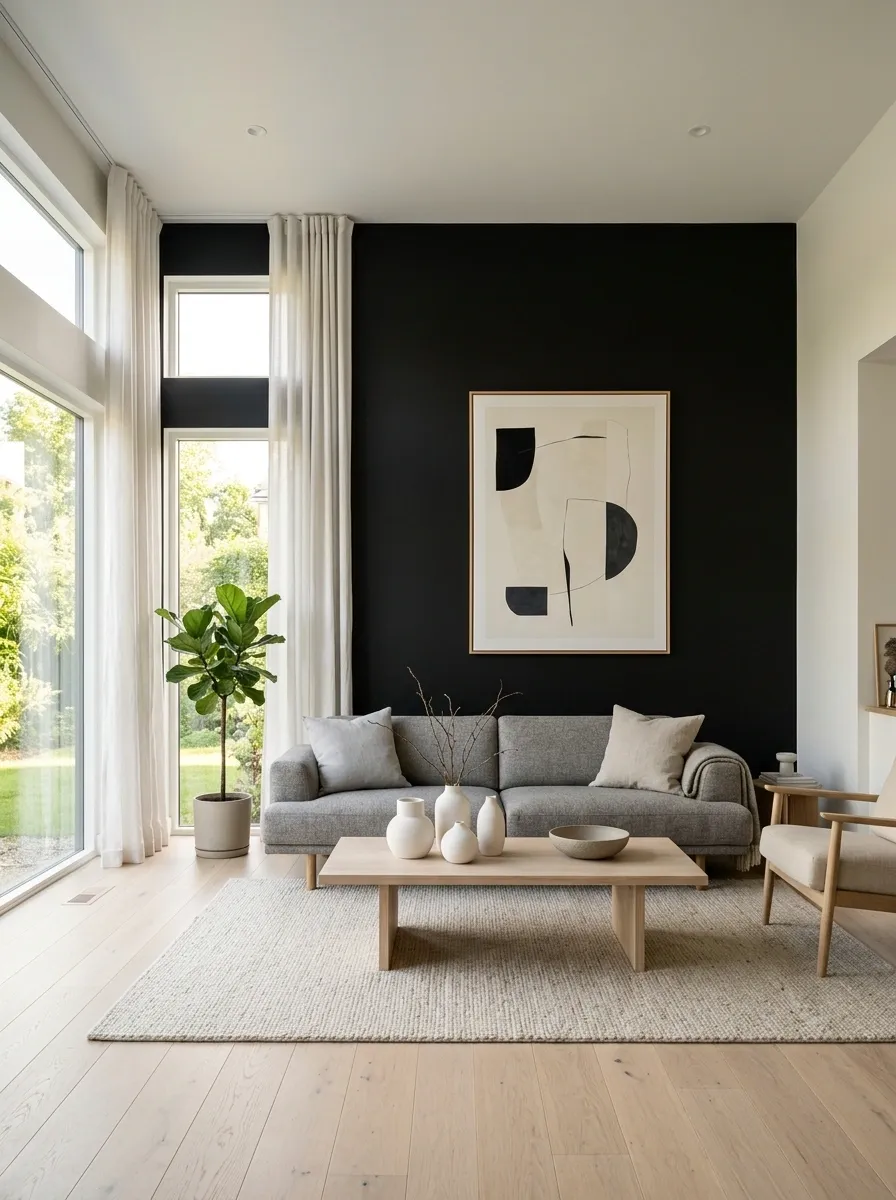
This room takes black in a much lighter direction. Pale oak flooring, soft gray upholstery, white curtains, simple ceramics, and generous daylight surround a single dark wall.
The black surface becomes an intentional counterweight to all the pale materials. Rather than making the room gloomy, it gives the lighter pieces somewhere to visually land.
The most important detail is empty space. Scandinavian-inspired rooms depend on restraint, so the wall should not become an excuse for layers of shelves and artwork. One or two pieces are enough to establish scale without losing the quiet composition.
Black Wall With Gallery Frames in a Maximalist Dining Room
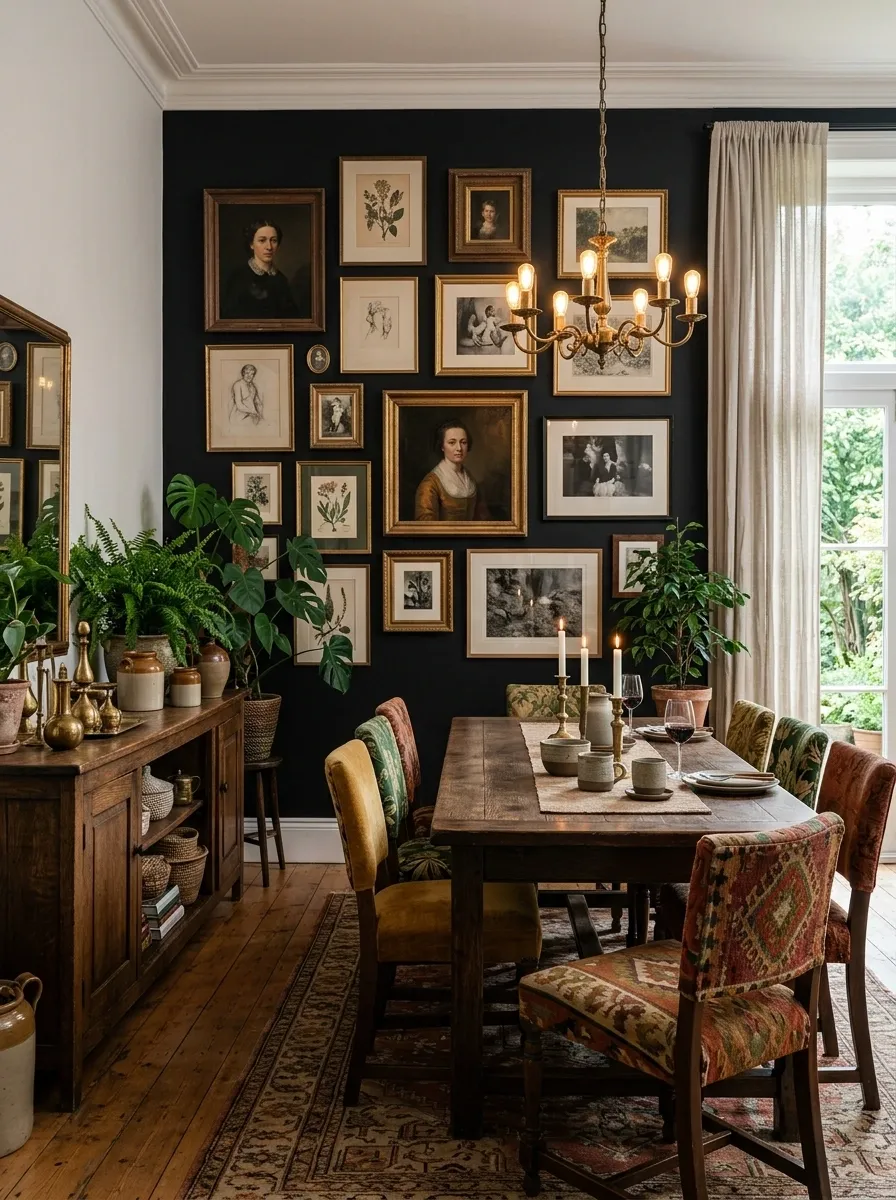
Instead of competing with a collection of art, the black wall helps organize it. This dining room layers mismatched frames, patterned upholstery, vintage furniture, plants, and warm lighting over one consistent dark background.
The wall gives all those different objects a common visual field. Without it, the same collection could feel scattered because every piece would sit against a different surface.
The artwork should vary in size and frame style, but the overall grouping still needs a clear boundary. Keeping the arrangement roughly centered over the dining zone prevents the composition from spreading randomly across the wall.
Black Accent Wall in a Narrow Hallway With Warm Lighting
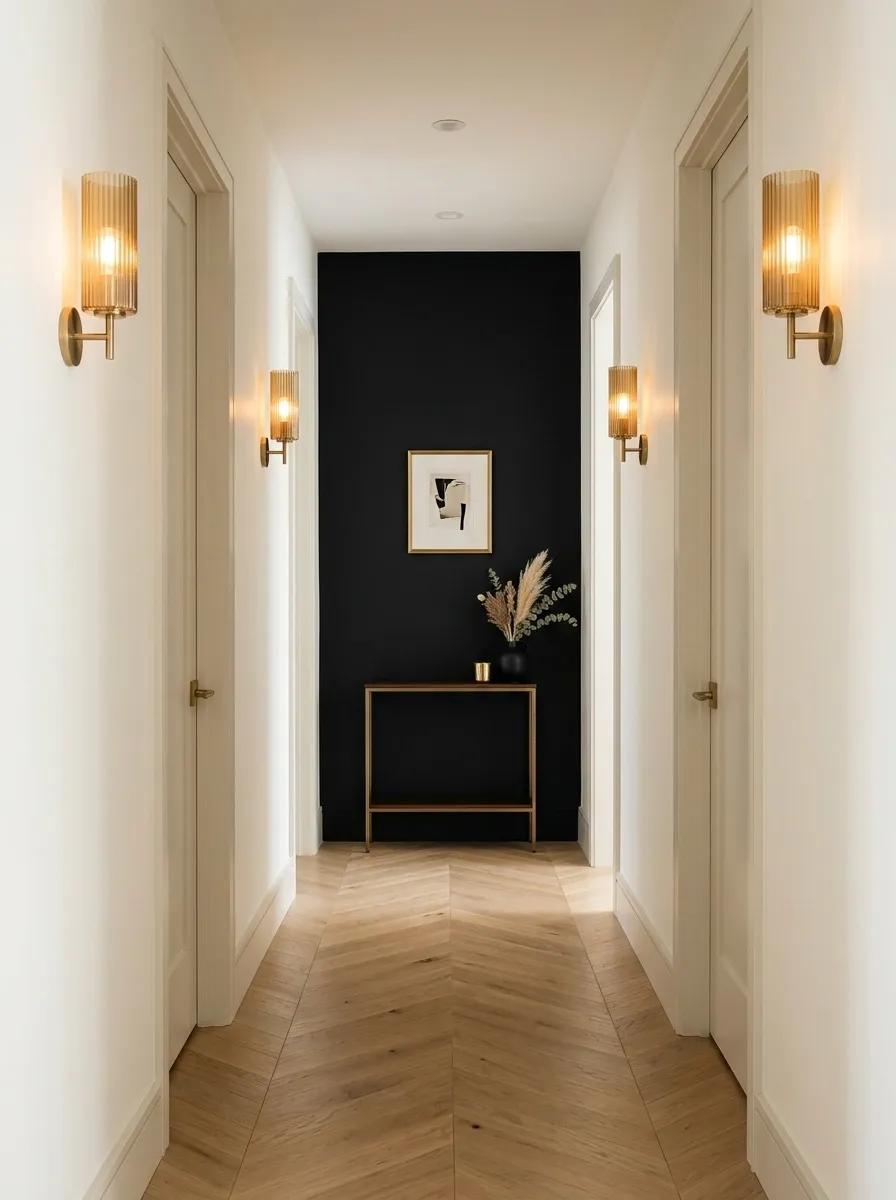
A narrow hallway can benefit from a black wall at the far end because the dark surface creates a deliberate visual stopping point. Here, the surrounding walls stay light while warm sconces create a gentle path toward the darker destination.
The end wall should remain relatively simple. Its job is to establish depth, not become another crowded display area. A small artwork, console, or mirror can work, but the composition is strongest when the wall still reads as one clear plane.
Warm flooring and light side walls keep the corridor from feeling enclosed.
Black Home Library With Built-In Oak Shelving
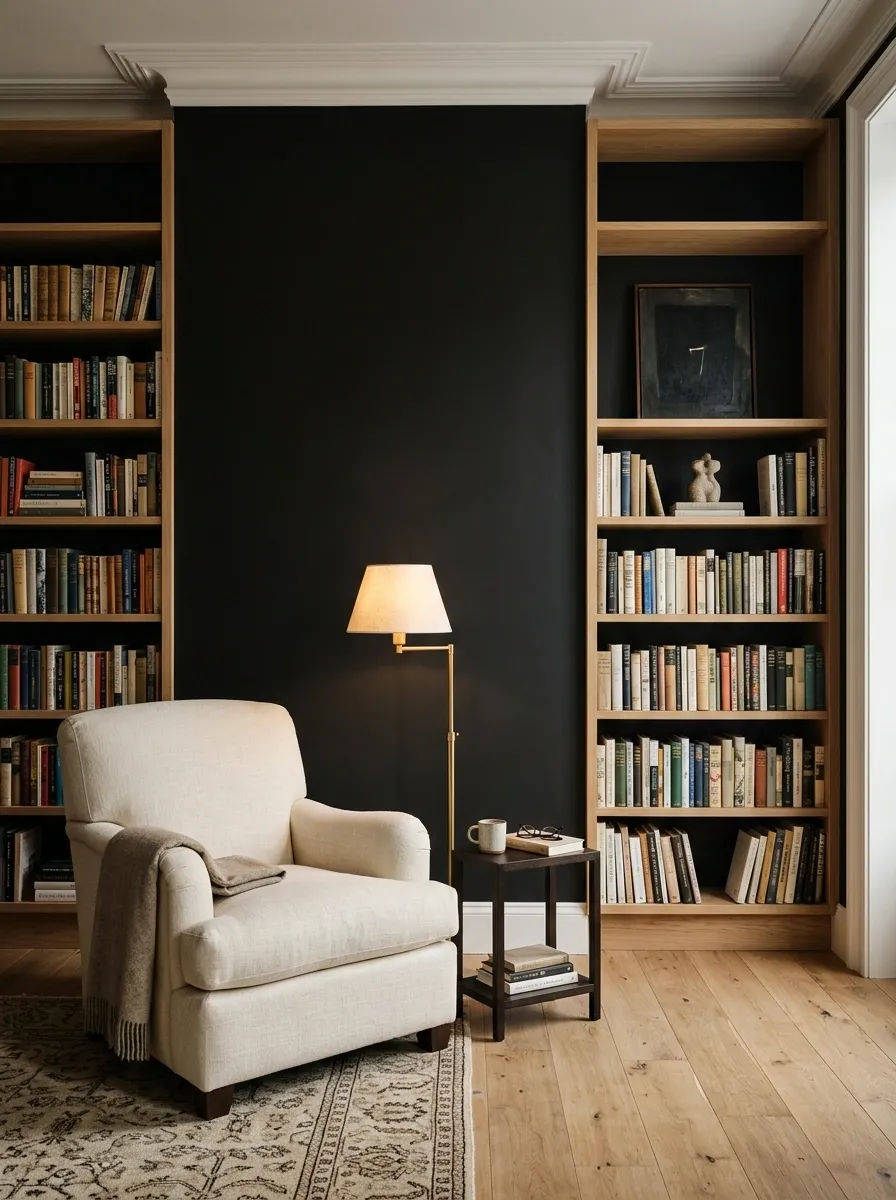
A home library gives black a particularly natural setting. Here, the walls are deep and matte while floor-to-ceiling oak shelving creates warm vertical structure. A deep upholstered chair, reading lamp, and small side table form a quiet reading zone in front.
The combination works because the oak interrupts the black at a human scale. The shelving adds texture and warmth without removing the depth of the wall.
The reading chair should sit slightly away from the shelving rather than becoming swallowed by it. That small gap makes the space feel usable rather than like a decorative book display.
Soft Black Bathroom With Travertine and Brushed Metal
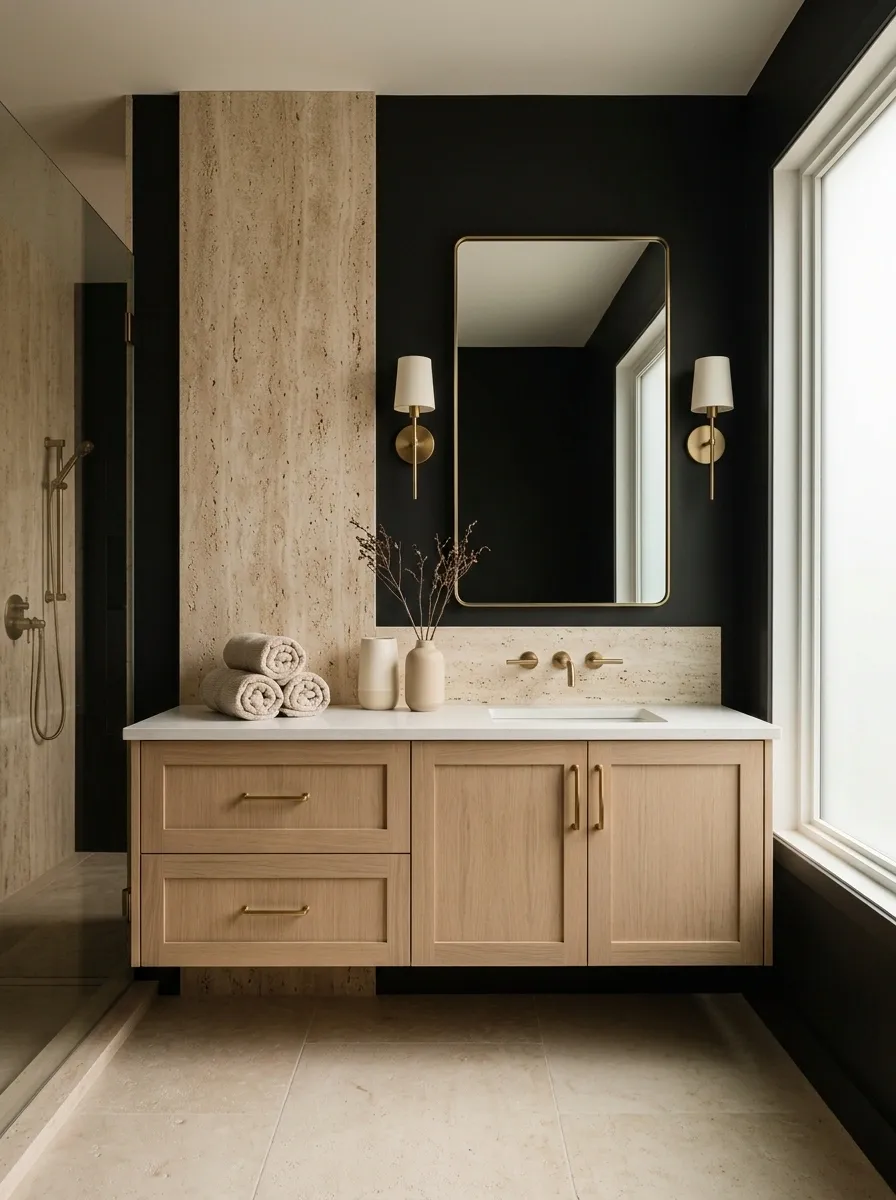
The bathroom takes a gentler approach to black by using a soft, warm-toned dark wall behind the vanity. Travertine, pale wood cabinetry, and brushed metal fixtures create a material transition that keeps the room from feeling stark.
The stone is important because its irregular surface creates visual variation against the smooth dark wall. Pale oak cabinetry then bridges the two materials so the room feels cohesive rather than divided into unrelated finishes.
This composition benefits from soft indirect lighting. Harsh overhead light can make dark paint and textured stone look dramatically different from the calmer appearance they have in natural or diffused light.
Black Accent Wall Behind a Traditional Four-Poster Bed
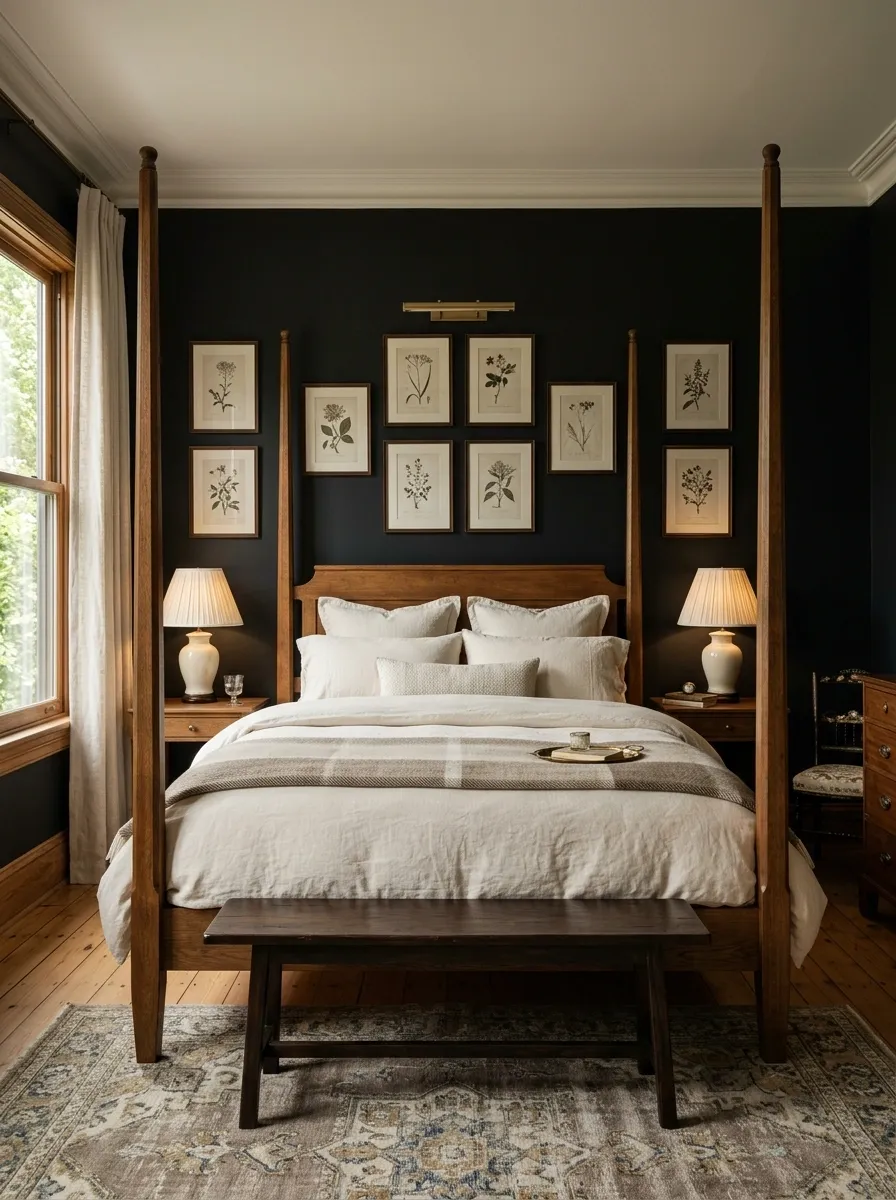
A traditional four-poster bed becomes almost graphic against a black wall. The tall wood posts create strong vertical lines, while warm ivory bedding, antique timber, classic lamps, and understated artwork keep the bedroom rooted in traditional design.
The wall works because it gives the bed enough contrast to become the room’s clear centerpiece. The surrounding pieces shouldn’t compete with those vertical posts. Keeping the nightstands low and the bedding simple makes the bed frame easier to read.
Warm wood matters here. A very pale contemporary timber would change the character completely, while deeper wood tones connect naturally with the traditional architecture.
Warm Black Living Room With Layered Brown, Cream, and Stone
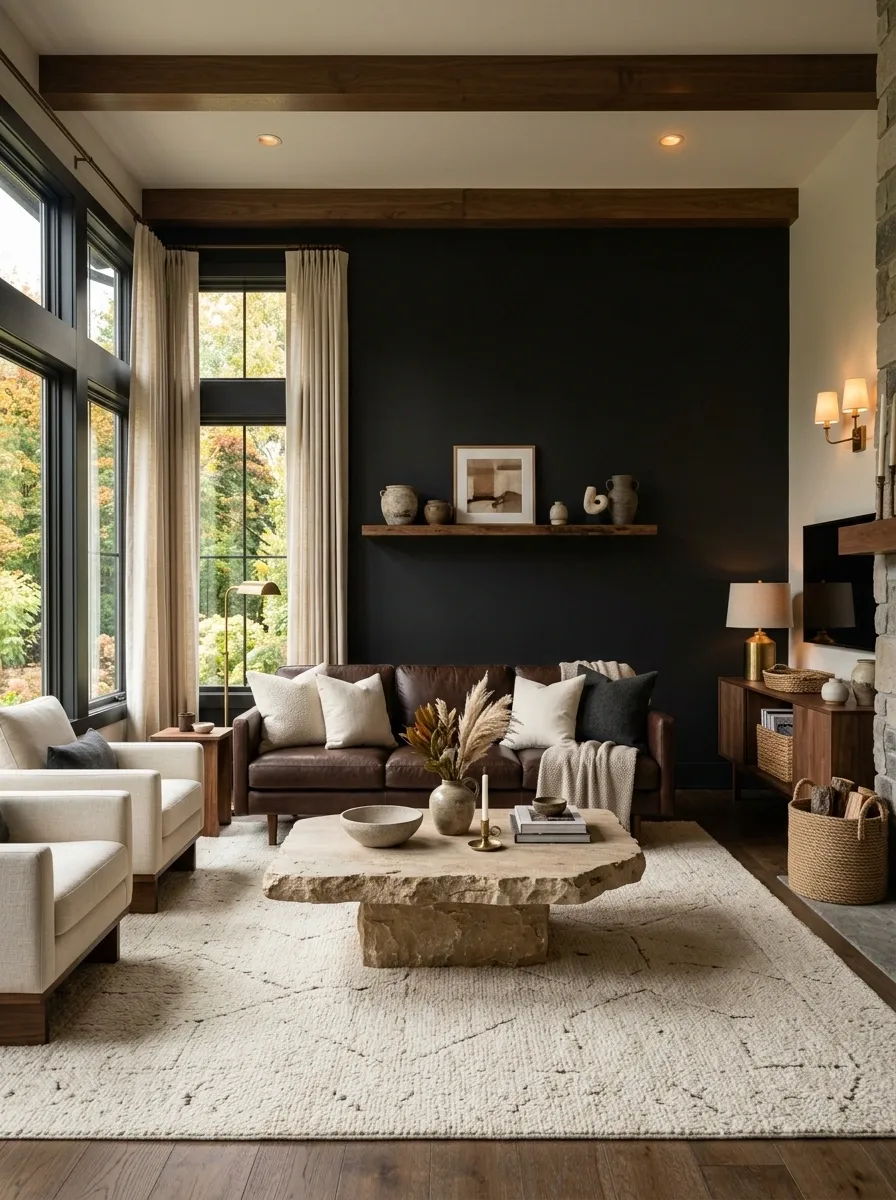
The final composition uses black as the deepest layer of a warm living room rather than as a dramatic standalone statement. Deep brown seating, cream textiles, natural stone, walnut, and warm lighting build outward from the dark wall.
The palette feels rich because every supporting material stays close to the black in visual warmth. Nothing is overly glossy or stark. The stone brings a little irregularity, while cream textiles prevent the lower half of the room from becoming too heavy.
This design is strongest when the materials are allowed to show their natural variation. Perfectly matching wood, stone, and textiles would remove the depth that makes the room feel settled and believable.
The Room Matters More Than the Paint Chip
A black wall shouldn’t be chosen in isolation. The same dark finish can feel soft in a linen-filled bedroom, architectural in a kitchen, historic beside antique furniture, or almost theatrical under warm evening light.
Look at the wall in relation to the things that will stay around it. Pale flooring changes the balance. Wood changes the temperature. A fireplace gives the wall structure. Molding gives it rhythm. Open space keeps it from feeling crowded.
The strongest rooms in this collection aren’t built around a single dramatic feature. Each one has a clear visual hierarchy, and the black wall supports that hierarchy instead of fighting it.
That is the real takeaway. Start with the finished room you want to see, then choose the black, furniture, materials, and lighting that make that composition possible.
Save the designs that feel closest to the architecture and natural light of the room, then return to them when the actual decorating decisions begin.