
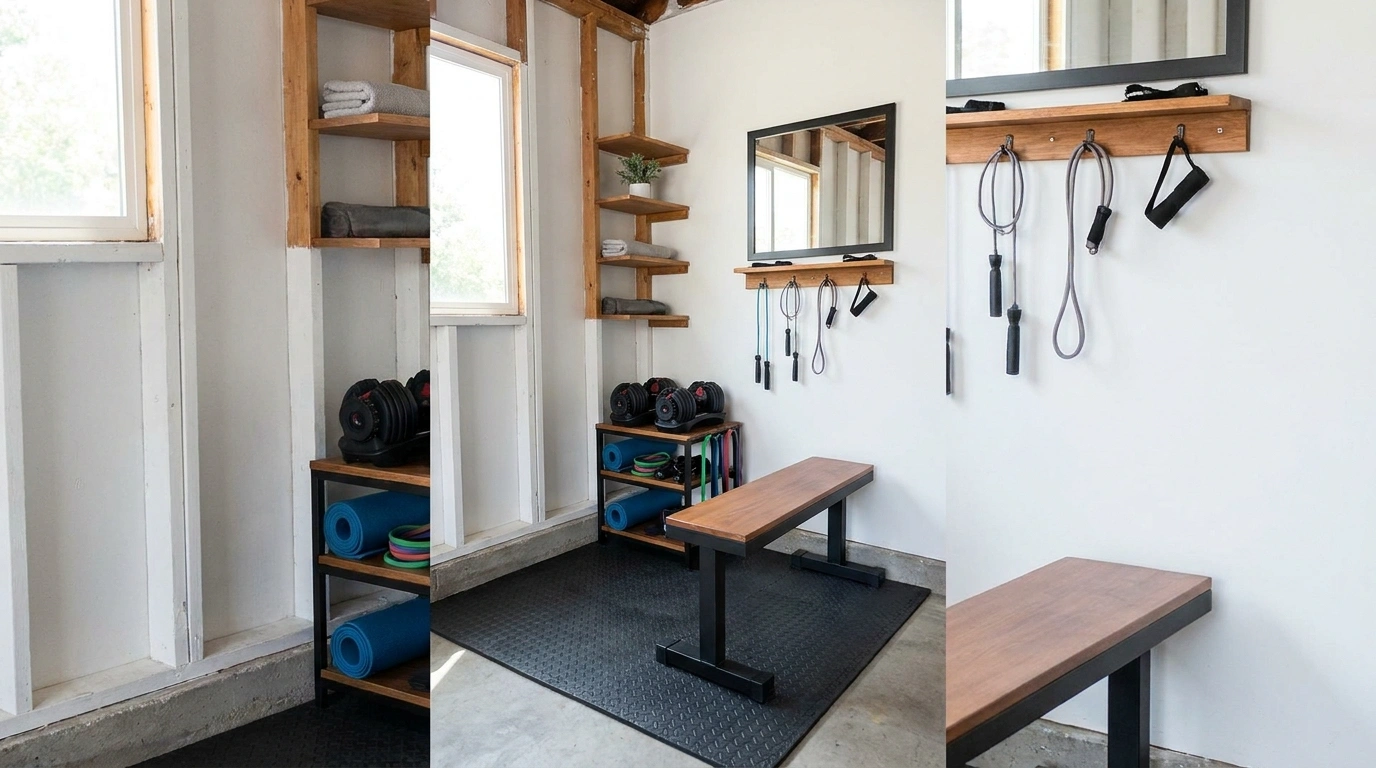
On the floor: one mat.
Against the wall: the weights you actually lift.
Still in your bank account: the money that was about to become a decorative treadmill.
That is a perfectly respectable starting point.
Budget-friendly home gym designs you can DIY are often strongest when the DIY work improves the room: painting, building appropriate storage, planning the floor, tidying cables, and giving existing equipment a proper place. Load-bearing exercise equipment is a different category from a homemade shelf.
Spend where the activity depends on it. Save where a plain wall, useful lighting, and an uncluttered patch of floor already do the job. The room doesn’t need to look expensive enough to make you nervous about sweating in it.
Buy for a Routine, Build for a Room
List the activities you already do or realistically intend to do. Plot their working space, including equipment in use, before buying more.
Check floor suitability, equipment instructions, ventilation, and safe access for the intended setup. Make storage projects around actual loads and fixings. DIY decor can be creative; improvised load-bearing training rigs deserve a much less casual attitude.
Setups That Put the Money Into Use
A Bedroom Strength Corner With Closed Low Storage
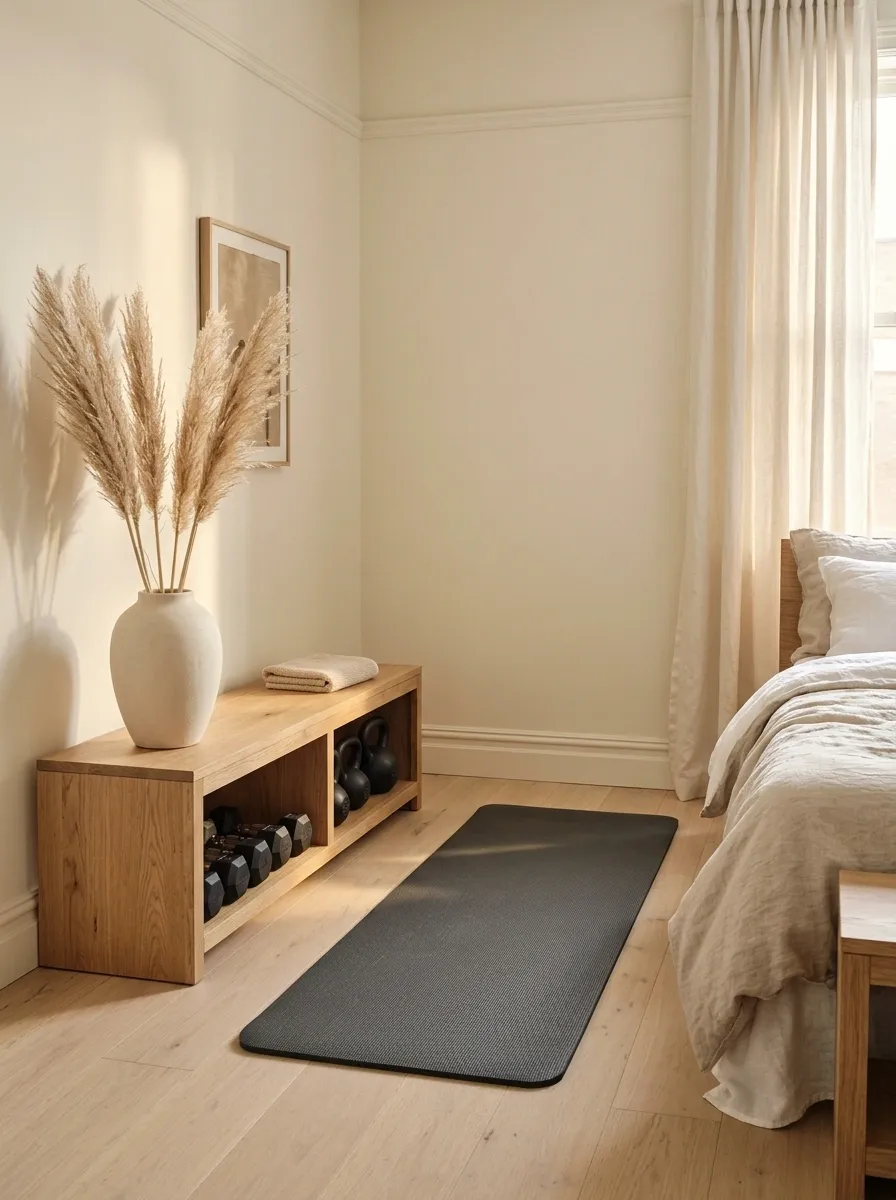
A mat, compact weight storage, and a clear section of floor can make a bedroom corner useful for strength work. Keep the storage low and stable, use a plain wall color, and let the rest of the room remain a bedroom.
Build or adapt storage for the actual weight and floor conditions rather than copying a lightweight display shelf. Keep the training footprint separate from bed corners and door travel. The budget advantage comes from giving a modest equipment set a permanent home, not buying several things that must be relocated before every session.
Fund the habit, not the backdrop.
Useful equipment, suitable surface, stable storage.
Paint, decor, and anything bought only to fill the corner.
A Living-Room Mat Studio Hidden in a Credenza
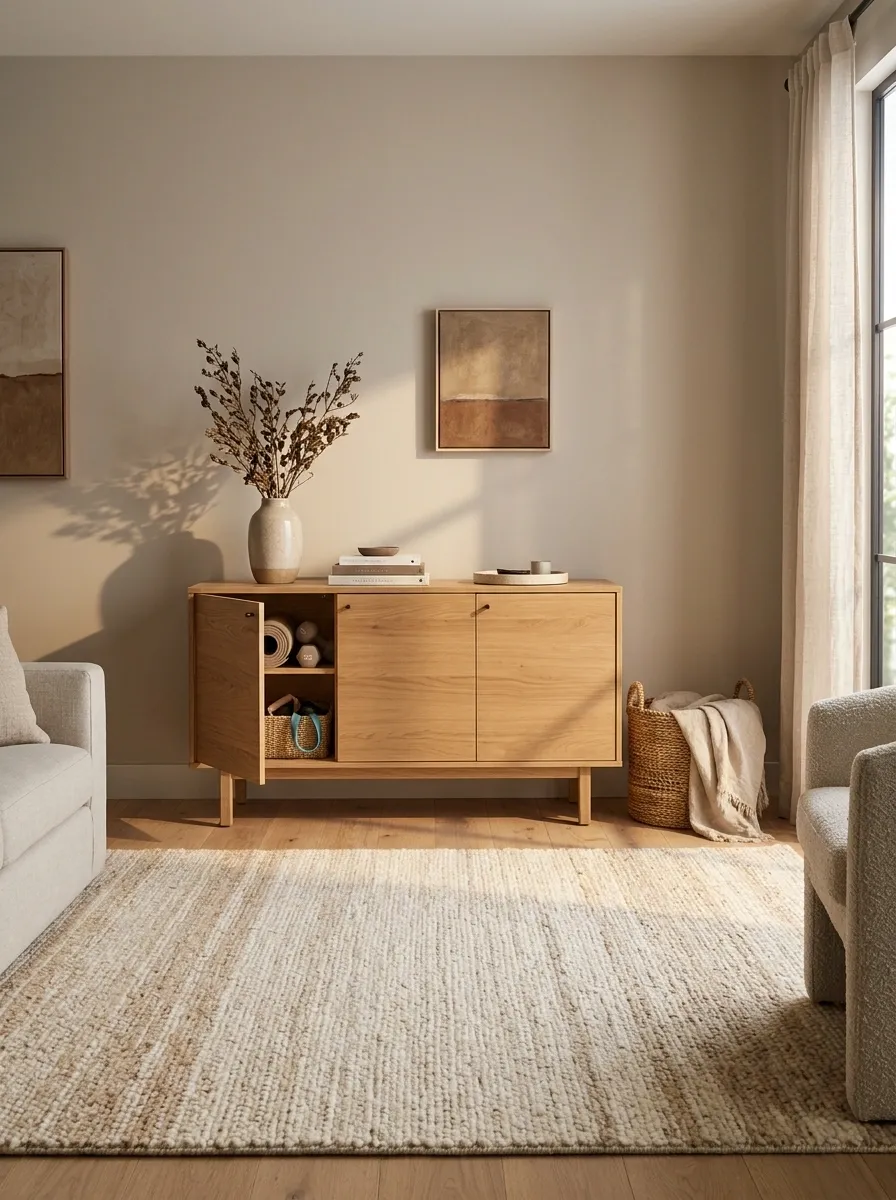
Store a mat, small accessories, and suitable compact equipment in a living-room credenza, with a clear floor area that opens without moving half the furniture. Warm neutral walls and existing lighting let the training space belong to the room.
The credenza’s job is quick access, not concealing an entire commercial gym. Keep heavy items within its verified capacity and store small pieces where they won’t roll out. Time the setup once. If preparing the floor resembles an amateur furniture-removal service, reduce the equipment or reconsider the layout.
Open storage, take out equipment, clear the working area, then reset. Notice which step causes friction.
A Window-Side Yoga Room With Simple Shelf Storage
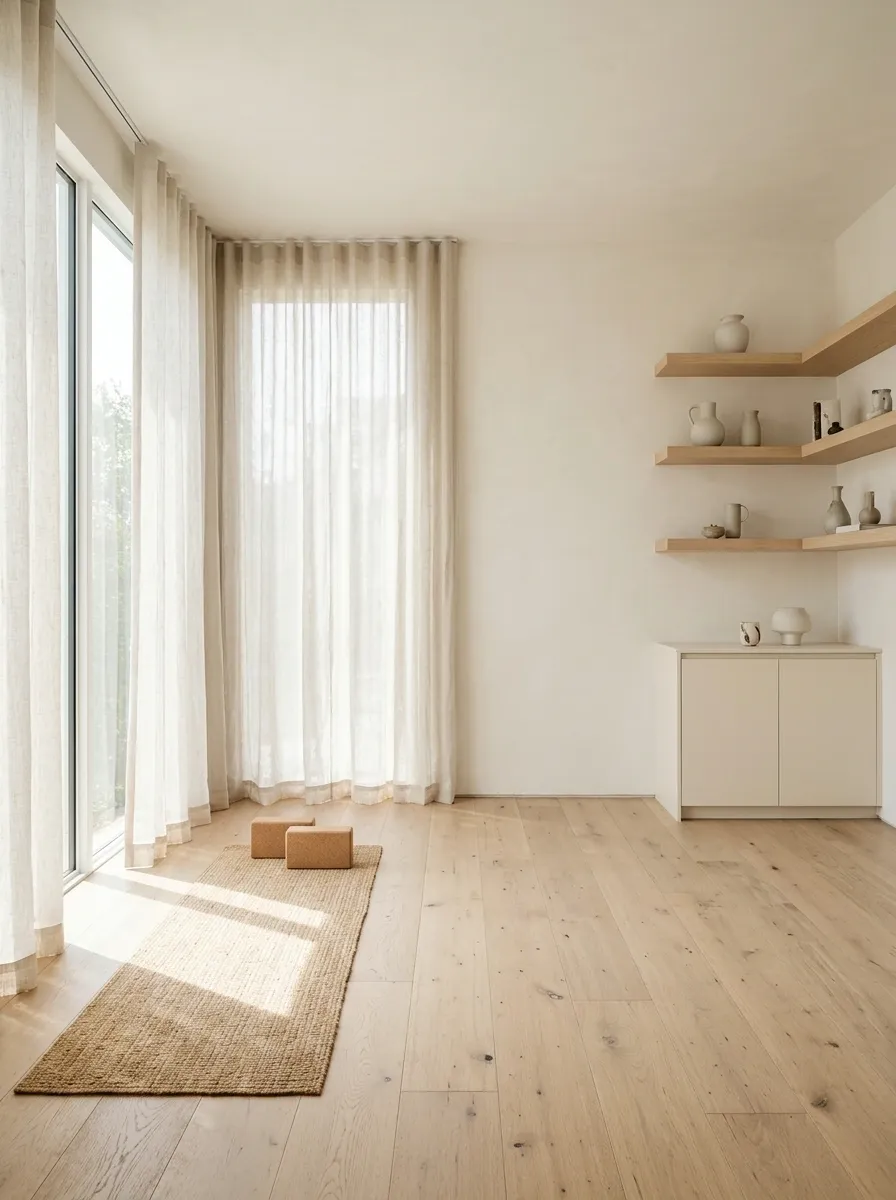
A clear mat area beside a window can become a dedicated yoga or mobility room with plain walls, restrained shelf storage, and a small closed cupboard. Keep the window treatment useful for privacy and glare rather than elaborate.
Build shelving for light accessories and leave the floor open for the movements you practice. Decorative floor baskets are not helpful if they occupy the only place your arm needs to go. The room can feel considered through color and light without adding equipment unrelated to its purpose. A quiet setup doesn’t need an expensive identity.
A Small Spare Room With a Bench and Weight Station
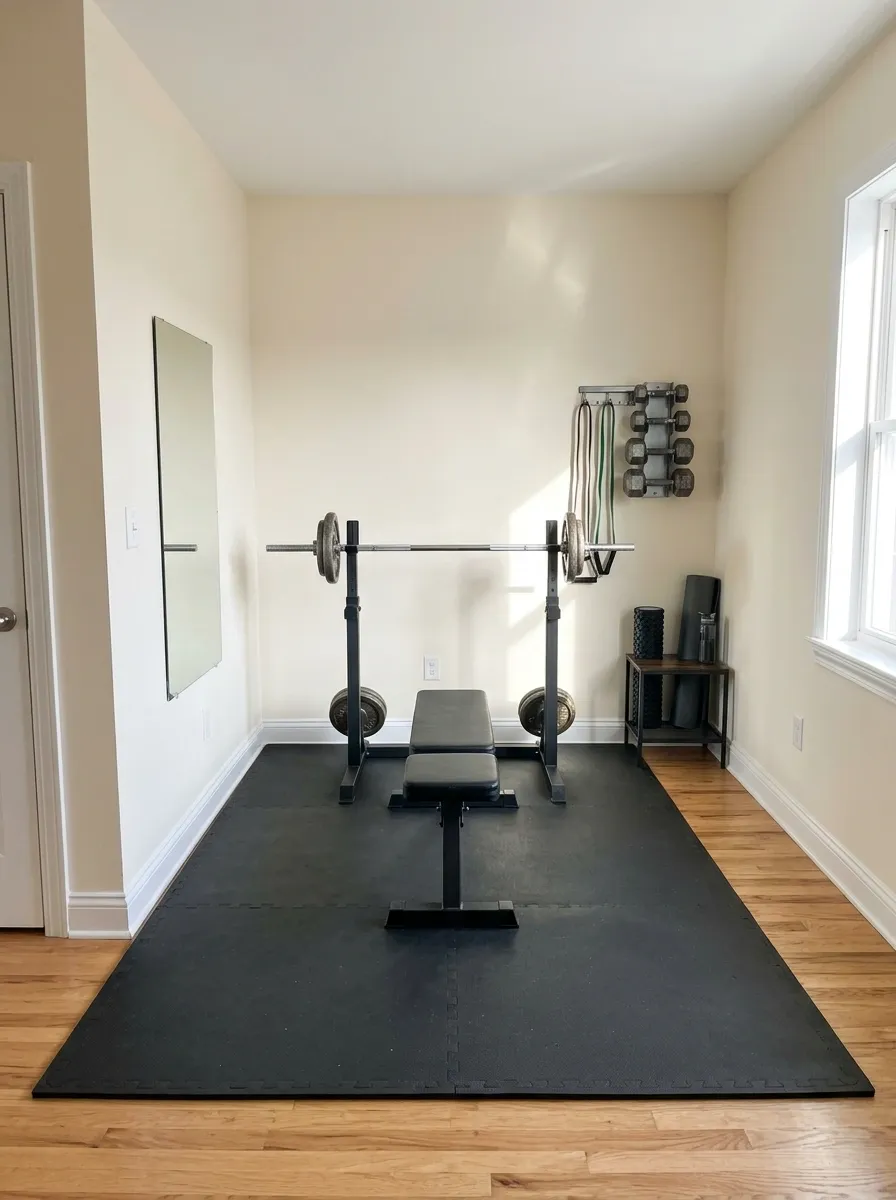
A suitable exercise bench and compact weight station can give a spare room a clear training purpose. Keep the floor plan simple, store accessories along one wall, and use a modest mirror installation only if it serves your practice.
Plot the bench in its working positions, not only folded or parked. Check equipment instructions and the floor’s suitability for the intended load and activity. Save on unnecessary cabinets before saving on stability. A room full of matching storage looks organized right up until the bench has nowhere to move. The furniture should not be fitter than the person trying to use it.
Include adjustment positions, access, weight handling, and the route out of the room.
A Guest Room With a Foldaway Training Zone
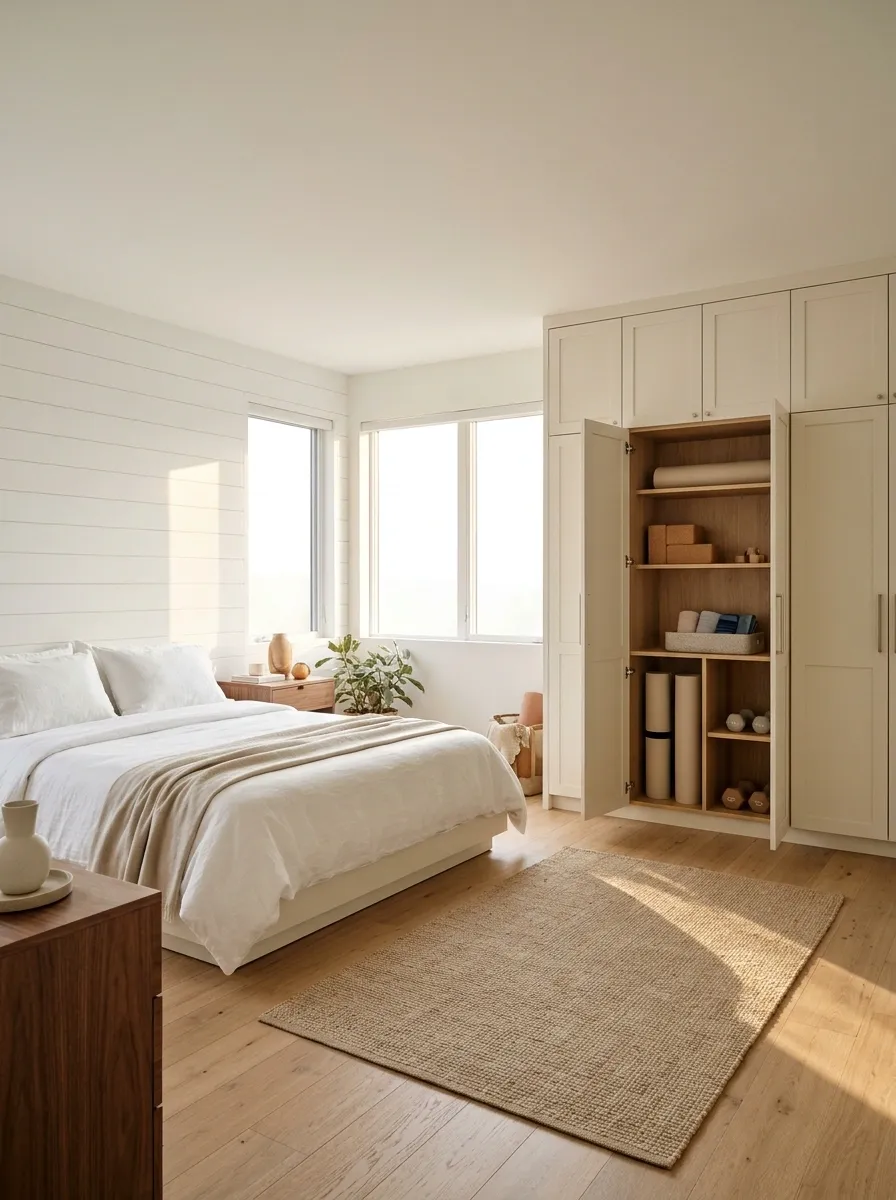
A guest room can support a compact gym when the exercise area has a genuine parking arrangement. Put light accessories in a closed cabinet, keep equipment within its storage instructions, and use a plain rug outside the active surface to preserve the room’s guest function.
Decide which purpose takes priority on an ordinary week. A foldaway setup works when the reset is manageable, not when every session requires dismantling the bed. Make the storage visually quiet and leave a clear guest surface. Nobody needs to sleep surrounded by resistance bands hanging like festive uncertainty.
Clear surface and accessible kit.
Stored equipment and uncluttered arrival space.
A Hall-End Mobility Nook With No Permanent Obstructions
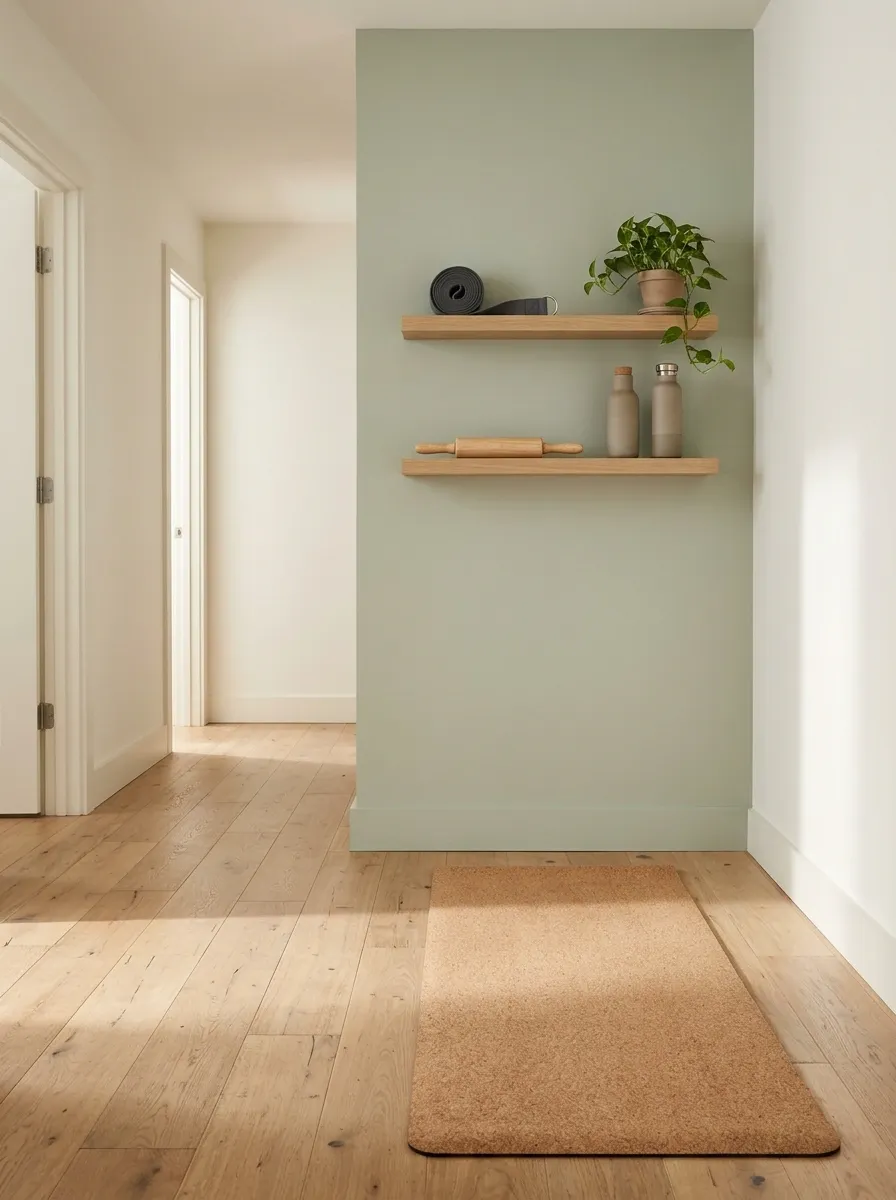
An unused hall end can hold a modest mobility setup when it isn’t needed as circulation or escape space. Use shallow accessory storage and a clear mat area, with suitable lighting and no projecting furniture.
This is for a genuinely spare end of the plan, not the corridor everyone still needs. Check movement clearance and nearby doors before giving the nook a gym label. A wall color change can make it feel intentional without additional furniture. The budget stays controlled because the layout relies on existing space rather than purchasing objects to justify calling it a room.
Confirm the area can be occupied without narrowing essential access before planning storage.
A Basement Gym With a Finished, Dry Training Corner
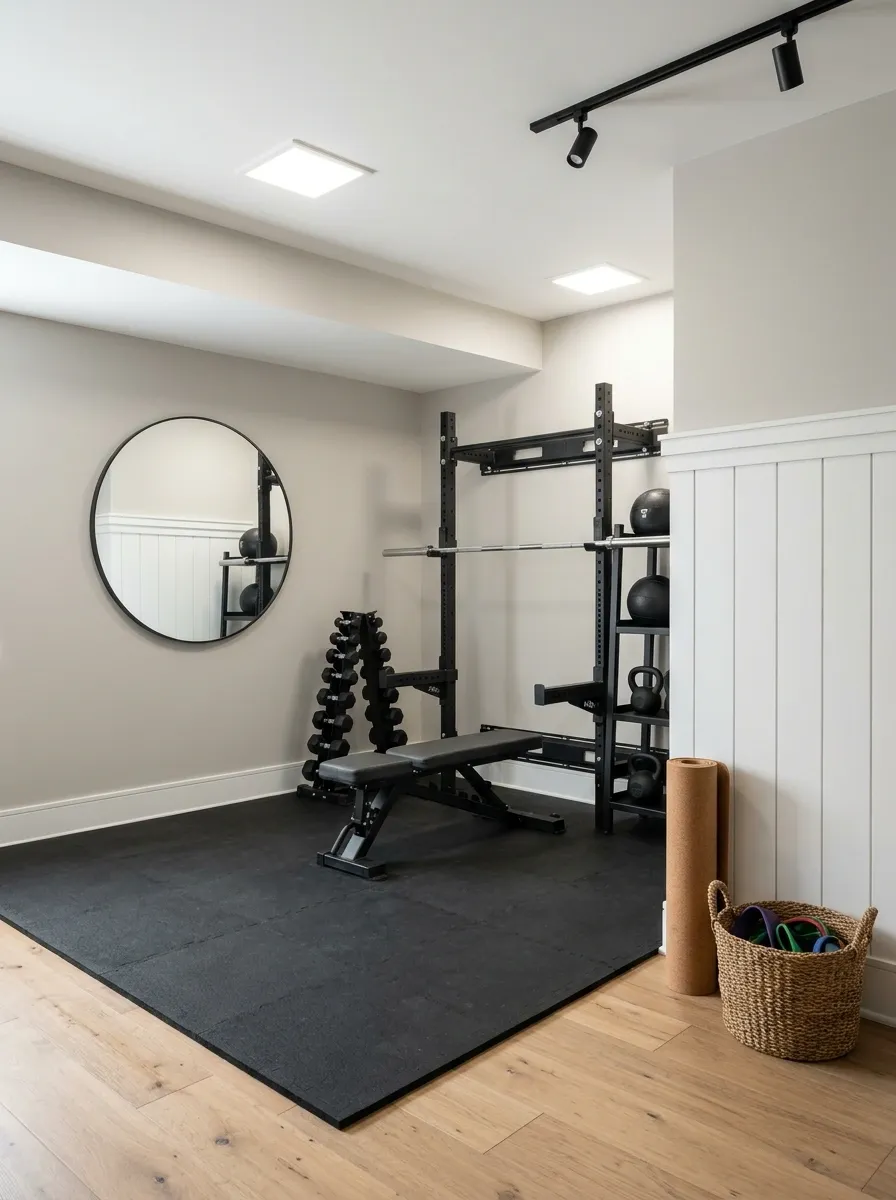
A basement corner can become a useful gym with a suitable floor, clear lighting, and organized equipment storage. Keep the finish simple and use lighter walls if the space receives little daylight.
Resolve moisture, ventilation, and building suitability before installing attractive wall panels. Paint is not a damp-control strategy wearing a nicer color. Once the room conditions work, a defined training zone can feel complete without finishing every basement wall to the same level. Put the initial budget into a usable environment and the equipment you need, then expand only when the routine justifies it.
Order the work sensibly.
A Small Cycling Corner With a Real Access Route
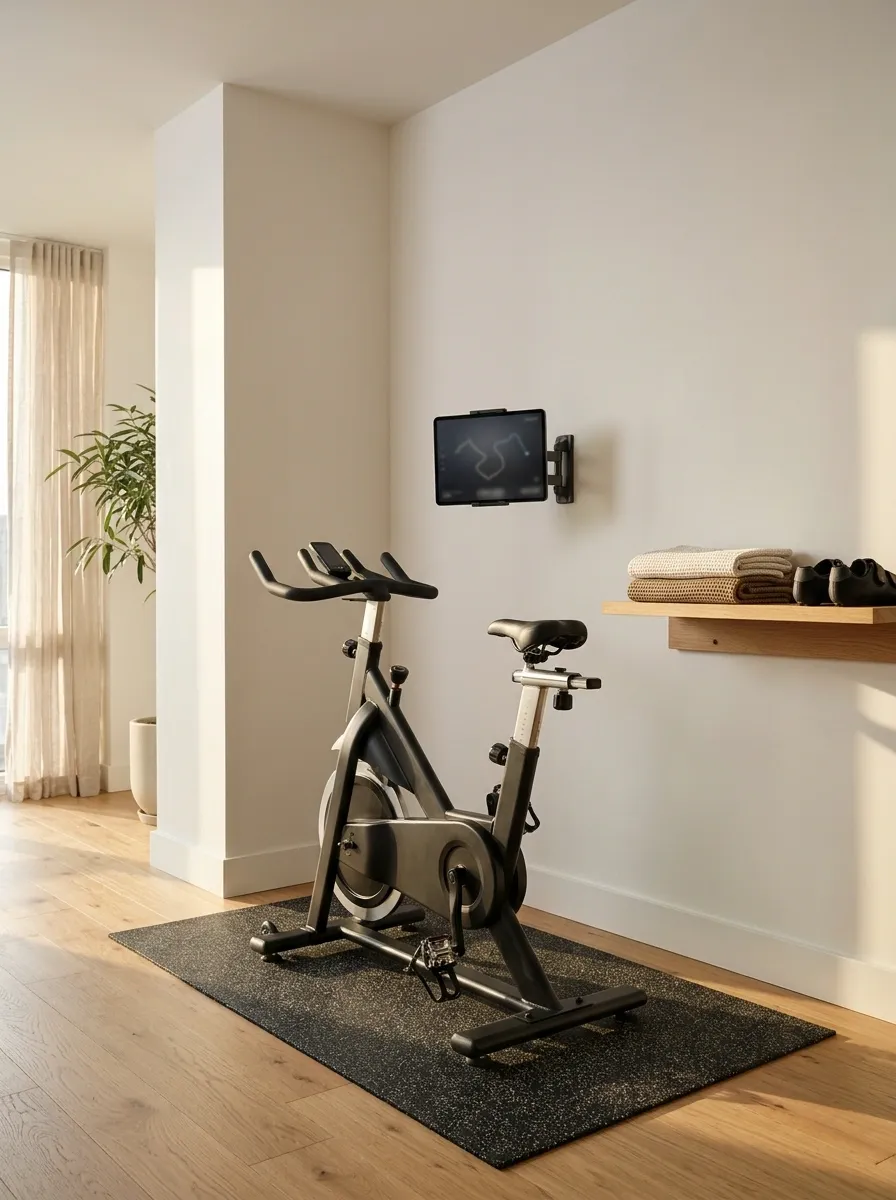
Place a stationary bike where its use, mounting, and maintenance clearances fit, with a small accessory shelf and a suitable floor protector. Keep the surrounding walls plain and provide lighting or a screen position that supports the way you ride.
The bike’s parked footprint is only the beginning. Include the rider and the route around the equipment. Don’t choose the corner because it hides the machine if it also makes getting on awkward. DIY storage for shoes and towels can make the setup feel finished without buying a whole wall of matching branded accessories.
Use the equipment’s stated clearances and allow comfortable mounting, dismounting, and maintenance.
A Low-Ceiling Room for Floor-Based Training
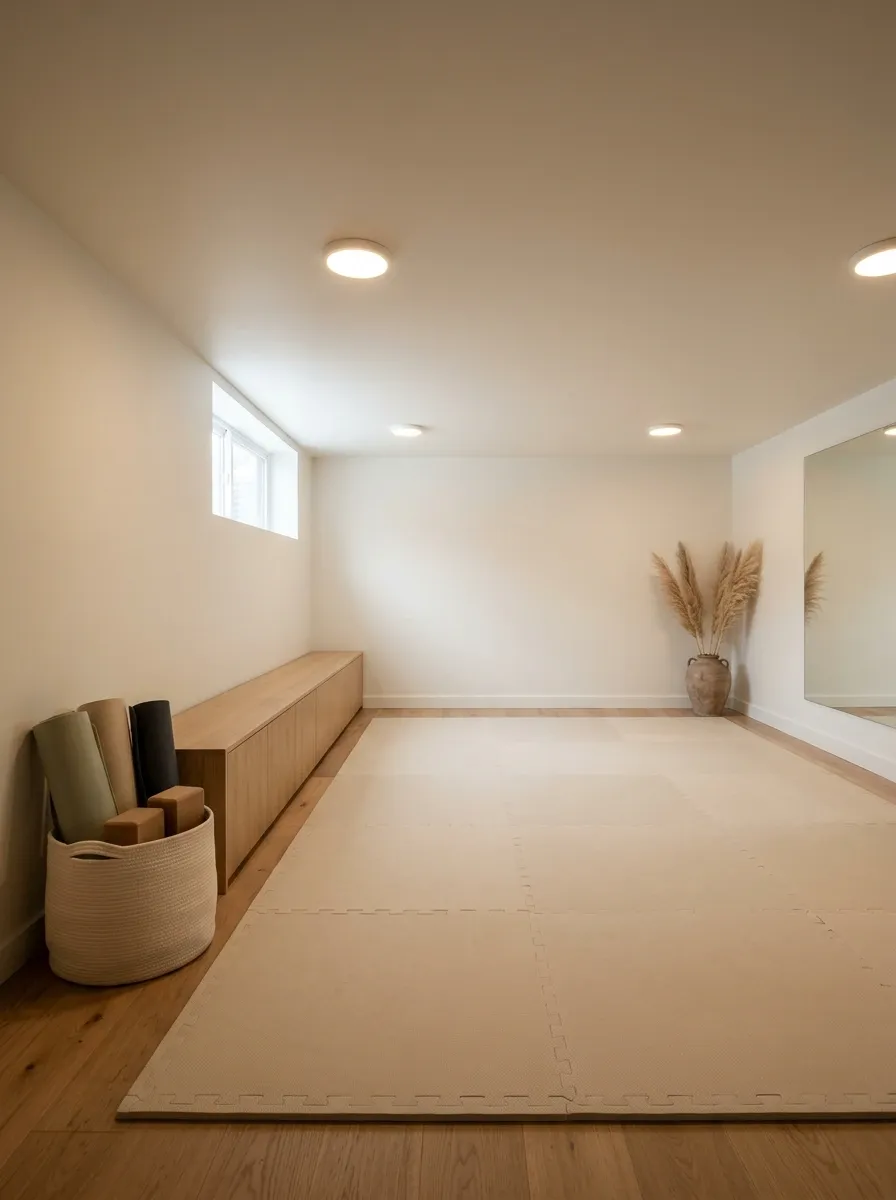
A low-ceiling room can suit activities that don’t require standing overhead clearance, with a clear floor area and low closed storage. Warm light and a plain finish keep the room comfortable without adding hanging fixtures.
Choose the room around the movements you actually practice. The ceiling is not negotiable halfway through a session. Skip tall equipment and decorative pendant lighting where clearance is limited. A well-planned floor-based studio can make good use of an awkward room without pretending it can support every training style. Specializing is often cheaper than forcing a room into several unsuitable jobs.
Include raised arms, equipment, and lighting projections rather than measuring only standing headroom.
A Training Wall With Pegboard for Light Accessories
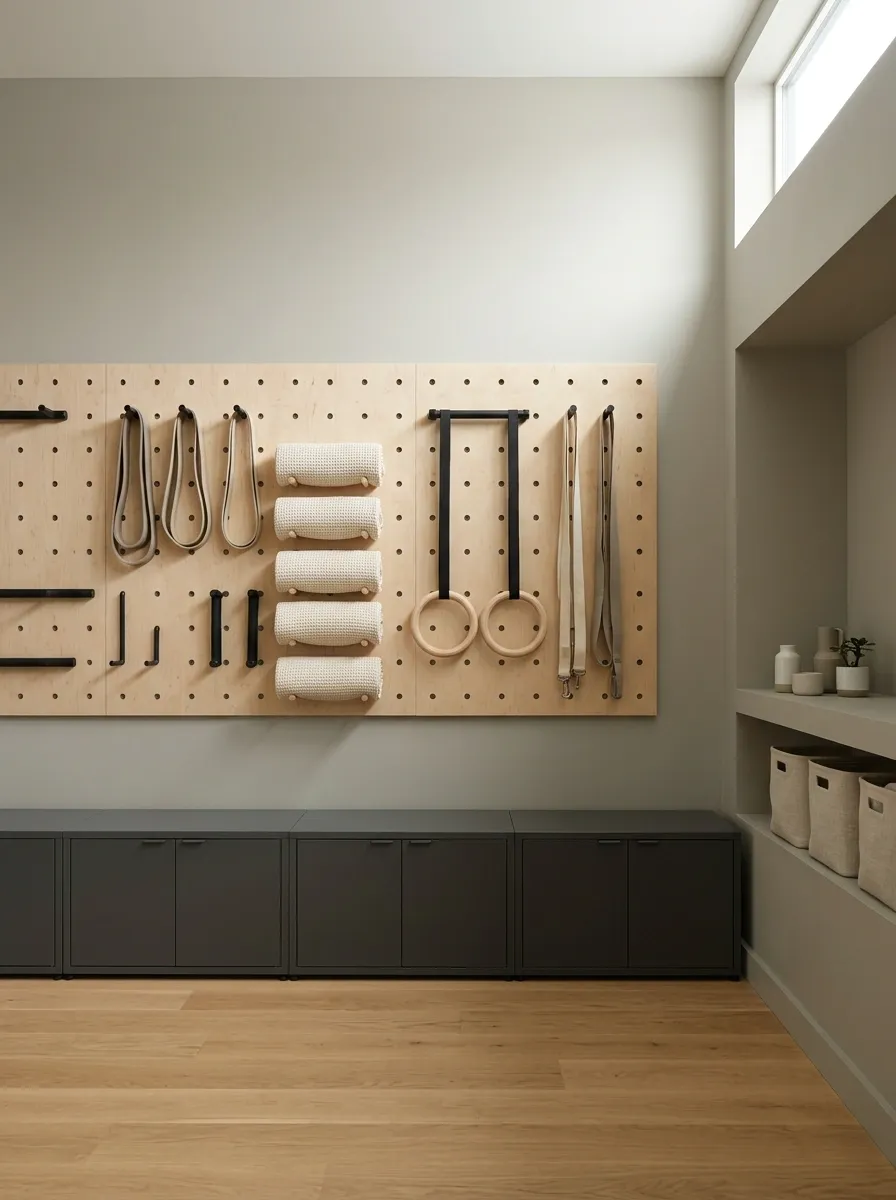
A pegboard wall can organize light bands, towels, and small accessories beside a clear training floor. Paint the surrounding wall in one restrained color and keep heavier equipment in suitable floor-level storage.
Fit the board and hooks for their intended loads. This is accessory organization, not a reason to suspend heavy weights from whatever hooks came in a bargain bag. Group equipment by how you use it, leaving enough blank space that items remain easy to remove. A storage wall should shorten setup, not display your entire purchasing history with military precision.
Light accessories on specified hooks. Heavy equipment in storage designed for it.
A Repurposed Cabinet Beside a Clear Mat Floor
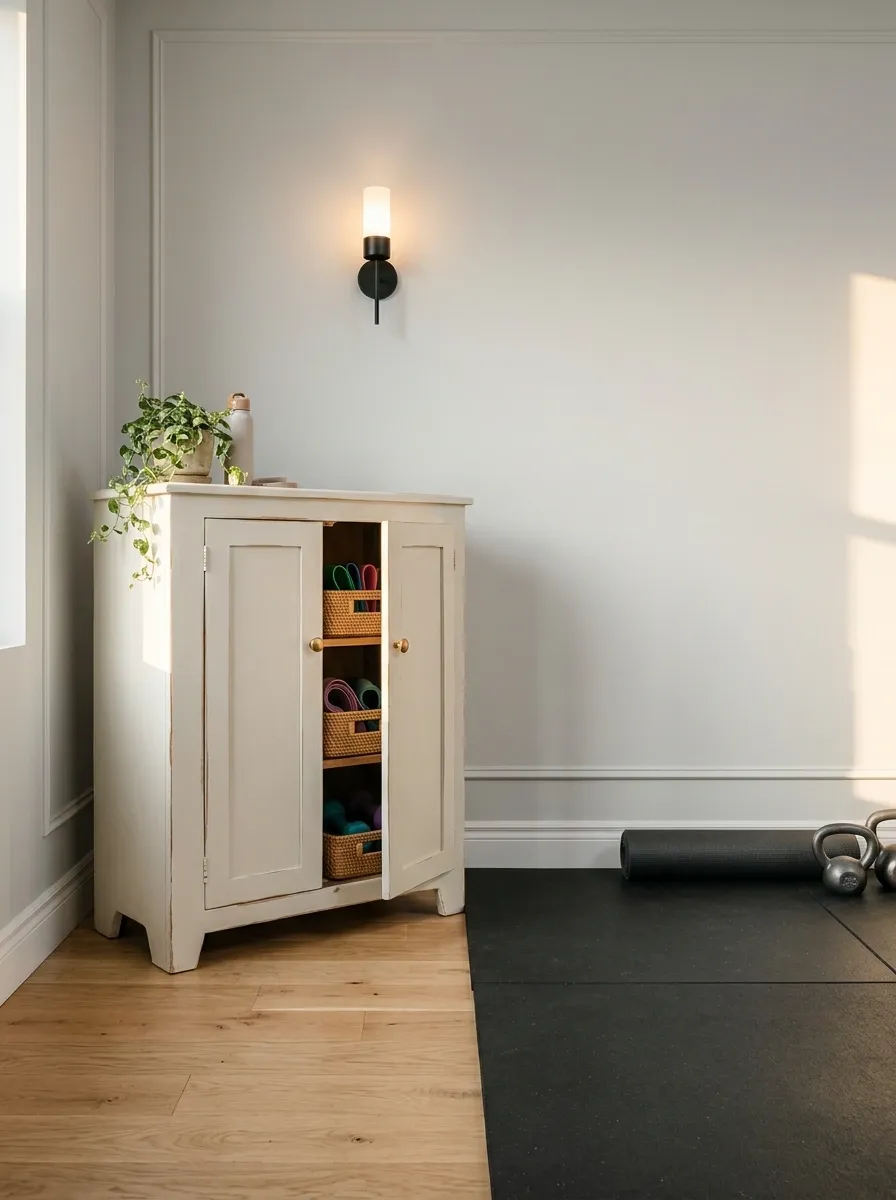
A sound existing cabinet can store lighter gym accessories, with a clear mat area and simple wall light completing the room. Remove unnecessary display objects and divide the interior around actual equipment.
Repurposing is useful when the furniture’s condition, stability, and capacity suit the contents. It isn’t a magic upgrade that turns a flimsy cabinet into a weight rack. Put small items in shallow bins and keep frequently used kit near the front. Spend time making the interior useful before repainting the handles. The workout won’t be improved by beautiful handles concealing an inconvenient cupboard.
Is the existing cabinet a sensible candidate?
Check condition, stability, verified capacity, door access, and the size of the actual contents before adapting it.
A Mirror-Led Studio With Plain Storage and No Extra Decor
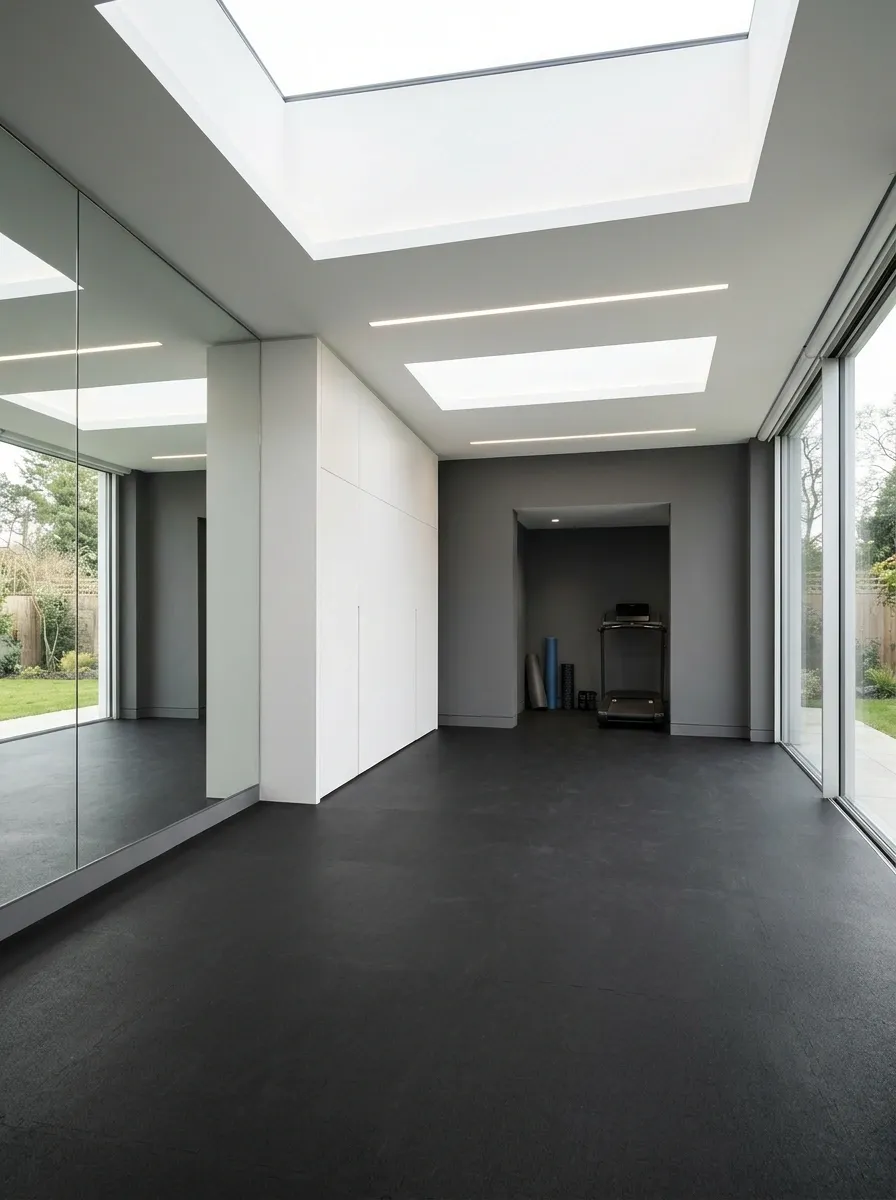
A properly specified and secured mirror can give a small training room a useful focal wall. Pair it with closed accessory storage, a suitable floor, and clear lighting rather than spending on several decorative surfaces.
The mirror should serve your training or room use, not become compulsory gym scenery. Choose appropriate safety and mounting provisions for the setting. Keep equipment clear of its vulnerable edges. The room can feel complete with very little furniture because the active floor is the main feature. You are allowed to leave space empty when its job is movement.
Don’t fill it with furniture simply because the finished room looks unusually uncluttered.
A Folding-Bench Setup With a Proper Parking Bay
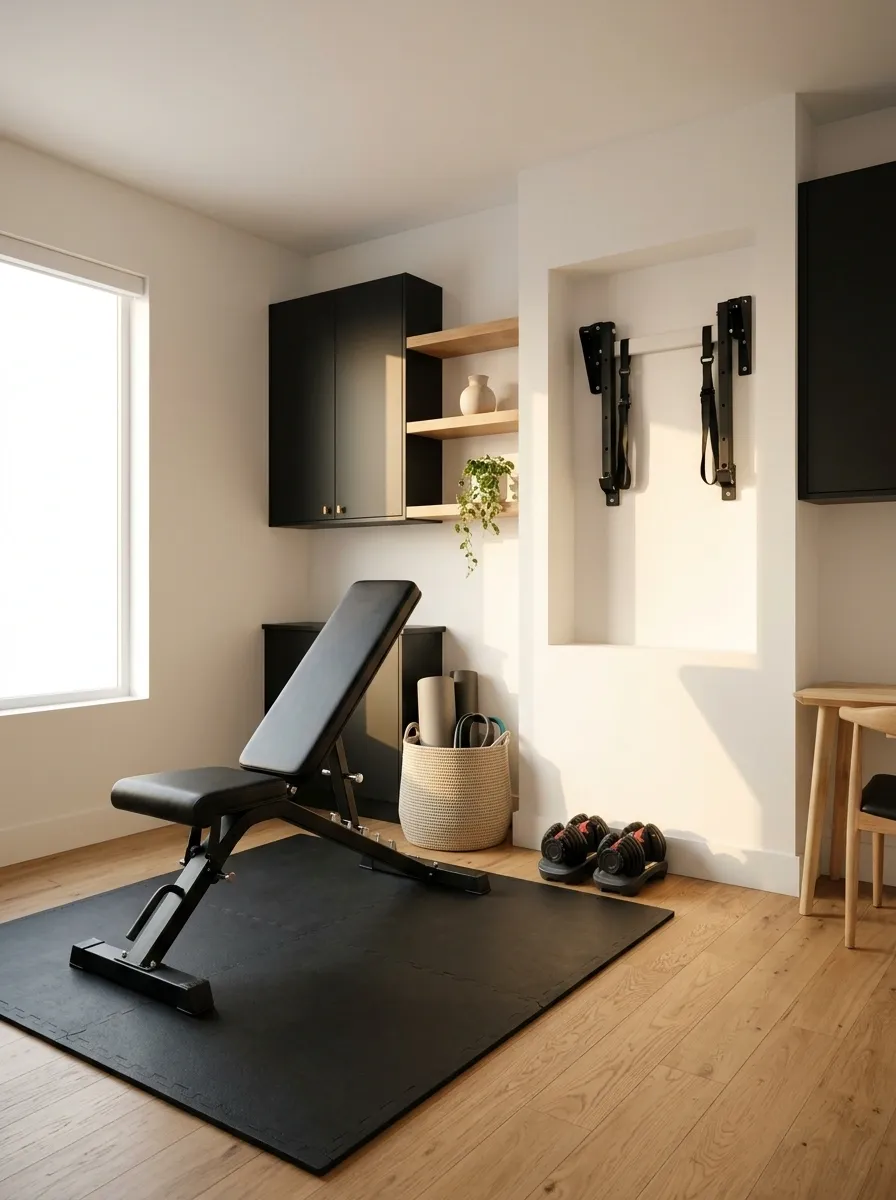
A foldable bench can make a small spare room flexible when its stored position is part of the plan. Mark a suitable parking bay along the wall, keep accessories in closed storage, and leave enough floor for the bench’s full use.
Check the product’s storage instructions, stability, and handling before deciding it can simply lean anywhere. The room’s budget advantage comes from sharing space, not from buying equipment you dread unfolding. Keep the reset sequence short:
- Return accessories.
- Store the bench as intended.
- Leave the room ready for its other use.
Bench fully opened and in use.
Stored as the manufacturer intends.
A Paint-Zoned Gym in a Shared Utility Room
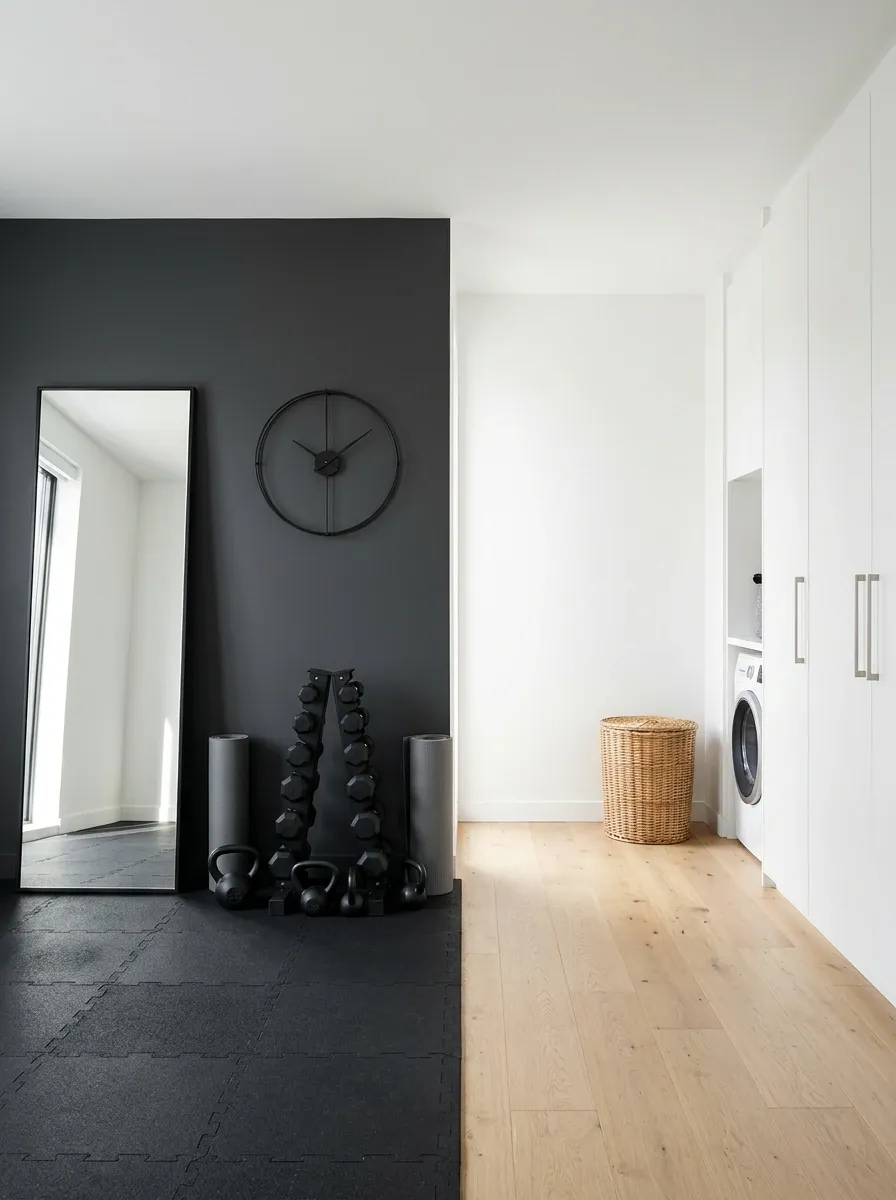
A deliberate wall color and a suitable floor area can define training within a shared room without building a partition. Use closed storage for the other function and keep the gym equipment grouped along one edge.
The paint marks a visual boundary; it doesn’t provide physical separation from hazards, noise, or moving doors. Plan those separately. Keep the active area clear in its real working state, not only after everything else is temporarily removed. A budget finish can look decisive when its boundaries follow actual use rather than an arbitrary rectangle chosen because tape was available.
A Resistance-Band Station With Purpose-Made Anchors
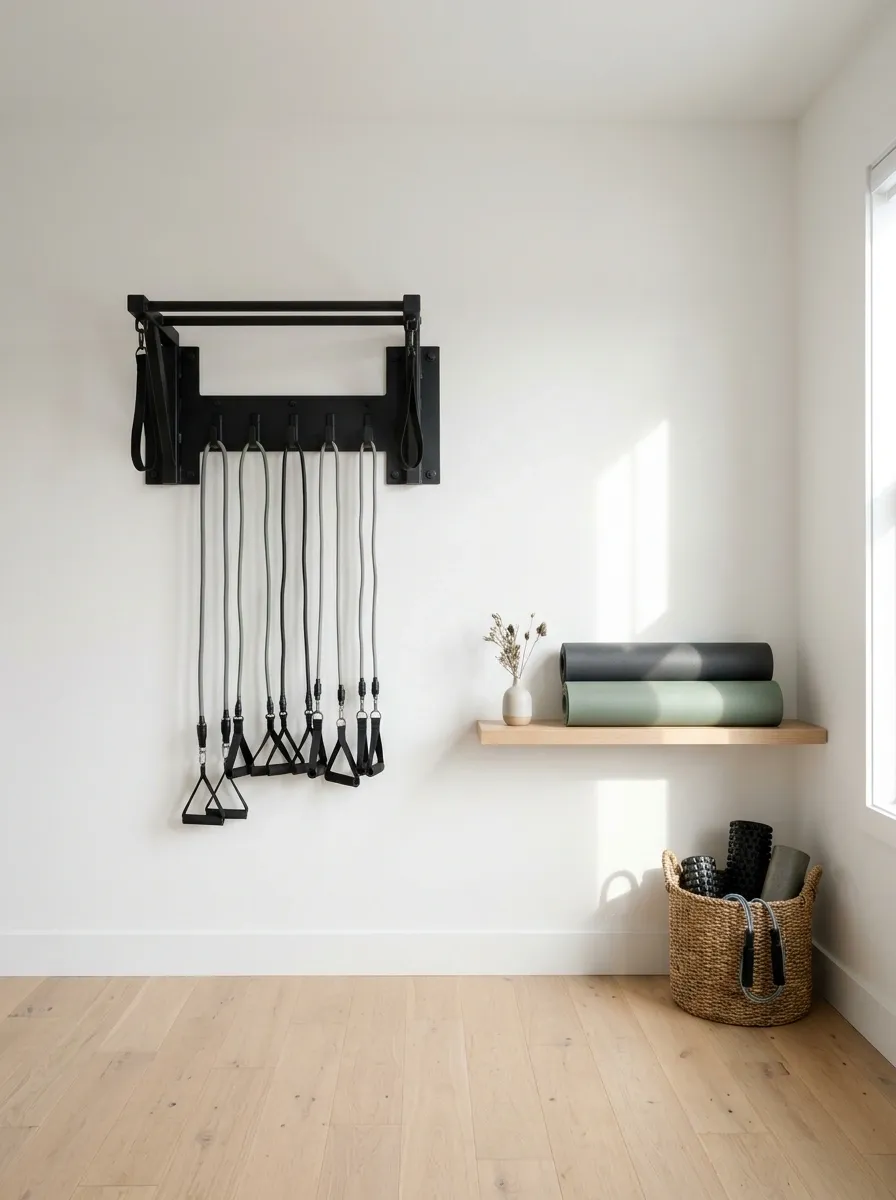
A compact band-training setup can use purpose-made anchors suited to the chosen system, with light accessory storage and a clear floor area. Plain walls and good lighting give the room enough structure without bulky furniture.
Follow the equipment and anchor instructions, including mounting and loading requirements. A decorative hook is not an exercise anchor just because both attach to a wall. Keep the band path clear of furniture and fragile surfaces. The DIY contribution can be organizing the room and accessory storage while appropriate hardware handles the actual training loads.
Accessory hook ≠ training anchor. Specify the load-bearing system before drawing the storage wall.
An Open-Shelf Studio for Light Movement Accessories
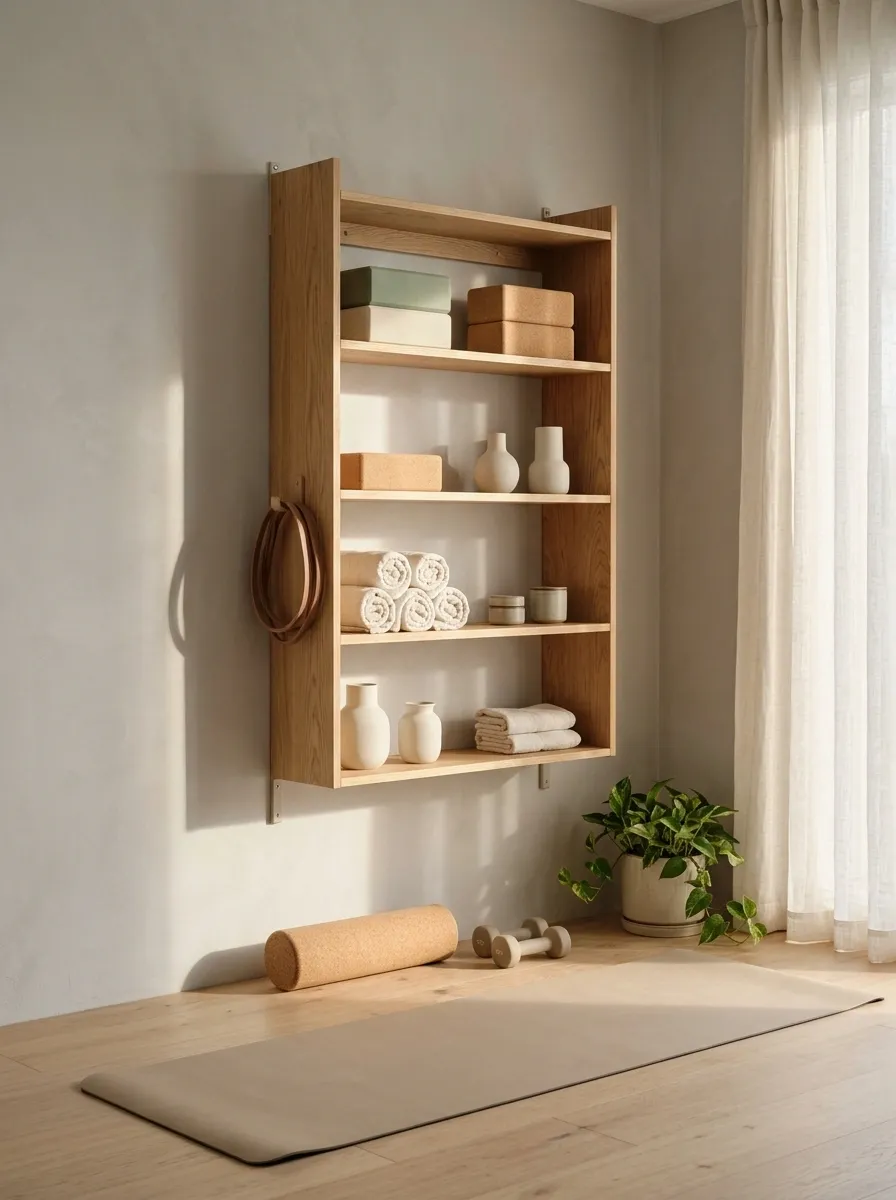
Open shelves can hold blocks, folded towels, and light accessories beside a plain mat area. Use a consistent container style and leave a few gaps so the shelves remain easy to read.
This is useful for a room with a modest equipment set, not a growing collection of heavy gear. Secure the shelves appropriately and keep their projection out of the movement area. Choose a wall color that makes the stored items feel related without requiring everything to match. The shelf can be useful and attractive without becoming a carefully arranged museum of unopened fitness intentions.
Keep the items used together near each other, with enough hand space to take them out quickly.
A Walkway-Free Cardio Room With One Main Machine
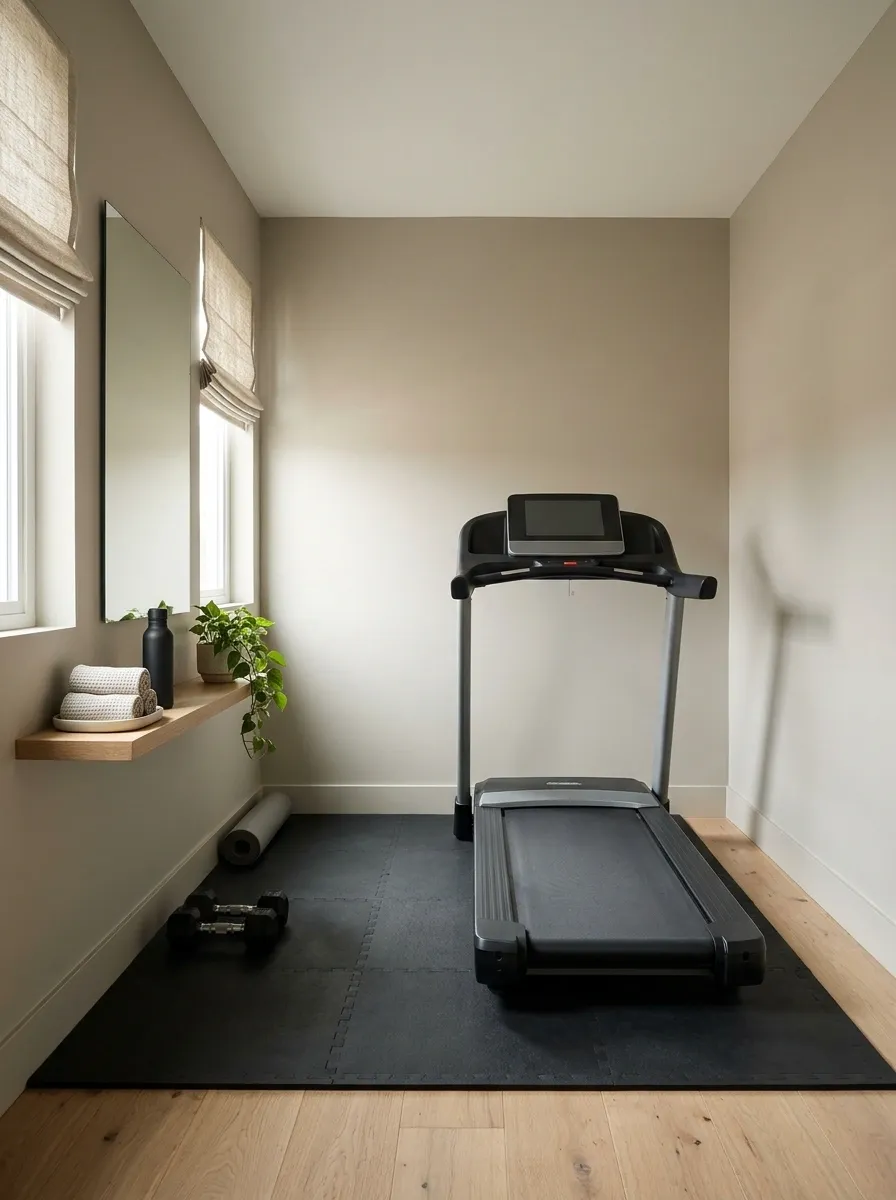
Give a small room one main cardio machine and enough space to use it according to its instructions. Keep accessories on a modest shelf, use suitable floor protection, and choose a screen position only after the equipment is placed.
The cheapest machine is poor value if its working clearances don’t fit. Don’t spend the remaining room budget trying to disguise that mistake. A one-machine setup can feel complete with lighting, ventilation, and a useful towel position. The floor around it is part of the gym, not surplus space waiting for the next discounted piece of equipment.
Budget for the full installation.
A Home Office That Opens Into a Mat Studio
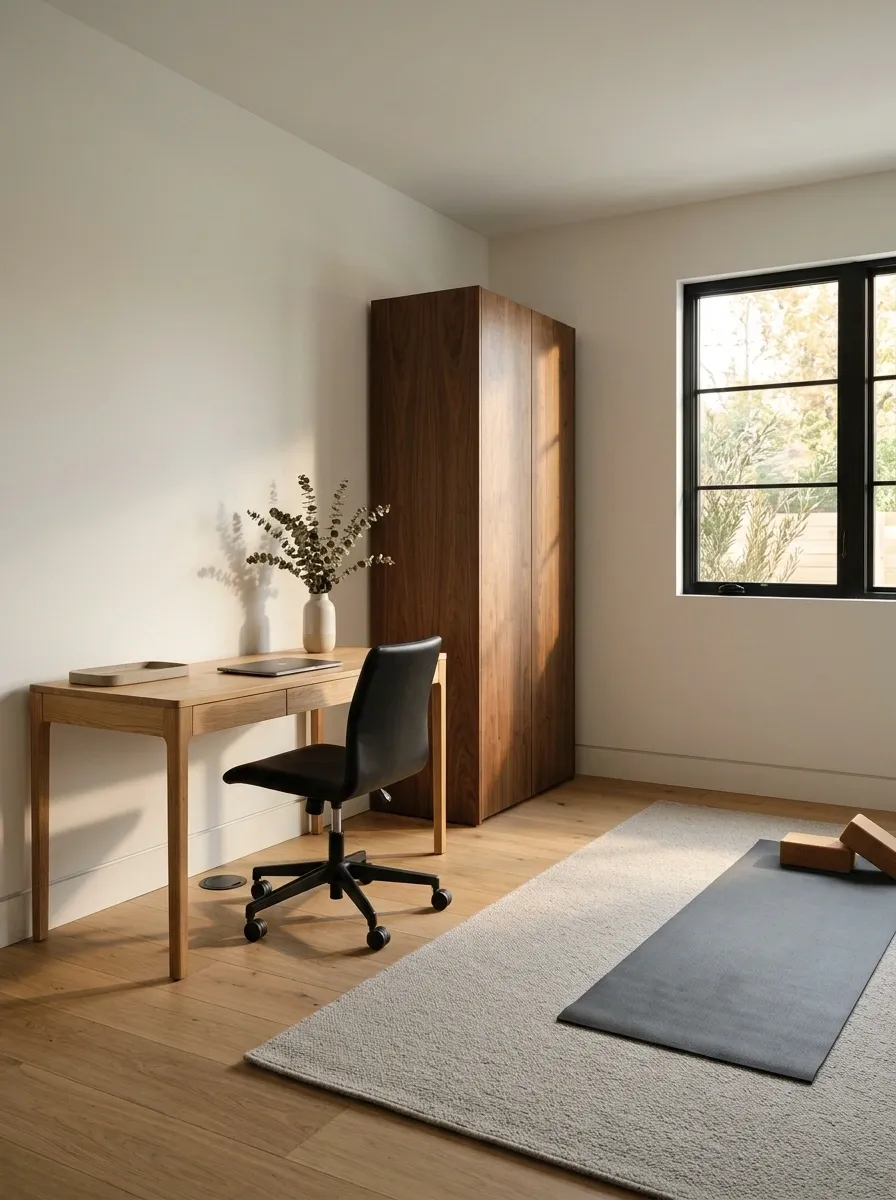
A home office can support a mat-based training area when the desk chair has a proper parking position and cables stay contained. Keep a closed accessory cabinet beside the desk, with plain walls and a suitable exercise surface available when needed.
Work through the changeover without unplugging everything or dragging heavy furniture. If the reset is irritating, simplify it before buying more equipment. A shared room should switch purpose through a few deliberate actions. It shouldn’t require the emotional preparation normally reserved for moving house. The desk can remain visible; the room doesn’t need to pretend it has only one job.
Those actions should open the exercise area without dismantling the workstation.
A Simple Strength Room With Secondhand Storage
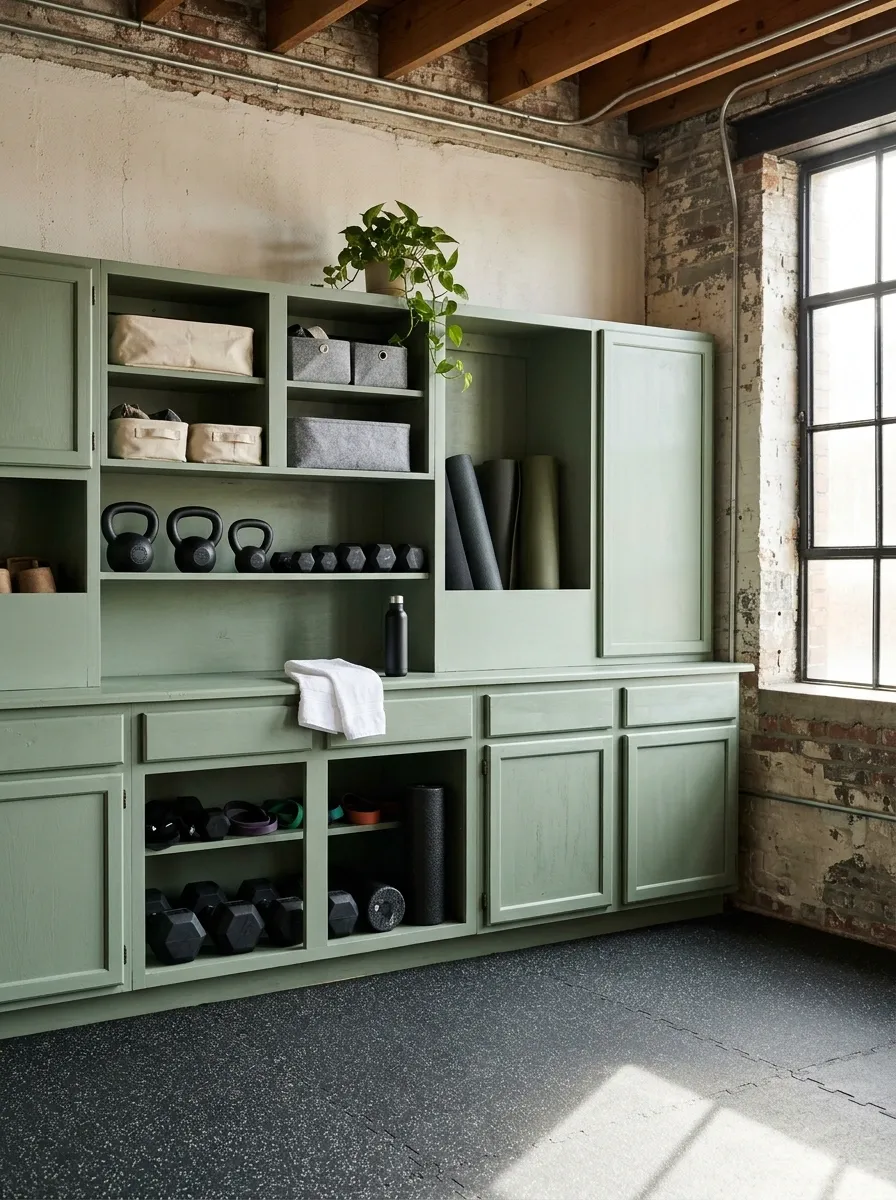
Sound secondhand storage can make a strength room feel finished around properly selected exercise equipment. Use consistent paint or matching containers to connect the storage pieces, keeping the active floor and equipment access clear.
Inspect condition, stability, and capacity before assigning gym contents. Buying used doesn’t excuse ignoring the furniture’s actual limits. Prioritize the storage that reduces daily friction: a place for accessories, a dry towel, and equipment that won’t roll into the route. A matching wall of cabinets can wait until the room has demonstrated a genuine need for one.
Condition, stability, and capacity.
Finish, containers, and visual order.
An Alcove Gym With a Curtain for Light Equipment
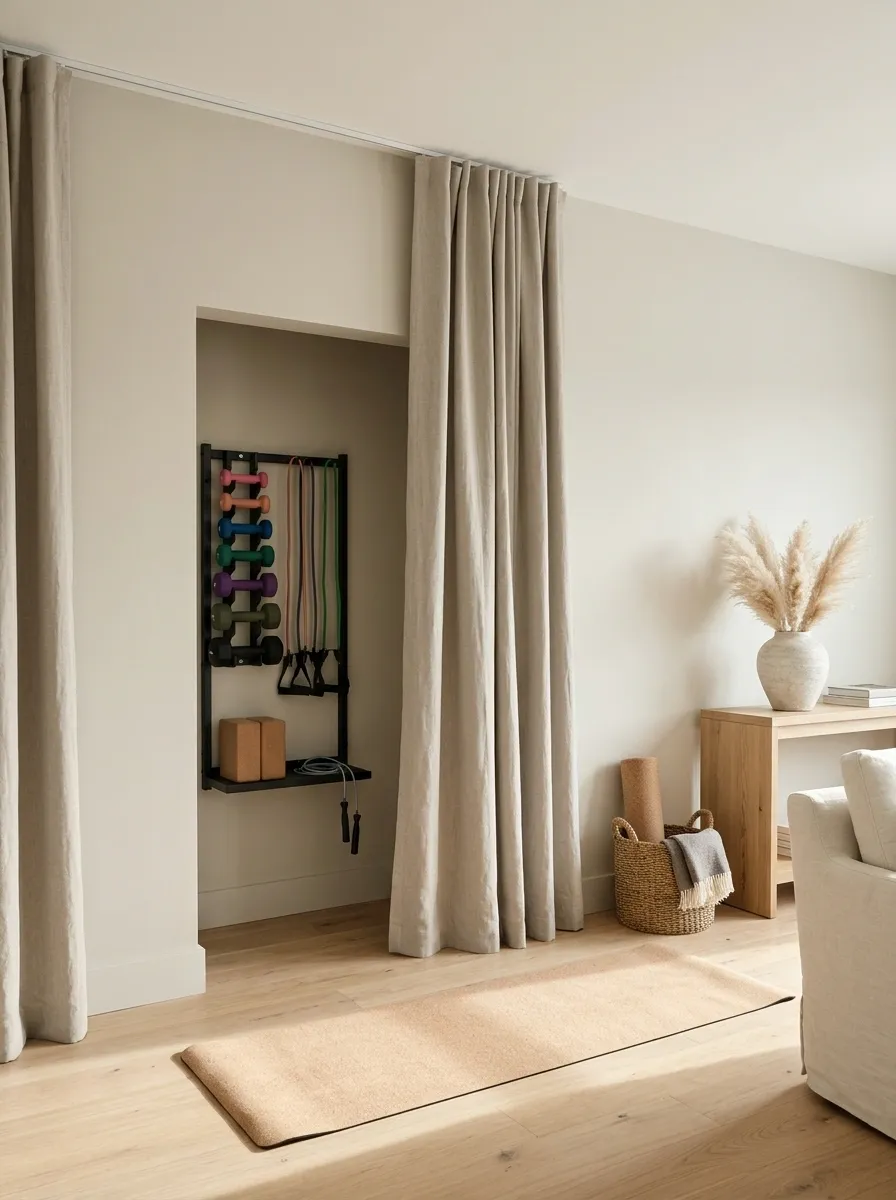
A shallow alcove can hold a mat and light accessories behind a simple curtain, with the exercise area opening into the room. Use a plain fabric related to the wall so the stored setup doesn’t dominate when closed.
Keep the curtain clear of equipment, ventilation, and heat sources. It conceals storage; it does not separate a hazardous training area from the rest of the room. Choose this approach for a modest setup with a manageable reset. If the alcove is crammed to the curtain line, reduce the contents rather than buying more fabric to contain the optimism.
The fabric needs a parking position that doesn’t cover the equipment you’re trying to reach.
A Family Room With a Dedicated Exercise Cabinet
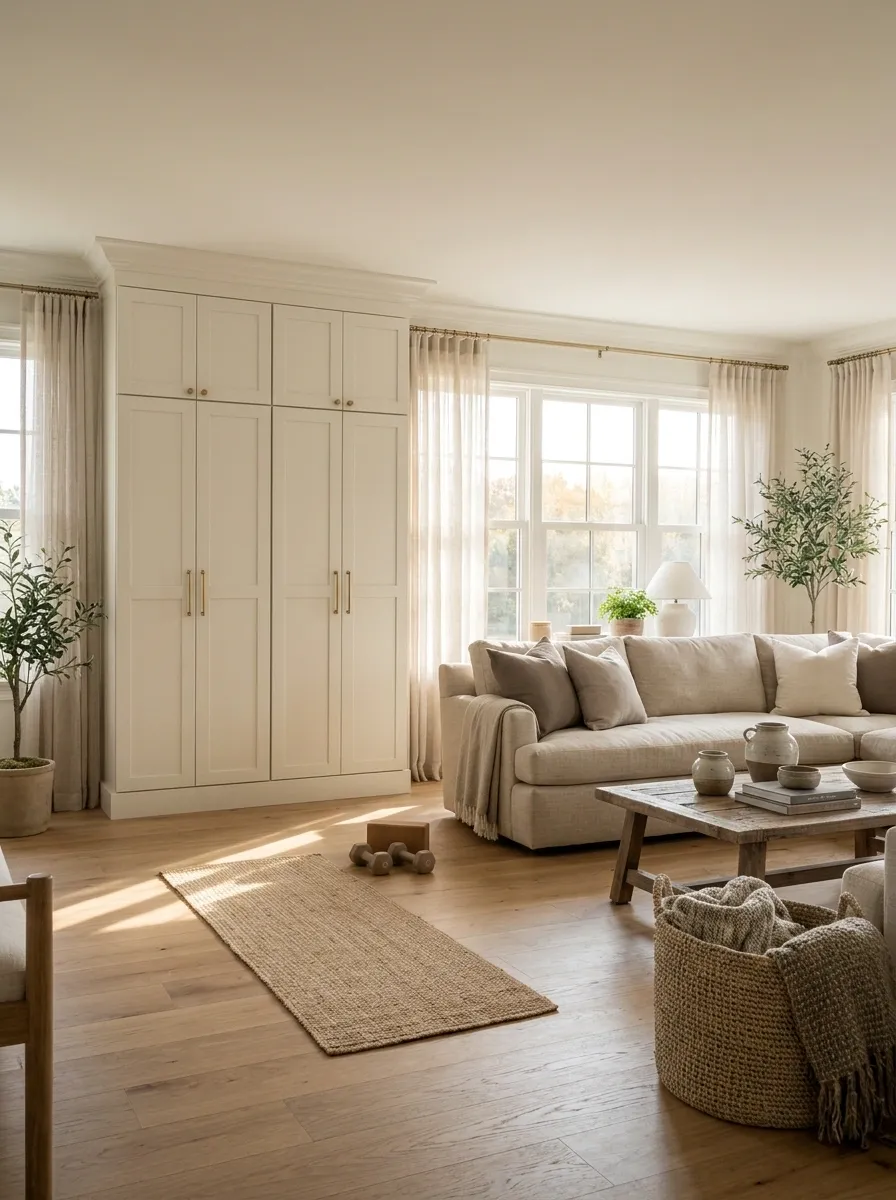
A family room can accommodate training with one closed cabinet for suitable compact equipment and a permanently planned clear floor area. Keep the cabinet finish related to the existing furniture so the gym doesn’t visually annex the room.
The shared use needs agreement, not just storage. Decide when the space is available and keep toys, cables, and loose objects out of the exercise area. Check that the cabinet is suitable for its contents and secure it appropriately. An inexpensive setup is easier to maintain when everyone knows where it begins and where the ordinary room resumes.
What gets moved before training?
If the answer includes most of the room, choose a smaller activity setup or another location.
A Windowless Gym With Better Light and Closed Storage
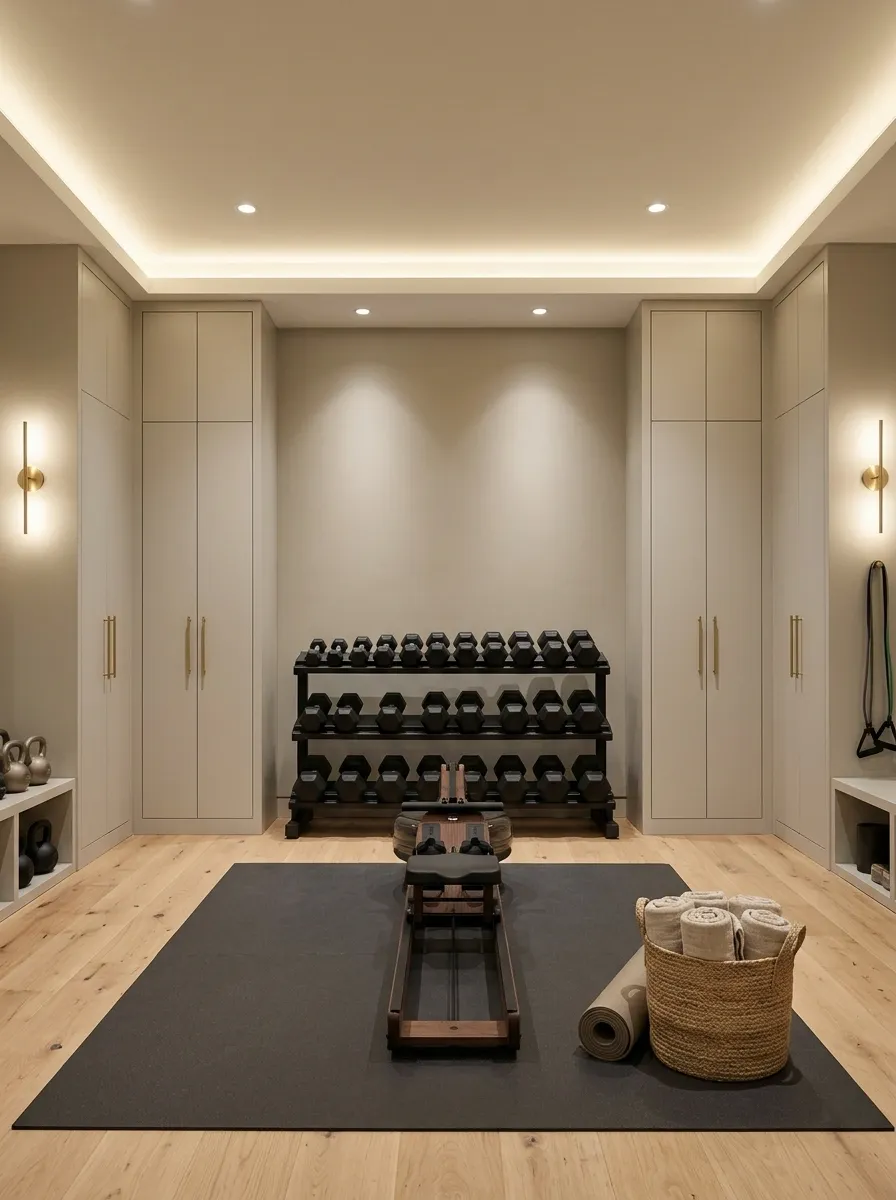
A windowless room can become more usable through planned lighting, a suitable environment, and clear equipment organization. Use a restrained wall color and closed storage so visual clutter doesn’t make the room feel smaller.
Assess ventilation and the room’s suitability before treating brightness as the whole solution. Several useful light positions can serve the activity better than one dramatic fitting. Keep the floor visible and avoid filling every wall with mirrors to compensate for the absence of a window. Reflection is not ventilation, however impressively it doubles the apparent number of dumbbells.
Lighting improves visibility. Ventilation manages the room environment. Mirrors don’t replace either.
A Portable Mat Station on a Stable Storage Cart
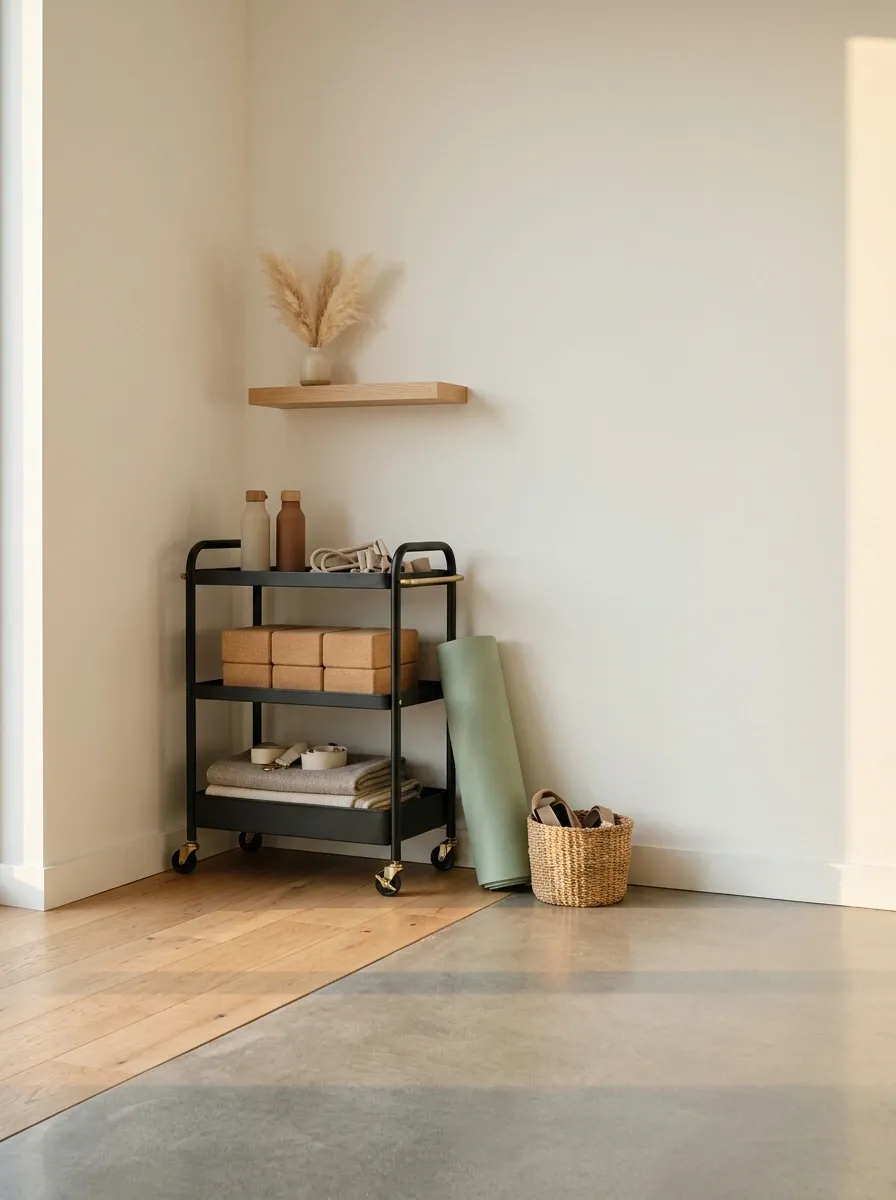
A suitable storage cart can hold light accessories and make a mat-based setup portable within the home. Keep the cart parked securely outside the active area, with a plain wall and clear floor establishing the temporary studio.
Use the cart within its capacity and choose one that stores safely without rolling into the route. Heavy weights belong in storage designed for them, not on a light trolley because the color matched. Portability is useful when it reduces setup effort. If the cart becomes another obstacle to push around before starting, the design has missed its own point.
Mat and movement.
Stable, reachable, and outside the route.
A Phased Gym That Starts With One Finished Zone
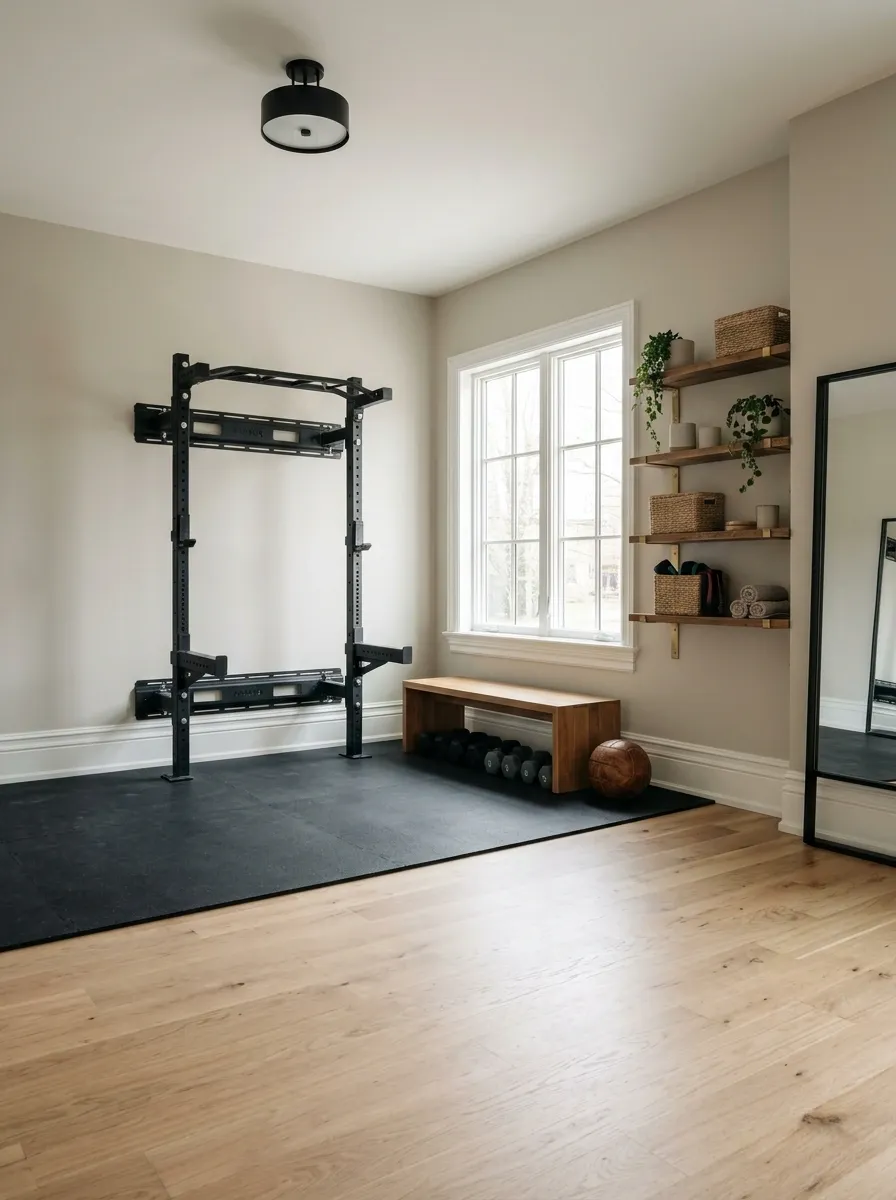
Finish one useful training zone before expanding into the rest of the room. A suitable surface, modest equipment set, clear lighting, and properly planned storage can make the first phase feel complete rather than temporary.
Leave future equipment positions empty until the need is real. That space can remain part of the working floor instead of accumulating speculative purchases. Plan services and major alterations with the future layout in mind, but don’t furnish every possibility immediately. Buying for the workout you actually do is usually more sensible than decorating for the person the equipment advertisement believes you will become.
Leave Something on the Wish List
Do a few ordinary sessions in the finished area before ordering the next piece. Notice what you repeatedly reach for, what stays untouched, and which storage action annoys you enough to avoid it. That is a more useful shopping brief than another perfectly styled gym tour.
Paint can wait. Extra equipment can wait. A room that supports the routine already earns its keep without an illuminated slogan telling it to work harder.
Keep the layout that fits your available floor and your existing kit. The unused money is allowed to remain money. It doesn’t have to become a foam roller rack to prove you took the project seriously