
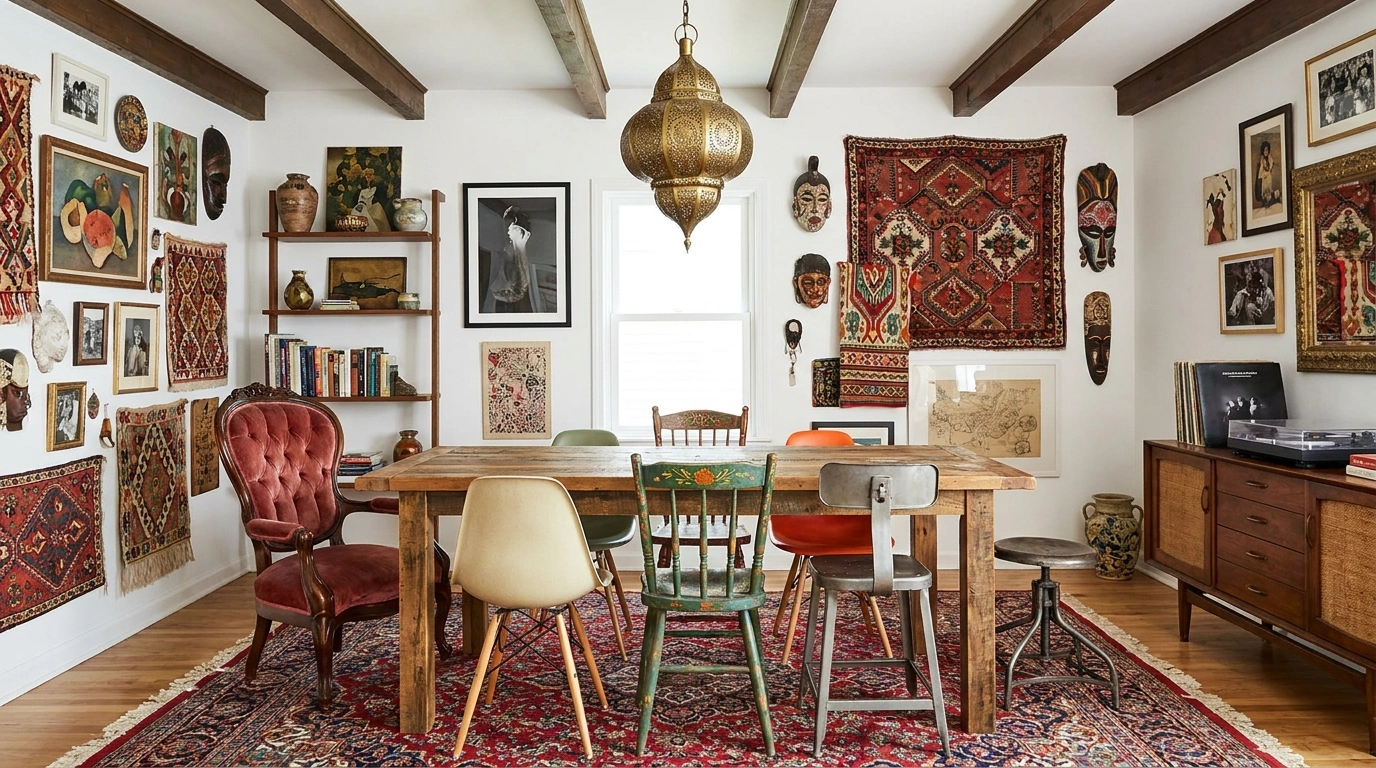
A dining room can have vintage chairs, modern lighting, patterned rugs, colorful artwork, dark wood, unusual ceramics, and still somehow look like everything was purchased during one mildly confusing shopping trip.
That’s the tricky part of eclectic design. The goal isn’t to make every piece different. It’s to make different pieces look like they belong in the same room.
That usually comes down to the big picture: the relationship between the furniture, architecture, colors, materials, lighting, artwork, and empty space. A beautiful chair by itself doesn’t tell you much. Seeing that chair inside a finished composition tells you almost everything.
Because eclectic shouldn’t mean, “Put everything interesting in one room and hope for character.”
Eclectic Dining Room Ideas
Eclectic Dining Room With Vibrant Seating and Modern Art
A simple wooden table anchors this bright dining room, surrounded by an unexpected mix of colorful chairs, bright yellow pendant lights, abstract wall art, and lush trailing plants. Nothing matches in the traditional sense, which is precisely why the space feels so wonderfully alive.
The diverse seating brings a playful energy to the room, while the matching yellow pendants overhead pull the entire color story together without feeling overly coordinated. Greenery scattered throughout softens the clean white walls and adds an organic layer to the modern setup.
The finished look proves that dining rooms don’t need a single design rulebook to work. Sometimes the best spaces are simply collections of things you actually love, arranged with a little bit of confidence.
Warm White Dining Room With Black Accents and Vintage Objects
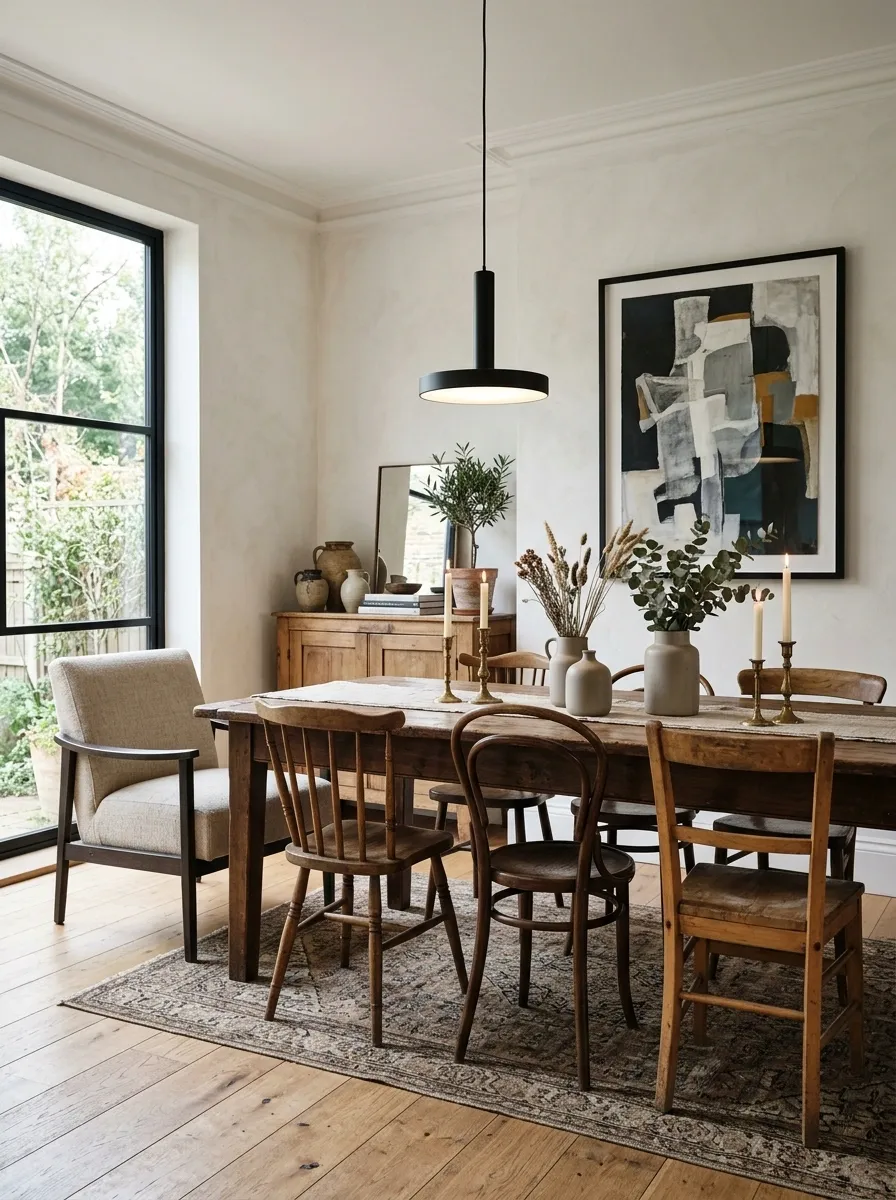
Warm white walls and soft textiles give this dining room a quiet foundation, while black framed artwork, a dark wood table, vintage objects, and mixed seating bring in the eclectic character.
The contrast is carefully repeated instead of scattered. Black appears in the artwork, lighting, and smaller furnishings, creating a visual thread between pieces that don’t share the same era. Vintage objects add irregular shapes and aged surfaces, while the lighter walls stop the darker elements from becoming too dense.
The room feels collected without relying on a rainbow palette. Sometimes eclectic design is less about adding more color and more about giving a few strong elements enough room to be interesting.
Black accents apparently know how to network.
Pink Dining Room With Molded Ceiling and Checkerboard Rug
Soft pink custom cabinetry and a richly detailed green ceiling give this dining room an utterly dramatic envelope, while a sleek round table, metallic futuristic chairs, and a graphic checkerboard rug complete the scene.
The textured green ceiling draws the eye upward, balancing the warm pink walls and preventing the room from feeling like a giant piece of bubblegum. Meanwhile, the playful rug anchors the sleek metallic furniture with a heavy dose of pattern and movement.
The resulting space feels unapologetically bold yet surprisingly refined. It turns out that mixing historic architectural details with ultra-modern furniture is a foolproof recipe for dramatic design.
Burgundy Dining Room With Cream Upholstery and Dark Wood
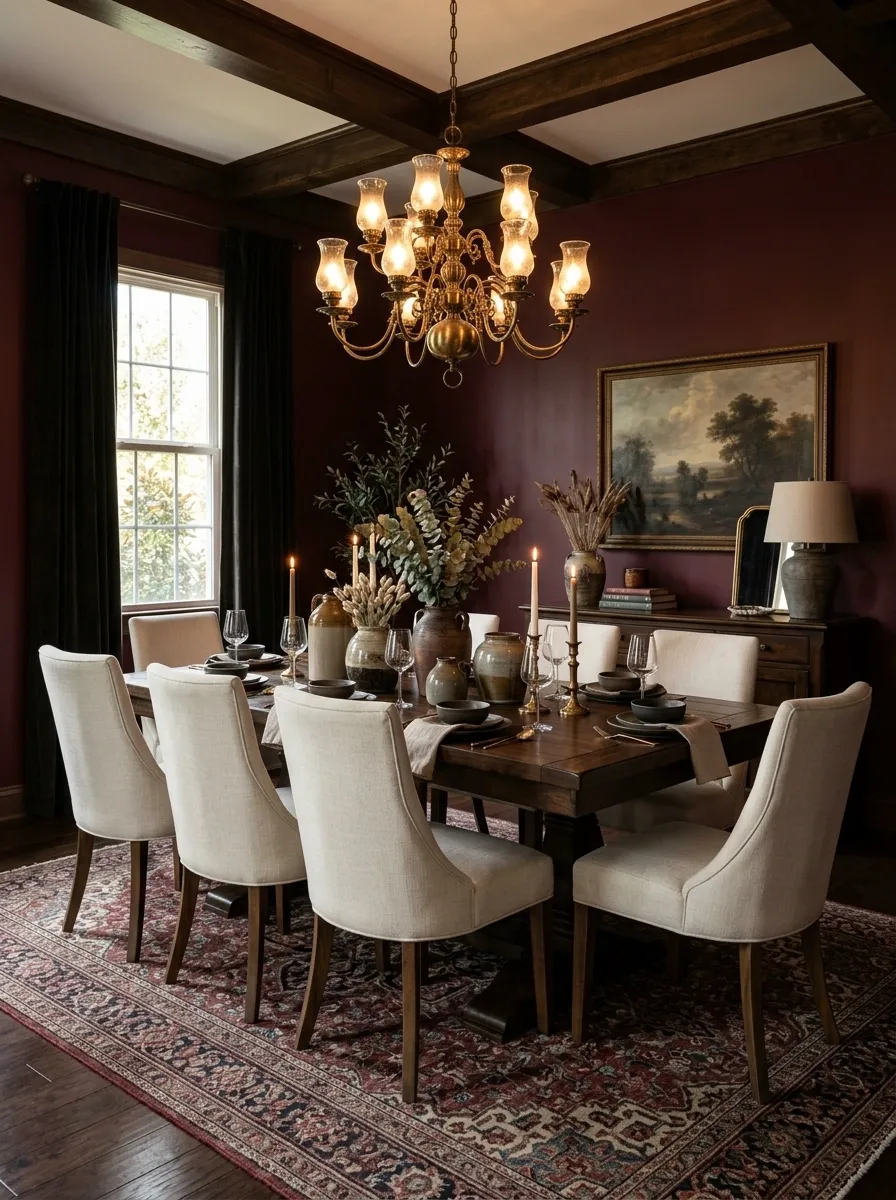
Deep burgundy walls give this dining room a rich backdrop for a dark wood table, cream upholstered chairs, antique brass lighting, and a traditional rug with restrained red accents.
The cream upholstery matters here. Without it, the dark wall and furniture would start forming one very serious block of color. The lighter chairs create breathing room around the table, while the brass fixture catches light overhead and keeps the upper half of the room from disappearing.
The rug repeats the burgundy quietly instead of screaming for attention, which is exactly the right move. Eclectic rooms need connections between their pieces. They don’t need every object yelling, “LOOK, I ALSO MATCH.”
carry the visual weight
interrupt the darkness
Blue Accent Dining Room With Yellow Chairs and Modern Art
A moody deep blue accent wall creates a dramatic backdrop for this eclectic dining room, featuring a dark wood table, bright mustard-yellow upholstered chairs, bold abstract art, and a classic Persian-style rug.
The mustard chairs provide an energetic jolt against the dark blue wall, keeping the moody corner from feeling heavy or closed off. The layered rug introduces warm reds and golds that subtly tie the vibrant seating back to the rest of the room.
The overall composition strikes the rare balance between sophisticated and deeply personal. It is proof that dark walls love a pop of unexpected color just as much as you love a good dinner party.
Eclectic Dining Room With Checkerboard Floor and Soft Upholstery
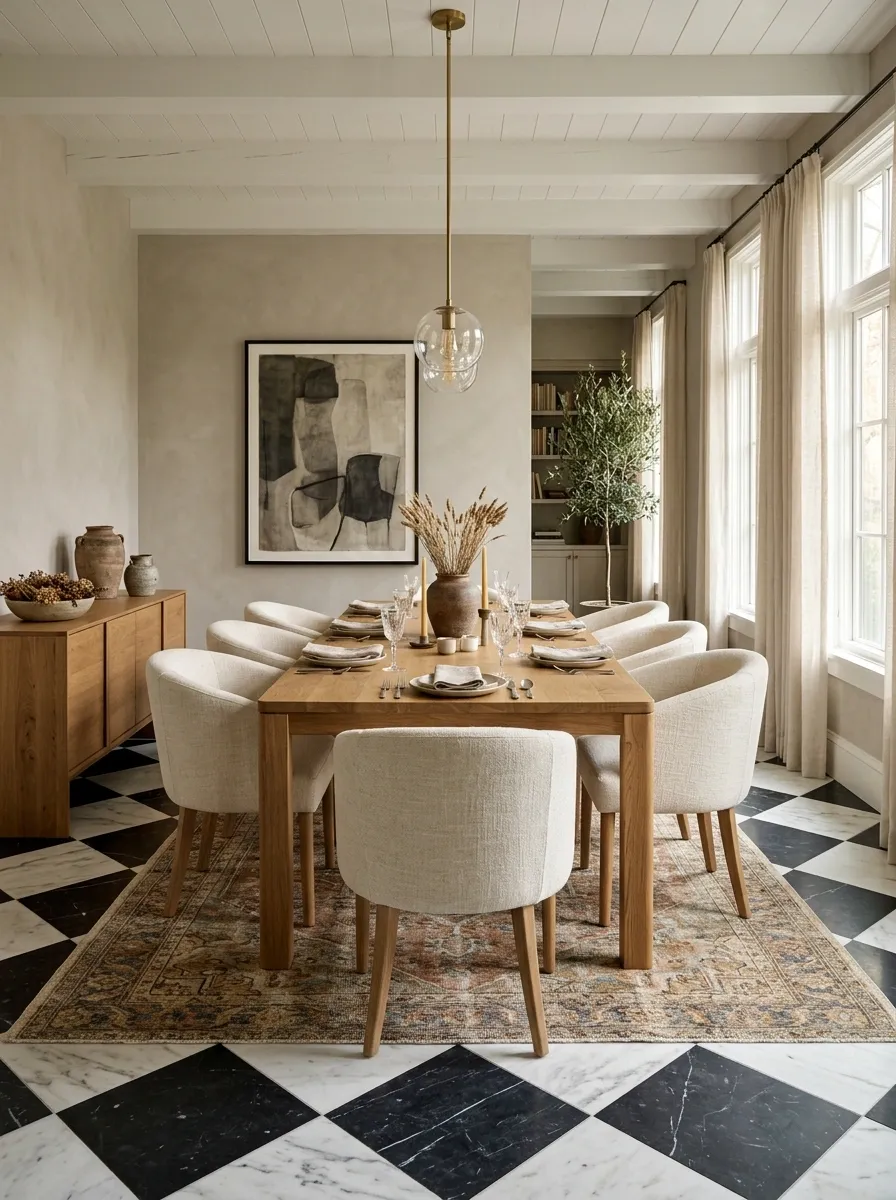
A bold checkerboard floor establishes the geometry of this room before anything else gets a chance. Above it sits a simple wood table, rounded upholstered chairs, soft walls, a vintage-inspired rug, and organic artwork that takes some of the sharpness out of the pattern.
The floor already has strong visual rhythm, so the furniture doesn’t need another complicated shape story. Rounded chairs soften the straight grid, while the rug introduces a quieter pattern that sits between the floor and the table.
The result has energy without looking like a graphic-design assignment exploded under the dining table. That’s the useful lesson here: when one surface is loud, give the rest of the room room to breathe.
Teal Accent Dining Room With Yellow Chairs and Globe Chandelier
Rich teal walls and a striking starburst globe chandelier set an upscale tone for this dining room, outfitted with a dark wood table, mustard-yellow upholstered dining chairs, and bold abstract artwork.
The mustard chairs offer a warm contrast to the cool teal backdrop, ensuring the space stays inviting rather than intimidating. Above, the multi-bulb chandelier adds architectural weight and brilliant illumination to the upper half of the room.
The result is a masterclass in high-contrast color pairing that feels curated rather than chaotic. It is a space designed for long conversations and lingering well past dessert.
Blue Velvet Dining Room With Cascading Globe Chandelier
A cascading globe chandelier makes an unforgettable sculptural statement above this rich dining room, featuring a deep blue table, matching velvet armchairs, striking monochrome art, and decorative red wall accents.
The lush blue velvet chairs create a soft, tactile foundation around the table, while the dramatic lighting fixture acts as functional art overhead. Red architectural elements provide a sharp, intentional pop of contrast that wakes up the entire neutral backdrop.
The finished space feels gallery-worthy yet entirely welcoming. It’s a brilliant reminder that lighting and texture can do half the heavy lifting in a truly memorable room.
Eclectic Scandinavian Dining Room With Playful Color
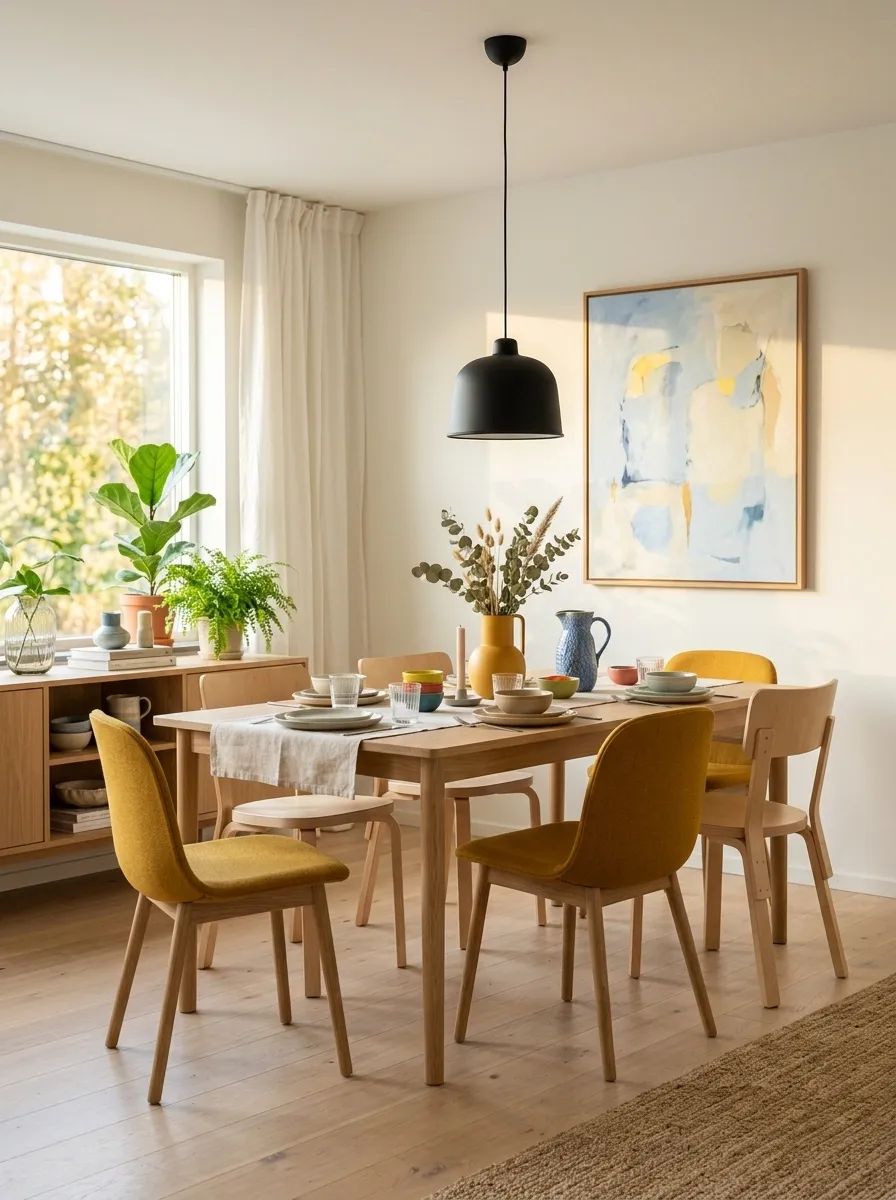
The basic furniture is clean and restrained here, with a simple wood table, lightweight chairs, pale flooring, and uncluttered architecture. Then mustard upholstery, soft blue artwork, colorful ceramics, and a sculptural pendant walk in and refuse to behave neutrally.
That contrast is what keeps the room interesting. Scandinavian simplicity gives the colorful pieces enough space to be expressive without creating visual noise. The warm wood also prevents the cooler blue accents from making the room feel too crisp.
This is a useful kind of eclecticism for anyone who likes personality but still wants some breathing room. The room isn’t maximalist. It just has better hobbies than beige.
Moody Green Dining Room With Vintage Rug and Contemporary Table
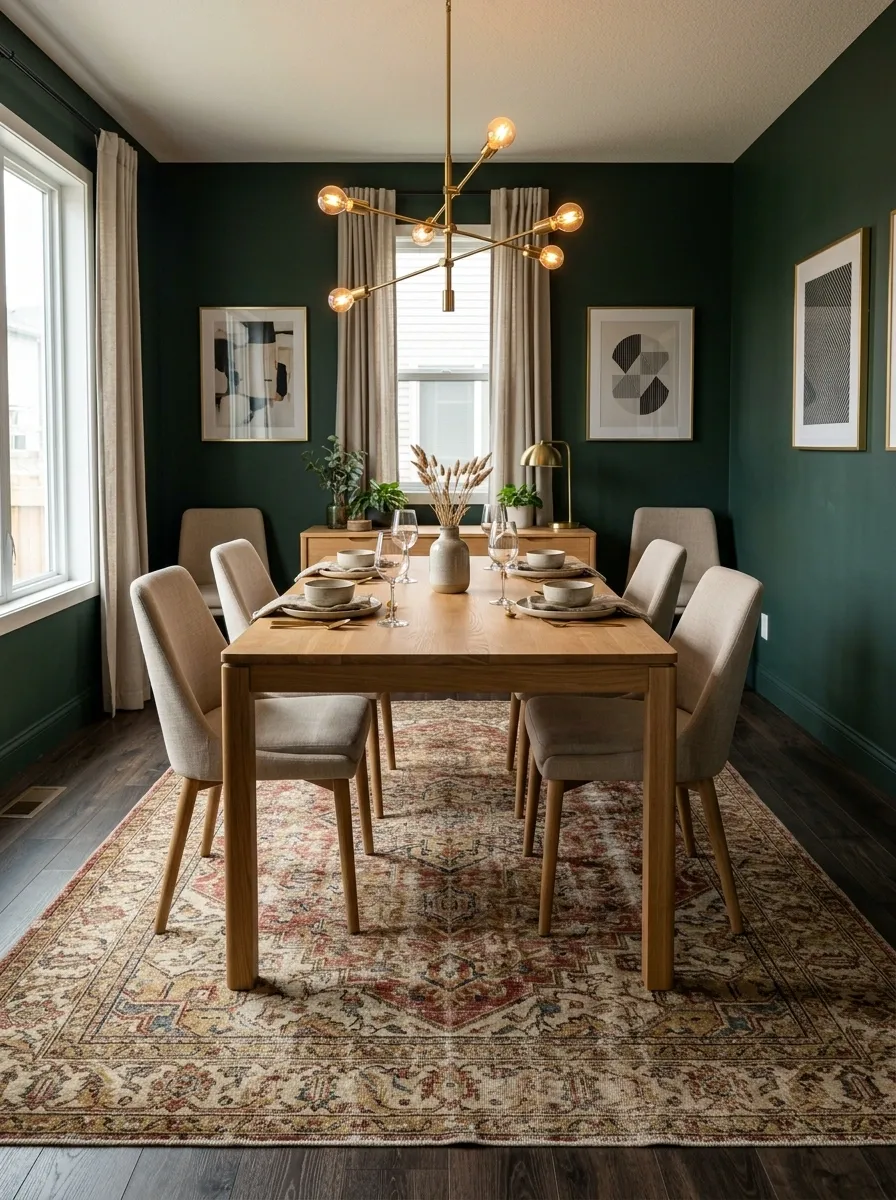
Deep green walls wrap the room in color while a clean-lined contemporary dining table sits over a traditional vintage rug. Upholstered chairs, modern artwork, and warm lighting create a conversation between old and new without either side dominating.
The table has enough visual simplicity to sit comfortably on the detailed rug. The green backdrop then acts almost like a gallery wall for the furniture, making the warm wood and textile patterns stand out.
The trick here is resisting the temptation to add another dozen decorative moments. The room already has architecture, pattern, texture, and contrast working together. More would be less.
Yes, there is such a thing as too much eclectic. The room is allowed to leave one inch of wall unbothered.
Curved Eclectic Dining Room With Graphic Artwork
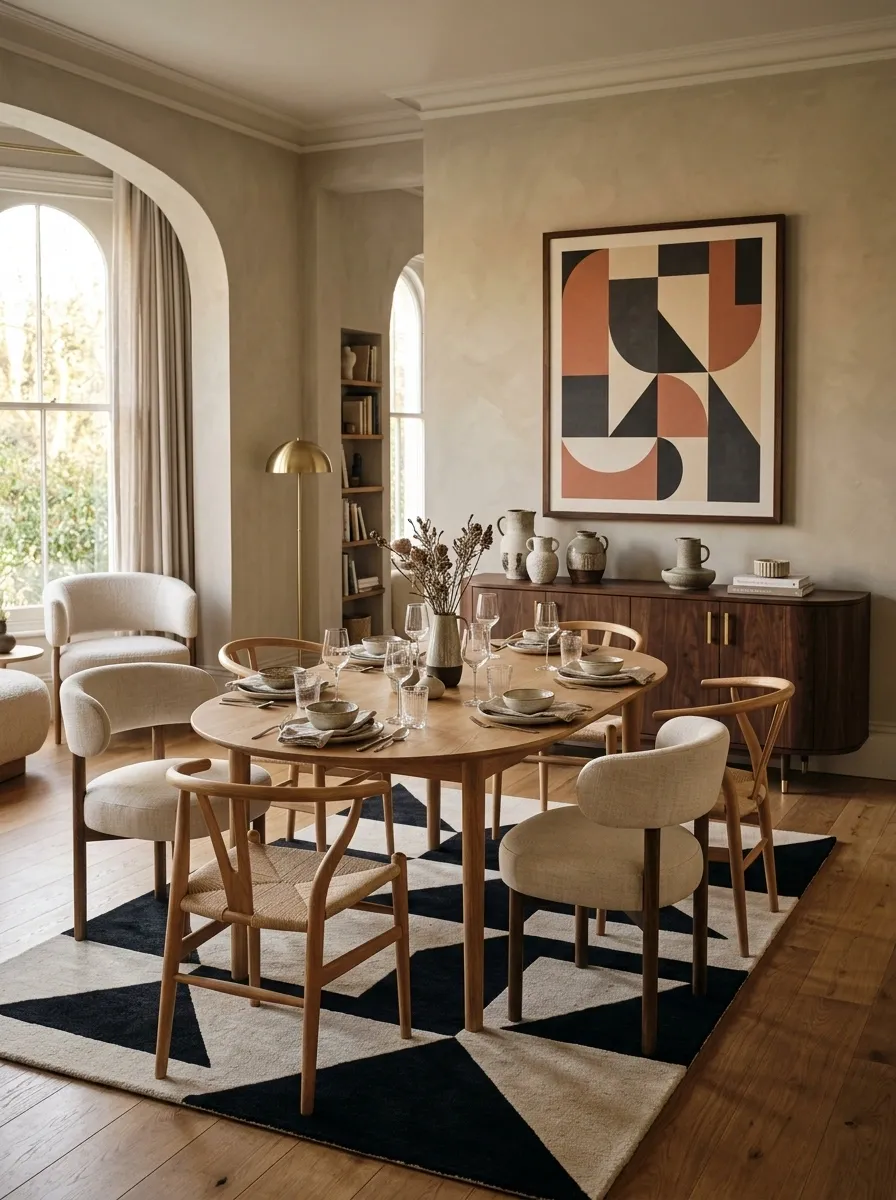
An oval dining table, rounded chairs, a curved sideboard, and a large geometric artwork give this dining room one clear visual language: soft shapes with enough structure to keep things from getting floppy.
The interesting part is that the furniture doesn’t necessarily belong to one era. The repeated curves do the connecting instead. The rug introduces a more angular pattern beneath the table, creating a useful contrast rather than matching every shape in sight.
That balance keeps the room expressive without making it feel overly themed. Curves appear often enough to become intentional, but not so often that the whole room starts looking like it was designed inside a bubble.
Rustic Dining Room With Refined Lighting and Tailored Seating
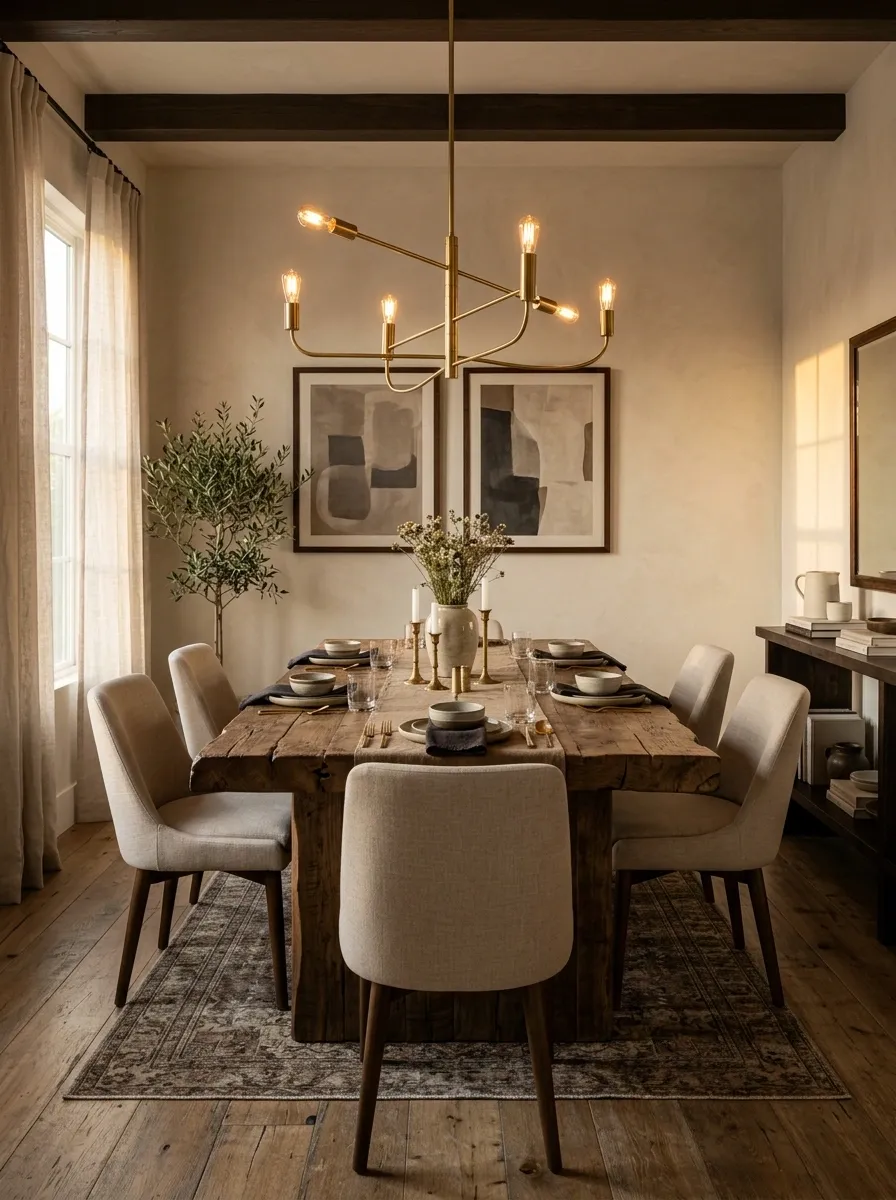
A rough-hewn dining table, aged flooring, tailored upholstered chairs, sophisticated lighting, and restrained artwork create a dining room that feels rustic without falling headfirst into farmhouse territory.
The heavy table brings the room’s raw texture, while the chairs introduce cleaner lines and softer surfaces. Above them, refined lighting adds a polished note that changes the mood after dark. The artwork stays fairly quiet so the contrast between rough wood and tailored upholstery remains the main story.
This is the sort of eclectic room where one rugged piece is enough to give the space character. Add five more “rustic” objects and suddenly the room is auditioning for a barn-themed restaurant.
Eclectic Dining Room With Painted Ceiling and Layered Neutrals
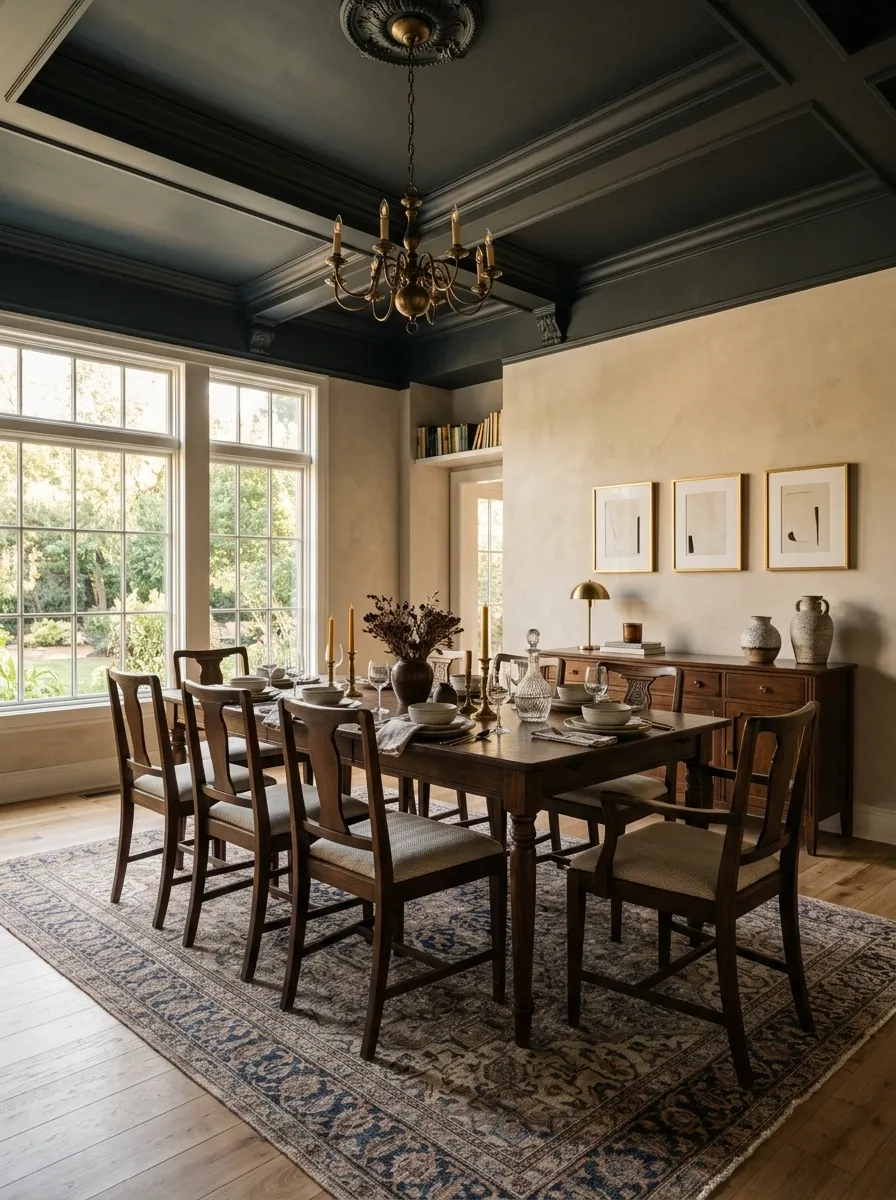
Warm beige walls, a contrasting painted ceiling, dark wood furniture, patterned upholstery, and neutral artwork create a room where the ceiling quietly steals the show.
The walls stay relatively calm, allowing the overhead plane to become an unexpected visual event. Dark wood grounds the lower half of the room, while lighter upholstery keeps the table and chairs from becoming one heavy mass. A patterned rug introduces variation without forcing another strong color into the palette.
This composition is especially effective in rooms with architectural character because the ceiling treatment gives the eye another place to travel. Apparently the fifth wall finally got tired of being ignored.
Jewel-Tone Dining Room With Emerald, Sapphire, and Plum
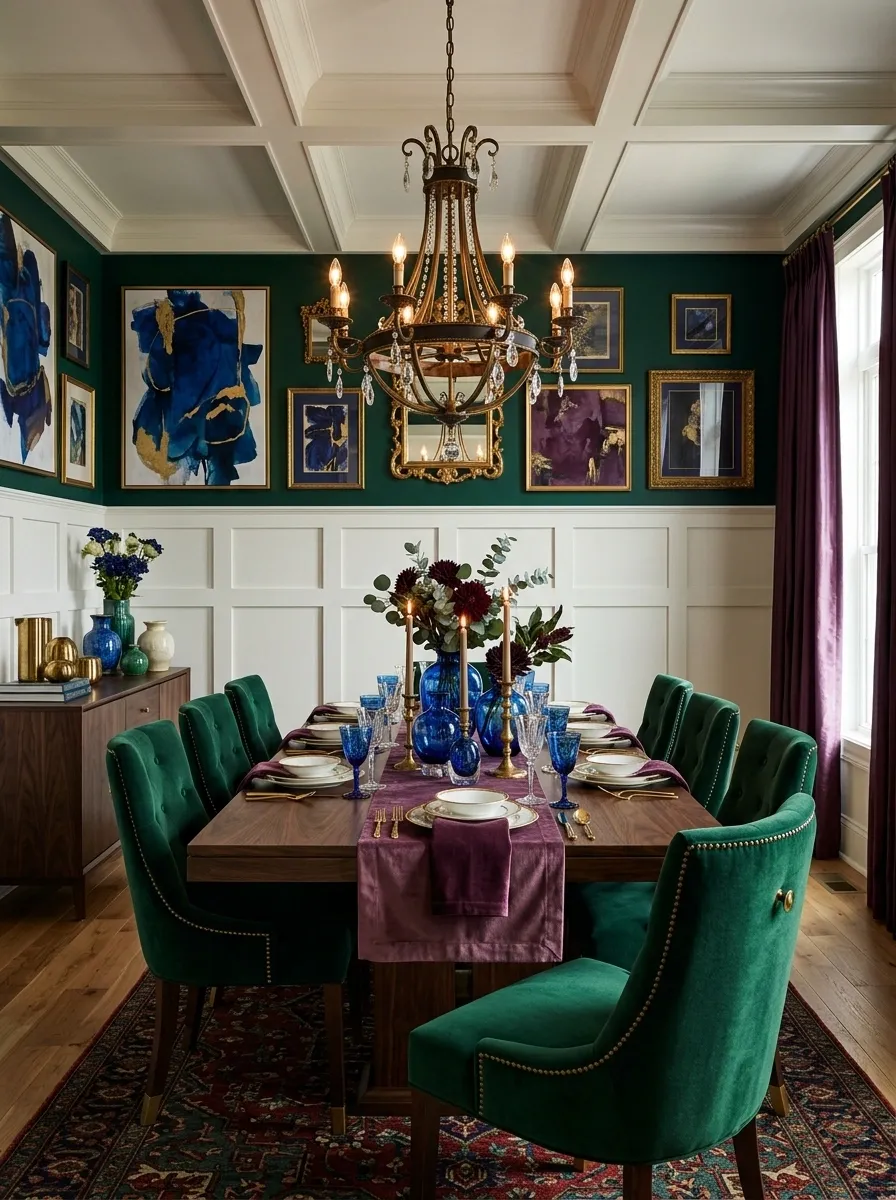
Emerald chairs, sapphire accents, plum-toned textiles, dark wood, antique-style lighting, and a quieter floor give this dining room a rich palette without relying on one hero color.
The key is depth. The jewel tones are similar in intensity, so they can sit together without one looking accidentally louder than the others. Dark wood grounds the room, while lighter architectural surfaces prevent the colors from becoming visually dense from floor to ceiling.
This room is maximal in color, but selective in placement. Saturated shades live in upholstery, art, and textiles while the structure stays comparatively calm.
Three jewel tones can coexist. Fourteen would require a mediator.
main upholstery
artwork and accents
textile depth
Eclectic French-Inspired Dining Room With Modern Accents
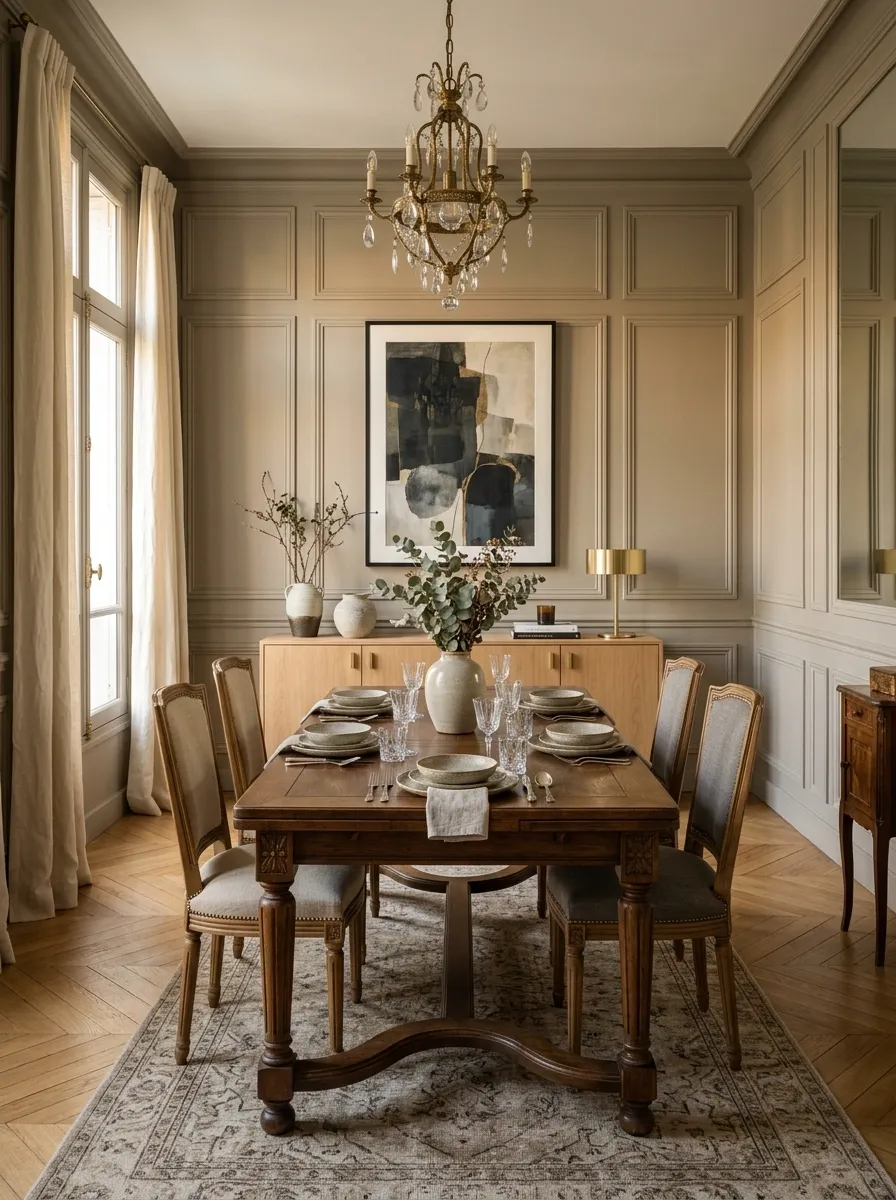
Classic architectural details set the stage here: paneled walls, a carved dining table, vintage-style chairs, linen curtains, and ornate lighting. Then contemporary artwork and a clean-lined console interrupt the formality just enough.
The room works because the traditional architecture remains substantial. The modern pieces don’t have to fight for control, so they can simply provide contrast. A restrained palette of warm neutrals, wood, cream, and muted darker accents also keeps the mixture sophisticated.
The result feels layered rather than period-perfect. That’s important. Eclectic design should borrow character from different eras, not build a museum exhibit and call it dinner.
Small Eclectic Dining Room With Round Table and Statement Wallpaper
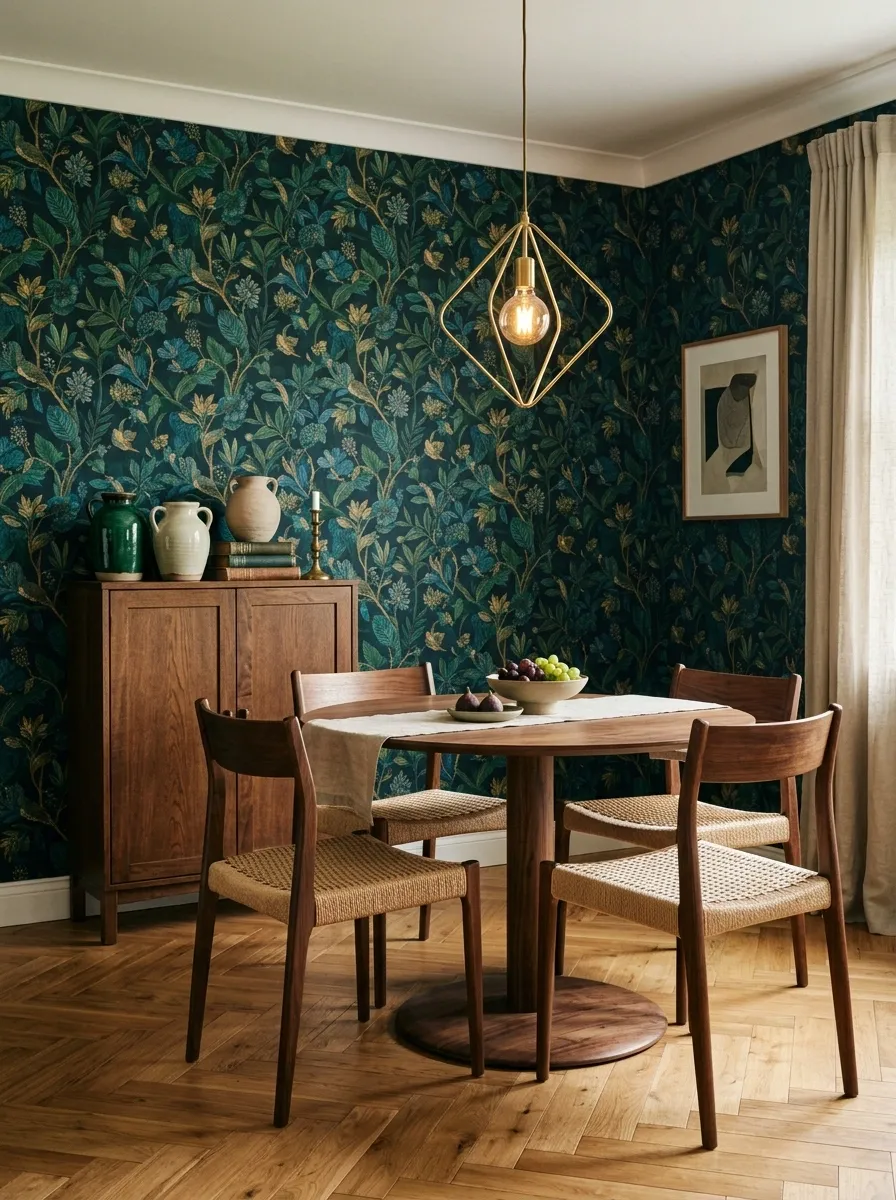
A round pedestal table, bold wallpaper, simple dining chairs, a narrow cabinet, and one sculptural ceiling light turn this compact dining room into a defined little world of its own.
The round table helps the seating feel less rigid in a tight footprint, while the wallpaper gives the walls enough personality that additional artwork isn’t necessary. The narrow cabinet provides storage without adding another bulky visual block, and the pendant pulls attention upward.
The important part is restraint around the wallpaper. Once the walls are doing this much talking, the furniture can stay simple. Otherwise the room starts looking like every object was asked to contribute a sentence.
Art-Focused Eclectic Dining Room With Quiet Furniture
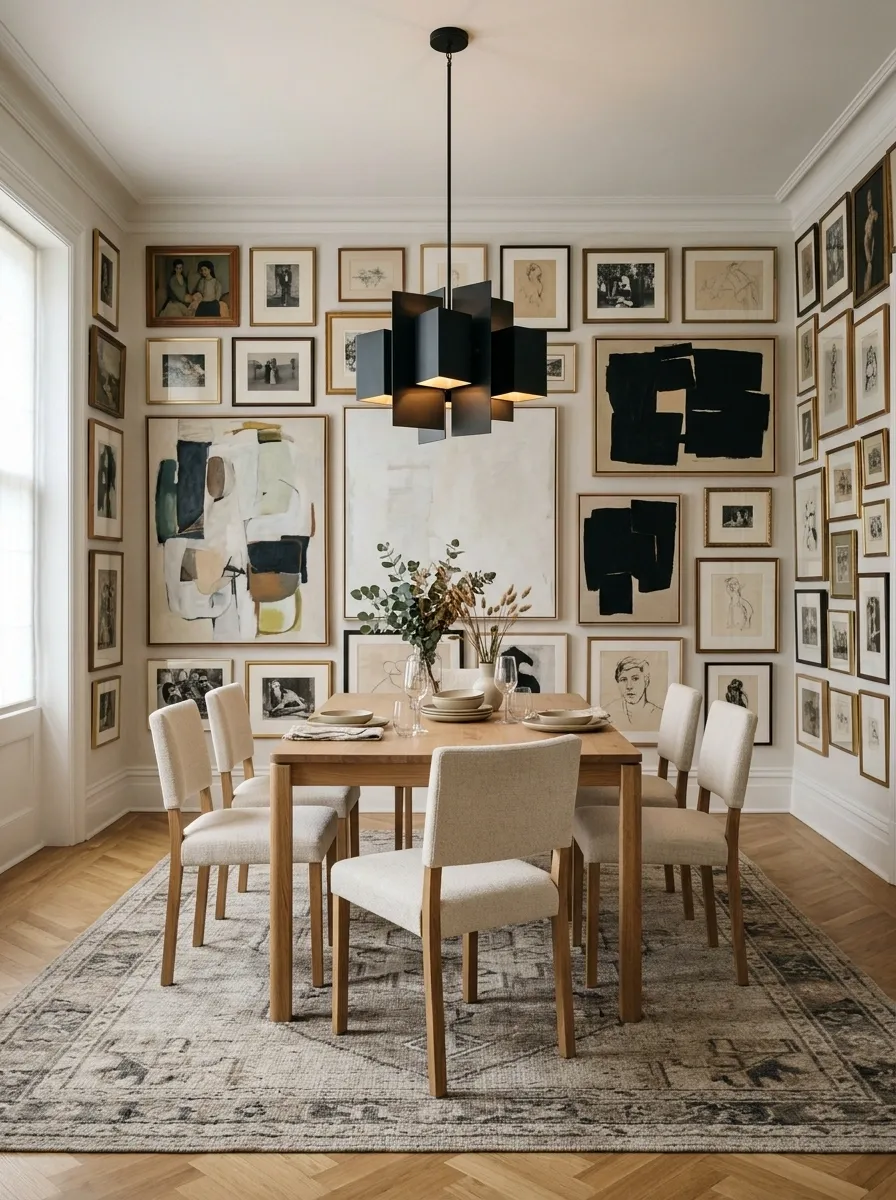
A simple wood dining table, neutral upholstered chairs, sculptural lighting, and a large collection of artwork turn the walls into the real event.
The furniture is deliberately restrained because the artwork needs room to breathe. Large pieces establish the main visual anchors, while smaller frames create a layered perimeter around them. The rug adds pattern underfoot, but its colors stay muted so the wall composition remains dominant.
This approach works especially well when the room already has interesting art worth showing off. Instead of competing with every piece, the furniture creates a calm stage beneath it.
Not every dining room needs to be the main character. Sometimes the walls have already submitted their application.
Eclectic Dining Room With Wood Paneling and Bright Upholstery
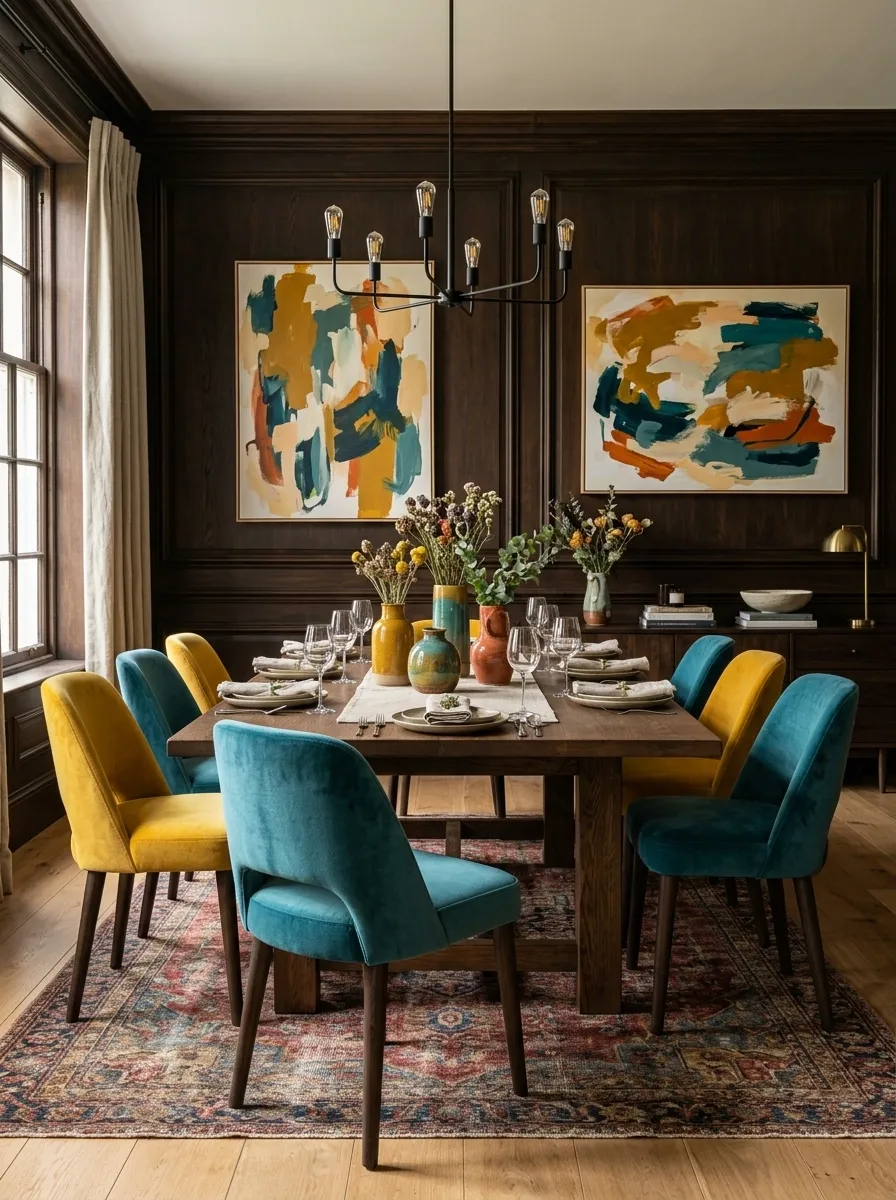
Dark wood paneling gives this dining room a traditional backbone, while bright upholstered chairs, colorful ceramics, contemporary artwork, and modern lighting keep the composition firmly out of the past.
The paneling creates a deep visual field behind the furniture, which makes the upholstery especially effective. Instead of covering every surface with color, the brighter pieces occupy the foreground while the architecture provides the darker backdrop. A modern light fixture reinforces the contrast overhead.
The room feels lively without becoming visually chaotic because the biggest architectural surface stays consistent. That’s the beauty of a strong backdrop. It can make a wildly different group of furniture look like a family.
A very opinionated family, admittedly.
Mediterranean Eclectic Dining Room With Plaster Walls and Patterned Textiles
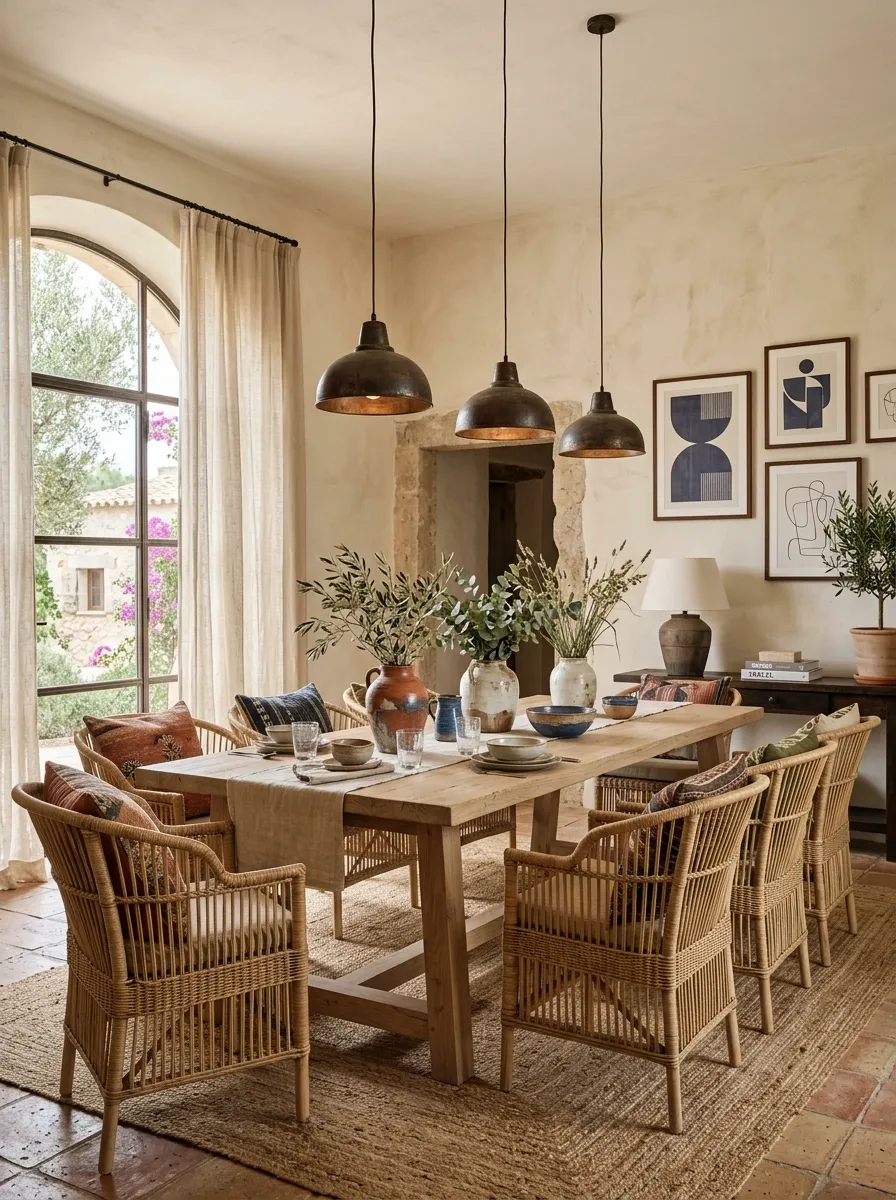
Textured plaster walls, a pale wood table, woven chairs, patterned cushions, rustic ceramics, and aged metal lighting create a Mediterranean-inspired dining room with enough modern restraint to avoid becoming a themed restaurant.
The walls provide texture before any decoration enters the picture. Woven seating keeps the furniture relaxed, while the patterned textiles introduce color in concentrated doses. Handmade-looking ceramics add irregular forms around the table, and aged metal gives the lighting enough contrast against all those warm natural materials.
The contemporary artwork is important because it breaks the historical mood slightly. The room can reference Mediterranean interiors without pretending everyone inside needs to dress like they just wandered out of a postcard.
Eclectic Dining Room With Glass Table and Vintage Chairs
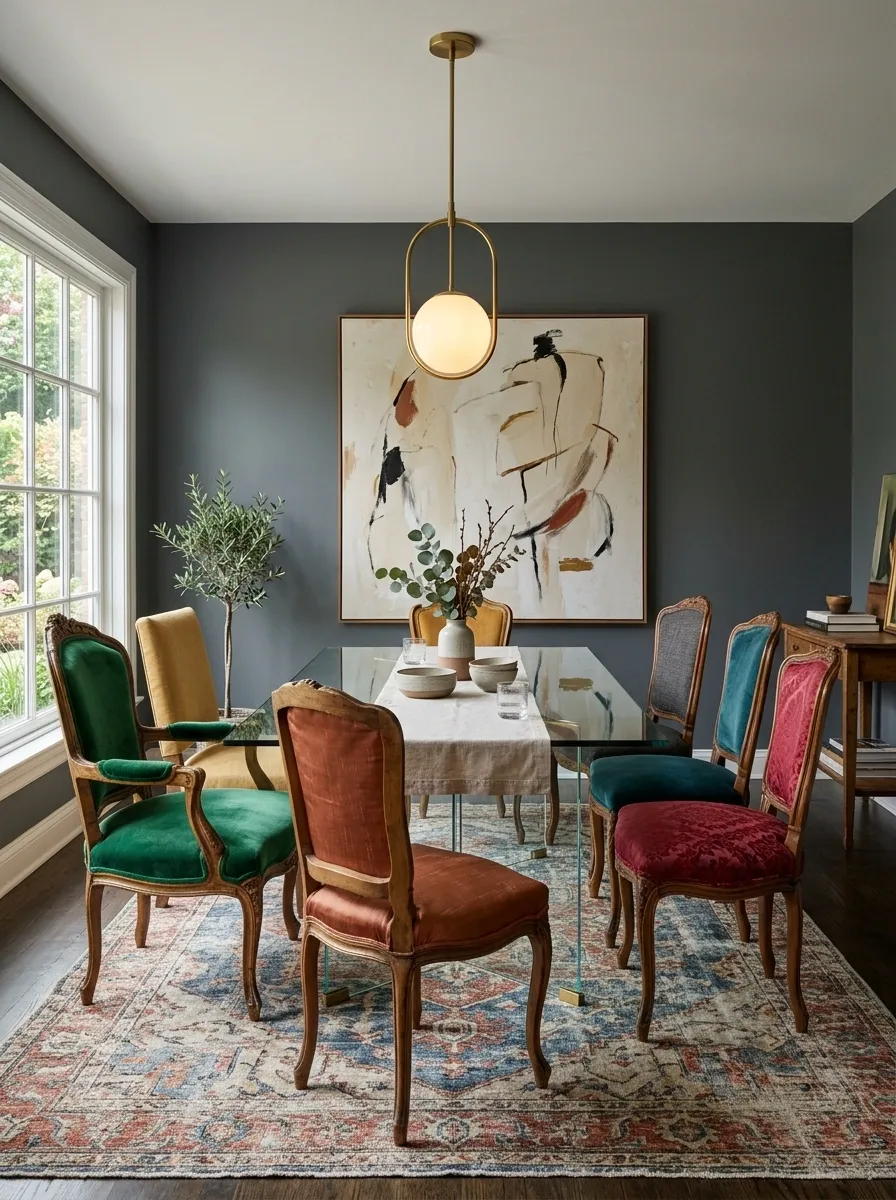
A transparent glass dining table allows a collection of vintage chairs to become the stars of this room. Carved frames, varied upholstery, a richly patterned rug, contemporary artwork, and a simple light fixture create a composition that is full of detail without becoming physically heavy.
The glass top is doing surprisingly important work. Because it visually recedes, the different chair shapes remain visible from across the room. The vintage rug then adds a strong foundation beneath everything, while the clean artwork keeps the room from becoming entirely traditional.
This is a clever direction for a room with beautiful old furniture that might otherwise feel too dense.
The table basically says, “Fine, everyone can be dramatic. I won’t make it worse.”
Warm White Dining Room With Black Accents and Vintage Objects
Warm white walls and soft textiles give this dining room a quiet foundation, while black framed artwork, a dark wood table, vintage objects, and mixed seating bring in the eclectic character.
The contrast is carefully repeated instead of scattered. Black appears in the artwork, lighting, and smaller furnishings, creating a visual thread between pieces that don’t share the same era. Vintage objects add irregular shapes and aged surfaces, while the lighter walls stop the darker elements from becoming too dense.
The room feels collected without relying on a rainbow palette. Sometimes eclectic design is less about adding more color and more about giving a few strong elements enough room to be interesting.
Black accents apparently know how to network.
Eclectic Dining Room With Statement Chandelier and Layered Rugs
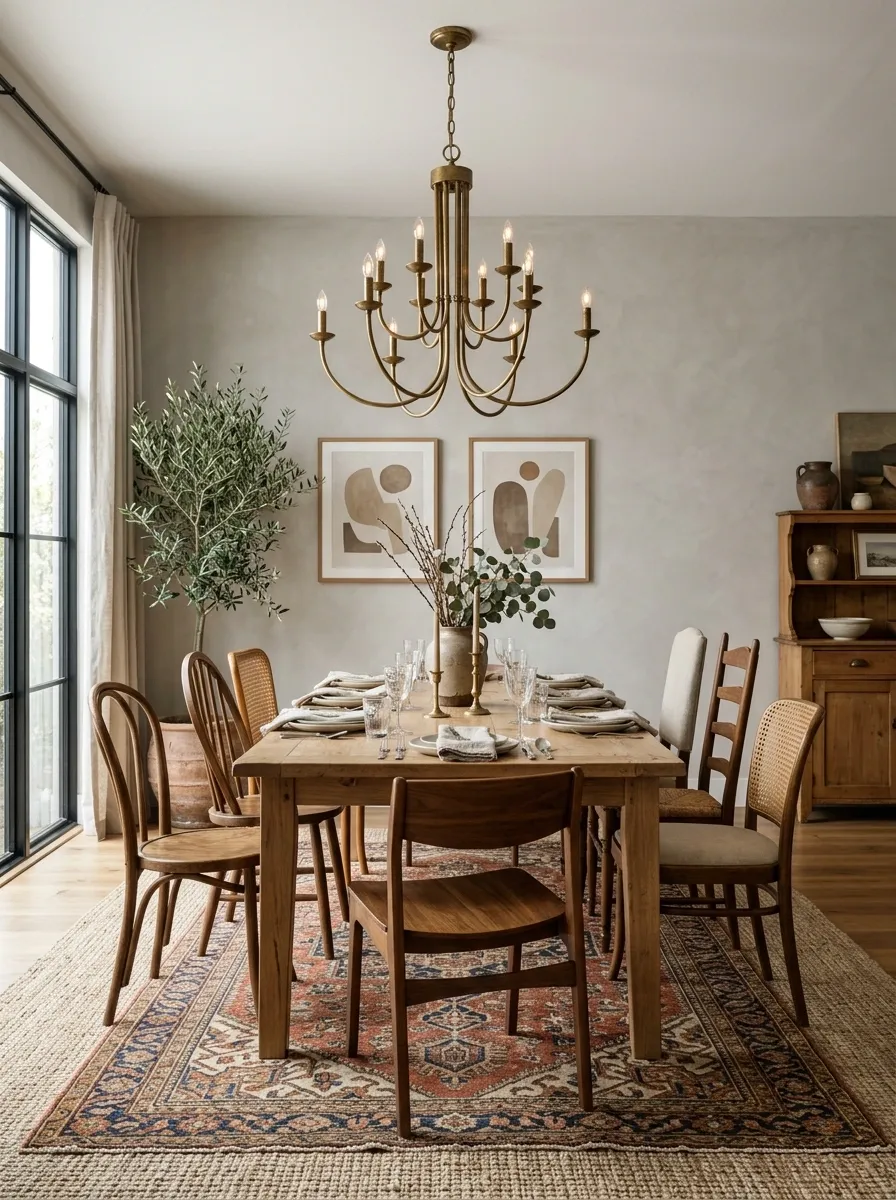
A large dining table sits between two visually strong anchors: an oversized chandelier overhead and layered rugs underneath. Mixed dining chairs, warm wood, and restrained wall art complete the room without competing with that vertical and horizontal structure.
The chandelier establishes the upper focal point, while the rugs create a substantial foundation below. Together they frame the table and give the room a sense of scale. The smaller patterned rug introduces a second layer of texture without needing another major decorative object on the walls.
The arrangement feels rich because the visual interest is distributed through the height of the room rather than piled onto one surface.
The ceiling got involved. The floor refused to be left out. Somehow everyone behaved.
Retro Eclectic Dining Room With Checkerboard Details and Curved Seating
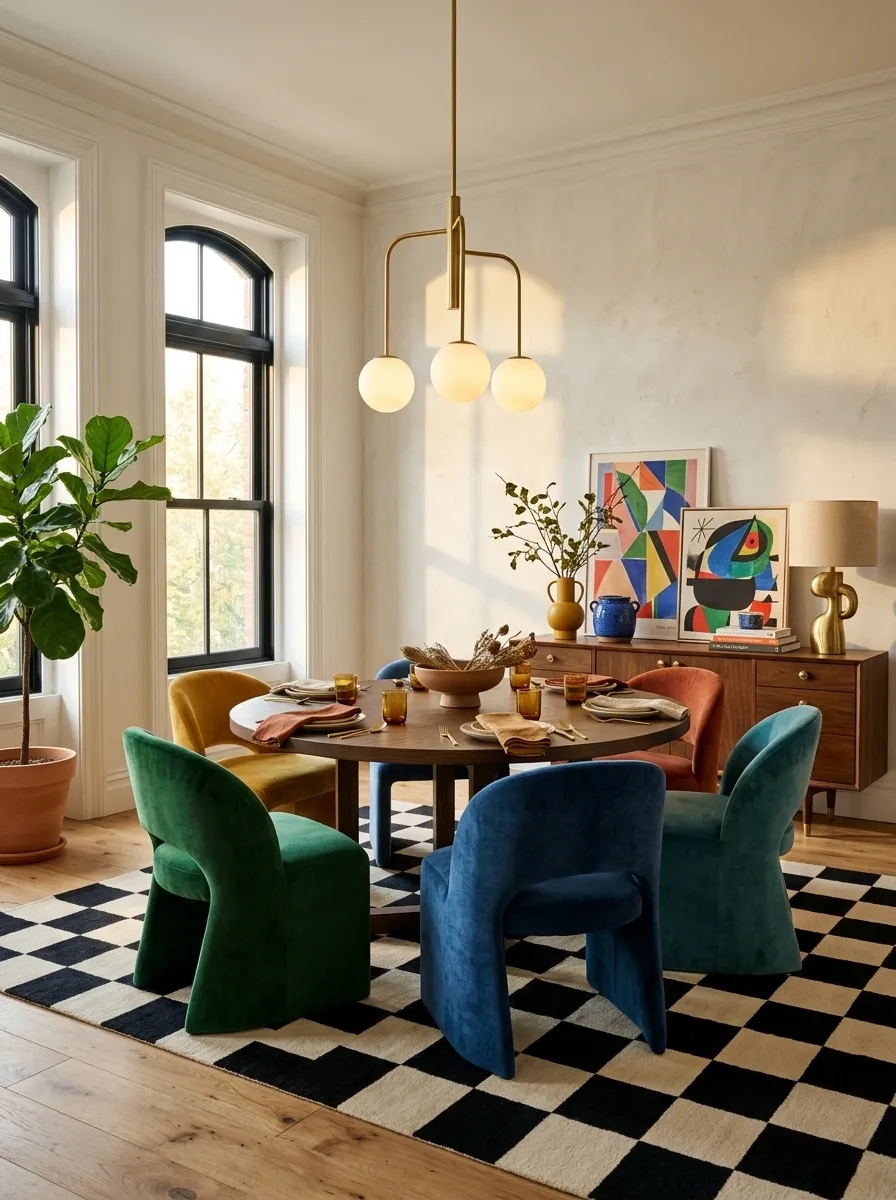
Curved dining chairs, a graphic checkerboard detail, colorful artwork, vintage inspired furniture, and contemporary lighting give this dining room a playful retro character without turning it into a time capsule.
The older references appear through shape and pattern rather than literal reproduction. Rounded seating introduces a softer silhouette, while the checkerboard pattern gives the room a strong graphic note. Modern lighting and simplified surfaces keep those nostalgic details from becoming too heavy.
Color is used in concentrated areas, especially the seating, artwork, and smaller accessories. The result feels playful but still grown up enough for an actual dining room.
Retro is fun. A full museum reenactment at dinner is less necessary.
softens the room with a retro silhouette
adds a recognizable period reference
keeps the reference current rather than theatrical
Dramatic Eclectic Dining Room With Stone Fireplace and Modern Furniture
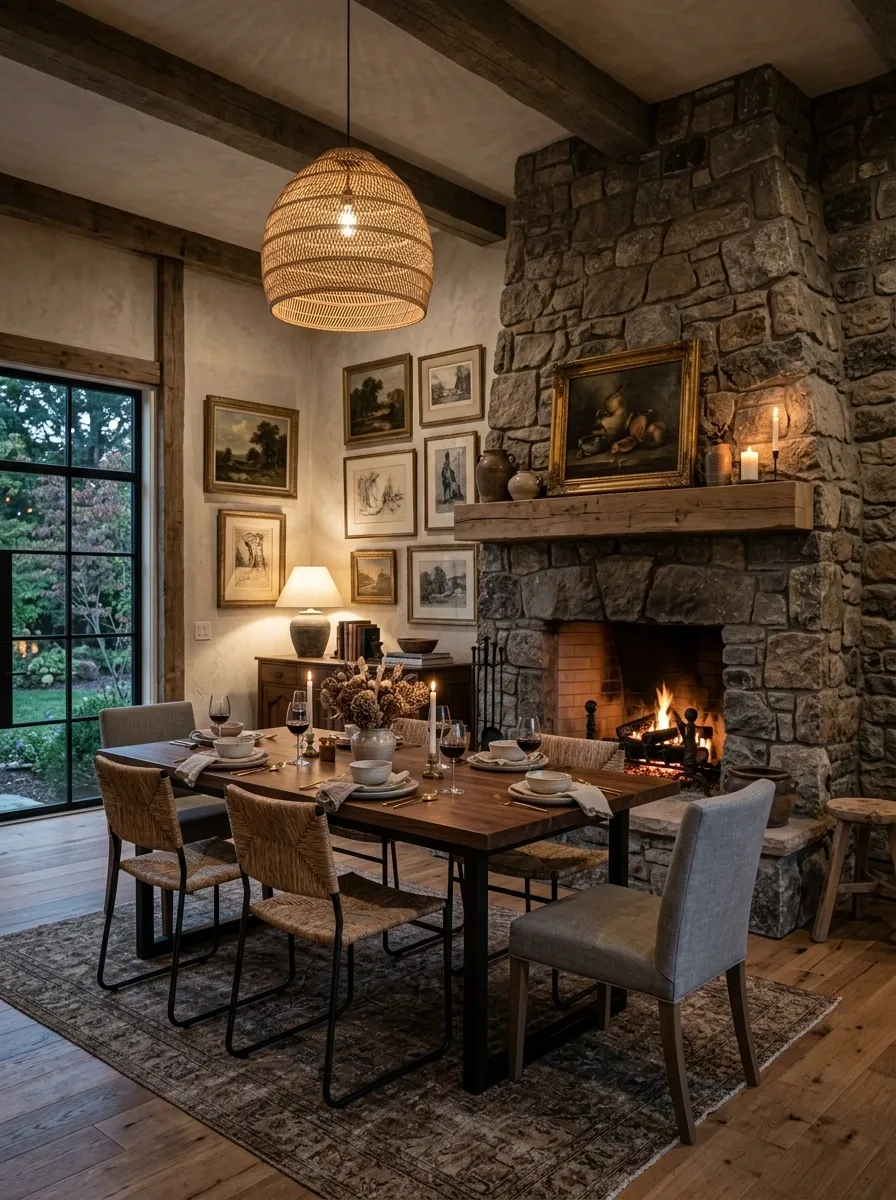
A substantial stone fireplace provides the architectural anchor for this dining room, while a sleek dining table, contemporary chairs, vintage artwork, woven accents, and warm lighting create a deliberate conversation between rustic structure and modern furniture.
The fireplace is visually heavy, so the surrounding pieces stay cleaner in silhouette. The modern table and chairs stop the stone from pulling the room entirely toward rustic design. Vintage artwork introduces age without adding another large physical object, while woven textures soften the harder architecture.
The lighting matters after dark, when warm illumination catches the stone and timber and gives the room another layer of depth.
The fireplace already has enough personality. It does not need a decorative committee standing around it.
Eclectic Dining Rooms Work Best When the Mix Feels Intentional
The most interesting rooms here don’t rely on having more stuff. They rely on contrast that makes sense.
A dark wall can make pale upholstery look sharper. A vintage table can become more current beside modern chairs. A patterned floor can feel calmer when the furniture uses softer shapes. Even a crowded-looking collection of artwork can feel deliberate when it has a clear wall, repeated colors, and enough empty space around it.
That’s the difference between eclectic and chaotic.
Before buying anything, look at the dining room as a complete composition. Find the element that already has the strongest presence, then decide what should support it, what should contrast with it, and what can stay quiet.
The goal isn’t to make every object interesting. It’s to make the whole room interesting.
Save the designs that keep pulling your attention back. Those are the references worth having open when the real decorating decisions begin.