
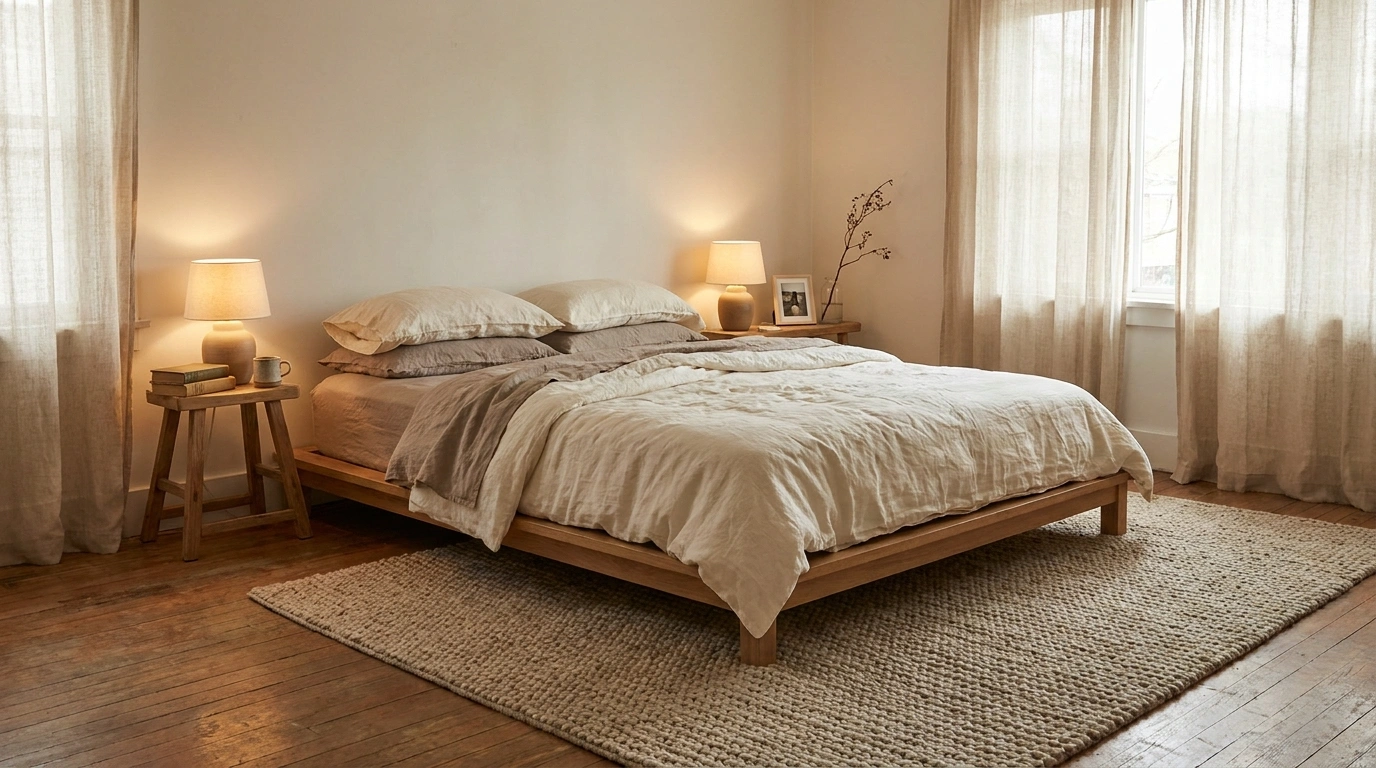
Minimalist bedrooms have one unfair advantage: the less furniture they contain, the more every decision matters.
That sounds helpful until one wrong nightstand, one oversized rug, or one lonely beige wall makes the whole room look less “quiet luxury” and more “the furniture delivery is still incomplete.”
A good minimalist bedroom is not an empty bedroom. It is a room where the bed has the right scale, storage disappears into the background, lighting has a purpose, and materials create enough variation that the space still feels warm.
DOESN’T MEAN
EMPTY.
Minimalist Bedroom Ideas
Monochromatic White Minimalist Sanctuary
A monochromatic white bedroom works because texture takes the place of color. Layer crisp cottons, waffle weaves, and quilted blankets in identical shades of chalk and ivory, allowing the subtle shifts in fabric weight to create depth without introducing visual noise. Keep the surrounding walls entirely blank and let soft, cascading window light wash across the space.
Lighting should remain delicate and deliberate. Hang a pair of sleek, low-profile pendant lights directly over one side of the bed to introduce a gentle asymmetry, leaving the rest of the ceiling uninterrupted. A minimalist bedside table can hold a single small vase with botanical stems, keeping the styling restrained.
The real secret is resisting the urge to add color. When everything from the floor to the ceiling shares the same quiet palette, the room transforms into a peaceful retreat. Every textile feels intentional, turning a simple white bedroom into an exercise in pure elegance.
Hotel-Inspired Minimalist Bedroom With Symmetrical Joinery
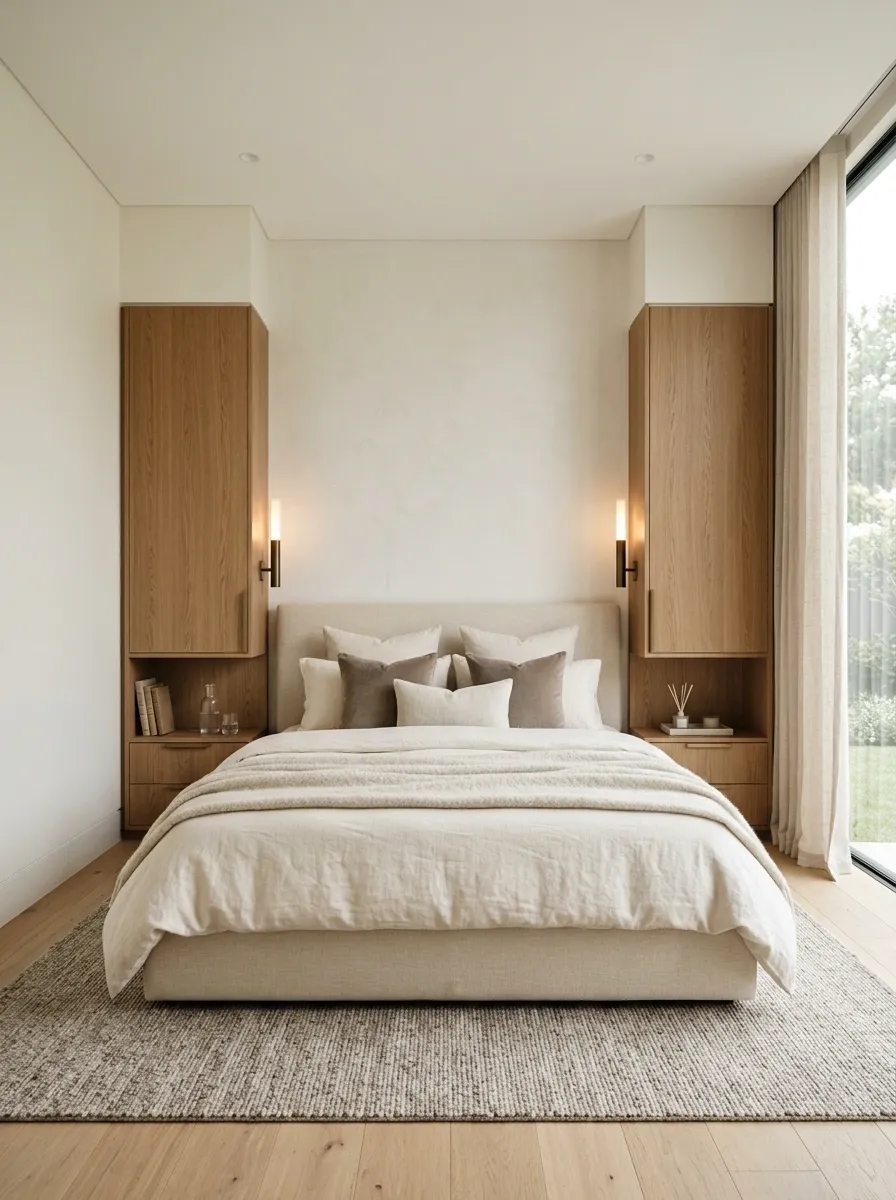
A symmetrical bedroom immediately makes a space feel more considered, especially when the symmetry comes from the architecture rather than a pile of matching accessories. Center a wide upholstered bed between two tall warm-walnut or oak storage sections, then build small bedside niches into the joinery so the room feels almost custom-made. Slim wall lights can sit at matching heights, while creamy bedding keeps the substantial wood from becoming visually heavy. The floor stays mostly open, with a soft rug extending underneath the bed just enough to create a landing zone.
The important part is restraint. Matching bedside bowls, matching vases, matching books, matching everything can quickly turn the room into a furniture showroom that expects a clipboard inspection. Let the built-in architecture provide the repetition.
+ NICHE
UPHOLSTERED BED
+ STORAGE
Warm Neutral Daylight Bedroom
A sunlit neutral bedroom thrives on organic textures and an effortless layout. Position a low-profile bed directly against a soft beige wall, dressed in subtle striped linens that bring a quiet pattern into the room without overwhelming the calm atmosphere. Pale wood accents and a textured cream rug anchor the space beneath warm morning light.
Keep furniture functional and minimal to maintain an open walkway. A slim wooden desk paired with a simple stool creates a functional corner without crowding the room, while low shelving units along the window line keep storage out of the direct line of sight. Every piece has a designated purpose and plenty of breathing room.
The magic lies in the natural light and restraint. A small potted plant on the windowsill and a single round wall clock are all the decoration required. When the morning sun streams across the floorboards, the understated materials do all the heavy lifting.
Vintage Minimalist Bedroom With One Statement Antique Piece
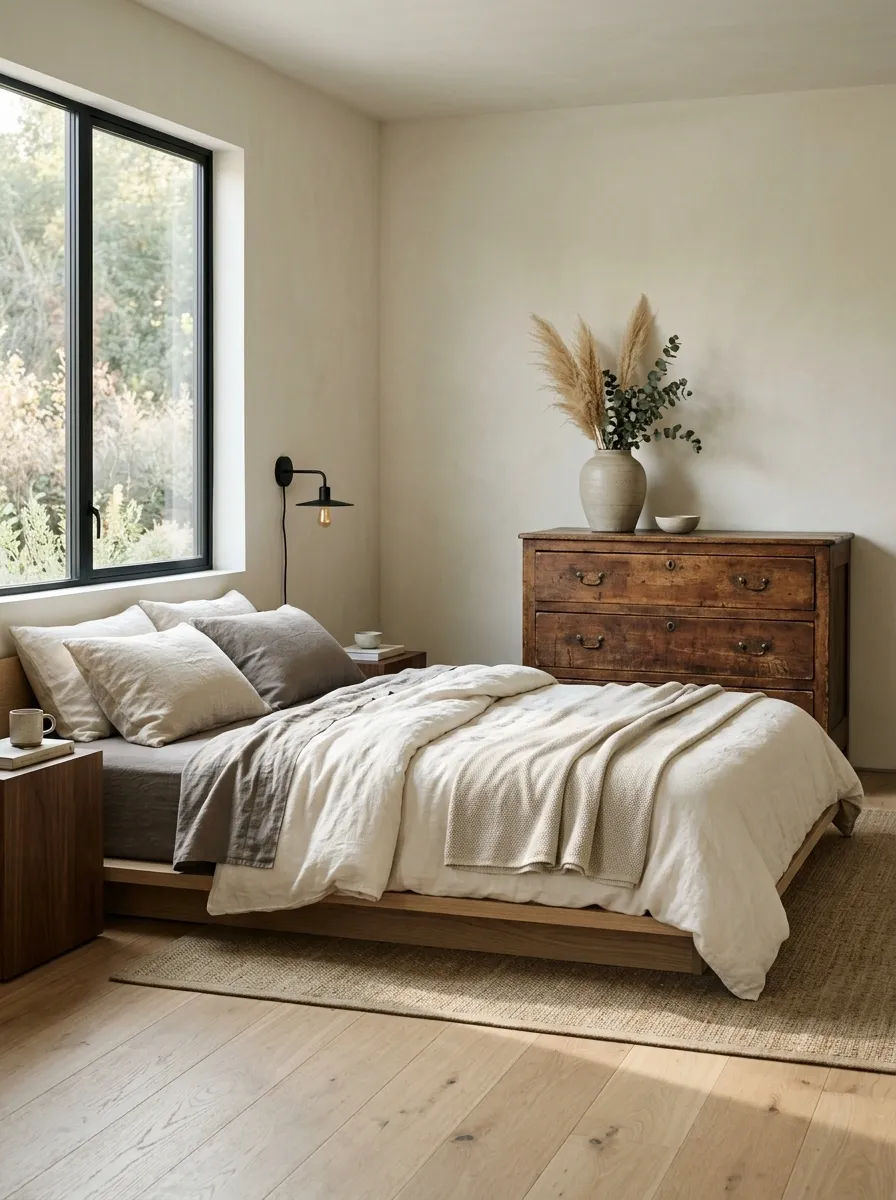
Minimalism becomes much more interesting when one older piece is allowed to interrupt all the clean lines. Keep the bed simple, the walls quiet, and the bedding soft in ivory, cream, or warm gray. Then introduce one substantial antique wooden chest, old dresser, or weathered bedside cabinet with enough character to make the room feel lived in. Its scratches, darker wood, irregular grain, or slightly imperfect proportions become the detail that keeps the bedroom from looking factory-produced.
The trick is giving the antique enough space around it. If every other surface gets filled with little vintage objects, the original statement piece loses its role and the bedroom starts auditioning for an antique market stall. One strong old piece against a restrained modern setting feels deliberate.
ELSE QUIET.
Low-Profile Platform Bed Studio
A low-profile platform bed immediately anchors a minimalist bedroom, creating a grounded sense of space. Center a substantial wooden frame on a generous cream rug, then flank it with ultra-low floating ledges instead of traditional nightstands. Integrated wall paneling behind the bed adds subtle architectural detail without requiring extra furniture or decorative frames.
Lighting is kept remarkably subtle with recessed ceiling spots and a single slender pendant drop. A warm, glowing globe lamp sits on one ledge to cast a soft amber pool of light across the smooth wooden flooring. The entire composition feels curated, calm, and completely uncluttered.
The key to this aesthetic is honoring negative space. Leaving the wide wall above the bed completely bare lets the architecture and materials speak for themselves. The result is a refined, hotel-like environment that feels expensive simply through its careful editing.
Concrete and Linen Urban Minimalist Bedroom
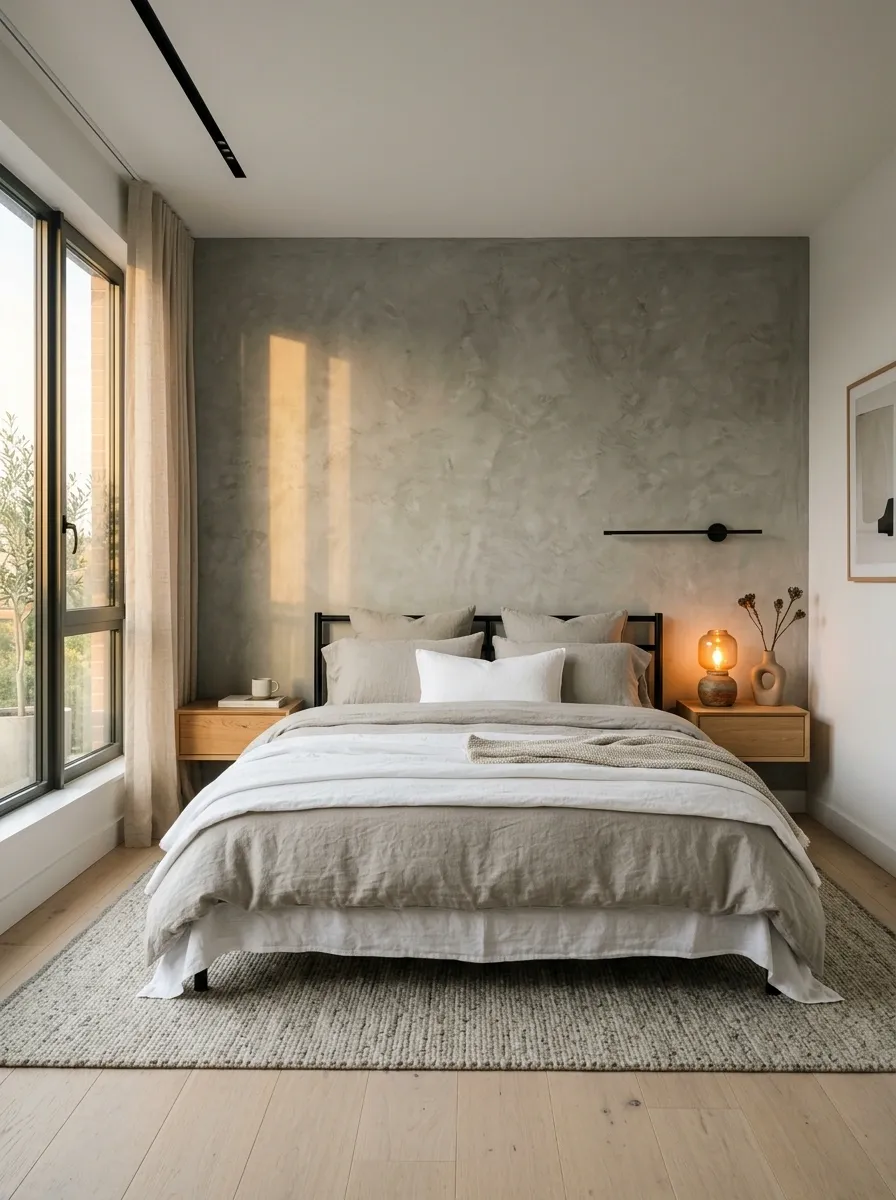
A concrete-inspired bedroom works because the hard material needs something soft beside it. Use a concrete-look wall or mineral finish behind a generous linen bed, then bring in pale timber flooring and a few slim black fixtures for precision. The room does not need exposed pipes, industrial shelving, giant metal clocks, or anything else screaming “urban loft” from across the street. The materials already made the argument.
Linen bedding prevents the gray wall from feeling cold, while pale timber keeps the palette grounded. Warm bedside lighting is especially important here because cool white bulbs can make concrete look like a parking garage. The finished room feels architectural without becoming theatrical.
WEIGHT
SOFTNESS
WARMTH
PRECISION
Monochrome Soft Curved Minimalist Bedroom
A softly curved bed frame instantly softens the rigid geometry of a minimalist room. Choose an upholstered platform bed in warm ivory, then mirror its gentle lines with a delicate semi-circular wall molding or sculptural artwork overhead. Clean, matching block side tables keep the grounding elements symmetrical and sophisticated.
Keep the color story strictly monochromatic in warm whites and soft creams. A subtle strip of integrated under-shelf lighting casts a gentle glow up the wall, highlighting the texture of the plaster and giving the space an expensive, custom-designed ambiance. A simple ceramic vase with bare branches introduces organic form without clutter.
The finished room relies entirely on proportion and light. By avoiding excessive decor and letting the curved headboard serve as the room’s main focal point, the space remains tranquil and composed. It proves that minimalism is not about having less, but about choosing the absolute right elements.
Narrow Bedroom With a Built-In Storage Wall
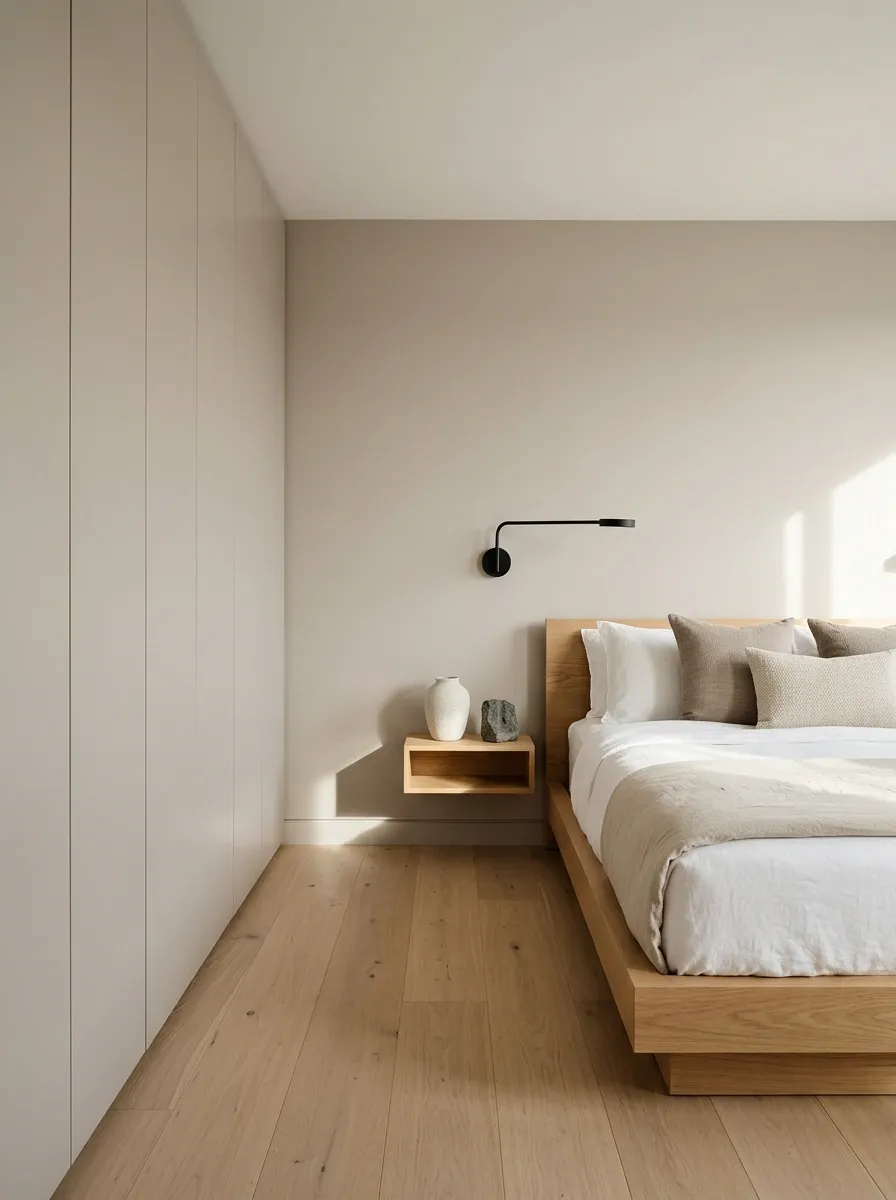
A narrow bedroom does not need more furniture. It needs fewer visual interruptions. Run a full storage wall along one side of the room, using flush fronts painted close to the wall color so the cabinetry visually recedes. Place the bed opposite or slightly forward from it, then use a floating shelf instead of a bulky bedside table. A wall-mounted reading light keeps the floor clear and gives the sleeping zone enough function without adding another piece of furniture.
The result is a room where the walkway remains obvious. That matters more than squeezing in every piece of bedroom furniture available at the store. A chunky dresser can turn “minimalist bedroom” into “please turn sideways.”
WALL
WALKWAY
ZONE
Minimalist Bedroom With a Curved Upholstered Bed
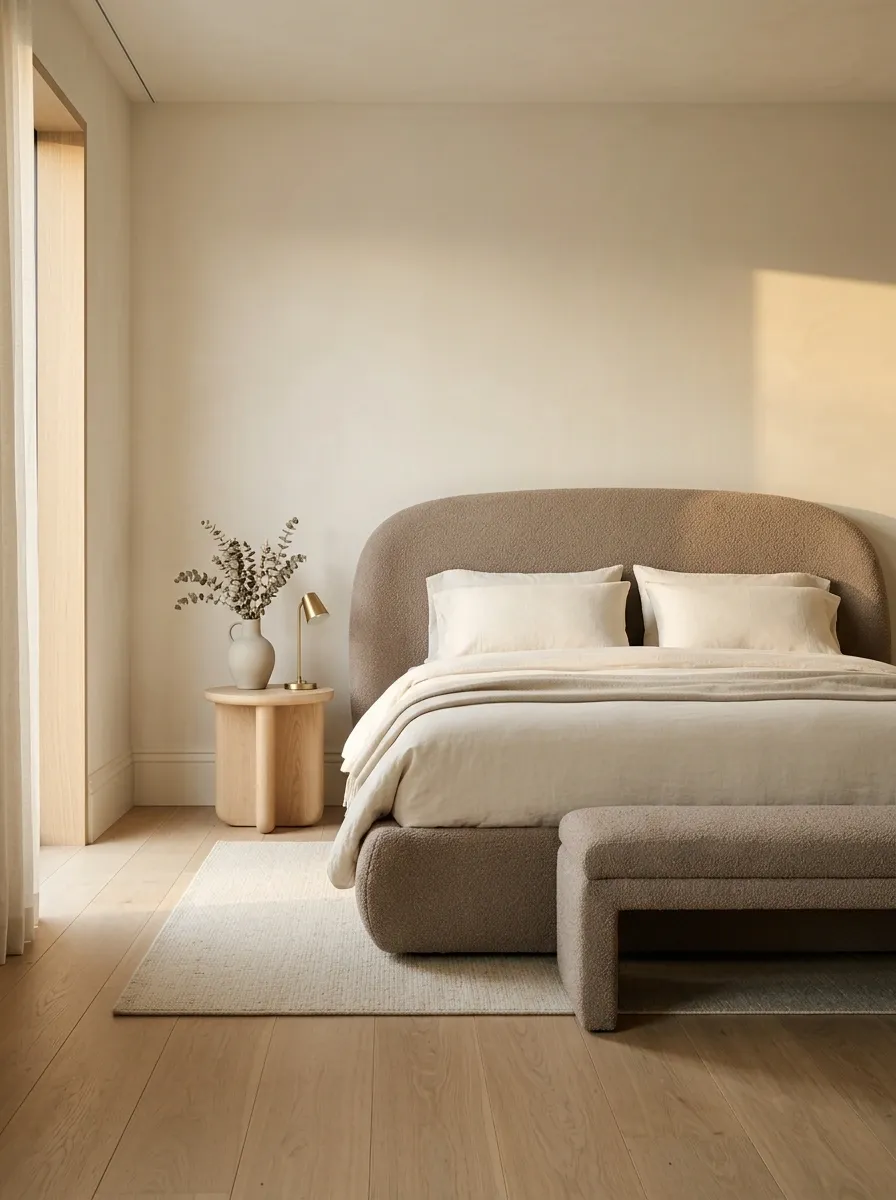
A curved upholstered bed adds softness without requiring a room full of rounded furniture. Choose a generous curved headboard or gently rounded bed frame in cream, taupe, or warm gray, then repeat the shape once with a small rounded bedside table or upholstered bench. Keep the rest of the architecture relatively straight so the curves actually register.
The room works because the shape becomes the feature. There is no need for six sculptural accessories trying to join the conversation. Too many rounded pieces and suddenly the bedroom starts looking like an enthusiastic wedding cake. One strong curve, repeated quietly, feels much more sophisticated.
Dark Walnut Minimalist Bedroom With Warm White Walls
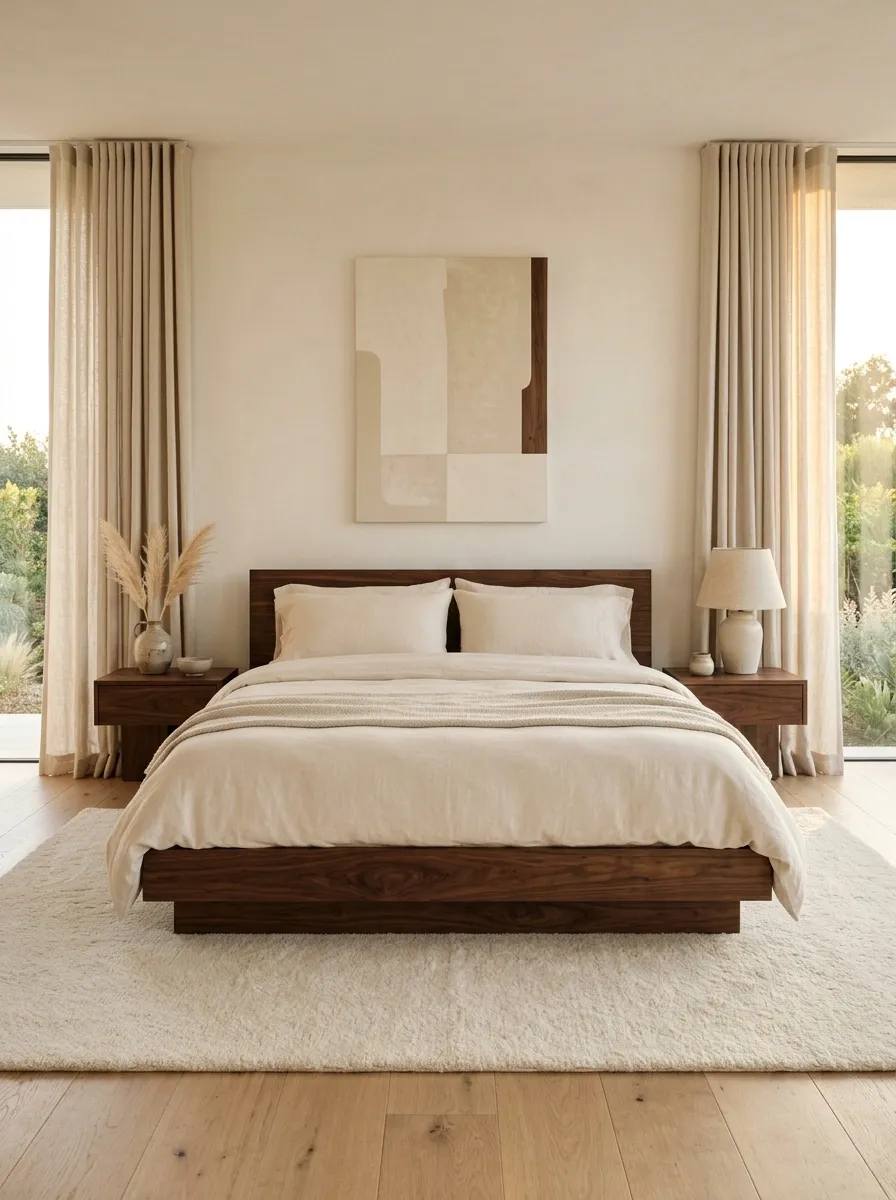
Dark walnut can make a minimalist bedroom feel grounded and expensive without requiring a complicated design. Use rich walnut for the bed, headboard, or bedside furniture, then surround it with warm white walls and pale bedding. A soft rug under the bed prevents the darker timber from feeling too severe, while curtains in oatmeal or natural linen keep the room visually soft.
The key is allowing the walnut to remain the anchor. Do not keep adding dark accessories because one wood finish looked good. Texture has already been doing the heavy lifting while everyone else was busy buying another tray.
ANCHOR
SOFTEN
SPACE
Light, Airy Minimalist Bedrooms
Floor-to-Ceiling Curtain Minimalist Bedroom
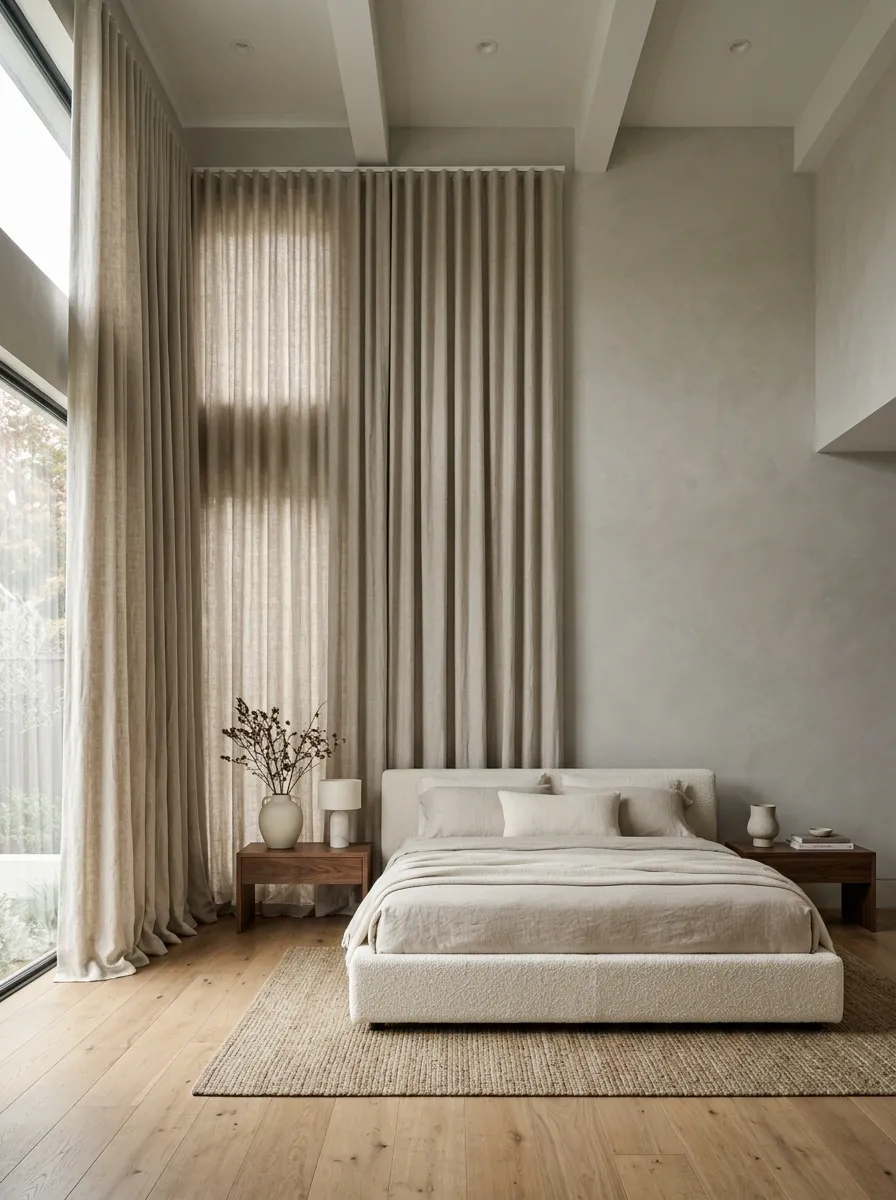
Curtains can make a minimalist bedroom feel substantially more polished because they affect the architecture rather than simply filling a decorative role. Hang them from close to the ceiling and let them fall all the way to the floor, using oatmeal, ivory, or soft warm gray fabric. Pair them with a low bed and simple bedside furniture so the room develops a deliberate contrast between vertical height and low horizontal furniture.
The curtain rod should disappear as much as possible. A tiny strip of wall above the curtain makes the whole arrangement look like it was measured by someone who had somewhere else to be. The taller the curtains feel, the calmer the room usually reads.
CURTAIN
Minimalist Bedroom With a Built-In Reading Corner
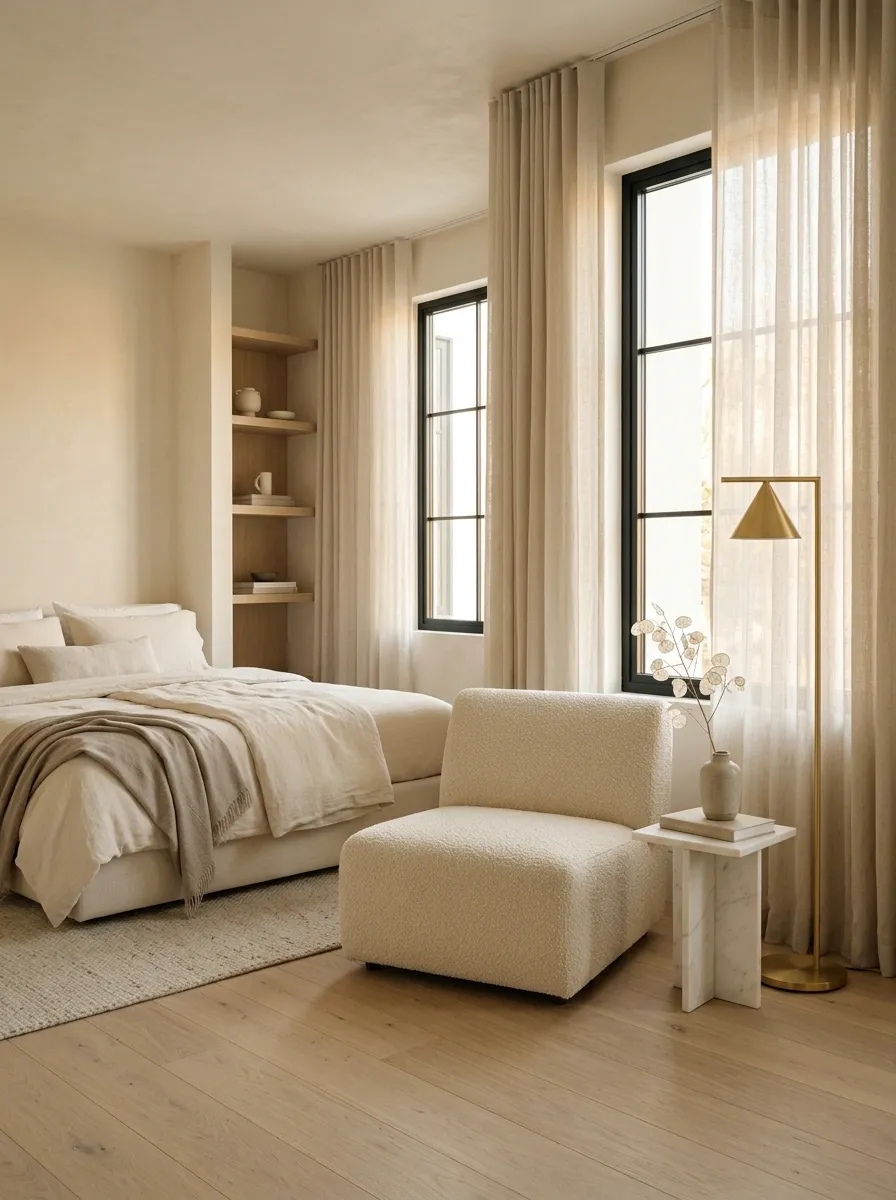
A small reading corner can make a minimalist bedroom feel complete without adding visual clutter. Place a compact lounge chair near a bright window, then pair it with a slim floor lamp and a tiny side table. Keep the chair in the same color family as the bed so it feels like part of the room rather than a random piece that wandered in from another floor.
The furniture should remain appropriately scaled. A huge lounge chair in a modest bedroom will eat the room alive and then ask for a matching ottoman. A compact chair, soft textile, and good natural light are enough.
Warm Gray Minimalist Bedroom With Stone and Linen
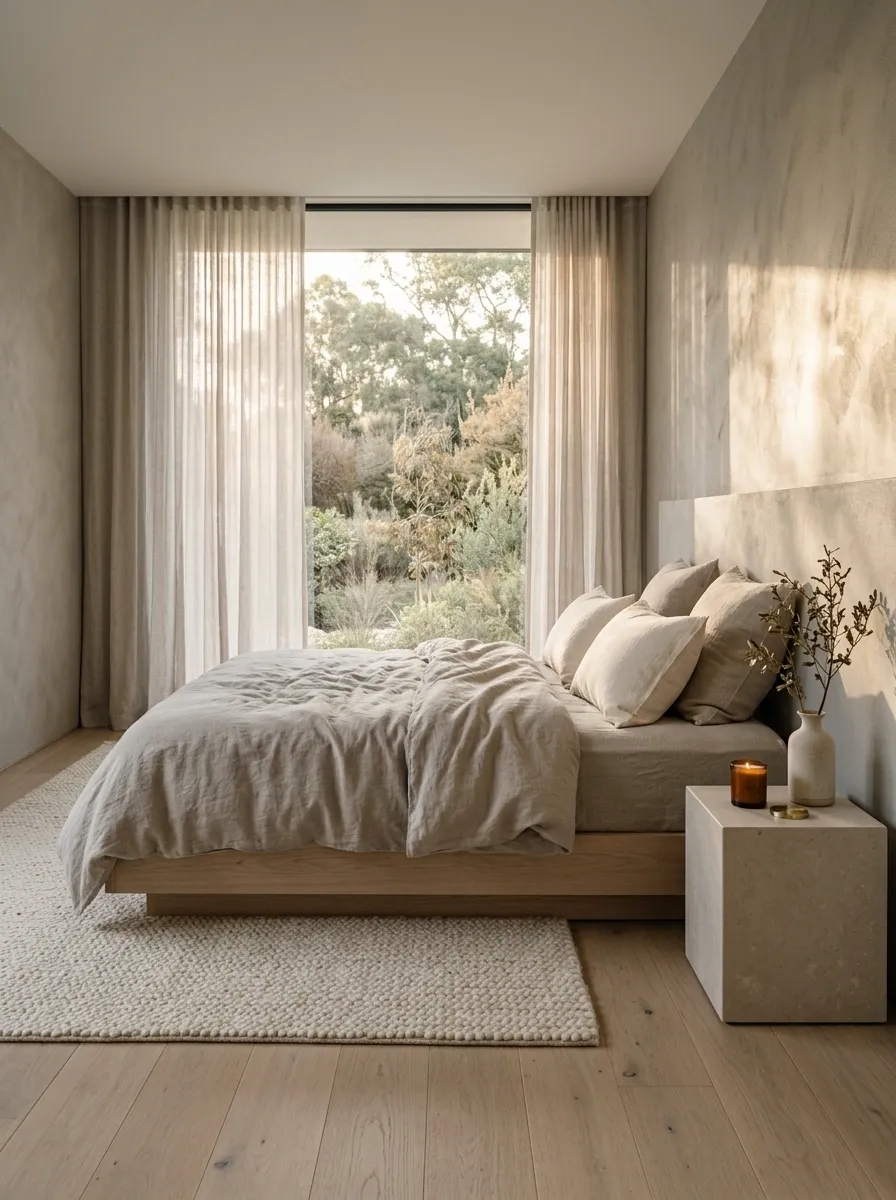
Warm gray becomes much more interesting when its depth comes from materials instead of additional colors. Use warm gray walls, a limestone-inspired bedside surface, pale timber flooring, relaxed linen bedding, and a soft wool or textured rug. Each material sits close to the next in color but behaves differently under light.
That variation keeps the room from looking flat. The wall can remain quiet because the stone, linen, timber, and wool provide enough visual information. This is the minimalist trick that saves the room from becoming one giant beige rectangle.
Attic Minimalist Bedroom Under a Sloped Ceiling
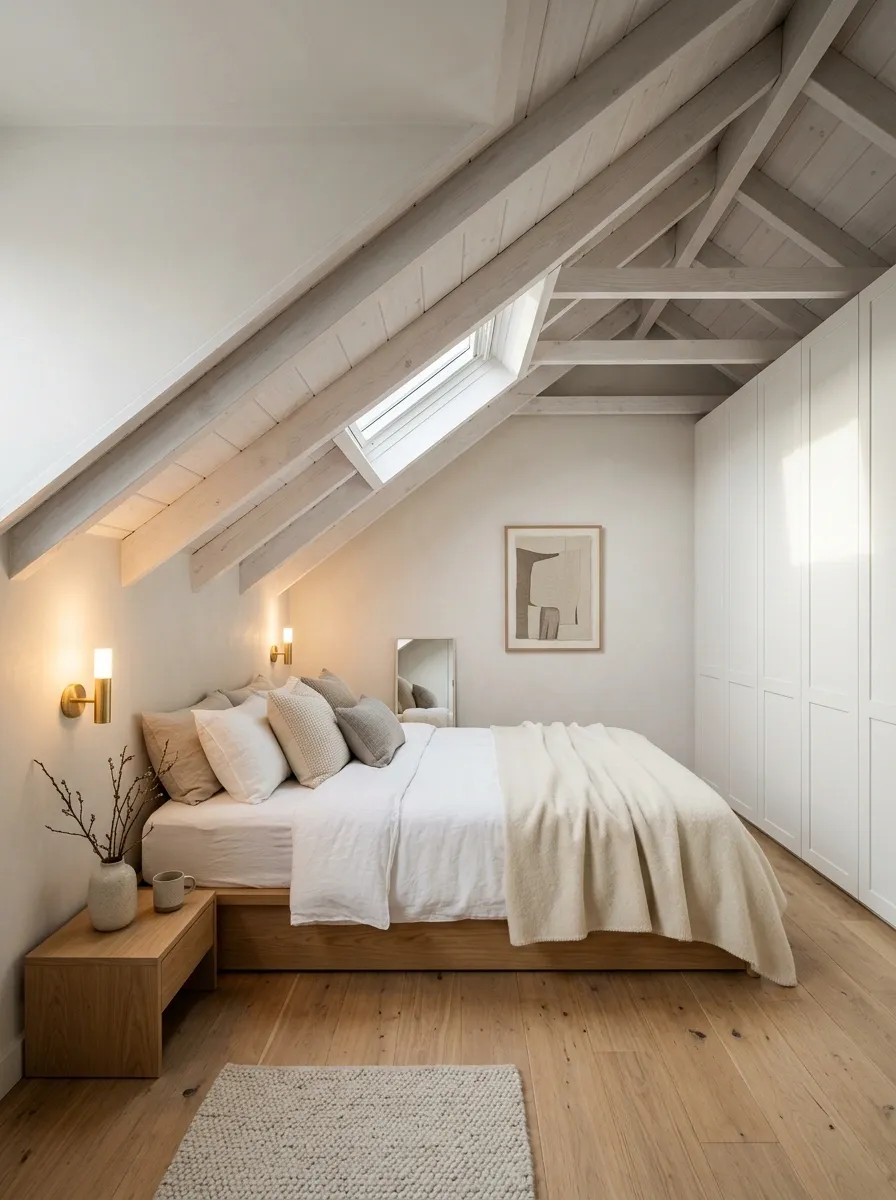
An attic bedroom already has architectural character, so the furniture can stay unusually quiet. Place the bed beneath the lower slope if the headroom allows it, then reserve the tallest wall for storage or a simple wardrobe. Low bedside surfaces keep the furniture from fighting the roofline, while warm bedside lighting adds depth without filling the walls.
The important move is following the architecture instead of pretending the ceiling is flat. Some rooms arrive with personality preinstalled. There is no reason to cover it up with decorative clutter.
Minimalist Bedroom With a Low Platform Bed
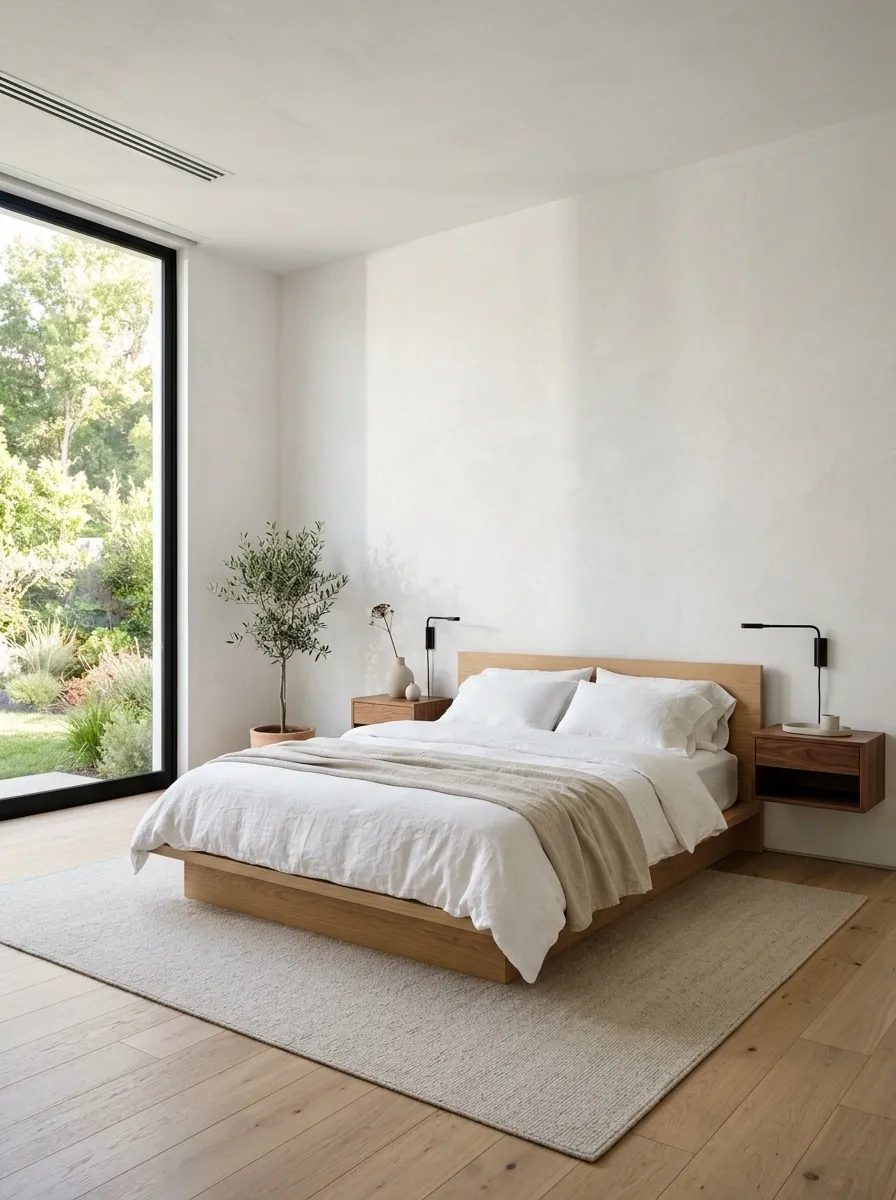
A low platform bed changes the entire visual weight of a bedroom. With the mattress closer to the floor, more wall remains visible and the room feels calmer without needing additional decoration. Pair the bed with low bedside tables, simple bedding, and enough empty wall around the sleeping area to let the architecture breathe.
The temptation will be to fill that blank wall because apparently an empty wall has committed a crime. Resist it. The negative space is part of the composition.
MORE AIR.
Soft Black and Cream Minimalist Bedroom
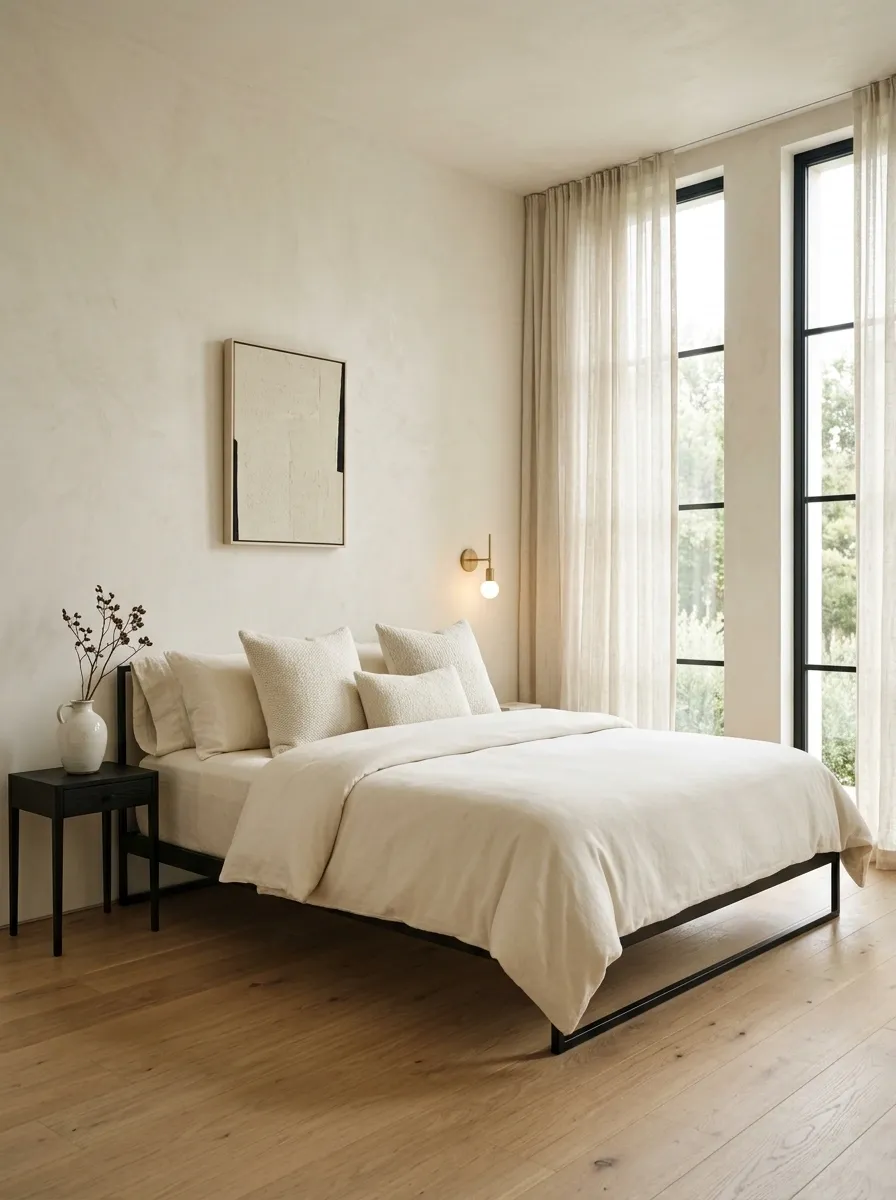
Soft black works best in a minimalist bedroom when it behaves like punctuation. Use cream or warm white walls and bedding, then introduce thin black lines through a bed frame, wall lights, curtain hardware, window frames, or a small side table. The contrast gives the room definition without making the palette feel heavy.
The mistake is letting black become a full paragraph. Once the room contains a black bed, black dresser, black shelves, black artwork, black lamps, and black curtains, the “soft” part has officially left the building.
Thin dark lines.
Quiet Color and Texture
Minimalist Bedroom With a Full-Width Headboard
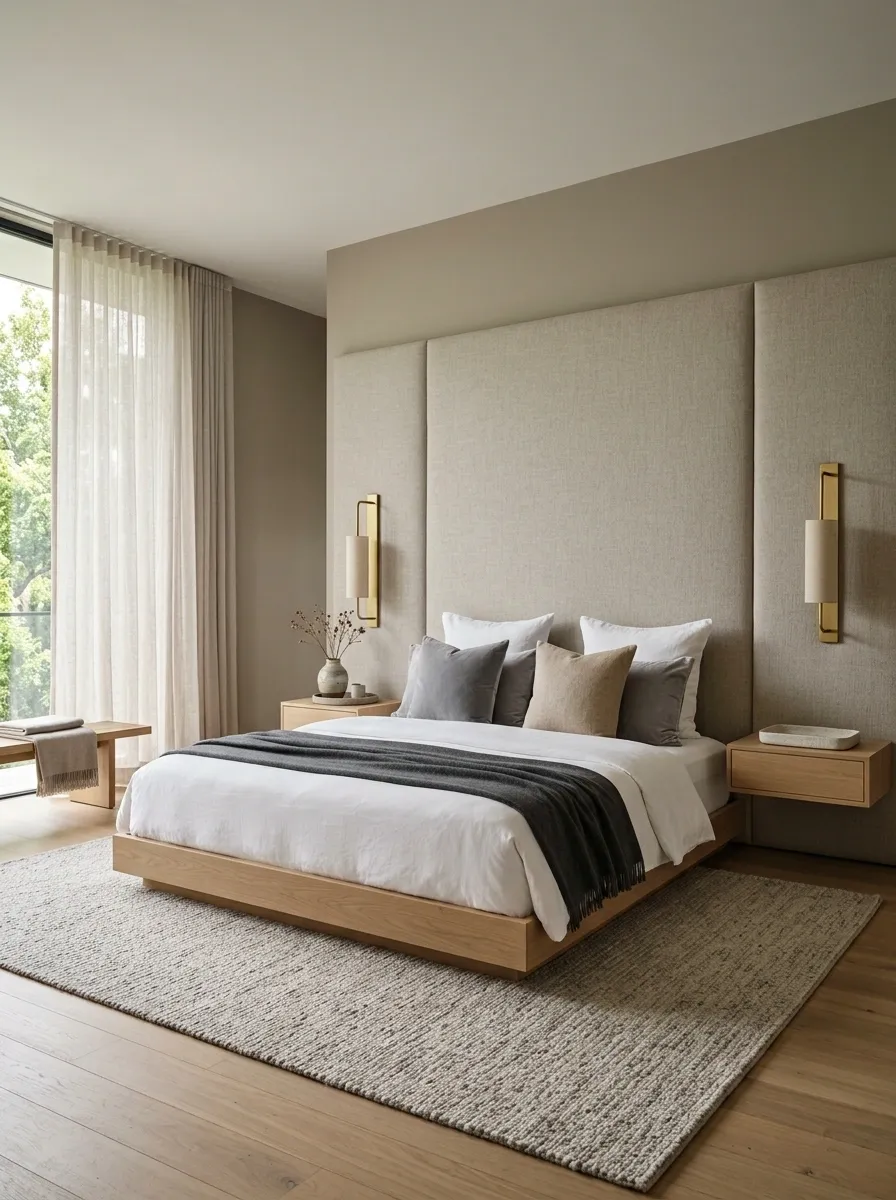
A full-width upholstered headboard gives the wall behind the bed a single strong architectural gesture. Instead of placing a small headboard between two empty stretches of wall, run the upholstery across most or all of the bed wall. Warm beige, taupe, soft gray, or muted oatmeal works especially well.
Keep the bedside tables simple and let vertical wall lights emerge directly from the composition. The headboard has already given the wall a job, so a gallery wall, shelf collection, and decorative ladder are not required. The bedroom gets its visual anchor without becoming busy.
Japandi-Inspired Minimalist Bedroom With Warm Timber
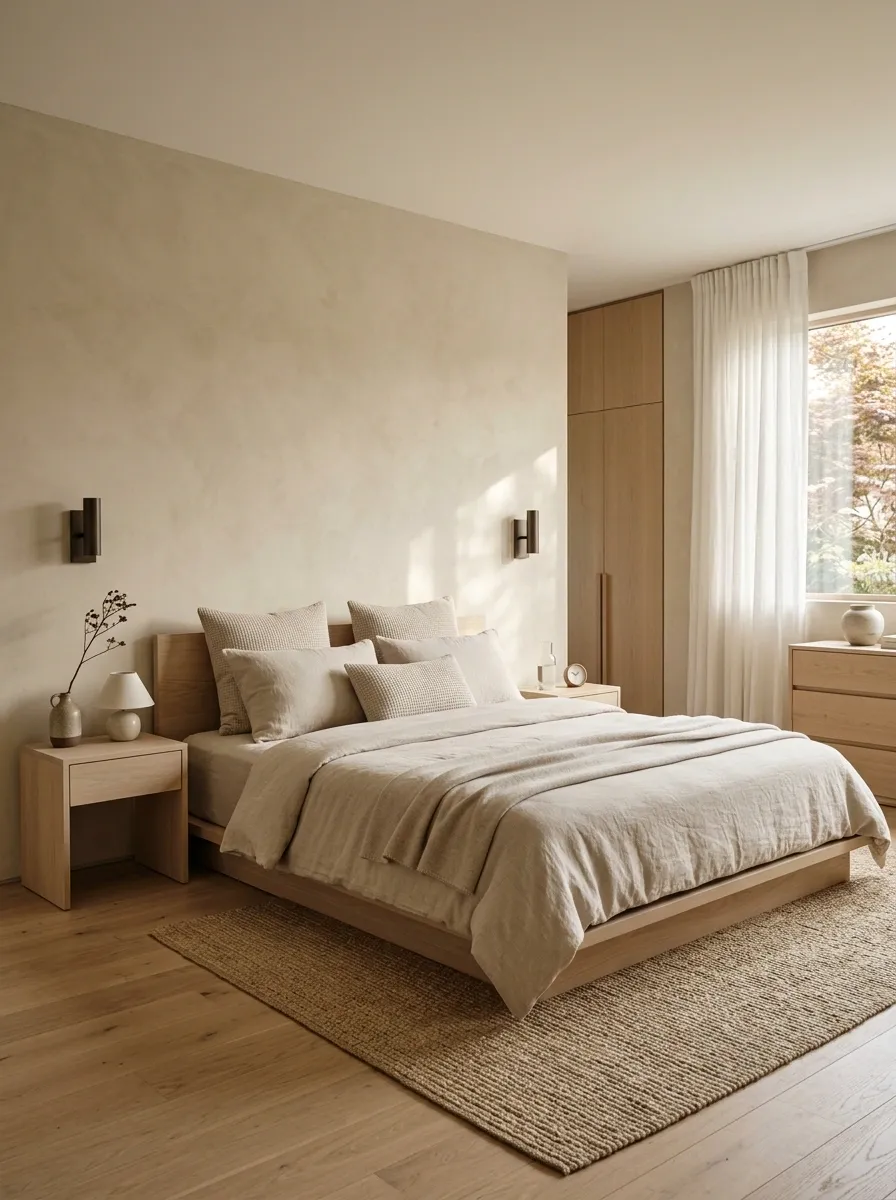
Warm timber, pale plaster, linen, and low furniture create a calm bedroom without relying on decorative clutter. Choose pale oak for the bed or storage, warm beige or plaster-toned walls, natural linen bedding, and a restrained dark bronze or black lighting finish. The furniture should feel low and functional rather than overly sculptural.
The goal is warmth through craftsmanship and material, not turning the bedroom into a bamboo showroom. One carefully chosen timber texture is enough to establish the mood.
Minimalist Bedroom With a Soft Terracotta Accent
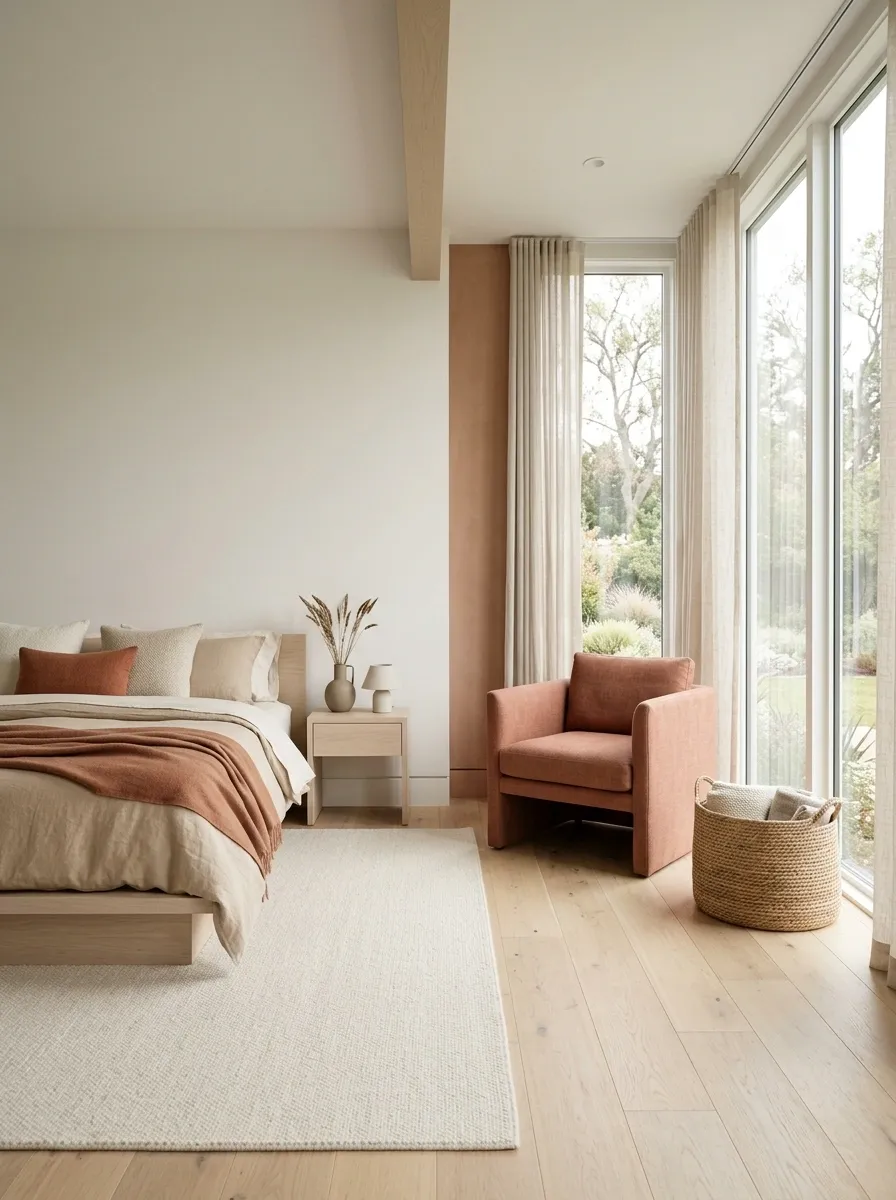
Muted terracotta can give a restrained bedroom just enough warmth to prevent a neutral palette from becoming anonymous. Use it on one upholstered chair, a painted wall section, a substantial throw, or one large textile. Keep the rest of the room in cream, warm white, pale timber, and soft beige.
The important part is scale. One strong terracotta note feels intentional. Twelve tiny terracotta accessories scattered around the room feel like a color-coordination committee has been formed and nobody knows who is in charge.
Minimalist Bedroom With a Window Seat
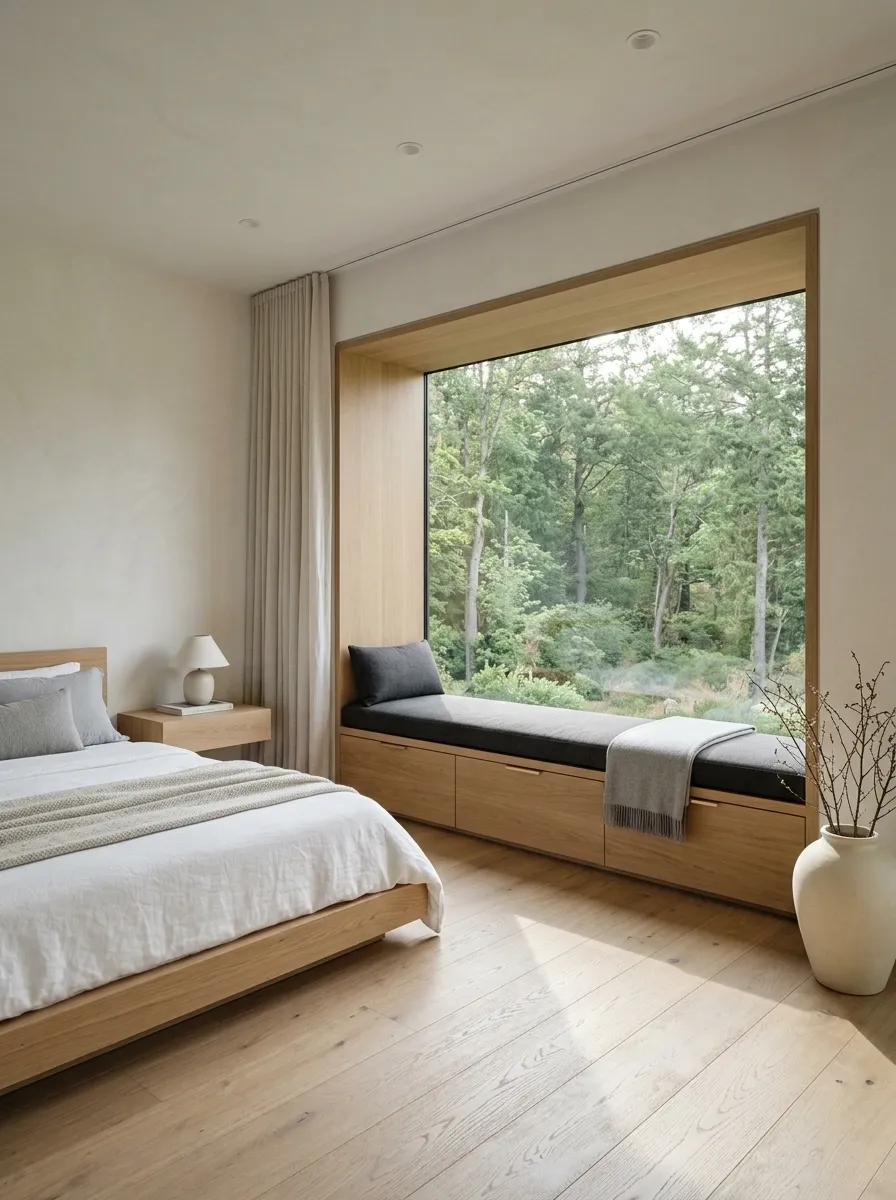
A window seat can become the quiet architectural feature of a minimalist bedroom while adding useful function. Build a deep bench into a bright window area, then keep the surface restrained with one cushion or a thin folded textile. The bedroom furniture itself can remain simple, because the window provides the visual destination.
If storage is possible beneath the seat, even better. The space gets another useful function without adding another cabinet. The window provides the view, the bench provides the pause, and the room does not need seventeen accessories to explain what is happening.
LIGHT
+ HIDDEN STORAGE
Minimalist Bedroom With Exposed Brick and Soft Textiles
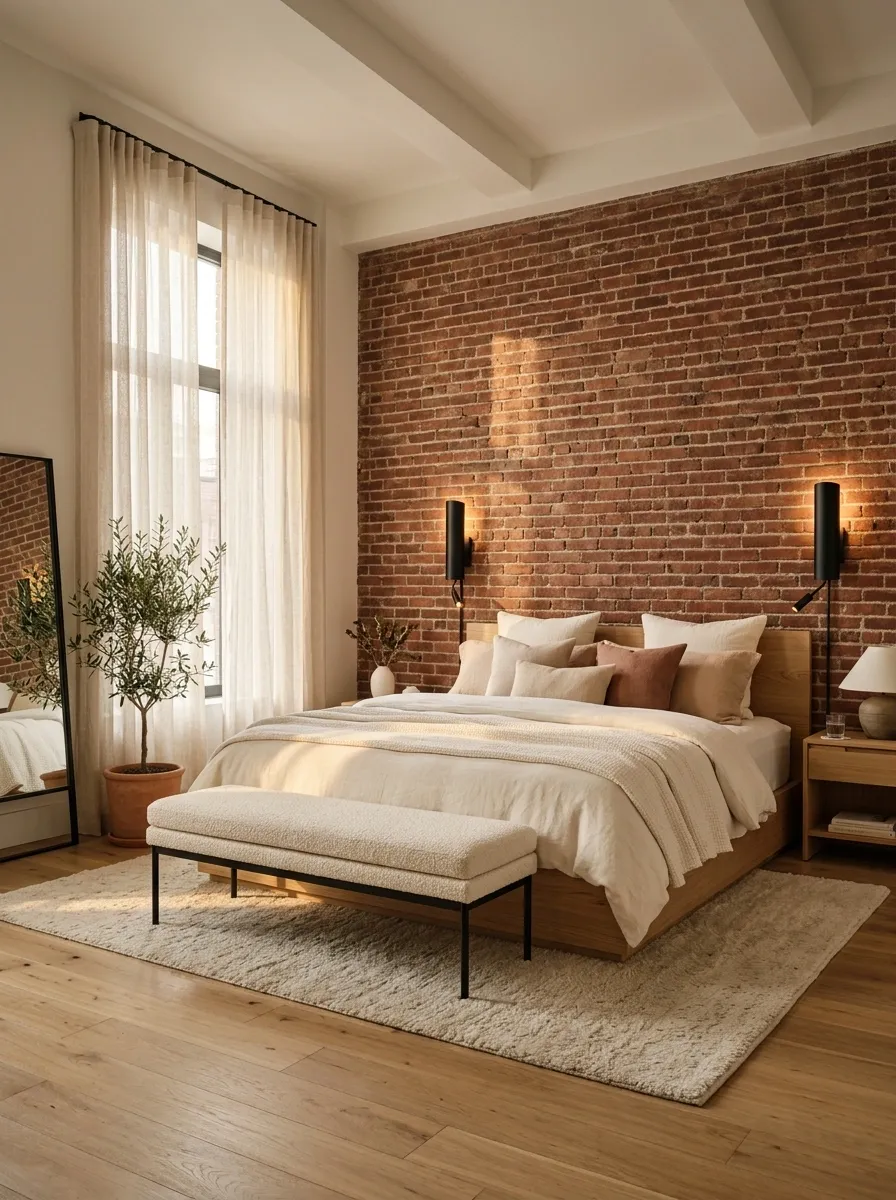
One exposed brick wall can give a minimalist bedroom enough character to make additional decoration unnecessary. Keep the bed simple, use cream or warm white bedding, and introduce soft textiles through a rug, linen curtains, or an upholstered bench. Slim black lighting can connect the rough wall with the cleaner modern furniture.
The brick should remain the statement. There is absolutely no requirement to add a giant “LOFT” sign to prove the point. The brick has already filed the paperwork.
BRICK
LINEN
Minimalist Bedroom With a Monochrome Beige Palette
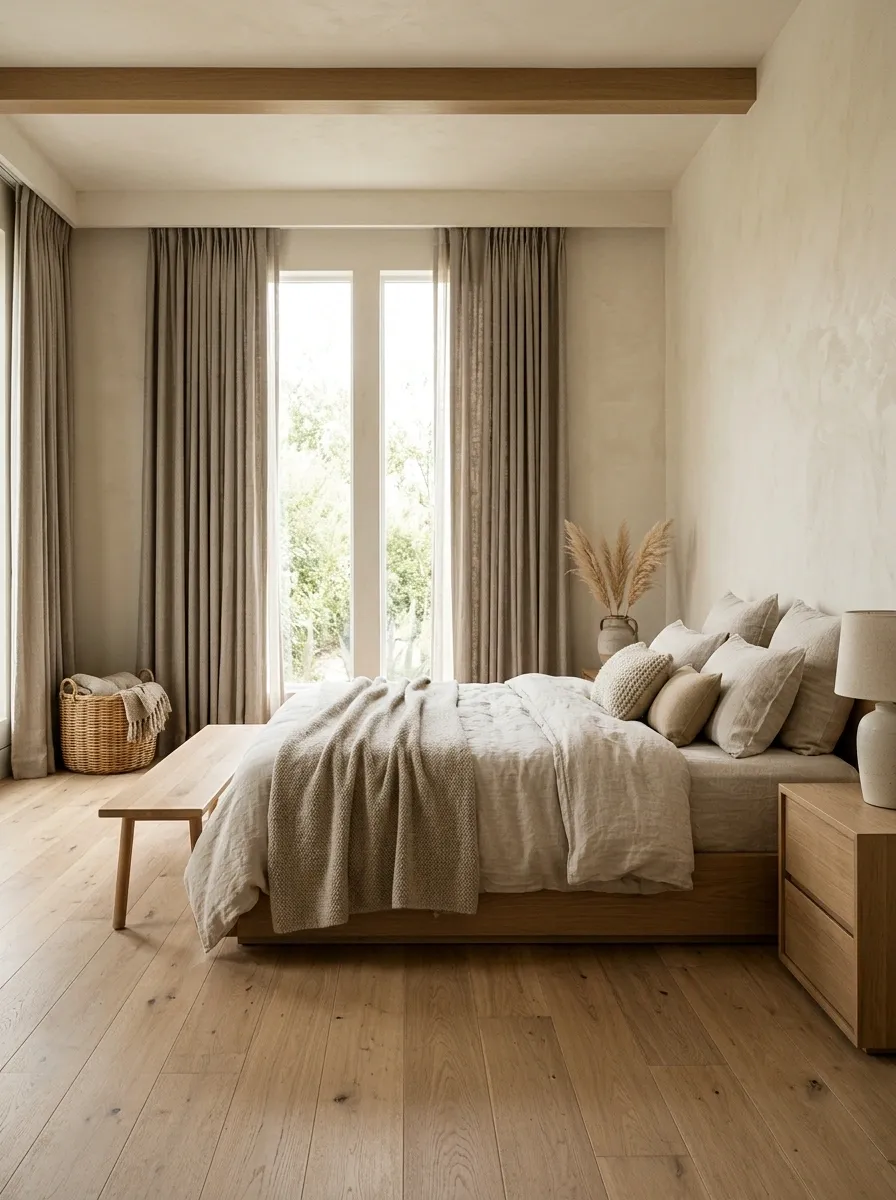
A monochrome beige bedroom works when the shades move gradually instead of collapsing into one flat color. Use warm ivory walls, oatmeal bedding, sandy upholstery, taupe curtains, and natural oak. The differences can be subtle, but the materials should change enough that light creates variation throughout the room.
This is where texture becomes essential. Linen, cotton, wool, timber, plaster, and woven fabric can all occupy nearly the same color family while looking completely different. Warm neutral once and then refusing to make another color decision is honestly a valid design strategy.
Storage, Function, and Small-Space Solutions
Minimalist Bedroom With a Floating Bedside Shelf
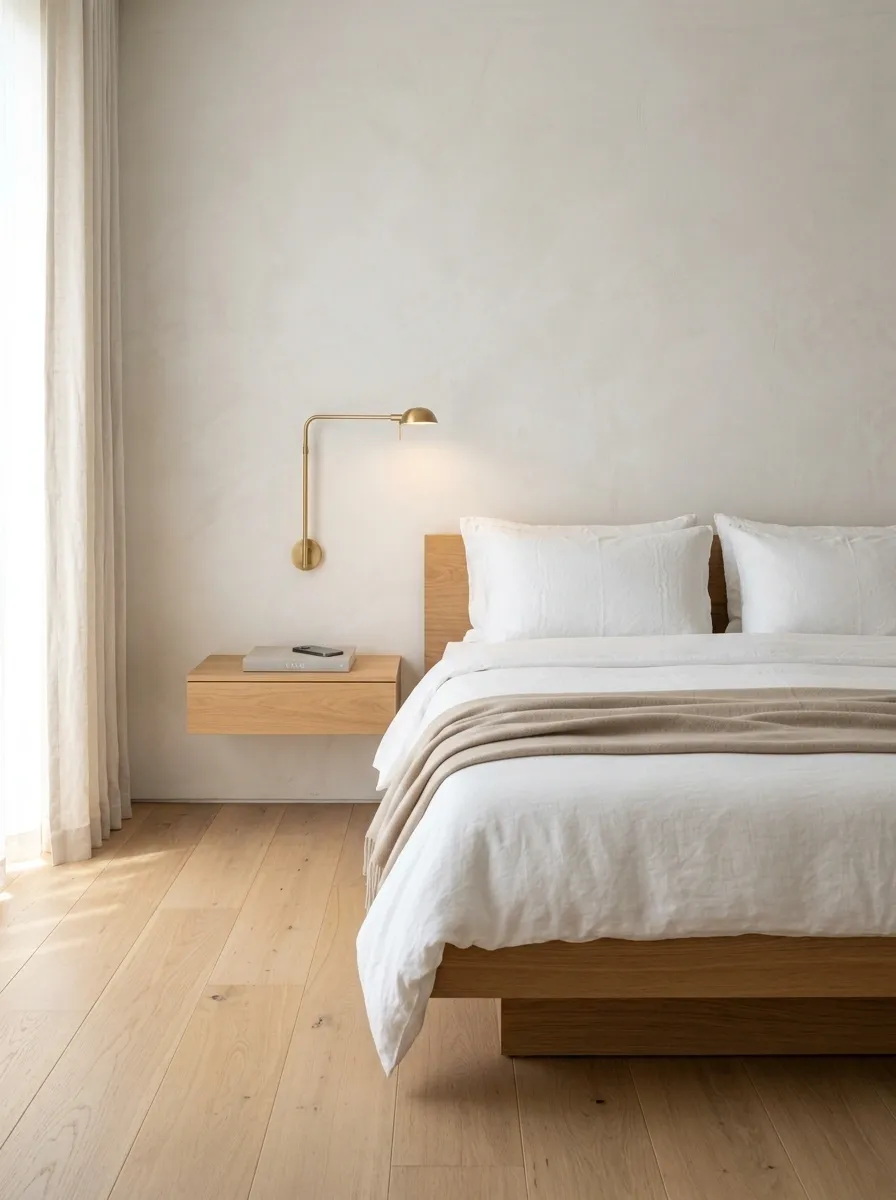
A floating bedside shelf is one of the easiest ways to make a bedroom feel lighter. Mount a simple timber or painted shelf directly to the wall, then pair it with a small wall-mounted reading lamp. The floor remains completely clear, which makes even a compact room feel more open.
Keep the shelf surface almost empty. A phone, book, and small lamp are enough. A bedside table does not need to become a skincare collection, candle shrine, charging station, jewelry display, and emergency snack department simultaneously.
Minimalist Bedroom With a Deep Green Accent Wall
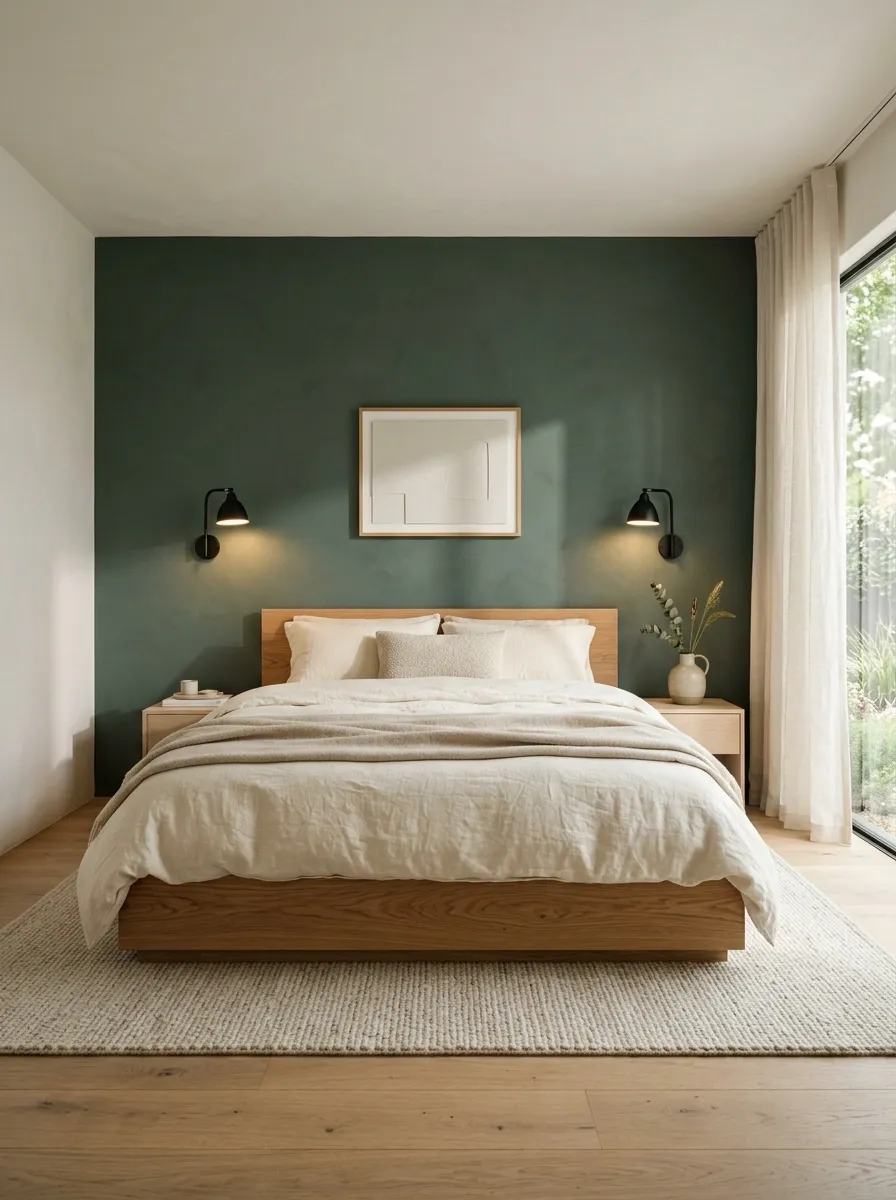
A deep muted green wall behind the bed can give a minimalist room depth without requiring complicated decoration. Keep the furniture pale or warm timber, then use cream bedding and restrained black or bronze lighting. The green wall should be the clear visual anchor, while the rest of the room supports it quietly.
There is no need for green cushions, green artwork, green lamps, green ceramics, and a green blanket forming a committee around the bed. The wall already made the statement.
Minimalist Bedroom With an Architectural Plaster Wall
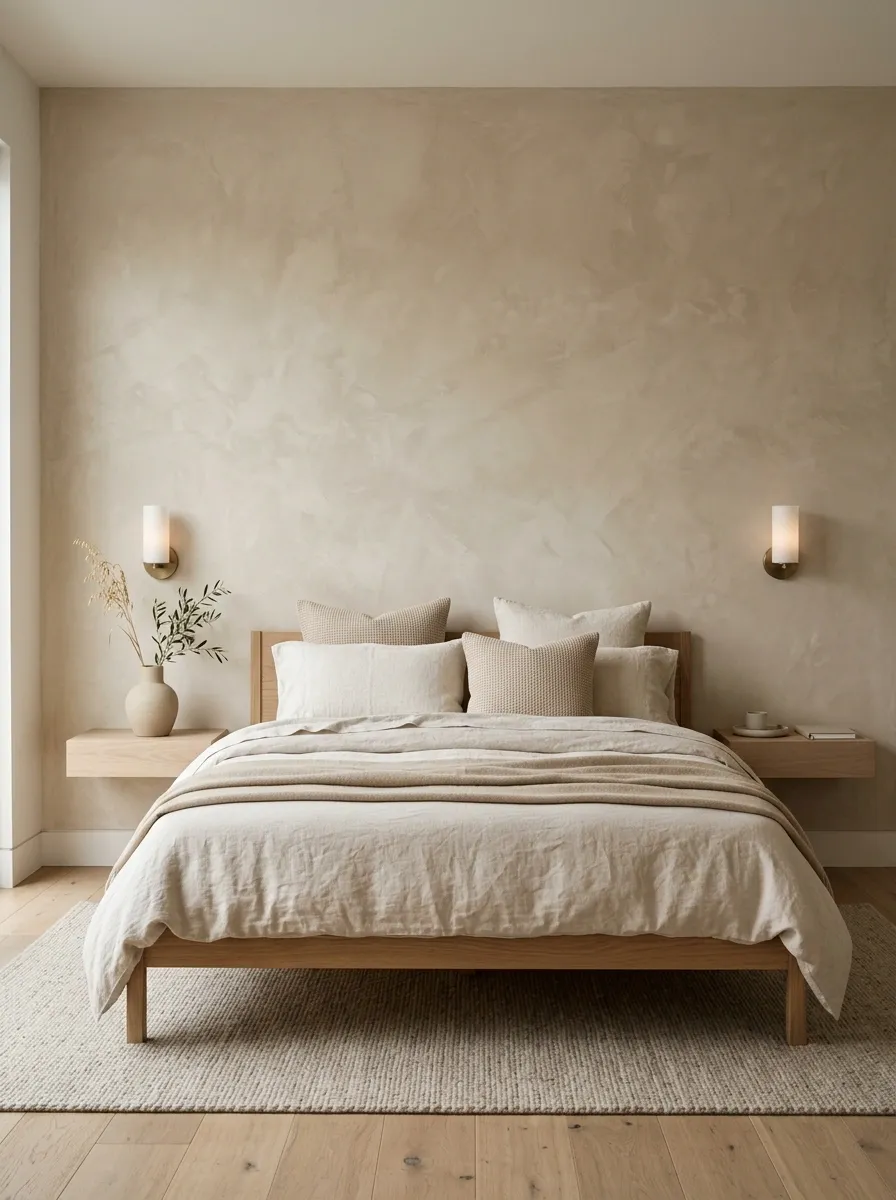
A textured plaster or limewash wall behind the bed can become the artwork. Soft irregularity catches daylight differently throughout the room, giving the wall depth without introducing another object. Pair it with a simple upholstered or timber bed, restrained lighting, and warm neutral bedding.
The finish should remain subtle rather than overly distressed. The point is not to make the wall look like an ancient ruin. It simply needs enough movement that the surface changes as the light moves.
WHEN THE SURFACE IS ALREADY INTERESTING
Minimalist Bedroom With a Hidden Wardrobe Wall
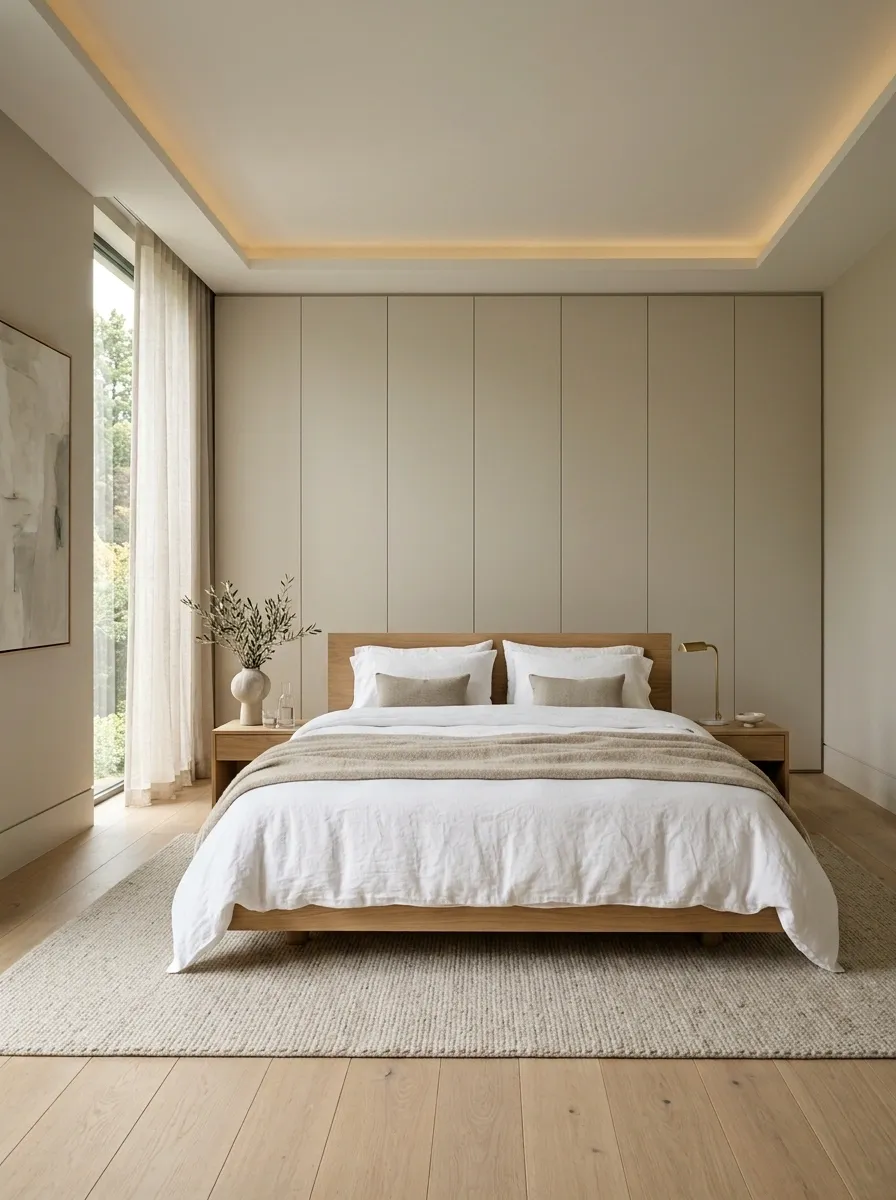
Hidden storage is one of the strongest tools in a minimalist bedroom because it removes visual interruptions without sacrificing function. Use full-height cabinetry with flush fronts painted in the same tone as the surrounding wall. Minimal handles, recessed pulls, or push-latch doors keep the surface calm.
The bed can then become the main furniture element while everything else visually retreats. Storage has learned manners. That is basically the dream.
Minimalist Bedroom With a Soft Blue Gray Palette
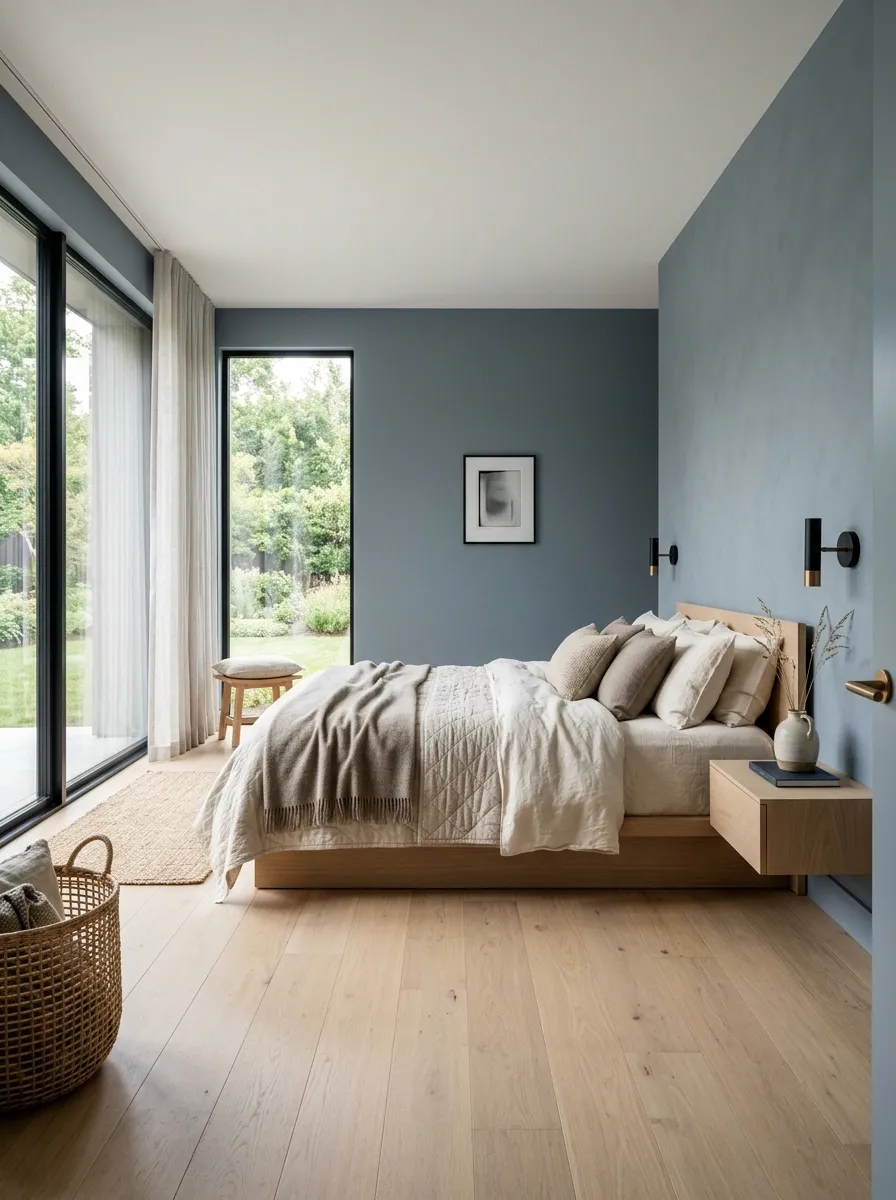
Dusty blue gray creates a cooler version of the minimalist bedroom while remaining gentle enough for a sleeping space. Use it on the walls, then warm the room with cream bedding, pale oak, and taupe textiles. A small amount of black or bronze hardware can give the composition definition.
The color works because it is supported by warm materials. Without that balance, blue gray can become chilly very quickly. There is also no need to introduce five additional shades of blue because the first one looked lonely.
Minimalist Bedroom With a Statement Pendant
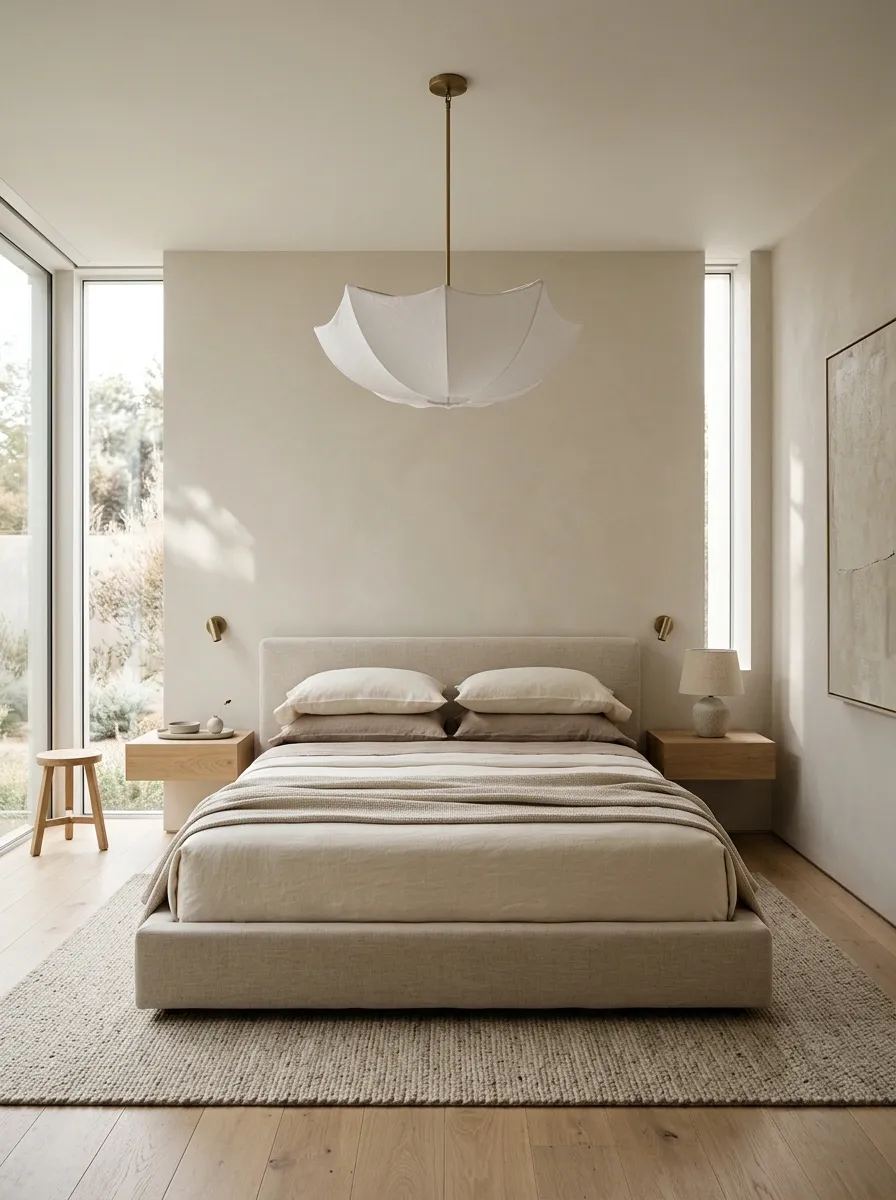
One sculptural pendant can give a minimalist bedroom a strong focal point without adding anything to the floor. Choose a large paper, linen, ceramic, or matte-metal shade and hang it where it creates a clear visual relationship with the bed. Keep the bedside surfaces simple and let the pendant become the decorative object.
This is particularly useful in rooms where the walls need to remain quiet. Finally, something pretty that does not require a shelf.
Minimalist Bedroom With a Built-In Desk
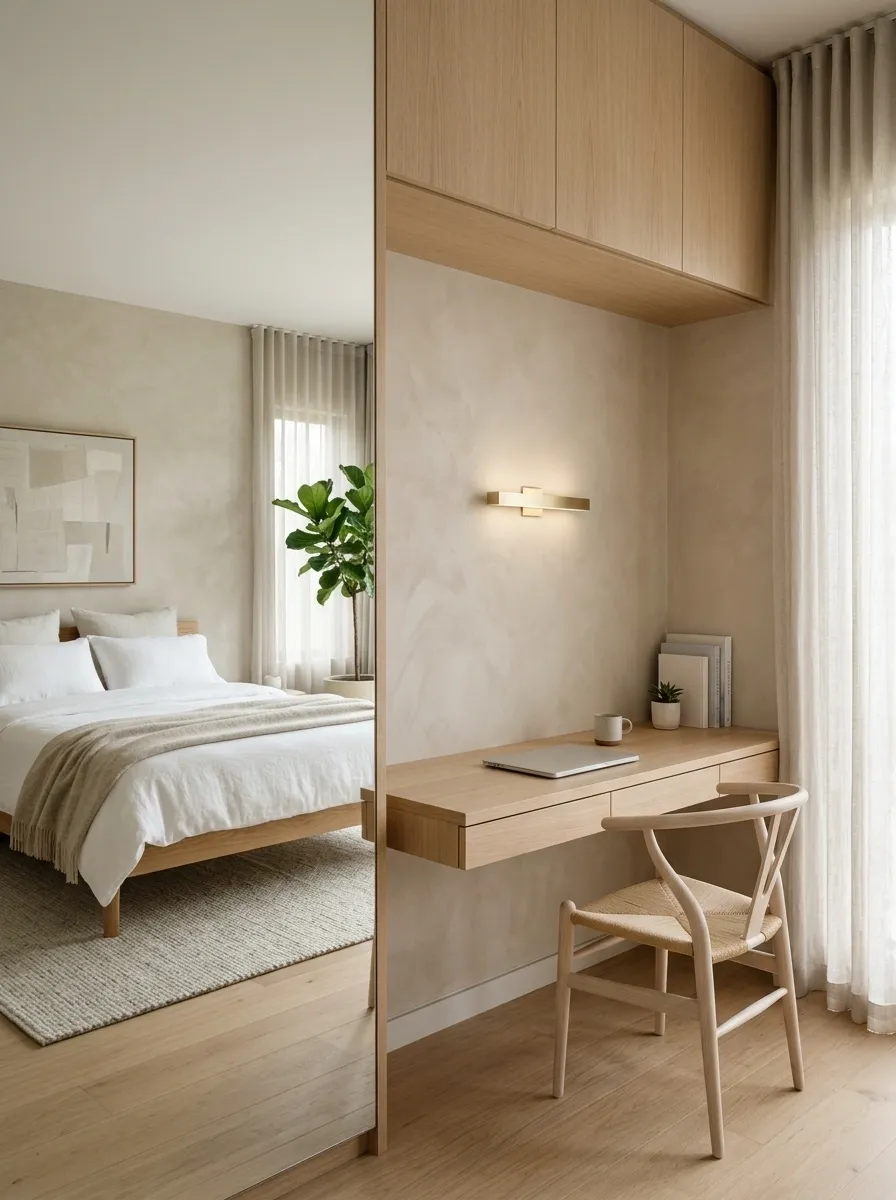
A built-in desk can turn a bedroom into a useful multifunctional space without making it feel like an office. Use a narrow floating surface, a simple chair, concealed storage, and a wall light. Keeping the desk in the same material or color family as the bedroom furniture makes the two functions feel connected.
The desk should disappear when it is not being used. Cables do not need to know about every purchase, so route them through concealed openings or behind the cabinetry whenever possible.
Layered Finishes and Final Composition
Minimalist Bedroom With Floor-Level Lighting
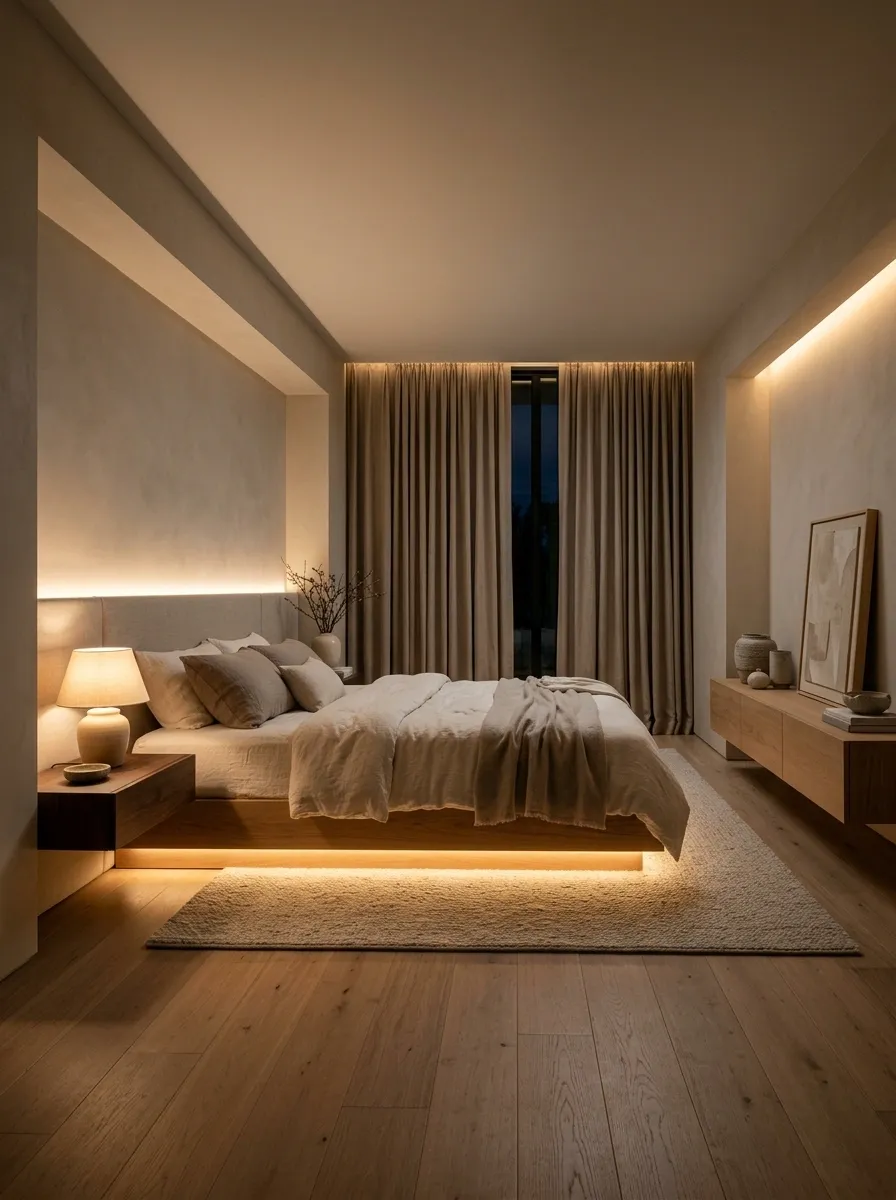
Floor-level lighting creates atmosphere without adding another visual object at eye level. Concealed warm LED strips beneath a floating bed, low cabinetry, or a recessed wall detail can create a subtle glow that makes the room feel layered after dark.
Keep the bedside lighting warm as well. Cool white bulbs in a bedroom have a strange talent for turning a peaceful sleeping space into a dental reception area. The goal is not brightness. It is controlled visibility and soft depth.
Minimalist Bedroom With One Large Artwork
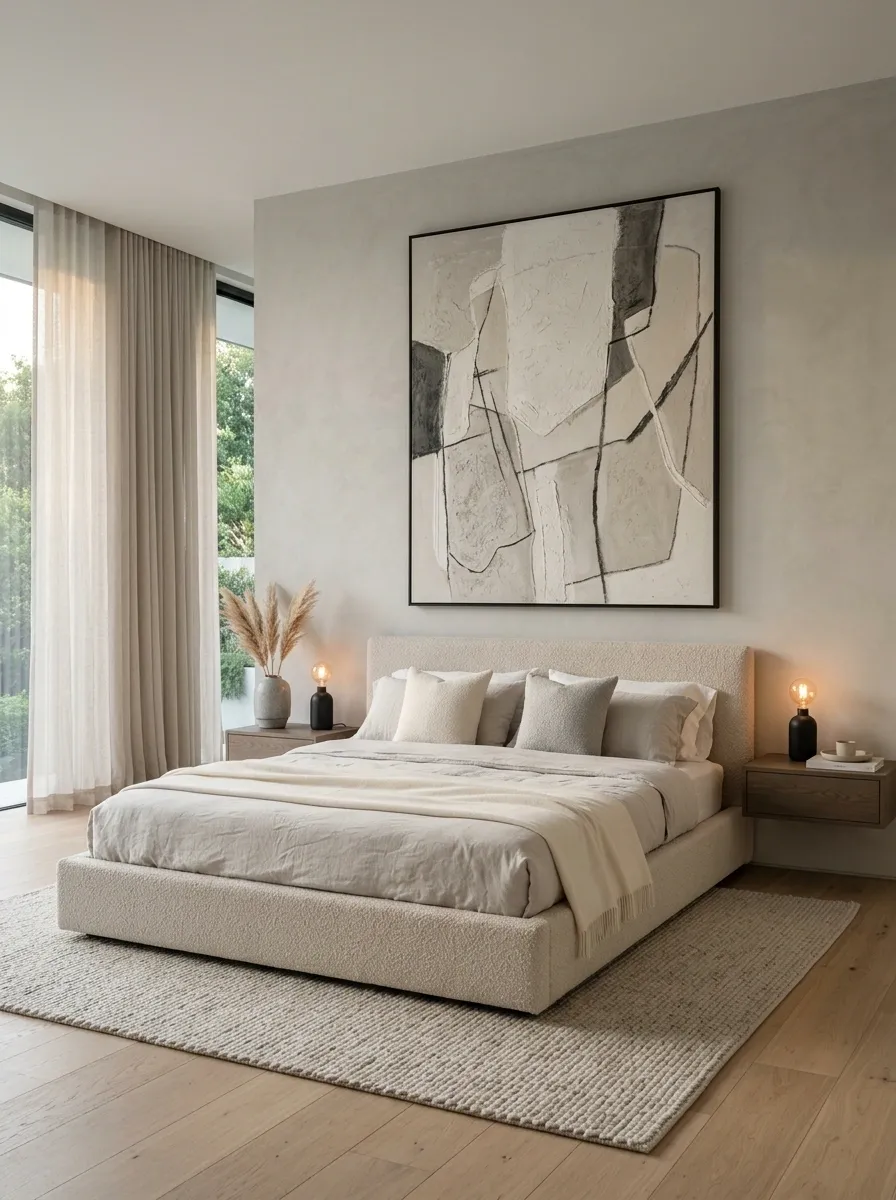
One substantial artwork above the bed can feel much calmer than a collection of small frames. Choose an abstract, monochrome, textural, or restrained graphic piece with enough scale to relate to the bed. A simple frame keeps attention on the composition rather than creating another decorative layer.
The artwork should have breathing room around it. Seven tiny frames can feel like a family meeting. One large piece can feel like an architectural decision.
Minimalist Bedroom With Warm Wood Ceiling Panels
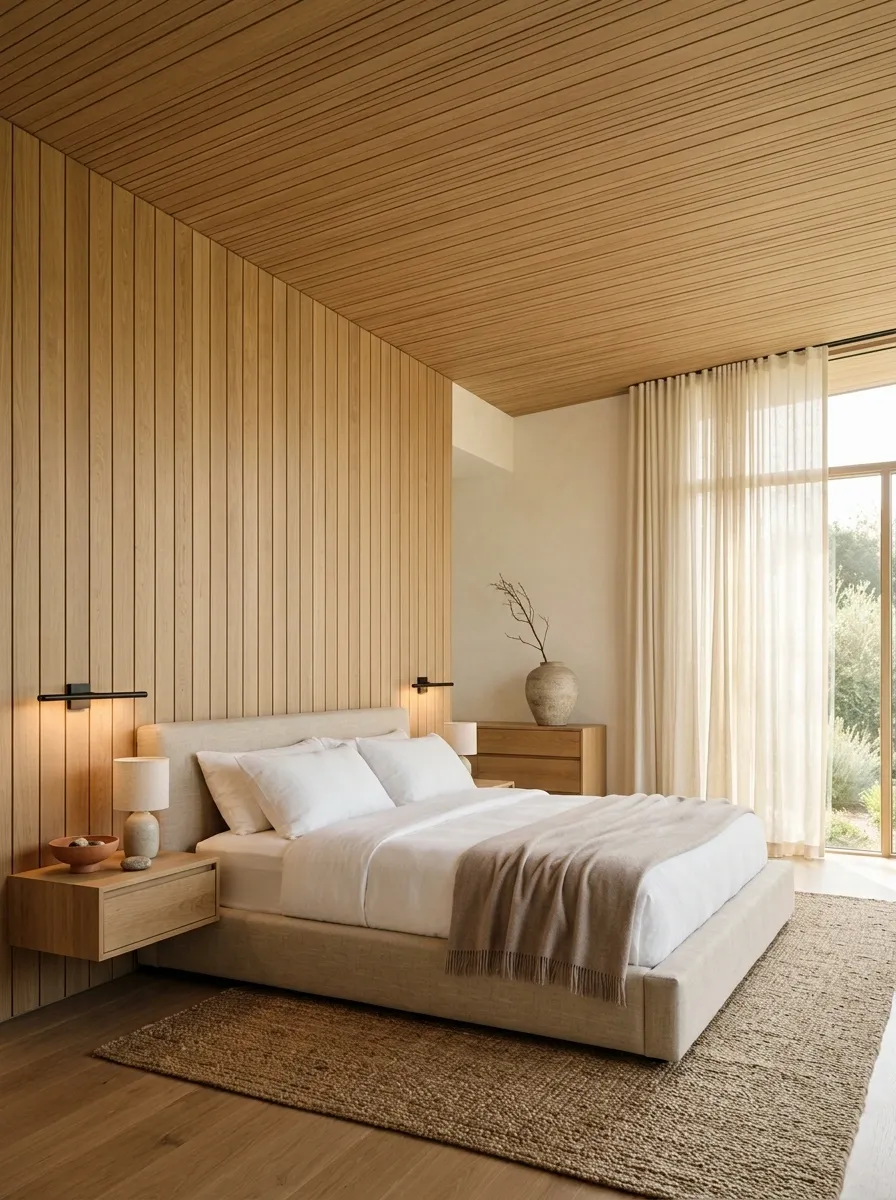
A warm wood ceiling can turn an otherwise restrained bedroom into something architectural without adding another object to the floor. Narrow timber panels can run across the ceiling or continue subtly toward the headboard, creating a visual connection between the upper and lower parts of the room.
Keep the furniture particularly quiet so the ceiling remains the feature. The fifth wall finally decided to have a personality, and honestly, good for it.
Minimalist Bedroom With a Soft Taupe Accent Wall
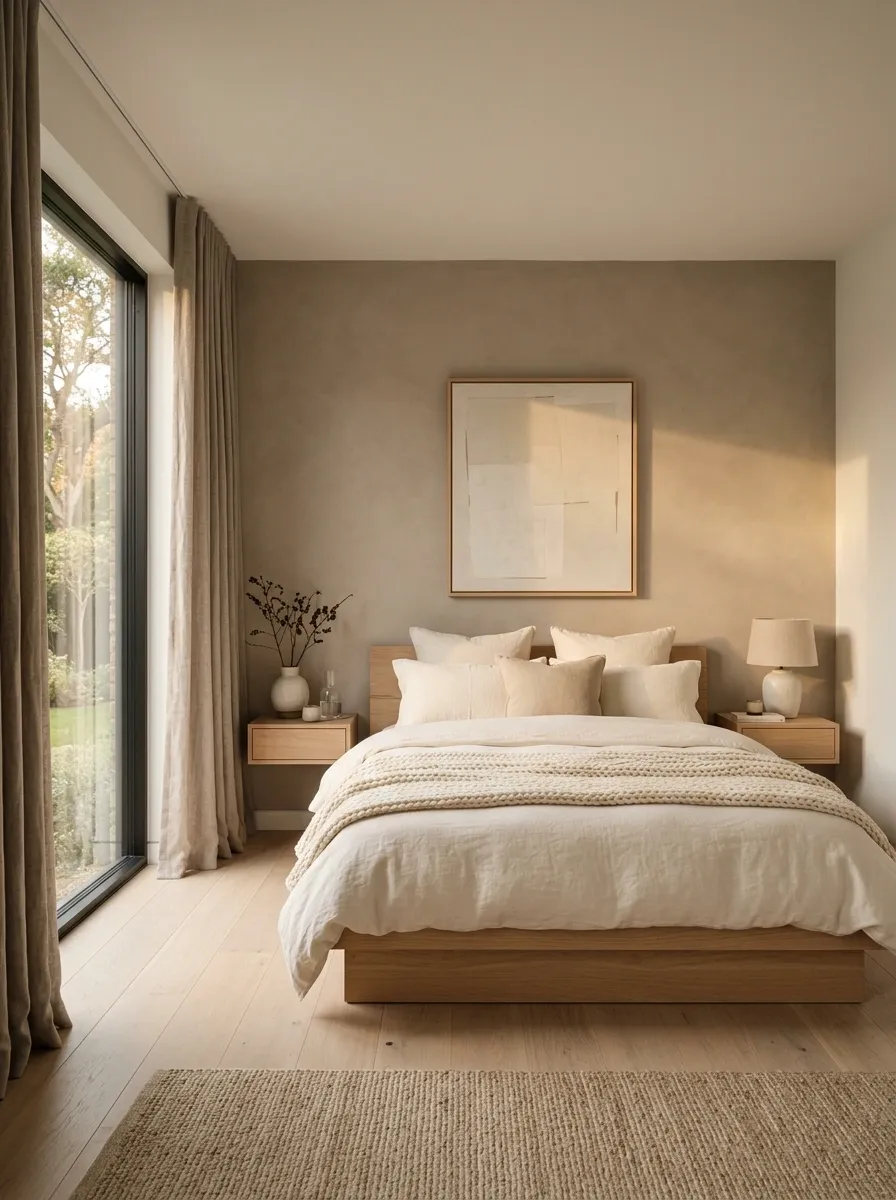
A warm taupe wall behind the bed adds depth without creating the intensity of a dark accent color. Keep the surrounding walls lighter, then repeat the taupe subtly through curtains, upholstery, or one textile. Pale timber and cream bedding prevent the room from becoming visually heavy.
The tone should stay soft and warm. The objective is a little depth, not the opening scene of a crime drama.
Minimalist Bedroom With Layered White Textures
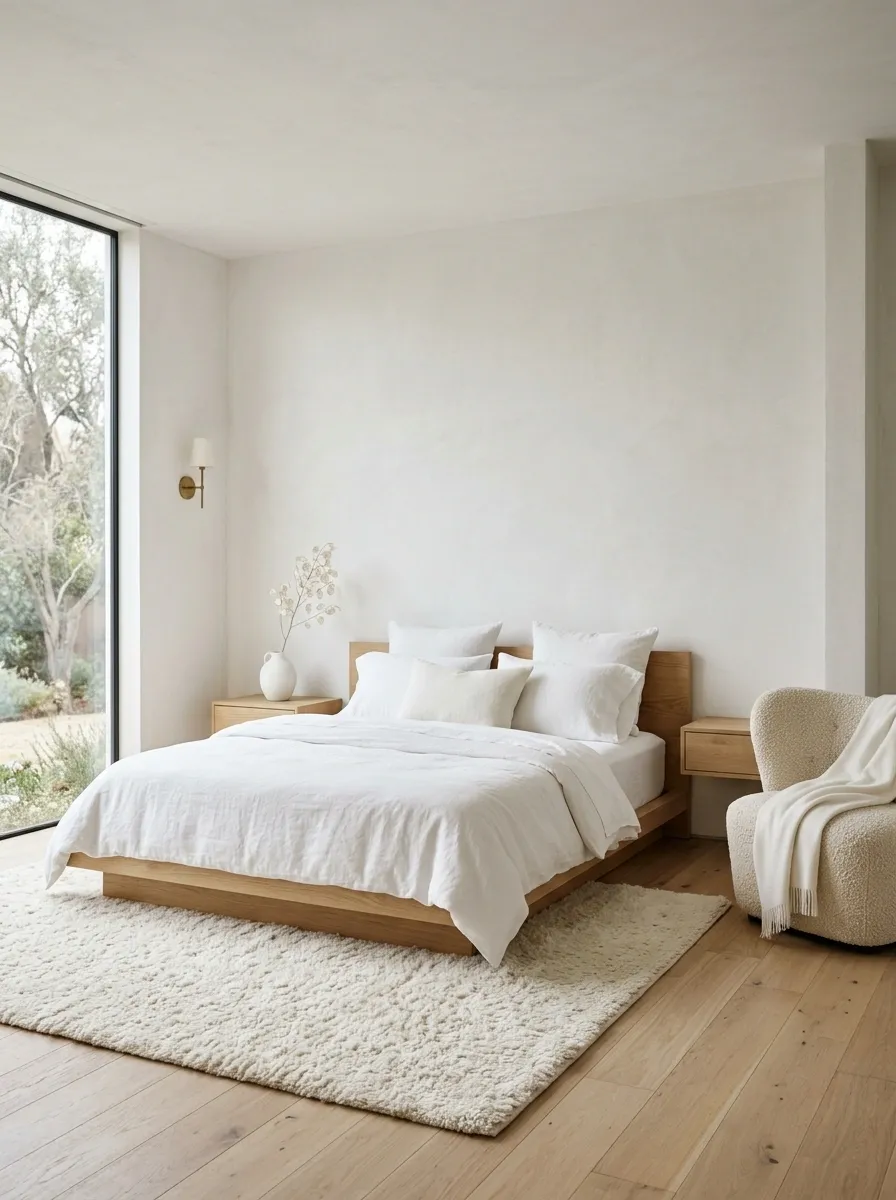
A white bedroom does not have to feel sterile when the variation comes from texture. Pair white plaster walls with crisp cotton sheets, a slightly rumpled linen duvet, boucle or wool upholstery, and a textured rug. Keep the furniture simple and let the surfaces create the visual depth.
The important distinction is between different whites with different materials and a room full of identical white objects. Adding fifteen white decorative pieces does not make the room more sophisticated. It mostly creates more dusting.
The Quiet Part Is the Point
A minimalist bedroom starts feeling expensive when the room stops trying to prove anything.
The bed does not need ten cushions. The wall does not need something hanging on every available inch. The nightstand does not need to host an entire lifestyle brand. Storage can disappear. Lighting can stay warm. Materials can provide the detail that decoration usually tries to provide.
The strongest rooms also understand that empty space is not unfinished space. A clear walkway, an open wall, a little breathing room around the bed, or a quiet corner can make the furniture that remains feel more intentional.
That is really the secret behind good minimalist bedroom ideas: edit harder, then let the materials, proportions, architecture, and light do the talking.
Because apparently the bedroom can look expensive without owning a decorative bowl collection. Who knew?