
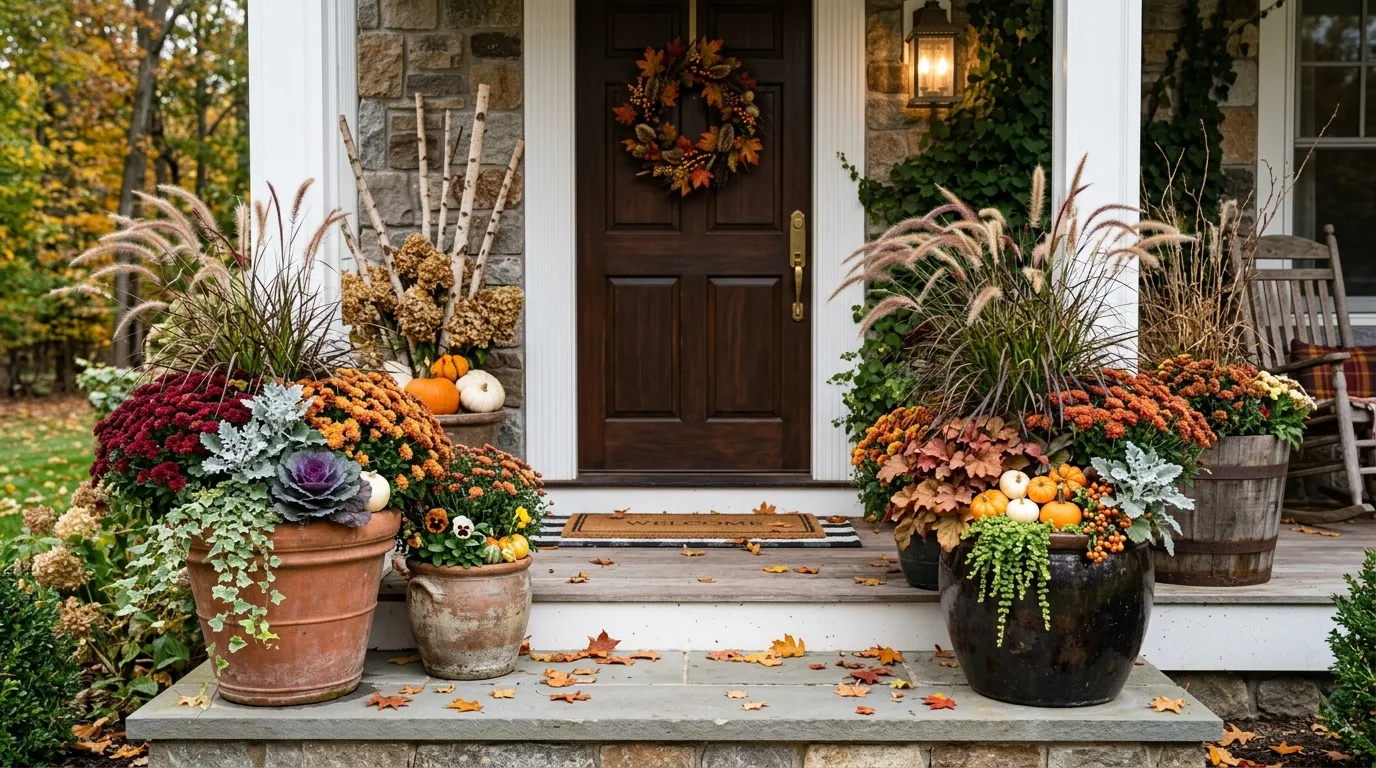
Walk down any suburban street in October, and you will see the exact same thing: two identical plastic pots of yellow mums dropped apologetically next to a front door. It is the visual equivalent of a shrug. The problem isn’t the mums themselves. The problem is the complete absence of architectural context.
Outdoor planters should never look like temporary decorations waiting for the November trash pickup. They need enough physical presence to anchor the architecture of the house. If a container disappears against the brick or looks dwarfed by a heavy wooden door, the entire composition fails.
This gallery breaks down complete, finished exterior concepts that move past the standard nursery-pot rut. It is time to look at how scale, textural foliage, and structural branches actually work together to create an entryway worth looking at.
Why Most Fall Planters Fail Visually
The Scale Problem
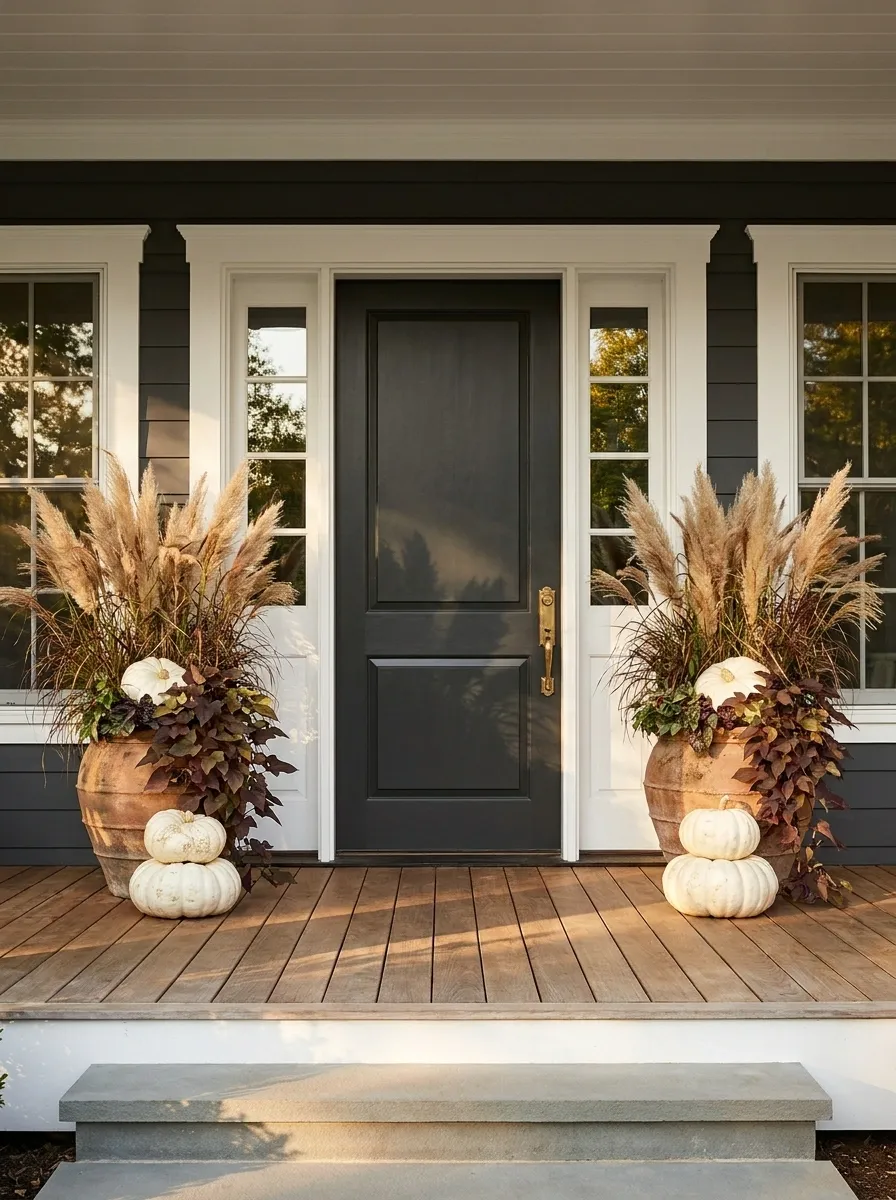
The most common mistake on a front porch is undersizing the planters. A standard front door is heavy and visually dominant. Placing two ten-inch plastic pots next to it makes the plants look ridiculous. The container needs enough physical mass to anchor the architecture.
The Texture Problem
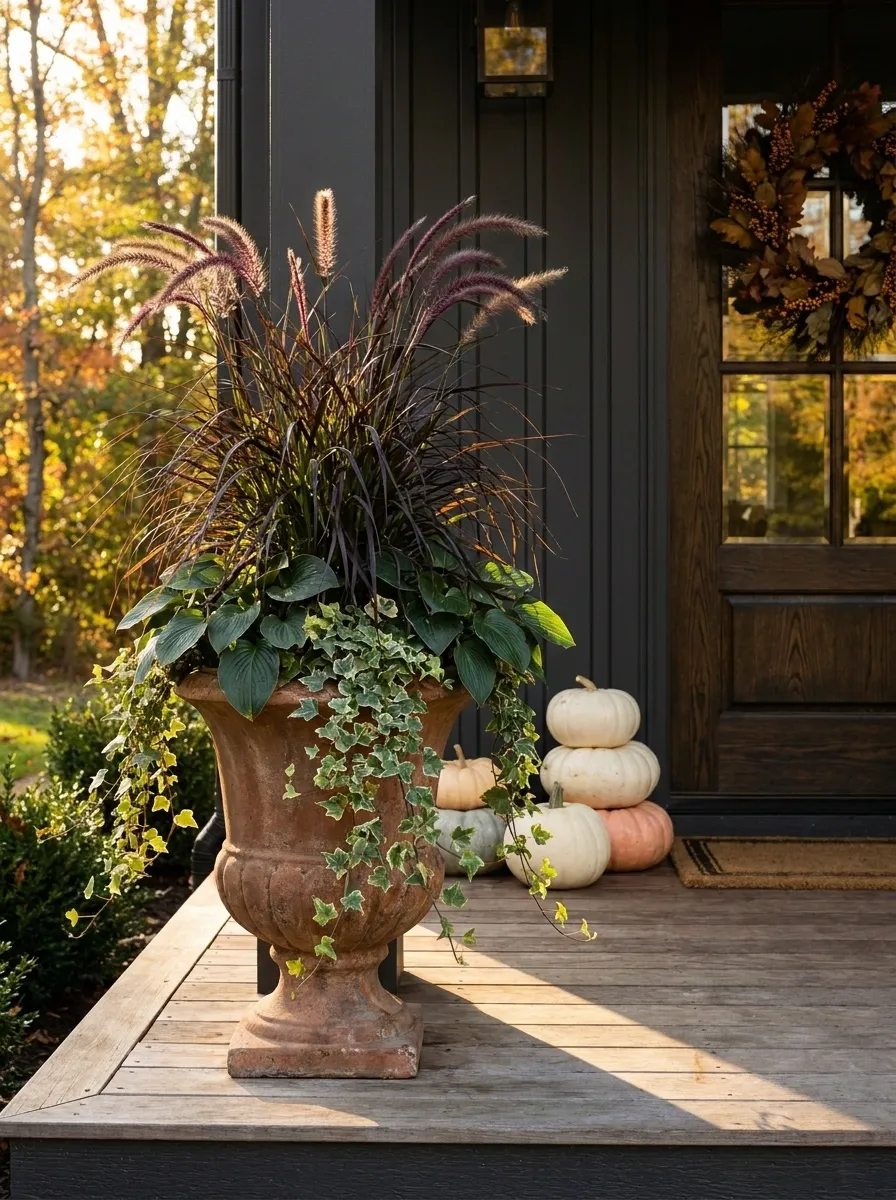
Mums are fine, but a solid dome of tiny flowers provides exactly zero structural interest. A successful outdoor arrangement needs contrasting textures. It requires something spiky, something trailing, and something with broad leaves to actually catch the light and cast shadows.
Complete Fall Front Porch Concepts Ideas
Rich Autumnal Wood Planters
Deep, weathered wooden planters flank a magnificent dark wood double door, creating a striking entry that immediately draws the eye. The overflowing arrangement features a dense mix of dried fall foliage, textured grasses, and rich amber tones that mirror the warmth of the natural wood.
This setup works brilliantly because the earthy texture of the containers harmonizes with the intricate grain of the front door. Scattering a few vibrant orange pumpkins around the base adds an inviting, grounded layer to the grand composition.
Avoid placing this pairing against a cool-toned gray exterior, as the rich golden browns will clash with the surrounding architecture. Keep the lighting warm to accentuate the natural pigments of the foliage as the evening sets in.
Modern Asymmetry in Dark Concrete
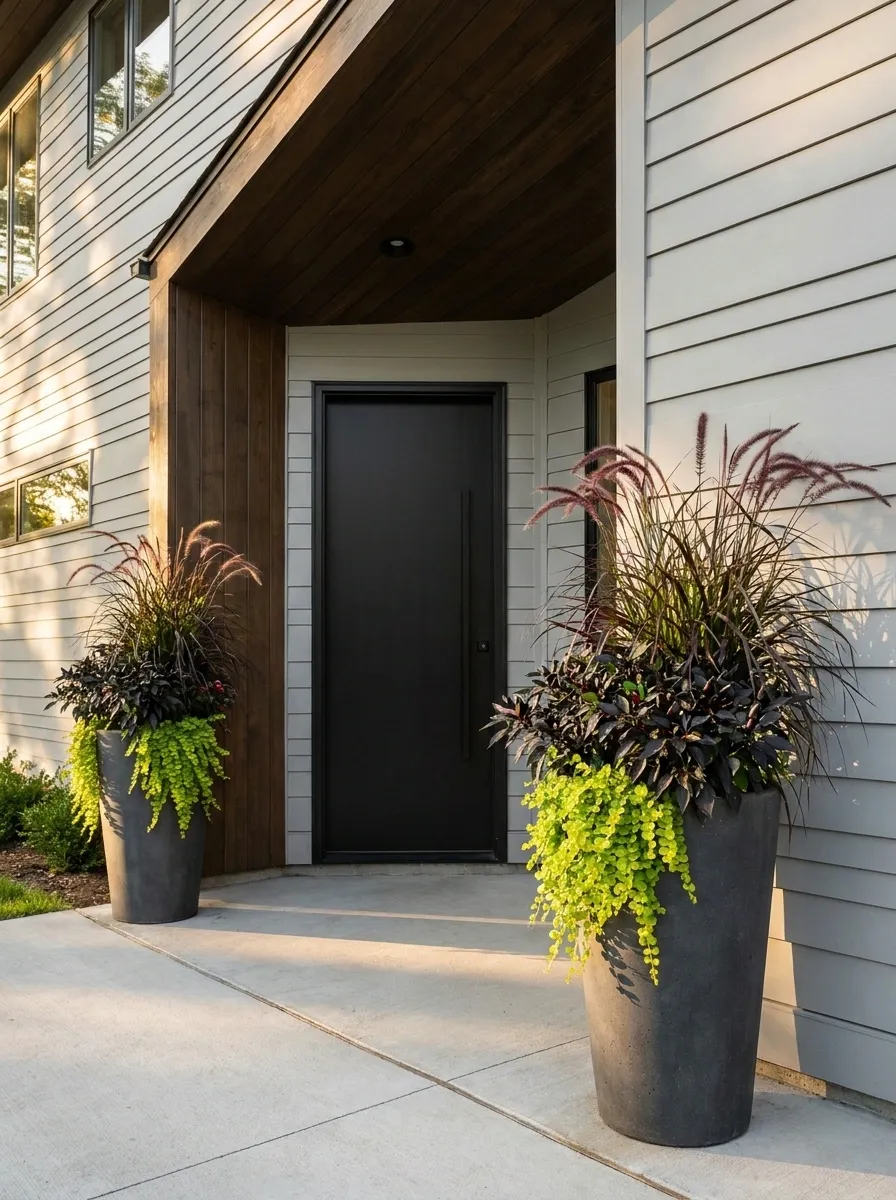
Tall charcoal concrete tapers flanking a matte black door give the entrance an immediate architectural edge. The planting ignores traditional fall colors entirely. Instead, dark purple fountain grass provides the height, while almost-black ornamental peppers create the density. Lime creeping jenny spills over the stark concrete edges.
This works because the container color matches the door. The high-contrast lime green foliage pulls the eye away from the dark background. It is a severe, disciplined look that keeps a modern exterior from feeling cold. Avoid putting this composition against dark brown siding, or the entire setup will disappear into the shadows.
Galvanized Farmhouse Wash Tub
An elevated galvanized wash tub on a slender metal stand brings height and undeniable industrial charm to a traditional porch corner. Inside, a burst of fiery orange mums cascades over the rim alongside delicate dried branches and a solitary white heirloom pumpkin.
This design succeeds by contrasting the cold, utilitarian metal of the tub with the soft, vibrant warmth of the autumn florals. Tossing a plaid fabric scrap over the edge ties the rustic elements together effortlessly and adds a cozy textile layer.
This look requires a rustic or farmhouse backdrop to truly shine, as a sleek ultra-modern setting would fight the vintage aesthetic. Pair the arrangement with simple lanterns on the floor to anchor the vertical height of the stand.
The Classic Overgrown Weathered Urn
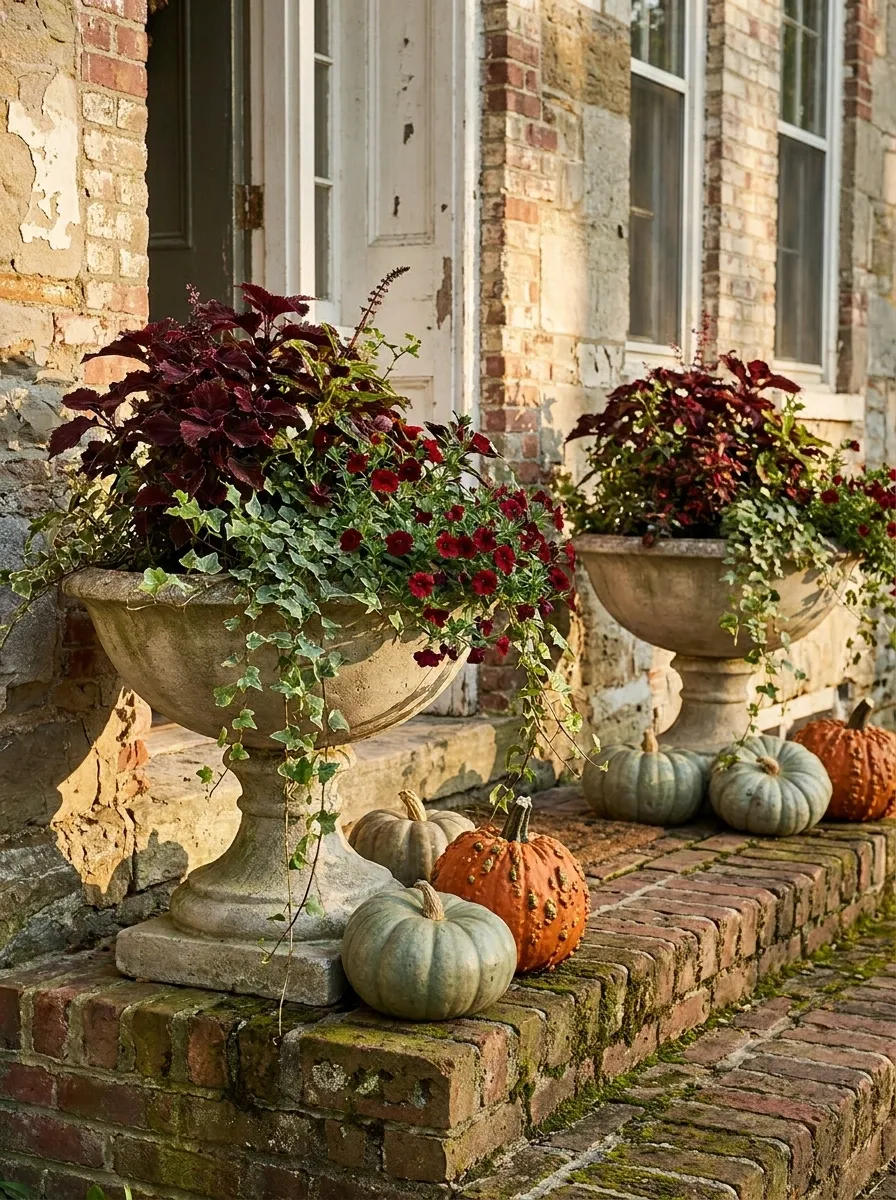
Heavy, aged stone urns sit directly on a weathered brick stoop. They overflow wildly with burgundy coleus, trailing English ivy, and deep red calibrachoa. The styling is intentionally loose. A few heirloom pumpkins in muted greens and warty oranges rest on the bricks around the base of the pedestals.
The composition succeeds because the urns look like they have been sitting there for a century. The loose, sprawling plants soften the heavy stone and the rigid brick lines. This design requires a traditional or historic home exterior. Placing this setup in front of a sleek modern build just looks like a yard sale purchase left on the porch.
Carved Stone Pumpkin Vessels
Fluted stone-finished pumpkin planters sit proudly on a rustic wooden bench, overflowing with delicate dried hydrangeas and wispy golden grasses. The neutral, carved texture of the vessels keeps the intense autumn color palette feeling sophisticated rather than chaotic.
The magic here lies in the clever use of planters that double as seasonal decor themes. By letting the dried floral arrangements spill loosely over the edges, the display feels organic and effortlessly gathered from the surrounding landscape.
Do not overcrowd the bench with too many competing accessories; let these sculptural pumpkin vessels take center stage. Pair them with a simple folded throw blanket nearby to complete the welcoming harvest vignette.
Rustic Orchard Half-Barrels
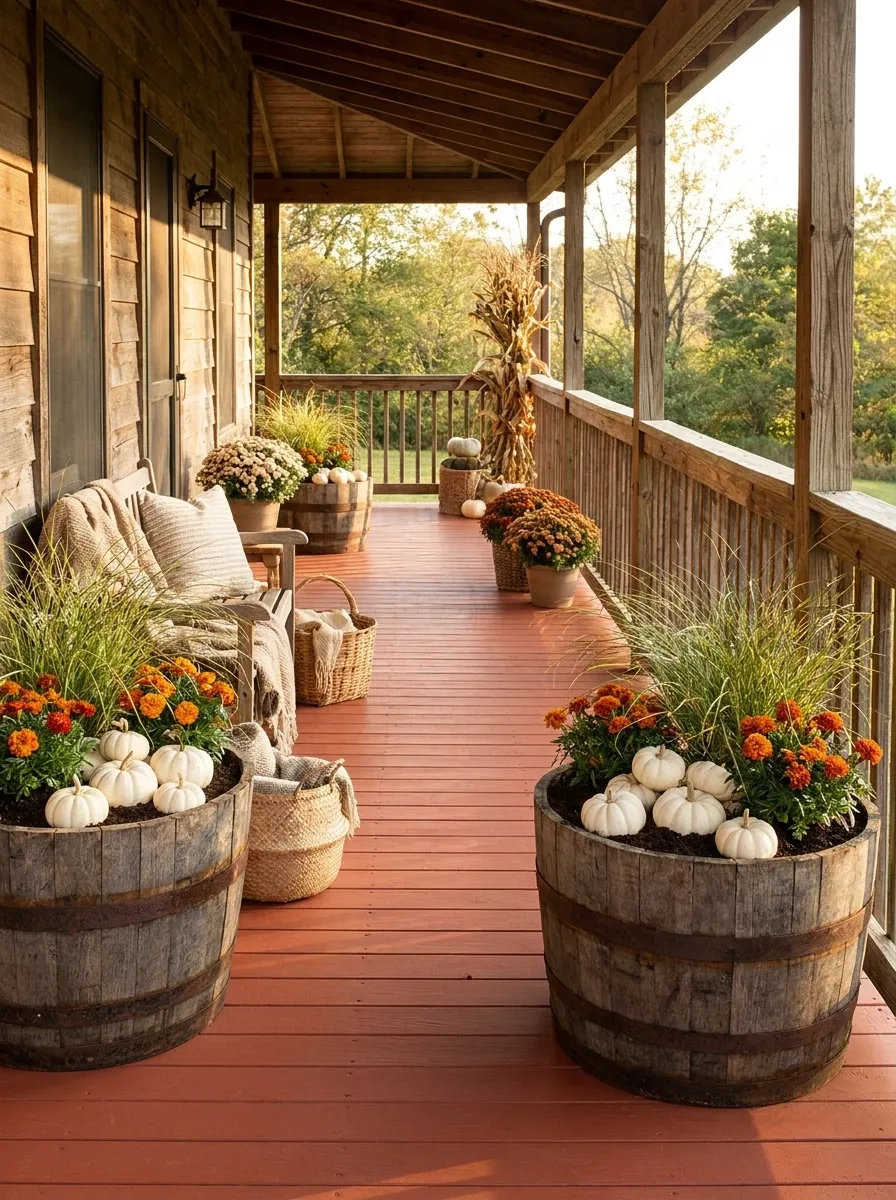
Reclaimed oak wine barrels occupy the wide corners of a wrap-around wooden porch. They are densely packed with dwarf maiden grass and vibrant orange marigolds. White mini pumpkins are physically tucked directly into the potting soil, acting as part of the arrangement rather than surrounding it.
The wood-on-wood relationship works because the weathered oak of the barrels provides enough contrast against a painted porch deck. Tucking the pumpkins directly into the soil adds a surprising focal point and keeps the arrangement feeling grounded.
Minimalist Monotone in Fluted White
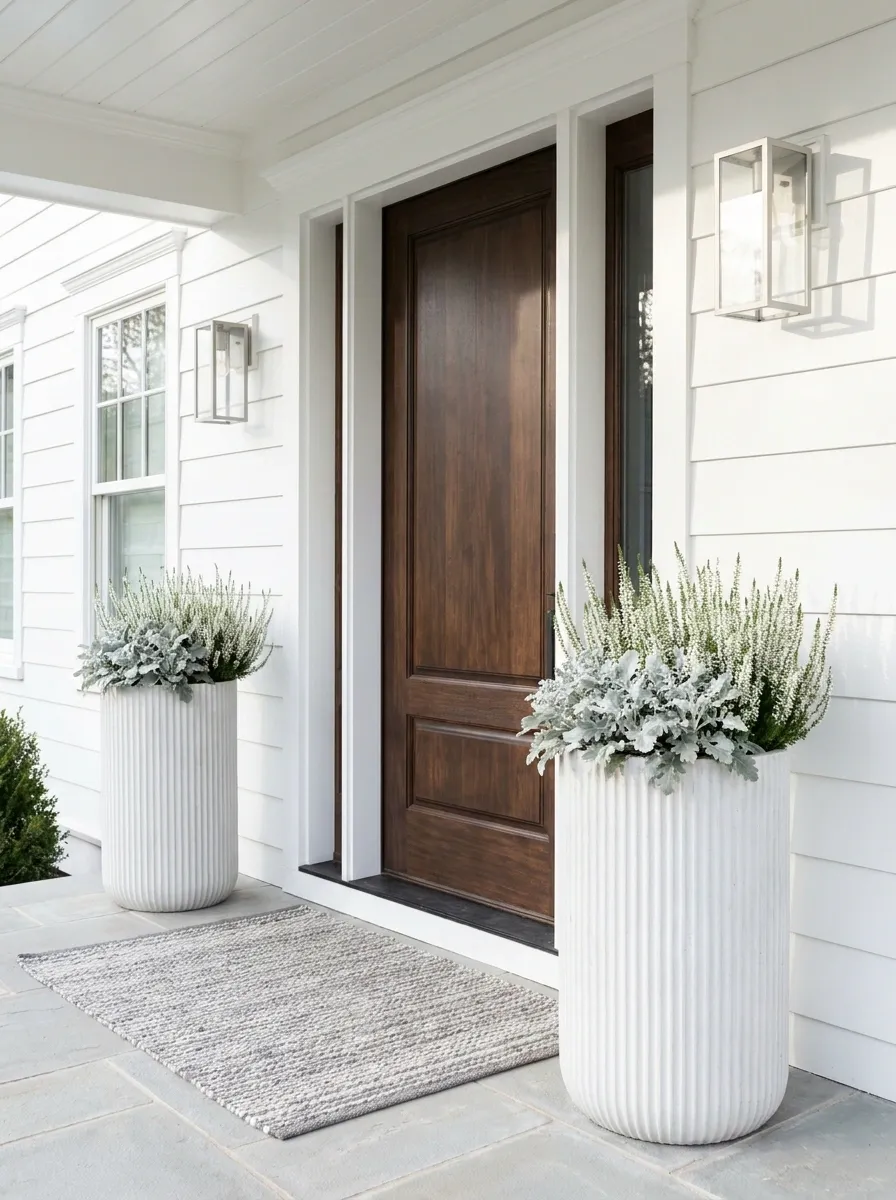
Ribbed white concrete cylinders stand sharply against a white modern farmhouse exterior. The planting is strictly monotone. Silver dusty miller provides the low texture, while white blooming heather shoots up from the center. There are no trailing plants and no loud fall colors.
This design thrives on restraint. By eliminating the standard autumnal orange and red, the texture of the ribbed concrete and the silvery foliage become the main event. It feels crisp and highly intentional. The lack of trailing plants keeps the vertical lines of the fluted planters completely visible.
The Aged Copper Statement
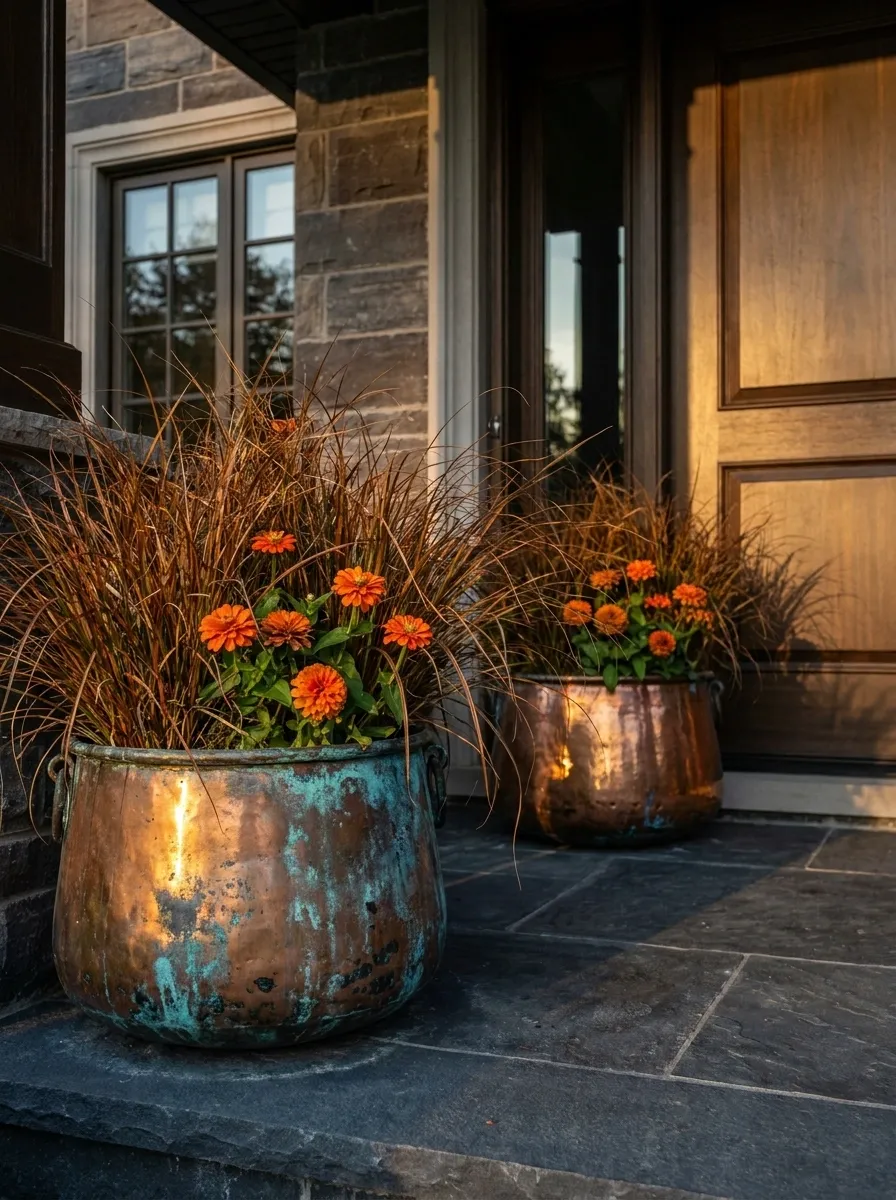
Large, heavily tarnished copper cauldrons sit on a bluestone entryway. The containers catch the autumn afternoon sun, glowing against the dark stone. They hold tall, rust-colored carex grass and bright orange zinnias.
The copper does the heavy lifting here. The metallic surface reflects light, keeping the dark entryway from feeling like a cave. The bronze carex grass acts as a visual extension of the container’s patina. Do not polish the copper. The weathered verdigris and dark oxidation spots are what keep the design from looking like a cheap catering setup.
Woven Rattan Textural Warmth
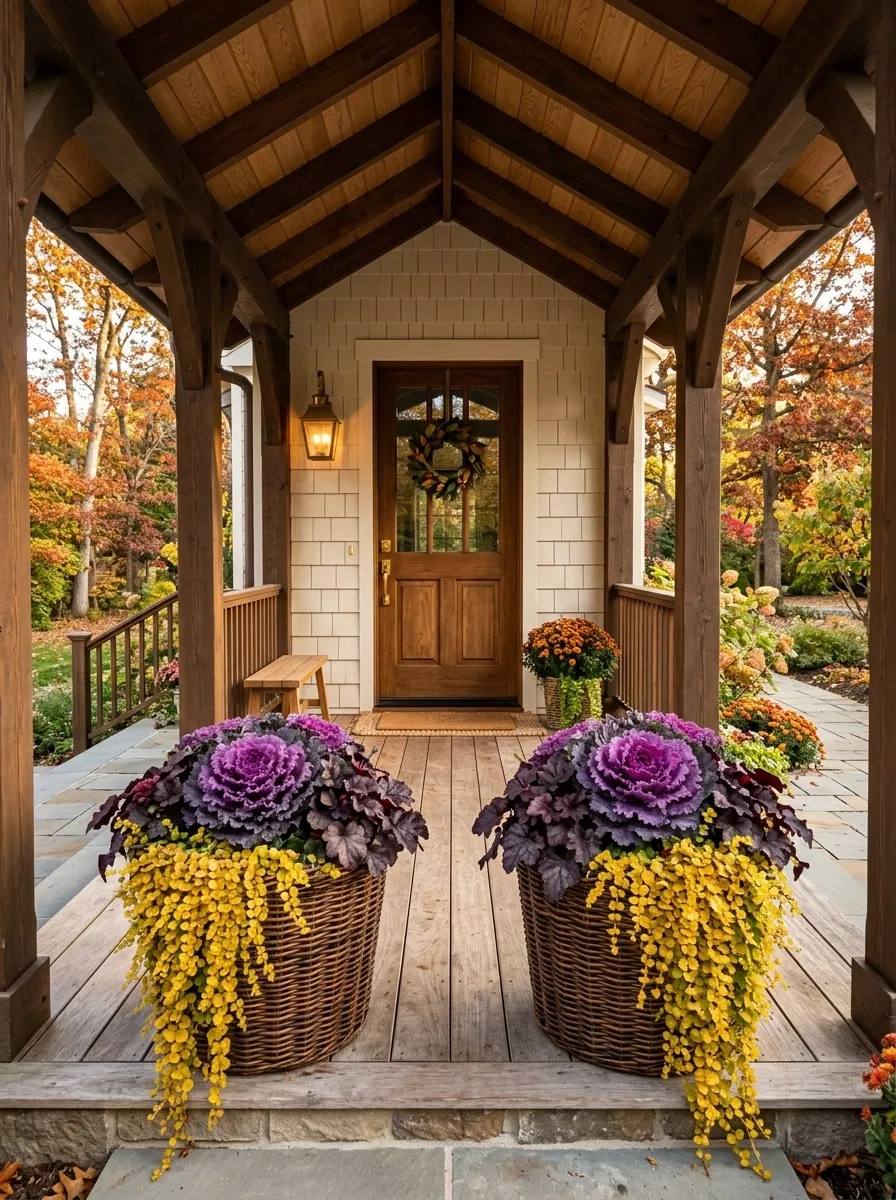
Oversized outdoor woven basket planters sit on a covered timber porch. They hold ruffled purple flowering kale, dark coral bells, and a spill of golden creeping jenny.
The woven texture of the rattan warms up the entrance and feels inherently autumnal without relying on pumpkins or predictable orange flowers. This composition works strictly for covered porches; leaving natural rattan fully exposed to autumn rain will ruin it in a single season. The purple kale provides a heavy, organic focal point while the creeping jenny acts as a bright highlighter against the dark brown basket.
Structured Topiary with an Autumn Base
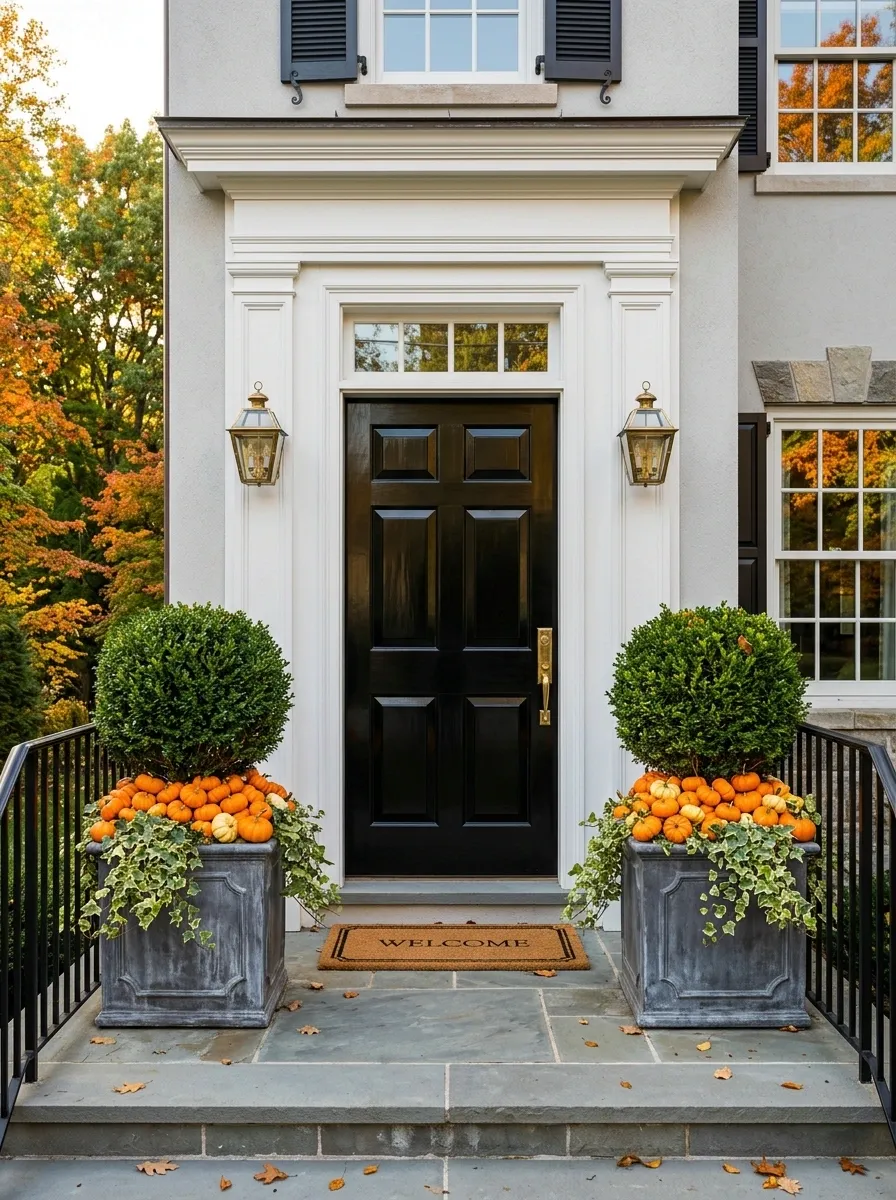
Formal boxwood spheres sit precisely centered in square, heavy lead-look planters framing a glossy black door. The base of the boxwood is heavily underplanted with miniature orange pumpkins densely packed into the soil, spilling slightly over the edge alongside variegated English ivy.
This is how traditional architecture handles seasonal design. The boxwood maintains strict, year-round geometry, while the dense pile of mini pumpkins adds the seasonal warmth. It keeps the entryway looking expensive and deliberate. A messy, unstructured mum would fight the formal architecture here. The contrast between the manicured sphere and the organic pile of gourds creates the tension that makes the design interesting.
Galvanized Farmhouse Bounty
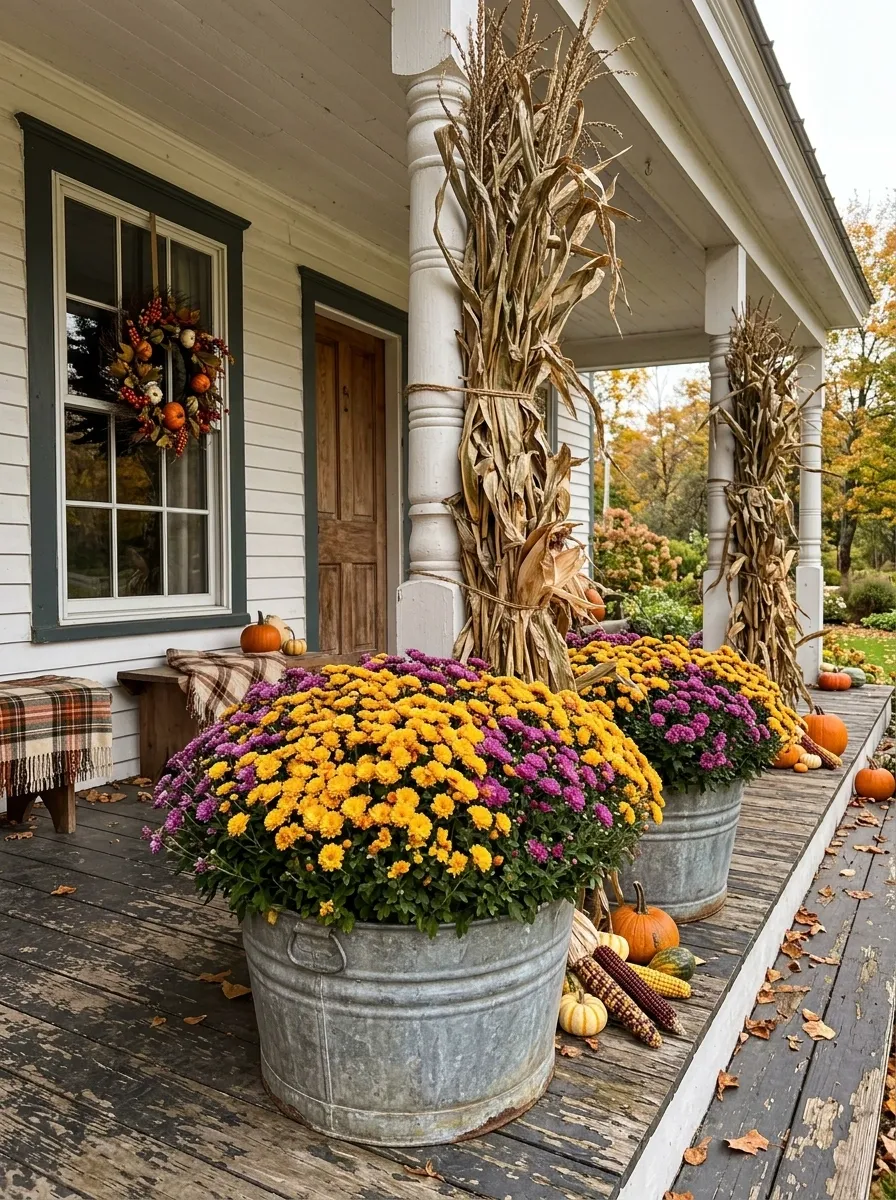
Massive galvanized steel wash tubs sit on a wide, painted wooden porch deck. They are overflowing with golden yellow mums and purple asters. Dried corn stalks are bundled tightly and tied to the porch pillars directly behind the tubs.
This is the only context where the standard yellow mum truly works. By clustering them in a massive, utilitarian metal tub instead of a small plastic pot, the scale finally matches the house. The silver of the galvanized steel breaks up the warm autumn colors, preventing the porch from looking like a pumpkin patch explosion. The rough texture of the dried corn stalks gives the composition much-needed height.
Contemporary Slate and Snake Plant
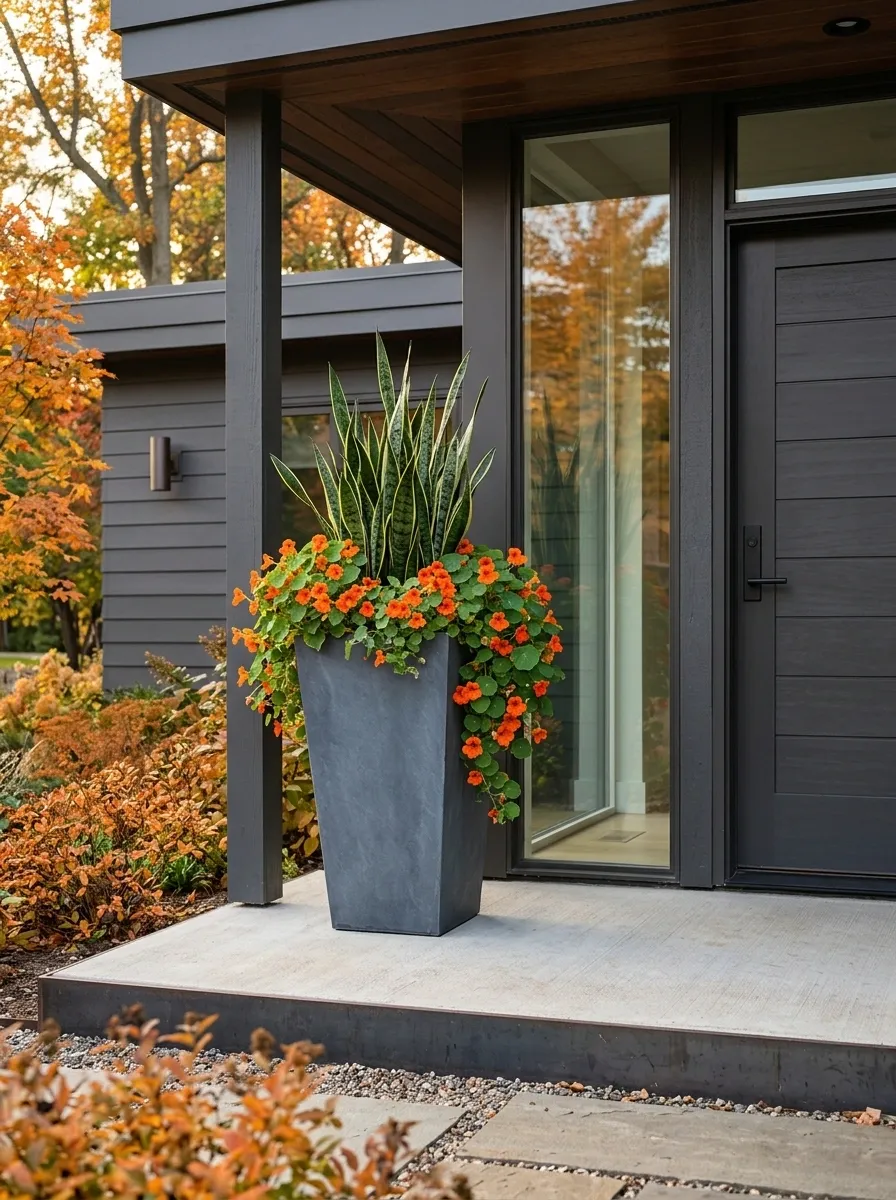
Sleek, tall slate-grey square planters stand on a modern concrete stoop. Architectural snake plants spike vertically from the center, completely surrounded by a vibrant collar of bright orange trailing nasturtium.
Fall planters do not have to rely on traditional autumn foliage. The snake plant delivers a sharp, modern vertical line that complements flat-roofed or mid-century architecture perfectly. The nasturtium does all the seasonal heavy lifting, providing the required hit of orange while softening the hard edge of the slate planter. It proves you can participate in the season without abandoning a minimalist aesthetic.
Moody Gothic Romance
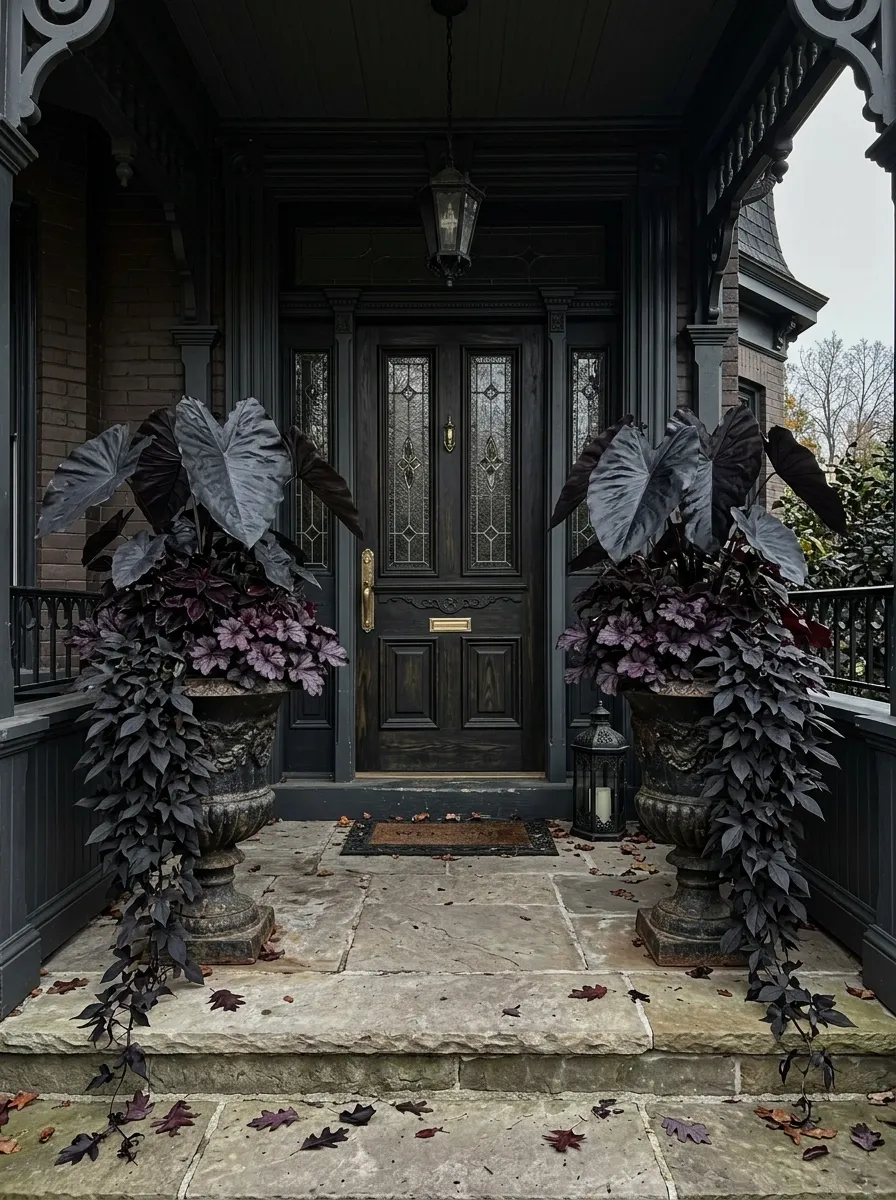
Ornate, heavy cast-iron urns flank a dark stained wood door. The planting is aggressively dark: massive ‘Black Magic’ elephant ears serve as the thriller, surrounded by dark purple heuchera and a long trail of black sweet potato vine reaching the ground.
This refuses the traditional bright and cheerful autumn aesthetic in favor of high drama. It works beautifully on Victorian or heavily detailed historic homes. The composition relies entirely on texture rather than color contrast—the matte velvet of the sweet potato vine against the glossy sheen of the elephant ear. It feels sophisticated, slightly severe, and completely arresting.
The Vintage Stacked Crate
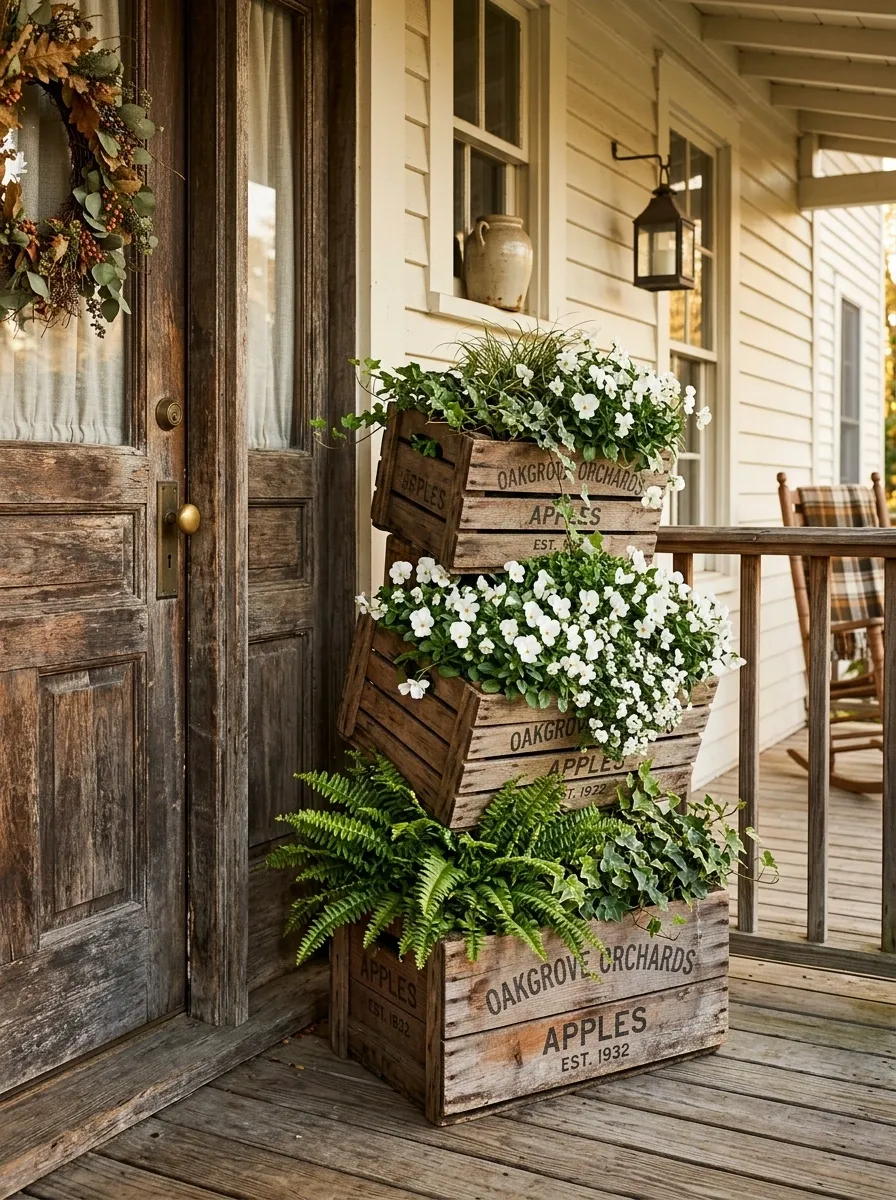
Staggered vintage wooden apple crates form a tiered display beside a farmhouse door, lined and repurposed as planters. They hold thick autumn ferns and a mass of small white pansies cascading out of the slatted sides.
This design solves a common front porch problem: creating vertical presence without spending hundreds of dollars on tall architectural planters. By stacking the crates, the plants are lifted closer to eye level. The rough, stamped wood inherently belongs to the season. The white pansies provide a quiet break from the usual heavy autumn reds and oranges. The composition feels collected and practical rather than overly styled.
Symmetrical Corten Steel Troughs
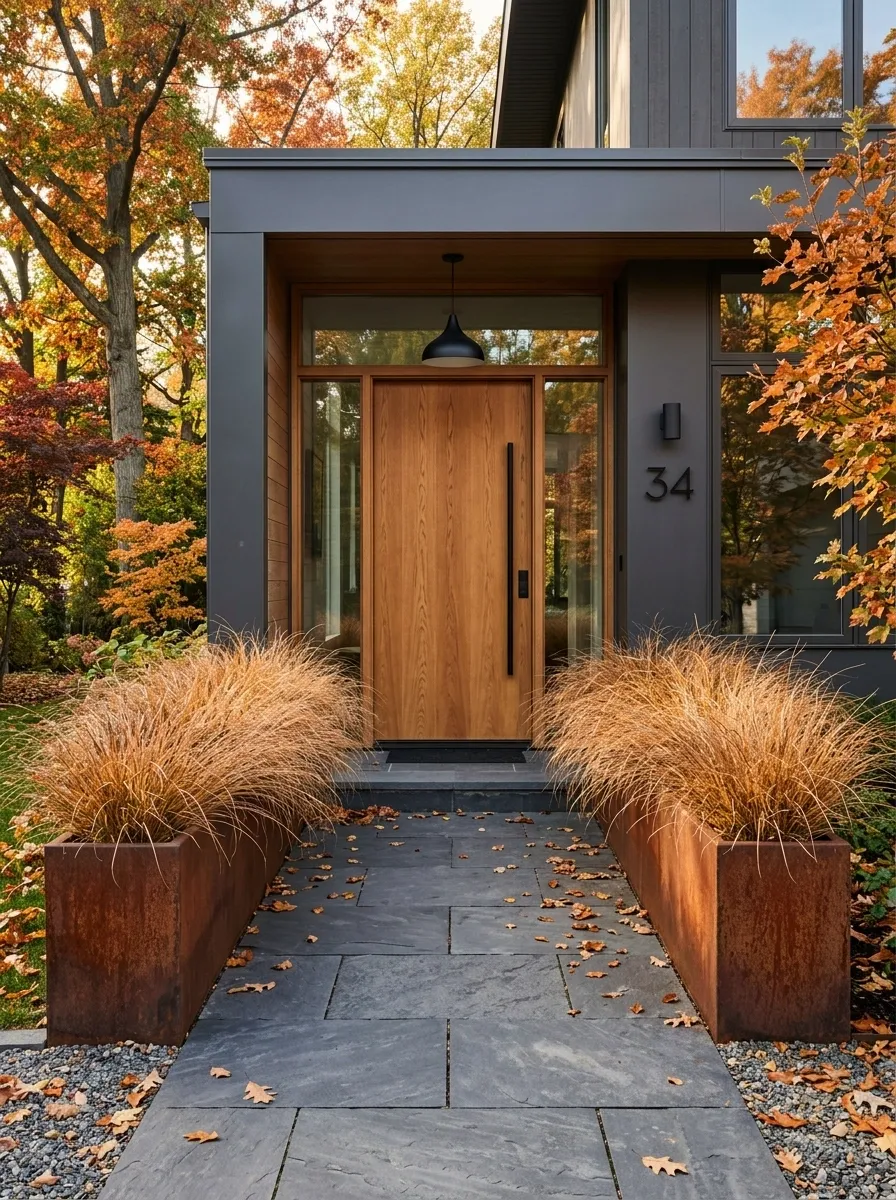
Long, rusted Corten steel rectangular troughs flank a modern, warm-wood front door. The troughs are planted entirely with a dense, unbroken line of bronze carex grass.
This design is strictly architectural. There are no trailing vines and no floral focal points. The Corten steel provides the rust-colored autumnal aesthetic natively, allowing the planting itself to remain incredibly simple. The bronze grass catches the wind and adds soft movement against the heavy industrial steel. It is a highly disciplined look that anchors modern exteriors without feeling sterile.
Soft Muted Terracotta Pastels
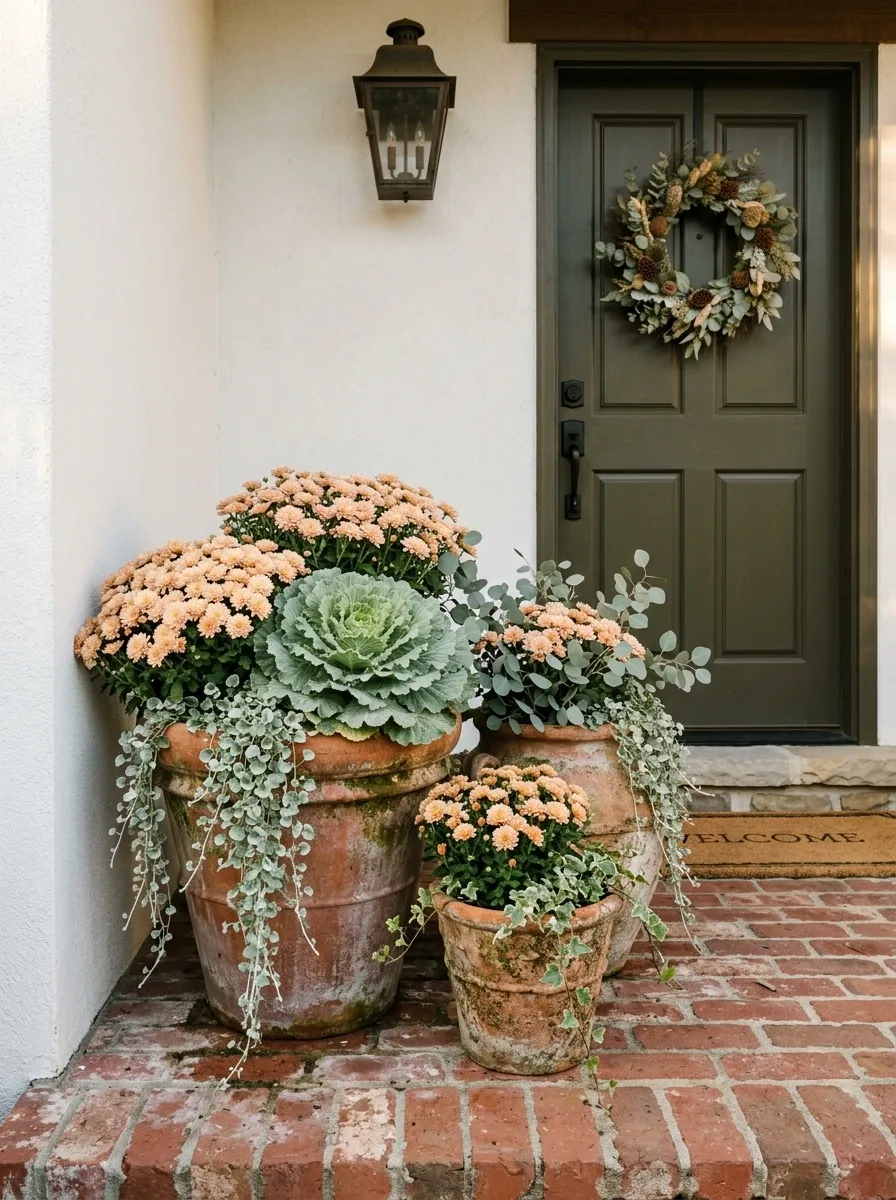
Classic, heavily aged terracotta pots cluster on a brick entryway holding an unexpected palette: soft peach mums, pale green ornamental cabbage, and trailing silver dichondra.
Not every fall porch needs to scream neon orange and blood red. This muted, pastel approach to autumn planting feels incredibly sophisticated. The peach tones pull the warmth out of the terracotta pots without overwhelming the eye. The ornamental cabbage adds a necessary broad-leaf texture to contrast the tight, repetitive blooms of the mums. It works brilliantly against white brick or light stucco homes where dark gothic planters would look entirely out of place.
The Foraged Woodland Look
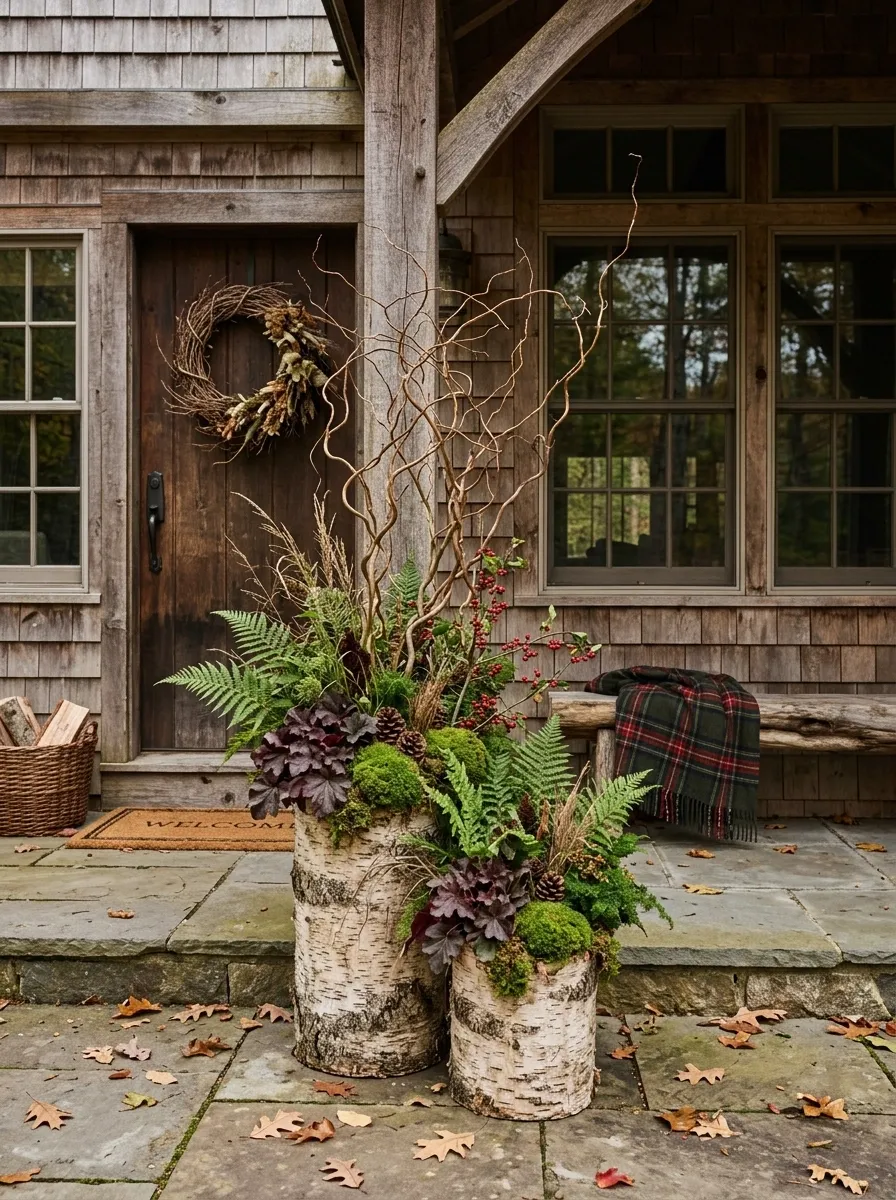
Birch bark-wrapped cylinders sit directly on a natural flagstone porch. The containers are filled with a wild mix of native ferns, thick clumps of green moss, twisted curly willow twigs driven into the center, and dark red heuchera.
This rejects the manicured nursery look entirely. It appears as though the arrangement was gathered from the surrounding property rather than purchased. The birch bark provides an immediate organic texture that ties the planters to the landscape. The curly willow adds aggressive, unpredictable height. This setup demands a natural architectural setting; placing it in front of a high-gloss, ultra-modern vinyl exterior creates a jarring disconnect.
Terraced Stair Stacking
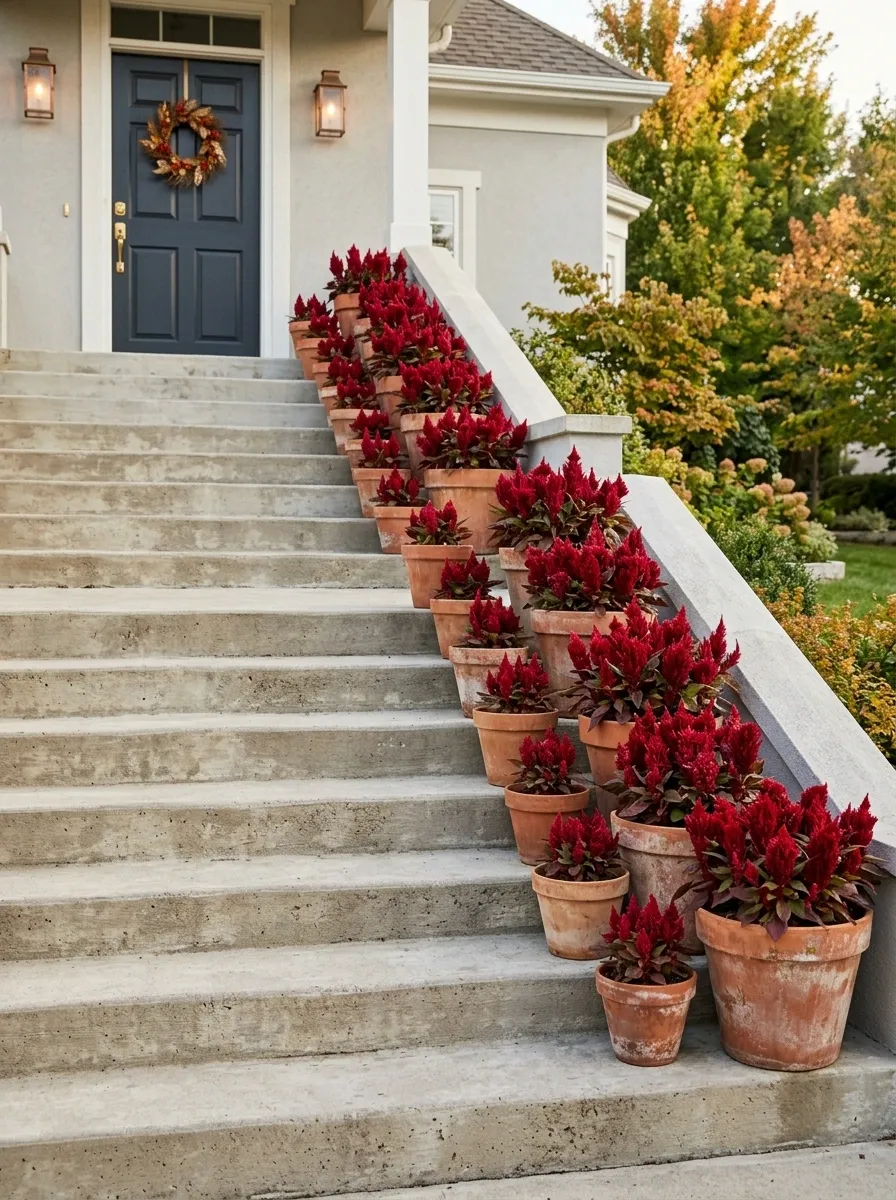
A cascading collection of varied-size terracotta pots marches down the side of a wide concrete front staircase. The grouping is unified by a singular, unbroken color story: deep red, feather-like celosia planted densely in every pot.
When the actual front porch landing is too small to accommodate large architectural planters, the stairs become the display surface. Using multiple mismatched pots works here because the plant choice is ruthlessly consistent. If every pot held a different plant, it would look like a disorganized garden center clearance rack. The massed red celosia creates a sweeping visual line that guides the eye straight to the front door.
High-Contrast Raw Concrete
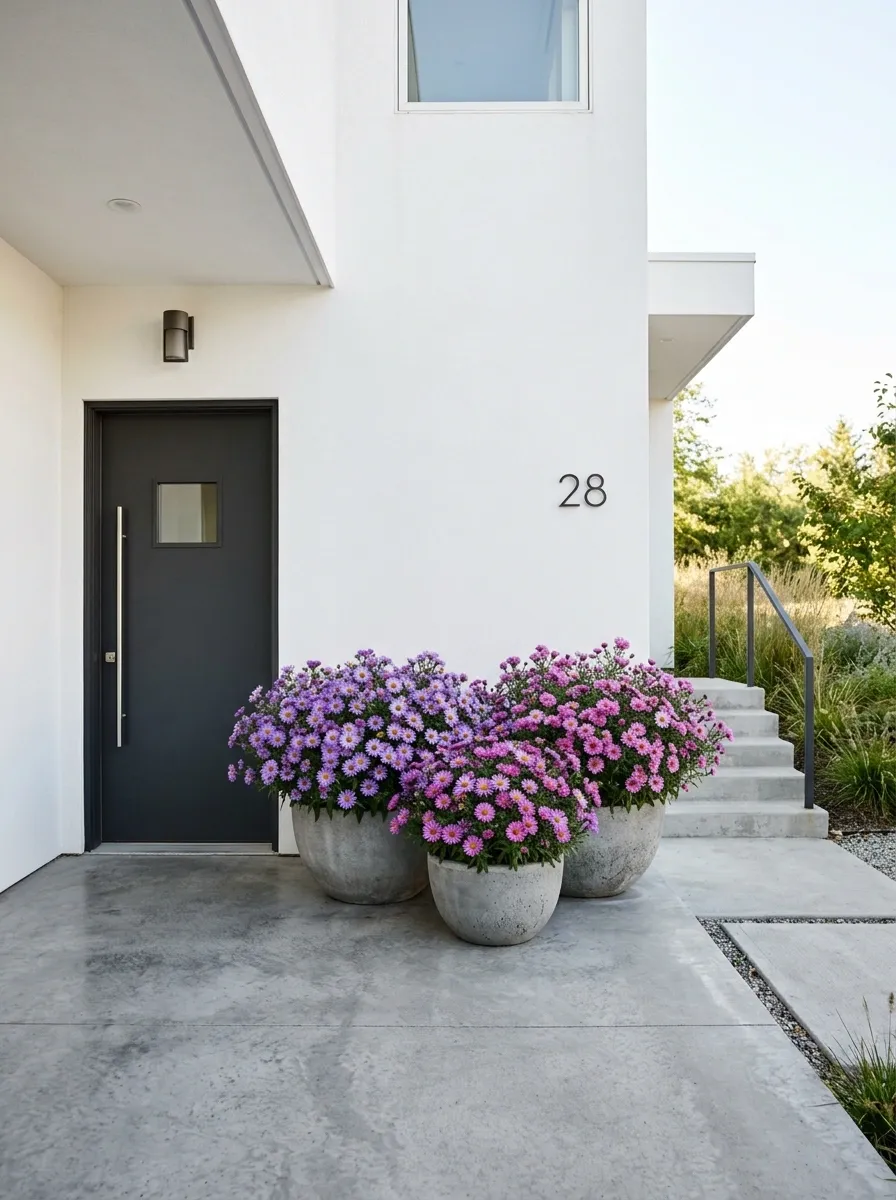
Heavy, low-profile raw concrete bowls sit directly on a stark white porch landing. They are tightly packed with electric pink and deep purple asters, creating a massive, saturated pop of color that ignores traditional autumn palettes completely.
Most fall planters lean into warm, muddy earth tones. This design subverts that expectation entirely. The cool, industrial grey of the concrete allows the vivid pink and purple to punch through without clashing. It is a highly specific look that requires a neutral architectural backdrop. Placing this bold, cool-toned composition against warm red brick would create immediate visual chaos.
The Prairie Wildflower Basket
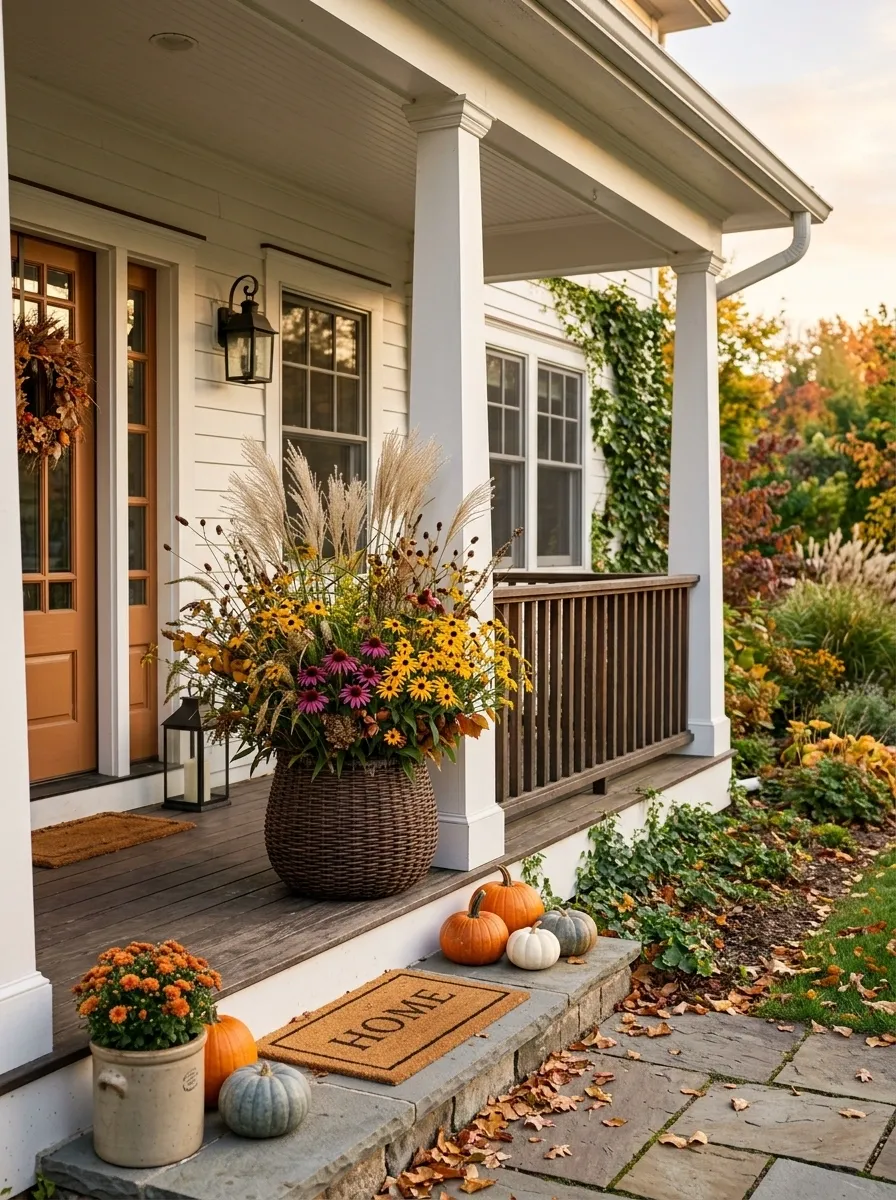
Large, weatherproof woven resin baskets hold a completely unstructured, wild mix of black-eyed Susans, purple coneflowers, and tall feather reed grass that catches the autumn breeze.
It looks like a slice of native prairie dropped onto the stoop. This completely avoids the stiffness of traditional nursery arrangements. The loose, meadow-like planting softens rigid porches and fits perfectly with farmhouse or craftsman architecture. The resin basket provides the rustic, textural look of wicker without rotting and collapsing after three weeks of November rain.
Sleek Mid-Century Glazed Ceramic
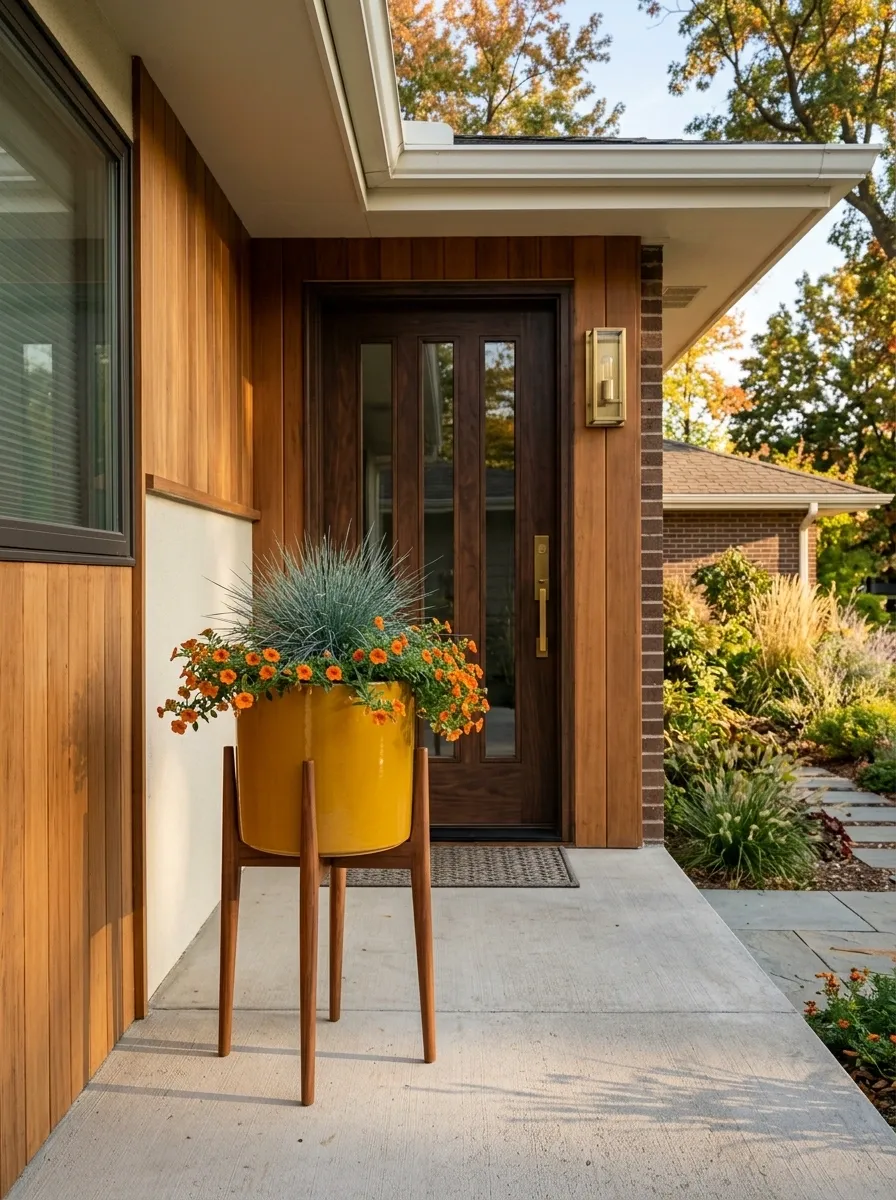
High-gloss, mustard yellow ceramic cylinders sit elevated on walnut-toned wooden stands. They are planted with a sharp burst of spiky blue fescue grass in the center, encircled by trailing bright orange calibrachoa.
Elevating the planter on a stand immediately changes the silhouette of the porch, creating negative space underneath the arrangement. The combination of mustard, orange, and dusty blue is a direct nod to classic mid-century modern palettes. The spiky, aggressive texture of the fescue reinforces the retro geometry perfectly. This arrangement would look ridiculous on a Victorian wrap-around porch, but it anchors a 1960s ranch flawlessly.
Formal Symmetrical Gloss
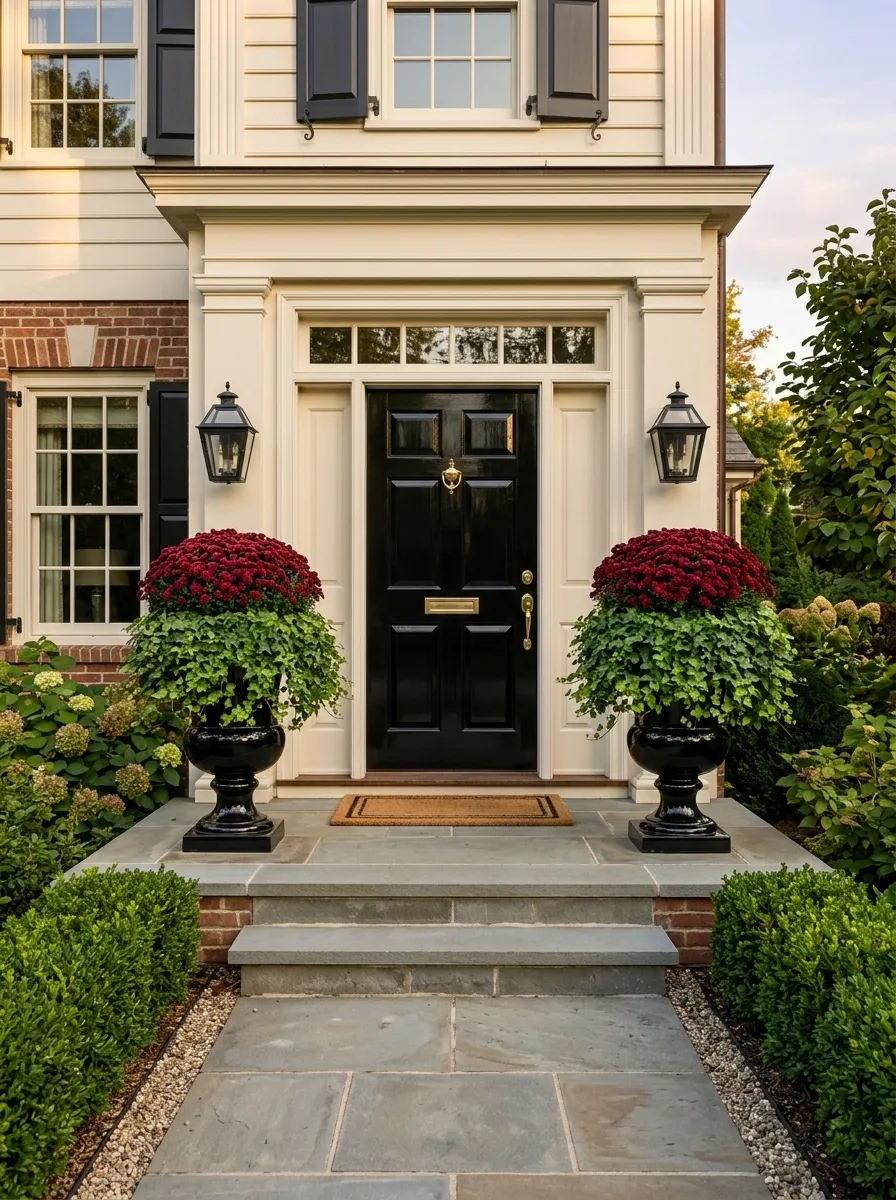
Highly polished black fiberglass urns precisely mirror each other on either side of a high-gloss entryway. They hold tightly manicured, dark red mums underplanted with an aggressive, perfectly uniform spill of English ivy.
This is the traditional standard executed without a single flaw. The glossy finish of the urns pulls the arrangement away from the cheap plastic look of standard nursery pots. It relies on absolute symmetry and rigid discipline to work. The mums cannot be allowed to grow wild, and the ivy must be kept dense. It is a demanding layout, but the payoff is an undeniable, timeless elegance.
The Oversized Succulent Bowl
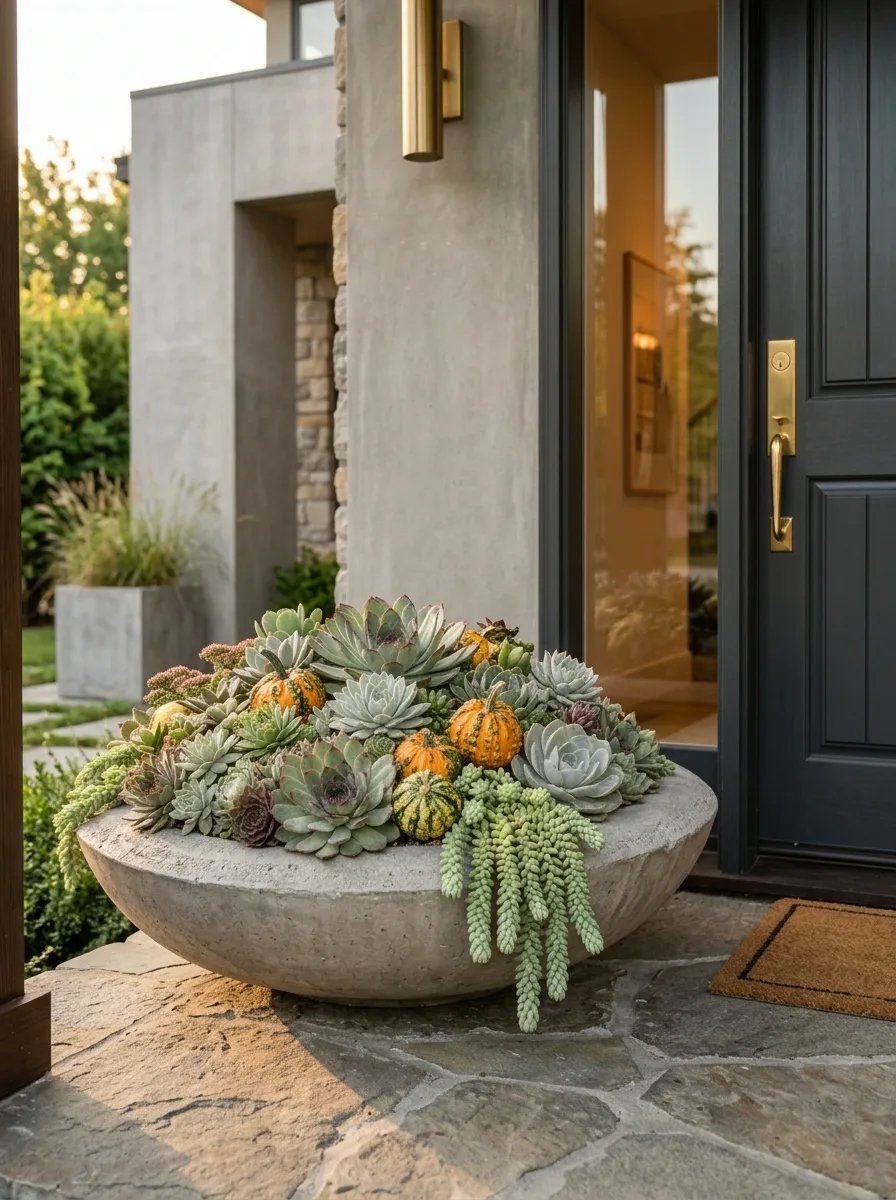
One massive, shallow concrete bowl dominates a small entryway landing. It is densely packed with a low, textural carpet of cold-hardy succulents like hens and chicks, sedum, and trailing burro’s tail, with miniature warty gourds nestled tightly into the arrangement.
When the porch is too small for a pair of tall flanking planters, a single oversized bowl is the exact right answer. The dense succulent carpet provides fascinating, intricate texture that demands a closer look. Tucking the gourds directly into the plants bridges the gap between a year-round planting and a seasonal autumn display. It is low, visually heavy, and a completely unexpected way to handle a front stoop.
The Neutral Whitewashed Box
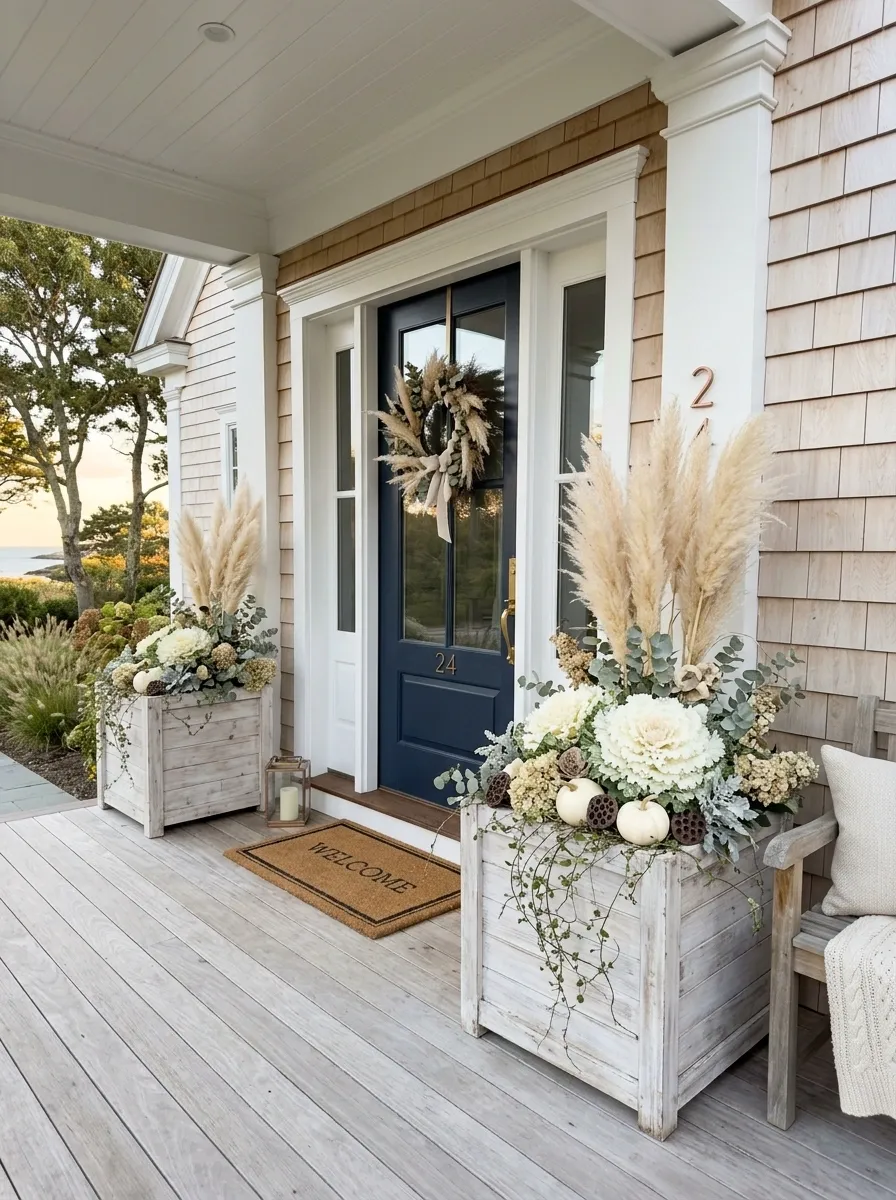
Large, square whitewashed wooden planters flank the entryway of a coastal-style home. The arrangement is aggressively soft, relying entirely on pale textures: tall, feathery pampas grass stands behind ruffled white ornamental kale, with delicate creeping wire vine spilling over the edges.
This proves that autumn design does not require a heavy, dark palette to feel appropriate for the season. The whitewashed wood and feathery textures bring the visual weight of the arrangement way down. It feels light, airy, and textured. The stark white kale acts as the focal point, while the pampas grass nods to the harvest season without resorting to corn stalks.
English Cottage Overflow
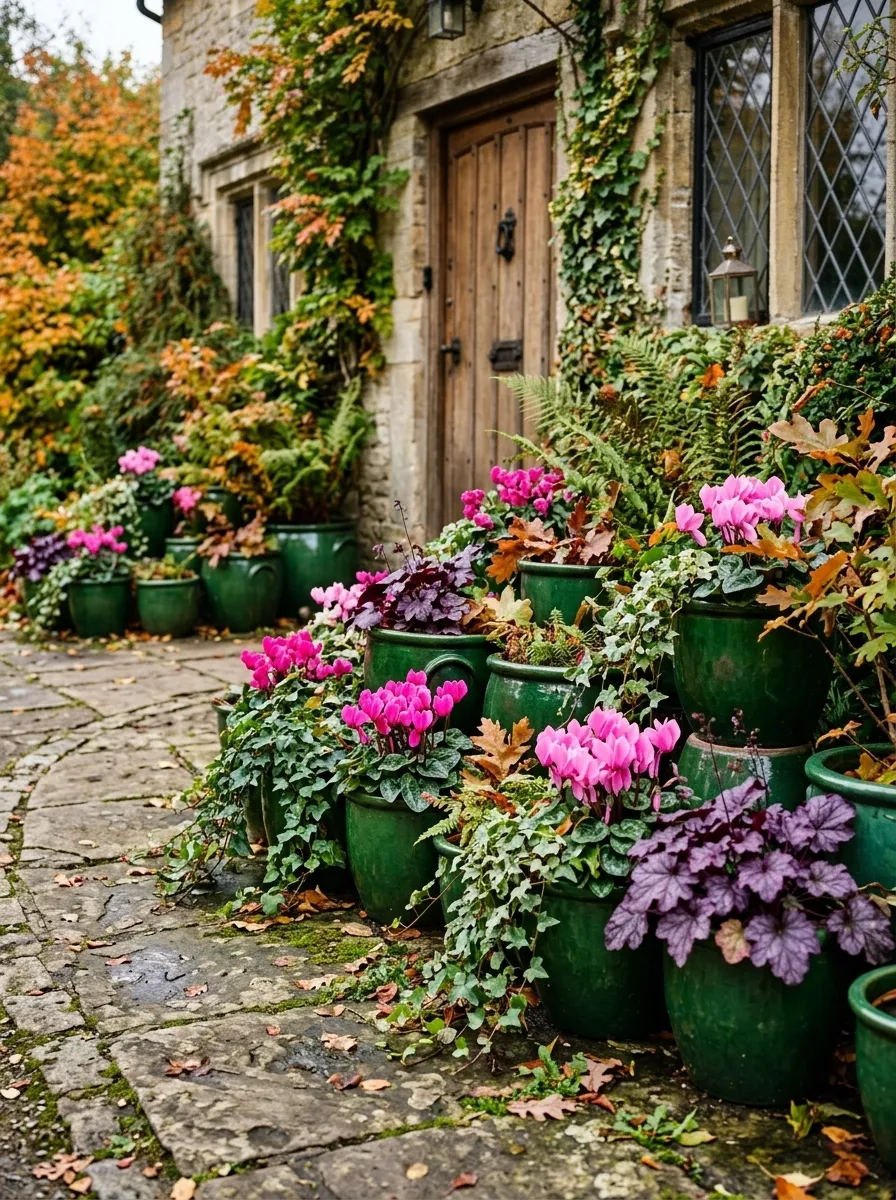
Deep forest green glazed ceramic pots sit clustered haphazardly on a curved stone pathway leading to the porch. They spill wildly over the edges with bright pink cyclamen, dark trailing ivy, and deep purple heuchera.
The structure here is intentional chaos. There are no straight lines and no strict symmetry. The glossy green pots blend into the surrounding landscape, allowing the electric pink and deep purple foliage to take center stage. The cyclamen provides a delicate, unexpected floral shape that breaks the standard mum-and-aster routine. It looks like a garden that simply decided to keep blooming through November.
Urban Minimalist Teak
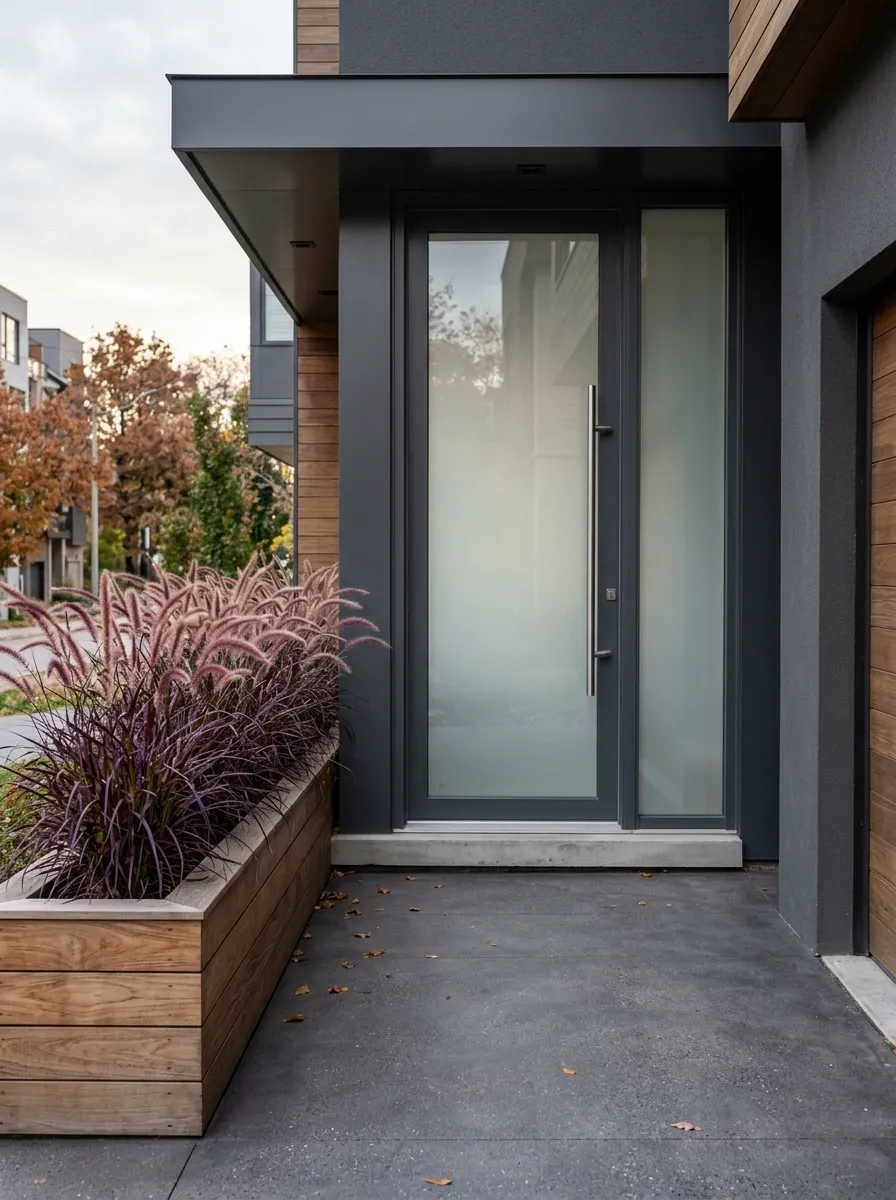
A sleek, low, horizontal teak planter box runs parallel to the entryway under a frosted glass front door. It contains a single, disciplined row of purple fountain grass, planted uniformly from end to end with zero filler or trailing vines.
This is architectural planting at its most severe. The long, horizontal line of the teak box grounds the entryway, while the vertical row of fountain grass provides the only organic movement. There are no pumpkins, no gourds, and no bright floral colors to distract from the clean geometry. The purple grass nods to the season, but the execution remains entirely modern and restrained.
The Layered Iron Pedestal
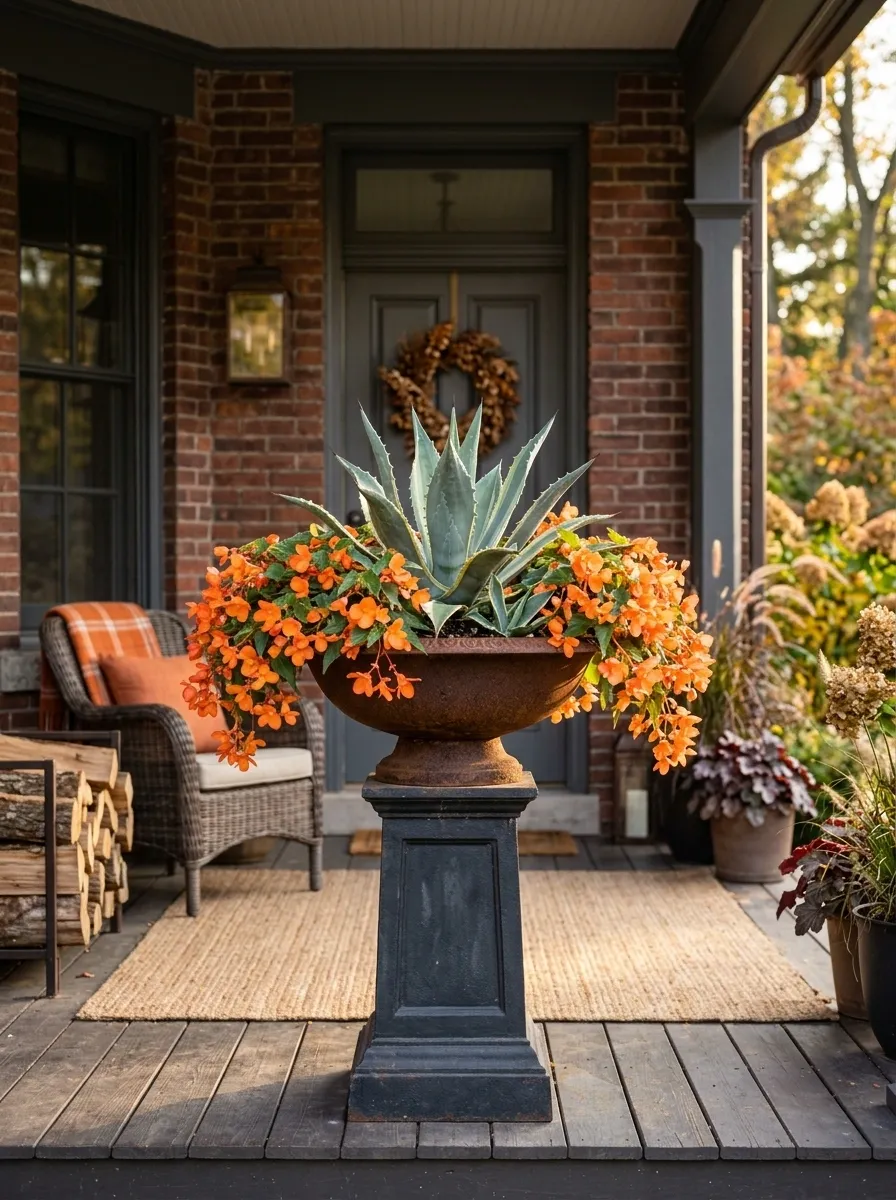
Heavy, classical cast-iron pedestals elevate shallow, rusted cast-iron bowls. The bowls hold a striking combination: the aggressive architectural structure of a blue agave plant sitting in the center of a trailing mass of bright orange begonias.
Combining desert succulents with lush, trailing fall florals creates a brilliant tension. The heavy cast iron gives the composition formal permanence, while the rusted bowl ties into the autumn season. The agave serves as an unmoving, sharp focal point, making the bright orange begonias feel even softer and more vibrant by comparison. It is a completely unexpected take on formal porch design.
Autumn Sunset Gradient
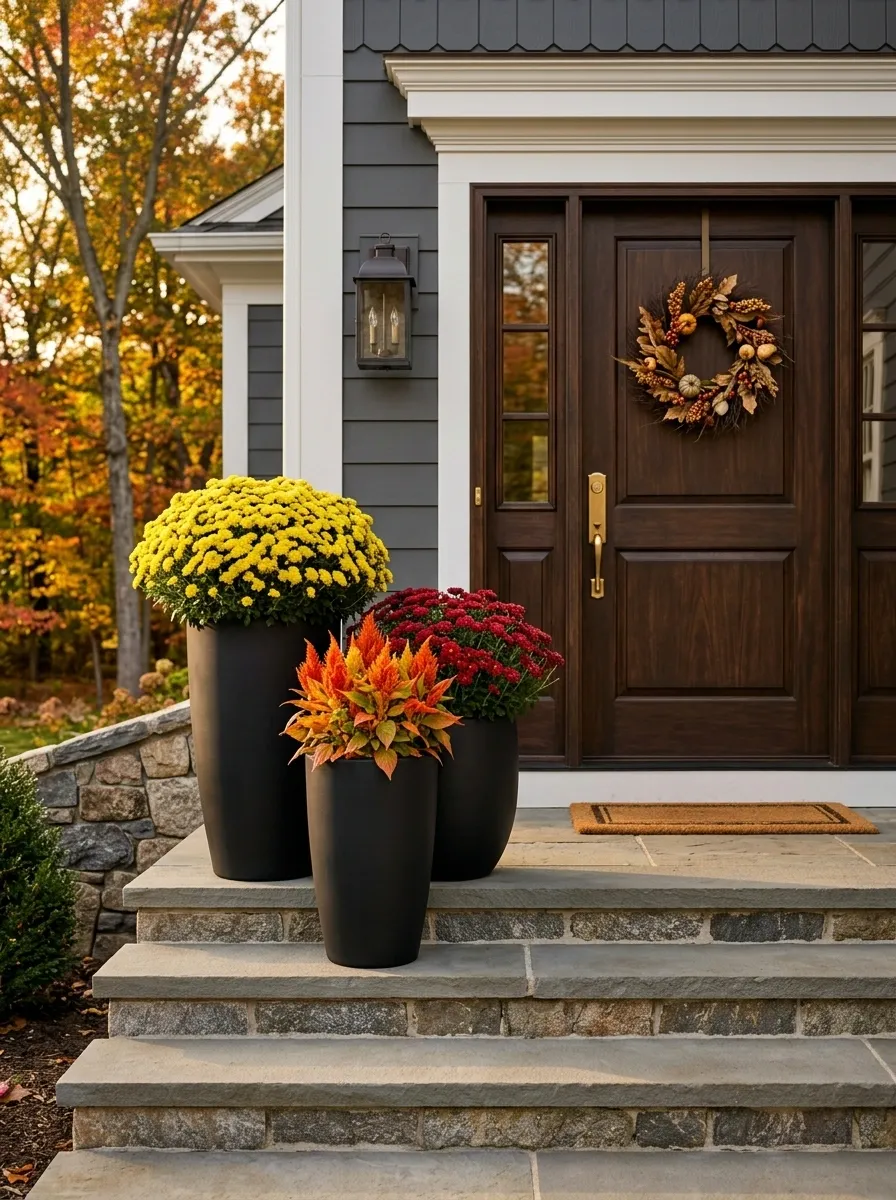
A tight cluster of varied-height, matte black fiberglass planters sit on a wide front porch. Rather than mixing the plants, each container is planted with a single solid color, shifting from bright yellow mums on the left, to orange celosia in the center, to deep red asters on the right.
By separating the colors into distinct planters, the chaotic look of a mixed nursery pot is completely eliminated. The smooth gradient creates a deliberate, sweeping visual impact. The matte black containers unify the collection, ensuring the bright floral colors remain the absolute focus. It is a highly stylized, almost editorial approach to traditional autumn flowers.
The front stoop dictates exactly how the rest of the architecture is perceived. Leaving it to a pair of undersized, dying grocery store plants is a missed opportunity. Cohesive outdoor design comes down to treating the planters as structural elements rather than disposable seasonal filler. Get the scale right, pull materials that actually speak to the exterior finishes, and stop settling for visual clutter. Save the concepts that actually match your siding and door style. Future-you will appreciate having a real reference when the planning starts, instead of standing aimlessly in the garden center.