
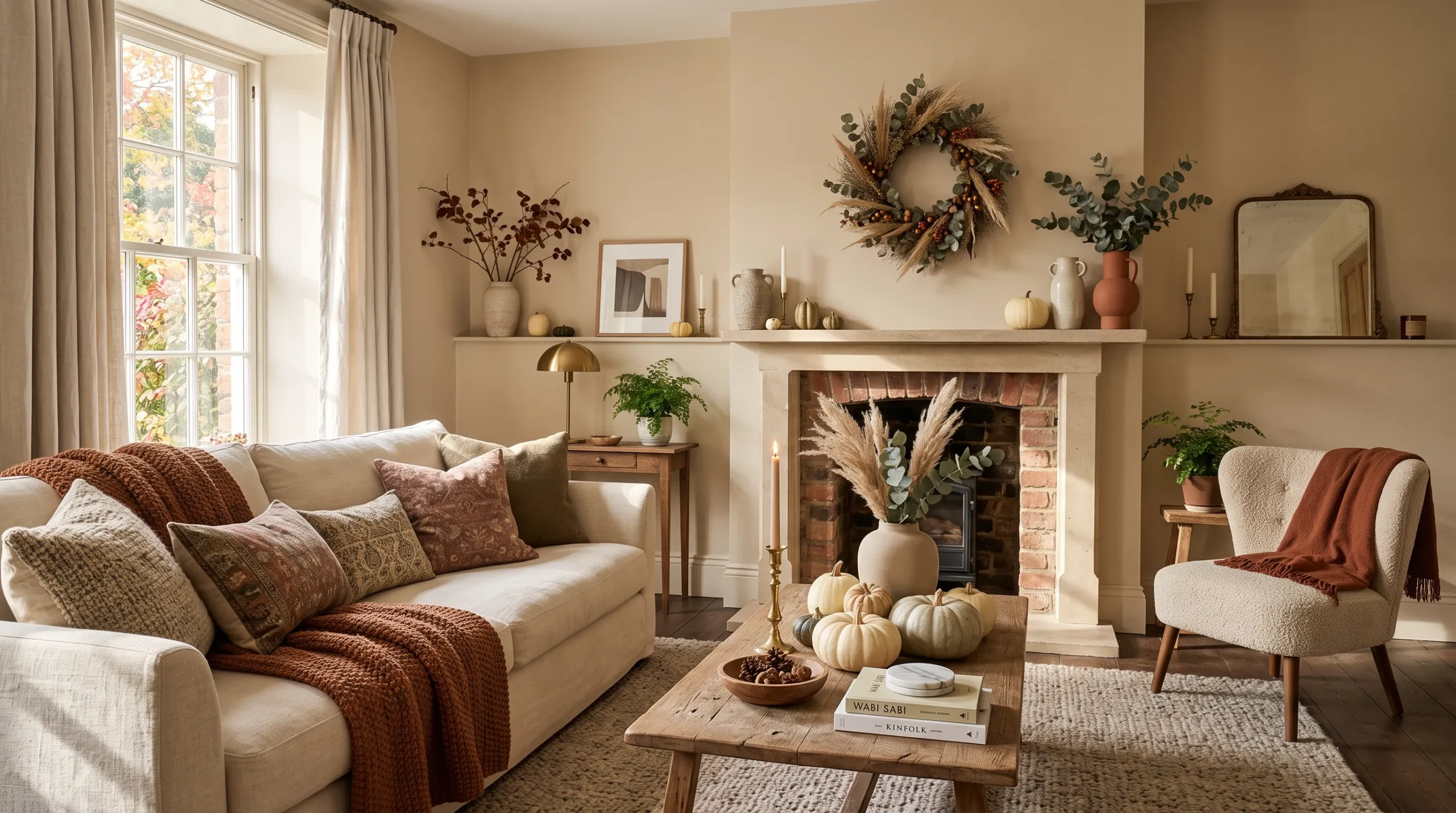
Fall decorating gets frustrating when every room starts collecting the same few seasonal objects. A pumpkin lands on the console, another appears on the kitchen counter, a wreath goes on the door, and suddenly the house feels decorated for autumn without actually feeling different in any meaningful way.
The better approach is to decide what kind of autumn atmosphere you want the room to have before adding anything. Maybe it is soft and neutral, with oak, linen, cream, and muted rust. Maybe it is darker, built around olive walls, walnut, brass, and candlelight. Or maybe the architecture already has enough character and only needs a few branches, richer textiles, and warmer lighting.
Fall Decorating Looks
Warm Neutral Living Room With Rust Velvet and Aged Wood
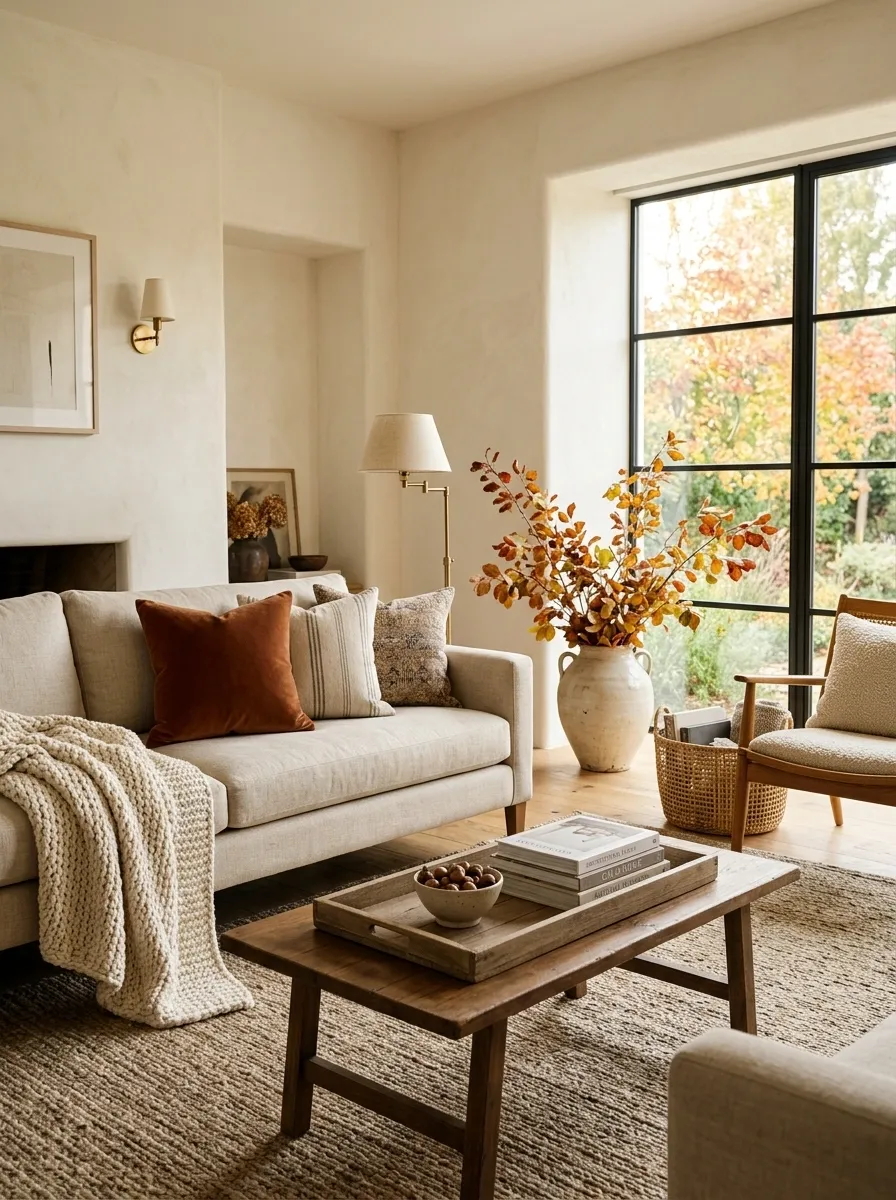
Creamy walls, an oatmeal sofa, warm oak furniture, and a softly patterned rug create the base for this relaxed autumn living room. Rust velvet cushions bring in the strongest seasonal color, while a chunky throw and woven basket add texture without making the room feel decorated for a holiday.
A large ceramic vessel filled with loose branches gives the composition one clear focal point. Keep the coffee table relatively open, perhaps with only a shallow wooden tray and a few books. The restrained styling matters here. The room feels autumnal because the materials and colors work together, not because every surface carries a seasonal object.
Moody Olive Dining Room With a Candlelit Autumn Tablescape
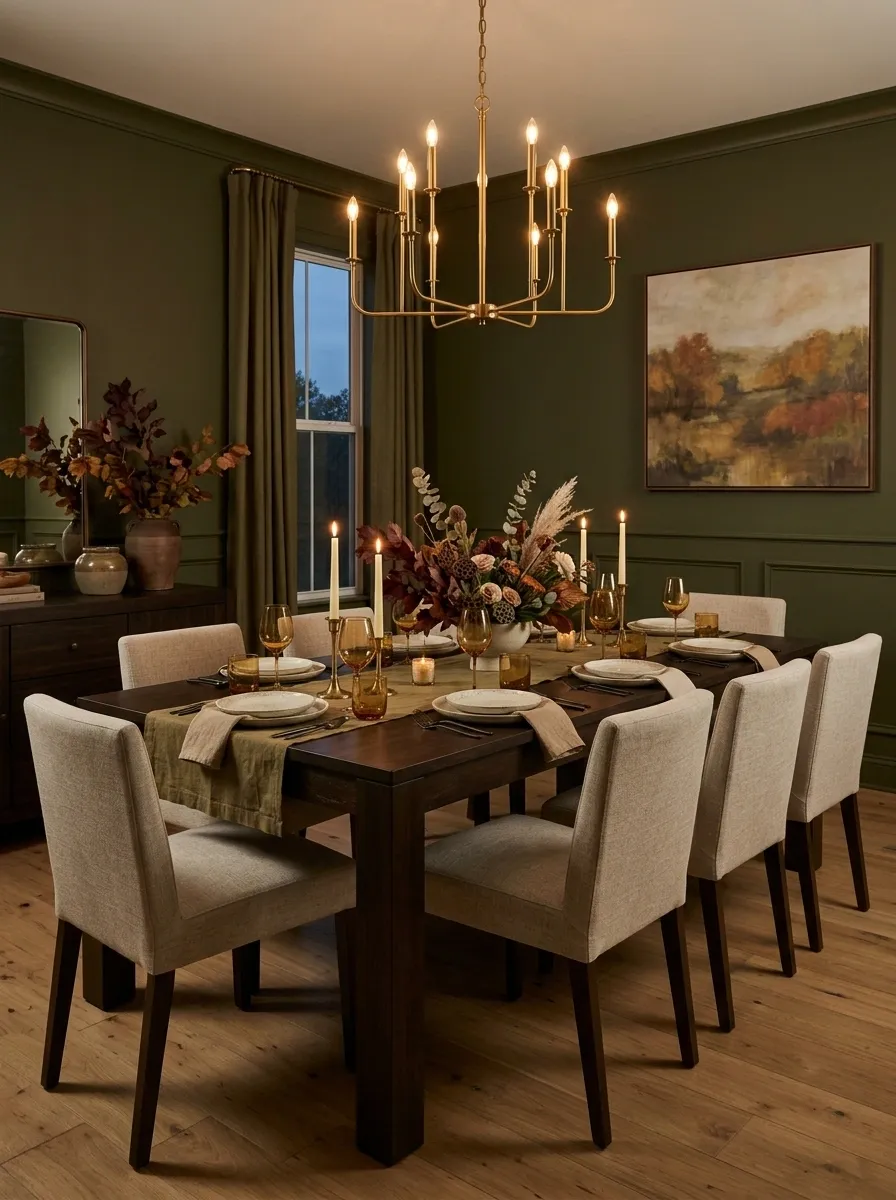
An olive-painted dining room gives fall decorating a deeper starting point. Pair the walls with a substantial dark wood table, simple upholstered chairs, and warm brass lighting overhead. On the table, use amber glassware, linen napkins, low brass candleholders, and a loose arrangement of dried foliage.
The colors stay close to the architecture, which keeps the room from looking overly themed. A few burgundy or rust notes can appear in the centerpiece, but they should remain secondary to the olive and wood. The result is intimate enough for evening dinners without needing a large collection of seasonal decorations.
Classic Front Porch With Layered Pumpkin Tones
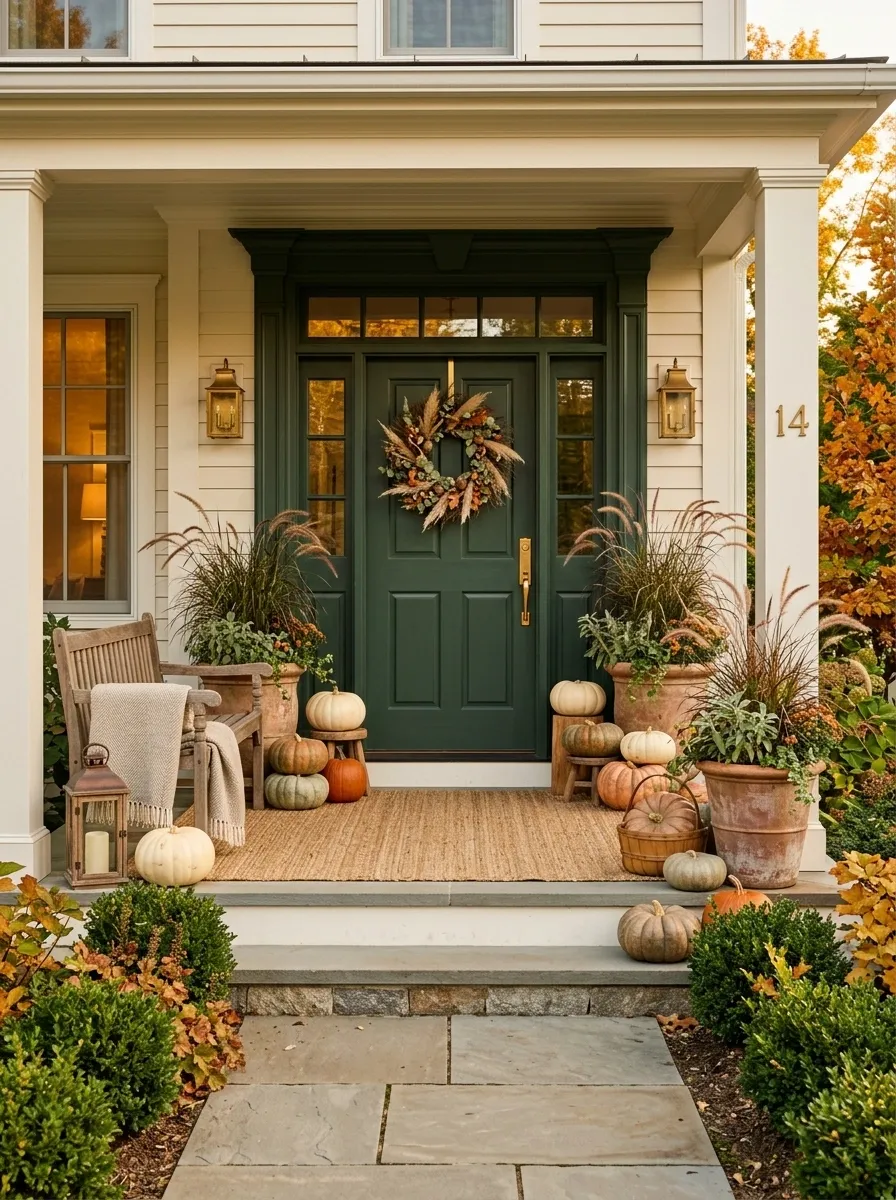
This porch works because the seasonal display frames the doorway rather than taking over the entire entrance. Start with a deep-toned front door, a natural fiber rug, and two substantial planters. Add pumpkins in cream, muted orange, and dusty green, grouping them at different heights instead of scattering them evenly.
A simple foliage wreath ties the colors together, while a wooden bench or narrow chair gives the porch a practical reason to feel layered. Keep the center of the walkway clear. The strongest version of this look has visible space between the groupings so the doorway remains the focal point.
Collected Entryway With Antique Furniture and Dried Foliage
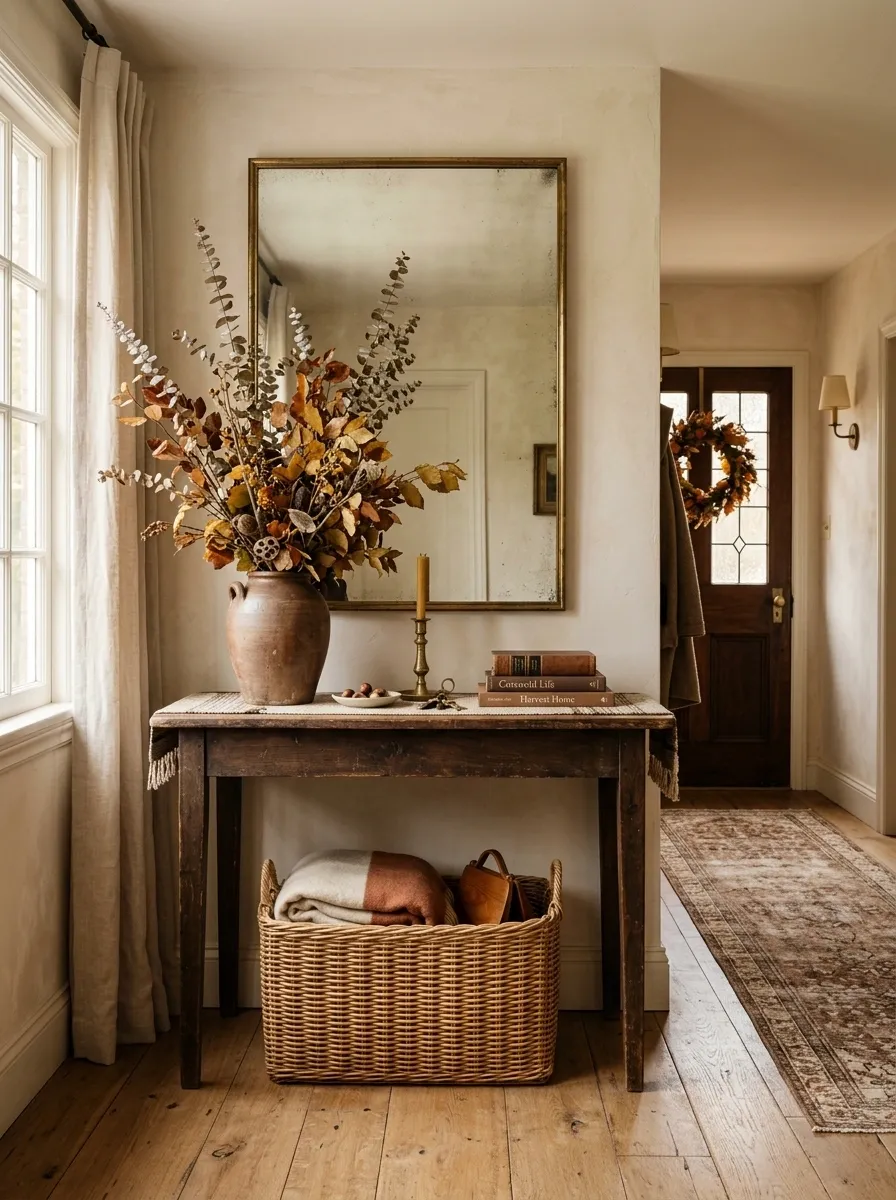
An entryway becomes much more interesting when the fall styling looks as though it has developed alongside the rest of the home. A weathered wood console, aged mirror, woven runner, and old ceramic vessels establish that character. Add several long branches in a large vase rather than a collection of small decorations.
A woven basket below the console introduces useful storage while reinforcing the natural materials. Warm brown, faded cream, and muted foliage colors keep everything connected. The antique furniture does most of the visual work, so the seasonal elements should stay loose and understated.
Soft Cottage Kitchen With Copper, Linen, and Orchard Colors

This kitchen treats autumn as a palette rather than a theme. Cream-painted cabinetry, warm wood counters, open shelving, and simple ceramic dishes create a soft cottage backdrop. Copper cookware adds a natural glow, while linen towels and a few pieces of seasonal produce bring in muted reds, greens, and golden tones.
A large ceramic pitcher with loose branches works well as the main seasonal focal point. Keep the counters useful and relatively open. Apples, pears, and a bowl of nuts can provide the seasonal color without requiring decorative signs or novelty pieces.
The composition feels strongest when the kitchen still looks like a kitchen first and a seasonal space second.
Modern Organic Bedroom With Cinnamon Textiles
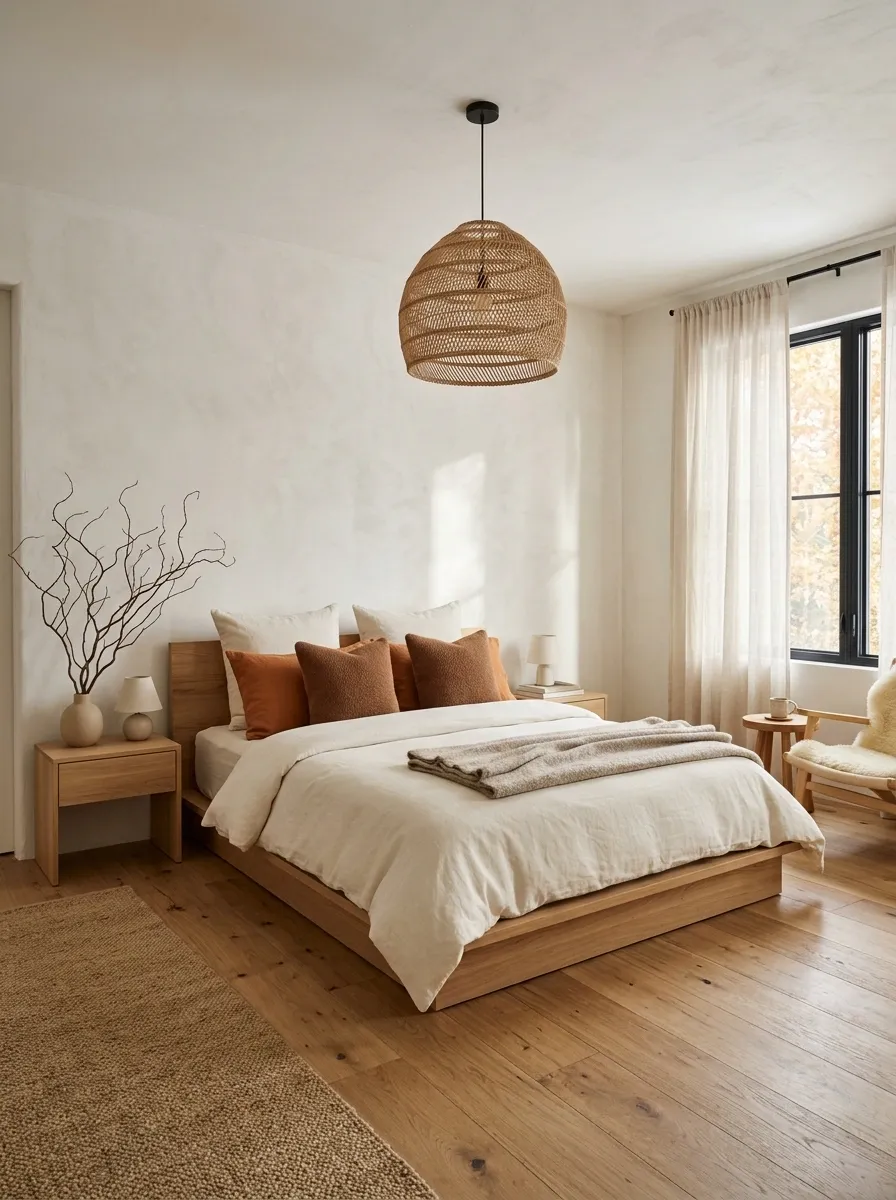
This bedroom keeps the autumn palette quiet. Plaster-toned walls, low-profile oak furniture, cream bedding, and woven lighting form the foundation, while cinnamon-colored pillows and a soft throw introduce warmth. A tall ceramic vase with a few sculptural branches gives the room one seasonal focal point.
The low furniture keeps the sightlines open, which matters in a bedroom where too many decorative layers can quickly feel distracting. Use texture instead of adding more objects. Linen, wool, oak, and matte ceramics provide enough variation to make the room feel rich without losing its calm character.
Dramatic Charcoal Dining Space With Burnt Orange Accents
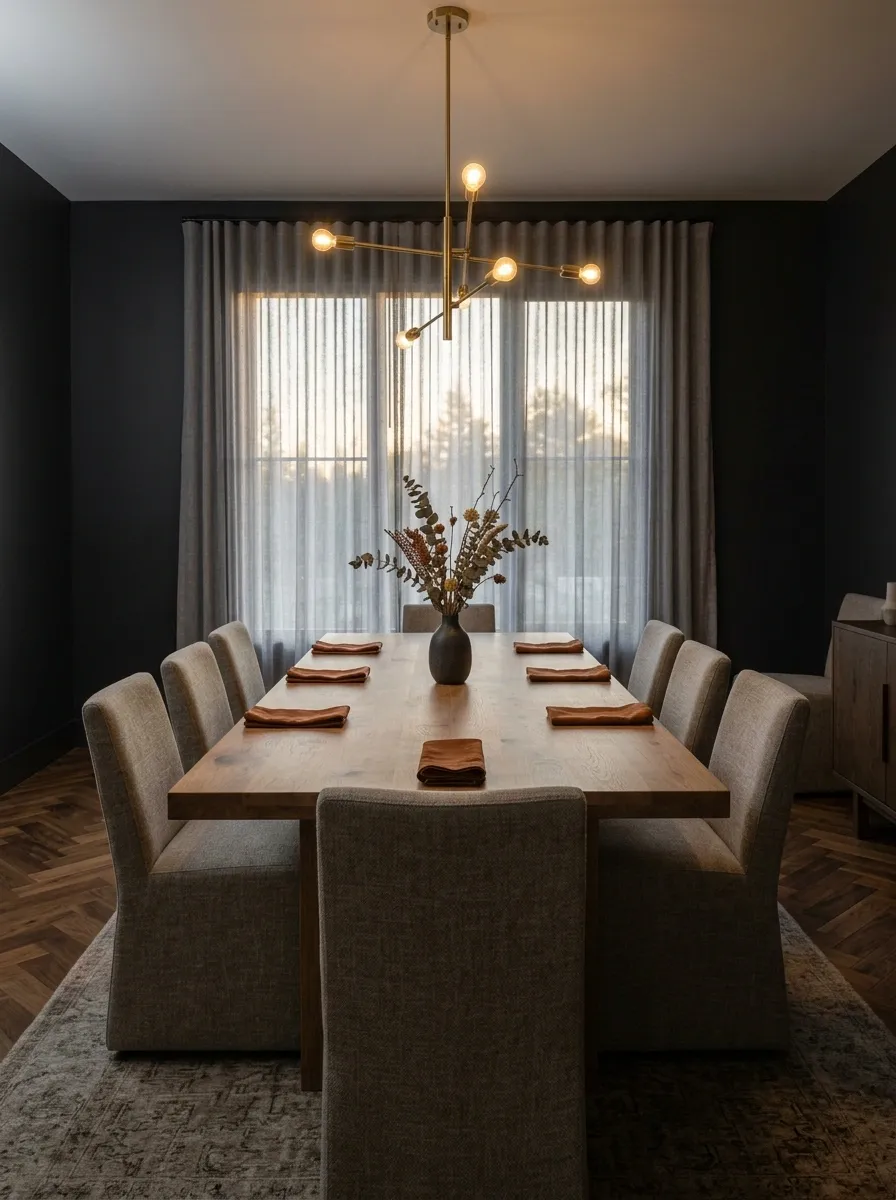
A charcoal dining room gives the autumn palette much more depth. Use a substantial wooden table, warm leather or upholstered seating, sculptural lighting, and a small number of burnt-orange accents. The darker walls make brass or warm metal details especially effective.
The important part is restraint. Large orange objects would compete with the room, so let the seasonal color appear through cushions, flowers, or napkins instead. The table should remain the focal point, with the surrounding finishes acting as a dark, elegant frame.
Rustic Modern Fireplace Room With Layered Natural Textures
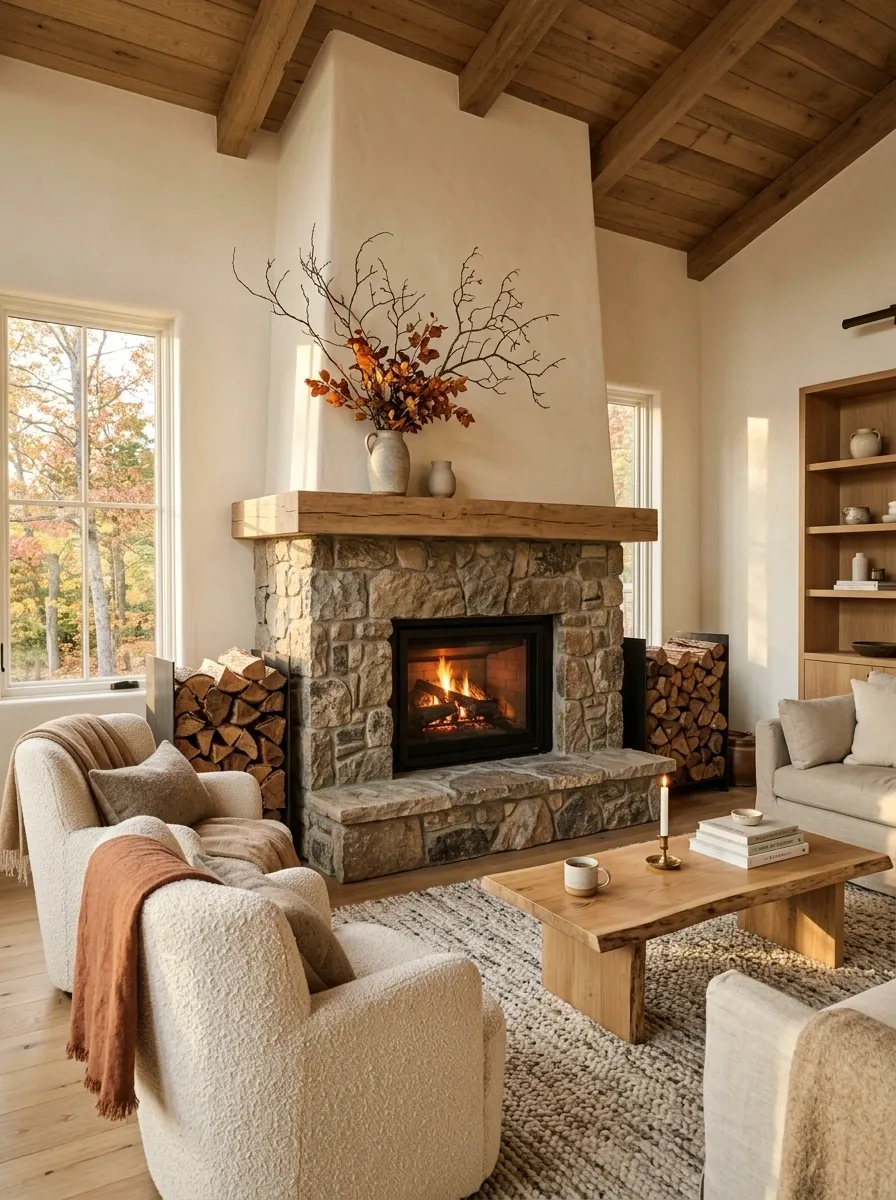
The fireplace becomes the anchor in this rustic modern setting. A stone or plaster surround sits alongside oak furniture, a textured rug, soft boucle or linen seating, and simple ceramic vessels. Stacked firewood can remain visible as part of the composition, adding function as well as texture.
Instead of covering the mantel with seasonal objects, use one substantial branch arrangement and perhaps a small ceramic piece. The restrained treatment keeps the architecture visible and lets the fireplace carry the visual weight.
Small Apartment Living Room With Compact Autumn Styling
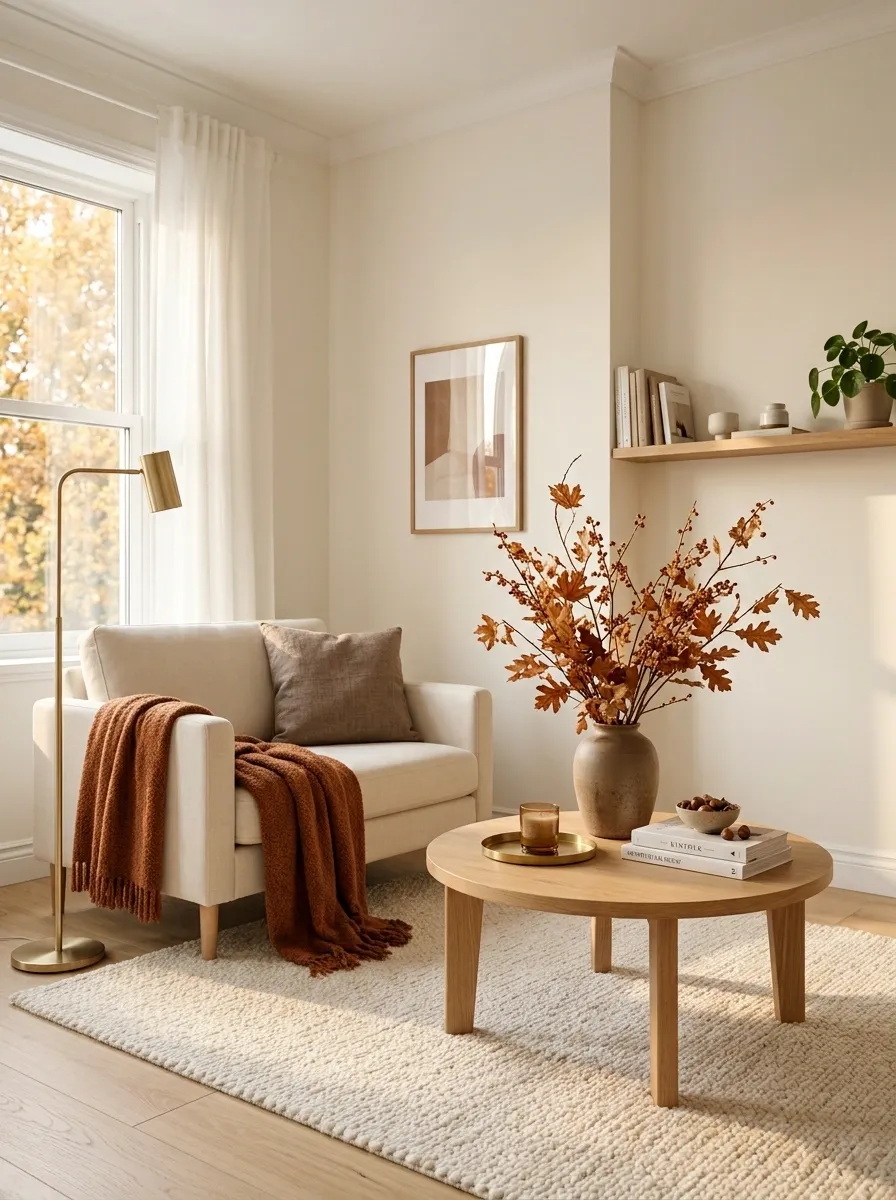
A small living room benefits from a concentrated seasonal composition rather than decorations spread across every wall and surface. A compact sofa, round wood coffee table, narrow floor lamp, textured rug, and one large vase create the basic structure.
Bring autumn into the room through a rust throw, muted brown cushion, and a branch arrangement placed near the main seating area. Keeping the seasonal elements together creates a stronger focal point while leaving circulation open around the furniture.
WALKWAY
COFFEE TABLE
FLOOR LAMP
English-Inspired Sitting Room With Muted Plaid and Walnut
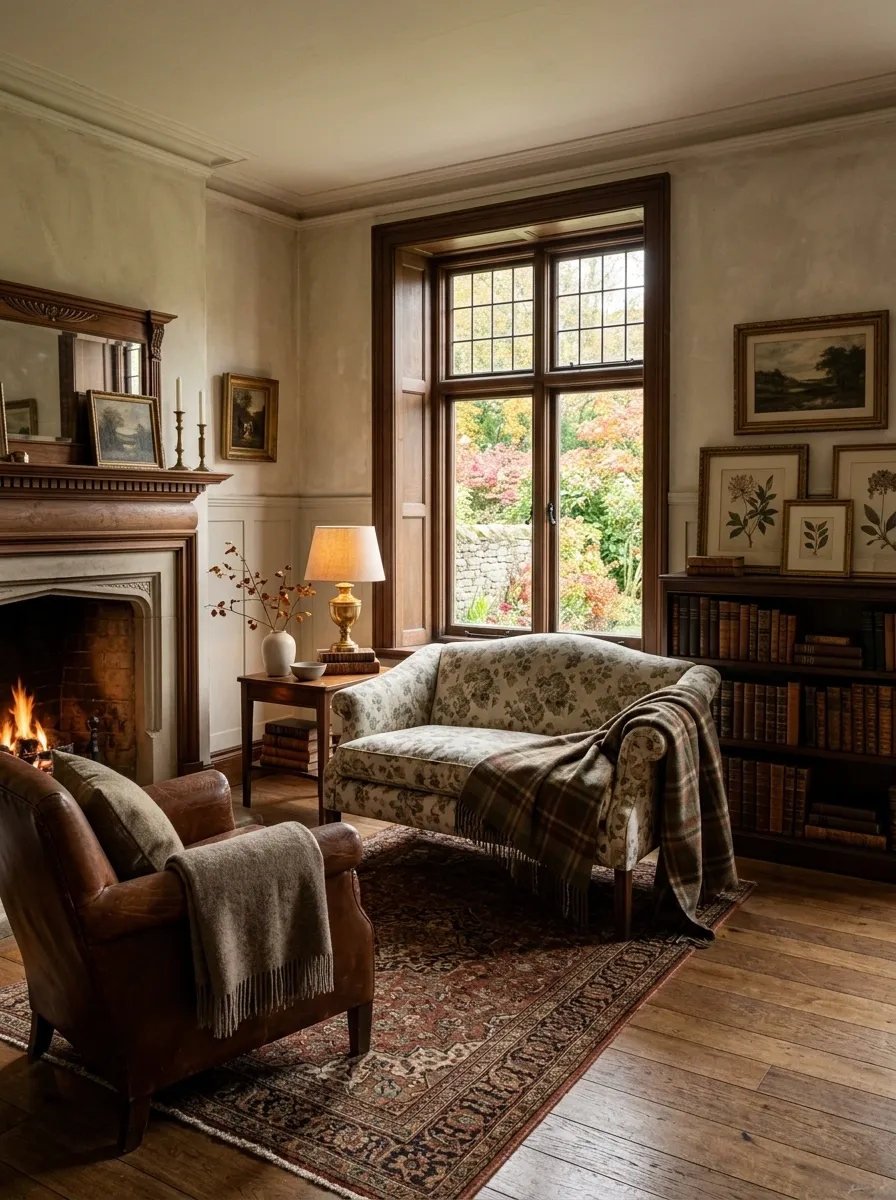
Walnut furniture, soft patterned upholstery, a muted plaid throw, warm lamps, framed artwork, books, and a few well-used pieces give this sitting room a quietly traditional autumn character. Instead of strong orange, the palette leans toward tobacco, cream, faded green, and brown.
The patterned fabrics already provide plenty of visual information, so seasonal decoration should remain sparse. One vase of branches and perhaps a small ceramic bowl are enough. The room feels collected because the materials have different histories and textures, not because there are many decorative pieces.
WOOD
Scandinavian Fall Kitchen With Pale Wood and Soft Terracotta
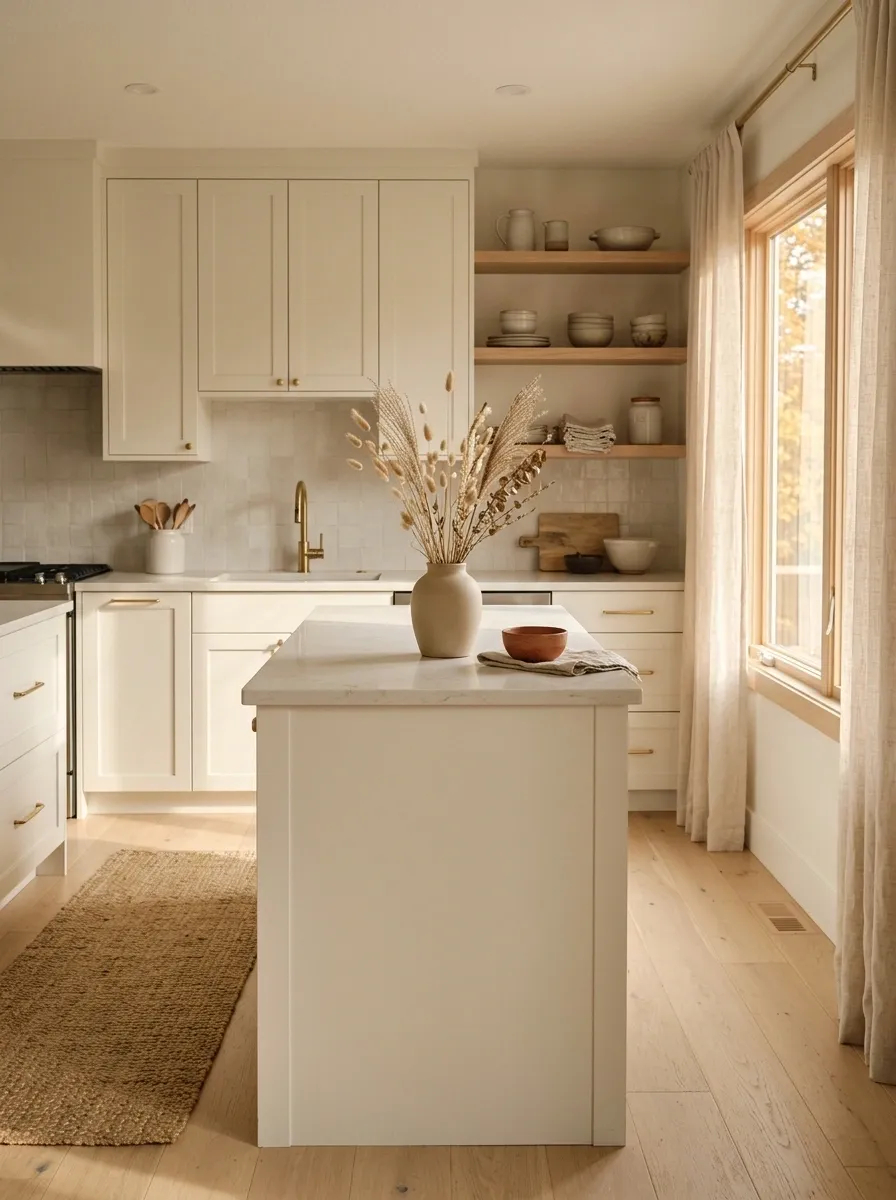
This kitchen interprets autumn in a lighter way. Pale timber, off-white cabinetry, simple ceramics, linen curtains, and uncluttered counters keep the room airy. Soft terracotta appears through a few carefully chosen accessories, while dried grasses add vertical texture without making the space feel heavy.
The design works best when the seasonal colors remain muted. A bright orange accent would interrupt the calm palette, while dusty terracotta feels more integrated with the pale wood and warm whites.
Luxe Autumn Bedroom With Deep Brown Linen and Brass
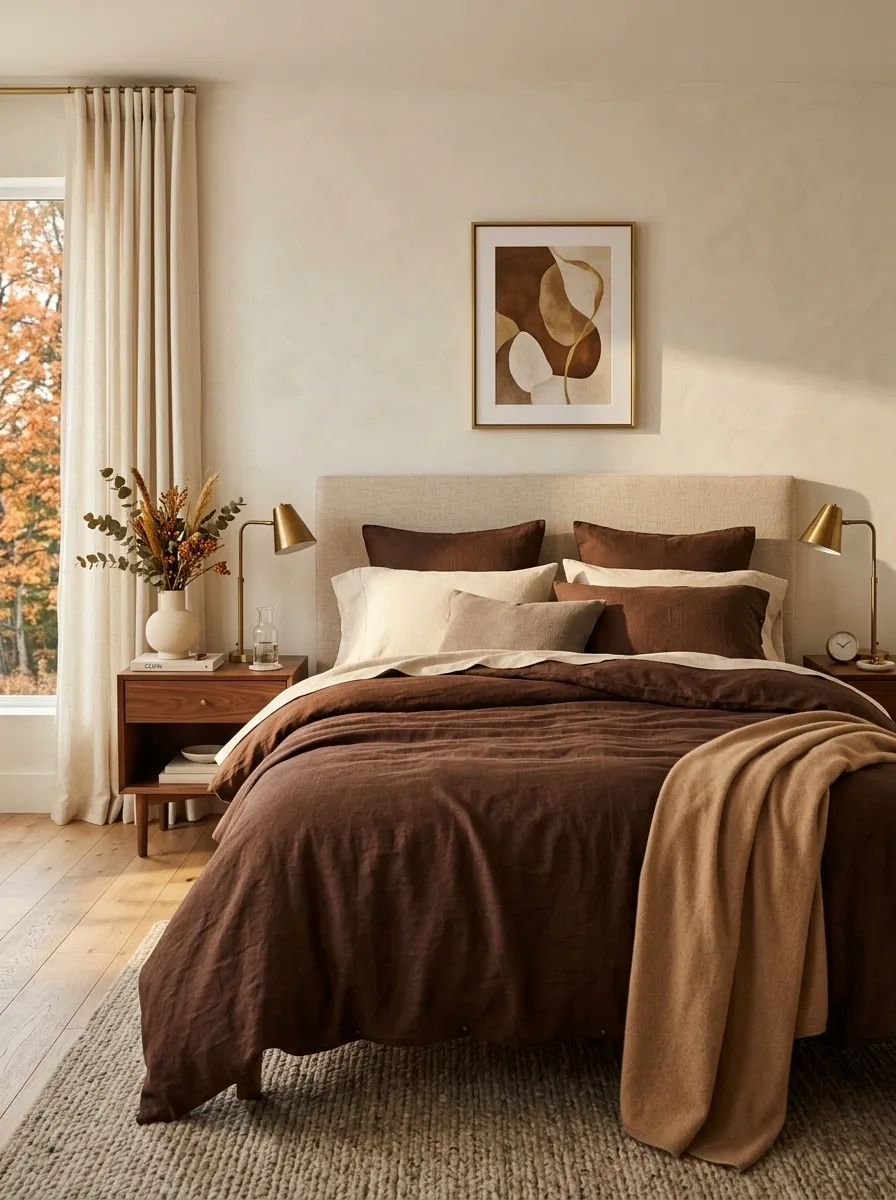
This bedroom takes a richer direction with deep brown linen bedding, creamy walls, walnut nightstands, aged brass lighting, and a restrained arrangement of dried foliage. The palette is tonal, so the room gains depth from differences in texture rather than many contrasting colors.
Keep the accessories simple. A ceramic vessel, one framed artwork, and a soft throw are enough to give the room personality. The deeper bedding should remain the strongest visual element, with brass providing just enough warmth to keep the composition from feeling flat.
Layered Fall Reading Corner With Cognac Leather and Oak
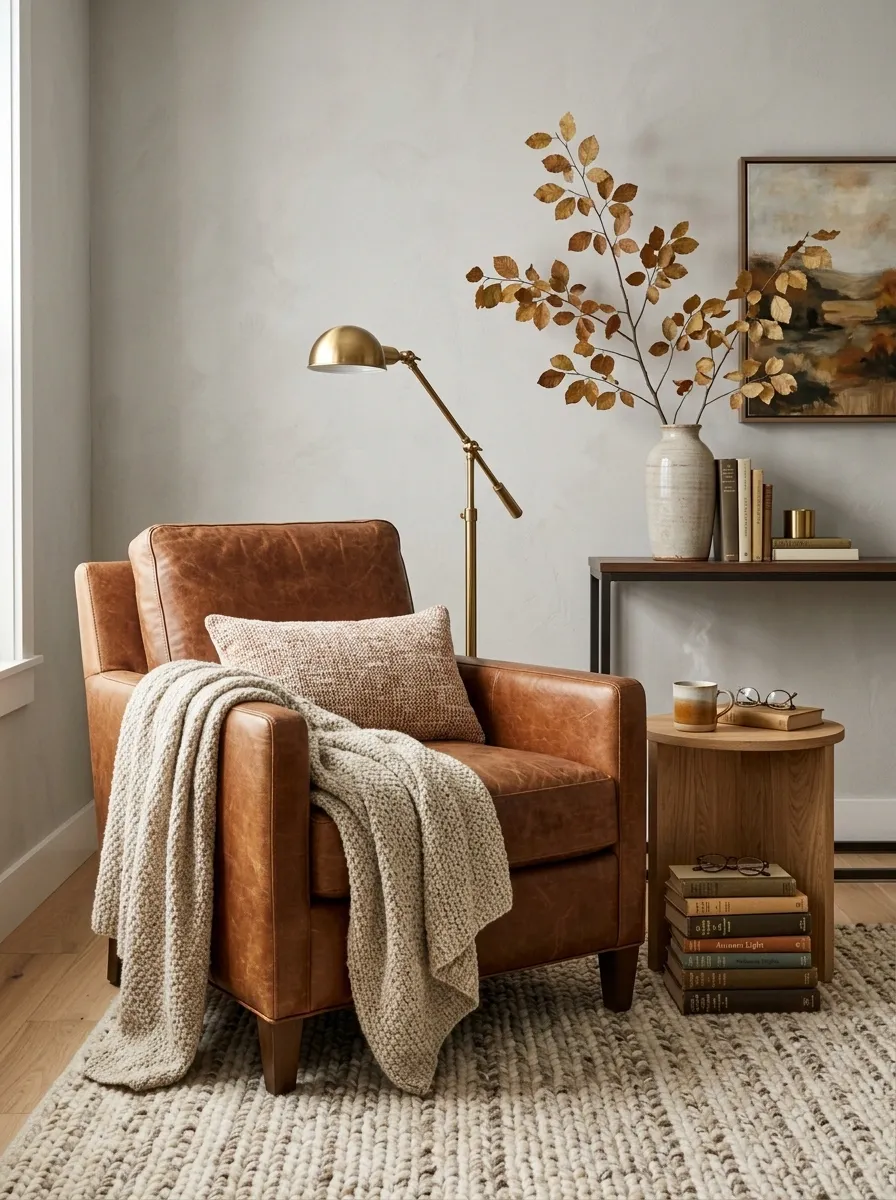
This reading corner is designed around one substantial cognac leather chair. An oak side table, warm floor lamp, textured rug, stack of books, and wool throw turn the chair into part of a finished composition rather than a lone accent.
A single branch arrangement can occupy a nearby console or small pedestal, connecting the nook to the season without competing with the chair. The combination works especially well in spaces where the rest of the room is relatively neutral.
Farmhouse Dining Room With Stoneware and Harvest Tones
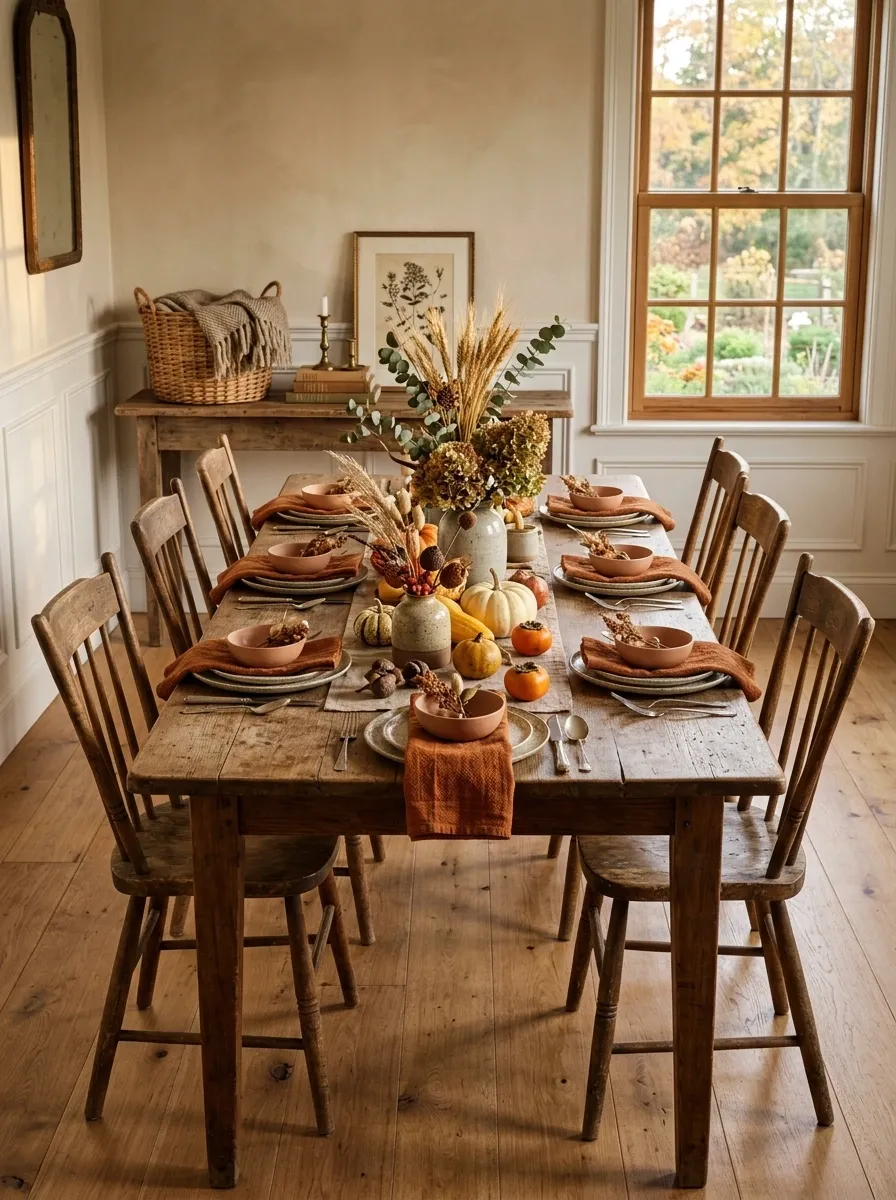
A weathered dining table, spindle-back seating, neutral walls, linen napkins, woven textures, and handmade-looking stoneware establish a relaxed farmhouse setting. The seasonal palette stays grounded in clay, muted gold, brown, and faded green.
A long low centerpiece works better here than a tall arrangement because it keeps the table practical for conversation. Add seasonal produce sparingly and let the natural imperfections of wood and ceramics provide most of the visual interest.
WOOD
TONES
Contemporary Entryway With Black, Cream, and Rust
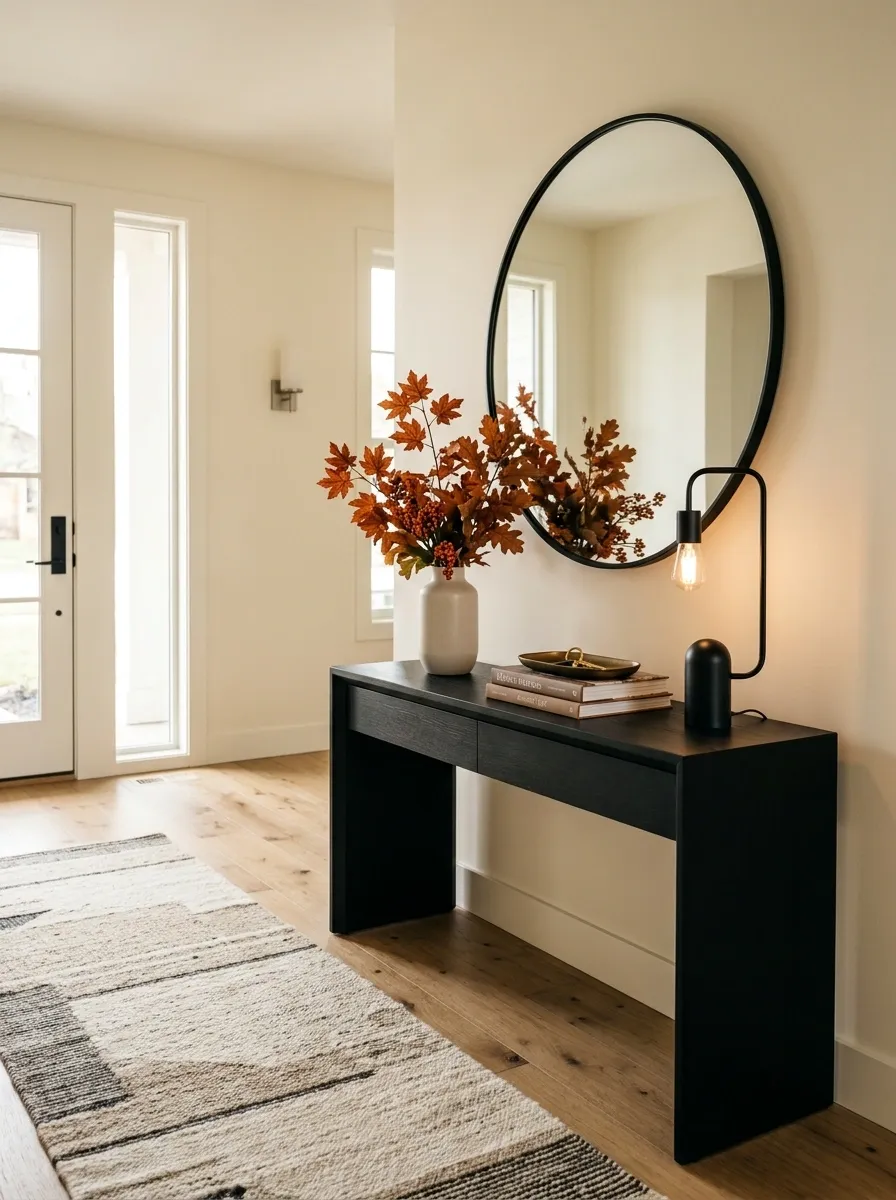
This entryway takes a sharper approach with a black console or bench, cream walls, sculptural lighting, and a textural runner. Rust-colored foliage introduces the seasonal layer while keeping the overall composition restrained.
The strongest detail is the contrast. Black gives the entry architectural definition, cream keeps it bright, and rust provides warmth. Avoid adding extra orange accessories around the room because the foliage already establishes the seasonal connection.
Vintage Kitchen With Warm Cream Cabinetry and Botanical Prints
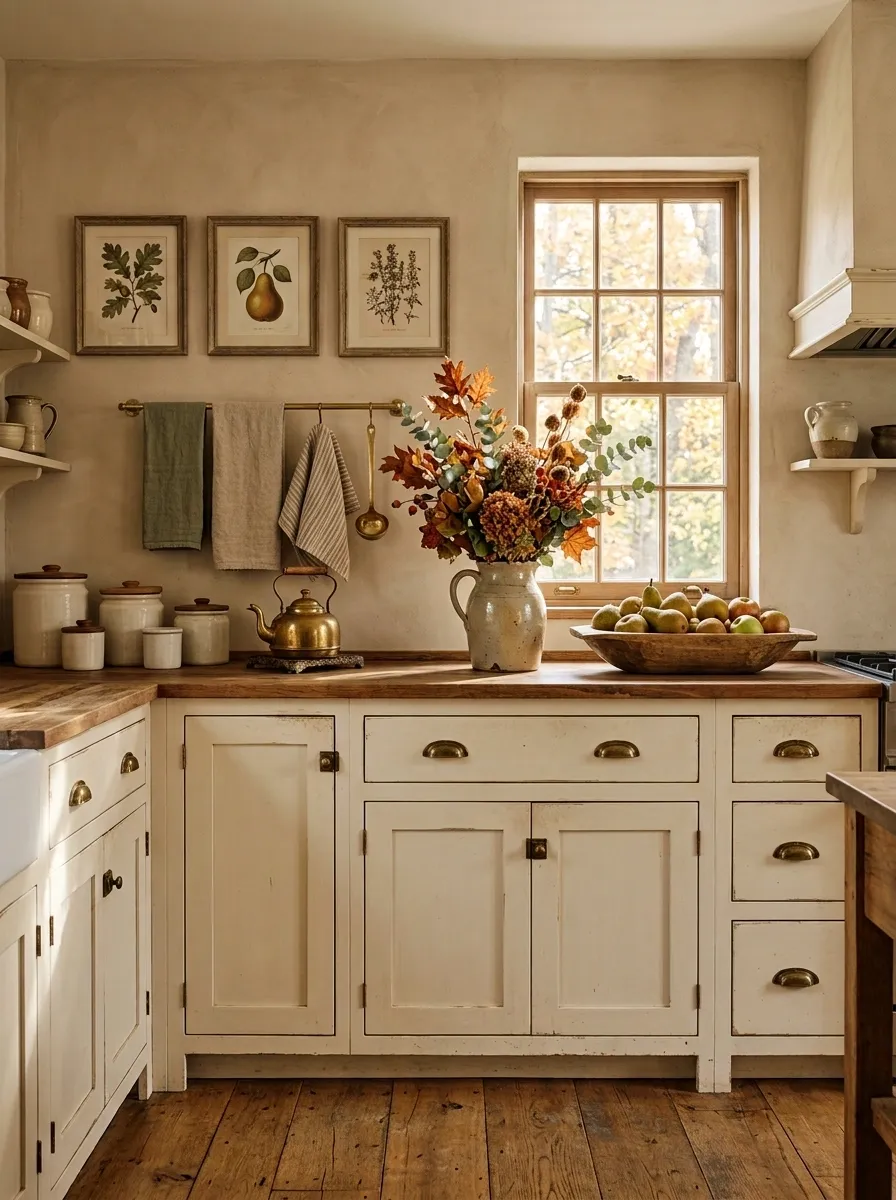
A vintage-inspired kitchen feels naturally suited to autumn because its character comes from aged materials and familiar objects. Warm cream cabinetry, worn wood, aged brass, botanical artwork, ceramic storage pieces, and linen towels create the foundation.
Seasonal foliage can appear in a stoneware pitcher, while apples or pears add a subtle harvest note. The design should feel slightly imperfect, with visible texture and patina rather than a showroom finish.
Earthy Bedroom With Terracotta Walls and Natural Wood
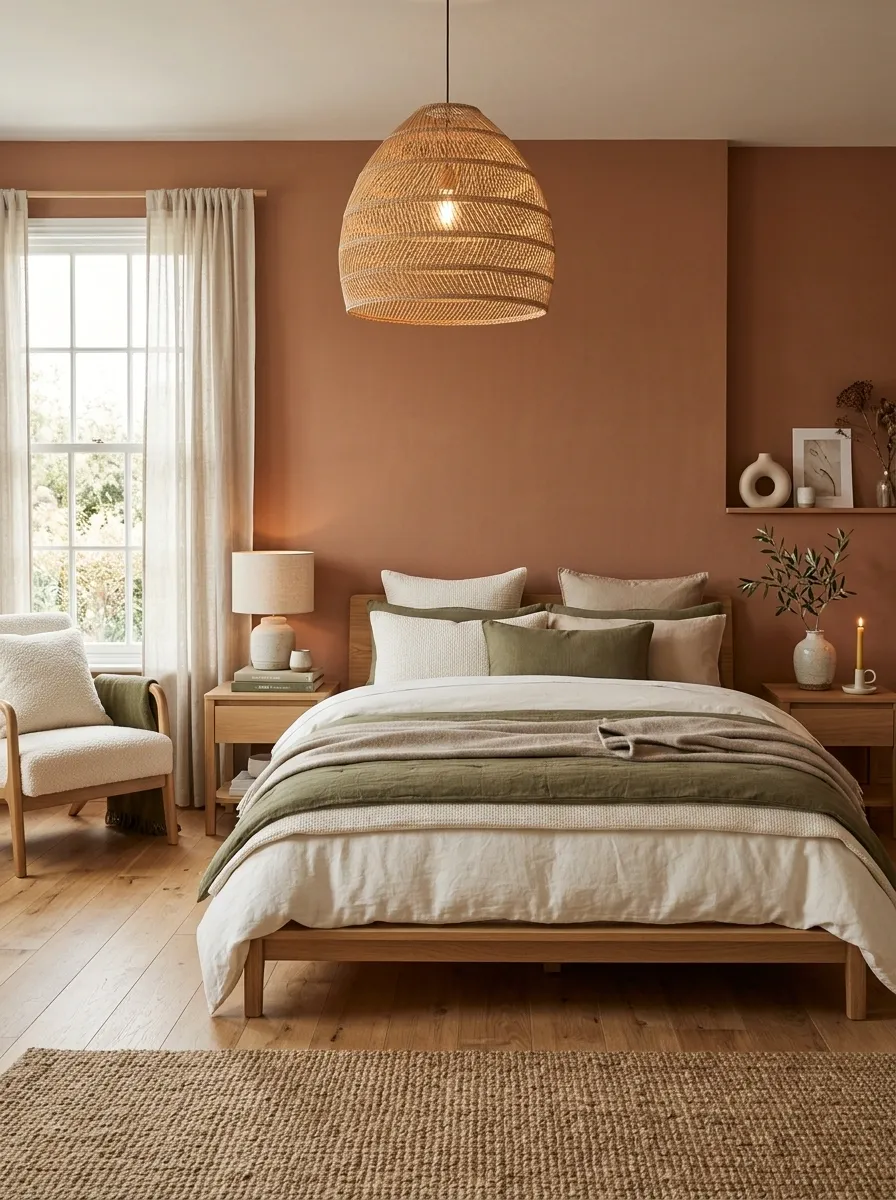
The wall color does most of the seasonal work in this bedroom. Terracotta walls create a warm envelope around natural oak furniture, ivory bedding, woven lighting, handmade ceramics, and small olive accents.
Because the architecture already has such a strong color, resist the urge to add orange pillows, pumpkins, and other obvious seasonal objects. Let the wall color be the autumn statement while the furniture and textiles keep the rest of the composition grounded.
Covered Porch Lounge With Plaid Textiles and Lantern Light
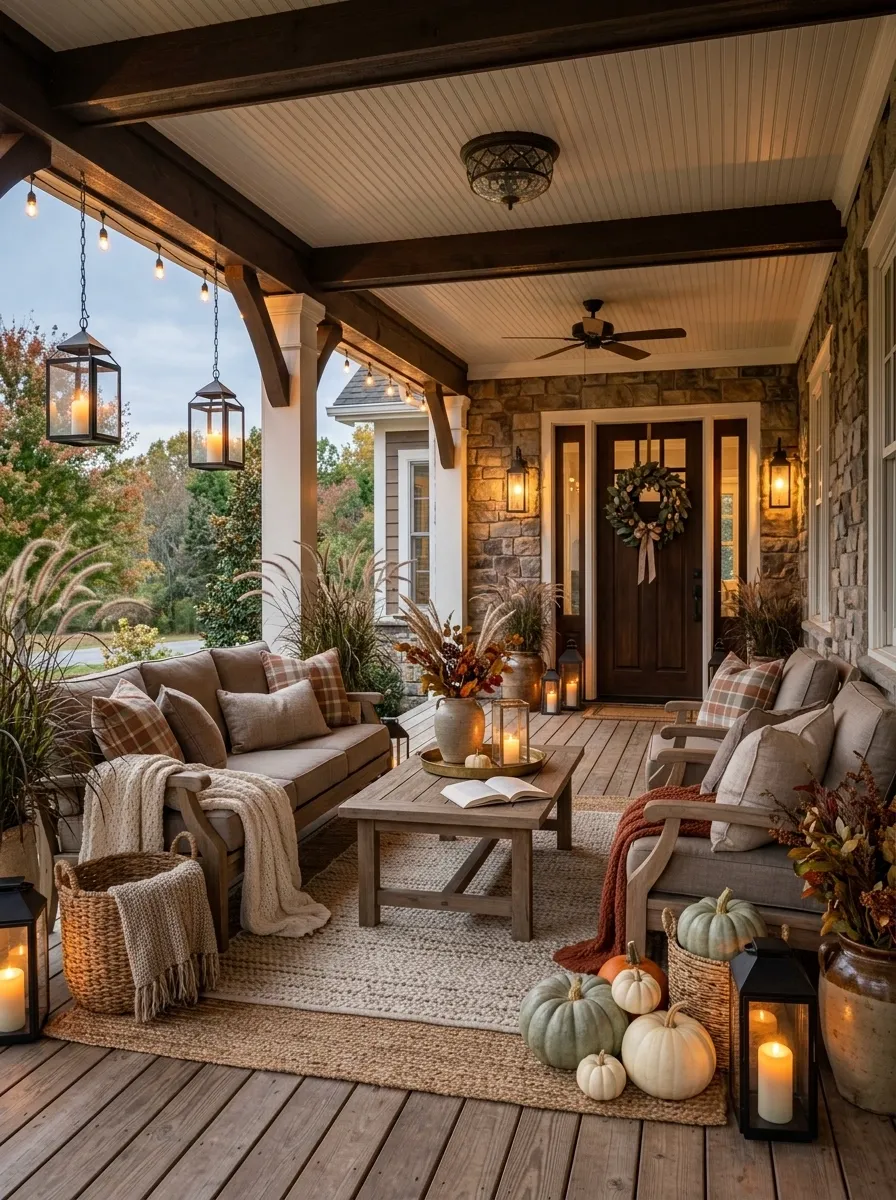
This covered porch is arranged like a real outdoor room. Comfortable seating, weathered wood, layered outdoor rugs, muted plaid cushions, lanterns, potted grasses, and a small number of pumpkins create a setting that works after sunset as well as during the day.
The warm lighting matters as much as the decorations. Place lanterns at different heights so the light doesn’t become one bright point. The result feels seasonal without sacrificing the practical purpose of the porch.
Elegant Autumn Dining Table With Layered Cream and Burgundy
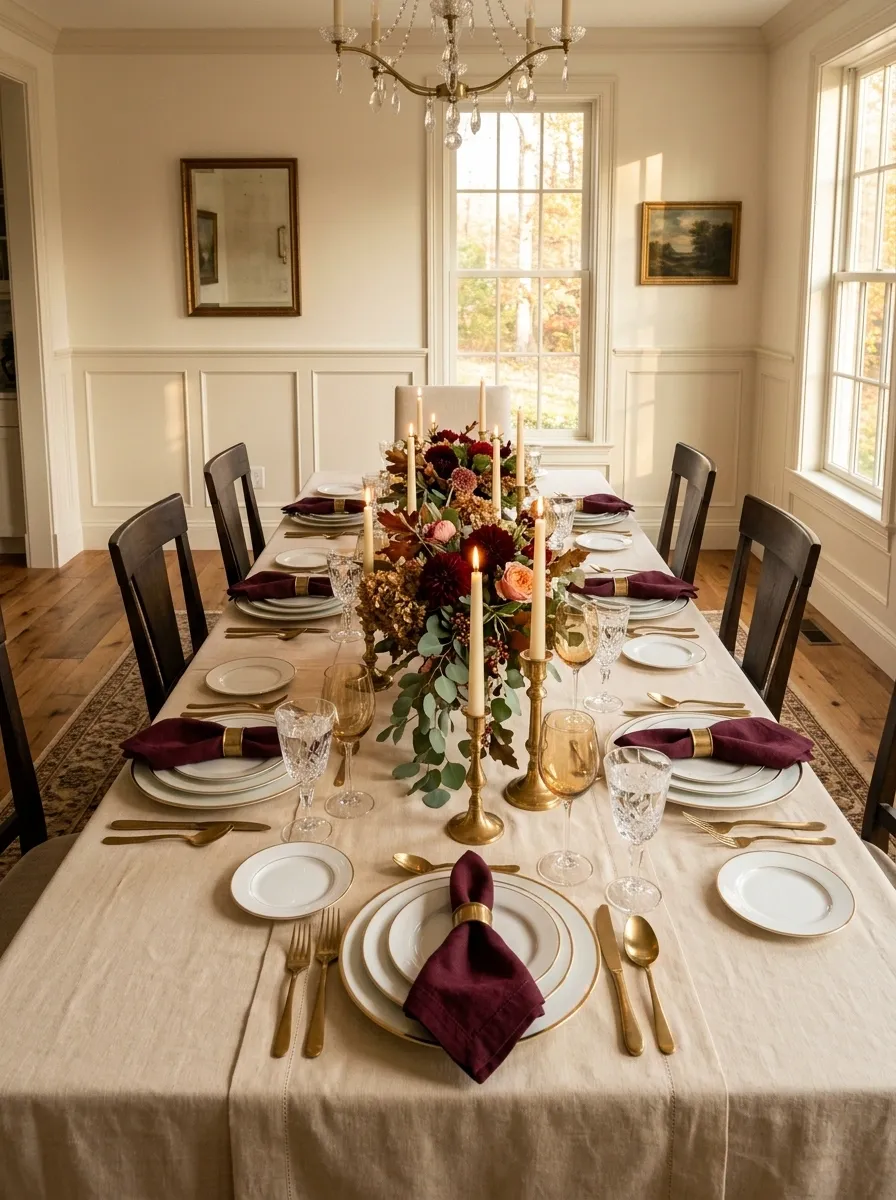
This tablescape takes a more formal approach. A warm cream runner or tablecloth, dark wood, burgundy napkins, clear and amber glassware, aged brass candleholders, and a low floral arrangement create a refined autumn setting.
The centerpiece should stay low enough to preserve conversation across the table. Burgundy works best as a concentrated accent rather than the dominant color. Let cream and wood occupy most of the visual field, with candlelight providing the final layer of warmth.
Dark Wood Library With Amber Lighting and Autumn Artwork
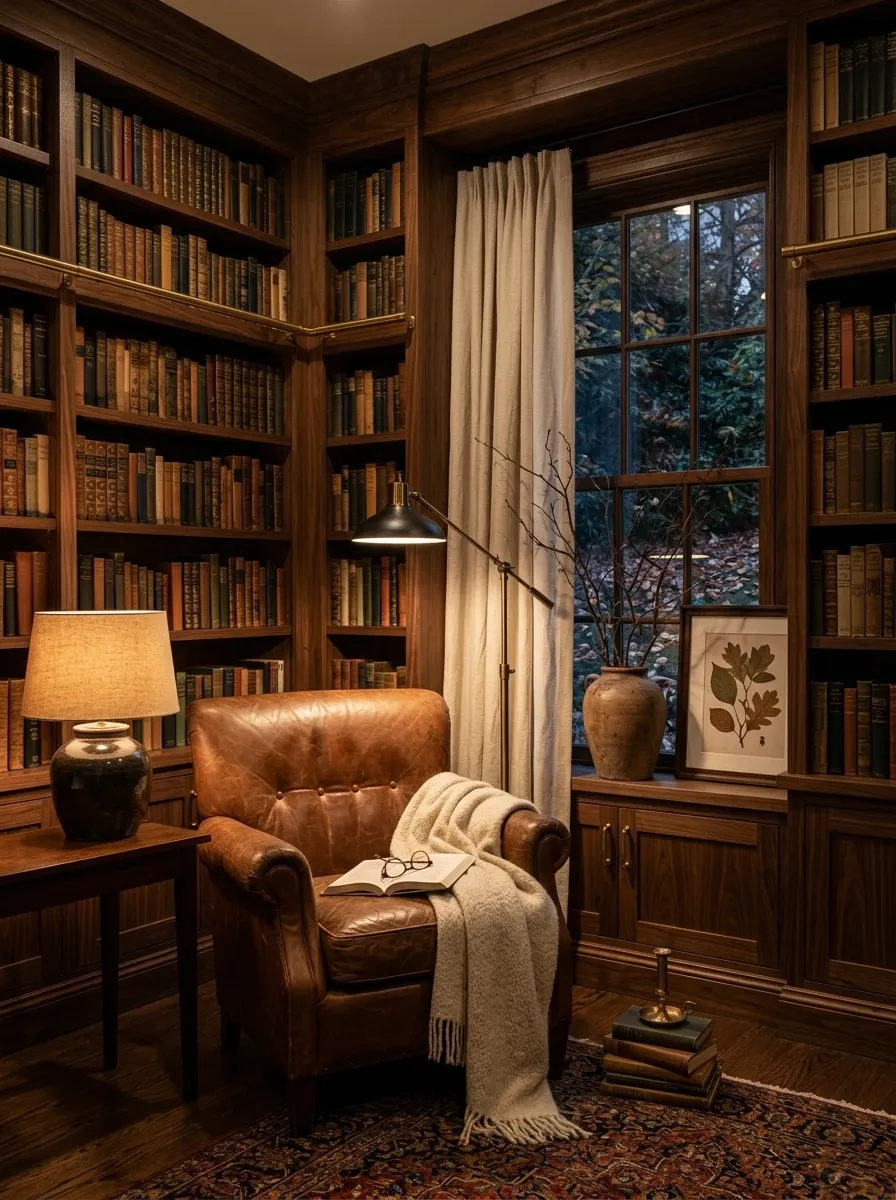
Dark wood shelving, leather seating, warm lamps, books, framed artwork, and a few seasonal branches create a moody library that doesn’t need obvious fall decorations. The palette naturally leans toward brown, amber, muted green, and cream.
The lighting should be warm and localized. A floor lamp beside a reading chair and a small table lamp on a nearby surface create separate pools of light, making the room feel layered rather than uniformly illuminated.
Light-Filled Sunroom With Olive, Cream, and Dried Grasses
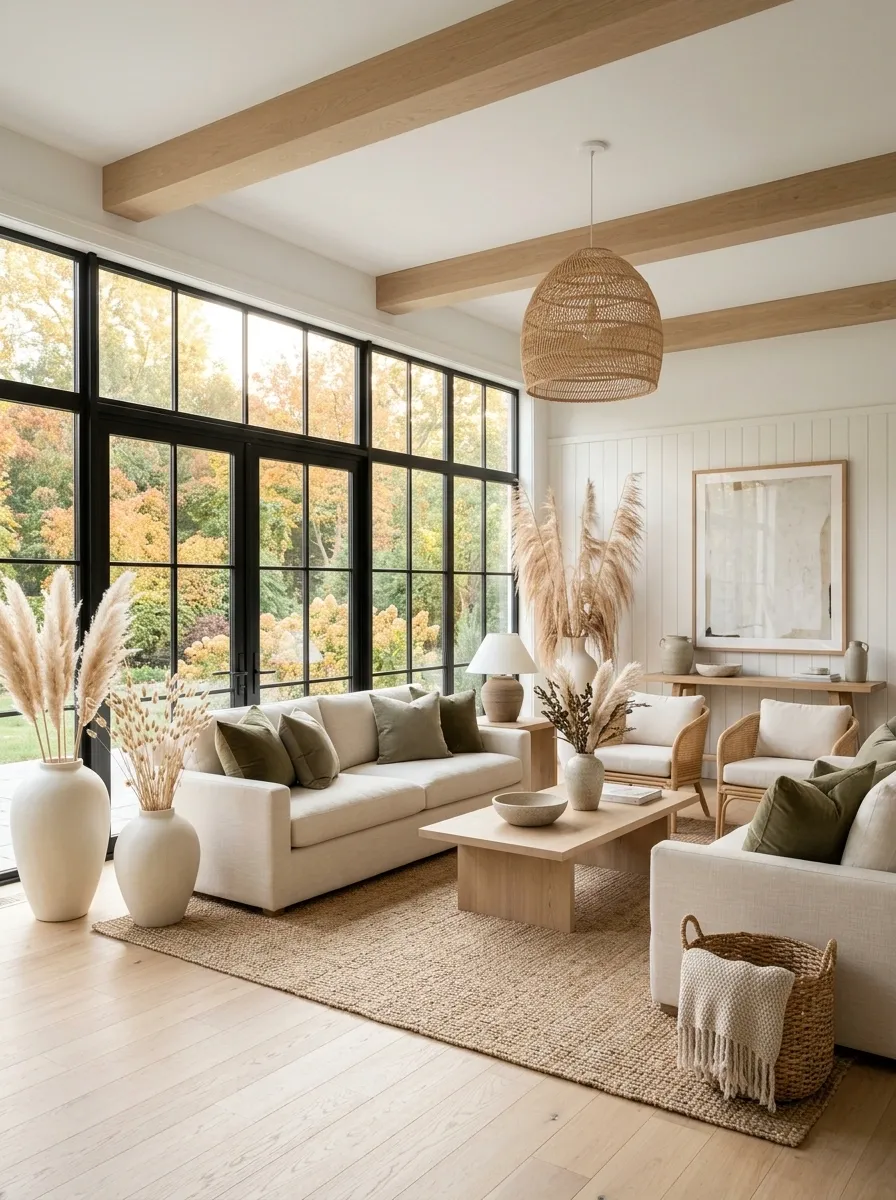
This sunroom gives autumn a softer interpretation. Cream upholstery, pale wood furniture, woven textures, olive cushions, dried grasses, and abundant daylight create a room that feels seasonal without becoming dark.
The key is restraint. The dried grasses provide enough height and movement, so other accessories can remain low. Use the natural light to emphasize the difference between the woven textures, smooth ceramics, and pale timber.
Refined Black-and-Wood Kitchen With Copper Autumn Details
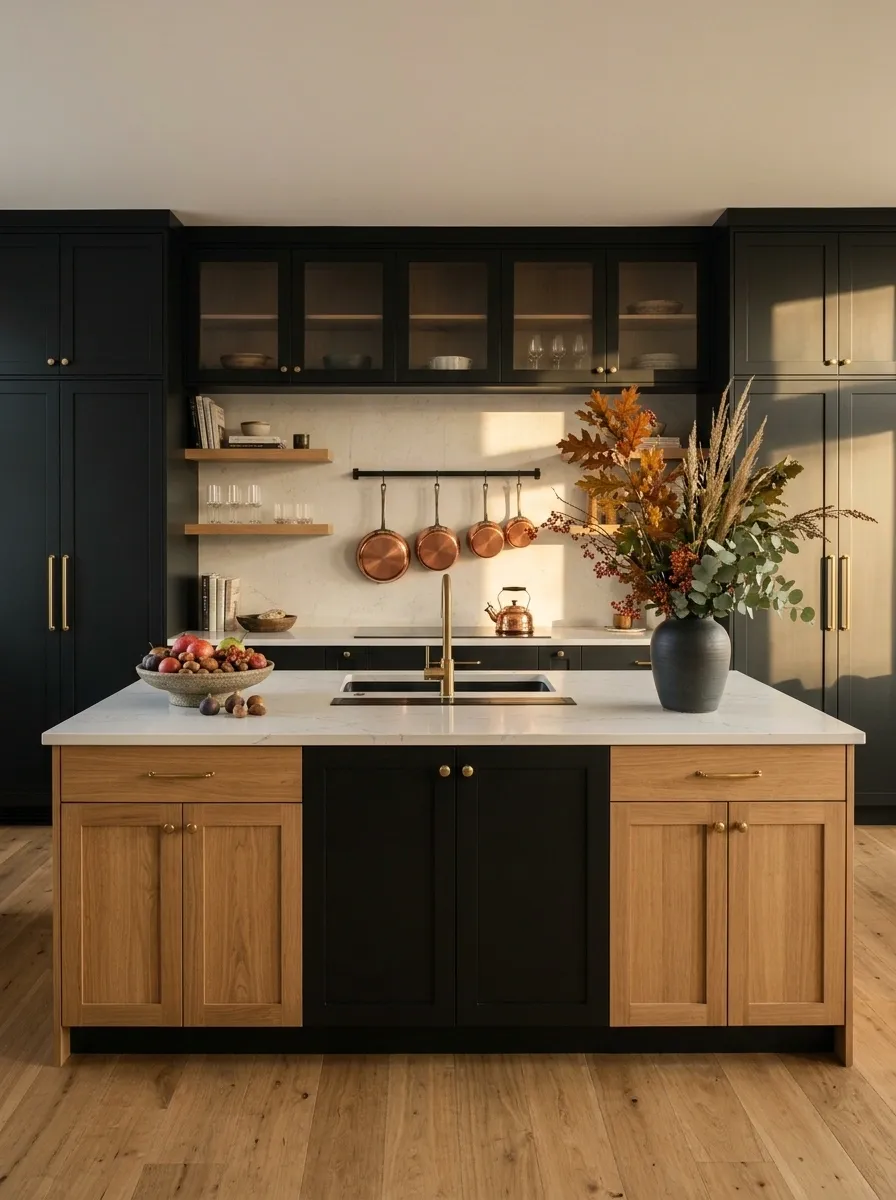
Dark cabinetry and warm wood create a strong contemporary kitchen backdrop. Stone surfaces, copper cookware, smoked glass, and a small arrangement of seasonal produce add warmth without changing the room’s modern identity.
Keep the seasonal styling concentrated in a few areas. A copper pan display, one fruit bowl, and a single foliage arrangement are enough. The clean architecture should remain visible.
Cozy Basement Lounge With Amber, Brown, and Oversized Textures
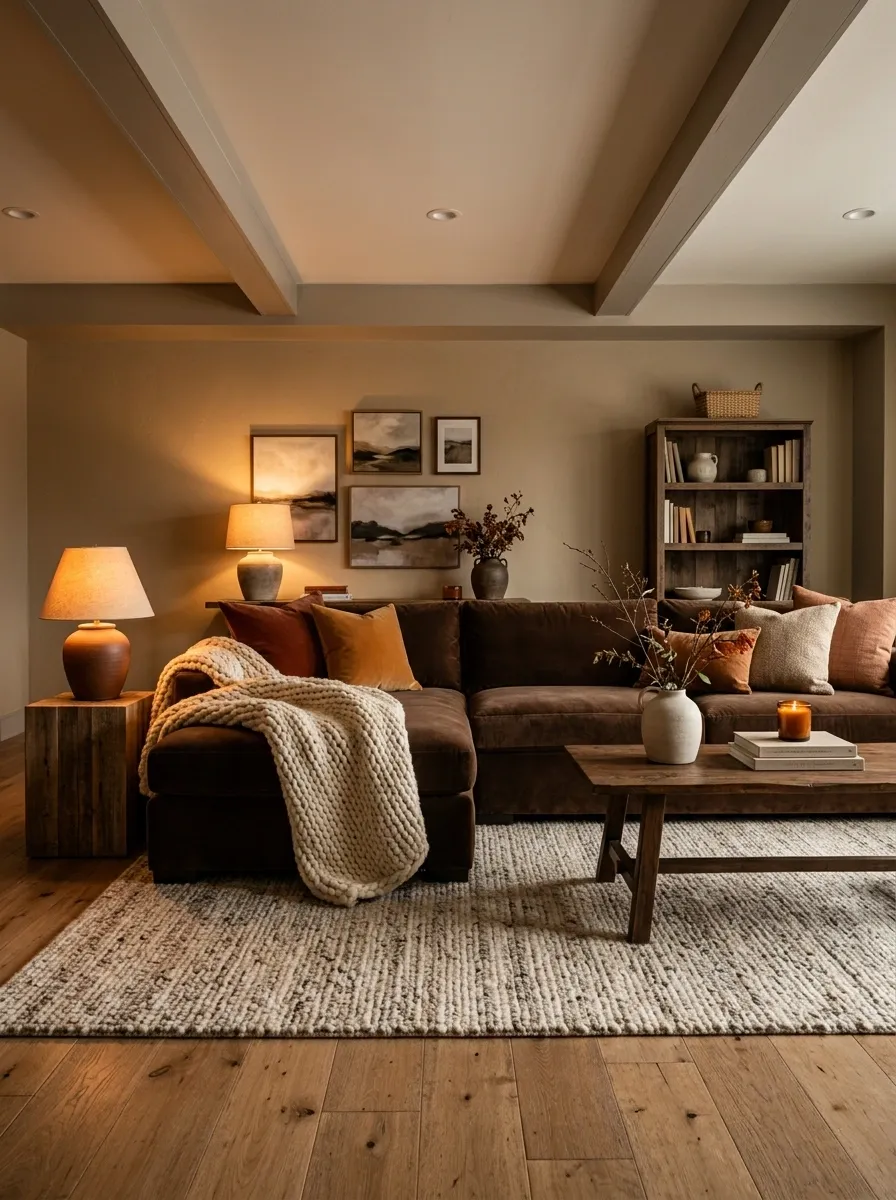
A basement lounge can handle a deeper autumn palette. Brown upholstery, a substantial rug, warm lamps, wood accents, and oversized knitted textiles make the room feel comfortable without needing a lot of decorative objects.
Use seasonal branches or ceramics sparingly around the room. The textiles should do the heavy lifting here. A deep amber throw or rust cushion can provide enough color against the brown foundation.
Romantic Cottage Bedroom With Faded Florals and Autumn Botanicals
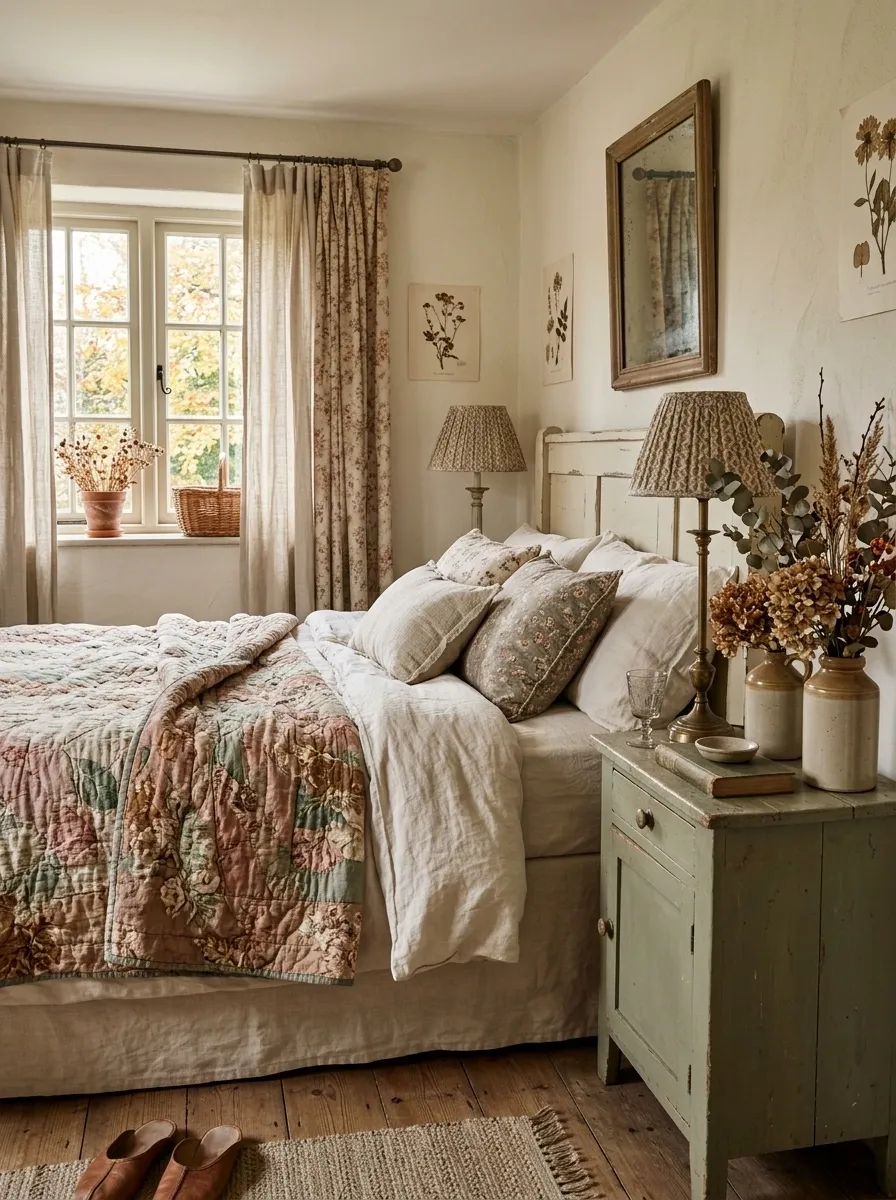
Faded floral fabrics, painted wood furniture, cream bedding, antique-style lighting, and loose dried botanicals give this bedroom a softer nostalgic character. The colors stay muted, with dusty rose, faded green, cream, and warm brown replacing brighter fall oranges.
Allow the room to look slightly imperfect. A casually folded quilt, aged wood, and loosely arranged stems make the composition feel established instead of staged.
Layered Autumn Family Room With Natural Wood and Soft Contrast
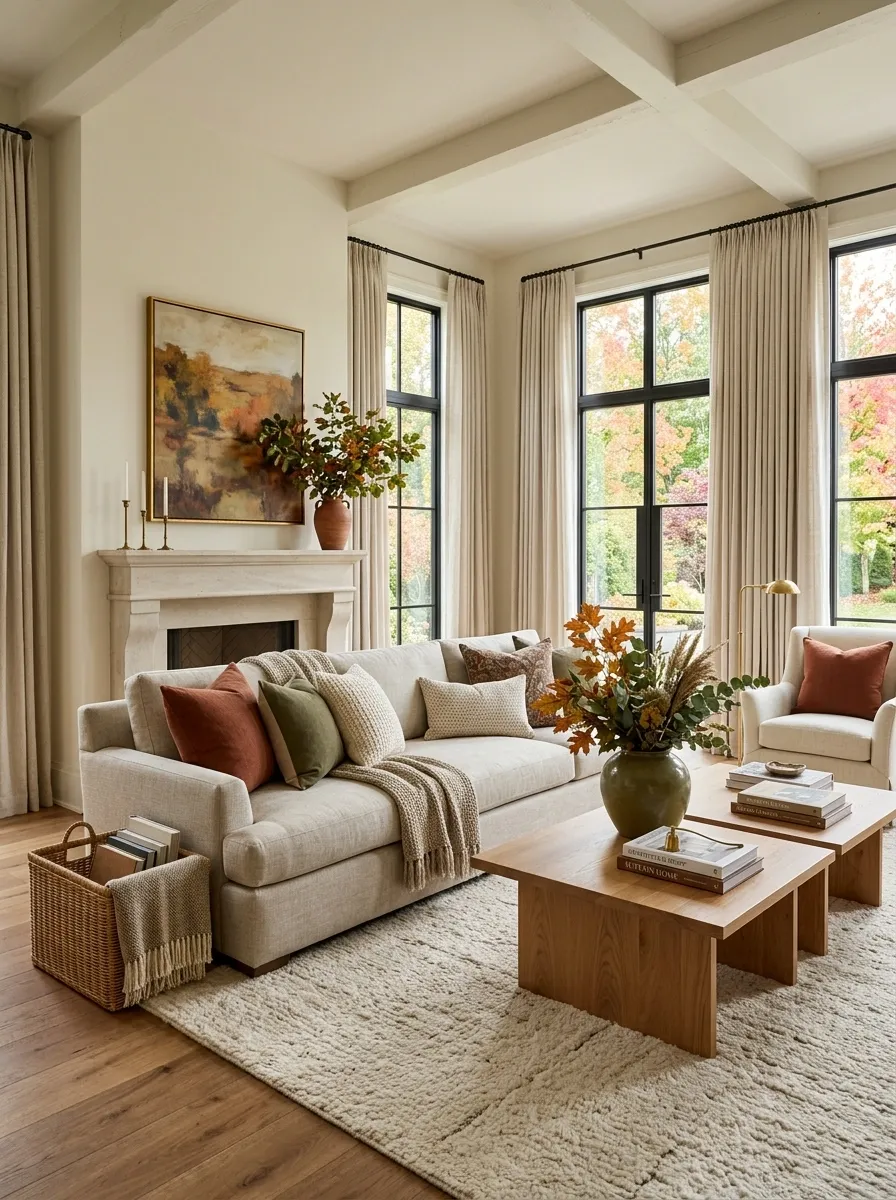
This family room brings the collection back to a practical everyday setting. A generous neutral sofa, warm wood tables, textured curtains, layered rugs, baskets, books, restrained foliage, and a controlled mix of rust, olive, and cream create a finished autumn composition without sacrificing comfort.
The seasonal details are spread across the room, but they repeat the same colors and materials, which makes the whole space feel connected. This is the approach to borrow when you want a room that can stay in place for the season without looking like a temporary display.
Let the Room Set the Direction
The most successful autumn interiors aren’t the ones with the most seasonal decorations. They’re the ones where the room already has a point of view, and the seasonal layer makes that point of view a little richer.
A dark dining room can lean into candlelight, olive, walnut, and brass. A bright kitchen can get its autumn character from copper, linen, produce, and warm wood. A small apartment may only need one strong textile and a branch arrangement, while a large porch can handle layered planters and mixed-height styling.
Start with the room you actually have. Look at its light, architecture, furniture, and strongest materials. Then choose the fall palette that supports those features instead of fighting them. That is usually what makes seasonal decorating feel intentional long after the first pumpkin is put away.