
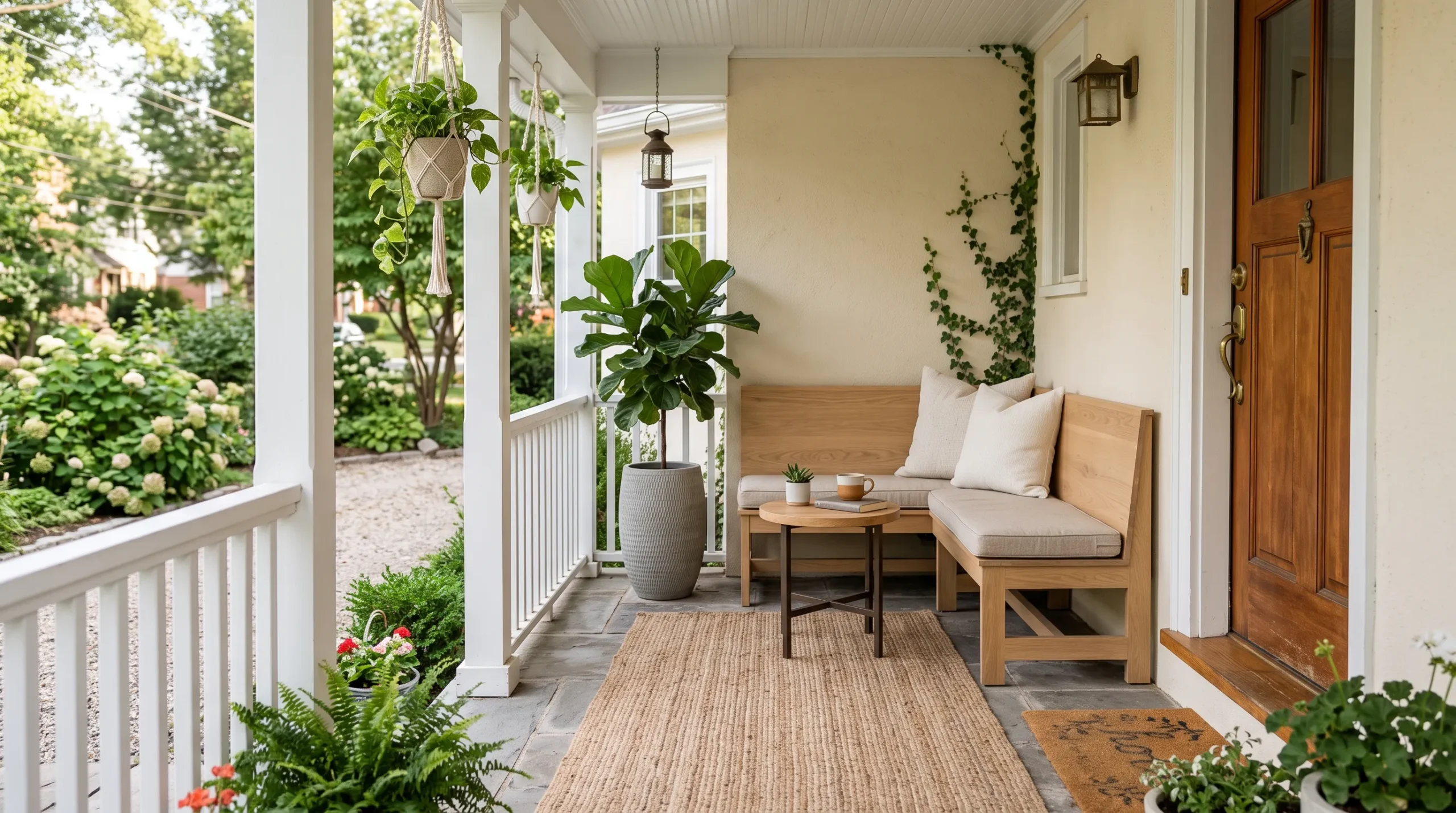
A small front porch has very little room for mistakes. The front door needs breathing space, the path to the steps still has to work, and the furniture has to feel intentional instead of looking like something that was squeezed into the first empty corner.
That is what makes porch seating tricky. A chair can look great in isolation and still feel too large once it meets the doorway, railing, planters, and steps. A bench can look plain in a showroom and become exactly right when the wood tone, exterior color, flooring, and planting all support it.
The best small front porch seating ideas are easier to understand as complete scenes. Looking at the whole composition shows how the furniture relates to the architecture, where the eye lands first, and how much open space is left around the entry. The designs below take very different approaches, from quiet Scandinavian porches to moody contemporary entries, cottage benches, built-in seats, garden-facing arrangements, and compact bistro setups.
What Makes Small Front Porch Seating Look Intentional?
A compact porch needs a clear composition before it needs more decoration. The strongest designs usually make three decisions early: how much room the entry path requires, where the seating belongs, and which material or color should visually anchor the space.
Scale Before Style
A beautiful chair can still overwhelm a narrow porch. Slim furniture often works better when the doorway and steps already take up much of the visual and physical space.
A Clear Seating Composition
The strongest small porches usually have an obvious focal arrangement. One chair, a shallow bench, or two compact seats can be enough when everything around them supports the same visual direction.
The Empty Space Matters
Leaving room around the seating makes the porch look larger and keeps the entry practical. Empty floor area isn’t wasted space here. It’s part of the composition.
Small Front Porch Seating Ideas
Slim Black Bench With Warm Cedar and a Soft Neutral Door
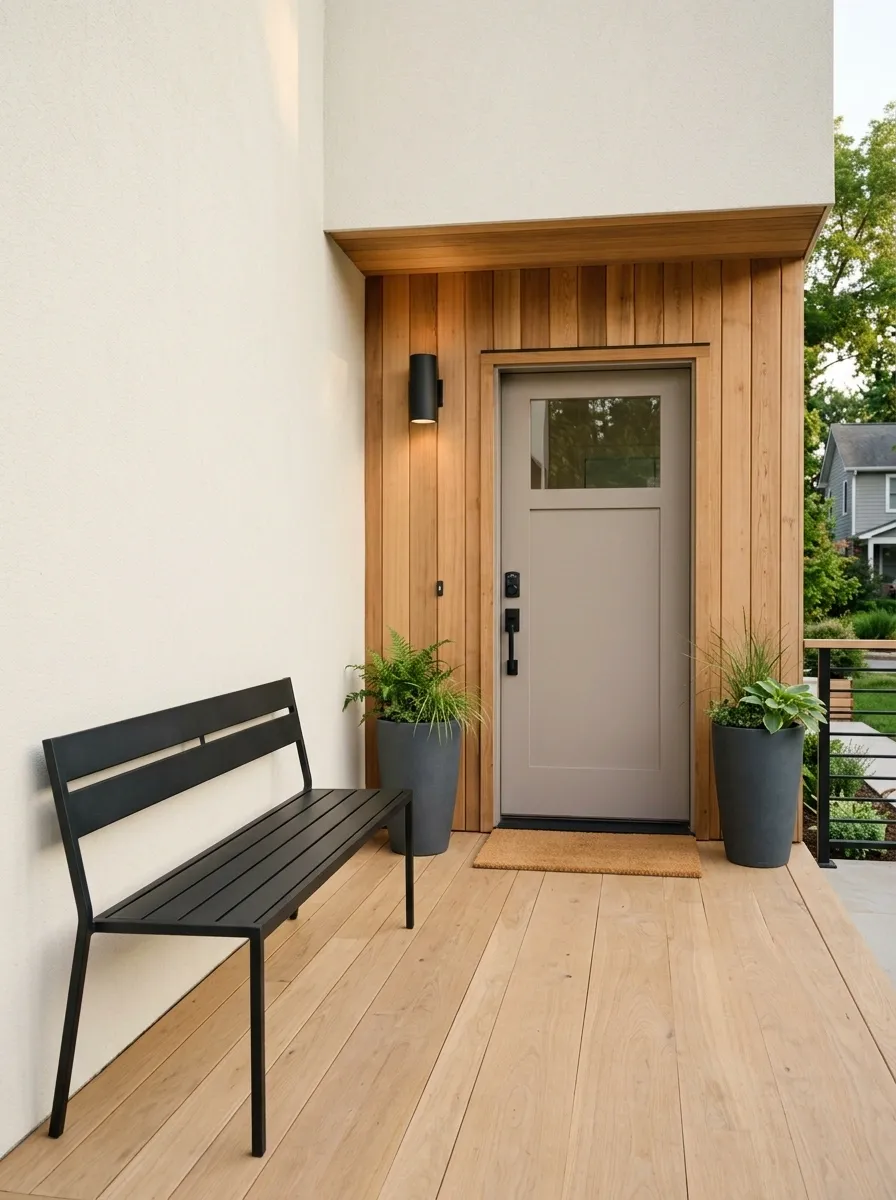
A narrow black bench gives this compact porch a strong horizontal anchor without making the entrance feel cramped. Warm cedar around the door adds just enough natural texture to soften the dark seating, while a quiet cream exterior keeps the whole composition light.
A pair of restrained planters frames the entrance without competing with the bench. The important detail is the open strip of flooring between the seat and doorway. That breathing room keeps the porch usable and makes the furniture feel deliberately scaled rather than squeezed into place.
This design works especially well on contemporary homes where clean lines already do most of the visual work.
Classic White Porch Swing
A timeless white wooden porch swing creates an instant invitation to slow down and unwind. Generous neutral cushions and a striped throw pillow soften the painted wood structure, making the seat as comfortable as an indoor sofa.
A wooden tray holding glasses and fresh flowers rests right in the center, turning the swing into a functional lounge space. Lush hanging ferns frame the upper portion of the porch, drawing the eye upward and creating a private, green oasis.
Potted plants scattered around the edges ground the airy palette and add wonderful texture to the scene. The balance of hanging foliage and comfortable seating gives this traditional porch an effortlessly welcoming feel.
Deep Green Door With Compact Wicker Lounge Chair
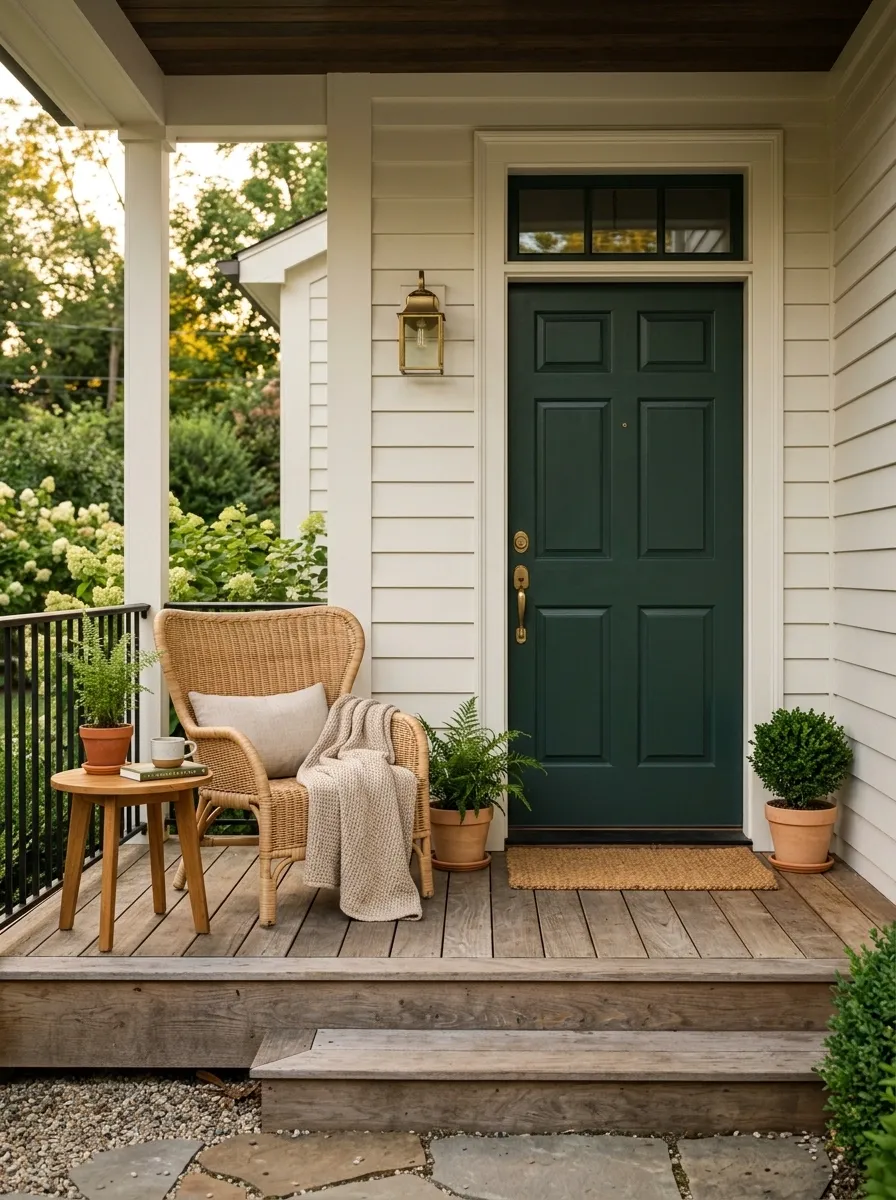
This porch gets its character from a deep green front door, natural wicker seating, warm wood details, and a controlled amount of greenery. Instead of trying to fit a pair of chairs, the composition gives one lounge chair enough room to become the focal point.
A small side table sits close enough to feel useful without extending too far into the walkway. The natural wicker keeps the dark green from feeling heavy, while the surrounding facade stays quiet.
The result feels established and relaxed without relying on lots of accessories. I’d keep the planting varied in height but restrained in number so the chair remains the visual center.
Cozy Corner Built-In Nook
Maximizing a corner with built-in bench seating transforms an unused spot into a favorite lounging zone. Patterned cushions and a rich mix of textured pillows make the bench feel plush and deeply inviting without cluttering the floor plan.
A stacked woven pouf serves as a clever coffee table in the center, adding organic warmth against the crisp white cabinetry. The built-in drawers underneath offer subtle storage, keeping extra textiles neatly out of sight when not in use.
Framed by large windows, the nook captures plenty of natural light and connects the interior to the scenery outside. A soft rug beneath completes the cozy room-like atmosphere, proving that even small nooks can feel substantial.
Tiny Scandinavian Porch With Two Pale Wood Chairs
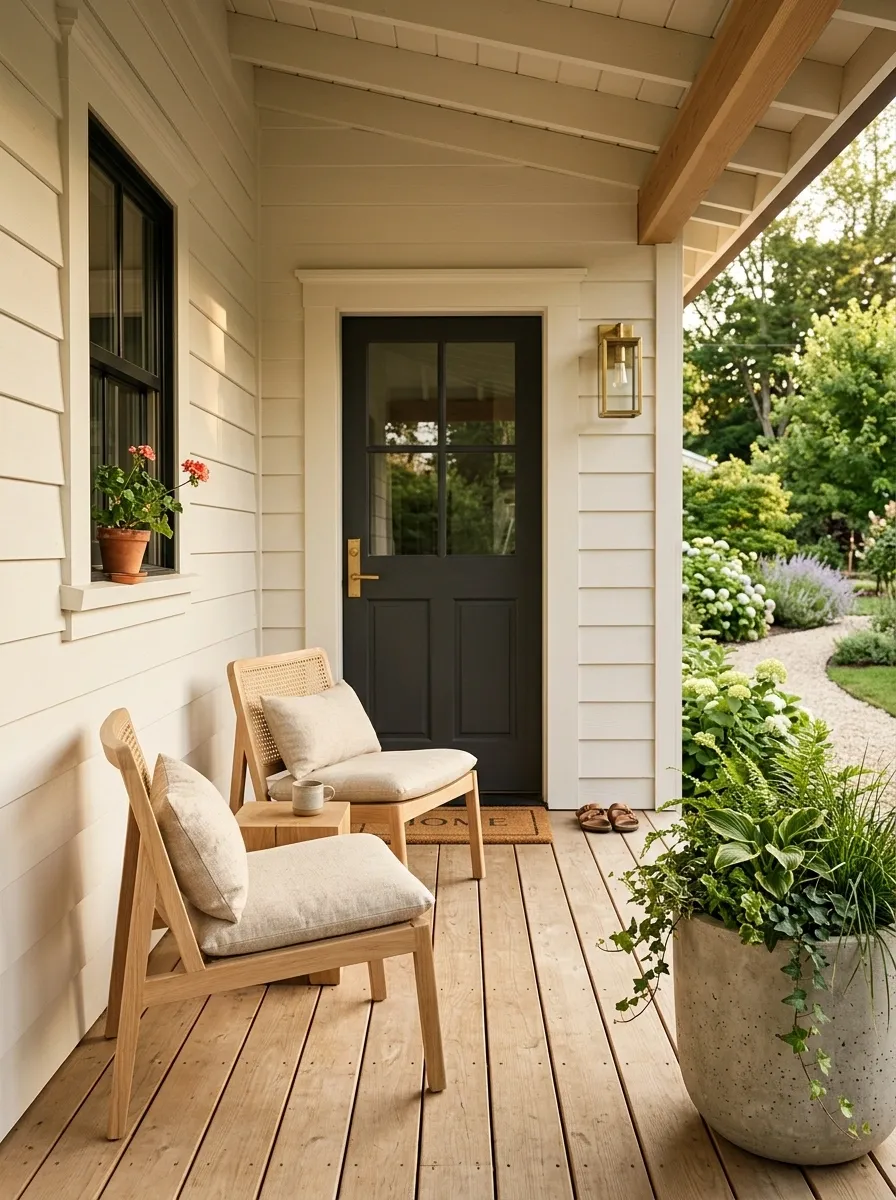
Two compact pale wood chairs create a relaxed conversation area without swallowing the porch. Their soft oatmeal cushions connect naturally with the warm-white exterior, while one larger planter adds a little visual weight at the edge.
The chairs are angled slightly toward each other rather than lined up rigidly. That small change makes the seating feel more social and helps the arrangement read as a complete setting rather than two separate pieces.
The light palette also makes sense on a porch with good daylight. It keeps the space visually open while the wood prevents the scene from feeling too stark.
Built-In Window Bench With Layered Textiles
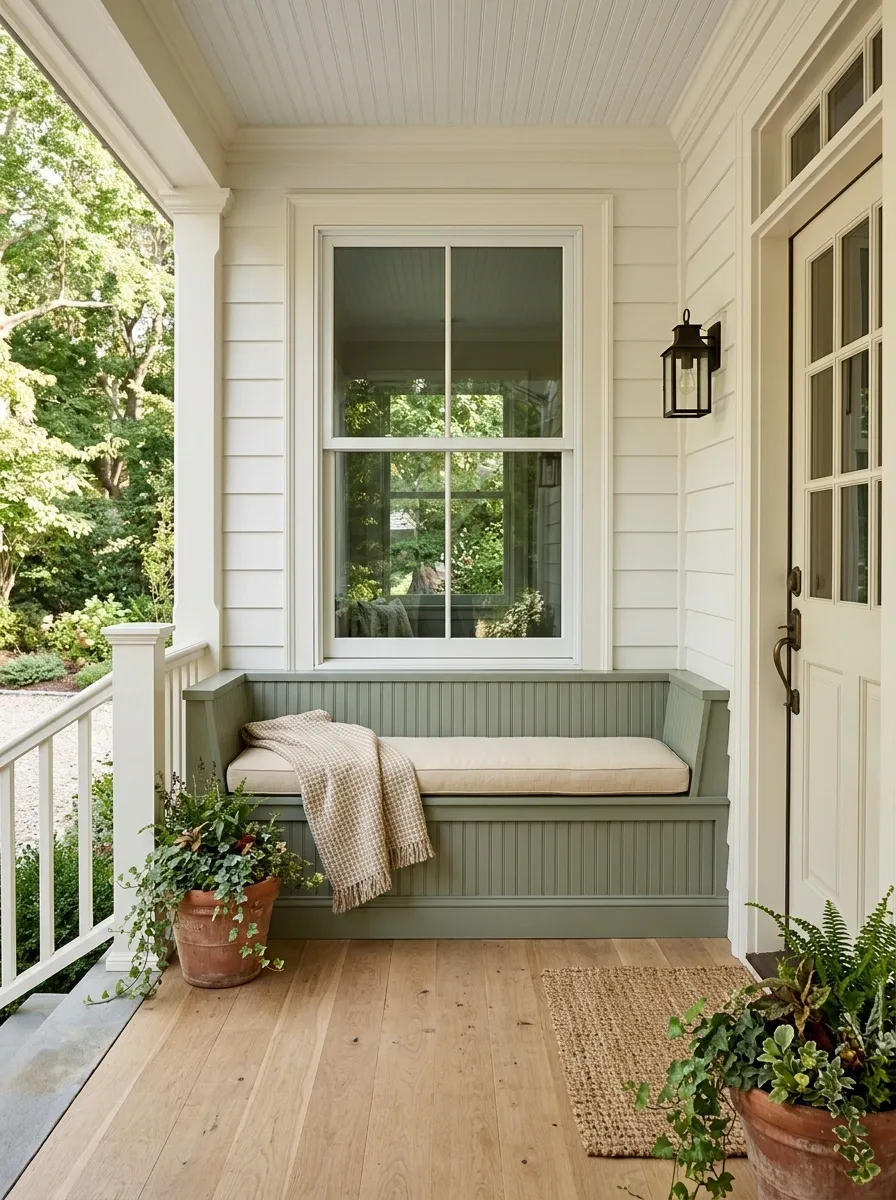
When a front porch already has a prominent window, turning the space beneath it into seating creates a much stronger composition than adding a freestanding chair nearby. This shallow built-in bench uses that architectural feature as its starting point.
Layered cushions add comfort and color without taking up extra floor area. A woven throw introduces another texture, while simple planters soften the harder lines around the window and door.
The bench feels like part of the architecture, which is what gives this small porch its finished quality. Keep the textiles controlled rather than mixing too many patterns. The structure should remain the main visual feature.
Traditional Porch With a Small Rocking Chair and Lanterns
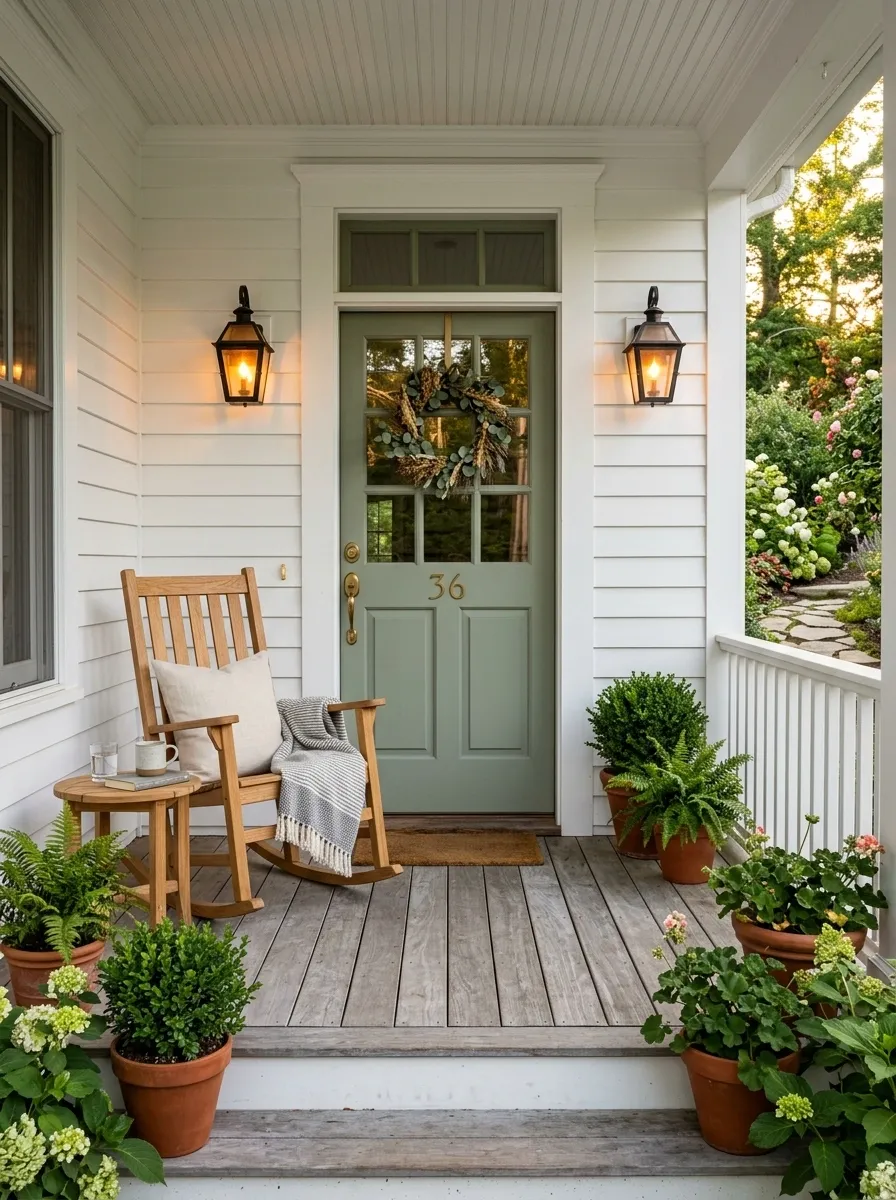
A single wooden rocking chair gives this traditional porch a strong sense of purpose. The painted door and simple siding create a classic backdrop, while lantern lighting brings warmth after sunset.
Rather than crowding the entrance with matching furniture, the composition lets the chair stand alone beside a compact side table. Small plants sit closer to the edges, leaving the center of the porch visually open.
The proportions matter here. The rocking chair has enough room to read as comfortable, but it doesn’t dominate the doorway. That balance makes the porch feel genuinely usable rather than staged for a photograph.
Tiny Cottage Porch With Painted Wooden Bench and Flowers
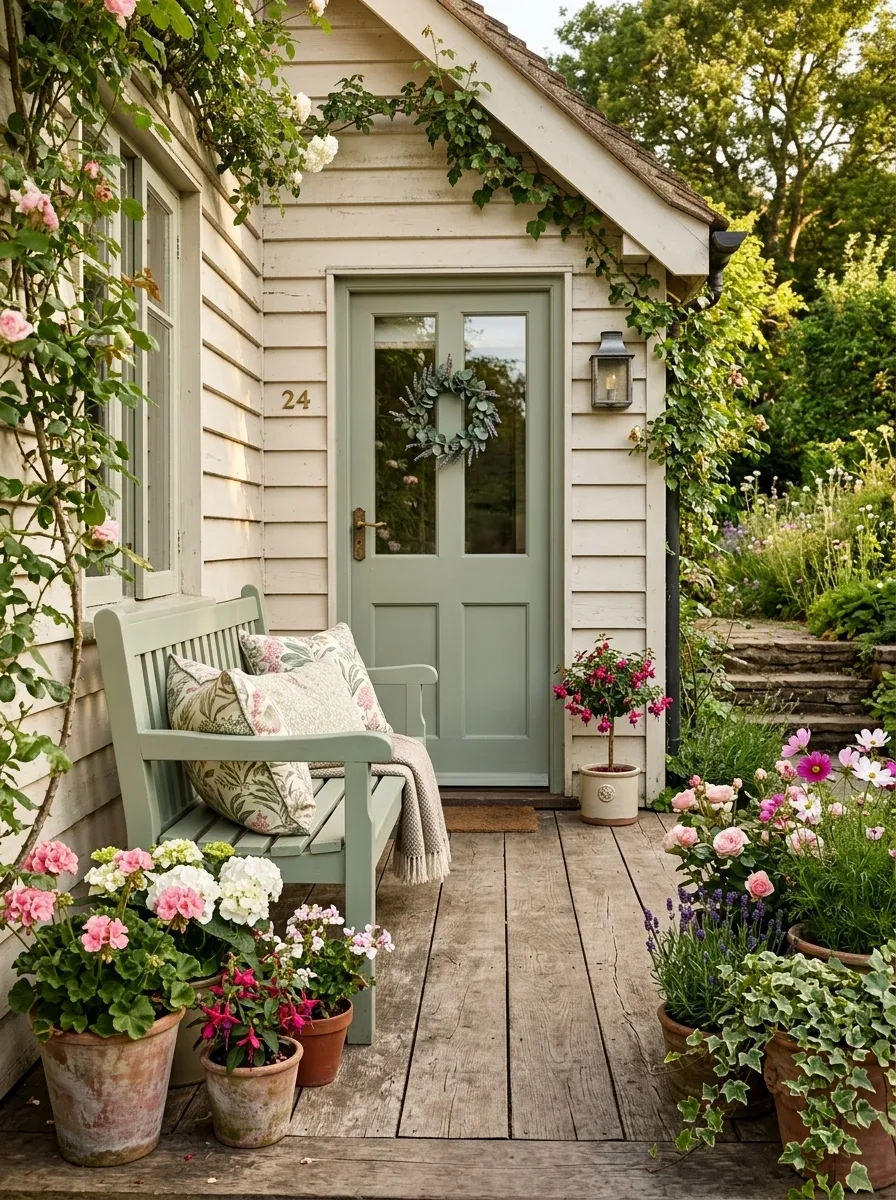
A painted wooden bench gives this cottage porch its main color moment, while flowering containers bring the softer details around it. The front door, siding, and floor stay relatively quiet so the seating feels like part of the architecture instead of a piece dropped into the scene.
A few patterned cushions can make the bench feel personal, but the composition doesn’t need many decorative objects. The flowers provide enough movement and color on their own.
This direction suits older cottages, simple traditional homes, and porches where the facade already has plenty of charm. Keep the flower containers close to the edges so the middle remains visually open.
Narrow Urban Porch With Folding Bistro Seating
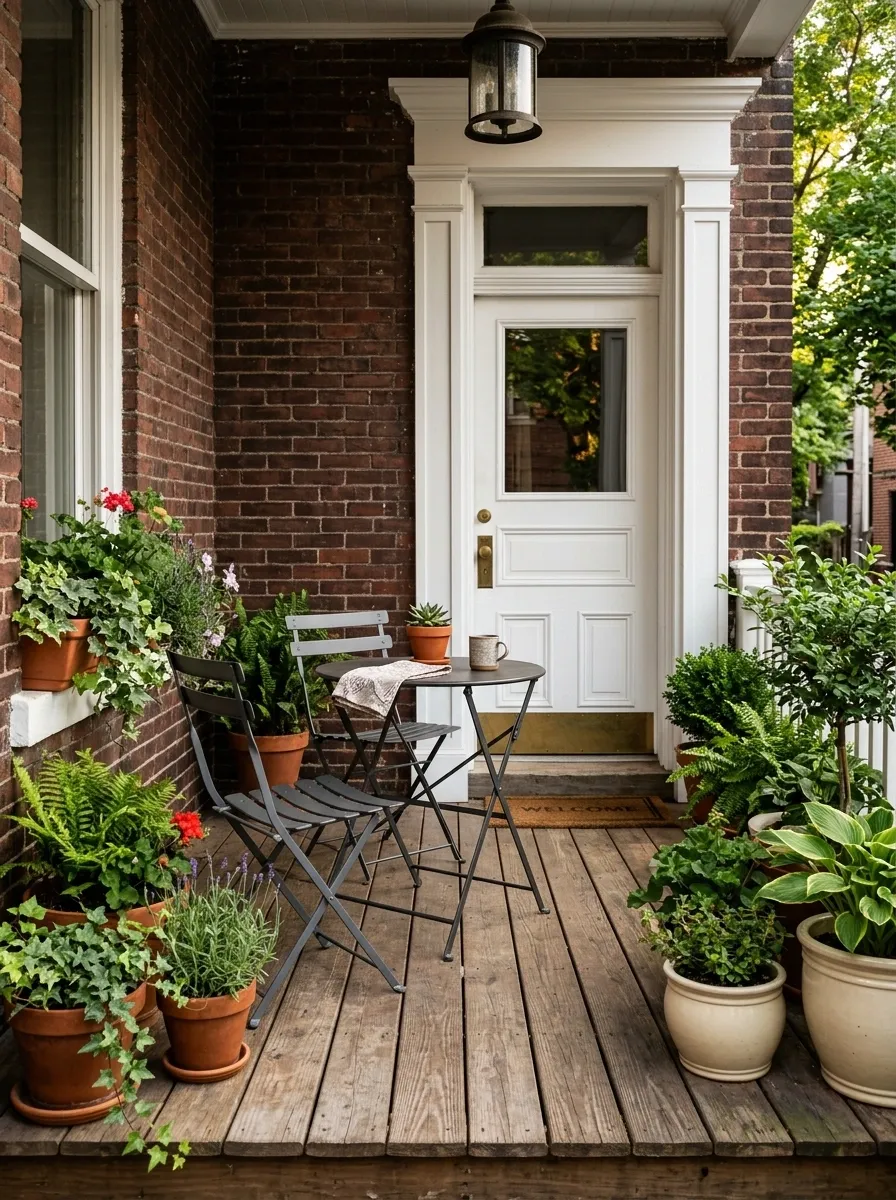
A narrow city entrance benefits from furniture that can change footprint. Here, a small folding bistro table and two lightweight chairs create a genuine seating area without permanently taking over the porch.
Brick or painted masonry gives the background enough texture, while the furniture remains visually light. A few potted plants define the edge without creating another obstacle near the door.
The important part of this design is flexibility. When the porch needs to handle more traffic, the chairs and table can be folded and moved aside. That makes the composition practical as well as attractive.
Warm Modern Porch With Low Teak Bench
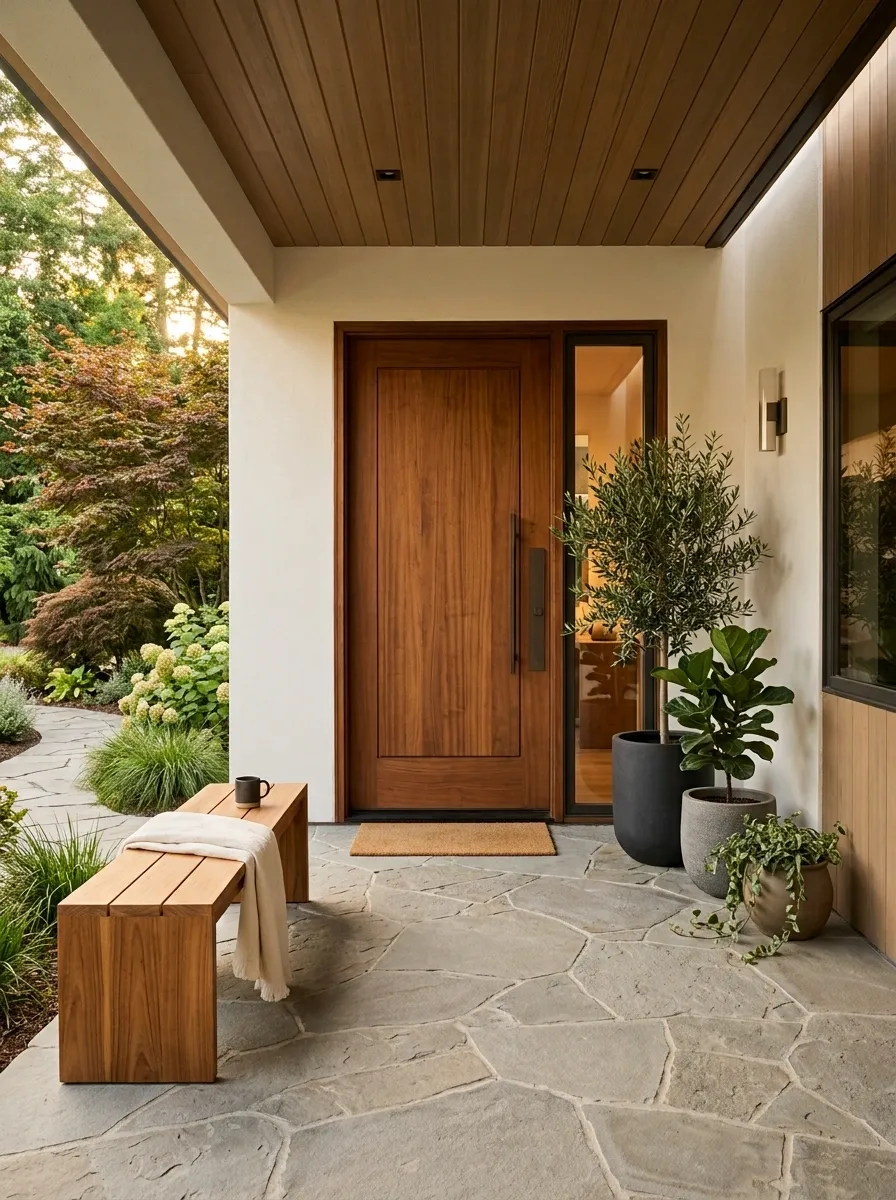
A low teak bench brings warmth to a modern porch without adding visual bulk. Natural stone underfoot, a broad timber-toned door, and a few sculptural plants create a restrained composition that still feels layered.
The bench is deliberately simple. Its role is to provide seating while connecting the warm wood tones across the facade. A textured cushion can soften the seat, but the natural teak should remain visible.
This design works especially well when the house already has strong modern lines. The organic wood keeps those lines from feeling overly hard without turning the porch rustic.
Blue-and-Cream Porch With One Oversized Armchair
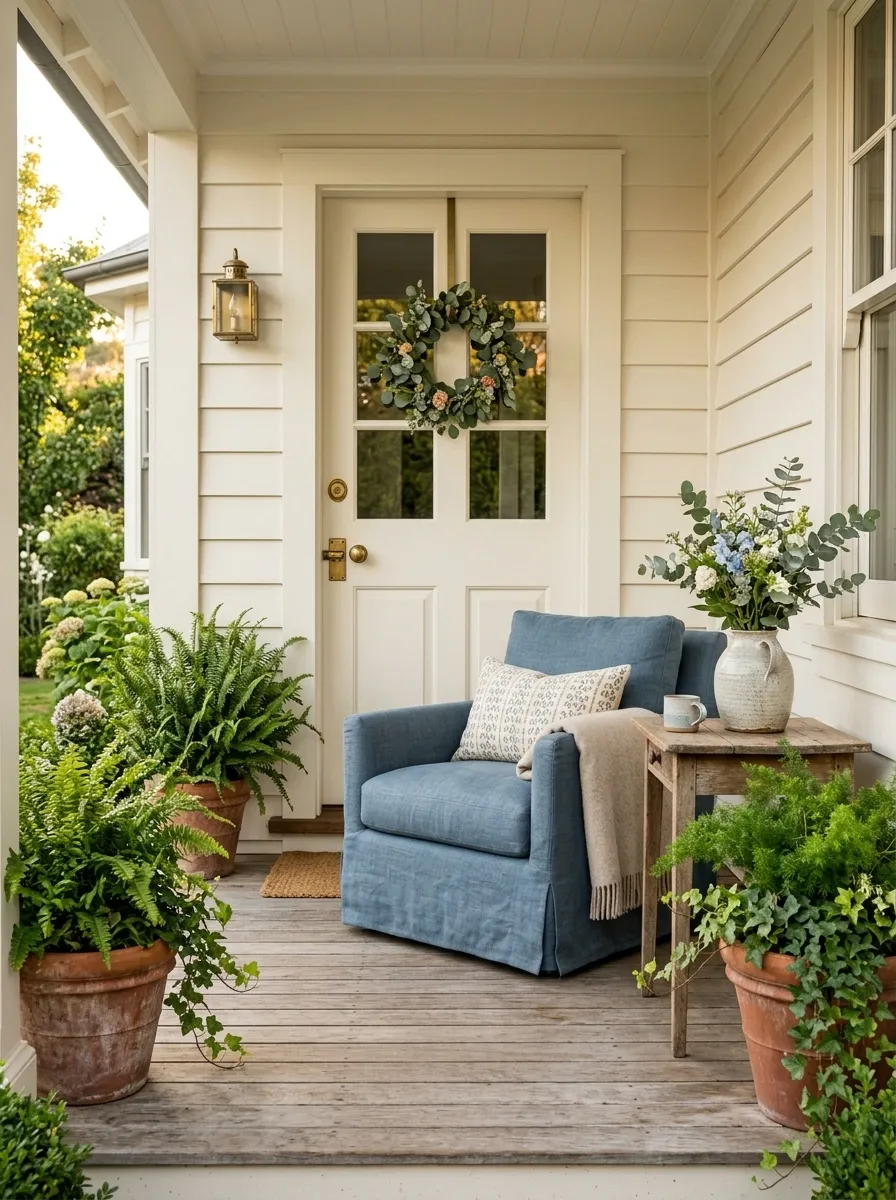
Instead of forcing multiple seats into a tiny footprint, this porch commits to one generously scaled armchair. A muted blue upholstery tone gives the chair presence, while the cream door and pale exterior keep the overall scene bright.
A narrow side table completes the arrangement without widening the furniture footprint too much. One or two planters can sit farther from the chair to create a sense of enclosure without blocking the entry.
This is a strong solution when comfort matters more than seating capacity. The chair becomes the destination, while the rest of the porch remains deliberately quiet.
Rustic Small Porch With Reclaimed Wood Bench
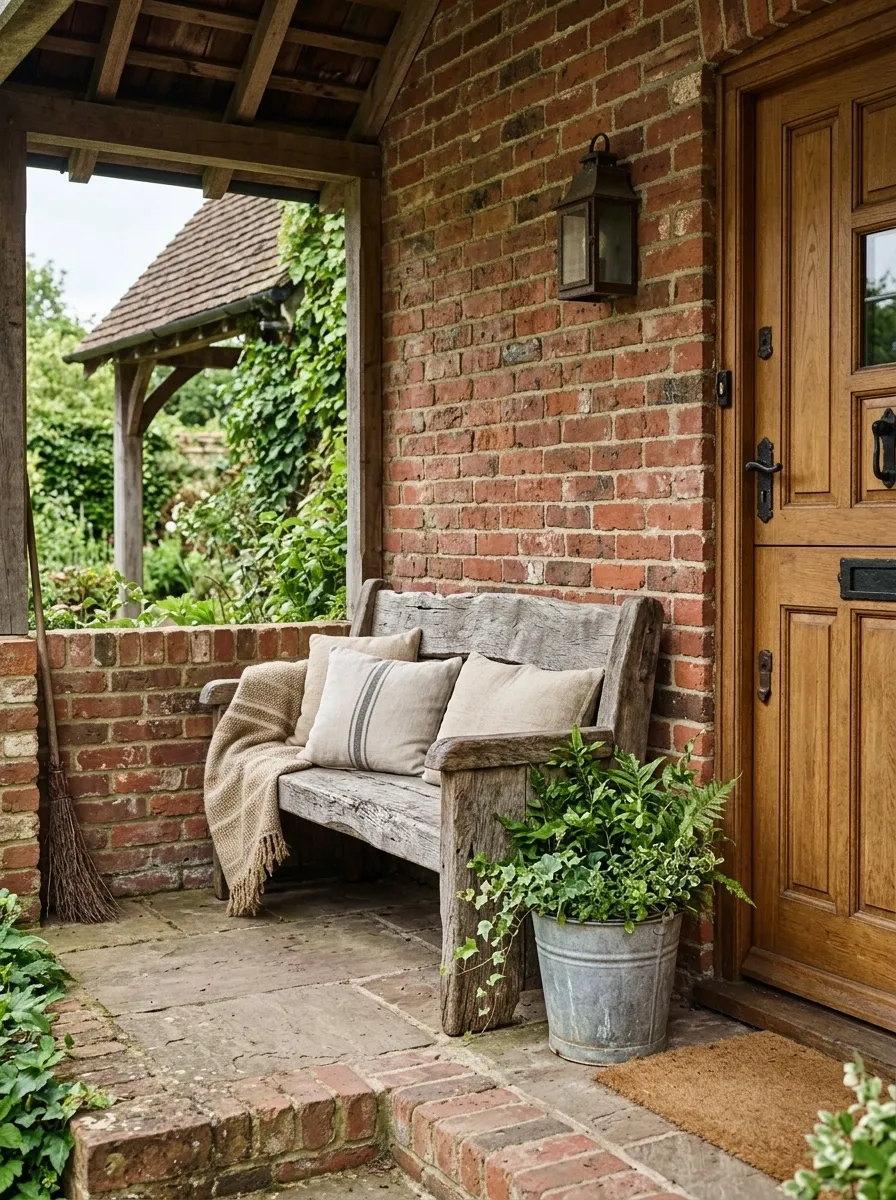
A weathered wood bench gives this porch its strongest character, backed by aged brick or natural stone, a warm timber door, simple greenery, and neutral cushions. The materials are allowed to show their age instead of being polished into a perfectly matched set.
The bench has a substantial presence, but its shallow profile keeps the entry usable. A galvanized planter and one woven textile add texture without turning the porch into a collection of rustic props.
The trick here is material restraint. Let the reclaimed wood and masonry carry most of the visual interest. Too many distressed accessories would make the composition feel themed rather than naturally lived in.
Primary seating texture and warm focal surface.
Architectural backdrop that adds visual age.
Fresh contrast against the harder, aged materials.
Soft Beige Porch With Rounded Lounge Chairs
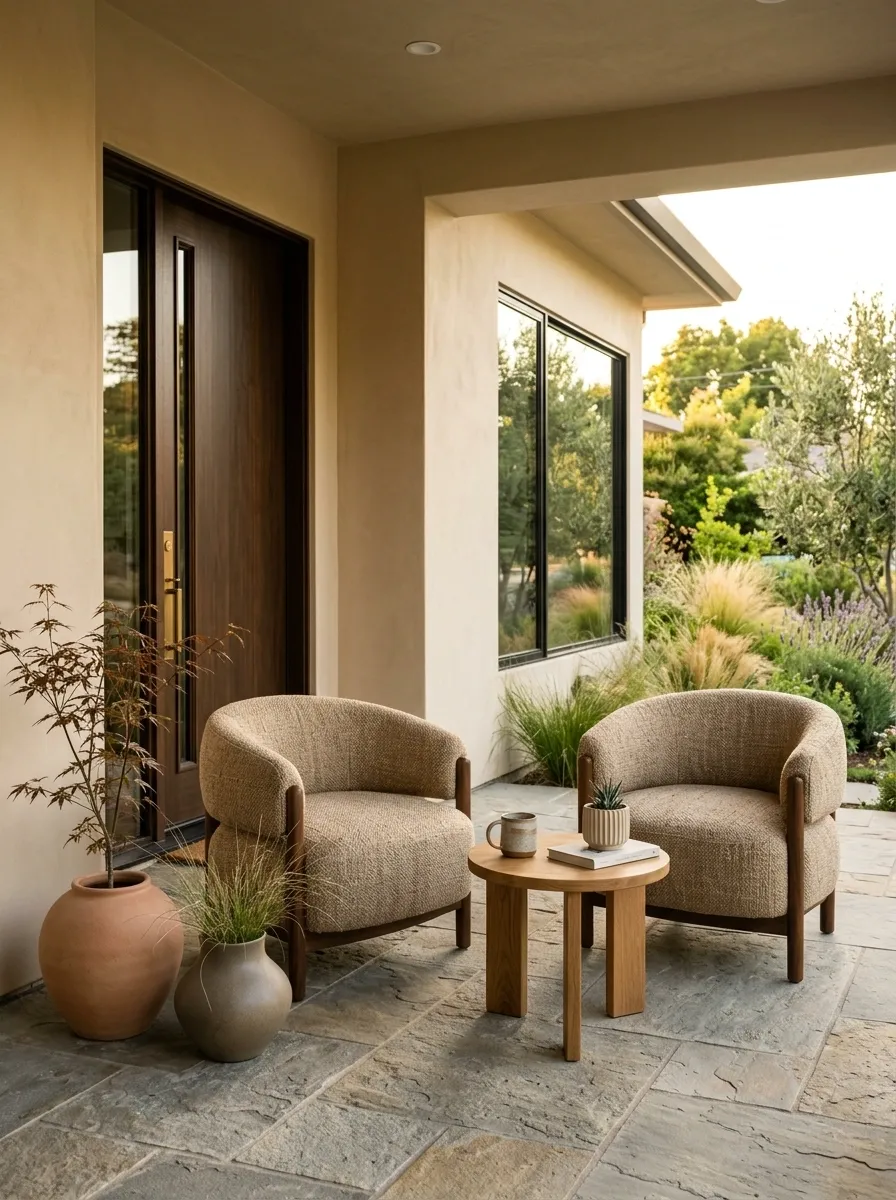
Two rounded lounge chairs soften a compact porch built around straight architectural lines. A warm beige exterior, natural stone floor, small circular table, and softly shaped planters keep the entire setting restrained.
The curved seating is what gives this composition its identity. Instead of matching every line of the house, the chairs introduce a gentler silhouette that makes the entry feel more relaxed.
Keep the upholstery close to the wall color rather than creating a sharp contrast. The interest should come from shape and texture, not a loud accent color. This approach works particularly well on modern homes that need a little visual softness.
+
Rounded seating
Farmhouse Porch With Narrow Wood Bench and Black Door
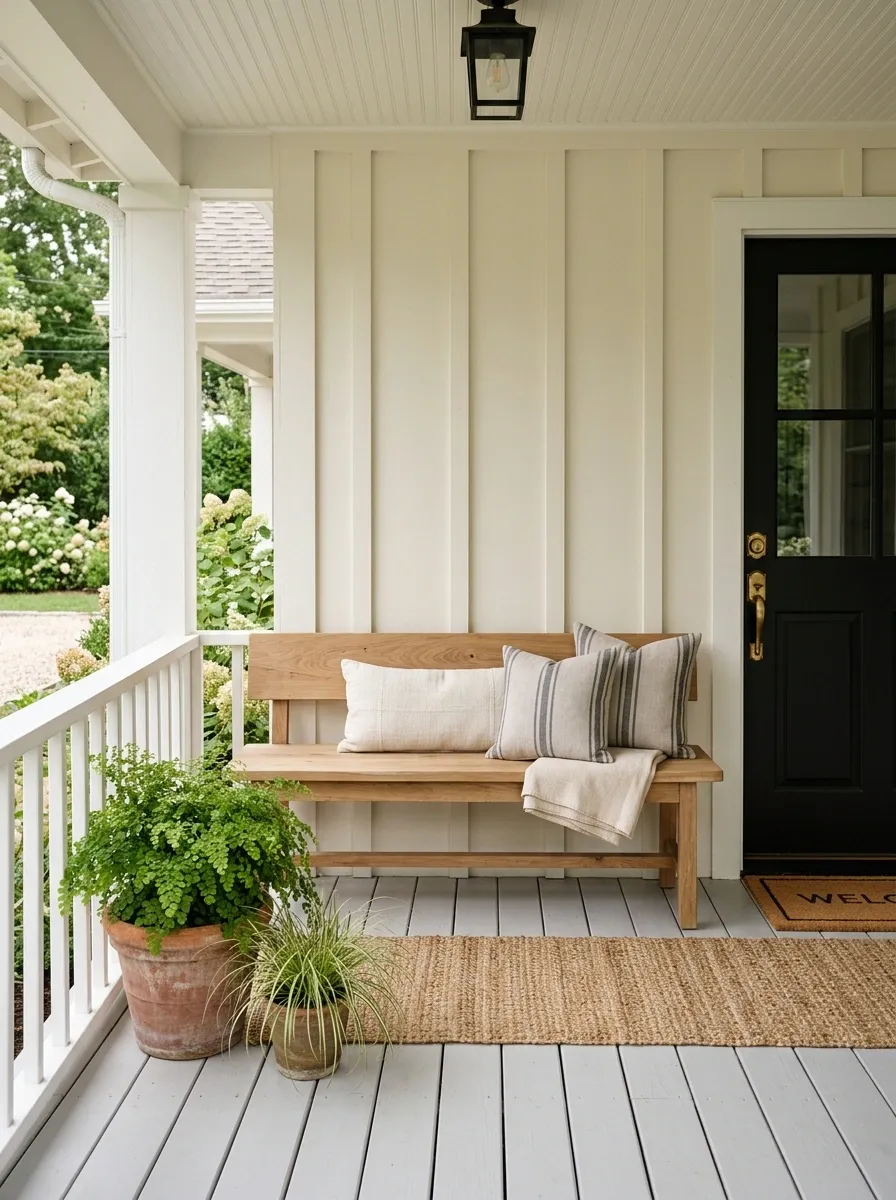
A long, shallow wood bench fits naturally across this farmhouse-style porch, creating more seating without the depth of a pair of lounge chairs. The black door gives the arrangement a crisp focal point, while pale siding and understated textiles keep the palette fresh.
Because the bench runs horizontally, it visually reinforces the width of the porch. That makes the entire entry feel broader rather than deeper.
Simple containers sit toward the sides, leaving the bench and doorway connected as the main composition. I’d avoid bulky armchairs here. Their extra depth would work against the long, narrow geometry that makes this design effective.
Moody Charcoal Porch With Warm Brass Lighting
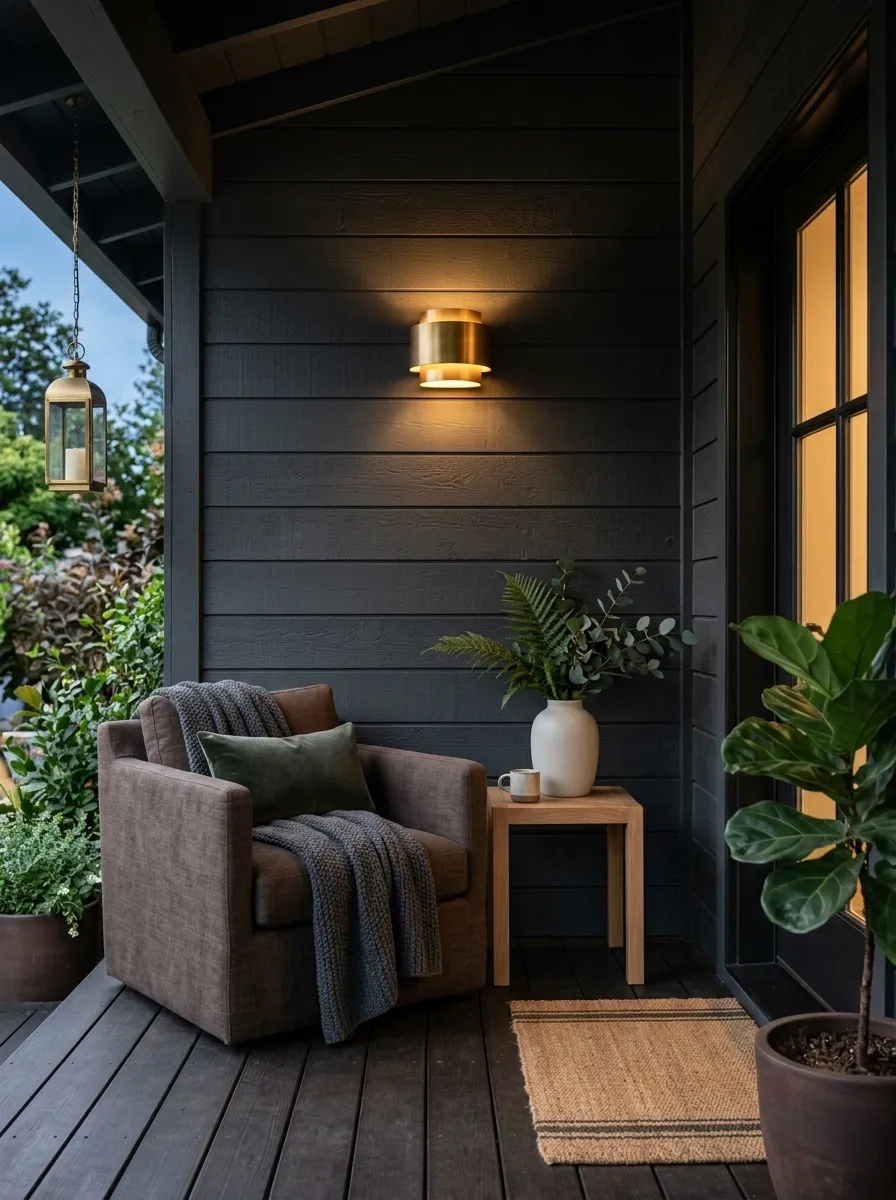
Dark charcoal walls create an intimate backdrop for a compact upholstered chair, warm metal lighting, natural wood details, and deep green foliage. Rather than trying to make the porch look larger, this design embraces its smaller scale and makes it feel atmospheric.
The warm light is important. It prevents the charcoal surfaces from becoming visually flat and gives the seating area a distinct evening focal point.
Keep the furniture simple and let the lighting carry some of the mood. Too many decorative objects would break the calm contrast between dark architecture, warm illumination, and natural materials.
Minimal White Porch With One Sculptural Wooden Chair
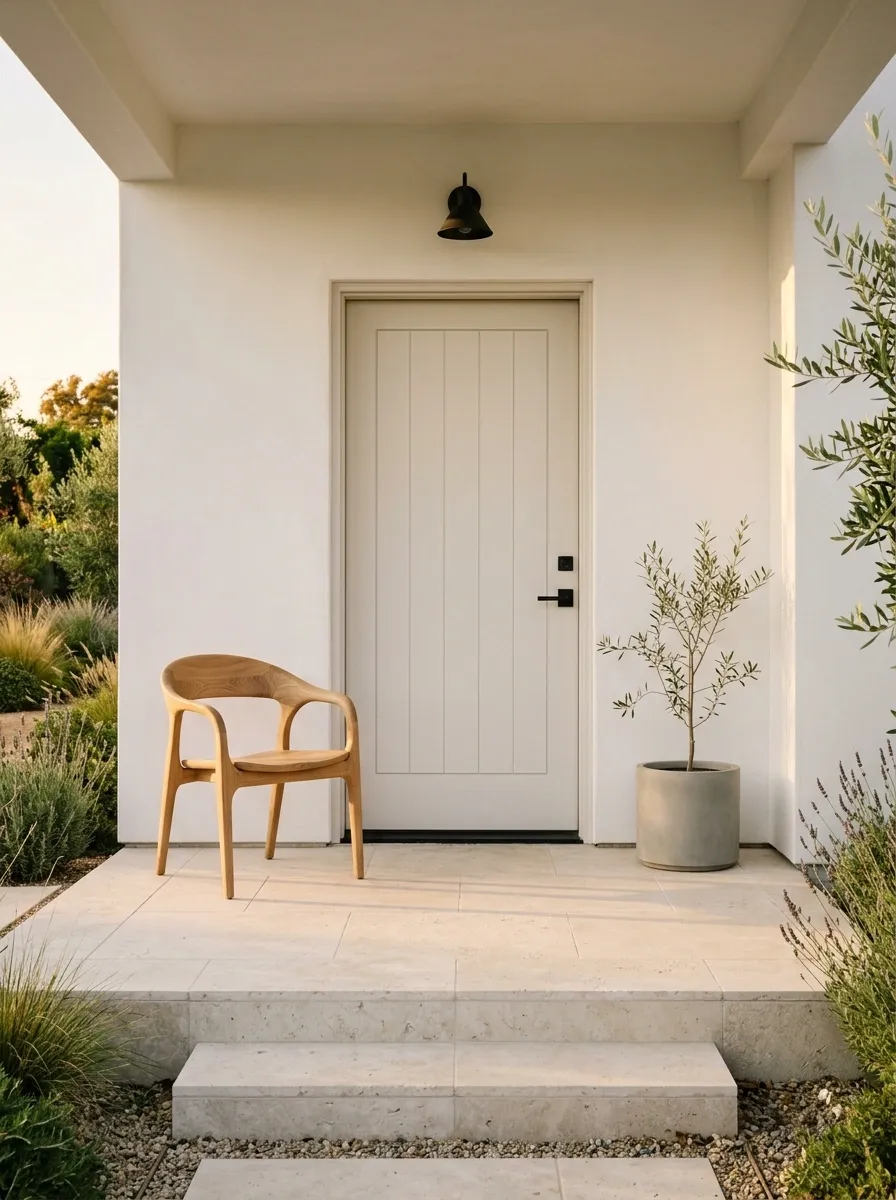
This almost pared-back porch uses one sculptural wooden chair as its only major seating feature. Crisp white walls, pale flooring, a low planter, and a simple front door leave plenty of visual breathing room around it.
The chair works because it has enough shape to carry the composition on its own. There isn’t a need for a second chair, a large rug, or several decorative accents.
This is a strong direction for homeowners who like minimal spaces but still want the porch to feel warm. The natural wood is the crucial detail. Without it, the white architecture could feel too severe.
Small Porch With Corner Bench and Round Table
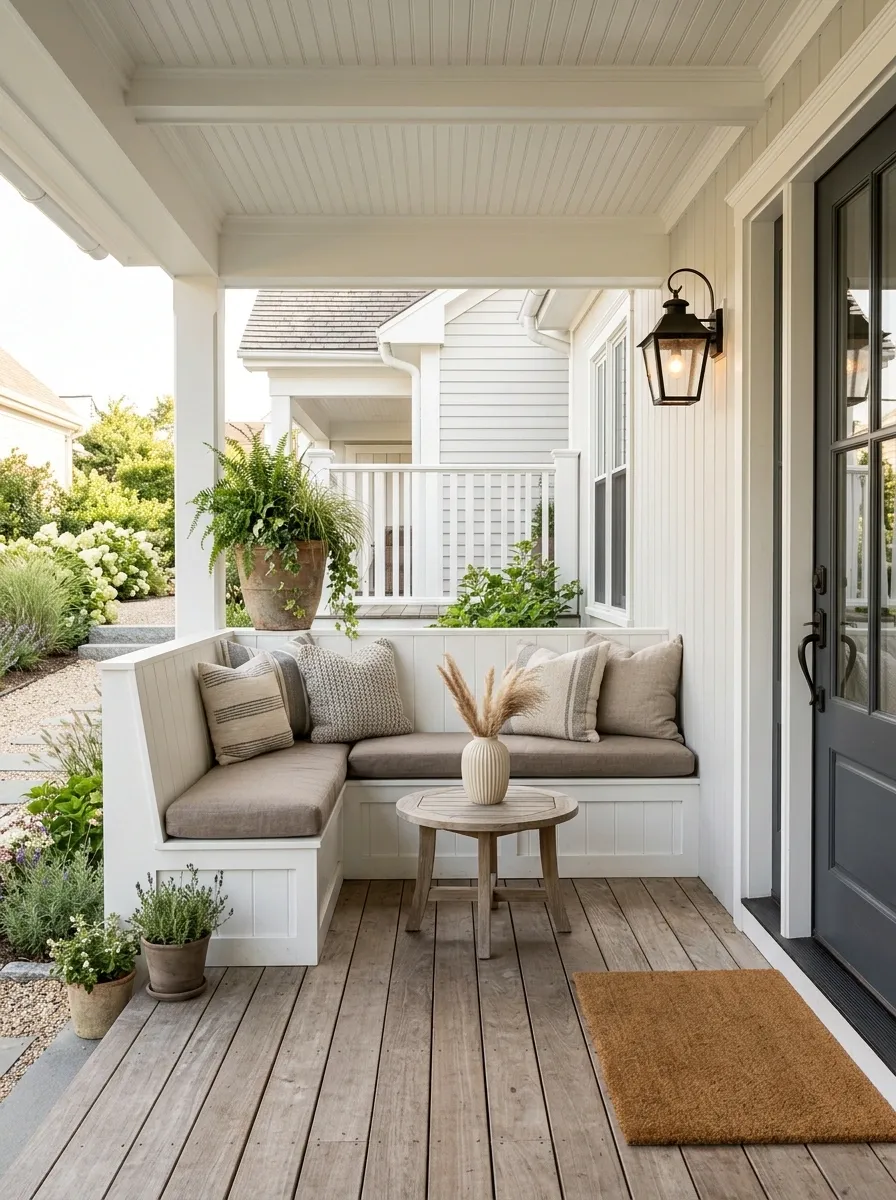
An awkward corner becomes the organizing feature of this porch. A compact corner bench follows the shape of the space, while a small round table fills the center without creating sharp edges around the seating area.
Because the bench hugs the perimeter, the walking route to the front door stays more open than it would with separate chairs. Soft cushions make the built-in arrangement comfortable without adding unnecessary furniture.
This concept is especially useful when the porch has an L-shaped footprint or a wall return that would otherwise become dead space. The seating follows the architecture instead of fighting it.
Mediterranean-Inspired Porch With Terracotta and Linen
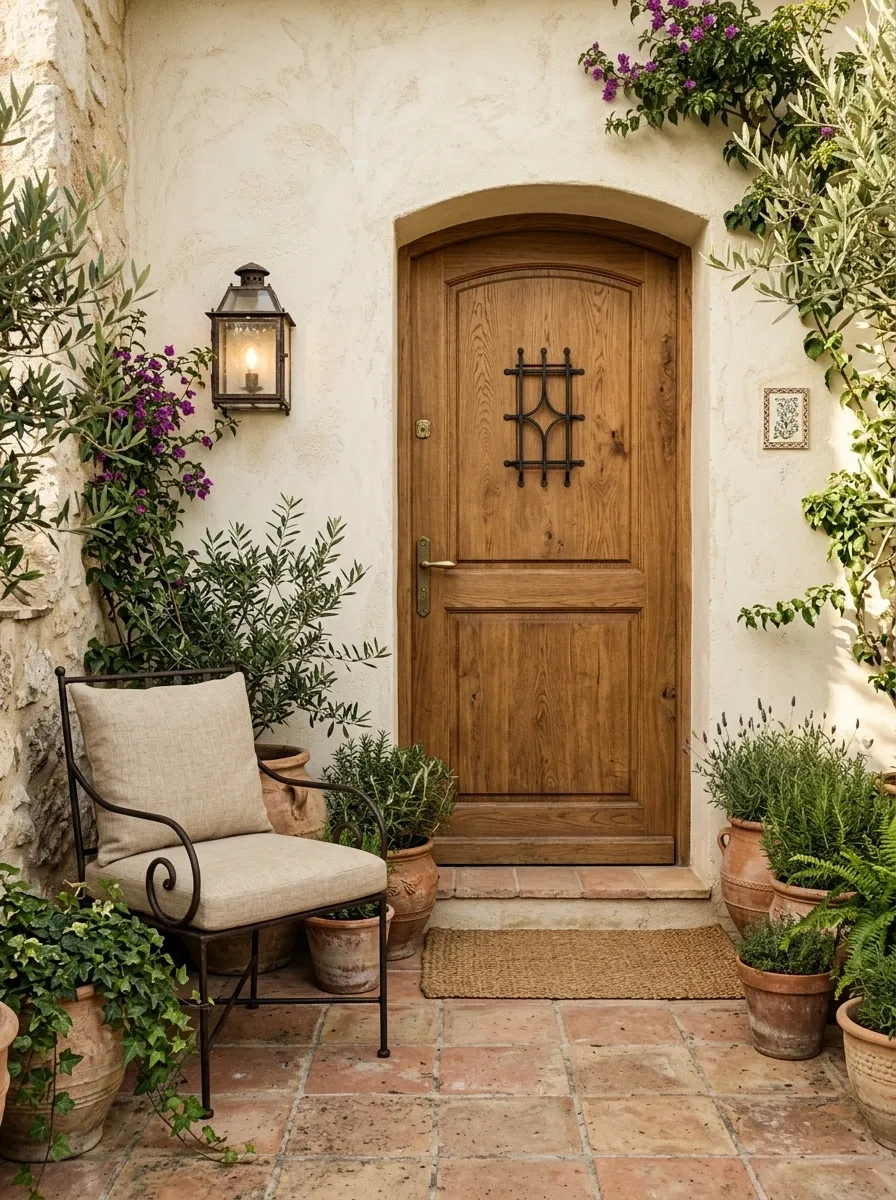
Creamy walls, textured tile, terracotta pots, a natural wood door, and linen-upholstered seating create a warm Mediterranean direction without turning the porch into a theme set.
A compact wrought-iron or wood chair provides the main seating, while terracotta containers bring color down toward the floor. The pale architectural surfaces keep the earthy palette from becoming too heavy.
Natural materials do most of the decorating here. Keep the planting loose and slightly irregular instead of creating a perfectly matched arrangement. That gives the porch more of the relaxed character this style depends on.
Coastal Porch With Pale Blue Door and Rope-Woven Seating
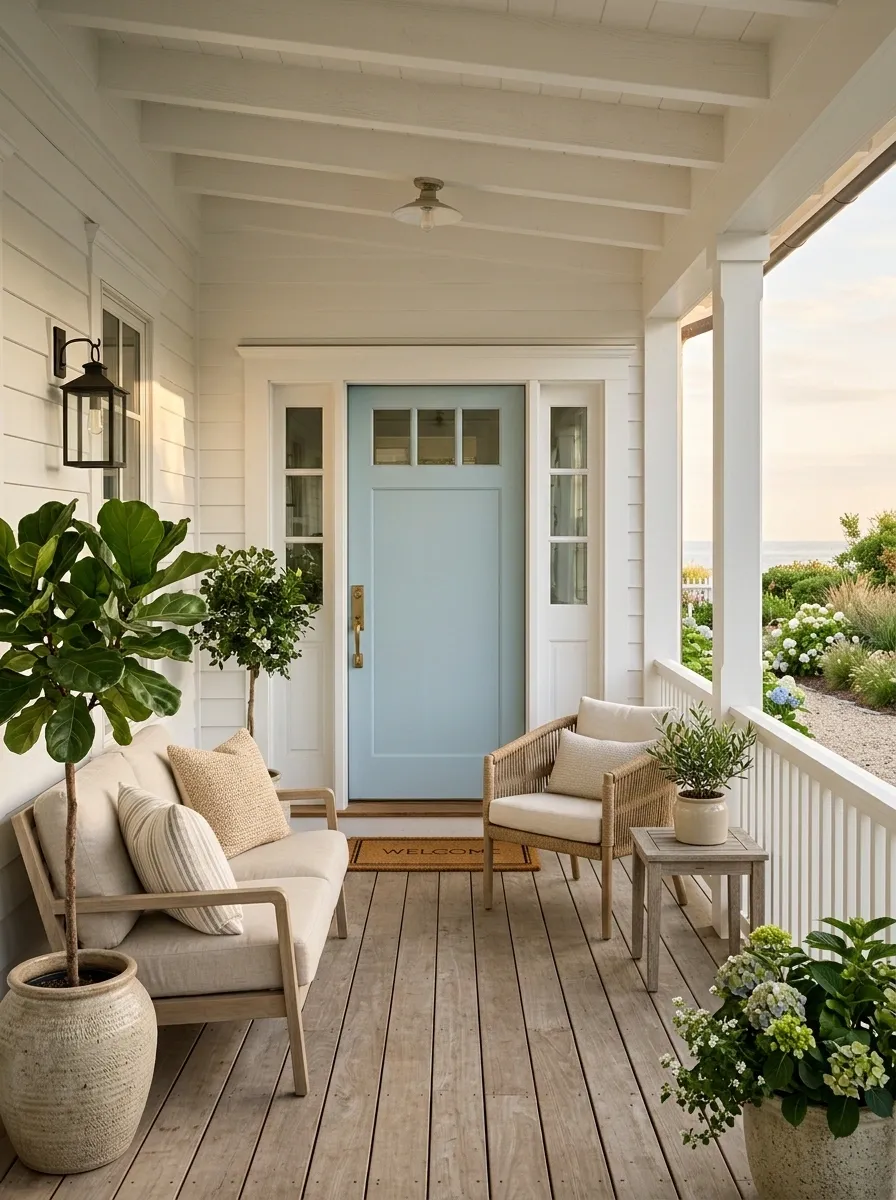
A pale blue door gives this coastal porch its main color note, while rope-woven seating, light flooring, beige textiles, and simple plants provide the softer layers.
The design avoids obvious beach-themed decorations. Instead, the coastal feeling comes from the mix of pale color, natural fibers, and relaxed furniture silhouettes.
A compact chair or loveseat can sit slightly off the doorway axis, leaving the entry path visually open. The result feels airy without relying on a completely white palette.
Black-and-Walnut Contemporary Entry Porch
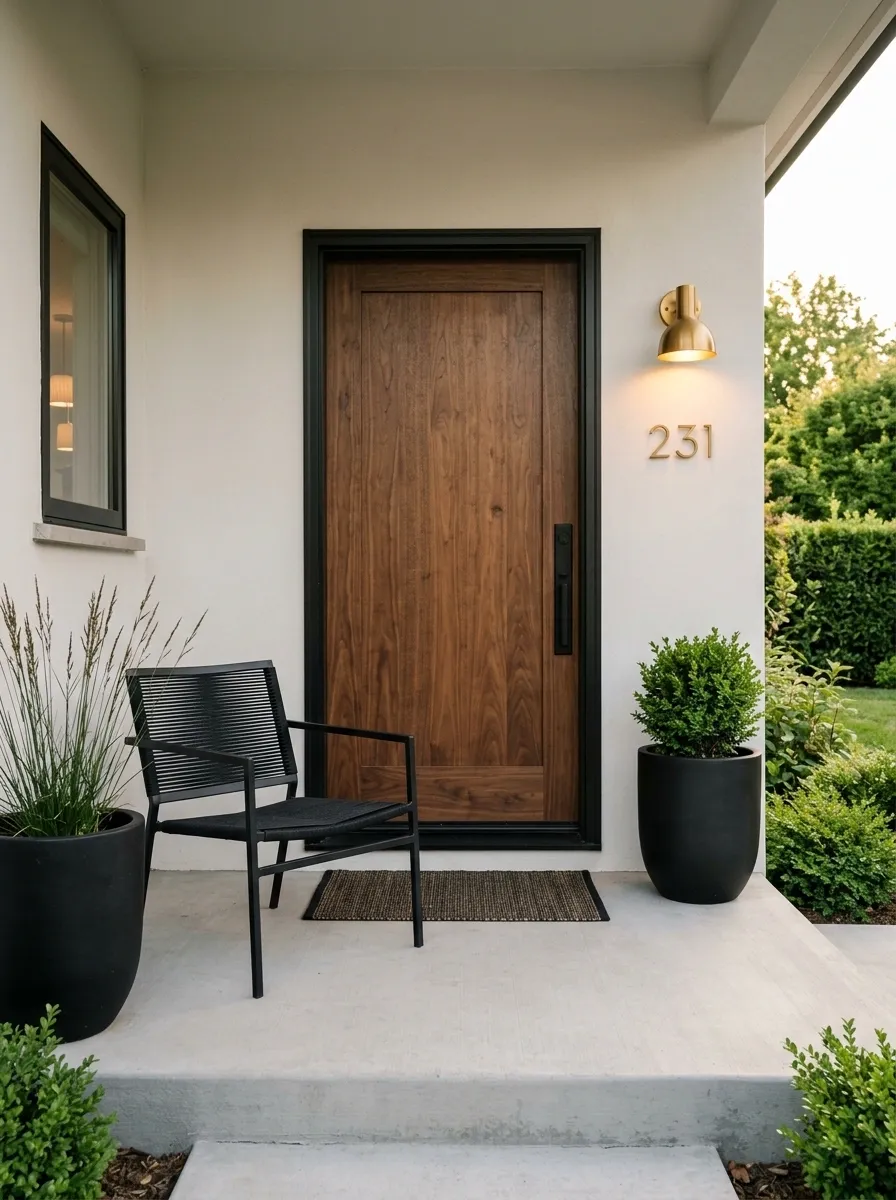
A black-framed chair, walnut-toned door, warm outdoor lighting, and carefully spaced planters give this porch a more sophisticated contemporary character. The color contrast does most of the work, so the furniture remains simple.
The dark elements create a clear outline against the architecture, while walnut introduces warmth and keeps the composition from feeling monochrome.
The planting should stay structured and relatively sparse. This isn’t the right design for a collection of small pots. A few larger forms create stronger visual weight and make the limited floor area feel more deliberate.
English Cottage Porch With Deep Window Seat
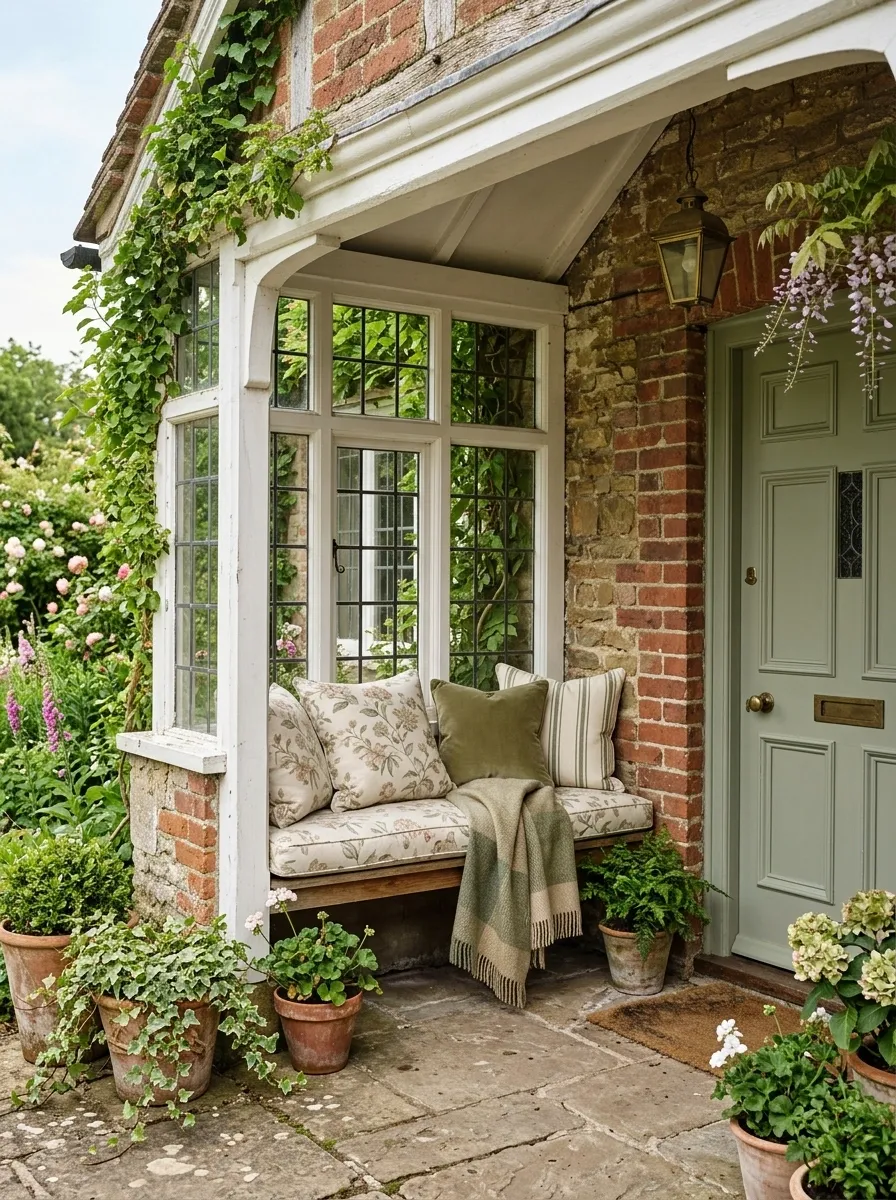
A deep window seat becomes the heart of this cottage porch, framed by traditional trim, soft floral cushions, climbing greenery, and a painted door. Instead of adding separate chairs, the seating becomes part of the home’s architecture.
That makes the porch feel especially cohesive. The window, seat, and planting all belong to the same visual story, while the cushions introduce just enough softness.
This arrangement suits homes with deep window openings or projecting bays. Keep the patterns controlled so the traditional details feel layered rather than busy.
Small Porch With Slim Metal Bench and Oversized Planter
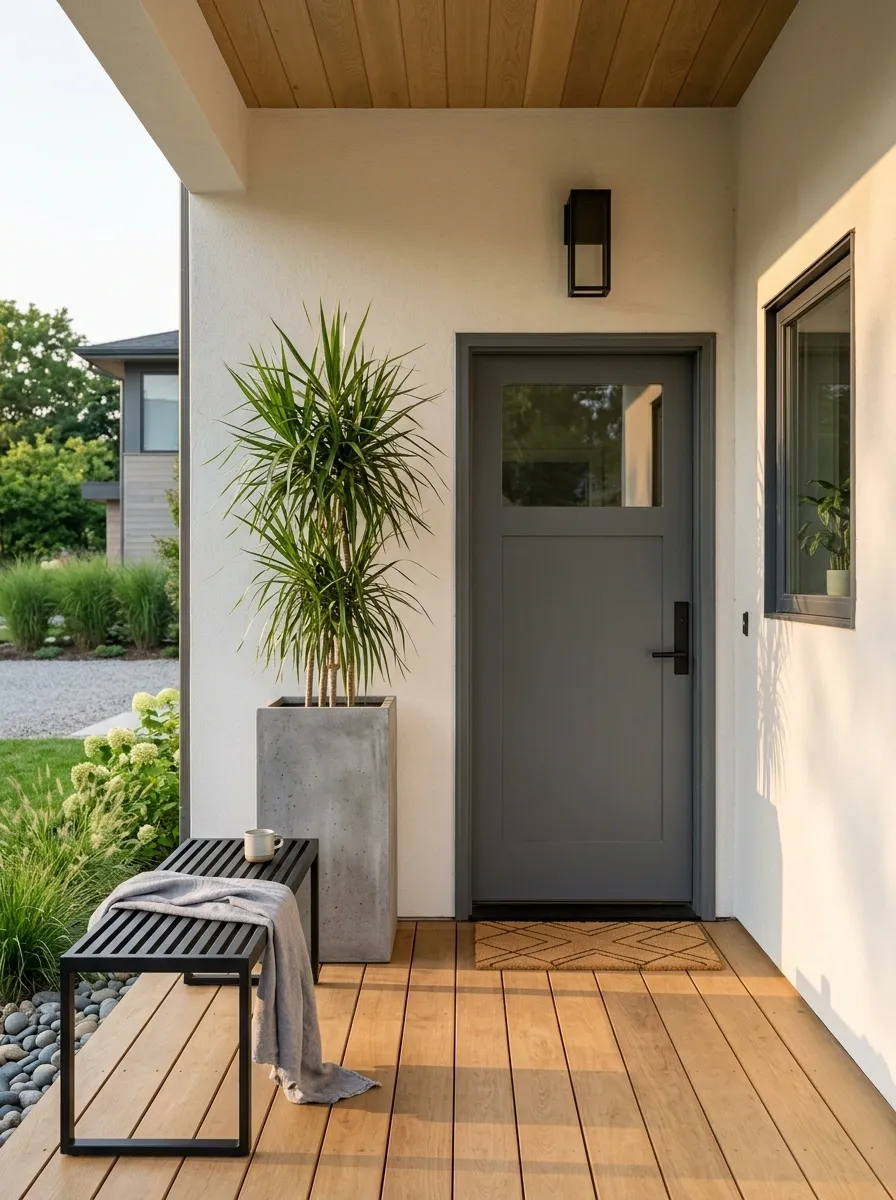
A slim metal bench paired with one tall architectural planter gives this compact porch a strong sense of proportion. The bench stays visually low, while the planter introduces height beside the doorway. A simple front door and quiet wall finish keep the contrast focused on those two pieces.
The arrangement works because the seating and planting don’t compete for the same visual space. One stretches horizontally, the other rises vertically. That relationship makes a tiny porch feel deliberately composed without adding much furniture.
Choose this direction when the facade is already fairly modern. Too many additional plants would weaken the clean relationship between the low bench and tall planter.
low + horizontal
tall + vertical
Layered Neutral Porch With Textured Upholstery
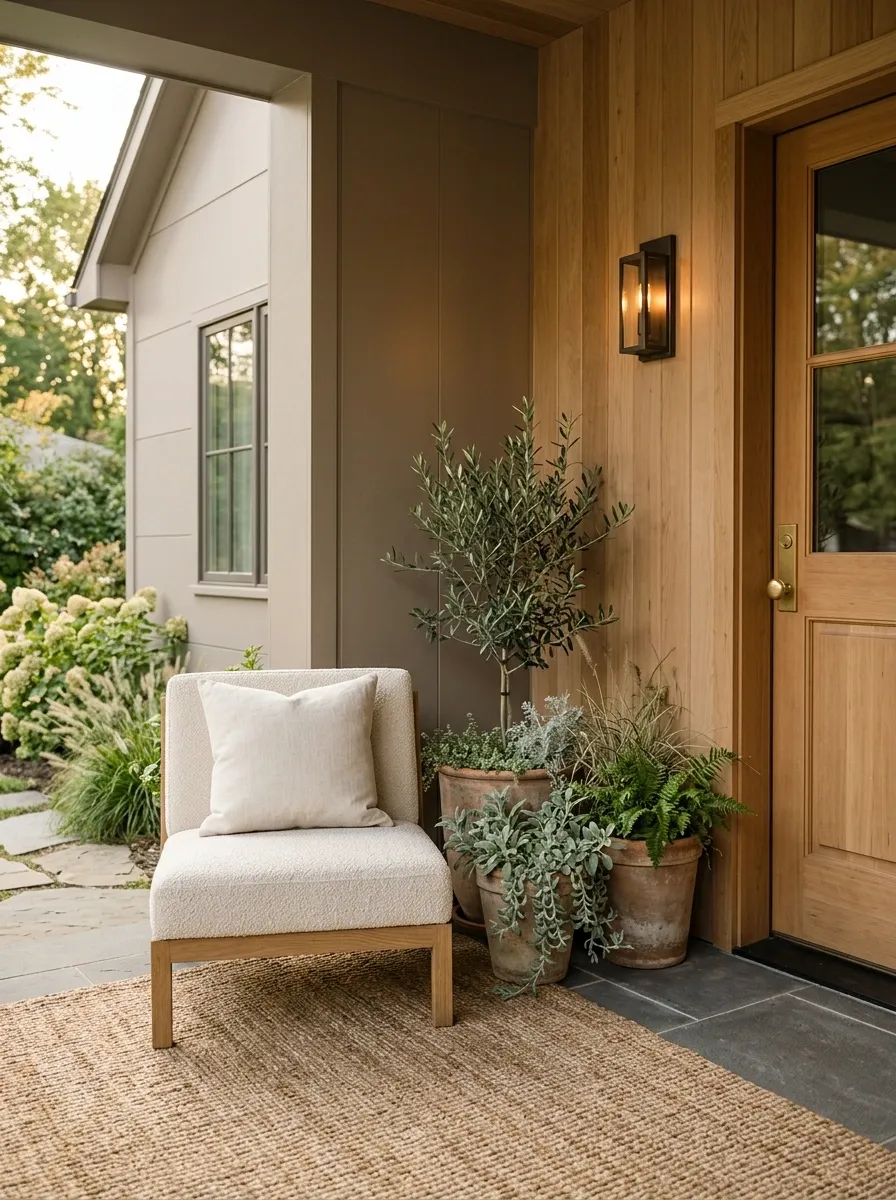
A compact lounge chair in a soft neutral fabric sits against taupe architecture, warm wood, a textured outdoor rug, and muted planting. Nothing in the palette is loud, so the design gets its depth from changes in texture and scale.
The upholstery provides softness, the wood adds warmth, and the rug visually anchors the seating area. The greenery keeps the neutral composition from feeling flat.
This design suits homeowners who want a calm porch without relying on bright accent colors. The important choice is to use visibly different textures. A completely uniform neutral palette would lose the layered quality that makes this version interesting.
Tiny Brick Porch With Vintage Metal Chairs
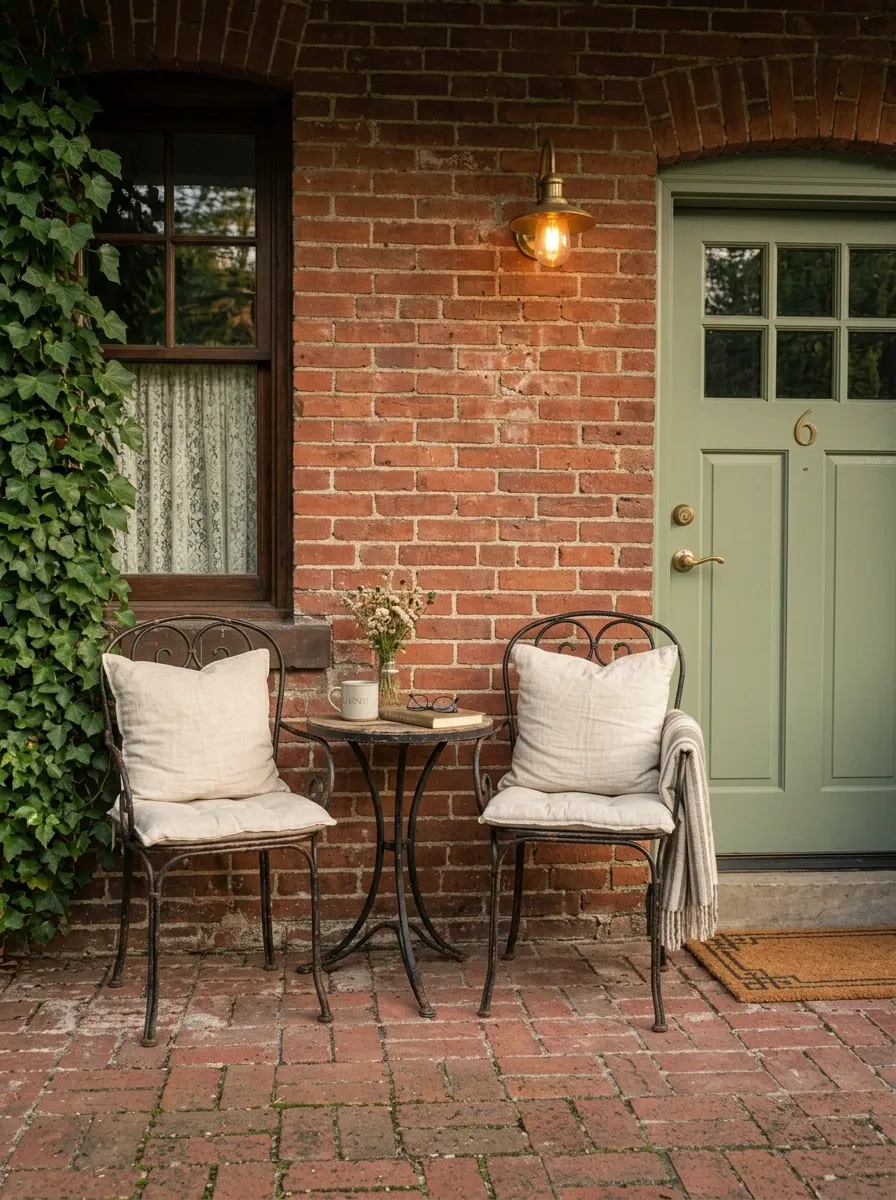
Exposed brick becomes the backdrop for two slim vintage metal chairs and a small round table. The aged facade provides enough texture that the furniture can stay visually light, while a painted door and a few plants keep the entrance from feeling too industrial.
The open-frame chairs are especially useful here because they don’t create a large solid mass against the brick. Their lighter visual weight lets the architecture remain visible.
Warm evening lighting brings out the brick texture, while simple cushions make the seats more comfortable. The finished effect feels collected rather than decorated all at once.
Compact Porch With Bench Facing the Garden
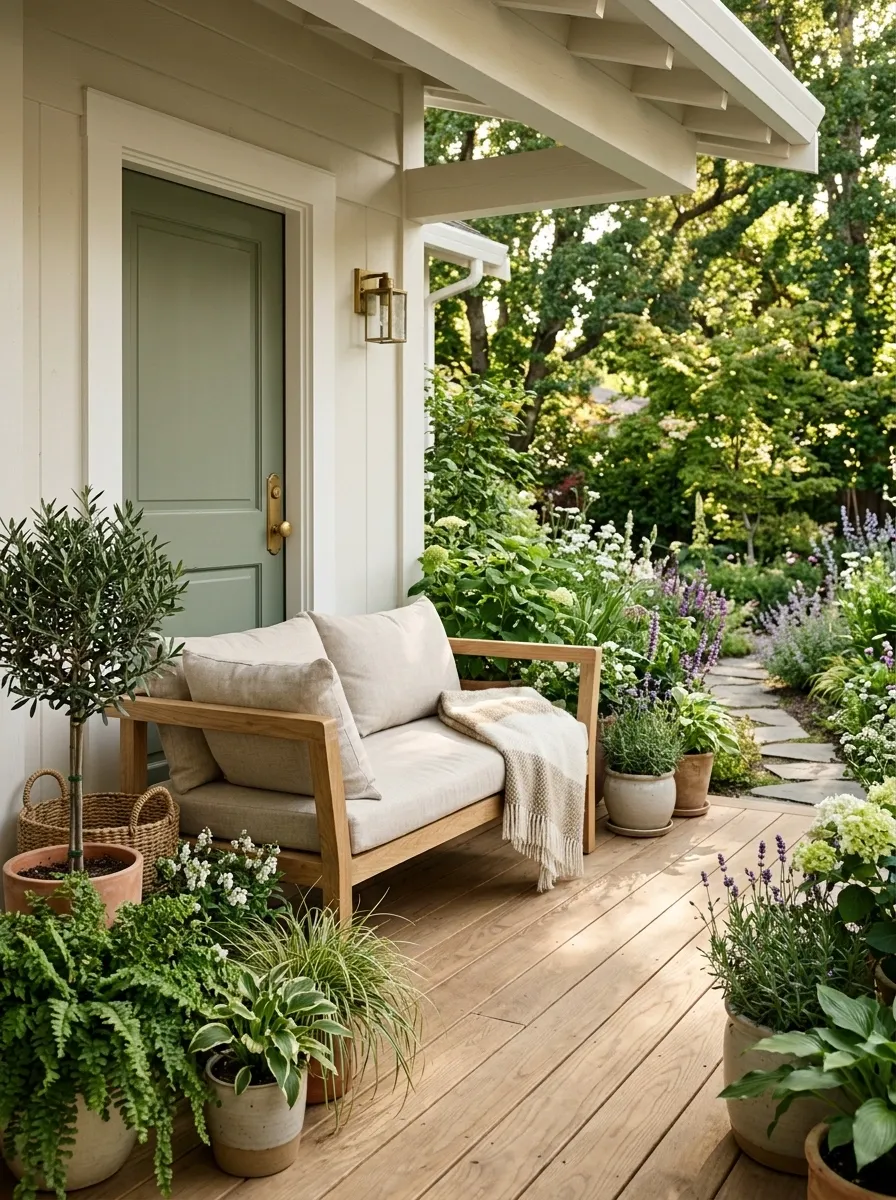
This arrangement turns the seating away from the front door and toward the garden. A shallow timber bench with soft cushions sits at a diagonal, allowing the planting bed to become part of the visual experience.
The door remains visible, but it isn’t the only focal point. That makes the porch feel more like a small outdoor pause point than simply an extension of the entry.
A natural wood bench works particularly well with this setup because it connects the seating to the landscape. Keep the garden slightly more expressive than the furniture so the view beyond the bench remains the reason the arrangement faces outward.
Refined Transitional Porch With Paired Chairs and Lantern Glow
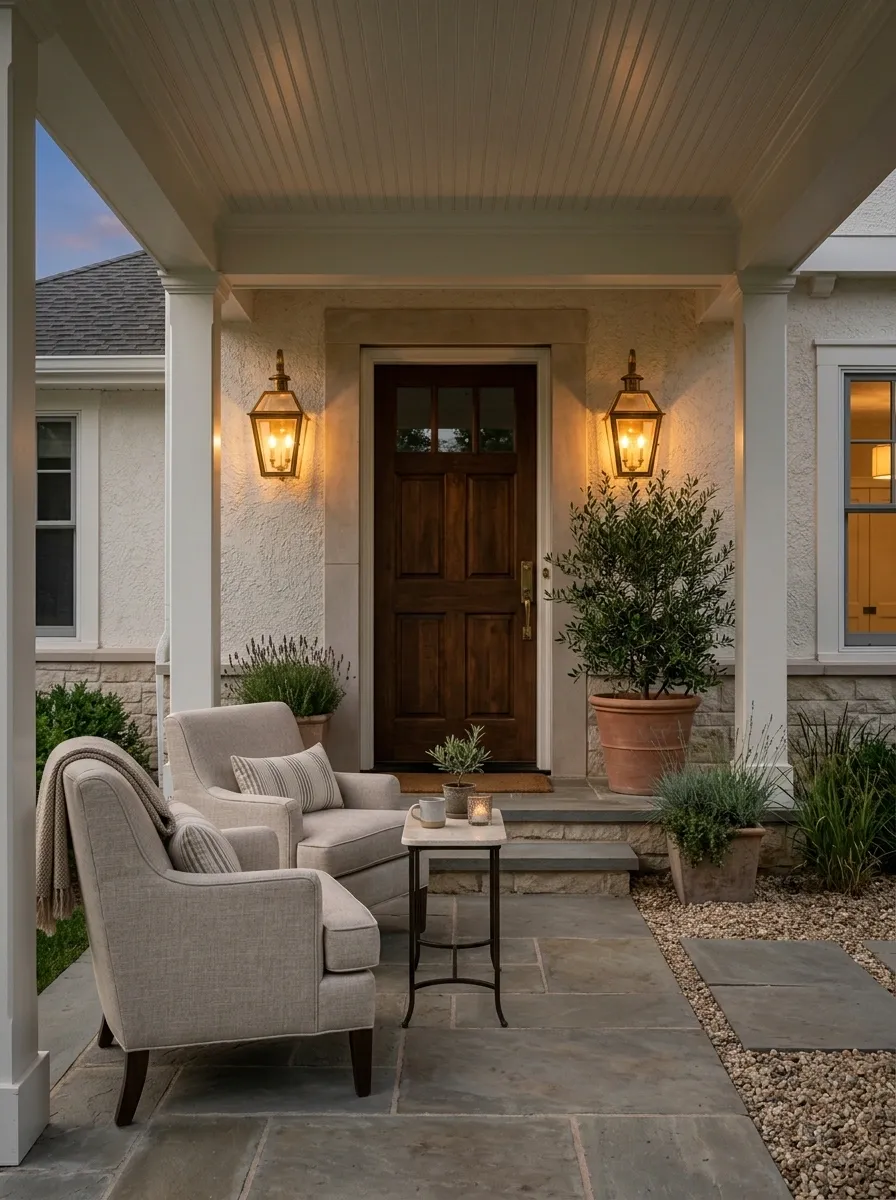
A pair of compact upholstered chairs, a narrow stone-topped table, warm lanterns, soft neutral architecture, and restrained planting create a polished transitional porch. The chairs sit slightly apart rather than being pushed tightly against the doorway, giving the entrance a more relaxed rhythm.
The palette stays quiet so the warmth of the lighting becomes noticeable as evening arrives. Stone grounds the seating, while the soft upholstery keeps the formal architecture from feeling rigid.
This composition is more layered than several of the earlier designs, but each element has a clear role. Keep the planting simple and let the lanterns provide the evening focal point.
Choosing the Right Direction for Your Porch
The strongest small porch design isn’t necessarily the one with the most furniture. It is the one that respects the architecture, leaves a clear path to the door, and gives every visible element a reason to be there.
A narrow bench may suit a long porch better than two deep chairs. A built-in seat can make sense around a window, while one oversized chair may work better when comfort matters more than capacity. Material choices matter just as much. Natural wood can warm a modern facade, while dark metal can sharpen a pale traditional exterior.
The useful part of saving complete designs is that you can compare the whole picture instead of trying to build a porch from disconnected pieces. Look at your own entry, notice its width, door position, steps, railing, and natural light, then return to the compositions that resemble those conditions. From there, choose the seating direction first and let the smaller details support it.
A good porch doesn’t need to look busy to feel finished. It needs a clear idea, a comfortable scale, and enough open space for the architecture to breathe.
Save the designs that feel closest to your own home, then keep them together as a visual reference while you plan the space.