
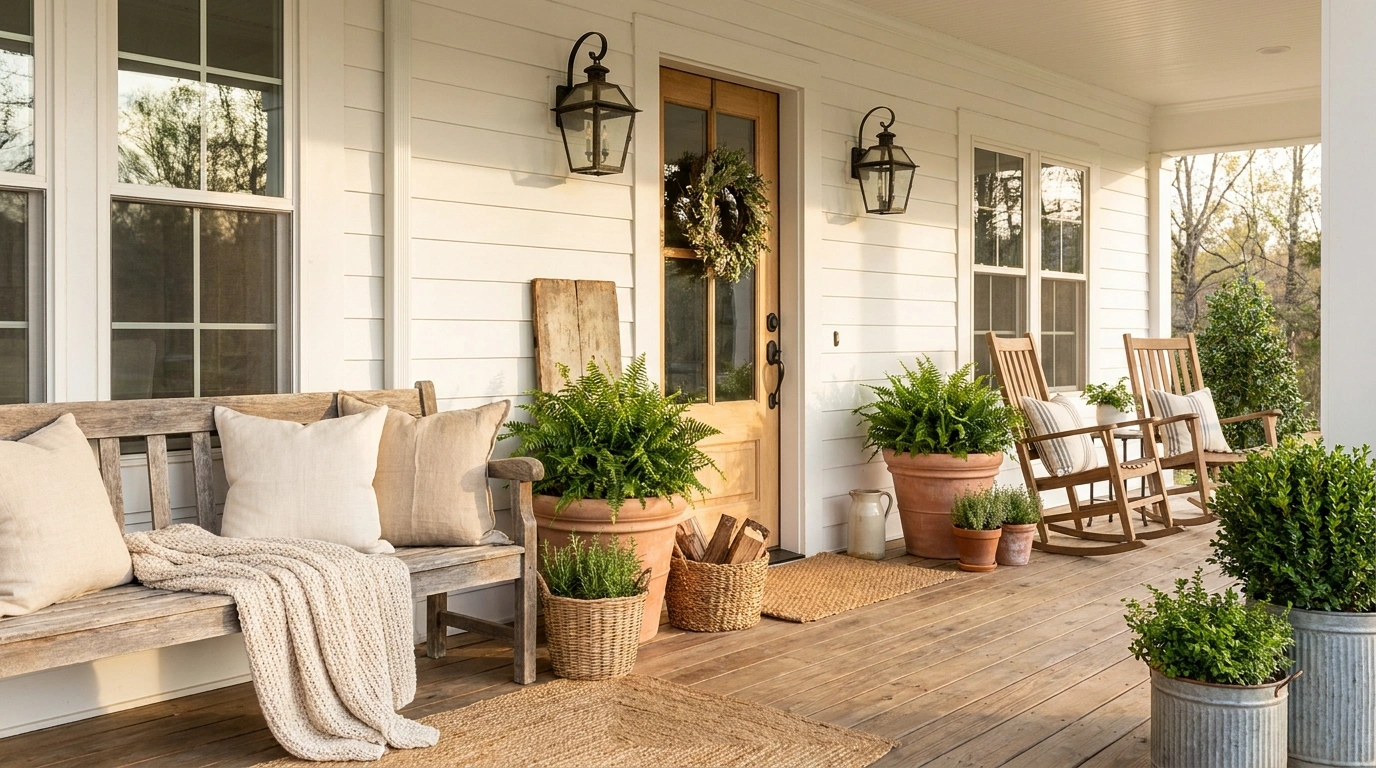
A farmhouse front porch usually goes wrong the exact moment someone discovers the clearance aisle at a craft store. People buy an incredible historic home or build a beautiful new craftsman, only to clutter the entry with miniature galvanized buckets, fake rusted stars, and identical wooden signs shouting at guests to gather.
It doesn’t look inviting. It looks like a confused garage sale.
You cannot achieve a high-end exterior by throwing cheap, mass-produced accessories at the concrete. Real design relies on architectural weight, scale, and materials that can actually survive a storm.
Why Most Farmhouse Porches Look Like Cluttered Yard Sales
The Mass-Produced Signage Trap
Nothing cheapens a porch faster than word art telling people you’re at home. You don’t need a massive wooden board stating “WELCOME” leaning awkwardly against the siding. A well-designed entrance speaks for itself through texture, lighting, and heavy hardware.
When you rely on words instead of design principles, the space immediately feels catalog-bought instead of intentionally curated. Swap the literal text for a beautifully aged brass knocker or a stunning heavy-timber door that commands attention without saying a single word.
Getting the Scale Completely Wrong
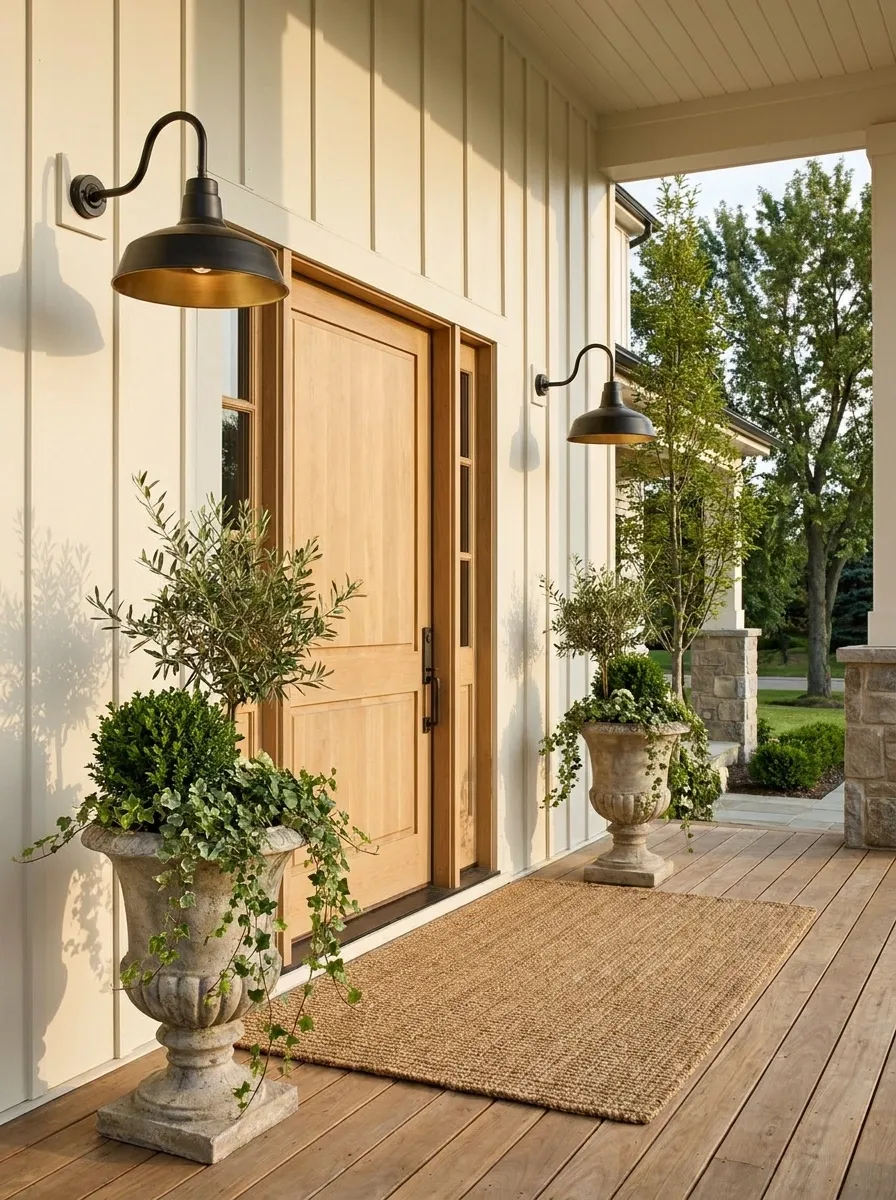
Most homeowners are terrified of large outdoor elements, so they buy tiny sconces and short, anemic planters. Small items get completely swallowed up by the exterior elevation of a house. A tiny lantern next to a massive eight-foot door looks ridiculous.
To make this style work, you need fewer items but at a significantly larger scale. Massive planters and oversized lighting fixtures provide the heavy visual anchor that historic farmhouses naturally demand.
Forcing the Distressed Look
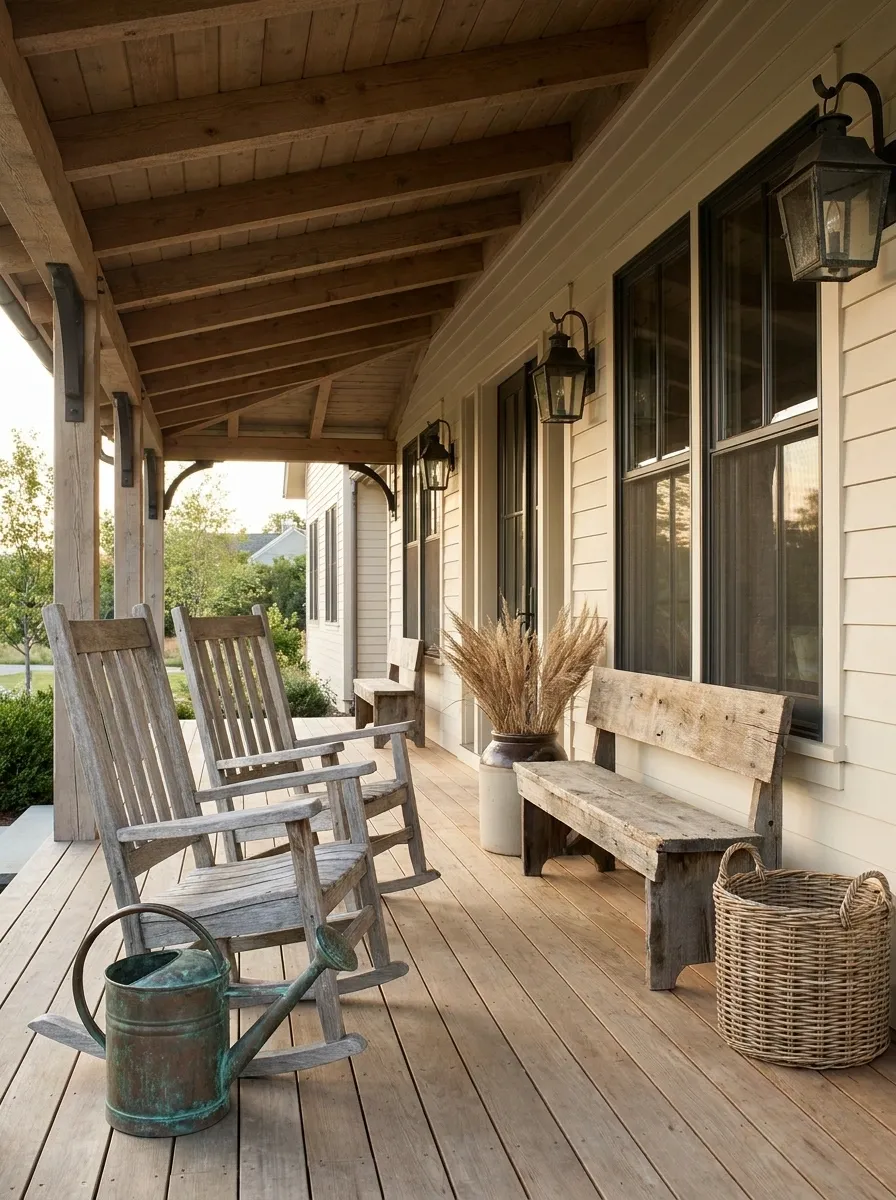
Stop buying brand new metal that was painted with fake rust at a factory. Authentic style comes from actual wear and tear. If you want a distressed look, buy real vintage pieces that have sat outside for forty years, or buy high-quality raw materials and let the weather do the work over time.
Fake patina always looks plastic up close, and it drags the entire exterior aesthetic down with it. Let copper turn green naturally and let real raw wood turn silver in the sun.
Farmhouse Front Porch Ideas
Frame the Entry with Lush Hanging Baskets
Drop the flat, lifeless wall space and add some serious vertical movement. Hanging lush, overflowing ferns right from your porch ceiling softens harsh rooflines and instantly pulls the eye upward to appreciate the architecture.
You want greenery that feels wild and established, not like it was just dragged home from a big-box garden center yesterday. Let the delicate fronds drape down gracefully to frame your windows and front door like a living architectural frame.
Keep the mounting hardware hidden and sturdy so the floating plants look completely organic. Paired with warm wood beams and cozy seating below, it turns a standard porch into an inviting, high-end retreat.
Anchor with Oversized Matte Black Lanterns
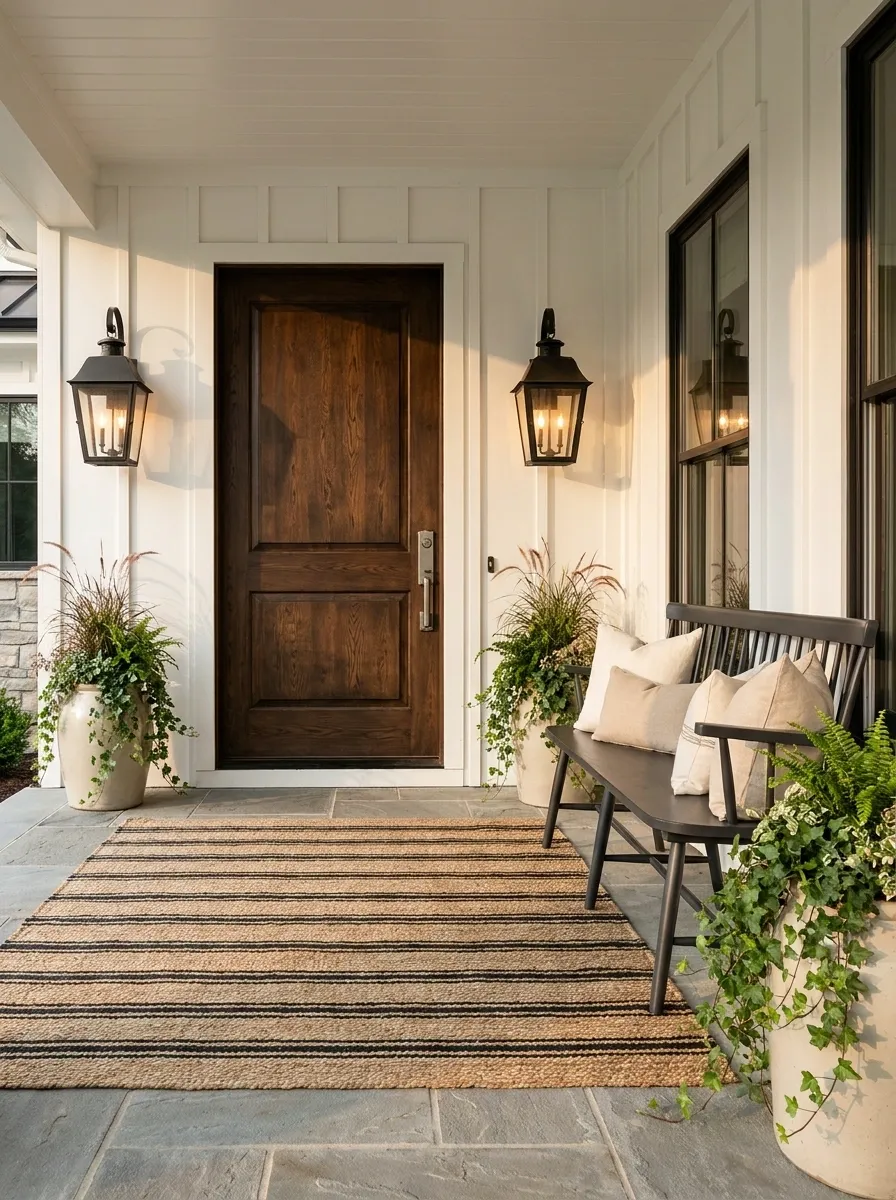
Go huge or leave the porch dark.
People constantly underestimate exterior scale. Your front door needs aggressive visual anchors, and standard builder-grade lighting simply won’t cut it. You want matte black lanterns that are at least one-quarter the height of your door.
Thick, heavy metal cuts through the visual noise and gives the eye a stark resting place against lighter siding or brick. It grounds the entire entrance immediately. Skip the flimsy wire cages and buy solid iron or thick cast aluminum fixtures.
The 1/4 Scale Rule
Never buy standard 12-inch sconces. Exterior lighting should measure exactly 25% of your door’s height. If your door is 80 inches tall, your lanterns must hit 20 inches minimum to hold visual weight.
Layer Textures on a Deep Porch Swing
Skip the stiff, uncomfortable patio chairs and anchor your entire porch around a deep, rustic wooden swing. It is the ultimate invitation to slow down and actually enjoy the view from your front steps.
To make a standard porch swing look genuinely expensive, you cannot skimp on the textiles. Pile on thick, neutral-toned linen pillows and drape a heavy, plaid wool throw blanket over the arm to instantly add tactile warmth and seasonal depth.
Ground the setup with a weathered side table holding glowing fairy lights in a glass jar. It creates an effortless, golden-hour glow that makes the entire outdoor living space feel deeply curated and lived-in.
Ditch the Generic Welcome Mat for a Layered Rug Set
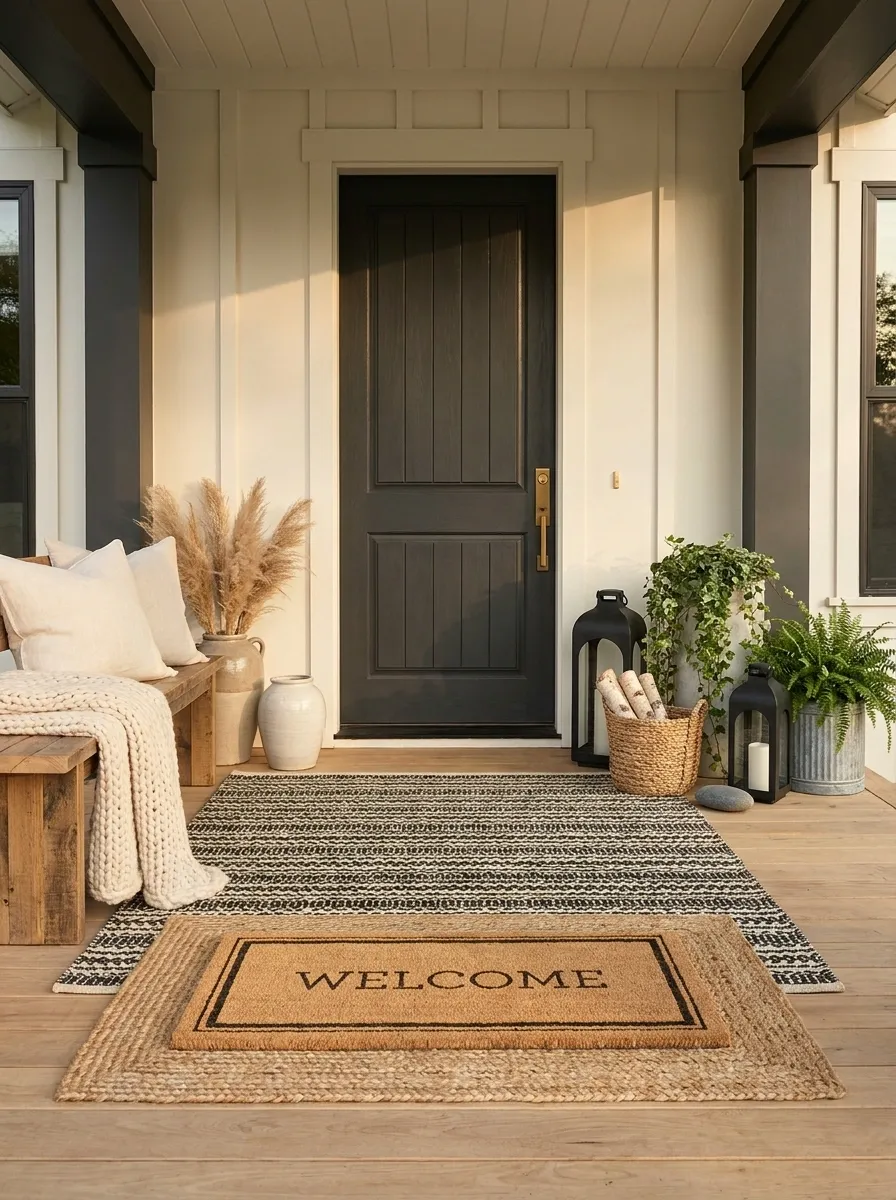
Start by throwing away the thin rubber-backed mat you bought at the grocery store.
A single tiny mat looks like an afterthought floating on a sea of concrete. Layering rugs adds instant architectural softness and fills the awkward void in front of the threshold. You need to combine heavily contrasting textures.
Here is how you actually build the base correctly:
- Put down a large woven jute or black-and-white outdoor flatweave.
- Place a heavy-duty thick coir mat directly on top of it.
- Make sure the base rug extends at least six inches past the top mat on all sides.
Rug Layering Sequence
The Foundation: 3×5 foot weather-resistant patterned flatweave.
The Workhorse: 2×3 foot thick natural coir mat for scraping boots.
Create a Cozy Glow with Overhead String Lights
Ditch the blinding single porch light and completely transform your evening ambiance with rows of warm, vintage-style Edison string lights. crisscrossing the exposed ceiling rafters immediately makes a sprawling porch feel intimate and magical.
The secret is heavy repetition. String the bulbs close enough together to cast a warm, golden wash across the wooden floorboards, highlighting the rich grain and framing your seasonal decor below with a cinematic glow.
Pair this overhead lighting with flickering pillar candles tucked into rustic wooden crates and clusters of white pumpkins on the steps. It dials up the cozy farmhouse charm tenfold without looking cluttered or cheap.
Swap Tiny Sconces for Barn-Style Gooseneck Lights
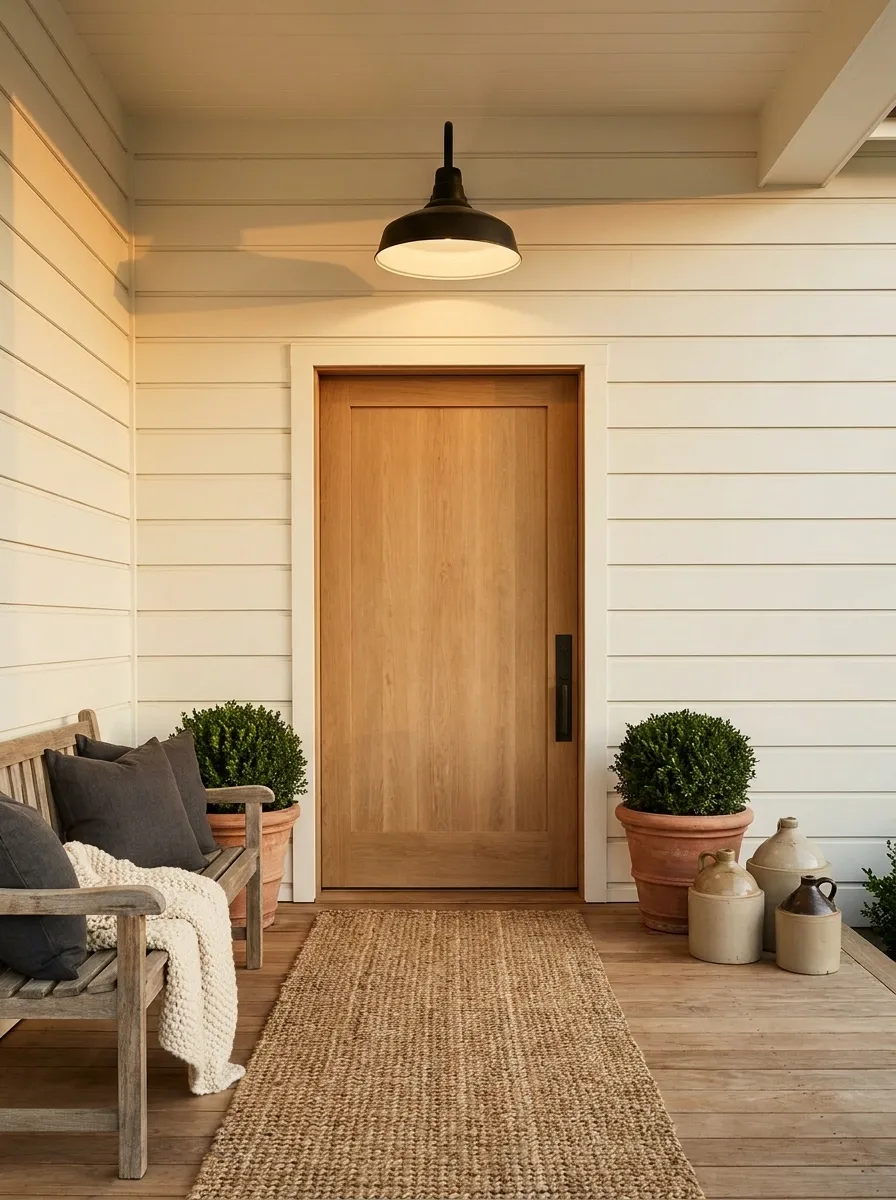
A wide, sloping metal shade casting a harsh downlight gives you that immediate, striking agricultural feel.
Standard glass box fixtures belong on suburban tract homes, not farmhouse exteriors. Gooseneck lights jut out from the wall aggressively, pulling the eye upward and breaking up flat stretches of siding. They look highly industrial and completely intentional.
Mount them straight above the door frame if you don’t have side clearance, or place one heavy shade directly over an oversized seating area. Keep the metal finishes consistent with your door hardware. Stick to all matte black or heavily aged galvanized steel.
Optimal Gooseneck Placement
Mount the backplate exactly 66 to 72 inches from the porch floor. The bottom edge of the metal shade should never block the swing of the door.
Make a Statement with a Natural Wood Front Door
Toss out boring, flat-painted doors and invest in a warm, vertical-plank wood entry that demands attention. Natural wood grain adds instant high-end character and grounds the entire facade against neutral siding.
Frame the gorgeous wood with a simple yet striking wreath made of delicate spring florals or eucalyptus. It softens the hard architectural lines of the door without hiding the stunning craftsmanship underneath.
Anchor the threshold with textured planters and a neatly layered doormat set to complete the look. When your front door has this much natural warmth and texture, the rest of the porch practically decorates itself.
Group Galvanized Planters in Threes
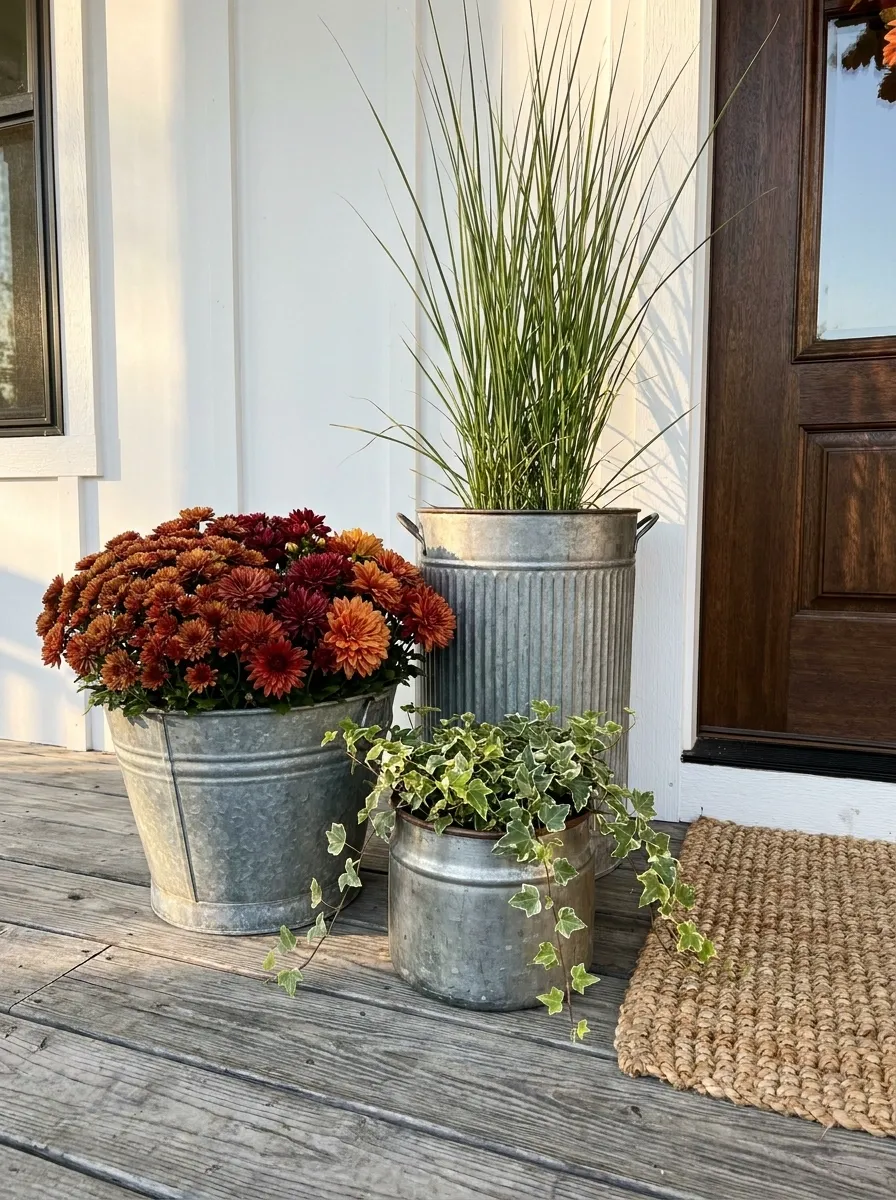
Stop lining up identical pots in a straight, rigid row across the concrete.
It looks like a retail display instead of a home. You want a heavy cluster that varies heavily in height. Grab three genuinely old galvanized wash tubs or tall ribbed metal planters. You need one tall piece in the back, a medium piece angled to the side, and a short, squat piece in the front.
This creates a natural visual triangle that the eye digests easily. Fill the tallest one with vertical grass, let something trail out of the smallest one, and pack the middle pot with dense seasonal color.
Clutter Warning
Never use more than three pots in a single grouping. Anything beyond a trio starts to look messy, disorganized, and visually overwhelming on a tight porch.
Hang a Statement Woven Wall Hanging
Step away from typical metal wall signs and bring in massive organic texture with a dramatic woven wall hanging. Mounting a large, circular piece against crisp white siding instantly breaks up flat expanses and adds global-inspired warmth.
You want a piece with concentric rings and heavy natural fibers that catches the eye the second you walk up the steps. It acts as exterior art, proving that your porch design is just as thoughtfully curated as your indoor living room.
Flank the seating area with trailing greenery and oversized woven baskets to tie the earthy palette together. It creates a serene, designer-approved outdoor nook that looks effortlessly expensive.
Paint the Ceiling Haint Blue
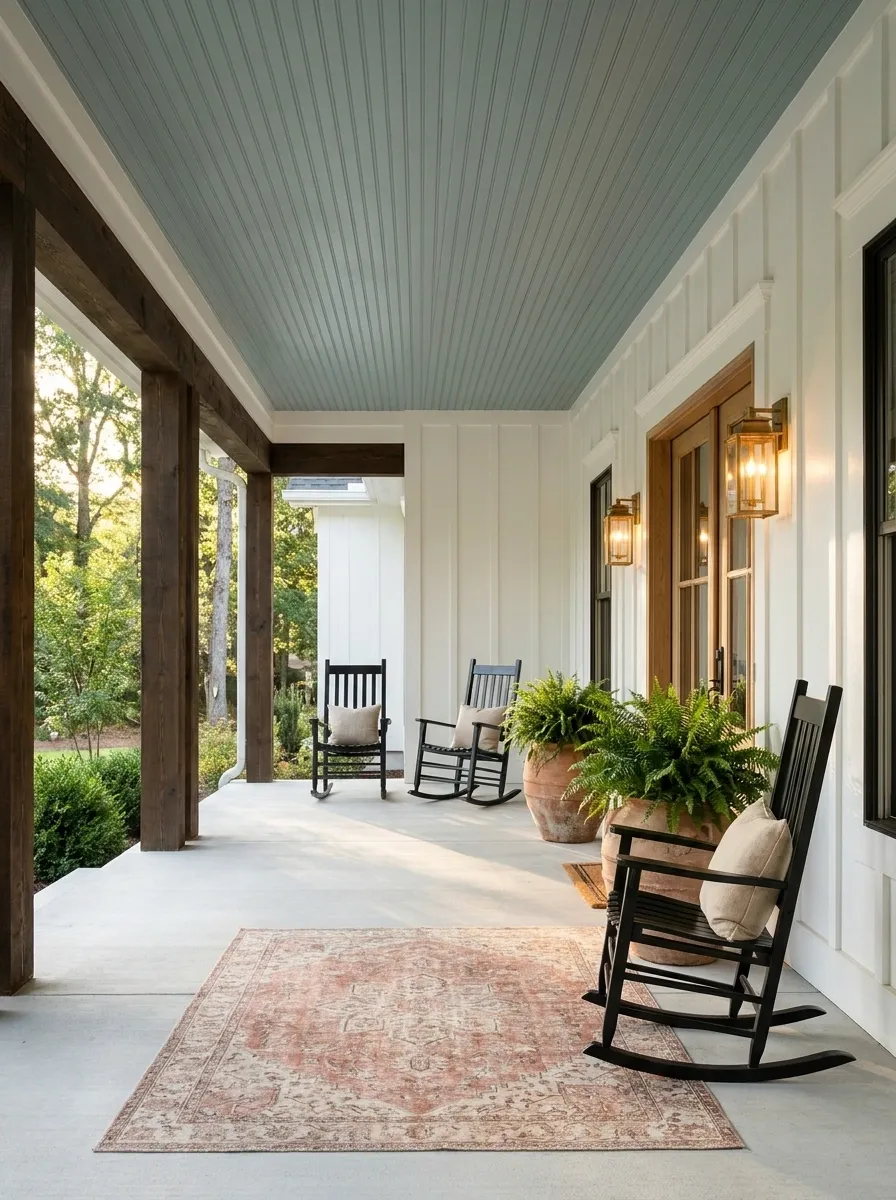
People think haint blue ceilings only belong on deep southern plantation homes. They don’t.
A soft, atmospheric blue ceiling instantly tricks the eye into thinking the porch is taller and lighter than it actually is. It breaks up the monotony of heavy timber and white siding, adding a crucial layer of historical charm without looking forced or cheap.
You want a color that looks like a washed-out twilight sky, not a bright nursery blue. It forces guests to look upward the second they step onto the concrete. Keep the adjacent trim stark white to make the ceiling color snap.
The Haint Blue Execution Strategy
Avoid purple undertones at all costs. You want a dusty gray-green blue that mimics faded historic milk paint.
Always use a flat or matte exterior finish. Gloss reflects light poorly and highlights every single board imperfection.
Stick to Only Two Wood Tones
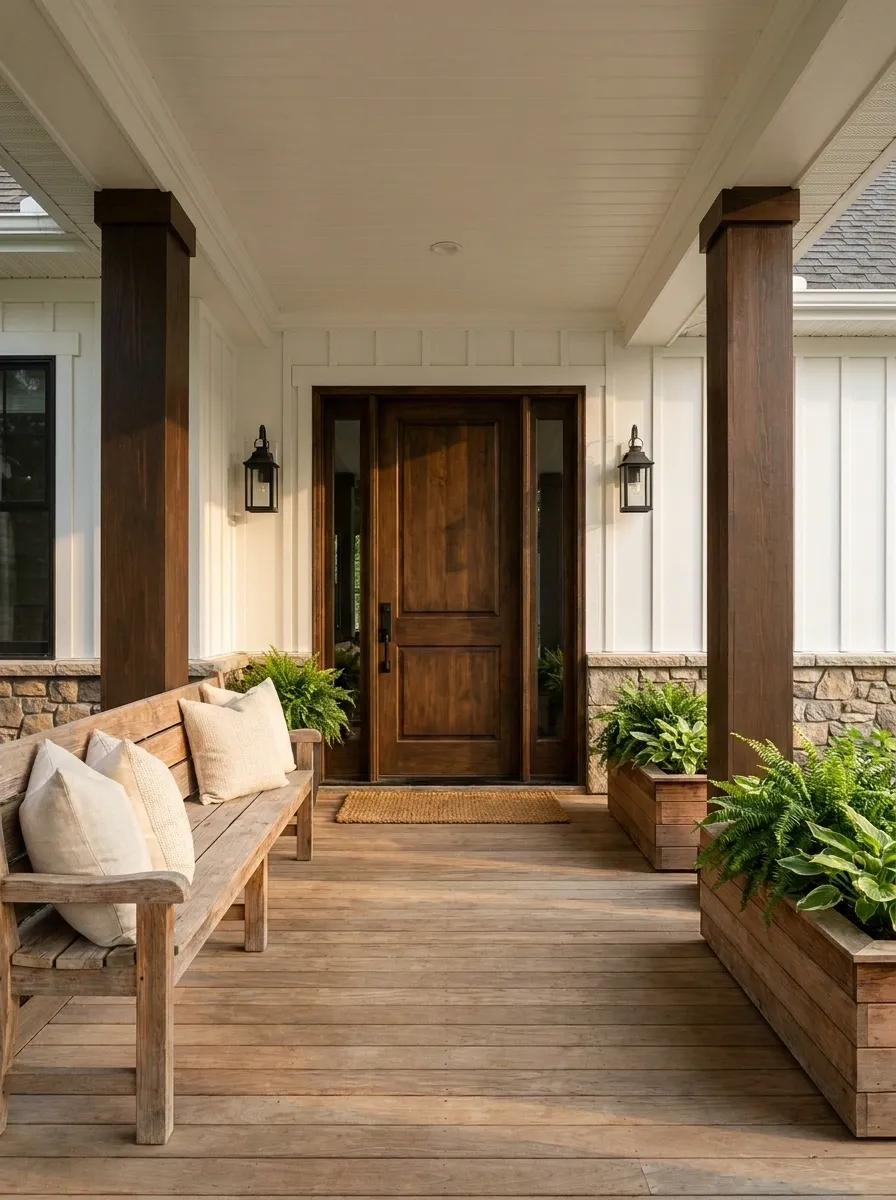
Limit your exterior wood palette to two specific stains. Anything more looks like a lumber yard clearing out inventory.
If your front door is a rich dark walnut, don’t throw heavily yellowed pine planters and a distressed gray driftwood bench next to it. The clash makes the entire porch feel frantic. Pick one dominant dark wood for your heavy architectural elements like doors and columns. Then pick one lighter weathered accent wood for seating and accessories. That contrast looks expensive and deliberate.
Foolproof Wood Combinations
-
🌳
Dark Walnut & Raw Cedar: High contrast, classic historical feel.
-
🪵
Ebony Stain & Weathered Teak: Modern, stark, highly industrial.
Hang a Raw Wood Porch Swing, Not White Plastic
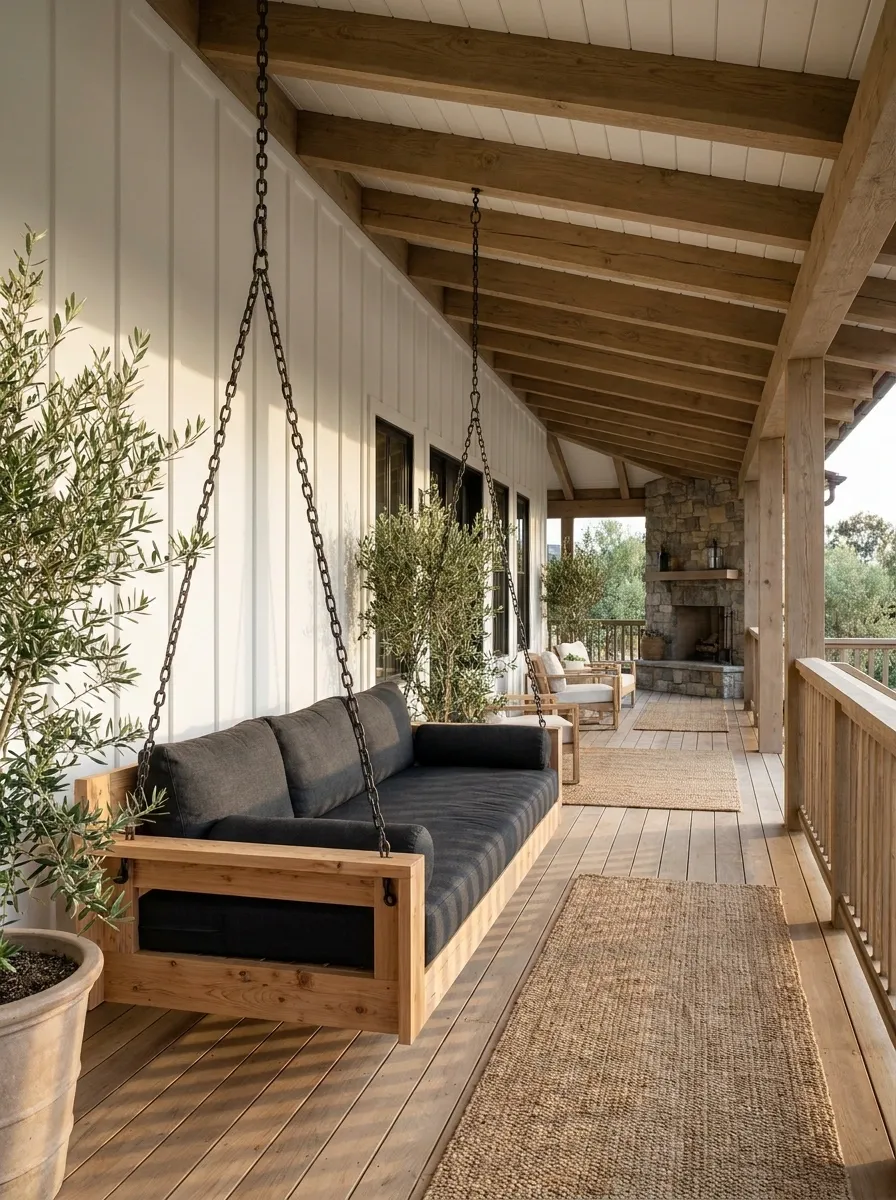
People constantly ruin the historical weight of a farmhouse by hanging flimsy white wicker swings. Plastic and painted wicker crack, peel, and scream cheap suburban catalog.
You need raw, heavy timber. A thick cypress or cedar swing anchored by thick iron chains completely dominates a blank wall. Let the wood age naturally. The massive visual weight of real timber grounds the seating area, while cheap painted alternatives visually float away. Add one long structured cushion in a dark neutral, and leave the wood exposed.
Porch Swing Installation Specs
Flank the Door with Tall Olive Trees
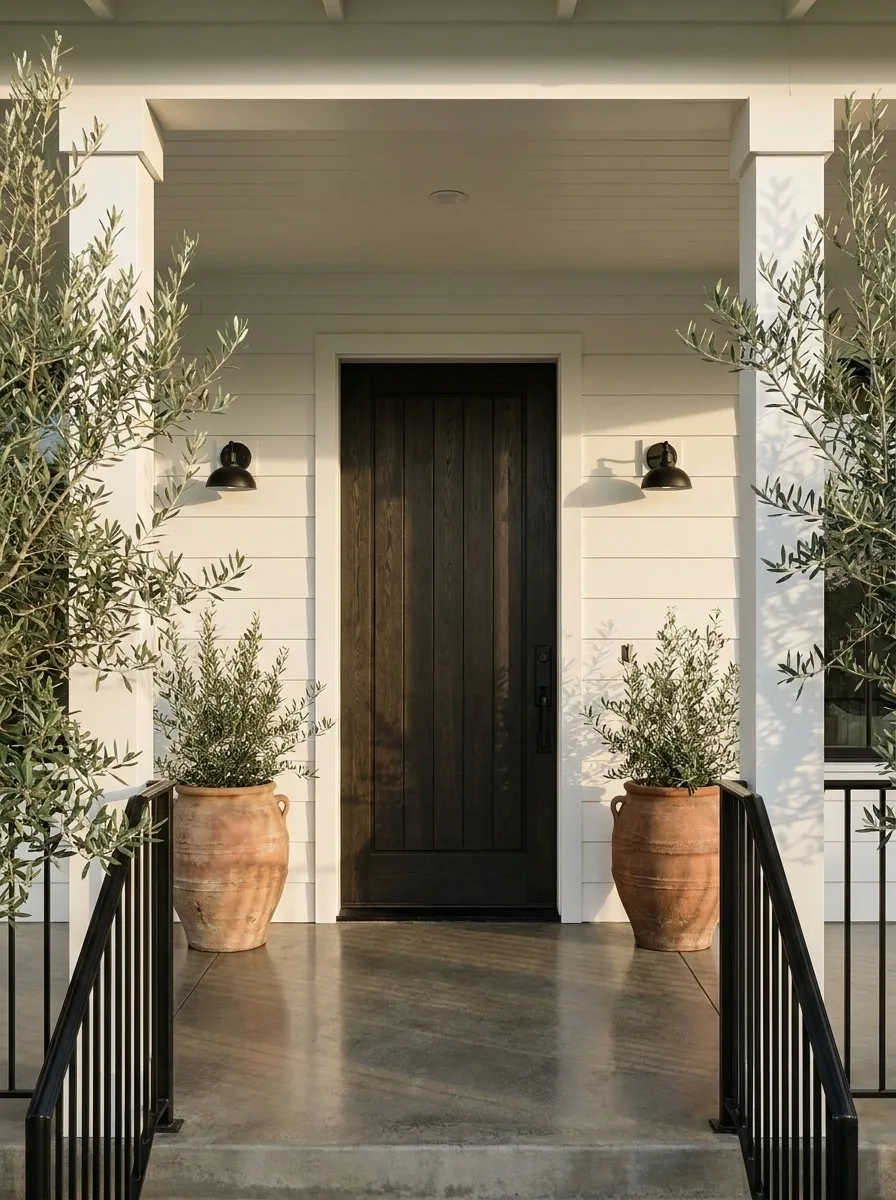
Tall silvery green foliage framing a heavy wood door gives you an instant high-end estate feel.
Short boxwoods look too manicured and stiff for the farmhouse aesthetic. Olive trees offer a messy, organic height that breaks up rigid porch columns perfectly. Buy two large, heavy terracotta pots. Plant one tree on each side of the doorway. The muted sage tones of the olive leaves play beautifully against stark white siding and black hardware. They look deeply intentional without feeling overly fussy.
Olive trees require massive drainage. Fill the bottom 20% of your massive terracotta pots with broken clay shards or gravel before adding soil, or the roots will rot on your porch.
Use Authentic Vintage Metal Chairs
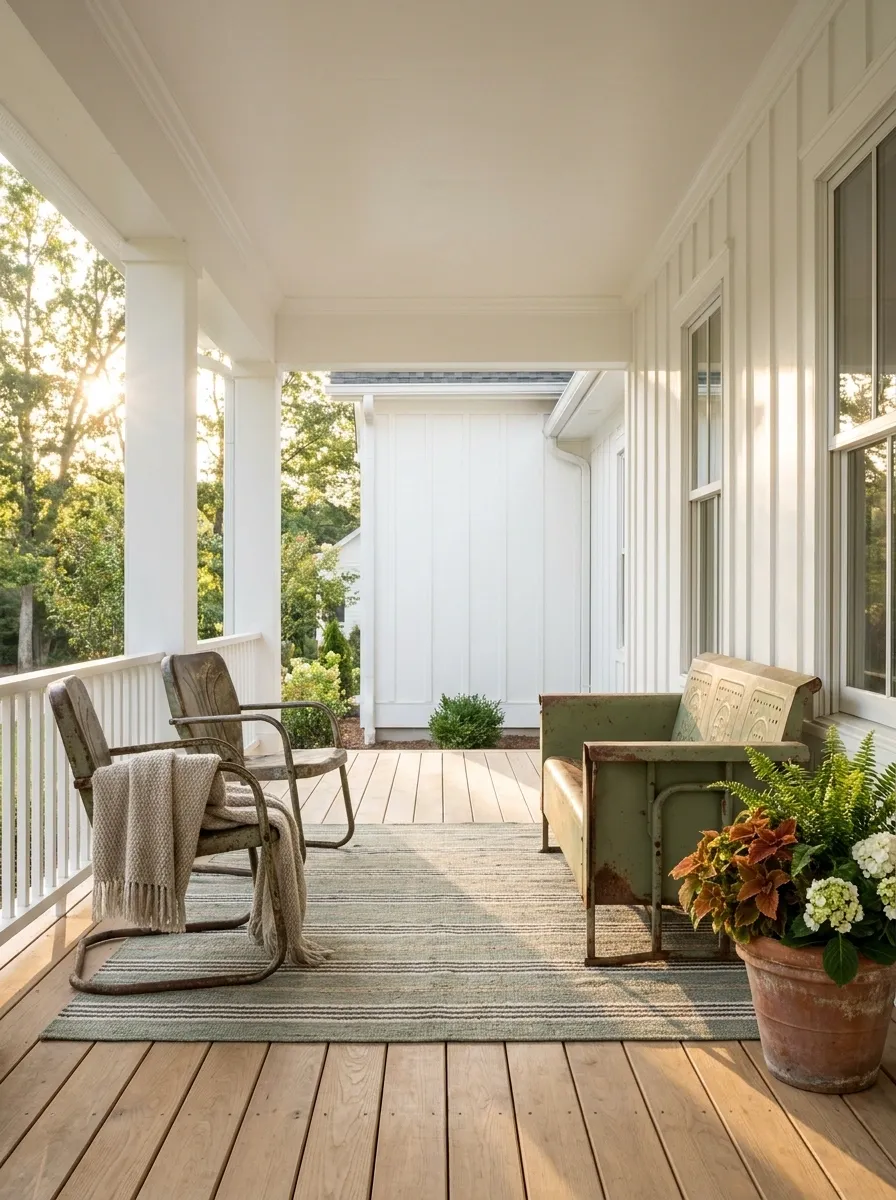
Standard patio furniture rusts out completely in three years and ends up in a landfill. The modern powder-coated stuff lacks any soul and usually bends under heavy weight.
You want real, heavy vintage motel gliders or authentic mid-century stamped steel chairs. These pieces have actual mass and survive terrible weather effortlessly.
- Scour local flea markets for heavy steel frames.
- Ignore surface rust, as it adds necessary patina.
- Seal the raw metal with a clear matte automotive coat to freeze the aging process.
The Seating Durability Matrix
Install Thick Cedar Wrap on Support Columns
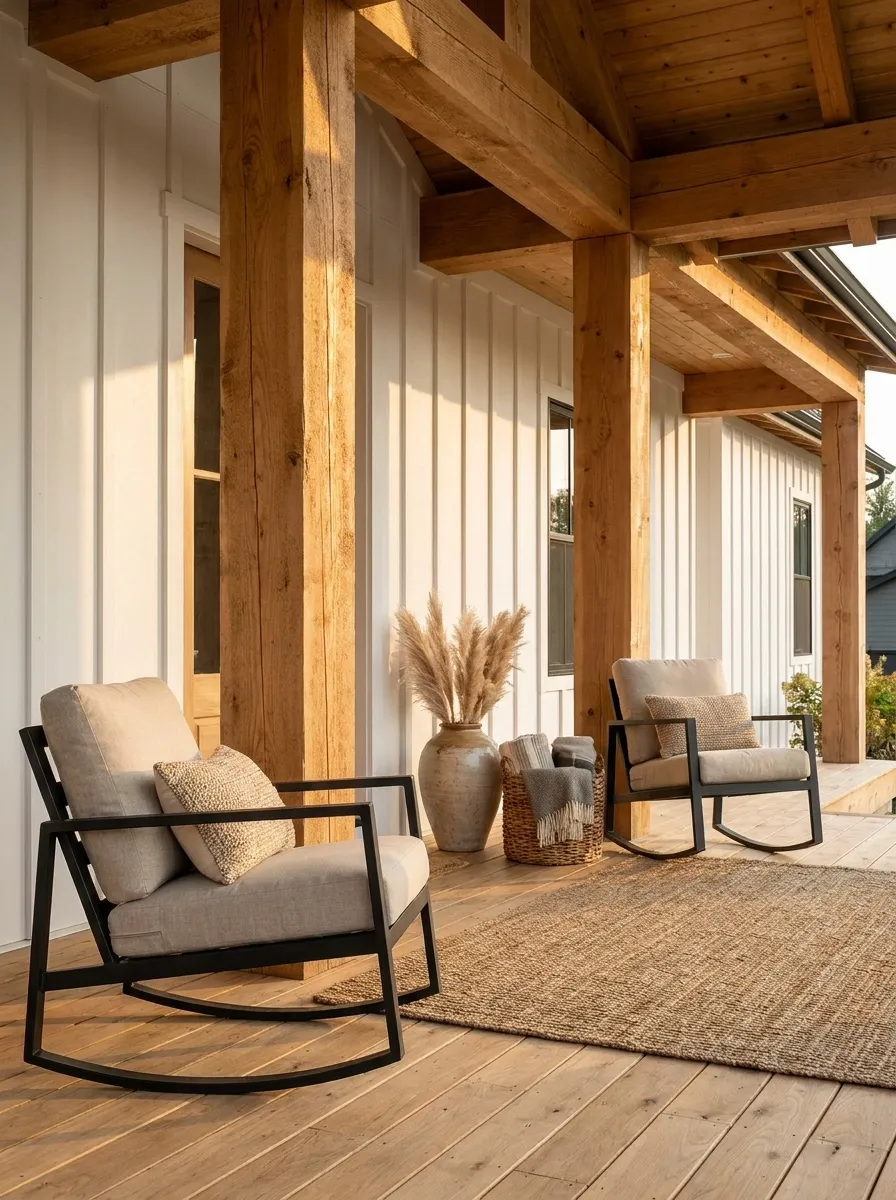
Wrapping your skinny porch posts in thick, rough-sawn cedar instantly makes a cheap builder-grade house look custom built.
Skinny painted posts look anemic and weak. They lack the architectural mass required to hold up a farmhouse roof visually. Wrap them in rough cedar boards to bulk them up to at least ten inches wide. Leave the wood raw or seal it with a clear matte UV protector. The heavy timber grain immediately adds warmth and texture against stark white siding, eliminating that sterile new-build feel.
Mount Chunky Floating House Numbers
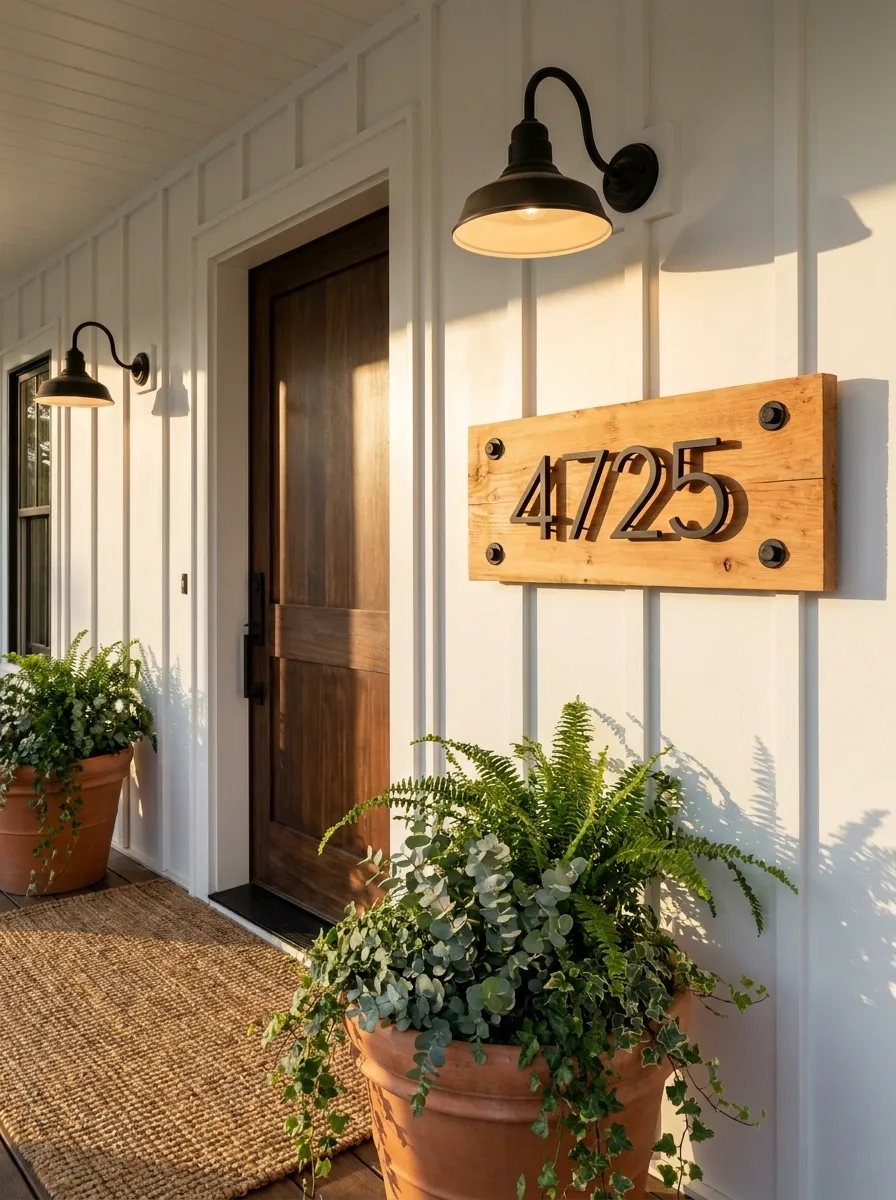
Start by throwing away those flat brass numbers you bought at the local hardware store. Buy heavy six inch matte black floating numbers instead.
Mount them horizontally on a thick piece of raw cedar, then bolt that directly to the siding beside the door. The shadow created by the floating spacers adds instant architectural depth. It pulls the eye right to the entrance. Standard flush numbers fade into the wall and look incredibly cheap from the street. Floating hardware demands attention and finishes the porch properly.
Optimal Spacing Rules
Always leave exactly one inch of negative space between each digit. Mount the entire cedar backer board at eye level, roughly 60 inches from the porch floor, on the side of the door that opens.
Layer Woven Texture Over Hard Metal
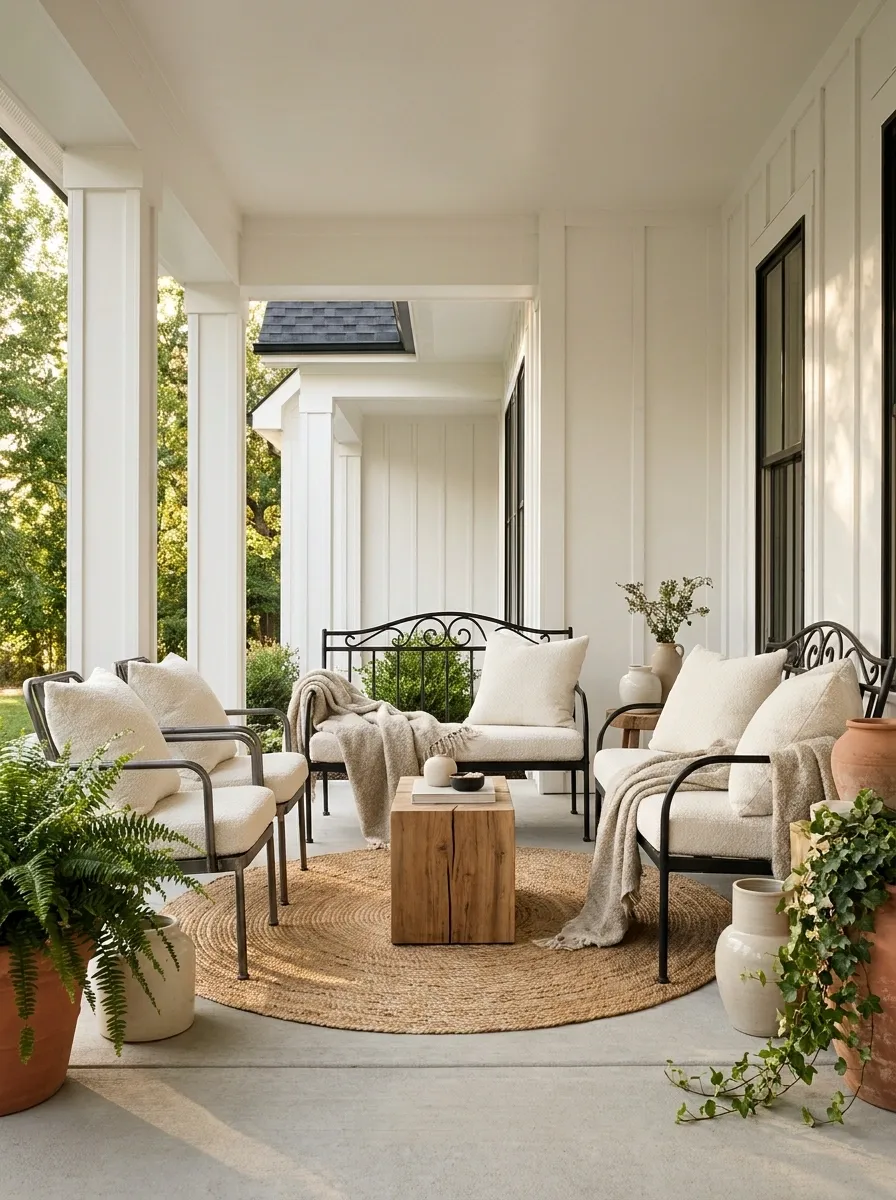
Metal furniture gets visually harsh on a bare concrete porch. You can’t just leave vintage steel chairs empty.
You’ve got to break up the rigid, cold lines with heavy woven textiles to make the space feel inviting.
- Drape a thick nubby wool blanket heavily over the chair back.
- Drop a dense outdoor boucle pillow firmly onto the seat.
- Place a chunky rattan side table directly between the chairs.
The friction between the cold industrial steel and the warm woven fabric makes the entire farmhouse style work. It looks layered and deeply intentional.
The Texture Mixing Checklist
The Base: Cold, rigid material (Vintage steel or wrought iron).
The Softener: Bulky, weather-resistant fabric (Boucle, thick canvas, or outdoor wool).
The Bridge: Natural organic fiber (Jute, rattan, or raw wood block).
Bring the Indoors Out with Upholstered Seating
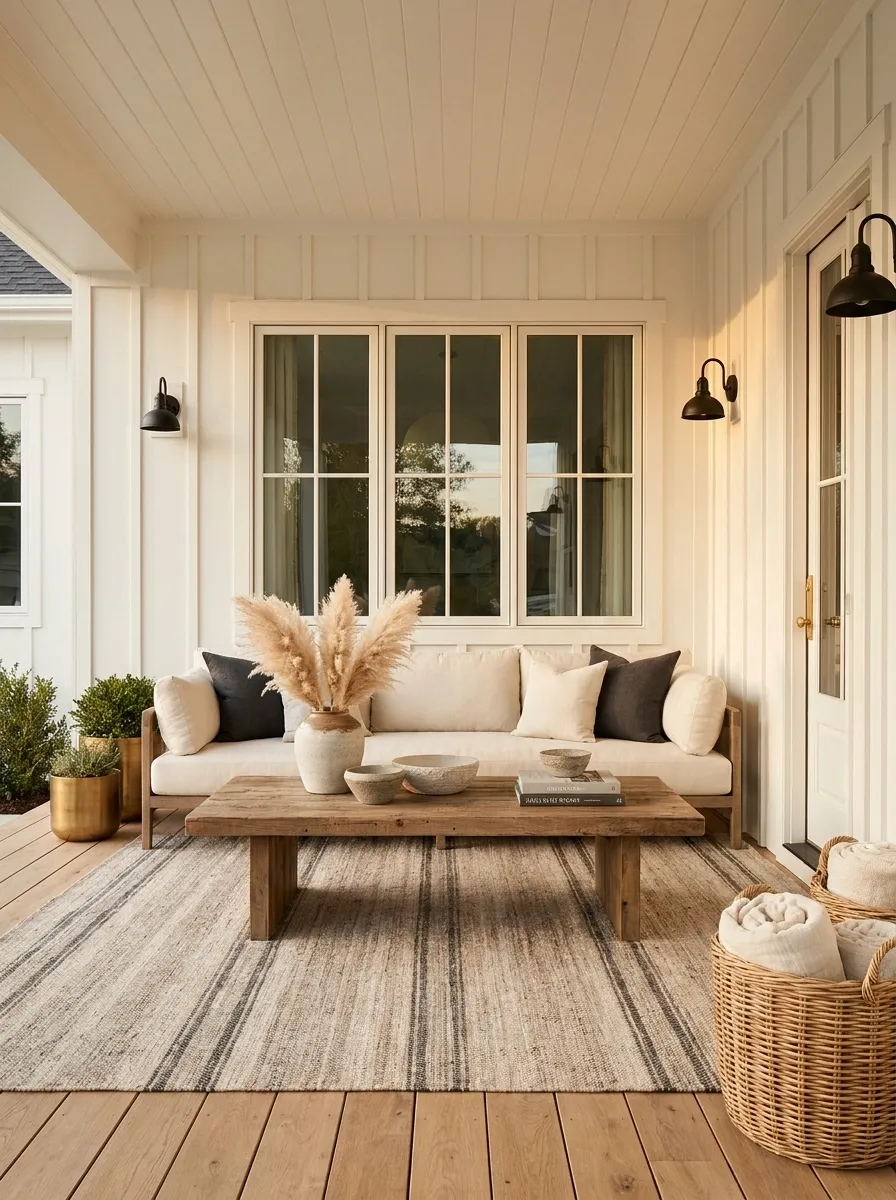
Deep outdoor sofas make a covered farmhouse front porch feel like an actual living room extension.
Wooden benches are fine for a quick stop, but nobody’s sitting on rigid wood for hours. You need thick, heavy upholstered cushions wrapped in high performance outdoor fabric. Treat the porch exactly like an interior room. Center the sofa under a large window, throw down a heavy rug, and add a massive timber coffee table. The heavy fabric blocks soften the harsh exterior siding walls instantly and force guests to relax.
Fabric Failure Warning
Never use standard interior pillows outside, even on a covered porch. Ambient humidity will rot the interior foam within three months. Buy solution-dyed acrylic fabrics only.
Skip the Word Art Signs Entirely
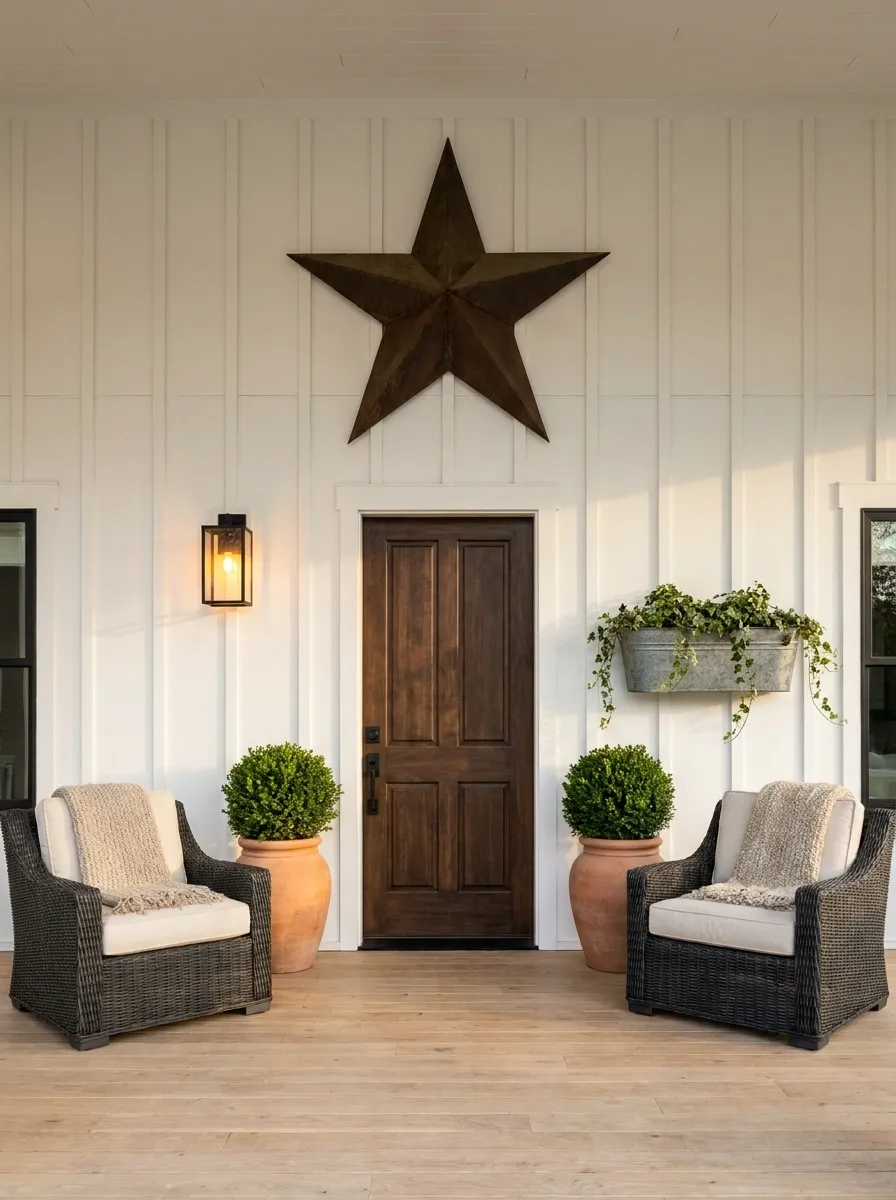
A house doesn’t need to literally say Farmhouse on a wooden plank to look the part.
People buy those massive vertical welcome signs because they don’t know how to fill empty exterior wall space. It’s a lazy design crutch. Stop cluttering the entry with unnecessary text. Leave the siding blank to let the architectural details breathe, or hang something substantial instead. A massive vintage iron star, an oversized salvaged window frame, or a heavy wall mounted planter provides infinitely better visual interest than painted letters ever will.
Superior Signage Alternatives
Build a Low Profile Step Deck
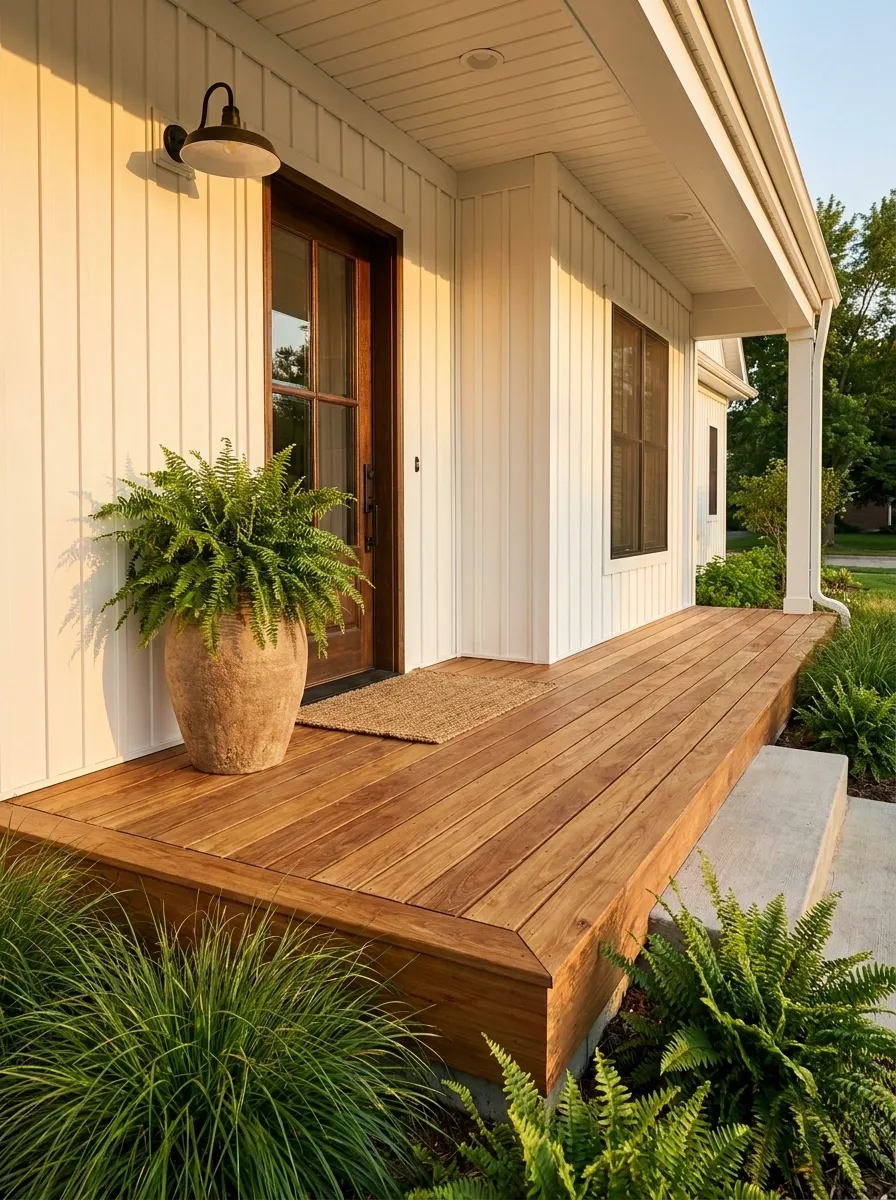
Stop tripping over that awkward three-inch concrete drop-off.
Build a low-profile floating wood deck directly over the existing porch slab. A massive expanse of poured concrete always feels cold and industrial, which kills the welcoming farmhouse vibe immediately. Covering it with thick cedar decking boards adds immense warmth and gives you a flush, seamless transition out the front door. You don’t need handrails if the drop is under thirty inches. Just let the wood wrap all the way down to the landscaping.
Overlay Installation Priorities
Moisture Barrier: Always lay sleeper joists over waterproof landscape tape so the wood doesn’t rot against the concrete.
Drainage Gap: Leave a quarter-inch gap between every cedar board. Trapped water destroys a low-profile deck in one season.
Paint Your Front Door a Grounded Earth Tone
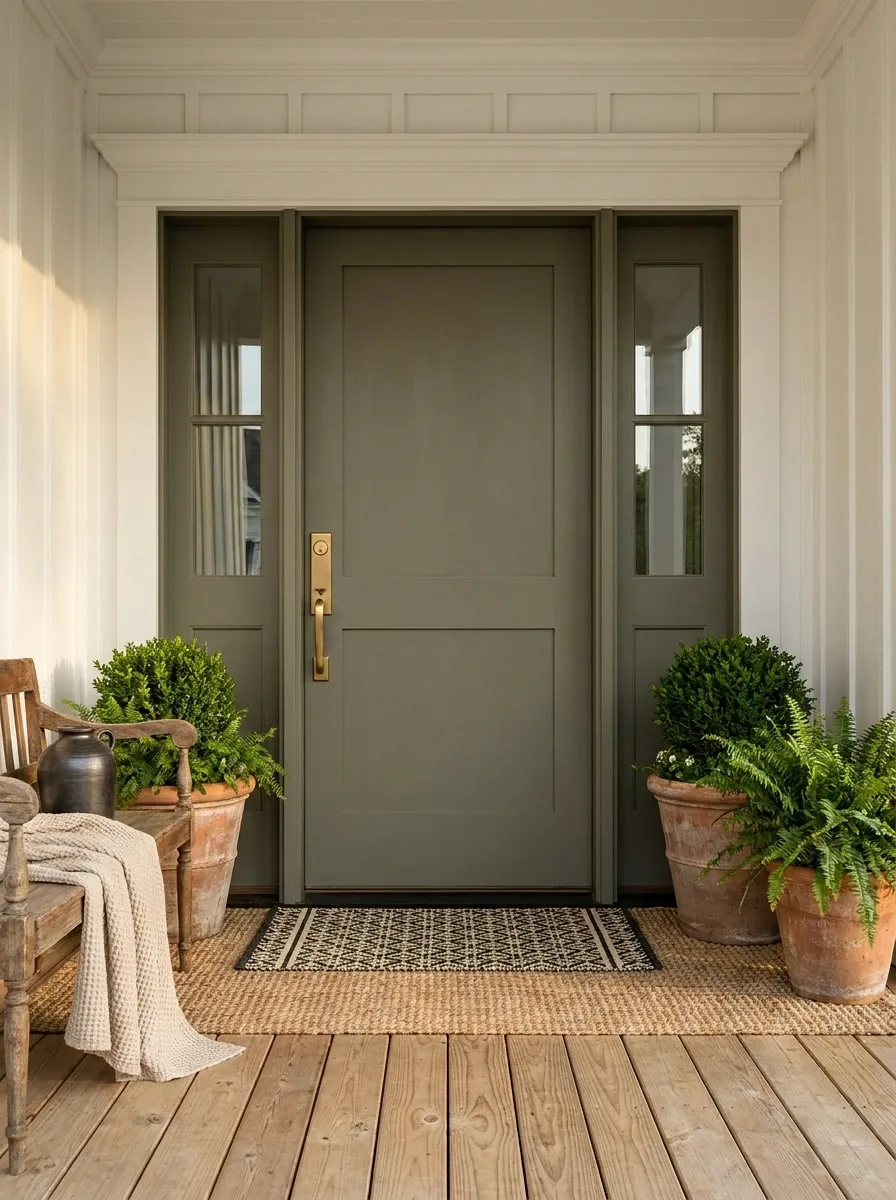
Bright cherry red doors do not belong on a farmhouse.
They look frantic and severely out of place against natural materials. You need muddy, heavily desaturated earth tones that look like they were pulled directly from the surrounding landscape. A deep sage green, a blackened charcoal, or a muddy terracotta instantly grounds the entire exterior. These muted tones absorb the harsh afternoon sunlight instead of reflecting it, giving the entrance a settled, historical presence that bright primary colors destroy.
Approved Door Color Profiles
Hide the Concrete Slab Under Stenciled Pavers
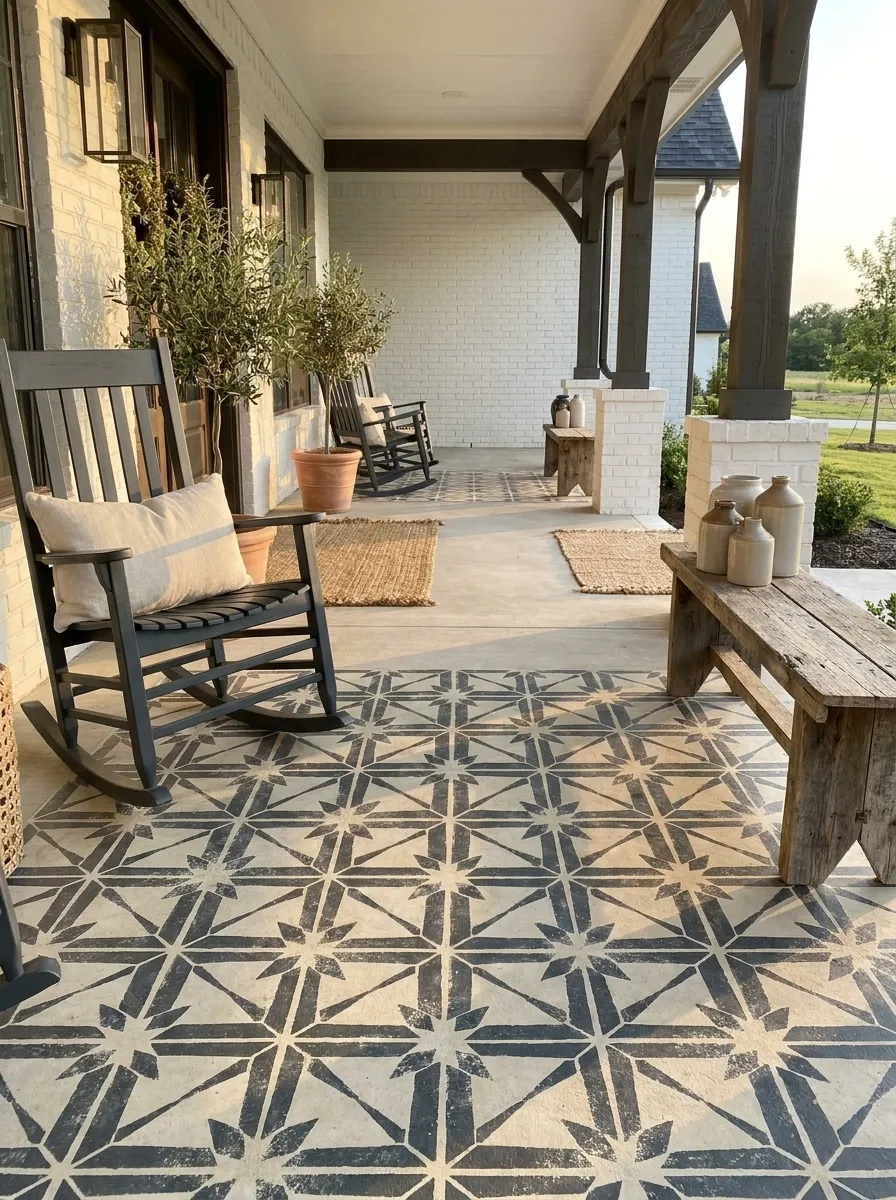
Tearing out a cracked concrete porch slab costs thousands of dollars. If a wood deck overlay isn’t in the budget, you have to paint it.
But don’t just roll down a solid layer of gray epoxy. It looks like a cheap garage floor. Use a massive geometric stencil to fake the look of high-end cement tile. A distressed charcoal and cream star pattern completely distracts the eye from hairline cracks and uneven surfaces. It adds a crucial layer of custom pattern to a space that builders usually ignore.
Concrete Prep Rule
Paint will immediately peel off untreated concrete. You must aggressively power wash, apply a chemical etcher to open the concrete pores, and lay a masonry bonding primer before touching a stencil.
Add an Iron Knocker Instead of a Doorbell
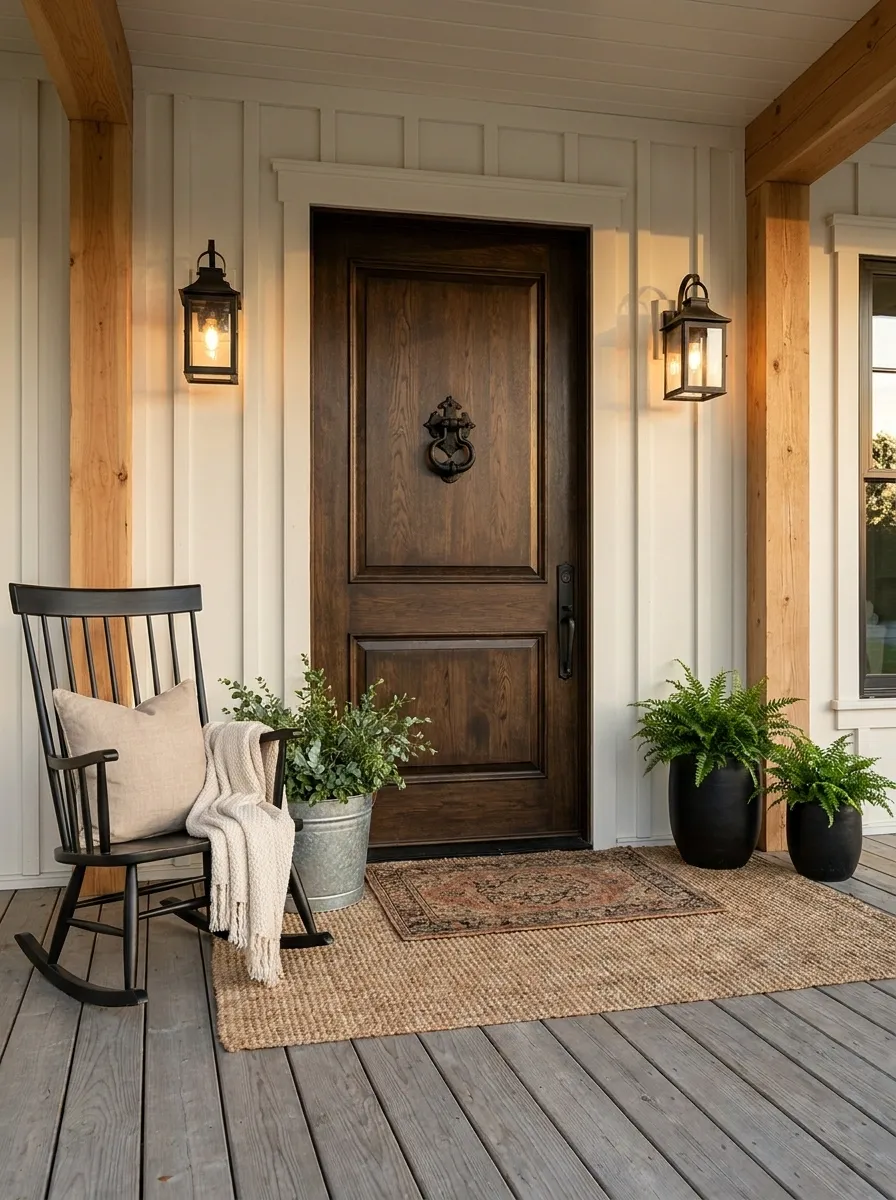
A heavy chunk of forged black iron centered on a solid wood door demands respect.
Modern plastic video doorbells ruin the historical illusion of a farmhouse front porch instantly. If you must have a camera, hide it in the corner trim out of direct sight. Let the actual door feature a massive, functional iron knocker. The physical weight of the metal and the loud, hollow thud it makes against the wood provides an authentic tactile experience that a glowing blue plastic button simply can’t match.
Hardware Placement Scale
A tiny knocker looks ridiculous on a heavy door. Buy one that is at least 8 inches long.
Dress Windows with Functional Wood Shutters
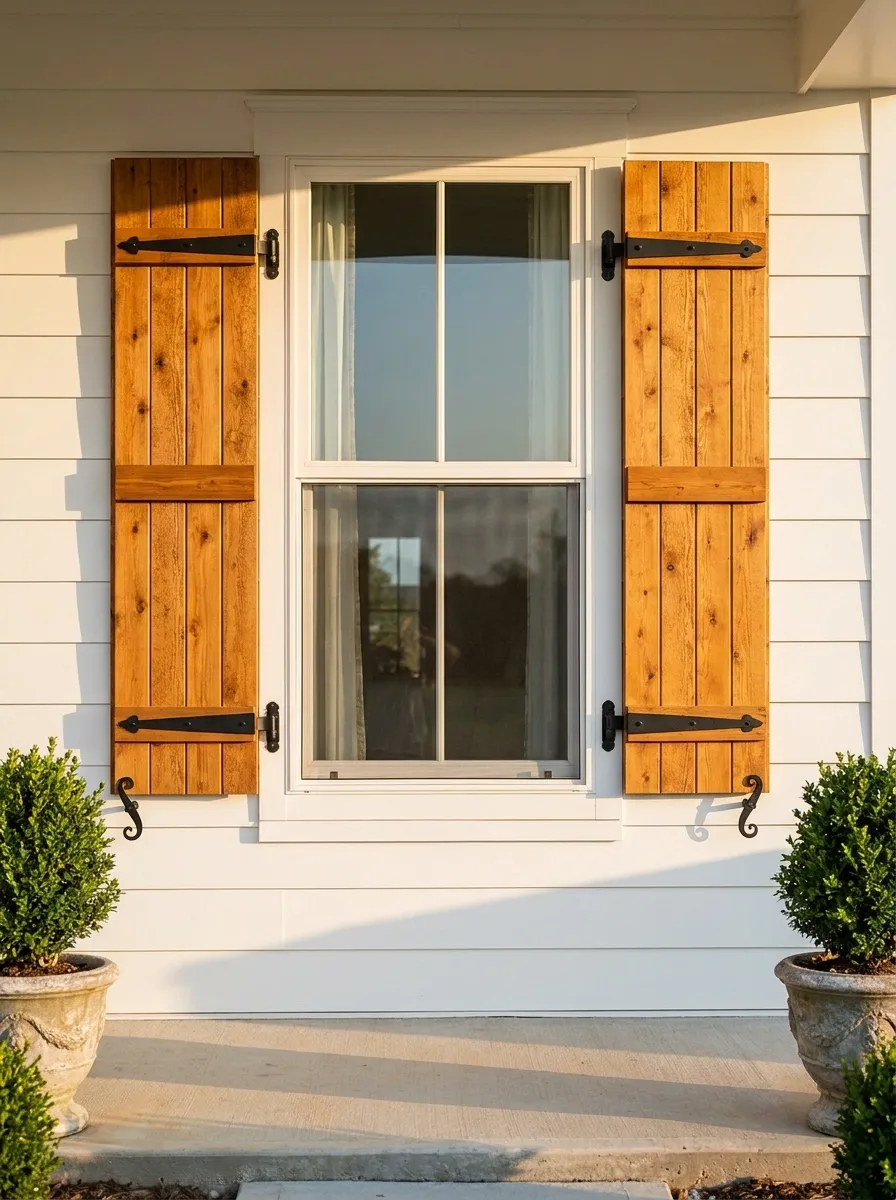
Screwing undersized plastic panels flat against your siding does not count as architectural detail.
Fake shutters are the biggest offense in modern exterior design. If your shutters cannot physically close over the window to cover the glass completely, they are the wrong size and everyone walking by can tell. You must use real wood, and you must mount them on actual iron hinges with iron tie-backs. Even if you never close them, the heavy shadow lines created by the functioning hardware add incredible depth to the facade.
| Shutter Element | The Cheap Way | The Authentic Way |
|---|---|---|
| Sizing | 12″ wide strips | Exactly half the window width |
| Hardware | Plastic caps | Forged iron hinges & dogs |
Let the Wreath Be Asymmetrical
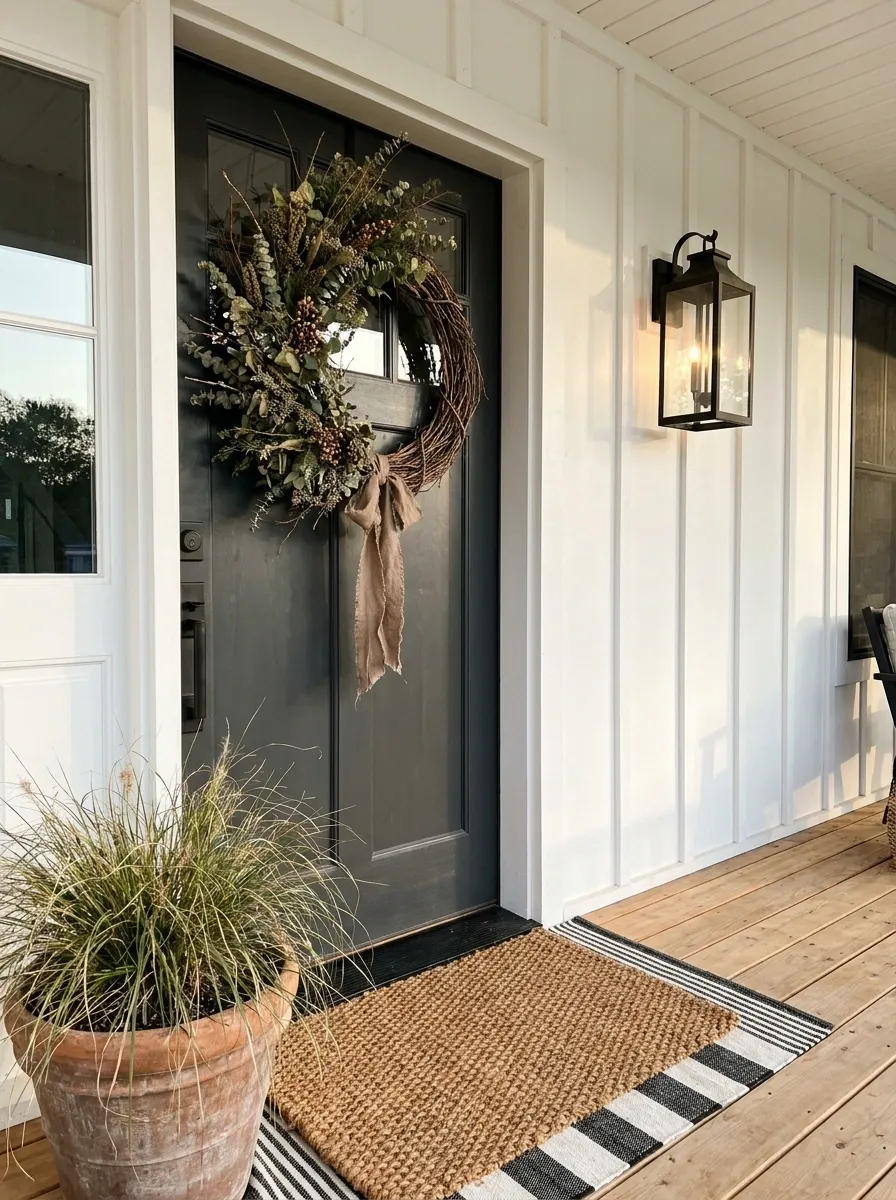
A perfectly round, plastic faux-boxwood wreath hanging on a front door looks like it belongs in a discount craft store aisle. Real nature doesn’t grow in a rigid, perfect circle.
If you want an expensive, curated look, you need a wild, asymmetrical design. Start with an exposed, heavy grapevine base. Leave half of the twisted wood completely bare, and build a heavy cluster of dried forage, seeded eucalyptus, and real twigs creeping up just one side. Tie it off with a frayed velvet or raw linen ribbon.
It feels organic, slightly messy, and incredibly high-end.
Never cover the entire wreath frame. Apply heavy foliage to exactly 70% of the base, and leave the remaining 30% completely exposed to show the raw structural material beneath.
Stack Real Chopped Wood Next to the Door
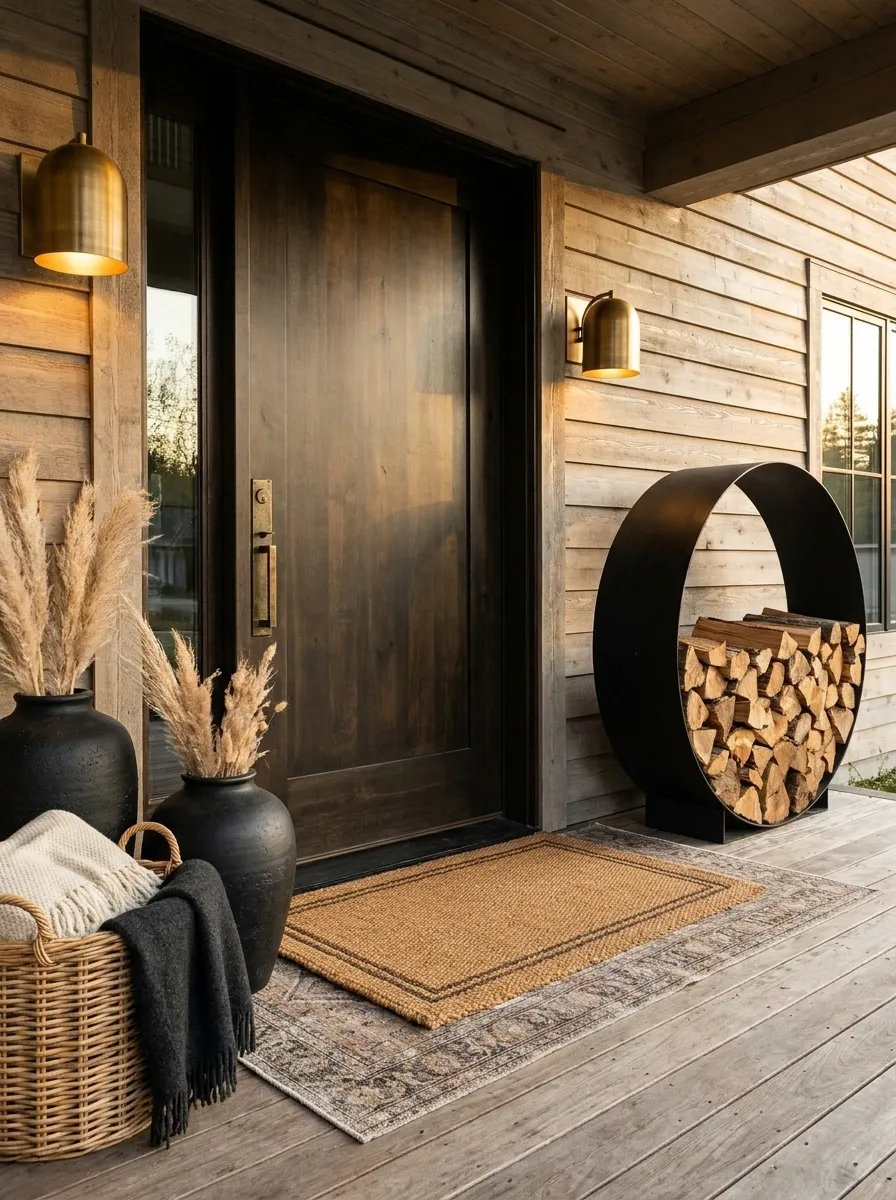
Stop buying fake ceramic logs or resin firewood displays.
Nothing grounds a farmhouse porch faster than the heavy, rough texture of actual split oak or cedar. Even if you don’t own a wood-burning fireplace, stack a tight, neat pile of real logs inside a heavy wrought-iron hoop near the entrance.
Here is why this works so well:
- The Smell: Real cedar and oak bake in the sun and smell incredible when guests walk up.
- The Texture: The rough, splintered bark breaks up the flat, repetitive lines of house siding.
- The Weight: It adds immediate visual mass to an empty corner without looking like forced decor.
- 🪵 Kiln-dried split oak logs (Bug-free)
- ⭕ Heavy matte black steel log hoop
Upgrade to Heavy Iron Door Hardware
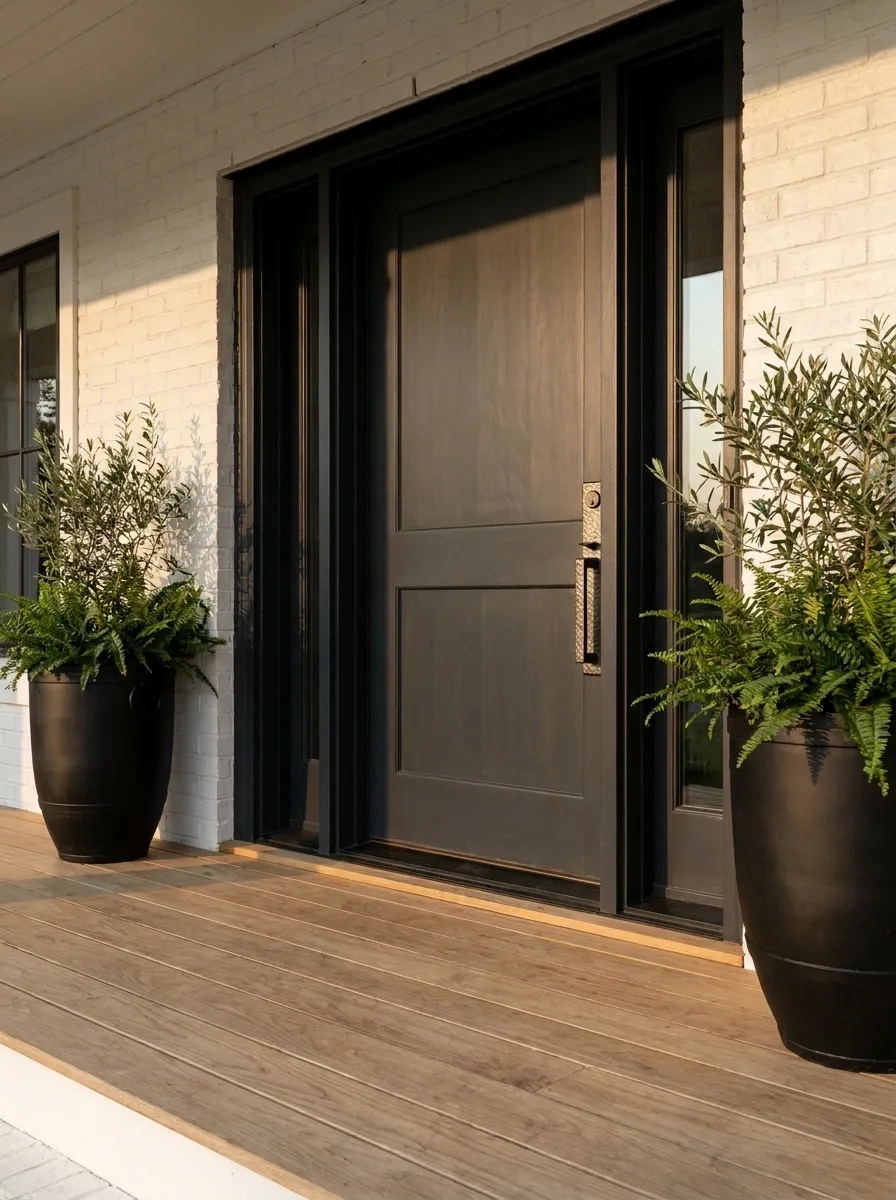
Builders always install flimsy brushed nickel door handles that feel hollow and rattle when you turn them. It ruins the first physical impression of your home.
You interact with your front door hardware every single day. Rip out that cheap shiny knob and replace it with a massive, forged iron gripset. You want a heavy thumb-latch handle that requires actual force to open. The stark black iron pops aggressively against natural wood or painted doors, and the physical weight tells everyone your home is built solidly before they even step inside.
Soften the Hard Edges with Trailing Vines
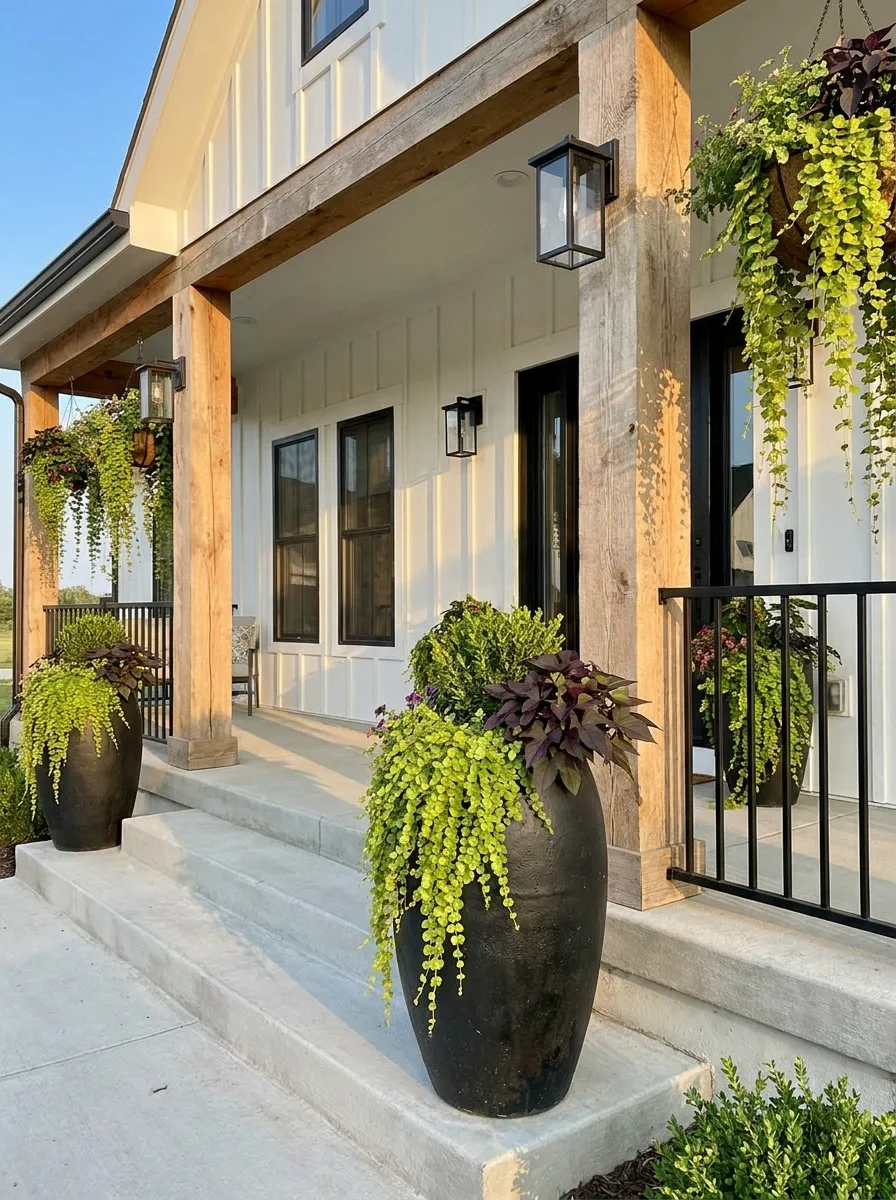
People mistakenly think a modern farmhouse exterior means keeping everything sterile, bare, and highly manicured.
That approach leaves the porch feeling cold and industrial. You actually need aggressive, overflowing greenery to soften the rigid wooden columns and sharp metal hardware. Place a tall, dark planter near the steps and pack it with sweet potato vines or creeping fig. Let the plants spill heavily over the edges and trail down toward the concrete. The wild, messy foliage cuts through the strict architectural lines and brings the space to life.
Skip fussy flowering plants. Creeping Jenny (lime green) and Sweet Potato Vine (deep purple) grow aggressively in containers, require minimal watering, and survive harsh afternoon porch sun effortlessly.
Ditch Symmetry for Intentional Balance
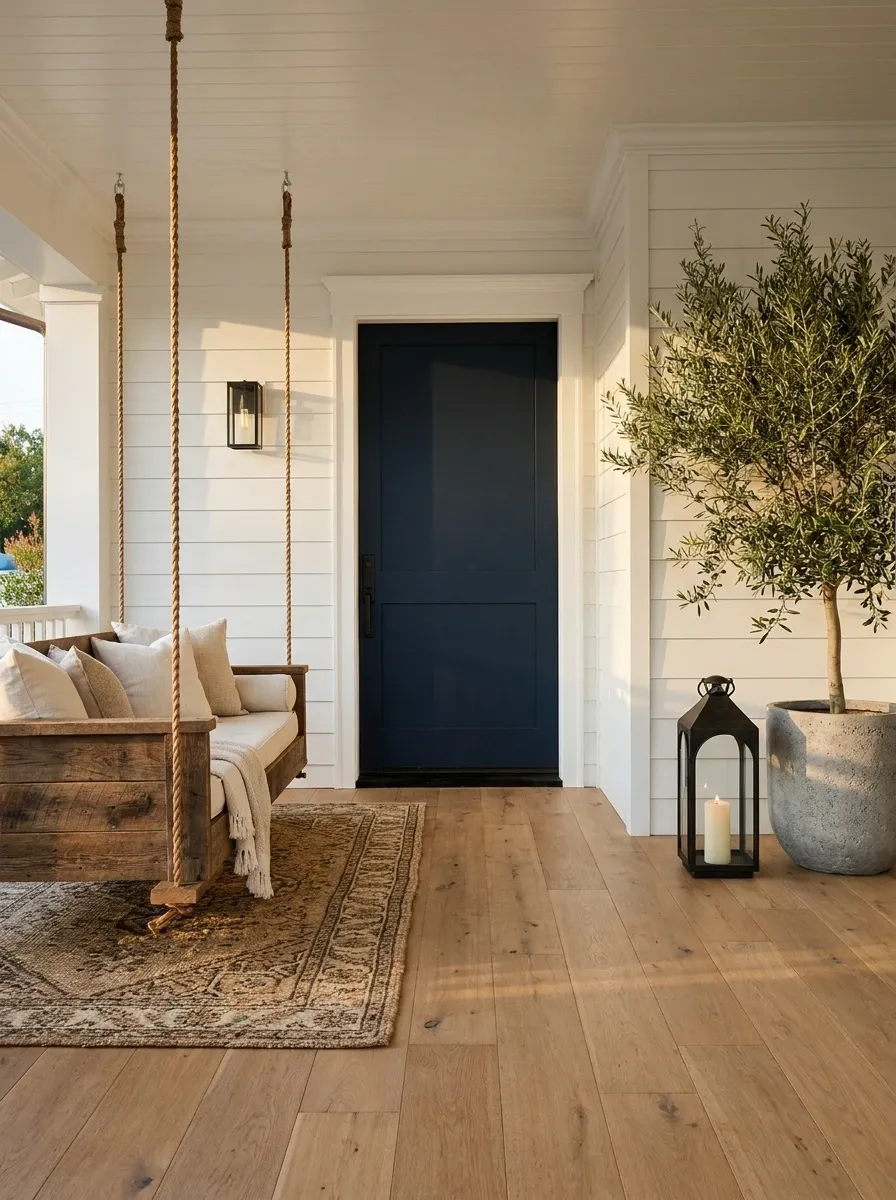
Amateur designers always put two identical rocking chairs and two identical planters perfectly spaced on each side of the front door.
It looks like a rigid museum exhibit. A home shouldn’t feel that stiff. Asymmetrical balance feels significantly more sophisticated and relaxed.
Instead of matching sides, balance the visual weight. Put a heavy wooden swing and a thick rug on the left side of the door. Counterbalance it on the right side with a single massive olive tree in a concrete pot and a vintage metal lantern. The sides don’t match, but the heavy visual mass balances out perfectly.
Symmetry relies on identical shapes. Asymmetry relies on volume. A massive fabric sofa on one side carries the exact same visual weight as three clustered terracotta pots and a high-contrast chair on the other.
Stop Buying Clutter, Start Building Structure
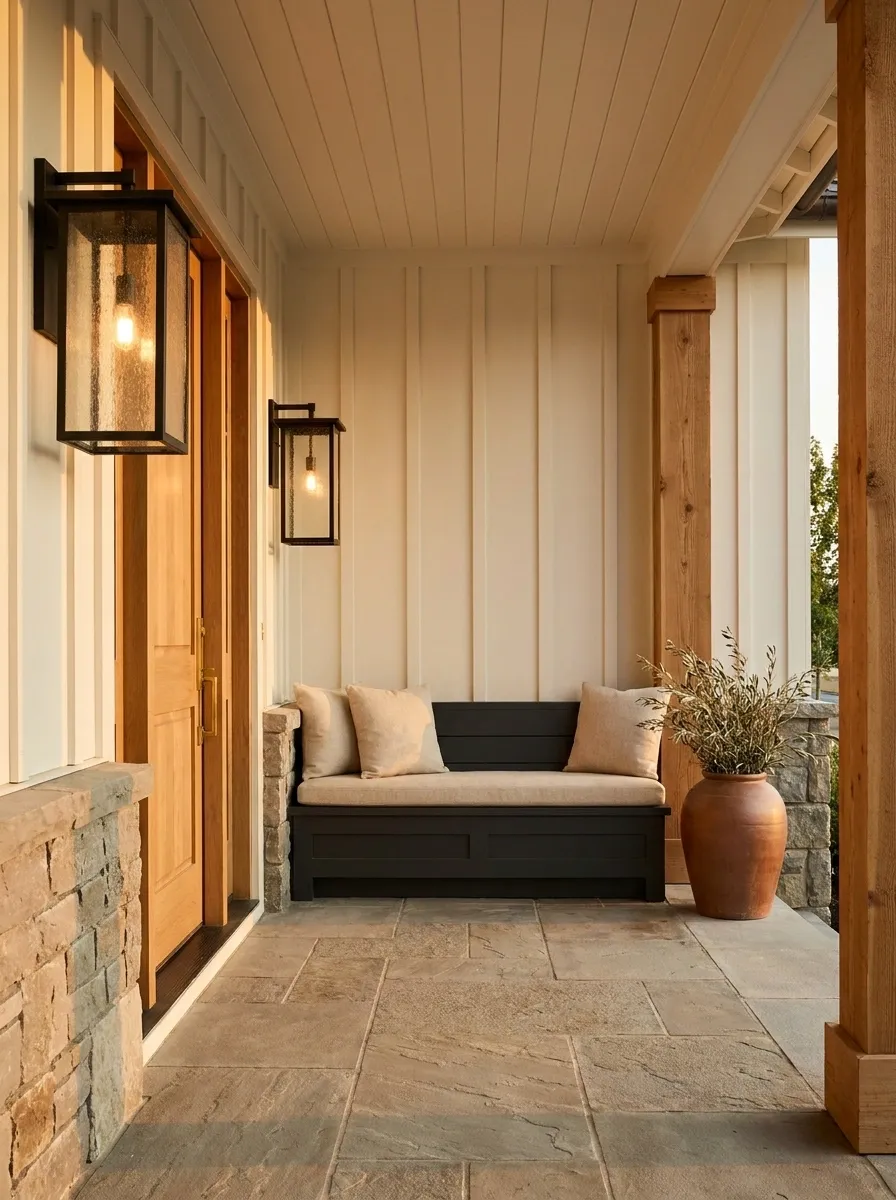
A premium farmhouse front porch demands restraint. When you stop relying on cheap wooden signs and undersized lanterns to do the heavy lifting, your exterior instantly commands respect. Fix your lighting scale, utilize heavy raw materials that age beautifully, and anchor your seating with thick, weather-resistant textiles. Good design requires tough editing, not buying more accessories to fill empty space. Stick to these structural rules, and your entrance won’t just look better. It will look custom built.