
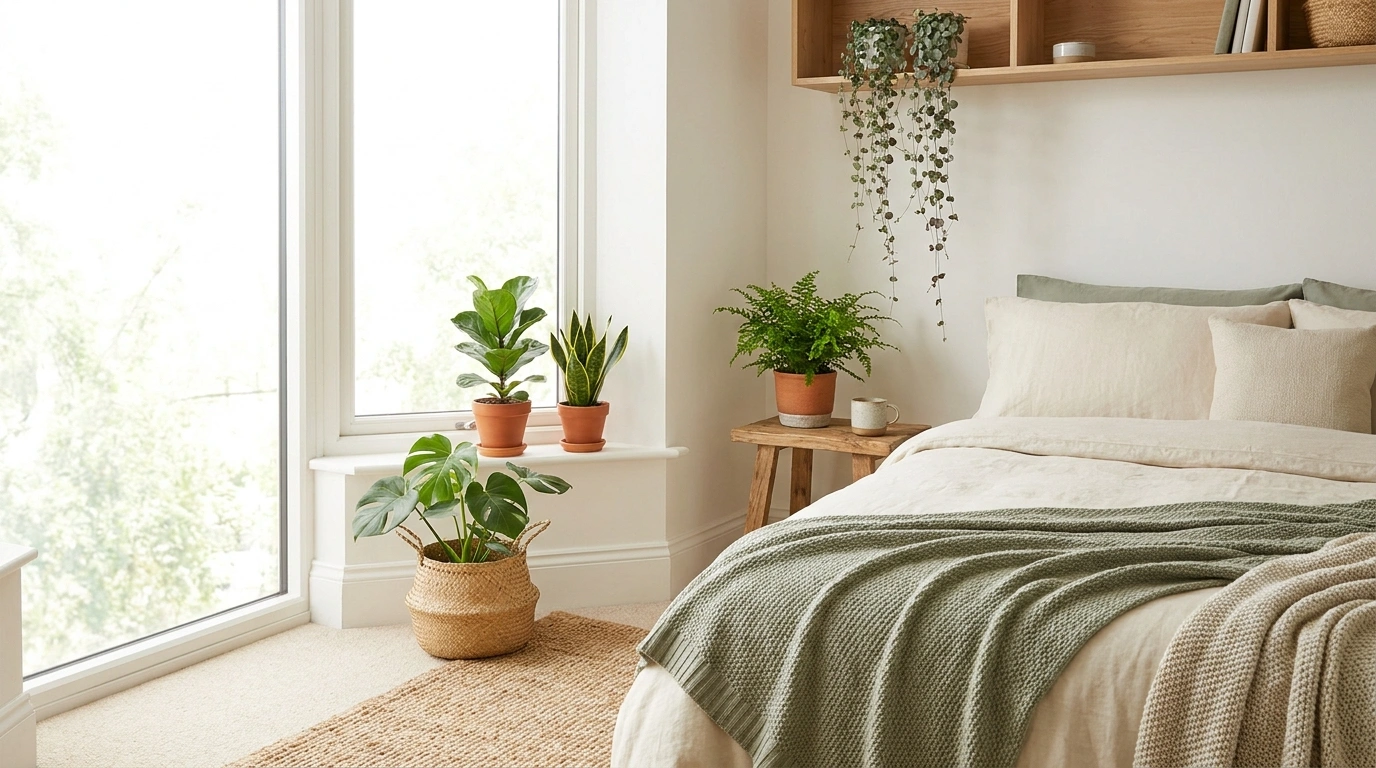
Some bedrooms have a gorgeous plant and still look unfinished. Others have so many leaves that the bed feels like a guest in its own room.
The difference usually isn’t the number of plants. It’s how the greenery works with the furniture, lighting, colors, and available space.
Greenery bedroom ideas can look completely different depending on the direction you choose. Warm oak and leafy plants create a relaxed, natural bedroom.
Deep green walls and dark timber produce something moodier. Terracotta, rattan, and trailing vines bring a boho character, while pale linen and carefully placed foliage suit rooms that need a quieter look.
The Bedroom Doesn’t Need a Jungle. It Needs a Plot.
BEFORE THE PLANT SHOPPING SPREE
Your bedroom doesn’t need a jungle. It needs a plot.
A random monstera in one corner, three tiny pots on the windowsill, and a hanging planter blocking the curtains? The plants aren’t the problem. The lack of a plan is.
LIGHT FIRST
Match the conditions
A shady corner isn’t secretly a tropical rainforest. Match plants to the daylight available.
GIVE THEM SPACE
Protect the layout
Keep the bed, windows, and walkways clear. Nobody wants an obstacle course with leaves.
PICK A DIRECTION
Decide on a finished look
Moody botanical, airy Scandinavian, or relaxed boho. Choose the style before buying the entire nursery.
Different looks. One rule: the whole room has to work.
Greenery Bedroom Ideas
Sage Green Haven With Scalloped Details
This serene bedroom combines soft sage walls with a white iron bed and delicate botanical bedding. A matching vanity with a unique scalloped mirror sits neatly beside the window, reflecting the natural light that fills the space. Framed floral art on the wall echoes the gentle color palette without overwhelming the room.
The key to this look is keeping the furniture light and airy so the sage walls remain the star of the show. A natural jute rug adds texture underneath, grounding the pastel tones with organic warmth. A small vase of fresh flowers on the dressing table ties the entire botanical theme together effortlessly.
Keep decorative objects minimal to maintain that breezy, inviting feel. Let the sunlight and soft fabrics do the work rather than overcrowding every surface. The space remains functional, calm, and undeniably charming.
Sunlit Botanical Bedroom With Layered Foliage and Warm Oak
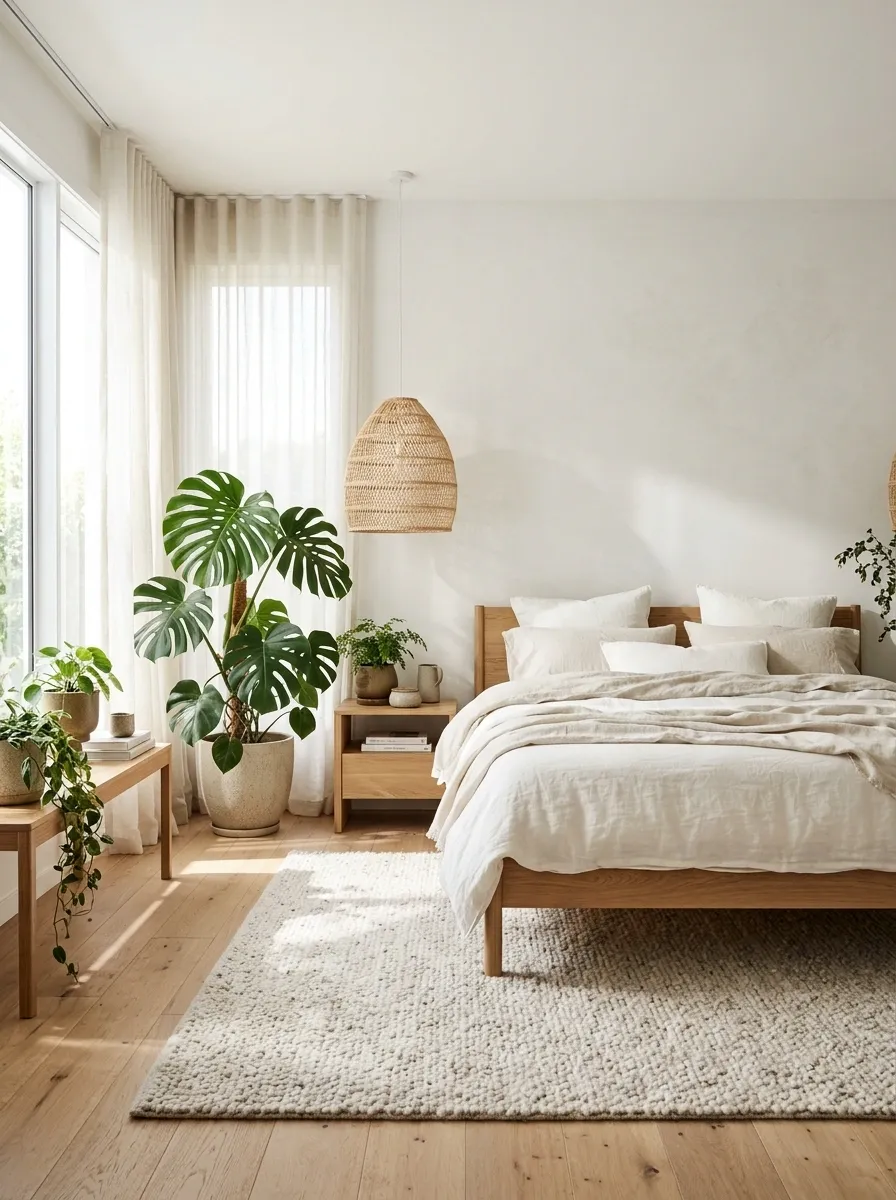
A sunlit botanical bedroom is all about the relationship between fresh green leaves, warm timber, and soft neutral fabrics. Start with a natural oak bed, ivory linen bedding, and a pale textured rug. Place a broad-leafed monstera near a bright window, then bring in smaller plants on a wooden bedside table. A woven pendant and simple curtains complete the room without competing with the foliage.
The secret is varying the height and shape of the plants. Large leaves anchor the composition, while smaller ones fill gaps around the furniture. Keep the bed wall relatively quiet so the greenery stands out. The result feels relaxed and organic, not like every available surface received a plant during an emotional shopping spree.
THE WINDOW-TO-BED RELATIONSHIP
Build the greenery in layers, not a straight line.
NEAR WINDOW
Tall foliage
The main leafy silhouette in suitable light.
BEDSIDE
Small greenery
A compact accent that leaves room for essentials.
BED AREA
Visual breathing room
Let the bedding and headboard remain visible.
Placement note: choose each plant according to its light needs, and keep window access and walking space clear.
Botanical Sanctuary With Lush Trailing Foliage
A rich olive green wall sets a dramatic backdrop for a warm wooden bed and a collection of thriving houseplants. A wooden trough suspended above the headboard overflows with trailing vines, instantly drawing the eye upward and creating a canopy effect. Large potted plants flank the bed to frame the sleeping space with natural texture.
The secret is mixing different plant varieties to achieve depth without feeling cluttered. Crisp white bedding balances the deep wall color, while a cozy olive green throw blanket unifies the palette. Simple wooden bedside tables and minimal decor keep the focus squarely on the stunning greenery.
Position plants where they receive adequate light and have room to cascade gracefully. The overall aesthetic feels like a luxurious forest retreat brought indoors. It is lush, vibrant, and remarkably peaceful to wake up in.
Japandi Bedroom With Sculptural Greenery and Low Walnut Furniture
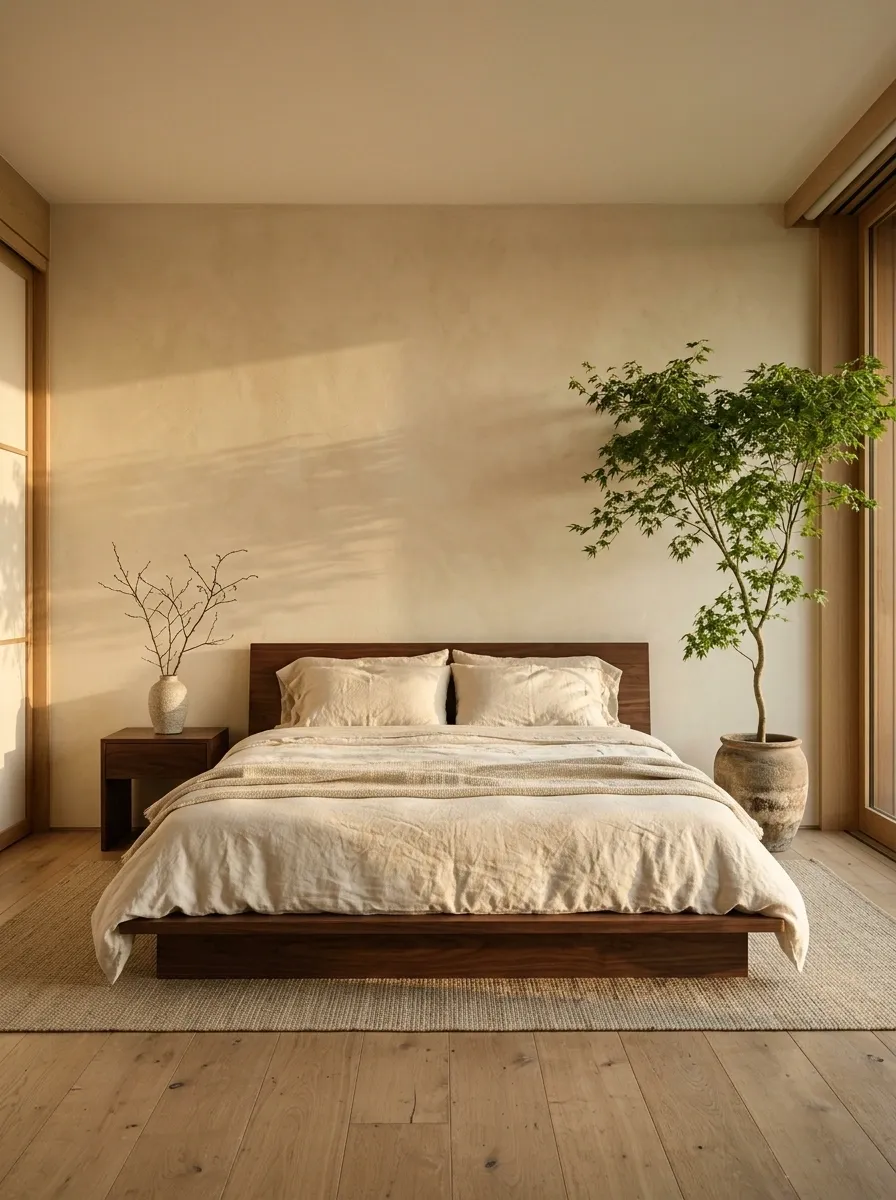
This bedroom keeps the furniture low, the palette warm, and the greenery selective. A walnut platform bed sits against pale plaster walls, with cream bedding, a simple bedside table, and one sculptural indoor tree providing the main leafy feature. A small branch arrangement or compact plant can finish the bedside styling without turning it into a miniature greenhouse.
The appeal comes from the contrast between organic shapes and clean architectural lines. The tree introduces movement, while the low bed and plain textiles make the room feel grounded. Natural wood does most of the warming, so there is no need to fill every corner with baskets, candles, pottery, and fourteen objects that mysteriously collect dust.
THE JAPANDI MATERIAL EDIT
Four textures. No visual drama queen.
Natural walnut
Grounds the room with a darker, warmer wood tone.
Matte plaster
Keeps the background quiet and softly textured.
Washed linen
Adds a relaxed, slightly rumpled finish to the bed.
Living foliage
Supplies the irregular shape and natural color the room needs.
Moody Green Paneling With Classic Art
Dark forest green paneled walls create an enveloping, sophisticated atmosphere in this traditional bedroom. A rich wooden bed frame pairs with classic neutral bedding and a textured olive throw, while a vintage landscape painting hangs proudly above. A tall window with neutral curtains lets in soft daylight to keep the dark tones from feeling heavy.
The balance here relies on warm wood grain and subtle texture rather than bright colors. A patterned vintage rug anchors the space, adding character and warmth to the wooden floors. Simple bedside lighting ensures the room remains functional while maintaining its moody, intimate charm.
Embrace the richness of dark walls by pairing them with timeless wooden furniture and understated textiles. The room feels collected over time and deeply comforting. It is a masterclass in using dark paint successfully in a sleeping space.
Small Greenery Bedroom With a Vertical Plant Display
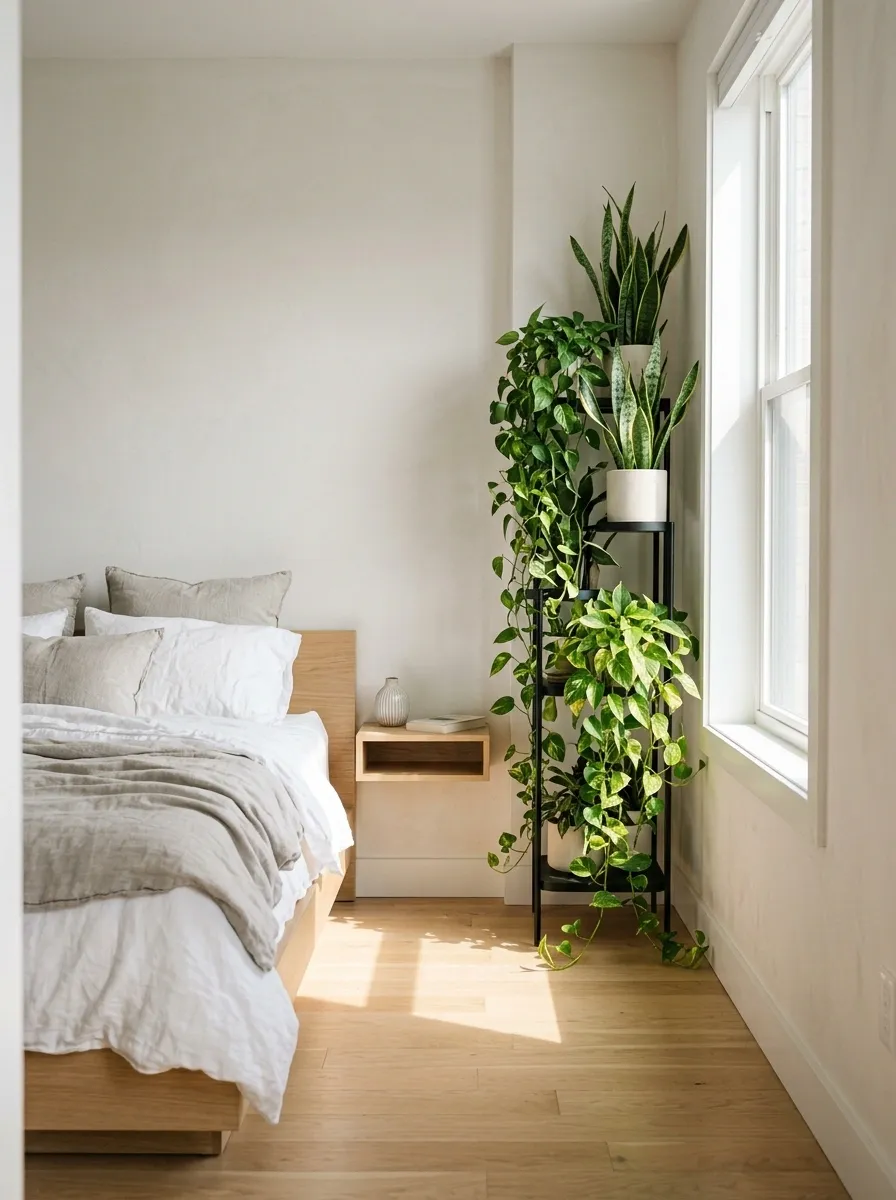
Small bedrooms don’t have the luxury of sacrificing half the floor to an indoor forest. A vertical plant stand beside a bright window makes better use of the available space, especially when paired with a simple bed frame, narrow bedside furniture, and pale walls. Mix upright foliage with trailing varieties to create several layers without spreading pots across the floor.
A light wood or slim metal stand keeps the arrangement visually open. The bed should remain the main anchor, with the greenery acting as a frame rather than a second focal point. Leave enough room to open drawers, reach the curtains, and walk around the bed. A gorgeous room that requires sideways shuffling is still a bad room.
SMALL ROOM, SMARTER FOOTPRINT
Use the height. Protect the walkway.
Wall height
Layer plants on a stable stand.
Bed zone
Keep bedside access usable.
Clear route
Protect space to move.
Keep shelves and stands stable, account for mature plant size, and avoid blocking window handles or curtains.
Botanical Velvet Dream With Deep Floral Tones
This bedroom embraces a maximalist botanical dream with deep green walls, velvet textures, and vibrant floral patterns. A sumptuous velvet quilt featuring bold blooms layers over crisp bedding, while a dramatic floral painting reinforces the theme. A classic wooden bedside chest and matching green lamp provide traditional warmth.
The trick to mastering this look is letting the rich patterns take center stage while keeping the surrounding wood tones grounded. A textured dark rug and lush potted plants in the corner enhance the overgrown, luxurious vibe. Every element works together to create a deeply immersive botanical escape.
Layer different rich fabrics like velvet and quilted cotton to add tactile interest to the bed. Keep the lighting warm and moody to accentuate the jewel tones in the floral prints. The room feels like a secret garden brought indoors in the coziest way possible.
Cottage Bedroom With Ivy, Antique Wood, and Soft Floral Bedding
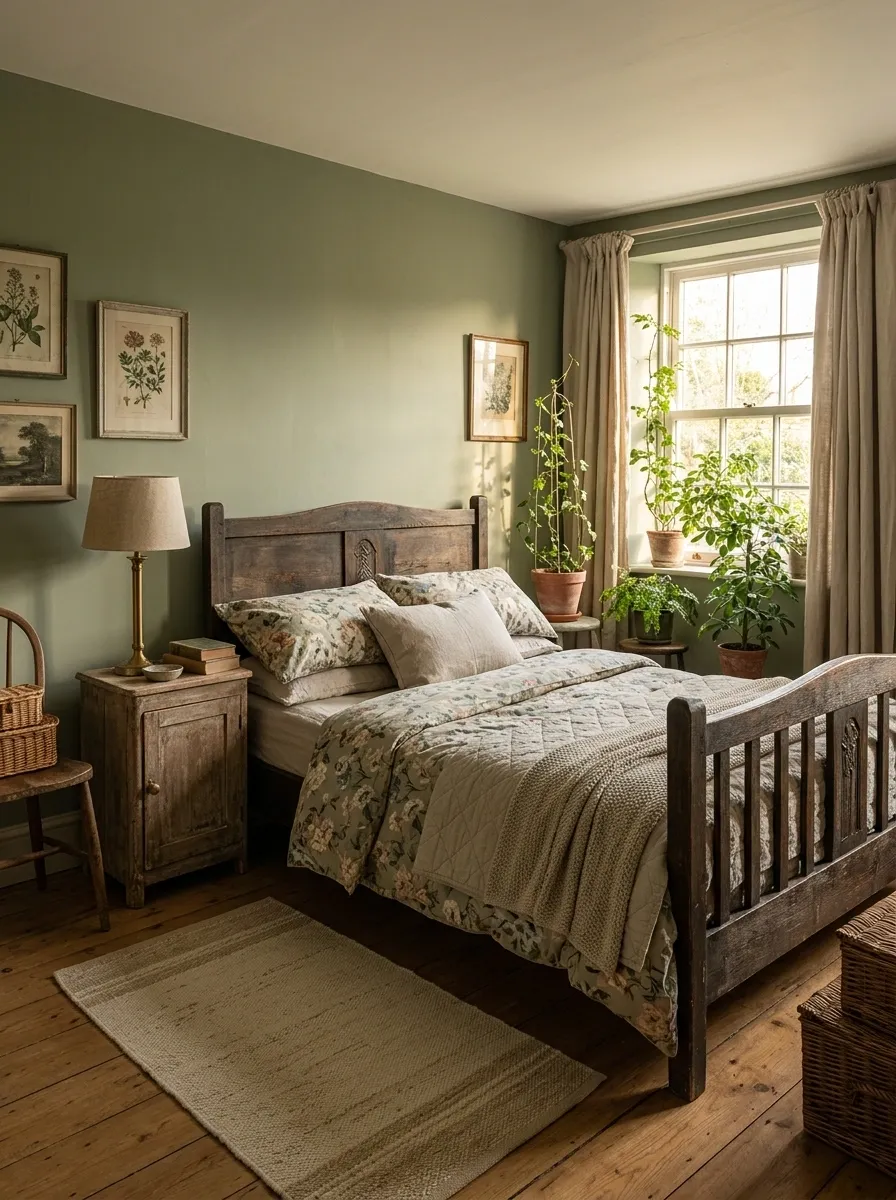
An antique wooden bed, softly patterned floral bedding, and sage-painted walls set the tone for this cottage bedroom. A weathered bedside cabinet and warm lamp add the collected character, while leafy plants sit near the window and a climbing-looking vine follows a suitable freestanding support. The mix feels more personal than a perfectly matched furniture set purchased in one afternoon.
The important balance is between pattern and plain surfaces. Floral bedding already introduces plenty of detail, so the surrounding textiles should stay relatively simple. Let the timber grain and greenery provide the additional texture. The room should feel accumulated over time, not as if every available floral print was invited to the same meeting.
THE COTTAGE BALANCE
Let one pattern do the talking.
Floral bedding
The main decorative pattern. Give it room to be noticed.
Aged wood
Adds warmth and history without another print.
Green foliage
Echoes the botanical theme in an irregular, living form.
Keep additional cushions and rugs quieter when the bedding already carries a strong floral pattern.
Glamorous Greenery Bedroom With Bold Animal Print
A striking black tufted headboard with metallic gold accents sets a glamorous tone, beautifully contrasted by large potted banana plants. Muted grey walls and soft neutral curtains provide a sophisticated backdrop, allowing the lush green foliage to pop. A bold zebra print rug anchors the room with a touch of unexpected pattern.
The appeal lies in the contrast between sleek modern lines and organic plant shapes. Sleek metallic bedside lamps and warm wood side tables add layers of refinement. The bedding stays neutral with rich accent pillows, ensuring the space remains relaxing despite the bold statement pieces.
Balance high-end glamorous fixtures with organic elements like large leafy plants to keep the room grounded. Leave plenty of walking space around the bed to maintain an open flow. The result is modern, chic, and full of life.
Earthy Organic Bedroom With a Large Olive Tree and Textured Walls
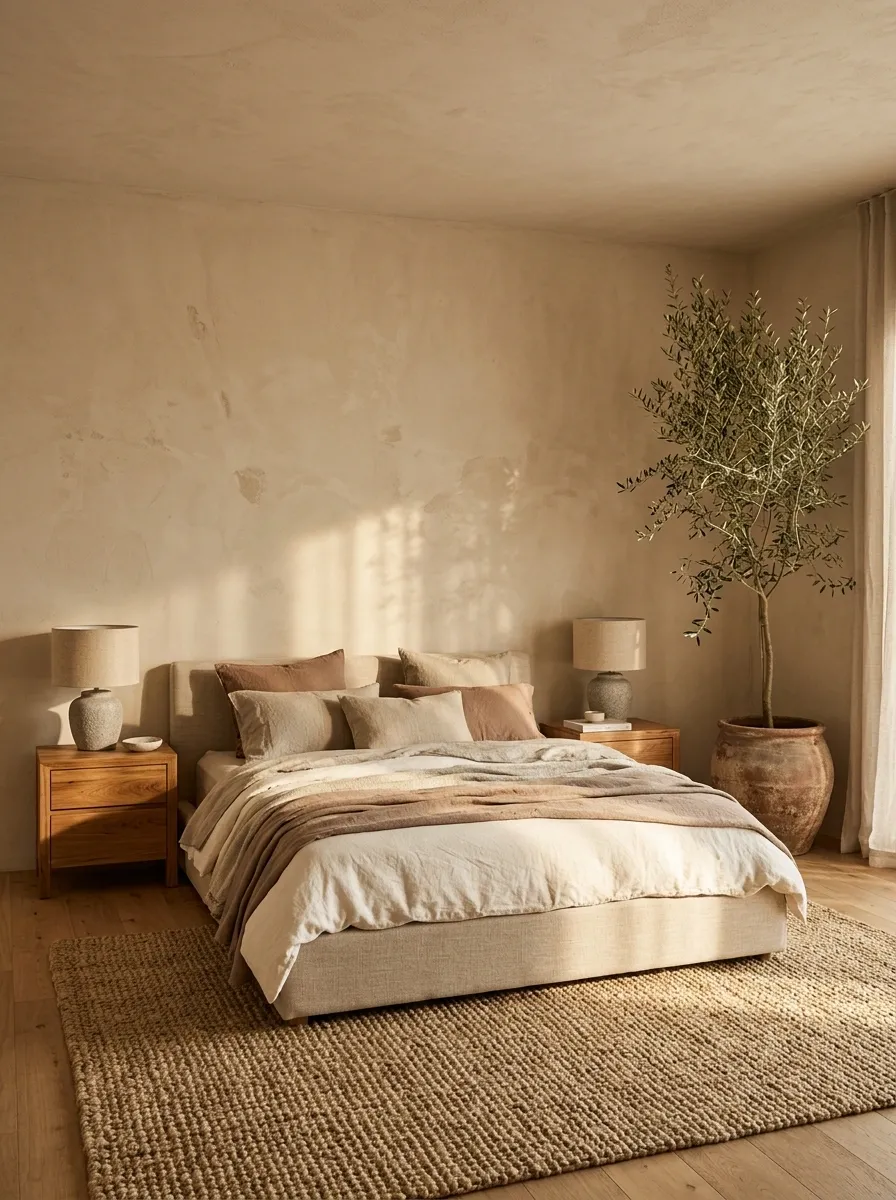
Sand-colored walls, a linen-upholstered bed, a chunky woven rug, and a large olive tree give this bedroom an earthy, relaxed character. Warm timber bedside tables and stone-like lamps add texture without introducing more strong colors. Bedding in cream, oatmeal, or muted clay completes the palette while allowing the fine foliage to stand out.
The olive tree works because its tall, branching silhouette contrasts with the low horizontal lines of the bed. That’s the composition doing the heavy lifting, not a dozen decorative objects. Choose a location that suits the tree’s actual light requirements, and avoid squeezing it between furniture simply because that corner happens to look empty in a photo.
AN EARTHY PALETTE THAT MAKES SENSE
Warm neutrals. One living focal point.
Design rule: let the tree provide the strongest vertical shape, then keep the bed and furniture visually grounded.
Dark Forest Retreat With Moody Monochrome Trees
Charcoal walls and minimalist black furniture create a moody, sophisticated sanctuary in this modern bedroom. Large forest art prints hang above the bed, mirroring the serene, foggy woodland vibe. A plush green moss-like rug and an olive green throw blanket introduce soft texture against the stark dark backdrop.
The magic of this design is its monochromatic restraint paired with tactile comfort. Crisp white sheets break up the dark palette, while a sculptural indoor tree adds organic movement to the corner. Subtle bedside lighting casts a warm glow over the simple wooden nightstand.
Stick to a tight color palette of charcoal, white, and varying shades of green to let the artwork and textiles shine. Avoid unnecessary clutter and let the quiet, moody atmosphere speak for itself. It is the ultimate restful space for true nature lovers.
Moody Forest Bedroom With Deep Green Walls and Dark Timber
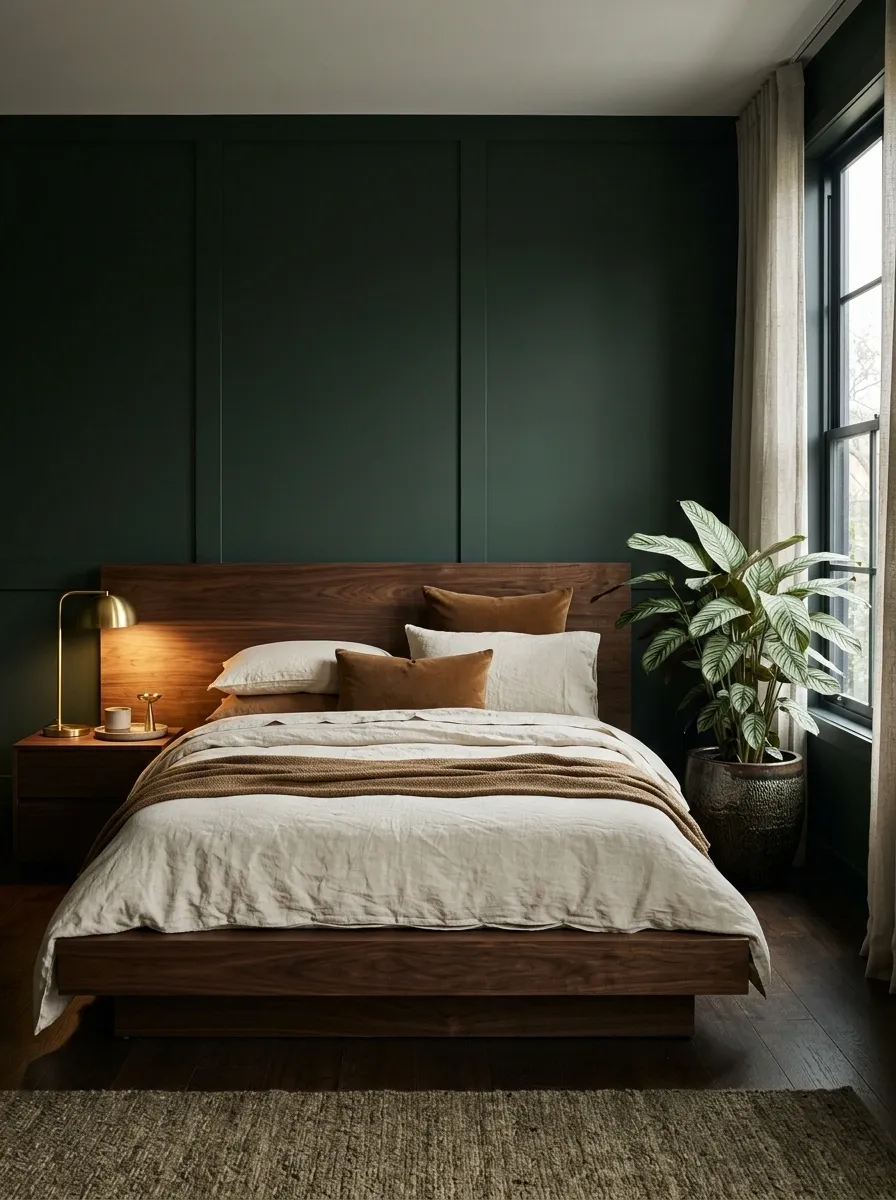
Deep forest-green walls, a dark timber bed, and layered foliage give this bedroom a strong, enveloping look. Cream bedding breaks up the darker finishes, while tobacco-colored cushions and warm bedside lamps add contrast without dragging the room into a completely different color scheme. A large leafy plant stands against the wall near the window, where its lighter leaves remain visible against the deep background.
The trick is contrast. Dark greenery against dark paint can disappear, so choose plants with distinct leaf shapes and keep the bed textiles lighter. Warm lighting brings out the timber grain, while a restrained bedside setup keeps the room from looking like a moody movie set where nobody has paid the electricity bill.
THE DARK ROOM FORMULA
Dark doesn’t mean everything disappears.
Forest walls
Set the dramatic background.
Readable foliage
Use varied leaf shapes and lighter greens.
Pale bedding
Separates the bed from the dark backdrop.
Keep the bedside lighting warm and the main bedding light. The room needs contrast, not another five shades of nearly identical green.
Boho Bedroom With Terracotta, Rattan, and Lush Greenery
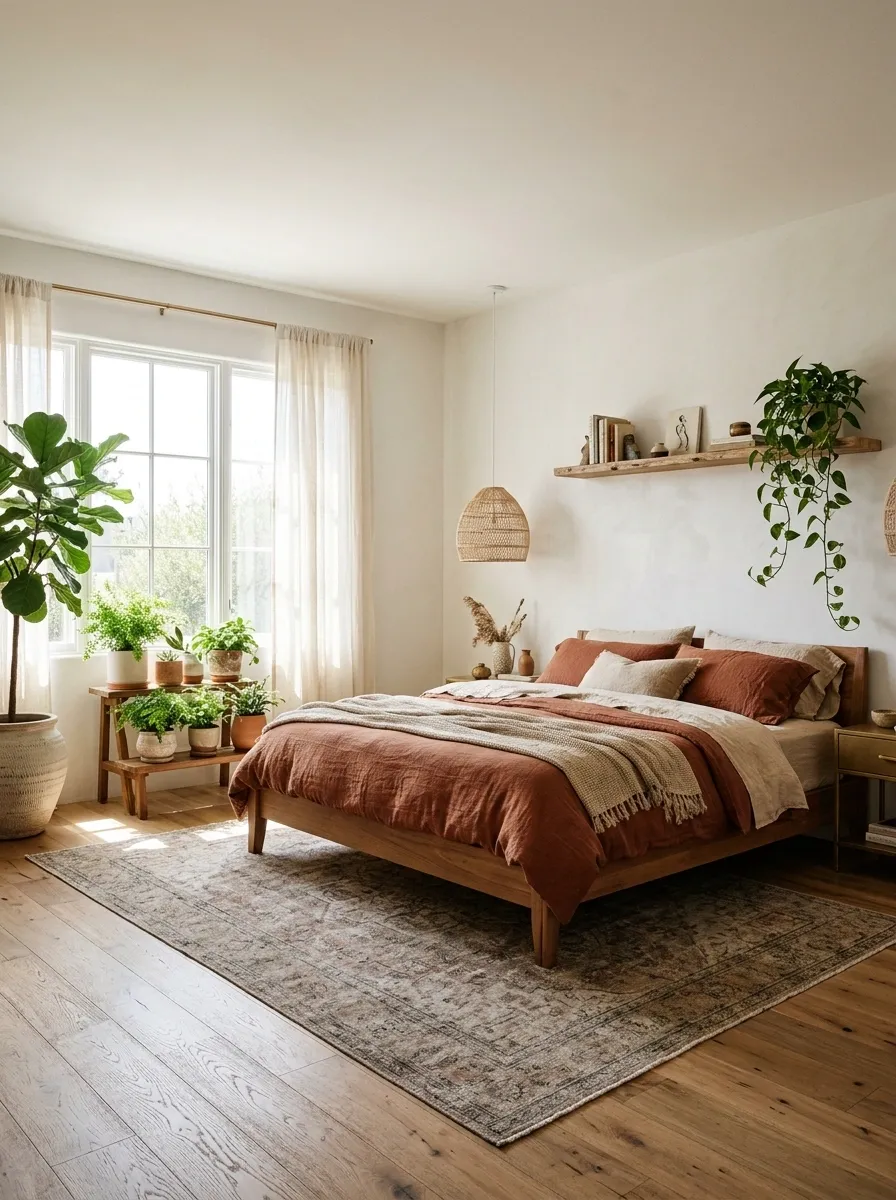
Terracotta bedding, a low timber bed, a patterned rug, rattan lighting, and abundant green foliage give this boho bedroom its character. A tall plant near the window balances a cluster of smaller pots on a wooden stand, while a trailing variety softens the edge of a shelf. The bedding can mix clay, rust, and cream, with natural woven textures connecting the different finishes.
The trick is letting the materials carry the personality. Rattan, timber, woven fabric, and irregular leaves already create plenty of detail. Keep the largest surfaces relatively calm and avoid covering every wall with baskets, macramé, prints, and sentimental signs. Boho should feel collected, not like a craft store lost a fight.
BOHO, WITHOUT THE VISUAL CHAOS
Give each texture a different job.
Rattan
Airy woven texture.
Foliage
Organic shape and color.
Timber
Visual weight and warmth.
WHERE TERRACOTTA FITS
Use it on the bed or in a small accent, then let the foliage and natural materials carry the rest of the room.
Botanical Maximalist Bedroom With Green and Blush Pink
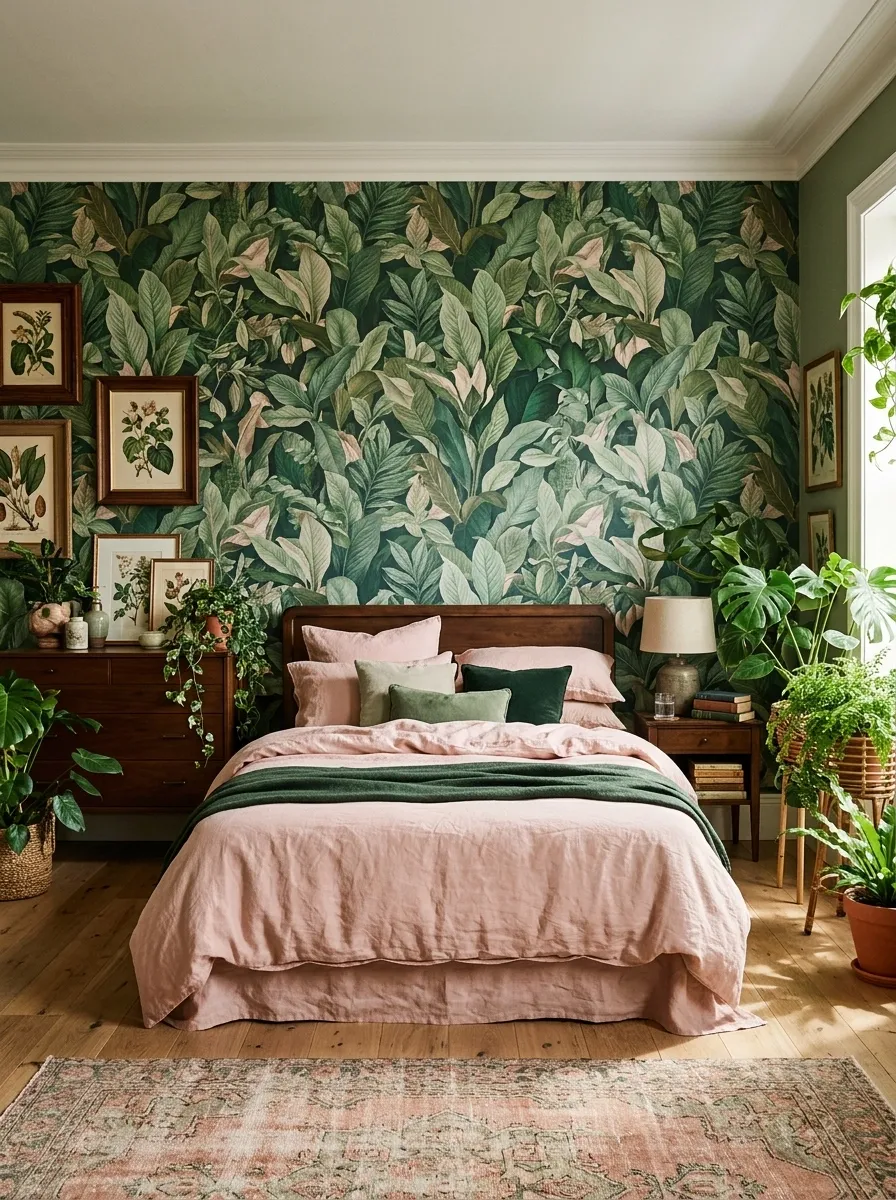
Blush pink bedding, botanical wallpaper, vintage wood furniture, and several different leafy plants make this bedroom feel richly layered. A patterned wall behind the bed establishes the main focal point, while framed artwork and varied foliage build on the theme. Pink softens the stronger greens, and a solid-colored bedspread keeps the room from becoming one giant pattern competition.
Maximalism works when the room has a clear visual hierarchy. The wallpaper gets the starring role, the bedding provides a softer counterpoint, and the plants fill the surrounding space with different shapes. Keep at least a few surfaces plain. Even the most enthusiastic decorator needs somewhere for the eye to rest.
A MAXIMALIST ROOM NEEDS AN EDITOR
Three levels of visual attention.
THE FOCAL POINT
Botanical wall
The strongest pattern belongs behind the bed.
The supporting layer
Greenery and framed artwork echo the wall without copying its exact pattern.
The quiet layer
Solid bedding and uncluttered surfaces prevent the room from shouting all at once.
Modern Green Bedroom With an Upholstered Bed and Statement Foliage
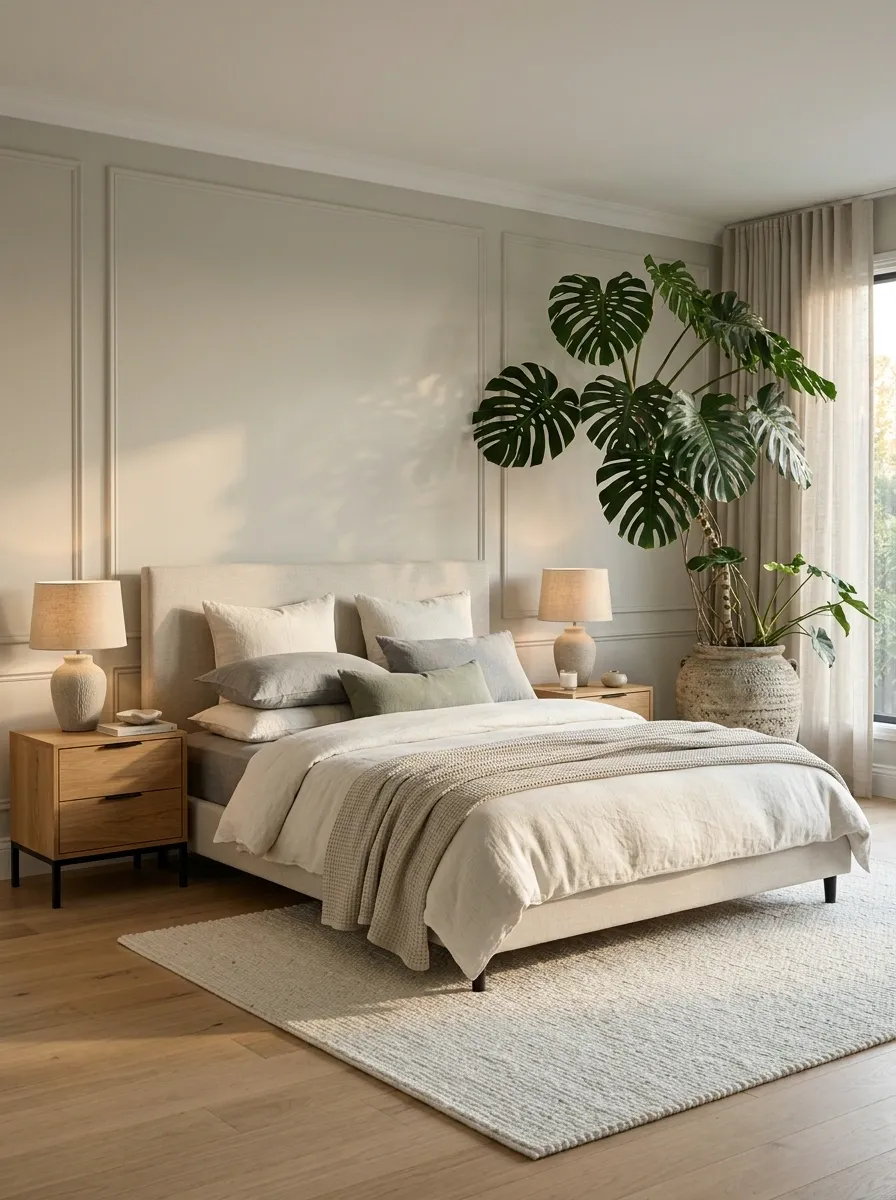
A clean-lined upholstered bed, neutral bedding, sculptural bedside lamps, and one oversized leafy plant give this modern bedroom its structure. Warm wood adds contrast to the upholstery, while restrained black accents keep the furniture looking sharp. The plant stands beside the bed wall or near the window, with enough open space around its leaves to make the silhouette noticeable.
The main decision is choosing one strong botanical focal point instead of scattering little pots across every surface. Large foliage works especially well against a plain wall because the leaf shapes provide their own visual detail. Keep the bedside tables functional, the lighting balanced, and the decorative objects selective. Minimalism doesn’t mean the room has to look like its furniture is waiting for a delivery appointment.
THE STATEMENT PLANT TEST
One strong silhouette beats five competing accents.
The focal plant
Choose a plant with a shape that contrasts with the bed and furniture. Give its mature canopy room to spread.
WHAT STAYS QUIET
Plain bedding, restrained bedside styling, and a simple wall let the plant become the main decorative feature.
Romantic Green Bedroom With Soft Sage, Cream, and Flowering Branches
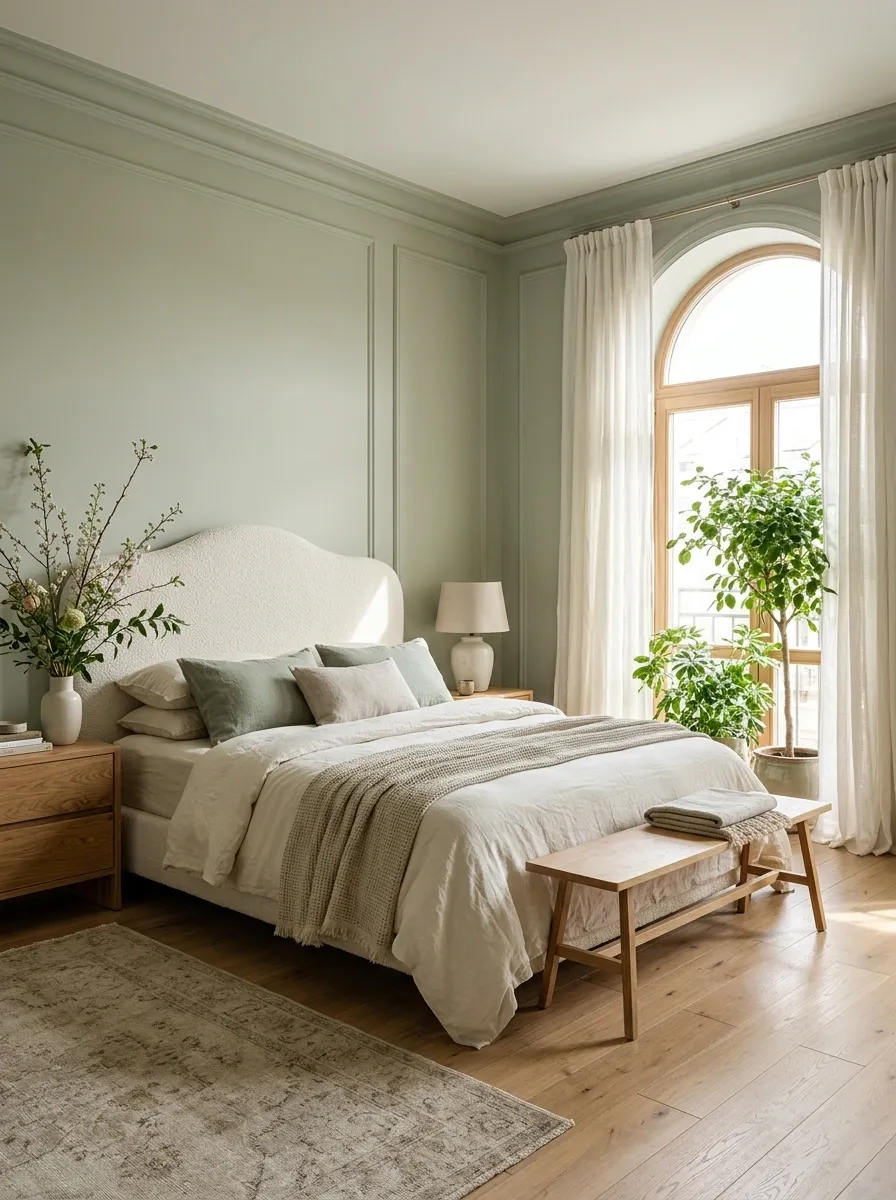
Soft sage walls, cream bedding, a curved upholstered headboard, and delicate flowering branches create a lighter, more romantic take on a greenery bedroom. A warm wooden bedside table grounds the palette, while leafy plants near the window keep the room connected to its botanical theme. Muted green cushions can tie the foliage back to the bed without making every textile match perfectly.
The contrast between delicate branches and fuller leaves gives the arrangement more depth than a collection of identical plants. Rounded furniture and soft fabrics balance the sharper shapes of the foliage. Keep floral patterns limited to one or two places, because romance doesn’t require every surface to look like a wedding invitation.
THE SOFTNESS CONTRAST
Gentle doesn’t have to mean flat.
Soft sage walls
A calm backdrop for the whole composition.
Cream linen
Softens the bed and keeps the room light.
Layered foliage
Adds irregular shapes and a stronger natural green.
Curves and branches
Introduce delicate forms without adding another busy pattern.
Keep the florals restrained and allow the foliage, headboard, and bedding to provide the detail.
Bedroom With a Greenery-Filled Window Corner
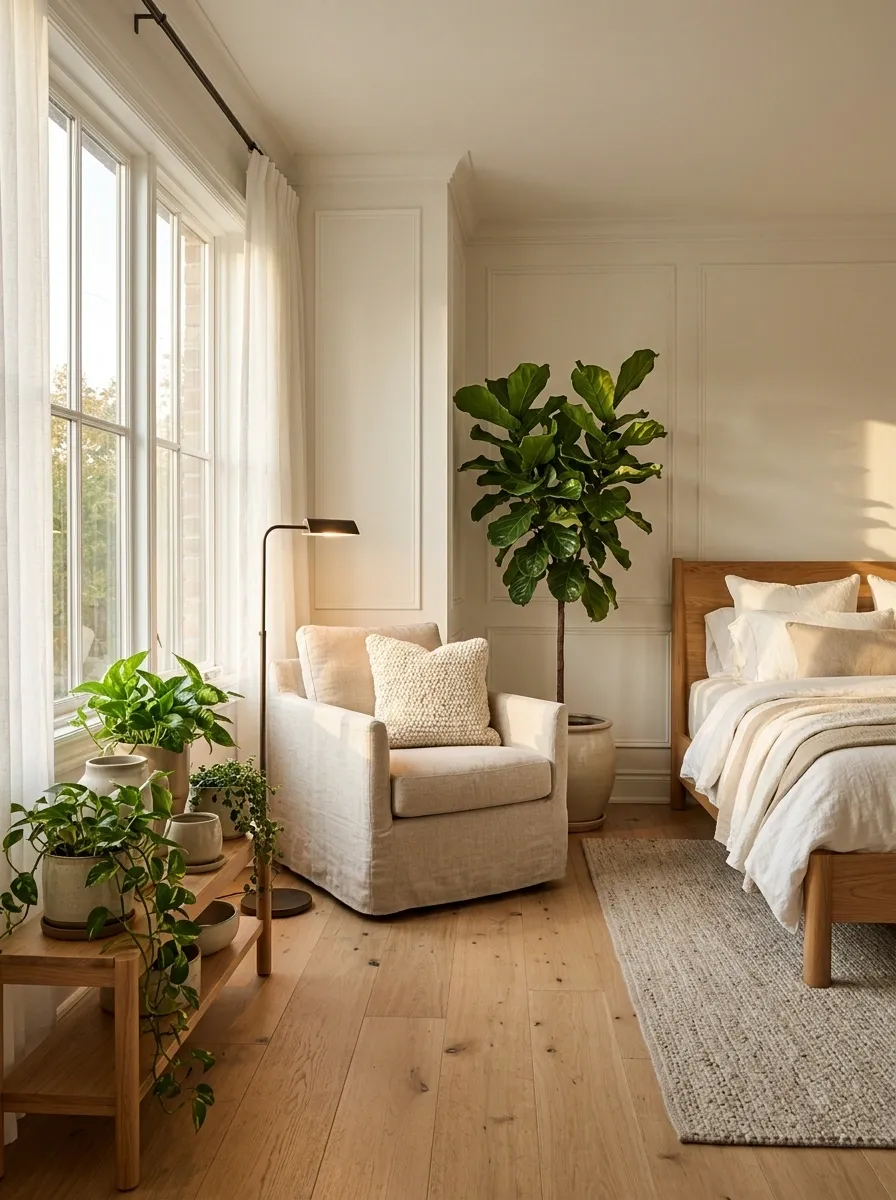
That empty corner beside the bedroom window doesn’t need another random chair collecting laundry. Turn it into a small green retreat with a comfortable reading chair, a tall leafy plant, and a low stand holding a few smaller pots. Keep the bed and bedside furniture in warm wood or soft neutral finishes so the window corner becomes a distinct feature without competing with the sleeping area.
A floor lamp and a textured cushion can make the chair feel connected to the bedroom rather than abandoned in a corner. Vary plant heights, but leave enough room to open curtains and reach the window. The goal is a layered little composition, not a botanical barricade between the room and the sunlight.
THE WINDOW CORNER PLAN
A small destination, not a pile of pots.
AT THE BACK
Tall plant
Adds height beside the window without spreading across the floor.
IN THE CENTER
Reading chair
Provides a reason for the corner to exist beyond looking pretty.
IN THE FRONT
Low plant stand
Introduces a smaller layer without blocking the view.
Leave a clear route to the window and enough room to use the chair comfortably. Every corner does not need to become a storage unit for greenery.
Attic Bedroom With Greenery Under Sloped Ceilings
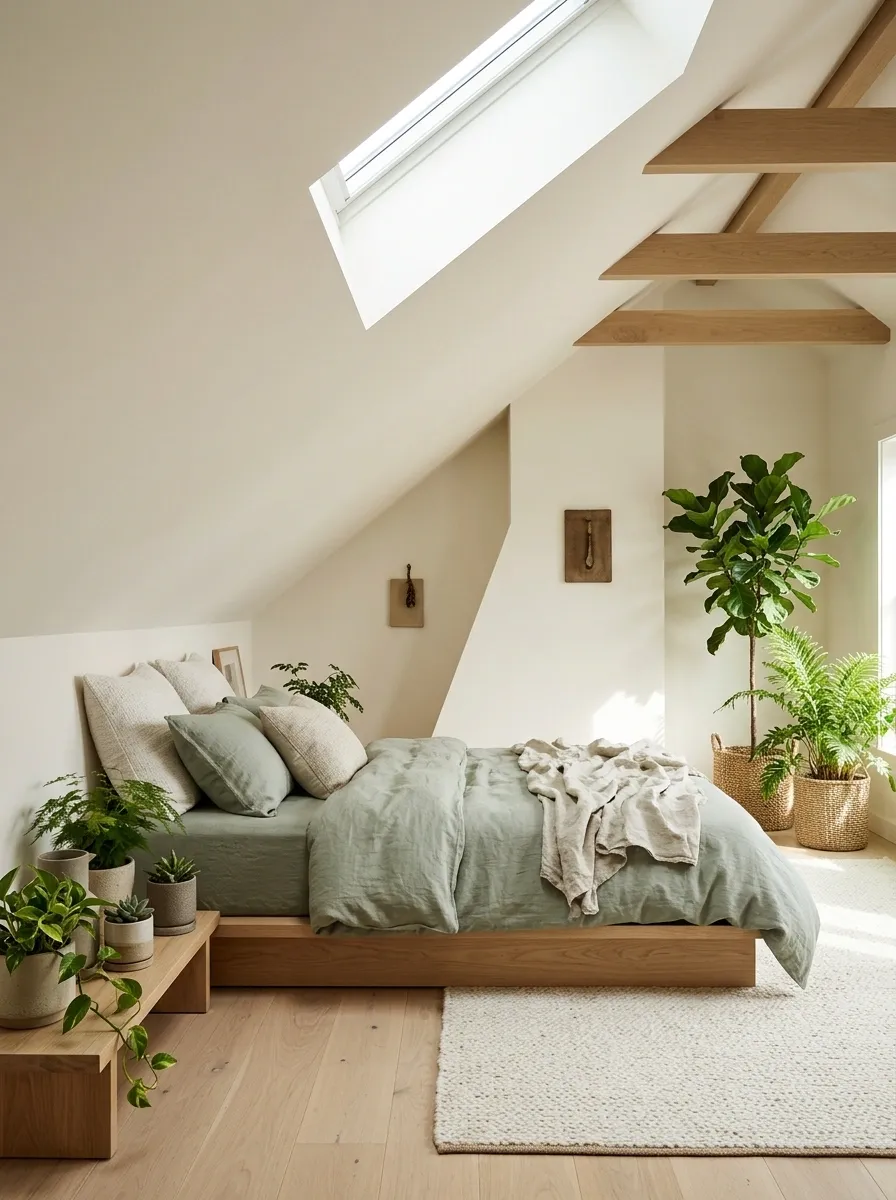
Sloped ceilings can make plant placement surprisingly awkward. A low platform bed, warm white walls, pale wood flooring, and soft sage bedding create a calm base for this attic bedroom. Place shorter plants on a low bedside surface beneath the eaves, then reserve the taller floor plant for the area with enough ceiling height. A skylight or appropriately positioned window brings natural light into the composition.
The different heights are what make the arrangement feel intentional. Low furniture follows the roofline, while the tallest greenery occupies the room’s more open area. Don’t force a giant plant into a spot where the ceiling nearly touches its leaves. The architecture already has enough opinions.
WORK WITH THE ROOFLINE
Low under the eaves. Taller where the room opens.
LOW ZONE
Short plants and low furniture.
OPEN ZONE
Taller plant with room to grow.
BED ZONE
Keep overhead space clear.
Check the plant’s mature height, the actual light level, and comfortable headroom before settling on a location.
Industrial Loft Bedroom With Concrete, Black Metal, and Green Leaves
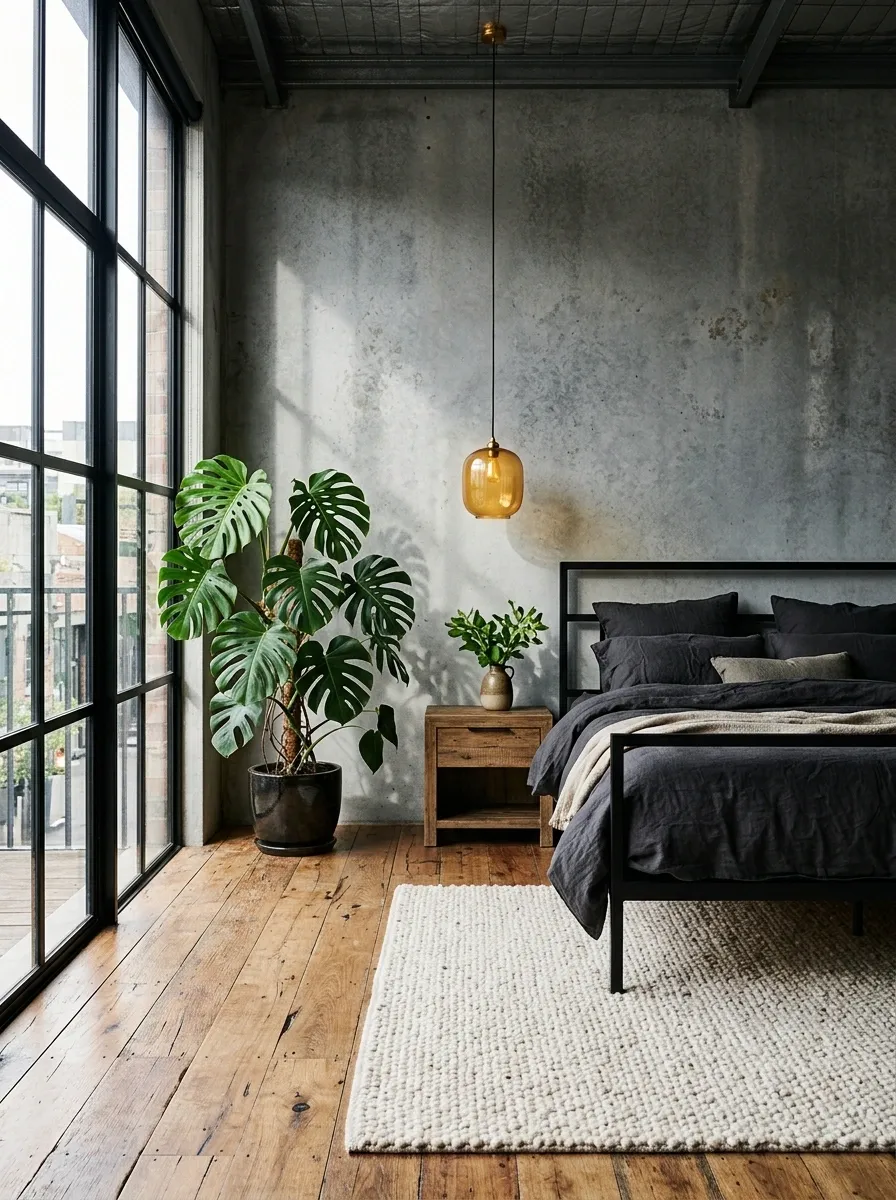
Concrete-look walls, a black metal bed frame, dark bedding, and warm reclaimed-style timber give this loft bedroom an industrial edge. Broad green foliage brings softness to the harder surfaces, while a warm pendant and a textured rug keep the space from feeling cold. Rather than lining up several matching pots, use a tall plant near the window and a smaller one on a timber surface.
The visual contrast is the whole point. Matte black metal creates sharp outlines, timber adds warmth, and foliage introduces an irregular shape that makes the room feel less rigid. Keep the furniture simple enough for the materials to stand out. Industrial style can handle a little greenery without becoming a warehouse that discovered houseplants.
INDUSTRIAL MATERIAL CONTRAST
Hard lines. Warm grain. Living shapes.
Concrete
Provides the cool, mineral backdrop.
Warm timber
Stops the palette feeling too hard or cold.
Black metal
Defines the furniture with crisp outlines.
Living green
Breaks up straight lines with softer forms.
Keep the plant shapes visible against the darker finishes. A little contrast goes a long way; this isn’t a competition to see how much furniture can disappear into black.
Scandinavian Bedroom With White Walls and Light Green Accents
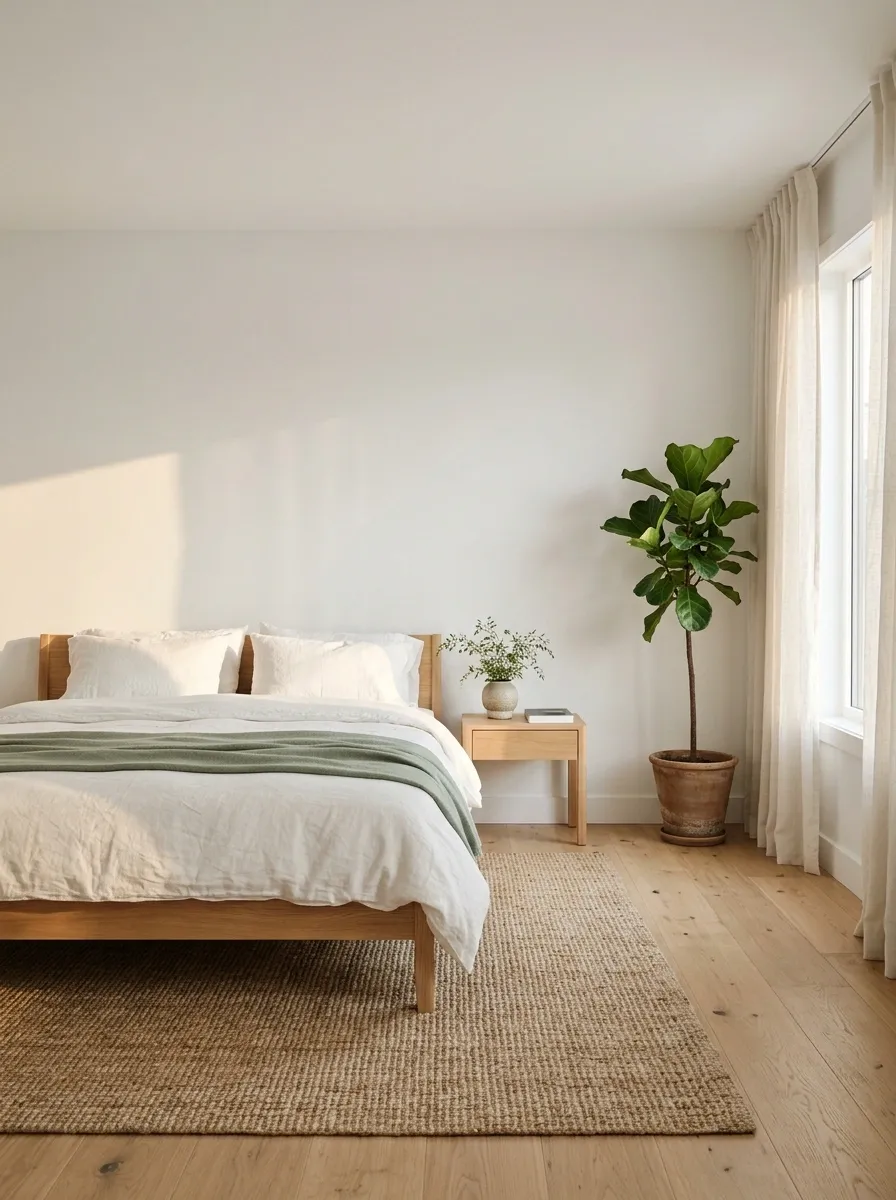
White walls, a light oak bed, simple cotton bedding, and a muted green throw create the foundation for this Scandinavian-inspired bedroom. One taller plant near the brightest suitable window adds height, while a smaller plant on a plain bedside table introduces another touch of green. A natural fiber rug and uncomplicated curtains keep the space soft without filling it with decorative extras.
This look relies on editing. Pale surfaces reflect available light, the timber makes the room feel warm, and the plants supply the strongest natural color. Avoid using too many different green shades across the bedding, artwork, pots, and accessories. The point isn’t to make every object announce its botanical credentials.
THE SCANDINAVIAN EDIT
The secret ingredient is what gets left out.
Quiet base
White walls, light bedding, open surfaces.
Warm layer
Oak and natural fibers.
Green
Foliage and one textile accent.
THE QUICK EDIT
Keep the bed wall calm and leave breathing room around the plant.
Choose a small number of related wood and fabric finishes.
Skip extra ornaments that don’t help the composition.
High-Ceiling Bedroom With a Tall Indoor Tree and Oversized Art
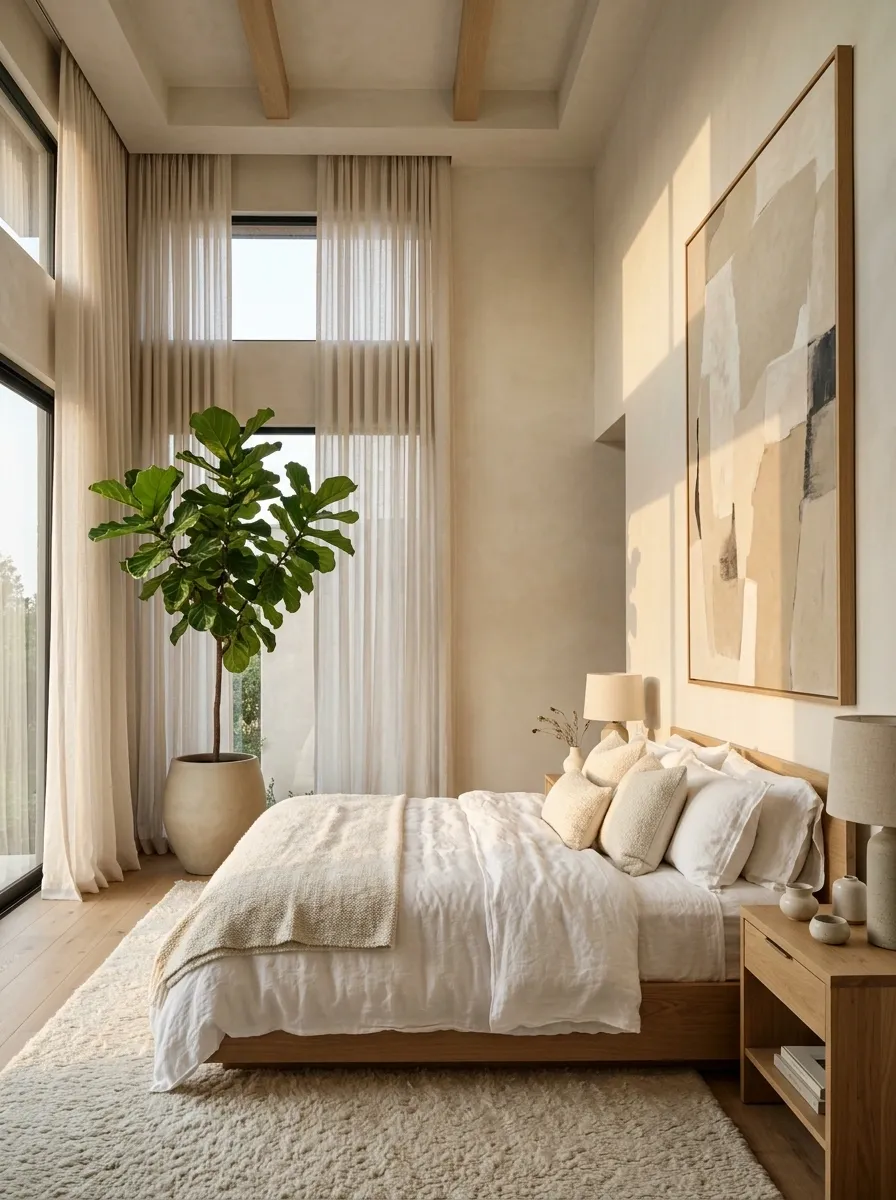
High ceilings give this bedroom room for a taller indoor tree, oversized artwork, and long curtains without making the composition feel crowded. A substantial bed anchors the lower half of the room, while an indoor tree near the window draws the eye upward. Large-scale art balances the plant, and warm wood bedside tables connect the taller elements to the furniture below.
Scale matters more here than the number of plants. Several tiny pots can disappear in a room with generous proportions, while one suitable tree gives the composition a clear vertical line. Keep the canopy away from artwork and curtains, and choose a plant that matches the available light and the room’s actual height. A tall ceiling is an invitation to think bigger, not an obligation to build a forest.
DESIGNING FOR VERTICAL SPACE
Give the upper half of the room a purpose.
Greenery
A tall silhouette breaks up the empty vertical space.
Large art
Balances the plant without requiring more furniture.
Let the bed ground the room, then use the tree and artwork to distribute visual weight upward. Oversized elements should still leave comfortable clearance around furniture and openings.
Coastal Bedroom With Airy Bedding and Palm-Like Greenery
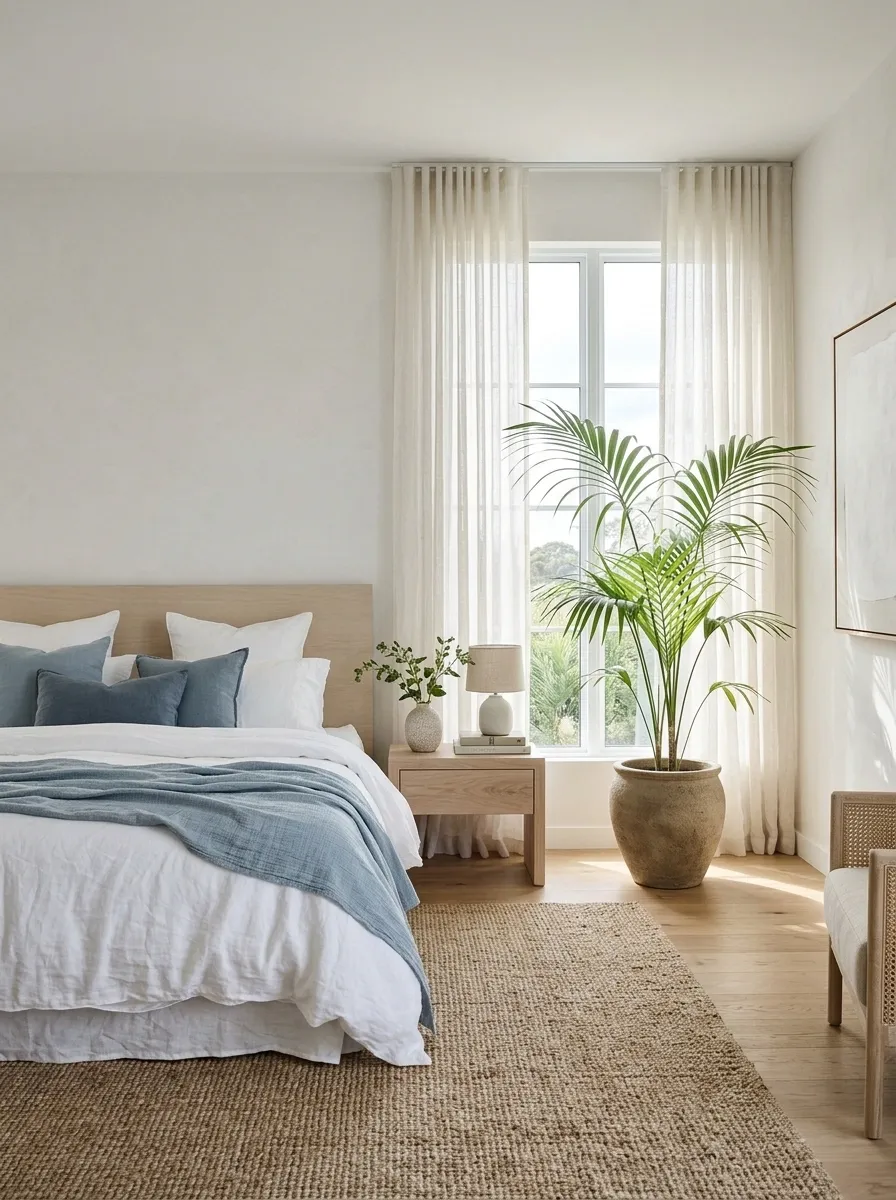
Crisp white bedding, pale sandy wood, muted blue accents, and graceful palm-like foliage give this bedroom a fresh coastal character. A tall plant near the window creates a natural focal point, while a smaller leafy arrangement on the bedside table connects the greenery to the rest of the room. Lightweight curtains and a woven rug add texture without making the space feel heavy.
The combination works because cool blue and green sit against warm natural materials and clean white surfaces. Keep the furniture simple and let the foliage provide the movement. Shell-shaped lamps, anchor prints, and nautical signs can stay on the beach where they belong. The coastal look is stronger when it feels like a calm seaside home, not a gift shop with a mattress.
THE COASTAL COLOR BALANCE
Cool colors need something warm beside them.
White and pale cream
Keep the bed and largest surfaces light.
Muted coastal blue
Bring in color through a throw or cushions.
Leafy green
Add organic shapes beside natural light.
Natural wood
Warm up the cooler colors and pale finishes.
The winning combination is pale bedding, restrained blue, natural wood, and visible foliage. No decorative anchor required.
Vintage Botanical Bedroom With Patterned Wallpaper and Collected Furniture
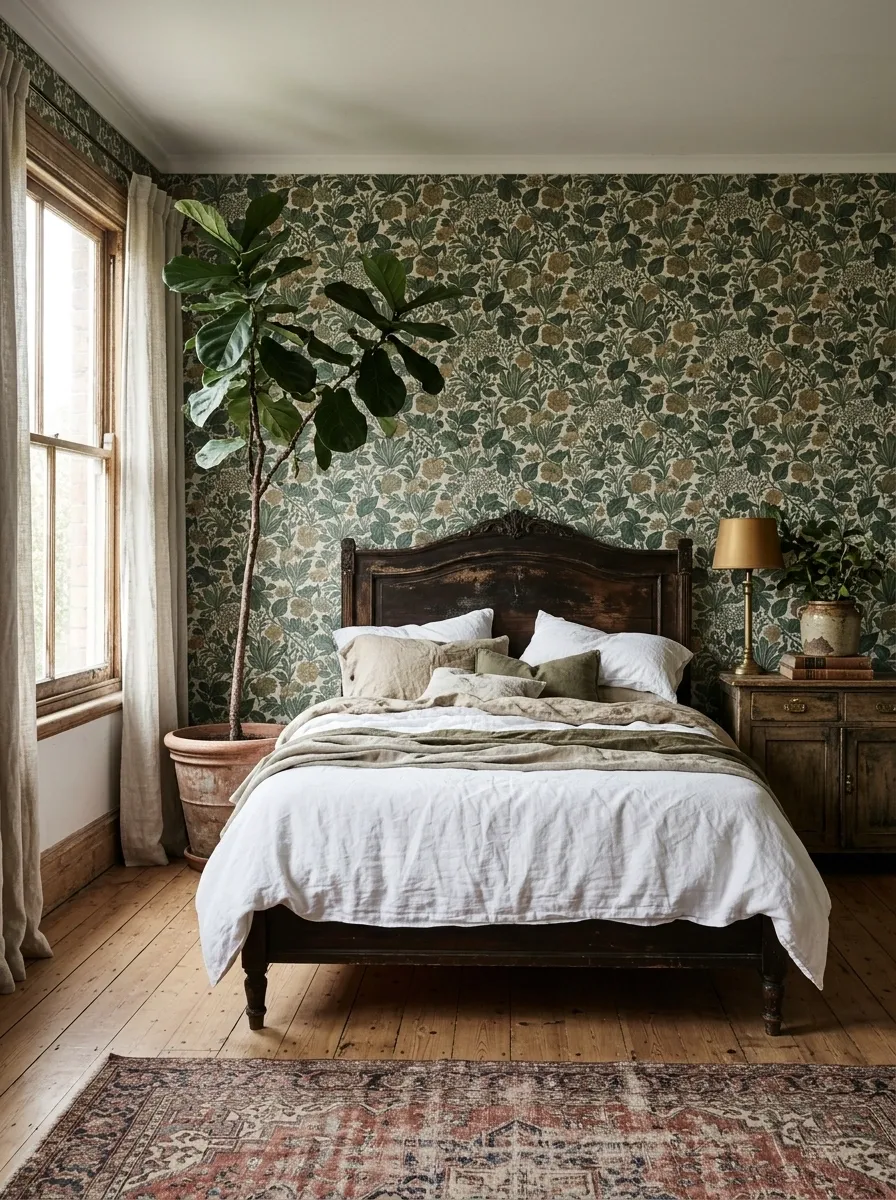
Botanical wallpaper, an antique timber bed, an aged bedside cabinet, and softly layered bedding give this bedroom a collected, old-world feel. Living plants complement the printed leaves on the wall, but they shouldn’t copy the pattern too literally. A tall plant near the window and a smaller one on the bedside cabinet bring the design into three dimensions. Warm lamps and a faded rug finish the room without making it look newly assembled from a matching collection.
The contrast between printed foliage and real leaves is what makes this concept interesting. The wallpaper provides a consistent visual pattern, while the plants create irregular silhouettes and depth. Keep the bedding simpler than the wall treatment. Vintage style already has enough personality without adding five competing florals and a cushion shaped like a Victorian teapot.
PRINTED BOTANICALS VS REAL FOLIAGE
Repeat the theme, not the exact pattern.
THE WALL
Repeating leaf patterns establish the theme.
THE ROOM
Real plants add varied shapes and natural depth.
The balancing move
Pair the detailed wall with simpler bedding, warm wood, and a limited number of living plants. Let one visual element lead at a time.
Green Canopy Bedroom With Breezy Linen and Suspended Planters
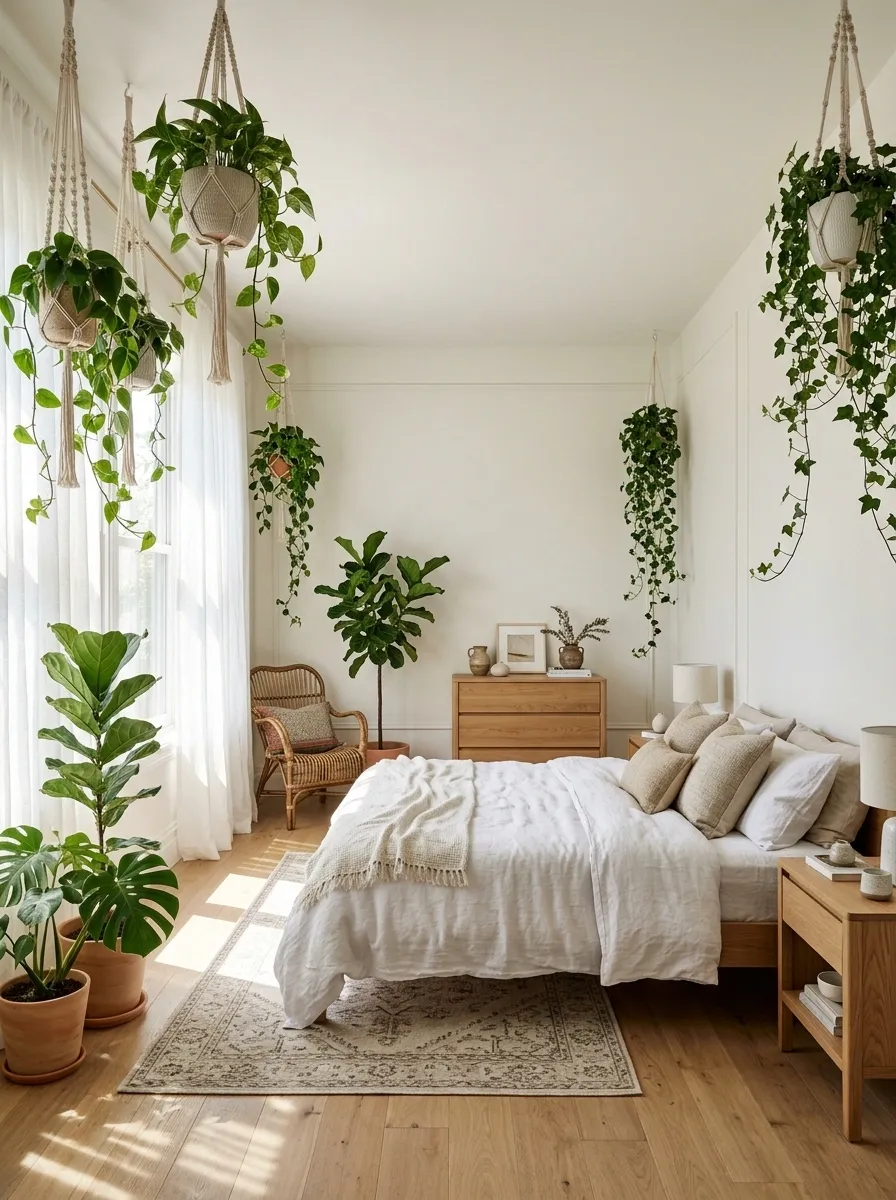
This bedroom uses hanging greenery to frame the sleeping area without turning the ceiling into a dense curtain of vines. A pale linen bed, natural timber furniture, and soft neutral walls form the base. Trailing plants hang near a bright window or along a suitable side wall, while a few grounded plants connect the elevated greenery to the floor. The arrangement feels layered because the foliage appears at different heights.
Placement matters more than quantity here. Suspended planters should be securely installed, positioned away from the sleeping area, and arranged so watering doesn’t threaten the bed or furniture below. Keep curtains free to move and don’t block the window with dangling stems. A plant canopy can look dreamy, but waking up tangled in a pothos is a very different genre of bedroom inspiration.
A SAFER WAY TO LAYER HANGING GREENERY
Frame the bed. Keep the sleeping zone open.
Clear bed zone
No planters suspended directly over pillows.
Secure the support
Use appropriate fixings for the ceiling or wall structure.
Plan for watering
Keep drainage and spills away from bedding and electronics.
Farmhouse Bedroom With Whitewashed Wood and Fresh Greenery
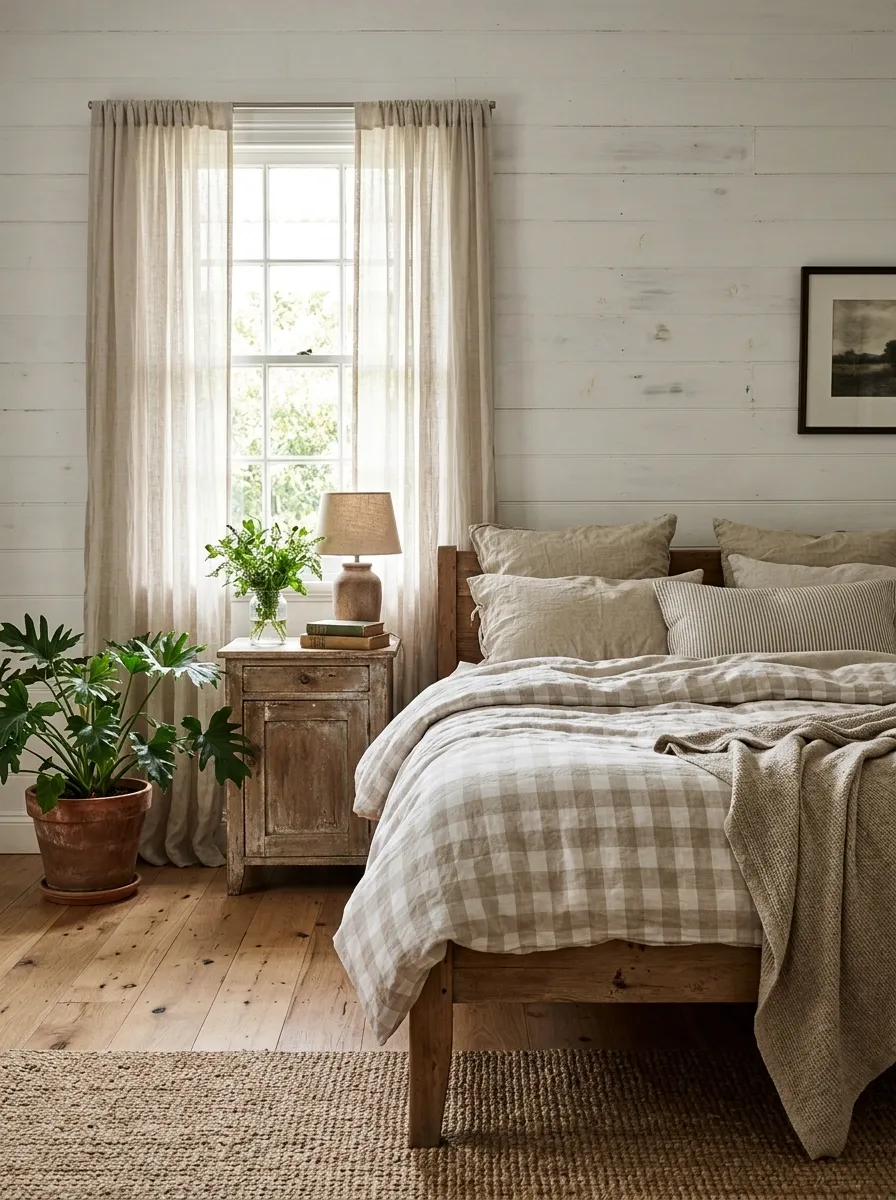
Whitewashed timber, soft checked bedding, a simple wooden bed, and warm neutral fabrics establish this farmhouse bedroom. Leafy plants bring the fresh green element, with a larger floor plant near the window and a compact arrangement on an aged bedside cabinet. Natural fibers and slightly weathered finishes keep the room from looking too polished, while a warm table lamp makes the sleeping area feel inviting.
The appeal comes from familiar materials working together. Whitewashed wood keeps the room light, while greenery offsets the aged finishes and woven textures. Choose one or two patterns rather than mixing checks, florals, stripes, and everything else found in a farmhouse-themed aisle. The room should look lived in, not like a sign that says gather has taken over the entire property.
THE FARMHOUSE FINISH MIX
Keep the materials honest and the patterns under control.
Whitewashed wood
Keeps the furniture light without losing grain.
Aged timber
Adds depth through natural wear and grain.
Fresh greenery
Brings a lively contrast to the muted finishes.
Pattern rule
Choose one leading print, then use plain linen, simple checks, or textured solids to support it. Rustic doesn’t mean every surface needs a costume.
Warm Minimalist Bedroom With Sand Linen and a Single Foliage Group
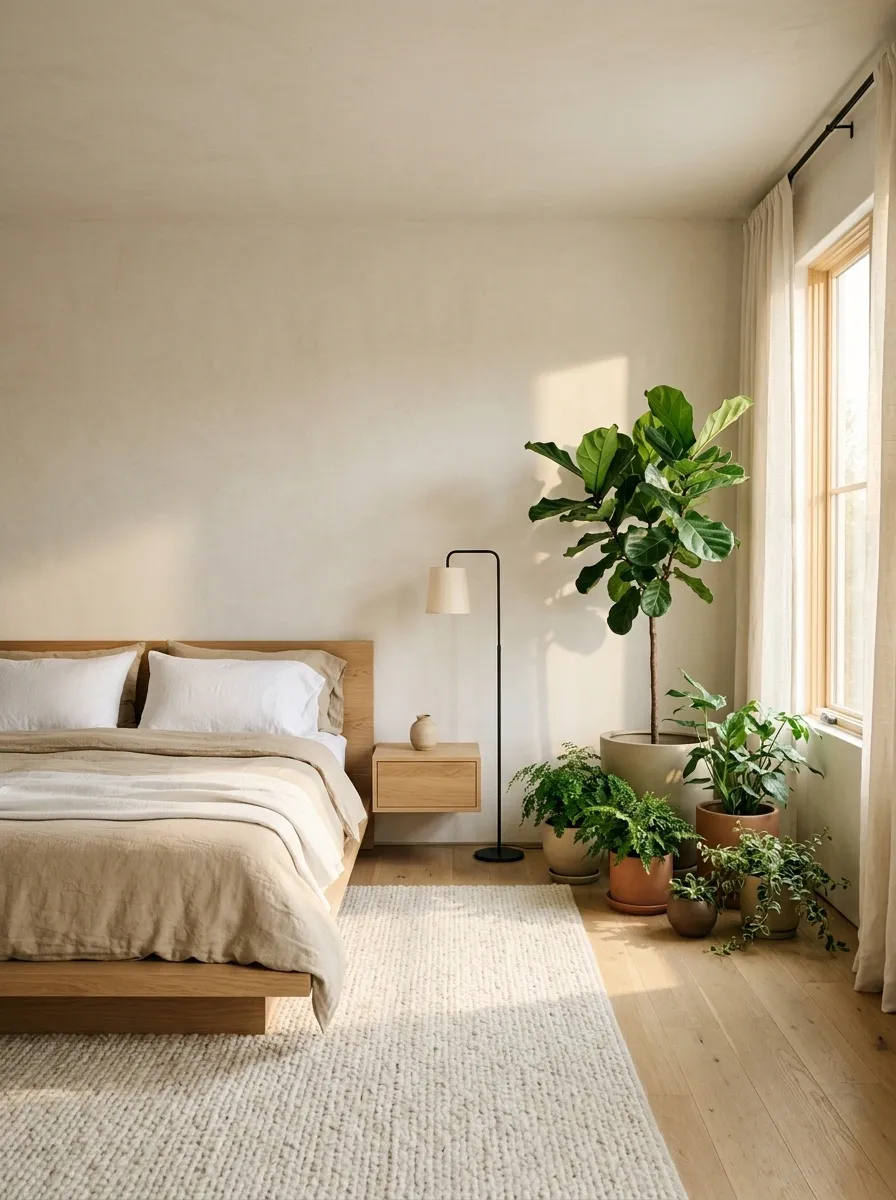
A low oak bed, sand-colored linen, warm white walls, and a simple floor lamp create a bedroom with very little visual noise. Instead of placing plants in every corner, gather a few different varieties into one carefully considered area near a suitable window. A taller plant provides height, while smaller pots fill the lower levels. The rest of the room stays open, with a plain bedside surface and a textured rug adding enough detail.
Concentrated greenery gives the room a clear focal point and keeps the minimalist look intact. The different leaf shapes supply variety without demanding extra colors or decorative objects. Choose pots in related neutral finishes so the foliage leads. The point is a calm bedroom with living plants, not an empty room that has been politely asked to prove it owns furniture.
THE MINIMALIST PLANT EDIT
Concentrate the detail. Protect the calm.
The green grouping
Vary the height and leaf shape so the cluster reads as one intentional arrangement.
The quiet remainder
Keep the bed, wall, and bedside furniture simple so the plants have room to stand out.
Before spreading plants around the bedroom, try grouping them together. Fewer focal points can make the complete room feel more considered.
Bedroom With a Dedicated Plant Shelf and Natural Wood Furniture
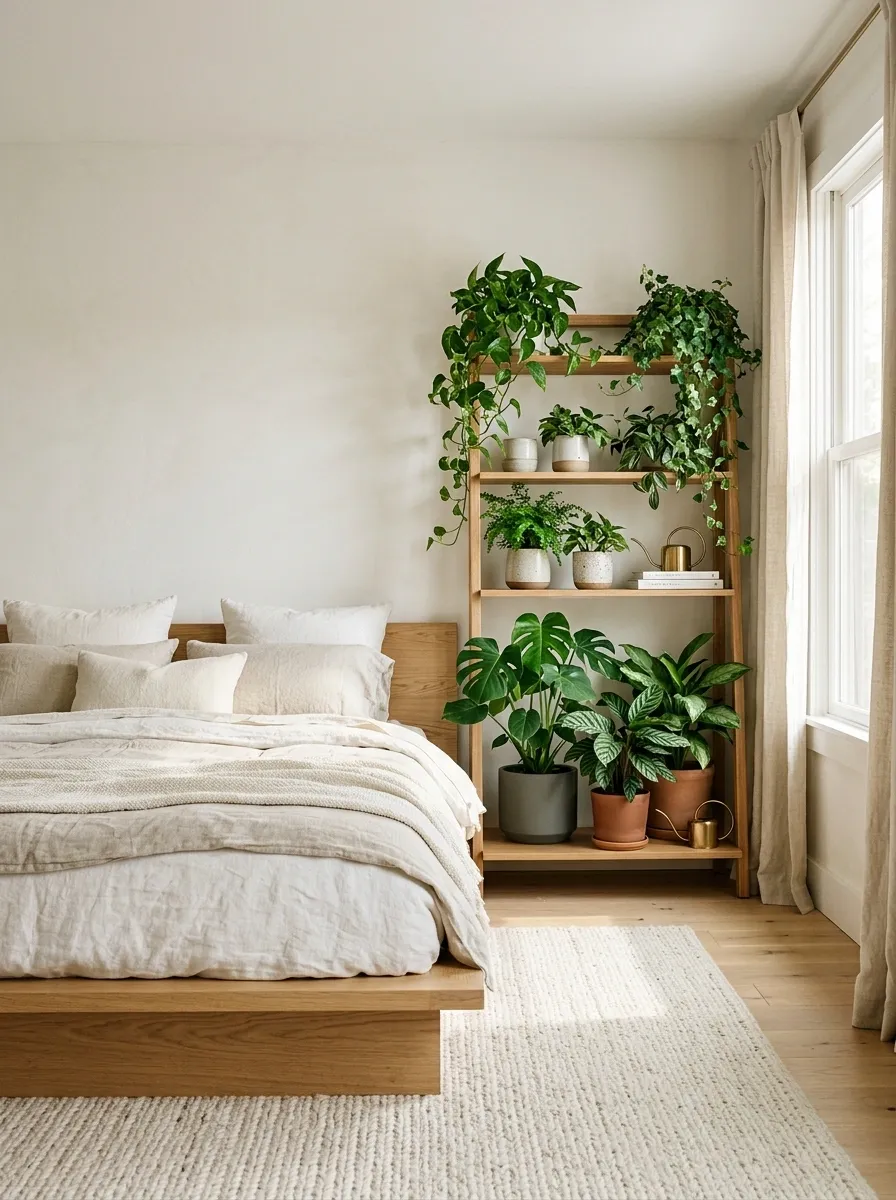
A light oak bed, warm white walls, and simple bedding create a clean foundation for a dedicated plant shelf near a bright window. Upright plants sit on the lower levels, smaller pots fill the middle, and trailing foliage softens the edges of the display. A natural wood finish connects the shelf to the bedside furniture, making the greenery feel like part of the bedroom rather than a separate hobby that moved in.
Vary the silhouettes instead of buying five plants with practically identical leaves. Keep heavier pots on sturdy shelves, protect the wood from moisture, and leave enough space for plants to grow. The shelf should look layered, not packed so tightly that watering one plant becomes a group project.
BUILD A SHELF WITH VISIBLE LAYERS
Different silhouettes. Enough room to breathe.
Upper shelves
Use lighter pots and plant shapes that suit the available light.
Lower shelves
Reserve stronger supports for heavier containers and keep the base stable.
Use waterproof saucers, allow room for mature growth, and avoid overcrowding the shelf. Plants need space, not assigned seating at maximum capacity.
Renter-Friendly Greenery Bedroom With Freestanding Displays
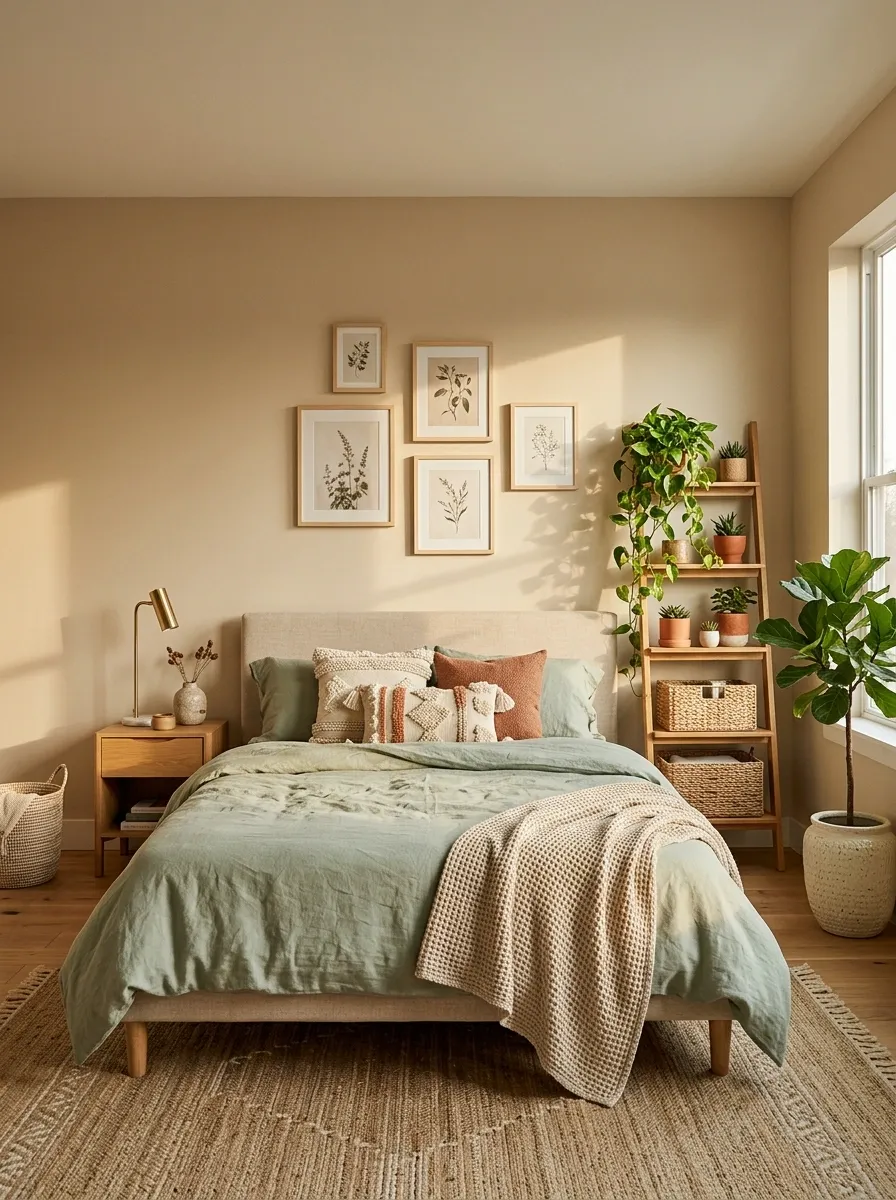
Neutral walls, a simple upholstered bed, and a freestanding ladder shelf make this rental bedroom feel finished without permanent alterations. A tall floor plant anchors one corner, while smaller plants sit on movable shelves and a compact bedside table. Removable artwork, soft green bedding, and woven accents tie the different pieces together, creating a complete look that can move to another apartment later.
The furniture stays simple because the greenery already provides plenty of visual detail. Choose displays that are stable and narrow enough for the available floor space, and keep heavy planters off flimsy shelves. The best part of portable styling is being able to rearrange everything without negotiating with a landlord over a wall full of mysterious holes.
THE RENTAL-FRIENDLY PLAN
Make the room feel yours. Keep the changes reversible.
FREESTANDING
Plant ladder or shelf
Creates a dedicated display without permanent wall fittings.
PORTABLE
Potted greenery
Can be regrouped when furniture or room arrangements change.
REMOVABLE
Textiles and artwork
Connect the greenery to the bed and walls without repainting.
PROTECTED
Floor and furniture
Use trays and saucers to prevent water damage and stains.
Anchor tall displays where needed using an approved method, and check rental rules before attaching anything to walls or ceilings.
Bedroom With a Small Desk and Greenery-Defined Work Zone
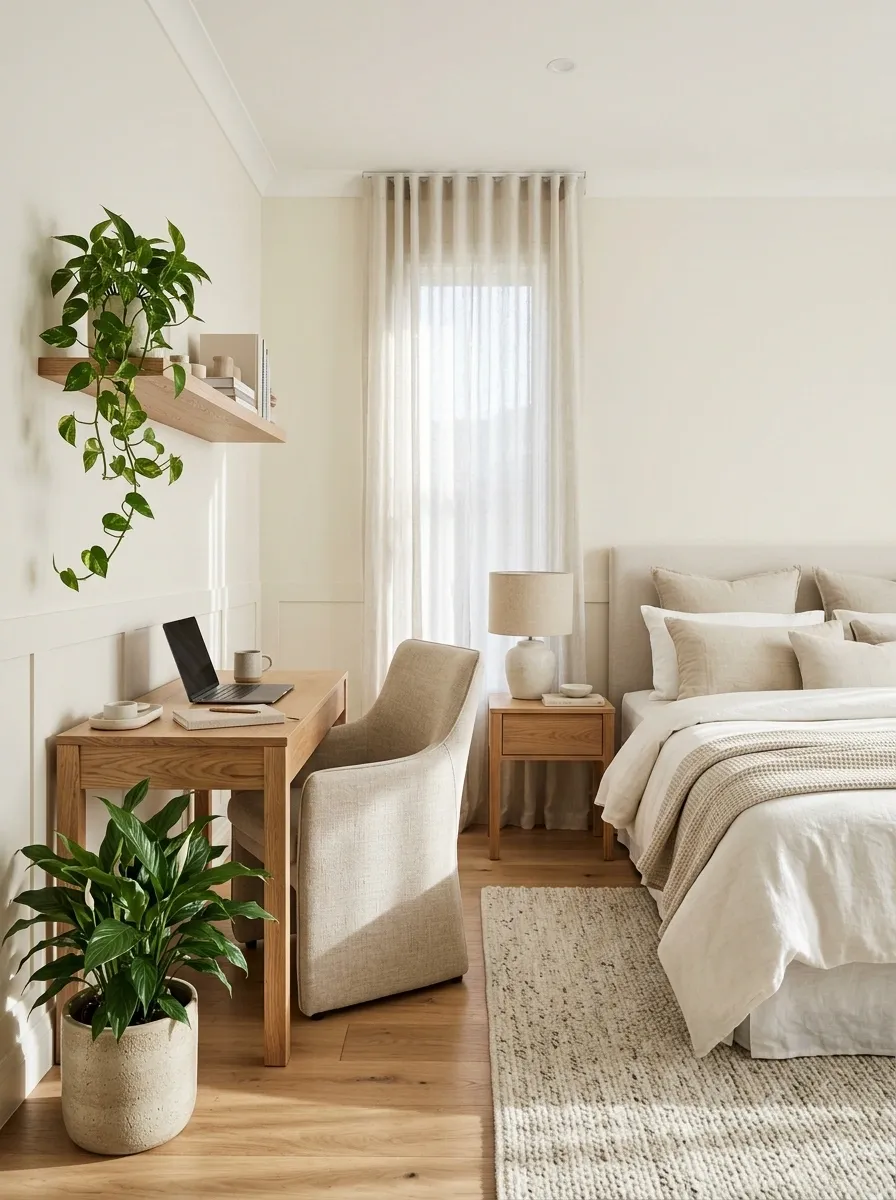
A compact timber desk, a comfortable chair, and a leafy plant create a distinct work zone without turning the entire bedroom into an office. The bed sits on the opposite side of the room, with neutral bedding and restrained bedside styling. A medium-height plant beside the desk softens the furniture lines, while a smaller plant on a shelf adds greenery without taking up valuable working space.
The arrangement works because each area has a clear job. The desk has enough room for a laptop and everyday essentials, the chair can move without hitting a planter, and the sleeping area remains visually separate. Keep foliage away from equipment where watering spills could cause damage. Aesthetic desk setups are lovely, but a dead laptop is not part of the color palette.
ONE ROOM, TWO CLEAR ZONES
Give work its corner without letting it colonize the bed.
WORK ZONE
Desk + chair
Leave room to pull the chair back.
GREEN BUFFER
Plant placement
Softens the transition without blocking movement.
SLEEP ZONE
Bed + bedside
Keep work clutter out of the resting area.
Treat the diagram as a zoning concept, not a measured floor plan. Scale the desk, chair, and planters to the room’s actual dimensions.
Low-Light Bedroom With Shade-Tolerant Plants and Warm Lighting
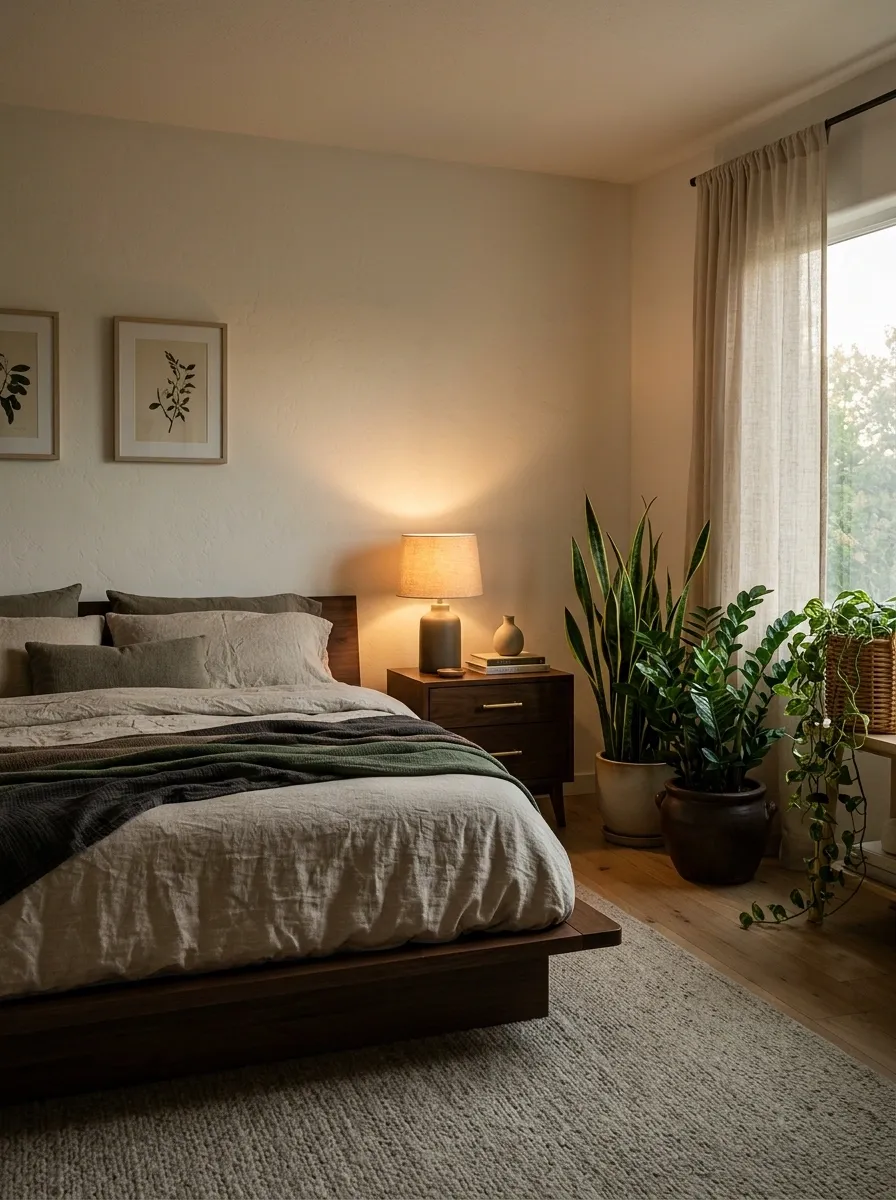
A shaded bedroom can still have a lovely botanical look, even without strong sunlight pouring across the floor. Warm white walls, oatmeal bedding, dark wood furniture, and soft bedside lighting create a comfortable base. A snake plant or ZZ plant can suit some lower-light locations, while plants with greater light needs stay closer to the brightest available window. A small grow light can help when natural light is insufficient.
The distinction between atmosphere and plant health matters here. Warm bedside lamps make a room feel inviting, but ordinary decorative lighting usually isn’t a substitute for suitable plant light. Keep the foliage grouped where its needs can be met rather than scattering plants into dark corners simply because the composition looks balanced. Even leaves have standards.
MATCH THE PLANT TO THE LIGHT
Mood lighting and growing light aren’t the same job.
Brighter window area
Consider plants with higher light requirements, depending on the actual exposure and season.
Indirect-light area
Choose species that tolerate the measured light level, and watch for signs of decline.
Very dim corner
Use an appropriate grow light or keep living plants elsewhere and decorate the corner with botanical art.
Artificial growing light needs to suit the plant and provide adequate intensity and duration. A pretty bedside bulb doesn’t automatically qualify.
Pet-Aware Greenery Bedroom With Clear Floors and Stable Planters
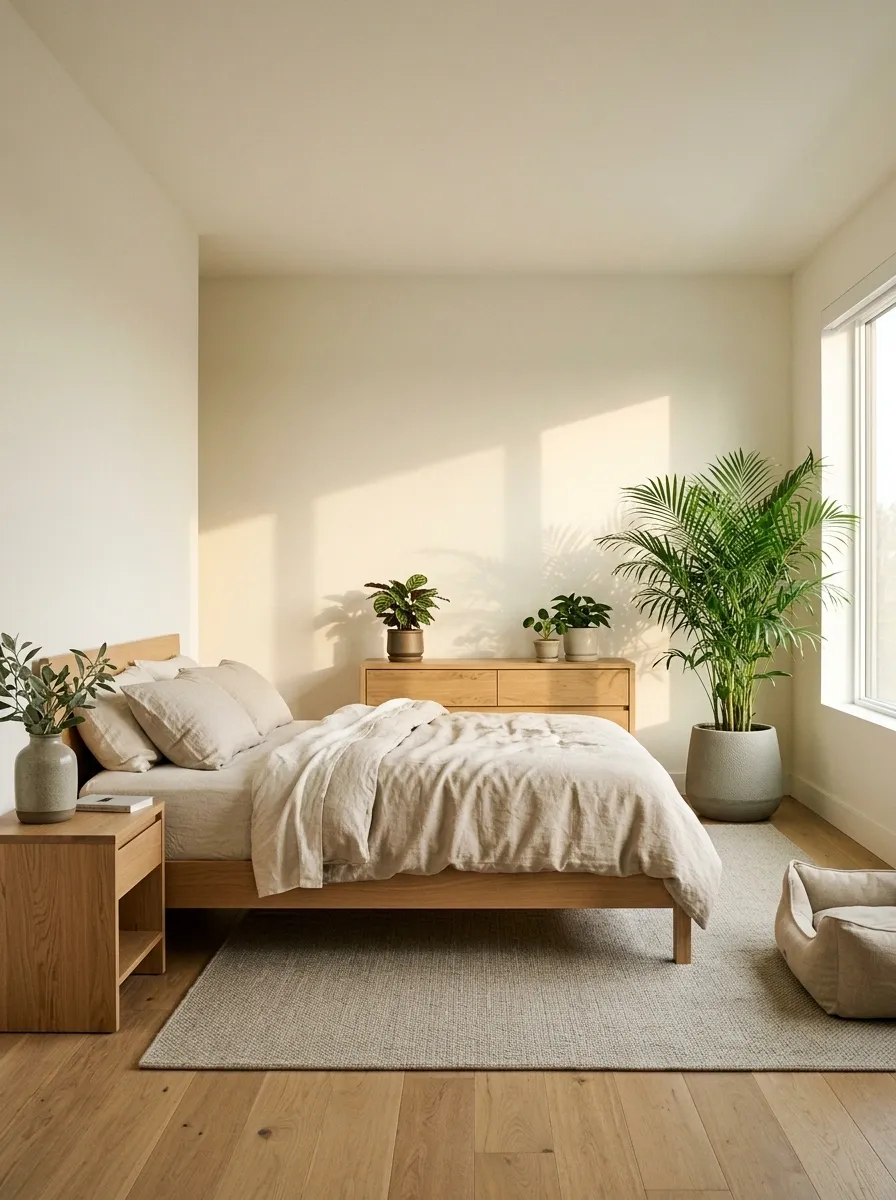
A light timber bed, washable neutral bedding, and a clear floor layout make this bedroom feel open and easy to maintain. Sturdy planters sit on stable surfaces, while foliage is positioned away from obvious jumping routes and areas where pots might be knocked over. A larger plant near a suitable window provides the main green feature, and smaller accents remain on secure furniture rather than dangling within easy reach.
Pet-aware styling starts with plant selection, not just plant placement. Many common houseplants can be harmful if chewed, and putting a toxic plant on a high shelf doesn’t guarantee safety for a determined cat. Check the exact species against reliable veterinary or poison-control guidance, secure heavy containers, and keep soil and standing water under control. A gorgeous bedroom should not become an emergency obstacle course for a curious animal.
THE PET-AWARE PLANT CHECK
Pretty greenery still has to pass the safety test.
Verify the plant species
Check whether the exact plant is safe for the animals in the home before buying it.
Secure pots and stands
Use stable planters and secure shelving. A wobbly pot is a floor-level problem waiting to happen.
Protect the walking space
Avoid narrow walkways, unstable elevated pots, and dangling foliage that invites chewing or pulling.
One important distinction
Moving a plant out of reach is not the same as making a toxic plant safe. Choose verified pet-safe options whenever possible.
Green Velvet Bedroom With Brass Details and Layered Plants
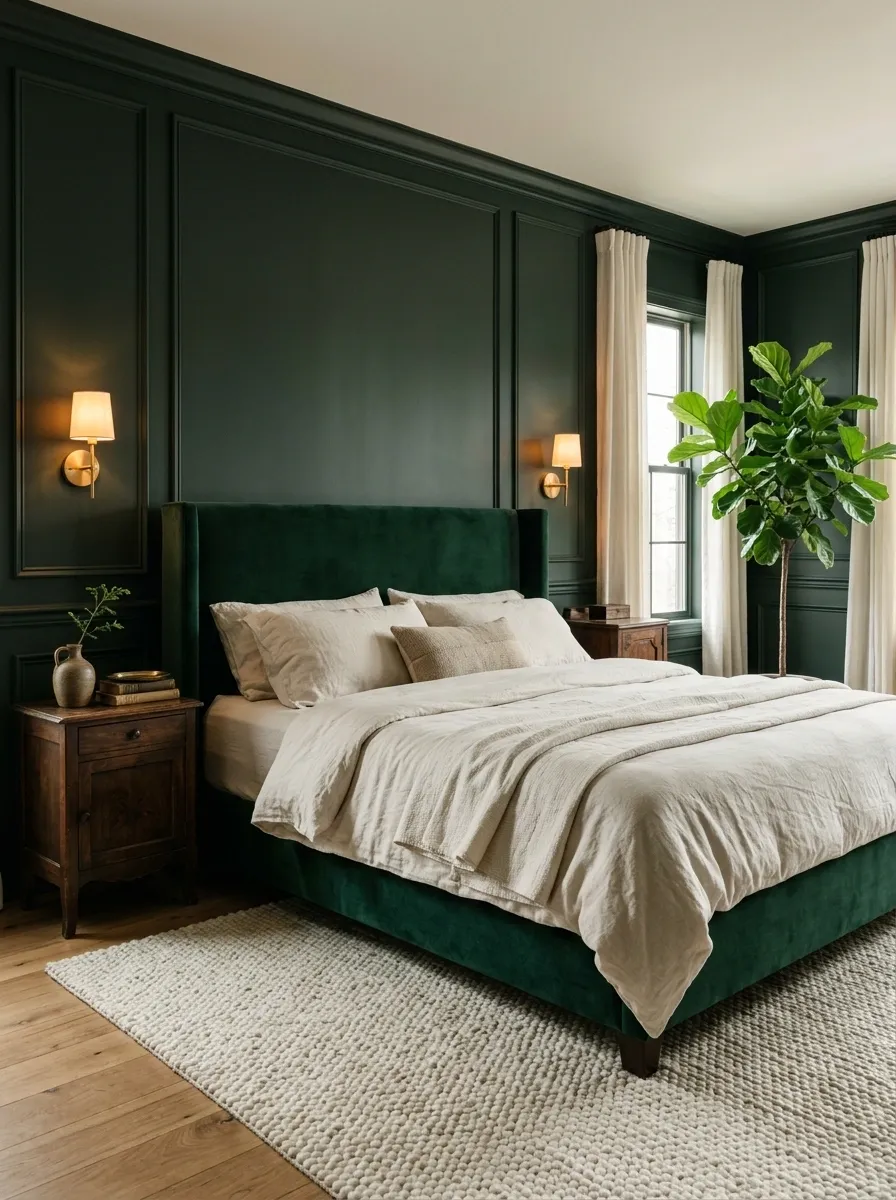
A deep green velvet bed, cream bedding, warm brass lighting, and dark wood furniture give this bedroom a rich, collected look. The plants bring in a second layer of green, using lighter foliage to contrast with the darker upholstery. Place a tall leafy plant near the window and a smaller one on the opposite side of the bed to balance the composition without making both bedside surfaces identical.
The key is separating the different shades and textures. Velvet absorbs light, leaves have varied shapes, and brass reflects a warmer glow. Cream bedding gives the eye a break from all that richness. Keep the other accessories restrained. The bedroom already has a velvet bed with main-character energy, so the cushions don’t need to start their own competition.
RICH GREEN, WITHOUT THE MUDDY LOOK
Make every green earn its place.
DARK ANCHOR
Velvet and deep green
Give the bed the strongest color and richest texture.
LIVING CONTRAST
Lighter foliage
Use different leaf shapes and greens to separate plants from upholstery.
VISUAL BREATHER
Cream and brass
Brighten the palette and introduce a warm reflected glow.
Keep the bedding light enough to separate the bed from the surrounding green. A rich palette still needs contrast to work.
Blue and Green Bedroom With Natural Linen and Glossy Foliage
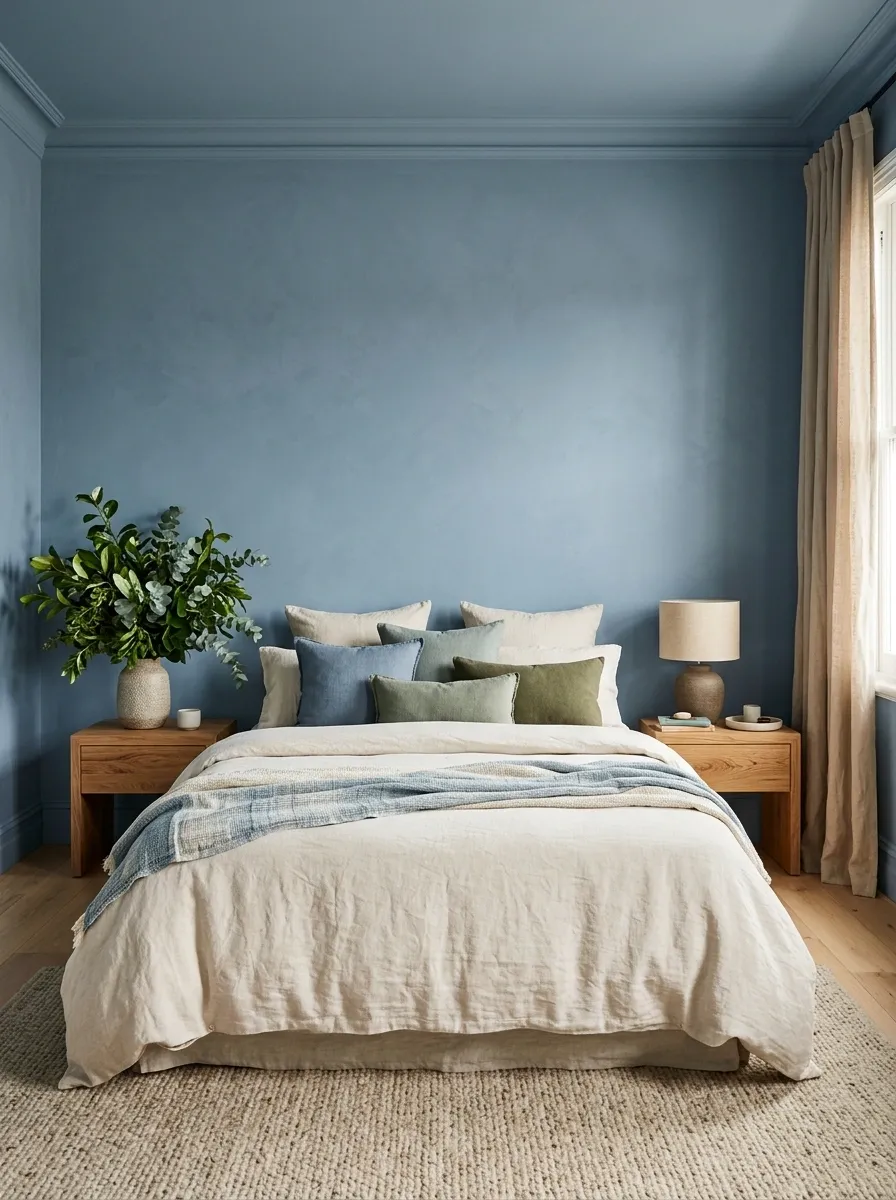
A muted blue feature wall, natural linen bedding, oak bedside furniture, and glossy green foliage create a balanced blue-and-green bedroom. The blue wall provides a cool backdrop, while the plants introduce a range of natural green tones. Warm wood and sandy textiles keep the combination from feeling chilly, and simple lamps bring a softer glow into the evening.
The blue and green don’t need to match exactly. In fact, a slightly dusty blue beside varied leaf shades makes the room more interesting than a perfectly coordinated set. Keep the largest bedding surfaces neutral, then repeat a little blue or green through cushions or a throw. The result feels colorful without looking as though two paint samples are fighting for custody of the walls.
BLUE + GREEN, WITH A WARM BUFFER
Let the wood and linen connect the colors.
Where the blue belongs
Use the wall or one large textile for a clear area of cool color.
Where the green belongs
Let the foliage supply varied shapes rather than repeating one flat green.
Use cream bedding and a restrained palette of wood finishes to keep the blue and green working together.
Dark Botanical Bedroom With Printed Walls and Layered Greenery
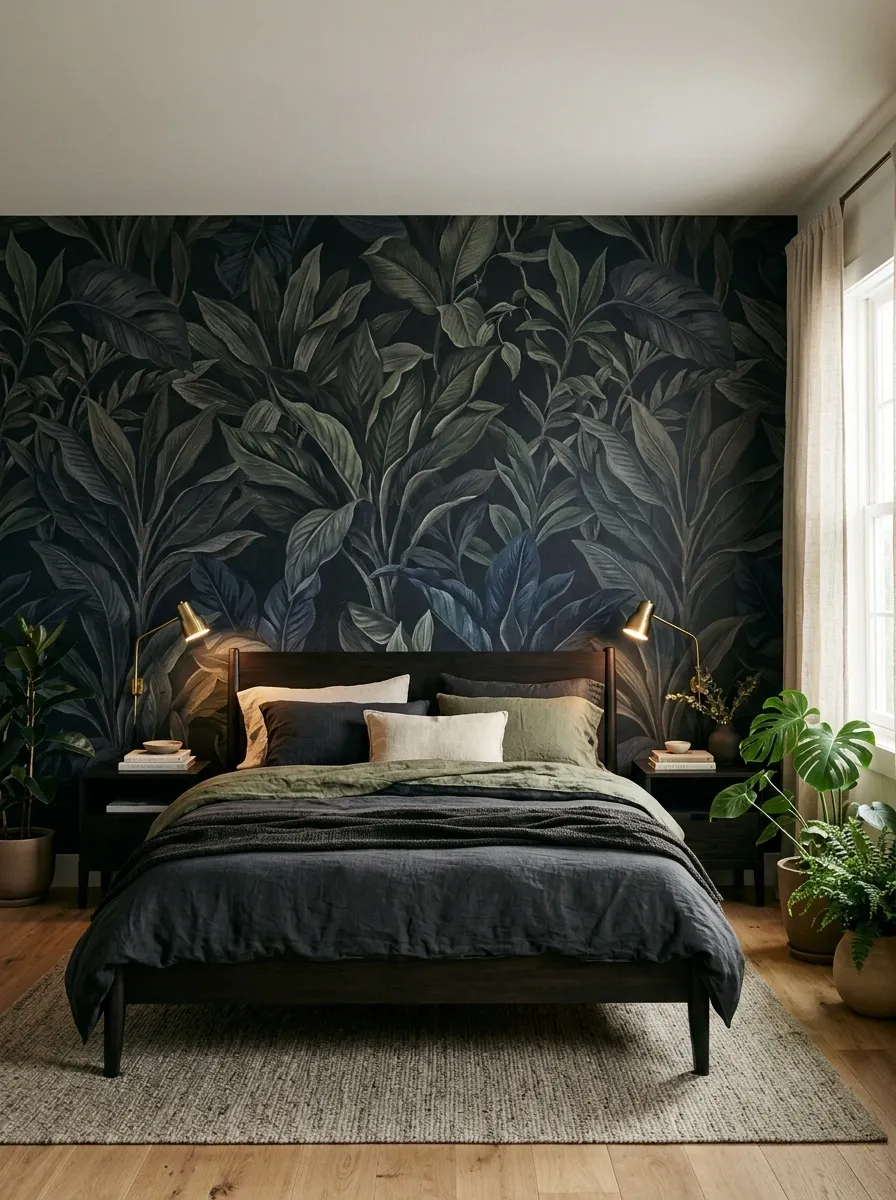
Dark botanical wallpaper turns the bed wall into the main feature of this bedroom. A simple dark timber bed, muted olive or charcoal bedding, and warm directional lamps allow the printed leaves to stand out without making the room visually heavy. Real plants near the window echo the wallpaper’s natural theme, while lighter textiles and a restrained bedside setup provide contrast.
This is different from simply painting a room forest green. The printed wall supplies layered imagery and pattern, so the real foliage should be more selective. A plant with a distinct silhouette adds depth; too many plants can make the wallpaper disappear behind a wall of leaves. Keep the lighting warm but sufficient to see the room’s details. Moody is a design choice, not a visibility problem.
A DARK BOTANICAL ROOM NEEDS HIERARCHY
One dramatic wall. Carefully chosen supporting details.
The wallpaper
Carries the strongest pattern and establishes the mood.
The living plants
Supply real depth and should remain visually distinct from the print.
The light textiles
Keep the bed visible against the darker composition.
Avoid using dense wallpaper, busy bedding, and excessive plant groupings as competing focal points. Drama still needs editing.
Colorful Eclectic Bedroom With Mismatched Pots and Collected Decor
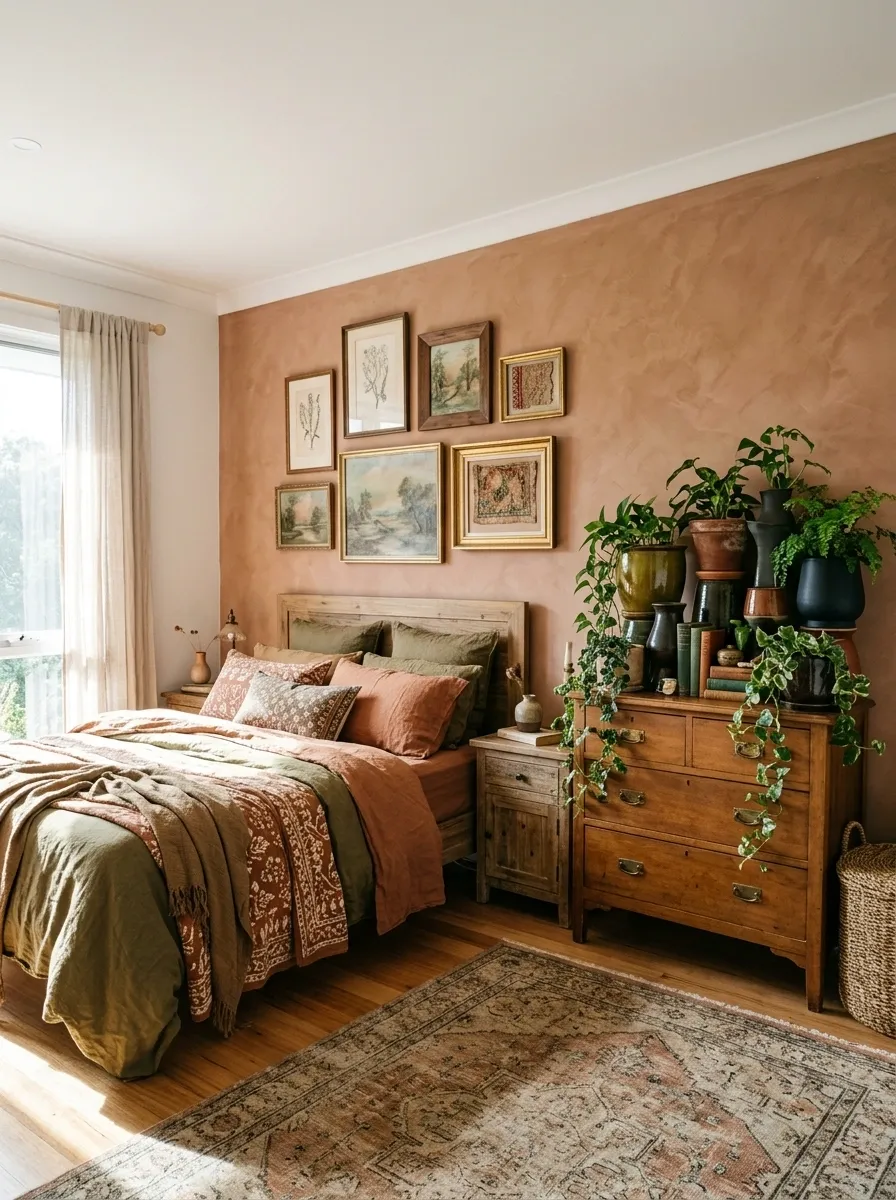
A vintage dresser, patterned bedding, framed artwork, and mismatched planters give this bedroom a relaxed, eclectic character. The greenery varies in height and leaf shape, while the pots mix ceramic finishes, simple terracotta, and a few darker accents. A shared color, such as olive green or warm clay, appears in a couple of textiles or art details to connect the different pieces.
The mix works because the room has a loose visual thread. Not everything needs to match, but something should relate. Repeating a color or material helps a thrifted pot feel connected to the rest of the room rather than like it was rescued from a completely different decorating personality. Keep the largest furniture pieces relatively grounded, then let the smaller accents be delightfully unpredictable.
THE ECLECTIC ROOM CONNECTION
Different pieces. One shared visual thread.
Color
Repeat olive or clay in two places.
Material
Connect timber, pottery, or woven texture.
Shape
Vary plant silhouettes and object heights.
The editing rule
Keep one or two qualities repeating throughout the room. The pieces can be different without making the entire bedroom look like a lost-property department.
Indoor-Outdoor Bedroom With Greenery Beside Balcony Doors
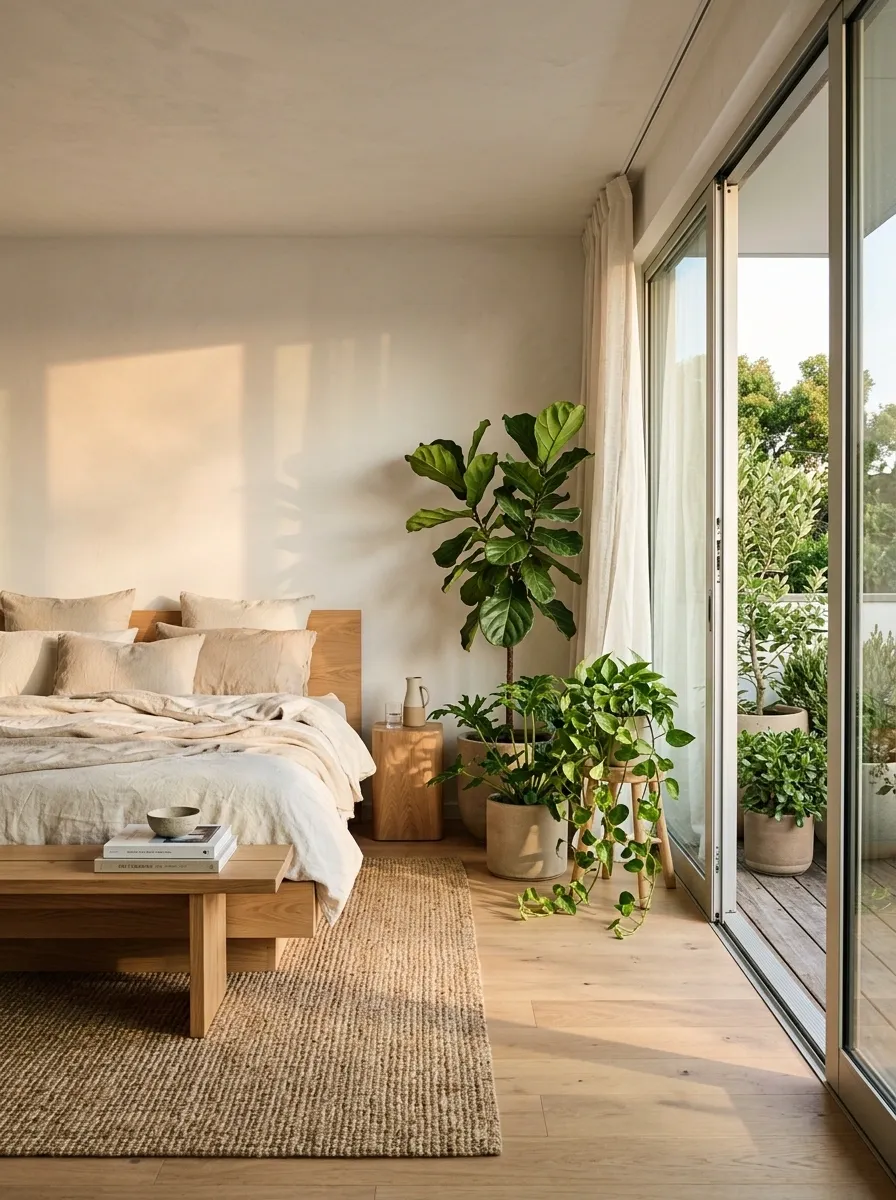
Pale bedding, light wood furniture, and full-length curtains create a relaxed bedroom that opens onto a balcony or terrace. Indoor plants sit near the glazing, while outdoor foliage visible beyond the doors extends the green palette into the distance. A simple rug anchors the bed, and a small chair or low bench adds function without blocking the route outside.
The visual connection between the two spaces is what makes this design distinct. Similar natural greens and warm materials help the bedroom feel connected to the outdoors, while the glass keeps the view open. Choose indoor plants suited to the light and temperature inside, and don’t assume a plant that thrives outdoors will enjoy the same conditions behind glass. Keep the door path clear. A balcony is much less relaxing when reaching it requires a slalom course.
THE INDOOR-OUTDOOR THRESHOLD
Connect the view. Keep the doors usable.
INSIDE
Indoor plants
Choose by indoor light and temperature.
OUTSIDE
Outdoor greenery
Choose for local outdoor exposure and weather.
Keep the transition clear
Allow space for doors, curtains, and comfortable movement. Repeating natural colors creates continuity without requiring identical plants on both sides.
How to Make Greenery Feel Like Part of the Bedroom
The strongest greenery bedrooms share one thing: the plants belong to the design rather than looking like a collection of afterthoughts. Dark walls need enough contrast to keep the foliage visible, while pale rooms benefit from the natural color and irregular shapes of leaves. Vintage and eclectic spaces can handle more detail, but they still need a visual thread connecting their materials, colors, and patterns.
Before buying anything, look at the furniture, available daylight, and space around the bed. Choose a finished style, decide where the main plant grouping belongs, and leave room for both growth and everyday movement. Start with a few well-placed plants rather than filling every empty surface. The goal isn’t to win a plant-count competition. It’s to create a bedroom that looks considered and still feels comfortable to live in.