
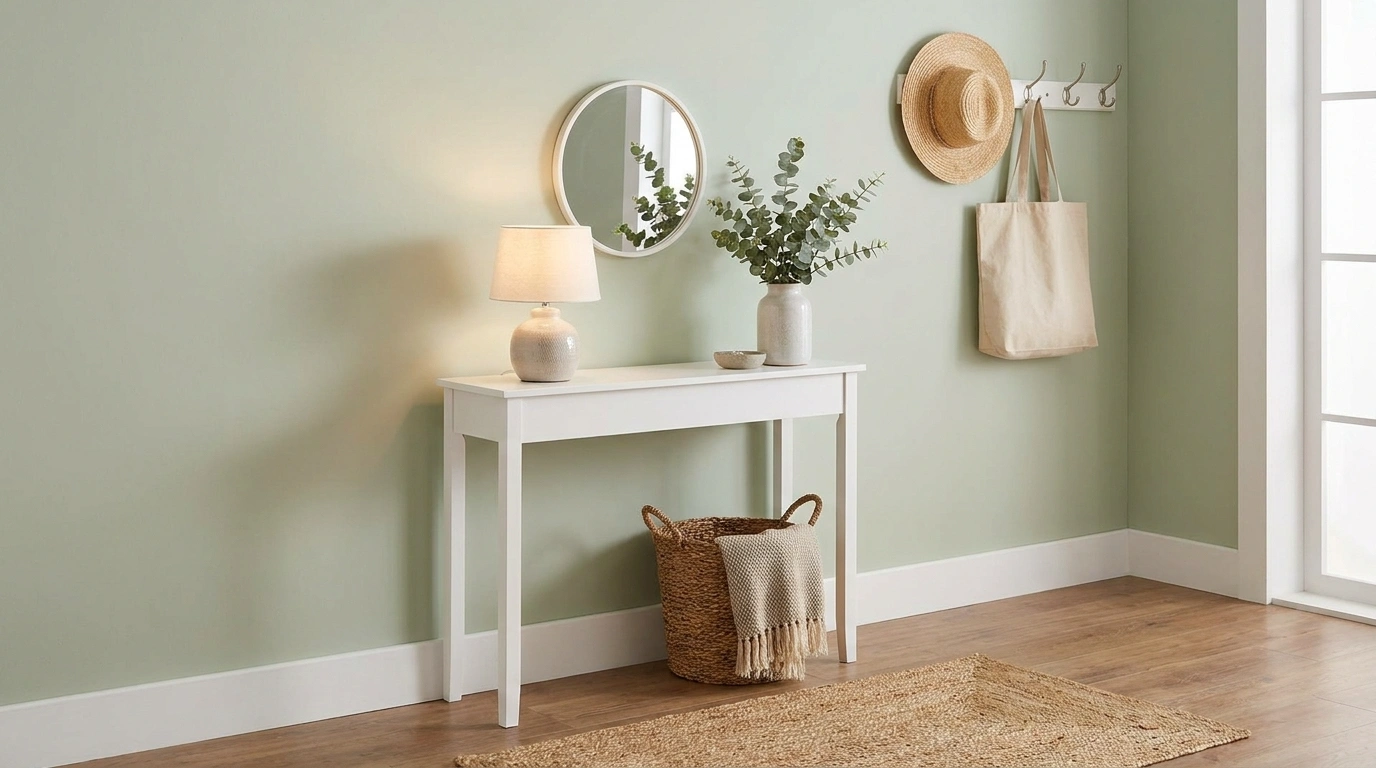
A tiny entryway becomes difficult long before it becomes truly unusable. The problem usually starts with one innocent bench, one shoe pile, a few bags, and a console that looked “slim” in the showroom. Suddenly the door barely clears the furniture, the floor disappears, and every arrival home means stepping around something.
The answer isn’t to decorate harder. It’s to stop treating the entryway like a miniature living room.
Very small entryway ideas work best when every piece has a clear job. A mirror needs to add depth or help with daily checks. A shelf needs to catch keys instead of becoming a display shelf for random objects. A bench needs to provide seating or storage, not simply occupy precious floor space.
The Tiny-Entryway Formula: Less Floor, More Function
A tiny entryway doesn’t need another piece of furniture. It needs smarter use of the space that’s already there.
Put the hardworking pieces on the walls, inside cabinets, and above eye level.
Very Small Entryway Ideas
Pair a Floating Console with Bold Vertical Slats
A standard table consumes precious floor area right when you walk through the door.
A wall-mounted console paired with dramatic vertical slats draws the eye upward, making a tight space feel architectural and intentional.
Keep styling minimal: a single textured vase with dried branches and a round mirror finish the look without cluttering the surface.
Mount a Slim Floating Shelf Instead of a Console
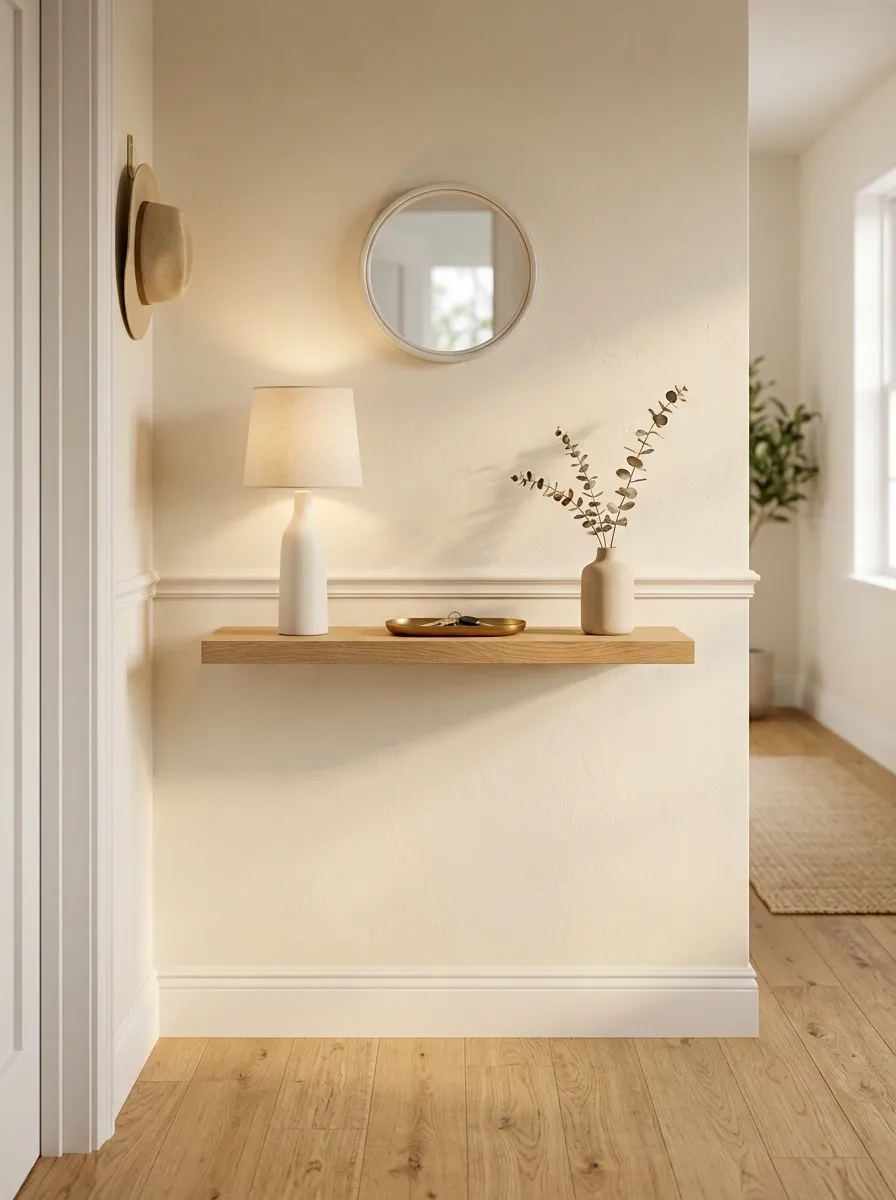
A chunky console steals the exact floor space a tiny entrance needs most.
A floating shelf gives the wall a job without creating another obstacle. Keep it shallow, then place a small catchall tray, one lamp, or a narrow vase on top.
Build the shelf around three jobs:
- Landing: keys and sunglasses go here.
- Display: keep only one or two decorative pieces.
- Visual anchor: center a mirror or artwork above it.
The trick is restraint. A shelf packed edge to edge looks just as cramped as a bulky table.
The wall handles the storage while the floor stays open for shoes, bags, and movement.
Stack Slim Shoe Storage with Layered Mirrors
Bulky shoe racks block walkways and turn a small entry into an obstacle course.
A shallow, flip-down cabinet keeps footwear hidden while maintaining crucial clearance along the wall.
Stack narrow vertical mirrors beside the storage to bounce light around and trick the eye into seeing a much wider room.
Use a Full-Height Mirror to Stretch the Space
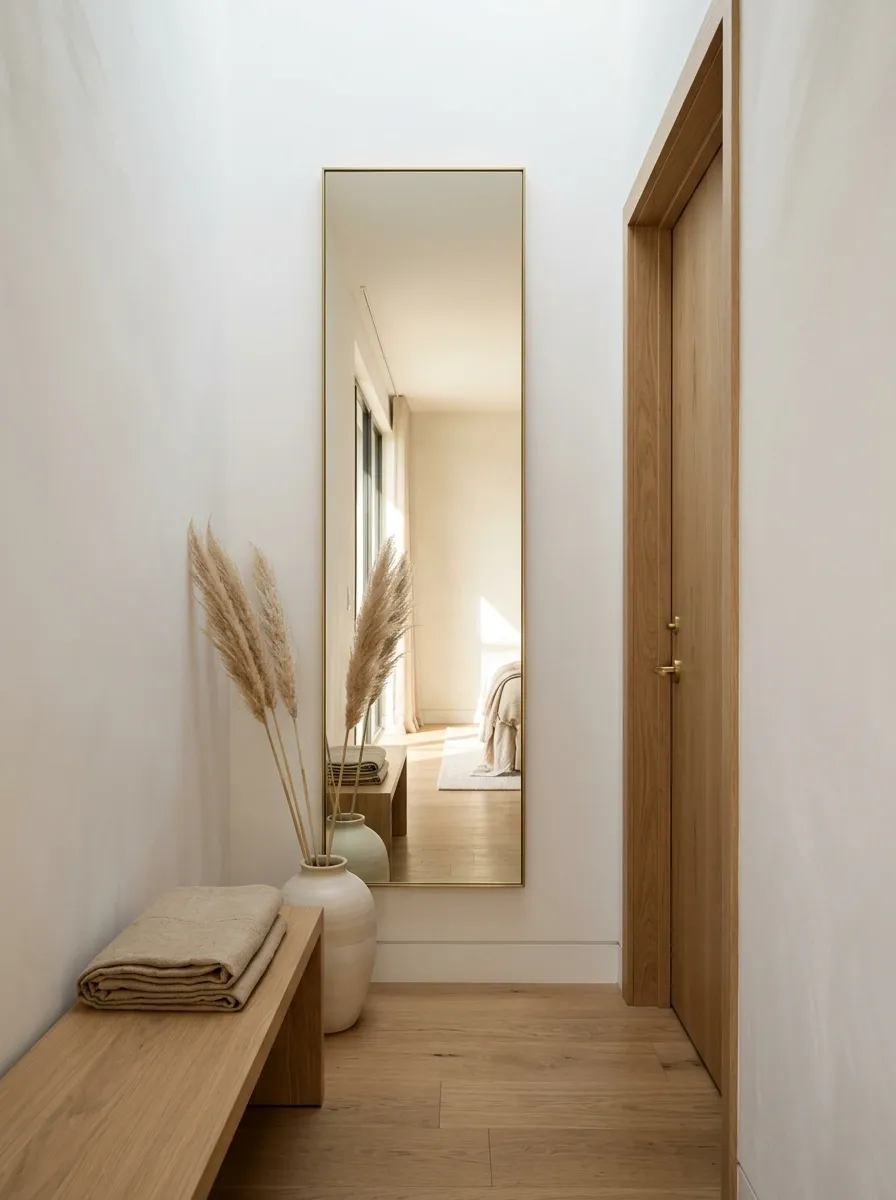
A small mirror can disappear into a tiny wall. A tall one makes the entrance feel deliberately larger.
Choose a narrow vertical frame and place it where it catches light from the nearest room or window. Don’t crowd it with little artwork around the edges.
Best placement: beside the door, behind a slim bench, or on the longest uninterrupted wall.
A mirror should do more than help with a last-second outfit check. It should give the eye somewhere farther to go.
Styling rule: one large reflective surface beats three tiny decorative mirrors.
Frame a Floating Shelf with Full-Length Mirrors
A standard entryway table can easily overwhelm a compact foyer with heavy legs and wasted space.
A sleek floating shelf mounted directly beside a towering mirror creates a weightless station for daily essentials.
Let the mirror stretch the visual boundaries of the room while keeping the shelf surface clear and beautifully restrained.
Turn One Narrow Wall Into a Hook Station
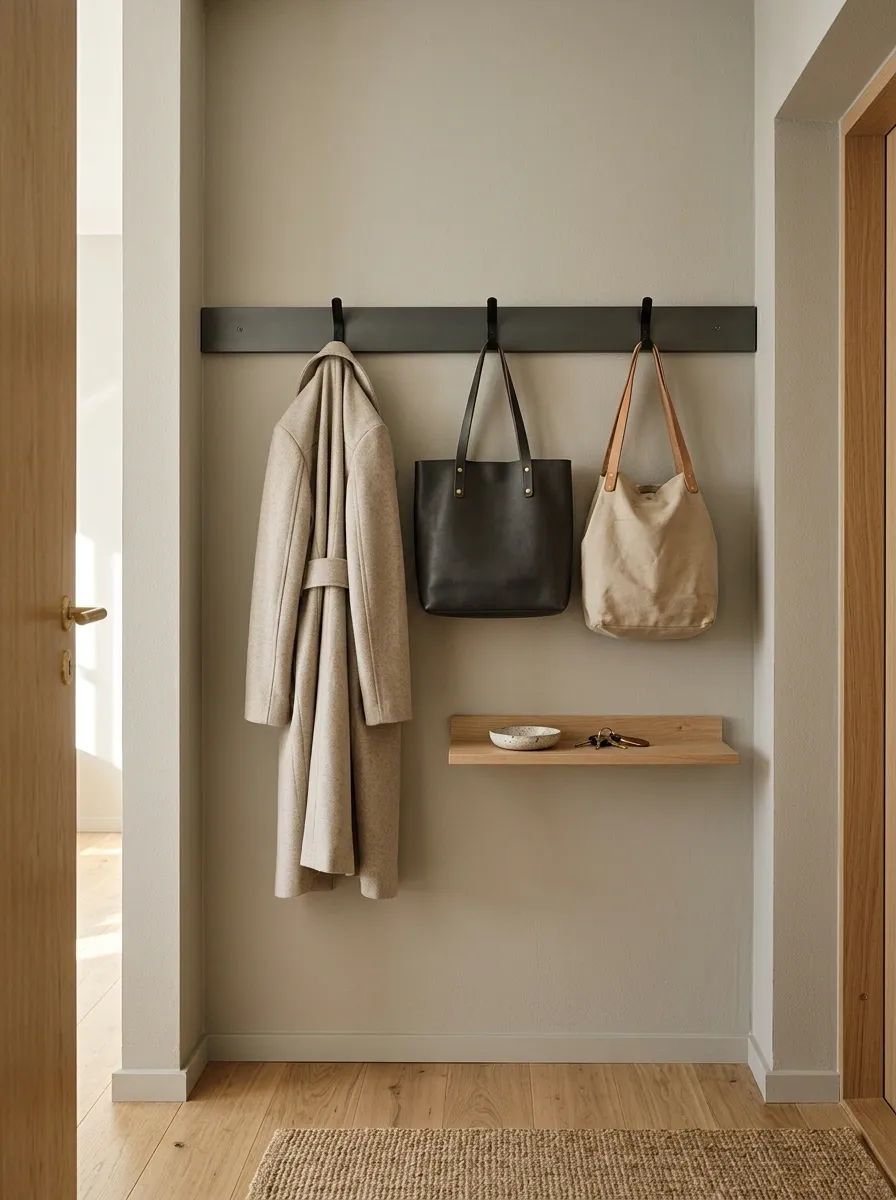
Coats and bags become bulky fast when they land on chairs, railings, or the nearest piece of furniture.
Use one narrow wall for a dedicated hook station instead. A compact rail with a few spaced hooks is enough for daily essentials.
Keep the arrangement visually disciplined:
- Upper hooks for coats and jackets
- Middle hooks for bags
- Lower hooks for children’s items or reusable totes
Don’t fill every inch with hooks. Empty wall space makes the whole arrangement feel calmer, and it leaves room for seasonal changes.
Three or four intentional landing points are more useful than a long row of random hooks.
Suspend a Wooden Drawer with a Leather-Strap Mirror
Heavy furniture pieces suffocate a tiny hallway before you even step inside.
A streamlined floating drawer unit gives you landing space for keys without stealing a single square inch of floor.
Anchor it with a statement round mirror hung by a leather strap to add organic warmth and effortless style to the wall.
Choose a Shoe Cabinet That Stays Almost Flush to the Wall
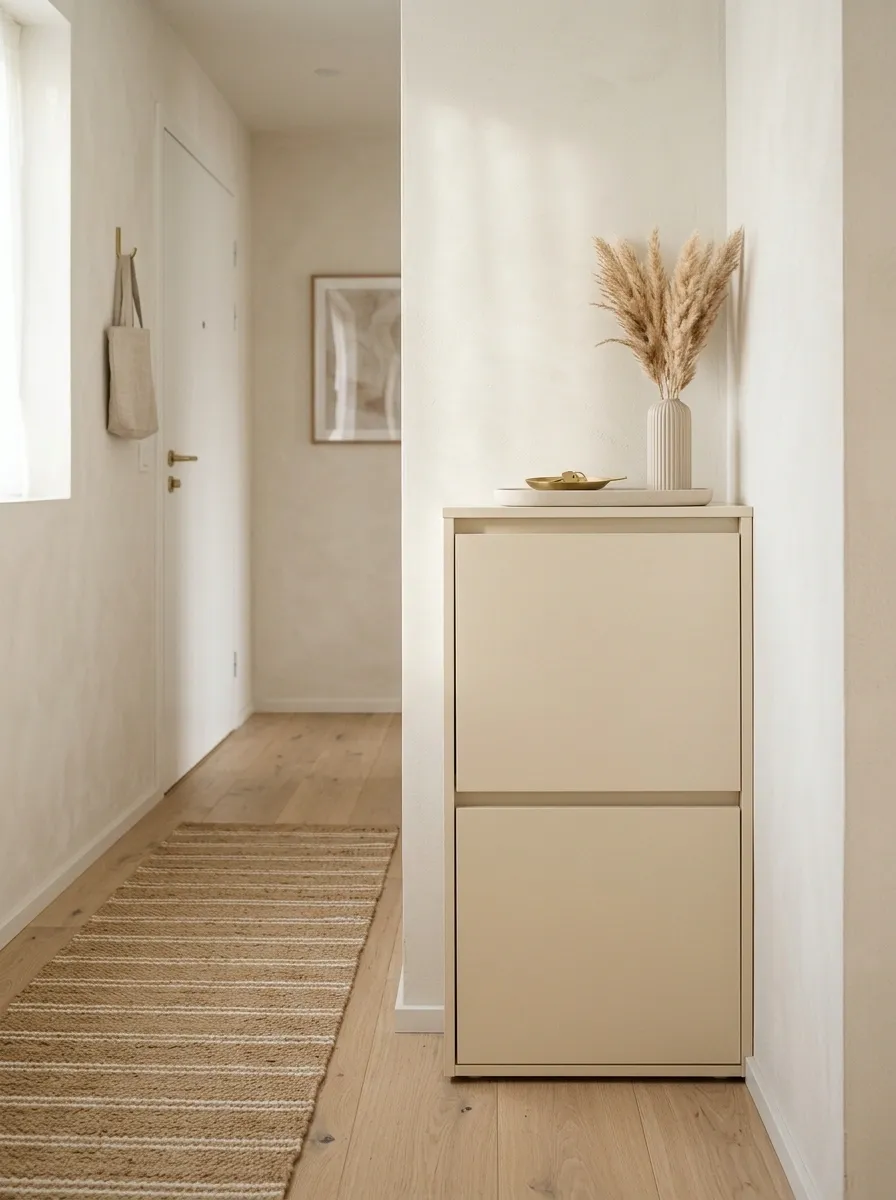
The wrong shoe cabinet turns a narrow entry into a collision course.
Look for a slim vertical cabinet with doors that hide the visual mess. The cabinet should sit close enough to the wall that the walking path still feels open.
Skip: deep open shelving packed with mismatched shoes.
Choose: enclosed storage with a clean front.
That distinction matters because a tiny entryway benefits from visual calm as much as physical clearance. Closed fronts hide the pile that usually makes the space look smaller.
Open depth pushes into the walkway.
A slim closed front keeps the edge visually quiet.
Style a Board-and-Batten Hook Wall
A cramped foyer quickly becomes a dumping ground for bags, coats, and everyday clutter.
Green board-and-batten paneling paired with a simple upper shelf creates a dedicated drop zone that looks polished rather than chaotic.
Hang a single woven basket on a hook and top the shelf with framed art to give the vertical space a purposeful finish.
Run a Tiny Bench Under a Wall-Mounted Coat Rack
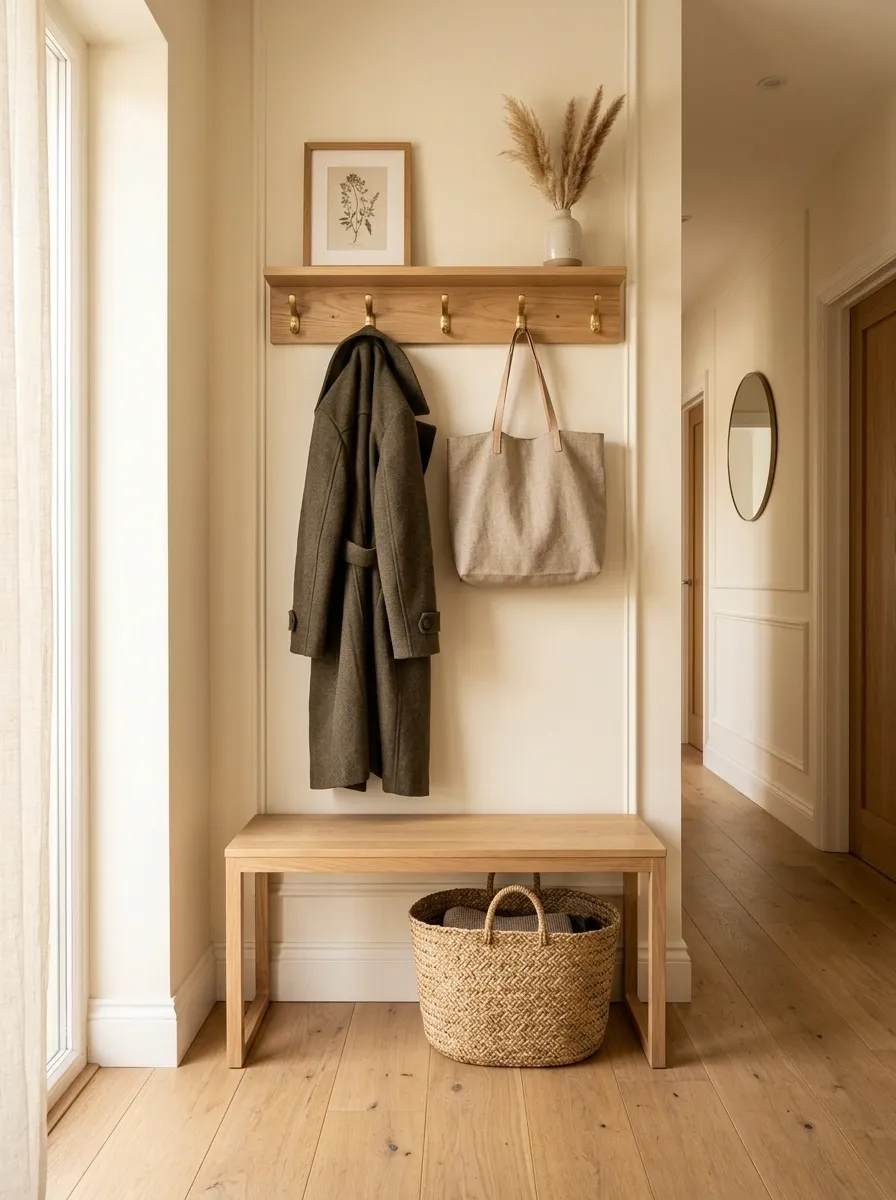
A bench doesn’t have to be a full furniture event.
Choose a narrow bench with enough room to sit while putting on shoes, then mount the coat storage directly above it. The result uses one vertical slice of wall instead of spreading furniture across the room.
Keep the bench visually light. Open legs or a thin base work better than a chunky upholstered box in an already tight entrance.
Best combination: narrow seat below, hooks above, one basket tucked underneath.
Use the Back of the Door for Hidden Storage
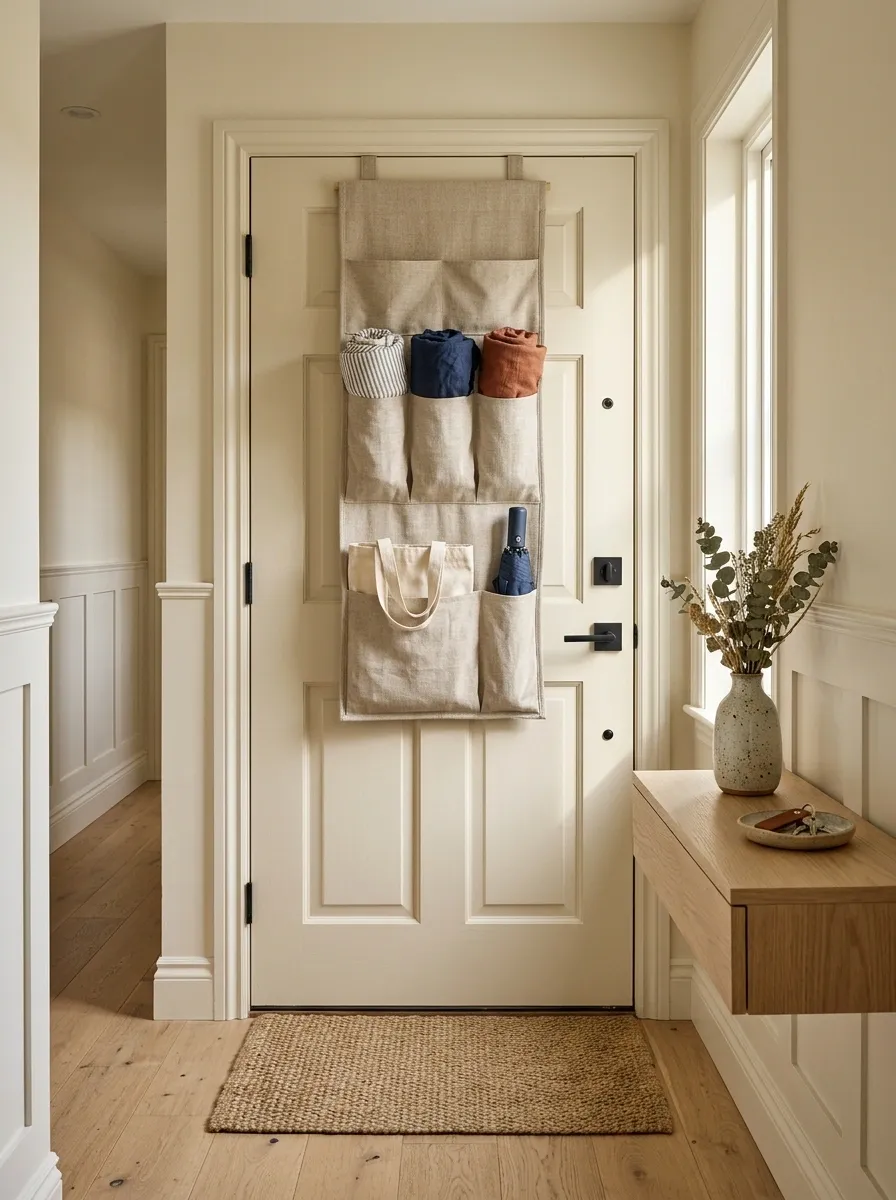
The door itself is often wasted real estate.
A slim over-door organizer can hold reusable bags, umbrellas, cleaning cloths, scarves, or other small items that don’t deserve prime wall space.
The important part is keeping the organizer narrow enough that the door still opens freely.
Best hidden-door rule: store lightweight, flexible items here. Heavy bins or oversized baskets make the door awkward and can turn a useful trick into a daily annoyance.
-
01Use a slim organizerKeep the profile shallow.
-
02Store soft goodsBags, scarves, umbrellas.
-
03Test the swingNothing should catch the frame.
Give Keys and Mail One Tiny Landing Zone
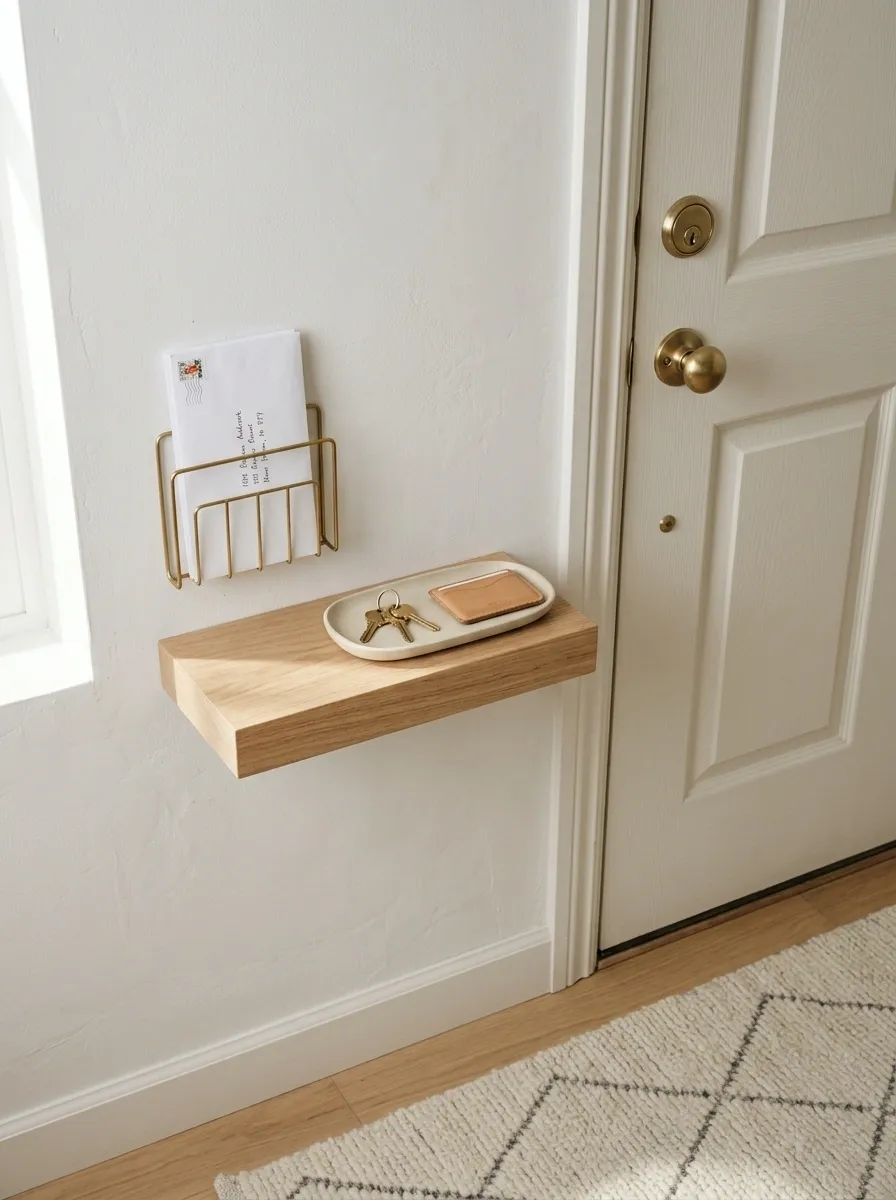
Keys don’t need a whole cabinet. Mail doesn’t need a growing paper pile.
A compact wall tray or tiny shelf beside the door creates one clear drop point for the things that otherwise migrate across the house.
Keep the system brutally simple. One tray for keys and small items. One narrow slot or holder for incoming mail.
The rule: if the landing zone can’t handle the daily volume, don’t make it bigger. Remove what doesn’t belong there.
Paint the Entry Nook in One Deep, Intentional Color
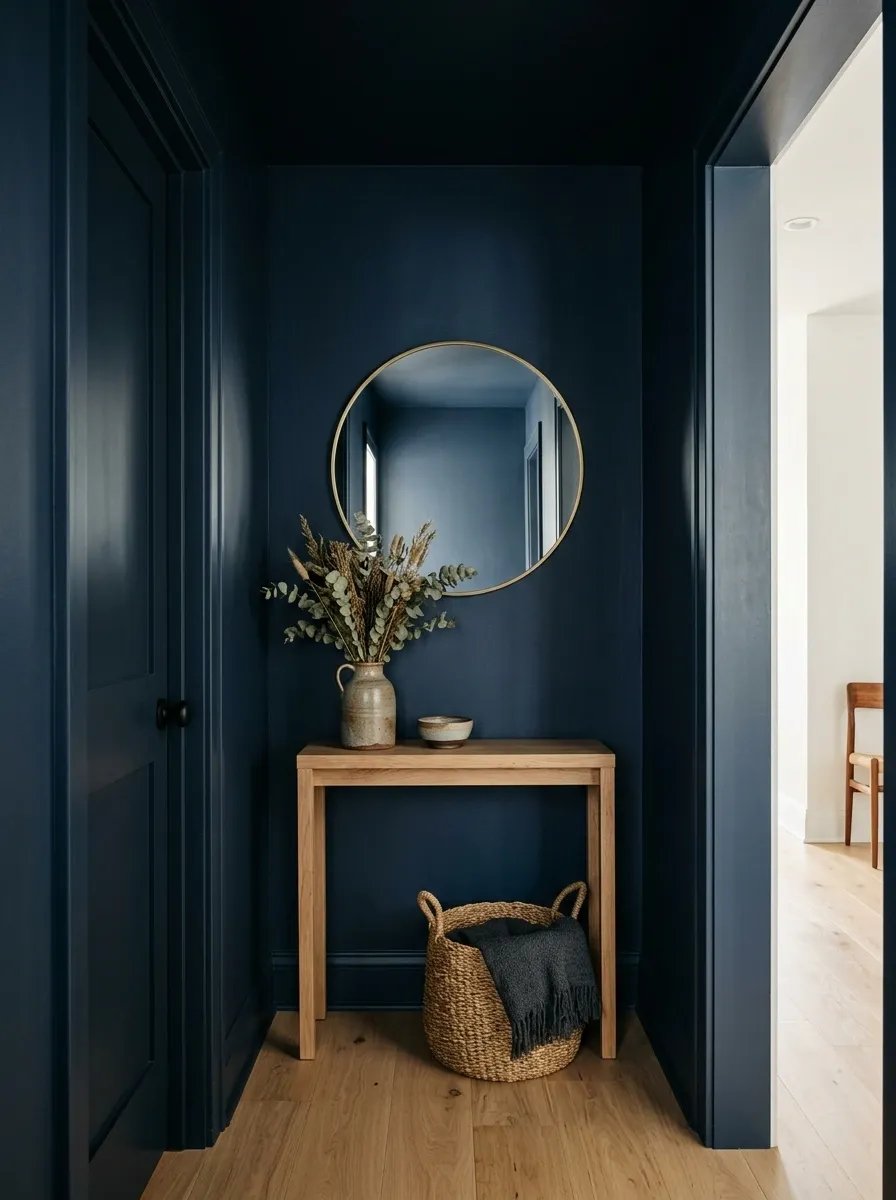
Tiny spaces don’t need to be painted white just because they’re tiny.
A narrow entry can handle a stronger wall color beautifully when the color is used deliberately. Paint the entire little nook rather than adding random accent patches. The uninterrupted color makes the area feel designed instead of leftover.
Keep everything else quiet. A simple mirror, restrained hardware, and one material repeated nearby are enough.
Best move: use the darker color to define the entry as its own little zone rather than trying to make it disappear.
Swap a Floor Lamp for a Wall Sconce
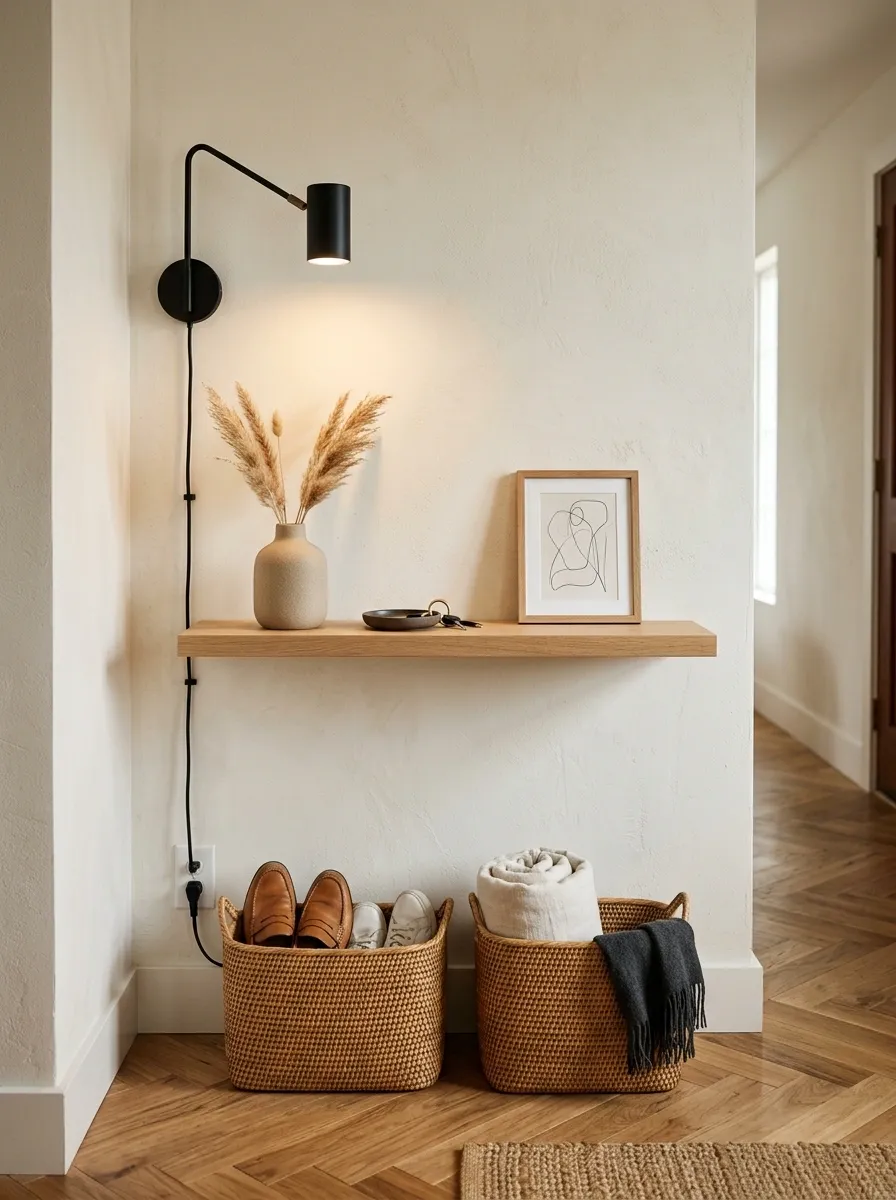
Floor lamps have a bad habit of consuming precious corners.
A wall sconce moves the light source upward and leaves the floor available for shoes, storage, or simply breathing room. Choose a compact fixture with a small projection from the wall.
A plug-in sconce works especially well in a rental because it delivers the same visual effect without major electrical work.
Placement matters more than size: mount the light close enough to illuminate the entry without creating a head-level obstruction.
Lay Down a Narrow Runner That Guides the Eye
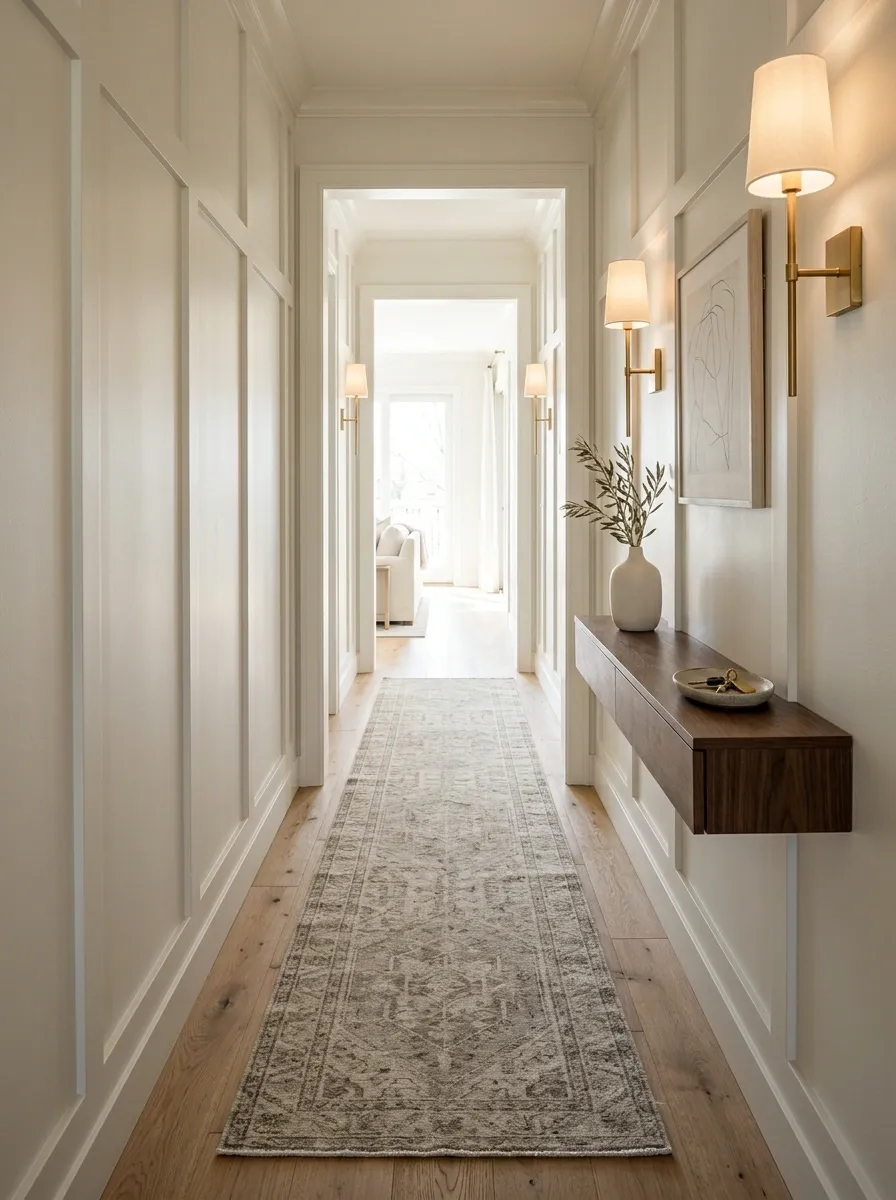
A runner can make a cramped entrance feel longer, but only when its proportions are right.
Choose a narrow design that follows the actual path into the home. Avoid a rug that nearly touches both walls. That makes the hallway feel pinched.
Keep the pattern relatively controlled. A subtle stripe, faded geometric pattern, or quiet texture creates direction without adding visual clutter.
Runner checklist:
Install Picture Ledges for Tiny Decor Without the Bulk
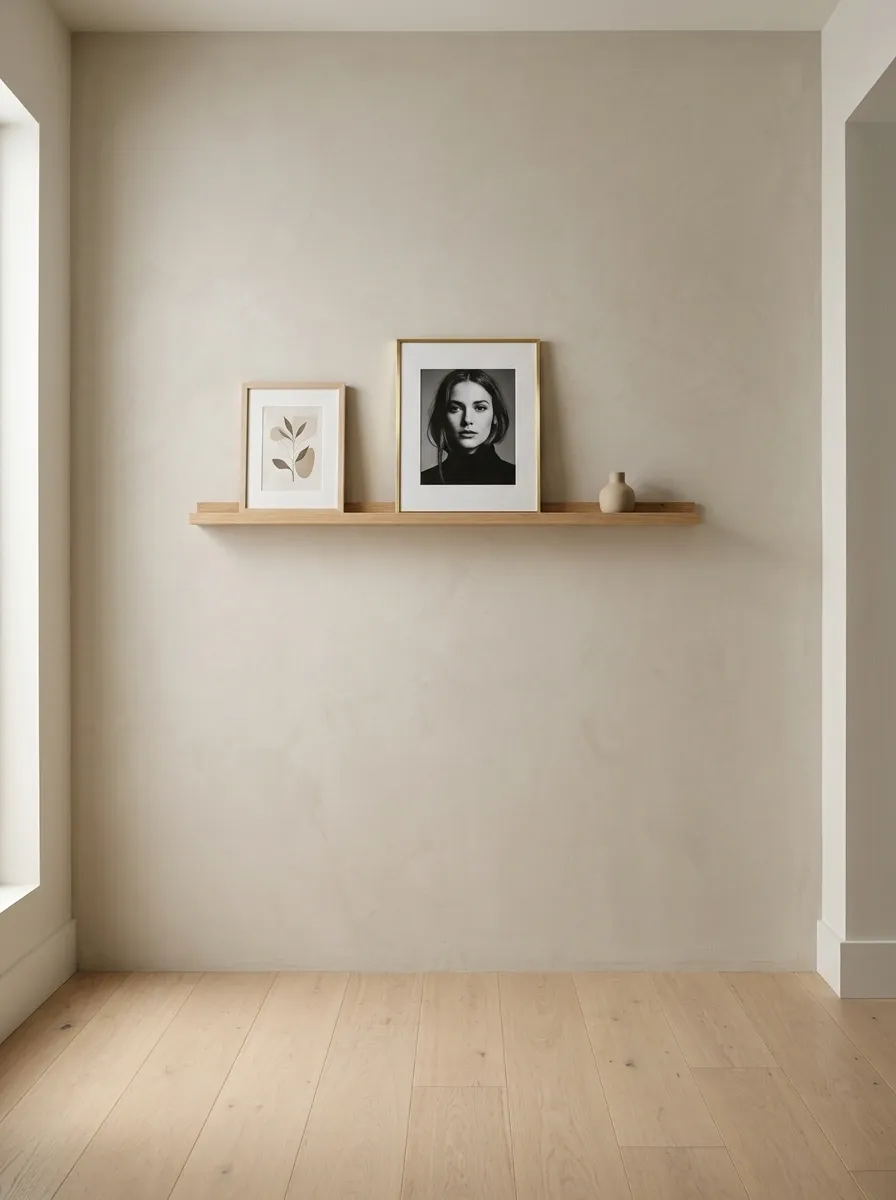
Small artwork often turns into a cluttered gallery wall in a tiny entrance.
A slim picture ledge solves the problem by giving a few pieces one horizontal home. Lean one small print, one photograph, and perhaps a tiny object against the wall. Then stop.
The ledge works especially well when the entry lacks enough depth for a console but still needs a little personality.
Keep the arrangement shallow. Anything that projects too far becomes another object to bump into.
Use a Wall-Mounted Drop Zone for Everyday Bags
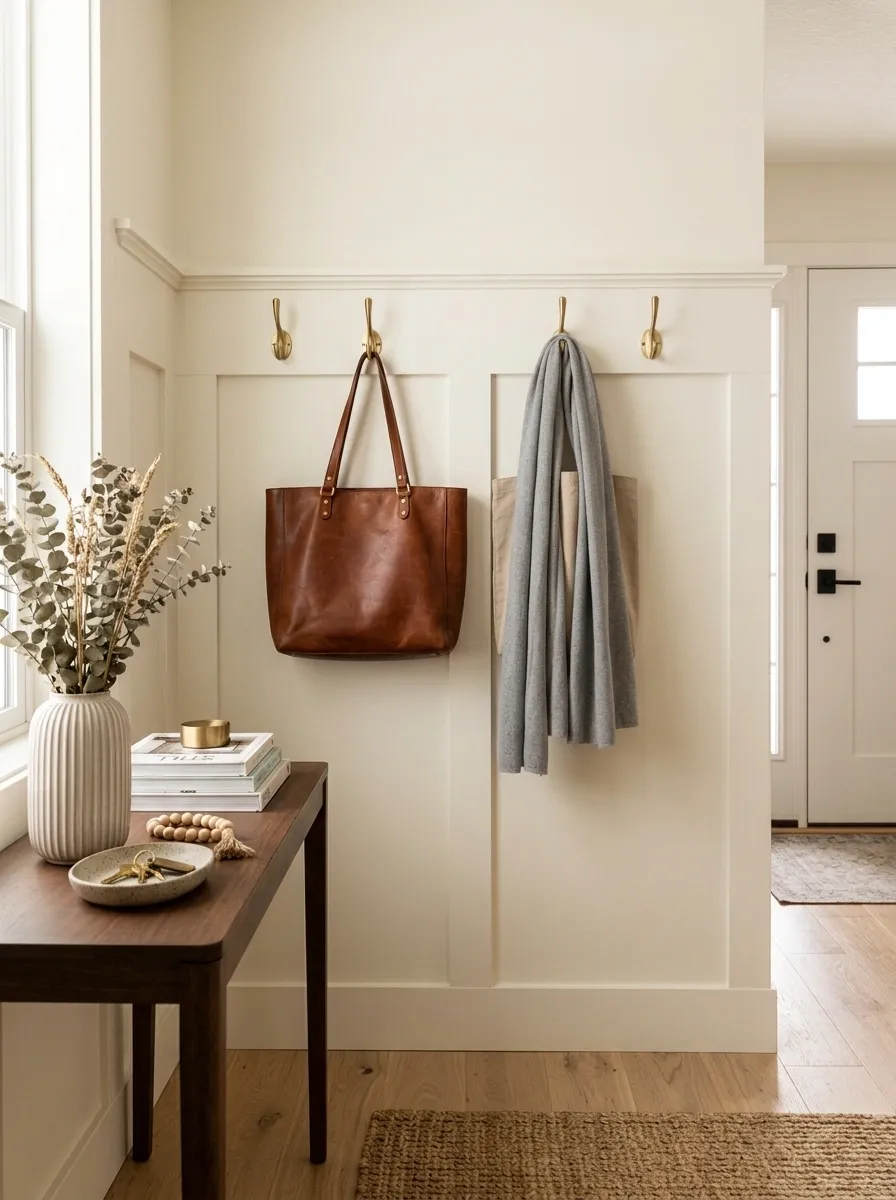
Bags are awkward in tiny entryways because they’re soft, bulky, and rarely stay where they’re put.
A wall-mounted drop zone gives them a defined place without sacrificing a square foot of floor space. Use a small rail, individual hooks, or a narrow peg panel.
Place the daily bag at an easy reach height. Reserve higher hooks for occasional items.
The smartest setup separates daily use from occasional use.
-
1Mount the main hookMake the everyday bag the easiest thing to reach.
-
2Add one backup hookUse it for a tote, scarf, or second bag.
-
3Leave some wall visibleEmpty space keeps the drop zone from becoming visual noise.
Hide Shoe Clutter Inside a Storage Bench
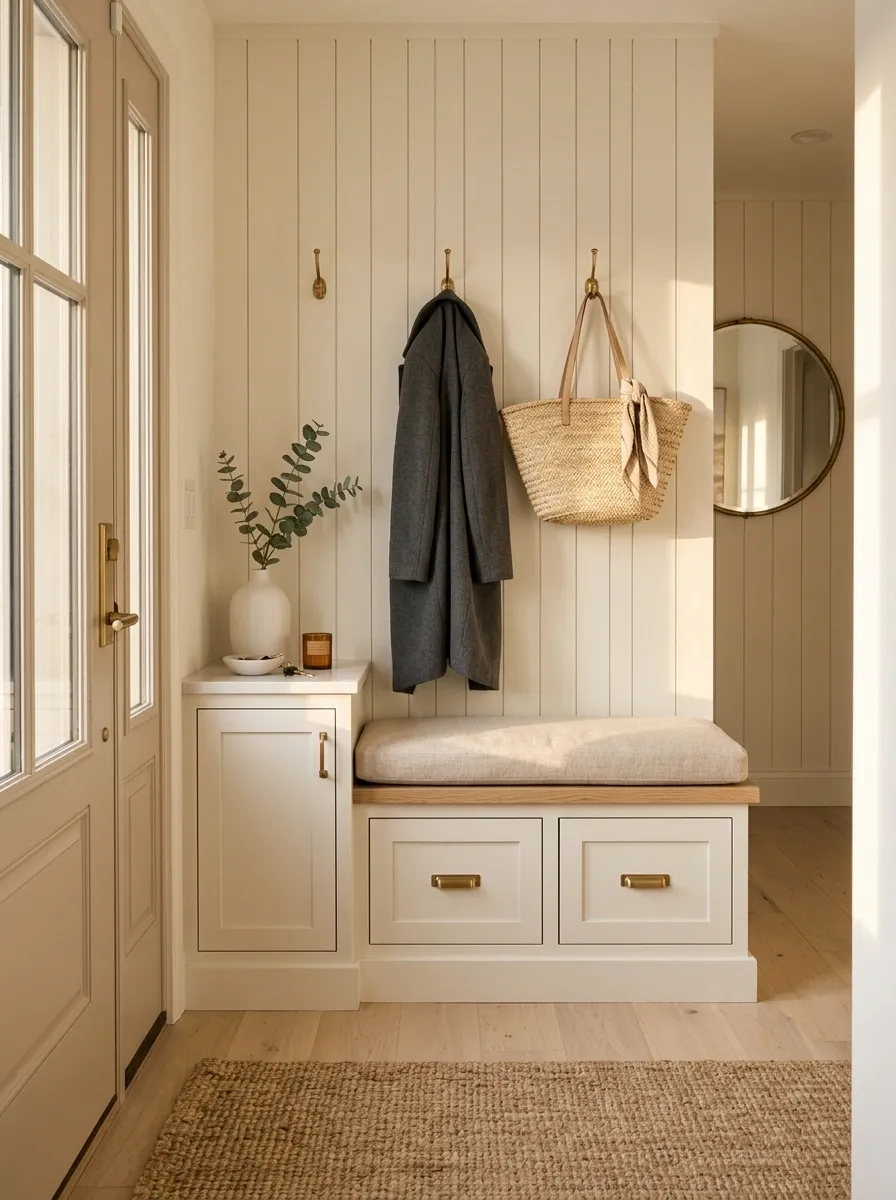
Open shoe piles make even a tidy entry look messy.
A storage bench fixes two problems at once. It creates a place to sit and gives shoes a concealed home underneath. Choose a bench with a lift-up seat or doors rather than an open cubby if visual clutter is the bigger issue.
Keep only the shoes used most often in the entry. Everything else belongs elsewhere.
The bench earns its footprint because it handles seating and storage in the same compact zone.
Match the Storage to the Wall So It Visually Recedes
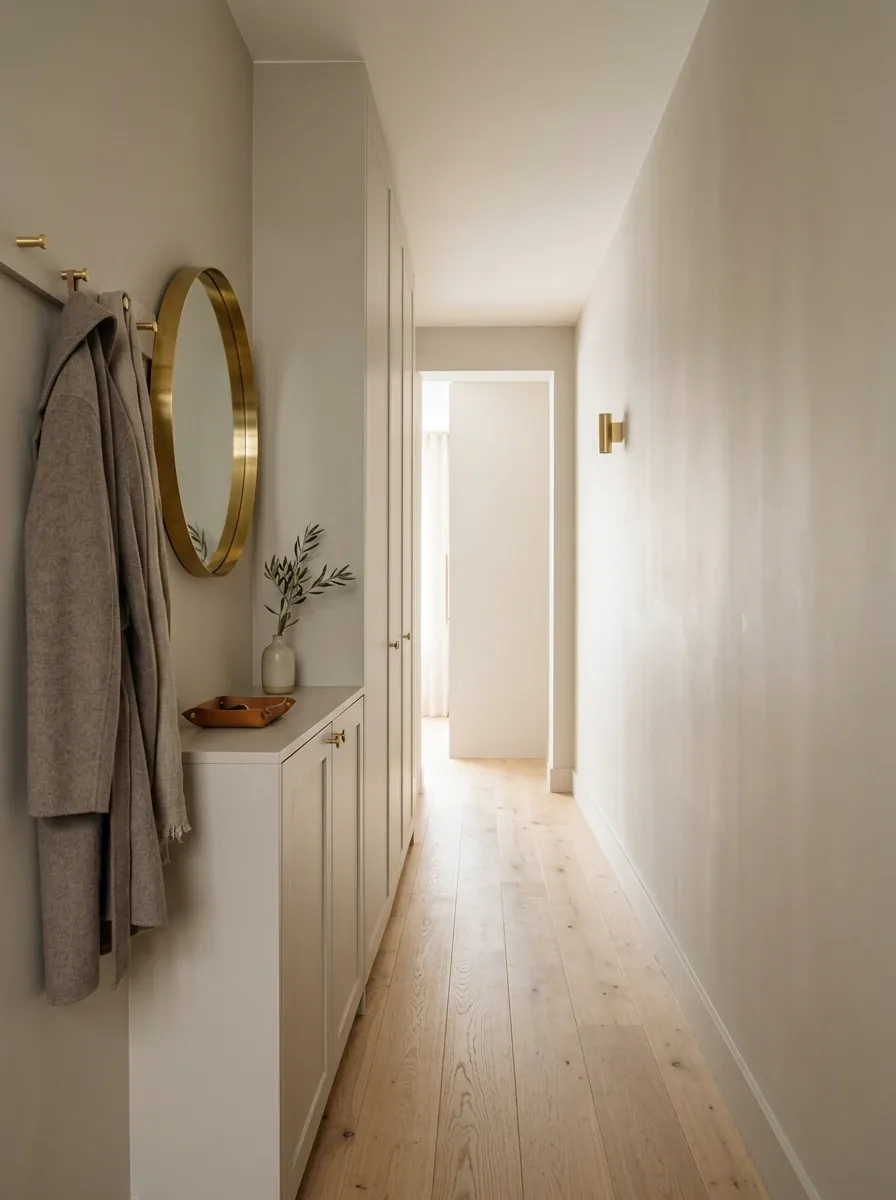
Storage doesn’t always have to disappear physically. It can disappear visually.
Matching a slim cabinet, shelf, or peg rail to the wall color reduces contrast and makes the piece feel quieter. This works particularly well in narrow hallways where every visual edge is noticeable.
Use the same color on the hardware when possible, then let one contrasting object, such as a mirror or framed print, provide the focus.
Blend the infrastructure. Highlight the personality.
Use Corner Hooks Where Furniture Won’t Fit
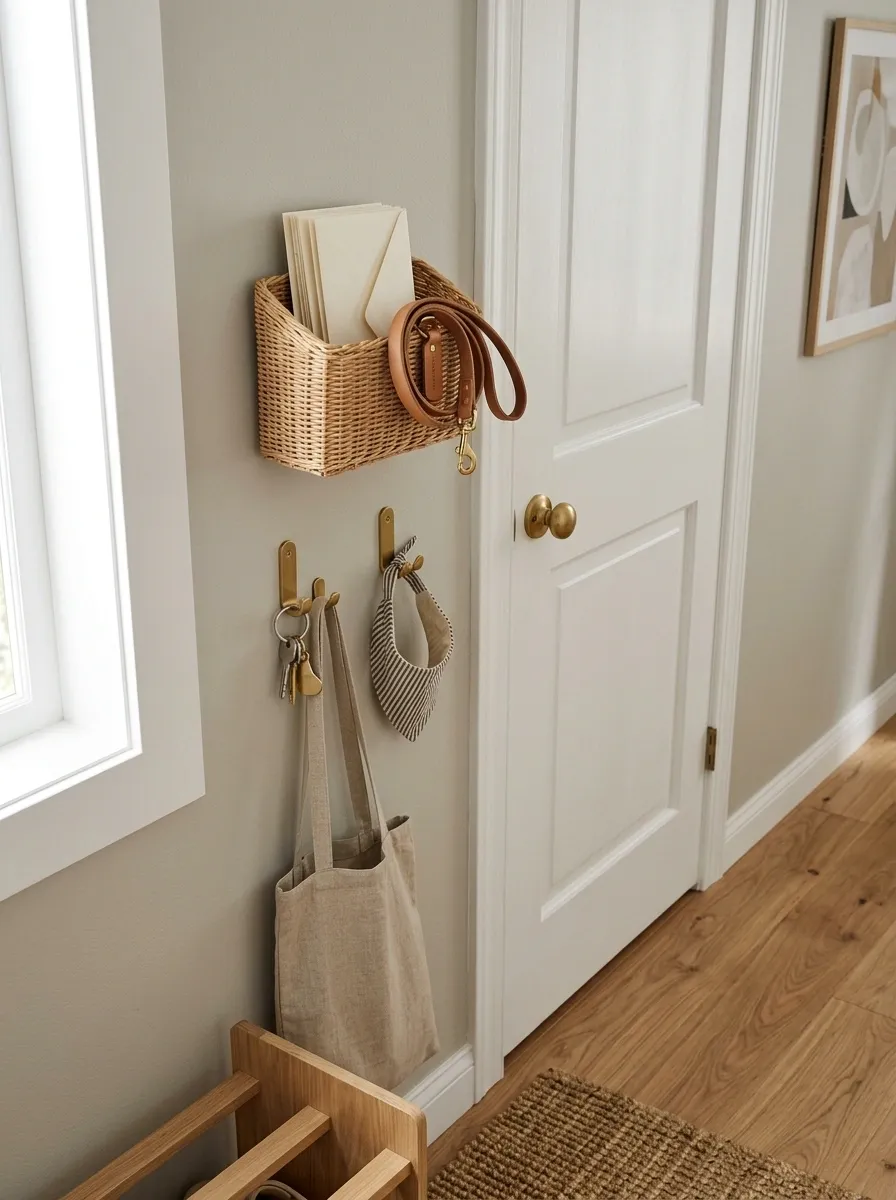
Dead corners are frustrating because they’re too small for furniture but large enough to collect clutter.
A pair of hooks can turn that useless vertical pocket into a working storage spot. This is especially useful beside a door swing or at the end of a narrow hall.
Keep the hooks visually simple and use them for lightweight daily items. A small wall-mounted basket above them can handle mail or dog-walking supplies without consuming floor area.
Replace Several Small Decor Pieces With One Statement Mirror
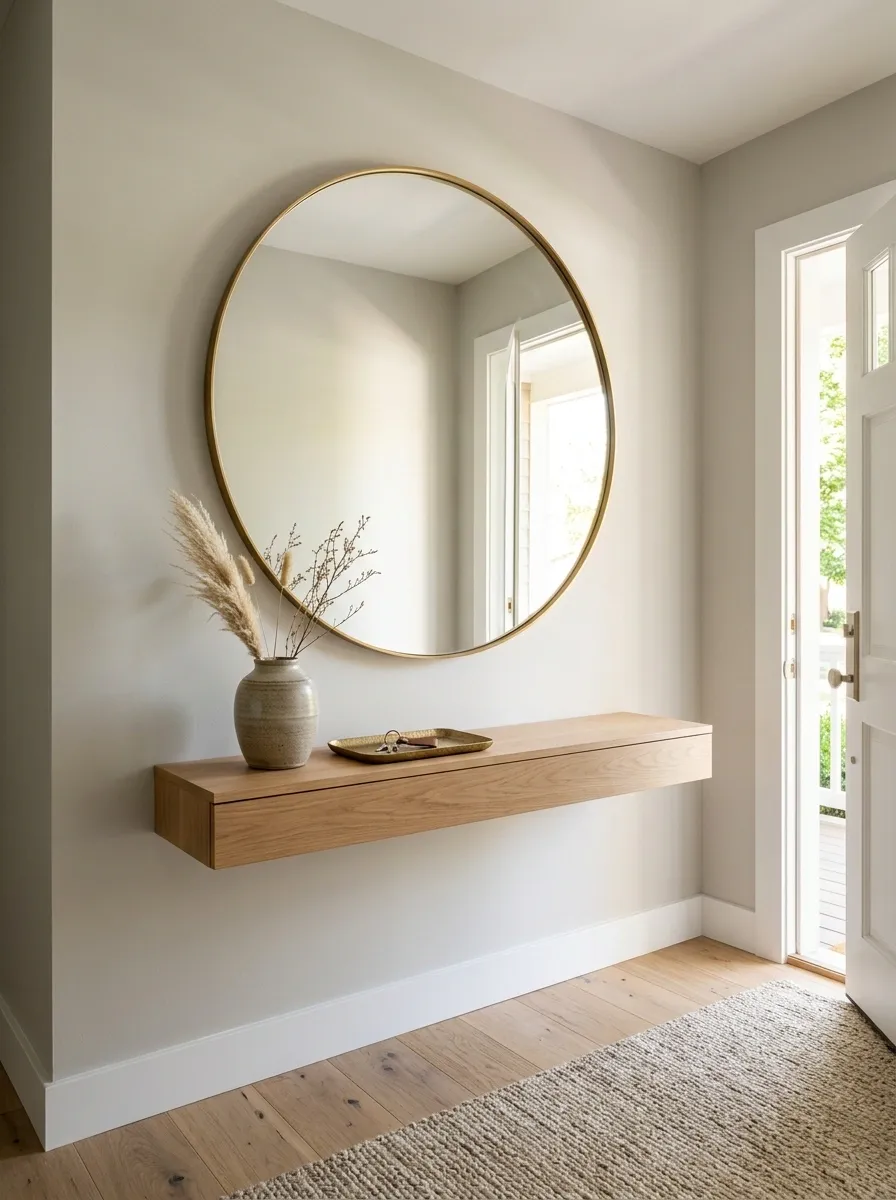
Tiny decor often creates the exact clutter it was supposed to prevent.
Instead of a collection of little frames, signs, plants, and shelves, choose one strong mirror and let it occupy the visual center of the entry.
Remove the extras around it. The wall will look larger because the eye can read one shape instead of sorting through many small ones.
Simplify the wall before buying anything new.
Add a Tiny Tray Where You Actually Drop Your Keys
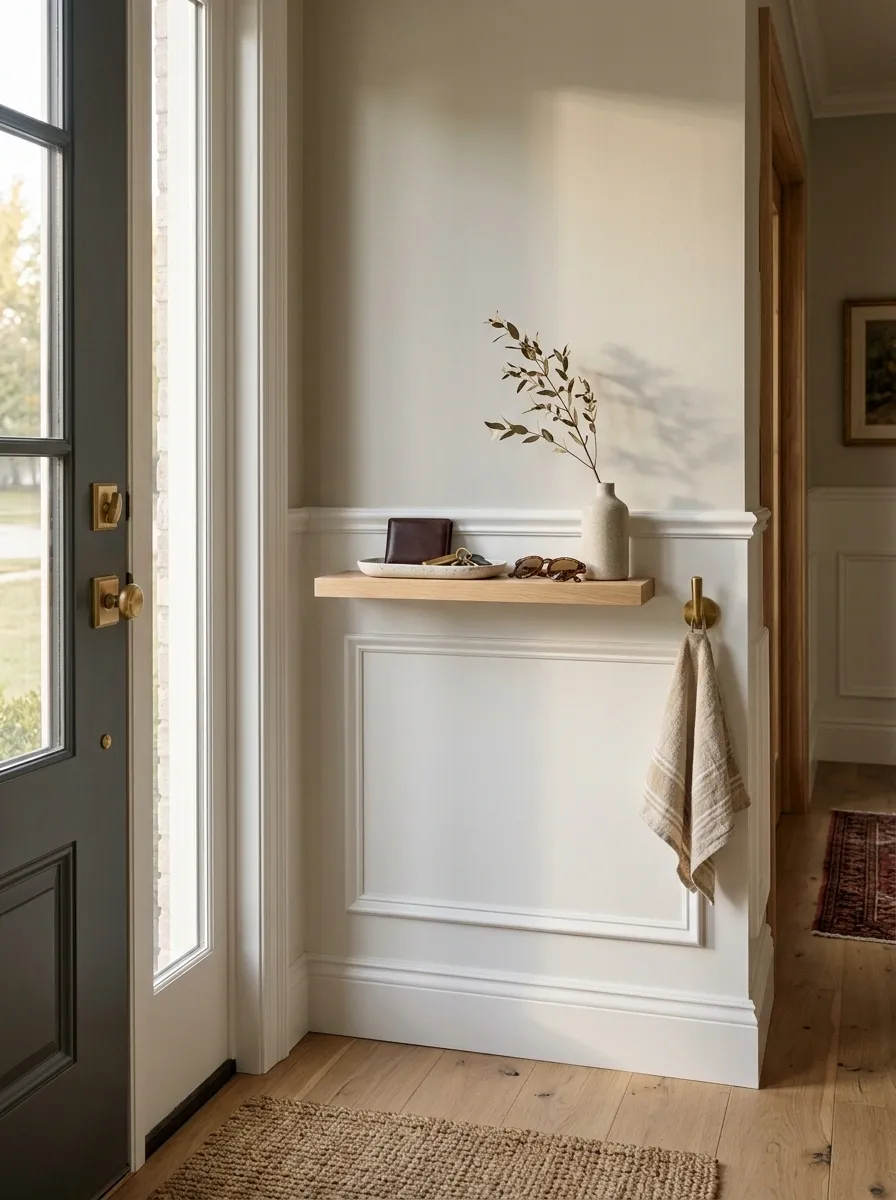
The prettiest organizer is useless when it’s two steps too far from the door.
Put the tray exactly where the hand naturally lands after the door opens. That could be on a floating shelf, inside a cabinet, or beside a wall hook.
Keep its contents limited to things that leave the house regularly. Keys, sunglasses, and maybe a wallet belong there. Receipts and loose coins don’t.
Use Baskets Only Where They Solve a Specific Problem
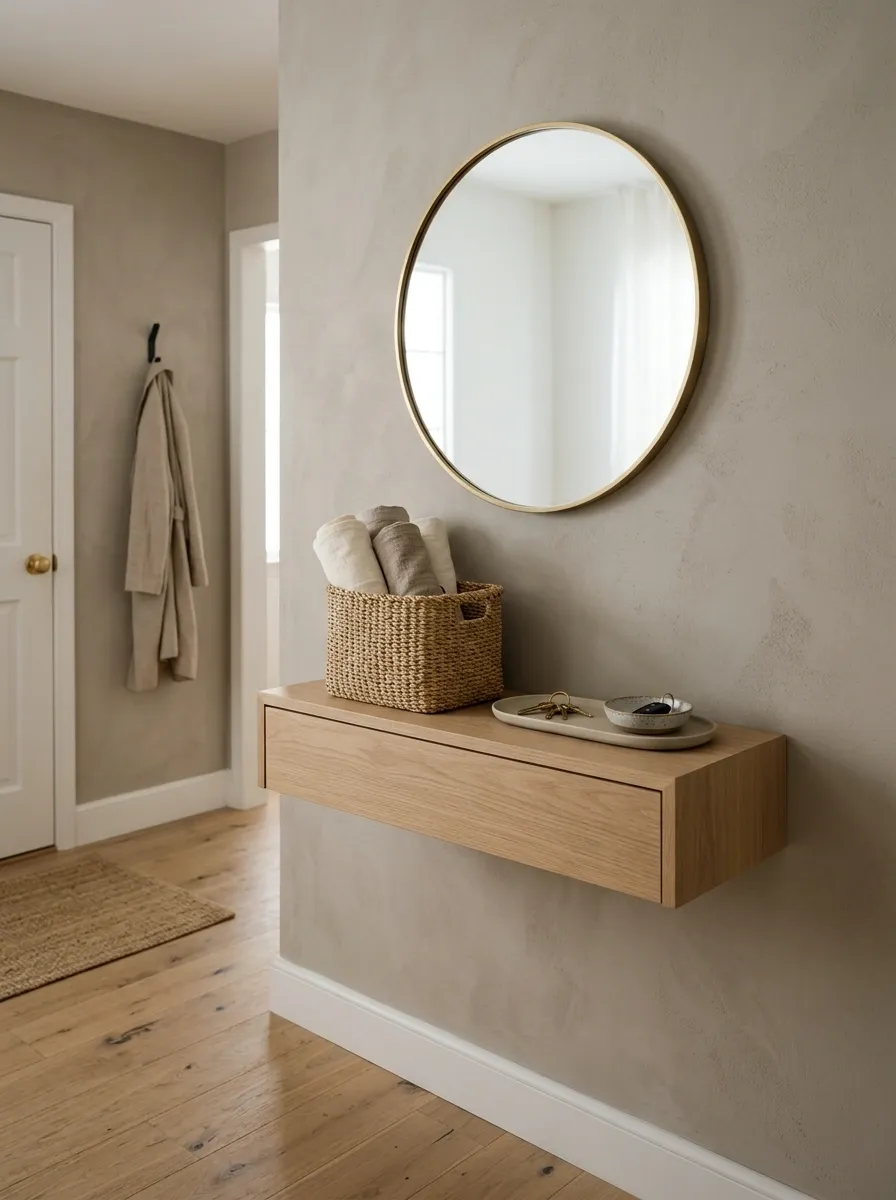
Baskets aren’t automatic storage solutions.
In a tiny entryway, an extra basket becomes another container that needs a home. Use one only when it handles a defined category, such as winter hats, dog accessories, or reusable shopping bags.
Basket test:
Build a Vertical Shoe Wall With Narrow Shelves
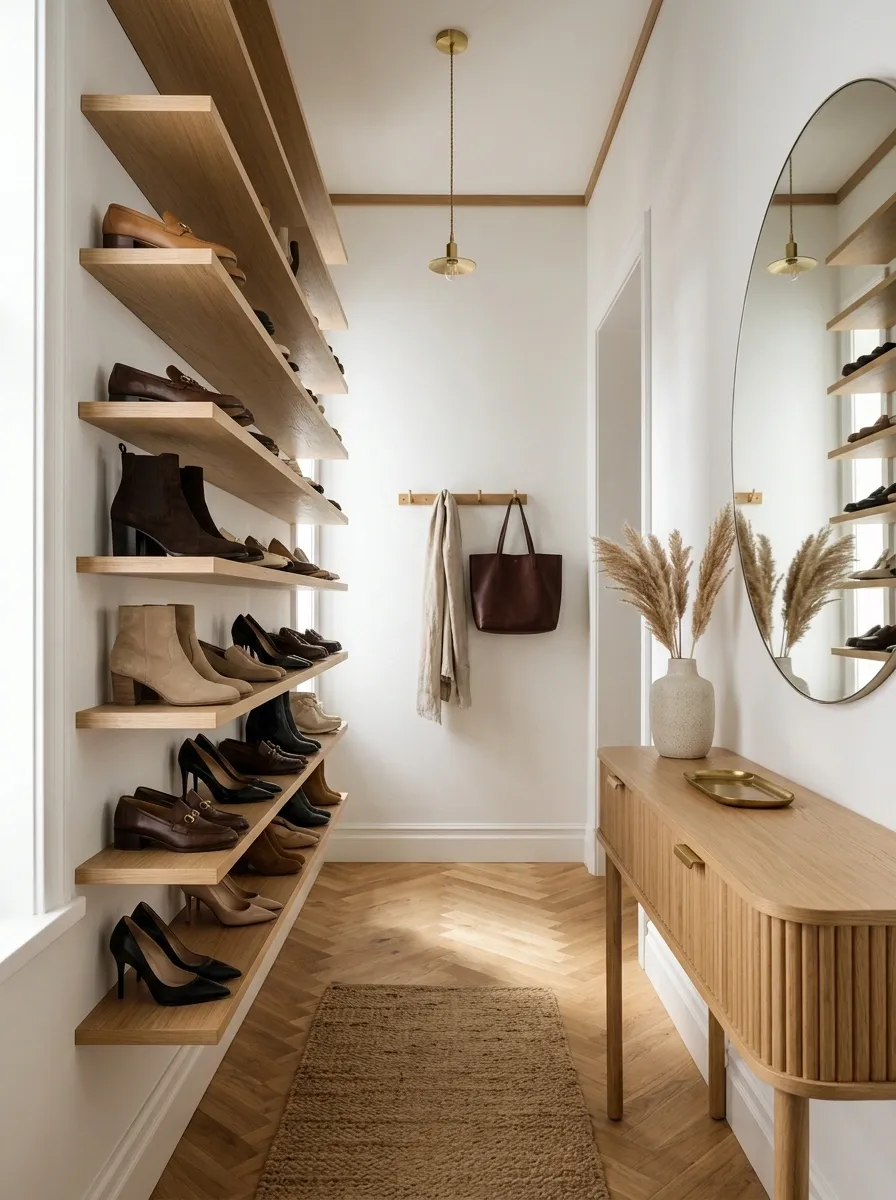
When floor space is scarce, shoes should climb the wall.
A set of narrow shelves can turn one vertical section into dedicated footwear storage without the depth of a traditional cabinet. Use the lower shelves for everyday shoes and higher shelves for less-used pairs.
Keep the shelves visually consistent. Mixed racks and random shoe boxes create unnecessary noise.
The goal isn’t to display every shoe. It’s to build a vertical station that makes the daily pairs easy to grab.
Several shallow levels can hold more useful storage than one deep cabinet while keeping the walkway clear.
Use a Peg Rail When Hooks Alone Aren’t Enough
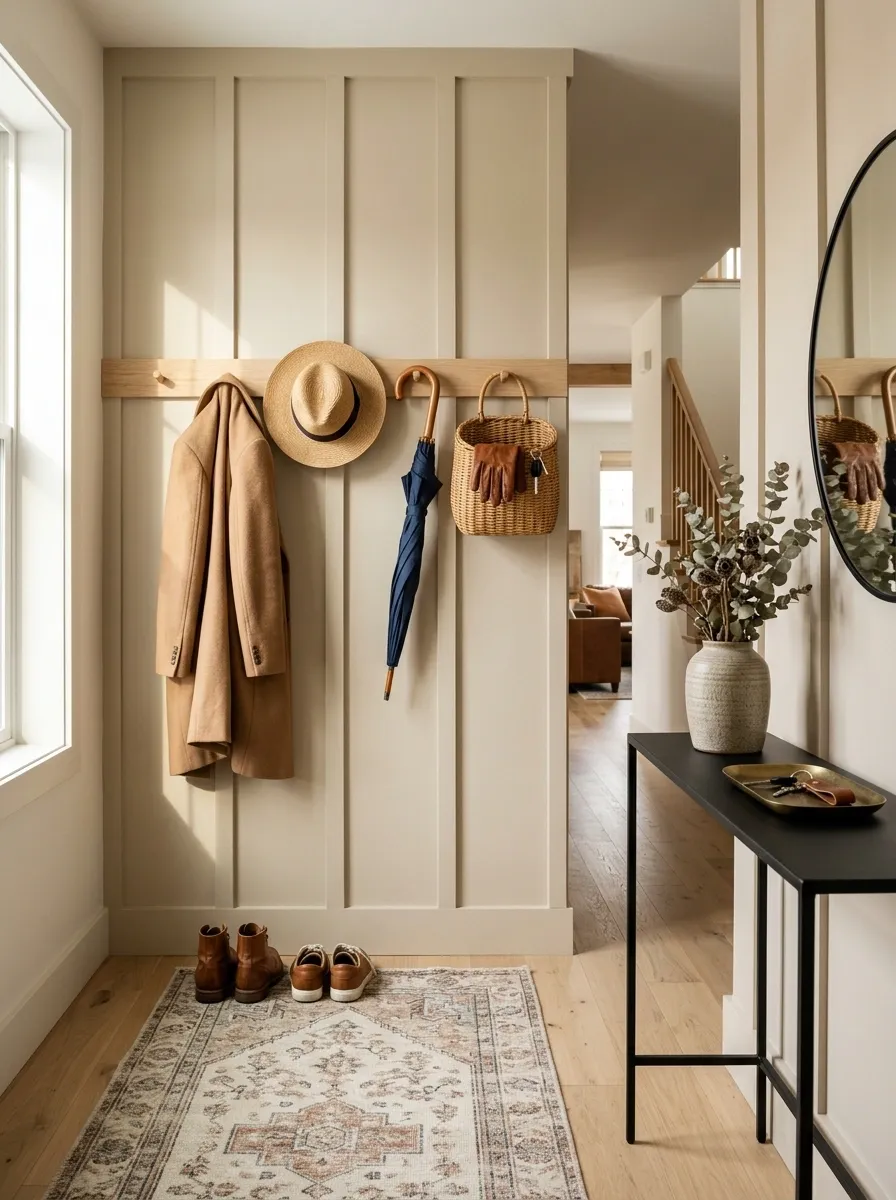
Hooks handle coats well, but a peg rail gives a little more flexibility.
It can support hooks, small baskets, hats, umbrellas, and other lightweight accessories while keeping everything aligned along one horizontal line.
Mount the rail where an ordinary coat hook would go, then customize only the sections the household actually needs.
Simple setup:
-
1Rail: create the horizontal anchor.
-
2Hooks: reserve them for daily grab items.
-
3Extras: add one small basket only when needed.
Keep the Floor Clear With a Wall-Mounted Umbrella Holder
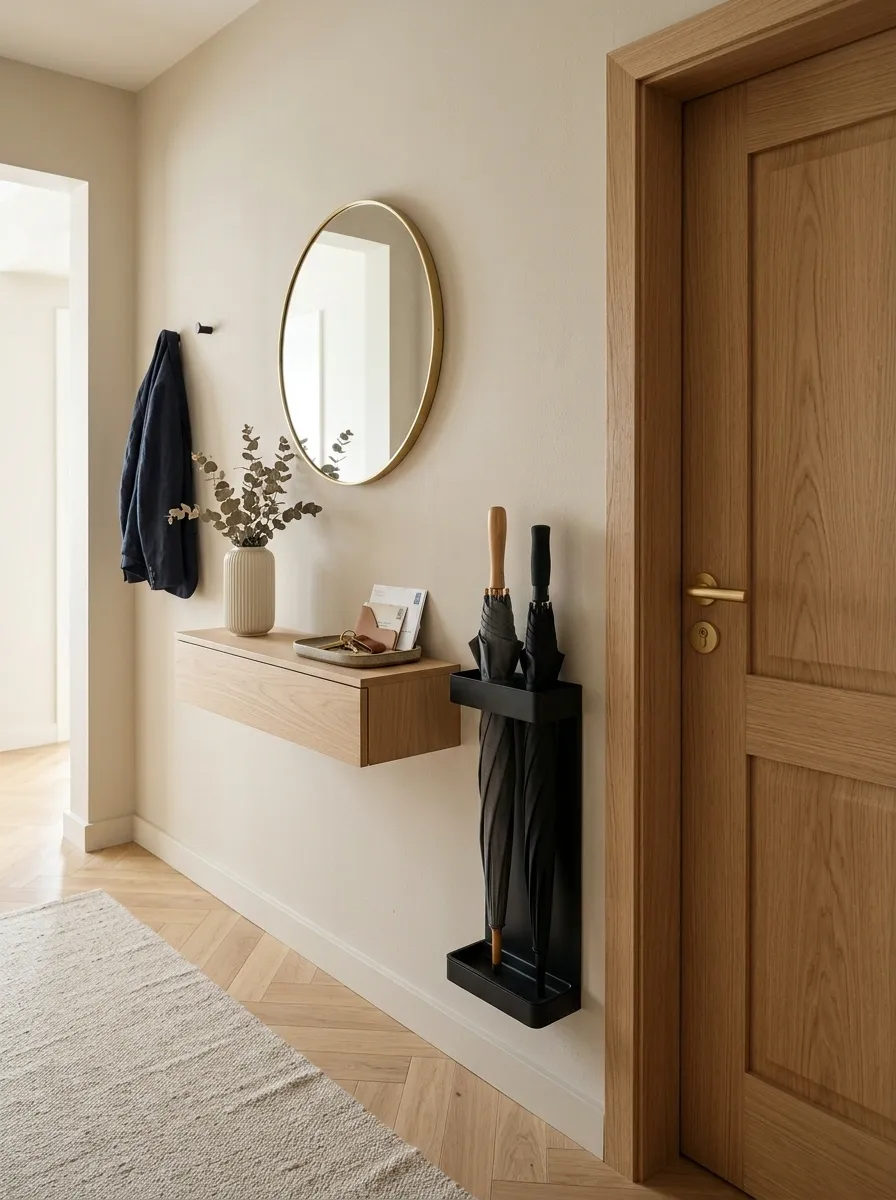
Umbrellas are small until they start leaning against furniture.
A narrow wall-mounted holder gives them a dedicated vertical home and prevents that awkward pile beside the door. Choose a holder with a small base or catch area for drips, then position it close to the exit.
This is one of those tiny fixes that makes the whole entry feel more organized because the awkward object finally has a proper parking spot.
Umbrellas stay useful when they have a fixed home beside the door instead of becoming floor clutter.
Repeat One Material to Make Mixed Storage Look Intentional
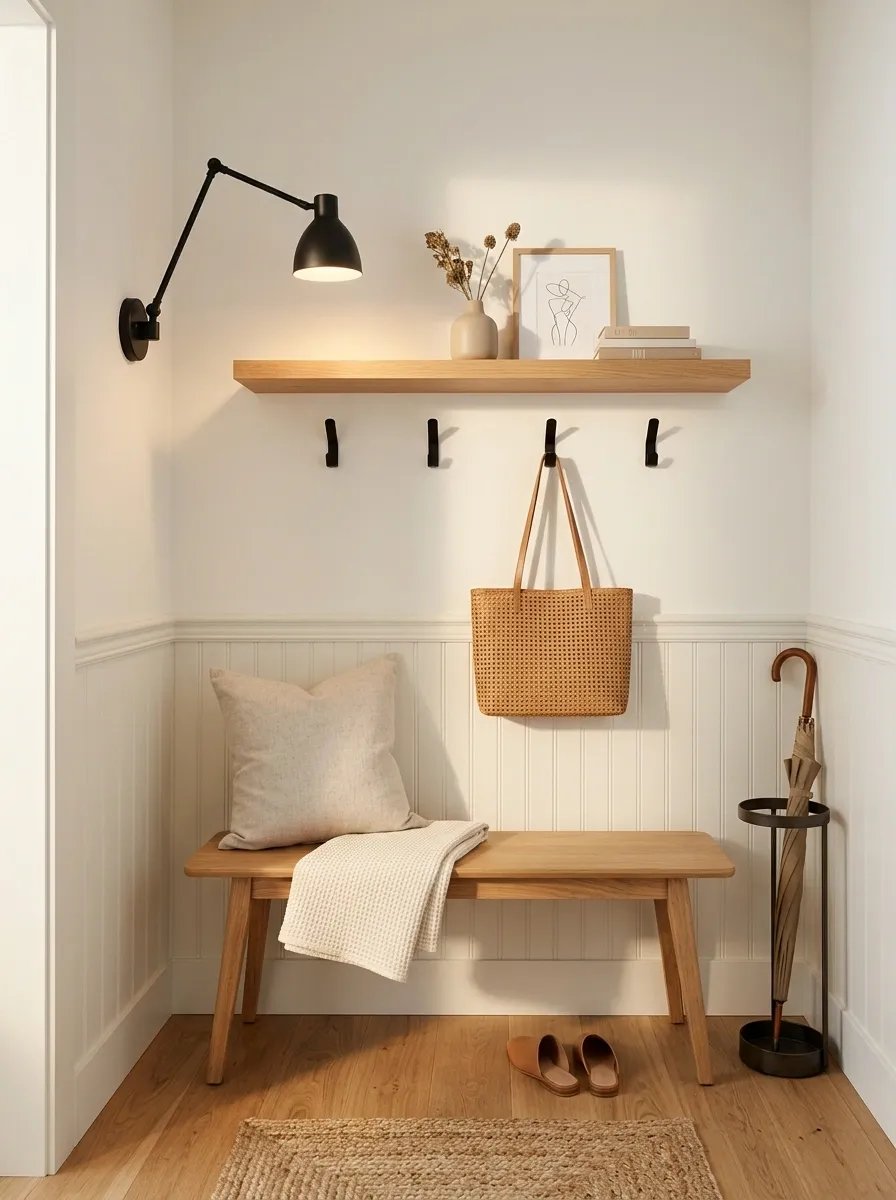
Small entries often need several different storage pieces.
The easiest way to keep them from looking patched together is to repeat one material. Match the wood tone on the shelf and bench, repeat black metal on hooks and lighting, or carry one basket weave through the area.
You don’t need every piece to match. You need one visual thread to connect them.
Material pairing guide:
Use the Space Above the Door for Rarely Used Items
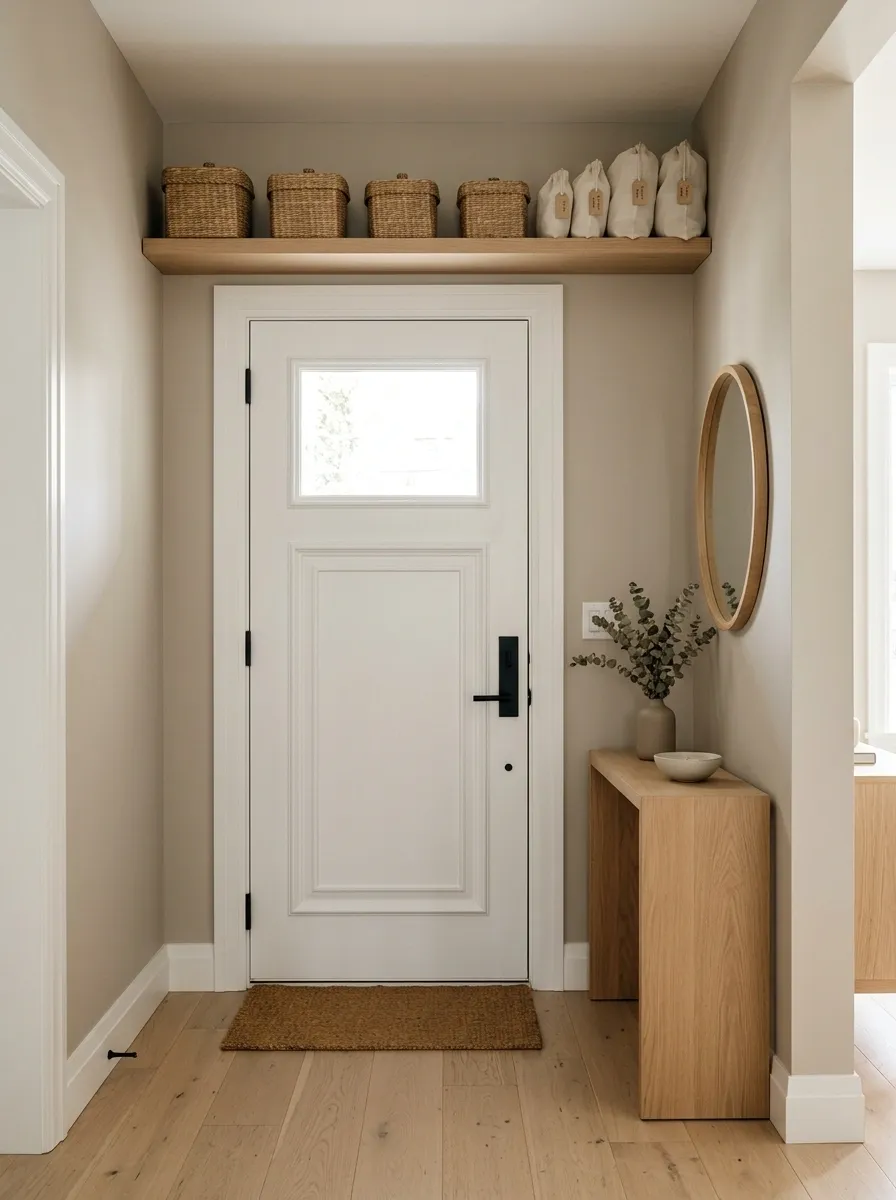
The area above the door is rarely convenient, which makes it useful for things that rarely need attention.
A shallow shelf can hold seasonal accessories, spare bags, or other light items that don’t belong in the daily zone.
This storage works because it gets the infrequent stuff out of the prime working area. Don’t use it for anything needed every morning. A ladder shouldn’t become part of the daily routine.
Create a No-Clutter Entry With a One-In, One-Out Rule
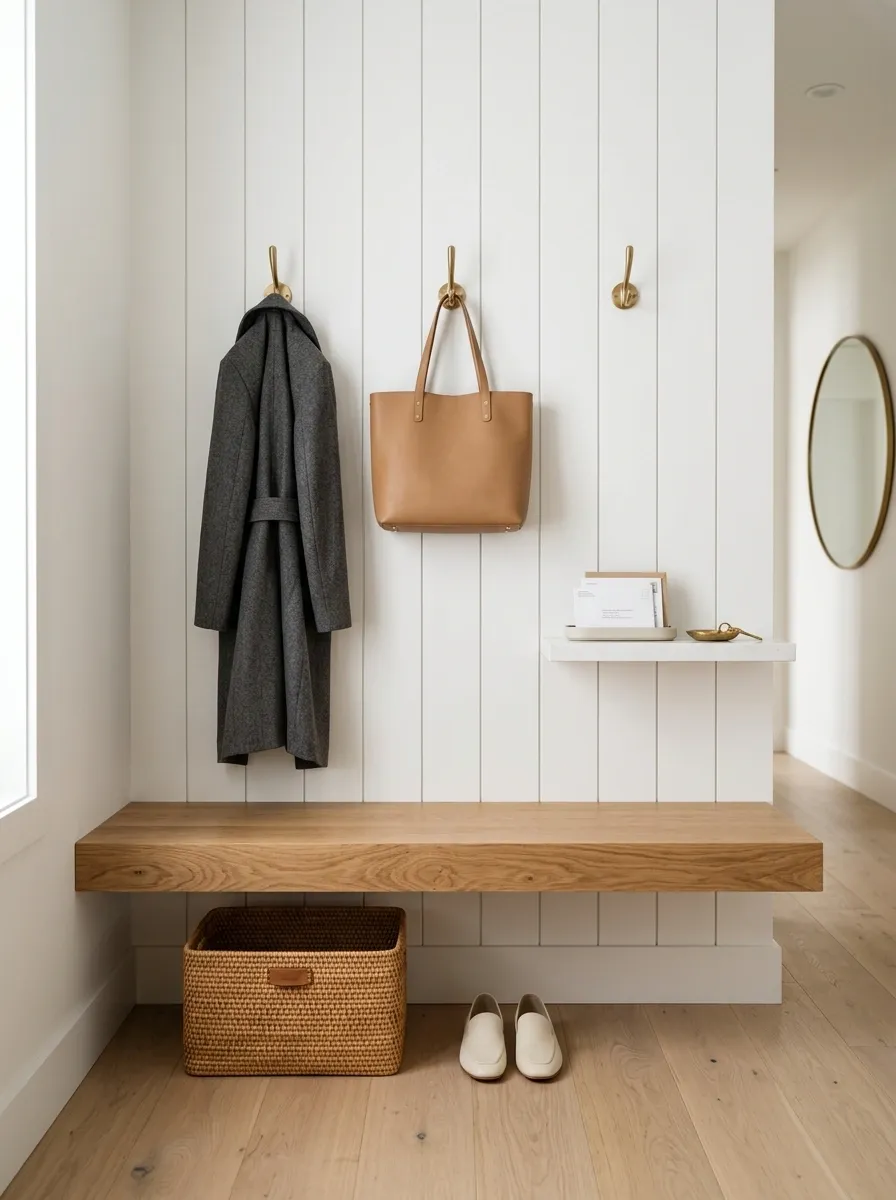
Tiny entries can’t absorb endless stuff.
A simple one-in, one-out rule keeps the storage from slowly overflowing. When a new everyday coat, bag, or pair of shoes enters the rotation, an old item leaves the entry zone.
This isn’t about owning less for the sake of it. It’s about protecting the limited space from becoming a holding area for everything.
Daily reset checklist:
Finish the Tiny Entryway With Three Useful Details, Not Ten Decorations
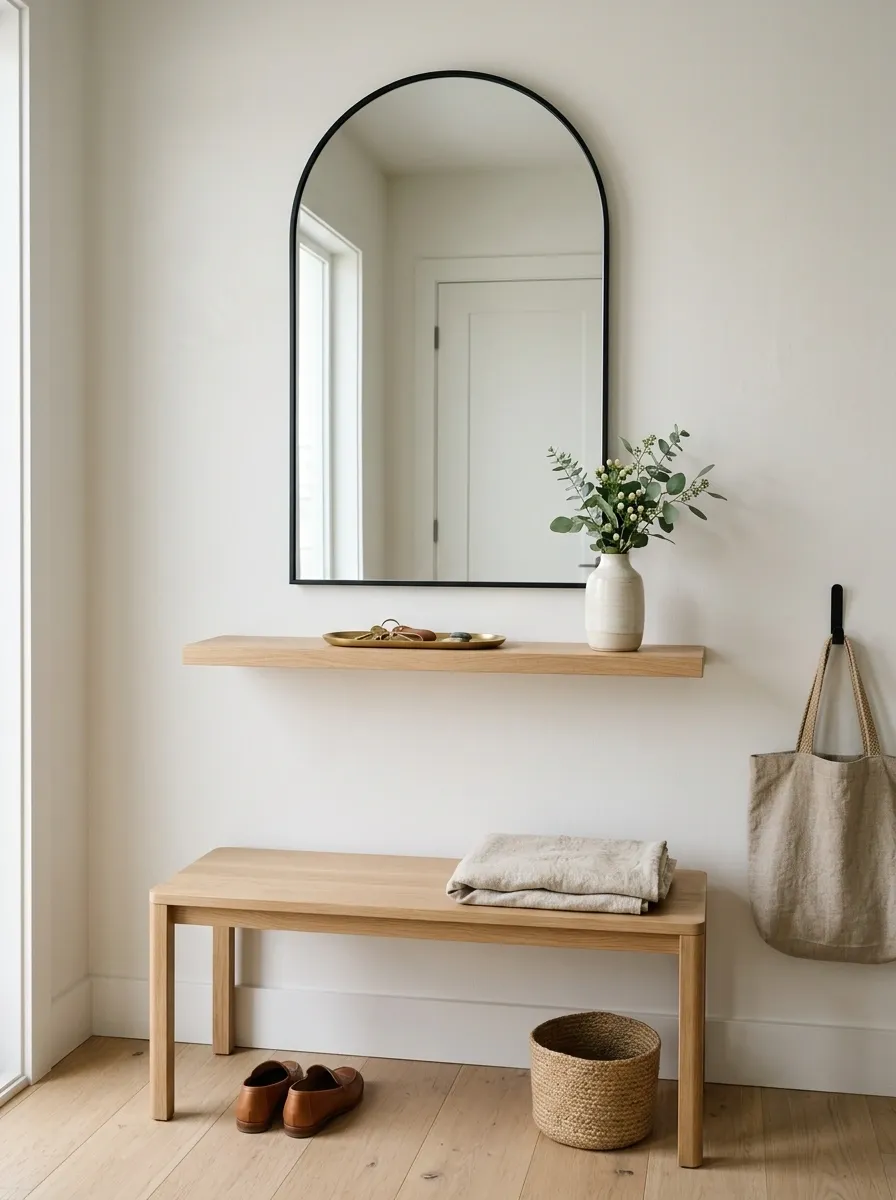
The final layer should make the entry feel finished without filling every empty spot.
Choose three details that earn their space: a mirror, a small tray, and one piece of texture or greenery. That’s enough to establish a clear focal point while keeping the practical pieces visible.
The smallest entryways look strongest when the useful objects and decorative objects aren’t fighting for attention.