
A tiny dining room can start feeling cramped before there is even enough furniture in it to justify the problem. A table that is slightly too deep, chairs that crowd the walkway, a light fixture positioned off-center, or a wall packed with small decorative pieces can make a compact room feel much smaller than it really is.
The challenge is not finding one piece of furniture that fits. It is making the entire room make sense together. In a very small space, the table affects circulation, the seating affects visual weight, the lighting affects the focal point, and the surrounding walls determine whether the room feels open or boxed in.
Very Small Dining Room Ideas
Modern Black And Wood Dining Corner
This compact dining arrangement relies on high-contrast elements and warm vertical lines to make a small footprint feel remarkably complete. A wall of warm timber slats provides a natural anchor, while a round black table and matching chairs keep the center of the room grounded and cohesive.
The large round mirror reflecting the light helps bounce brightness around the corner, creating an illusion of depth without taking up physical space. A minimalist black vase and a single bold abstract artwork complete the vignette with deliberate restraint.
Keep the accessories minimal so the intricate wood wall and striking monochrome palette remain the primary focus. That simple editorial approach prevents the tight corner from ever feeling cluttered.
Built-In Banquette Dining Nook With Round Oak Table
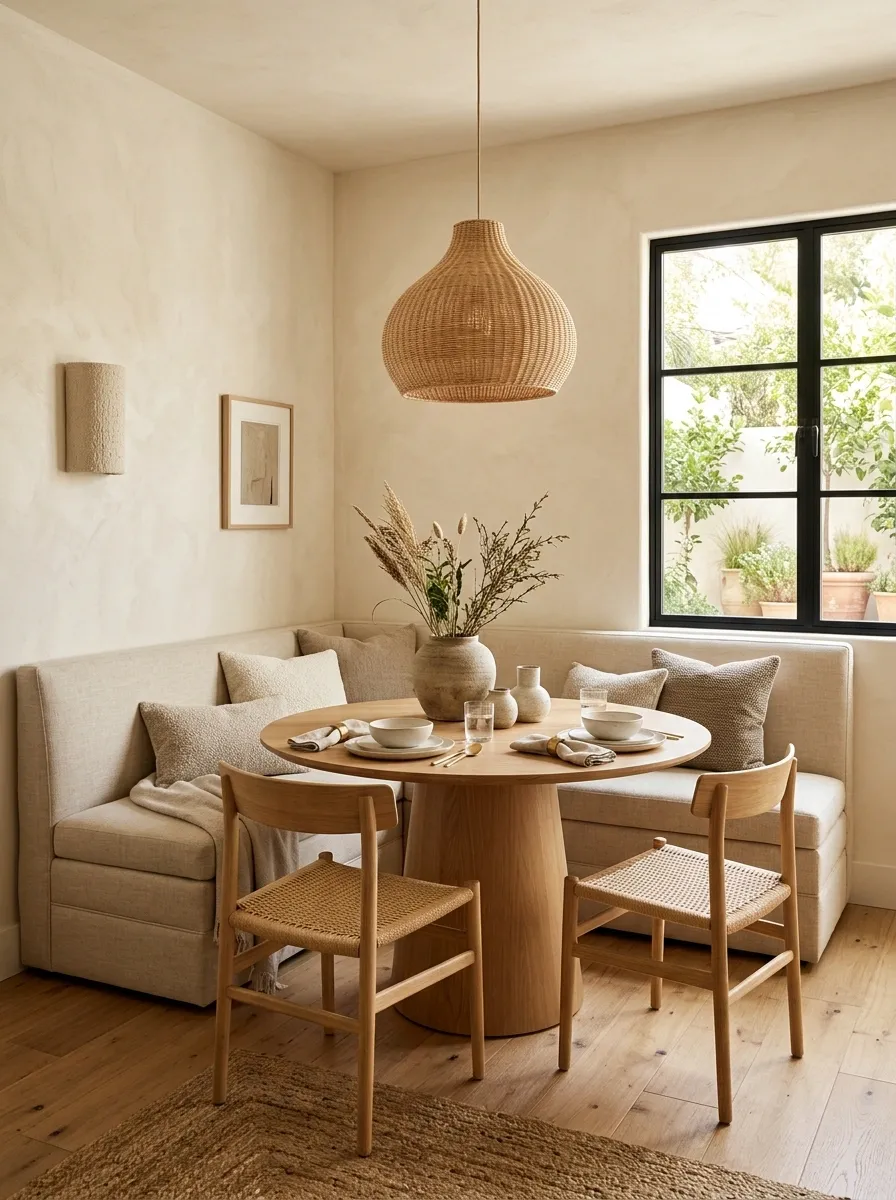
A forgotten corner becomes a complete dining room when the seating is designed around the architecture rather than pushed into it. This composition uses a built-in upholstered banquette along two walls, a round oak table in the middle, and two lightweight chairs on the open side. Warm plaster walls and a softly shaped pendant keep the room from feeling overly geometric.
The round tabletop is doing important visual work here. It removes sharp corners from a tight circulation area, while the fixed bench eliminates the bulky backs and legs that several loose chairs would introduce. The palette stays warm and limited so the built-in furniture reads as part of the room rather than an object placed inside it.
Keep the pendant centered over the table, not the room. In a tiny dining area, that small shift makes the entire composition feel more deliberate.
Cozy Banquette With Built-In Storage
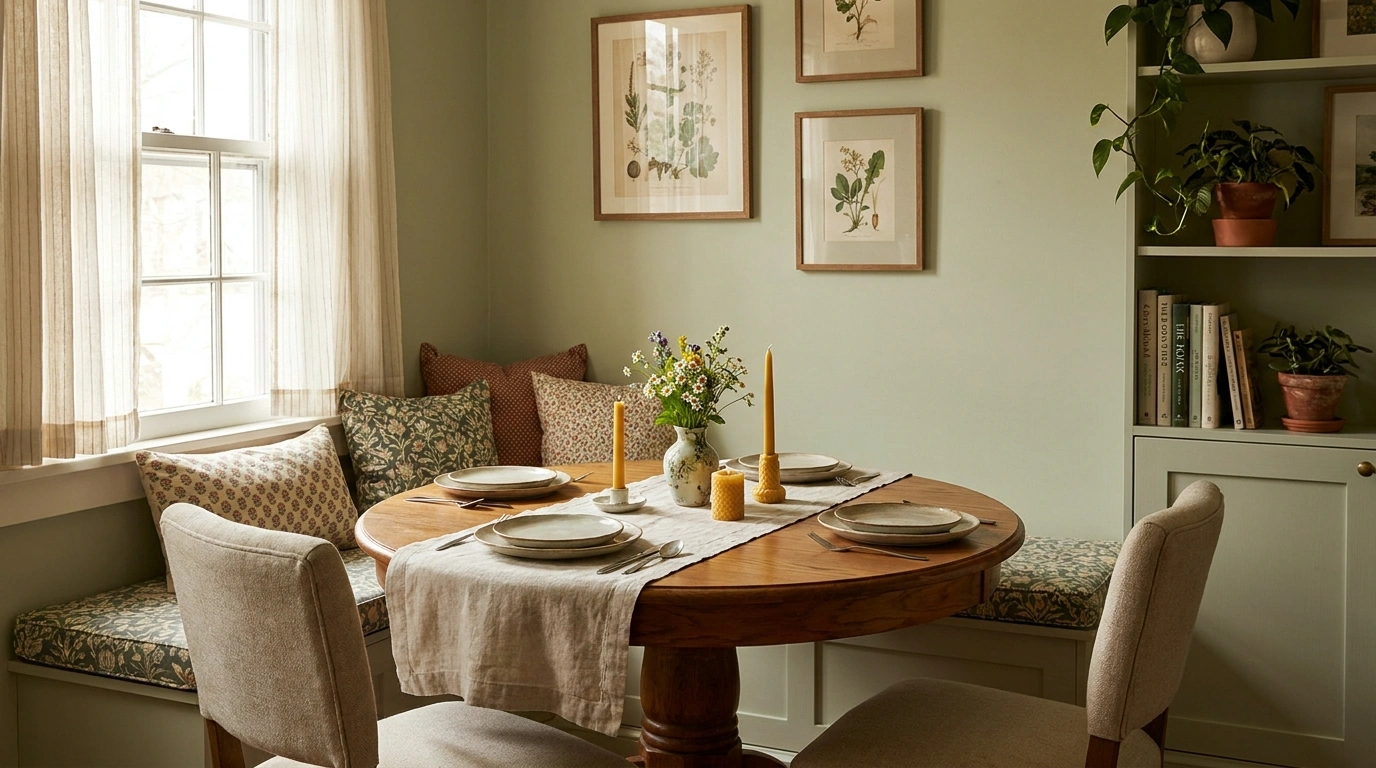
A richly patterned botanical wallpaper paired with warm terracotta upholstery transforms this cozy corner into a hardworking dining destination. Built-in cabinetry and open shelving wrap around the seating area, combining hidden storage with display space in a single streamlined footprint.
The round wooden pedestal table keeps leg clutter to a minimum, allowing easy movement around the banquette without sacrificing surface area. Soft lighting integrated beneath the upper cabinets casts a welcoming glow over the entire nook, enhancing the intimate atmosphere.
Keep the decorative objects on the shelves curated and purposeful to maintain a balanced look. The goal is to make the heavy built-in architecture feel layered and lived-in rather than visually overwhelming.
Slim Scandinavian Dining Room With Pale Oak and Soft White Walls
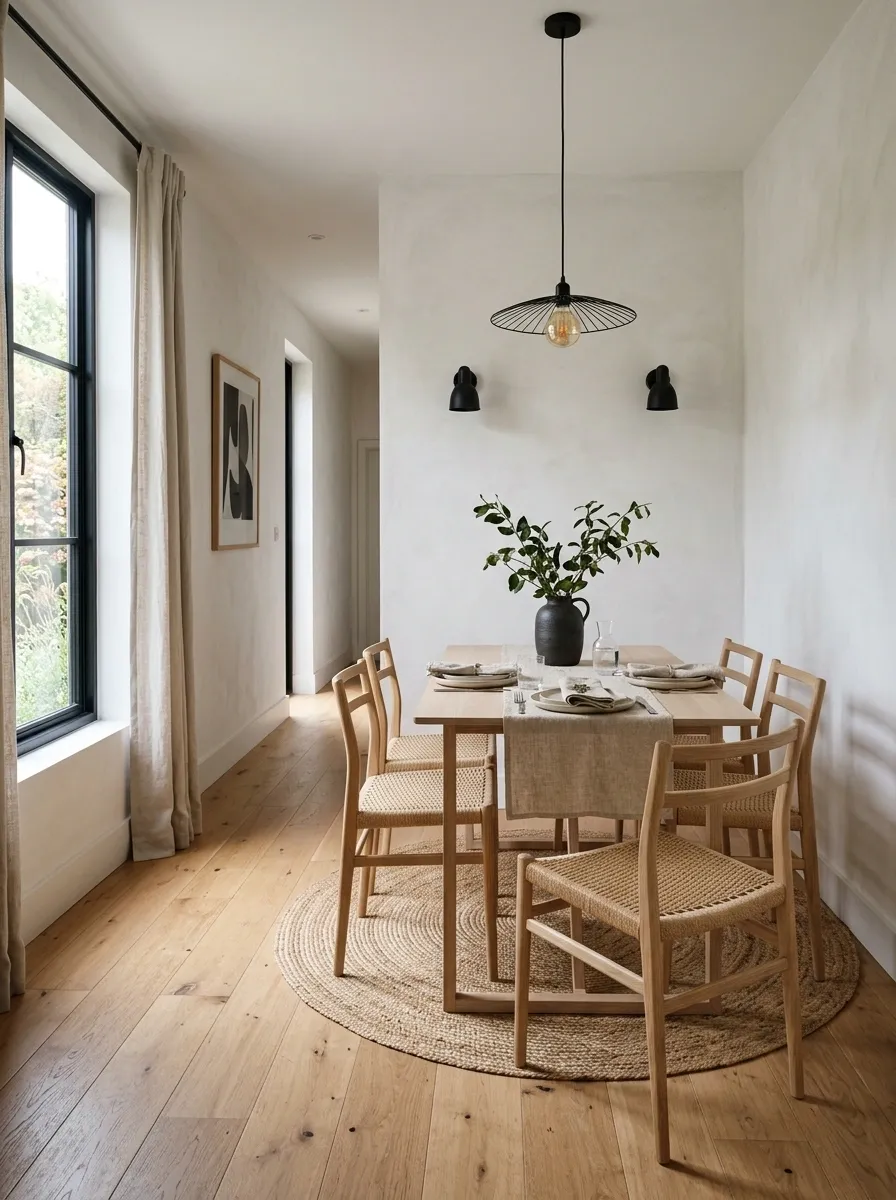
This narrow room works because almost everything has been kept visually quiet. Pale oak runs through the table and seating, the walls stay soft white, and woven textures add warmth without adding strong patterns. A few matte black details provide enough contrast to keep the room from becoming washed out.
The furniture is deliberately slim. Chairs have open silhouettes, the table has a visually light base, and nothing projects far enough into the walkway to make the room feel pinched. Natural light does most of the decorating, while a simple pendant creates a warmer evening layer.
The important part is the restraint. Adding more shelves, artwork, accessories, or contrasting finishes would make the room feel smaller even if the physical footprint stayed exactly the same.
Traditional Dining Nook With Rich Wallpaper
A dramatic patterned wallpaper creates an instant cocoon effect around this traditional dining space, framing a classic dark wood sideboard and an arched mirror. Flanked by open bookshelves, the vintage console anchors the room with classic elegance and provides a rich backdrop for the setup.
A round wooden table surrounded by softly upholstered chairs sits comfortably in the foreground, illuminated by a delicate brass chandelier overhead. The mix of dark wood tones and sophisticated blue-and-gold walls brings warmth and character to a compact footprint.
Keep the table setting simple so the patterned accent wall and ornate mirror remain the stars of the room. A fresh floral centerpiece adds the right touch of organic life without disrupting the classic aesthetic.
Dark Moody Dining Alcove With Walnut and Cream Upholstery
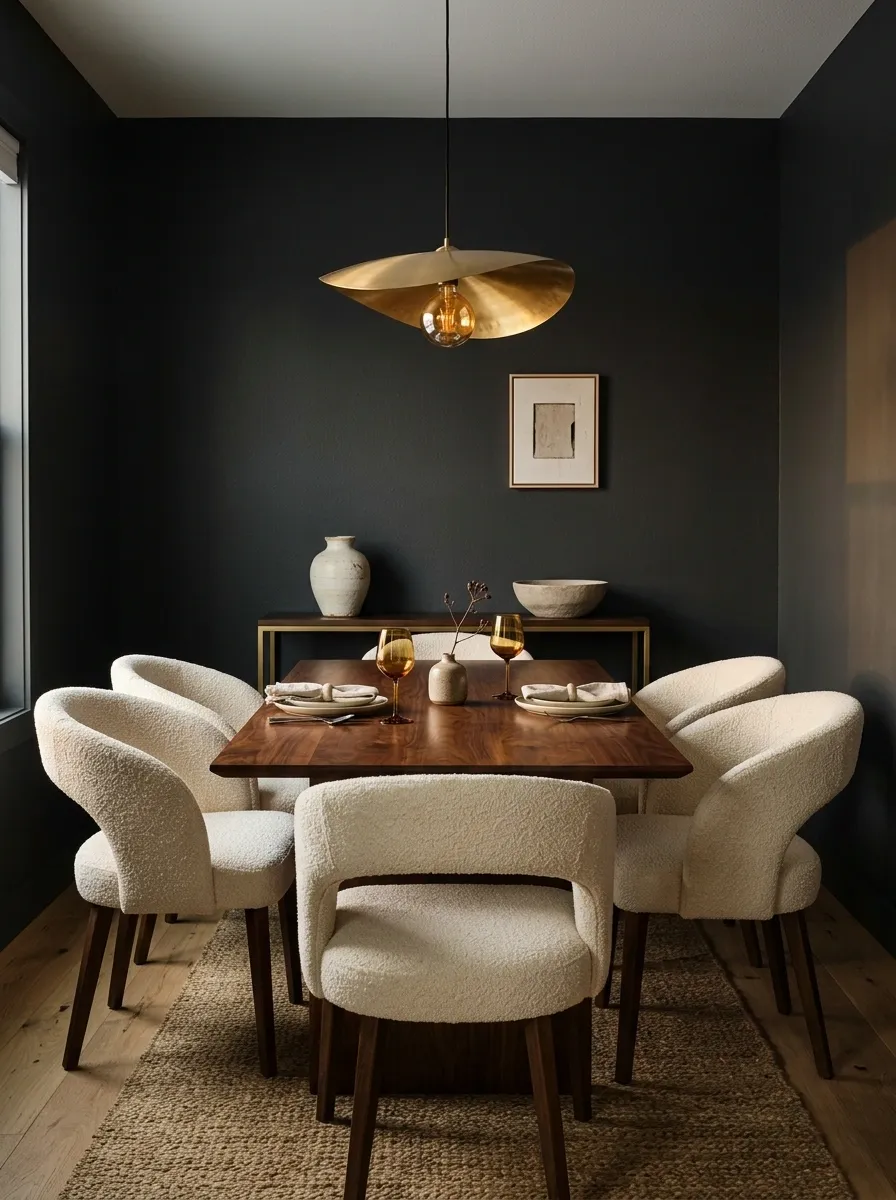
A tiny dining recess does not have to be bright to feel successful. Here, deep walls create a defined envelope around a walnut table and curved cream upholstered chairs. A low sculptural pendant hangs close to the table, concentrating the warm light exactly where it matters.
The dark backdrop gives the furniture stronger silhouettes, which is useful in a small room because there are fewer pieces competing for attention. Walnut prevents the palette from becoming flat, while the cream upholstery provides a soft visual break against the darker walls.
This composition works best when the surrounding finishes stay controlled. Too many decorative objects would destroy the drama. The room needs breathing space around the table so the darker palette reads as intentional rather than crowded.
Bright Transitional Dining Room With Bubble Chandelier
Tall gridded windows flood this transitional dining space with natural light, creating an airy setting for a round black dining table and curved white chairs. Overhead, an impressive bubble glass chandelier adds a layer of sculptural modernism that draws the eye upward.
The dark circular tabletop provides a grounding contrast against the pale oak floors and crisp white walls, while the armless chairs tuck neatly underneath to preserve precious walkway space. A tall built-in cabinetry wall runs along the side, offering seamless storage that blends into the architecture.
Keep the surrounding decor restrained to let the striking lighting fixture and window views take center stage. A simple green arrangement on the table ties the indoor space to the lush greenery visible outside.
Window-Side Dining Corner With Built-In Storage Bench
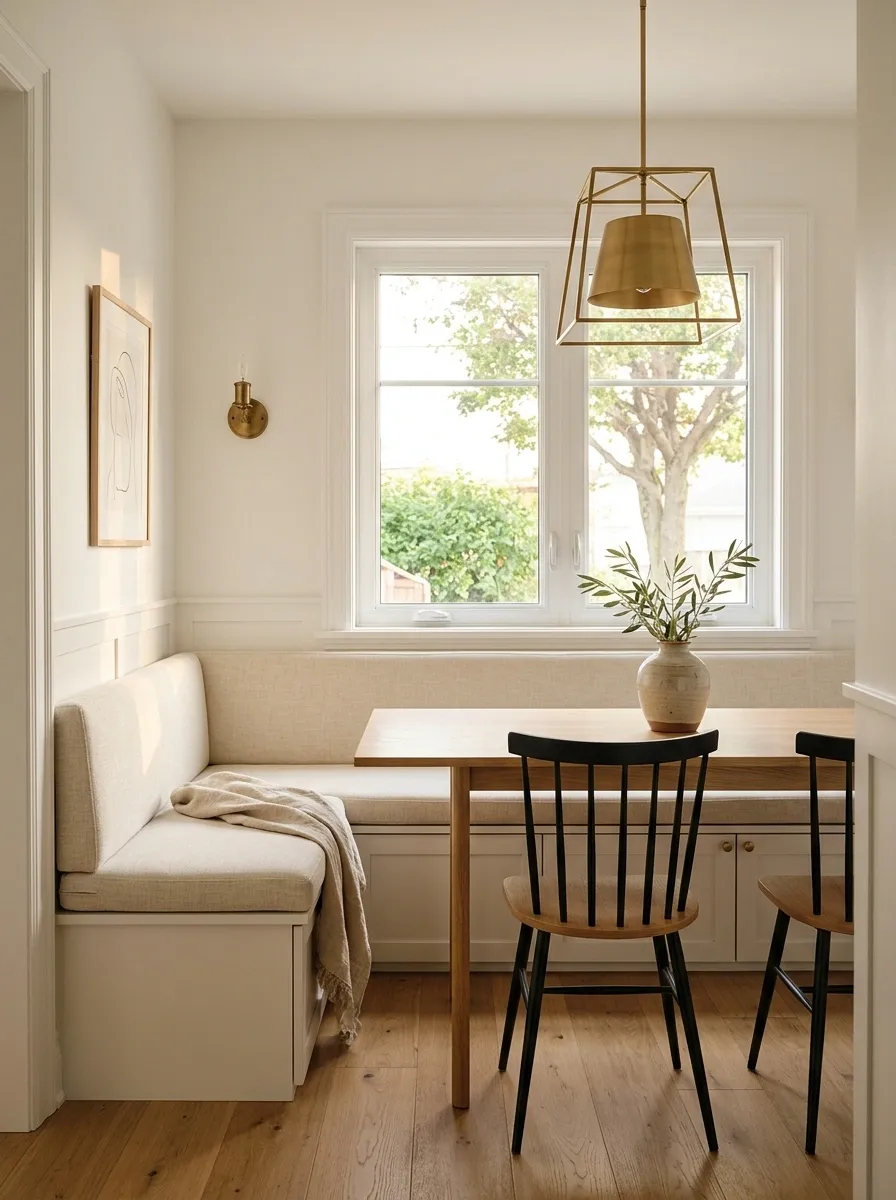
The window becomes the organizing feature in this compact dining room. A built-in bench sits directly below it, creating storage and seating in the same footprint. A slim rectangular table runs parallel to the window, with two lightweight chairs positioned opposite the bench.
That arrangement keeps the brightest part of the room open and makes the dining area feel connected to the view outside. The bench is upholstered in a restrained neutral, while the table introduces enough wood to keep the white architectural shell from feeling sterile.
The storage should remain visually quiet. Closed compartments beneath the bench are more useful here than a collection of exposed baskets and objects because the window wall already has plenty of visual activity.
Storage stays low.
SEATING
STORAGE
Warm Minimal Dining Room With Floating Console and Pedestal Table
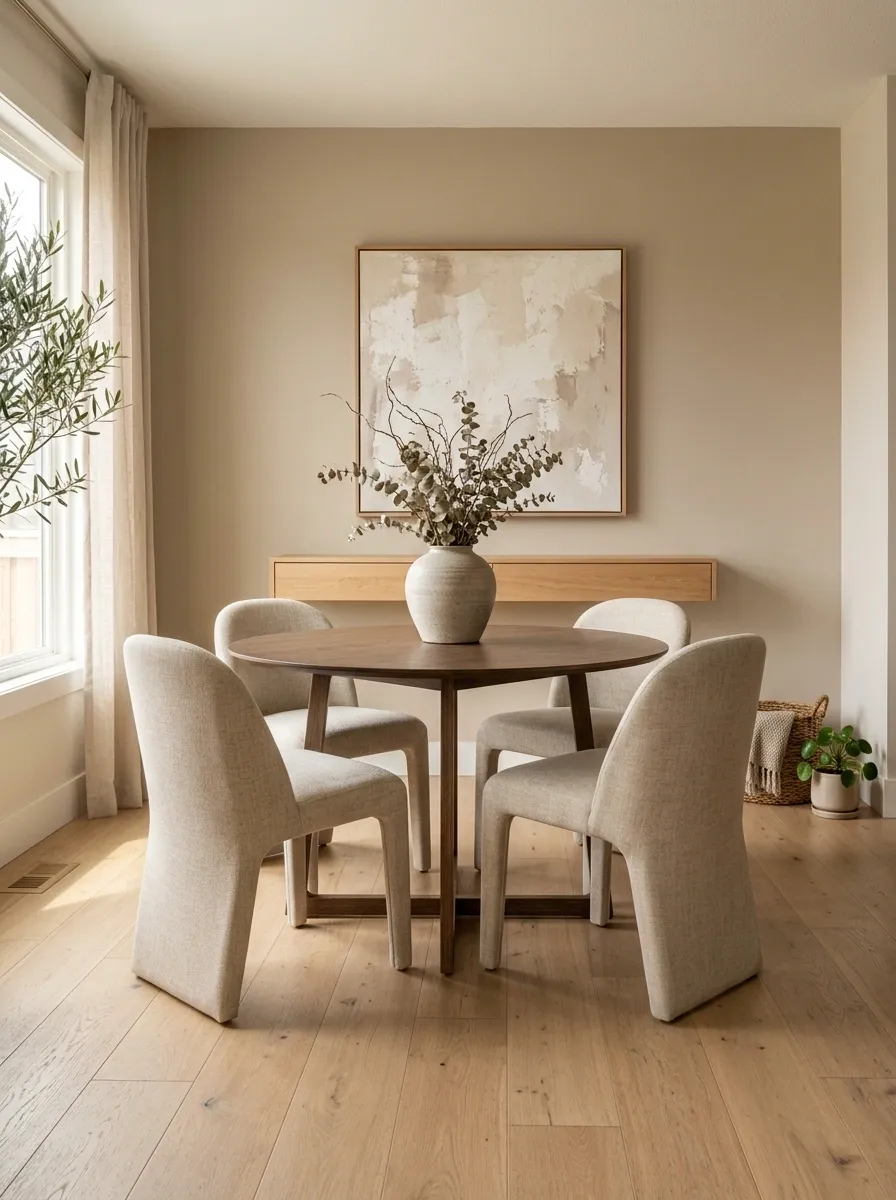
A tiny dining room can feel surprisingly open when the furniture avoids strong visual breaks at floor level. This composition uses a warm beige wall color, a pedestal dining table, armless upholstered chairs, and a narrow floating console. One oversized artwork anchors the wall without filling every available surface.
The pedestal base is especially effective because several table legs would create more visual clutter in a confined footprint. The floating console helps in the same way. It provides a useful landing surface while allowing more of the wall and floor to remain visible.
Keep the accessories large enough to read as a few deliberate gestures. Lots of small objects would work against the clean architecture and make the room feel busier than it actually is.
Narrow Dining Room With Wall-Mounted Drop-Leaf Table
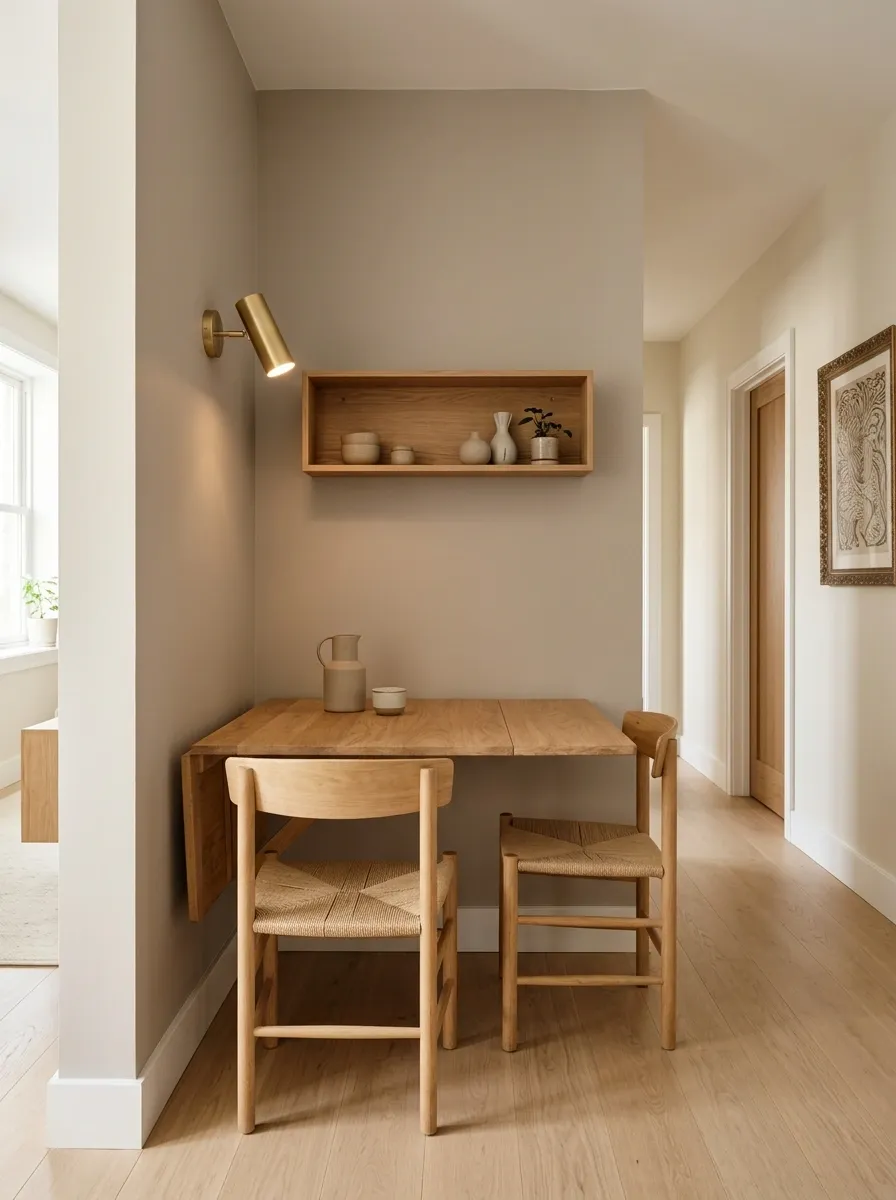
A passage-like dining area gains flexibility by keeping the main table almost completely off the floor. The wall-mounted drop-leaf surface sits against a warm painted wall when closed, then becomes a proper dining table when needed. Two lightweight timber chairs and a shallow wall shelf complete the arrangement without creating a furniture bottleneck.
The result feels more architectural than improvised. The table is part of the wall treatment, while the open floor keeps the narrow room visually connected to the spaces around it. A small pendant or directional wall light marks the dining position without requiring a large ceiling fixture.
The important detail is what happens when the table is folded away. The room should still look intentional rather than unfinished.
Small Traditional Dining Room With Painted Built-In Cabinetry
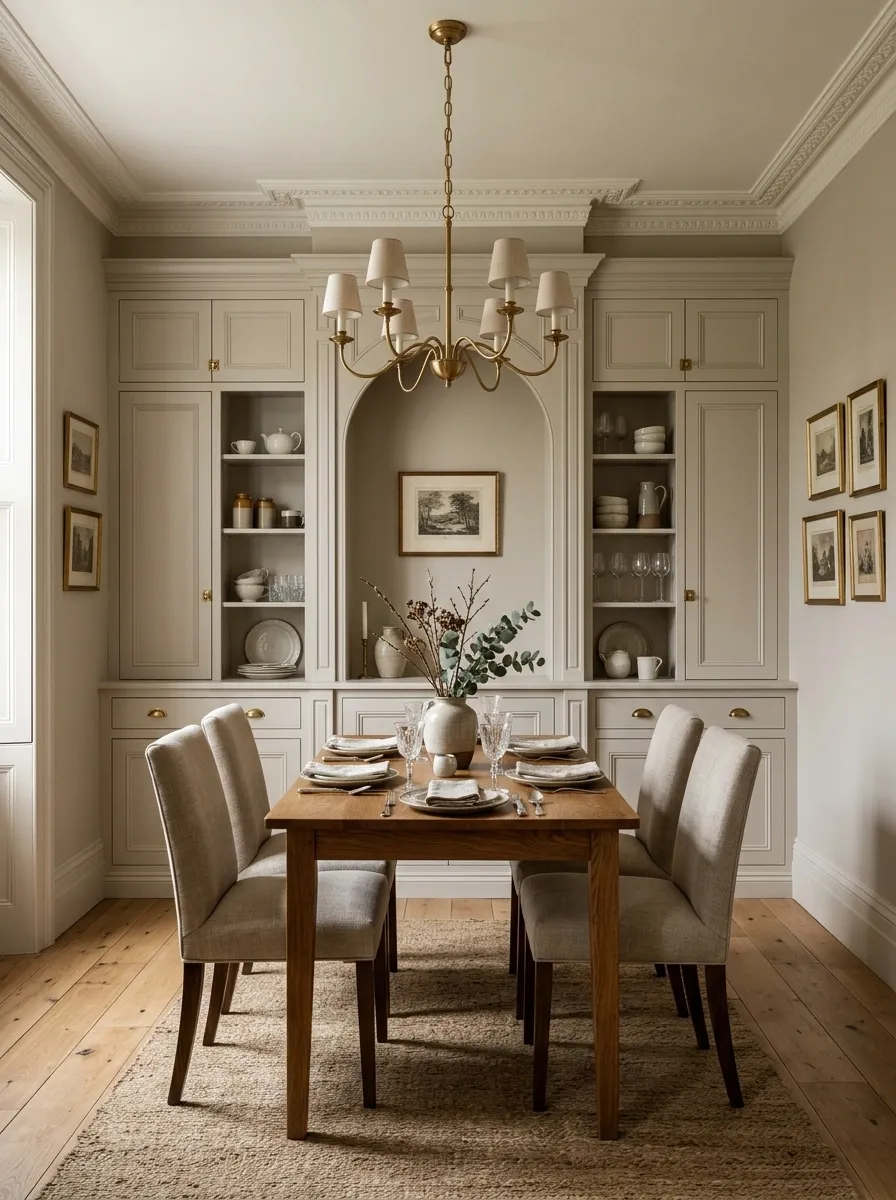
Traditional detailing can still work in a very small room when the architecture and furniture share the same visual language. This version uses painted built-in cabinetry, a compact rectangular table, a small classic chandelier, framed artwork, and upholstered dining chairs in a quiet neutral fabric.
The cabinetry is the key to keeping the room cohesive. Instead of introducing another wood tone, the built-ins remain close to the wall color, allowing their paneling and proportions to provide character without creating a heavy block.
A modest chandelier gives the ceiling some presence, but its scale stays subordinate to the table. The room should feel like a small dining room with traditional detailing, not a large formal dining room squeezed into a smaller footprint.
Tiny Galley Dining Area With One-Sided Banquette Seating
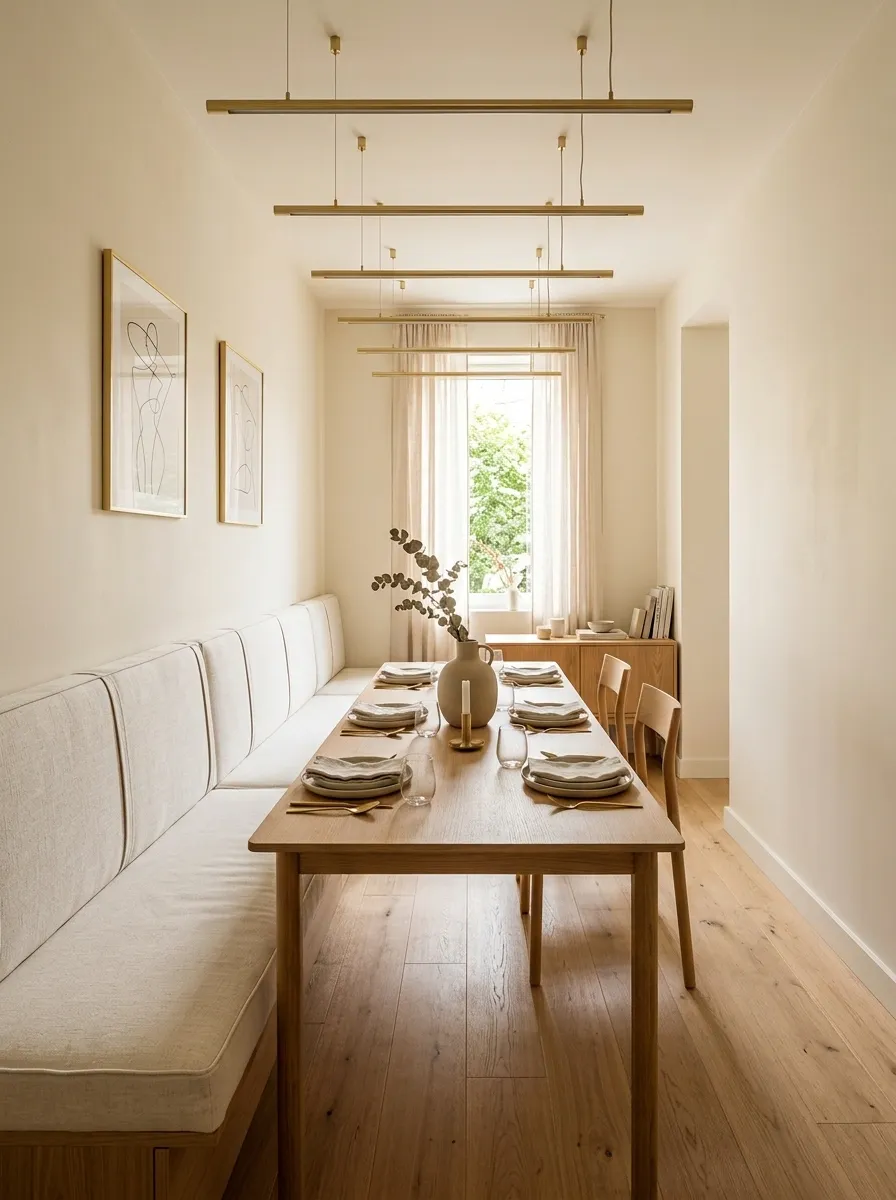
Long, narrow dining spaces benefit from thinking in terms of a single clean line. One wall carries a continuous upholstered banquette, while a narrow table follows its length. Two individual chairs sit on the opposite side, leaving a direct walkway beyond them.
The composition feels efficient without looking temporary because every piece follows the same direction. The bench becomes the strongest horizontal element, the tabletop reinforces it, and the pendant lights can repeat that rhythm overhead.
A lighter wall behind the bench helps the furniture remain defined. Pattern should stay minimal here. In a room this narrow, large visual interruptions can make the entire arrangement feel chopped into smaller pieces.
Organic Modern Dining Nook With Travertine and Walnut
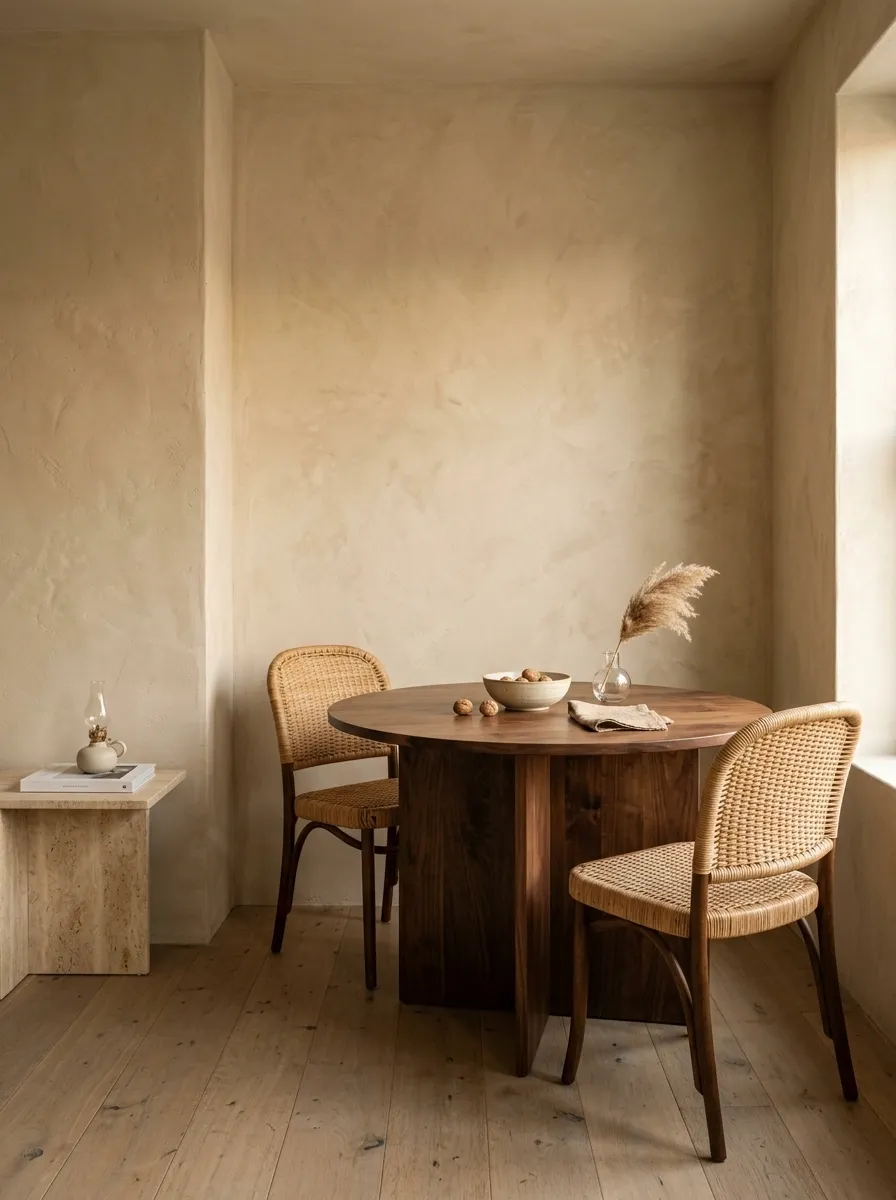
The smallest rooms often benefit from softer shapes, and this organic modern dining nook demonstrates why. A rounded walnut table sits against warm textured walls, while a compact travertine side surface and woven seating introduce contrasting materials without breaking the calm palette.
Nothing is aggressively geometric. Rounded furniture edges soften the footprint, while the stone provides enough variation to keep the neutral scheme from looking flat. The room feels layered through material rather than through lots of accessories.
The strongest restraint is in the wall styling. Leaving broad areas of the textured finish visible allows the stone, wood grain, and upholstery to read clearly instead of competing with artwork and shelving.
Tiny Dining Room With Built-In Corner Bench and Rectangular Table
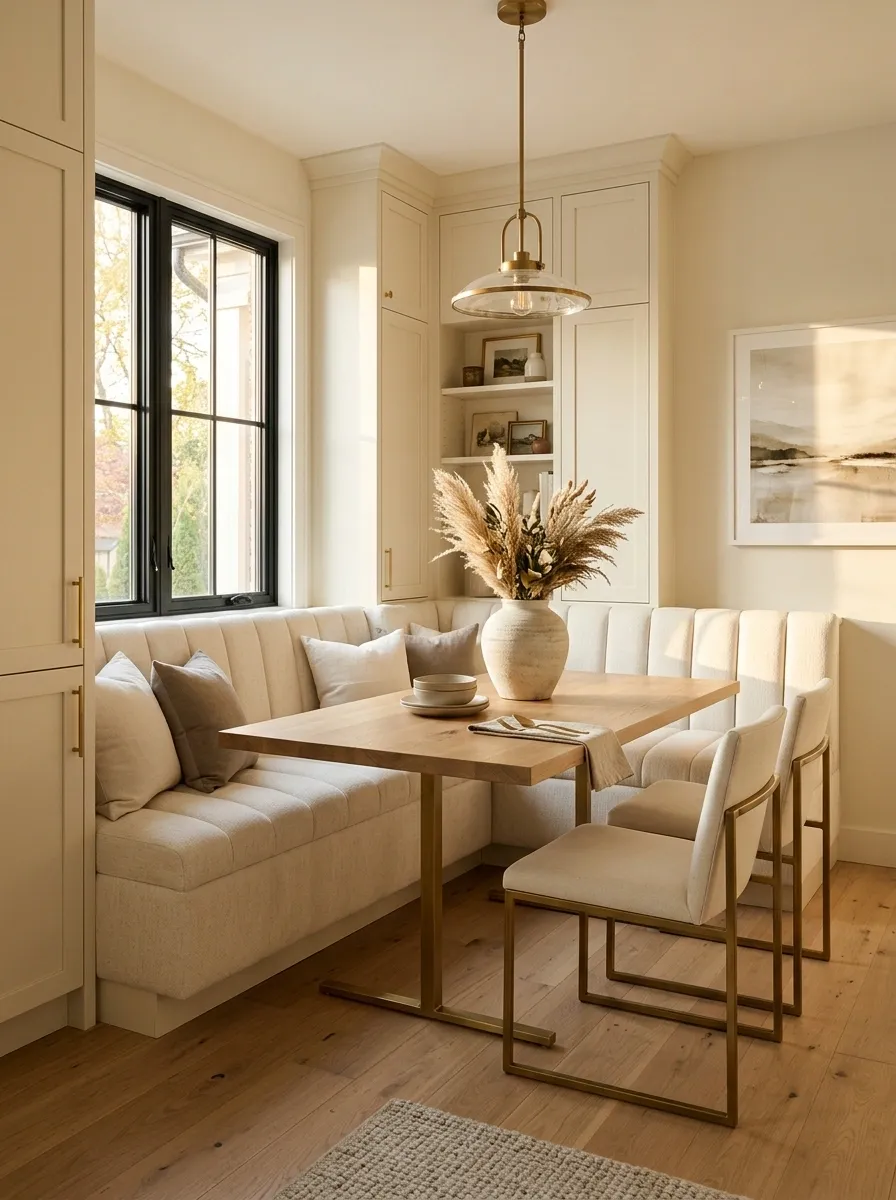
An awkward corner can become the most useful part of a tiny dining room when the seating is fitted to it. This design places an L-shaped bench against the walls, then uses a narrow rectangular table that reaches into the open part of the room. Loose chairs occupy the remaining side without blocking access.
The fixed bench makes the corner work harder while keeping the central table area simple. Upper cabinetry can provide storage, but its doors should stay visually quiet and close to the wall color.
The strongest feature is the geometry. Everything meets at the corner, so the room feels intentionally built around its architecture rather than furnished after the fact.
Bright Coastal Dining Nook With White Paneling and Natural Wood
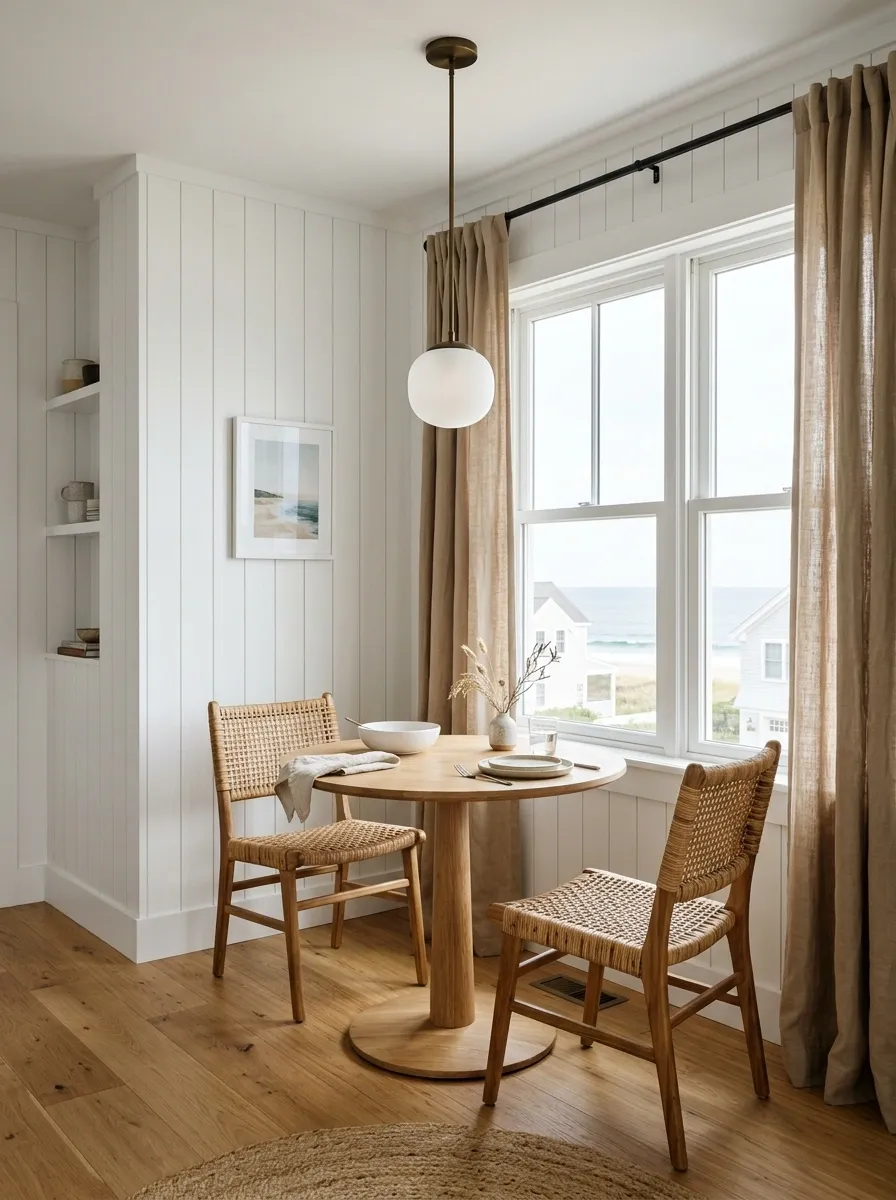
White paneling gives this tiny dining corner a clean architectural shell, while honey-toned wood keeps it from feeling cold. A compact pedestal table sits close to the window, with woven chairs and relaxed linen curtains softening the hard edges. The palette stays deliberately narrow: warm white, pale natural wood, muted tan, and a few darker details.
The furniture is kept low and visually open, which lets the wall paneling remain the dominant architectural feature. A simple pendant provides enough evening focus without competing with the windows.
The room works because the coastal feeling comes from materials and proportion rather than obvious themed accessories. Rope details, seashell decor, and strong nautical motifs would make the small space feel much more cluttered.
Compact Japandi Dining Room With Low Walnut Furniture
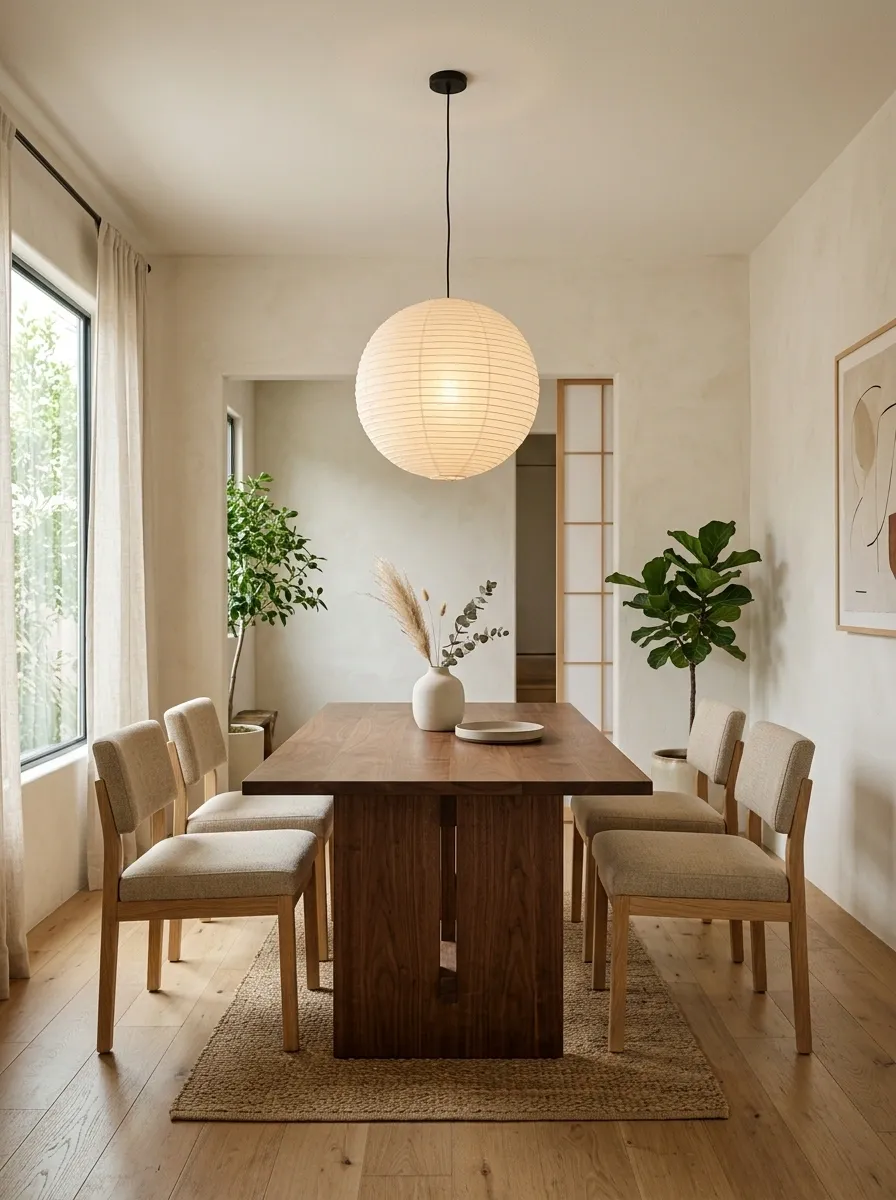
A restrained Japandi dining room can make a tiny footprint feel remarkably calm because almost every element has a low visual profile. The composition centers on a walnut table with a simple base, low-backed seating, warm off-white walls, and a softly diffused pendant that casts light downward without creating a dramatic focal point.
The room gains texture through subtle differences in finish rather than through decoration. Walnut grain, woven upholstery, plaster-like walls, and a matte ceramic surface are enough to create depth.
This concept depends on editing. Keep shelves sparse, artwork limited, and accessories substantial enough to read clearly. The empty wall and visible floor are part of the design, not unfinished areas waiting to be filled.
FOCAL POINT
Small Apartment Dining Zone Defined by a Glass Partition
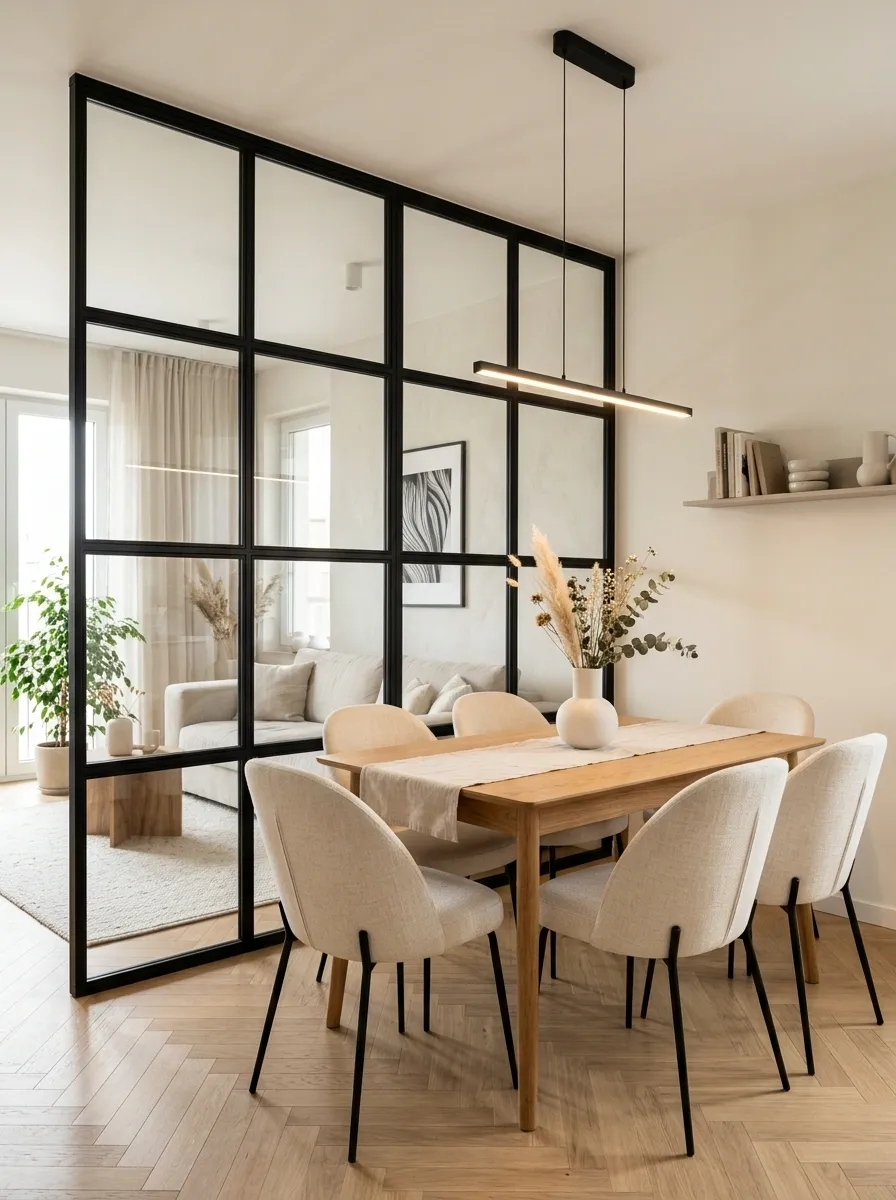
This design gives a dining area its own identity without building a solid wall. A slim black-framed glass partition separates the dining zone from the kitchen or living area, while the transparent panels preserve the sense of depth. Inside the zone, a compact rectangular table, softly upholstered chairs, and one centered pendant establish a clear visual destination.
The dark partition provides enough structure to make the dining area feel intentional. The glass keeps light and sightlines moving between spaces, which matters when the available floor area is limited.
Keep everything inside the dining zone relatively simple. The partition is already a strong architectural graphic, so additional busy patterns or oversized furniture would compete with it.
Soft European Dining Corner With Curved Plaster Walls and Bistro Chairs
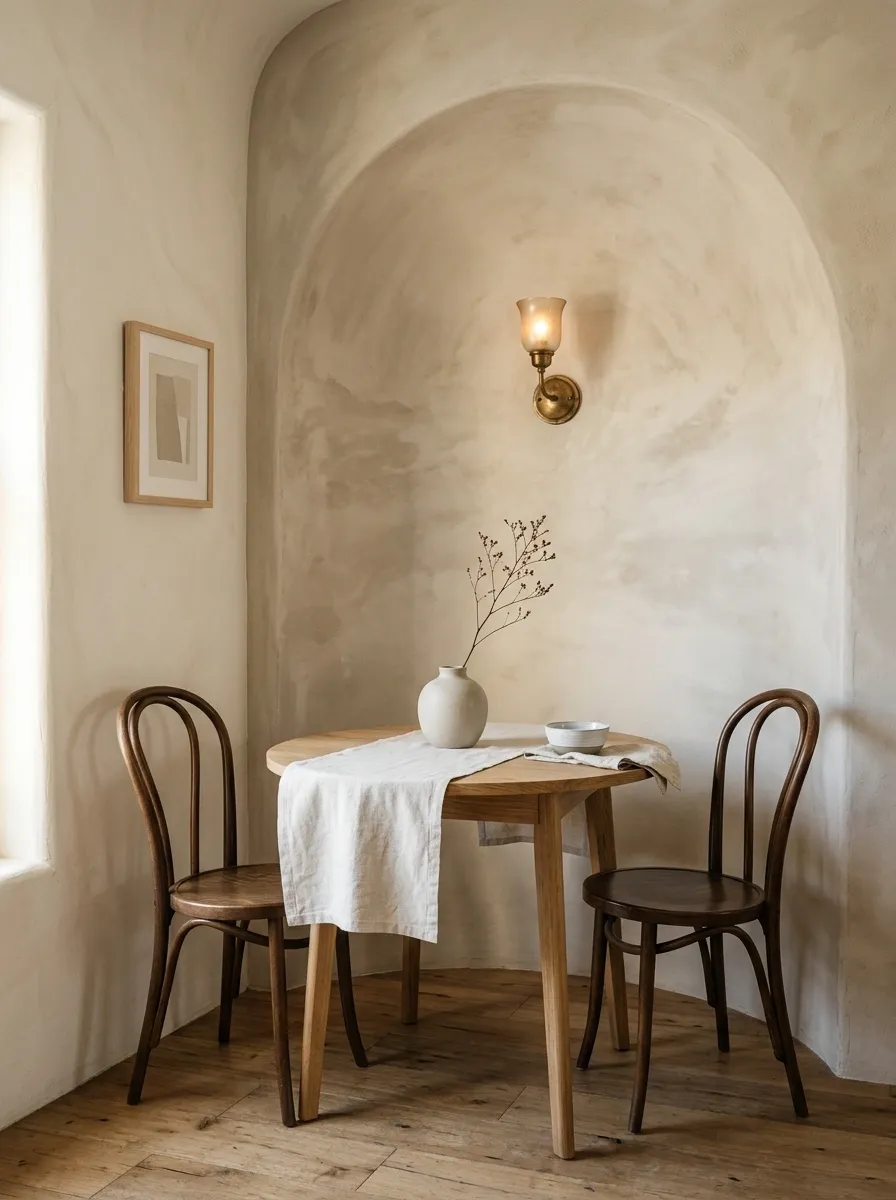
The architecture takes the lead in this compact European-inspired dining corner. Curved plaster walls create a gentle enclosure around a petite round table, while slim bistro chairs echo the rounded lines. A small wall sconce replaces a larger ceiling fixture, keeping the light source close to the dining area.
The repeated curves make the room feel intentional even though very little furniture is present. Warm plaster gives the walls enough variation to stand on their own, while the simple table and chairs keep the composition from becoming overly decorative.
The best supporting pieces are quiet ones. A small framed artwork, one ceramic object, or a restrained linen treatment is enough. The architecture already provides the visual personality.
Black-and-Walnut Tiny Dining Room With Graphic Artwork
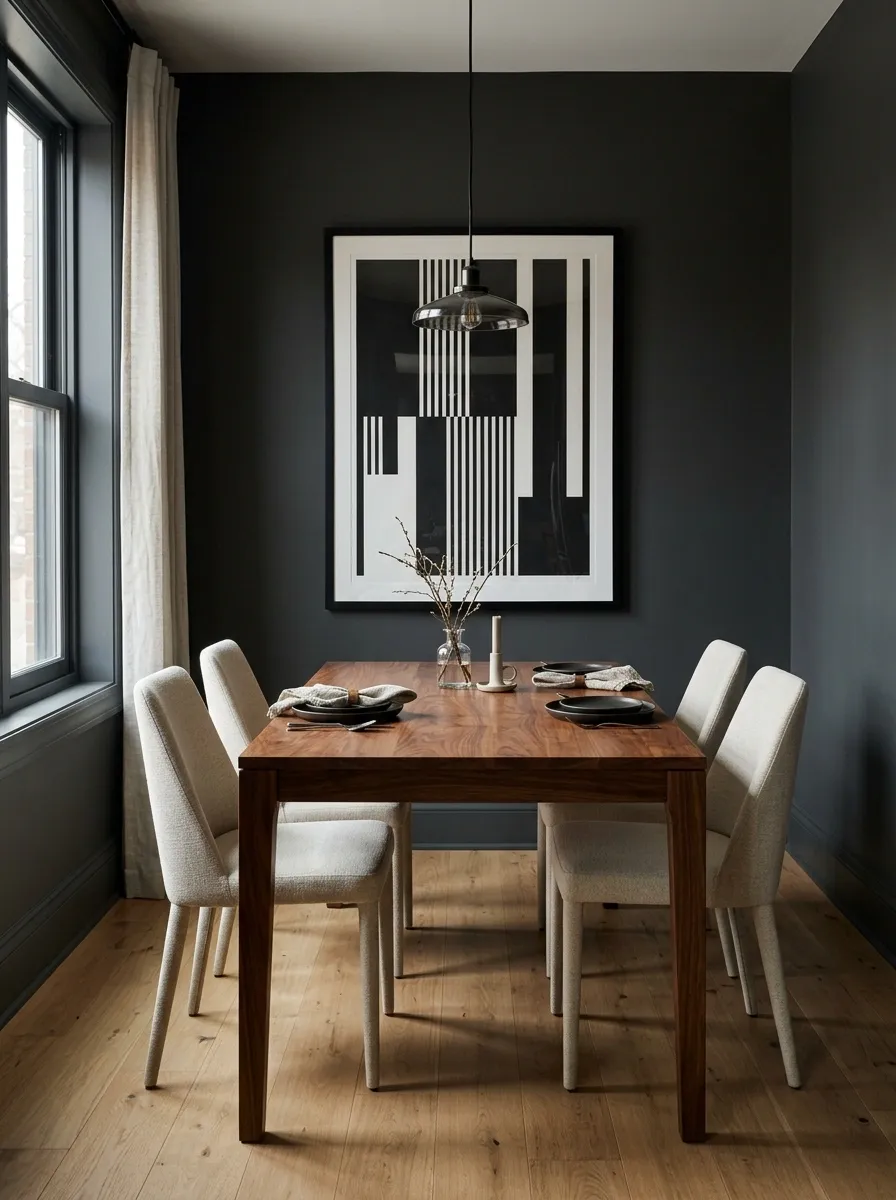
A dark dining room can work in a small footprint when the darkness is treated as an architectural envelope rather than a collection of separate black pieces. Here, the walls and trim sit in a deep charcoal tone, while a warm walnut table provides the main counterpoint. Upholstered chairs soften the furniture, and one oversized graphic artwork introduces a strong vertical focal point.
The walnut is important because it breaks up the dark palette without introducing a competing color story. The artwork adds energy above the table while keeping the floor almost completely clear.
Avoid scattering smaller pieces around the room. One substantial artwork has more impact than a crowded gallery when the walls and furniture already carry significant visual weight.
Small Dining Room Built Into a Bay Window
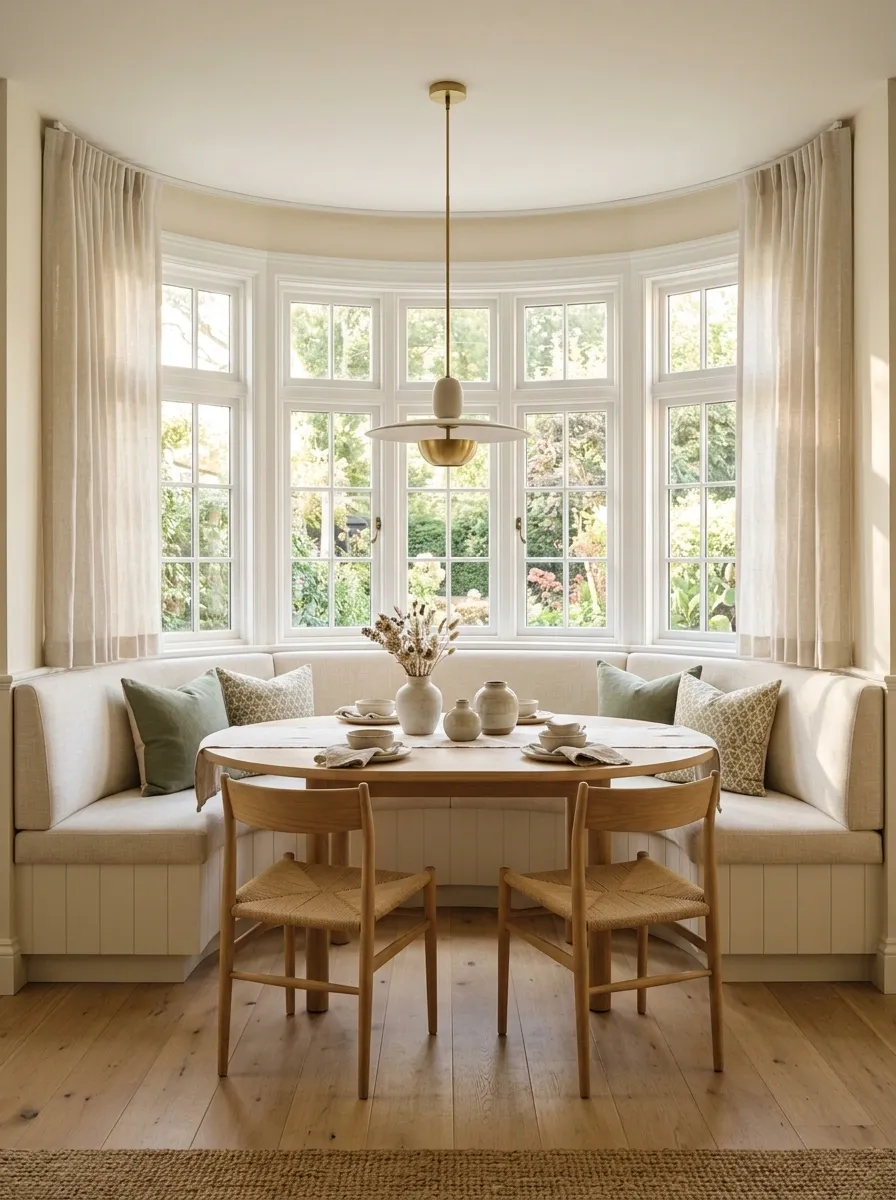
A bay window already provides a natural dining destination, so this design follows its geometry instead of filling the room with independent furniture. A fitted bench wraps along the window shape, an oval table sits inside that footprint, and a pendant hangs over the center. Soft curtains frame the entire arrangement without hiding the architectural feature.
The oval table is a particularly good match for the bay because it preserves the curved language while keeping circulation gentler than a sharp rectangular table would. The bench also makes use of an edge that would otherwise be difficult to furnish.
Keep the window treatment soft and simple. The architecture should remain visible through the fabric rather than disappearing behind it.
the architecture.
Minimalist Dining Room With One Long Bench and Gallery Wall
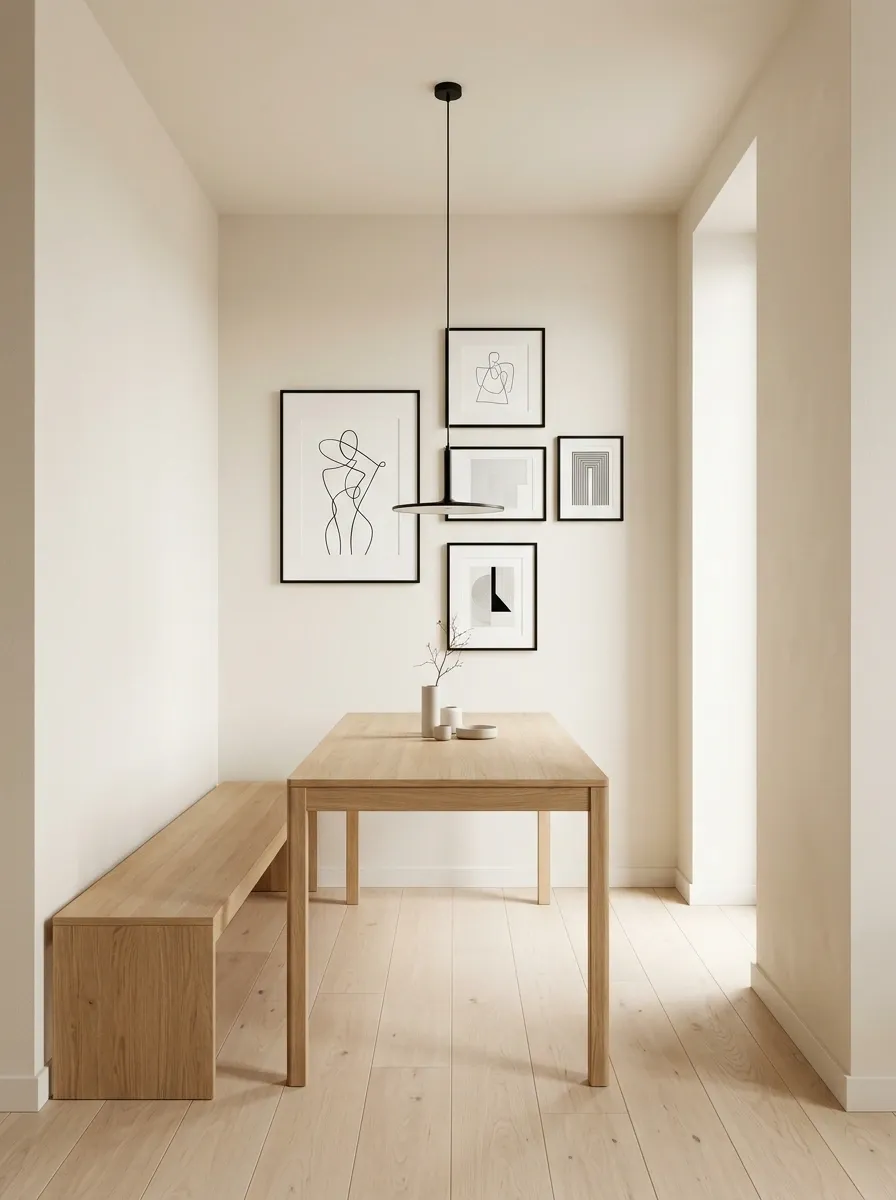
This narrow composition keeps the furniture low and linear while allowing the wall to carry most of the personality. A slim rectangular table runs alongside one continuous bench, with a carefully edited gallery wall rising above it. A simple pendant adds just enough height to connect the furniture to the ceiling.
The long bench is more visually efficient than several individual chair backs because it creates one uninterrupted horizontal line. Above it, the artwork introduces vertical rhythm without taking up any floor area.
Keep the gallery wall edited rather than crowded. The strongest version uses a controlled arrangement with enough empty wall around it to preserve the room’s sense of width.
FURNITURE
Warm Cottage Dining Room With Painted Table and Slipcovered Chairs
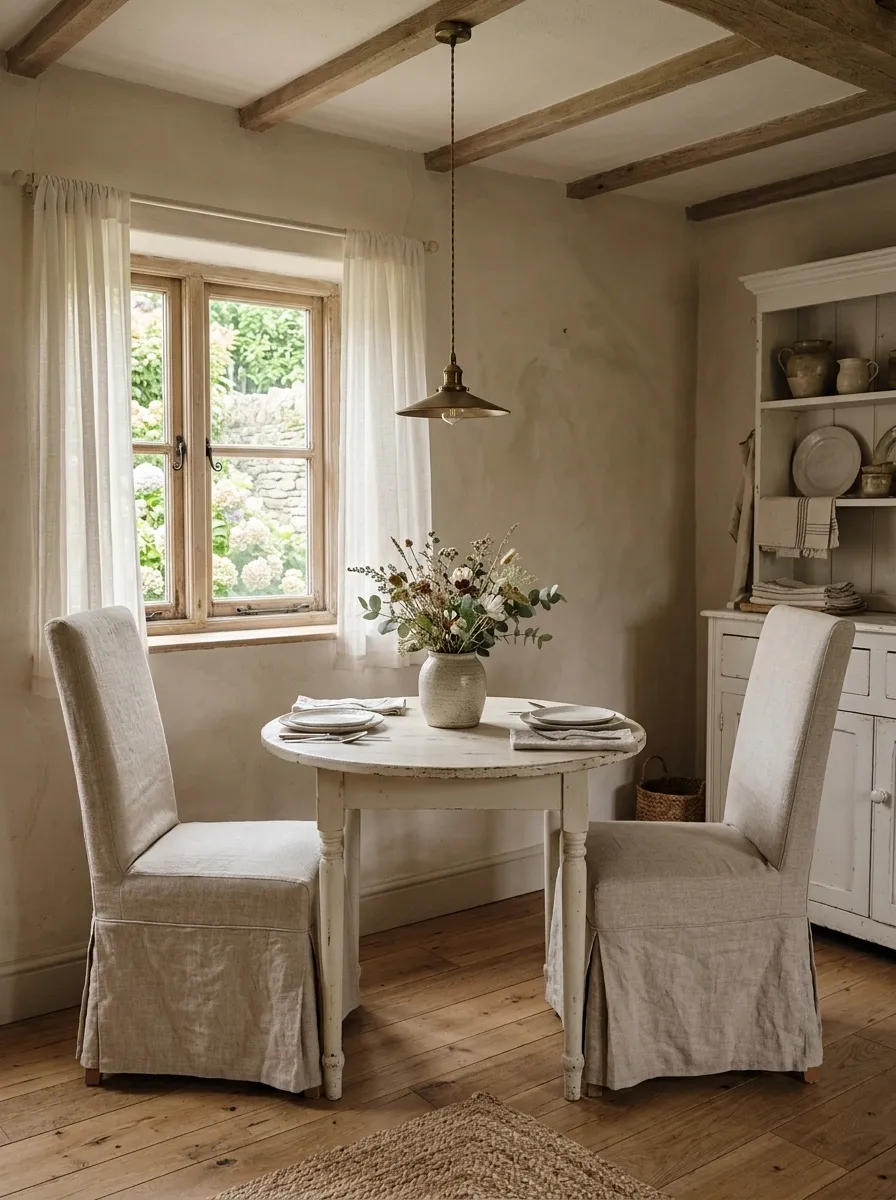
This tiny cottage dining room gets its character from softness rather than quantity. A painted wood table sits between slipcovered dining chairs, a simple linen treatment frames the window, and an understated vintage pendant gives the ceiling a little presence. The walls stay in a warm, chalky neutral so the room feels layered without becoming visually fragmented.
The painted table is important because it avoids introducing another strong wood tone into an already small setting. Upholstered chairs soften the straight lines, while the curtains echo that softness vertically.
Keep the tabletop mostly clear. A small ceramic vessel or low arrangement is enough to finish the composition without turning the dining surface into another storage zone.
Compact Industrial Dining Room With Steel-Framed Table and Brick Wall
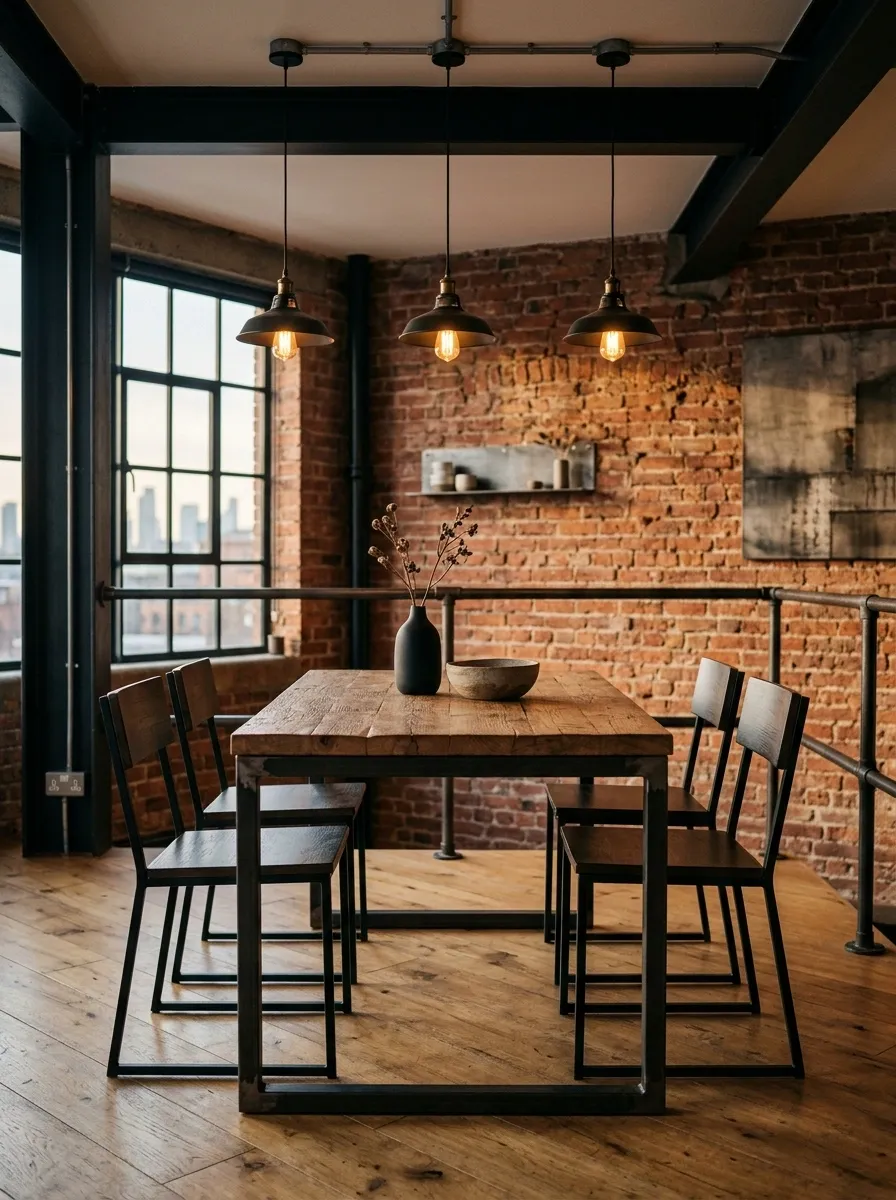
A tiny industrial dining room works when the architecture is allowed to remain visible. Exposed brick forms the backdrop, a dark steel-framed table anchors the center, and a warm wood surface keeps the composition from becoming too hard. Simple chairs and focused lighting finish the room without introducing unnecessary decoration.
The contrast between brick, steel, and wood gives the small space plenty of visual depth, so accessories can stay sparse. The table should have a relatively thin profile, allowing more of the brick wall to remain exposed.
This approach is especially convincing where the building already has authentic industrial details. Recreating every industrial cue in a newer room can feel forced. One or two strong architectural materials carry more authority than a collection of themed furniture.
Very Small Dining Room With Extendable Oval Table
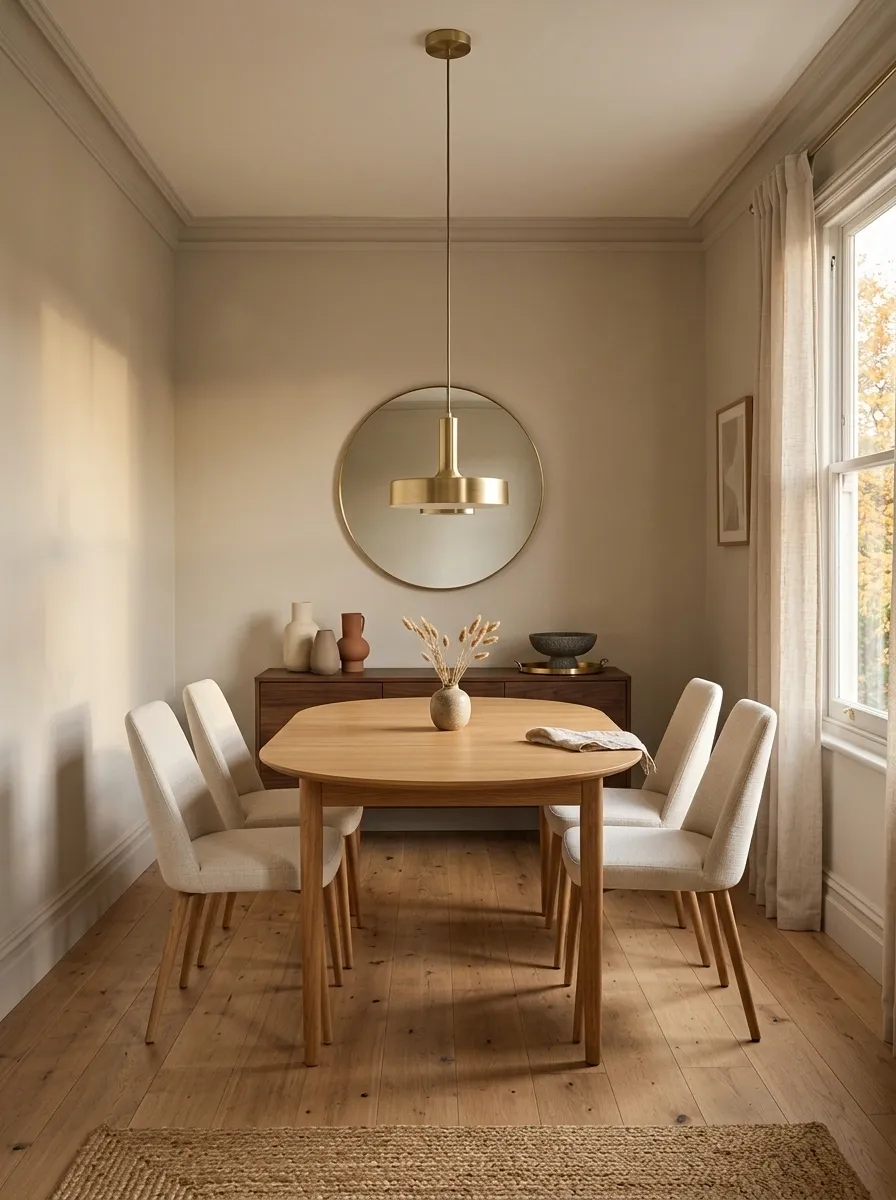
Flexibility defines this room. An oval table sits comfortably in its compact everyday position, leaving enough space around the chairs for normal movement. When guests arrive, the table extends along its center axis without changing the basic organization of the room.
The rest of the furniture stays intentionally quiet. Slim chairs, a shallow sideboard, and a centered light fixture establish a clean framework that can accommodate both table sizes. The oval shape also keeps circulation gentler than a rectangular table when space around the corners is limited.
This design works best when the expanded footprint has been considered from the beginning. The larger table should not open directly into a doorway, cabinet, or main walking route.
Soft Pink and Oak Dining Corner With Sculptural Pendant
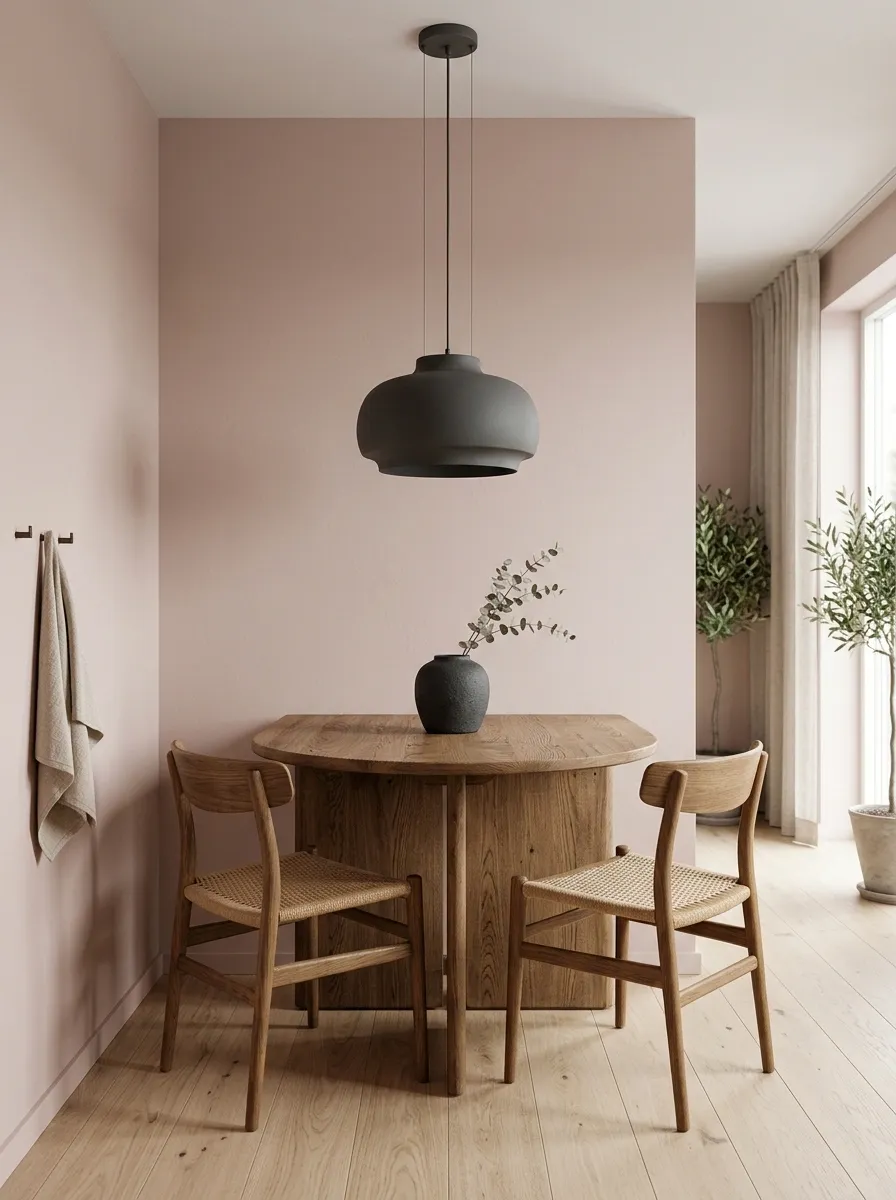
Muted pink walls give this small dining corner a distinct personality while pale oak keeps the room grounded. A compact rounded table sits beneath a sculptural pendant, with curved chairs echoing its silhouette. The remaining surfaces stay quiet, allowing the wall color to do most of the decorative work.
The pink should read as dusty and restrained rather than sugary. Against the pale oak, it becomes architectural instead of overly decorative. Darker hardware or a tiny charcoal accent can provide enough contrast to sharpen the composition.
The pendant is intentionally substantial, but its shape should remain simple. In a small room, one strong sculptural object creates more impact than several small decorative pieces.
Tiny Dining Room With Floor-to-Ceiling Shelving and Centered Table
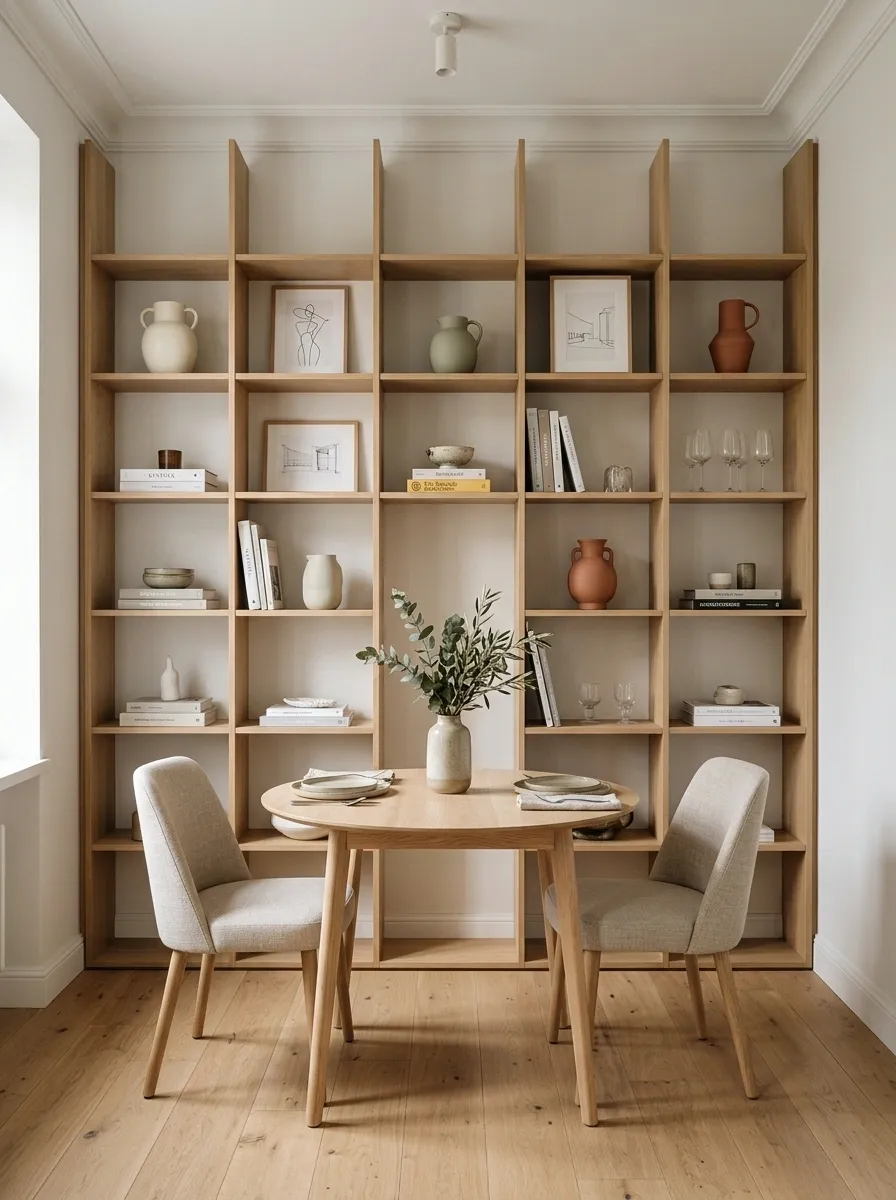
Storage becomes part of the architecture in this compact room. Full-height shelving occupies one complete wall, drawing the eye upward while a small centered table and low-profile chairs stay deliberately understated below it.
The vertical shelving is useful because it protects the limited floor area. Instead of adding a chest or cabinet that projects into the room, storage rises toward the ceiling. The shelves can hold books, ceramics, framed artwork, and dining pieces, but the arrangement should include plenty of open space.
The centered table gives the room a strong axis. With the surrounding storage kept orderly, the dining furniture reads as a deliberate foreground rather than another layer of clutter.
Moody Green Dining Room With Round Table and Linen Drapes
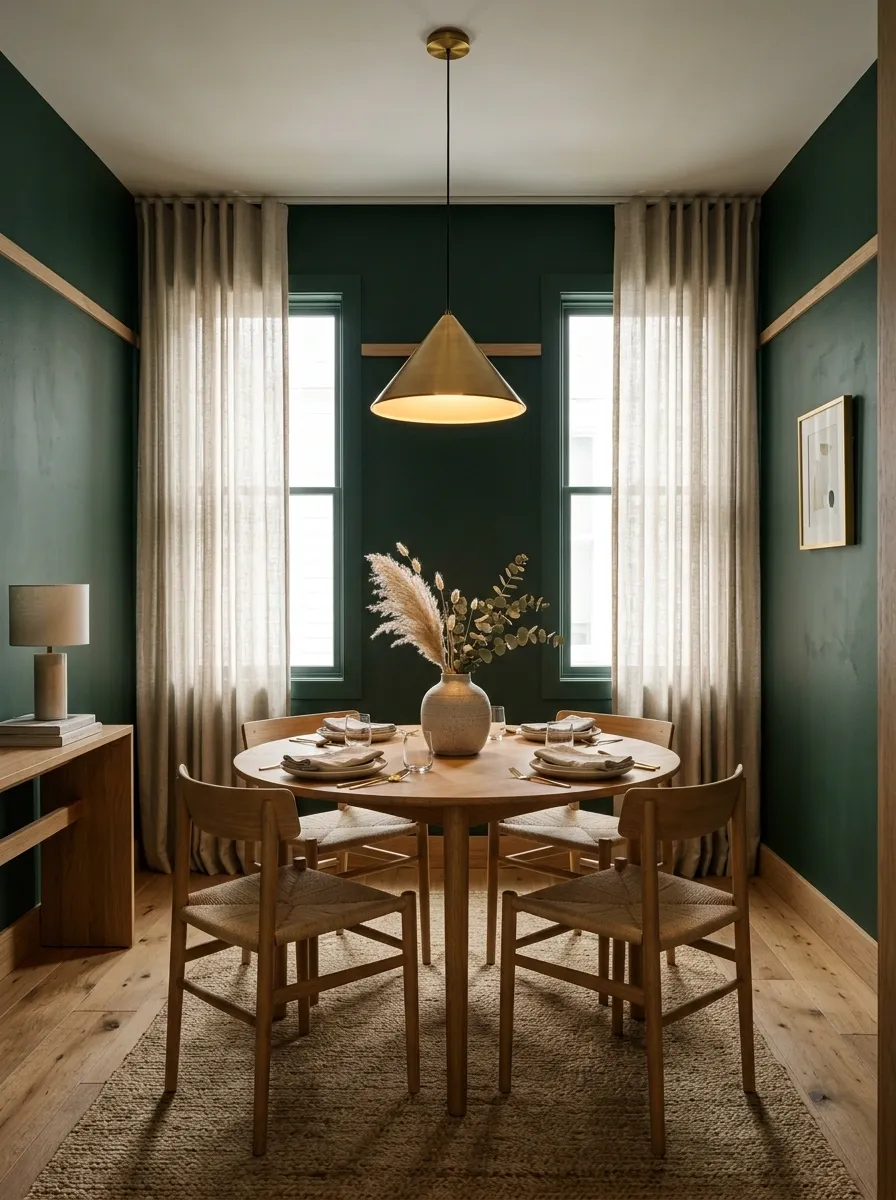
Deep green walls give this tiny dining room a strong envelope, while a warm wood round table keeps the center grounded. Linen curtains soften the windows, and a warm pendant creates a concentrated glow over the dining area. The furniture remains limited so the saturated wall color can act as the room’s main visual statement.
Round furniture is especially useful here because the darker walls already make the architectural boundaries feel strong. The curved table breaks that rigidity and keeps circulation around the seating more forgiving.
Natural wood is the right counterweight to the green. Pale gray or icy finishes would make the room feel disconnected from the earthy wall tone.
Refined Tiny Dining Room With Stone Table and Upholstered Chairs
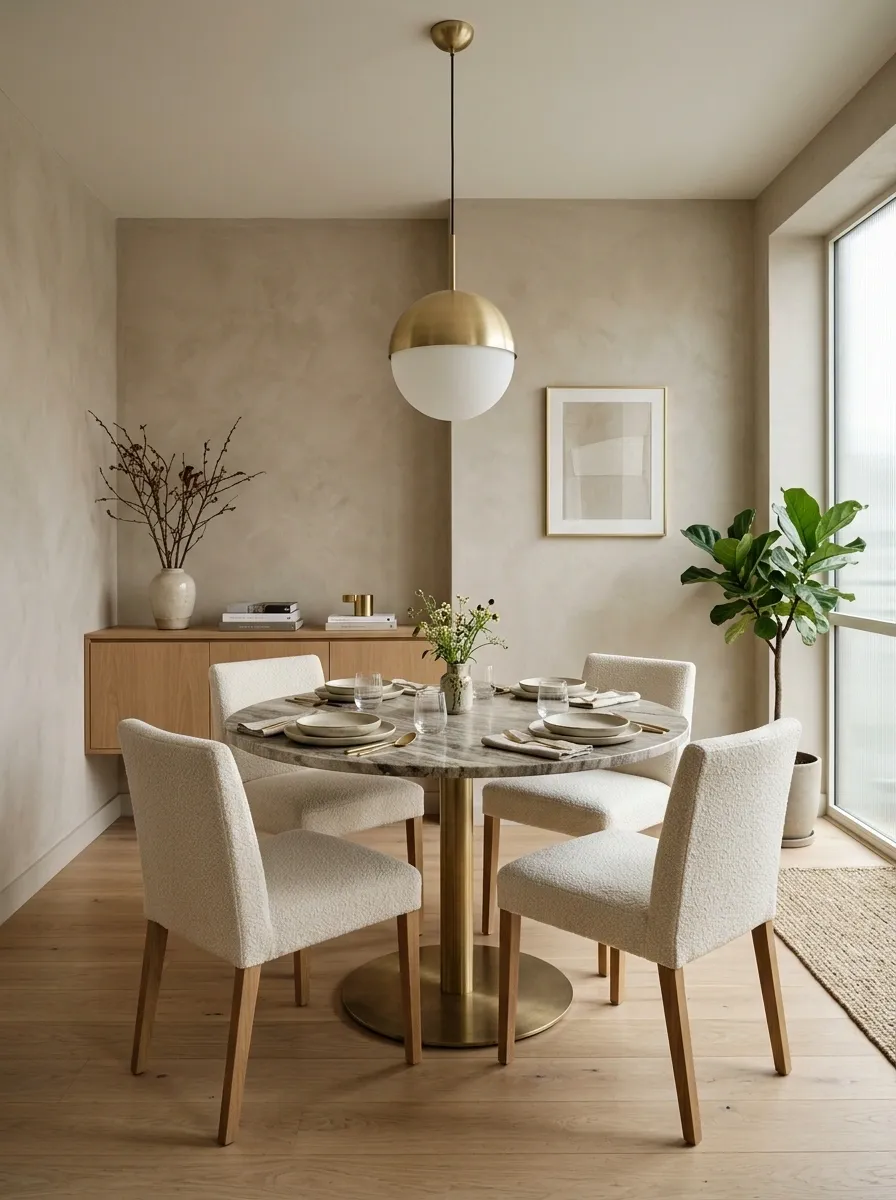
The final composition takes a more tailored approach. A compact stone-topped table becomes the focal point, surrounded by upholstered chairs with clean silhouettes. Warm neutral walls provide a quiet backdrop, while a discreet sideboard sits close to one wall and a carefully scaled pendant marks the center of the room.
The stone surface gives the small room visual substance without requiring additional decorative layers. Upholstered chairs then soften its harder edge, creating contrast through material rather than color.
The sideboard should remain shallow and understated. Its job is practical support, not competition. Once the table, chairs, and pendant establish the hierarchy, everything else should stay secondary.
ELEMENTS