
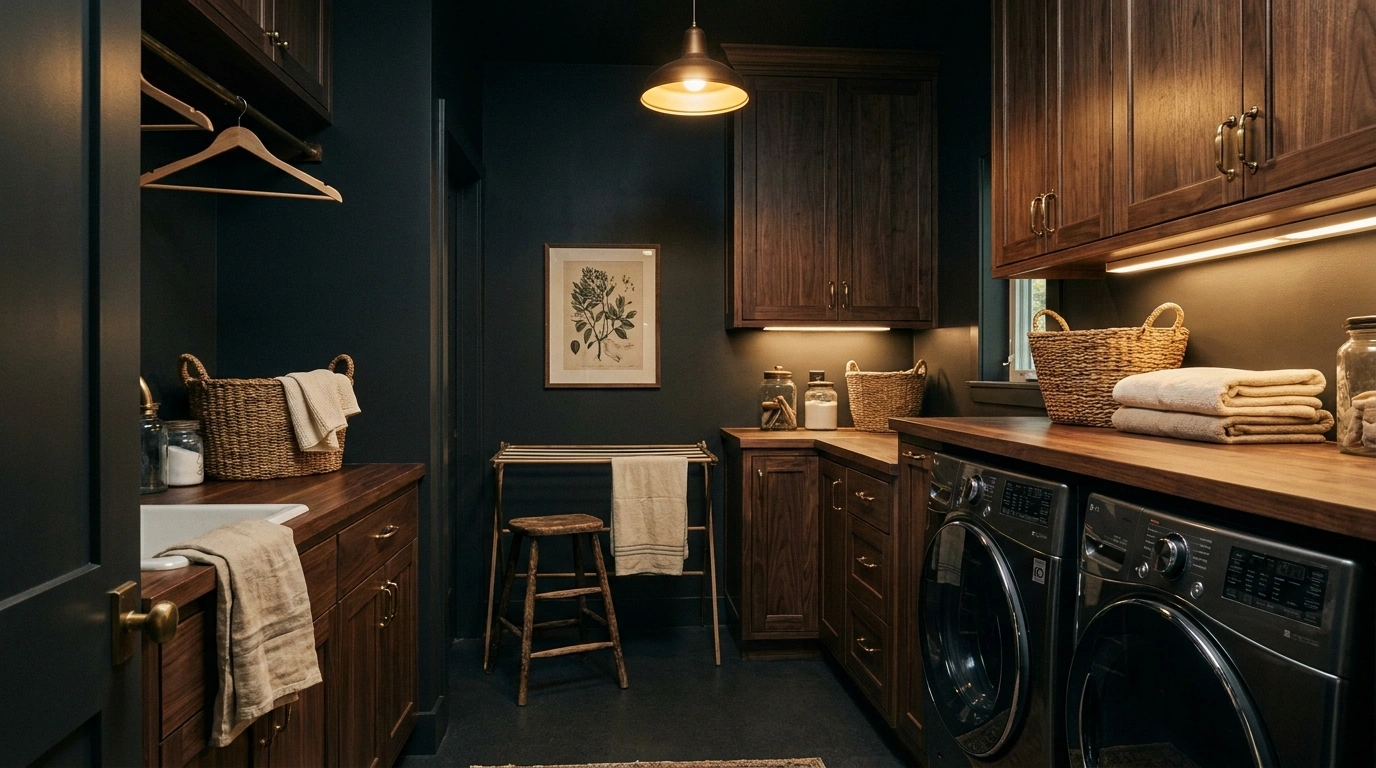
A dark laundry room can look deeply inviting, or it can look like someone forgot to turn the lights on. The difference comes down to what surrounds the dark color.
The strongest rooms don’t pile black finishes onto every surface. They create a dark base, then interrupt it with warm wood, aged metal, soft lighting, lighter stone, and a few useful details. That balance gives the room depth without making it feel smaller or heavier than it already is.
The Formula Behind a Great Moody Laundry Room
A dark laundry room needs more than a dark color.
Think of the room as four visual layers. The first creates depth. The second adds warmth. The third keeps the work areas usable. The fourth gives the eye a place to pause.
Charcoal
Ink blue
Walnut
Aged metal
Under-shelf glow
Soft ceiling light
Light stone
Open space
Moody Laundry Room Ideas
Surround the Room in Dark Tones
A fully saturated laundry space wraps around you like a high-end study, turning daily chores into an intentional ritual.
Matching the upper and lower cabinetry with deep charcoal walls creates a seamless envelope, while natural wood ceiling slats add an unexpected layer of warmth overhead.
Ground the heavy finishes with patterned floor tile to bounce light upward and keep the compact footprint feeling open and dynamic.
Paint the Cabinets a Deep Forest Green
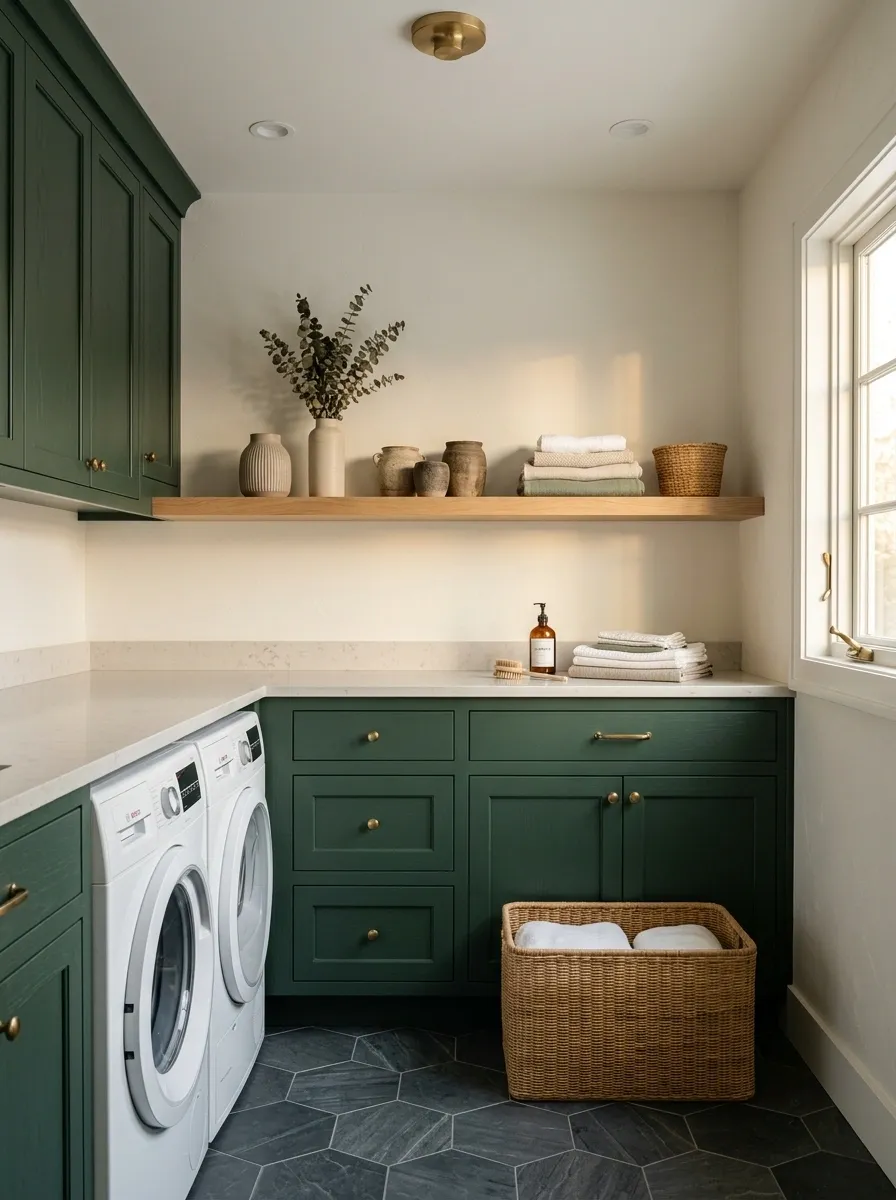
Deep green gives laundry cabinets weight without making the room feel flat.
It works especially well with white appliances, natural wood, and warm metal because the undertone feels earthy instead of stark. Keep the walls lighter if the cabinets already carry the drama.
Best combination:
Deep green cabinetry + pale counter + oak shelf + aged brass pulls.
Pale stone
Aged brass
Warm white lighting
Embrace Rich Brown and Earthy Walls
Moving away from stark whites, a monochromatic cocoa color palette brings a soft, tactile richness to utility spaces.
Layering a moody, landscape-inspired wall covering behind a classic apron-front sink breaks up solid cabinetry with atmospheric depth and storytelling texture.
Keep styling simple with natural woven baskets and a neutral textured runner, letting the enveloping warmth of the dark brown tones take center stage.
Pair Charcoal Walls With Warm Wood Shelves
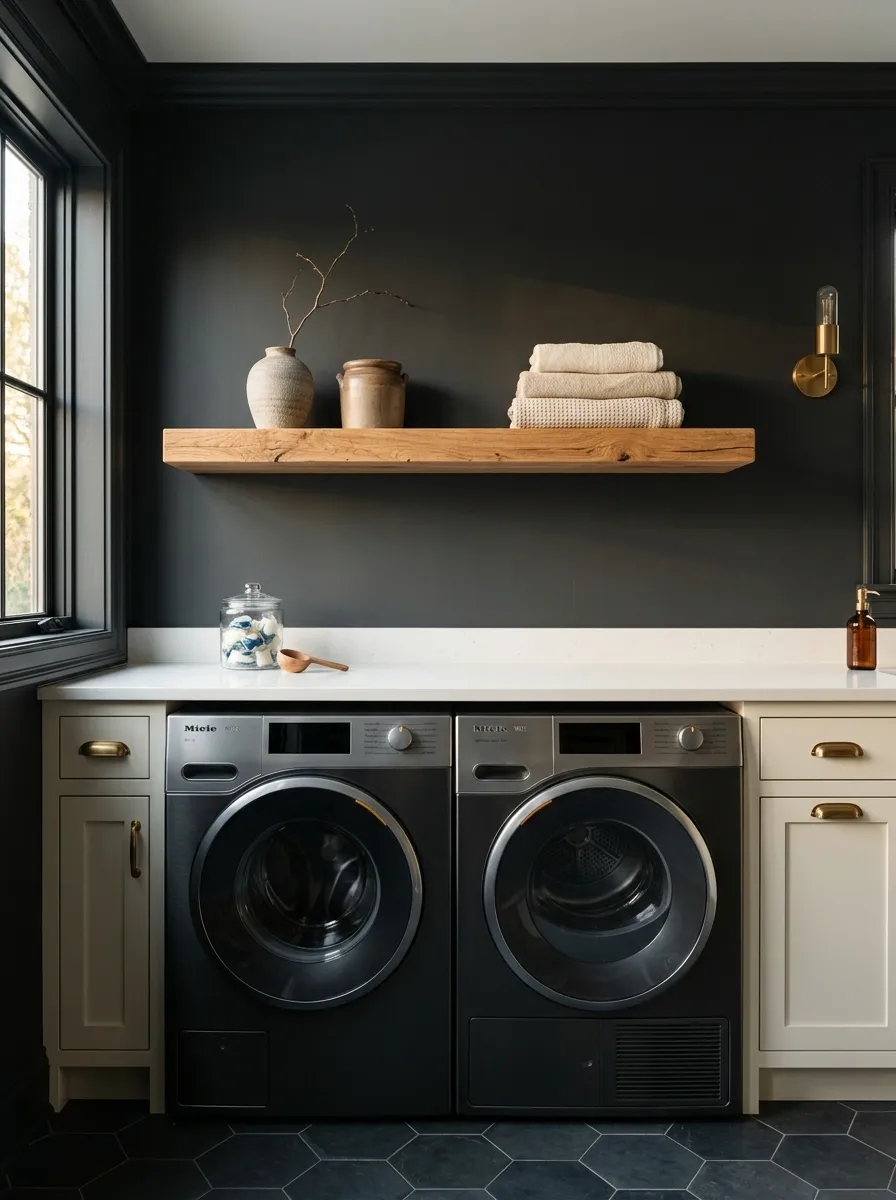
Charcoal becomes much more inviting when warm wood breaks across the wall.
The trick is scale. A single thick shelf above the washer and dryer often looks stronger than several thin shelves packed with bottles and baskets.
Keep the shelf visually substantial, then leave some empty wall around it. Dark wall, warm shelf, breathing room.
Layer Vintage Black and Cream
Historic charm feels right at home in a moody laundry room when paired with distressed black cabinetry and timeworn details.
A delicate, patterned lace curtain softens the rigid industrial edge of nearby appliances, while an antique oval mirror reflects ambient light.
Anchor the vintage aesthetic with a rustic floral arrangement and checkerboard floors for a space that feels deeply personal and lived-in.
Use Brass Hardware Against Deep Cabinetry
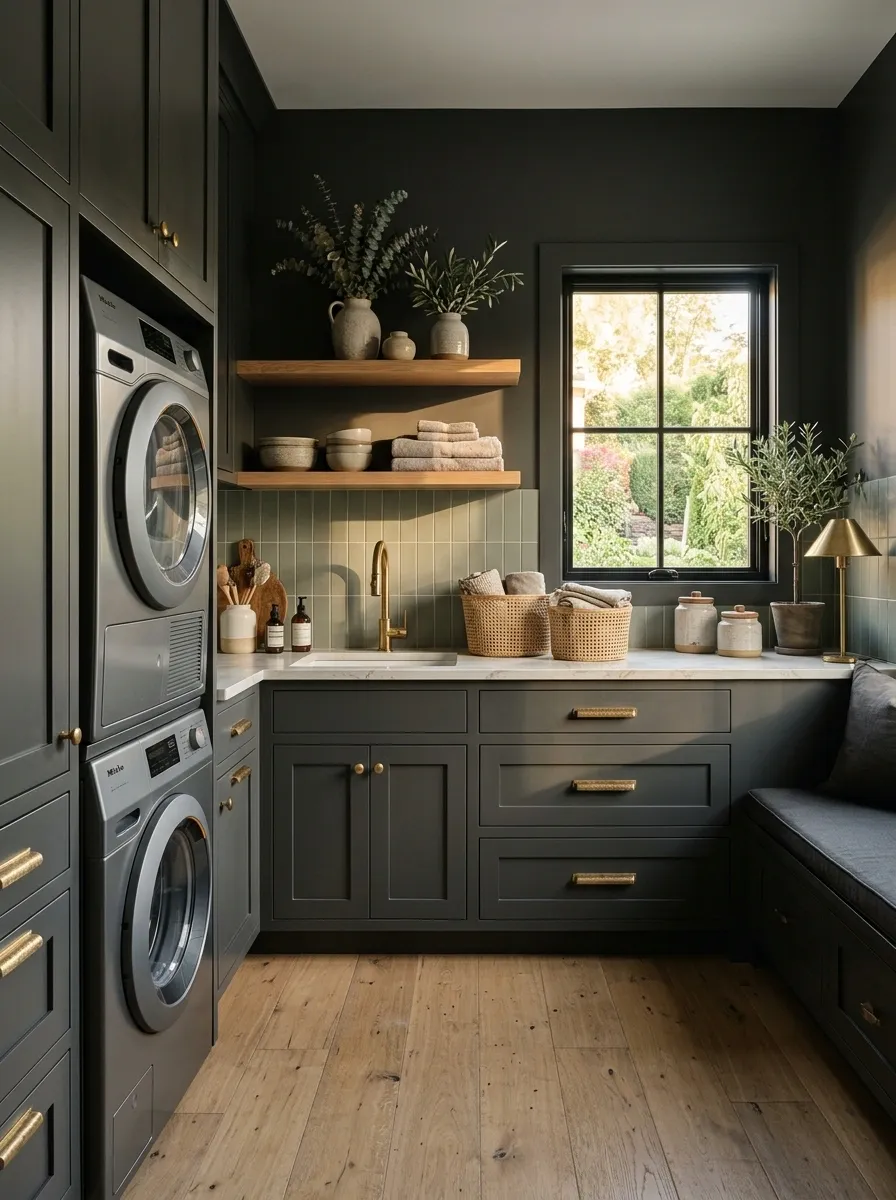
Tiny metal details become surprisingly important in a dark room.
Brass pulls, hinges, or a faucet catch warm light and stop deep cabinetry from becoming one solid block of color. Skip the shiny yellow finish. A brushed or aged surface looks grounded beside charcoal, green, and dark blue.
Quick hardware checklist
- Long pulls for wide drawers
- Small knobs for narrow doors
- Brushed brass for a softer look
- Matching faucet metal when the sink is nearby
The hardware should repeat once or twice, not appear on every possible surface.
Cabinet knobs
Sink faucet
Small hooks
Incorporate Geometric Gold Wallpaper
Pairing dark charcoal cabinetry with a geometric gold wall covering gives a hardworking utility room instant boutique hotel energy.
The metallic lines in the wallpaper catch the warm glow from multiple pendant lights, ensuring the dark color palette feels luminous rather than heavy.
Balance the sharp graphic pattern with open shelving and neat stacks of folded linens to keep the hardworking walls functional and curated.
Add a Vintage Runner to Break Up the Dark Finishes
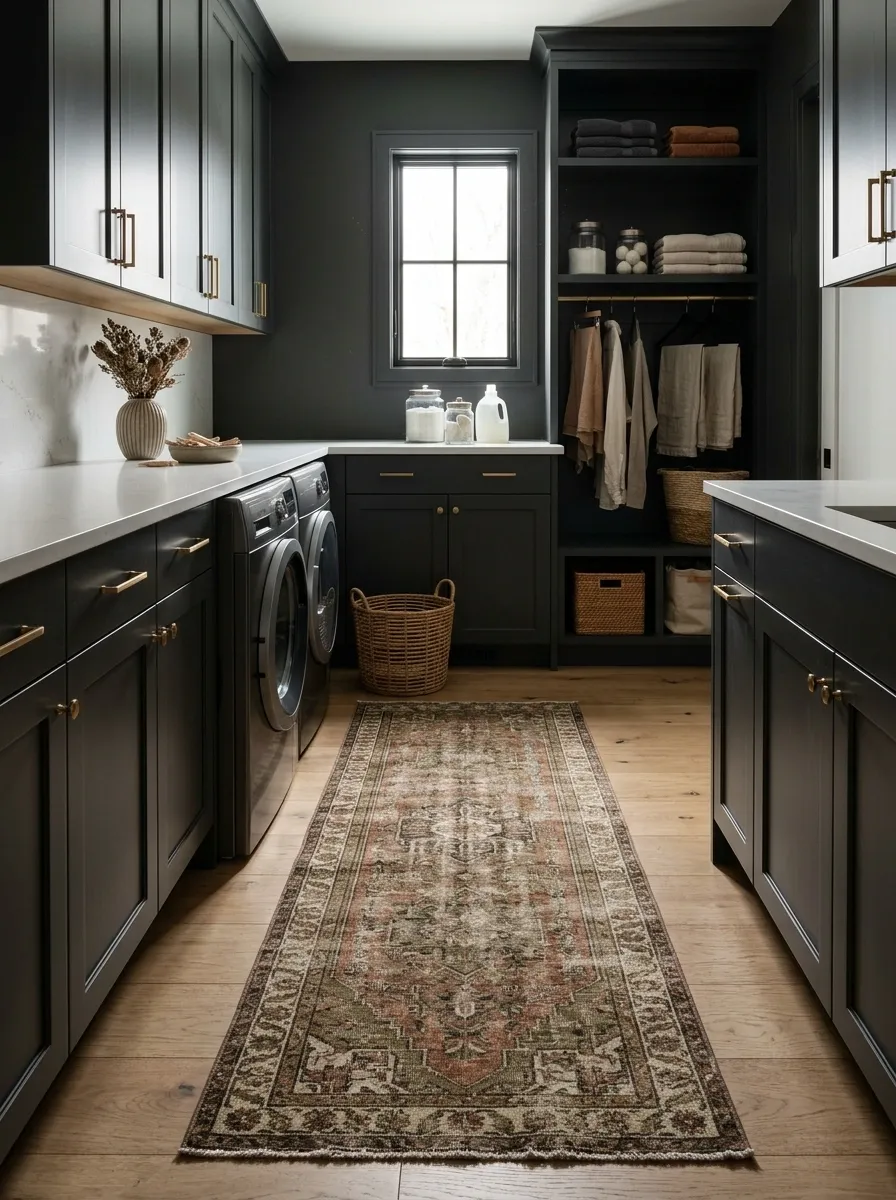
A runner can change the entire room without adding another permanent finish.
Choose one with muted rust, olive, cream, faded blue, or brown running through the pattern. Those colors connect naturally with dark cabinetry while giving the floor some movement.
The key is a worn-looking pattern, not a bright modern print. A laundry room already has plenty of hard lines from machines and cabinets, so a softly patterned runner adds the visual break those surfaces need.
Use a washable or low-pile rug near the machines where lint and stray detergent are part of normal life.
Create Drama With Dark Floral Ceilings
Carrying a moody floral print up onto the ceiling transforms an ordinary room into a jewel-box jewel of a laundry space.
Dark cabinetry framing a deep farmhouse sink disappears into the background, allowing the overhead botanical wallpaper and brass lighting fixtures to command attention.
Keep the lower half grounded with rich walnut countertops and woven accent pieces to balance the overhead drama with organic texture.
Build a Moody Folding Station With a Wood Countertop
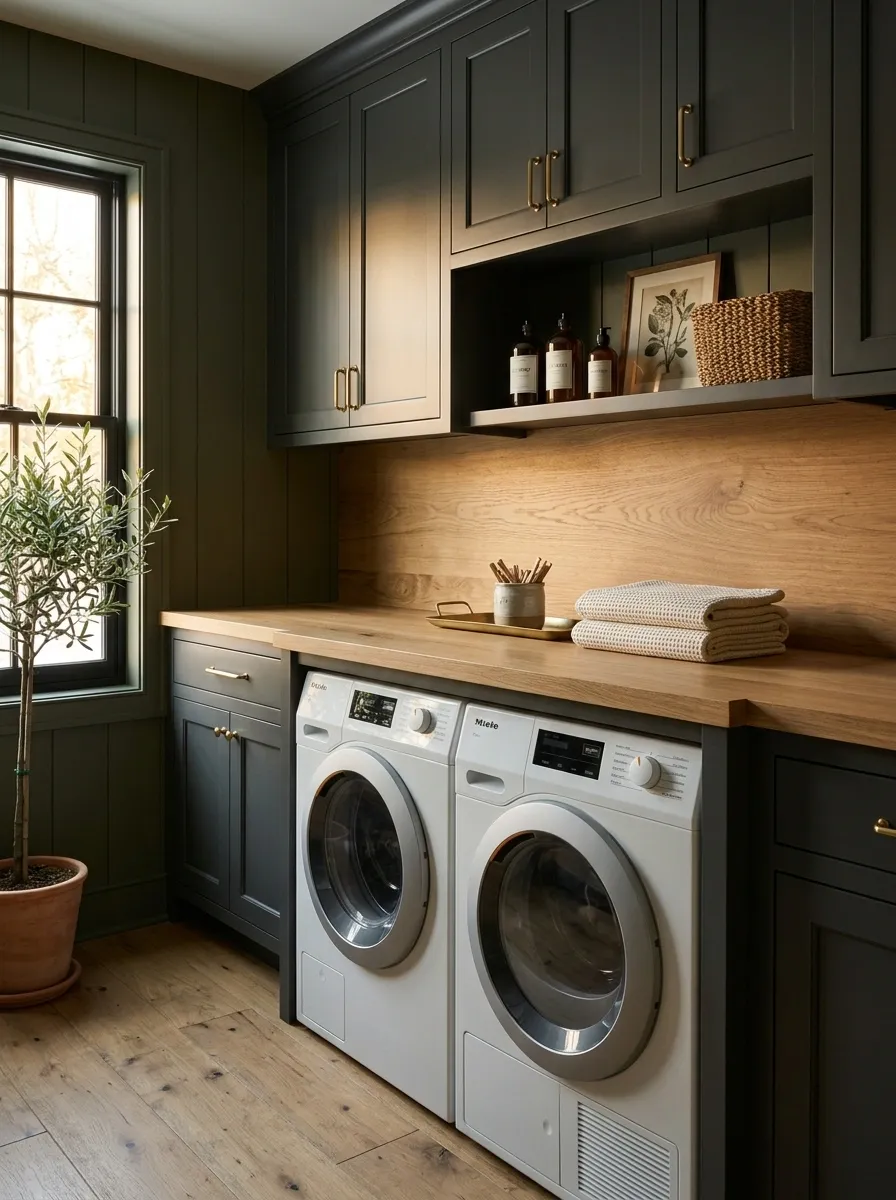
A wood countertop instantly makes a laundry room feel more like a designed room and less like a utility zone.
Install it above front-loading machines to create one uninterrupted folding surface. Choose a medium or deep wood tone so the warmth shows against dark cabinetry.
Keep the counter mostly clear. One tray, a small container for clothespins, or a folded stack of towels is enough. The broad wood surface should remain visible because that warm horizontal line is doing most of the visual work.
Use Black-and-Cream Tile Instead of a Fully Dark Wall
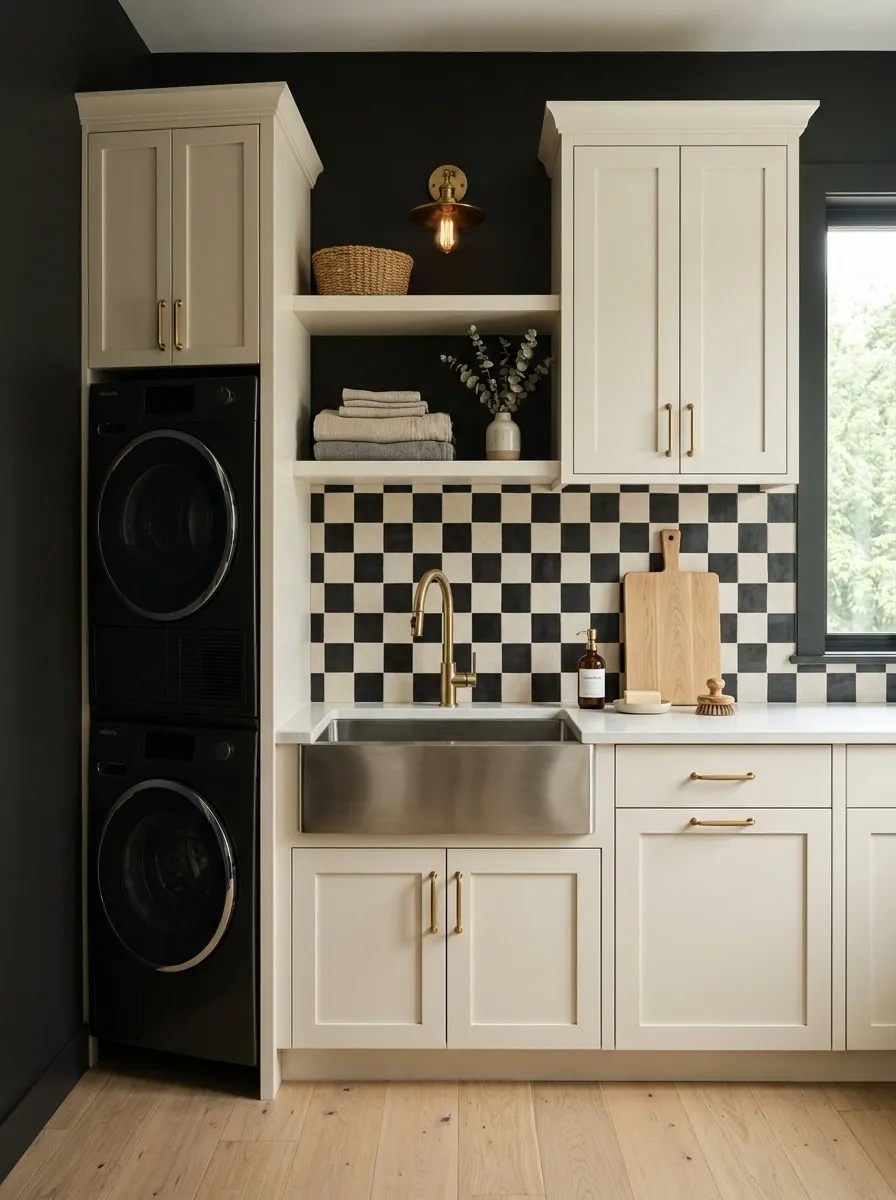
Dark doesn’t mean every inch needs to be dark.
A black-and-cream tile pattern gives the room drama while keeping enough light on the wall to stop the space from closing in. Use the darker tile on the floor, backsplash, or lower half of a wall, then let cream grout or surrounding cabinetry provide contrast.
The strongest combinations keep the pattern contained. A bold checkerboard backsplash works. A checkerboard backsplash, patterned rug, busy wallpaper, and decorated counter all fighting together does not.
Hang Open Shelves Where Everyday Supplies Stay Visible
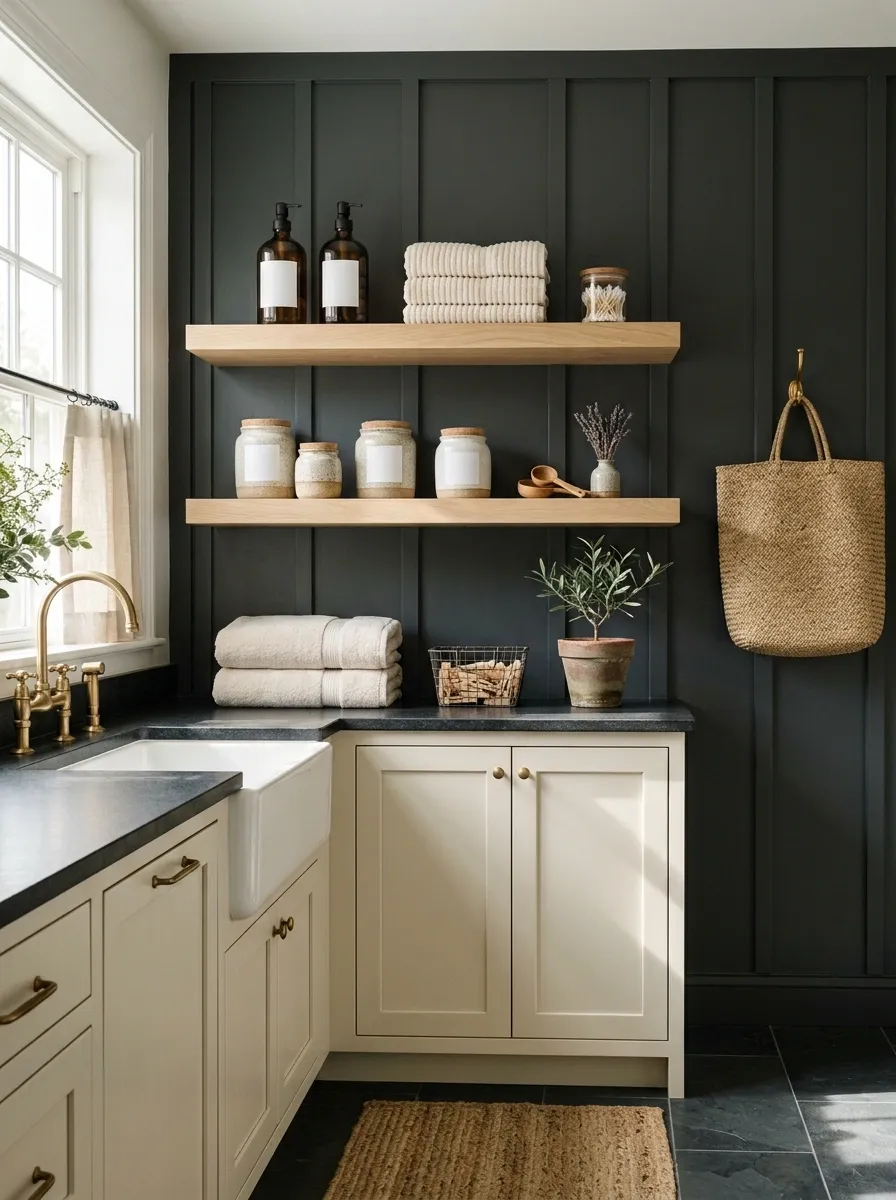
Open shelving works best when the shelf has a job.
Keep the detergent, folded towels, stain remover, and laundry bags within easy reach. Then give each shelf enough empty space that the practical items don’t turn into visual clutter.
A dark-painted wall behind oak shelves creates strong contrast, while the wood keeps the storage zone warm.
Shelf rule: Put the things used every week at eye level. Decorative objects belong somewhere else.
Choose Warm Pendant or Sconce Lighting
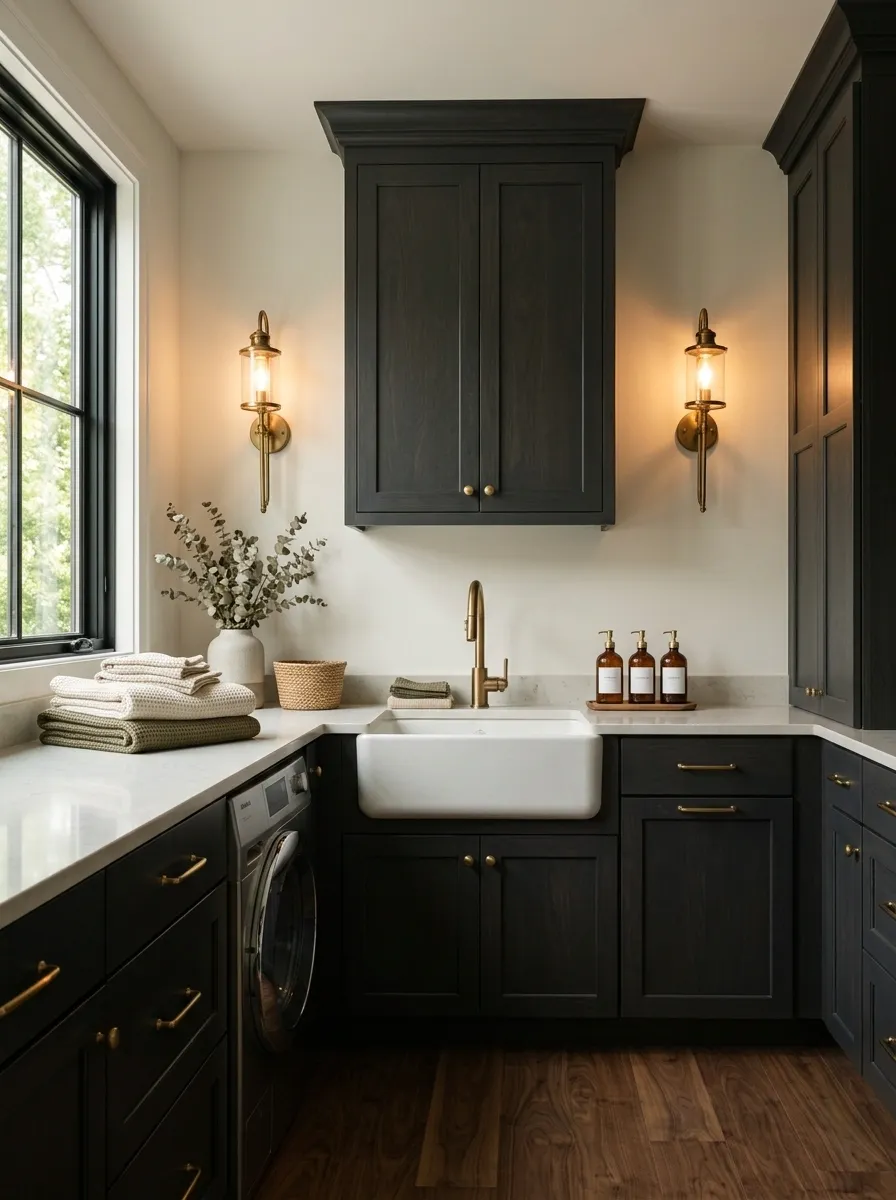
Harsh white ceiling light ruins a moody laundry room faster than almost anything else.
Use warm lighting at the points where work actually happens. A pair of small sconces beside upper cabinets can make a narrow room feel intentional. A pendant works better when the ceiling height allows it and the fixture doesn’t interfere with doors or drying racks.
The goal isn’t darkness. The goal is controlled light.
Hide Detergent Behind Fluted or Reeded Cabinet Doors
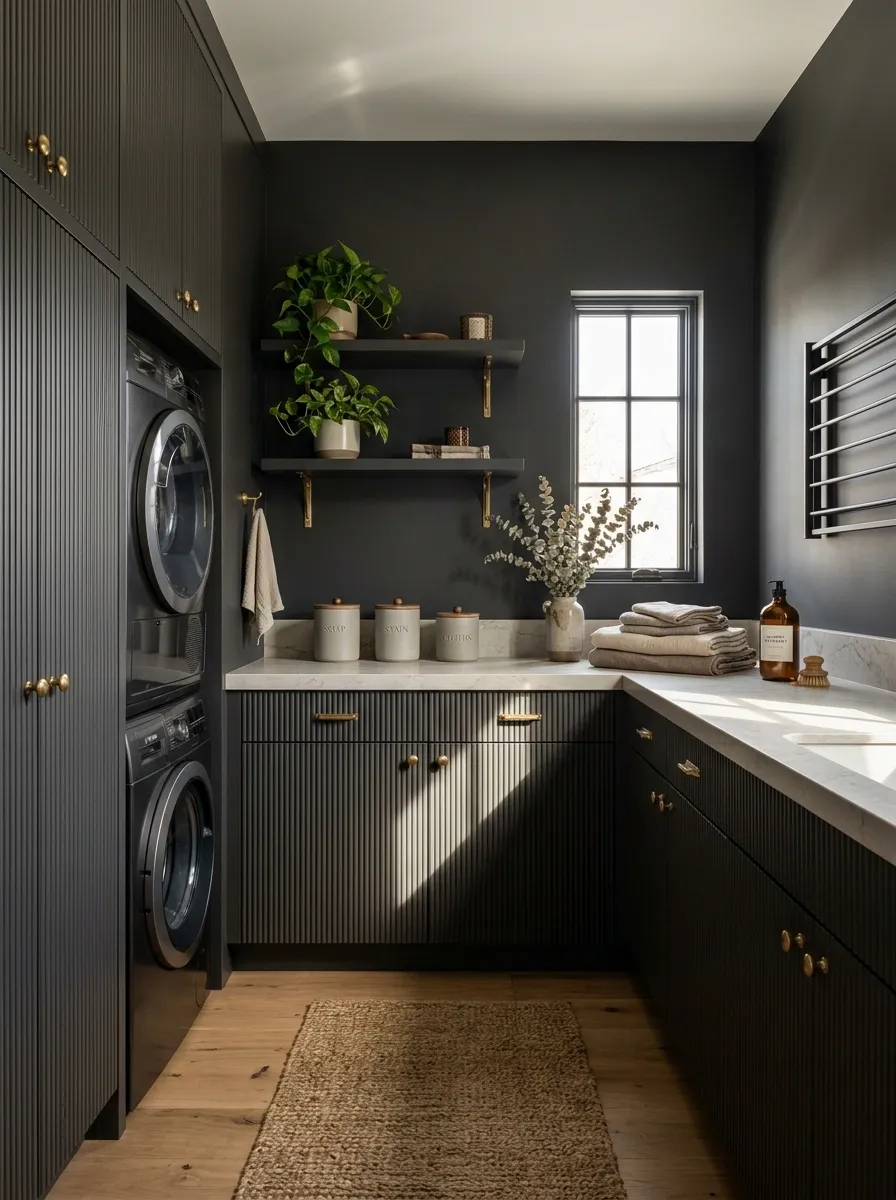
Laundry supplies are useful. They’re also visually messy.
Fluted cabinet doors solve that problem while bringing texture into a room dominated by smooth appliances and hard surfaces. The vertical grooves catch light differently throughout the day, which gives dark cabinetry more depth.
Choose a finish that matches the existing cabinet color instead of introducing another wood tone. The texture should be the detail, not another competing color.
Smart placement: Hide the tallest bottles behind the deepest cabinet section, then keep smaller supplies grouped together near the work surface.
Refill bottles
Stain remover
Cleaning cloths
Give the Sink Area an Aged, Utility-Room Feel
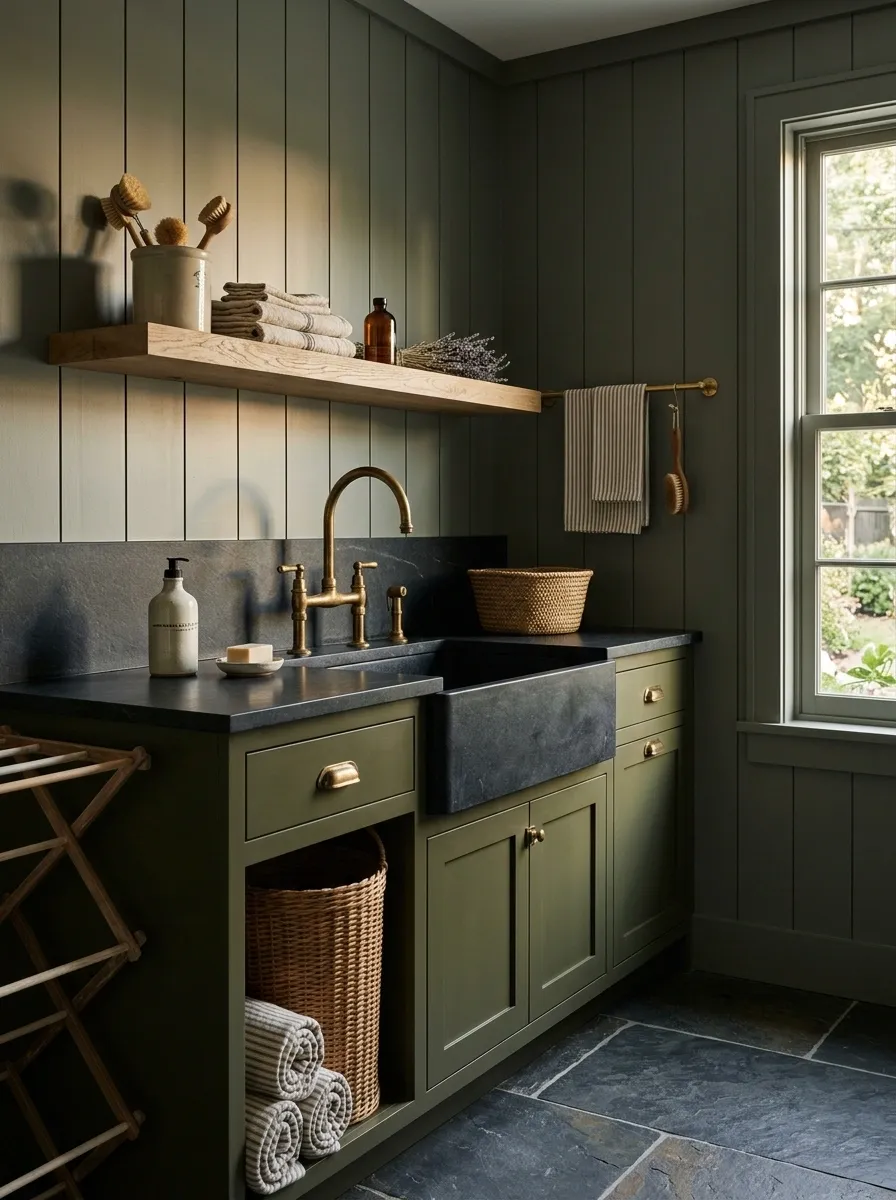
A laundry sink doesn’t need to disappear.
A deep basin, straightforward faucet, and simple wall storage can become one of the strongest features in the room. Choose finishes that look better with a little wear instead of anything overly polished.
This is where practical design wins. The sink can handle hand washing, soaking, muddy shoes, and awkward items that don’t belong in the washing machine.
Keep the area visually spare. One rail, one shelf, and one container for scrub brushes are enough.
Mix Matte Black With Aged Brass
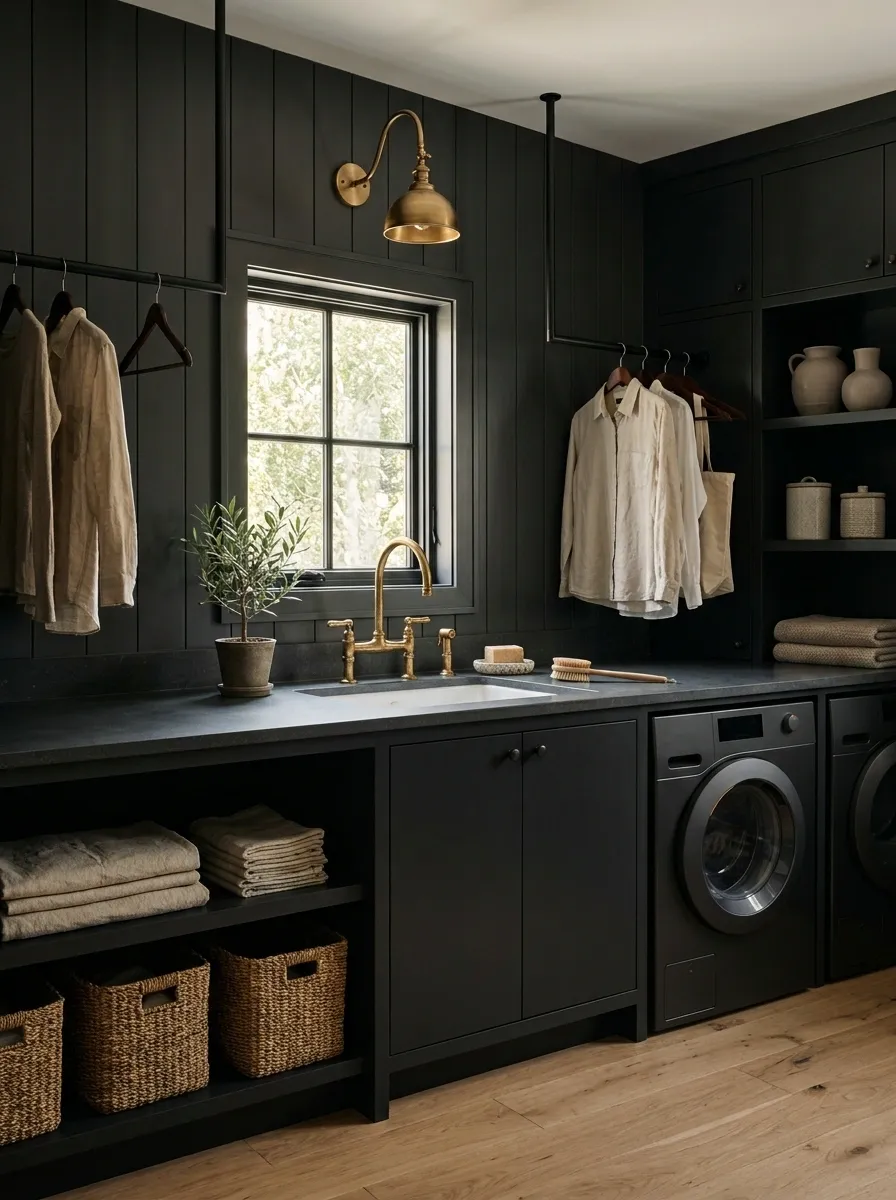
A moody laundry room needs contrast, but that contrast doesn’t have to come from pale walls.
Matte black gives the room structure. Aged brass brings the warmth. Together, they create a sharp combination that works especially well on cabinet hardware, faucets, hooks, and small lighting details.
Keep the finish difference obvious. Black should look flat and quiet. Brass should catch the light. Don’t use highly polished brass beside matte black unless the whole room has a more formal direction.
Turn a Small Laundry Nook Into a Dark Little Jewel Box
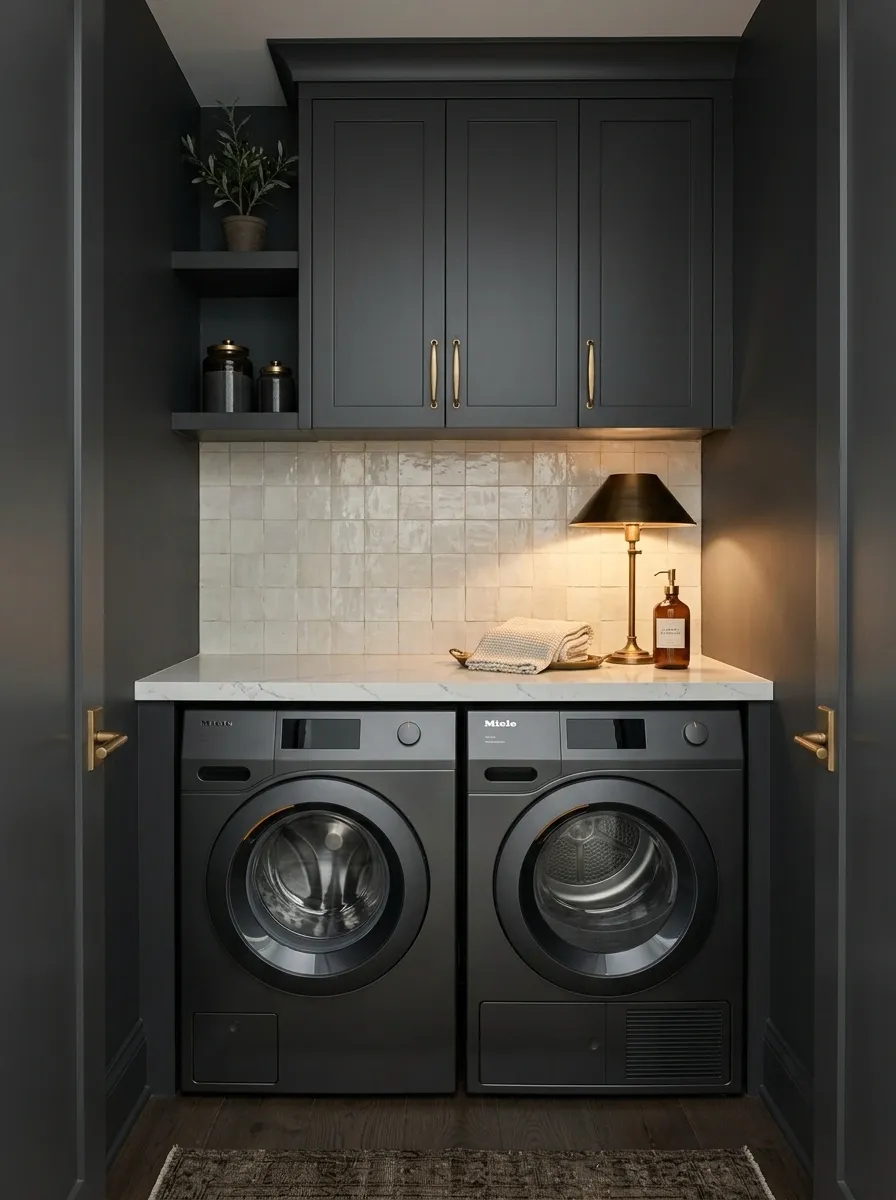
Small laundry areas can handle deep color better than expected.
A compact nook has fewer surfaces competing for attention, so a rich wall color can make the entire zone feel intentional. Instead of trying to make every inch look larger, lean into the enclosure.
Use one strong color across the walls and cabinets. Add a lighter counter, warm lamp, or pale tile to keep the machines from disappearing into the background.
Small room rule: fewer finishes, stronger choices.
One warm material
One light contrast
Clear counter space
Use a Deep Blue Behind White Appliances
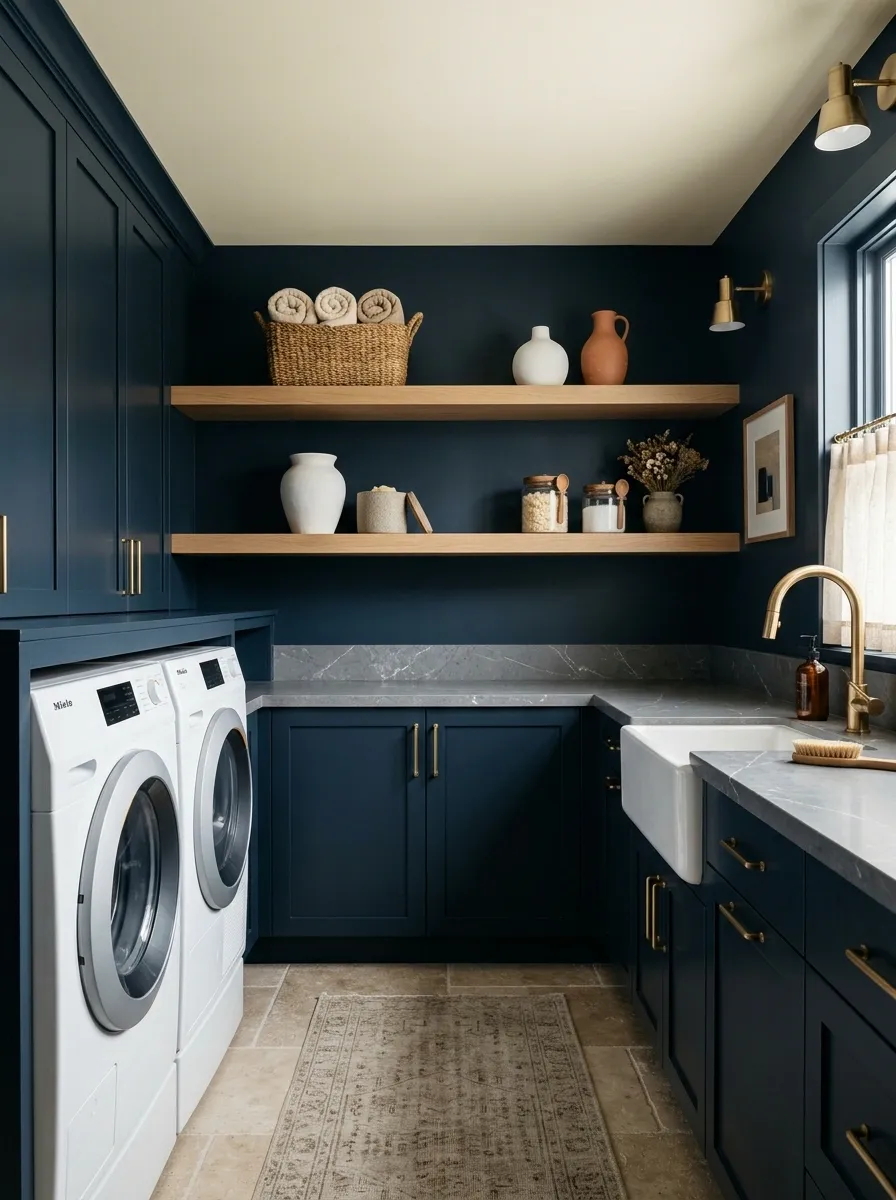
Deep blue gives white washers and dryers a crisp outline.
The pairing works because the appliances become part of the color scheme instead of looking like disconnected white boxes. Choose an ink, navy, or blue-green shade with enough depth to make the white machines stand out.
Add one warm element, such as oak shelving or brass hardware. That small addition keeps the blue from feeling cold.
A pale ceiling is especially useful here. It reflects available light while leaving the walls rich and dramatic.
Add a Wood Drying Rod Above the Counter
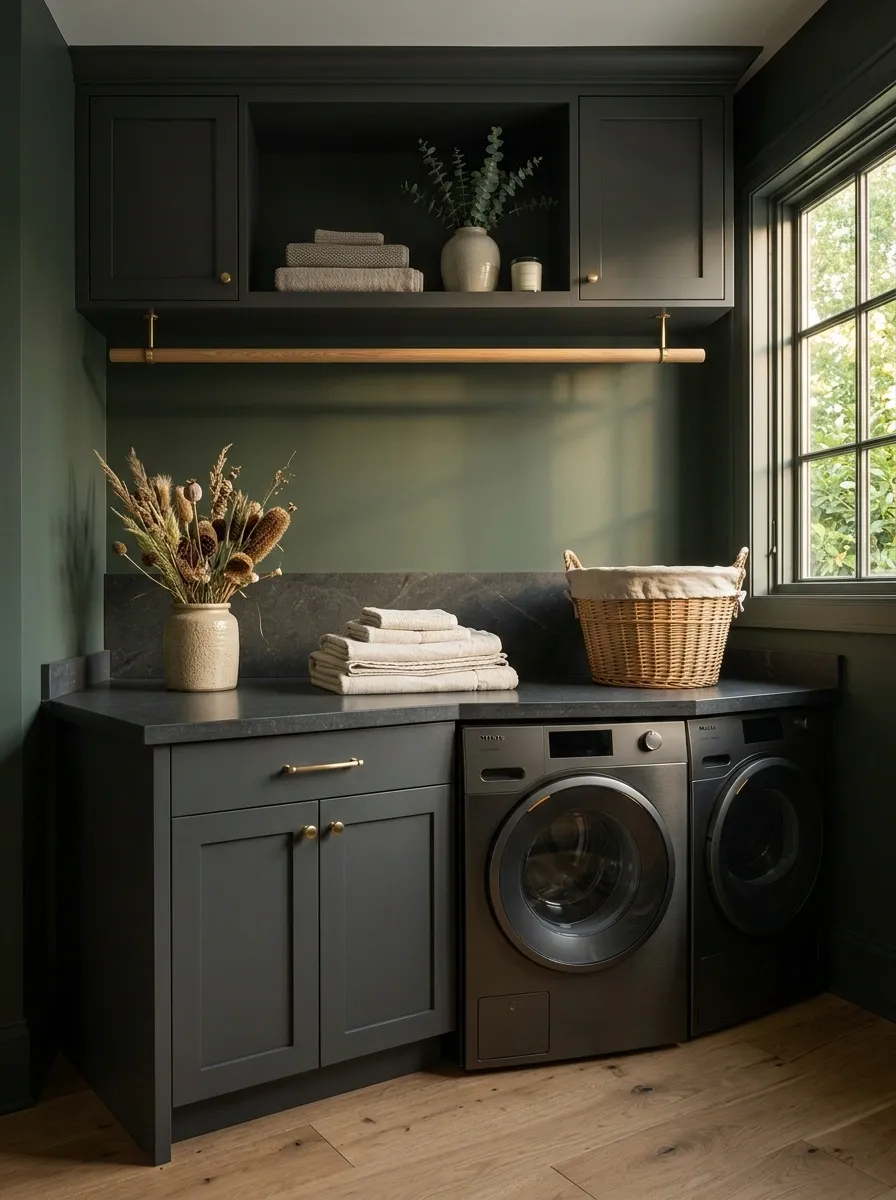
A drying rod doesn’t need to look like something that gets dragged out on laundry day.
A simple wood rod mounted beneath a shelf creates a warm architectural detail while giving clothes a dedicated place to drip dry. That makes it useful and decorative at the same time.
Choose a rod thick enough to look substantial. Mount it where hangers won’t interfere with cabinet doors or movement around the folding surface.
The best spot is usually above the counter and below an upper shelf, where the wood becomes a strong horizontal line across the wall.
Frame the Washer and Dryer With Tall Storage
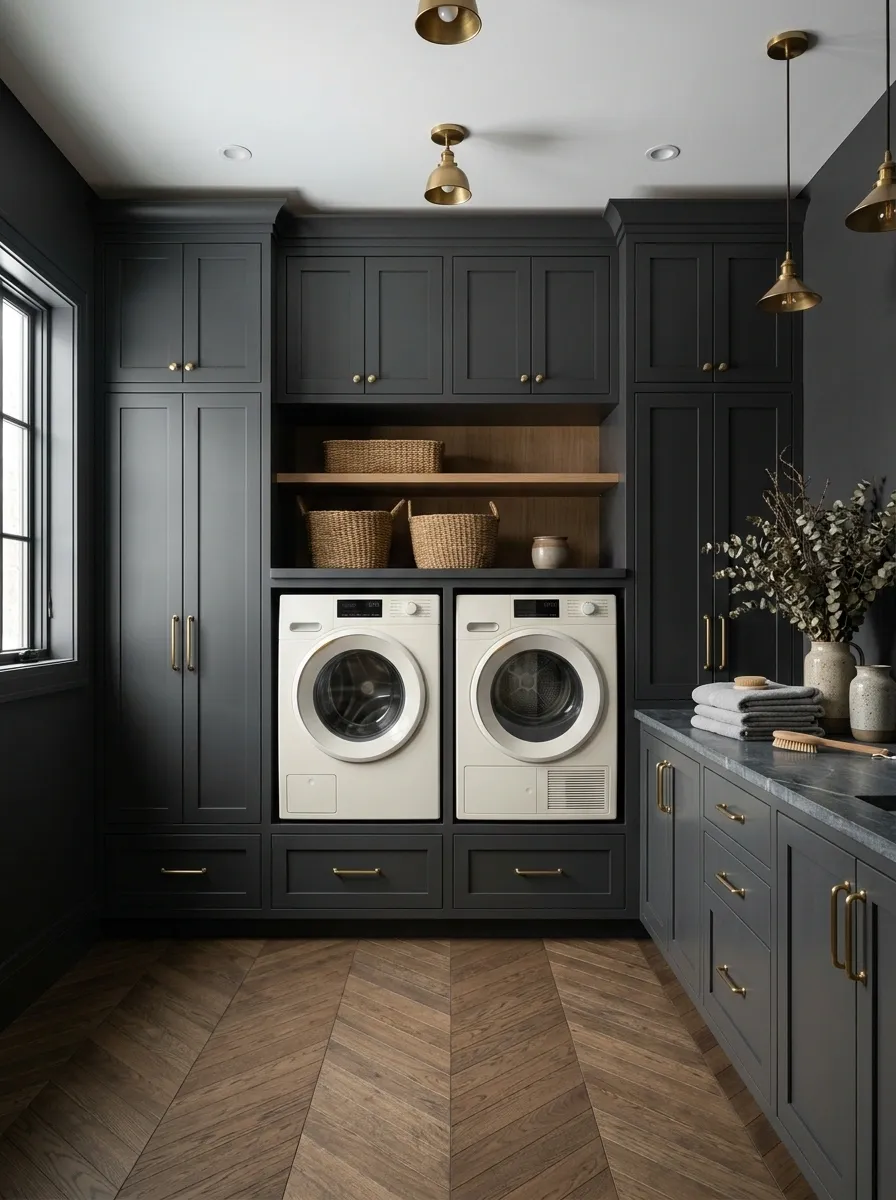
The gap beside laundry machines is usually wasted space.
Tall cabinetry turns those narrow strips into storage while making the machines look built into the room. That’s the visual trick here. Instead of reading as two appliances standing alone, the entire wall becomes one deliberate composition.
Use the tallest cabinets for bulky supplies, spare linens, ironing equipment, and cleaning tools. Keep doors solid so the wall stays visually calm.
Dark cabinetry surrounding lighter machines creates a built-in effect with very little decorative effort.
Use Checkerboard Flooring for Graphic Contrast
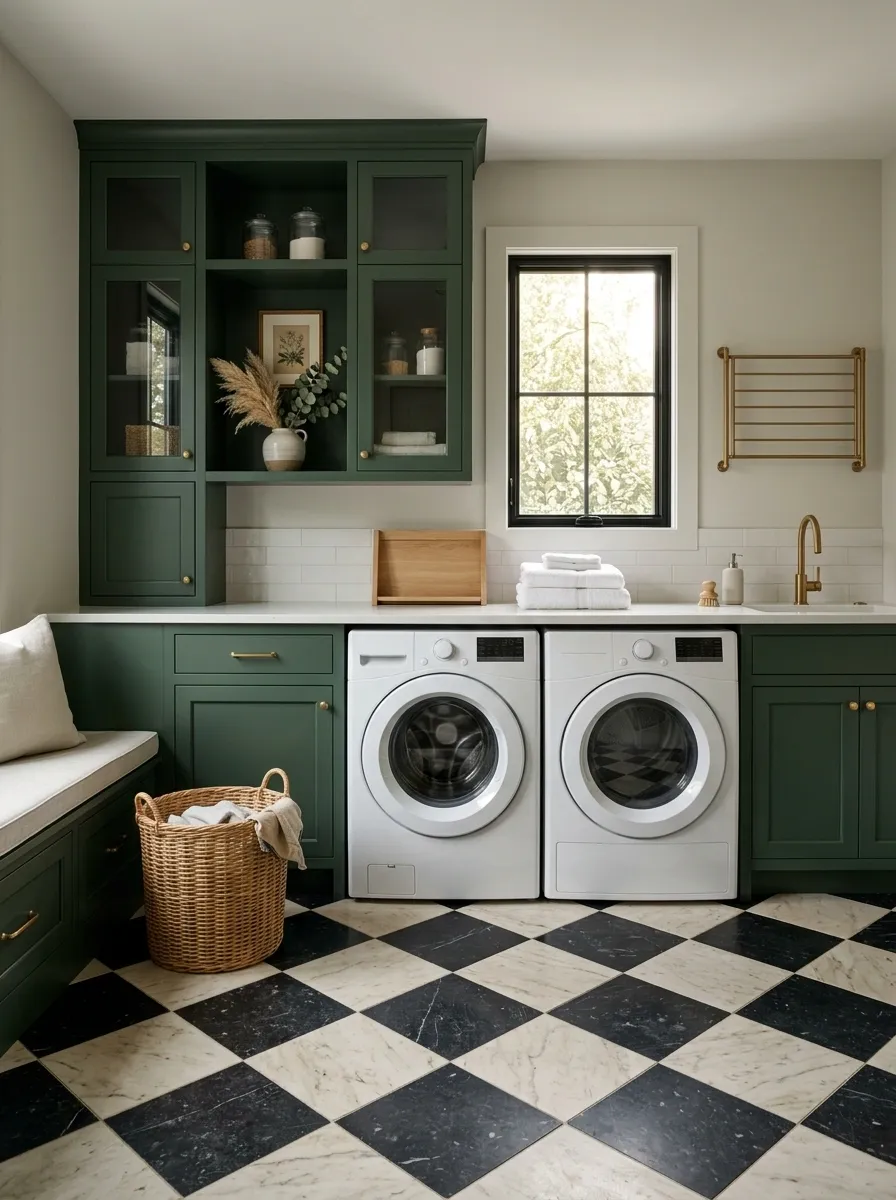
A moody laundry room doesn’t need a dramatic backsplash if the floor already has something to say.
Black-and-cream checkerboard flooring gives the room a strong graphic base while keeping the walls and cabinets free to carry deeper colors. The pattern also works particularly well with white appliances because the floor repeats that same light-and-dark relationship below.
Keep everything above it restrained. A deep green cabinet, plain walls, and simple hardware are enough.
The rule: let the checkerboard be the pattern. Don’t introduce another competing geometric finish.
Style the Counter With Only Useful Objects
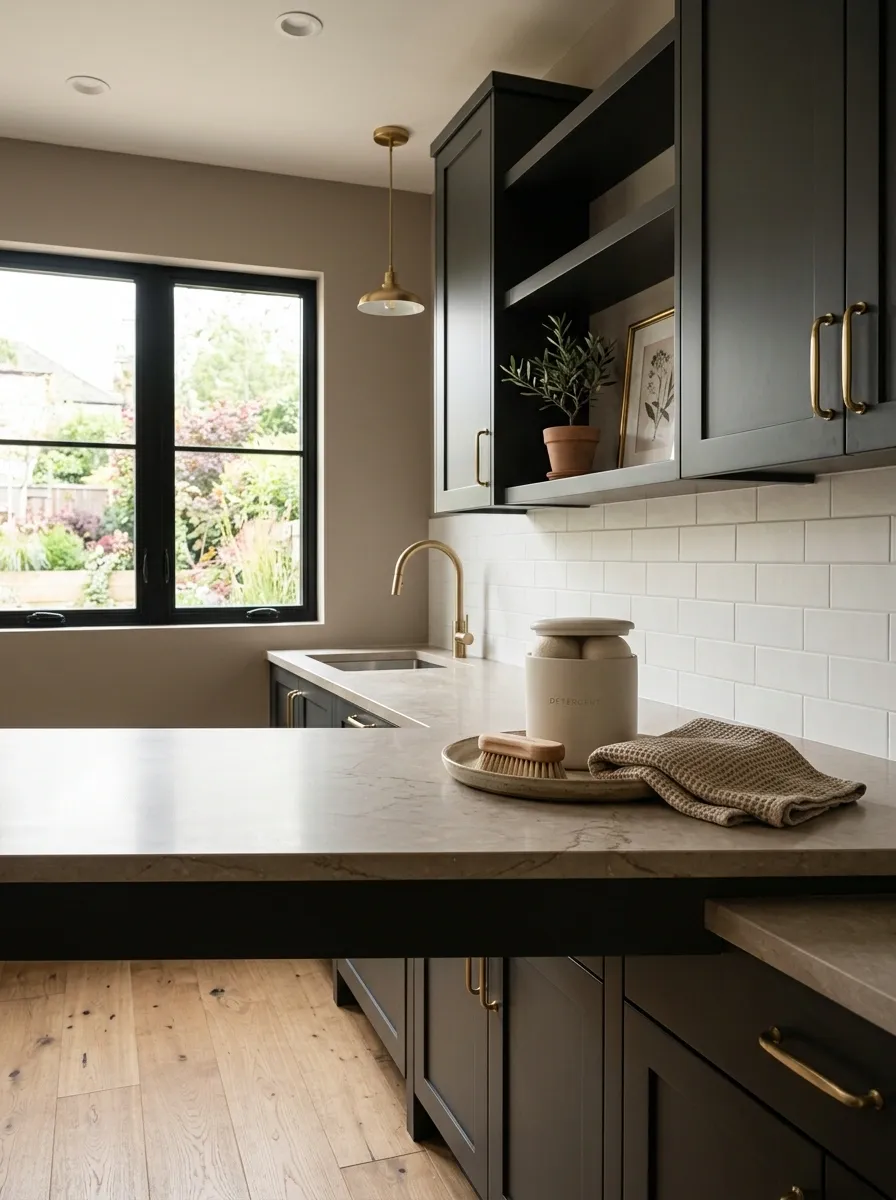
A moody laundry room looks better when the counter isn’t buried under styling.
Keep only the objects that belong there. A ceramic container for detergent pods, a small wood brush, a folded towel, or a shallow tray can give the surface enough detail without turning it into a display shelf.
The trick is visual spacing.
Counter formula
- One useful container
- One soft item
- One natural material
- Plenty of open surface
That empty space matters. It makes the dark cabinetry and warm countertop feel intentional instead of overloaded.
Add a Wall-Mounted Drying Rack in a Dark Finish
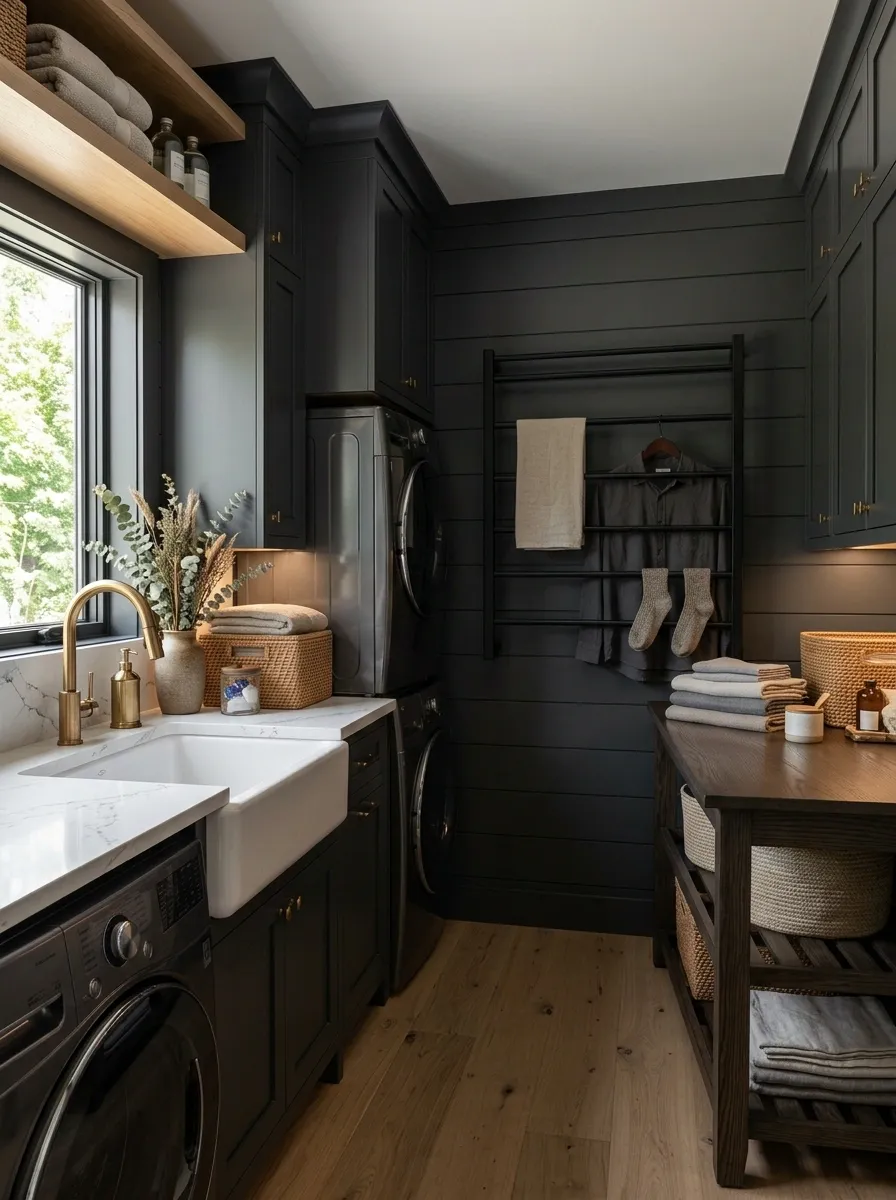
A drying rack doesn’t have to look like something that gets dragged out on laundry day.
A wall-mounted rack in black metal or deep-stained wood can become part of the architecture. Install it above a counter or beside the sink, where it stays useful without taking over the room.
Choose a rack with clean lines rather than lots of decorative curves. The darker finish blends into the moody palette, while the open structure creates a lighter visual layer against the wall.
Best placement: near the washer, sink, or folding zone so wet clothing doesn’t have to travel across the room.
Use Wallpaper for Moody Pattern Without Heavy Paint
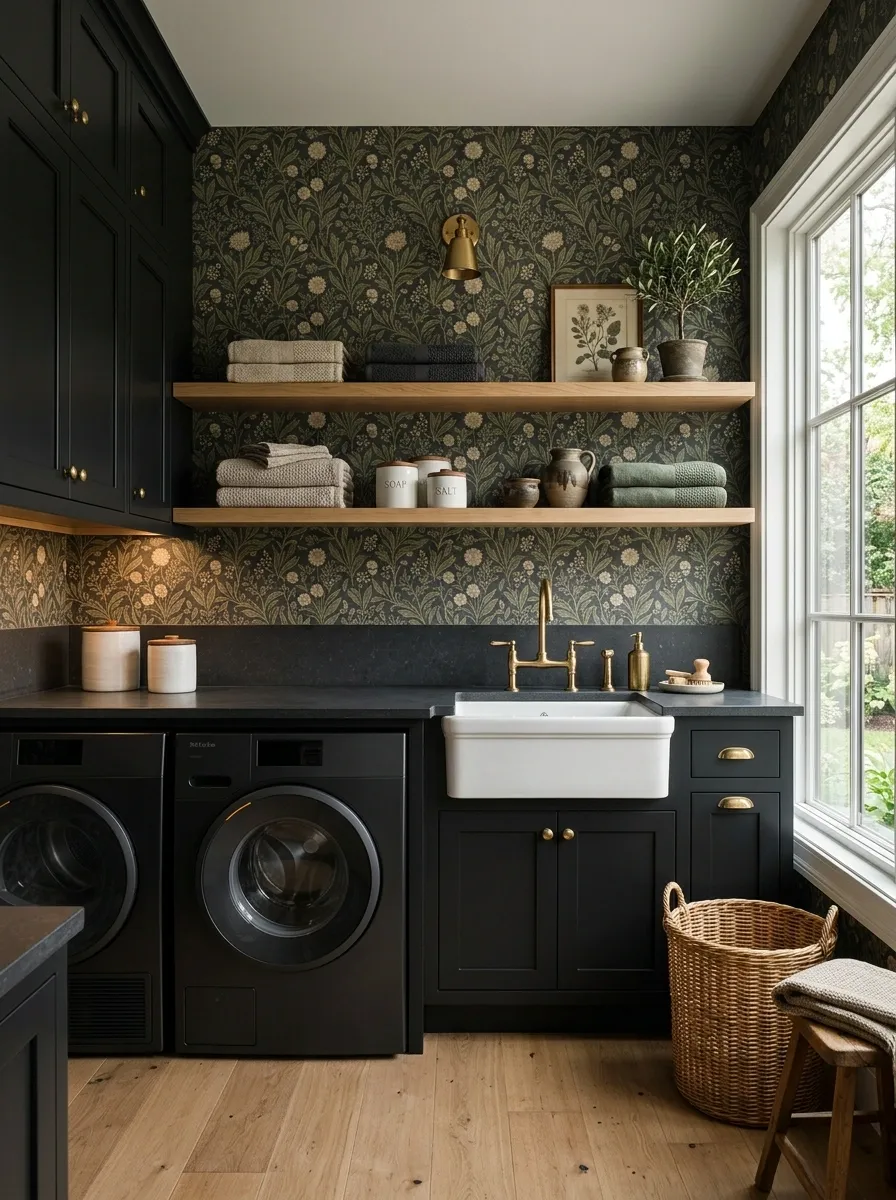
Wallpaper gives a dark laundry room personality without requiring every wall to carry a single intense color.
Look for patterns with charcoal, olive, brown, faded blue, or cream. Small botanical prints work well because they introduce movement without the hardness of geometric tile. Larger patterns make more sense when the laundry room has enough wall area to let the design breathe.
Use wallpaper on one wall and let cabinetry, shelving, or appliances interrupt it naturally.
The strongest result feels collected, not coordinated to death.
Best when the room has limited wall area.
Better when the wall can breathe around it.
Create a Tonal Gray Laundry Room With One Warm Accent
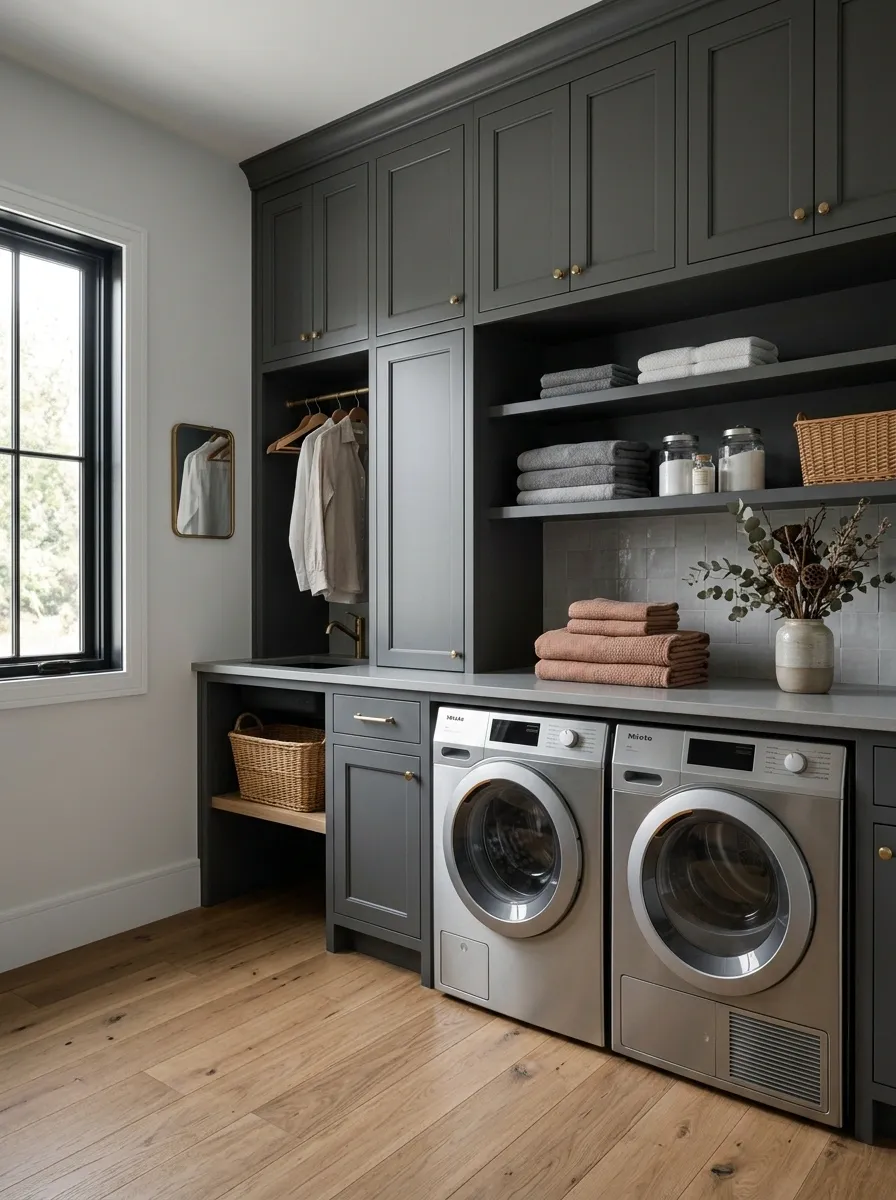
Gray doesn’t have to feel boring.
A tonal gray room becomes much more interesting when several shades are layered instead of forcing one gray across every surface. Use a deeper gray on cabinets, a softer gray on walls, and a pale gray countertop or tile.
Then add one warm accent. Oak is the easiest choice, but aged brass or a muted terracotta textile can work too.
The important part is restraint. One warm note has more impact when the rest of the room stays within the same color family.
Install a Deep Utility Sink With a Strong Faucet
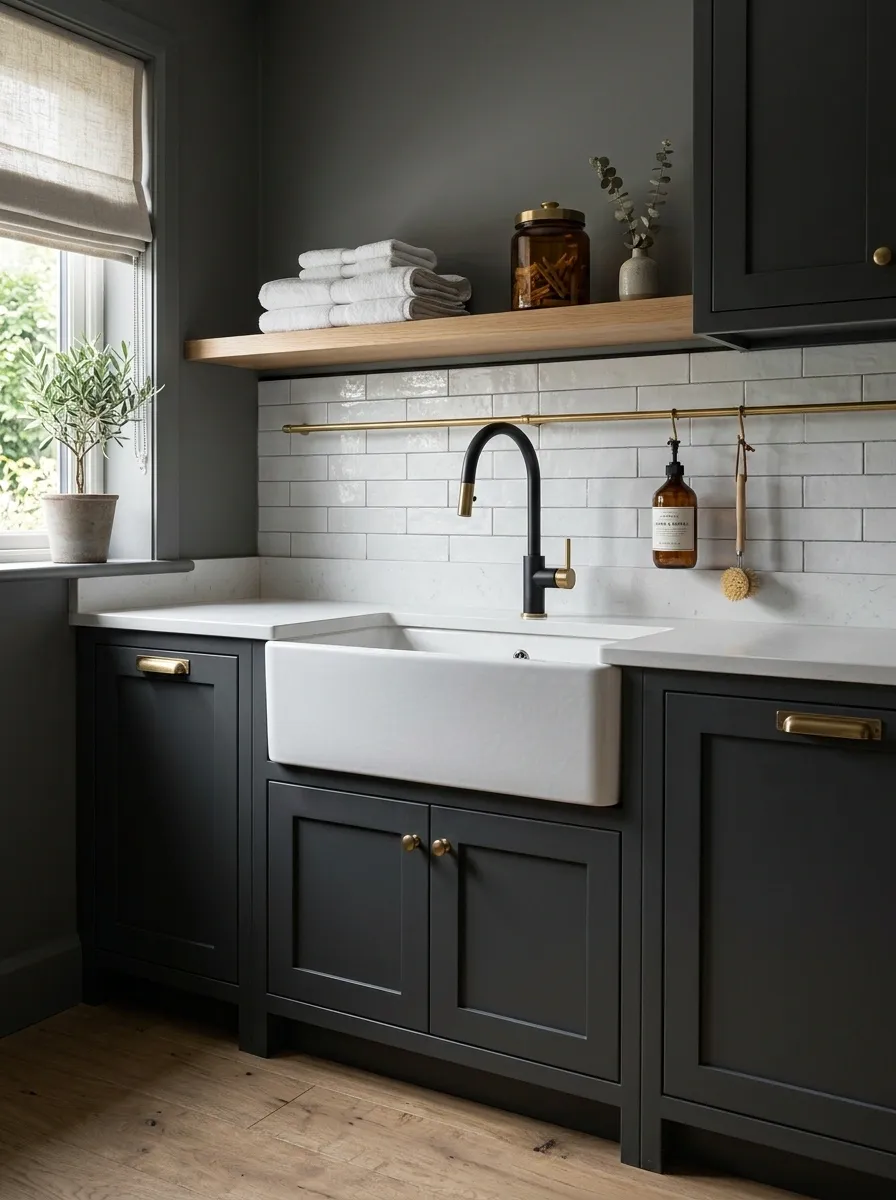
A deep sink can become the hardest-working feature in the room, so it shouldn’t look like an afterthought.
Choose a broad, simple basin with a substantial faucet. Dark cabinetry looks especially strong around a white, stone, or fireclay-style sink because the basin creates a clean visual break.
Keep the surrounding area spare. One hanging rail, a small soap bottle, and a brush are enough. The sink should read as a functional workstation, not another place to collect things.
One soap bottle
One small rail
Add Curtains to Soften Open Laundry Storage
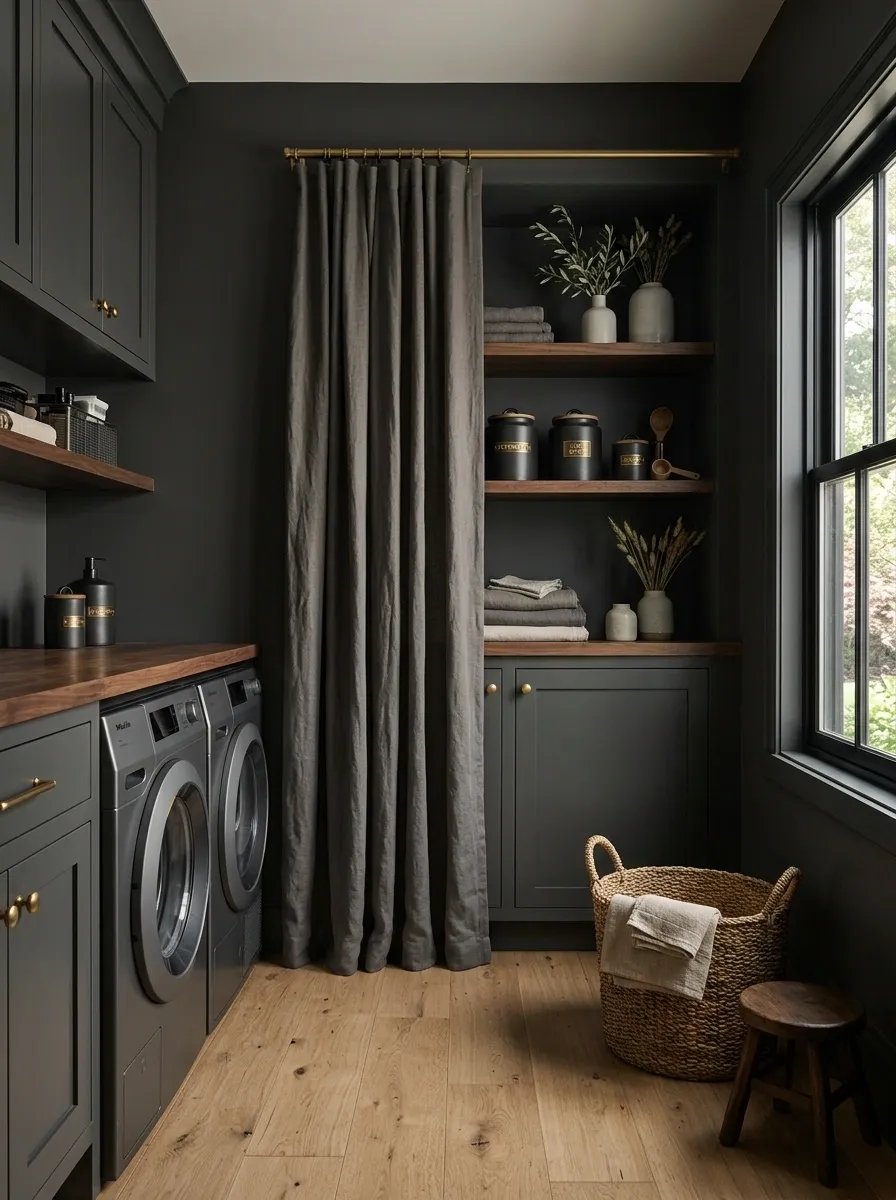
Open laundry storage can look harsh when the shelves are packed with bottles and folded textiles.
A simple curtain introduces movement and hides the messy zone without adding another solid cabinet door. Use linen-look fabric, cotton canvas, or a muted check in a color that sits close to the wall or cabinetry.
Mount the rod high enough that the fabric falls cleanly to the floor or just below the shelf edge. A slightly gathered curtain looks relaxed. Excessive fullness makes the storage area feel fussy.
Keep the fabric matte. Shiny material fights the earthy, moody direction.
Add a Small Picture Light Over Laundry-Room Art
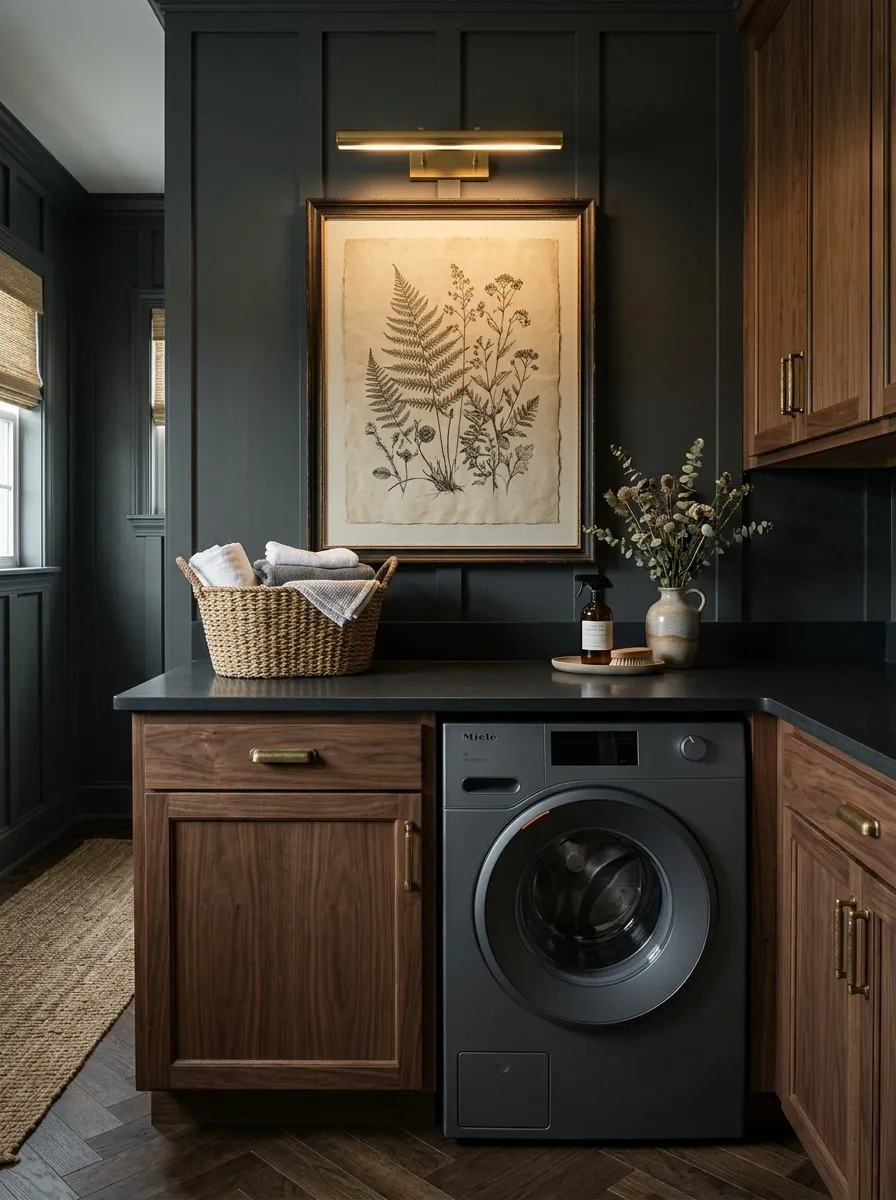
Laundry rooms get overlooked as places for art.
A tiny picture light changes that. Place one above a framed botanical print, vintage laundry illustration, landscape, or simple abstract piece. The little pool of warm light creates a focal point without filling the room with another large fixture.
Keep the artwork modest in size. It should feel like a detail discovered on the wall, not the centerpiece of the entire room.
Best placement: over the folding area, beside a tall cabinet, or above a narrow stretch of wall that otherwise feels empty.
Make the Ceiling Part of the Moody Color Story
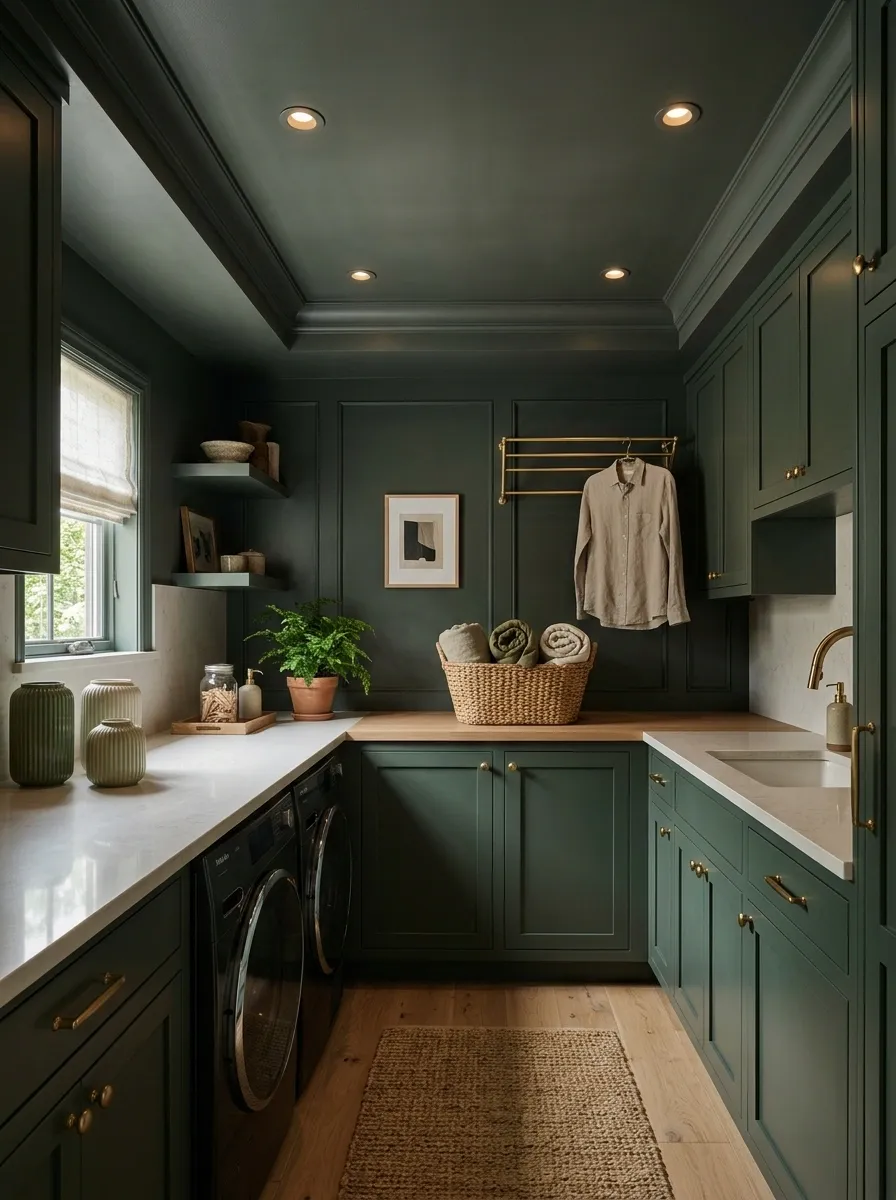
Most laundry rooms stop the design at the walls.
That wastes a surface.
Painting the ceiling a related deeper tone makes the room feel enclosed in a deliberate way, especially when the walls and cabinets already carry a rich palette. The trick is choosing a ceiling shade that relates to the wall instead of simply copying it with a darker black.
For a green room, a smoky green-gray works beautifully. For charcoal, use a softer graphite. Deep blue pairs well with a muted blue-gray ceiling.
Use warm bulbs so the darker overhead plane doesn’t feel severe.
Finish With Natural Wood and Greenery
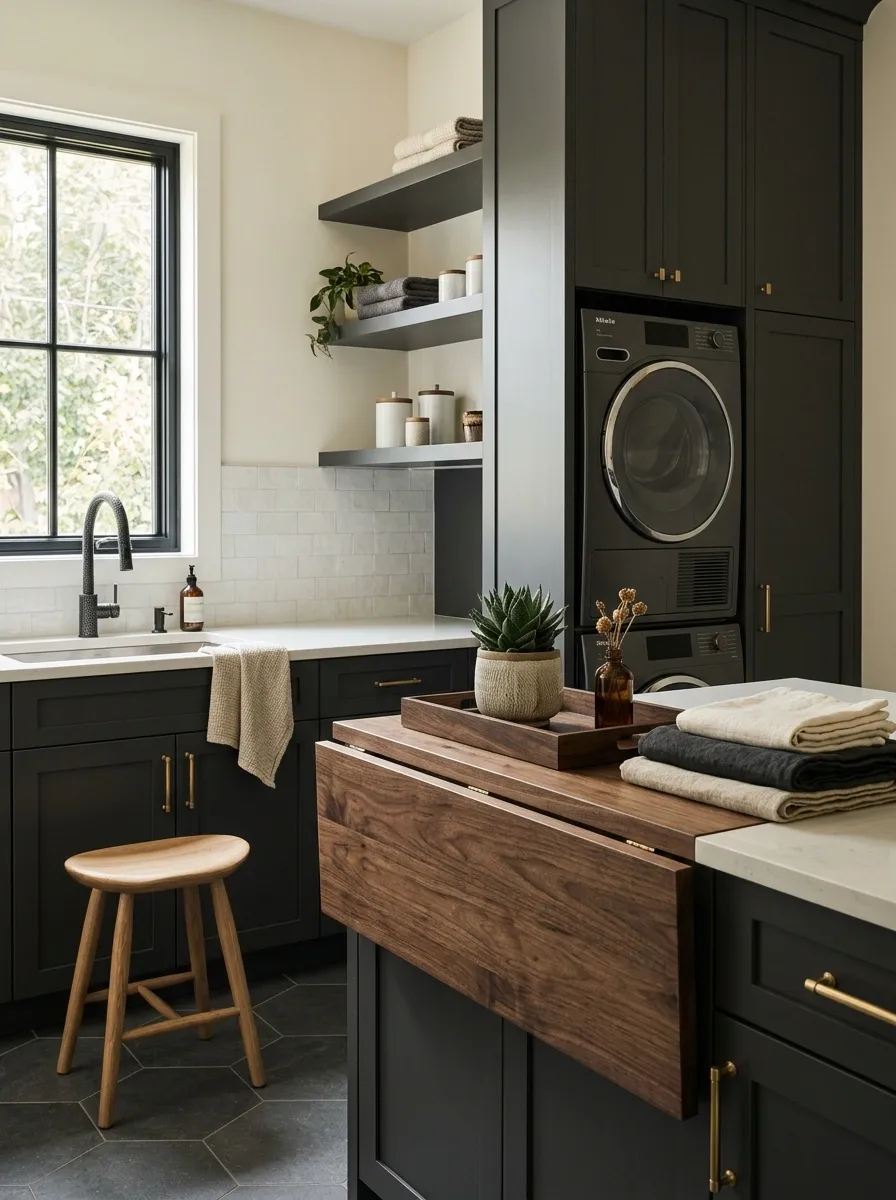
The final layer shouldn’t be more dark paint.
Natural wood and one restrained plant bring life into a room filled with machines, cabinetry, tile, and metal. An oak stool, wood tray, simple branch, or small potted plant can soften the hard surfaces without changing the color story.
Choose greenery with a clear shape. A trailing plant can work on an open shelf, while a compact leafy plant suits a counter corner better. Don’t scatter plants everywhere.
One natural focal point beats a collection of decorative objects.
Make the Dark Palette Work for the Room, Not Against It
A successful moody laundry room isn’t built from darkness alone. It works because every element has a job.
Deep cabinetry gives the room its visual weight. Warm wood prevents the hard surfaces from feeling sterile. Brass, black metal, and textured doors create small moments that catch the eye. Pale appliances, stone, tile, or open wall space keep the whole thing from collapsing into one dark mass.
The practical pieces matter just as much. A useful folding counter, accessible supplies, a serious sink, drying space, and proper lighting will always outperform a room that’s beautifully styled but annoying to use.
Start with one dominant finish. Add one warm material. Add one light contrast. Then stop before the room becomes crowded.
Save this list for the next laundry room refresh when dark, warm, and practical need to work together.