
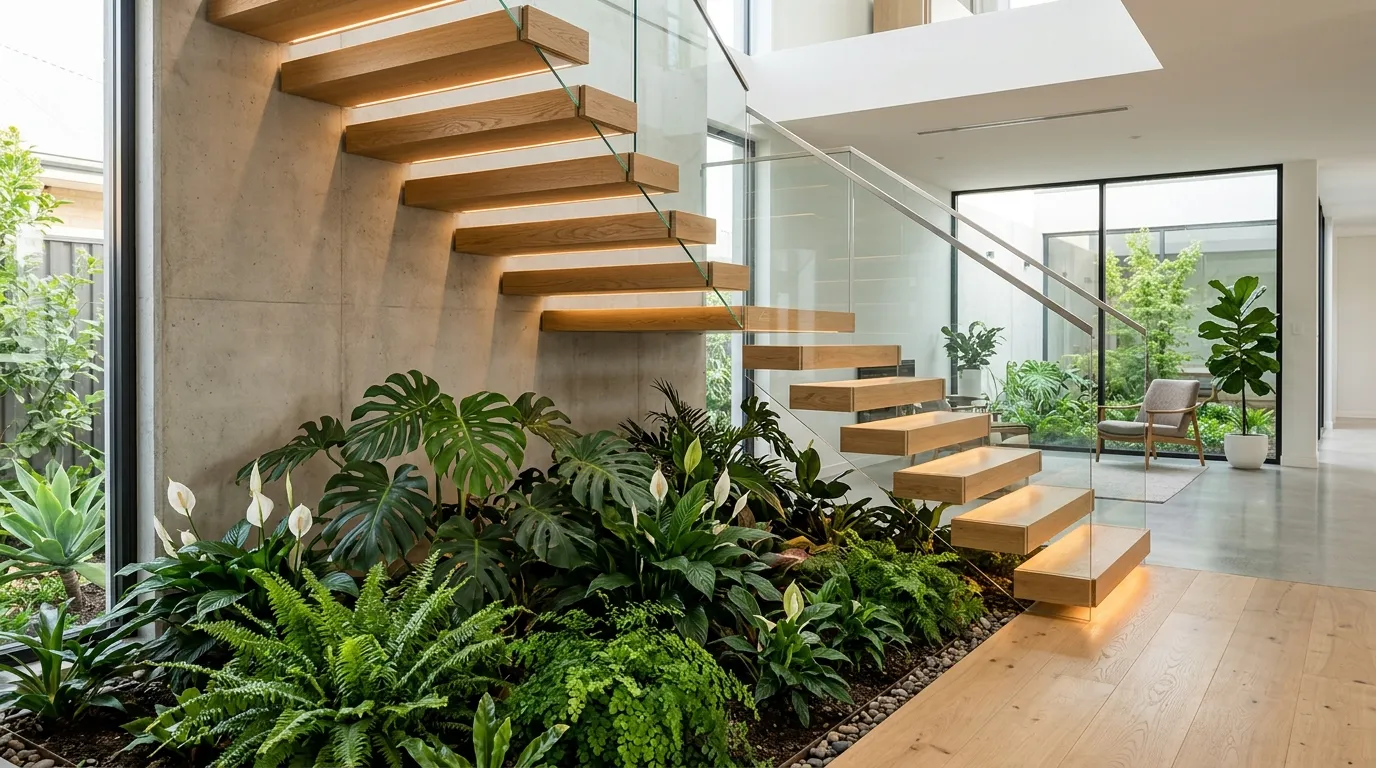
That triangle of space under your stairs isn’t useless. It’s just been styled wrong, or worse, ignored completely. Most homes waste it as a dumping ground for shoes and vacuum cleaners, when it’s actually one of the easiest spots in the house to turn into something worth looking at.
Here’s the problem nobody tells you about a small garden under stairs: it’s not a lighting issue you can’t fix, it’s a plan issue. People walk in, buy a fern because it “seems like a shade plant,” and wonder why it’s dead in six weeks. That’s not bad luck. That’s skipping the planning step entirely.
This space rewards people who think it through first. You’ve got structure, shelter, and a built-in focal point most rooms don’t have. What you’re missing is a system for what to plant, where to hang it, and how to keep it alive without babysitting it every day.
Ideas to Actually Make This Dead Space Work
The Over-Engineered Stone Nook
Look, if you have the budget to install stone veneer and architectural accent lighting just to house a couple of pots, congratulations. Most of us just want a space that doesn’t scream ‘we ran out of room’ at every dinner guest.
Keeping the plants in a single curved, ground-level trough is actually a clever way to keep the chaos contained. It’s significantly easier to water a single long bed than it is to play musical chairs with individual pots every time you decide to rearrange the aesthetic.
Just be careful with the stone backing. If you don’t use proper drainage or liners, you are basically inviting a damp-induced mold party that will ruin the drywall behind that fancy stonework within a year. Decorative choices shouldn’t be a structural hazard.
Pick the Three Plants That Actually Survive Zero Direct Light
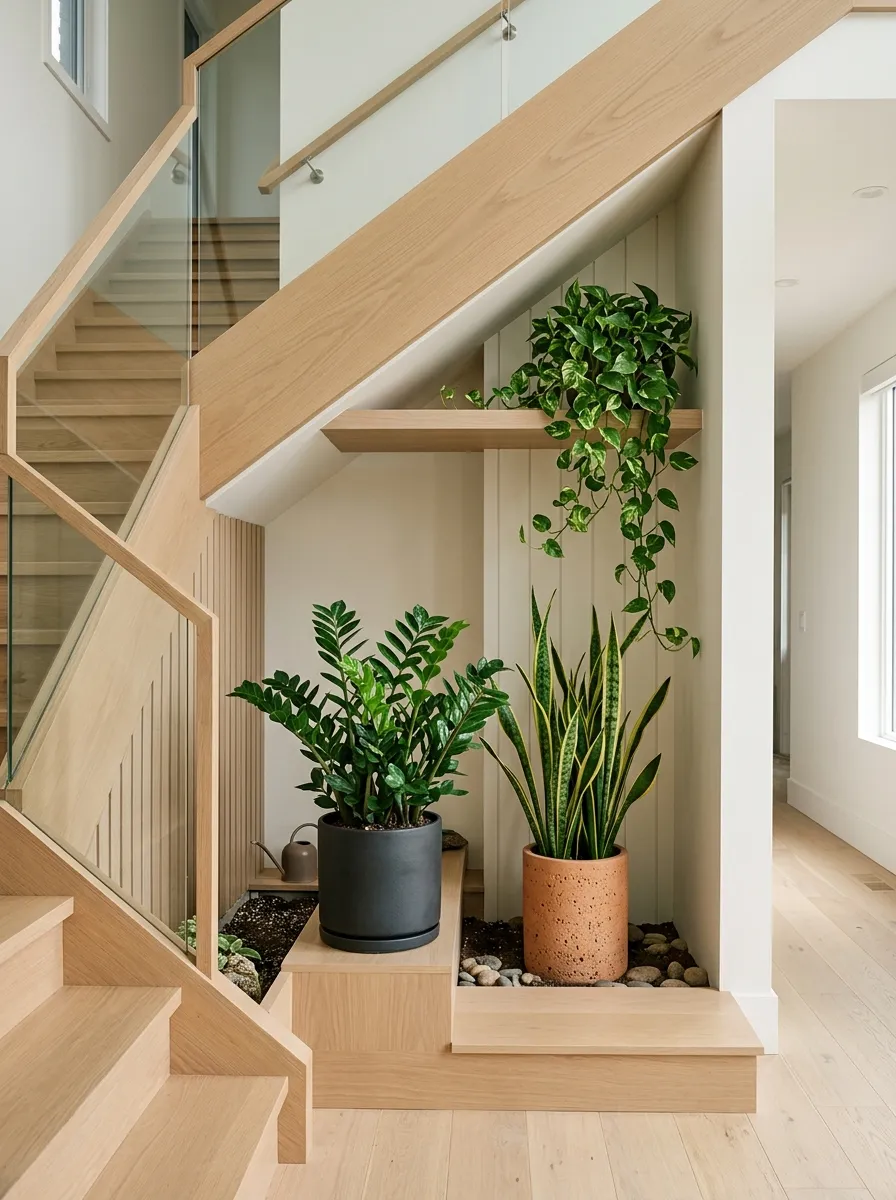
Stop guessing at the garden center. If your under-stair space gets no direct light at all, you have three real options, not fifty. A ZZ plant handles neglect and darkness better than almost anything sold in a nursery. A snake plant adds height without needing a bigger pot. Pothos fills gaps and trails down naturally, which softens the boxy shape of the space. Anything outside this short list is a gamble you don’t need to take.
Black Slats and Minimalism
Vertical black slats are a bold choice for a dark corner, mostly because they suck up whatever pathetic light actually makes it under your stairs. If you’re going for the ‘I read one too many design magazines’ look, at least commit to the contrast.
Using white pebbles for the base is a classic move that adds brightness, but let’s be real—it’s going to be a graveyard for fallen leaves and dog hair within three days. You’ll be vacuuming rocks more often than you’ll be admiring the plant growth.
These pots are small and scattered, which is the exact opposite of what you want if you’re actually trying to keep these plants alive for more than a month. Less clutter, fewer trips to the garden center, and maybe—just maybe—your snake plant won’t wither from your constant over-attention.
Skip Pots, Build a Vertical Planter Wall Instead
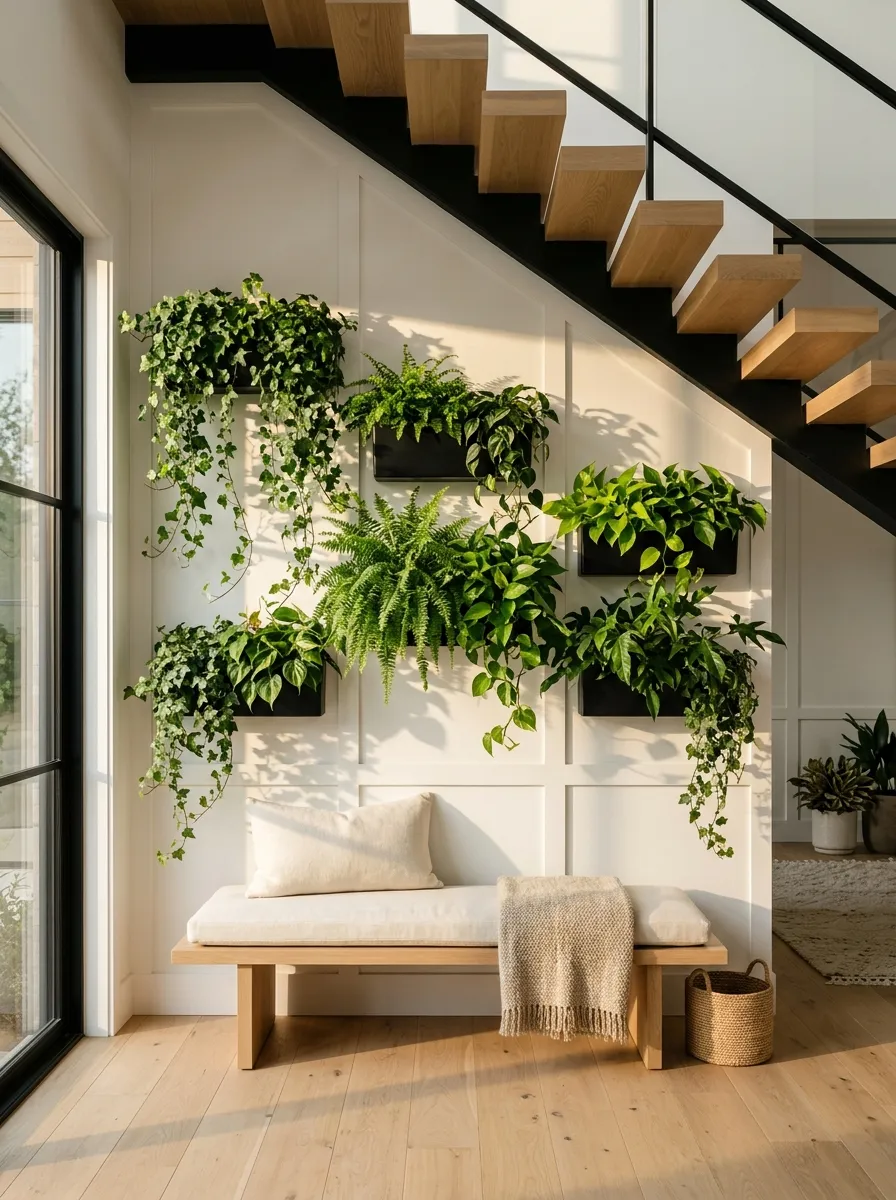
Floor space under a staircase shrinks fast once you count the slope. So don’t use it. Mount a vertical planter wall on the tallest section of the back wall instead, and you free up the entire floor for a bench or a path.
Three things make this work:
- Use a slatted wood panel, not solid backing, so air moves behind the pots
- Stagger pot sizes so the wall doesn’t read as one flat grid
- Leave the bottom third empty for now, plants fill in and you’ll want the room
Your floor stays open, and the wall becomes the whole show.
The Basic Gravel Setup
This is the ‘I have a Pinterest account and a weekend to burn’ starter kit. It’s clean, it’s safe, and it’s about as original as a white kitchen. It’s hard to mess up, which is probably why it works for the vast majority of people who think ‘indoor gardening’ is a personality trait.
The gravel base is actually the smartest part here because it hides the inevitable mess when you accidentally dump water everywhere. Plus, it elevates the pots just enough to keep them from sitting in a puddle if your floor isn’t perfectly level.
Just don’t get too attached to the idea that these succulents will thrive in the shade. Unless you have those grow lights hidden somewhere, those specific plants are going to turn into sad, stretched-out versions of their former selves before the month is out.
The Bench-With-Hidden-Planter Combo That Doubles Your Space
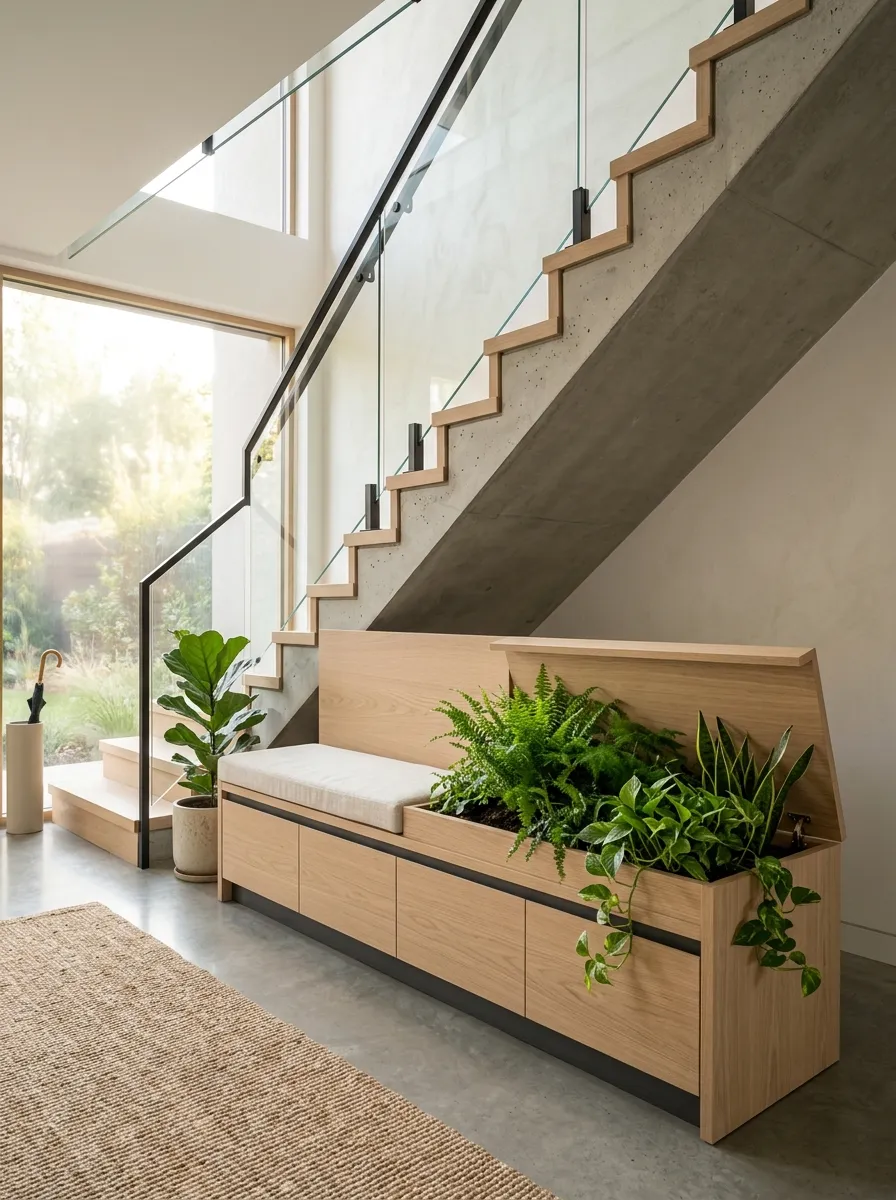
This is the move most people never think of. Build or buy a bench with a lift-up seat, then fit a shallow planter box into the top third of the storage compartment, right where the ceiling is highest. You get seating, hidden storage underneath, and a garden bed all in one footprint. It sounds complicated. It’s really just a box with a hinge and a liner.
The Lush Indoor Jungle
So, you decided that you absolutely must recreate a rainforest underneath your staircase. It looks fantastic for the five minutes it takes to snap a photo, but don’t ignore the logistics—this much plant density means your humidity levels are about to skyrocket in a very small, poorly ventilated space.
Using hanging baskets against the wall is the only reason this isn’t a total disaster. It draws the eye up and makes the most of that awkward triangular space that usually ends up as a catch-all for old shoes and forgotten junk.
Since you’ve clearly filled every single square inch with foliage, don’t pretend you aren’t going to be spending your entire Sunday afternoon playing Plant Tetris just to reach the one in the back. It looks great, but don’t say I didn’t warn you when you start noticing the fungus gnats.
Stagger Heights With a Tiered Plant Stand
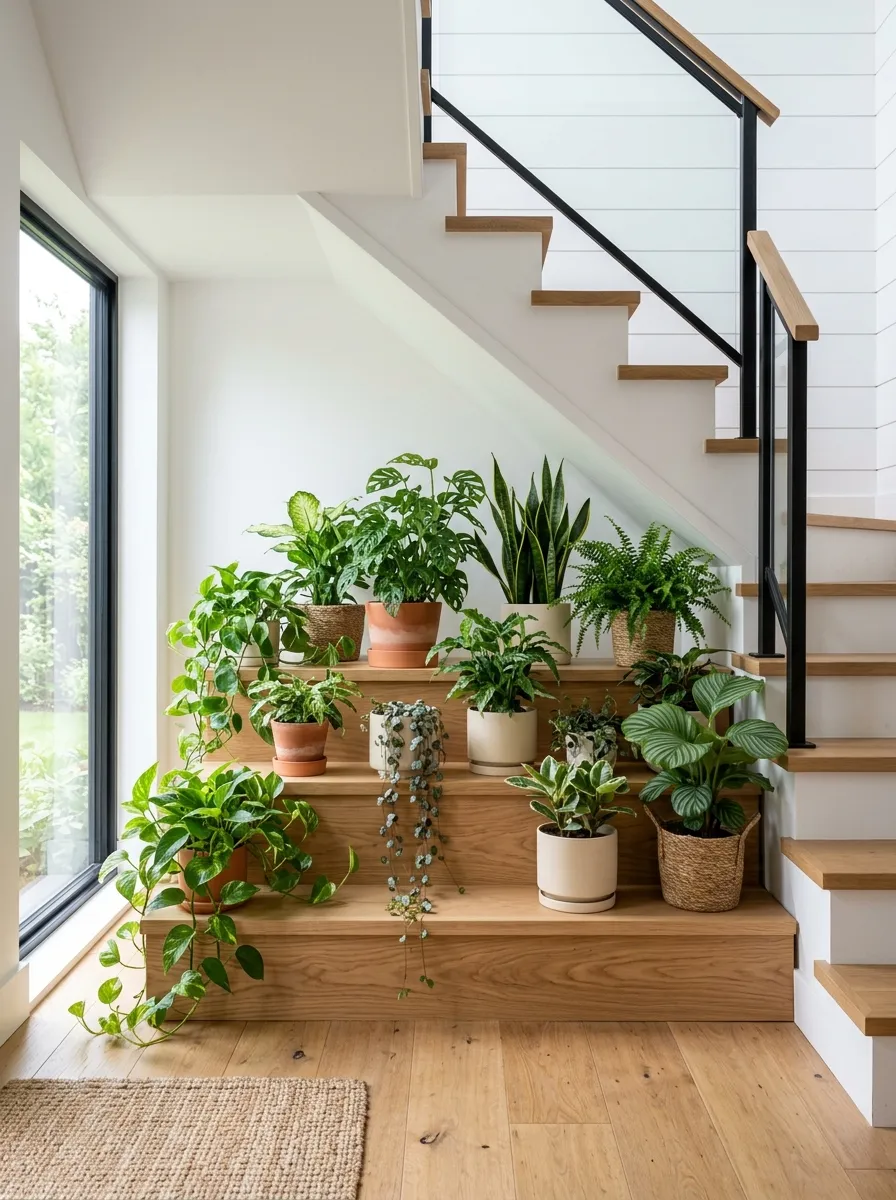
A flat row of pots at the same height looks like an afterthought. A tiered stand fixes that instantly and works with the slope instead of fighting it.
- Place the tallest tier at the back where the ceiling peaks
- Set the middle tier where the slope starts dropping
- Keep the shortest tier near the front, under the lowest point of the stairs
- Angle each shelf slightly forward so plants get whatever light bounces in
This single change makes a flat corner look like an actual designed nook.
Battery Grow Lights Beat a Window You Don’t Have
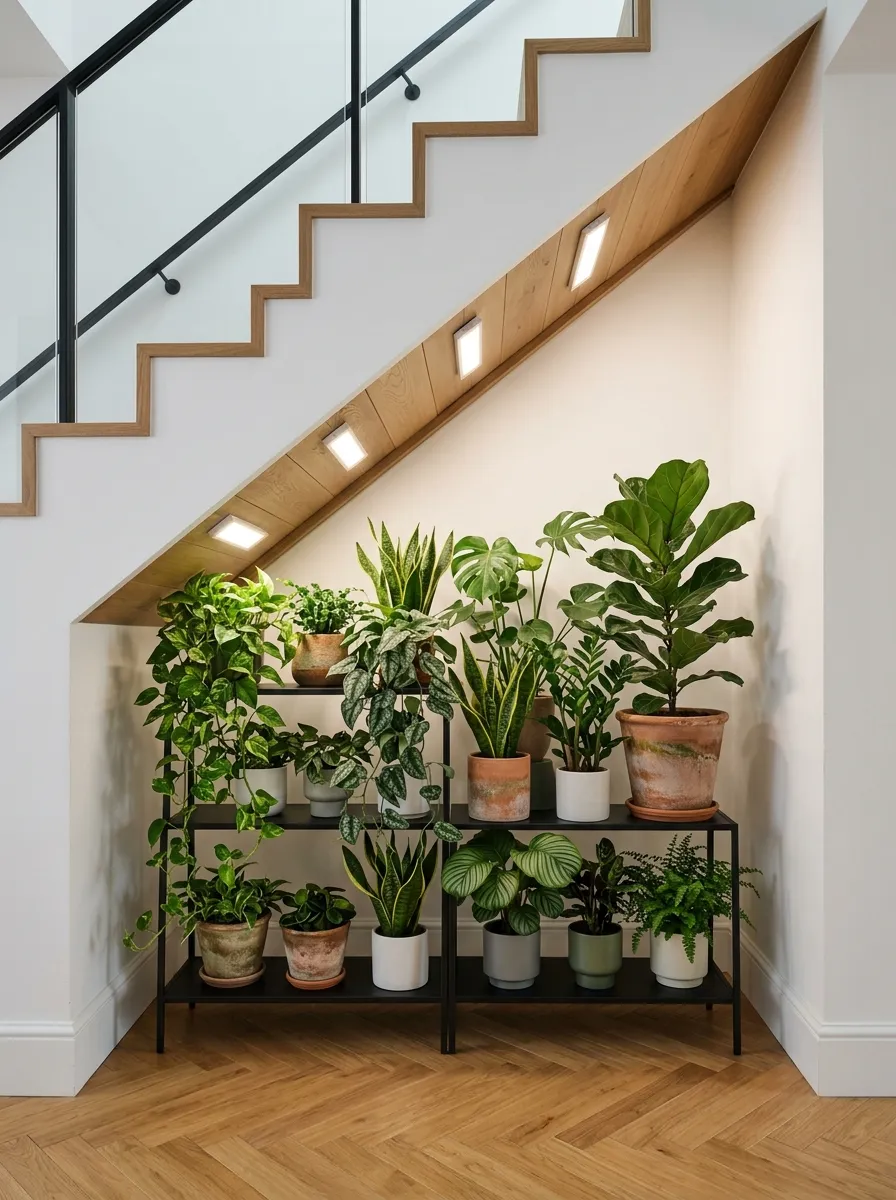
Nobody wants to run an extension cord under the stairs, and you shouldn’t have to. Battery or rechargeable LED grow lights solve the light problem completely, without wiring anything into the wall.
A Recirculating Herb Garden That Waters Itself
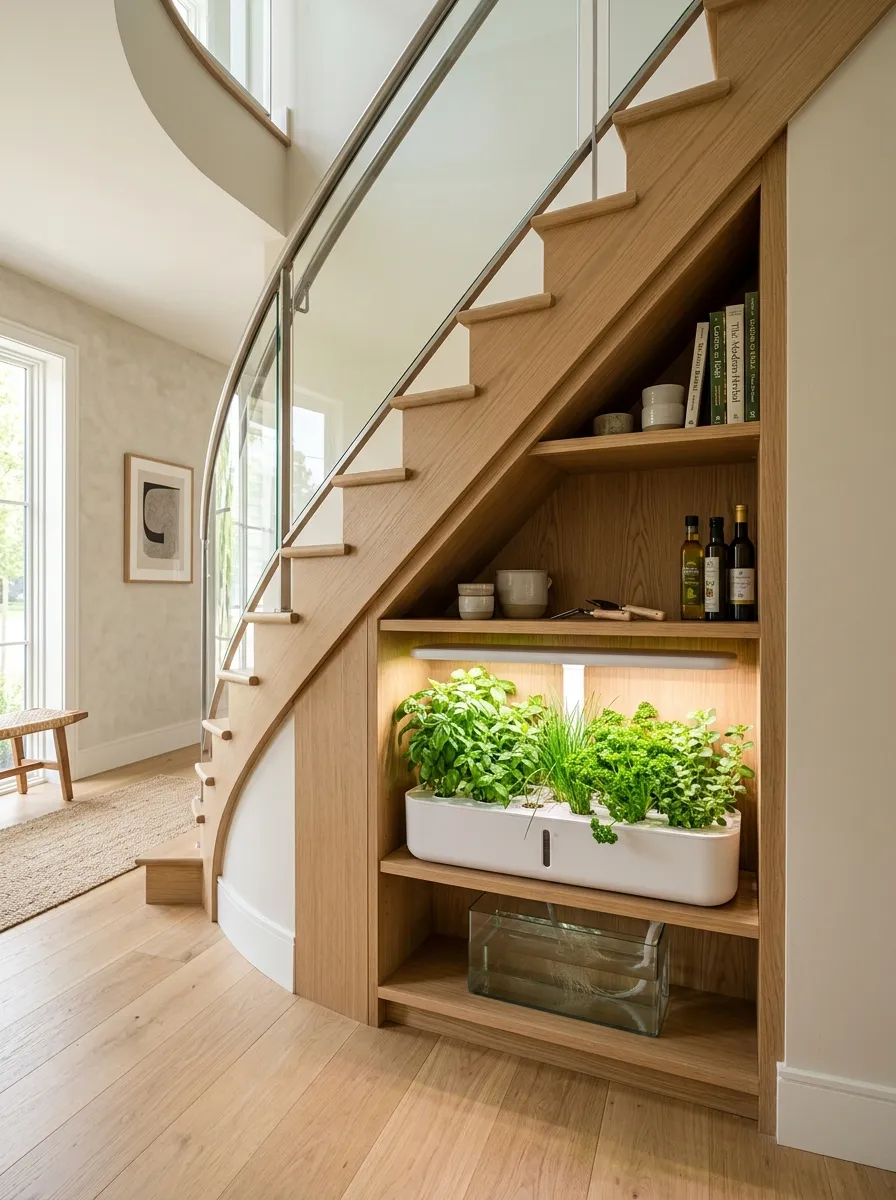
You already know you’re going to forget to water something tucked under a staircase. Plan for it instead of fighting it. A small recirculating hydroponic unit handles herbs like basil, mint, and chives without soil, without a drainage tray, and without you remembering anything more than refilling the reservoir every couple weeks.
Quick tip: Place the unit on the side of the space that gets the most foot traffic. You’ll actually use the herbs if you walk past them daily instead of forgetting they exist.
Moss Carpet for the Corner Nothing Else Will Grow In
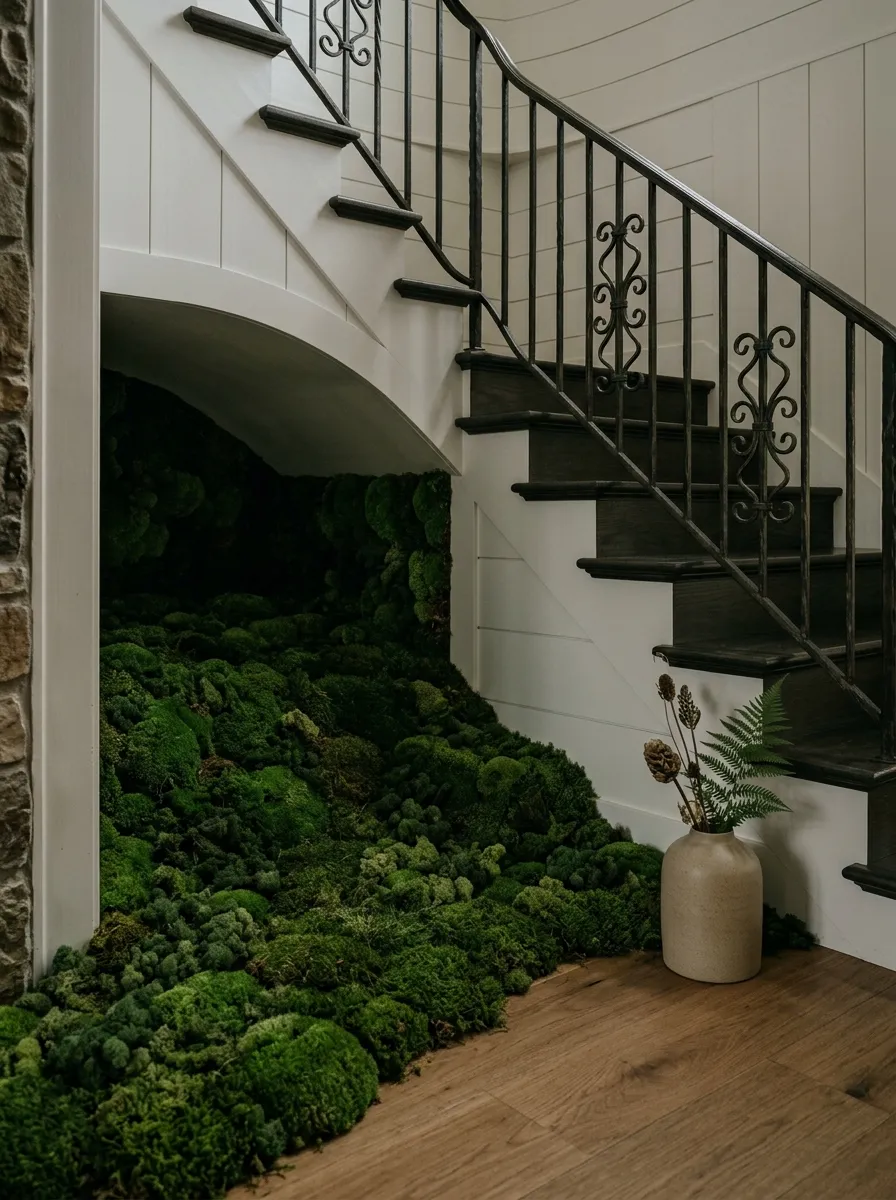
There’s always one dead corner where even the toughest plant sulks. Stop trying to grow something there. Preserved moss carpet needs zero light, zero water, and zero maintenance, and it fills that dead spot with real texture instead of a bare patch.
- Cut it to fit with regular scissors
- Press it flat against the base, no adhesive needed for small pieces
- Refresh the color every year or two, it doesn’t die, it just fades
Hang Planters From the Stair Underside Itself
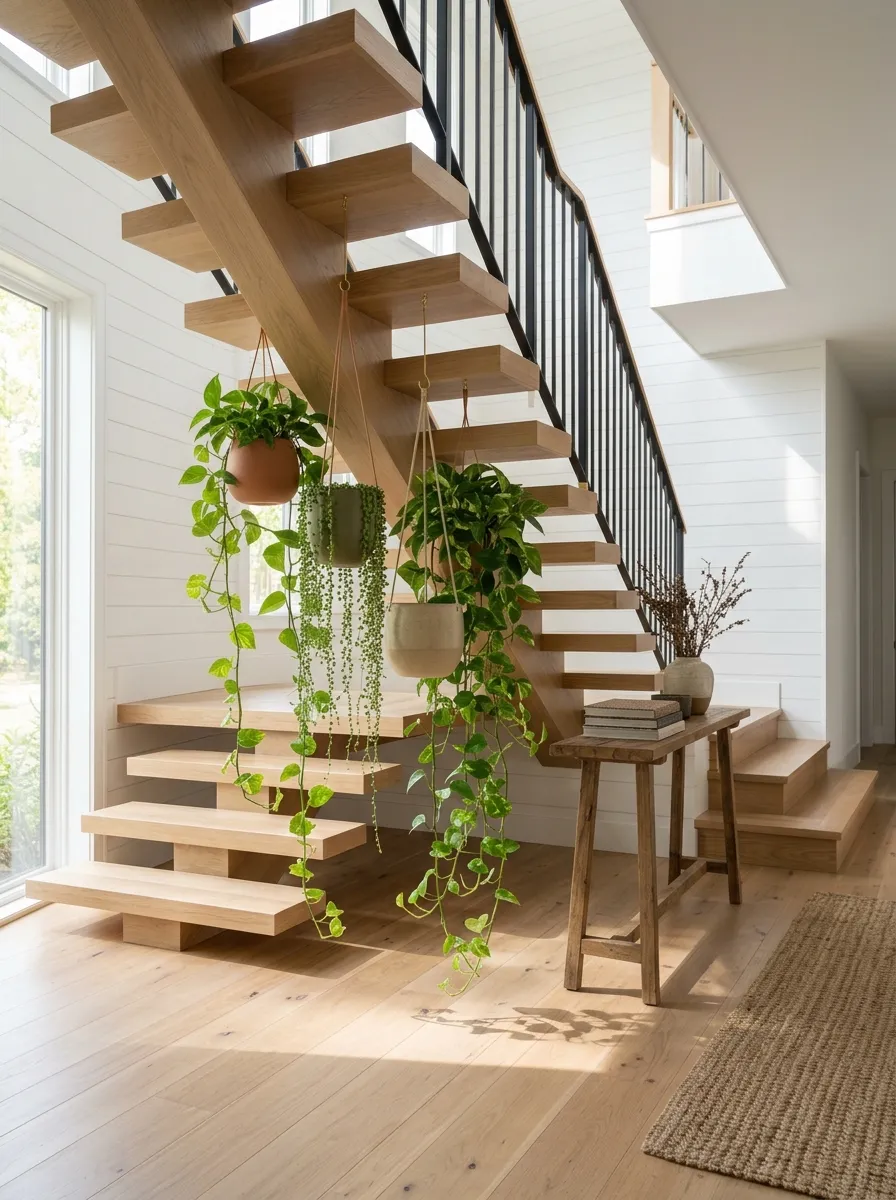
The underside of the stairs is wasted vertical real estate almost every time. Hang small planters directly from hooks screwed into the stringer, and you get greenery at eye level without giving up an inch of floor space.
After: Three hanging planters at staggered heights, softens the hard lines, adds depth without touching the floor.
Turn Old Drawers Into Built-In Planter Boxes
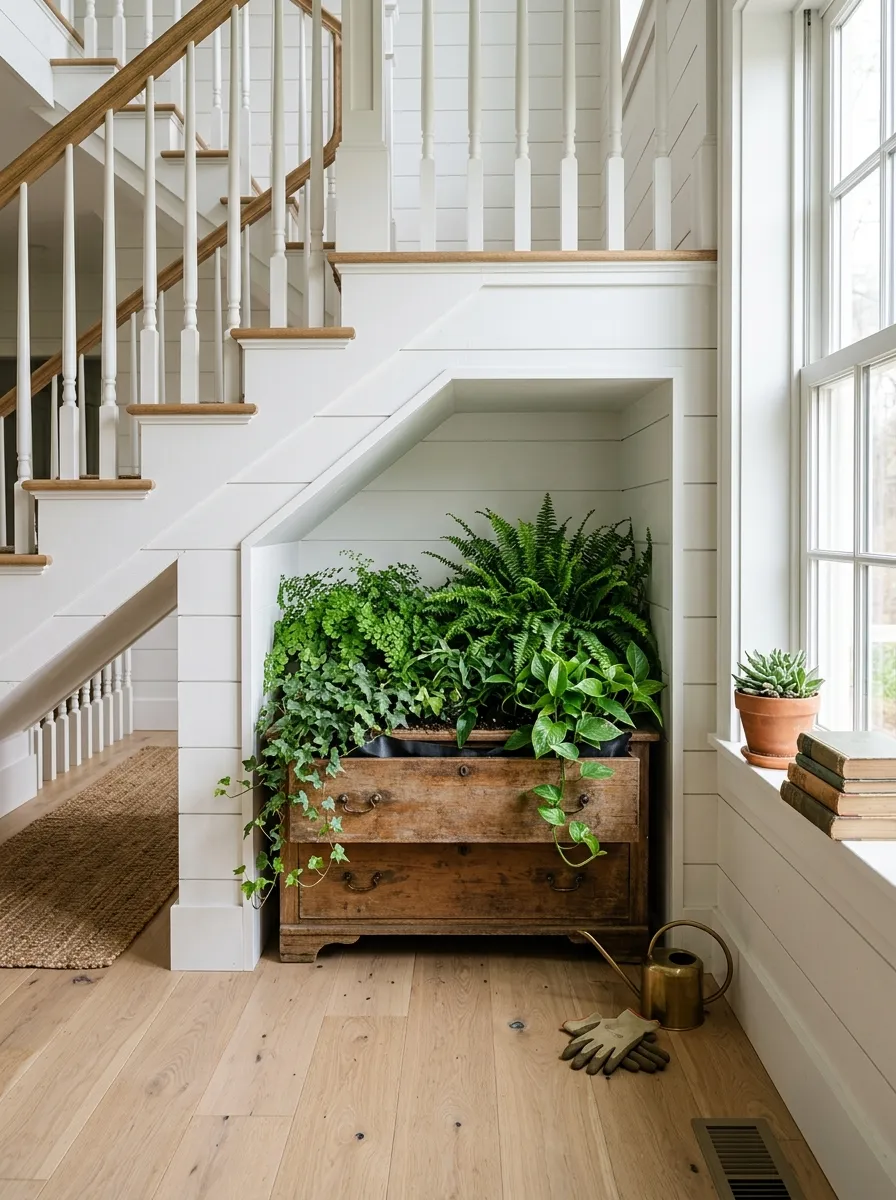
Don’t throw out an old dresser drawer. Line it with plastic sheeting, drill a few drainage holes in the bottom, and slide it into the base of the space as a built-in planter box. It already fits the footprint of a rectangular nook better than most store-bought planters, and it costs you nothing but the liner.
Three reasons this works better than buying new:
- The proportions already suit a boxy under-stair space
- Wood holds up fine once it’s lined properly
- It looks intentional, not repurposed, once it’s planted
A Trellis Turns Dead Air Into Growing Space
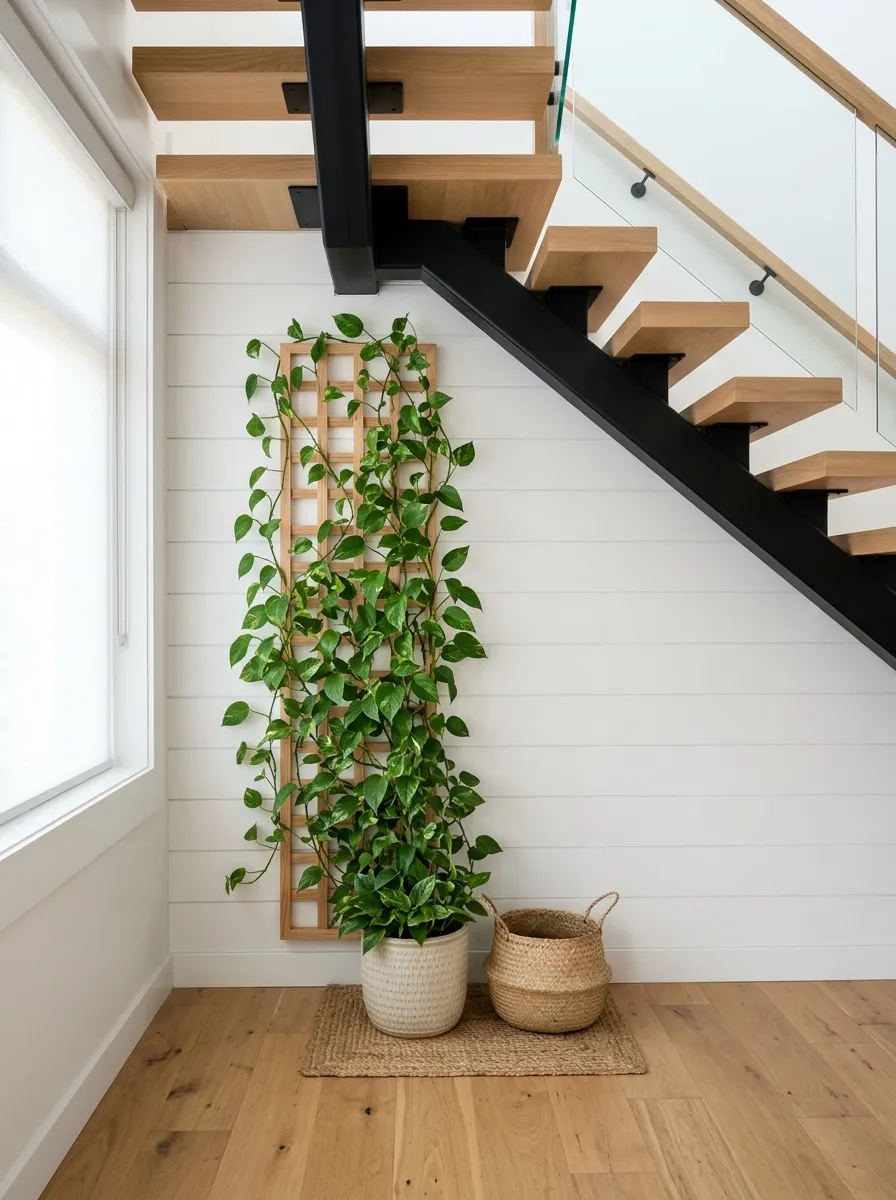
Vertical growth is the whole trick to a small garden under stairs. A slim trellis mounted flush against the back wall lets a climbing plant like pothos or a small ivy variety grow upward instead of sprawling outward and eating your floor space. Pick a trellis no wider than 18 inches so it doesn’t crowd the slope, and train the vine along it every couple weeks until it holds the shape on its own.
Add a Pebble Drainage Layer Before Anything Else
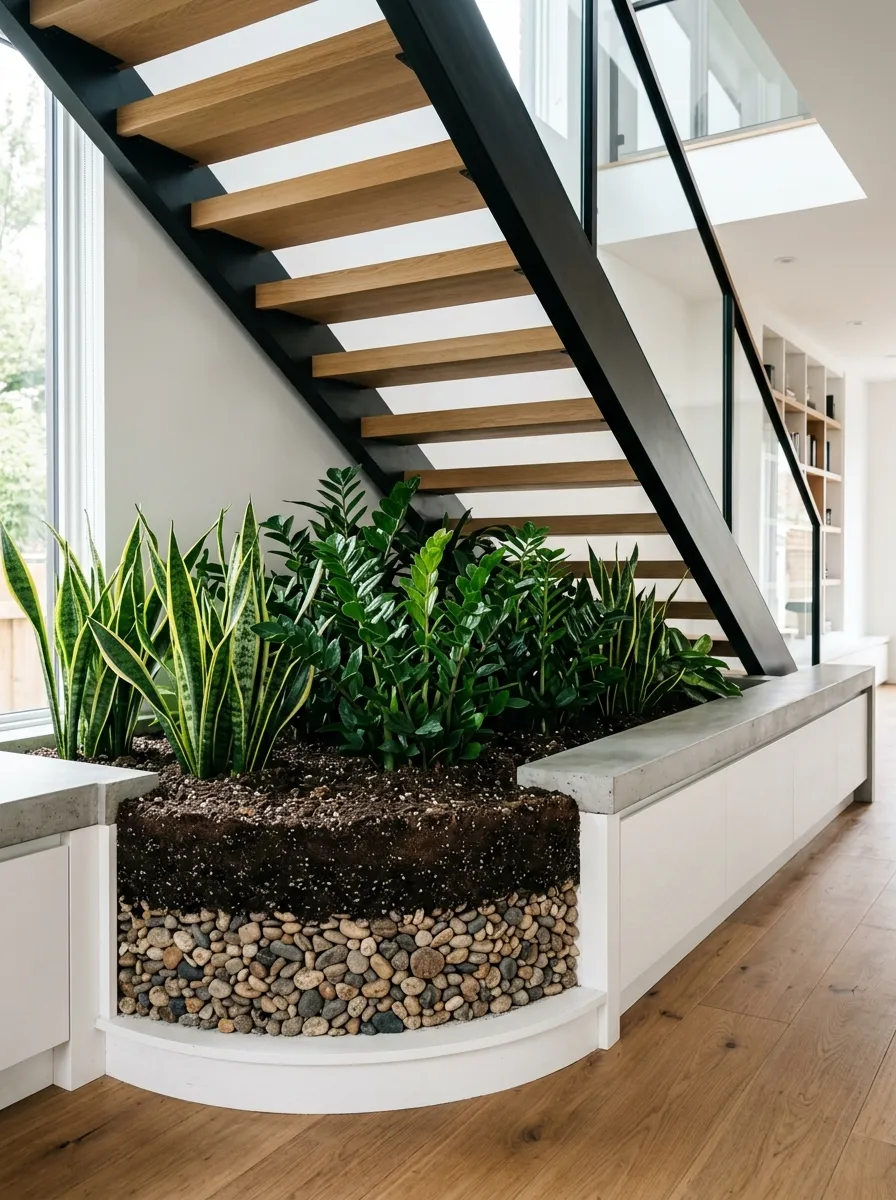
Skip this step and you’ll be fighting root rot within a month. Every pot, box, or built-in bed under your stairs needs a drainage layer before soil goes in.
- Line the bottom of the container with a half-inch of pebbles or broken terracotta
- Add a thin layer of landscape fabric on top so soil doesn’t wash down into the gaps
- Fill with your soil-and-perlite mix from earlier
- Check the pebble layer once a season, clear any buildup
It takes ten extra minutes and it’s the difference between plants that last and plants that don’t.
A Glass Terrarium Solves the Humidity Problem
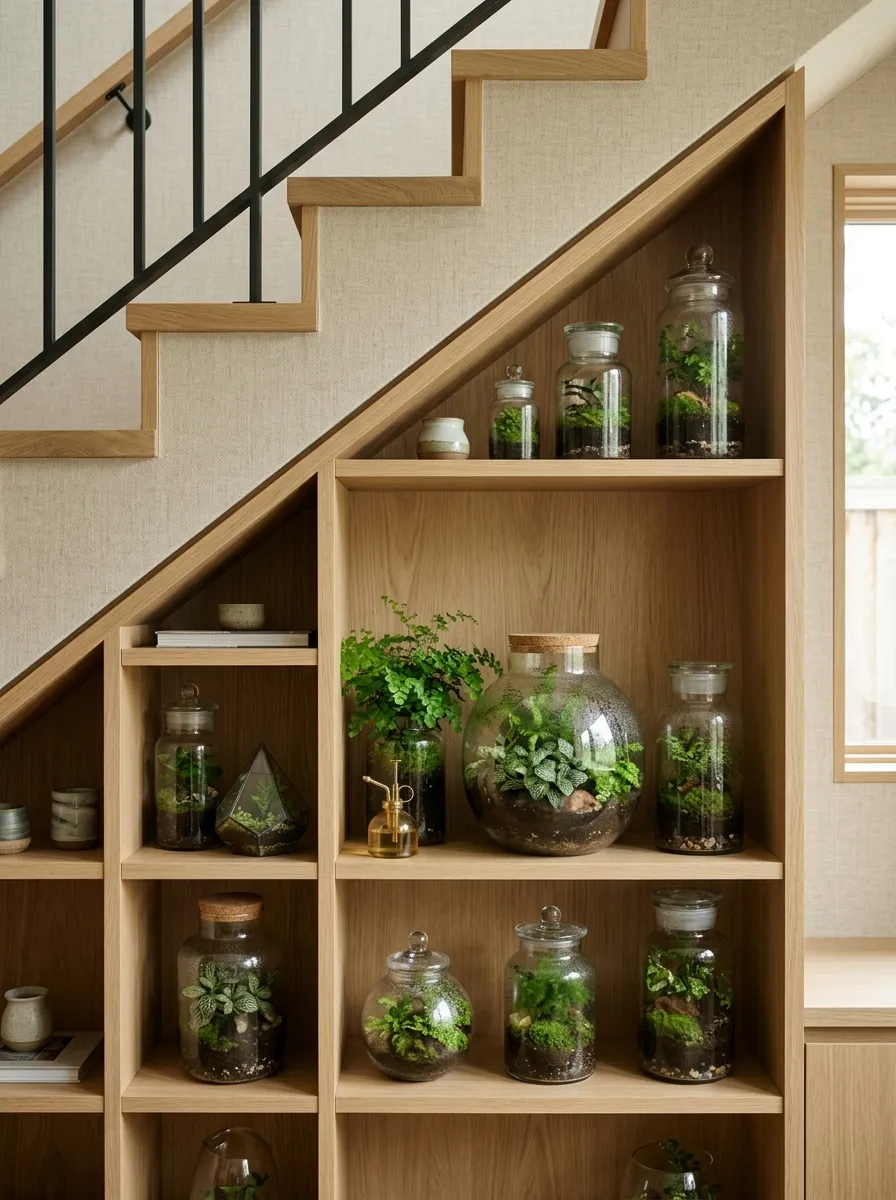
Humidity swings hard under a staircase, dry one week, damp the next, and most plants hate that inconsistency. A closed glass terrarium sidesteps the whole issue by creating its own stable microclimate inside the glass.
Rotate Plants Seasonally Instead of Fighting Dormant Ones
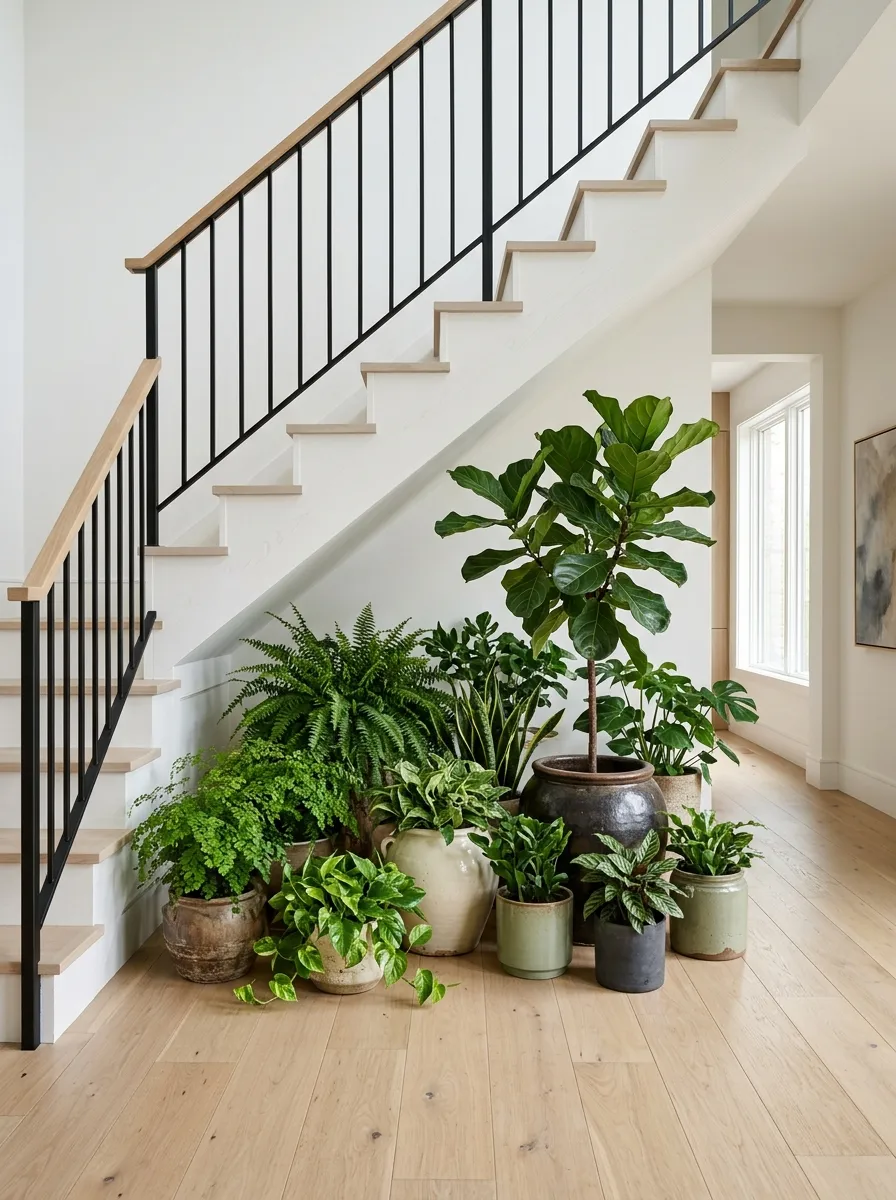
Not every plant is meant to look great in this spot year round, and that’s fine. Some go dormant in winter and look tired no matter what you do. Keep two sets on rotation, a hardier winter group and a lusher summer group, and swap them every few months.
Quick tip: Keep the off-season set in a brighter spot elsewhere in the house so they’re ready to swap back in looking full, not stressed.
One Strategic Mirror Doubles Your Available Light
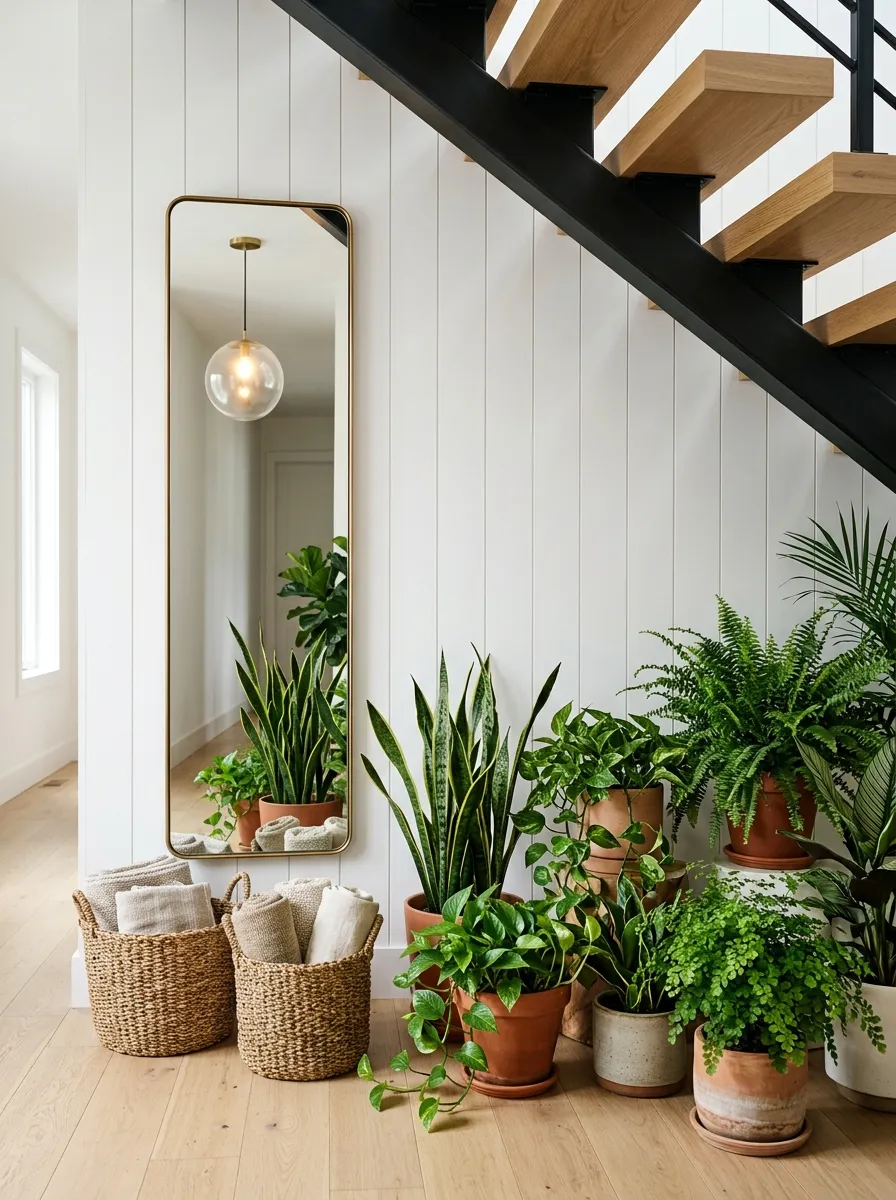
A well-placed mirror is the cheapest light fix you’ll find, and most people skip it entirely. Mount a slim mirror on the side wall angled toward whatever light source exists, even a hallway lamp, and it bounces usable light onto the plants that need it most.
A Simple Rotation Calendar Keeps Plants From Dying in Rotation
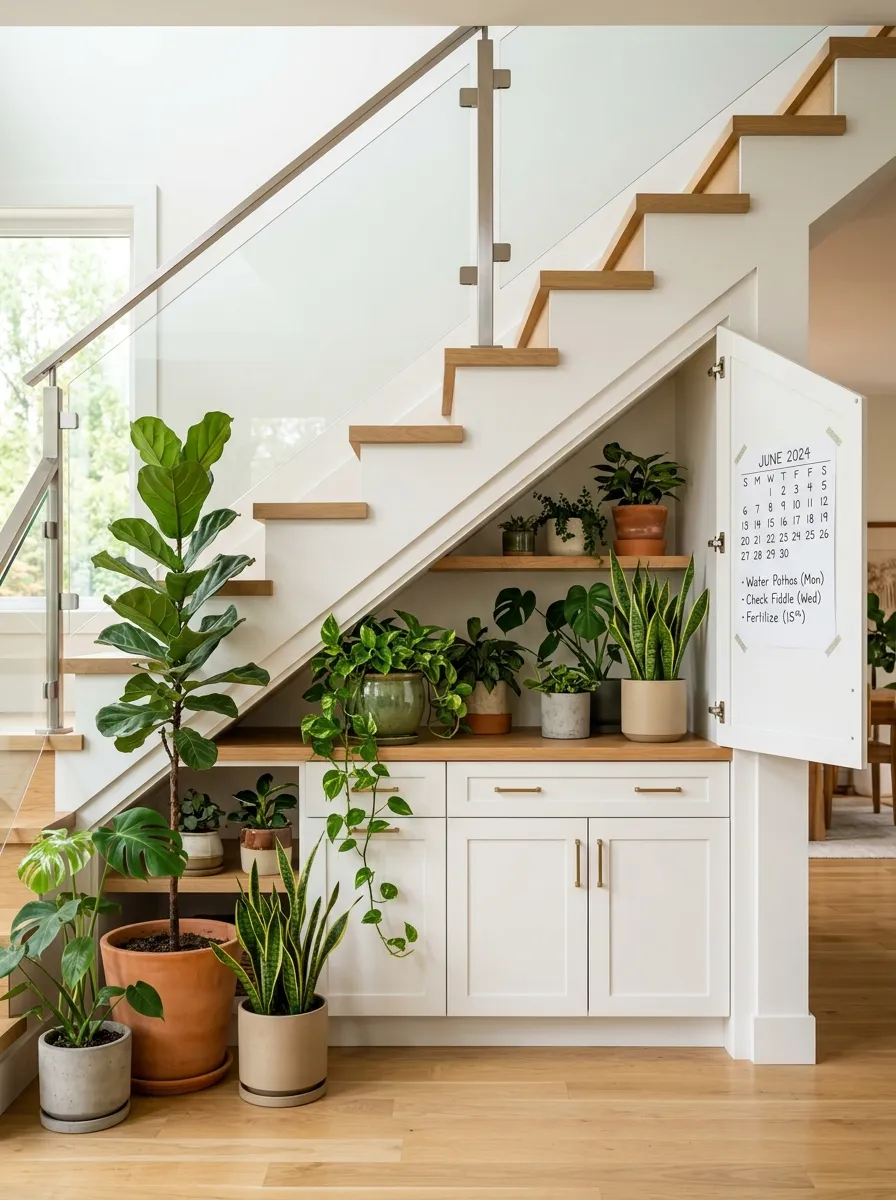
Nobody remembers watering schedules by memory, especially for a spot they walk past without thinking. Tape a small rotation calendar to the inside of a nearby cabinet door and mark watering days, seasonal swap dates, and light checks. It sounds basic. It’s the single habit that separates a thriving nook from a slow, quiet plant graveyard.
Warm String Lighting Makes the Space Feel Intentional
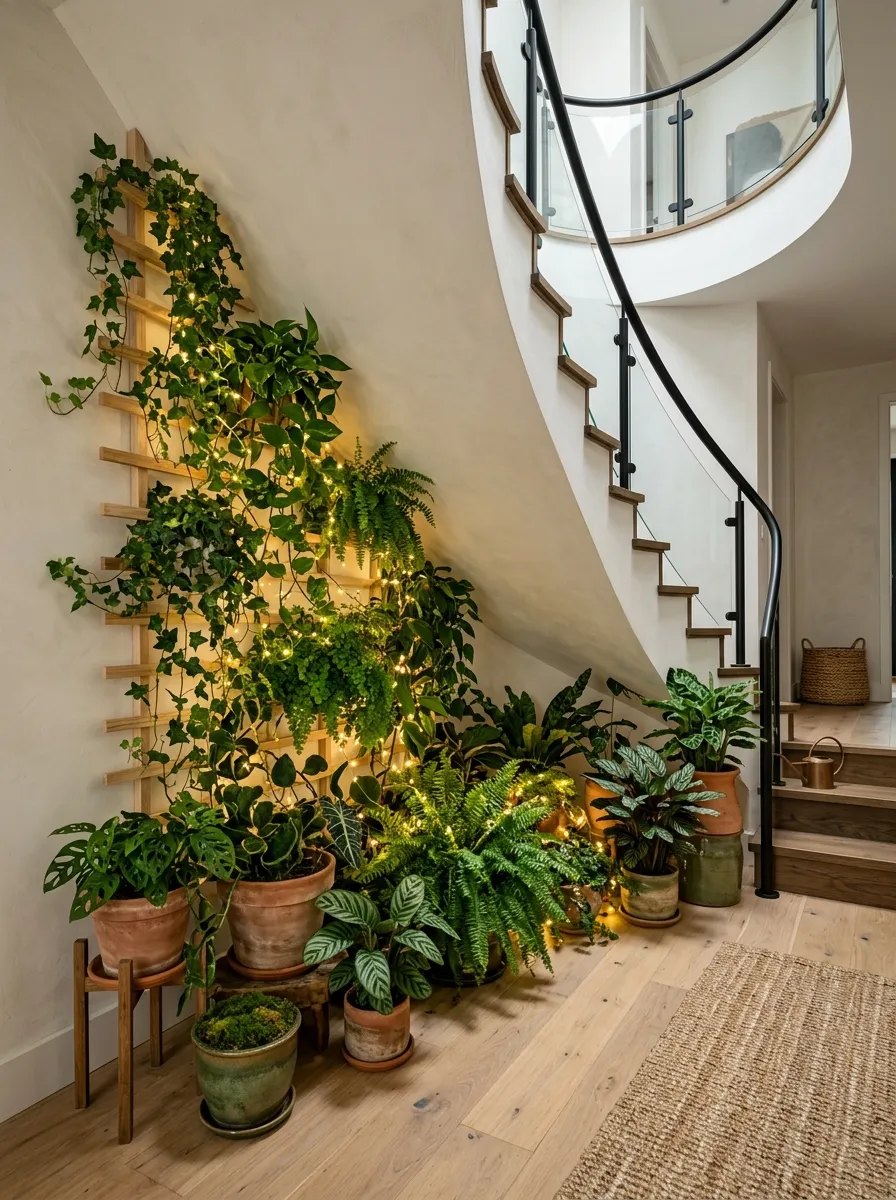
A garden nook lit only by whatever hallway light spills in reads as an afterthought, no matter how good the plants look. Warm white string lights, tucked along the trellis or wound through a tiered stand, change that instantly.
- Choose warm white, not cool or blue toned bulbs
- Run the strand along the back edge, not draped over the plants themselves
- Use battery-powered strands with a timer so you’re not adding a cord
The difference between a corner and a feature is almost always the lighting.
Mix in Faux Plants Where Nothing Living Will Work
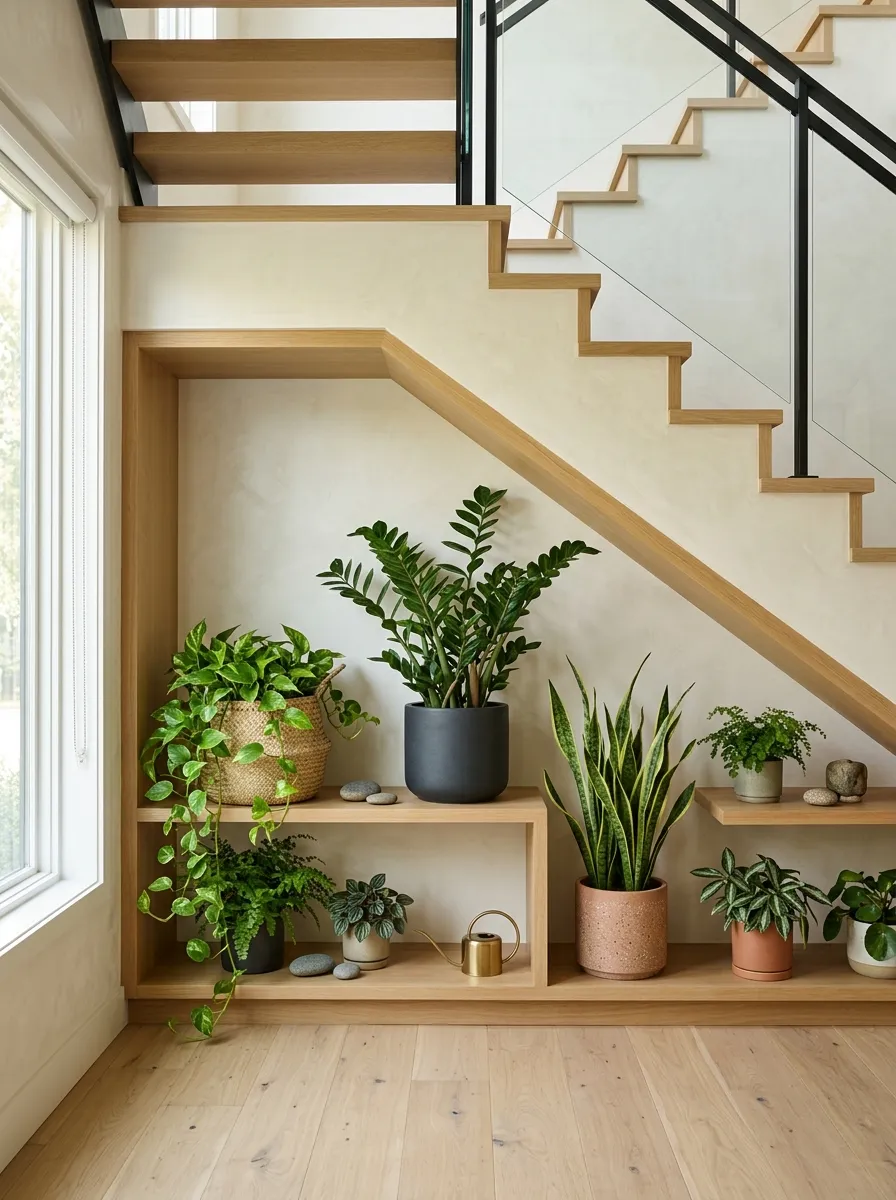
Some corners just won’t support anything alive, no matter how many fixes you try. Stop forcing it. High-quality faux plants filled into those specific dead spots round out the fullness of the display without you babying a plant that was never going to make it.
A Reading Nook Bench Makes the Garden a Destination
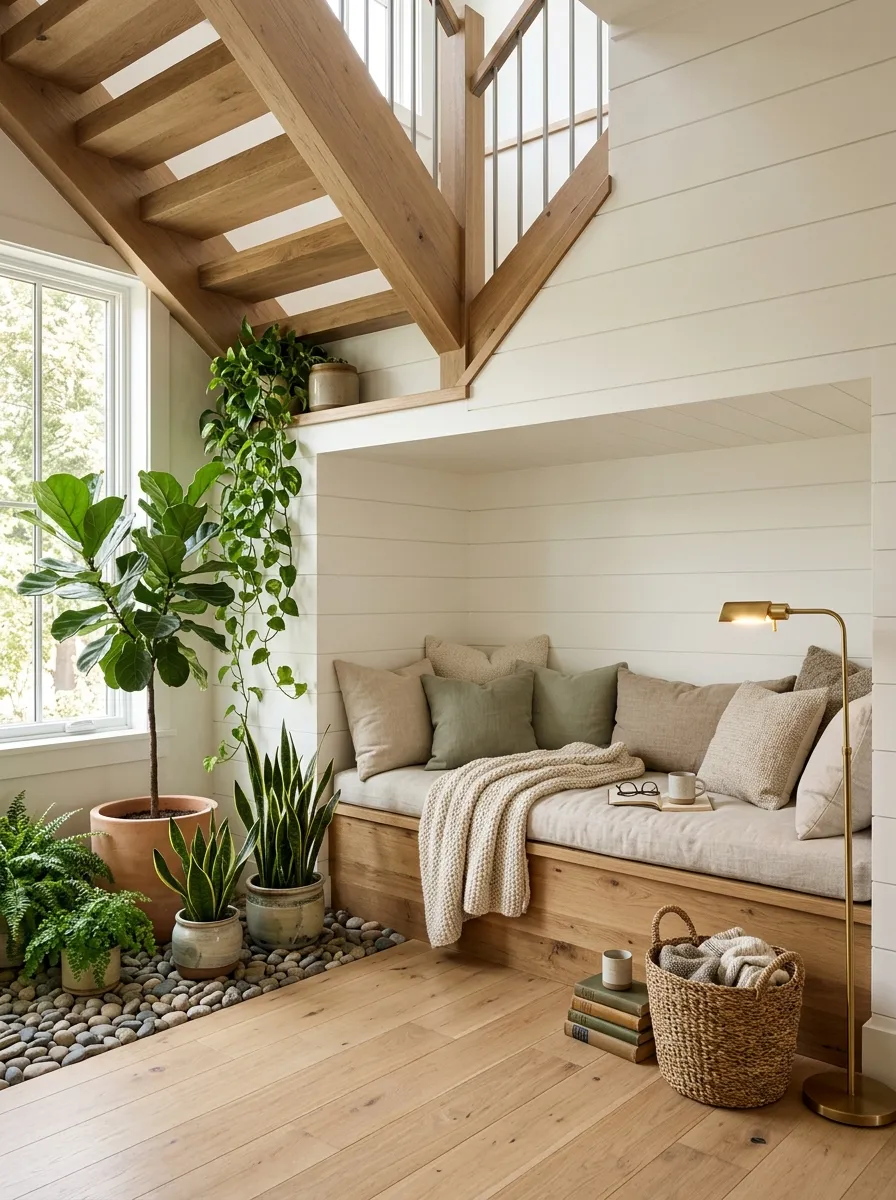
Plants alone make a space look nice. Add a place to sit and it becomes a room you actually use.
- Measure the tallest point of the space, that’s where the bench back goes
- Choose a low-back bench so it doesn’t block the tiered plants behind it
- Add one cushion and a small side shelf for a book or a mug
- Position it facing the densest cluster of greenery, not the stairs above
This is the item that turns “garden corner” into “favorite spot in the house.”
Succulent Walls Work If You Get the Water Rule Right
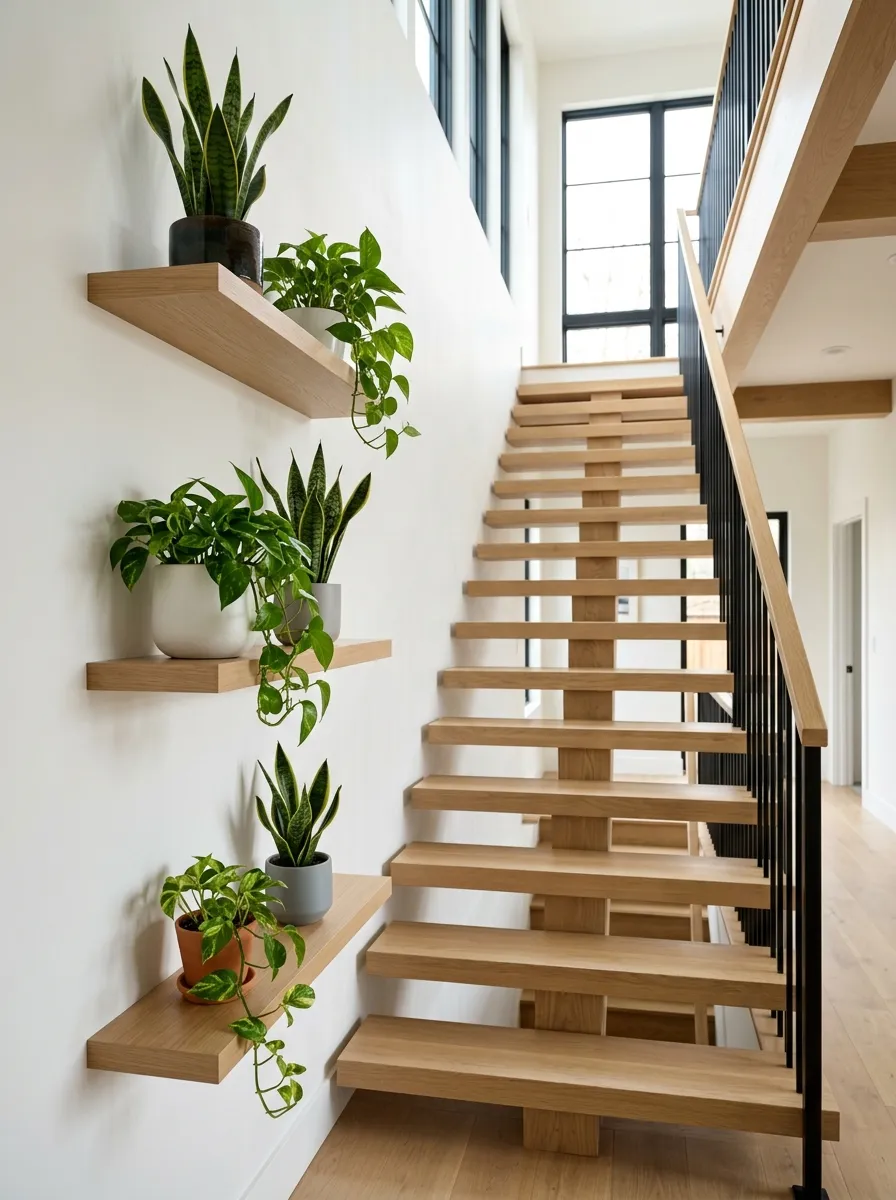
Succulents look perfect for a tight vertical space, but most people kill them fast under stairs because they water like it’s a regular houseplant. The rule here is different: let the wall dry out completely between waterings, and water from below with a spray bottle instead of soaking the wall mount directly.
Chalkboard Labels Keep You From Guessing What’s What
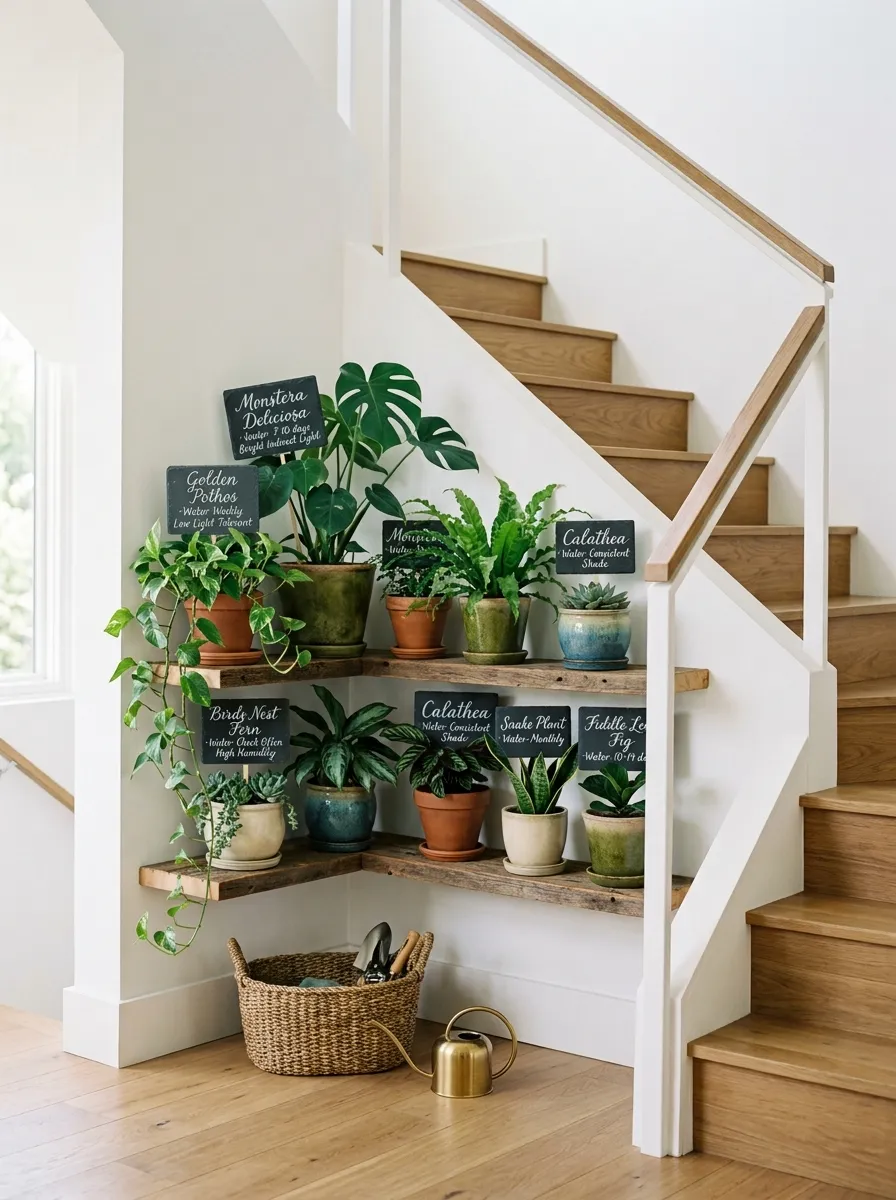
Small tags might seem like a decorative extra, but in a densely planted nook, they solve a real problem. You stop guessing which plant needs what, and you catch a struggling one faster because you know exactly what you’re looking at.
Quick tip: Write the watering frequency on the label itself, not just the plant name. That’s the detail people actually forget to check.
Drip Irrigation for People Who Will Forget to Water
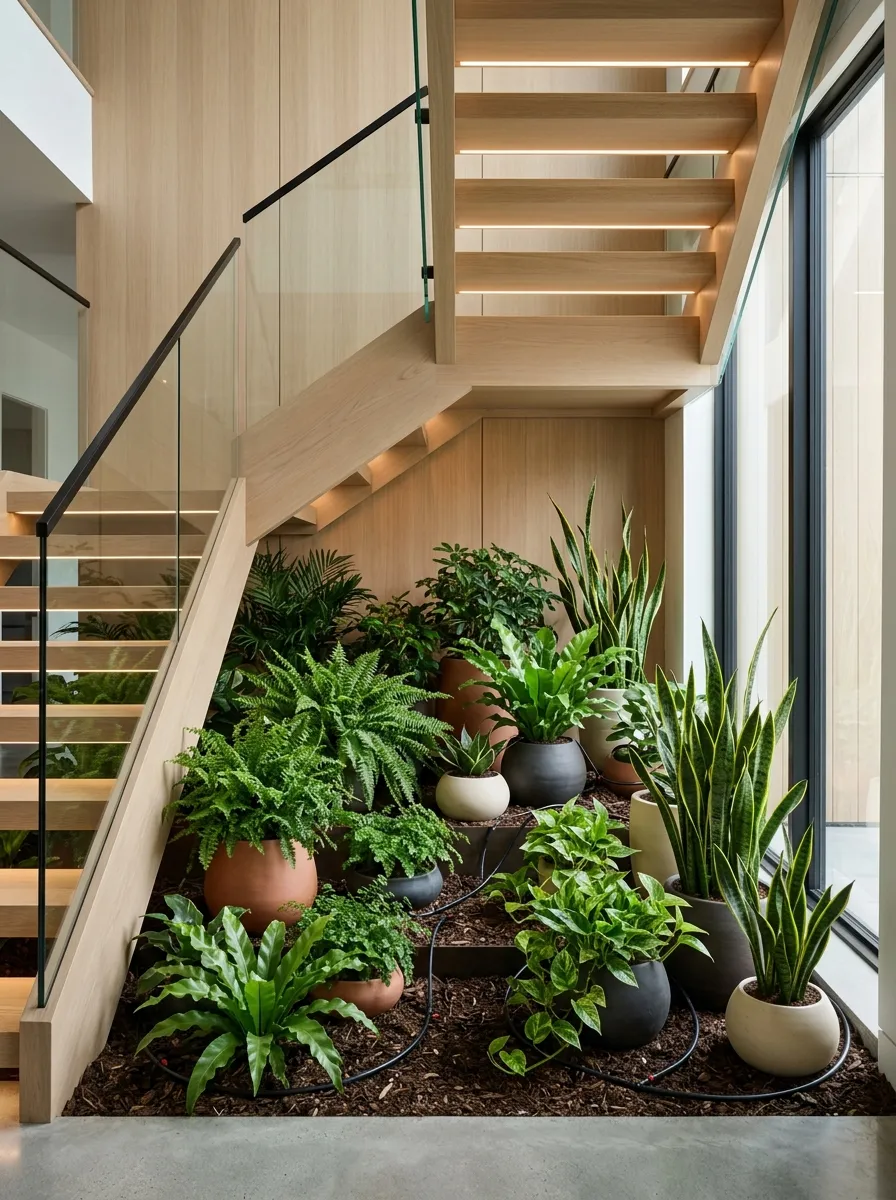
Be honest about how often you’ll actually remember to water a spot you don’t walk past daily. If the answer is “not often enough,” a basic drip irrigation kit on a timer removes the guesswork entirely.
- A battery timer runs off a small reservoir, no plumbing needed
- Set it for early morning, roots absorb water better before heat builds
- Check the lines once a month for clogs, that’s the only maintenance
This one fix saves more plants than any product on this list.
Match Your Pots to One Color Story, Not Five
A garden built from whatever pots you had lying around looks cluttered no matter how healthy the plants are. Pick one pot color story, terracotta, matte white, or a deep charcoal, and stick to it across every container in the space.
Conclusion
A small garden under stairs isn’t a compromise space. It’s one of the few spots in a house with built-in structure, shelter, and a natural focal point already waiting to be used. The plants that die there usually die from the wrong plan, not bad luck, and now you’ve got twenty five ways to build the right one.
Start small. Pick three ideas from this list, get the drainage and light sorted first, and build out from there. The rest will follow once the basics are solid.
Save this list for the next time you’re staring at that dead corner wondering what to do with it.