
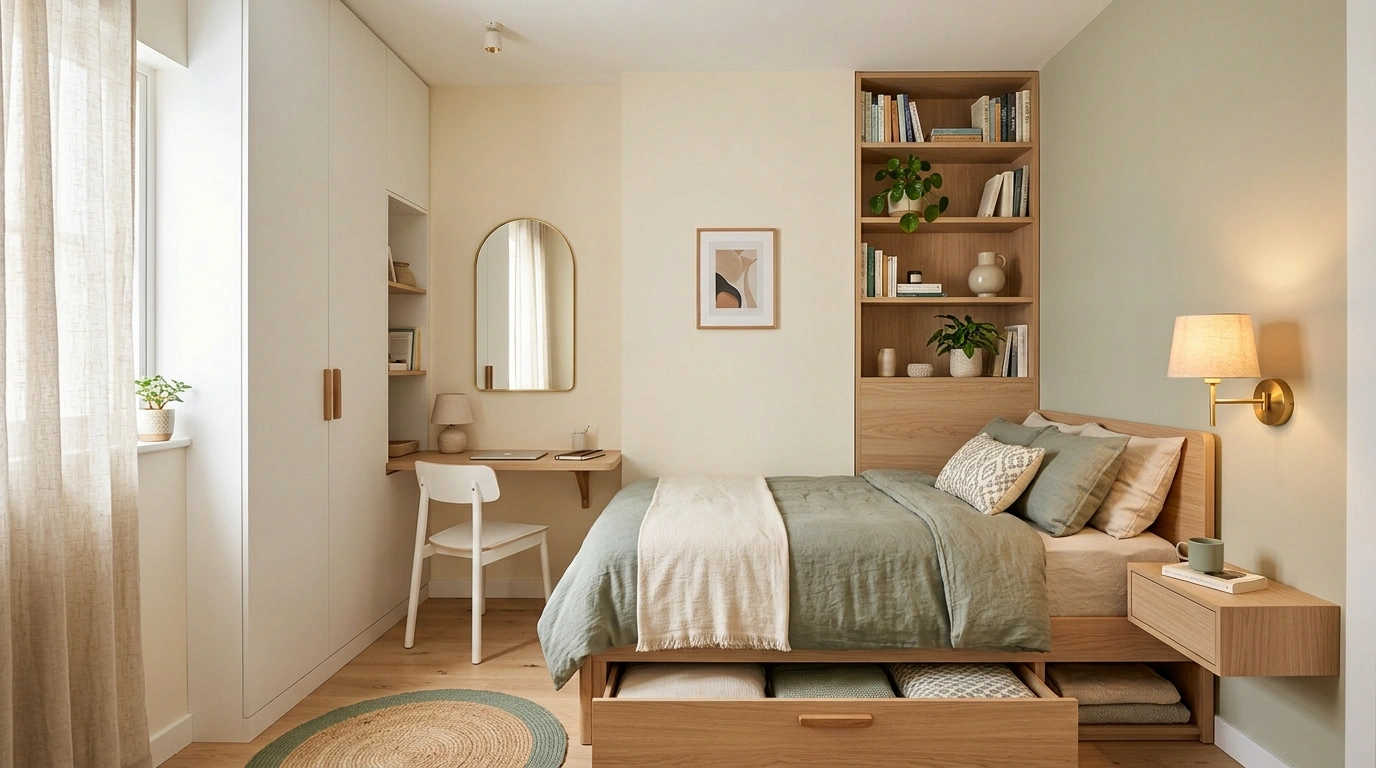
Some of the most memorable bedrooms are the ones that had almost nothing to work with.
A narrow room. One single bed. A window in the wrong place. A wardrobe that seems too large for the wall. Maybe a strange corner that can’t comfortably fit much of anything. These are the rooms where decorating becomes less about adding more and more about making every decision belong.
That is what makes small single-bed bedrooms so interesting. The right layout can make a modest room feel calm and expensive. The wrong one can make even a tidy room feel packed. A bed can either dominate the entire space or become the anchor that gives everything else somewhere to sit.
Small Single Bed Bedroom Ideas
Cozy Neutral Sanctuary With Built-In Desk
This compact bedroom effortlessly combines rest and productivity without feeling crowded. A single bed dressed in soft creams and warm beige sits beneath floating wooden shelves, which frame the space with natural texture and warm under-cabinet lighting. The sleek white built-in desk extends smoothly from the window line, creating a dedicated workspace that capitalizes on the abundant natural light.
Sheer floor-to-ceiling curtains soften the large window, diffusing the daylight to give the room an airy, expansive feel. A tall green plant in the corner introduces life and organic shape, while the plush textured rug underfoot pulls the entire neutral palette together. Every piece of furniture is chosen with scale in mind, ensuring the tight floor plan remains open and easy to navigate.
The real success here lies in the clever zoning. By keeping the furniture low and maintaining a consistent cream-and-wood color story, the bedroom feels calm and intentional rather than like a multi-purpose room forced into a small footprint.
Warm Neutral Bedroom With a Low Oak Bed
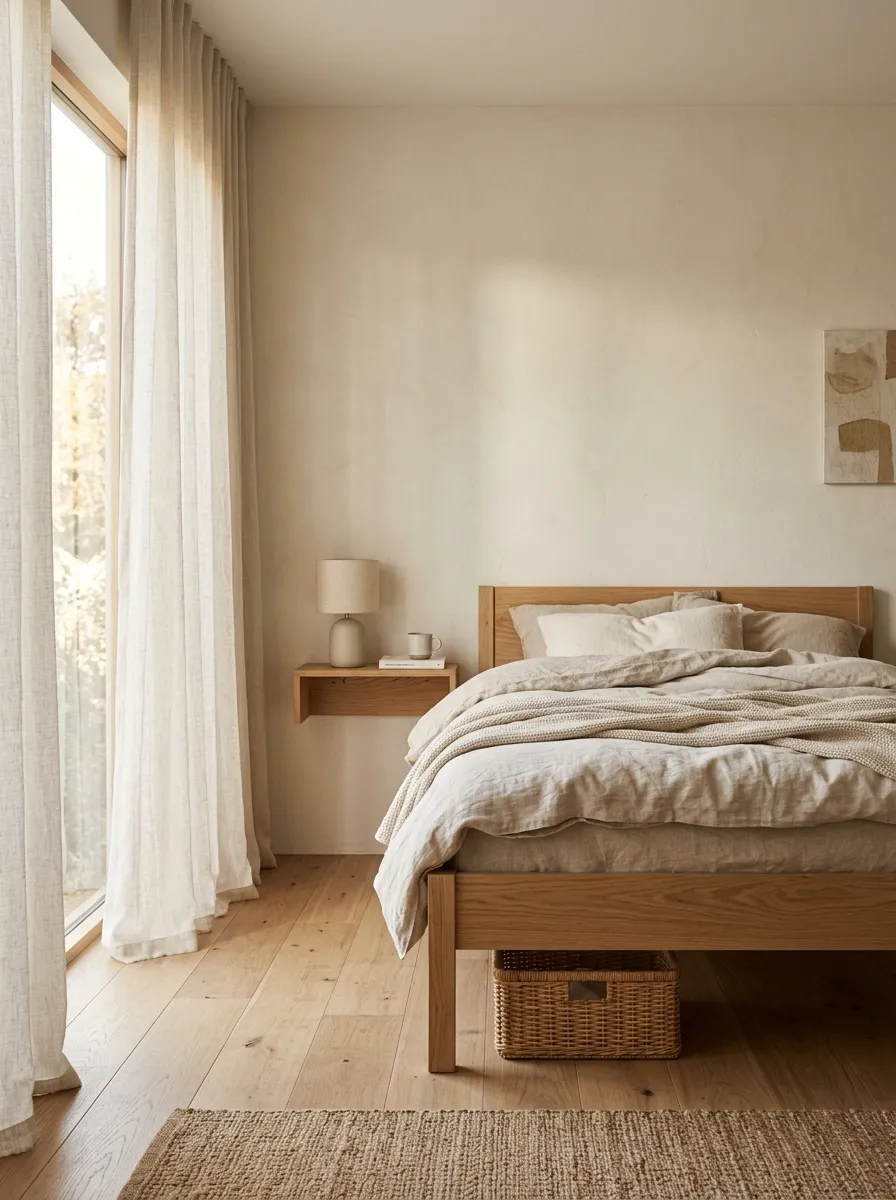
Warm oak gives a small bedroom enough visual weight without making it feel heavy. The bed sits low against a warm ivory wall, dressed in slightly rumpled linen in oatmeal and cream. A slim wooden nightstand holds a compact ceramic lamp, while a woven basket slips neatly beneath the open side of the bed.
Nothing competes with the simple bed frame. The palette stays close to natural wood, soft beige, and chalky white, which makes the room feel continuous rather than chopped into separate zones. A large window provides the main light source, while full-height curtains emphasize the ceiling.
The important detail is the low furniture profile. Keeping the eye line open above the bed makes the room feel quieter and visually taller.
WEIGHT
Serene Minimalist Bedroom With Floor Mirror
Soft morning light filters through delicate grid-paned windows, washing this tiny bedroom in a calm, meditative glow. The single bed is piled high with inviting white and oatmeal textiles, creating a cloud-like refuge that commands the compact space. A simple wooden chest of drawers serves double duty as a bedside table, decorated only with a minimalist lamp and fresh yellow tulips.
A large wooden-framed floor mirror leans casually against the wall, bouncing light around the room and playing tricks on the eye to make the space feel twice its actual size. A subtle abstract textile hanging above the bed adds warmth to the plain white wall without introducing visual clutter. The woven floor pouf provides a cozy spot to sit while keeping the furniture profile exceptionally low.
This space succeeds because it embraces simplicity. By pairing warm natural wood tones with breathable linens and keeping decorations to a thoughtful minimum, the room achieves an effortless Japanese-Scandinavian harmony that feels deeply peaceful.
Built-In Bed Alcove With Full-Height Storage
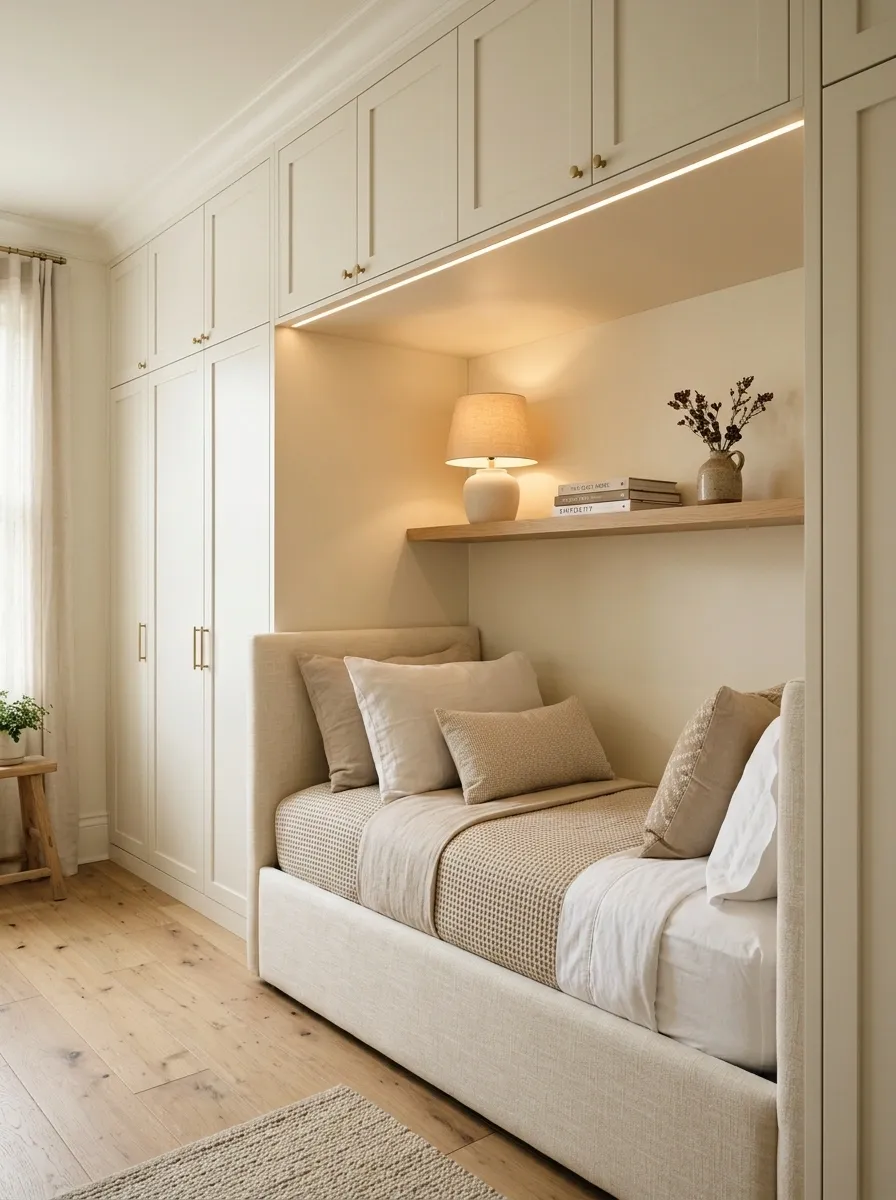
A single bed tucked into a purpose-built alcove turns an awkward small room into something that feels almost architectural. The bed sits between tall warm-white storage cabinets, creating a clear sleeping niche without needing a bulky freestanding headboard.
The cabinetry reaches the ceiling, so the vertical space is doing useful work instead of leaving a dusty gap above the wardrobes. A narrow open shelf runs along one side of the alcove for a lamp, a book, and a few personal objects. Concealed lighting underneath the upper cabinet line gives the bed a soft evening glow.
The strongest feature is the built-in frame around the mattress. It makes the bed feel like part of the architecture, while the surrounding pale surfaces keep the compact footprint visually controlled.
Elegant Grey Master Suite With Ring Chandelier
Sophisticated grey tones and intricate wall paneling give this bedroom a luxurious, hotel-like presence. A statement crystal ring chandelier hangs from the detailed plaster ceiling, casting a dramatic glow over the tufted grey headboard and matching upholstered bed. Twin white nightstands with warm lamps anchor either side of the bed, establishing a sense of symmetry and balance.
The botanical patterned wallpaper above the upholstered panels adds subtle pattern and movement to the feature wall. A plush, thick-knit grey round rug softens the floor beneath a matching upholstered storage bench, rounding out the monochromatic color scheme with layers of tactile comfort. Mirrored wardrobe doors flank the bed alcove, reflecting light and amplifying the room’s grand proportions.
This design proves that a cohesive color palette can elevate a space instantly. By balancing cool grey walls with warm lighting and plush textiles, the room feels both grand and intensely welcoming.
Tiny Sage Green Bedroom With Walnut Furniture
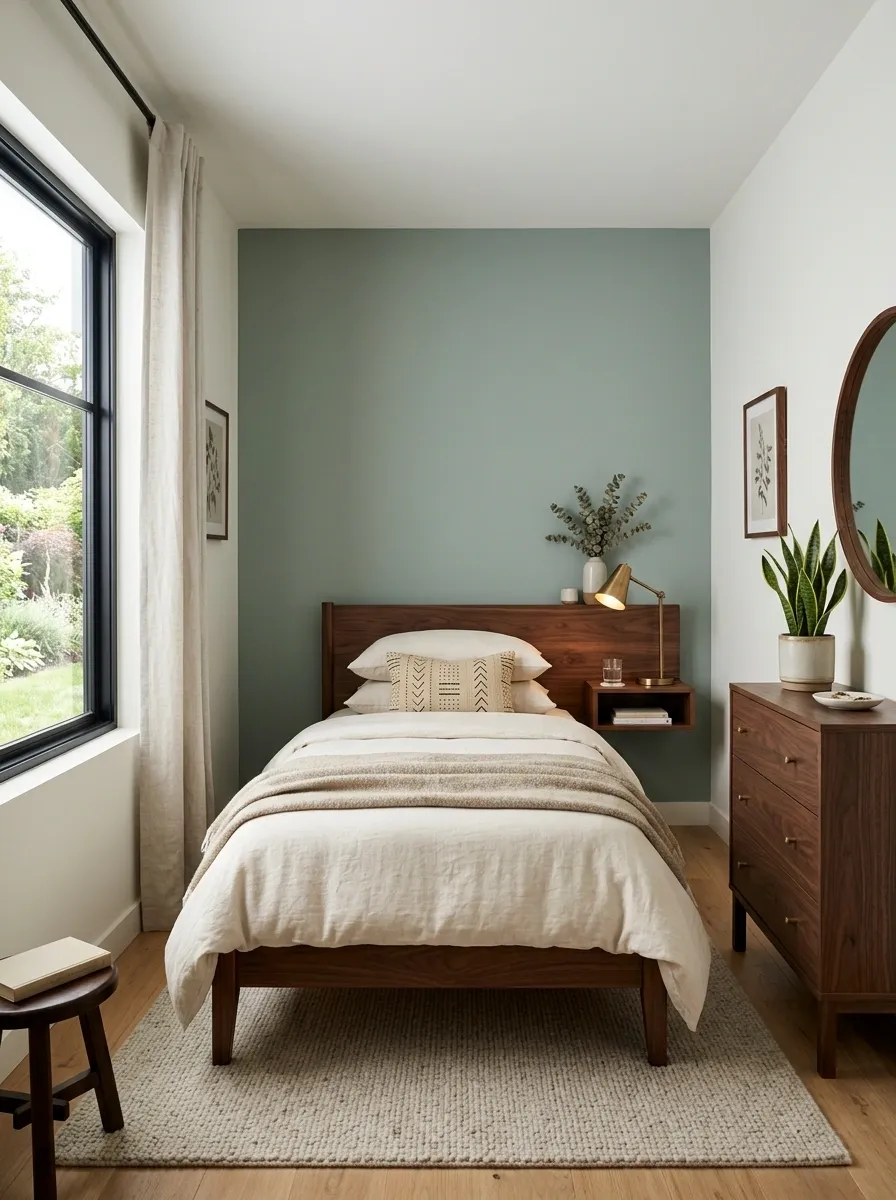
Muted sage gives this compact bedroom personality without overwhelming it. The single bed has a dark walnut frame that sits against the green wall, while cream bedding softens the contrast. A shallow floating shelf replaces a conventional nightstand, leaving the floor completely open beneath it.
The walnut appears again in a narrow dresser opposite the bed, creating a visual connection between the two sides of the room. Small touches of aged brass pick up the warm wood rather than introducing another strong color.
This combination works because the green is dusty rather than bright. It provides depth behind the bed, while the cream textiles keep the center of the room light. The floating shelf is especially useful in a narrow bedroom because it provides a bedside surface without adding another floor-standing object.
Bright White Bedroom With Vertical Shelving
Crisp white walls and gleaming striped bedding give this compact single bedroom a remarkably fresh, boutique hotel vibe. A stunning glass-and-gold halo chandelier hovers overhead, introducing a touch of modern glamour that draws the eye upward. Against the wall, a tall vertical shelving unit makes brilliant use of awkward wall space, holding carefully curated accessories and daily essentials without touching the floor area.
Next to the shelves, a floating white vanity table with a Hollywood-style lighted mirror provides a dedicated getting-ready station that completely avoids bulky legs or heavy bases. A tall dressing mirror stands opposite the bed, bouncing the bright daylight pouring in through the neatly shuttered window. Every element is designed to maximize wall space and keep the floor entirely clear.
The magic of this room is its vertical ambition. By utilizing floating furniture and tall shelving rather than sprawling floor units, the tiny footprint stays open, bright, and impeccably organized.
Scandinavian Single Bedroom With Wall-Mounted Lighting
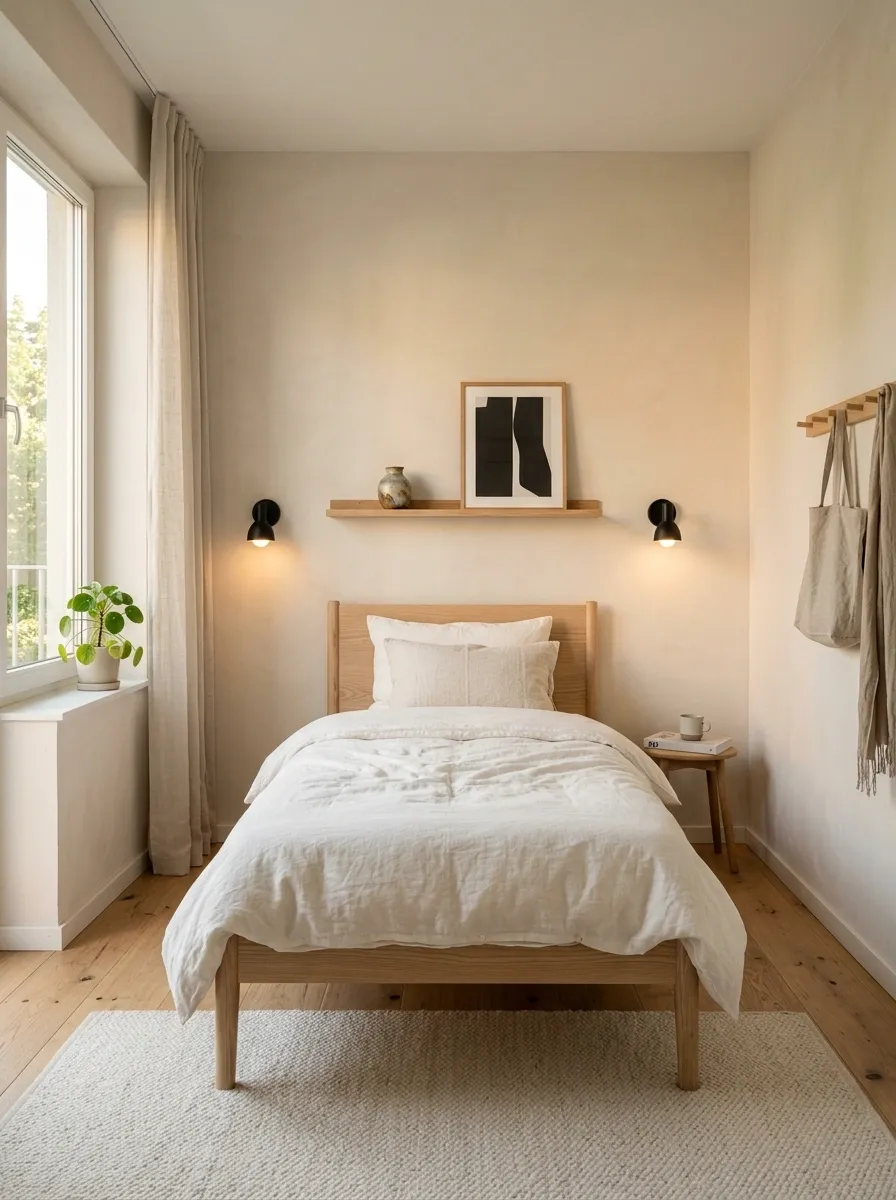
This room relies on restraint rather than emptiness. An ash-wood single bed sits against a pale warm wall, paired with crisp off-white bedding, a narrow floating shelf, and simple black wall sconces. A small wool rug softens the floor without extending far beyond the bed.
The lighting is mounted to the wall instead of sitting on a bedside table, which keeps the limited floor area clear. A single framed print and one ceramic object provide enough personality without breaking the clean rhythm.
The success of the design comes from repetition. Pale wood appears in the bed and shelf, black returns in the sconces and frame, and the warm textile layer keeps the room from looking overly stark. There is no need for a collection of decorative objects when the architecture and materials already provide the visual structure.
Moody Charcoal Bedroom With Warm Linen Bedding
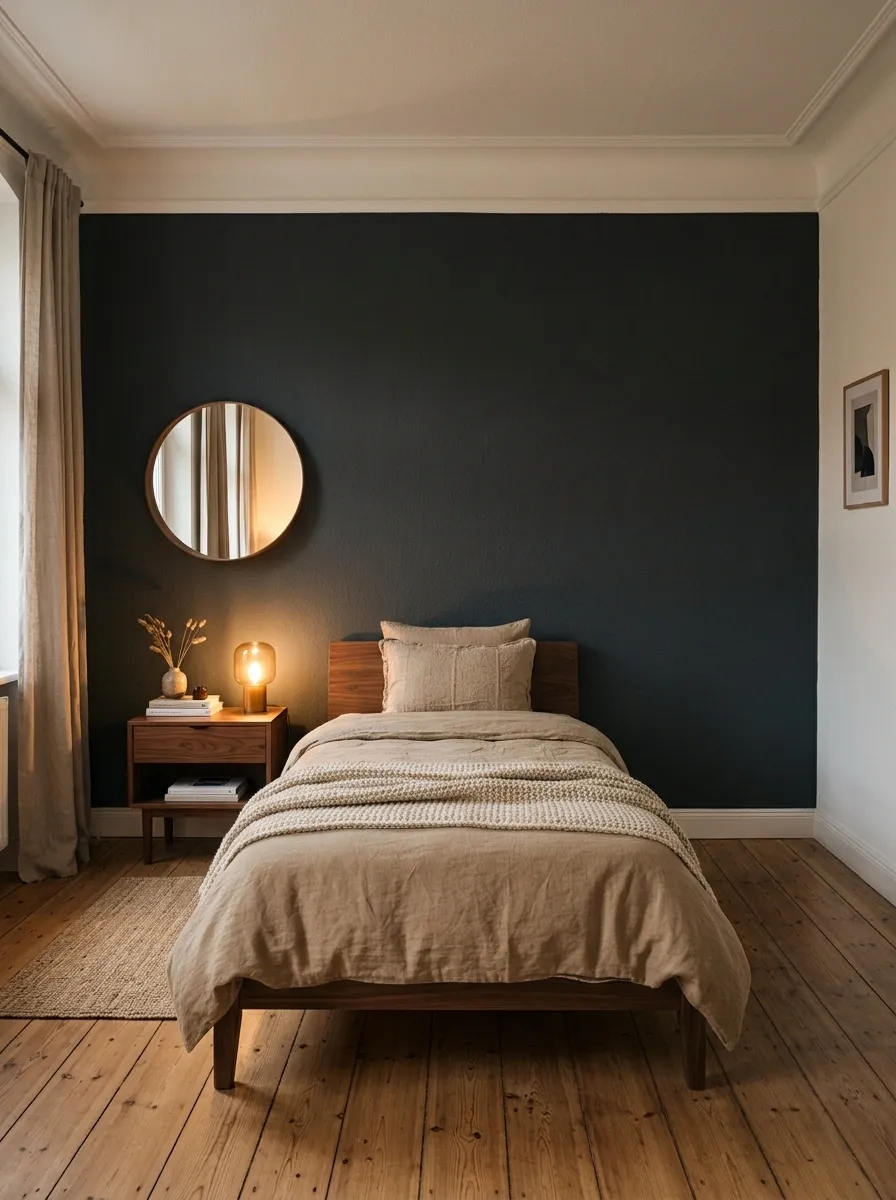
A deep charcoal wall gives this tiny bedroom far more character than a pale neutral backdrop would. The single bed sits low against the dark surface, dressed in warm flax-colored linen with a textured throw folded near the foot. A walnut bedside table adds another rich note, while an amber-glass lamp creates a concentrated pool of evening light.
The rest of the room stays deliberately quiet. Flooring remains natural and the ceiling is kept warm white, so the dark wall reads as a strong architectural backdrop rather than a cave-like enclosure.
The key is contrast without clutter. Dark paint supplies depth, warm linen brings softness, and walnut bridges the two. The room feels intimate because the palette is concentrated, not because the space is filled with accessories.
Window-Side Single Bedroom With a Floating Desk
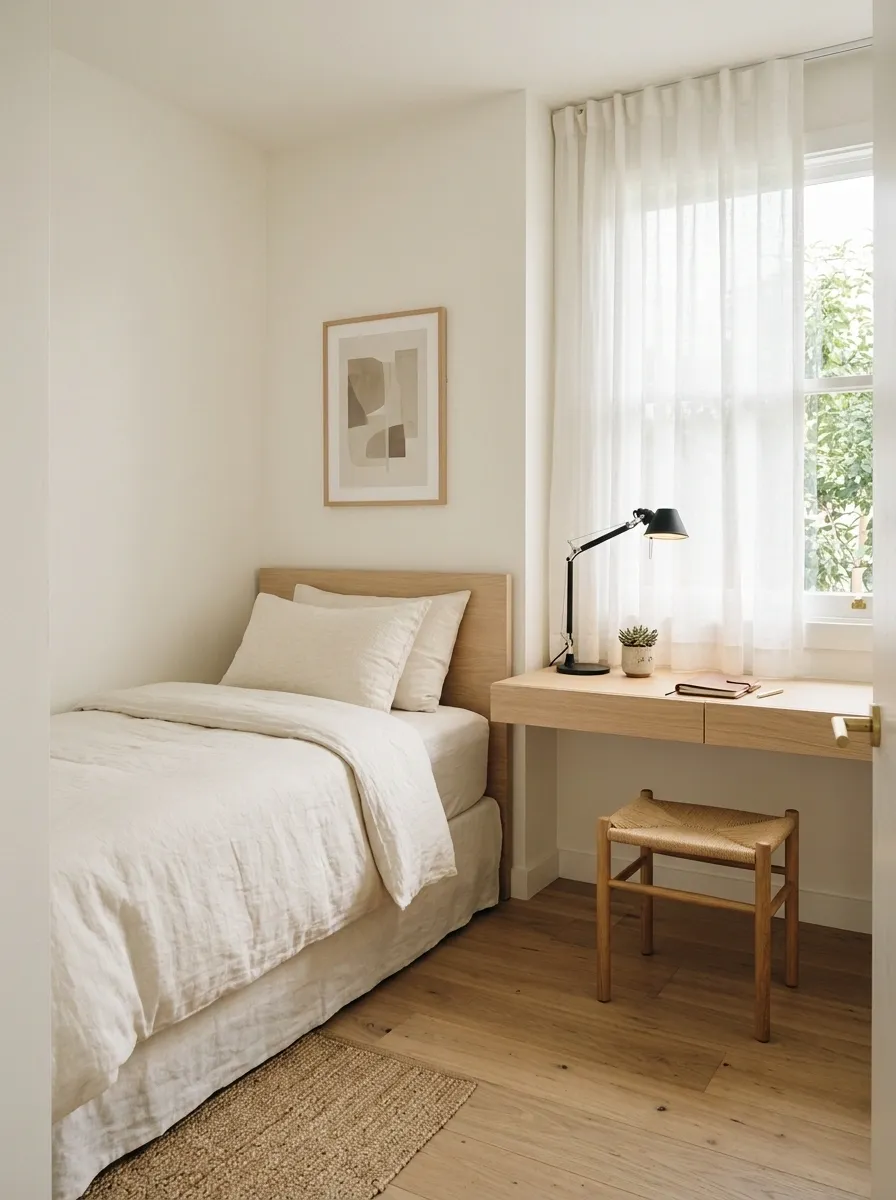
A single bed placed along the quieter wall leaves the window side available for a slim floating desk. Pale oak, warm white walls, and soft cream bedding keep both zones visually connected, while a simple task lamp marks the workspace without creating another bulky object.
The desk is intentionally shallow, with open floor beneath it. That empty area matters just as much as the furniture because it keeps the center of the room visually continuous. A linen curtain filters daylight without blocking the window entirely.
The composition works especially well for a child, teenager, or guest room that needs a small work surface. The bed remains the dominant element, while the desk becomes part of the architecture rather than a separate piece of furniture.
/ WORK
Soft Pink Bedroom With a Curved Upholstered Bed
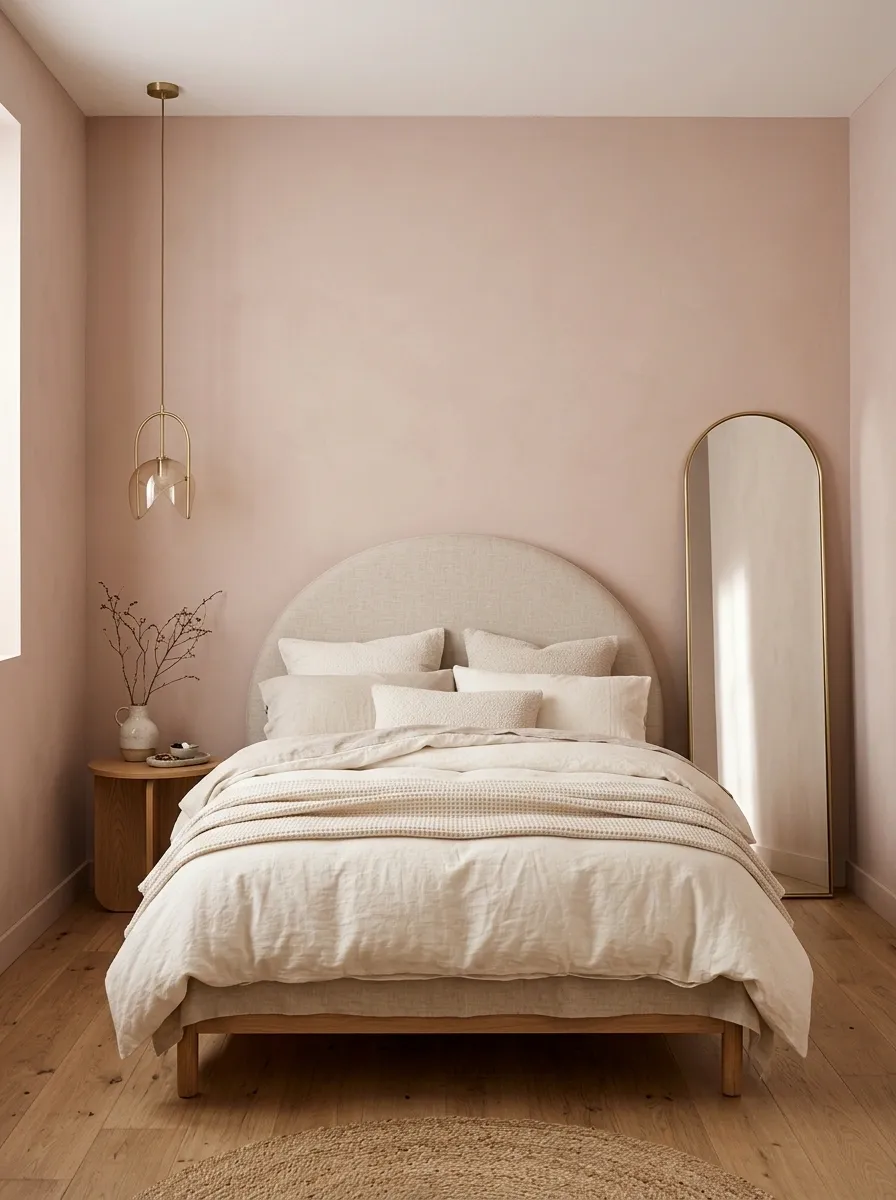
Dusty blush walls give this compact room a soft backdrop, while a rounded upholstered bed introduces a gentle sculptural shape. Cream bedding, a petite curved bedside table, and a small pendant repeat the rounded forms without turning the room overly sweet.
The furniture stays close to the walls, leaving a generous pocket of visible flooring around the bed. A slim mirror catches daylight from the window and helps the room feel less enclosed.
The curved forms are what make this design memorable. Repeating that shape in small doses creates a unified composition, while the restrained palette keeps the room mature. The trick is to let the bed carry the softness and keep the remaining furniture simple.
Built-In Single Bed Beneath a Lofted Storage Platform
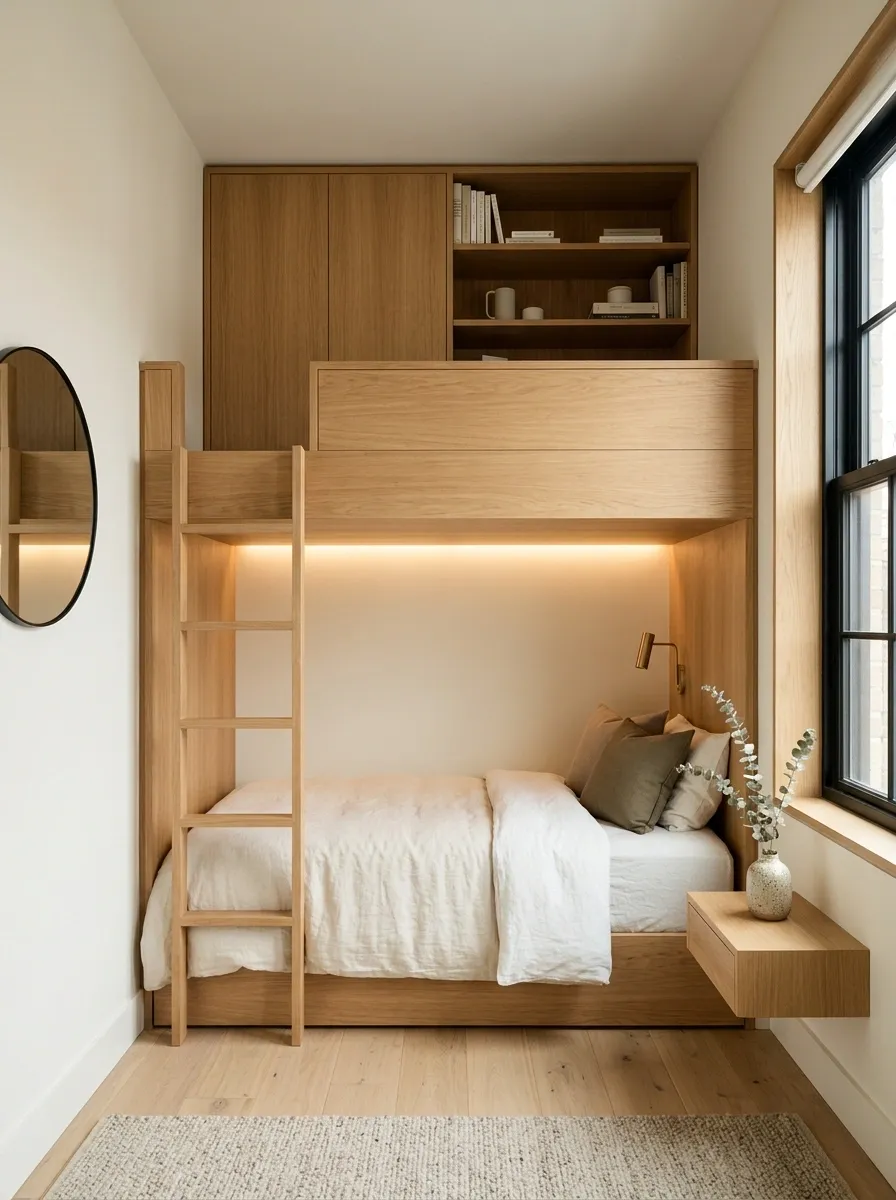
Vertical space becomes the main design opportunity in this compact bedroom. The single bed occupies the lower level, while a raised storage platform creates useful volume above it. Warm oak cabinetry wraps the structure, and concealed lighting underneath the platform gives the sleeping area a soft, tucked-away quality.
Instead of treating storage as something added around the bed, the entire room is organized around one architectural mass. That makes the arrangement feel intentional even though the footprint is extremely compact.
The strongest visual detail is the separation between the low sleeping zone and the upper storage zone. Keeping the lower area softly lit and minimally furnished prevents the built-in structure from feeling overwhelming.
ZONE
Minimal White Bedroom With One Oversized Artwork
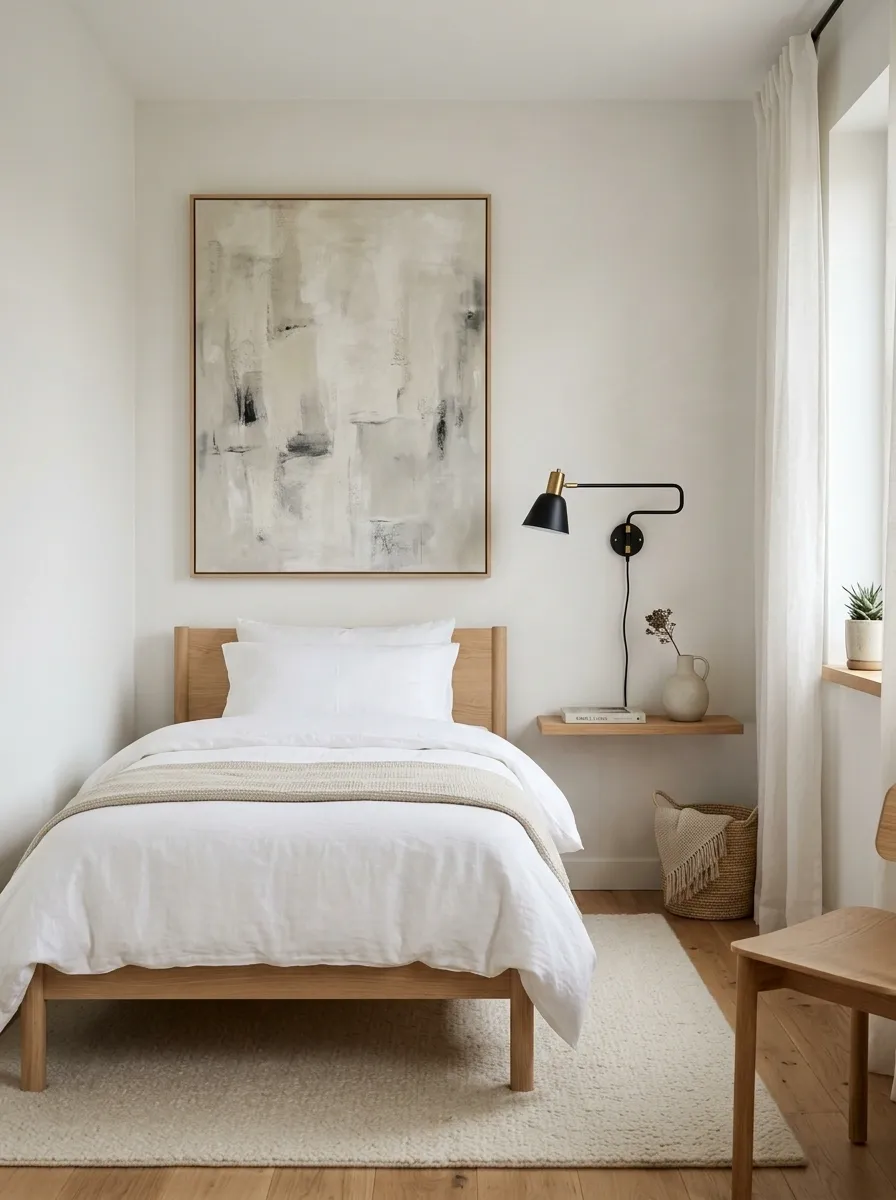
A pale oak single bed sits against a nearly white wall, surrounded by crisp bedding, one slim black reading lamp, and a single oversized artwork panel. The artwork is large enough to give the wall presence without requiring multiple decorative pieces.
The floor remains intentionally quiet. A small low-pile rug defines the bed area, while a narrow shelf provides just enough space for a book and a small object.
This design proves that minimal doesn’t have to mean unfinished. The oversized artwork supplies the focal point that a collection of smaller frames would otherwise create, while the warm wood keeps the room from feeling clinical.
DO THE WORK.
Terracotta and Cream Bedroom With Rustic Wood
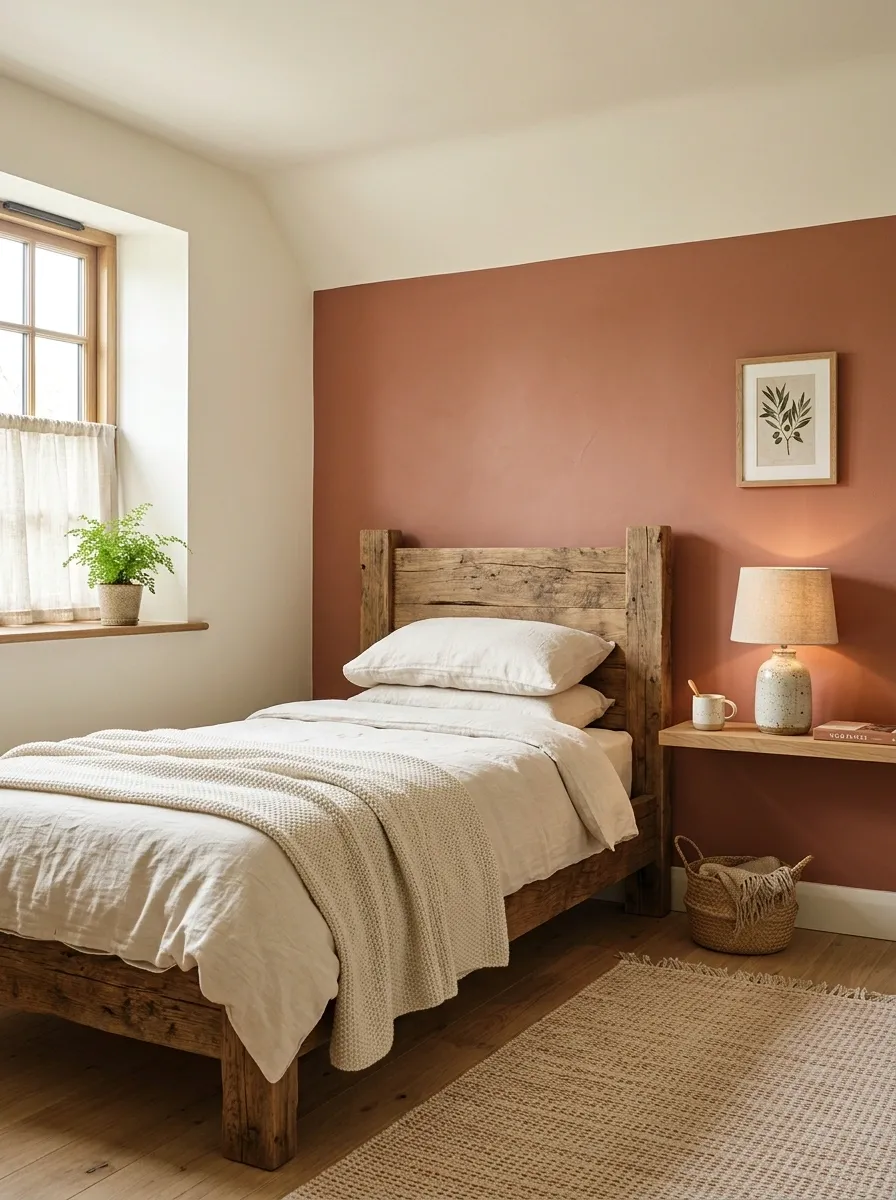
A muted terracotta wall gives this small bedroom warmth from the moment the light enters. The single bed uses chunky reclaimed-looking timber, while cream bedding, a woven rug, and a handmade ceramic lamp soften the heavier material.
A narrow wooden ledge runs beside the bed instead of a traditional nightstand. The floor remains mostly visible, and the natural wood appears in only a few major pieces so the rustic character stays controlled.
The color combination is what holds everything together. Terracotta supplies depth, cream opens the room back up, and the wood bridges the two. Keeping the ceiling pale is important because the darker wall already carries most of the visual weight.
Narrow Bedroom With the Bed Centered on the Long Wall
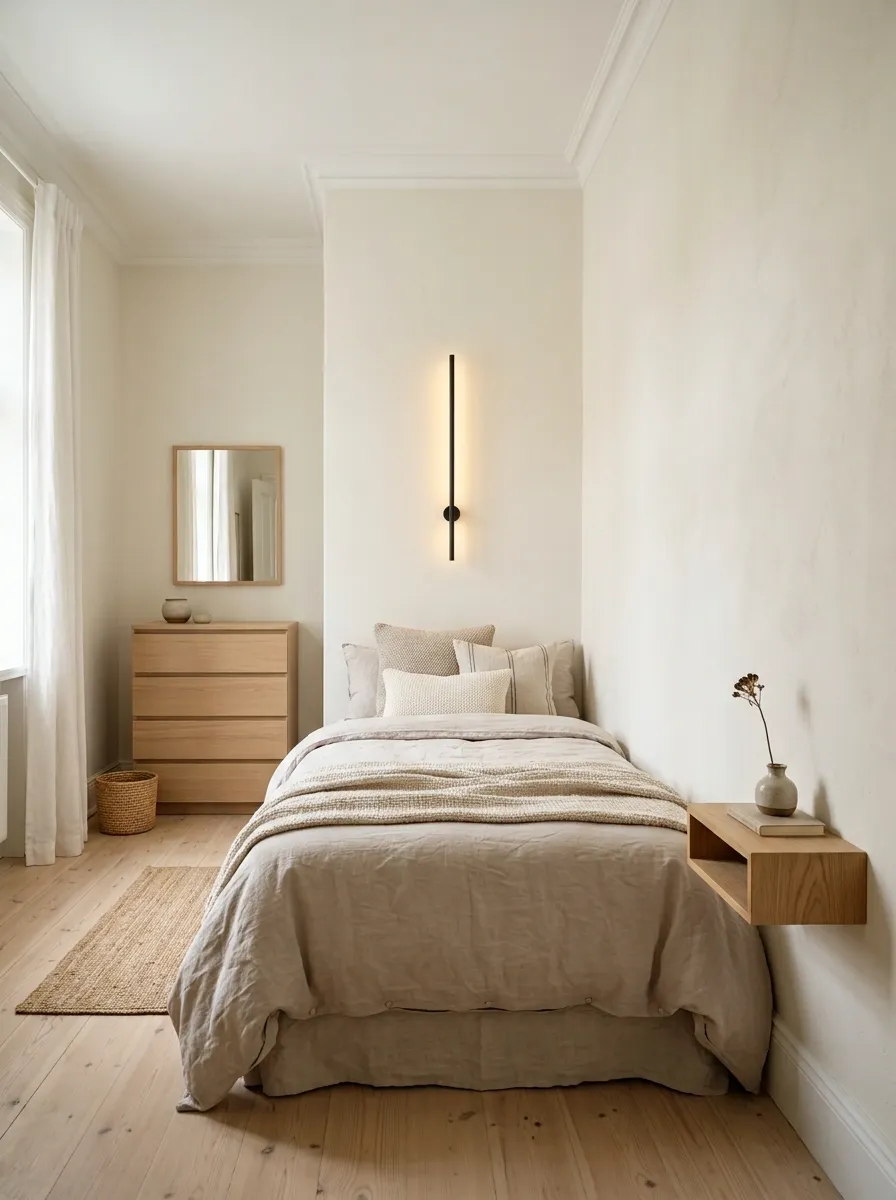
A narrow room benefits from one clean visual axis. Here, the single bed sits against the longest uninterrupted wall, leaving a straightforward walkway through the center. A shallow dresser occupies the opposite wall, while a floating shelf handles bedside storage without stealing floor area.
The finishes stay warm and restrained: creamy walls, pale oak, soft beige bedding, and a little charcoal in the lighting. Nothing projects too far into the room, which keeps the proportions easy to read.
The biggest improvement comes from avoiding furniture at every available wall. The open strip through the center becomes part of the design rather than leftover space.
READ AS A SHAPE.
Japandi Bedroom With Pale Wood and Textured Walls
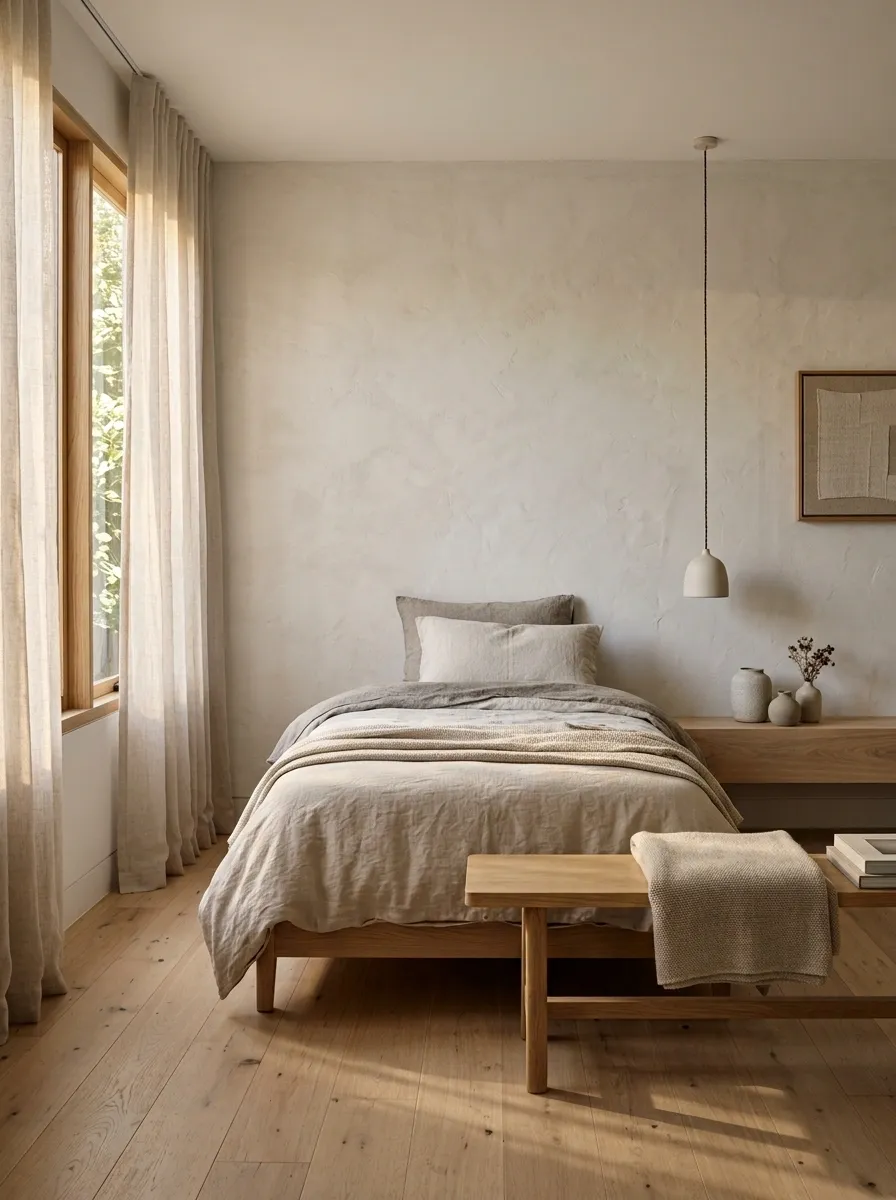
This compact bedroom keeps its palette close to parchment, pale oak, and warm gray. A low single bed rests against a softly textured wall, while a small pendant hangs beside it in place of a conventional bedside lamp.
The furniture is deliberately sparse. A narrow timber bench sits near the foot of the bed, and a woven textile adds texture without introducing another strong color. The floor remains mostly uncovered, allowing the room’s materials to do the visual work.
The appeal comes from contrast between surfaces rather than contrast between colors. Rough plaster, smooth wood, washed linen, and matte ceramic create enough variation to keep the pale room from feeling flat.
Small Industrial Bedroom With Black Steel and Oak
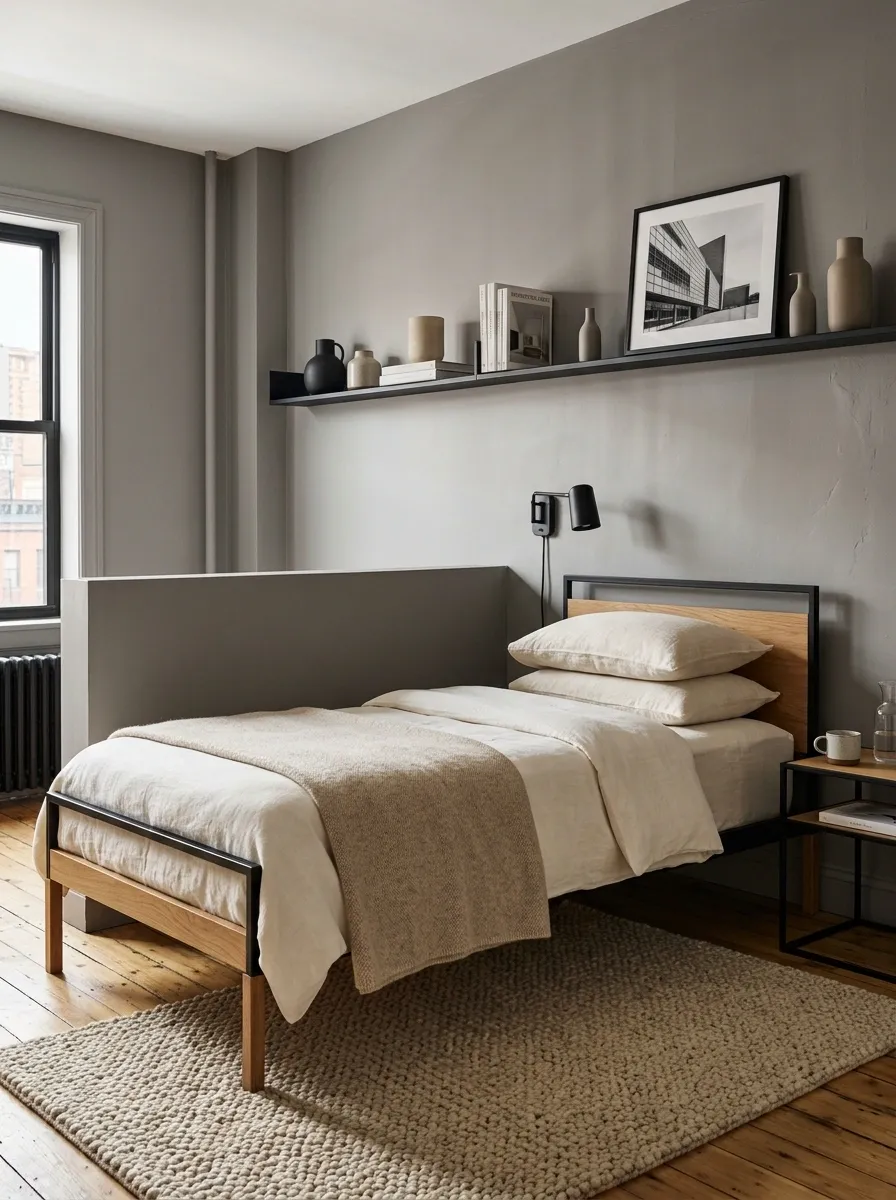
Black steel gives this small bedroom a stronger architectural edge, but warm oak prevents it from becoming cold. The single bed uses a slim metal frame with timber accents, backed by a warm gray wall and a simple open shelving system.
A compact wall-mounted light provides focused illumination beside the bed. Cream bedding and a textured rug soften the industrial elements, while a framed architectural print reinforces the room’s graphic character.
The balance matters here. Steel should remain visually thin rather than becoming a collection of heavy black furniture. The warmer wood and textiles then have enough space to soften the structure without erasing its industrial character.
Window Nook Bedroom With a Tiny Reading Corner
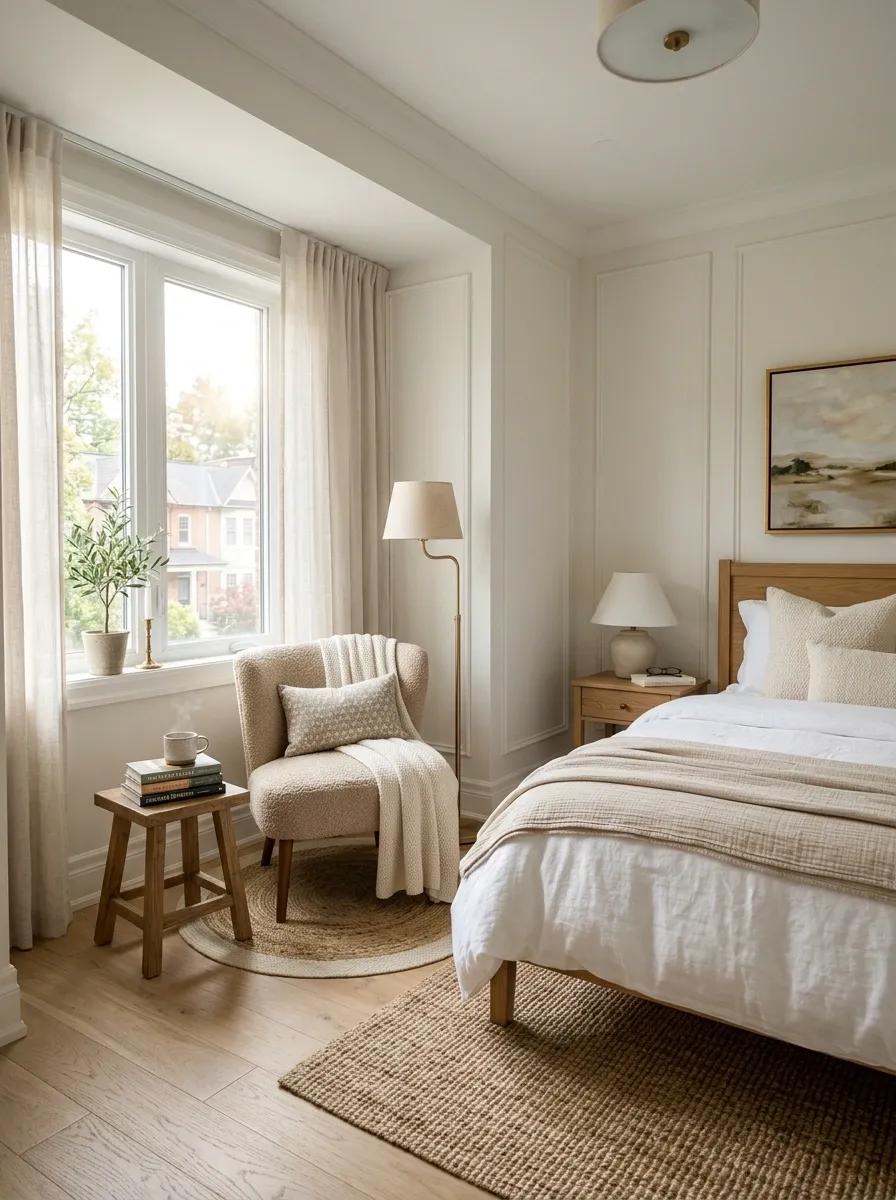
A bright window becomes the organizing feature of this small bedroom. The single bed occupies one side of the room, while a compact upholstered chair slips into the opposite corner beside a narrow floor lamp.
The distinction between sleeping and reading areas is subtle rather than architectural. A small round rug anchors the chair, while the bed uses a rectangular woven rug, giving each function its own visual footprint without filling the room with furniture.
The design works because the second function uses a corner rather than demanding an entire wall. The result feels like a real bedroom with a small retreat built into it, rather than a bed squeezed into a multipurpose room.
DOES DOUBLE DUTY.
Classic Small Bedroom With Paneled Walls and Brass Details
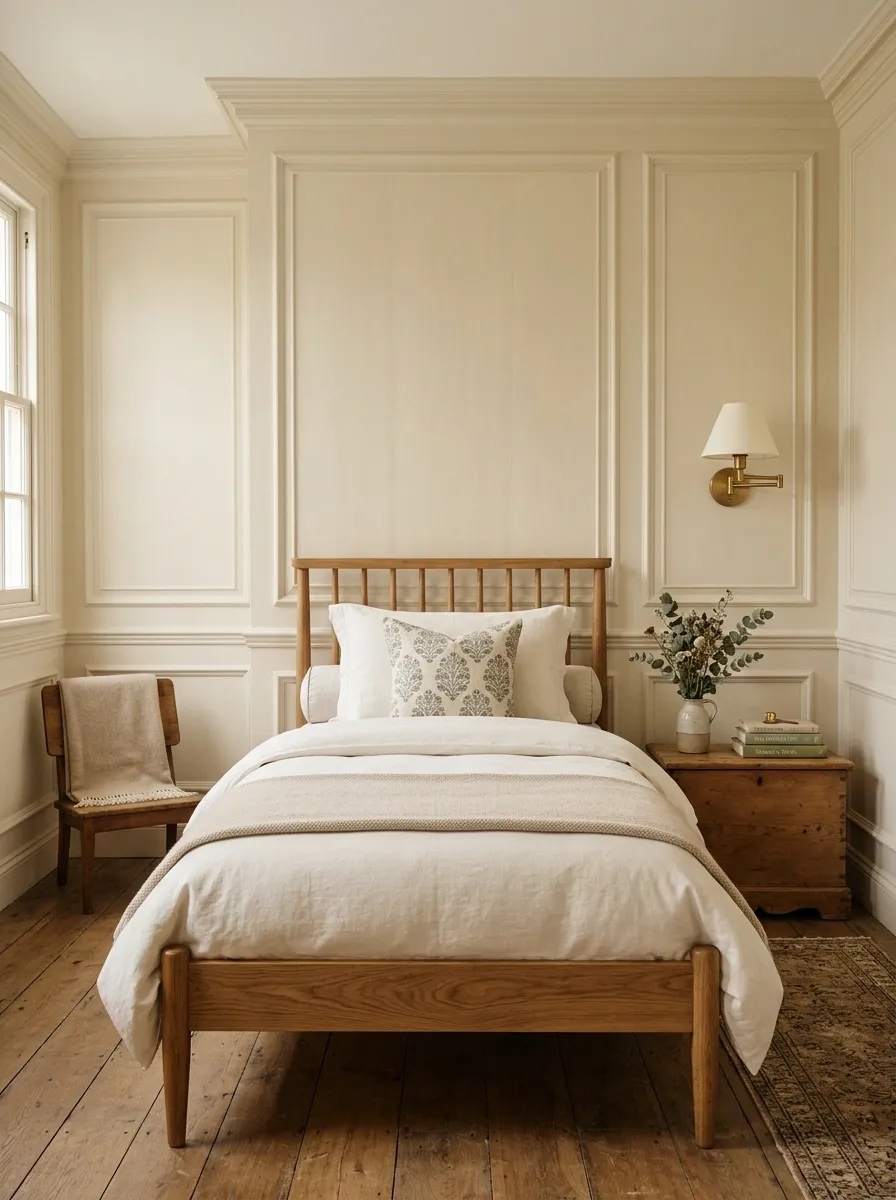
Soft cream wall paneling gives this compact bedroom architectural character before any furniture is added. A traditional wood single bed sits in front of it, dressed in tailored ivory bedding with a muted patterned cushion.
A petite chest serves as the bedside table, while a brass wall light adds warmth above it. The remaining furniture stays low and simple so the paneling remains visible around the bed instead of disappearing behind layers of decor.
The room feels classic because the details are controlled. One wall treatment, one warm metal, natural wood, and traditional bedding are enough to establish the direction. Adding too many ornate pieces would make the small footprint feel busier than it needs to be.
Tiny Bedroom With a Tailored Daybed and Hidden Storage
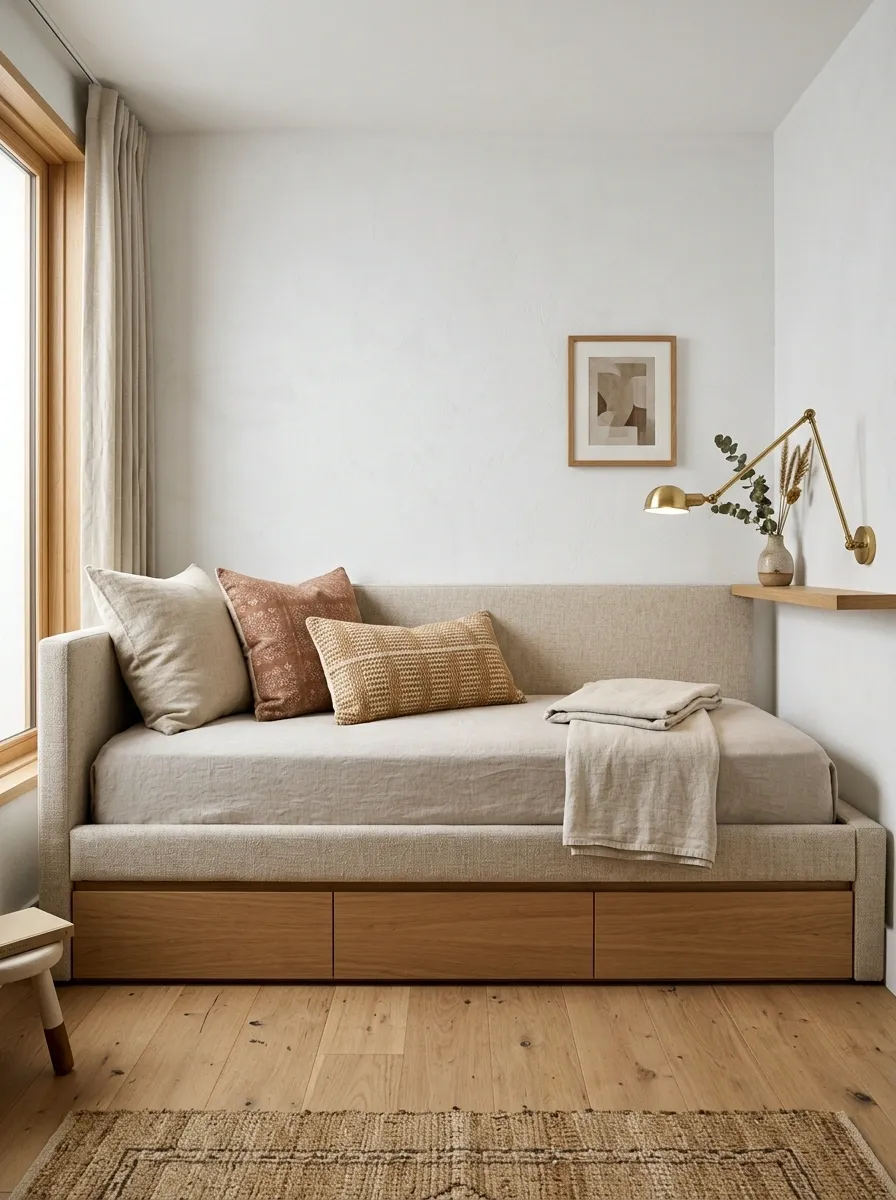
A tailored daybed makes this tiny bedroom feel more like a deliberate piece of furniture than a bed squeezed into a small room. The upholstered frame sits flush against the wall, with generous drawers built beneath it for spare bedding, clothing, or seasonal pieces.
During the day, the bed reads almost like a compact sofa. Layered cushions in cream, camel, and muted terracotta reinforce that effect, while a slim wall shelf replaces a conventional bedside table.
The strength of the design comes from giving one piece several visual and practical jobs. Because storage disappears beneath the bed and bedside clutter moves onto the wall, more of the floor remains visible.
Navy Blue Bedroom With Crisp White Bedding
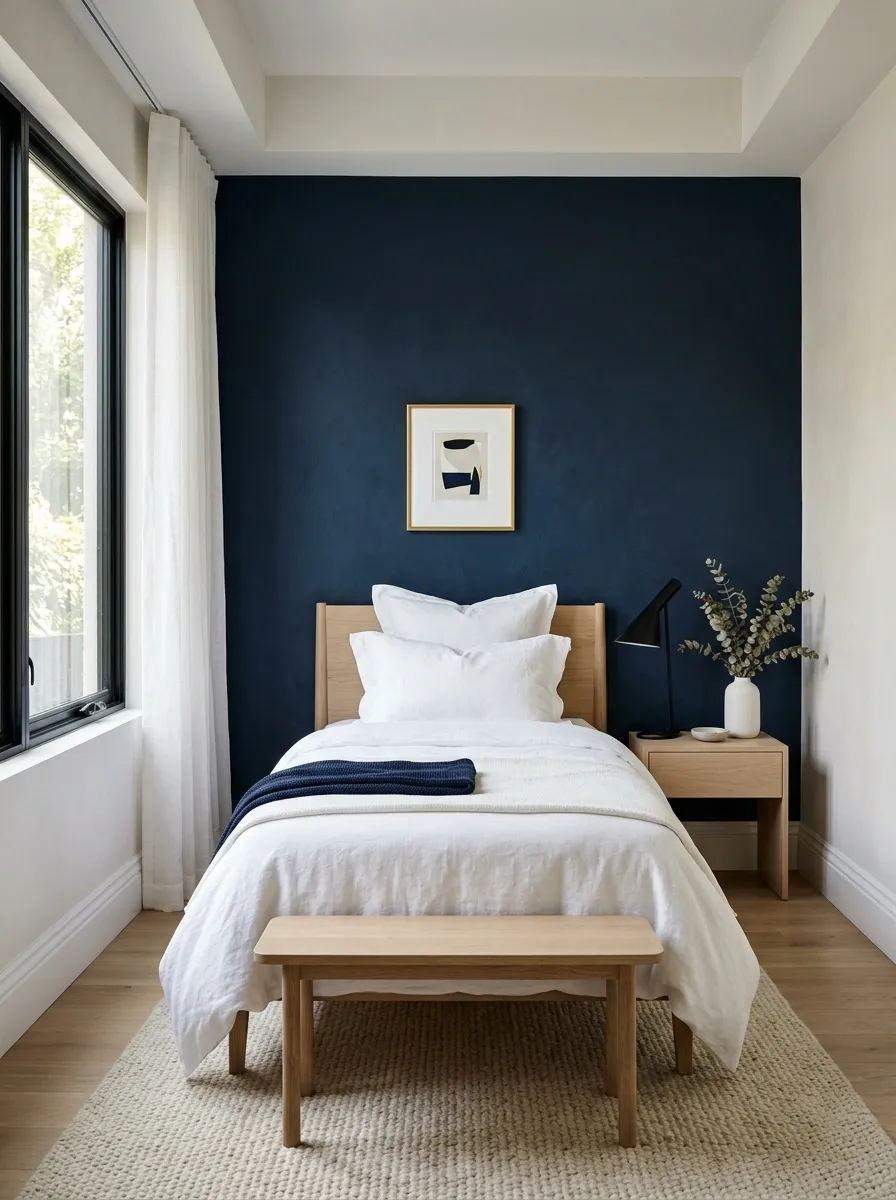
Deep navy gives the single bed a strong visual anchor in this compact room. The wall behind the bed is saturated and dramatic, while crisp white bedding creates a clean break between the dark backdrop and the lighter furniture.
A pale oak nightstand and narrow bench warm the composition without introducing another dominant color. Natural daylight enters from one side, keeping the navy wall dimensional rather than flat.
The contrast is intentional. The wall establishes depth, white bedding supplies brightness, and warm timber prevents the palette from becoming cold. Decorative objects stay sparse because the color relationship already creates enough visual interest.
LIGHT CENTER.
Small Bedroom With a Wall-to-Wall Upholstered Headboard
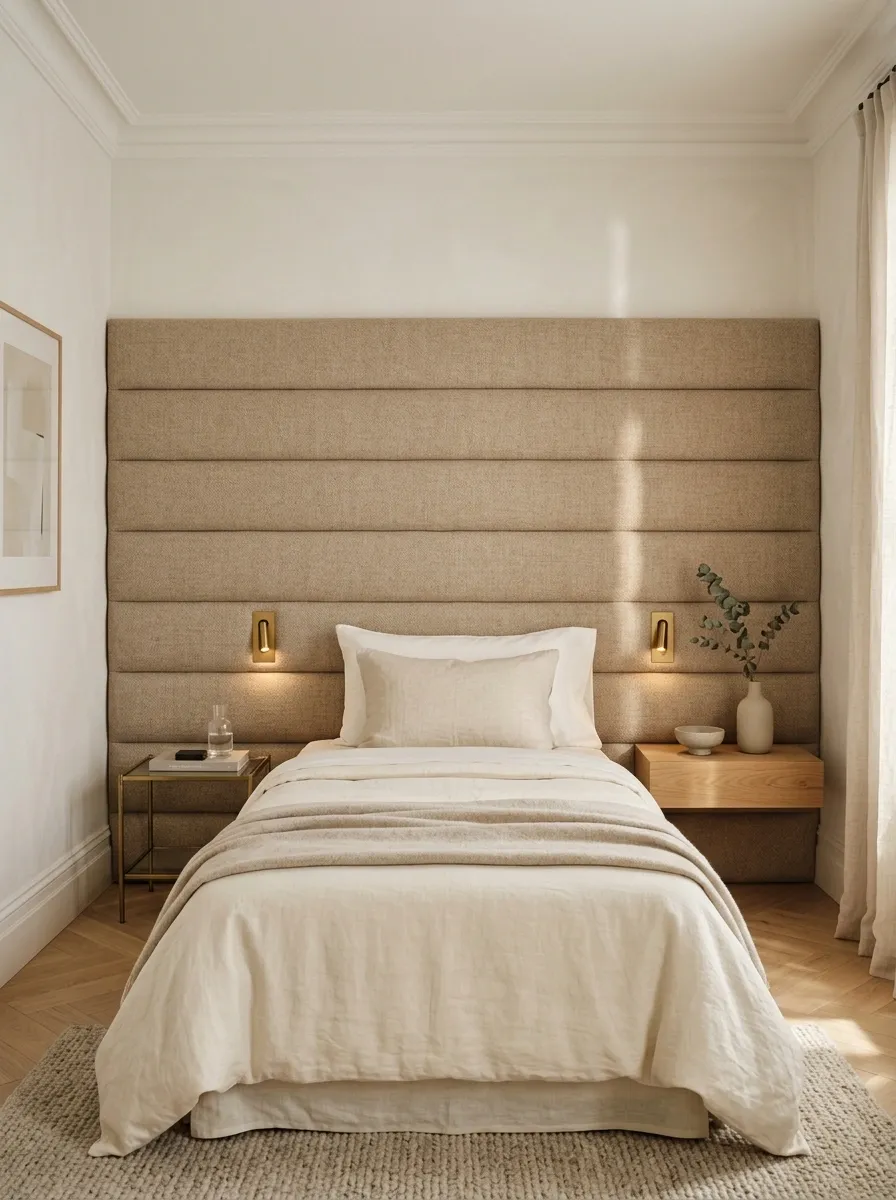
A wide upholstered headboard changes the perceived proportions of this small bedroom. Instead of stopping at the width of the mattress, the padded panel stretches across much of the wall, visually widening the sleeping zone.
The bed itself stays compact. Warm beige fabric, creamy bedding, a small floating shelf, and integrated reading lights keep the area around it uncluttered. The headboard becomes the architectural feature, giving the room more presence without requiring a larger bed.
This approach works particularly well when the wall behind the bed feels narrow. The wider horizontal line creates a stronger sense of width, while the soft upholstery prevents the oversized element from feeling visually hard.
Olive Green Bedroom With Natural Wood and Botanical Styling
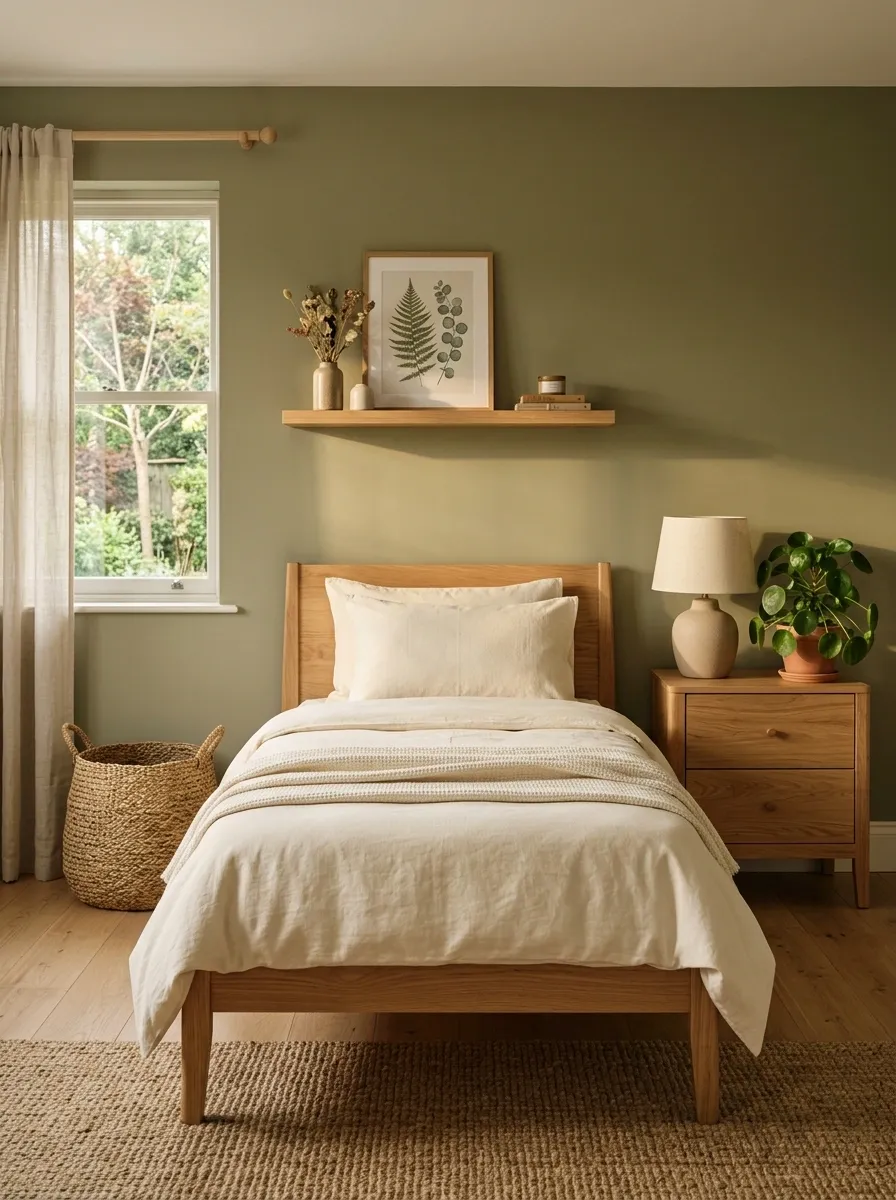
Olive walls provide a grounded backdrop for a simple natural-wood single bed. The bedding stays neutral, with warm cream sheets and a textured throw, while one or two leafy plants bring a softer organic shape into the corners.
A woven basket provides storage beside the bed, and a small ceramic lamp introduces another natural texture without adding visual noise. The wood tone remains consistent across the bed, shelf, and small dresser.
The green works because it is muted and earthy. It supports the timber rather than fighting it, while the pale bedding keeps the center of the room light. The plants should remain selective; a crowded collection would compete with the calm material palette.
Attic Bedroom With a Sloped Ceiling and Built-In Drawers
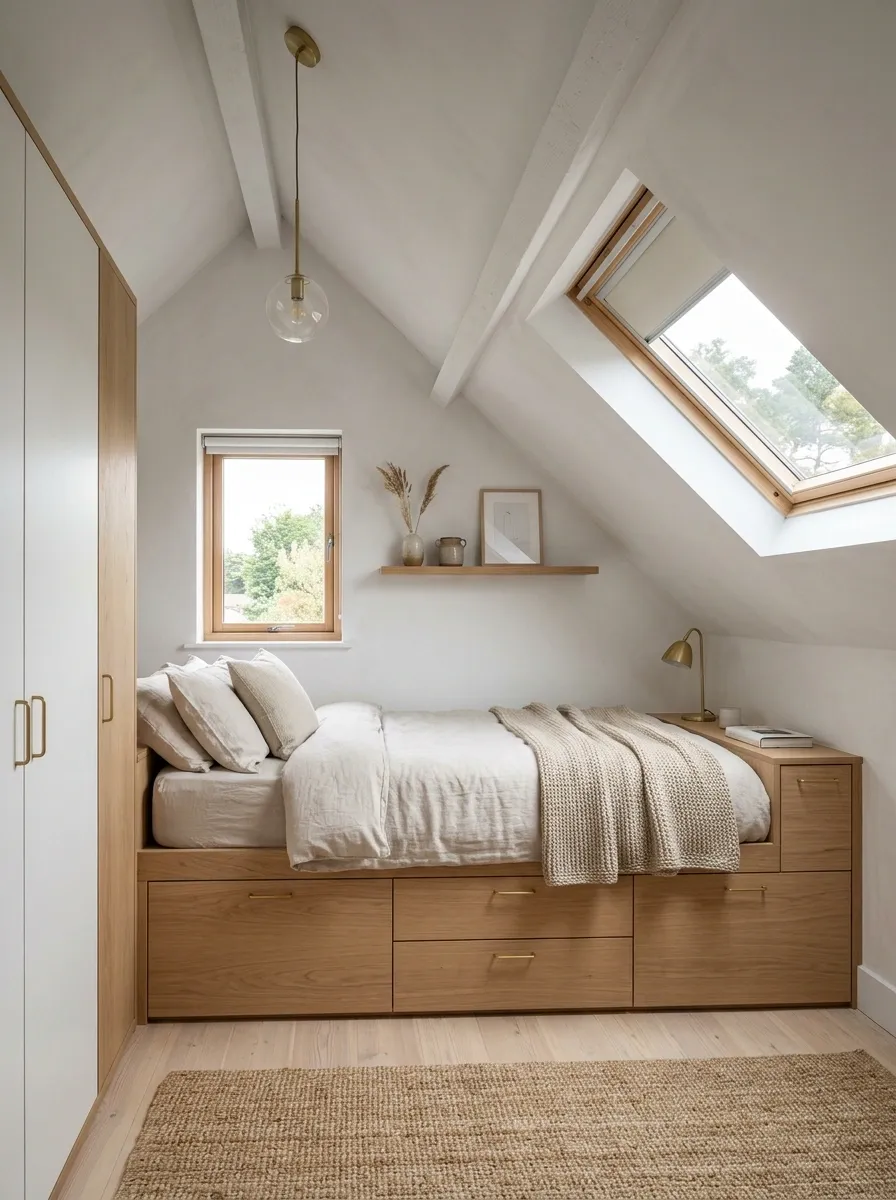
The sloped ceiling becomes the defining feature of this small attic bedroom. Instead of fighting the low side with tall furniture, the single bed sits beneath it, paired with drawers that follow the roofline.
The taller side of the room remains visually open, allowing a slim pendant and a narrow wardrobe to occupy the available height. Warm white walls bounce daylight around the irregular architecture, while pale timber introduces enough contrast to outline the structure.
This is a strong solution for an awkward room because the unusual ceiling becomes part of the design rather than a limitation to conceal. Low storage belongs exactly where standing-height furniture would feel cramped.
Soft Blue Bedroom With a Compact Built-In Desk
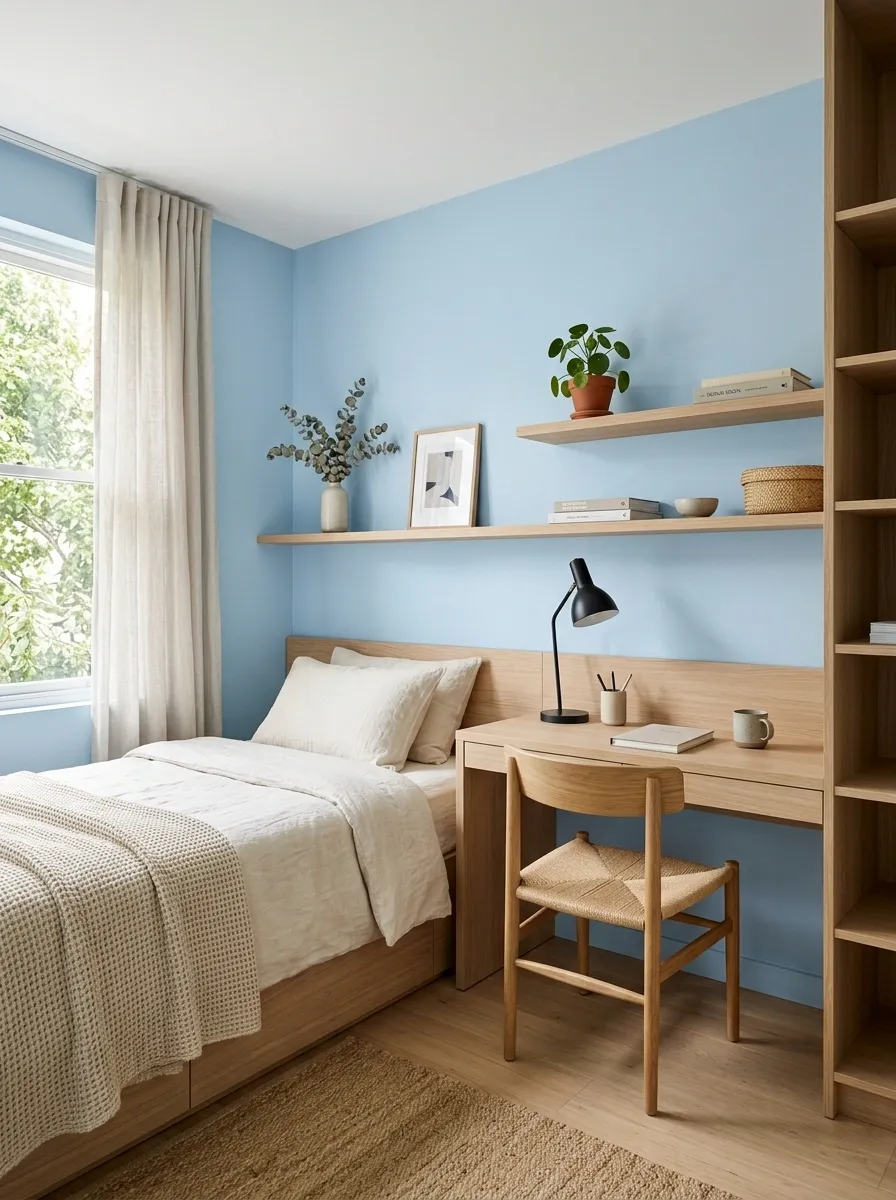
Powder blue walls give this small room a brighter, more open feeling while a pale timber bed and integrated desk create one continuous furniture composition. The desk begins beside the bed and continues into shallow shelving, making the entire wall work harder without appearing crowded.
Cream textiles soften the blue, and a simple task light provides definition to the work area. The storage remains open and selective, with only frequently used pieces left visible.
The built-in approach works because the bed and desk share the same material language. Instead of two separate furniture pieces fighting for space, they read as one long architectural element.
Luxe Small Bedroom With Stone, Walnut, and Cream
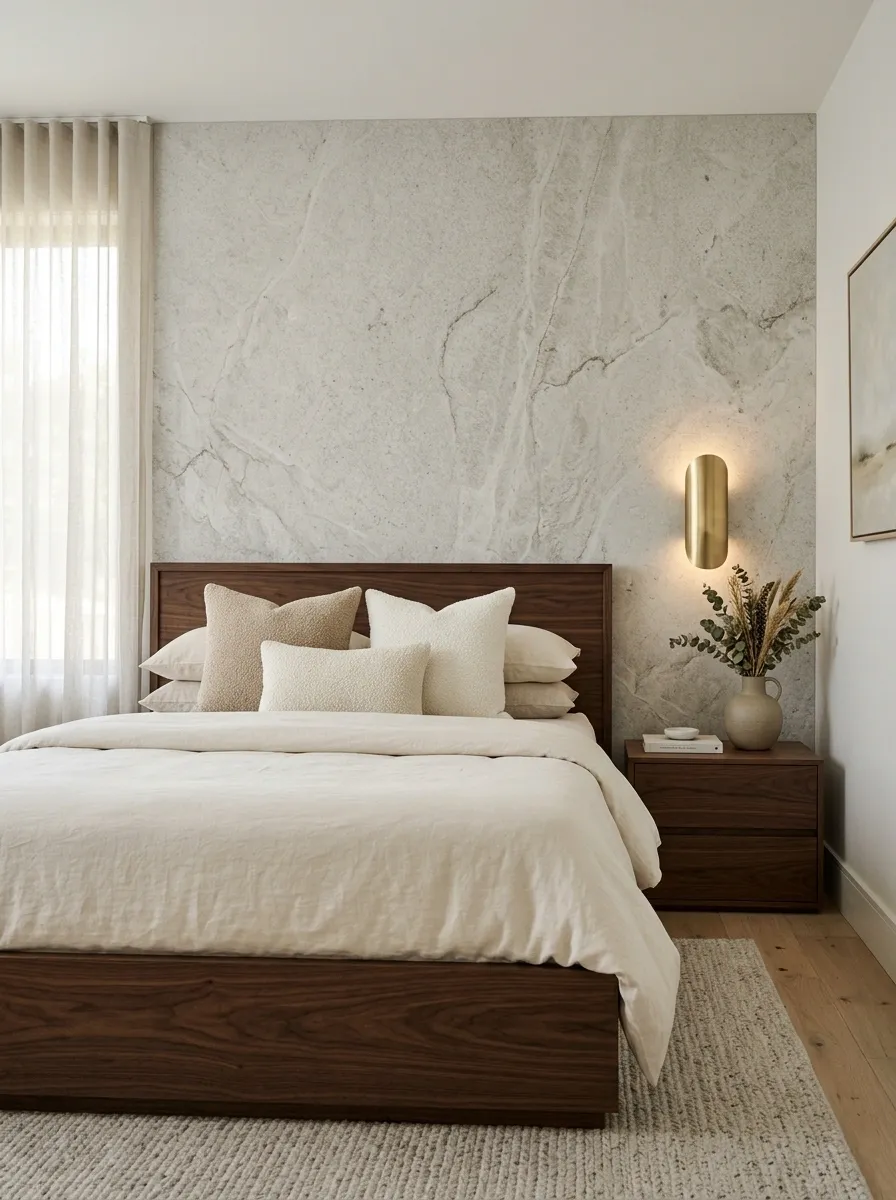
A compact bedroom can feel polished without being overloaded with luxury details. Here, a walnut bed and matching bedside cabinet sit against a subtle stone-textured wall, while cream upholstery and bedding create a softer layer in front of the darker wood.
Lighting is low and warm, with a sculptural wall fixture replacing a conventional bedside lamp. A restrained metallic accent appears only in the hardware and light fitting, leaving the walnut and stone as the main visual partnership.
The design feels sophisticated because the material hierarchy is strong. Two rich materials do most of the work, while the cream layer keeps them from becoming visually dense.
Black-and-White Graphic Bedroom With Warm Wood
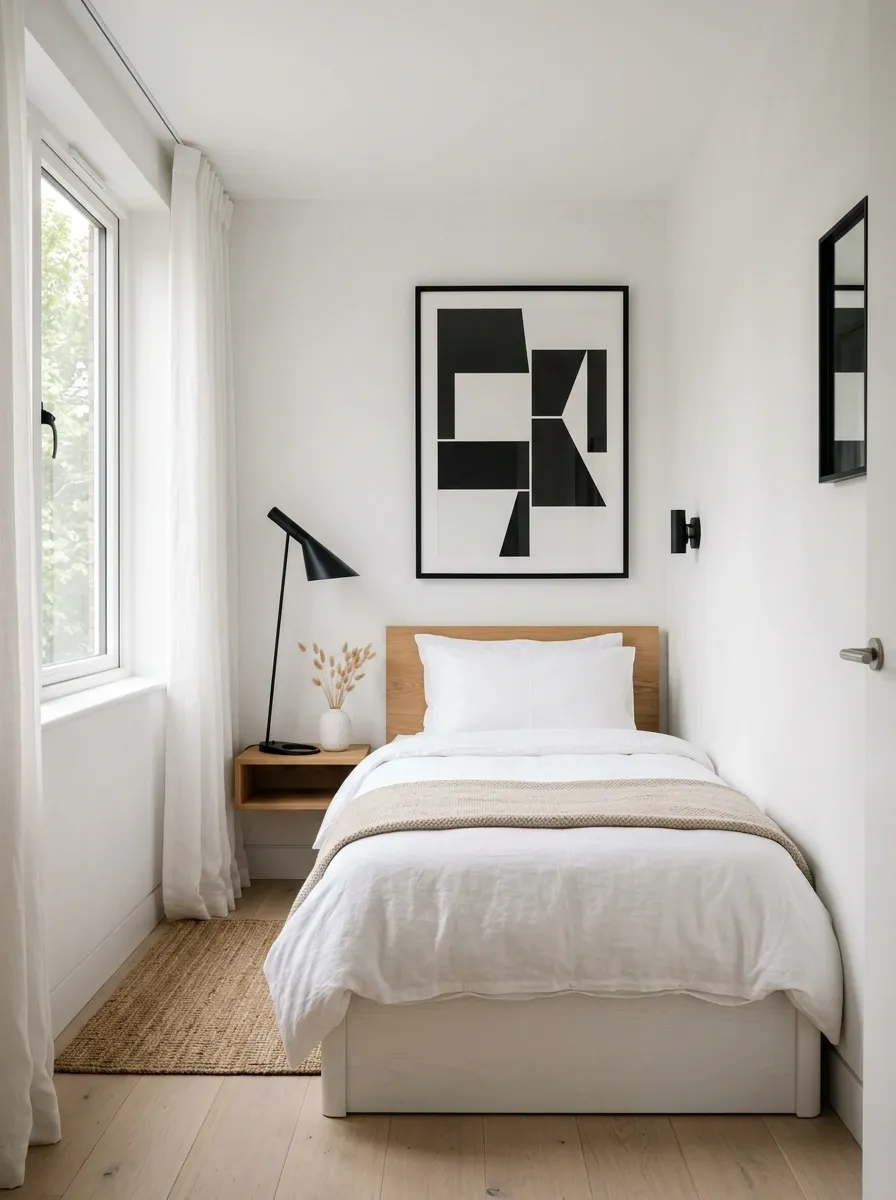
This bedroom uses black and white almost like architectural linework. The walls and bedding remain bright, while black appears in the lighting, framed artwork, and small bedside details. Warm wood furniture interrupts the stark contrast and brings the room back toward a livable palette.
The single bed sits slightly off-center beneath a large graphic artwork piece, creating an asymmetrical composition that feels more editorial than traditionally symmetrical. A small woven rug adds another warm texture.
The black elements work because they are distributed rather than concentrated. Repeating them in small doses creates a visual rhythm without turning the room into a monochrome box.
KEEP THEM SMALL.
Cottage Bedroom With Floral Textiles and Painted Furniture
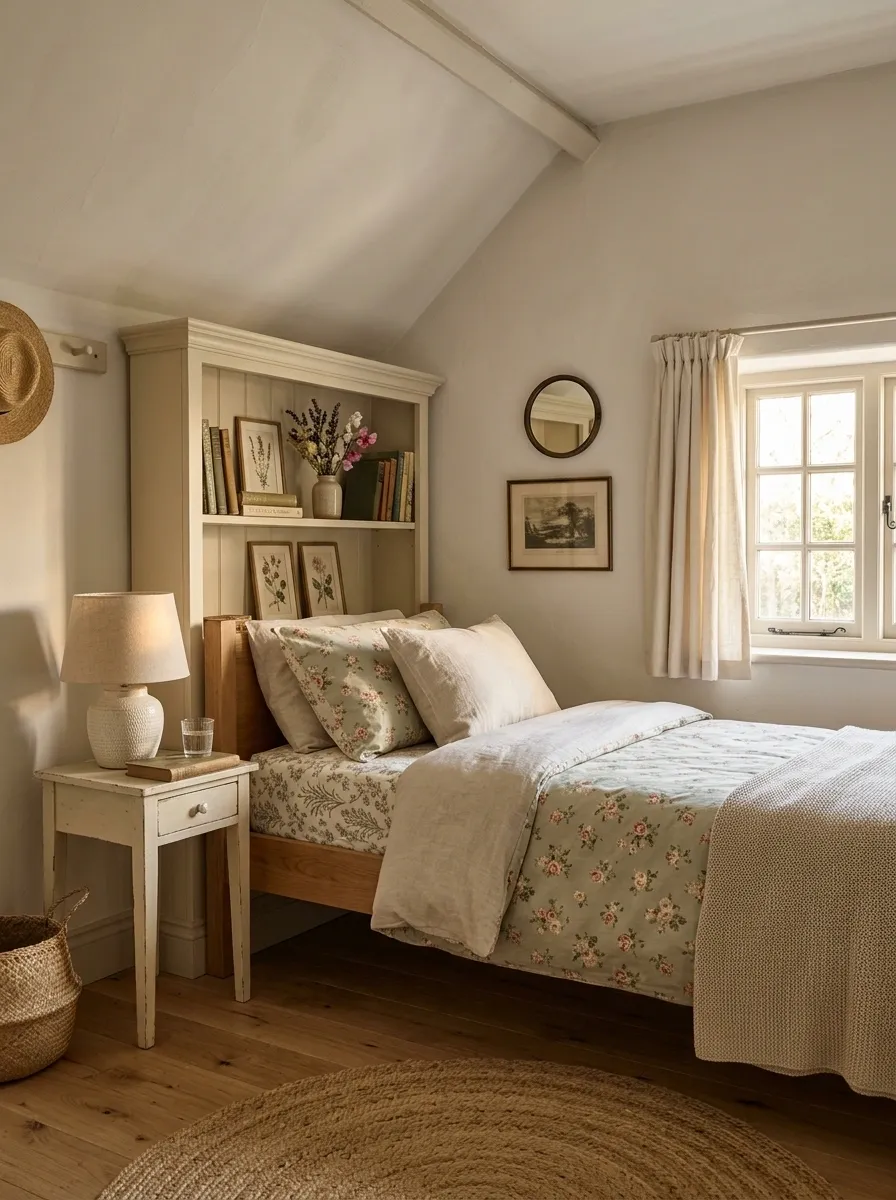
A compact painted bed in soft cream becomes the centerpiece of this cottage-inspired bedroom. Floral bedding introduces the strongest pattern, while the surrounding walls, bedside table, and curtains stay close to quiet neutral tones.
The furniture has a gently aged appearance rather than a polished finish. A small woven rug and ceramic lamp bring additional texture, but nothing competes with the floral textile at the center.
The secret to keeping a cottage look controlled is giving the pattern one clear territory. Because the bedding carries most of the visual detail, the architecture and larger furniture pieces can remain simple.
Modern Micro Bedroom With a Floating Bedside Shelf
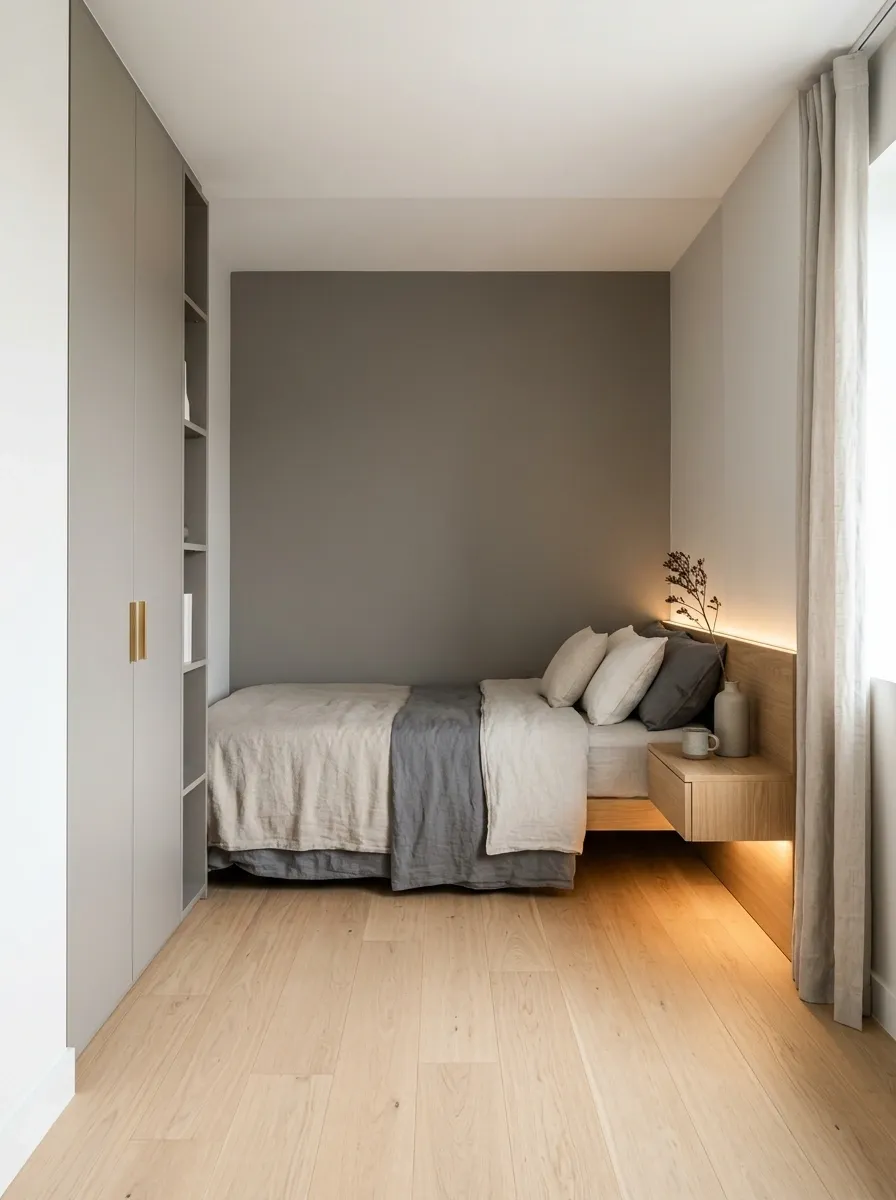
A streamlined single bed anchors this final design against a warm gray wall, with a floating bedside shelf replacing the traditional table. Concealed lighting under the shelf creates a subtle glow, while a narrow wardrobe and built-in storage occupy the remaining wall.
The floor stays deliberately clear. With no bulky bedside cabinet interrupting the lower half of the room, the eye can travel around the bed and across the floor without hitting unnecessary visual barriers.
This is the most pared-back concept in the collection, but it doesn’t feel unfinished. Consistent gray, warm wood, soft textiles, and concealed functions create a polished modern composition where the architecture carries much of the design.
Choosing the Right Finished Direction
The best small bedroom isn’t necessarily the one with the least furniture. It is the one where the major decisions agree with each other.
A low bed, pale walls, warm timber, and open floor create one kind of room. A charcoal backdrop, walnut furniture, and concentrated lighting create another. A built-in wall can completely change the way storage and sleeping space relate, while an attic ceiling can become the main architectural feature instead of an obstacle.
Start with the overall direction rather than collecting individual details from unrelated rooms. Then work outward from the bed, checking circulation, storage, natural light, furniture depth, and the amount of visual weight the space can handle.
A small bedroom becomes much easier to design once the room is treated as one composition instead of a collection of separate things.
Save the designs that feel closest to the room being created, then return to them when choosing the bed, layout, colors, and storage.