
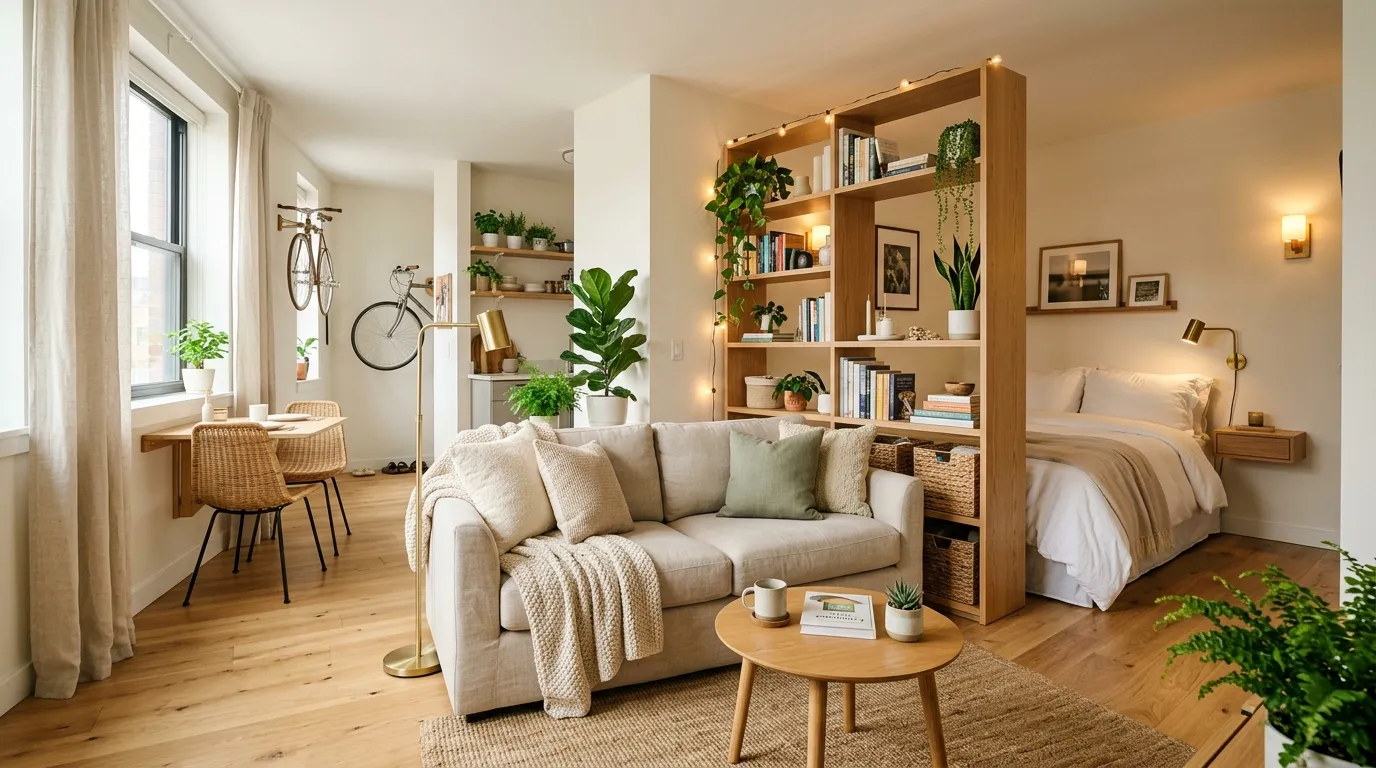
Most studio apartments don’t feel small because they’re actually tiny. They feel small because everything is fighting for the same visual space.
A bed sits beside a sofa. The desk ends up next to the kitchen. Shoes collect by the door. Then a few storage pieces get added to fix the mess, and suddenly the room feels even more crowded. That’s the trap with studio decorating. Solving one problem can easily create another.
The best studio apartment ideas don’t depend on buying more furniture or filling every empty wall. They make the furniture you already need work harder. A sofa can define the living room. A shelf can replace a nightstand. A curtain can create privacy without building a wall.
You don’t need a huge budget either. You need better boundaries, smarter proportions, and a clear plan for how each part of the room should function.
The ideas below focus on those details. Some take five minutes to change. Others require a little planning. All of them are designed to make your studio feel more organized without making it feel overly decorated.
Studio Apartment Ideas
Lighting That Masks Reality
Stringing fairy lights around your kitchenette isn’t a design choice; it’s a desperate attempt to ignore the fact that you’re sleeping two feet away from your stove. If you have to squint to see your mess, you’re winning the game of studio living.
That dark corner you’re calling a workspace is just a black hole for your productivity. Throwing a lamp on it doesn’t make it a corporate office, but it does make it slightly less depressing to check your emails while sitting in your bed.
Embrace the shadows and the clutter. If you can’t make it look like an Architectural Digest spread, at least make it look like a moody, aesthetic cave where you pretend your lack of square footage is a deliberate lifestyle choice.
Float the Sofa to Create a Real Living Zone
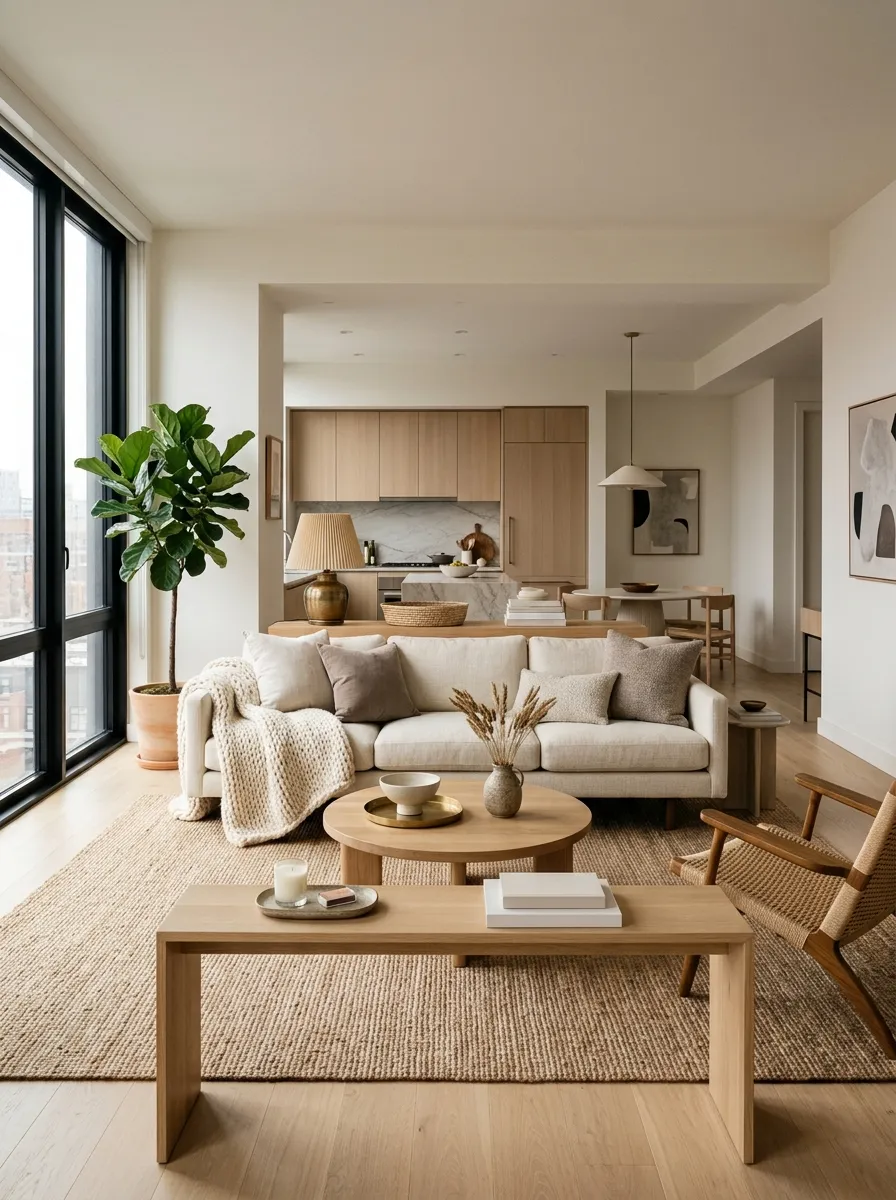
A sofa doesn’t have to touch the wall.
Pull it forward enough to create a clear boundary between the living area and the rest of the studio. You don’t need a huge gap. Even a modest separation can make the sofa feel like the beginning of a room instead of another object pushed into a corner.
Place a slim console behind it if the exposed space feels wasted. Use that surface for a lamp, a small tray, or things you actually use.
The rule is simple: let the sofa define the living area instead of letting the walls do all the work.
Stop Floating in Purgatory
Your rug is currently the loneliest object in the room because it isn’t even trying to connect your seating area. If your furniture is drifting away like a ship lost at sea, you aren’t creating a room; you’re creating an obstacle course for your shins.
Pull that couch back onto the rug or accept that your living room is just a collection of random items waiting for a better home. It’s not hard to align furniture, yet somehow you’ve managed to turn it into a spatial mystery that only a surveyor could solve.
Those windows are great, provided you actually want to stare at the street instead of living in a home. Since you clearly aren’t going to get curtains, try to at least pretend the furniture belongs together so guests don’t wonder if you just moved in this morning.
Use a Narrow Console Behind the Sofa
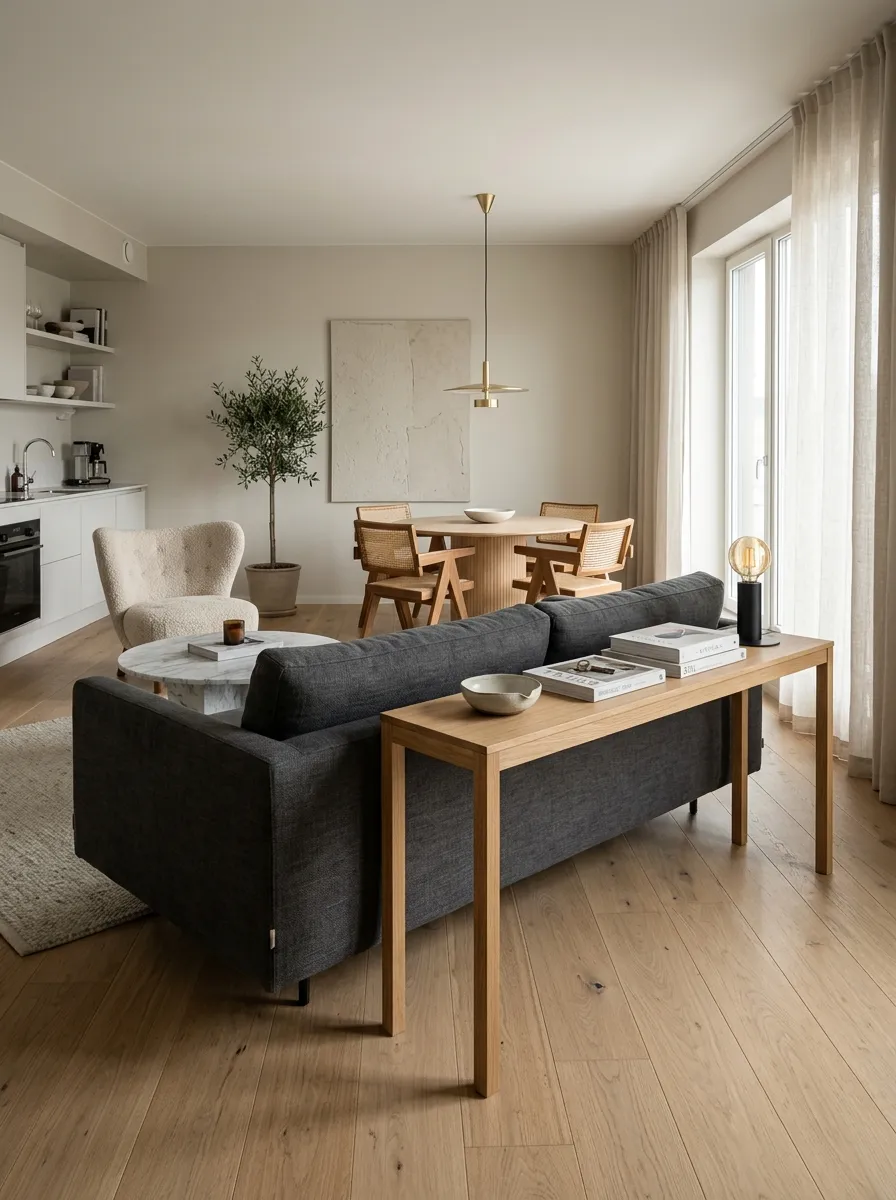
That awkward strip behind the sofa doesn’t need to become dead space.
A shallow console can turn it into a useful landing spot for your keys, charging cables, a table lamp, or a few books. Keep the piece narrow enough that it doesn’t interfere with the walking path.
This works especially well when the sofa floats between two zones.
Keep it useful, not decorative clutter.
- One lamp
- One small tray
- One or two everyday items
- Nothing that needs constant rearranging
A console should solve a storage problem while reinforcing the sofa’s role as a room divider.
- Use it for everyday essentials.
- Leave the walking route clear.
- Skip deep furniture that eats into the room.
Mastering Minimalist Coldness
A monochrome color palette is the standard uniform for people who are terrified of personality. It’s clean, sure, but it’s also the safest way to ensure your studio feels like a high-end waiting room for a dentist who hates patients.
Floating your chairs and tables in the middle of a room is a bold move, provided you actually have the space for it. If you’re just creating a narrow gauntlet to walk through every time you want a snack, you’ve prioritized the ‘design aesthetic’ over the ability to move without hitting your hip.
Keep everything white, grey, and black if you must, but don’t be shocked when your place feels like a cryogenic chamber. At least it’s tidy, which is really just code for having nowhere to put your actual life.
Give the Bed Its Own Visual Boundary
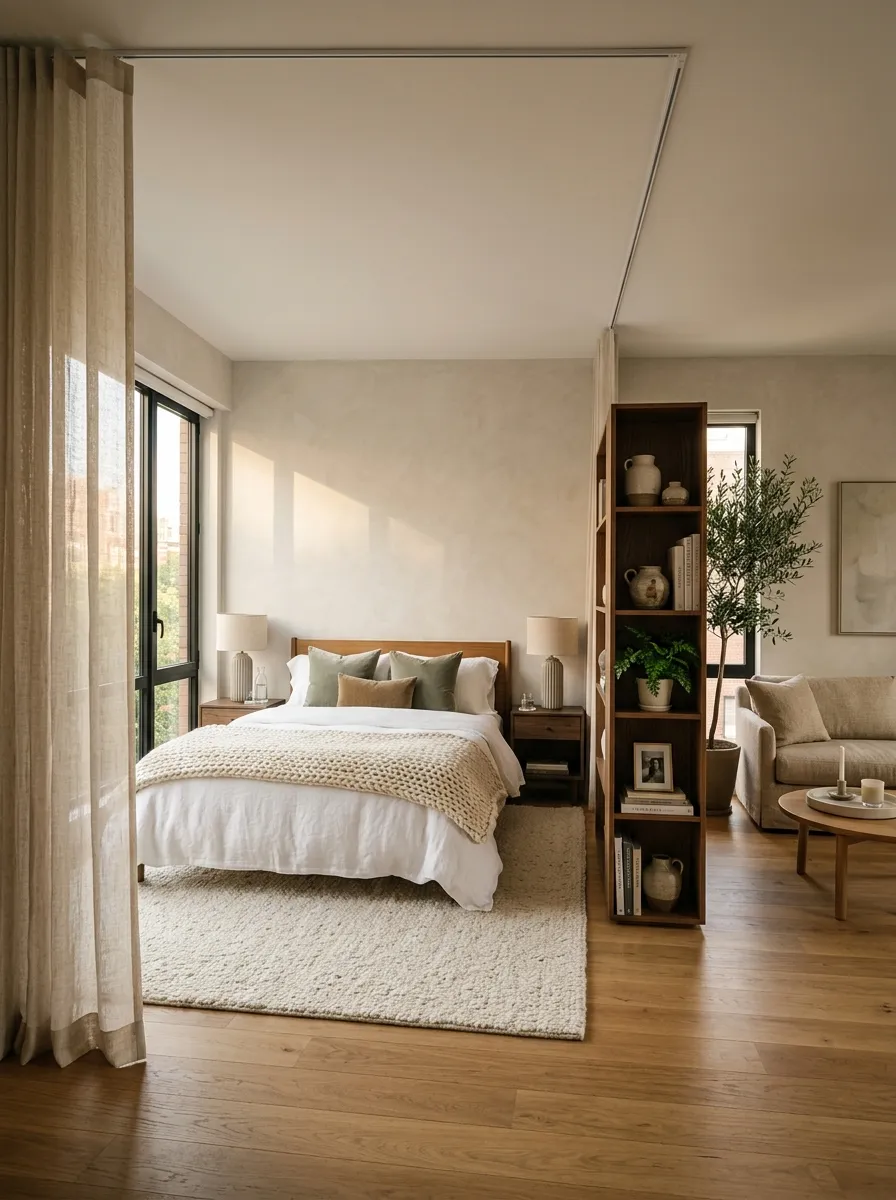
Your bed is usually the largest object in a studio, so pretending it isn’t there doesn’t work.
Give it a clear visual boundary instead. A rug under the bed, a tall headboard, a curtain panel, or a narrow open shelf can signal that this is the sleeping zone.
You don’t need to completely hide the bed. You just need to stop it from visually blending into the living room.
A simple divider can also give you a stronger sense of privacy at night without permanently closing off the room.
Rug, bedding, or curtain
Shelf or narrow bookcase
Curtain or folding screen
Plants Won't Fix Layouts
Drowning your studio in greenery is a classic distraction tactic. Yes, the plants look nice, but they aren’t going to hide the fact that your bed is touching your desk and your living room is essentially a sofa in a hallway.
That rug is doing a lot of heavy lifting trying to pull the seating area together, but even the most expensive vintage-style textile can’t save a room that was clearly designed by someone who hates the concept of separate functions. At least the desk is tucked in the corner, keeping the work-life balance chaos contained to a single square meter.
If you think a few hanging leaves will turn this into a boutique hotel suite, keep dreaming. You’ve got a bed, a desk, and a couch fighting for dominance, and the only thing winning is the dust you’re accumulating on those hard-to-reach shelves.
Choose a Rug Large Enough to Anchor the Seating
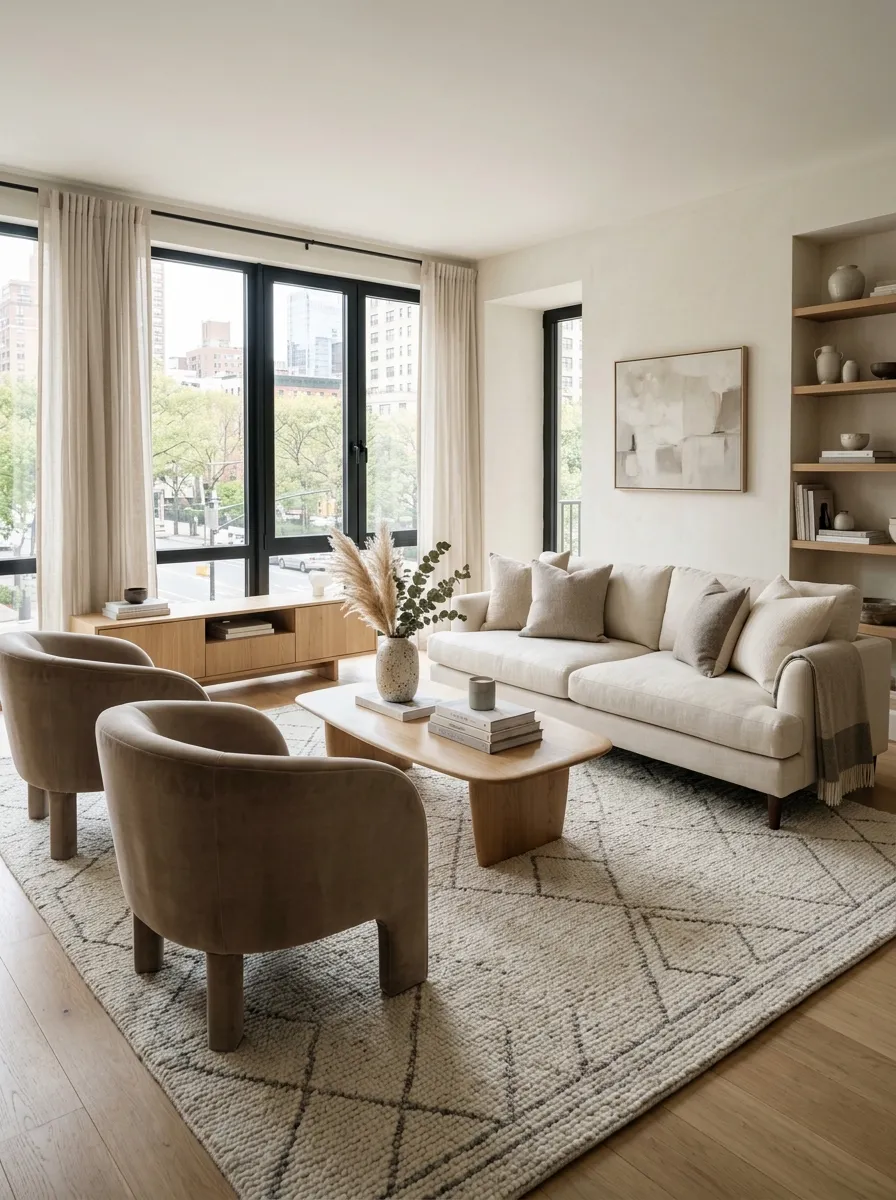
A tiny rug floating underneath the coffee table makes a studio look chopped up.
The living room needs one visual anchor. Choose a rug that reaches under at least the front legs of the sofa and connects the main seating pieces.
This makes the furniture read as one group instead of several unrelated objects.
Quick comparison
| Rug choice | What it does | Best move |
|---|---|---|
| Too small | Fragments the seating | Move up a size |
| Medium anchor | Connects furniture | Use under sofa front legs |
| Large anchor | Defines the whole zone | Best for larger studios |
Use Curtains to Hide an Open Closet
An open closet can make a studio feel messy even when your clothes are neatly arranged.
A curtain gives you a quick visual reset. Choose a simple fabric that relates to the rest of the room, then keep it closed when you want the apartment to look calmer.
Before hanging the curtain, check three things:
- It doesn’t block a doorway.
- It doesn’t drag across the floor.
- It doesn’t create another strong pattern in the room.
This works especially well when your wardrobe is visible from the bed or living area.
- Keep the fabric visually quiet.
- Match the curtain to a nearby wall or textile.
- Close it when the room needs a cleaner sightline.
Pick a Round Table for Tight Dining Areas
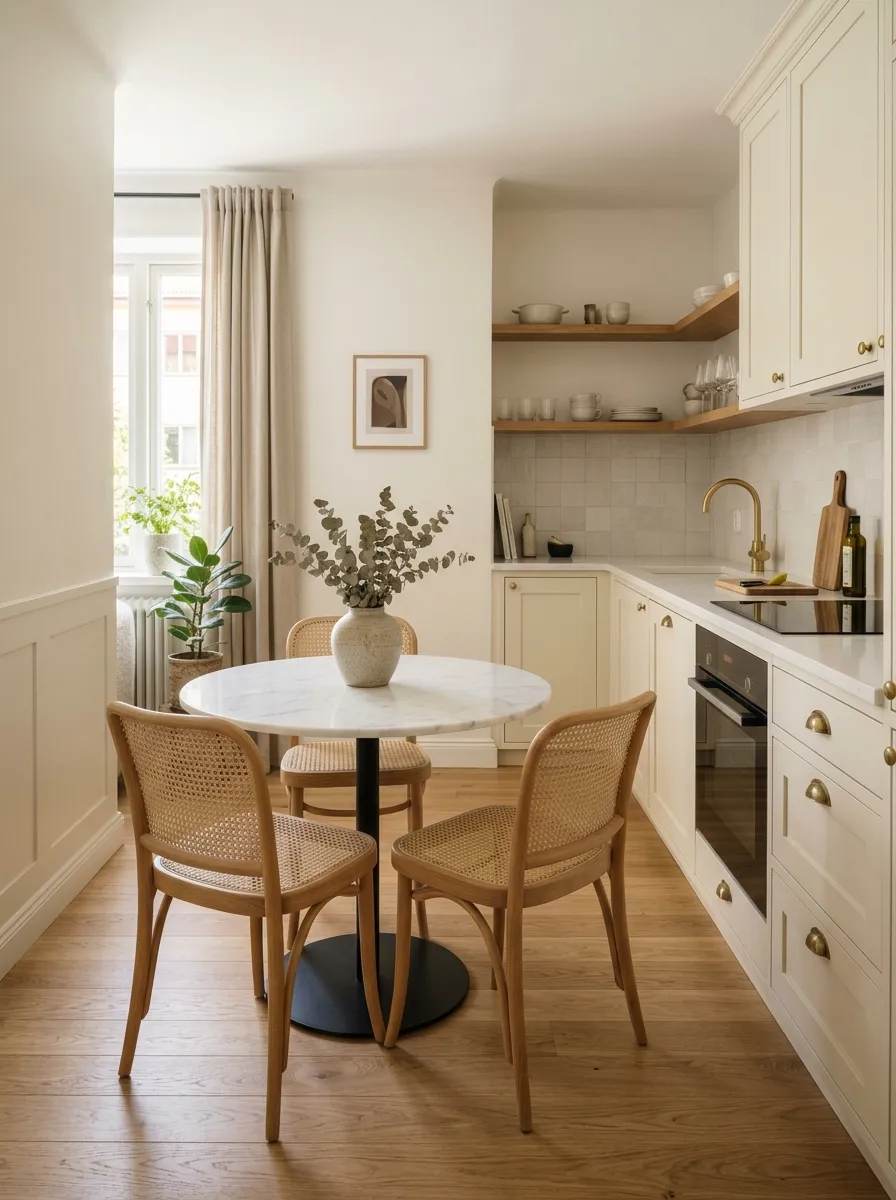
Square tables are efficient until you have to walk around them.
A round table removes hard corners from the circulation path and makes a small dining area easier to move through. It also gives you more flexibility when chairs aren’t being used.
Place it near the kitchen rather than forcing a separate dining zone into the middle of the studio.
Easier movement around corners
Stronger fit against straight walls
Replace a Bulky Nightstand With a Wall Shelf
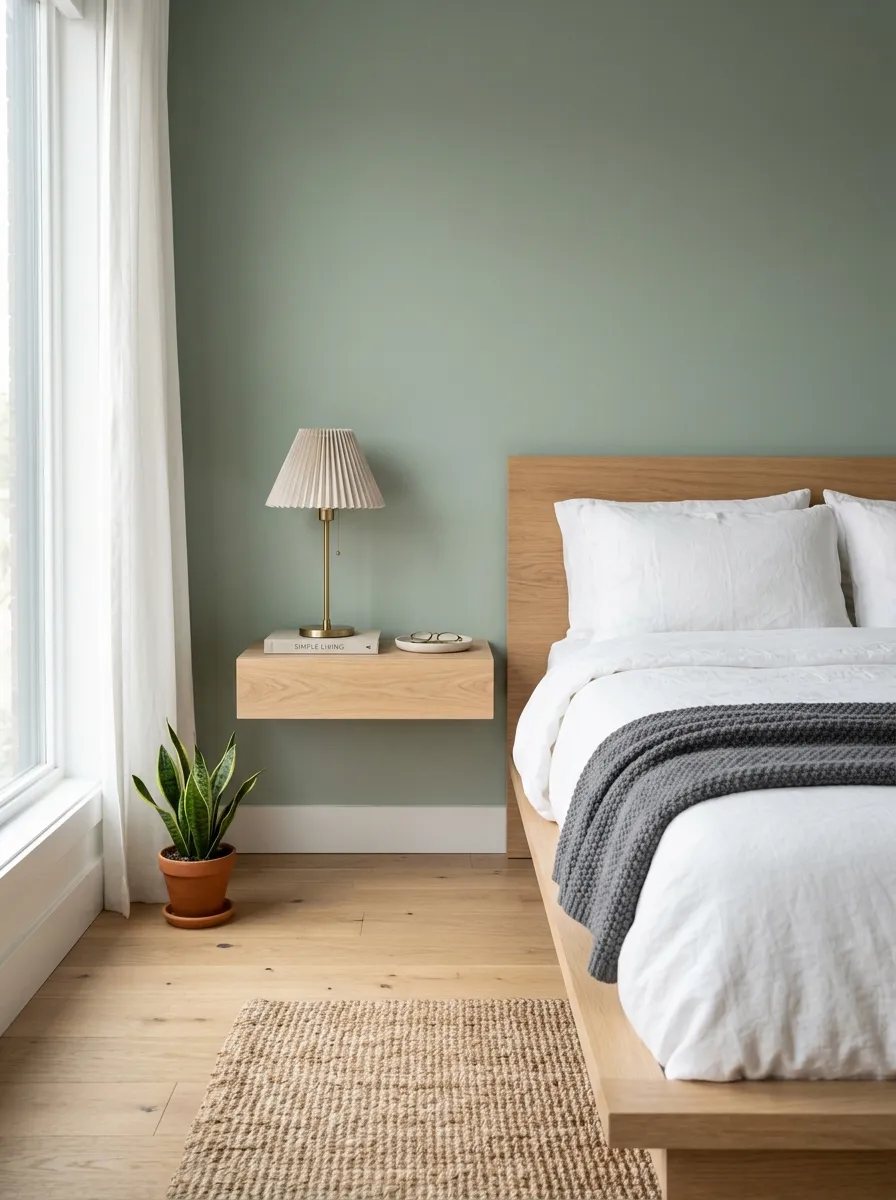
Your bedside table doesn’t need to sit on the floor.
A wall-mounted shelf can hold the essentials you actually use at night: your phone, a small lamp, glasses, and a book.
Keep the shelf visually light. The goal isn’t to create another storage display beside the bed. It’s to remove one bulky object from the floor.
Set it up in this order:
- Put the lamp closest to the bed.
- Keep your phone charger nearby.
- Leave the remaining space open.
That small change gives you back floor space without sacrificing convenience.
- Light: keep a small lamp within reach.
- Charge: route the cable neatly along the wall.
- Read: leave room for one current book.
Create a Work Zone Without Adding Another Room
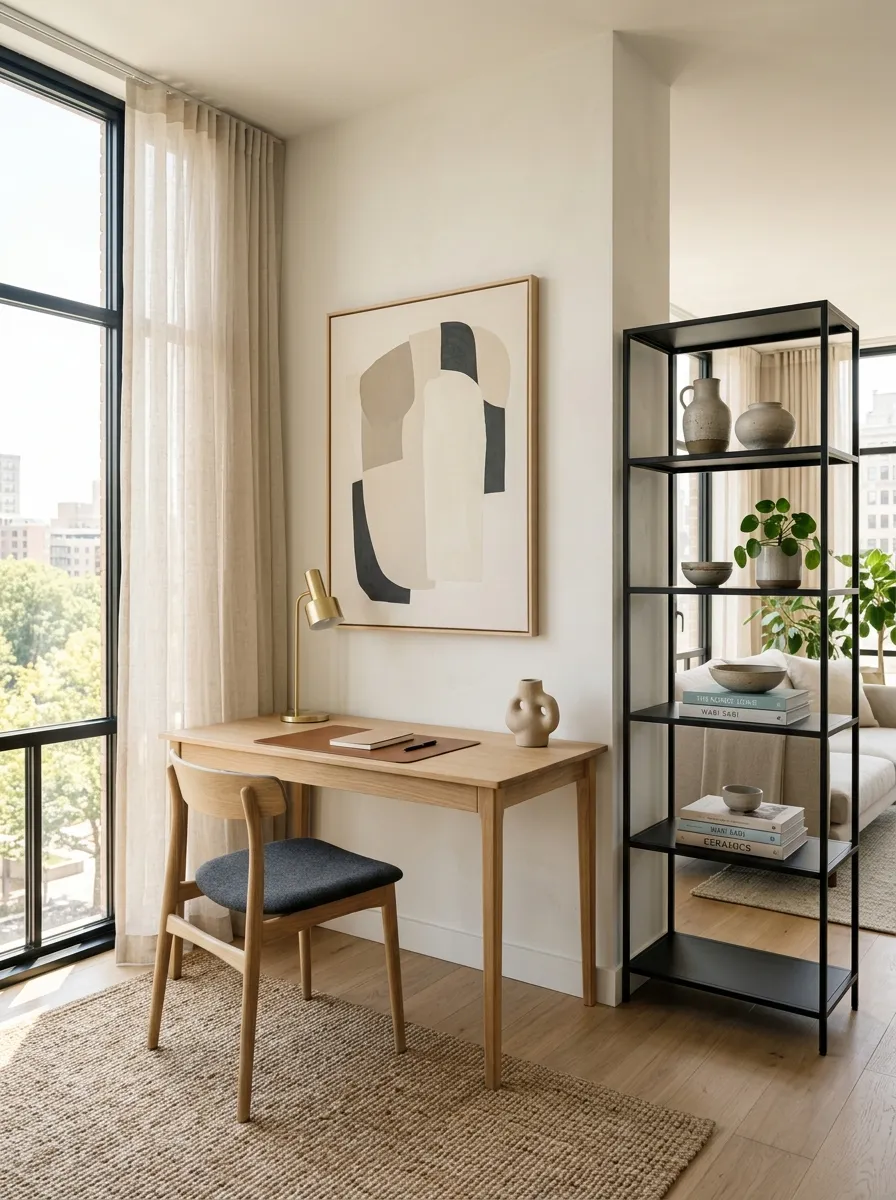
Your desk doesn’t need its own room to feel like a workspace.
Place it where the natural light is useful, then visually separate it from the living area with a rug edge, shelf, artwork, or even a change in wall treatment.
Keep the desktop disciplined. A studio desk covered with supplies quickly becomes part of the room’s visual clutter.
Use One Large Mirror Instead of Several Small Ones
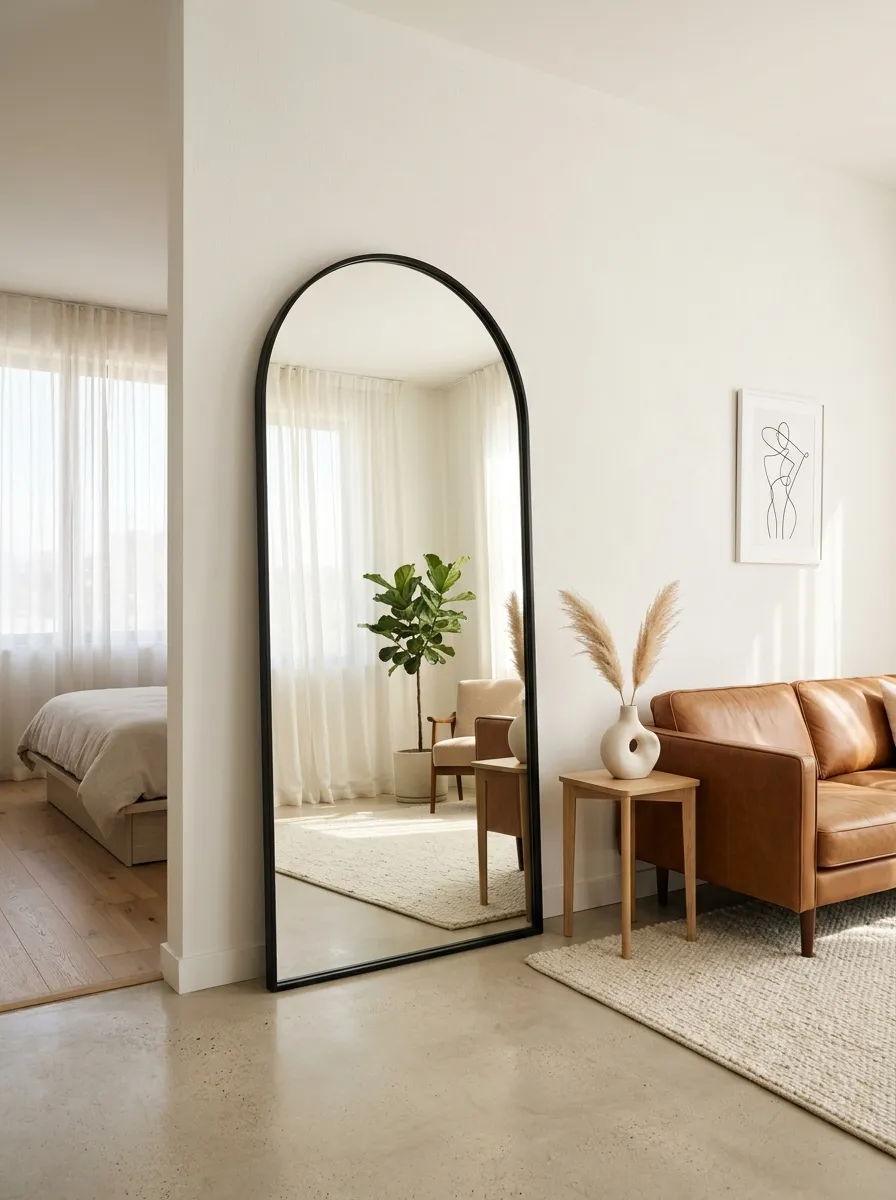
A studio doesn’t need a collection of little mirrors scattered across the walls.
One substantial mirror creates a cleaner sightline and gives the room a stronger reflective surface. Place it where it can catch daylight or reflect an attractive part of the apartment, not a pile of laundry or an overcrowded shelf.
A full-length mirror beside the entry is especially useful because it handles two jobs without demanding much floor space.
Best placement: opposite or beside a light source, with enough surrounding wall space that it doesn’t look squeezed between furniture.
Let the Bed Double as a Sofa During the Day
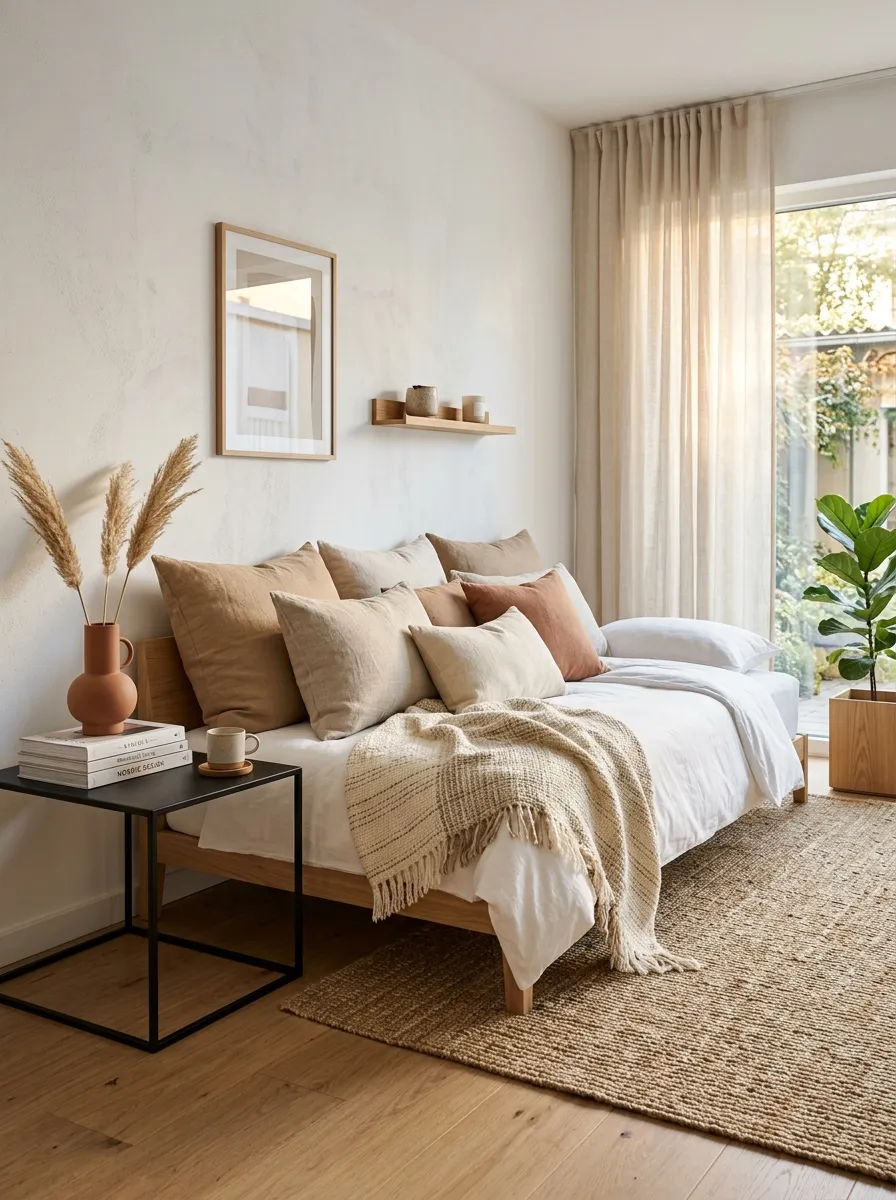
If your bed takes up a large part of the studio, stop treating it as a piece of furniture that only works for sleeping.
Style it like a daybed. Use large pillows against the wall or headboard, keep the bedding neatly layered, and place a small side table nearby.
This works particularly well when your studio doesn’t have enough room for a full sofa and bed.
During the day: pillows forward, bedding tucked away, surface clear.
At night: remove the decorative pillows and let the bed return to its main job.
Arrange pillows upright and keep the surrounding surface tidy.
Clear the decorative pieces and return the bed to sleeping mode.
Mount the TV to Free Up Floor Space
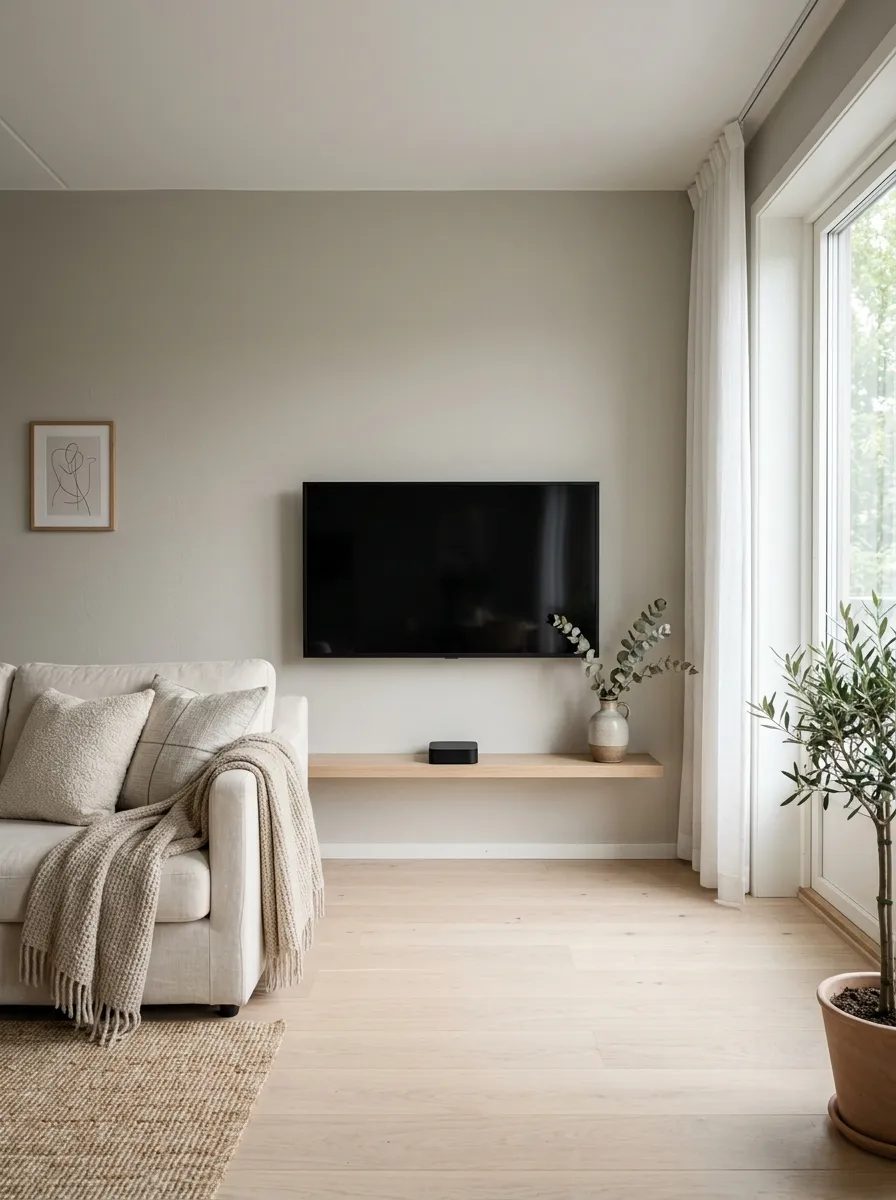
A media console can be useful, but it can also become one more bulky rectangle competing for attention.
If your wall allows it, mount the TV and use a narrow floating shelf underneath for only the equipment you actually need.
That leaves more visible floor underneath and makes cleaning easier too.
Quick check before mounting:
- Confirm the wall can support the mount.
- Hide or neatly route the cables.
- Keep the screen at a comfortable viewing height.
- Don’t fill the entire wall with extra decor.
The television should serve the room, not become the room’s largest display.
Use Matching Storage Bins to Calm Open Shelving
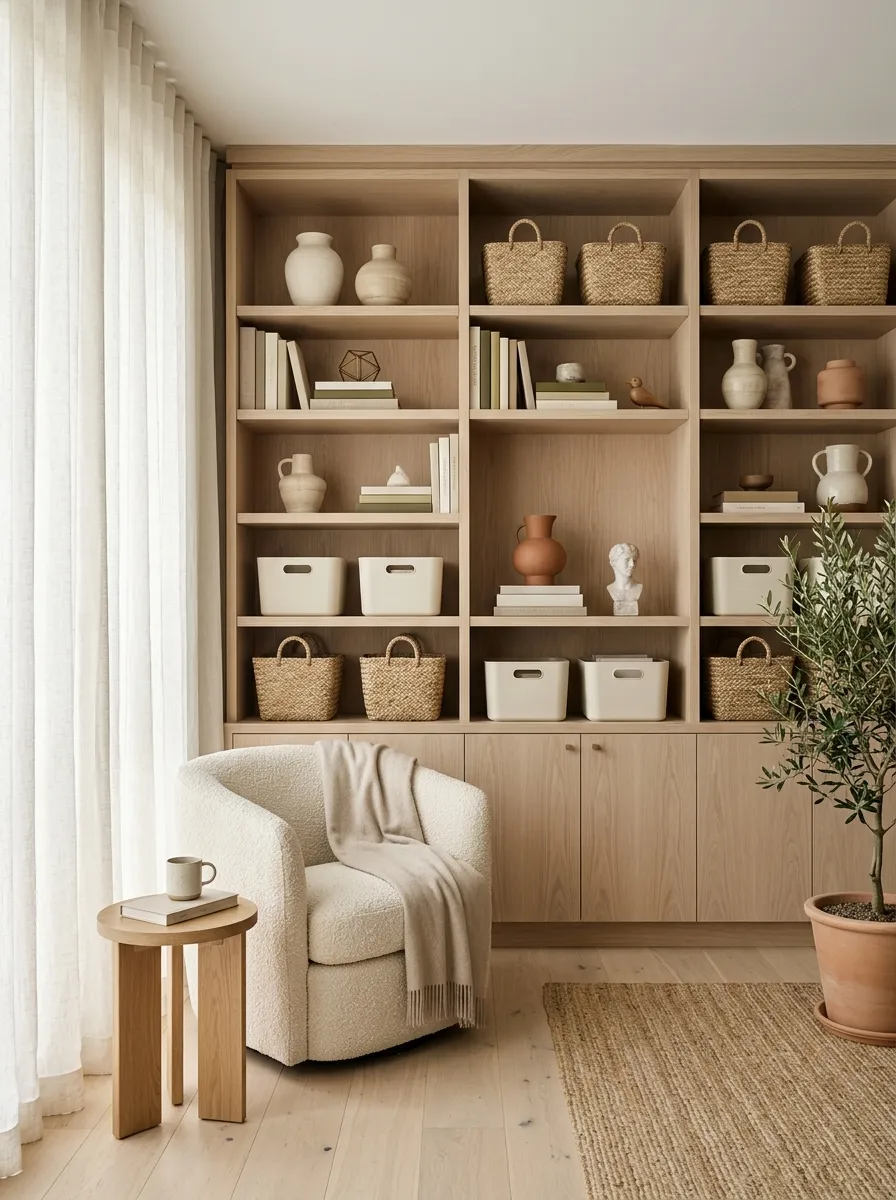
Open shelving can look organized one day and chaotic the next.
The easiest fix is to group small, unrelated objects into matching containers. You don’t need every shelf to look identical. You just need the loose visual noise contained.
Use baskets or bins for cables, cleaning supplies, extra linens, accessories, or anything else that doesn’t deserve to be on display.
A simple shelf rule:
- Display a few useful objects.
- Contain the small stuff.
- Leave breathing room between groups.
The result feels calmer without requiring you to hide everything.
Useful or attractive pieces
Small loose objects
Empty space between groups
Build a Mini Entryway Beside the Door
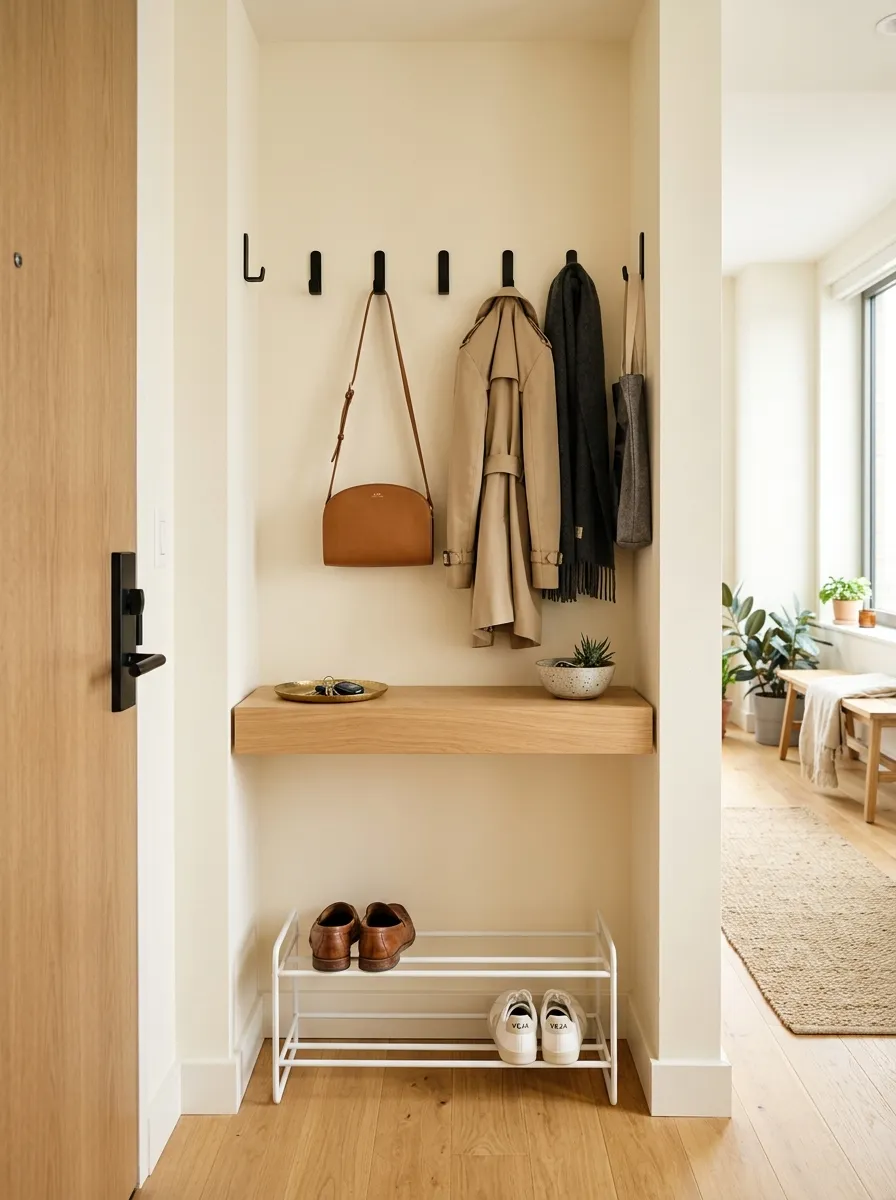
A studio doesn’t need a dedicated foyer.
You only need a small landing zone that tells your shoes, keys, coat, and bag where they belong. A narrow wall shelf, a few hooks, and a small shoe solution can handle the job.
Keep everything close to the door. Don’t make yourself walk across the apartment to put away the things you carry in every day.
Bag and jacket
Keys and small items
Daily footwear
Use a Ceiling-Height Curtain Rod to Stretch the Room
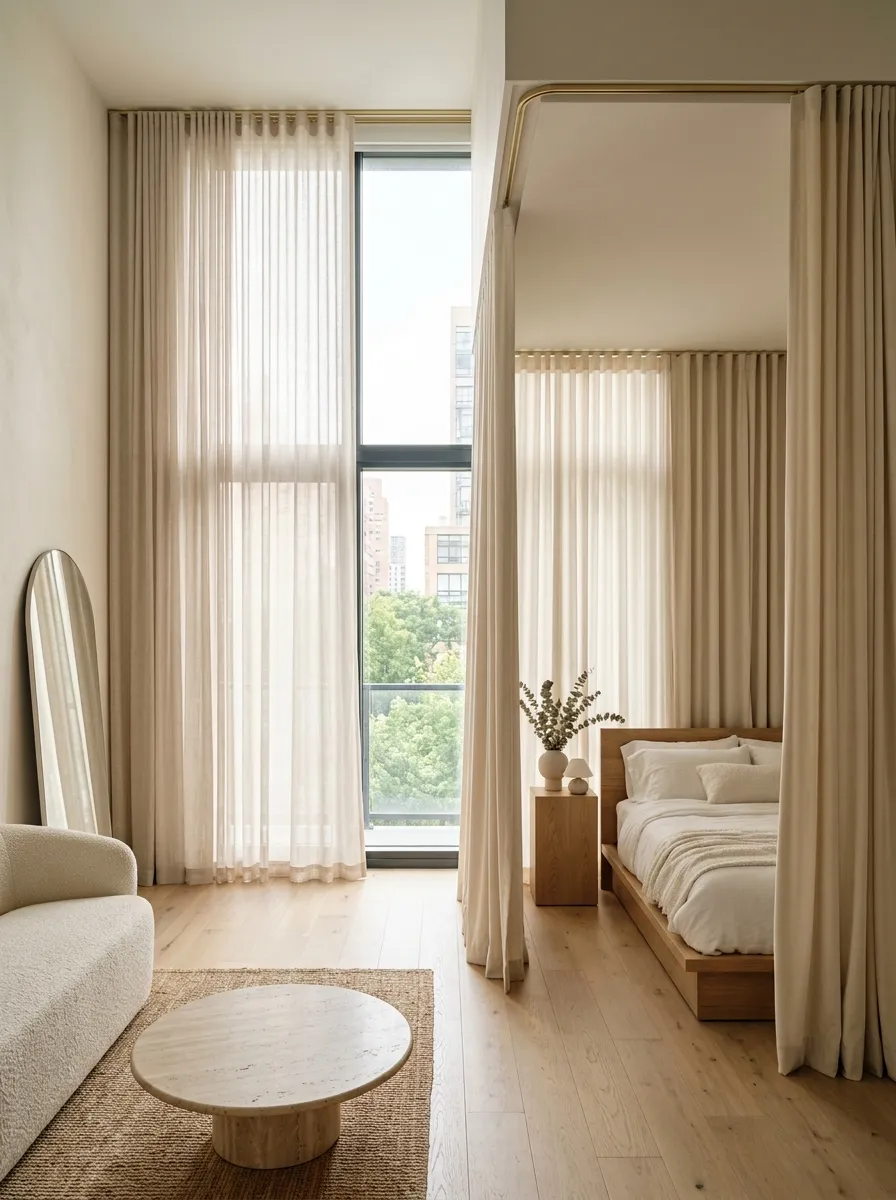
Mounting curtains just above the window can make the wall feel shorter than it is.
Run the rod closer to the ceiling and let the fabric fall toward the floor. The longer vertical line draws the eye upward and gives the room a more finished proportion.
This trick also works around a bed when you’re using curtains as a soft divider.
Placement rules:
- Keep the rod wider than the window.
- Let the fabric fall cleanly.
- Avoid bulky curtain hardware.
- Choose a simple fabric if the room already has several patterns.
Choose Furniture With Visible Legs
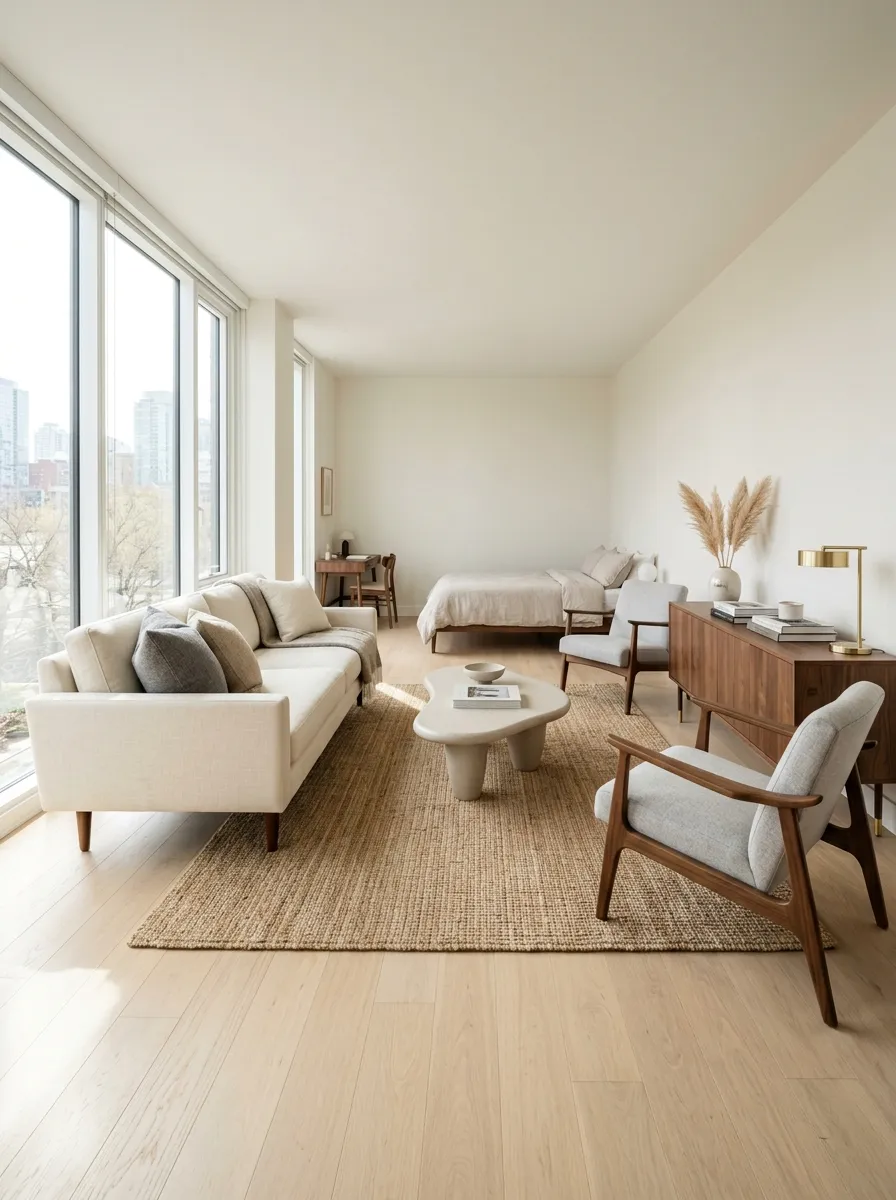
Heavy furniture that sits directly on the floor creates a solid visual block.
Pieces with visible legs let you see more floor underneath. That small gap matters in a compact room because it keeps the furniture from looking like one continuous mass.
Look for sofas, chairs, beds, and cabinets with some visual lift.
You don’t need every piece to have skinny legs. Just avoid making every major item a floor-to-ceiling block.
More visible floor underneath and a lighter visual footprint.
Stronger visual weight and less visible floor beneath.
Create a Breakfast Spot Instead of a Full Dining Area
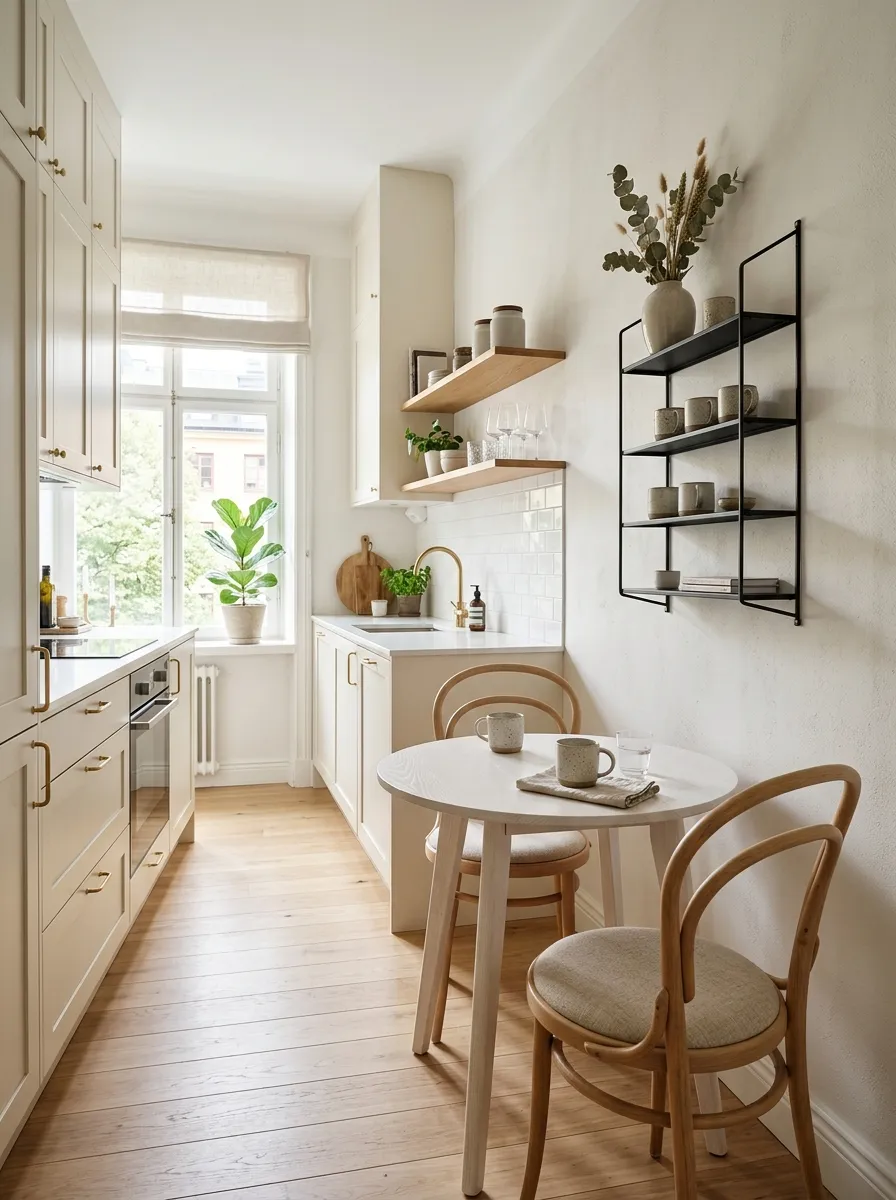
You don’t need a formal dining table if you usually eat alone or with one other person.
A narrow counter, wall-mounted drop-leaf table, or compact café table can give you a dedicated place to eat without consuming the center of the studio.
Keep the setup close to the kitchen when possible. That cuts down on unnecessary movement and keeps the dining function tied to the area that already supports it.
Good compact choices:
- Wall-mounted drop-leaf table
- Narrow two-person table
- Small round café table
- Counter-height ledge
- Drop-leaf table when flexibility matters.
- Round café table when circulation is tight.
- Wall ledge when floor space is extremely limited.
Use the Space Above the Kitchen Cabinets
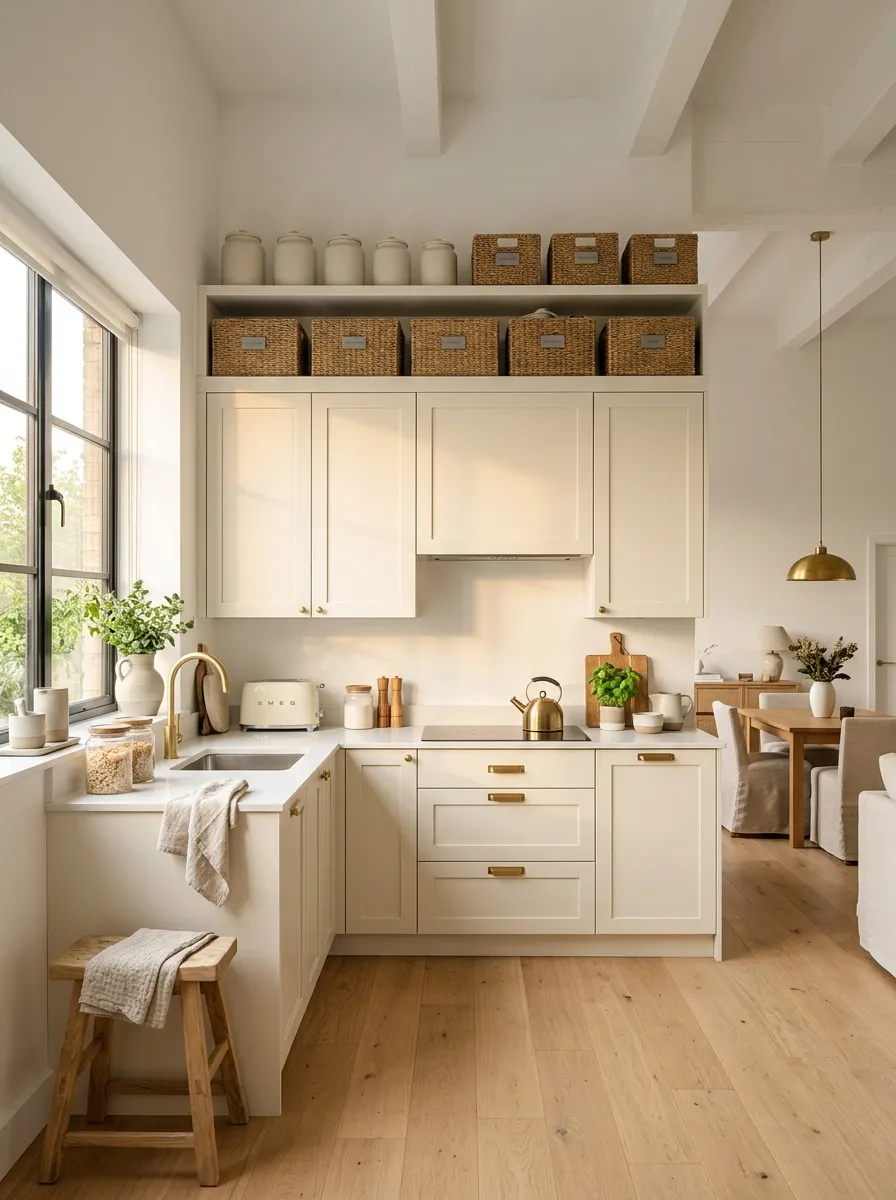
The area above kitchen cabinets often becomes a strange strip of unused space.
If yours is accessible and safe to use, treat it as storage for items you don’t need every day. Keep the area organized rather than turning it into a random collection of boxes.
Use matching containers when possible so the storage reads as one intentional group.
Seasonal cookware
Less-used appliances
Daily kitchen tools
Keep One Clear Walking Path Through the Studio
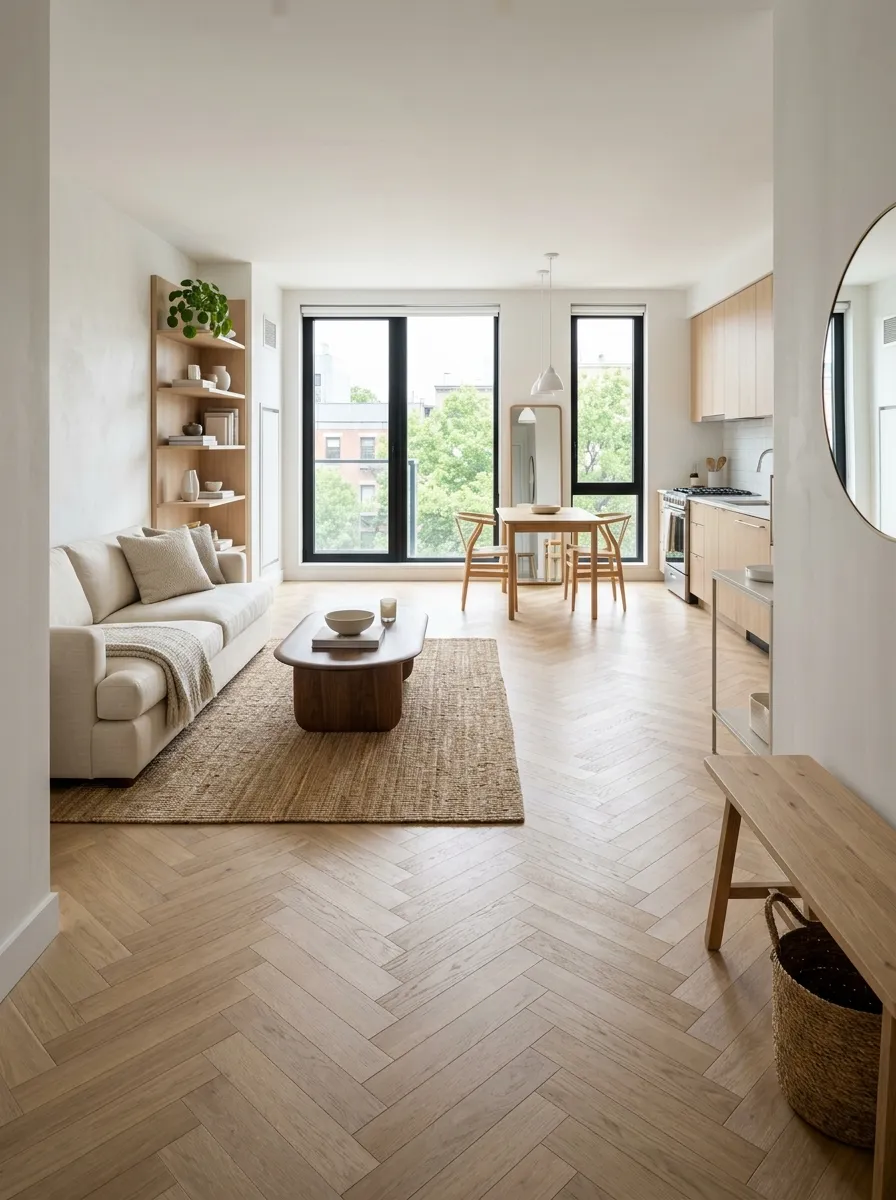
A studio doesn’t need every part of the floor to be open.
It needs one obvious route through the space.
Walk from the entrance to the kitchen, bathroom, bed, and main seating area. If a chair corner, basket, coffee table, or storage unit interrupts that route, move it.
Traffic-flow checklist:
- The entrance isn’t blocked.
- You can reach the kitchen without weaving around furniture.
- The bed doesn’t interrupt the main route.
- Chairs can be pulled out without blocking the walkway.
- Everyday storage isn’t sitting in the path.
A clean route makes the entire apartment feel easier to use.
- Start at the entry.
- Walk to every daily destination.
- Notice where your body turns sideways.
- Move the object causing the obstruction.
Use a Folding Screen Only Where You Need Privacy
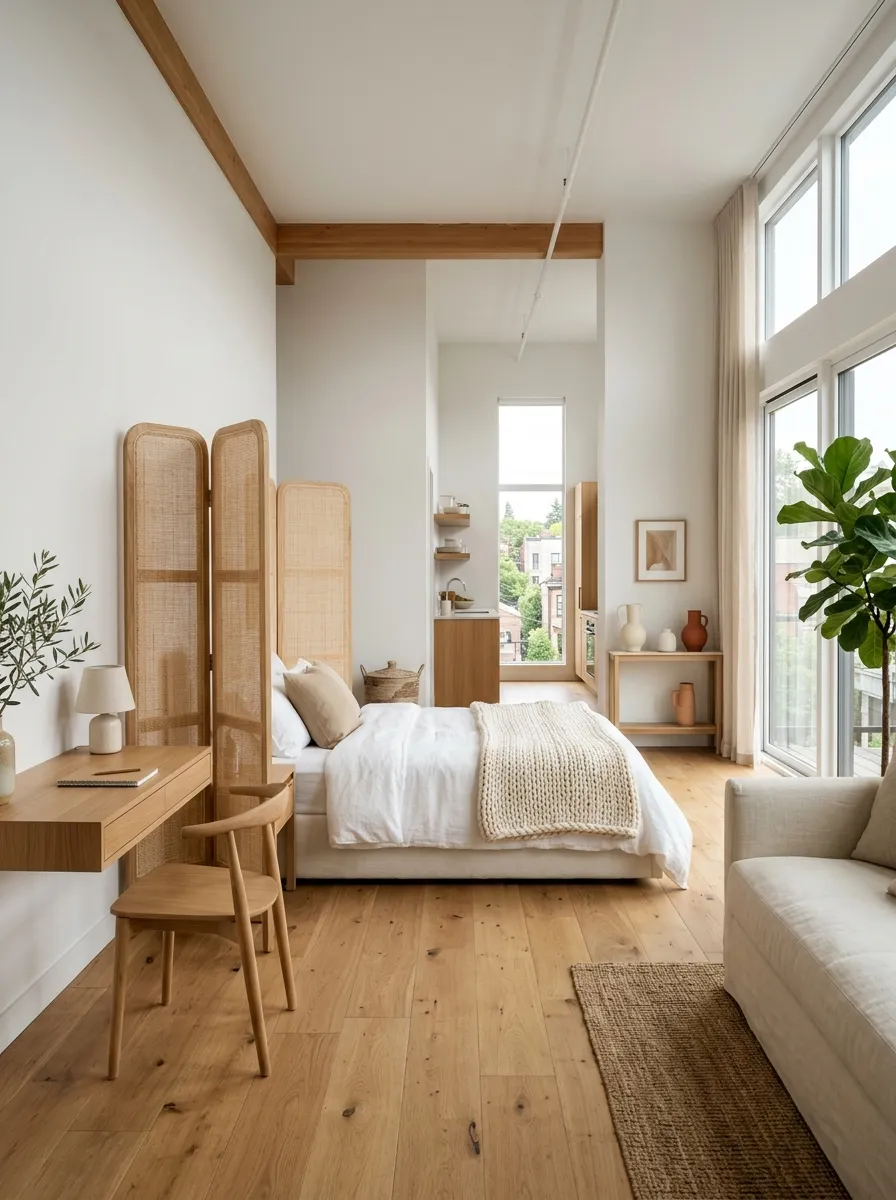
A folding screen can divide a studio without making the division permanent.
Use one beside the bed when you need a stronger sleeping zone, or place it between a workspace and the rest of the room when you’re finished working. Then fold it away when you want the studio to feel open again.
The mistake is using a screen simply because you have an empty corner. It should solve a real privacy or zoning problem.
Repeat One Accent Color Across Separate Zones
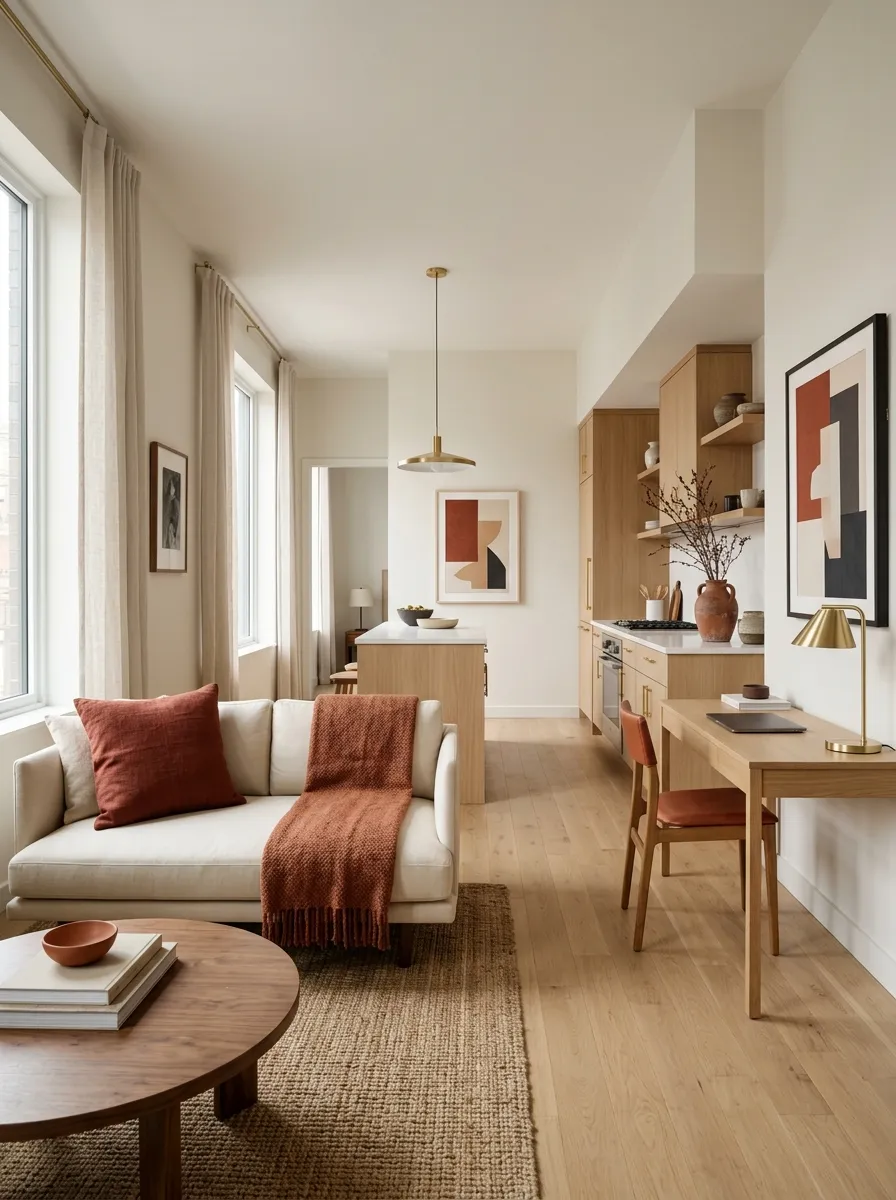
Your studio can have different functional areas without looking like several unrelated rooms.
The easiest way to connect them is to repeat one accent color in small doses. Use it in a cushion near the sofa, artwork beside the desk, a kitchen textile, or a small bedroom detail.
Don’t use the color everywhere. That’s how an accent becomes the entire room.
A better rule: repeat the same color in a few different materials.
- Fabric
- Artwork
- Ceramic
- Small storage piece
The repetition creates continuity while the different textures keep the room from looking overly matched.
Cushion
Artwork
Ceramic
Swap Floor Lamps for Wall-Mounted Lighting
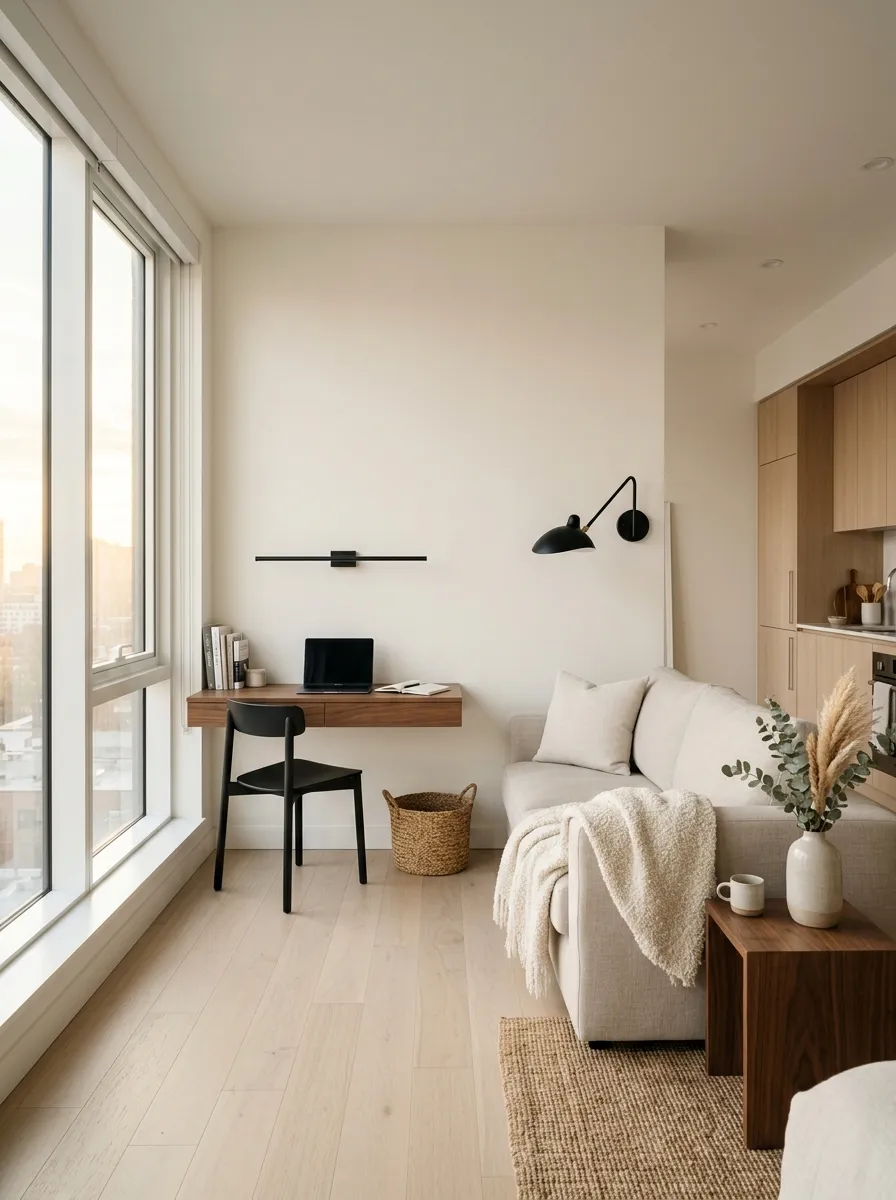
Floor lamps are useful, but they claim some of the most valuable real estate in a studio.
If you’re short on floor space, move lighting upward. A wall-mounted sconce beside the bed, a reading light near the sofa, or a mounted fixture above a desk can provide the same function without another object standing on the floor.
This is especially useful beside furniture where a lamp would otherwise create a narrow obstacle.
Lighting checklist
- Mount beside the bed instead of using a nightstand lamp.
- Light the desk without placing another item on the floor.
- Use a reading light near the sofa.
- Keep cords routed neatly along the wall.
The less furniture competing with the walking path, the better.
Wall sconce or mounted reading light
Mounted task lighting
Wall-mounted reading light
Use an Ottoman That Stores Blankets and Extra Linens
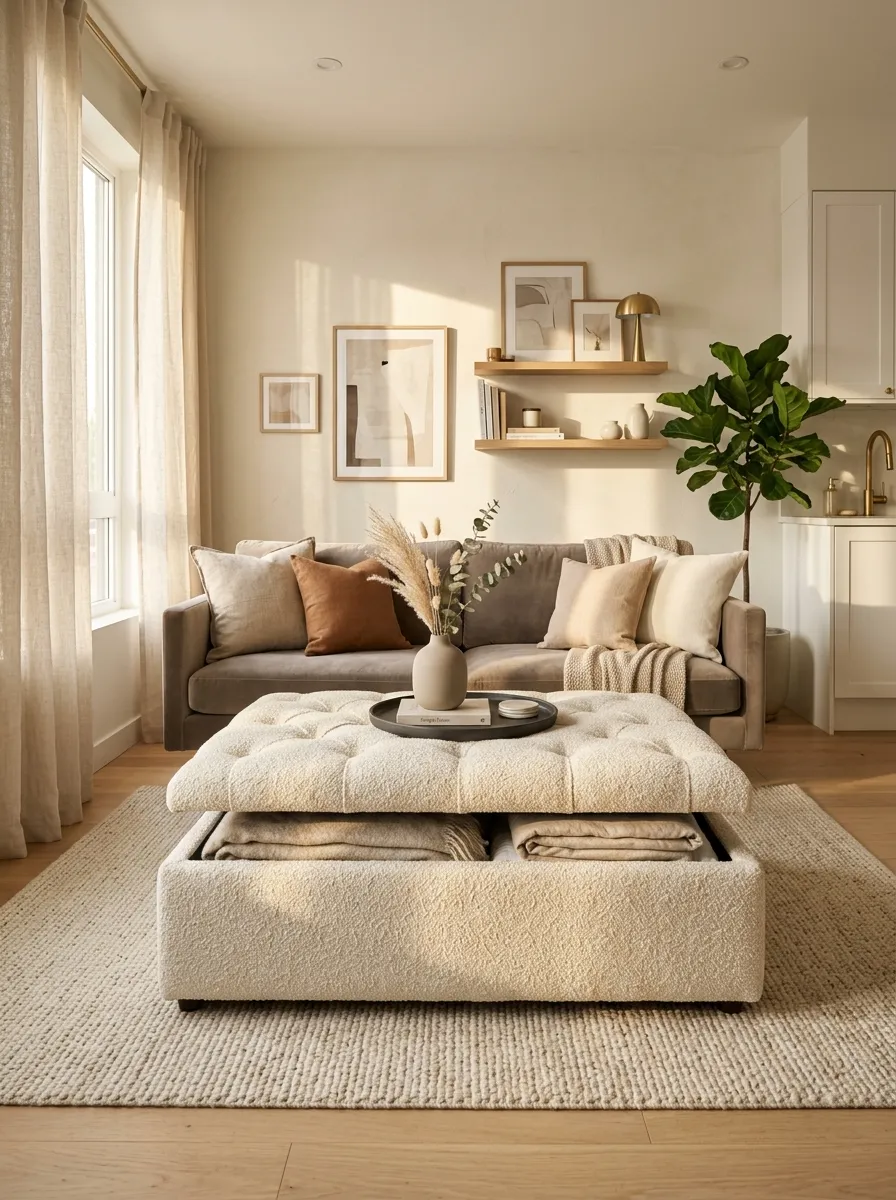
A storage ottoman earns its place because it does two jobs.
Use it as extra seating, a footrest, or a small surface when needed, then open it for blankets, spare bedding, pillows, or other bulky soft goods.
Put it at the end of the bed or in front of the sofa where it already belongs functionally.
The trick is resisting the urge to fill it with random stuff. Give the storage one category so you don’t have to dig through it every time you need something.
Extra spot
Feet up
Soft goods
Keep the Largest Furniture Pieces Visually Quiet
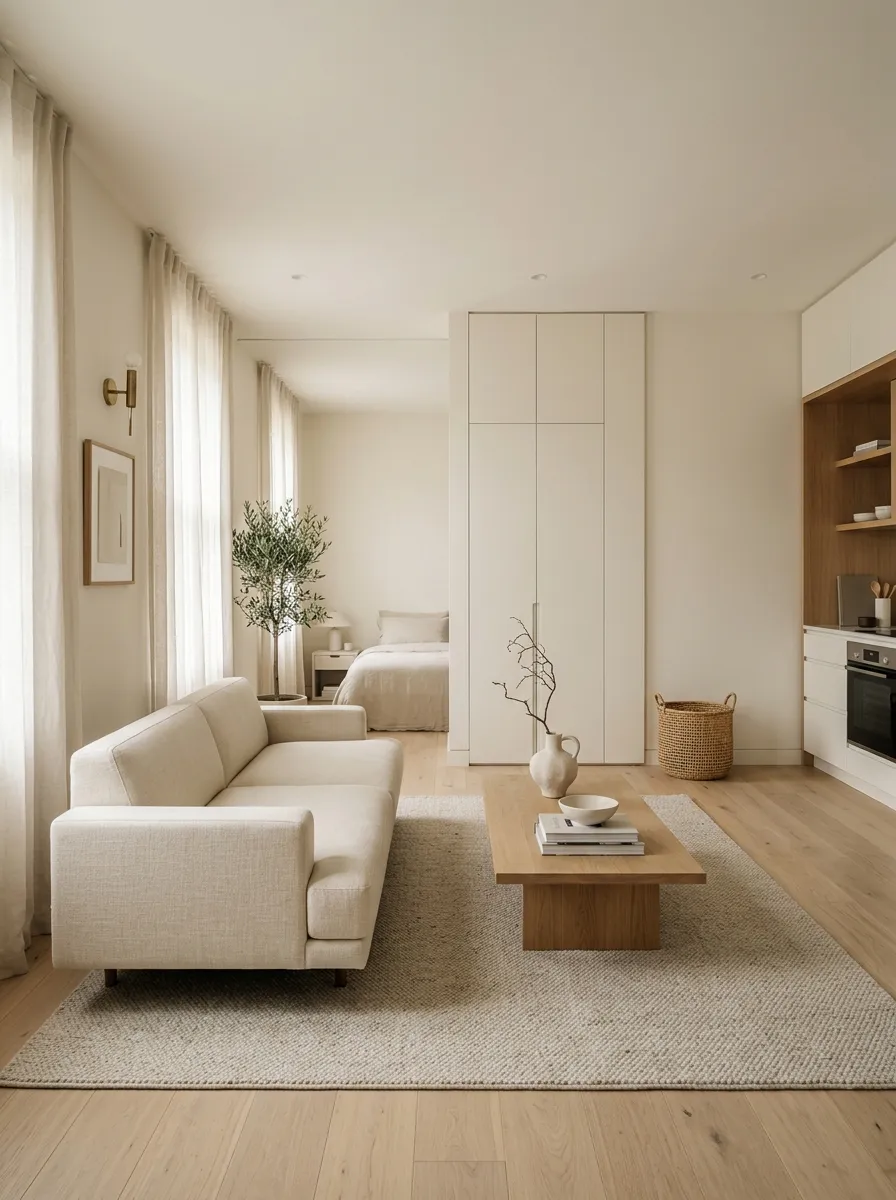
Your largest furniture pieces should support the room, not demand all the attention.
A bulky patterned sofa, oversized bed frame, and dramatic storage cabinet can make a studio feel visually packed before you add a single decoration.
Keep the biggest pieces relatively calm in shape and color. Save stronger patterns and unusual details for smaller objects that are easier to move or replace.
Do:
- Choose simple silhouettes for major furniture.
- Keep large pieces in related tones.
- Add personality through smaller movable items.
Don’t:
- Give every major piece a different pattern.
- Mix several competing statement shapes.
- Fill every visible surface.
A quiet foundation gives you room to change the smaller details without rebuilding the entire apartment.
- Simple silhouettes
- Quiet larger surfaces
- Personality in small pieces
- Pattern every large item
- Stack statement pieces
- Decorate every surface
Finish With One Intentional Focal Point
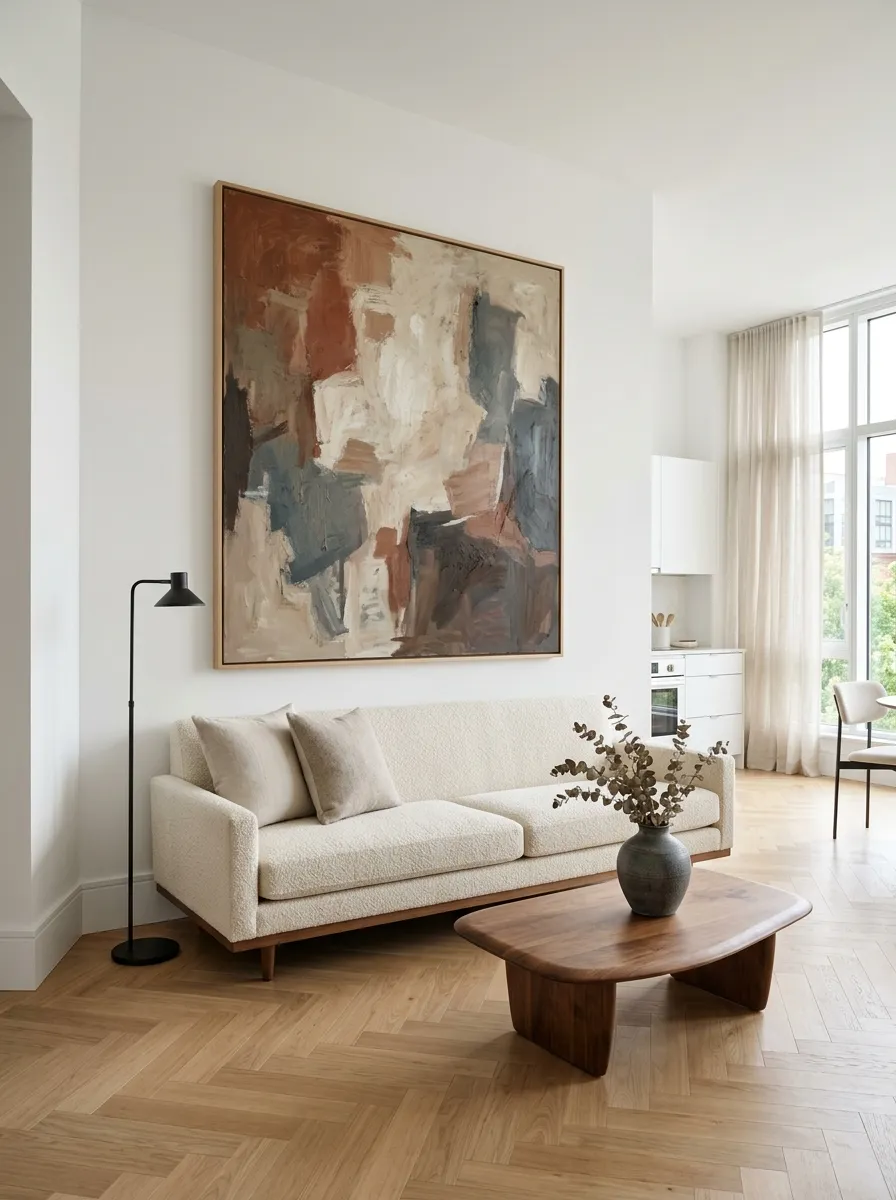
The final mistake is trying to make every corner interesting.
A studio looks more sophisticated when one area gets the strongest visual attention and everything around it supports that decision.
Choose one focal point. It could be a large piece of artwork, a striking headboard, a beautiful sofa, an interesting light fixture, or a well-styled wall.
Then quiet the surrounding areas.
One feature that deserves attention.
Keep nearby pieces visually calm.
Don’t keep adding competing decor.
The Best Studio Apartment Ideas Solve More Than One Problem
A studio doesn’t need more stuff. It needs fewer pieces doing only one job.
The strongest changes in this list work because they pull double duty. A sofa creates a living zone. An ottoman adds seating and storage. A wall shelf replaces a nightstand. Curtains create privacy without permanently dividing the room.
Start with the problem that’s bothering you most. If the apartment feels cluttered, fix storage and walking paths first. If the layout feels awkward, create stronger zones. If the room feels visually flat, work on lighting, mirrors, and one clear focal point.
Don’t try to change everything in one weekend. Move the furniture first. Live with the new layout. Then add the pieces that genuinely solve what’s still missing.
The right studio apartment ideas won’t make your home look like a showroom. They’ll make it easier to live in.