
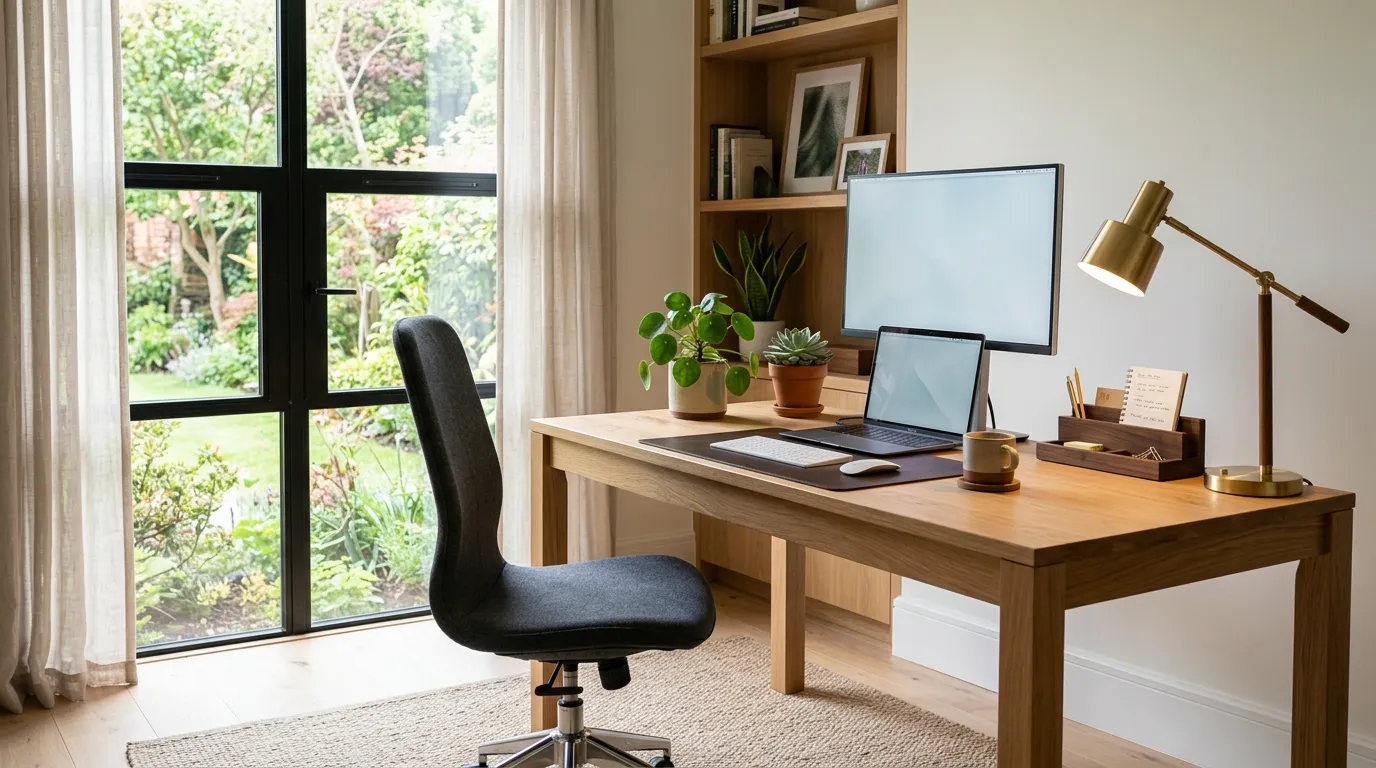
Most home office inspiration targets a fantasy version of remote work. You see a tiny acrylic desk tucked under a staircase, a spindly velvet chair, and a single pink peony in a vase. That setup lasts exactly twenty minutes before your back aches and your laptop overheats. If you spend eight hours a day managing projects, taking video calls, or building a business, you need a room that works as hard as you do.
Scrolling for home office ideas for women usually traps you in a loop of aesthetics over function. A pretty space matters, but if you do not have ergonomic support or a place to hide the messy cables, the design fails.
Stop settling for dining chairs and makeshift desk setups. You need aggressive wire management, strategic lighting, and heavy duty storage disguised as high end furniture. Here is how you build a workspace that commands respect and prevents daily burnout.
Stop Designing “Cute” Desks That Hurt Your Back
The pink velvet chair mistake
Your spine doesn’t care about a tufted backrest. Swapping a proper task chair for a stylish dining chair guarantees posture issues within a month.
Those trendy barrel chairs push your shoulders forward and restrict your arms while typing. You end up hunched over the keyboard, fighting your own furniture.
Buy a chair engineered for human anatomy. Look for adjustable lumbar support and independent tilt tension. You don’t have to settle for ugly black mesh, but you absolutely must prioritize structural support over velvet upholstery.
Why your lighting makes you look tired on Zoom
Relying solely on overhead recessed lights casts harsh, downward shadows across your face. It highlights under eye bags and makes your forehead shine on camera.
Adding a cheap ring light directly in front of your face flattens your features and causes aggressive screen glare in your glasses.
You need diffused, directional light at eye level. A pair of shaded sconces or tall buffet lamps flanking your monitor bounces soft light against your face. You’ll instantly look rested, professional, and entirely in control during morning meetings.
The difference between storage and dumping grounds
Open shelving looks brilliant on a mood board until you actually have to work. The moment you stack a router, an ugly binder, and a handful of receipts on an open shelf, the entire room looks chaotic.
Visual clutter destroys focus. True storage hides the mess completely behind closed doors. Deep credenzas and heavy filing cabinets anchor the room while swallowing the ugly realities of modern work.
Keep only three deliberate objects visible on your desk. Put everything else behind a solid slab of wood.
Home Office Ideas for Women
Float the Monitor Off the Desk Surface
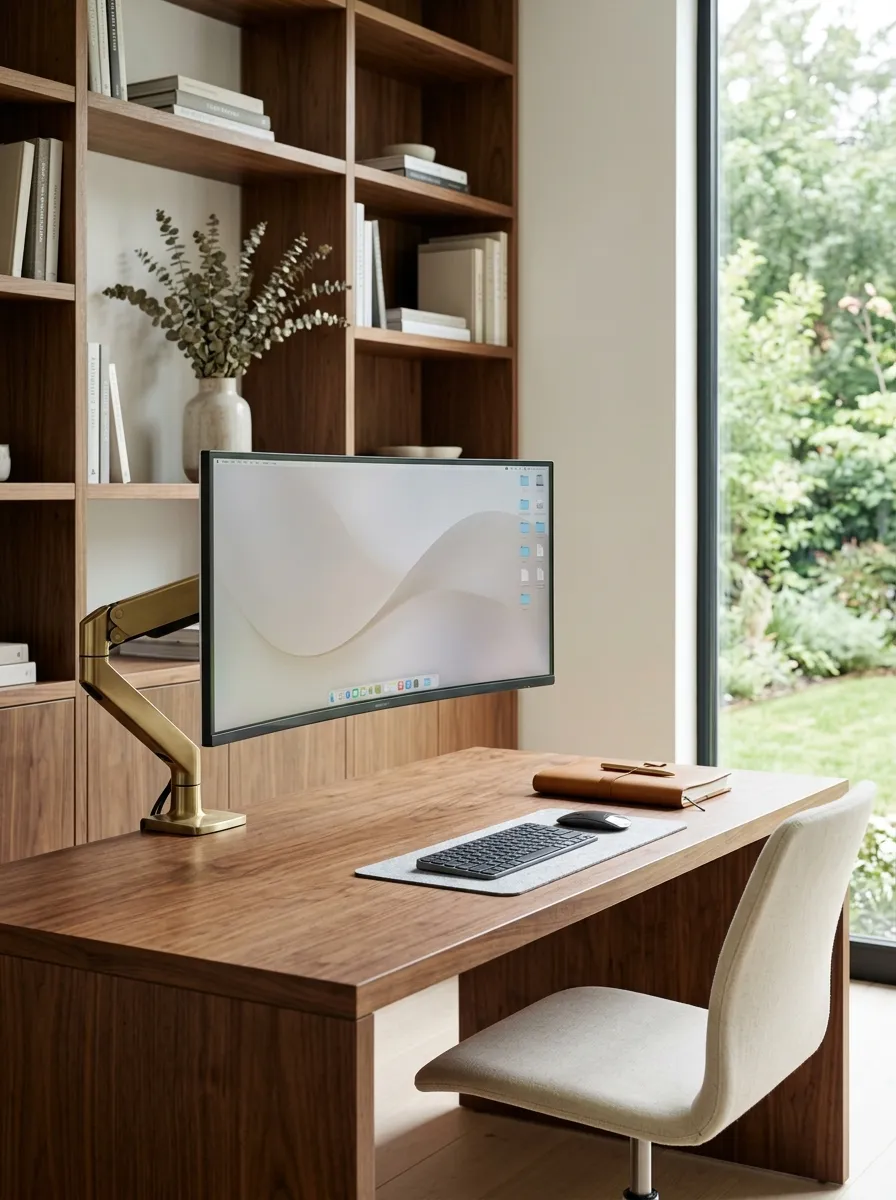
People leave their heavy monitors sitting on the factory stand, eating up exactly where your notebook needs to go. That original stand is bulky, ugly, and rarely adjusts high enough to prevent neck strain.
Clamp a heavy duty pneumatic monitor arm to the back edge of your desk. The screen hovers in the air, freeing up your entire work surface.
Follow these non negotiable screen rules:
- Top bezel sits exactly at eye level.
- Screen sits an arm’s length away.
- Cables route straight down the mechanical arm.
Ergonomic Target
Center your screen to prevent asymmetrical neck rotation. The desk surface directly below the glass should remain completely empty at all times.
Hide the Printer in a Faux Drawer Cabinet
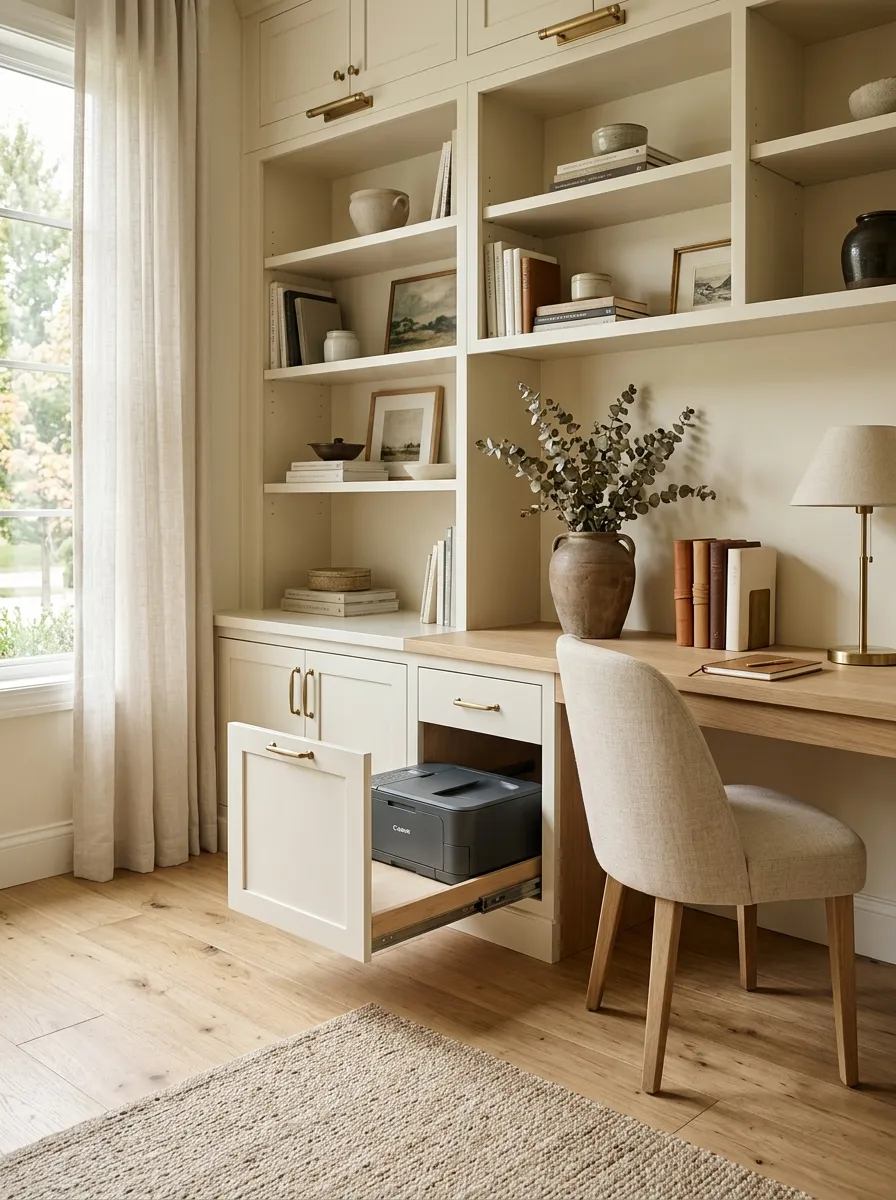
You instantly upgrade the professionalism of your office when you eliminate the sight of clunky plastic hardware.
Measure your exact printer with the paper tray fully extended before buying a cabinet. Most standard base cabinets require a pull out slider base to clear the door hinges.
A bulky wireless printer ruins the aesthetic of any premium workspace. Instead of leaving it out on a shelf, install it inside a base cabinet. Drill a two inch hole in the back of the cabinet for the power cord. Keep it loaded with paper and shut the door forever. It still connects to your wifi, but you never have to look at it again.
Mount a Hardwired Sconce for Video Calls
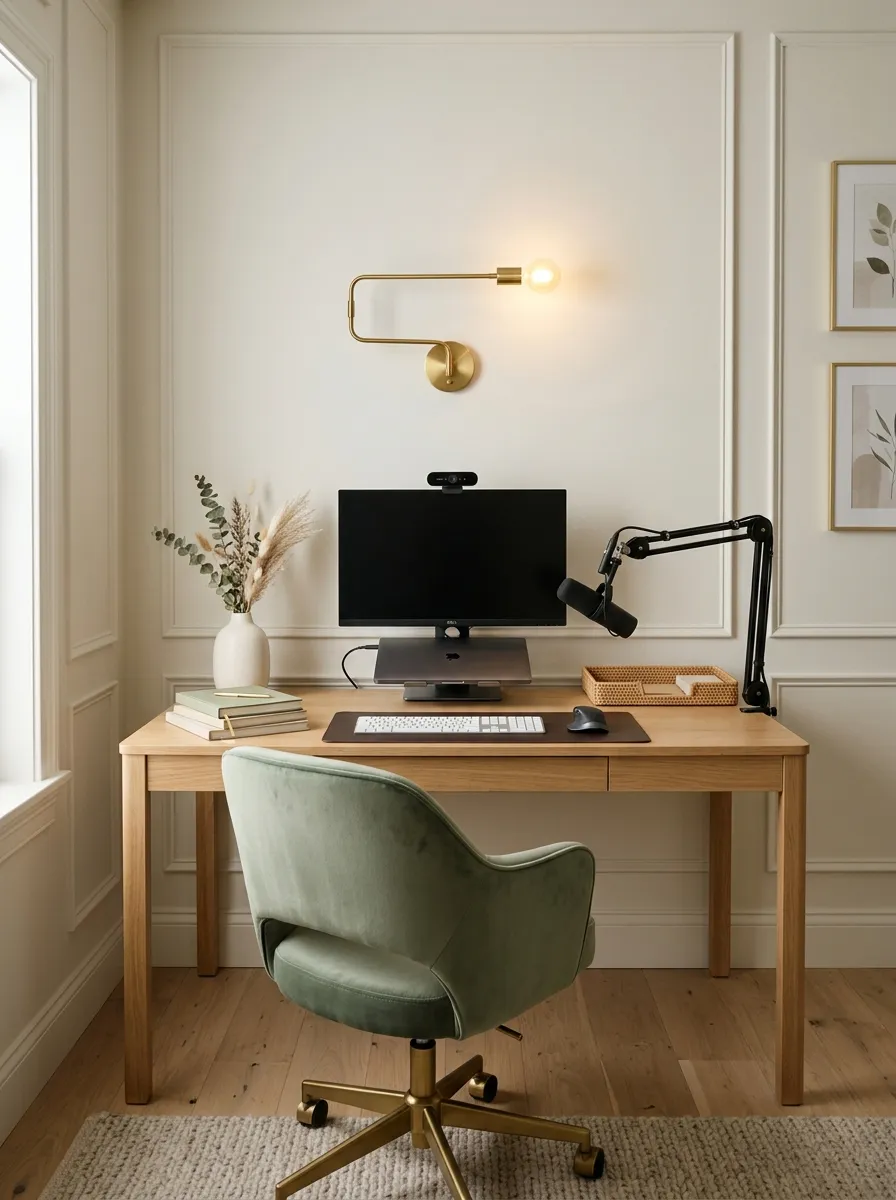
Relying on natural light works perfectly until a rainstorm rolls in right before your client presentation. Suddenly, you look like a shadow on screen. Desktop ring lights take up too much physical space and reflect poorly in your eyes.
- Install two brass sconces on the wall directly behind your monitor.
- Hardwire them to a dedicated dimmer switch at the door.
- Use frosted glass shades to diffuse the light evenly.
This setup acts as a permanent, high end studio lighting rig that requires absolutely zero desk space.
Aim for 2700K to 3000K LED bulbs. Anything cooler looks clinical, and anything warmer turns your skin orange on camera.
Ditch the Dining Chair for Real Ergonomics
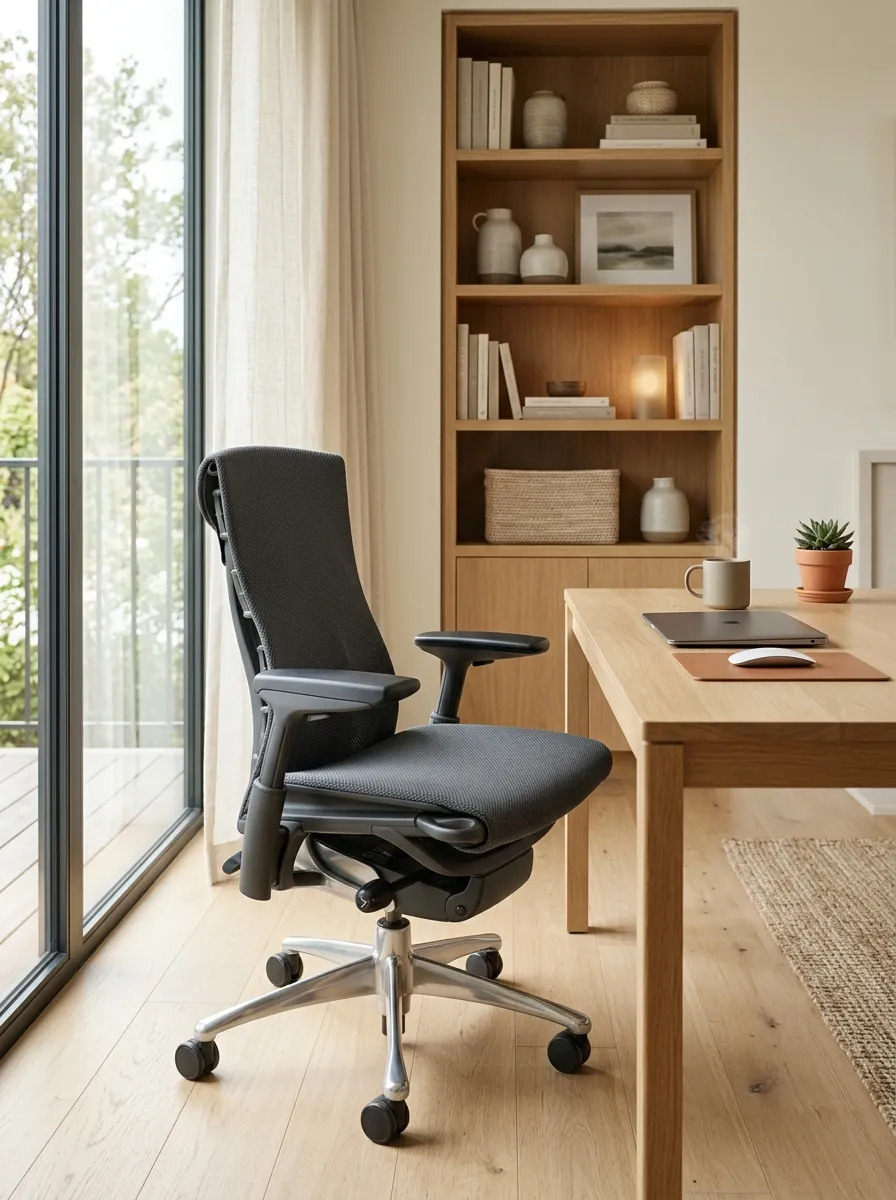
You sit down with your coffee at eight in the morning. By noon, your lower back tightens and your shoulders creep up toward your ears. That gorgeous velvet dining chair is slowly destroying your posture.
Task chairs are non negotiable for serious work. You need independent seat tilt and armrests that adjust in three dimensions. Stop compromising physical health for a styled aesthetic.
| Feature | Dining Chair | True Task Chair |
|---|---|---|
| Seat Pan | Fixed flat | Adjustable depth |
| Lumbar | None | Tension controlled |
| Armrests | Static or missing | 4D directional |
Build a Wall-to-Wall Base Credenza
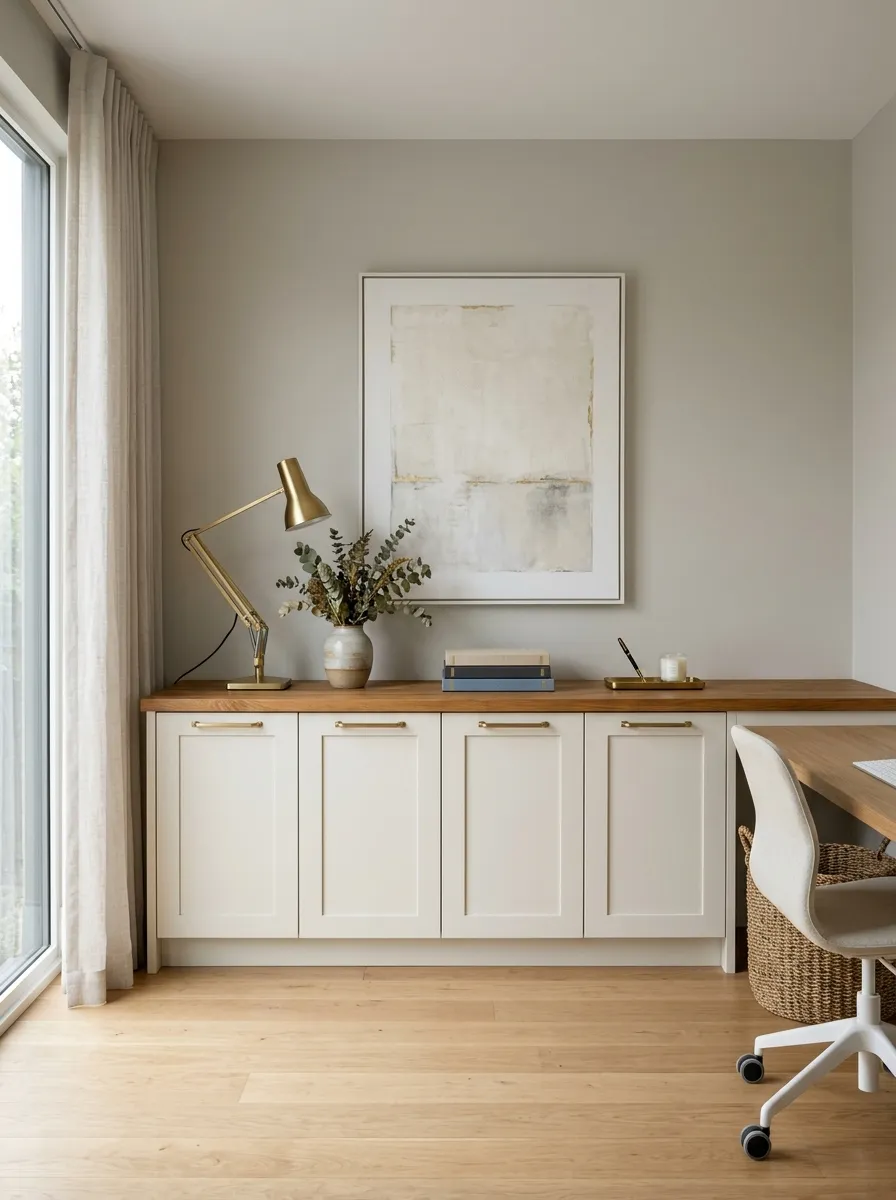
Anchor your office by running a massive row of identical cabinets across one entire wall. Do not buy a flimsy standalone bookshelf.
Buy standard kitchen base cabinets. Bolt them together, secure them to the wall studs, and drop a solid butcher block counter across the top. You instantly gain ten feet of invisible storage for heavy files, camera gear, and excess office supplies. The continuous horizontal line makes a small room feel significantly wider.
Standard kitchen base cabinets sit 24 inches deep and 34.5 inches high. This is the exact depth required to store bulky binders and desktop hardware completely out of sight.
Zone the Room with an Oversized Vintage Rug
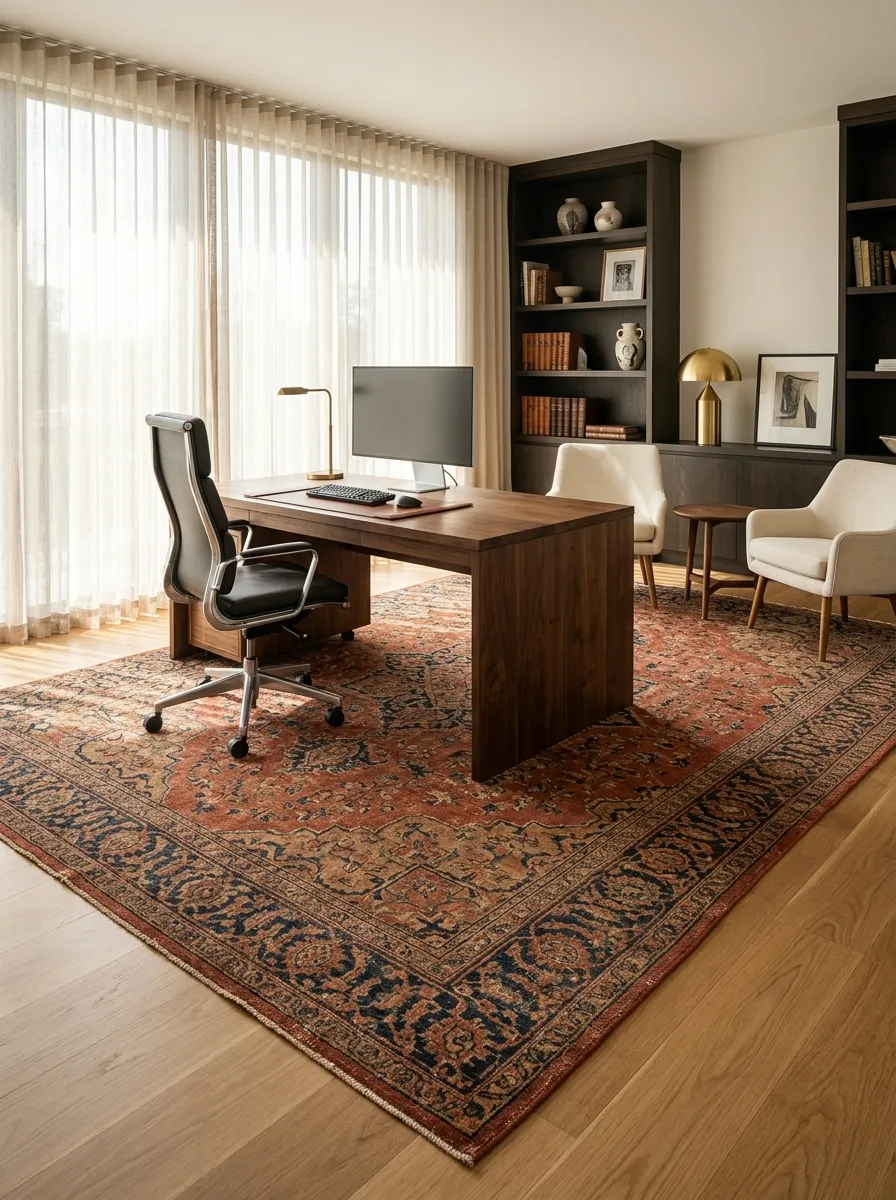
People buy small five-by-seven rugs for home offices, which ruins the entire floor plan. The moment you roll your chair backward, the back wheels drop off the edge of the rug and get stuck on the hardwood.
Buy an eight-by-ten or nine-by-twelve vintage wool rug instead. The desk and the full range of your chair’s movement must sit completely on the fabric. A large vintage pattern also hides inevitable coffee drips and wheel tracks better than a solid beige carpet ever could.
The Proper Rug Placement Setup
- Measure your desk’s total footprint.
- Add thirty-six inches to the back edge for chair roll back space.
- Ensure all four legs of your guest seating fit on the rug.
Stick Acoustic Panels Behind Your Canvas Art
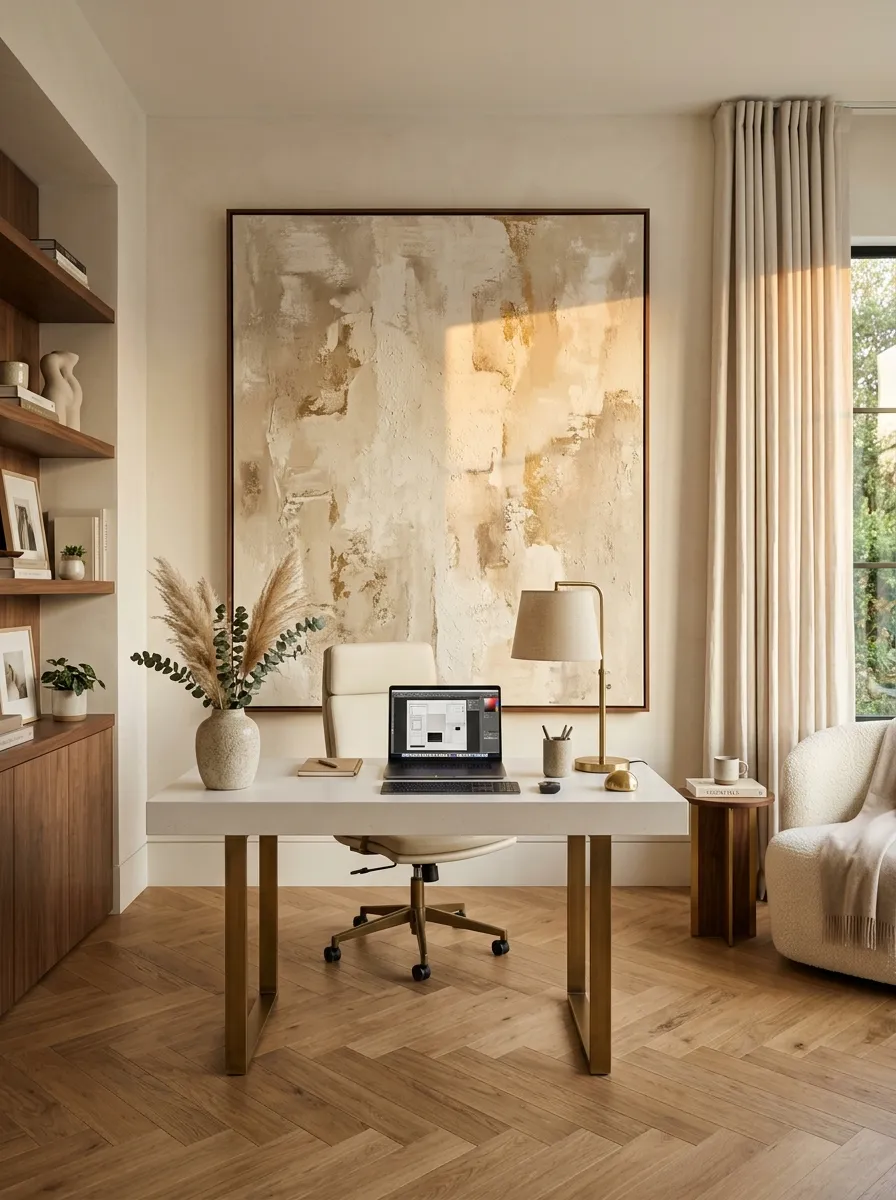
Buy a heavy canvas painting and mount commercial grade acoustic foam directly to the back of the wood frame.
Hardwood floors and blank drywall turn a home office into a literal echo chamber. When you take a client call, you sound like you are broadcasting from an empty hallway. Standard acoustic panels look like a recording studio, which instantly kills a high end aesthetic. Hiding the foam behind stretched canvas absorbs the sound bounce without ruining your walls.
Acoustic Hack
A two-inch thick panel of high-density acoustic foam tucked behind a heavy canvas cuts room echo by roughly forty percent.
Organize Cables with an Under-Desk Raceway
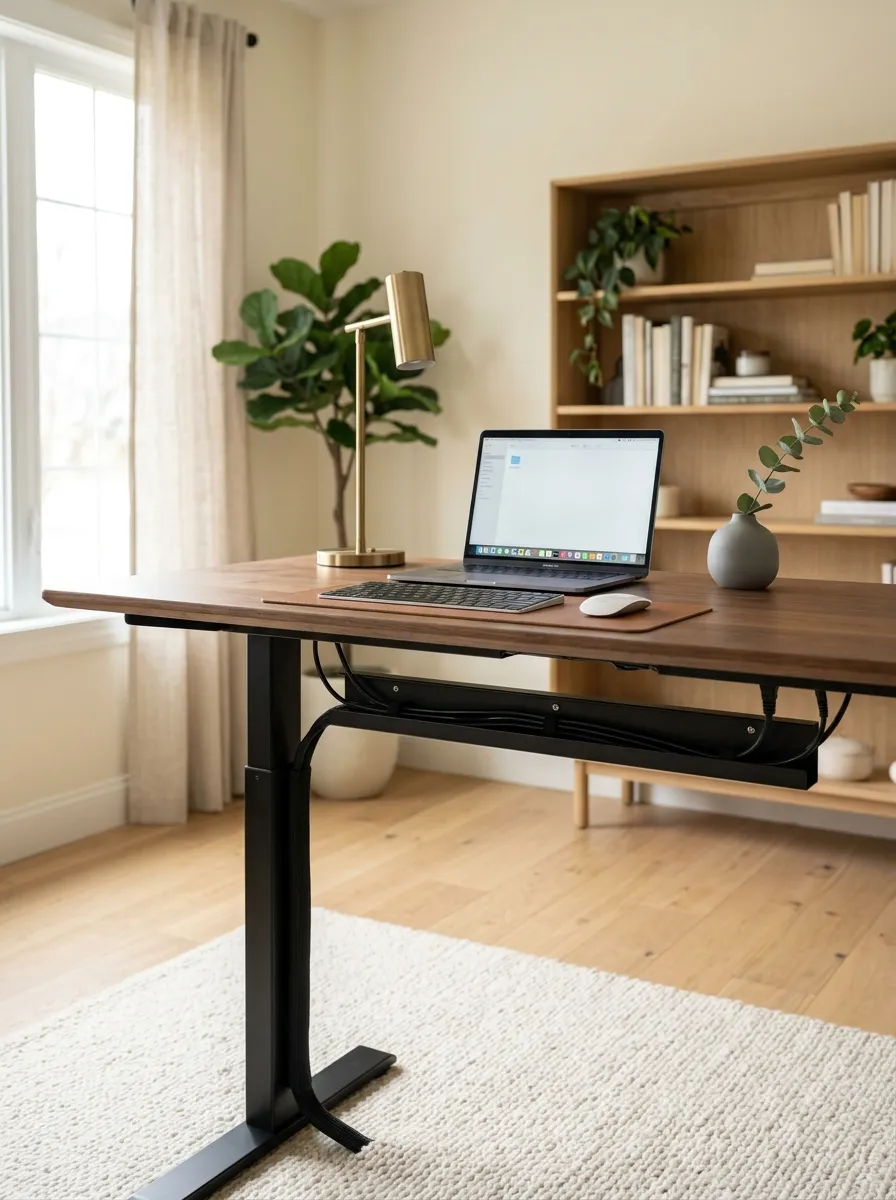
You kick a tangled mess of power cords every time you cross your legs under the desk. It looks terrible and creates a massive tripping hazard in your workspace.
Stop using zip ties and random pieces of tape to hold cables up. Screw a metal J-channel raceway directly into the underside of your desktop. Route your monitor, lamp, and laptop charger cables through the channel, and drop exactly one master power cord down the back leg of the desk.
Never use double-sided adhesive tape for under-desk cable trays. The heat from power bricks will melt the adhesive, causing the entire heavy rig to crash onto your feet mid-shift.
Add a Velvet Accent Sofa for Reading
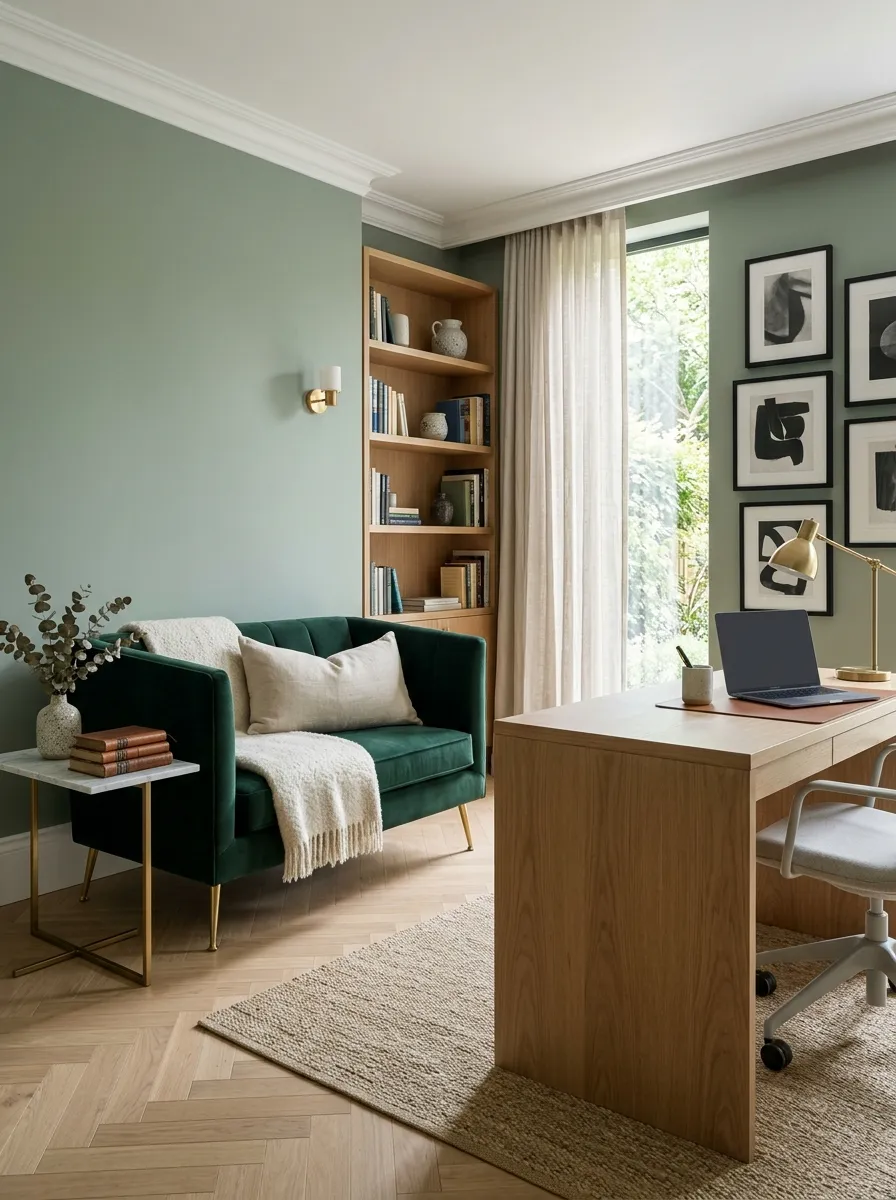
Getting away from your keyboard prevents afternoon brain fog. You need a dedicated spot to read briefs, review documents, or just take a five minute screen break without leaving the room entirely.
Squeeze a structured velvet loveseat or a deep accent chair into the corner. If you leave the office to sit on your living room couch, you’ll inevitably end up doing laundry or checking the fridge. Keep a secondary seating zone inside the office to protect your workflow.
Divide Shallow Drawers with Acrylic Trays
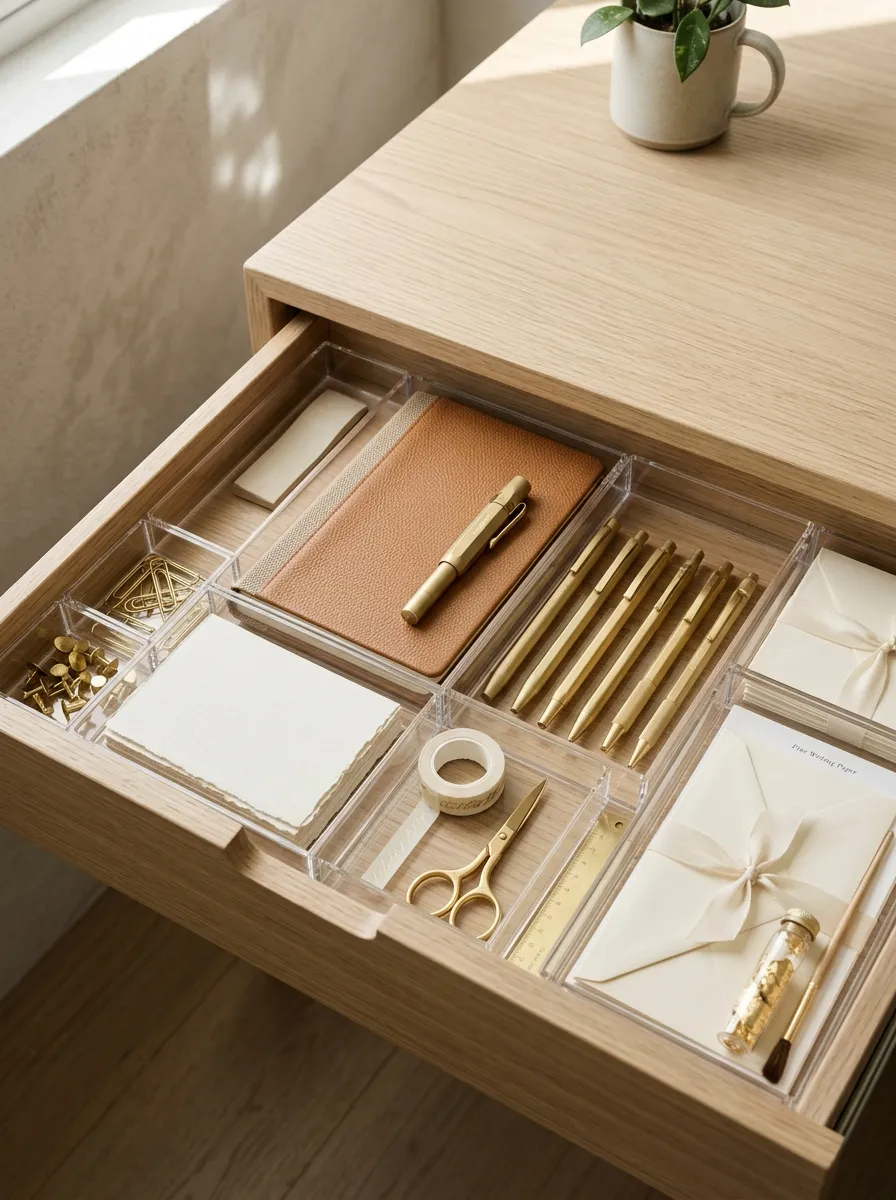
Never toss loose pens into an empty drawer. Without physical boundaries, every time you pull the drawer open, the contents slide to the back and create a junk pile.
Measure the exact interior dimensions of your shallowest desk drawer. Buy modular acrylic organizers that lock together and fill the entire space edge to edge. Assign exactly one item type to each tray. When everything has a rigid, designated slot, your desk stays clear automatically.
Drawer Organization Checklist
Paint the Ceiling a Grounding Mood Color
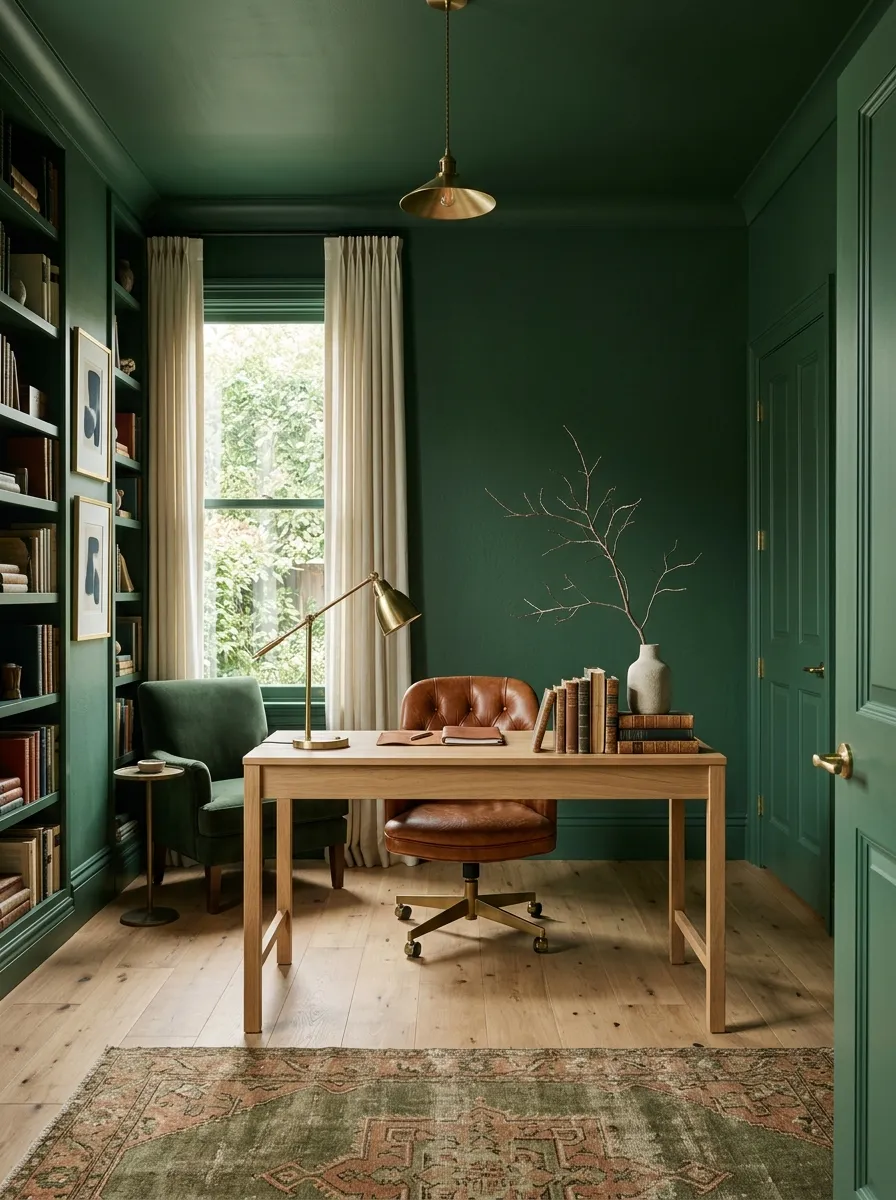
Painting a ceiling completely changes the scale of a small boxy room. Most builders leave office ceilings flat white, which automatically draws the eye up to dead space and makes the room feel unfinished.
Roll a rich, saturated color onto the ceiling instead. It lowers the visual height of the room, creating an intimate, focused environment. If you want a seamless, high end lacquer effect, carry that exact same color down the walls and across the baseboards. You’ll stop feeling like you are working in a spare bedroom and start feeling like you are sitting in a custom library.
Color Drenching
Applying the same deep tone to your walls, trim, doors, and ceiling erases visual boundaries. It makes a tiny ten-by-ten office feel incredibly expansive because your eye cannot register where the corners begin or end.
Frame a Massive Corkboard Like Fine Art
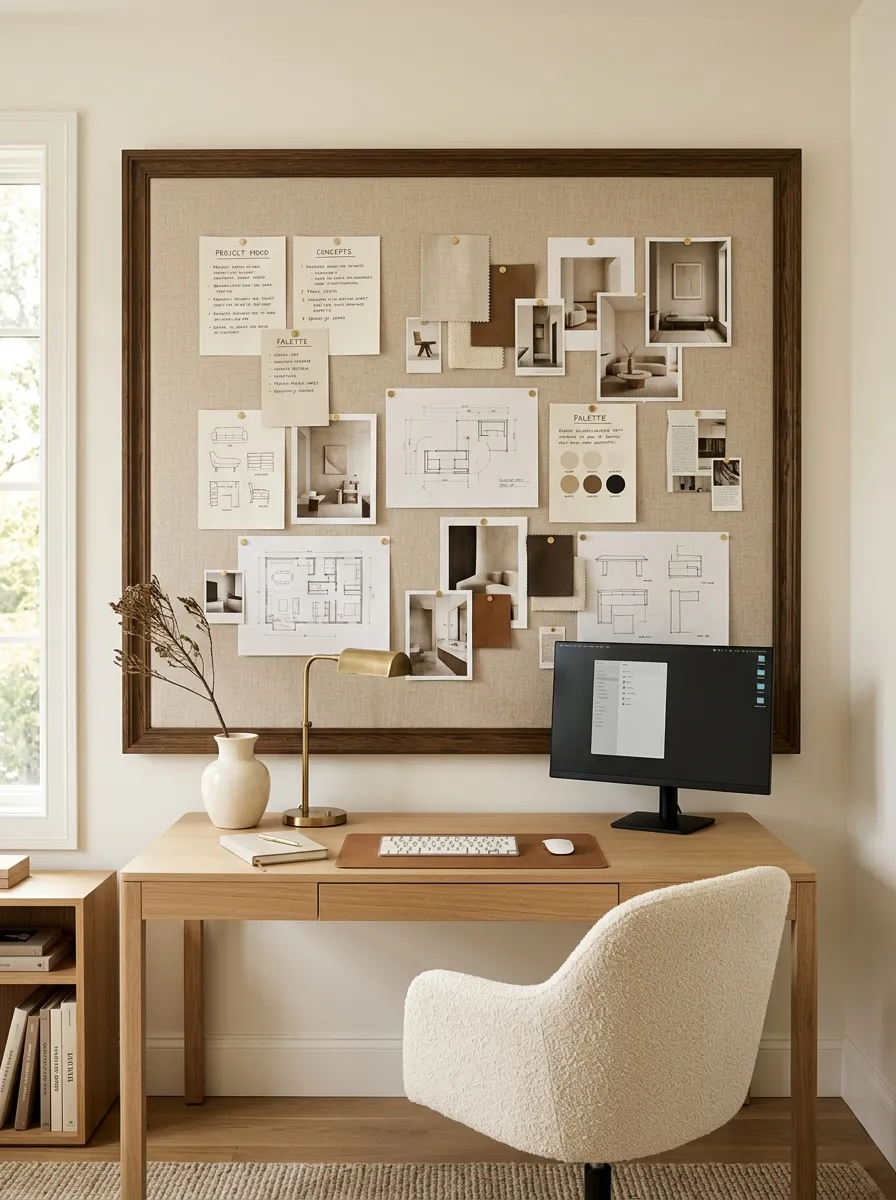
Sticky notes scattered across your monitor bezels look chaotic. You lose track of vital passwords and daily goals the moment the adhesive fails.
Buy a massive sheet of industrial cork and wrap it tightly in textured linen fabric. Mount it directly above your desk, then frame the edges out with custom wood molding. You get a massive, highly functional pinboard that visually reads as an expensive piece of modern art. It holds your brainstorming sessions perfectly without ruining the aesthetics of the wall.
Design Tip
Use flat brass map tacks instead of cheap plastic pushpins. Upgrading your hardware instantly makes your mood boards look intentional.
Command the Room by Facing the Door
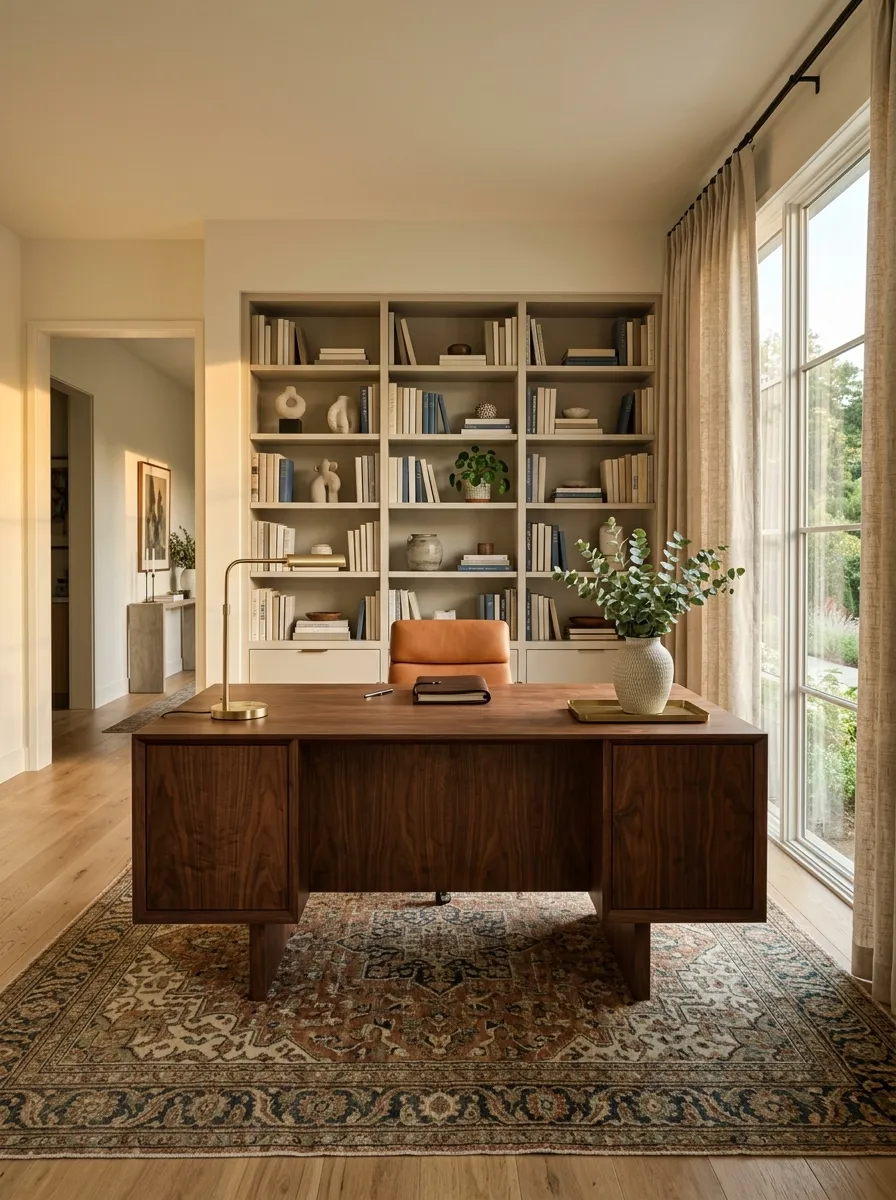
Shoving your desk flush against a blank wall is the fastest way to feel like you are back in a corporate cubicle. You sit with your back to the door, startling every time someone walks into the room.
Float your desk in the center of the floor plan instead. Face the entryway directly. This commands the space, gives you a clear sightline of your environment, and provides a much better background for your video calls than a flat expanse of drywall.
Positioning yourself facing the entrance naturally lowers anxiety. Your camera captures the depth of the room behind you, making your space look substantially larger on video.
Replace Stiff Blinds with Heavy Linen Drapes
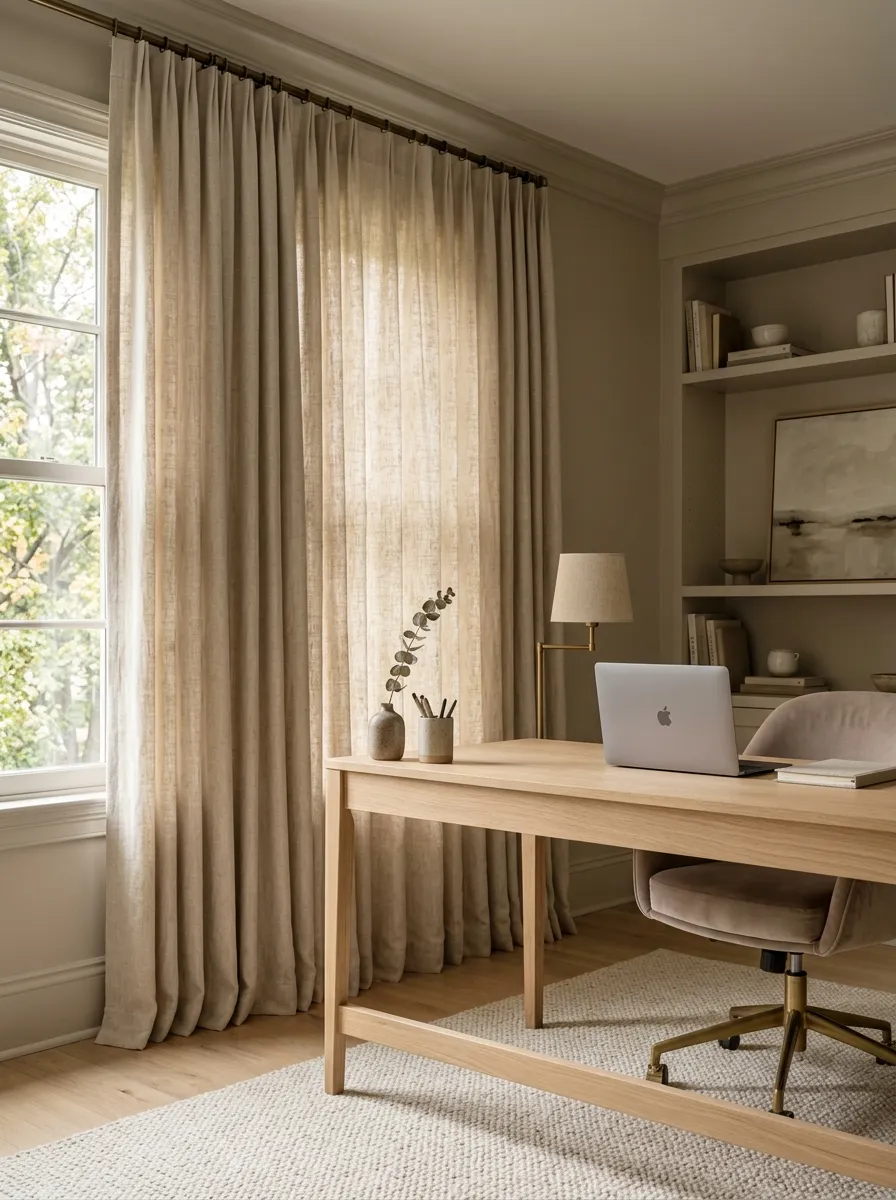
Plastic builder grade blinds bounce sound around the room and do absolutely nothing to soften the hard edges of your desk and monitors. They look cheap and break easily.
Swap them for heavy, lined linen drapery panels. Mount the curtain rod as close to the ceiling as possible and extend it a foot past the window frame on each side. The heavy fabric absorbs echo, controls screen glare beautifully, and creates the illusion that your standard window is twice as large.
| Material | Sound Absorption | Visual Impact |
|---|---|---|
| Plastic Blinds | Zero (Reflects echo) | Harsh, clinical |
| Lined Linen | High (Muffles room) | Soft, editorial |
Layer Exactly Three Distinct Lighting Sources
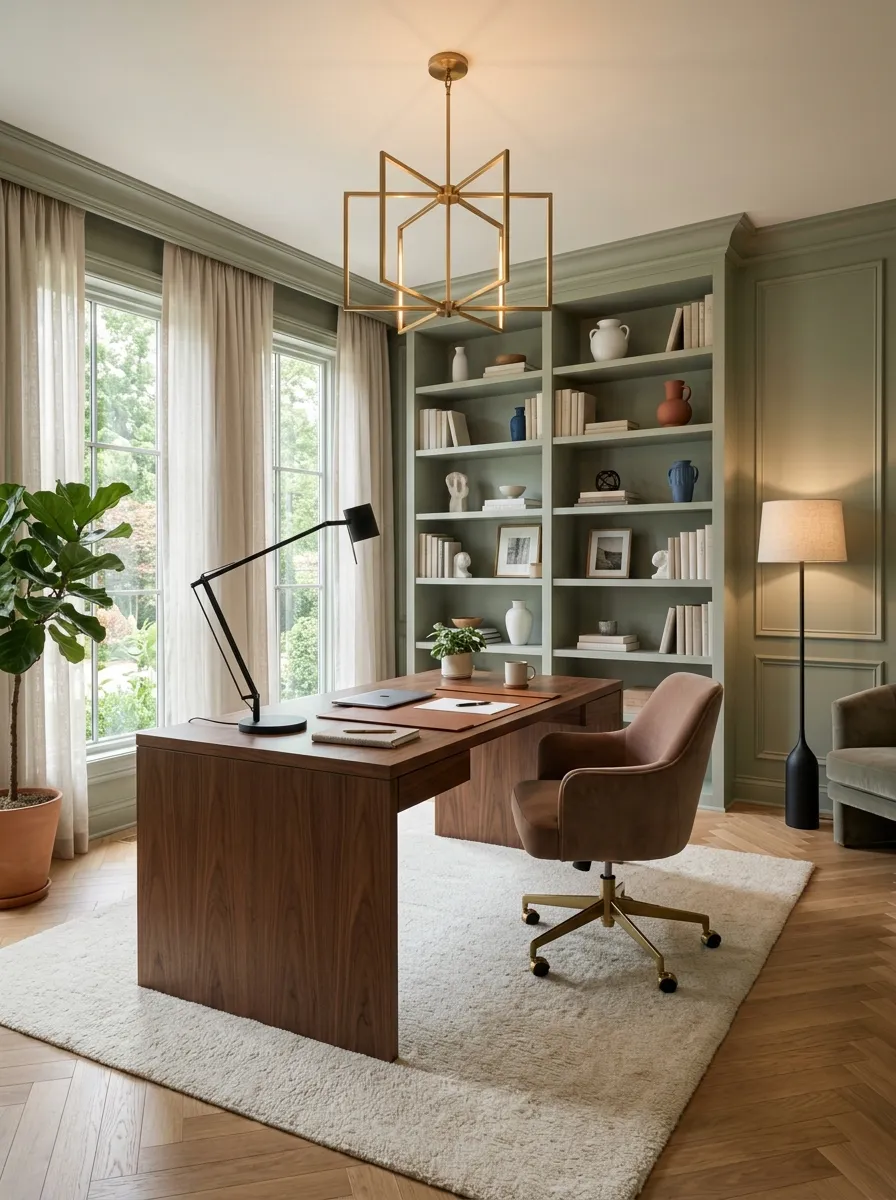
A room with only one light source always feels hostile. If you only use overhead cans, you’ll feel like you are waiting in a dental office.
Implement a strict three point lighting rule. You need overhead ambient light for general tasks, directional task lighting like an articulated desk lamp for reading, and a soft accent light in the corner. Layering these sources isn’t optional. You’ll instantly gain control over the mood of the room, switching off the harsh overheads the moment the sun goes down and working entirely by warm lamplight.
The 3-Point Checklist
- Ambient: Dimmable ceiling fixture for overall brightness.
- Task: Adjustable desk lamp aimed directly at your paperwork.
- Accent: A floor lamp or shelf light to eliminate dark corners.
Reclaim Space with a Pull-Out Keyboard Tray
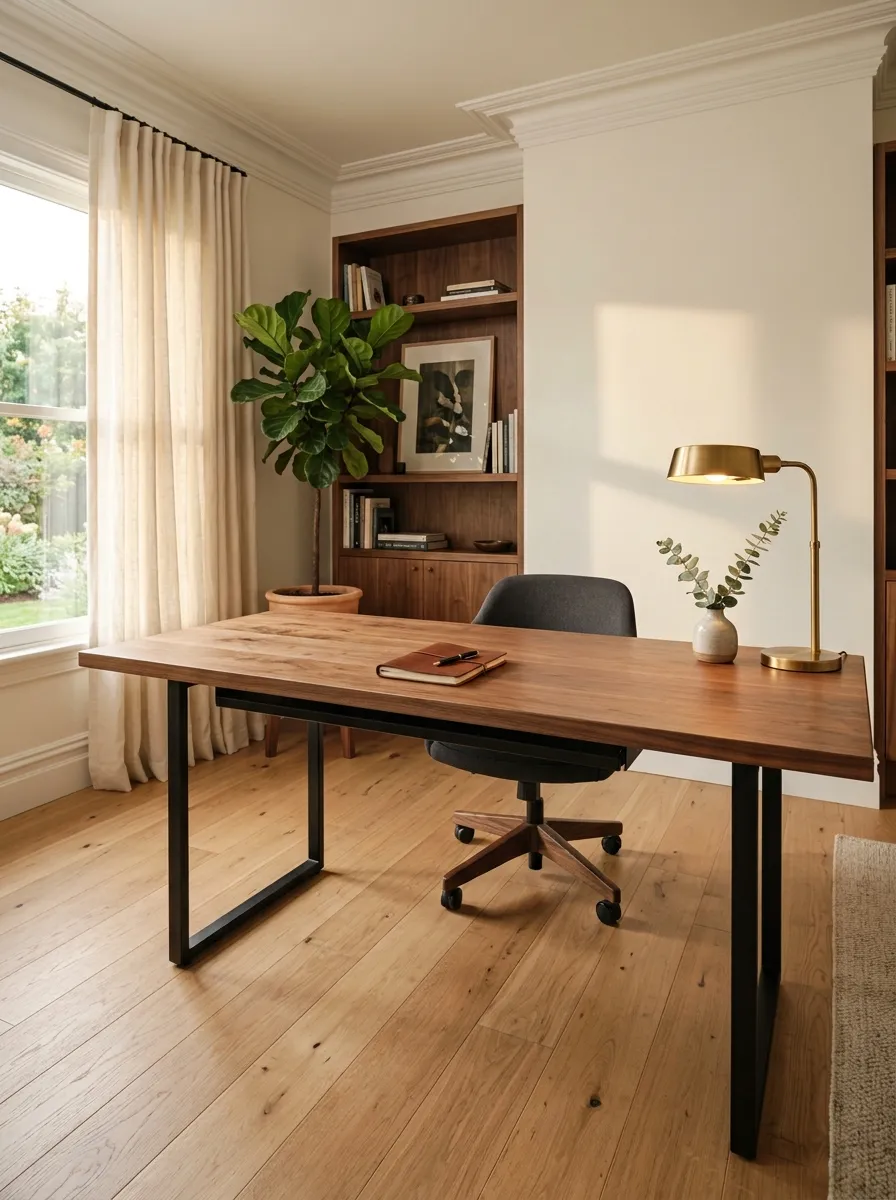
Most people drop their massive mechanical keyboard dead center on the desk. That single move eats up half your usable surface and forces you to push paperwork into a cramped corner. You’ll end up reading documents at a weird angle.
Mount a commercial-grade, pull-out keyboard tray underneath the surface instead. Dropping the keyboard below the desk line instantly fixes your typing ergonomics by naturally lowering your shoulders. Plus, when you slide it away, your entire desktop becomes a clean, uninterrupted drafting table.
Installation Steps
- Measure the clearance between your desk legs to ensure a 28-inch tray fits.
- Drill pilot holes directly into the solid wood underside.
- Mount the heavy-duty steel tracks flush with the front edge.
Warm Up Cold Walls with Vertical Wood Slats
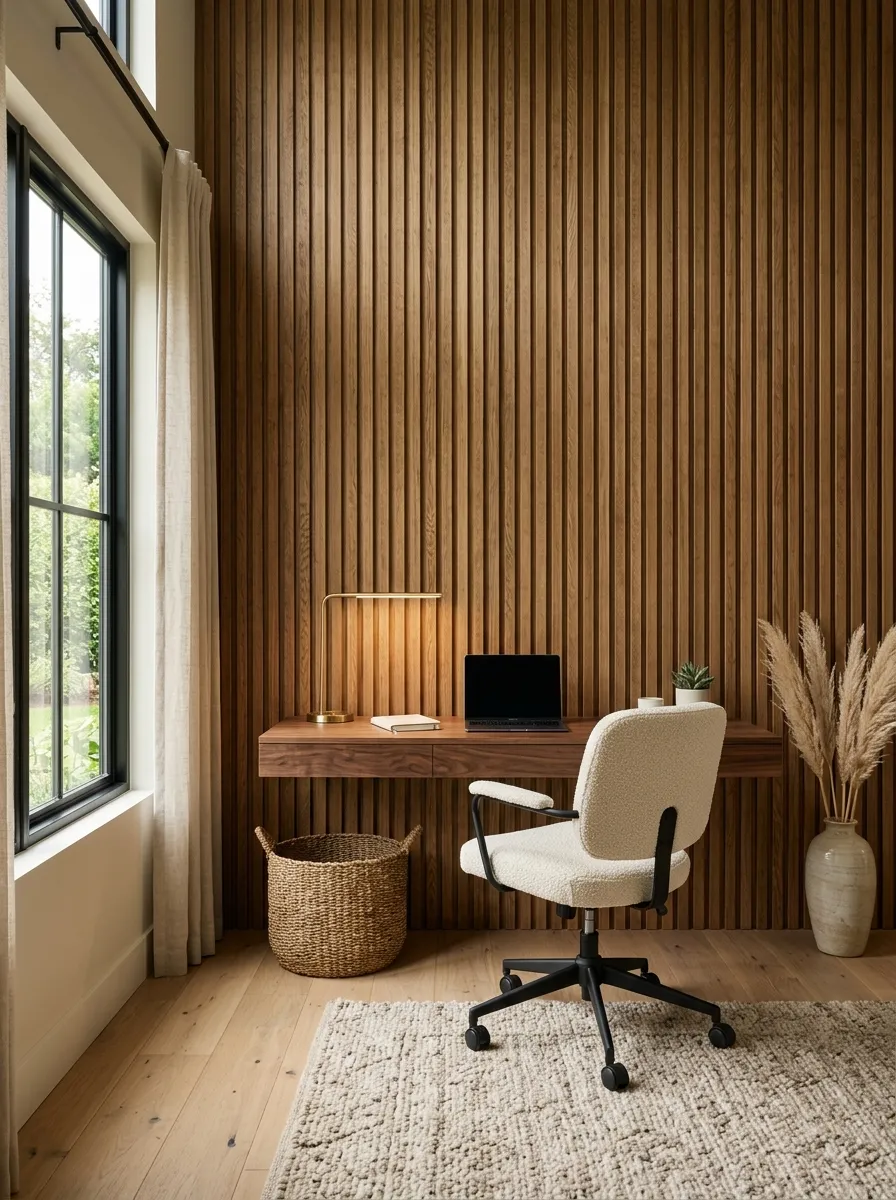
Flat drywall painted bright white looks incredibly sterile on a webcam. It’ll bounce light harshly and make your office feel like a corporate breakroom.
Adding texture changes the entire frequency of the space. Install floor-to-ceiling vertical wood slat panels on the single wall behind your desk. The repeating vertical lines draw the eye upward, making standard eight-foot ceilings look massive. Wood tones inject immediate warmth, and the felt backing on modern slat panels acts as a heavy sound absorber for client calls.
Mount Floating Shelves Strictly Above Eye Level
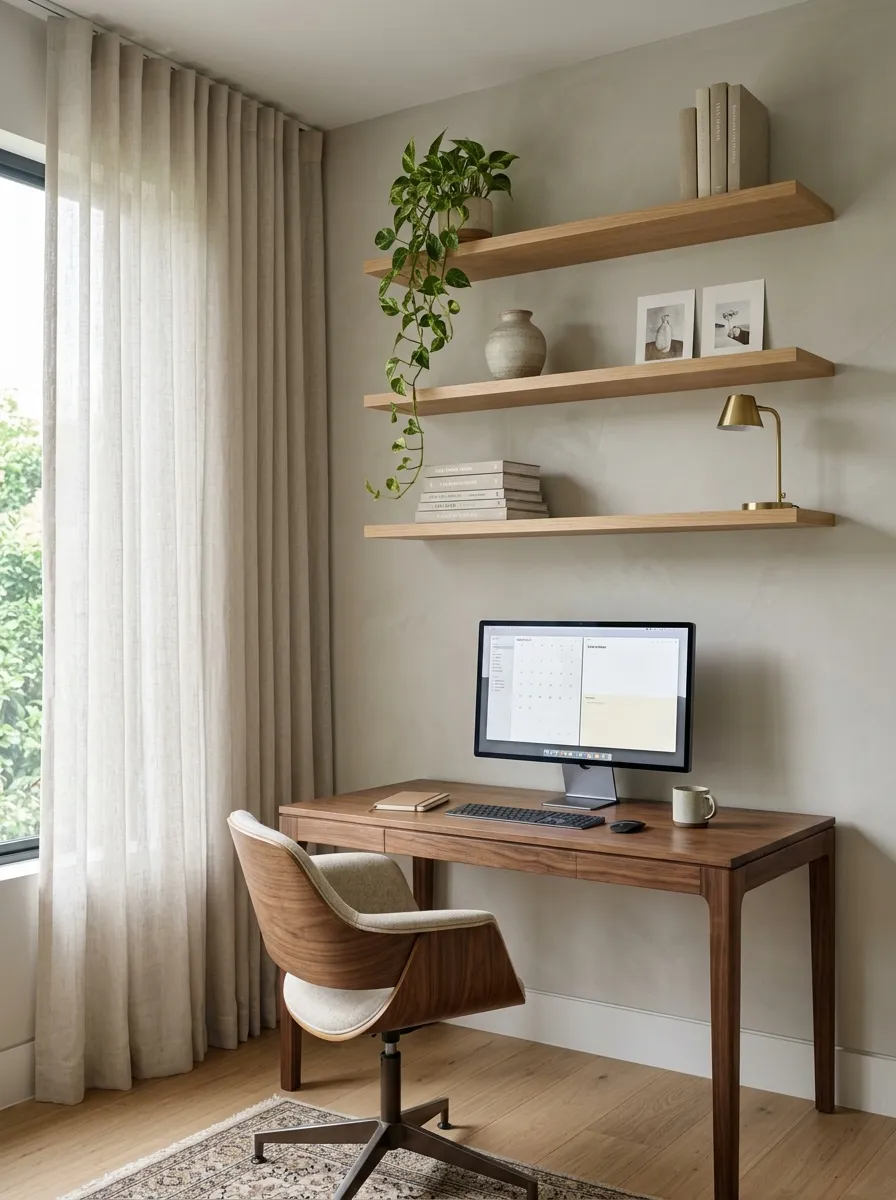
Never install floating shelves directly behind your monitor. The moment you place a trailing pothos plant or a stack of heavy books right above your screen, the setup feels claustrophobic.
You’ll constantly feel like something is going to fall onto your keyboard. Force your shelving higher up the wall. Mount the bottom shelf at least sixty inches off the floor. This draws the eye up, clears your immediate visual field, and provides a beautiful backdrop for video calls without crowding your physical workspace.
Leave at least eighteen inches of negative, completely empty wall space between the top edge of your monitor and the bottom edge of your lowest shelf.
Dedicate a Clear Hard Surface Just for Writing
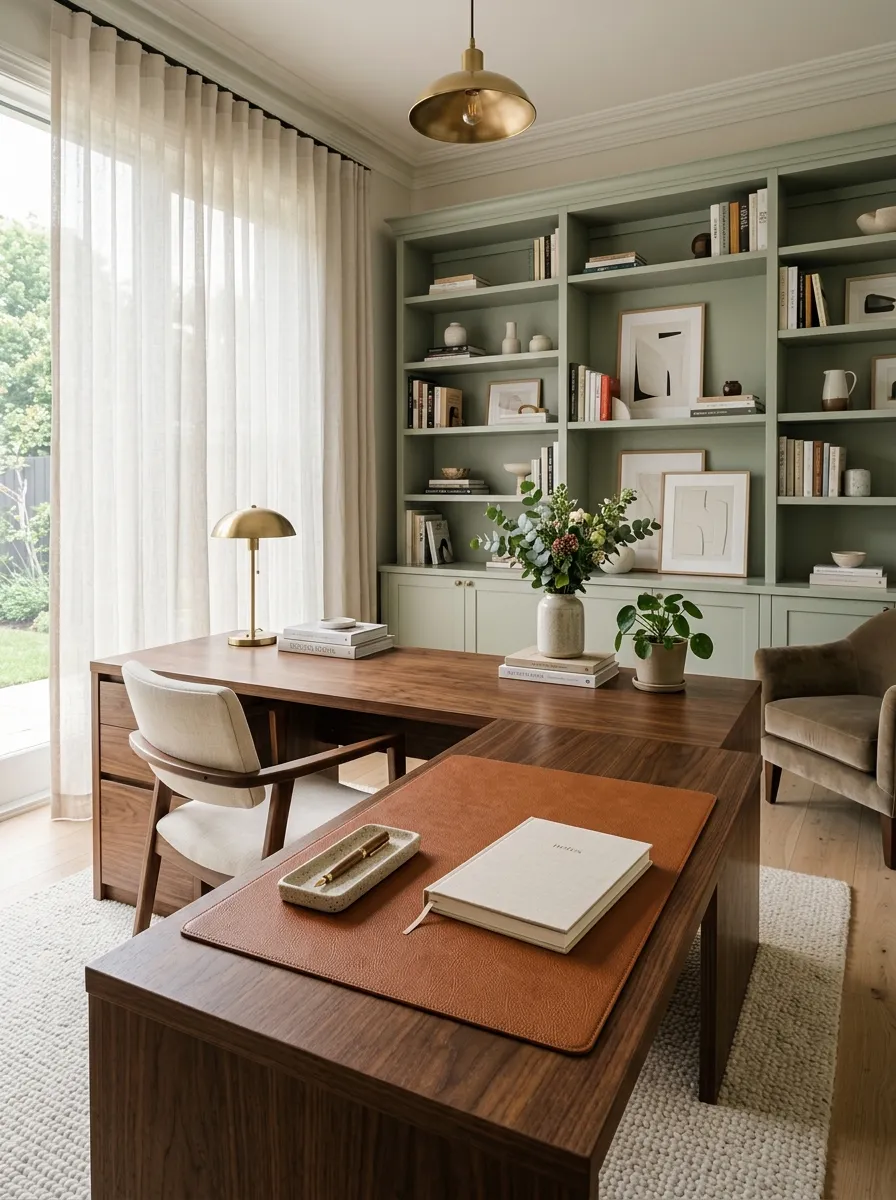
You grab a pen to sign a contract, only to realize you’re balancing the paper on top of an oversized foam mousepad. You shove your keyboard forward, knocking over a coffee cup just to make two inches of room.
Your primary work surface shouldn’t fight you. Create a dedicated writing zone that never houses electronics. If you have an L-shaped desk, leave the return entirely bare. If your desk is straight, buy a thick, structured leather desk mat and mandate that no tech is allowed on it.
The No-Tech Zone Checklist
Maximize Floor Space with a Wrap Around Desk
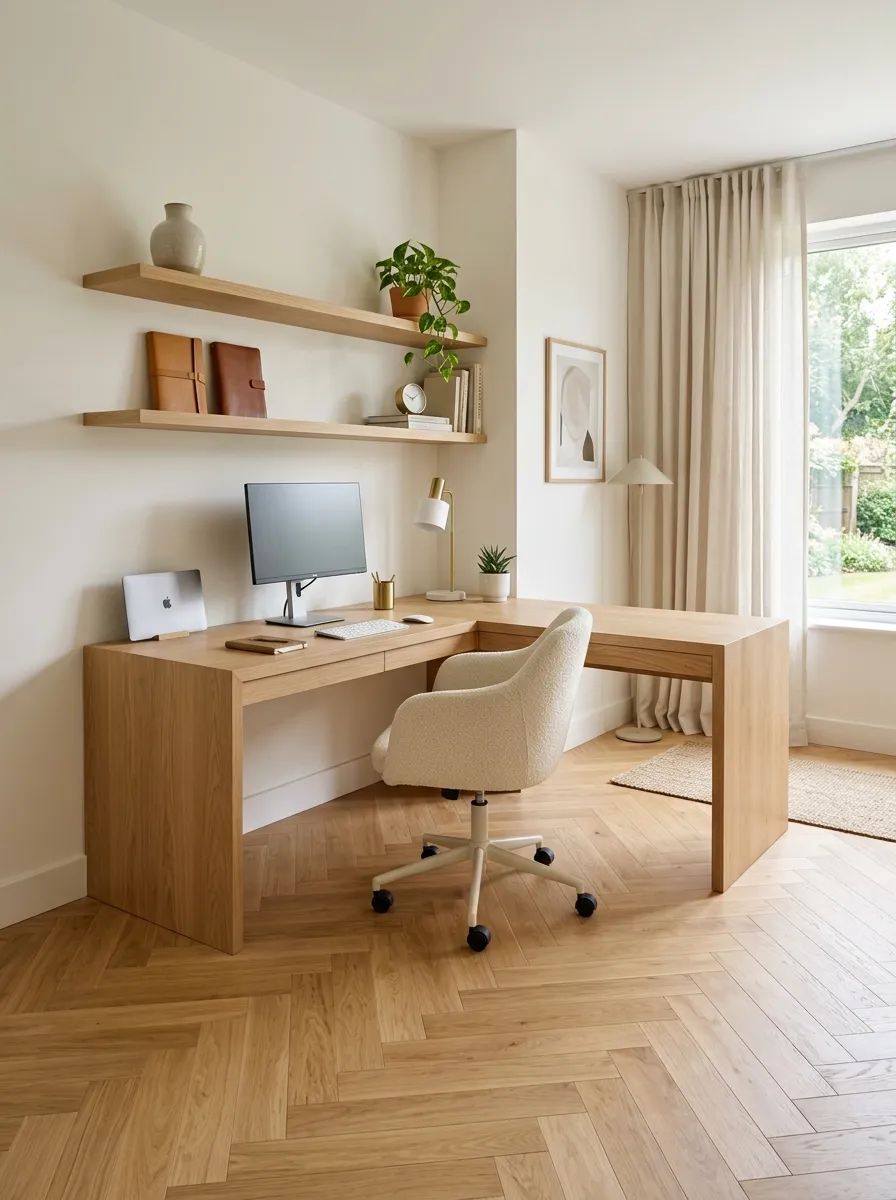
Cramming a massive executive desk into the middle of a tiny spare bedroom traps you against the wall. You’ll constantly bump your chair into the closet door just trying to stand up.
Ditch the freestanding table and build a custom L shaped desk that hugs the perimeter walls perfectly. Pushing the work surface flush against the corners opens up the center of the room. You instantly gain enough floor space to comfortably pace while on a phone call.
Space Math
A standard L shaped desk running sixty inches along two adjoining walls provides double the usable surface area of a standard rectangle desk without eating up the middle of the floor.
Set a Physical Timer Station Out of Arm’s Reach
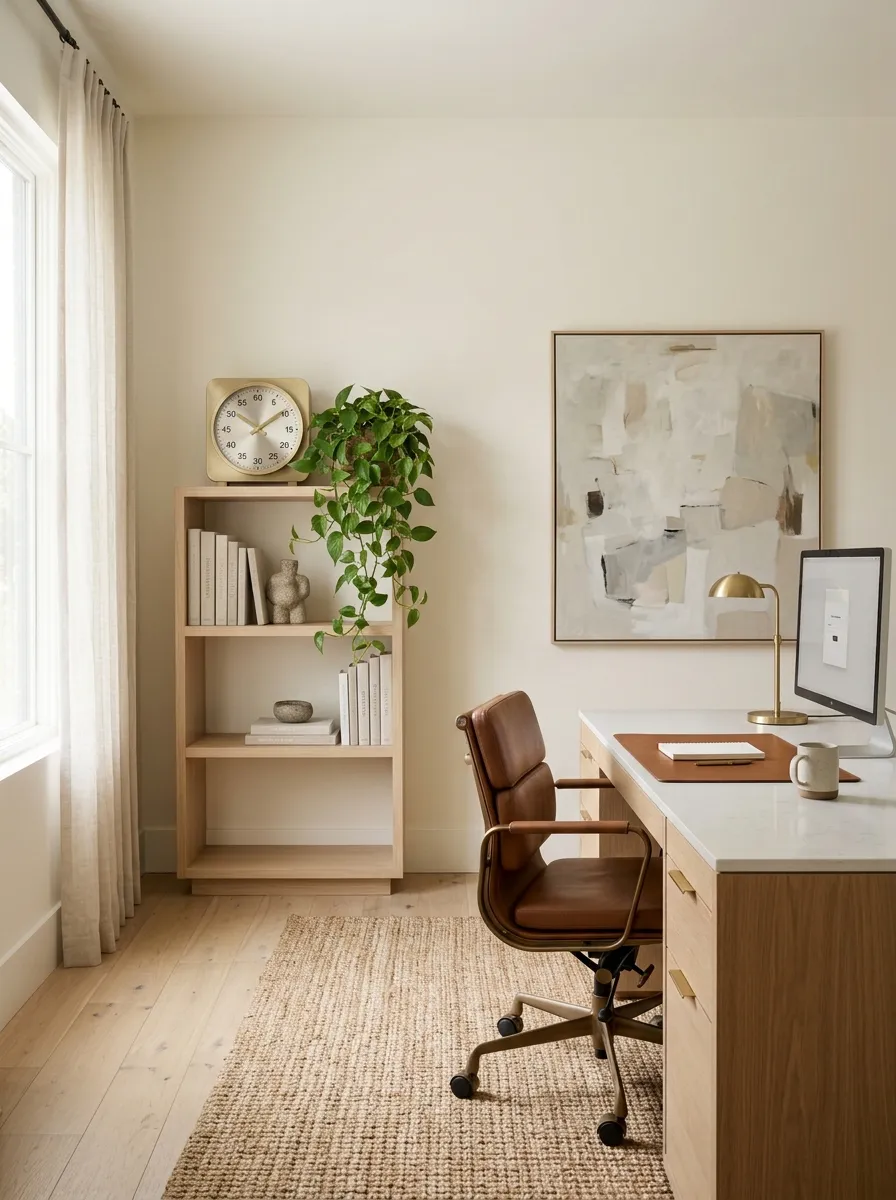
Using your phone as a Pomodoro timer guarantees you will check your notifications instead of working.
Buy a heavy, mechanical analog timer. Place it entirely across the room on a bookshelf. When you need to do deep focus work, you must physically stand up, set the dial for sixty minutes, and walk back to your desk. Forcing yourself to cross the room breaks the digital distraction cycle instantly.
The physical ticking sound of a mechanical timer acts as a subtle auditory cue that conditions your brain to stay on task until the bell rings.
Flank the Main Window with Symmetrical Shelving
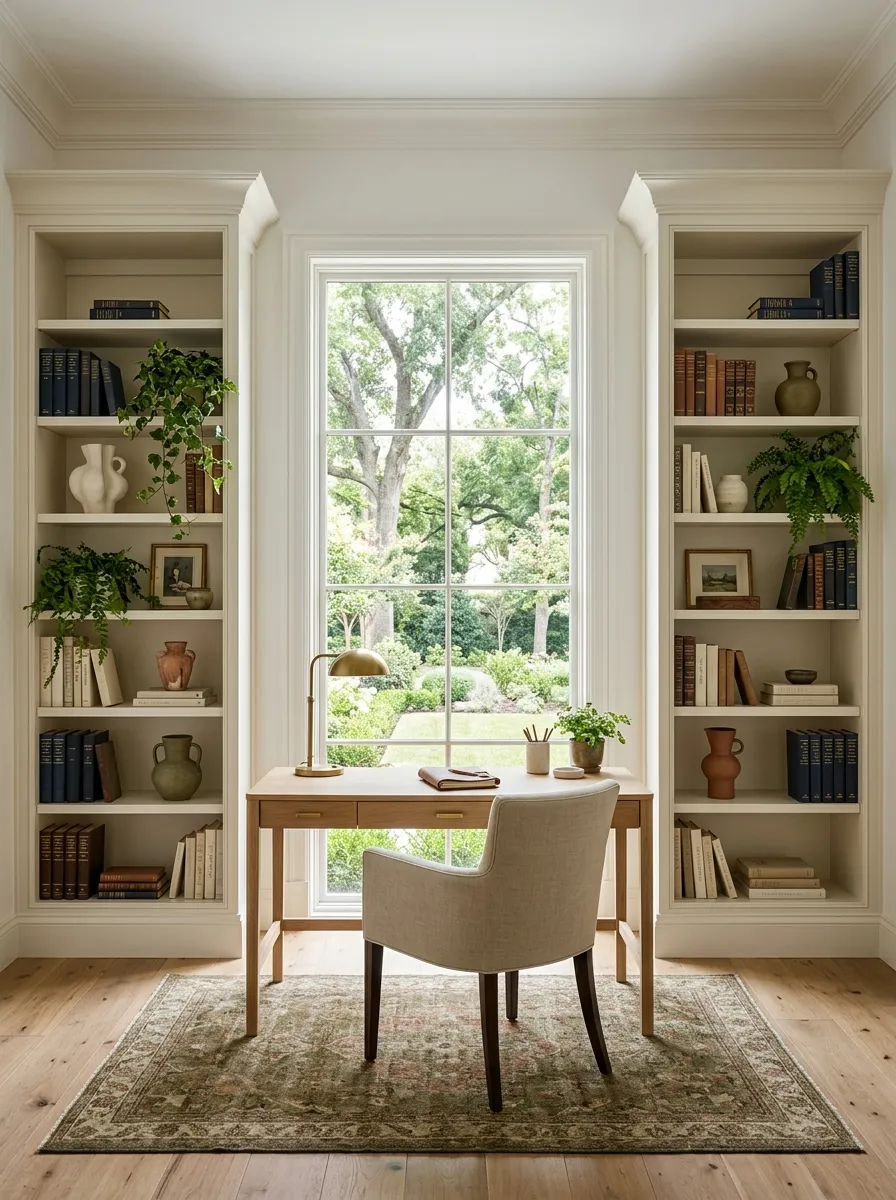
Shoving a single tall bookcase into one corner of your office creates an aggressive visual imbalance. The entire room feels like it is tilting heavily to one side.
Treat your main window as an anchor point instead. Install identical, floor to ceiling shelving units tight against both sides of the window casing. This creates architectural symmetry that commands the room. The matching towers pull the eye straight toward the natural light, making standard builder grade windows look like custom architecture.
The Law of Symmetry
Human eyes naturally prefer mirrored layouts. Framing a central light source with identical heavy furniture instantly upgrades the perceived monetary value of the room.
Swap the Cheap Whiteboard for Black Glass
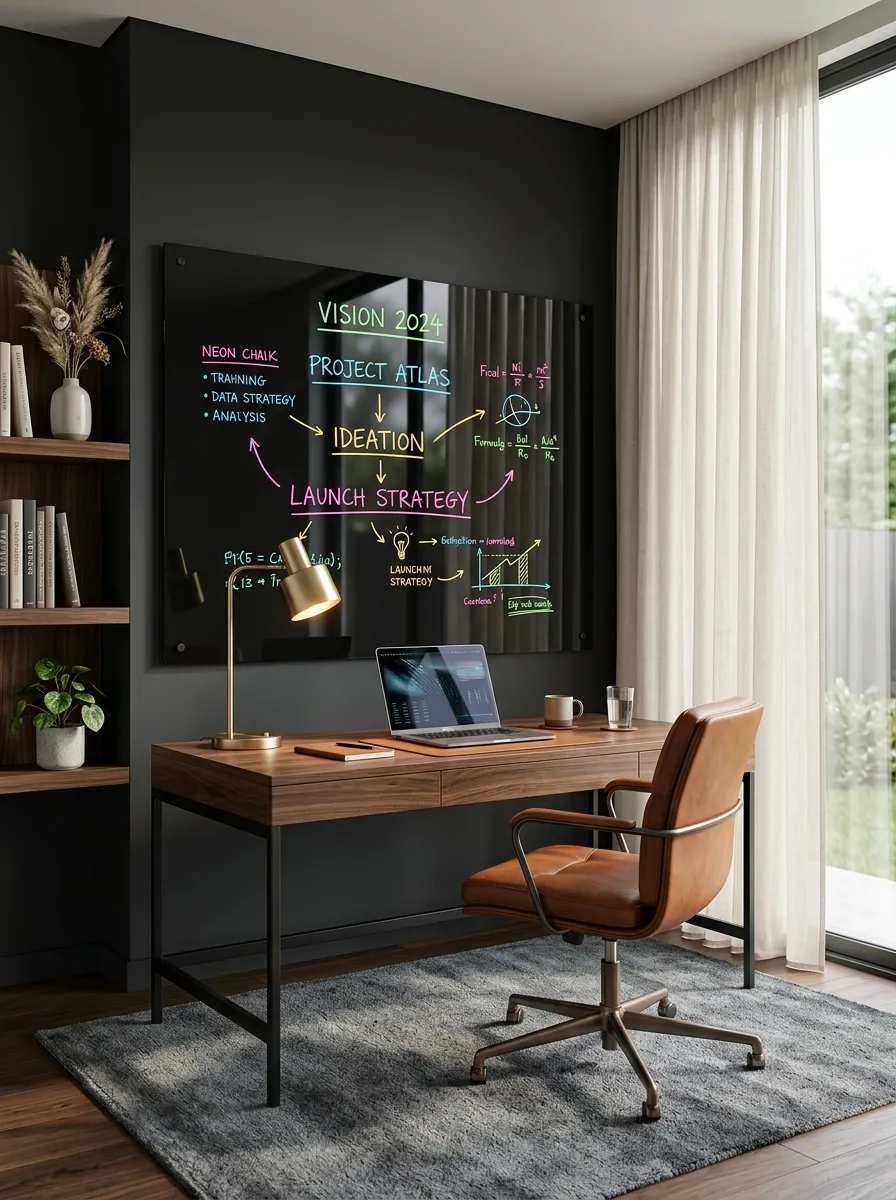
Stained, ghosted whiteboards belong in a high school math class, not a high end workspace. A dry erase board that never fully wipes clean ruins a premium aesthetic immediately.
Mount a massive slab of frameless black glass to your wall instead. You write on it with neon liquid chalk markers that wipe away completely without leaving a cloudy haze behind. It functions exactly the same as a whiteboard but looks like a sleek modern art installation when completely empty.
| Board Material | Longevity | Professional Look |
|---|---|---|
| Standard Melamine | Ghosts within months | Low quality |
| Tempered Black Glass | Never stains or ghosts | Executive level |
Anchor an Empty Corner with a Massive Tree
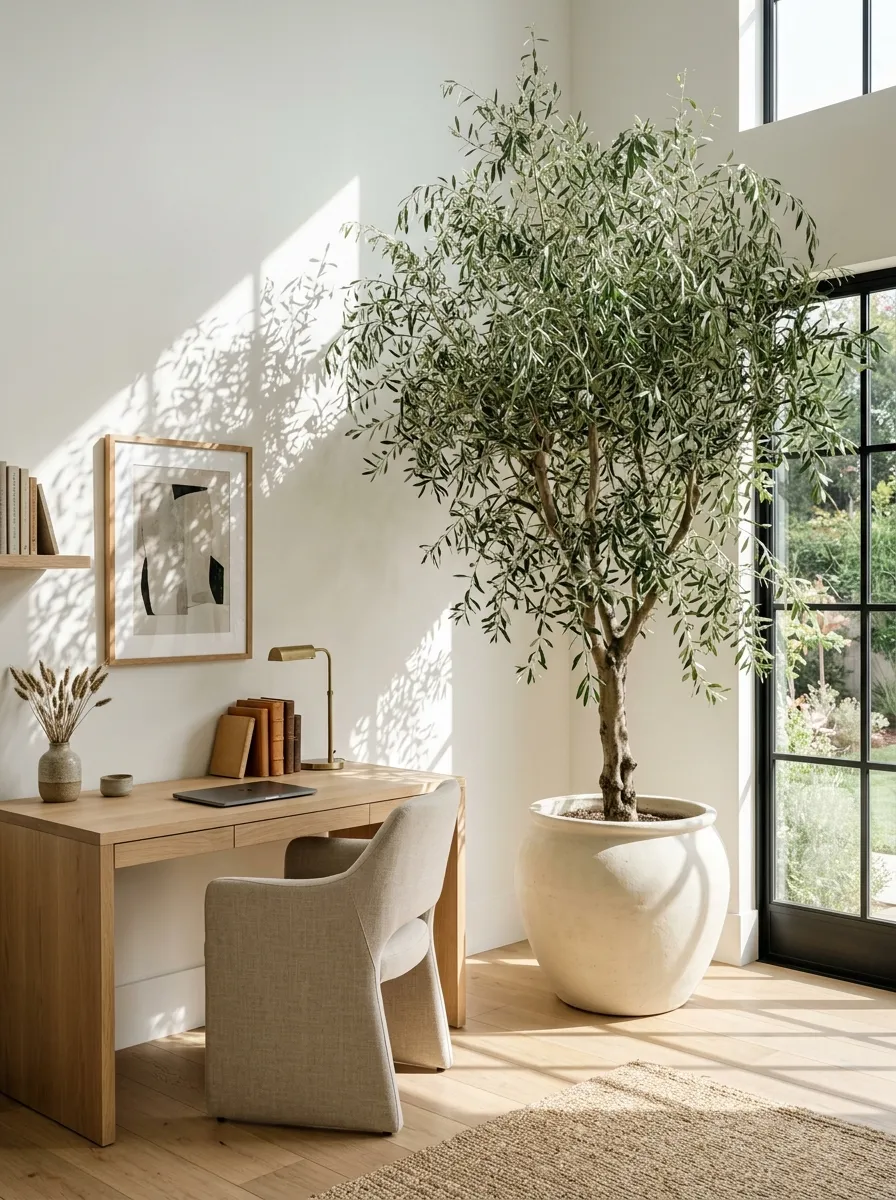
A room full of hard edges needs living texture to feel human.
Desks, monitors, and filing cabinets create a harsh environment filled entirely with rigid right angles. You cannot fix that coldness by just adding another piece of wooden furniture. Drop an eight foot olive tree or a massive faux ficus into a heavy ceramic pot in the dead corner of the room. The organic, weeping branches soften the harsh structural lines of the room perfectly. It immediately brings scale, shadow, and life to a space dedicated to serious work.
Organic Softening
Tall foliage breaks up the sharp corners where the walls meet the ceiling. It stops your eye from registering the office as a strict square box.
Designing a workspace that genuinely supports your daily grind doesn’t mean sacrificing aesthetics. It means prioritizing function first and layering beauty over a structurally sound foundation. When you eliminate the physical pain of bad seating and the mental fatigue of visual clutter, your productivity naturally spikes. You stop fighting your environment and start executing your actual job.
Building out these home office ideas for women takes time, but every single upgrade pays you back in energy and focus. Don’t settle for a trendy corner that ruins your posture. Save this list for the next time you feel overwhelmed by your workspace and need a blueprint to fix it for good.
Ready to Upgrade?
Pin this article to your home office board so you have the exact blueprint when you are ready to rebuild.