
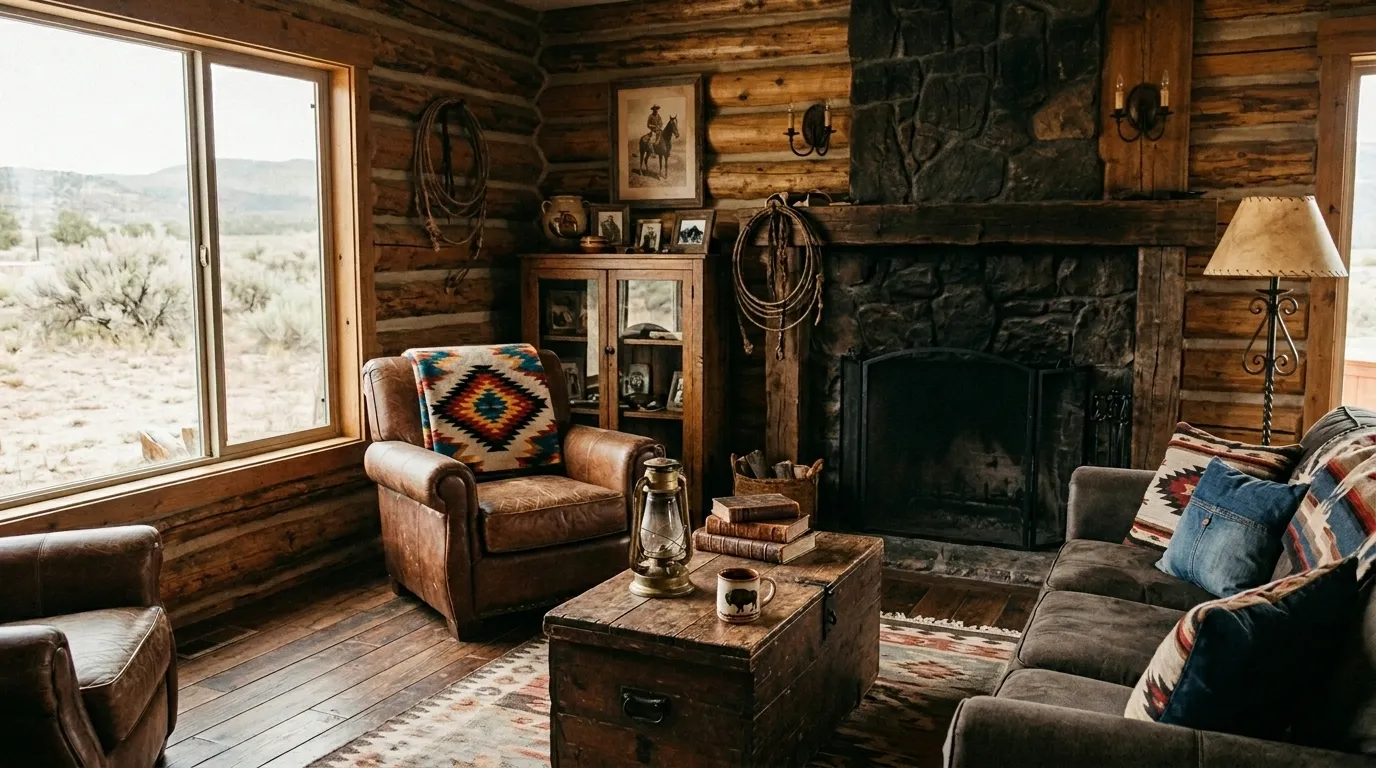
Vintage Western decor gets bad when every wall starts shouting “cowboy.” The horseshoes, oversized signs, fake antlers, cowhide everywhere, and too many rustic accessories can make a home feel more like a themed restaurant than a real house.
The better approach is quieter. Vintage Western home decor works best when the Western influence comes through materials, age, texture, and a few meaningful pieces. Think worn leather that actually looks used, dark wood with visible grain, old brass, faded textiles, handmade pottery, and artwork that feels like it has a story.
You don’t need to turn every room into a ranch. In fact, that usually makes the style weaker.
Instead, build the home with a mix of old and simple pieces. Let one strong object carry the Western character, then give it room to breathe. A vintage trunk can do more than a shelf full of cowboy signs. An old rug can bring more personality than a room packed with themed accessories.
These ideas show exactly where to push the style and where to stop.
Vintage Western Home Decor Ideas
The Saddle Wall Decor
Using an actual saddle as wall art is the interior design equivalent of wearing a ten-gallon hat to a grocery store. It screams that you’ve watched one too many Westerns and decided your home needed to double as a dusty ranch storage unit.
If you simply must display your equestrian equipment, treat it with the same casual indifference you would a coat rack. Do not frame it, do not light it like a museum piece, and for the love of everything holy, keep the rest of the room away from the kitschy saloon look.
Deep tones and heavy leather are the only things saving this from looking like a set piece for a low-budget period drama. Let the saddle be the only thing trying to prove how cowboy-adjacent you are and stop right there.
Build the Room Around a Worn Leather Sofa
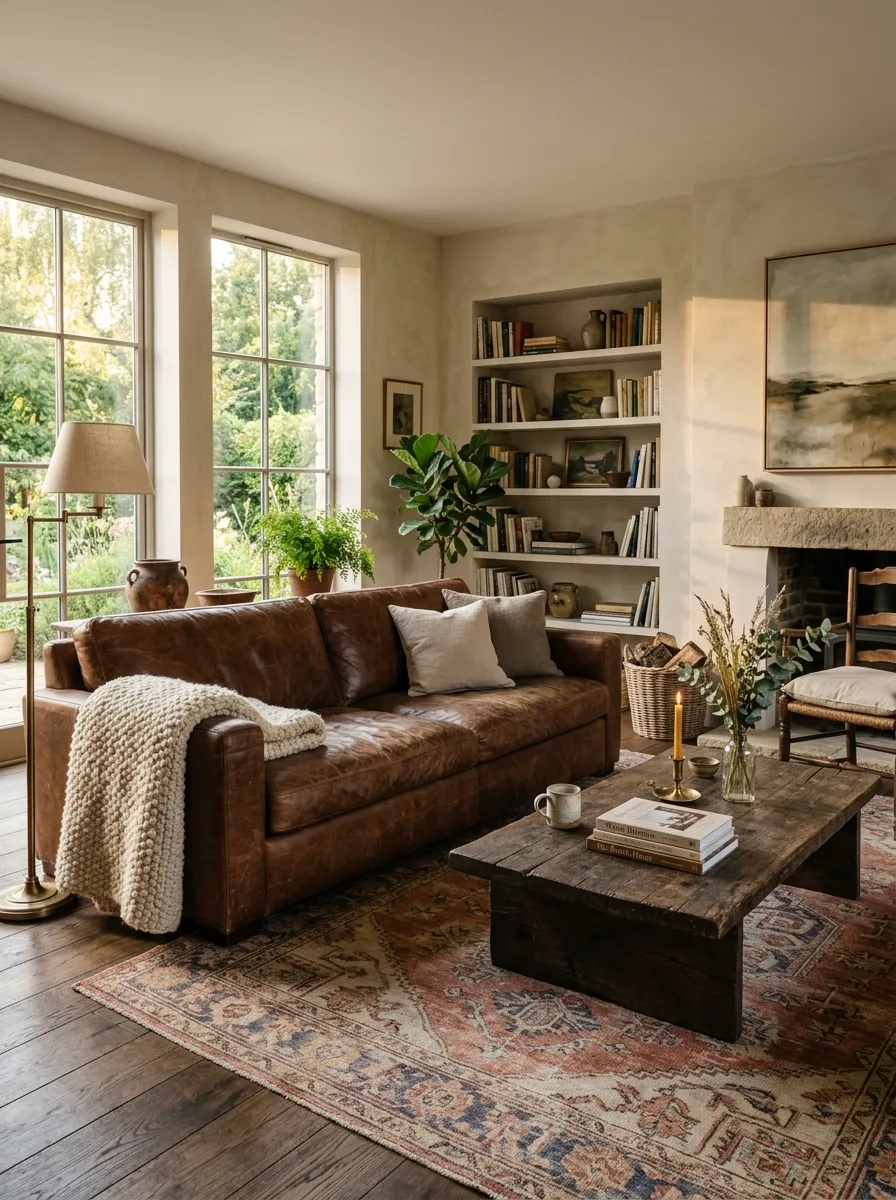
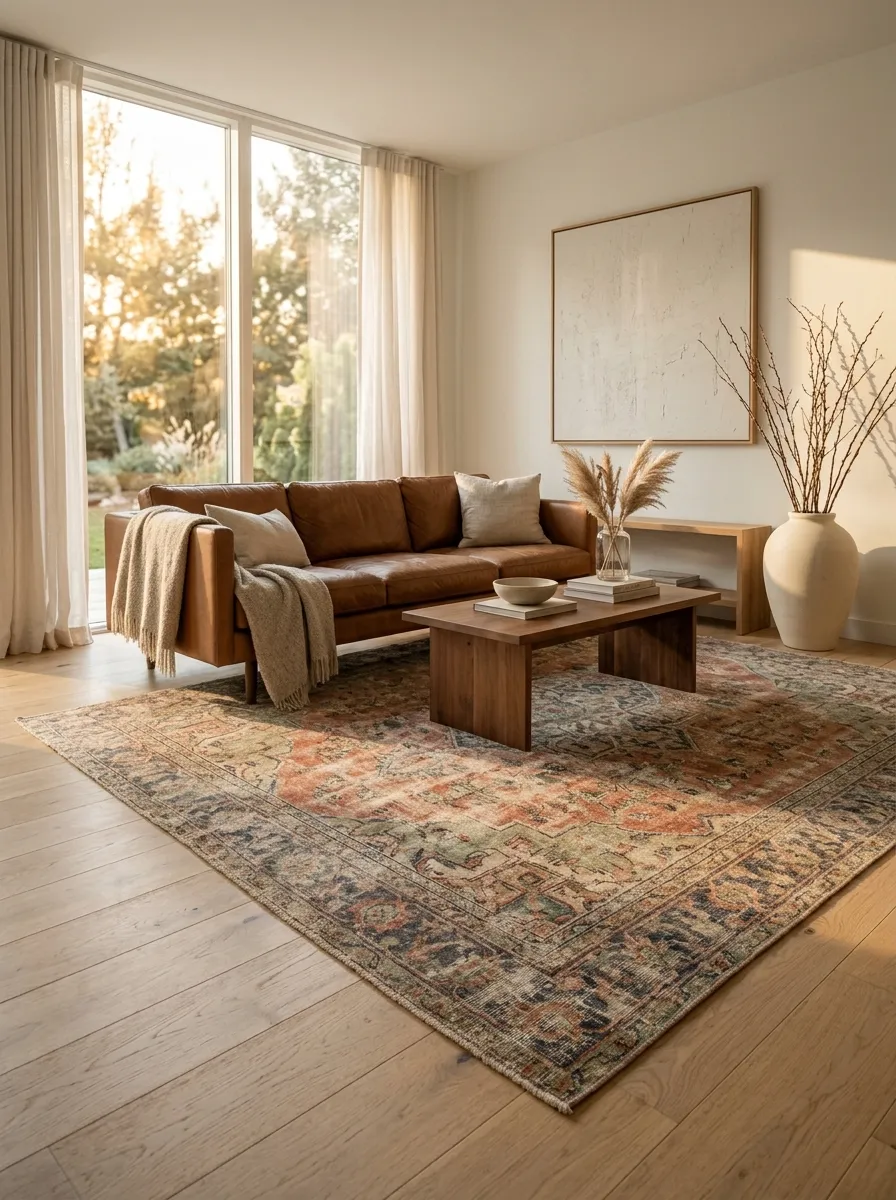
A leather sofa instantly gives a living room weight, but the finish matters. Skip anything that looks overly glossy or brand new. A slightly distressed surface with visible variation feels far more convincing.
Keep the rest of the seating simple so the sofa gets room to work. Add a faded rug, a chunky woven throw, and one old-looking wood table rather than filling every corner with Western accessories.
For a lived-in room, look for:
- Warm brown or tobacco leather
- Visible grain and natural variation
- Simple, sturdy arms
- Wood or dark metal details
A sofa like this becomes the anchor. Everything around it can stay restrained.
Stone Fireplace Logic
Nothing says authentic rustic like a giant animal skull looming over your fireplace as if it’s judging your taste in home decor. It is a bold choice for anyone who wants their living room to feel like a taxidermy shop that accidentally sold a sofa.
To keep this from spiraling into a mountain lodge cliché, ground the area with a rug that doesn’t try too hard. A geometric pattern works because it acknowledges the history without forcing a literal wagon-wheel vibe down your throat.
Everything in a space like this should feel like it was salvaged, not sourced from a big-box store’s seasonal catalog. Keep the decor on the mantle sparse and purposeful so you don’t end up looking like a souvenir stand exploded in your den.
Layer a Vintage Rug Over Plain Flooring
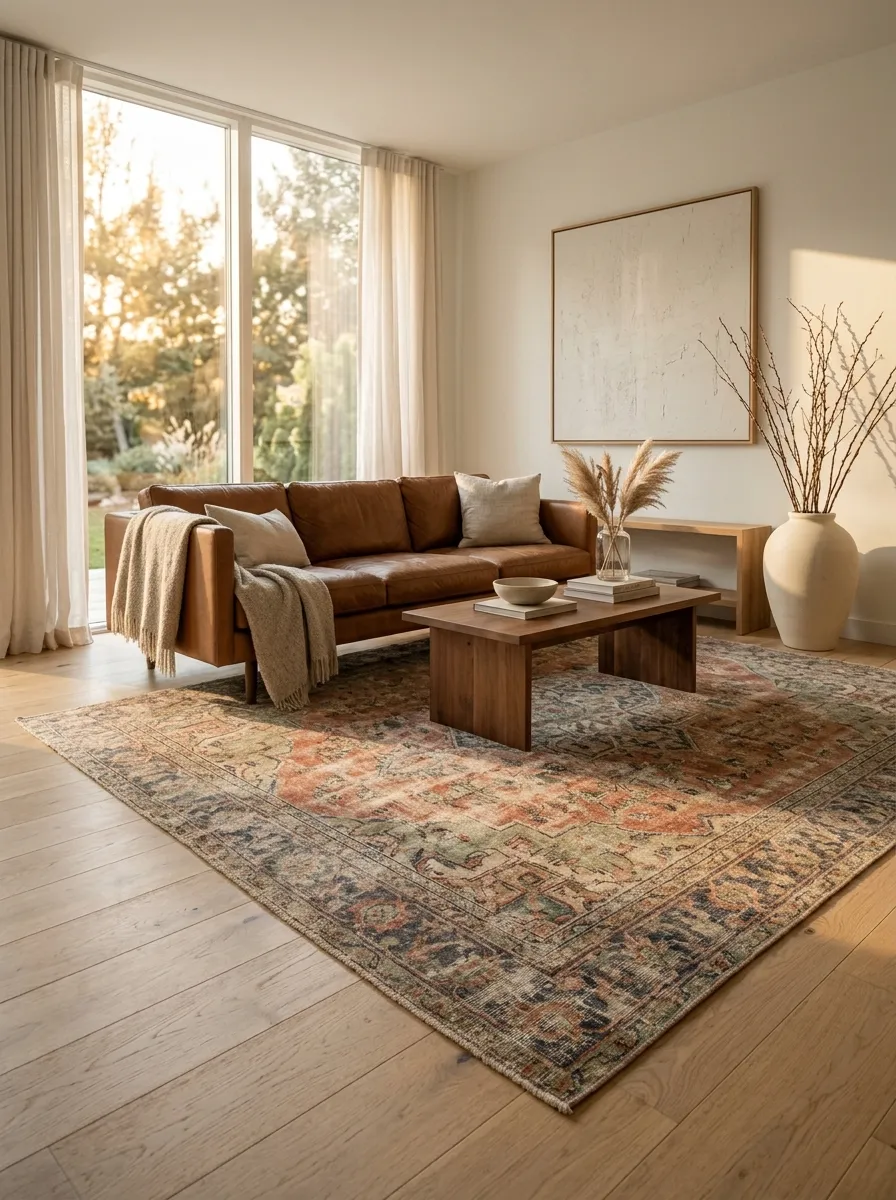
A good rug does something a pile of Western accessories can’t. It brings color, age, and pattern into the room without making the theme obvious.
Choose a faded pattern rather than something with extremely sharp, saturated colors. The rug should look like it has lived with the furniture for years.
Keep the surrounding pieces quieter.
- Start with a rug that has muted reds, browns, rust, cream, or faded blue.
- Let at least part of the main furniture sit on it.
- Repeat one subtle rug color somewhere else in the room.
This works especially well when the flooring itself is plain.
Quick rule: If the rug is busy, keep the sofa and major furniture simple. The room needs one visual leader.
Faux Fur Minimalism
Throwing a giant hide rug on the floor is the fastest way to signal you prioritize texture over actual practicality. It’s the ultimate statement piece for people who want a room to look cozy while secretly dreading the prospect of keeping that thing clean.
The trick to not making it look like a caveman’s lair is the rest of the furniture. Keep it refined, keep it light, and definitely don’t pair it with antlers or neon signs unless you want to live inside a bad college apartment.
Let the floor be the conversation starter and leave the walls alone. If you start adding too much more, you will cross the line from curated Western vintage to someone who got lost in a craft store’s western aisle.
Use an Old Trunk as a Coffee Table
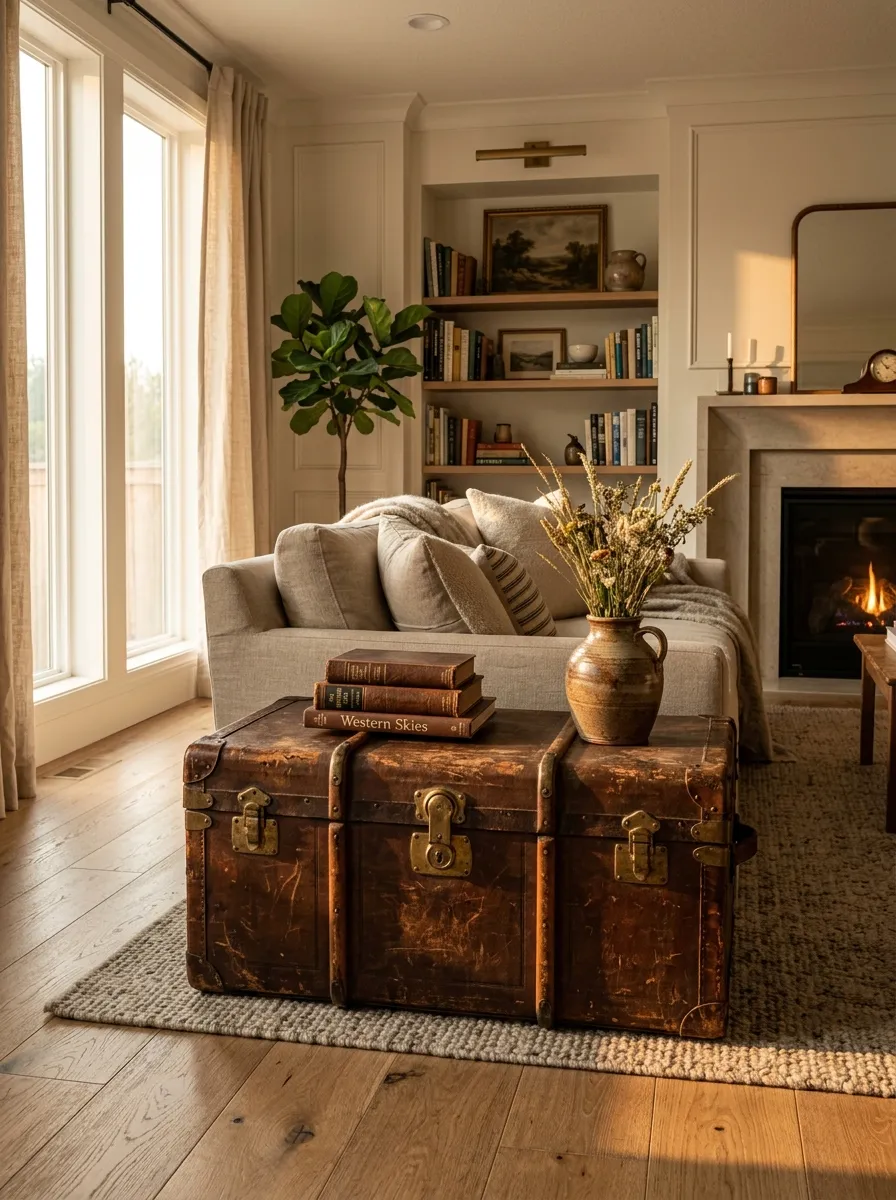
An old trunk is one of the easiest ways to bring Western history into a living room without hanging a giant cowboy sign above the sofa.
Look for a piece with scratches, worn corners, aged hardware, or faded leather details. Those imperfections are the point.
Place it in front of a sofa and keep the top styling minimal. A couple of old books, a small pottery piece, or one simple tray is enough.
Visible wear, aged hardware, natural scratches
Books, pottery, or one restrained tray
Overfilling the surface with themed objects
Entryway Restraint Required
Painting horseshoes turquoise is a level of commitment to a theme that I frankly find concerning. It’s the kind of decorative choice that makes guests wonder if they’ve walked into a home or a country music video set that hasn’t finished filming yet.
If you insist on using tack as wall hooks, at least keep the rest of the entryway grounded in actual furniture rather than more themed trinkets. A basket for shoes is practical, and a bucket of pinecones is just a bucket of pinecones, not a personality trait.
Keep the accessories strictly utilitarian. If the items you’re hanging on your fancy hooks aren’t actually being worn, you’re just curating a gallery of pretend chores for nobody to see.
Hang Landscape Art Instead of Cowboy Signs
The easiest way to make Western decor feel sophisticated is to stop announcing that it’s Western.
A faded desert landscape, old ranch photograph, mountain scene, or weathered botanical print can carry the same regional feeling without looking like a novelty purchase.
Build a small grouping rather than covering the wall with signs.
- Use different frame finishes.
- Mix horizontal and vertical pieces.
- Leave breathing room around the grouping.
- Choose artwork with muted, earthy colors.
The goal isn’t to prove the theme. It’s to make the room feel like it has a history.
Mix Dark Wood With Sun-Washed Finishes
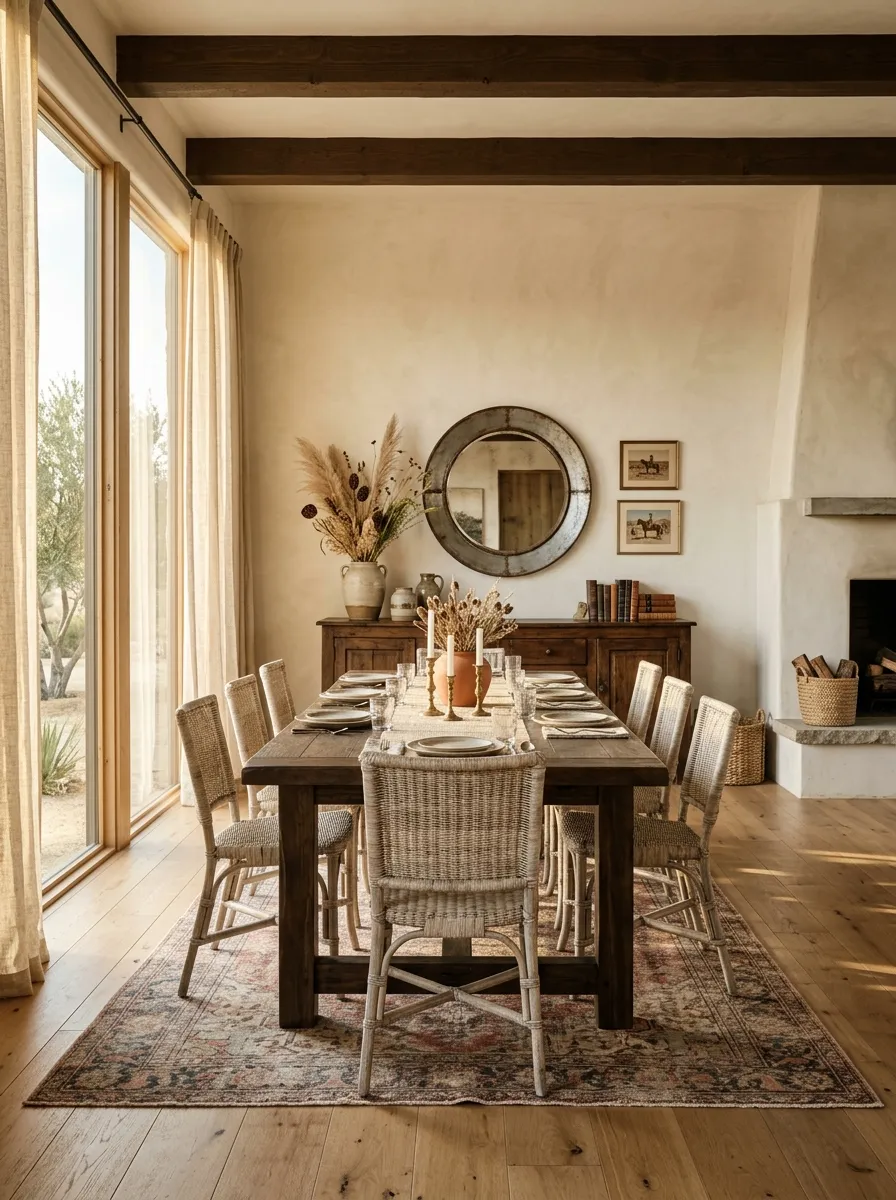
Too much dark wood can make vintage Western decor feel heavy. Too much pale wood can strip away the warmth that makes the style work.
The answer is contrast.
Use one substantial dark wood piece, then bring in lighter, weathered finishes around it. A dark dining table can work with pale woven chairs. A deep walnut cabinet can sit against a lighter wall. A weathered bench can soften a darker console.
Bring Vintage Western Character Into the Bedroom With Layered Textiles
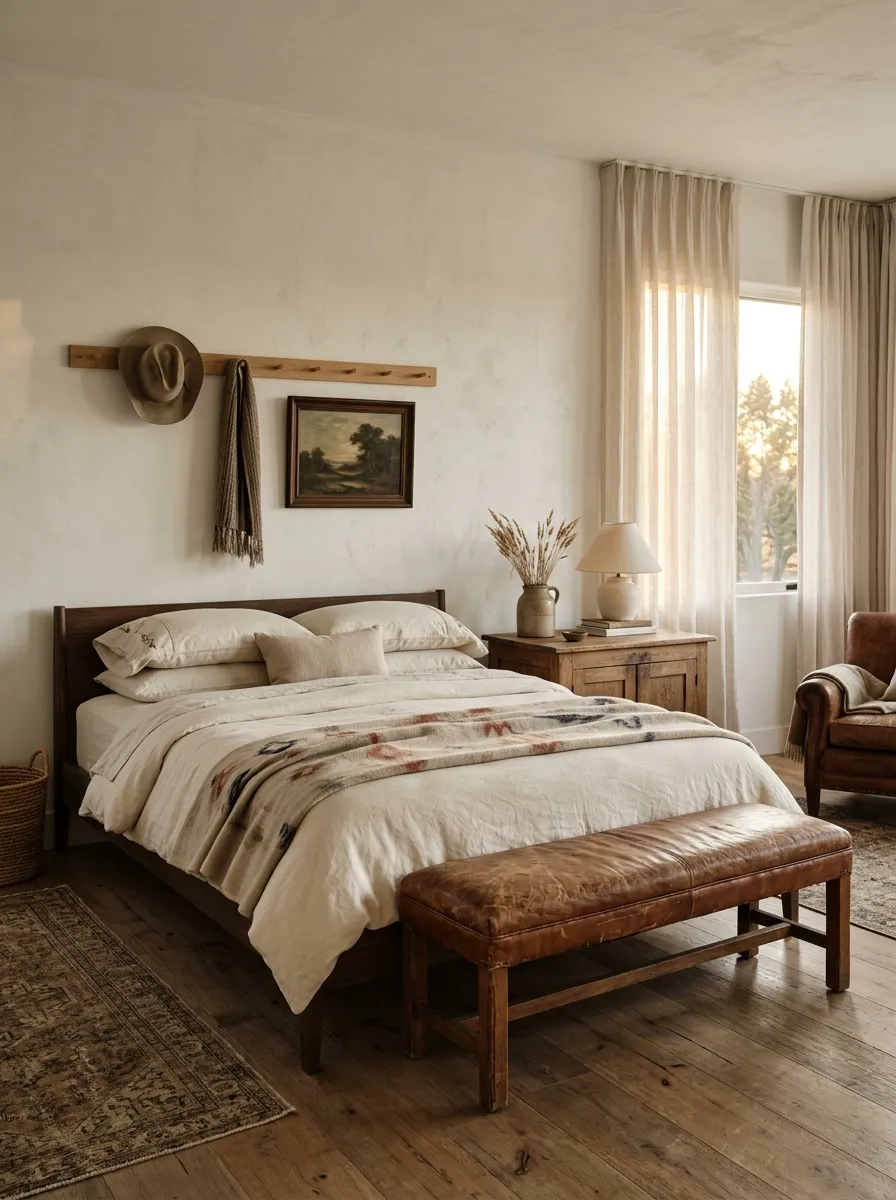
The bedroom shouldn’t look like a ranch showroom. It should feel softer, quieter, and a little worn in.
Start with a simple bed and let the textiles carry the Western influence. A faded wool blanket, striped coverlet, vintage-inspired quilt, or leather bench at the foot of the bed adds enough character without overwhelming the room.
Keep the formula restrained:
- Choose one patterned textile.
- Add one heavier woven layer.
- Finish with plain bedding in cream, oatmeal, or warm white.
The result feels collected instead of themed, especially when the wood furniture has a little age to it.
Choose Iron Hardware With a Forged Look
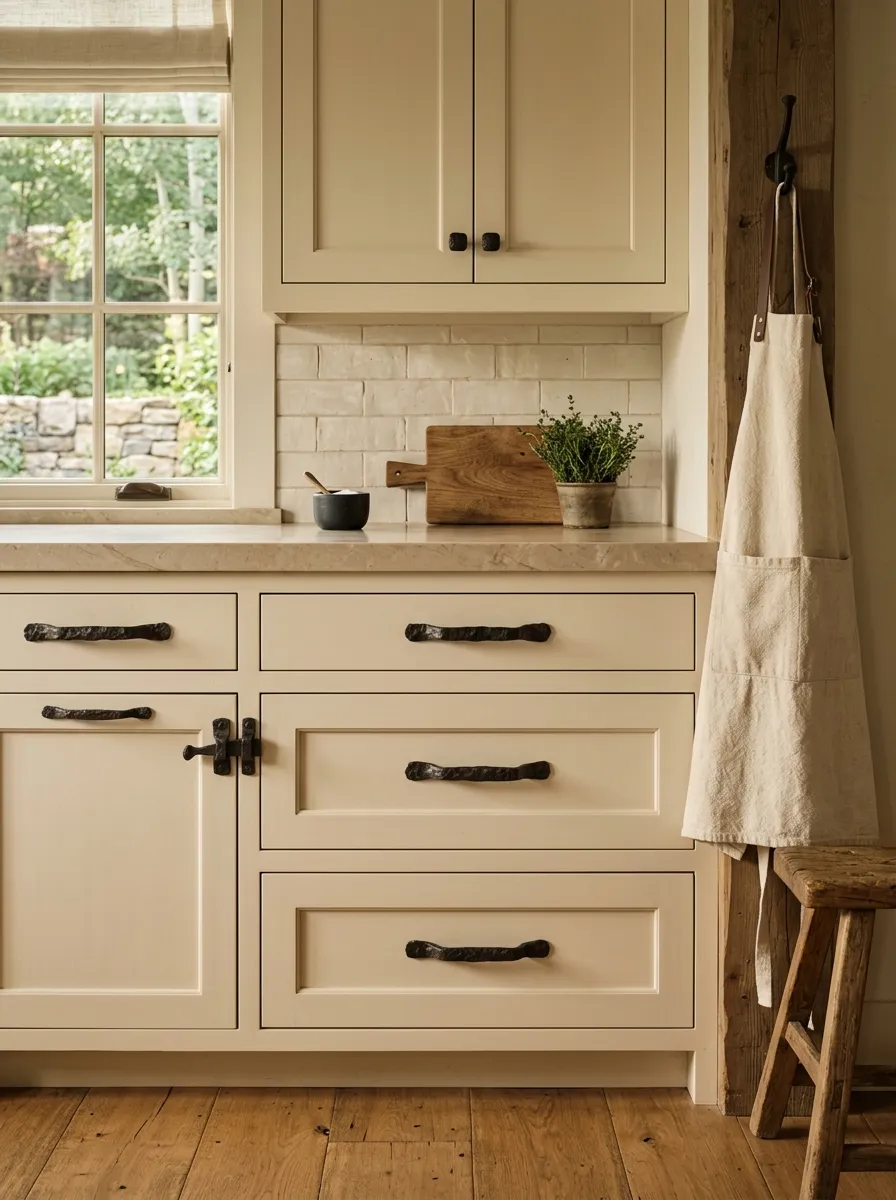
Tiny details can make a surprisingly big difference.
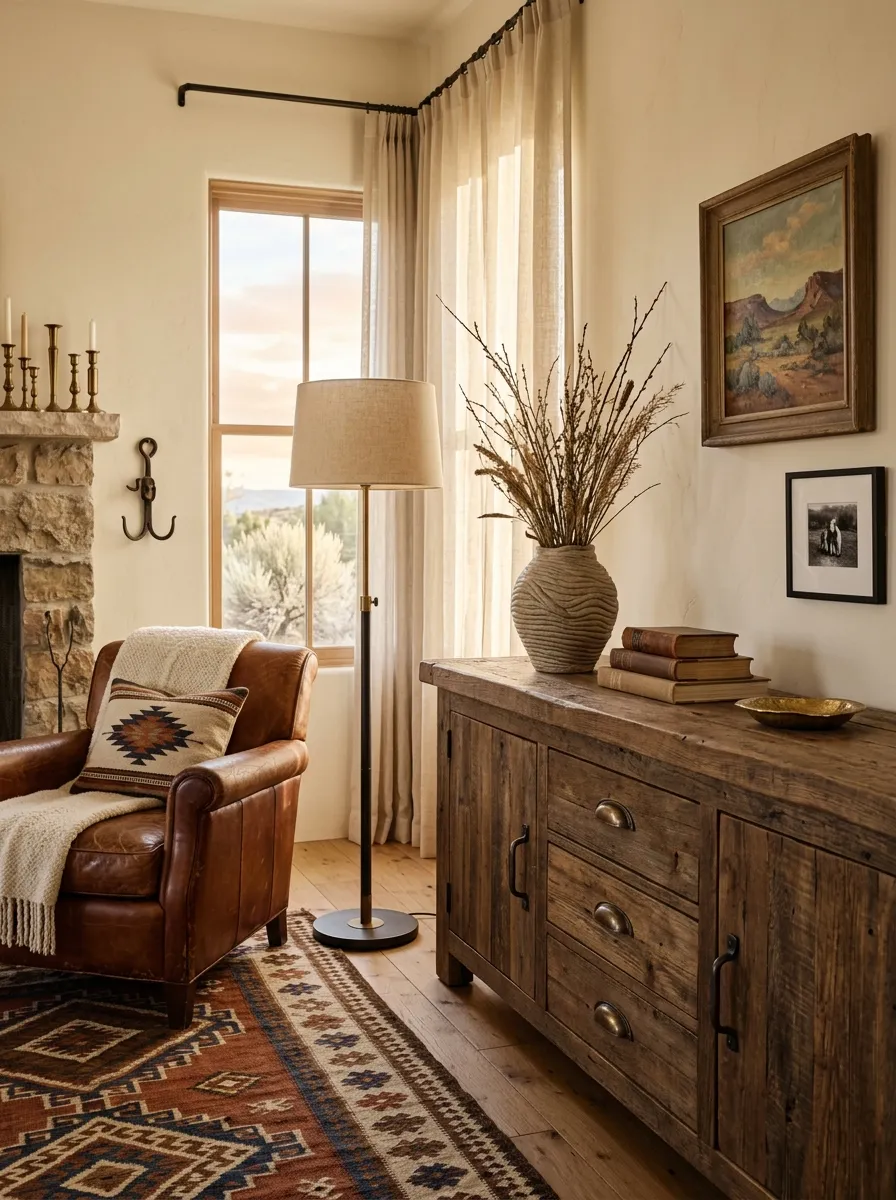
Bright, perfectly polished hardware often looks too new for vintage Western decor. Swap it for dark iron pulls, latches, hooks, or curtain rods with a slightly irregular, forged appearance.
You don’t need to replace every handle in the house.
Start with the pieces people touch most often:
- Cabinet pulls
- Interior door hardware
- Dresser handles
- Wall hooks
- Curtain rods
The trick is consistency, not quantity. Repeat the darker metal in a few places so it feels intentional.
Designer rule: If the hardware looks factory-perfect and shiny, it’s probably fighting the rest of the room.
Use an Old Dresser or Console as a Statement Piece
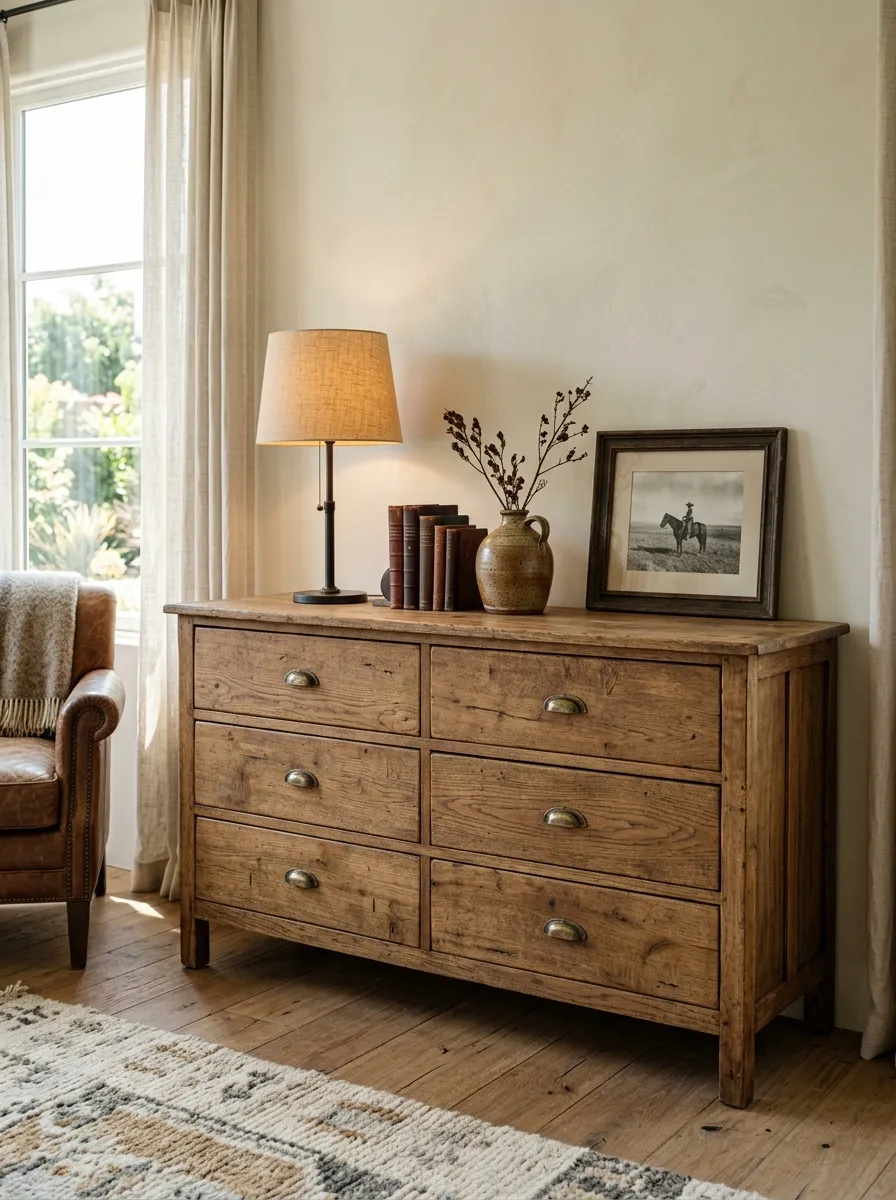
A vintage dresser can give a room more personality than a wall full of decorations.
Look for sturdy wood, visible grain, old drawer pulls, and signs of normal wear. The finish doesn’t need to be perfect. A few scratches are often what make the piece convincing.
Style the top with only a handful of objects. A ceramic vessel, old books, a small lamp, and one framed photograph are enough.
The empty space matters.
If every inch of the surface is covered, the furniture loses its impact and the room starts looking like a display booth.
Warm lamp
Ceramic piece
Old books
Small framed photo
Add Woven Textiles Without Going Full Rustic
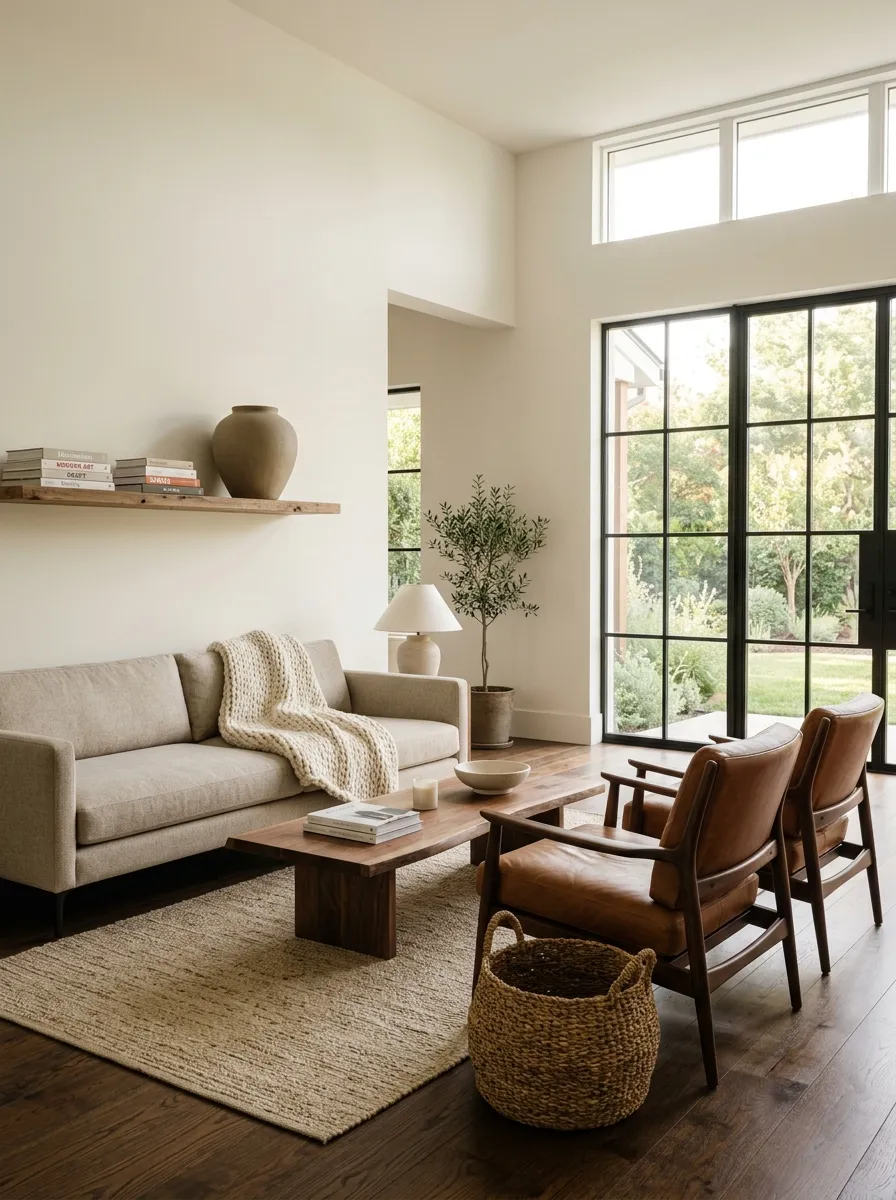
Woven texture is one of the easiest ways to make a Western room feel warm.
The mistake is piling every rustic texture into the same corner. You don’t need burlap, rope, fringe, wicker, leather, and chunky wool all competing at once.
Pick one or two.
A woven basket beside a leather chair works. So does a wool throw over a clean sofa. A simple jute runner can soften a dark wood hallway without making it look like a farmhouse catalog.
Keep one texture dominant and let the others stay quiet.
Quick styling test: Remove one rustic textile. If the room looks better, you had too much texture competing for attention.
Turn Vintage Cowboy Boots Into Decor
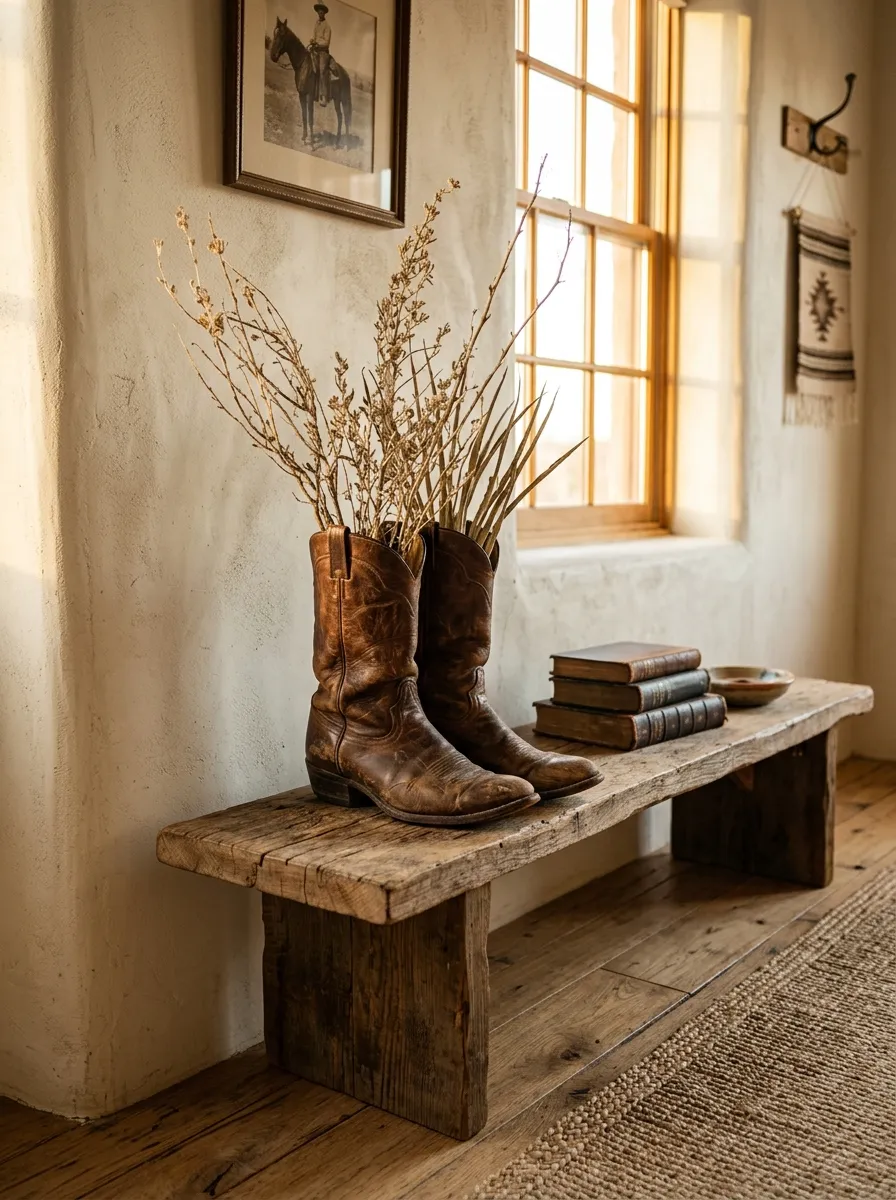
Old cowboy boots work best when they look like something someone actually wore.
Don’t line up several pairs around the house. One worn pair near an entry bench, fireplace, or bookshelf has far more impact.
Fill them with dried branches if you want a little height, but don’t over-style them. The scuffs, creases, and worn leather should remain visible.
A real vintage pair is especially useful because it brings a personal story into the room. That’s what separates meaningful Western decor from generic themed accessories.
One worn pair near an entry, hearth, or shelf.
Multiple pairs arranged like a store display.
Give the Kitchen a Western Feel With Wood, Brass, and Open Shelving
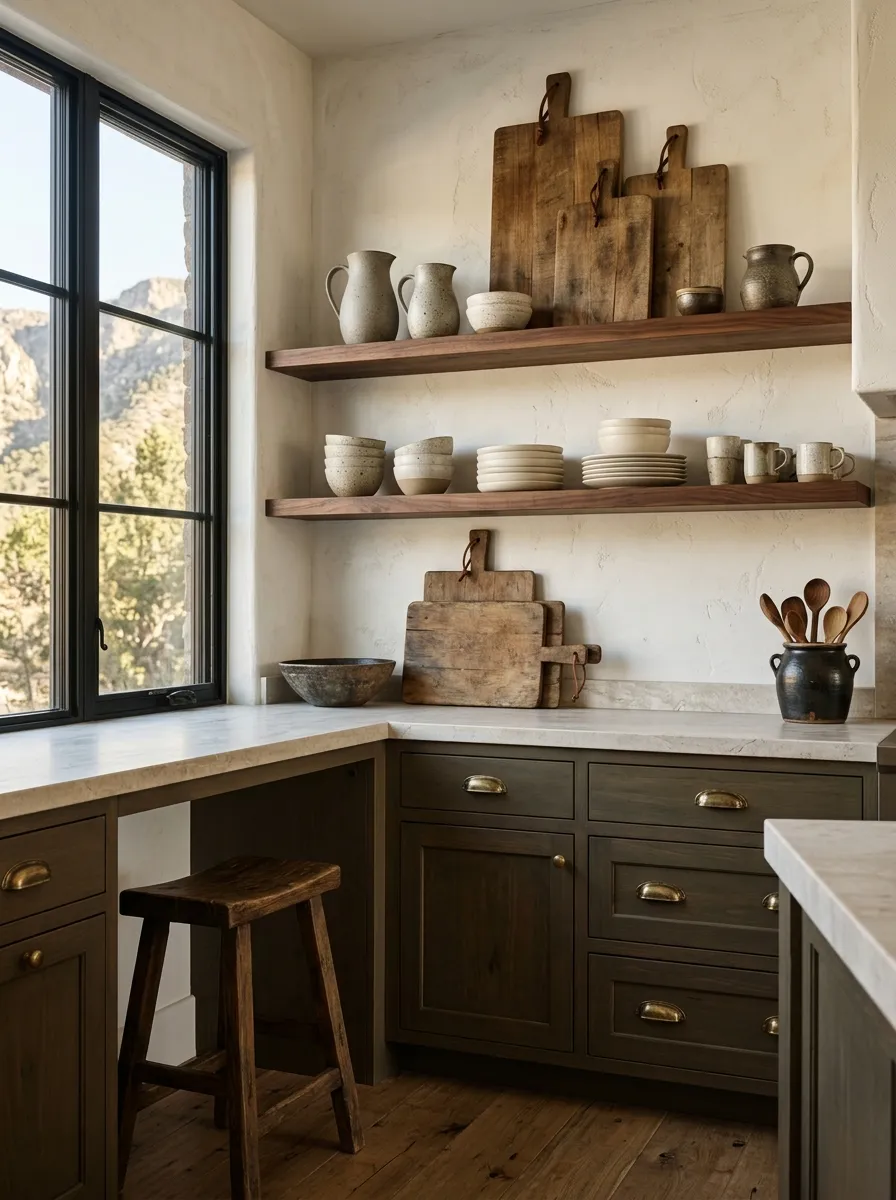
A Western kitchen doesn’t need cowboy signs or decorative saddles. The materials should do the talking.
Start with warm wood, aged brass, stone, or handmade-looking ceramics. Open shelving can work especially well when it’s filled with things you’d actually use, such as pottery, wooden cutting boards, old-looking bowls, and everyday dishes.
Keep the counters fairly clear. A few useful objects look more authentic than a dozen decorative pieces.
Kitchen formula: warm wood + aged metal + practical pottery = enough Western character.
If the kitchen already has modern cabinets, don’t replace everything. Changing the hardware and adding a few aged wood accents can shift the whole room.
Let One Cowhide Piece Do the Work
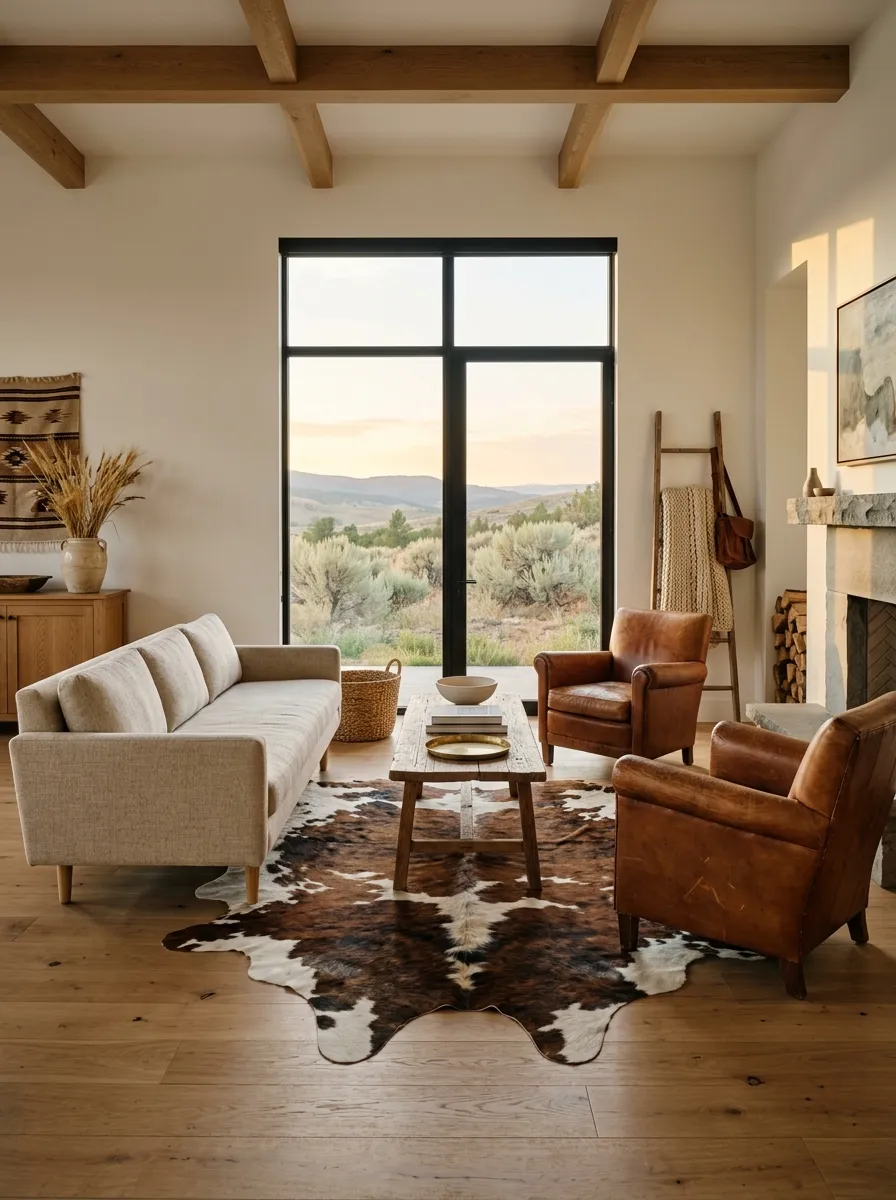
Cowhide can look fantastic in a Western home. It can also take over a room very quickly.
The mistake is repeating it on the rug, chairs, pillows, ottoman, and artwork. Choose one significant cowhide element and stop there.
A cowhide rug works well beneath simple furniture. A single cowhide-covered stool can add the same reference on a smaller scale.
The rest of the room should use calmer materials such as linen, wool, leather, and wood.
- One large cowhide rug
- Or one accent chair
- Or one small stool
Don’t use all three unless the room is exceptionally large and restrained elsewhere.
Rule: Cowhide should be an accent, not the background noise.
Style a Dining Room Around a Long Wood Table
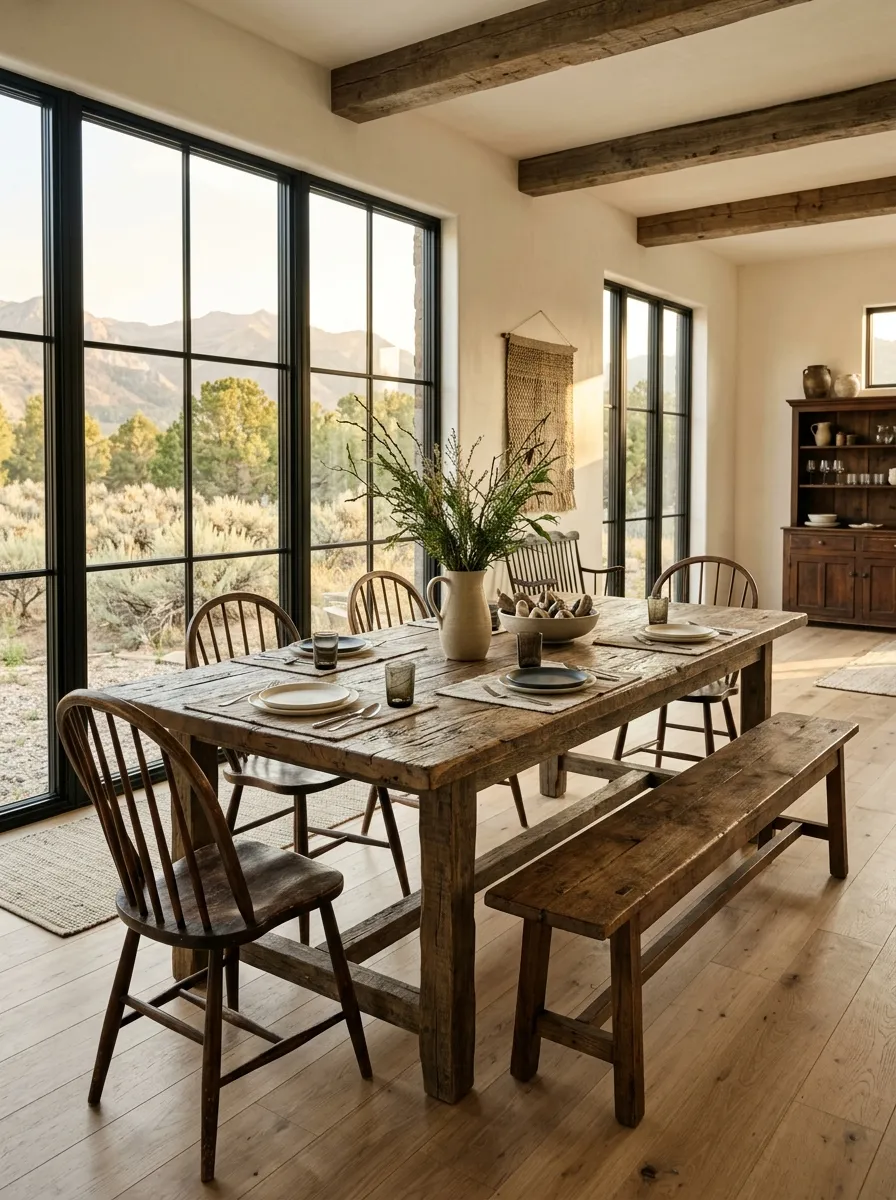
The dining room is one of the easiest places to make vintage Western style feel natural.
A substantial wood table immediately gives the room the right foundation. You don’t need matching rustic chairs. Mixing simple chairs with a worn bench often looks much more believable.
Keep the table styling practical. A ceramic pitcher, low bowl, or small branch arrangement is enough.
Swap Mass-Produced Art for Antique-Looking Pieces
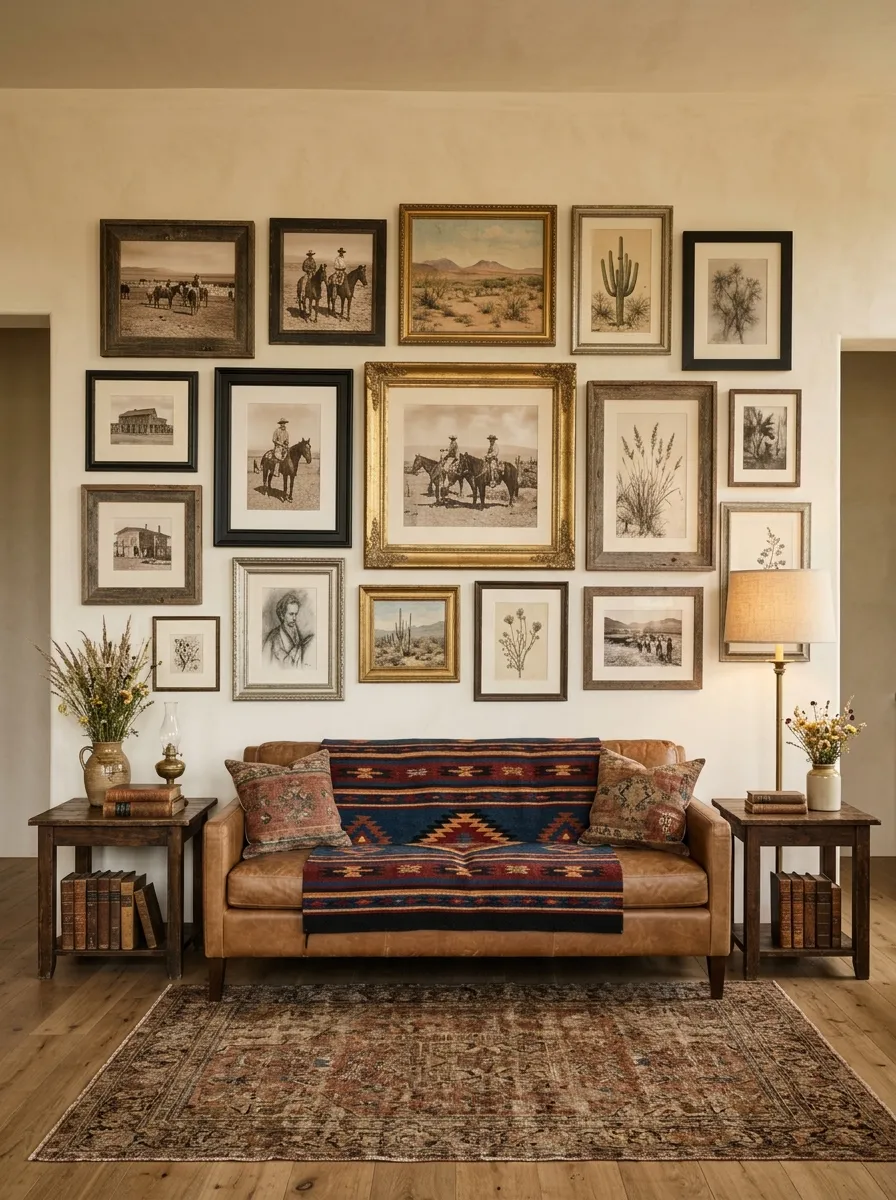
A room can have beautiful furniture and still feel generic if the walls are filled with obvious mass-produced prints.
Look for artwork that has age, texture, or a sense of place. Old ranch photographs, desert landscapes, horses, mountains, maps, botanical studies, and faded Western scenes all work.
You don’t need expensive originals.
The frame often matters just as much. Dark wood, worn gold, simple black, and distressed finishes can make an inexpensive print feel much more established.
Better move: Find one strong piece with personality instead of buying several pieces simply because they have a Western subject.
Use Terracotta to Warm Up Cool Rooms
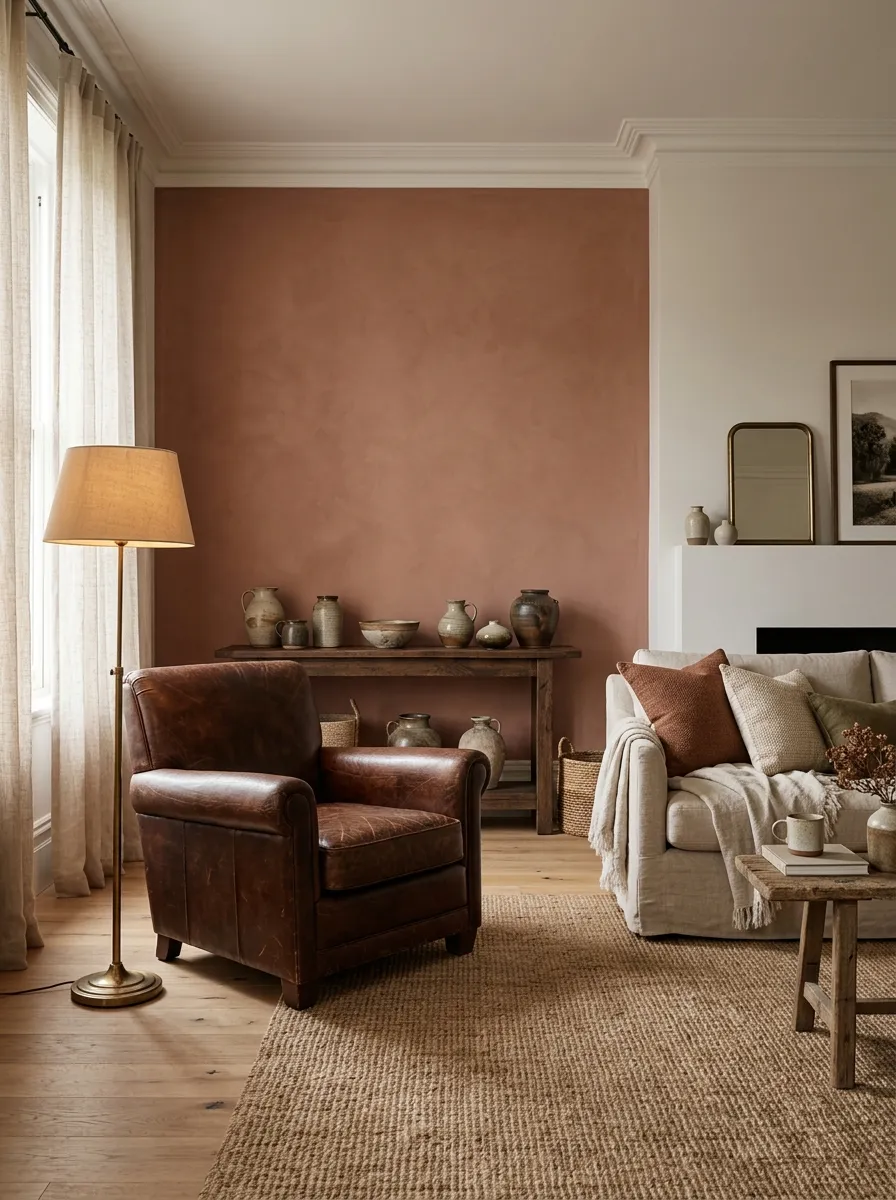
Some rooms have the right furniture but still feel too cold. That’s where terracotta earns its place.
Use it through pottery, small textiles, artwork, lampshades, or a muted accent wall. You don’t need bright orange. The strongest shades are dusty, earthy, and slightly faded.
Pair terracotta with cream, tobacco leather, dark wood, and aged brass.
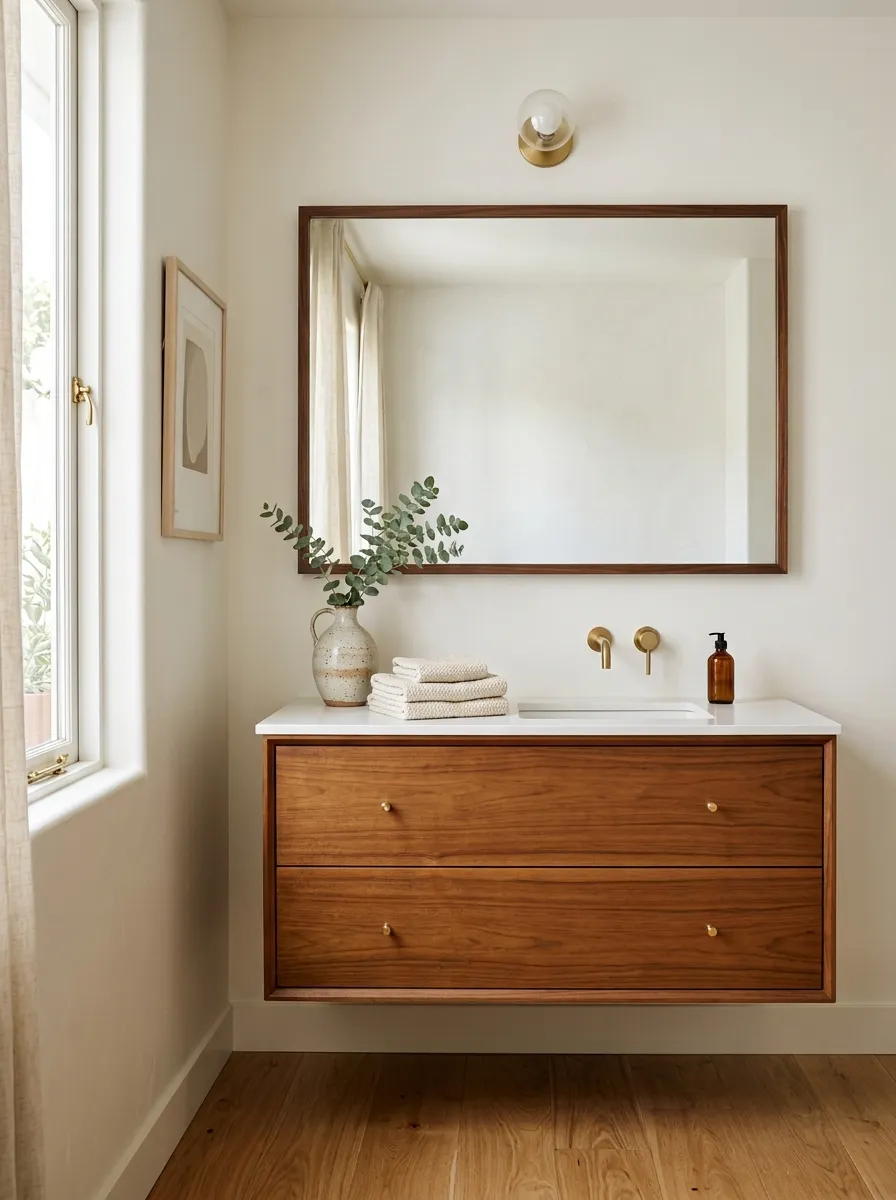
Give the Bathroom a Western Look With Aged Wood and Brass
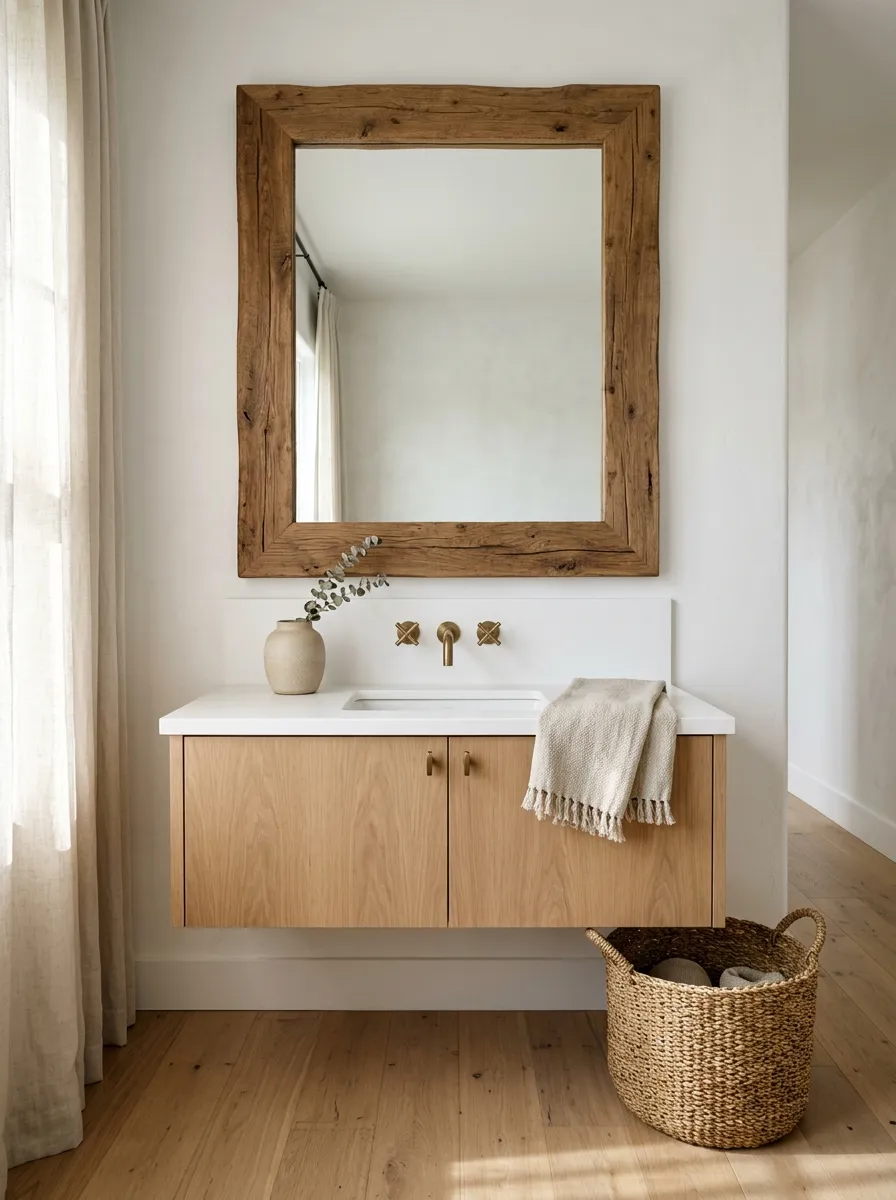
The bathroom doesn’t need a saddle or cowboy print to feel Western. In fact, those choices usually make a small bathroom feel cramped and themed.
Focus on the finishes instead. A wood-framed mirror, aged brass faucet, dark hardware, and a simple woven basket can give the room plenty of character.
If the bathroom is mostly white, that’s even better. The clean backdrop lets the warmer materials stand out without making the space feel dark.
Keep the counter nearly empty. One ceramic vessel and a folded neutral towel are enough.
Choose Plaid in Small, Controlled Doses
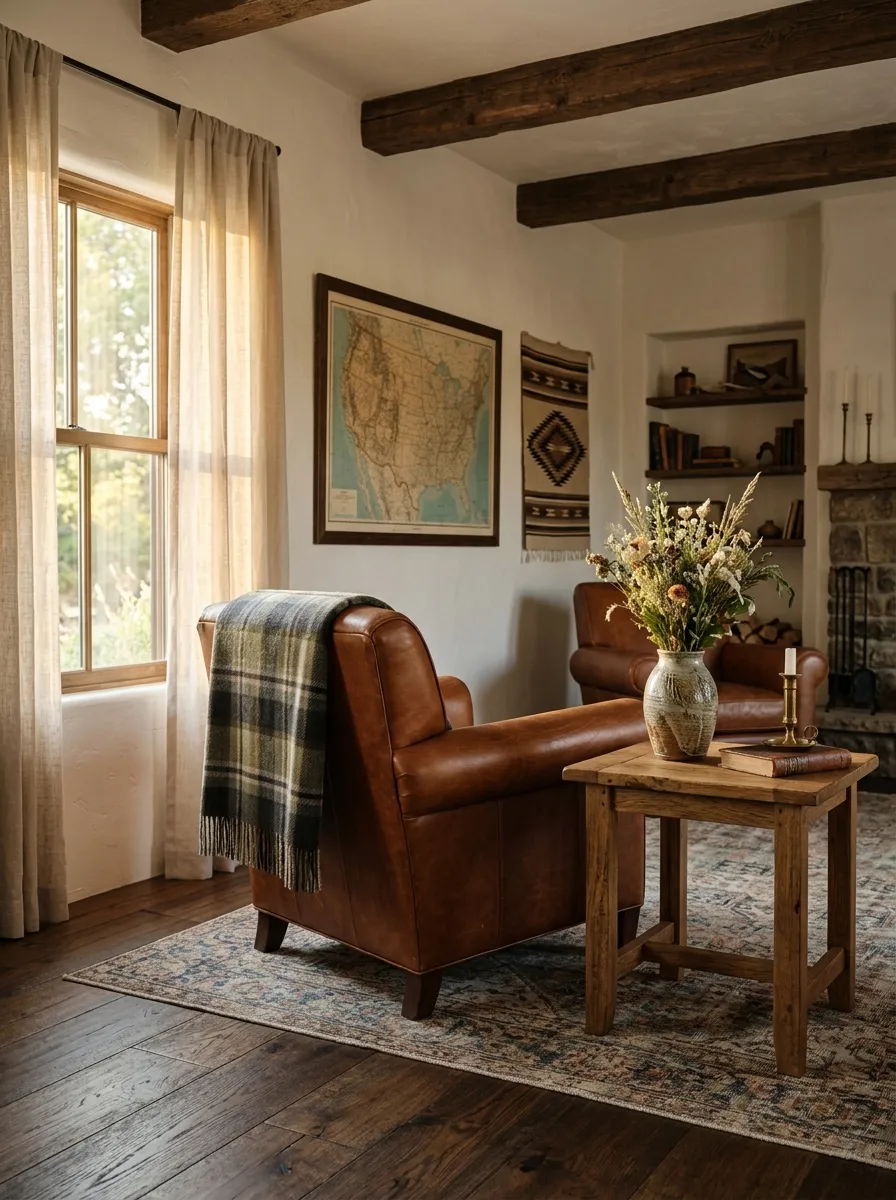
Plaid belongs in vintage Western interiors, but covering the room in it makes the style feel predictable.
Use it where the eye naturally lands. A plaid throw on a leather chair works. So does one lumbar pillow, a dining seat cushion, or a folded blanket at the foot of a bed.
Don’t use the same plaid in several places.
The strongest patterns usually have muted colors rather than bright, high-contrast checks.
Make a Reading Corner Feel Like a Ranch Retreat
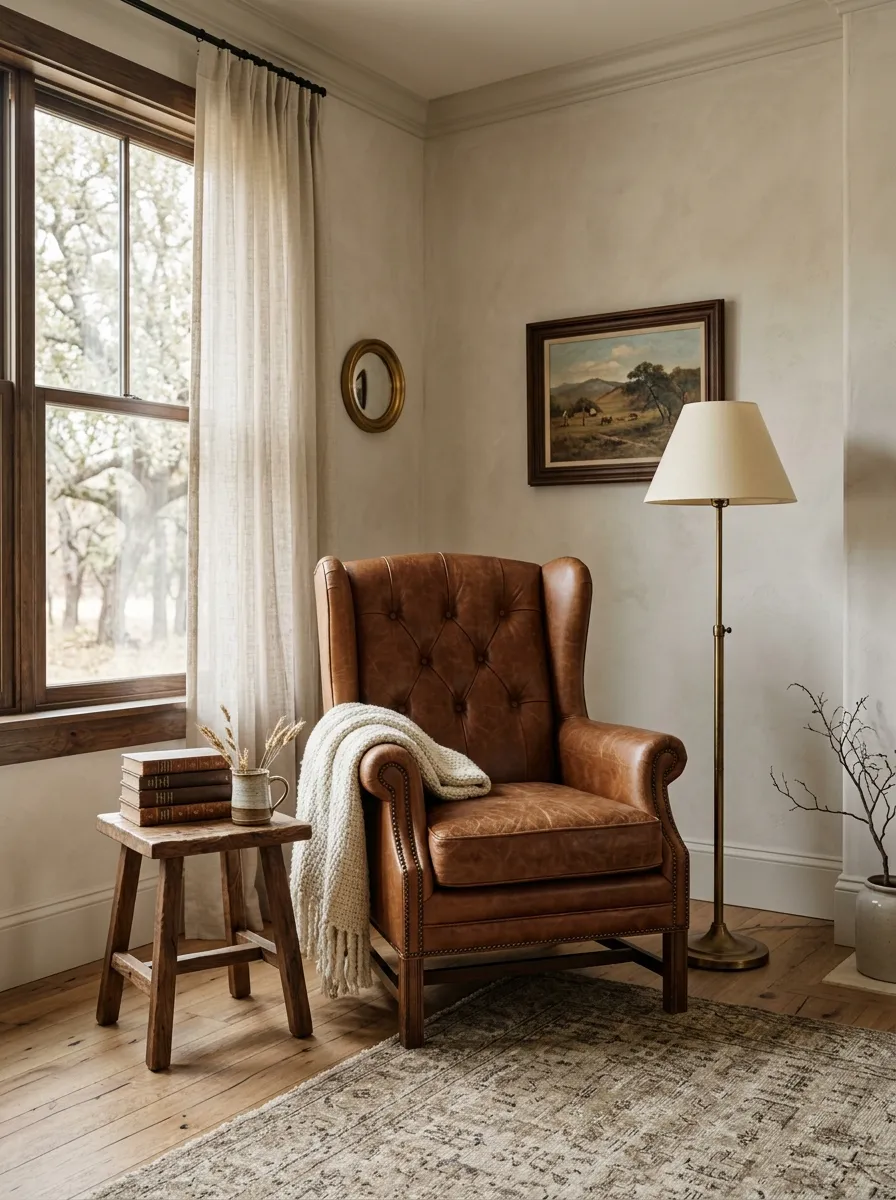
A quiet corner can carry the Western mood without needing much decoration.
Start with a comfortable leather or upholstered chair, then add a small wood side table and a warm floor lamp. A woven throw makes the corner feel lived in, while a stack of old books gives it a reason to exist.
Keep the floor around the chair clear. Don’t turn the corner into a storage pile.
- Comfortable chair
- Small aged wood table
- Warm lamp
- One throw
- A few books
That’s enough.
Best detail: Let the books and lamp look like they’re actually used. A staged reading corner loses its charm quickly.
Use Old Books and Objects to Build a Collected Shelf
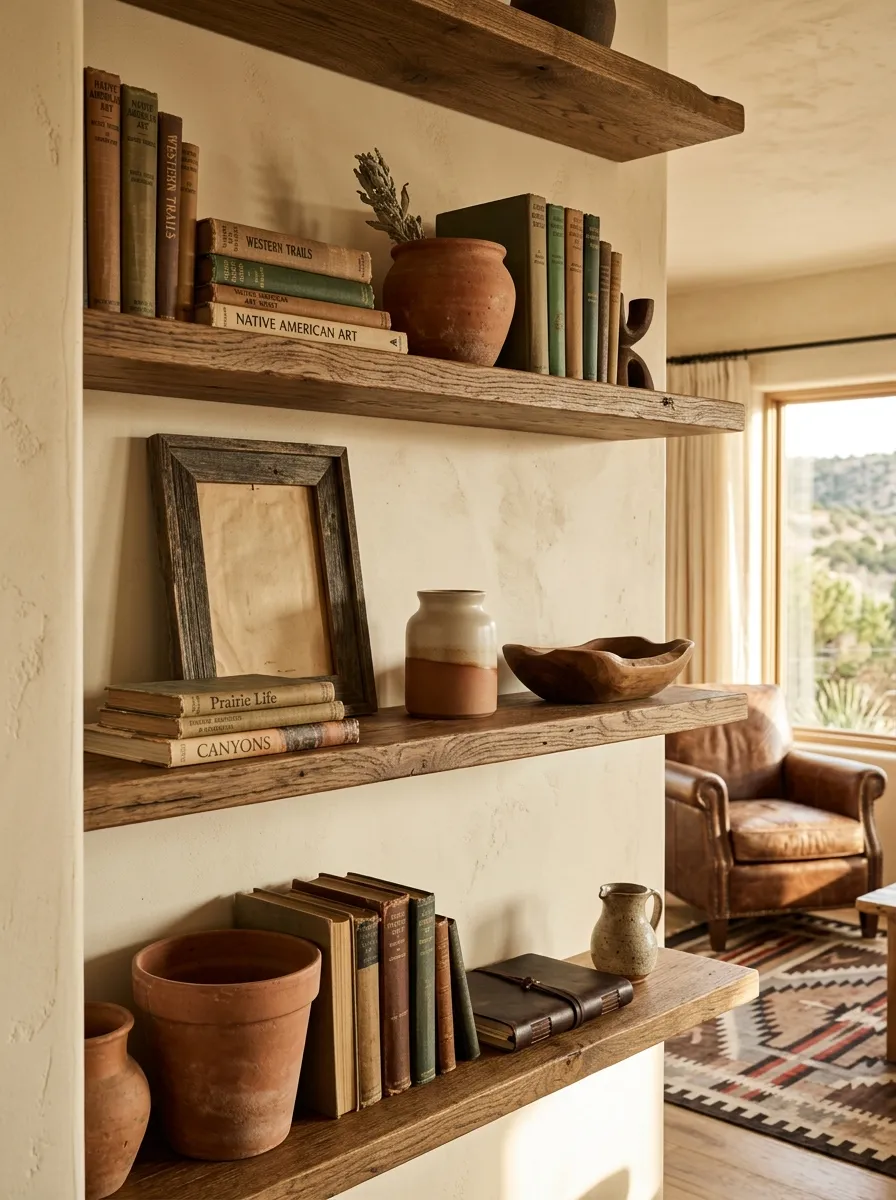
Open shelving can easily become a clutter trap. The trick is to give every object a little breathing room.
Mix books with pottery, small wood objects, old frames, and one or two Western references. Vary the height so the shelf doesn’t look like a row of identical decorations.
Don’t line everything against the back edge.
Replace Shiny New Metal With Aged Finishes
Bright chrome and vintage Western style rarely make a convincing pair.
That doesn’t mean every metal surface needs to look ancient. It means the finish should have some warmth and visual weight.
Choose aged brass, antique bronze, dark iron, or brushed finishes for hardware and small fixtures. Then repeat that metal in at least two areas of the room so it feels intentional.
Don’t mix five different metals just to make the room look collected. That creates visual noise instead.
Create a Western Entryway That Looks Collected, Not Themed
The entryway sets the tone before anyone reaches the living room. Keep it simple.
A narrow wood console, an old mirror, a leather stool, and a few sturdy hooks can establish the Western character without taking up much space. If you have room, add one vintage rug runner underfoot.
The key is giving every piece a job.
- Console: keys and everyday items
- Mirror: makes the small area feel larger
- Hooks: coats, hats, or bags
- Stool: useful when putting on shoes
Don’t fill the entryway with signs and accessories. A few well-worn pieces look far more convincing.
Best move: Choose one object with genuine age, then keep everything around it quiet.
Use Vintage Frames to Add Character to Blank Walls
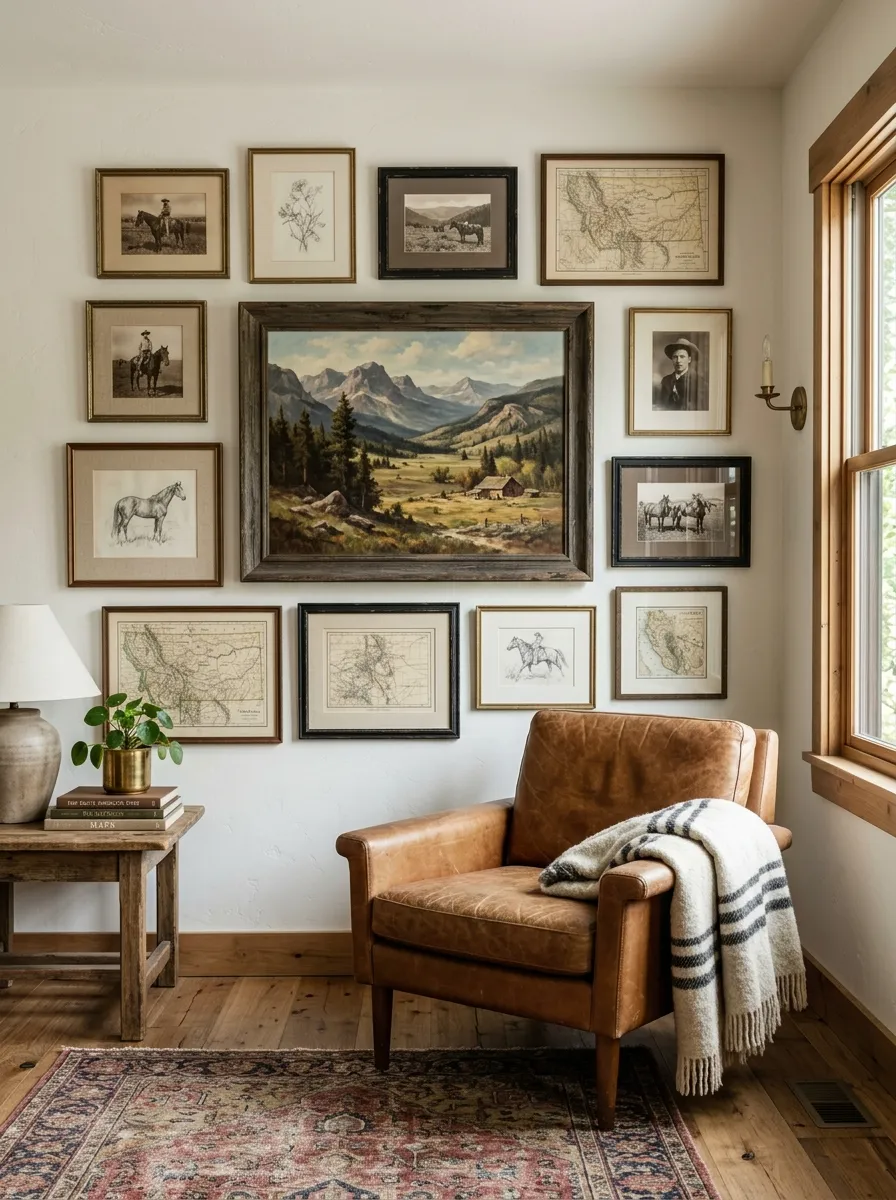
A wall doesn’t need a huge Western statement piece to feel finished.
Collect a few frames with different finishes, then use them around photographs, landscapes, maps, sketches, or simple prints. Dark wood, worn black, aged brass, and muted brown frames work especially well together.
Hang them as a loose grouping rather than forcing every frame into a perfect grid.
The variation is what makes the wall feel collected.
Start with the largest frame, place it slightly off-center, then build around it with smaller pieces.
Keep Cowhide, Leather, and Wood From Competing
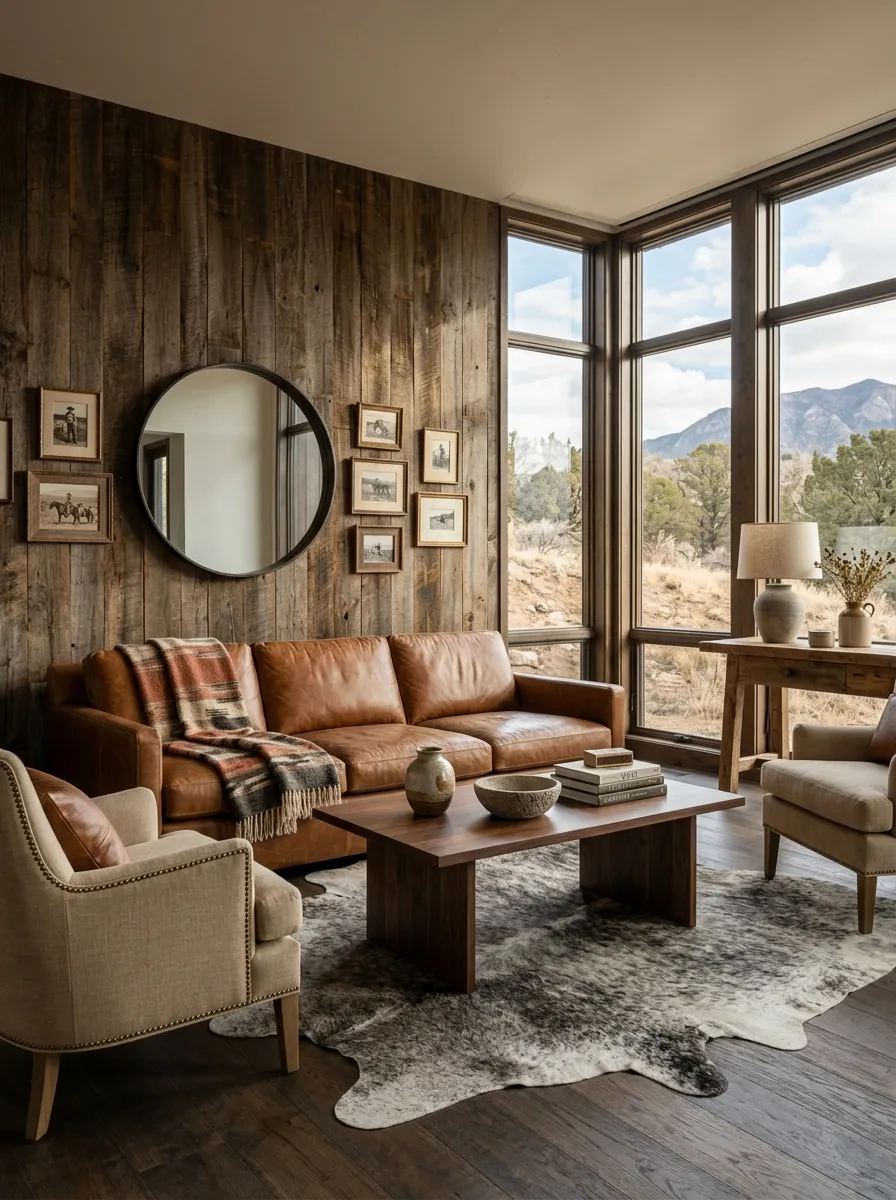
Vintage Western decor depends heavily on natural materials, but using too much of everything creates a heavy room.
Think about what each material is doing.
Leather provides weight. Wood brings warmth. Cowhide adds pattern. Woven textiles soften the harder surfaces.
You don’t need every material in every corner.
Simple rule: If the room already has a large leather sofa and a heavy wood table, skip another large leather piece and bring in a softer textile instead.
That contrast keeps the room comfortable rather than visually dense.
Add One Unexpected Modern Piece
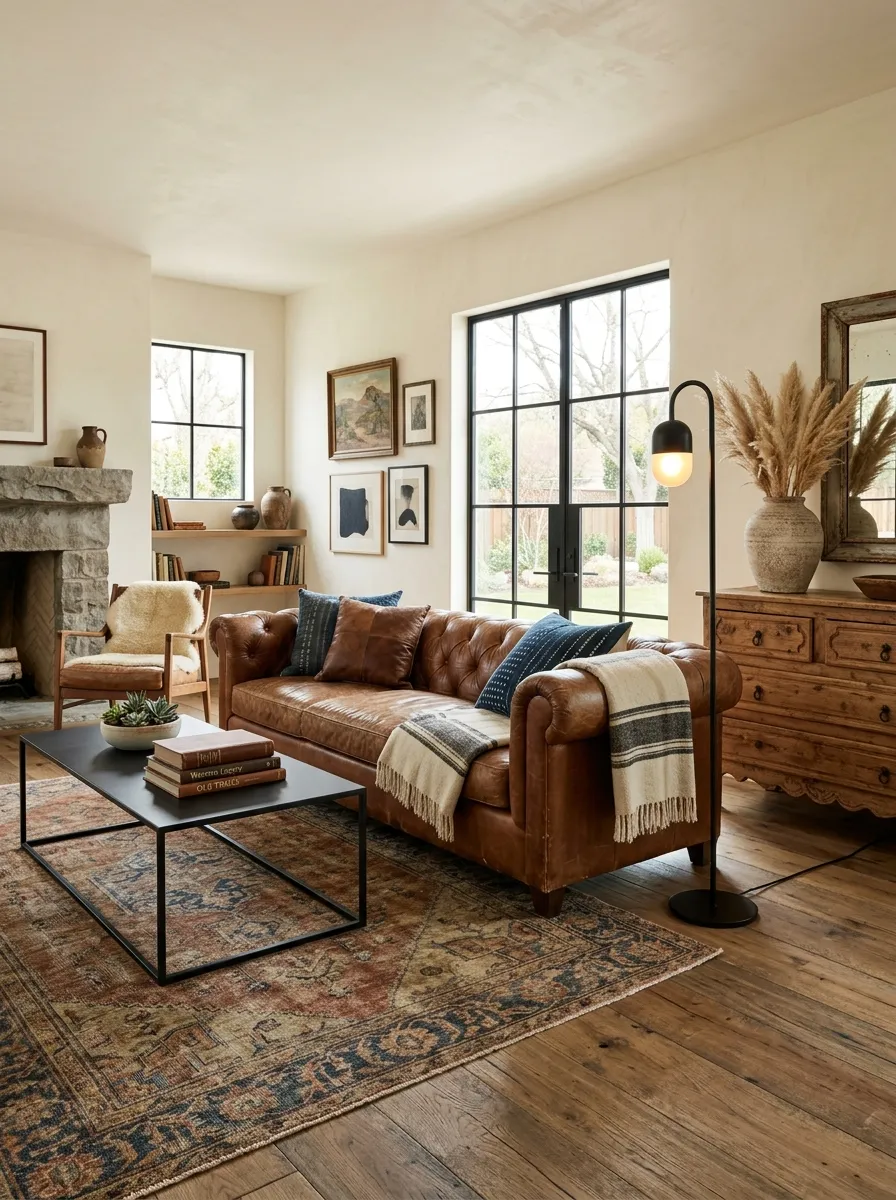
A room made entirely from vintage-looking furniture can start feeling like a museum.
That’s why one clean modern piece often makes the whole space look better. Try a simple contemporary lamp beside an old dresser, a streamlined chair near a vintage trunk, or a clean-lined coffee table against a weathered sofa.
The contrast gives the older pieces more presence.
Don’t make everything match the era.
A home should look like people live there now, even when its style takes inspiration from another time.
Best pairing: One clean modern shape + several aged materials. The tension keeps the room fresh.
Finish With a Small Collection of Meaningful Western Finds
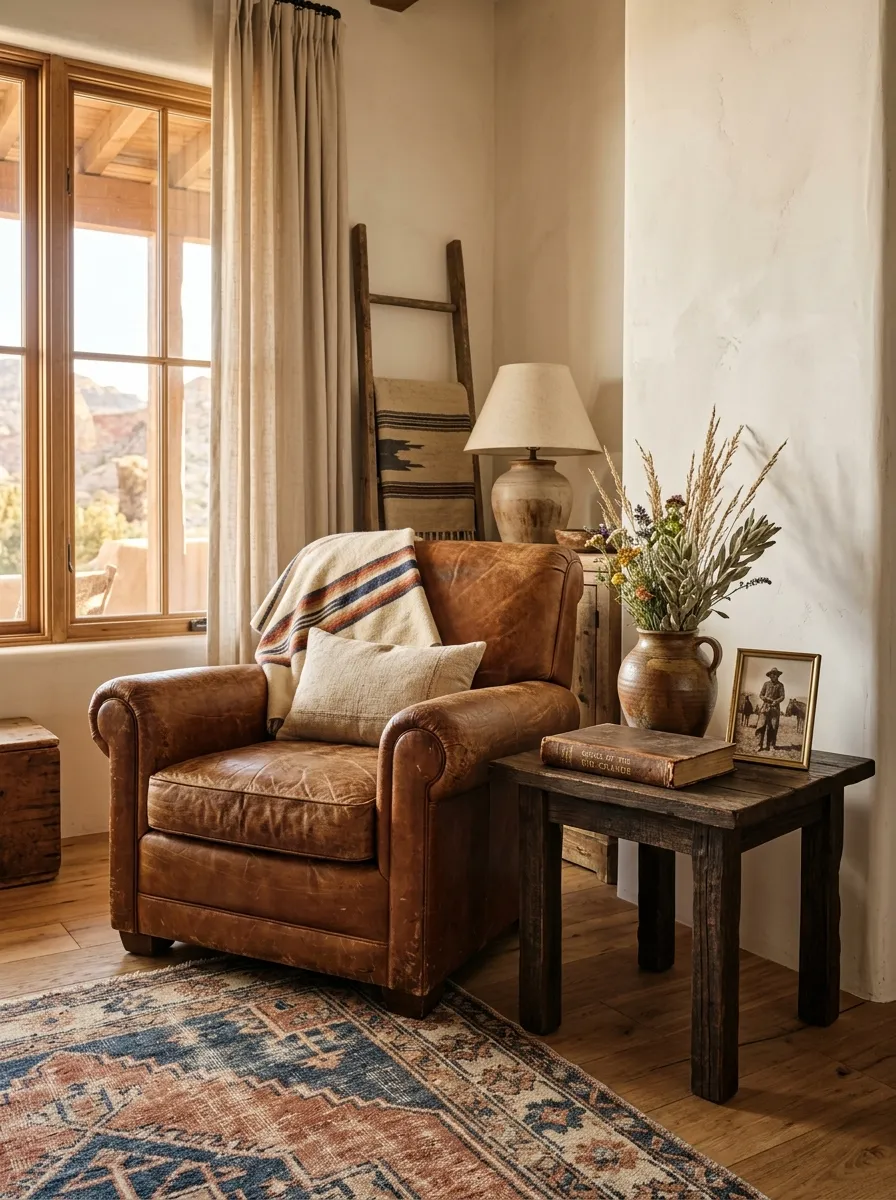
The final layer shouldn’t be a shopping spree. It should be the handful of objects that make the house feel like it belongs to someone.
Maybe that’s an old photograph, a vintage pottery piece, a worn leather book, a small Western artifact, or something picked up during a road trip. The object doesn’t need to be valuable.
It just needs to feel believable.