
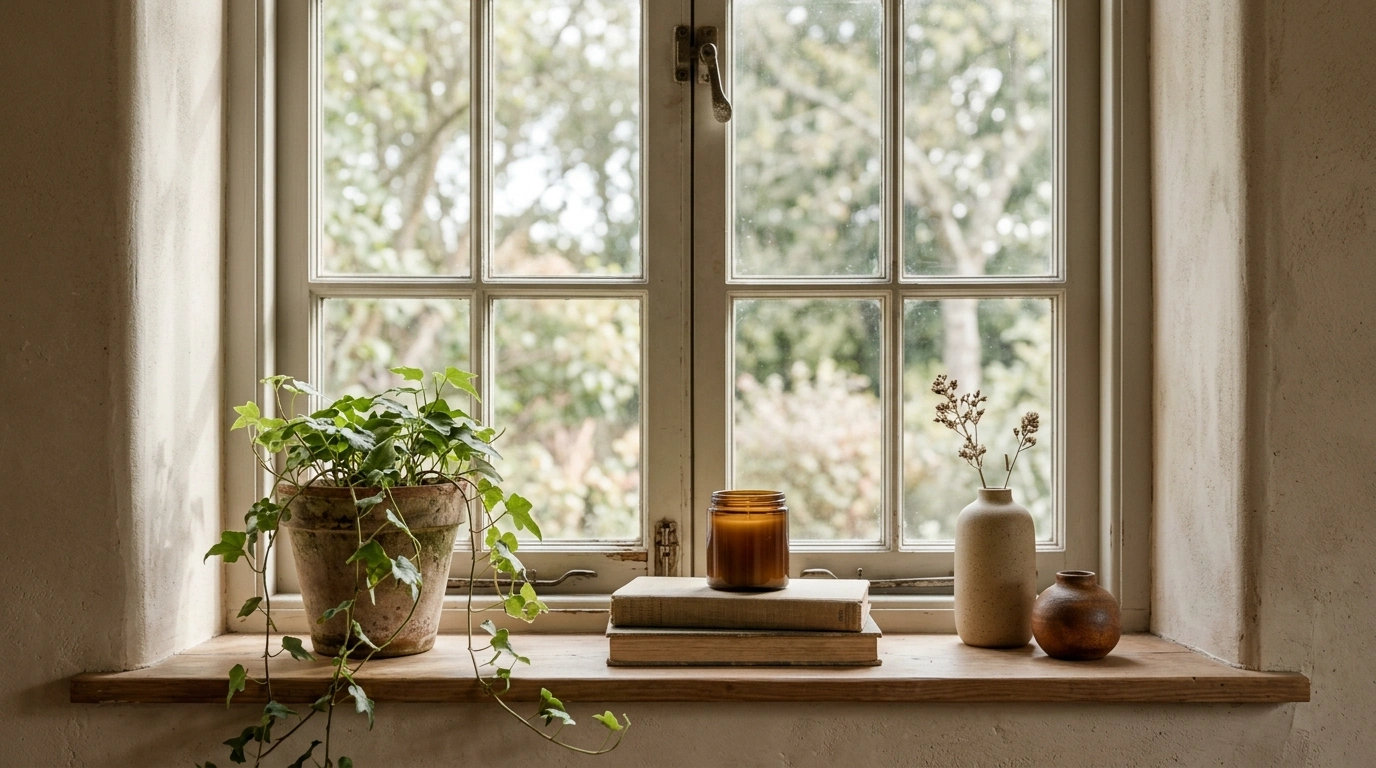
Some windowsills look less decorated than abandoned by a very indecisive person. There’s a plant fighting for sunlight, a candle nobody lights, a souvenir with no apparent job, and about six inches left to open the window. Buying another vase isn’t going to solve that situation.
Good window sill decor ideas start with the whole scene, not a shopping list. The window frame, natural light, curtains, wall color, nearby furniture, and actual depth of the ledge all affect how the finished arrangement looks.
A deep stone sill can handle books and pottery. A narrow painted ledge needs a lighter hand. A sunny kitchen window has different needs than a bedroom corner that barely sees daylight.
The Windowsill Group Chat
Your windowsill is not a lost-and-found box.
One plant is a design choice. Seven unrelated objects are a group project where nobody took the lead.
The plant: “Sunlight, please. The curtain is not my personal nemesis.”
The tiny vase: “Happy to be here. No idea what my job is.”
The clutter: “We thought this was a group project.”
The design rule the window desperately needs:
Pick a main character. Greenery, sculptural ceramics, a reading nook, or seasonal color. Let everything else play a supporting role. Keep the view visible, the window usable, and the random-object allegations to a minimum.
Window Sill Decor
Sunlit Indoor Garden With Terracotta Pots and Trailing Greenery
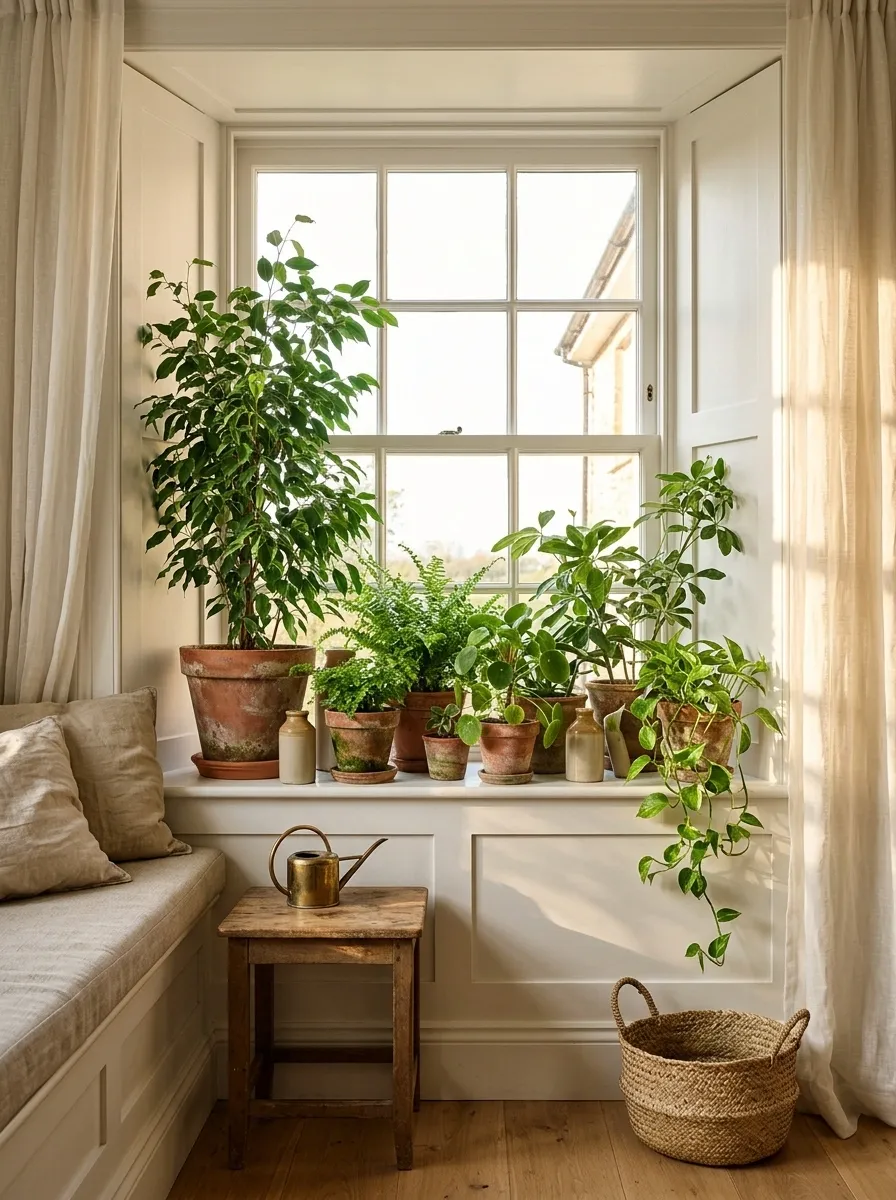
A windowsill full of healthy greenery has a way of making a room feel connected to the outdoors. Terracotta pots bring warmth to a white sill, while a taller leafy plant gives the arrangement height and a trailing vine softens its edges. Keep the largest plant near one end, group medium pots through the center, and let only one plant spill toward the edge. The mix looks natural without turning into a botanical traffic jam.
Match the plants to the actual light conditions, not the amount of sunlight the listing photo claims the room gets. Leave enough space to reach the window latch and move the curtains.
THE PLANT LINEUP
Give every plant a place.
BACK
Tall foliage
Creates height without filling every inch of glass.
CENTER
Medium pots
Creates a fuller middle without a wall of leaves.
EDGE
Trailing stems
Adds movement. Keep it clear of handles and fabric.
The plot twist: Check each plant’s light needs before choosing its seat.
Minimalist Window With Three Sculptural Ceramic Objects
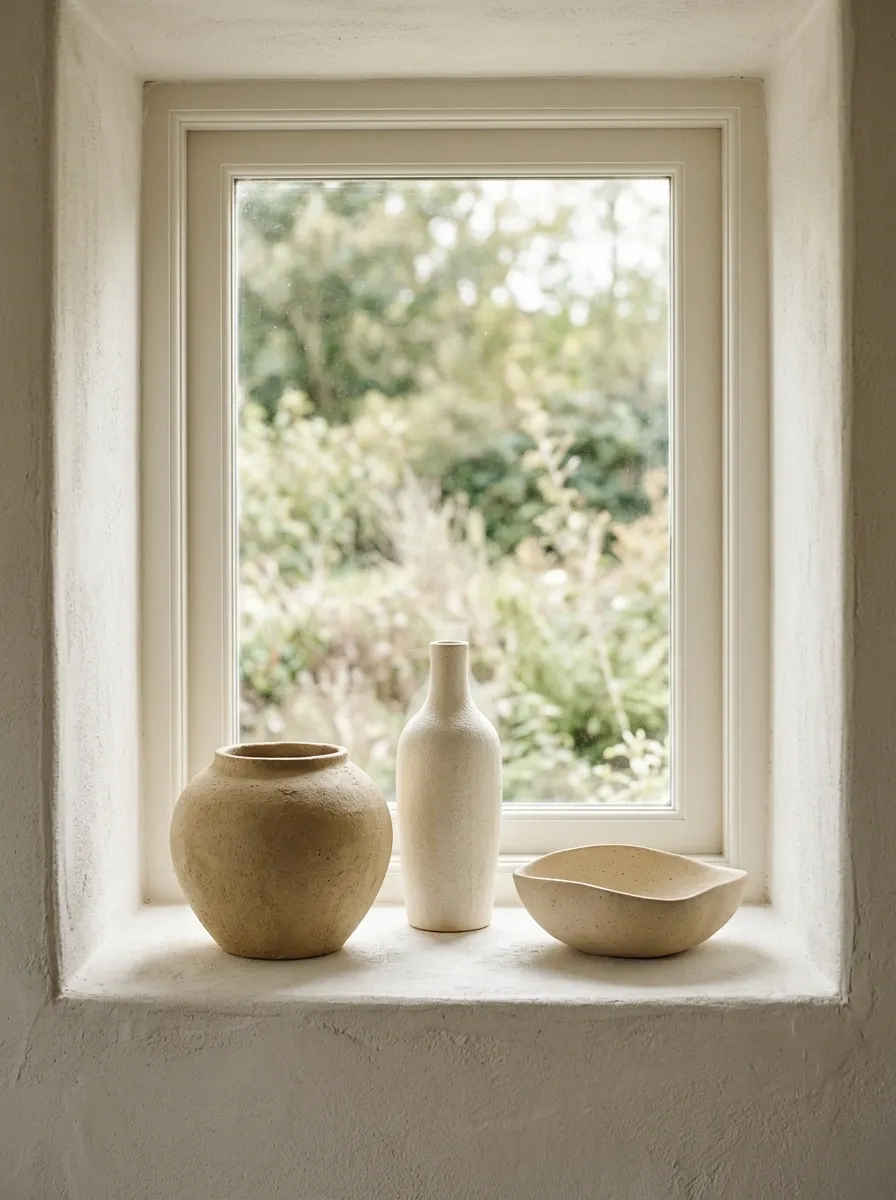
Three well-chosen vessels can say more than a dozen little accessories fighting for attention. This minimalist composition pairs a rounded ceramic pot with a taller narrow vase and a low sculptural bowl. The pieces share an ivory and sand color family, but their different silhouettes stop the arrangement from looking like a matching gift set.
Keep the surrounding surfaces quiet and let the window frame create the structure. Matte ceramics work especially well against smooth painted wood or textured plaster because the subtle surface differences become part of the design. The secret is restraint, not simply buying fewer things and calling it minimalism.
A STUDY IN RESTRAINT
Three shapes.
One quiet palette.
Let silhouette do the work. Matching everything is easy. Making different shapes look related takes a little more thought.
Deep Window Sill Styled as a Reading Nook
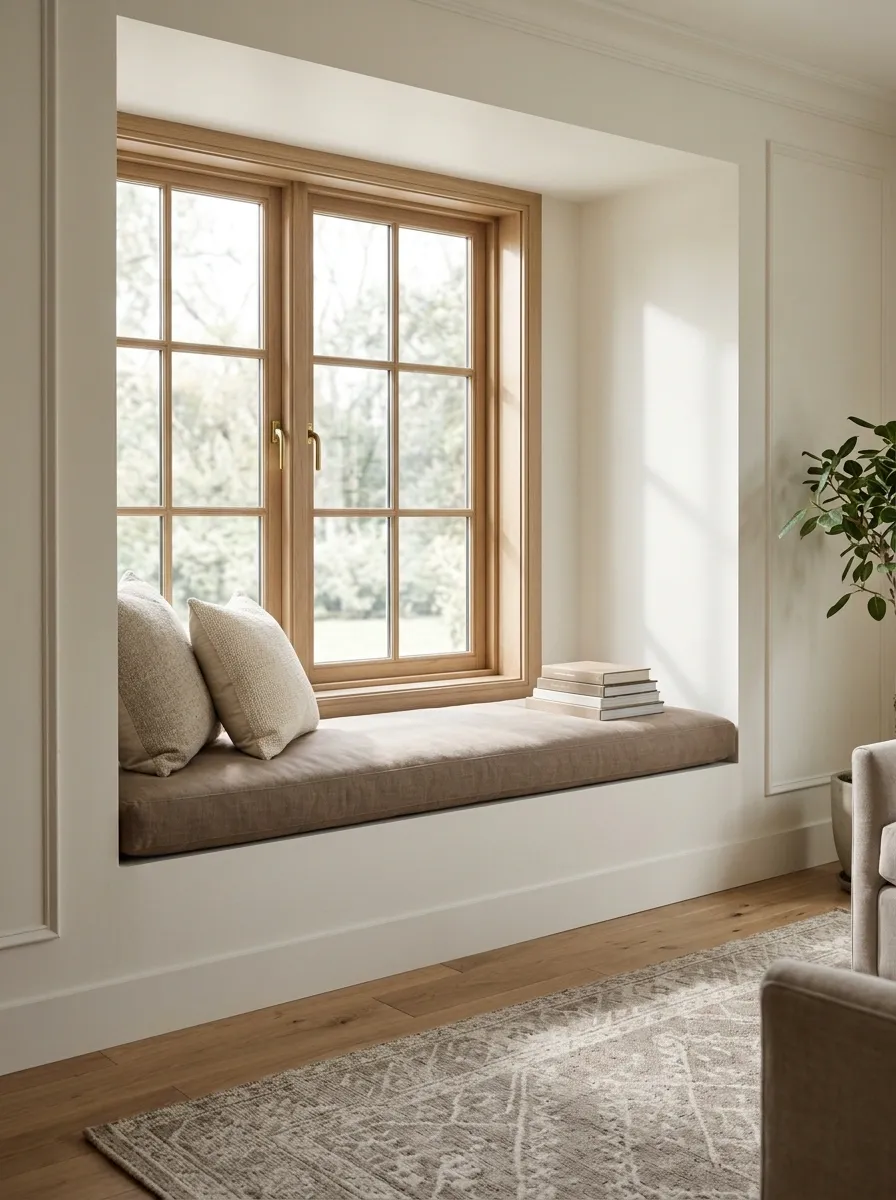
A deep window ledge has more potential than a narrow display shelf. Treat it as a small reading nook, with a fitted cushion, two comfortable pillows, and a short stack of books that looks ready to be picked up. Choose fabric that repeats a color from the nearby rug or upholstery so the window seat belongs to the room.
Keep the books toward one side rather than scattering them across the cushion. The seat needs to remain usable, not become an elaborate obstacle course. Before styling, check the depth, the condition of the sill, and whether the window opens inward. A pretty reading nook is less charming when sitting down requires moving seven objects first.
THE WINDOW SEAT PLAN
A place to sit, not just a place to store things.
MAIN ZONE
Cushion + pillows
Keep enough clear depth for comfortable sitting.
SIDE ZONE
Reading stack
Keep books together and off the seating area.
Before adding cushions: Check opening clearance, the sill’s condition, and whether the seat can safely support regular use.
English Cottage Window With Geraniums and Soft Linen
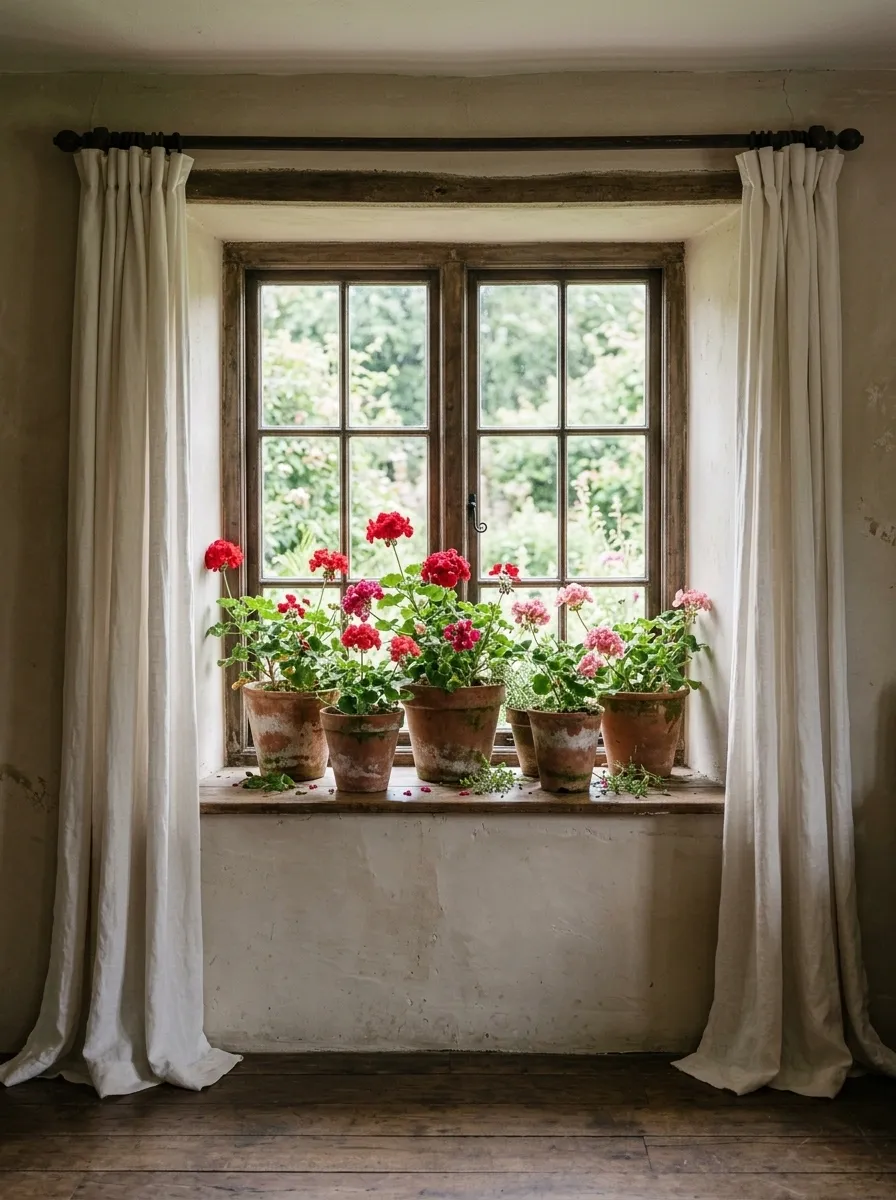
This cottage look feels collected over time rather than assembled in one shopping trip. Geraniums in weathered terracotta sit against timber trim, while soft linen curtains frame the view without hiding the flowers. A muted wall color and lightly worn surfaces give the scene character. The result should feel a little imperfect, because a cottage window that looks like a furniture showroom has missed the assignment.
Keep the flower pots in a loose group and let the curtain fabric remain simple. Too many floral prints, ornamental objects, and distressed finishes can push the room into theme-park territory. The strongest version balances the old-fashioned details with open glass and a clear, natural view.
THE COTTAGE WINDOW PALETTE
Soft flowers. Honest materials. Nothing too polished.
The materials should feel related, not identical. Worn timber, textured pottery, soft fabric, and live greenery provide enough variation without extra ornaments.
Organic Neutral Window With Stoneware and Natural Branches
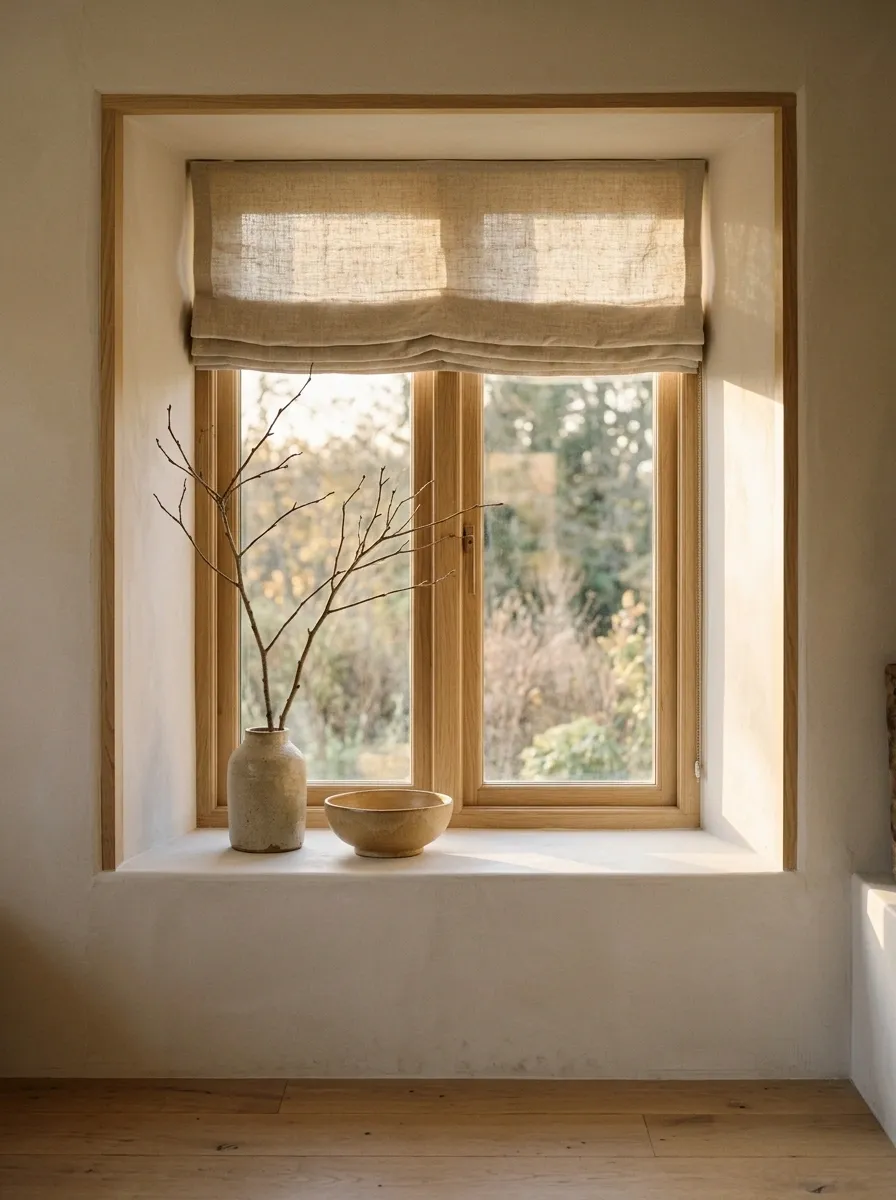
This window is all about texture, not a parade of matching beige objects. Pale plaster, natural oak, oatmeal linen, and handmade stoneware create a warm, quiet backdrop. A single branching stem adds height and an irregular shape, while a low ceramic bowl anchors the arrangement. The contrast is subtle, but that’s the point.
Keep the finish mix varied. Smooth wood, rough pottery, soft fabric, and the delicate lines of a branch prevent the neutral palette from falling flat. This look works particularly well in rooms with natural materials and uncluttered furniture. Just avoid filling the whole sill with accessories in nearly identical shades. Beige has range, but it still needs something interesting to do.
MATERIAL NOTES
Neutral doesn’t have to mean flat.
Oak
Warm grain adds structure.
Stoneware
Matte texture adds visual weight.
Branches
Fine, uneven lines keep the scene organic.
Linen
Softens the stronger surfaces.
The winning combination is texture against texture. Four different surfaces are more interesting than twelve objects in the exact same shade.
Colorful Eclectic Window With Art and Collected Objects
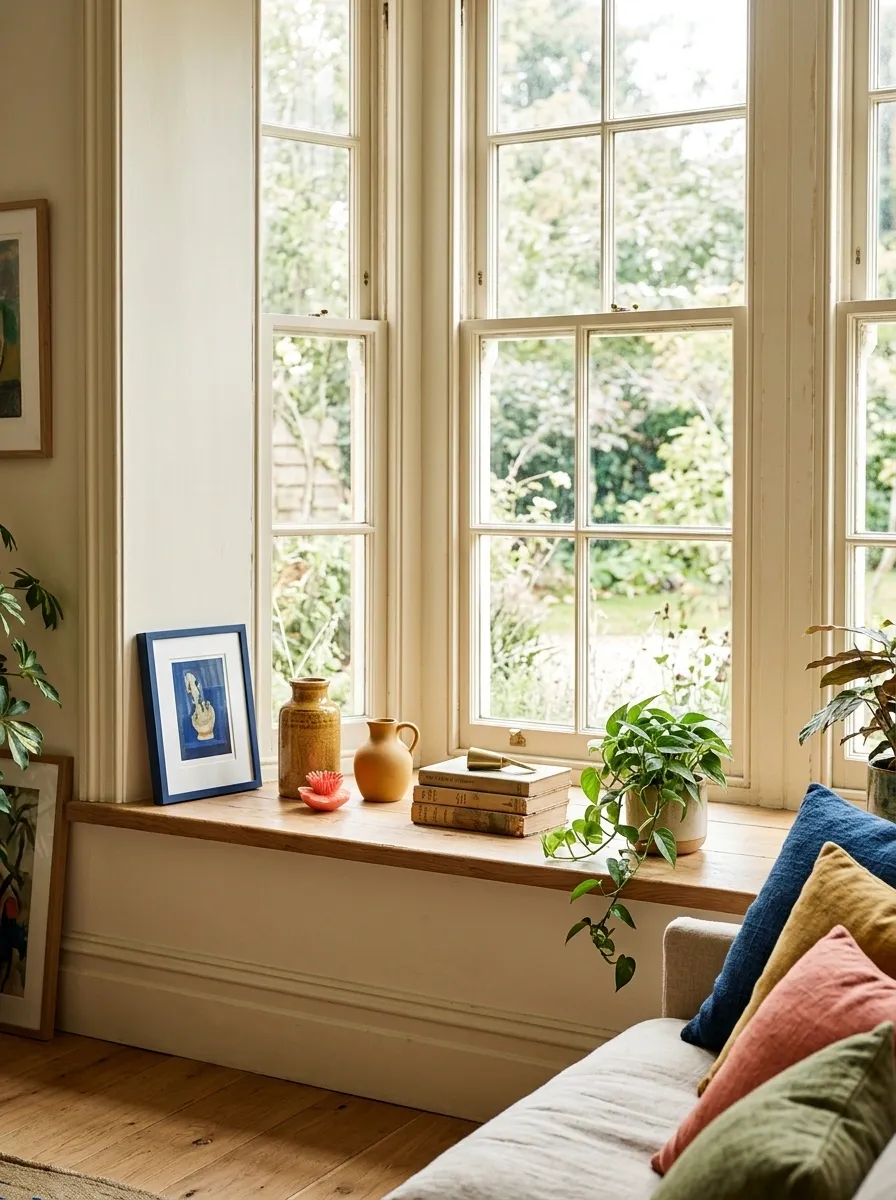
For anyone who considers an all-white room a personal attack, this colorful window offers a different direction. A small framed artwork leans against the wall, a pair of mismatched ceramic vessels adds personality, and a short stack of books introduces another layer. A compact plant softens the arrangement. Blue, ochre, coral, or green can all work, provided the colors appear elsewhere in the room.
The important part is the connection between objects, not whether they match. Repeat one or two artwork colors in the pottery or cushions and allow the remaining pieces to be different. The result feels collected and personal. Without those repeated colors, it can quickly resemble the contents of a drawer that has lost its will to organize.
COLOR CONNECTIONS
Mismatched objects. Related colors.
These colors are an example palette, not a decorating law. The colors already present in the room should decide the final mix.
THE SIMPLE FORMULA
One artwork color repeated in the pottery, one contrasting accent, and a few neutral surfaces to let the eye rest.
Eclectic doesn’t mean every item gets to audition for the lead role.
Autumn Window With Pumpkins, Branches, and Rust-Colored Linen
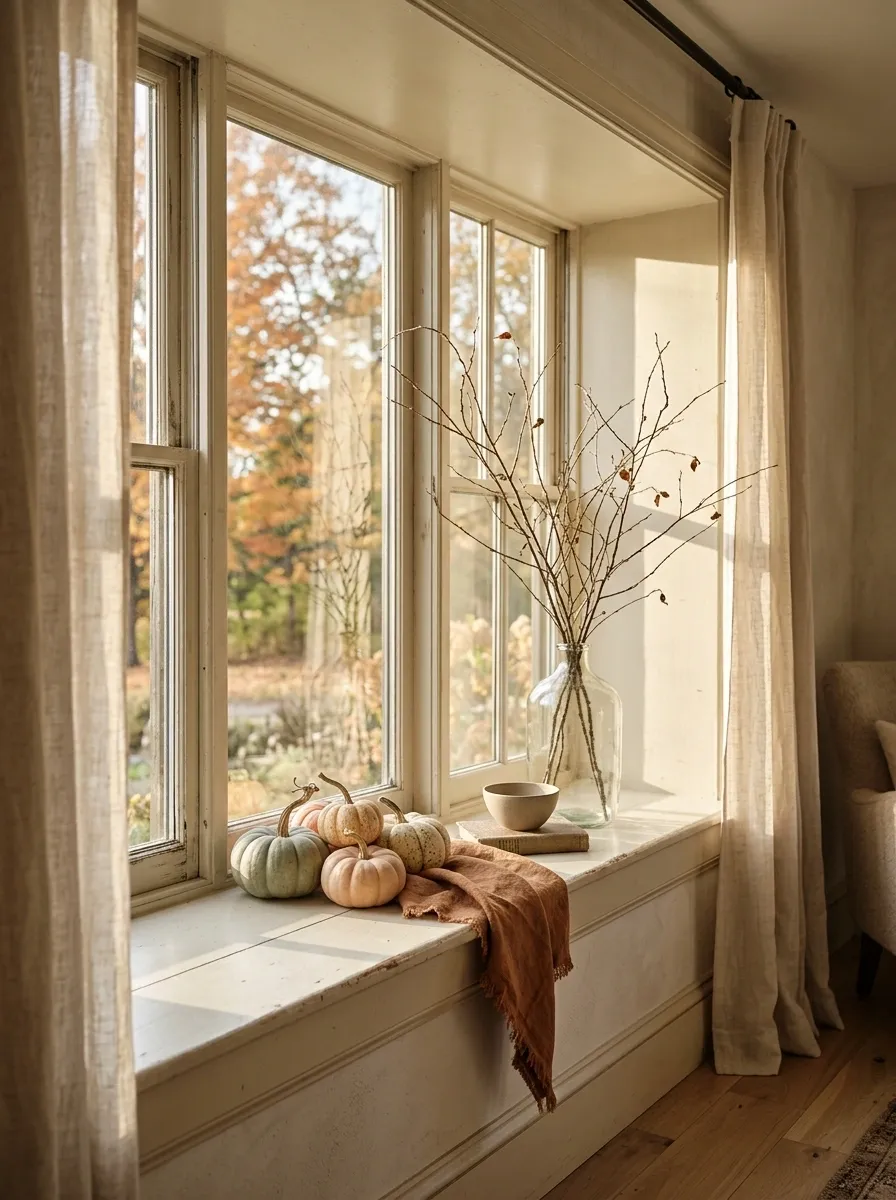
Autumn styling doesn’t need a pumpkin on every available surface. A few small pumpkins, a glass vase holding bare branches, and rust-colored or cinnamon-toned fabric create a seasonal composition that still feels like a real room. Pair them with warm wood or a cream-painted sill, and let the changing light outside contribute to the atmosphere.
The trick is using seasonal details against a base that can stay in place. Neutral pottery and simple curtains work beyond autumn, while the pumpkins and branches do the temporary decorating. Choose sizes that suit the window rather than buying an entire miniature pumpkin family. The display should frame the outdoors, not compete with it.
THE AUTUMN EDIT
Keep the base. Change the season.
THE EVERYDAY BASE
Neutral ceramic vessel, wood or painted sill, simple curtains.
THE SEASONAL SWAP
Seasonal decor should be easy to remove, easy to store, and small enough that opening the window doesn’t become an autumn obstacle course.
Spring Window With Fresh Flowers and Clear Glass Vases
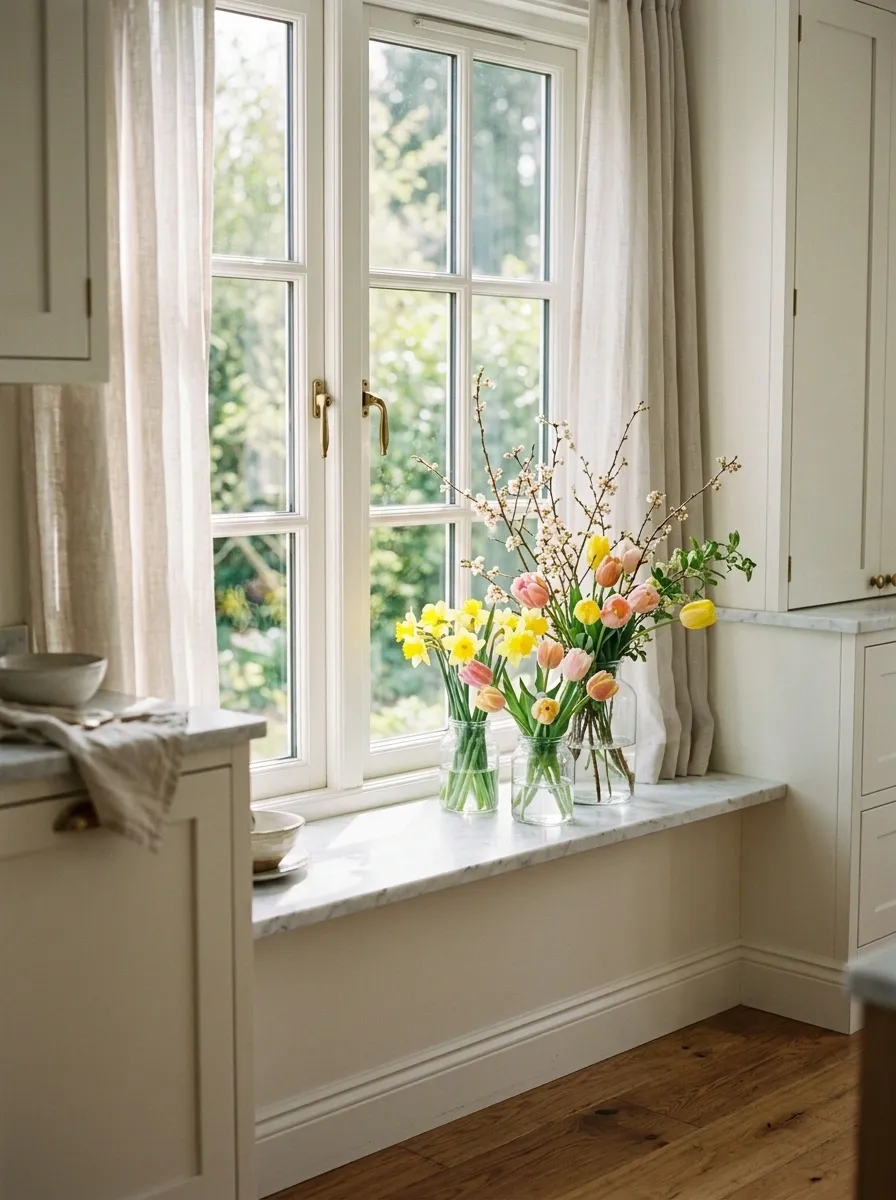
Fresh tulips, daffodils, or delicate flowering branches can make a simple window feel lively without requiring a shelf full of accessories. Clear glass vases keep the arrangement visually light, while their different heights create a loose, natural rhythm. Pale curtains and a clean sill make the colors stand out without fighting for attention.
Group the flowers rather than spacing single stems like they’re waiting for a bus. One taller vase and one or two smaller vessels usually give the composition enough variation. Change the water as needed, trim the stems according to the flower type, and keep the display away from any window area where it blocks the handle. Spring looks best when it isn’t making everyday life harder.
A SPRING ARRANGEMENT
Let the stems create the rhythm.
This is a placement sketch, not a vase-shopping assignment. Use the vessels already available if their shapes and sizes create enough variation.
Keep in mind: Clear glass preserves the light look, but water marks and stems still need a little maintenance. Nature may be free decor, but it is not a zero-maintenance roommate.
Winter Window With Evergreen Branches and Warm White Ceramics
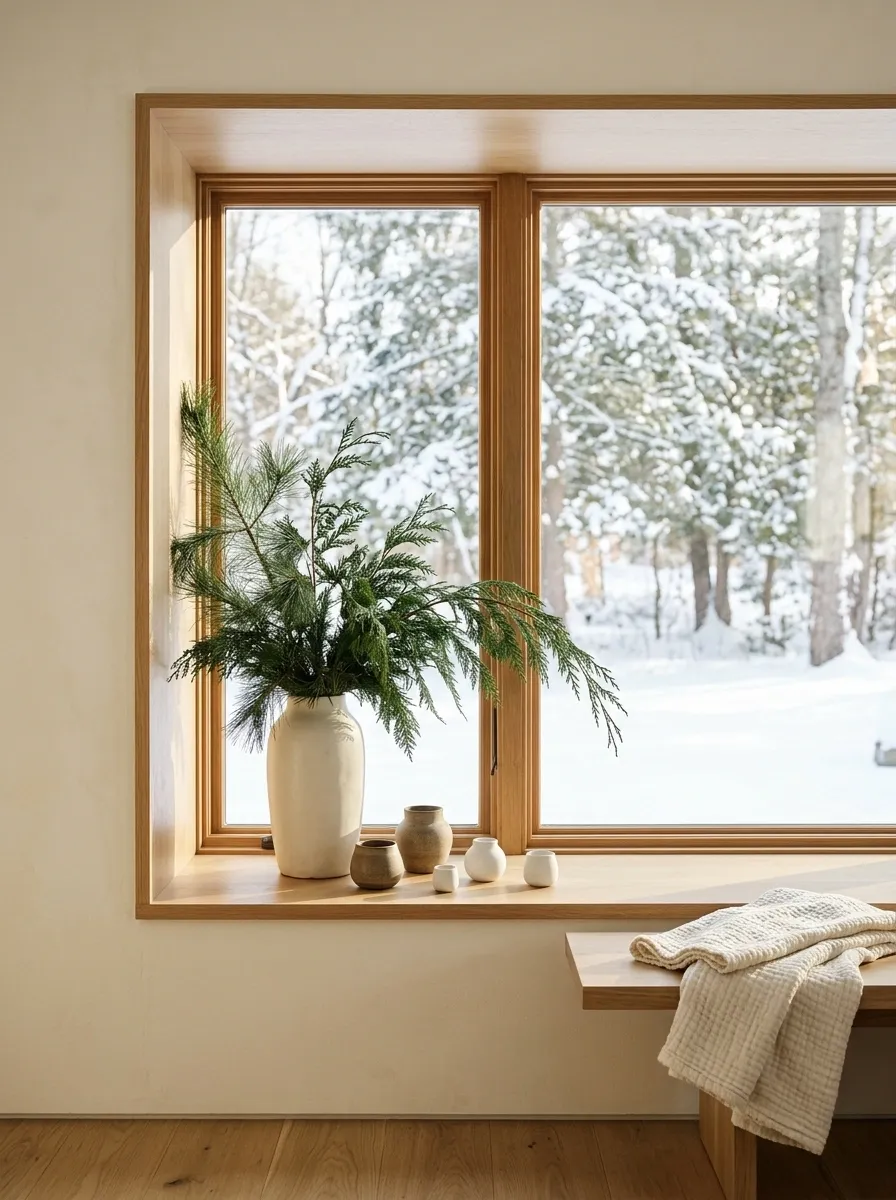
Winter decorating doesn’t have to involve enough glitter to alert passing aircraft. Evergreen clippings, matte white ceramics, and one soft wool or linen accent create a seasonal window that feels calm rather than crowded. Keep the branches slightly irregular, place the tallest vessel off-center, and leave plenty of glass visible. The arrangement should look connected to the landscape outside.
Warm wood and cream walls help soften the cooler winter light. A small natural textile can bring extra texture, but keep it away from condensation and damp window surfaces. Once the season ends, the ceramics can stay while the greenery changes. That’s a decorating plan, not a storage problem waiting to happen.
THE QUIET WINTER WINDOW
Seasonal, without the tinsel situation.
01 / KEEP
Ivory pottery
A neutral base that stays useful beyond winter.
02 / SWAP
Evergreen stems
The seasonal detail, without a shelf full of ornaments.
The finishing touch is restraint. Leave breathing room around the branches and keep the window fully usable.
Practical note: Keep greenery and fabric away from damp surfaces and any window hardware.
Coastal Window With Weathered Wood and Sea-Glass Colors
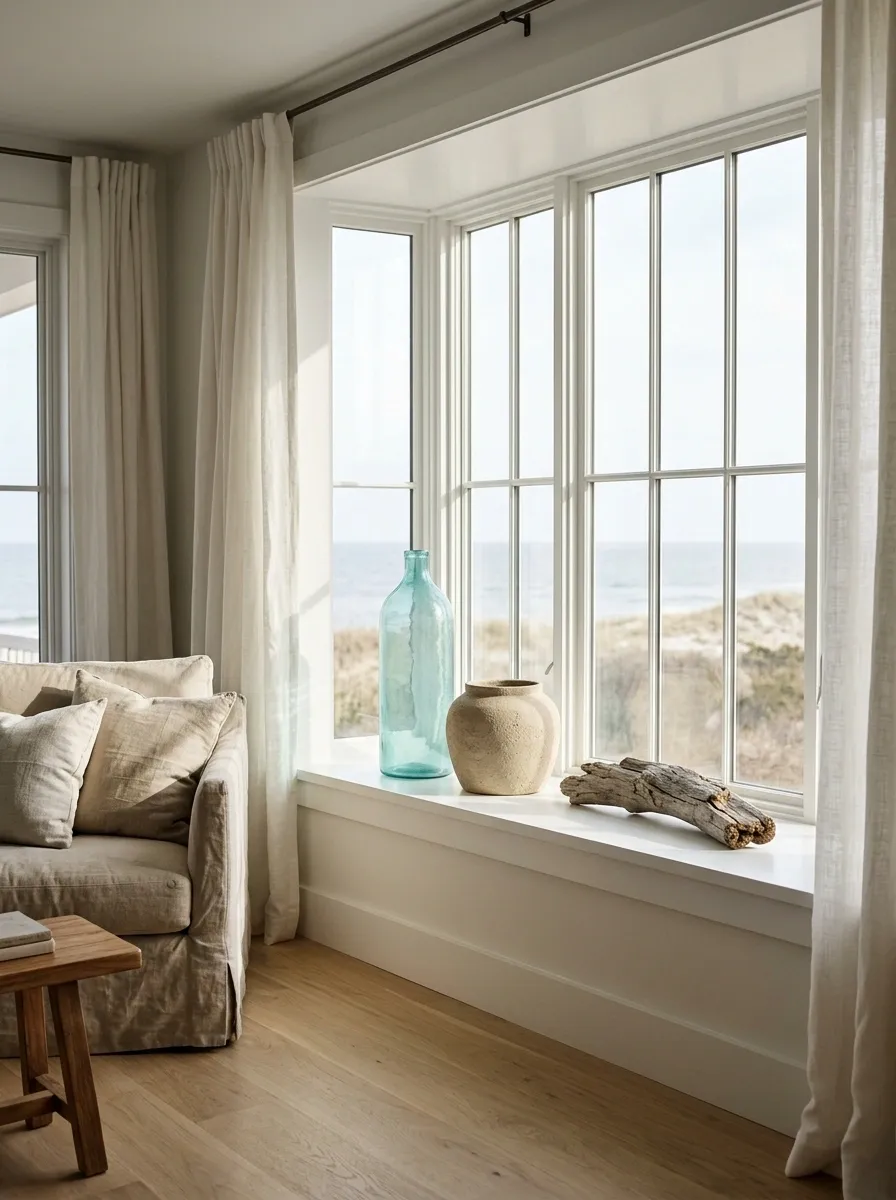
Coastal decor works best when it borrows from the coast instead of turning the windowsill into a souvenir shop. Weathered wood, translucent blue-green glass, sandy neutrals, and relaxed linen create a fresh composition without the obligatory parade of shells and miniature sailboats.
Use one taller glass vessel and a lower companion piece to create an uneven arrangement. Pale walls and natural fabrics keep the cooler colors from feeling icy, while the outdoor view supplies its own movement. The finished room should feel breezy, not themed. A room doesn’t need twelve objects shaped like the sea to establish that it enjoys the sea.
COASTAL, MINUS THE CLICHÉS
Borrow the colors. Leave the gift shop behind.
Repeat one blue-green shade in the room, then balance it with warm wood and soft fabric. The view should remain part of the composition.
The coastal test: If every object has a shell, anchor, or starfish on it, the decor has drifted into souvenir-shop territory.
Rustic Farmhouse Window With Earthenware and Olive Branches
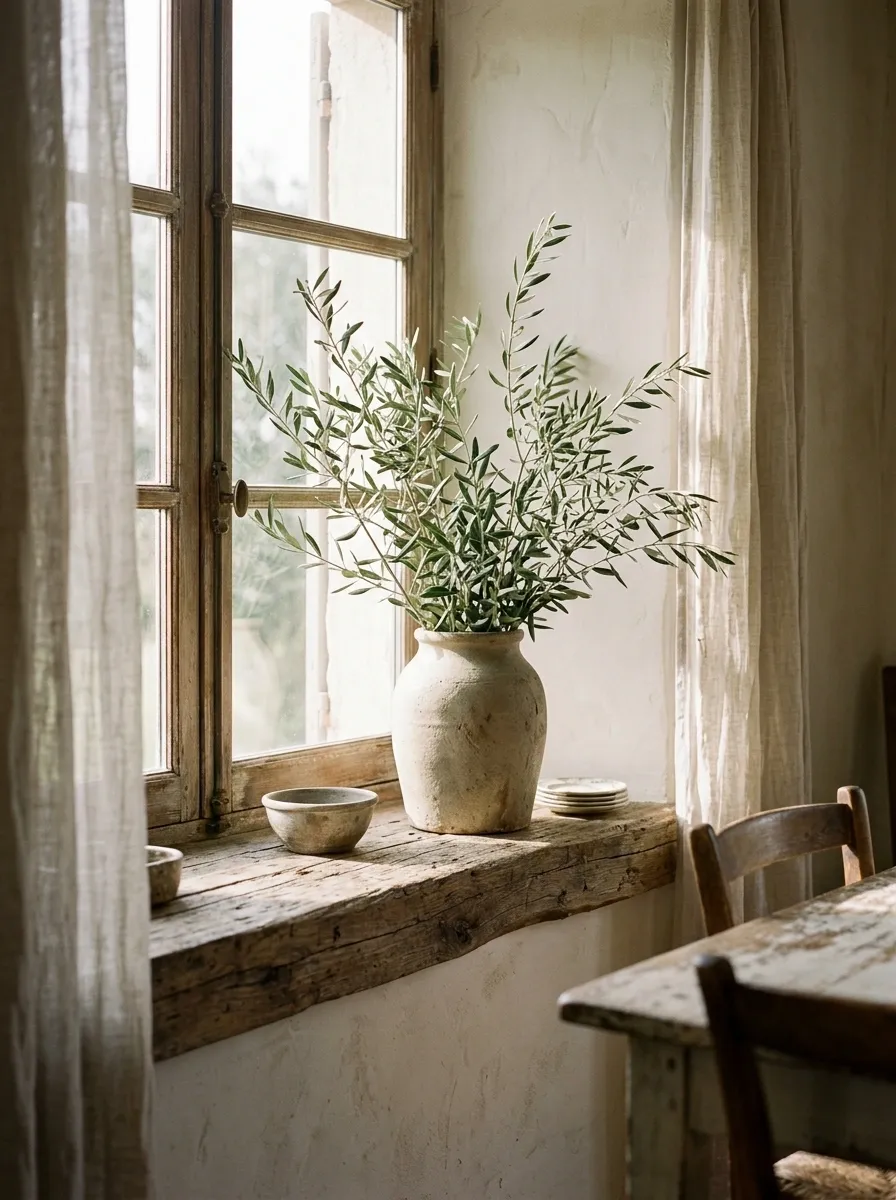
Rustic style relies on honest materials, not an emergency purchase of everything labeled farmhouse. A substantial wood sill, a handmade crock, and loose olive branches provide enough texture to make the window feel grounded. Pale walls and understated curtains keep the heavier surfaces from overwhelming the room.
Choose pottery with an imperfect finish and let the branches extend upward without spreading across the entire window. Natural variation gives the arrangement character, while repeated warm tones connect it to nearby cabinetry, stools, or a dining table. Too many distressed signs, matching crocks, and artificial farm props would bury the good materials under a costume.
FARMHOUSE MATERIAL STUDY
Rough, matte, and a little imperfect.
Weathered wood
Provides the sturdy visual base.
Earthenware
Adds an earthy, matte surface.
Olive branches
Bring a lighter, irregular silhouette.
Let the materials provide the character. Distressed lettering and imitation antiques aren’t required to make a room look lived in.
Bathroom Window With Moisture-Conscious Stone and Greenery
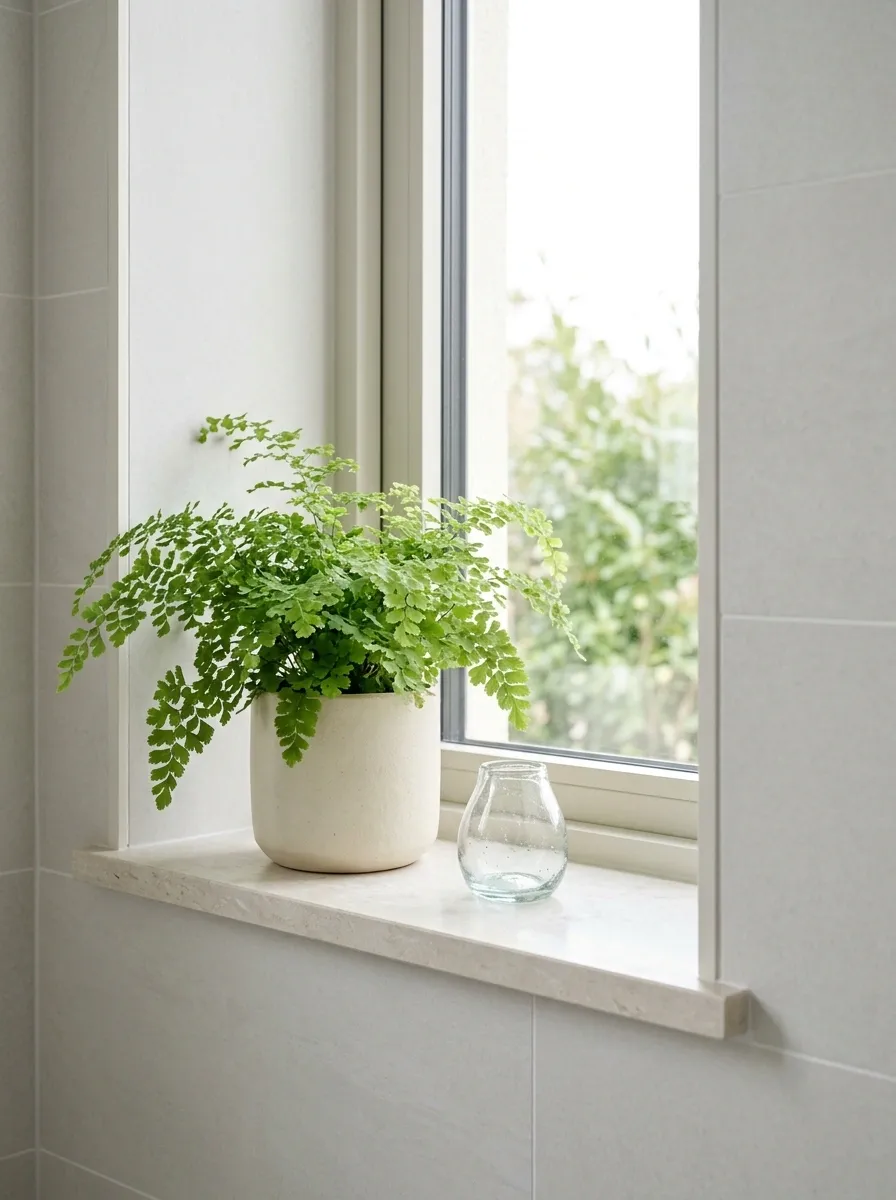
Bathroom windows need decor that can handle the room, not just look attractive in a photograph. A pale stone sill, one humidity-tolerant plant suited to the available light, and a small glass vessel create a fresh, understated arrangement. Light tile and minimal accessories keep the setting clean while allowing the window to remain a focal point.
Keep the pieces away from regular splashes, avoid storing damp textiles on the sill, and check that pots won’t leave water marks. Bathrooms also vary widely in ventilation, temperature, and natural light, so plant choice matters. A high-maintenance plant in a dark bathroom isn’t a styling statement. It’s a slow-motion breakup.
BATHROOM WINDOW CHECK
Pretty is good. Water damage is not.
The surface
Choose a durable sill finish that can be cleaned and suits the amount of moisture it receives.
The greenery
Select a plant that matches the actual light and humidity. A bathroom isn’t automatically a tropical paradise.
The placement
Leave window hardware accessible and keep containers clear of frequent splashes.
Small reminder: Check the sill periodically for moisture damage, especially where pots sit.
Bedroom Window With Books, Soft Textiles, and Gentle Light
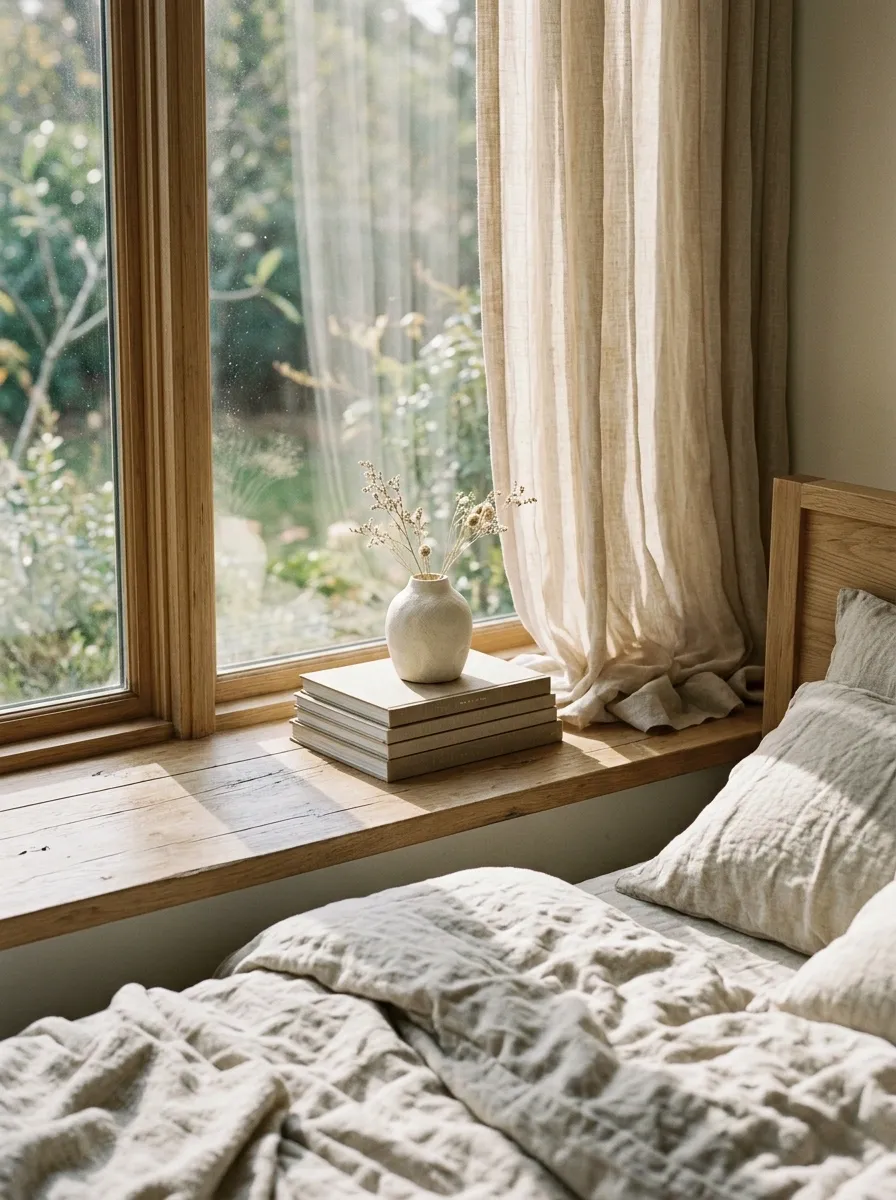
A bedroom window looks more intentional when its colors belong to the rest of the room. A short stack of books, a small ceramic vase, and a few delicate stems create an understated arrangement that relates to oatmeal bedding, soft curtains, and warm wood furniture. The result feels calm without looking as though everything was purchased in a single beige bundle.
Keep the display low enough to preserve the view and arrange books in one compact stack rather than spreading them across the ledge. Match one or two colors to the bed linens or rug, then let the rest stay quiet. If fabric falls near the sill, leave enough clearance for the window to open and for condensation to be wiped away.
BEDROOM WINDOW PALETTE
A softer room starts with connected colors.
Repeat a curtain or bedding color in the sill display. That small connection helps the entire window feel like part of the bedroom.
Bedside reality check: Keep books stable, objects low, and curtains away from anything that could snag when the window opens. The room is for sleeping, not an obstacle course.
Home Office Window With a Clear View and Focused Styling
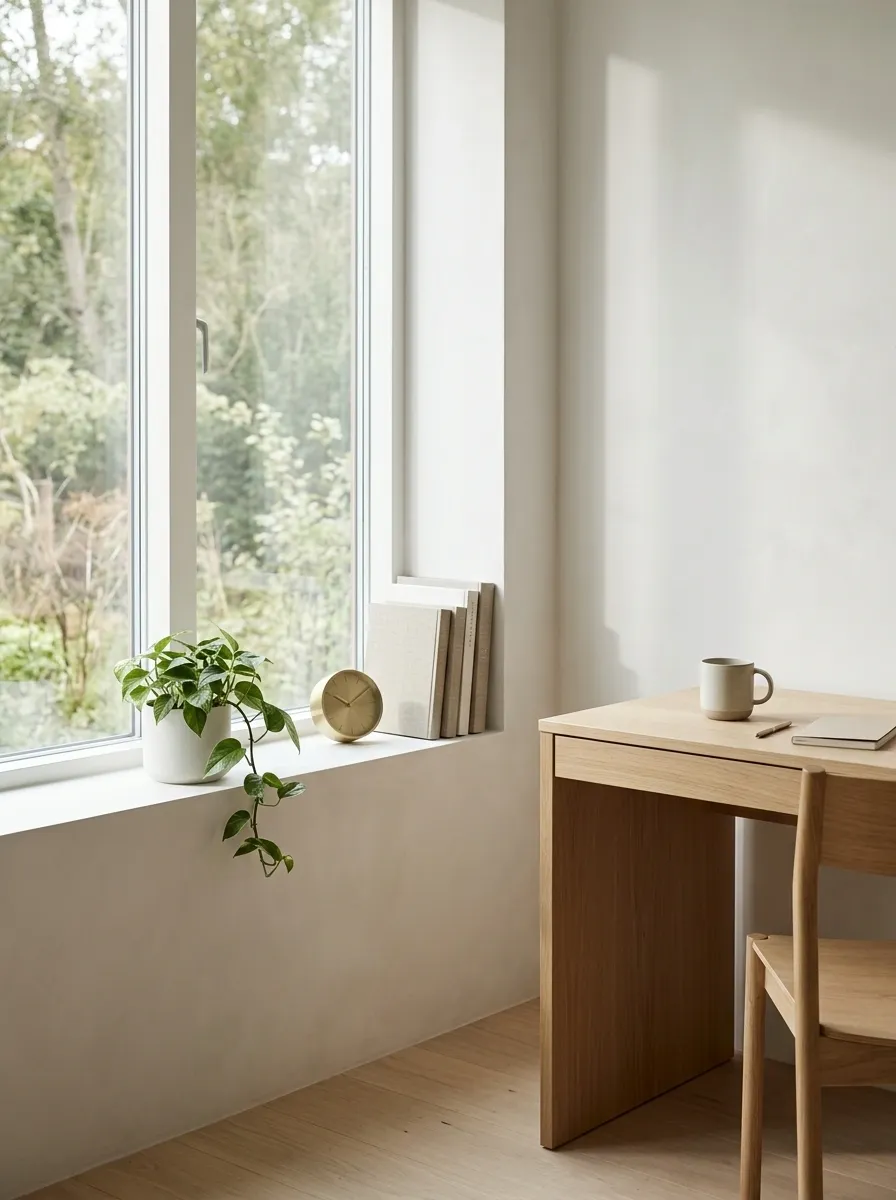
The home office window has a job to do: bring in daylight without turning the desk into a decorative obstacle course. A compact plant, a simple clock, and a short stack of reference books give the sill a finished look while leaving the view open. Pale wood, soft white walls, and restrained greenery keep the workspace visually calm.
The desk should remain the main working zone. Keep cables, screens, and frequently used supplies organized elsewhere, and check how direct sunlight affects screen glare during the day. A beautiful workspace that makes the monitor impossible to see is an expensive way to admire the weather. Let the window add atmosphere, not interfere with the actual work.
THE FOCUSED WORKSPACE
Give the window a role. Not your entire to-do list.
WINDOW ZONE
Plant + one useful object
Keep the view and the window controls clear.
DESK ZONE
Work essentials
Keep frequently used tools within easy reach.
Before styling: Check screen glare at the hours the workspace is usually used. Daylight is lovely. A monitor that looks like a mirror is less helpful.
Bay Window With Layered Plants and an Upholstered Seat
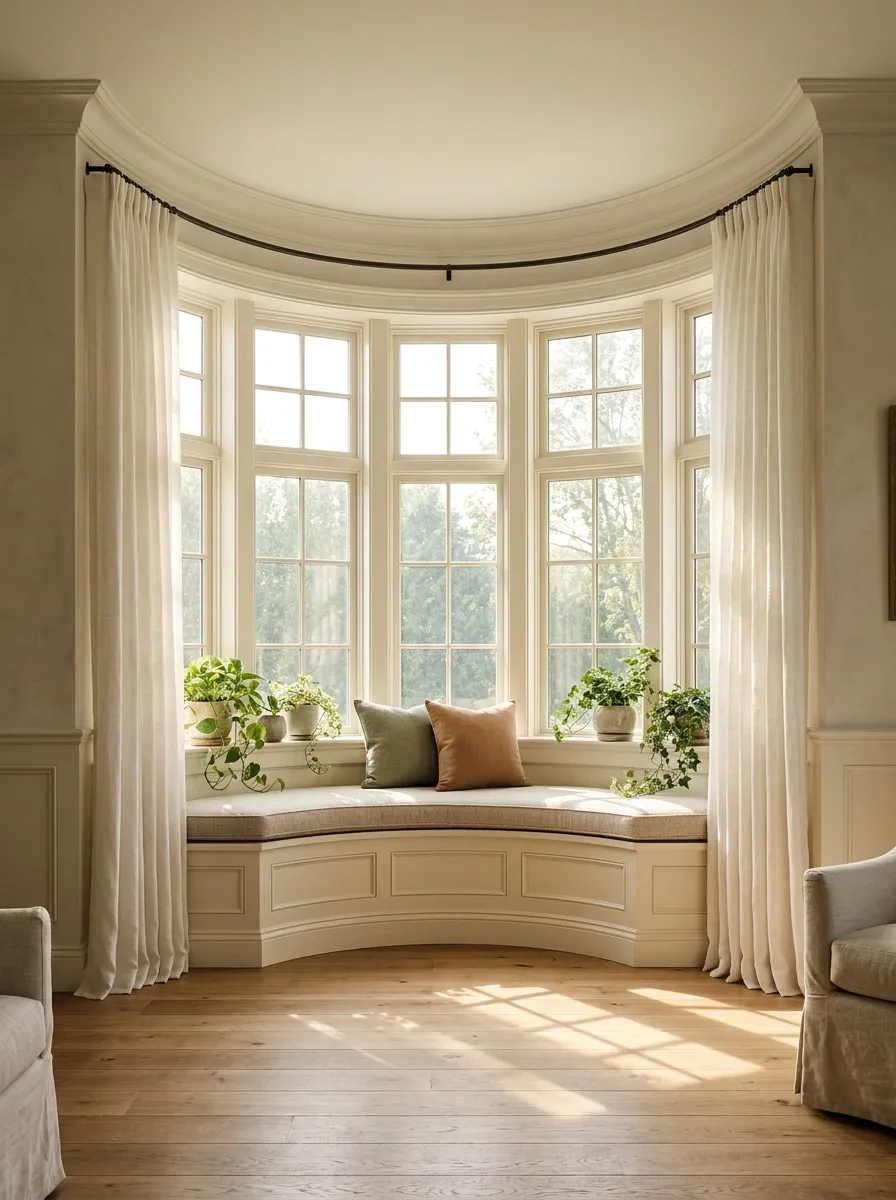
A bay window already brings plenty of architectural interest, so the styling should work with its shape rather than bury it under accessories. Place an upholstered cushion across the central seating area, add two pillows in coordinating fabrics, and reserve the side ledges for a few plants. This creates three connected zones without making the entire bay look like a plant nursery with seating as an afterthought.
Soft green foliage balances the upholstery, while a warm wood or painted seat base grounds the composition. Keep the plants away from the main sitting area and leave room for the curtains to hang naturally. The whole arrangement should invite someone to sit down, not require a ten-minute rearrangement first.
THE BAY WINDOW PLAN
Three zones, one connected composition.
The side ledges frame the seat. They shouldn’t steal all the usable space or block the natural movement through the room.
Narrow Window Sill With One Continuous Trough Planter
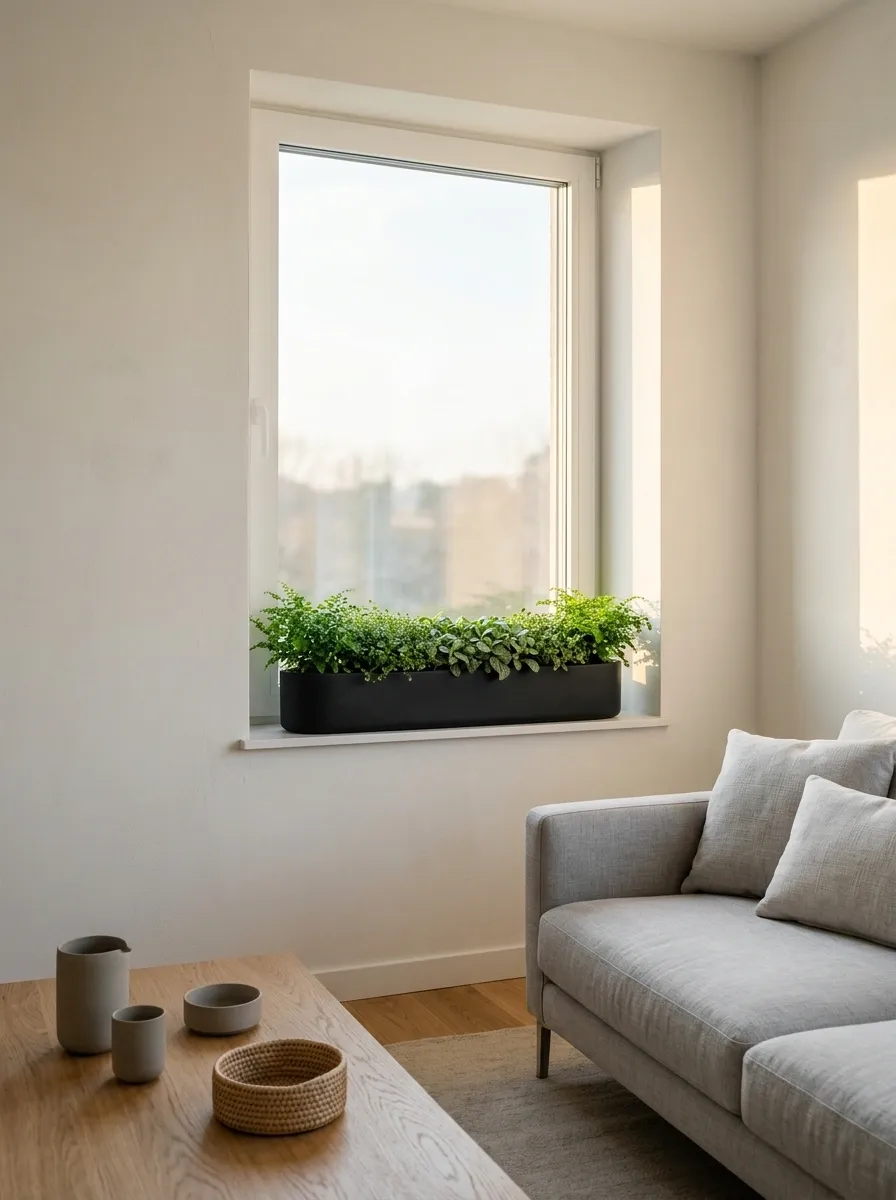
Some windowsills barely have enough room for a mug, let alone a botanical collection. That’s where a single long planter earns its place. A slim trough filled with low, compact foliage creates a continuous green line without using the depth needed for several separate pots. Keep the frame and surrounding walls simple, and let the greenery provide the main detail.
Choose a planter that fits the actual ledge and has a suitable way to manage excess water. Check that it doesn’t interfere with the latch, blinds, or curtains. The narrow silhouette makes this design especially useful in apartments and contemporary rooms with limited surface space. No balancing act, no precarious tower of pots, and considerably fewer opportunities for soil to end up somewhere mysterious.
THE NARROW-SILL SOLUTION
Think in length, not depth.
A continuous arrangement uses the sill’s length while keeping the number of separate objects low. Measure first. Optimism is not a unit of measurement.
Deep Masonry Sill With Framed Art and Layered Pottery
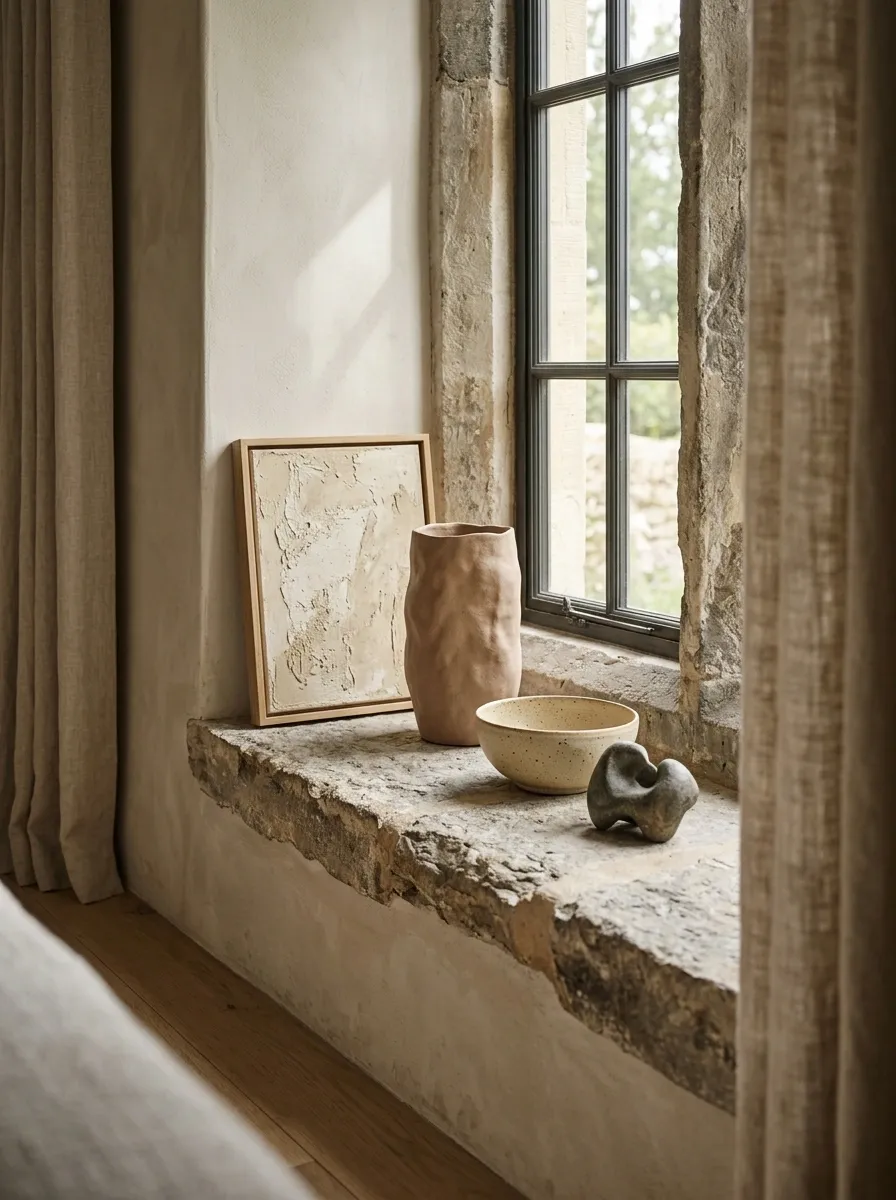
A deep masonry sill is practically a miniature architectural shelf, and treating it like a narrow ledge wastes its best feature. Layer a small framed artwork against the back wall, place a taller ceramic vessel slightly to one side, and bring in a lower bowl or small sculptural object near the front. The variation in depth gives the composition dimension without requiring a large number of pieces.
Stone and textured plaster provide enough character to keep the display from feeling overly decorated. Choose related colors, but allow the pottery shapes to differ. Leave space around the artwork and make sure every object is stable. The aim is a compact still life that belongs to the architecture, not a flea market that has taken permanent residence in the window.
A DEEP-SILL COMPOSITION
Use the depth. Leave room to breathe.
Illustrative placement, not a scale drawing.
Keep taller items toward the back and lower pieces toward the front, while preserving access to the window. Check that leaned artwork is stable and protected from moisture.
Arched Window With Understated Symmetrical Styling
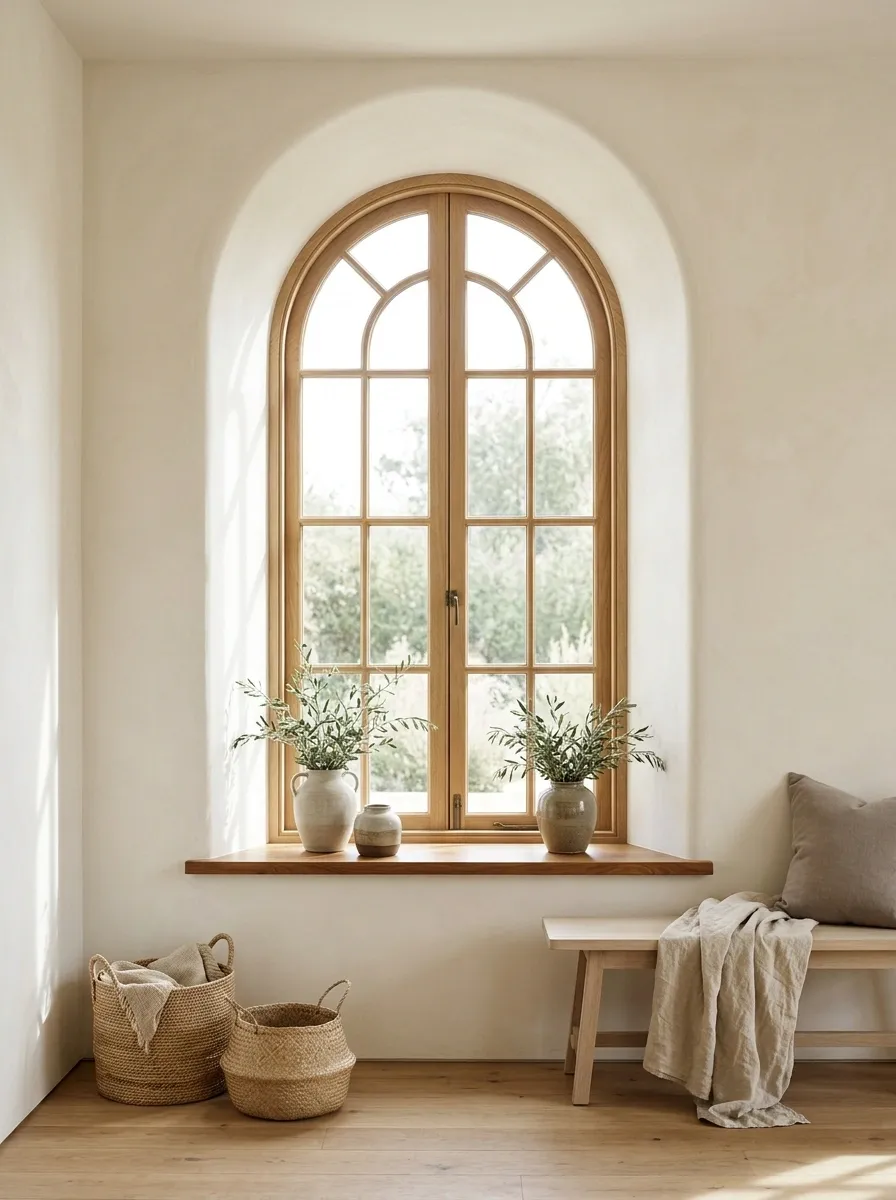
An arched window already has a natural focal point, so covering it with a dozen accessories is a little like putting a hat on a chandelier. Keep the sill simple with two related ceramic vessels, low greenery, and a warm stone or timber surface. The objects can be similar without being identical, giving the arrangement a balanced feel that respects the curve above.
Cream plaster, natural wood, and muted green create an architectural look that feels relaxed rather than formal. Keep decorative pieces below the strongest part of the arch so the window’s outline stays visible. This approach works especially well when the architecture deserves attention on its own. The decor should frame the opening, not audition to replace it.
THE ARCH IS THE FEATURE
Frame the shape. Don’t hide it.
Keep the upper curve clear
Let the architecture remain visible above the display.
Keep the base grounded
Use related materials and low objects to anchor the sill.
The window came with architectural drama. No extra drama is required.
Moody Window With Deep Green Walls and Antique Brass Accents
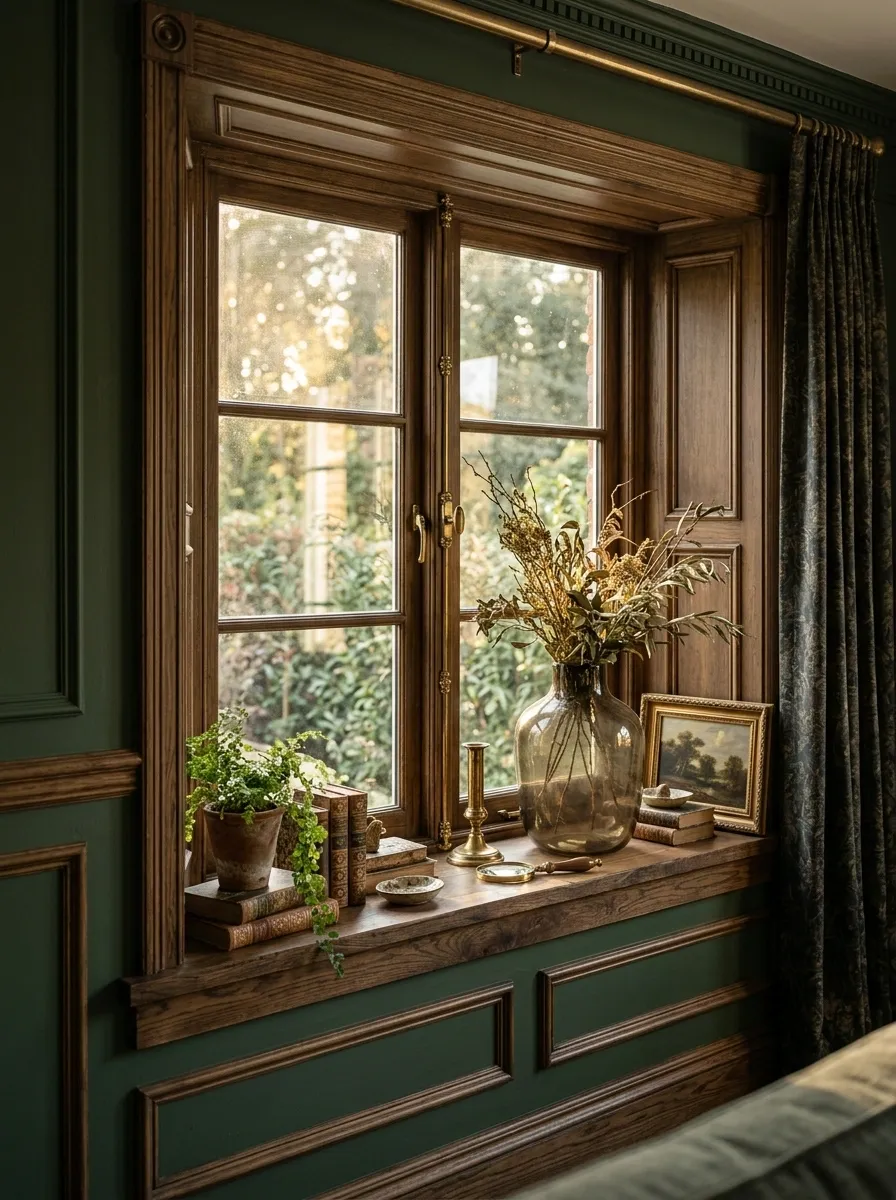
Dark green walls, aged brass, and deep wood turn a window into a rich focal point without making the room feel like a cave with excellent taste. A smoky glass vessel and one reflective brass object catch the available light, while the darker surfaces frame the view. The arrangement works best when each material behaves differently: matte walls, polished metal, translucent glass, and grainy timber.
Don’t scatter brass objects across every surface to make the theme obvious. One or two carefully placed accents are enough. If the window receives limited daylight, add a lighter object or a restrained warm-toned textile near the sill. Dark rooms need contrast and thoughtful lighting, not an entire collection of shiny things trying to rescue them.
THE MOODY WINDOW EDIT
Dark surfaces need points of light.
THE BACKDROP
Forest green
Creates depth and frames the window.
THE REFLECTION
Aged brass
Adds a warm point of contrast.
THE FILTER
Smoky glass
Softens the transition between dark surfaces.
Check how the colors look in actual daylight and after dark. A moody room should feel deliberate, not like the bulbs have handed in their notice.
Japandi Window With Low Oak, Handmade Ceramics, and a Single Branch
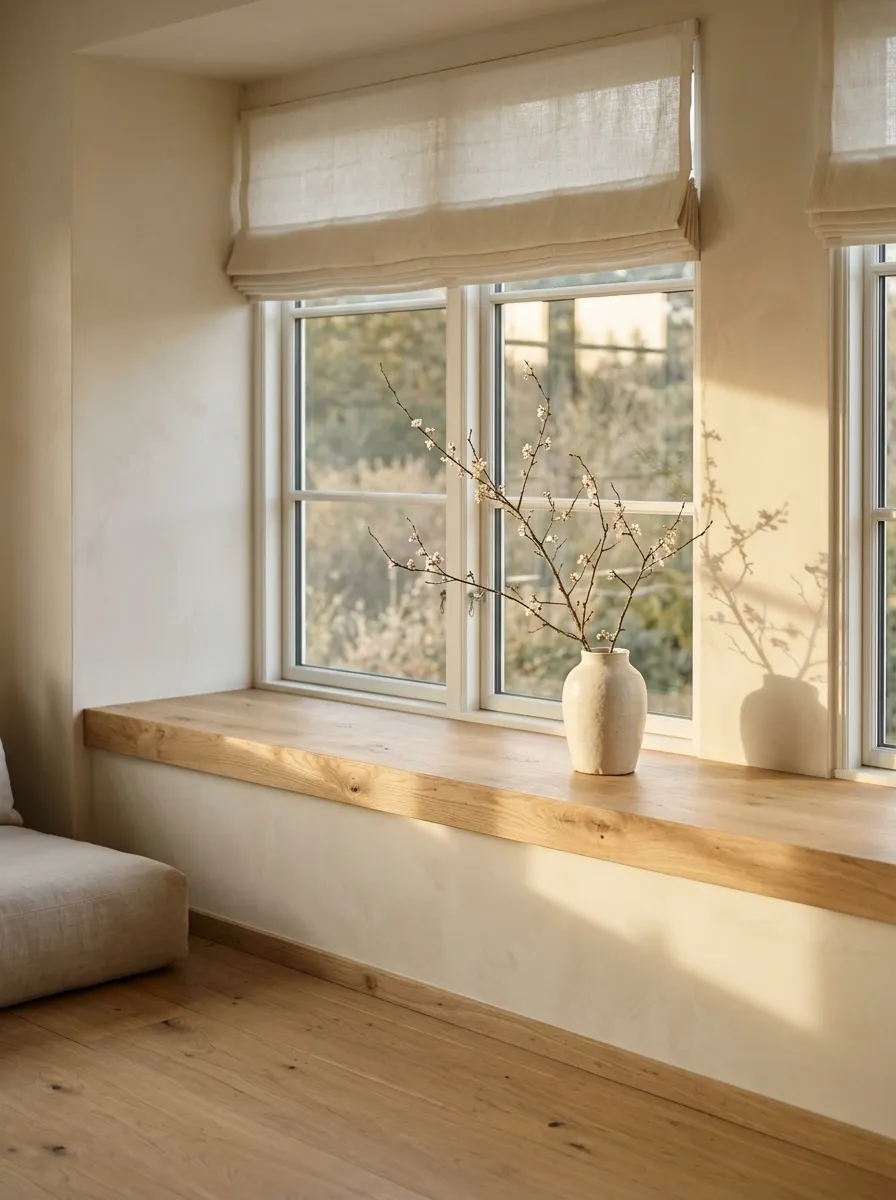
The Japandi look depends on a few well-chosen objects and the space around them. A handmade ceramic vase, one branching stem, and a low oak surface create a composition that feels intentional without becoming sterile. The materials share warm, natural undertones, while the irregular branch introduces movement against the window’s straight lines.
Asymmetry is what keeps this arrangement interesting. Place the vase slightly off-center and leave the opposite side largely open. Pale plaster, simple linen, and low-profile furniture reinforce the visual calm. Avoid adding little objects just because the sill looks empty. Empty space isn’t a decorating emergency, and this style works precisely because it doesn’t panic every time it sees one.
A LESSON IN ASYMMETRY
One strong shape. Plenty of room around it.
OPEN SPACE
Let the eye rest.
THE FOCAL POINT
Vase + branch
Use: natural grain, handmade surfaces, gentle color shifts.
Skip: filler objects, excessive symmetry, unnecessary ornament.
The design has breathing room. Please don’t call emergency decor reinforcements.
Scandinavian Window With Pale Wood and Soft Blue Accents
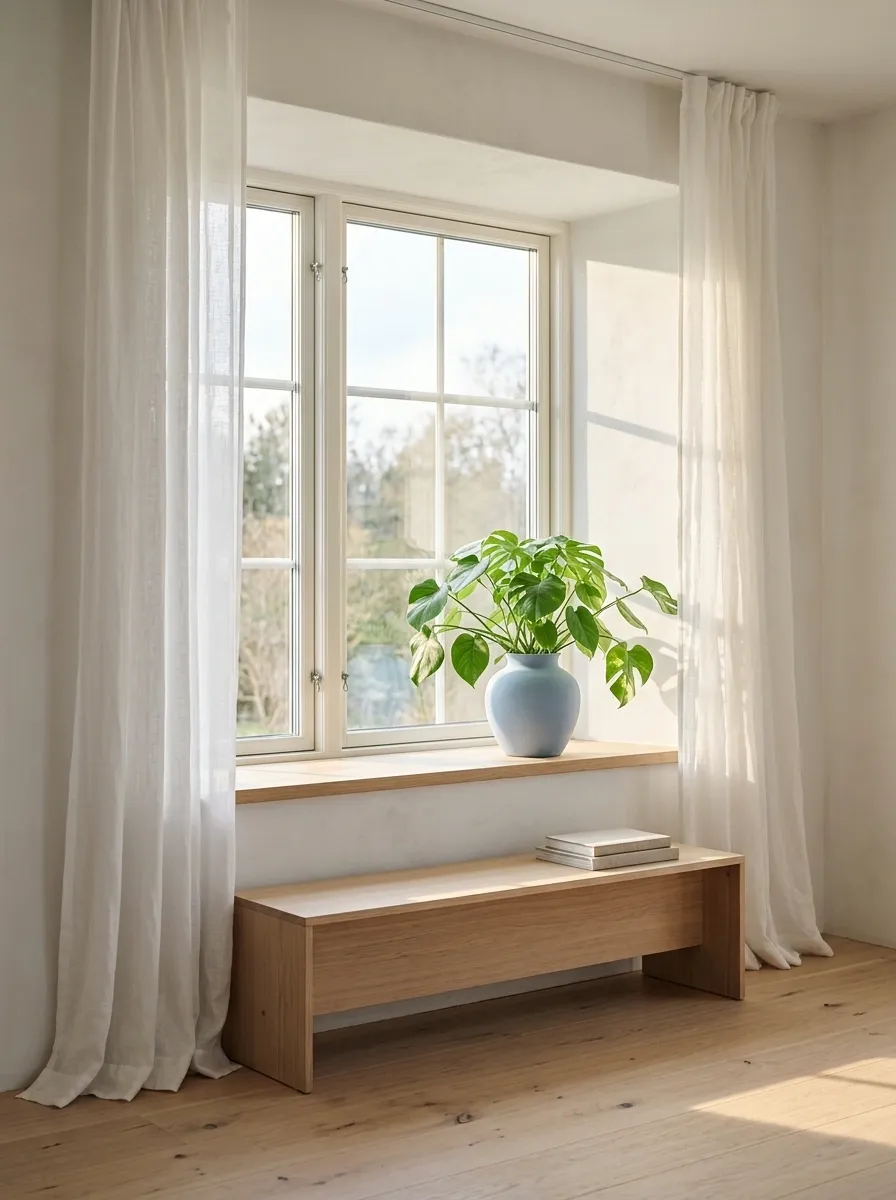
Pale wood and white walls make a room feel bright, but too much of the same tone can leave the window looking a little unfinished. A soft blue vase introduces a cool accent, while one leafy plant brings in a natural green. Pale oak furniture and relaxed curtains connect the colors without making the arrangement feel overly coordinated.
The best part of this style is its practicality. The objects are simple, the palette is flexible, and the window remains the main source of visual interest. Repeat the blue in a cushion, artwork, or small textile elsewhere in the room. One accent creates a connection. Eight blue accessories suggest the household has recently discovered a paint chart and wants everyone to know.
SCANDINAVIAN COLOR NOTES
Light, natural, with one cool accent.
Repeat one cool color elsewhere in the room, then let the oak and white surfaces do most of the work.
Keep it grounded: Natural wood prevents the cooler palette from feeling flat. Greenery supplies another natural tone without adding visual noise.
Art Deco Window With Jewel-Tone Glass and Geometric Styling
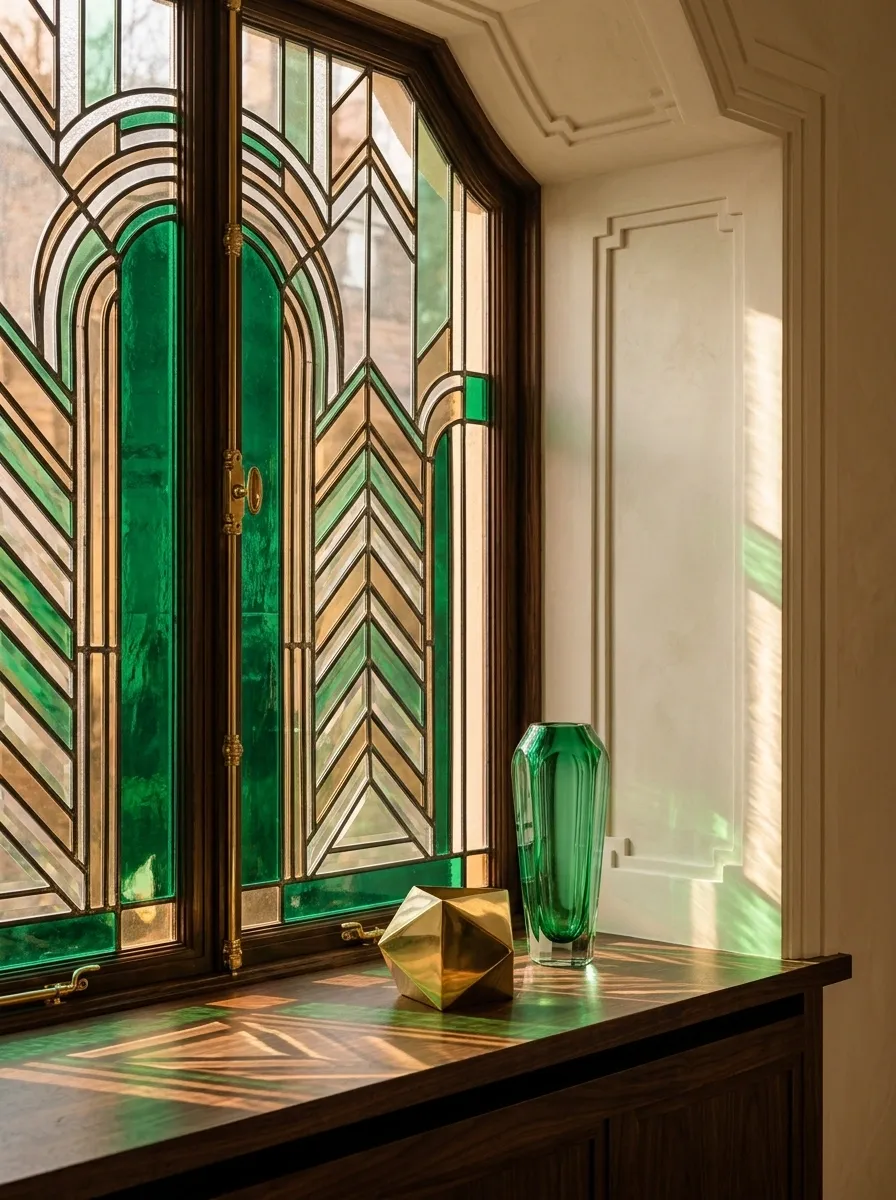
Art Deco styling brings a more dramatic personality to the windowsill. Emerald glass, walnut wood, warm brass, and geometric shapes create a strong composition, while cream walls or curtains prevent the richer colors from overwhelming the room. A tall glass vase and a low angular object create contrast without competing for the same visual space.
The key is repeating a small number of shapes and finishes. Geometric details in the window frame can echo a sculptural vessel, while brass connects to nearby furniture hardware or lighting. Keep the display controlled so the materials look luxurious rather than busy. Jewel tones already attract attention. They don’t need seven metallic accessories shouting over them.
ART DECO MATERIAL PALETTE
Geometric lines. Rich materials. Controlled shine.
THE COMPOSITION
One tall vessel, one low geometric object, and a restrained metallic detail. Let the window’s architecture provide the remaining pattern.
A little reflection creates richness. Covering every surface in brass creates a very different meeting, and nobody needs that meeting.
Rental-Friendly Window With Freestanding Art and Removable Styling
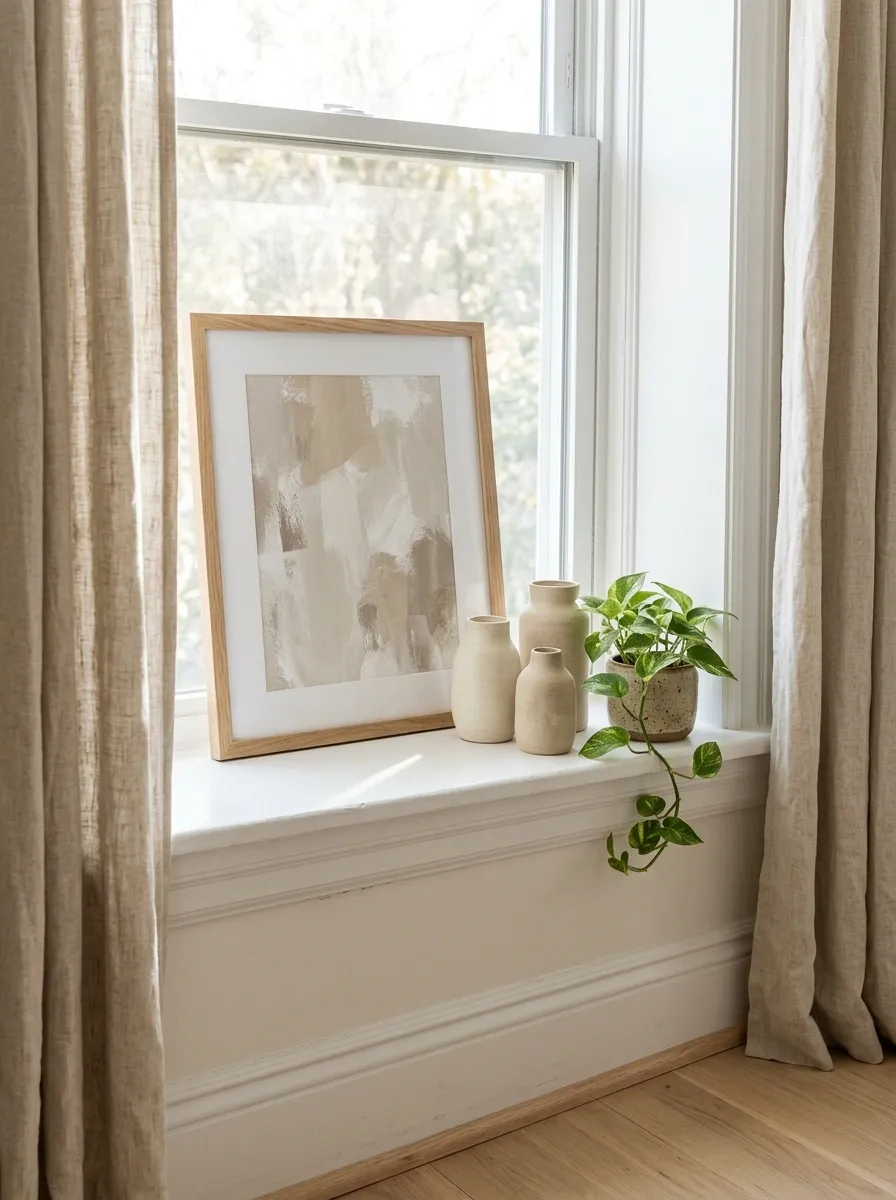
A rental can feel personal without drilling into the walls or making permanent changes to the window. Lean a framed print securely against the wall, group a couple of freestanding ceramics nearby, and finish with a small plant. Neutral colors and natural wood give the arrangement a settled look, while every piece can move to the next home.
Keep the display light enough to rearrange easily, but stable enough to remain in place. Check the lease before making changes to the window frame, sill, or walls, and avoid adhesives that could damage paint. This look is especially useful when the existing window trim isn’t particularly attractive. Thoughtful styling can redirect attention without starting a renovation the landlord never approved.
THE NO-DRILL WINDOW
Personal style. No permanent evidence.
LEAN
Framed artwork
Choose a stable frame and protect the wall from scratches.
GROUP
Portable objects
Use ceramics and greenery that can move with you.
Rental check: Review your agreement before drilling, painting, or attaching anything to the window frame. Deposits have a habit of remembering every little decision.
Built-In Window Seat With Hidden Storage and Tailored Cushions
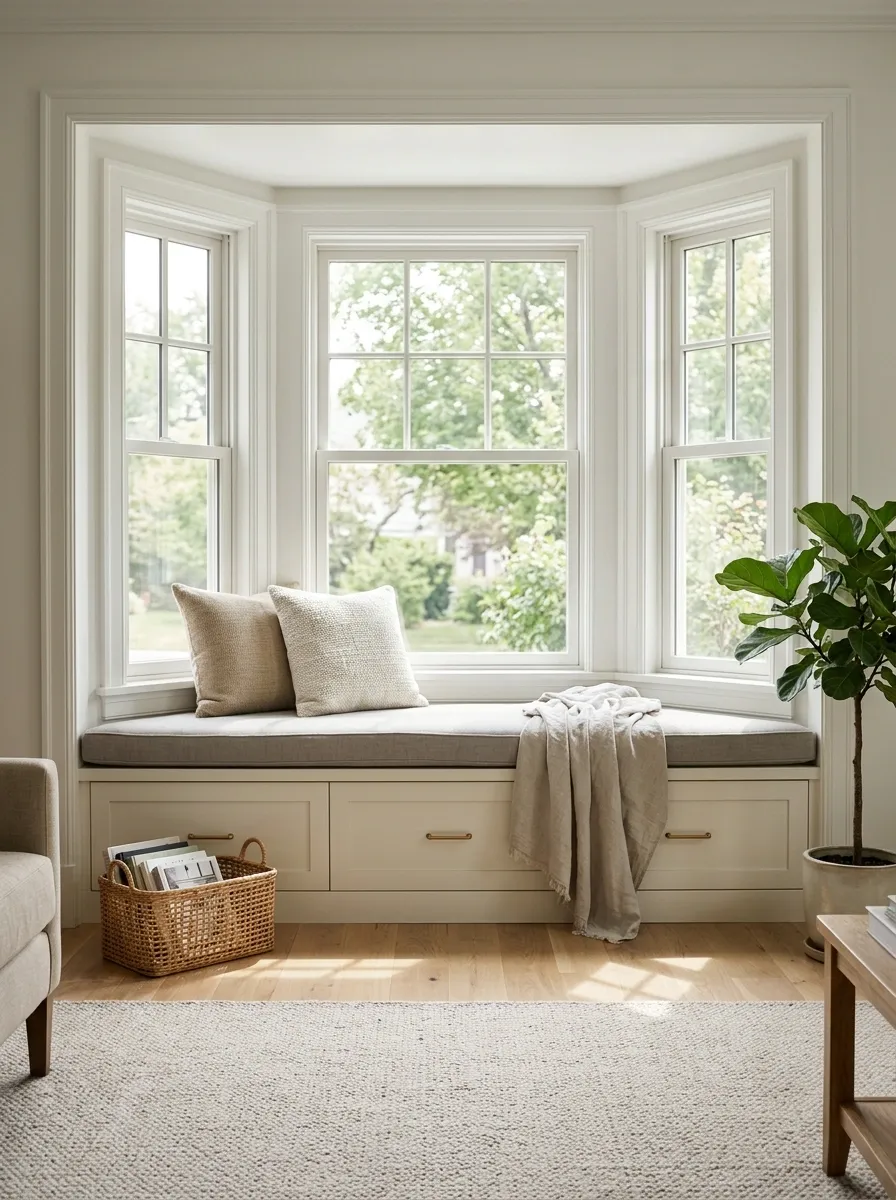
A built-in window seat makes the window part of the room’s architecture instead of leaving it as a decorative afterthought. A tailored cushion, two coordinated pillows, and a neatly placed reading basket turn the area into a usable spot, while drawers beneath provide storage without adding more visible furniture. Choose cushion fabric that connects to the curtains, rug, or nearby upholstery.
The proportions matter here more than the accessories. The seat must have enough usable depth, drawers need room to open, and the nearby walkway should remain clear. Keep the cushions fitted rather than oversized, and avoid stacking pillows until the seating surface disappears. The goal is a window that earns its floor space, not another highly photogenic surface nobody can actually sit on.
THE BUILT-IN SEAT
Looks finished. Still works on a Tuesday.
TOP ZONE
Fitted cushion + two pillows
Keep most of the surface clear for sitting.
UNDERNEATH
Storage drawers
NEARBY
Clear walkway
Measure the seat, cushion thickness, and drawer clearance before ordering anything. A beautiful built-in with drawers that cannot open is custom-made frustration.
Plant Propagation Window With Glass Vessels and Visible Roots
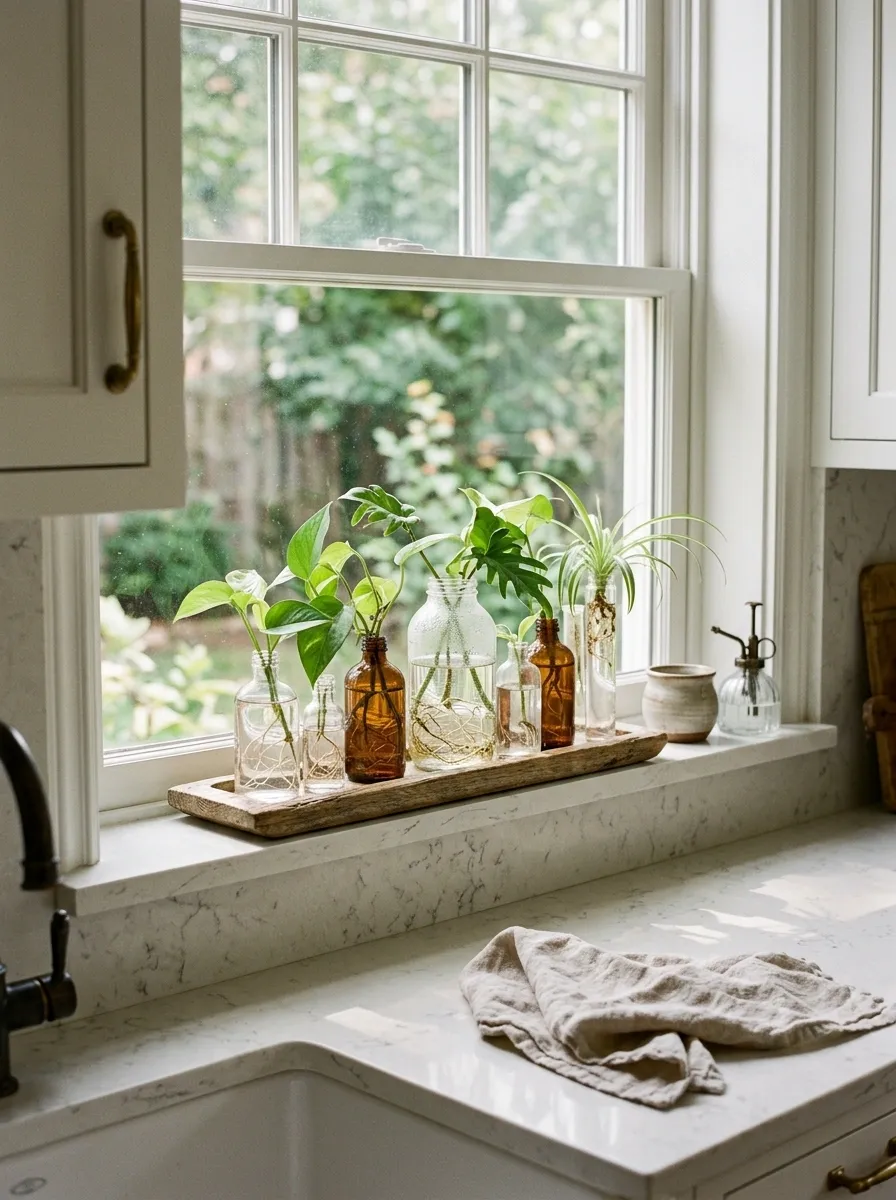
For a more practical botanical display, use clear propagation vessels to show off cuttings and their developing roots. Group glass bottles of different heights on a narrow wooden tray, with the freshest cuttings toward one end and more established ones toward the other. Green stems, visible roots, and filtered daylight create a display that feels organic without the bulk of large plant pots.
Keep the arrangement organized by vessel size and leave space to lift each container out for cleaning and water changes. Check the light needs of the plants being propagated, since strong direct sun can heat water and affect delicate cuttings. This look suits a plant-loving home where growing new greenery is part of the routine. The roots are the decoration, which saves everyone from buying another decorative root-shaped object.
THE PROPAGATION WINDOW
A living display with an actual purpose.
Group vessels by size and stage of growth. Keep enough space to lift each container, replace water, and clean the tray.
Plant care note: Light, water, and propagation timing vary by species. The glass display is decorative, but the cuttings still have actual needs.
Dining Room Window With Fresh Flowers and Coordinated Tableware
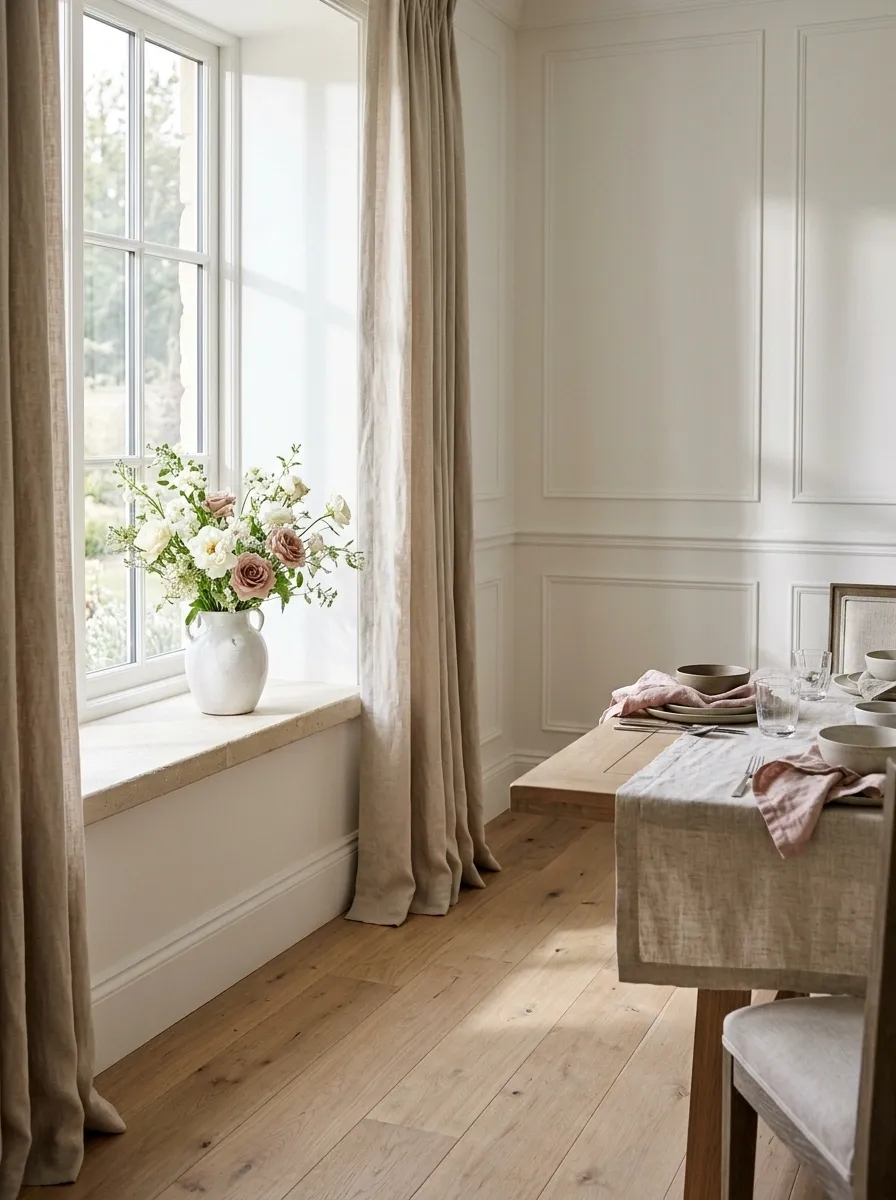
A dining room window feels more complete when its styling connects to the table nearby. Fresh flowers in a ceramic vase, a muted linen curtain, and a sill in warm wood or pale stone create a coordinated setting without turning the room into a formal display. Repeat a color from the flowers in the table linens or nearby artwork, and let the tableware provide another subtle link.
The proportions should work across the entire room. Tall arrangements can be lovely, but they shouldn’t block views across the table or obscure the window. Keep the sill display simpler when the table itself carries a patterned runner or a substantial centerpiece. There is no need for the window, table, and sideboard to compete for the same award.
THE DINING ROOM CONNECTION
Make the window and the table look related.
WINDOW
Flowers + ceramic
Choose one clear color story.
TABLE
Linen + tableware
Repeat a color or material from the sill.
BETWEEN THEM
Clear sightlines
Keep views across the table open.
Repeat a material or color, not every single object. The room needs a connection, not matching uniforms.
Choosing a Look That Works in Real Life
The strongest windowsill arrangement is one that suits the actual window rather than a photograph of a different house. Before buying anything, measure the ledge, check which direction the window faces, and consider how the curtains move. A narrow sill may need one long planter, while a deep masonry recess can support artwork and pottery. A bathroom needs moisture-conscious materials, and a child’s room needs stable, safe objects.
Keep the existing room in the conversation, too. Warm wood, related fabric colors, or a repeated accent shade can connect the window to nearby furniture. Most importantly, leave the window usable. The finished look should make the room feel more considered, not create another surface that requires constant rearranging.