
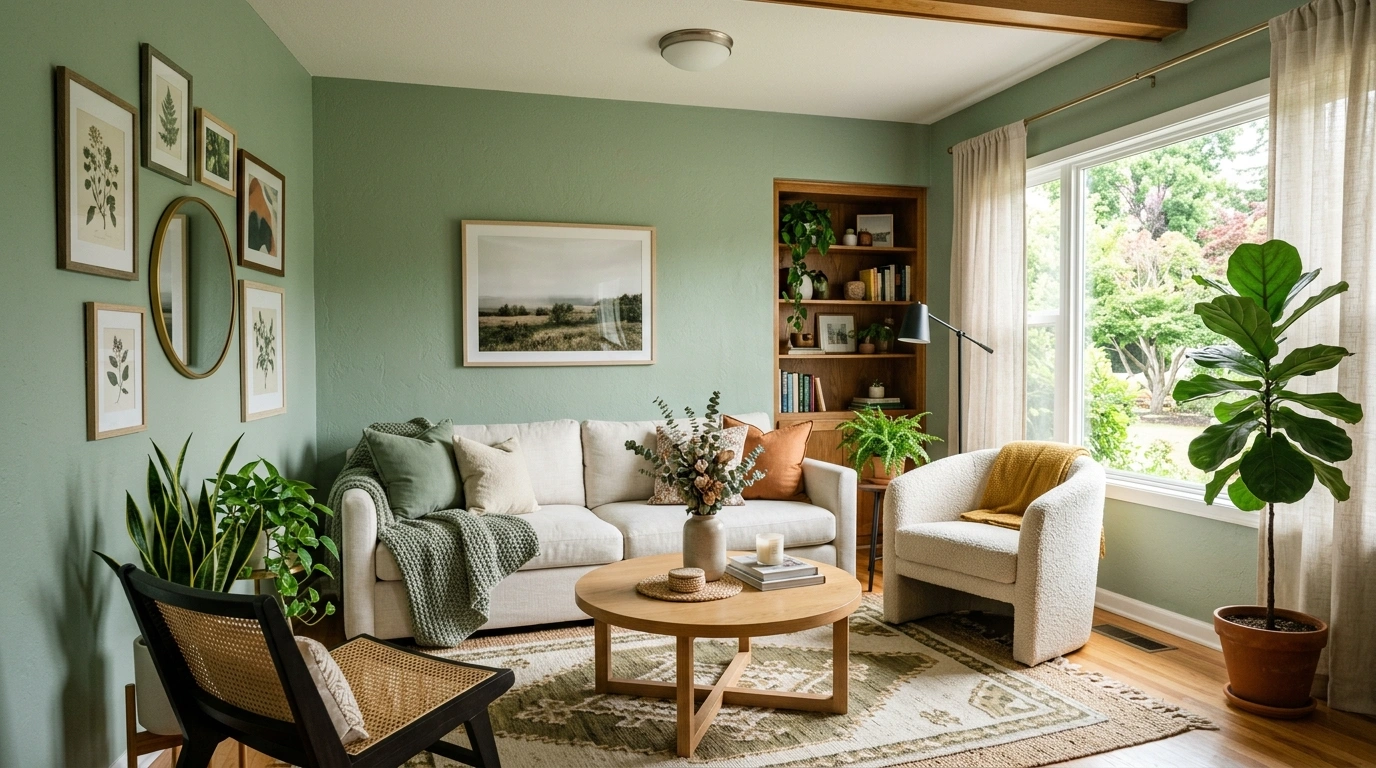
A sage wall can look quietly sophisticated one day and strangely dull the next. The difference usually has little to do with the green itself. A cool sage surrounded by gray furniture can feel completely different from that same color paired with warm oak, cream linen, aged brass, or dark walnut.
The bigger mistake is treating the wall color as the whole design. A living room only starts to make sense when the walls, seating, flooring, lighting, architecture, textiles, and smaller accents feel like they belong to the same visual story.
The rooms below take a complete-design approach. Some are light and relaxed. Others are moody, traditional, earthy, sculptural, or distinctly modern. Each one offers a finished direction that can be used as a reference when choosing colors, furniture, materials, and proportions for a real room.
Sage Green Living Rooms
Soft Sage Living Room With Cream Linen Seating and Light Oak
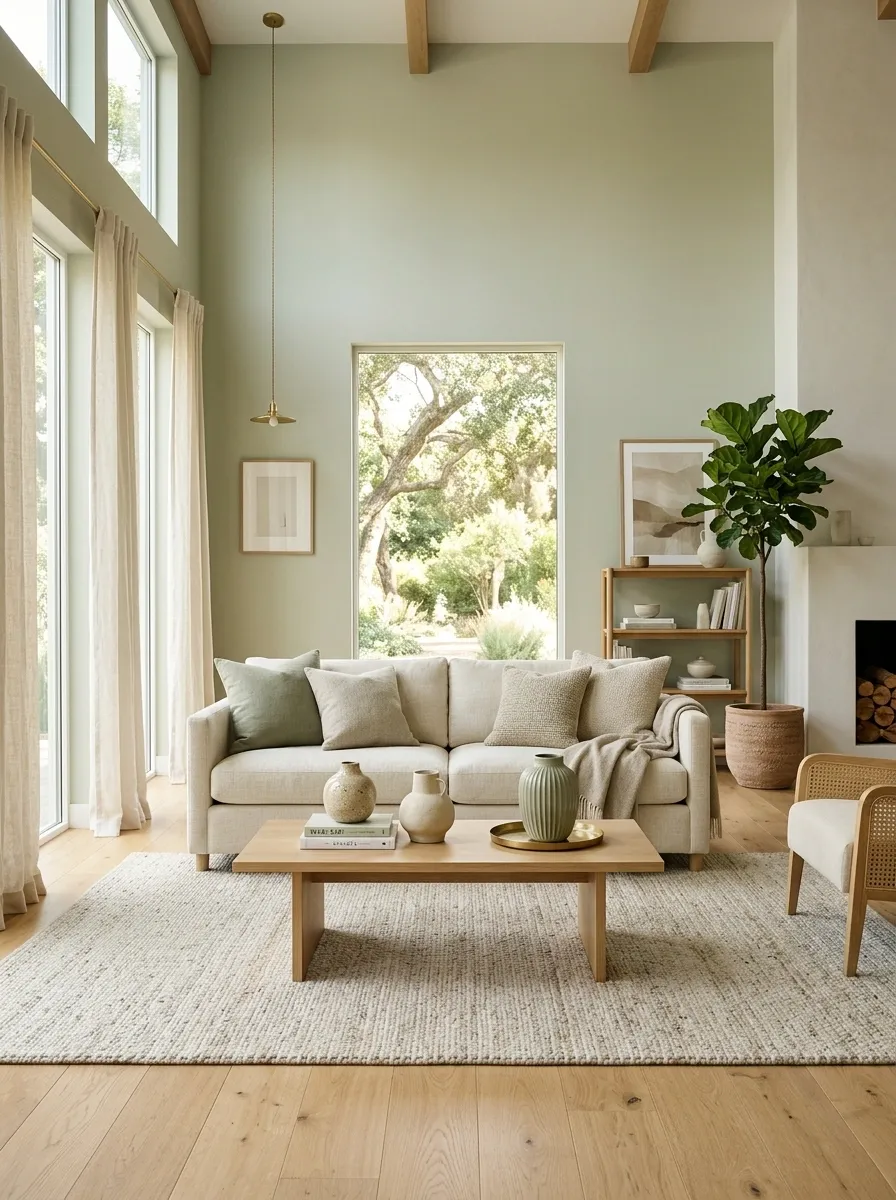
Pale sage walls, a low cream sofa, light oak furniture, and a softly textured rug create a room that feels open without becoming stark. Linen curtains keep the windows relaxed, while a few handmade-looking ceramics add enough variation to stop the pale palette from feeling flat.
The important relationship here is scale. The sage occupies most of the visual field, while cream covers the largest furniture pieces and oak provides the darker line underneath. Nothing competes for attention.
This direction works especially well when the room already gets generous daylight. Keep the accessories restrained. Too many small beige objects can make an otherwise clean composition feel fussy.
Deep Sage Living Room With Walnut Furniture and Aged Brass
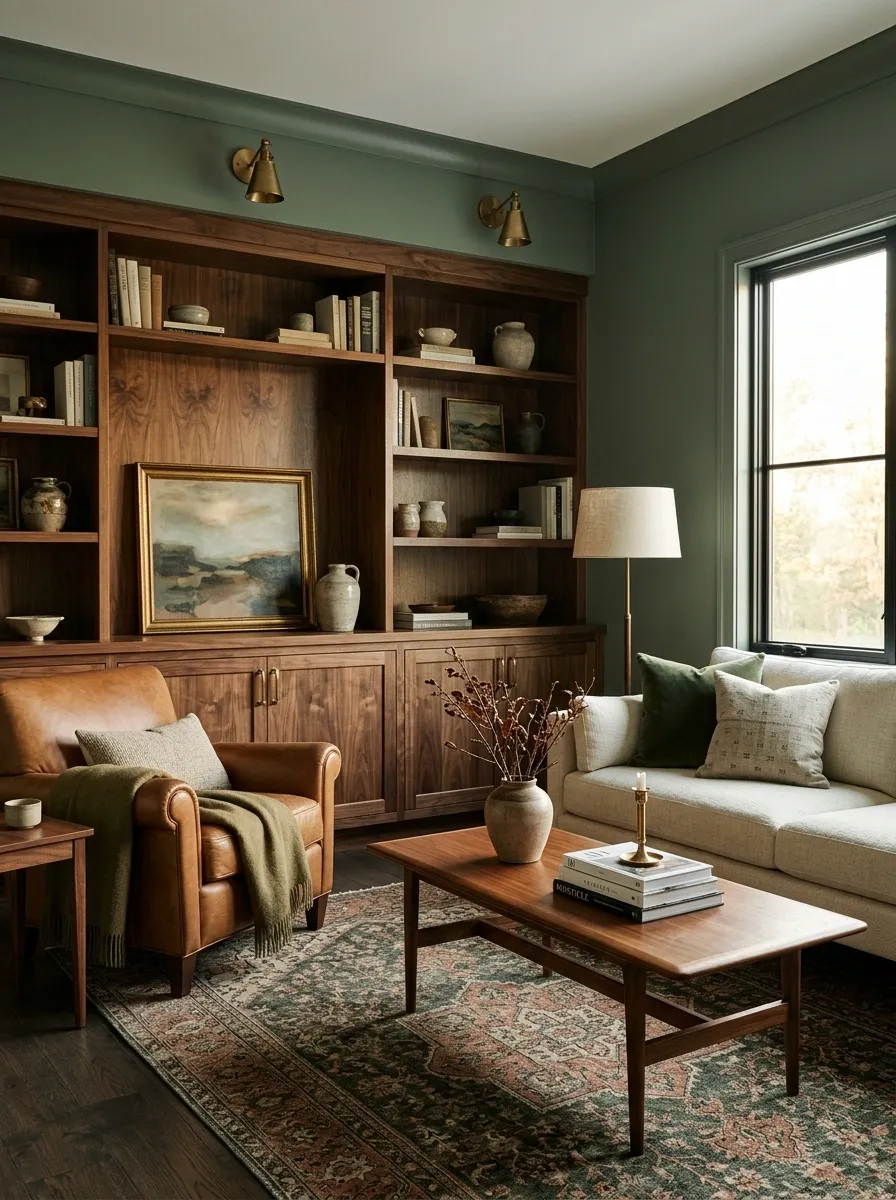
A much deeper sage changes the mood completely. Here, the walls sit behind walnut cabinetry and furniture, a caramel-toned chair warms the seating area, and aged brass appears through lighting and small hardware details. A patterned rug breaks up the darker values without introducing another loud color.
The room feels collected because the warm wood and brass are doing different jobs. Walnut supplies weight. Brass catches light. The sage connects both materials without competing with either.
Natural light matters more with this direction. In a dim room, use cream upholstery or a lighter rug to create a brighter break between the walls and furniture.
Modern Sage Living Room With Curved Bouclé Furniture
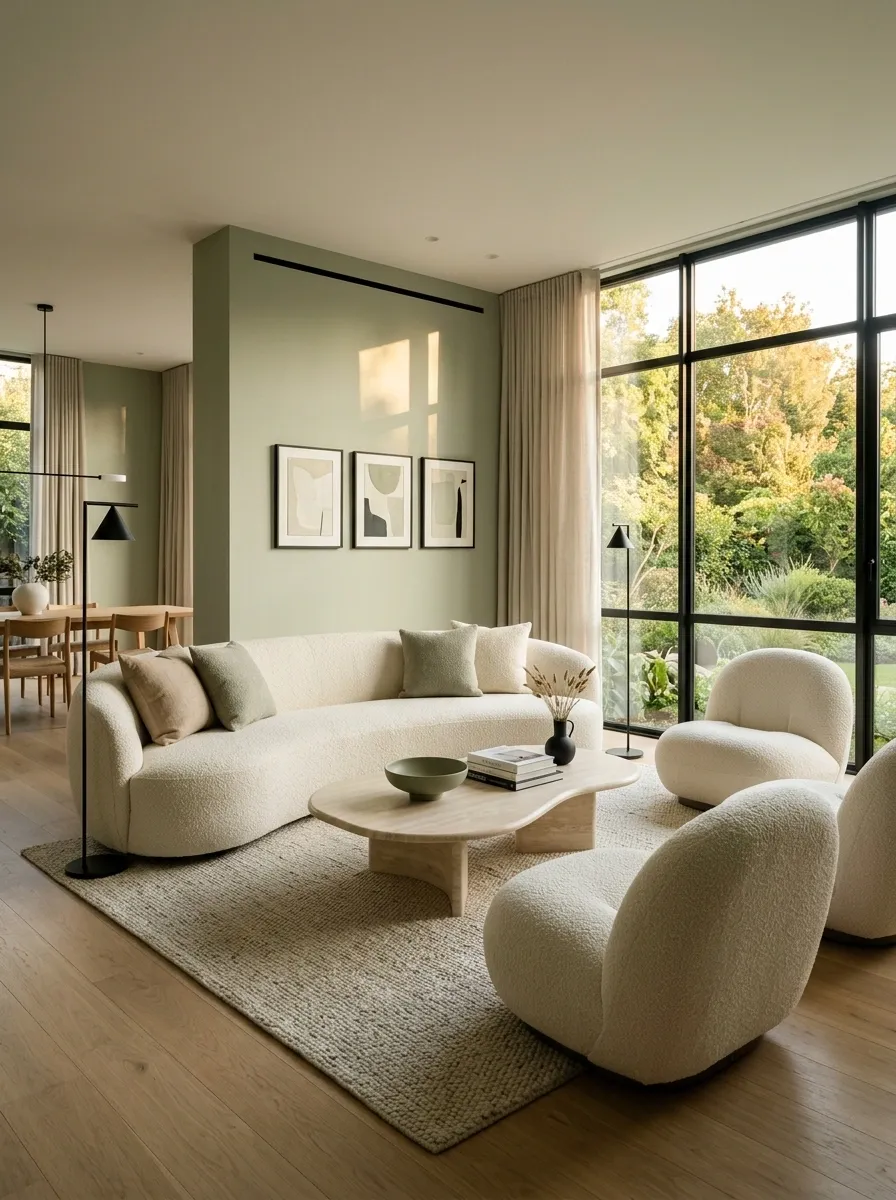
This version moves away from traditional rectangular furniture. Soft sage walls sit behind a curved ivory sofa, rounded lounge chairs, a sculptural coffee table, and pale stone surfaces. Small black accents give the room enough definition to keep all the softness from becoming blurry.
The contrast is mostly about shape rather than color. Curved seating feels generous and relaxed, while the darker architectural details create sharper edges around it. The result is contemporary without relying on a cold white-and-gray palette.
Leave some negative space around the furniture. The curves need room to read clearly, and crowding them with side tables and accessories would weaken the whole composition.
Traditional Sage Living Room With White Trim and Antique Details
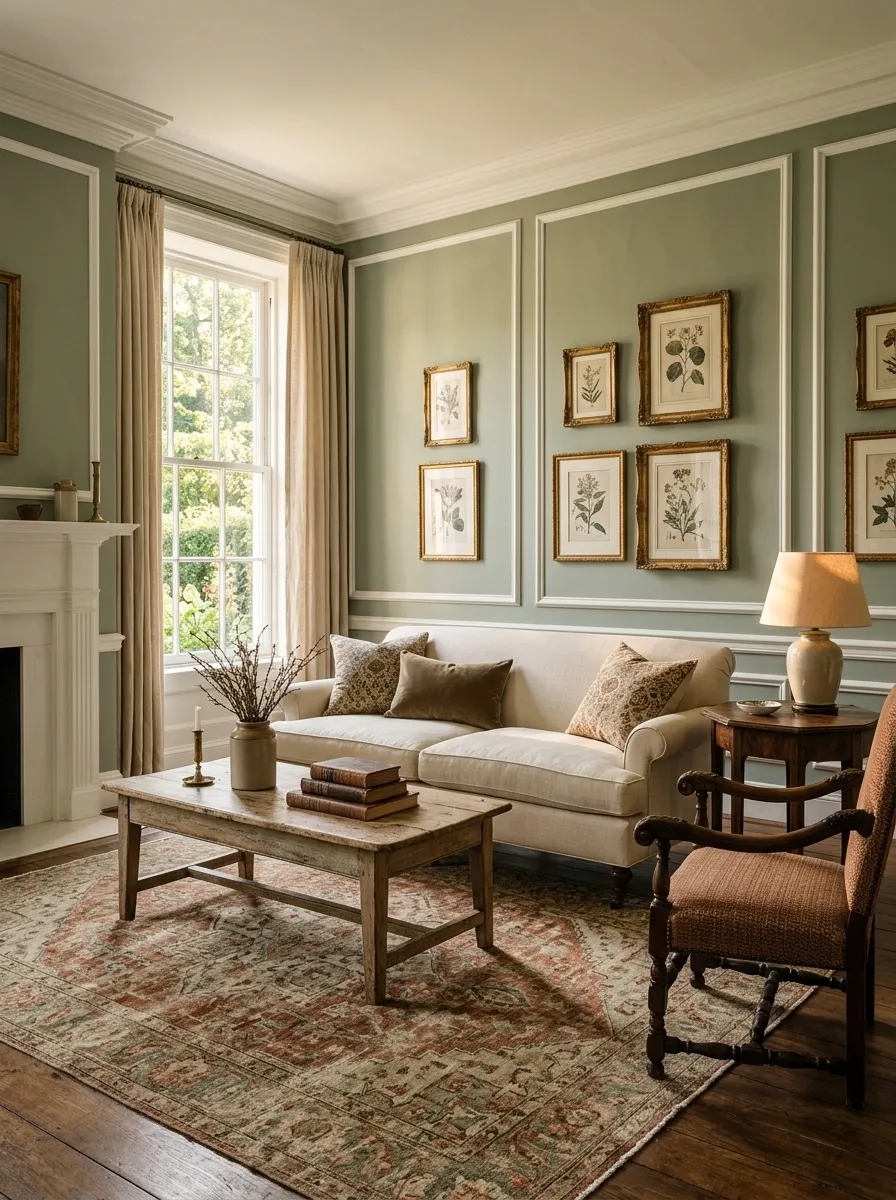
Sage becomes more architectural when it is framed with crisp white molding. In this room, the wall color runs around classic paneling, a cream upholstered sofa faces an aged wood table, and a muted Persian-style rug introduces pattern without fighting the architecture.
The antique details are important because they stop the green from feeling freshly painted and overly neat. Framed art, worn wood, and traditional upholstery give the room history.
Keep the white trim visually clear. It should separate the wall color from the ceiling, doors, and architectural edges rather than disappear beneath heavy curtains or oversized artwork.
Sage Green and Terracotta Living Room With Global Textiles
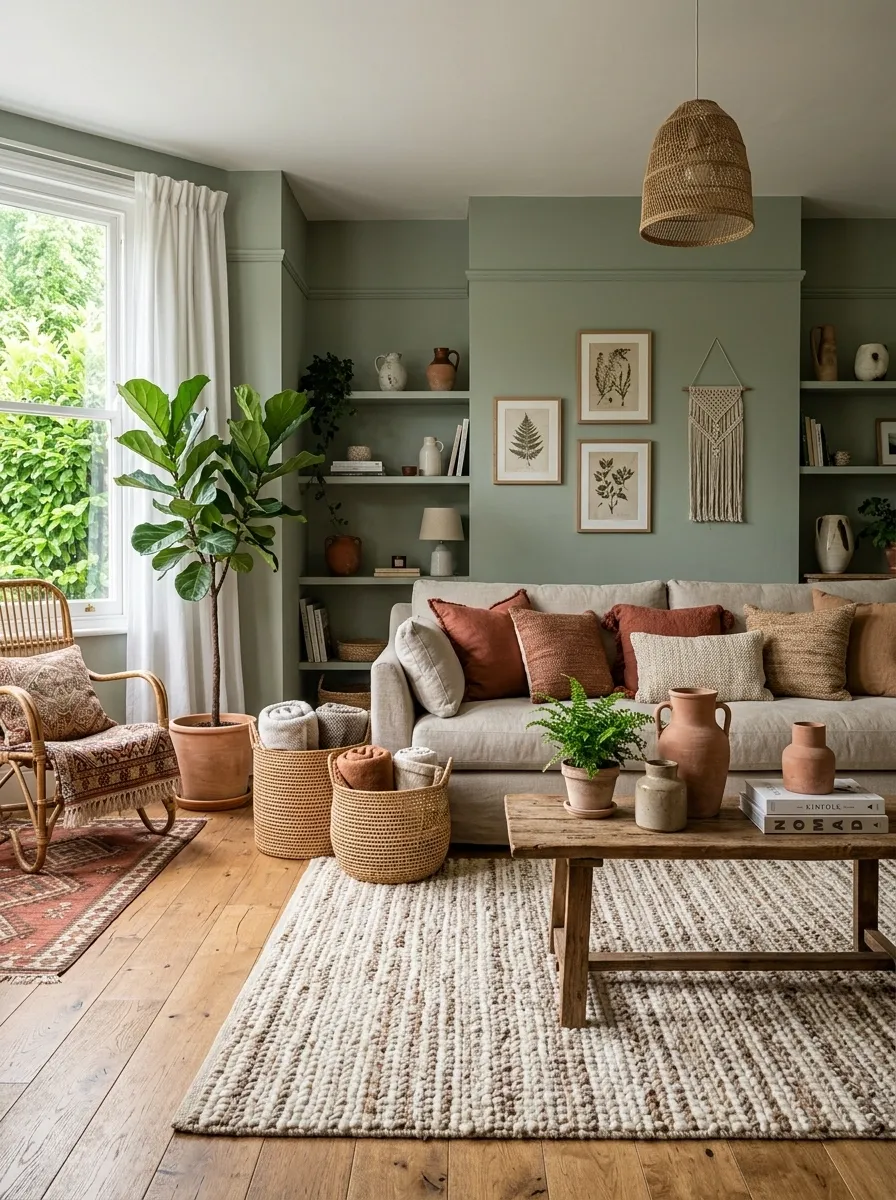
This room takes sage in a warmer direction. Muted green walls meet terracotta cushions, a handwoven-looking rug, natural wood, woven baskets, and a few earthy ceramic pieces. Nothing is overly polished, so the palette feels gathered rather than coordinated from a single showroom.
Terracotta works because it brings heat into an otherwise quiet green room. The trick is concentration. A few warm accents have more impact than scattering the color across every surface.
Let the large furniture stay neutral and allow the textiles to carry most of the earthy color. That gives the room room to evolve later without forcing a full redesign.
Small Sage Living Room With Built-In Storage and Compact Furniture
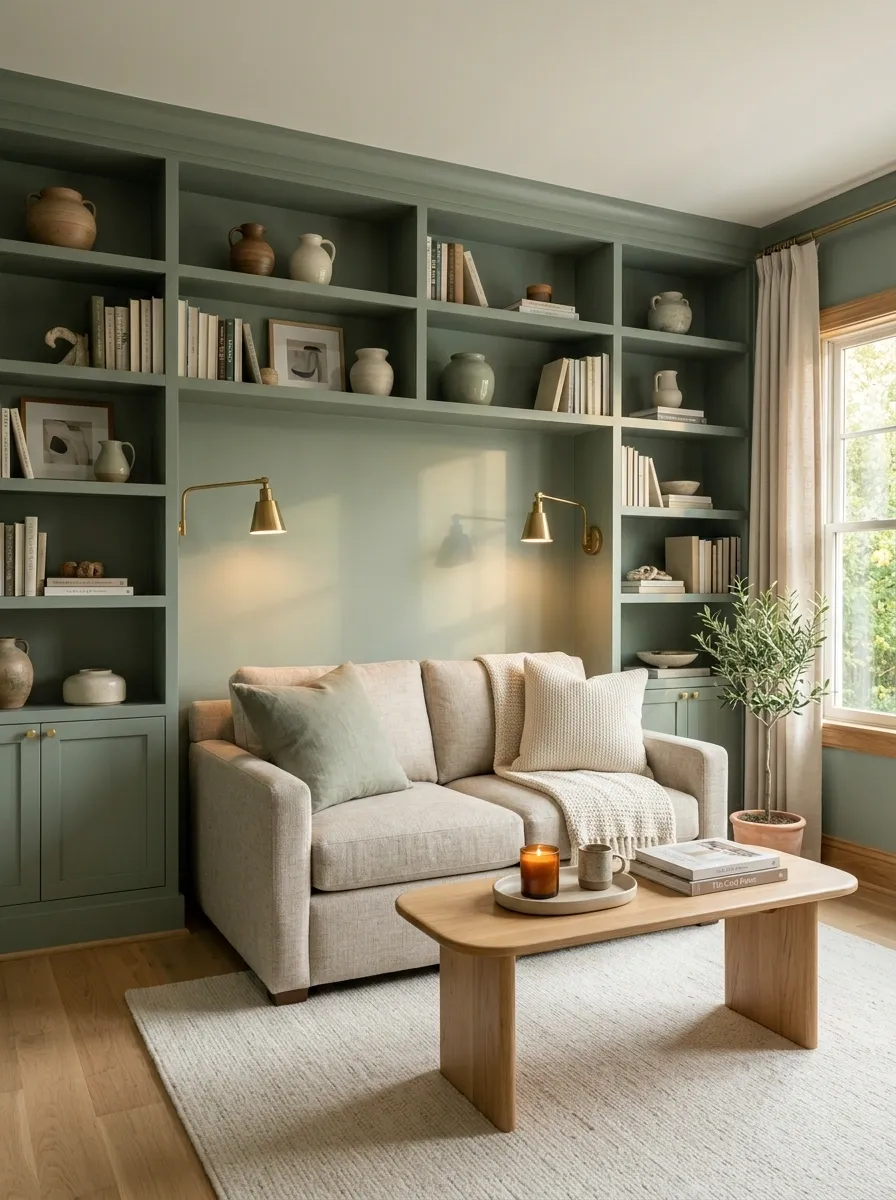
A small living room can handle sage surprisingly well when the color is used to visually tie the storage, walls, and furniture together. Here, sage-painted built-ins run across one wall, a compact loveseat sits opposite a narrow wood coffee table, and wall-mounted lighting keeps the floor visually open.
The built-ins do more than store books and media. Their color makes the entire wall read as one architectural element, which reduces the chopped-up feeling that separate furniture pieces can create.
Keep the walking path around the seating clear. In a compact room, a few extra inches of circulation often matter more than another decorative table.
Sage Green Cottage Living Room With Slipcovered Furniture
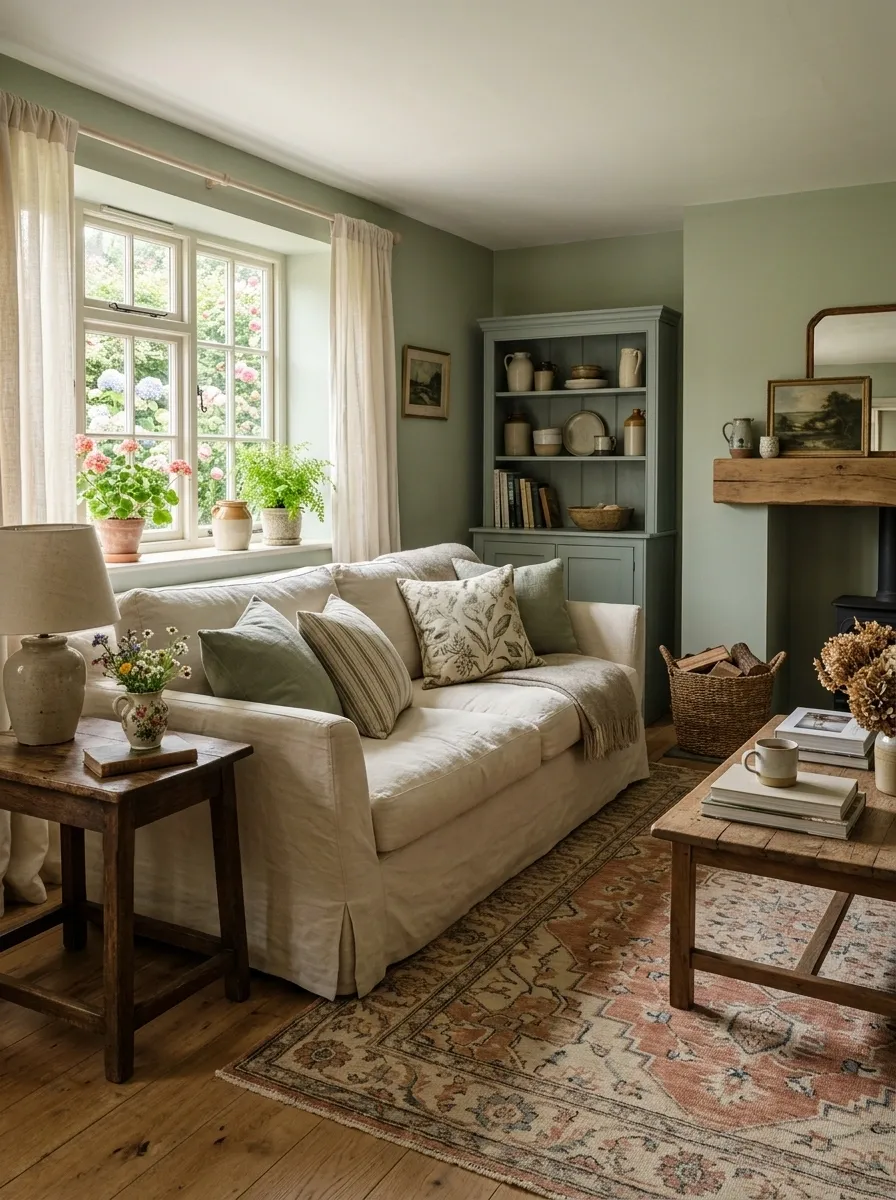
Soft sage walls, a loose cream slipcovered sofa, painted wood furniture, and a faded floral rug create a cottage room that feels relaxed rather than overly themed. Woven baskets and linen curtains introduce irregular textures, while small floral details echo the rug without matching it exactly.
The charm comes from mixing finishes that don’t look factory-perfect. Painted wood can have a slightly different tone from the trim, and the upholstery can remain softly rumpled rather than sharply tailored.
Keep the pattern concentrated in a few places. Too many florals, checks, and botanical prints would turn the relaxed composition into visual noise.
Moody Sage Living Room With Charcoal and Smoked Oak
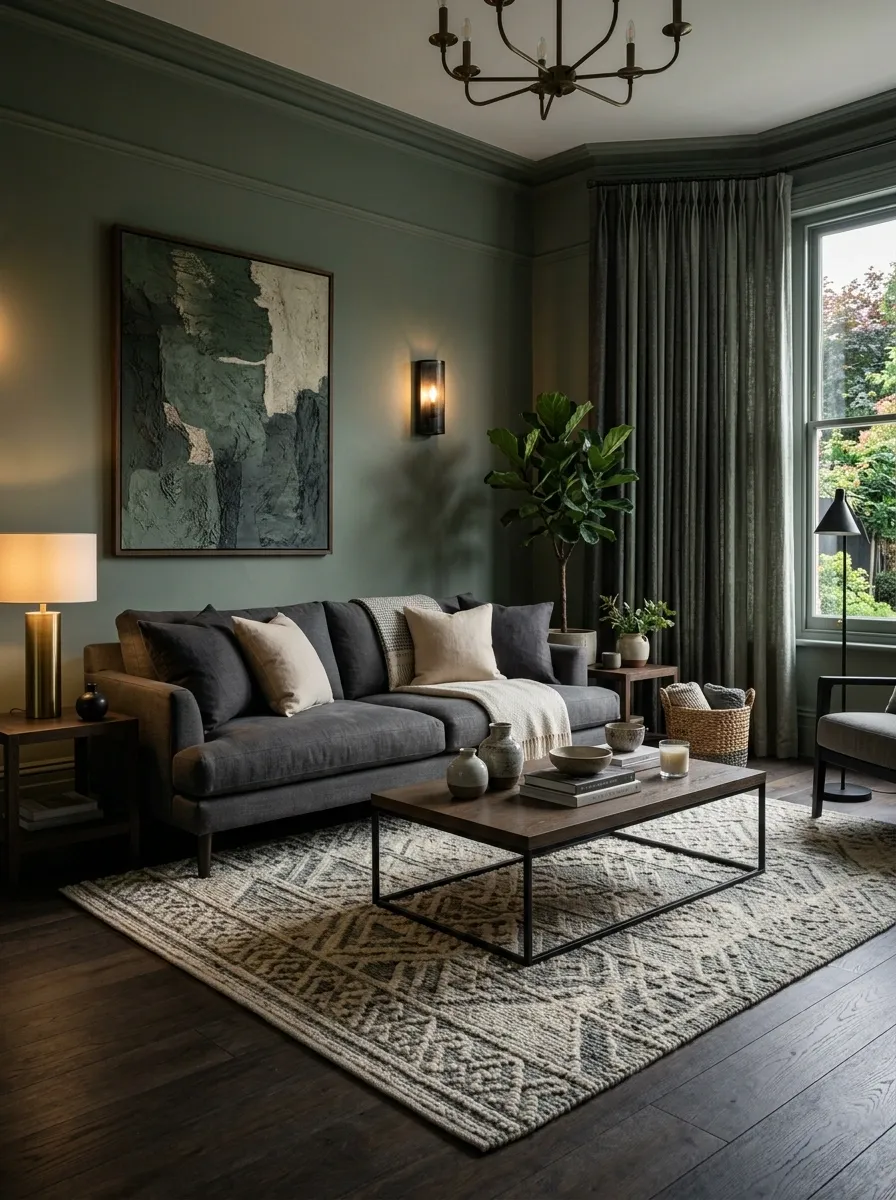
For a room that needs more drama, shift sage toward the deeper end of the spectrum and pair it with charcoal upholstery, smoked oak, and blackened metal. Heavy curtains soften the edges while a few carefully placed lamps create warm pools of light after dark.
This isn’t simply a darker version of the first room. The entire hierarchy changes. Furniture becomes more substantial, contrast becomes more controlled, and lighting becomes part of the design rather than an afterthought.
A lighter rug or a few warm cream textiles should interrupt the darkest areas. Without those breaks, the room can lose visual depth.
Sage Green Living Room With Blue-Green Accent Chairs
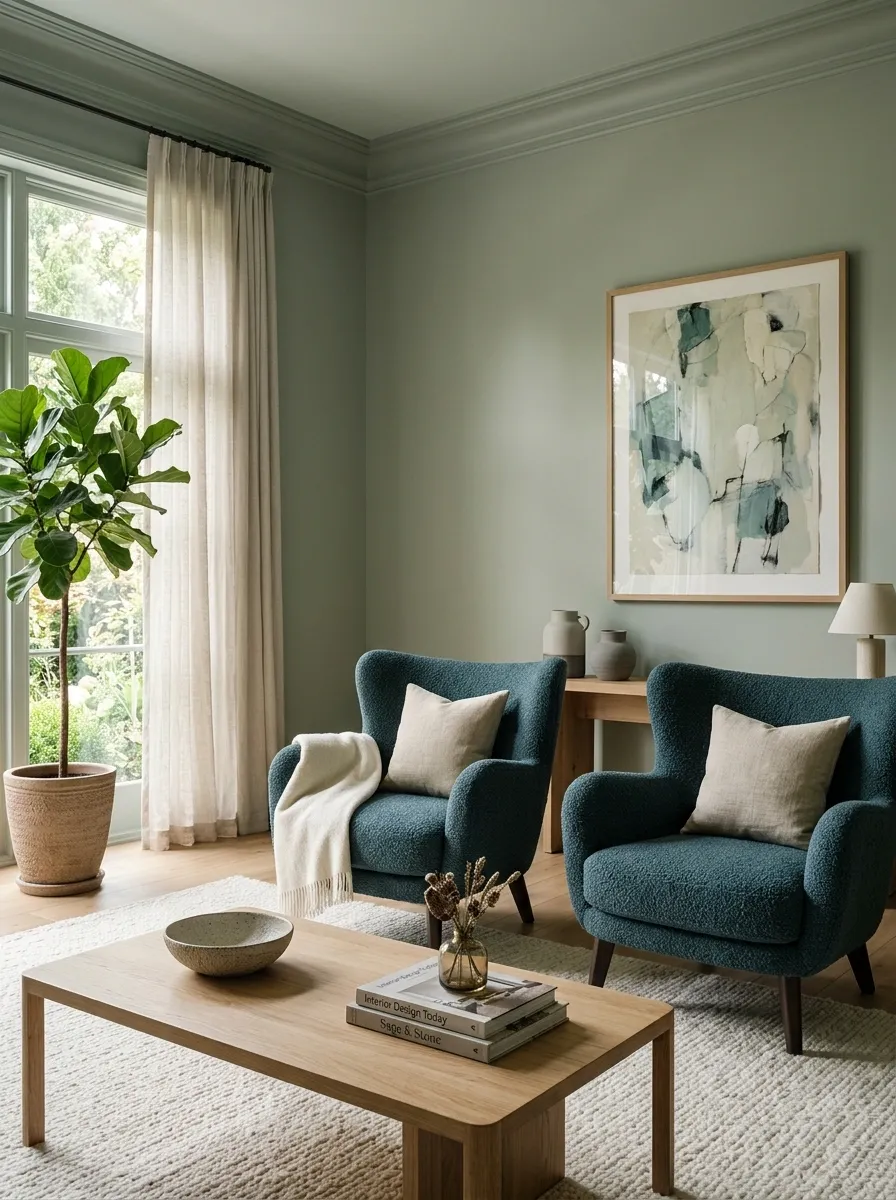
Sage doesn’t always need warm accents. A deeper blue-green can create a quieter, more tonal room when it appears through two lounge chairs, artwork, or patterned textiles. The background stays muted, while the blue-green gives the seating area a stronger focal point.
Natural oak and soft ivory keep the combination from becoming too cool. The colors belong to the same general family, but their different depths give the room enough separation.
Use the deeper blue-green selectively. Repeating it across every cushion, vase, and artwork would erase the hierarchy that makes the chairs interesting in the first place.
Japandi Sage Living Room With Pale Wood and Textured Plaster
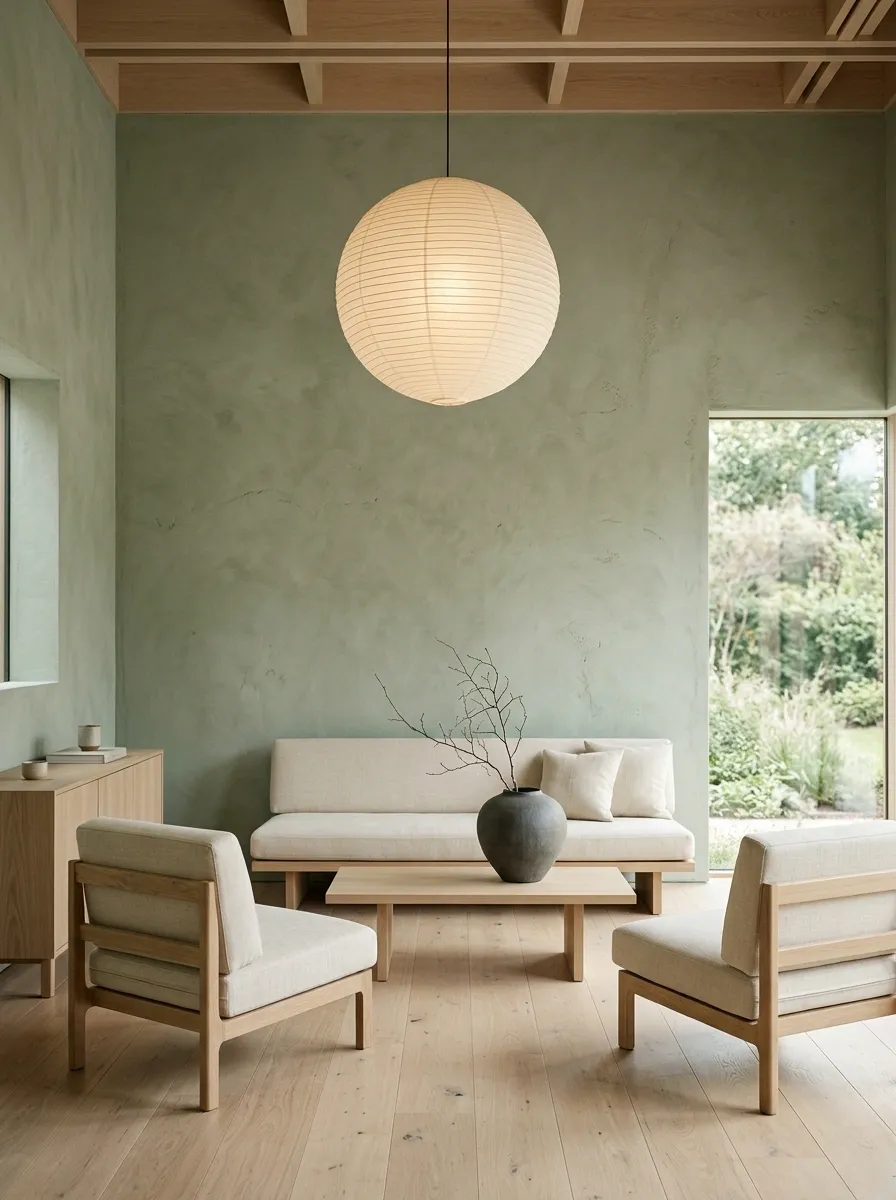
The Japandi approach works best when the room has very little visual clutter. Sage appears as a muted architectural backdrop behind low pale-oak furniture, textured plaster, simple cream upholstery, and a restrained pendant or paper-like light.
The furniture sits close to the ground, leaving a generous band of open wall above it. That vertical breathing room is one of the reasons the room feels calm without being empty.
Avoid filling the open spaces with decorative shelving. The restraint is part of the composition. A single oversized branch, ceramic vessel, or piece of quiet artwork carries more weight than a collection of small objects.
Sage Green Living Room With Rust Leather and Natural Stone
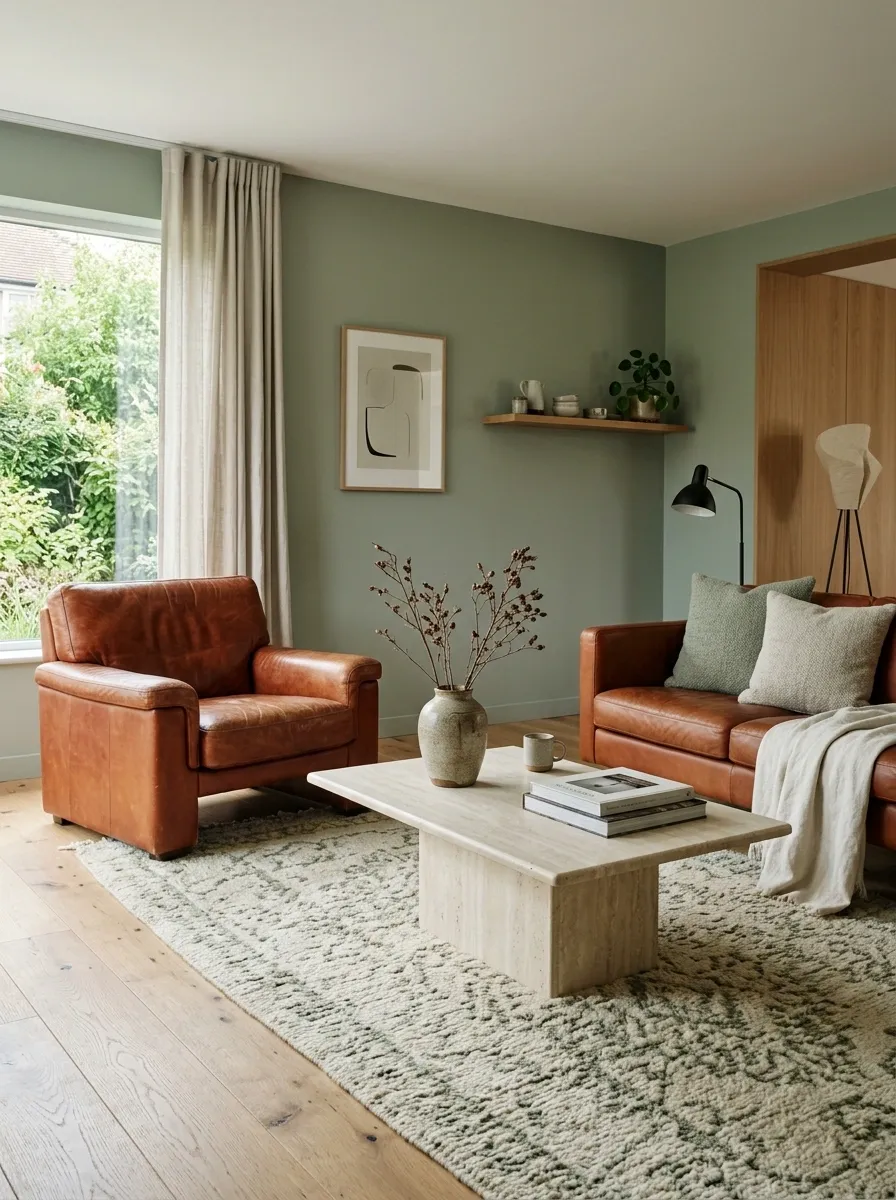
Rust-colored leather brings a richer temperature to sage without overpowering it. In this composition, a cognac leather chair or compact sofa sits against muted sage walls, while a pale limestone or travertine coffee table adds a chalky contrast. Natural oak and a softly patterned rug fill in the middle ground.
The materials do most of the decorating. Smooth stone, worn leather, matte paint, and grainy wood each catch light differently, so the room has depth even with relatively little artwork or small decor.
Keep the leather concentrated around the seating. Repeating the rust tone across every accessory would make the warm accent compete with the sage instead of supporting it.
Elegant Sage Living Room With Velvet Sofa and Marble Accents
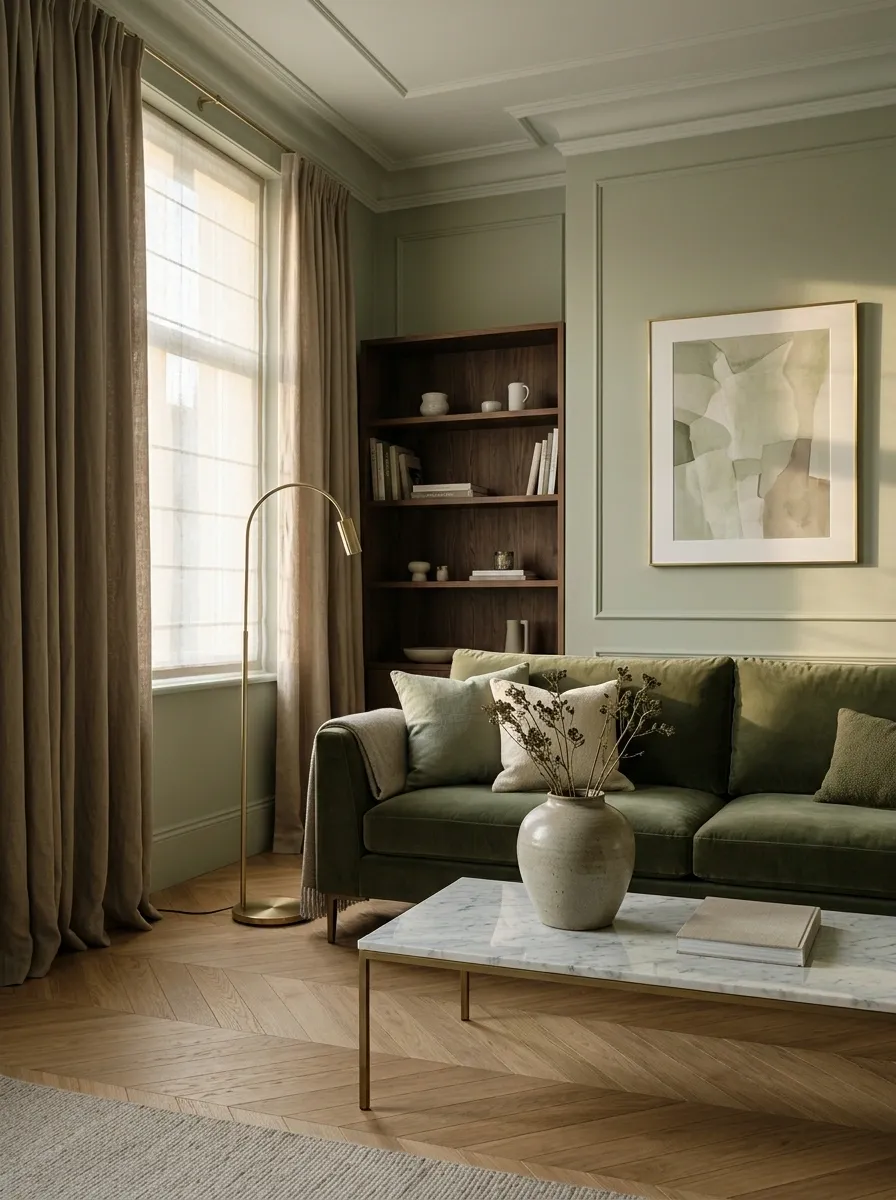
Sage can look highly refined when plush upholstery and stone are introduced carefully. A deep cream, muted olive, or soft taupe velvet sofa becomes the main furniture statement, while a marble-topped table, brushed metal lamp, and full-length curtains give the room a more polished character.
The contrast isn’t loud. It comes from texture and finish. Velvet absorbs light, marble reflects it, and the matte wall color sits somewhere between the two.
A room like this benefits from editing. Let the sofa and stone establish the mood, then keep the surrounding accessories deliberately quiet.
Sage Green Living Room With Gallery Wall and Vintage Furniture
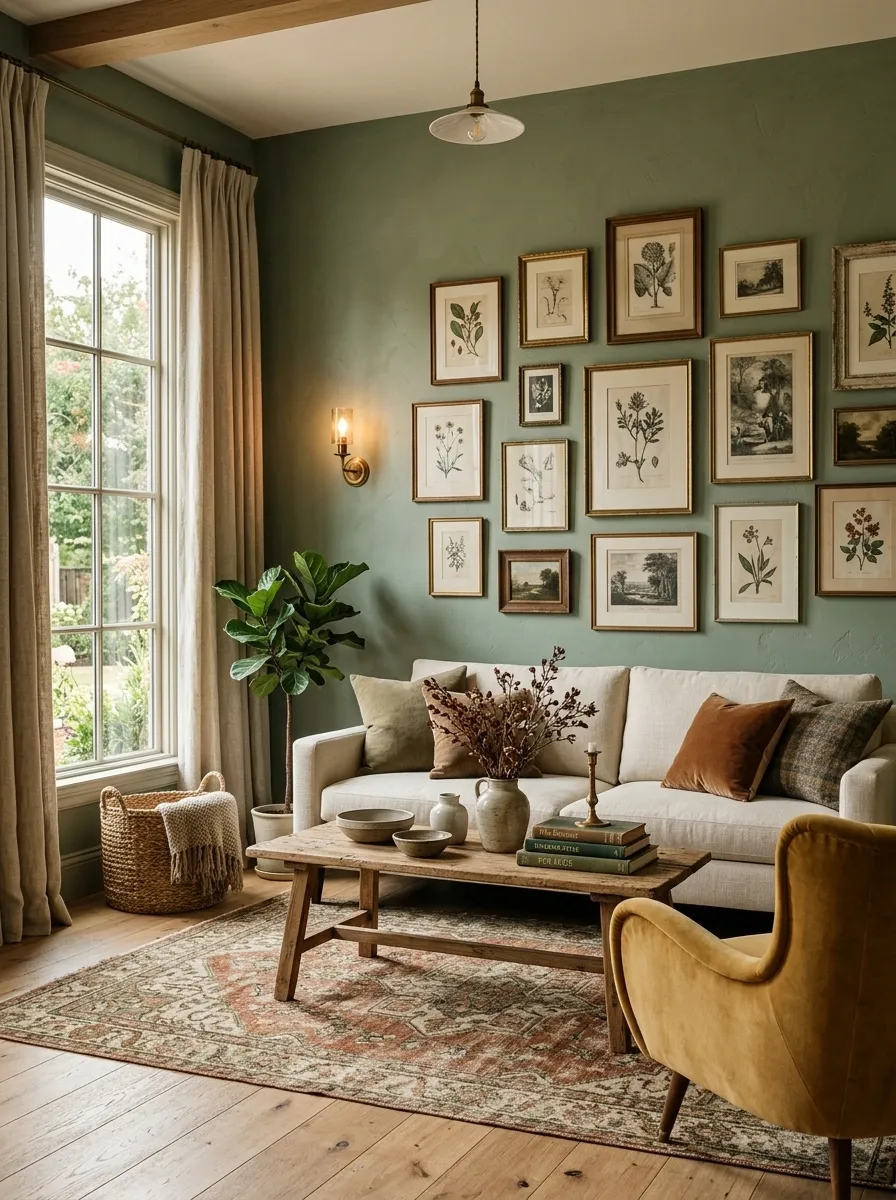
A sage wall makes a convincing backdrop for a layered gallery wall because the muted green gives the artwork enough color without competing with it. Vintage chairs, an aged wood table, a faded patterned rug, and mismatched frames create a room that feels accumulated over time.
The furniture shouldn’t match too closely. A curved chair beside a tailored sofa, for example, gives the room more character than a coordinated seating set.
The gallery wall should have breathing room. Mixing frame sizes works best when the overall arrangement has a loose shape rather than filling every available inch.
Warm Minimal Sage Living Room With Travertine and Oatmeal Upholstery
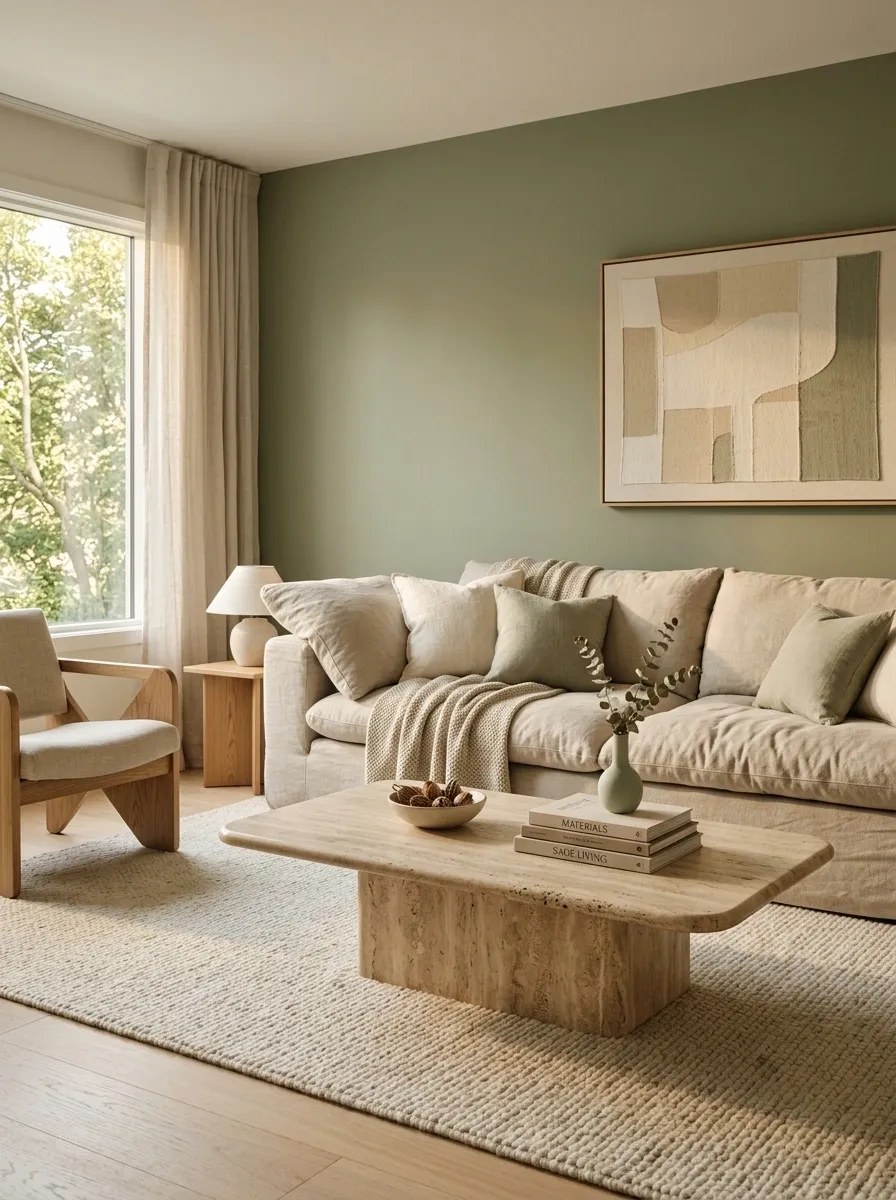
This version strips the room back to a few strong materials. Warm sage walls, an oversized oatmeal sofa, a substantial travertine coffee table, and pale wood establish nearly the entire composition. Small accessories remain secondary.
The room feels warm rather than stark because the materials have visible texture and slightly different undertones. The stone adds weight, while the sofa softens the hard surface and the wood keeps everything grounded.
Scale matters more than quantity here. One broad coffee table and one generous sofa have more impact than several smaller furniture pieces.
Sage Green Living Room With Black-Framed Windows and Graphic Art
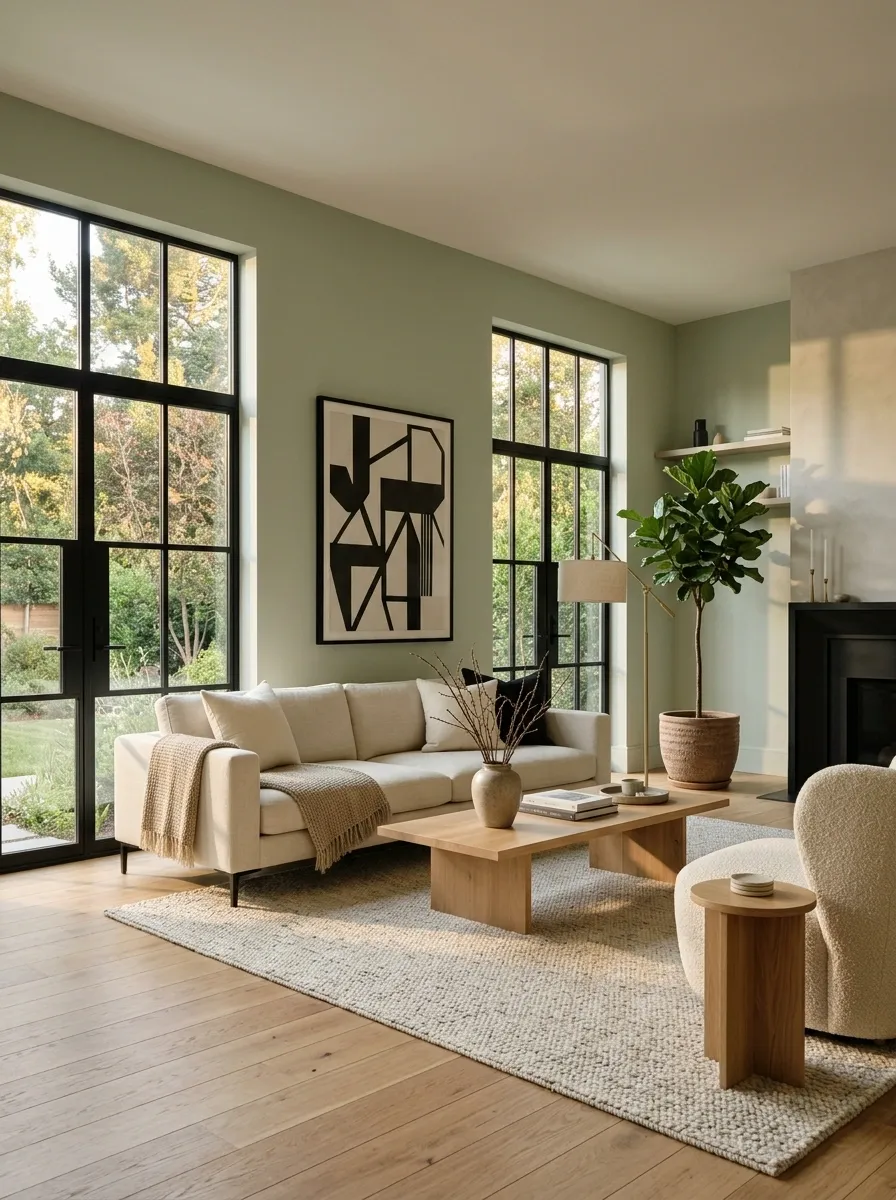
Large black-framed windows give sage a much sharper architectural setting. The softer wall color sits behind cream upholstery and natural wood, while black window mullions and oversized graphic artwork create strong linear moments.
This combination works because the black isn’t scattered across dozens of small objects. Most of the dark weight comes from the architecture, so the room feels intentional rather than accessorized.
Keep the furniture relatively quiet. Strong patterns on the sofa or rug would compete with the window grid and large artwork.
Sage Green Living Room With Blush and Dusty Rose Accents
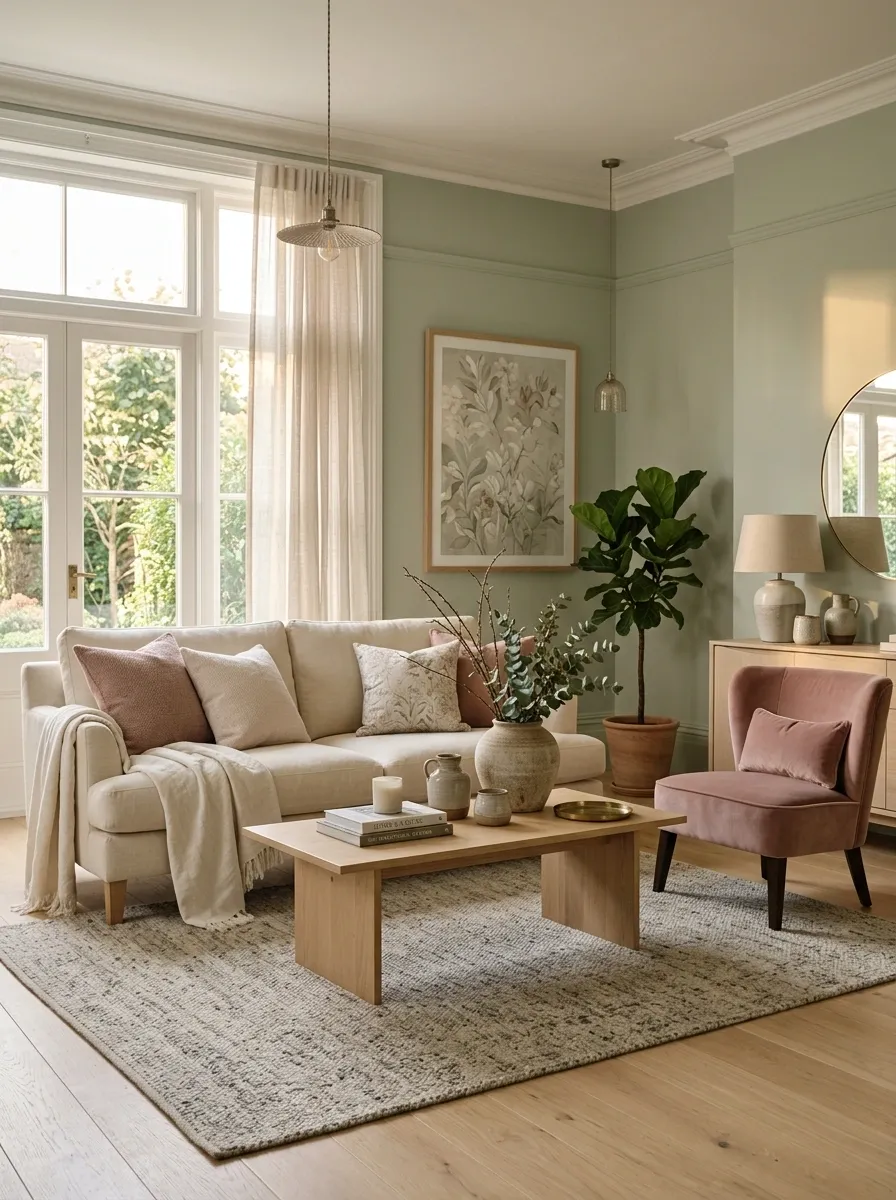
Sage and dusty rose create a softer contrast than sage and terracotta, especially when the pink stays muted. This room uses sage walls as the foundation, then brings in dusty rose through cushions, a small upholstered chair, and subdued floral artwork. Warm ivory furniture keeps the combination from becoming overly sweet.
The important detail is saturation. Neither color is bright enough to dominate the room, so they can sit together without competing. Pale wood adds another warm note while keeping the overall composition grounded.
Keep dusty rose limited to a few visible moments. Too much pink would shift the room away from the quiet, earthy character that makes this palette appealing.
Sage Green Living Room With Exposed Oak Beams and Stone Fireplace
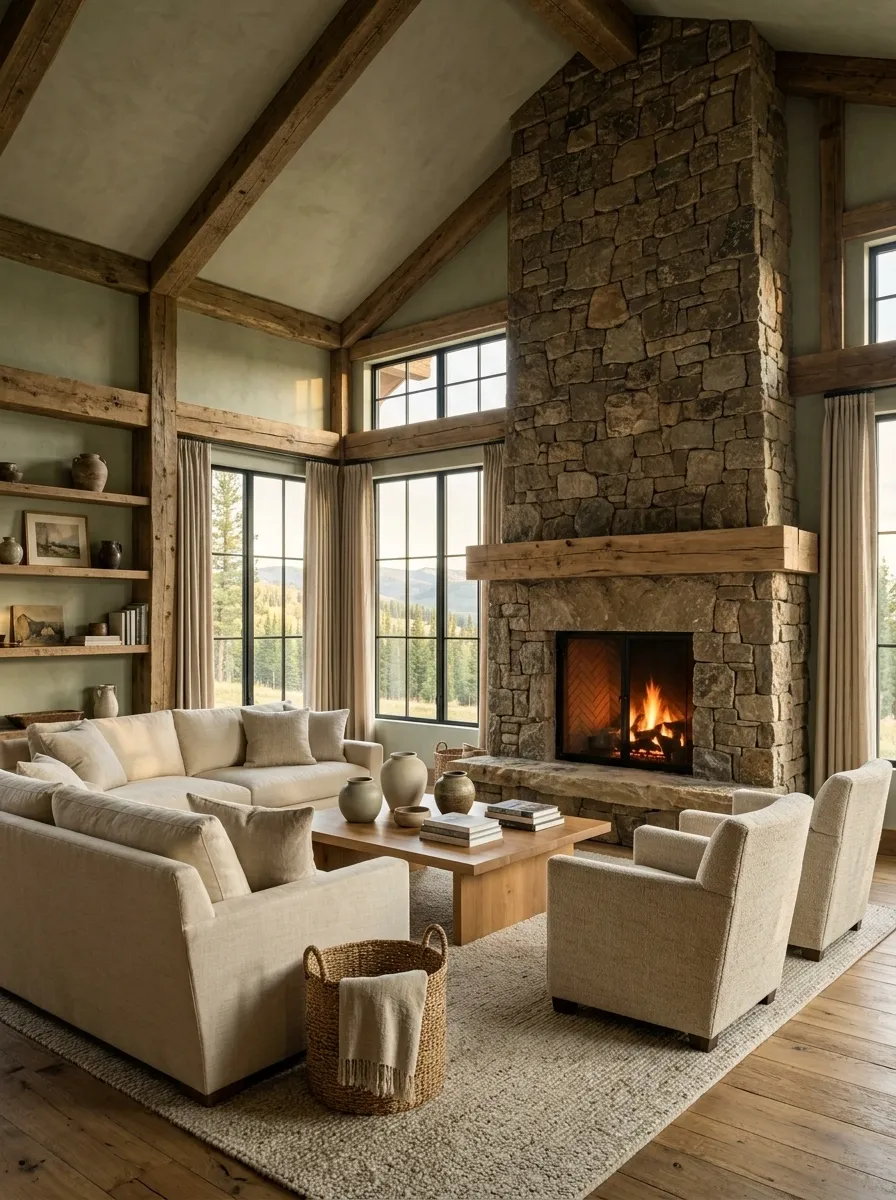
Some living rooms already have enough architectural character to dictate the design. A substantial stone fireplace and exposed oak beams become the main structure here, while sage walls fill the spaces between them. Neutral furniture sits low enough that the architecture remains visually dominant.
The fireplace should read as the anchor, not as one decorative feature among many. Keep the rug, sofa, and tables relatively calm so the stone and beams retain their weight.
Warm oak works particularly well against muted sage because both materials have an earthy quality. The combination feels connected rather than color-coordinated.
Contemporary Sage Living Room With Cream Bouclé and Black Stone
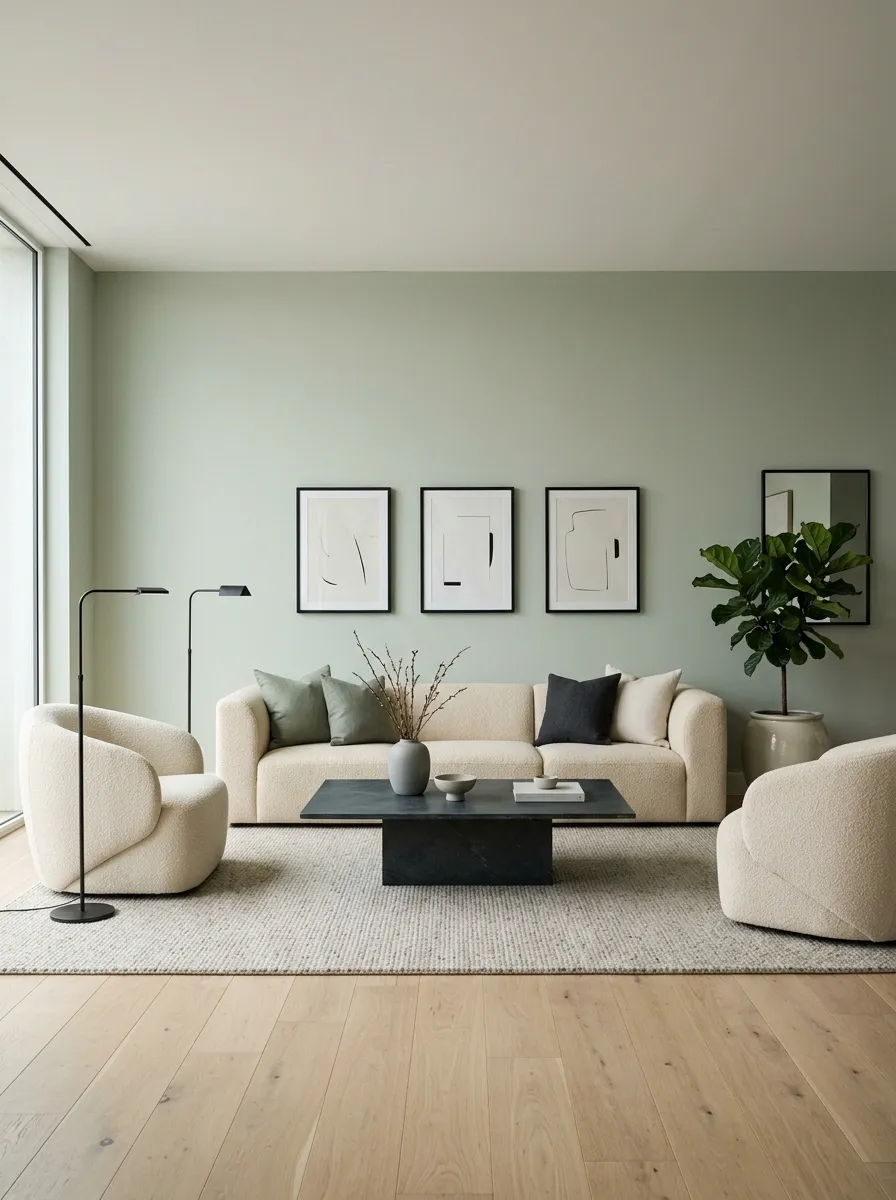
A contemporary sage room can feel crisp without falling into a stark white palette. Soft sage walls provide the background for sculptural cream seating, a dark stone coffee table, slim black accents, and minimal artwork.
The strongest contrast sits low in the room. Dark stone and black details anchor the pale furniture, while the green keeps the walls softer than a pure neutral backdrop would.
This composition benefits from restraint. Skip busy patterned textiles and let the furniture silhouettes provide most of the visual interest.
Sunlit Sage Living Room With Rattan and Linen Layers
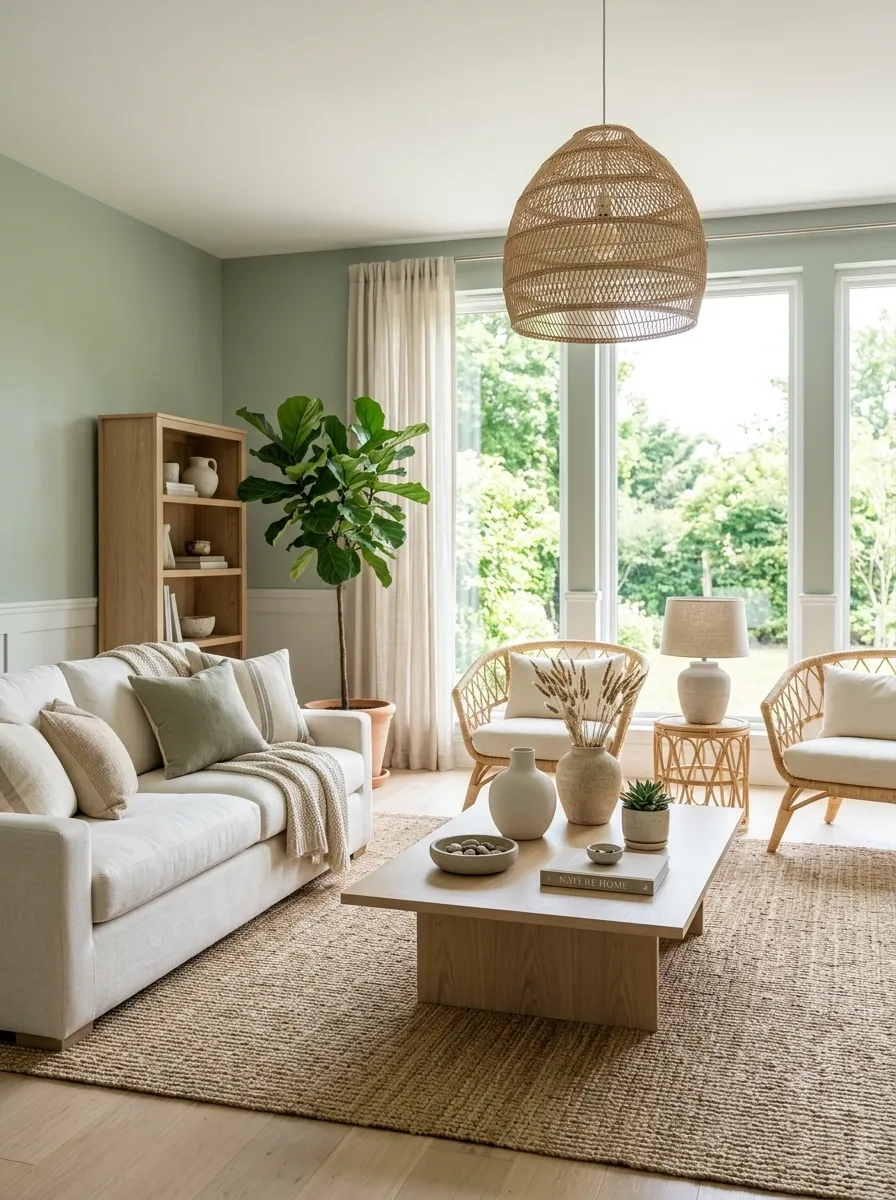
Bright daylight gives sage a fresher character when the rest of the room leans natural. A linen sofa, rattan chairs, woven pendant, pale wood, and jute-style rug create a light composition with plenty of texture.
The woven materials are important because they introduce shadow and irregularity without demanding stronger color. Against the sage walls, they give the room enough detail to feel finished while keeping the palette quiet.
This approach suits rooms with large windows and plenty of daylight. Keep heavy dark furniture to a minimum so the natural light remains one of the room’s strongest visual elements.
Sage Green Living Room With Cream Fireplace Mantel and Symmetrical Seating
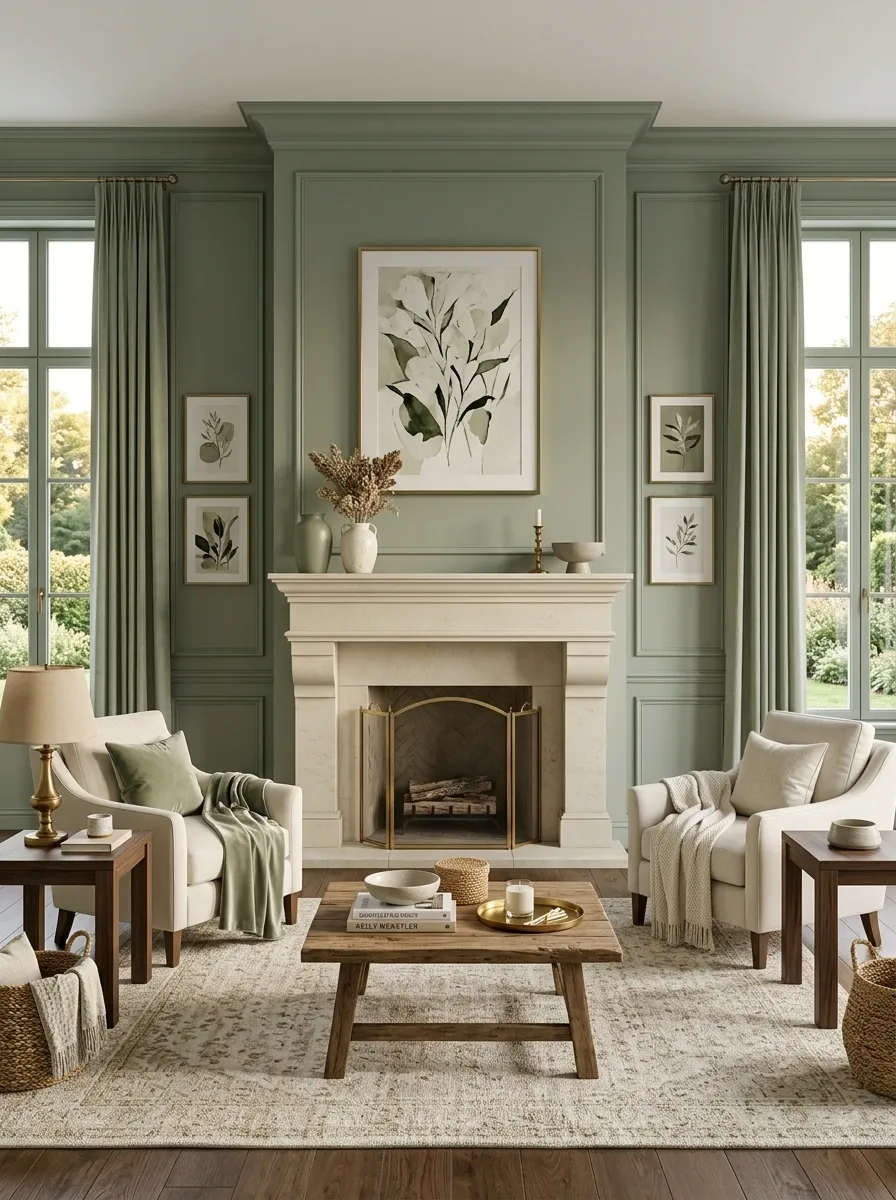
A centered fireplace gives this sage room a more formal structure. The walls carry a medium muted green, while a broad cream mantel creates a bright architectural break. Two matching upholstered chairs frame the fireplace, and a dark wood table adds enough contrast to keep the symmetry from feeling too delicate.
The room feels orderly because the main pieces relate directly to the centerline. Artwork, lighting, and seating reinforce that structure without making every little object identical.
Symmetry works best when the larger forms do most of the work. Keep the accessories slightly varied so the room still feels lived in.
Sage Green Living Room With Mustard Accents and Mid-Century Furniture
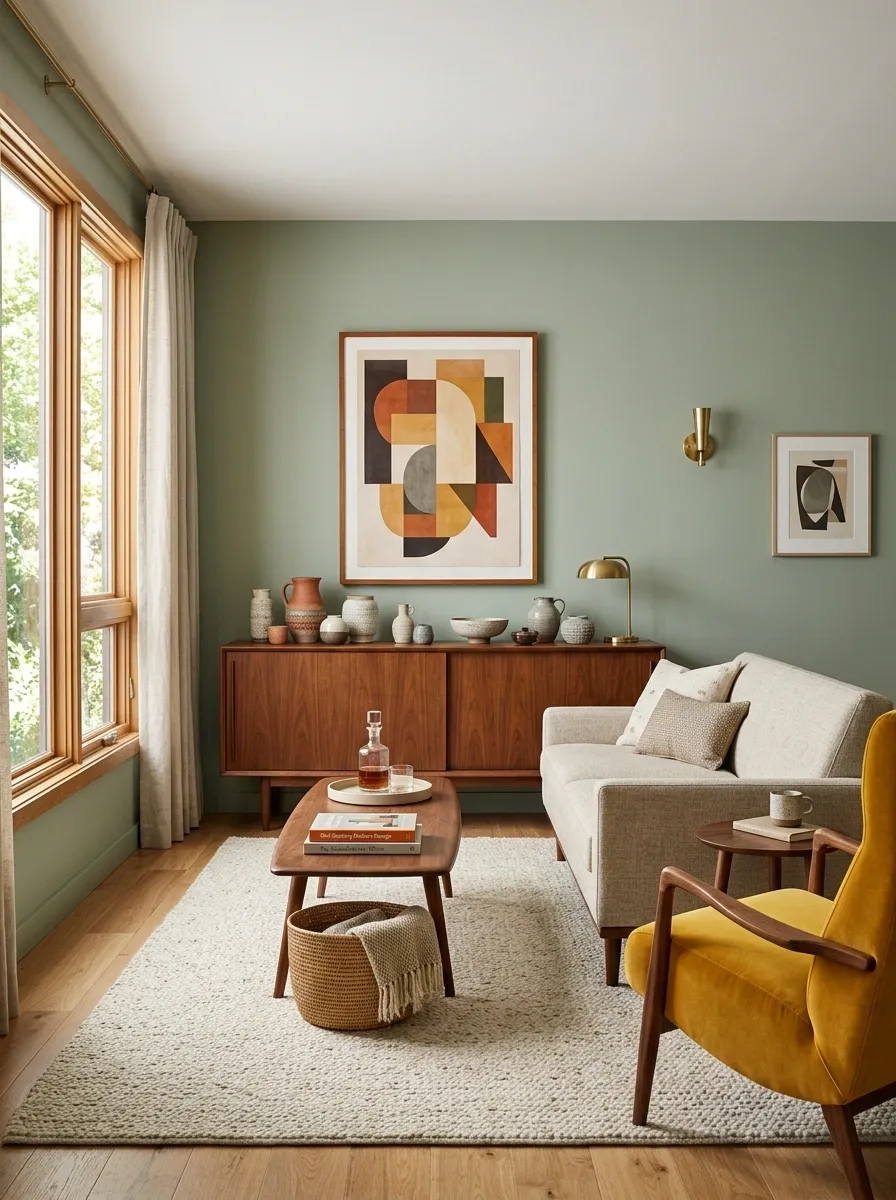
Sage walls give classic mid-century furniture a softer setting. Walnut or teak pieces provide the structure, while one mustard lounge chair or a small collection of mustard textiles creates a concentrated burst of color. Tapered legs, simple silhouettes, and period-inspired artwork keep the room visually clean.
The mustard accent works because it occupies a small amount of space. It catches the eye without taking over the palette.
Let the wood tones remain visible rather than painting over them. Warm wood gives the green and mustard combination a natural bridge that keeps the room from feeling overly colorful.
Layered Sage Green Living Room With Several Green Tones
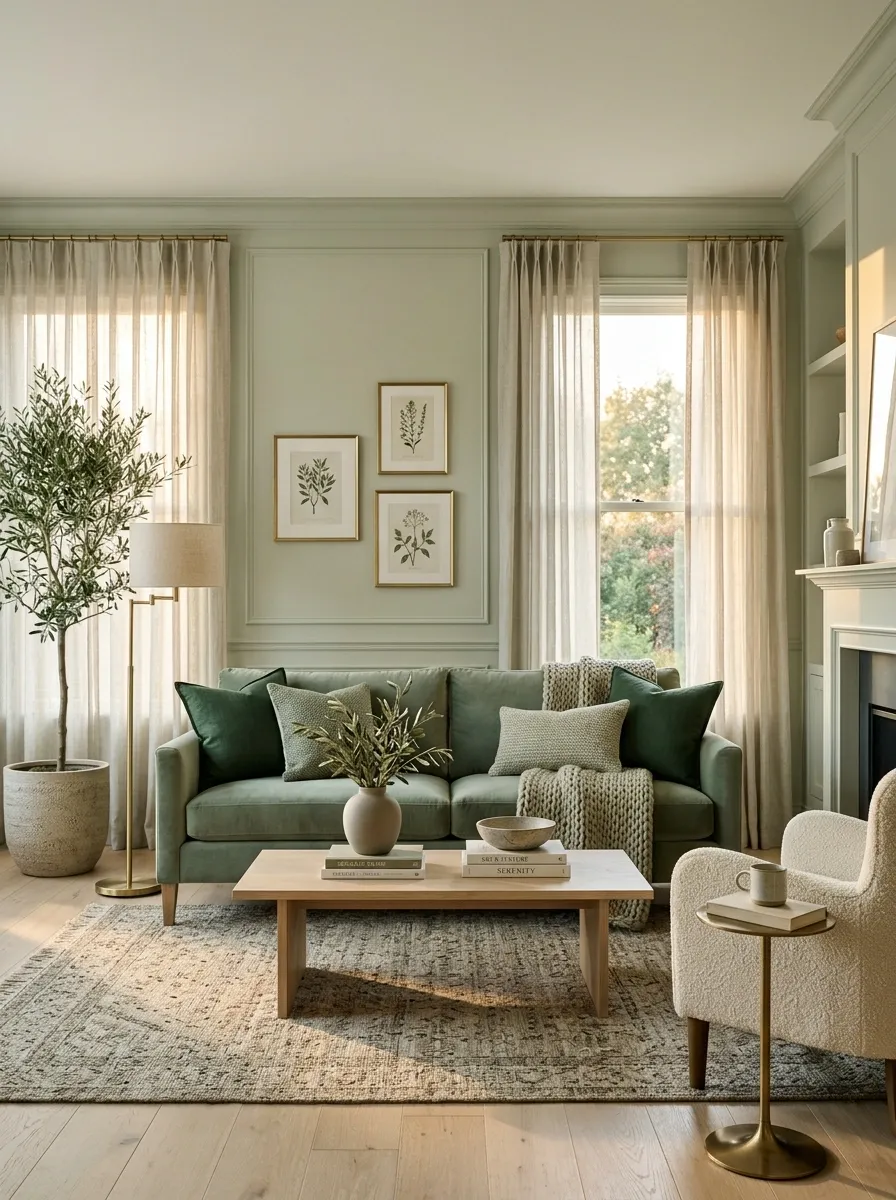
A monochromatic room doesn’t have to look flat. This composition layers several greens at different depths, using a lighter sage wall, a medium green sofa, deeper green cushions, and botanical artwork. Cream upholstery and pale oak interrupt the green just enough to keep the room from becoming visually dense.
The secret is assigning each green a different role. One should dominate the architecture, another should belong to the furniture, and the darkest shade should stay relatively small.
Avoid choosing several greens at nearly the same depth. They need enough separation for the layers to remain visible.
Sage Green Apartment Living Room With Modular Seating and Hidden Storage
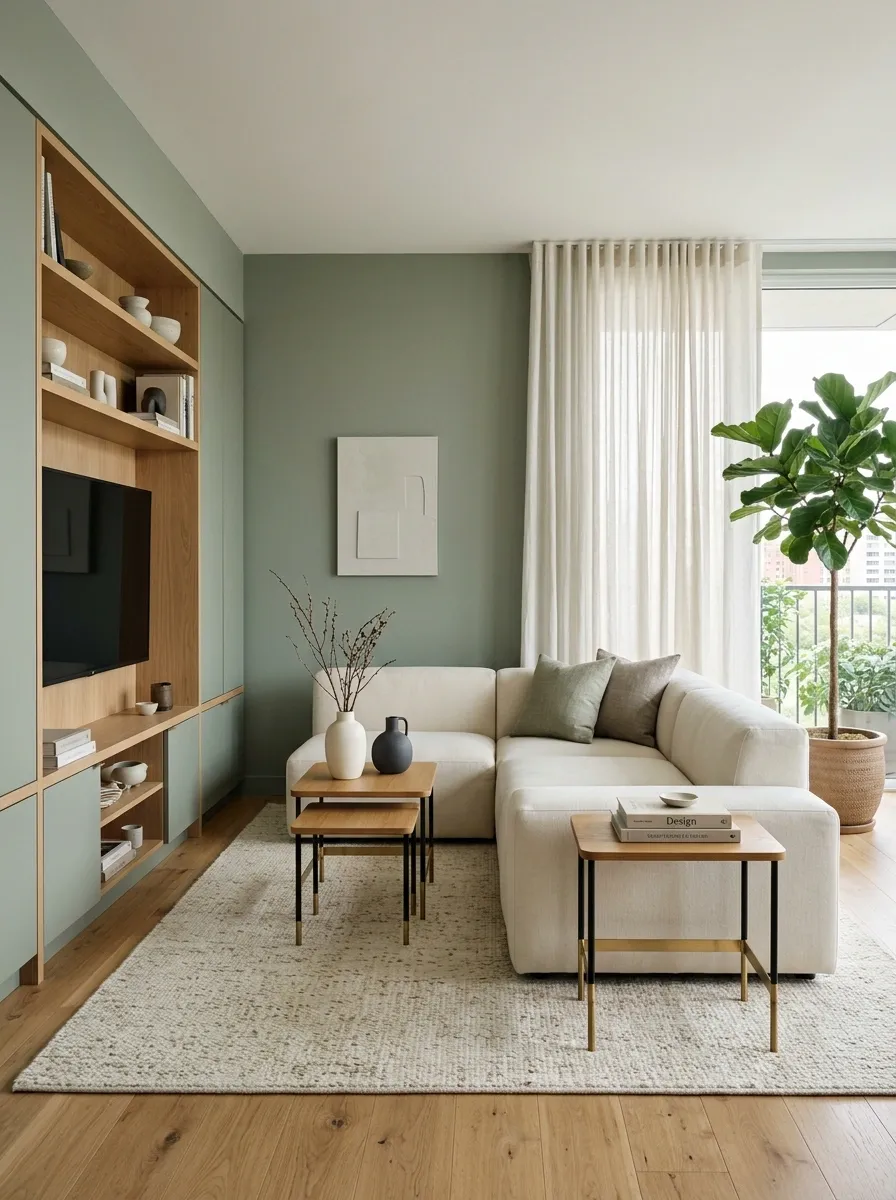
Apartment living rooms often need to solve several problems at once. Here, sage walls visually connect a modular neutral sofa, slim media storage, nesting tables, and full-height curtains, while closed cabinetry keeps everyday clutter below the sightline.
The furniture is arranged to preserve one obvious route through the room. That open path is as important to the design as the sofa itself.
Choose pieces with shallow profiles where possible. A compact room gains more from a sofa and storage system that respect the available footprint than from oversized statement furniture.
Sophisticated Sage Living Room With Cream Drapery and Dark Wood Architecture
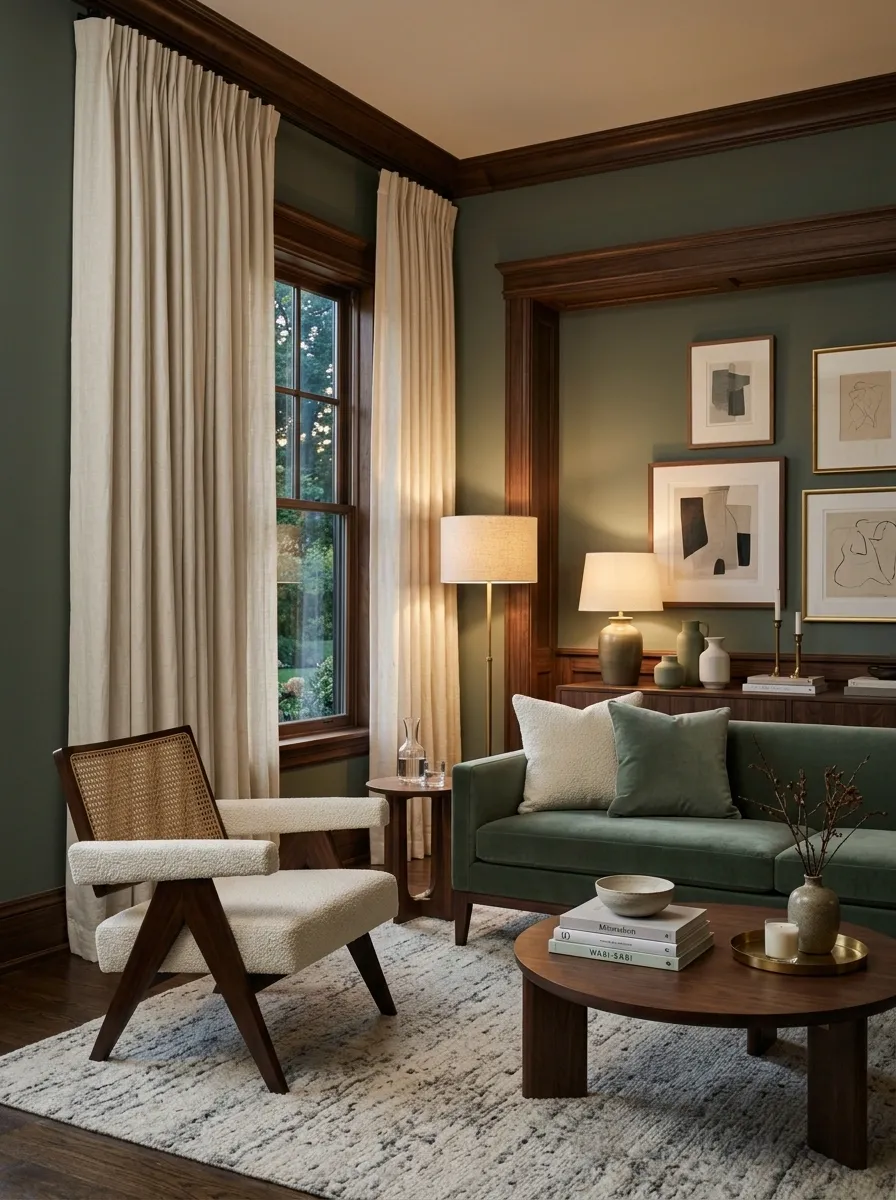
The final direction uses sage as part of a richer architectural palette. Deeper green walls sit behind full cream curtains, dark wood detailing, sculptural seating, layered artwork, and warm evening lighting. The result feels composed without relying on ornate decoration.
The room works because every layer has a clear job. Sage establishes the envelope, cream creates a large soft break, dark wood supplies structure, and the smallest warm accents pull the evening lighting through the space.
This is a room where restraint matters. Once the major architectural and furniture pieces are in place, adding more decoration would only compete with the strongest parts of the composition.
The strongest sage green living rooms usually aren’t the ones with the most decoration. They are the ones where the major pieces agree with each other. Wall color, furniture scale, wood tone, lighting, texture, and architecture all have a clear role, so the room feels intentional instead of assembled one purchase at a time.
That is also why a saved reference image can be more useful than a long shopping list. A complete room makes relationships visible. It shows how much contrast is enough, how much empty space is helpful, and where an accent color actually needs to appear.
Choose the direction that fits the room’s natural light, architecture, and existing furniture first. Then pull the smaller details from that visual language.