
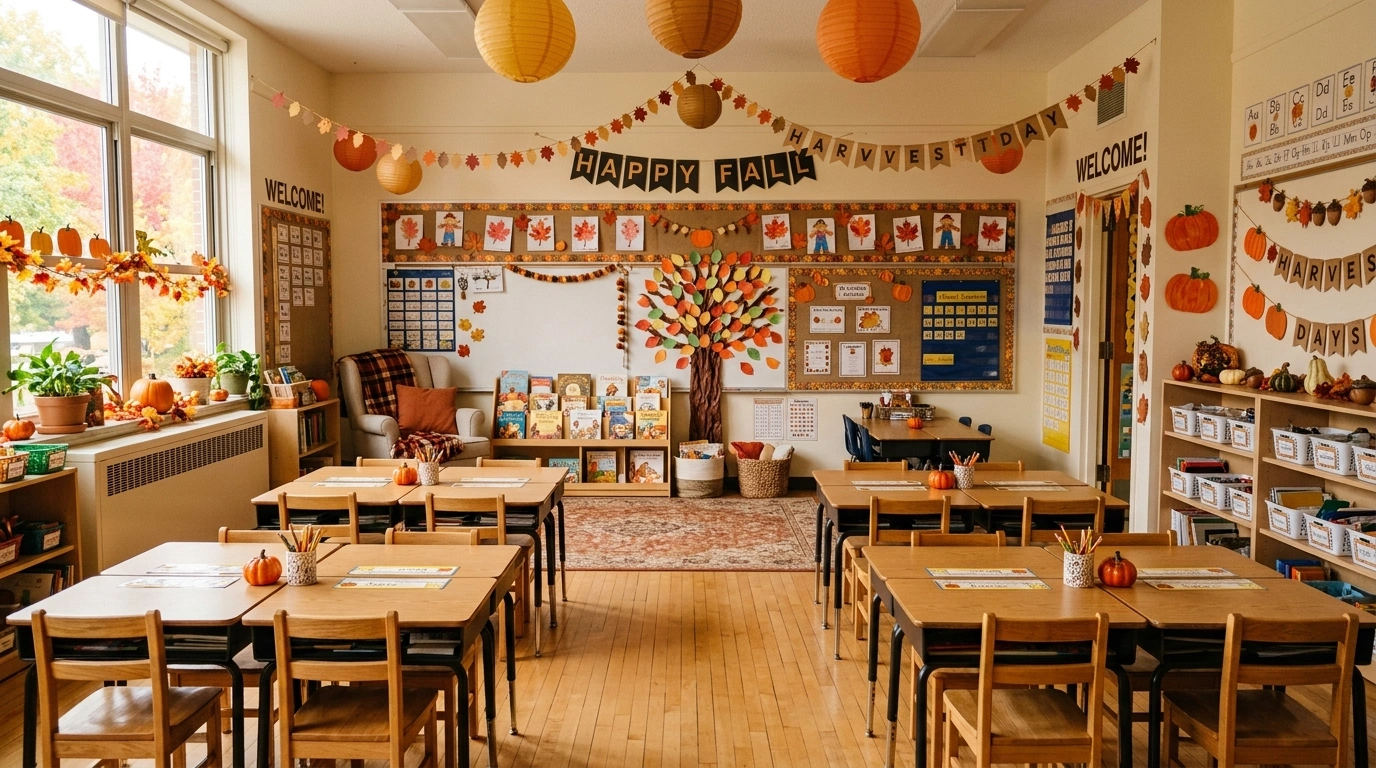
Fall classroom decor has a bad habit of becoming clutter before it becomes cozy.
One pumpkin turns into six. A few paper leaves spread across every wall. Then plaid shows up on the shelves, the door gets another border, and suddenly the room feels like the decorations are competing with the actual classroom. That’s the part worth avoiding.
Good seasonal decorating works differently. It gives the room a clear fall identity while leaving the books, student work, anchor charts, supplies, and teaching areas easy to see and use. The best classroom decoration for fall doesn’t demand more space. It makes smarter use of the space that’s already there.
The Fall Classroom Formula
A fall classroom doesn’t need more decoration. It needs better placement.
Instead of spreading seasonal details across every available surface, use one color direction, a few feature zones, and at least one piece that connects the season to learning. That keeps the room recognizable as a classroom first and a seasonal display second.
Ready for the actual ideas? Start with the spaces that give the biggest visual payoff.
Classroom Decoration for Fall
Frame the Board With Fall Touches
A bulletin board already takes up prime visual real estate, so adding seasonal flair should feel integrated rather than chaotic.
Keep the backing neutral with burlap or kraft paper, then frame the edges with vibrant patterned borders. Layer in cheerful seasonal cutouts, playful trucks, and bright sunflowers to anchor the design without overwhelming the space.
Best placement: bulletin board borders and surrounding wall space.
Frame the Classroom Door With a Simple Leaf Border
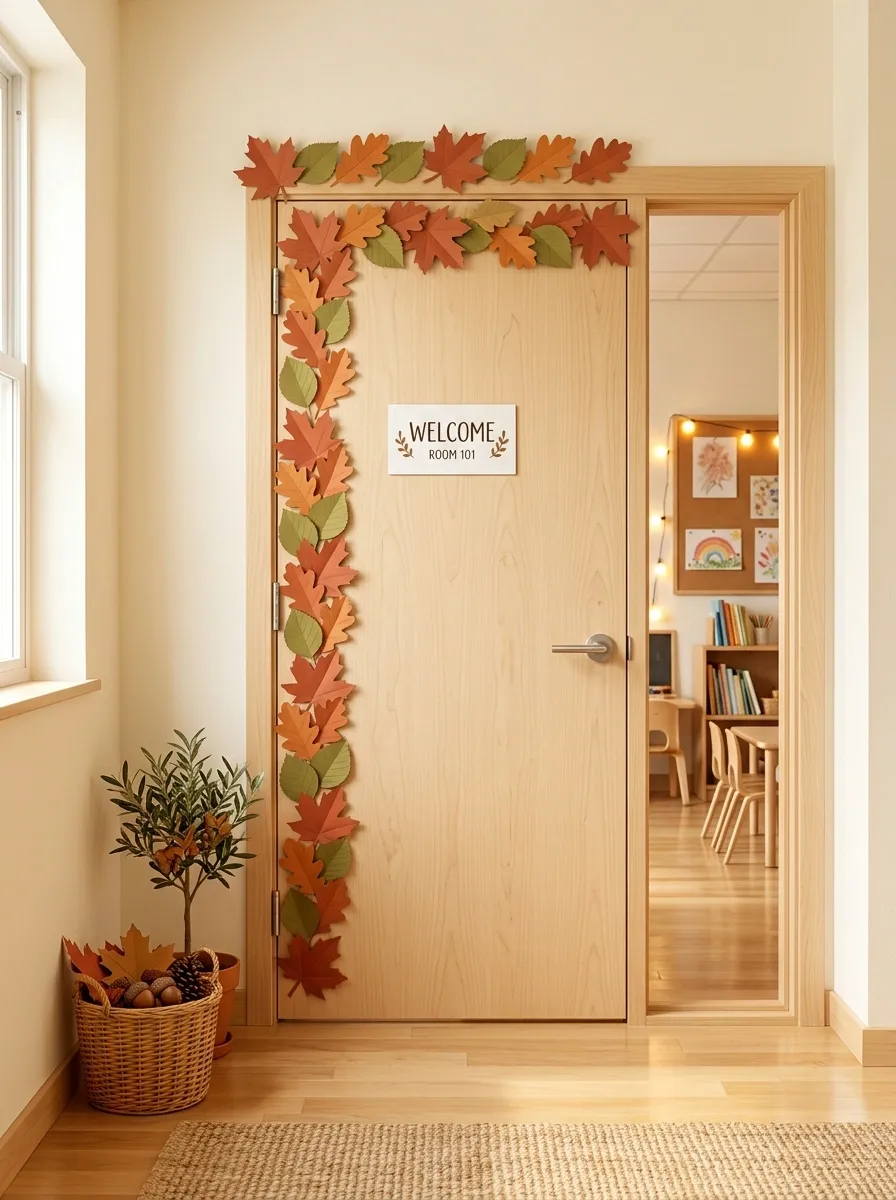
A classroom door is one of the easiest places to establish the fall theme before anyone even walks inside.
Keep the center mostly open. The trick is a border of layered paper leaves running along the top and down one side, with a small seasonal sign tucked into the open space.
For a fuller look, mix three leaf shapes instead of cutting dozens of identical pieces. Slightly overlap them so the border feels dimensional without sticking too far into the walkway.
Best placement: top edge + one vertical side
A narrow border keeps the doorway seasonal while the center still works for the class name, welcome sign, or student display.
Suspend Oversized Painted Autumn Leaves
Ceiling decor transforms the vertical space of a room while leaving walls completely free for student work and anchor charts.
Paper leaves work best when they’re painted in rich autumn shades and suspended at varying heights over communal zones. Use clear fishing line to create a floating effect, keeping everything safely above head level and away from busy pathways.
Best zones: reading tables, group work areas, and entryways.
Create a Hanging Leaf Mobile
A mobile adds gentle movement and cozy seasonal charm without taking up precious desk or wall space.
Start with a wrapped hoop or ring, then suspend delicate leaves at staggered lengths using twine or string. Let the natural textures take center stage while keeping the overall design lightweight and balanced.
Quick setup checklist: 1. Wrap a sturdy ring with twine. 2. Punch holes in pressed or paper leaves. 3. Hang at varying lengths from the center frame.
Turn a Bulletin Board Into a Falling-Leaves Display
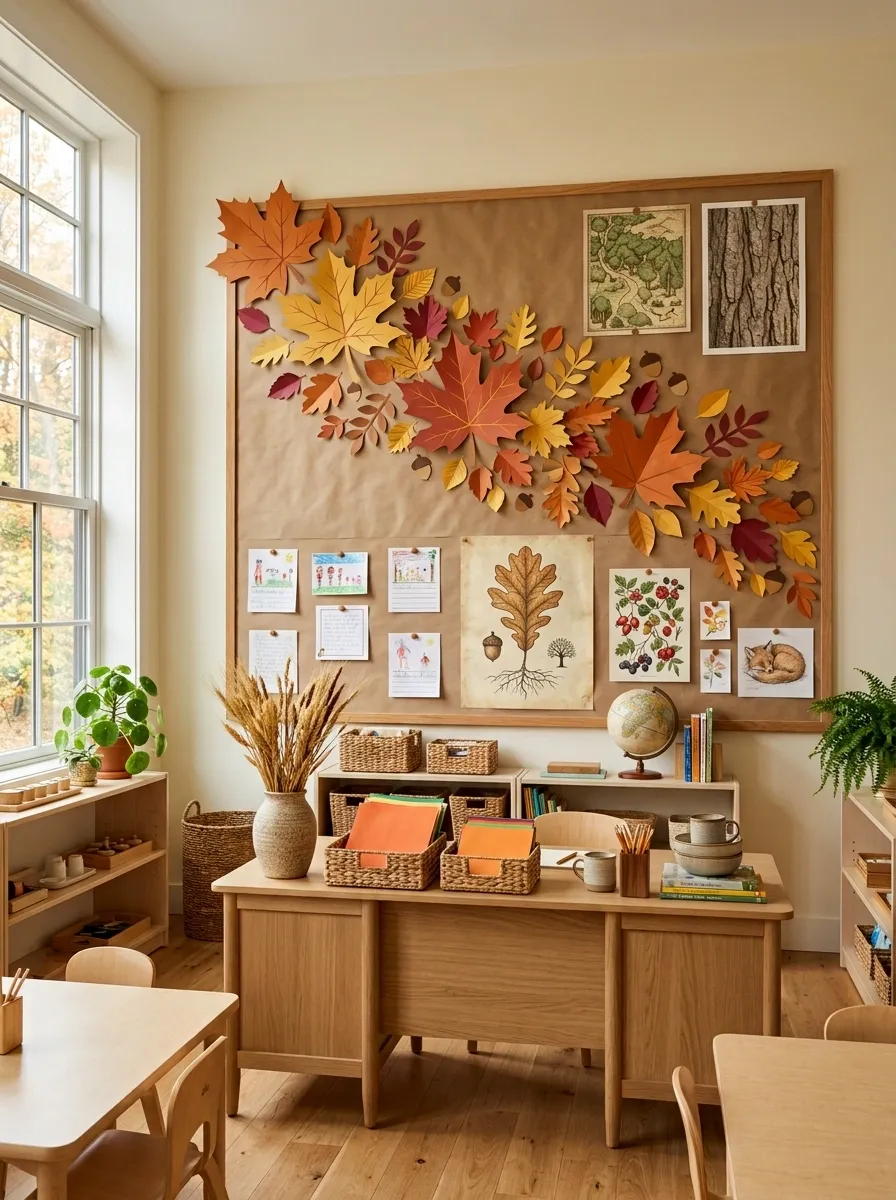
A bulletin board already has visual weight, so the fall treatment should work with its shape instead of adding another layer over everything.
Use a cream or kraft-paper background, then create a loose stream of leaves moving diagonally across the board. Keep the lower half available for student work, vocabulary, or a class message.
The falling pattern matters. A random pile of leaves looks flat. A diagonal flow gives the board a sense of movement.
Build the display in this order:
- Cover the board.
- Mark a soft diagonal path.
- Place large leaves first.
- Fill gaps with smaller leaves.
- Leave open space around the actual learning content.
Design a Giant Wall Tree
A blank classroom wall is an opportunity to build a massive focal point that defines the entire autumn theme.
Anchor the display with large tree trunks cut from dark paper, then fill the branches with a rich canopy of layered, colorful leaves. Ground the base with a patch of vibrant pumpkins to complete the woodland scene.
Best placement: main accent wall or hallway display.
Add a Pumpkin Math Station Instead of Another Wall Display
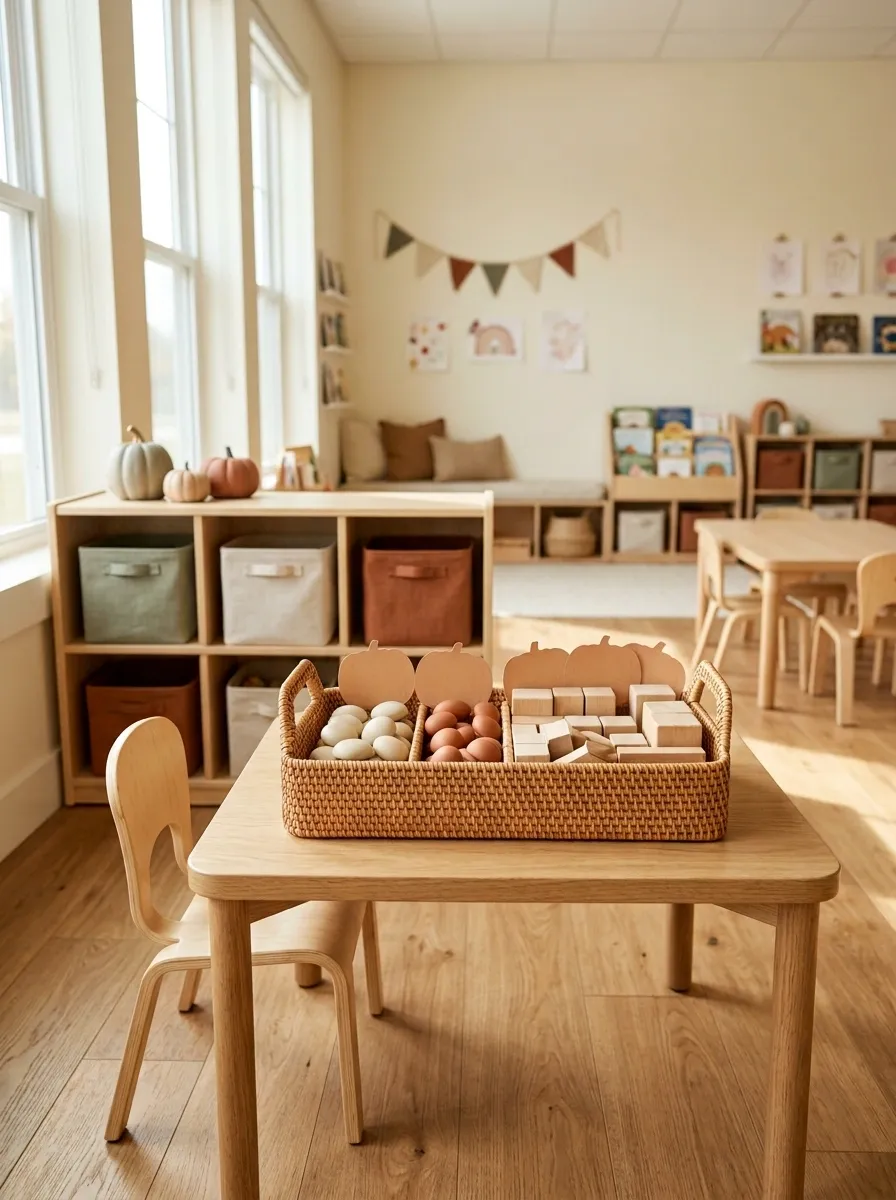
Pumpkins don’t have to sit on a shelf looking decorative. They can become part of the lesson.
Create a small math station with paper pumpkins labeled by numbers, simple counting prompts, place-value tasks, or sorting challenges that match the class level. Keep all of it in one portable basket so the activity can move from table to table.
This works especially well when the classroom is short on wall space. The seasonal theme becomes useful instead of taking up another visual zone.
Simple station setup
- Pumpkin cards
- Task cards
- Sorting tray
- Pencil cup
- One basket to store it all
Choose a pumpkin card with a number or task.
Complete the activity using counters, blocks, or paper.
Place finished cards into the correct basket or tray.
Brighten Windows With Leaf Silhouettes
Windows offer a brilliant backdrop for seasonal displays by utilizing natural sunlight to illuminate your classroom decor.
Arrange colorful paper leaf cutouts into tree shapes directly on the glass panes. The light shining through creates a stained-glass effect that instantly warms up the entire room.
Best placement: window panes facing natural light.
Hang Paper Leaves From the Ceiling Over High-Traffic Areas
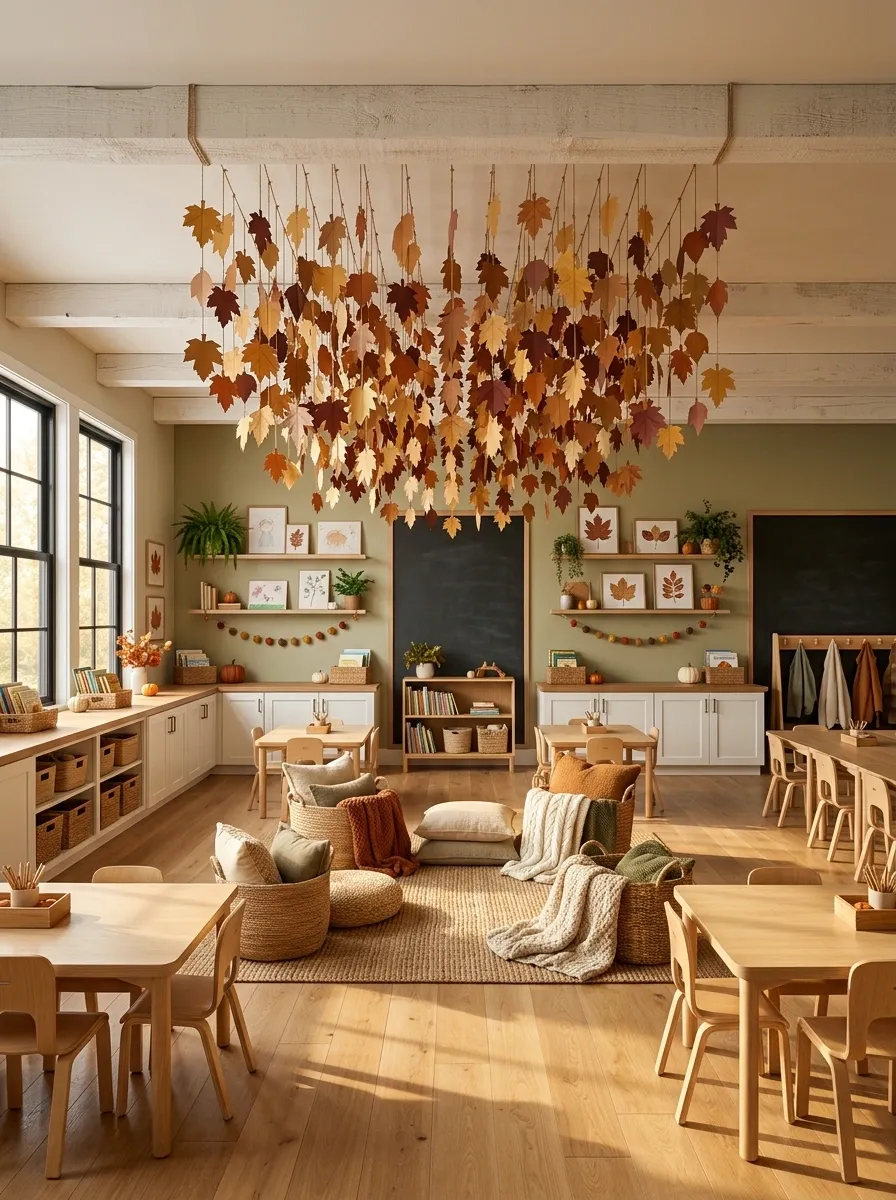
Ceiling decor changes the room without stealing valuable wall space. It also catches attention the moment students walk through the door.
Paper leaves work best when they’re suspended at different heights over a reading table, entry zone, or open group-work area. Use fishing line or another unobtrusive hanging method, and keep the arrangement above head level and away from fans, lights, and paths where it could snag.
Don’t fill the whole ceiling. A concentrated cluster looks intentional. A ceiling covered in leaves quickly becomes visual noise.
Best zones: entry area, reading corner, group table
Use Plaid Accents to Warm Up Plain Shelving
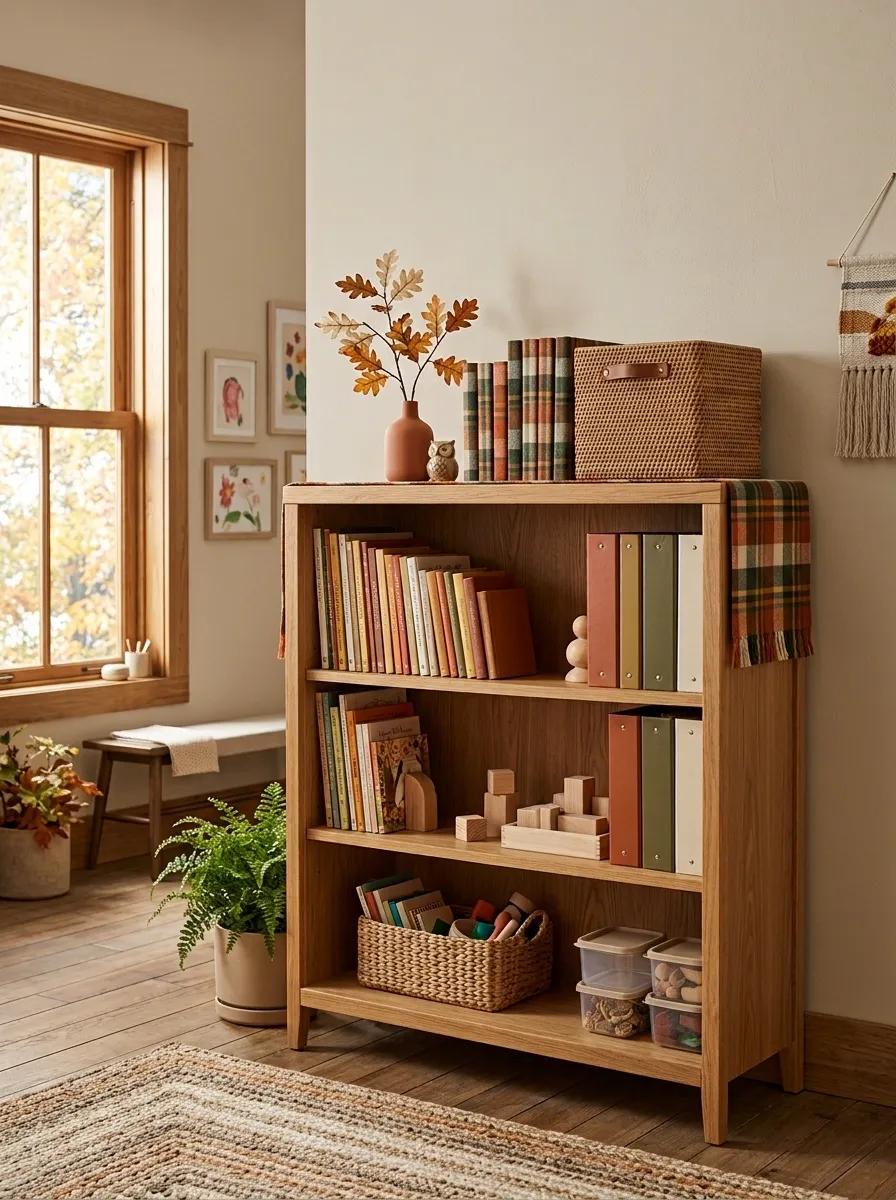
Plain classroom shelving can look surprisingly cold once the summer decor disappears. Plaid adds the fall signal without requiring another collection of pumpkins.
Use a narrow plaid runner on the top shelf, a few plaid book covers, or fabric-backed bins in one warm pattern. Keep the pattern concentrated in one area so it doesn’t compete with posters and student work nearby.
Best rule: one plaid pattern, repeated in two or three small places.
A single warm plaid creates continuity without turning the shelf into a seasonal craft display.
Create a Fall-Themed Student Work Gallery
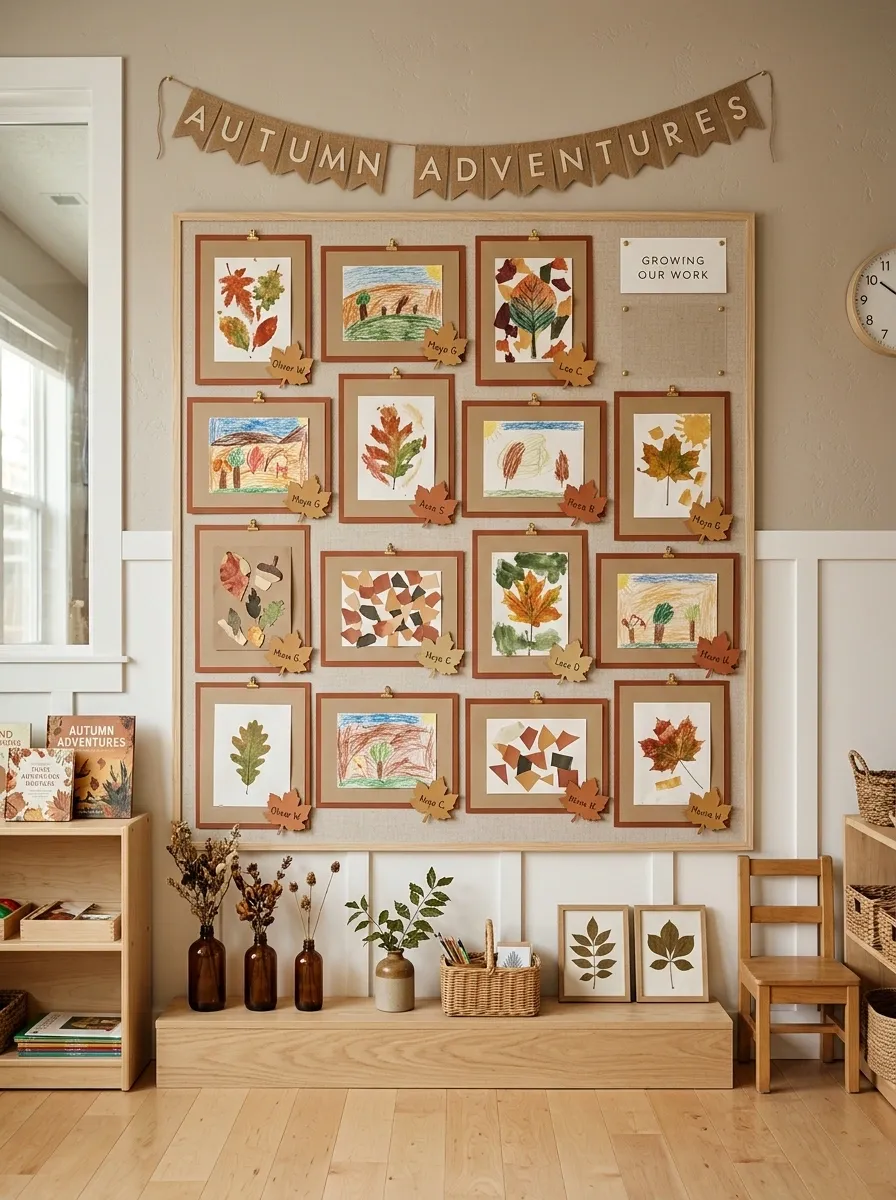
Student work already deserves attention, so there’s no need to invent another display from scratch.
Give the existing work a fall frame. Kraft-paper mats, leaf-shaped name tags, or a thin rust-colored border can make the collection feel seasonal while keeping the actual work front and center.
Arrange the pieces in a slightly staggered grid rather than a rigid line. It feels more like a small gallery and leaves enough room for work to be added later.
The seasonal part should frame the work, not become the work.
Give the Teacher Desk a Small Seasonal Reset
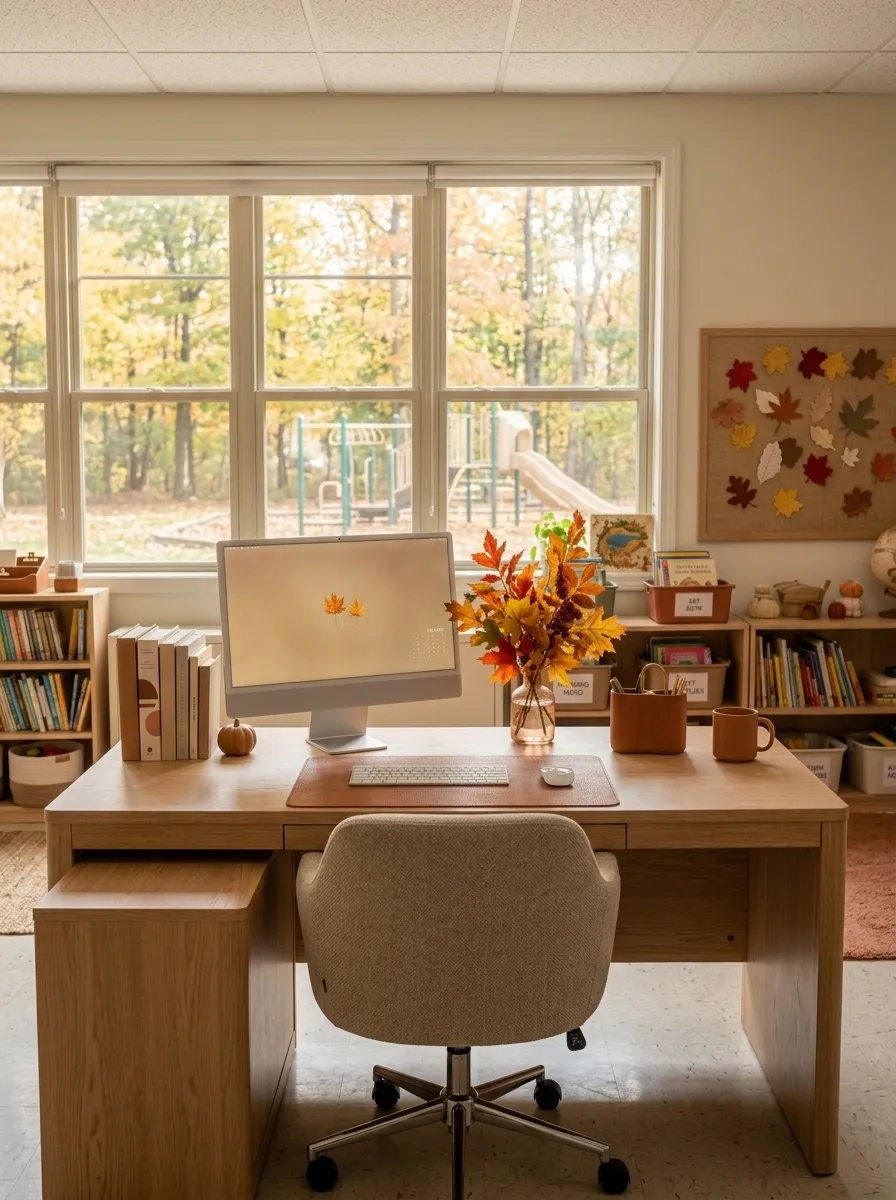
The teacher desk is easy to overload because every useful object tends to migrate there.
Skip the miniature pumpkin collection. Replace one or two everyday containers with warm-toned versions, add a small leaf arrangement beside the monitor, and keep the main work surface clear.
A desk doesn’t need to announce fall. It only needs one deliberate detail that ties it to the rest of the room.
Desk reset
- Warm pencil cup
- Small leaf cluster
- One seasonal notepad
- Clear center workspace
Make a Harvest-Themed Vocabulary Wall
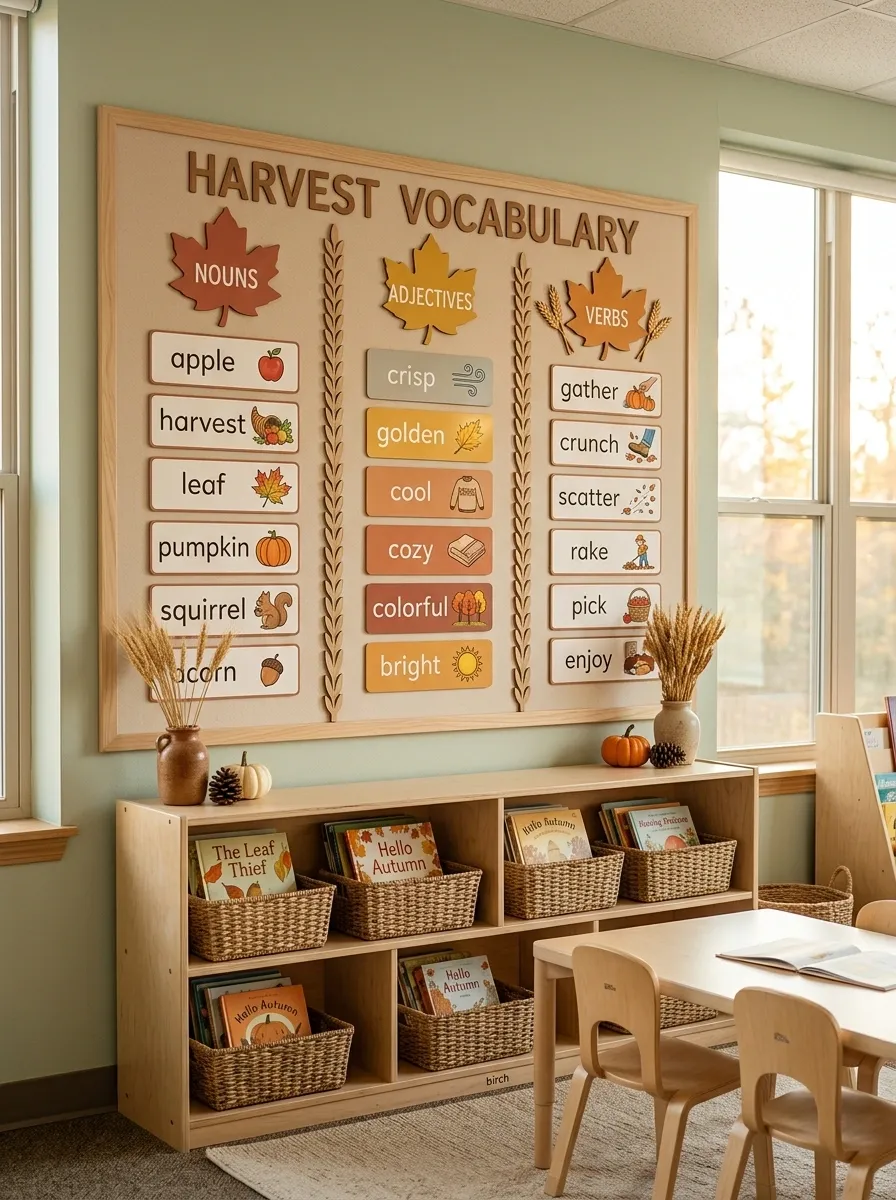
A vocabulary wall becomes much more useful when its categories are easy to scan.
Instead of putting every fall-related word on one giant board, separate words by function. Nouns can sit with pictures, describing words can have their own color family, and action words can occupy a third section.
Use leaf cutouts as the containers, but keep the words large enough to read from across the room.
A better fall word wall: visual first, vocabulary second, decoration third.
Swap Bright Summer Details for Muted Fall Accessories
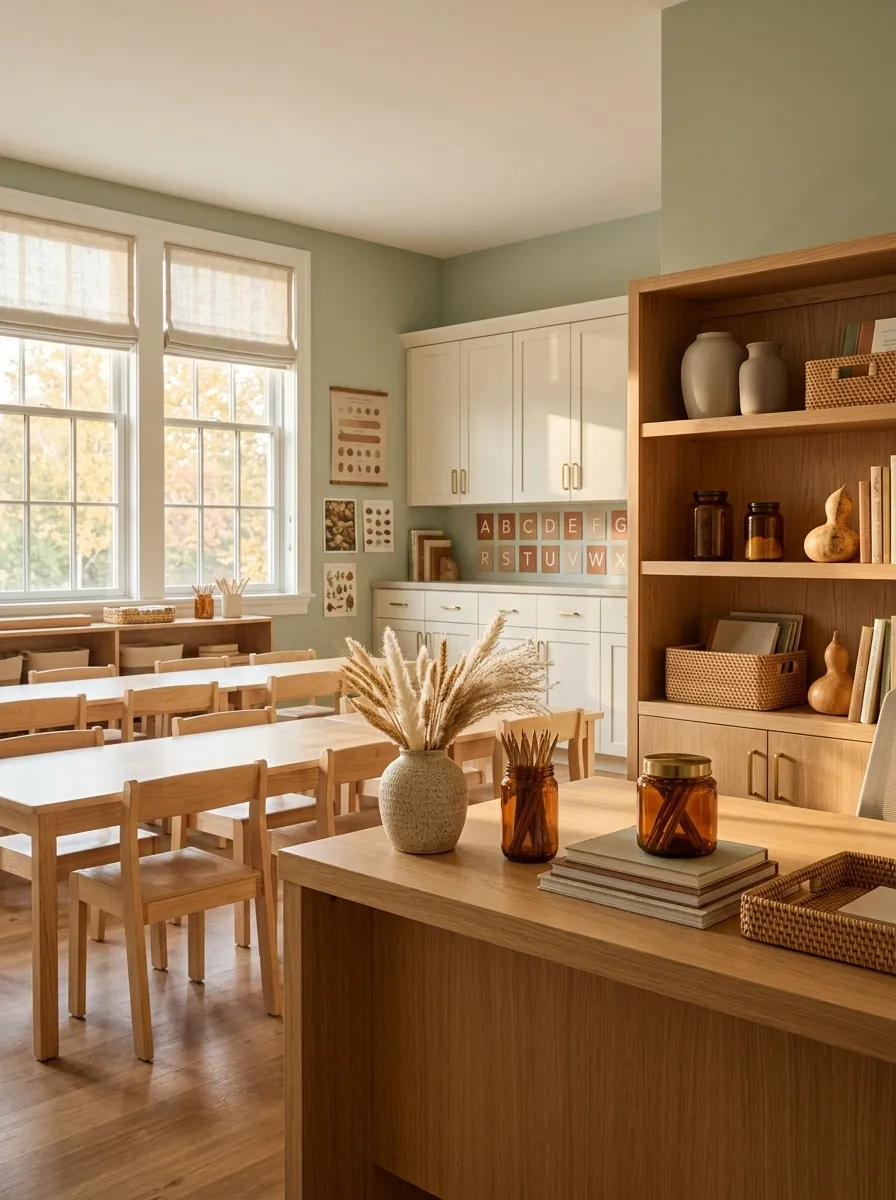
The fastest way to make a classroom feel more autumn-ready isn’t adding more stuff. It’s removing a few details that still read as summer.
Trade neon storage labels, bright tropical prints, or overly saturated accents for warmer versions already present in the room. Cream, rust, muted gold, brown, and soft green can do the job without fighting the classroom’s existing colors.
Think of it as a seasonal edit, not a full makeover.
Small color edits can make the room feel more seasonal without changing the furniture or learning displays.
Create a Paper-Pumpkin Wall That Students Can Help Make
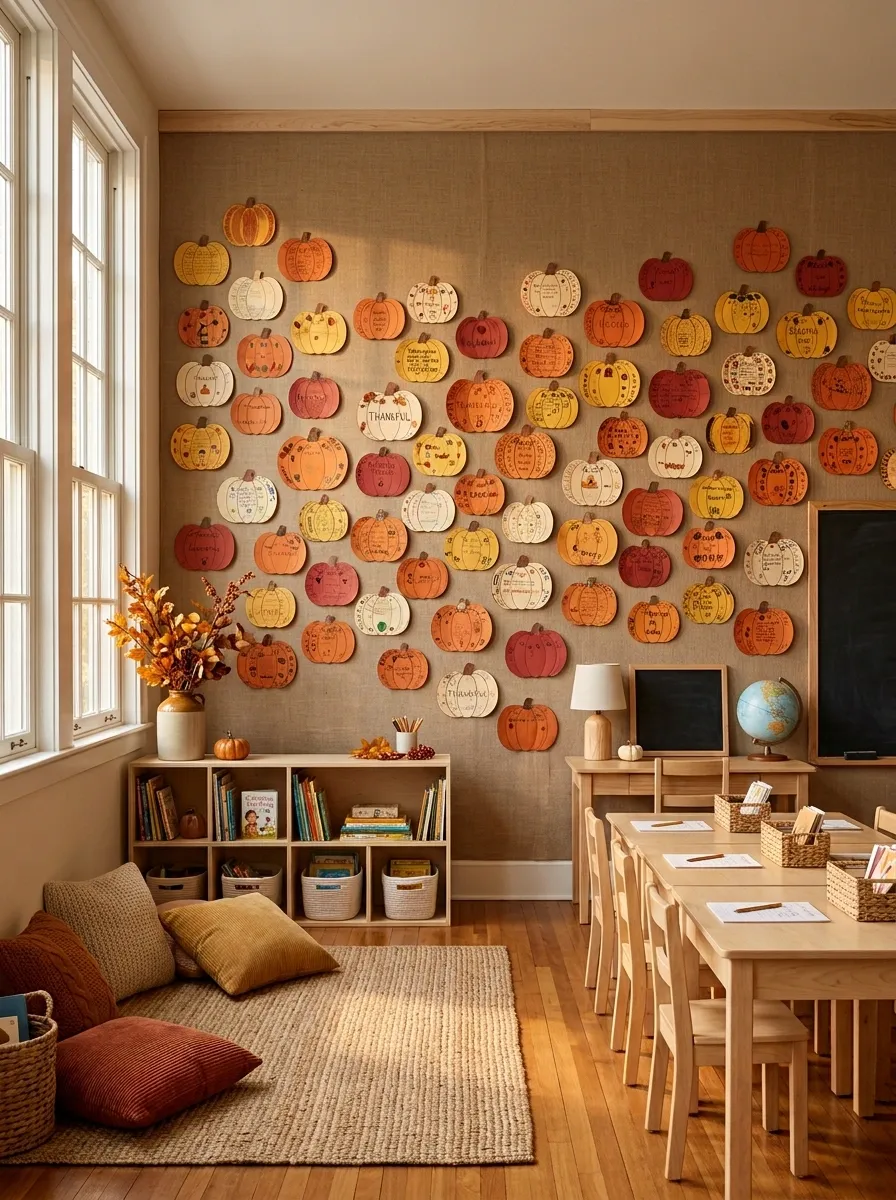
A pumpkin wall works best when every piece looks slightly different.
Give students paper circles or simple pumpkin templates and let them add names, drawings, words, or short responses. Mount the finished pieces at different heights so the display has movement instead of looking like a row of identical shapes.
Use one background color and let the student work provide the variety. The finished wall becomes seasonal, personal, and much less expensive than buying a collection of matching decorations.
Best twist: turn each pumpkin into part of a class question, not just a decoration.
Turn a Classroom Window Into a Simple Leaf Scene
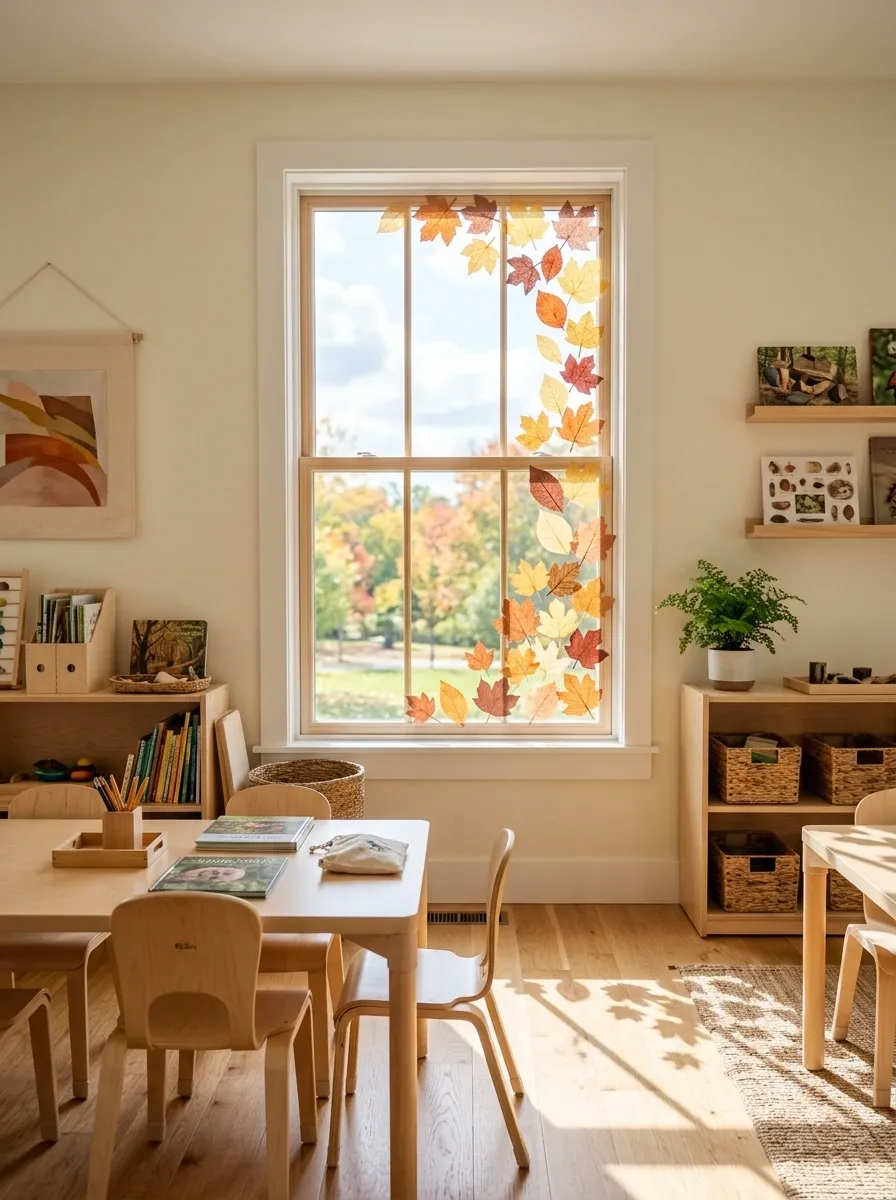
Windows already provide a natural frame, so they don’t need heavy decoration.
Cut a mix of large and small leaves from translucent paper or lightweight cardstock and arrange them along one side of the glass. Add a few tiny leaves drifting toward the center to suggest movement.
Keep the middle of the window mostly clear. That preserves light and prevents the room from feeling boxed in.
Tip: use removable materials that come down cleanly when the season changes.
Use Mini Baskets to Organize Seasonal Classroom Supplies
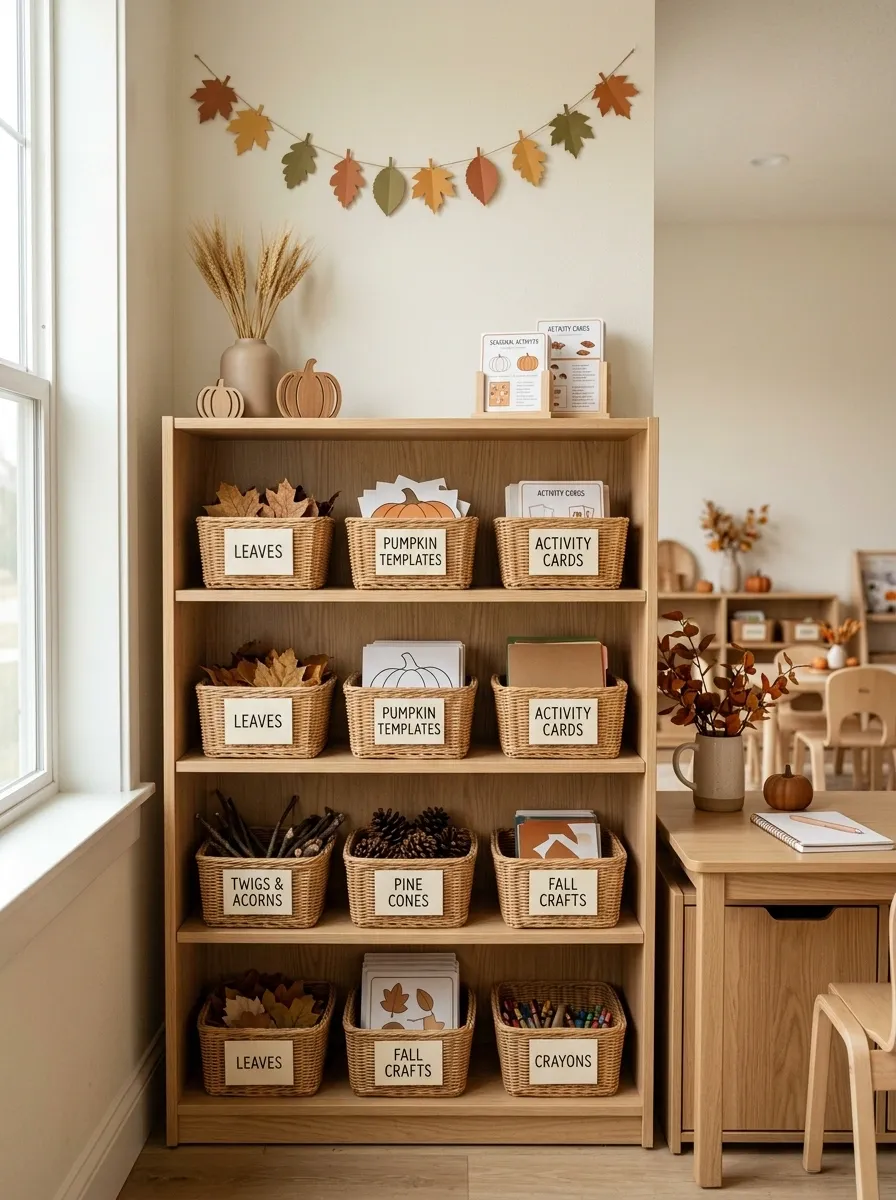
Seasonal supplies have a habit of spreading across every cabinet once they come out.
Contain the fall materials in small baskets instead. Dedicate one to paper leaves, another to pumpkin templates, and another to seasonal writing or activity cards. A simple label on the front keeps everything easy to grab and easy to put away.
The baskets can sit on an existing shelf, under a table, or in a cabinet. The point isn’t to create another storage station. It’s to prevent seasonal clutter from becoming permanent clutter.
Set Up a Fall Writing Prompt Corner
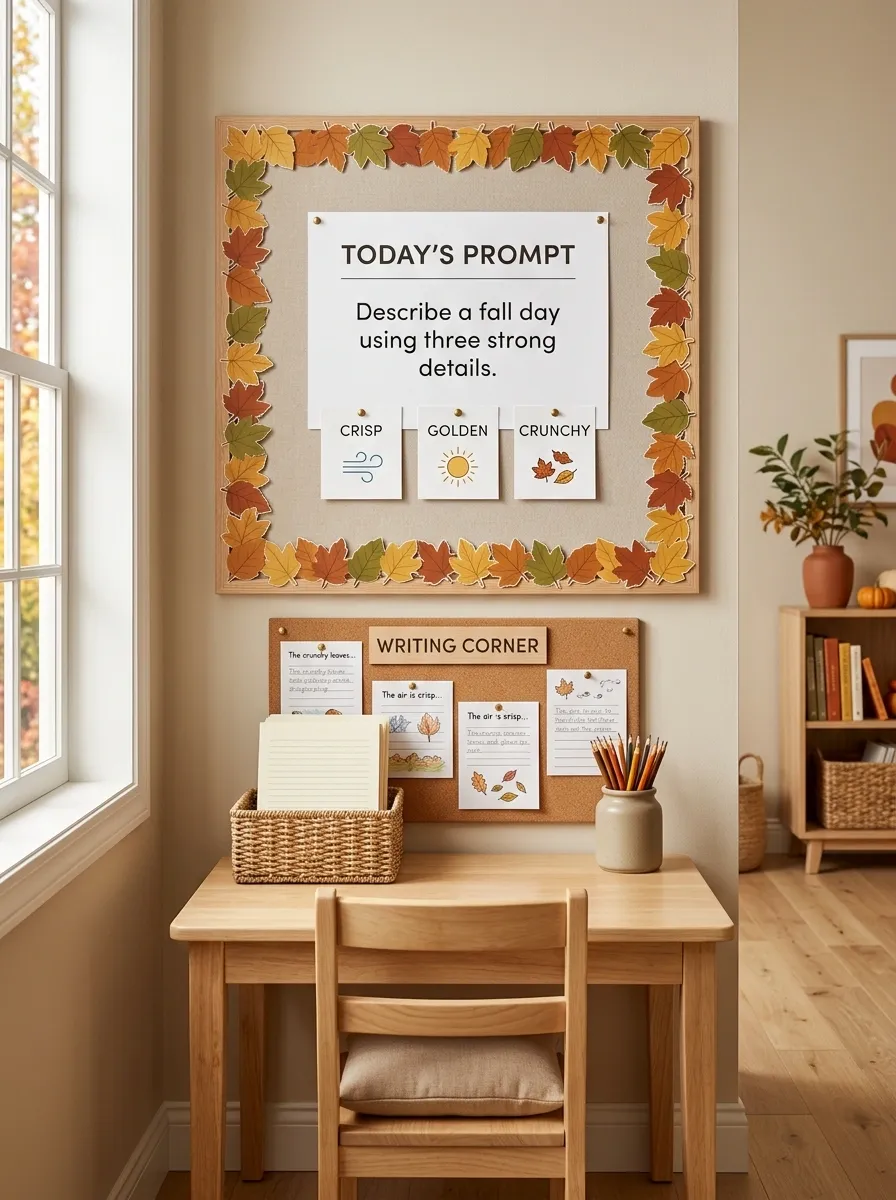
A writing corner gives seasonal decor a clear academic purpose.
Create a small station with a fall-themed prompt, a basket of response sheets, a few vocabulary cards, and a place to display finished writing. The seasonal part can be as simple as a leaf border around the prompt board.
Change the prompt regularly instead of rebuilding the corner. That keeps the area useful long after the first week of fall.
Setup sequence
- Display one strong prompt.
- Add a short vocabulary bank.
- Place response paper nearby.
- Create a visible “finished work” spot.
Add an Autumn Garland Above the Whiteboard
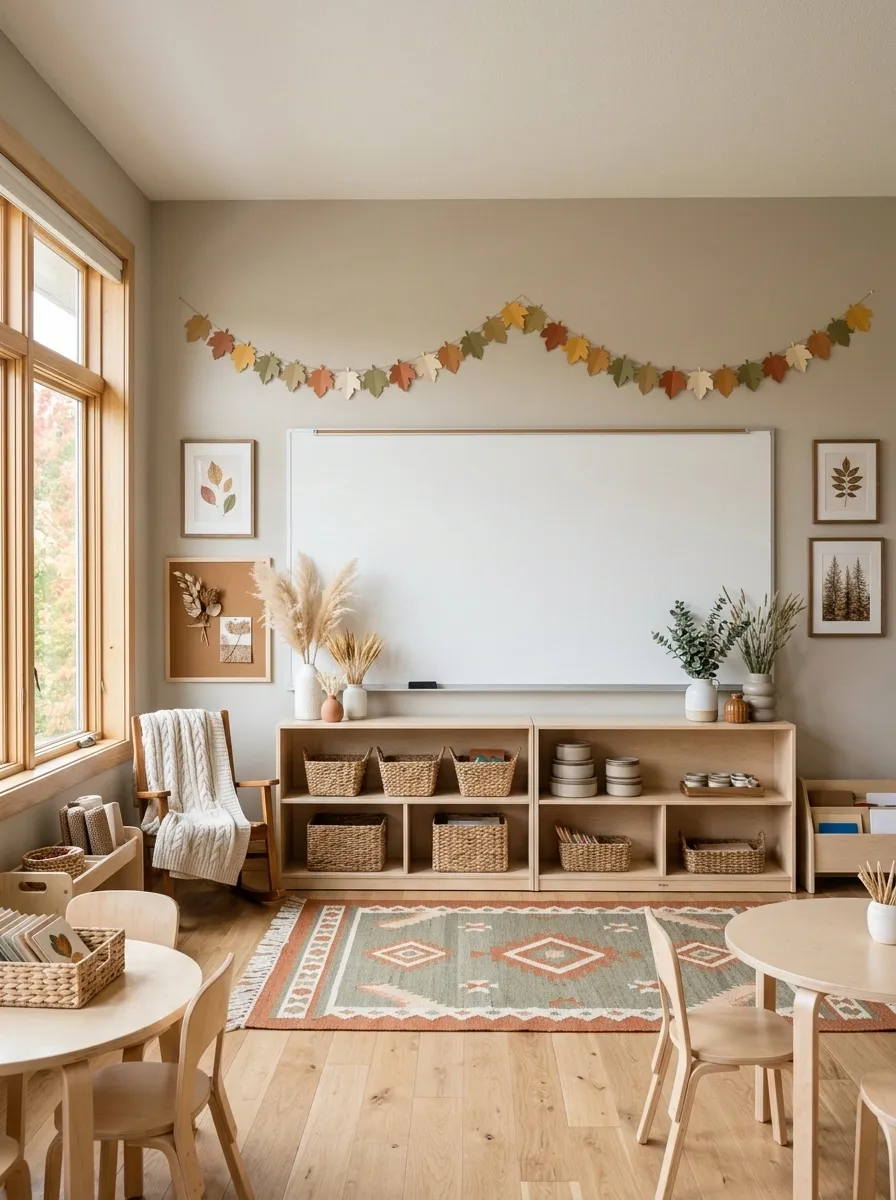
The strip of wall above the whiteboard is prime visual real estate, but it shouldn’t compete with whatever gets written underneath it.
A thin garland made from paper leaves, small circles, or simple cutout shapes gives the upper wall a finished seasonal edge. Keep the garland shallow and spread it wider rather than making a thick cluster in the middle.
The cleanest version follows the width of the board and dips slightly at two or three points. That tiny change in height keeps a long horizontal wall from looking flat.
Placement rule: high enough to stay out of the teacher’s writing line, low enough to remain visible.
Use Acorns and Leaves as Small Tabletop Accents
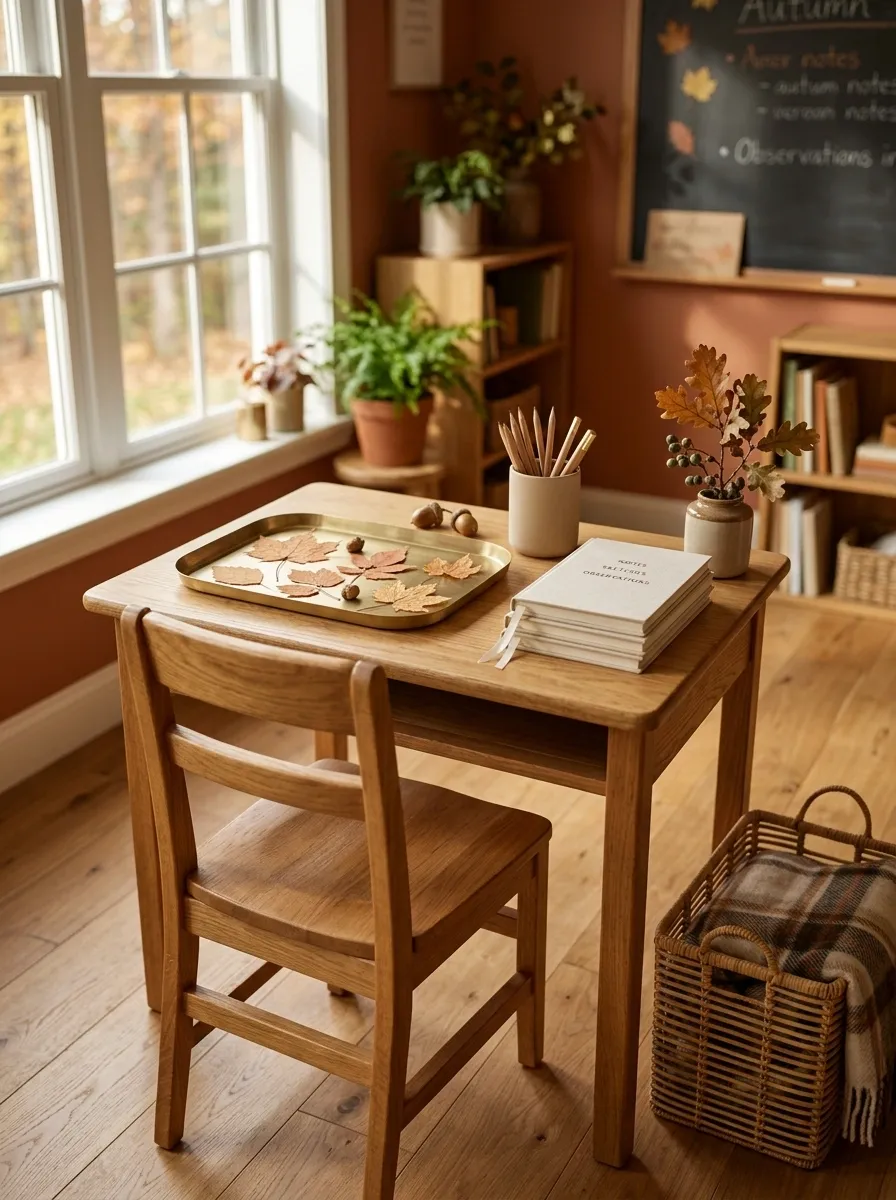
Tiny seasonal details can make desks feel warmer, but there’s a very real point where they become obstacles.
Keep tabletop decor low and contained. A shallow tray with a few paper leaves beside a pencil cup works. A loose pile of faux acorns around every student’s workspace doesn’t.
The goal is to create a visual pause, not a collection students have to move every time they need a worksheet.
Watch for three problems:
- Anything that blocks supplies
- Anything that rolls onto the floor
- Anything that needs constant rearranging
Make a Cozy Fall Calm-Down Corner Without Overdoing It
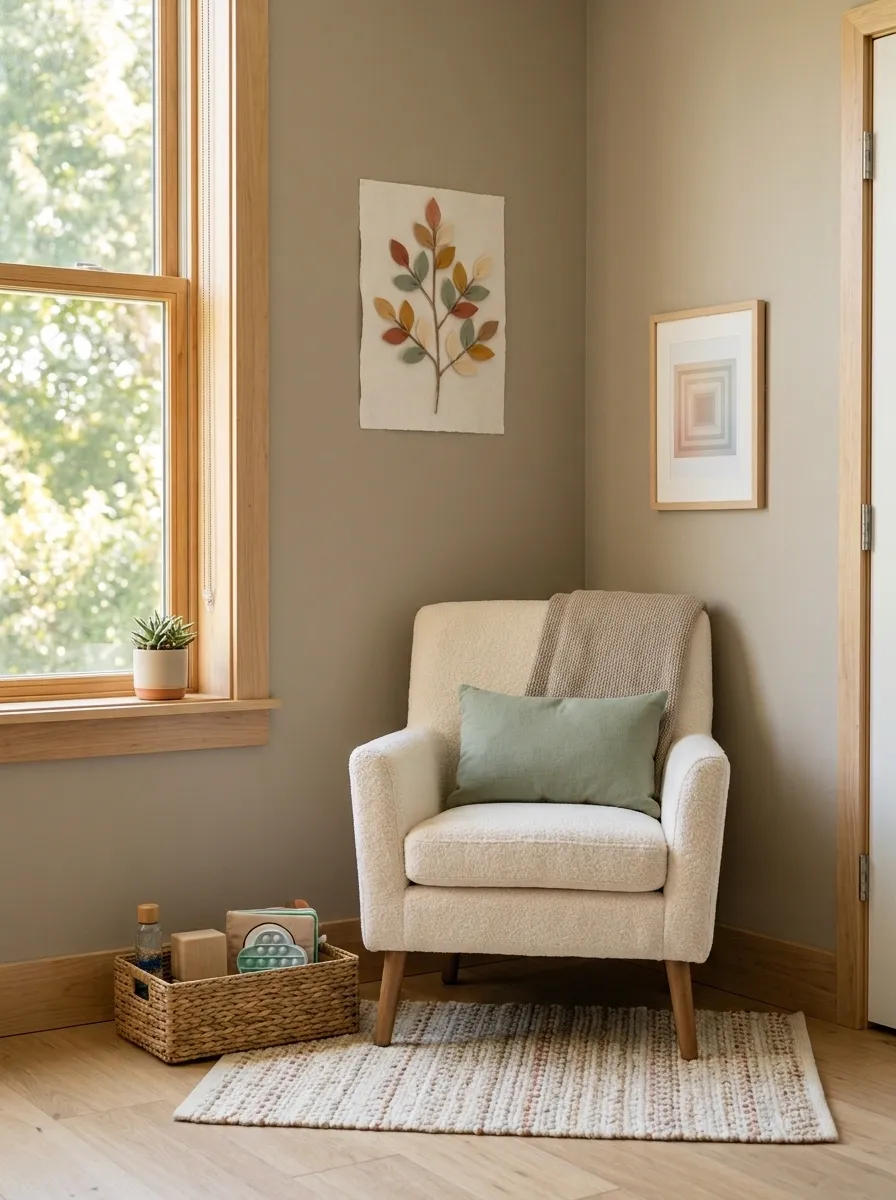
A calm-down corner should feel quiet before it looks seasonal.
Use warm neutral colors, one soft seat, a small visual breathing prompt, and a basket for approved tools. Then add a restrained fall cue, such as a leaf garland or muted paper tree.
Avoid covering the area in signs and decorations. A busy “calm” corner defeats its own purpose.
The strongest setup has three jobs: sit, reset, return.
Use fall colors as the background language, not as a pile of distractions.
Create a Classroom Tree That Changes With Student Work
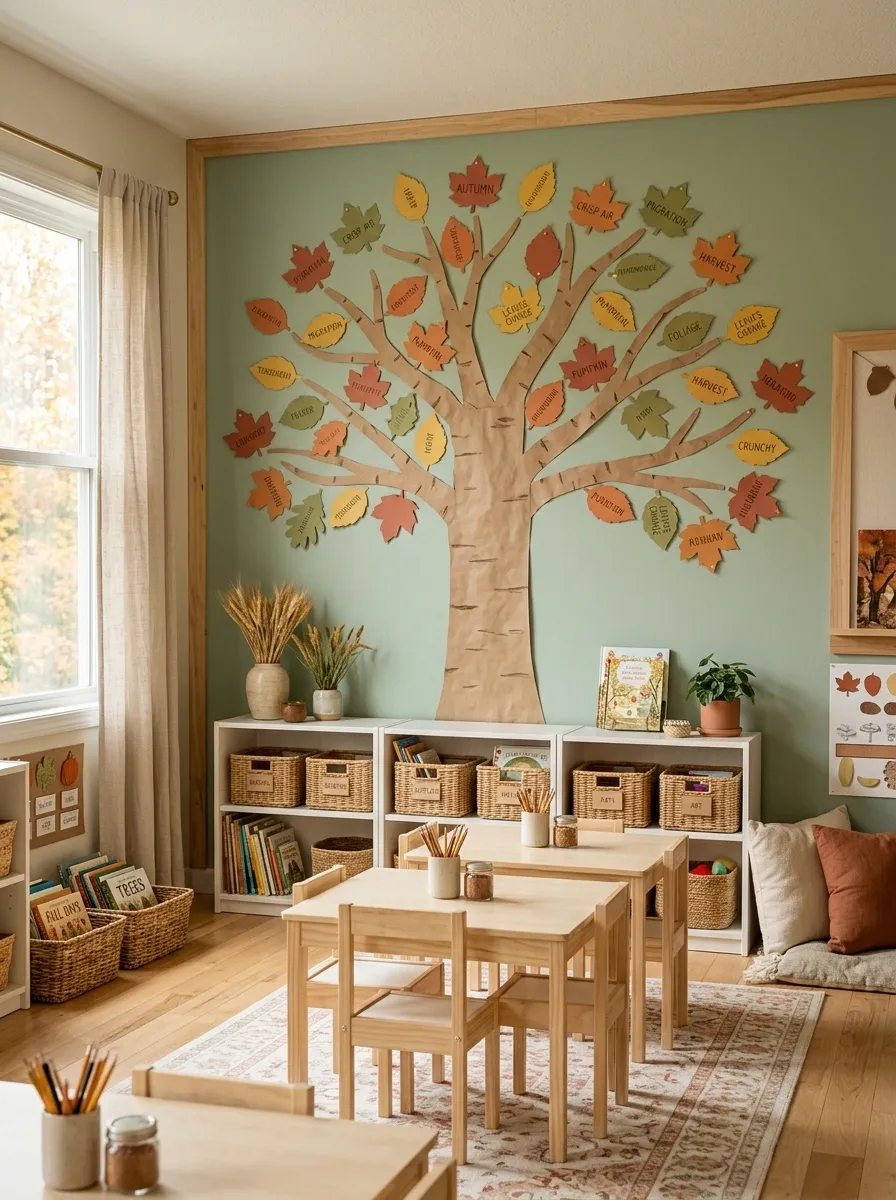
A paper tree becomes much more useful when it grows throughout the season.
Build the trunk and branches once, then let new leaves carry student writing, vocabulary, goals, reading responses, or things learned during the week. The display changes naturally without requiring a complete redesign every few days.
Use slightly different leaf shapes for different types of work. That creates visual order while giving the entire class a shared display.
Simple system: trunk stays fixed, leaves keep changing.
Add Warm-Toned Labels to Everyday Classroom Bins
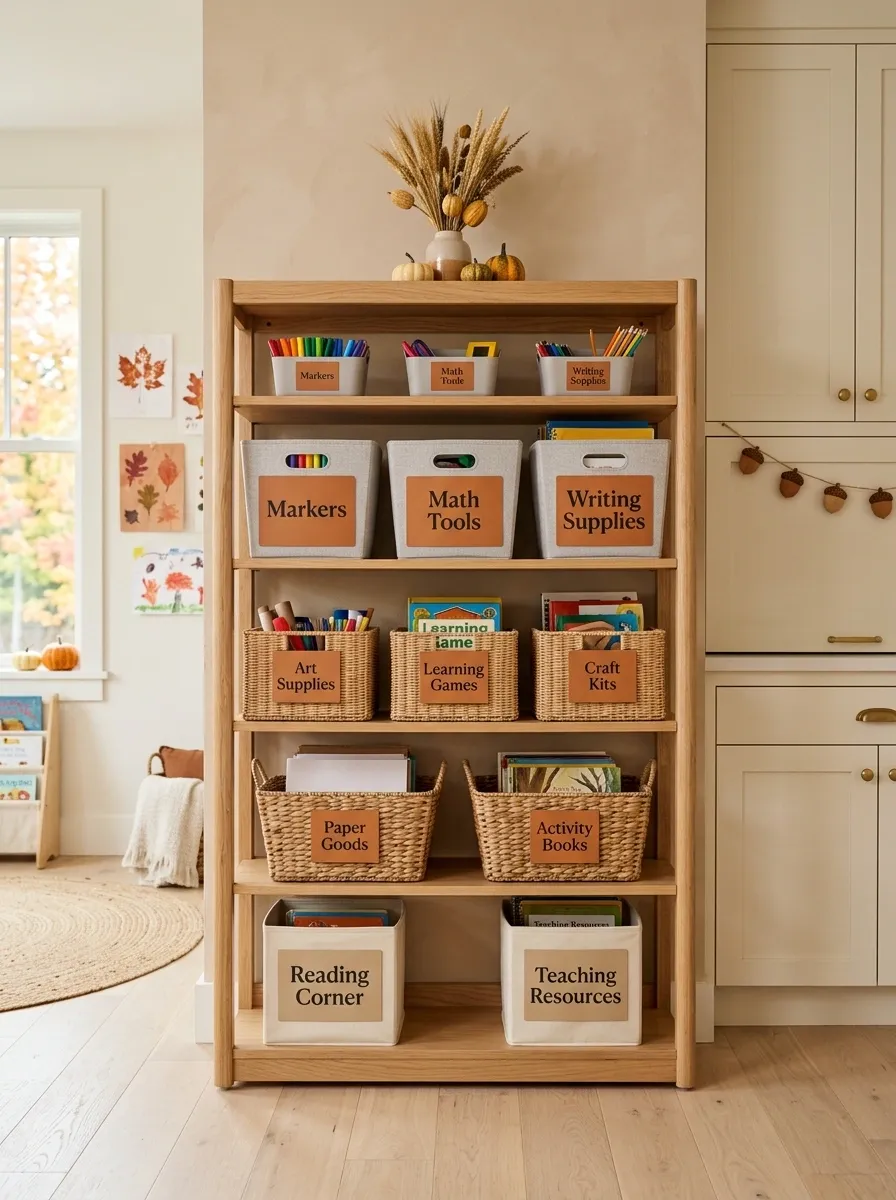
Storage labels are easy to overlook, but changing them can pull the room’s whole color scheme together.
Keep the wording practical and the lettering large. A warm rust label on an otherwise ordinary bin makes the shelf feel more coordinated without adding another decoration.
Don’t rename basic supplies with overly clever seasonal phrases. “Markers,” “Math Tools,” and “Writing Supplies” are much more useful than labels students have to decode.
Style the Teacher Table With One Strong Fall Focal Point
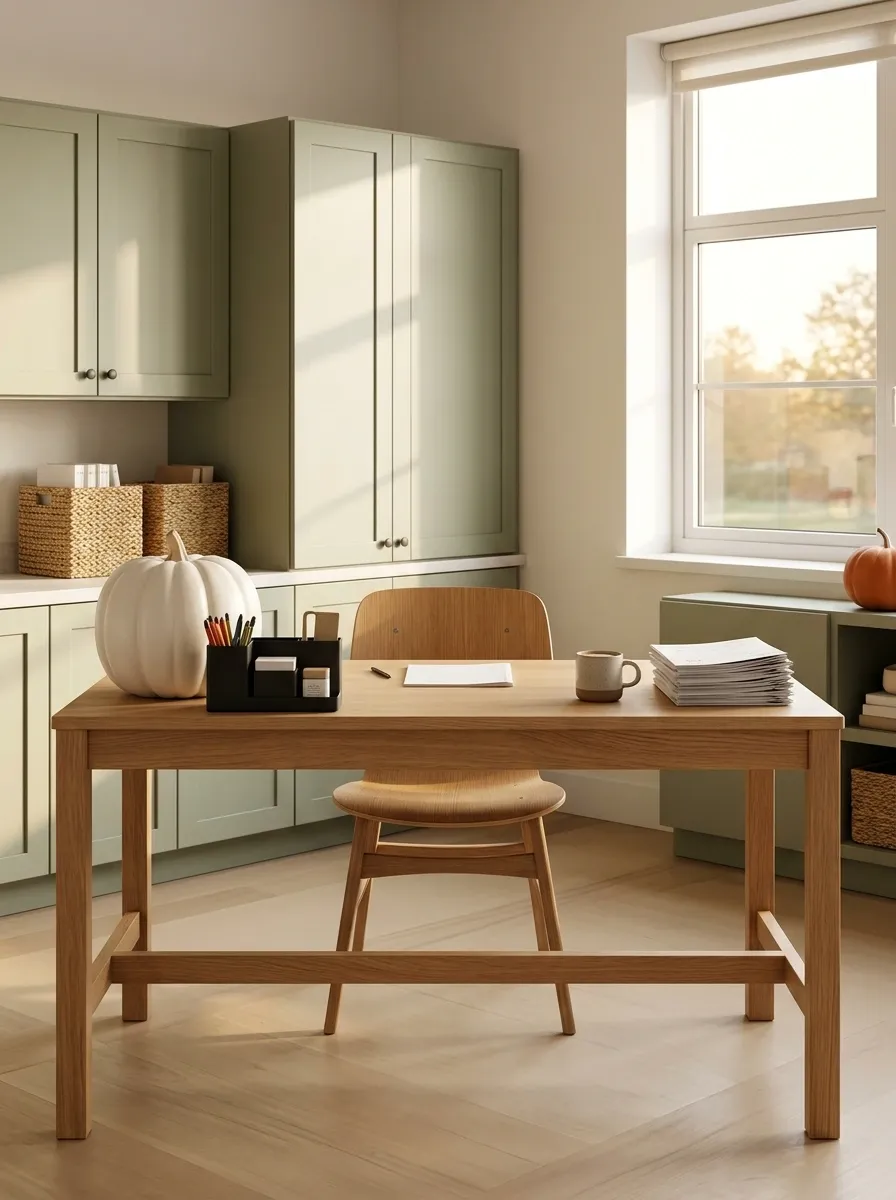
A teacher table doesn’t need a full seasonal arrangement. In fact, too many little objects make the surface harder to use and instantly collect dust, paper scraps, and stray pencils.
Choose one substantial focal piece instead. A low basket filled with paper leaves, a simple ceramic-style pumpkin, or a small branch arrangement gives the table a clear seasonal anchor.
Keep everything else functional. The contrast between one decorative piece and an otherwise tidy surface makes the seasonal detail look intentional.
The winning formula: one focal piece + open workspace + useful containers.
Turn the Classroom Library Into a Fall Book Nook
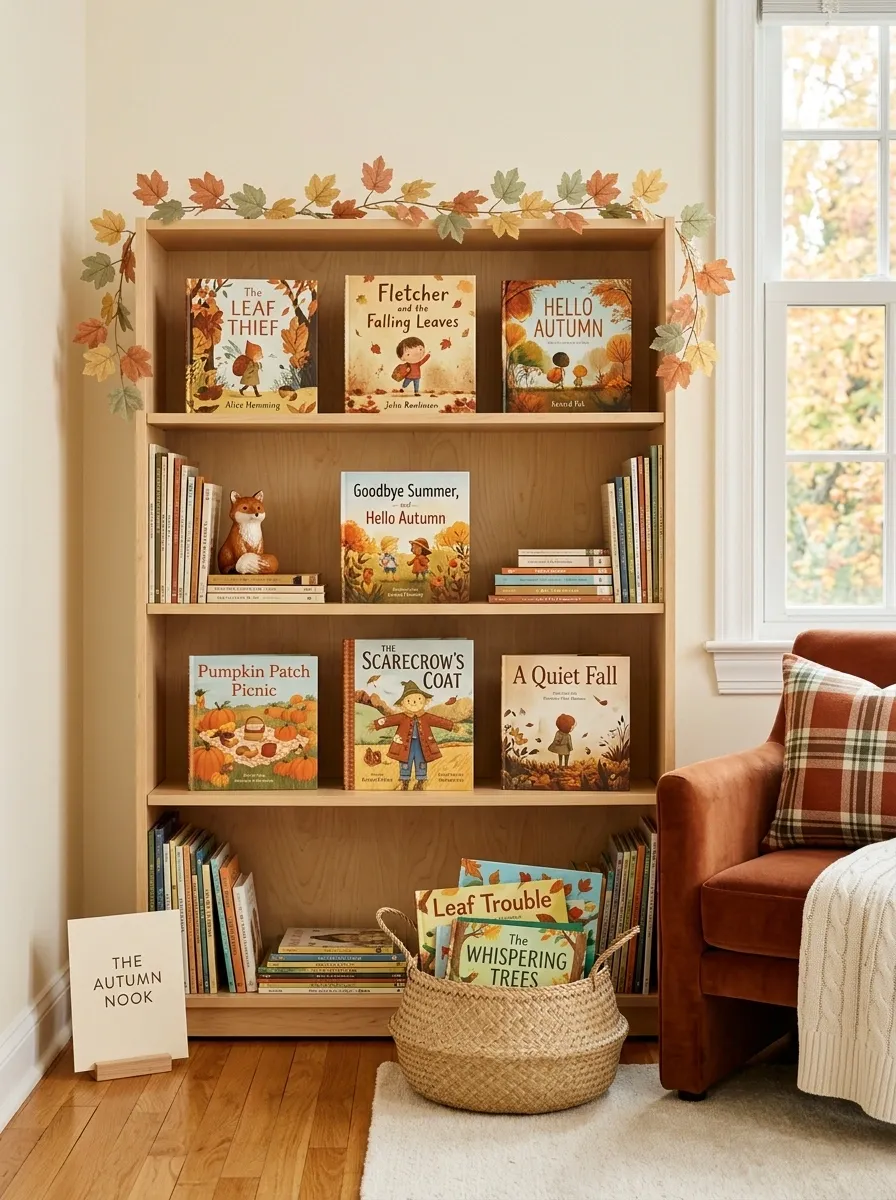
A classroom library can become one of the coziest fall areas with surprisingly little decoration.
Start at the shelves. Pull a few books with autumn themes to the front, add a small leaf garland along the top edge, and place a soft-textured basket nearby for featured books. A warm paper sign can mark the section without covering the shelves.
The important part is keeping book covers visible. The library should still look inviting to a reader who has no interest in seasonal decor.
Think bookstore display, not holiday aisle.
Use Leaf-Shaped Student Name Cards for a Seasonal Touch
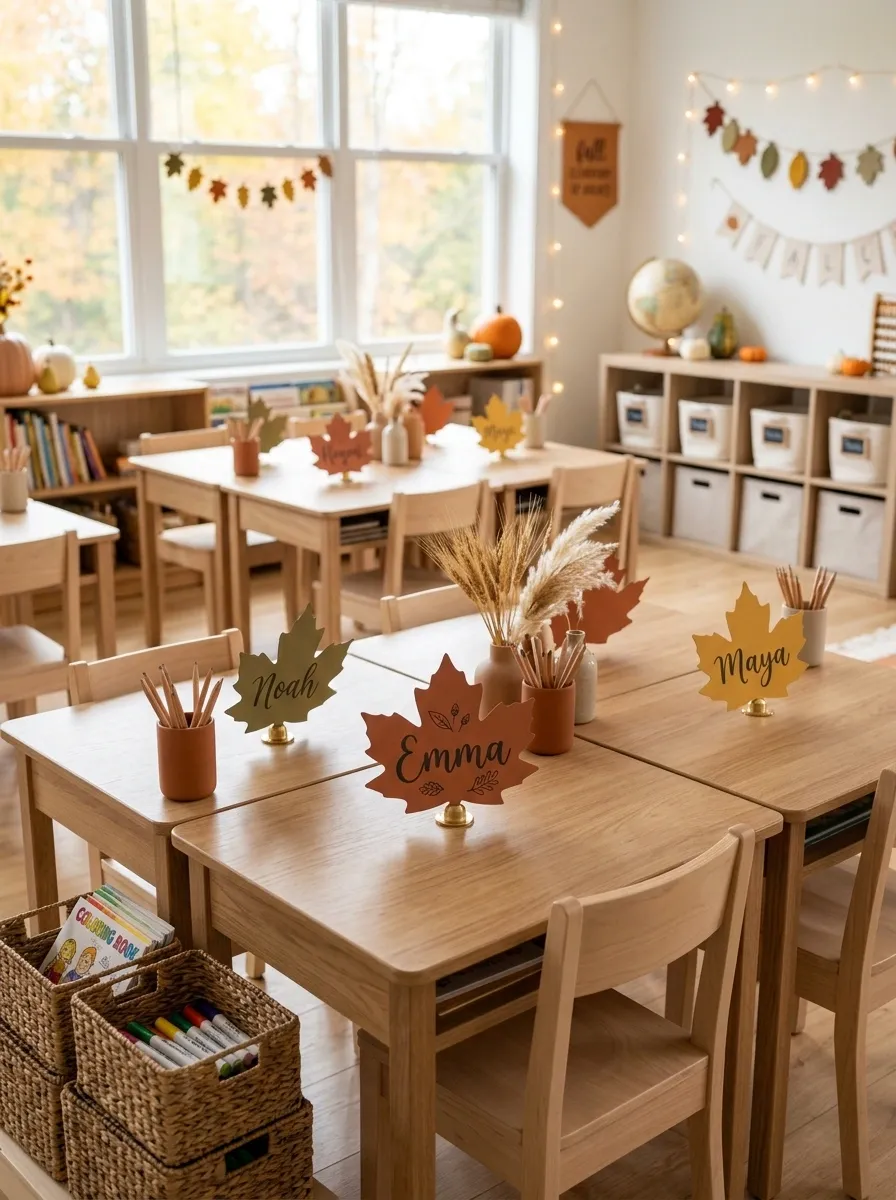
Name cards are one of the easiest classroom details to change because they already have a job.
Replace plain rectangular name tags with paper leaves. Use different leaf shapes across tables or groups, but keep the lettering style consistent so the room doesn’t look patched together.
The best part is that these don’t need extra wall or shelf space. They bring the fall theme directly into the everyday classroom without adding another display students have to walk around.
Simple upgrade: same names, new shape, zero extra clutter.
Three easy uses:
- Desk name cards
- Cubby labels
- Group-table markers
Create a Fall Door Display With Student Names
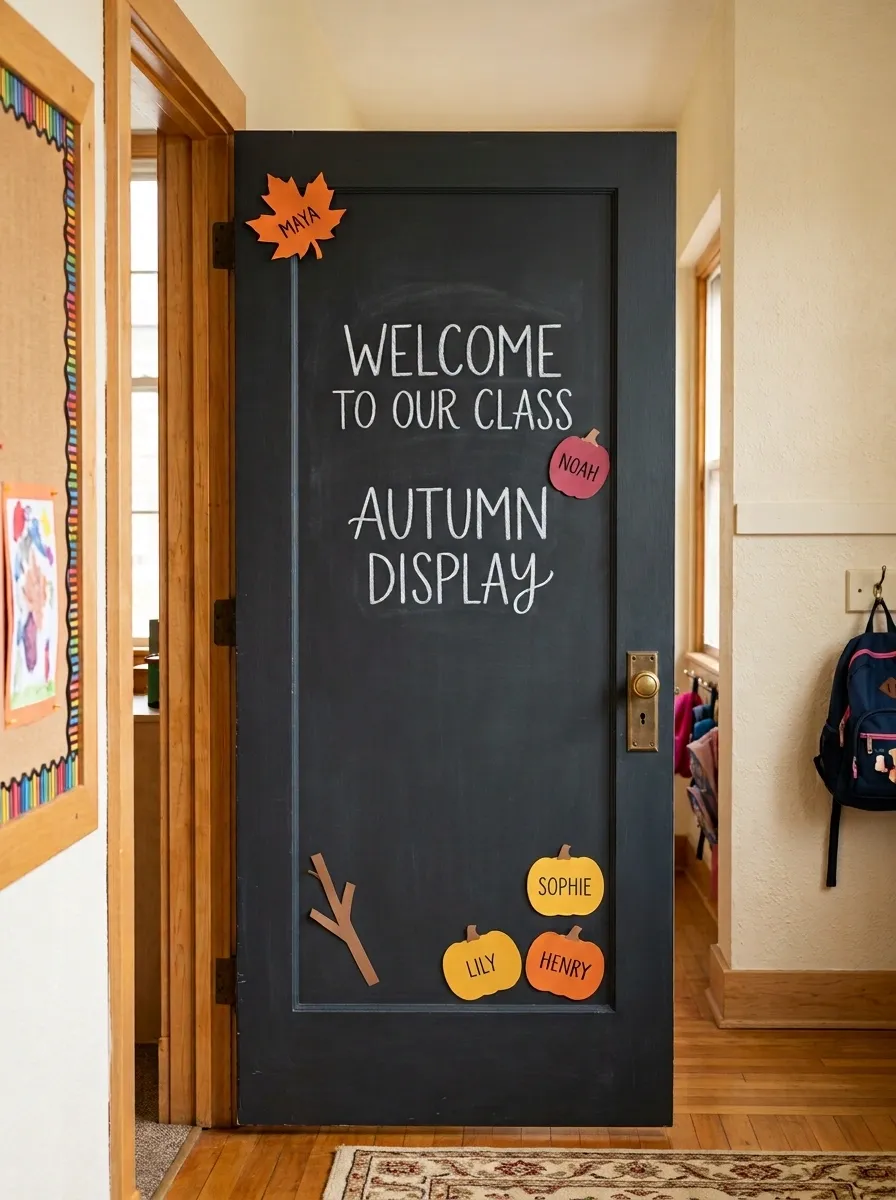
The classroom door can do more than announce the room number.
Create a simple central message, then arrange student names around it on paper leaves, pumpkins, or acorns. Give the display enough empty space that the names can actually be read from the hallway.
A dark background with warm paper shapes makes the colors pop without requiring a complicated design. Keep the message short. The names should be the main feature.
This also gives the door a personal element that store-bought decorations can’t provide.
Bring Fall to the Classroom Without Covering Every Wall
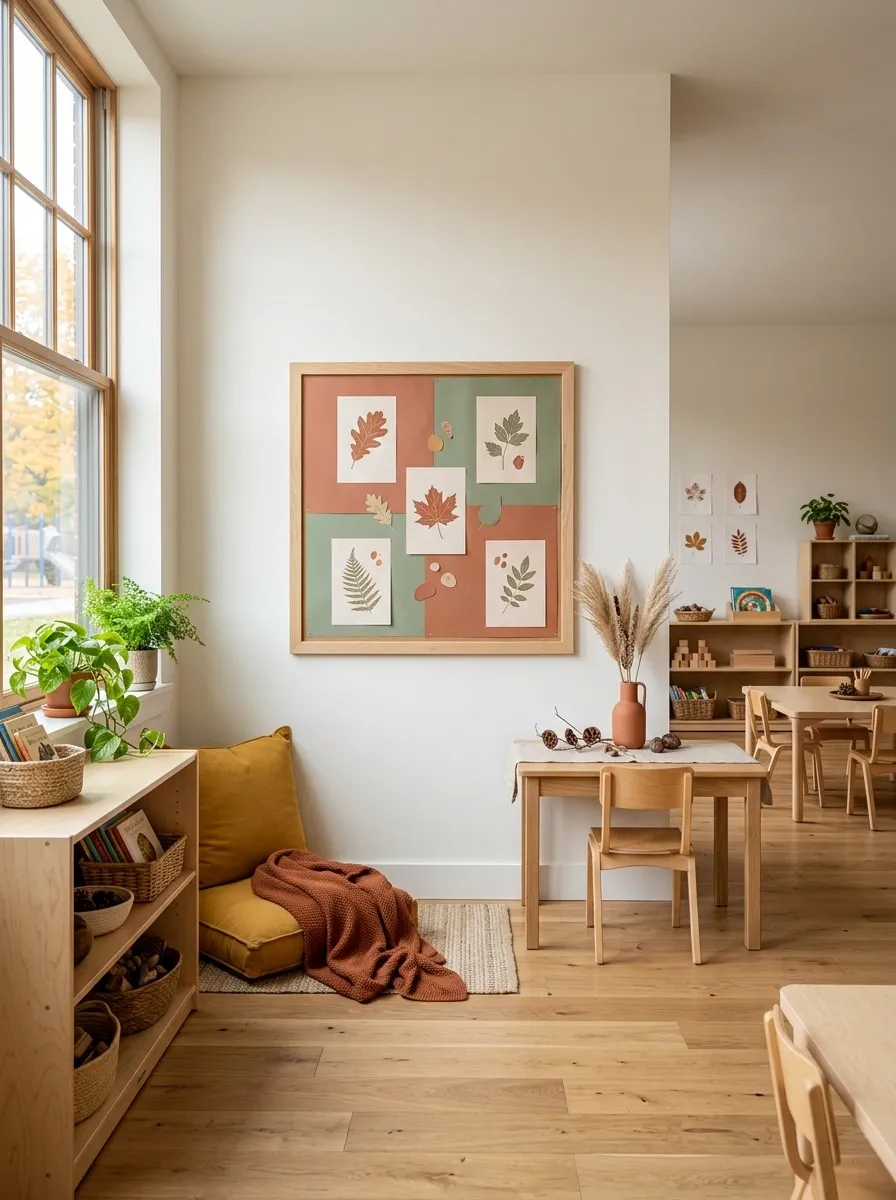
A common decorating mistake is treating every blank wall like an invitation.
Blank space matters. It gives student work, anchor charts, schedules, and learning displays somewhere to breathe. A classroom can look more seasonal with three strong areas than with twenty tiny decorations fighting for attention.
A useful way to edit the room is to walk from the doorway toward the back and identify the first few things the eye naturally lands on. Those are the places that deserve the seasonal treatment.
Decorate here. Leave these alone.
Finish the Room With a Small Seasonal Details Sweep
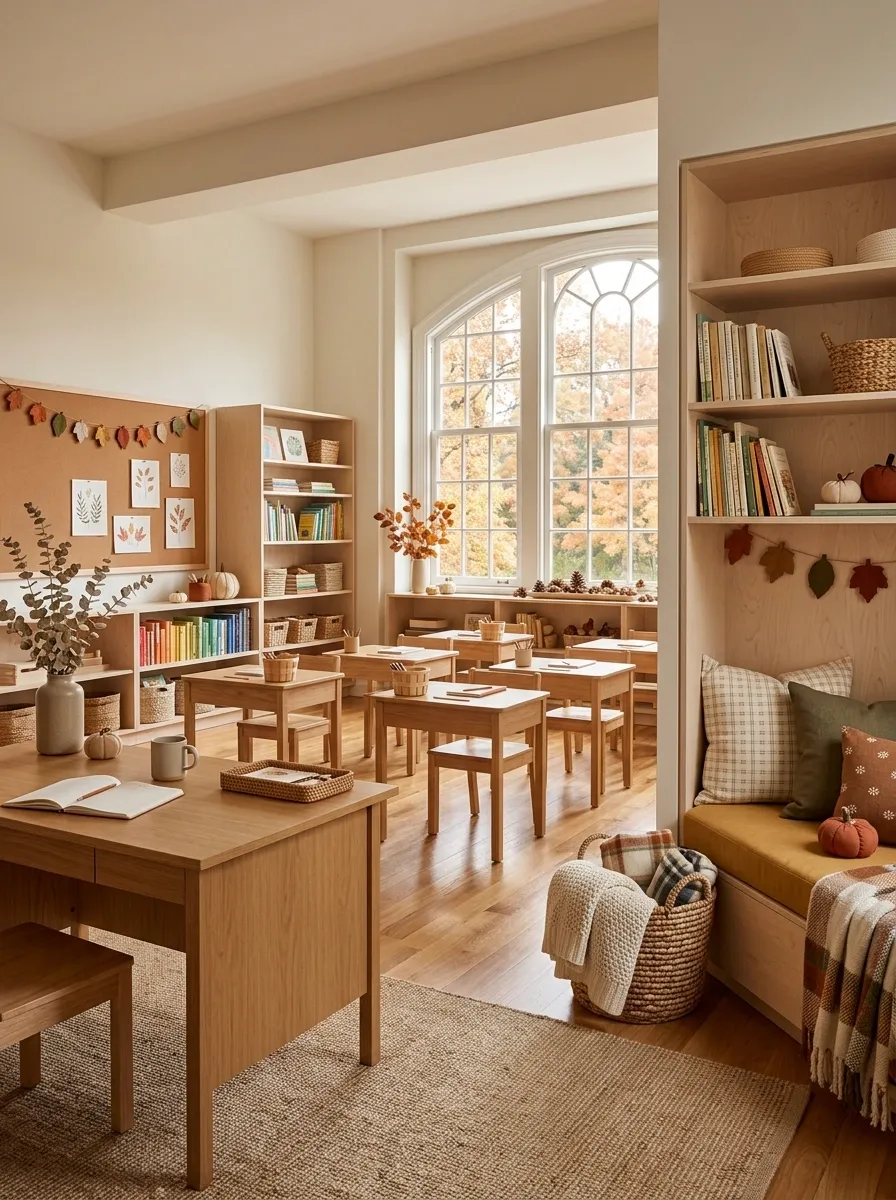
The room doesn’t need another big project at the end. It needs an edit.
Walk through the classroom slowly and look for the tiny spots that still feel disconnected from the fall theme. A mismatched shelf label, an empty corner beside the library, a plain container on the teacher table, or a lonely bulletin-board edge can usually be fixed with something already in the room.
Then stop.
That’s the part many seasonal decorating sessions miss. Once the strong areas look finished, more decoration usually makes the room worse, not better.
Final sweep: repeat the colors, fill the obvious gaps, remove anything that feels excessive, and leave the learning spaces alone.
The last step isn’t adding more. It’s removing the details that don’t earn their space.
A Fall Classroom Should Still Feel Like a Classroom
The strongest seasonal rooms don’t try to hide what the space is for. Books stay visible. Student work gets the spotlight. Supplies remain easy to reach. Learning areas still look intentional.
That’s why the best classroom decoration for fall ideas aren’t necessarily the biggest ones. A leaf border around a door can matter more than covering an entire wall. A warm reading nook can do more than a shelf full of pumpkins. A student-made display can carry more personality than a package of matching decorations ever will.
Start with the areas the eye notices first, repeat a small group of warm colors, and stop before the room gets crowded. That restraint is what makes the seasonal details feel intentional.
Save this list for the next classroom refresh, especially when the first pumpkin starts looking lonely and the urge to decorate every empty surface kicks in.