
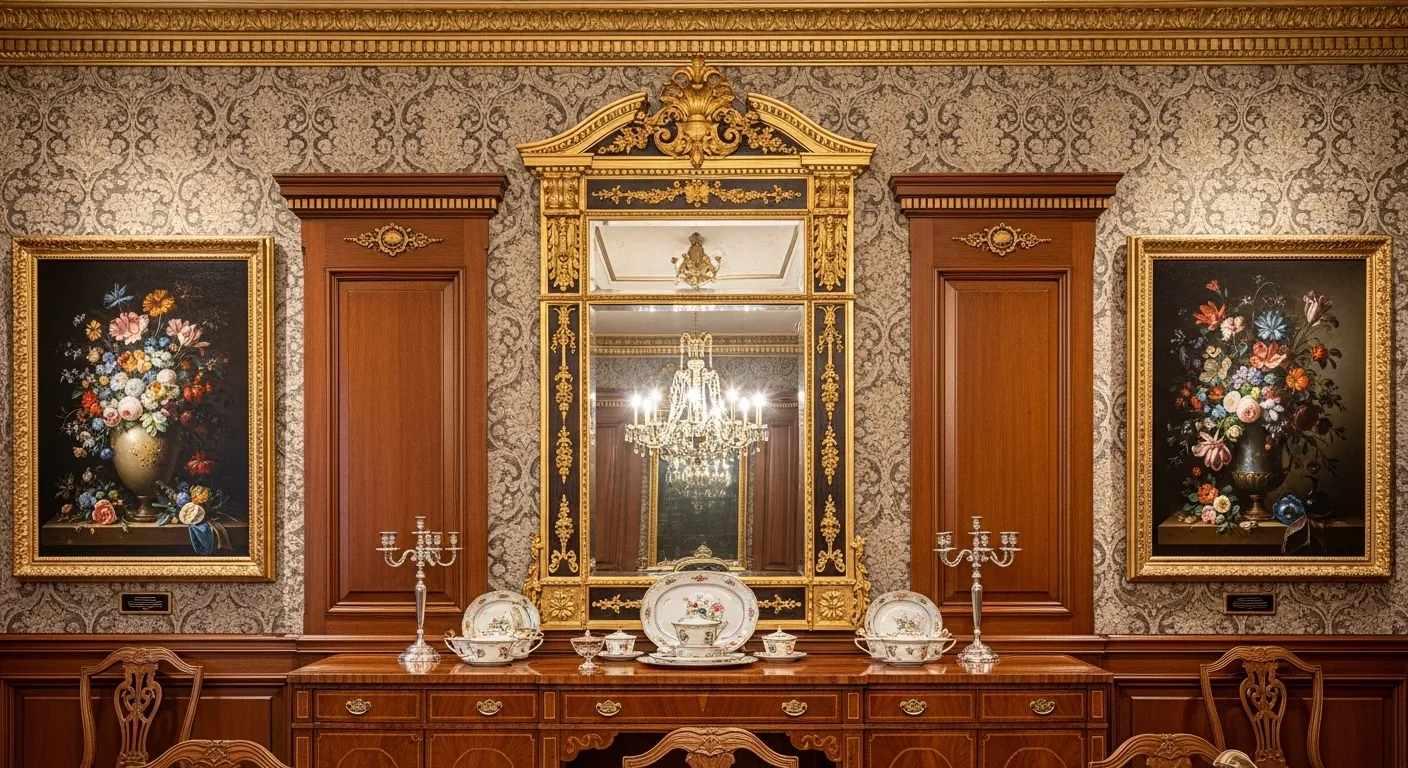
The dining room accent wall is where interior design goes to either prove itself or embarrass itself, and there is genuinely no middle ground. Get it right and the entire room organizes itself around one confident decision — every chair, every pendant, every table finish reads as a considered response to that wall. Get it wrong and you’ve got a feature wall that looks like it was conceived during a weekend browse through a home décor megastore and executed with whatever was left in the paint tray.
Most dining rooms play it so safe they’ve effectively opted out of having a personality altogether. Agreeable greige on all four walls, a pendant that was chosen because it was the least offensive option in the catalogue, a table that coordinates with nothing in particular and commits to nothing at all. It’s the design equivalent of answering “fine” when someone asks how you are — technically a response, communicating absolutely nothing.
The dining room is arguably the most social space in the house. It’s where people sit still long enough to actually look at the walls, where candlelight and a good chandelier can make a material choice look extraordinary, and where one strong wall decision carries the entire room without requiring much else to be exceptional. That combination of circumstances makes it the single highest-return room for a genuinely committed design choice — and yet it’s consistently the room where people lose their nerve at the last minute and reach for the neutral paint.
The Mistakes That Keep Dining Rooms Looking Generic
Before the good stuff, a brief autopsy of why most dining room accent walls fail to deliver on their theoretical potential.
The wall and the furniture are having separate conversations — An accent wall only works when the materials and tones it introduces are picked up and echoed somewhere in the furniture, the fixture, or the accessories in the room. A dramatic dark wall surrounded by furniture in completely unrelated tones looks like a backdrop that was installed in the wrong room. The wall and everything facing it need to be in dialogue with each other, not just coexisting in the same space.
The lighting is ignoring the wall entirely — A feature wall that isn’t lit is a feature wall that disappears after 5pm, which in a dining room is exactly when the room gets used. Whether it’s sconces flanking a mirror, recessed downlights washing the surface, or pendant light bouncing off a reflective material — the wall needs the light to complete its effect, and the light needs the wall to justify its placement.
Scale is off and nobody noticed until it was too late — An accent wall treatment that’s too small for the wall it’s on looks like a sample board rather than a design decision. Oversized mirrors that aren’t quite big enough, gallery arrangements with too much negative space between frames, paneling details that stop short of the ceiling — all of these produce the uncomfortable visual sense that someone ran out of material or nerve before the job was finished.
What the Best Dining Room Accent Walls Actually Have in Common
Strip away the individual material choices and a pattern emerges across every dining room that genuinely works.
One material does the talking and everything else listens — The rooms that look designed rather than decorated have a clear hierarchy: one element is the statement, and every other decision in the room exists to support it rather than compete with it. Floral upholstered chairs against a busy patterned wall is two competing statements. Floral chairs against a deep solid wall is a considered combination. The decision about which element gets to be the headline is the actual design skill.
Warm and cool materials need each other — The dining rooms with the most visual richness almost always mix a warm material and a cool one — dark wood against a cool dark wall, warm stone against cool grey upholstery, warm brass against dark charcoal surfaces. That tension between temperatures is what gives a room depth, and rooms that stay entirely in one temperature register tend to feel either cold or heavy depending on which direction they’ve gone.
The ceiling height is either used or wasted — Accent wall treatments that run to the full ceiling height make a room feel taller, more deliberate, and more architecturally significant than the same treatment stopped at picture rail height. Every one of these rooms respects its ceiling line, which is not a coincidence.
Dining Room Accent Wall Ideas That Understand the Assignment
The Matte Black Wall with Live-Edge Table:
Dining room decor
by u/indecisivegirlie27 in interiordecorating
Painting three walls of a dining room in near-black and then furnishing it with a live-edge walnut slab table, a matte black Sputnik chandelier with exposed Edison bulbs, a walnut sideboard, and a single organic-form gold mirror is a setup that has made every decision before you walk in the room and has zero interest in your feedback. The near-black wall color is doing something that lighter dining rooms can’t: it’s making the warm walnut tones in both the table and the sideboard glow rather than just sit there, because dark backgrounds push warm wood tones forward in a way that neutral walls simply cannot. The Sputnik chandelier in matte black with warm-toned bulbs adds vertical drama at ceiling height without introducing a third material into what is already a carefully edited palette of black, walnut, and gold. The organic gold mirror is the one piece of deliberate imperfection in an otherwise controlled room — its irregular edge prevents the whole thing from reading as too curated, which is what stops a room this considered from feeling like a showroom rather than somewhere people actually eat. The pale oak flooring provides the light base that keeps all the dark upper surfaces from making the room feel like a bunker.
The Stacked Stone Accent Wall:
Natural stacked stone as an interior dining room accent wall is a choice that should, by conventional wisdom, produce a room that feels heavy, cold, or unintentionally rustic — and this room commits such a thorough series of counterbalancing decisions that it produces none of those effects and instead reads as warmly sophisticated. The stone itself is laid in a coursed ashlar pattern in warm sandy-grey tones, which reads as architectural rather than decorative because the scale is generous enough that each individual stone registers as a proper building material rather than a cladding veneer. The drum pendant with its dark shade and brass band drops to exactly the right height above the round dark table to pull the eye downward and anchor the composition, because without that weighted fixture the stone wall would dominate and the table would visually disappear. The octagonal rope-trimmed mirror placed against the stone surface introduces a softness of form that stops the wall from feeling like a fortress, and the flanking brass adjustable sconces provide the wall-level lighting that the stone surface needs to show its texture at evening. The taupe linen dining chairs and the matching warm-toned cabinetry beside the stone wall ensure that the room’s entire material palette stays in one temperature family — which is the decision that makes the stone feel at home rather than dropped in.The Cream Fluted Panel with Organic Chandelier:
Getting a dining room to feel genuinely luxurious using an entirely neutral palette — cream walls, ivory fluted center panel, greige velvet chairs, warm oak floor, white tulip table base — requires a level of confidence in material quality and proportion that most rooms with this palette brief never manage to achieve. The secret is the fluted panel, which is the one element that introduces texture into an otherwise flat surface, and the way it’s framed by the classical panel molding on either side gives the entire wall a sense of architectural layering that paint alone at any color could never produce. The chandelier is the masterstroke: a sculptural organic form in dark metal that looks like frozen botanicals, which introduces both organic form and visual weight at the ceiling level without introducing a single new color into the palette. Its position centered precisely over the table creates the vertical axis that organizes the entire composition from floor to chandelier, and the two globe wall sconces in matching metal finish at either side of the wall provide the horizontal balance that keeps the wall from feeling vertically top-heavy. A room this restrained only works if every material it contains is genuinely good quality — substituting any element for a cheaper version would unravel the entire effect, which is both the challenge and the honest reality of monochromatic luxury interiors.
The Chinoiserie Panel Wallpaper in Molding Frames:
Framing Chinoiserie botanical wallpaper panels — delicate grey-and-silver tree and foliage illustrations on a warm taupe ground — inside classical panel molding and hanging them as distinct framed panels rather than as continuous wallpaper across the wall is a distinction that most people would walk past without clocking and yet is entirely responsible for why this wall looks more like a gallery installation than a decorating decision. Continuous Chinoiserie wallpaper reads as a decorative surface. Chinoiserie contained inside panel molding reads as deliberate artwork hung on an architecturally paneled wall — and that shift in reading is what makes this setup feel more formal, more considered, and considerably more expensive than the same wallpaper applied without the molding framework. The herringbone parquet floor in warm honey oak provides a warm geometric counterpoint to the organic botanical illustrations above the chair rail, and the round wooden dining chairs with their bentwood backs add another layer of organic curve that sits comfortably in the same register as the illustrated branches overhead. This is a room where the walls tell a story and the furniture simply creates somewhere to sit while you read it.
The Slate Gallery Wall with Vintage Oil Paintings
A gallery wall of vintage oil paintings in mismatched gold frames arranged across a deep slate-grey painted wall above white wainscoting, flanked by pleated linen sconces in warm brass, is the dining room equivalent of wearing something expensive that looks like you’ve owned it for years — the entire effect depends on the authenticity of the collection and immediately falls apart if you try to replicate it with prints bought simultaneously from the same source. The slate wall color is exactly the right shade to make gold frames warm up rather than yellow — a lighter wall would make the same frames look brassy, and a truly dark wall would make them disappear — so the color decision here is doing as much work as the art selection. The white wainscoting below creates the clean architectural division that stops the wall treatment from reading as overwhelming, and the chair rail line provides the visual horizon that the gallery arrangement can float above without competing with the floor level. The black bentwood chairs below the wainscoting complete a three-toned room — dark slate, white trim, warm wood floor — that’s classic enough to be timeless without feeling like it gave up trying.
The Concrete Accent Wall with Copper Geometric Inlay:
A matte grey concrete accent wall with copper inlay strips arranged in an angular geometric pattern — diagonal lines crossing to form a series of elongated diamond shapes — combined with a cluster pendant of three copper globe lights in graduated sizes at the dining table axis, navy velvet dining chairs, and a white marble floor is a room that has committed to doing something genuinely unusual and executed it with enough technical precision that it reads as architectural rather than experimental. The copper inlay lines are the critical detail: they’re thin enough that from a distance the wall reads as a concrete surface with geometric shadows, and only up close does the warmth of the copper become apparent — which is the kind of layered discovery that makes a room genuinely interesting to be in rather than simply impressive in a photograph. The copper in the wall inlay and the copper in the pendant cluster create an interior material echo that justifies both elements: the pendants feel like they belong in the room because the wall shares their metal, and the wall inlay feels intentional rather than arbitrary because the pendants confirm that copper is the room’s chosen accent metal. Navy chair upholstery against the grey concrete provides the deep cool counterpoint that keeps all that warm copper from dominating, which is the color balance decision that stops this room from feeling like a steakhouse.
Commission a Wall of Hand-Carved Walnut (Because You’re Not Boring)
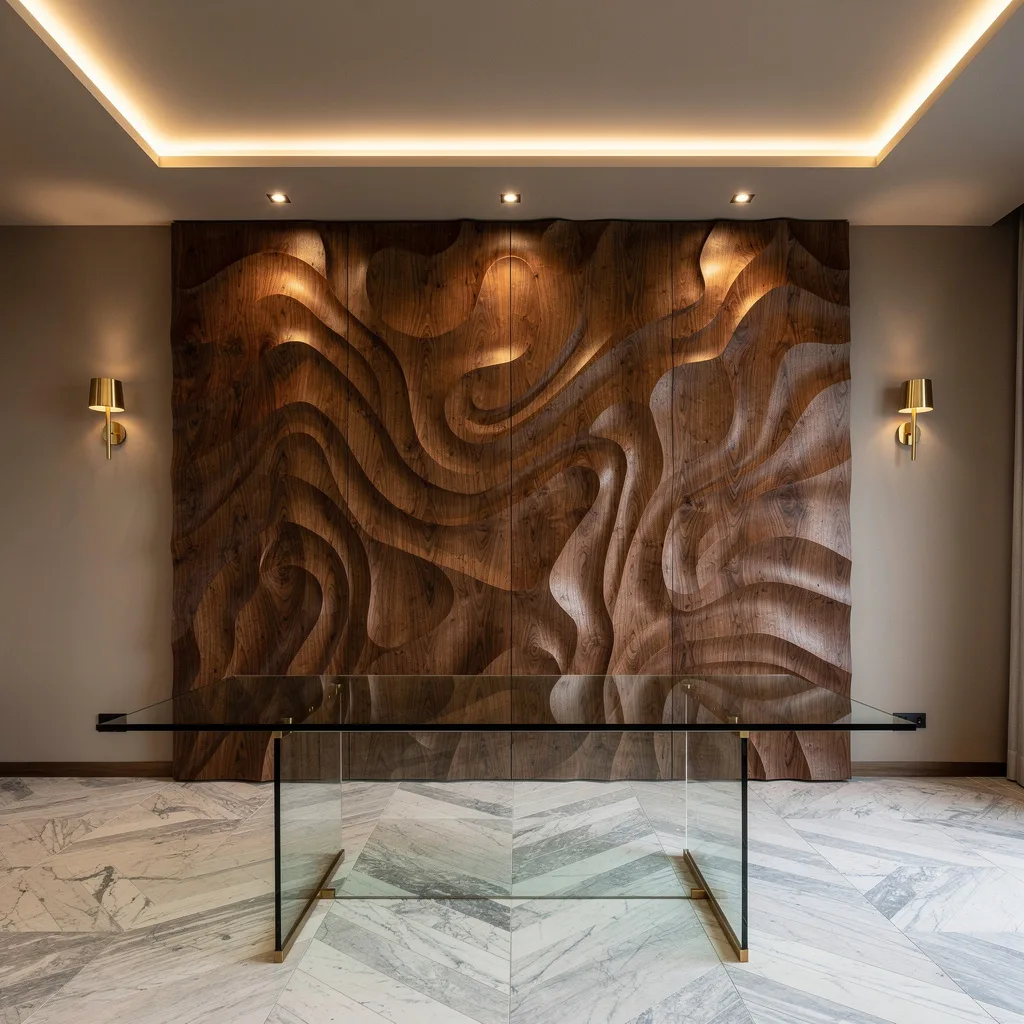
Craving high-brow drama? Stop defaulting to flat paint and go hard with hand-carved walnut panels featuring wave-like contours. Wave goodbye to basic and install full-height wood panels that throw shadow lines and demand attention. Pair that pricey wood with recessed LED strip lighting in your ceiling to hype up those grain highlights—don’t cheap out on lighting, seriously. Now, surround that jewel wall with a glass dining table over chevron-patterned marble—you need contrast and a little brashness. Finish the look with minimalist brass sconces so the wall doesn’t feel like it’s stuck in a museum. Pro tip: Always let your feature wall be the headliner. Keep the rest chill; taupe and soft neutrals are your B-list actors.
Slap on Venetian Plaster Like a Grown-Up
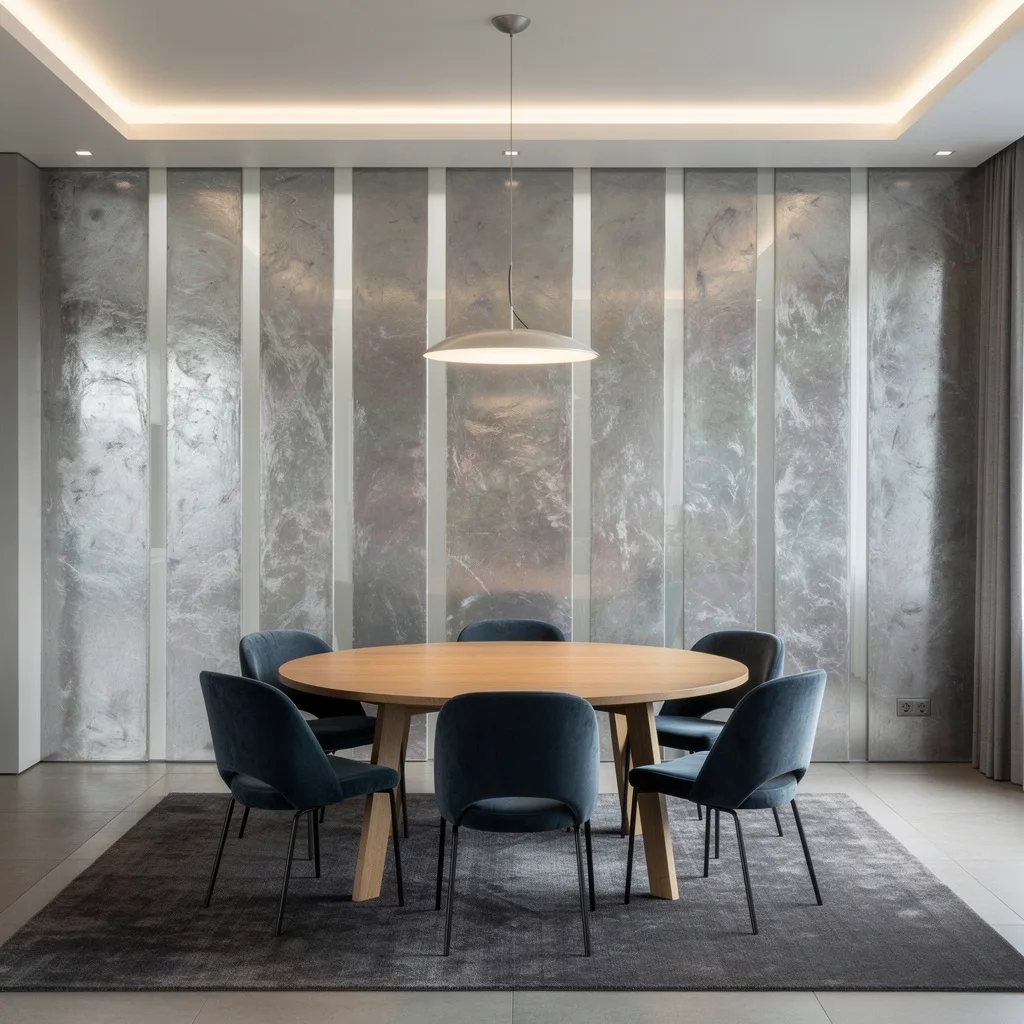
If you want your dining room to scream ‘rich but make it subtle,’ slather those walls with polished Venetian plaster in pearly silvers and dark graphite. Layer some frosted glass verticals inside your panels—don’t be scared—and sneak in cove LEDs so you get that soft glow. Ditch harsh spotlights and settle for a floating pendant that keeps things moody. Match your contemporary oak dining table to a muted charcoal rug and go crazy with smoky velvet chairs. Pro tip: Upgrade those glass panels with hidden LEDs so you can Instagram your food without needing a filter.
Go Big With Oversized Geometric Mirrors, Not Boring Art
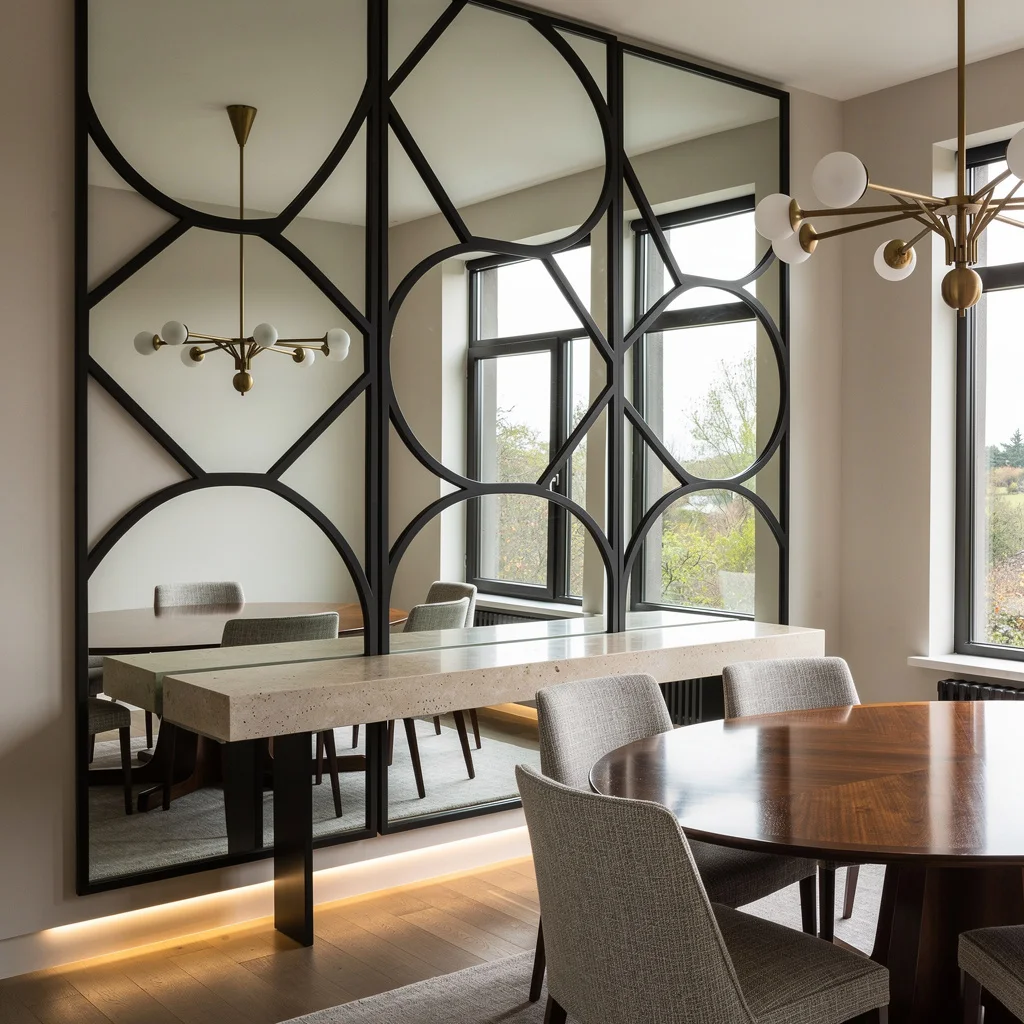
Mirrors are the cheat code for faking space and light, so stop buying tiny IKEA frames and make a statement with large geometric mirrors. Frame those mirrors with matte black metal for instant edge and assemble them in an unapologetically bold pattern that doubles your window light. Ground all this drama with a slender limestone console beneath for that ‘sculpture collector energy.’ Keep your lighting layered—pop in ambient uplights at floor level and go wild with a multi-arm chandelier. Pro tip: Keep your table round and your chairs in textured linen to avoid bouncing flashbacks to a 2003 steakhouse.
Try Vertical Slatted Walls—But Make It Luxe
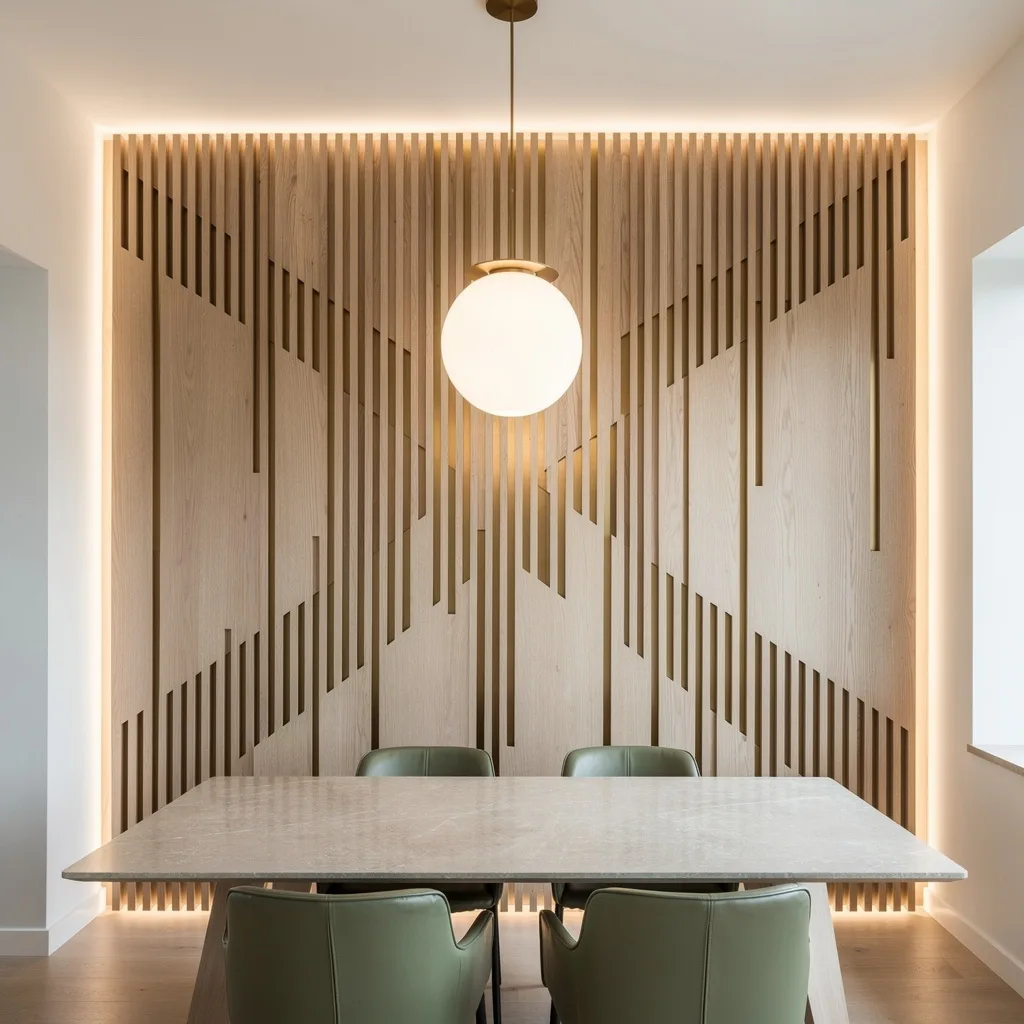
Dodge the rustic barn vibes and embrace thin light-ash timber slats running all the way up. Go design-forward by inserting brushed bronze strips in irregular patterns—chaotic but curated. Backlight the slats with indirect lighting to create dimensional contrast that isn’t trying too hard. Balance the look with white walls everywhere else so your feature wall gets the attention (jealousy is a powerful tool). Use a stone dining table and sage-green leather chairs to flex your taste. Pro tip: Keep your pendants low and globe-shaped for that soft, I-know-what-I’m-doing illumination.
Show Off with Gradient Artisan Tiles
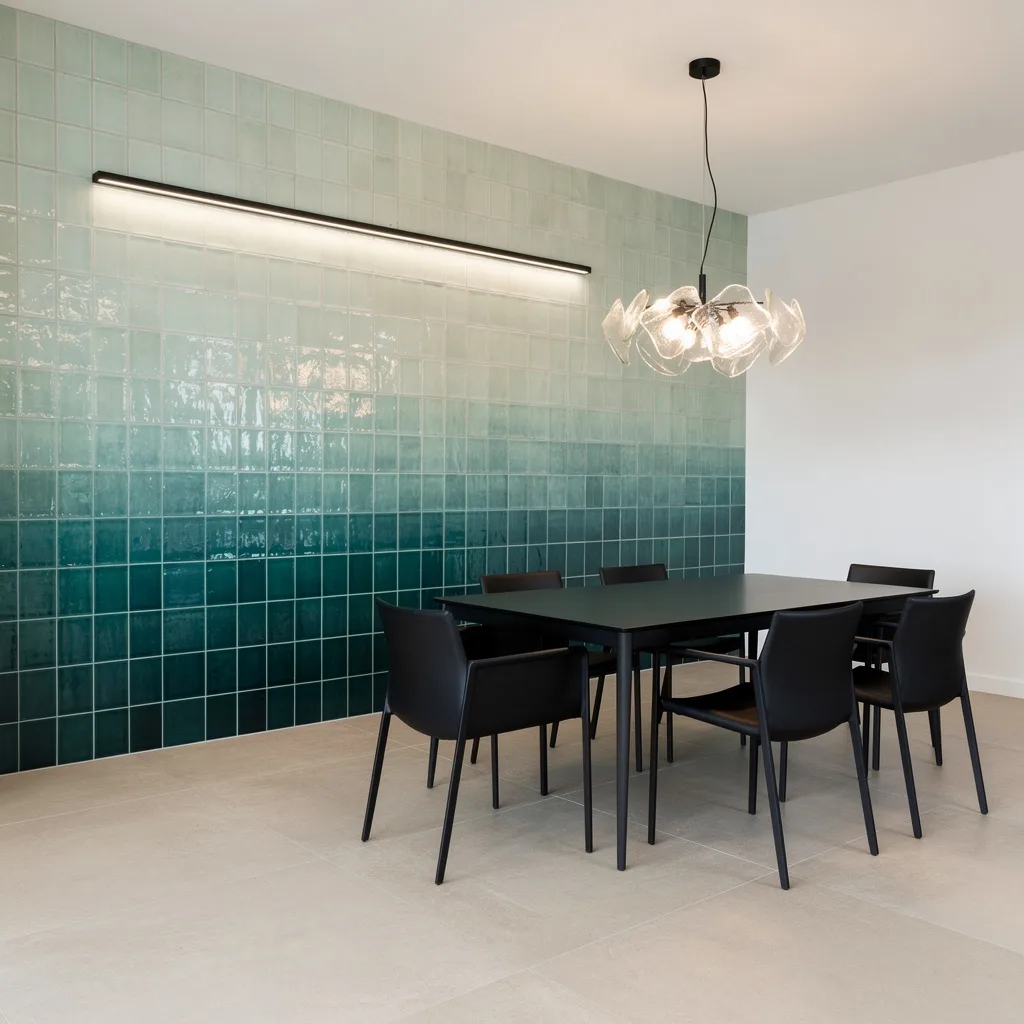
Enough with flat paint—install custom artisan tiles that fade from deep teal to pale celadon, creating a wall that gets more attention than your starter sourdough. Make those hues pop with a crisp linear LED track light over the wall. Ditch the farmhouse aesthetic and opt for a matte black dining table under a sculptural glass chandelier. Keep your floors in pale porcelain and your other walls bright white so the tile gradient stays star of the show. Pro tip: Always use gloss tile at eye-level for instant light bounce and extra flex.
Deploy Book-Matched Marble for Instant Flex
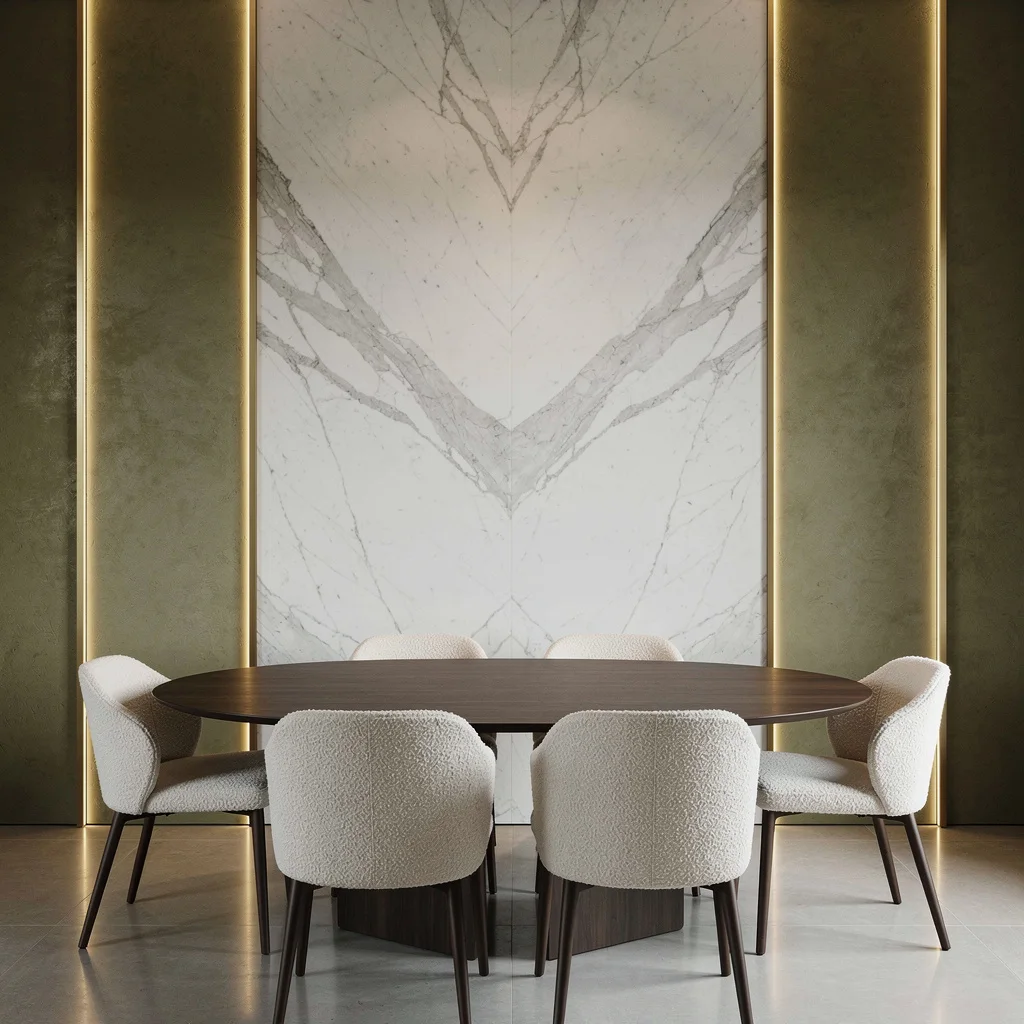
Tired of the rental-life look? Cover a whole wall with large slabs of white marble, book-matched so the veining reads as intentional (not accidental). Flank your marble with vertical brass inlay LEDs for soft, museum-quality wall washing. Anchor the glamour with a chunky dark wood table and cream boucle chairs—keep your guests comfortable while you serve looks. Hit the adjacent walls with matte olive plaster for that contrast only real designers appreciate. Pro tip: If your marble isn’t lit properly, you wasted your money. Keep integrated lighting flush and unbroken for maximum impact.
Commission a Hand-Painted Mural—Not Your Aunt’s Flowers
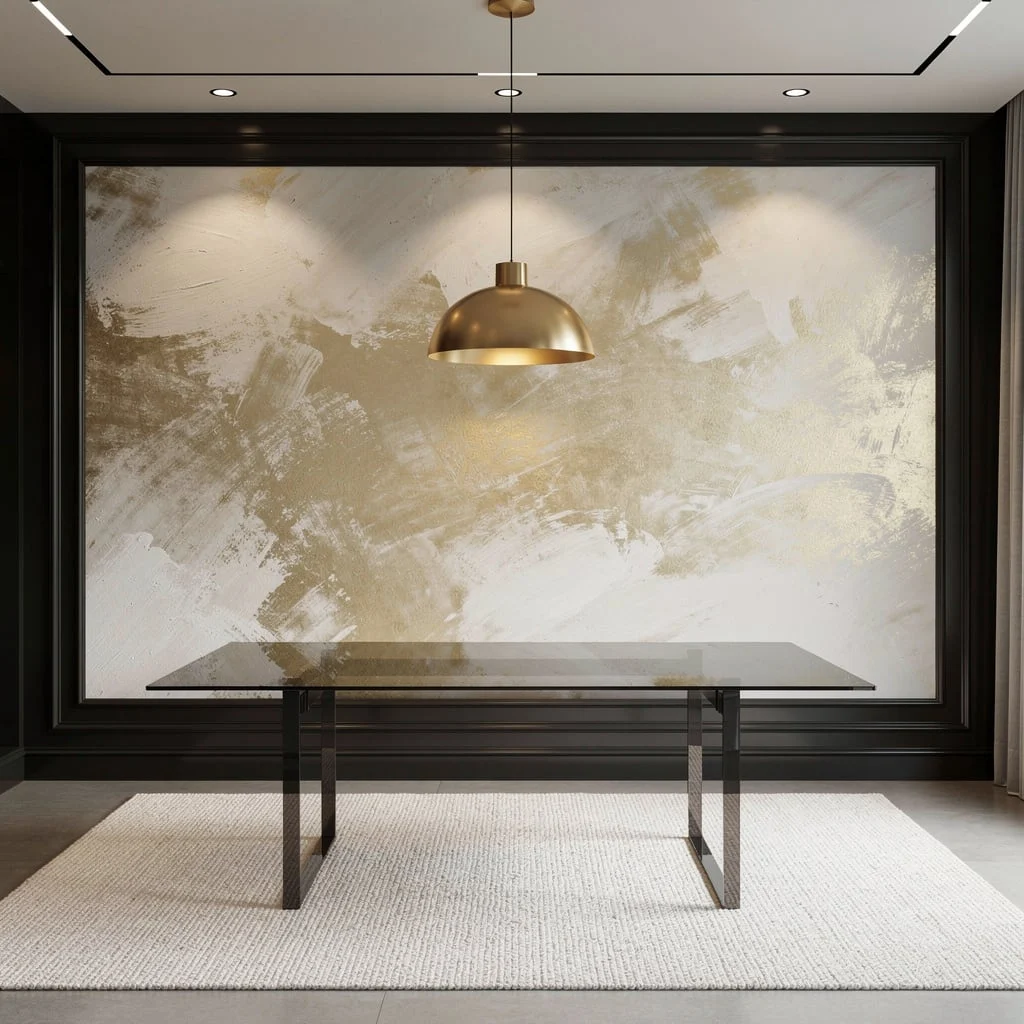
Get serious: hand-painted abstract brushstrokes in faded gold and matte white will wreck all your friends’ boring walls, trust. Frame the mural with sleek black architectural molding—you want definition, not chaos. Soften the whole look with diffused recessed lighting and match your table to the mood—think smoked glass on a pale wool rug. Let a single brass pendant echo your mural’s shimmer. Pro tip: Stick to muted, textural furniture here and go wild with your walls. Your mural is the star—don’t steal its thunder with busy chairs.
Drop Microcement and River Stone for ‘Ultra-Modern’, Not ‘Backyard Patio’
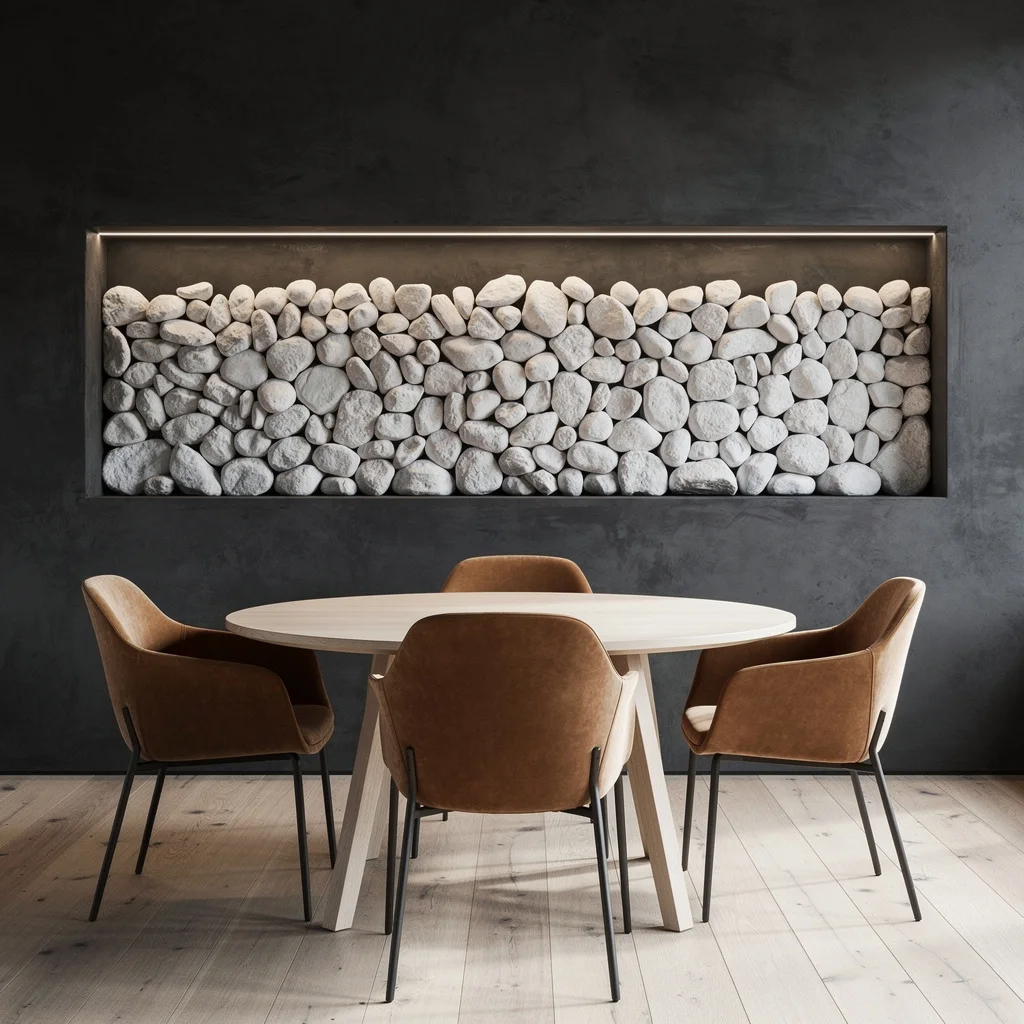
Cancel the generic painted accent wall and finish yours in deep graphite microcement—matte only, no shine allowed. Inset a horizontal shadow-box band with natural white river stones for major tactile clout, and slip in a linear LED above to make the texture pop. Pair this drama with a round white oak table and tan suede chairs, letting the pale wood floor keep things grounded. Pro tip: Keep your color palette dead simple here. Microcement is moody and wants to be your main character—not part of a crowded ensemble.
Go Full Earthy with Rattan Basketweave
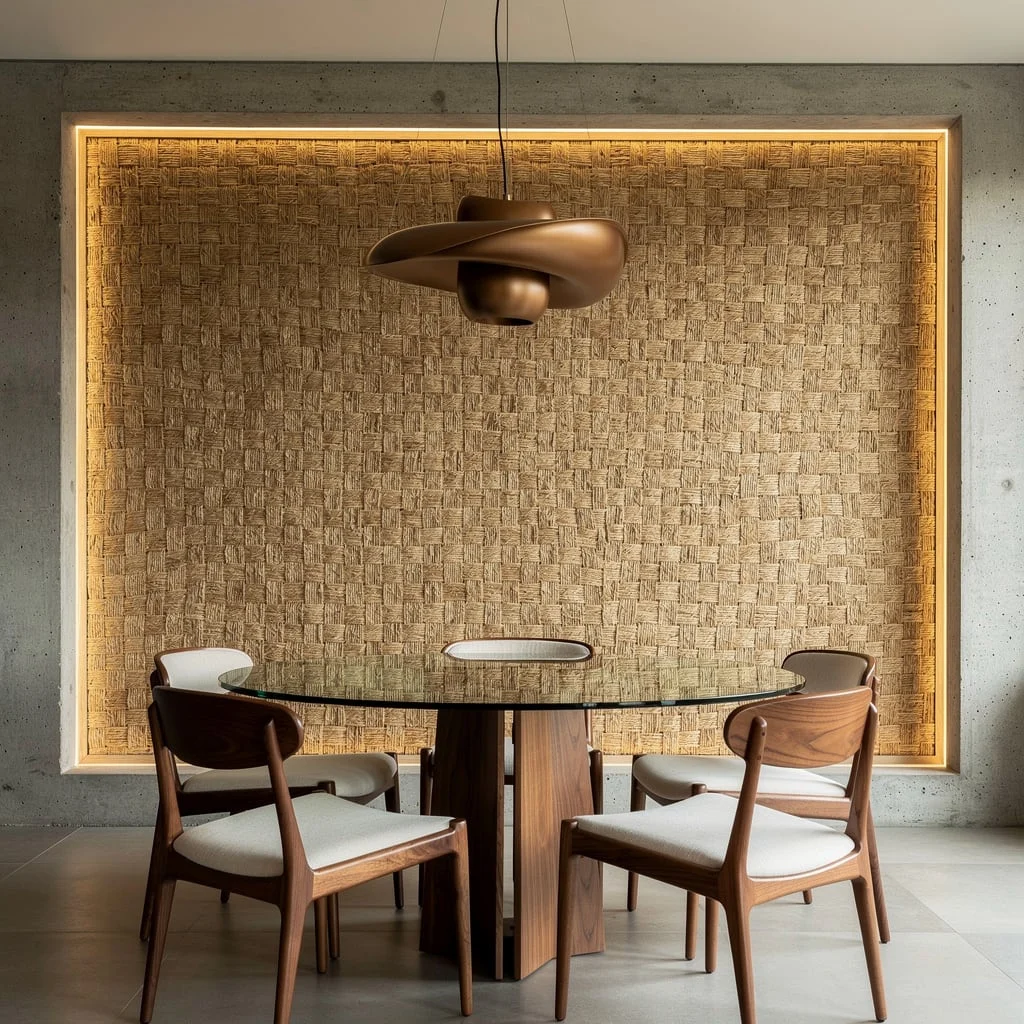
Stop pretending you don’t want texture. Panel that wall head-to-toe in natural woven rattan, laid in a showy basketweave pattern. Ditch rustic clichés by framing it all in custom-cast concrete for some serious contrast. Bathe the rattan with wall-mounted indirect lighting—nothing harsh, keep it chill. Stage a circular glass dining table with low walnut chairs to echo the earth tones. Hang a chunky bronze fixture above so things don’t get too granola. Pro tip: Never put woven textures in a dark corner; they need light to look luxe, not limp.
Glow Up with Frosted Pastel Acrylics
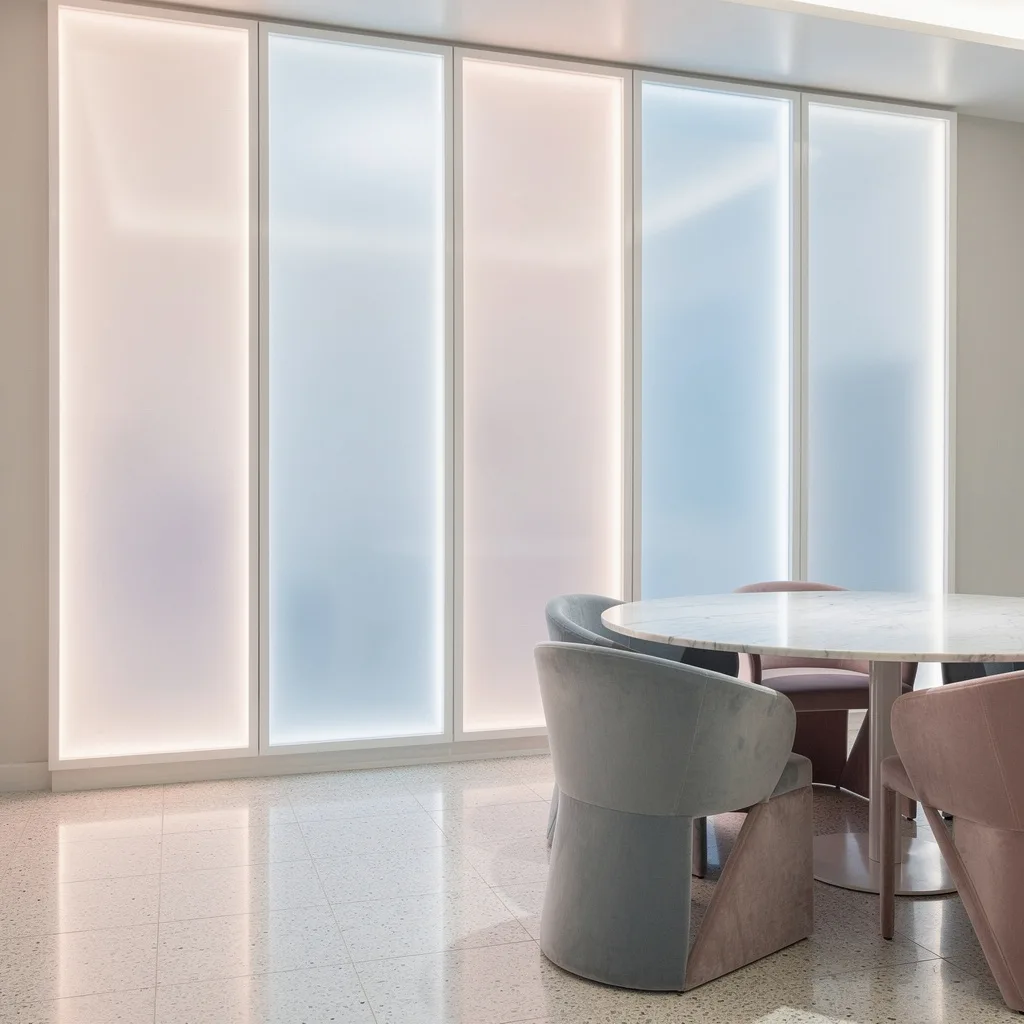
Don’t act surprised: frosted, colored acrylic as a wall panel is pure grown-up art school. Snap up oversized vertical panels shifting from blush to icy blue, set in crisp white frames for that Y2K nostalgia. Backlight with concealed LEDs—not lamps, actual hidden strips—for a glowing gradient all day. Pull the look together with a sleek marble table and pastel velvet chairs. Anchor the floaty vibe by adding pale terrazzo underfoot. Pro tip: Bounce pastel shades off your chairs only if your wall is lit—otherwise it’s a washed-out fail.
Work Herringbone Smoked Oak Like an Architect
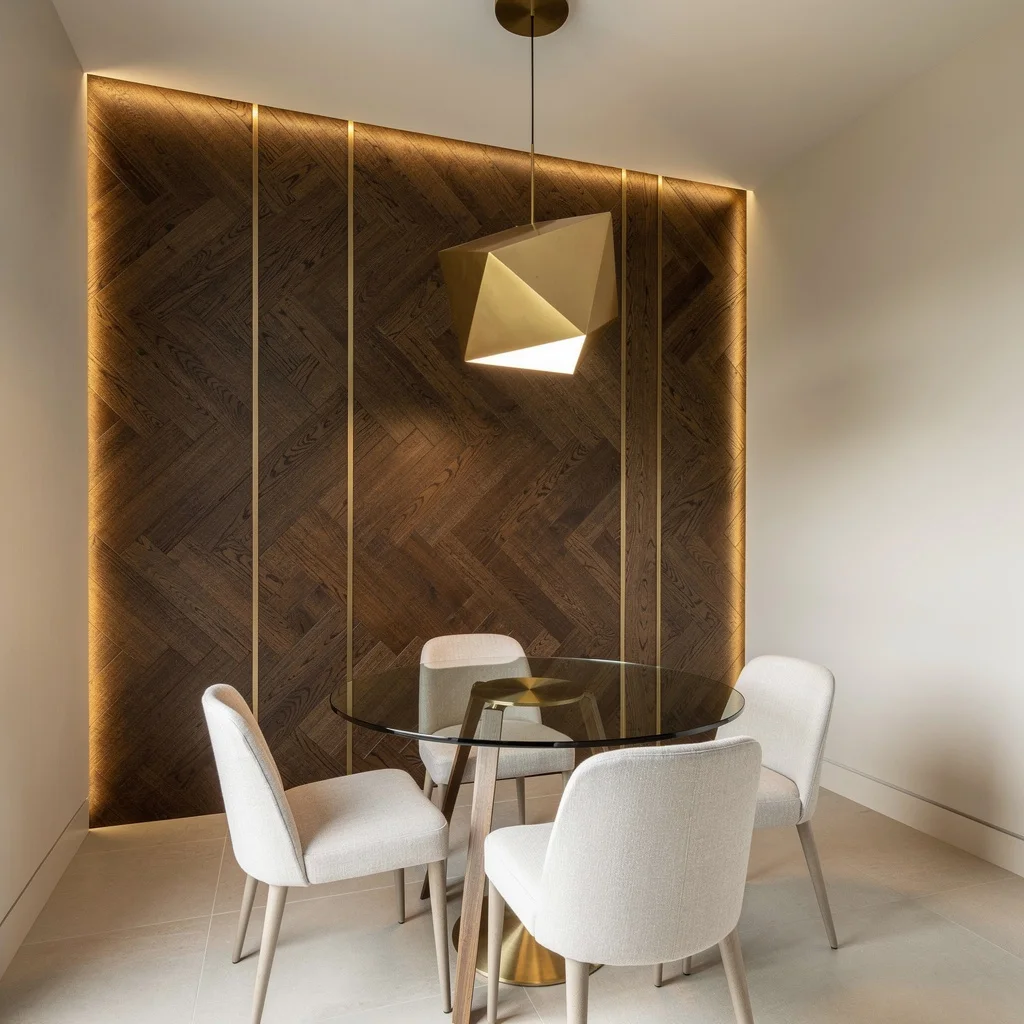
Don’t get stuck in Suburbia—clad your feature wall in herringbone-smoked oak to show you actually care about pattern. Punctuate the wood with vertical brass inlays—no one needs to know it’s less than an eighth-inch thick—then graze the wall with recessed perimeter lights (go subtle, not stadium). Match the graphic vibe with a geometric gold pendant, and let a slim oval glass table and wool chairs keep things airy. Pro tip: Run your herringbone wall from floor to ceiling or don’t bother—halfway looks unfinished and tired.
Play With Lacquer Panels (Burgundy & Slate FTW)
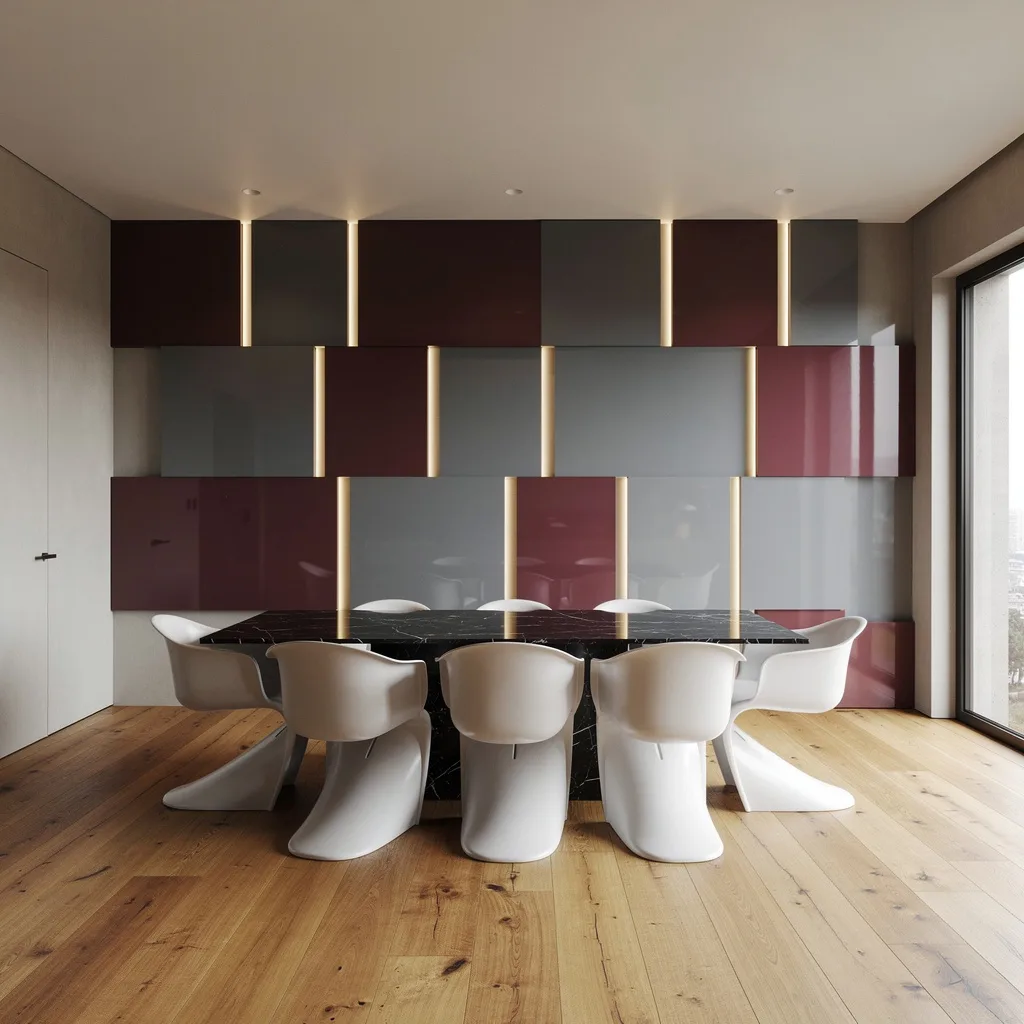
Enough with matte everything—install staggered high-gloss lacquer panels in deep burgundy and slate. Don’t skimp; alternate your way up the wall and set in vertical recessed strips for a high-voltage play of light and shadow. Throw down a minimalist black marble table and pop in sculptural white resin chairs, so you’re channeling ‘art collector,’ not ‘airport lounge.’ Warm up the high-gloss with oak plank flooring and keep the adjacent walls as neutral as possible so your lacquer doesn’t fight for attention. Pro tip: Buff your panels obsessively—fingerprints and dust kill the vibe instantly.
Final Thoughts
The dining room accent wall decisions that succeed long-term — that don’t become renovation regrets two years later — share a quality that has nothing to do with whether the choice was bold or quiet, dark or light, pattern or plain. They share intentionality: a clear understanding of what effect was being pursued, what materials would achieve it, and what everything else in the room needed to do in response.
That’s the actual work of dining room design, and it happens before a single sample board goes up. A matte black wall chosen because you wanted the walnut table to glow is a decision that will age well. The same wall chosen because you saw it somewhere and liked it, without thinking through the furniture response, produces a room that feels like a dramatic backdrop waiting for staging that never arrived.
Every wall here knew what it was doing. The rooms surrounding them rose to the occasion. That’s the whole formula — decide what the wall is for, and then let every other choice in the room confirm that you meant it.