
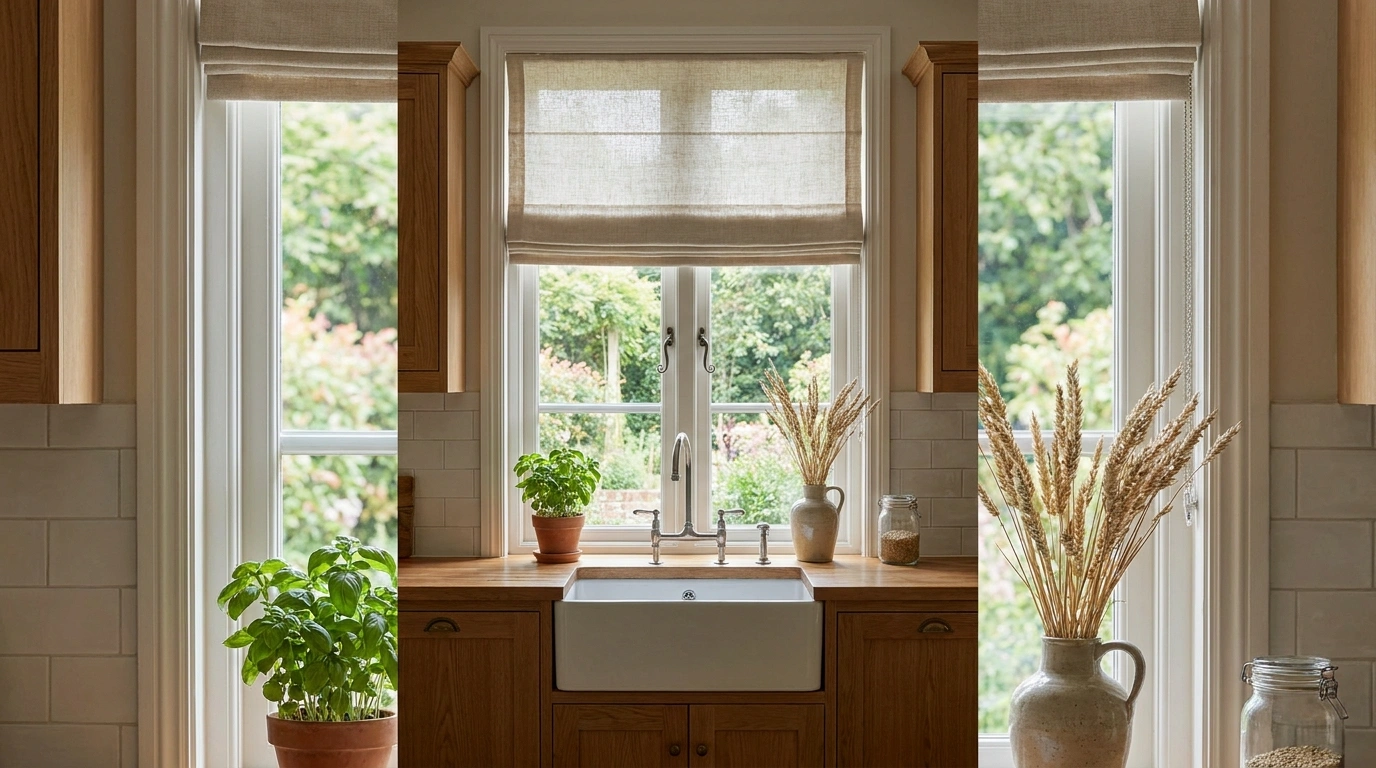
The sink window is one of those kitchen features that looks deceptively easy to decorate. Add a plant, hang some curtains, put a cute little vase on the sill, and suddenly the internet has a new favorite kitchen. Except the faucet is blocked, the curtains are soaked, and the plant collection looks like it has taken over the lease.
The trick is treating the window as part of the entire kitchen. Cabinet colors, countertop materials, window frames, lighting, and even the view outside all influence how the finished space looks.
Some kitchens need soft linen curtains and terracotta pots. Others look better with a completely unobstructed window and exactly one decorative object that minds its business.
THE KITCHEN WINDOW RULEBOOK
Cute window. Functional kitchen. Please.
The sink window can make the whole kitchen look finished. It can also become a crowded plant nursery with a faucet trapped in the middle. Choose wisely.
DAYLIGHT
Let the light have its moment.
If the curtains cover practically the entire window, the sunlight is officially making a guest appearance.
ELBOW ROOM
The faucet needs personal space.
Six decorative bottles around the tap aren’t a styling strategy. They’re an obstacle course.
SILL SPACE
The sill isn’t free real estate.
A couple of herbs look charming. A botanical jungle blocking the view is giving abandoned garden centre.
The actual secret: decorate around the window, not against it.
Kitchen Sink Window Decor Ideas
Sunlit Wood Trim With Classic White Blinds
Warm wood window frames and crisp white slatted blinds bring a tailored, sun-drenched feel to a classic white kitchen. A deep apron-front sink pairs naturally with a sleek black gooseneck faucet, adding a modern edge to the traditional cabinetry.
A row of blooming white flowers on the exterior sill frames the view without cluttering the interior workspace. The blinds offer flexible light control, filtering the morning sun while maintaining a bright, airy atmosphere throughout the room.
Simplicity rules this composition, proving that functional window treatments can look effortlessly polished when matched with warm wood tones and clean hardware.
Warm Farmhouse Sink With Terracotta Herb Pots
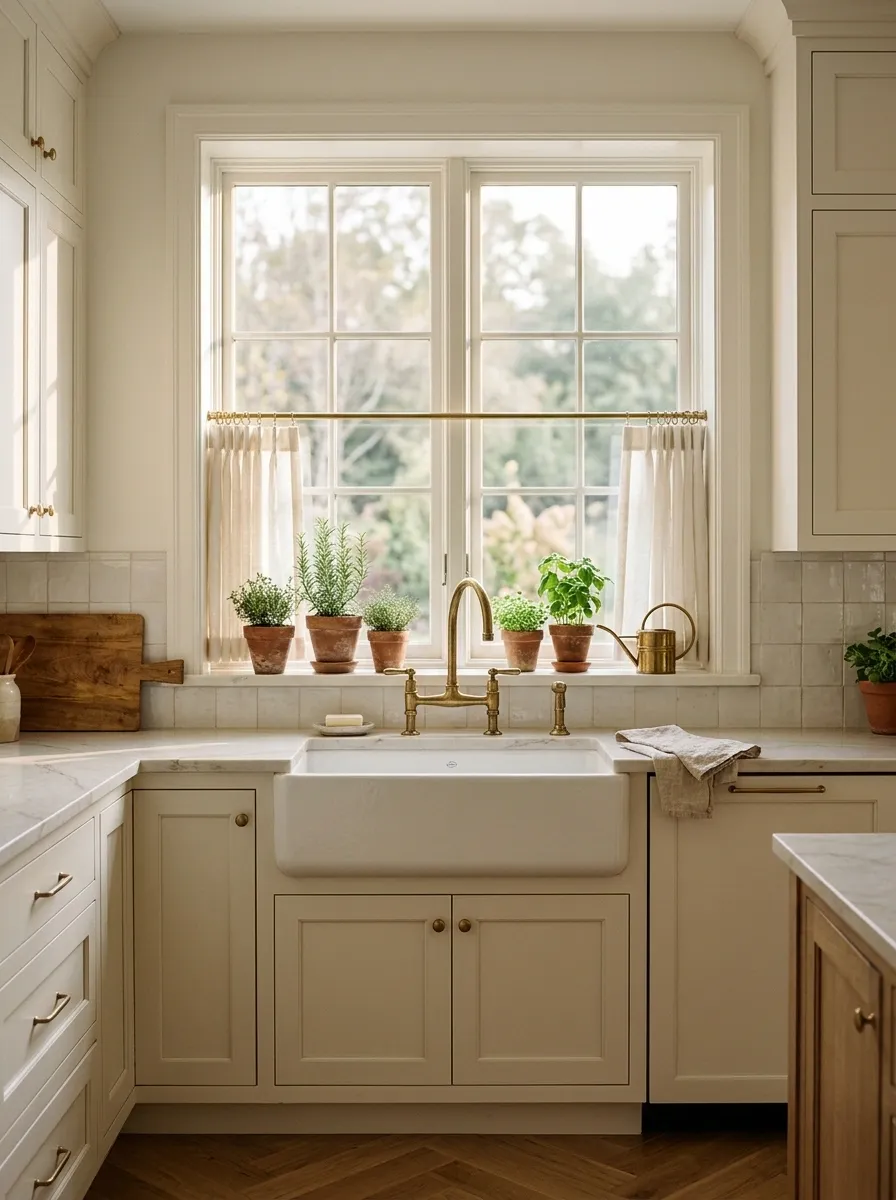
Terracotta pots, creamy cabinetry, and warm oak make a convincing farmhouse combination without resorting to the entire barnyard aesthetic. A deep white apron-front sink anchors the window, while an aged brass faucet adds warmth against the pale finishes.
A short linen cafe curtain softens the bottom of the window and leaves the upper glass open to daylight. Small herb pots sit along one side of the sill, leaving enough room for watering and opening the window.
The trick is allowing the materials to do most of the decorating. Too many rustic signs, baskets, pitchers, and distressed finishes can make the kitchen feel like a themed restaurant.
THE FARMHOUSE FINISH
Earthy, warm, never cluttered.
Keep: the herbs, linen, and natural finishes. Skip: the collection of signs explaining that the kitchen is, in fact, a kitchen.
Pastel Cottage Sink With Botanical Window Display
Soft sage cabinetry and a deep farmhouse sink create the ultimate cottage-core sanctuary, especially when lined with an entire greenhouse worth of colorful floral arrangements. Every window pane frames a different vase, turning the sink wall into a living botanical gallery.
A polished brass faucet adds a touch of traditional warmth, contrasting beautifully against the pastel green finish. A floral dish towel hung casually from the basin keeps the utility feeling lived-in and charming rather than overly staged.
This abundant approach requires a healthy commitment to flower arranging and watering, but the resulting cheerful view makes every dishwashing session feel like an afternoon in an English garden.
Dark Countertops With Botanical Window Accents
Dark soapstone countertops and white subway tile anchor this bright sink zone, while a sleek gooseneck faucet provides a polished focal point. A slim wall sconce with a pleated shade offers warm task lighting right where it is needed most.
A tall terracotta pot housing a lush green plant sits gracefully on the sill, drawing the eye upward toward the leafy view outside. Next to it, a heavy ceramic crock brings an artisanal touch without overwhelming the compact counter space.
Balancing sculptural greenery with functional lighting creates a workspace that feels both deeply atmospheric and entirely ready for everyday culinary tasks.
Organic Modern Kitchen With Oak Window Trim
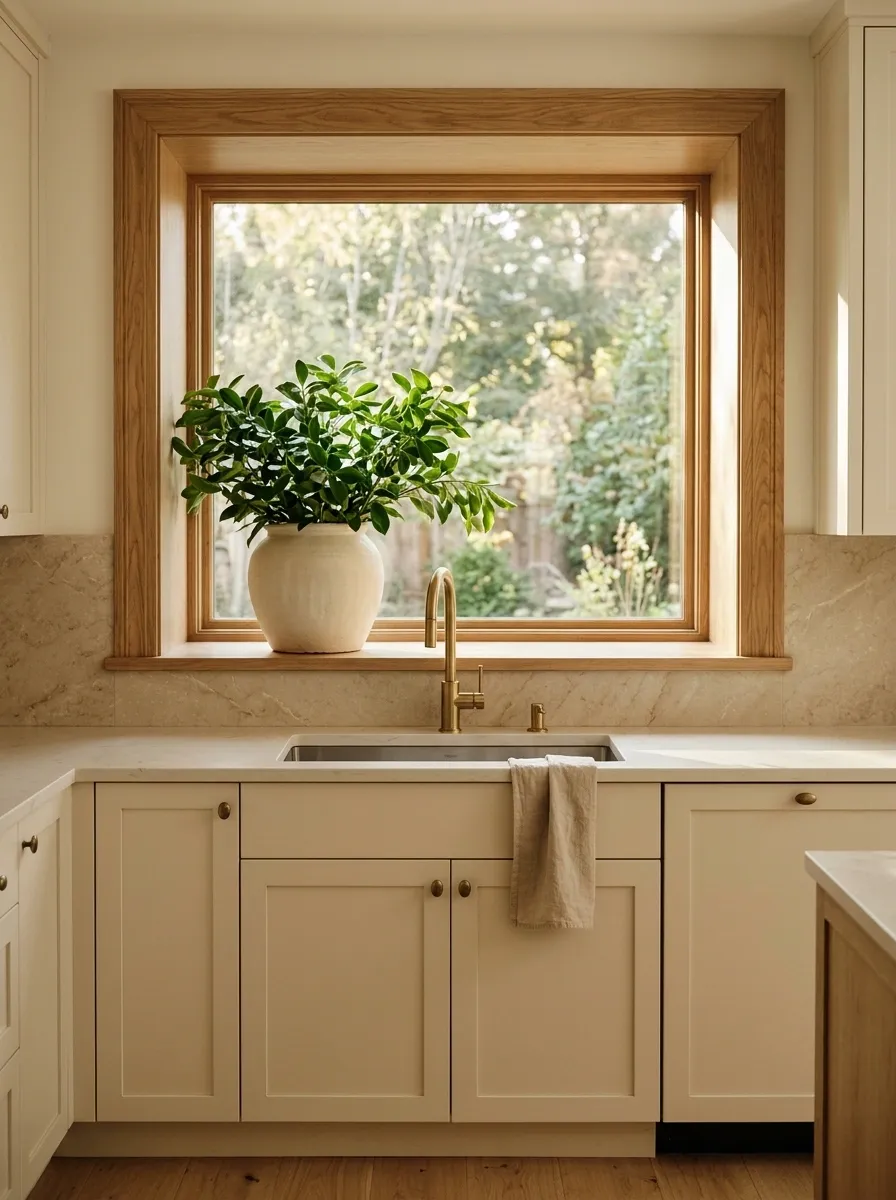
Natural oak trim gives the window a defined architectural presence, while limestone and warm off-white surfaces keep the surrounding kitchen calm. A substantial ceramic planter introduces greenery without needing a collection of tiny decorative objects.
The appeal comes from contrasting textures rather than loud colors. Grainy timber, softly veined stone, matte pottery, and glossy leaves each catch the light differently.
Keep the planter on the wider side of the sill and away from the faucet’s reach. If the ledge is shallow, a smaller pot on the countertop can achieve the same effect without creating a daily wrestling match with the tap.
TEXTURE DOES THE TALKING
Oak
The warm structural layer around the glass.
Limestone
A softer background that keeps the timber from feeling heavy.
Matte ceramic
A tactile home for greenery, without another shiny surface competing for attention.
Traditional Casement Window With Decorative Plates
Pale sage casement windows create a refined architectural framework above the sink, complemented by delicate brass fixtures and a marble-veined countertop. Three vintage decorative plates mounted in the transom space above draw the eye upward, adding a layer of collected charm.
A single glass vase filled with bright pink ranunculus introduces a lively splash of color right beside the basin. Meanwhile, a crystal bowl filled with fresh peaches on the counter nods to the kitchen’s hardworking, food-centric purpose.
By keeping the window sill relatively clear and focusing the decor on wall art and fresh florals, the arrangement feels thoughtfully curated without getting in the way of the daily dish-washing routine.
English Cottage Sink Window With Floral Cafe Curtains
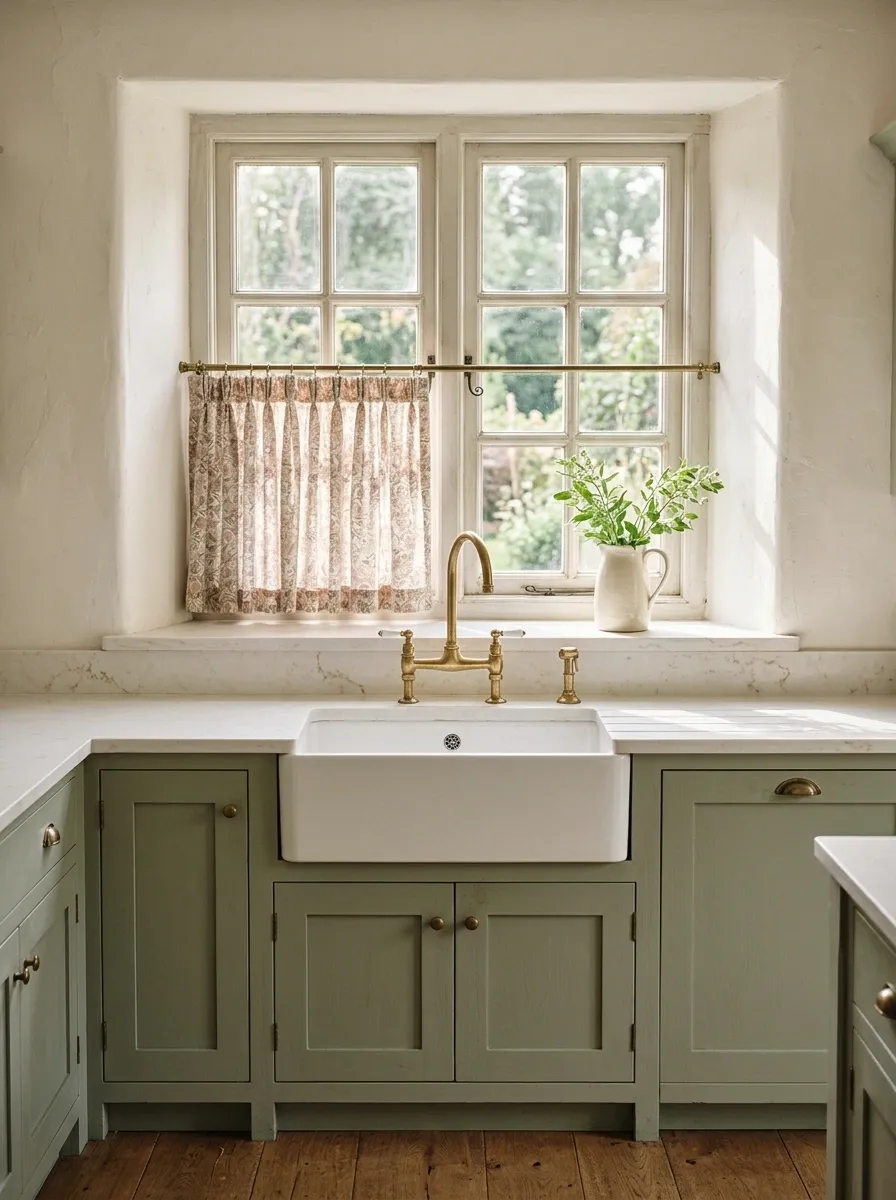
Small floral cafe curtains bring softness to a cottage kitchen, especially when paired with sage-green cabinetry, a white sink, and traditional metal fixtures. The divided-light window supplies architectural detail, so the sill doesn’t need to become a museum of vintage finds.
A muted floral pattern works best when the surrounding surfaces remain relatively quiet. Choose a fabric with a background color that relates to the cabinetry or walls, then repeat one subtle shade in a ceramic pot or small pitcher.
The coordination should feel natural, not as though every item attended the same compulsory color-matching meeting.
Keep the fabric clear of the faucet and check how close it sits to splashing water. Decorative cotton that spends every morning getting soaked will lose its charm rather quickly.
COTTAGE FABRIC NOTES
One print. Plenty of breathing room.
Soft, not sugary
Let the curtains carry the pattern. A competing busy backsplash and a dozen knickknacks are how charming turns into visually unemployed wallpaper.
Moody Kitchen With Deep Green Cabinetry and Bronze Fixtures
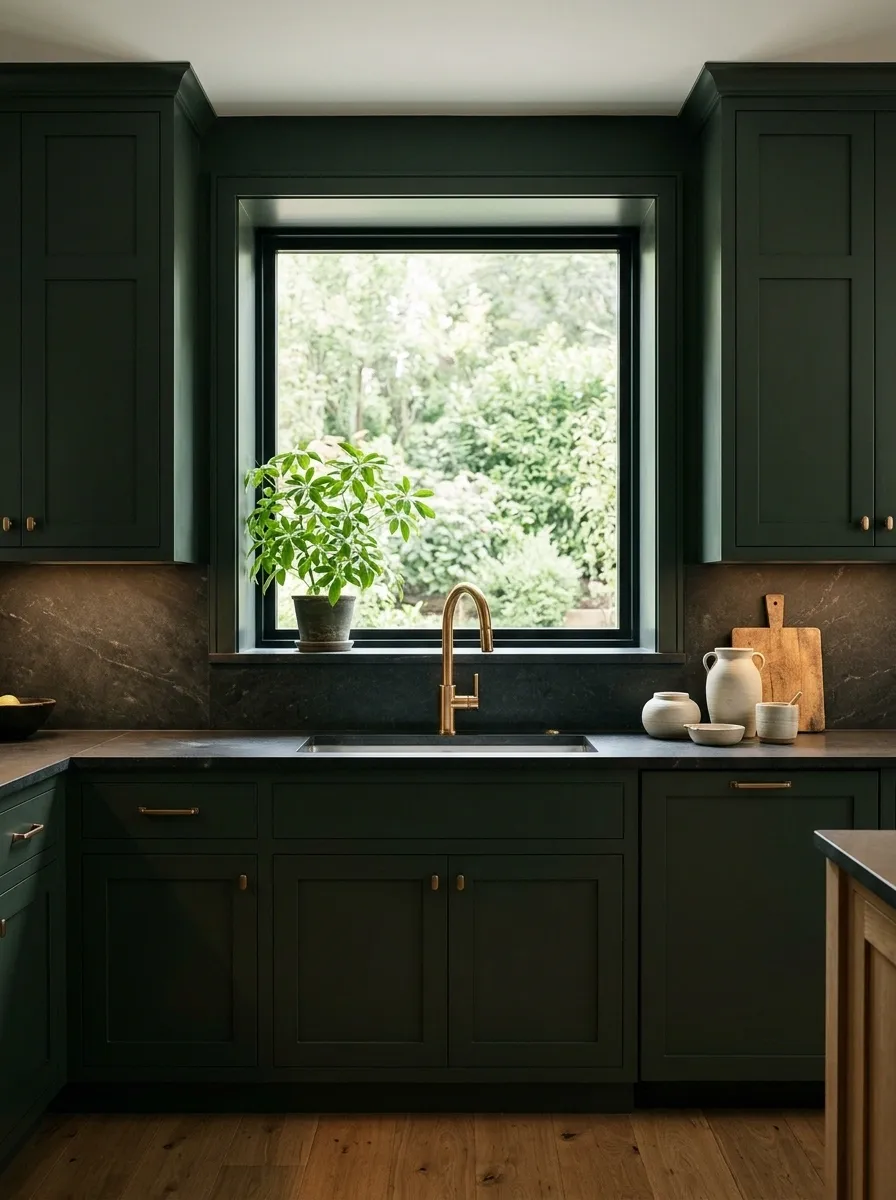
Deep green cabinetry turns the sink wall into a dramatic focal point, especially when paired with dark stone, a black window frame, and warm bronze fixtures. The greenery outside becomes part of the composition, visually connecting the darker interior with the landscape beyond.
A single plant can be enough here. Its leaves stand out against the darker finishes, while a restrained backsplash lets the material changes remain visible.
Warm task lighting helps the countertop and sink remain usable after daylight fades. Pale pottery or subtle stone variation can keep the window area from becoming one solid block of green and black.
The goal is depth, not a room that looks like it’s permanently plotting something.
THE DARK KITCHEN BALANCE
Depth needs a little contrast.
Forest green
The dominant cabinet color.
Charcoal stone
Adds depth and a quiet material change.
Bronze
A warm metallic highlight near the sink.
Leafy green
A brighter natural detail against dark finishes.
Dark cabinetry brings the drama. A few carefully chosen light and warm details keep the whole production from disappearing into the shadows.
Light Coastal Kitchen With a Pale Blue Window Frame
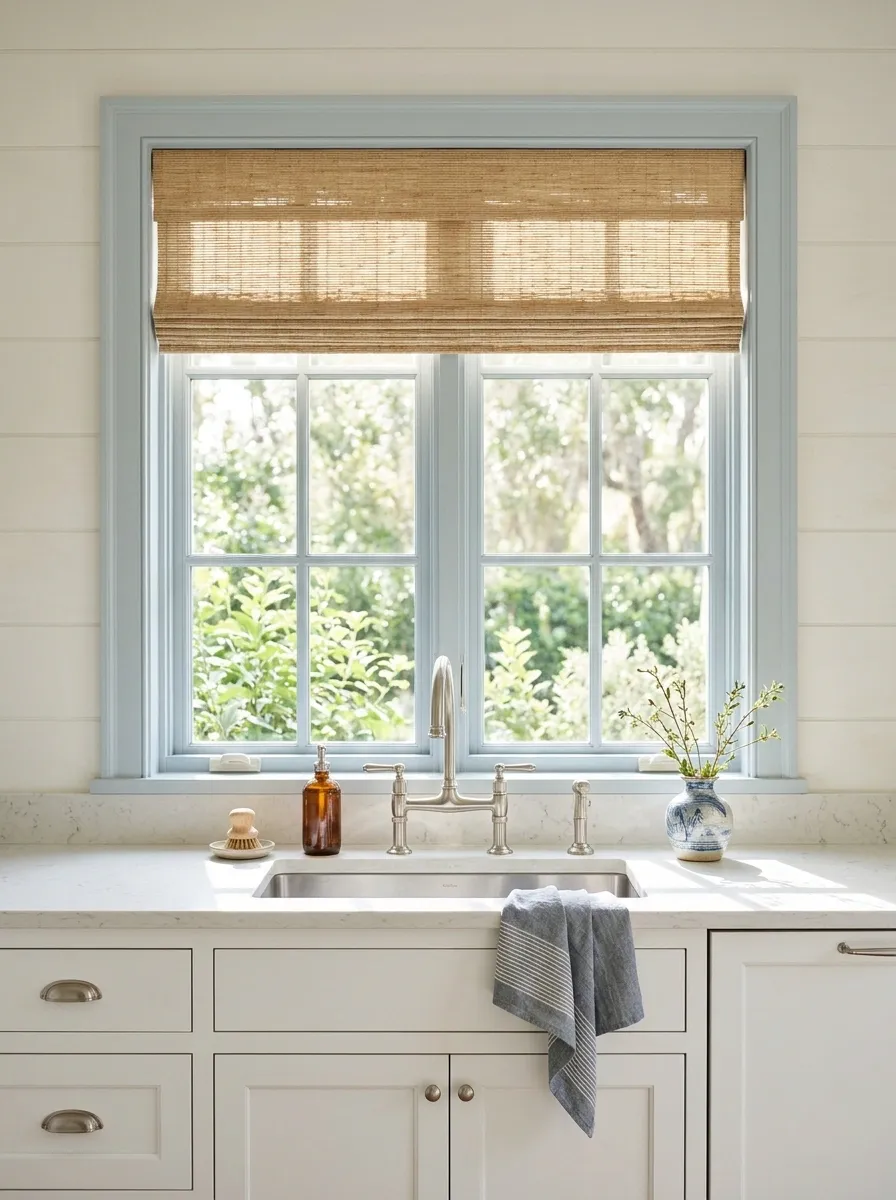
A pale blue window frame brings coastal color into the kitchen without making the room look like a souvenir shop beside the beach. White cabinetry, a light countertop, and brushed nickel fixtures provide a clean backdrop, while a woven Roman shade introduces natural texture.
A small blue-and-white ceramic vase ties the window into the rest of the kitchen. The trick is using blue in a few meaningful places rather than repeating it on every available surface.
This design works especially well with generous daylight and a garden-facing window. The shade provides privacy when needed, while the pale palette keeps the sink wall visually light.
COASTAL COLOR NOTES
Beachy, minus the beach-shop energy.
Cabinetry and larger surfaces
Window frame or ceramics
Woven shade and wood
Small contrasting accents
Keep the blue selective and the natural textures subtle. No anchor-shaped soap dispenser required.
Scandinavian Kitchen With Compact Herb Styling
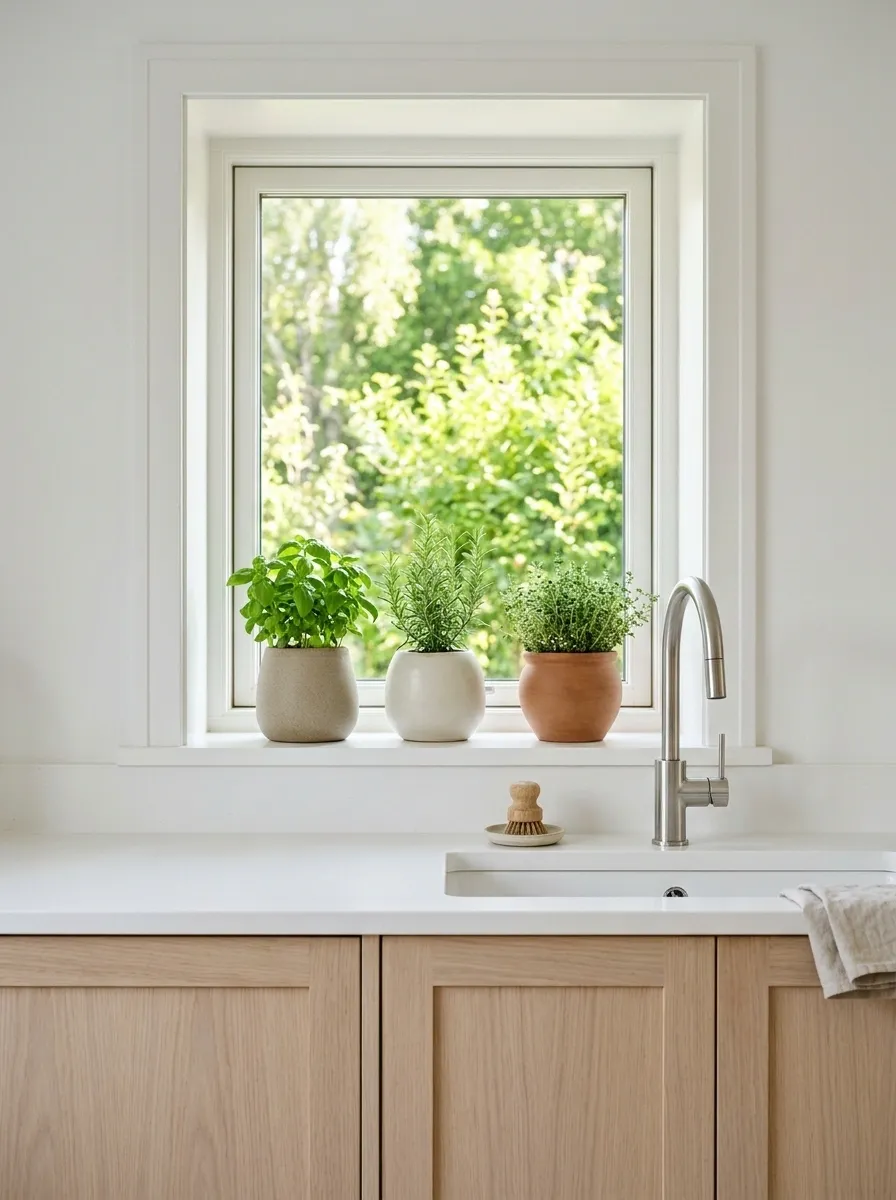
Scandinavian kitchen styling is at its best when everything feels useful without looking overly practical. Pale oak cabinets, white walls, simple window trim, and a straightforward stainless steel faucet form the foundation.
A small grouping of herb pots introduces greenery without taking over the entire sink area. Allow their shapes and foliage to vary slightly so the arrangement doesn’t look like three identical props lined up for a catalogue.
The countertop should remain mostly open, particularly in a small kitchen where food preparation space is already precious. A lovely window becomes considerably less charming when everyday tasks turn into obstacle courses.
SMALL-SILL STRATEGY
Three herbs. One tidy arrangement.
The goal is a little greenery without sacrificing your entire work surface to a herb collection with unreasonable space demands.
Traditional English Kitchen With a Deep Sash Window
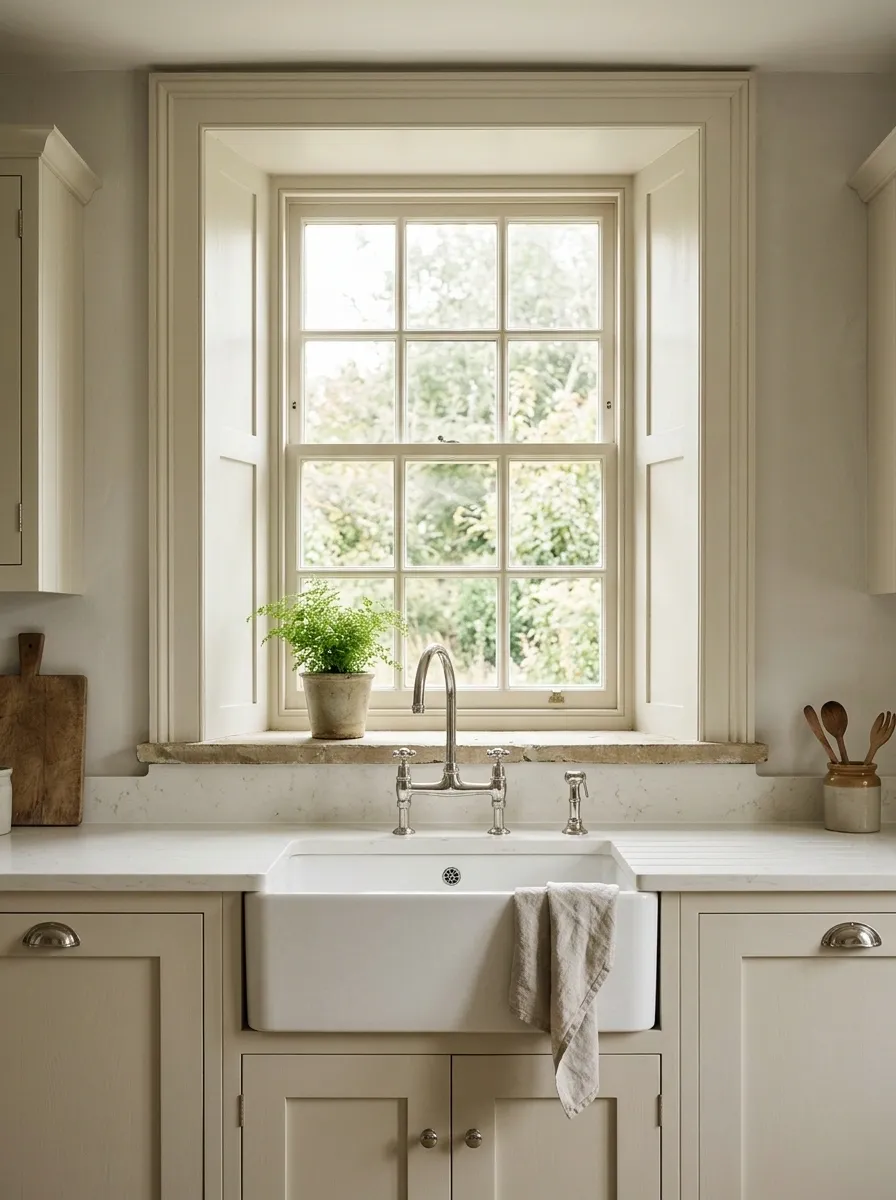
A deep sash window gives a traditional kitchen character before the decorating even begins. Cream-painted cabinetry, a substantial ceramic sink, and polished nickel fixtures reinforce that established English country look.
The stone sill creates a natural transition between the glass and the countertop. A compact plant or understated ceramic vessel can add life without competing with the divisions in the glass.
This style suits kitchens with traditional joinery and generous window proportions. Avoid filling every corner with antiques simply because the kitchen looks traditional.
Character comes from the architecture and materials, not from making the sill look like an estate-sale leftovers table.
CLASSIC PROPORTIONS
Let the architecture lead.
Keep visible
The sash divisions, deep sill, and frame.
Add sparingly
A small plant, classic pottery, or a discreet shade.
Traditional doesn’t mean every surface needs an antique. The window already has a personality.
Rental Kitchen With Removable Privacy Film
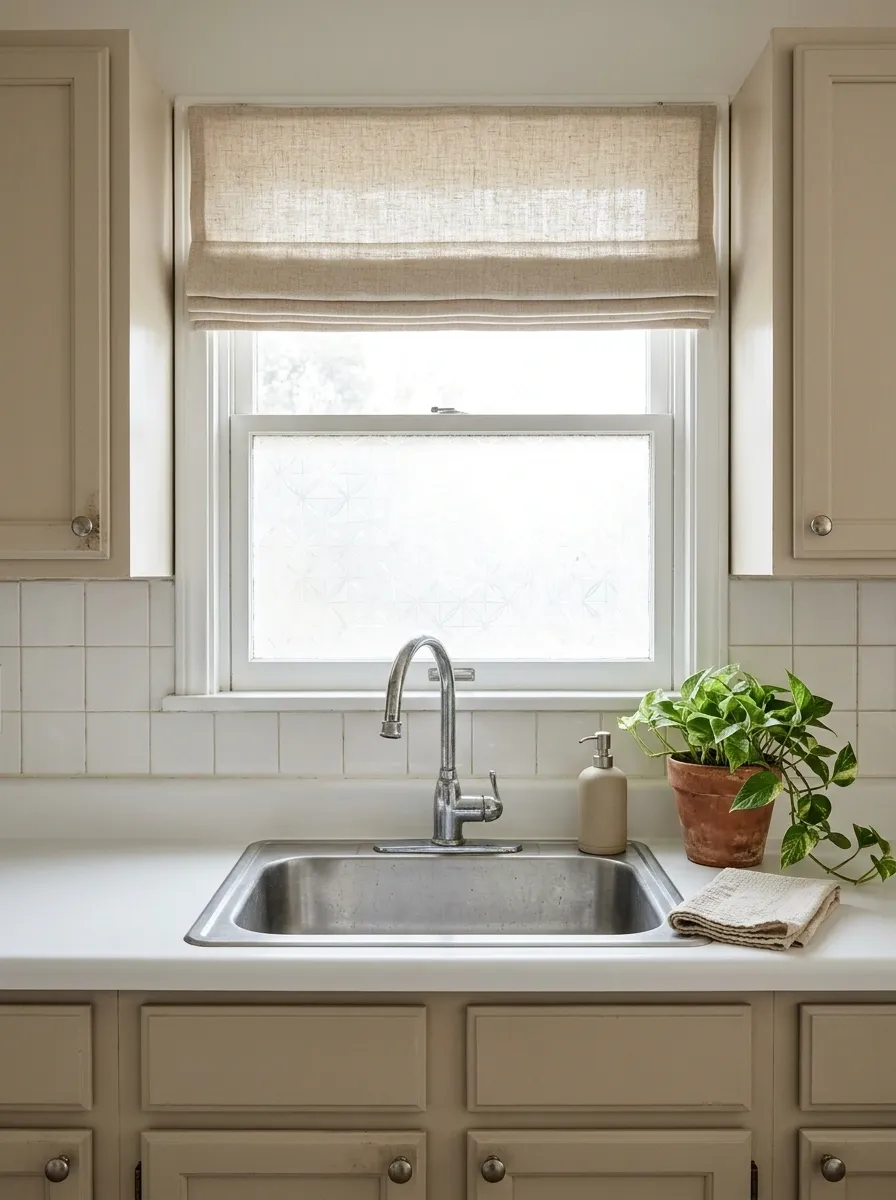
A rental kitchen doesn’t need new cabinetry or expensive window replacements to feel more considered. Removable privacy film can soften an exposed view, while a simple shade and one compact countertop planter introduce texture without permanently changing the space.
Keep the existing sink and faucet as part of the design rather than trying to disguise every original feature. Neutral accessories, coordinated textiles, and a tidy countertop can make older finishes feel more deliberate.
Choose products suitable for the existing glass and check the lease before applying anything adhesive. Some films are designed for temporary use, while others can be difficult to remove or may not suit every type of glazing.
THE RENTAL-FRIENDLY EDIT
Refresh the window. Keep the deposit.
Privacy film
Check glass compatibility and removal instructions.
Freestanding decor
Use a planter or vessel that moves easily.
Temporary shade
Choose a suitable installation method for the property.
The landlord’s beige cabinets don’t have to win. Just don’t let a decorating project turn into a lease violation.
Small Apartment Kitchen With a Narrow Window Ledge
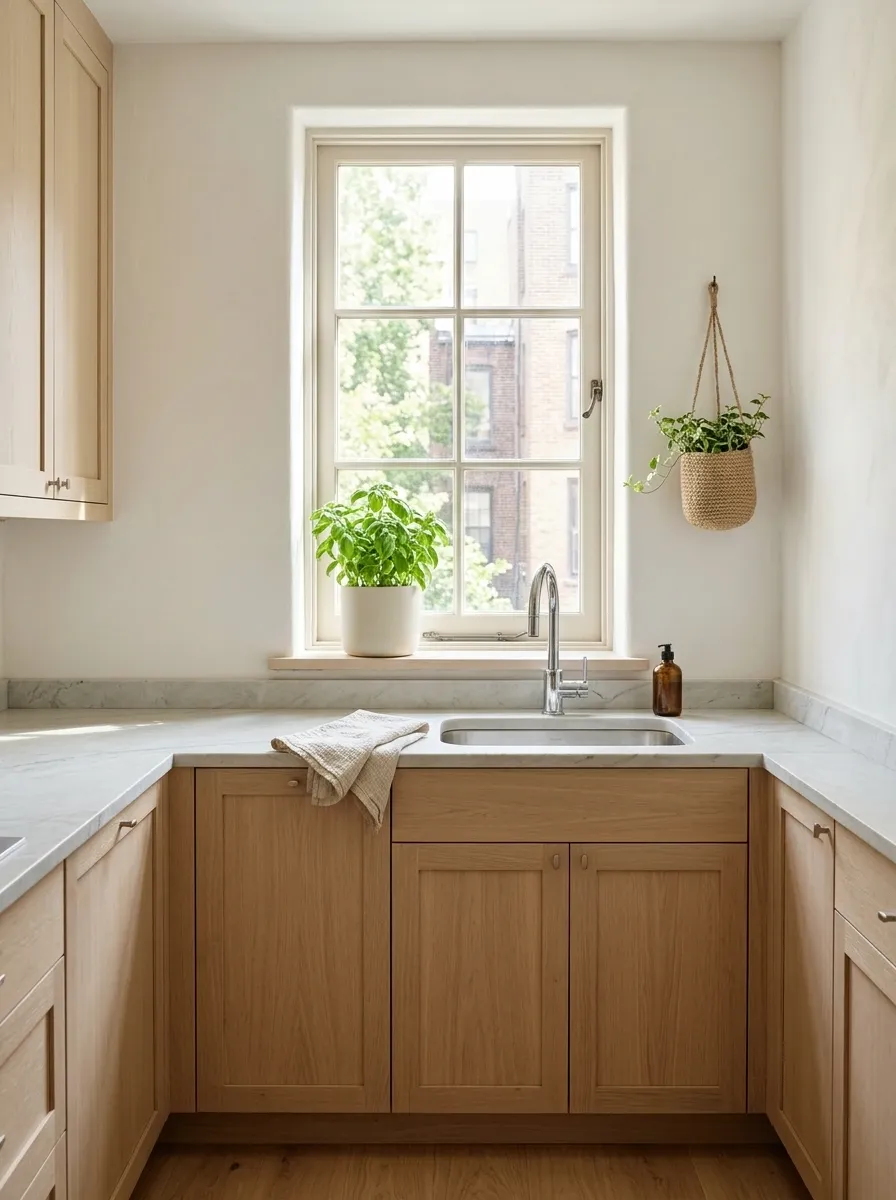
A narrow apartment window doesn’t need a collection of accessories to look finished. Pale oak cabinets, warm white walls, and a simple faucet create a light backdrop, while one compact herb planter introduces a little life without taking over the ledge.
When the sill barely accommodates a coffee mug, think vertically. A hanging planter beside the window can add greenery without sacrificing the few inches needed for everyday tasks.
Keep it clear of the opening mechanism and avoid placing trailing leaves where they obstruct the view. The countertop should remain mostly open, particularly in a small kitchen where preparation space is already precious.
SMALL KITCHEN, SMARTER SPACE
Go upward, not everywhere.
ledge planter
Use the wall
Place extra greenery beside the window, outside the opening path.
Protect the counter
Keep the main working surface free for actual kitchen activities.
A tiny kitchen can still have personality. It just doesn’t need every accessory to occupy prime real estate.
Large Picture Window Above a Statement Sink
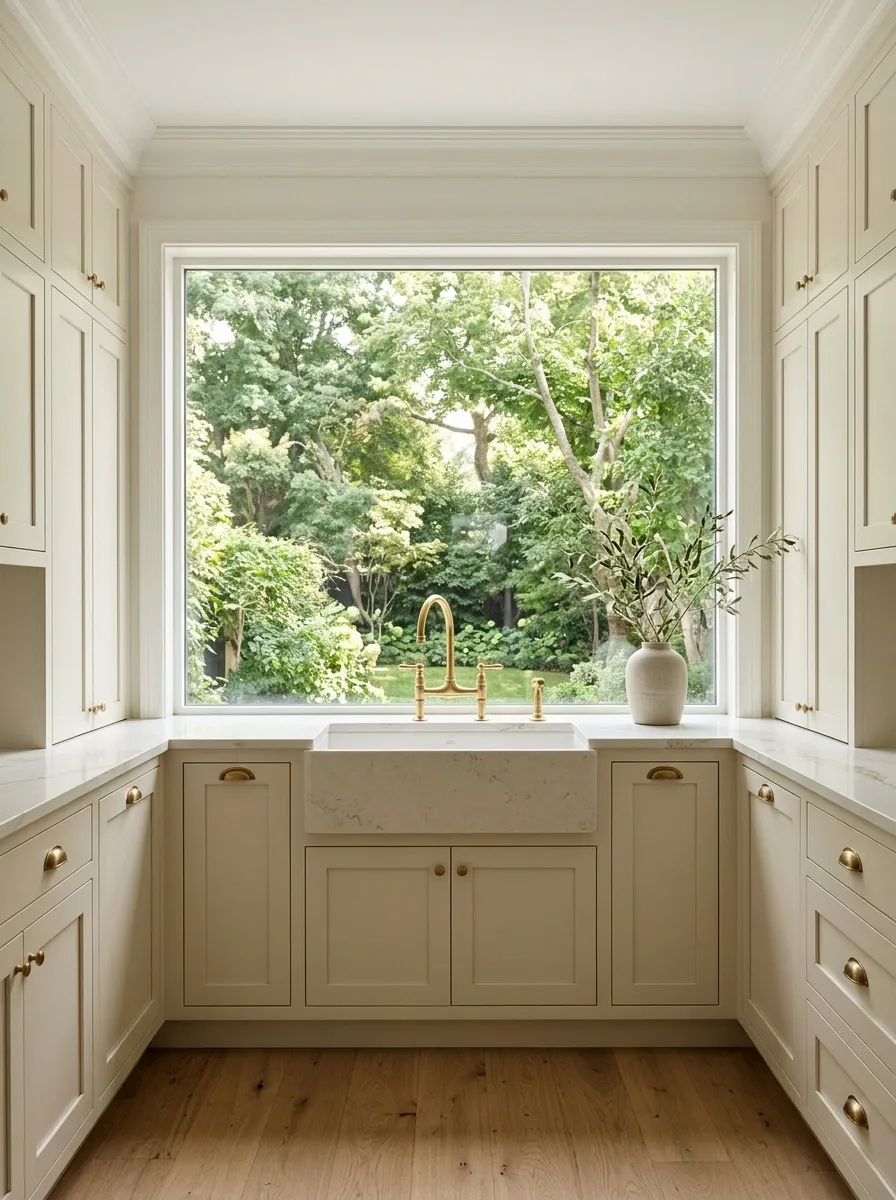
A broad picture window can become the main attraction of the entire kitchen. When mature trees or a landscaped garden fill the view, the cabinetry and sink need only provide a calm frame around the scenery.
Natural oak, pale stone, and a generously sized sink keep the composition grounded. A simple faucet and limited countertop accessories preserve the uninterrupted view, while subtle variations in the stone prevent the kitchen from looking like an empty showroom.
This arrangement works best when the window has a clear relationship to the sink and enough surrounding wall space to make the cabinetry feel intentional.
A beautiful view doesn’t need a supporting cast of decorative objects. It already has the lead role.
THE VIEW-FIRST COMPOSITION
Let the garden steal the show.
If the view already brings color, texture, and movement, the window decor can take the day off.
Private Sink Window With a Soft Roman Shade
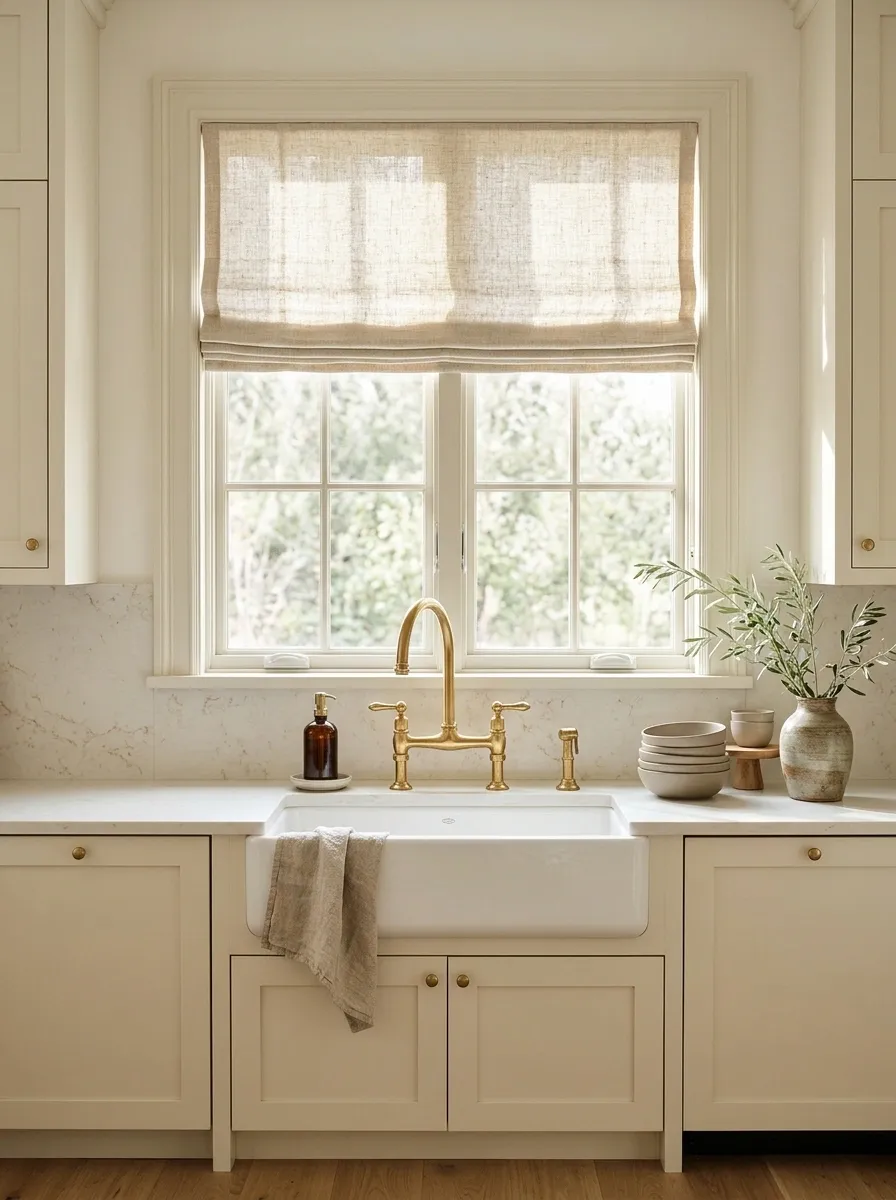
A Roman shade gives a sink window a finished appearance without the loose fabric of full curtains. In a warm transitional kitchen, oatmeal linen, cream cabinetry, and pale stone create a soft, coordinated composition.
The shade can be raised during the day to bring in natural light and lowered when privacy matters. Keep its fabric and operating hardware suitable for the window location, particularly where regular splashing or condensation could become an issue.
The most important decision is how the shade relates to the window’s proportions. An oversized fabric treatment can make a modest window look smaller.
THE PRIVACY BALANCE
Adjust the coverage, keep the daylight.
Raised
Maximum view and daylight.
Partly lowered
A balance of coverage and light.
Lowered
More coverage, less view.
The shade should solve a privacy problem, not become one more thing permanently blocking the window.
Mediterranean Kitchen With an Arched Window
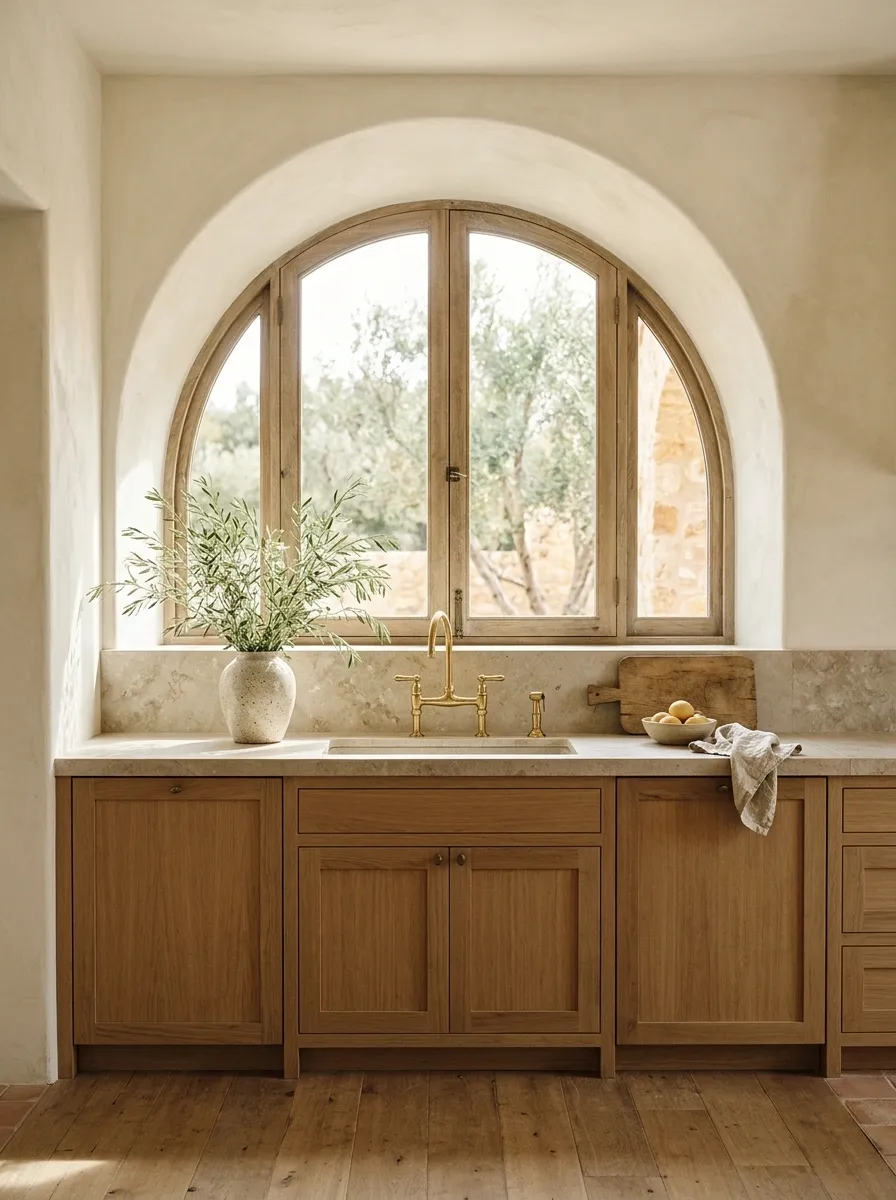
An arched window immediately gives a kitchen a distinctive silhouette. Paired with creamy plaster walls, natural stone, terracotta tiles, and warm oak, it creates a Mediterranean composition that feels architectural rather than overly decorated.
A handmade ceramic vessel with olive-green foliage reinforces the earthy palette. The curved upper window adds enough visual interest that the surrounding finishes can stay simple, while an aged brass faucet supplies a subtle metallic highlight.
The tile should relate to the natural warmth of the stone and timber. Highly contrasting patterns can distract from the curved architecture, particularly in a smaller kitchen.
MEDITERRANEAN MATERIAL PALETTE
Let the curve do the decorating.
Arched glass
Limewash plaster
Terracotta
The architecture is already doing the heavy lifting. No need to cover the whole kitchen in decorative arches and terracotta everything.
Industrial Kitchen With a Black Steel Window
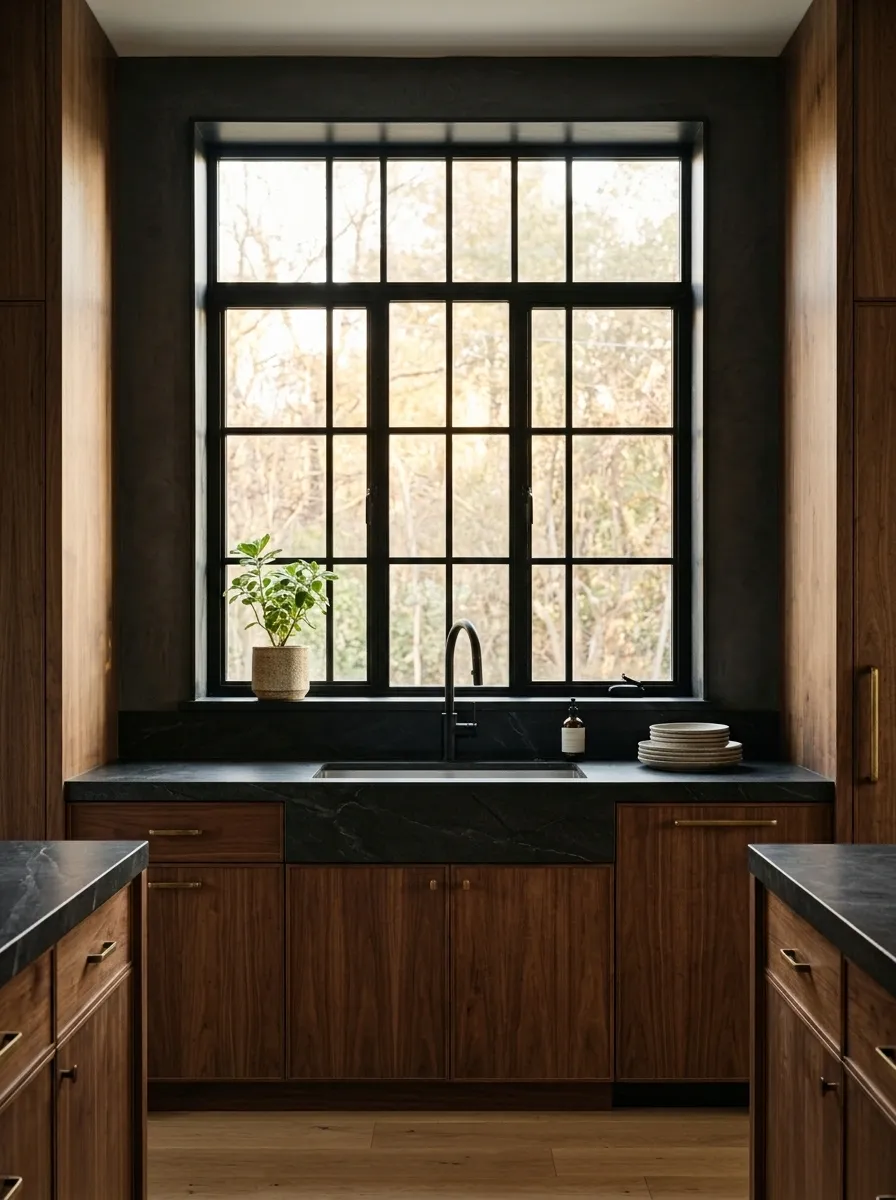
A black steel-framed window gives the sink wall a strong architectural outline. Combined with charcoal stone, walnut cabinetry, and a matte black faucet, it creates an industrial composition that feels deliberate rather than unfinished.
The dark grid supplies most of the visual detail, so the sill can remain simple. One small plant softens the harder materials, while warm wood prevents the black and grey finishes from feeling too cold.
Repeat black sparingly elsewhere in the kitchen through hardware or lighting. A few connected accents make the window feel integrated, but turning every possible fixture black can flatten the room into one dark silhouette.
INDUSTRIAL DESIGN NOTES
Connect the dark lines. Warm the rest.
Dark frame
Strong outlines create the architectural character.
Warm materials
Wood and stone keep the black accents from feeling harsh.
Black fixtures look intentional when they connect to the architecture. When every surface is black, the kitchen starts looking like it has entered its villain era.
Vintage Kitchen With Reclaimed Wood and Antique Glass
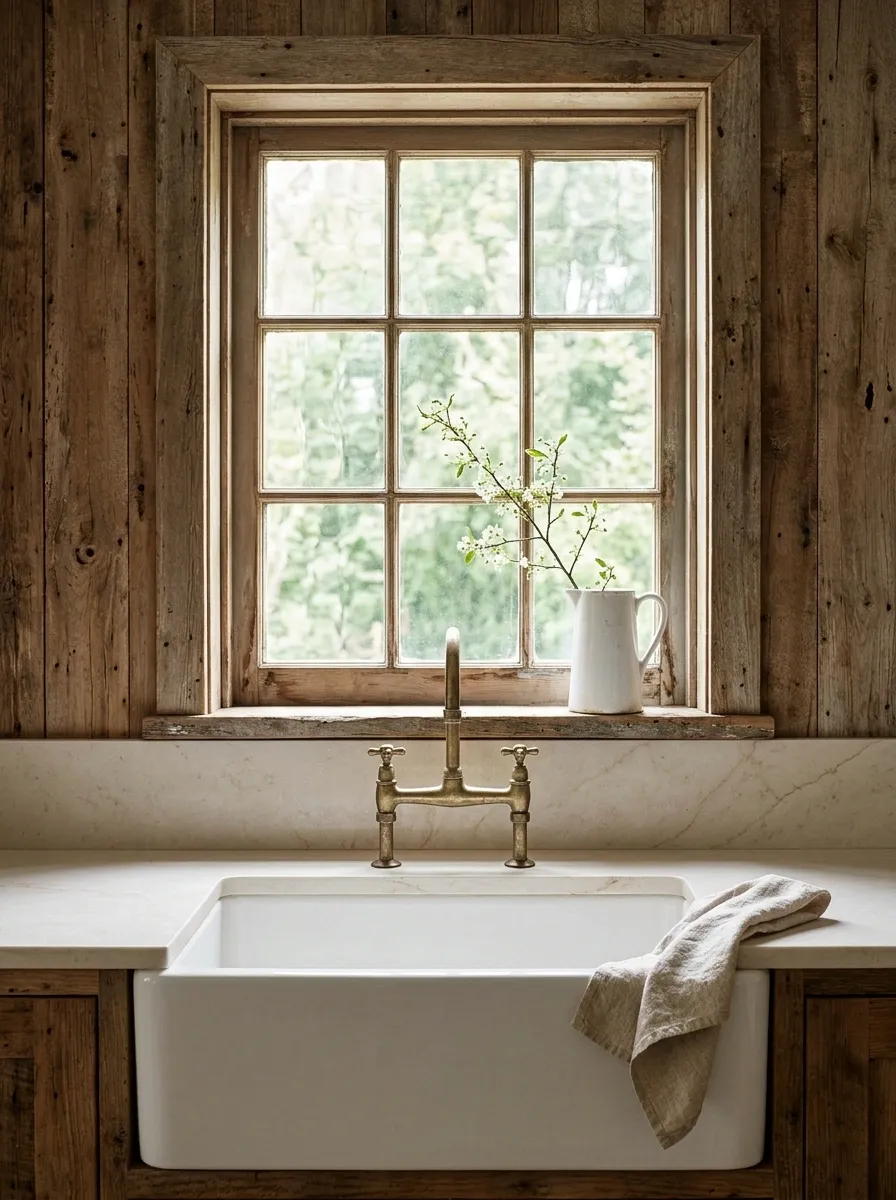
Reclaimed wood brings the kind of character that new cabinets sometimes struggle to imitate. Its varied grain and weathered color work particularly well with a traditional porcelain sink, textured backsplash, and antique-style window with divided panes.
An old ceramic pitcher or a single flowering branch adds a collected feel without making the window look like a flea market display. Aged brass fixtures connect the warmer materials, while the pale sink and countertop prevent the wood from making the whole composition feel too heavy.
The secret is balancing old-looking finishes with surfaces that remain practical around water. Reclaimed wood needs an appropriate finish, and genuine antique glass or window frames should be suitable for their intended use.
THE VINTAGE MATERIAL MIX
Old character. Thoughtful restraint.
Reclaimed timber
Natural grain supplies the visual character.
Porcelain and pale stone
Smooth, light surfaces balance the weathered wood.
Aged brass
A warm connection between the older-looking finishes.
Choose a few genuinely characterful materials. A room where everything looks reclaimed starts looking like the reclamation project.
Grandmillennial Kitchen With Botanical Cafe Curtains
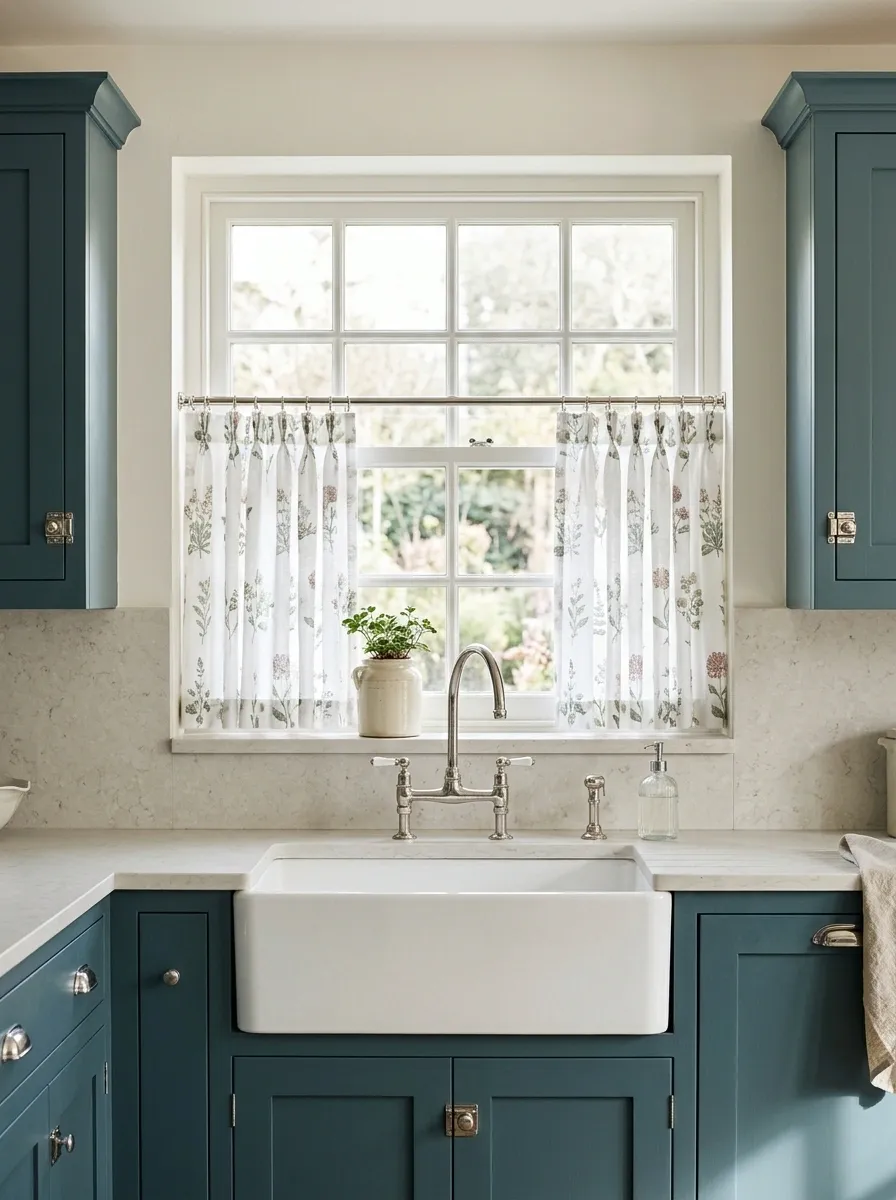
Botanical cafe curtains give this kitchen its personality. Paired with blue-green cabinetry, a white farmhouse sink, and polished nickel fixtures, the floral fabric creates a layered traditional look without requiring every surface to have a pattern.
The window treatment should remain the main decorative statement. A botanical print with muted greens and dusty colors can connect the curtains to the cabinets, while the stone countertop and backsplash keep the composition from becoming visually crowded.
A vintage ceramic vessel or a small plant adds another layer, but there’s no need to place a collection of china, flowers, and decorative bottles along the entire sill.
BOTANICAL PATTERN NOTES
Let one print carry the story.
The floral fabric gets the spotlight. A competing patterned backsplash would be like inviting another main character into an already crowded scene.
French Country Kitchen With Lavender and Natural Stone
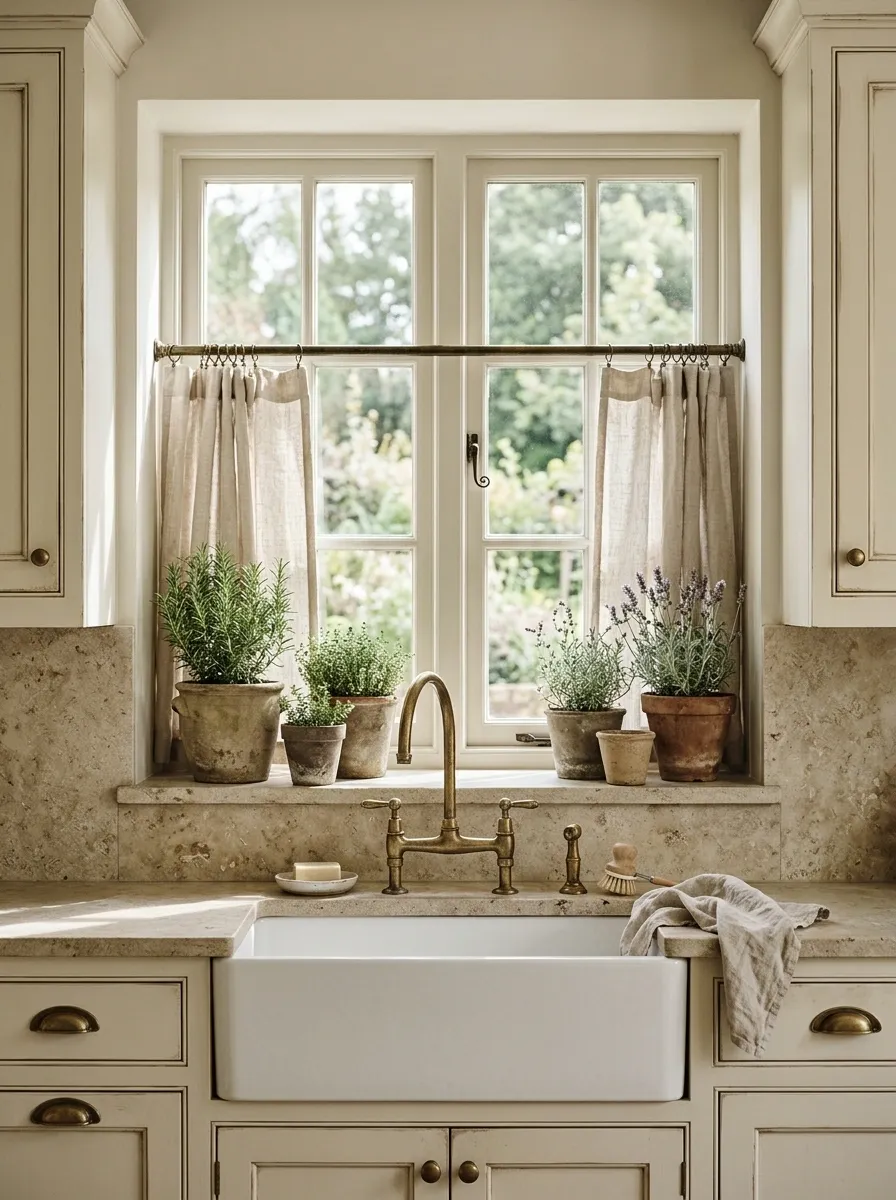
Cream cabinetry, natural stone, and aged brass make the sink area feel warm without relying on elaborate decoration. A traditional window and modest linen cafe curtain give the composition a relaxed country character, while lavender or another suitable herb introduces a muted touch of color.
Choose ceramic pots with slightly varied shapes and subdued finishes. Their differences keep the display from feeling too formal, but related colors prevent the sill from turning into a pottery convention.
Natural stone has variation of its own, so the surrounding materials don’t need to compete through elaborate patterns.
FRENCH COUNTRY FINISHES
Soft, sun-warmed, and a little imperfect.
The finishing move: Repeat a couple of warm tones across the sill, faucet, and cabinetry, then let the natural material variation do the rest.
Rustic character is charming. Making every item look like it survived centuries of hardship is optional.
Color-Drenched Kitchen With a Contrasting Window Frame
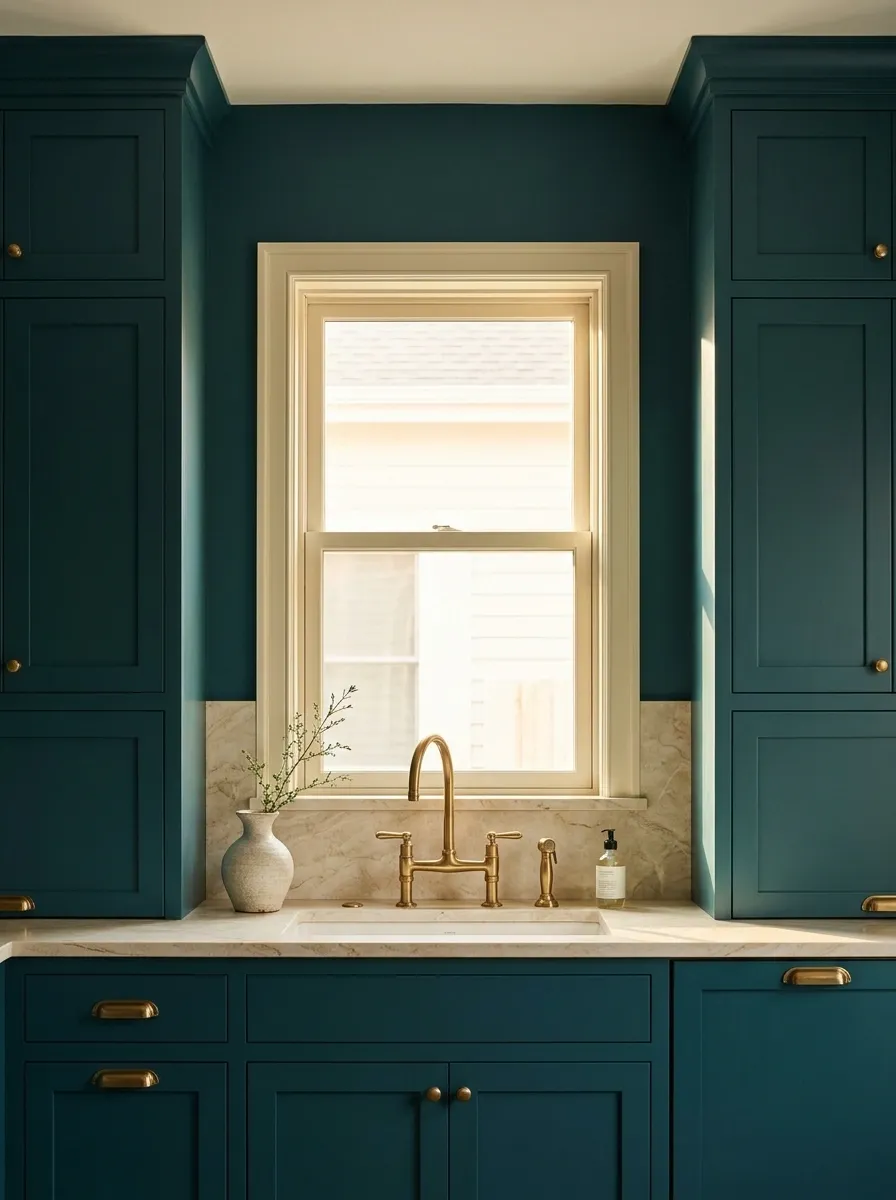
Color-drenching gives a kitchen a strong identity by carrying a saturated shade across multiple surfaces rather than limiting it to the cabinets. Deep teal cabinetry and matching surrounding walls create a unified backdrop, while a pale contrasting window frame draws the eye toward the glass.
A creamy stone countertop adds relief from the saturated color, and warm brass fixtures provide a subtle highlight. Keep countertop accessories limited so the main color remains the defining feature of the room.
Test paint samples beside the actual window first, because natural light can change how a color looks throughout the day.
THE COLOR-DRENCHED FORMULA
Commit to the color. Give the window contrast.
Before painting: Compare the shade in morning and afternoon light, and check how the window frame relates to the backsplash and countertop.
Bold color is a design decision, not a reason to introduce six more accent colors. Let the teal do its job.
Symmetrical Sink Window With Matching Planters
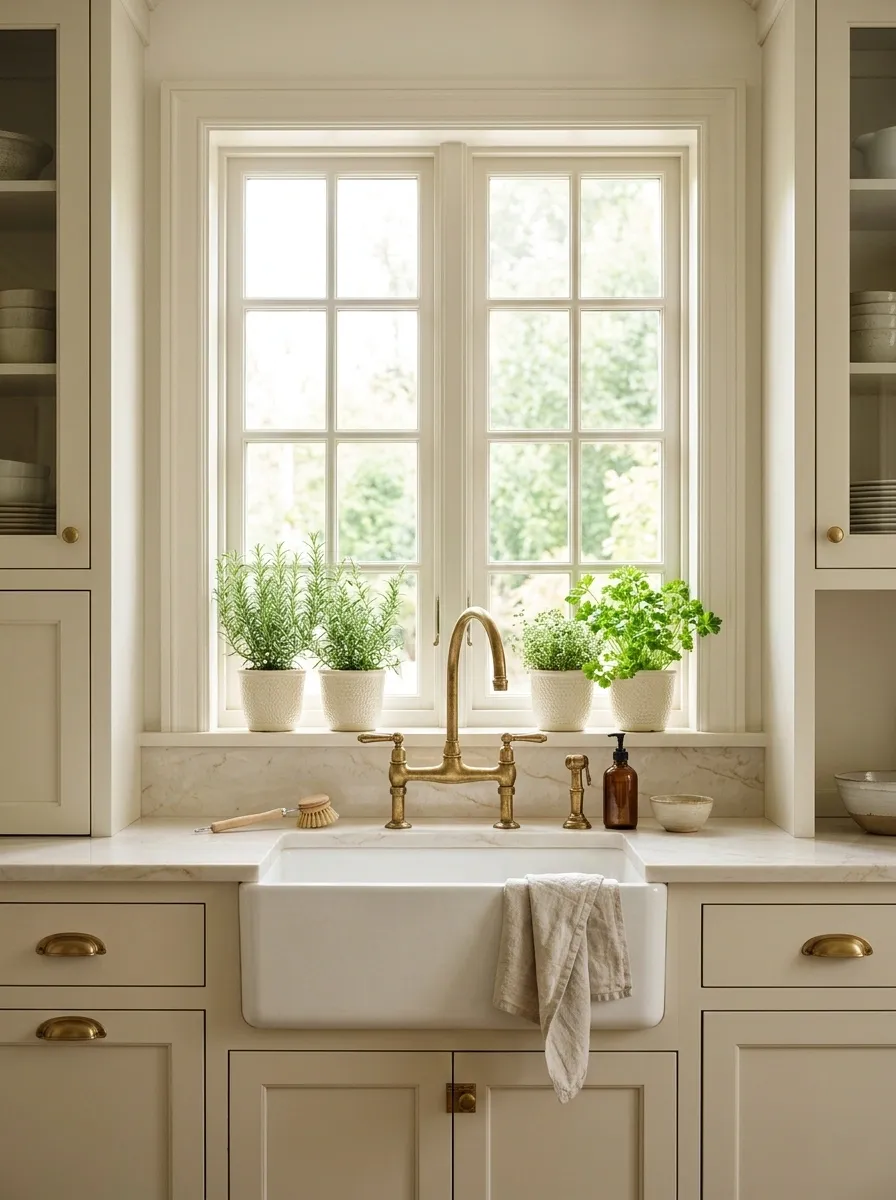
A centered window above the sink creates a natural focal point, especially when the faucet, cabinetry, and countertop follow the same visual axis. Matching ceramic planters on either side of the window reinforce that symmetry without requiring a complicated decorative arrangement.
Cream cabinets, pale stone, and traditional fixtures make the composition feel classic. The greenery keeps it from becoming too formal, while the divided window panes supply enough detail to make the wall interesting.
Keep both planters compact and similar in height so the window remains visible. The goal is balance, not two giant shrubs auditioning to become the kitchen’s new upper cabinets.
THE SYMMETRY TEST
One clear centre. Two quiet accents.
Matching planters establish balance. They don’t need matching leaves, matching labels, and matching personalities.
Sink Window Without a Usable Sill
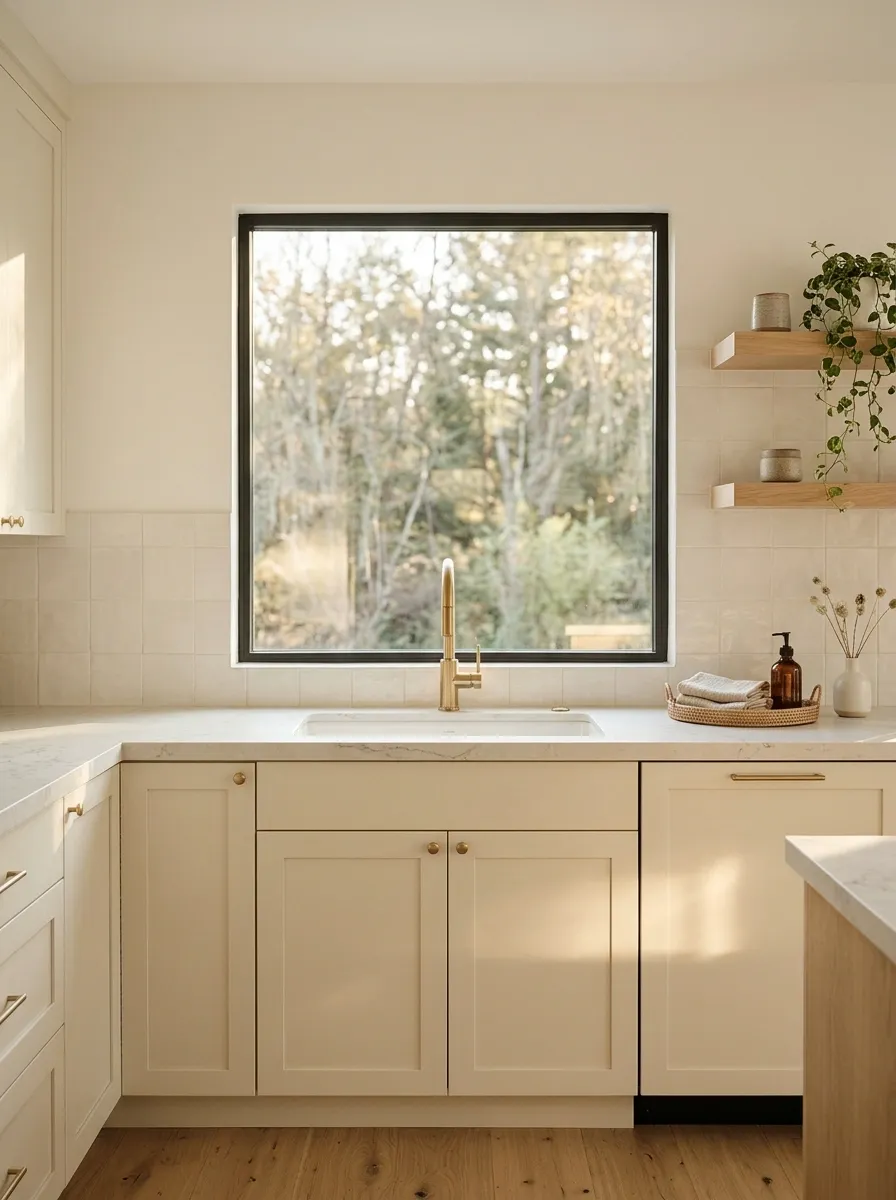
Some windows sit almost flush with the countertop, leaving no ledge for plants, ceramics, or the tiny decorative objects the internet insists every kitchen needs. That’s not a decorating failure. It’s simply a different layout.
A broad window above an undermount sink can look especially clean when the glass meets the backsplash with little visual interruption. Pale stone, light cabinetry, and a restrained faucet reinforce those uninterrupted lines.
Move decorative objects to a nearby stretch of countertop or a suitable wall-mounted shelf beside the window. Any shelf or rail should be installed securely and kept away from the faucet’s working area.
THE NO-SILL SOLUTION
No ledge? No decorating crisis.
No sill required
Beside the glass
A secured wall planter or rail.
Away from splashes
A small vessel on a separate counter section.
The window doesn’t owe anyone a display shelf. Keep the glass clear and give the decor another address.
Bay Window Kitchen With an Expanded Sink Area
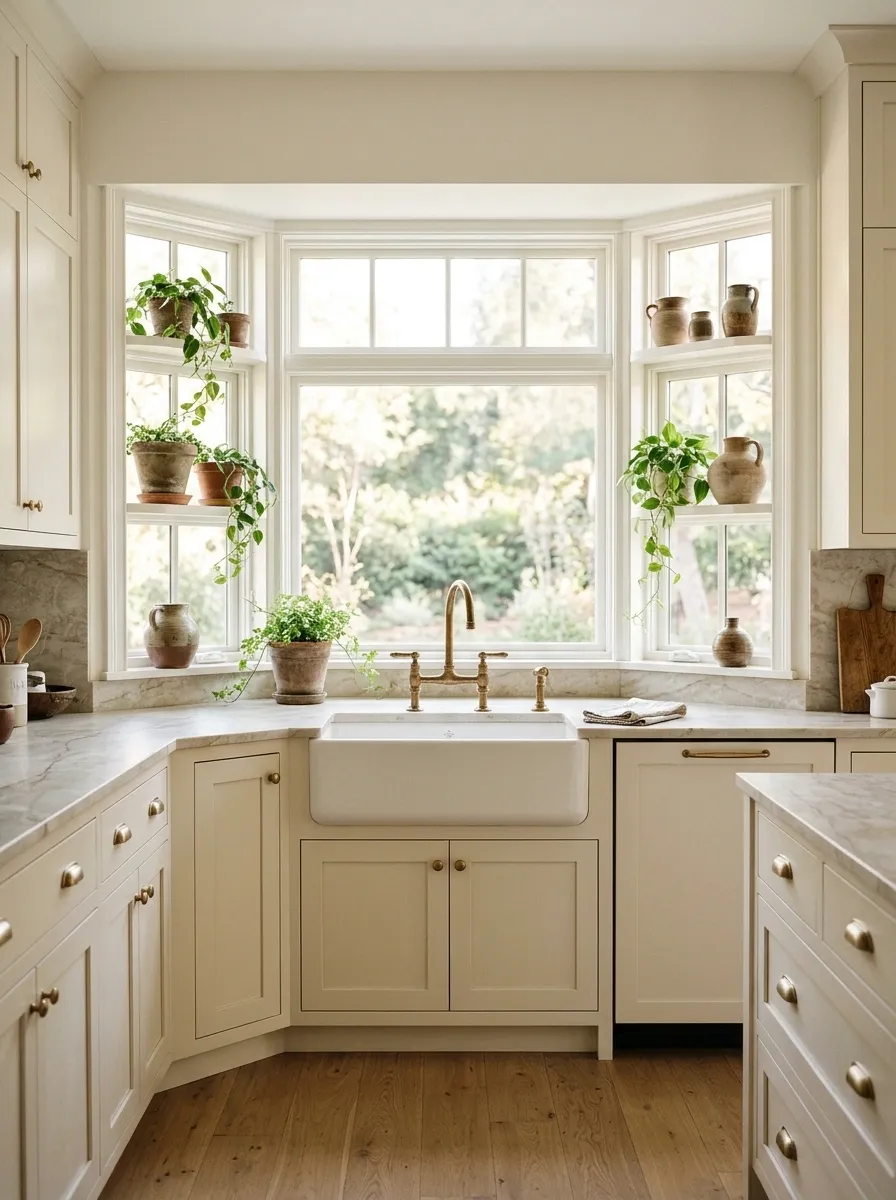
A bay window creates an expanded sink area with more visual depth than a flat window wall. Its angled sections bring light in from several directions, while the broader ledges provide room for a small collection of plants or pottery.
Cream cabinetry, natural stone, and a traditional faucet complement the architecture without competing with it. Arrange decorative objects along the outer sections of the bay, leaving the central area around the sink open for daily use.
Follow the shape of the window when placing accessories. A taller plant may work near an outer corner, with smaller objects farther from the faucet and central sightline.
BAY WINDOW PLACEMENT
Follow the angles. Protect the centre.
sink zone open
A bay window already has plenty going on architecturally. Decorate its shape instead of trying to wallpaper it with objects.
Garden-Facing Kitchen With Living Greenery
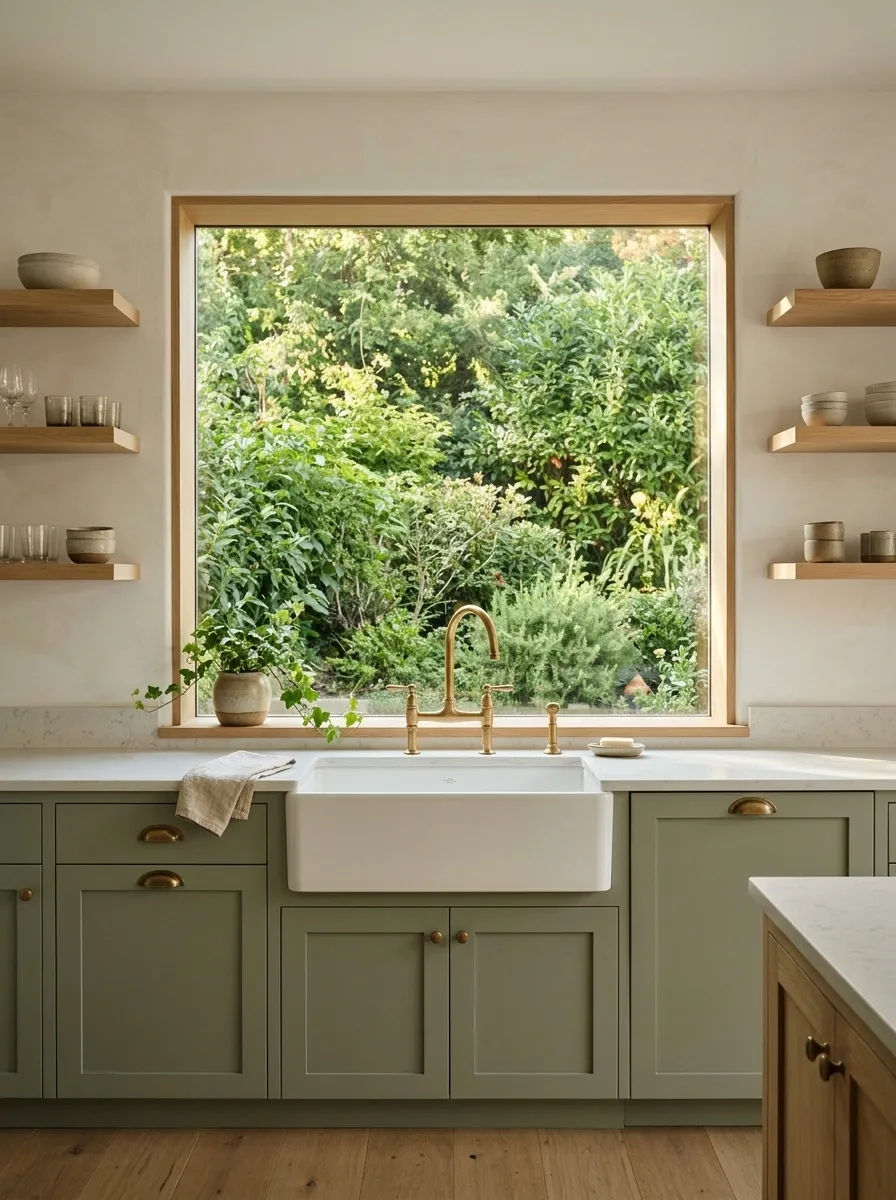
A garden-facing window gives the kitchen a natural source of color that changes with the seasons. Muted green cabinetry, warm oak, and pale stone connect the interior to the foliage beyond the glass without turning the sink area into an indoor jungle.
Keep indoor greenery restrained when the outdoor view already provides plenty of it. One small plant near the edge of the window can soften the countertop, while the open glass keeps the garden visible from the sink.
Natural finishes and uncomplicated hardware allow the view to remain the main attraction. In a less attractive view, a carefully chosen shade and a more deliberate indoor arrangement can help the window feel finished.
BRING THE OUTSIDE IN
The garden already brought the greenery.
Outside the glass
Trees, planting, and seasonal color do the visual heavy lifting.
Inside the kitchen
Natural wood, pale stone, and one restrained plant.
Let the landscape have the spotlight. The indoor plant can relax knowing it doesn’t have to carry the entire botanical department.
Classic White Kitchen With a Natural Wood Valance
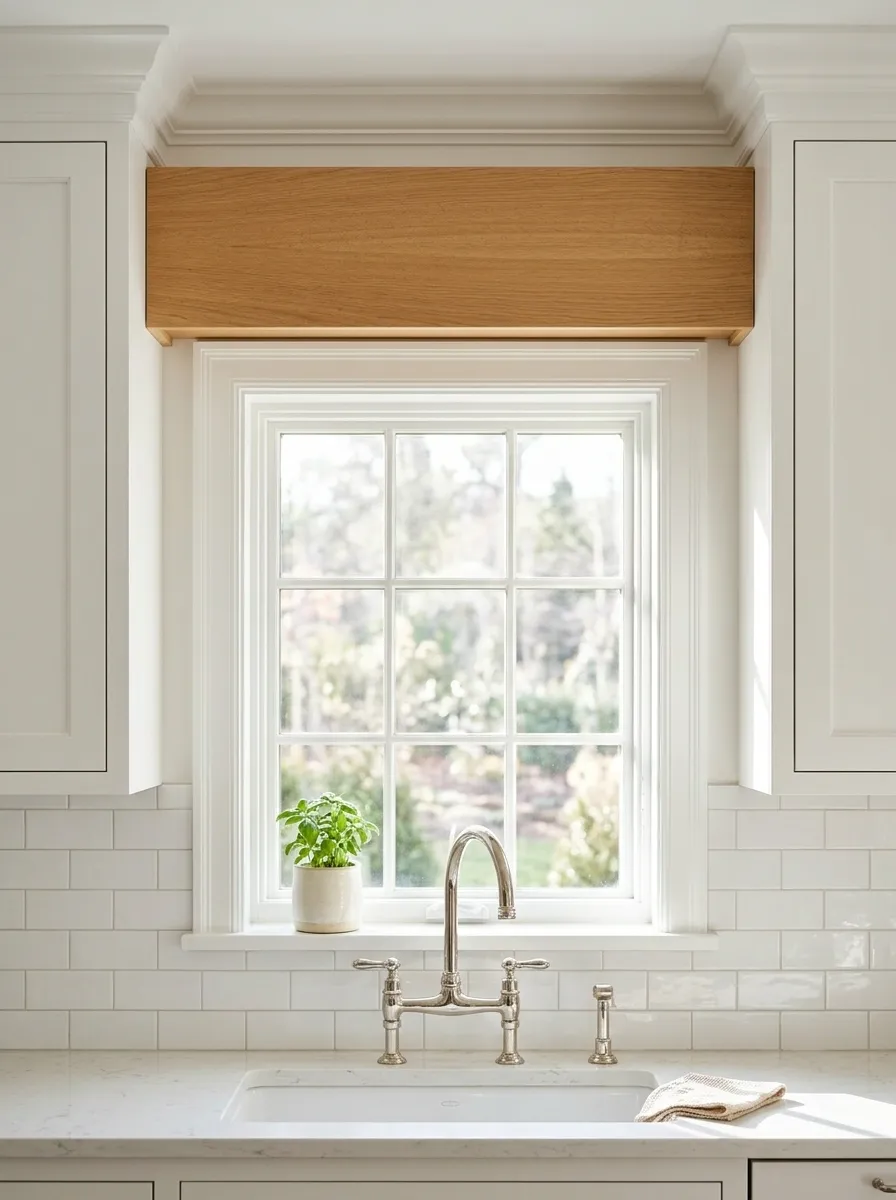
A natural wood valance adds warmth to a white kitchen without introducing the bulk of full curtains. Against white Shaker cabinets and pale stone, the timber creates a clear horizontal feature above the sink and gives the window a more architectural finish.
A simple rectangular window, polished nickel faucet, and white tile backsplash preserve the traditional character. One ceramic planter can complete the sill, while the wood valance supplies enough texture to prevent the space from feeling too plain.
Proportion matters here. A thick valance can make a small window look squat, especially when the cabinetry already reaches close to the ceiling.
THE WINDOW FINISH
A little timber makes white feel warmer.
Watch the proportions. Keep the valance scaled to the window, and repeat the timber tone somewhere else in the kitchen.
The wood is the accent. It doesn’t need supporting actors in the form of five extra decorations.
Greenhouse Kitchen Window With Glass Shelves and Fresh Herbs
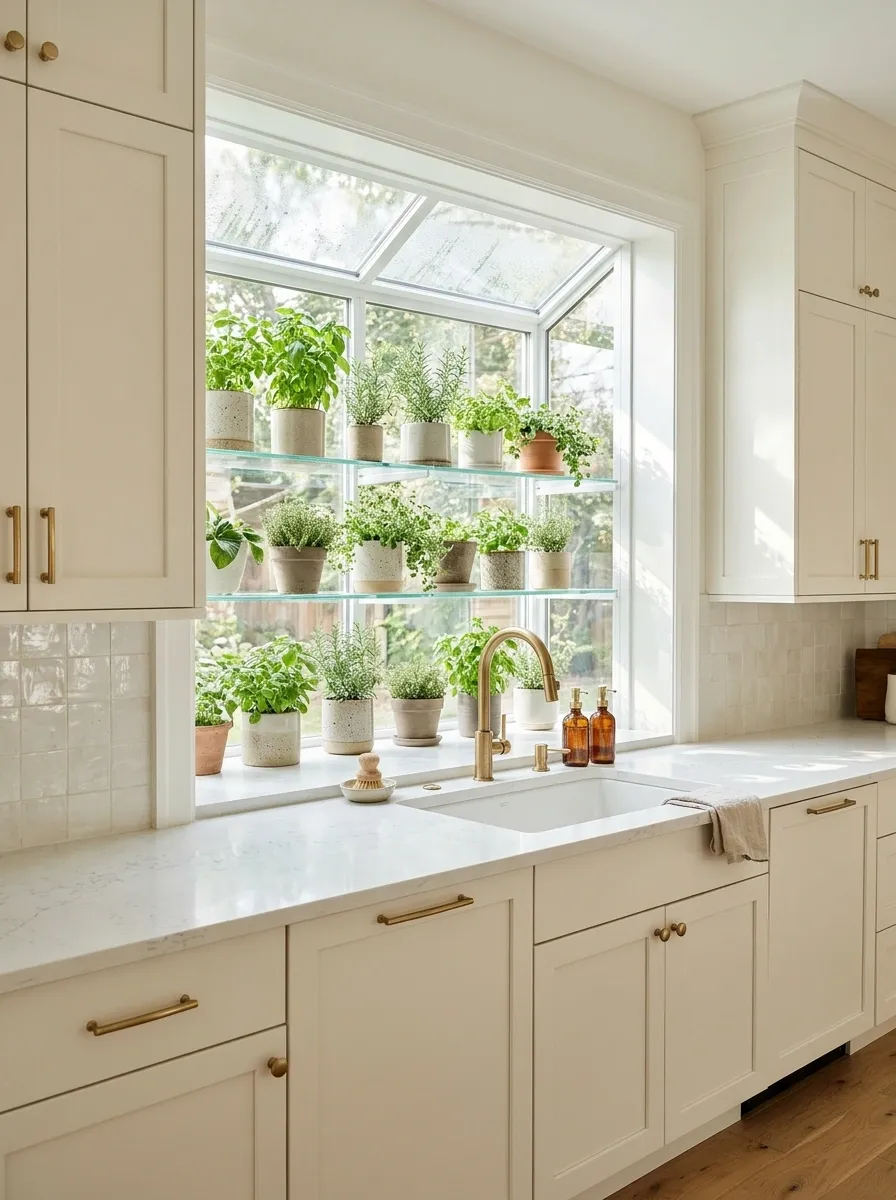
A greenhouse-style kitchen window gives the sink area an entirely different purpose. Rather than decorating a conventional sill, the projecting glass structure creates a small growing space with shelves for herbs and compact plants.
White cabinetry and pale countertops keep the extra glazing from making the kitchen feel visually busy. Glass shelves preserve the open appearance, while coordinating pots make the greenery feel intentional instead of looking like a collection rescued from the garden centre clearance section.
Shelf depth, ventilation, condensation, and the weight of wet pots matter here. Keep the faucet accessible and avoid placing plants where they interfere with window operation or everyday cleaning.
THE INDOOR GARDEN WINDOW
More growing space. Less sill chaos.
Upper shelves
Compact plants with compatible light requirements.
Lower ledge
Easy access for watering and regular cleaning.
Plants need suitable conditions, not just an attractive window. Check light, moisture, and shelf capacity before turning the sink into a greenhouse.
Parisian Kitchen With a Tall Casement Window and Brass Details
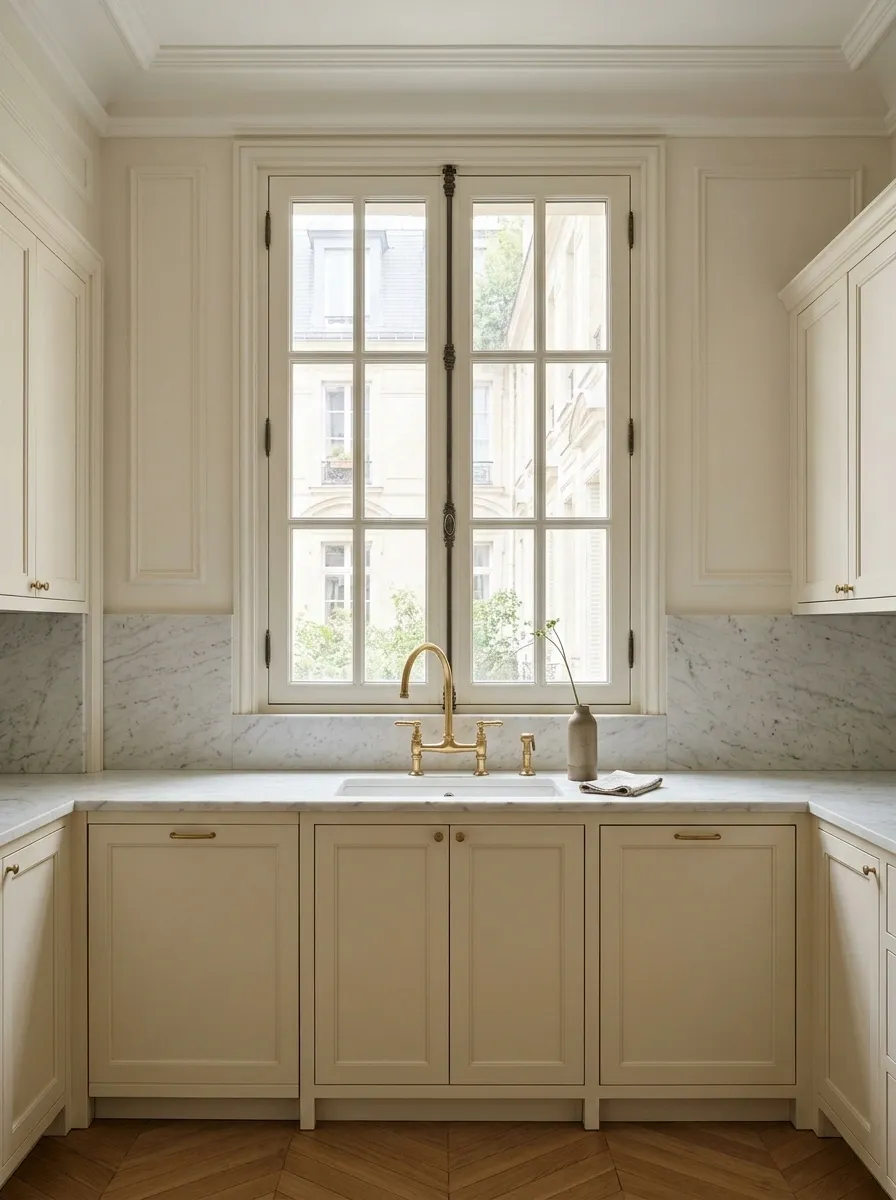
A tall casement window gives the sink wall an elegant vertical line, especially in a kitchen with traditional molding and restrained cabinetry. Creamy ivory finishes, softly veined marble, and warm brass fixtures create a polished look without relying on elaborate window dressings.
The window hardware can introduce a darker contrast, while a slim ceramic vessel provides a small decorative accent. The most important feature is the relationship between the tall glass, the faucet, and the surrounding stone.
This style suits older apartments and kitchens that borrow from traditional French interiors. Avoid introducing too many ornate details at once.
THE PARISIAN COMPOSITION
Tall glass. Soft stone. Warm metal.
Quiet, veined surfaces
Restrained highlights
Fine architectural contrast
The elegance comes from proportions and material quality. More ornament isn’t automatically more French.
Craftsman Kitchen With a Thick Timber Window Frame
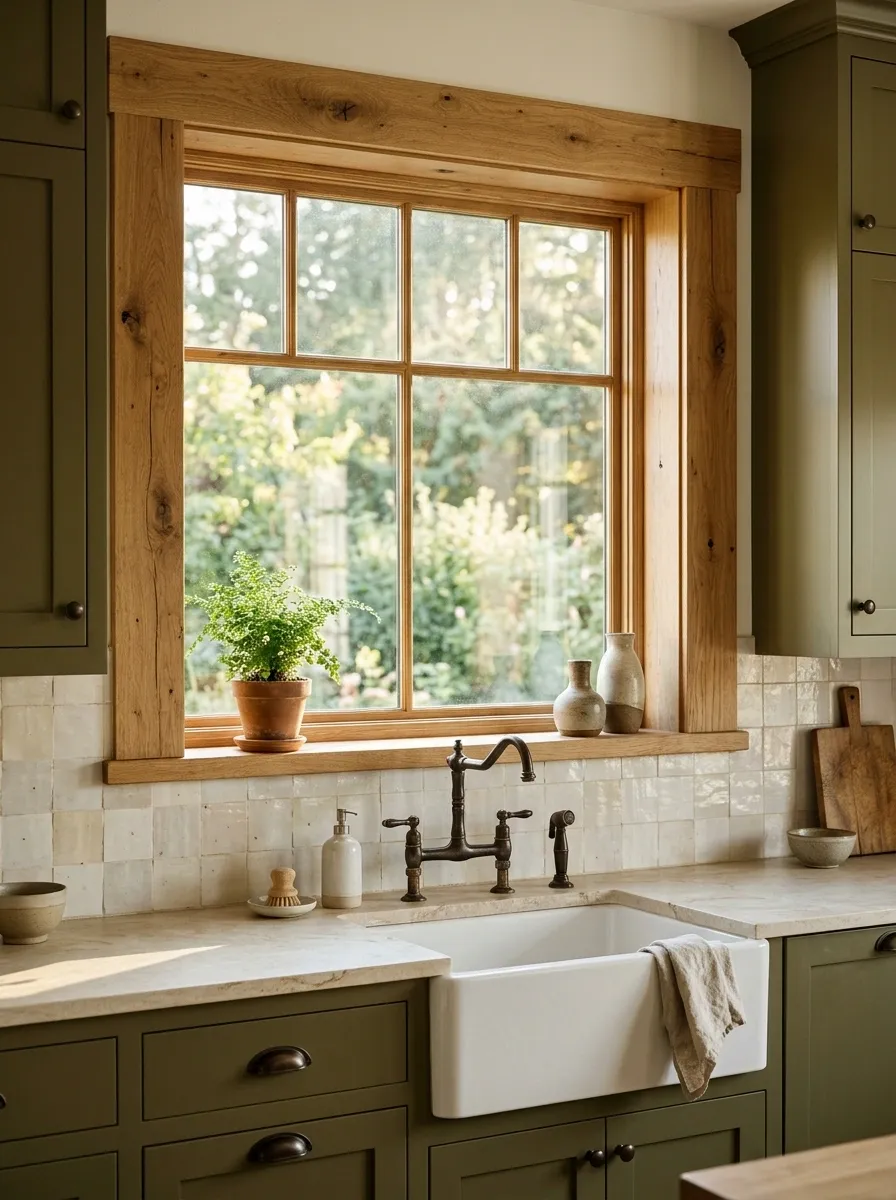
A thick timber window frame gives a Craftsman kitchen a stronger architectural identity than a thin decorative trim ever could. Natural oak casing, olive-green cabinetry, handmade tiles, and dark bronze fixtures create a composition built around craftsmanship and earthy materials.
A small fern or leafy plant softens the timber, while the handmade backsplash adds subtle variation around the sink. The natural stone countertop provides a quieter surface between these textured elements.
The wood casing should relate to the kitchen’s other timber details, such as cabinet frames or flooring. Mixing several unrelated wood tones can make the room feel pieced together.
THE CRAFTSMAN MATERIAL STUDY
Let the joinery be the feature.
Repeat the timber tone elsewhere, then let the grain and joinery speak. The wood doesn’t need a decorative sign announcing that it’s wood.
Maximalist Kitchen With Jewel-Toned Cabinets and Decorative Tile
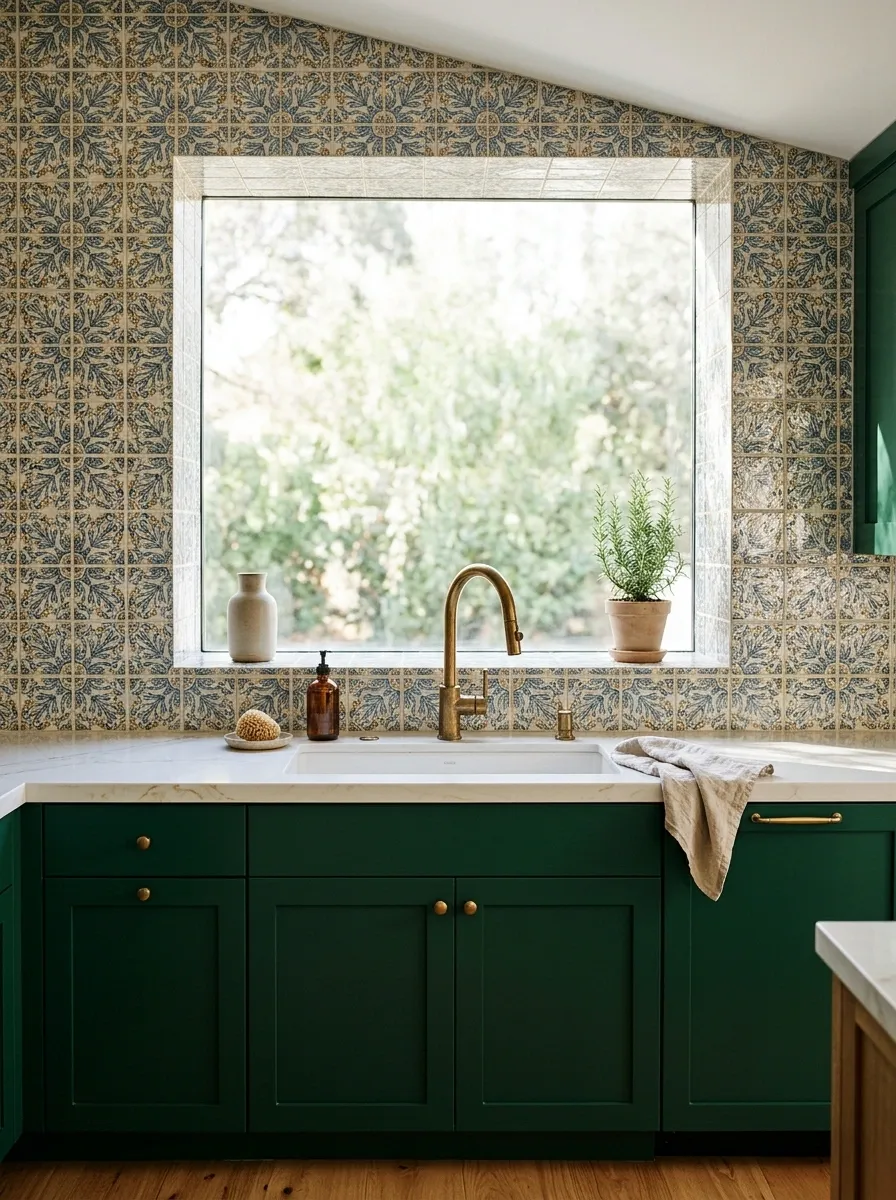
A maximalist kitchen can bring pattern and color directly into the sink area without making the entire composition feel chaotic. Deep emerald cabinets establish the dominant color, while decorative tiles introduce cream, muted blue, or ochre around the window.
The window remains part of the design rather than disappearing behind curtains and accessories. A simple frame and an uncluttered sill give the patterned backsplash room to stand out.
The trick is choosing a clear hierarchy. If the cabinets are saturated and the tile carries a strong pattern, keep smaller accessories comparatively simple.
MAXIMALIST, NOT MESSY
Rich color needs a clear hierarchy.
The balancing move: Keep the sill and countertop quieter when the cabinets and backsplash carry the drama.
A bold kitchen should look deliberately expressive, not like the entire paint aisle was given unrestricted creative control.
Warm Rustic Kitchen With a Copper Sink and Woodland View
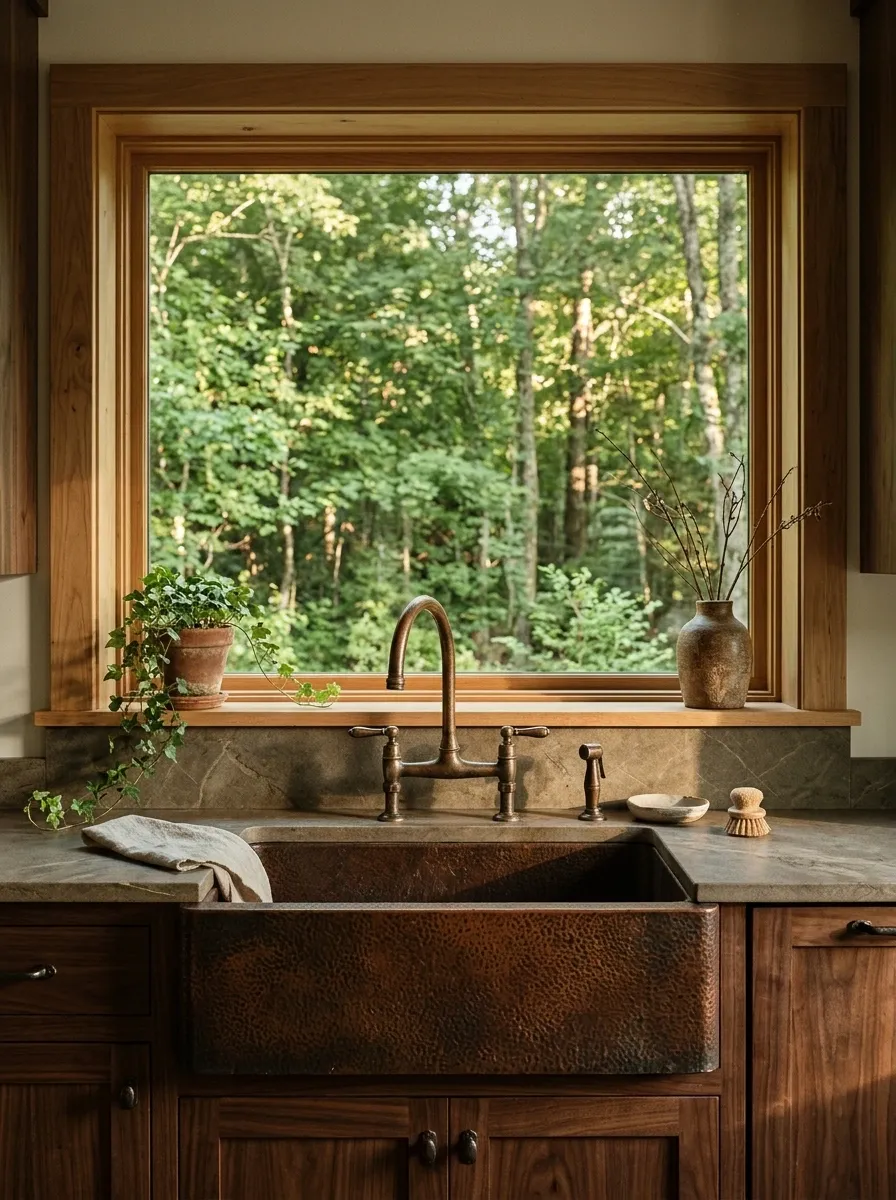
A copper sink changes the character of a rustic kitchen immediately. Set beneath a timber-framed window overlooking trees, it adds a warm metallic focal point against walnut cabinetry and textured stone.
The surrounding finishes should remain earthy rather than introducing several competing metallic colors. Aged bronze fixtures, natural wood, and a restrained ceramic accent connect the sink to the window without distracting from the outdoors.
Copper develops a changing appearance with use and care, so the intended finish matters. Some sinks are designed to develop a patina, while others require more regular upkeep to maintain a uniform appearance.
THE WOODLAND PALETTE
Copper, timber, and the view outside.
Practical detail: Choose a copper finish with a maintenance routine that suits everyday use. A sink should survive dinner preparation, not just look photogenic at breakfast.
Making the Sink Window Work With the Kitchen
The strongest kitchen sink window designs start with the way the room actually functions. A deep bay window can accommodate a more layered arrangement, while a narrow apartment ledge may look better with just one compact planter.
Choose a complete direction first, then bring in the fabric, plants, finishes, and accessories that support it. Matching every detail isn’t necessary, but the materials should feel connected and the working area should remain comfortable to use.
Before buying anything, look at the window during different parts of the day. Check the available light, privacy, sill depth, and distance between the faucet and any planned decorations.
A window can look finished without being filled. Sometimes the most convincing design decision is knowing which objects don’t need to be there.